



A good fade haircut does something most style trends can’t: it makes the head look deliberate before anyone notices the clothes. When the blend is tight at the temple, soft at the nape, and clean around the ear, even a plain crewneck reads sharper. Fade haircuts work because they control the outline first and let the top carry the personality.
That’s why the same cut can lean boardroom, gym-ready, or barbershop-cool depending on where the fade starts and how much length you leave up top. A low fade with texture feels calm. A skin fade with a hard part hits harder. A taper fade sits in that middle zone where the haircut looks finished without looking overworked.
The useful part is that a fade is not one haircut. It’s a family of cuts built around contrast, and the details matter more than people think. A 0.5 guard at the base, a clean neckline, and a top that’s either blunt, choppy, slicked, or brushed forward can change the whole read of a face. Get those details right and the haircut does half the grooming for you.
Why These 22 Fade Haircuts Work So Well
-
They sharpen the outline first: A clean fade tightens the sides and back, which makes the face look more structured even before you touch the top with product.
-
They work with different hair textures: Straight, wavy, curly, coily, and braided hair all sit better when the sides are trimmed into a controlled gradient instead of left bulky.
-
They give you control over contrast: A low taper looks subtle, a mid fade feels balanced, and a skin fade creates hard contrast you can spot from across the room.
-
They age more gracefully between cuts: The top can grow out a little while the fade stays readable, especially if you choose taper or shadow blends instead of going bare to the skin.
-
They pair well with facial hair: A beard blend or a crisp clean shave can change the whole face shape, and that matters more than most people realize.
-
They are easy to personalize at the barber chair: Move the fade up or down by half an inch, change the top from textured to slick, and you’ve got a different haircut without starting from scratch.
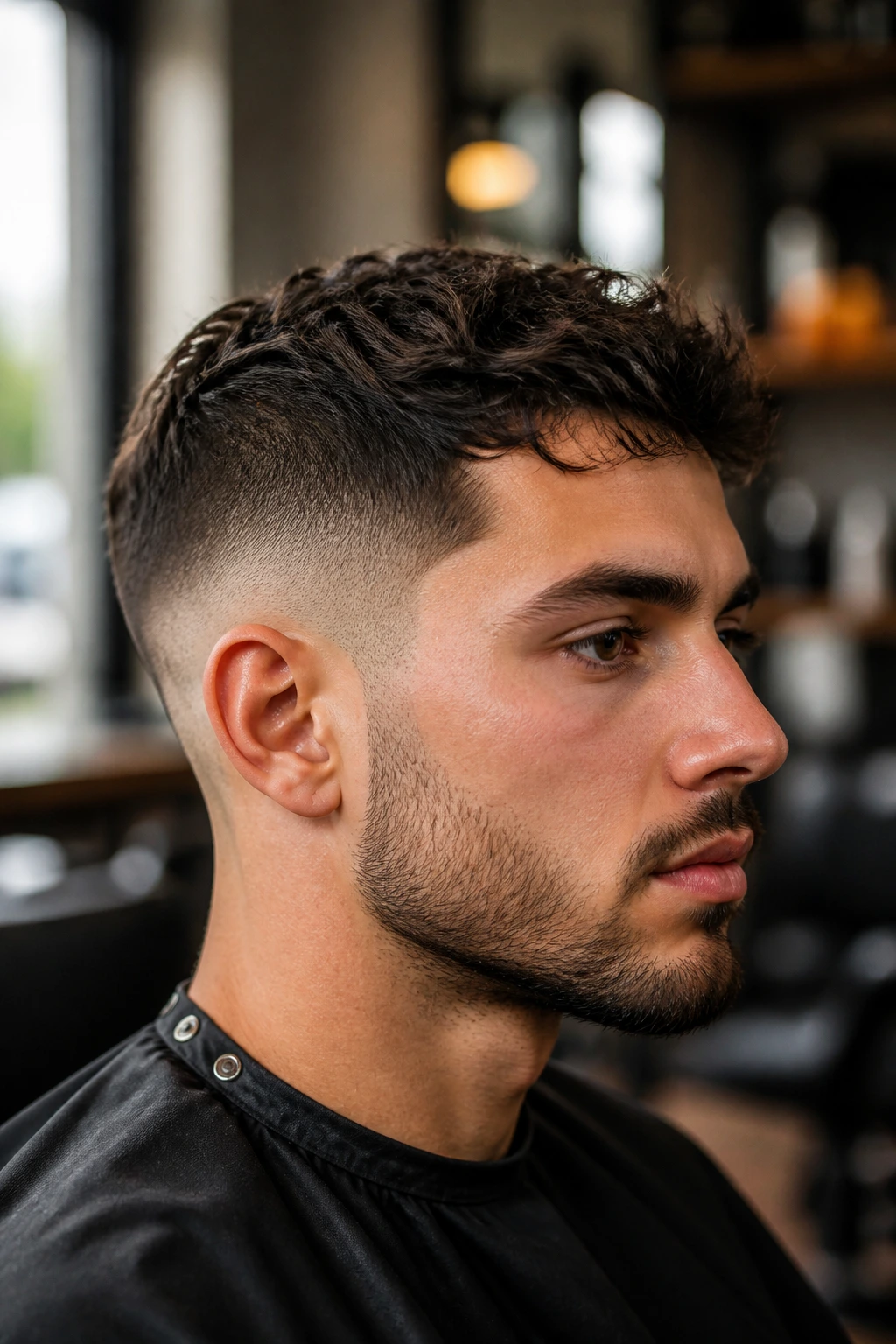
1. Low Skin Fade with Textured Crop
This is the fade I reach for when someone wants clean edges without a haircut that shouts. The low skin fade starts just above the ear and drops into a close, bare finish near the neckline, while the textured crop on top keeps the whole thing from looking severe. It’s neat. It’s blunt. It works.
What to ask your barber for
- A low skin fade that stays below the temple.
- About 1.5 to 2 inches on top, cut choppy rather than smooth.
- No hard part, no shiny finish, no bulky sides.
The texture on top matters more than people expect. If the top is cut with blunt scissors or clippers only, the whole shape can read flat. Ask for point-cut texture or a choppy crop, then finish with a matte clay. The result feels modern because the top has movement and the sides stay disciplined.
2. Mid Fade with Side Part
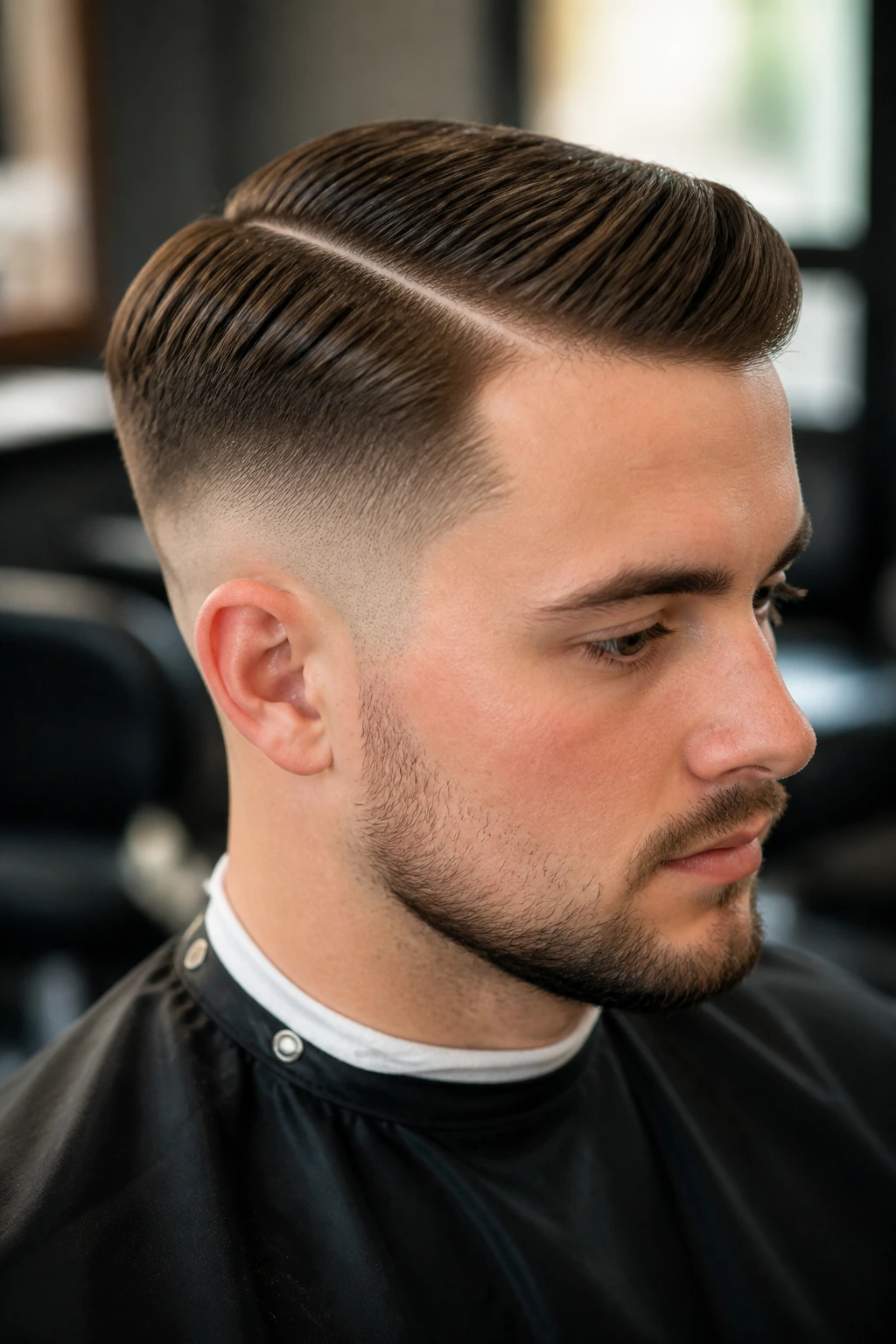
A mid fade with a side part is what happens when order and polish meet in the middle. The fade begins around the midpoint of the head, which keeps the shape visible without pushing the contrast too high, and the side part gives the haircut a clear direction. It’s one of the easiest ways to make thicker hair look intentional.
The trick is keeping the part soft enough that it doesn’t look painted on. A real side part should follow your growth pattern, not fight it. If your hair naturally falls left, don’t force a right-side part just because that’s what a photo showed. A barber can clean up the separation with a comb and shears, then you can use a light cream or a small amount of pomade to keep the top in place.
3. High Fade with Slick Back
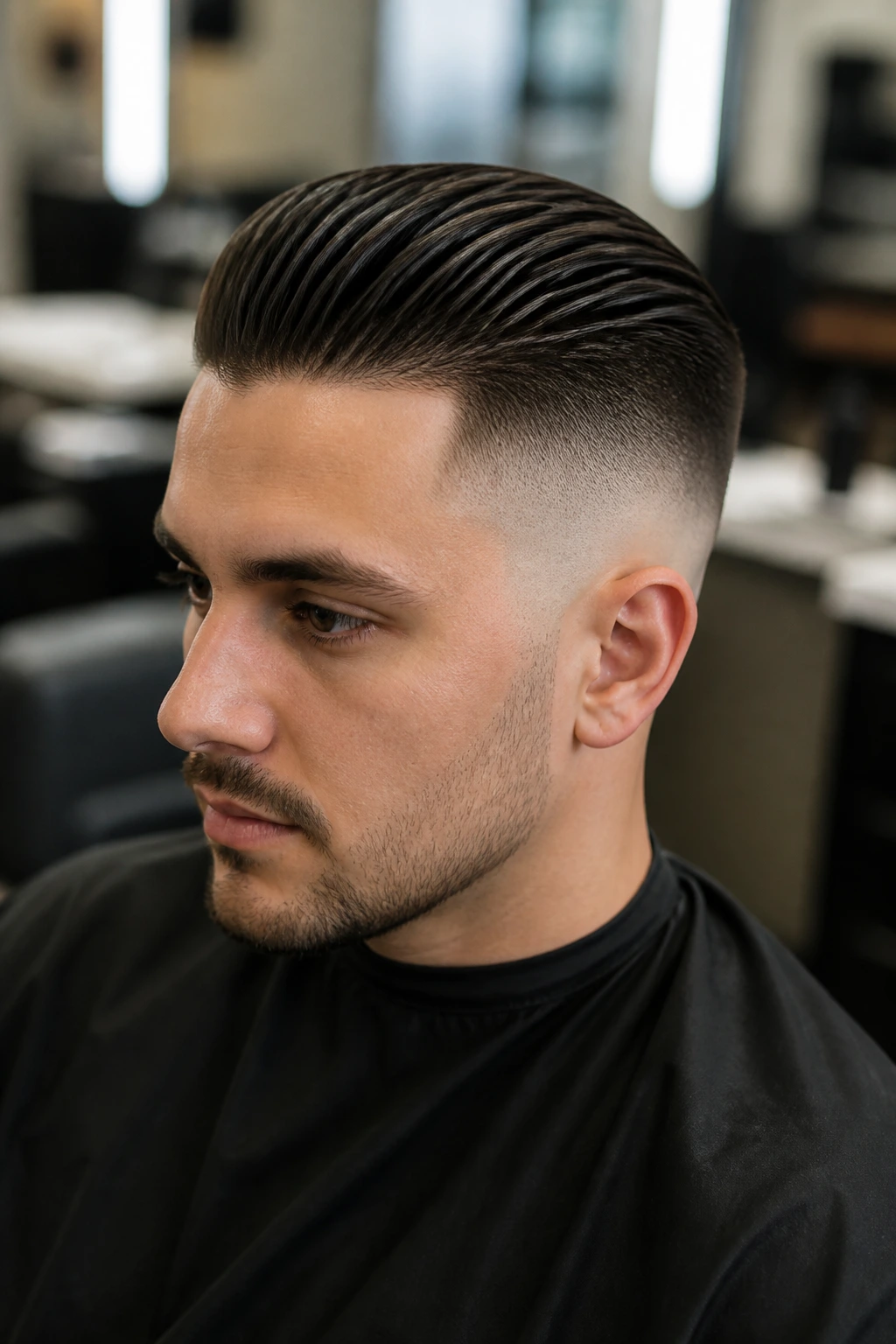
Why does a high fade make a slick back look so much cleaner? Because the sides stop competing with the top. The fade starts high enough to open up the face, and the slicked-back length gives you that smooth, controlled line from front to crown. It’s a strong look, but not a fussy one when the blend is done well.
A high fade works best when the hair on top has enough density to stay back after blow-drying. If your hair is fine and soft, the slick back can collapse by midday unless you prep it with a root-lifting spray or a blow-dryer. I like a satin finish here more than a glossy one; too much shine can make the haircut look wet in a way that feels dated.
4. Taper Fade with Classic Crew Cut
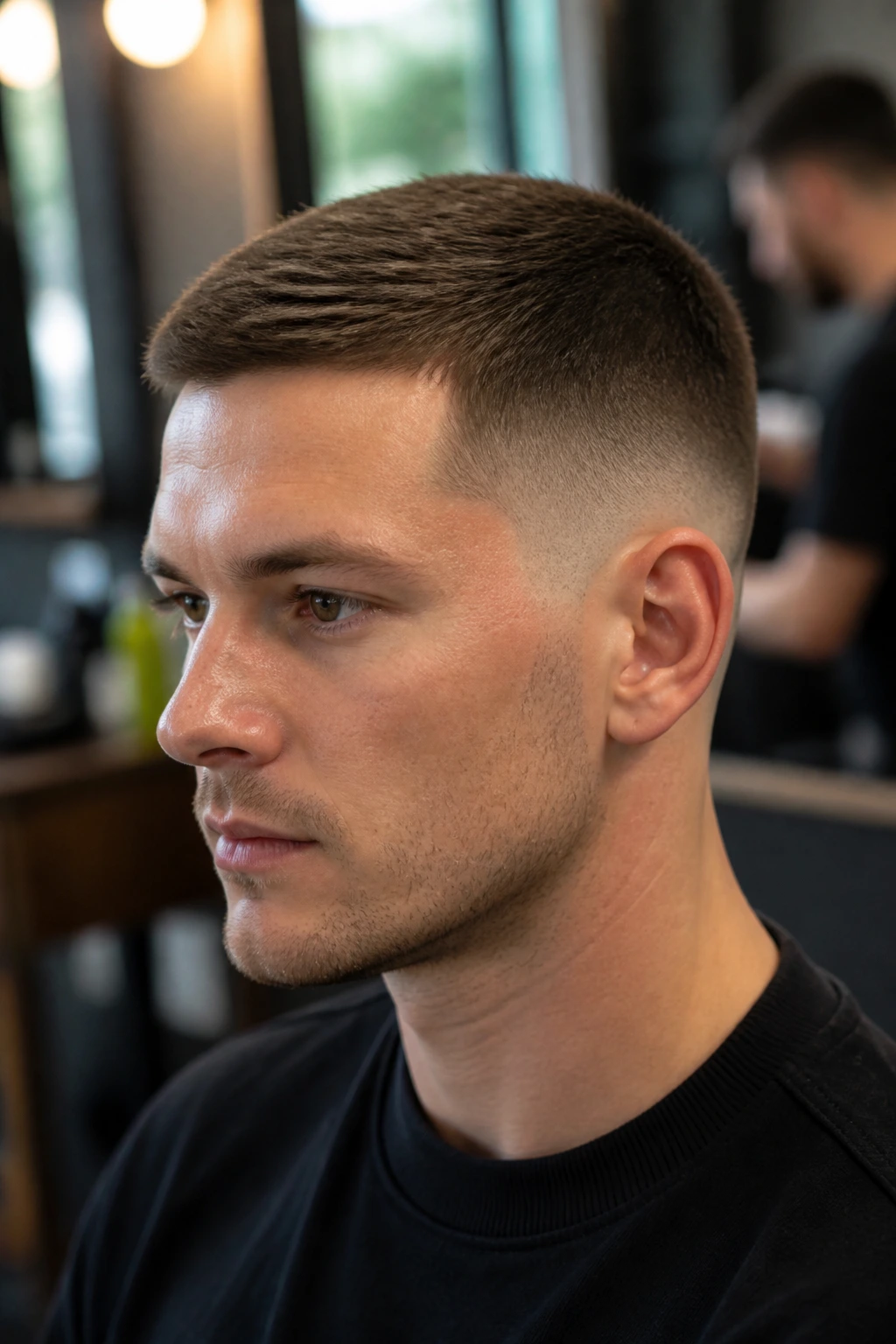
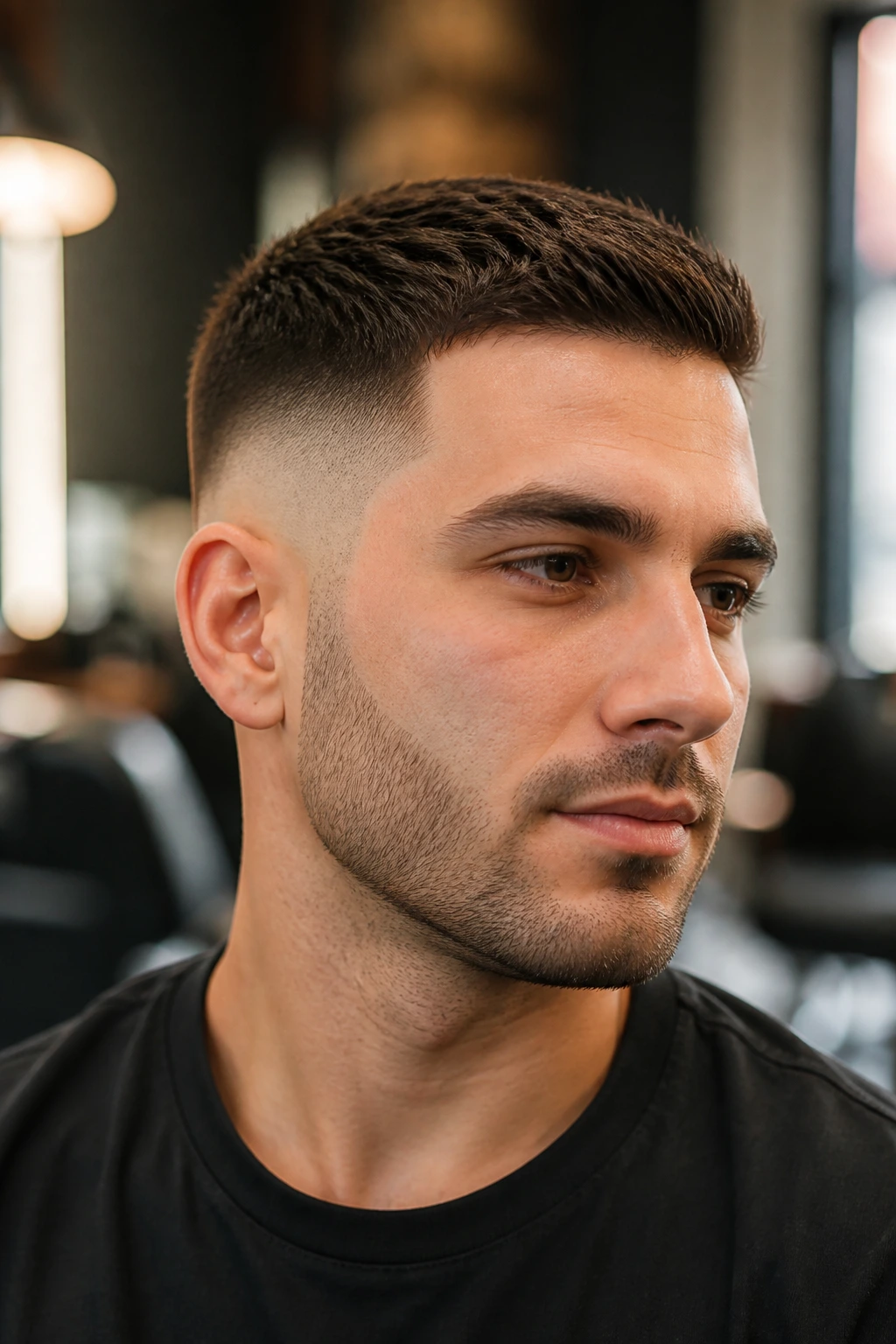
The crew cut is a quiet haircut, which is exactly why a taper fade suits it so well. The top stays short and tidy, while the taper cleans up the sideburns, ears, and nape without erasing the shape entirely. You get structure without the hard contrast of a skin fade.
This is the haircut you notice most when it grows out. The taper keeps the edges from turning fuzzy too quickly, and the short top means you can get dressed in a minute and still look put together. If you’re the kind of person who hates standing in front of a mirror with product on your hands, this one earns its place. Ask for a little texture on top rather than a blocky flat cut. That tiny detail keeps the whole thing from looking too military.
5. Drop Fade with Curly Top
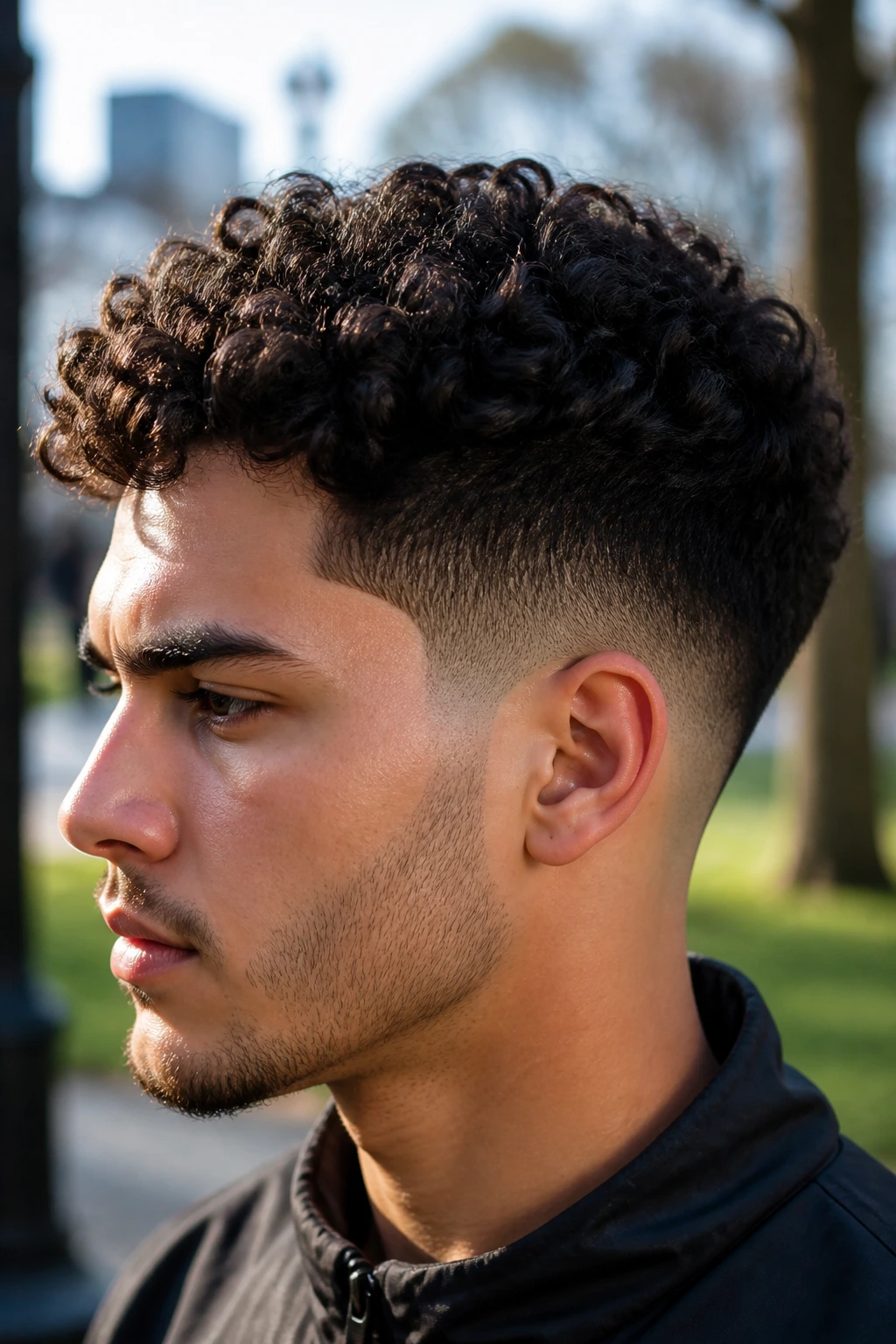
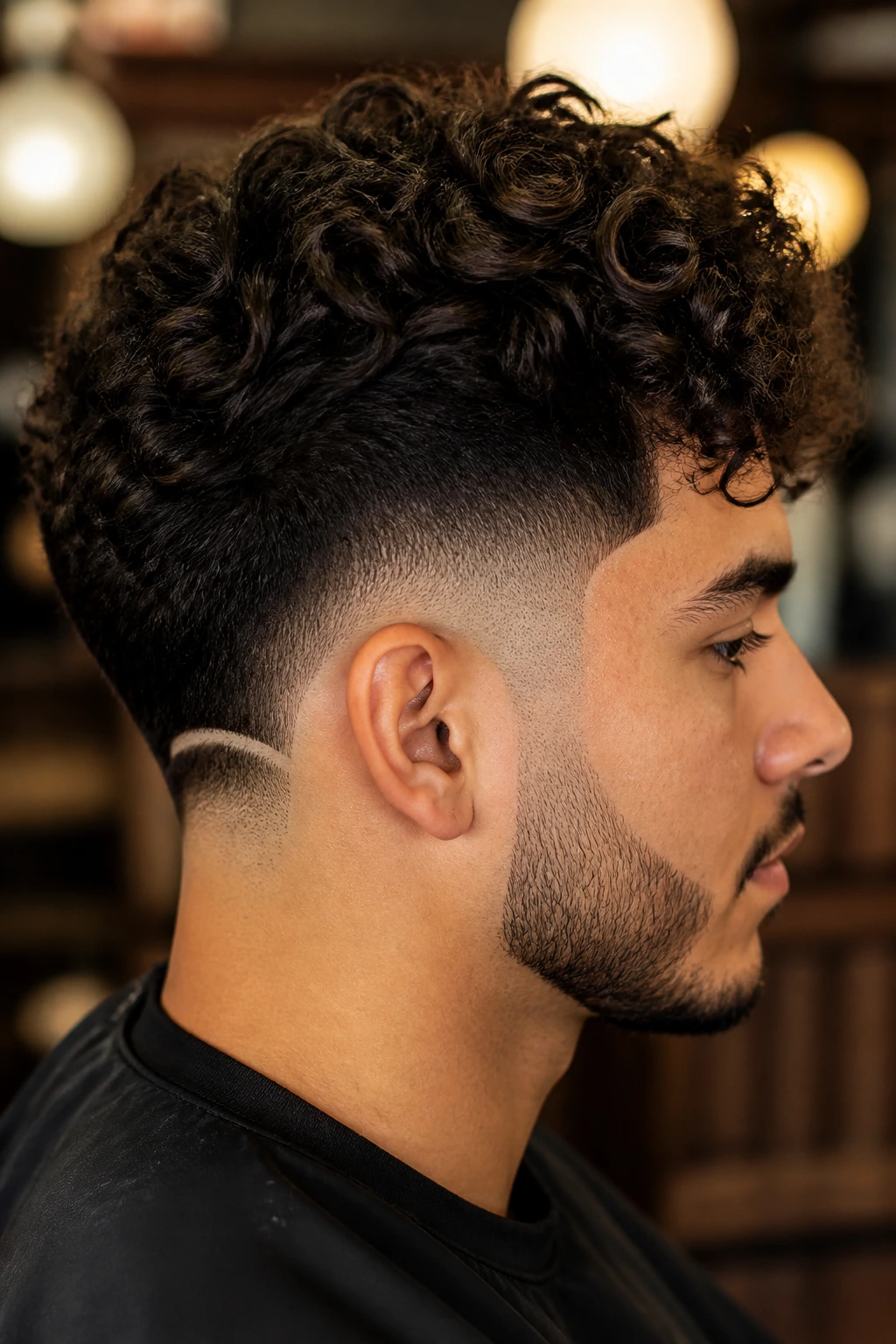
A drop fade follows the curve of the head behind the ear, and that shape is a gift for curls. Instead of leaving the sides in a straight horizontal line, the fade drops lower toward the back, which lets the curls keep their fullness on top without looking wide or boxy. It’s a sharper shape than a standard fade, and on curly hair that matters.
The best version keeps weight at the crown and uses curl cream or a light leave-in so the curls stay defined instead of puffing out. If your curls are medium or tight, tell the barber not to carve too much off the top. You want enough length for the curl pattern to show. Too short and the fade becomes the only thing people notice. Too long and the shape starts to balloon near the temples.
6. Burst Fade with Short Faux Hawk
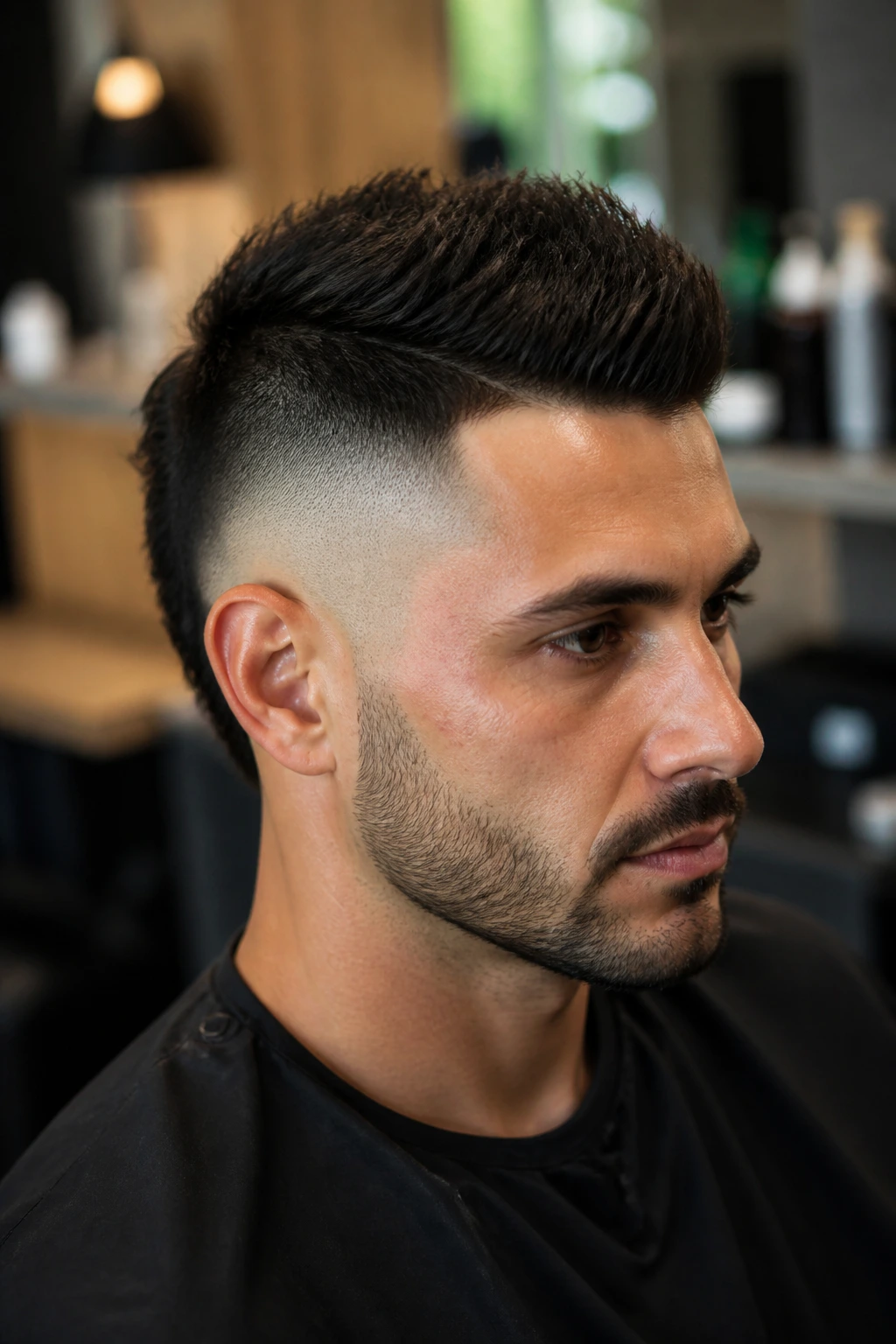
A burst fade curves around the ear and leaves a center strip of length running front to back, which is why it makes a faux hawk look cleaner than a standard fade does. The silhouette is tighter, the ear area stays neat, and the top carries all the energy. It’s a sharp cut when you want a little attitude without going full mohawk.
Best if you want
- A style that stands up with matte paste and finger shaping.
- A cut that looks deliberate even when it’s slightly messy.
- Something that works well with thick, straight, or wavy hair.
Keep the center strip narrow enough that it still feels controlled. If the top spreads too wide, the faux hawk starts looking like an accidental ridge. A small amount of paste at the roots gives lift; too much product makes the top stiff and takes away the shape.
7. Temple Fade with Pompadour
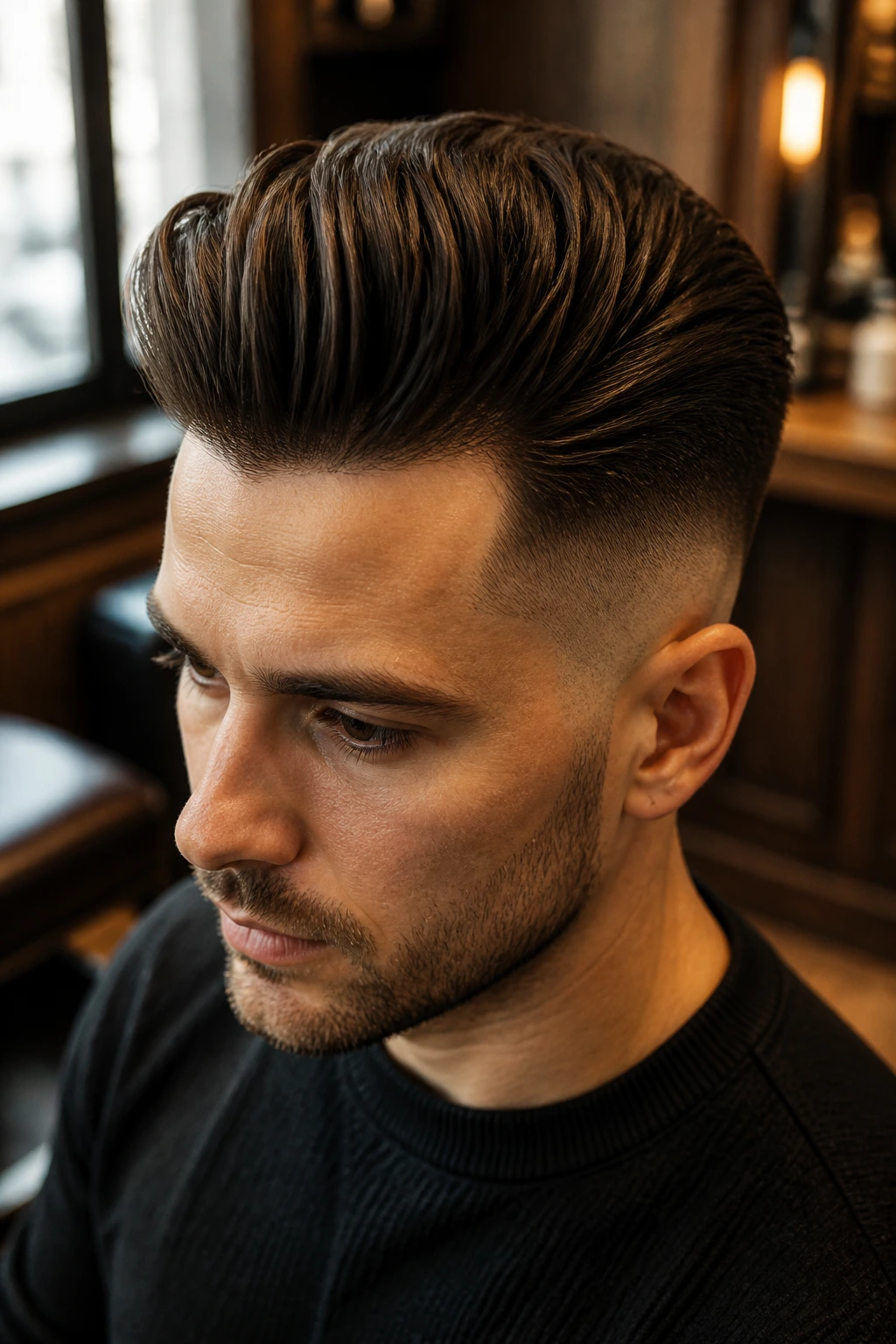
A temple fade is one of those cuts that quietly does a lot of work. It cleans the corners at the temple and around the sideburns while leaving more of the side and back intact than a full skin fade would. Put that next to a pompadour, and you get a haircut with height up front and discipline around the edges.
The pompadour needs structure, so a blow-dryer matters here. Use a vent brush, lift the roots, then sweep the top back and slightly up. If the hair is coarse, I’d use a cream first and a stronger product only on the ends. That keeps the front from turning into a helmet. It’s a more dressed-up cut than a crop or crew, but it still reads clean when the fade is kept tight and the silhouette is balanced.
8. Low Taper Fade with Comb Over
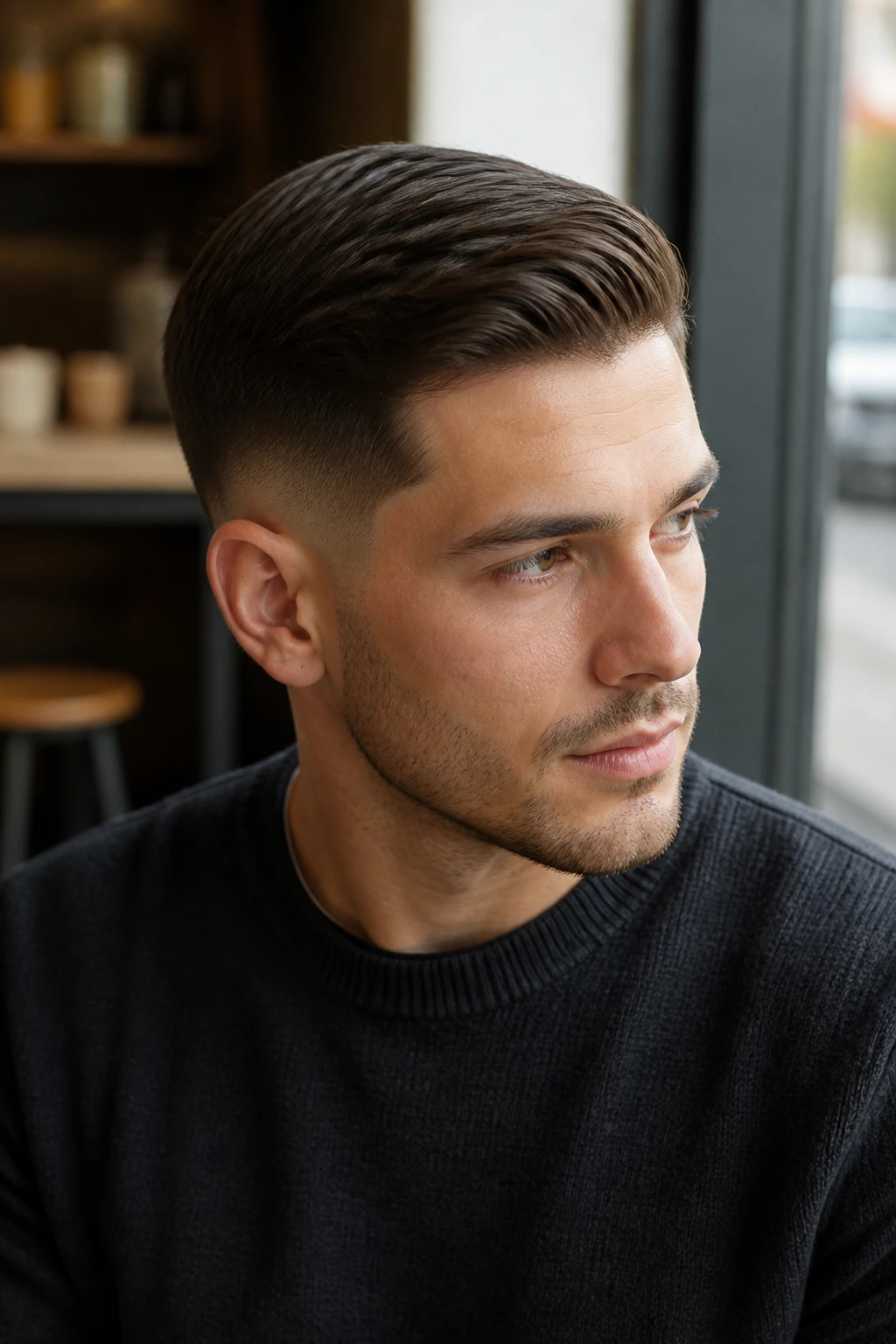
Want a comb over that doesn’t look pasted to the scalp? Start with a low taper fade. The low taper keeps the sides soft and neat, and the comb over gives the top a clear direction without turning the haircut into a blocky wall of hair. It’s one of the easiest polished cuts to wear if you’ve got straight or slightly wavy hair.
The part doesn’t need to be harsh. In fact, a severe hard part can make the whole style look older than it is. A loose comb over with a natural part and a light cream feels cleaner. If your hairline is uneven or you’ve got a crown that likes to split, this cut can still work. Just leave enough length on top so the hair falls where it wants to instead of standing up in protest.
9. Skin Fade with Buzz Cut
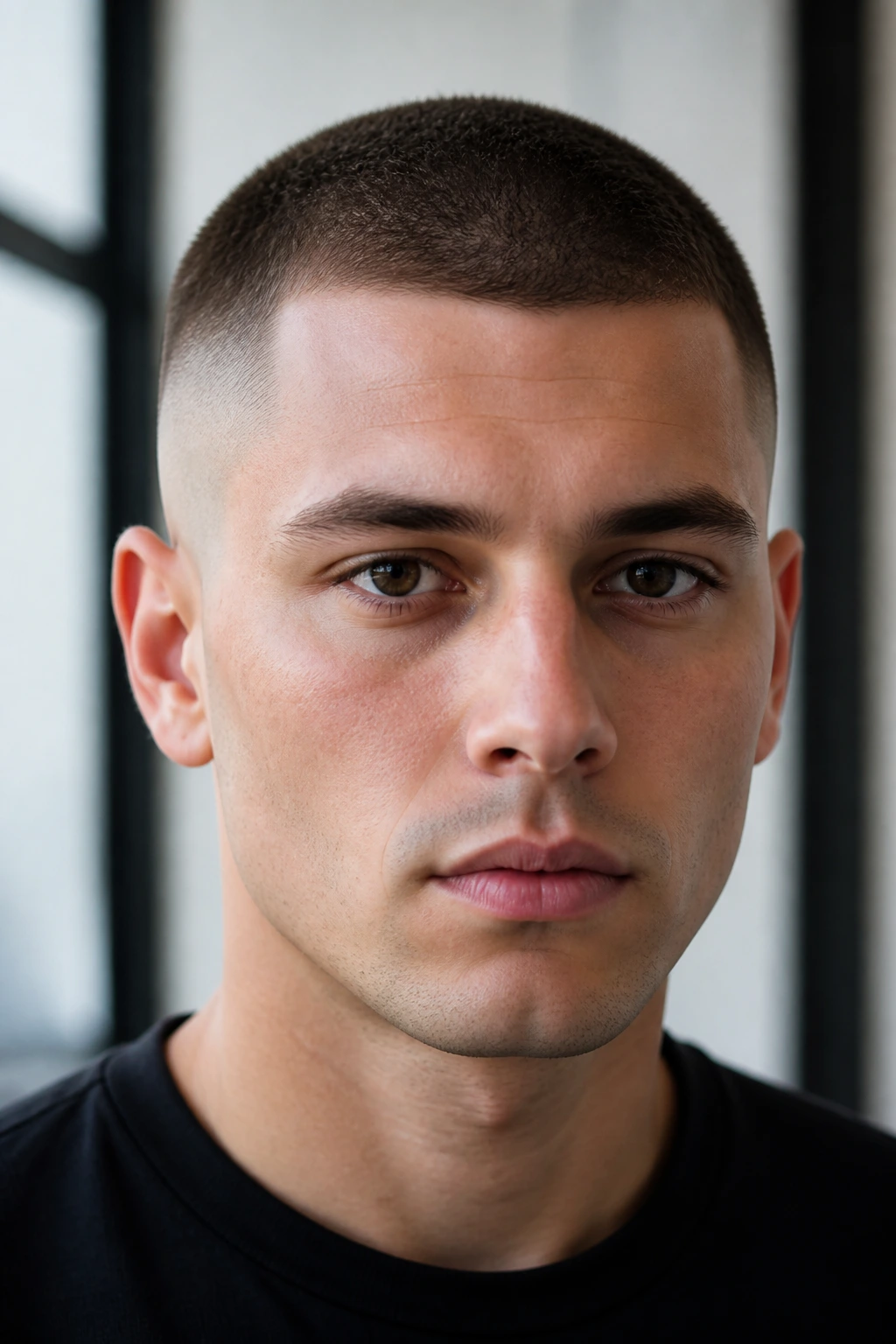
A buzz cut with a skin fade is blunt, simple, and unforgiving in the best way. There’s nowhere to hide, which is exactly why it looks so sharp. The skin fade takes the sides down to bare or nearly bare skin, and the short top keeps the whole head looking tidy with almost no styling time.
This cut shows your scalp shape, so it’s worth being honest about what you’re working with. If your head has a bump or your scalp gets irritated easily, a softer shadow fade may be kinder. If you do go skin close, keep the scalp moisturized and use sunscreen on exposed areas when you’re outside. Short hair does not protect skin from sun the way people assume it does. A buzz fade can look expensive with almost no product, but the cleanup has to stay precise.
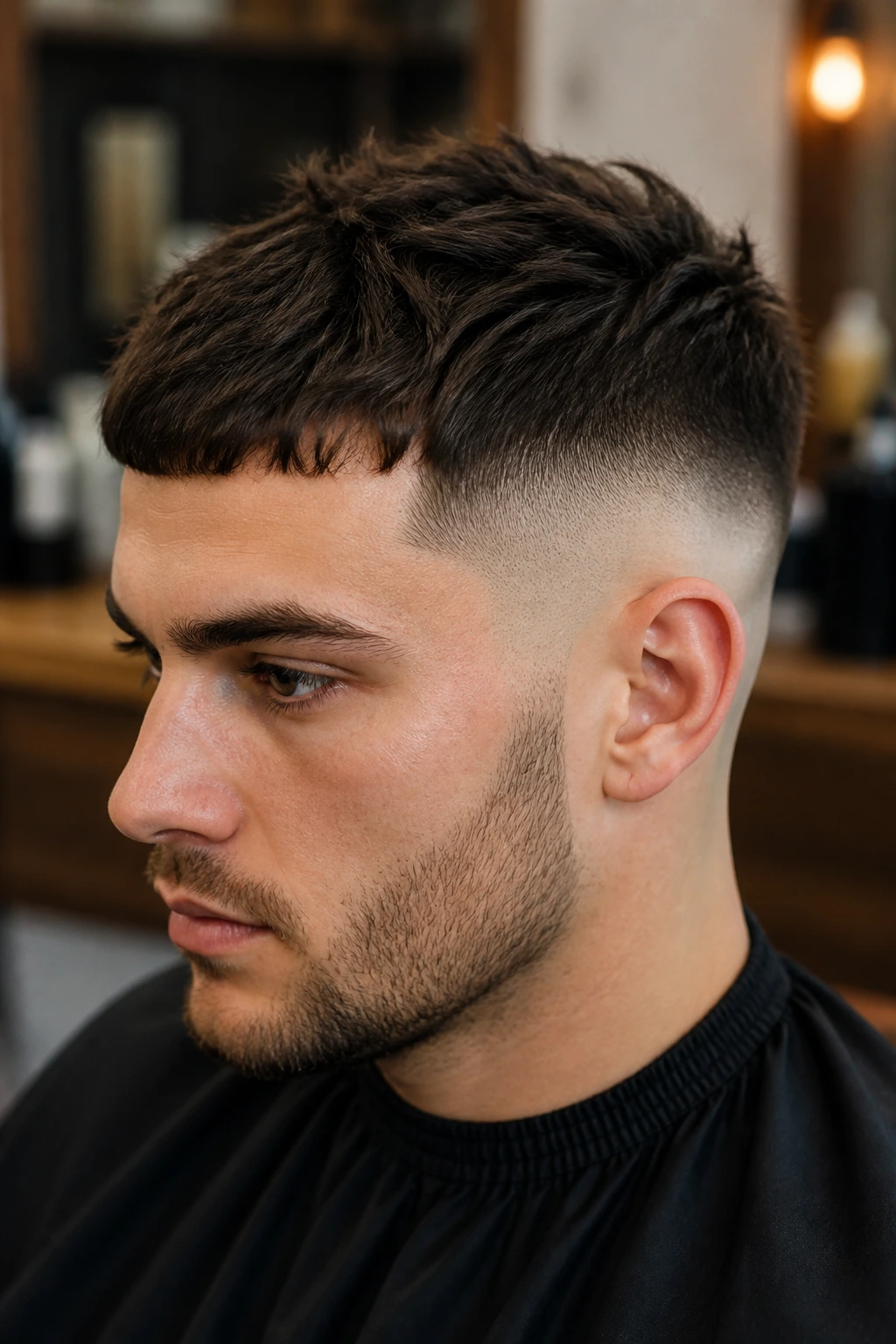
10. Mid Fade with French Crop
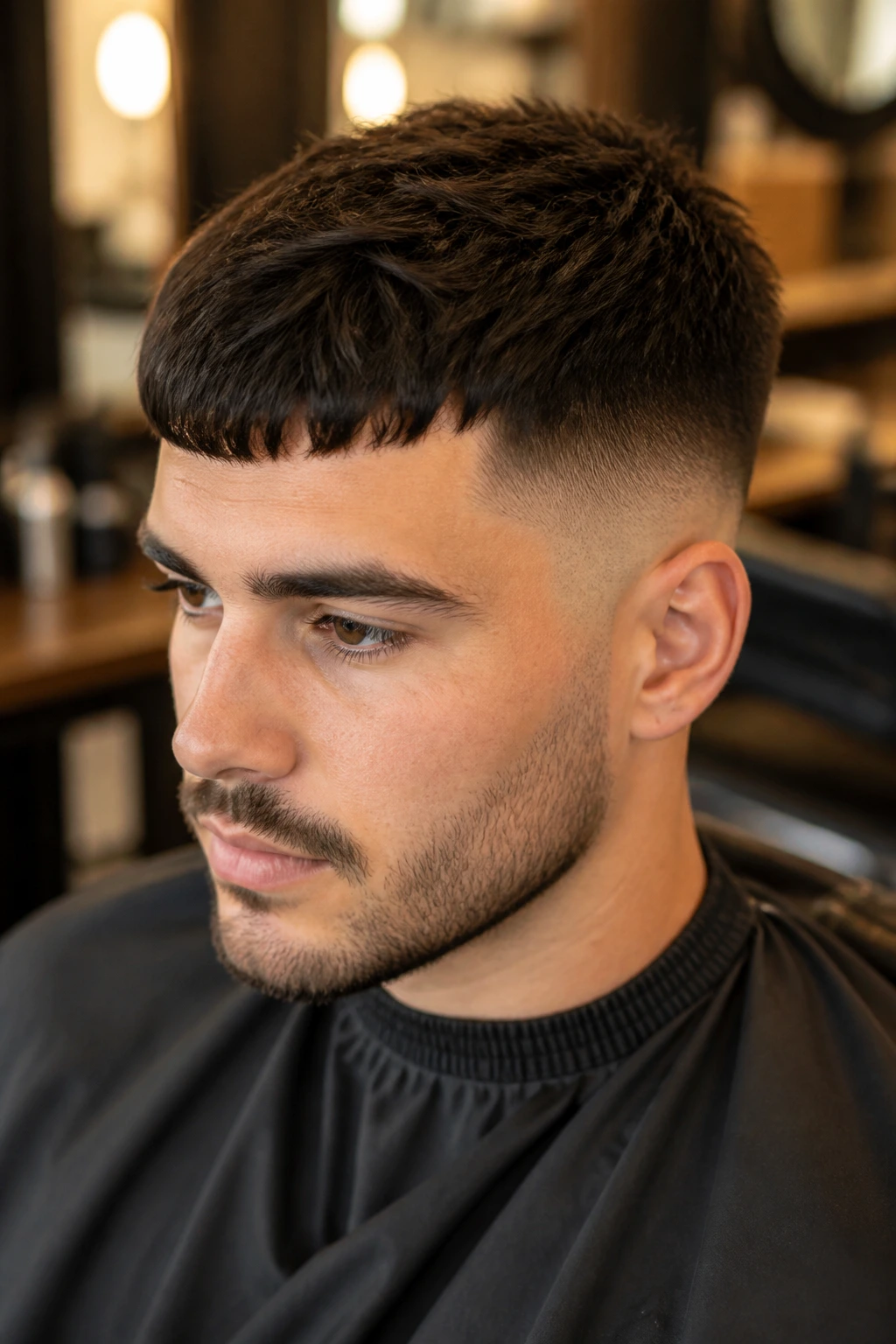
The French crop is built on a blunt fringe and a compact top, which makes a mid fade a smart match. The fade adds a clean gradient under the bulk of the haircut, and the fringe keeps the front line controlled. It’s neat without looking stiff, and on straight or slightly wavy hair it can be one of the easiest polished styles to wear.
Why it stands out
The fringe is the whole point. Keep it short enough to sit just above the brow or touch it lightly, and let the texture stay a little uneven. A French crop looks best when the front doesn’t feel over-shaped. Too much symmetry makes it look helmet-like. A matte paste and a quick forward rake with the fingers usually beats a comb here.
11. High Fade with Quiff
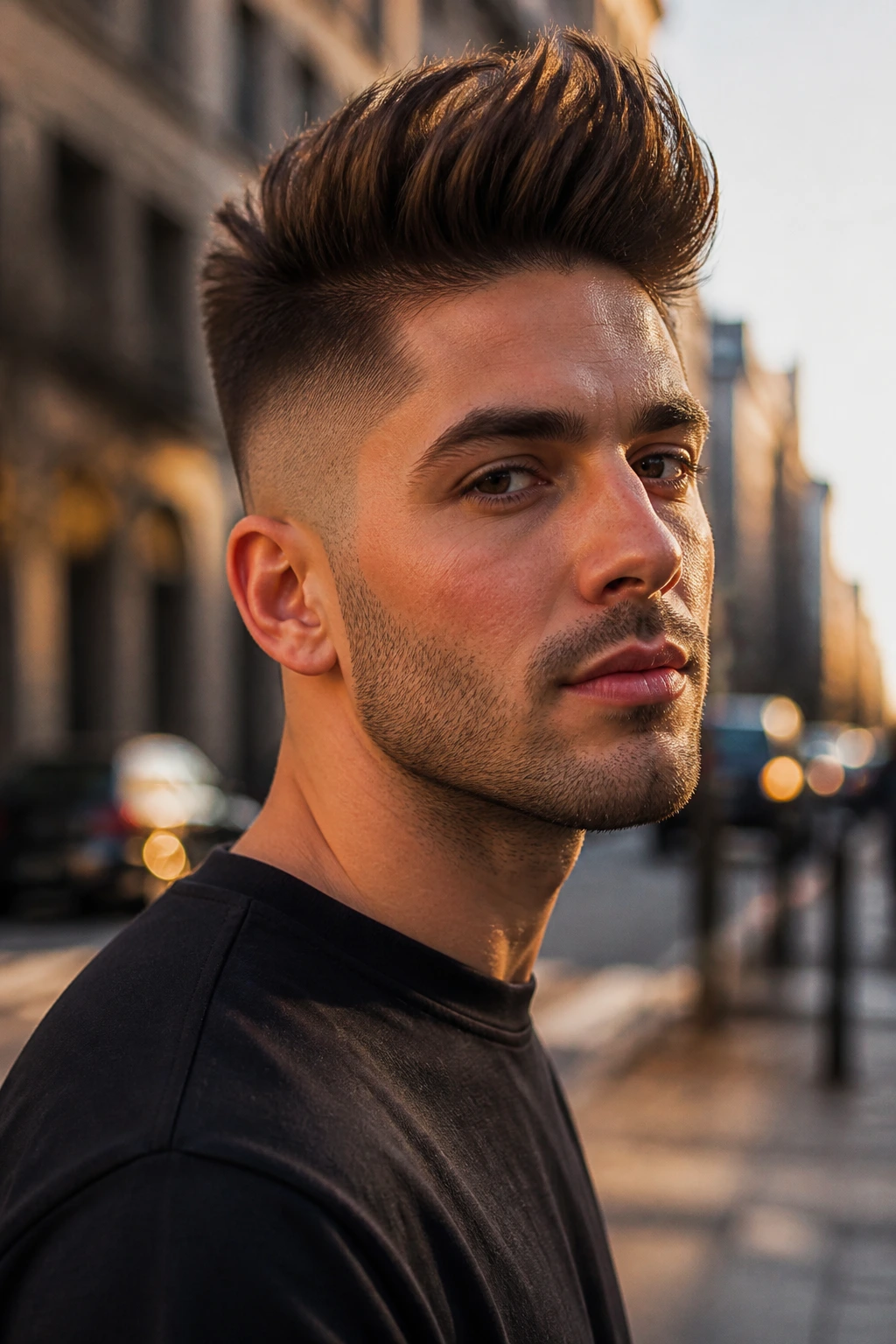
A quiff needs height, and a high fade gives it room to breathe. When the sides are cut high and tight, the front lift feels intentional instead of accidental. That matters. Without the fade, the quiff can look puffy; with it, the haircut has clean contrast and a real shape.
This cut likes hair with some density. If the hair is very fine, the front can collapse unless you use a blow-dryer and a product with decent hold. I prefer a volumizing spray at the roots, then a small amount of paste to finish the top. Brush up and back while drying, not after. That tiny timing detail changes everything. The quiff should rise with a soft bend, not sit like a frozen wave.
12. Burst Fade with Curly Fringe
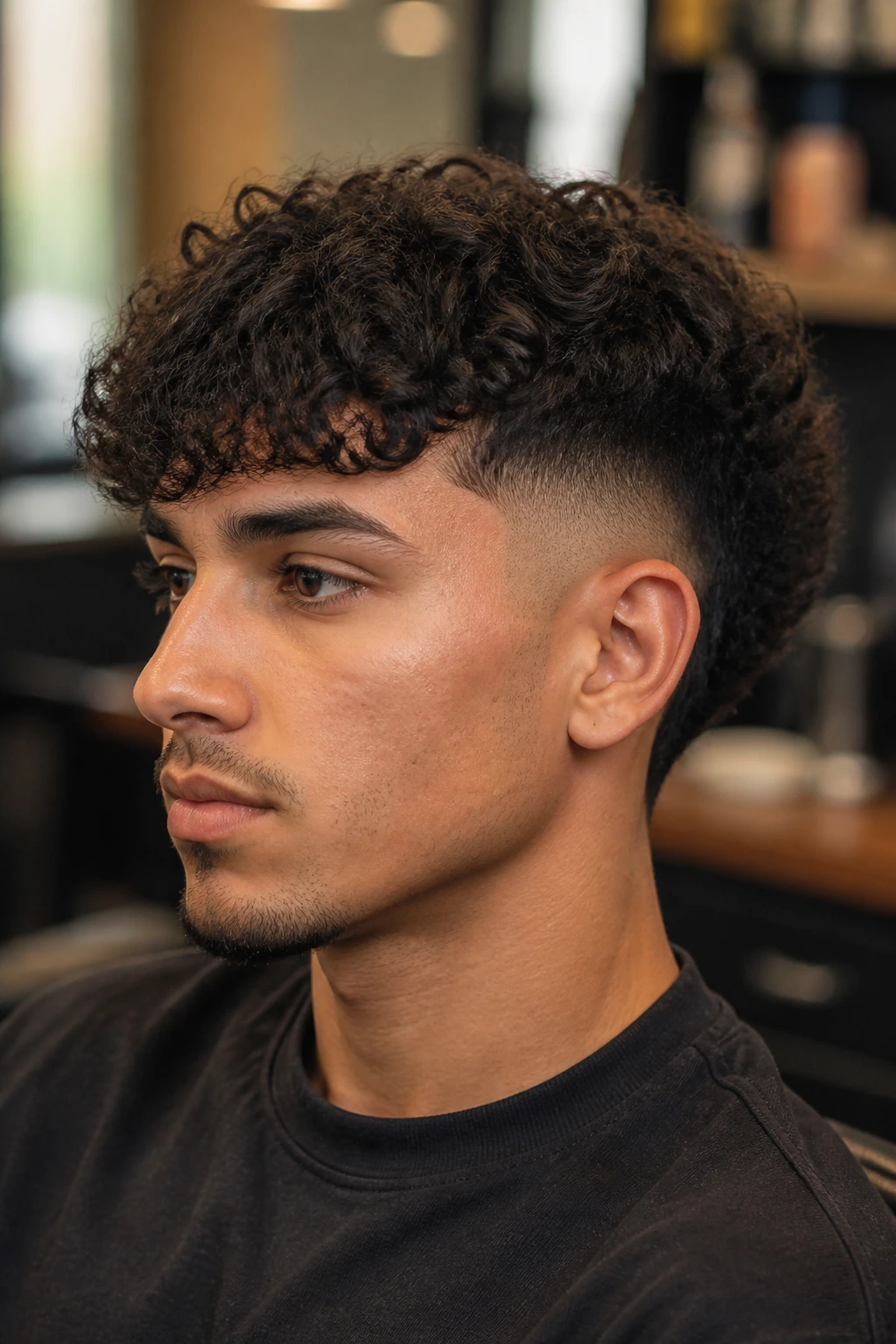
A burst fade with a curly fringe is one of those cuts that can look relaxed and crisp at the same time. The burst fade wraps around the ears, while the curls fall forward over the forehead in a controlled fringe. It gives the face movement without letting the sides get bulky.
The trick is respecting shrinkage. Curly fringe almost always sits shorter when it dries, so leave a little more length than you think you need. Use curl cream or a light gel, then diffuse on low heat or let it air-dry if you have time. If the curls are too wet-heavy, the fringe droops; if they’re too dry, the line looks frizzy. The sweet spot is defined, soft, and a little loose at the edges.
13. Shadow Fade with Ivy League
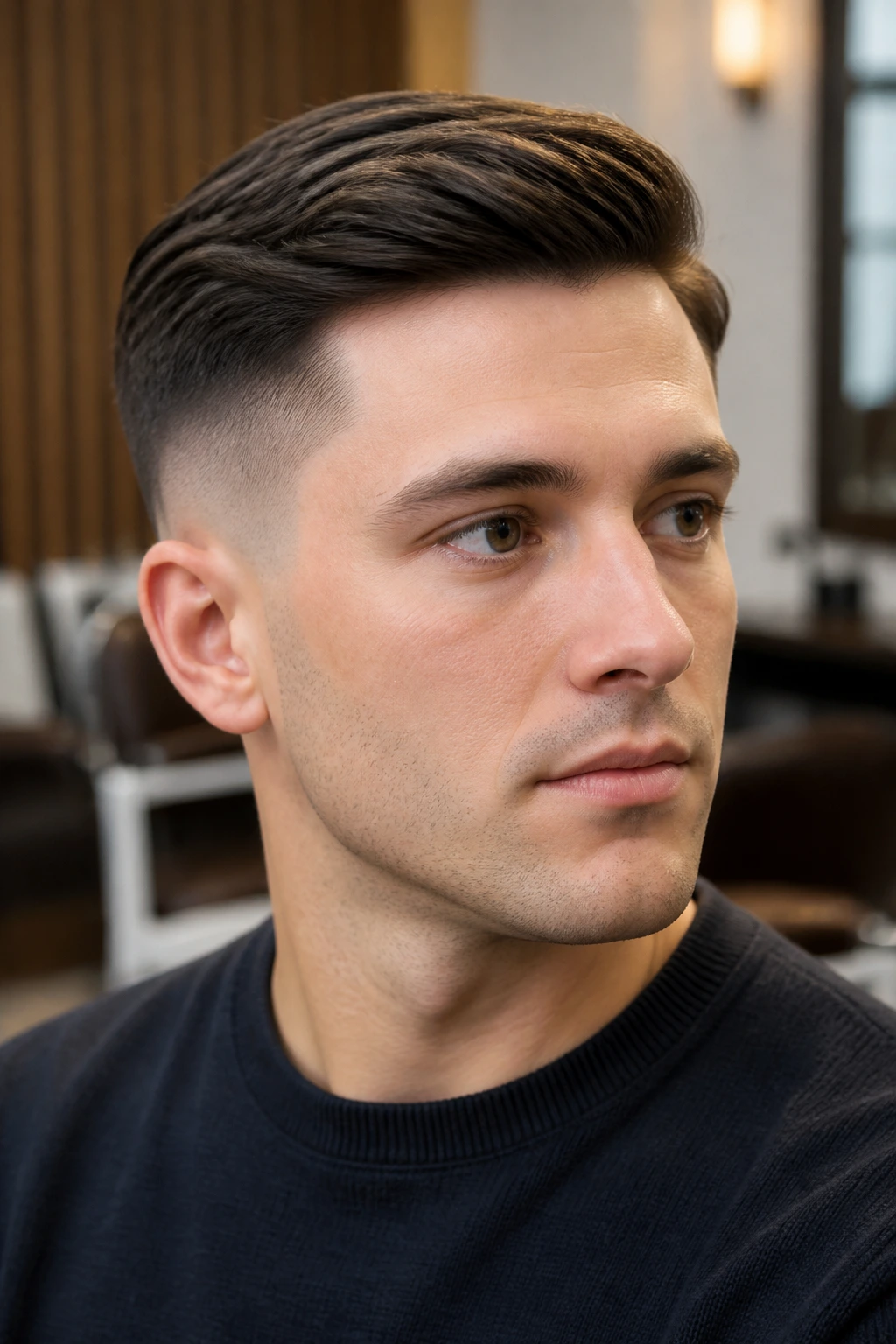
If you want a fade that feels polished but not loud, a shadow fade with an Ivy League is hard to beat. The shadow fade keeps some darkness in the transition instead of going down to bare skin, which makes the haircut gentler on the eye. The Ivy League on top adds enough length to part, brush, or lightly sweep back.
This is the quietest style on the list, and I mean that as praise. It works on straight, wavy, and even salt-and-pepper hair because the shape is clean without looking aggressive. It’s also one of the easiest cuts to wear if you’re not the type to fuss with product every morning. A small amount of cream, a comb, and a quick pass with your fingers is usually enough.
14. Bald Fade with Line-Up
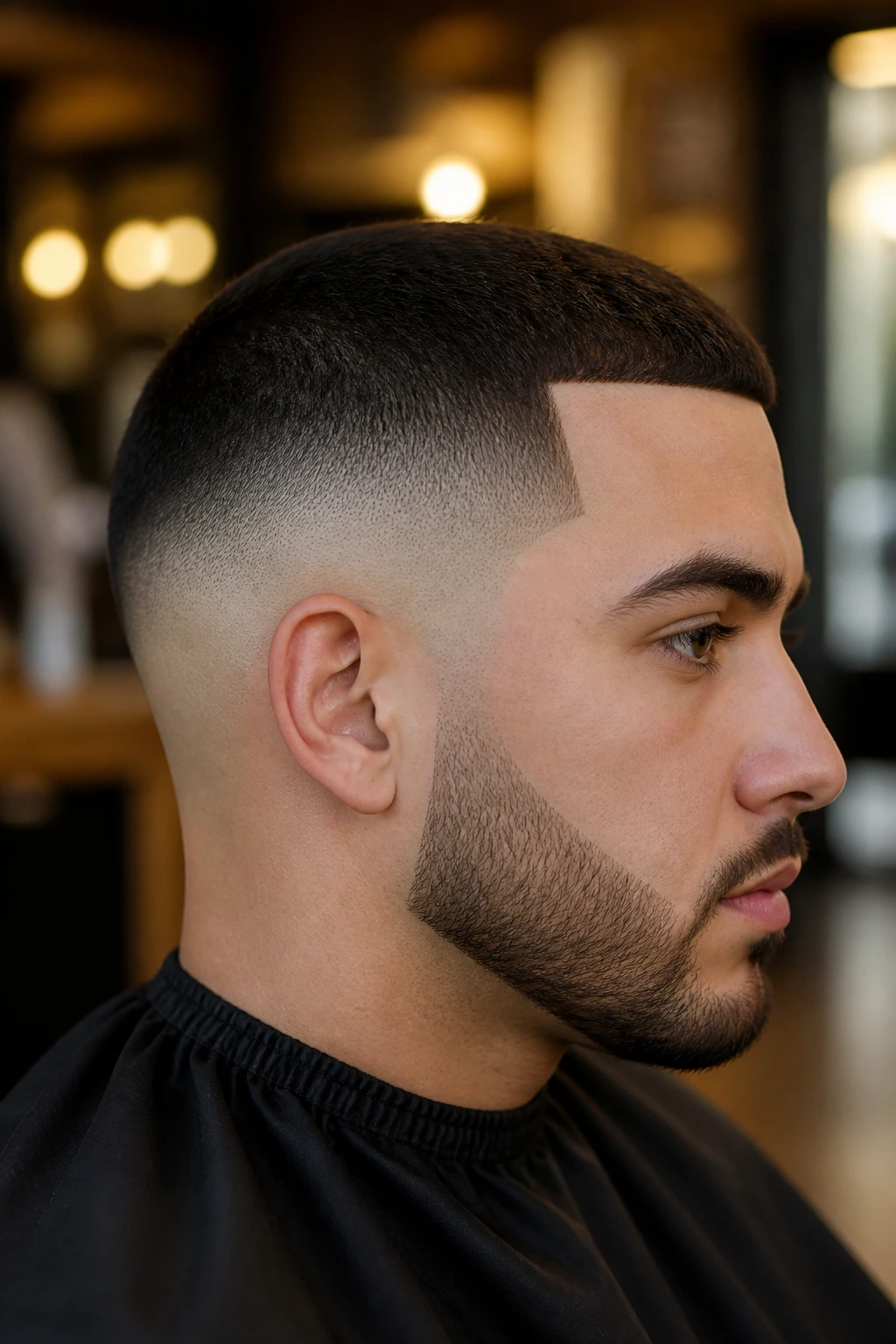
A bald fade with a line-up is all about precision. The fade drops all the way to skin, and the line-up sharpens the front hairline and temples into clear angles. Done well, it looks deliberate and crisp. Done badly, it looks too squared or too high. There’s not much room in between.
This cut works especially well with coarse, dense, or tightly curled hair because the contrast reads cleanly. It also pairs well with a beard if the barber blends the fade into the facial hair instead of letting the two fight each other. The biggest mistake is overlining the forehead. A barber should clean the natural edge, not draw a new one that sits too far back. That detail is the difference between sharp and strange.
15. Taper Fade with Side-Swept Waves
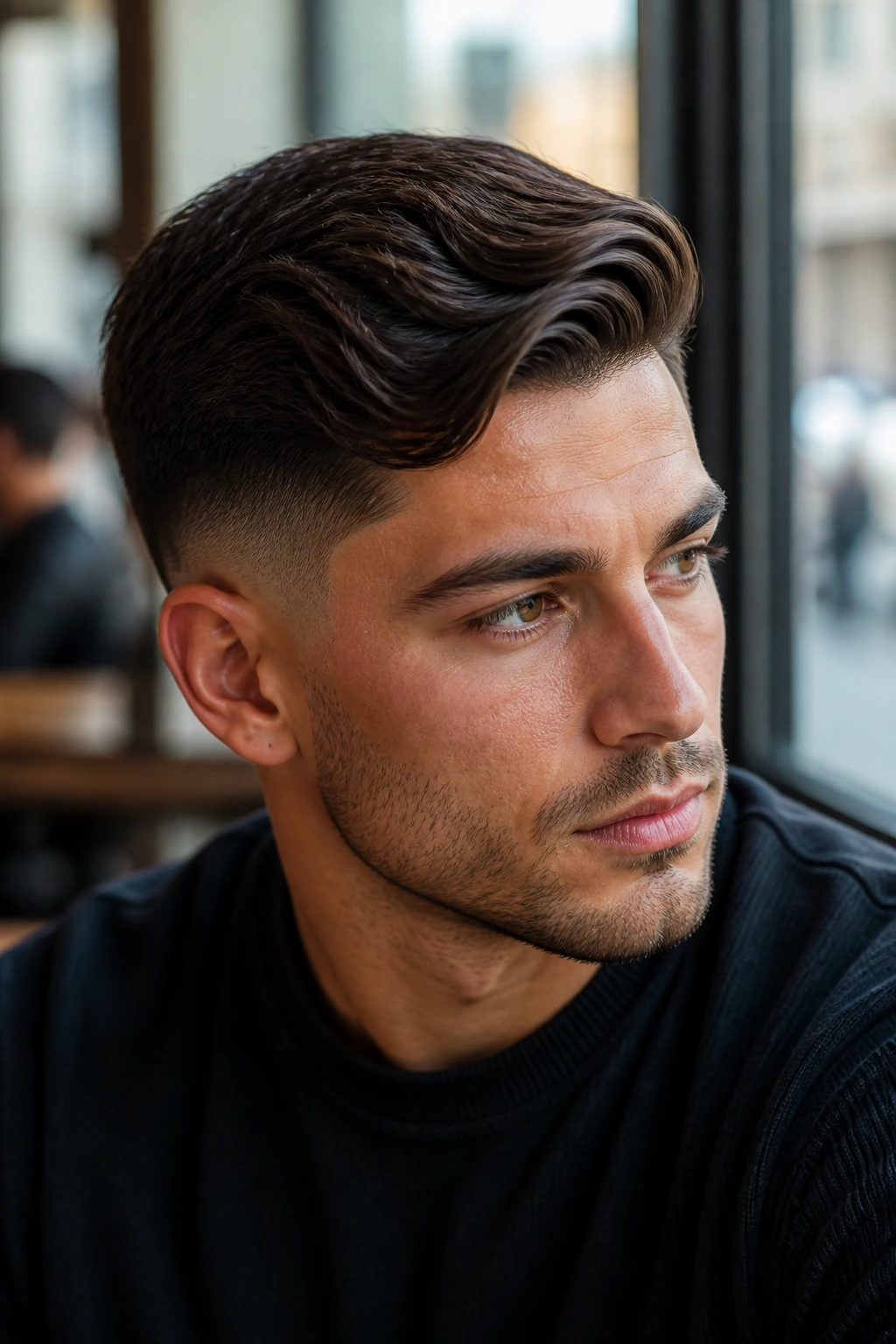
A taper fade lets waves do their thing without swallowing the sides of the head. The taper keeps the sideburns and neckline neat, while the top stays long enough to sweep to one side and show movement. It’s a softer, more elegant version of a side part, and it looks especially good when the hair has natural bend.
Quick reasons it works
- The taper keeps the cut wearable for more than a week.
- Side-swept styling gives the top direction without hard lines.
- Wavy hair keeps its shape better when the sides aren’t shaved too high.
A light cream or mousse is enough here. Brush the hair after a shower, let the wave pattern settle, and don’t flatten it with too much product. The whole point is controlled flow, not stiffness.
16. High Taper Fade with Brushed-Forward Top
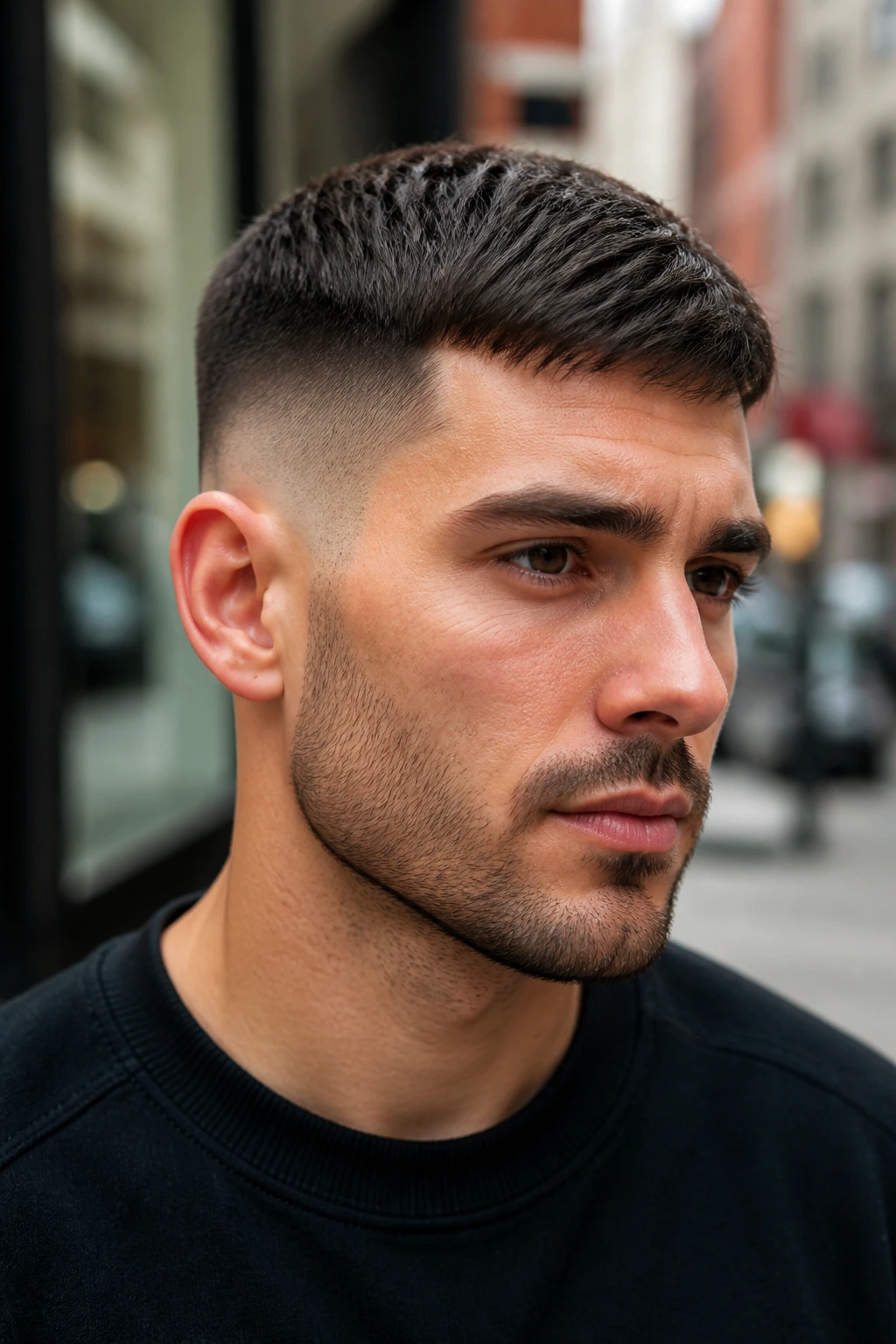
This cut has a cleaner, more modern feel than a classic taper because the fade sits higher and the top moves forward instead of back. Brushed forward, the hair frames the forehead and gives you a neat, compact shape. It’s a smart choice if you want structure without the shine of a slick style.
The brushed-forward top works best when the hair has enough length to fall with texture, not just lie flat. I like it on straight or slightly wavy hair, especially when the barber leaves the front a touch longer than the crown. That small difference helps the front stay visible. A sea salt spray under the dryer gives grip; a matte paste at the end keeps the top from separating into random spikes. It’s sharper than a messy fringe, cleaner than a full quiff.
17. Low Drop Fade with Short Afro
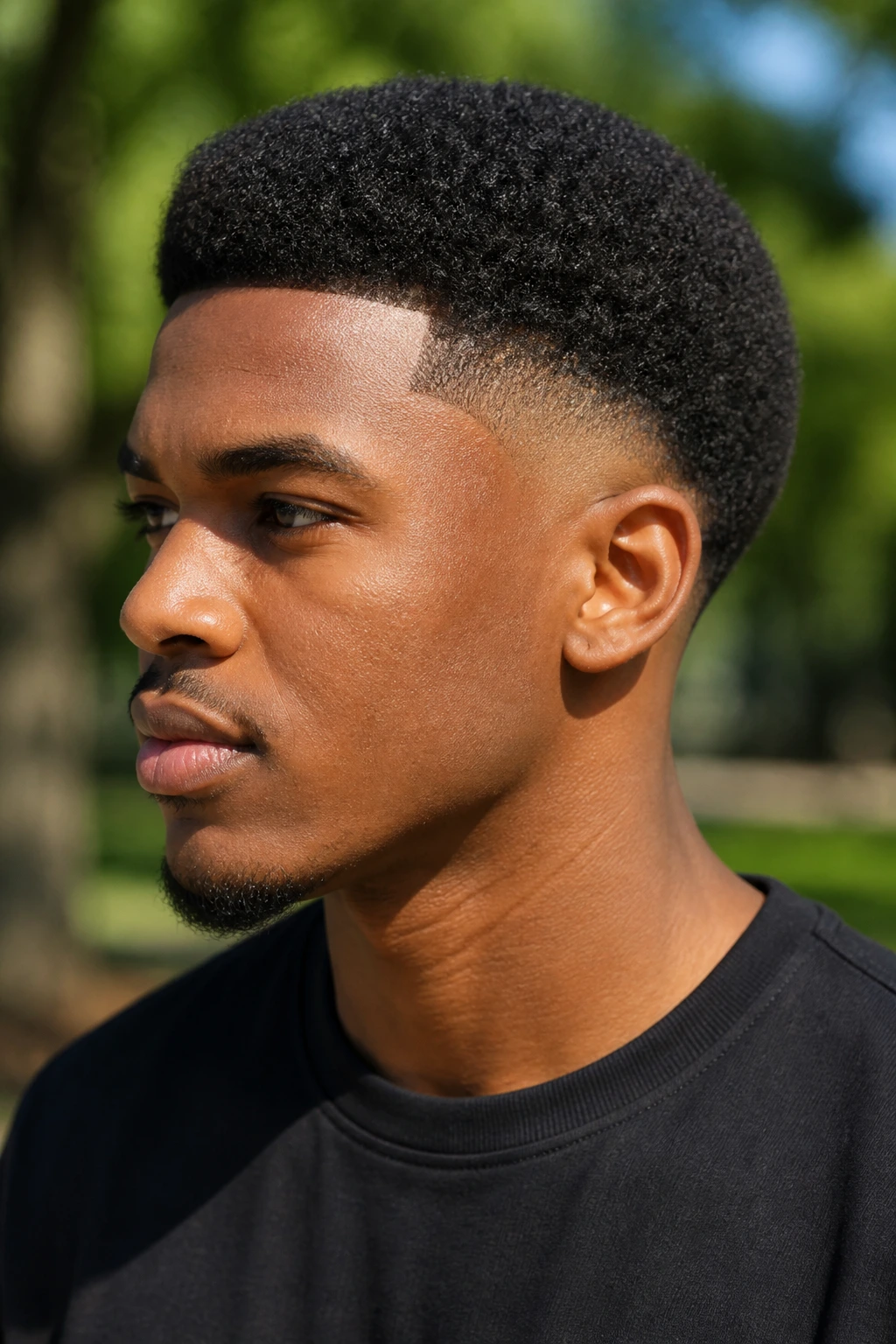
A low drop fade gives a short afro a shape that feels finished instead of boxy. The fade curves down behind the ear, which softens the outline while the top keeps its rounded, natural volume. That curve matters. Without it, the afro can look too square at the sides.
This cut rewards moisture and regular edge cleanup. Coily hair tends to look best when the top is left long enough to hold its shape, but not so long that it puffs out at the sides. A bit of curl butter or leave-in conditioner keeps the texture soft and defined. If you like a crisp line at the forehead and temples, ask for an edge-up that follows your natural hairline. Harder is not always better. Clean is better.
18. Mid Skin Fade with Caesar Cut
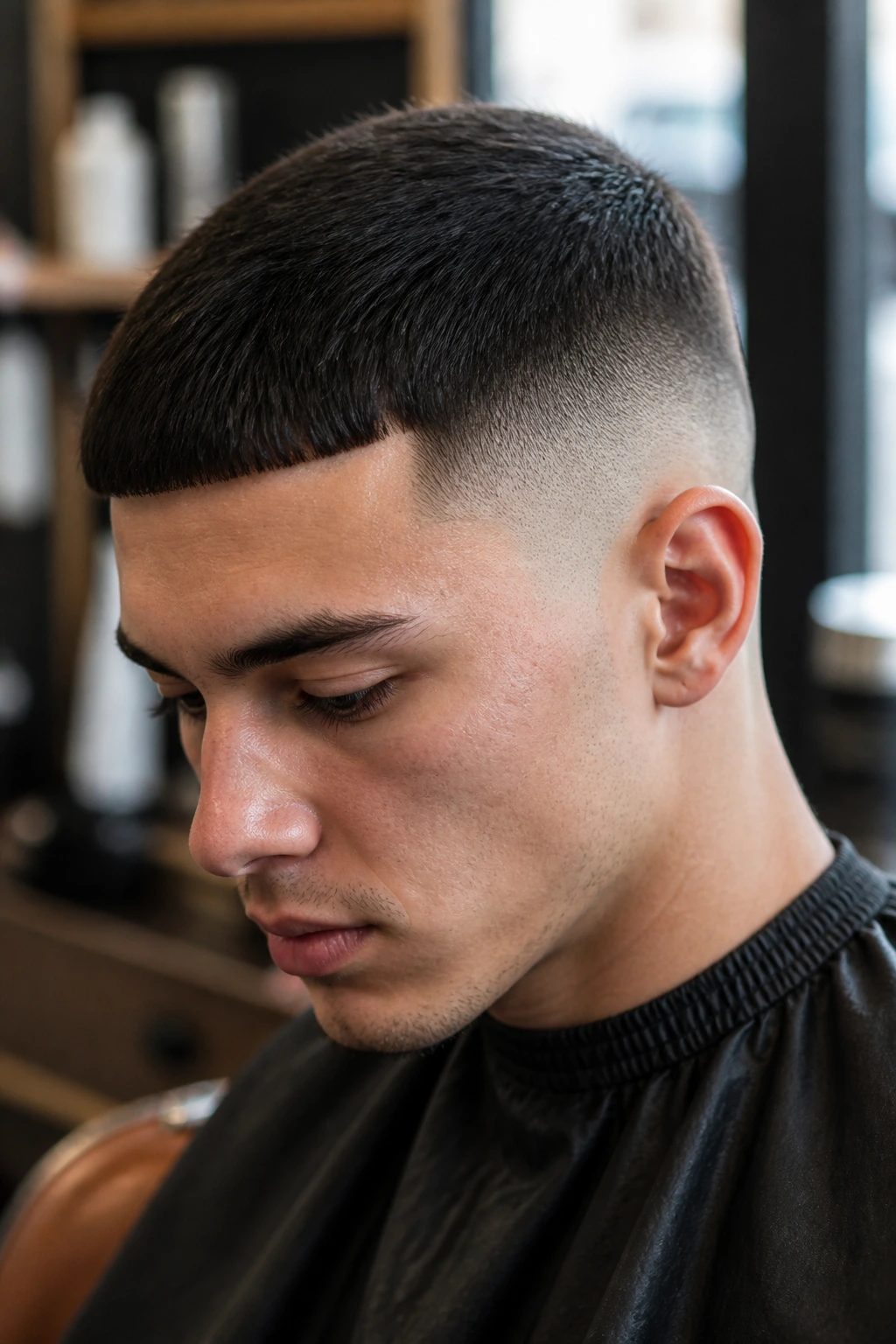
The Caesar cut is blunt in the front and compact everywhere else, which makes a mid skin fade an obvious partner. The fade gives the haircut breathing room, and the short, forward fringe keeps the shape tidy. It’s one of the easiest cuts to keep looking sharp if you don’t want to spend time styling.
What I like about this pair is how direct it looks. There’s no need for a comb-over, no need for a long top, no need for a shiny product line. A little matte cream through the fringe and the top is enough. If your hair grows forward naturally, this cut falls into place quickly. If the front wants to split at the crown, the Caesar can still work as long as the barber leaves a touch more length at the top center.
19. Drop Fade with Loose Sweep Back
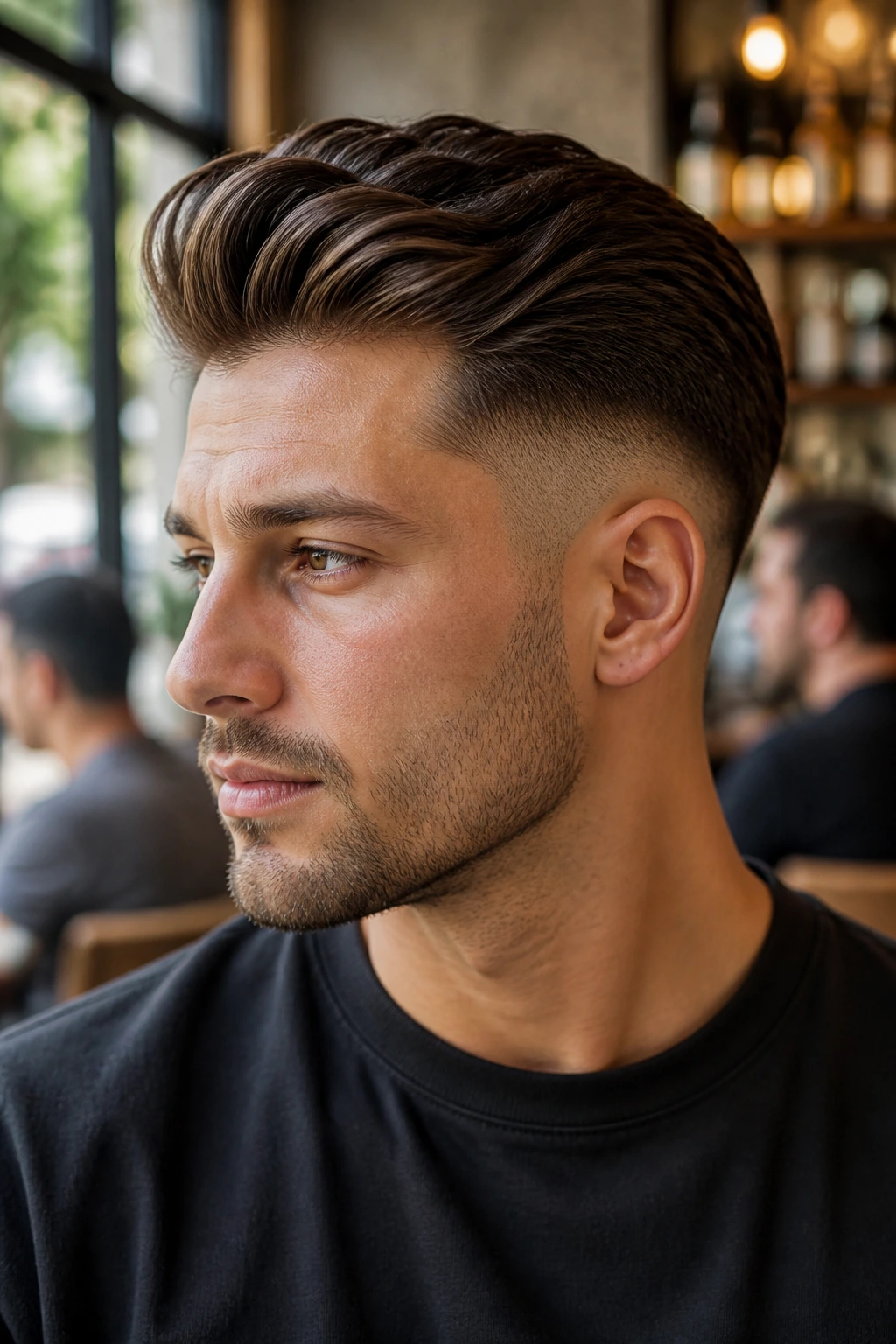
A loose sweep back gives you the polish of a slick style without the stiffness. Pair it with a drop fade, and the result feels tailored but not sealed in place. The fade curves around the ear and lets the top stay a little softer, which is useful if your hair has wave or bend.
The difference between this and a slick back is movement. A slick back pushes everything into a firmer line. A loose sweep back keeps some lift and some separation, so the haircut breathes. I’d use a light cream or low-shine pomade, then finger-comb the top after a quick blow-dry. If your hair is fine, keep the top short enough that it doesn’t sag. If it’s thick, the looseness looks even better because the shape has some body to it.
20. Low Fade with Box Braids and Edge-Up
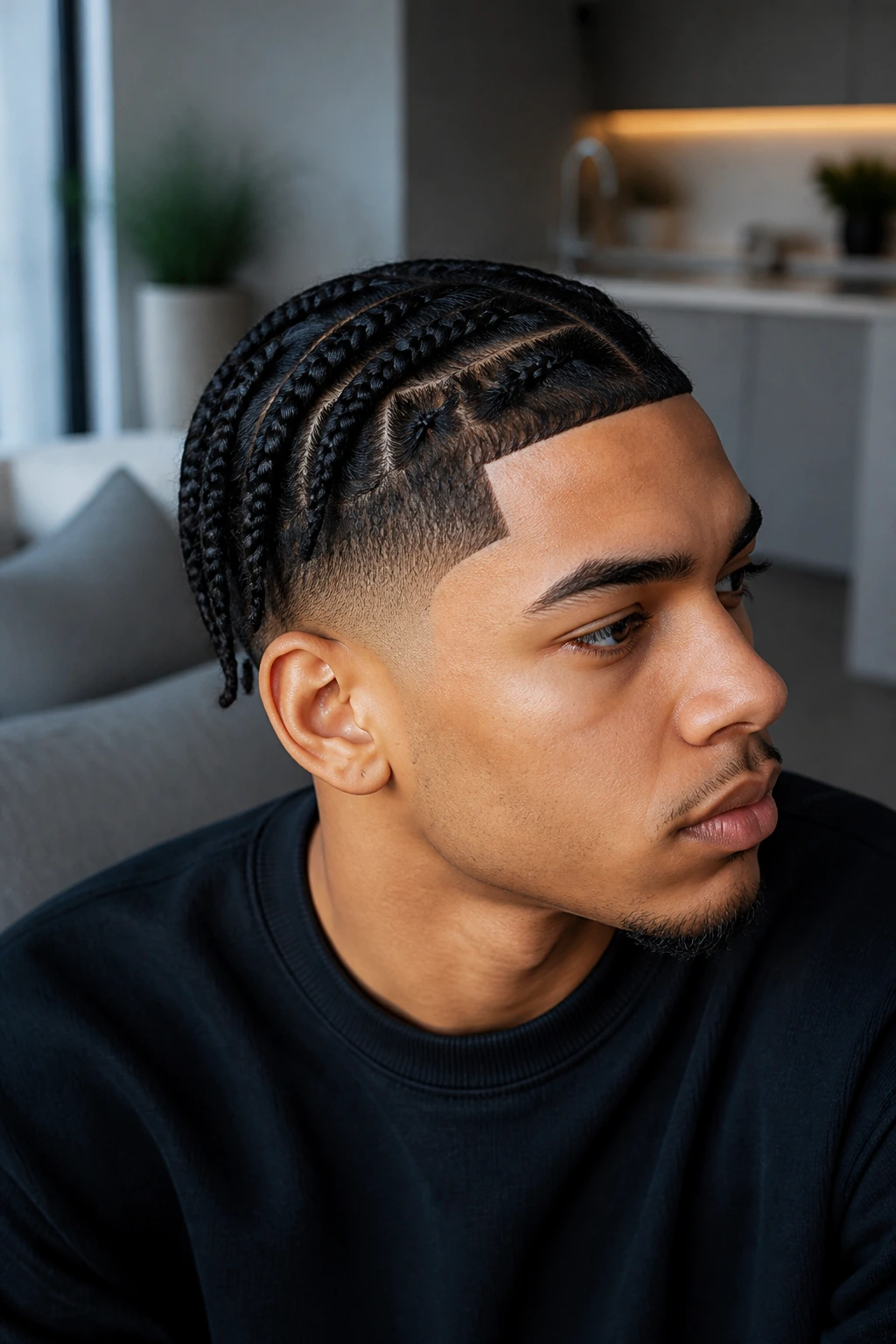
Box braids can look unfinished if the base grows out too wide, and that’s where a low fade earns its keep. The fade tightens the sides and gives the braids a clean frame, while the edge-up at the forehead and temples keeps the whole style crisp. It’s one of the better ways to make a protective style read polished instead of bulky.
The low fade is the smart version here because it leaves enough structure under the braids without chopping too much away from the base. Ask your barber to keep the fade below the widest part of the braid pattern if you want the style to stay balanced. Scalp care matters too. A light moisturizer, regular wrap at night, and a clean parting pattern keep the braids looking fresh longer than product alone ever could.
21. Undercut Fade with Long Swept-Back Top
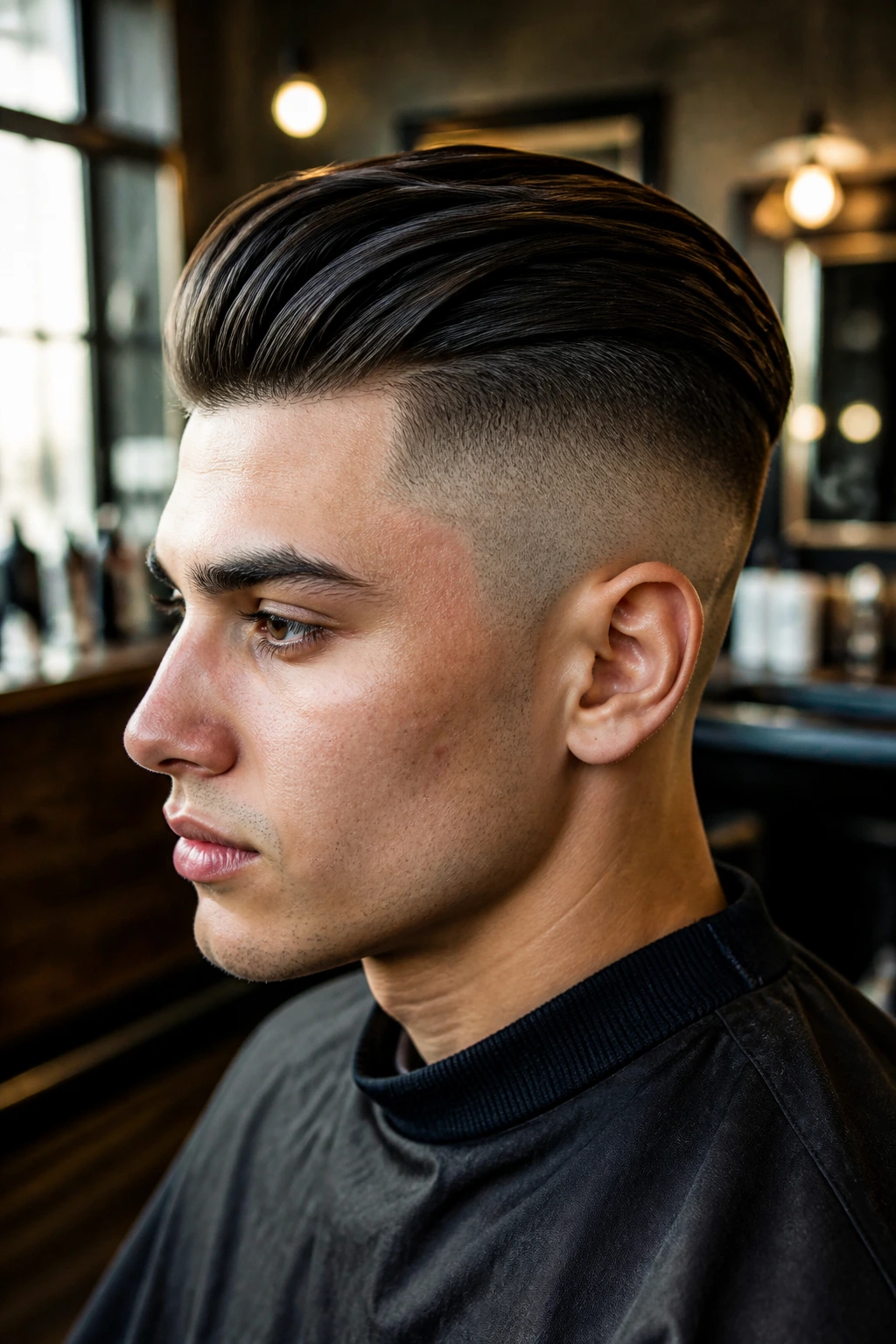
An undercut fade with a long swept-back top is for people who actually like styling their hair. The contrast is strong: the sides get tight, the top stays long, and the sweep back makes the whole thing look put together rather than random. It has a little more edge than a classic slick back because the separation is part of the appeal.
This cut looks best when the top has enough length to move but not so much that it collapses. Think in terms of shape, not just length. A blow-dryer and a brush are part of the routine here, and skipping them usually shows. If your hair is thick, this style can look excellent. If it’s fine, it may need more product than you want to deal with. That’s the tradeoff.
22. Skin Fade with Hard Part and Waves
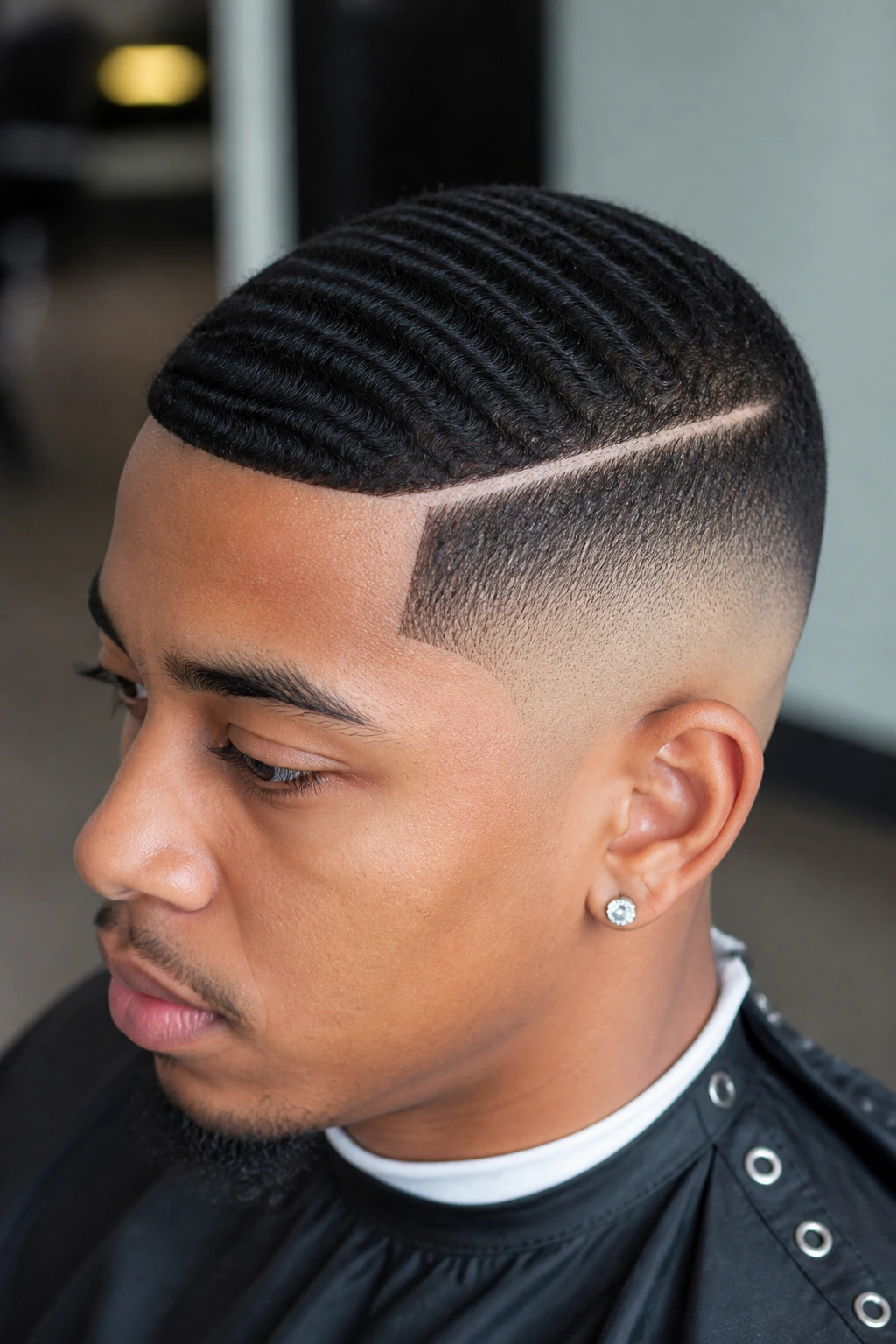
A skin fade with a hard part and waves is the most geometric cut on this list. The skin fade takes the sides down hard, the hard part gives the top a clear division, and the waves add pattern so the haircut doesn’t look flat. It’s a strong look. Very crisp.
The hard part is the detail that can tip the whole style from sharp to overdone, so restraint matters. A thin etched line is enough. On coarse hair, especially when the wave pattern is already trained, this cut looks disciplined and clean. Keep the waves brushed in regularly, and don’t bury the top in heavy product. The haircut should have shape, not shine for the sake of shine.
Why Fade Haircuts Keep Their Shape as They Grow Out
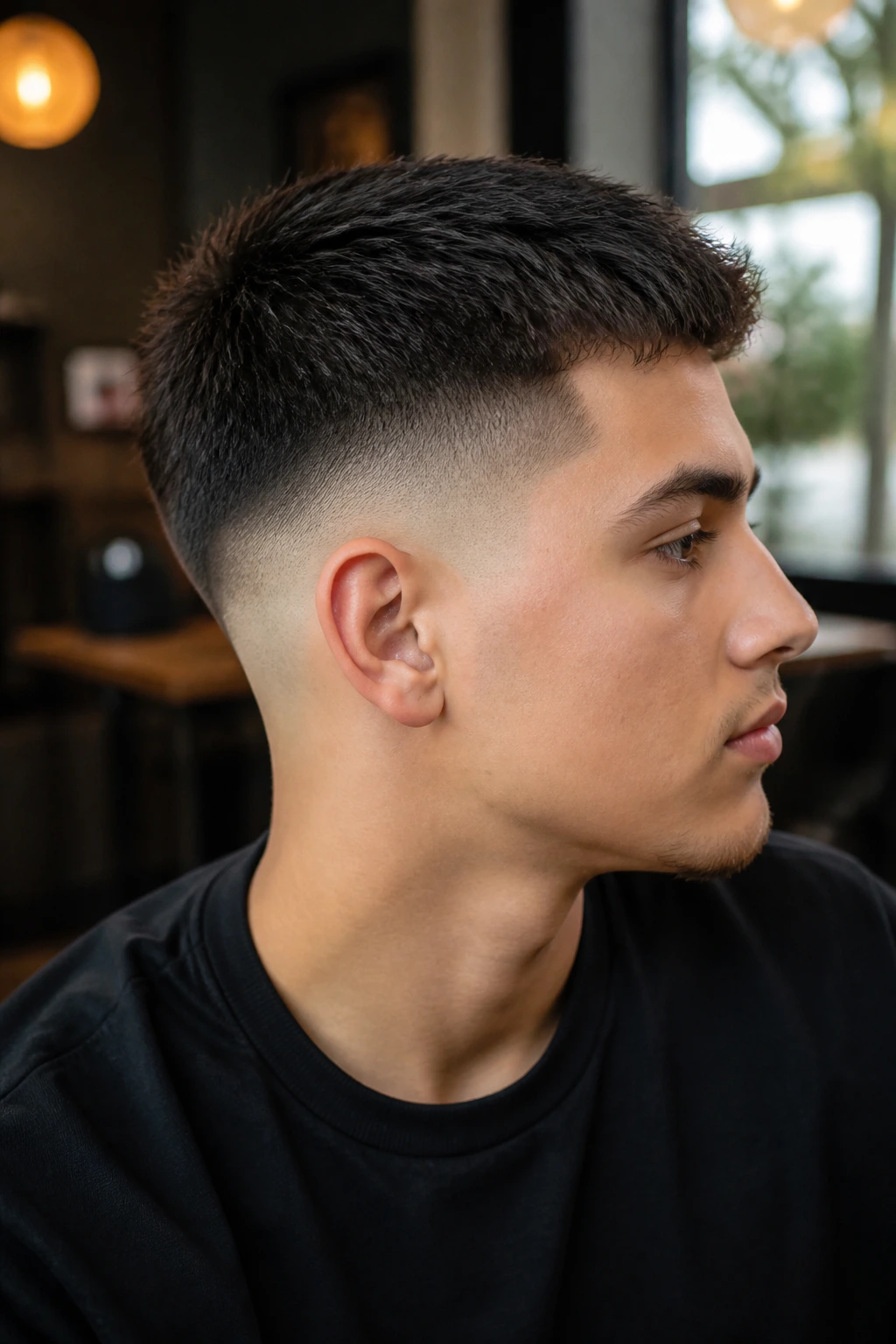
A fade grows out more gracefully than a solid block of hair because the cut already contains its own transition. The shortest point is usually at the bottom edge, and as the hair grows, the blend doesn’t disappear all at once. It softens. That’s a small thing, but it changes how long the haircut still reads as intentional.
The difference between a low taper and a skin fade shows up most clearly after a week or two. A skin fade gives you a louder first impression, but the grow-out can show faster because the bottom edge is so bare. A taper or shadow fade hides the regrowth better, especially around the sideburns and nape. If you hate the “between cut” stage, that’s the one detail worth paying attention to before you sit in the chair.
Hair grows about half an inch a month on average, and that means the corners around the ears and neckline often tell the story first. A clean neckline can buy you extra days. So can a fade that doesn’t start too high. If the blend sits lower, the haircut still looks tidy even when the top is getting a little longer.
How to Ask Your Barber for the Fade You Want
Bring a photo. Not one photo — bring two or three that show the front, side, and back if you can find them. A single front-facing image leaves out the part that matters most in a fade: where the blend starts and how the neckline is handled. That’s where barbers make their choices.
Use plain language. Say low, mid, or high. Say skin, shadow, taper, or bald. Tell the barber how much length you want on top in inches, or point to the top of your finger if measurements are not your thing. If you wear a beard, mention whether you want the fade to connect cleanly into it or stop short.
A few specific things help a lot:
- Where the fade starts: above the ear, at the temple, or low near the neckline.
- How short the sides go: skin close, shadow close, or kept with a guard.
- How the top should sit: forward, up, back, side-swept, or textured.
- Whether your hair has a cowlick or crown swirl: that changes how the top behaves.
- How often you plan to return: that tells the barber how aggressive the fade can be.
The best haircuts usually start with a sentence that sounds boring and ends with a clean result.
Essential Tools for Keeping the Cut Clean at Home
-
Hand mirror with good light: Lets you check the neckline and behind the ears without guessing.
-
Small trimmer or detail shaver: Useful for cleaning the nape and sideburns between barber visits.
-
Wide-tooth comb and regular comb: The wide-tooth version is better for curls and waves; the finer comb helps with side parts and slick backs.
-
Matte clay or paste: Best for crops, quiffs, brushed-forward cuts, and textured tops that need shape without shine.
-
Light pomade or styling cream: Better for comb overs, slick backs, and side-swept styles that need a little control.
-
Blow-dryer: Not optional for quiffs, pomps, and longer swept-back styles. Heat lifts the root in a way fingers cannot.
-
Wave brush or curl brush: Handy if your fade sits on waves, curls, or coils and you want the top to keep its pattern.
-
Moisturizer or scalp lotion: Especially useful for skin fades, buzz cuts, and any cut that exposes more scalp.
-
Sunscreen for exposed scalp: A bare fade burns faster than people think, and the scalp near the part or crown gets hit hard.
How to Wear These Fades So They Look Intentional
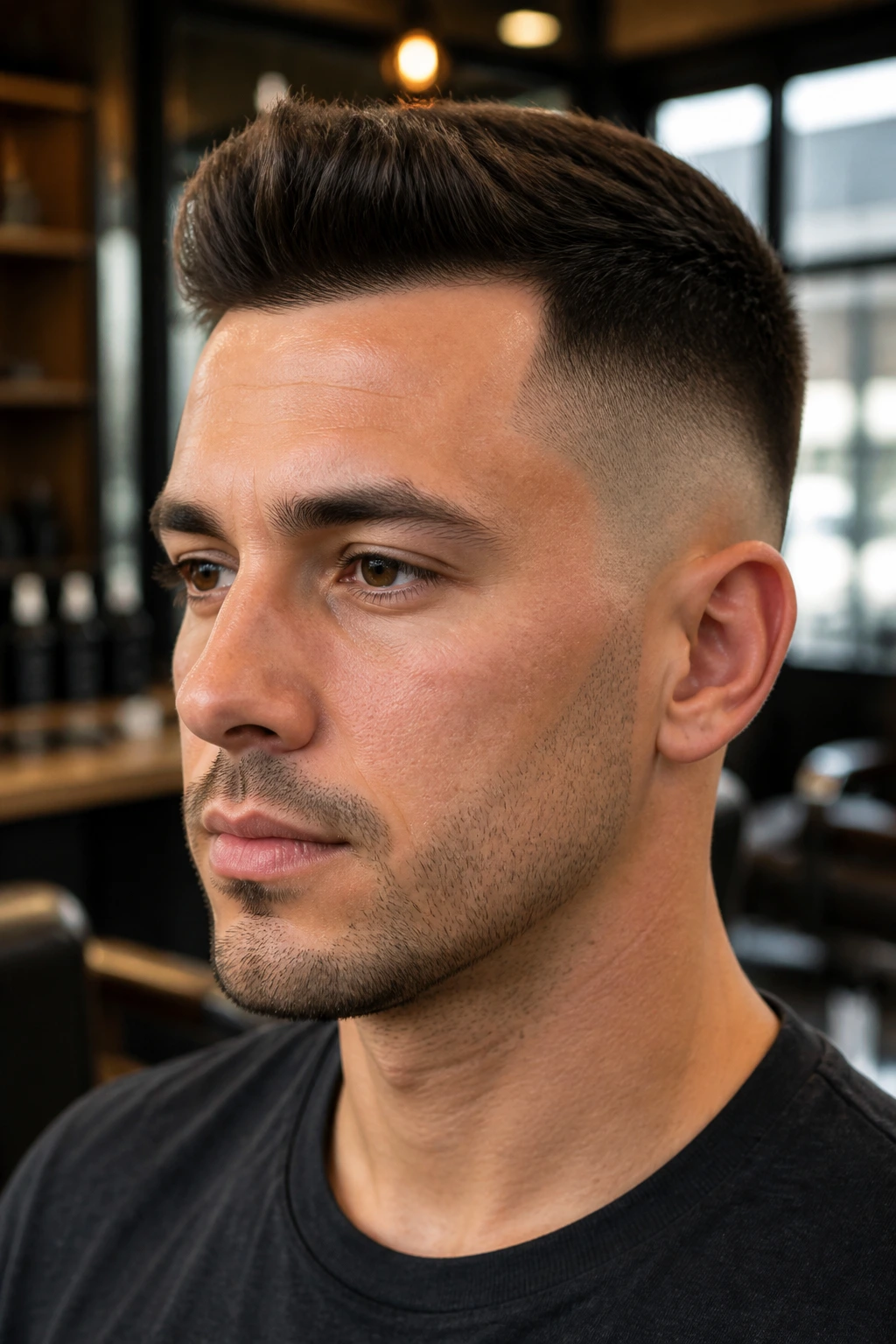
Presentation: Keep the neckline clean, the ears visible, and the top styled in one direction rather than half a dozen. A fade looks sharp when the silhouette has a clear plan.
Outfit Pairings: Clean tees, overshirts, jackets with a decent collar, and simple knitwear usually work better with fades than busy necklines that fight the haircut. A sharp fade can carry a plain outfit. The reverse rarely happens.
Length and Finish: Short fades with crops and buzz cuts look better with matte product or no product at all. Longer fades with slick backs, quiffs, and swept styles need a little lift or sheen, but too much shine makes the hair look greasy instead of controlled.
Facial Hair: If you wear a beard, connect it on purpose. If you stay clean-shaven, keep the sideburns and neckline immaculate. Half-finished facial hair can drag a clean fade down fast.
Styling Boosters That Make the Cut Read Cleaner
Texture: A few finger-separated pieces on top make crops, French crops, and quiffs look alive. Blunt, overcombed hair tends to flatten the whole shape.
Hold: Use only enough product to keep the style in place. If the hair feels sticky, you probably used too much. That’s especially true on shorter cuts where every strand is visible.
Line Work: A crisp line-up, a neat side part, or a well-kept hard part does a lot of visual work. One clean line often matters more than an extra product.
Finish: Matte reads modern on most of these cuts. Satin or light shine works on slick backs, pomps, and some comb overs. Heavy gloss is the thing I’d skip first.
Common Fade Mistakes That Make the Cut Look Off
-
Starting the fade too high for your face shape: A high fade on a narrow face can make the head look taller than you want. Ask the barber to keep the blend lower if you want more balance.
-
Leaving the top too heavy: Thick, untouched top hair with tiny faded sides can look like two different haircuts stuck together. The top needs shape, not just length.
-
Using the wrong product finish: Shiny gel on a textured crop makes the hair look wet and stiff. Matte clay on a slick back can make it collapse. Match the product to the cut.
-
Ignoring the neckline: A good fade can be ruined by a fuzzy nape. Clean the neck regularly or book a trim before the outline gets messy.
-
Forgetting the crown or cowlick: If the crown pushes the hair in a different direction, the top won’t sit the way the photo did. Tell the barber where your hair naturally swirls.
-
Trying to maintain a skin fade for too long between cuts: The sharp edge softens fast. If you want that crisp contrast, plan on regular cleanup.
Variations and Adaptations to Try
Office-Quiet Shadow Fade: Keep the sides in a shadow blend instead of taking them to skin, then pair it with an Ivy League, side part, or brushed-forward top. It reads neat at work and still looks current without the harsh contrast of a bald fade.
High-Contrast Skin Fade: If you want the haircut to hit hard, go skin close on the sides and keep the top tight, blunt, or slicked. This version looks best when the top has a clear shape and the edges around the ears are clean enough to notice from across the room.
Curl-First Fade: Leave more length on top and let the curls lead, then use a drop fade or burst fade to contain the shape. This works when you want the texture to stay visible instead of being flattened into a uniform short style.
Beard-Linked Fade: Ask the barber to move the fade smoothly into the beard so the sideburn area becomes one continuous shape. The result is cleaner than a haircut and beard that stop and start without a plan.
Low-Maintenance Buzz Fade: Keep the top short with a buzz and use a low or skin fade underneath. This is the best pick if you want the clean outline of a fade with almost no morning styling.
How Long a Fade Stays Sharp and When to Book the Next Cut
Skin fades show growth faster than people expect. If you like that tight, fresh edge around the ear and nape, you’ll probably want a cleanup every 7 to 10 days. Past that, the lower edge starts to soften enough that the contrast looks less deliberate.
Taper fades, shadow fades, crew cuts, and buzz fade styles buy you more time. Two to three weeks is often the sweet spot before the outline starts looking fuzzy. If you wear a longer top — a quiff, slick back, pompadour, or sweep back — the top can keep working while the sides wait for another trim. That’s one of the reasons fades are so practical. The haircut can age in pieces instead of all at once.
Home maintenance helps more than most people think. A small trimmer around the neckline and sideburns every 5 to 7 days can keep a cut from drifting into scruff territory, but don’t try to recreate the fade yourself unless you already know what the guards and angles are doing. It’s easy to carve too high and turn a clean blend into a step.
Frequently Asked Questions
What’s the difference between a taper fade and a skin fade?
A taper fade keeps some length in the blend, especially around the sideburns and neckline, so it grows out more softly. A skin fade takes the hair down to bare skin at the bottom, which creates more contrast and a sharper look but needs more frequent upkeep.
Which fade works best for a round face?
A high fade with height on top can help lengthen the face, while a low fade with texture can keep things balanced if you want something softer. I’d avoid a wide, bulky top with low contrast on the sides, because that can make the face look fuller than it is.
Can curly hair pull off a fade without looking puffy?
Yes, but the top has to be left with enough weight to follow the curl pattern. Drop fades and burst fades usually work better than straight, horizontal fades because they let the curls keep shape near the temples and ears.
How much product do I actually need?
Less than most people use. A fingertip amount of matte clay is enough for short crops, and a small coin-sized amount of cream or pomade usually covers a comb over or slick back. If the hair clumps, shines too much, or feels heavy, you’ve gone past the sweet spot.
Should I get a hard part?
Only if you want the haircut to look more graphic. A hard part adds definition, but it can age faster than a natural side part and looks too stiff on some hair types. If you’re not sure, ask for the part to be left soft first.
How do I keep a skin fade from irritating my scalp?
Moisturize the skin, use a gentle shampoo, and don’t scratch at the faded area with a rough towel. If your scalp burns after a fresh cut, a lightweight, fragrance-free lotion can calm it down. And yes, sunscreen matters on exposed scalp skin.
What if the fade comes out higher than I wanted?
Tell the barber right away, not two days later. A small adjustment can sometimes soften the transition or lower the visual line by changing the top shape, but if you wait until the next visit, the only fix is usually a shorter top. The sooner you speak up, the more options you have.
Can I wear a fade with a beard?
Absolutely, and a beard often makes a fade look even sharper. The important part is whether the sideburns and cheek line connect cleanly. If the haircut stops and the beard starts without a blend, the whole face can look chopped up.
The Cleanest Way to Wear a Fade
A good fade haircut is never just about short sides. It’s about control. The cleanest versions on this list all do the same job in different ways: they shape the outline, direct the eye, and keep the haircut from drifting into mess as it grows.
My favorite part of a fade is how honest it is. You can see the barber’s hand in it. You can see where the weight was removed, where the top was left alone, and where the head shape was respected instead of fought. That’s what makes the best fades look expensive even when they’re not complicated.
Pick the version that fits your hair texture and your patience level, then keep the edges tidy enough that the shape can do its work. The right fade doesn’t hide who you are. It frames it.
