



A short hair with undercut cut changes the silhouette fast. One side can look sharp enough to slice cleanly through a thick denim jacket, while the top still has enough length to sweep, spike, bend, or tuck depending on your mood.
That contrast is the whole appeal. An undercut removes bulk where short hair tends to puff out — around the nape, behind the ears, through the temple line — so the head sits closer to the shape of the cut. The top layer gets more lift, the outline gets cleaner, and the style stops looking like an accidental grow-out.
For women who like hair with a little bite, that matters. A blunt pixie can read sweet. A bob can read polished. A short haircut with shaved sides or a hidden undercut carries a sharper mood, especially when the texture on top is left piecey instead of over-smoothed. The styles below cover that whole range, from barely-there undercuts to loud, graphic clipper work, so you can pick the version that suits your texture, face shape, and appetite for maintenance.
Why This Collection Stands Out
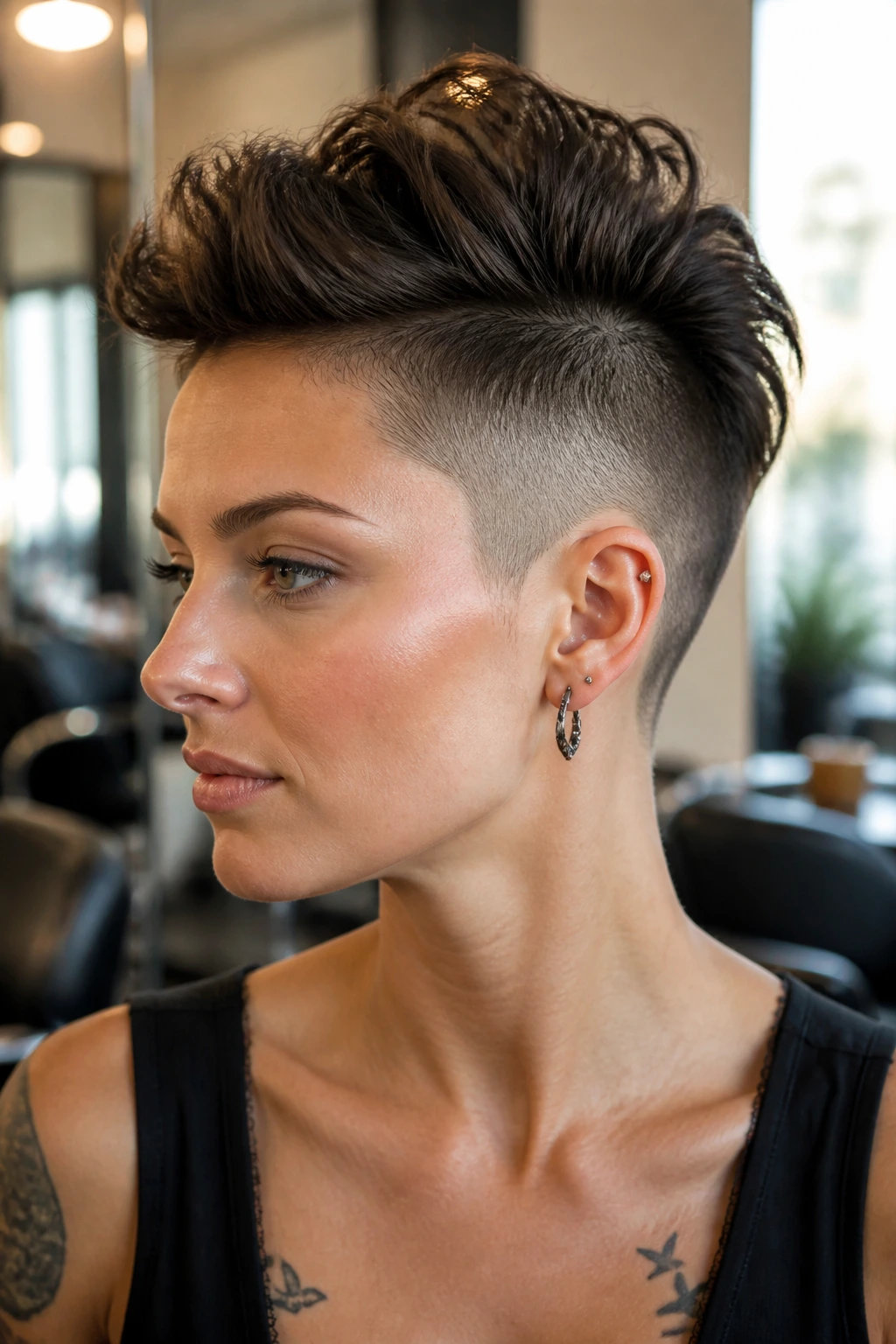
-
Weight Removal: Shaving out the nape or temple bulk stops thick hair from ballooning into a triangle by midday, which is the quiet problem behind a lot of “my short cut never sits right” complaints.
-
Built-In Lift: When the lower section is removed, the crown can sit higher without teasing, crimping, or a can of stiff spray.
-
Grow-Out Flexibility: A hidden undercut still gives shape when the top gains an inch or two, so the cut doesn’t collapse the moment it starts growing.
-
Texture-Friendly: Waves, curls, and coils read cleaner when the sides aren’t fighting them. The undercut gives the texture room to show off instead of spreading outward.
-
Low-Fuss Styling: These cuts usually need less product than people expect. A pea-sized amount of paste, a touch of mousse, or a quick blast with a diffuser often does the job.
-
Edge Without Length: You get attitude from the structure itself, not from long hair doing all the work. That’s the part I like best.
1. Temple-Shaved Pixie with Piecey Top
A temple-shaved pixie is one of the cleanest ways to make short hair with undercut feel sharp without turning it into a full buzz. The top stays soft and movable, but the sides pull inward, which makes the cheekbones look more pronounced and the whole cut feel lighter.
Ask for a close shave or a tight clipper taper around one or both temples, then leave enough length on top to pinch into small pieces with matte paste. The detail that matters is the balance: if the top gets too short, you lose the contrast; if the sides stay too bulky, the effect disappears.
This one works especially well when you want a cut that can flip from neat to messy in about 30 seconds. Finger-dry it forward for a choppy fringe, or push it up and off the face for a harder, punkier line. The shape does the talking before the product does.
2. Nape-Undercut Bixie with Choppy Ends
A bixie with a nape undercut sits in that sweet spot between bob and pixie, and it has real staying power because the back stays tidy even when the top gets a little shaggy. The nape shave clears out the heavy part that usually makes short bobs flip outward in a weird little mushroom shape.
What makes this version feel current is the choppy perimeter. Keep the ends broken, not blunt, so the top moves in short, flicky sections instead of one helmet-like sheet. If your hair is thick, this cut can take a full ounce of bulk off the look without sacrificing the face-framing length.
Style it with a lightweight mousse at the roots and a touch of cream through the ends. If you air-dry, scrunch once and leave it alone. If you blow-dry, use your fingers instead of a brush; a brush tends to make the top too polite.
3. Asymmetrical Bob with One-Side Shave
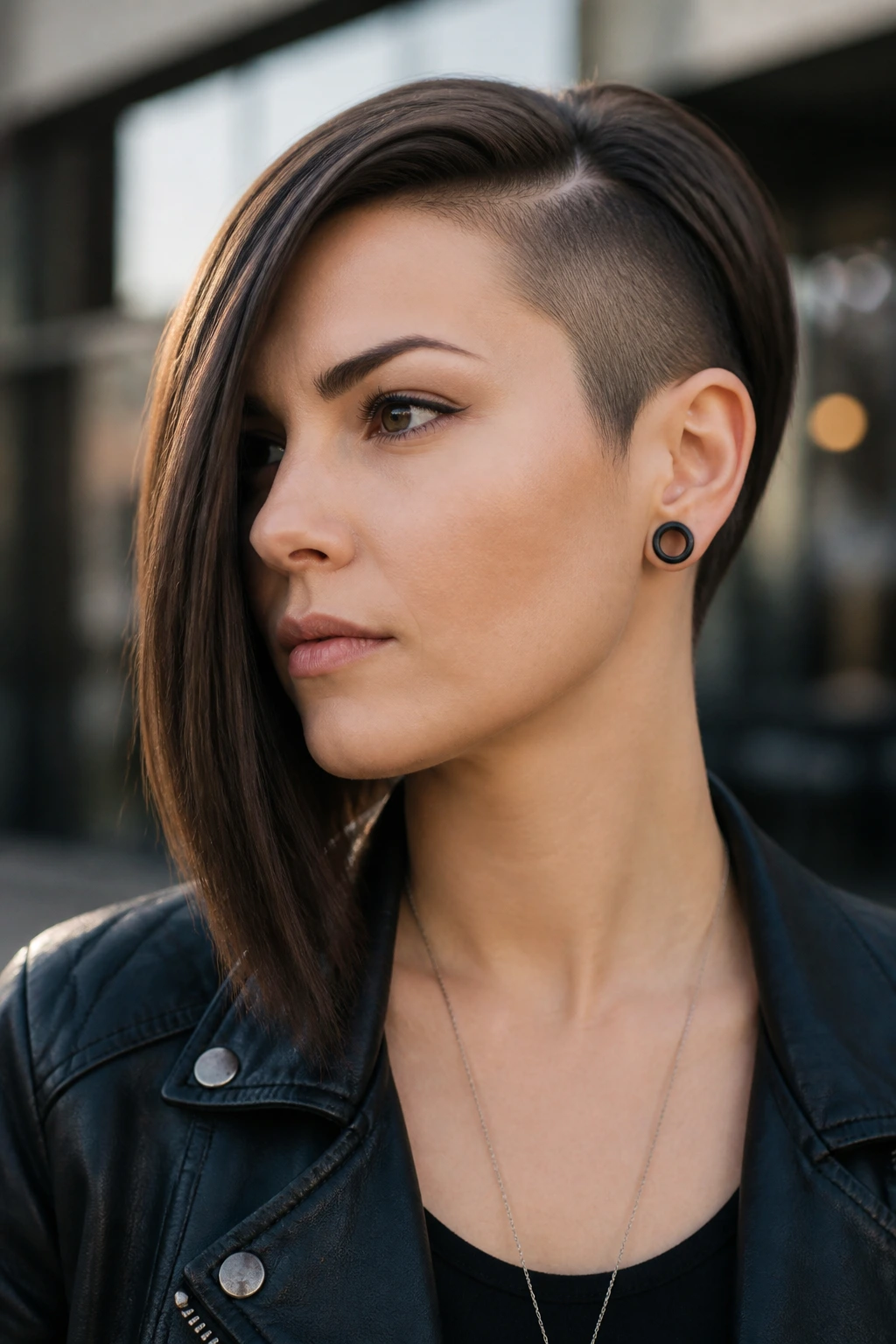
This cut has attitude because it refuses symmetry. One side stays bob-length, grazing the jaw or cheekbone, while the other side gets shaved close enough to create a real visual break. The result is sleek on one side and intentionally disruptive on the other.
The trick is keeping the longer side blunt and clean. If it gets too layered, the contrast with the shave turns muddy. A side part helps, especially if the longer section falls forward over the jaw and the shaved side stays bare or nearly bare. That little asymmetry can make a plain black tee look styled.
Best move: tuck the longer side behind the ear and let the shaved panel show. It sounds simple. It reads bold. For styling, a flat iron on the longer side keeps the line sharp, while a dab of shine serum on the ends stops them from looking dry next to the clipper work.
4. Curly Crop with Hidden Undercut
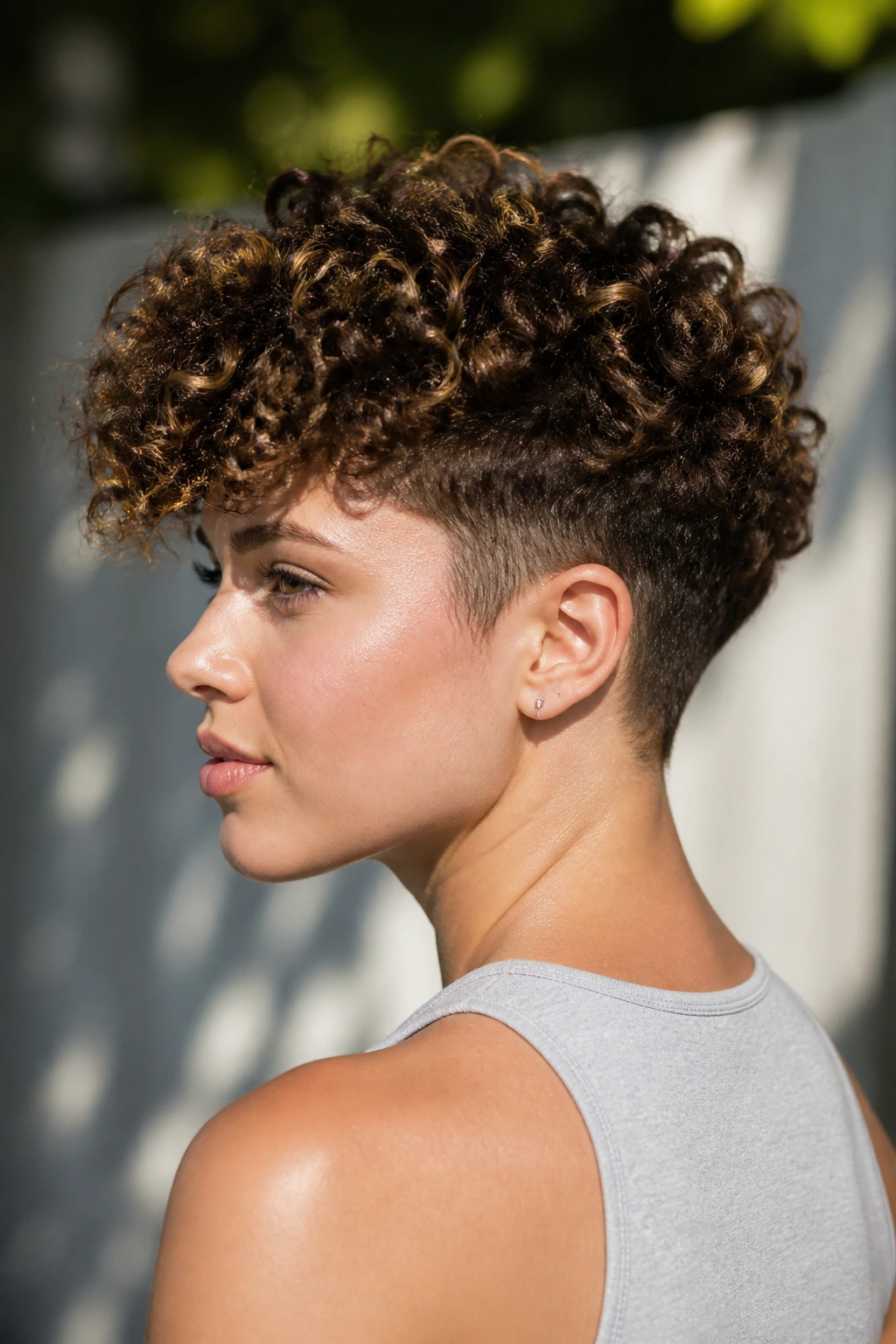
Curly hair and undercuts get along better than people think, mainly because curls want room. A hidden undercut removes the weight underneath, which keeps the shape from puffing out at the bottom while the crown stays round and alive.
The nice part is how discreet it can be. From the front, it can look like a soft curly crop. From the side, the shorter underlayer changes everything. That makes this one good for anyone who wants edge without having the whole haircut announce itself from across the room.
Leave enough curl length on top to spring upward when dry. If the top is cut too close, the undercut starts to show in awkward patches. A diffuser on low heat and a curl cream with a little hold will keep the pattern defined. Skip heavy oils near the roots; they flatten the lift that makes the cut work.
5. French Bob with a Peekaboo Nape Cut
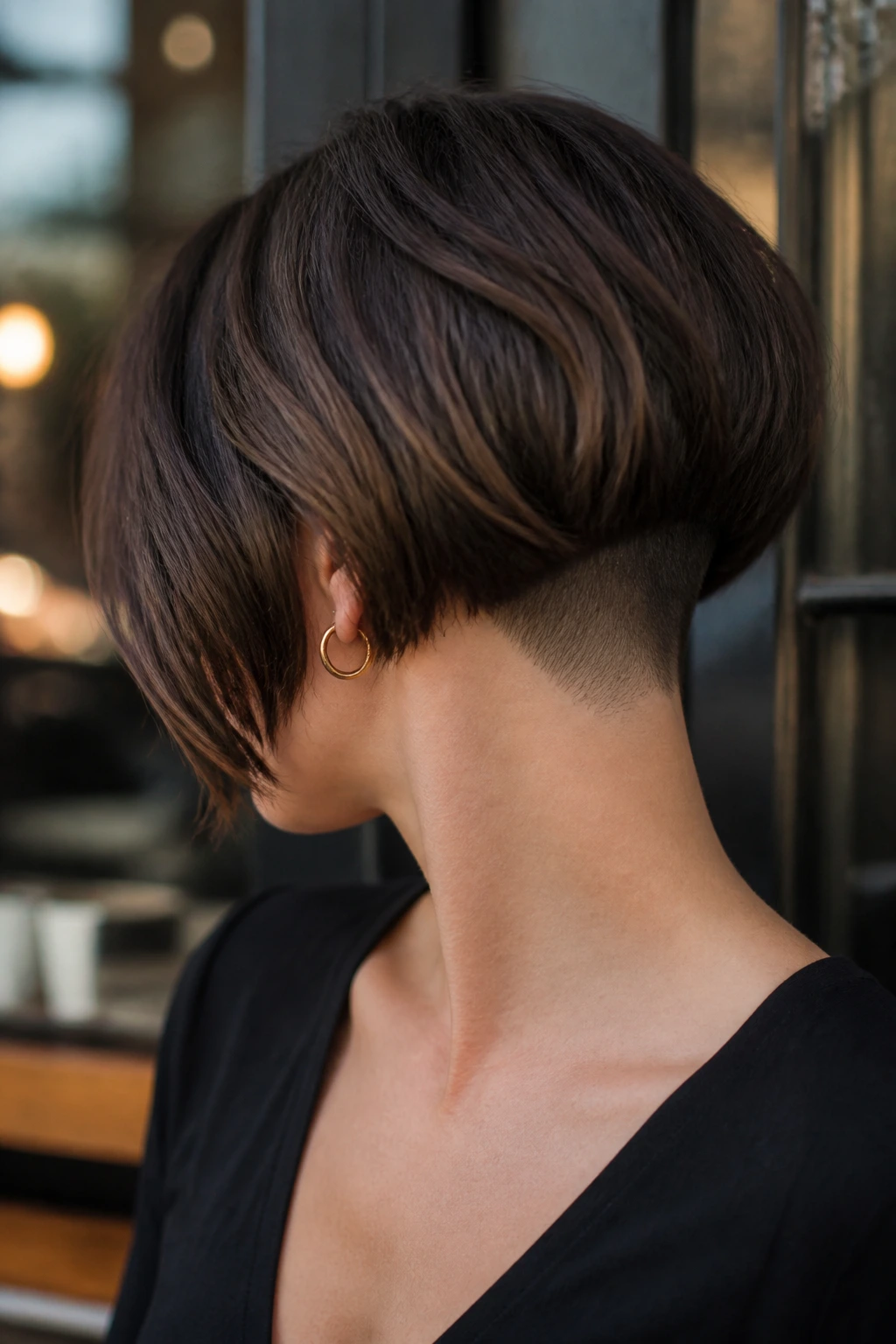
A French bob gets a different personality the second you slide a hidden undercut into the nape. The outline stays soft and jaw-skimming, but the underside loses bulk, so the bob lies flatter against the head and bends inward instead of kicking outward.
That peekaboo shave is the detail I’d recommend for anyone who wants a sharper bob without a full punk moment. It’s there for shape, not shock value. When you wear the hair tucked behind the ears, the neck area still looks neat. When you wear it down, the cut keeps its clean line.
Blow-dry with a small round brush if you want a slight curve under the jaw. If your hair is naturally straight, this one can look almost editorial with a center part and a tiny amount of texture cream at the ends. It’s quiet, but not soft.
6. Wolf Pixie with a Tapered Back
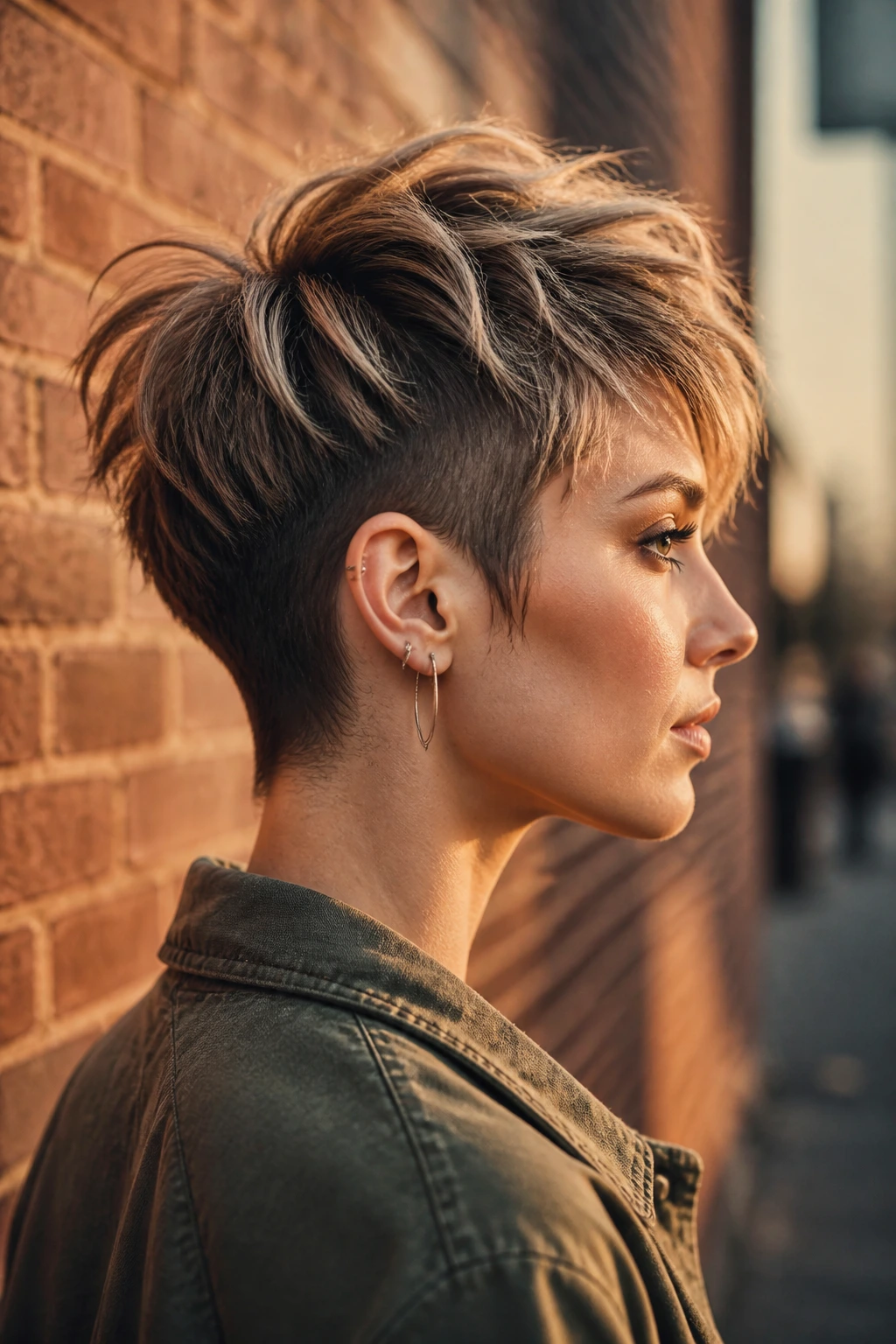
A wolf pixie is what happens when a pixie stops trying to be neat and starts borrowing attitude from a shag. The top gets jagged layers, the crown gets lift, and the back is tapered or lightly undercut so the shape doesn’t swell out under the occipital bone.
This cut is useful when your hair wants to sit flat at the crown but bulky at the neck. That strange combination is common, and this shape handles it better than a tidy crop. Keep the layers broken and uneven, with a little extra length at the fringe so the front still has movement.
It looks best when the styling stays loose. A small amount of texturizing spray at the roots and a rough-dry with your fingers is enough. You do not want a glossy finish here. The slight roughness is part of the point.
7. Platinum Buzz Cut with Skin Fade
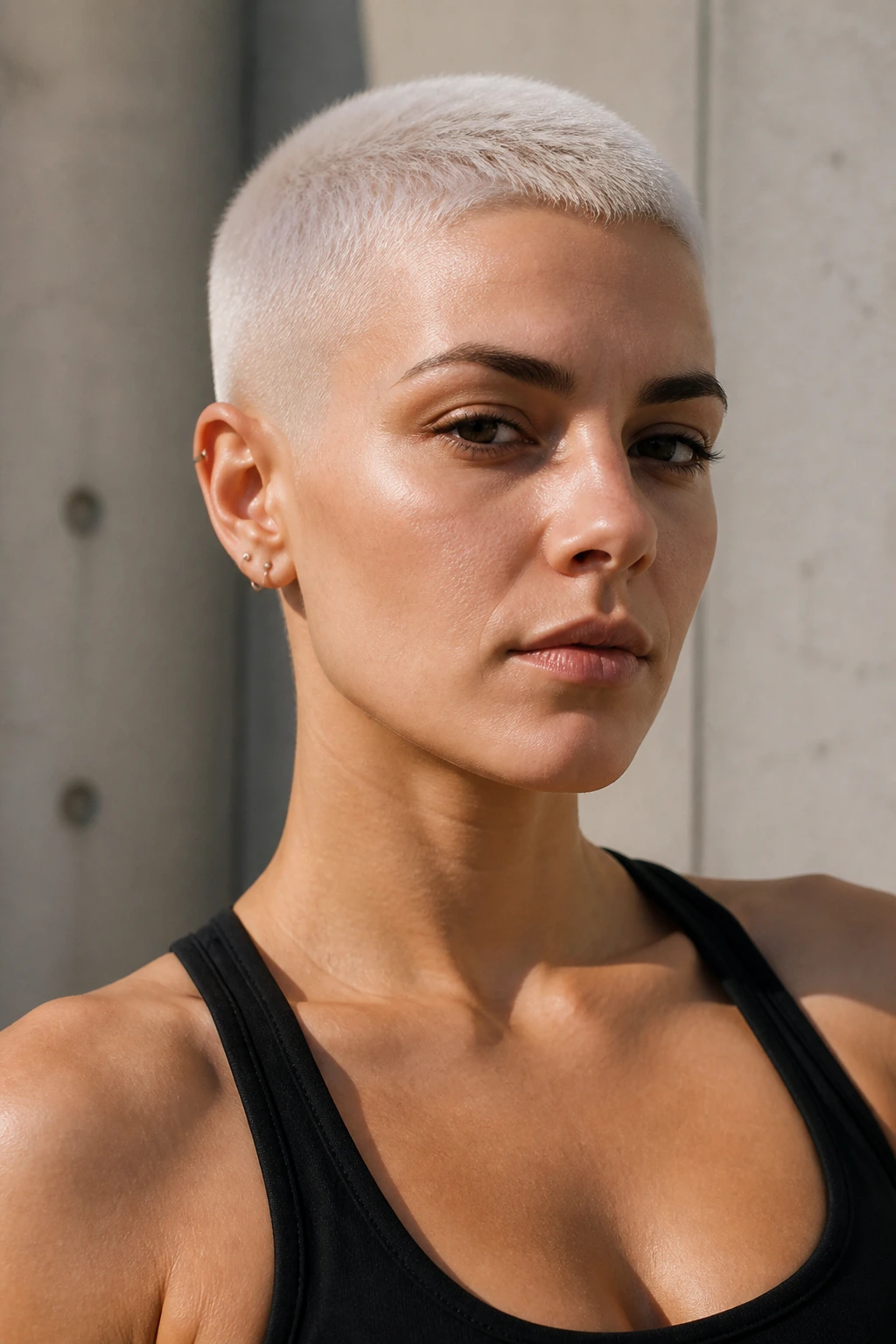
A platinum buzz cut is blunt in the best way. Add a skin fade at the sides and back, and the shape becomes crisp enough to feel architectural. There’s nowhere to hide here, which is exactly why it works on women who like a clean, high-contrast look.
The color matters as much as the cut. Platinum against a close fade gives the whole style a sharp, almost graphic edge, but the maintenance is serious. If the tone drifts yellow, the cut starts looking tired fast, so toner and purple shampoo become part of the routine.
This is the shortest option in the group, but it still changes the face. It puts the focus on brows, ears, and bone structure. If you want something that feels stripped down and deliberate, this is the one that doesn’t waste time.
8. Slick-Back Crop with Clean Sides
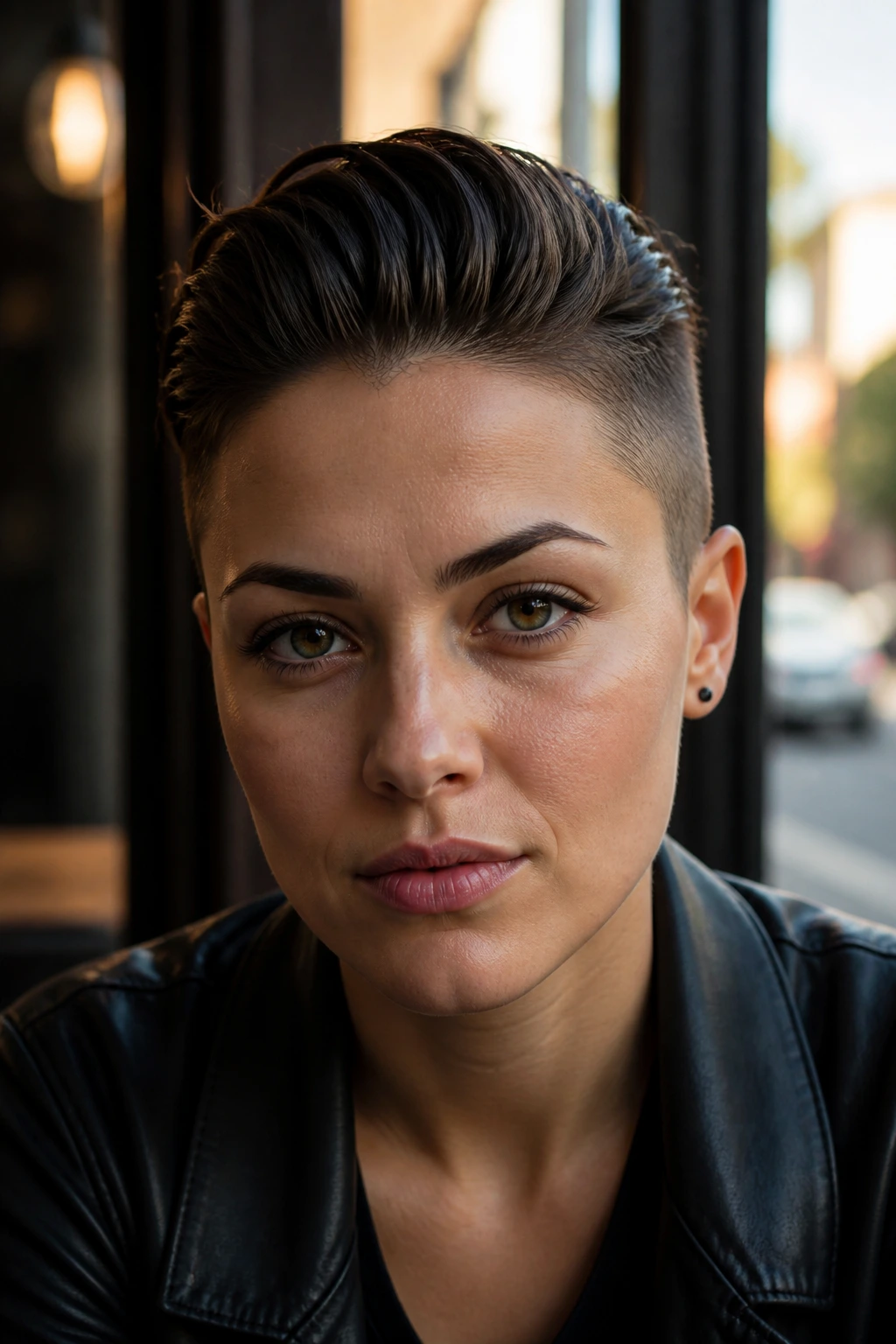
A slick-back crop can look cold in a good way. The top stays short enough to comb straight back with gel or pomade, while the sides are cut close so the whole shape hugs the head. It’s neat, but not prim.
This style depends on clean clipper work. If the fade grows out unevenly, the whole thing starts to look unfinished. Keep the top long enough to push backward without standing straight up; about two to three inches is usually enough, depending on density.
The best part is how fast it gets ready. Work product through damp hair, comb back once, and leave the front slightly imperfect so it doesn’t look helmet-like. A little texture at the crown keeps it from reading too severe.
9. Textured Bowl Cut with Soft Fringe
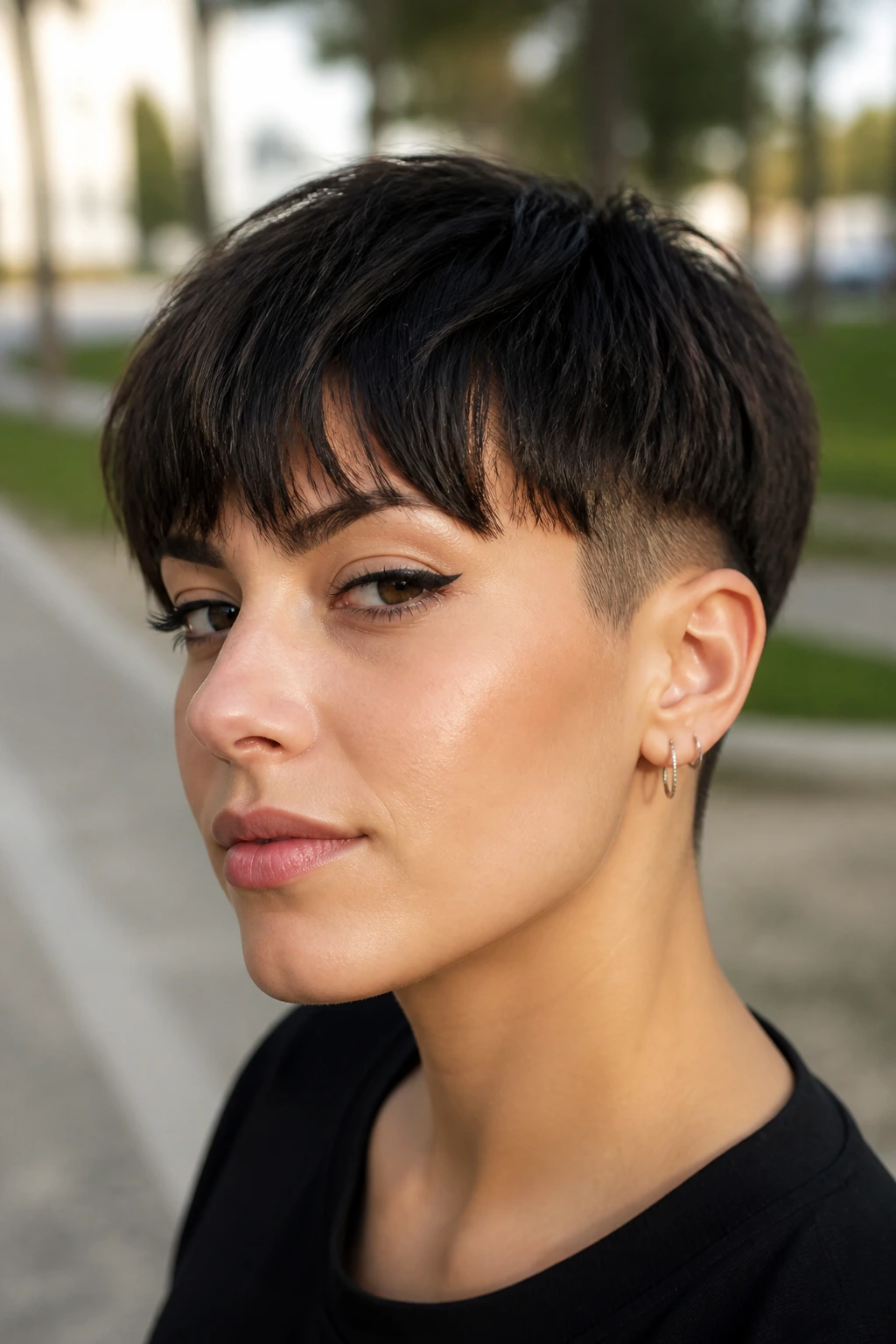
A bowl cut sounds cheeky until you see it done with texture. Here, the undercut keeps the lower half tight and clean, while the top and fringe are broken up with point-cut layers so the shape sits lighter around the face.
The fringe is the key. Keep it soft and slightly irregular, not a hard mushroom line. That makes the cut feel modern instead of costume-like. If your hair is dense, the undercut prevents the sides from flaring outward, which is the usual bowl-cut trap.
What Makes It Work
The rounded silhouette does the flattering work, but the texture keeps it alive. A matte paste warmed between the fingers, then pinched into the ends, gives enough separation to show the shape without making it crunchy.
It suits women who like a cut with character and do not mind a bit of maintenance around the neckline. If you want a short shape that looks engineered rather than casual, this is one of the stronger choices.
10. Razor Shag Pixie with Side Fade
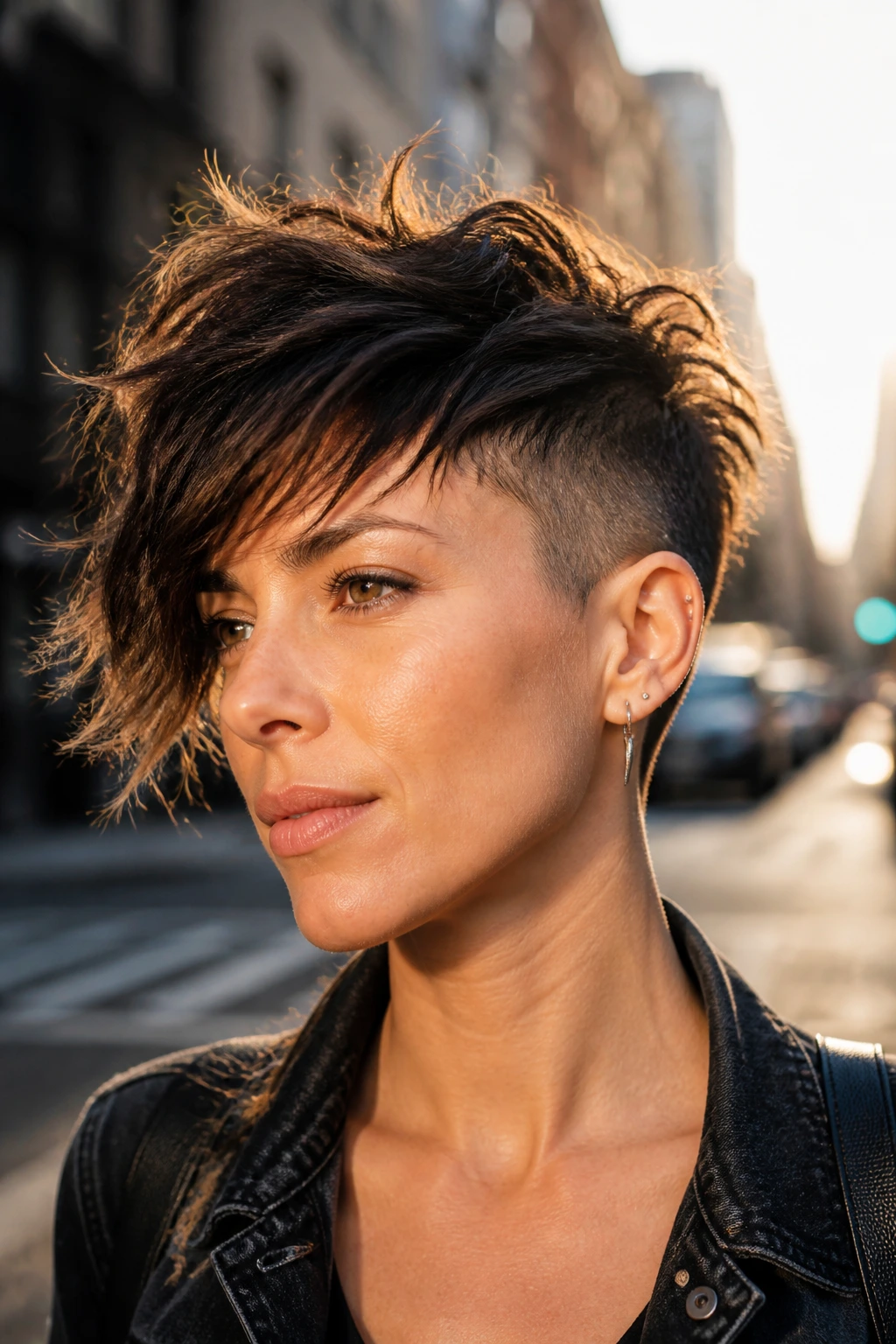
A razor shag pixie feels a little wild, but not careless. The layers are feathered with a razor or deep point-cutting, so the ends move in thin pieces, and the side fade strips away the bulk that would otherwise puff up under all that texture.
This cut is especially good if your hair has natural wave. The wave gives the shag movement; the fade keeps it from becoming a triangle. It can look almost undone in a flattering way, which is the nicest kind of edge.
A salt spray or light mousse works better than heavy cream here. You want separation, not wet-looking clumps. Let the fringe fall where it wants to fall, then push a few pieces forward with your fingertips. That little bit of imbalance gives it life.
11. Ear-Length Bob with Undercut Panel
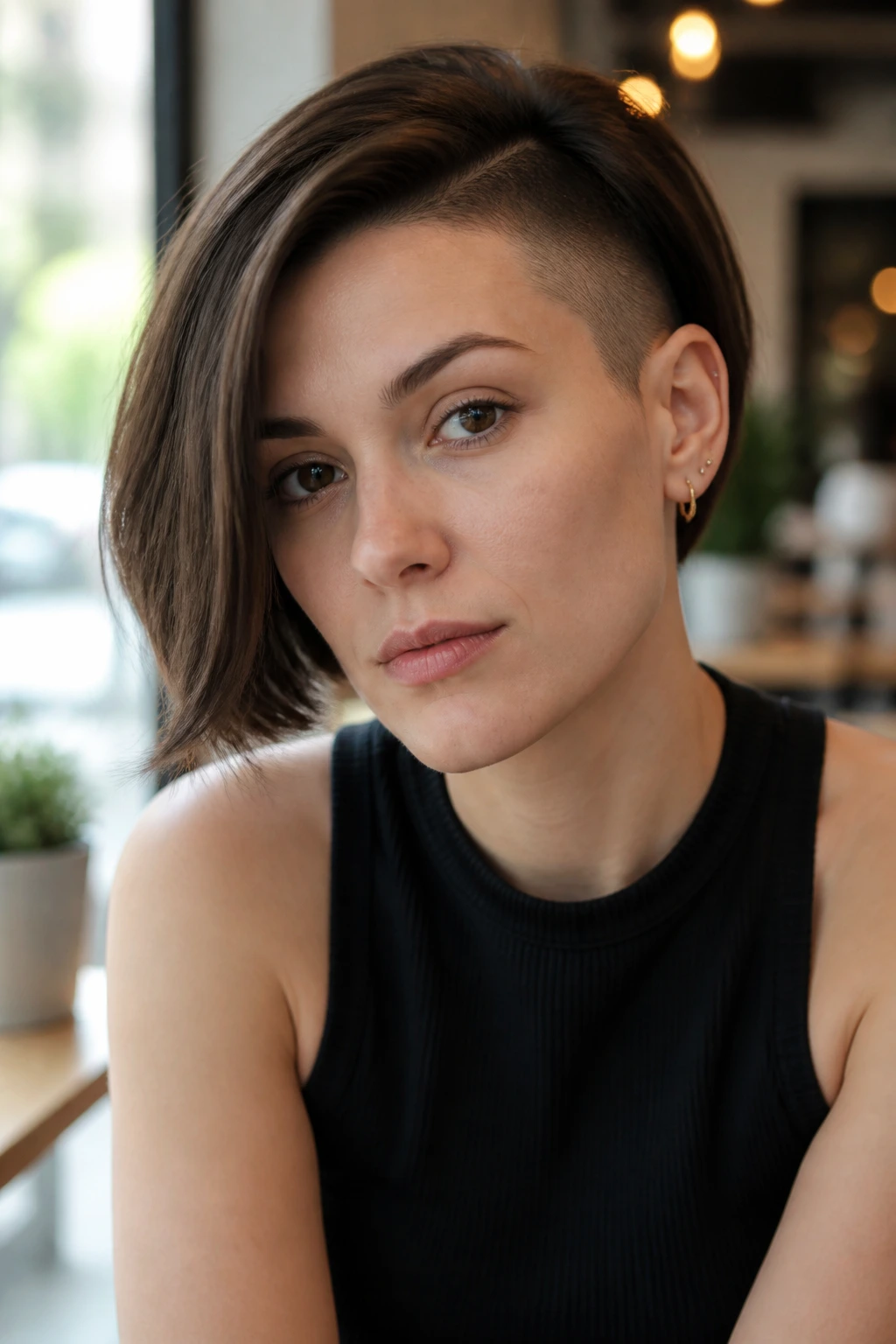
An ear-length bob with an undercut panel is for someone who wants a bob line but hates the triangle that short hair can create. The undercut sits under one side or at the nape, so the visible layer looks full while the underside stays slim.
It’s a smart cut for thick hair because it takes out the hidden weight first. The top layer can still swing and tuck, but it won’t bulge out when you turn your head. Wear it sleek for a polished feel, or rough it up and let the ends flick outward.
A side tuck looks especially good with this one. It shows the difference between the smooth bob surface and the tighter underlayer underneath. That contrast is the whole story, and it does not need much else.
12. Mohawk-Inspired Pixie with Tall Crown
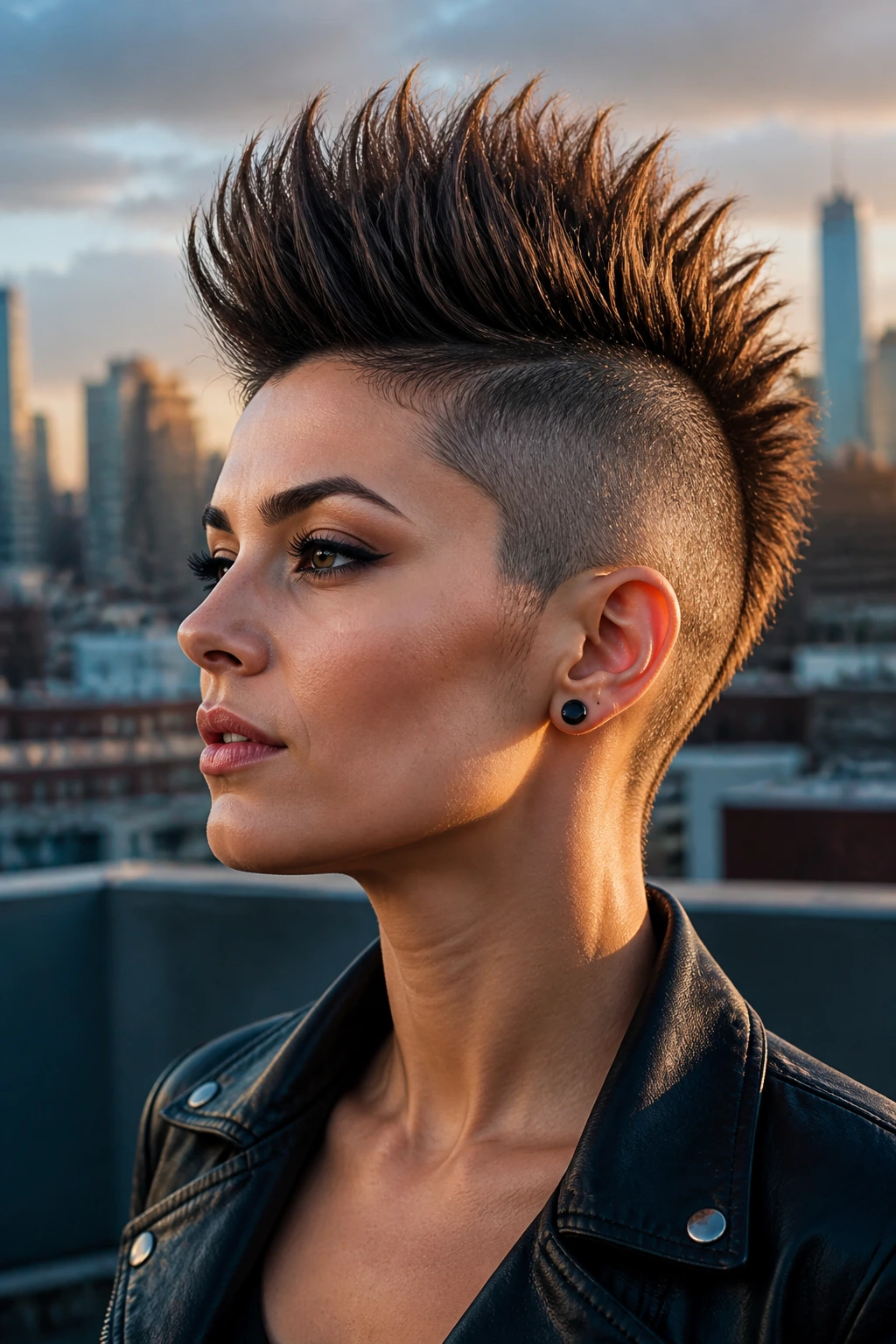
If you want drama without a full mohawk, this is the move. The sides are clipped down tight, the top is kept longer through the center strip, and the crown gets enough height to stand up with a blow-dryer and a bit of paste.
It’s bolder than a standard pixie because the eye reads the vertical line first. That makes it useful for women who like strong shapes and do not mind a cut that announces itself. The profile is especially good from the side, where the lifted crown and shaved sides make a sharp curve.
Use a root-lifting spray before drying, then direct the hair upward and slightly back. If the top is too soft, it collapses. If it’s too short, you lose the mohawk reference. The sweet spot is short, but not tiny.
13. Feathered Crop with Rounded Nape
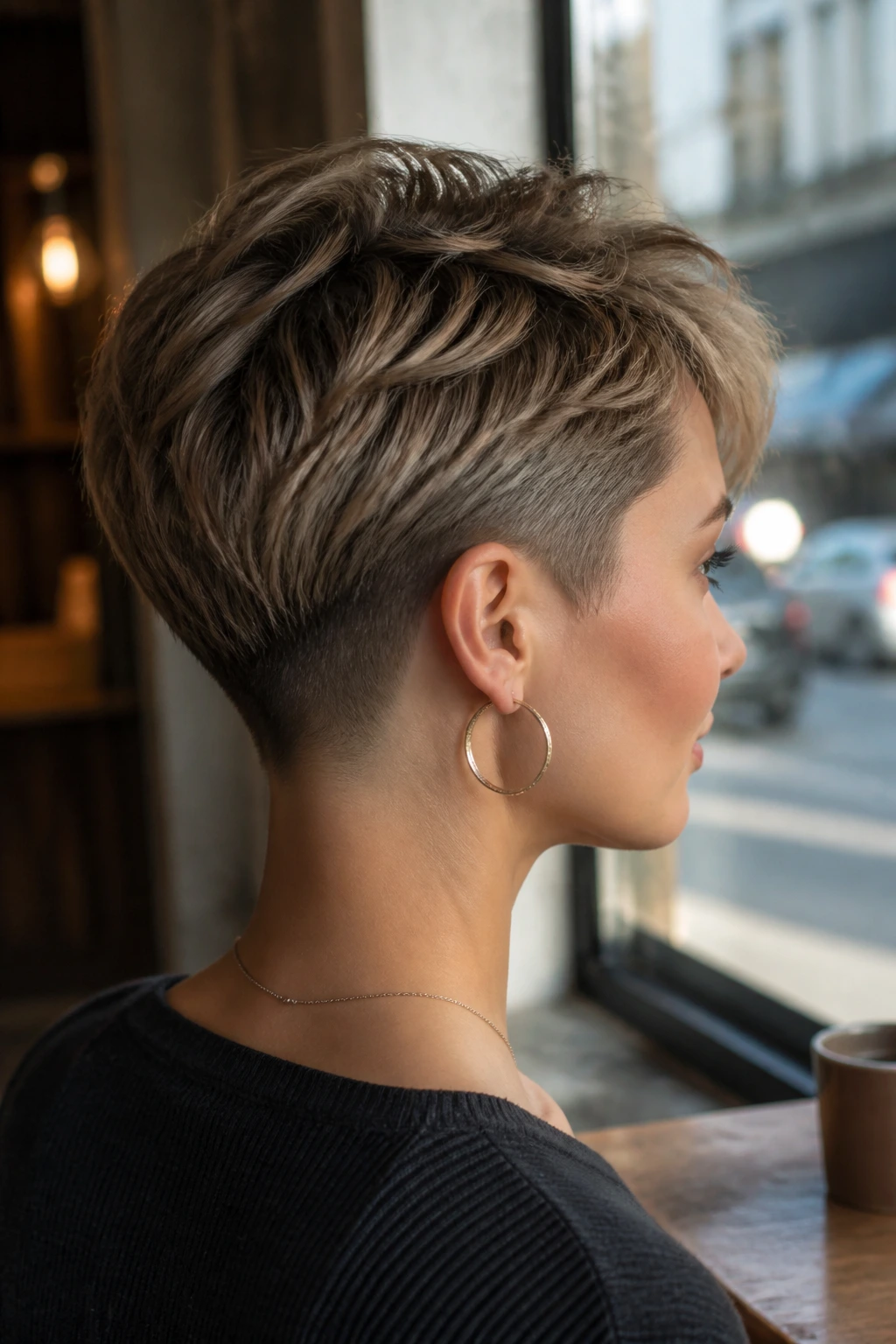
A feathered crop is the softer cousin in this group, but it still has edge if the nape is trimmed tight. The feathering keeps the top light and movable, while the rounded undercut at the back stops the style from looking bulky or boxy.
This is a nice option when you want short hair with undercut detail that doesn’t scream for attention. The shape curves nicely around the skull, and the soft layers around the face keep it from feeling severe. It looks especially good if your hair has a little natural bend.
A round brush and a blow-dryer can give the fringe a gentle lift. If you’d rather keep it casual, let it air-dry and then pinch the ends with a tiny bit of paste. It stays feminine, but with enough edge to feel interesting.
14. Graphic Crop with Line Design
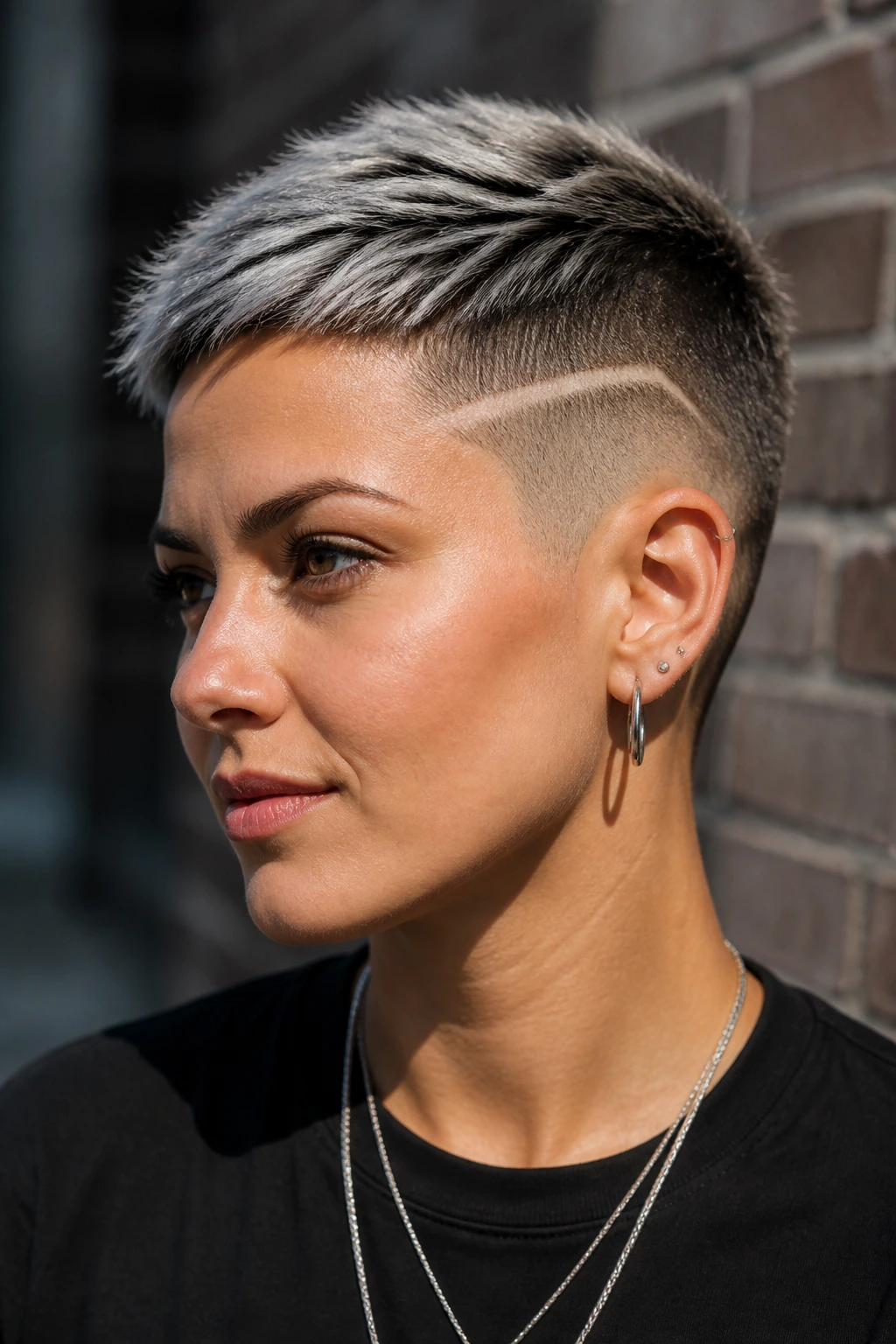
A graphic crop is where the undercut stops being hidden and starts behaving like a design element. A hard part, a carved line, or a small geometric shaving detail turns the haircut into something visibly intentional.
This works best with a simple top shape. Keep the crown short and textured so the design has room to stand out. If the top gets too busy, the eye doesn’t know where to land. A clean line through the side or around the temple makes the style feel fresh without needing extra length.
The maintenance is not subtle. Designs grow out quickly, and even a tiny line starts softening after a couple of weeks. If you like crisp edges and a strong visual point, though, that tiny bit of upkeep is worth it.
15. Curved Bob with Cutout Underside
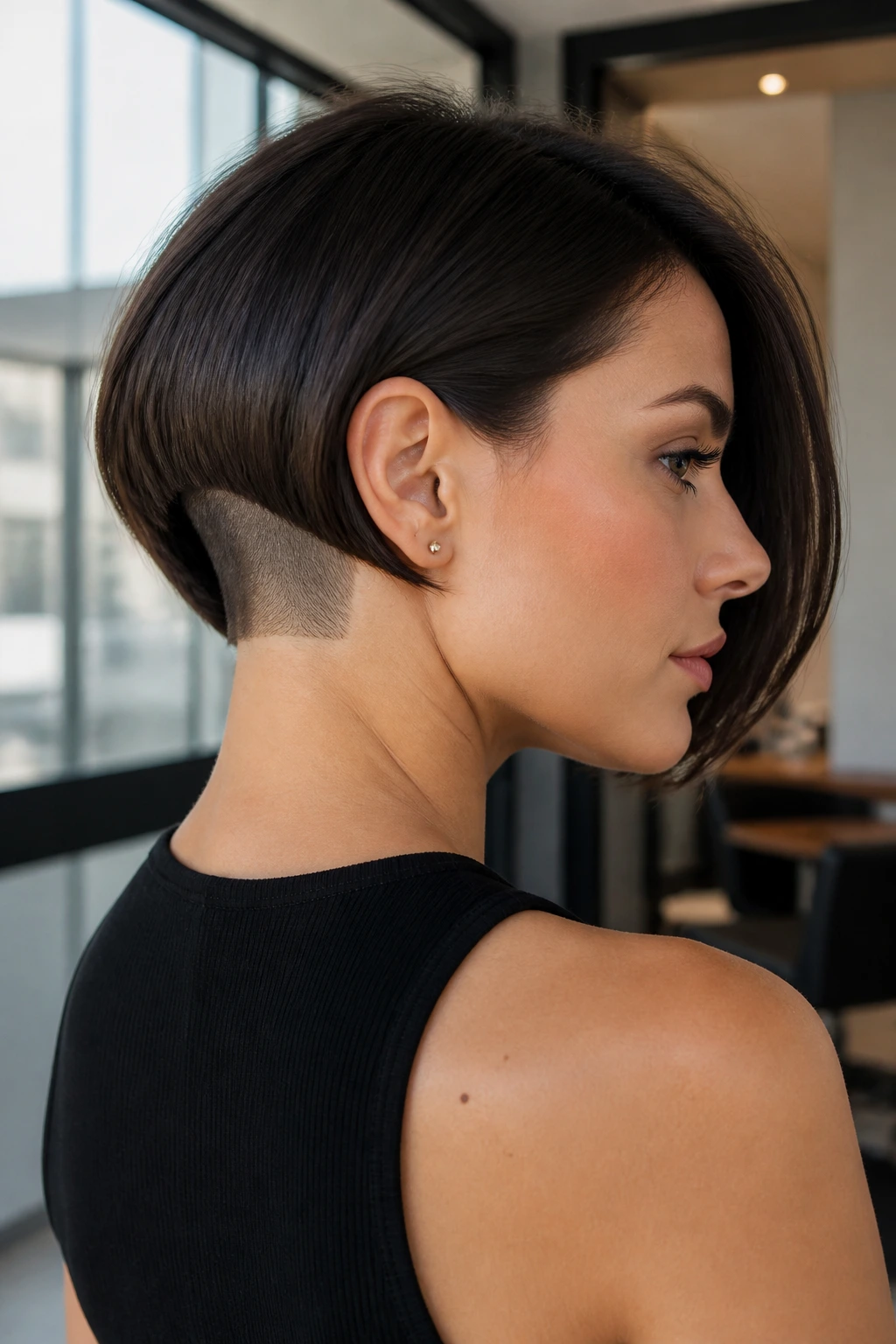
A curved bob with a cutout underside is a lovely trick for women who want the elegance of a bob but the relief of an undercut. The top layer curves inward toward the jaw, while the underside is removed to keep the line light and the neck area neat.
The shape has a polished feel from the front and a more assertive profile from the side. That hidden cutout is what lets the bob stay smooth instead of puffing at the ends. Thick hair especially benefits from this, because the cut keeps the back from stacking up too much volume.
Blow-dry the top under with a paddle brush if you want a sleek finish. Or leave a little natural bend at the ends and let the undercut do the structural work. Either way, the cutline should stay clear.
16. Wavy Bixie with Lifted Crown
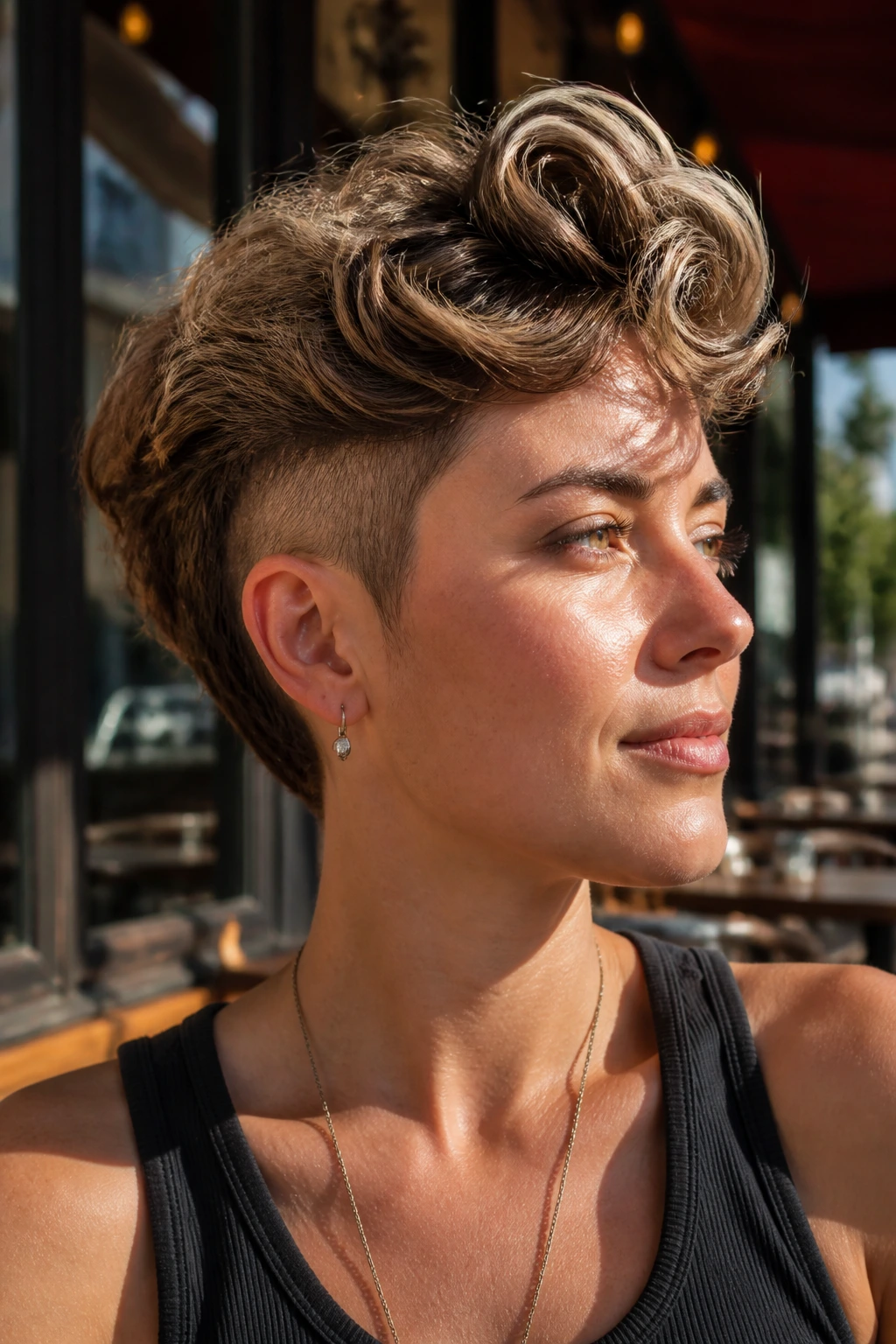
A wavy bixie gives you movement without the fuss of long layers. The undercut lightens the back and sides, while the waves on top create lift through the crown, which is the part that usually needs help in shorter cuts.
This one can look soft in one light and very sharp in another. That’s the appeal. When the waves fall forward, the haircut reads playful. When you push them back, the undercut shows itself and the cut turns more daring.
A diffuser is your friend here. Scrunch in a little curl cream or foam, then dry until the roots are set and the ends still look bendy. If the crown goes flat, flip your part before it cools.
17. Long-Fringe Crop with Shaved Temples
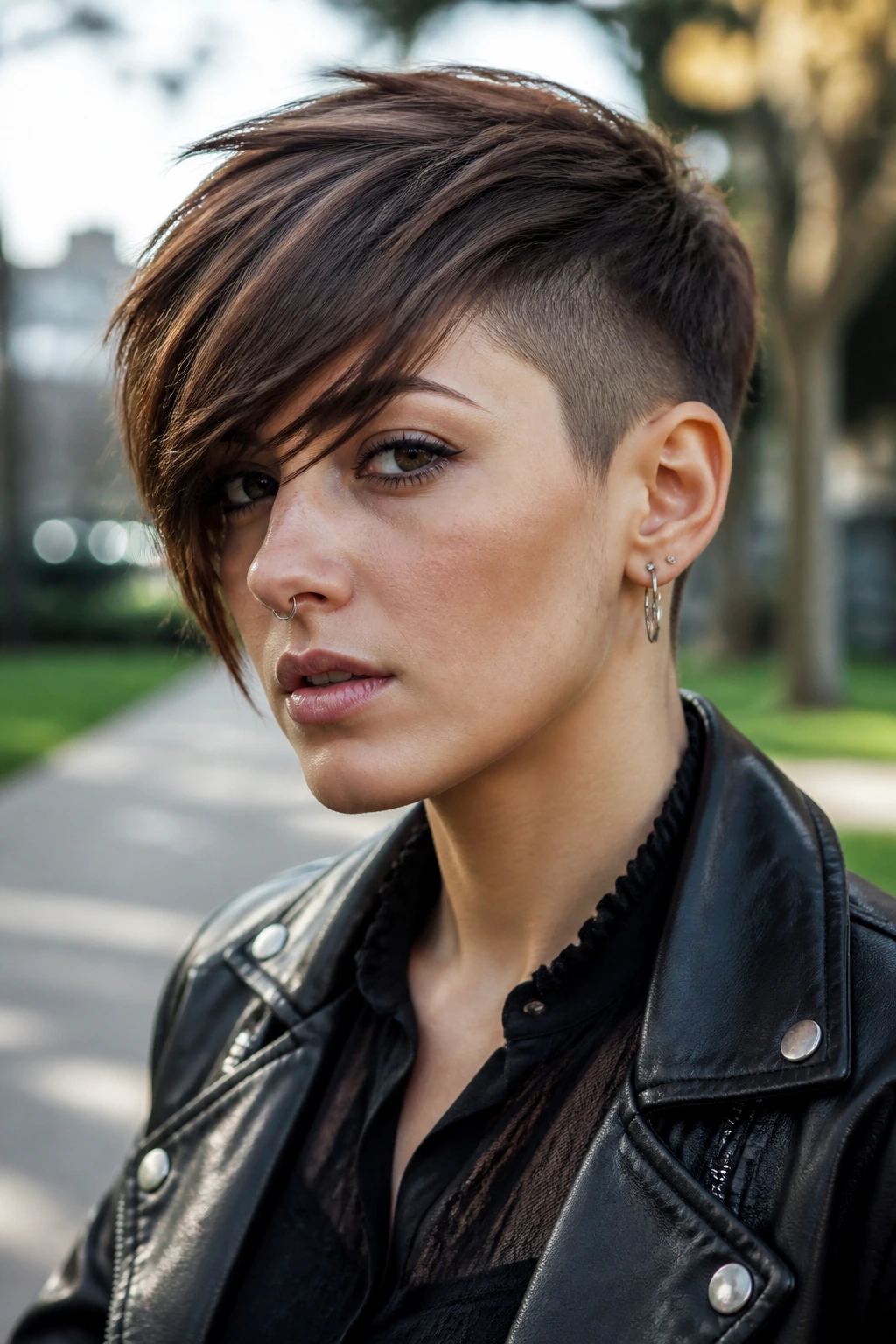
A long fringe crop keeps the drama in the front. The fringe drops past the eyebrows or even toward the cheekbone, while the temples are shaved or faded tight so the face-opening effect feels sharp, not heavy.
This cut works because the long fringe gives you movement without bulk. You can sweep it sideways, wear it slightly over one eye, or push it straight forward for a more graphic line. The shaved temples keep all that front length from making the cut look top-heavy.
It’s also one of the easier ways to “hide” an undercut on days when you want less attention. Let the fringe fall, and the sides disappear into the shape. Tuck it back, and the edge comes back immediately.
18. Natural Curl Fade with Short Crown
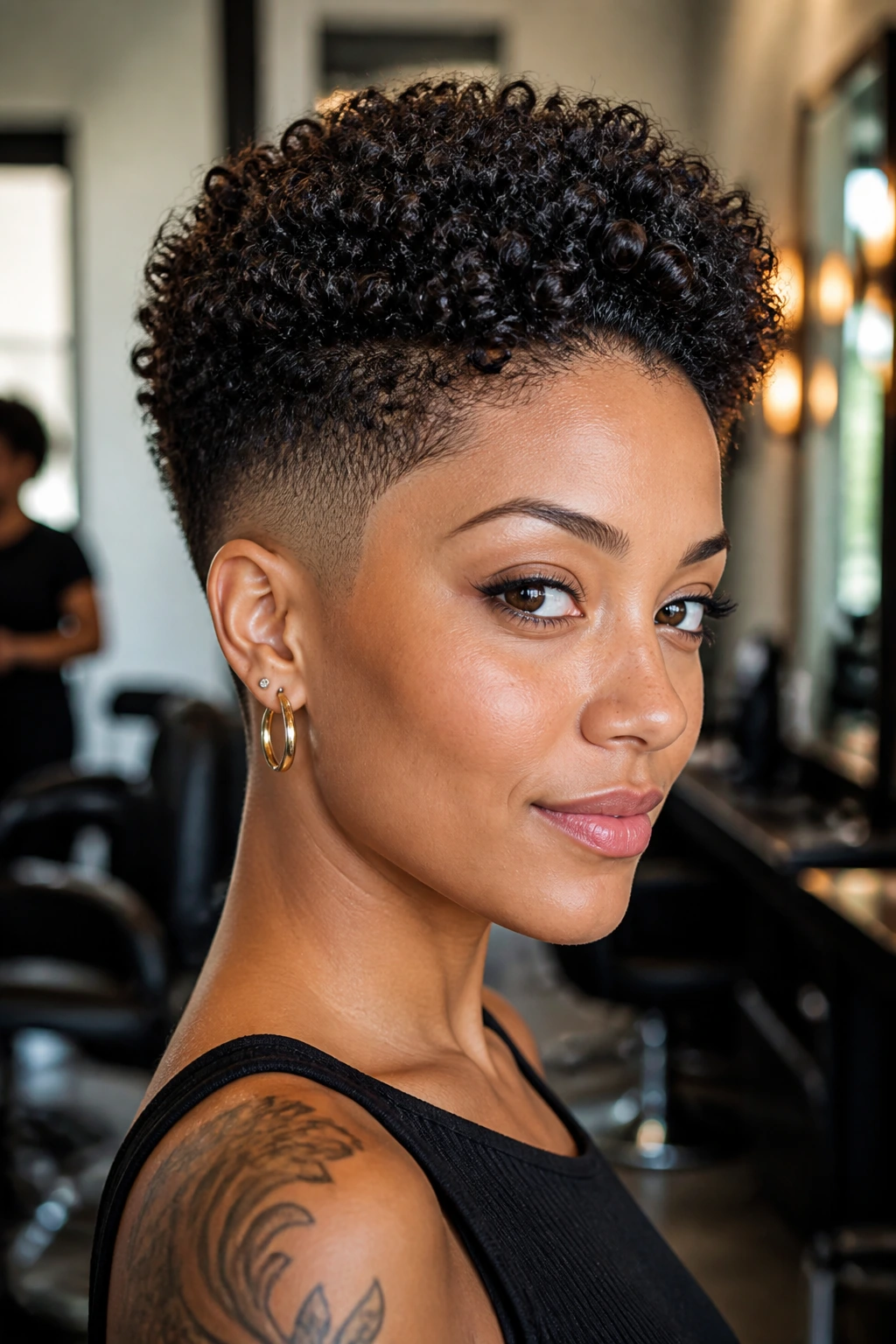
Natural curls look especially good when the fade is clean and the crown is short enough to spring upward. The fade removes the puff from the sides and back, while the curls on top create a rounded halo that sits close to the head.
This is one of those cuts that gets better when it’s cut with the curl pattern in mind. Cut curls dry or nearly dry if possible, and don’t over-layer the top. Too much slicing can turn the shape frizzy instead of defined.
A curl gel with a little hold and a diffuser on low heat will keep the top from fraying. The fade underneath should stay crisp, because the contrast between neat sides and soft curls is what gives it the punch.
19. Micro Bob with Tucked Undercut
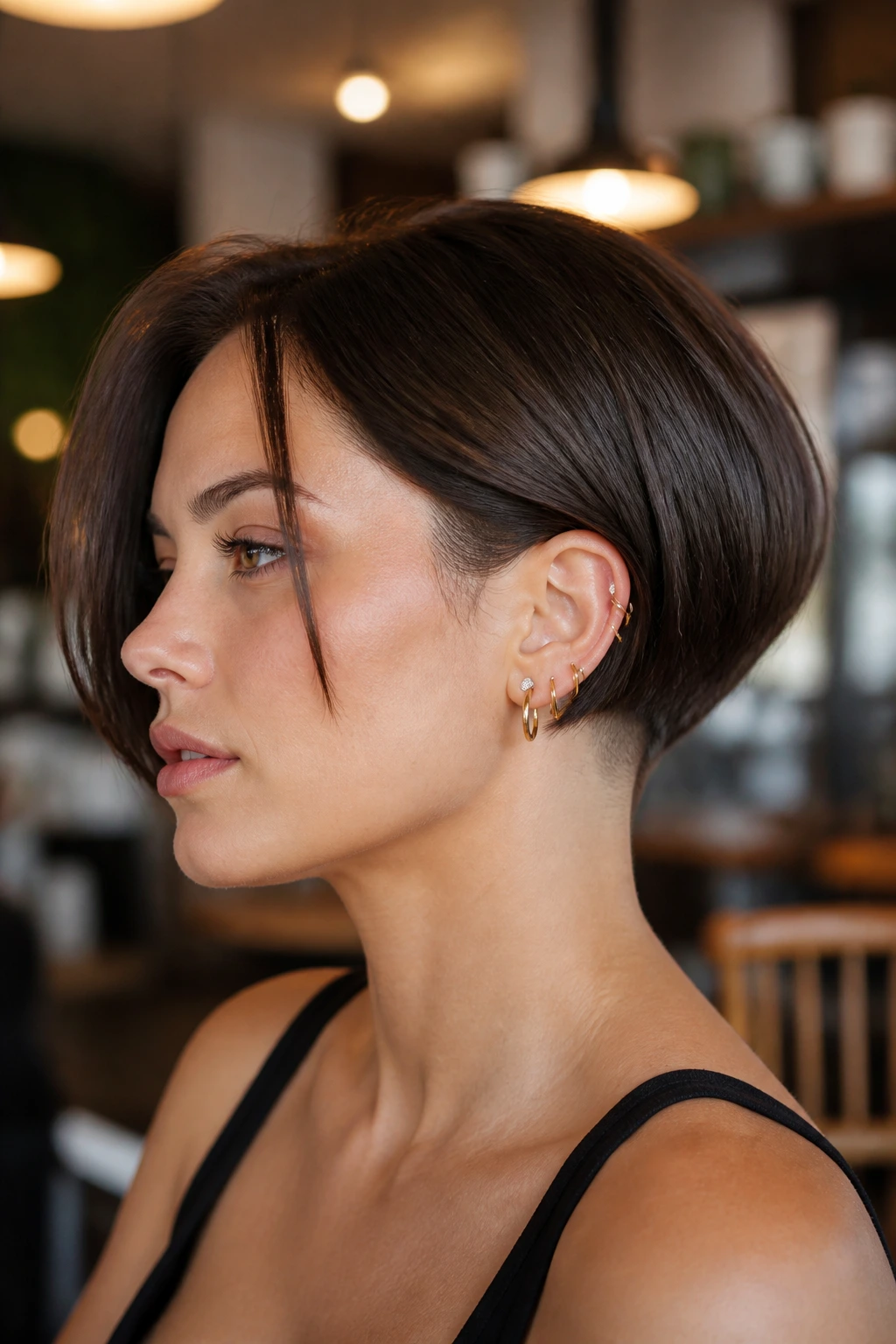
A micro bob is a tiny, jaw-hugging shape that gets a lot more interesting once the undercut is tucked underneath. From the front, it can look refined and compact. From the back, the hidden shave clears out the weight that usually makes very short bobs poof.
This cut suits straight or slightly wavy hair especially well. The shorter length lets the line sit close to the jaw, and the undercut keeps it there. If you like to tuck one side behind the ear, the profile becomes even more interesting because the underside stays neat.
A flat iron can sharpen the ends if your hair bends too much. Just keep the heat moderate; tiny bobs can get frayed fast when the iron is too hot. A clean, glossy finish works best here.
20. Spiky Crop with Matte Finish
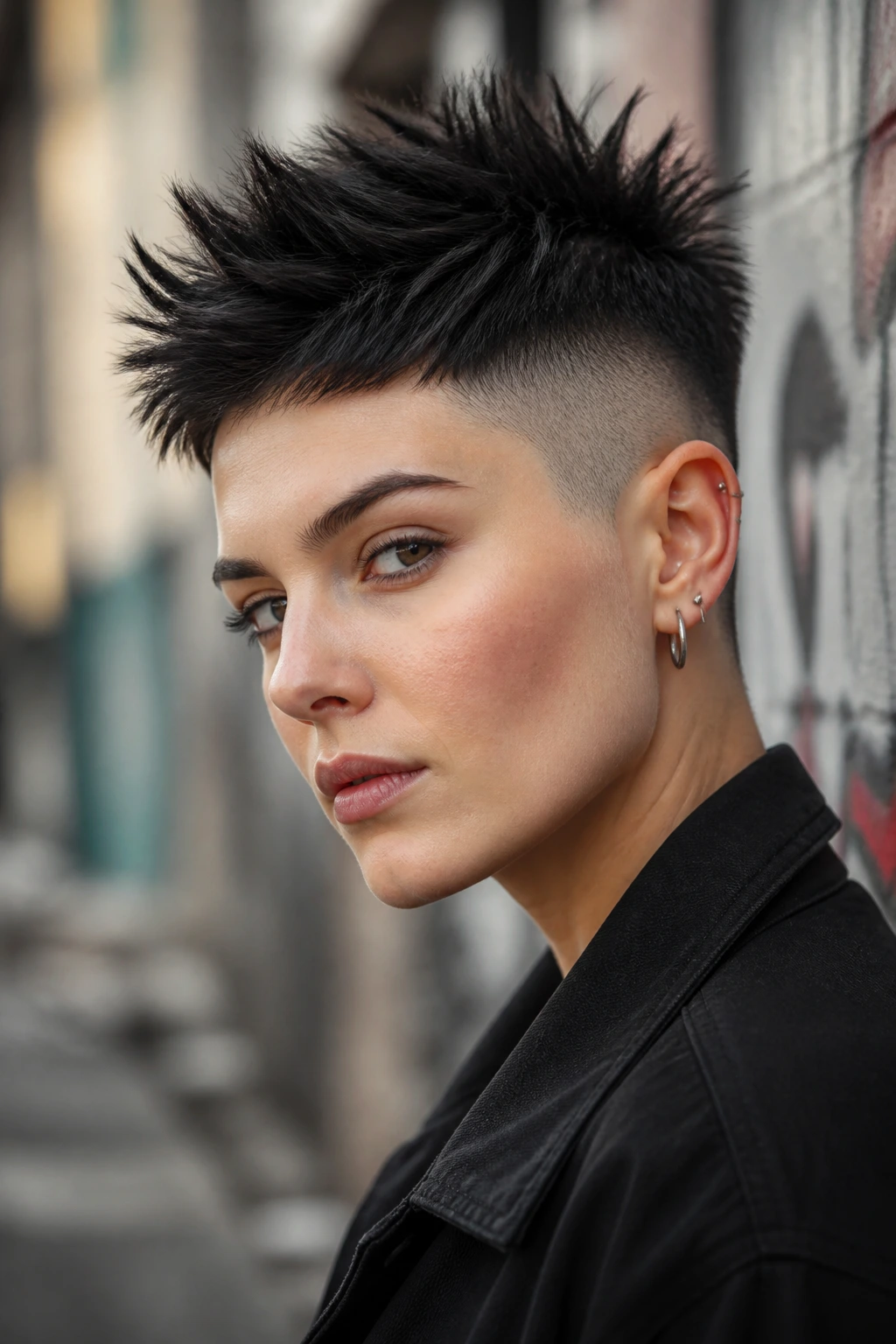
A spiky crop is blunt, quick, and a little rebellious in the old-school sense. The sides stay short or faded, the top gets enough length to push upward in separate points, and the matte finish keeps the whole thing from looking wet or sticky.
This style needs a product that grips without shine. Paste, clay, or fiber all work if you warm it in your hands first. Then push the hair up in small sections instead of trying to smooth it all at once. That piece-by-piece approach gives the texture its shape.
The cut suits strong brows and sharp jawlines, but it can work on softer faces too when the spikes are kept short. If you want a style that looks deliberate in under two minutes, this is a solid answer.
21. Two-Tone Pixie with Dark Roots
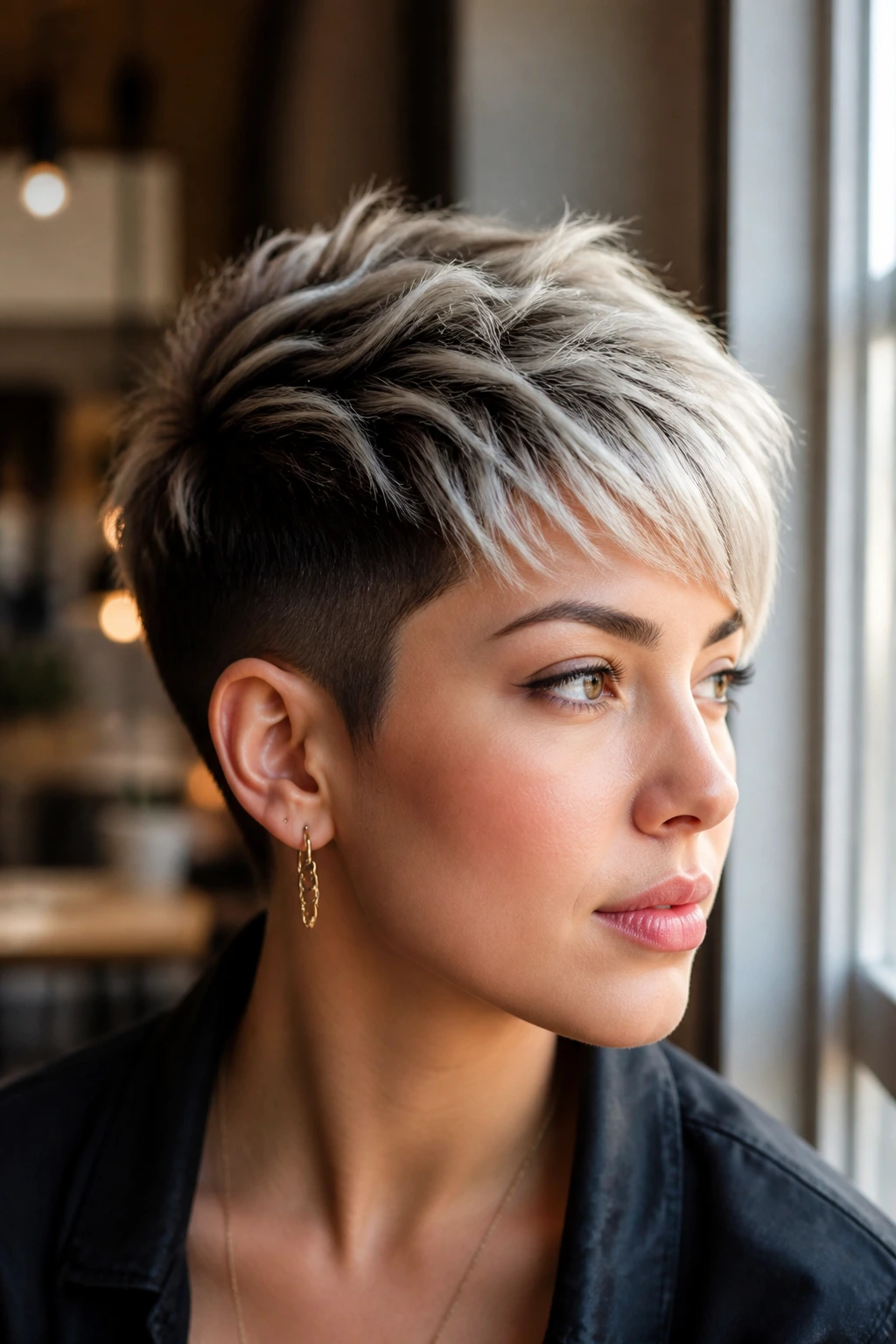
A two-tone pixie brings the undercut into the color story. Dark roots under a lighter top, or a deeper base under a bright panel, gives the cut an extra layer of edge without changing the shape much at all.
This one is smart when you want the haircut to do one job and the color to do another. The undercut cleans up the sides and nape. The color adds contrast through the crown and fringe. Together, they make even a simple pixie feel more styled.
Keep the color placement intentional. A bright top with dark underlayers makes the shorter sections disappear until you move. That hidden shift is what gives the haircut depth, and it looks especially good in motion.
22. Shattered Shag with Temple Fade
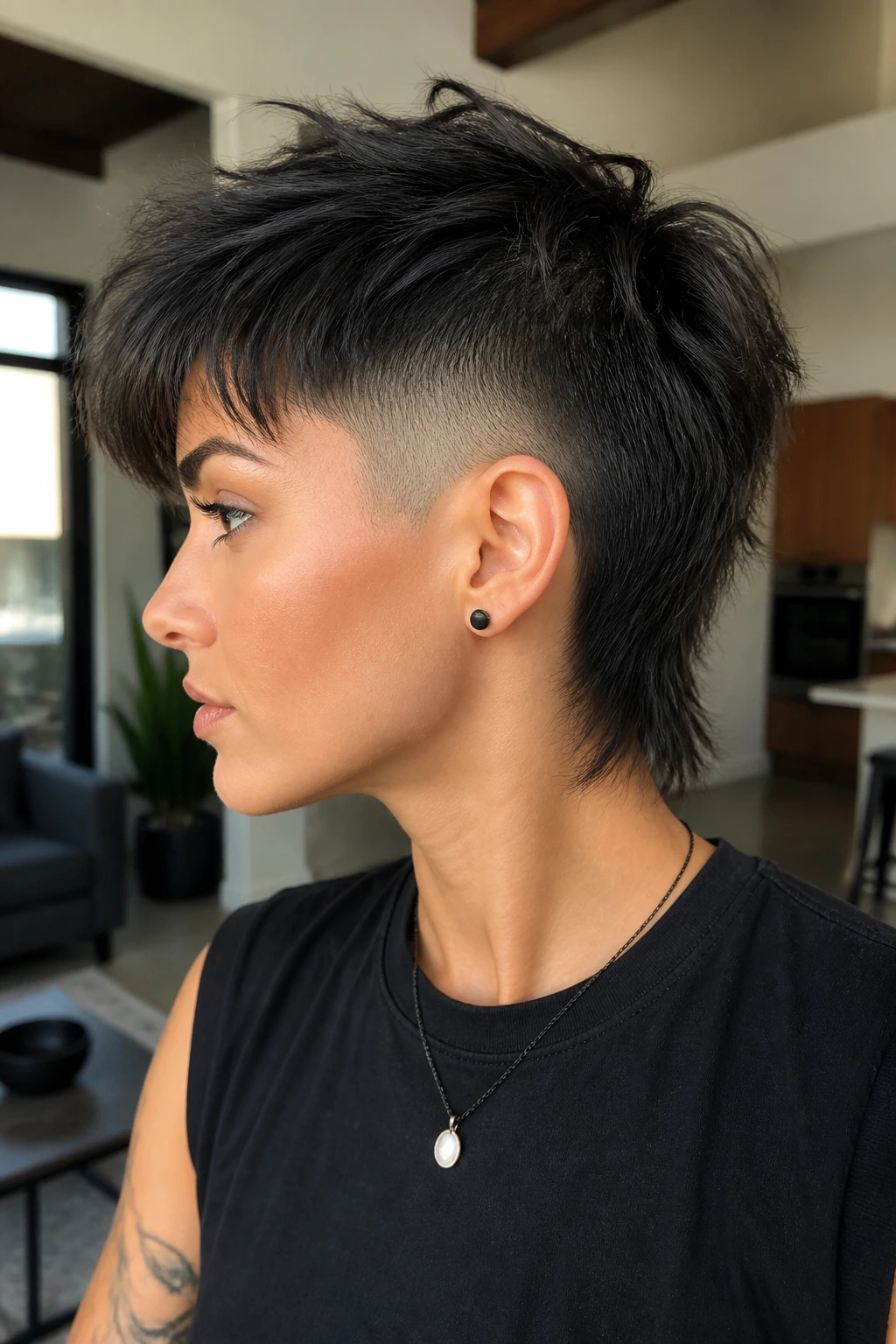
A shattered shag is all broken ends and loose movement, which is exactly why the temple fade helps. The fade sharpens the hairline while the shaggy layers keep the top from feeling too tidy.
This cut has a bit of rock-show energy without needing a ton of length. The fringe can be uneven, the crown can be messy, and the sides still stay controlled because the fade keeps the base clean. That mix of softness and edge is what makes it feel modern.
Use a dry texture spray if you want the layers to separate. Then pinch a few front pieces and leave the rest alone. Over-styling kills this haircut fast.
23. Faux Hawk Crop with Tapered Sides
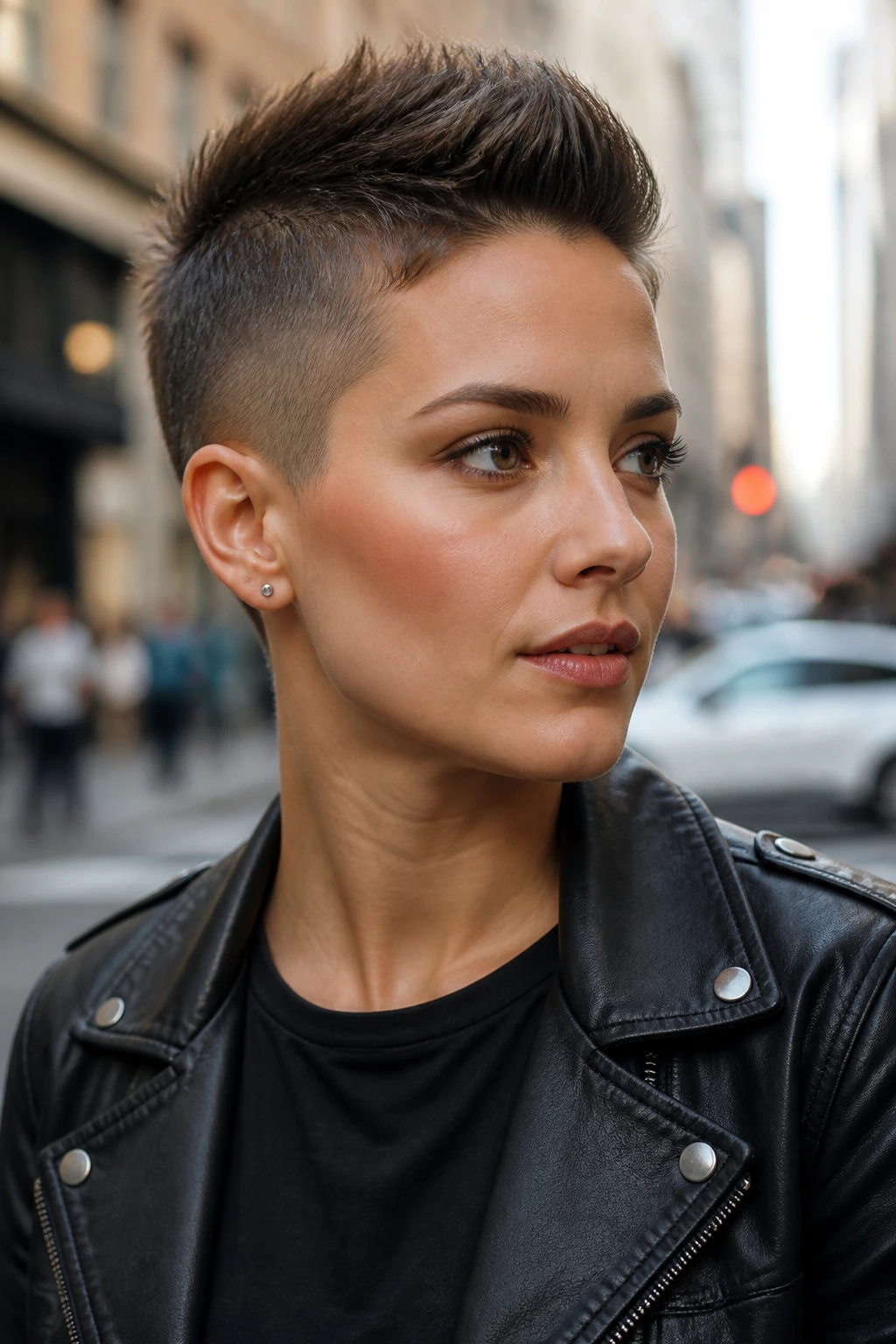
A faux hawk crop gives you the mohawk attitude without fully shaving the sides off. The sides are tapered tight, the center strip is left longer, and the top can stand up or lean forward depending on how much product you use.
This is a good compromise if you want edge but still need some flexibility. The tapered sides keep it wearable, while the center height gives you the shape. It works especially well on thick hair because the structure stays visible even when the top is slightly mussed.
A blow-dryer aimed up the center strip helps the style hold. After that, use a small amount of strong-hold paste and keep the sides sleek. If the hawk starts looking too round, flatten the edges a touch and rework the middle.
24. Curly Mohawk Bob with Fluffy Top
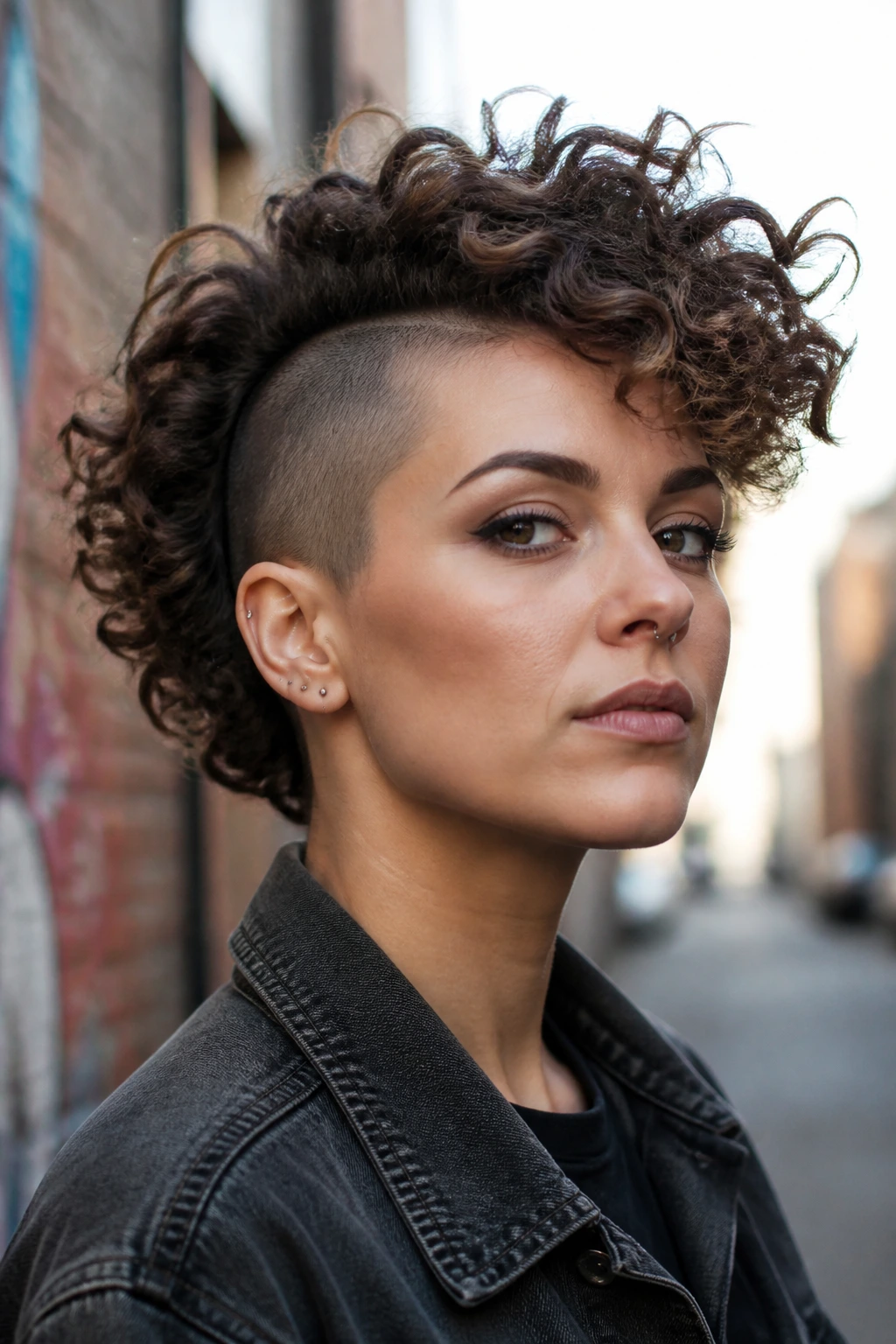
A curly mohawk bob sounds like it should be loud, and it is — but in a controlled way. The sides are cut close, the top curls rise through the center, and the overall shape stays compact enough to feel stylish rather than wild.
This cut works beautifully when the curls are springy and defined. The shaved or closely tapered sides give the top room to bloom upward, which prevents the silhouette from turning into a triangle. It’s one of the more expressive looks in the group.
A mousse plus diffuser combo usually does the job. Keep the roots lifted and let the ends stay fluffy. If the curl pattern is loose, a small clip at the crown while drying can help build height.
25. Side-Part Crop with Deep Undercut
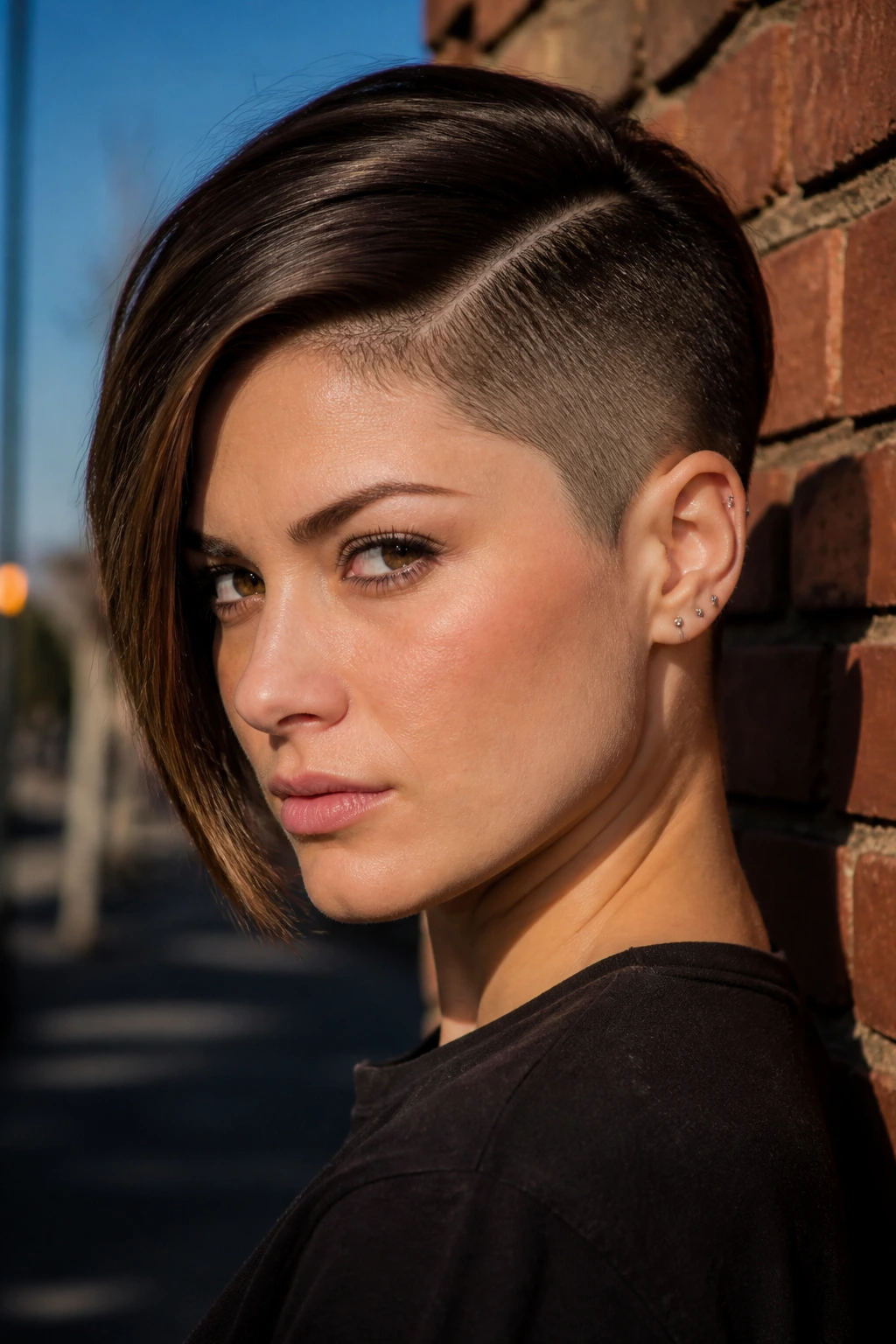
A deep side part does a lot of heavy lifting here. One side stays longer and sweeps across the forehead, while the other side is cut much tighter, so the style reads dramatic even before you add product.
This cut is good for women who want a visible difference between the top and the undercut without going full buzz. The deep part gives the face a diagonal line, which tends to feel sharper than a center part. It also gives you a built-in styling shortcut on days when you do not want to think.
A little root lift at the part keeps the longer side from collapsing. If your hair is fine, this shape can still work — just keep the undercut subtle and the top airy instead of trying to force volume where there isn’t any.
26. Soft Buzz with Feminine Line-Up
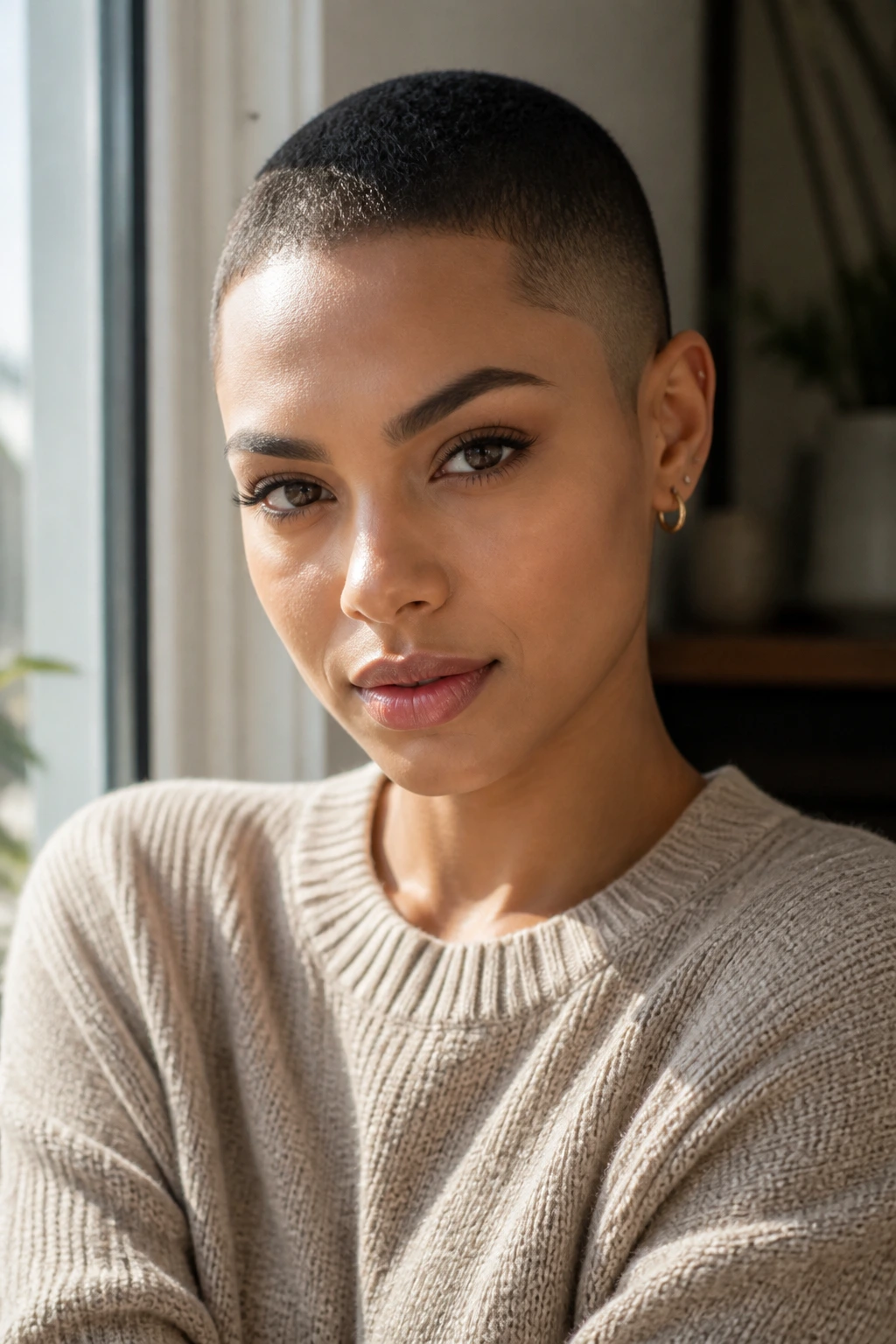
A soft buzz doesn’t have to look severe. With a gentle line-up around the temples and a slightly longer top, the cut can feel clean, fresh, and surprisingly elegant in its own stripped-down way.
The undercut here is less about drama and more about control. The hair sits close to the head, the edges stay neat, and the line around the face does the defining. If you’ve ever wanted a buzz but worried it would feel too hard, this version splits the difference.
Color can change the mood fast. A warm copper or soft blonde makes it gentler; a darker shade makes the line sharper. Either way, the haircut is all about the outline, so keep the edges tidy.
27. Rounded Crop with Nape Carve-Out
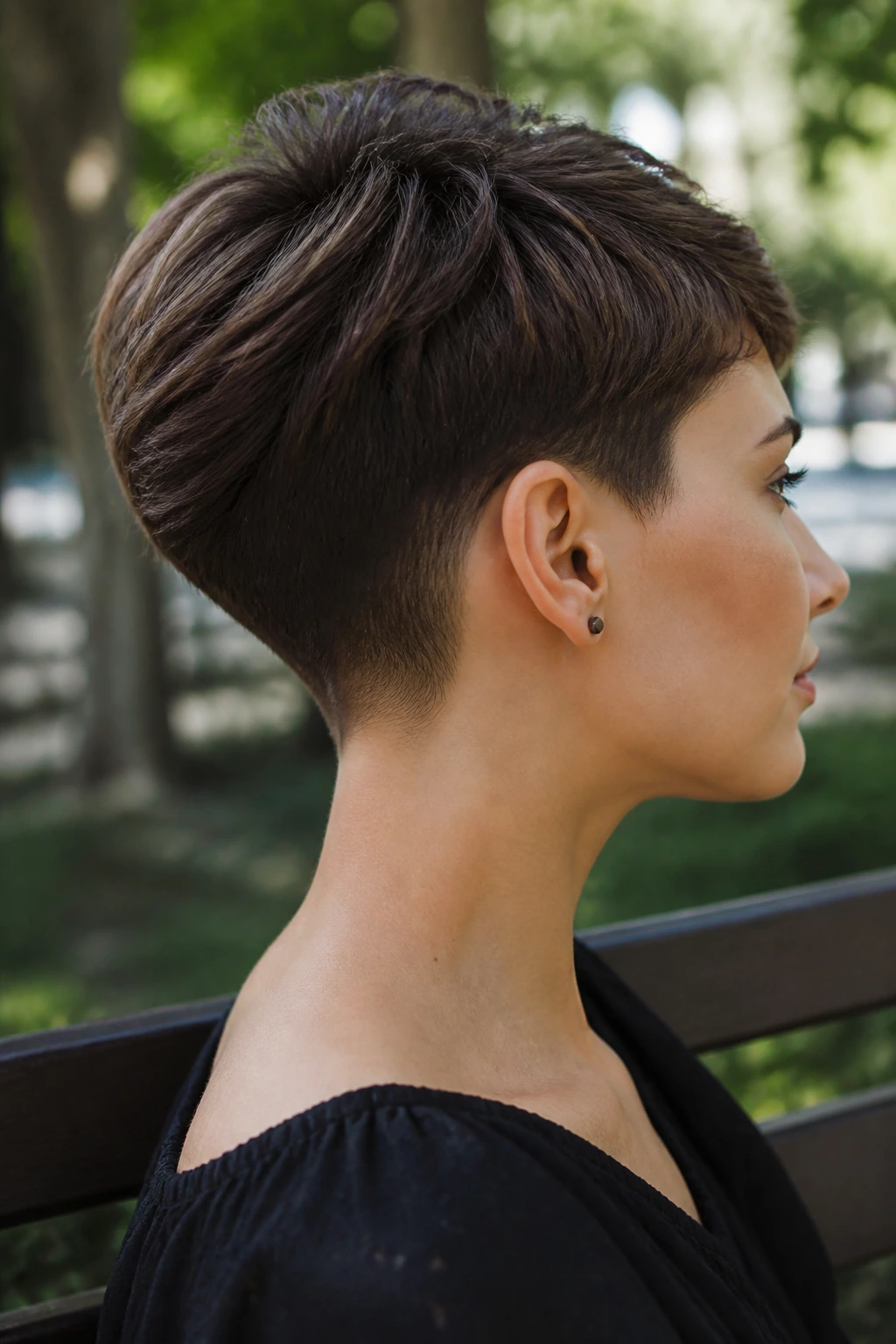
A rounded crop gives you a soft silhouette with one useful twist: the nape carve-out stops the back from ballooning. That small detail changes the whole shape, especially if your hair wants to stick out at the base of the neck.
The top can stay rounded and slightly fuller, which gives the style a classic feel, but the underside stays lean. That keeps the neck visible and the cut from looking heavy. It’s a strong choice if you like structure but not bluntness.
A smoothing cream on damp hair can help the top sit neatly, but don’t overdo it. The haircut already has shape. Too much product will flatten the crown and make the carve-out less obvious.
28. Grown-Out Undercut with Curtain Fringe
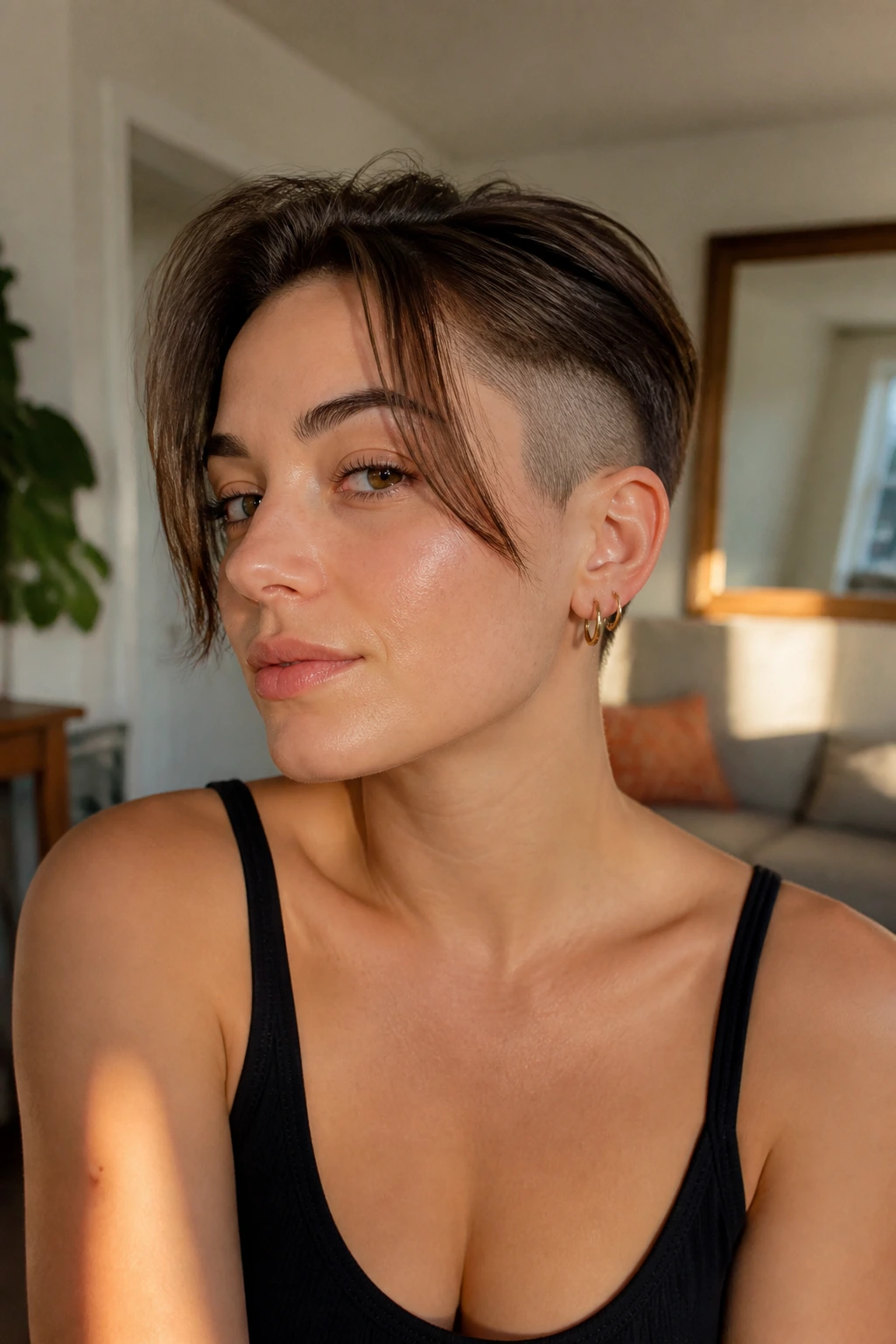
A grown-out undercut is not a problem if the shape is still working. Pair it with a curtain fringe, and the look turns relaxed instead of overdue. The fringe softens the face, while the undercut keeps the lower half from puffing into a dense block.
This is one of the easiest ways to stretch time between haircuts without giving up the edge. The longer fringe gives you styling options, and the hidden shave still keeps the base lighter than a regular bob or crop. It’s especially handy if you like to tuck pieces back and let the contrast show only when you want it to.
A little bend through the fringe makes the whole thing feel lived-in. A flat brush and a blow-dryer are enough. If the grow-out starts to feel awkward, a quick clean-up at the nape usually restores the shape.
Why Short Hair With Undercut Changes the Whole Silhouette
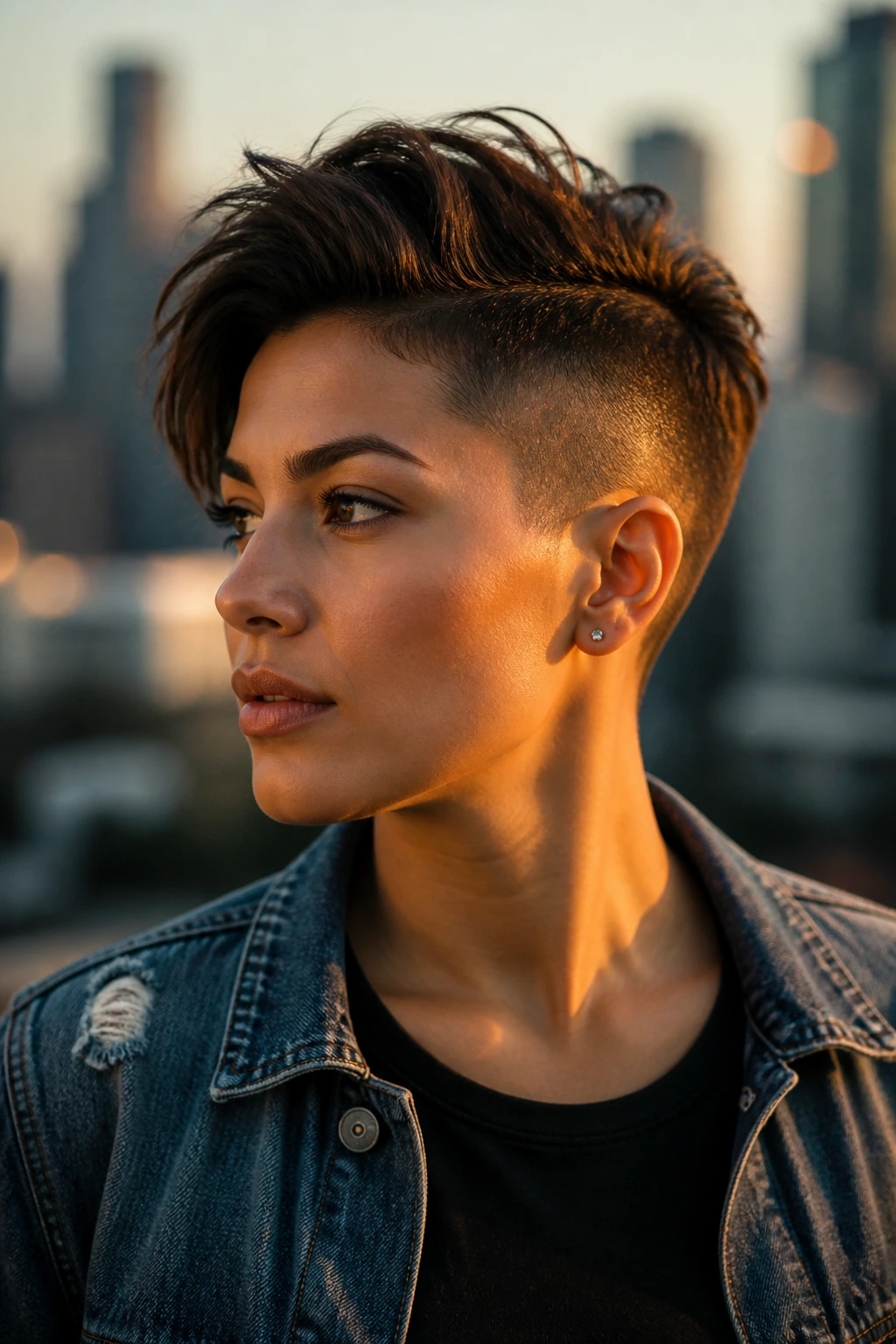
A good undercut does more than make hair shorter underneath. It changes how the top behaves. That is the real payoff, and it’s why these cuts keep working on thick, wavy, curly, and straight hair alike.
When the lower section loses bulk, the head shape becomes part of the haircut instead of something the haircut fights against. Short layers sit closer. Bobs bend under. Pixies lift at the crown instead of swelling at the neck. And with the right line-up, even a tiny haircut can read as deliberate rather than improvised.
That shift matters if your hair has ever turned rounder, wider, or heavier the moment it hit collar length. The undercut gives the style a hidden backbone.
How to Match Short Hair With Undercut to Your Hair Texture
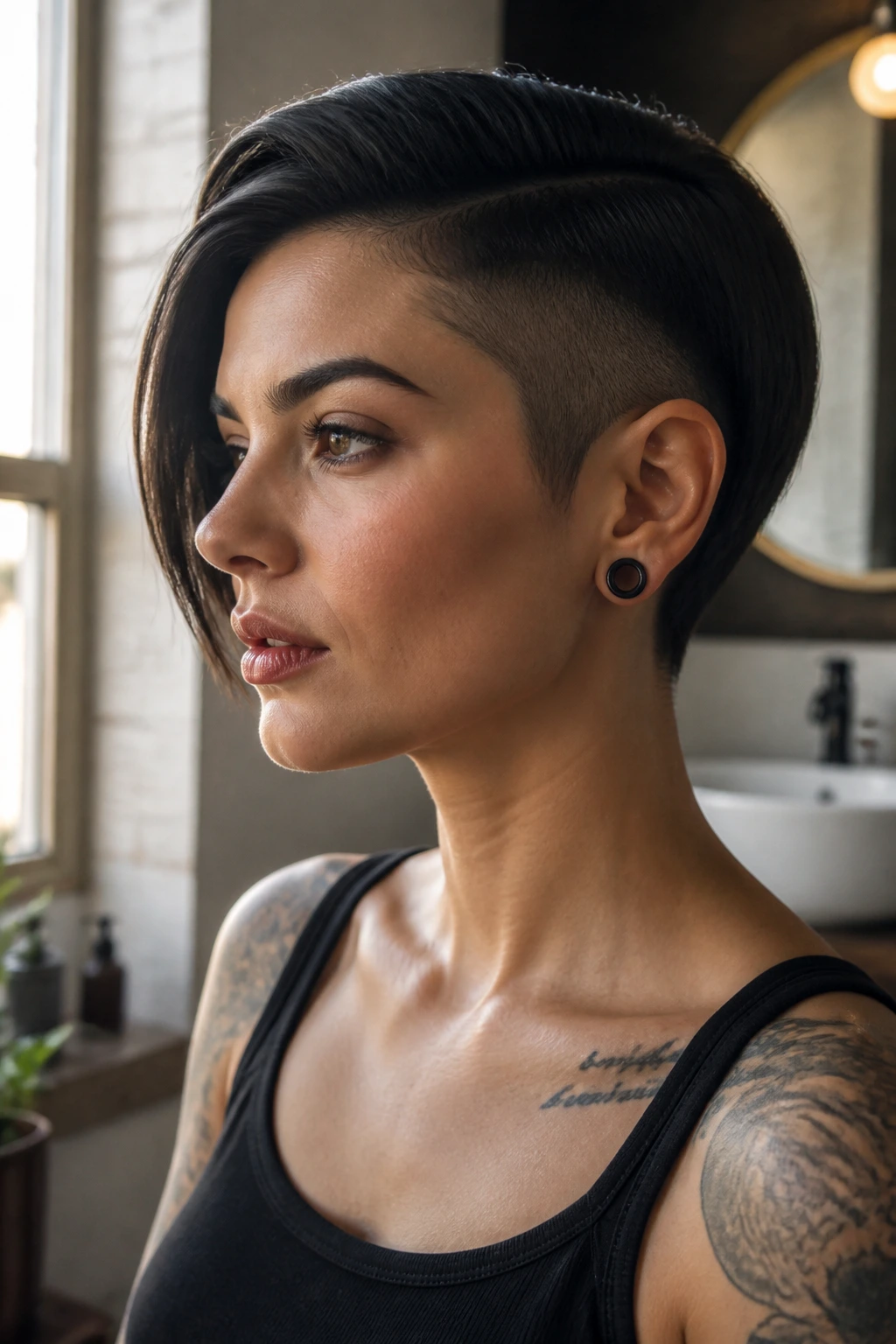
Straight hair shows clipper work with almost no effort, which is handy if you like clean lines and sharp contrast. It also means every uneven bit shows up faster, so the perimeter has to be cut with care. A blunt top with a smooth undercut can look sleek; a broken top with the same undercut can look edgy.
Wavy hair usually benefits most from a hidden or partial undercut because the waves need support at the crown and relief at the sides. The cut keeps the wave from puffing outward where it touches the neck. That means less triangle, more shape.
Curly and coily hair are a different story. The undercut should remove bulk underneath without taking too much from the curl pattern on top. If the shave climbs too high, you lose the silhouette. If it stays too low, the weight comes right back. The sweet spot is the zone where the hair tends to spread widest.
What to Tell Your Stylist Before the Clippers Start
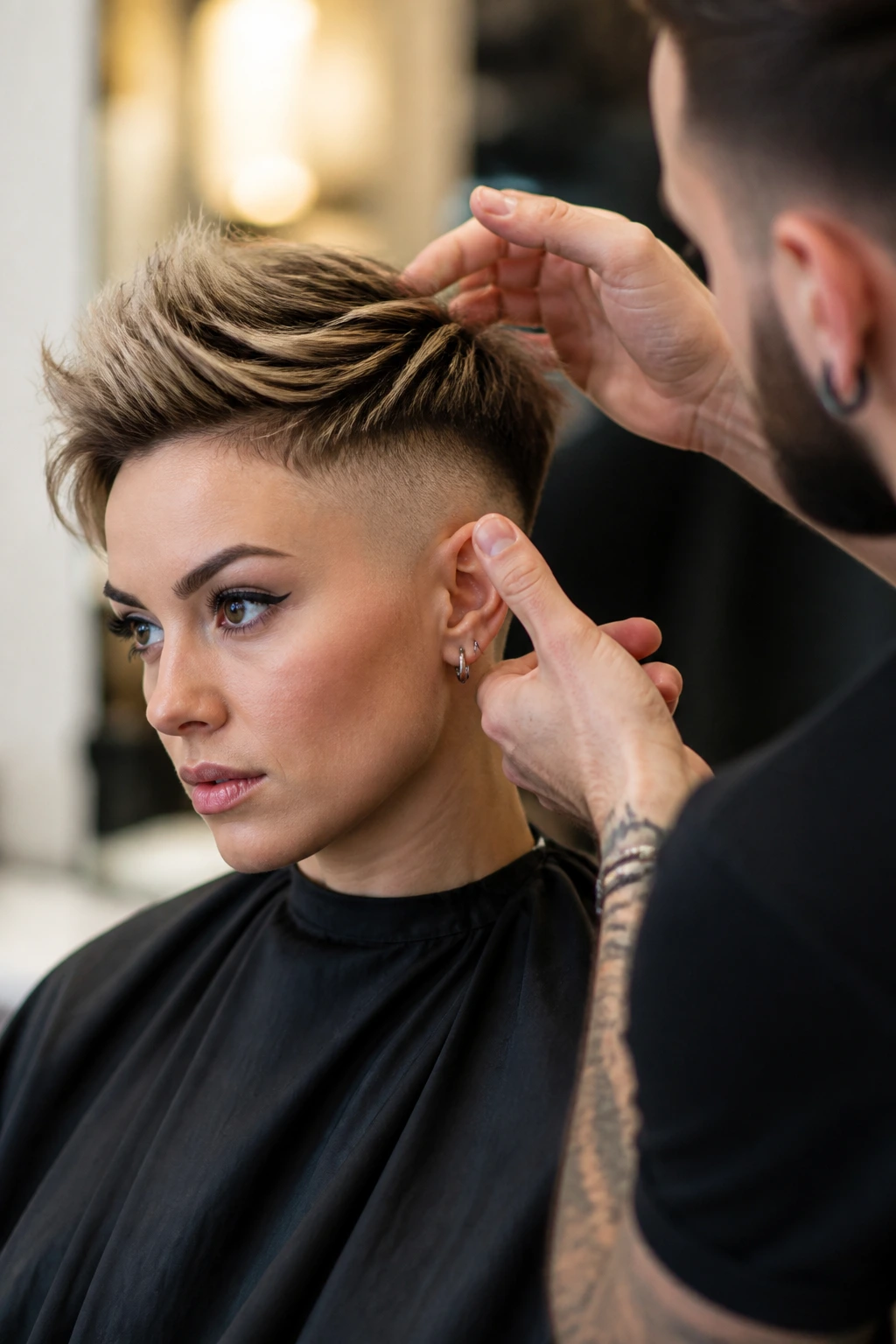
Bring more than one photo. One front view does not tell the whole story, especially with undercuts, where the back and sides carry most of the shape. A good reference includes the profile and the nape.
Use specific language. Say whether you want a hidden undercut, a tapered fade, a skin fade, or a buzzed panel. If you want the undercut to stay discreet, say how much hair should cover it when worn down. If you want it visible, say so plainly. Nothing about this part should be guessed.
You can also ask for clipper guard numbers if that helps you feel grounded. Guard 1 or 2 reads close and crisp; a longer taper leaves more softness. For graphic line work, say whether you want the lines shaved in or just cleaned up. Those details matter more than vague words like “edgy.”
Styling Tools and Products That Actually Matter
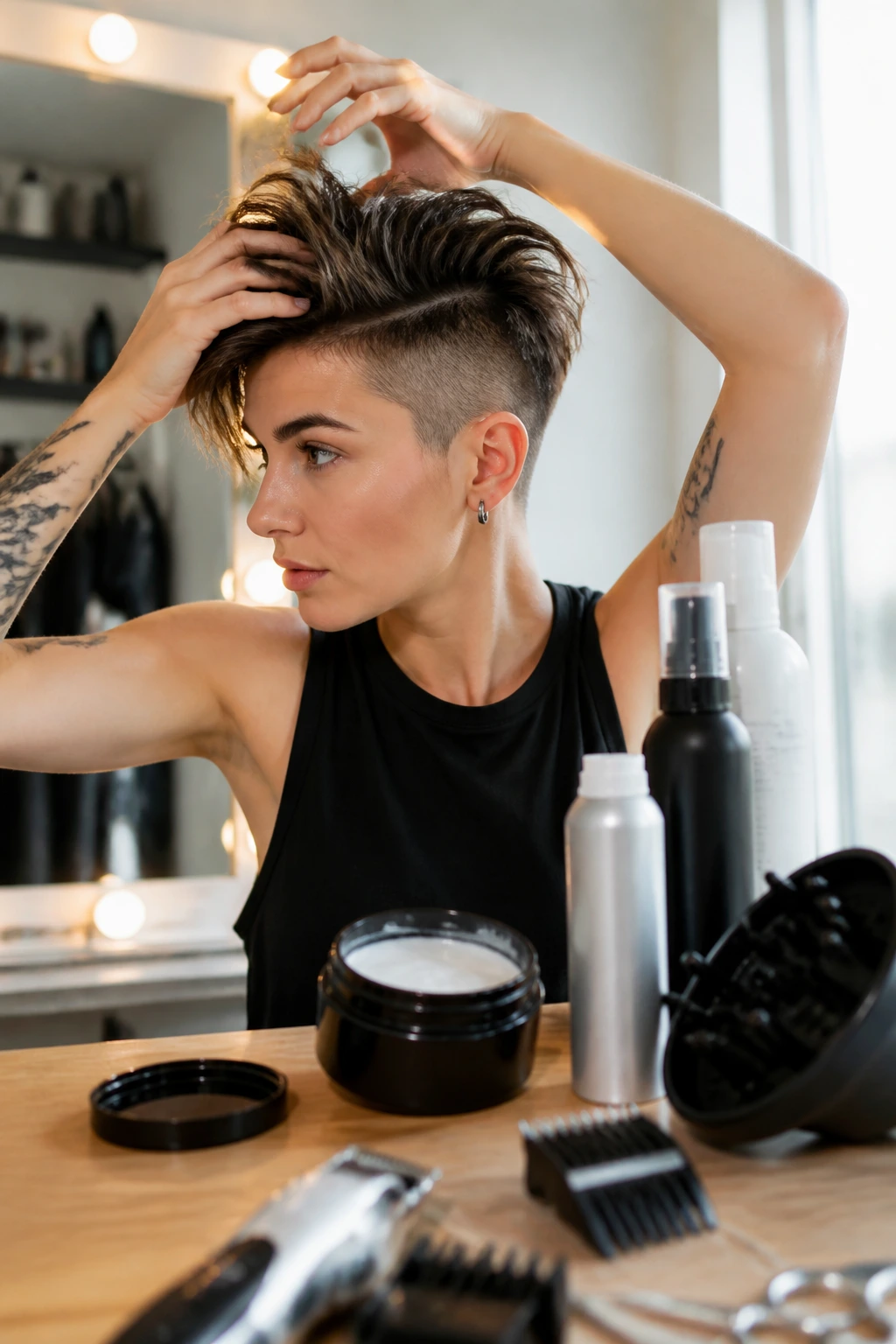
-
Matte paste: Best for pixies, crops, and spiky shapes because it separates short pieces without making them look wet.
-
Texture spray: Handy for shaggy or bixie cuts when you want the top to break apart instead of sitting flat.
-
Mousse: A smart choice for curls and waves, especially if the undercut has taken out bulk and you need lift at the roots.
-
Diffuser attachment: Useful if your hair has any bend or curl; it keeps the top from puffing in weird directions.
-
Small flat iron: Good for bobs, side-swept fringes, and clean graphic lines where the ends need a sharp bend.
-
Clippers or a detail trimmer: Worth having if you keep a hidden nape shave and want to tidy the edges between salon visits.
-
Hand mirror: Boring, yes, but useful. You can’t check a nape carve-out by feel alone.
How to Keep Short Hair With Undercut Looking Sharp Between Visits
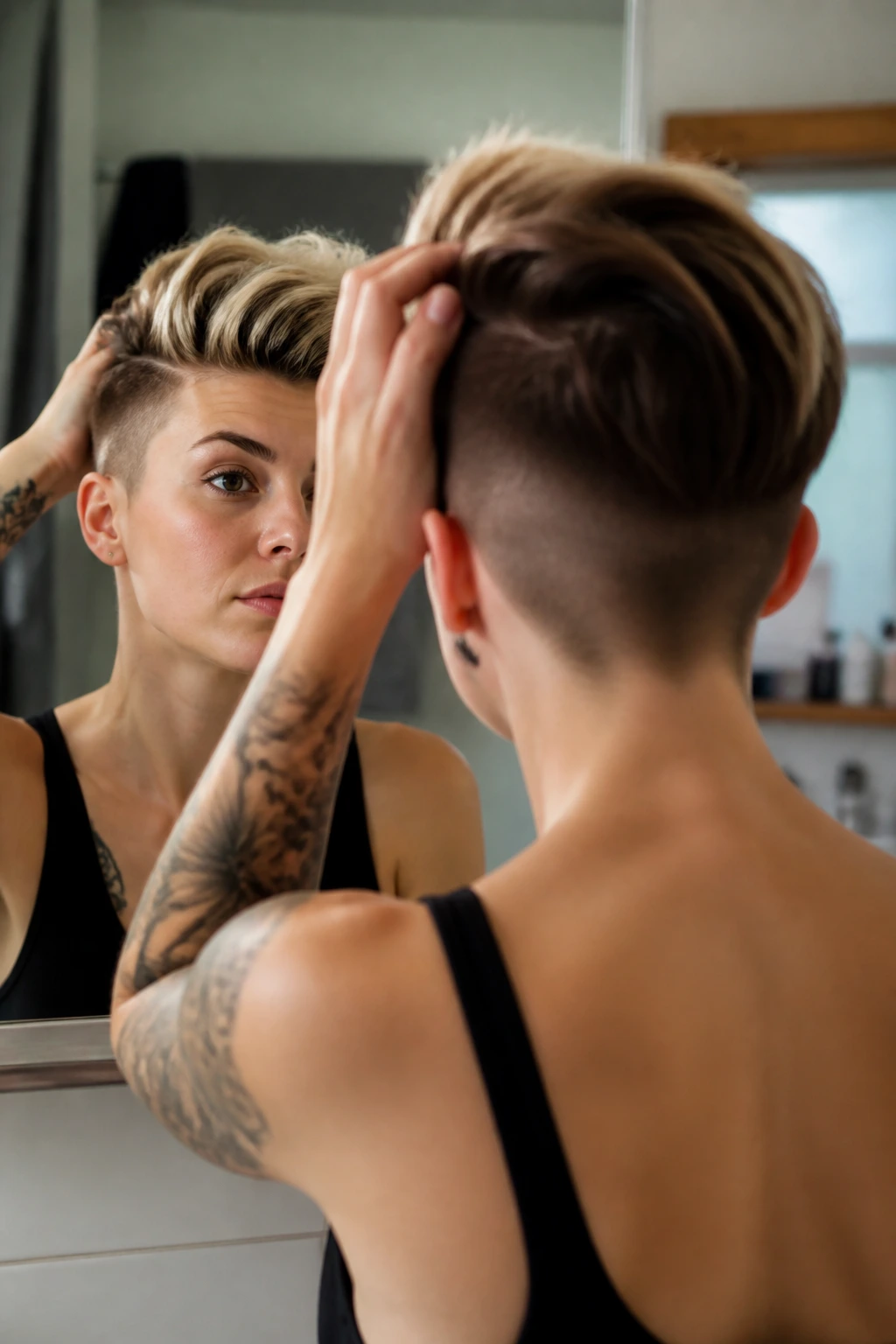
Short undercuts grow fast enough to show their seams. The nape fuzz arrives first, then the temples, then the outline starts softening at the exact point where the haircut used to look crisp. If you want the shape to stay clean, plan on a touch-up every 3 to 5 weeks for tighter cuts, and closer to 2 to 3 weeks for graphic line work or skin fades.
A quick neckline cleanup at home can help, but only if you’re careful. Use a mirror, good light, and a steady hand. If you’re not sure, leave it alone. A bad home trim is easy to spot and hard to ignore.
Product choice matters during grow-out, too. Heavy creams can make the longer top flop over the undercut line. Lighter sprays and pastes keep the top responsive, which buys you more time before the style starts looking tired.
Common Mistakes That Make the Cut Look Off
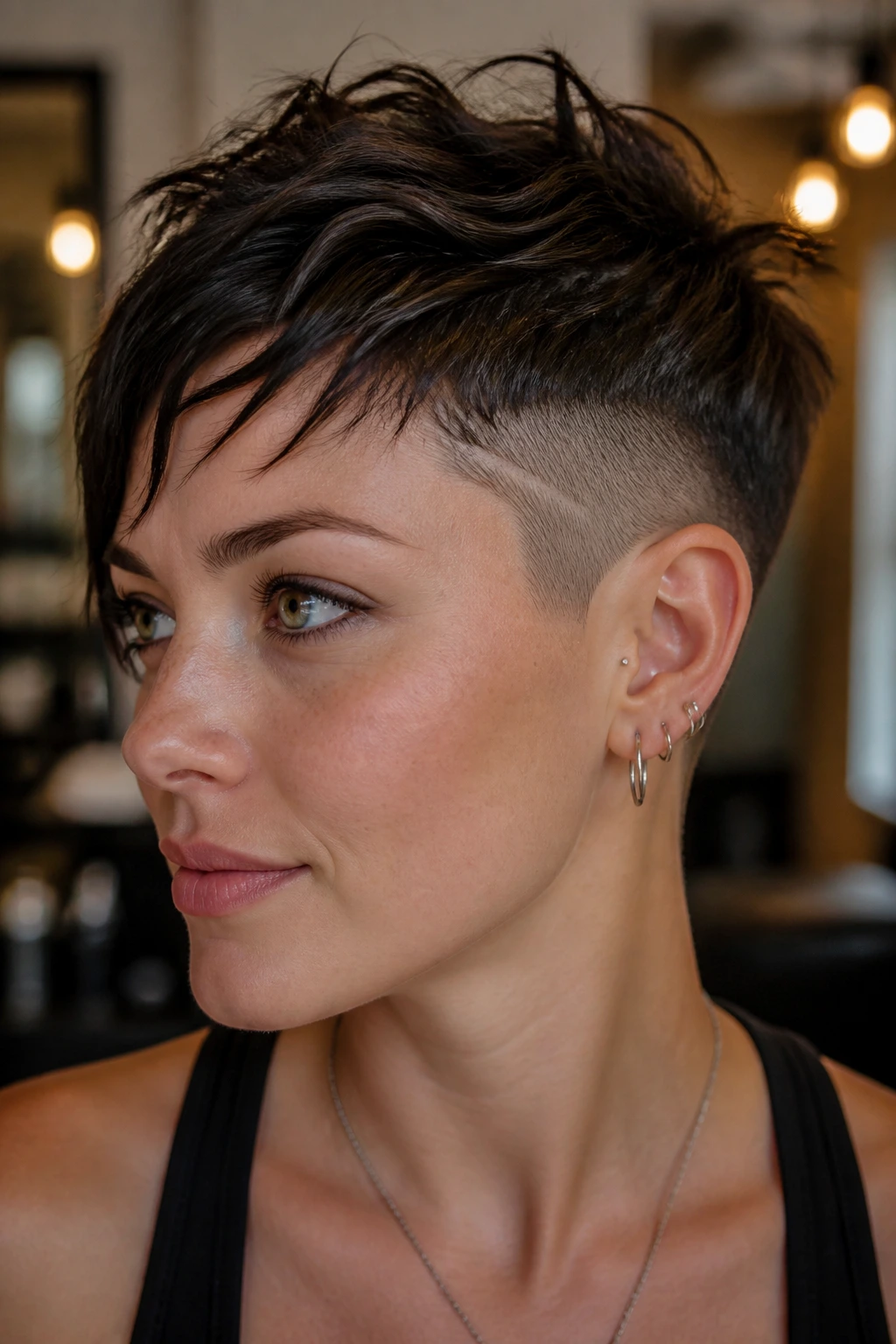
The biggest mistake is shaving too high too fast. That can make the head look narrow at the top and wide everywhere else, especially on thick hair. Start lower if you’re unsure; you can always take more off.
Another problem is overloading the top with product. Short hair doesn’t need a lot of help, and too much cream or gel turns piecey texture into sticky clumps. If the hair looks greasy by noon, the product amount is the issue, not the haircut.
People also underestimate grow-out. A crisp undercut can start looking fuzzy in a couple of weeks, and if the neckline is ignored, the whole cut loses its line. Plan for maintenance before the first cut, not after the second month.
Ways to Make It Softer, Sharper, or More Graphic
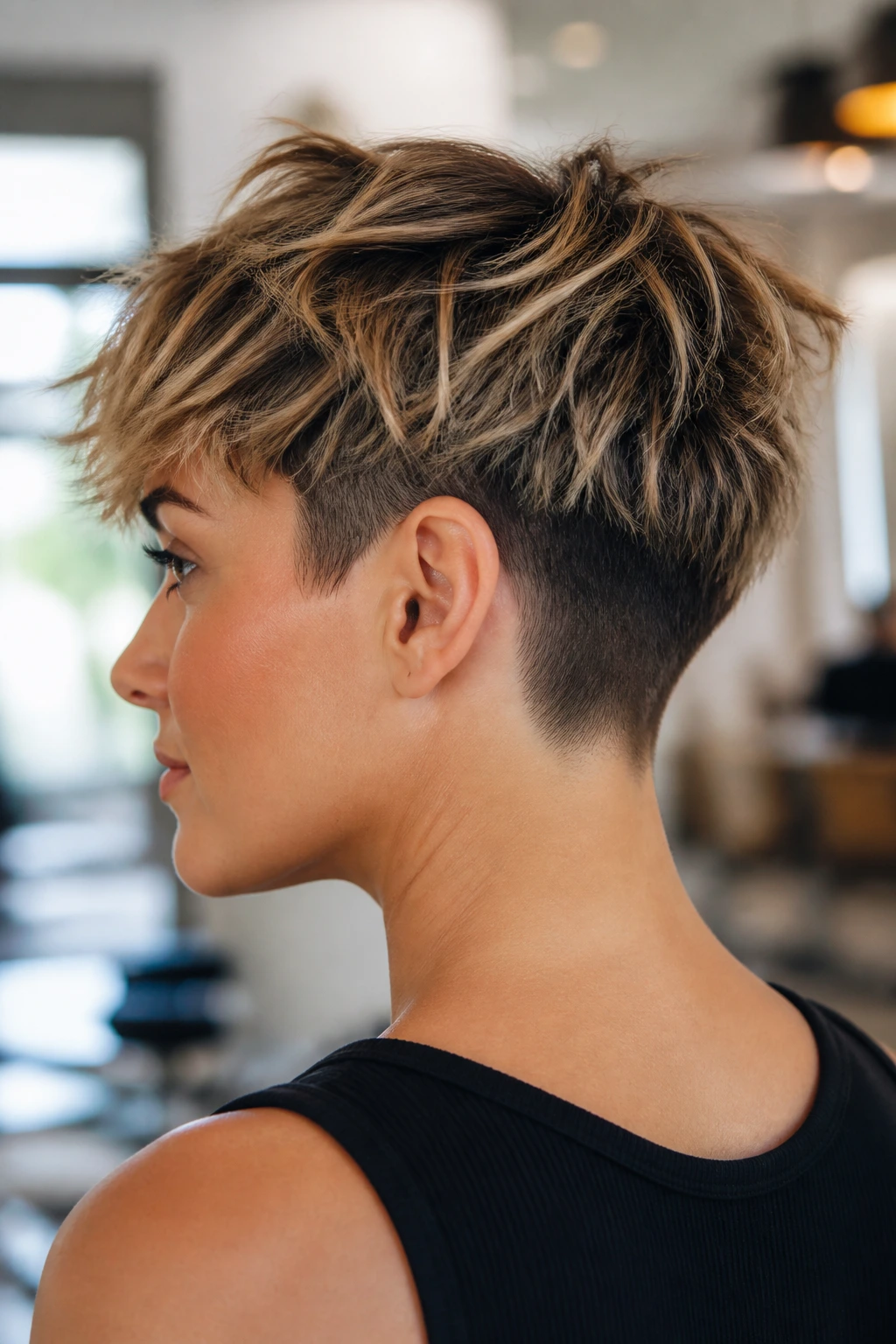
Softer: Keep the top longer, skip hard lines, and ask for a hidden undercut instead of a visible shave. Curtain fringe, side-swept pieces, and a little bend at the ends soften the whole read.
Sharper: Tighten the fade, add a deeper side part, and lean into matte texture. This is where asymmetry, buzzed temples, and piecey tops start looking especially good.
More Graphic: Bring in line work, color contrast, or a dramatic disconnect between the top and sides. A platinum top over dark roots, or a carved part through a cropped side, makes the haircut feel bolder without changing the basic shape.
Frequently Asked Questions
Will an undercut make my hair look thinner?
Not automatically. On thick hair, it often makes the hair look less bulky and more controlled, which can read as better shape rather than less hair. On very fine hair, the undercut has to stay smaller so you don’t remove too much body from the overall cut.
Can I hide the undercut at work or in formal settings?
Yes, if the top is long enough to cover it when worn down. A hidden nape shave or temple undercut disappears under a bob, a longer pixie top, or a curtain fringe. A full skin fade is harder to hide, so choose the version that fits your day-to-day reality.
How often does a short undercut need trimming?
Most need some kind of tidy-up every 3 to 5 weeks. If you have a sharp line or a skin fade, expect closer maintenance. If the undercut is hidden under longer top layers, you can usually stretch a little farther.
Does this work on curly hair?
Absolutely, but the cut has to respect shrinkage. Curly hair needs the undercut to remove bulk without chopping so high that the shape becomes patchy once it dries. A curl-aware stylist is worth hunting down for this one.
What if my hair grows in uneven or my nape is not straight?
Then the cut needs to be built around that, not against it. A rounded or softly tapered nape often looks better than a brutally straight line on an uneven hairline. Small adjustments at the perimeter make a huge difference.
Can I grow out an undercut without looking awkward?
Yes, but the transition is a phase, not a day. Let the top get slightly longer, keep the sides cleaned up enough to avoid a fuzzy outline, and use texture spray or a small bend in the fringe to blur the difference while it grows.
Is a buzzed undercut more high-maintenance than a pixie undercut?
In some ways, yes. The shorter and sharper the shave, the faster the grow-out shows. A pixie with a hidden undercut usually gives you a little more wiggle room than a full buzzed panel or graphic fade.
What should I do if the top falls flat after the cut?
That usually means the roots need help, not that the haircut failed. Try mousse at the base, dry with your head upside down for a minute, then finish with fingers instead of a brush. If the top is still flat, the length may need a small adjustment at the next trim.
Keeping the Edge Between Visits
The reason short hair with undercut keeps getting attention is simple: it gives structure without begging for length. A good one can look soft in the morning, sharp by lunch, and tougher by night, all without changing the cut itself. That’s a rare trick.
Choose the version that fits the amount of upkeep you’ll actually do. A hidden nape shave buys you flexibility. A graphic fade buys you attitude. A curly crop with undercut detail buys you shape you can still wear loose. Pick the one that matches your schedule, not the one that sounds coolest in a chair.
If the cut is well chosen, the grow-out becomes part of the look instead of a problem to hide. That’s the kind of haircut worth returning to — the one that still has a little bite even when it starts to soften.
