



A shaved side haircut changes the whole mood of a woman’s hair in one move. Keep the top long and soft, and that one clean panel at the side makes the rest of the style feel sharper, more deliberate, and a little bit dangerous in the best way. That’s why shaved side hairstyles for women keep showing up on pixies, bobs, curls, braids, locs, and waist-length hair alike. The cut works because it changes the silhouette, not just the length.
The part most people miss is how practical this can be. A shaved temple can make thick hair sit closer to the head. A side undercut can take a heavy bob from puffy to swingy. A buzzed panel under braids or waves can cut down bulk and dry time, which matters more than people admit when they’re doing their hair on a weekday morning with one eye open.
And then there’s the grow-out problem. It’s not a problem if you plan for it. Some side shaves disappear into a deep side part. Others turn into a softer undercut that still looks intentional after several weeks. The trick is choosing the version that fits your hair texture, your face shape, and your patience for upkeep. That’s where the good stuff starts.
Why This Collection Stands Out
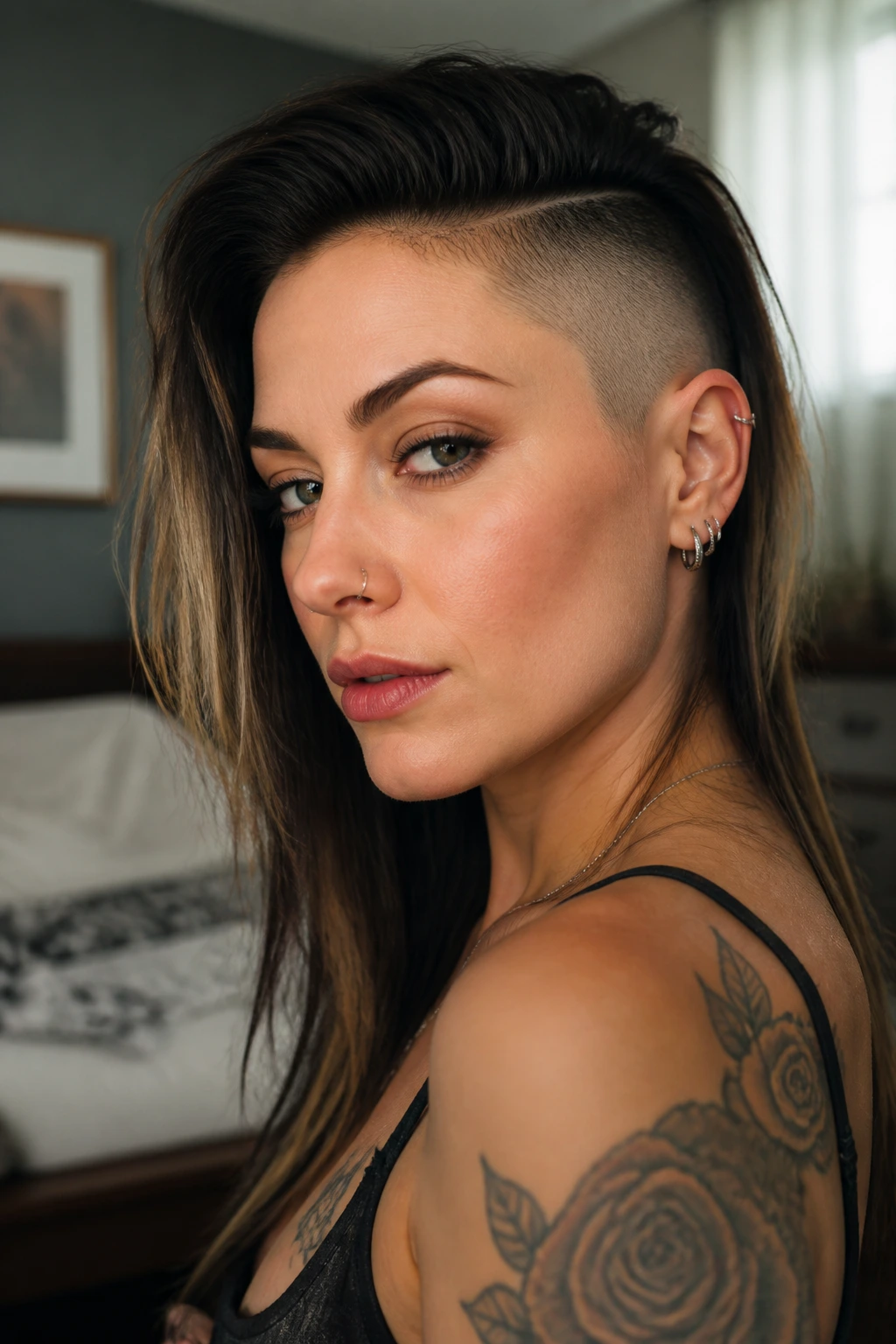
-
Shape Control: A shaved panel removes bulk where hair tends to puff out, so curls, coils, and thick straight hair can sit closer to the head instead of flaring at the sides.
-
Grow-Out Flexibility: A temple shave can be hidden under a part or a layer of bangs, which gives you room to stretch the style a little when you do not want a crisp edge every week.
-
Texture Plays Differently: Coily hair turns a side shave into a high-contrast statement, while straight hair shows off the line itself; the same cut can feel soft or severe depending on how you style the top.
-
Less Weight, More Lift: Taking hair off one side can make the remaining length move better, especially in bobs, shags, and lob cuts that get heavy around the jaw.
-
Color Loves the Contrast: A shaved side gives you a clean canvas for a line design, a bright panel, or a peekaboo color that would get lost in longer layers.
-
Easy to Dress Up or Down: Pin it, slick it, braid it, curl it, or leave it messy. The side shave does half the styling work before you even reach for a brush.
1. Side-Swept Pixie with a Clean Temple Shave
A side-swept pixie gets a lot sharper when one temple is clipped down to the skin. The long top can be feathered across the forehead, which softens the whole cut and keeps it from feeling severe. The shaved side shows up only when you tuck the hair back or turn your head, and that little reveal is the whole point.
Why It Works
The shape gives you contrast without needing much length. A pixie can look flat fast, especially if your hair is fine or lies close to the scalp, but a clean temple shave adds structure right where the eye lands first. It also works well with a side part because the longer front pieces can sweep over the shorter side and make the cut look deliberate instead of grown out.
Styling Note
Use a pea-size dab of matte paste on dry hair and push the top forward, then sweep it to one side with your fingers. If your hair is straight, a little root lift at the crown keeps the pixie from collapsing by noon. If it’s wavy, leave some texture in the fringe and let the shaved side do the neat work.
This version needs regular upkeep. Every 2 to 3 weeks, the temple line starts to soften enough that the edge loses its clean shape. That is not a disaster, but it does change the feel of the cut fast.
2. Asymmetrical Bob with a Hidden Undercut
A bob with one side longer than the other looks even better when the shorter side hides an undercut underneath. You get the swing of a classic bob, but the hidden shave takes away the bulk that makes thick hair stick out at the jaw. It’s a good cut if you want the shape to feel polished from the front and a little rebellious when you tuck one side behind your ear.
A hidden undercut is a smart move for hair that sits heavy after a blow-dry. The top layer still keeps the bob’s outline, but the inside weight is gone, so the cut moves instead of ballooning. That makes this style one of the more wearable shaved side hairstyles for women who need something office-friendly and not too loud.
If you want the shave to stay subtle, ask for the undercut to sit below the visible perimeter of the bob. That way the surprise only shows when you lift the hair or pull it back.
3. Curly Frohawk with Buzzed Sides
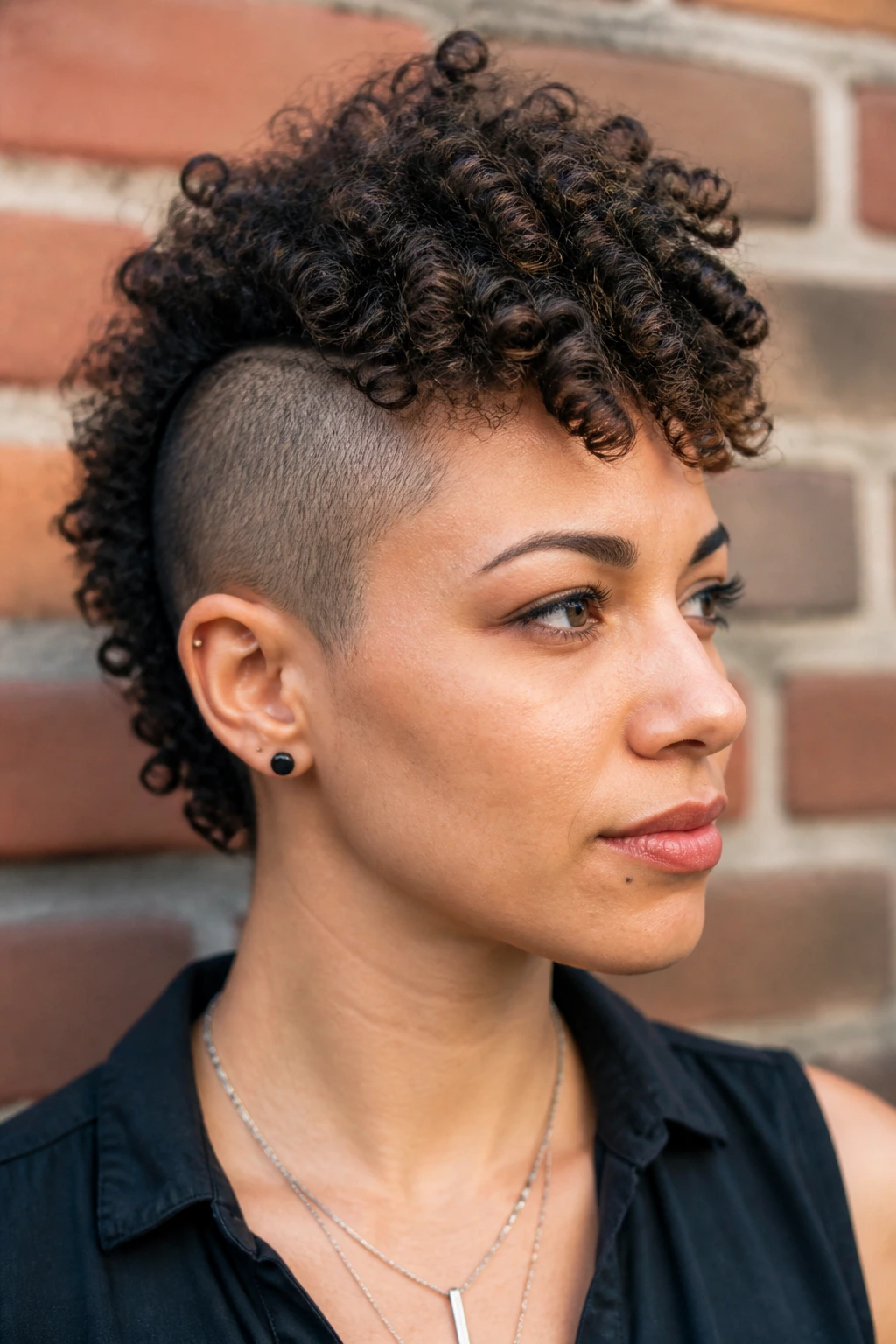
If your curls are trying to take up the whole room, this is the cut that gives them a stage. Buzzed sides narrow the silhouette, and the curly strip through the center rises like a little crown. It’s bold, yes, but it also solves a real problem: too much width at the sides and not enough shape at the top.
What Makes It Different
A curly frohawk is not trying to flatten texture. It’s trying to frame it. The shaved sides keep the bulk off your ears and jaw, which means the curls can sit higher and look more controlled. That matters a lot if your hair has a tight coil pattern and shrinks hard when it dries.
How to Style It
Work in curl cream on damp hair, then add a light gel where you want the top to hold its ridge. Diffuse on low heat if you want height, or air-dry for a softer finish. The shaved sides should stay clean and bare, so a little scalp oil on the buzzed area keeps the skin from looking dry and chalky.
This cut does best when the top is shaped every few weeks. If the curls on top get too long, the hawk turns into a rounded puff. Not ugly. Just different.
4. Long Waves with a Single Temple Fade
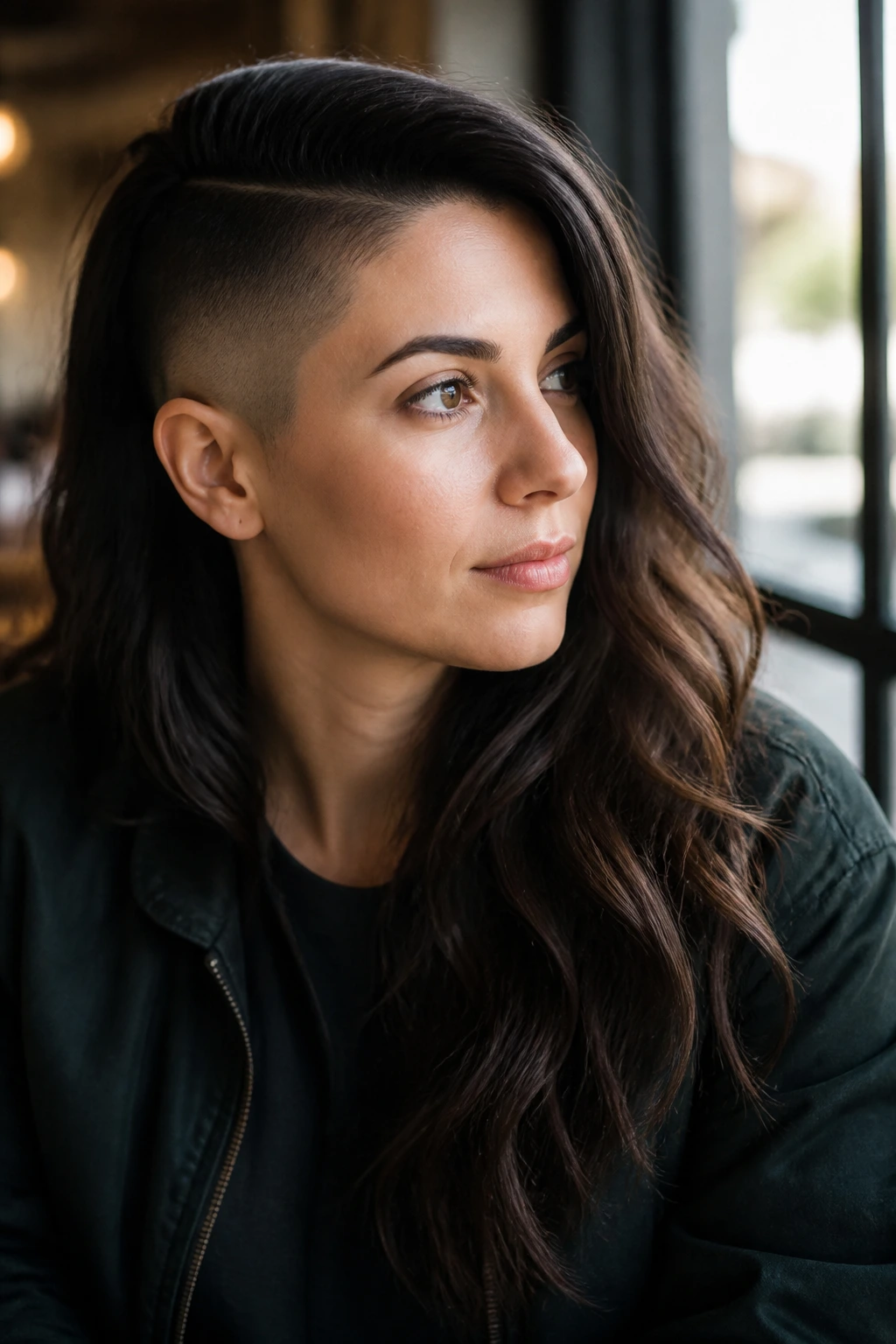
Long hair and a shaved side can live in the same head without fighting each other. A single temple fade does the job quietly. You keep the length, the movement, and the softness of waves, but one side gets clipped close enough to show when you tuck the hair behind your ear or sweep it over one shoulder.
That tiny bit of exposure is what makes the cut interesting. It also keeps the whole style from feeling too sweet. Long hair with a side shave can look flat if the top is all one length, so I like this best when the front has a little layering around the face. The wave pattern helps, too, because the bend in the hair makes the shaved spot feel intentional rather than random.
If you wear your hair mostly down, this is one of the easiest ways to test the side-shave look without committing to something loud. You can hide it. You can show it. That flexibility is worth a lot.
5. Braided Crown with a Peekaboo Side Shave
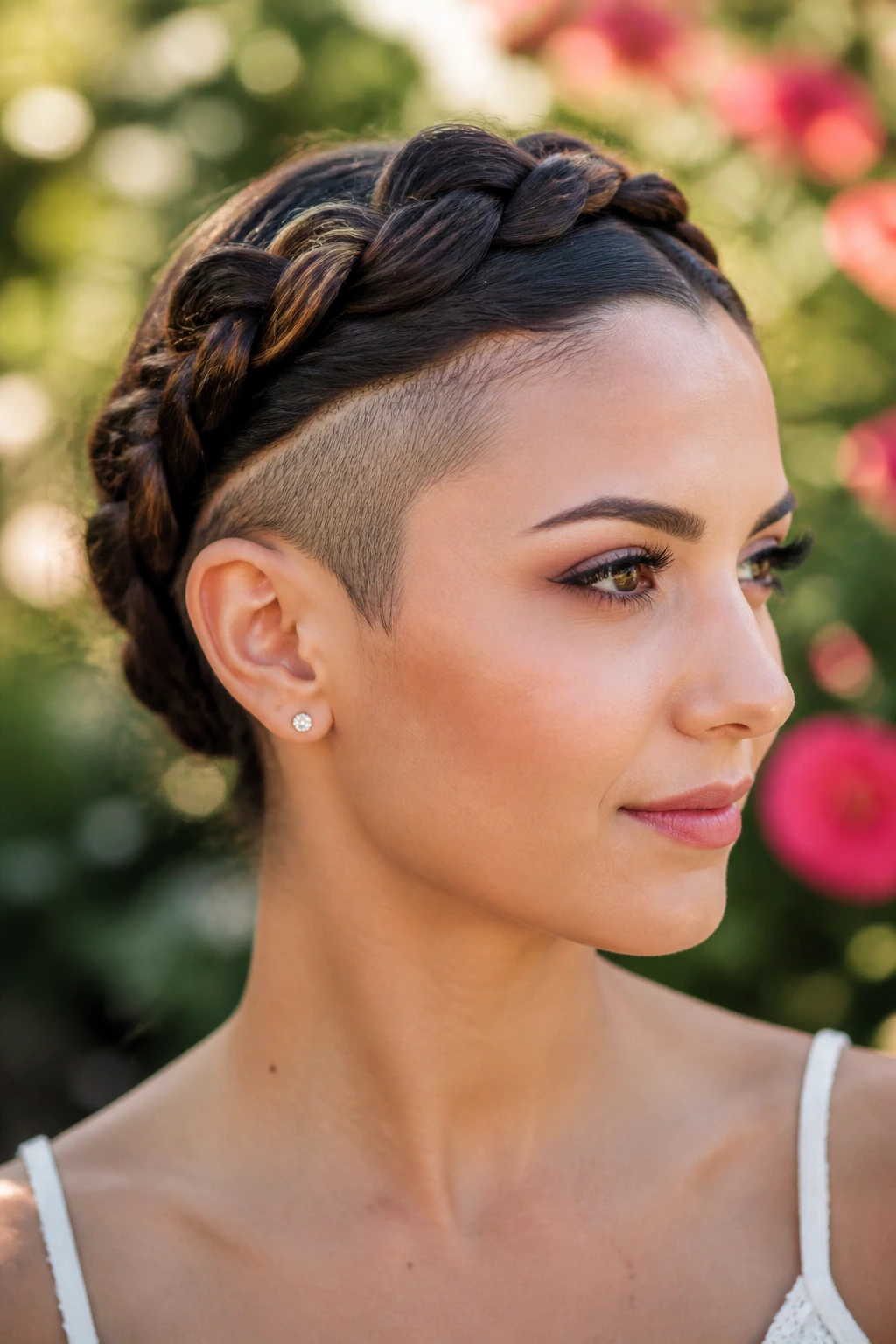
A braided crown turns a side shave into a surprise instead of a headline. The braids sweep up and around the head, then the shaved section peeks through when the style opens near the temple or ear. It gives the cut a kind of built-in reveal, which is why it feels so good for formal events, concerts, or any day when you want your hair to look more thought out than usual.
The scalp detail matters here. A shaved side beside braids needs a clean hairline, or the whole style starts to look fuzzy fast. Keep the buzzed panel tidy, and use a light mousse on the braided lengths so flyaways do not blur the shape.
This one also works well for protective styling because the shaved area removes some tension from the overall look. Less hair pulling at the side. Less bulk around the ear. Better balance.
6. Slicked-Back Lob with a Low Side Undercut
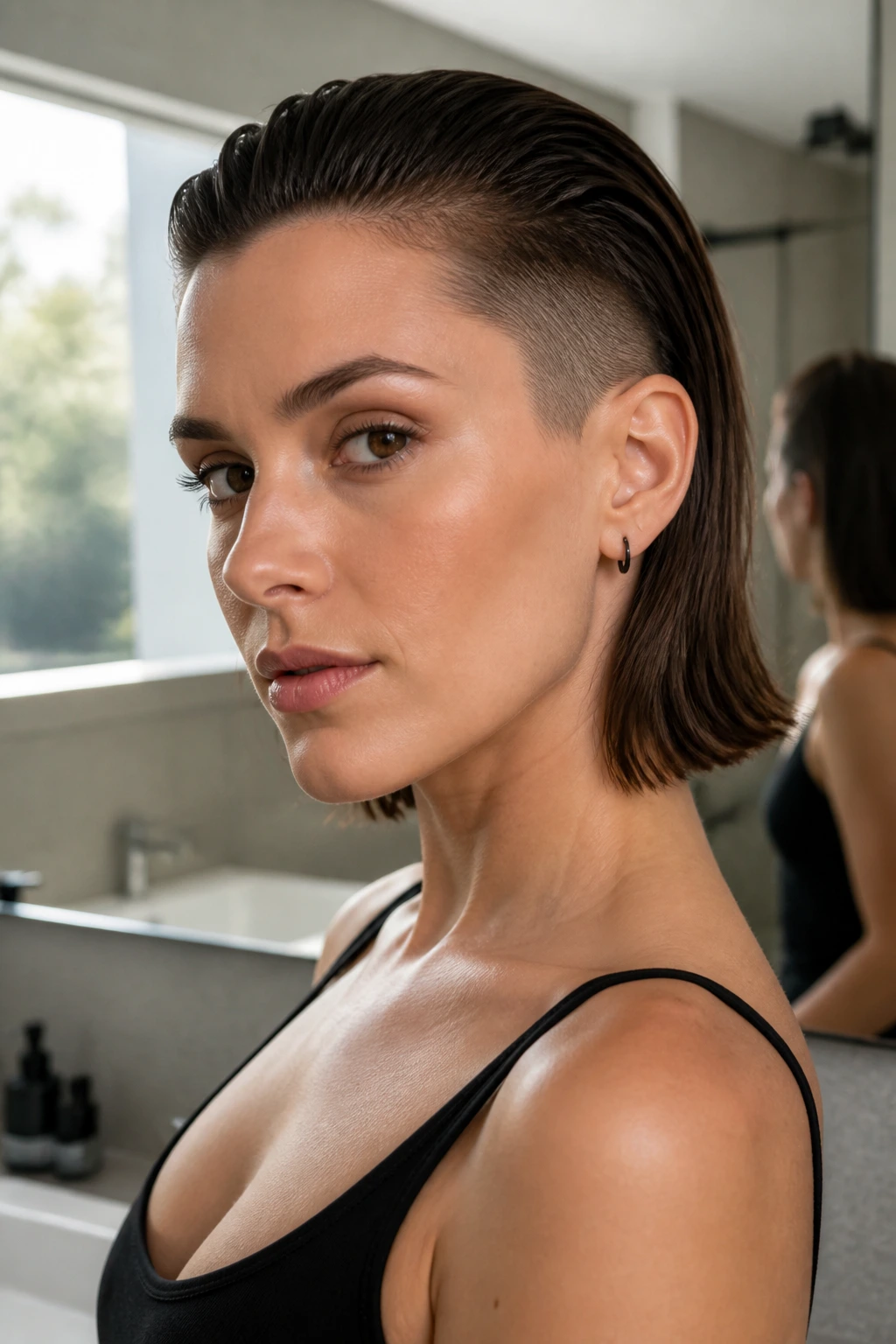
A lob can look expensive with almost no effort when one side hides a low undercut. Slick the top back with gel or styling cream, keep the surface smooth, and let the short side do the quiet work underneath. The result is clean, sleek, and a little severe in a way that reads intentional rather than fussy.
The reason this cut works is simple: long bobs often get too round at the ends, especially if the hair is thick. A low undercut removes that weight from the inside, so the lob falls closer to the neck and shoulders. That makes the whole shape sharper without cutting away the length people want to keep.
This style is good if you want the shaved side to feel hidden during the workday and visible when you tuck hair behind your ear at night. It moves from subtle to sharp in one gesture. That’s hard to beat.
7. Space Buns with a Buzzed Side Strip
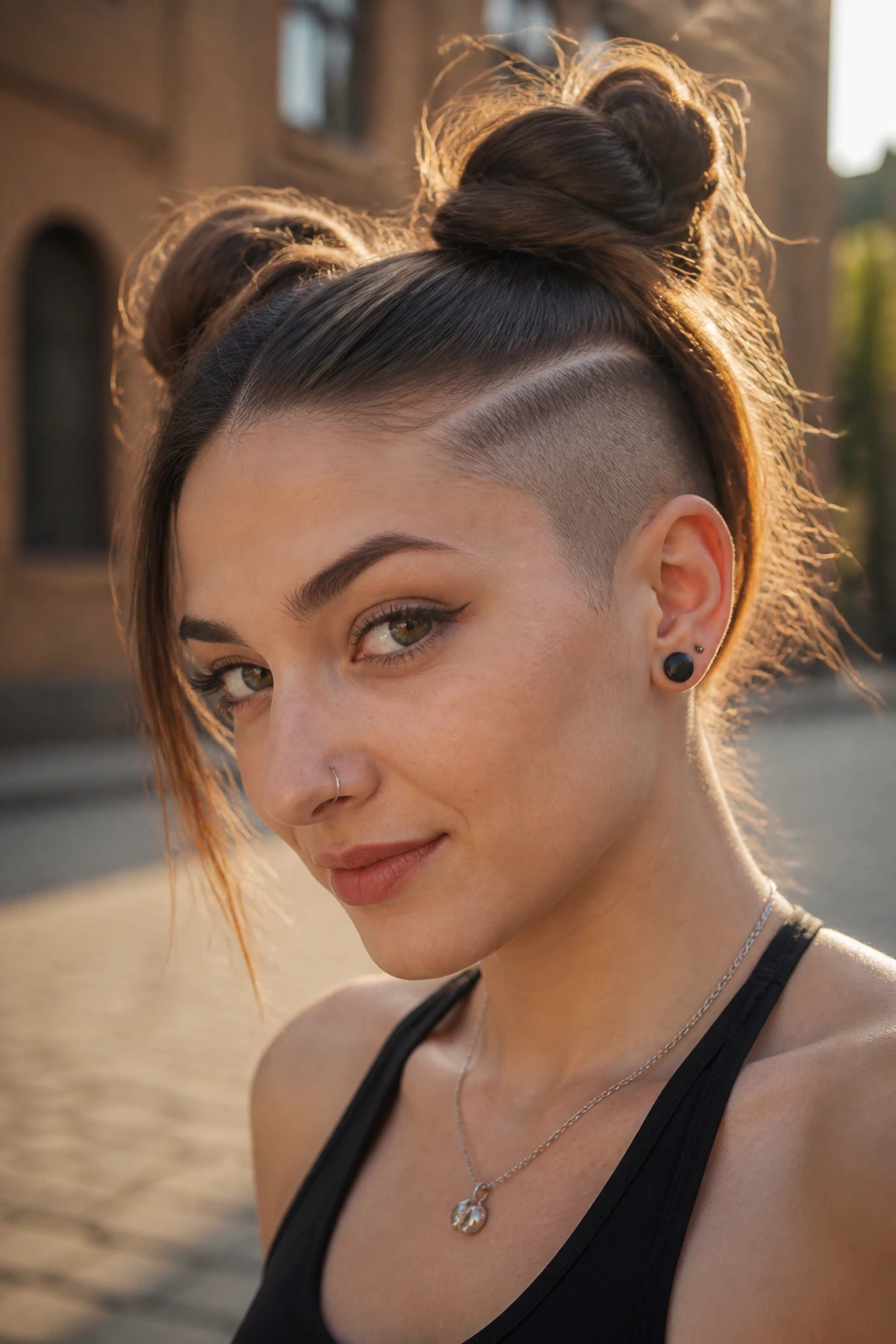
Space buns are already playful. Add a buzzed side strip and they stop looking cute in the ordinary sense and start looking deliberate. The shaved strip sits between the buns and the ear line, so even if the buns are small and messy, the cut still has a clear edge.
This style shines on medium-length hair that can be split cleanly down the middle. The strip of bare scalp gives the whole look a stronger line, which keeps space buns from feeling too juvenile. It also helps if your hair is thick, because the buzzed section takes away some of the volume that can make two buns feel top-heavy.
A little edge control around the part keeps the style crisp. If you leave the part fuzzy, the whole thing loses the clean geometry that makes it work.
8. Faux Hawk with Tapered Sides
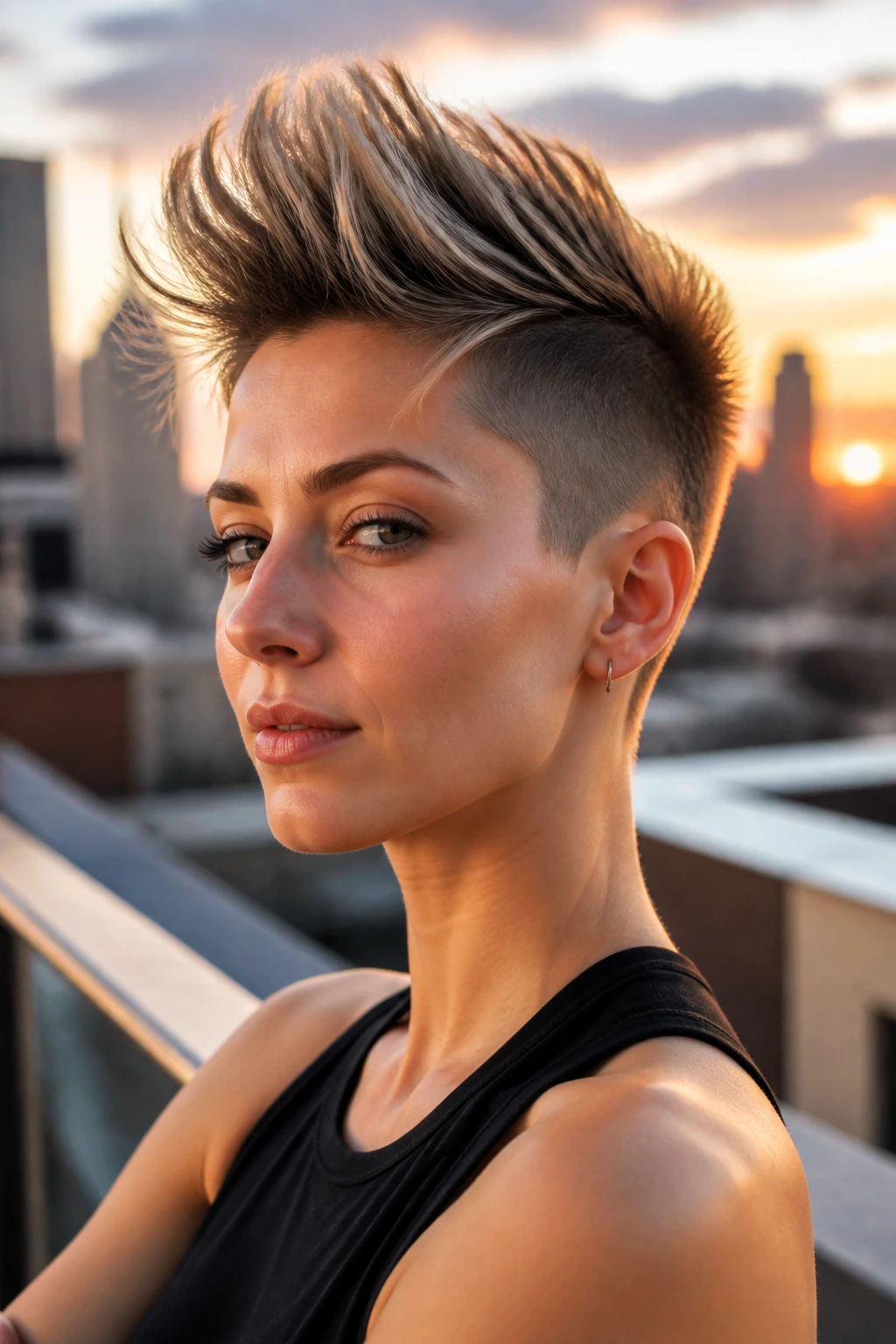
A faux hawk is the bridge between everyday hair and something with more attitude. The tapered sides keep it soft enough to wear anywhere, while the center strip is lifted and shaped so it still looks like a hawk, not just a brushed-up style. If you want a shaved-side effect without going fully bald on one side, this is a good place to land.
The taper matters more than people think. A hard buzz on the sides can make the top look too narrow, especially on fine hair. A gentle taper lets the silhouette breathe. The center can be styled with mousse for volume or with cream for a smoother ridge, depending on how much texture you want to show.
It’s one of those cuts that changes mood fast. Push the top up and it feels sharp. Brush it flatter and it feels cleaner, almost tailored.
9. Side-Parted Shag with an Underlayer Shave
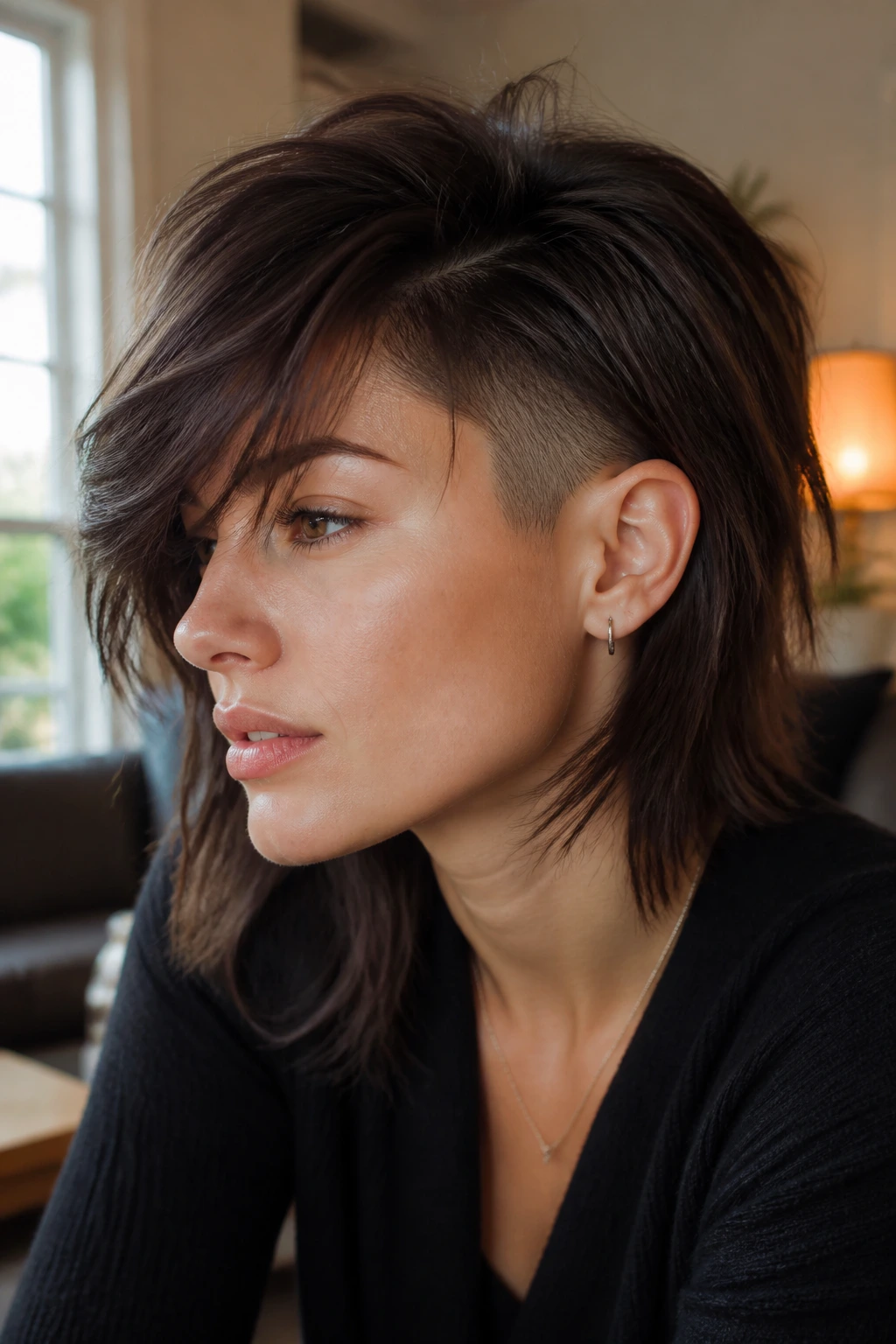
A shag already has movement and pieces. Hide a shave underneath, and the cut gets lighter without losing its lived-in shape. This is especially useful if your hair is thick enough to swallow its own layers by noon. The underlayer shave cuts weight where no one sees it, so the top stays airy and the shag’s choppy texture actually shows up.
Best for Thick Hair
The underlayer shave helps thick hair behave. Not magically. Just enough to stop the sides from puffing out around the jaw and neck.
A side-parted shag also gives you a built-in way to show or hide the shorter area. Deep part? The shave disappears under the longer top. Pull it back? There it is. That flexibility is exactly why so many women end up staying with undercuts longer than they expected.
10. Buzz Cut with a Hard Side Part Design
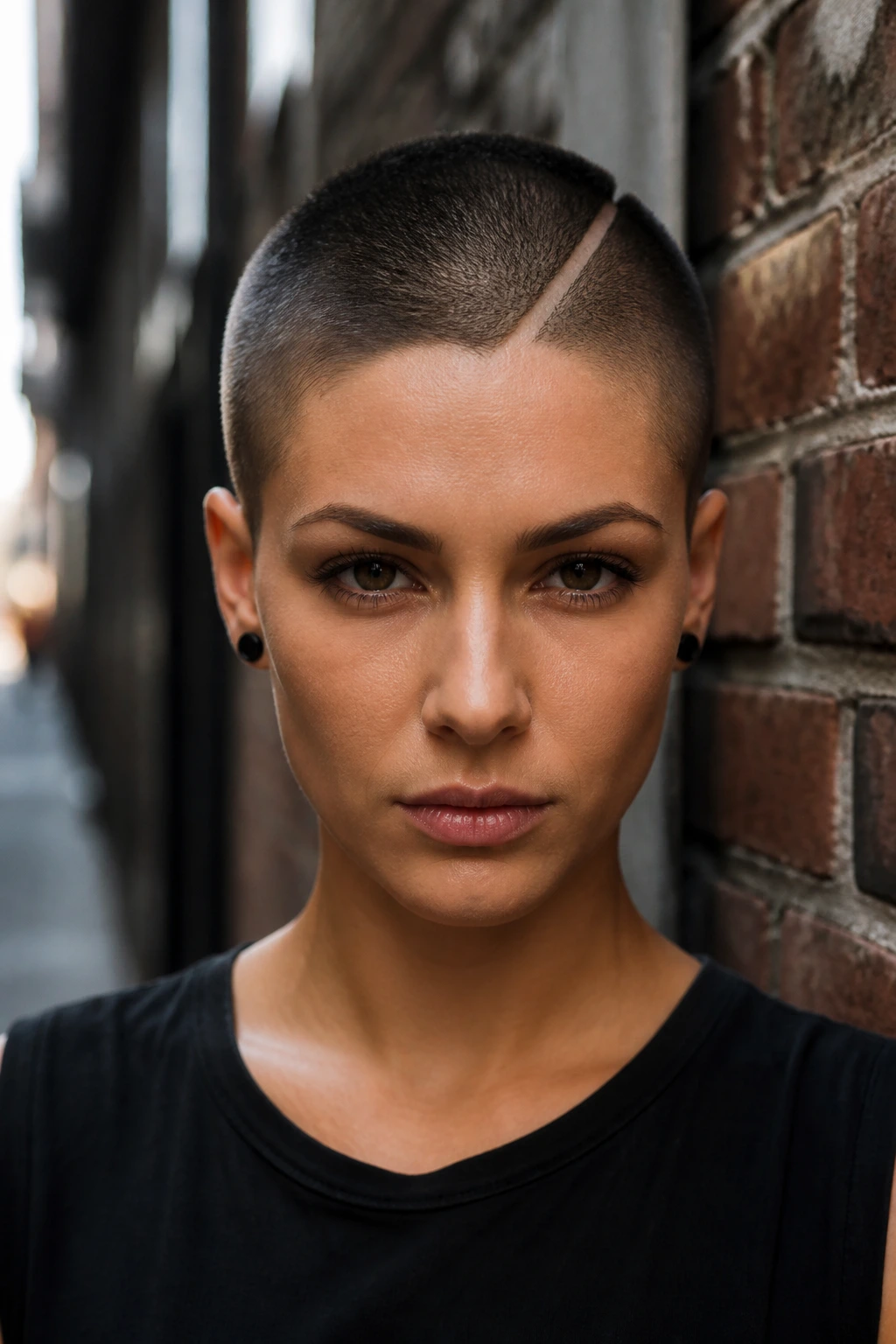
A buzz cut does not have to be plain. A hard side part, etched into the scalp or created by a crisp shave line, gives the cut a little architecture. The shape is nearly all bone structure and scalp, which means the line matters a lot. It tells the eye where to go.
This is one of the cleanest shaved side hairstyles for women who want nearly no styling time. The cut is the style. A little scalp moisturizer, maybe a touch of sheen oil if you like the look, and you’re done. If you want more contrast, a slightly longer guard on top with a shorter side can make the part stand out even more.
Color makes a buzz cut even more interesting. Platinum, copper, or a deep dark shade all read differently once the hair is this short. There is nowhere for the color to hide.
11. Locs with a Shaved Side and Beaded Length
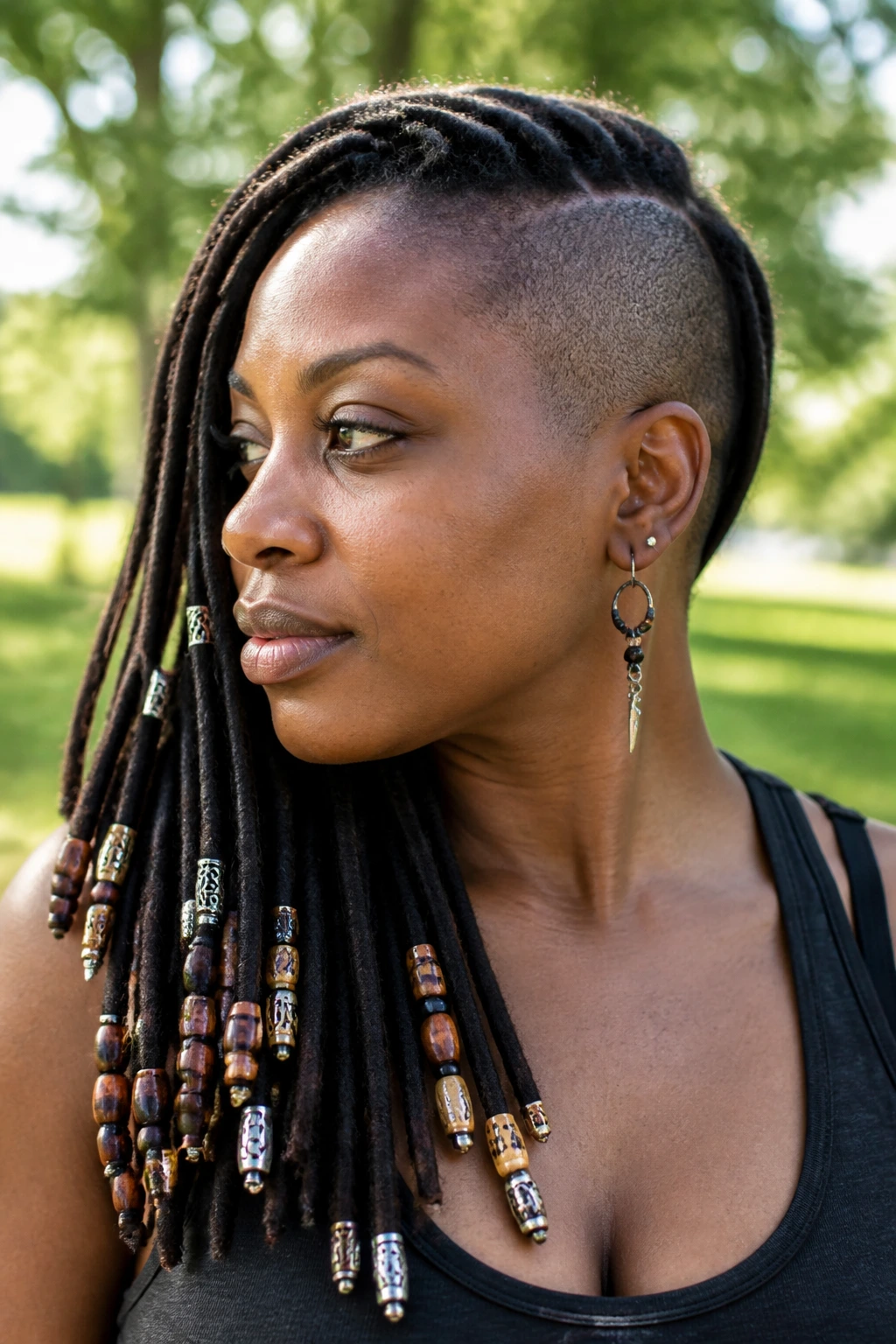
Locs and a shaved side work because the contrast is physical. The weight of the locs stays on one side or through the center, while the shaved panel keeps the head from feeling overloaded. It also lets the locs show off their shape instead of just falling everywhere.
Beads, cuffs, or wrapped ends help draw the eye away from the shaved section when you want the style to feel softer. When you want it sharper, keep the locs simple and let the bare side do the talking. The shaved area also helps with heat around the ear and jaw, which sounds minor until summer hits and you remember why comfort matters.
If your locs are long, ask for the shave to stay low enough that it does not interfere with tension near the roots. That keeps the style comfortable and avoids awkward line breaks as the hair moves.
12. Box Braids with a Side Shaved Nape
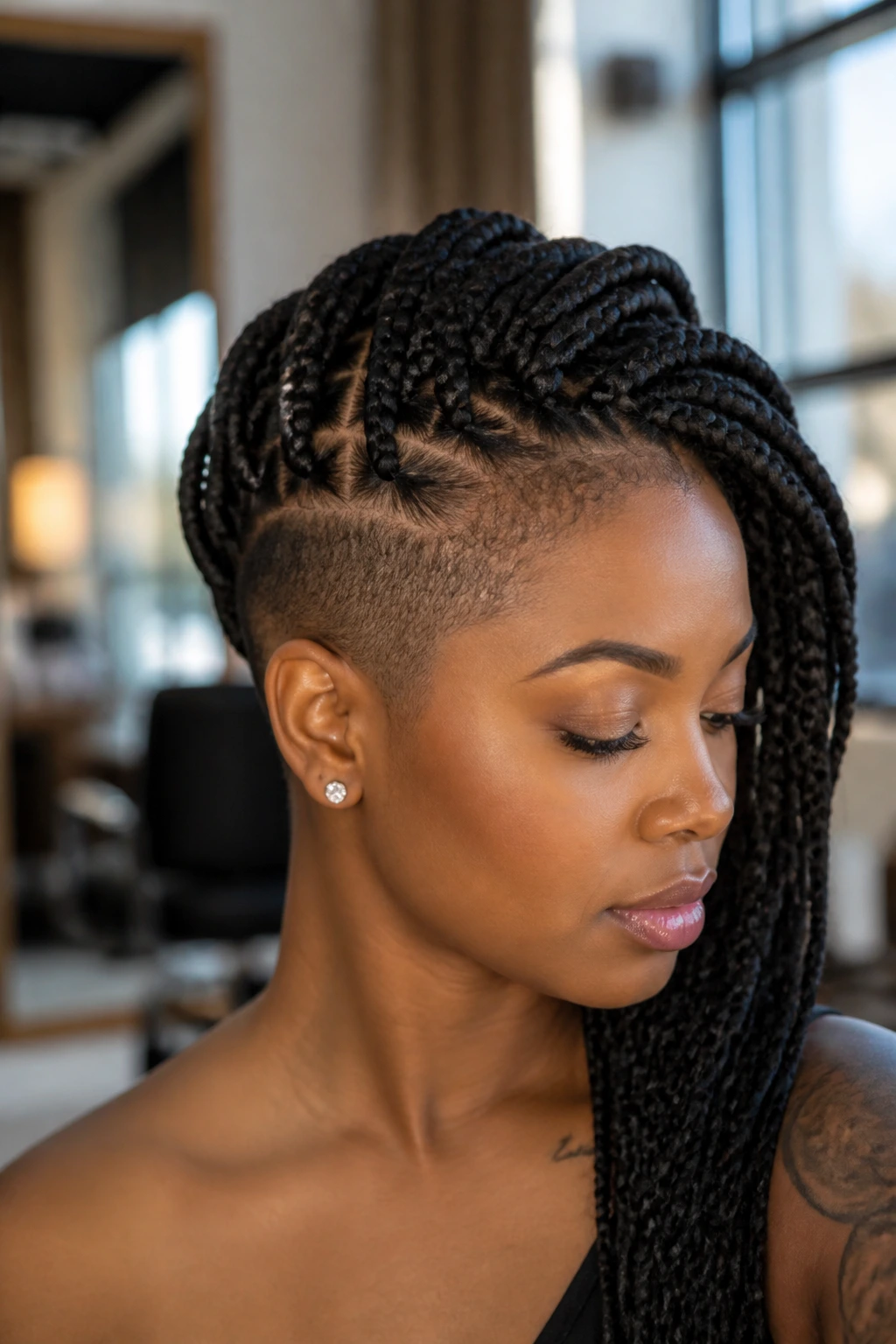
Box braids can carry a side shave without looking overworked. The trick is to keep the shave low, near the nape or the lower side panel, so the braids still have room to hang and swing. That hidden-short-meets-long contrast gives the style a bit of lift, especially when you pin the braids to one side or pull them into a low ponytail.
This cut helps when braids feel too heavy around the edges. Less hair at the nape means less heat and less tension under the braid base. The shaved side also shows off clean parting, which matters because neat braids and messy lines are not friends.
A satin wrap at night keeps the braids neat and stops the shaved area from getting dry and scratchy. Small detail. Big payoff.
13. Cornrows Swept into a Side-Shaved Bun
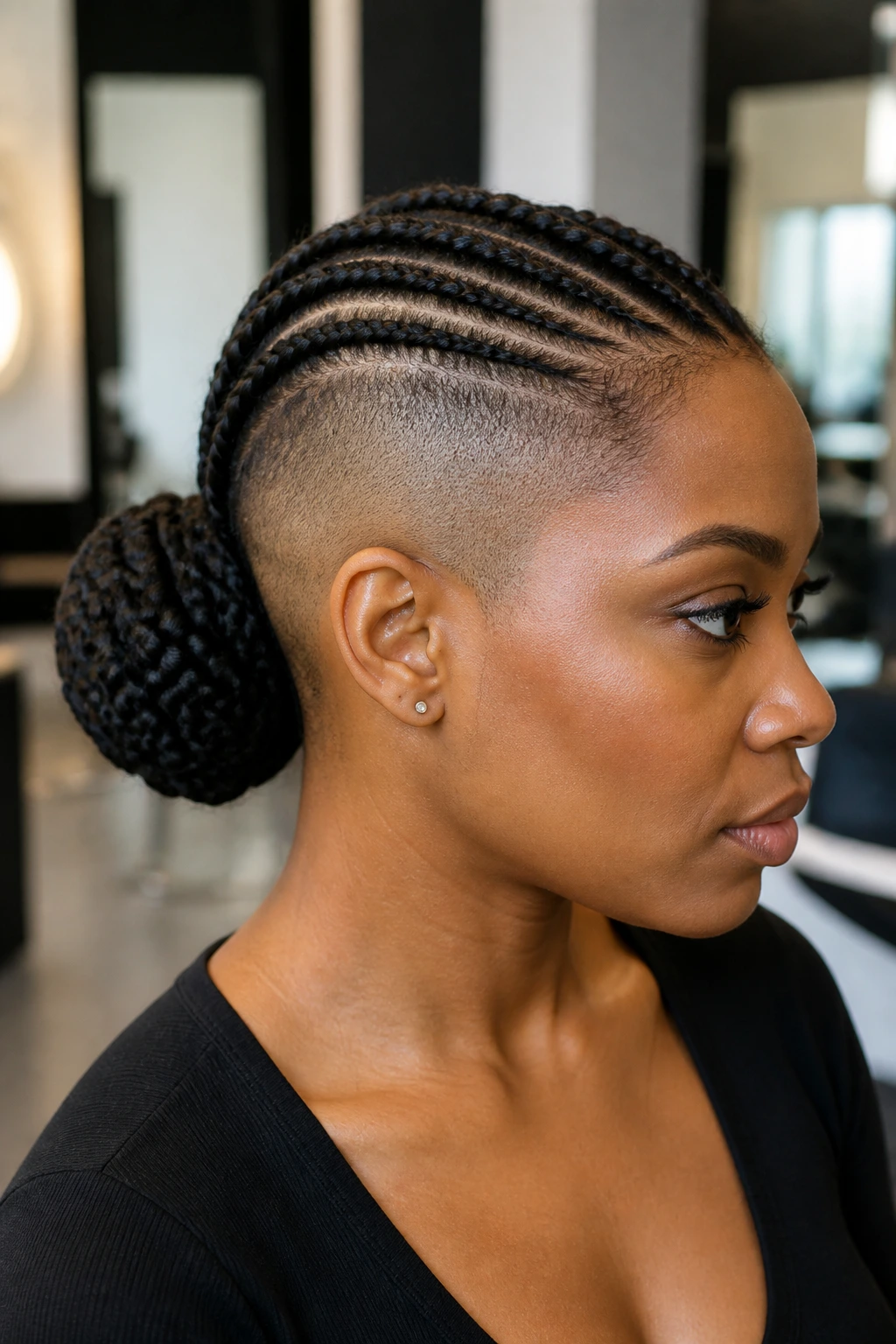
Cornrows and a side-shaved bun turn the whole head into a shape study. The braid direction can lead the eye right toward the shaved side, and then the bun closes the design at the back. It’s sleek, but not boring. That’s rare.
This style works best when the shave is crisp and the braid parts are narrow. Wide parts can make the scalp pattern feel busy in the wrong way. A low bun keeps the shape grounded, while the shaved side adds a clean pause on one edge of the head.
It’s a good choice for anyone who likes styles that stay put. Once the cornrows are done, the morning work drops down to almost nothing. That’s the kind of low maintenance that actually survives real life.
14. Half-Up Top Knot with One Shaved Side
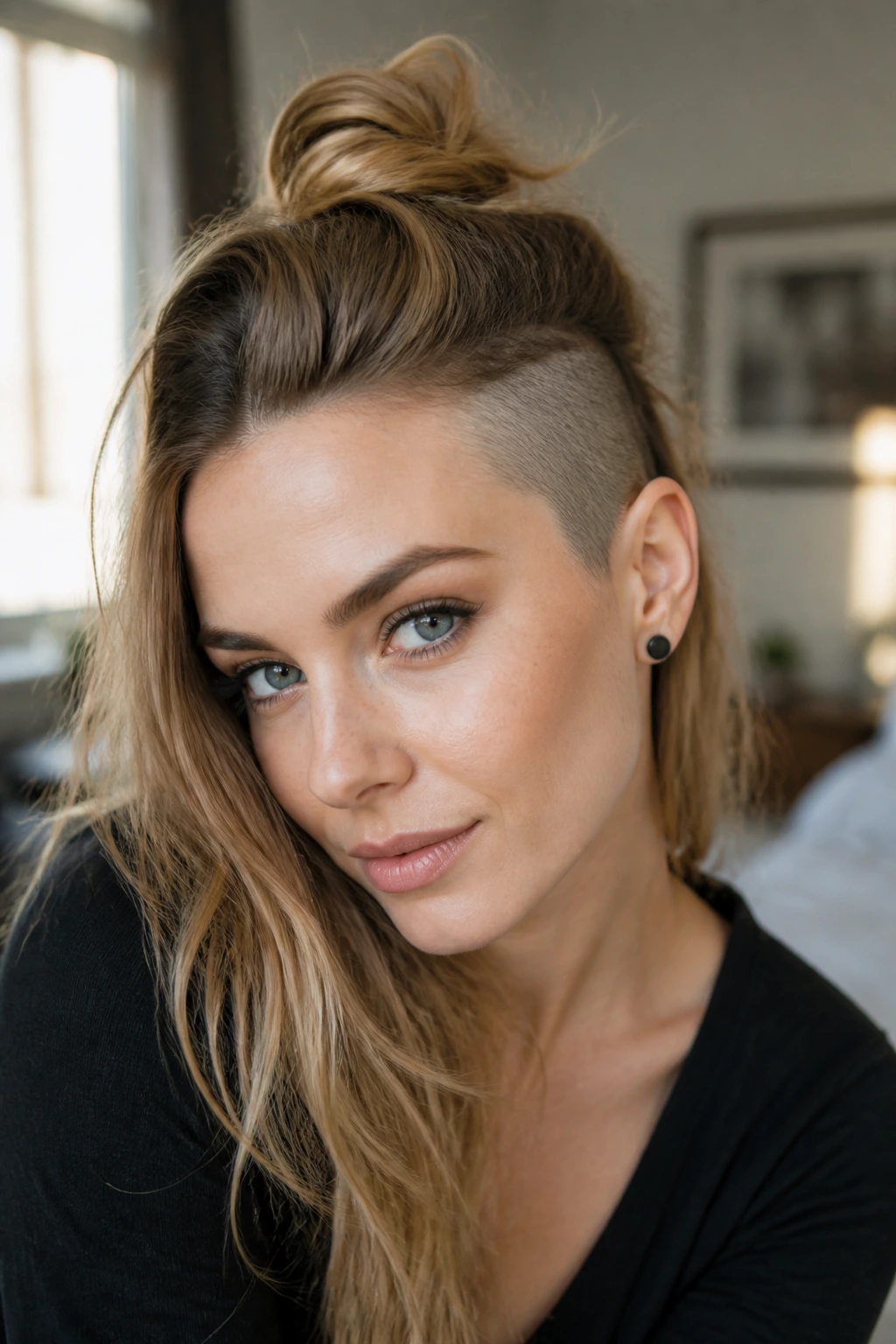
A half-up top knot is already one of the easiest ways to show off a side shave. Pull the top section into a knot or small bun, leave the rest down, and the shaved side becomes impossible to miss. The contrast between loose length and bare skin gives the cut a neat, modern feel without forcing you into a full updo.
This is one of the more forgiving options if you are testing the side-shave idea for the first time. You can keep the shave small and tucked low near the temple, then let the top knot do the visual work. It suits straight hair, waves, and curls equally well because the style depends more on placement than on texture.
A few face-framing pieces can soften the line if the shave feels too stark. Or don’t. Sometimes the sharpness is the whole point.
15. Curly Bob with a Disconnected Side Shave
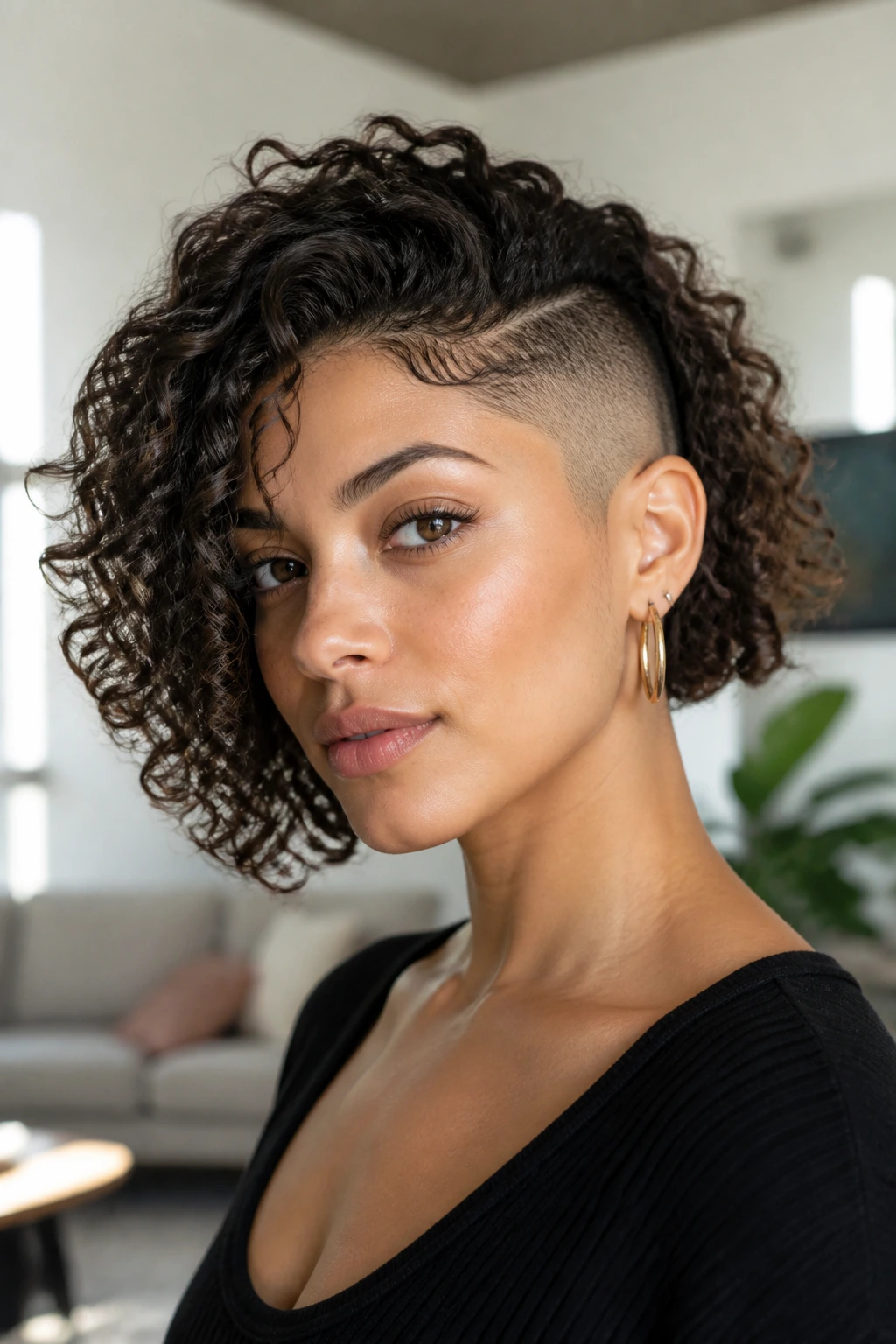
A curly bob already has enough movement to feel alive. Add a disconnected shave on one side, and the bob stops reading as sweet and starts reading as intentional. The cut becomes asymmetrical in a way that flatters curl patterns because the shorter side cuts down on triangle shape and the longer curls keep the top from looking too severe.
The disconnect is what makes this one fun. There’s no gradual fade pretending to blend everything. The contrast is obvious, and that works when your curls have a strong spring and don’t want to sit neatly anyway. Keep the curl pattern defined with cream or mousse, and let the buzzed side stay smooth and bare.
This is a strong choice if your bob needs more personality without losing the easy length around the chin and cheekbones.
16. Mullet with a Feminine Side Undercut
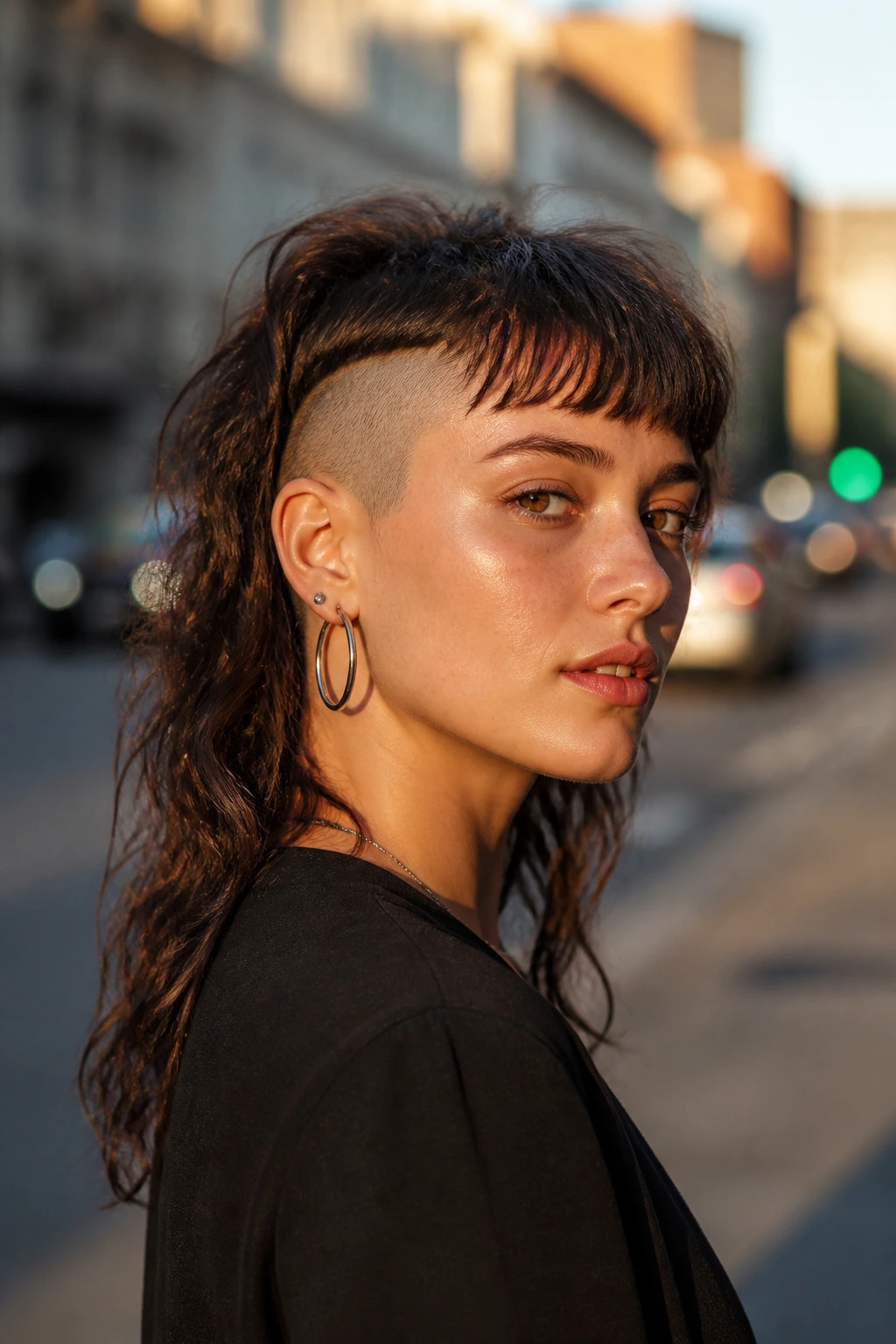
A modern mullet gets a lot more wearable when one side is undercut. The back can stay longer and softer, the crown can keep its layers, and the side undercut clears out some of the weight that usually makes a mullet feel awkward on the wrong head shape. Done well, it feels cheeky rather than costume-y.
The shaved panel should sit low enough to keep the mullet’s shape intact. You want contrast, not a chunk missing from the haircut. That one choice changes the mood. It lets the longer back and fringe stay the star while the side undercut just sharpens the outline.
If you’re nervous about the word mullet, start with a soft version. More texture on top, less length at the back, and a subtle shave under one side. The attitude stays. The drama goes down a notch.
17. Undercut Pixie with Long Bangs

Long bangs change everything about an undercut pixie. They add softness right where the face needs it, while the shaved side keeps the cut from feeling bulky. The combination gives you the best kind of contradiction: hair that feels short and neat from one angle, then suddenly falls into a sweep of fringe from another.
Why the Fringe Matters
The bangs give the eye somewhere to land. Without them, the undercut pixie can feel too bare on some faces, especially if the shaved side is high. With them, the cut has a little curtain and a little edge.
This style also works well if you like to switch between polished and messy. Blow the bangs smooth for a sharper line. Finger-style them with paste and let them fall softer. Either way, the shaved side keeps the whole look from puffing out around the ears.
18. Side-Shaved Afro with a Defined Shape-Up
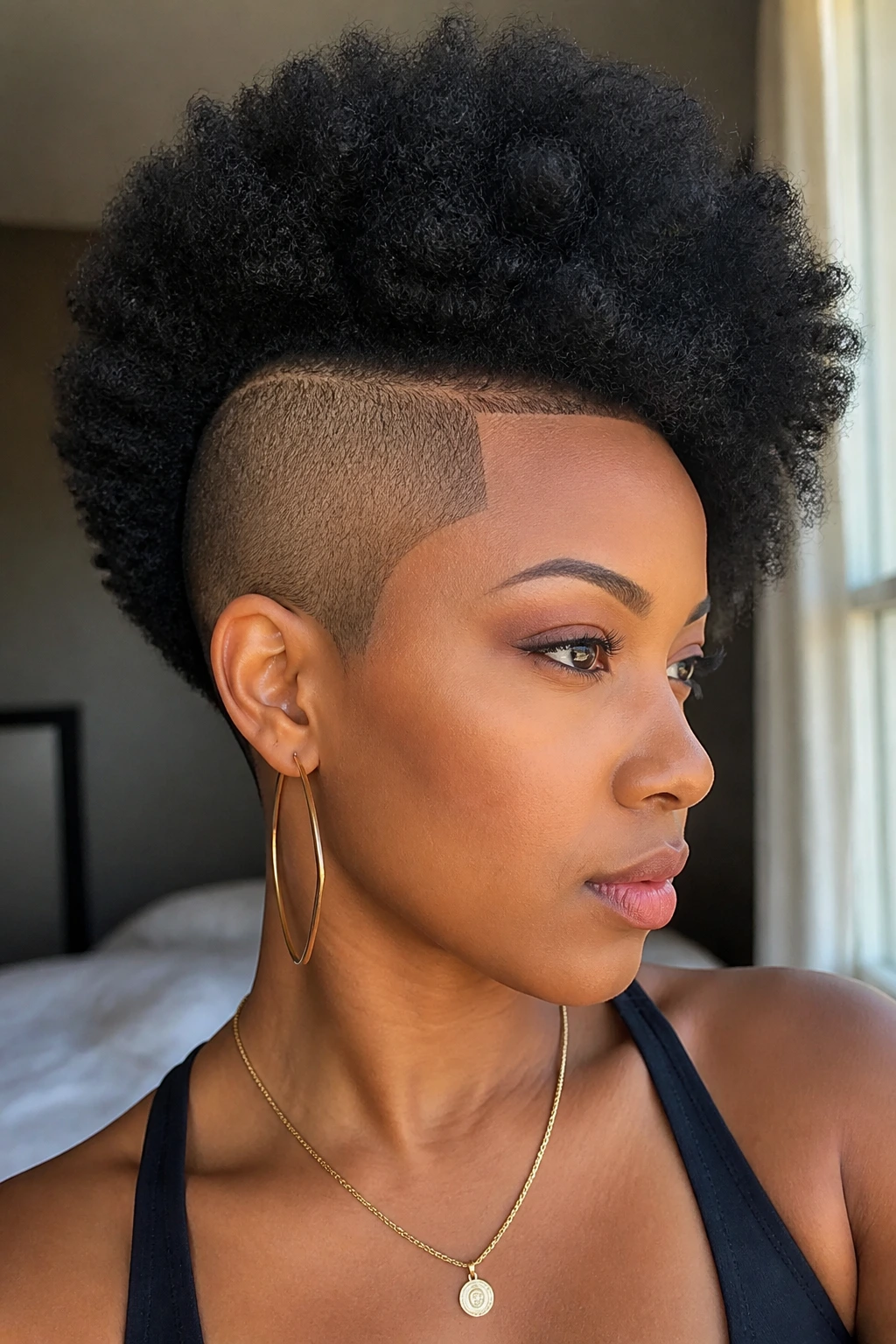
A side-shaved afro is all about outline. The afro keeps its rounded height, but the shaved side removes the extra width that can make the shape spread sideways instead of upward. Pair that with a clean shape-up around the hairline, and the cut becomes crisp fast.
This style works beautifully when you want volume without the bulk. The natural texture stays the hero, but the shaved side makes the silhouette read cleaner from the front and profile. It also makes earrings and cheekbones show up more, which is one reason the look photographs so well in person, even when the lighting is bad and the room is tiny.
Moisture matters here. A dry afro against a sharp shave line can look rough in a hurry, so keep the hair soft with leave-in conditioner or a light oil-based cream.
19. Wet-Look Crop with a Shaved Side and Gel Finish
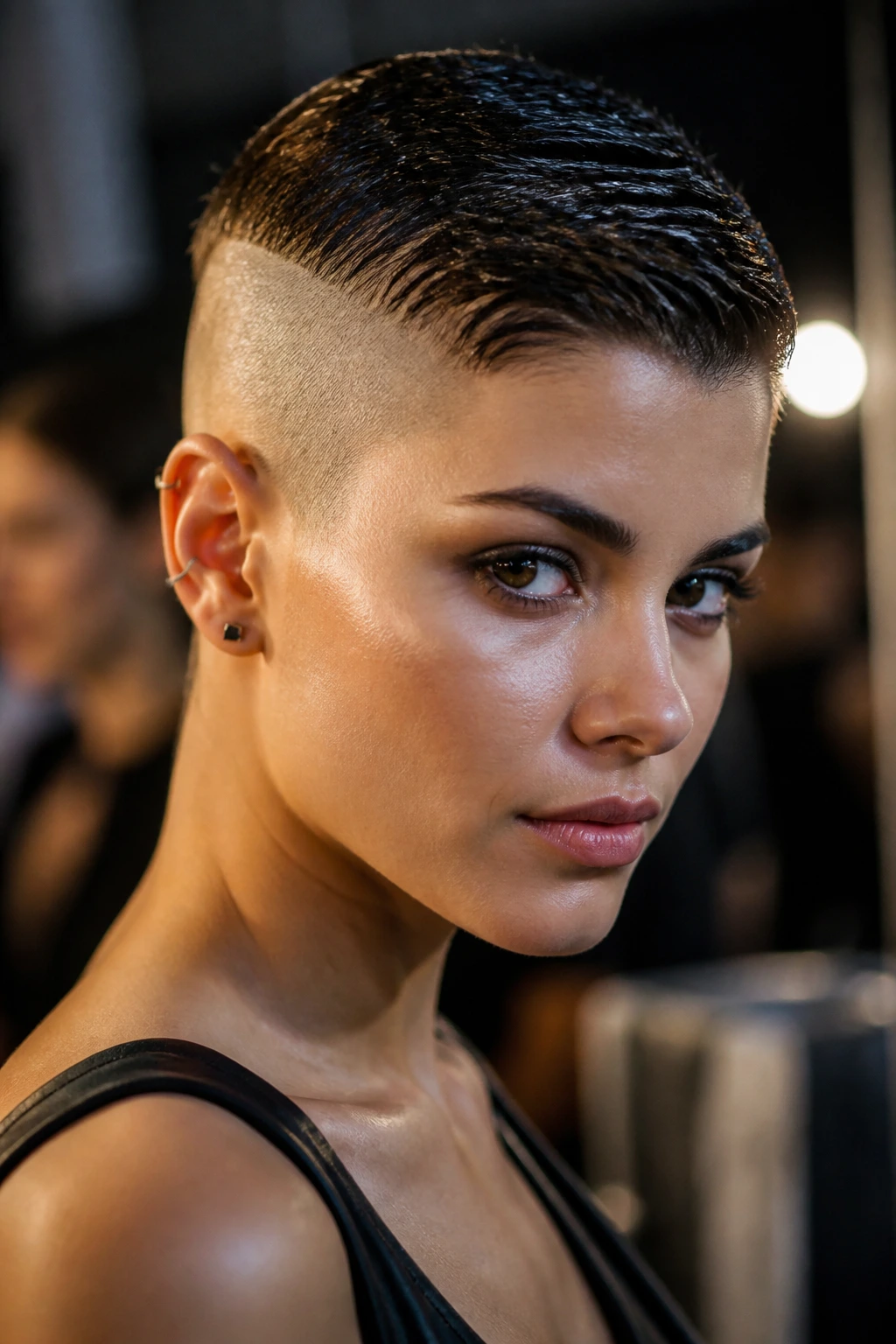
A wet-look crop is the sleek cousin in this group. The side shave gives the style structure, and the gel finish turns the whole thing glossy and direct. It is not a hair-forgetting kind of style. You are supposed to see the line, the shine, and the exact direction the hair was pushed.
This is a strong night-out option because the surface stays flat and sculpted. Use a strong-hold gel and a fine-tooth comb, then shape the top so it follows the head instead of floating away from it. The shaved side keeps the look from tipping into helmet territory.
A little shine goes a long way. Too much, and it looks greasy. Too little, and you lose the point.
20. Wolf Cut with a Hidden Side Shave
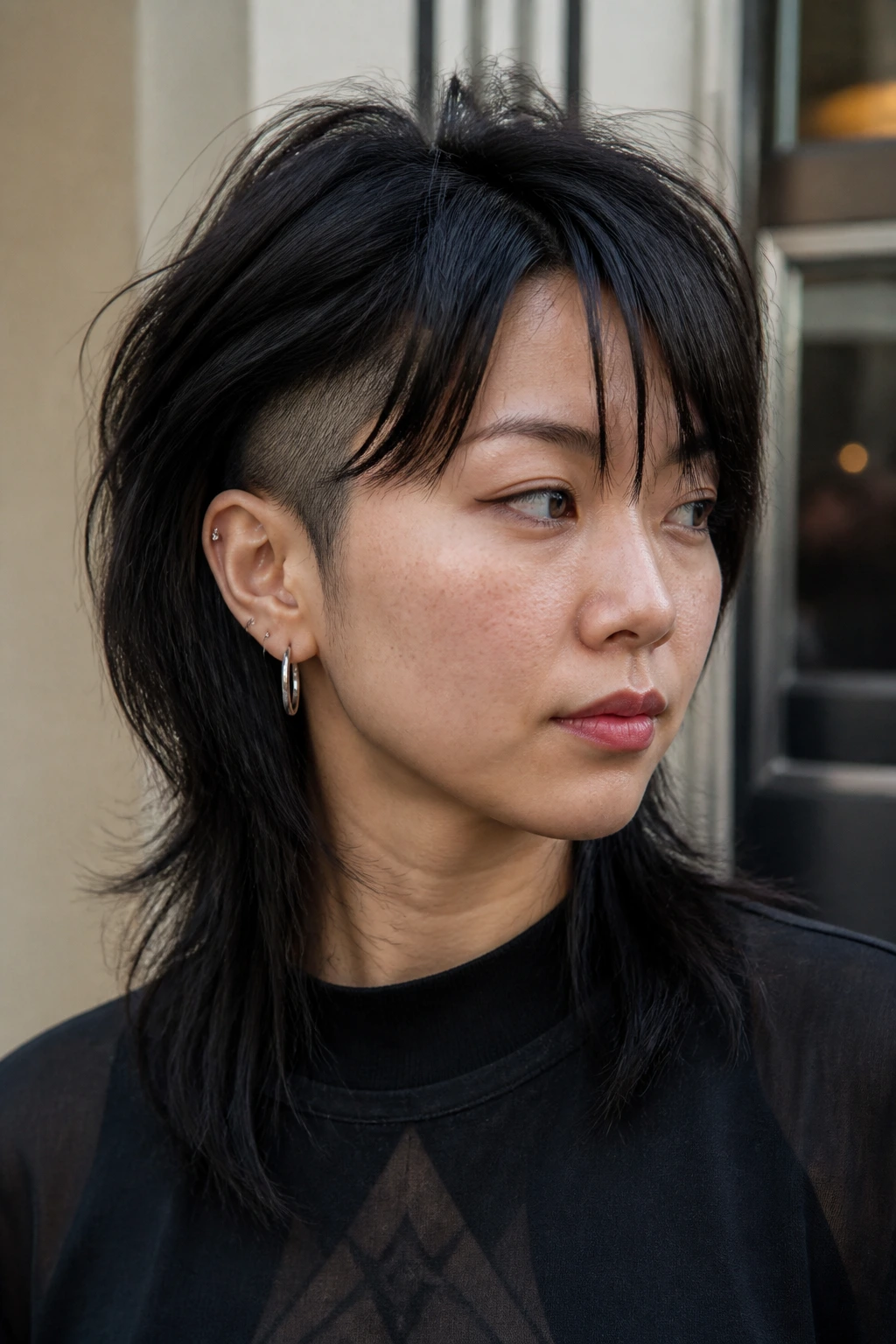
A wolf cut already lives in that shaggy zone where volume, layers, and movement meet. A hidden side shave takes away some of the weight underneath, which helps the layers fall with more air around them. From the outside, the cut still looks tousled and piecey. Underneath, it is carrying a little secret.
That hidden part is why this style works for people who want edge but do not want every angle to shout about it. Deep side part, the shave hides. Hair tucked back, it shows. That flexibility makes the wolf cut easier to live with when you need to move between casual and slightly sharper styling.
The top layers should be choppy enough to show movement. If the layers are too blunt, the shave underneath can feel disconnected in a bad way.
21. Platinum Buzz Cut with a Shaved Line Detail
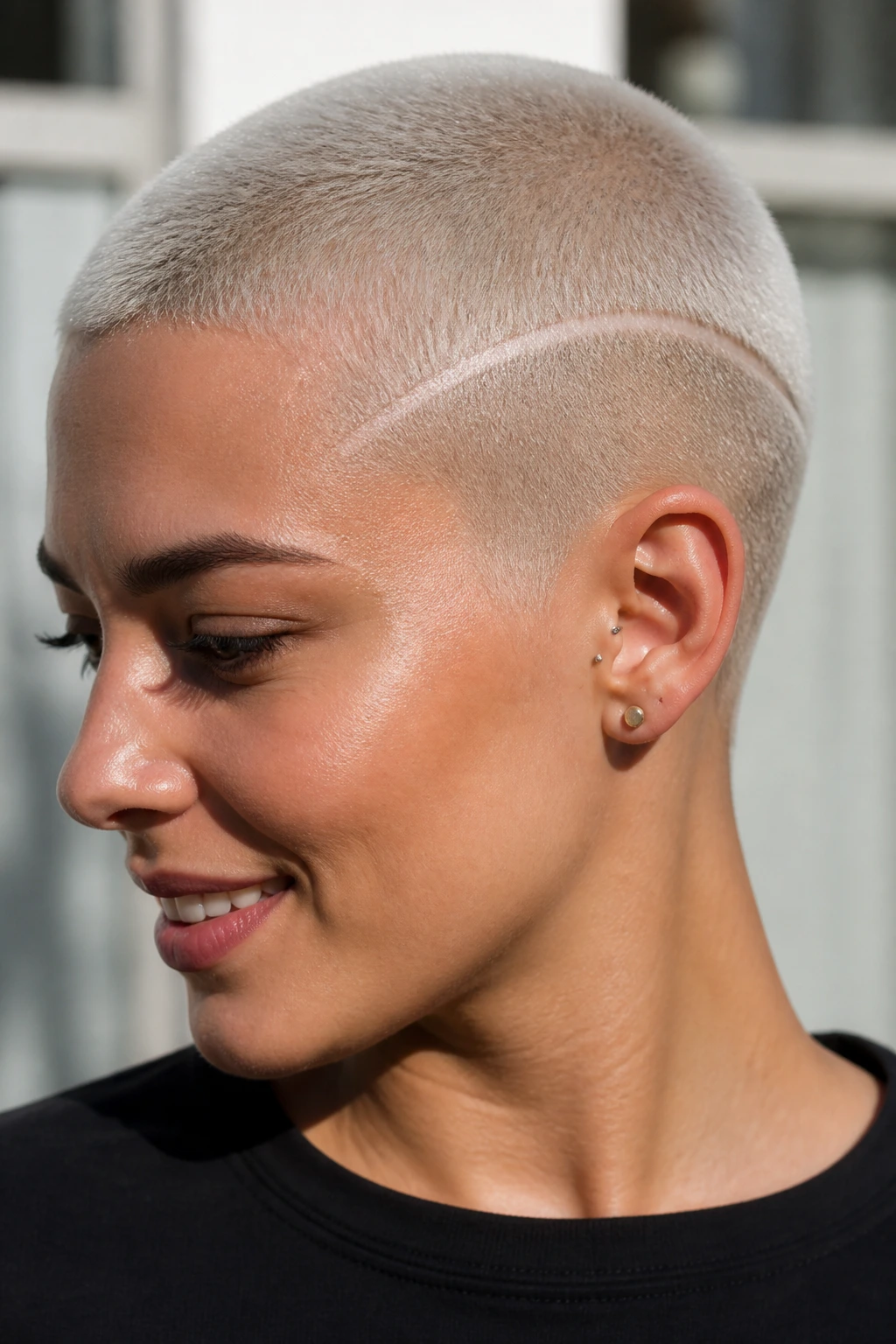
A platinum buzz cut is already a statement. Add a shaved line detail, and the whole look turns architectural. The line can run above the temple, curve around the head, or sit as a hard part that breaks the surface in a clean way. Once the hair is this short, every mark counts.
A note on color
Platinum at this length is bold, but it is also unforgiving. The scalp shows through more, and the lightened hair needs regular care to stay clean instead of brassy.
The line detail matters because it gives the eye a place to rest. Without it, a platinum buzz can look like a single flat surface. With it, the cut gets dimension through shape, not length. That makes it one of the sharpest shaved side hairstyles for women who want the haircut to do all the talking.
22. Curtain Bangs with a Barely-There Side Undercut
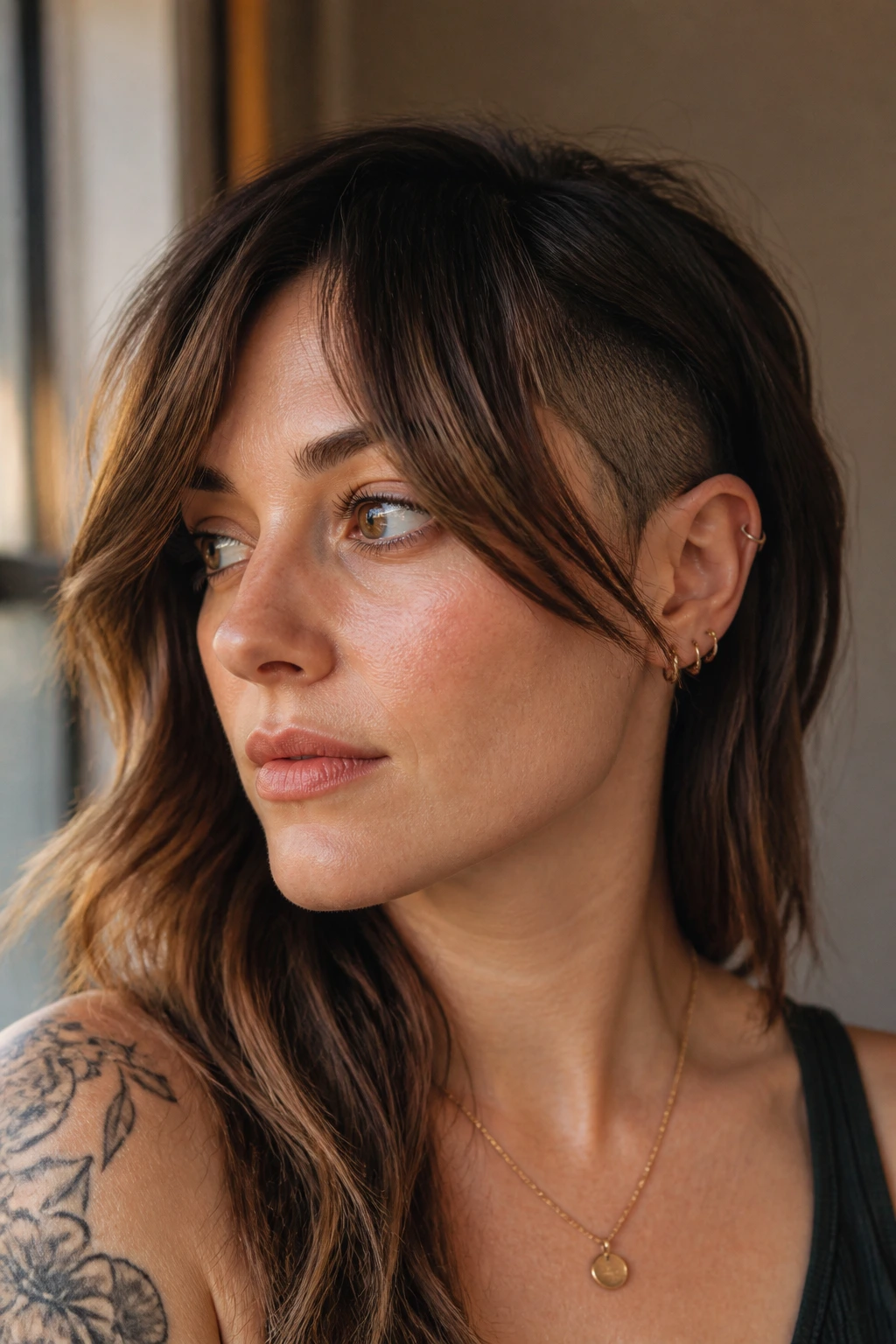
This is the softer side of the shaved trend. Curtain bangs stay full and face-framing, while a barely-there undercut hides underneath the side layers. You get the comfort of lightness and the option to reveal the shorter section when you tuck the hair back, but the look stays approachable.
That hidden shave is especially useful if you like long layers but hate the way thick hair can sit around the ears. The curtain bangs keep the style feminine if that matters to you, and the undercut quietly removes weight where the hair tends to puff. It’s a subtle fix that changes how the whole cut moves.
If you want the edge to stay hidden, keep the top layers long enough to cover the shorter area even after a blow-dry. If you want it to peek through, ask for a side section that sits a little higher.
23. Asymmetrical Faux Hawk Braid with Shaved Side
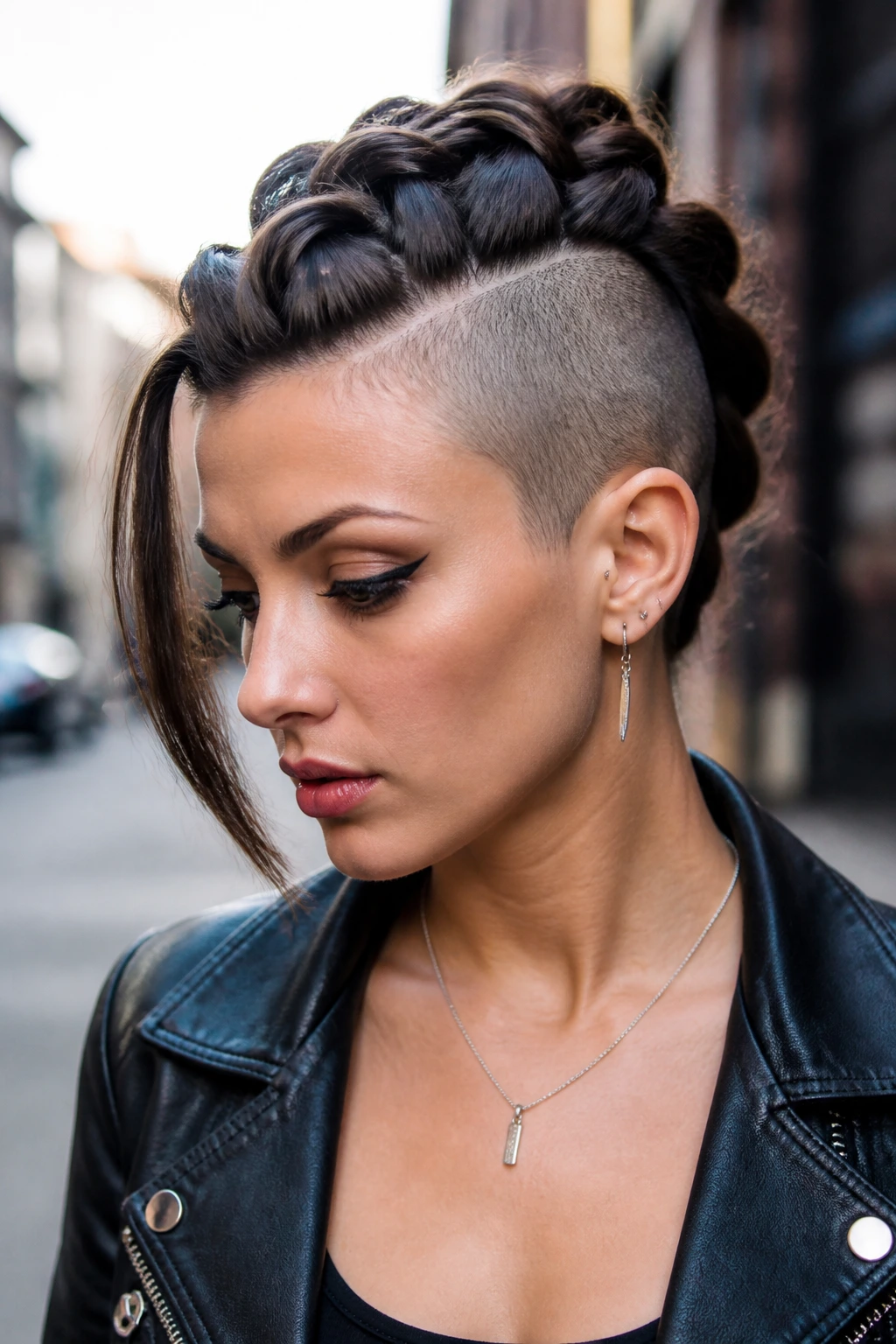
A braid can fake a hawk better than most people expect. Pull the hair diagonally toward the center, braid it tight enough to hold shape, and leave one side shaved so the braid reads as a raised ridge instead of a regular plait. The contrast is what sells it.
This style works for event hair because it feels dramatic without needing extra extensions or a lot of heat styling. The braid itself keeps the top smooth, while the shaved side keeps the look from flattening out. If your hair is long enough, you can pancake the braid a little for width; if not, keep it tight and let the shape stay narrow.
A little texture spray before braiding helps the strands hold better. Clean hair can slip too much, and then the whole shape starts to collapse.
24. Two-Tone Crop with a Graphic Side Shave
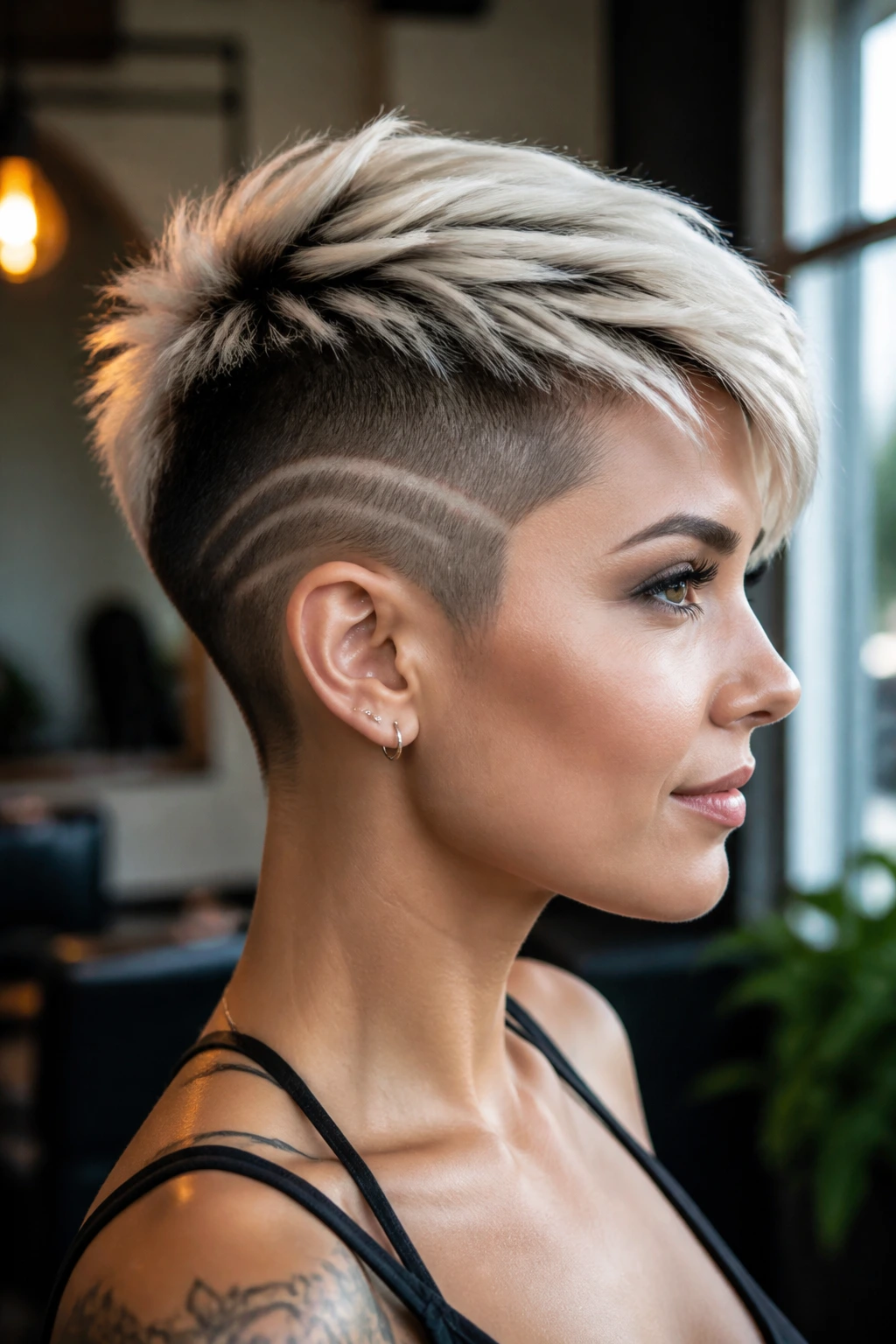
A graphic side shave turns into a whole different animal when color joins in. Short crop on top, shaved panel on the side, and then a two-tone split that makes the haircut feel designed rather than improvised. That might mean dark roots with a bright top, a black-and-silver contrast, or even a muted pastel against a natural base.
The graphic part should be clear enough to read from a few feet away. Thin lines can get lost if the hair is too dense or the color difference is too small. Keep the crop tight so the side panel remains visible, and let the color do the heavy lifting.
This one is not shy. Good. Hair does not need to be shy all the time.
25. Shoulder-Length Blowout with a Soft Temple Shave
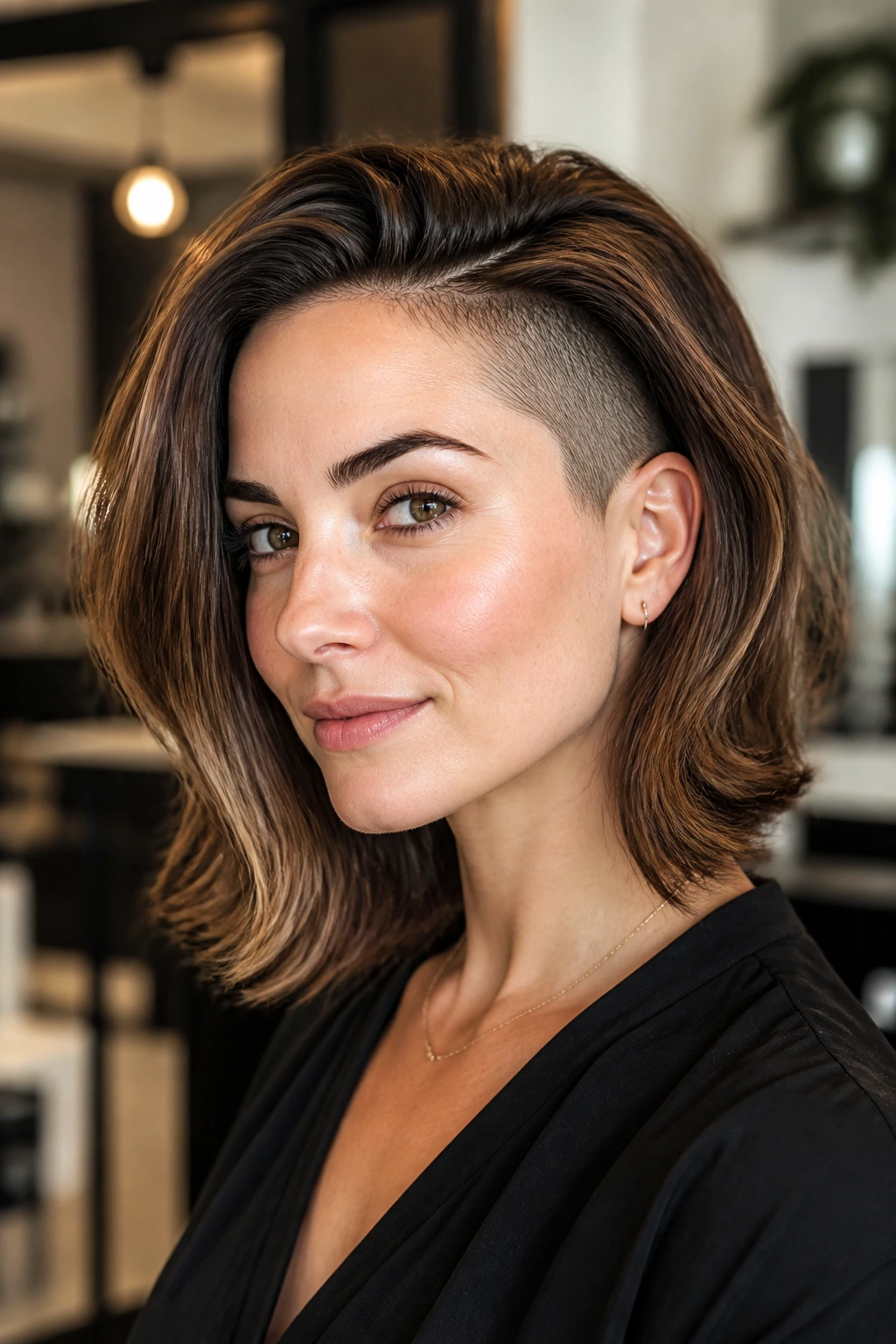
A shoulder-length blowout with a soft temple shave is the calmest option in the group, and I like that. The length stays polished and swingy, the blowout keeps the ends round, and the temple shave adds a little edge that only shows when the hair is moved just right. It feels grown-up without going dull.
This is a good fit if you want to keep your hair looking classic from the front but a little unexpected from the side. The temple shave can be low and narrow, so it doesn’t fight the softness of the blowout. That makes it one of the easiest shaved side hairstyles for women who want a gentler entry point.
A round brush and a quick bend at the ends help the cut look expensive. The shave underneath does the quieter work.
Why the Shaved Side Changes the Whole Shape
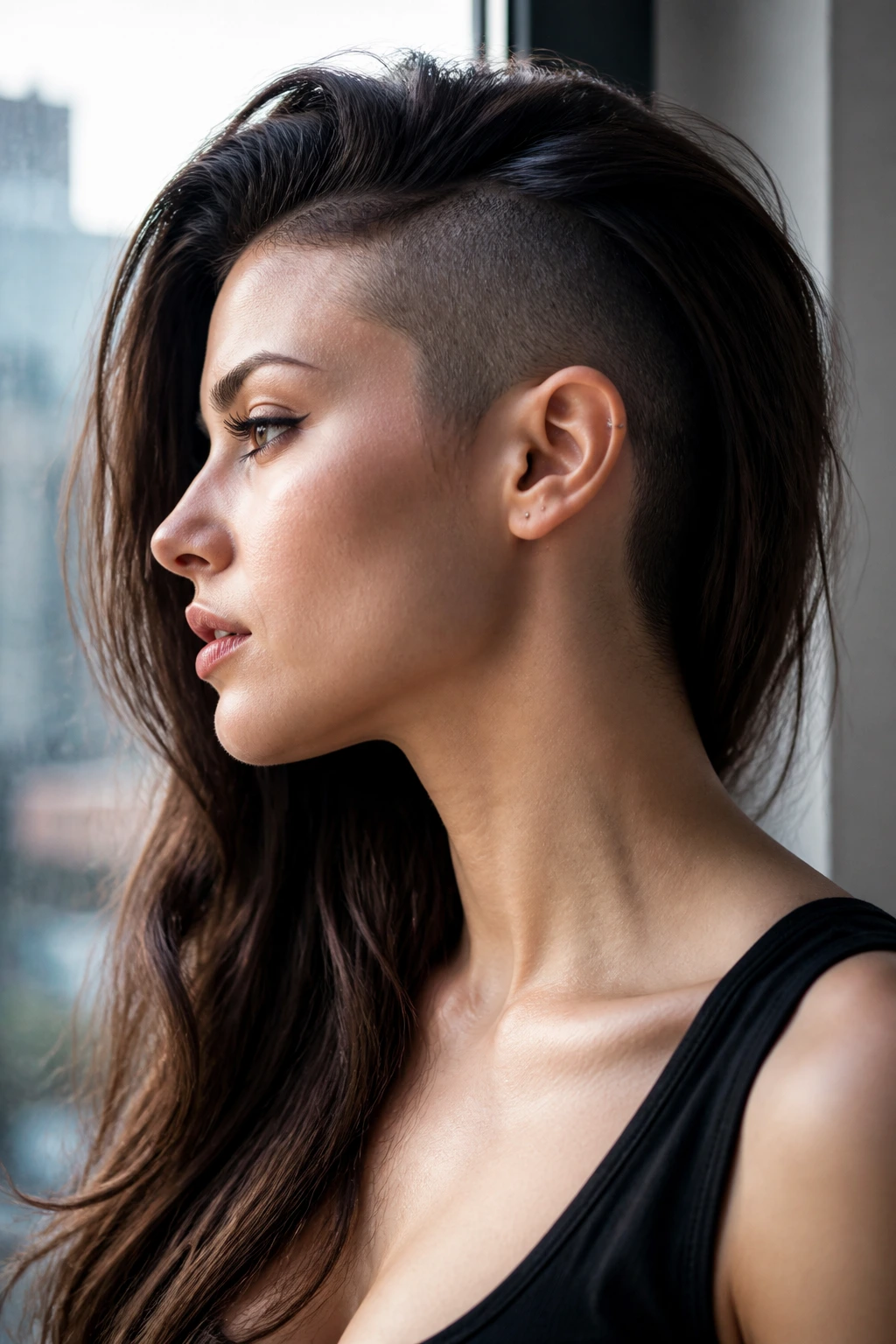
A shaved side is not just about attitude. It changes balance. A regular cut can spread hair evenly around the head, which sounds normal until you realize normal is often why thick hair feels boxy and fine hair feels limp. Removing one side changes how the eye reads the silhouette. The face looks a little more open on the shaved side and a little more framed on the longer side.
That matters most around the jaw, temples, and ears. Those are the zones where hair can either sharpen the face or drag it down. A side shave clears one of those zones and lets the rest of the hair behave differently. Long layers look longer. Curls look taller. A bob stops puffing at the edge.
The other thing people underestimate is movement. Hair shifts. It tucks behind ears, catches wind, and sways when you turn your head. A shaved side gives that movement something to reveal. One second it disappears. The next second the cut shows its teeth.
Essential Tools for Clean Lines and Easy Maintenance
-
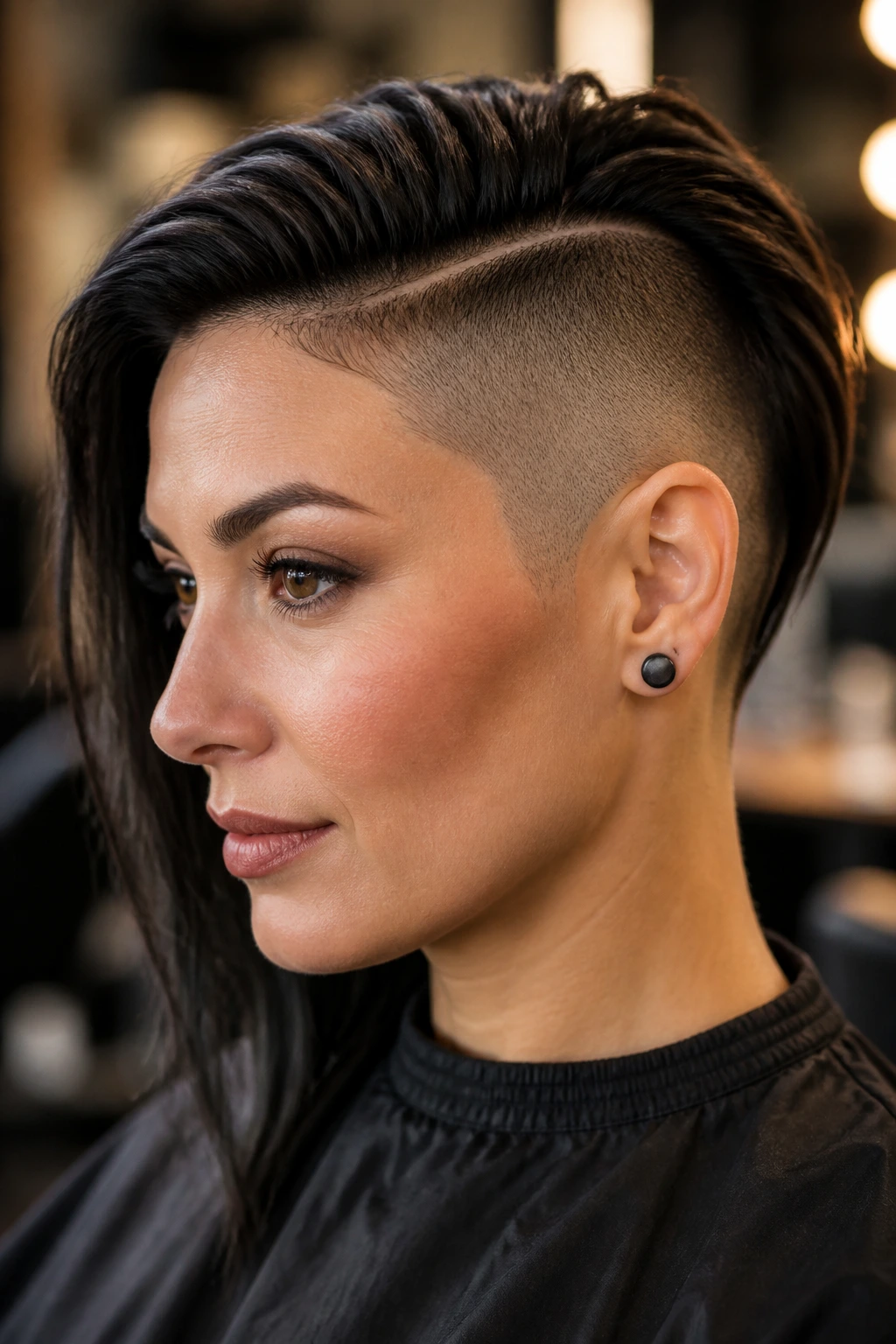
Clipper with adjustable guards: The workhorse for keeping a side shave neat between salon visits. A guard lets you soften the length instead of taking everything down to skin.
-
Detail trimmer: Useful for temple lines, parting lines, and little cleanup around the ear. This is the tool that keeps the shave from looking fuzzy.
-
Wide-tooth comb: Best for curls, coils, and waves when you want to section the top without breaking up the texture.
-
Rat-tail comb: Handy for drawing a clean part and checking where the shaved section starts.
-
Sectioning clips: These keep longer hair out of the way while you trim or style the short side.
-
Heat protectant spray: Needed if you blow-dry, flat iron, or shape a bob or lob with heat.
-
Styling cream, mousse, or matte paste: Pick your finish based on texture. Cream for soft curves, mousse for lift, paste for separation.
-
Edge brush and soft bristle brush: Good for smoothing baby hairs and keeping the shaved area neat without scrubbing the scalp.
-
Hand mirror: A small one lets you check the back and side line without twisting your neck into a knot.
-
Towel or cape you do not mind getting hair on: Clipped hair is tiny and sticks to everything. Accept this early.
How to Ask for the Right Shave, Fade, or Undercut
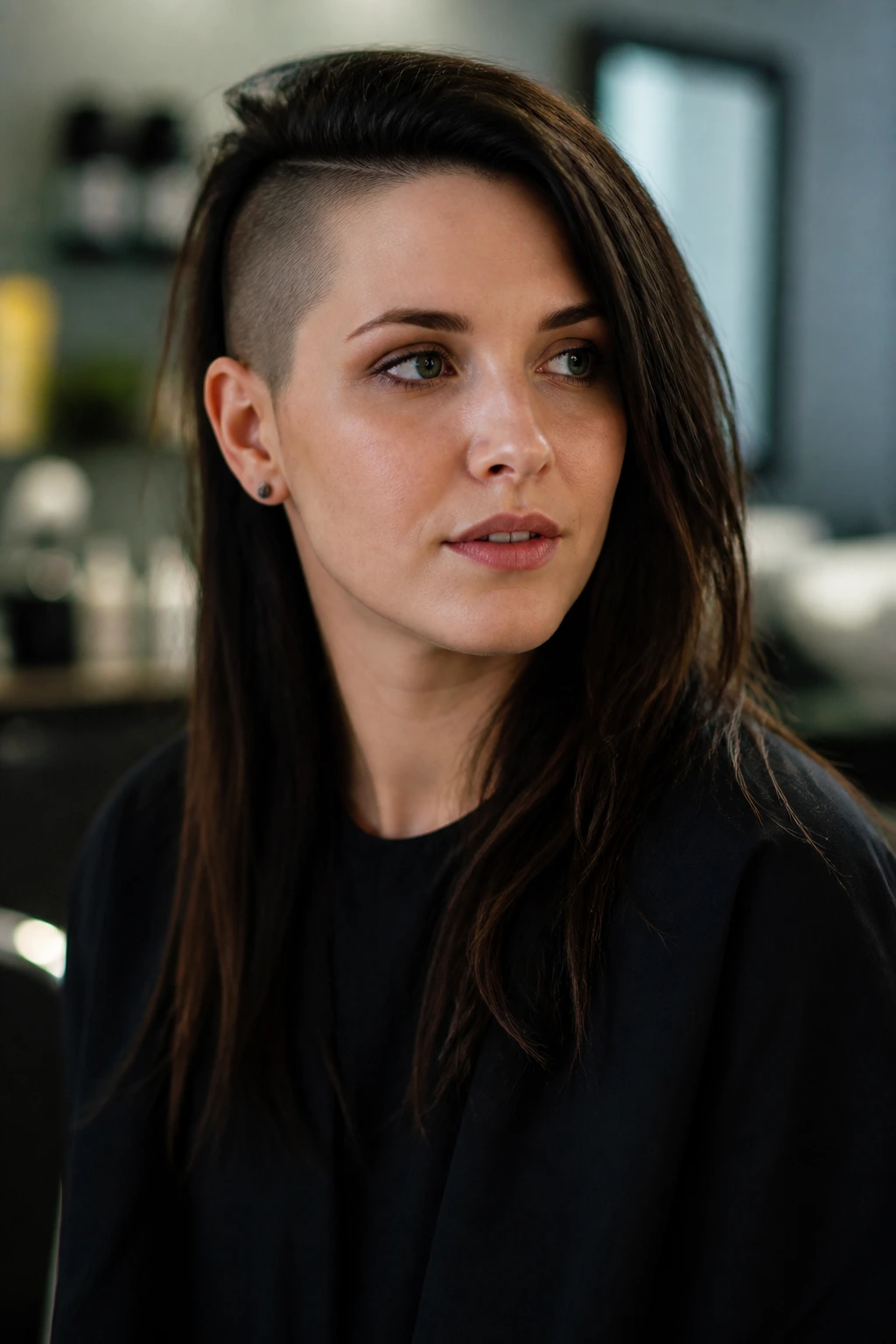
Bring a photo, yes, but bring a useful one. Show the front, the side, and the back if you can find them. A single angled shot can hide the exact thing you need to explain, and the difference between a temple shave, a side undercut, and a buzzed nape is not small. They grow out differently. They sit differently under long hair. They also change how much scalp shows.
Say how much of the shave you want visible on an ordinary day. That line matters. If you want to hide it under long layers, the stylist needs to leave enough coverage on top. If you want it to show every time you tuck your hair back, they need to open the shave higher or wider.
Tell them how fast you’re willing to maintain it. If you hate sitting in a chair every few weeks, a softer undercut is a smarter call than a tight buzzed panel. And if your hairline grows in fast around the ears, ask for a shape that still looks tidy when it starts to blur.
Styling Shaved Side Hair Without Making It Look Overdone
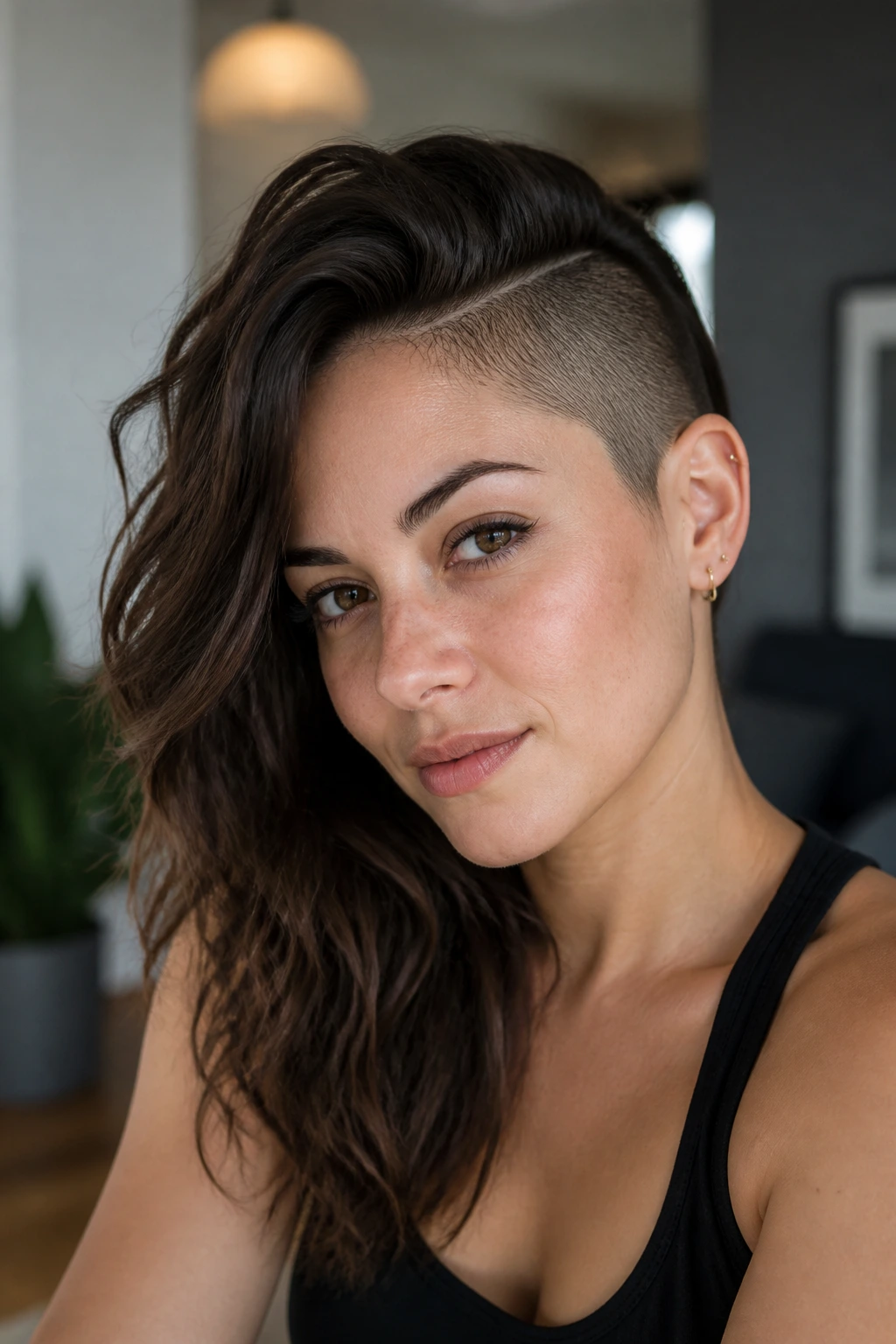
A shaved side style can go too slick too fast. That shiny, stiff, helmet effect is easy to create and hard to rescue. The fix is usually restraint. Use less product than you think, then build only where the style needs hold.
Sleek days: Smooth the longer section with a blow-dryer nozzle or a flat iron pass, then keep the shaved side clean with a little scalp moisturizer. You want polished, not crunchy.
Curly days: Work product into damp curls first, then let the short side stay low-key. A diffuser helps the top keep its shape without frizzing out the contrast.
Messy days: Dry texture spray, a bit of separation at the roots, and your fingers. Don’t comb it to death. The shave already gives the style enough structure.
Dressy nights: Tuck the hair back behind the shaved side, add a gloss spray to the longer length, and let the contrast do the talking. Earrings help too. Big hoops. Small studs. Either works.
Keeping the Shaved Side Sharp Between Appointments
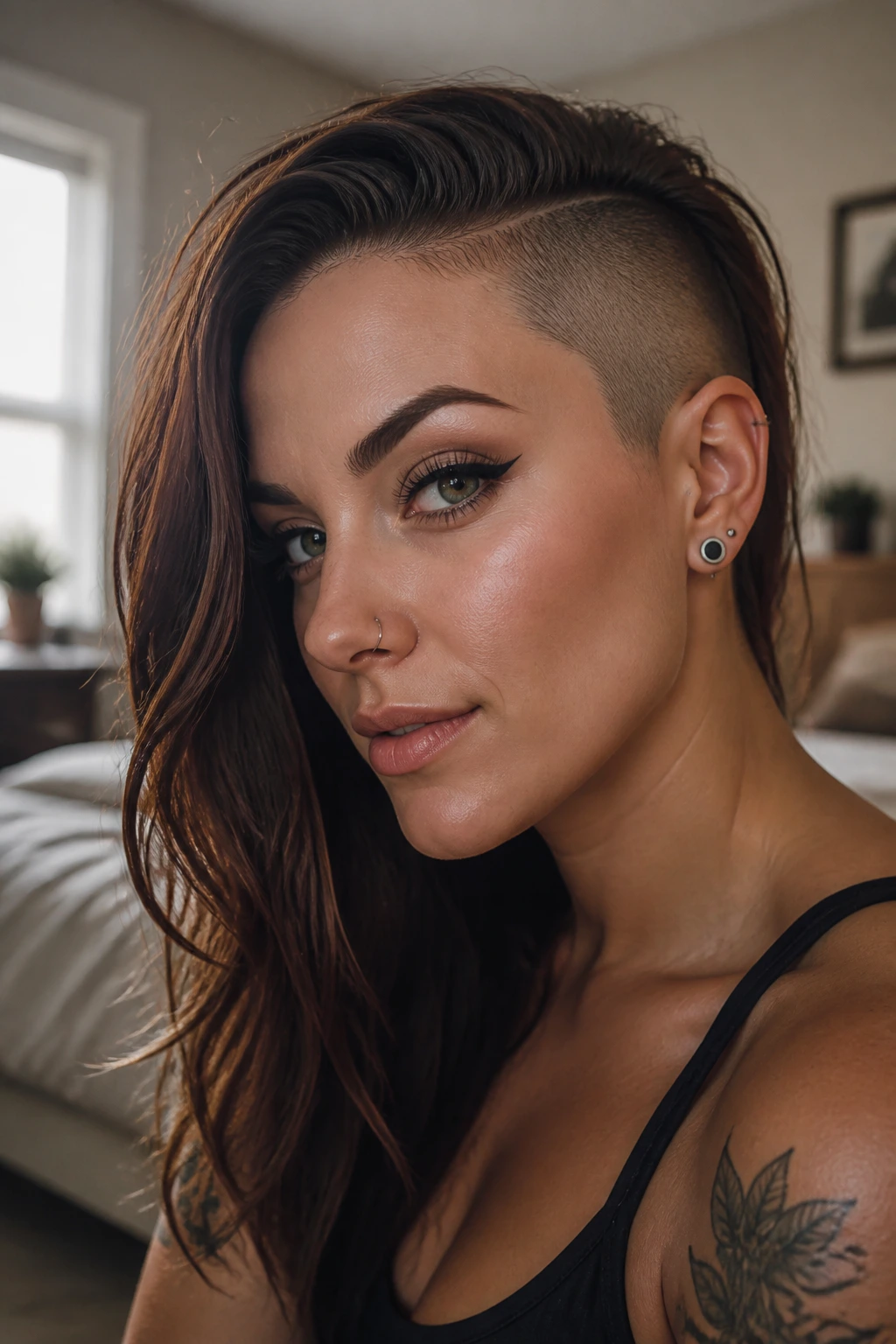
The shortest version: clipped hair grows faster than people want it to. A side shave usually starts to soften after 2 to 3 weeks, and if you like the line crisp, that’s about when it needs attention. Some people stretch it to 4 or 5 weeks if they want a softer fade. That is fine, but it changes the look from precise to lived-in.
If you do minor cleanup at home, only trim the area you can clearly see and reach. Use a guard, work in good light, and stop earlier than your nervous hand wants to. The temptation is always to “fix” the line. That is how you end up shaving higher than planned.
For the longer sections, keep moisture and detangling consistent so the contrast still looks intentional. A side shave beside dry, puffy lengths looks unfinished. A side shave beside smooth, healthy hair looks designed.
Practical Tips That Make the Cut Better
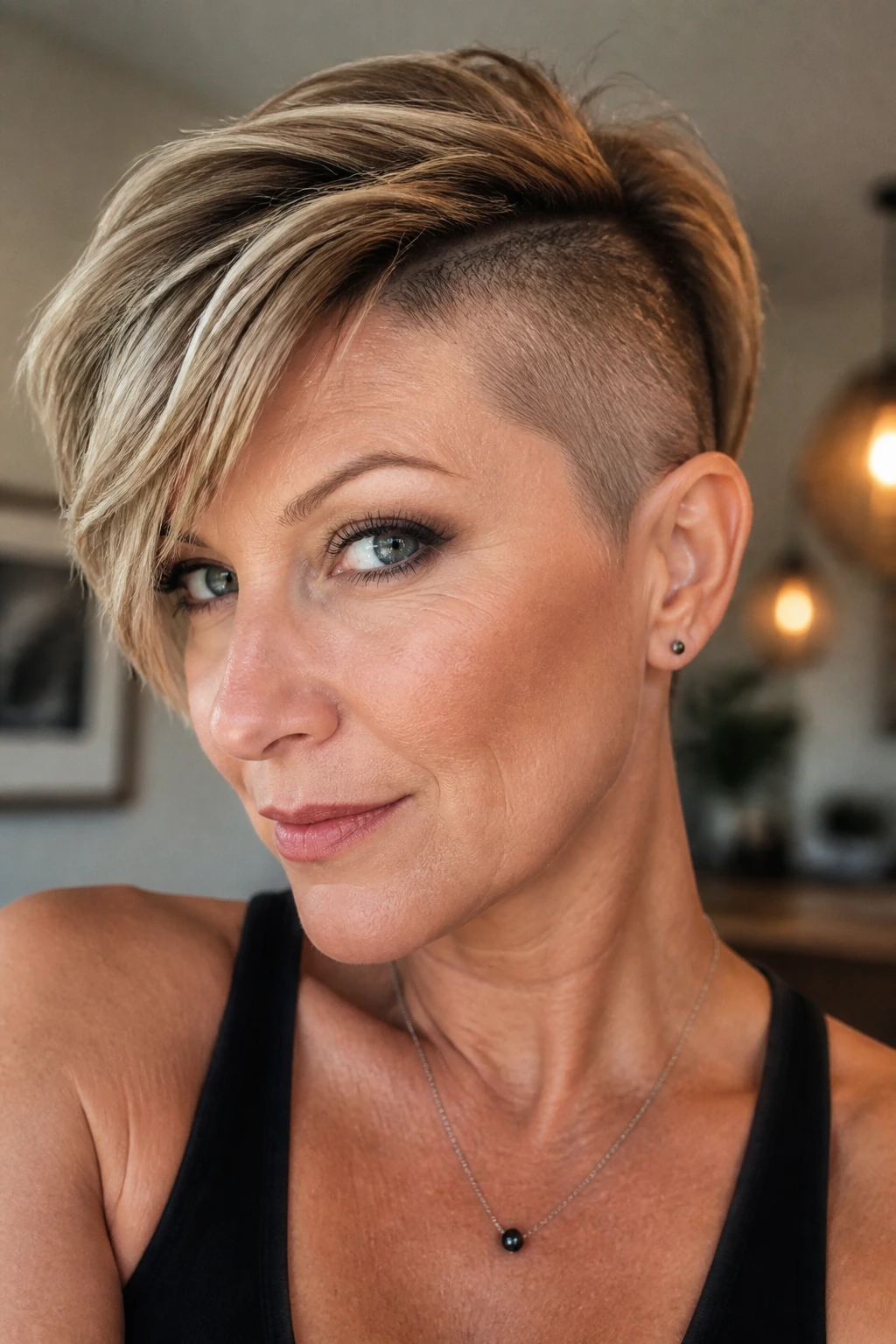
Texture Choice: If your hair is thick, ask for an undercut rather than a full buzz on the first try. It removes bulk without forcing you into a harsher line.
Color Boost: A lightened side panel, a bright streak, or a dark glossy tone can make the shave stand out without changing the haircut itself.
Parting Trick: Moving the part by even half an inch can hide or reveal the shave. That’s useful when you need one cut to do two jobs.
Accessory Play: Barrettes, cuffs, and tucked-behind-the-ear styling change the whole mood. The side shave gives those details a better stage.
Shape Insurance: If your face-framing layers are very short, keep the shave lower. If the layers are long, you can go a little higher and still keep balance.
Common Mistakes That Make a Side Shave Look Off
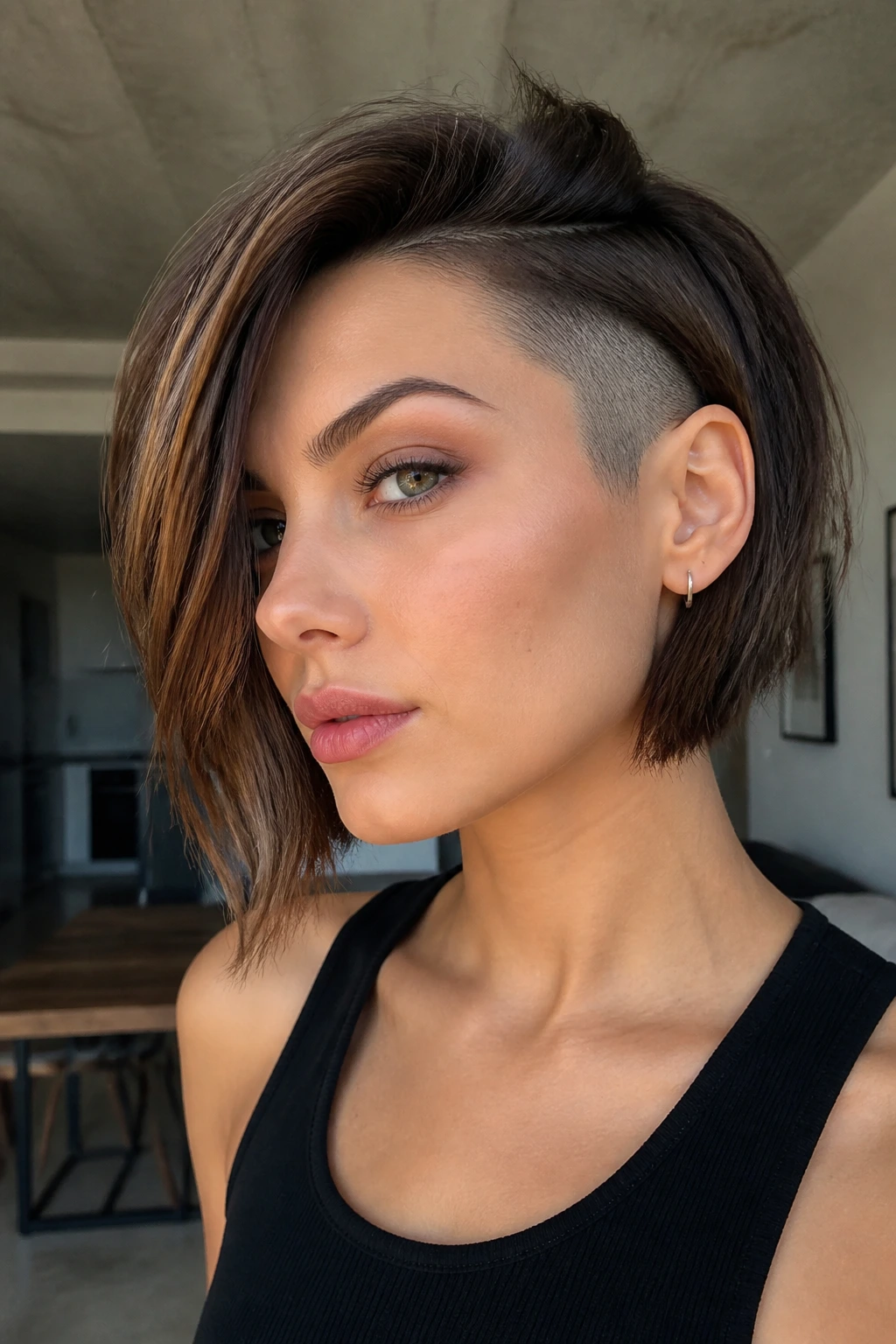
The first mistake is shaving too high the first time. The result can look harsh, and not in a cool way. If you’re unsure, start lower. A small temple shave can always be widened later.
The second mistake is ignoring growth patterns. Some hair grows forward at the temple, some grows in a swirl near the ear, and some kicks out at the nape. If the line fights your hair’s natural direction, it will blur faster than you expect. Work with the growth, not against it.
The third mistake is leaving the longer hair unshaped. A shaved side with blunt, heavy lengths beside it can look accidental. Add layers, a bend, or a clean finish so the contrast feels planned.
The fourth mistake is assuming the shave looks the same every day. It doesn’t. Tucked back, it’s visible. Curled out, it can soften. With a deep side part, it may vanish. That flexibility is useful, but only if you actually style it with the look you want.
Variations and Adaptations to Try
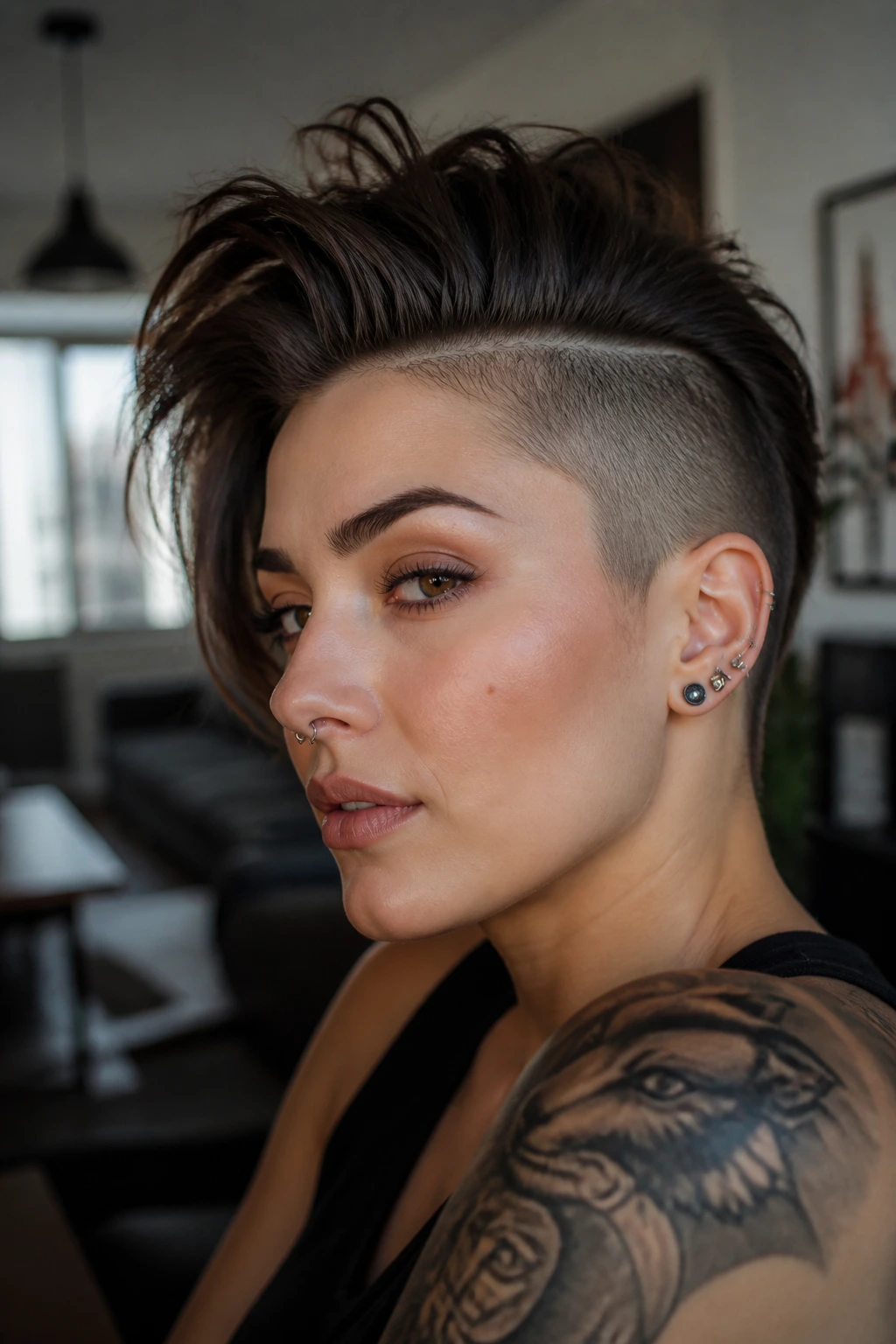
Soft Office Edge: Keep the shave low and narrow, then pair it with a polished bob or shoulder-length blowout. The style stays neat in a meeting and still has a little bite when you tuck the hair back.
High-Contrast Curl Hawk: Push the shaved side wider and let the curls on top go tall and defined. This version needs confidence and a good curl routine, but it pays off every time.
Braided Reveal: Ask for a side shave that stays hidden under braids or twists until you pin the hair up. It gives you a secret detail instead of an always-on statement.
Color Panel Play: Add bleach, copper, or fashion color to the shaved section or the top around it. The cut becomes a shape-and-color mix, which keeps it from feeling one-note.
Soft Grow-Out Version: Choose a temple shave or low undercut that can blur over time without looking messy. This is the one to pick if you hate strict maintenance.
Frequently Asked Questions
Does a shaved side work on fine hair?
Yes, and sometimes it helps fine hair more than thick hair. Removing one side can make the remaining length look fuller and give the top more lift, especially in pixies, bobs, and lobs. Keep the shave low if you want the style to keep some softness.
Will a side shave suit curly or coily hair?
It usually does because the shaved section reduces bulk and gives the curls more height and shape. A curly frohawk, side-shaved afro, or curly bob can look sharper with less effort than a similar style on straight hair.
How often does it need touching up?
If you want a crisp line, plan on a cleanup every 2 to 3 weeks. If you’re okay with a softer grow-out, 4 to 6 weeks can still look good, especially on temple shaves and hidden undercuts.
Can I hide the shave for work or formal events?
Usually, yes. A deeper side part, longer top layers, or tucked styling can hide a temple shave or low undercut. A high, wide buzzed panel is harder to conceal, so that choice matters from the start.
What’s the safest version to try first?
A low temple shave or hidden undercut is the easiest entry point. It lets you test the shape without committing to a large exposed section of scalp.
Can I do the shave at home?
You can, but only if you have good lighting, a mirror setup that shows the side and back, and a guard you trust. Most bad home shaves happen because the line starts too high or the hand wanders while trying to “even things out.”
How do I grow it out without an awkward stage?
Let the top lengthen while trimming the shortest panel every few weeks so the contrast softens gradually. Side parts, bobby pins, and tucked styles help bridge the awkward middle where one side is still short and the other is already long.
Will it damage my hair?
The shaving itself does not damage the hair that remains, but repeated heat, bleaching, or rough clipper work can irritate the scalp and weaken the surrounding strands. Keep the scalp clean, use a gentle cleanser, and avoid going over the same spot too many times with a trimmer.
Sharp Lines, Easy Choices
A shaved side can be loud, subtle, sleek, messy, curly, polished, or somewhere in between. That range is the reason the cut keeps showing up on so many women with different textures and different lives. It can hide under a bob. It can carry a braid. It can hold up a buzz cut that would look plain without a line to break it.
The best version is the one that fits your routine, not the one that looks coolest in a photo. If you want something crisp, keep the line clean. If you want something softer, let the grow-out blur it a little. Hair like this gives you room to decide again next month, and that is a good thing.
