



A good fade can do something most haircuts only promise: it strips weight off the sides so the shape snaps into focus. With fade haircuts for women, that can mean a pixie that stops puffing at the ears, a buzz cut that shows off the curve of the head, or a curly top that sits up instead of spreading out. The cut is clean, yes, but the bigger trick is control. You decide where the eye goes.
And no, a fade does not have to look severe. That’s the mistake people make when they picture clippers and assume the result will feel harsh or masculine. A low taper at the nape can be almost delicate. A skin fade can be razor-sharp and still look elegant when it’s balanced with earrings, a soft brow, or a little length on top. The difference is usually not the fade itself. It’s where it starts, how high it climbs, and how much texture you leave above it.
Barbers and stylists talk about fades in terms of guard numbers, blend lines, and growth patterns, but the real world version is simpler: the right fade makes your hair easier to wear. Thick hair sits closer to the head. Coils get a shape. Fine hair gets a stronger outline. That’s why the best cuts here are not copy-paste versions of one trend. They’re tailored, and a little bit opinionated.
Why These Fade Cuts Work So Well
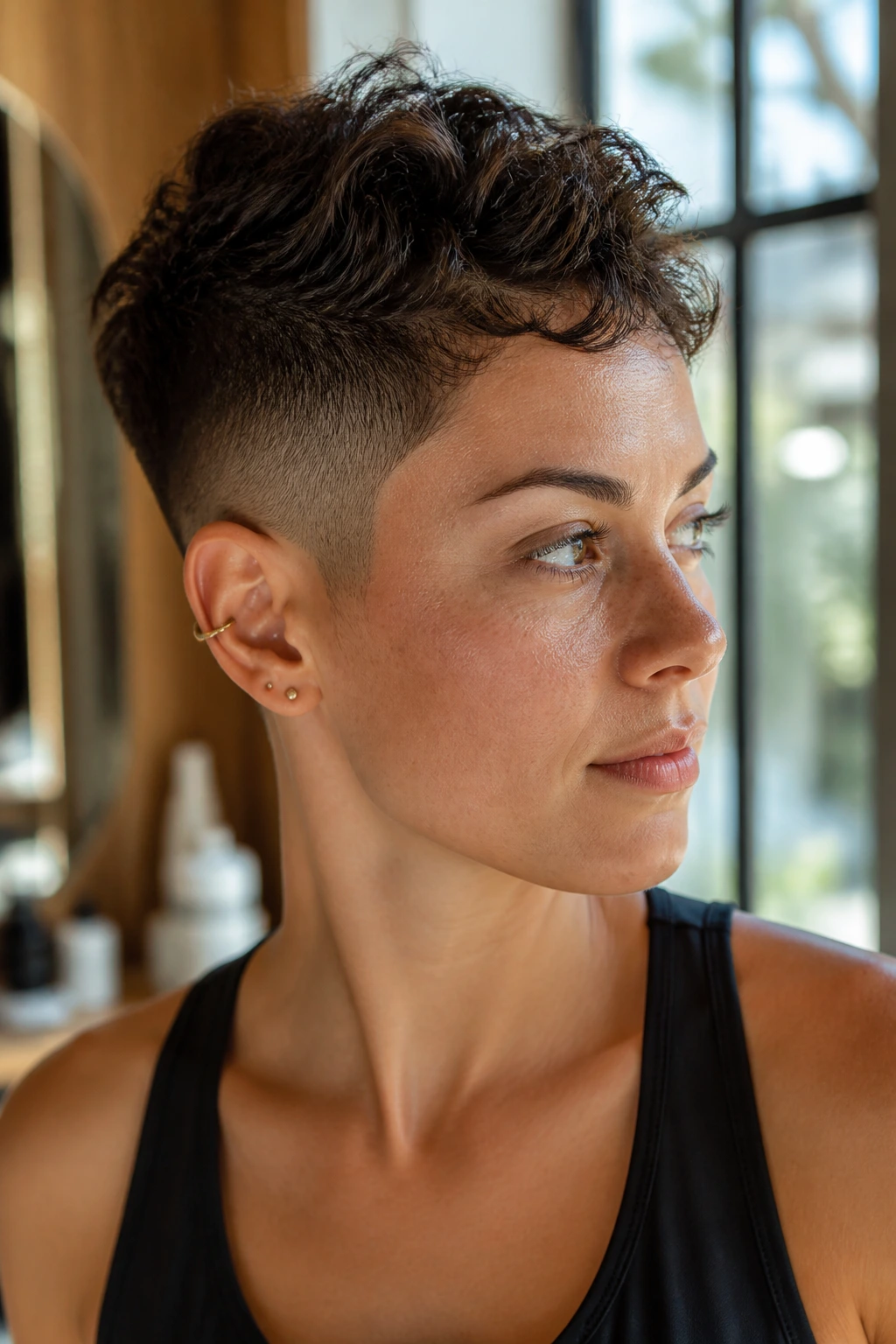
-
They remove bulk where it counts: Taking weight off the sides changes the silhouette fast, which is why even a short top can look deliberate instead of fuzzy.
-
They grow out in useful stages: A low fade can keep its shape for a couple of weeks after the first clean cut, while a skin fade asks for more frequent touch-ups.
-
They make texture easier to read: Curls, waves, coils, and straight hair all show up differently once the sides are cropped tight, and that contrast is half the appeal.
-
They let you choose the mood: Keep the top soft and brushed forward if you want something gentle, or push the crown up and back if you want a sharper line.
-
They work with accessories: Large hoops, glasses, collars, and scarves look cleaner around a fade because the neckline and temples are already neat.
-
They are more flexible than people think: You can keep a bob-length top, go full buzz, or leave a long fringe and still build a fade underneath it.
1. The Low Fade Pixie That Keeps the Edges Soft
A low fade pixie is the cut I reach for when someone wants short hair but does not want to feel exposed. The fade stays tucked around the ears and nape, so the top can hold a little softness instead of turning into a hard military shape. On fine hair, that matters. On thick hair, it matters even more.
Why It Works for Real Hair
The low placement gives the cut a cushion. You still get the clean line around the temples and neckline, but the blend starts low enough that it doesn’t chew through all the softness at once. Ask for about 1½ to 3 inches on top, with the sides fading down into a #1 or #0.5 guard depending on how light you want the edges.
A matte paste or light cream is usually enough. Work it through dry hair with your fingers, then push the front slightly forward or off to one side. Keep the top piecey, not stiff.
Best for:
- Fine hair that needs a clearer shape
- Rounder faces that benefit from a little vertical lift
- Anyone who wants short hair without a severe outline
2. The Skin Fade Buzz Cut With Barely-There Guard Lines
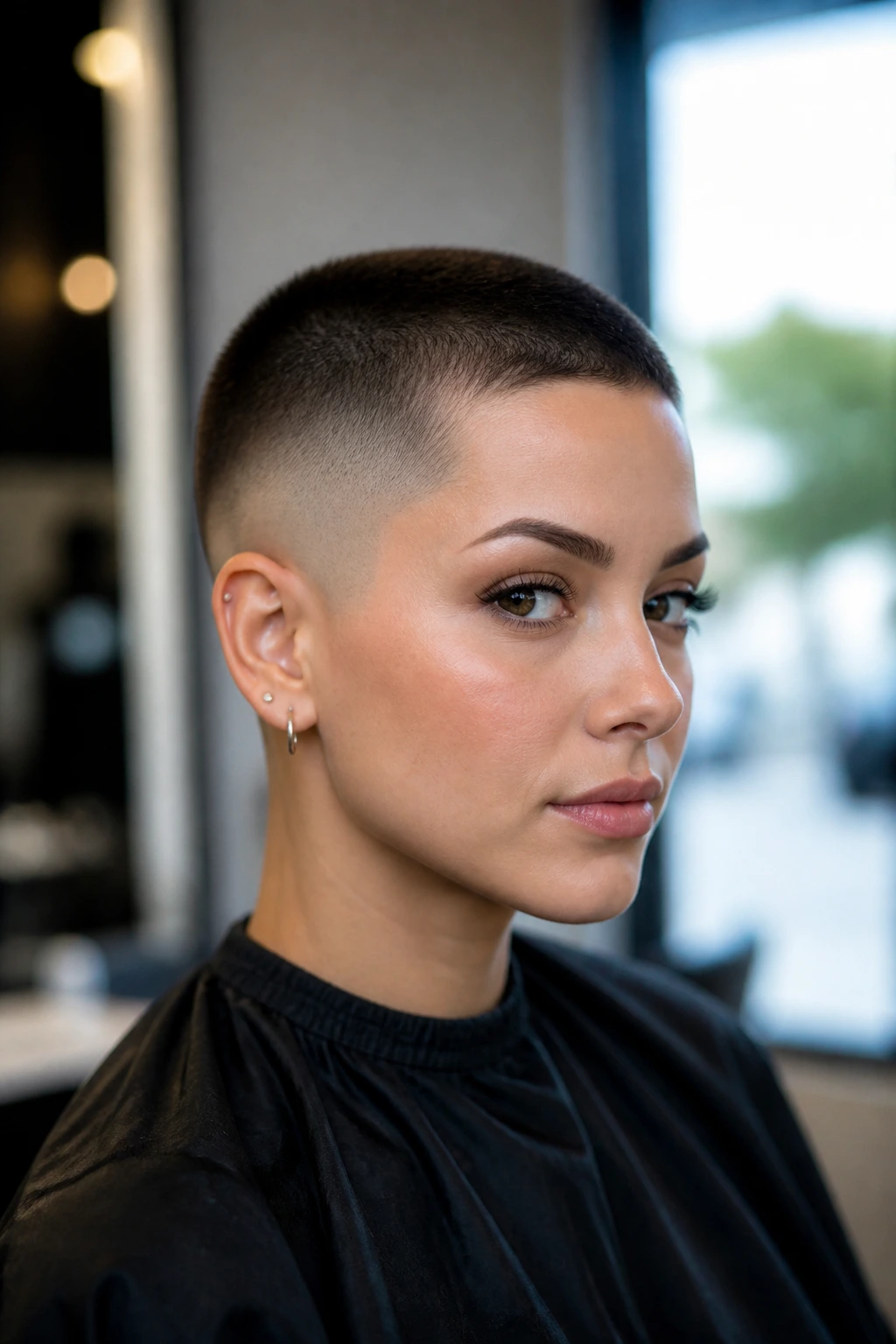
This is the one that strips everything down and leaves the head shape to do the talking. A skin fade buzz cut is clean, bold, and very direct. There’s nowhere for bad blending to hide, which is exactly why it looks so satisfying when it’s done well.
The top can sit at a #1, #2, or #3 guard, or you can go all the way down to the skin on the sides and keep a whisper of length on top. That tiny difference matters. A #2 on top gives you a little plushness. A skin-only finish reads sharper and takes more upkeep.
What to Watch
The cut looks best when the hairline is precise but not over-drawn. Too much outlining can make the whole thing look boxed in. I prefer a crisp nape and a clean temple area, then a soft oval at the crown so the head keeps some shape instead of looking flattened.
Add bold lipstick, earrings, or a strong brow if you want contrast. The cut already carries itself. The extras just give it a frame.
3. The Curly Top Fade That Lets Your Curls Sit High
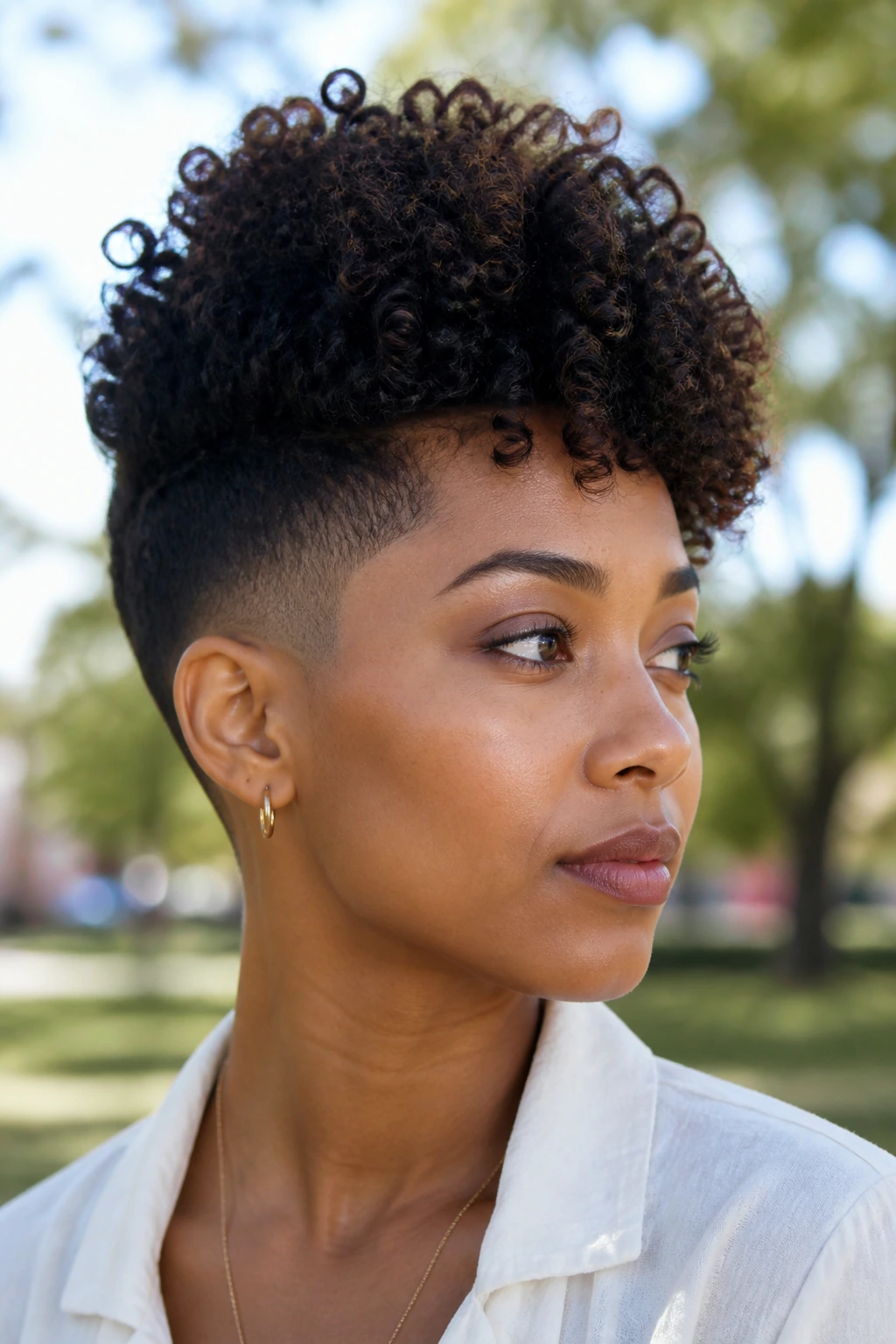
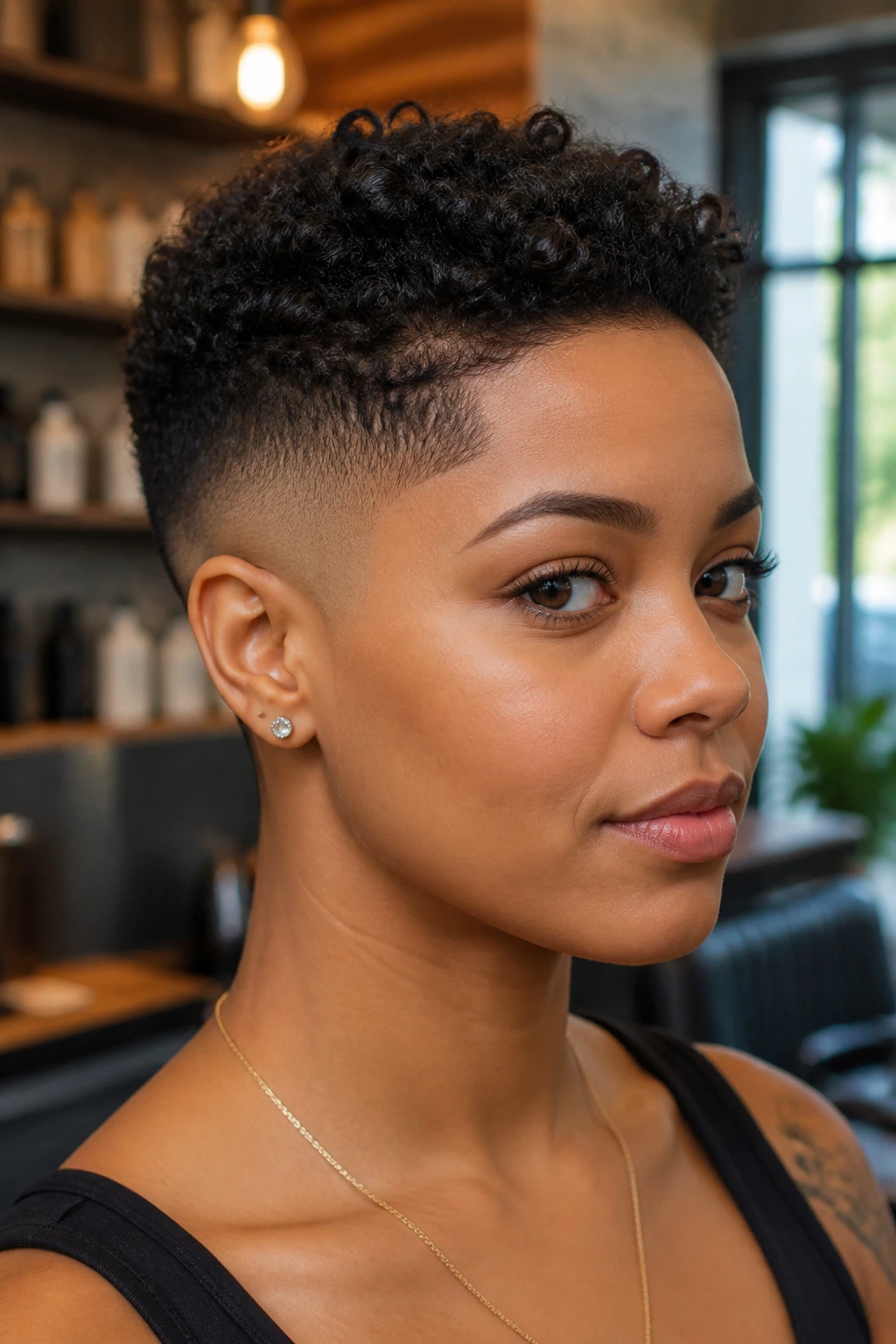
Why do curls suddenly look more defined once the sides are cleaned up? Because the eye stops fighting the bulk. A curly top fade takes volume away from the temples and neckline, so the curl pattern becomes the point instead of the puff around it.
Ask for the fade to start low or mid-low if your curls are dense. That keeps the shape round and wearable. Leave the top long enough for the curl pattern to spring—usually 3 to 5 inches, depending on coil size—and let the stylist dry-cut if possible. Wet curls lie. That’s the annoying truth.
What Makes It Different
The best version of this cut is not brushed flat. It’s hydrated, shaped, and left a little airy. Curl cream on damp hair, followed by a diffuser on low heat, gives you lift without frizzing the whole outline. If your curls are tighter, a small amount of gel at the perimeter can keep the fade line from looking fuzzy by day two.
A curly top fade looks especially good when the sides are tight enough that the curls feel intentional. Not “messy.” Intentional. There’s a difference, and it shows up fast.
4. The Asymmetrical Bob With a Hidden Nape Fade
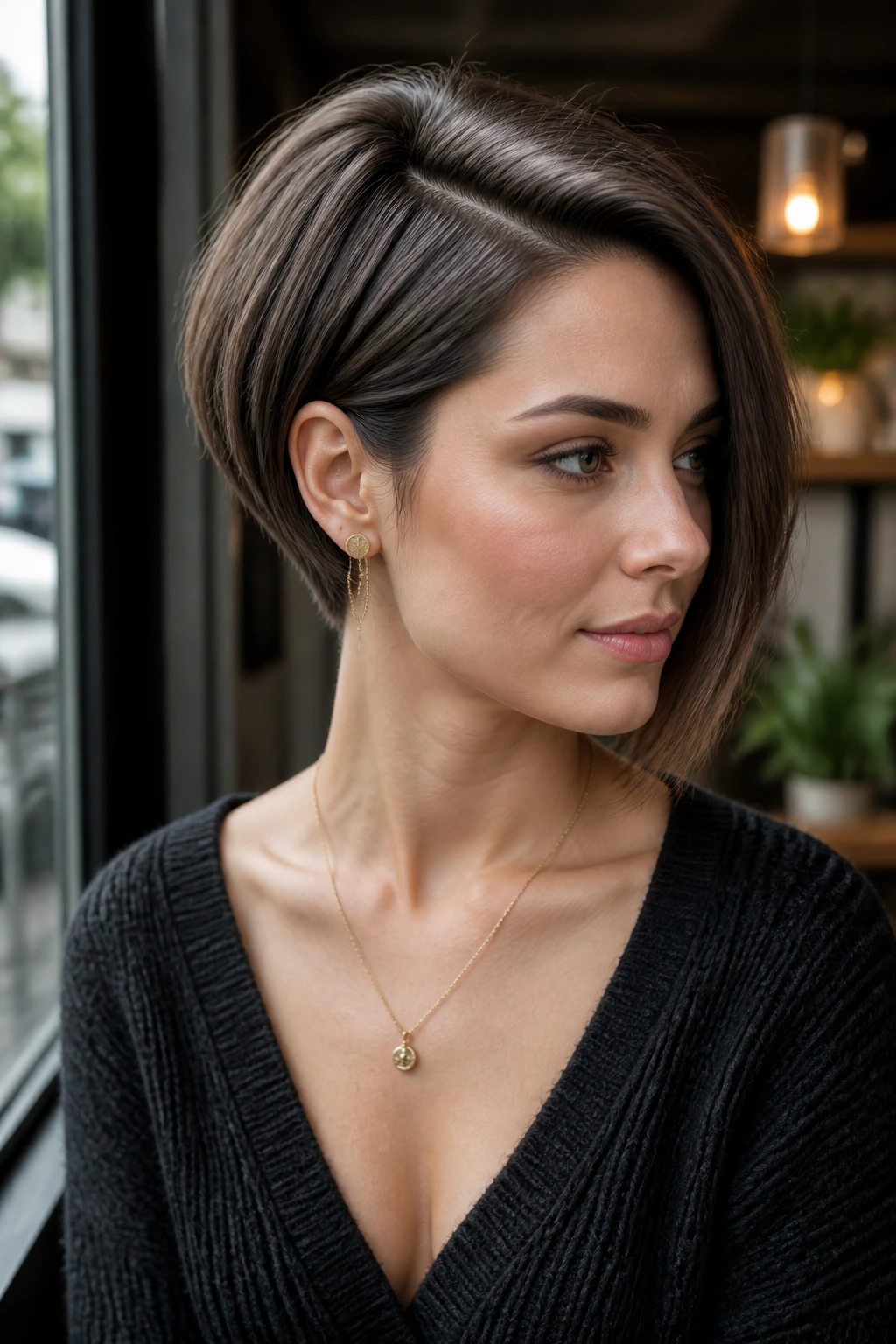
This is the cut for someone who wants the polish of a bob and the clean relief of a fade tucked where you can’t always see it. The front stays longer, one side can dip lower than the other, and the nape gets faded out so the whole shape sits lighter on the neck.
The trick is balance. If the top is too heavy, the fade disappears. If the fade is too high, the bob loses its line. I like this best with a side part and a slight angle from back to front, because the length in front softens the shaved back and keeps the style from feeling too abrupt.
It’s a smart choice for thick hair that wants to balloon at the neckline. It also grows out cleanly, which is rare enough to mention. The nape can stay neat while the bob section settles into a softer shape, and that buys you time between appointments.
5. The Burst Fade Mohawk With Rounded Sides
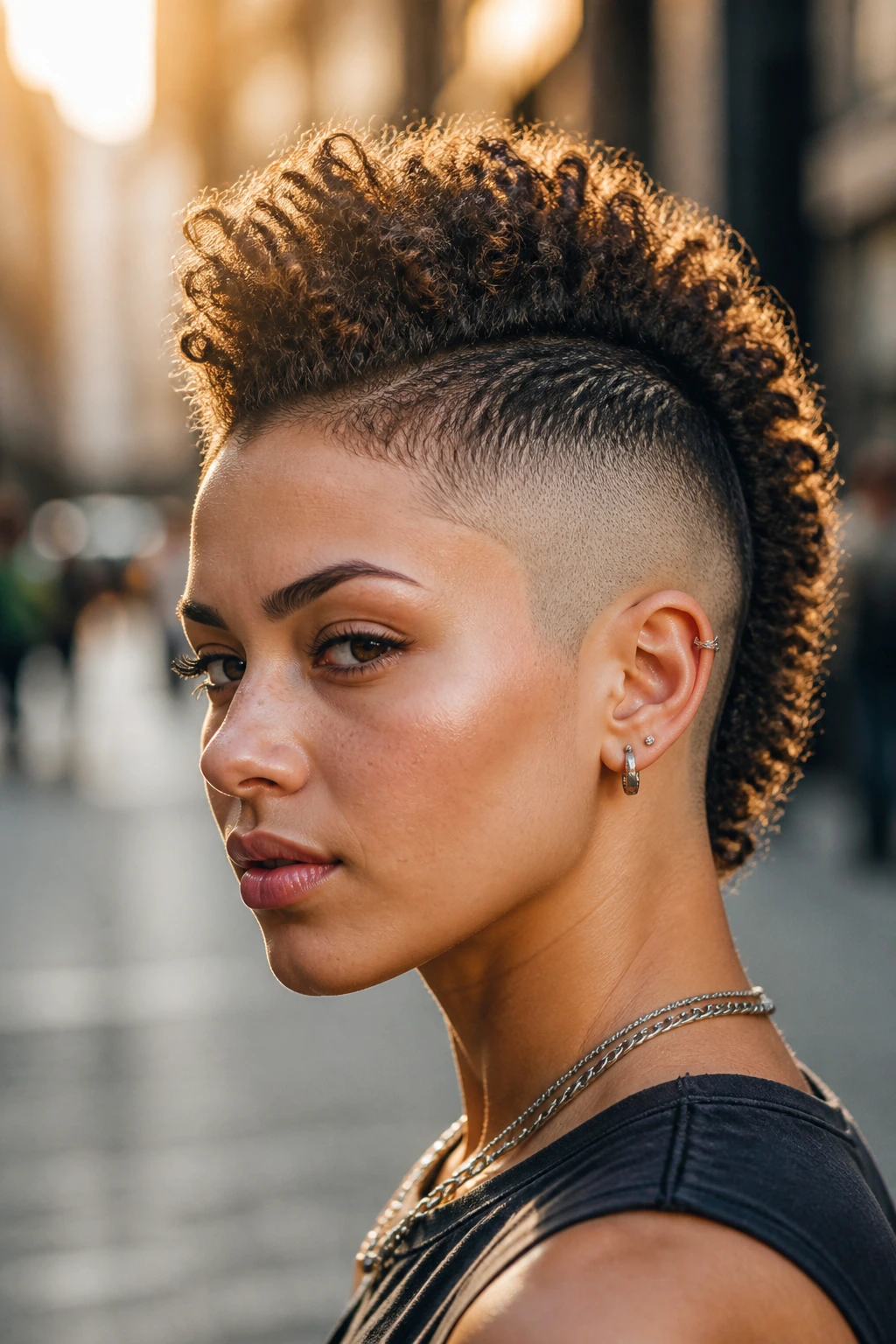
A burst fade mohawk has a little swagger to it, but the rounded fade around the ears keeps it wearable. The fade curves in a half-circle behind the ear instead of dropping straight down, which gives the cut that classic burst shape and lets the center strip stay the star.
This cut loves texture. Straight hair can wear it, sure, but waves and curls make the silhouette feel fuller. Keep the top at 3 to 6 inches if you want height, or shorter if you’re after a tighter shape with more lift than length. A dab of strong-hold paste can push the center ridge up and slightly forward.
If you want the cut to read more feminine, leave a little softness around the fringe or temple. If you want it sharper, ask for a clean line-up at the nape and around the sideburns. Tiny details. Huge difference.
6. The Temple Fade With a Slicked-Back Finish
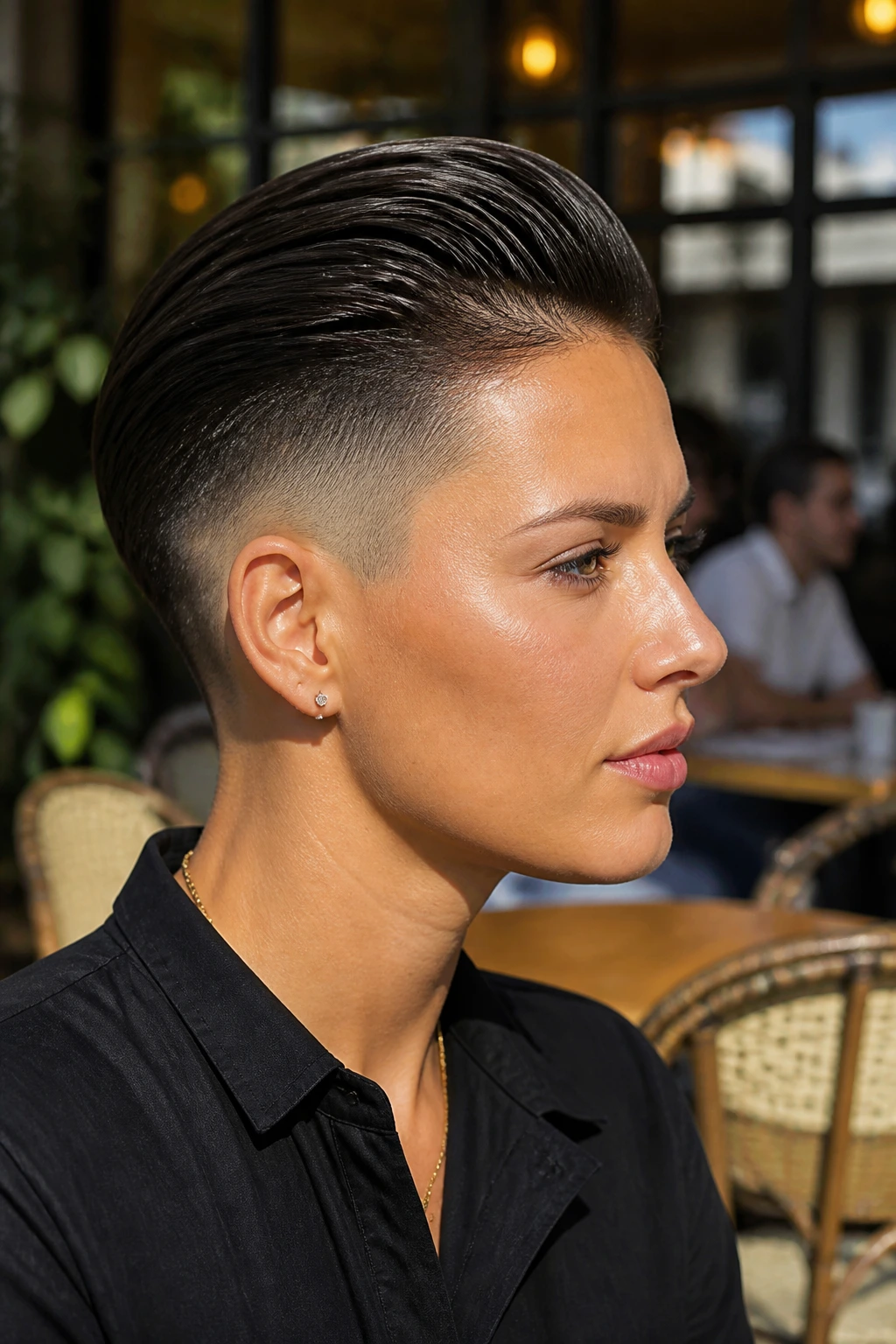
A temple fade is one of those cuts that looks plain in a mirror and expensive in motion. The fade starts near the temples and hairline, then disappears into a fuller top that can be slicked back, tucked behind the ears, or swept across the forehead. It’s neat without looking stiff.
This is a strong pick for anyone who wears glasses. The temple area clears the frame instead of colliding with it, and that little visual cleanup makes the whole face look more open. Leave enough length on top to brush back—at least 3 inches if your hair is straight, a little more if it’s wavy.
Use a light pomade or cream, not a greasy wax. You want movement. A wet, helmet-like finish kills the shape. A soft sheen keeps the cut polished without making it look dated.
7. The Drop Fade With a Side Fringe
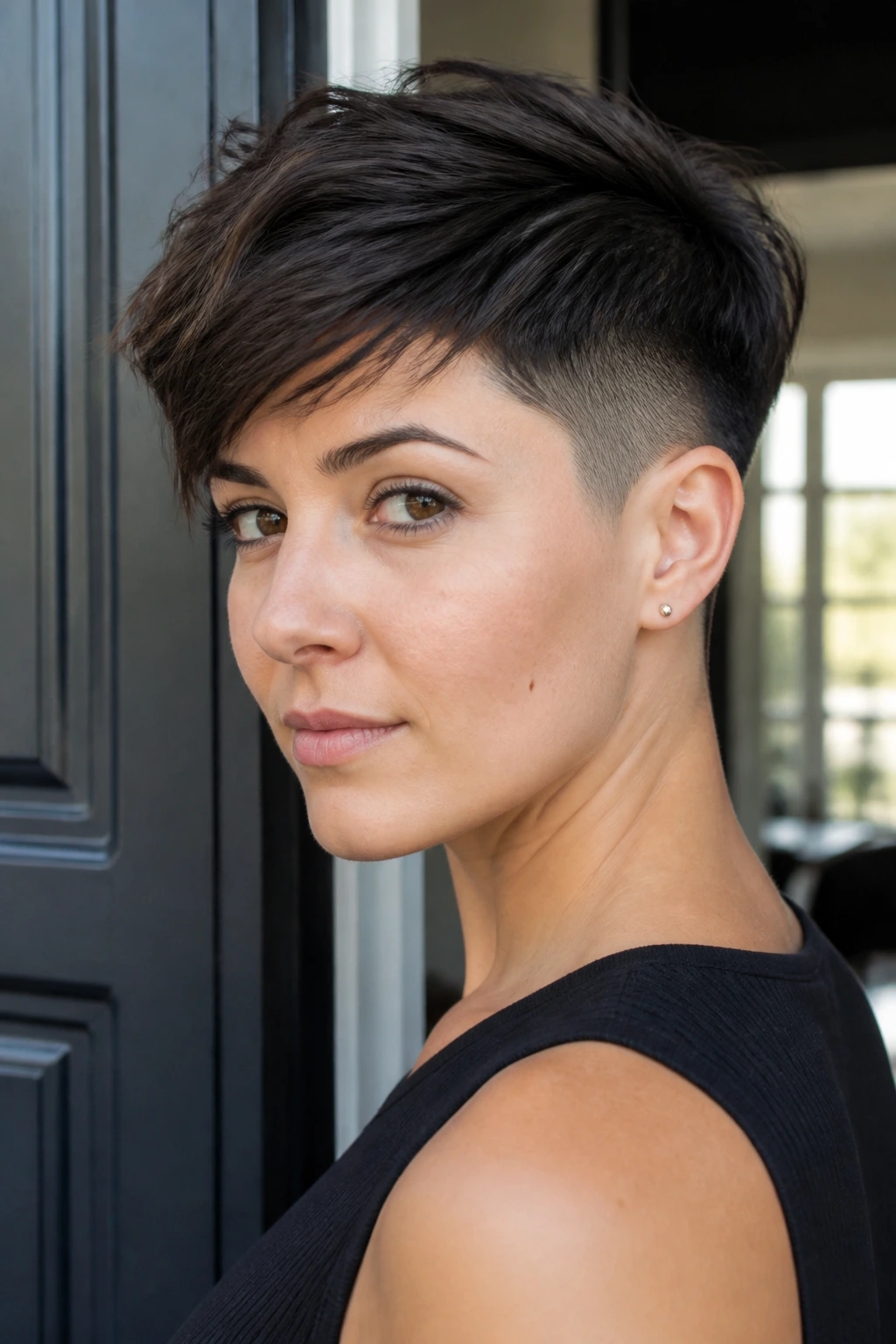
A drop fade does exactly what the name says: it lowers behind the ear and drops toward the nape, which gives the head shape a more curved outline. Pair that with a side fringe and the haircut starts to feel tailored instead of severe.
I like this one for square and angular faces because the dropped curve softens the sides without hiding the jaw. The fringe can be feathered, straight, or slightly bent with a round brush. Keep it long enough to move, not so long that it splits awkwardly in the center.
Best way to wear it
A light mousse at the roots helps the fringe stay lifted instead of sagging into the eyes. If your hair is thick, a small amount of dry texture spray on the top keeps the front from laying too flat. The fade itself should be clean around the ear, then slightly lower at the back. That shape is the whole point.
8. The Mid Fade Crop With Choppy Texture
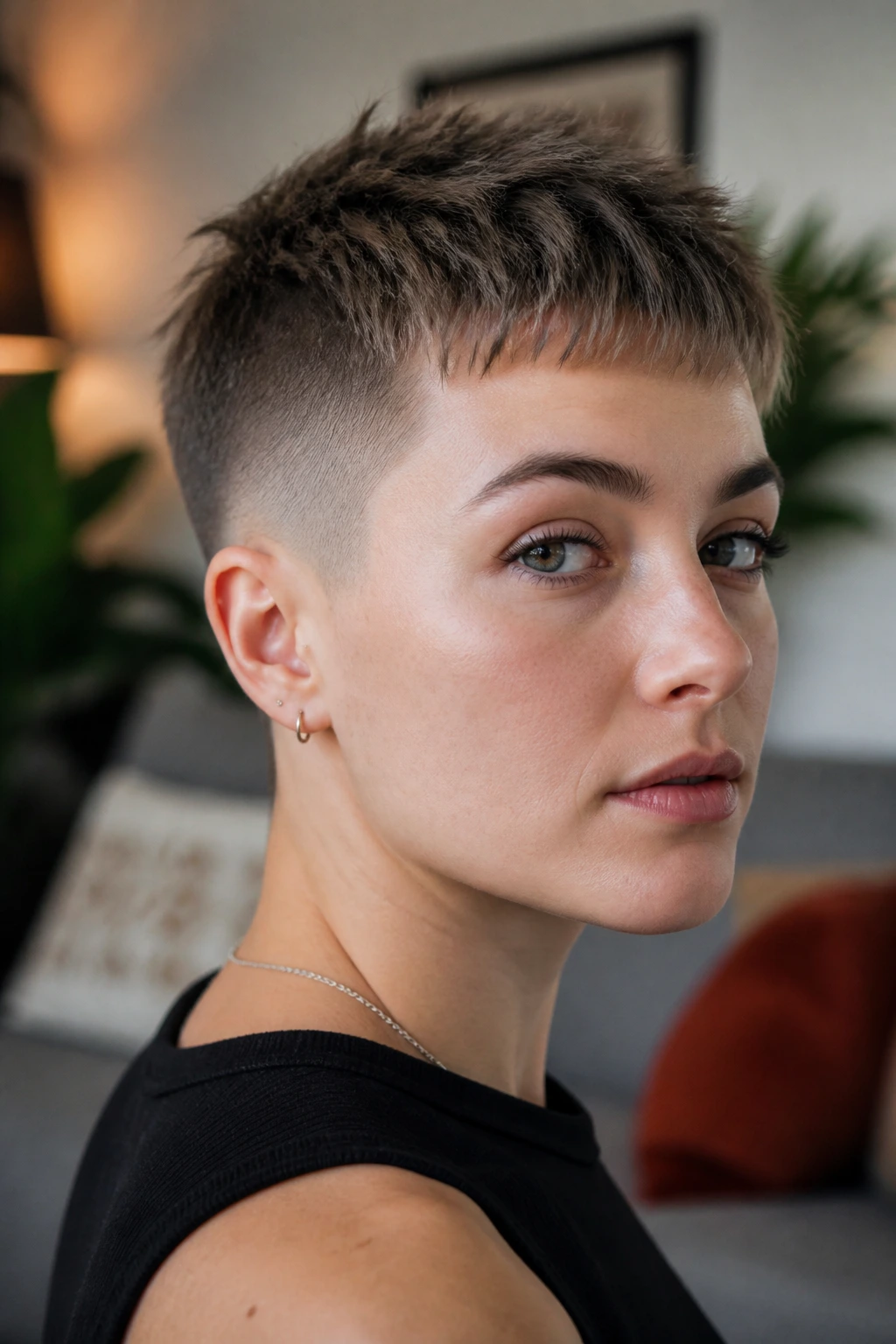
Mid fades sit in the middle for a reason: they’re balanced. Not too subtle, not too loud. A mid fade crop gives you a tighter perimeter than a pixie but keeps enough top length to style with a finger comb, a side sweep, or a messy forward push.
This is one of the easiest fades to live with if you’re new to short hair. The contrast is clear enough to matter, but not so high that every grow-out stage feels messy. Ask for blunt texture on top, especially if your hair is straight. Choppy ends help the top separate, which stops it from reading like a helmet.
A small amount of matte clay is enough. Rub it between your palms until it warms up, then press it into the crown and front. Don’t rake it through like a shampoo. You’ll erase the texture you just paid for.
9. The High Fade With a Longer Crown
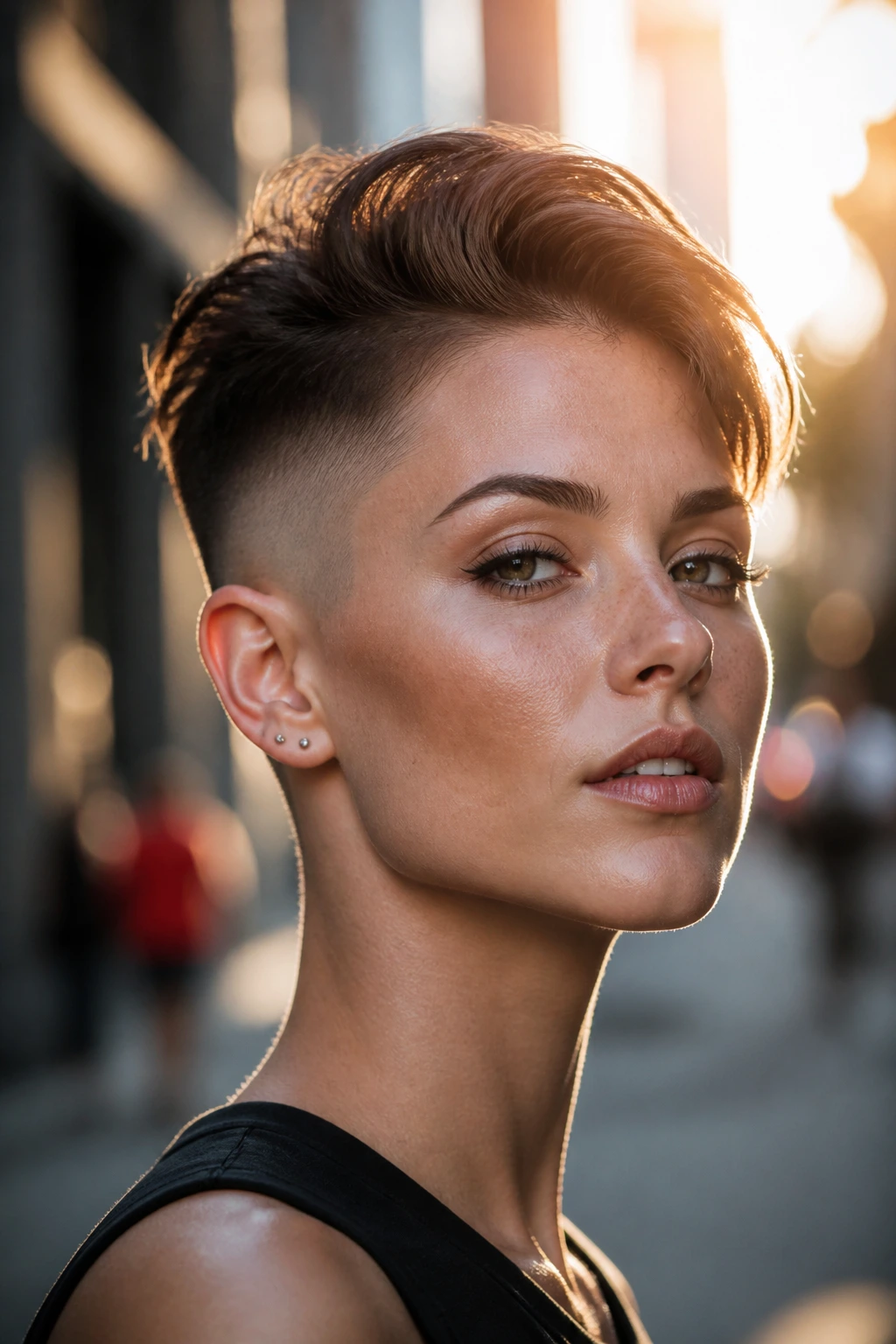
High fades are for people who want the sides to disappear. The fade begins higher up the head, which makes the crown look fuller and the overall shape feel more dramatic. Put a little length on top and you get a strong profile right away.
The danger here is balance. If the crown is too short, the cut can look top-heavy in a bad way. Keep the top at 4 inches or more if you want it to stand up, or leave it slightly longer and push it back for softer lift. Thick hair handles this cut beautifully because the higher fade removes a lot of weight fast.
I’d use this when the goal is contrast. Not softness. Not subtlety. Contrast. That’s the whole deal, and if you like the effect, commit to the upkeep. High fades grow out visibly quicker than low ones, especially around the temples.
10. The Platinum Buzz Cut With a Clean Fade
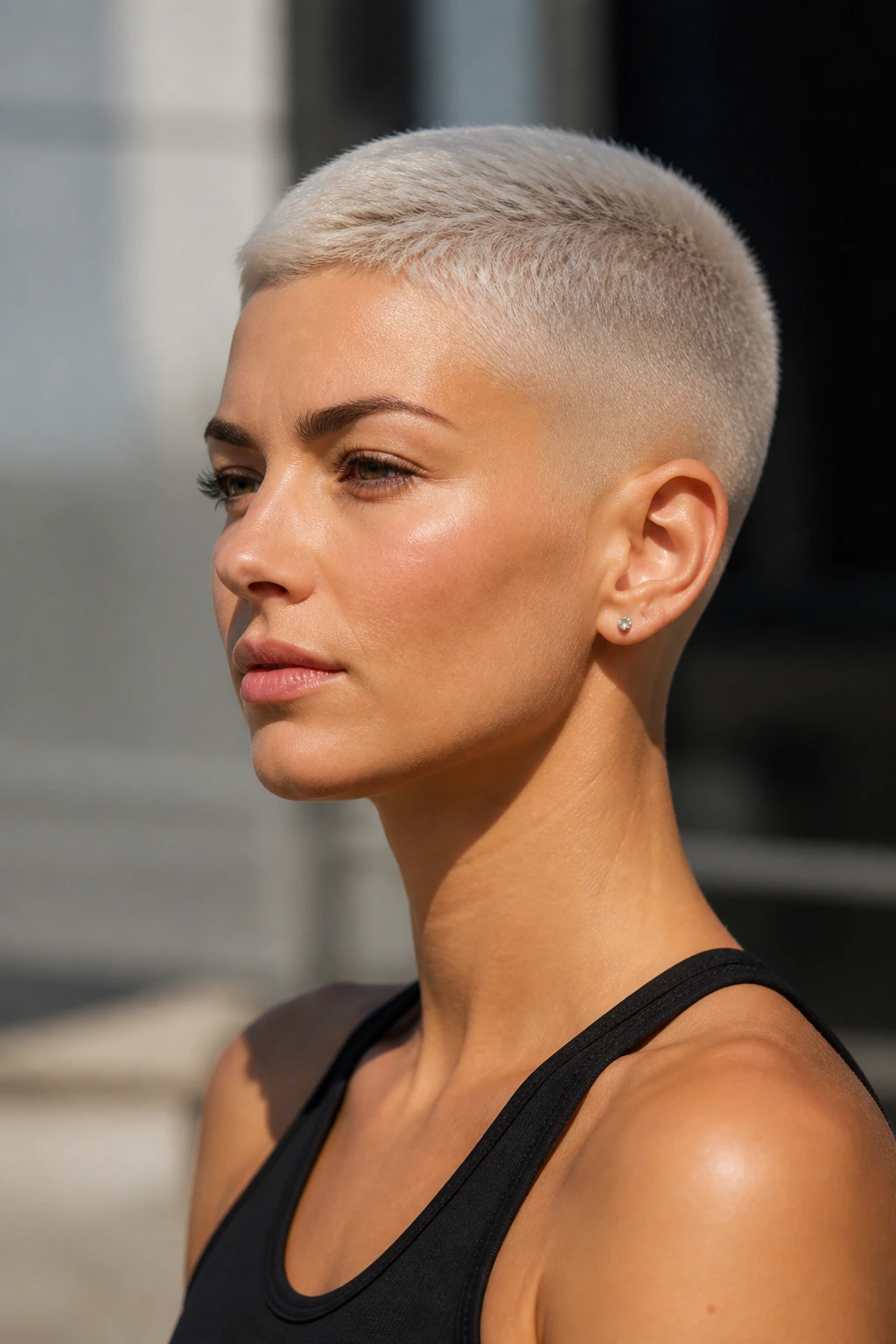
Platinum on a buzz cut hits differently than platinum on long hair. There’s nowhere for the color to hide, so the cut looks bright, spare, and direct. Add a fade and the shape becomes even cleaner, with the pale top floating over darker or skin-close sides.
This look asks for maintenance. Bleached hair gets dry fast, and on a buzz cut that dryness shows up as roughness around the scalp. Use a gentle shampoo, condition the top, and keep the fade tidy so the color doesn’t get overshadowed by fuzzy regrowth. If your scalp is sensitive, go slow with the lightening process. Rushed platinum is a bad idea.
The payoff is visual punch with almost no styling time. A quick rub of scalp oil on the top edges can stop the finish from looking chalky. Keep it minimal. That’s the charm.
11. The Mullet Fade With a Soft Tail
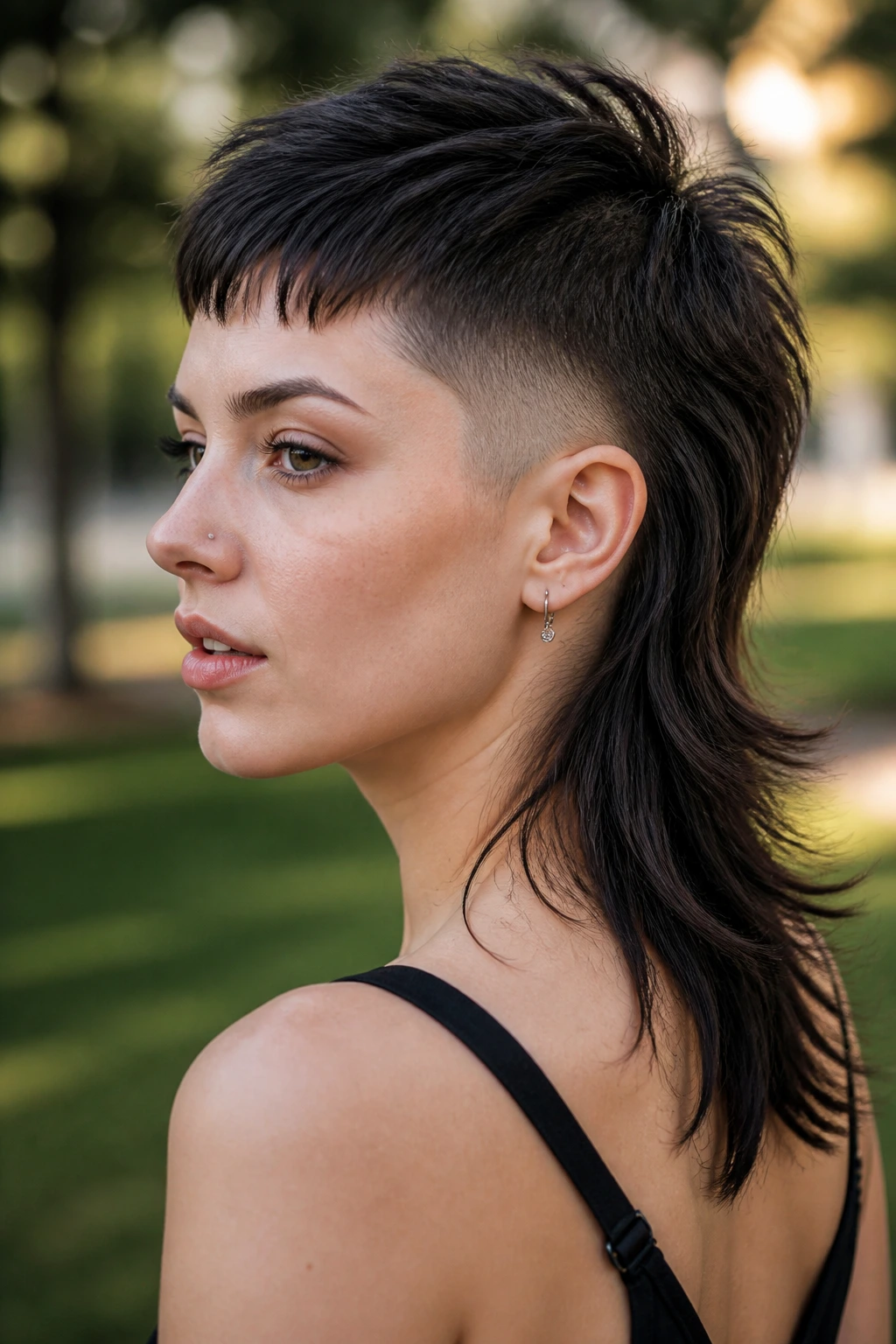
A mullet fade sounds aggressive on paper, but the women’s version can be surprisingly wearable when the tail stays soft and the sides are blended properly. The front stays short, the sides are faded, and the back keeps enough length to move when you turn your head.
This cut works best with wavy or thick hair because the texture helps connect the short front to the longer back. If the hair is straight, ask for feathered ends so the tail doesn’t hang like an afterthought. A little breakup at the crown keeps the silhouette from turning blocky.
Ask for this at the chair
- A low or mid fade on the sides
- Shorter fringe or face-framing layers in front
- A back section that keeps at least 2 to 4 inches of length
- Texture through the ends so the tail doesn’t sit heavy
The mullet fade looks best when the contrast is obvious. If you want something quiet, this is not the cut. If you want movement and a bit of attitude, it lands well.
12. The Finger Wave Fade That Feels Retro and Sharp
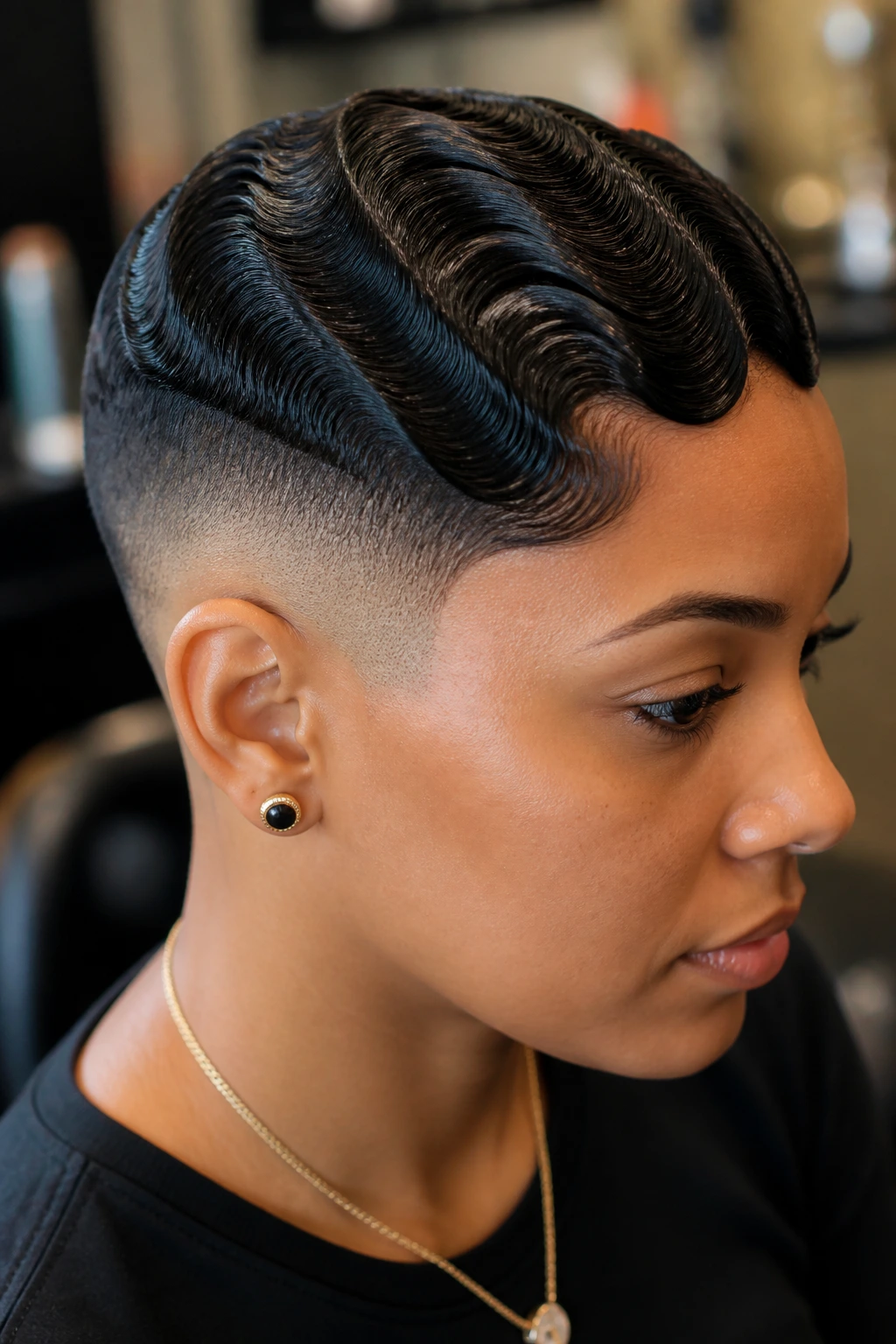
Finger waves and fades shouldn’t work together, and then they do. The smooth, sculpted wave pattern on top contrasts hard against the clipped sides, and that contrast gives the whole style a fashion-editor edge. It’s old-school and modern at the same time, which is a rare trick.
This one needs a little patience. Use gel on damp hair, form the waves with a fine comb, and let them set fully before you touch anything. The fade beneath should stay crisp, especially around the temple and nape. If the sides are fuzzy, the whole look loses its structure.
It’s a strong pick for events, photos, or any moment when you want the haircut to look deliberate from every angle. It does take more styling than a buzz or crop. Worth it, though. Absolutely worth it.
13. The Loc Fade That Keeps the Shape Tight
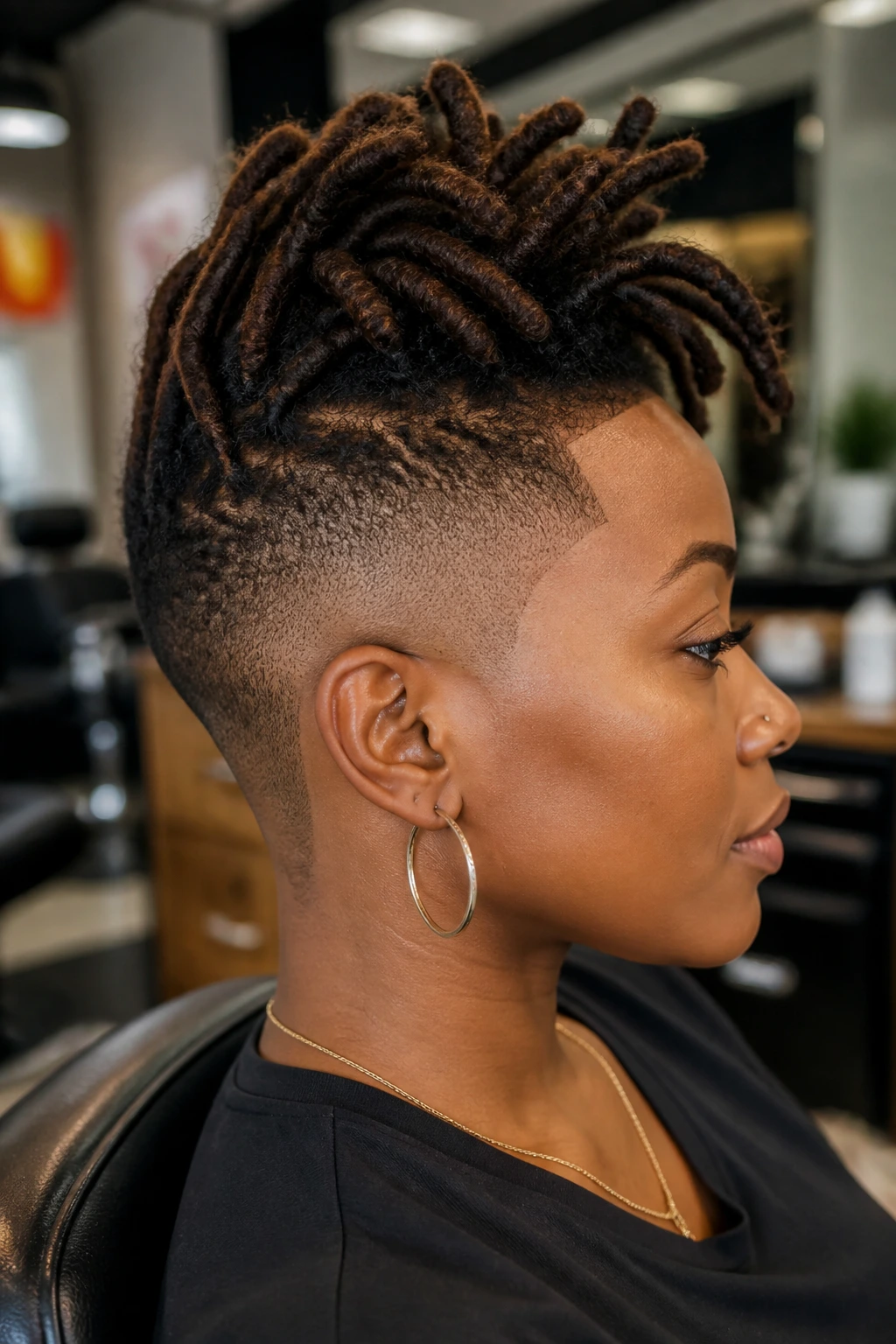
Locs with a fade are all about silhouette. The fade tightens the sides and neckline so the locs on top or around the crown don’t spread out into a wide shape that eats the face. That little bit of negative space makes the style look cleaner, especially when the locs are medium-length.
This cut should be done by someone who understands protective styles. You do not want tension around the hairline or a fade so high that it compromises the roots. Keep the fade low around the temples and nape, then let the locs carry the volume.
A neat edge-up can help, but don’t let anyone overline your hairline just to make it look sharp in the chair. Sharp today, irritated tomorrow. That’s a poor trade. The better move is a clean taper and healthy roots.
14. The Soft Taper Fade on Wavy Hair
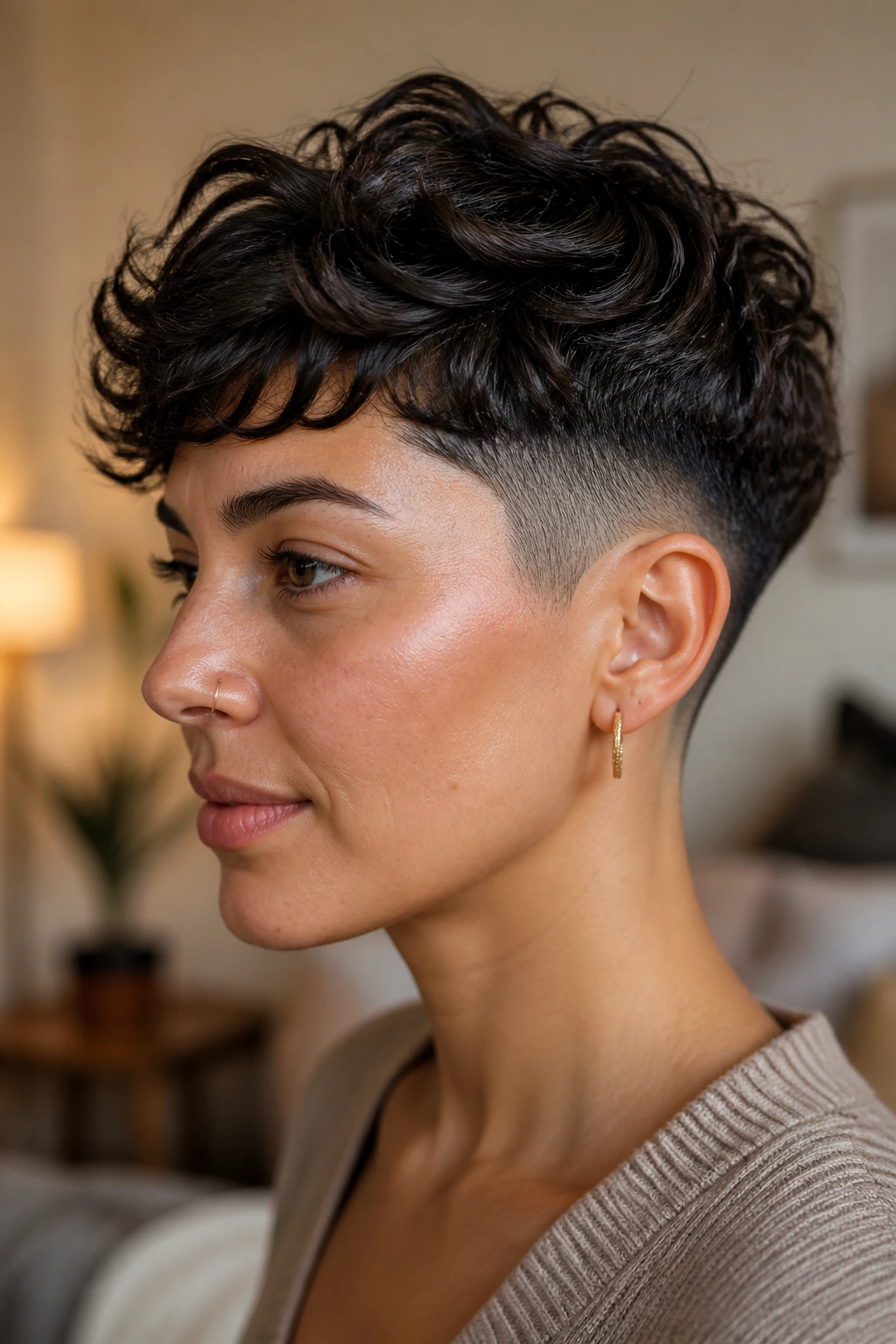
Not every fade needs to shout. A soft taper fade on wavy hair keeps the perimeter neat without shaving away too much weight, which makes it a good choice for people who want short sides but still like a bit of softness around the head.
Waves do a lot of the work here. The texture bends the top naturally, so you can brush it forward, tuck it behind one ear, or leave it loose with a little cream. Ask for the fade to stay low at the nape and temple if you want the easiest grow-out. High fades can overwhelm this kind of softness.
This is one of the most forgiving looks in the whole bunch. The grow-out phase still looks okay, which is more useful than people admit. A haircut that stays presentable between appointments saves time, money, and annoyance.
15. The Side-Part Fade With a Longer Crown
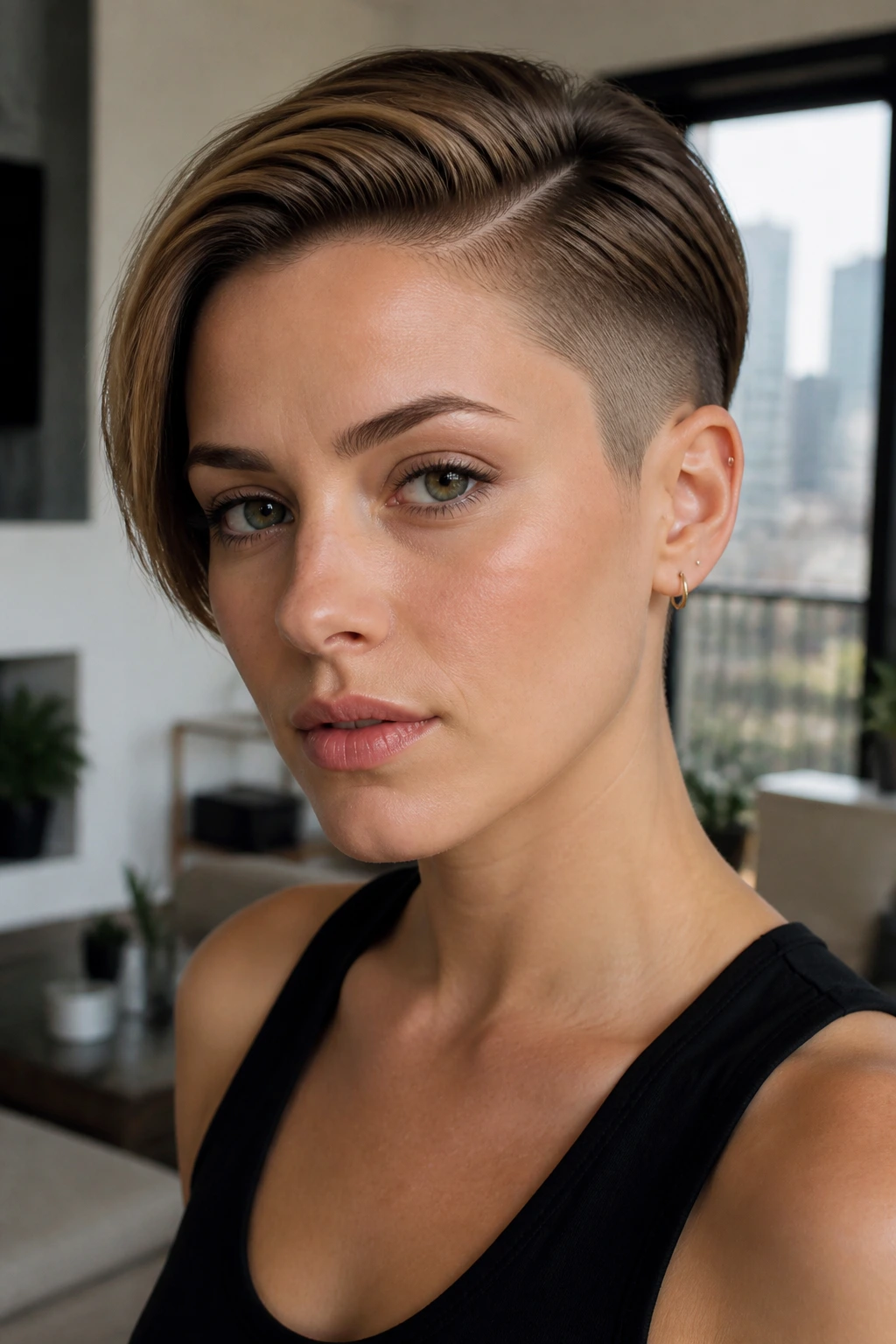
Can a side part make a fade feel classic instead of edgy? Absolutely. The part gives the cut direction, and the fade clears away bulk so the longer crown can fall in a clean line. It’s a simple idea, but it lands because the shape is easy to read.
This version is especially good if you like a polished finish. Keep the crown long enough to sweep across the head—3 to 5 inches is the sweet spot for many hair types—and let the fade drop low enough that the transition doesn’t steal attention from the part. A comb and a light cream are usually enough.
I’d choose this when you want short sides but need a haircut that still works with blazers, glasses, or a more tailored wardrobe. It has a neatness that feels composed, not rigid.
16. The Micro Bang Fade That Frames the Eyes
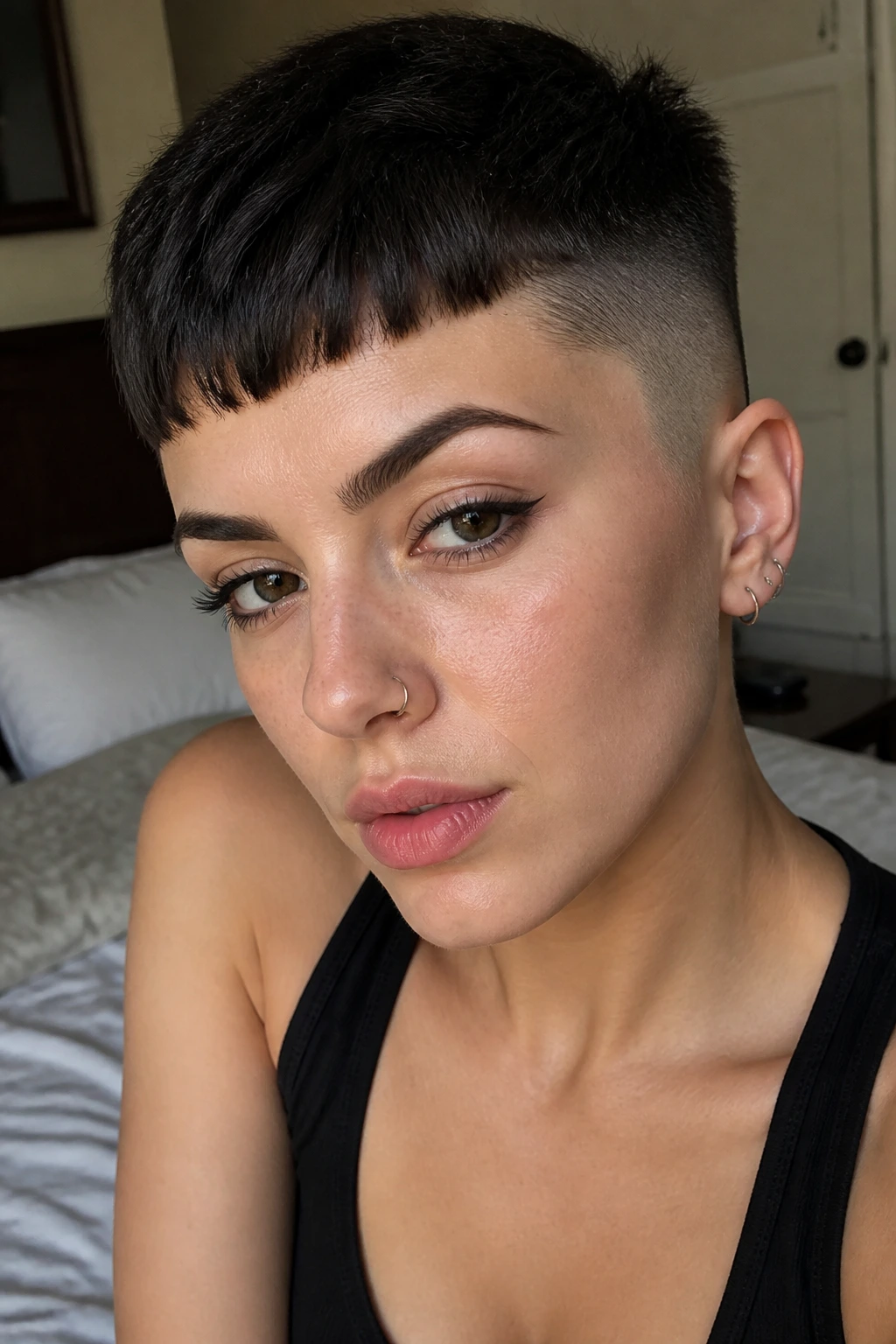
Micro bangs with a fade are a little rebellious, which is probably why they keep coming back. The fringe is short and blunt across the forehead, while the sides and back are faded tight enough to keep the whole cut from feeling too heavy. The eyes become the center of the shape.
This works best when the bangs are cut carefully. Too short, and they can look like an accident. Too thick, and they make the face feel boxed in. A tiny bit of separation at the ends helps the fringe move instead of sitting like a stiff shelf.
If you wear bold makeup, this cut gives you room to play. If you don’t, the haircut still holds its own. That’s the nice part. It creates structure even when the styling is minimal.
17. The Afro Fade With a Razor Line
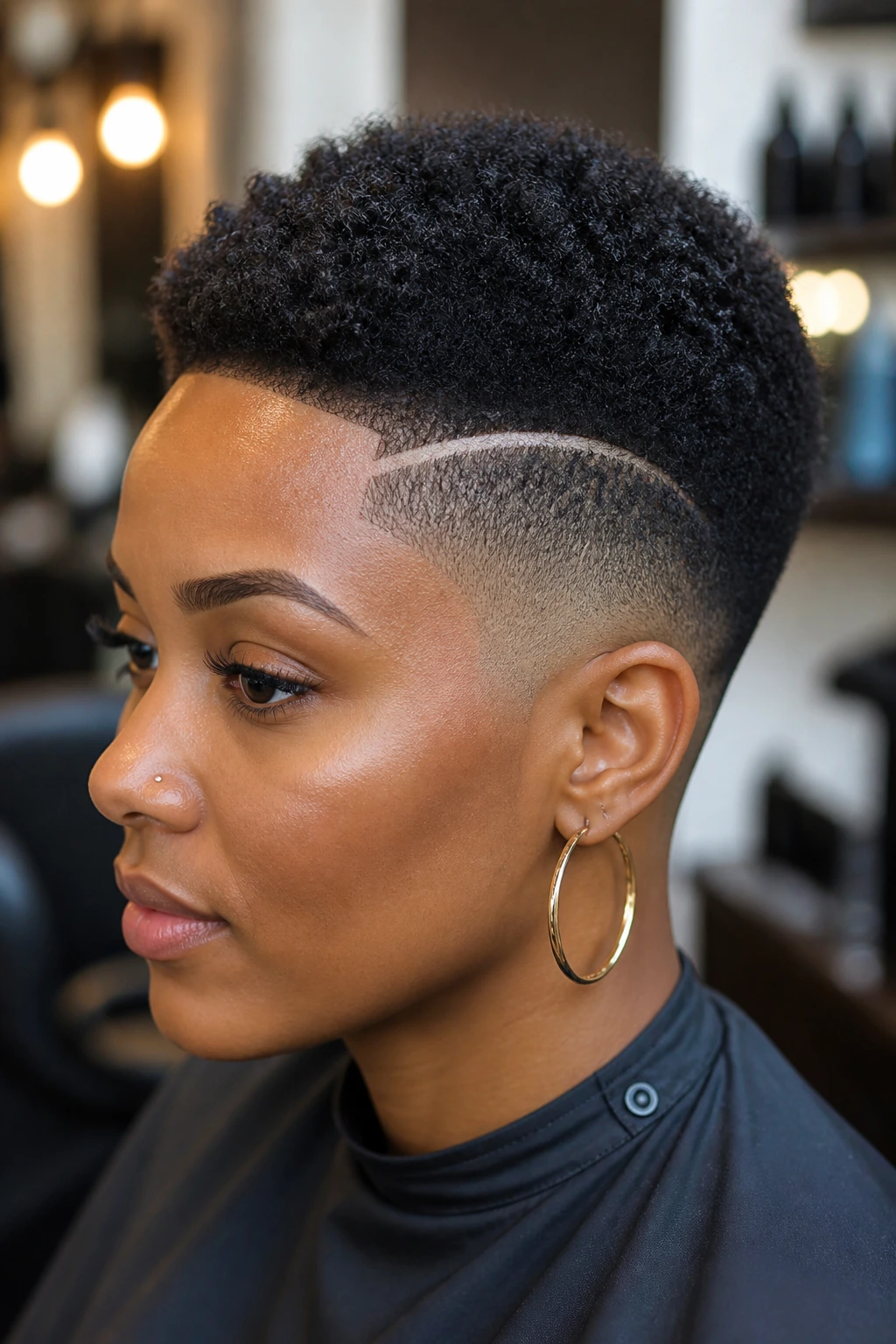
An afro fade is one of the cleanest ways to show off natural texture. The fade keeps the sides and nape trimmed down so the round shape on top stays crisp instead of expanding sideways. Add a razor line and the outline gets even more defined.
The important part is shape, not just length. Ask for a rounded top that follows your natural hair pattern, then keep the fade low to mid depending on how much contrast you want. If the line-up around the forehead is too square, it can flatten the style. A slightly rounded edge usually looks softer and more balanced.
Moisture matters here. Coily hair wants hydration, not just hold. A cream or butter on the top helps the shape stay plush while the sides remain tight. Dry coils lose their bounce fast, and that makes the fade look harsher than it needs to.
18. The Faux Hawk Fade That Stays Wearable
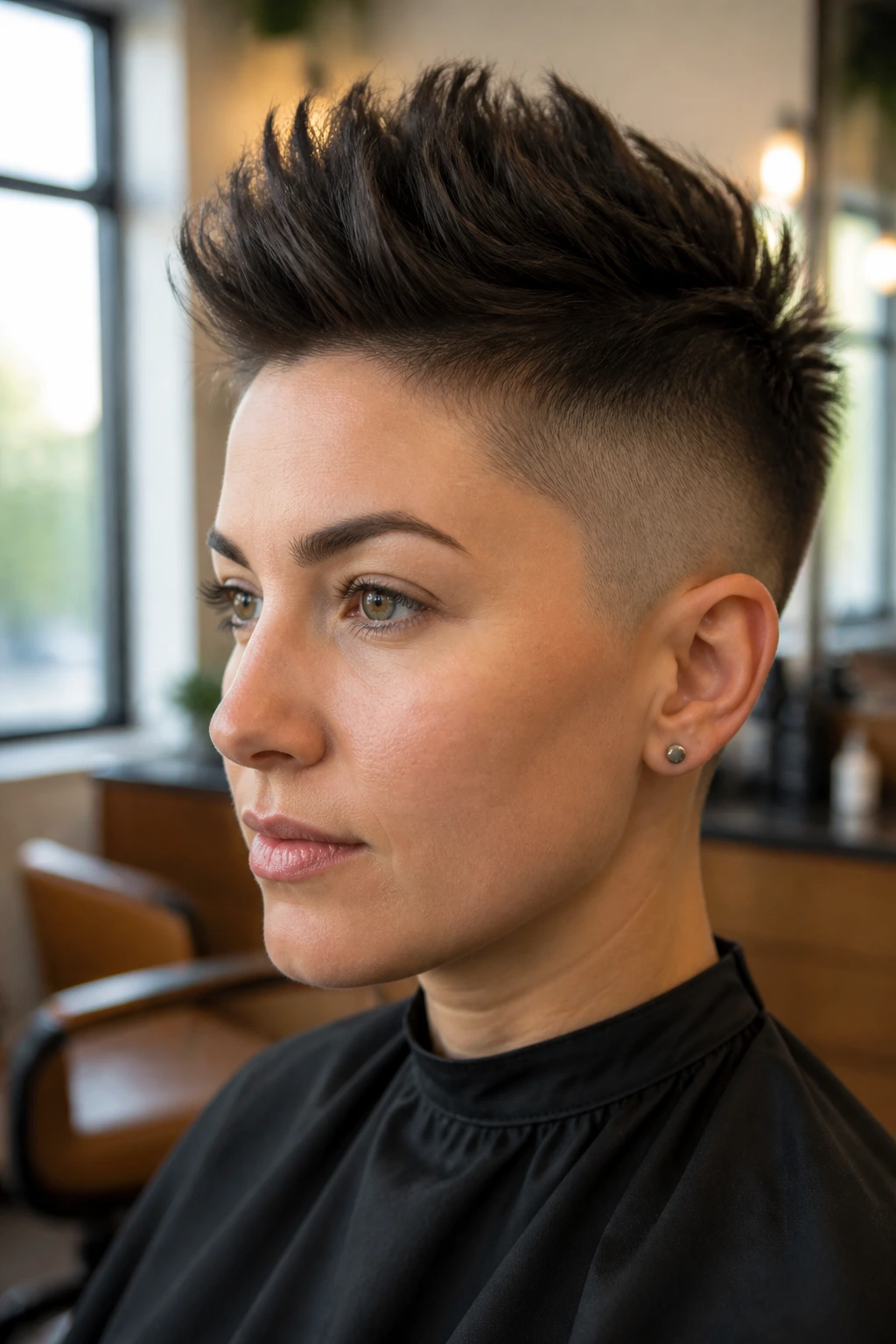
A faux hawk fade gives you the energy of a mohawk without the full commitment. The sides are faded close, the center ridge stays longer, and the overall shape narrows toward the middle of the head. It’s a smart choice if you want height without the theatrical full-strip look.
Keep the top textured so it can stand up a little. Straight hair benefits from a blow-dry and a touch of matte paste. Wavy hair can usually do most of the work on its own. The center section should look lifted, not shellacked.
This cut works well if your face is round or square, because the vertical line pulls the eye upward. The danger is over-styling. Too much product and the hawk turns crunchy fast. Less is better here.
19. The Shag Fade With Feathered Ends
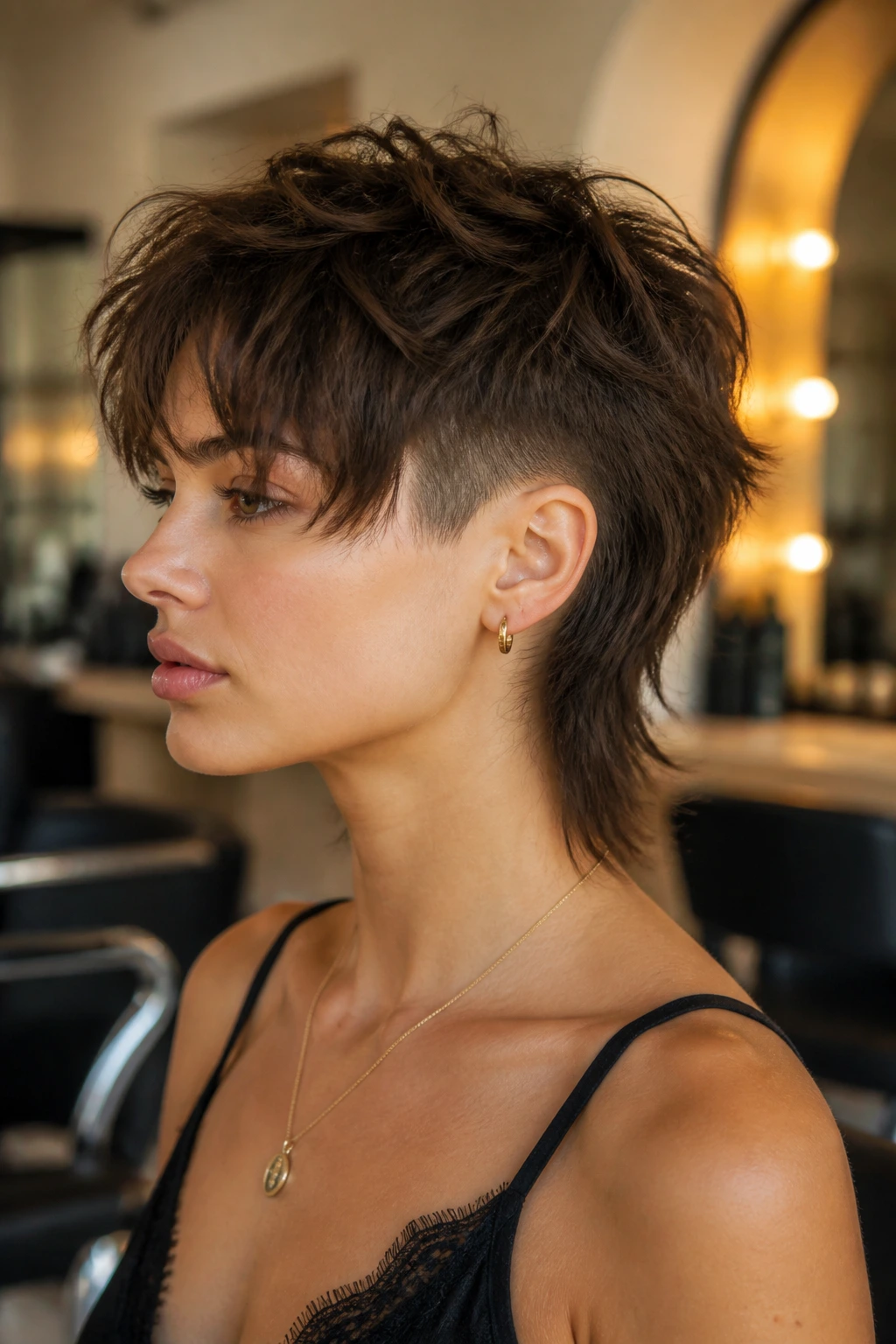
A shag fade sounds like a contradiction until you see it. The shag brings layers, feathering, and movement; the fade cleans up the sides and neckline so the layers don’t turn into a fuzzy cloud. It’s one of the softer-looking options in this whole group.
This cut lives on texture. Wavy and straight hair can both wear it, but the ends need breakup. Ask for razored or point-cut layers through the top, then keep the fade low enough that the whole style still feels airy. If the fade climbs too high, the shag loses its looseness.
I like this when you want a little edge but not a hard outline. It has that “I didn’t try too hard” feeling, except it does require a good cut. Which is usually how these things go.
20. The Color-Blocked Fade With a Bright Top
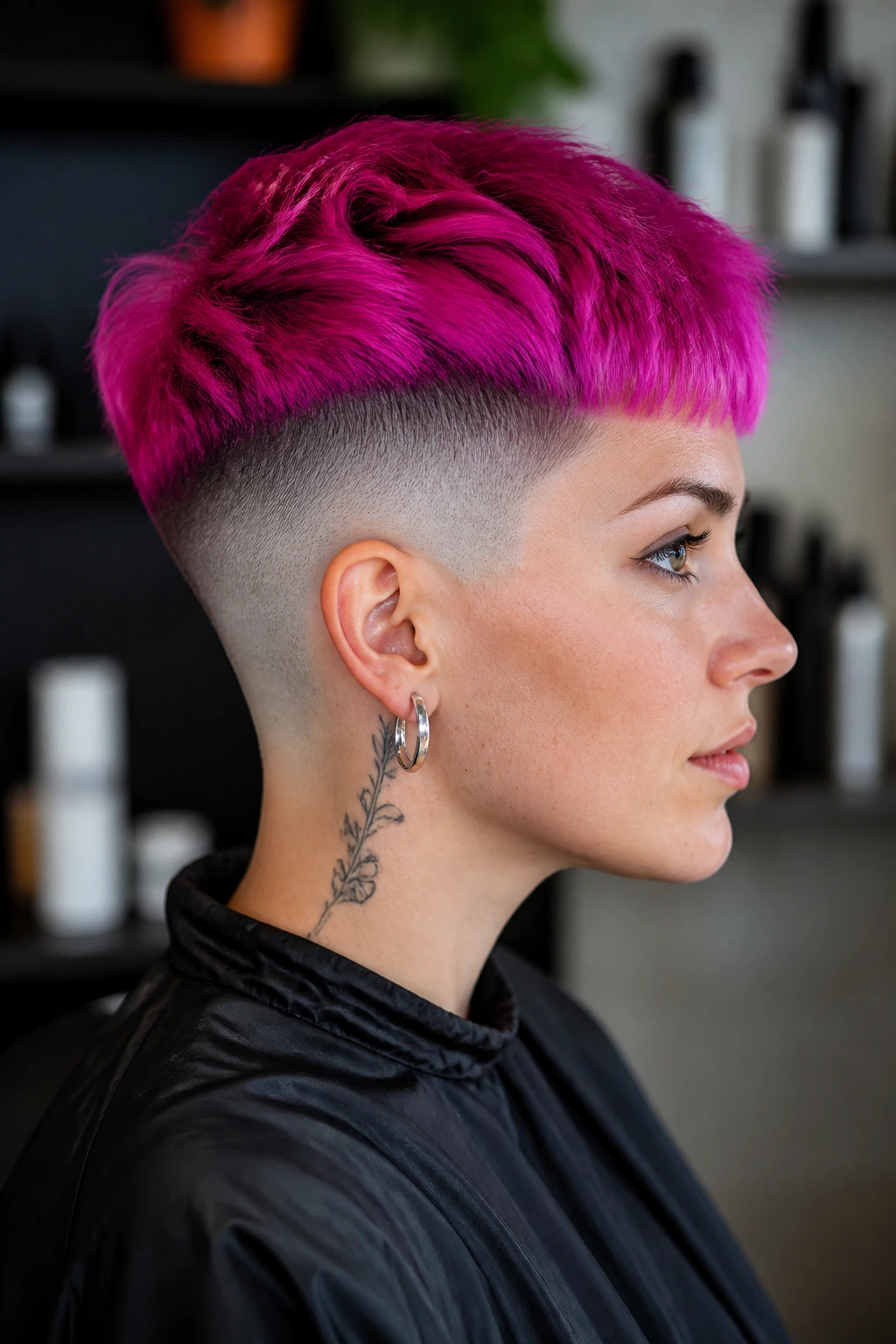
Color changes everything. A bright top over faded sides turns the haircut into a graphic shape, and once the color blocks are clear, the fade reads even sharper. Copper over dark sides, silver over a deep root, rose over a neutral base—those contrasts all behave differently, but the principle is the same.
This cut does ask more from your hair. Lightening the top can dry it out, especially if you’re pairing it with a skin fade that already shows the scalp. Keep treatment masks in the rotation, and do not bleach over fragile ends without a plan. Broken hair plus a fade is a mess nobody wants.
The best part is how customizable it is. You can go loud with neon or keep it subtle with a soft caramel lift on top. Either way, the fade acts like a frame. The color becomes the subject.
21. The Hard-Part Crop Fade With a Straight-Edge Line
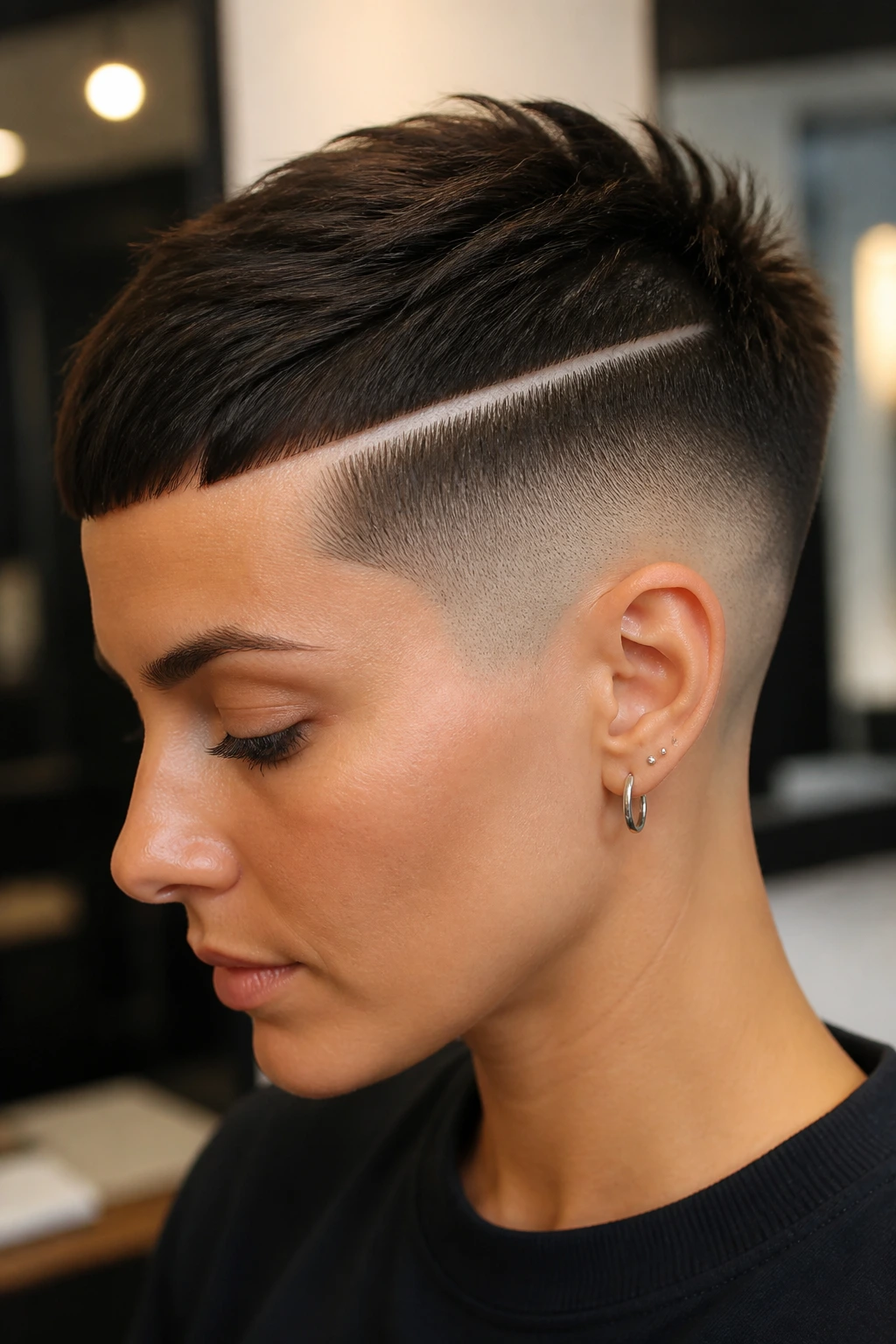
A hard part changes the whole mood of a crop cut. That shaved line gives the top direction, and the fade underneath keeps the sides from competing with it. It’s crisp, graphic, and easy to read from across a room.
This version is a good fit for straight or slightly wavy hair because the part stays visible longer. If your hair is very curly, the hard part can blur quickly, so ask whether your texture will hold it. If not, a side-swept version may be smarter. No shame in choosing the cut that behaves better.
A fine comb and a small amount of styling cream help the top stay separated. Keep the part line clean, but don’t widen it just because it looks cool in the mirror. Wider is not always better. Often it just grows out awkwardly faster.
22. The Nape Fade With Long Layers
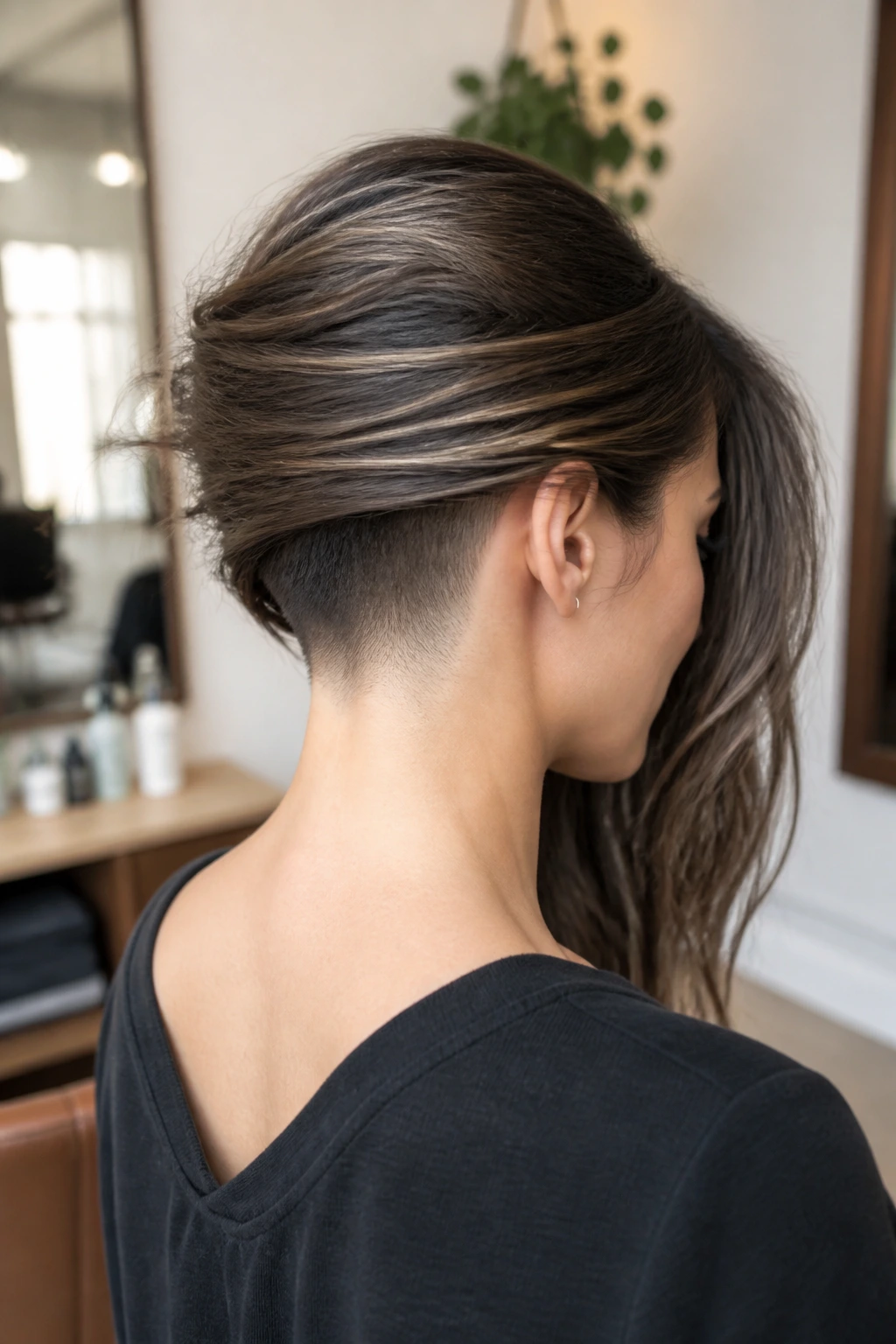
This is the stealth option. The top stays long, the layers move, and the nape gets faded so the neckline sits lighter under all that hair. If you like long hair but hate the thick, heavy shelf that can build at the back of the neck, this cut solves that problem without stealing the length.
The fade is hidden enough that people may not notice it right away. They notice that the hair falls better. That’s the useful part. The layers sit cleaner, the coat collar doesn’t fight the hair as much, and the back feels cooler in every sense.
It’s especially nice for thick hair that gets bulky near the nape. A low fade there can save you from the triangle effect that shows up when long layers collapse at the bottom. A little undercut in the right place changes everything.
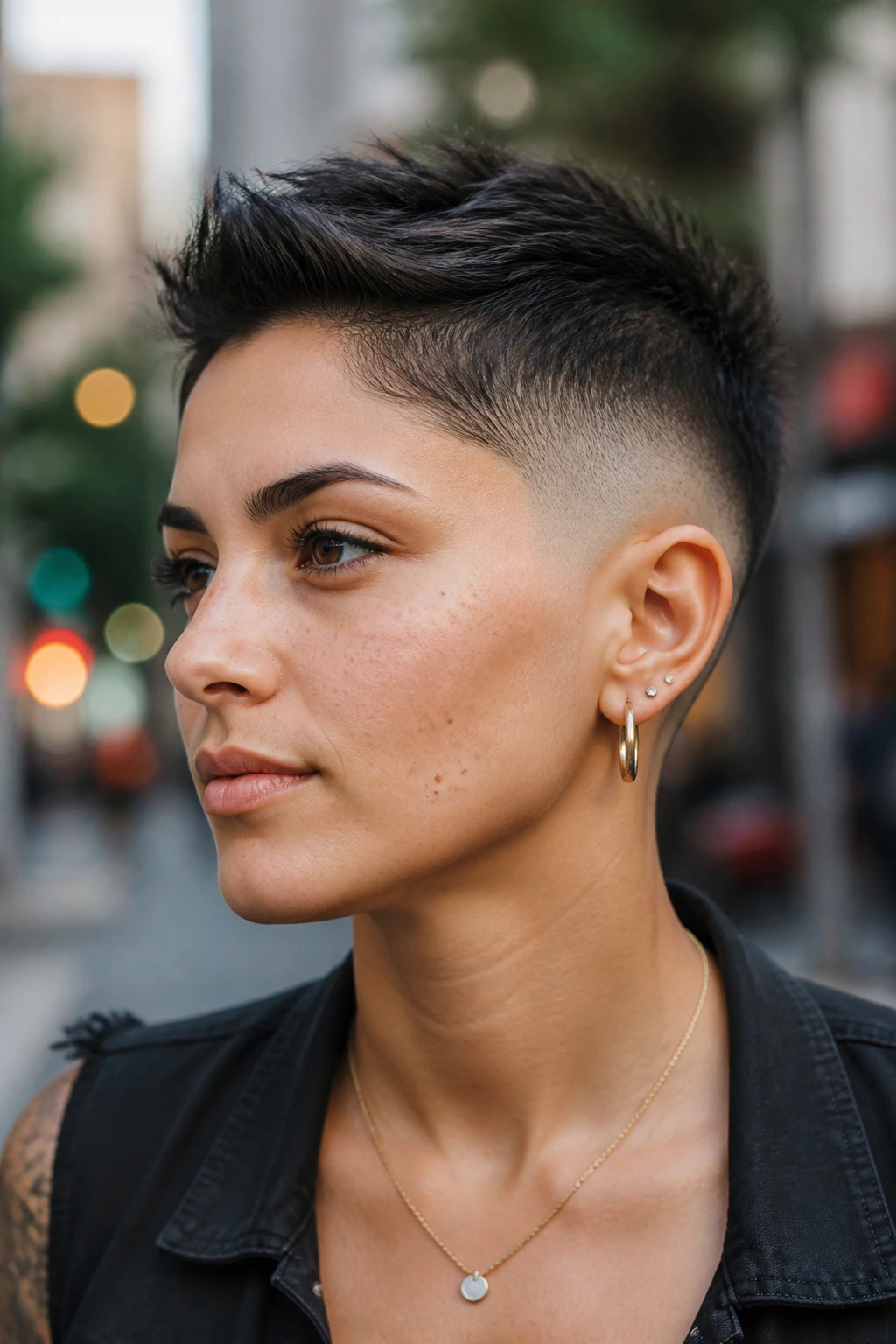
23. The Disconnected Pixie Fade With Sharp Contrast
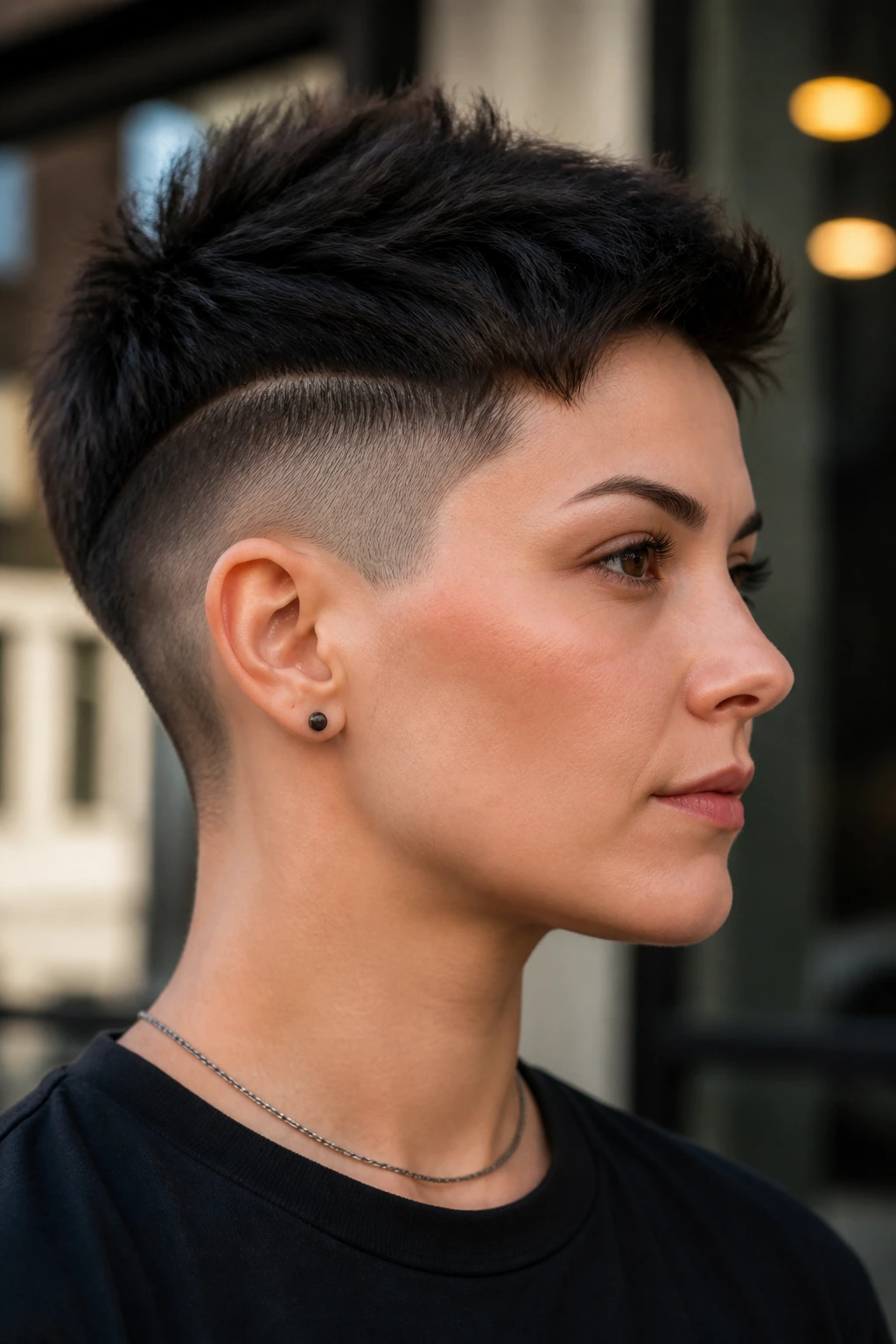
If you like a cut that looks deliberate from every angle, this is the final stop. A disconnected pixie fade leaves the top noticeably longer than the sides, with a clear line between the two. No gentle merge. No soft apology. Just contrast.
This cut is powerful because it tells the eye where to look. The top can be swept forward, spiked, finger-combed, or left messy, while the sides stay tight and almost bare. That separation works best when the top has enough length to move—usually 2 to 4 inches, depending on texture.
It suits people who like a little drama but still want the day-to-day simplicity of short hair. The grow-out can be a little choppier than a blended pixie, so you’ll want regular edge cleanups. Still, when the shape is fresh, it has a clean, almost tailored energy that’s hard to beat.
Why a Fade Changes the Shape of the Whole Cut
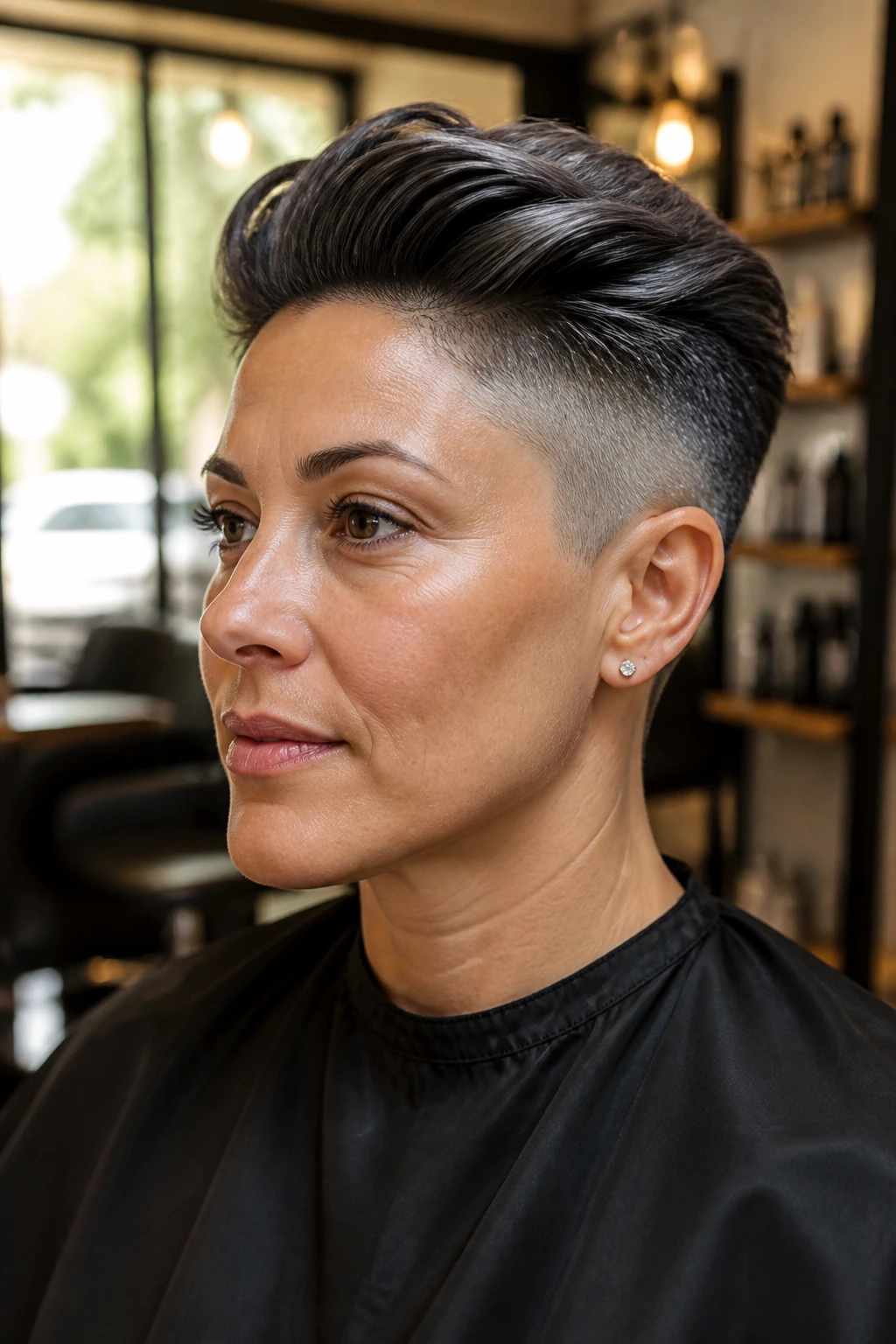
A fade is not just a shorter side. It changes how the whole haircut sits on the head. That’s why a pixie can look airy with one fade height and severe with another. The same goes for curls, buzz cuts, and long tops with shaved sides. Move the fade up or down by even an inch, and the balance of the cut shifts.
That small shift matters because it changes where the eye lands. A low fade keeps more softness near the ear and jaw. A mid fade clears enough bulk to sharpen the outline. A high fade gives you contrast and lift, which can make the top look fuller than it really is. Cheap trick? Maybe. Useful? Very.
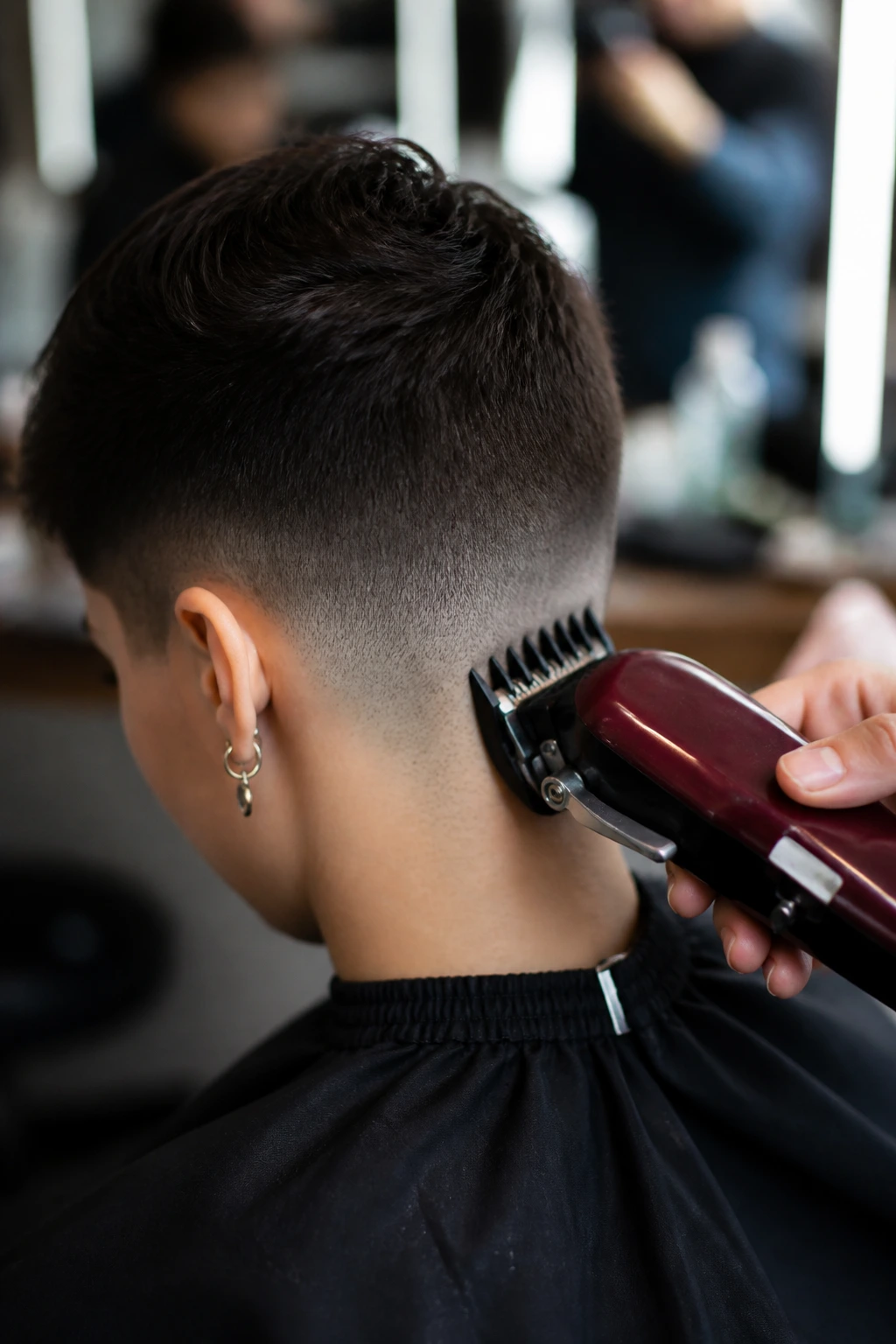
Barbers usually work with clippers, guards, and a comb to build the gradient, then clean the edges with a trimmer. The blend is what makes the cut feel finished. If the fade line is too visible, the haircut can look choppy in a bad way. If it’s blended cleanly, even a dramatic cut reads polished. That’s the difference between “I chopped my hair off” and “I got my shape back.”
Essential Tools for Keeping the Cut Crisp
-
Clippers with guard attachments: Helpful if you want to clean up the nape or sideburns between appointments; a #1, #1.5, and #2 cover most home touch-ups.
-
Detail trimmer: Useful for the hairline, temple area, and any line work you want to keep sharp.
-
Hand mirror: Lets you check the back of the head, which is where fades usually start to look fuzzy first.
-
Wide-tooth comb: Good for lifting the top without tearing through curls or waves.
-
Matte paste or clay: Best for pixies, crops, and faux hawks when you want shape without shine.
-
Curl cream or gel: Helpful on curly, coily, or finger-wave styles that need definition more than volume.
-
Blow dryer with diffuser: A diffuser keeps curls from blowing apart and helps wavy tops sit with more control.
-
Spray bottle: Dampening the top before styling makes it easier to reshape without washing every day.
-
Neck duster: A small brush for brushing loose hairs off the neck and collar after a trim.
-
Salon cape or towel: Optional at home, but worth having if you trim around the neckline yourself.
Smart Booking Tips: What to Ask for at the Chair
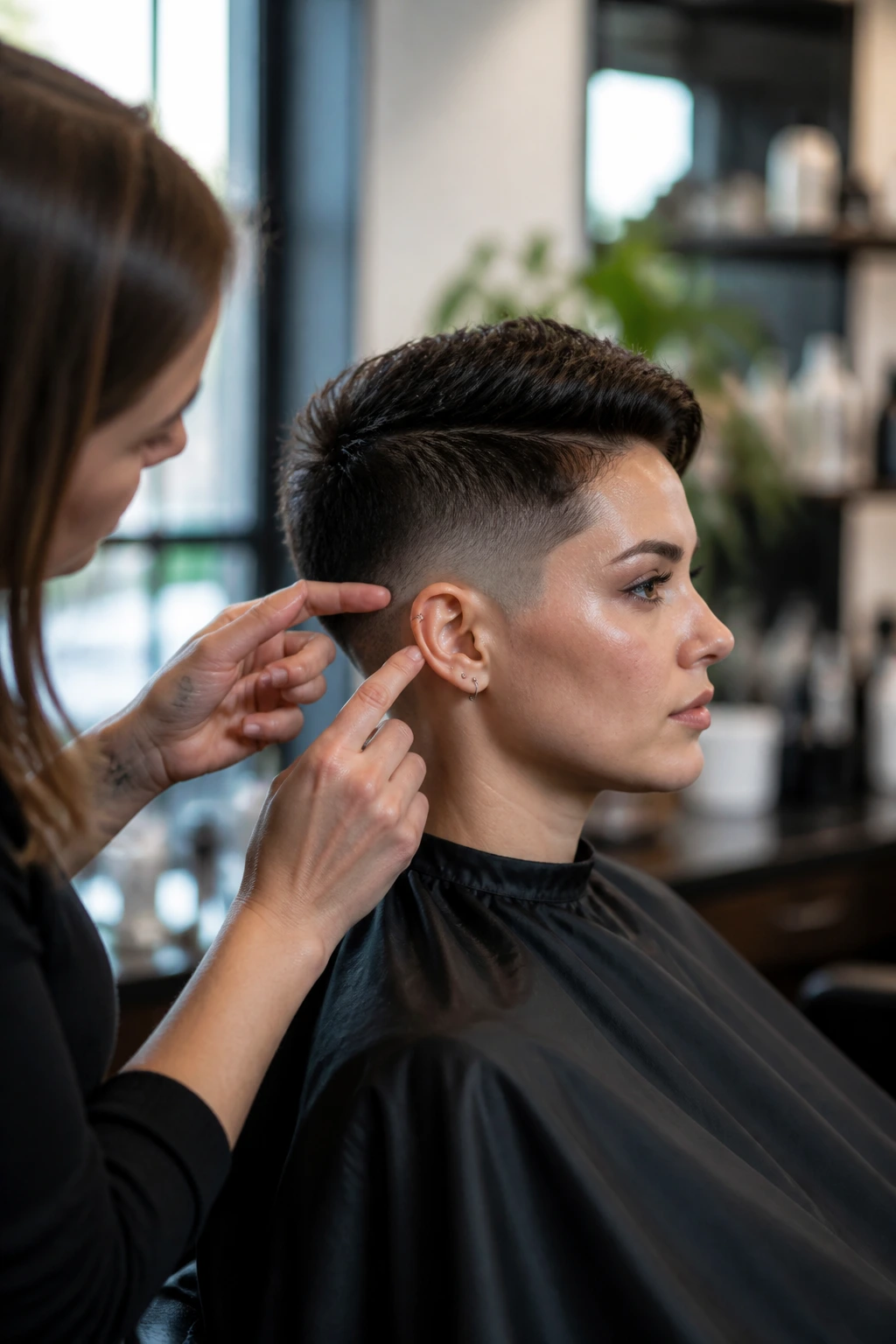
Bring photos, yes, but bring words too. A good reference picture can still go wrong if the model’s hair texture, head shape, or fade height doesn’t match yours. Say whether you want a low, mid, high, drop, temple, or nape fade, and be honest about how much scalp you want visible. That one detail changes the whole result.
If you have curls, coils, a strong cowlick, or a widow’s peak, mention it before the clippers come out. Those things alter how the fade blends and where the top should sit. A barber who knows what they’re doing will adjust the fade line to work with your growth pattern instead of bulldozing through it.
Also mention your upkeep tolerance. A skin fade with clean sideburns is not the same commitment as a soft taper that can go three weeks before anyone notices. If you wear glasses, say so. If you tuck hair behind one ear all day, say that too. Small habits matter more than most salon consultations admit.
How to Wear a Fade So It Looks Intentional
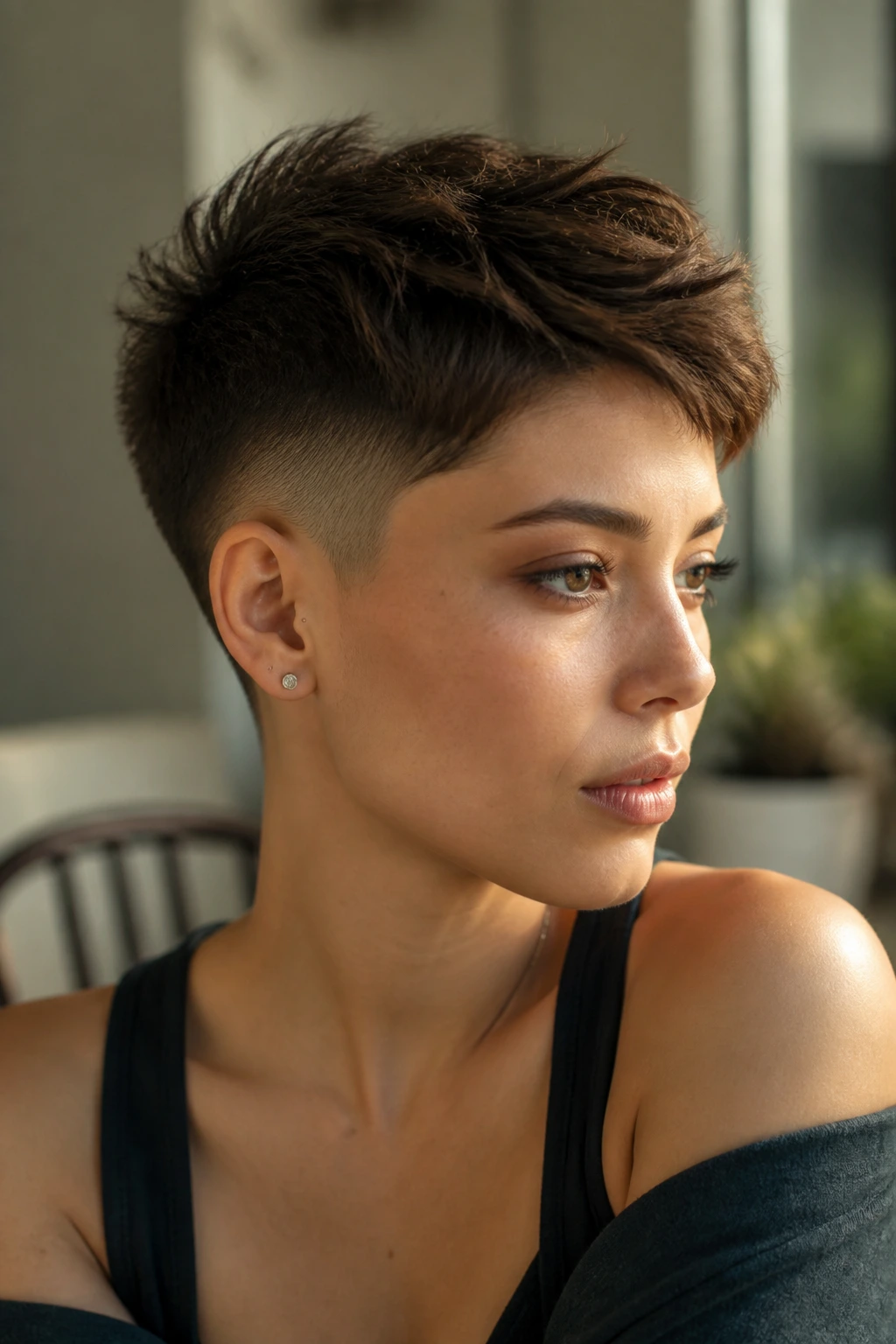
Presentation: Keep the top either clearly styled or clearly minimal. A fade looks best when the top has a decision behind it—finger-combed texture, clean waves, a blunt fringe, or a smooth slick-back. Half-styled hair is where things get weird.
Accompaniments: Earrings, glasses, necklines, and makeup all change how the cut reads. Big hoops make a buzz or skin fade feel bold; small studs and a sharp collar make a crop or pixie look crisp. If you wear a hoodie all day, you may want a cleaner nape so the hair doesn’t fight the fabric.
Proportion: Leave enough length on top to justify the fade. That usually means 1½ to 3 inches for pixies, 3 to 5 inches for crops or side-swept looks, and more for bobs, shags, or faux hawks. Too little length and the fade takes over.
Finish: Matte products give shape to short cuts; cream and gel keep curls and waves defined; a light shine product can help slicked-back styles look finished. Pick one finish and stick to it for the day. Mixing three finishes at once tends to make the hair look confused.
Small Tweaks That Make the Cut Read Better
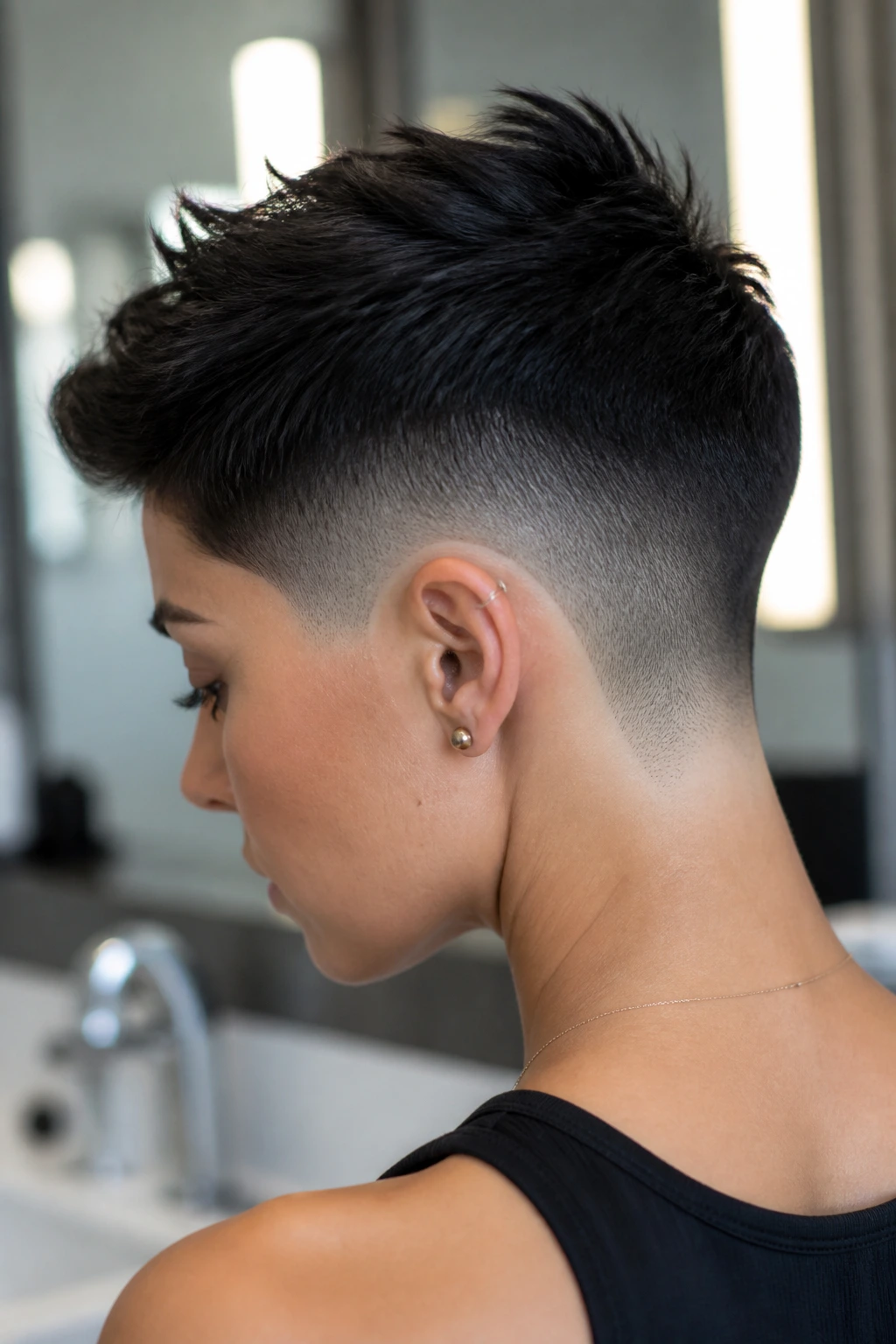
Texture Boost: A quick mist of sea-salt spray or a touch of dry texture spray can stop short hair from lying flat against the scalp. Use it lightly. Too much and the cut turns chalky.
Color Lift: A darker root with a lighter top makes the fade line feel cleaner, while subtle highlights on a pixie or crop give the top more shape without changing the haircut itself. Color doesn’t have to shout to matter.
Line Work: A narrow side part, a crisp temple edge, or a shaved detail near the nape can change the mood of the cut without changing its basic shape. I like line work when the rest of the hair stays simple. It keeps the look from drifting into chaos.
Make-It-Yours: If you want softer contrast, keep the fade low and leave more length around the ears. If you want bold contrast, move the fade up and keep the top textured. For curly hair, the strongest move is usually a tighter fade underneath and more freedom on top. For fine hair, keep the top slightly longer and avoid over-thinning it.
Common Mistakes That Make a Fade Look Off
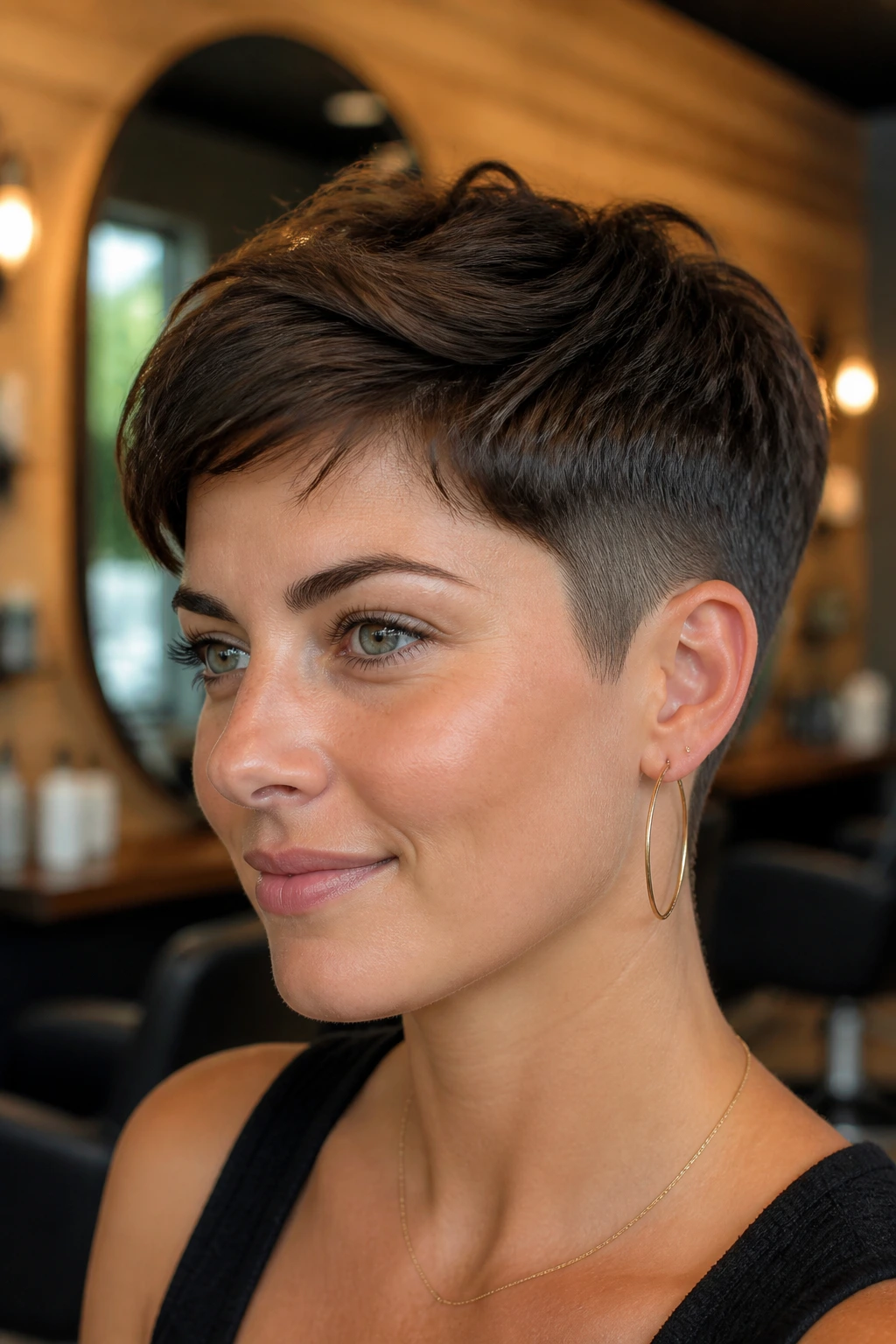
Making the fade too high for your lifestyle: A high fade looks sharp on day one, then grows out fast and visibly. If you don’t want frequent touch-ups, ask for a low or mid fade instead.
Leaving the top too short to balance the sides: When both the top and sides are short, the haircut can look flattened. Keep enough length on top to create contrast, even if that contrast is subtle.
Using too much product: Greasy paste, heavy gel, and thick wax can make short hair clump in odd places. Start with a pea-sized amount, then add only if you need it.
Ignoring the hairline and nape: Those areas fuzz out first. If you never clean them up, the fade loses its edge even when the top still looks fresh.
Choosing a photo that ignores your texture: A straight-hair model with a high fade may not translate well to coils or waves. Bring a reference, then ask how it should change for your hair.
Forgetting the grow-out stage: Some fades look fantastic for one week and awkward for three. If you hate fussy maintenance, choose a style that still looks okay when the edges soften.
Variations and Adaptations to Try
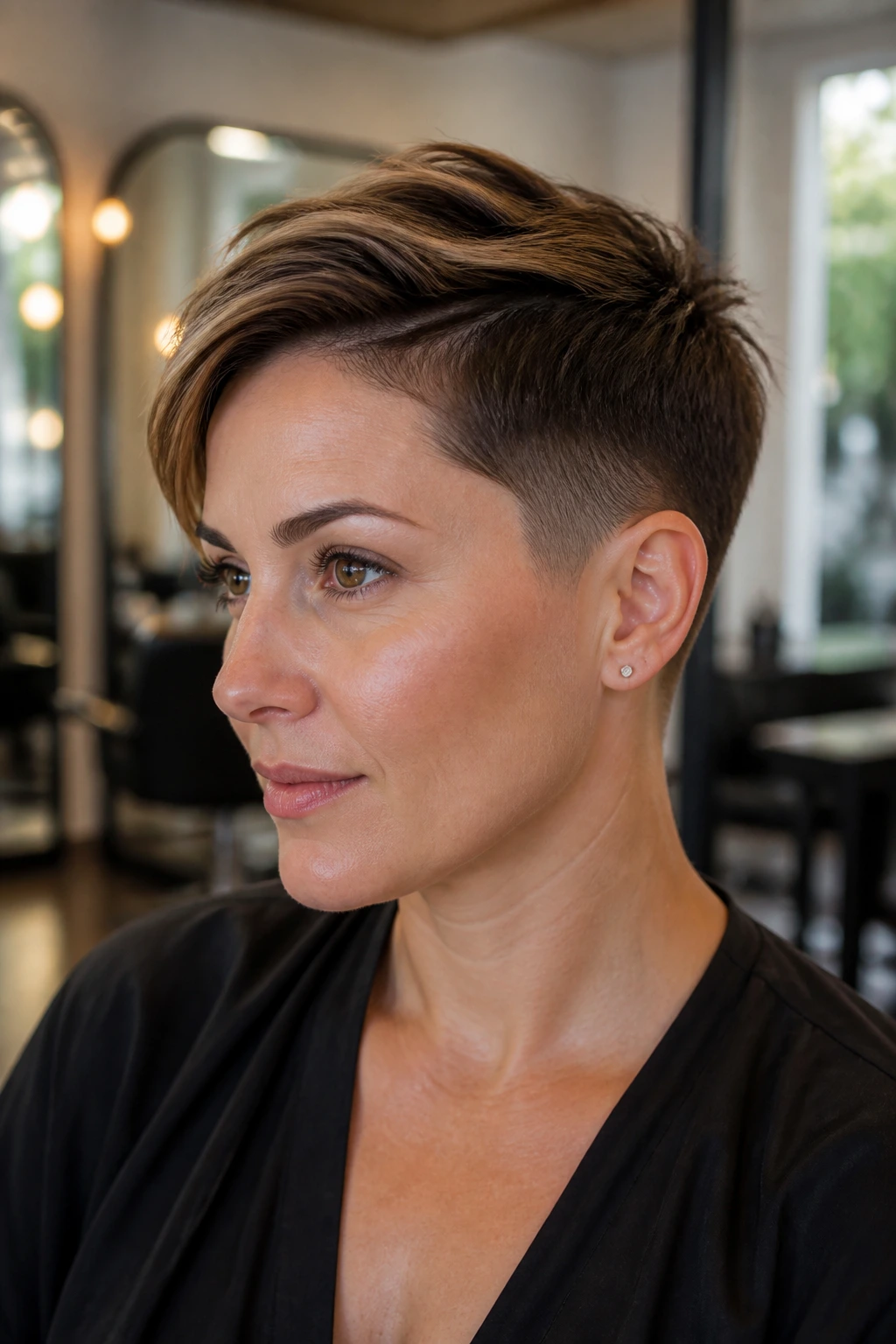
The Office-Soft Fade: Keep the fade low, leave the top brushed to one side, and avoid hard lines. This works when you want a neat silhouette that doesn’t read too dramatic under plain lighting.
The Curly-First Version: Let curls or coils sit longer on top and keep the sides tight underneath. The shape stays round and lifted, and the fade mostly acts as a clean frame.
The High-Contrast Edit: Push the fade higher, keep the top textured, and add a stronger part or line-up. This version has more visual punch and tends to suit bolder styling choices.
The Protective-Style Pairing: Add a fade under locs, twists, or braids to reduce bulk at the sides and nape. Just keep tension low and make sure the fade does not crowd the root area.
The Color-Driven Change: Pair a fade with platinum, copper, rose, or deep-root color on top. The haircut becomes more graphic, and the fade keeps the color from looking bulky.
The Grow-Out-Friendly Cut: Choose a taper or drop fade with a longer top section. It keeps its shape longer between appointments and avoids that awkward “I meant to get it cut last week” look.
Keeping the Fade Crisp Between Appointments
Hair grows about half an inch a month, which is plenty when the fade starts low around the ears and nape. The easiest rhythm is a light edge cleanup every 7 to 14 days if you want the cut to stay sharp, and a fuller reshaping every 3 to 5 weeks depending on how short the fade is. Skin fades need the most attention. Low tapers can stretch farther.
Wash schedule matters too. If your top is short and styled with matte product, two or three washes a week is often enough. If you have curls or coils, you may prefer less shampoo and more water, cream, or co-wash on the top so the texture does not dry out. The sides can handle less fuss than the crown.
Between appointments, a quick neckline clean-up and a touch around the temples can save the whole look. Use a small trimmer carefully, or leave that part to the barber if your hand shakes. A shaky edge-up is how a sharp cut starts to look homemade in the wrong way.
Frequently Asked Questions
What’s the difference between a taper fade and a skin fade?
A taper fade softens the hair gradually and usually keeps some length near the neckline and temples. A skin fade goes much shorter, often down to bare skin, so the contrast is stronger and the grow-out is more visible.
Can women with curly or coily hair get a fade?
Yes, and the results can be excellent when the fade is shaped around the curl pattern instead of fighting it. The top usually needs to stay longer so the texture can sit with enough volume to balance the clipped sides.
How often should I touch up a fade?
For a tight skin fade, every 2 to 3 weeks keeps it clean. Softer tapers or nape fades can often go 4 to 5 weeks before they need a full rework, with a neckline cleanup in between if you like neat edges.
Will a fade work if I have a cowlick or widow’s peak?
Usually, yes, but the placement matters. A good barber will adjust the fade line and top length so the growth pattern supports the cut instead of forcing weird bumps or split directions.
Can I keep length on top and still get a fade?
Absolutely. Some of the best fades here keep several inches on top while the sides are clipped short. That contrast is often easier to wear than a full buzz, especially if you like styling options.
Is a fade hard to grow out?
A high or skin fade grows out faster and can look fuzzy first around the ears and nape. A low taper or hidden nape fade is easier to grow out because the transition is softer from the start.
What should I tell my stylist if I’m nervous about going too short?
Ask for a low fade, keep the top longer than you think you need, and say you want a soft transition rather than a harsh line. That gives you room to test the shape without jumping straight into a very severe cut.
Can I maintain part of the fade at home?
Yes, but only the easy bits. A small trimmer can clean the neckline and around the ears if you’re careful. Leave the actual blend to a professional unless you already know how to blend with guards.
A Sharp Shape That Grows Out Well
The nicest thing about a fade is that it changes the haircut without asking for an entirely new personality. You can keep it soft, sharp, curly, cropped, or dramatic. The cut does the framing work, and your texture does the rest.
That’s why fade haircuts for women keep showing up in so many different forms. A low taper can be subtle enough for everyday wear. A skin fade buzz can be clean and bold in one move. The shape you choose says a lot, but it also leaves room for you to change your mind later, which is honestly the best kind of haircut.
If you’re choosing one, think less about whether a fade is “for women” and more about how much contrast you want to live with. That answer tells you almost everything.
