



Blonde choppy haircuts have a sneaky little talent: they make hair look brighter, softer, and more alive without relying on a dramatic color overhaul. A blunt, one-length blonde can look polished on the hanger and strangely flat on the head. Add a few broken edges, a razored fringe, or a feathered layer through the front, and the whole thing starts to move. Light hits the ends differently. The face frame stops feeling like a curtain. The color gets somewhere to go.
That’s why this kind of cut keeps showing up in salon chairs from one neighborhood to the next. The shape does half the work. A good choppy cut can make beige blonde look sunlit, make honey blonde look warmer, and keep platinum from reading like one solid sheet. It also forgives real life, which matters more than people admit. Hair grows. Roots show. You sleep on it. You tuck it behind your ears. A cut with texture keeps its edge through all of that.
The sweet spot is not “messy.” It’s controlled break-up. The ends are sliced, not shredded. The layers have purpose. And when the blonde is placed with a little contrast — a root shadow here, a brighter face frame there, some lowlights under the top layer — the whole style gets that bright, beach-worn effect that never looks too forced.
Why These Cuts Hit So Hard
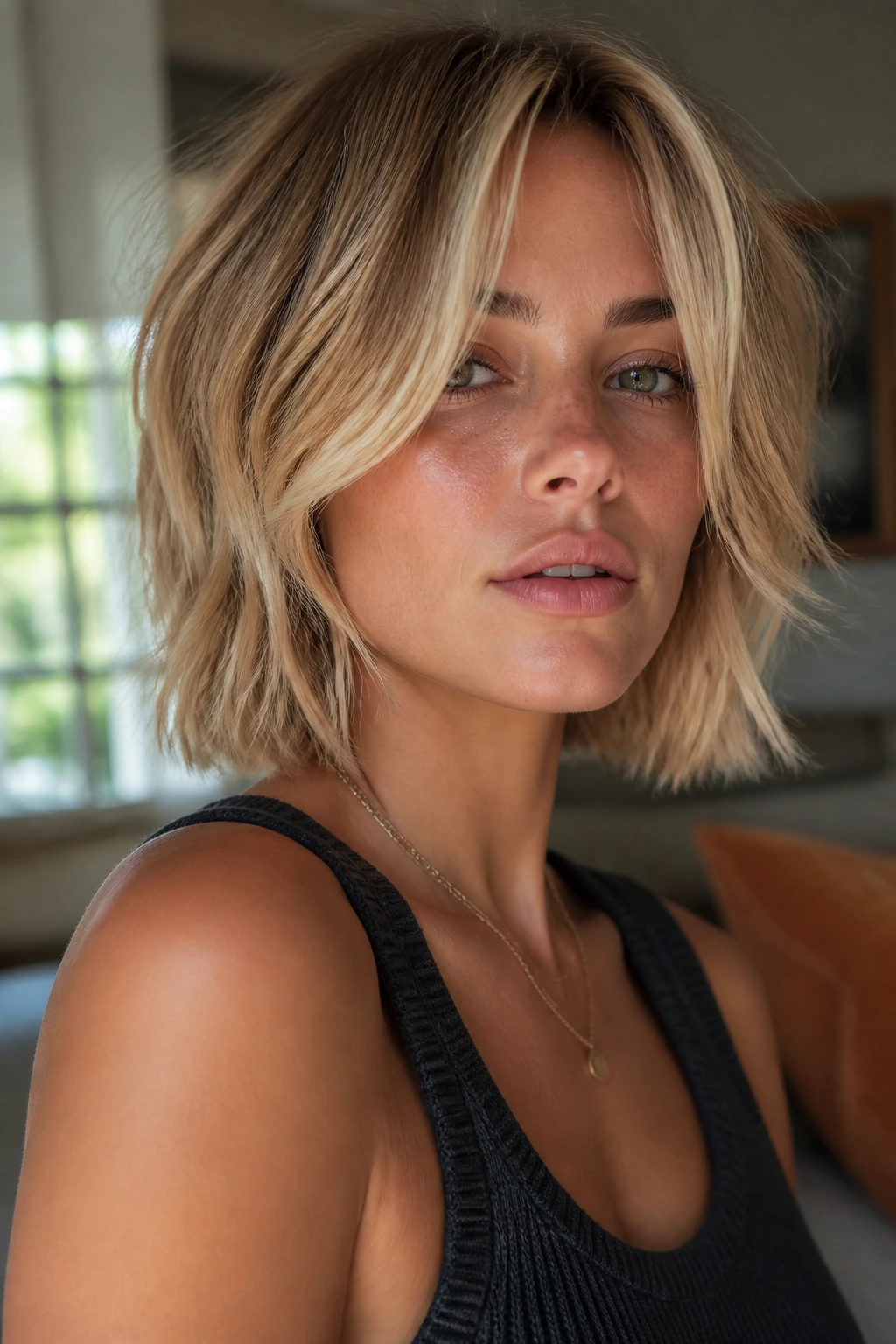
Bright blonde needs movement. When hair has a bit of separation at the ends, the light can catch more than one surface, which makes the color look dimensional instead of heavy.
The grow-out is kinder. A rooted blonde bob or layered shag can stretch a few extra weeks before a trim because the choppy finish hides soft regrowth better than a clean blunt line.
Fine hair gets lift. Shorter, shattered layers around the crown and face stop blonde hair from lying in one flat sheet, which is usually the problem with lighter shades on fine strands.
Thick hair loses the helmet effect. When dense hair is cut with internal layers, razoring, or feathering, the ends stop forming a hard edge and start falling with some bend.
The style reads as sun-kissed, not overdone. Pieces around the cheekbones, jaw, and collarbone make highlights show up where the eye lands first, and that’s the trick that makes the whole cut feel brighter.
1. Beige Blonde Rooted Lob with Feathered Ends
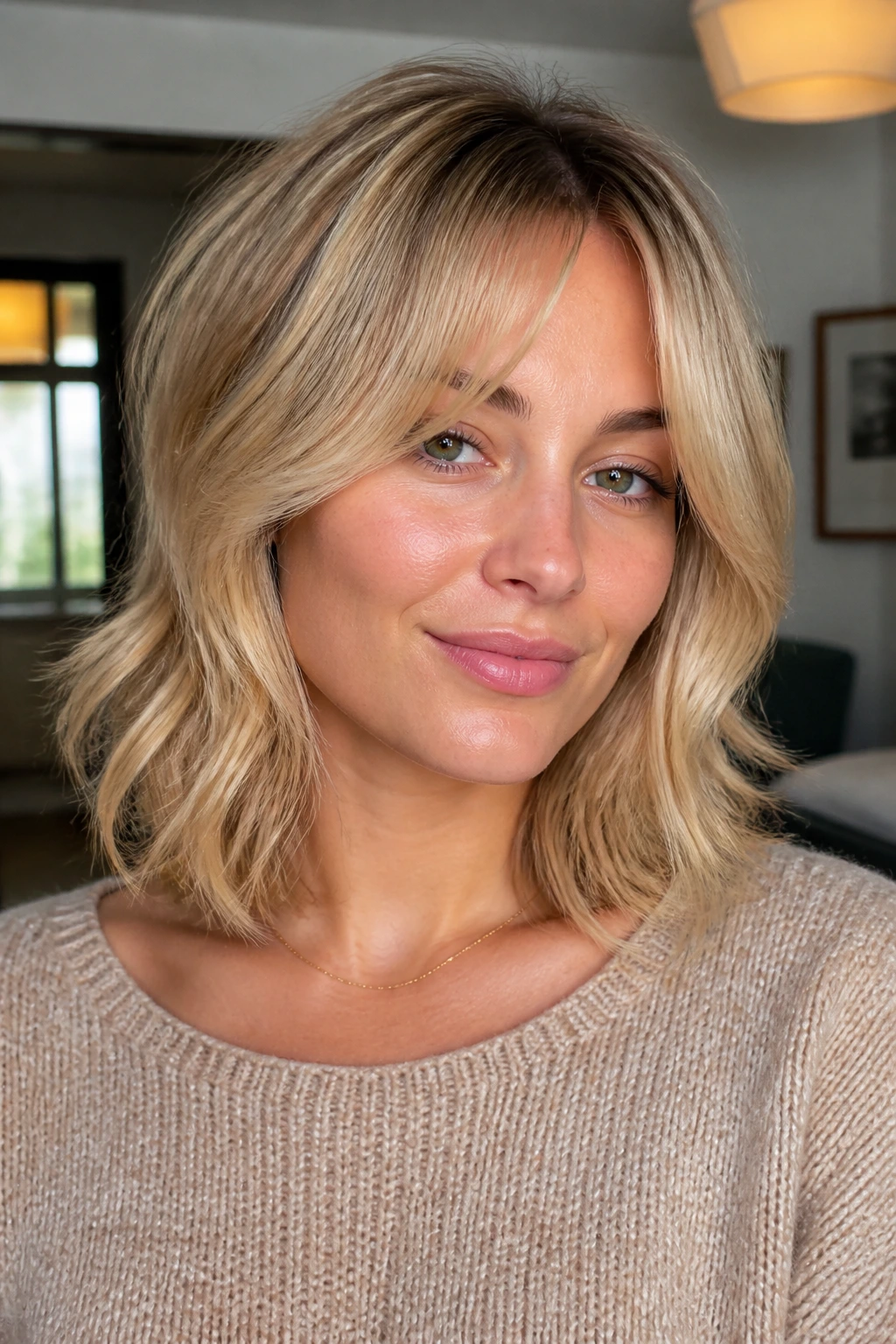
A rooted lob with feathered ends is the kind of cut that looks casual until you notice how much shape is hiding in it. The base lands somewhere between the chin and collarbone, but the feathering at the bottom keeps it from sitting like a block. Beige blonde works especially well here because the tone stays soft near the root shadow and brighter through the mid-lengths.
Why It Works
This shape gives you movement without asking for a huge styling routine. The feathered ends soften the outline of the lob, while the darker root keeps the blonde from washing out. It’s one of the better choices for someone who wants brightness around the face but not a high-maintenance bleach-and-tone cycle every few weeks.
Best For
- Medium to fine hair that needs lift at the ends.
- Round or square faces that look better with a little length below the jaw.
- People who wear hair tucked, waved, or air-dried and still want the cut to hold shape.
Pro tip: Ask for the front pieces to stay a little longer than the back. That tiny difference gives the lob a swingy feel instead of a blunt shelf.
2. Buttery Collarbone Shag with Curtain Bangs
Buttery blonde and curtain bangs are old friends for a reason. The shaggy layers around the crown make the face frame look bright from every angle, while the collarbone length keeps the style wearable instead of overly shaggy. It has that easy salon-house-party balance. Polished enough for work. Loose enough to feel lived in.
A shag like this needs softness at the edges, not big chunks removed from the bottom. If the layers are too aggressive, the haircut can start to puff out at the sides. A good version keeps the bulk where it’s useful — around the crown and upper cheekbones — then lets the ends taper just enough to move when you walk.
How to Style It
- Rough-dry the roots first with a mousse.
- Bend the curtain bangs away from the face with a round brush or large roller.
- Use a 1-inch iron only on the front sections and crown pieces.
- Finish with a dry texturizing spray, not a sticky paste.
This one is especially kind to hair that gets flat by noon. The shag structure brings the volume back where it counts.
3. Champagne French Bob with Shattered Tips
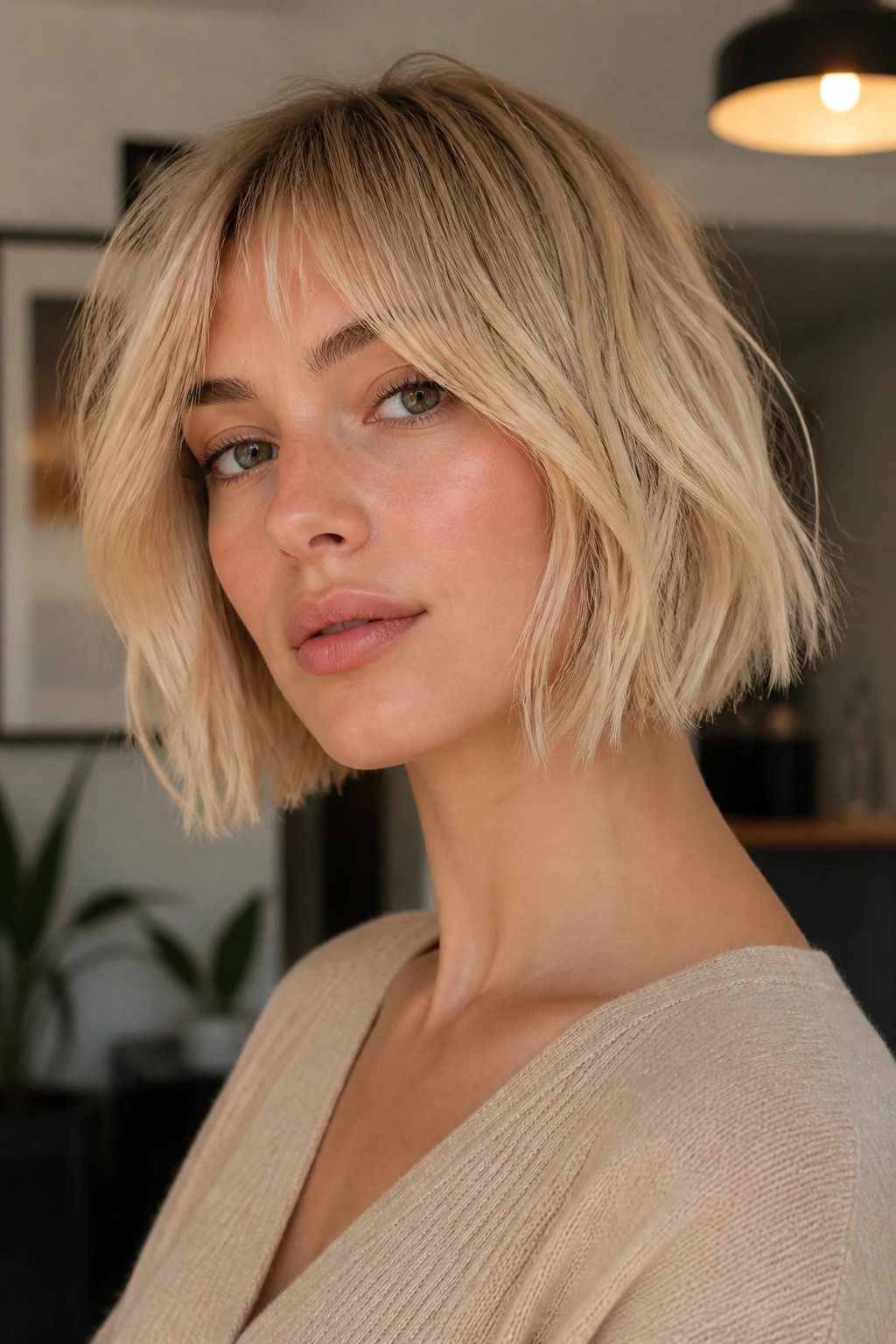
A French bob becomes far less strict once the ends are shattered. The shape still sits around the jawline, but the bottom edge breaks up enough to avoid the helmet effect that plain bobs can create. Champagne blonde suits the cut because the tone has enough brightness to keep the short length from reading harsh.
The beauty of this cut is in the contrast. The top can be smooth and cheeky, almost neat, while the tips have a jagged finish that keeps the whole thing from looking too precious. It’s one of the rare short cuts that actually gets better when you don’t over-style it.
What Makes It Different
- The nape is usually slightly tighter than the front.
- The ends are point-cut or razored instead of blunt.
- The fringe can sit straight or split softly in the middle.
- A light wave at the cheekbone changes the whole mood.
If your hair has a natural bend, this cut will reward you. If it doesn’t, a few quick bends with a flat iron are enough.
4. Sunlit Long Layers with Bright Money Pieces
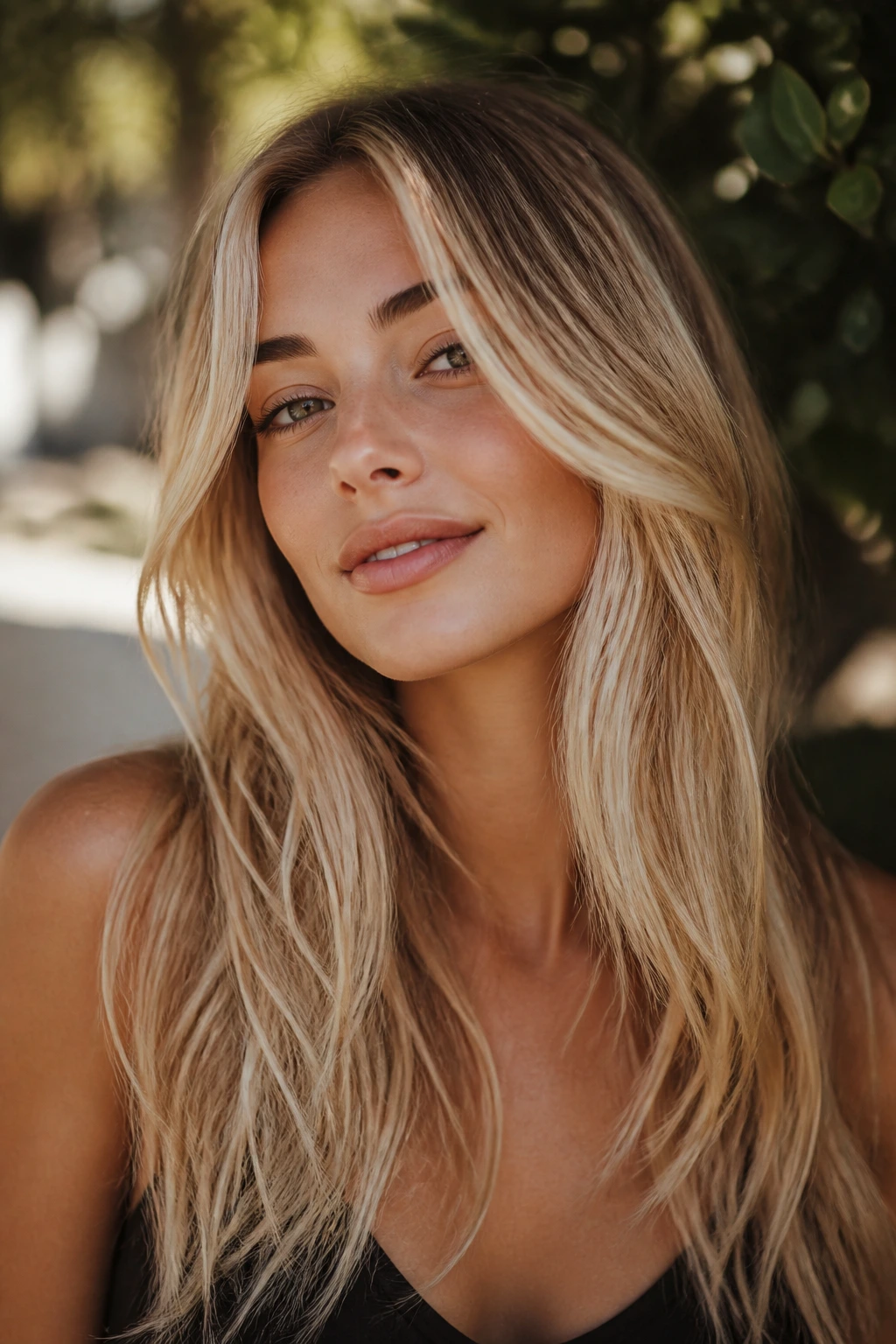
Long hair does not need to stay plain to look expensive. Sunlit layers with bright money pieces prove that. The length stays below the shoulders, but the front face-framing pieces are lifted just enough to pull attention upward. That bright strip near the cheekbones does a lot of work, especially when the rest of the blonde stays a little softer and deeper.
This is one of my favorite options for people who love length but hate the drag that comes with heavy ends. The internal layering removes weight without stripping the density out of the bottom. The result is hair that still swings, still feels full, and still shows off highlight placement when it moves.
A Smart Color Note
Keep the brightest pieces around the hairline and top layers. If every strand is pushed to the same pale level, the effect turns chalky fast. A little depth under the crown makes the top lighter pieces look more expensive.
A soft wave around the face is enough here. You do not need ringlets or perfect beach hair. A loose S-bend and a center part already do most of the work.
5. Cream Blonde Bixie with Piecey Fringe
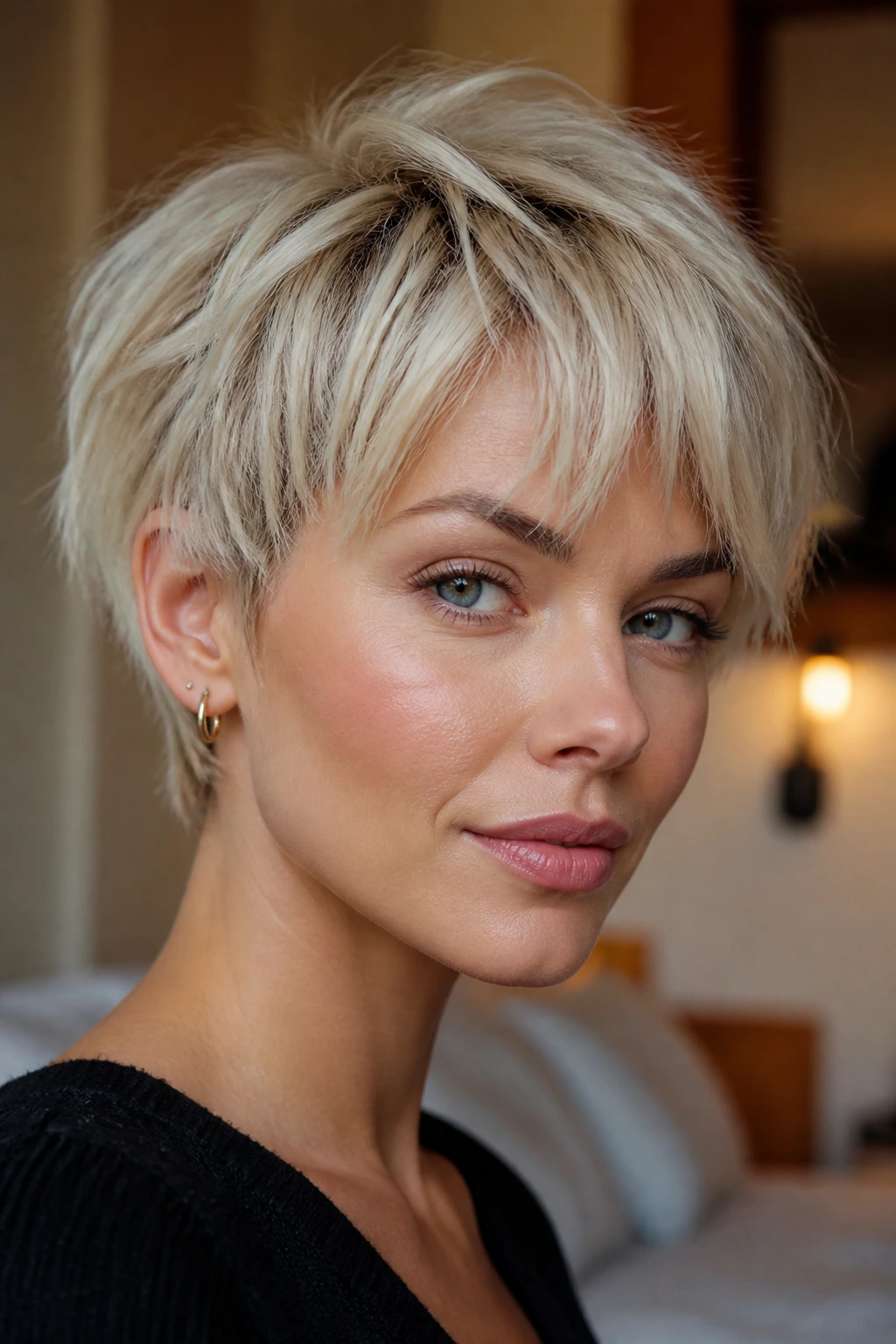
The bixie sits between a bob and a pixie, which is exactly why it works so well in blonde. Cream blonde keeps the cut from feeling too severe, and the piecey fringe adds a bit of attitude without tipping into hard-edged territory. The top stays short enough to show off the cheekbones, while the sides keep some length for softness.
Why It Works
A bixie can look flat if it’s cut too close to the head. The piecey fringe fixes that. It gives the style a front edge and keeps the blonde from blending into one pale cap. The cut also suits hair that has some natural body, because the shorter layers can push up a little at the crown and stay lively.
Quick Styling Cues
- Use a pea-sized amount of paste only on the ends.
- Blow-dry the fringe forward, then separate it with your fingers.
- Keep the sides soft, not carved into spikes.
- Let the crown stay a touch airy so the cut doesn’t feel helmeted.
This is a good one if you want lightness around the face and don’t want to spend ten minutes fussing with every section.
6. Honey Blonde Wolf Cut with Soft Wings
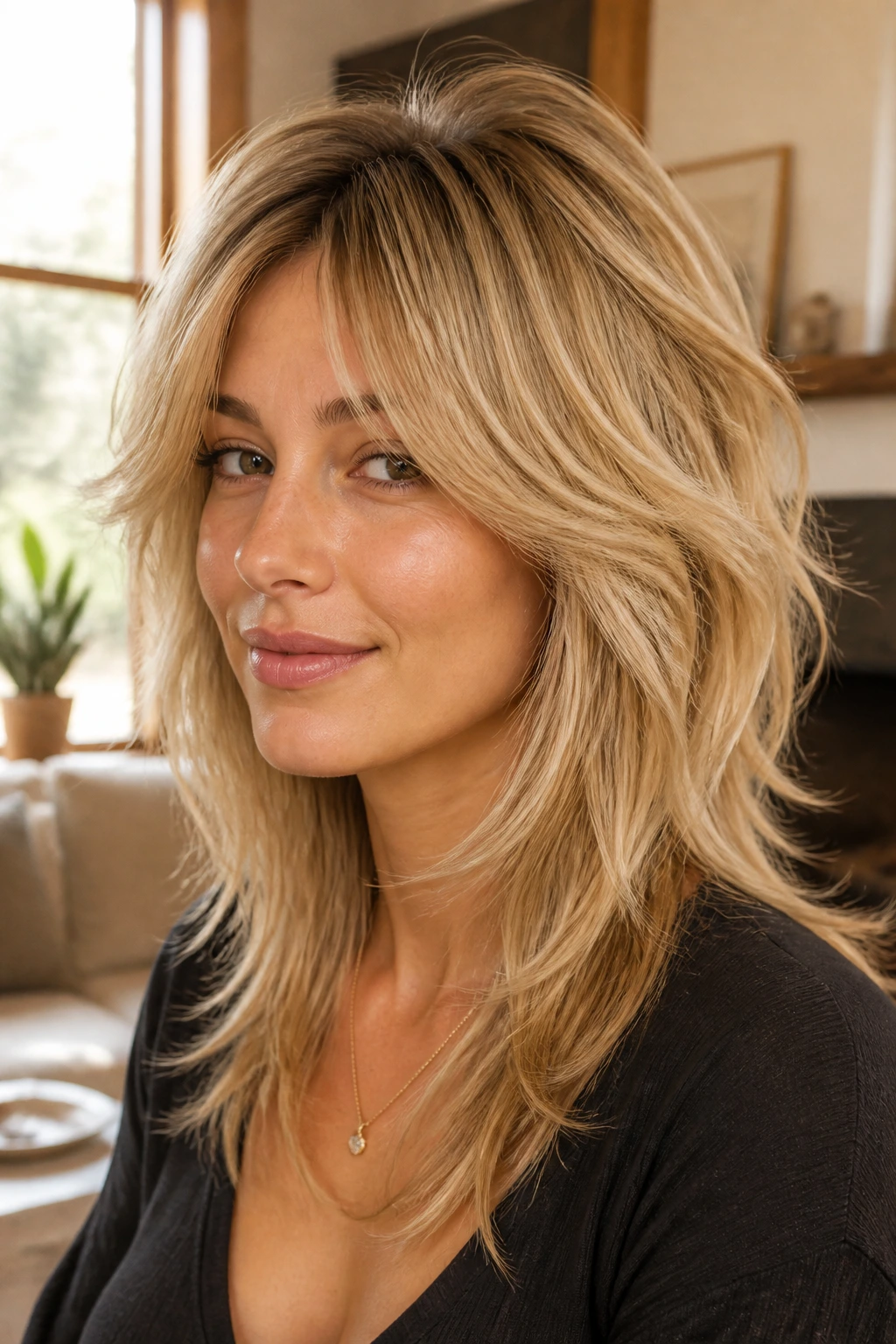
The wolf cut gets a lot of attention for being shaggy and rebellious, but in honey blonde it can look surprisingly soft. The “wings” around the sides — those curved, longer layers that feather away from the cheek — make the cut feel less harsh. Honey tones help too. They keep the whole thing warm instead of edgy for the sake of edgy.
A good wolf cut has a crown with lift and a perimeter that doesn’t sit too neatly. That rougher silhouette is the point. If it’s cut properly, the hair falls in chunks that still look deliberate, which is the difference between a style and a mistake.
What to Ask For
- Shorter layers at the crown.
- Long, face-framing pieces that skim the cheekbone.
- A softer tail at the back, not a hard mullet line.
- Fringe that can split or sweep to either side.
This cut is happiest when styled with a diffuser or a rough blow-dry. Over-smoothing it takes away the whole reason to wear it.
7. Platinum Side-Swept Pixie with a Choppy Crown
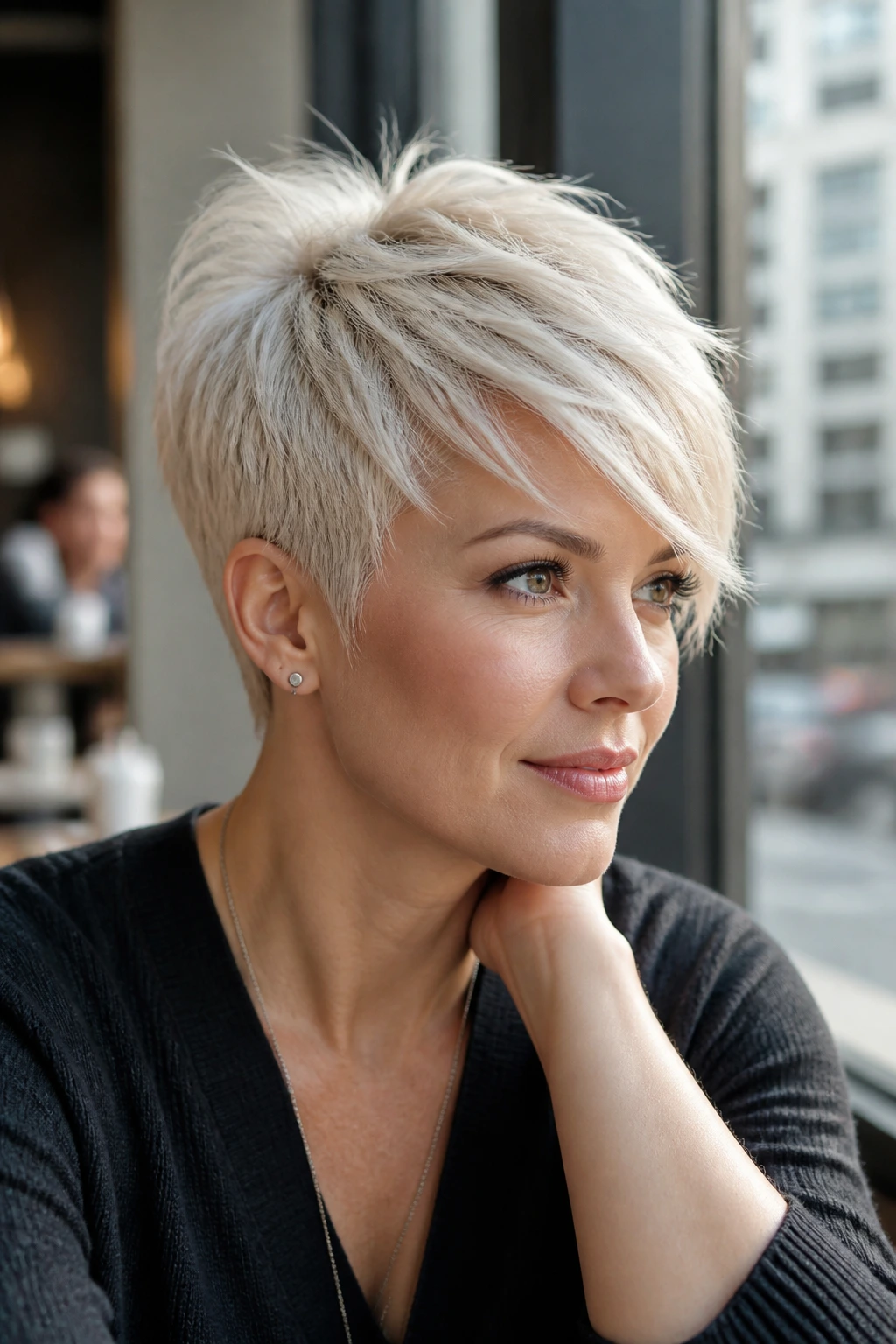
Platinum on a pixie can be stunning, but only if the cut has enough movement to stop the color from feeling severe. A choppy crown and a side-swept front solve that. The top pieces can stand up a little, lean a little, or fall across the forehead, which gives the pale blonde a lot more dimension than a flat crop ever could.
This is the shortest style in the set, and it’s not for someone who wants to hide behind their hair. It’s for someone who wants cheekbones, eyebrows, and earrings to do some of the talking. The side-swept shape makes the cut feel wearable rather than sharp.
Styling Note
A tiny bit of matte cream at the crown is enough. Too much product makes platinum look greasy fast, especially near the roots. If your hair grows quickly, plan on neck clean-ups every 4 to 6 weeks so the silhouette stays crisp.
8. Airy Shoulder Cut with Razored Ends
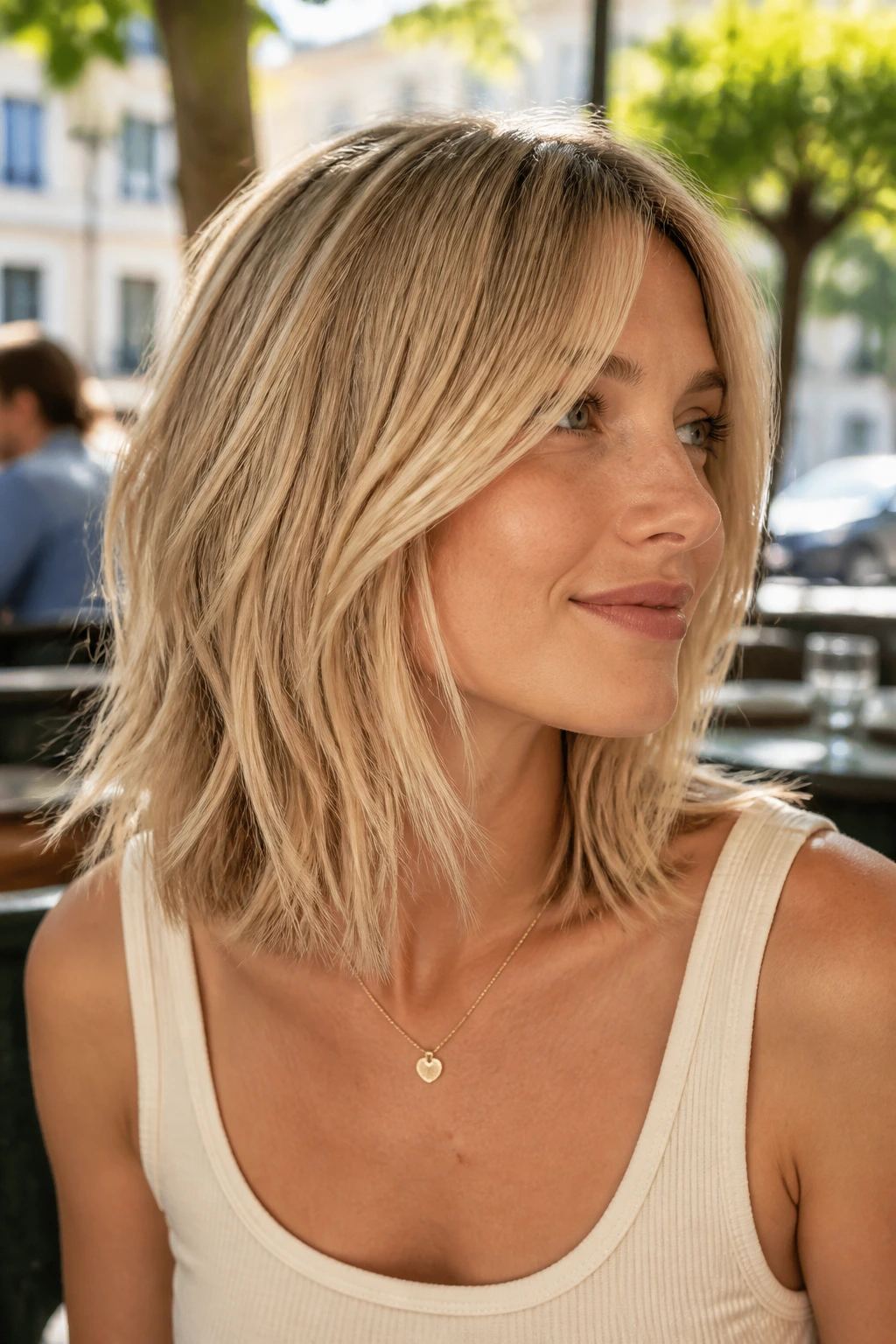
If you want something light but not short, the shoulder-length razored cut sits in a sweet spot. The ends are sliced so they don’t hang like a curtain, and the shoulders keep the style broad enough to throw into a clip or a low bend. Blonde hair often needs this kind of break-up, especially when it’s all one shade.
This is one of those cuts that looks better with a little imperfection. A slightly off-center part, a bend in the front, and a mist of texture spray are enough. The razor finish keeps the edges soft enough that your highlights don’t get trapped in a single heavy line.
A lot of people ask for “layers” and end up with too much bulk removed. This shape avoids that. It keeps the body where it’s useful and trims the dead weight from the bottom third, which is usually the part that drags a blonde style down.
9. Asymmetrical Blonde Bob with a Sharp Bend
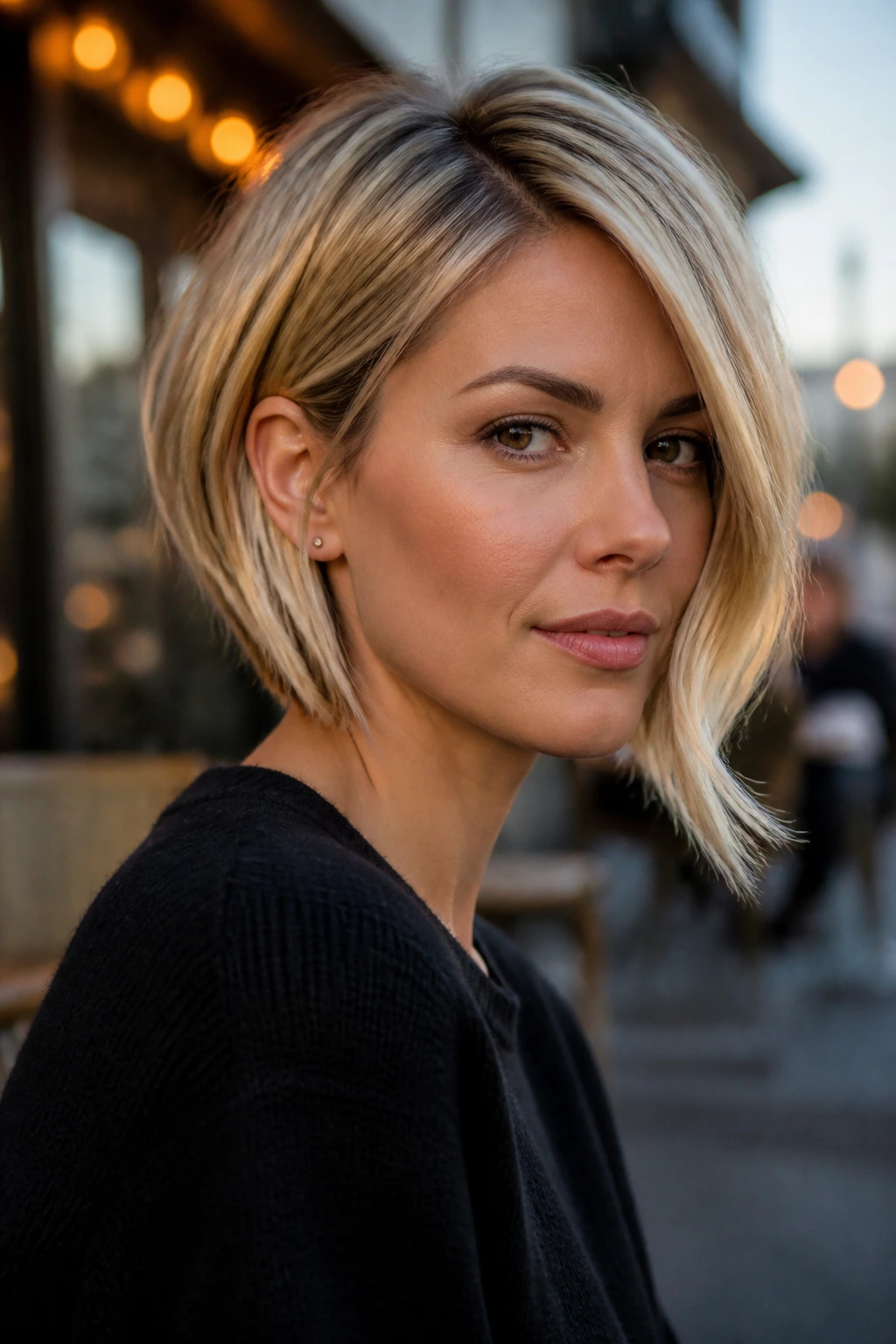
A slight asymmetry gives a bob a pulse. One side sits a touch longer, or the front angles subtly toward the collarbone, and suddenly the cut feels intentional rather than standard. In blonde, that sharp bend catches light right where the hair changes direction, which makes the whole shape look more animated.
This is a smart choice if you like a bob but hate the feeling of sitting under one flat, even line. The asymmetry can be barely there — just enough to notice when one side tucks behind the ear — or more obvious if you want the cut to lean a little editorial.
Best For
- Straight or slightly wavy hair.
- Strong jawlines that can carry a sharper silhouette.
- People who wear one side tucked and one side loose.
A flat iron bend through the ends helps here. Don’t curl it into a full wave. The point is the angle, not a beachy finish.
10. Vanilla Butterfly Layers on Long Hair
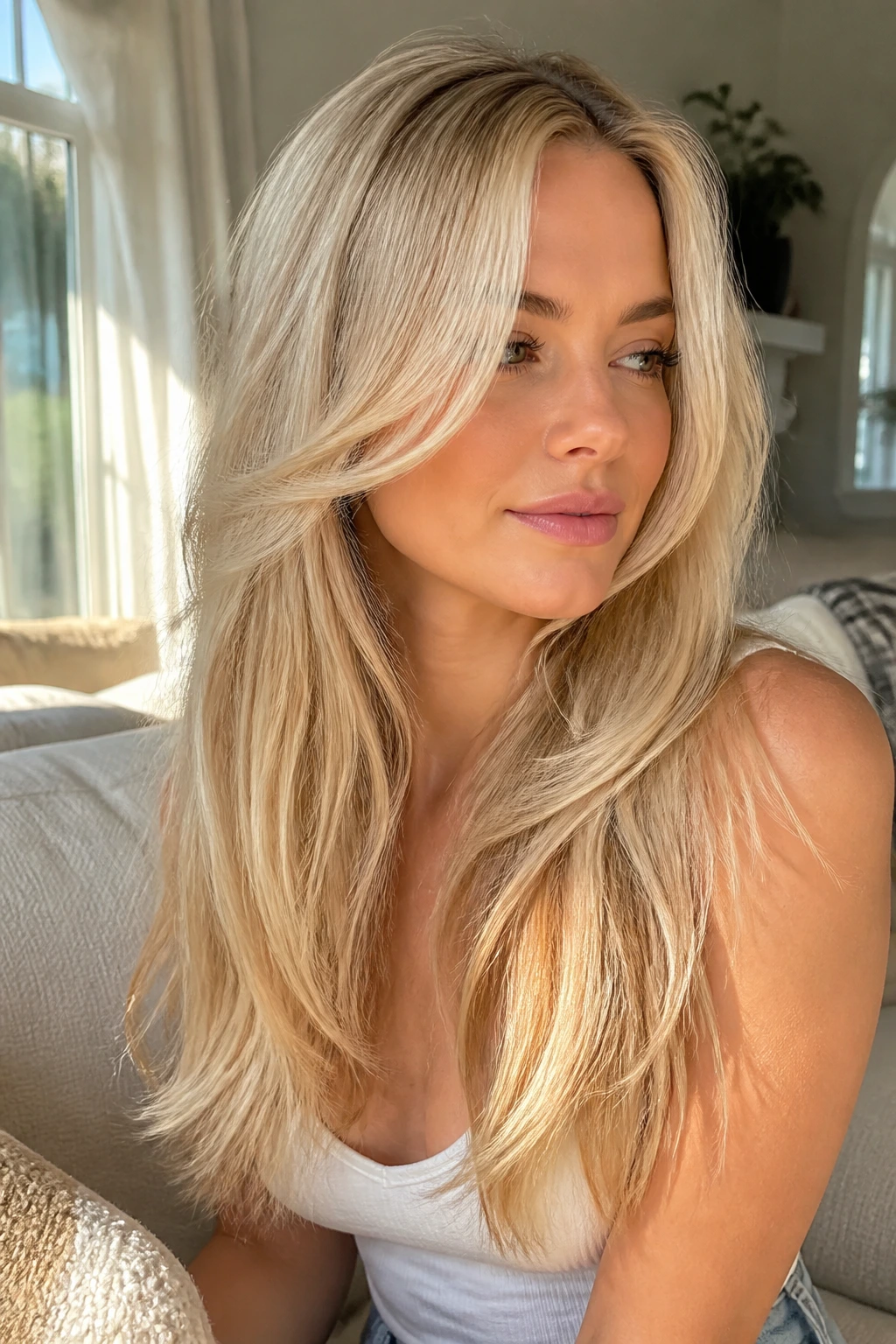
Butterfly layers are built for movement, and vanilla blonde keeps them soft enough to wear every day. The shorter front layers skim the cheekbones, while the longer lengths keep the style from losing its body. It has a breezy shape without the choppiness turning aggressive.
The trick with this cut is proportion. The top layers should feel light and airy, but not so short that they steal the weight from the bottom. That balance makes the hair swing back when you brush it forward, which is where the butterfly effect gets its name.
A Good Match If You Want:
- Long hair that still moves.
- Brightness around the face without losing length.
- Waves that fall naturally instead of being forced.
A big round brush works better than a tiny one. Tiny brushes make the front pieces curl too much and can make the whole shape look dated.
11. Soft Blonde Mullet with Wispy Ends
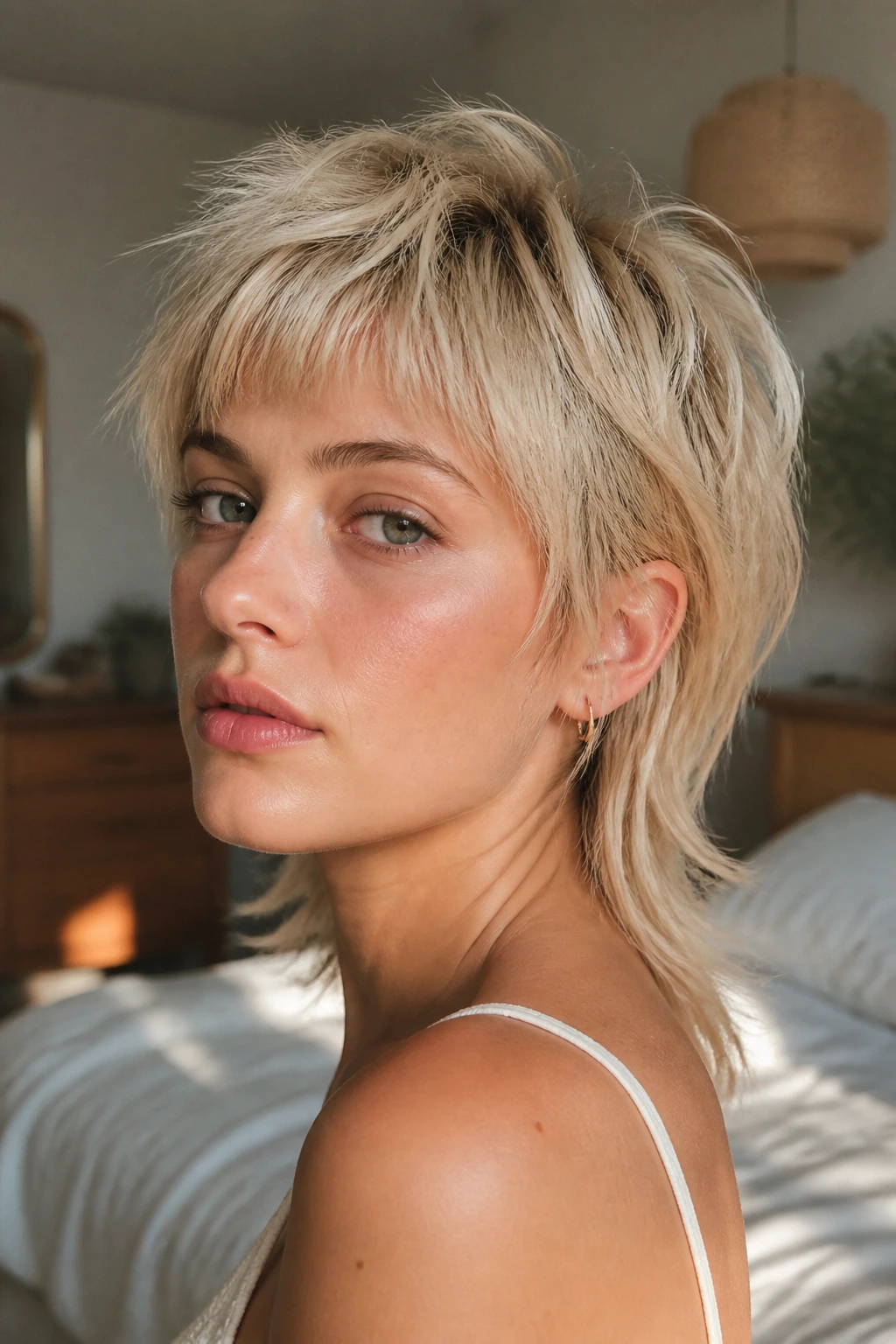
The mullet has softened enough to become useful again, especially in blonde. A wispy version keeps the front pieces shorter and more flattering around the face, while the back length tapers out instead of hanging in one stiff tail. It’s a cut with personality. No pretending otherwise.
What keeps this from going costume-y is the lightness. If the layers are too blunt or the front is too severe, the style starts to look dated fast. Wispy ends, a gentle fringe, and a slightly airy crown make it feel modern enough to wear with simple clothes and a bare face.
Use It When You Want
- Some edge without a hard line.
- Volume at the crown.
- A cut that looks better a little tousled.
A little sea-salt spray through damp hair gives it the lift it needs. Heavy oils are the enemy here.
12. Choppy Lob with Bottleneck Bangs
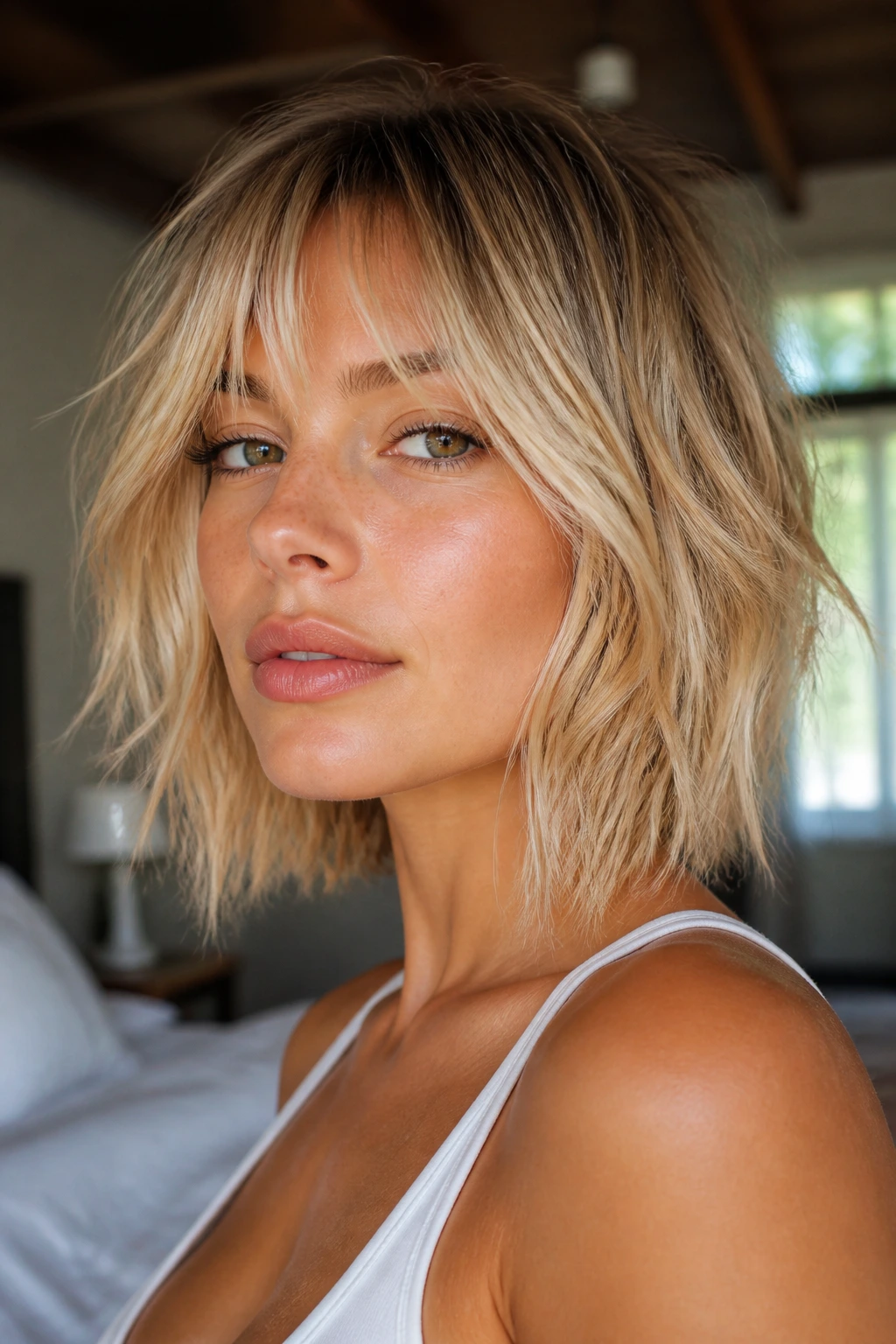
Bottleneck bangs are one of the nicest partners for a choppy lob because they open the face without cutting it off. The shorter center section sits near the brow, then the sides widen and taper toward the cheekbones. Pair that with a lob that has broken ends, and the whole haircut feels bright around the eyes.
This cut works especially well if you like structure but not stiffness. The lob length keeps enough hair to tuck, twist, or wave, while the bangs keep attention up front. There’s a reason so many people who want a fresh blonde look land here. It frames the face without shouting.
Styling It Well
Dry the bangs first. They set the tone for the entire cut. Then rough-dry the lengths, add a few loose bends, and keep the ends separated with your fingers. If the bangs get too round, the style starts to read heavy; if they stay light, the cut stays current.
13. Ice-Toned Inverted Bob
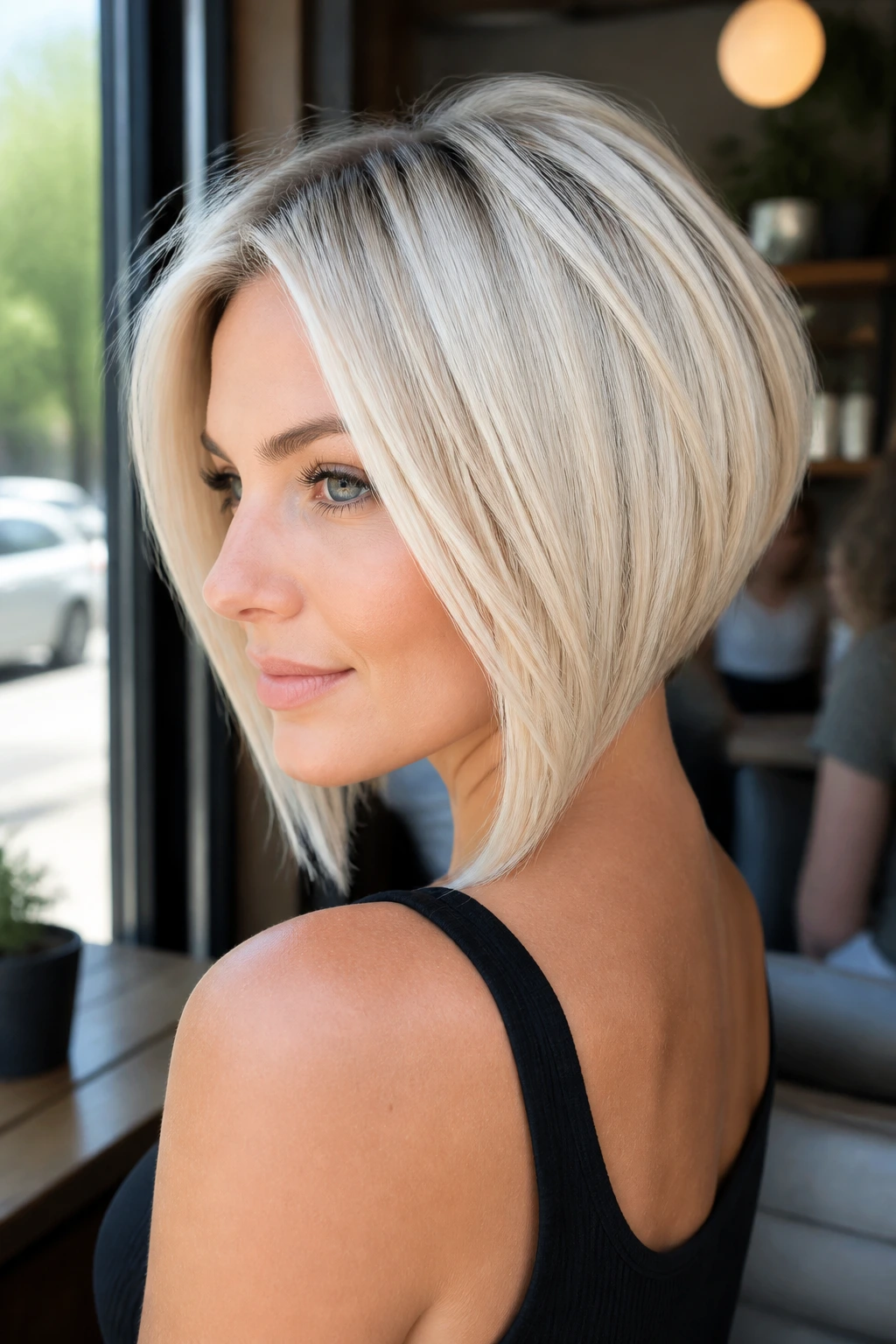
An inverted bob gives you a sharper outline in the back and more length in the front, which makes the blonde color feel more sculpted. Ice tones bring a clean brightness to the front pieces, while the stacked back adds shape that prevents the cut from collapsing.
This is a better option for someone who likes a neat perimeter but still wants some broken texture. The choppiness can stay subtle inside the shape. That’s the clever part. You get the lift and the angle without the ends looking ragged.
A lot of inverted bobs fail because the back is too puffy or the front is too long. The sweet spot is a smooth slope with a bit of internal texture, so the hair bends instead of flaring out.
14. Feathered Mid-Length Cut with a Deep Side Part
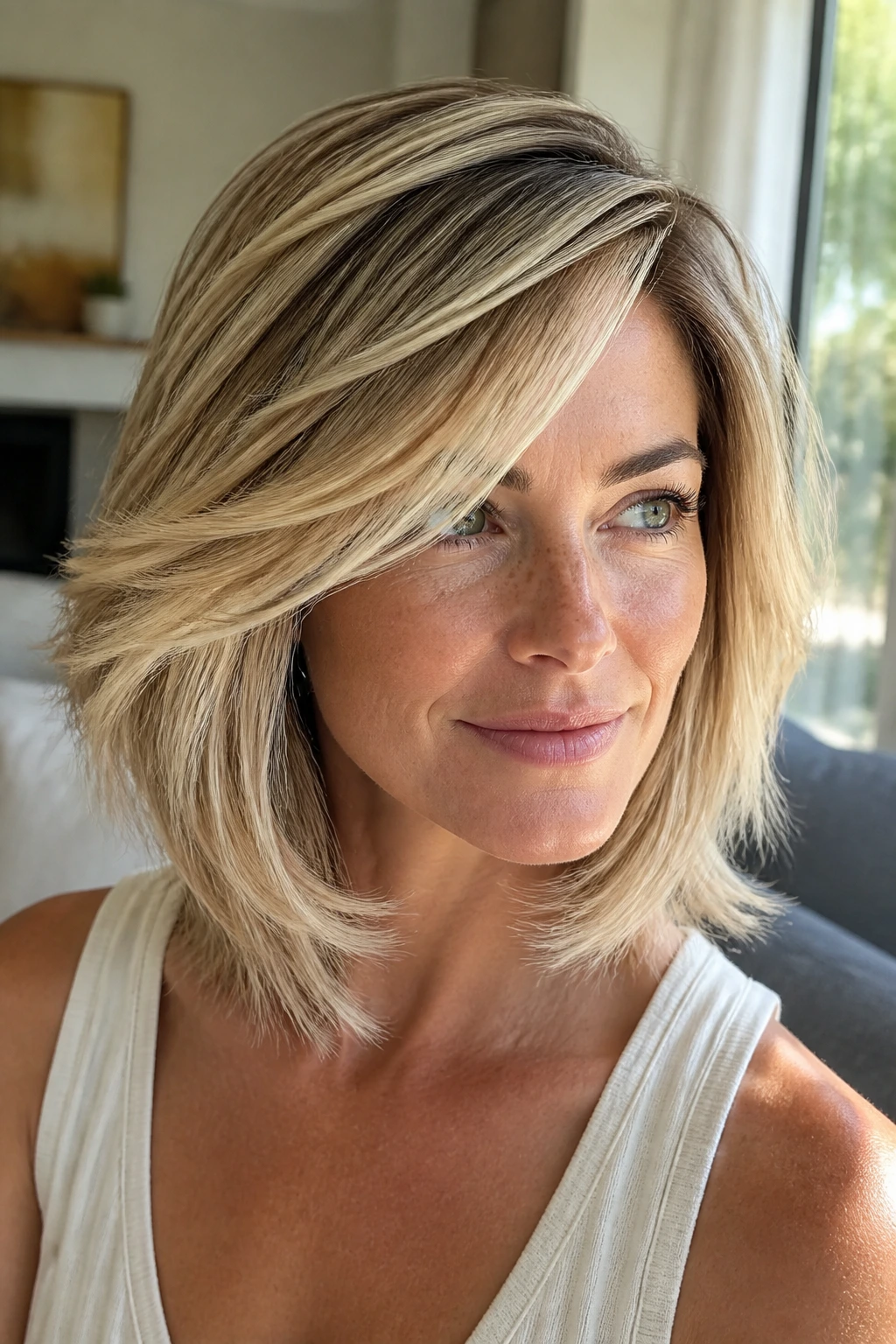
A deep side part can change the entire feel of blonde hair. Add feathering through the mids and ends, and you get a mid-length cut that falls away from the face with a soft sweep. The lighter side of the part picks up more light, which makes the blonde appear brighter even if the color itself is fairly subtle.
This is a quietly good cut. Not loud. Not fussy. It works when you need hair that can go from polished to undone in a couple of minutes. The feathering removes the hard edge that mid-length hair can develop, especially if the ends are thick or blunt from previous cuts.
Tiny Detail That Matters
Keep the side with more hair a touch longer around the jaw. That bit of weight helps the part stay in place and keeps the style from puffing out near the cheek.
15. Piecey Crop with Micro Layers
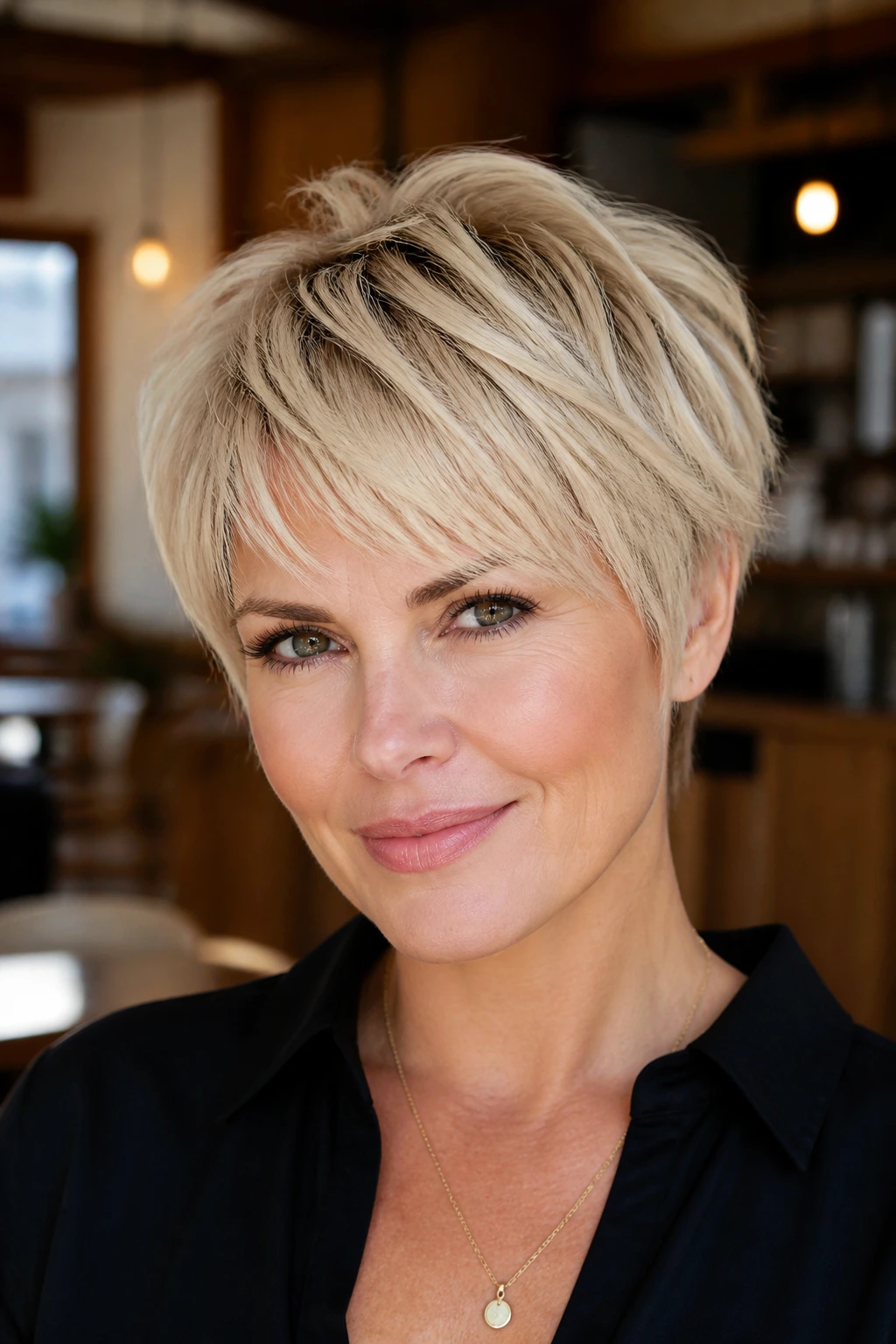
A micro-layered crop is short, quick, and surprisingly easy to make look deliberate in blonde. The top is cut into tiny sections that create separation, which is what gives the “piecey” finish. If the blonde is a soft pearl or beige tone, the tiny layers show off the texture without making the hair look choppy in a bad way.
This cut is a good answer for hair that grows straight up or hair that goes flat the moment you stop styling it. The micro layers create little pockets of air, and that makes the blonde move around the head instead of sitting like a cap.
You’ll want a light wax or paste for this one. A heavy cream will collapse the whole thing in under an hour.
16. Beachy Shag with Grown-Out Bangs
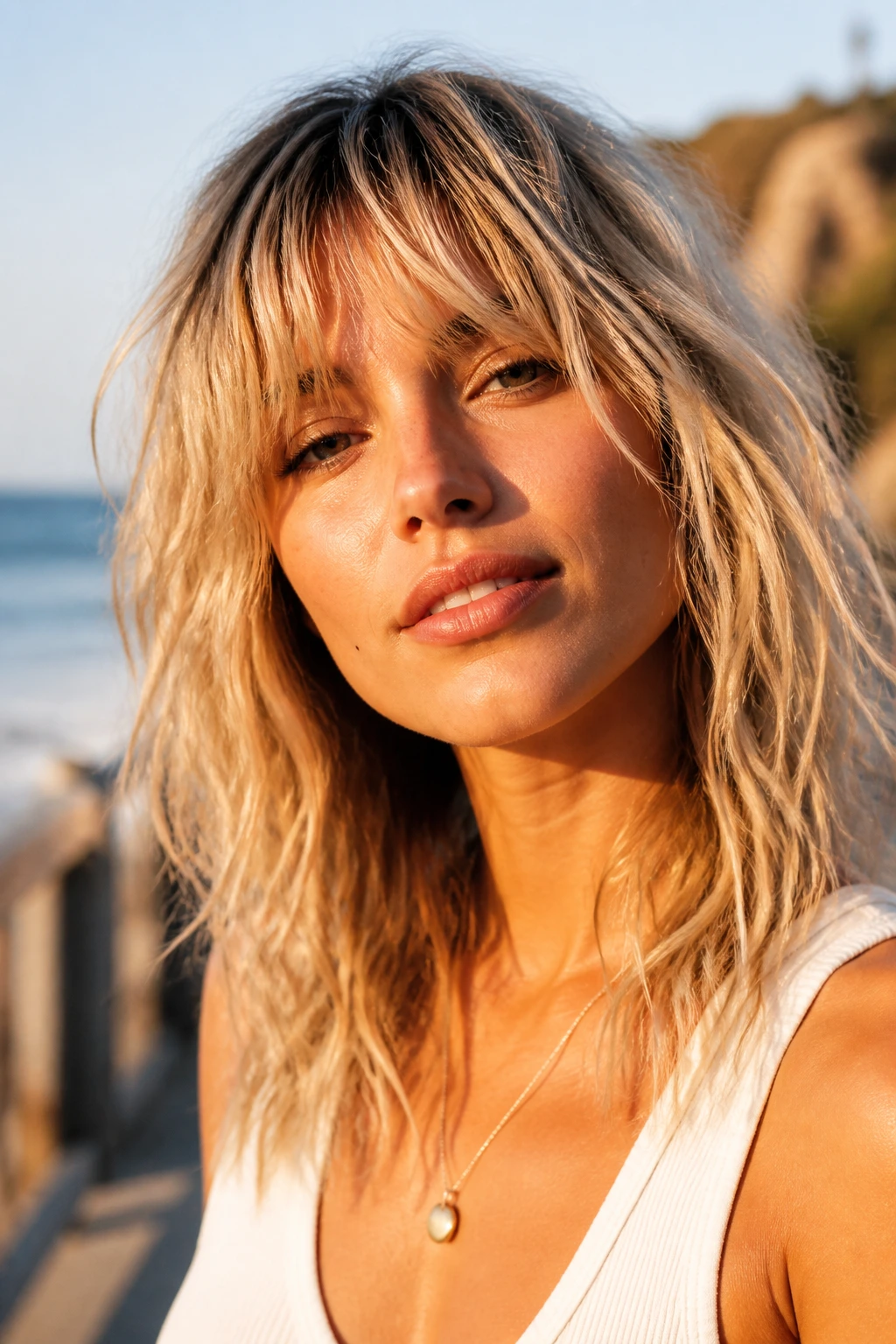
A shag with grown-out bangs has that slightly careless look people spend a lot of time trying to fake. The bangs aren’t short enough to feel like a strict fringe; they brush the eyes, split at the middle, and blend into the front layers. Blonde balayage makes the whole shape look sun-worn, which is probably why this cut shows up everywhere from surf towns to city sidewalks.
The grown-out bang length is the secret. Too short and the style feels high-maintenance. Too long and you lose the framing. Right in the middle, the bangs become part of the cut rather than a separate feature.
Good Signs at the Salon
- The bangs can split naturally when you move them.
- The sides connect into the front layers.
- The crown is light, not puffy.
- The ends have broken-up texture, not a hard edge.
This is one of the most forgiving cuts in the set if you like your hair a little messy on purpose.
17. Sliced Long Bob with a Bright Face Frame
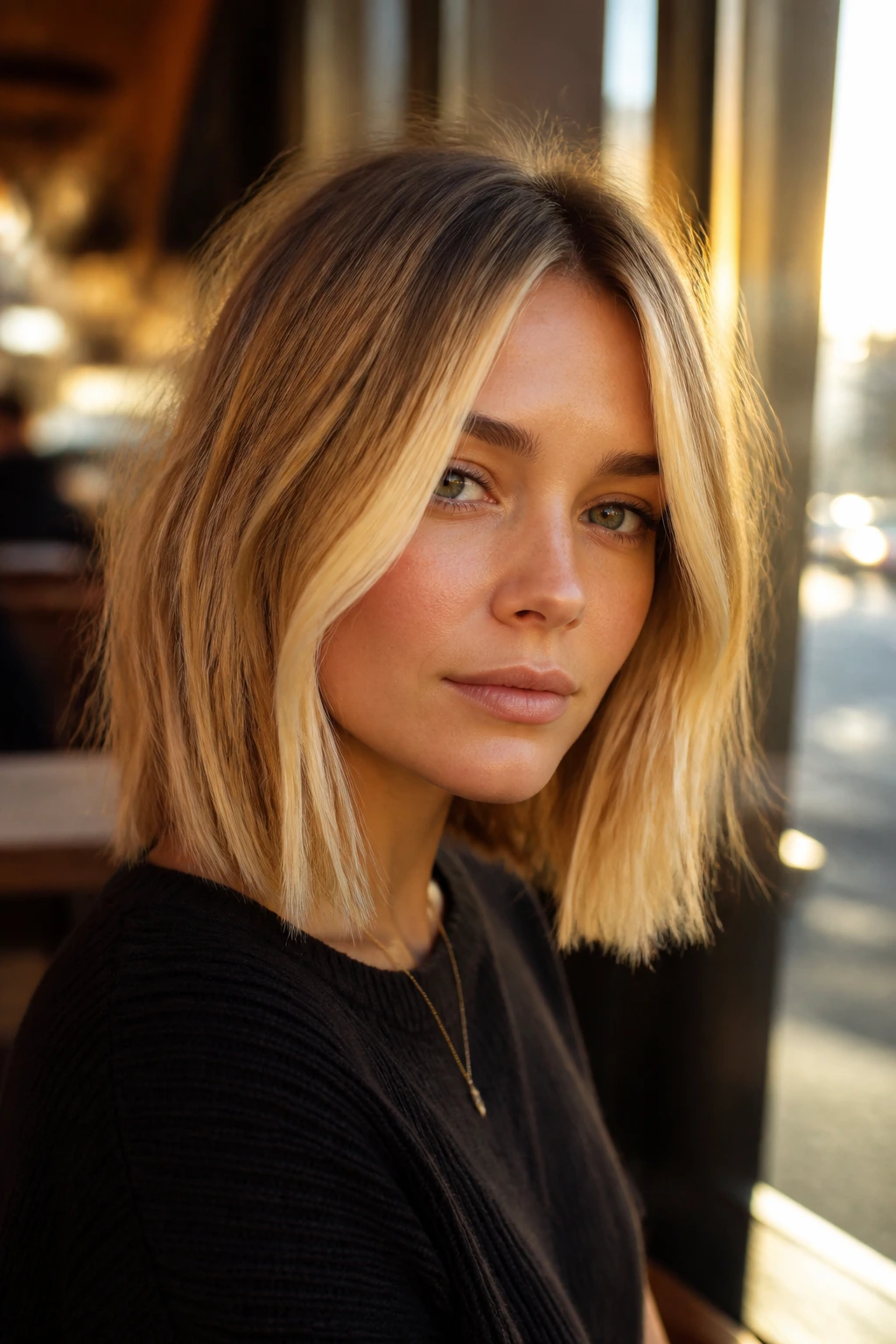
A sliced lob keeps the perimeter soft while the face frame stays bright and obvious. The cut is longer than a bob, shorter than long hair, and the sliced ends stop it from feeling thick at the bottom. When the front pieces are lifted a level or two brighter than the rest, the whole haircut gets a clean glow near the eyes.
This is a nice move if you want blonde to read expensive rather than icy. The contrast does the work. The face frame brings attention up, and the longer base keeps the style grounded.
You can wear this with a middle part, a side part, or a loose wave. It doesn’t collapse the way a blunt mid-length cut can, and it doesn’t require a heavy curl to look finished.
18. Curved Bob with Hidden Texture
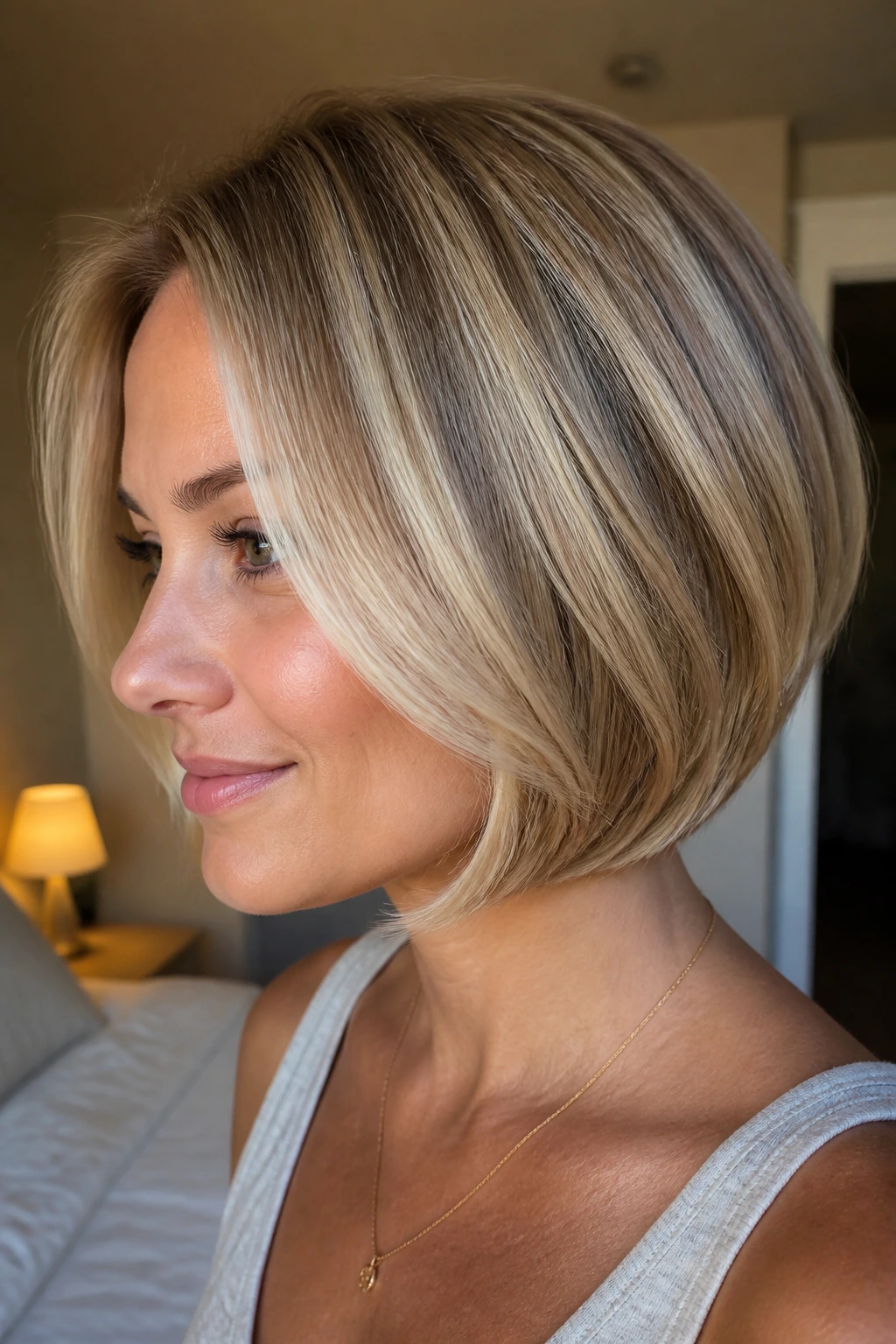
A curved bob hugs the jawline and bends slightly under, which gives the cut a neat outline. Hidden texture underneath keeps it from looking too tidy. In blonde, that combination is especially useful because the smooth top layer shows off the shine, while the underneath texture keeps the cut from going rigid.
This is a favorite if you want your bob to look polished without reading stiff. The curve makes the shape sit close to the face, and the internal texture allows it to move when you turn your head. A little undercutting through the bottom layer can help if your hair is dense, but you do not need to take it to an extreme.
19. Razor-Cut Midi with Loose Ends
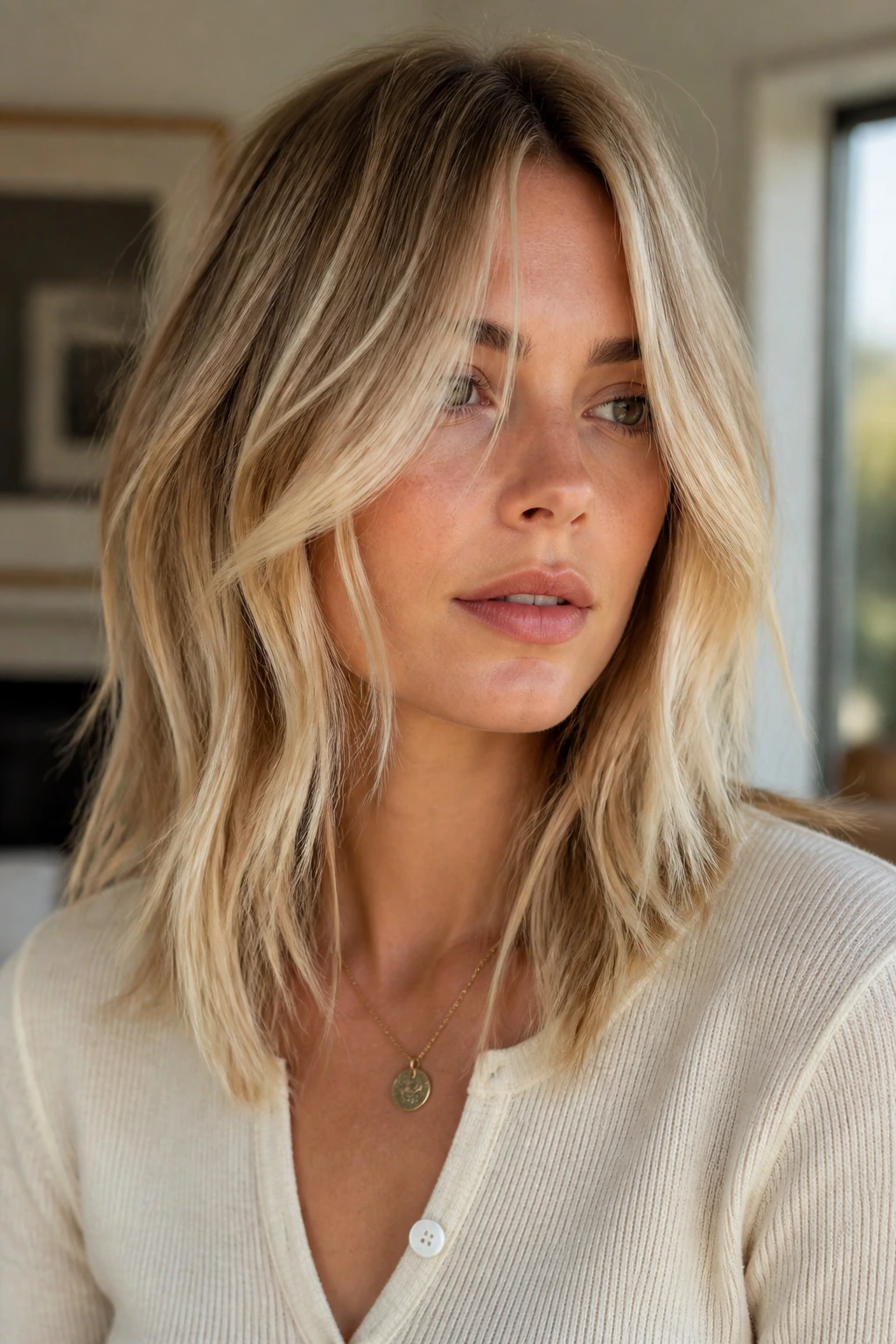
The midi cut — that length that lands around the upper chest — can look heavy if the ends are left blunt. Razor-cutting the finish changes everything. The loose ends make the hair swing, and blonde highlights get more room to show off the layers instead of sitting in one thick block.
This one suits people who want length but can’t stand the feeling of wearing a curtain. It also works well if your hair is naturally wavy, because the loose ends encourage the wave to break up instead of clumping.
What to Keep in Mind
The razor should soften, not fray. A good cut still looks healthy at the ends. If the bottom starts looking wispy in a bad way, the blade work went too far. That’s the line.
20. Graduated Bob with a Tucked Nape
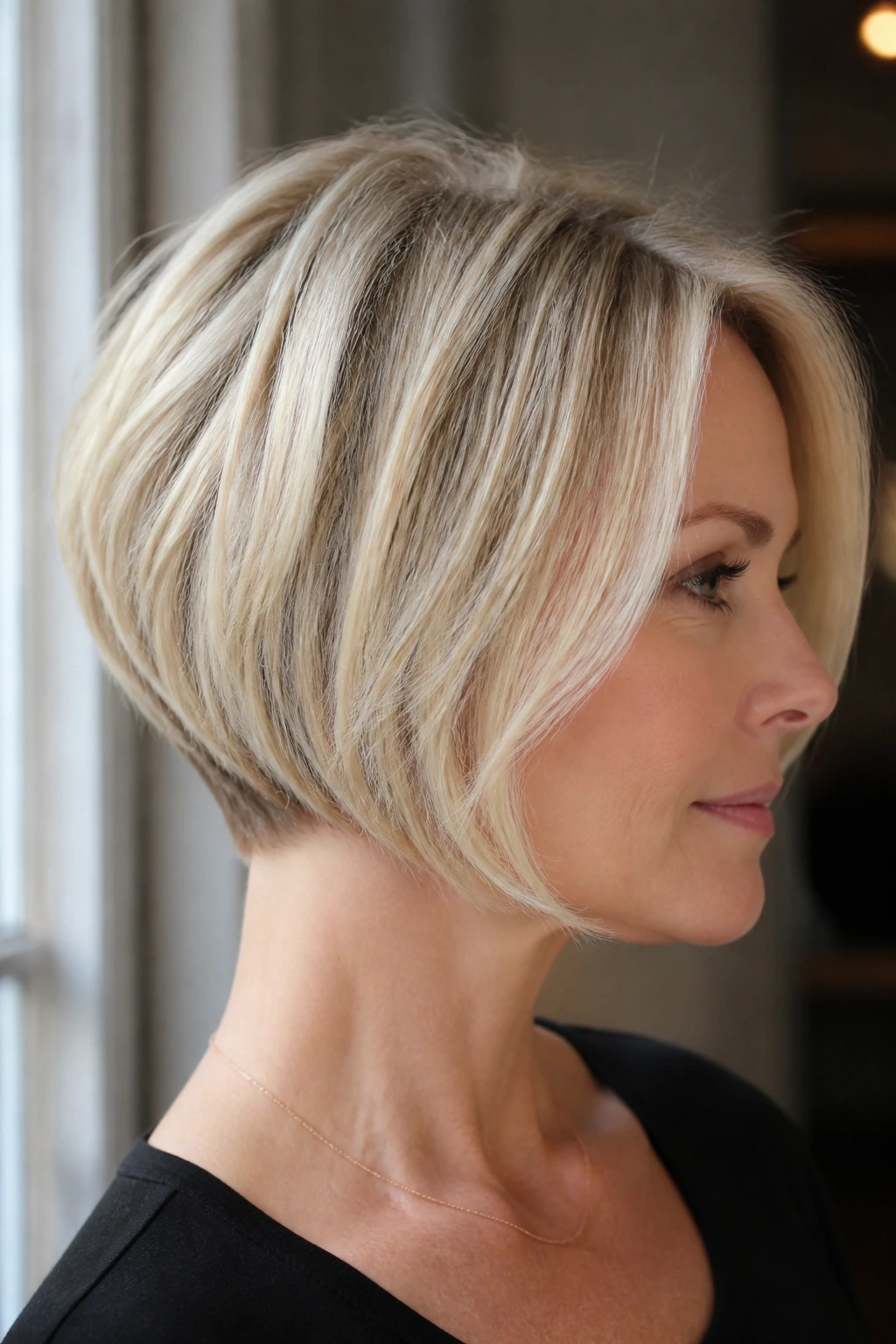
A graduated bob stacks a little more through the back, then drops longer toward the front. Tucked into the nape, the shape looks clean and sharp, but the blonde color keeps it from feeling hard. If the highlights are placed to brighten the top layers and front corners, the cut reads as lifted instead of boxy.
This is a clean choice for straight hair that needs structure. It gives the back some architecture without forcing the front into a severe angle. If you like the feeling of hair that stays put when you move, this one is worth looking at.
A tucked nape also makes the neck look longer. Small detail. Big payoff.
21. C-Shaped Layer Cut with Soft Blonde Ends
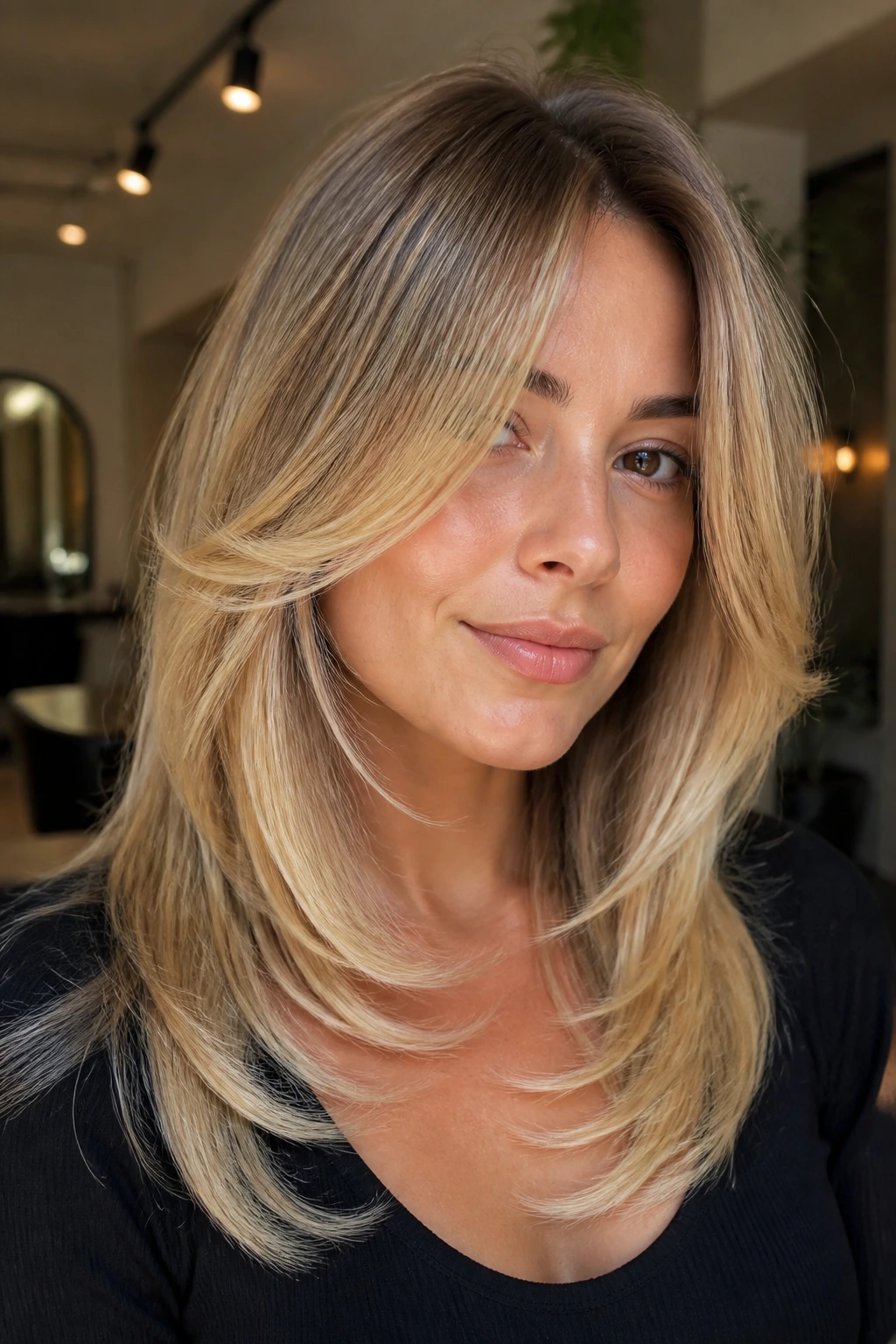
C-shaped layers curve in toward the face and out again at the ends, which gives the style a softer outline than a straight layer cut. The “C” is subtle, but you can see it in the way the front pieces fall around the cheekbones and collarbone. Soft blonde ends keep the whole thing bright without making the perimeter too sharp.
This is a smart middle ground if you want movement but not a shag. The layers live mostly in the front and upper sides, so the overall length stays intact. It’s the kind of cut that quietly improves your hair without broadcasting the fact that you had it cut.
22. Choppy Pixie Bob in Pearl Blonde
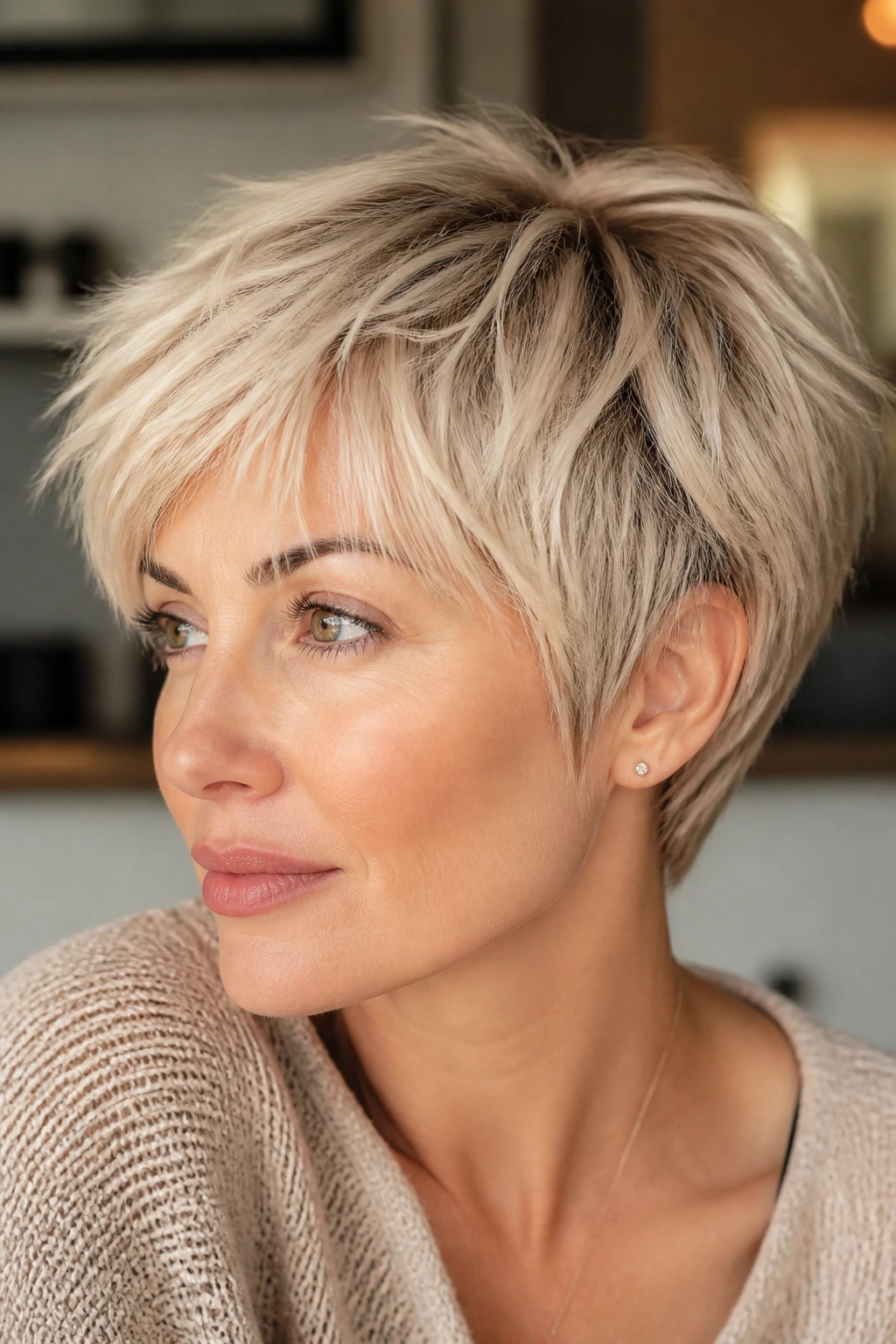
A pixie bob gives you the ease of short hair with a little more shape around the ears and nape. Pearl blonde makes the short pieces look airy instead of severe, and the choppiness at the top breaks up the density so the style doesn’t flatten down by noon.
The best version of this cut keeps one or two longer pieces around the face. That little bit of length stops the whole thing from reading as a pure crop. It also gives you more styling options, which matters when the cut is short enough that every millimeter shows.
Best For
- Hair that needs fast styling.
- Faces that look better with a little volume near the temples.
- People who want short hair but not a severe buzzed edge.
23. Long Shag with Airy Crown Volume
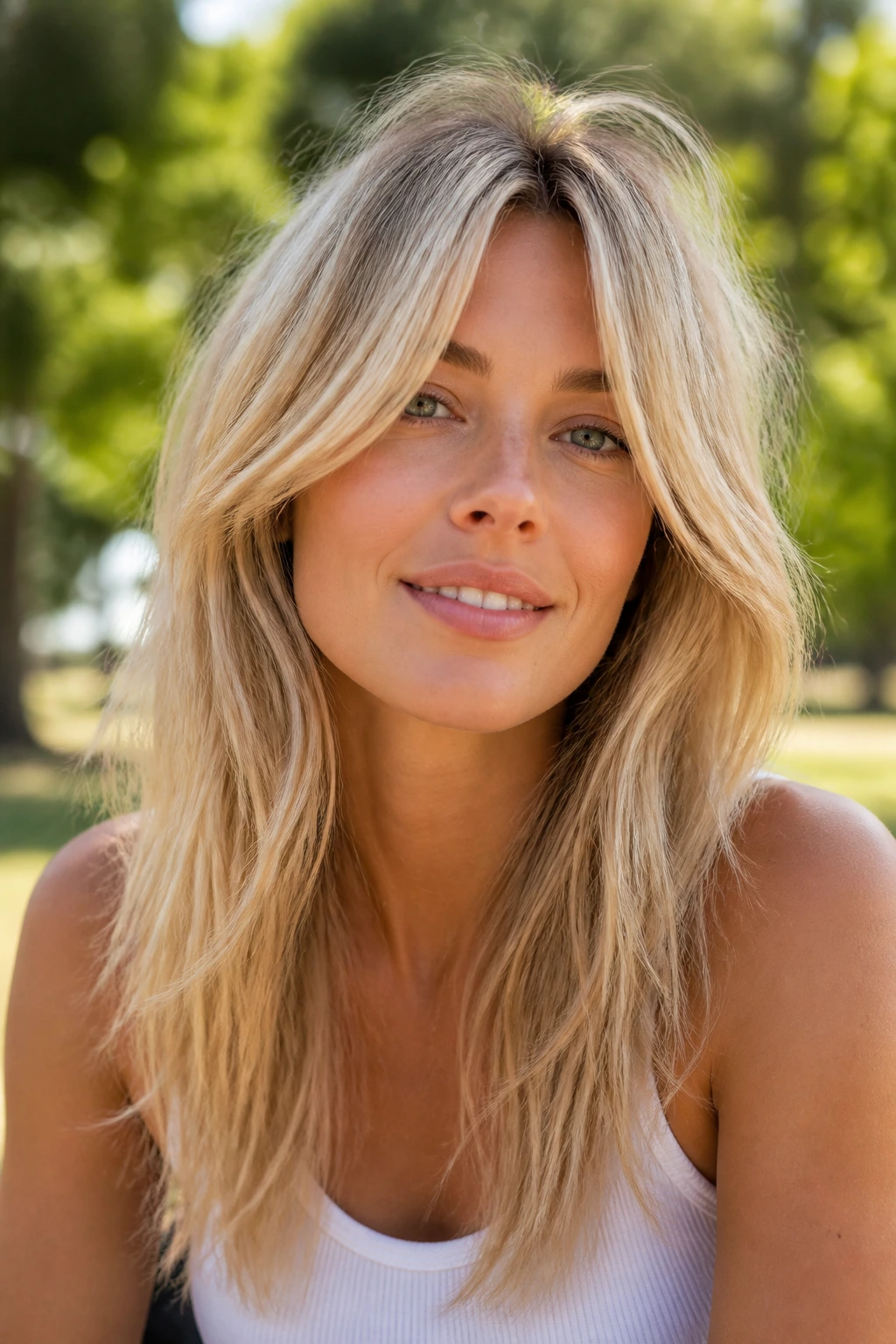
A long shag can go wrong if it gets too mullet-heavy or too stripped at the ends. The airy-crown version stays softer. It keeps lift at the top, feathering through the front, and enough length through the back that the hair still feels like hair, not a style experiment.
This one is especially good with dimensional blonde. A few brighter pieces near the crown and front layers make the shape look sunlit from above, which is exactly where a shag needs help. The texture should look lived in, not crunchy.
If your hair falls flat near the scalp, this cut is a strong fix. The crown layers catch the root lift from mousse or a diffuser, and that little bit of height keeps the lengths from looking dragged down.
24. Wavy Collarbone Cut with Invisible Layers
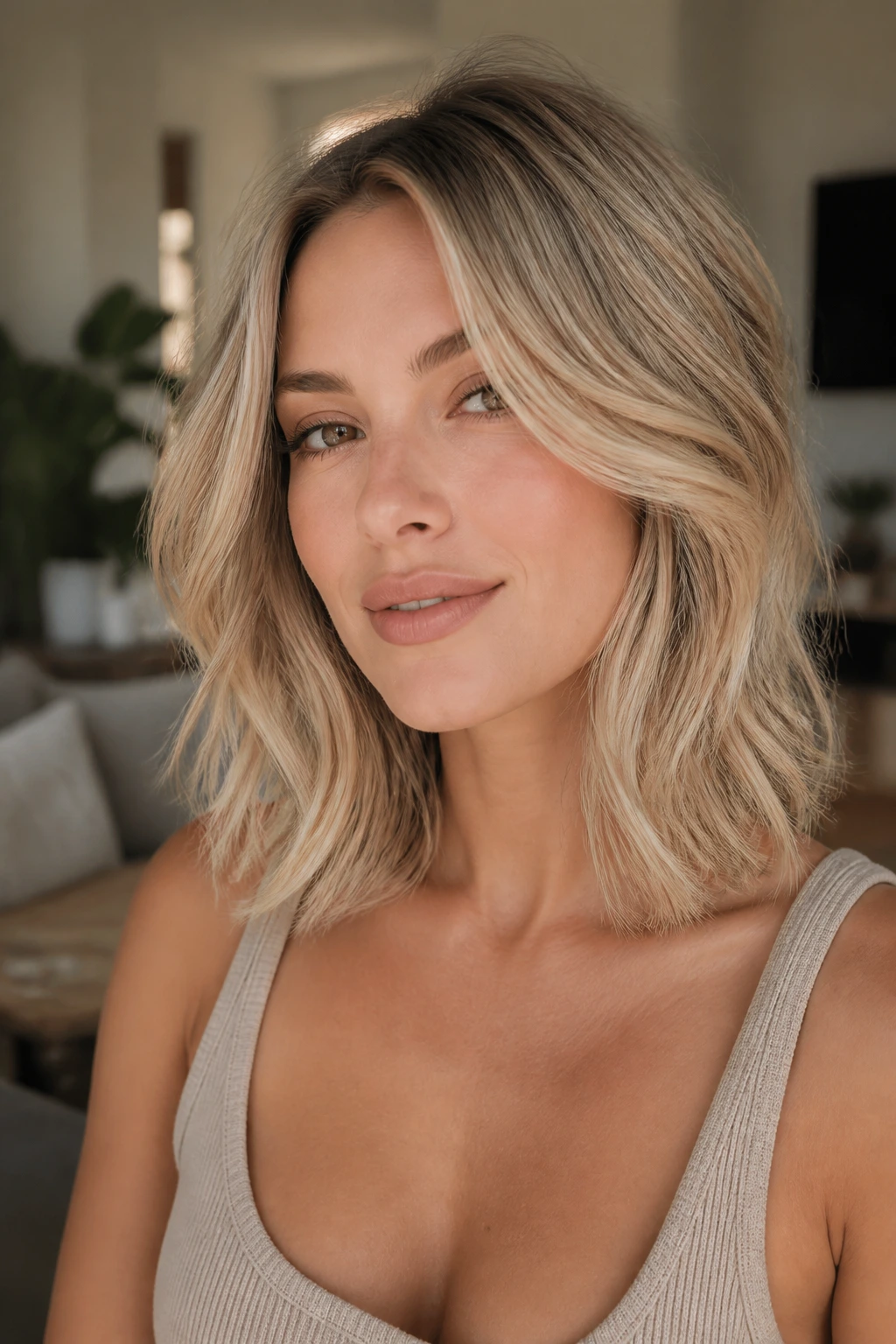
Invisible layers are for people who want movement without seeing obvious steps in the haircut. The length stays around the collarbone, but the inside of the cut is removed in a way that lets the waves fall better. Blonde balayage makes those hidden shifts in shape easier to see, because the color changes around the bends.
This is a smart choice if you like your hair to look softly done rather than styled within an inch of its life. The layers are there; they just don’t announce themselves. That’s useful when you want the hair to move but still keep a clean outline.
Styling Tip
Wrap only the top half of the hair around a curling wand, then leave the ends loose. The invisible layers show up better when the finish stays soft.
25. Grown-Out Blonde Crop with Choppy Fringe
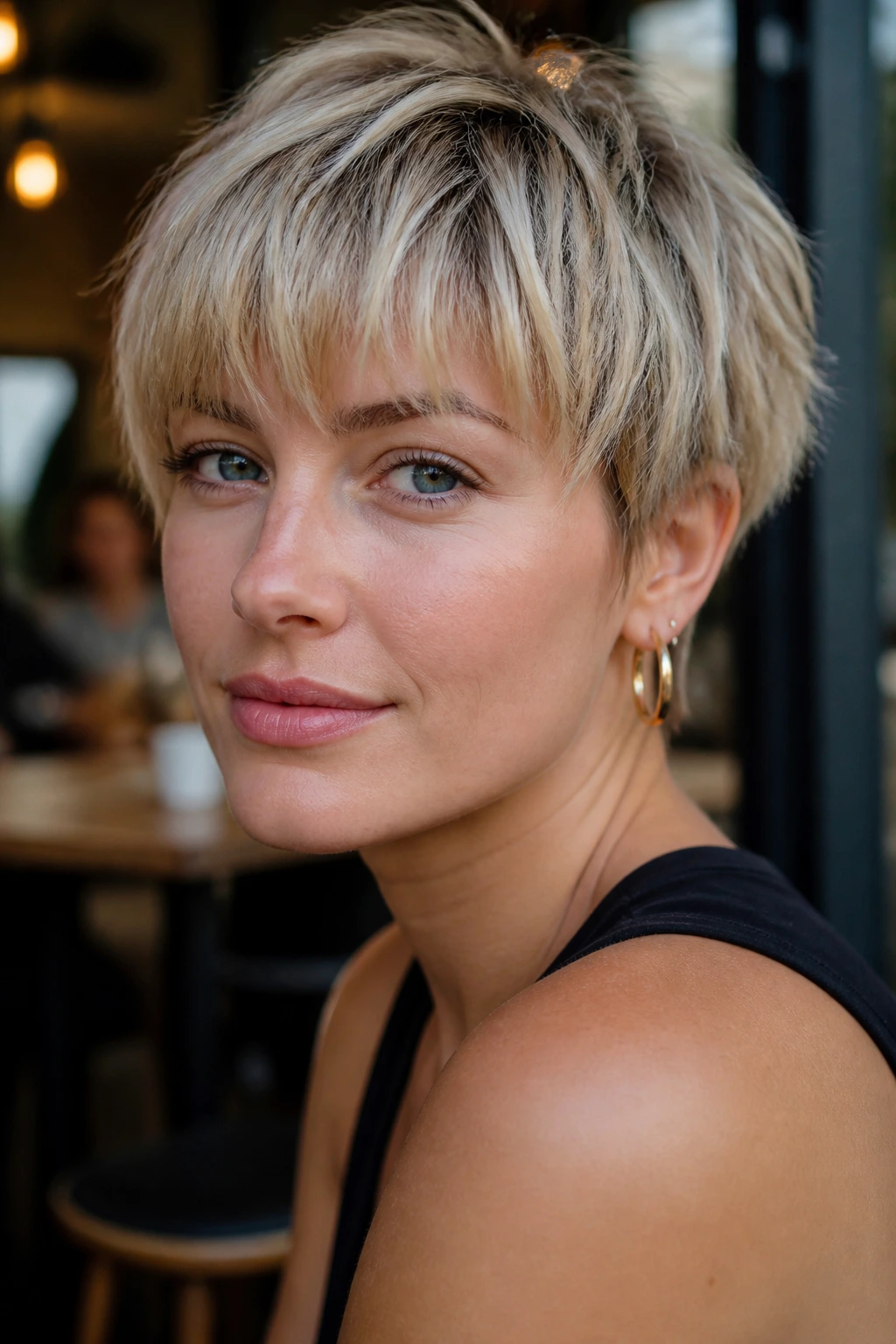
A grown-out crop with a choppy fringe has a little rebellion in it, but the lived-in length keeps it wearable. The fringe can skim the brows, split at the center, or sit slightly uneven across the forehead. That messiness is part of the charm. In blonde, it gives the style an easy brightness that never feels overworked.
This cut is great if you hate precise styling. It also grows out more gracefully than a strict crop because the fringe and top layers can drift a bit without breaking the shape. The blonde color should stay dimensional near the root so the shorter layers don’t turn into one pale block.
A bit of paste, a quick finger-comb, and you’re done. That’s the whole point.
Why Blonde Texture Catches the Light Better Than a Flat Cut
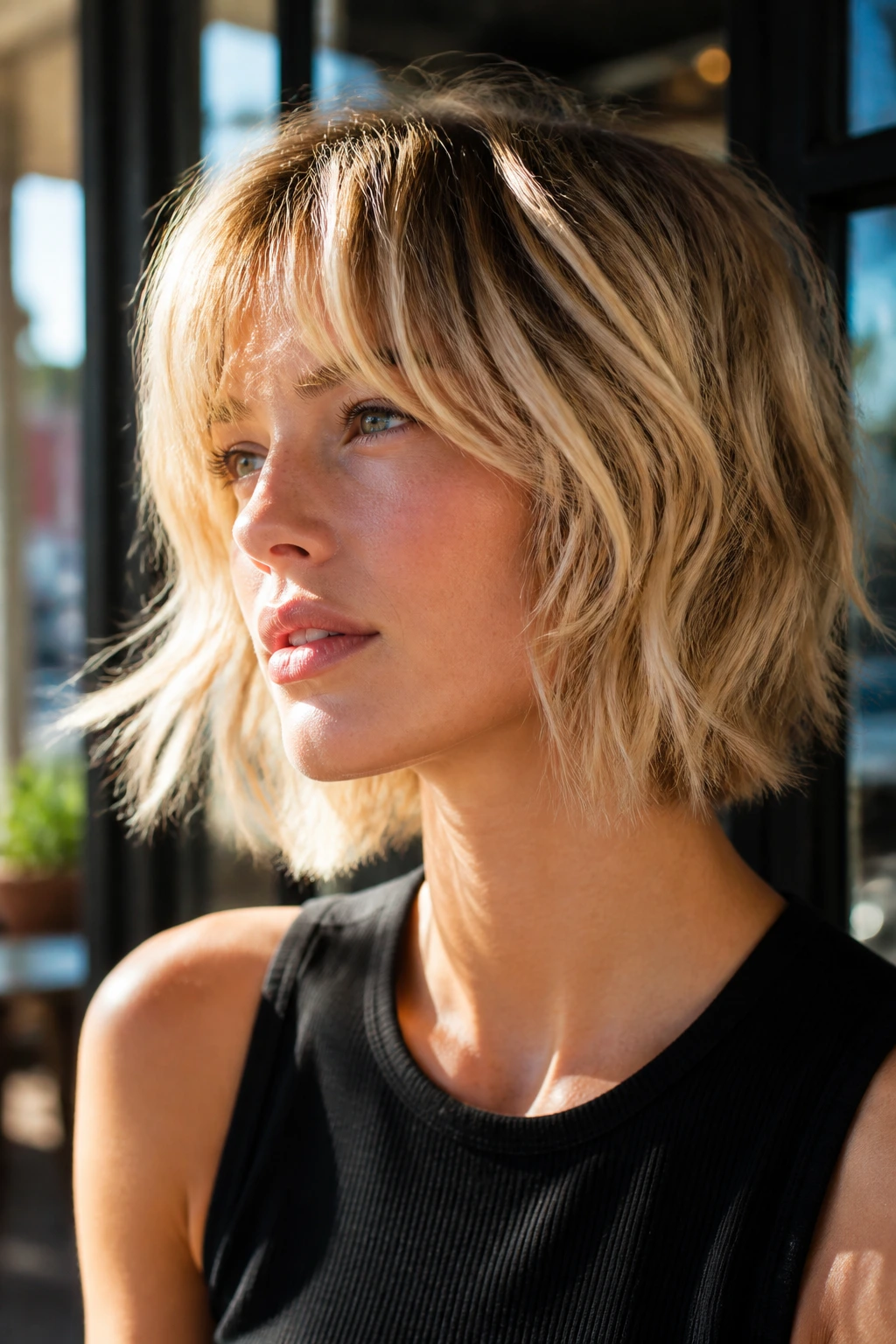
Blonde hair can be gorgeous and still look oddly muted if the cut is too blunt. That’s the part a lot of people miss. Light doesn’t just hit the color; it hits the edges, the bends, the lifted crown, and the little broken layers around the face. When the haircut gives those surfaces more shape, the blonde looks brighter without needing another round of foil.
A choppy outline also keeps the top from reading as one solid sheet. That matters with balayage, highlights, and root shadows, because dimension only shows when the hair has places to fall away from itself. A flat line swallows all of that. A textured line lets it breathe.
The best-looking blonde cuts often have contrast built in. Darker root. Brighter face frame. Softer ends. Maybe a little lowlight under the crown if the top is too pale. Nothing has to be loud. It just has to give the eye more than one place to land.
The Tools That Keep the Texture from Falling Flat
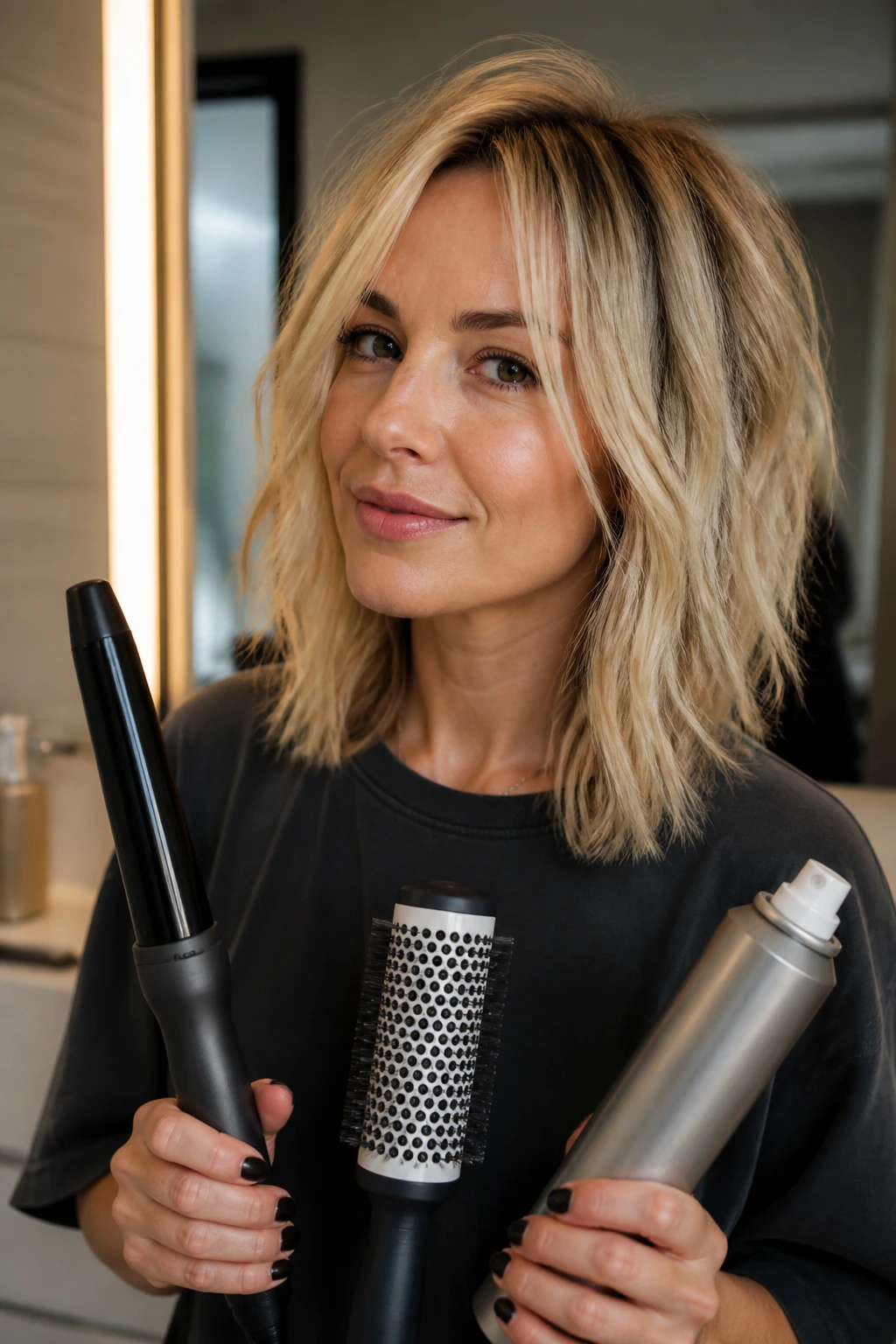
You do not need a drawer full of gadgets, but a few right tools make a huge difference.
- A 1-inch curling iron or wand — Small enough to bend pieces without making the style look over-curled.
- A medium round brush — Useful for lifting the crown and smoothing bangs without crushing texture.
- A blow-dryer with a concentrator nozzle — Keeps air where you want it and helps the cut sit cleaner.
- A texturizing spray — Best for broken ends and piecey layers; use it sparingly so the hair doesn’t get dusty.
- A light mousse — Gives root lift to bob, shag, and pixie shapes without the crunch of heavy gel.
- Heat protectant spray — Non-negotiable if you’re using hot tools more than once a week.
- A fine-tooth comb and wide-tooth comb — One for neat parting, one for keeping waves intact.
- A vent brush — Handy for short cuts and quick dry-downs when you do not want volume to balloon.
If you only buy three things, make them heat protectant, mousse, and texturizing spray. Those cover most of these cuts.
How to Ask for the Right Shape at the Salon
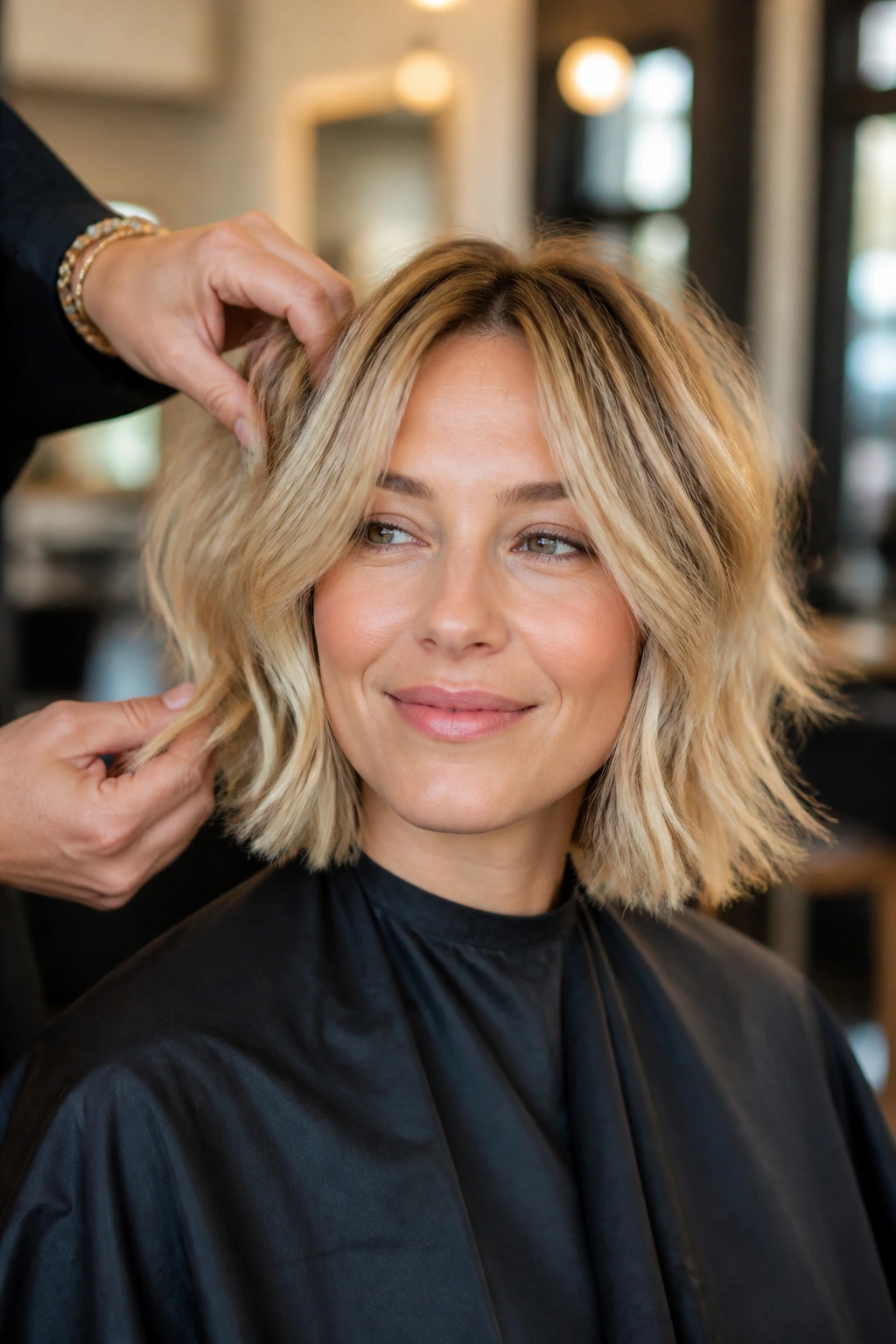
Bring photos, yes, but bring language too. A picture tells a stylist what you like visually. Words tell them what you want the haircut to do. Those are not the same thing. Say whether you want the ends feathered, shattered, razored, or just lightly broken up. That detail changes the whole silhouette.
Be specific about the face frame. Do you want pieces that hit the cheekbones? The jaw? The collarbone? If you say “short layers,” you may get something far more aggressive than you meant. If you say “keep the front long enough to tuck behind the ear,” the result gets a lot easier to live with.
Talk about your styling habit too. If you air-dry, say so. If you blow-dry only on workdays, say that. A choppy blonde cut that needs a round brush and a curling wand every morning is a different haircut from one that looks good with two bends and a little spray. Your stylist can only tailor it if they know your real routine.
Picking the Right Blonde Tone for the Cut
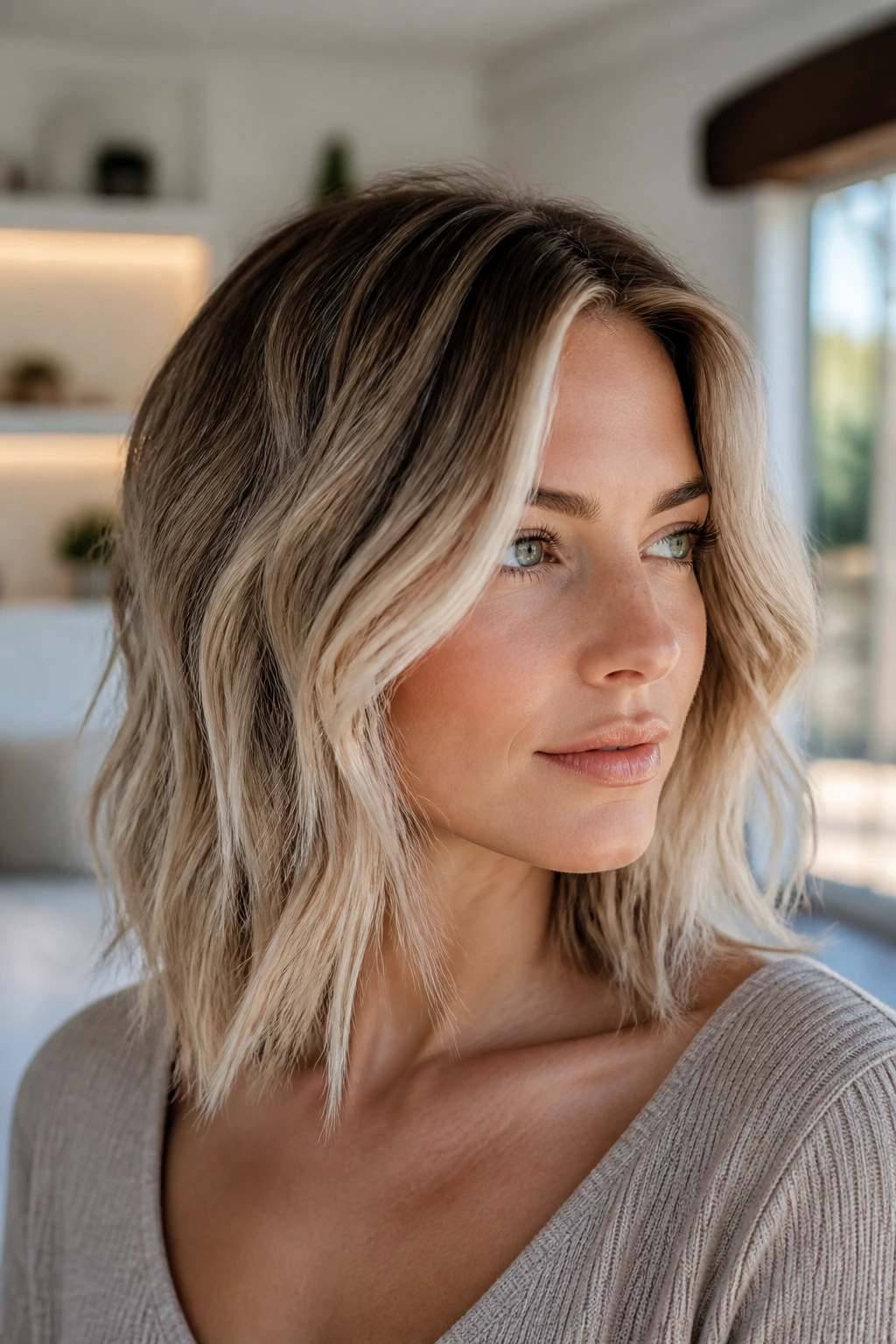
Not every blonde behaves the same way. Beige blonde is softer and quieter, which is useful when the haircut itself has a lot of movement. Honey blonde adds warmth and plays well with shaggy or layered shapes. Champagne and pearl blonde give short cuts a cleaner, brighter edge. Icy blonde reads sharper, so it usually needs more texture to keep it from feeling hard.
Root shadow matters too. A little depth at the root helps choppy layers stand out, especially on bobs and lobs. If everything is lifted to the same pale level, the cut can lose its shape under bright light. A brighter face frame and softer mid-lengths often look richer than one all-over tone.
The rule I trust: match the tone to the amount of texture. Softer cuts can handle brighter, cleaner blondes. Sharper, more broken-up cuts usually look better with a little warmth or depth underneath.
Styling Moves That Make the Whole Cut Feel Alive
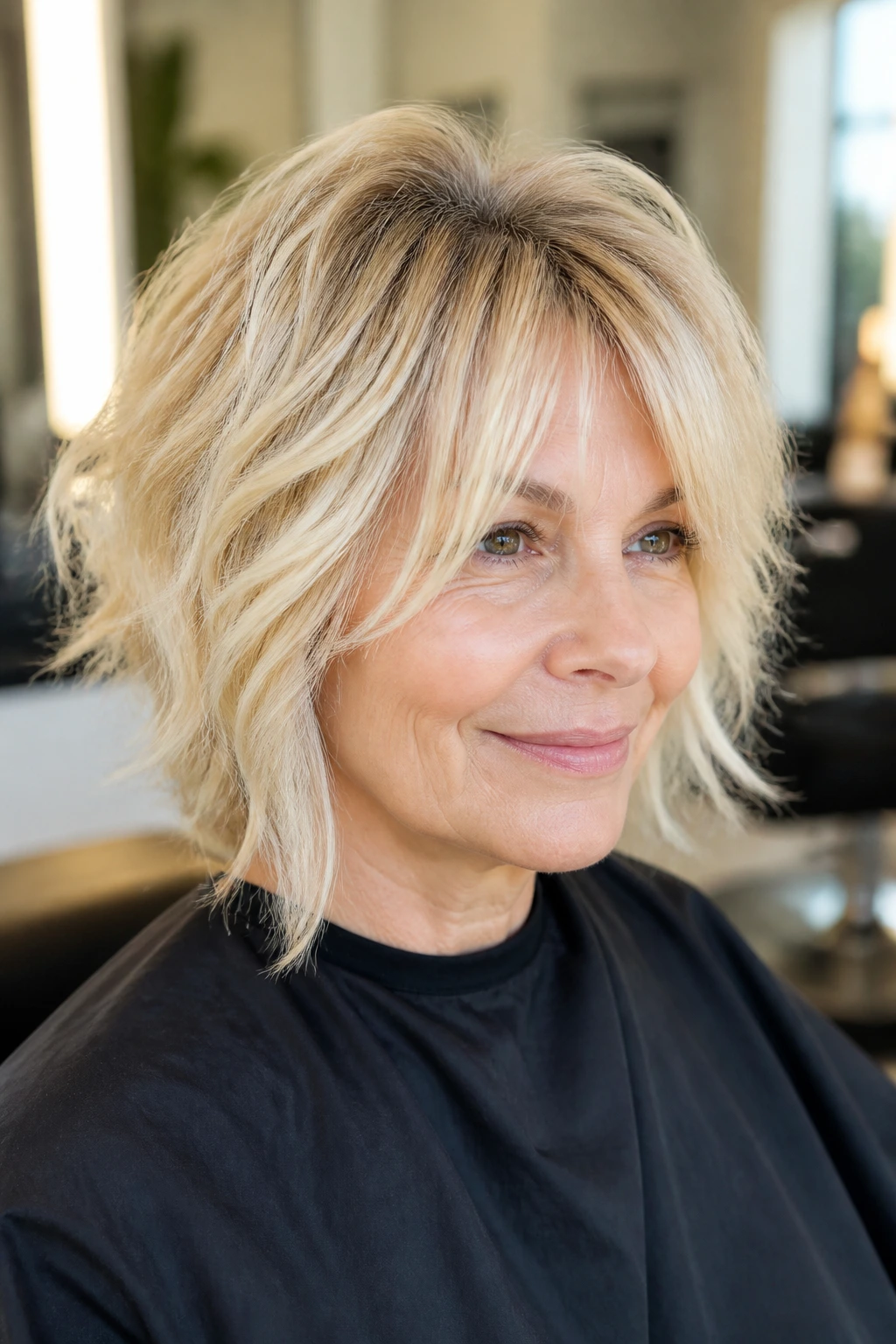
Root lift: Work a golf-ball sized amount of mousse into damp roots, then blow-dry upward at the crown. Stop when the roots are about 80 percent dry. That keeps the shape airy without making it puffy.
Piece separation: Use a pea-sized amount of paste only on the ends. Pinch a few strands around the face and crown. Too much product turns choppy layers into sticky clumps.
Soft bend: Wrap the top half of the hair around a curling wand and leave the last inch out. That unfinished tip keeps the blonde highlights visible and stops the style from looking too polished.
Shine control: A drop or two of serum on the mid-lengths is enough. If you start at the root, the texture disappears. If you use a palmful, the cut goes limp.
Second-day fix: Dry shampoo at the root and a quick mist of texturizing spray through the ends will wake up almost every cut in this set.
Common Mistakes That Flatten Choppy Blonde Hair
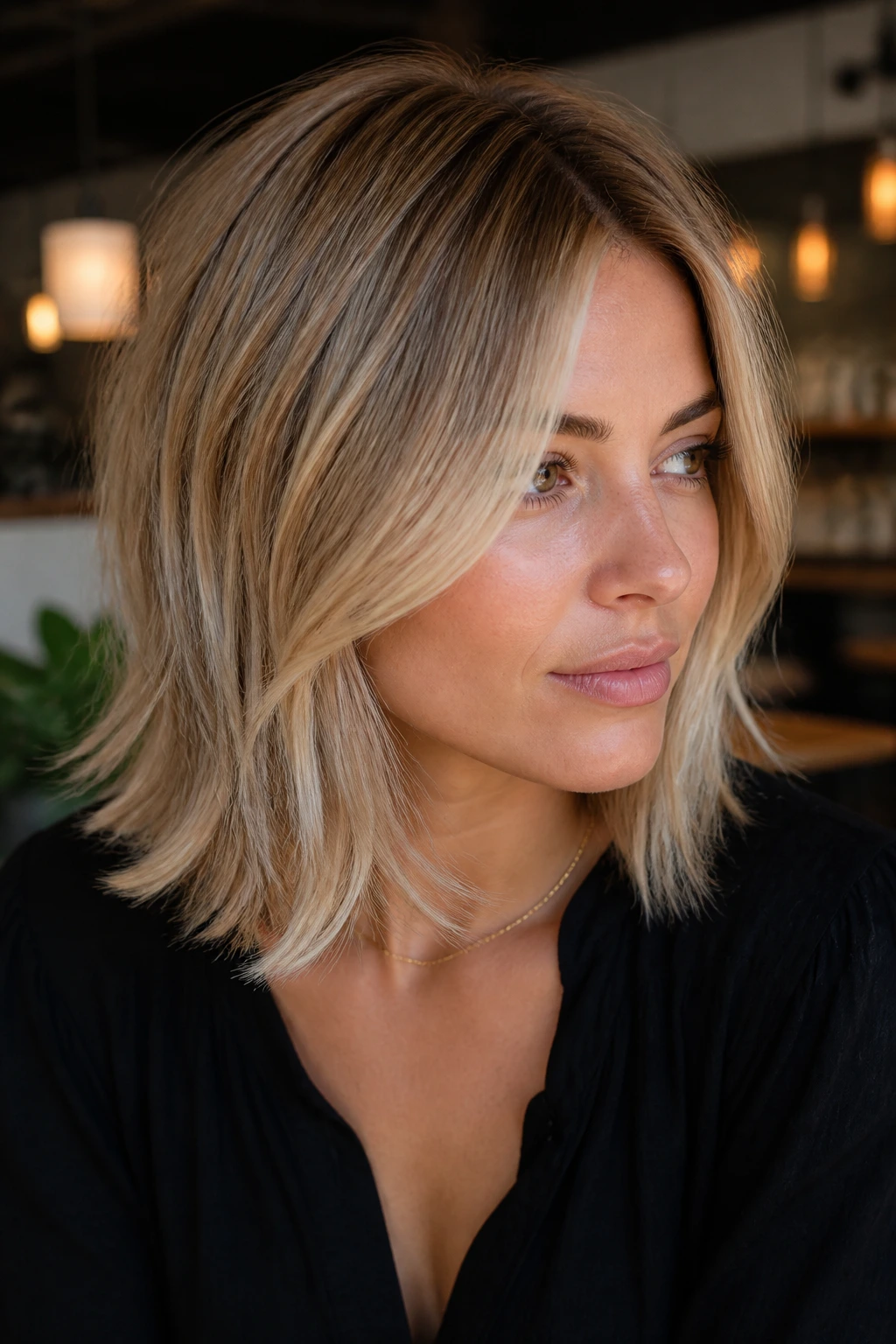
Going too blunt at the ends. The cut starts looking like a shelf instead of a living shape. The fix is simple: ask for point-cutting, feathering, or slicing through the perimeter so the line breaks up.
Over-thinning thick hair. If the ends look wispy but the body still feels heavy, the haircut has been thinned in the wrong places. Internal removal should reduce bulk inside the shape, not chew the perimeter to pieces.
Using too much smoothing cream. Blonde hair can soak up product fast, and heavy cream wipes out the texture that makes these cuts work. Keep smoothing products for the mids and ends only, and use them sparingly.
Skipping toner or gloss. Warm brass can make a choppy blonde look dull rather than sunlit. A gloss every few weeks keeps the tones clean and stops the lighter pieces from turning yellow or muddy.
Curling every section the same direction. The hair ends up looking stiff, not airy. Alternate directions, leave the ends out, and break up the pattern with your fingers.
Ignoring the crown. Flat roots sink the whole cut. A little lift there changes everything, especially on bobs, shags, and pixies.
Variations for Fine, Thick, Curly, and Straight Hair
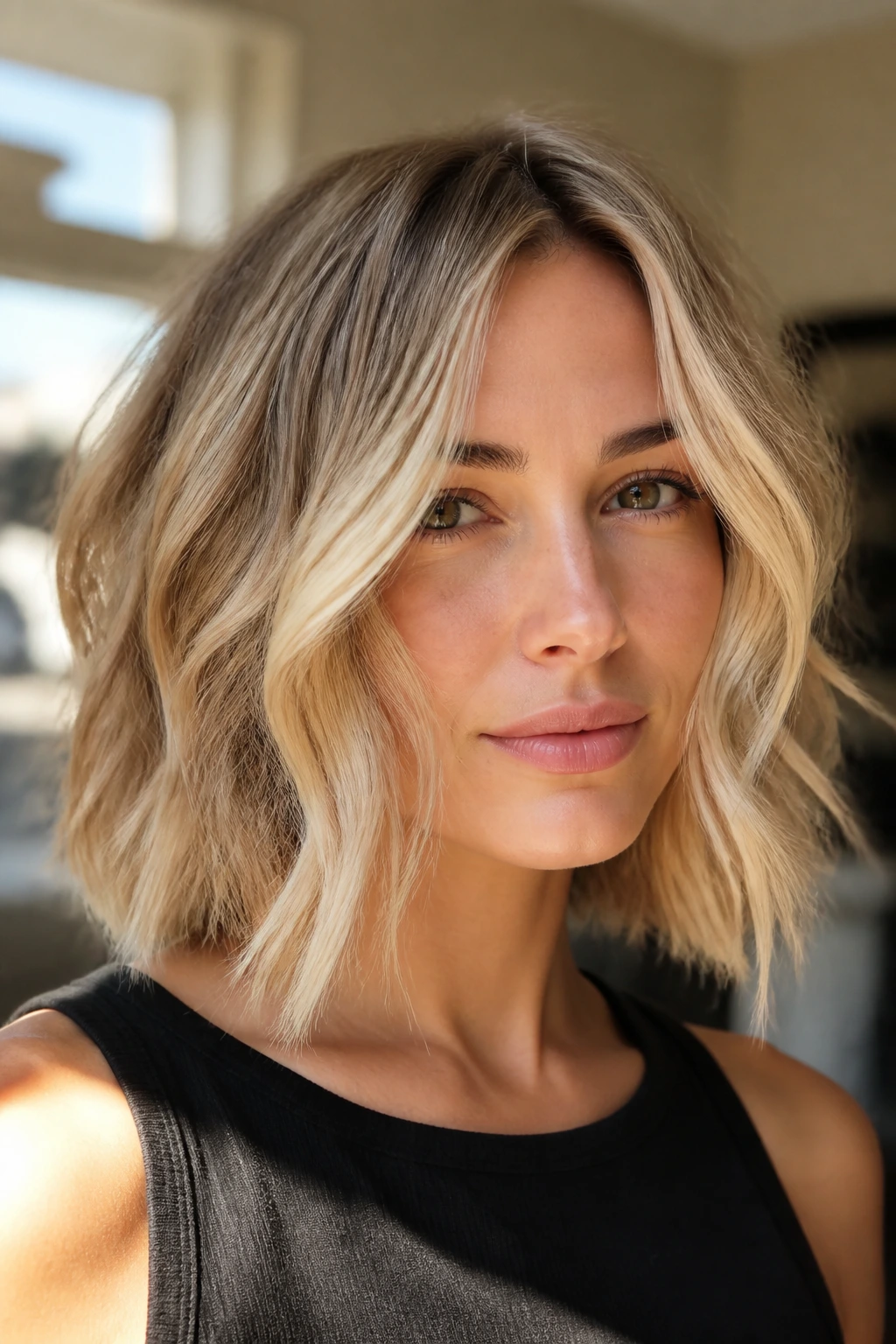
Fine-Hair Brightener: Keep the layers longer and the fringe lighter so the hair doesn’t lose density. Beige or pearl blonde with a rooted finish makes the cut look fuller, and a root-lift mousse will do more for the shape than extra layers ever could.
Thick-Hair Breakup: Ask for internal debulking, not just surface layers. Honey or buttery tones work well here because the depth helps prevent the color from looking chalky once the hair is thinned.
Curly-Friendly Choppiness: Keep the cut a little longer and ask for it to be shaped while dry if your curl pattern is strong. Too much razoring can fray curly ends, so soft layering and a brighter face frame often work better than aggressive slicing.
Straight-Hair Movement: Straight hair benefits from more obvious texture at the perimeter. A choppy bob or lob with a subtle bend in the front usually gives straight strands the most life.
Low-Maintenance Grow-Out: Root shadow, balayage, and collarbone length make the color and cut last longer between appointments. This is the option for people who want bright hair without a strict salon schedule.
Keeping the Cut and Color Fresh Between Appointments
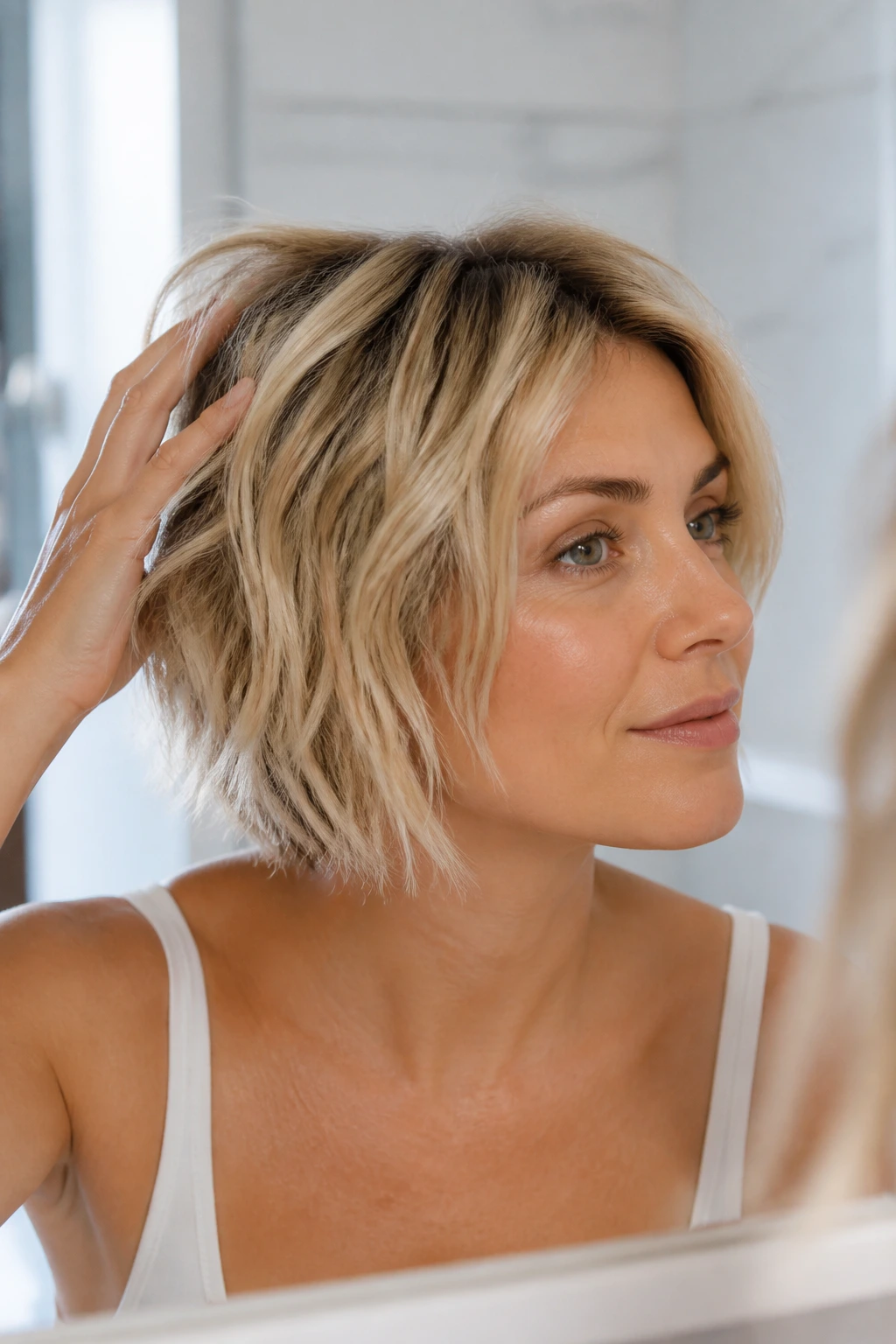
Shorter choppy cuts usually need a trim every 4 to 6 weeks if you want the line to stay clean. Lobs and layered shags can stretch to 6 to 8 weeks, sometimes a little longer if the shape is forgiving and the color has good depth at the root. Once the ends start flipping in ways you didn’t choose, it’s time.
Blonde color needs its own care rhythm. Purple shampoo once a week is enough for most people; more than that can leave a gray cast, especially on porous hair. If the blonde is warm-toned, a gloss or toner every 4 to 6 weeks keeps it from drifting brassy. If the cut is short or heavily textured, the color shows fast, so tone matters more than people expect.
Heat protectant before every hot-tool session. Every time. Hair that’s been lightened already has less room for error, and repeated heat on the same bent pieces is what makes the ends look dry and frayed. A deep conditioner once a week helps, but do not drown the style in masks if you want it to stay piecey. Keep the moisture where it belongs — mids and ends — and let the roots stay lighter.
Frequently Asked Questions
Which blonde shade makes choppy haircuts look the brightest?
Champagne, pearl, and beige blonde all work well because they catch light without looking flat or chalky. If you want more contrast, ask for a slightly deeper root shadow so the layers stand out instead of blending into one pale surface.
Do choppy blonde haircuts work on fine hair?
Yes, if the layers stay controlled. Fine hair usually looks best with shorter, lighter texturing near the crown and a length that isn’t chopped to bits at the ends, because too much removal can make the hair look thin.
What if my hair is thick and keeps puffing out?
Ask for internal layering, not just a lot of surface layers. Thick hair often needs weight removed from the inside of the cut so the outer line can fall cleanly, especially around the jaw and nape.
Is balayage better than foils for this look?
Balayage gives a softer grow-out and usually suits shaggy, textured cuts very well. Foils can create a brighter face frame or a more dramatic blonde contrast if that’s what you want, so the better choice depends on how strong you want the brightness to be.
How often should I trim a choppy bob or lob?
Plan on 6 to 8 weeks for most bobs and lobs, sooner if the shape is very precise. Once the ends start losing their broken texture and turn into one blunt line, the cut stops doing its job.
Can I keep my natural root and still get a sun-kissed look?
Absolutely. A rooted blonde with brighter face-framing pieces is often easier to wear than an all-over pale blonde, and it usually grows out in a way that still looks deliberate.
What if I air-dry most of the time?
Choose a cut with good structure in the perimeter and ask for a little length through the front. Air-dried hair tends to reveal every uneven edge, so the shape needs to work even when you leave it alone.
Will razor cutting damage my hair?
Not when it’s done well on healthy hair, but overly aggressive razoring can fray the ends, especially if the hair is already dry or over-lightened. A stylist who knows how to slice texture without shredding the perimeter makes all the difference.
The Cut That Keeps Its Shape
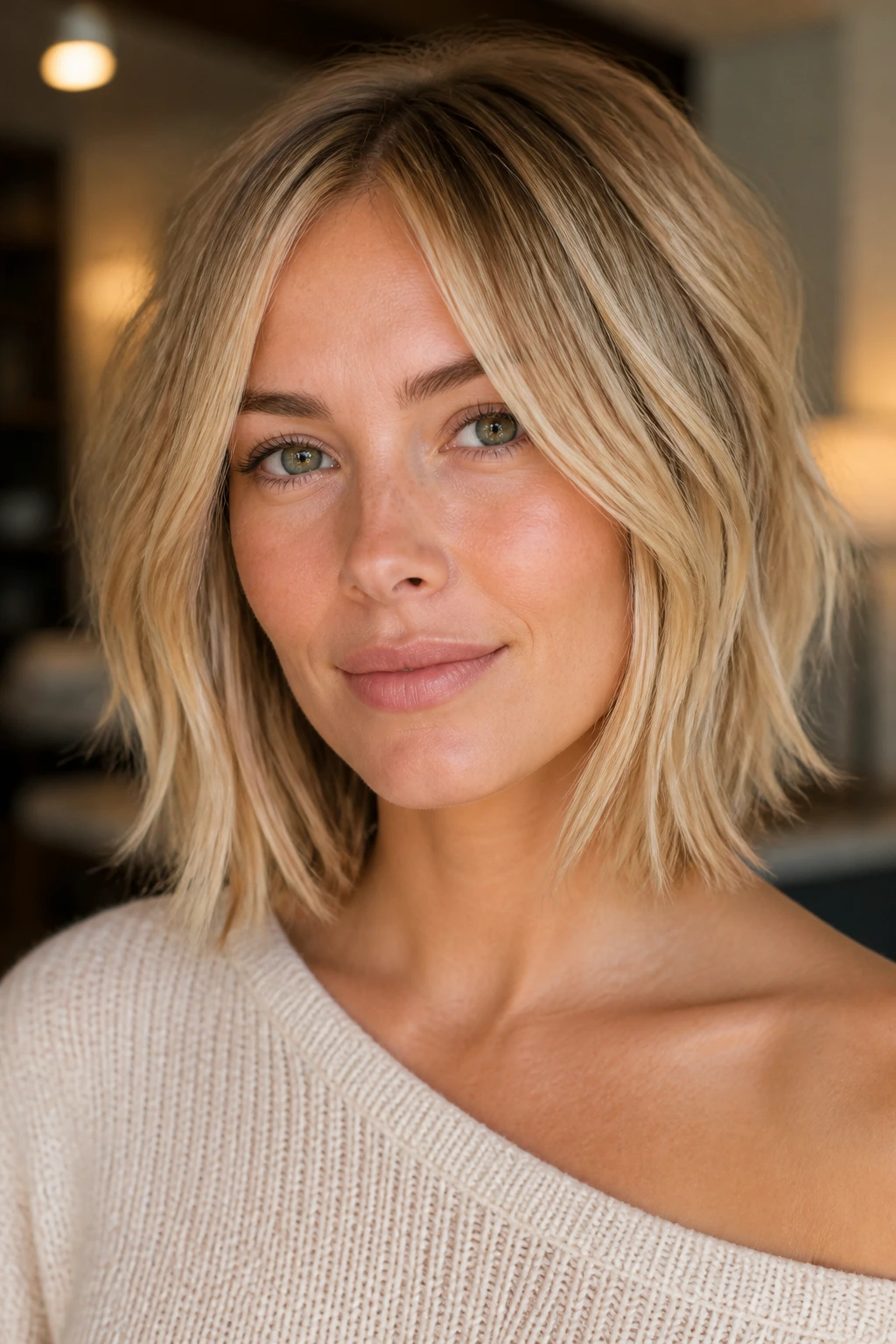
Blonde choppy haircuts work because they don’t ask the color to do all the lifting. The cut gives the blonde a place to live. The color gives the cut brightness. That partnership is why these styles feel so fresh even when they’re worn a little loosely, tucked behind one ear, or left to dry with only a few bends around the face.
The best version for you is the one that fits your routine, your texture, and your tolerance for styling. A choppy lob with a rooted beige blonde can be low-drama and still glow. A shag with curtain bangs can feel softer than it sounds. A short pixie with a bright crown can wake up a whole face.
Pick the length that makes sense on a Tuesday morning, not just the one that looks nice in a mirror under salon lights. The bright part should show up when you’re moving, not only when you’re posing, and that’s where this kind of cut earns its keep.
