



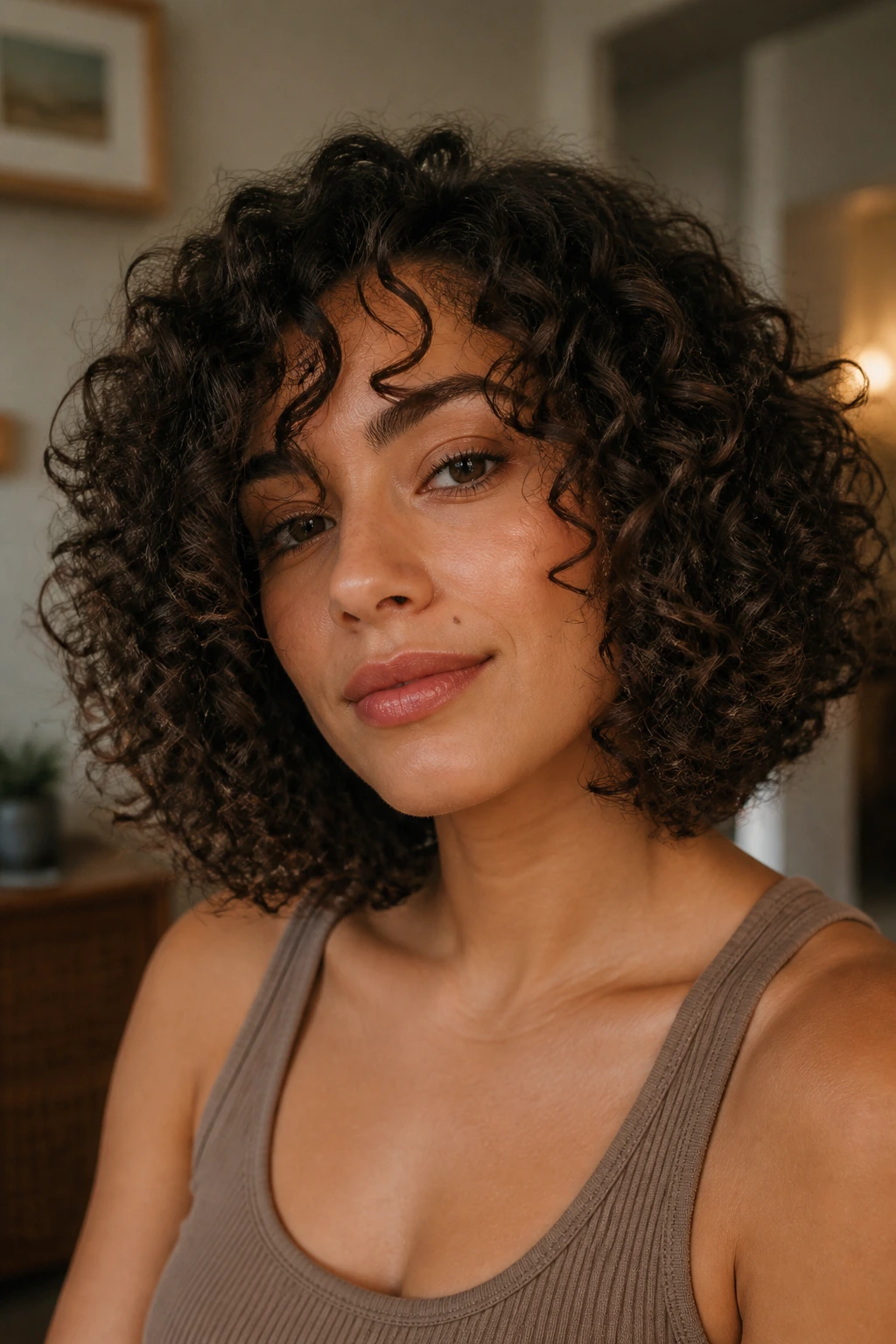
Curly lob haircuts can do something most shoulder-length cuts never manage: they give curls a place to land. Not too long, where the weight pulls everything down. Not too short, where the shape turns into a puffball at the first hint of humidity. A good lob sits in that narrow, useful band where curls can spring, swing, and stack on top of each other instead of hanging from the scalp like tired ribbon.
That balance matters more on curly hair than straight hair, because curl pattern changes the whole math of length. A lob that looks polished on a glassy wave can sit an inch or two higher once a 3B coil dries, and the same cut can feel either airy or bulky depending on where the perimeter falls. The difference between “cute” and “why does this look triangular?” is often only a small shift in length, a smarter layer, or a better part line.
The cuts below are all built around one idea: keep the movement, lose the heaviness. Some are blunt and crisp. Some are shaggy and loose. Some are made for fine curls that need lift at the crown, and some are meant for thick, springy texture that wants room to breathe. If you’ve been circling the same shoulder-skimming length and wondering why it never quite bounces the way you want, the shape is probably the answer.
Why These Curly Lob Haircuts Hold Natural Bounce

Bounce comes from weight control, not from chopping everything shorter. A curly lob works because it removes enough length for the curls to spring up, but keeps enough mass in the perimeter to stop the ends from frizzing out like a broom. That middle ground is the whole trick.
Shrinkage stops being the enemy when the cut is planned for it. A curl that falls to the collarbone wet can sit right at the jaw when dry. That sounds dramatic until you’ve watched it happen in a salon mirror. Good curly lob haircuts account for that shift instead of pretending hair behaves the same wet and dry.
The shape matters more than the number of inches. Two lobs can be the same length on paper and look wildly different on the head. One can sit flat because the layers were carved too high. Another can move like it has a built-in spring because the interior weight was taken out in the right places.
This length is a sweet spot for people who hate daily styling battles. A lob gives curls enough structure to look intentional on air-dry days, but not so much hair that every wash turns into a half-day event. It’s one of the few cuts that can look finished with a little leave-in and a diffuser, or even with a quick scrunch and go.
My bias is simple: if your curls feel heavy, stretched, or boxy, a smarter lob usually fixes more than another round of product ever will.
1. The Soft Layered Curly Lob
A soft layered lob is the cut I recommend when someone wants movement without looking chopped up. The layers are long and quiet, which means the curls still read as one shape, but the sides don’t drag into a blunt block. On wavy and loose-curly hair, that little bit of internal lift can make the whole head look lighter at the root.
Why the layers matter
The best version keeps the perimeter near the collarbone and places the shortest pieces low enough that they don’t poke out on top. If the stylist starts the layers too high, the cut can frizz up fast. If they stay too low, the curl pattern gets all the bounce with none of the body.
- Ask for long, blended layers that start below the cheekbones.
- Keep the front pieces a touch longer than the back.
- Cut with shrinkage in mind, especially if your curls spring a full inch or more.
- Diffuse just enough to set the shape; don’t blast it dry.
Best for: medium-density curls that go limp when they’re left one length.
2. The Blunt Curly Lob
A blunt curly lob sounds strict, but that’s exactly why it works. The clean hem gives curls a firm edge to sit on, and that edge can make loose ringlets look expensive in a very unbothered way. When the curl pattern is strong and the density is decent, a blunt line can feel sharper than any layered cut.
Here’s the catch: a blunt lob only looks good when the ends still have enough movement. If the hair is too thick and heavy, the bottom line can balloon. If it’s too fine, the cut can look stringy unless the stylist leaves enough fullness in the perimeter.
My favorite version lands just below the chin in front and closer to the collarbone in back. That slight angle keeps the cut from turning boxy. It also makes the curls kick out instead of collapsing straight down, which is half the reason people fall in love with this shape.
No fuss. No overworking. Just a hard line and a good curl day.
3. The Curly Lob with Curtain Bangs
Why do curtain bangs and a lob keep showing up together? Because the combination fixes a problem curly hair has always had: too much fullness all at once. The fringe opens the face, the length keeps the rest of the cut from feeling short, and the middle part lets the curls fall in a way that looks intentional instead of accidental.
The fringe should be cut long enough to move around the cheekbones when dry. Short curly bangs can jump up faster than anyone expects, and then you’ve got a forehead fringe when you wanted a soft sweep. I prefer bangs that blend into the front layers so the line feels broken up rather than pasted on.
How to style the fringe
Use a touch more water on the front than the rest of the head, then twist the front curls away from the face with your fingers. Let them set with a diffuser or air-dry them clipped slightly forward, then release them once they’re nearly dry. That tiny bit of control keeps the bangs from splitting in weird places.
This cut is especially good if you want face-framing without losing the security blanket of longer sides.
4. The Side-Part Curly Lob
If your roots go flat by lunch, the side part is the first place I’d look. A deep side part lifts the crown, changes the way the curls stack, and gives a curly lob a stronger silhouette without adding any extra hair product. It’s one of the fastest ways to make a shoulder-length curl shape look more alive.
Picture a lob that falls heavier on one side and opens up on the other. That’s the visual payoff. The hair has room to rise at the root, and the front curls stop crowding the face. On round and square faces, that diagonal line can be a little magic trick.
- Works especially well with looser curls that need help at the crown.
- Keeps the hemline interesting without a dramatic haircut.
- Helps if one side of your curl pattern dries flatter than the other.
- Pairs well with a light root clip while air-drying.
A side part is not subtle on curly hair. Good. Let it be obvious.
5. The Rounded Curly Lob
A rounded lob is what happens when the cut respects the natural curve of curls instead of fighting them. The perimeter curves inward slightly, so the hair looks full in a dome shape rather than pushing out at the sides. It’s a strong choice for coils and springy curls, where a blunt horizontal line can create too much width.
The shape matters. A rounded lob should feel like a halo around the face, not a shelf around the jaw. The layers stay soft and the hem stays curved, which gives the whole style a polished silhouette even when the curls are a little messy.
This cut is one of the best fixes for the dreaded triangle effect. That’s the shape where the top goes flat and the bottom gets wide. A rounded perimeter pulls the eye upward and keeps the silhouette tidy.
My opinion? If you like curl volume but hate looking bottom-heavy, this is the one to beat.
6. The Shaggy Curly Lob

A shaggy lob is the rebellious cousin in this family. It keeps the length, but the layers are more obvious and the movement is more piecey. If your curls already have some spring, the shag turns that energy into shape instead of letting it spread out into a puff.
Unlike a blunt lob, the shag doesn’t insist on a clean line. It wants softness, air, and a little irregularity. That’s why it works so well on dense, textured hair that gets heavy at the ends. The layers lift the bulk, the ends flick out, and the whole cut feels lighter without being shorter than you planned.
Best for
- Medium to thick curls that look flat when they’re left long.
- People who like a lived-in finish, not a tidy one.
- Hair that needs movement more than it needs precision.
- Anyone who refreshes with spray water and a little gel, not a full wash.
A shaggy lob has personality. Some days that’s exactly what you want.
7. The A-Line Curly Lob

The front of this cut grazes the collarbone. The back sits a touch higher. That tiny angle changes everything.
An A-line lob gives curly hair a forward pull, which means the curls frame the face instead of hiding behind it. The shape also keeps the nape from looking bulky, especially on thick hair that tends to gather weight at the bottom. The cut feels sleek without becoming severe, which is a rare balance.
I like this one for people who want movement but still want a visible haircut from the back. A straight-across hem can disappear into the curls. The A-line keeps its own outline.
The key is restraint. If the angle is too steep, the hair can look dated. If it’s too subtle, you lose the point of the cut. The sweet spot is a soft diagonal that you can still read when the curls dry and shift.
8. The Collarbone-Skimming Curly Lob
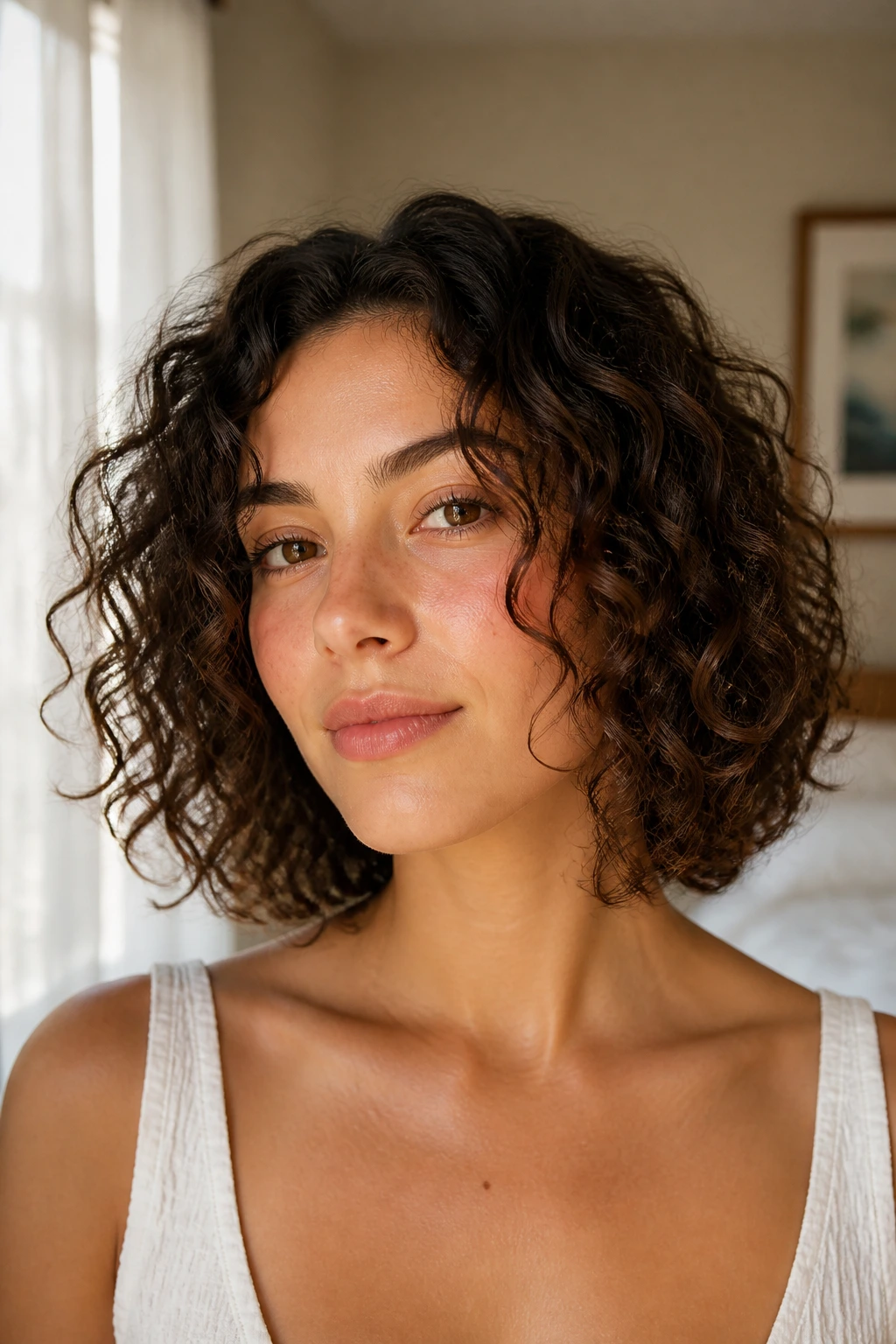
Where should a curly lob actually sit? Around the collarbone is the safest answer, and usually the smartest one. That length gives the curl room to spring up without turning the cut into a chin-length bob, and it leaves enough hair to tuck behind the ear or pin back on a lazy morning.
The collarbone skimming lob is also forgiving about shrinkage. If your curls jump a lot when they dry, this length keeps the overall shape from getting too short. You still get bounce, but you’re less likely to end up with a rounded puff above the jaw.
The measurement that matters
Ask your stylist where the longest curl will land when the hair is fully dry. Not stretched. Dry. That detail matters more than a casual inch count. A lob that seems long in the chair can shrink a lot once the curl pattern wakes up.
If you want a cut that works in almost any setting, this is the one I’d put near the top of the list.
9. The Invisible-Layer Curly Lob
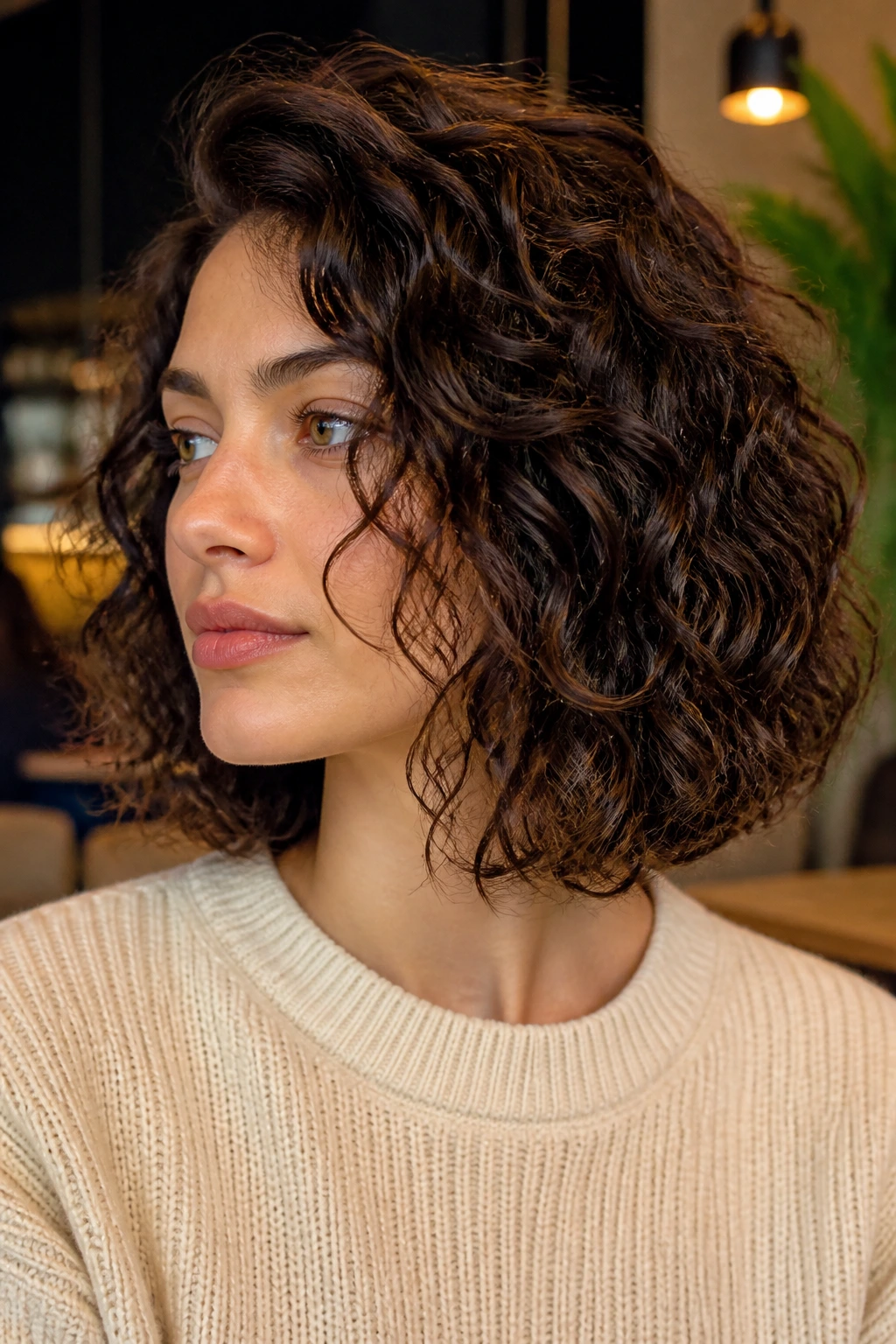
An invisible-layer lob is for people who want volume control without obvious choppiness. The layers live inside the cut, so the outside line still looks smooth and full. On thick curls, that means less helmet shape. On finer curls, it means the ends don’t look like they’ve been thinned out with a weed trimmer.
The best part is how sneaky it looks. From the front, you see a clean, rounded lob. Move the hair, and the hidden layers show their hand: lift at the crown, less weight through the middle, and movement at the sides. It’s a smart cut when you want the hair to behave without advertising every scissor pass.
- Ask for internal layers, not short surface layers.
- Keep the perimeter strong so the hem doesn’t go wispy.
- Works well if your curls are dense but not extremely coarse.
- Needs a stylist who understands how curls stack when dry.
This is the cut for people who hate the look of “too many layers” but still want the shape to breathe.
10. The Curl-by-Curl Precision Lob

Some haircuts are about speed. This one is not.
A curl-by-curl lob, often done dry, follows the natural fall of each curl so the final shape lands where the hair wants to live. It takes longer in the chair because the stylist is working with the pattern, not against it. The payoff is a cut that behaves more predictably after washing, which is why curl specialists like it so much.
The big advantage is accuracy. Wet curls lie. Dry curls tell the truth. If your pattern is uneven — tighter at the back, looser in front, flatter on one side — a precision cut can balance that without forcing everything into the same template.
There’s a practical side, too. If one section tends to spring more than another, that can be adjusted while the hair is in its natural state. The result is less guessing later, less surprise shrinkage, and fewer “what happened here?” moments when the mirror fogs up after a shower.
11. The Rezo-Inspired Curly Lob
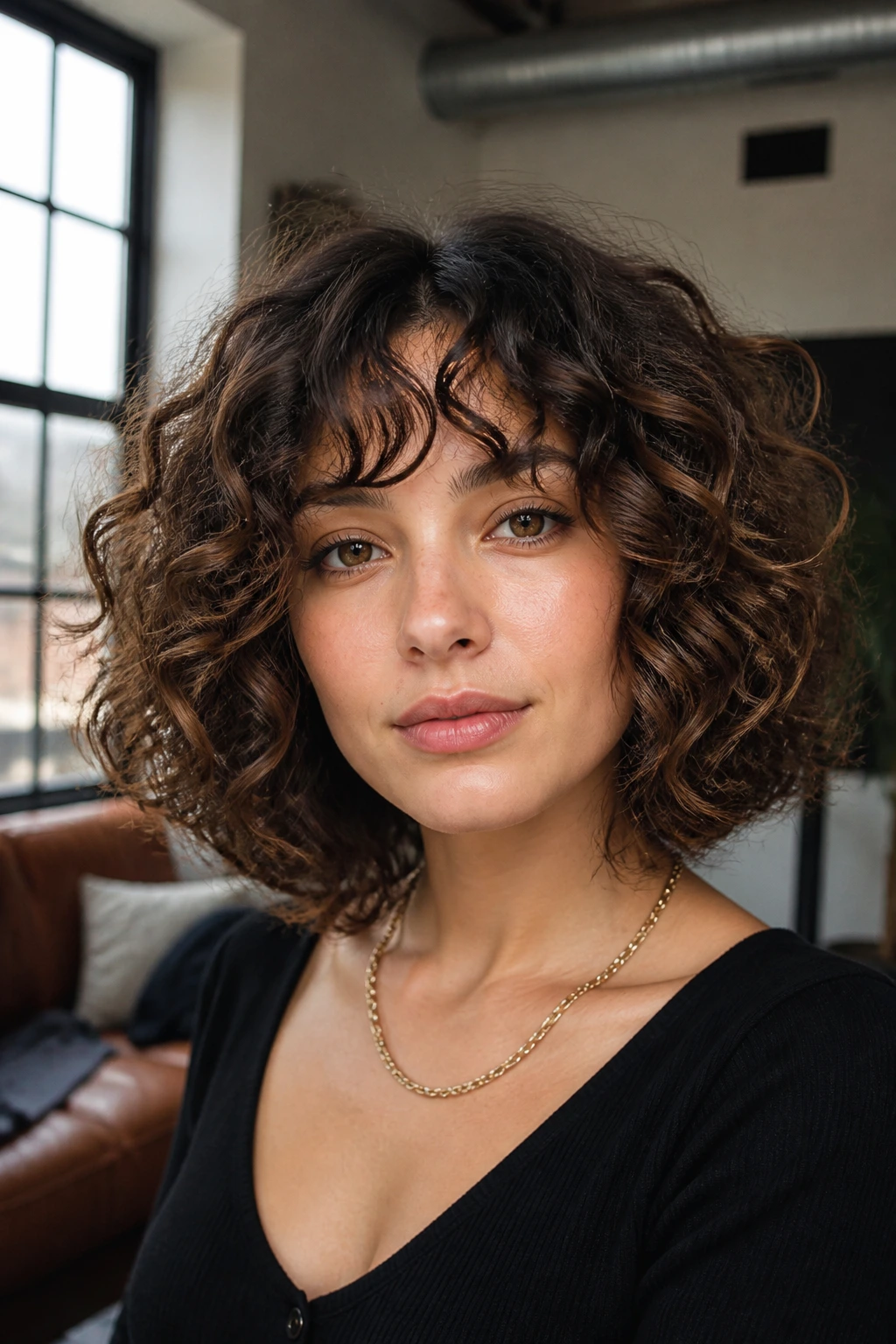
If you like the idea of fullness all the way around, a Rezo-inspired lob is worth a look. The shape tends to stay balanced, with the perimeter feeling even and the volume distributed more like a circle than a triangle. That makes it a strong choice when you want the cut to look full from every angle, not just from the front.
Compared with a shag, this one is cleaner. Compared with a blunt cut, it’s softer. The movement comes from how the curls are sectioned and shaped, not from obvious layers hanging out all over the place. That’s useful if you like definition but don’t want the haircut itself to announce every angle.
What makes it different
The focus stays on a rounded silhouette and balanced weight, so the ends don’t feel heavy while the top still has body. It’s especially good for medium-to-thick curl density that needs shape without collapse.
If your curls get wide before they get long, this is a strong fix.
12. The Fine-Hair Curly Lob

Fine curls need a light hand. Too much layering and they go see-through. Too much length and they sag. The right lob gives fine hair enough structure to keep the curl pattern visible, while still holding a perimeter that doesn’t look wispy at the edges.
This is one of those cuts where restraint pays off. You want movement, yes, but you do not want a bunch of short layers stealing density from the bottom. A clean hem with a few low internal layers usually does more than an aggressively textured cut ever will.
Here’s what I’d ask for:
- Keep the length around the collarbone or slightly below.
- Use minimal layers near the crown.
- Avoid heavy thinning shears unless the hair is truly dense.
- Style with mousse or a light foam instead of a rich cream.
Fine curls often look best when the cut gives them a little visual weight. Not a lot. Enough.
13. The Thick-Hair Curly Lob
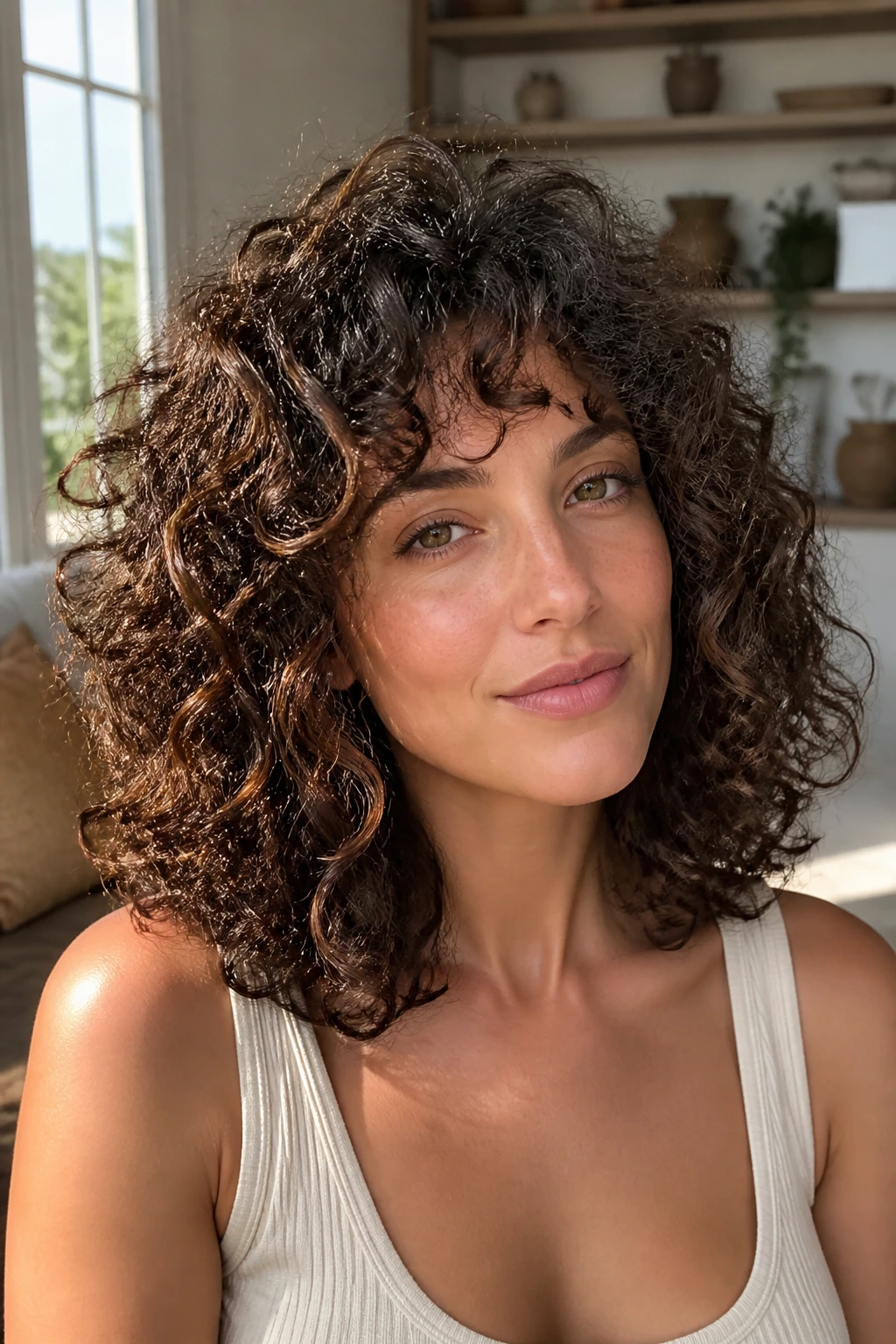
Thick curly hair can look glorious in a lob, but only if the cut respects the mass. Leave it too long and it can fall into a heavy rectangle. Take too much out with the wrong layers and you get puff at the top and scattered ends. The sweet spot sits somewhere in the middle, with enough weight removed to let the curls lift, but enough perimeter left to keep the shape grounded.
This is where interior layering earns its keep. Thick hair often benefits from sections that are shortened underneath while the outer layer stays strong. That gives the curls room to stack instead of sitting on each other like folded towels.
I’m blunt about this one: thick hair rarely needs more product before it needs a better cut. A good lob can remove a lot of daily frustration all by itself.
The best result usually shows up when the hem is still visible, the top has room to move, and the back doesn’t drag the whole style down by an inch.
14. The Loose-Wave Curly Lob
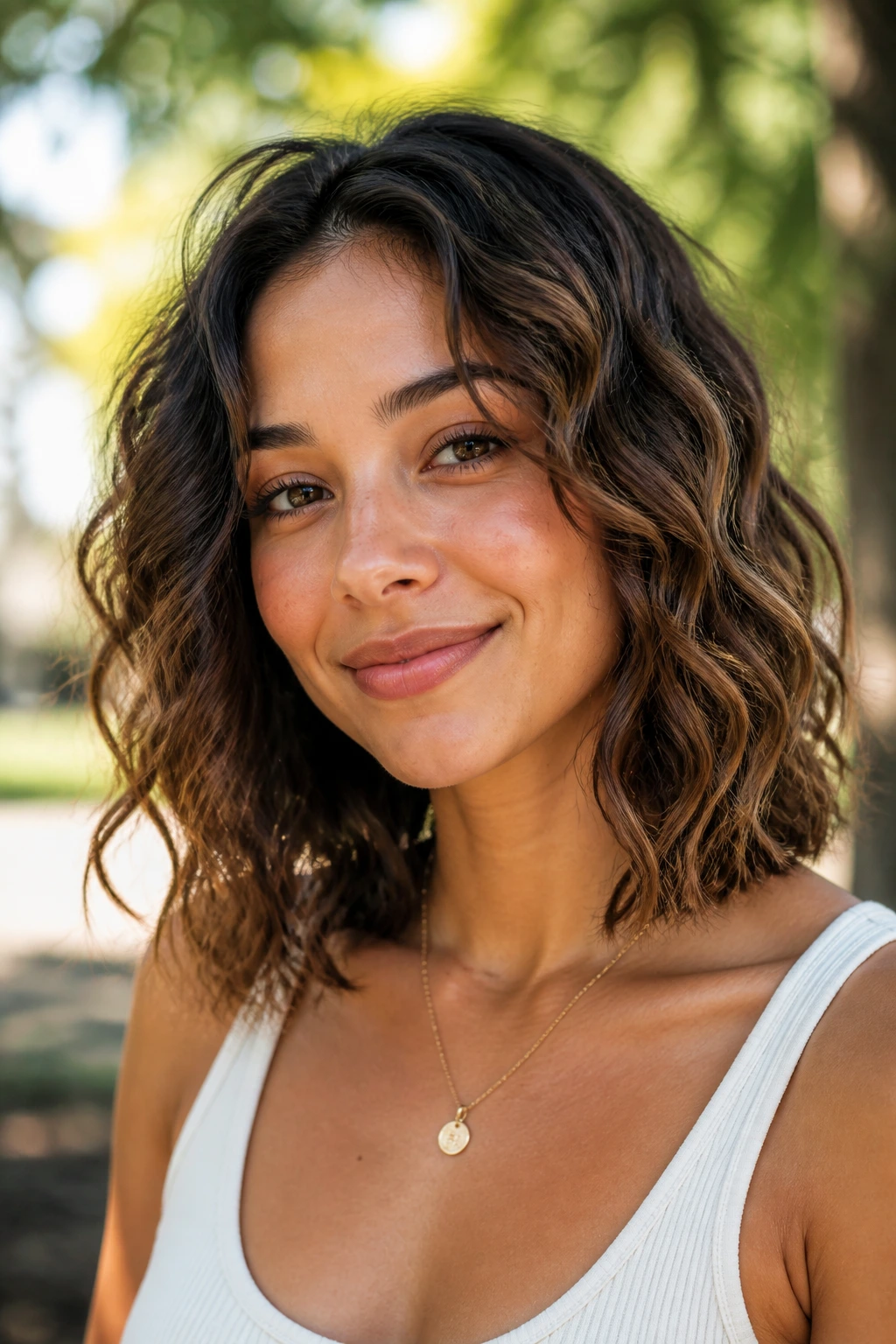
Does a lob work if your hair is more wave than curl? Absolutely. In fact, loose waves sometimes need this length more than tighter textures do, because shoulder-length hair can collapse into a flat sheet if it gets too long. A lob keeps the wave pattern visible and stops the ends from looking stringy.
The trick is not to over-layer it. Waves can lose shape fast if the cut is too fragmented. A softly blunt line, a small amount of face-framing, and maybe one low layer near the front often do the job better than anything dramatic.
The result is easy movement. The hair bends around the shoulders instead of hanging from them.
If your waves go from loose to slightly fluffy in humidity, this length also gives you more control. You can scrunch, diffuse for a few minutes, and still walk out with a shape that looks deliberate.
15. The Coily Curly Lob
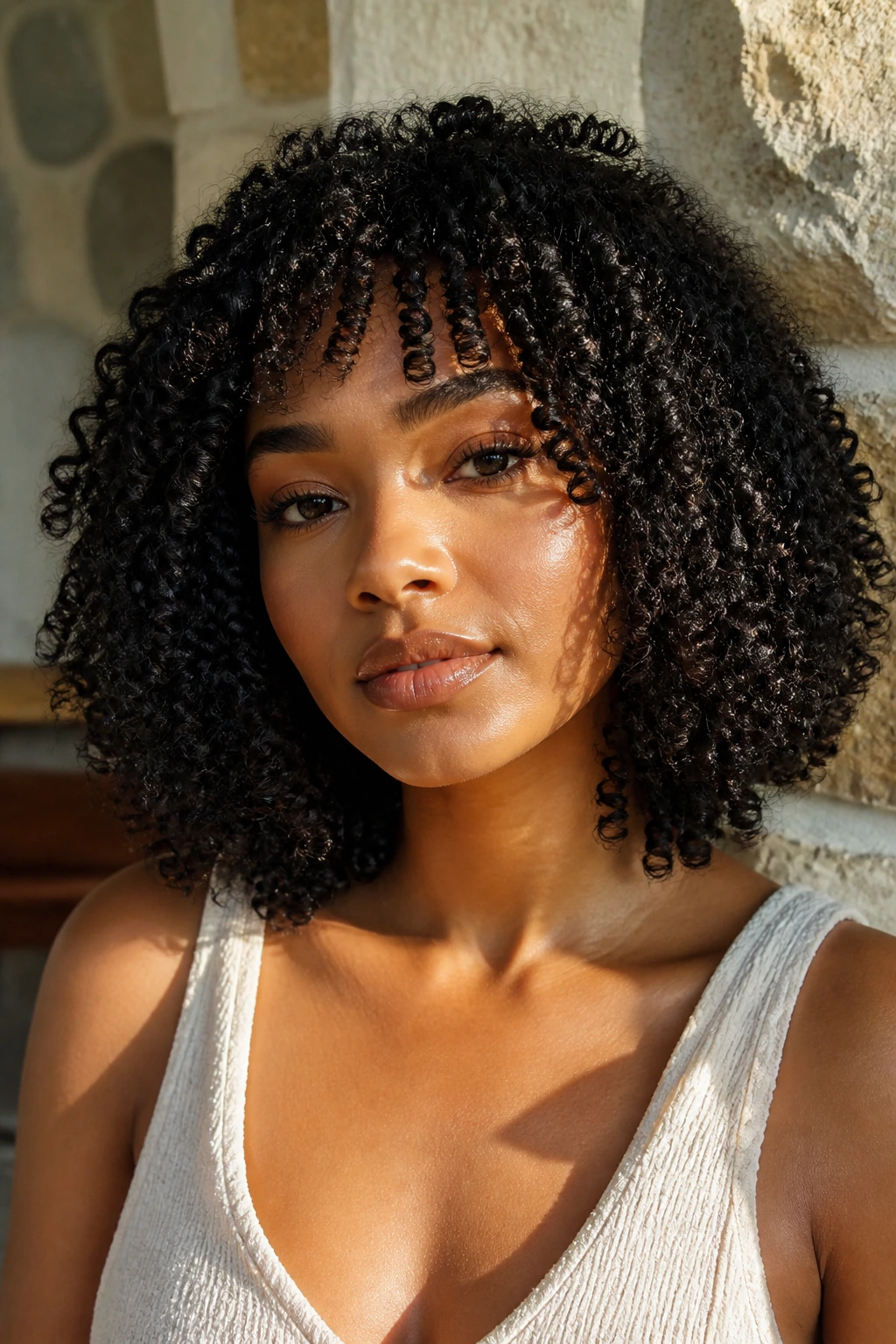
Coily hair changes the game because shrinkage is not a side note — it’s part of the cut. A coily lob has to be planned in dry state or at least with real shrinkage in mind, because a two-inch trim can look like much more once the curls tighten up. The best versions keep the shape rounded and the ends healthy, so the hair reads full rather than boxy.
This cut is especially good when the goal is definition without overload. Too many layers can scatter coils and make the outline fuzzier than it needs to be. A careful lob gives the coils a place to gather, which is why the silhouette often looks stronger when the perimeter is left with some weight.
Keep the ends rounded
The end line should feel deliberate. Clean, even, and not over-thinned. If the hem is too narrow, coils can spread out in a way that makes the cut feel unfinished. A rounded edge holds the shape together and helps the coils sit with purpose.
This is one of the most flattering options when you want length, but not drag.
16. The Asymmetrical Curly Lob
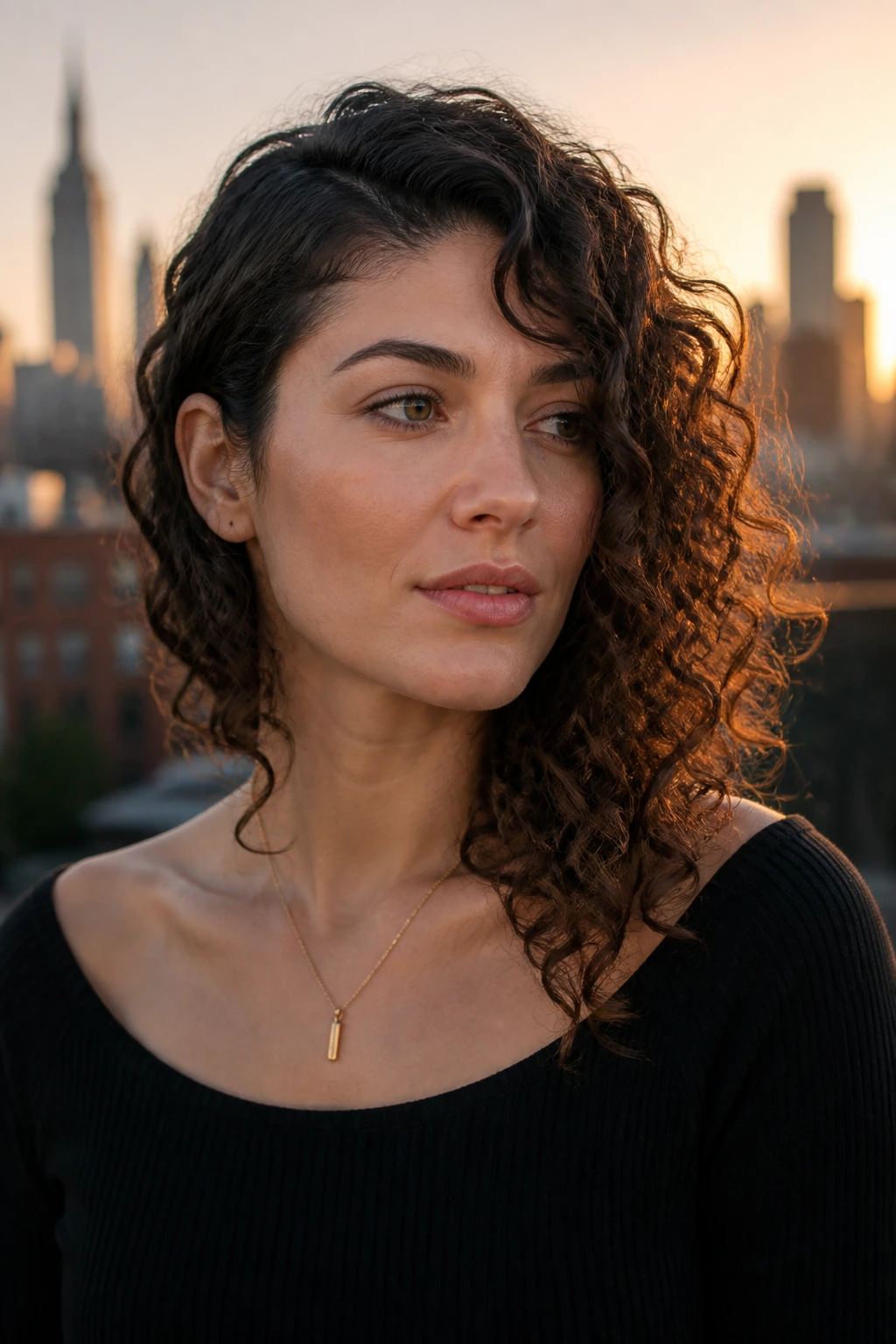
One side longer than the other. Easy to mess up, very satisfying when done right.
An asymmetrical lob brings motion even before the curls start moving. The uneven line makes the eye travel, which is useful if your face shape feels a little too symmetrical or if you want the haircut to have more attitude than a standard lob. Curly texture softens the asymmetry, so the cut reads as interesting instead of harsh.
It’s not the lowest-maintenance option in the pile, though. The shape depends on the line staying visible, and curls can hide that if the cut gets too overgrown. Still, when it’s fresh, it has a lot of energy.
- Works well with a side part or a subtle off-center part.
- Nice for people who want a noticeable change without going short.
- Best when the longer side still lands near the collarbone.
- Needs regular trims so the imbalance doesn’t blur into accident.
This is the cut for someone who wants the lob to say something.
17. The Face-Framing Curly Lob

When a curly lob feels heavy around the jaw, face-framing pieces can fix that in a hurry. The front sections open the face, break up the bulk, and give the curls a clearer path around the cheekbones. It’s especially flattering if your hair tends to hide your features once it reaches shoulder length.
The most useful version keeps the front pieces long enough to blend into the rest of the cut. If they’re too short, they spring up and live a separate life. If they’re too long, the framing disappears. The sweet spot is usually somewhere between the cheekbone and the jaw, depending on shrinkage.
This is one of those cuts that looks casual in a good way. The hair doesn’t scream for attention. It just sits better.
If you’ve been fighting the “all one shape” problem, this may be the simplest answer on the list.
18. The Long-Fringe Curly Lob

A long fringe gives you the softness of bangs without the constant maintenance of a short cut. It lands somewhere between a curtain bang and a face-framing layer, and it works well when you want the forehead softened but not hidden. On curly hair, the longer fringe is usually easier to live with because it can be split, tucked, or allowed to spring into place on its own.
The cut looks best when the fringe blends into the front sides instead of sitting like a separate piece. That blend keeps the bounce consistent from root to hem. If the fringe is cut too straight across, it can fight the rest of the curl pattern and feel like an afterthought.
I like this on people who want a lob with a little drama but not the commitment of a full bang. It gives shape near the face and still keeps the rest of the cut light.
Small detail. Big difference.
19. The Root-Lift Curly Lob
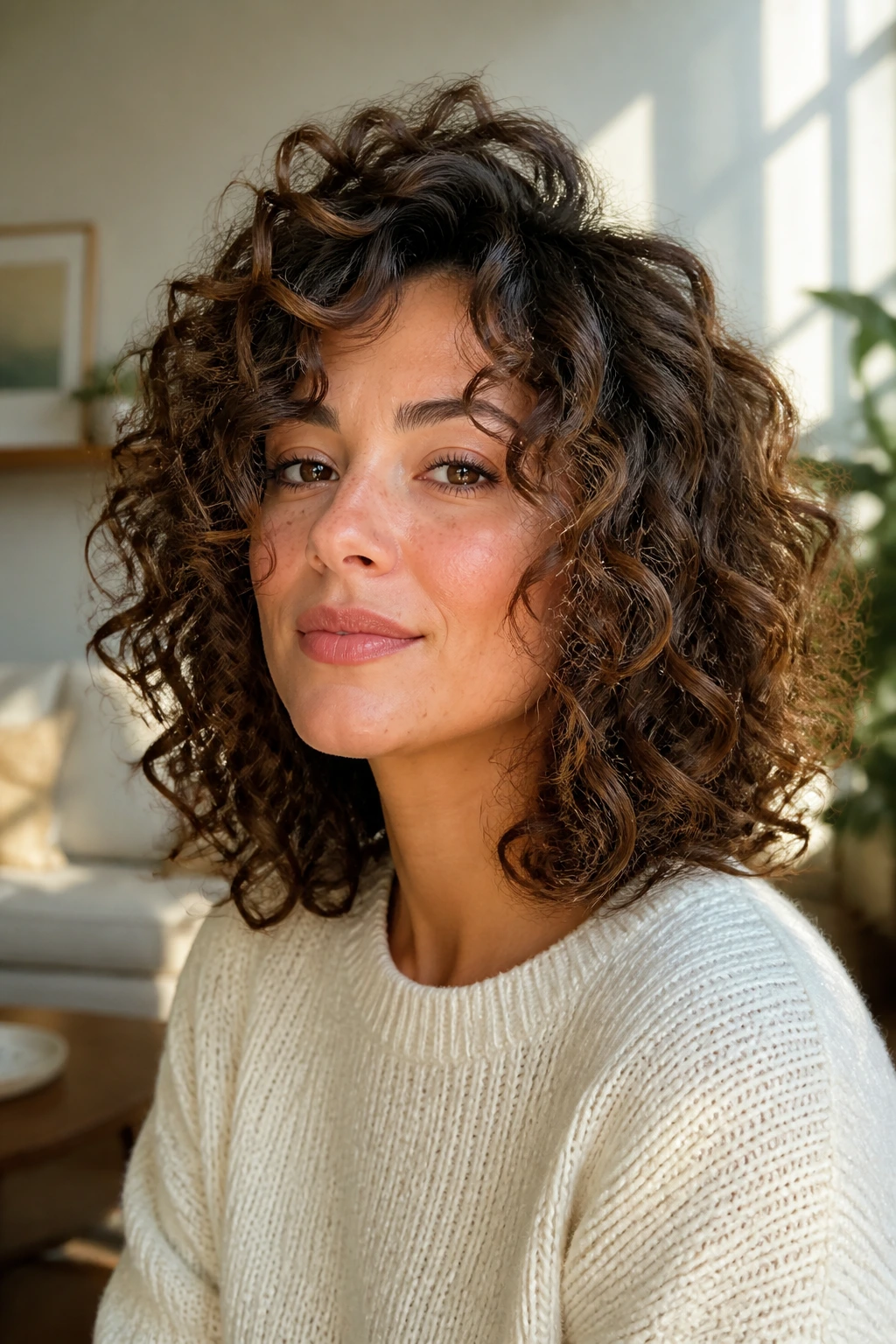
What makes a lob look buoyant instead of heavy? Usually the crown.
A root-lift lob is shaped to encourage volume at the top without flaring the sides too much. That might mean a few strategic layers near the crown, a slightly shorter top section, or a perimeter that doesn’t overpower the roots. The goal is lift, not puff. There’s a difference, and it shows.
This cut is especially handy if your curls flatten at the scalp while the ends stay big. The haircut itself can rebalance that by shifting some visual weight upward. The shape feels fresher, lighter, and more upright.
What to ask for
Tell the stylist you want lift at the crown, but not a lot of width around the midline. That wording helps prevent the classic over-layered triangle. If your hair is dense, this can be a lifesaver.
It’s the kind of lob that looks awake even on a tired morning.
20. The Low-Maintenance Grow-Out Curly Lob

Some cuts are designed to look fresh on day one. This one is designed to still look decent six weeks later.
A grow-out-friendly lob keeps the layers soft, the hem slightly rounded, and the shape loose enough that a little length gain doesn’t ruin the line. That makes it a smart pick if you don’t want a haircut that needs constant babysitting. The curls can shift, fluff, and relax a bit without the whole style falling apart.
The secret is balance. Too many short layers grow out unevenly. Too blunt a line can feel heavy fast. A soft lob sits between those extremes and gives you more room to live your life between trims.
If you like waking up, shaking out your curls, and going, this is the cut that respects that habit.
What to Look for in a Styler When Your Lob Needs Bounce
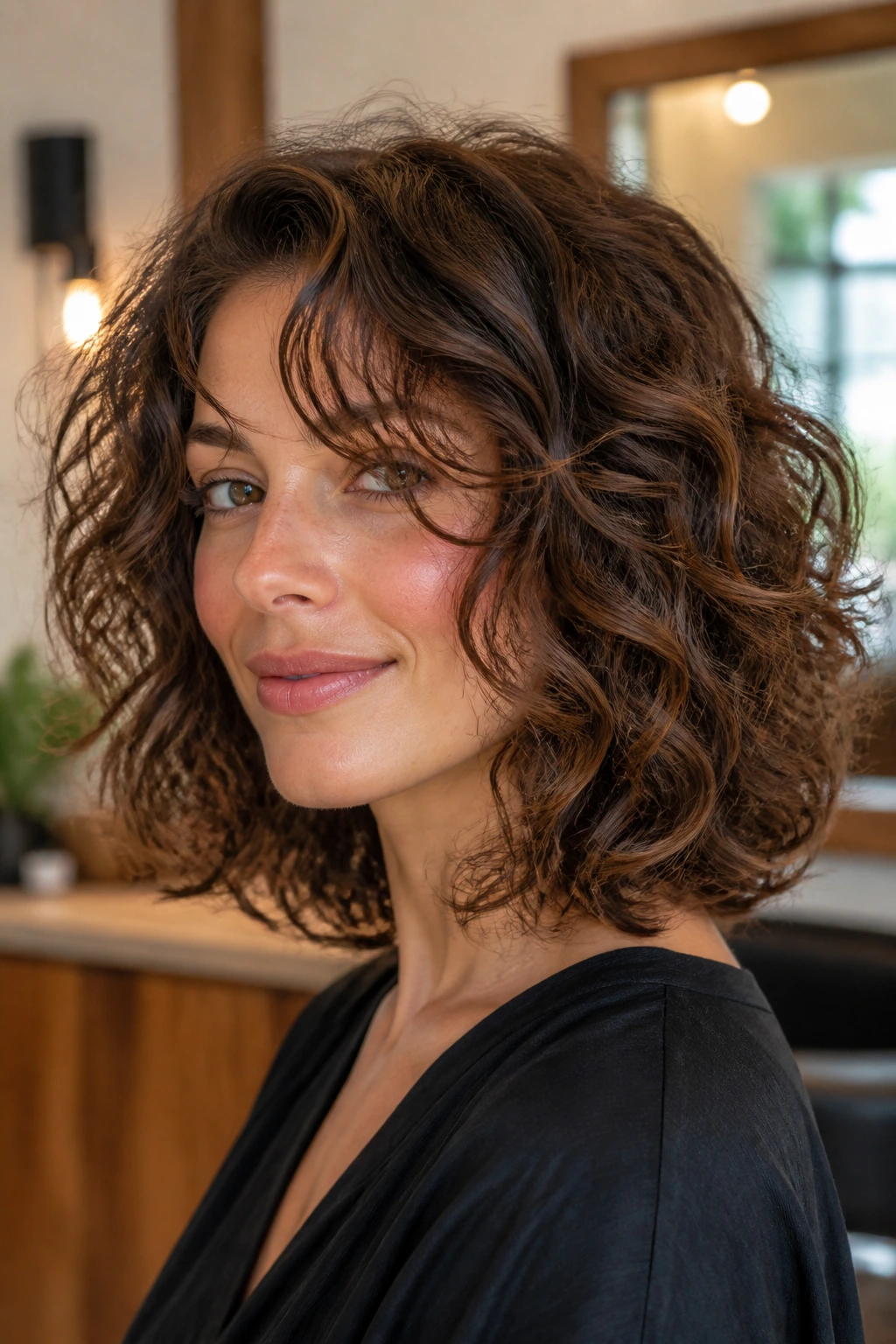
The wrong product can flatten a great cut in one pass. Heavy creams, oily butters, and sticky gels all have their place, but they do not all belong on every curly lob. Fine curls usually need lighter formulas — mousse, foam, or a thin leave-in — because dense creams can weigh the ends down before they’ve had a chance to spring.
Hold matters more than shine. A lob with natural bounce needs structure at the root and memory through the mid-lengths. That’s where a flexible gel or a mousse-gel combo can help. The goal isn’t crunchy helmet hair. It’s a cast that breaks cleanly once the hair is fully dry, leaving behind curls that keep their shape.
Ingredient weight shows up faster on shoulder-length hair. A product that looks harmless in the palm can still drag the cut down by afternoon if it’s full of heavy oils or waxy butters. If your curls go limp halfway through the day, switch to lighter formulas and see whether the cut starts behaving differently. Often it does.
A small amount goes farther than people think. With a lob, you’re coating less hair than with a long cut, so start small. Emulsify the product in wet hands, scrunch from ends to mid-length, and leave the crown lighter unless you need root control. That keeps the bounce where you want it.
Essential Tools for Styling and Maintaining a Curly Lob
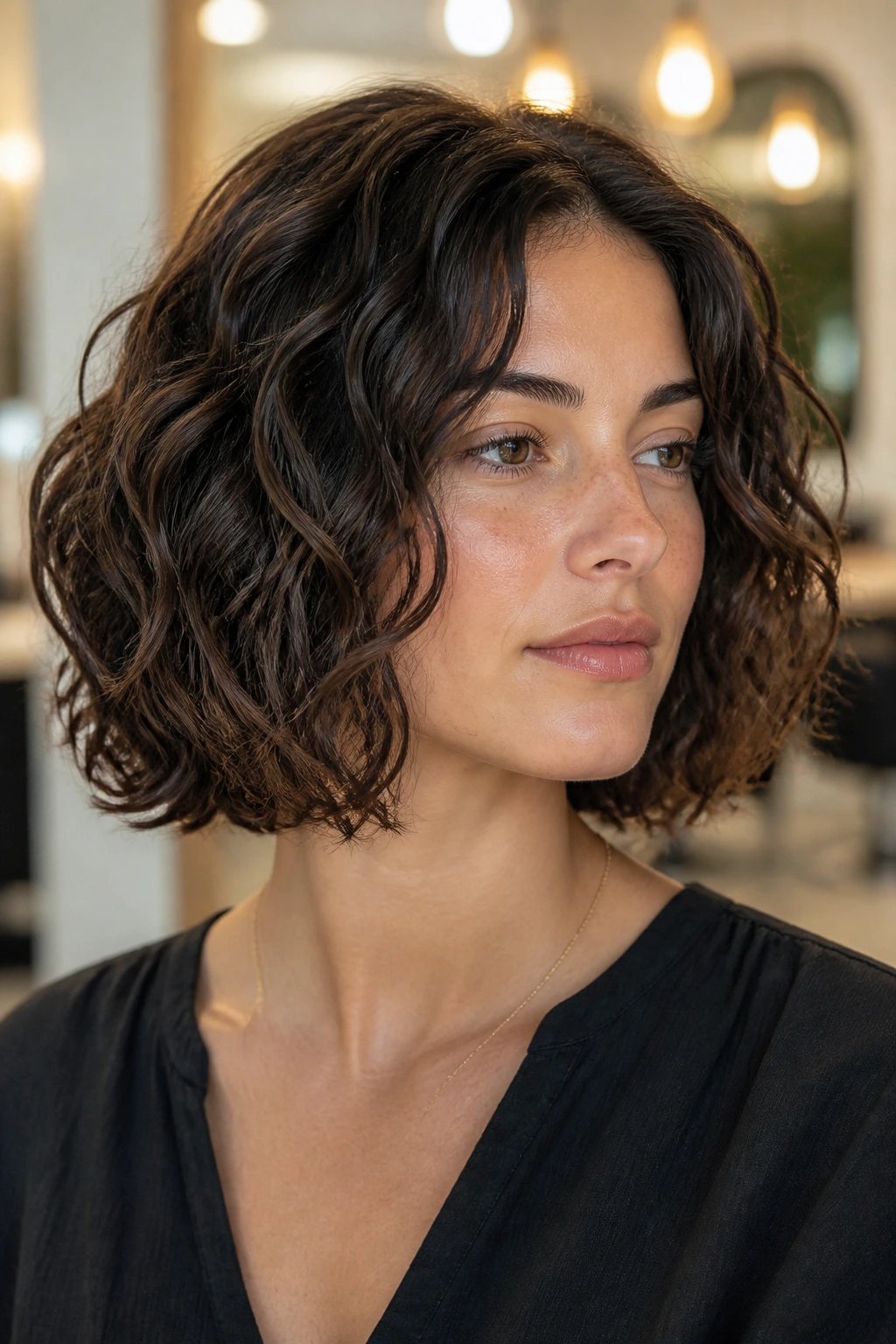
- Wide-tooth comb: Best for detangling in the shower without stretching out the curl pattern.
- Microfiber towel or cotton T-shirt: Cuts down on rough frizz when you blot water from the hair.
- Diffuser attachment: Helps set the curl shape and lift the roots without blasting them flat.
- Duckbill or sectioning clips: Useful for clipping the crown while it dries so the top doesn’t collapse.
- Spray bottle: A little water can revive a lob faster than a full rewash.
- Tail comb: Handy for clean parts, especially if you wear a center or deep side part.
- Lightweight mousse or foam: Great for lift on finer curls and soft hold on looser waves.
- Flexible-hold gel: Helps curls keep their shape once the hair dries.
- Satin bonnet or pillowcase: Keeps the ends from rubbing into a frizzy knot overnight.
How to Ask for Curly Lob Haircuts at the Salon
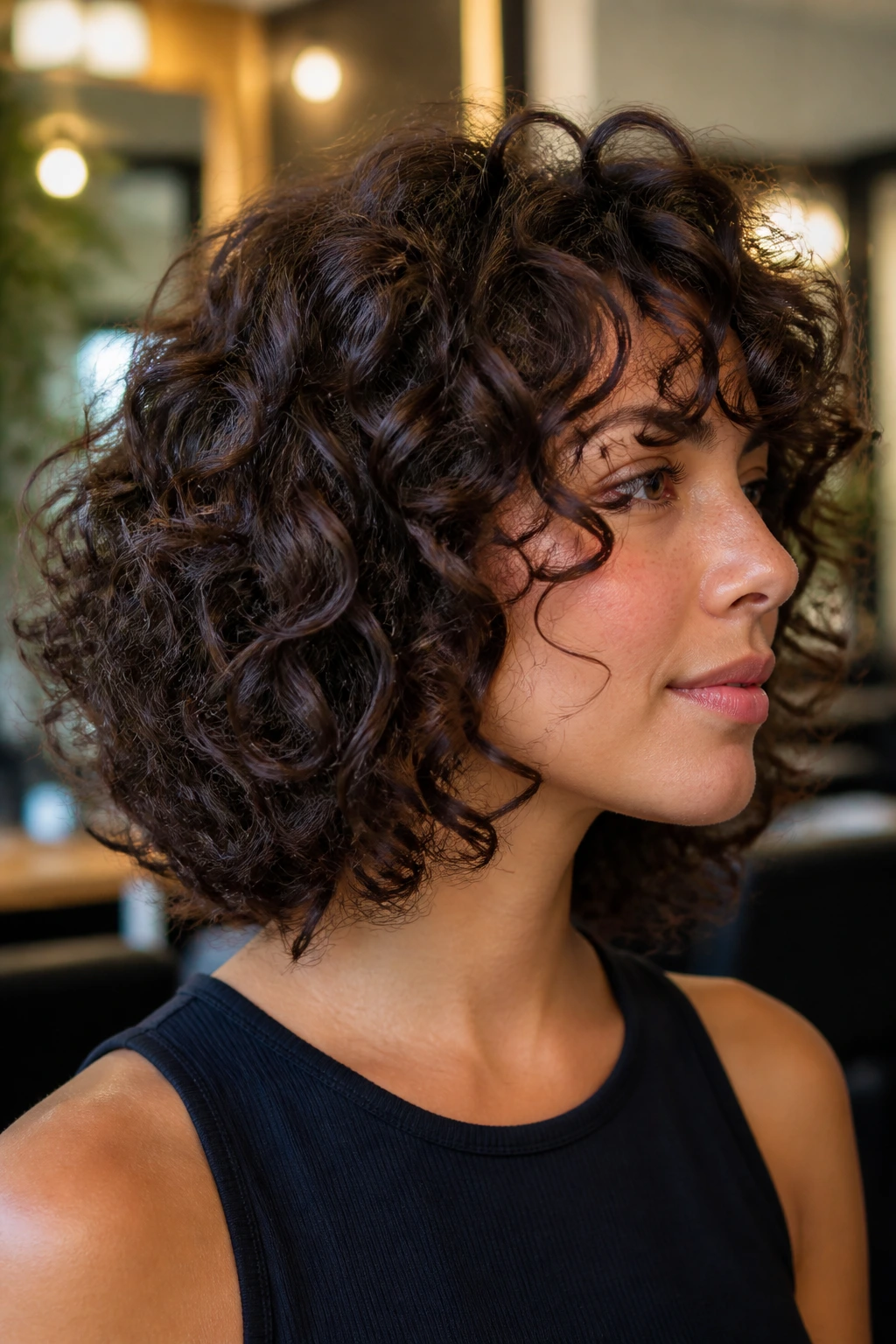
Bring photos, but bring the right photos. The best reference is not a curl pattern that matches yours perfectly — those are hard to find. The better reference shows the shape you want: blunt, rounded, shaggy, angled, or face-framing. A good stylist can translate silhouette faster than a thousand saved screenshots with impossible lighting.
Talk in shrinkage, not just inches
A curly lob that lands at the collarbone wet may sit at the chin dry. Say how your curls behave after wash day, and don’t be shy about the weird bits. If one side springs higher, say that. If the crown collapses while the ends puff up, say that too. That information matters more than a vague “take a little off.”
Ask where the longest curl should fall
That single question keeps the cut honest. Once the stylist answers with a specific point — jaw, collarbone, top of shoulder — you both know what the haircut is trying to do. No guessing. No surprise bob.
Mention how you actually wear your part
Middle part, side part, off-center. Curly hair changes shape with the part line, and the cut should respect that. If you always wear a deep side part but ask for a perfectly symmetrical shape, the result can feel off the second you leave the chair.
How to Style a Curly Lob Without Killing the Lift
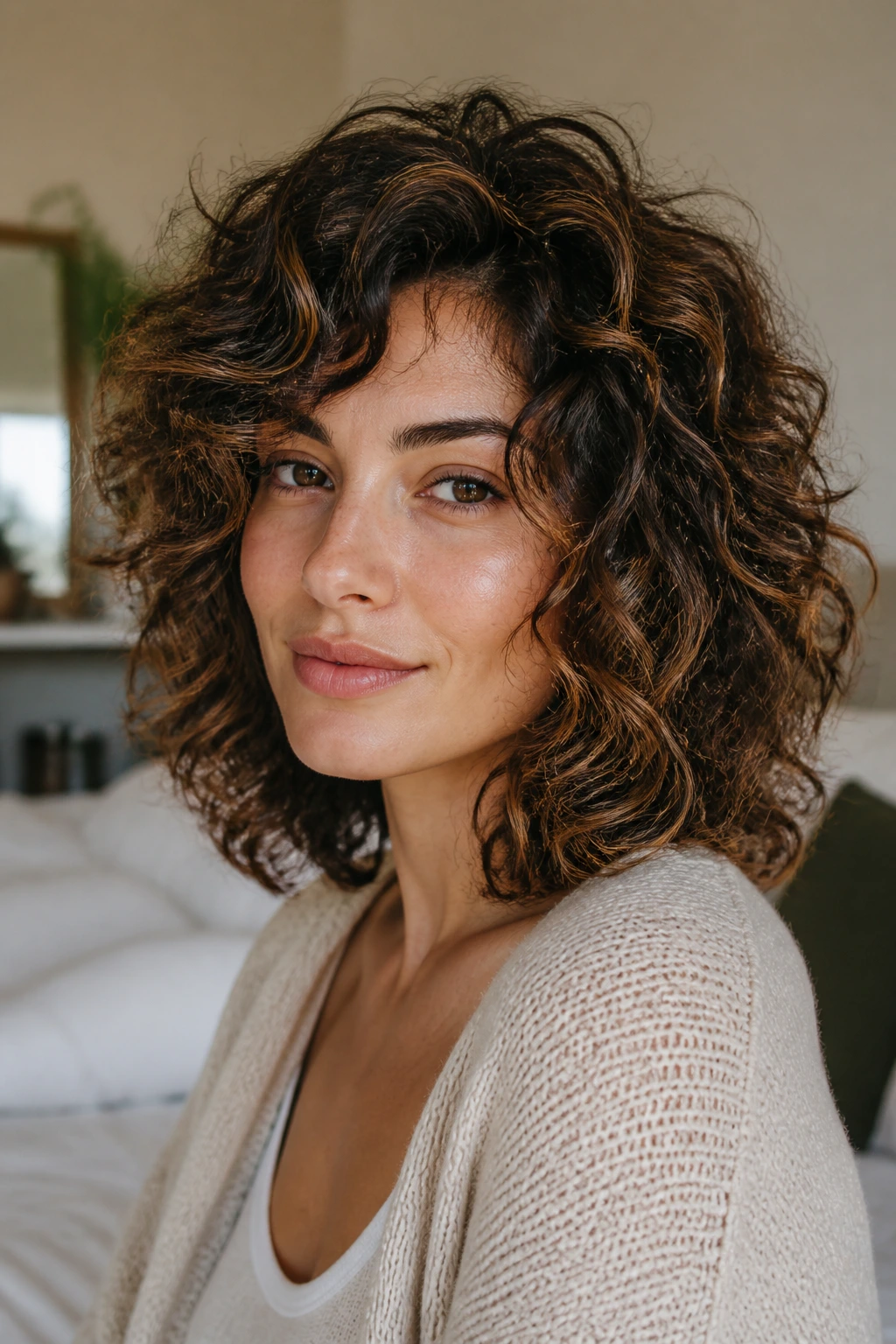
Wash day: Start with soaking wet hair and use less product than you think. A curly lob doesn’t need a thick coat to look finished, and too much cream is one of the fastest ways to drag the ends down. Scrunch upward, then stop touching it.
Diffuse or air-dry with the crown clipped up: The crown is where bounce either starts or dies. A couple of clips at the root while the hair sets can make a blunt difference in volume. If you diffuse, keep the airflow moving and stop when the hair is about 80 to 90 percent dry. Letting it finish on its own helps avoid that puffy, overhandled look.
Refresh day: Mist the hair with water, smooth a pea-sized amount of leave-in over the frizzy sections, and re-scrunch the ends. Don’t wet the entire head unless it really needs it. Most curls only need the top layer woken up.
Night care: Pineapple the hair loosely or tuck it into a satin bonnet. If the lob is short enough that the ends escape, use the pillowcase backup. Night friction is one of the easiest ways to wreck a good shape, and the fix is annoyingly simple.
Common Mistakes That Flatten the Shape

- Cutting too much weight from the ends: The curl may spring up, but the perimeter can turn stringy. Ask for balanced weight removal, not aggressive thinning.
- Ignoring shrinkage: If the cut is planned on stretched hair only, the lob can land much shorter than you wanted. Talk in dry length, not wishful thinking.
- Using heavy creams on fine curls: The shape can collapse by noon. Switch to mousse or a lighter gel if the ends sit flat.
- Letting the crown go limp: A flat top makes even a good lob look tired. Clip the roots, diffuse at the scalp, or use a little volume product there.
- Over-layering dense curls: Too many short pieces can create halo frizz and a broken outline. Keep the layers long and intentional.
Variations and Alternatives to Try

Longer Collarbone Sweep: Keep the lob a little longer in front and let it skim the collarbone in back. This works if you want some ponytail length and less drama around the face. It’s the safest move for first-timers.
Shorter Shoulder Flip: If your curls are dense and you want more bounce, go a little shorter so the ends clear the shoulders. Hair that sits on the shoulder line can kick outward in odd ways, and that shorter length avoids the constant flip.
Fringe-Free Frame: Skip bangs and keep the front layers long enough to frame the face on their own. This is the least fussy option if you want movement but do not want to think about fringe styling every morning.
Rounded Halo Shape: Lean into a soft dome around the head with minimal angle in the front. This gives the curls a fuller, more polished outline and works beautifully on coils and strong ringlets.
Loose Shag Drift: If you want more piecey movement, add a few more layers through the sides and crown. The haircut will feel looser, a little less tidy, and a lot more casual.
Maintenance, Trims, and Between-Wash Care

A curly lob usually needs a trim every 8 to 12 weeks if you want the shape to stay readable. If the cut is blunt or angled, stay closer to the 8-week side. If it’s softer and more layered, you can often stretch to 10 or 12 weeks before the outline starts drifting.
The collarbone and shoulder line are the trouble spots. Hair that sits there gets rubbed by coats, straps, seat belts, and sleeping positions. That friction shows up as frizz and end breakage faster than people expect, which is why a good lob needs a little maintenance even when it’s “low-maintenance.”
Between washes, a water bottle and a tiny bit of leave-in are usually enough. Mist the outer layer, smooth the frizzy ends with your hands, and clip the crown up for 10 to 15 minutes if you need lift. If the roots stay flat no matter what, the cut may need a little reshaping at the next trim rather than another product.
Night care matters, too. Satin or silk reduces friction, which keeps the ends from getting rough. If you’re roughing it up nightly on cotton, the cut will look older far sooner than it should. Tiny habit. Big effect.
Frequently Asked Questions
What length counts as a curly lob?
Usually anything between the jaw and the collarbone falls into lob territory, but curly hair makes that less exact. The real test is where the hair lands dry, because shrinkage can change the final length by a lot.
Should curly lob haircuts be cut dry or wet?
Dry cutting is often better when the goal is shape control, because the stylist can see how each curl sits. Wet cutting can work too, but only if the stylist knows how your curls shrink and adjusts for it.
Do curly lob haircuts work for fine hair?
Yes, but the cut needs to stay light. Fine curls usually do better with minimal layers, a strong perimeter, and lighter styling products so the shape doesn’t collapse.
Will a lob make thick curly hair look bulky?
It can, if the weight isn’t removed in the right places. Thick curls usually need internal layering or a rounded shape so the bottom doesn’t feel like a shelf.
How do I stop the triangle shape?
Usually by moving some weight out of the bottom and keeping lift at the crown. A rounded, layered, or invisible-layer lob tends to help more than a blunt cut with no shaping.
Can I wear a middle part with a curly lob?
Absolutely. A middle part gives symmetry, but it works best when the front layers are long enough to fall softly instead of hanging straight down. If the center part makes your roots flop, clip the crown while drying.
How often should I trim a curly lob?
Most shapes stay sharp with trims every 8 to 12 weeks. If the hem gets fuzzy quickly or the angle starts disappearing, go sooner rather than later.
What if my curl pattern is uneven from side to side?
That’s normal, and the cut should account for it. A dry cut, or at least a stylist who works curl by curl, can balance the sides so you don’t have one half of your head sitting an inch higher than the other.
The Shape That Keeps Curls Moving
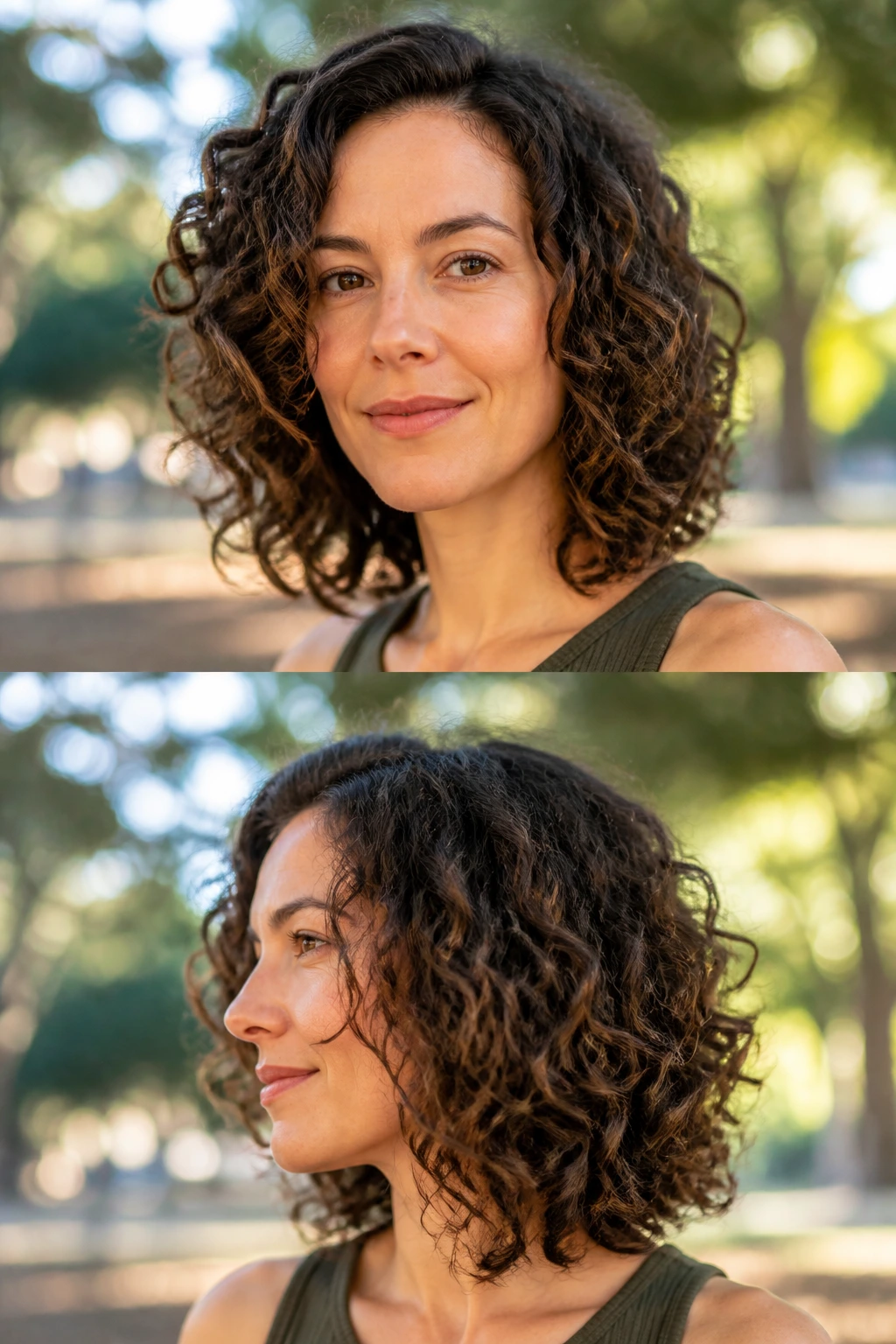
A good curly lob does not fight your texture. It gives the curl pattern room to breathe, then quietly holds it together so the shape looks deliberate from the front, the side, and the back. That’s why this length keeps winning: it fixes heaviness without stripping away the length people still want.
The best part is how personal it can be. Blunt, rounded, shaggy, angled, face-framing — the same basic cut can lean polished or messy, soft or bold, low-key or sharp. If you’ve been living in a shape that feels too long to bounce and too short to do anything with, this is the length where the whole thing starts to make sense.
