



A lob haircut with curtain bangs does one of the few honest things a haircut can do: it looks planned even when you’ve barely touched it. The length sits in that useful middle ground — long enough to tuck behind the ears, short enough to swing at the collarbone, and tidy enough to keep shape without asking for a full salon blowout every morning.
The curtain bang is the piece that changes the whole mood. Split in the center, longer at the sides, and soft around the cheekbones, it takes the bluntness out of a long bob without making the cut feel fussy. Done well, it opens the face instead of closing it off. Done badly, it sits there like a shelf. The difference is usually a few millimeters, a bit of layering, and whether the fringe was cut to live on your actual head rather than on a damp towel in a chair.
What makes this pairing so useful is range. Straight hair can look crisp. Wavy hair can look lived-in. Thick hair can lose weight without losing its line. Fine hair can keep enough perimeter to feel fuller. The cut is not one note at all, and that’s the fun part. Some versions feel sharp and clean, some feel breezy and undone, and some look like they were borrowed from a very expensive old movie — which is to say, from the kind of cut people remember without quite knowing why.
Why Lob Haircuts With Curtain Bangs Keep Working

Face-framing without a hard line: The lob keeps enough length to stay versatile, while the curtain bangs break up the forehead and cheek area without chopping the face in half.
The shape grows out cleanly: A long bob can soften for weeks before it starts looking shaggy, and curtain bangs blend into face-framing pieces instead of turning into a blunt fringe you regret.
It suits more textures than people think: Straight, wavy, curly, coarse, and fine hair all can wear the cut — the trick is adjusting the perimeter, layers, and bang length to the texture.
It styles up or down fast: A quick round-brush bend, a flat-iron wave, or a simple air-dry with cream or mousse can shift the mood without changing the haircut itself.
It keeps the neck and jaw visible: That little bit of exposure matters. The cut still feels light around the face, even when the rest of the hair has real density and weight.
1. Blunt Collarbone Lob With Long Curtain Bangs
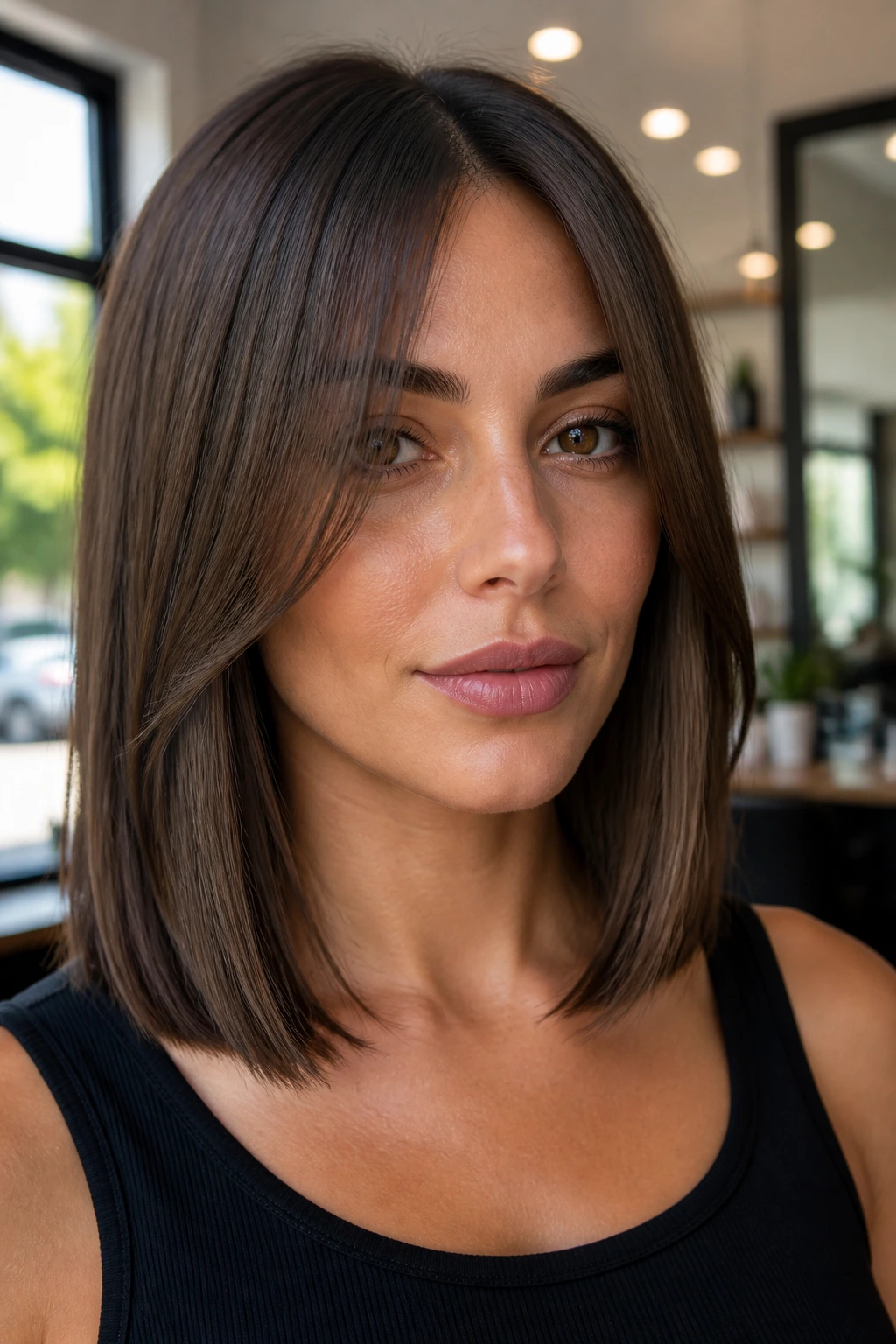
A blunt lob is the version I trust when someone wants the haircut to look denser than it is. The straight perimeter lands near the collarbone, the ends look clean rather than wispy, and the curtain bangs stay long enough to graze the cheekbones instead of stopping awkwardly at the forehead.
Why the blunt line matters
The blunt edge gives the hair a clear finish. Fine hair gets the biggest lift from this, because the line makes the whole cut read fuller at a glance. The curtain bangs should not be too short here; let them start around the bridge of the nose and taper down so the front pieces feel deliberate, not chopped.
If you want a haircut that can go sleek one day and bent-wavy the next, this is the one. It handles a middle part cleanly, but it also looks good when the front pieces are tucked behind one ear and the fringe is brushed open.
- Best for: fine to medium hair that needs a stronger outline
- Ask for: a blunt perimeter at collarbone length, with curtain bangs that angle down to the jaw
- Styling note: a 1.5-inch round brush keeps the bend soft, not puffy
- Watch out for: bang sections cut too short while wet; they spring up
Tip: keep the shortest point of the fringe a touch longer than your first instinct. Dry hair lifts the bang, and you want the open middle to fall naturally.
2. Soft Layered Lob With Feathered Curtain Bangs
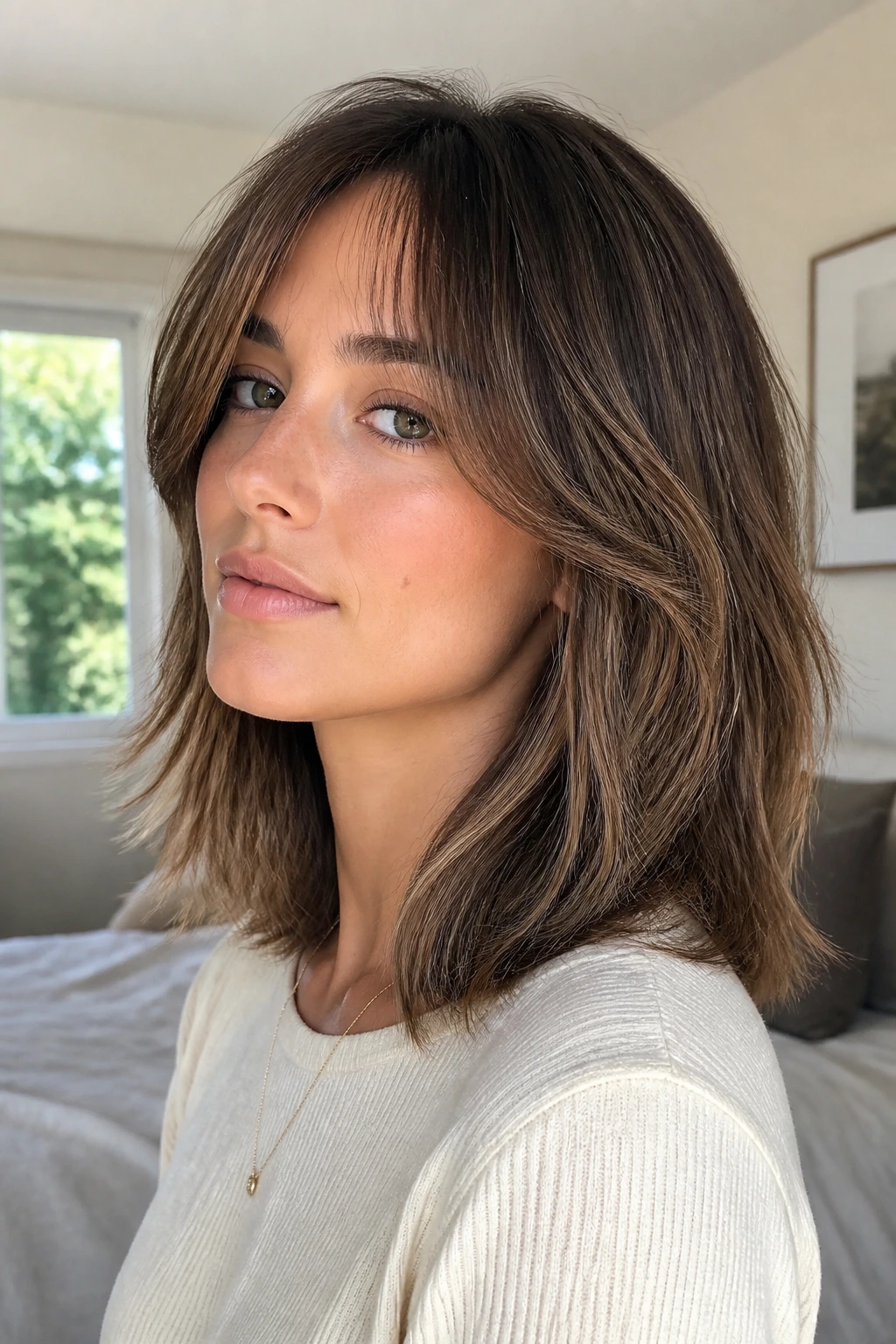
This is the version for people who hear “lob” and think “I still want movement.” The shape stays shoulder-grazing, but soft layers are cut through the body so the ends don’t hang like one heavy curtain. The bangs are feathered, which means they melt into the sides instead of sitting as a separate front section.
There’s a nice bit of restraint here. Too many layers can make a lob look thin at the bottom. Too few can make the curtain bangs feel disconnected. The sweet spot is just enough internal shaping to let the hair swing when you turn your head.
I like this cut on thick or medium-density hair that feels blunt cuts too boxy. It keeps the perimeter visible, but the feathering gives the whole style a little air. When styled with a blow-dryer and a medium round brush, the fringe folds away from the face in a way that looks easy, even if it took twelve minutes and a small amount of patience.
3. Wavy Lob With Split Curtain Fringe
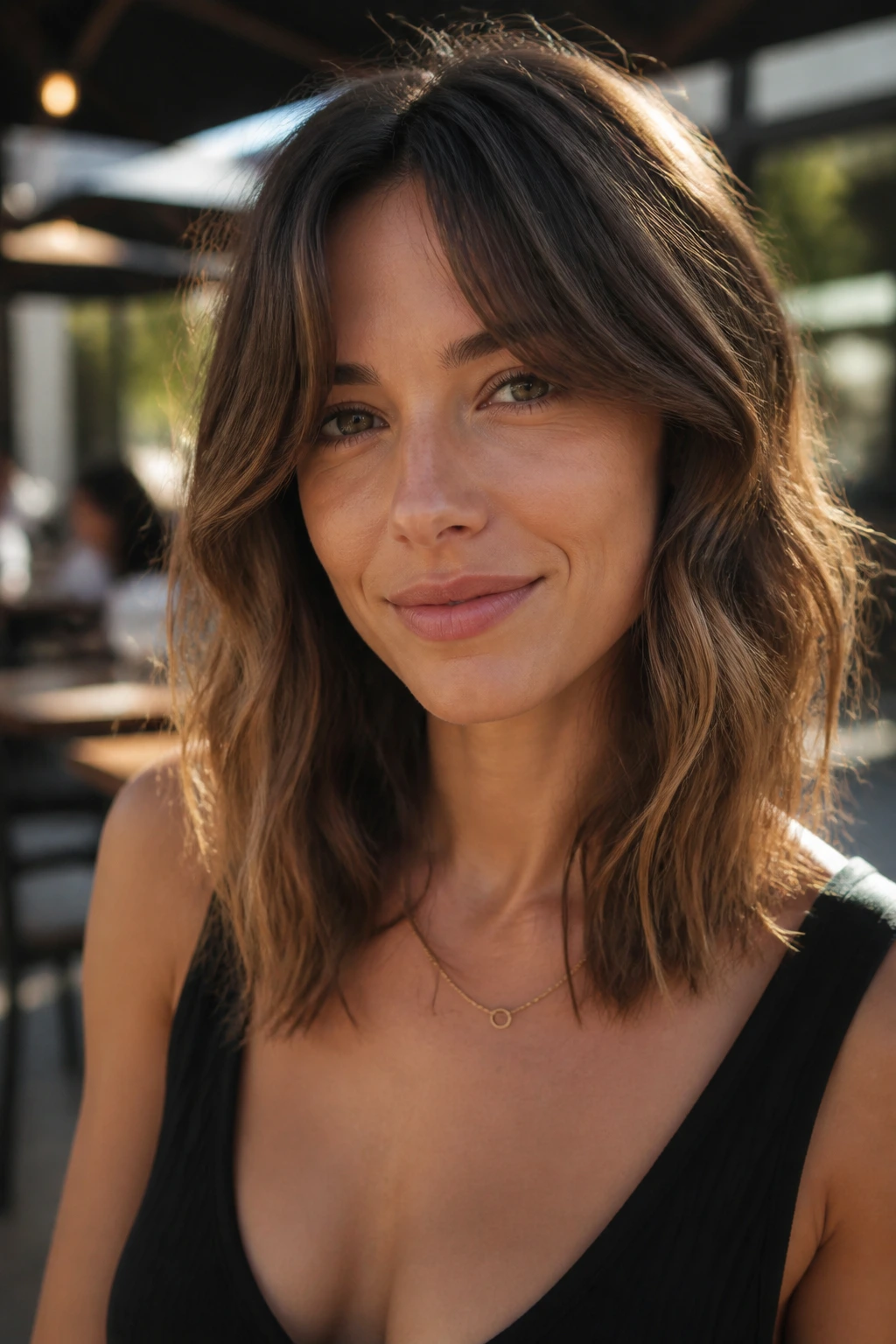
What if your hair already bends on its own and refuses to act straight? Use that. A wavy lob with curtain bangs feels right when the waves are allowed to do the work instead of being ironed flat and then re-curled into obedience.
How to get the bend
The best version keeps the lob a little longer in the front so the wave has room to move. The curtain bangs should be layered softly and left long enough to curl away from the face instead of puffing straight out. If your wave pattern is loose, a diffuser can help shape the front; if it’s more of a bend than a curl, a quick twist with a flat iron is enough.
This cut is useful because it looks good on its own. Air-dried hair won’t feel unfinished. That matters. A lot of waves turn messy at the root when they’re forced into a blunt shape, but the split fringe gives this one a built-in direction.
- Good for: natural waves that look limp with one-length cuts
- Styling product: a light mousse or wave cream, not a heavy curl butter
- Length note: keep the lob at or just below the collarbone so the waves don’t balloon
- Result: soft, undone, and a little cheeky without trying too hard
4. Sleek Center-Part Lob With Polished Curtain Bangs
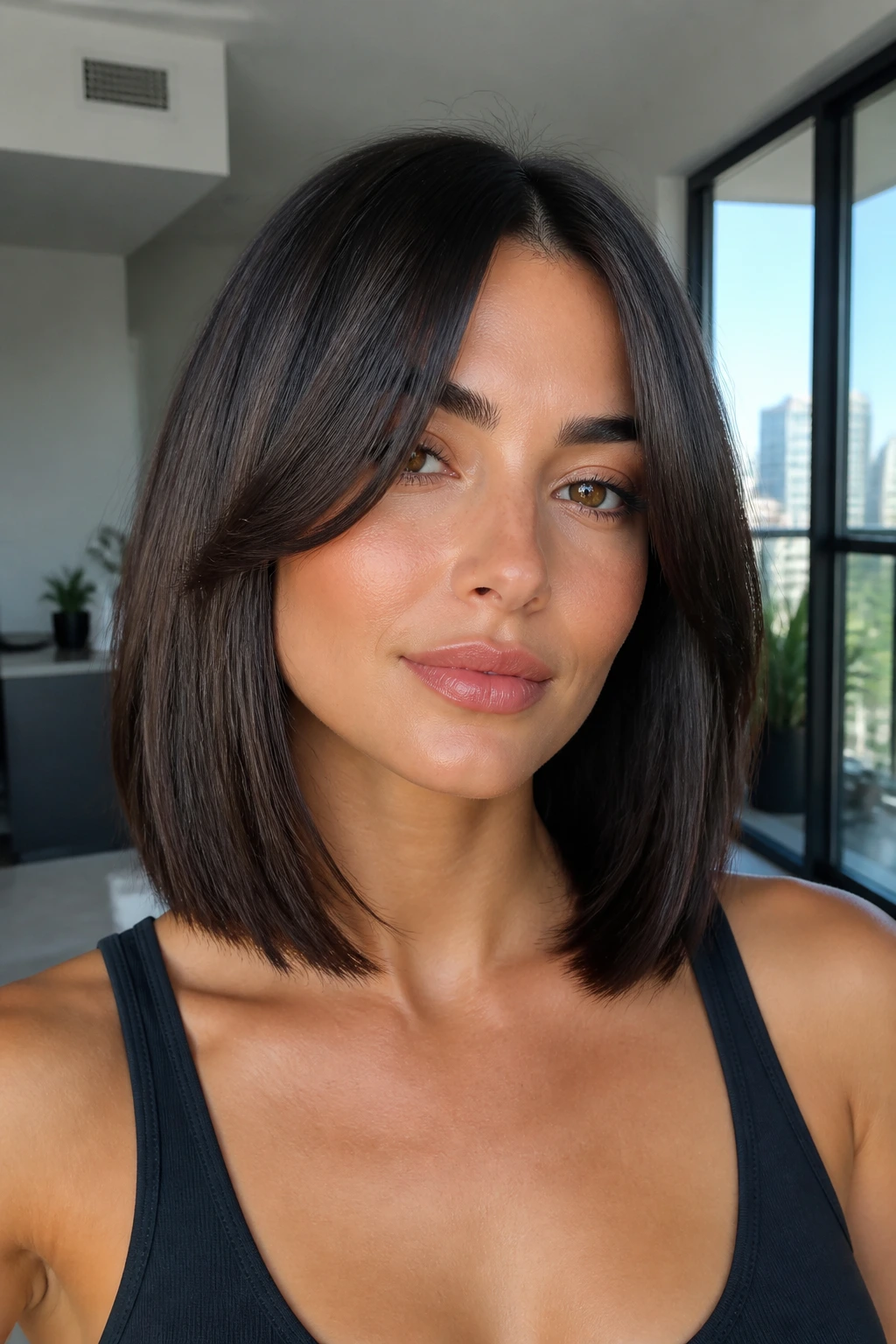
A sleek lob with curtain bangs looks best when the cut itself is tidy enough to survive a crisp finish. Picture a center part, a smooth surface, and a fringe that folds back from the face in one clean sweep. It’s the version that works with sharp collars, earrings, and straight lines in your clothes.
The bangs matter more here than anywhere else. If the curtain fringe is too short, the sleek look turns severe. If it’s too wispy, the whole thing loses weight. The better move is to keep the shortest point near the cheekbone and let the outer pieces reach toward the jaw.
This is also one of the easier cuts to keep polished between washes. A small flat iron pass at the front — not the whole head, just the face frame — can reset the shape in under five minutes. The rest can stay flat or barely bent, which is handy when you want the haircut to look intentional without acting like it needs a red-carpet team.
5. Shaggy Lob With Piecey Curtain Fringe

Shaggy does not have to mean sloppy. On a lob, it just means the layers are broken up enough to move, and the curtain bangs are separated into soft pieces instead of one solid sheet across the forehead. That piecey fringe gives the cut its attitude.
The trick is balance. If the shag is too aggressive, the lob loses its outline and starts looking triangular. If it’s too restrained, you end up with a boring shoulder-length cut that only pretends to have personality. The best versions keep some weight at the ends and just enough texture through the crown and face frame.
This cut makes sense on hair that wants to bend and rough up a little. Think second-day texture, a spray mist of dry shampoo at the roots, and a bit of definition through the front pieces. It’s one of those styles that looks better after a day of living in it — which is not a flaw, despite what some polished haircut photos would have you believe.
6. A-Line Lob With Cheekbone-Skimming Bangs
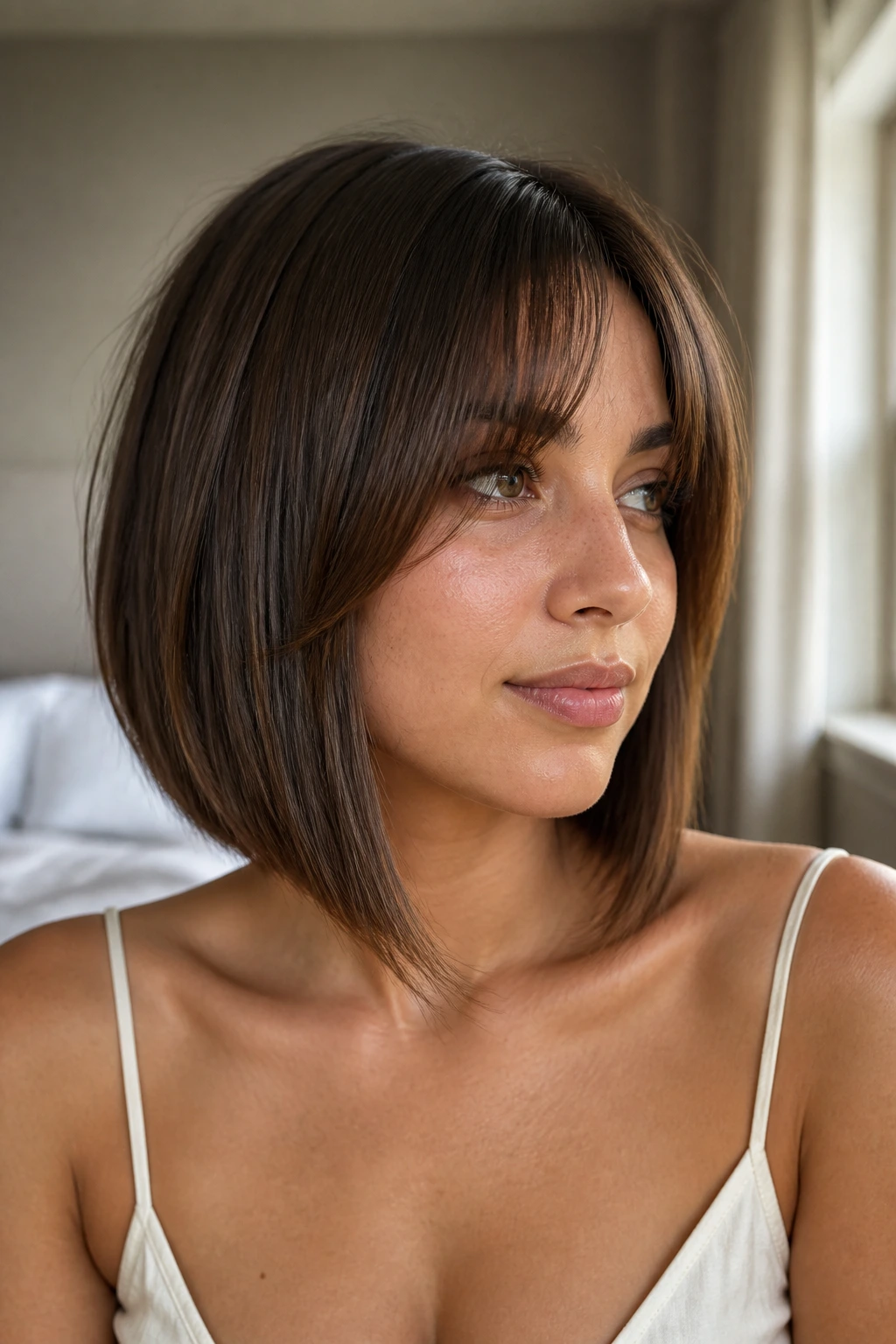
Unlike a blunt lob, an A-line version is slightly longer in front and a little shorter at the back. That tiny shift changes the whole silhouette. It creates forward movement, which is useful when you want the face to look lifted and the neckline to stay visible.
The curtain bangs here should follow that same direction. Let the shortest part land around the cheekbone, then taper the sides so they slide into the longer front pieces. A hard, straight bang would fight the shape. Softness is the point.
I like this cut for people who wear their hair tucked behind one ear a lot. The front pieces still swing forward when released, and the back stays neat without needing a lot of styling. It’s a quiet haircut, really. Not bland. Just smart.
7. Choppy Lob With Broken-Up Curtain Fringe
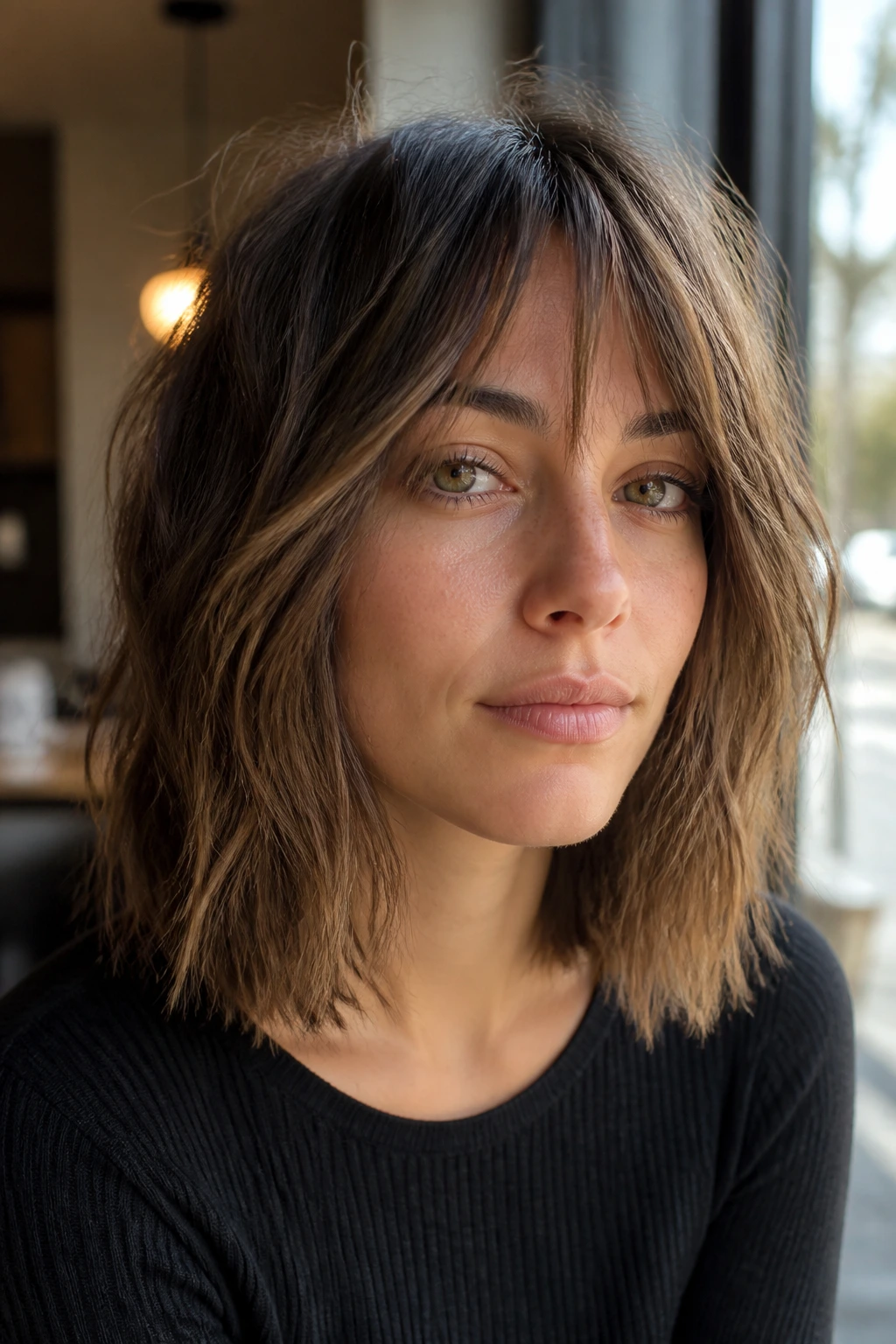
Choppy can be very good, or very annoying. The difference is whether the texture is placed with a purpose. On a lob, choppy ends create movement; on the fringe, broken-up curtain pieces keep the front from looking like a clean salon swoop that only works for three minutes.
The haircut suits people who hate the feeling of hair sitting too flat against the head. A little irregularity at the ends gives the style a lived-in edge, and the curtain bangs help the cut fall around the face instead of hanging straight down. The result is casual, but not careless.
What to ask for
- Rough texture through the ends: enough to break the line, not enough to thin it out
- Curtain bangs that separate naturally: the kind that split on their own after a quick blow-dry
- A collarbone length perimeter: long enough to keep the cut grounded
- Light styling cream: enough to stop frizz, not enough to glue the pieces together
Bottom line: this version is best when you want movement to show before polish does.
8. Curly Lob With Rounded Curtain Bangs
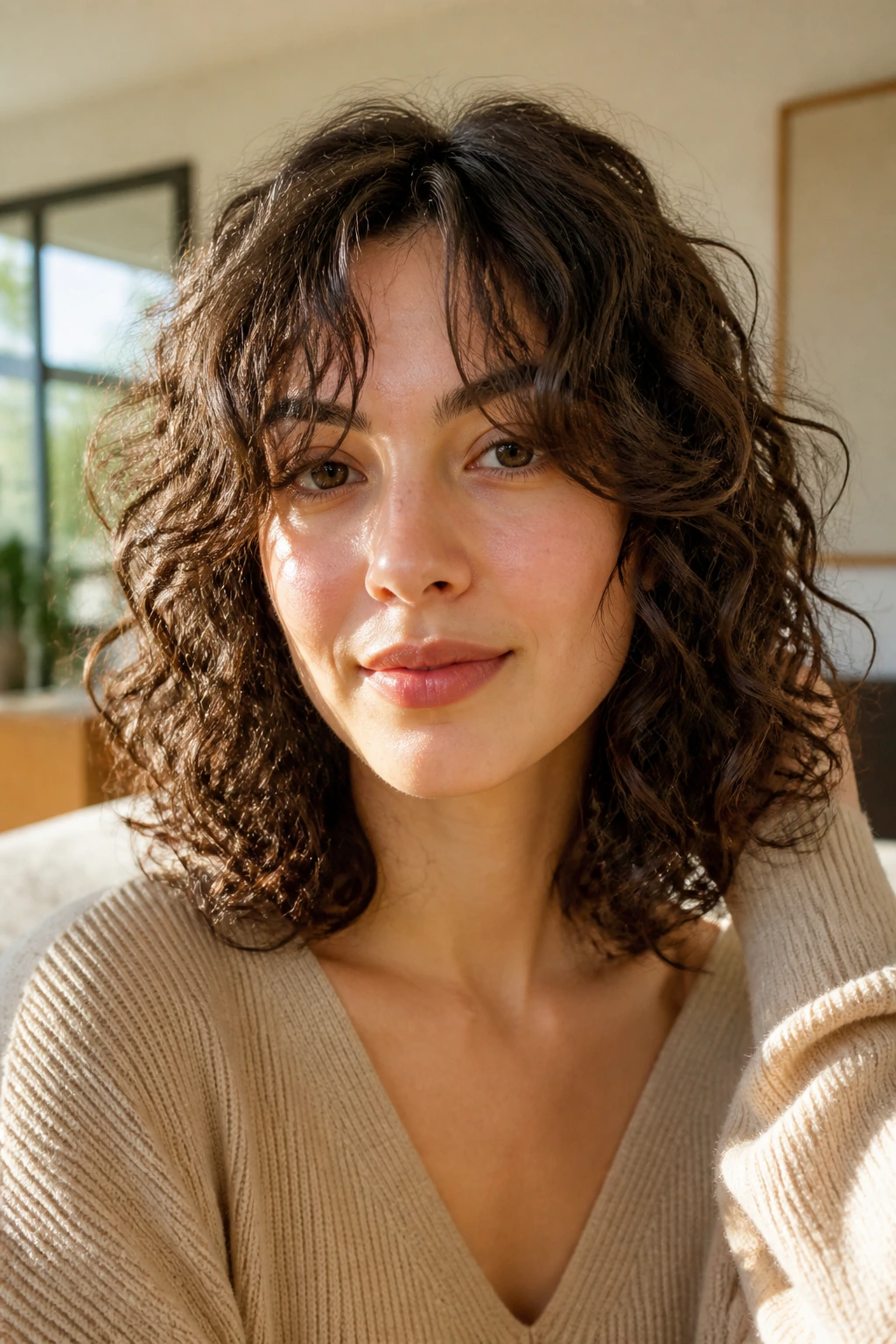
Can curly hair wear curtain bangs? Yes, if the cut respects shrinkage. A curly lob with curtain bangs should be cut longer than a straight-haired version, because curls spring up after drying and the fringe will rise higher than you think. That’s not a warning; it’s the whole game.
The best curly version keeps the lob shaped around the curls’ natural fall. The curtain fringe should open in the middle and taper toward the cheekbones, but not so short that it disappears into the spring. Dry cutting or a thorough curl check after drying matters here. Wet curls lie.
The dry-cut rule
If the stylist cuts every curl while it’s stretched, the fringe can end up too short and too boxy. A better approach is to shape the curl pattern where it actually lives — at its dried length, with its own bounce. The front should frame the face, not clamp to it.
This cut is lovely on loose curls and soft spirals. It keeps the crown from ballooning, gives the face room, and lets the fringe act as a soft opening instead of a hard block.
9. Thick-Hair Lob With Internal Layers

Thick hair loves a lob, but only when the inside of the cut gets attention. A thick-haired lob with curtain bangs needs internal layers so the bulk doesn’t create a shelf at the back and a heavy curtain in front. The outline stays strong. The weight gets managed.
This is one of those cuts that looks best when the shape is obvious but not bulky. The curtain bangs should be long enough to move, and the layers should live under the surface so the top doesn’t puff out. A good stylist will remove weight where it helps the hair fall, not where it leaves holes.
Thick hair often has enough body to support a more sculpted fringe, which is nice. The bangs can be full without feeling helmet-like, as long as they’re tapered out toward the sides. On wash day, you’ll notice the difference at once: less expanding around the jaw, more swing through the front.
10. Fine-Hair Lob With Soft Curtain Bangs

Fine hair needs restraint here. Too many layers and the cut goes see-through. Too much texturizing and the bangs look stringy before you’ve even left the salon. The better answer is a soft lob with curtain bangs kept light, long, and slightly airy.
The perimeter should still be strong enough to make the hair feel fuller. A blunt or nearly blunt edge helps. The fringe should be feathered just enough to split open in the center, but not so much that it disappears into wisps. I’m picky about this one because it’s easy to overdo.
A root-lift spray at the front can make a bigger difference than another round of layers ever will. Fine hair likes shape, not shredding. The goal is to keep enough line that the haircut reads as a lob first and a texture experiment second.
11. Round-Face Lob With Lifted Curtain Bangs

Round faces do well with vertical movement. That doesn’t mean hiding the face. It means giving it some length through the front so the eye travels downward instead of side to side. A lob with curtain bangs can do exactly that when the fringe starts a little higher and the side sweep stays below the cheekbone.
The shape should not sit right at the widest point of the face. That’s the trap. Let the curtain bang open early at the center, then slide out and down so the sides create a soft frame around the jaw. Keep the lob itself a touch longer, too — collarbone length tends to be kinder than a shorter shoulder skim.
This version feels light, not heavy. A small bend in the ends helps keep the cut from widening out. Straight across, it can look boxy. With movement, it elongates the face in a way that feels natural.
12. Square-Face Lob With Softly Tapered Curtain Bangs
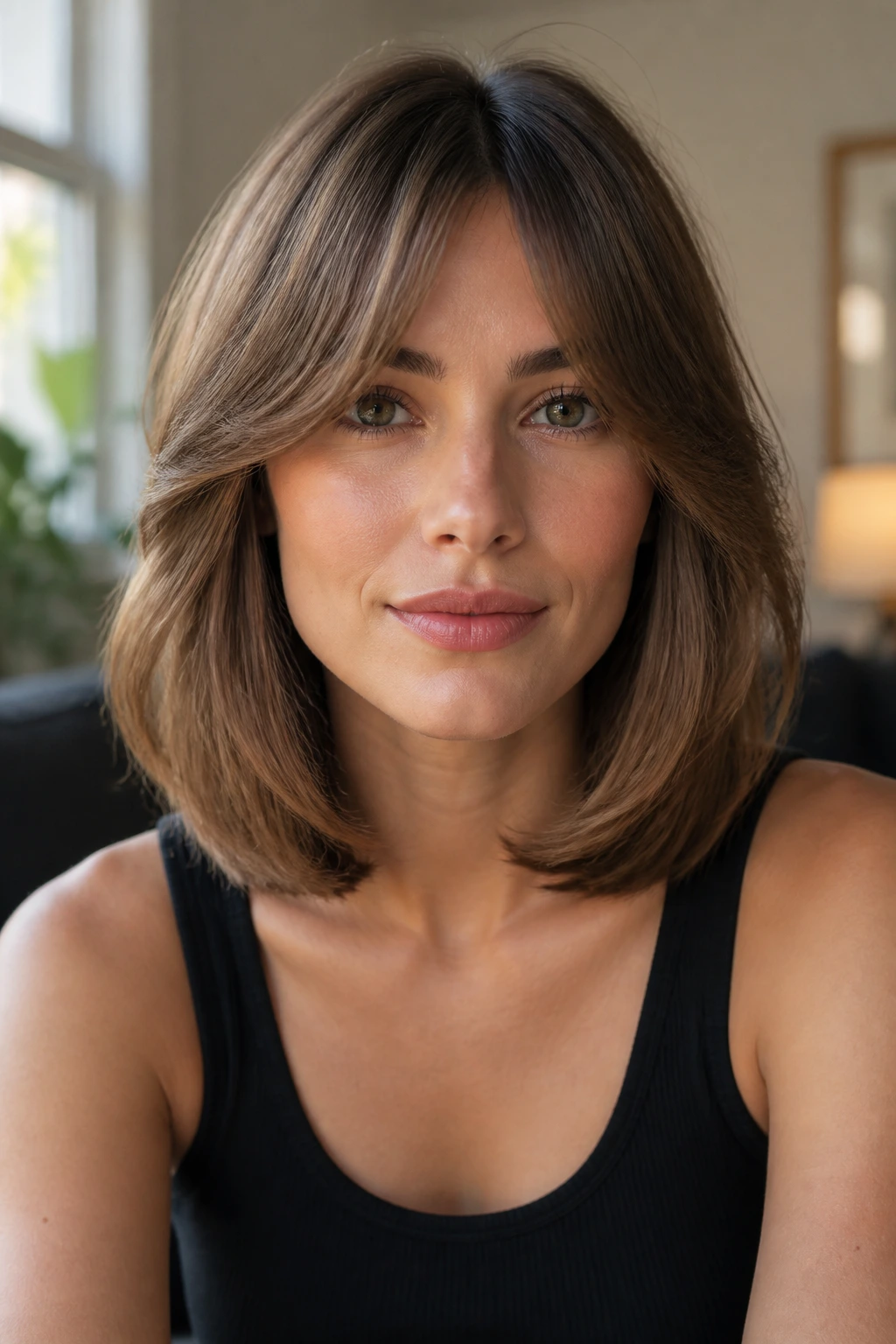
Square faces can handle structure. What they usually don’t need is more hard structure right across the forehead or jaw. That’s where softly tapered curtain bangs earn their keep. They break up strong angles and soften the top half of the face without hiding it.
The lob should stay smooth at the perimeter, but not razor-sharp. A tiny bit of bend through the ends makes the whole cut feel less geometric. The bangs work best when the shortest point is rounded rather than blunt, and when the side pieces sweep across the cheekbones instead of stopping too abruptly.
This is a flattering setup for people who want a little softness without losing definition. It doesn’t read delicate. It reads balanced, which is usually the better goal anyway.
13. Heart-Face Lob With Jaw-Skimming Curtain Bangs
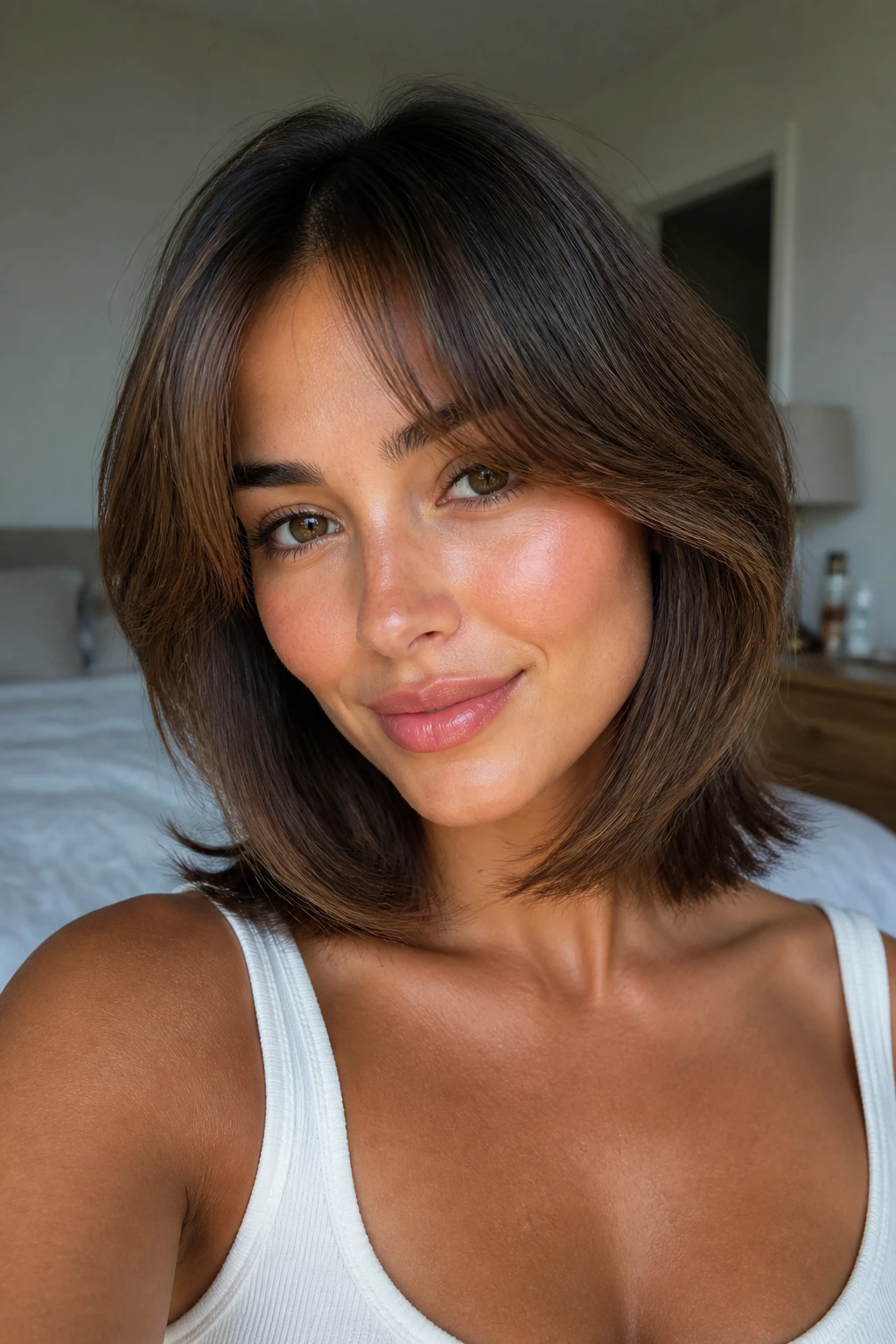
A heart-shaped face often carries more width at the forehead than the chin, so the haircut should help the lower half feel a little fuller. A lob with curtain bangs does that nicely when the fringe is cut to skim the jawline rather than sitting too high on the forehead.
The front pieces matter a lot. Keep them long enough to taper down the sides of the face, and avoid over-lightening the ends near the chin. That area needs some presence. If the bangs are too short, the face can look top-heavy. If they’re too heavy, they’ll hide the eyes instead of softening the forehead.
I like this version with a slight bend at the ends. It keeps the eye moving downward and gives the cut a soft landing. Nothing about it screams for attention, which is exactly why it works.
14. Long-Face Lob With Fuller Curtain Bangs

Long faces need width more than extra length, so the lob should stop somewhere useful — usually around the collarbone or just above it — and the curtain bangs should carry enough fullness to visually shorten the face a bit. Not by hiding it. By rebalancing it.
The fringe can start a touch lower on the forehead and sweep out more gradually, which gives the upper half of the face some width. A little body around the cheeks helps too. Too much height at the crown is a mistake here; it only stretches the face further.
This cut looks best when the bangs feel complete, not wispy. Fuller curtain bangs don’t mean heavy bangs. They mean a stronger shape through the front, with enough weight to frame the eyes and cheekbones instead of disappearing into them.
15. Air-Dried Lob With Natural Texture

If you want a lob that doesn’t demand a blowout, build the haircut for air-drying from the start. That means enough internal shape to keep the ends from flipping into odd directions, and curtain bangs that can split naturally once the hair dries. No heroics. Just hair doing what it already wants to do.
The product lineup
A light mousse or curl cream at the roots and front can help the fringe settle into an open shape. Scrunching the front while it’s damp can encourage the bend, and a quick finger-comb after drying keeps the part from becoming too severe. If your hair has a wave, don’t fight it into straightness and then wonder why it looks flat.
This version is good for people who do not want to stand in front of a mirror with a round brush every morning. It still looks styled, which is the real prize. There’s a kind of ease to it that comes from the haircut itself being built correctly.
16. Blowout Lob With Bouncy Curtain Bangs

This is the polished version. The one that looks finished with a round brush, a heat protectant, and a few deliberate passes at the front. The lob keeps the shape near the collarbone, and the curtain bangs curve away from the face in a soft C-shape that makes the whole haircut feel fuller.
The blowout matters because the fringe should not stick flat to the forehead. You want lift at the roots, a bend through the mid-lengths, and a little flip at the ends. A 1.5- or 2-inch round brush usually gives enough curve without making the bang too round and 1990s in the wrong way.
This version works beautifully with a clean shirt, a soft sweater, or anything with a neckline that gives the haircut room. It’s crisp, but not stiff. And when the blowout gets a little looser on day two, it usually still looks fine — which is more than some immaculate styles can claim.
17. Razor-Cut Lob With Airy Curtain Fringe

Do you want movement instead of a perfect line? Then a razor-cut lob deserves a look, but only if the hair can handle the softness. Razor cutting can create airy ends and a fringe that falls with a light, broken texture, yet it can also chew up fine hair if the hand behind the razor gets too eager.
The best version is subtle. The lob keeps enough length to stay grounded, while the curtain bangs are carved just enough to move away from the face without looking over-shaped. This cut is especially nice on hair that naturally has some bend or softness.
I would not push this on someone with very fragile strands. But on medium or thick hair that needs a little lift, it can be lovely. The front pieces feel feathered instead of blunt, and the whole haircut takes on that lived-in motion people keep trying to fake with too much spray.
18. Highlight-Friendly Lob With Face-Framing Curtain Bangs
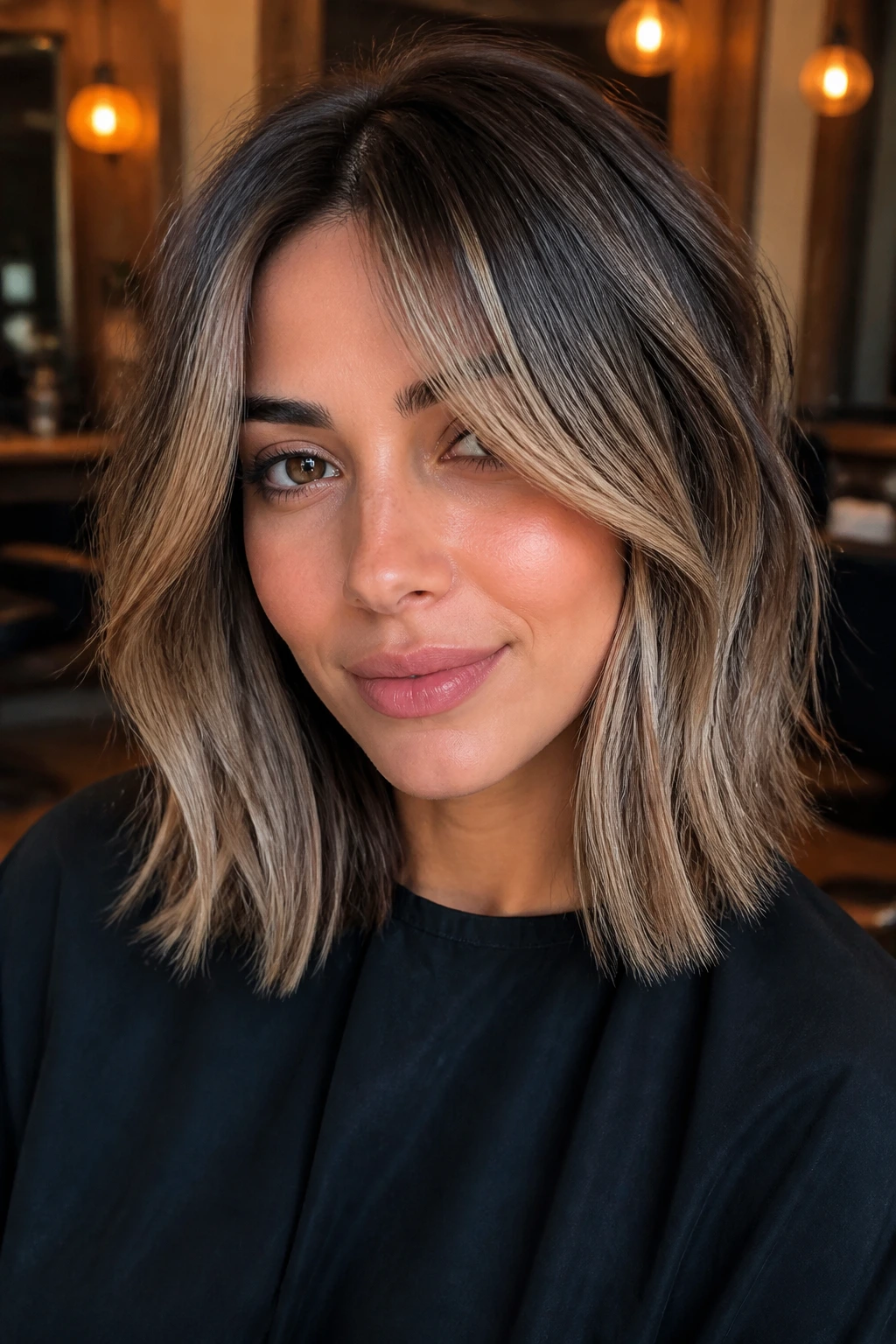
Color and cut should be planned together, and this is the version that proves it. A lob with curtain bangs gives highlights a place to live, especially when the brightest pieces sit around the face frame and through the longer front sections. The result is dimension you can actually see, not just color hidden under the top layer.
The fringe should be cut so it opens enough to show those lighter pieces as the hair moves. Balayage, soft money pieces, or fine ribbons around the cheekbone all work because the curtain bang creates a frame around them. The haircut does half the visual work before the color even gets a chance.
This is a good choice if you want the style to look fresher with minimal effort. The light around the face does a lot of the heavy lifting. Sometimes that’s enough.
What to Tell Your Stylist Before the Snip
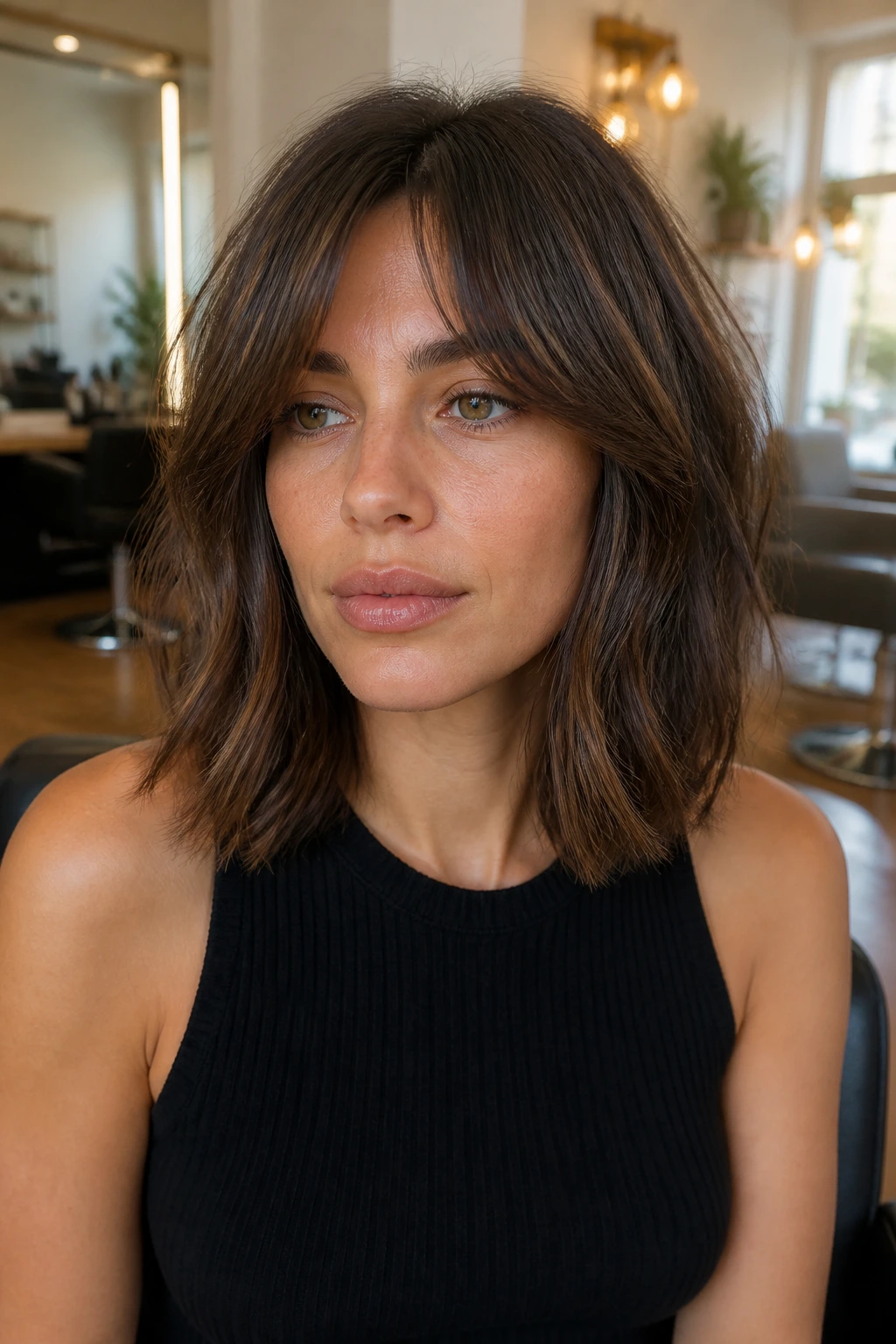
Bring photos, yes, but bring the right kind. Show one shot of the shape you like and one shot of the texture you like. Those are not always the same picture. A cut that looks good on straight hair can read very differently on waves or curls, and your stylist needs to know which part you’re chasing.
Say where you part your hair. Center part, slight off-center, deep side part — each one changes where the curtain bangs fall. If you almost never wear a center part, don’t ask for a fringe that only behaves in one.
Name the shortest point. Tell the stylist whether you want the curtain bang to start near the bridge of the nose, the cheekbone, or a little lower. That one detail changes the whole mood of the haircut.
Talk about weight, not just length. A lob can be blunt, layered, shaggy, or carved. Those choices matter as much as the overall length. If your hair is fine, say you want to keep density. If it’s thick, say you want movement without losing the outline.
A good consultation should feel boring in the best way. Measurements. Texture. Parting. Lifestyle. That’s the stuff that keeps curtain bangs from turning into a regret with nice styling photos attached.
Styling Tools That Make the Shape Easier
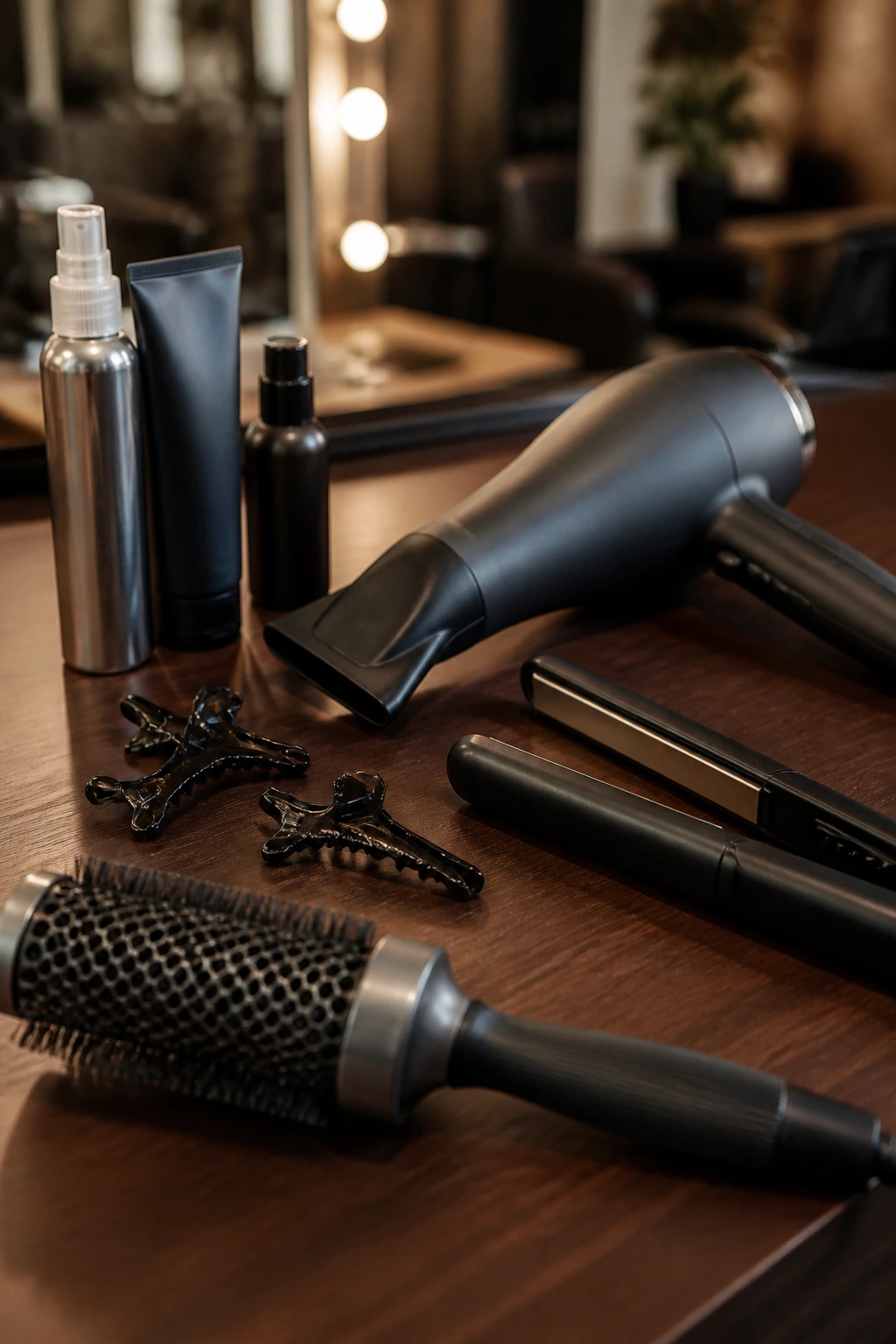
- 1.5- to 2-inch round brush: The workhorse for curtain bangs and bent ends. Smaller brushes create tighter flips; larger ones create a softer fold.
- Blow-dryer with a nozzle attachment: Directs airflow so the fringe doesn’t blow apart before it’s set.
- Heat protectant spray or cream: Keeps the front pieces from getting dry and fuzzy, which curtain bangs show fast.
- Flat iron: Useful for a quick bend through the lob when you don’t want a full blowout.
- Sectioning clips: Tiny thing, big payoff. They keep the fringe from mixing with the rest of the hair while you style.
- Light mousse or root-lift spray: Helps the bang stay open at the part without collapsing.
- Dry shampoo: Best for day-two roots and bangs that start to separate in the wrong places.
- Texturizing spray: Handy on wavy or shaggy versions, but use a light hand; too much can make the ends rough.
Styling Notes That Save Time
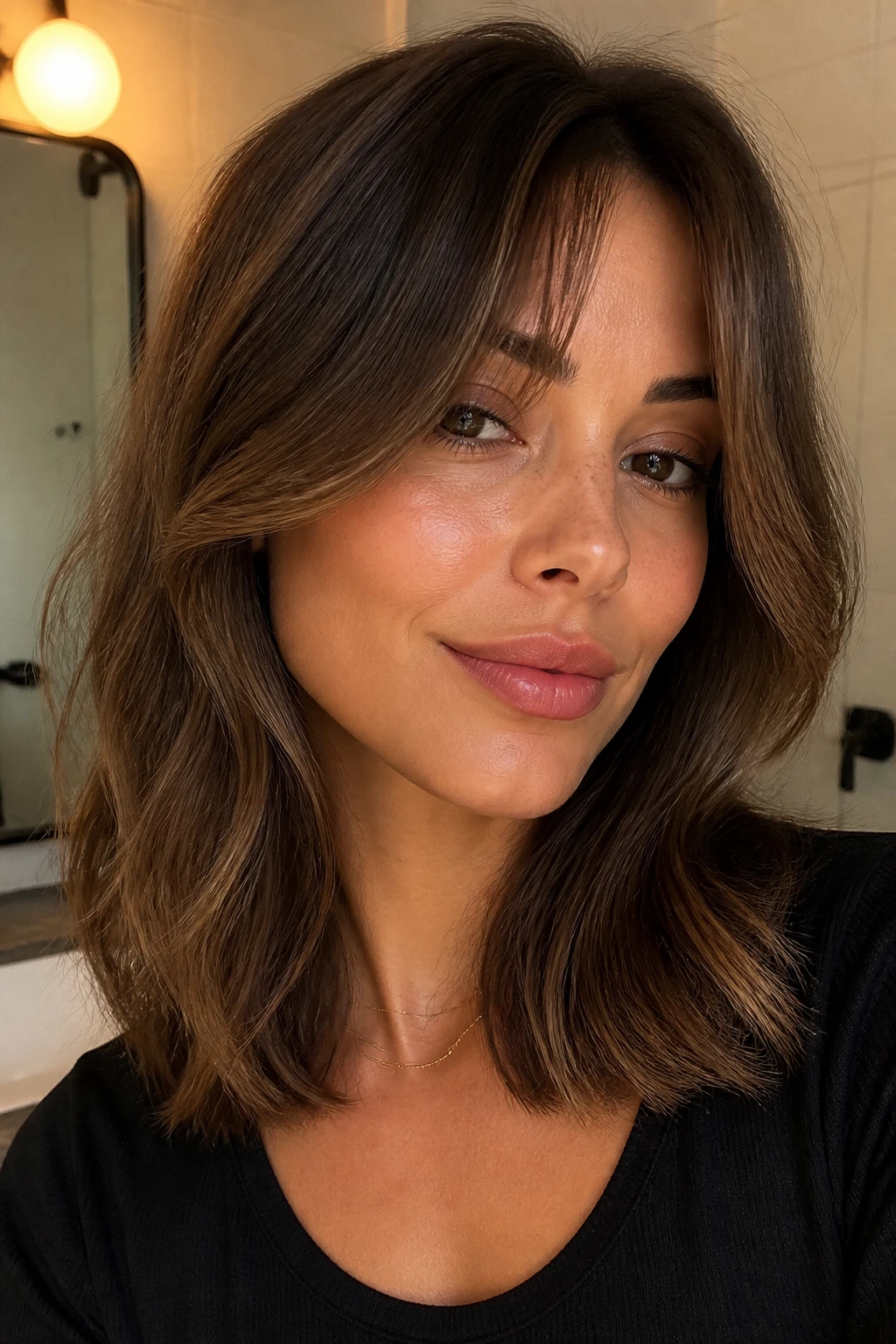
Blowout Shortcut: Dry the fringe first. Always. Curtain bangs set the mood for the whole haircut, and if they go wrong, the rest of the style feels off no matter how nice the ends look.
Air-Dry Shortcut: Twist each front section away from the face while it’s damp, then let it dry with the center part in place. That little twist gives the bangs a softer bend and keeps them from sticking straight down.
Texture Fix: If the lob is puffing too much, stop adding products to the ends. Start at the roots and the front frame only. Heavy cream on the bottom third tends to make the cut sit flat and greasy-looking, which is not the same thing as sleek.
Fringe Rescue: When curtain bangs split too much, use a round brush or a large Velcro roller at the root for five minutes. You do not need to wash the whole head because one side of the fringe got weird.
Parting Trick: A slightly off-center part can soften a too-symmetrical lob. Small shift, big difference.
How to Keep the Cut Fresh Between Appointments

Curtain bangs usually need more maintenance than the lob itself. That’s the honest answer. The front pieces are short enough to show every millimeter of growth, while the length can go much longer before it loses shape. In practice, bangs often want a trim every 3 to 5 weeks, and the lob itself can usually wait 8 to 12 weeks for a dusting, depending on how clean you like the line.
Around the fringe: dry shampoo is not just for oil. It gives the bangs a little grip, which helps them split and sit without slipping flat by noon. Apply a tiny amount at the roots, not all over the hair. Too much turns the fringe chalky.
Around the ends: a touch of lightweight oil on the very bottom quarter of the hair can stop the lob from looking dry, but keep it far away from the curtain bangs. Oil and fringe do not get along unless you enjoy stringy pieces stuck to your forehead.
Between washes: a quick bend with a round brush or flat iron at the front keeps the haircut looking intentional. You do not need to restyle every strand. Just reset the frame.
The shape also grows better if you do not let the fringe get too long between trims. Once curtain bangs lose their open center, they stop looking like curtain bangs and start acting like side pieces that can’t decide where they belong.
Common Mistakes That Flatten a Lob With Curtain Bangs
- Cutting the bangs too short while wet: Dry hair springs up, especially around the forehead. Fix it by asking for a longer starting point and checking the fringe dry before the final cut.
- Over-layering fine hair: The cut goes soft in all the wrong places and the ends look thin. Keep the perimeter stronger and use fewer internal layers.
- Texturizing the front too aggressively: Curtain bangs should move, not fray. If the fringe looks wispy and transparent, too much was removed.
- Ignoring the part pattern: A fringe cut for a strict center part can fight with your natural part and fall awkwardly. Style and cut need to match.
- Flooding the bangs with product: Heavy oils, thick creams, and too much spray make the front pieces separate into greasy strands. Use less than you think.
Variations and Adaptations Worth Trying
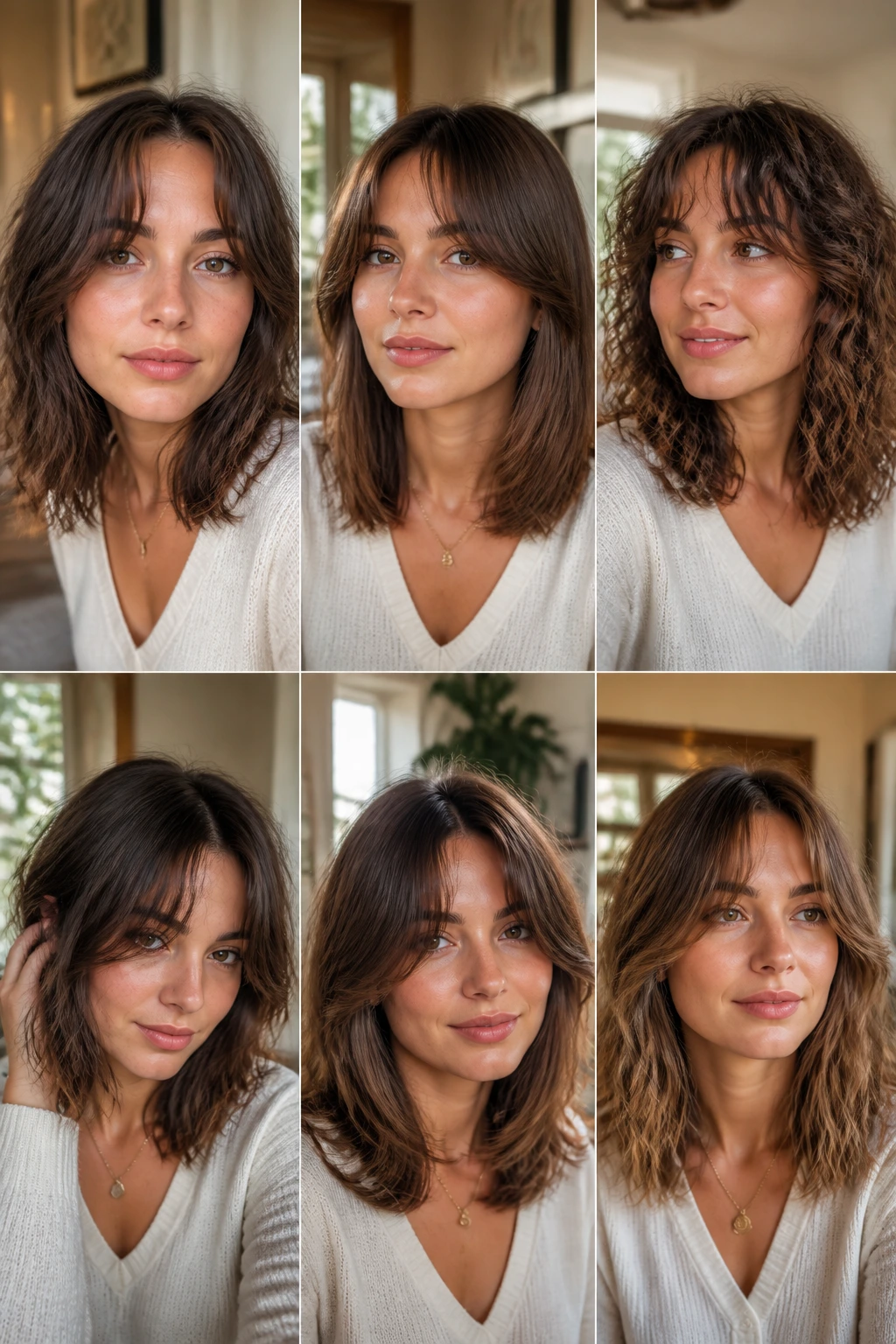
The Air-Dry Version: Keep the lob at collarbone length, add soft internal shape, and use a light mousse through the front. This one works when you want the cut to cooperate with your natural bend instead of demanding heat every day.
The Clean-Line Version: Ask for a blunt perimeter and minimal layering. The curtain bangs stay long and soft, but the ends read sharp, which gives the haircut a more polished edge.
The Curly-Friendly Version: Leave the bangs longer than you think and shape them dry. This keeps shrinkage from stealing the length you need to frame the face.
The Low-Effort Version: Let the fringe be slightly longer and the lob slightly textured. It grows out more politely and buys you a few extra weeks before it looks overdue.
The Full Blowout Version: Add more face-framing layers and keep the fringe roomy enough to round brush into a soft curve. This is the one that feels most finished when styled.
The Grown-Out Version: If you’re moving away from a shorter fringe, ask for curtain bangs that blend into cheekbone layers. It softens the transition and stops the grow-out from looking choppy.
Questions People Ask Before They Commit

How short should curtain bangs be with a lob?
Usually somewhere between the bridge of the nose and the cheekbone at the shortest point, depending on your texture. Curly hair needs more length than straight hair because shrinkage changes everything.
Do curtain bangs work on thick hair?
Yes, and often very well. Thick hair gives the fringe enough weight to hold its shape, but the inside of the lob should be thinned or layered carefully so the cut doesn’t puff out at the back.
Can I air-dry this haircut?
Absolutely, if the cut is built for it. A little mousse or curl cream, a center part, and a twist away from the face can be enough for many textures.
Will this work if I have fine hair?
It can, but the perimeter should stay strong. Too many layers will make the ends see-through, and the bangs should be soft rather than shredded.
How often do I need trims?
The bangs usually need attention first — often every 3 to 5 weeks. The lob itself can go longer, especially if you like a softer grow-out.
What if the bangs split too much?
That usually means they’re either too short, too dry, or overloaded with product. Use a light root-lift spray and blow-dry the center away from the face for a minute or two.
Can I wear the cut with a side part?
Yes, but the bangs need to be long enough to flex. A strict center part gives the clearest curtain shape, while a soft side part turns it into more of a face-framing fringe.
Does this cut suit curly hair?
It does, as long as the curl pattern and shrinkage are respected. The bangs should be cut longer and the shape checked when dry, not guessed at while stretched wet.
The Shape That Grows Gracefully

The reason lob haircuts with curtain bangs keep coming back is simple: they do useful things. They give you length without dragging the hair down. They frame the face without trapping it. They can be sleek, shaggy, airy, blunt, or brushed out, and the same basic cut still makes sense when it’s a little grown in.
That kind of flexibility is rare. Most haircuts ask you to choose between polish and ease. This one can do both — if the length is right, the fringe is cut with your texture in mind, and you resist the urge to overstyle it into submission. A good lob with curtain bangs should make the next haircut feel easier to imagine, not more urgent.
