



A lob can rescue straight, thin hair faster than almost any other cut on the menu — if the line lands in the right place. Miss by an inch, and the ends look stringy. Miss by two inches, and the whole thing can sink into that dull, helmet-flat shape that makes people swear they “have no hair.” Get it right, though, and the same hair reads sharper, thicker, and more deliberate.
That’s the trick with lob haircuts for straight hair and thin hair. Straight strands show every line, every corner, every blunt edge. Thin hair shows every bad layer. So the best long bobs for this hair type are not random shoulder-length cuts with a few pieces snipped out. They’re shapes that protect weight where it matters, fake density at the perimeter, and give the crown just enough lift that your hair doesn’t cling to your head all day.
And no, thin hair does not mean boring hair. It means being stingier with the scissors in the right places. Some of these lobs stay blunt and clean. Some angle forward a little. Some bring in a fringe so the top half looks fuller. Others use hidden layers you’ll never see from the front, which is exactly why they work. The good ones don’t fight straight hair. They give it a better job.
Why These Lobs Work on Straight, Thin Hair
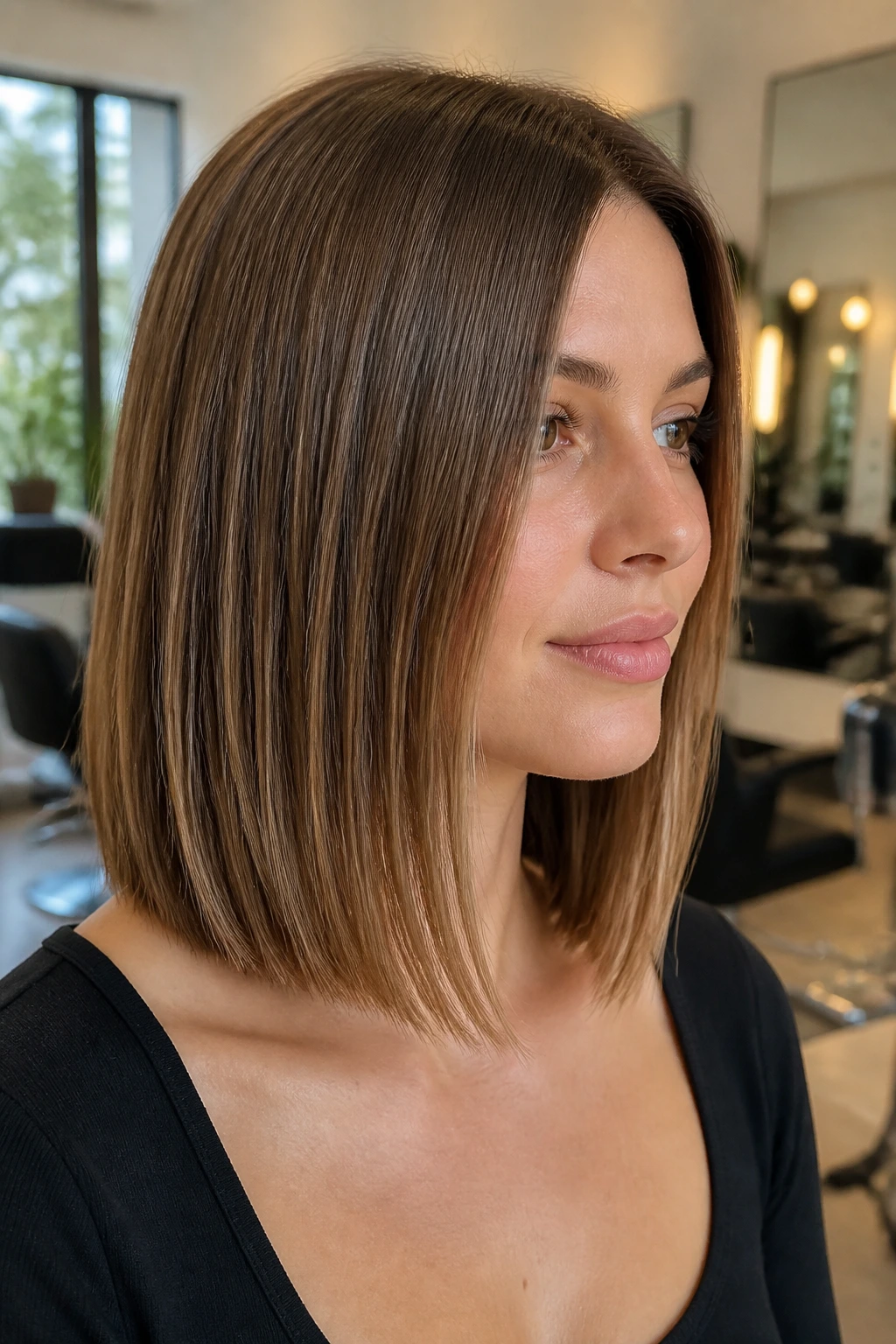
- A blunt edge makes the ends look denser: One clean line at the bottom reads as thickness, even when the individual strands are fine and light.
- Collarbone length keeps weight in the shape: That spot is long enough to avoid the puffiness of a chin-length bob, but short enough to stop the hair from hanging like a limp curtain.
- Straight hair shows the geometry clearly: A half-inch of angle actually matters on straight strands, which is why small changes in length can completely change the silhouette.
- Most of these cuts need less styling than layered hair: When the perimeter does the work, you’re not forced to curl, wave, or backcomb just to see the shape.
- You can shift the mood with a part or fringe: Center part, side part, curtain bangs, or no bangs at all — the cut stays useful even when your styling changes.
- They grow out without turning into a mess right away: A good lob can slip an inch or two and still look intentional, which is handy when you don’t live in the salon.
1. The Blunt Collarbone Lob
This is the safest bet when you want thin, straight hair to look fuller without any tricks. A blunt collarbone lob puts one hard edge at the bottom, and that edge does more work than a bunch of airy layers ever will. On straight hair, the line stays visible. On thin hair, that visibility is gold.
A clean perimeter around collarbone length gives the illusion of a heavier tail because all the ends stop in the same place. You don’t see wispy stragglers tapering off into nothing. You see a solid shape. That matters more than people expect.
Why it reads fuller
The blunt edge keeps the eye from following broken little pieces. If you have a lot of shine, even better — straight hair reflects light along the edge, which makes the cut look deliberate instead of sparse. Ask for minimal texturizing at the very bottom. Too much point cutting can soften the line until the whole point of the cut disappears.
If your stylist likes to chip away at the ends, speak up. Light fine hair often looks best when the last inch is left alone. A quick dry check after the blow-dry helps too, because a blunt lob only works when the perimeter still feels anchored.
2. The Slight A-Line Lob
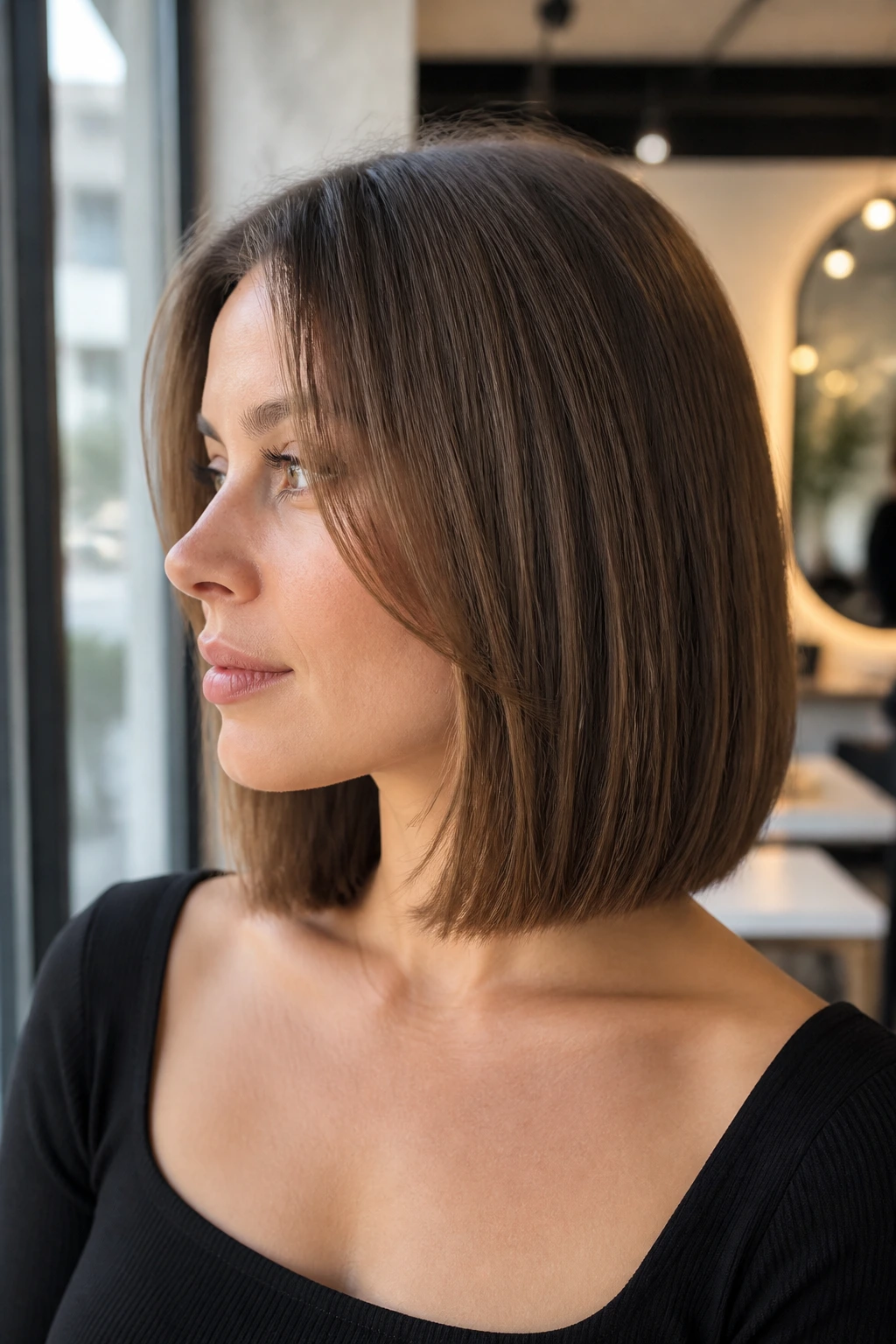
A slight A-line lob is what I reach for when someone wants movement but refuses to lose fullness in the back. The front sits a little longer — usually about half an inch to 1½ inches — and the back stays just a touch shorter. That tiny angle changes the whole line of the haircut.
What to ask for
- Keep the front just below the collarbone.
- Let the back sit a little higher, near the top of the shoulder.
- Avoid heavy layering through the lower half.
- Let the stylist check both sides against the center part before finishing.
That small tilt helps straight hair fall forward in a way that feels intentional. It also keeps the back from collapsing into a flat shelf, which is a common problem with thin hair cut at one uniform length. The front pieces frame the face, but the back still carries enough weight to look like hair, not mist.
My favorite part: it grows out well. The angle softens instead of going sloppy, so you don’t hit the three-week mark and suddenly feel desperate for another haircut.
3. The Center-Part Glass Lob
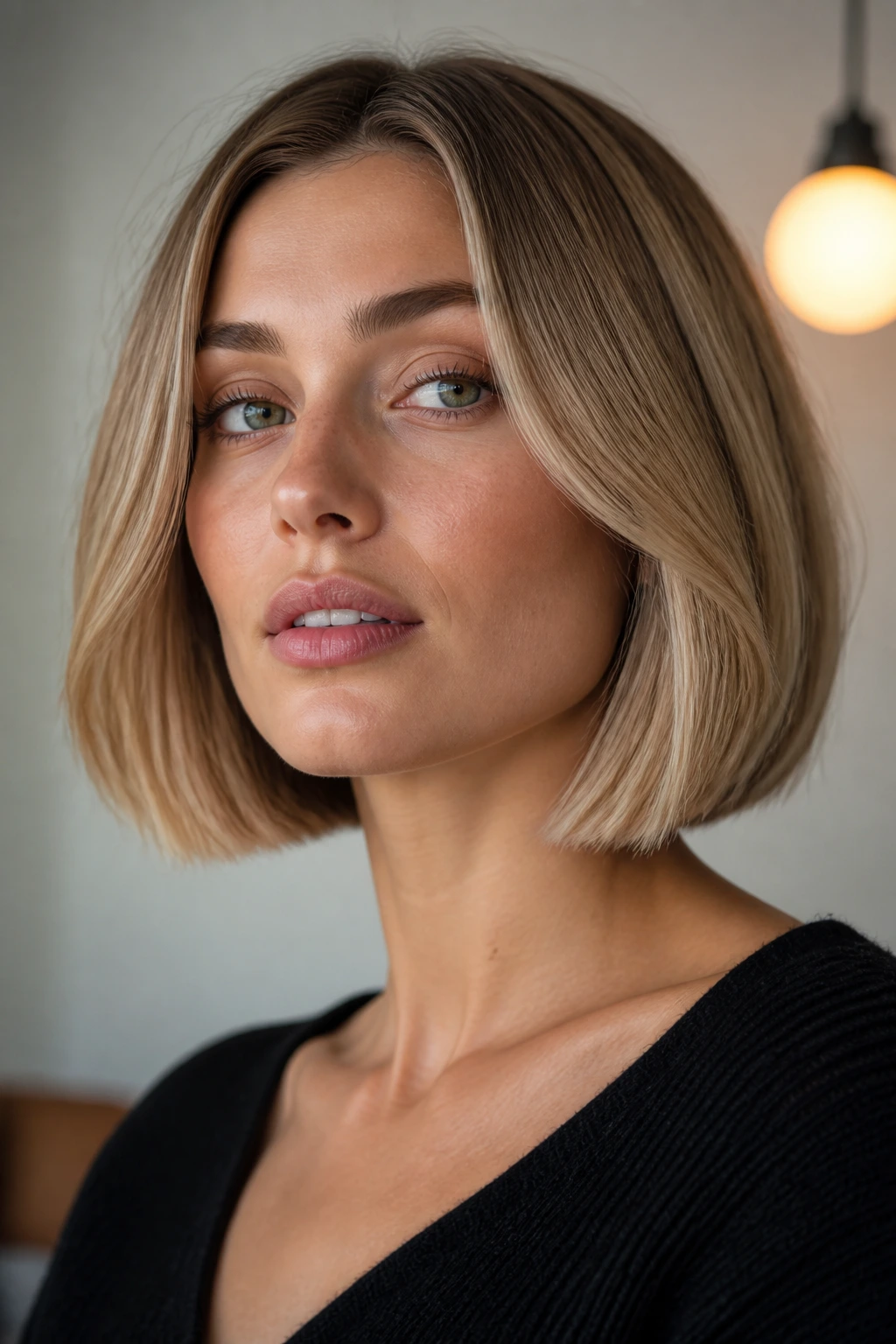
Why does a center-part glass lob work so well on thin hair? Because it turns a simple shape into a clean, shiny line, and that line looks expensive even when the actual styling took ten minutes.
Straight hair loves symmetry. Thin hair loves anything that avoids broken, over-layered texture. Put those together and you get a lob that sits flat in a good way — sleek at the top, blunt at the bottom, and polished enough that people assume you spent longer on it than you did.
What makes it hold
The trick is not heavy product. It’s precision. The part needs to be straight, the ends need to be even, and the blow-dry has to smooth the cuticle without puffing up the crown. A paddle brush or a round brush with a soft bend at the ends is enough. If the ends kick outward, the whole shape loses that crisp look.
This cut looks best when the hair is healthy enough to shine. If your ends are dry, trim them before you try this shape. A glassy finish on damaged ends just makes the damage easier to see.
4. The Deep Side-Part Lob
A deep side part can do for flat roots what a good bra can do for a dress. It changes where the eye goes first. On straight, thin hair, that shift gives the crown a lift and makes the front feel fuller without adding a single inch of bulk.
The beauty of this lob is that it feels slightly undone without looking messy. One side gets a little more height. The other side falls closer to the cheek. That imbalance creates movement, and movement reads as thickness when the hair itself is fine.
The shape in real life
Keep the longest point around the collarbone and let the side part land over the arch of one eyebrow or just behind it. That gives the roots a push-up effect. If your hair tends to stick to your scalp, blow-dry the part in the opposite direction first, then flip it back. It’s an old trick, and it still works.
This is also one of the easiest lobs to wear when you want a softer face frame. The side sweep lets the front pieces skim the cheekbone, which can be useful if your hairline is narrow or your forehead needs a little balancing.
5. The Face-Framing Cheekbone Lob
If you want a lob that gives shape without stripping away density, ask for face-framing pieces that start around the cheekbone, not at the jaw. That small difference matters. Pieces that begin too low can make thin hair look stringier through the front. Cheekbone-length framing lifts the eye higher and keeps the lower half of the cut heavier.
This version works especially well when the rest of the haircut stays clean. The perimeter still needs to do its job. The face framing is there to soften, not to replace the cut. Think of it as a light outline around the face, not a full layer story.
The sweet spot
The shortest front pieces should land somewhere between the cheekbone and the top of the lip, depending on face shape. Anything shorter can split the density too much. If you wear your hair tucked behind one ear, these pieces still fall neatly forward instead of vanishing into the side of your head.
This is the lob I’d point to if you like structure but don’t want a severe look. It keeps the haircut from feeling blocky, and straight hair shows off those front angles beautifully.
6. The Invisible-Layer Lob
This is the move when you want volume without the visible chop. Invisible layers sit under the top panel of hair, so the surface still looks blunt and full while the inside has just enough lift to stop the shape from hanging limp.
The whole point is subtlety. You do not want the classic see-through layered look that makes thin hair look even thinner. You want support hidden beneath the surface. That way the lob moves when you turn your head, but the ends still read solid from the front.
A stylist can usually build this with light internal elevation around the occipital bone and a gentle release underneath, leaving the outer line intact. It’s a technical cut. Worth it if your hair collapses at the crown but you still like a clean edge.
Best for: people who say, “I want body, but I don’t want it to look layered.” That sentence has this haircut written all over it.
7. The Soft Beveled Lob
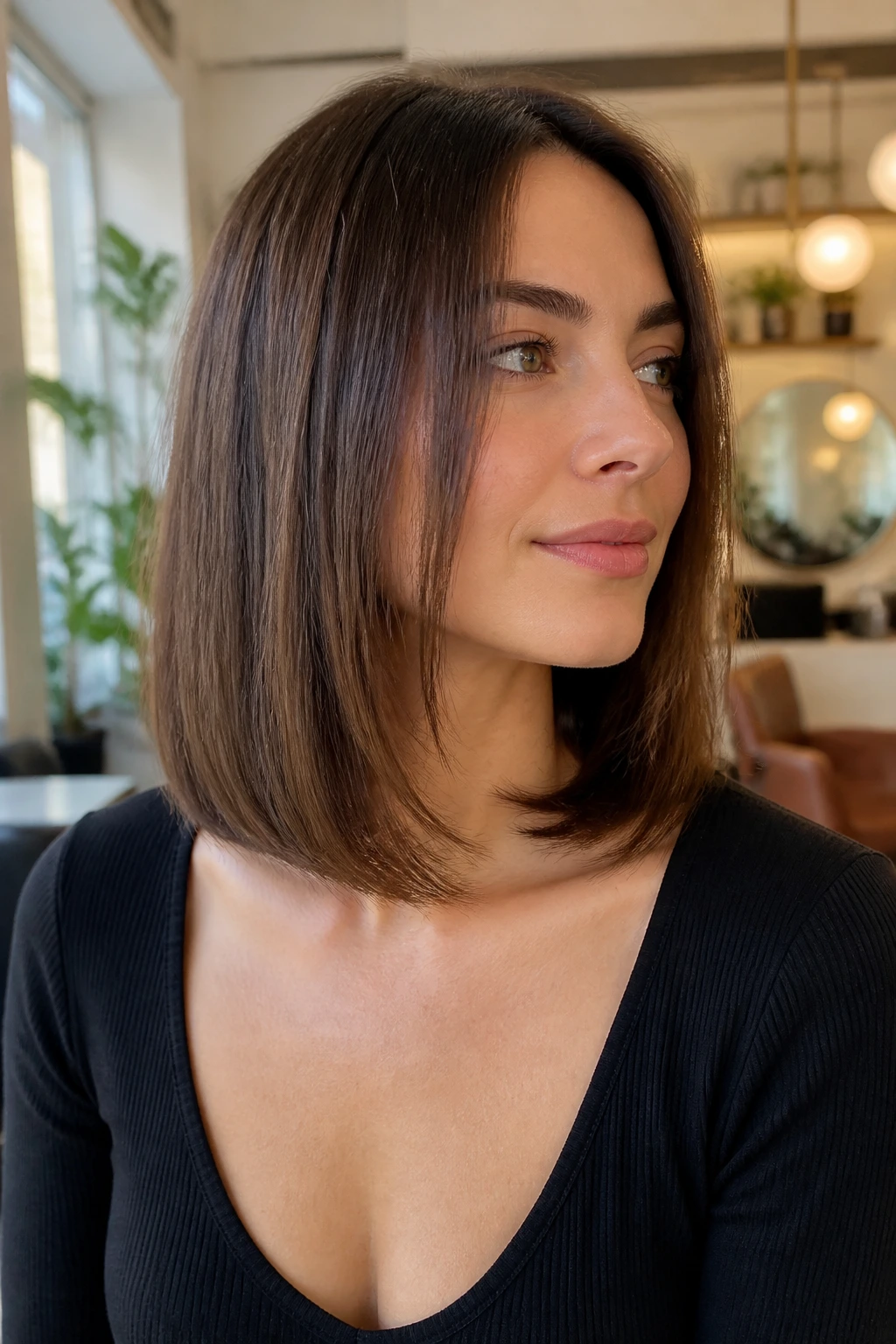
A beveled lob is what happens when the ends tuck under just enough to create shape, not enough to look curled. On straight hair, that tiny inward curve makes the haircut feel finished. On thin hair, it adds the sense of support at the bottom line, which is where most of the visual weight needs to live.
The bevel matters because it gives the haircut a little architecture. A flat, straight end can look sharp; a beveled end looks soft but still dense. That’s a better trade for hair that tends to fall lifeless by noon.
Styling note
Use a round brush or a flat brush with a subtle under-turn at the bottom two inches. You are not building a bouncy blowout. You are creating a controlled bend. If you over-curl the ends, the cut starts looking shorter and smaller than it really is.
This shape is excellent if your jaw is a little square or if you want the haircut to sit neatly against the neck. It also pairs well with a center part, because the neat bottom line keeps the middle part from feeling too severe.
8. The Point-Cut Lob

Point-cutting gets a bad reputation because too many stylists do too much of it. But used sparingly, it can keep a blunt lob from feeling too heavy or boxy, especially on very straight hair that tends to sit like a sheet.
The goal here is not texture for texture’s sake. It’s to soften the perimeter by just a hair’s breadth — literally. The ends keep their fullness, but they stop looking carved from one solid block. That tiny breakup can make the haircut move better in the wind and sit less stiff around the collarbone.
What to avoid
- Don’t let the ends get shredded.
- Don’t use thinning shears unless the hair is truly dense.
- Don’t overdo the point cutting near the front.
- Don’t ask for a razor finish if your hair is already fine.
A light touch is enough. If the cut starts looking fuzzy at the bottom, the stylist took off too much. For thin hair, the line should still feel mostly intact. A little softness helps. A torn edge does not.
9. The Curtain-Bang Lob
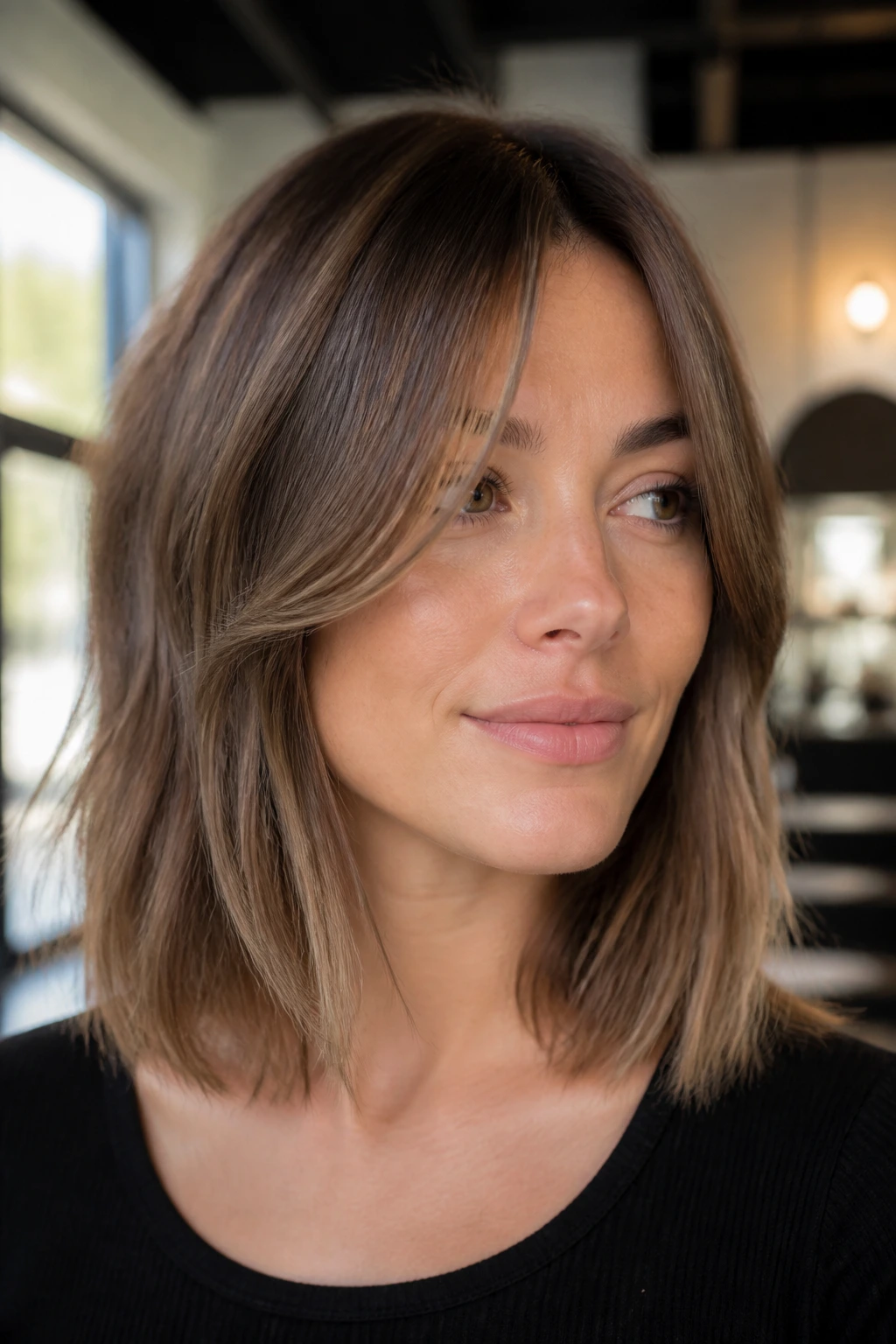
Can curtain bangs make thin hair look fuller? Yes — if they’re cut with restraint. The trick is to keep the bang area wide enough to frame the face, but not so heavy that it drags the front flat.
Curtain bangs add volume where a lot of thin, straight hair needs it most: right around the forehead and cheekbone area. They also break up the long vertical line of the lob, which keeps the haircut from feeling too long and narrow. On a good day, they make the whole style look less like “hair cut off at the shoulders” and more like a shaped design.
Why they help
The center opens the face. The sides blend into the lob and create a soft sweep. That means the top half of the haircut feels active, even when the rest is sleek. If your hair is flat at the roots, blow-dry the bangs first with a small round brush and a downward lift at the roots, then let the rest of the lob fall naturally.
Curtain bangs are not a lazy choice. They need trimming before they get in your eyes. But on straight, fine hair, the payoff is real.
10. The Bottleneck-Bang Lob

Bottleneck bangs are the smarter cousin of full fringe for thin hair. They’re narrower at the top, then open out as they move toward the cheekbones. That shape leaves some forehead visible, which keeps the haircut from becoming too heavy, and still gives the front enough coverage to feel styled.
This is a strong choice if you want a little softness around the face without the commitment of a thick, blunt bang. Straight hair shows the taper clearly, so the shape reads cleanly. And because the bang area isn’t packed full of hair, the rest of the lob can keep its weight.
A good bottleneck bang should blend into the top layer of the lob rather than sit on top like a separate piece. If the transition is too sharp, the front can start looking chopped up. That is the last thing thin hair needs.
This cut works especially well when the lob itself is blunt or softly beveled. The contrast between the clean perimeter and the airy bang gives the whole haircut a more finished look.
11. The Side-Swept Fringe Lob
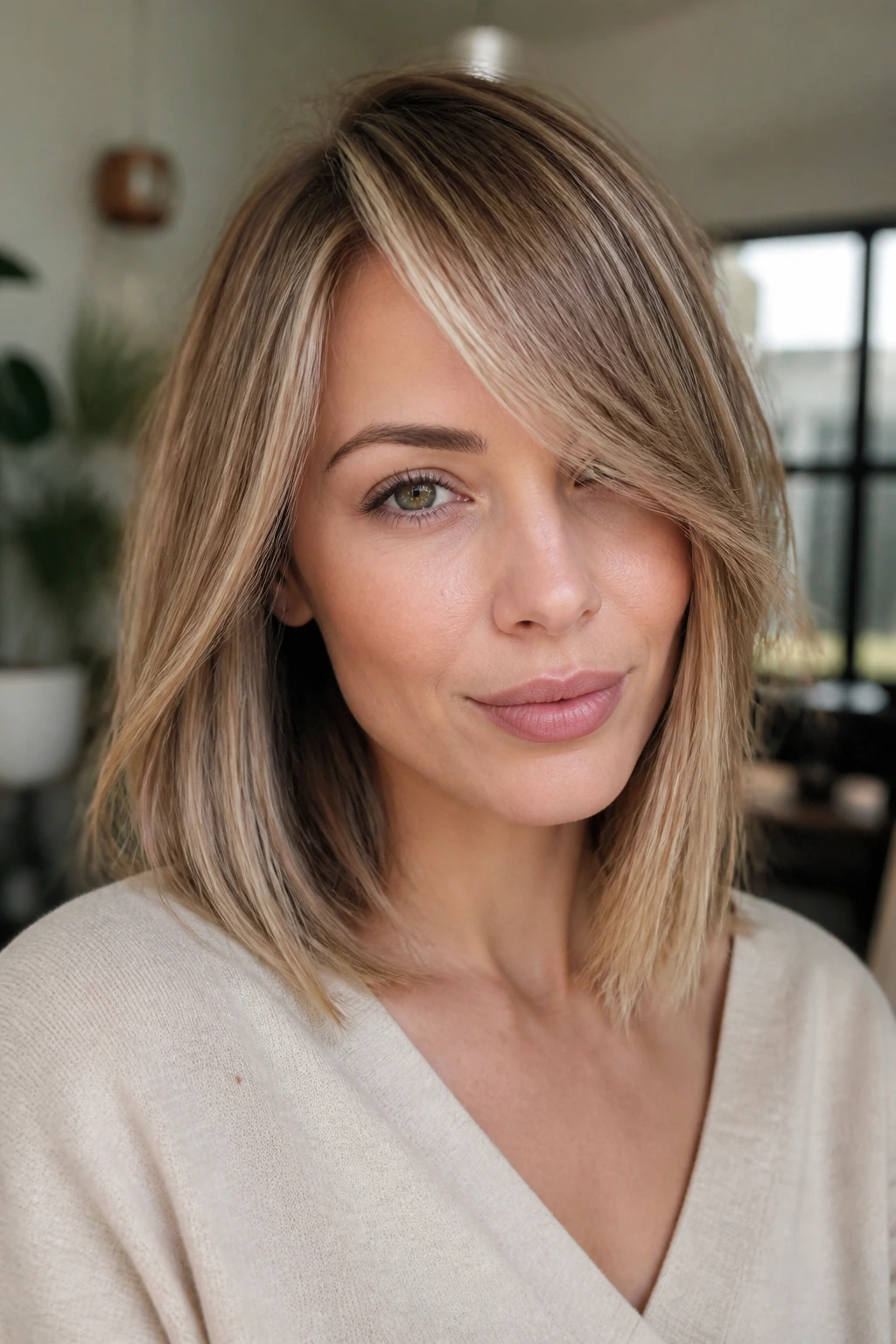
A side-swept fringe can save thin, straight hair from looking too symmetrical and too flat at the front. It puts the weight diagonally across the forehead, which creates the illusion of more hair where people usually notice sparseness first.
Unlike a curtain bang, this fringe doesn’t split down the center. It sweeps across the brow and blends into one side of the lob. That makes the whole cut feel more fluid. It also works nicely if you have a cowlick near the part, because the hair already wants to move in that direction.
The fringe should be light enough to move, but not wispy enough to see through. That balance is harder than it sounds. Too thick and it closes off the face. Too thin and it disappears by lunchtime. The sweet spot is a fringe that skims the brow and then softens into the front edge of the lob.
If you like a haircut that looks a little more dressed-up, this is one of the easiest options. It has enough movement to feel styled, even on a plain blow-dry.
12. The Rounded Brush-Out Lob
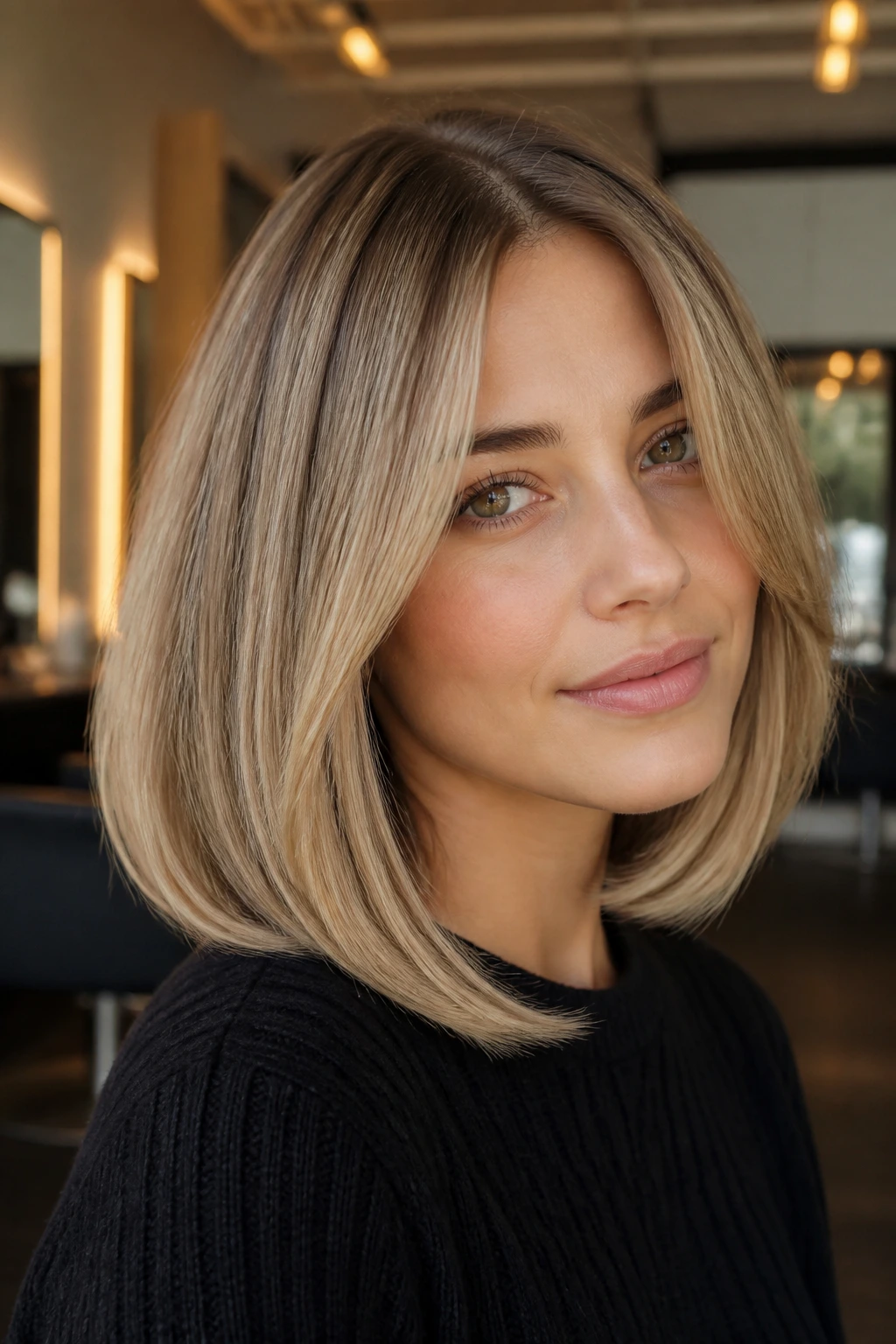
Unlike a flat one-length cut, a rounded brush-out lob gives the hair a little body on the sides without sacrificing the bottom line. The silhouette arcs gently around the head, which is useful when straight hair lies too close to the scalp and makes the face look wider than it is.
This is a cut that benefits from careful blow-drying. A medium round brush, a nozzle on the dryer, and a bit of tension through the mid-lengths can help the hair sit in a soft curve. The effect is subtle. You’re not creating old-school volume. You’re giving the haircut a shape that holds after a few hours of wear.
Best if your hair tends to flip weirdly at the ends. The rounded line can smooth that problem out and give the front a more tailored finish. It also flatters narrow faces by putting a gentle frame around them instead of a hard rectangle.
If you like clean clothes, neat collars, and a haircut that behaves in a mirror, this one is worth a look.
13. The Asymmetrical Lob
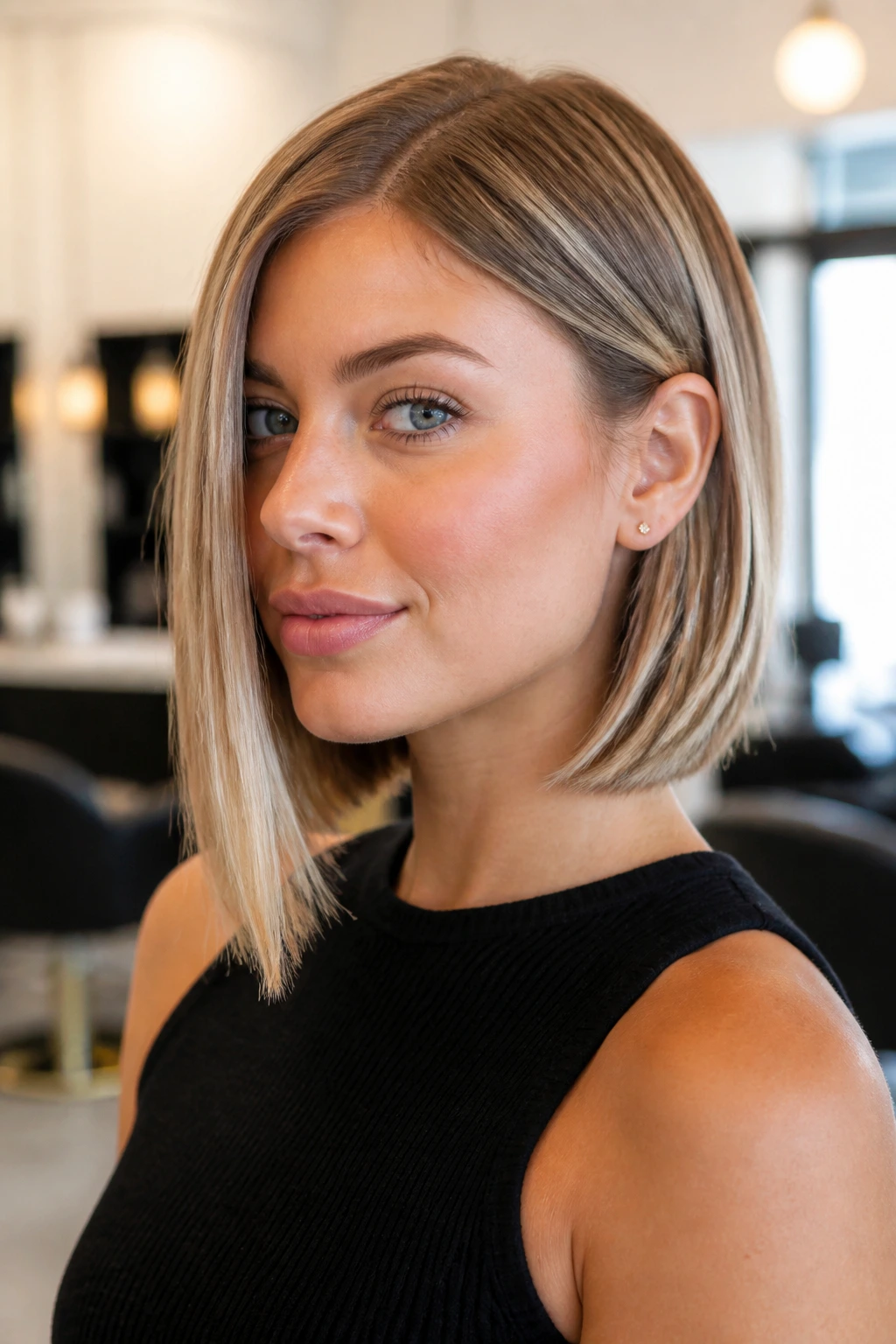
A slight asymmetry — even as little as half an inch — can wake up straight, thin hair fast. The uneven line gives the cut a point of interest, and that breaks the sameness that sometimes makes fine hair look limp. You do not need a dramatic one-side-longer statement. In fact, too much asymmetry can start looking gimmicky.
The best version is controlled. One side dips a touch lower, or the front falls just a little farther on one side than the other. Straight hair shows that angle clearly. Thin hair gets some visual movement out of the deal without losing its perimeter density.
Who should try it
- People whose hair always parts the same way.
- People who want a little edge without layers.
- People whose hair looks too tidy in a blunt cut.
- People who like to tuck one side behind the ear.
Ask the stylist to keep the asymmetry easy to live with. You want the shape to read in real life, not only in the salon chair. When the cut is that small, the difference feels bigger than it sounds.
14. The Grown-Out Bob Lob

This is the haircut for people who are always somewhere between a bob and a lob anyway. The grown-out bob sits just below the jaw or at the top of the neck, then softens into a longer perimeter. It’s shorter than many lobs, but still long enough to keep some movement and tuckability.
Thin hair often looks thicker when it’s slightly shorter, and that’s why this shape makes sense. The hair isn’t stretched down by extra length, so the ends sit with more purpose. At the same time, the cut doesn’t go so short that it loses the easy softness people want from a lob.
The key is maintaining the edge. Once this shape starts to fray, it turns into an awkward in-between. Keep the line clean, and it looks deliberate. Let it go too long, and the ends start hanging like they ran out of energy halfway down.
This is a good practical cut if you want something that can survive a few weeks of growth without looking sloppy.
15. The Ear-Tuck Lob
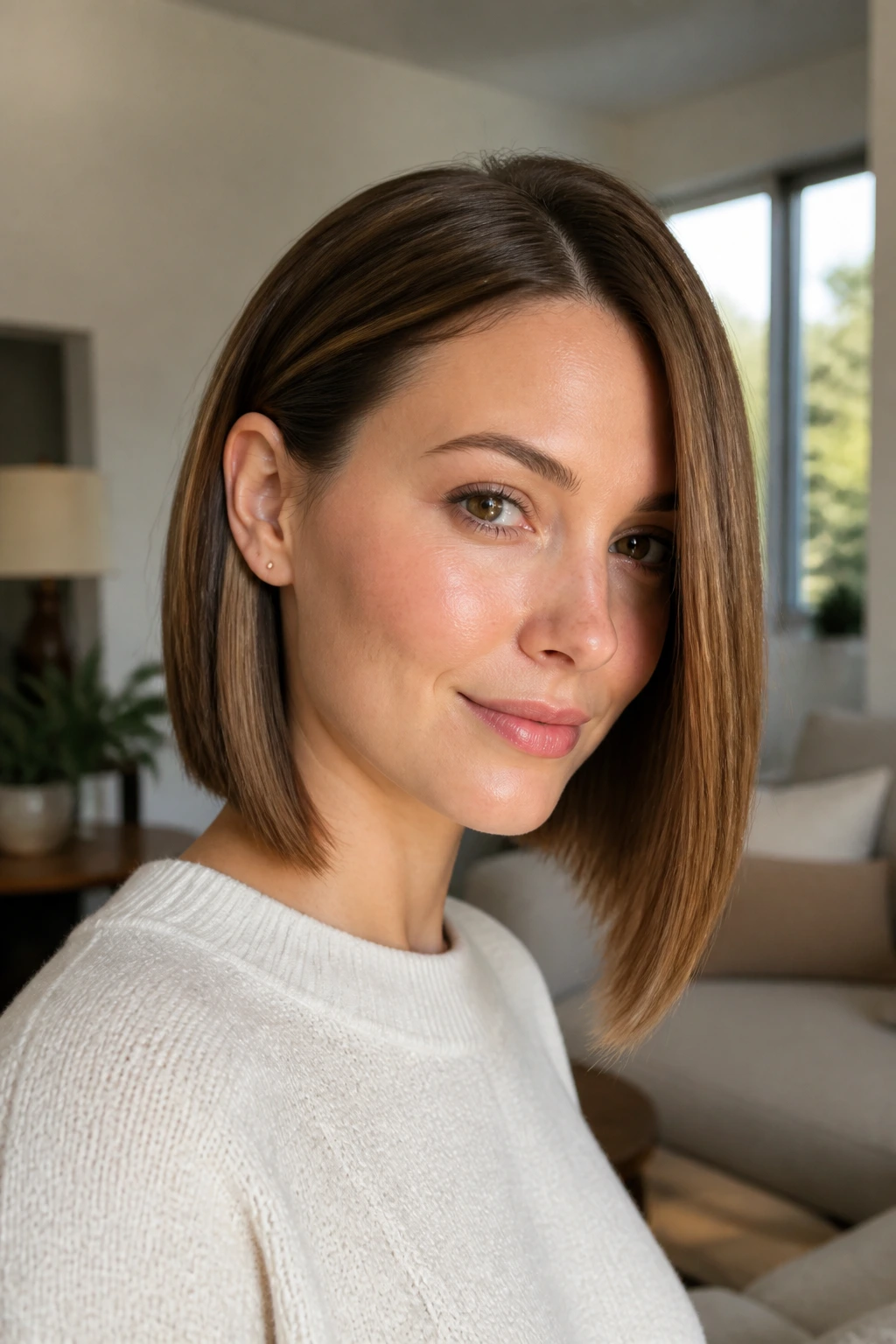
An ear-tuck lob is built for people who like hair that can get out of the way and still look shaped. The front corners are clean enough to tuck behind the ear, but the cut still keeps enough length to fall forward when you want it loose. That flexibility matters a lot when thin hair needs to do double duty.
The shape usually works best when the front is cut with a slight bevel or soft angle, so the tucked side doesn’t puff out awkwardly. Straight hair makes the tuck look crisp. Fine hair makes it easy to flatten the side without a fight. A little bend at the ends helps the opposite side stay alive.
This cut also plays well with glasses, hoop earrings, and high necklines because the hair doesn’t crowd the face. If your hair gets frizzy around the ear, this is a shape that stays neat with less effort than you’d expect.
There’s a reason this one keeps showing up in real life. It’s practical. And it still looks like a haircut, which is a nice bonus.
16. The French Lob

The French lob is less about one exact length and more about attitude, which sounds vague until you see it on straight, fine hair. It sits somewhere between polished and slightly imperfect, with a soft bend, a relaxed part, and ends that look touched rather than overworked.
That relaxed feel can actually help thin hair. A haircut that’s too severe shows every sparse spot. A French-leaning lob softens the edges just enough to make the whole thing feel fuller. Usually that means a clean perimeter, gentle face framing, and a blow-dry that leaves a little natural movement instead of a hard helmet shape.
The mistake is going too shaggy. A French lob should feel light, not chopped to pieces. Keep the lower line solid. Let the styling do the rest.
If you like hair that looks good with a white tee, gold hoops, and almost no fuss, this is the lane.
17. The Shag-Lite Lob

A full shag is usually too hungry for thin hair. It asks for layers, texture, and movement in all the places where fine straight strands already struggle. A shag-lite lob keeps the spirit of that cut — a little air, a little swing, a little looseness — without stripping the perimeter bare.
The layers should be sparse and strategic. Think of them as support beams, not decoration. Keep the bottom line intact, and lift only the interior or crown just enough to prevent flatness. The result is a lob that has a bit of grit without turning see-through.
This cut is for someone who hates feeling “helmety” but also hates constant styling. It won’t have the sharpness of a blunt lob, and that’s fine. It has more motion on purpose. That motion can be a blessing if your hair sticks to your head and never seems to bounce.
Skip this if your hair is already fragile at the ends. Done badly, it can chew up density fast. Done well, it gives thin hair a little life.
18. The Jaw-Skimming Lob
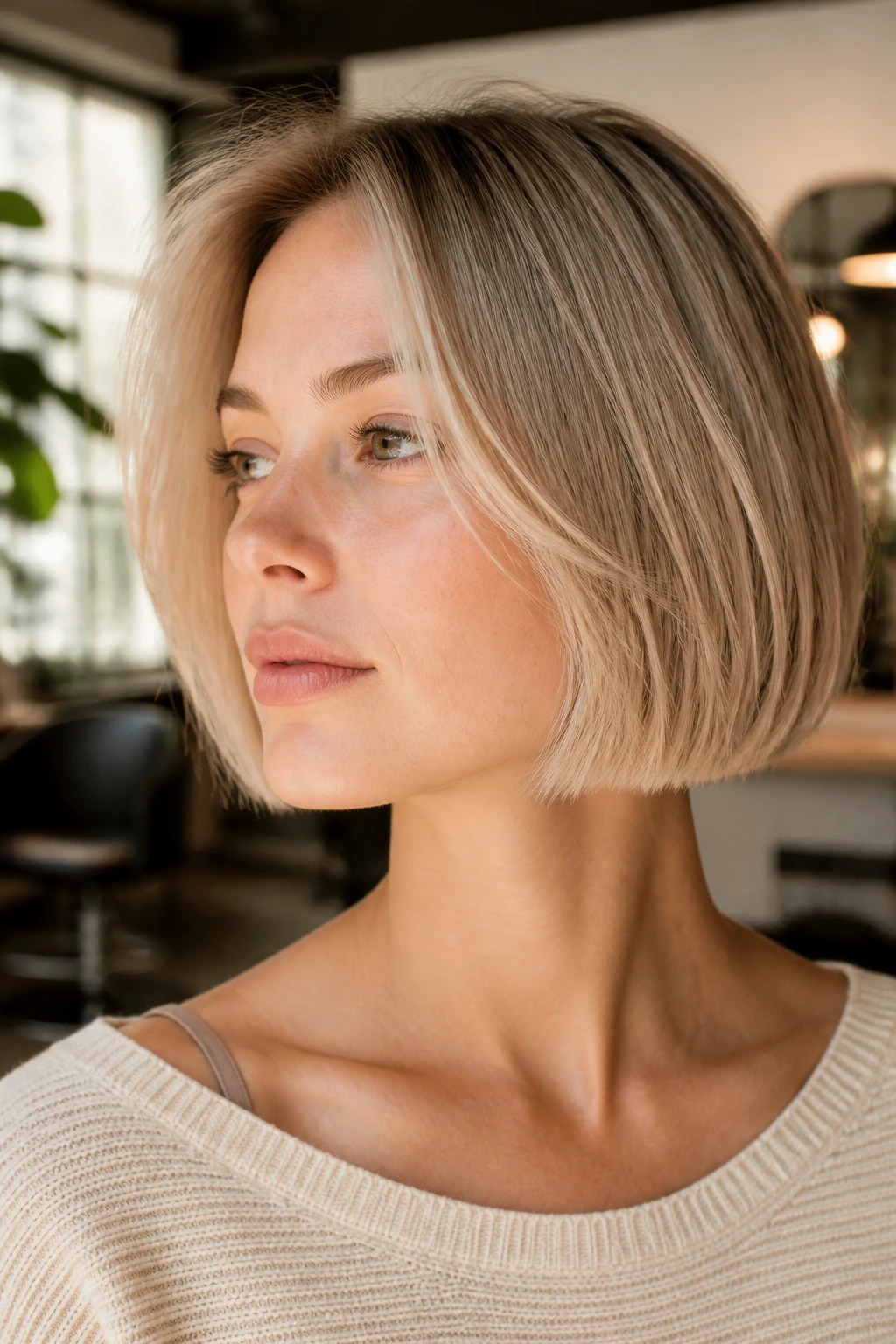
A jaw-skimming lob sits higher than most people think of when they hear “lob,” but on straight, thin hair, that shorter length can be exactly what the hair needs. When the ends hover around the jawline, the hair appears fuller because it’s not stretched down over the shoulders.
The danger here is precision. Too short, and the cut becomes a bob. Too long, and it loses the clean jawline effect. The sweet spot is that narrow zone where the cut frames the face but still clears the chin. For straight hair, the line should stay crisp so the shape doesn’t collapse into the neck.
This cut makes the cheekbones look stronger and the neck a little longer. It also tends to sit well under coats and scarves, which is useful if your hair gets bent and dented a lot. The tradeoff is that you need confidence. Shorter lobs show the cut more plainly.
If you want your fine hair to look deliberate rather than merely left alone, this is one of the boldest choices on the list.
19. The Graduated Nape Lob
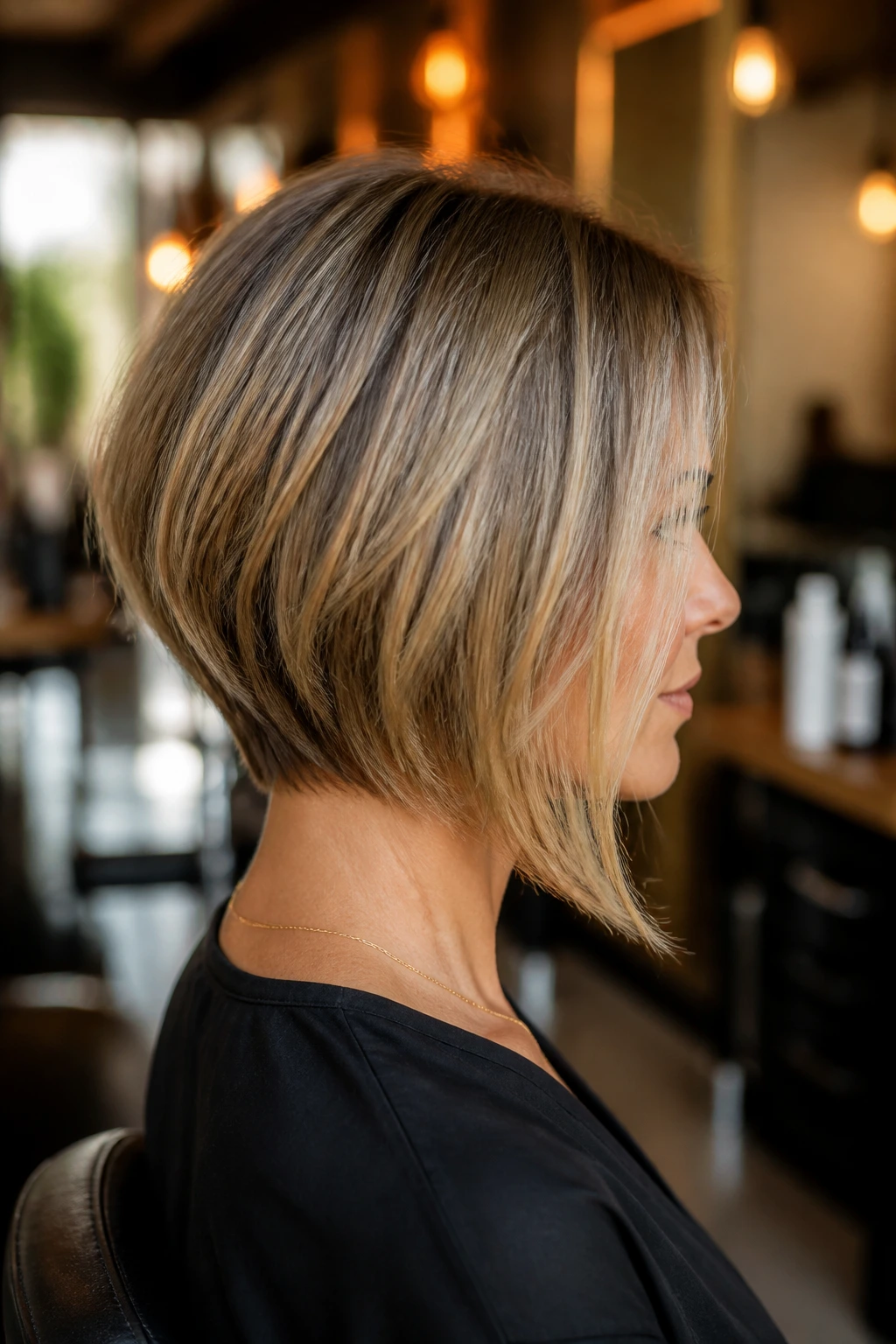
A graduated nape lob adds a touch of stack at the back while keeping the front long enough to read as a lob. The rear has slightly more lift, which is helpful when thin hair tends to lie flat against the neck. That tiny graduation gives the cut a little backbone.
This works especially well if your crown goes limp fast or if your hair has a habit of sticking to the head from the back. The graduation creates room under the surface, so the cut doesn’t look pasted down. The front can stay longer and smoother, which keeps the style from drifting into bob territory.
The key is restraint. Too much stacking and you get a shape that feels dated and fussy. Too little, and the lift vanishes. A good graduated nape should be felt more than seen. From the side, it gives structure. From the front, it just helps the whole haircut sit better.
This is a strong salon pick if your head shape needs a little correction at the crown.
20. The Soft U-Shaped Lob

A soft U-shape gives the lob a gentler finish than a hard straight line. The center back sits a touch longer, and the sides curve forward gradually. On straight, thin hair, that curve keeps the haircut from looking boxy while preserving enough weight at the perimeter.
The U-shape is especially useful if your hair grows out in a way that makes blunt cuts look too square. It softens the silhouette and can make the neckline feel less abrupt. Straight hair shows the curve clearly, which is nice if you want shape without relying on heavy styling.
Best use case
Choose this if you like softness around the shoulders but still want your ends to look full. It’s also a smart option if your face is narrow or long, because the rounded silhouette prevents the haircut from pulling everything vertically.
The trick is to keep the curve subtle. A deep U can make thin hair look longer and thinner at the sides. A light one reads as polished and easy to wear. That’s the better move.
21. The Hidden Crown Lift Lob
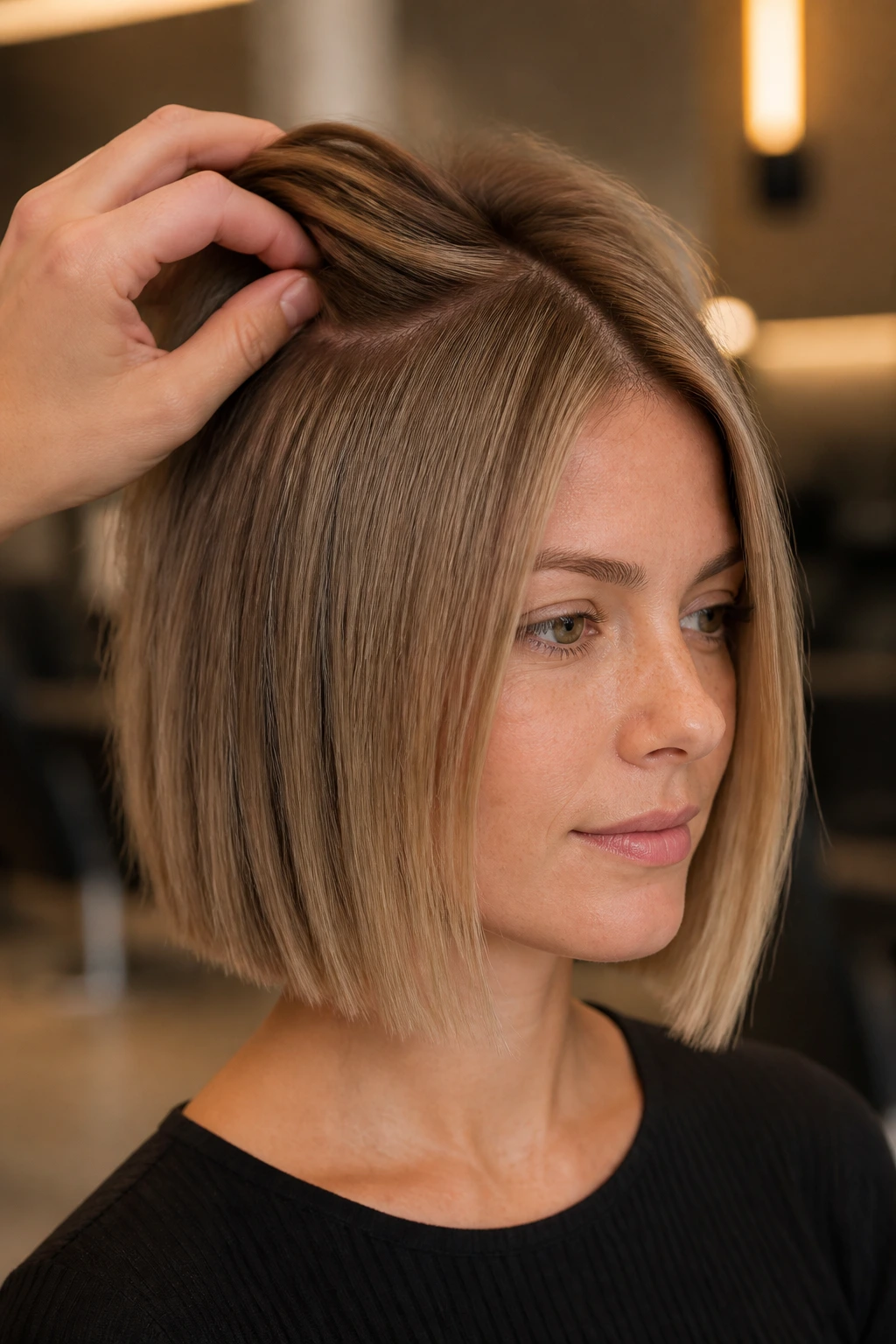
If your crown goes flat no matter what you do, this is the cut to pin to the mirror. A hidden crown lift lob keeps the exterior line clean while building a little internal support near the top of the head. The lift lives under the surface, which means the haircut still looks sleek from the outside.
This is a smart answer for very straight, fine hair that collapses after a few hours. The crown lift prevents that hat-hair effect where the top looks glued down and the bottom looks like it was added later. The perimeter stays blunt enough to read as full. The inside gets the structure it needs to stop sinking.
Ask for the crown area to be checked dry after the initial cut. Hair that looks perfect when wet can lie much flatter once it’s dry, and that’s when the lift shows whether it’s real. If you want a lob that looks fuller at the top without announcing its layers, this is the quietest way to get there.
It’s the last cut on this list for a reason. It solves a problem instead of decorating around it.
Why the Lob Shape Matters More Than Fancy Styling
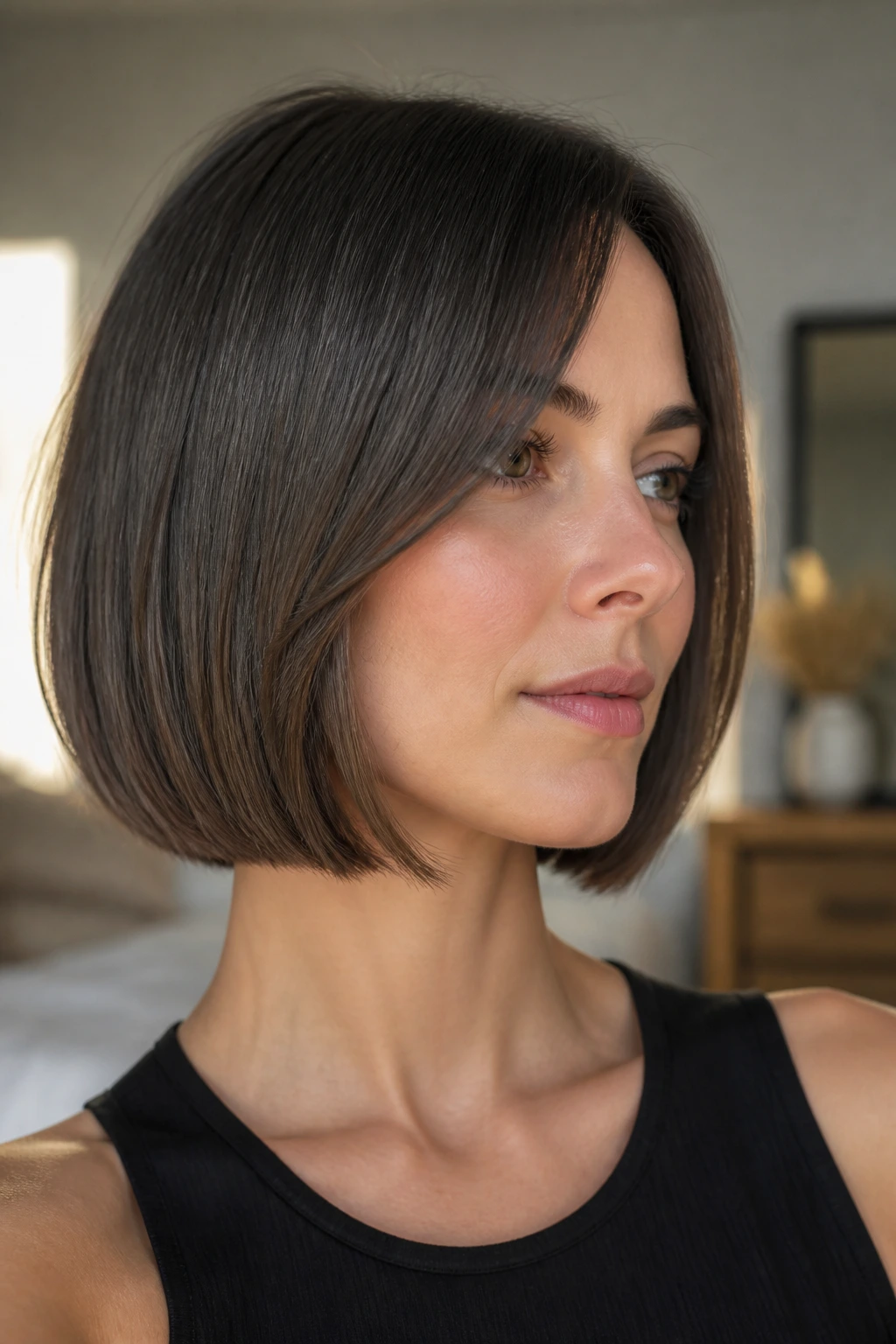
A good lob for straight, thin hair starts with the line, not the product bottle. That’s the part people skip. They buy mousse, sprays, powders, and serums, then wonder why the haircut still looks tired by midafternoon. The cut sets the ceiling. Styling only decides how close you get to it.
Straight hair is honest. It shows where the cut is blunt, where it’s too soft, and where the ends have gone wispy. Thin hair is even more honest. If the perimeter is weak, the whole style looks smaller. If the crown is too flat, the hair can seem sparse before you’ve even left the driveway. A lob avoids a lot of that by keeping length where it helps and trimming away the dead, long tail that drags density down.
What your stylist should protect
The perimeter. The corners. The collarbone line. Those are the money spots.
The biggest mistake is trying to “add movement” by taking too much hair off the bottom and then chasing volume with round brushing. That often gives you motion but not substance, and substance is what makes thin hair look good in the first place.
Essential Tools and Products for These Haircuts
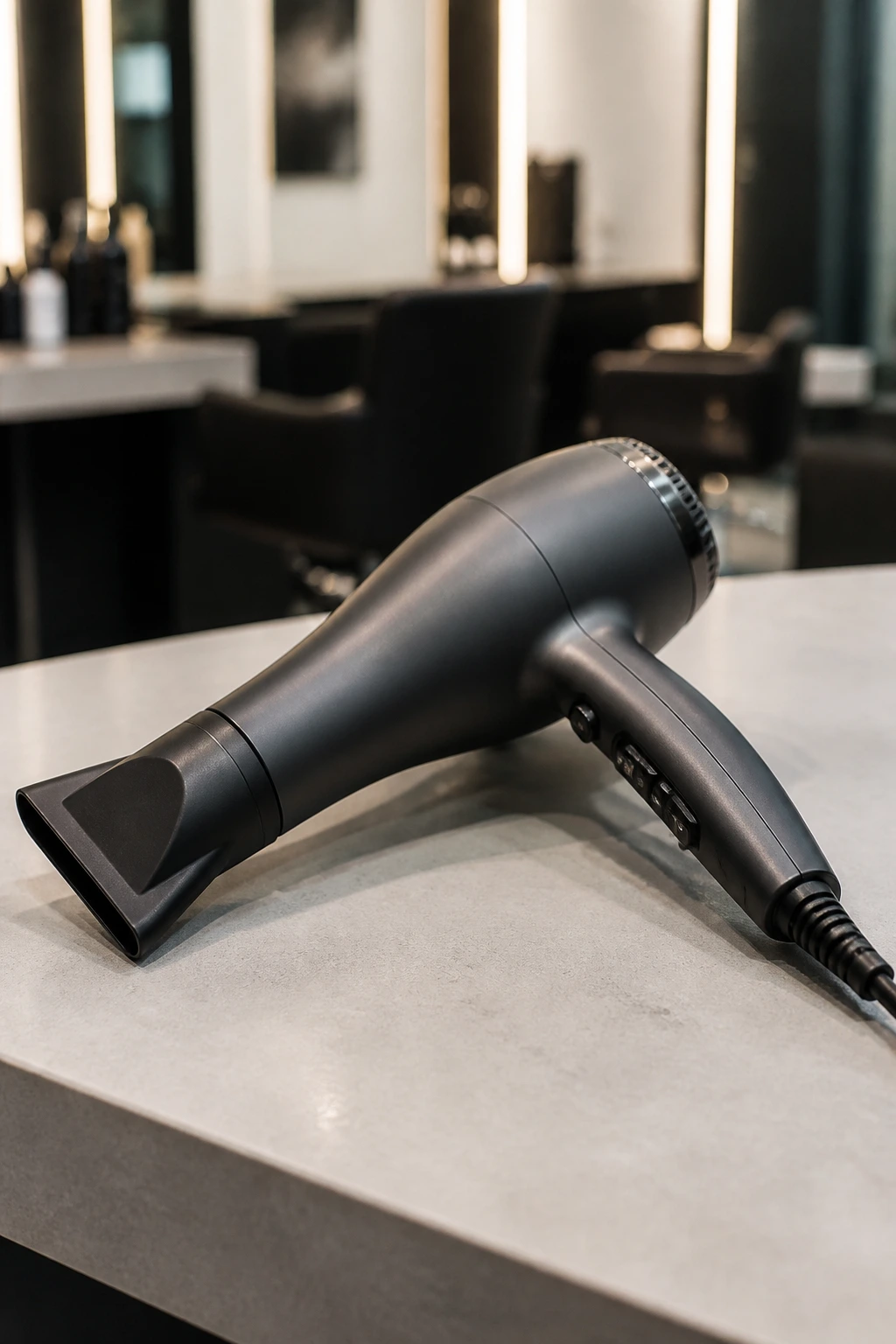
- Blow dryer with a concentrator nozzle: A narrow nozzle keeps the airflow controlled so the cuticle lies flatter and the ends don’t puff out.
- Round brush, 1 to 1.25 inches: Small enough to create a clean bend at the ends without over-curving the whole lob.
- Paddle brush: Good for smoothing a blunt or glassy lob when you want a straighter finish with less shape.
- Flat iron with smooth plates: Use it only on the mid-lengths and ends if you want a crisp, straight line; one pass is usually enough on fine hair.
- Tail comb: Useful for making a true center part or a deep side part that doesn’t wander an inch off center.
- Section clips: Thin hair tangles less, but clips still help keep the top half out of the way while you dry the underside.
- Lightweight mousse: A small amount at the roots can give lift without the sticky crunch that weighs fine hair down.
- Heat protectant spray: Non-negotiable if you use a blow dryer or iron more than once a week.
- Dry shampoo: Better on thin hair than people admit, especially at the roots on clean hair when you need a little grip.
- Light serum or cream: One pea-sized dose on the ends can keep them from looking dry, but too much will flatten the whole cut.
What to Tell Your Stylist Before the First Snip
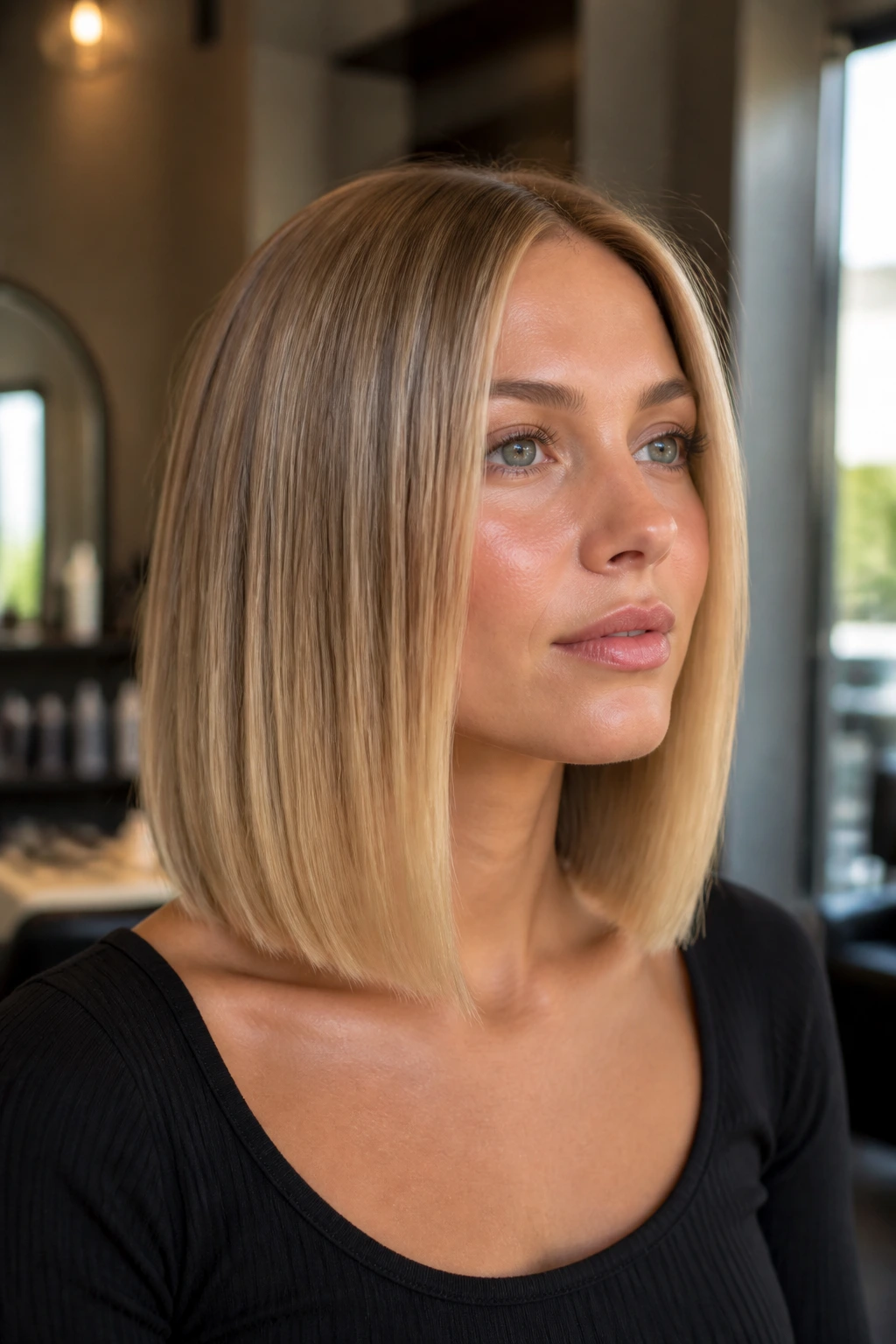
Don’t say “just make it look fuller” and leave it there. That sentence usually ends in a haircut that is too short, too layered, or both. Instead, point to where you want the length to land — collarbone, just below the jaw, or a finger-width past the shoulder — and explain how your hair behaves when it dries.
If your hair goes flat at the roots, say so. If the ends split fast, say that too. If one side flips out because of a cowlick, mention it before the cape goes on. A good stylist will change the cut plan based on how your hair actually sits, not how it looks in the chair while wet.
Bring reference photos, but bring the right kind. Same density is more useful than same face shape. A thick-haired lob and a fine-haired lob can look like cousins in a picture and strangers in real life. The best reference is a photo that shows the perimeter clearly.
And ask one blunt question: “How much weight are you leaving at the bottom?” That question tells you a lot. If the answer sounds vague, keep talking.
How to Wear These Lobs Day to Day
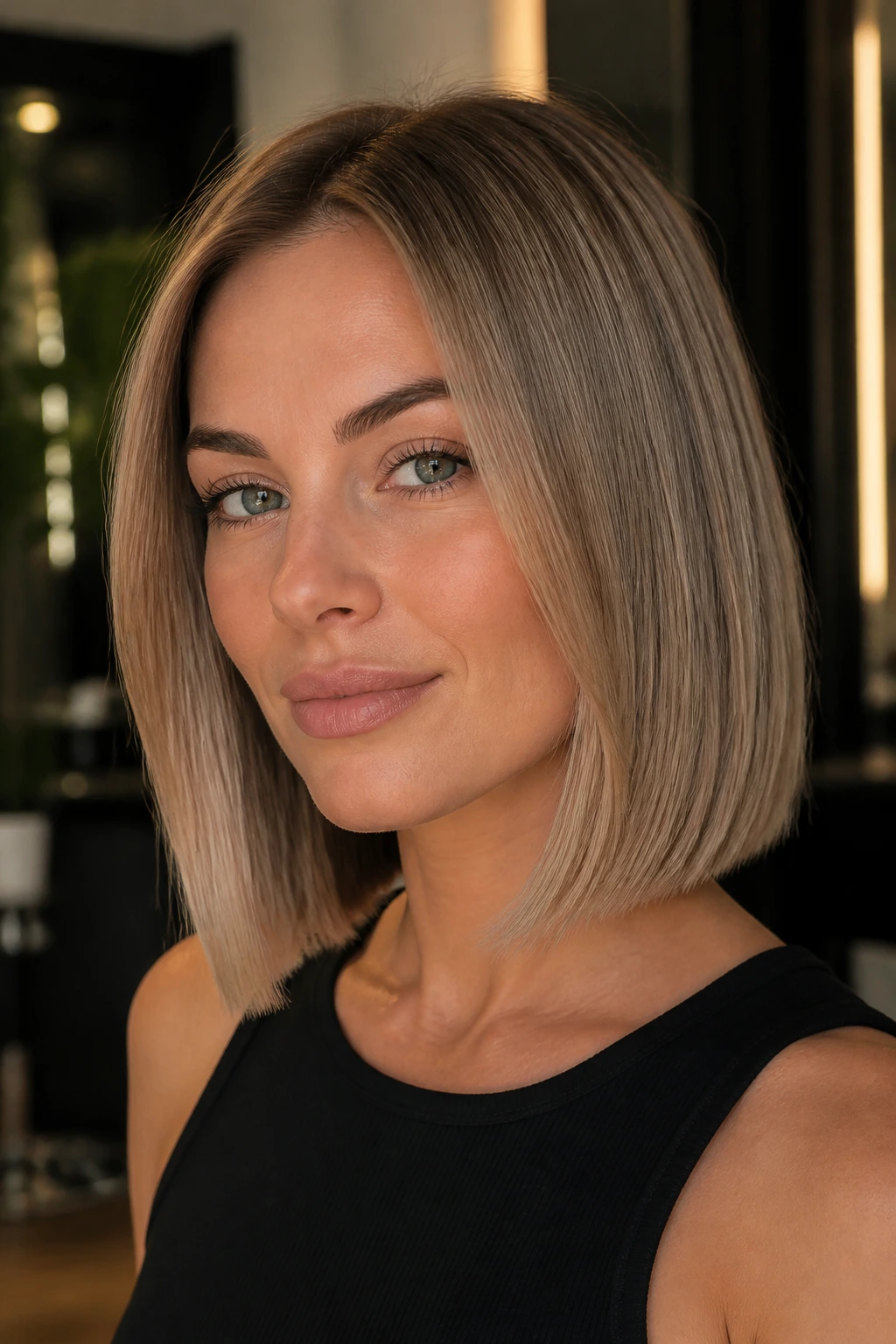
Finish: Sleek lobs look best when the ends are either dead straight or softly curved under by half an inch. Piecey lobs need a tiny bit of bend, not curls. On thin hair, over-styling the ends often makes the cut look smaller.
Accessories: Small hoops, hair clips, and tucked-behind-the-ear moments make these cuts feel intentional. Heavy headbands can flatten the crown and crush the shape, so use them sparingly if your roots are already low.
Parting: Center parts suit the blunt and glassy versions. Side parts help the volume cuts breathe. If your roots only behave one way, work with that part instead of forcing the opposite every morning.
Pairing with clothes: Clean necklines make a lob look sharper. Turtlenecks, crewnecks, and open collars all show off the line differently, so it’s worth paying attention to how the haircut sits with your usual wardrobe.
Additional Tips and Volume Boosters
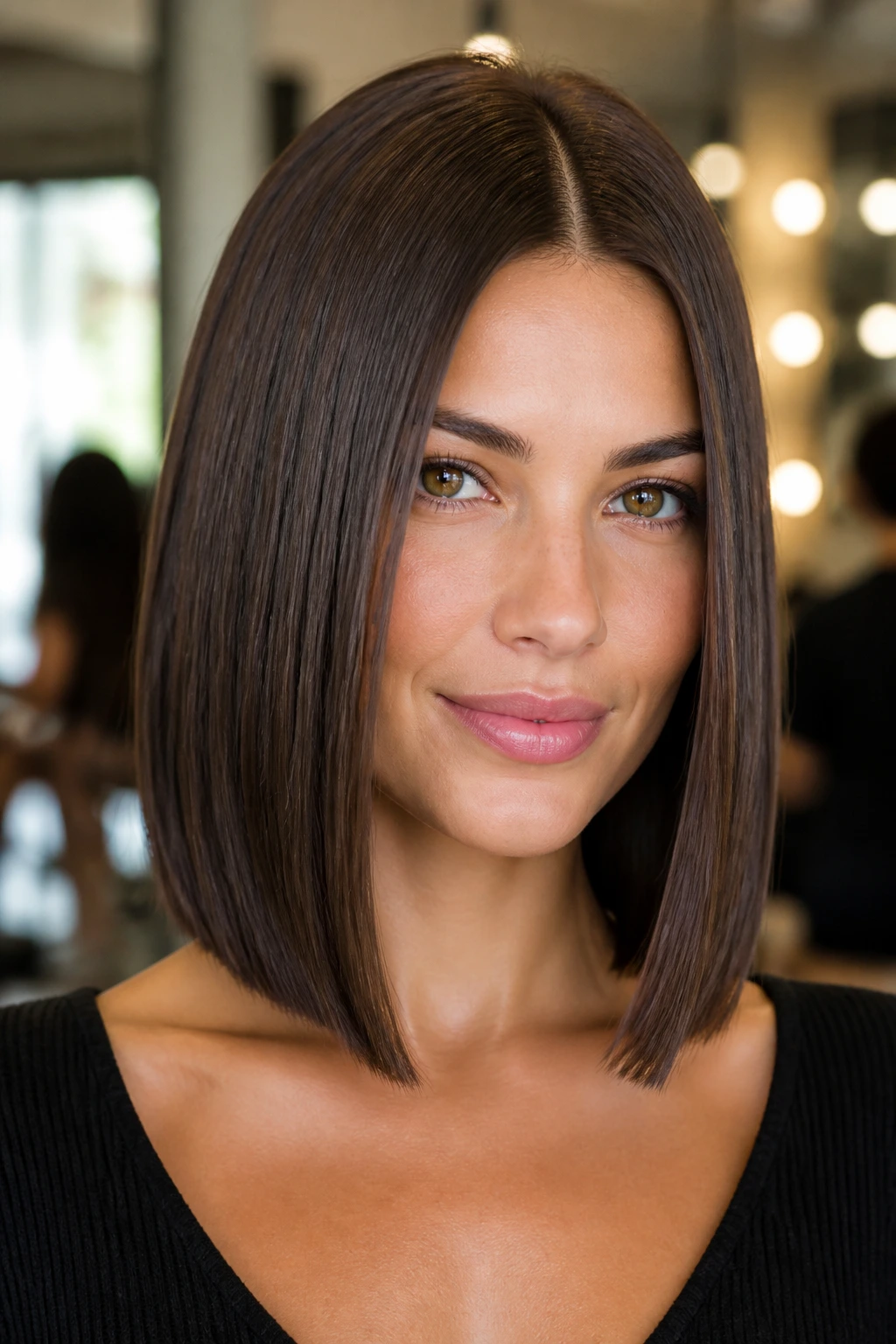
Root Lift: Blow-dry the roots first, while the hair is still damp, lifting the hair away from the scalp with the nozzle pointed upward for the first 15 to 20 seconds. That early lift tends to last longer than trying to rescue flat roots after the whole head is dry.
Bevel Control: If the ends kick out too much, wrap only the bottom inch around a round brush or flat iron and stop there. More bend than that starts shrinking the haircut.
Face-Framing Rule: Keep the shortest front pieces below the cheekbone if your hair is thin. Higher than that, and the front can look chopped away.
Make-It-Yours: If your hair is limp, pick a blunt or slightly angled cut. If your hair gets heavy at the sides, choose a side part or hidden crown lift. If you wear glasses, keep the front corners clean so the frames and hair do not fight each other.
Texture Without Frizz: A pea-sized amount of light cream on damp ends gives just enough slip to keep the lob from fraying. Do not pile product near the roots; that’s how a neat cut turns greasy and flat.
Maintenance, Growth, and Day-Two Refreshes
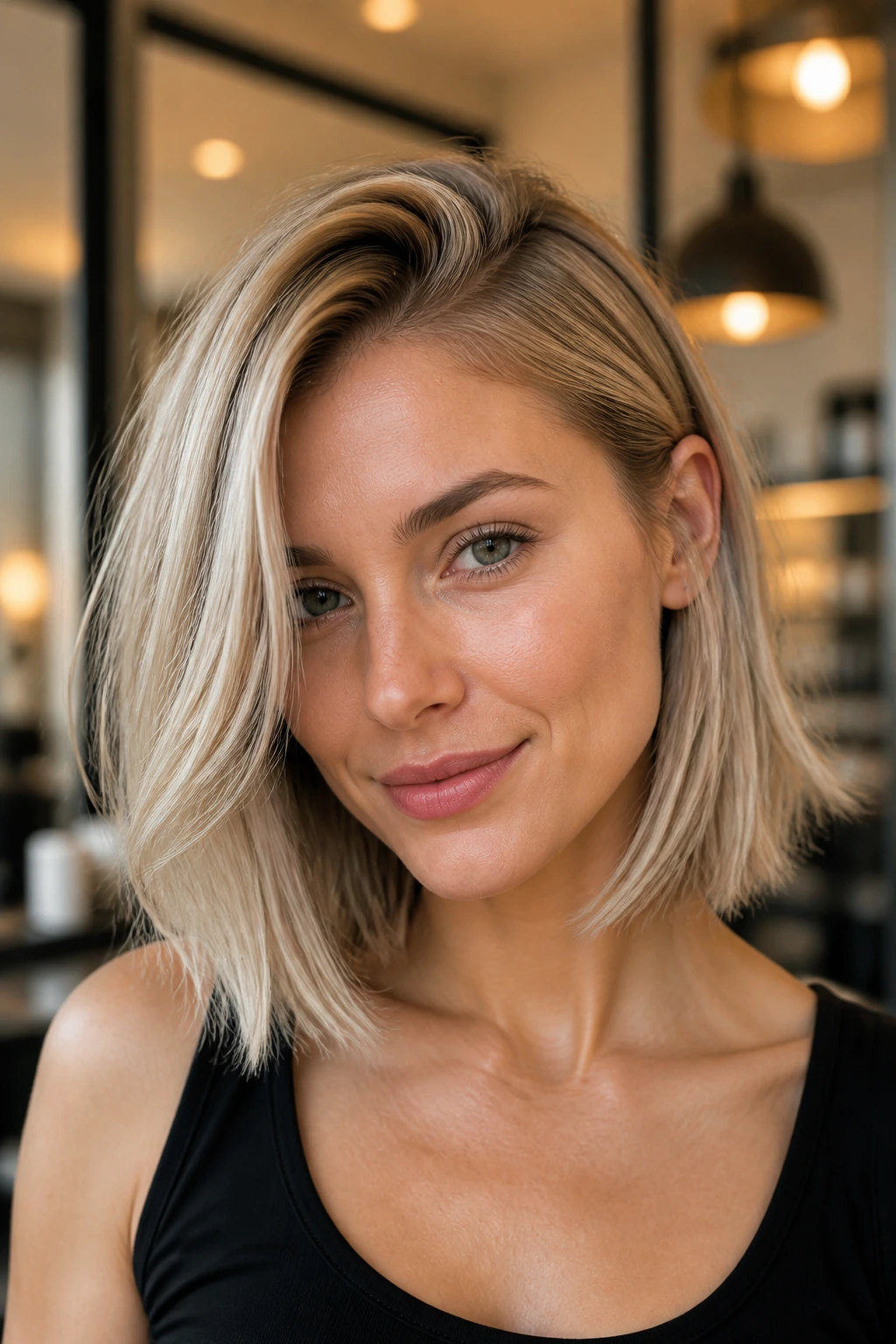
A lob on straight, thin hair usually looks its sharpest for about 6 to 8 weeks, assuming the ends stay clean and the shape doesn’t grow out too fast. If you love a crisp line, book trims on the shorter side of that range. If you like a softer, slightly lived-in shape, 8 to 10 weeks is usually fine.
Day two is where this haircut either earns its keep or loses its nerve. A little dry shampoo at the roots gives grip. A small mist of water on the front pieces can reset the bend. If the ends flip out, smooth only the last 2 inches with a flat iron or brush them under with a round brush and the dryer on medium heat. No need to redo the whole head.
For washing, lighter is better. Fine hair gets weighed down fast, so a heavy conditioner close to the scalp can flatten the whole cut. Keep conditioner from mid-length to ends, rinse well, and finish with a cool shot if you want the cuticle to lie flatter. That helps the blunt line look cleaner the next day too.
If you’re growing the lob out, ask for micro-trims. Tiny, regular trims preserve the shape better than waiting until the ends are ragged and then taking off two inches in one panicked visit.
Variations and Adaptations to Try
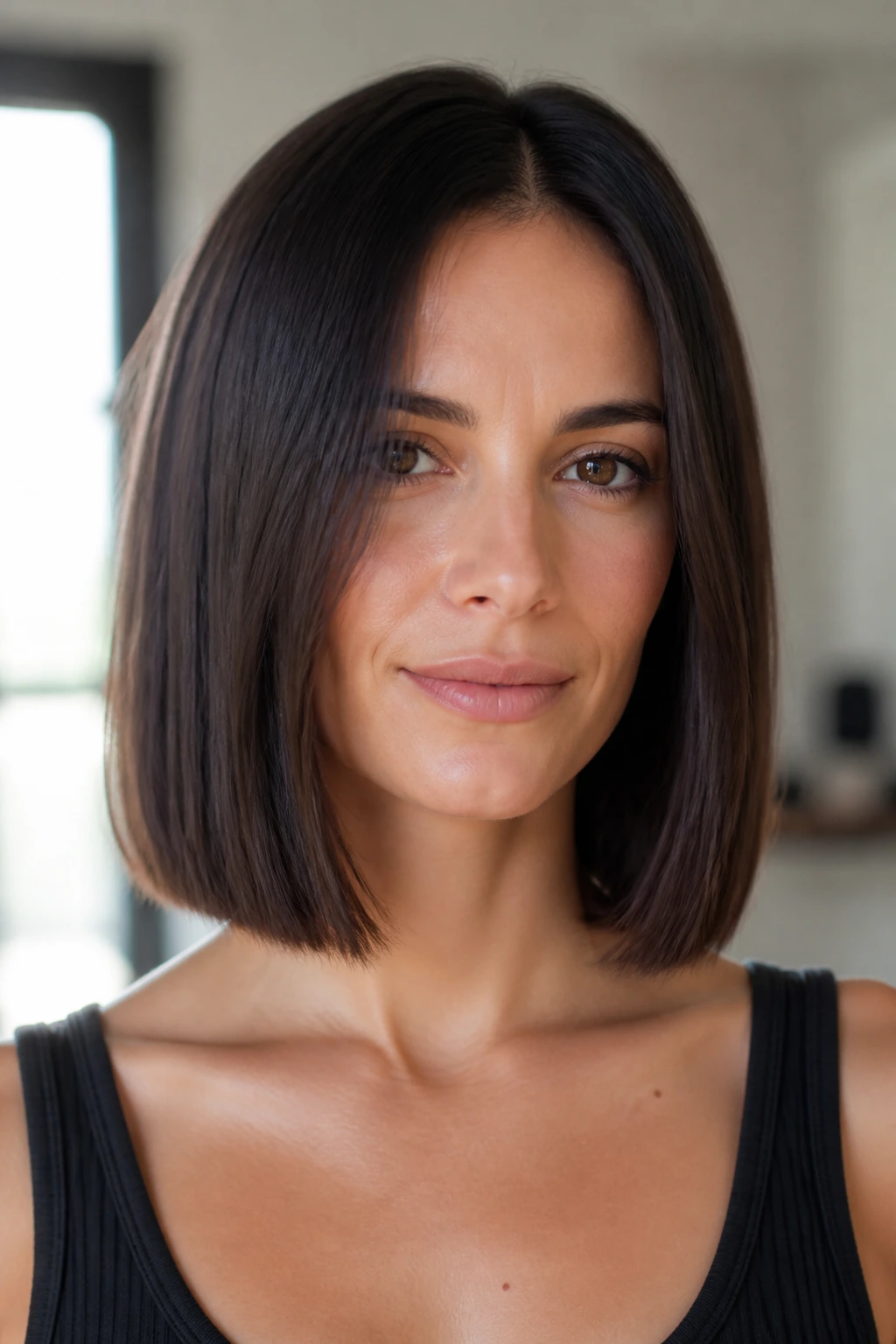
The No-Drama Blunt: This version keeps the entire perimeter one length and skips most layers. It’s the best choice when your hair already needs more visual weight, not more movement. If you like clean lines and low maintenance, this one is hard to beat.
The Side-Part Lift: Shift the part hard to one side and keep the front slightly longer on that side. It gives the crown lift and works especially well if your roots lie too flat to the scalp. It also brings a little asymmetry without changing the whole haircut.
The Fringe-Forward Lob: Add curtain bangs, bottleneck bangs, or a light side sweep. This variation is useful when the front of the hair feels sparse or the forehead needs balancing. The bangs should be soft enough to move, not heavy enough to steal density from the rest of the cut.
The Grow-Out Friendly U: Choose a soft U-shape instead of a hard line. It keeps the haircut from looking square as it grows and gives the sides a gentle curve. People who hate frequent trims usually prefer this one.
The Flat-Root Fix: Ask for a slight hidden lift at the crown and a cleaner perimeter below. This version is for hair that looks good for ten minutes and then slumps. The lift is subtle, but it keeps the whole style from collapsing by afternoon.
The Glass Finish: Keep the cut blunt, then wear it extra sleek with a center part and a smooth blow-dry. This is the sharpest-looking option in the bunch, and it shines on hair that’s healthy enough to reflect light without extra texture.
Common Mistakes to Avoid With Fine, Straight Lobs
- Over-layering the perimeter: If the ends look fuzzy or see-through in the mirror, the cut lost too much weight. Fix it by keeping the bottom line blunt and moving any layering higher up, where it won’t chew through the edge.
- Cutting too much length off the front: A lob that lands at the wrong point on the face can make thin hair look smaller. Keep the front around the collarbone or just below the jaw unless you specifically want a shorter bob feel.
- Using thinning shears like they’re harmless: On already sparse hair, thinning shears can make the ends look ragged within days. Ask for scissors and restraint instead.
- Ignoring your natural part and cowlicks: If your hair insists on parting off-center, forcing a middle part can flatten the top and expose scalp. Work with the growth pattern, not against it.
- Applying too much product: Heavy creams, oils, and sprays sit on fine hair fast. The result is a flat crown and stringy ends. Use less than you think you need, then add a touch more only if the hair still feels dry.
- Waiting too long between trims: Once the ends split, the cut stops looking full. A neat lob on thin hair depends on clean edges, not heroic product use.
Frequently Asked Questions
Is a blunt lob better than layered lob haircuts for straight hair and thin hair?
Usually, yes. A blunt perimeter keeps the ends looking dense, while too many layers can make thin hair look lighter than you want. If you need movement, hidden layers or very soft face framing are safer than heavy layering.
What is the best lob length for thin straight hair?
Collarbone length is the sweet spot for a lot of people because it keeps enough weight to look full without dragging the hair down. If your hair is especially fine, going a little shorter can also help, as long as the cut stays clean.
Can thin hair wear curtain bangs with a lob?
Yes, but keep the bangs airy and blended. Heavy fringe can steal density from the rest of the haircut, while light curtain bangs add shape around the face and lift the overall look.
Should I ask for layers if my hair is very straight?
Only if they’re subtle and placed carefully. Straight hair shows layering clearly, so the wrong layers can turn a lob stringy fast. Hidden internal layers or a slight bevel usually work better than obvious choppy pieces.
How often should I trim a lob so it stays full?
Every 6 to 8 weeks is a solid rule if you want the line crisp. If you like a softer grow-out, you can stretch that a little, but once the ends start looking frayed, the haircut loses the fullness that makes it work.
What if my lob flips out at the ends?
That usually means the ends were cut too blunt for your growth pattern, or the length is sitting at a spot that bends against your shoulders. A light bevel or a small round-brush pass under the last inch usually fixes it.
Can I air-dry these cuts, or do they need heat styling?
Some of them air-dry well, especially blunt or slightly angled versions, but the finish will be softer and less controlled. If you want the ends to sit neatly and the crown to keep lift, a quick blow-dry is the safer choice.
Which lob is best if my hair lies flat at the crown?
Choose a deep side part, a hidden crown lift, or a slightly graduated nape. Those shapes create support where flat roots usually fall through the day, and they do it without making the bottom look thin.
How do I explain this haircut to my stylist without using the word “lob”?
Describe the length first, then the edge. Say where you want the ends to hit, whether you want the front longer, and how blunt the bottom should be. That gives the stylist something concrete to work from, which is far more useful than one style name alone.
The Lob That Makes Thin Hair Look Intentional
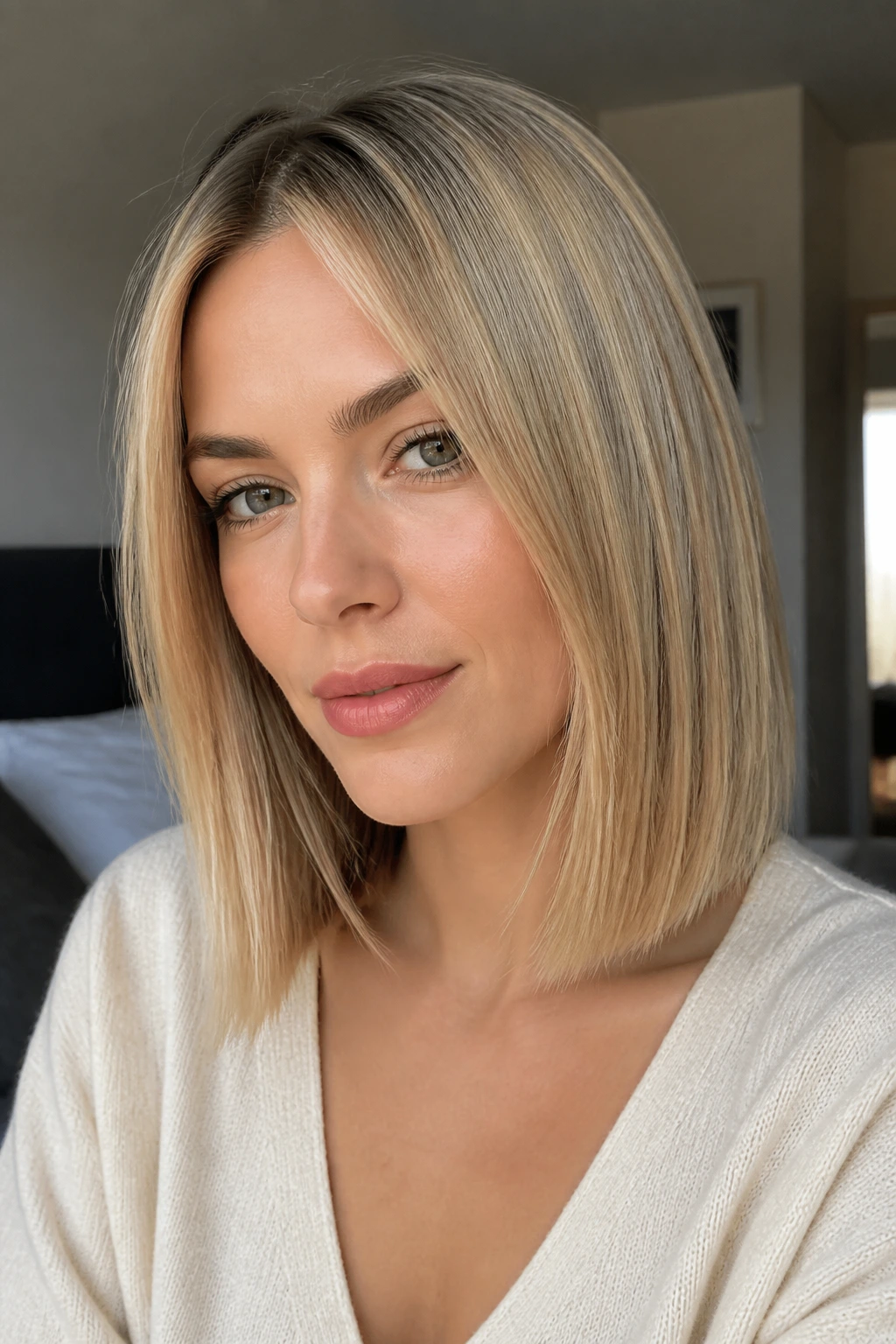
A good lob on straight, fine hair doesn’t apologize for what your hair is. It works with it. That means keeping the bottom line solid, leaving enough weight where the eye lands first, and using shape instead of bulk to make the whole haircut feel fuller.
The best part is that these cuts are not fragile little museum pieces. They can be sharp, soft, angled, blunt, fringed, or barely layered, and they still make sense when the day gets long. Pick the one that matches how your hair actually behaves, then protect the perimeter like it matters — because it does.
