



A bob that falls flat is a missed opportunity. Hair this short can look crisp, but without the right shape it can also look boxy, heavy, or just plain sleepy at the ends.
That’s why layered bob haircuts keep showing up in real salons, on real heads, and on people who want their hair to do something besides sit there. Layers break up weight, lift the crown, and let the cut move when you turn your head. The good ones don’t scream for attention. They just make the whole haircut look more alive.
The catch is that “layered bob” is not one haircut. It’s a whole family of cuts, and the difference between a clean, flattering bob and a lopsided disappointment often comes down to where the weight sits, how short the back is, and whether the layers are soft or choppy. Get that wrong, and the shape can feel too wide, too puffy, or too thin at the ends.
Why These Layered Bob Haircuts Work So Well
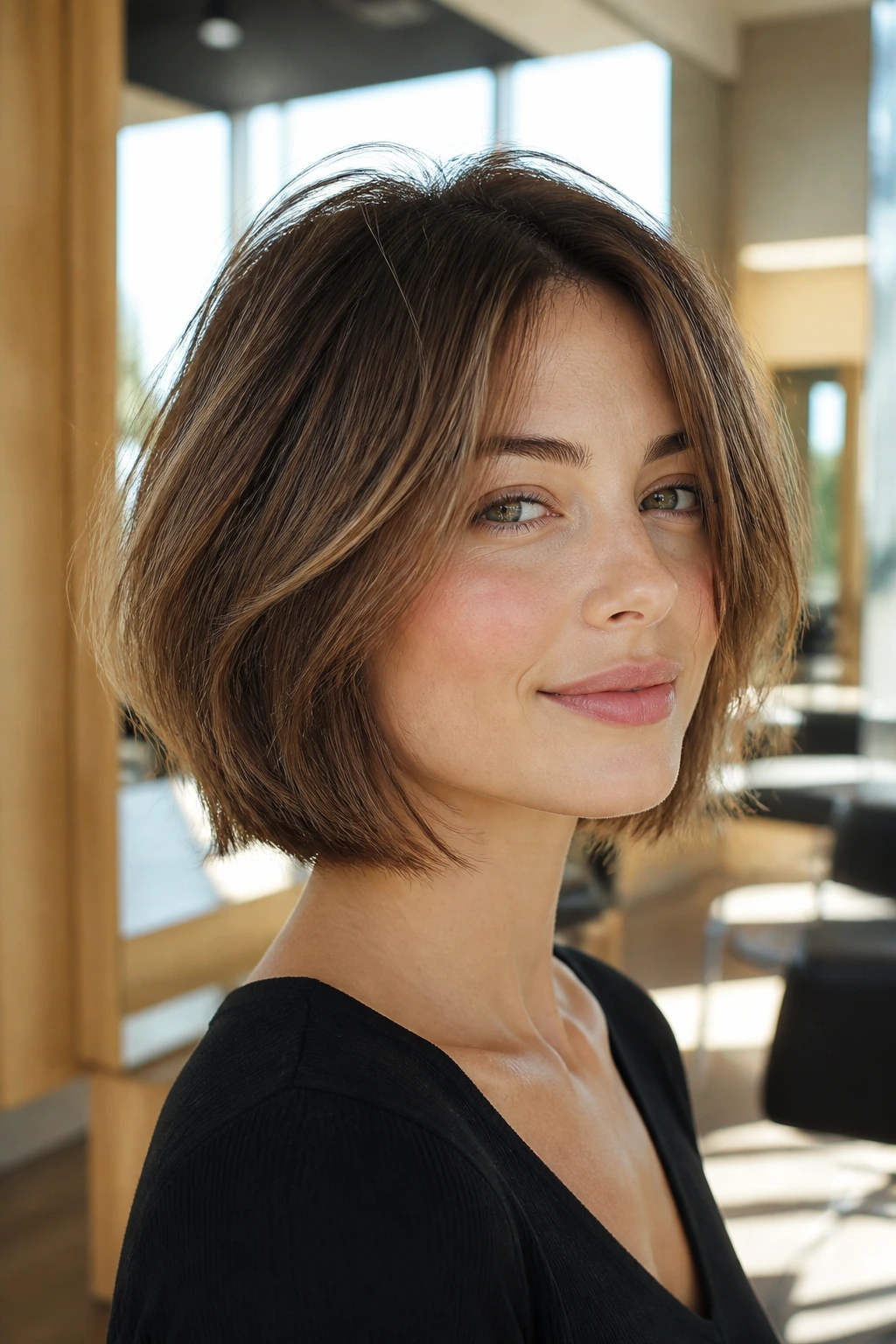
- They change the silhouette fast: A few carefully placed layers can lift the crown, slim the sides, or open up the neck without taking the length too far up.
- They handle different hair textures: Fine hair gets more air and lift, while thick hair gets rid of the helmet effect that happens when the perimeter is too blunt.
- They grow out with more grace: A layered bob usually softens as it grows, so the cut can stay wearable for weeks after the trim.
- They give you style options: Sleek, tousled, rounded, tucked, side-parted, or wavy — the same cut can behave in several ways depending on how you finish it.
- They make bangs easier to live with: Curtain bangs, side-swept fringe, and even micro bangs tend to look more intentional when the bob underneath has some movement.
1. Soft Feathered Layered Bob
A feathered bob is the one I recommend when someone wants movement but does not want the haircut to look chopped up. The layers are light, soft, and blended, so the ends still sit together instead of splitting into little pieces. On straight or slightly wavy hair, that softness gives the whole cut a smooth swing.
Why It Feels Easy to Wear
The feathering sits best when the shortest layers start around the cheekbone or just below it. That keeps the top from puffing out and lets the shape curve around the jaw instead of away from it. If your hair is fine, this cut can look fuller without needing a ton of product.
Quick notes:
- Best on fine to medium hair
- Looks good air-dried or blown out
- Easy to tuck behind one ear without losing shape
Pro tip: Ask for soft internal layers, not heavy texturizing. That one phrase saves you from the ragged, over-thinned look that some feathered bobs get when the scissors get too enthusiastic.
2. Chin-Grazing French Layered Bob
This is the bob that sits right at the chin and makes a face look sharper fast. It has that slightly undone French energy — neat enough to look deliberate, loose enough to avoid helmet hair. The layers are subtle, but they matter. They stop the line from feeling rigid and give the ends a little bend when you brush them under.
What makes this cut work is the placement. A chin-length bob can draw attention right to the jawline, so the layers have to support that line, not fight it. Keep the front pieces a touch longer if your face is round, and keep the back cleaner if you want the neck to look longer.
This cut looks especially good with a side part, a soft bend from a round brush, and a little polish at the ends. It’s not the cut for someone who wants chaos. It’s the cut for someone who wants shape.
3. Textured Shaggy Bob With Broken Ends

Why does this one never look stiff? Because it is built to look a little unfinished. The shaggy bob uses shorter, broken layers to create movement all the way through the shape, and the ends are usually point-cut or lightly razored so they don’t sit in one blunt line. The result is airy, piecey, and a little rock-and-roll.
This style makes sense on wavy or thick hair that tends to swell up when it’s cut too blunt. It also helps if your hair has a natural bend, because the layers can catch that bend instead of flattening it out. Too much heat styling can make it look forced, so I like it better with a bit of mousse and a rough dry.
How to wear it
- Scrunch in a lightweight mousse
- Let the crown dry with a little lift
- Finish with a tiny amount of paste on the ends
Use this cut if: you want texture to do the heavy lifting and you do not mind a finish that looks lived-in rather than polished.
4. Stacked Layered Bob at the Nape
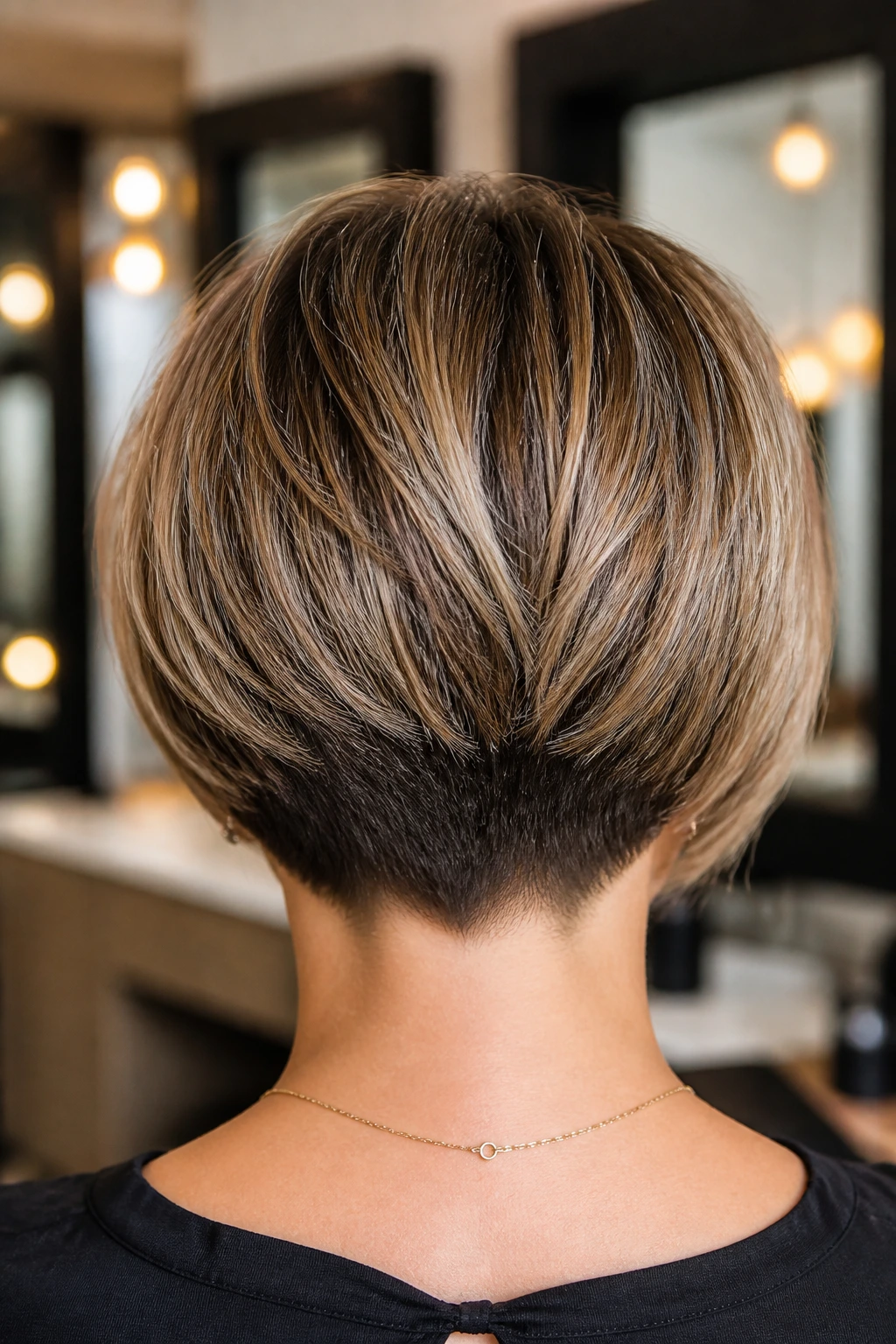
A stacked bob is the one with the built-in lift at the back. The nape is shorter and tighter, and the layers step up from there so the silhouette looks rounded and full from behind. If you want a clean profile and a little more height at the crown, this cut delivers it without needing a lot of styling tricks.
It works best on fine to medium hair that needs help standing away from the scalp. Thick hair can wear it too, but the stacking has to be controlled or the back turns bulky fast. That’s the part most people miss. A good stacked bob is not about cutting as much hair as possible. It’s about cutting just enough so the back curves neatly instead of flaring.
Be ready for trims. This shape grows out faster than a lob, and once the nape loses its clean line, the whole cut softens into something else.
5. Collarbone-Length Lob With Long Layers
This is the bob for people who want the feel of a bob without giving up all their length. The collarbone-length lob keeps enough hair to tuck, twist, clip, or throw into a tiny bun, while the long layers stop it from hanging like one flat curtain. It’s also one of the easiest layered bob haircuts to grow out.
The long layers matter because they let the hair swing instead of dragging at the shoulders. That makes this cut especially useful if your hair has a bit of wave but tends to lose shape the moment it gets too long. The collarbone length gives you movement. The layers keep it from becoming heavy at the ends.
If you’re nervous about a full bob, this is a smart entry point. It gives you shape without the commitment of something chin-length or stacked.
6. Curly Layered Bob With a Rounded Shape

Curly hair needs a different kind of logic here. A curly layered bob should preserve the curl pattern, not bully it into a flat outline. The best versions keep a rounded shape, so the curls stack naturally around the head instead of hanging longer in the middle and puffing at the sides.
A dry cut often works better than a wet one for curls, because shrinkage can be sneaky. A curl that looks shoulder-length when wet may bounce up several inches once it dries. That is how people end up with a bob that feels too short on day one. Not fun.
What to ask for:
- Layers that follow the curl pattern
- No heavy thinning shears through the ends
- Enough length to account for shrinkage
The nicest thing about this cut is that it tends to look better when it is not overly fussed with. Diffuse it, scrunch it, leave the curls alone. They know what they’re doing.
7. Inverted Layered Bob With a Sharp Angle
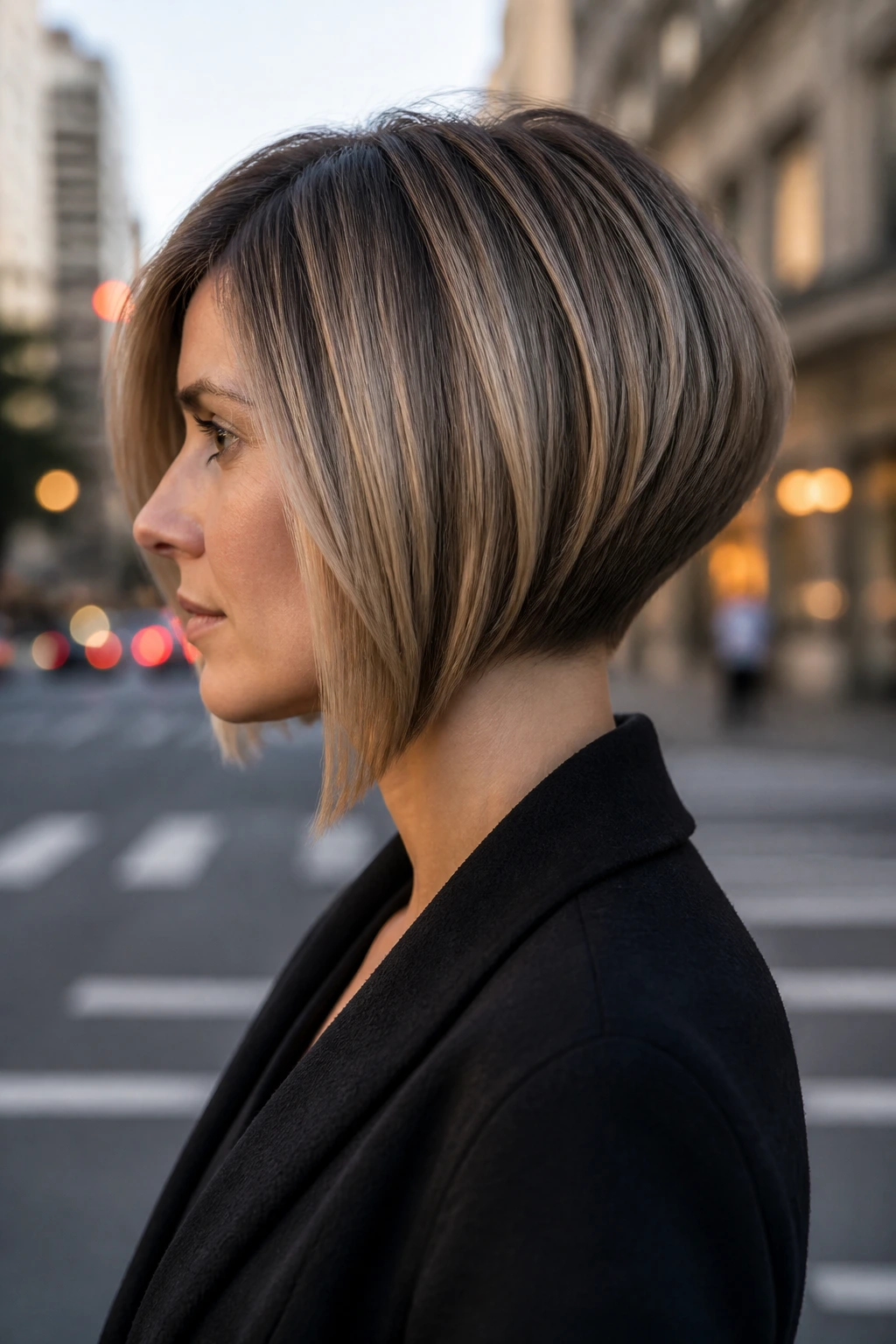
A sharp inverted bob is all about the line. The back is shorter, the front is longer, and the whole cut angles forward in a way that can make the neck look longer and the jawline look more deliberate. It’s a bolder version of the layered bob, and it works best when the angle is clean enough to read from across the room.
Straight hair shows this shape best. Wavy hair can wear it too, but the styling has to keep the angle visible or the cut starts to look softer than intended. If you want drama, this is one of the most obvious ways to get it without going short-short.
It is also a haircut that asks for maintenance. Once the angle grows out, the shape changes quickly. If you like a precise line, be ready to see your stylist again before the silhouette gets fuzzy.
8. Side-Swept Layered Bob With Face Framing

A side-swept bob changes the whole mood of the cut. The deep side part creates lift on one side and lets the front layers sweep across the cheekbone, which can soften a square jaw or balance a wider forehead. It’s a nice trick, and it works without needing a lot of length.
The face-framing pieces should start where they actually do something useful — usually around the cheekbone, chin, or just below the mouth, depending on the face shape. Too short, and they can look like a mistake. Too long, and they stop framing anything.
This style is handy when you want a bob that can look slightly different from day to day. Tuck one side behind the ear, leave the other side loose, and the shape changes without a single haircut appointment.
9. Layered Bob With Curtain Bangs
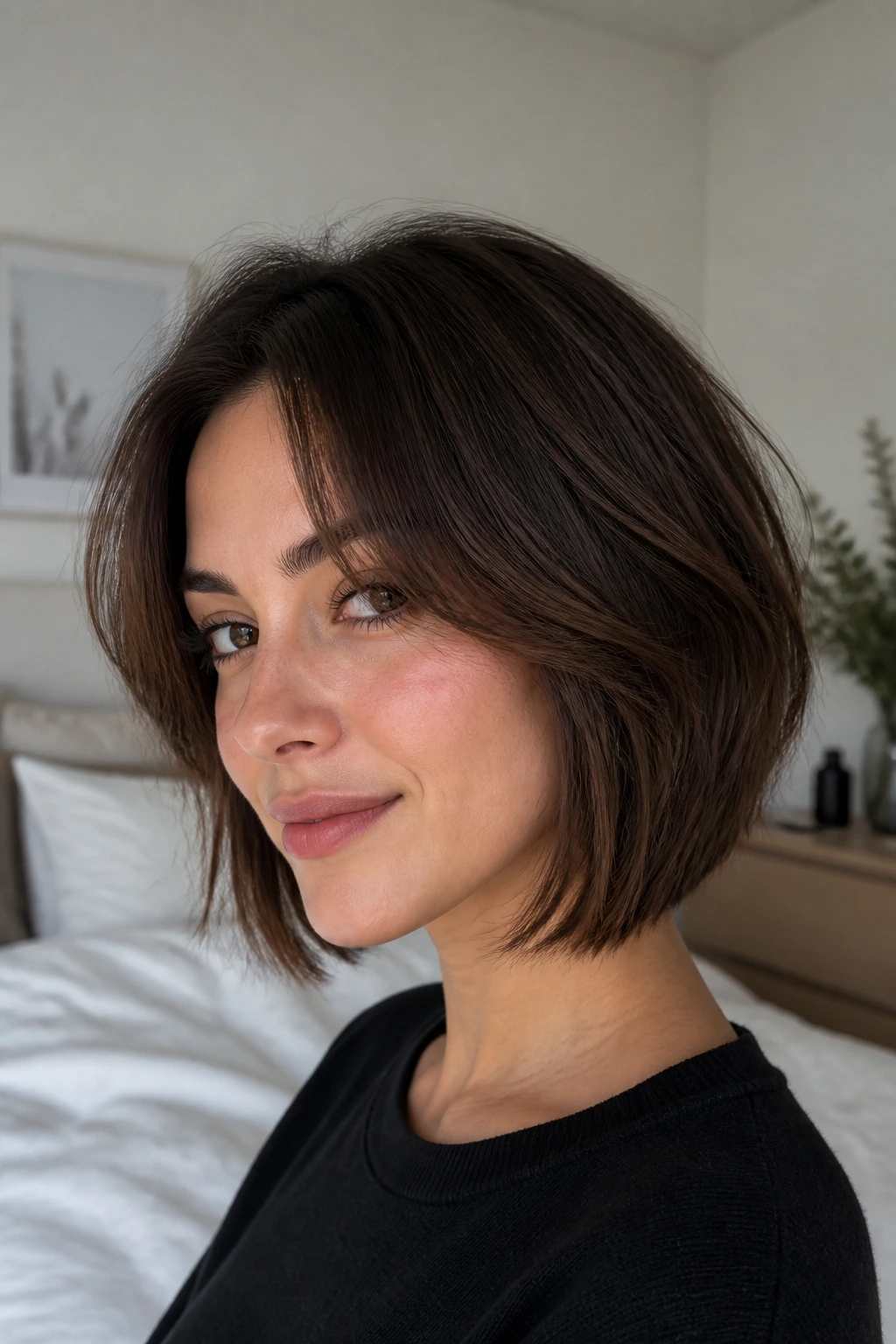
Curtain bangs and a layered bob are old friends for a reason. The fringe opens in the middle, the layers carry that softness down into the sides, and the whole cut feels lighter around the face. If straight-across bangs feel too heavy on you, this is the gentler move.
The trick is keeping the bangs long enough to blend into the front layers. If they’re cut too short, the style starts to fight itself. A good curtain bang should split cleanly after a quick blow-dry and fall into those side pieces without looking like a separate helmet perched on top.
This one is especially good if you like a little styling ritual. A round brush, a quick bend away from the face, and thirty seconds of cool air at the end make a real difference.
10. Blunt Bob With Hidden Internal Layers
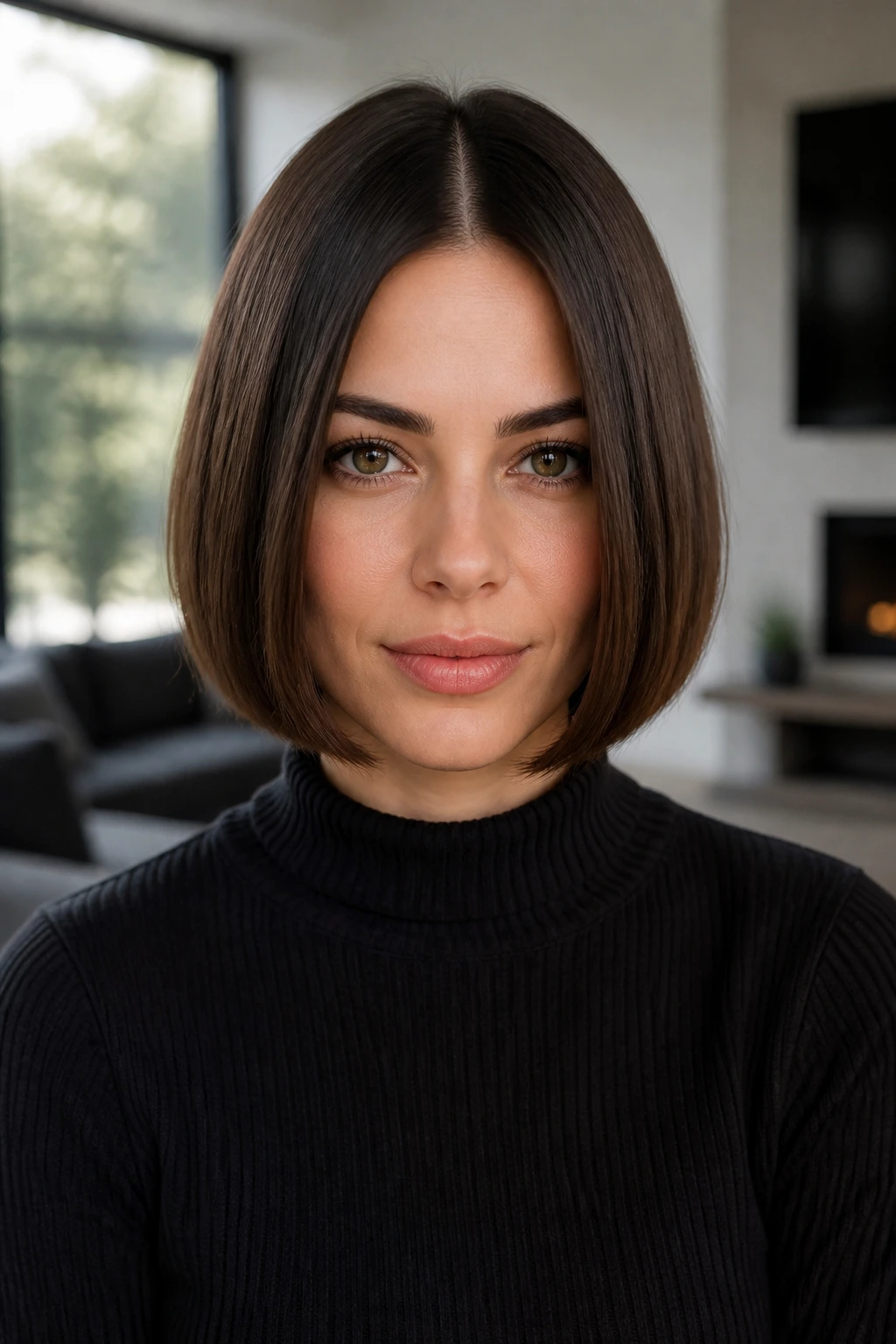
This is the haircut for people who love a sharp edge but hate bulk. The outside line stays blunt and clean, while the layers are tucked inside the shape to reduce density. So from the front, you still get that sleek bob outline. From the inside, the cut behaves more lightly.
It is a smart choice for finer hair that needs the illusion of thickness, or for medium hair that wants movement without losing its strong perimeter. You can still tuck it, smooth it, or wear it with a center part, and the ends keep their shape.
The main thing here is restraint. If the stylist removes too much from the interior, the blunt edge loses its body and starts looking sparse. The clean line is the point. The hidden layers are only there to help it move.
11. Choppy Layered Bob for Fine Hair

Fine hair and layering can be a tricky pair. Too many layers, and the ends look stringy. Too few, and the hair lies flat against the head like it has given up. A choppy layered bob threads the needle by creating separation without stripping out the shape.
The best version keeps some weight at the perimeter and uses short, broken pieces around the crown and mid-lengths to fake lift. A lightweight mousse at the roots helps too, but the haircut has to do its part. That’s the part people forget. Product cannot rescue a bad cut.
A little roughness is the point here. You want the ends to look airy, not wispy. If your hair tends to collapse by lunch, this cut can buy you more life at the roots — especially with a quick blast of heat and a side-to-side dry at the crown.
12. Layered Bob for Thick Hair With Weight Removal
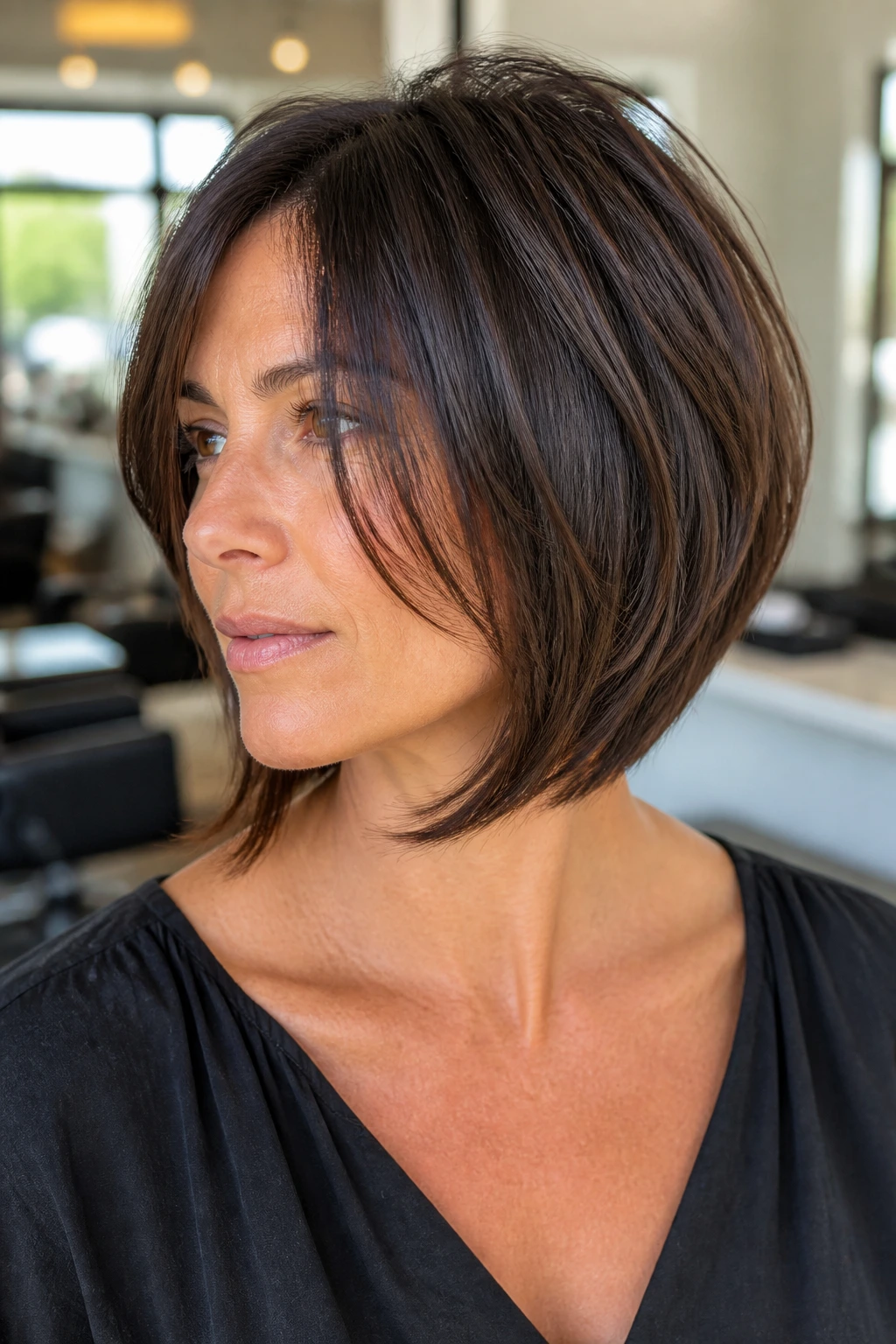
Thick hair needs room to breathe. Without it, a bob can sit on the head like a cap. A layered bob for thick hair usually includes internal weight removal, longer face-framing pieces, and careful graduation through the back so the shape stays controlled instead of puffing outward.
The mistake is asking for “lots of layers” and thinking that means less bulk. Sometimes it does. Sometimes it just makes the surface fluffy while the base stays heavy. What actually helps is strategic removal in the middle and lower sections, plus enough length at the ends to keep the cut from fraying out.
If your hair is dense, this is one of the few bob styles that can feel genuinely light on the neck. It dries faster, too, which is no small thing when a full blow-dry used to take half your evening.
13. Airy Wavy Bob With Piecey Ends
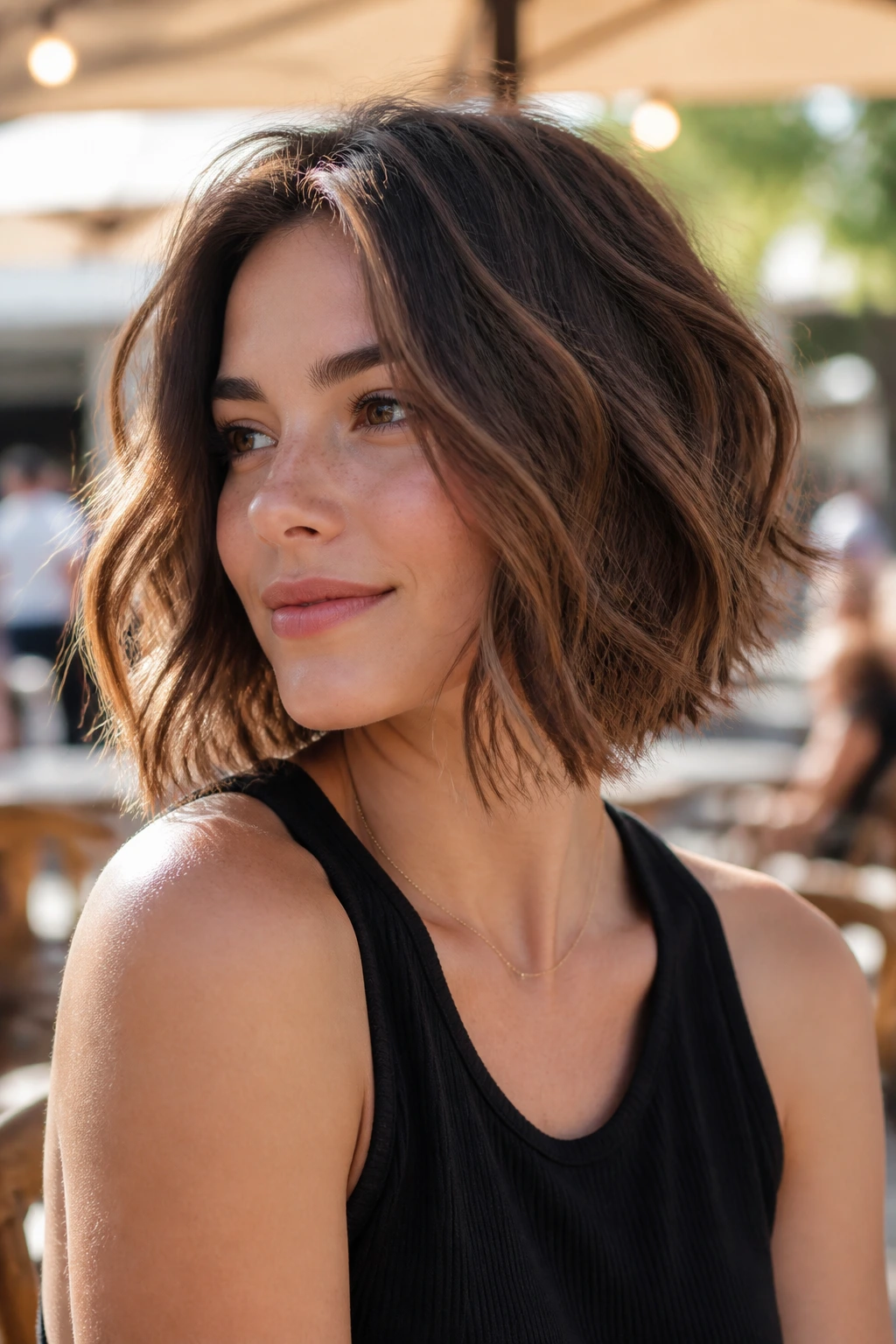
A wavy bob should look like it remembers your natural texture and works with it. The piecey ends keep the cut from turning into one solid shape, while the layers support the wave pattern so it falls in bends rather than in a triangle. On a good day, this is the haircut that looks styled even when you barely touched it.
A sea-salt spray or a light wave cream is usually enough. You do not want heavy oils dragging the waves down. The goal is separation, not slickness. If you overdo the product, the ends clump and the airy effect disappears.
This cut is especially nice when you want your hair to dry with some personality. It does not need perfect symmetry. A little unevenness makes it better.
14. Asymmetrical Layered Bob
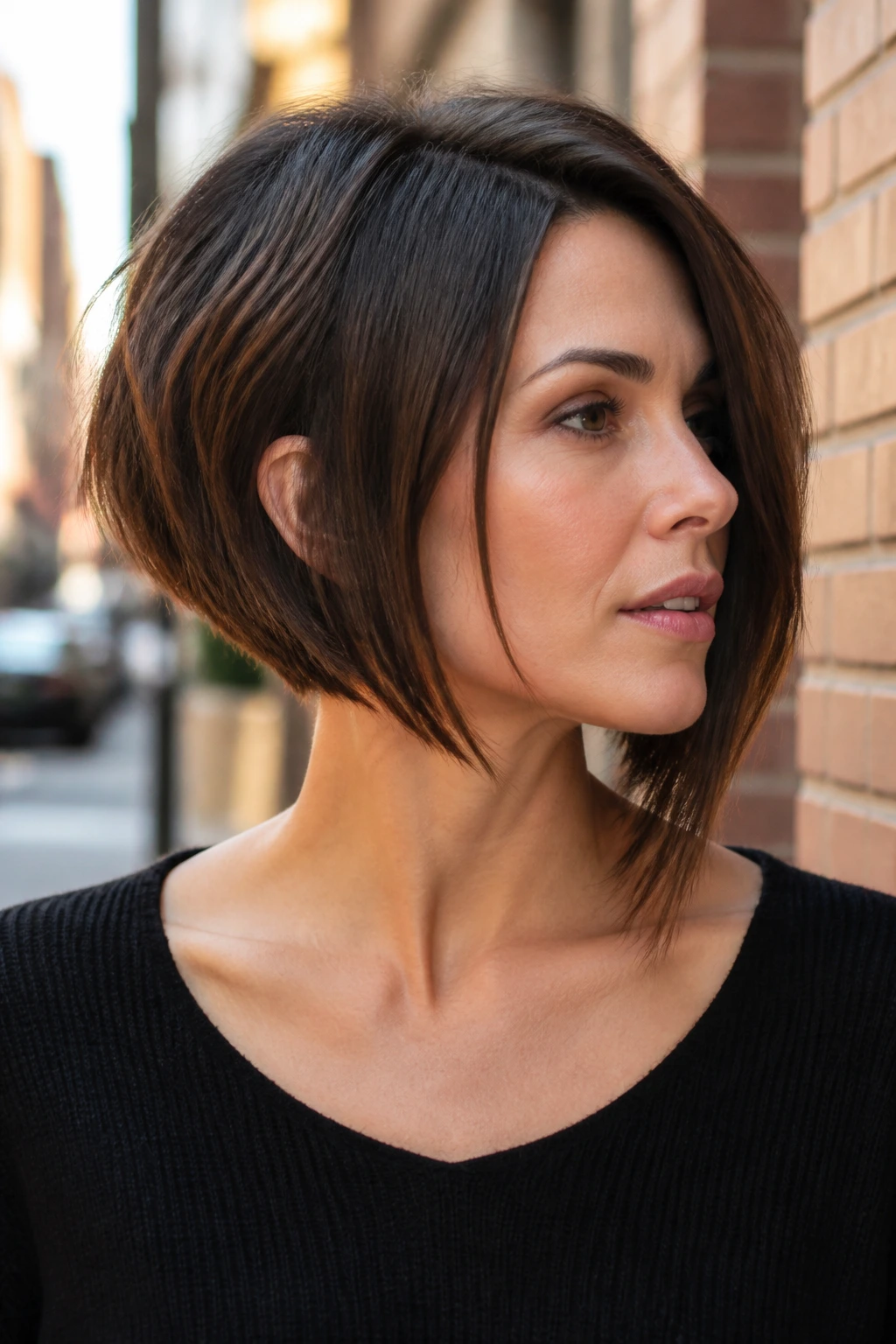
One side longer. One side shorter. No apologies.
That’s the whole point of the asymmetrical bob, and the layers make the shape feel deliberate rather than lopsided. The longer side can skim the jaw or collarbone, while the shorter side keeps the cut from feeling too heavy around the neck. It’s a strong look, but it can still be wearable if the angle is controlled.
Straight hair shows off the asymmetry best, though a soft wave can make it feel less severe. If your wardrobe leans simple and clean, this haircut can do a lot of the visual work for you. It gives the face a line to follow.
The only real downside is the grow-out. As it softens, the asymmetry becomes more subtle, so you either love the transitional phase or you book a trim before it loses the edge.
15. Layered Bob With Micro Bangs

Micro bangs are not quiet. They sit high on the forehead, and paired with a layered bob, they give the whole cut a graphic shape that feels sharp and a little editorial. The layers underneath are there to keep the fringe from making the rest of the haircut look heavy or blocky.
This is the least forgiving style in the bunch, which is exactly why some people love it. It works best when you want the haircut to be the statement, not the styling. A clean neckline, compact layers, and a little texture through the ends help keep the look balanced.
If your hair is naturally very curly or your forehead cowlicks are strong, think twice. Micro bangs can be gorgeous, but they are not the cut to try when you want low-risk hair.
16. Tousled Bob With Razor Layers

Razor layers give a bob that broken, soft edge that scissors sometimes can’t mimic. The ends look feathered and slightly frayed, which makes the cut feel relaxed instead of rigid. On thick or medium hair, that can be a lifesaver because it removes visual heaviness without chopping the bob into obvious pieces.
The texture matters here. Razor work on dry or nearly dry hair can create a softer finish, but over-razoring can leave weak ends that flip in weird directions. So this one depends on a stylist who knows when to stop. A good razor bob looks airy. A bad one looks like it got chewed by a lawn mower.
Best worn with a loose wave, a little bend, and a product that separates instead of stiffening. Keep it touchable.
17. Rounded Layered Bob With Lift at the Crown
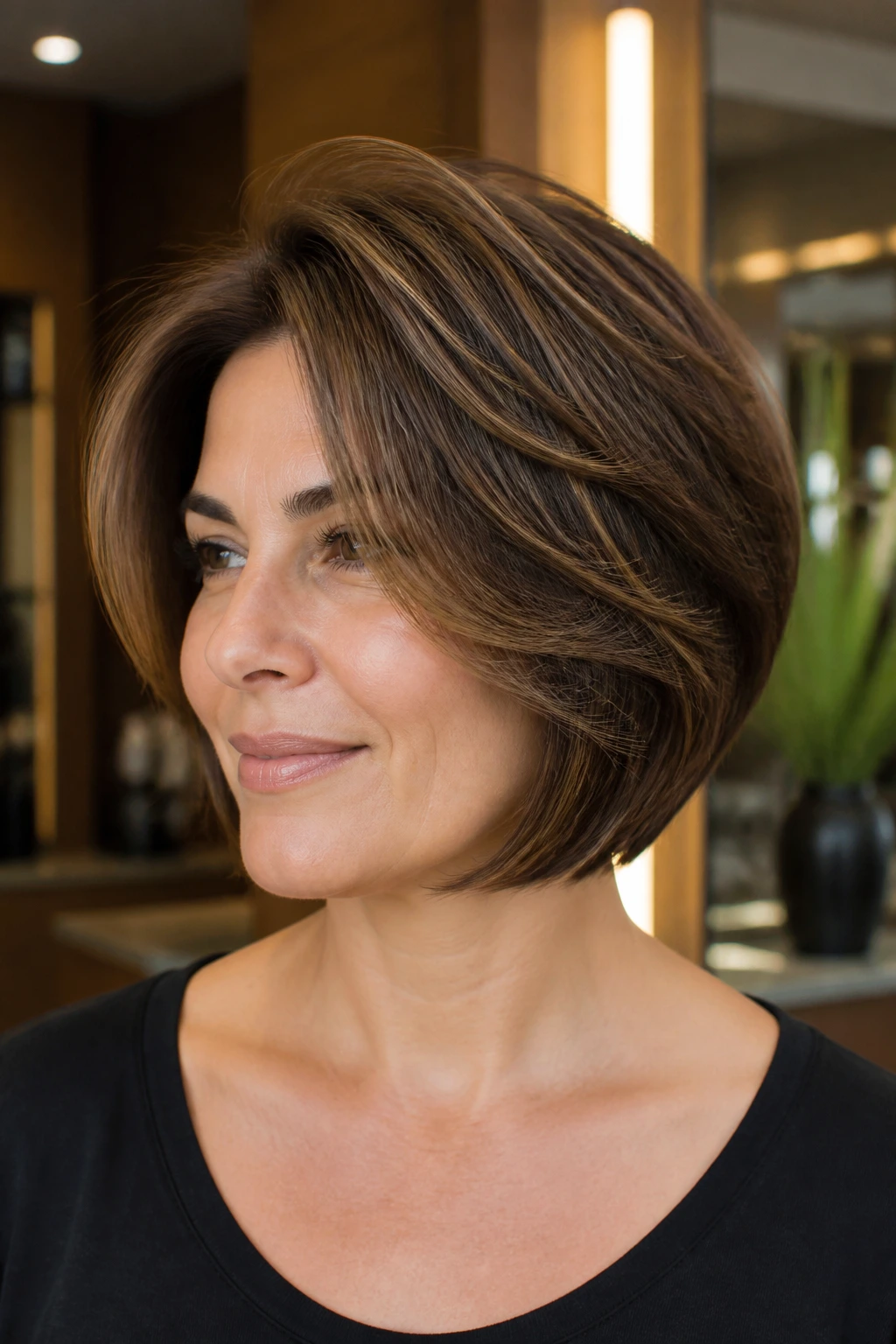
This shape curves around the head and gives the hair a fuller profile from every angle. The rounded layered bob is especially good when you want volume at the crown without the boxiness that comes from a blunt one-length cut. The sides stay smooth, and the top gets enough lift to keep the silhouette from collapsing.
It works well on hair that tends to lie flat in the back or puff only at the sides. The rounded structure helps everything sit in a cleaner line. If you’ve ever looked at your bob from the side and thought, well, that’s not flattering, this cut can fix that.
A round brush and a little root direction make a huge difference. Blow-dry the top up and over, then let the ends settle into a soft curve. No need to force a big salon blowout every morning.
18. Layered Bob With a Deep Side Part
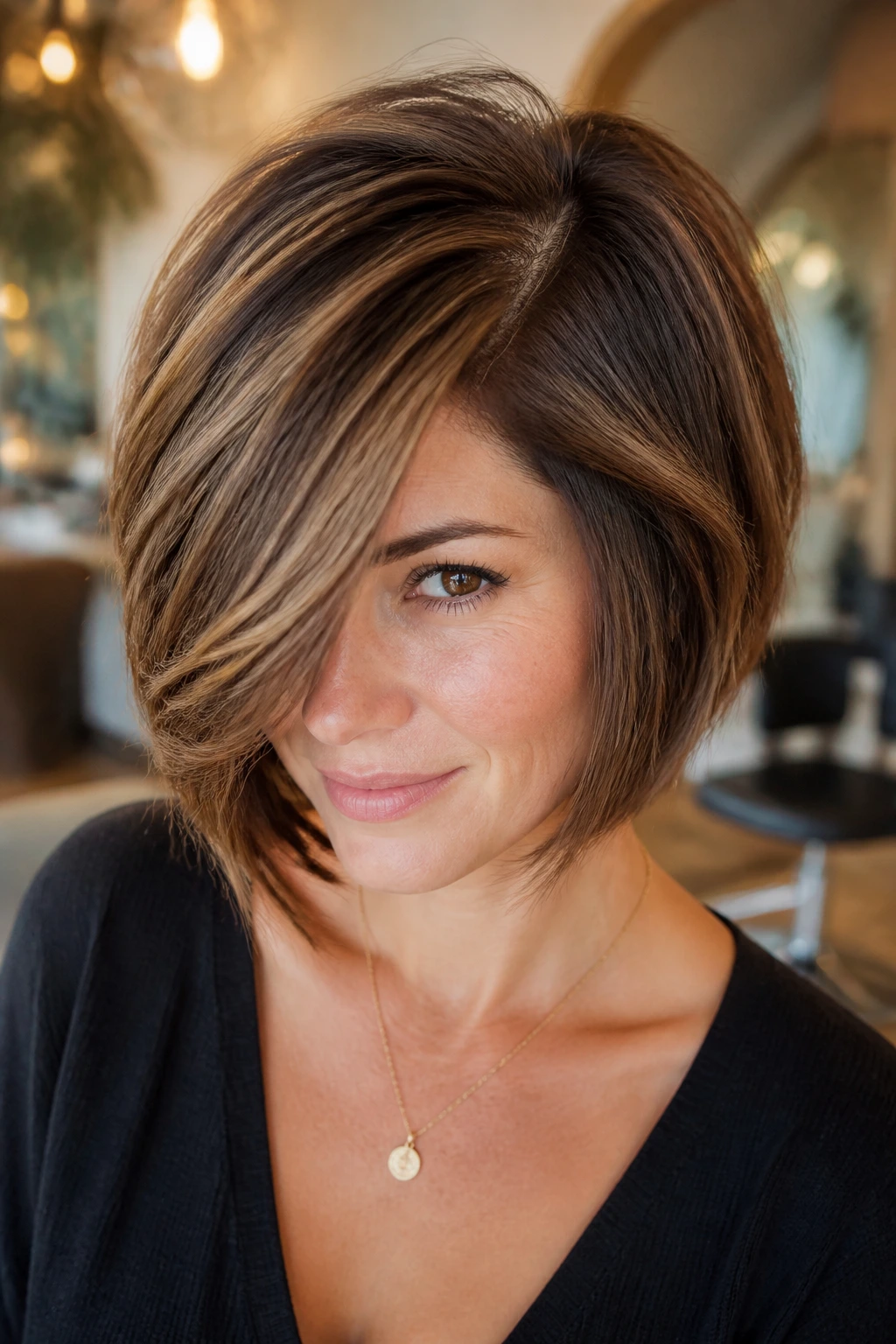
A deep side part can change the proportions of a bob more than another inch of length. It adds height on top, creates a sweep across the forehead, and gives the cut a touch of asymmetry without committing to a fully uneven shape. That makes it a useful option if you want movement but still like a balanced outline.
The layers should support the direction of the part, not fight it. On finer hair, that means keeping the crown light and the front pieces long enough to fall over cleanly. On thicker hair, the deeper part helps control the bulk because the hair is being redistributed instead of sitting straight down the middle.
It’s a simple move. And a smart one. If your bob has started looking too familiar, a new part can wake it up in five seconds.
19. Graduated Bob With a Soft Nape Stack
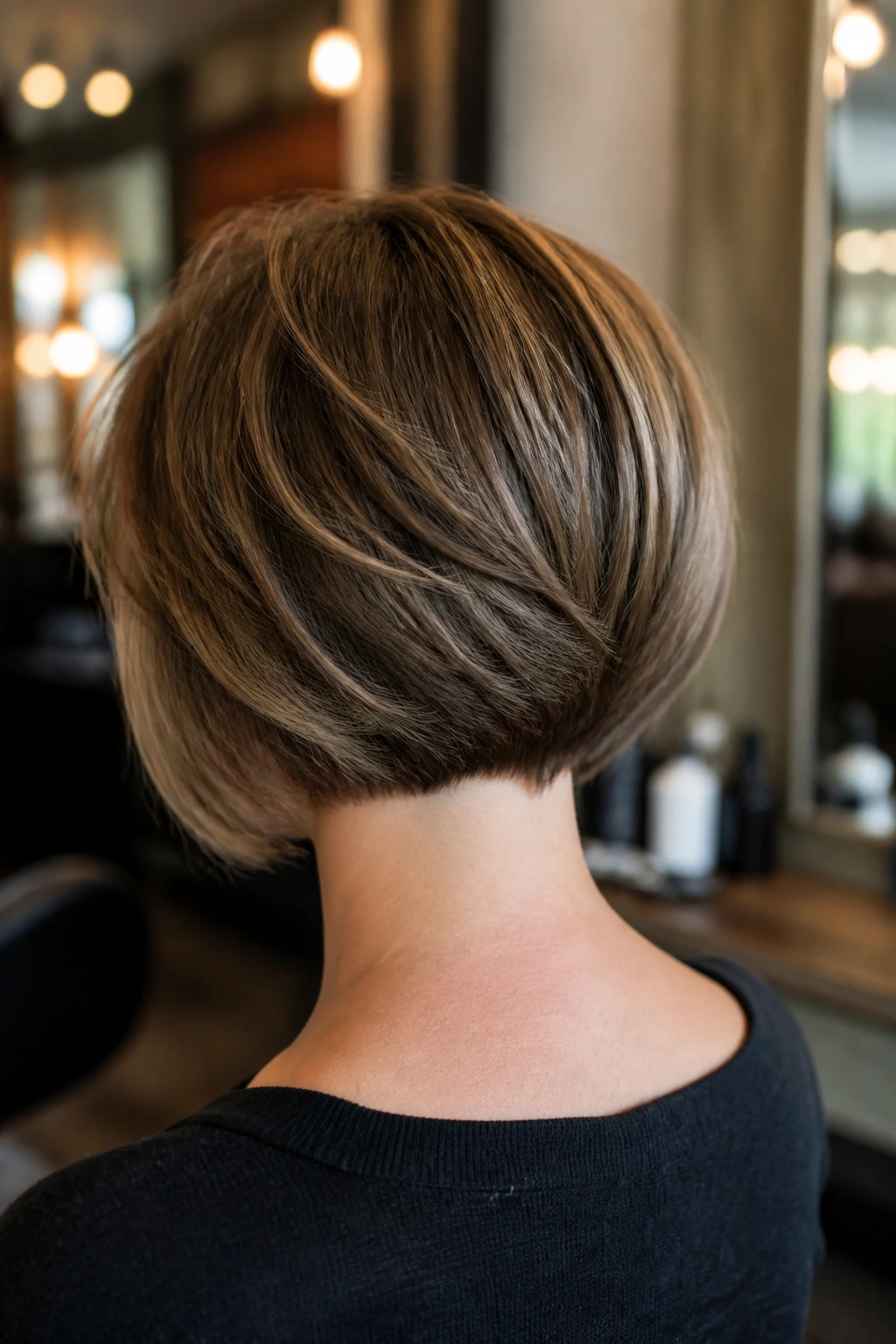
This cut lives somewhere between a strict stacked bob and a softer, more forgiving shape. The graduation at the back gives the nape some lift, but the stack is gentler, so the bob doesn’t look severe or overly engineered. It’s a clean office-friendly shape that still has enough movement to avoid looking frozen.
The soft stack helps if you want your hair off the neck without going full angle-cut. It works on straight and slightly wavy hair especially well, because the structure stays visible. If your hair is very curly, you’ll want the graduation adjusted for shrinkage or it can jump up too much in the back.
I like this version for people who want the polish of a classic bob but not the hard edge. It’s neat. It wears well.
20. Sleek Layered Bob With Tucked-Under Ends
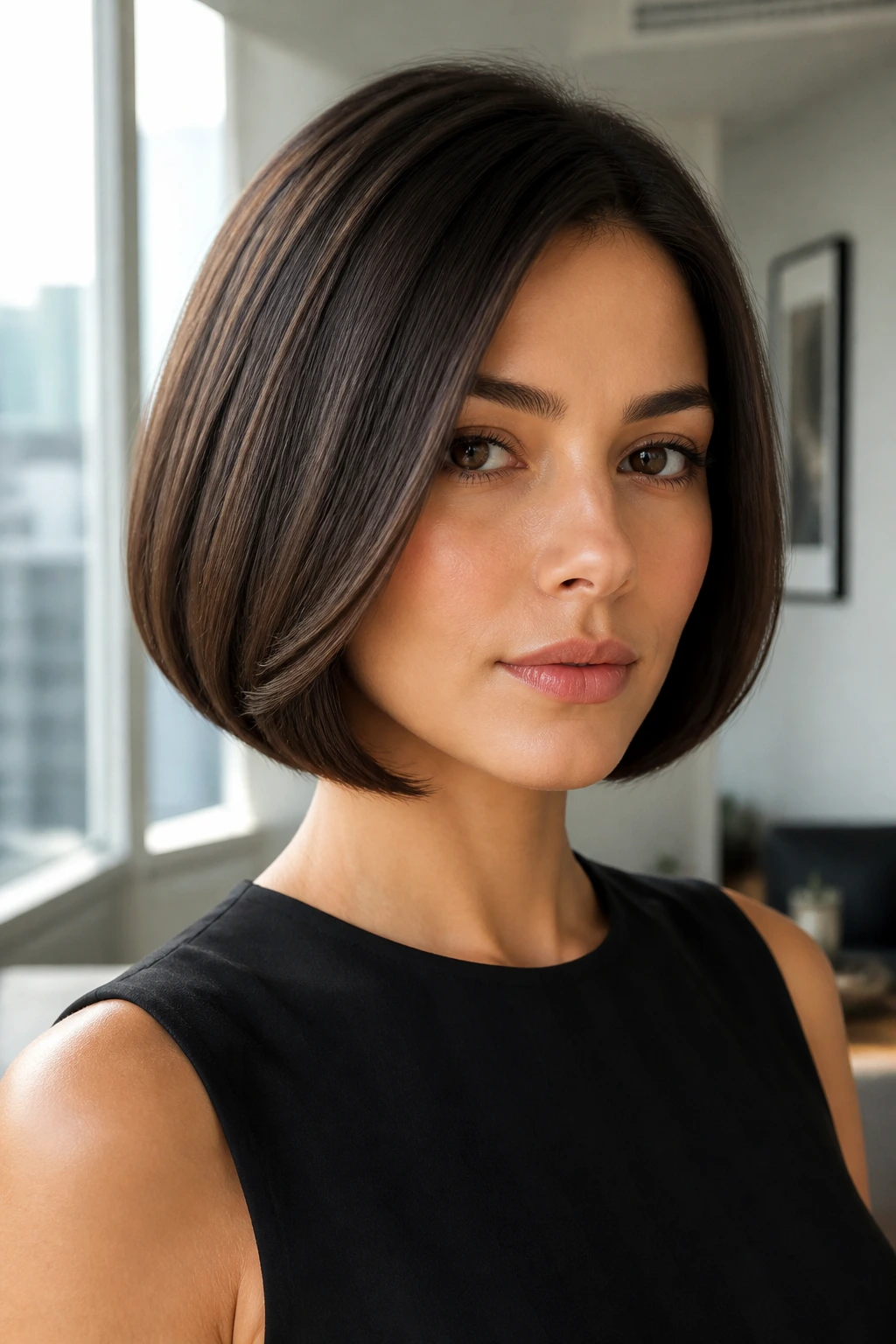
A sleek layered bob is all about control. The layers live inside the shape so the outside line can stay smooth, while the ends are styled to tuck gently under the jaw or toward the neck. That gives the cut a finished, deliberate look without making it stiff.
This is one of the best options if you like a clean profile and you’re willing to spend a few minutes with a blow-dryer and a brush. Heat protectant matters here. So does tension. A sloppy blow-dry will make the ends kick out in the wrong direction, and then the whole point is gone.
It’s not flashy. That’s the appeal. The haircut looks tailored, and the layers help it move just enough to avoid feeling flat or dated.
What Layers Actually Do Inside a Bob
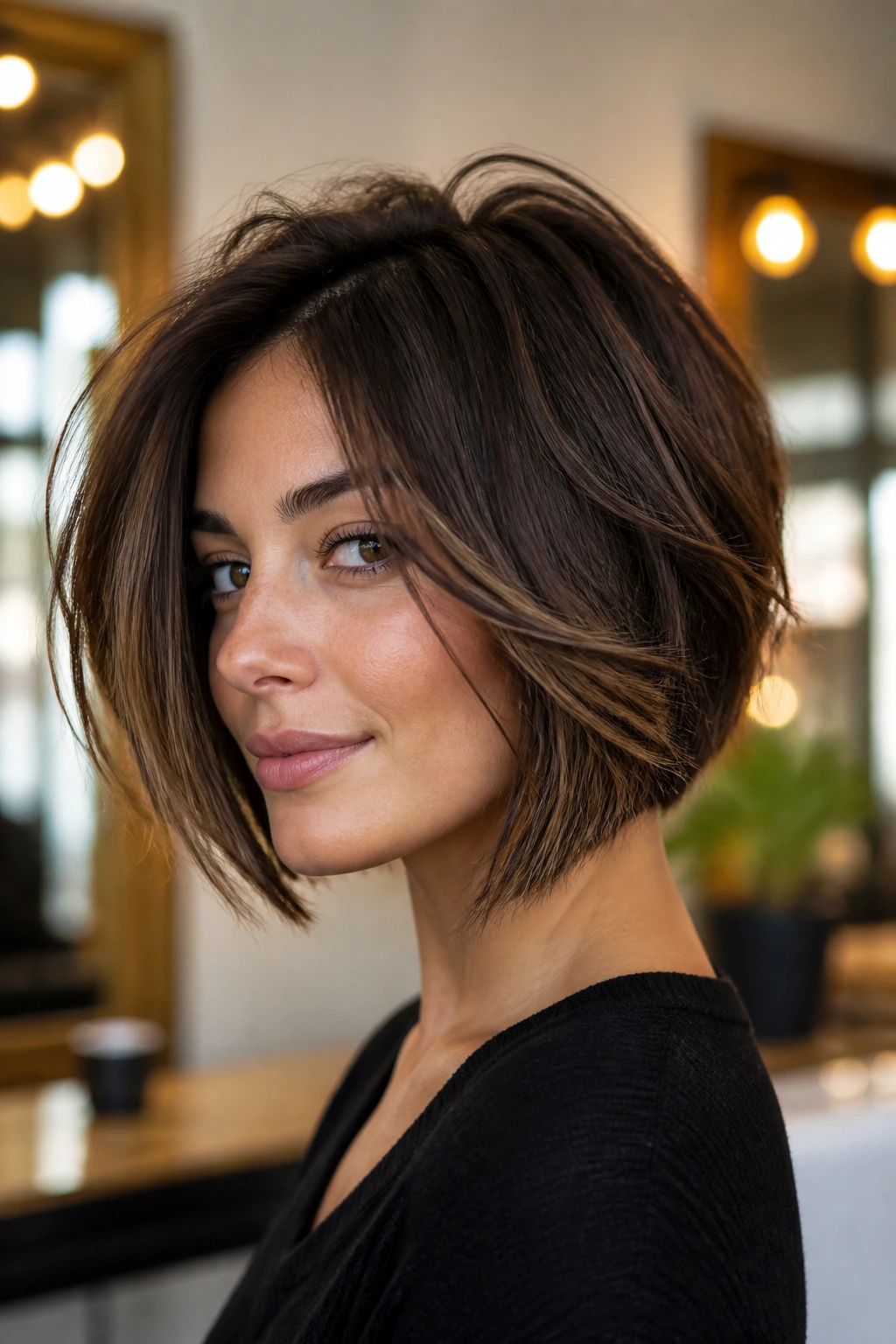
A bob looks simple from the outside. That’s the trap. Inside the haircut, the layers decide where the weight sits, how much lift the crown gets, and whether the ends hang together or splinter apart. Get that internal structure right, and the cut feels balanced even on a low-effort day.
The biggest mistake people make is treating layers like decoration. They are not decoration. They are architecture. Shorter layers near the crown create height, longer layers around the face soften the outline, and internal layers can reduce bulk without changing the visible perimeter too much.
The three jobs layers have
- Remove weight: Especially useful for thick or dense hair that balloons outward.
- Create motion: Helps the ends move instead of sitting like a shelf.
- Shape the face line: A well-placed front layer can sharpen a jaw, soften a forehead, or draw the eye downward.
If you remember one thing, make it this: the best layered bob haircuts are not the most heavily layered ones. They’re the ones where every layer has a job.
The Tools That Make These Cuts Easier to Wear
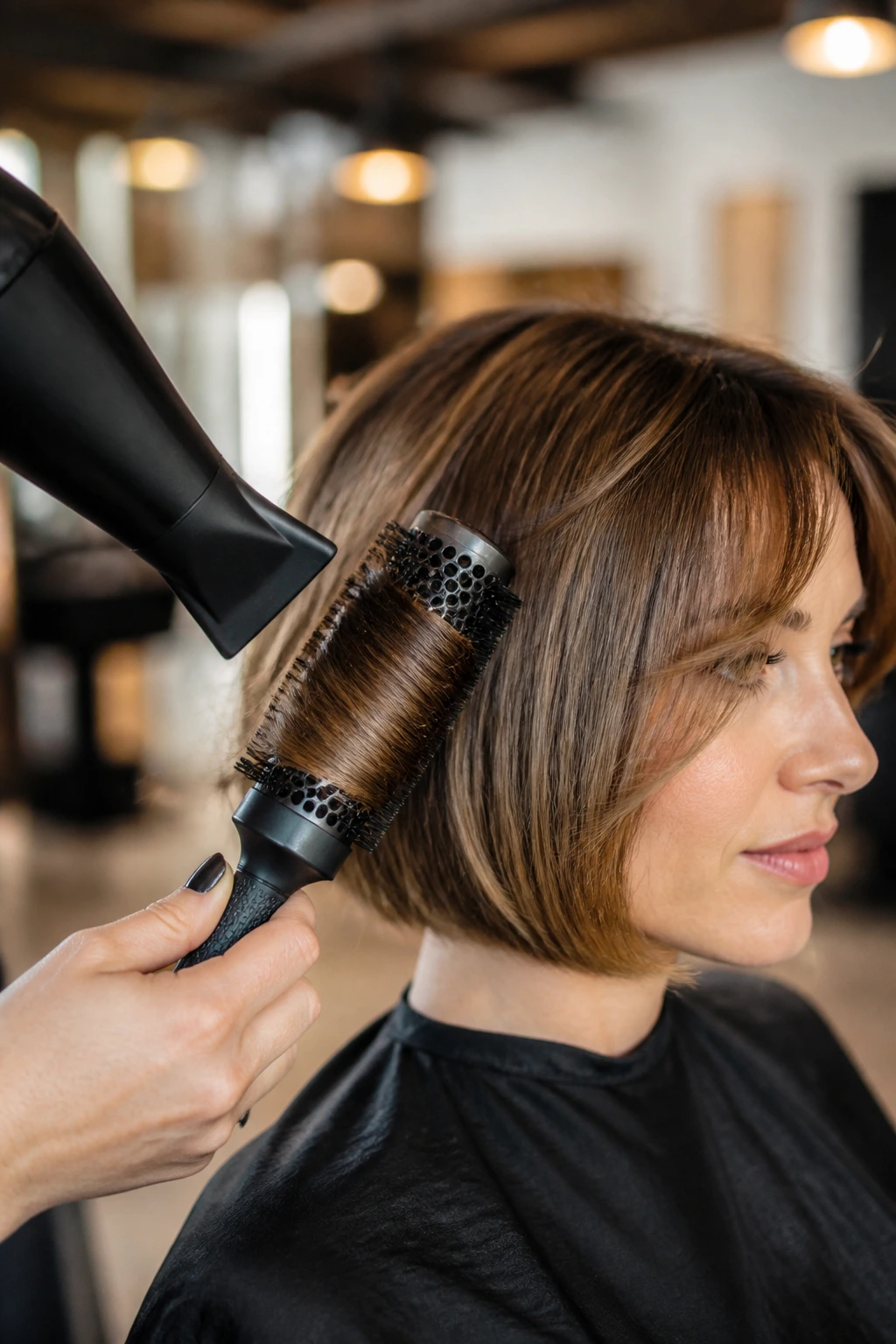
You do not need a drawer full of hot tools. You do need the right few pieces, and using them well matters more than buying ten things you’ll never touch.
- A 1.5- to 2-inch round brush — Best for chin-length bobs and lobs that need a bend under the ends.
- A blow-dryer with a nozzle attachment — Directs air where you want it, which matters for crown lift and smoothing the front pieces.
- Heat protectant spray — Non-negotiable if you use a dryer, flat iron, or curling iron.
- A lightweight mousse — Helps fine hair hold shape without turning crunchy.
- A smoothing cream — Better for thick or frizz-prone hair that needs the cuticle to lie flatter.
- A 1-inch curling iron or wand — Useful for adding a loose bend to shaggy or wavy bobs.
- Texturizing spray — Good for piecey ends, especially on layered cuts that need separation.
- Duckbill clips — Handy for setting the front sections while they cool into shape.
How to Choose the Right Layer Pattern for Your Hair
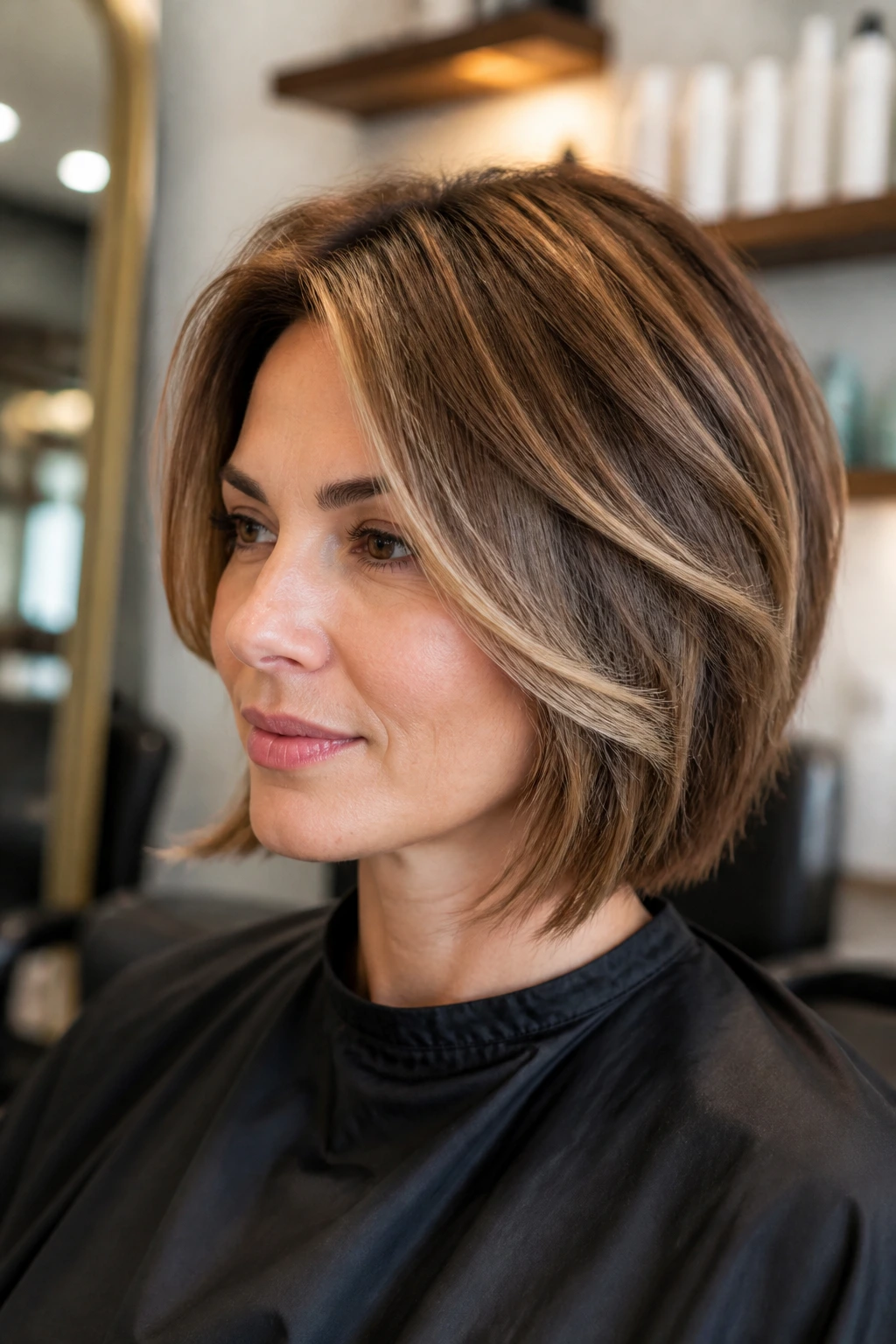
Bring better reference photos than the average client does, and you’ll save yourself one awkward salon appointment. The right photo should show the front, side, and back if possible — not just one perfectly filtered angle where the hair was flipped around by a breeze.
Hair density matters more than face shape sometimes. Fine hair usually needs more structure at the perimeter and less aggressive layering. Thick hair often needs internal removal and a shape that keeps the bulk from widening at the sides. Curly hair needs shrinkage factored in before anyone reaches for the scissors.
Be specific about your daily routine. If you air-dry, say so. If you hate round brushing, say that too. A bob that needs ten minutes of heat styling is a bad fit if you’re the kind of person who wants to leave the house with damp hair and call it good.
And if you wear glasses, bangs, or a side part every single day, mention that early. Those details change where the layers should land. A good cut respects the shape you actually live in.
The Easiest Ways to Style a Layered Bob
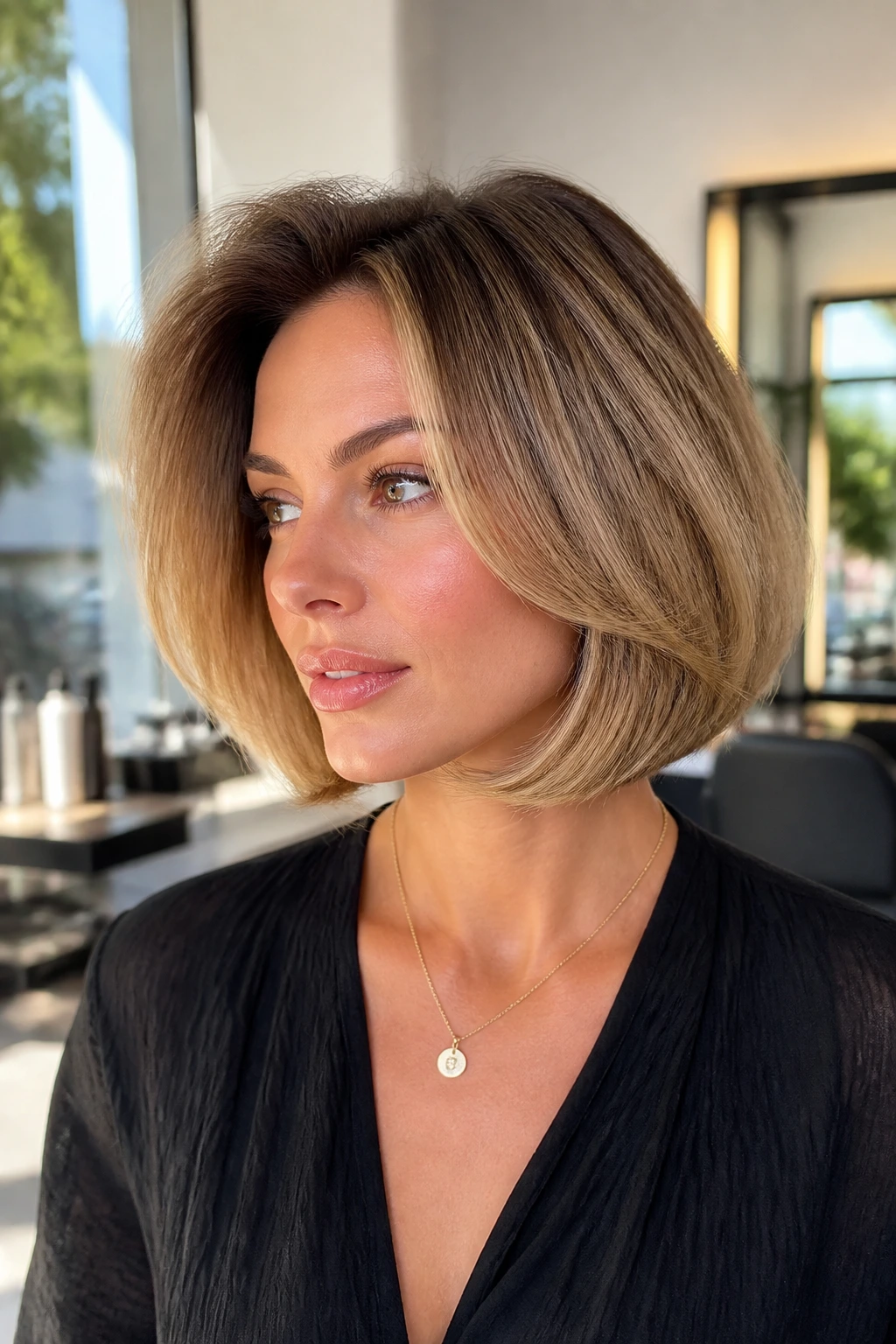
Some layered bob haircuts look better polished. Some look better a little rough. The trick is choosing a finish that fits the cut instead of forcing every bob into the same bouncy blowout.
Presentation: For a sleek bob, blow-dry with a nozzle and direct the ends under with a round brush. For a shaggy or wavy bob, rough-dry the roots, then twist a few pieces around your fingers while they’re still warm.
Accompaniments: Curtain bangs, a deep side part, or a tuck behind one ear can change the entire shape in about ten seconds. A barrette near the temple also works better than people think. Small move. Big change.
Length cue: Chin-length cuts usually want a little more polish, while collarbone lobs can handle more messy texture. The shorter the cut, the more the outline matters.
Finish: If your hair is fine, use mousse at the roots. If it’s thick, use a light cream through the mids and leave the ends alone. That small split in product choice makes a real difference.
Small Tweaks That Make the Cut Feel More Like You
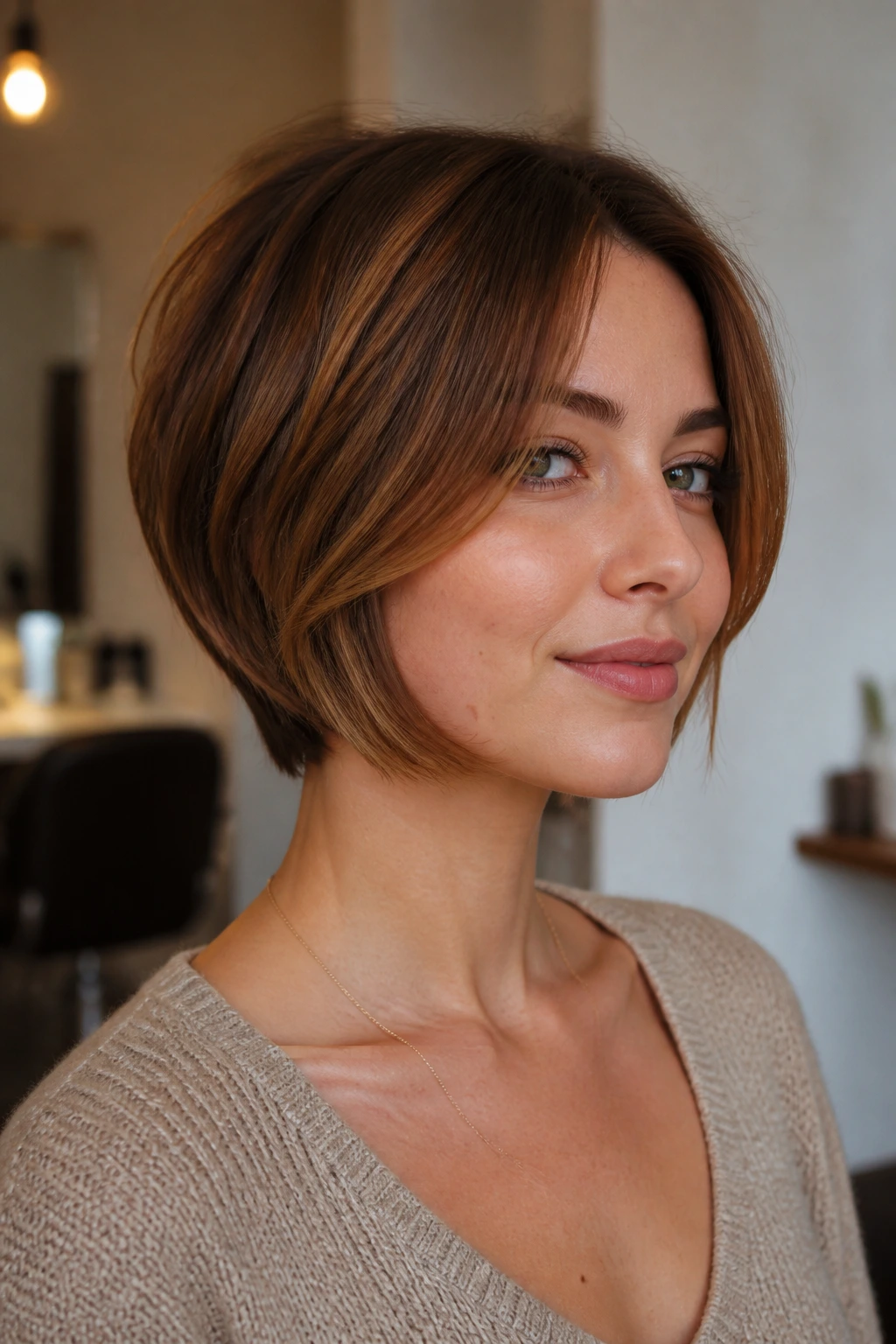
Texture Boost: A few spritzes of texturizing spray at the ends can make a clean layered bob feel less formal. Use it on dry hair and scrunch only the lower third of the cut.
Customization: Ask your stylist to move the shortest face-framing layer up or down by half an inch. That tiny adjustment can change whether the cut hits the cheekbone, the jaw, or the neck in a flattering way.
Color Cue: Soft highlights around the front pieces make layers easier to see. A subtle lowlight underneath can also stop a fine bob from looking washed out.
Make-It-Yours: If you wear earrings, glasses, or turtlenecks often, think about how the bob sits against them. A chin-length cut and a chunky collar do not always get along. A collarbone lob might.
My take: The best layered bob is the one that looks like it belongs to your life, not a Pinterest board.
Keeping the Shape Sharp Between Salon Visits

A layered bob has a memory. It remembers the last trim, the last blow-dry, and whether you slept on it wet. Once the shape starts drifting, you’ll see it first at the nape and around the front pieces.
For most chin-length or stacked cuts, 6 to 8 weeks is the sweet spot before the line starts to blur. Longer bobs and lobs can stretch to 8 to 12 weeks if the layers are soft and the perimeter is not too short. Curly bobs often need shape checks in between because shrinkage can make the silhouette look shorter than it is.
At home, a silk pillowcase helps the ends stay smoother, and a loose clip at the crown can keep the top from getting mashed flat overnight. If you wake up with weird bends, mist the hair lightly with water, add a pea-sized amount of cream or mousse, and re-dry the front pieces for a few minutes. That’s usually enough.
Dry shampoo helps on day two and day three, but don’t overdo it. A dusty scalp and crunchy ends do not improve the shape. They just make it look tired.
Variations and Adaptations to Try
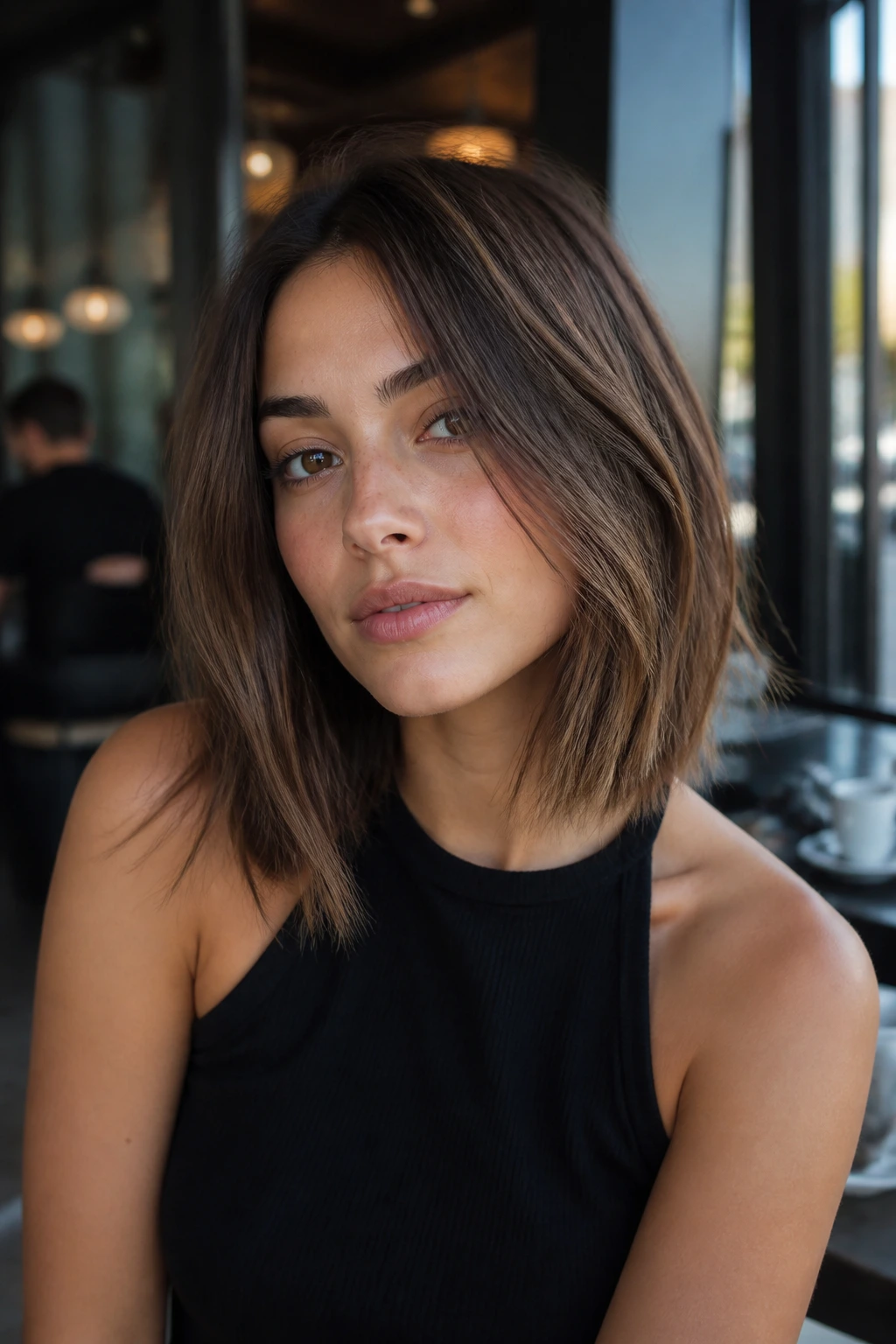
The Grow-Out Friendly Edit: Ask for a collarbone-length lob with soft layers and a blunt perimeter. It keeps the shape readable for longer, and you can trim it less often without looking shaggy. This is the version for people who hate a strict maintenance schedule.
The Curly-First Version: Have the cut shaped around your natural curls, ideally with the hair dry or mostly dry. The layers should follow the curl clumps, not slice through them. That keeps the bob from ballooning at the sides or shrinking too high.
The Fine-Hair Lift Plan: Keep the outer line blunt and ask for internal layering only. This gives the illusion of density while still removing enough weight for movement. Skip aggressive thinning shears unless you enjoy see-through ends.
The Thick-Hair Relief Cut: Use longer face-framing pieces plus controlled debulking through the mids. The goal is to lose bulk without turning the ends fuzzy. This version is the reason thick hair can wear a bob without looking triangular.
The Editorial Edge: Combine a sharp asymmetrical line with micro bangs or a deep side part. It’s bolder, yes, but it also gives a simple outfit more shape. Useful when you want the haircut to do the talking.
Common Mistakes That Ruin a Good Layered Bob
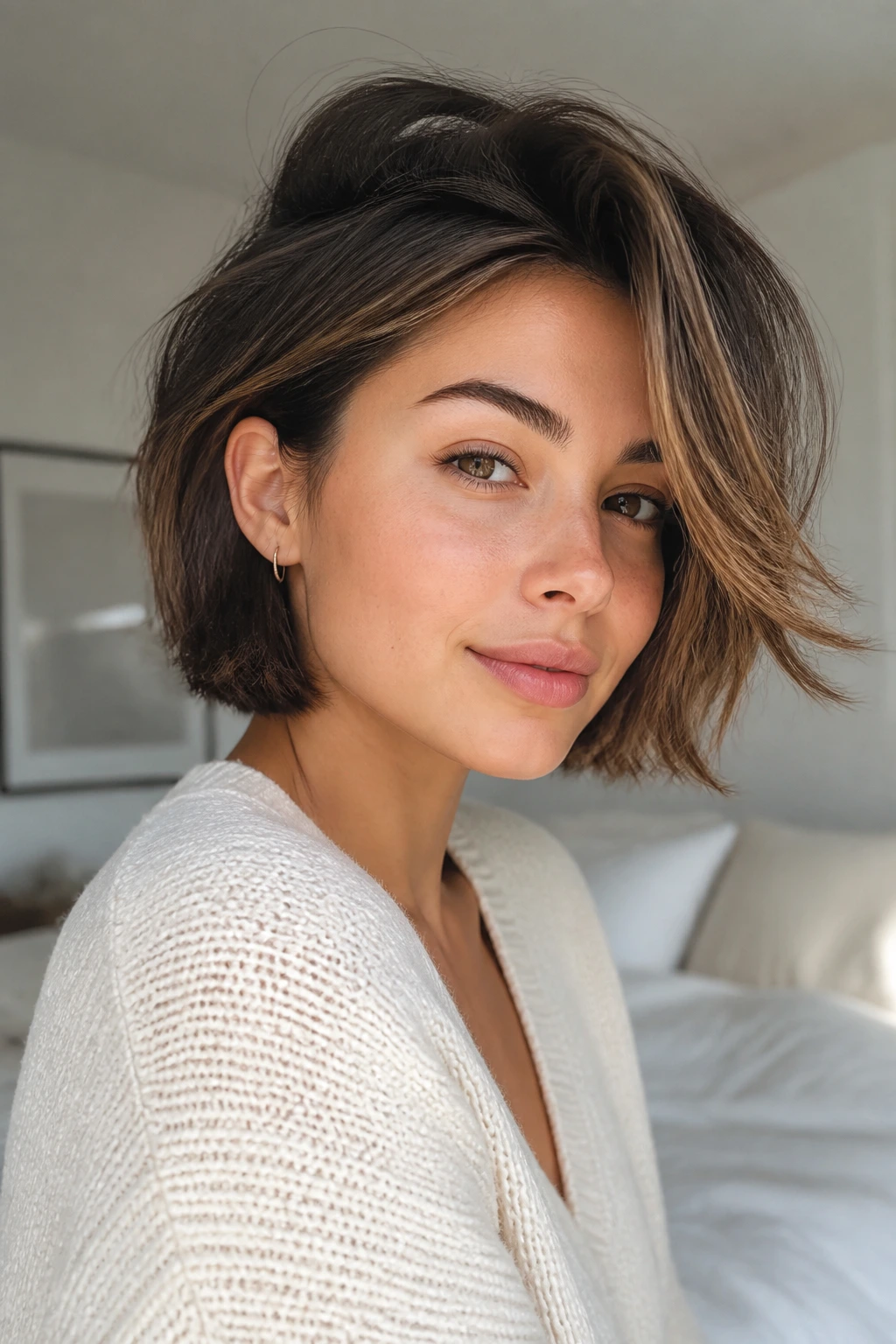
- Too many short layers at once: The hair can spring out in odd directions and lose its clean outline. The fix is asking for longer, blended layers first, then adjusting after you see how the cut moves.
- Ignoring shrinkage on curly hair: What looks chin-length when wet can end up several inches shorter once dry. Always plan the cut with the curl pattern in mind, and cut conservatively if you’re unsure.
- Over-thinning fine hair: A few snips too many and the ends start looking wispy instead of full. Ask for weight removal through the interior, not just at the surface.
- Choosing the wrong nape height: A stacked back that’s too short can look dated fast, while one that’s too long loses the lift. The nape should support the shape, not take it over.
- Styling every layered bob the same way: A shaggy cut and a sleek rounded bob do not want the same finish. Match the product and brush to the cut, or you’ll keep fighting the haircut instead of wearing it.
Frequently Asked Questions

Which face shapes work best with layered bob haircuts?
Almost any face shape can wear a layered bob, but the placement changes. Round faces usually benefit from longer front layers, while square faces often look softer with side-swept framing or curtain bangs.
Are layered bob haircuts good for fine hair?
Yes, if the layers are controlled. Fine hair usually looks better with a blunt edge and lighter internal layering, because too many short pieces can make the ends look thin.
Do layered bob haircuts work on curly hair?
They do, but the cut has to follow the curl pattern. A dry cut or curl-by-curl approach usually gives a better shape than cutting curls flat and hoping for the best.
How often should I trim a bob with layers?
Shorter, more structured bobs usually need a trim every 6 to 8 weeks. Longer layered bobs and lobs can usually stretch to 8 to 12 weeks before the outline starts to slip.
What’s the difference between stacked, graduated, and inverted bobs?
A stacked bob has shorter layers at the back that create lift. A graduated bob is softer and more gradual, while an inverted bob has a more obvious angle from short back to longer front.
Can I air-dry a layered bob and still have shape?
Yes, especially if the cut fits your texture. Wavy and shaggy bobs often air-dry well with mousse or wave cream, while sleeker bobs usually need at least a quick round-brush pass at the ends.
What should I tell my stylist if I want movement but not choppy ends?
Say you want soft internal layers and a clean perimeter. That tells the stylist to reduce bulk without turning the bob into a jagged, broken shape.
What if the cut looks too short after it’s dry?
That usually means shrinkage was not fully accounted for, especially on curly or wavy hair. A good stylist can often soften the line around the face and let the shape settle with a few days of wear.
The Shape That Keeps Working
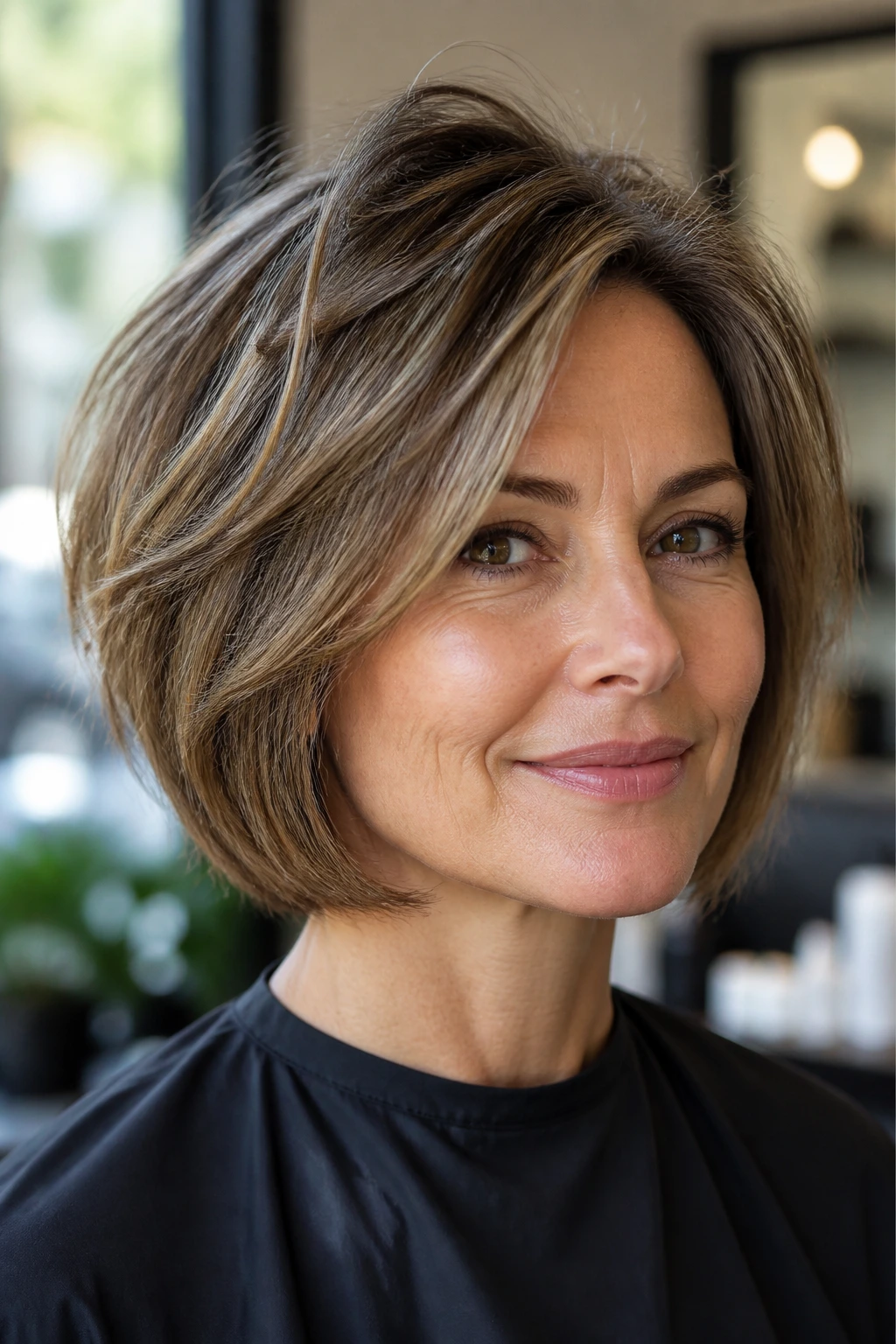
A layered bob is one of those cuts that looks simple until you notice how much it’s doing. The right version can sharpen a jaw, lighten a heavy head of hair, or give a flat crown enough lift to stop the whole style from collapsing by noon. That is the quiet power of a good cut.
What matters most is not copying a photo exactly. It’s matching the layer pattern to the hair you actually have — its density, its bend, its cowlicks, and the amount of time you want to spend with a brush in your hand.
Bring the right reference photos, say what your hair does on a bad day, and be honest about styling. The bob will meet you halfway if you do.
