



A good bob haircut does something sneaky: it sharpens the jaw, lifts the eyes, and makes the neck look longer without asking you to live with a fussy style. That matters a lot when you want short hair that feels clean and modern, not helmet-stiff or overly layered. With bob haircuts for short hair over 50, the difference between “nice” and “really good” usually comes down to a half-inch in the right place.
Hair changes, too. The crown can go flatter. The ends can get drier. Gray strands often come in coarser and springier than the hair that came before them, which is exactly why a bob needs to be cut with intention instead of copied from a picture on someone with different texture, density, and face shape. The best short bob haircuts for women over 50 do not fight those changes. They use them.
Some of the cuts below are crisp and blunt. Some are soft enough to air-dry and still look deliberate. A few give you that nice lift at the back without stacking so hard the style starts to feel dated. Start with the shape that matches your hair’s habits, because that choice will do more for you than any miracle product ever will.
Why These Bob Haircuts Work So Well on Short Hair Over 50
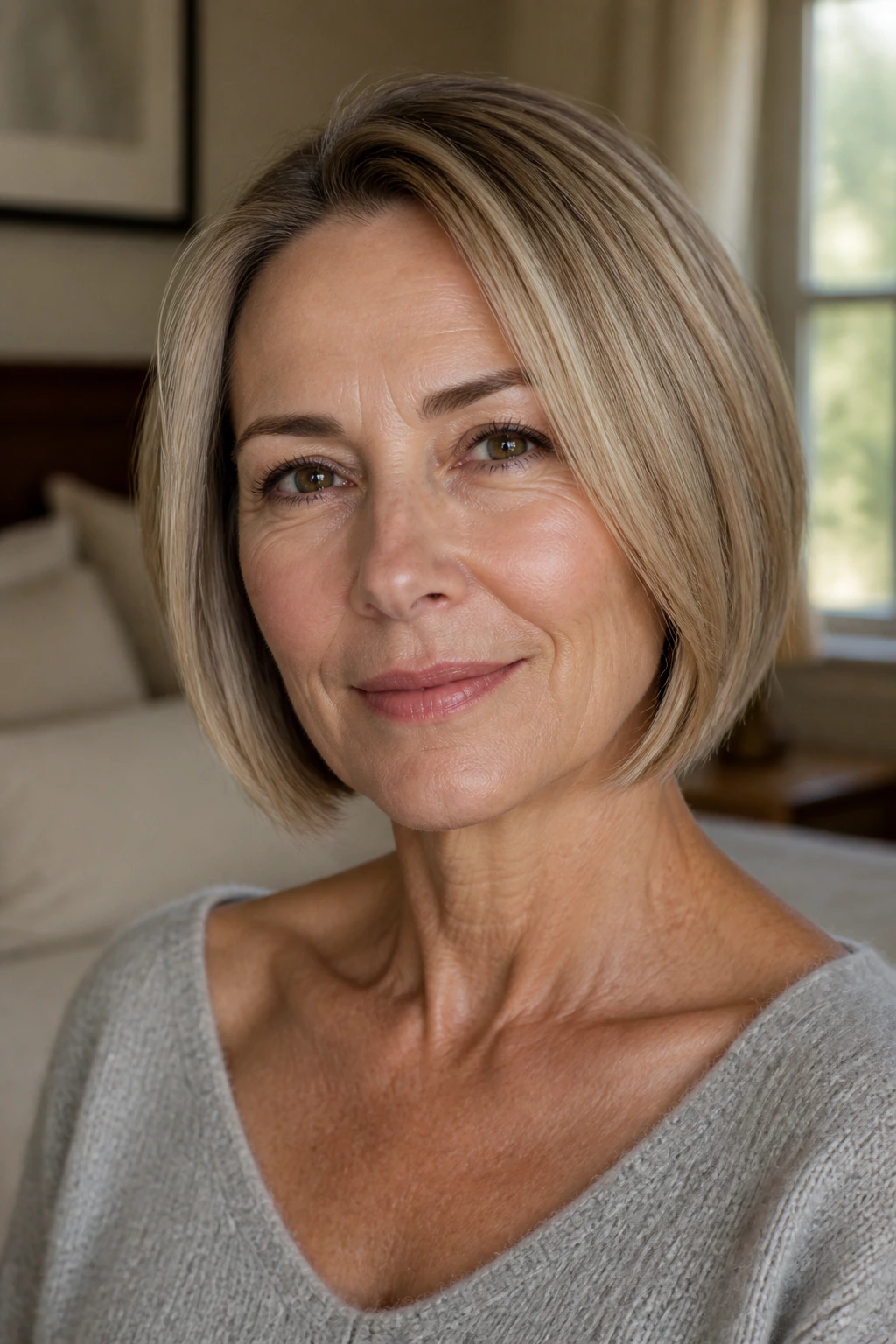
- They bring the eye upward: A bob that lands at the jaw, chin, or just below it keeps the face from getting visually dragged down by extra length.
- They play nicer with changing texture: A short bob can work with finer hair, coarser gray regrowth, or natural wave better than a longer cut that hangs flat.
- They trim the styling time: Most of these shapes need a quick round-brush pass, a bend at the ends, or a finger-dry, not a full salon blowout.
- They make bulk easier to manage: If your hair has started to puff at the sides or feel heavy at the nape, a bob can remove weight where it matters.
- They can look polished without looking stiff: That’s the sweet spot. Clean lines, soft movement, and a shape that still looks like hair, not a shell.
1. The Jaw-Length French Bob
This is the bob that looks casual on purpose. It lands right around the jaw, usually with a blunt or slightly beveled edge, and it gives the face a neat frame without swallowing it. On short hair over 50, that jaw hit is useful because it defines the lower face without dragging the eye downward.
Why It Works
The French bob works because it keeps the perimeter crisp while leaving enough softness near the face to avoid harshness. If your hair is straight or only lightly wavy, this cut has that clean, tucked-in shape that still moves when you turn your head. If your hair is thicker, ask for a tiny bit of internal debulking so the ends do not bell out.
What to Ask For
- Length that skims the jaw or sits a finger-width below it
- A blunt edge with soft beveling, not a severe chop
- Optional soft fringe or side-swept pieces if your forehead feels too open
Pro tip: If your hair has a natural bend, let it keep some of that bend. A French bob looks better with movement than with over-straightening.
2. The Soft Layered Chin Bob
A chin-length bob with light layers is the cut I reach for when hair feels a little heavy but not thin. It opens up the face, keeps the ends from looking like one solid block, and gives a bit of swing when you turn your head. That matters on mature hair, because heavy ends can make a style slump fast.
The trick is restraint. You want enough layering to keep the shape moving, but not so much that the perimeter turns wispy. Around the chin is a smart place to stop because it lets the cut frame the mouth and cheekbones instead of cutting across the widest part of the cheeks.
Ask for soft, blended layers through the middle, not choppy sections cut into the top. If your hair is fine, this version adds lift without exposing too much scalp. If it’s thick, the layers help the style sit closer to the head instead of expanding outward like a triangle.
3. The Stacked Bob with Crown Lift
Why does a stacked bob make hair look fuller so fast? Because it builds shape where the eye wants volume most: the crown and upper back of the head. A good stacked bob creates a gentle slope from the nape up, so the silhouette looks lifted instead of flat.
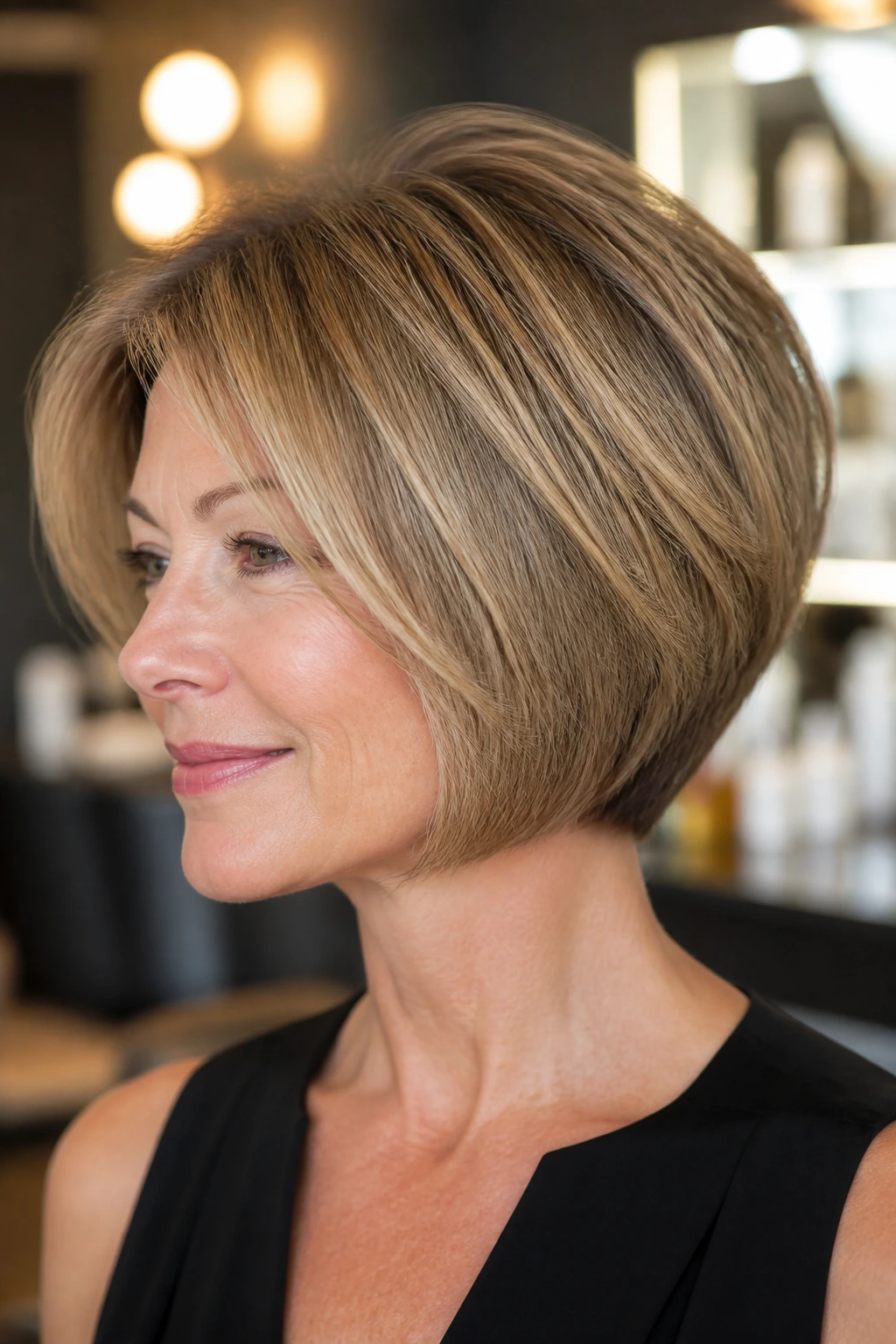
This cut is a favorite for fine or medium hair that has lost some body at the back. The back is trimmed shorter and gradually stacked, while the front stays longer and softer. That contrast keeps the cut from feeling too severe, which is the mistake people make when they ask for “volume” and end up with a hard shelf.
It’s a better choice than it is often given credit for, especially over 50. The key is not over-stacking. Too much graduation can make the crown look puffy while the front looks disconnected. A subtle stack gives you movement; a deep stack gives you helmet energy. You know which one to avoid.
4. The A-Line Bob That Skims the Jaw
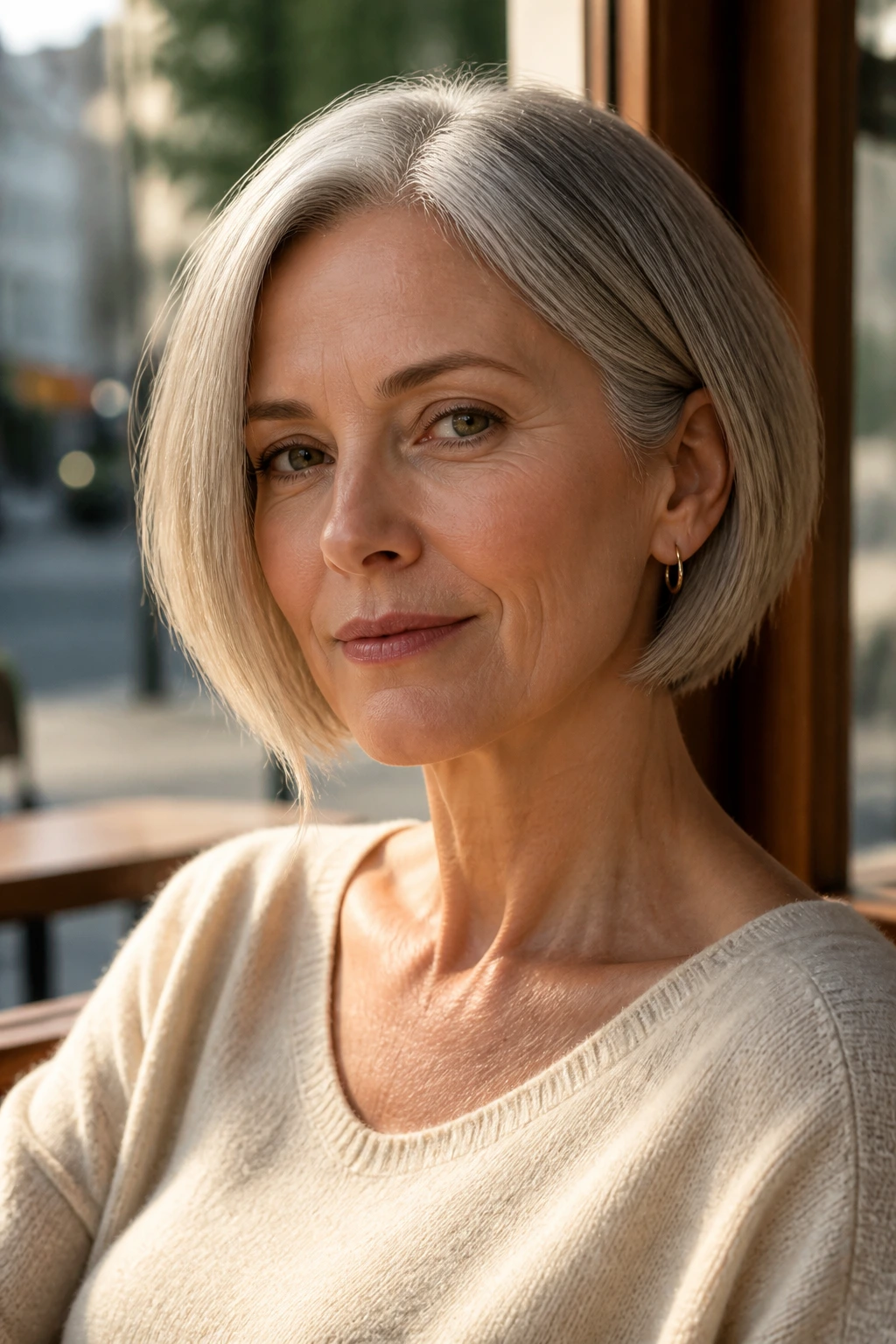
An A-line bob is a clean fix when you want the neck to look longer but still want face-framing in front. It’s shorter at the back and gradually gets longer toward the front, which creates a diagonal line that naturally lifts the eye. That angle is the whole point.
This shape can be sharp or soft depending on how it’s cut. A slightly beveled A-line works nicely with straight hair and gives you that sleek side profile that feels polished without being fussy. If your hair is wavy, the front pieces can keep enough length to tuck behind the ears or rest along the cheekbones.
I like this cut for anyone who wants short hair but not a blunt square shape. It has movement built in. It also tends to sit well with glasses because the front pieces can be tailored to avoid crowding the frame.
5. The Feathered Bob with Airy Ends
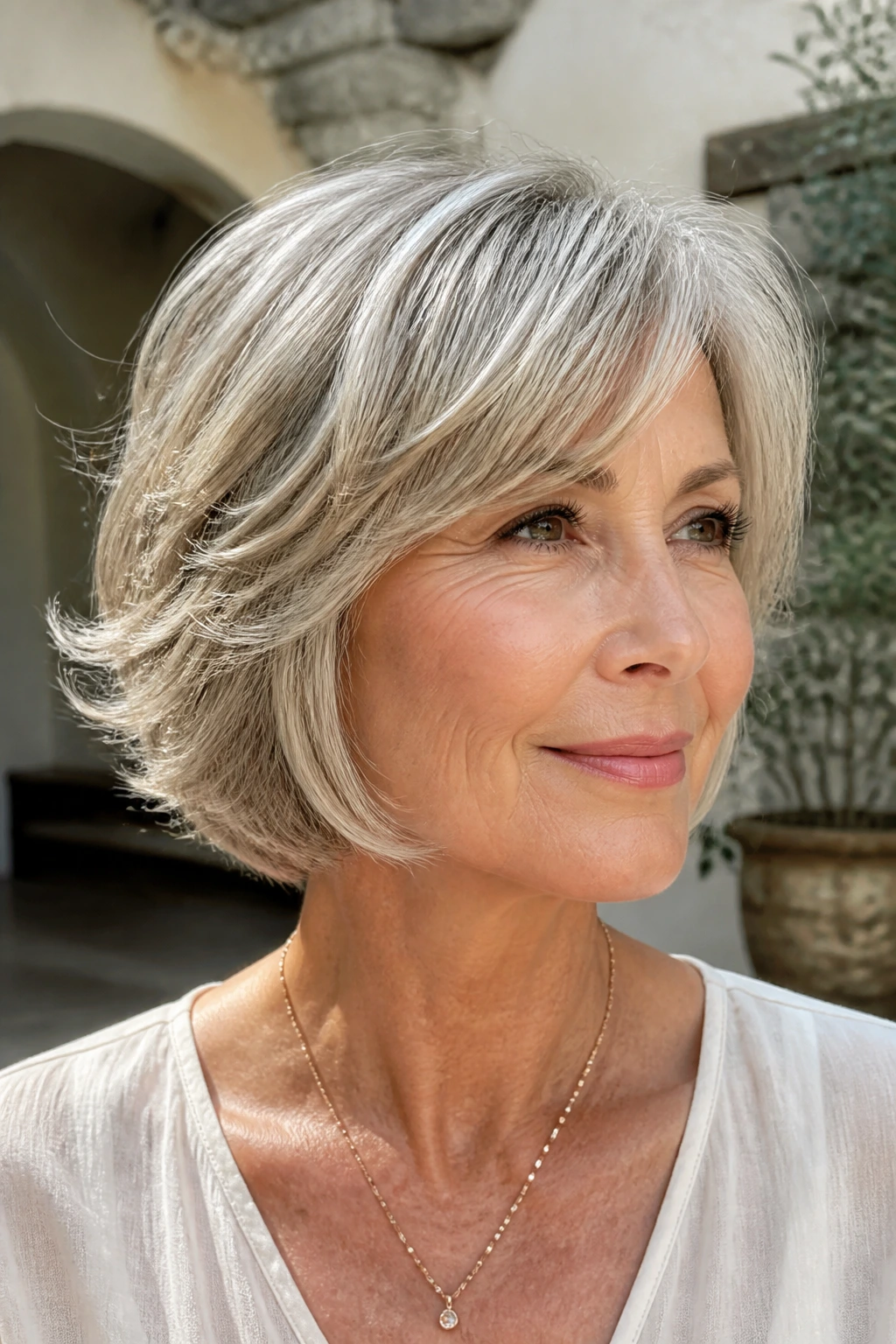
A feathered bob is what happens when you want softness around the face without giving up structure. The ends are cut to move, not hang, which keeps the shape from looking heavy. On short hair over 50, that lightness can be a relief, especially if your ends have become dry or your hair has lost a little spring.
The feathering should be visible but not choppy. Think of a gentle taper through the perimeter and a little air through the mids, not the exaggerated feathering from old salon posters. That old-school version can look fluffy in the wrong way. The modern version stays sleek enough to wear with a side part or pushed back from the face.
This cut is especially kind to hair that wants to flick out at the ends. Rather than fighting the flick, it uses it. A small round brush bend and a dab of lightweight cream is usually enough.
6. The Curl-Respecting Bob
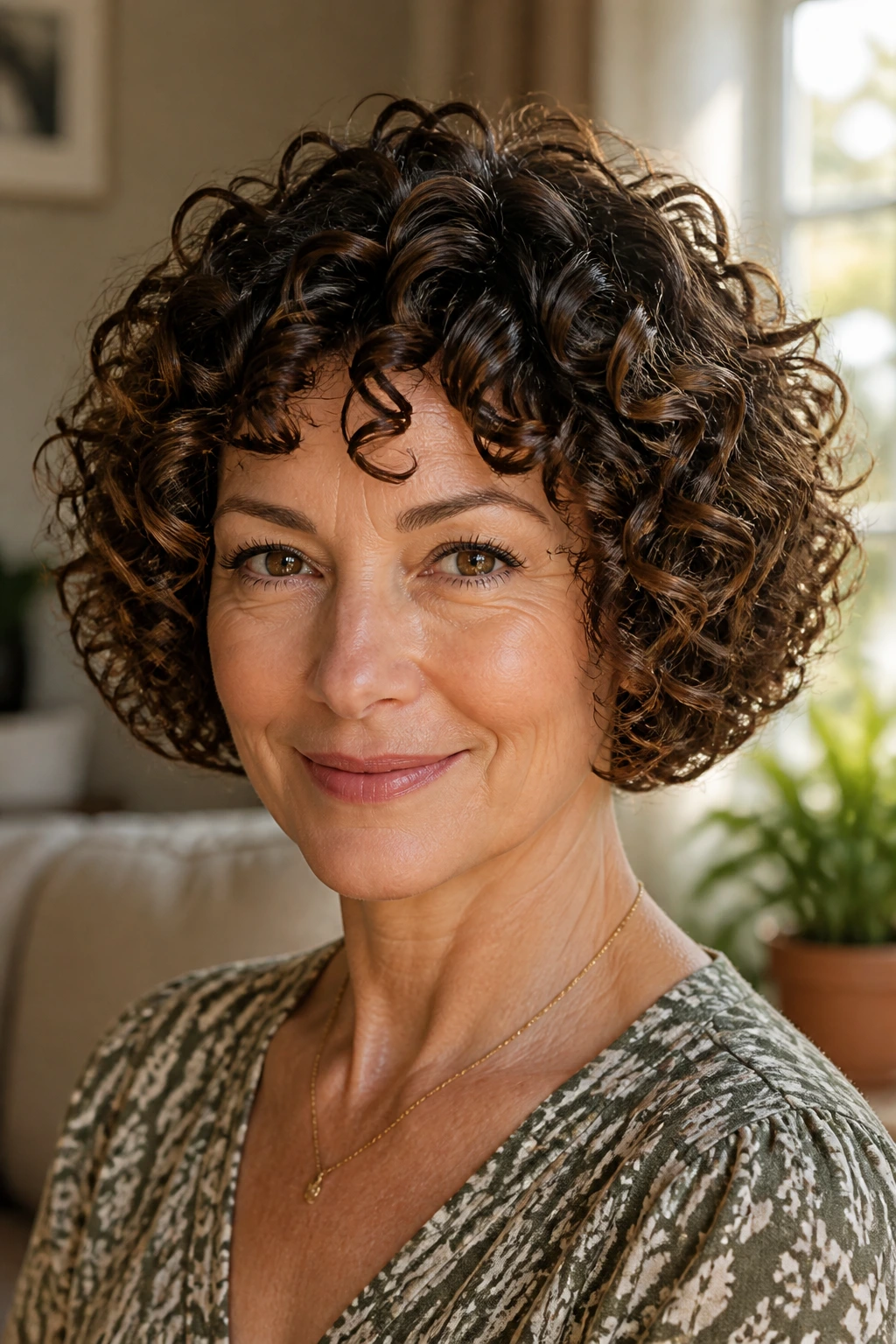
A curly bob should be cut like curls are the point, not the problem. That means the shape follows the curl pattern, often landing around the chin or jaw, and it is usually best cut dry or at least partially dry so the stylist can see how each curl sits. If you cut curls wet and guess, you may end up with one side springing much higher than the other.
This is one of the most useful bob haircuts for short hair over 50 if your texture has gotten looser, drier, or more unpredictable. A curl-respecting bob gives the curls room to stack naturally instead of pulling them into a blunt line that may puff at the sides. It keeps the style alive.
Skip over-thinning. That’s the big one. Too many razor cuts can turn a curly bob frizzy fast, especially around the crown. Ask for shape, not removal. There’s a difference, and your curls will know it.
7. The Side-Swept Fringe Bob
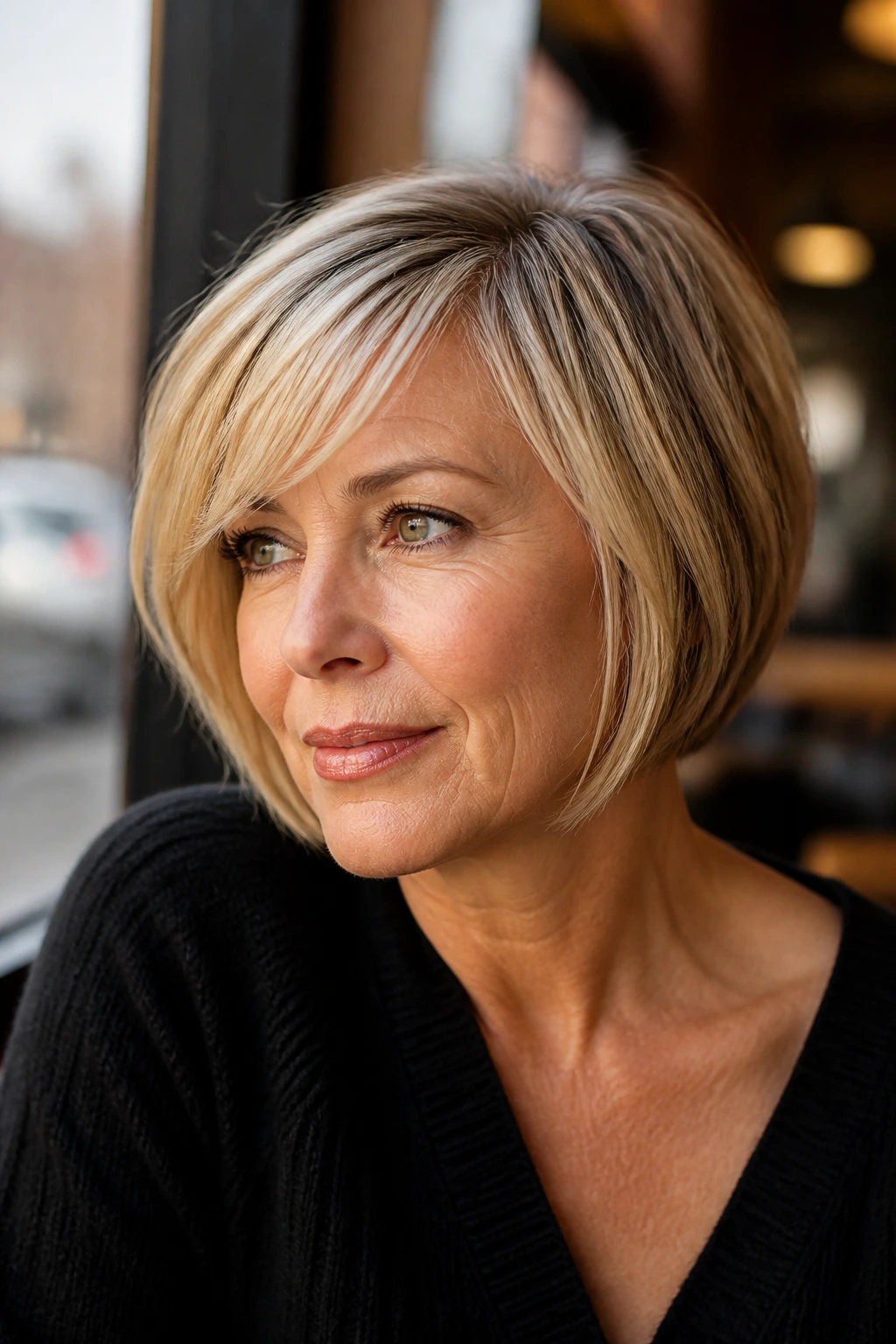
A side-swept fringe changes the mood of a bob instantly. It softens the forehead, shifts attention toward the eyes, and gives the cut a little sweep that feels easy rather than severe. If you’ve ever looked at a blunt bob and thought it felt too exposed, this is the fix.
This style works because the fringe acts like a bridge between the bob’s line and your face. It can help with cowlicks at the front, too, since a deep side part often behaves better than a straight-down fringe on mature hair. The result is less “perfect” and more wearable.
The fringe shouldn’t be so dense that it hangs in your eyes. Light, angled pieces are enough. You want movement that falls with the rest of the cut, not a curtain that needs constant correction. If your hair is fine, keep the fringe wispy. If it’s thick, the fringe can carry more weight without stealing the whole show.
8. The Blunt Micro Bob
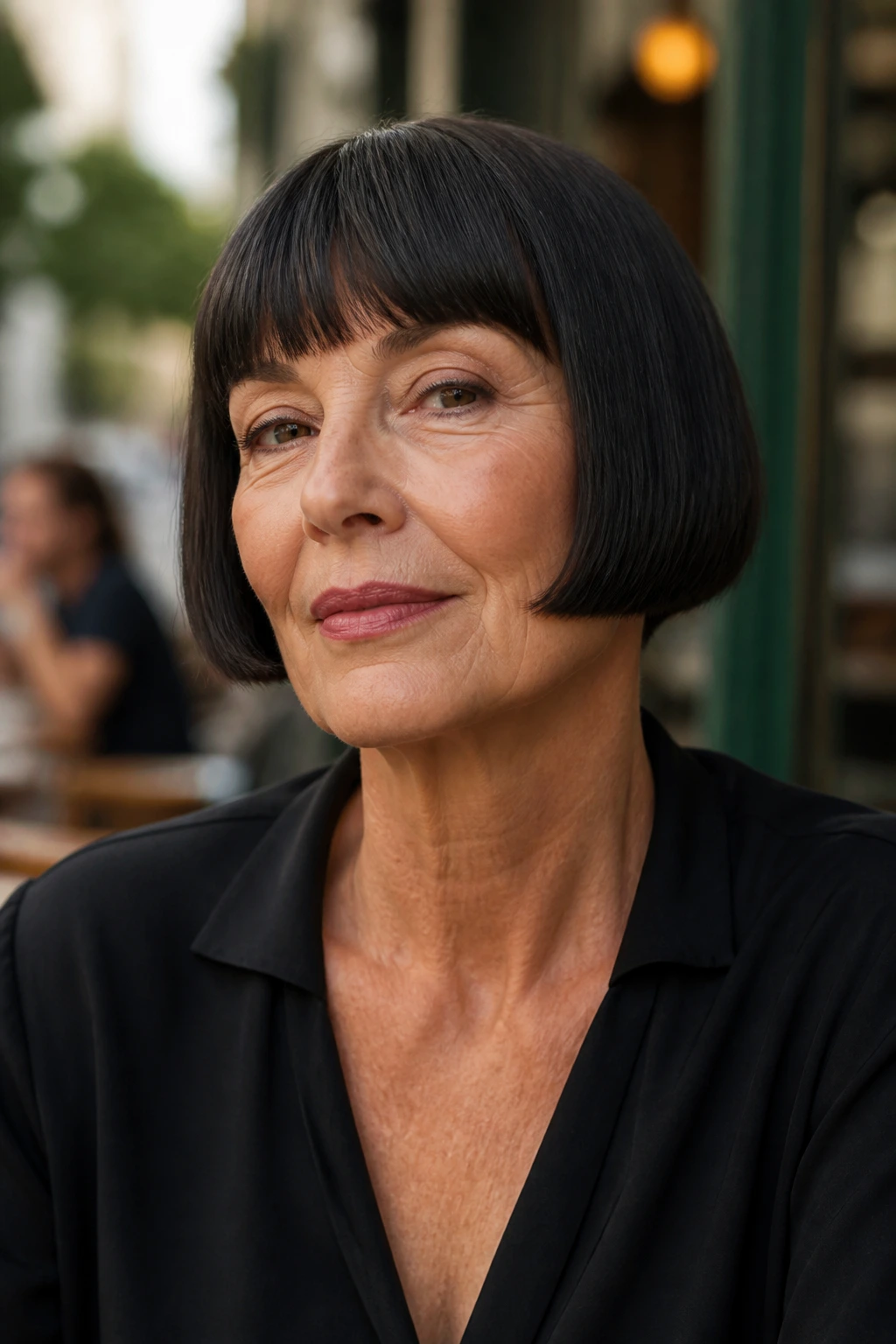
The blunt micro bob is tiny, sharp, and far more wearable than people expect. It usually sits at or just below the cheekbone, with a straight, clean line that makes the hair look dense and deliberate. On straight or nearly straight hair, it gives a crisp frame that feels strong without being fussy.
This cut is not for every texture. If your hair is very wavy or very thick, the micro length can start to kick out at the sides unless it’s cut with care. But on finer hair, it can look like you suddenly found the missing half of your hair density. The blunt edge does the heavy lifting.
I like this best for women who want short hair with a little attitude. It’s neat. It’s tidy. It also shows earrings well, which matters more than people admit. A shorter bob can make a simple pair of hoops do a lot of work.
9. The Inverted Bob with a Neat Nape
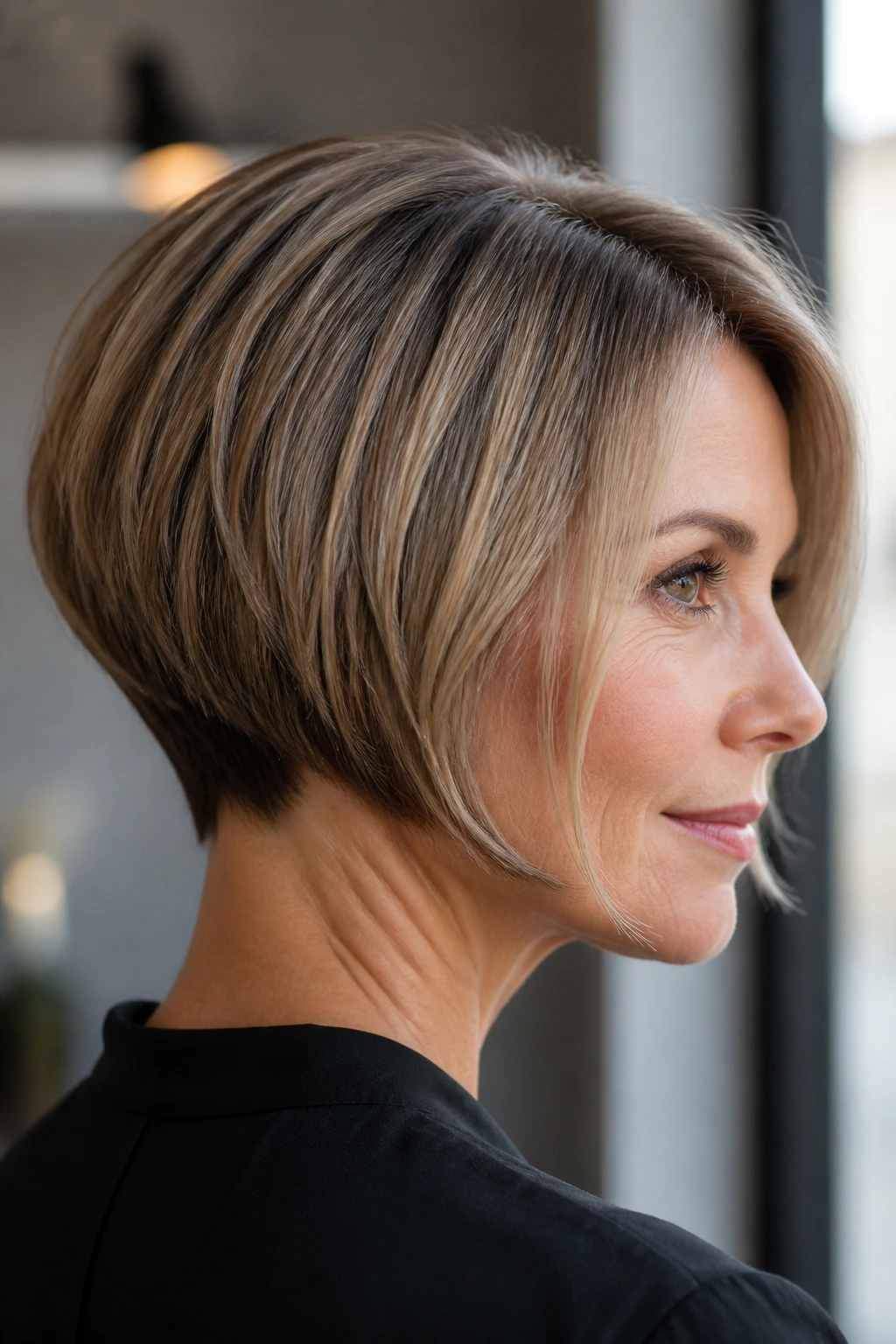
The inverted bob gives you a tighter back and longer front without looking bulky. The nape is cut neat and close, then the length opens toward the face. That line creates shape from the side, which is where a lot of people notice a haircut first anyway.
This bob is useful if your hair grows out in the back faster than it does elsewhere or if your neckline feels weighed down by ends that brush your collar. The short back keeps the silhouette clean. The longer front makes sure the style still feels feminine and face-focused.
The catch is balance. If the inversion is too dramatic, the front can start to overpower the rest of the cut. I prefer a softer version for women over 50, because it keeps the profile lifted without screaming “look at my haircut.” It can still be sharp. Just not cartoon sharp.
10. The Shaggy Bob with Choppy Texture
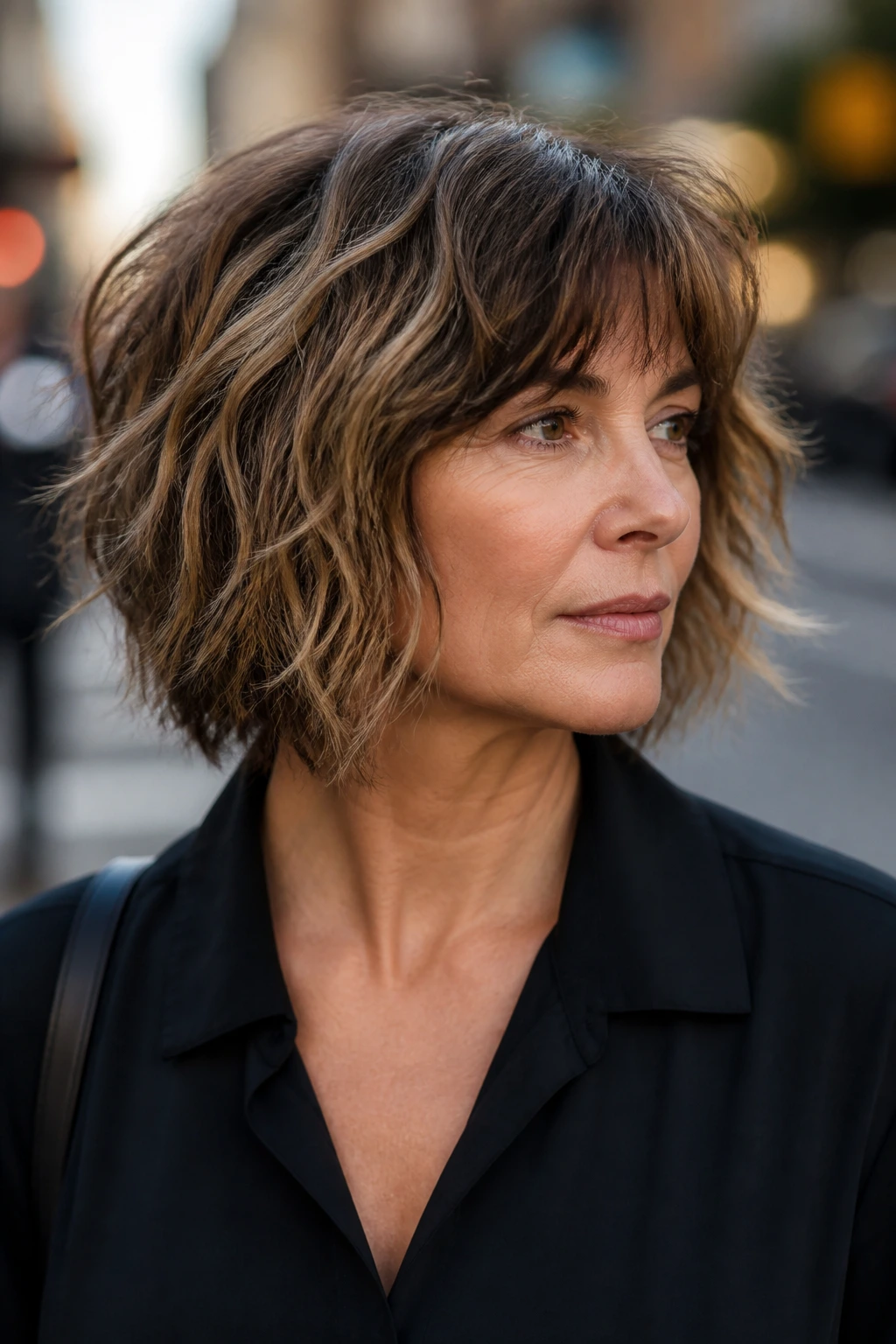
A shaggy bob is for the person who wants movement more than polish. It has choppier ends, a little irregularity through the layers, and a finish that looks better with texture spray than with heavy smoothing. That roughness is the point.
It’s a strong choice if your hair has natural wave, a bit of puff, or a tendency to go flat in one spot and flip in another. The uneven texture makes those quirks look intentional. The bob stops feeling like a uniform shape and starts feeling alive.
The mistake people make here is taking the shag too far. A short shag can turn into a mess if the layers are overcut, especially on thinner hair. You want a touch of separation, not a yard of broken ends. If your stylist says “piecey,” make sure they mean controlled piecey.
11. The Curtain Bang Bob

Curtain bangs change the whole face without demanding a full fringe commitment. They split in the middle and sweep out toward the cheekbones, which gives a bob some softness around the forehead and temples. That’s handy if your hairline has changed, your forehead feels a little more open, or you just want the style to look less severe.
This cut works especially well on a chin-length or jaw-length bob because the bangs and the perimeter can talk to each other. The front pieces should graze the cheekbone and blend into the rest of the cut. If the bangs are cut too bluntly, they can feel like a separate event. That’s not the goal.
Curtain bangs also give you room to grow them out without a painful awkward stage. That is a real advantage. I’d rather have a fringe that can soften over time than a strict bang that needs a trim the second you blink.
12. The Undercut Bob for Thick Hair
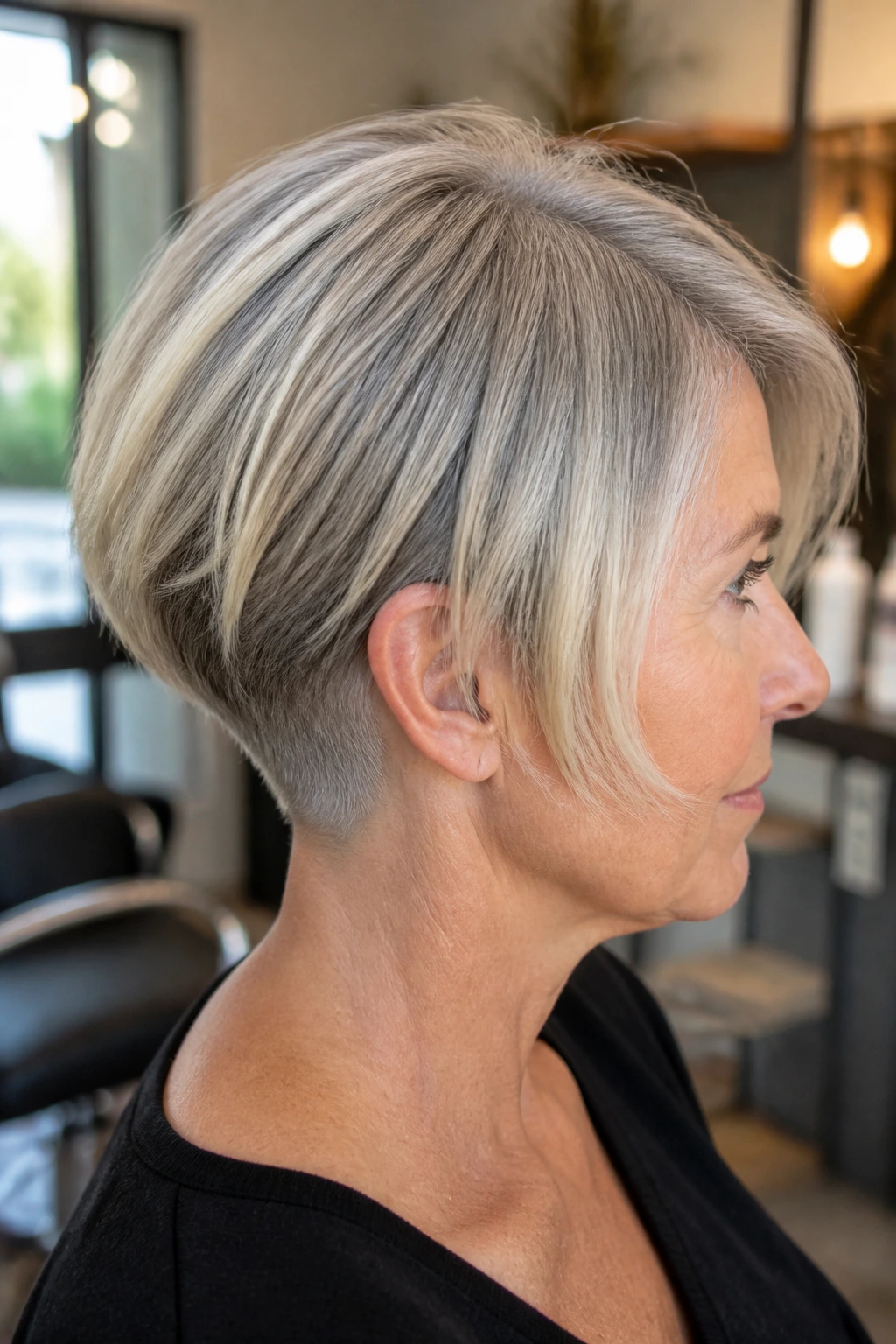
If your hair is thick enough to feel heavy by noon, an undercut bob can be a small miracle. By removing bulk underneath the top layer, the cut sits flatter and lighter while still looking full on the surface. It’s the sneakiest way to keep a short bob from ballooning.
The undercut can be subtle. It does not have to be shaved. A hidden reduction around the nape or behind the ears can make a huge difference in how the shape falls. That matters for mature hair, because thick gray regrowth often has more spring and more volume than the hair had a decade earlier.
Ask for a soft undercut if you want movement without a dramatic reveal. If you go too far, the top layer can look detached. When it’s done well, the bob feels cleaner, cooler at the neck, and easier to style on humid days.
13. The Razor-Cut Bob for Fine Hair
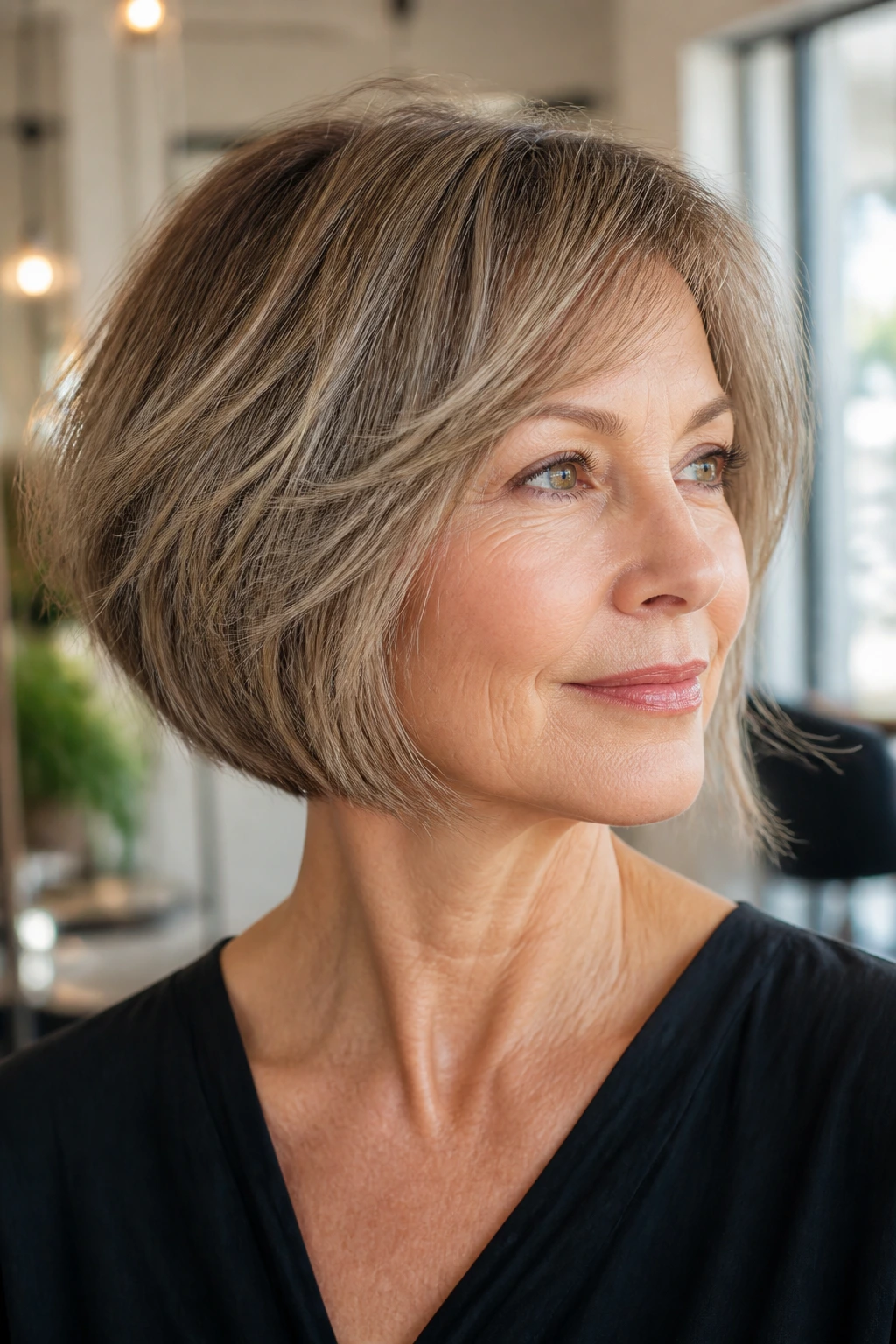
A razor-cut bob can look airy and expensive when it’s done with restraint. The razor softens the edge, which helps fine hair move instead of lying in one flat line. That little bit of separation can make a short bob feel fuller because the ends don’t stick together like a solid strip.
This cut is best on hair that is already fairly healthy and not overly fragile. If your ends are very dry or over-processed, a razor can make them fray. So this is not a blanket recommendation. It’s a good one when the hair can take it.
The style sits nicely around the jaw or cheekbone and usually benefits from a light volumizing spray at the roots. Keep the finish clean. A razor cut looks best when the movement is intentional, not when it’s overloaded with product and turned stringy.
14. The Glasses-Friendly Rounded Bob
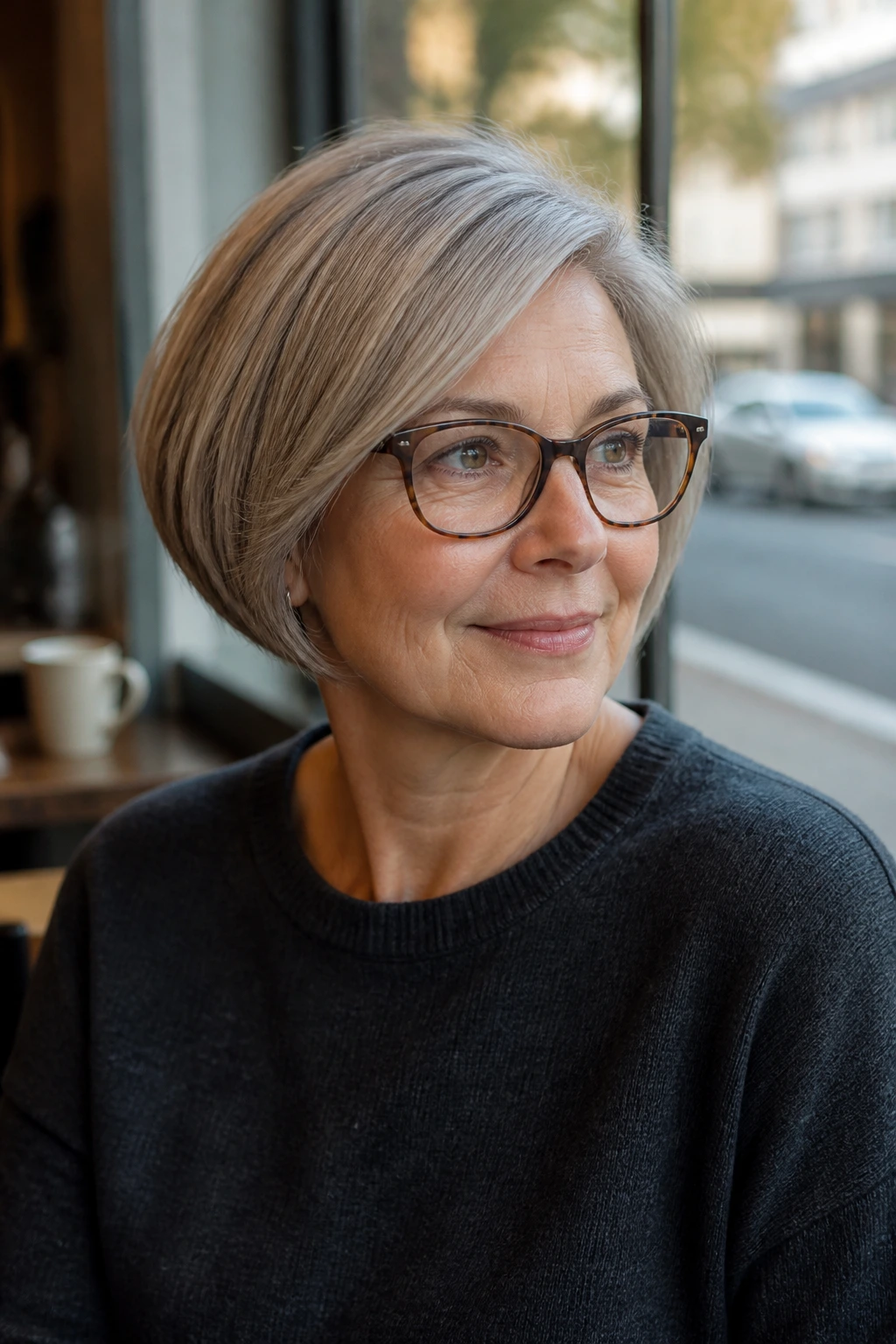
A rounded bob is one of the easiest ways to make glasses look like part of the outfit instead of a competing frame. The curve around the face mirrors the shape of eyewear and keeps the sides from flaring into the arms of the glasses. That small detail changes everything.
The length usually sits around the jaw or a little above it, with subtle rounding through the sides and nape. It softens sharp cheekbones and can make a square face feel less boxy. For women over 50, that matters because glasses already put a strong line on the face. The haircut should cooperate with it.
Keep the sides controlled. Too much puff around the temples and the frames start to disappear. Too much flatness and the cut loses its shape. A rounded bob lives in the middle, where the outline reads cleanly from across the room.
15. The Sleek Center-Part Bob
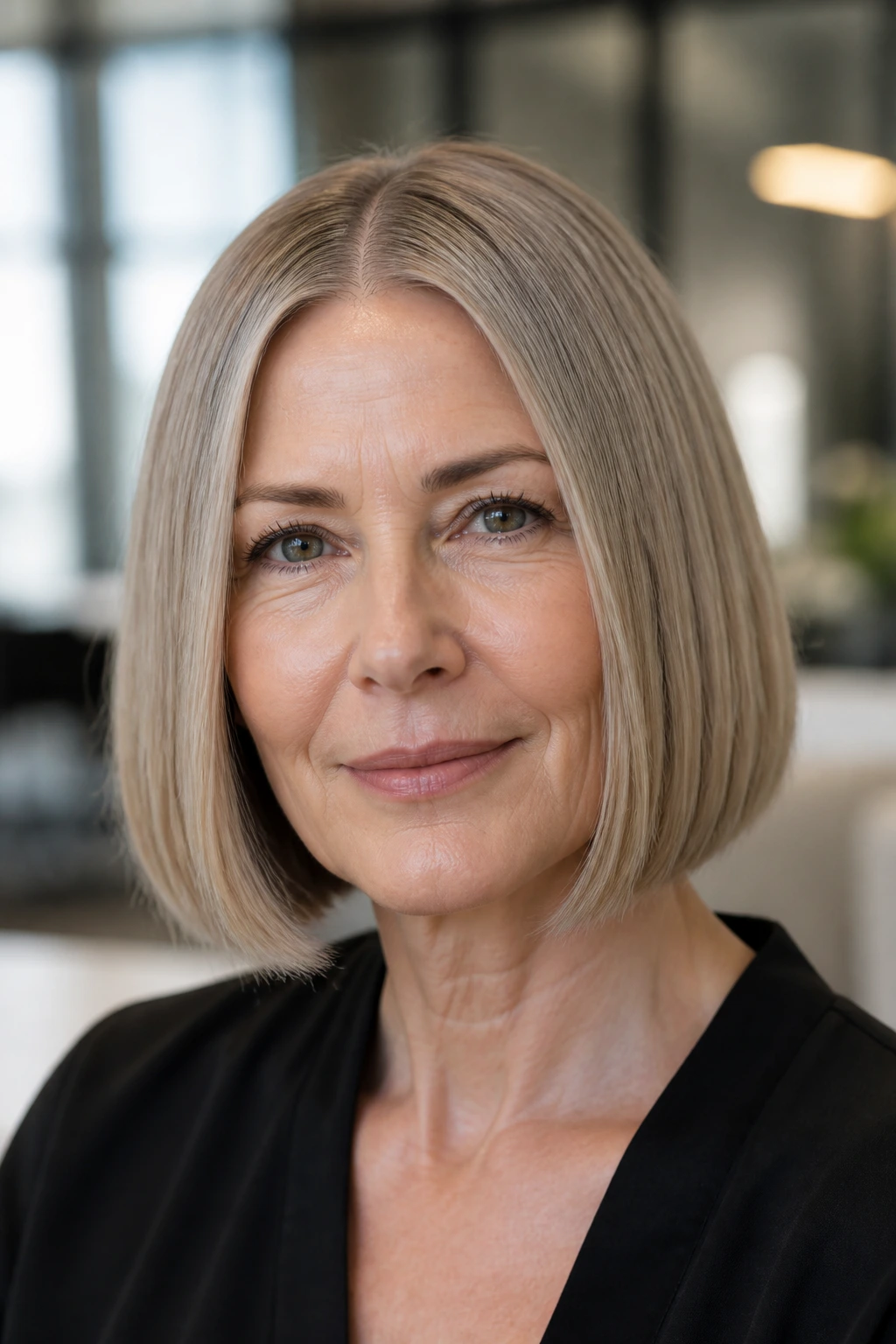
A center-part bob can be surprisingly strong on mature hair, especially when the line is clean and the length is deliberate. It gives the face symmetry, and symmetry can feel fresh when you’re used to hair that’s been pushed to one side for years. That said, it needs enough density to hold the shape.
The sleek finish works best on straight or straightened hair with a blunt or softly beveled edge. If you have a natural wave, a center part can still work, but it usually needs a little extra polish at the front so it doesn’t split unevenly. A light serum on the mids and ends is enough. Heavy oil is too much.
I like this cut when someone wants short hair that feels calm and put-together. It doesn’t scream. It just sits there looking expensive in the way clean lines often do.
16. The Asymmetrical One-Side-Longer Bob
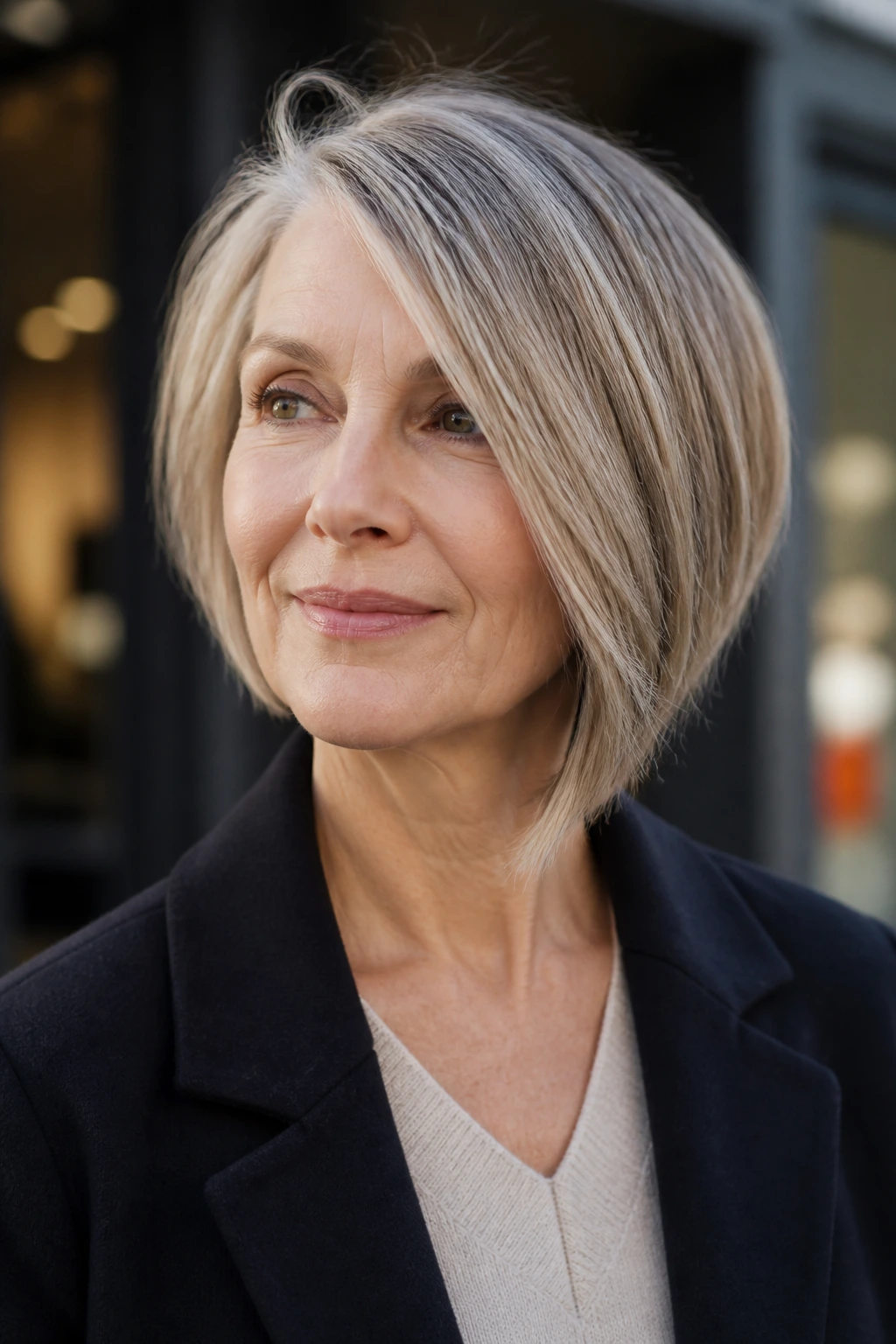
An asymmetrical bob gives you shape without repeating the same side twice. One side is kept a little longer, which makes the haircut feel modern and slightly unexpected. It also helps if one side of your face is a touch stronger or if you want to soften a jaw that feels broad.
The key is subtlety. A tiny asymmetry can be elegant; a huge one can feel like the haircut is trying too hard. For short hair over 50, a gentle difference in length is usually enough. You want someone to notice the line, not wonder whether the style is crooked.
This is the bob for someone who likes a little edge but does not want a full-on dramatic shape. It looks sharp with a tucked side and can be styled smooth or slightly tousled. That flexibility makes it easier to live with than its reputation suggests.
17. The Silver-First Bob
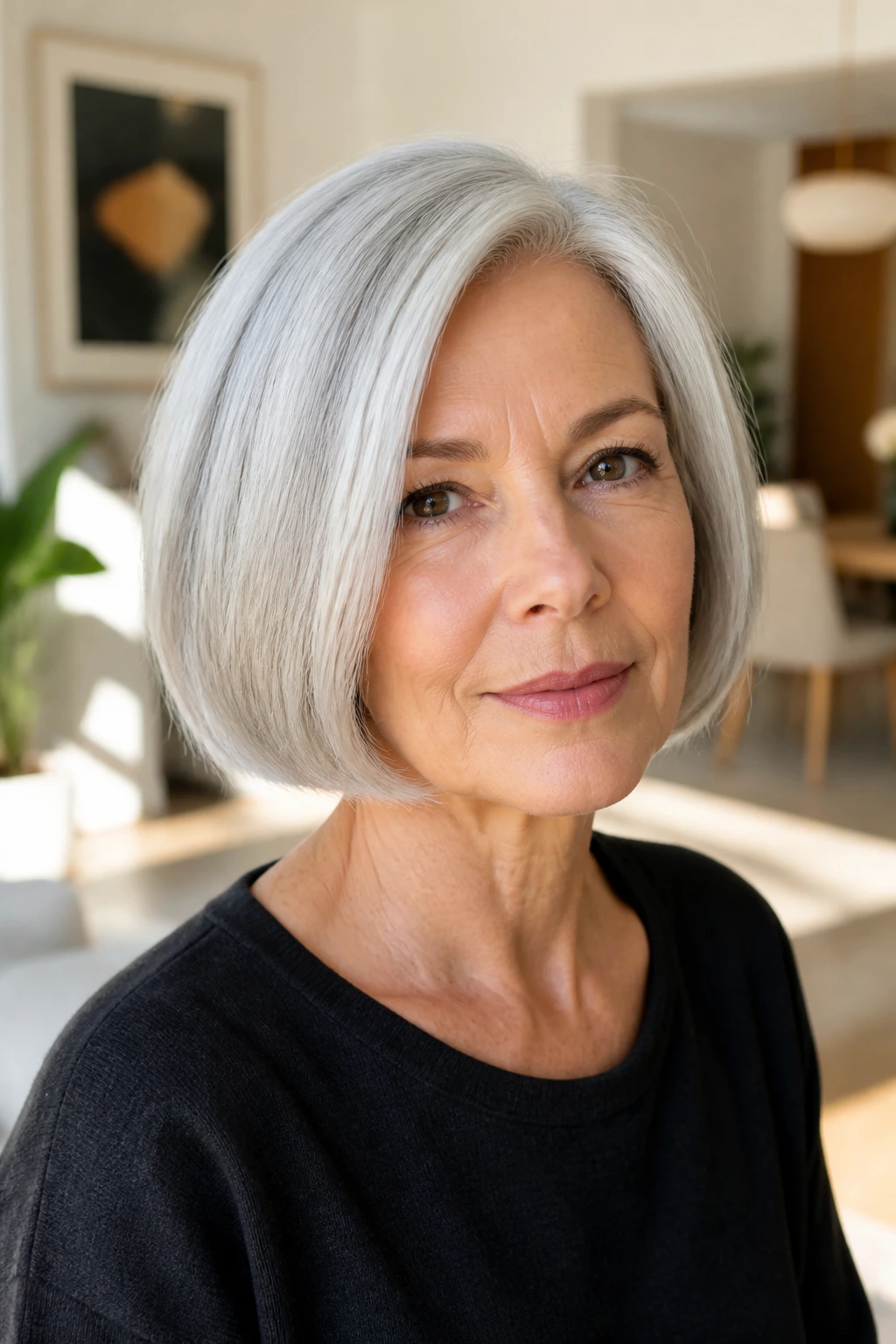
Gray hair changes the rules, and this bob respects that. Silver, white, and salt-and-pepper strands often reflect light differently and can feel a little coarser at the ends, so the cut should keep the perimeter clean and the shape clear. A soft bob that lets the color do the work often looks better than a busy, over-layered style.
This is where short hair over 50 gets especially interesting. Silver hair can look wiry when it’s too long, but clipped into a neat bob it suddenly reads as deliberate and bright. The shape gives the color a frame. If you use toning shampoo, do it lightly; over-toning can make silver hair look flat or dull.
I’m a fan of a blunt or softly rounded silver bob with a side part or a narrow curtain fringe. It feels honest. And honestly, gray hair often looks best when the cut stops apologizing for it.
18. The Pixie Bob Hybrid
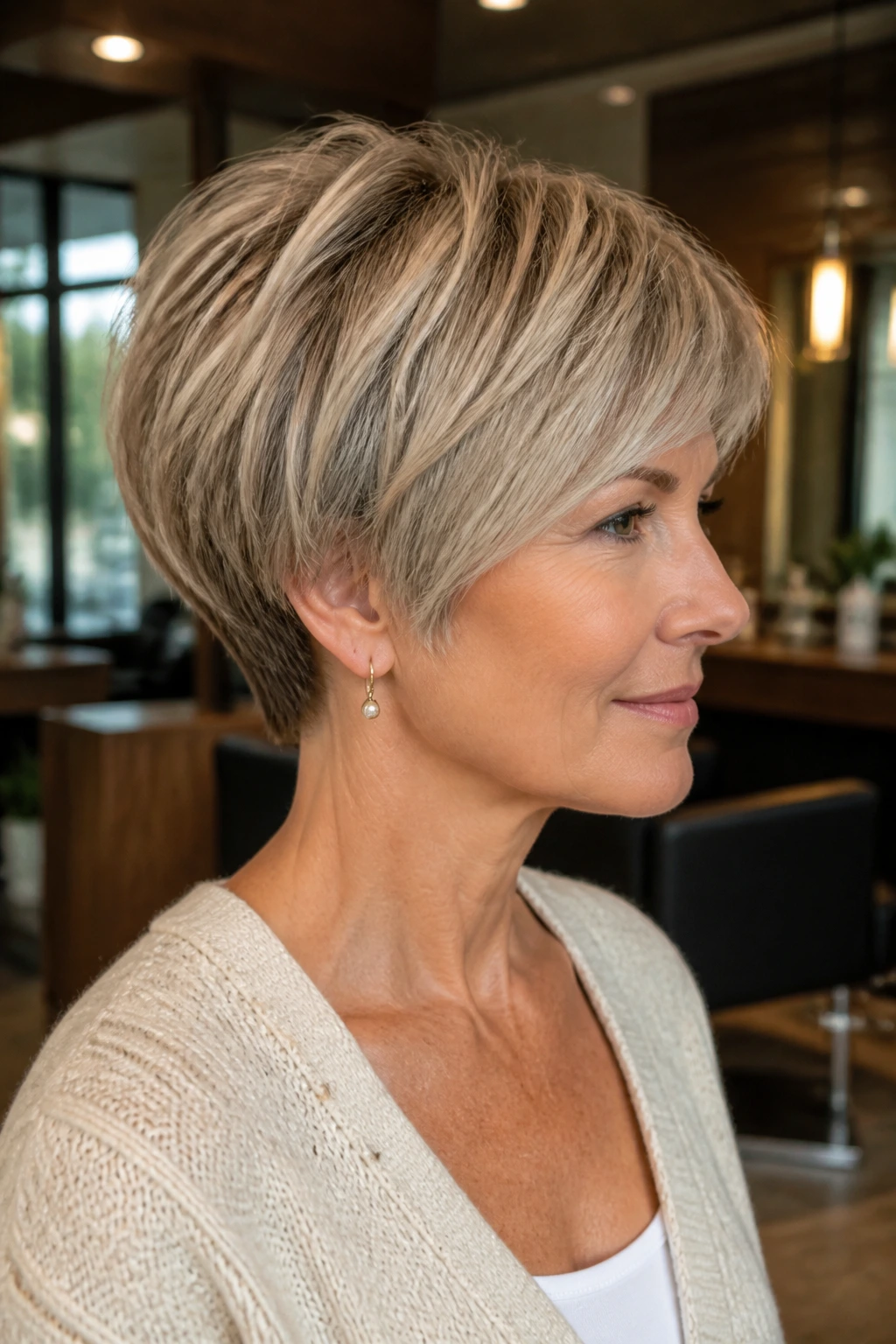
Part pixie, part bob, all practical. The pixie bob keeps the nape short and clean while leaving enough length on top and through the sides to read as a bob, not a full pixie crop. It’s a smart middle ground if you want short hair but do not want the commitment of very short sides.
This cut is especially useful for women with strong cowlicks at the crown or hair that wants to puff around the ears. The shorter back controls bulk, and the longer top gives you styling options. You can smooth it down for a neat look or rough it up a little for texture.
The hybrid shape does need regular trimming, because that balance gets lost fast if the back starts to grow out. But if you like that tidy, lifted feel at the neckline, it’s worth the upkeep. The outline stays compact. That’s the draw.
19. The Tucked-Behind-Ears Bob

What makes a tucked bob work is not the tuck itself. It’s the shape that lets the tuck happen without fighting the ears. A good version keeps the front a touch longer, the sides light enough to move, and the neckline neat enough that the whole cut still looks intentional when you tuck one side back.
This style is quietly useful with earrings, glasses, and high necklines. It opens the face and makes the jawline visible, which is one reason it looks so good on short hair over 50. It feels less static than a bob that hangs everywhere at once.
If your hair is thick, keep the sides a little thinner so the tuck does not create a bulky lump. If it’s fine, avoid over-layering the temples because you need enough substance for the tuck to hold shape. Little details. Big difference.
20. The Air-Dry Wavy Bob
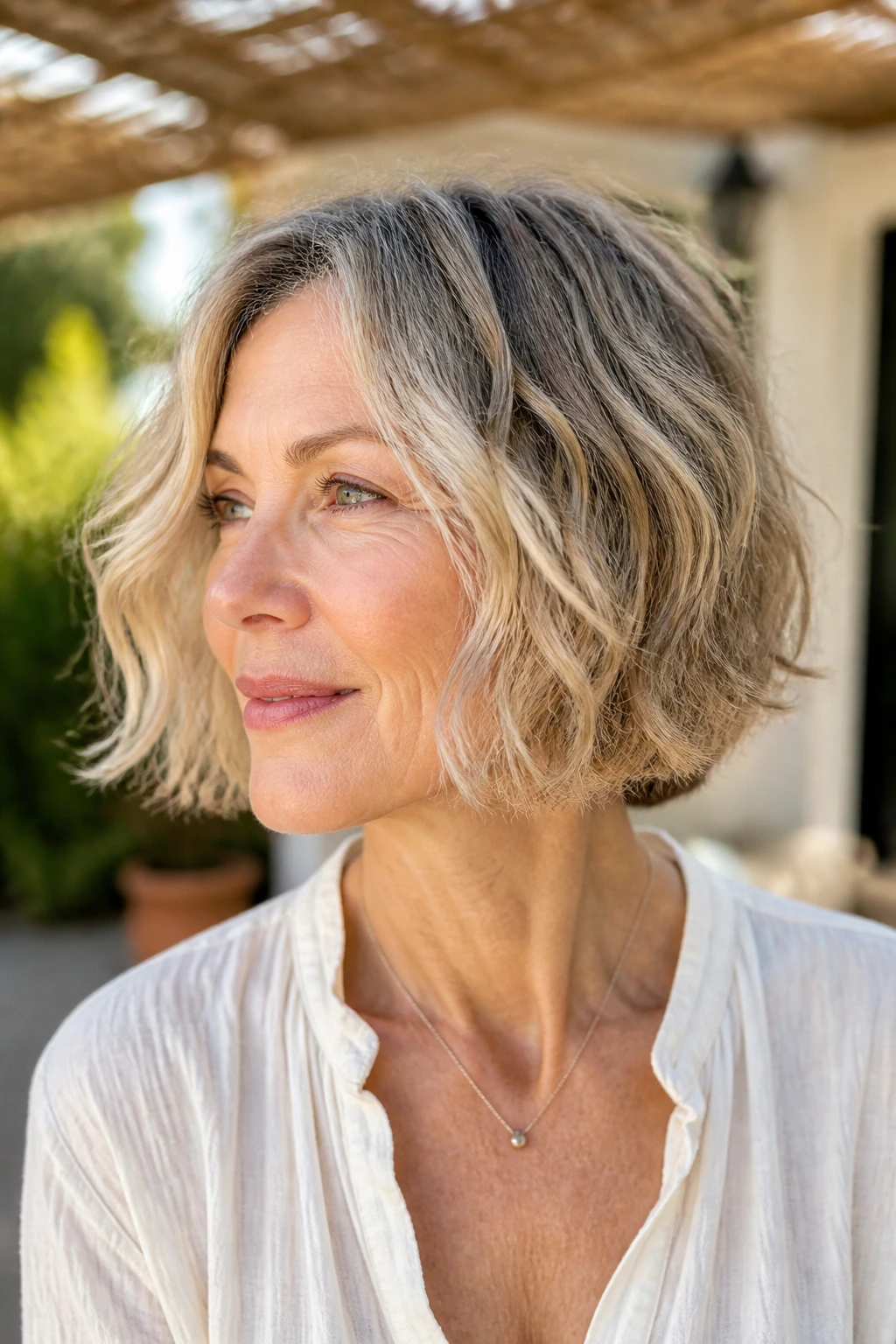
Some bobs are built to be styled. This one is built to be left alone. An air-dry wavy bob uses the natural bend in the hair, with a perimeter cut that falls well once the moisture leaves it. It’s one of the most honest short haircuts for women over 50 because it works with the hair texture instead of arguing with it.
The best version usually has soft internal layers and a length that lands around the jaw or just below it. That gives wave enough room to form without making the cut poof out. A curl cream or lightweight leave-in is often enough. Too much product makes the waves sag.
I like this cut for busy mornings, but I like it even more for people who are done pretending every haircut needs a blowout. A wave-friendly bob can look modern and relaxed at the same time. That is harder to find than it sounds.
21. The Soft Neck-Length Bob with Internal Layers
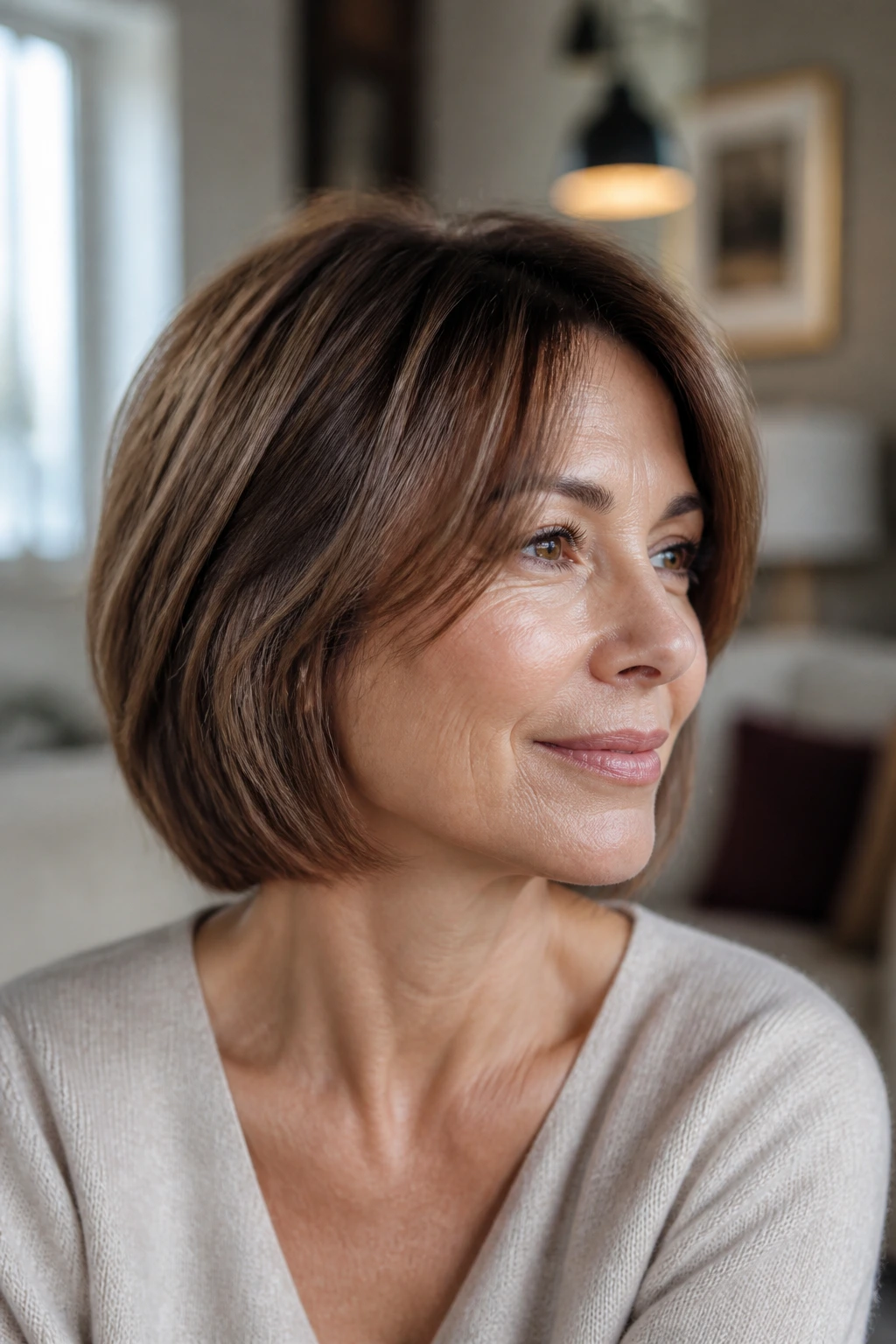
A neck-length bob with invisible layers is the cut I recommend when someone wants the lowest-drama version of short hair. The layers are tucked inside the shape, so the outside line stays clean while the inside does the work of removing bulk and adding movement. It’s tidy, but not stiff.
This length is forgiving on changing hair. It covers enough of the neck to feel comfortable, but it is still short enough to lift the face and stop ends from looking tired. If your hair tends to flip out at the collar, the internal layering helps the cut fall more cleanly.
It’s also one of the easiest bobs to grow out. That matters more than people think. A haircut that only looks good on day one is not nearly as useful as one that behaves for six or seven weeks.
Why Bob Haircuts for Short Hair Over 50 Hold Their Shape Better
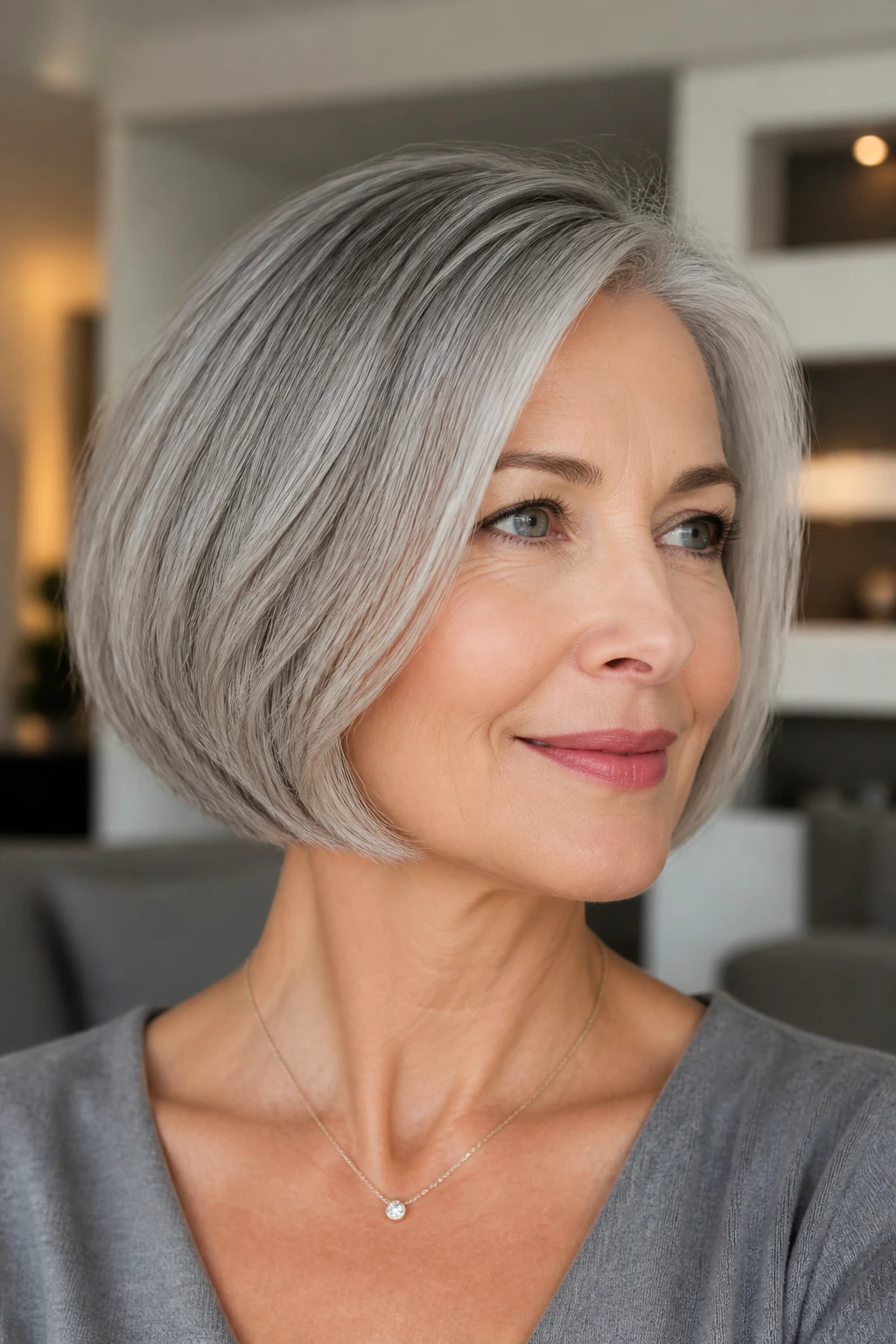
A bob is good geometry. That’s the boring answer, but it’s the right one.
Hair that has changed texture, lost density at the crown, or become a little coarser around the ends often looks better in a shape that has a clear perimeter. Short bob haircuts for women over 50 work because they give the eye a line to follow. That line can be blunt, angled, rounded, stacked, or shaggy, but it needs to exist. Without it, short hair can start to look unfinished even when it’s freshly cut.
There’s also the maintenance angle. Short hair is not the same as easy hair, and anyone who has tried to flatten a cowlick with a too-short nape knows that. A good bob keeps the bulk where it helps and removes it where it annoys you. That’s why the best cuts here are not the fanciest. They are the ones that behave between appointments.
Gray hair, in particular, responds well to shape. Silver strands can be bright and beautiful, but they also show every awkward end. Put them in a bob and the cut suddenly looks deliberate, even elegant in a plain, useful way. Not precious. Just polished enough to make sense.
How to Ask for the Right Bob at the Salon
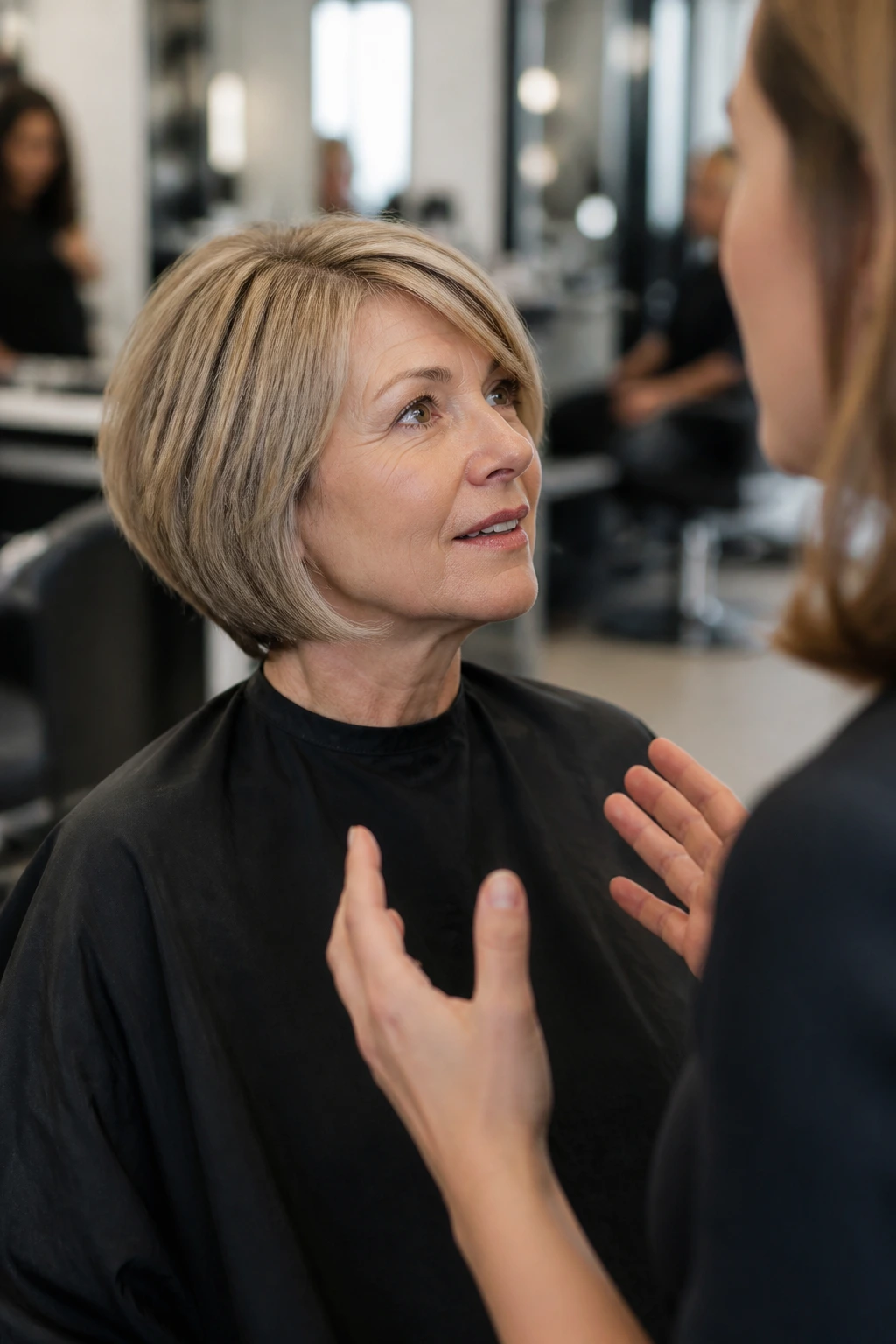
A photo helps, but only if the photo matches your hair. Bring a picture that shows texture, density, and length from the side, not just a front shot with perfect lighting. A bob that looks soft on straight hair will land differently on wavy hair, and a chin-length cut on thick hair will sit differently than the same length on fine hair. That difference is the whole game.
Say where you want the perimeter to hit: jaw, chin, nape, or just below the ears. Then talk about your problem spots plainly. Cowlick at the crown? Heavy sides? Flat top? A stylist can only work with the real hair in front of them, not the hair you wish you had.
Ask how they plan to cut it. Dry cutting is often useful for curls and waves. Internal layering is useful when you want movement without losing the outside line. If a stylist says “we’ll just see,” I’d keep asking questions. A bob rewards precision.
Essential Tools for Styling Short Bobs
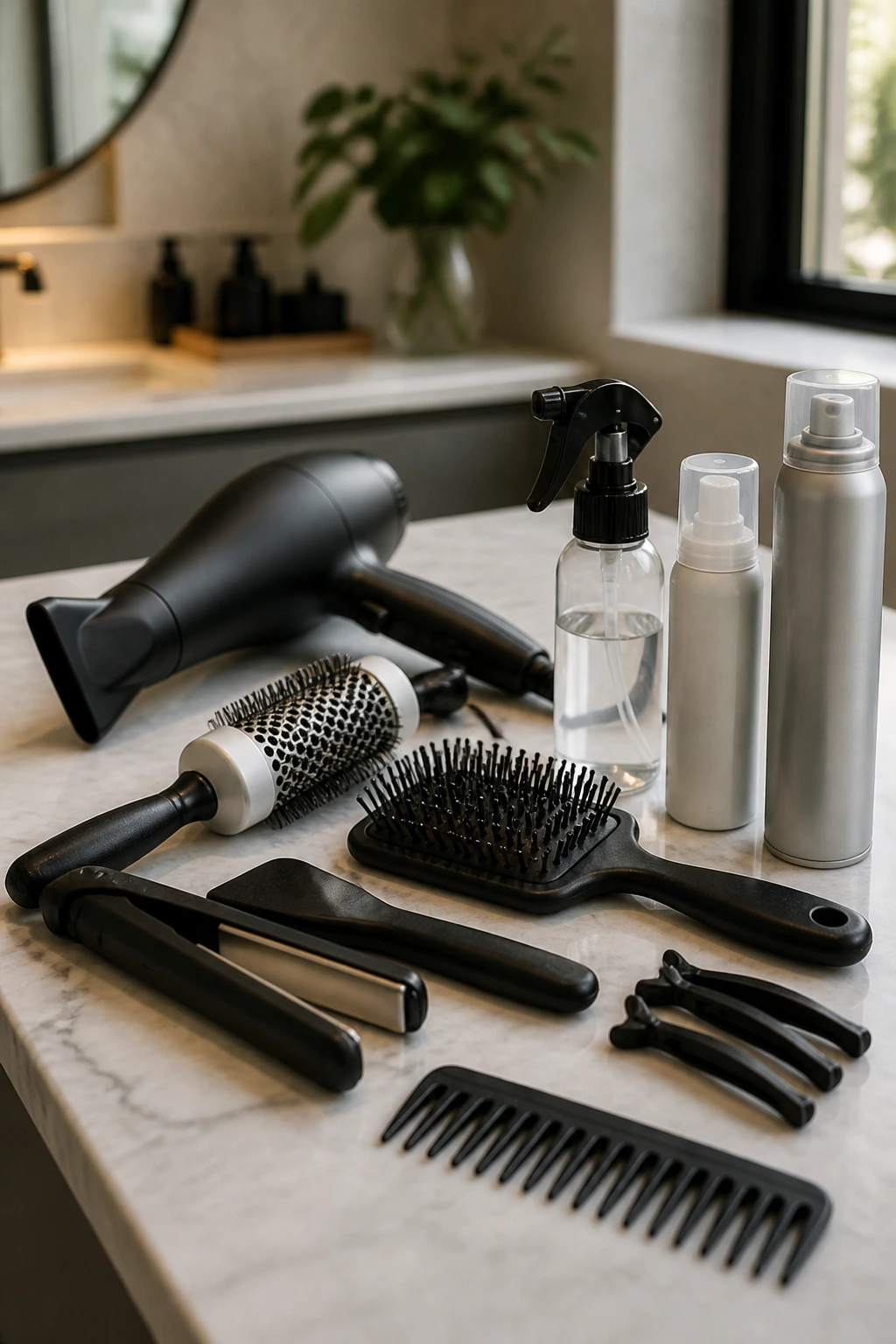
- Blow dryer with a nozzle attachment — The nozzle directs air so the cuticle lies flatter and the ends behave instead of frizzing everywhere.
- Small to medium round brush — A 1.25-inch brush gives enough bend at the ends without making the bob look over-curled.
- Vent brush or paddle brush — Handy for quick dry-downs when you want speed more than polish.
- Heat protectant spray — Use it before any hot tool; short hair burns just as fast as long hair.
- Lightweight styling cream or mousse — Cream softens and smooths; mousse gives lift at the crown without sticky residue.
- Flat iron or 1-inch curling iron — Useful for bending the ends or smoothing a side panel, not for flattening the whole head into submission.
- Wide-tooth comb — Better than a brush when hair is damp and more fragile.
- Clips — Sectioning makes a bob easier to shape because the top and sides behave differently.
- Dry shampoo — Good for day-two root lift and for keeping the part from separating into oily ribbons.
- Mirror with good side view — A handheld or swivel mirror helps you check the nape, where short bobs often either sing or fail.
How to Style a Short Bob Without Making It Stiff
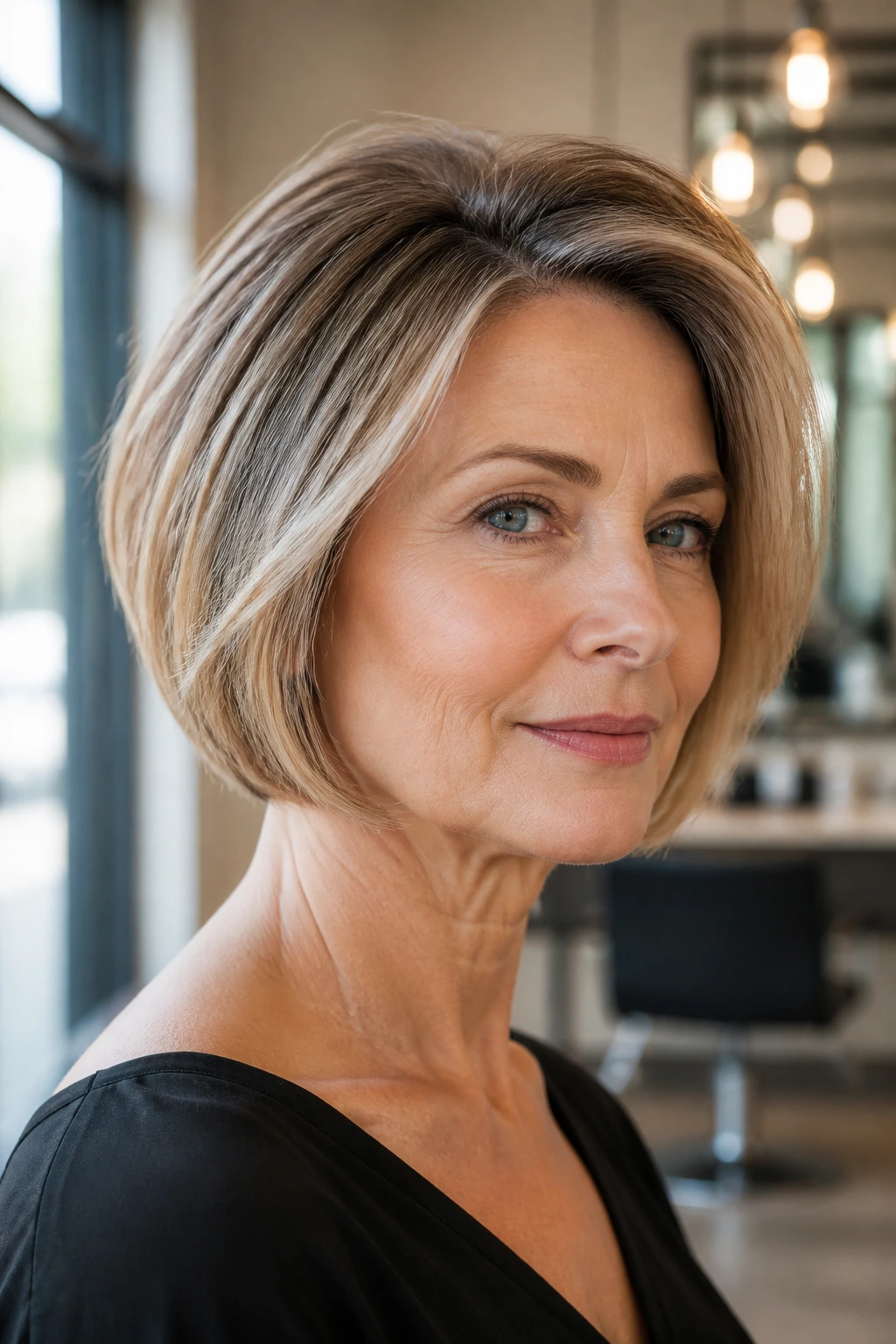
Root lift matters more than most people think. Start by spraying a little mousse or root-lift spray at the crown and along the part, then blow-dry the roots first. If you leave the roots flat and only work the ends, the haircut will sit like a cap.
The ends need a bend, not a curl helmet. Use a round brush or flat iron to turn just the bottom half-inch under or away from the face. That tiny movement makes the bob look finished. Too much curl at the ends reads old-fashioned fast.
Finish with less product than you think. A pea-sized amount of cream or serum is usually enough for short hair. Rub it between your palms until it disappears, then smooth it only over the mids and ends. If your fingers feel slippery before they even touch hair, you’ve used too much.
Day two can look better than day one. A quick mist of water at the crown, a little dry shampoo at the part, and a 30-second blast with the dryer often brings the shape back without starting over. Short bobs behave well when you stop trying to remake them from scratch every morning.
Common Mistakes That Make a Bob Look Boxy or Tired
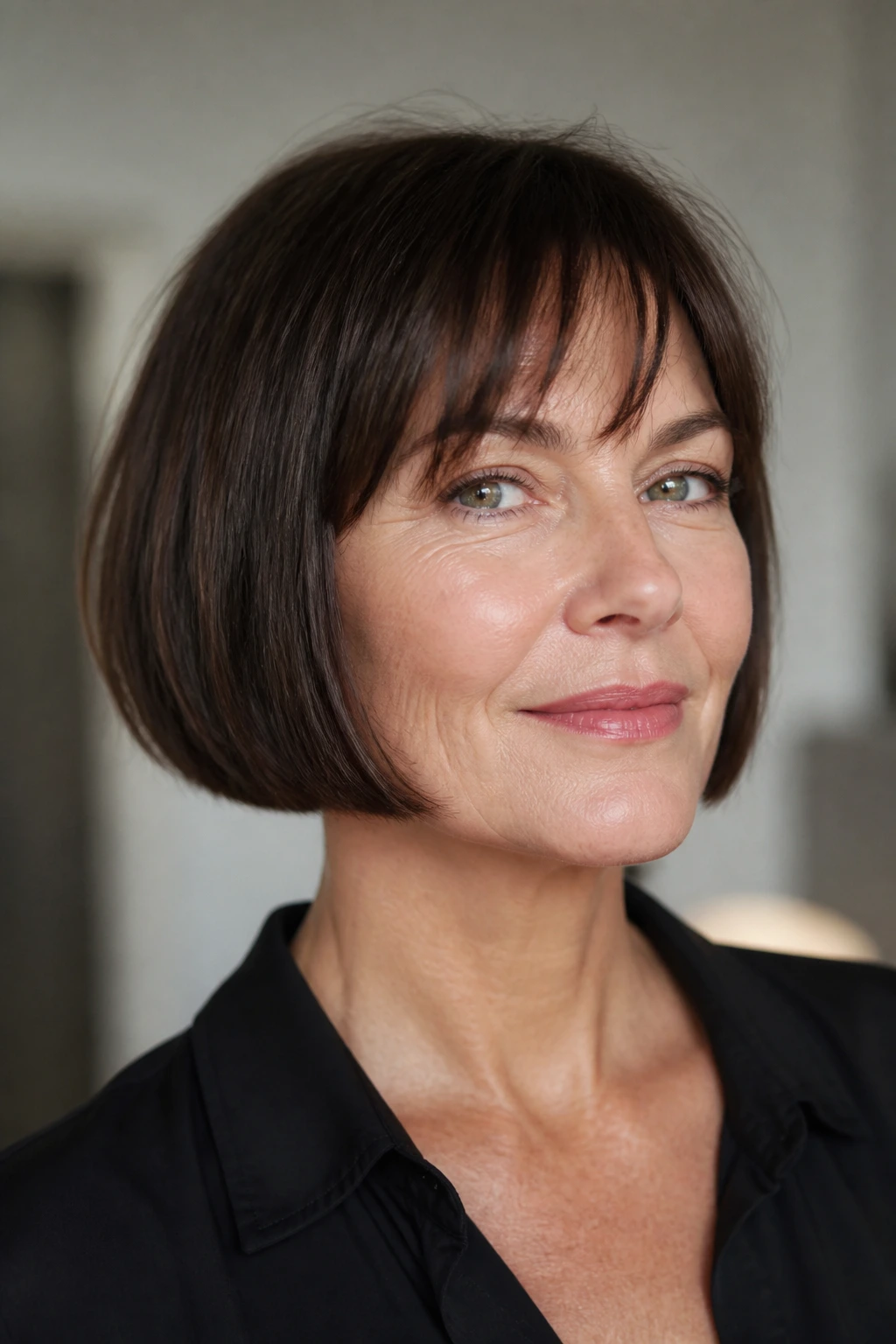
The first mistake is cutting the bob too bluntly for the hair density. Fine hair can take a blunt edge, but thick or wavy hair often needs some internal softening or the line balloons out. The symptom is a wide, square shape that feels heavy at the jaw. The fix is a cleaner graduation or a touch of layering inside the cut, not on the outside.
The second mistake is too much layering at the crown. People ask for volume and get a cut that sticks up at the top while the rest goes thin. That can make the bob look dated fast. If you need lift, ask for controlled crown support, not short choppy layers that remove the shape.
The third mistake is ignoring the neckline and nape. If the back grows into a fuzzy shelf, the whole haircut starts to look unfinished, even when the front is styled. Short bobs need tidy maintenance at the back. That’s not vanity. It’s geometry.
A fourth one: using heavy creams or oils on fine hair. The style goes limp, the part splits, and the bob loses its edge by lunch. Light product. Small amounts. That’s the better habit.
Variations and Adaptations to Try
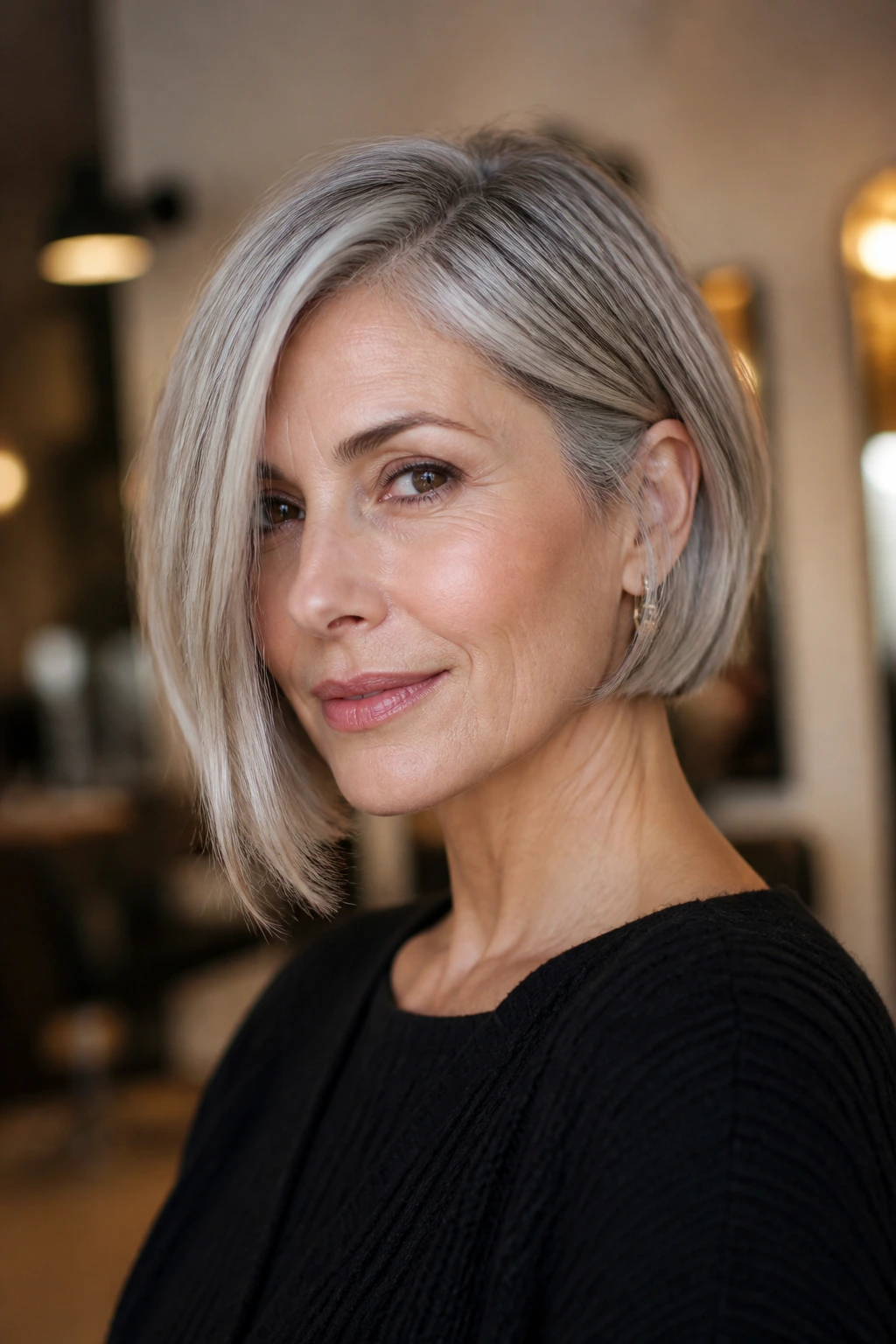
The Side-Part Softener: Shift the part a little deeper and let one front panel fall longer than the other. It softens a strong jaw and gives the bob a gentler line around the eyes.
The Fine-Hair Builder: Keep the perimeter blunt and add only a light crown lift. This version makes sparse ends look denser and avoids the see-through layer problem that fine hair often gets.
The Thick-Hair Relief Cut: Add a hidden undercut or internal debulking around the nape. It removes weight where hair swells and keeps the bob from puffing out by the ears.
The Curly Control Version: Cut the bob dry, keep the perimeter slightly longer than you think, and let the curl pattern set the final length. That stops shrinkage from turning the cut too short.
The Gray-Glow Version: Pair a clean bob with a gloss or toning service that keeps silver hair bright but not chalky. A soft, rounded shape keeps the color looking expensive instead of wiry.
Care, Trim Timing, and Day-Two Maintenance
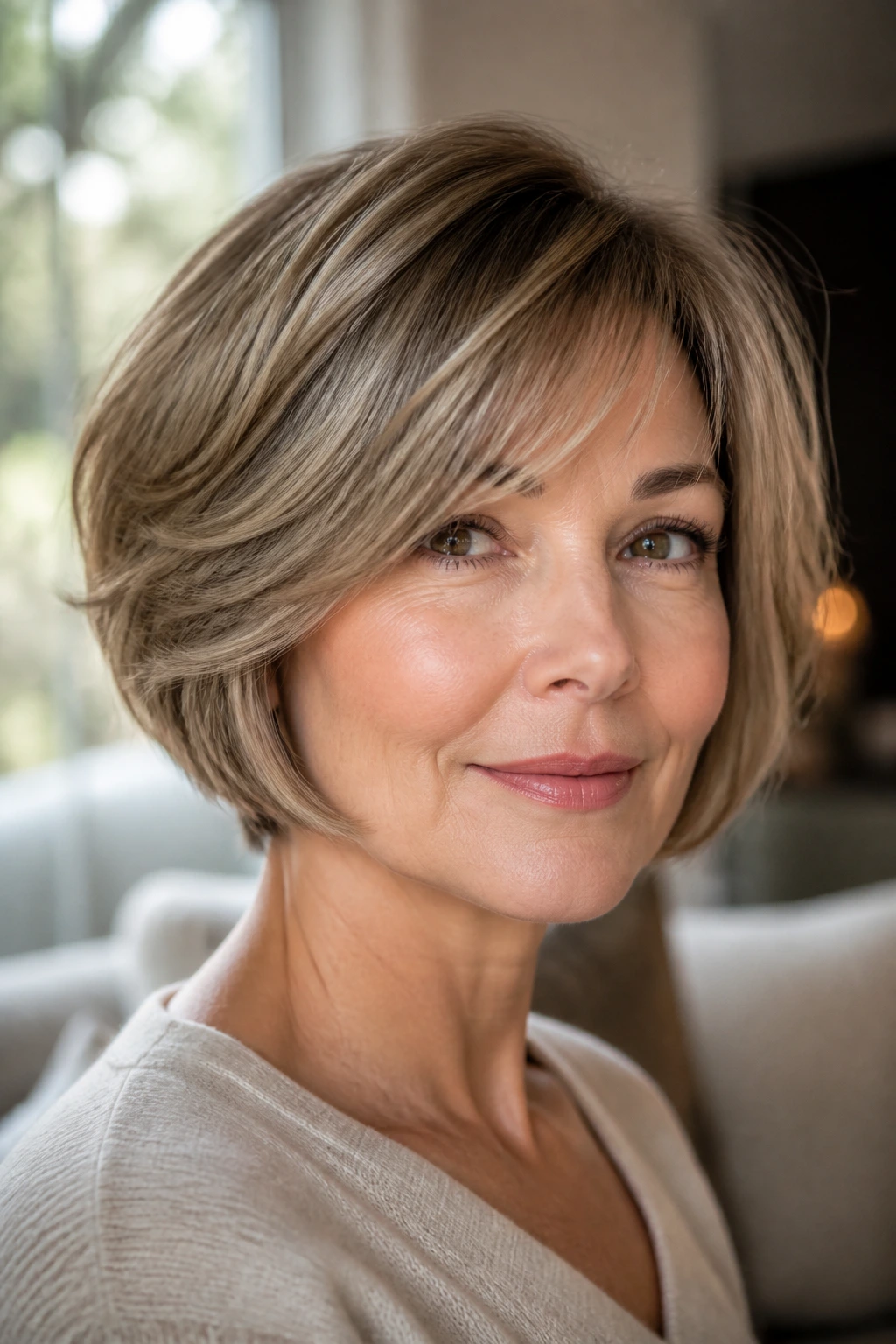
Short bob haircuts need regular trims if you want the shape to stay crisp. Every 6 to 8 weeks is a good rhythm for blunt or angled versions; shaggier cuts can stretch a little longer, but even those start losing intent once the nape grows out too much. A bob that loses its back line loses half its personality.
The rest is basic but not optional. Use a sulfate-free or gentle shampoo if your hair dries out quickly, and clarify once every couple of weeks if dry shampoo or mousse starts building up at the roots. Gray hair often benefits from a purple or silver shampoo once in a while, but don’t overdo it or the hair can turn dull and flat.
At home, sleep on a smooth pillowcase or wrap the hair loosely if the ends bend badly overnight. A quick morning refresh with water, a round brush, or a flat iron on the very ends usually brings the shape back. The secret is to fix the perimeter before it starts fighting you.
Questions People Ask Before They Cut Their Hair Short
Which bob length is most flattering on women over 50?
Jaw-length and chin-length are the safest bets because they frame the face without crowding it. If your neck is a feature you like, a slightly shorter nape with longer front pieces can look especially sharp.
Is a bob good for fine hair?
Yes, if the cut is handled carefully. Fine hair usually does better with a blunt perimeter, subtle stacking, or a bit of root lift rather than heavy layers that make the ends look thin.
Can curly hair wear a short bob without puffing out?
Absolutely, but it needs to be cut for the curl pattern. A dry cut or curl-by-curl shaping keeps the silhouette balanced and prevents the dreaded triangle.
Should I get bangs with a bob?
Only if the bangs match your face shape and your styling patience. Curtain bangs and side-swept fringe are easier to live with than dense blunt bangs, which need more maintenance.
How do I keep a bob from flipping out at the ends?
A small bevel at the perimeter and a quick bend with a brush or iron usually helps. If the flip is strong, the cut may be sitting too short at one point, so the shape may need a touch-up.
Can I wear a bob with glasses?
Yes, and some bob shapes are better than others. Rounded bobs, side-swept fringe bobs, and soft chin-length cuts tend to work with frames instead of competing with them.
How often should I trim it?
Most short bobs need a clean-up every 6 to 8 weeks. If the neckline loses shape before that, go sooner; the back line is usually the first thing to fall apart.
What if my stylist wants to thin my hair a lot?
Be careful. Thinning can help thick hair, but too much removal on fine or gray hair can leave the ends wispy and weak. Ask exactly where the bulk is being taken out and how they plan to keep the outside line intact.
The Bob That Keeps Its Shape
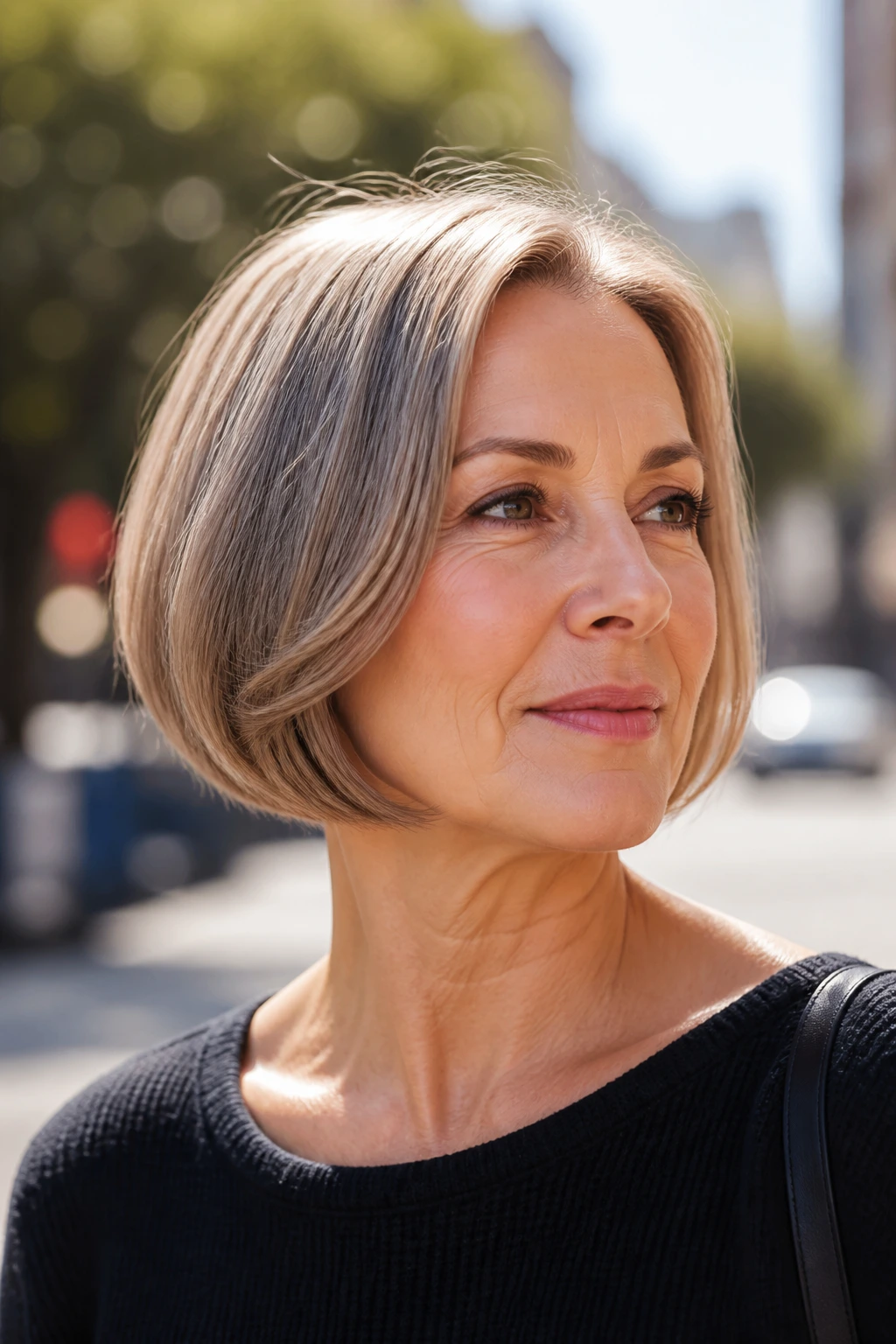
The best short bob haircut is the one that still looks like itself after a windy walk, a late night, and three days of normal life. That’s the real test. Not the salon mirror. Not the first blowout. The ordinary Tuesday.
If you’re choosing among bob haircuts for short hair over 50, start with your texture, then think about where you want the eye to go: jaw, cheekbone, neck, or crown. That single decision will narrow the field faster than any trend list ever could. A good bob does not need a lot of explanation once it’s on your head.
Bring a few solid photos, talk honestly about your cowlicks and density, and ask for the version that fits your routine instead of fighting it. That’s where the useful cuts live, and that’s usually the one you keep coming back to.
