



A square face gives you something a lot of people spend years trying to fake: structure. The trick with bob haircuts for square faces is not hiding that shape. It’s choosing a cut that takes the edge off the jaw while keeping the cheekbones doing some work. That usually means movement near the ends, a little bend around the face, and a length that doesn’t stop exactly where the jawline wants to shout back at you.
I’m a big believer in this: the wrong bob on a square face looks boxy fast, but the right one can make the whole face look sharper, softer, and more expensive-looking without a single complicated styling trick. The difference is usually small. A half-inch here. A side part there. A softer edge at the chin instead of a hard stop. Tiny changes, big payoff.
And yes, some square faces can wear a blunt bob beautifully. But the bluntest versions work best when they’re tempered with curtain bangs, a deep side part, or a little internal layering. Otherwise the cut can read as one clean horizontal line from temple to temple, and that’s the exact shape most people are trying to avoid.
Why These Bob Cuts Earn Their Spot

-
Jaw-softening length: A bob that lands at the chin, just below it, or closer to the collarbone breaks up the face’s strongest horizontal line instead of mirroring it.
-
Movement near the cheeks: Soft bends and face-framing pieces keep the eye moving, which stops the jaw from becoming the loudest thing in the room.
-
Side parts do real work: A part that sits off-center shifts the visual weight and makes a square face look less symmetrical in the best way.
-
Bangs can help, but only the right ones: Curtain bangs, bottleneck bangs, and airy fringe add vertical movement; a heavy straight fringe can make the face feel shorter and broader.
-
Texture beats stiffness: A bob with a little wave, bend, or piecey separation usually flatters square features more than a super-flat, one-length helmet.
-
Shape matters more than trend: A cut can be “in style” and still be the wrong silhouette for your face. The shape is the whole game here.
What a Square Face Needs From a Bob

A square face usually has a strong jaw, a broad forehead, and cheekbones that line up in a fairly balanced way. That symmetry is a gift, but it also means a bob has to earn its keep. If the cut stops dead at the widest point of the jaw and sits there like a shelf, the face can look boxier than it needs to.
The easiest fix is shape. Not drama. Shape.
Think of the best bob haircuts for square faces as geometry with manners. They still have clean lines, but the edges are softened. The part is often off-center. The ends are rarely blunt without a reason. And if the cut does go blunt, there’s usually some fringe, wave, or angle doing the softening work.
I also like bob lengths that don’t all hit the same spot. A little asymmetry goes a long way here. Even a subtle difference between the front and back of the cut can keep the eye from landing on a hard horizontal line. That matters more than people think. Hair is visual architecture. If you place the weight in the wrong place, the face ends up doing more work than the cut.
One more thing: square faces do not need to be “covered up.” That’s lazy advice. What they need is interruption. A bend, a sweep, a layer, a little lift at the crown, or a side part that keeps everything from locking into a rectangle.
1. Chin-Grazing Soft Layered Bob
A chin-grazing bob can be a gorgeous choice on a square face when it’s not cut like a ruler ran out of mercy. The magic is in the layers. They’re subtle, tucked into the interior and around the front, so the shape moves when you turn your head instead of sitting in one hard block.
Why It Works
This version lands close enough to the jaw to feel chic, but the soft layers keep it from echoing the jawline too perfectly. That little bit of separation matters. The front pieces can brush the cheekbones, and that creates a visual diagonal instead of a strict horizontal line.
Quick Details
- The best length usually sits right at or just below the chin.
- Ask for light interior layers, not choppy ends.
- A side part makes the cut look softer almost immediately.
- Works especially well with fine to medium hair that needs movement without losing density.
Pro tip: Blow-dry the front sections away from the face with a round brush, then finish by tucking one side behind the ear. That tiny asymmetry stops the cut from feeling too sealed off.
2. Long Bob with a Deep Side Part
The long bob, or lob, is the easy answer people reach for, but the deep side part is what makes it useful on a square face. Without that part, a straight lob can sit there politely and still feel too even. With it, the cut gets lift, angle, and a little attitude.
This is one of the smartest bob haircuts for square faces because it keeps length near the jaw from becoming the whole story. The longer front pieces skim past the widest part of the face, which gives the jaw less visual weight. A blowout with a soft bend at the ends helps, but even air-dried waves can do the job if the cut is right.
I like this one for people who want something low-drama in the morning. It grows out well. It can be tucked behind one ear or worn over a sweater collar without losing shape. And it doesn’t force you into a highly styled look just to look intentional.
If your hair is thick, ask your stylist to remove bulk from the inside instead of hammering the ends with too many layers. If your hair is fine, keep more of the perimeter intact so the bob doesn’t look stringy.
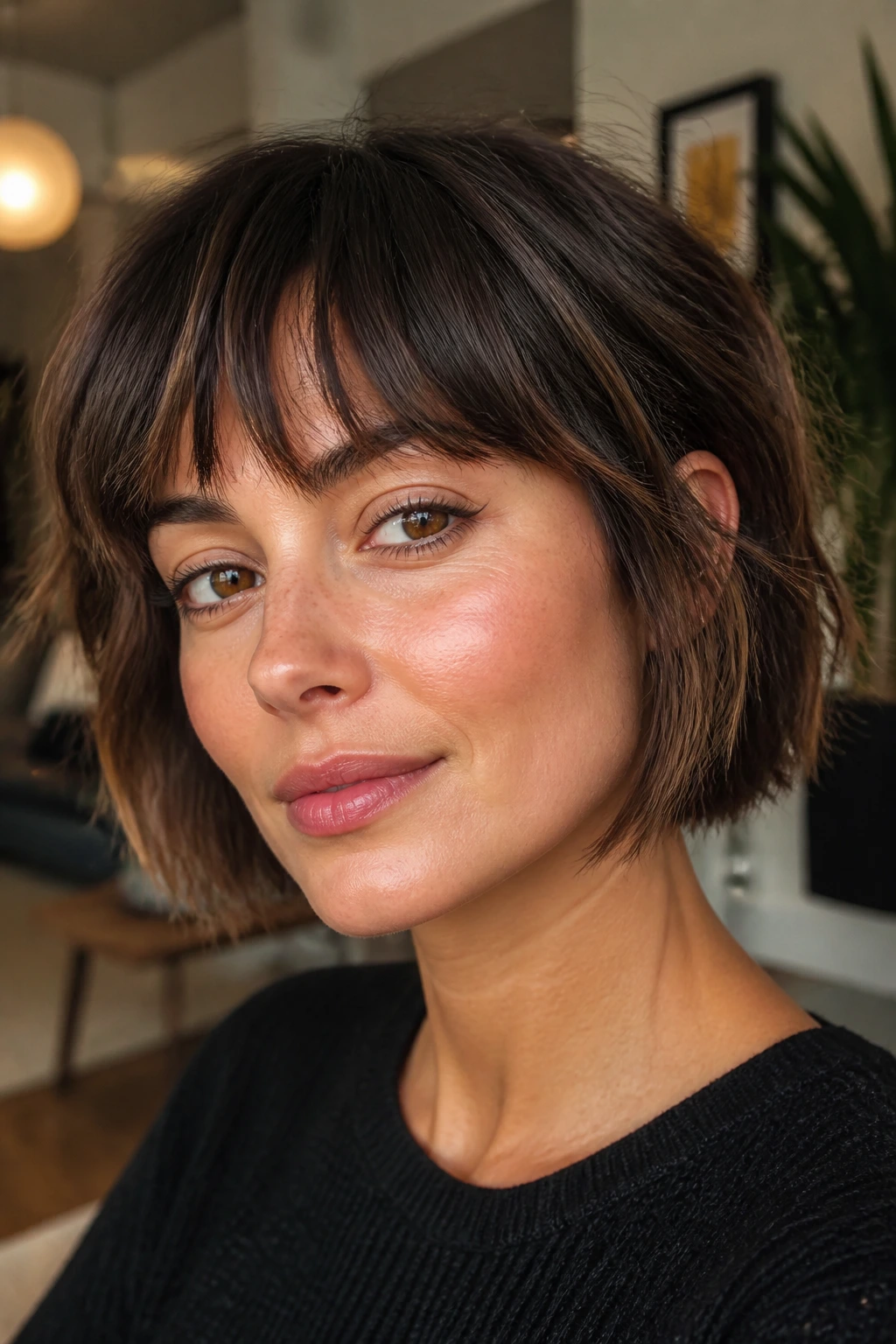
3. Textured French Bob with Fringe
Can a short bob work on a square face? Absolutely. The French bob proves it, as long as the fringe is airy and the texture is a little undone. This is not the place for a rigid, box-cut edge and a heavy forehead curtain.
The cut is short, usually around lip to chin length, and the fringe breaks up the width across the forehead. That matters because a square face already has strong horizontal lines. A light fringe gives the eye something softer to read first, and the textured ends keep the jawline from feeling boxed in.
How to Style It
- Mist damp hair with a light mousse or root lift spray.
- Rough-dry with your fingers until the roots are about 80% dry.
- Bend the ends with a small round brush or flat iron, just enough to avoid a hard flip.
- Shake the fringe loose with your fingers instead of brushing it flat.
The French bob gets its charm from not looking overworked. If the fringe is too full, it can make the face feel shorter. If it’s too wispy, it loses the balancing effect. The sweet spot is somewhere between the two.
4. Asymmetrical Bob
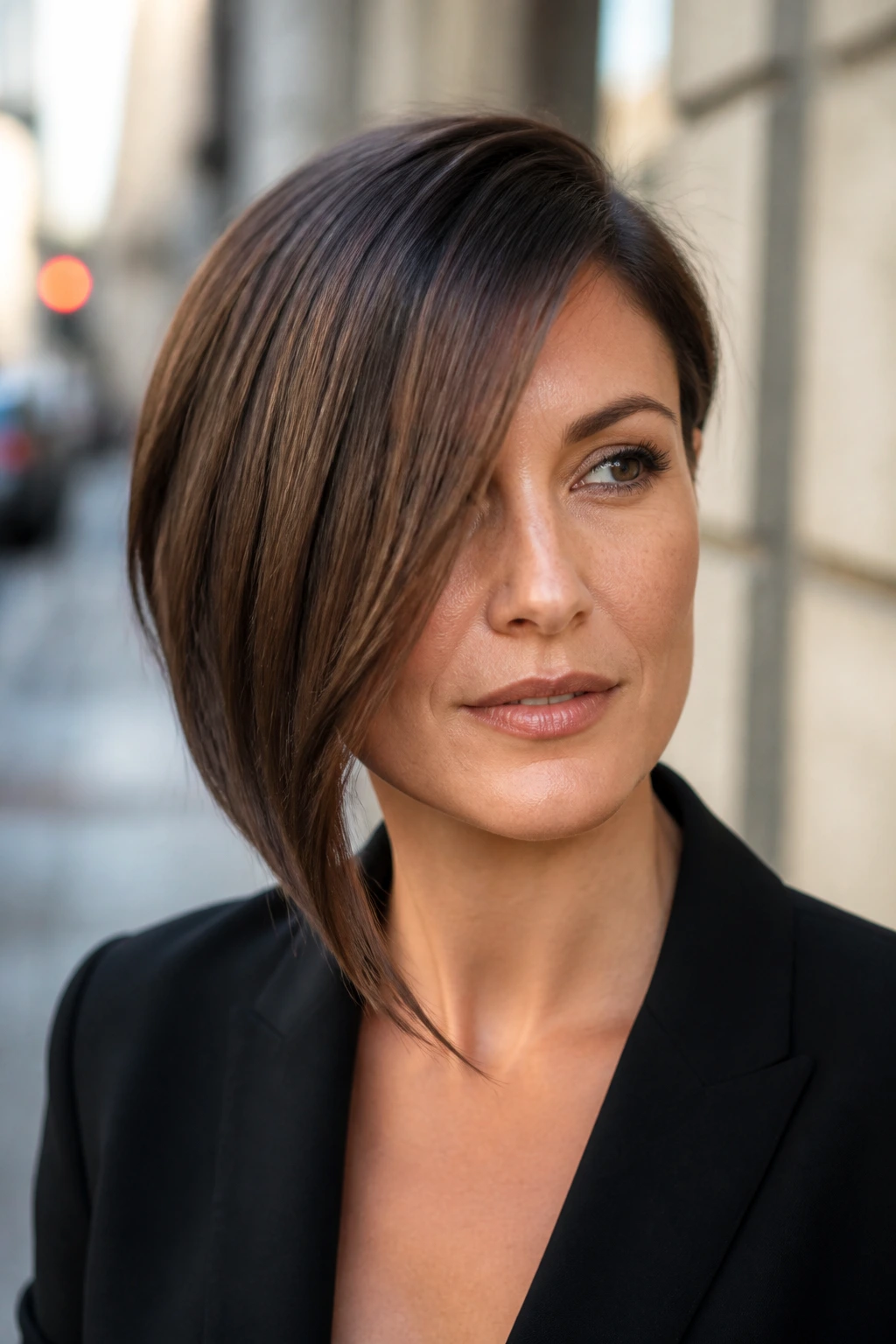
An asymmetrical bob is one of those cuts that looks like a style choice and a face-shape strategy at the same time. One side is a little longer, the other a little shorter, and that off-balance line is exactly why it flatters square faces so well.
The uneven length pulls the eye diagonally across the face. That breaks up the strict symmetry that can make a square jaw stand out more. It also creates a cleaner transition from cheekbone to collarbone, especially if the longer side grazes just past the jaw.
I like this cut when someone wants structure but not softness for softness’s sake. It has edge. It looks deliberate. And it plays well with a blazer, sharp earrings, or a crisp neckline because the haircut itself already has a little attitude.
Key Points
- Keep the difference between sides subtle to moderate unless you want a very fashion-forward look.
- A deep side part usually enhances the angle.
- Works best with straight to slightly wavy hair so the line stays visible.
- Ask for the longer side to hit near the collarbone if you want extra softness.
A very sharp asymmetrical bob on a square face can look a little severe if the ends are too blunt. A gentle bevel at the bottom helps a lot.
5. Wavy Collarbone Bob

This is the cut I recommend to people who want the bob feeling without the box. It sits around the collarbone, which is long enough to soften the jawline and short enough to still read as a bob. Add loose waves, and the whole shape turns friendlier.
The reason this works so well is simple: the movement happens below the widest part of the face. That means the eye follows the wave pattern down and out instead of stopping at the jaw. A square face looks especially good with this length because the ends don’t compete with the jaw; they drift past it.
You can wear it with a middle part, but I think a slightly off-center part is better if your jaw is pronounced. The waves do not need to be polished. In fact, if they’re too uniform, the style starts looking formal in a way that flattens the face.
A shoulder-skimming bob also buys you flexibility. You can clip one side back, curl only the front pieces, or let it dry naturally and still have shape. That’s a useful haircut, not a precious one.
6. Rounded Bob with Face-Framing Layers
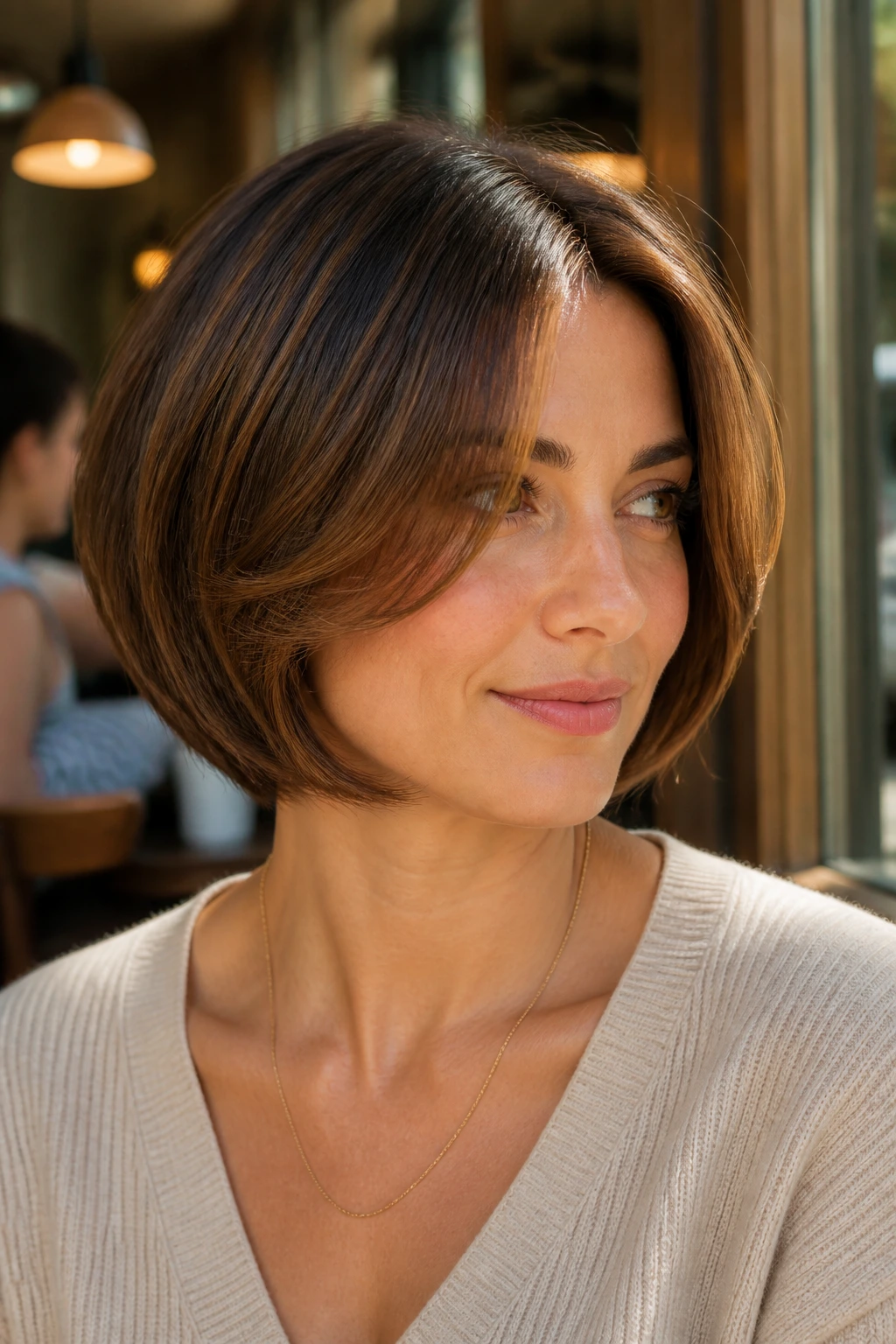
A rounded bob sounds old-school until you see it move. Then it makes sense. The perimeter is curved instead of blunt, and the front layers are cut to softly wrap the face. On a square face, that curved line is the point. It contrasts with the jaw instead of repeating it.
What I like here is the way the cut behaves from the side. The front pieces usually sit a little longer and softer, which means the face doesn’t get that hard shelf effect at the jaw. It’s a smart option if you want something tidy but not severe.
This is also one of the most forgiving shapes for people who don’t love daily styling. A rounded bob can air-dry into a decent silhouette, especially if the hair has a little natural wave. A blowout just polishes the curve.
Best for:
- Square faces that want a softer cheek-to-jaw transition
- Hair that holds a bend well
- Anyone who likes a clean but not blunt finish
The biggest mistake with this cut is over-rounding it at the bottom until it looks helmet-like. Keep some separation in the layers. The curve should feel natural, not traced.
7. Jaw-Deflecting Inverted Bob
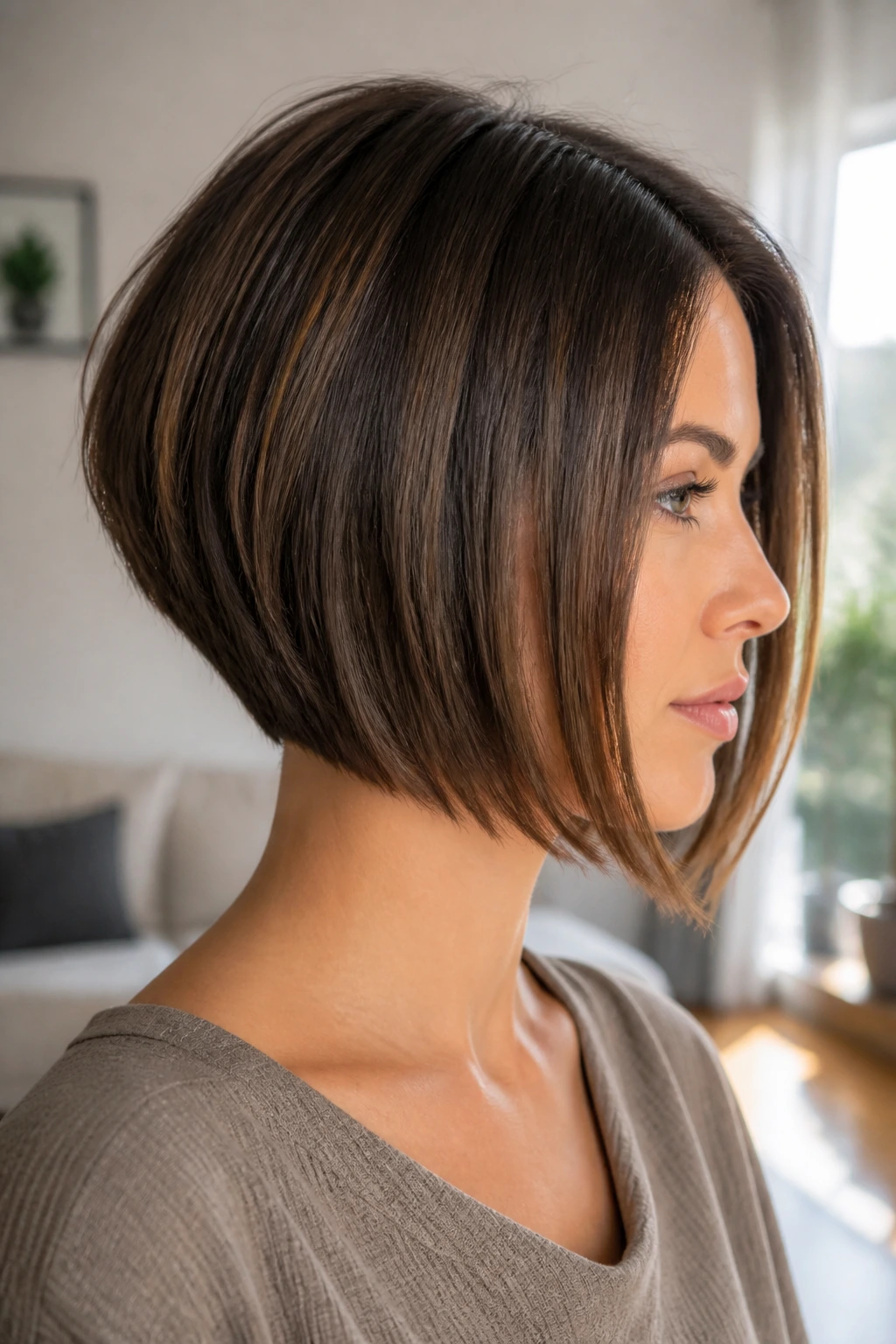
The inverted bob earns its name honestly: it’s shorter in the back and gradually longer toward the front. On a square face, that forward length is useful because it lets the eye travel past the jaw instead of sitting right on it.
This cut can be sleek or softly textured. I prefer the softer version for square faces because an ultra-clean, high-contrast angle can make the jaw look even sharper. A little bevel at the ends, maybe a loose wave through the front, keeps it from turning too architectural.
There’s also a nice side effect here. The stacked back can create lift at the crown, which elongates the face a bit. That vertical emphasis helps balance strong horizontal lines.
If your neck is shorter, ask your stylist not to stack the back too high. You want shape, not a haircut that makes the back look like it was engineered with a ruler and a grudge.
8. Blunt Bob with Curtain Bangs

Can a blunt bob flatter a square face? Yes, but the bangs do the heavy lifting. Curtain bangs split the face in the middle and sweep out toward the cheekbones, which cuts the width visually and softens the forehead-to-jaw line.
The bob itself should stay clean and even. That crisp edge gives the cut polish. But the curtain fringe keeps it from feeling too boxy. The contrast is what makes it work. Straight line below, airy movement above.
This is one of my favorite options for someone who likes a neat finish and doesn’t want a lot of texture in the cut itself. The fringe adds enough softness that the perimeter can stay sharp. That’s useful if you wear glasses, too. Curtain bangs usually sit nicely around frames instead of crashing into them.
How to wear it
- Blow-dry the bangs with a small round brush so they bend away from the center.
- Keep the center of the fringe lighter than the sides.
- Tuck the ends under slightly for a clean shape.
- Use a light serum on the perimeter, not the fringe, or the bangs will split.
This cut goes wrong when the bangs are cut too short. Short fringe on a square face can emphasize the breadth of the forehead. Longer, cheekbone-grazing curtain bangs are the safer and better-looking choice.
9. Layered Shaggy Bob
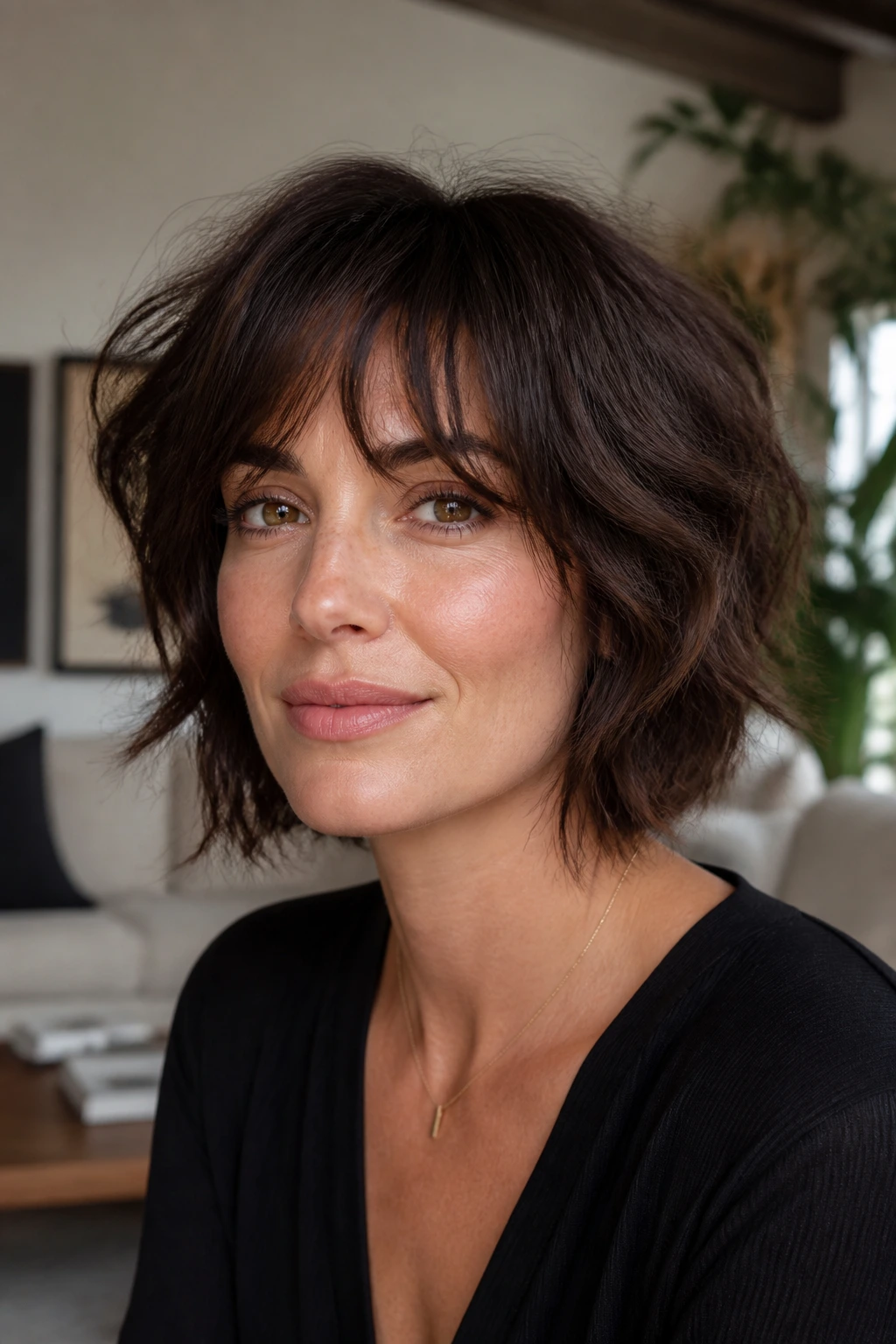
The shaggy bob is for people who want movement first and neatness second. It’s choppy, soft, and a little lived-in, which is exactly why it can be so flattering on square faces. The rougher edges keep the jaw from becoming the strongest line in the haircut.
A square face can handle this kind of texture better than most because the face already has built-in structure. The shaggy bob just loosens that structure a bit. It’s one of the few styles that looks better when it is not too perfect. The irregular ends and scattered layers make the whole shape feel lighter.
This works especially well on hair that has a bend or wave of its own. If your hair is pin-straight, you’ll need a little spray or a quick pass with a curling wand to get the separation. Not much. Just enough to stop the ends from clumping together.
- Ask for razor-soft ends if your stylist works that way.
- Keep the layers around the cheeks and mouth rather than only at the crown.
- Use a dry texture spray at the ends, not just the roots.
The shaggy bob is a little less polished than the others here. That’s the point.
10. Sleek Angled Bob with a Deep Side Part
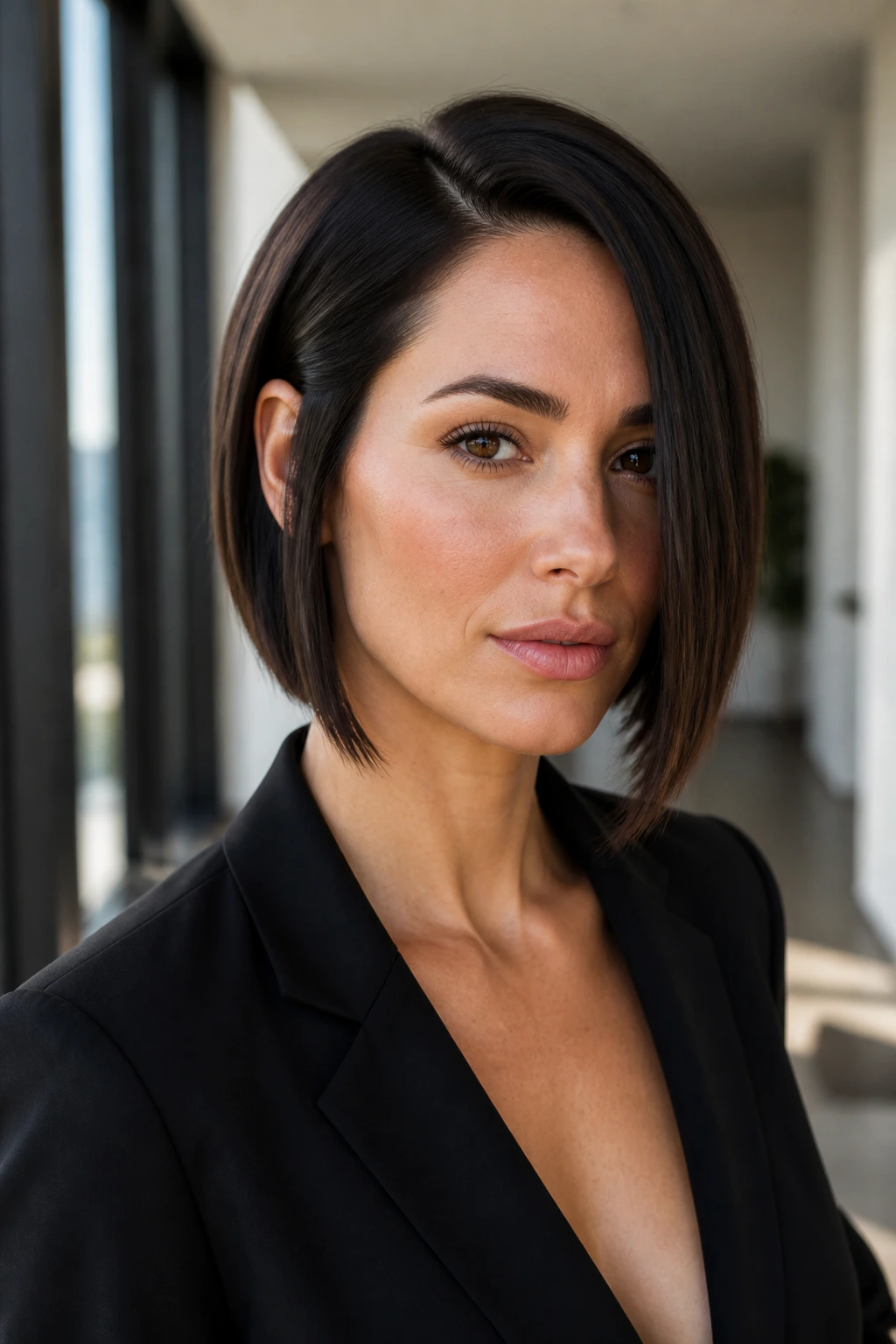
A sleek angled bob can be a knockout on a square face if the angle is long enough and the part is deep enough. It’s crisp, modern, and slightly dramatic, but it still gives the jaw some breathing room because the front pieces slide forward rather than stopping right at the widest point.
This cut needs discipline. The ends should be straight, but not stiff. The angle should be visible, but not severe. And the deep side part matters more than people expect because it creates lift at the roots and shifts the weight off the center of the face.
I like this for anyone who wears sharp clothes, structured jewelry, or a clean makeup look. The haircut adds line and intent. But if you’re going to do sleek, the blow-dry has to be good. Flat roots with no bend at the ends can make the whole thing look a little harsh.
If your hair is thick, keep the internal bulk under control or the angle will puff out. If it’s fine, preserve density at the bottom so the line doesn’t disappear by noon.
11. Micro Bob with Tapered Ends
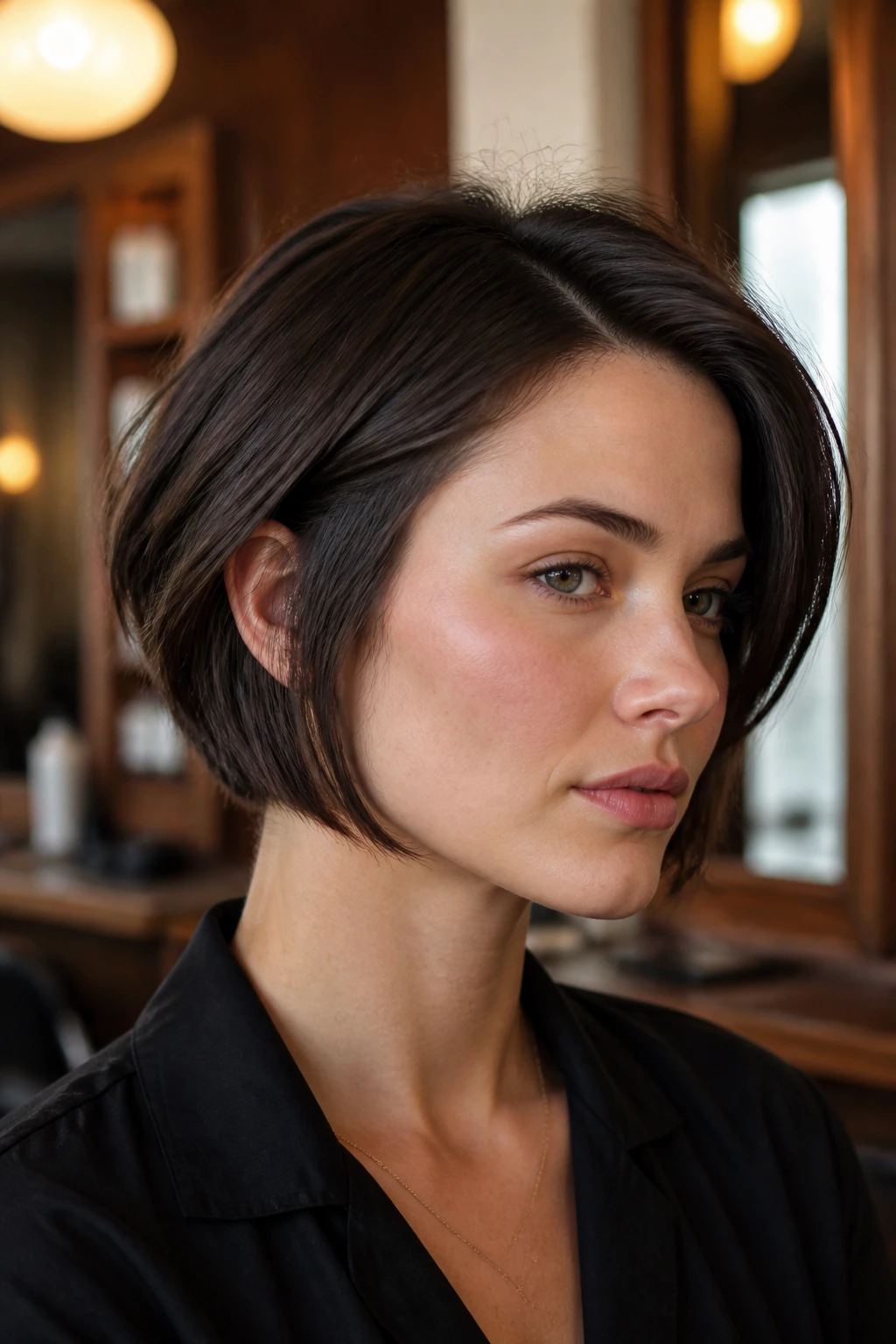
Short hair on a square face can be gorgeous, but it has to be handled with care. A micro bob cuts close to the jaw and neck, so the tapered ends become the difference between chic and boxy. The taper softens the outline and keeps the haircut from feeling like a block.
This one is bold. No pretending otherwise. It shows off the jaw, which means it works best when the shape is slightly feathered and the top has some lift. A tiny bit of height at the crown changes everything. So does a side part. So does a little texture through the front pieces.
What makes it work
- The nape should be clean but not shaved tight.
- The ends should be slightly beveled, not chopped blunt.
- A side part adds asymmetry, which is your friend here.
- Best for people who like a short, crisp silhouette.
I would not call this the easiest bob for a square face, but it can be one of the most stylish. It asks for confidence and a good stylist. If the cut is off by even a quarter inch in the wrong place, it can look too strict. If it’s right, it looks expensive in that quiet, clean way that short cuts sometimes do.
12. Bob with Bottleneck Bangs
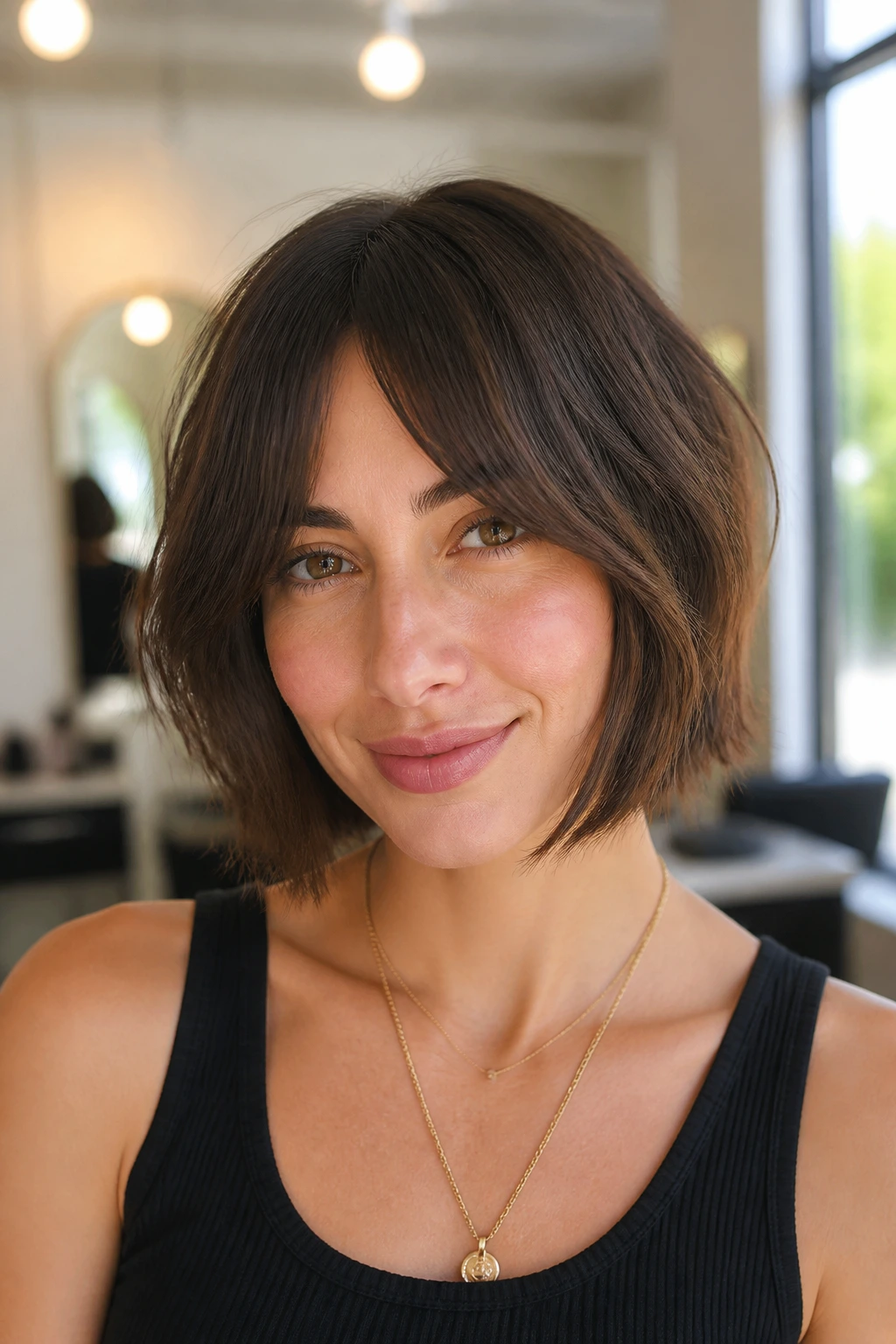
Bottleneck bangs are one of the smartest fringe choices for square faces because they start narrow in the center, then widen softly as they move outward. That shape mimics what you want a bob to do: create softness without losing structure.
The bob underneath can stay fairly simple. The bangs are what shift the mood. They break up the forehead, frame the eyes, and gently redirect attention away from the jawline. A square face with bottleneck bangs gets a little vertical lift in the middle and a little curve at the sides. That combination matters.
This cut looks especially good when the fringe is cut long enough to brush the eyelashes at the center and taper into the cheekbones. Too short, and the effect gets choppy. Too dense, and it can shut the face down.
A few styles that work well with bottleneck bangs:
- soft blowouts
- loose waves
- tucked-behind-the-ear styling
- a slightly curved bob perimeter
The nice thing about this cut is that it gives you bangs without the heavy feeling of a full straight fringe. That’s often the sweet spot for a square face.
13. Air-Dried Curved Bob

Some haircuts are made for blow dryers. This isn’t one of them. The air-dried curved bob relies on a good cut that falls into shape with very little fuss. On a square face, that curve matters because it keeps the ends from hanging in a straight line across the jaw.
The trick is in the internal structure. Your stylist needs to build enough shape that the hair bends inward slightly as it dries. If the cut is too blunt, air drying can make the ends flare out in a way that widens the lower face. That’s not the effect we want.
This is a practical cut for people who do not want a twenty-minute styling routine every morning. Scrunch in a light cream, part it off center, and let it settle. If the front pieces are a little longer than the back, even better. They’ll frame the face while the rest of the bob keeps things tidy.
How to make it behave
- Apply product on damp hair, not soaking wet hair.
- Twist the front sections once or twice before they dry.
- Don’t keep touching it while it sets.
- Use a diffuser only if your natural wave needs a little support.
It’s a quiet haircut. Not boring. Quiet. There’s a difference.
14. Piecey Lob with Hidden Layers
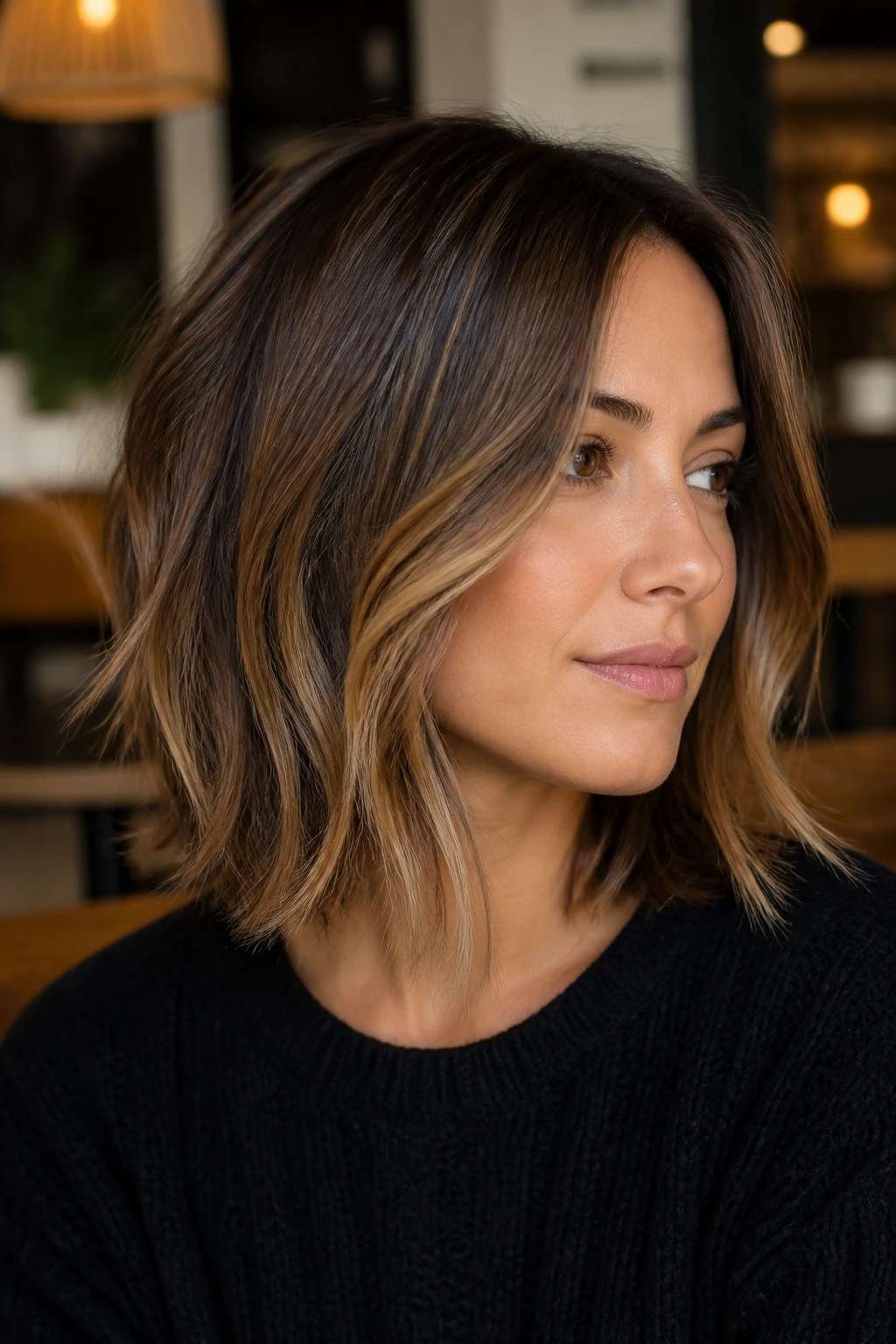
If you want the bob family but need more softness, the piecey lob is a strong answer. Hidden layers keep the shape from getting heavy, while the piecey finish gives the face movement around the cheeks and jaw.
This cut is especially useful if your hair is thick. Without those hidden layers, a longer bob can turn into a dense wall at the bottom, and square faces rarely benefit from more wall. The hidden layering removes weight from inside the shape so the ends can move instead of hanging stiff.
I like the piecey finish because it gives the cut a little break in the line. The eye doesn’t read one solid block. It reads separation, texture, and motion. That’s all good news for a square face.
Key details
- Keep the length between the shoulder and collarbone.
- Ask for layers that are inside the cut, not obvious from the surface.
- Finish with a light hold spray or texture cream.
- Works best when the front pieces are slightly longer than the back.
This is one of the more forgiving bob haircuts for square faces because it works across a lot of textures. Straight hair gets a clean shape. Wavy hair gets movement. Thick hair gets control.
15. Curly Bob with Face-Framing Layers
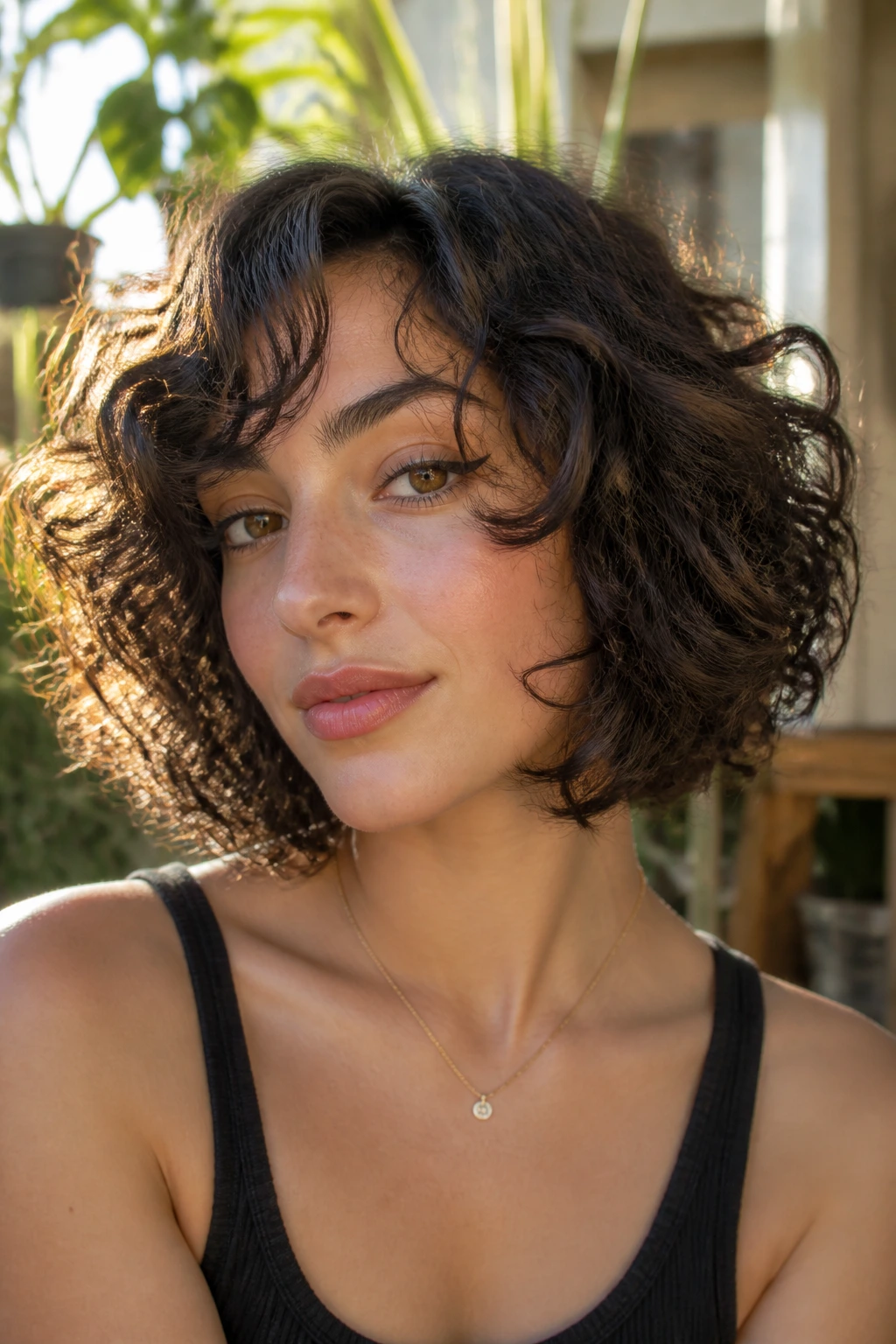
Curly hair changes the rules a bit, and thank goodness for that. A curly bob with face-framing layers can be one of the best choices for a square face because the curl pattern naturally softens the angles. The layers let the curls fall where they should instead of bulking up at the jaw.
The key is shape control. You want the curls to sit around the face in a way that opens the cheekbones and lightly skims the jaw, not one giant triangle at the bottom. That means the layers need to be cut with the curl pattern in mind, not against it. Dry-cutting or curl-by-curl shaping can help, depending on the stylist’s method.
A square face with curls gets a lovely advantage: the texture breaks up all the hard lines for you. A side part can still help, especially if the curls are dense. But the main work is done by the shape itself. Good curly bob, good balance. No gimmicks.
Best for: people who want softness without fighting their natural texture.
Avoid: cutting the curls too blunt at one length, which can create a heavy edge right at the jaw.
Small Adjustments That Change the Whole Shape
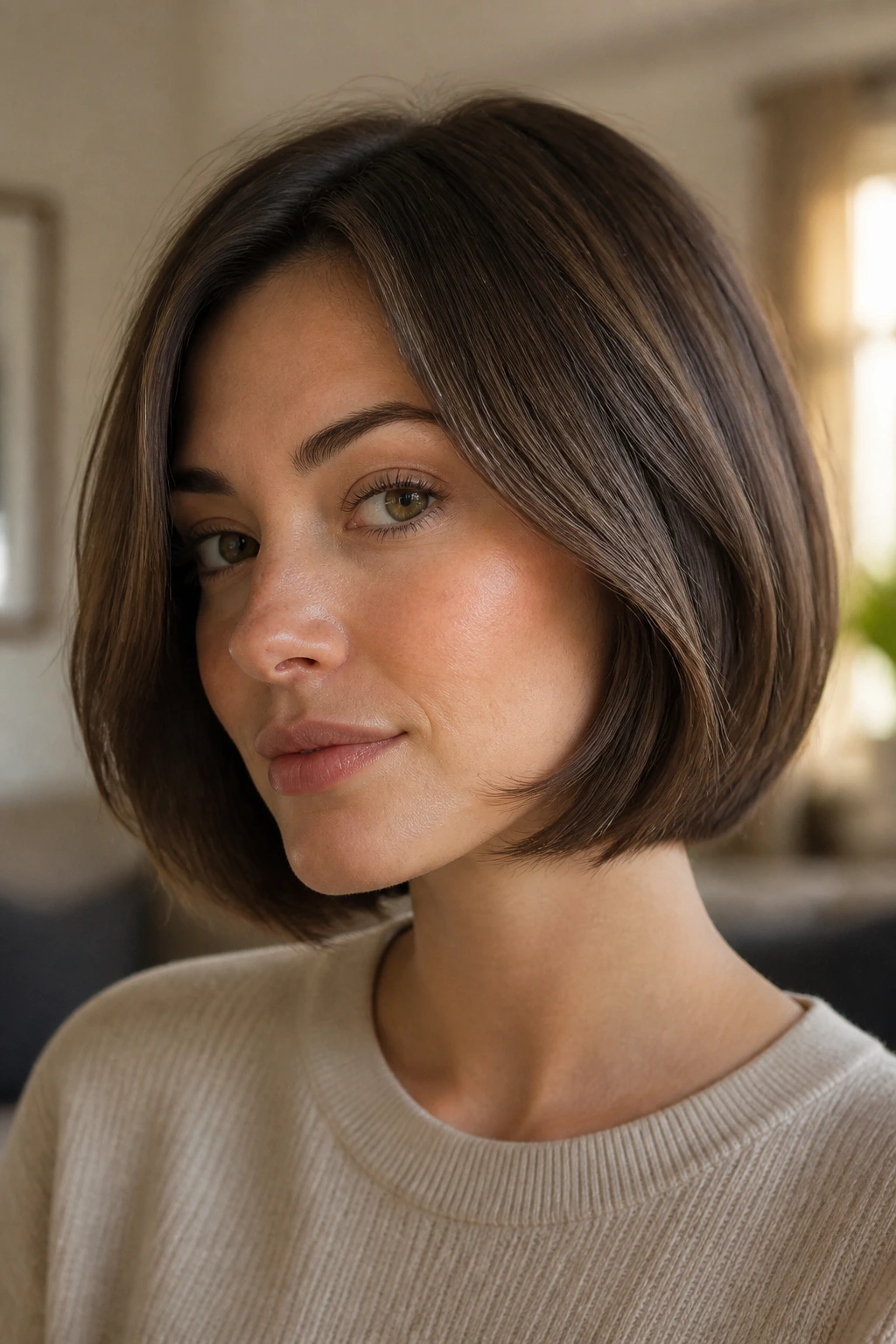
A bob haircut lives or dies on the tiny stuff. The length is obvious. The part matters too. But the little adjustments—the ones you barely notice at first glance—are what decide whether a square face looks softened or squared off even more.
Shape Control: Ask for movement where the hair meets the jaw. If the cut lands exactly on the jawline, make sure there’s either a bend, a bevel, or a layer there. Flat ends at the jaw are a risky choice on this face shape.
Texture Control: If your hair is straight and tends to lie close to the head, a touch of wave or inward curve can keep the silhouette from becoming too severe. If your hair is wavy or curly, do not overfight it. Working with the texture usually makes the face look softer.
Fringe Control: Short, heavy bangs are the fastest way to make a square face feel boxier. Longer bangs, side-swept fringe, curtain pieces, or bottleneck bangs usually give you more shape around the forehead and cheekbones.
Color Placement: A few subtle face-framing highlights can help, especially around the front pieces and ends. I’m not talking about chunky streaks. Just a little brightness where the eye should travel.
Morning Shortcut: A quick bend at the front with a round brush or flat iron often matters more than redoing the whole head. Two minutes spent on the front pieces can change the whole read of the cut.
Common Mistakes That Make a Bob Look Too Boxy
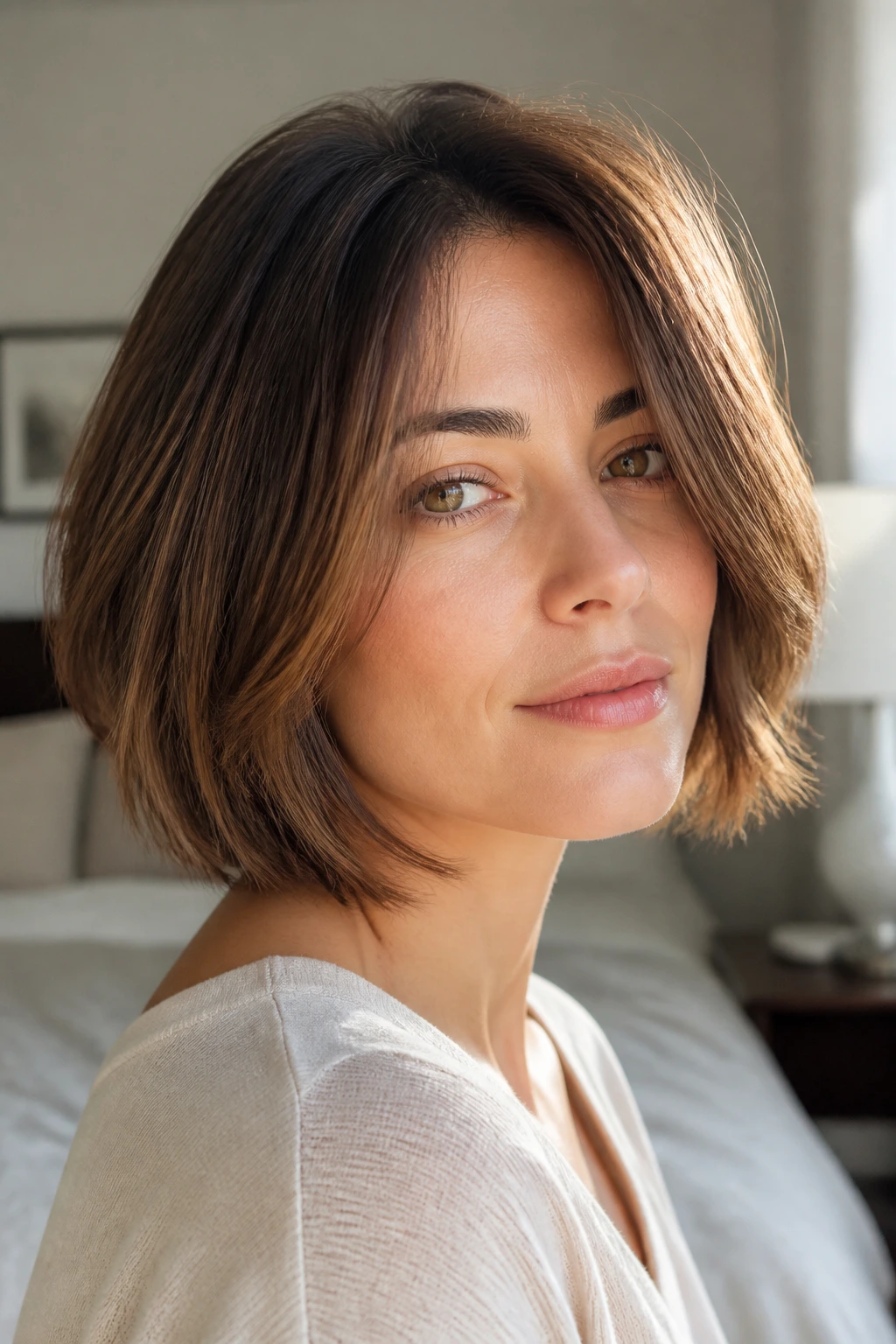
The first mistake is a blunt jaw-length cut with no relief at all. On a square face, that creates a straight line right where the face is already strongest. The fix is simple: move the perimeter slightly below the jaw, or add texture, fringe, or a side part to interrupt the line.
Another one is over-stacking volume at the sides. Some people ask for fullness and end up with width at the cheekbones. That can make the face look broader. Lift at the crown is useful. Width at the widest part of the face is not.
Bad bangs, wrong shape. Heavy straight fringe can flatten the face and make the jaw seem wider by comparison. If you want bangs, keep them airy, parted, or tapered at the sides.
People also ignore their texture. A cut that looks soft on straight hair can puff out on thick wavy hair, and a cut that looks crisp on coarse hair can disappear on fine hair. The shape has to be adjusted to the hair you actually have, not the hair you wish you had.
Finally, don’t let the ends get too heavy during grow-out. Once a bob loses its internal shape, it starts to sit like a block. That’s the point where a trim or a reshape becomes necessary, not optional.
Five Ways to Shift the Mood of the Cut
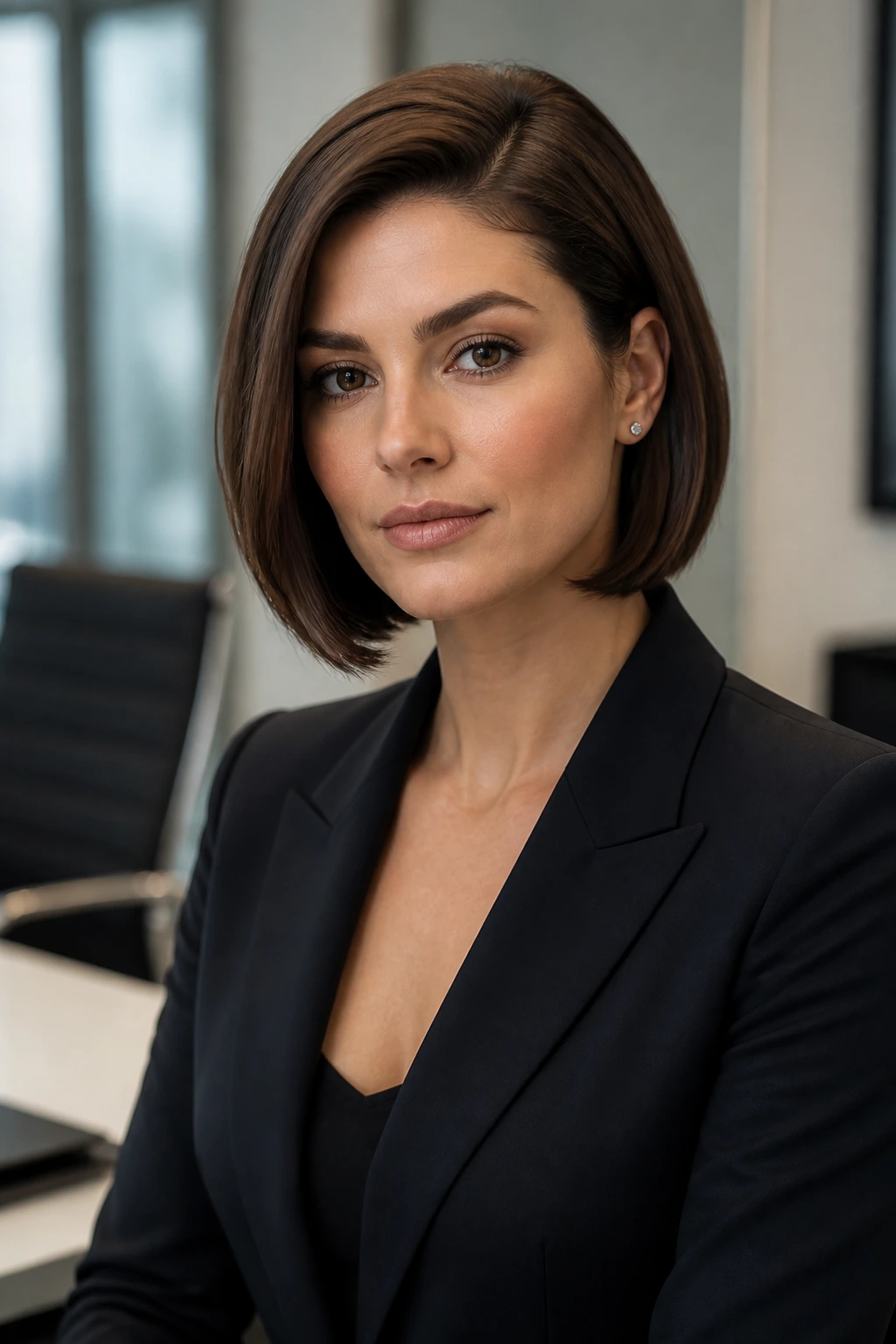
The Office Sleek Version: Keep the perimeter clean, use a deep side part, and flatten the roots just enough to show the line. This works best if you like sharp collars, blazers, and polished makeup.
The Lazy-Morning Air-Dry Version: Choose a bob with curved ends or hidden layers and let texture do the work. A small amount of cream or mousse is enough. The point is shape without a long styling session.
The Soft Fringe Version: Curtain bangs, bottleneck bangs, or a light cheekbone-skimming fringe change the whole mood of the bob. The forehead gets softer, and the jaw stops feeling like the headline.
The Short, Bold Version: Micro bobs and French bobs live here. They’re better for people who want clean lines and do not mind a more defined neckline.
The Romantic Wave Version: Keep the lob length and add loose bends through the mid-lengths. It’s probably the easiest route if you want softness around a square face without cutting a lot of fringe.
The Tools That Make a Bob Behave
-
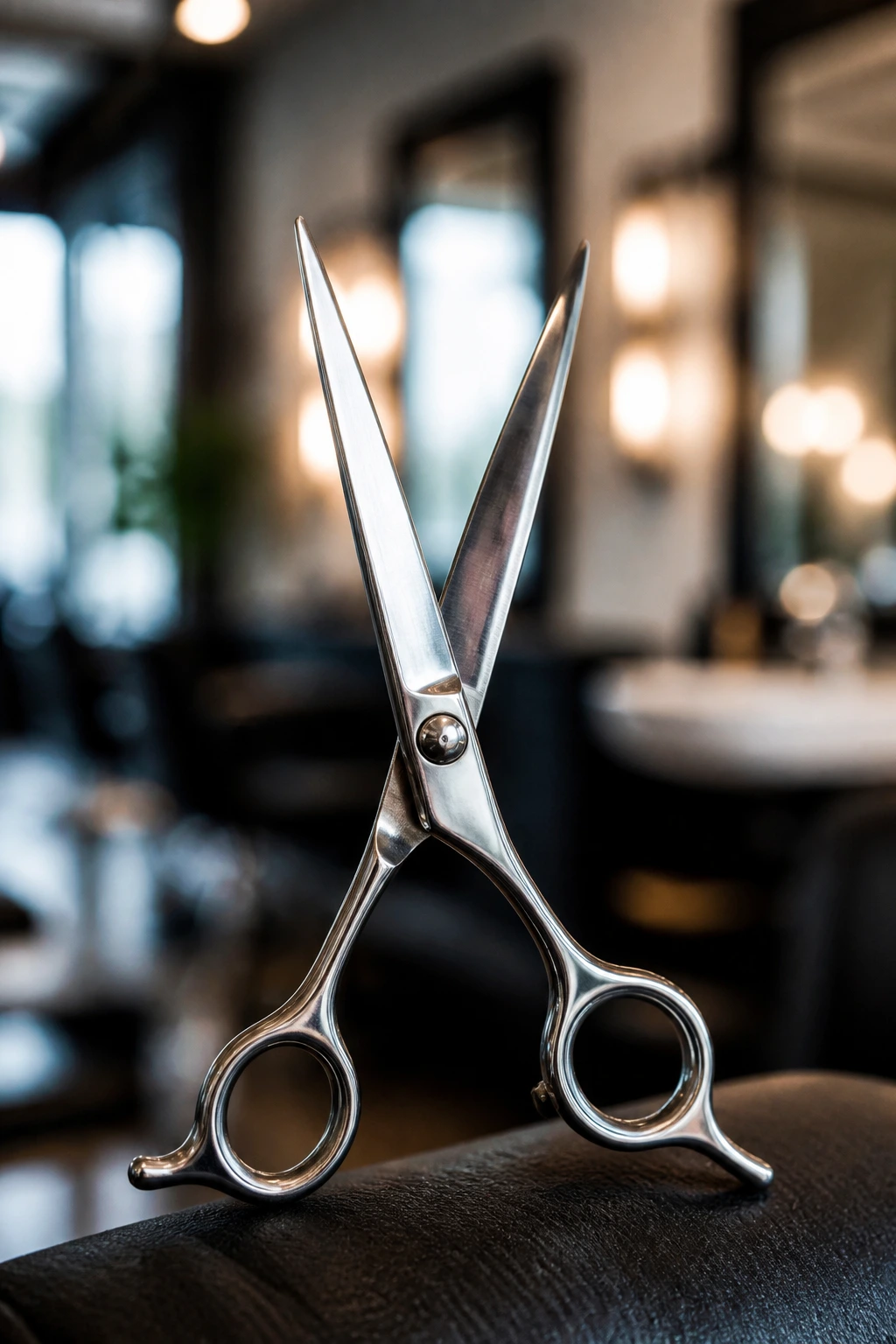
Salon shears: Better than kitchen scissors by a mile. A precise bob needs a precise cut.
-
Round brush, medium size: Best for creating bend at the ends and lift at the roots without turning the bob into a bubble.
-
Blow dryer with nozzle: Directs airflow so the cut stays smooth instead of puffing out.
-
Flat iron or small curling iron: Useful for polishing the front pieces, especially on angled or blunt cuts.
-
Texture spray: Helps piece out shaggy, French, or wavy bobs without weighing the hair down.
-
Light mousse or root lift spray: Good for fine hair that needs support at the crown.
-
Wide-tooth comb: Gentler on wet curls and better than yanking a brush through hair that’s still damp.
-
Reference photos: Honestly, one of the most useful tools. Bring images that show the length and the texture, not just the color.
How to Keep the Shape Between Salon Visits

A bob looks fresh for a shorter stretch than a long layered cut. That’s the tradeoff. Most square-face-friendly bobs need a trim every 6 to 8 weeks if you want the outline to stay clean. If you’re wearing a softer lob with more movement, you can often push it a little longer, but once the ends lose their shape, the cut starts reading heavier.
For daily maintenance, the main job is keeping the front pieces honest. They frame the face, so they’re the first part to look tired. A quick pass with a brush or flat iron at the front can reset the whole shape in under five minutes. The back usually needs less intervention than people think.
If you air-dry, don’t pile hair behind your ears while it’s still wet. That creates weird bends right where you don’t want them. And if you use texture spray, apply it mostly from the mid-lengths down. Too much near the roots can make a bob explode sideways.
Curly bobs need a different rhythm. Refresh the shape with water, a small amount of leave-in, and finger-coiling around the front pieces if they separate too much. The haircut should keep its outline for a few days at a time, but curls always need a little diplomacy.
FAQs About Bob Haircuts for Square Faces
What bob length is most flattering for a square face?
Usually chin-length, slightly below the chin, or collarbone length works best because those lengths soften the jawline instead of stopping right on it. A cut that ends exactly at the jaw can work, but it needs movement, a side part, or fringe to keep it from looking boxy.
Are blunt bobs bad for square faces?
Not bad. Tricky. A blunt bob can look polished on a square face if the rest of the cut adds softness somewhere else, usually with curtain bangs, a deep side part, or a slight bevel at the ends. Without that, the shape can feel too square.
Do curtain bangs help a square face?
Yes, usually they do. Curtain bangs break up the forehead width and send the eye diagonally toward the cheekbones, which softens the whole face. Long curtain bangs are better than short, dense ones.
Is a bob better than a lob for square faces?
A lob is easier to wear for most people because the extra length gives more room for the jawline to breathe. A bob can look sharper and more stylish, though, if it’s cut with the right curve or texture. The better choice depends on how much maintenance you want.
What if my hair is thick and puffy?
Ask for internal layering, not lots of chopped pieces at the perimeter. The goal is to remove bulk from inside the cut so the outer line stays clean but doesn’t balloon out. A square face usually looks better with controlled movement than with width at the sides.
Can curly hair wear bob haircuts for square faces?
Absolutely. Curly bobs can be some of the best options because the texture softens the jaw naturally. The key is shaping the curls so they frame the face instead of building a triangle at the bottom.
How do I ask my stylist for the right bob?
Bring photos, then say where you want the ends to sit in relation to your jaw and collarbone. Tell them whether you want softness, angle, or a blunt finish, and mention that your face is square so the front pieces need to soften the jawline. That one sentence saves a lot of confusion.
How often should I trim a bob?
Every 6 to 8 weeks is a safe rhythm for keeping the shape crisp. If you like a softer grow-out, you can stretch that a bit, but a bob tends to lose its clean line faster than longer hair.
The Shape That Makes the Difference
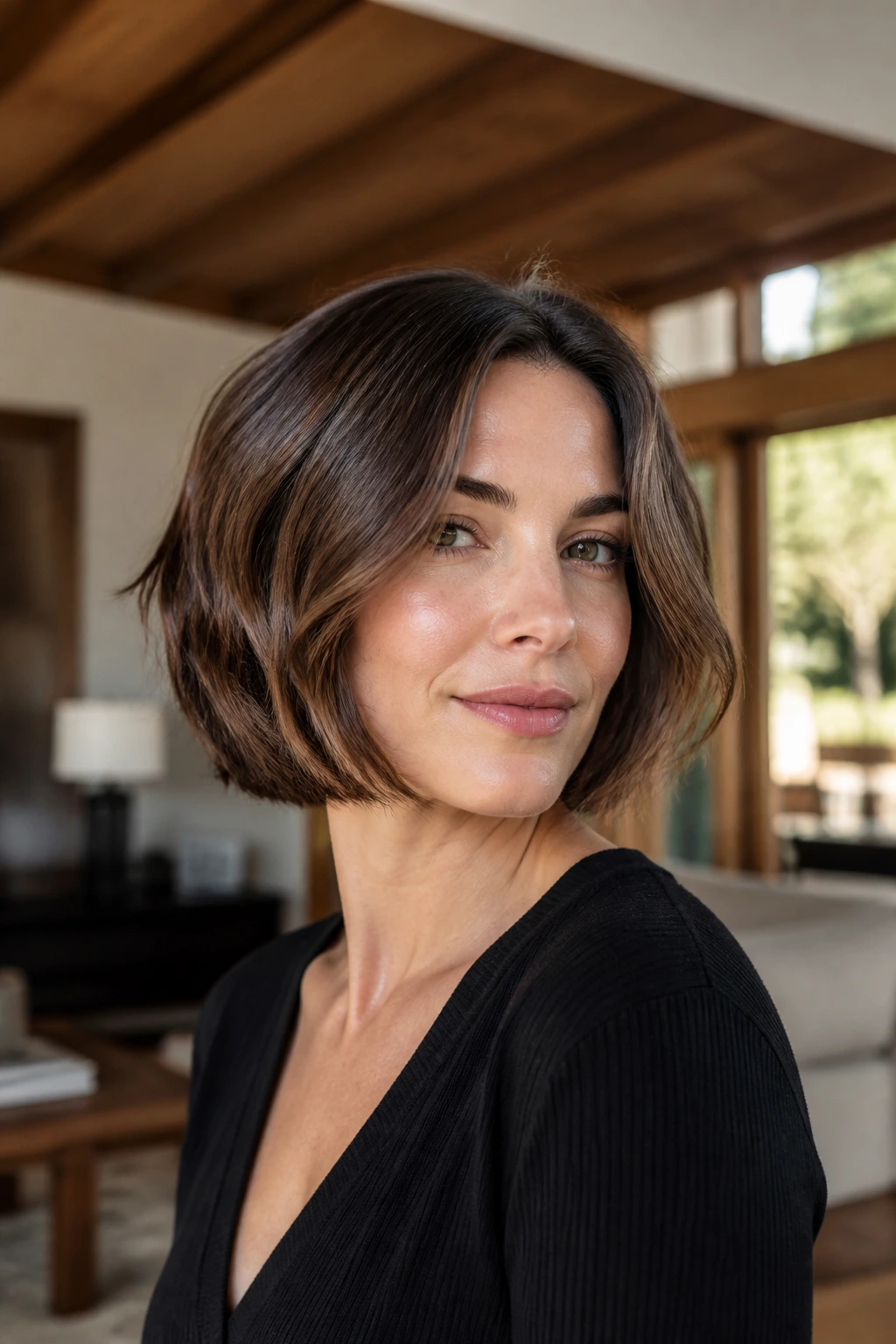
A square face doesn’t need to be hidden, and it definitely doesn’t need to be “fixed.” It needs a haircut that respects the structure while loosening the edges a little. That’s the whole trick with bob haircuts for square faces: the best ones keep the strong bone structure, then add enough curve, movement, or angle that the jawline never feels like it’s standing alone.
If you walk into a salon with a clear sense of where you want the length to land, how much softness you want around the face, and whether you’d rather style with a brush or your fingers, you’re already ahead of the game. The right bob is less about following a trend and more about getting the geometry right. Once that clicks, the rest is just maintenance and a good mirror.
