



The right bob haircuts for women over 60 do something a little sneaky: they put the focus back where it belongs — on the face, the neck, the cheekbones, the jaw. A good bob doesn’t scream “short hair.” It sharpens the outline, gives silver strands a cleaner edge, and makes thinning at the crown look like a shape choice instead of a problem.
That’s why this cut keeps hanging around. It can be crisp or soft, blunt or feathered, chin-grazing or collarbone-skimming, and all of those lengths tell a different story. One version makes fine hair look denser. Another takes weight out of thick hair so it doesn’t sit like a helmet. Another works with curls that want to spring up the second they dry.
And there’s a practical side people don’t talk about enough. A bob is one of the few haircuts that can look deliberate on air-dried hair, brushed-out hair, second-day hair, and the kind of hair that has decided to go a little wiry at the temple. That’s not magic. It’s shape. Clean shape. The good kind.
Why These Bob Cuts Earn a Place on the Short List
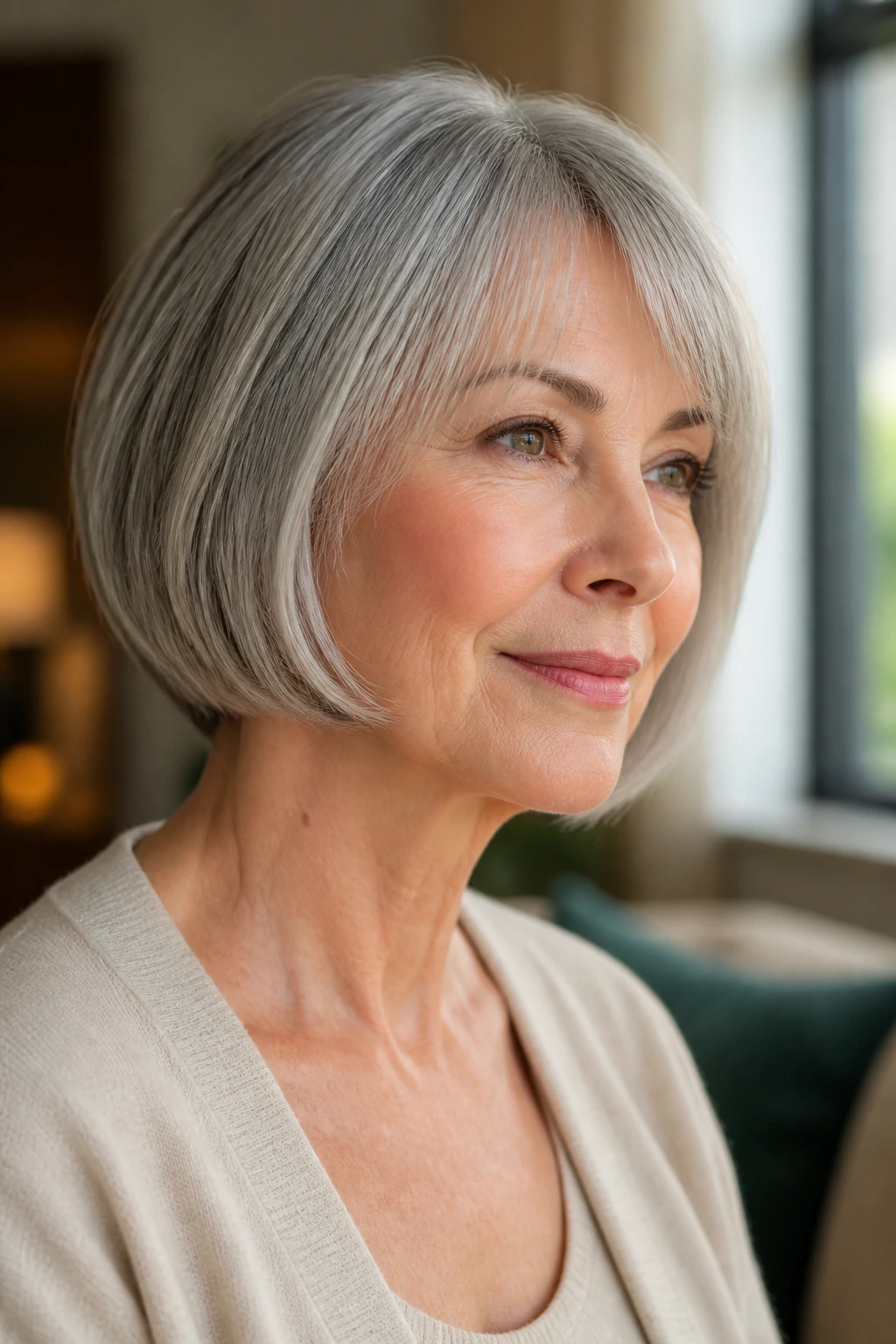
- They give the jawline structure: A bob that lands at the chin or just below it draws a clean line where the face needs one, especially if hair has started to lose a little density.
- They make gray hair look intentional: Blunt ends and tidy layering keep silver, white, and salt-and-pepper strands from looking frayed at the edges.
- They work with real routines: Most of these cuts can be dried with a round brush in 10 to 15 minutes or left to air-dry with a little mousse and patience.
- They can be tuned to glasses, curls, and cowlicks: The length, fringe, and layering can be adjusted so the haircut works with your face instead of fighting it.
- They grow out better than people expect: A good bob doesn’t fall apart in a week; it usually just softens, which is exactly what you want between trims.
- They keep the neck lighter: That matters more than people think. A little air around the neckline changes the whole feel of the cut.
What a Good Bob Does for Hair That Has Changed Over Time
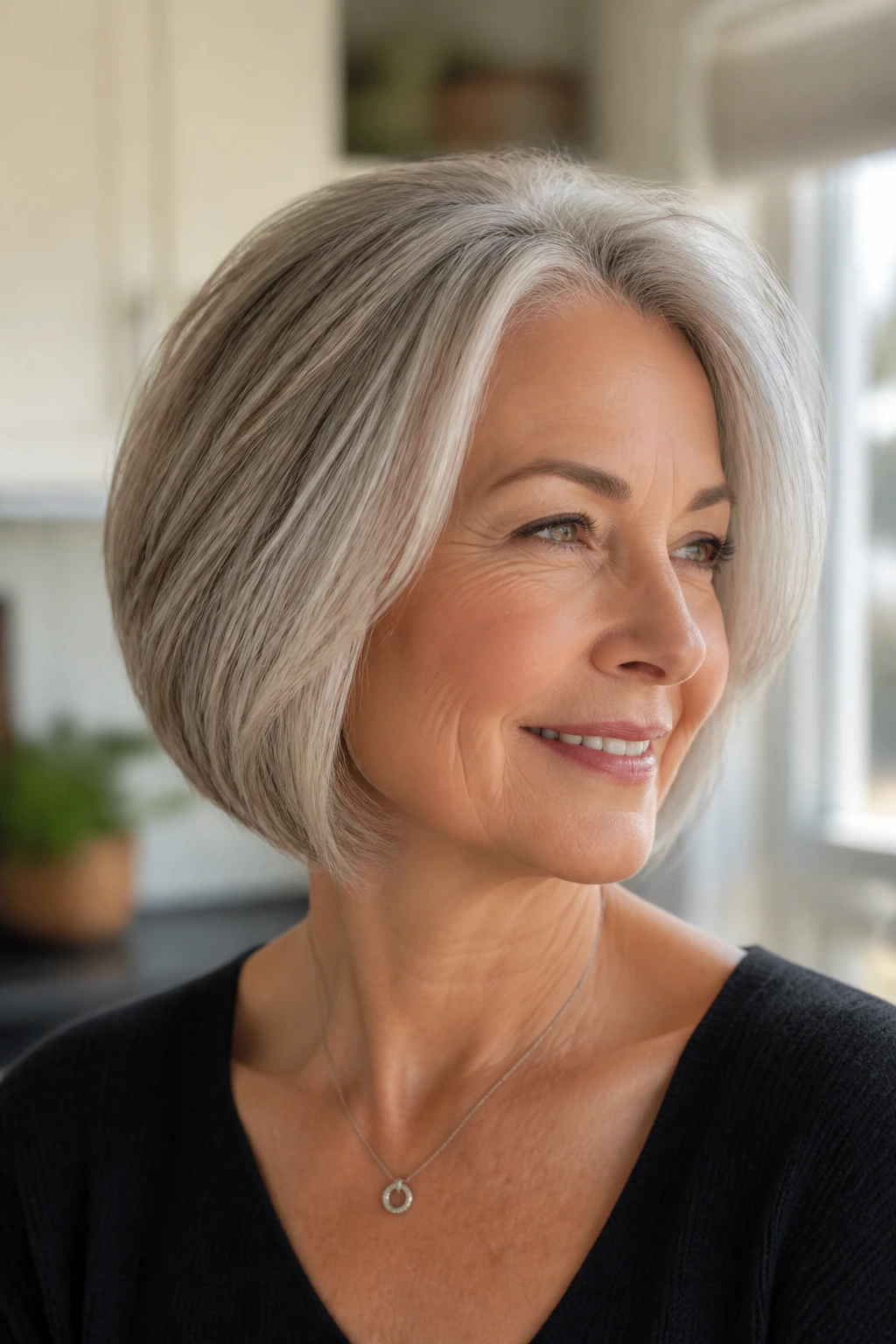
Hair after 60 often behaves differently than it did in your 30s or 40s. It may grow a bit finer at the crown, expand at the ends, or pick up a rougher texture as pigment shifts. None of that means you need to hide it. It means the haircut has to do more of the work.
A strong bob builds shape where the hair naturally wants to collapse. The perimeter matters. The line at the nape matters. Even the way the front pieces land near the cheekbone matters. A bob that’s too long can drag the face down; one that’s too short can look severe if the edges aren’t softened or balanced with fringe. The sweet spot is usually somewhere just above the shoulders through the chin, but the right length depends on density, not birthday candles.
Silver and white hair deserve special mention here. Coarse gray strands can stick out at the wrong angle if the cut is over-layered, while a blunt edge can make them gleam in a way that looks polished rather than flat. That’s why so many of the best bob haircuts for women over 60 lean on clean lines with a few carefully placed soft pieces instead of heavy chopping.
How to Choose the Right Bob for Your Face Shape and Hair Texture
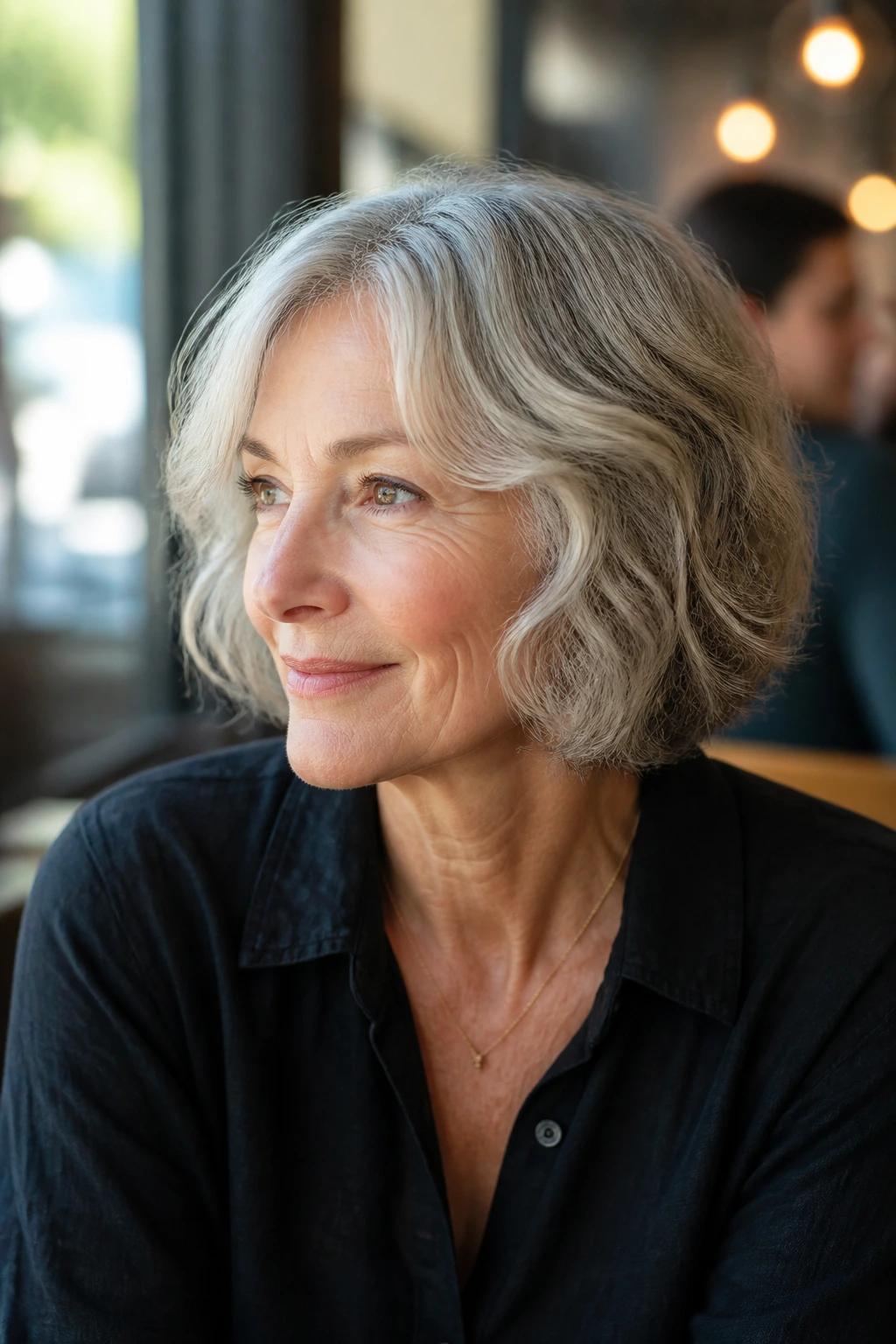
Fine hair wants perimeter. If your hair lies flat the minute you step outside the salon, ask for a blunt edge or subtle graduation. Too many internal layers can remove the very weight that helps a bob sit neatly.
Thick hair wants removal, not shredding. You want internal debulking and shape control, not razor holes everywhere. Thick hair can take a stronger outline, but it needs the bulk managed at the sides and back so it doesn’t balloon out at ear level.
Wavy and curly hair want room to spring. A curly bob should usually be cut a touch longer than you think, because shrinkage is real. I’d rather see a curl bob come up to chin length after it dries than end up at the ears because the haircut was planned on wet hair and optimism.
Round faces like a little length in front. That doesn’t mean long hair. It means front pieces that skim the jaw or brush the cheekbones, which helps the face look a bit longer.
Square faces often look softer with movement near the temples. Side-swept fringe, curtain bangs, or a side part can break up a strong jaw without hiding it.
Heart-shaped faces usually benefit from width near the jaw. A chin-length bob or rounded bob can balance a narrower chin better than a super-short crop.
How to Talk to Your Stylist Without Getting the Wrong Bob
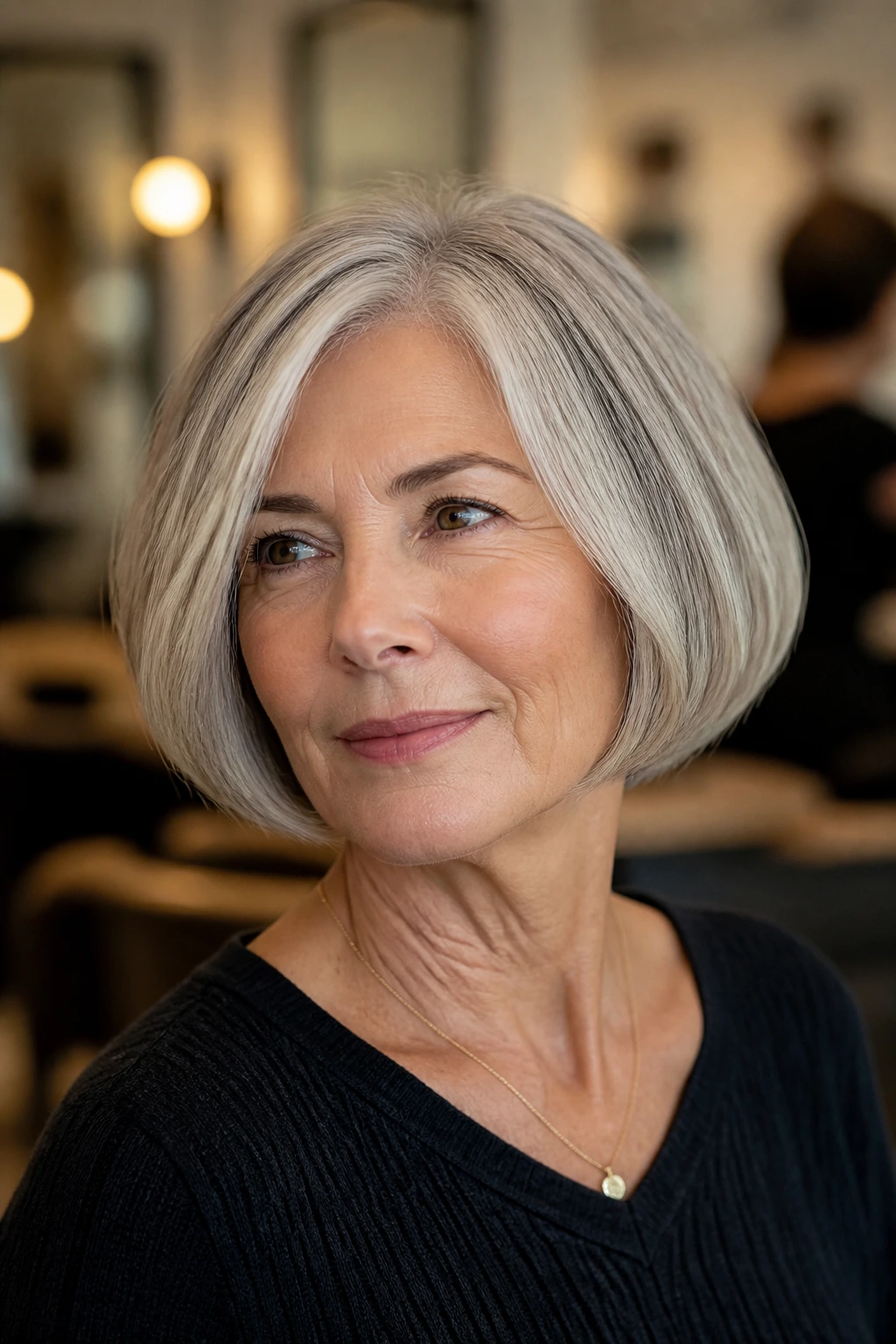
Bring photos, yes, but bring the right kind. Show images of cuts with the same hair density and similar face shape, not just a pretty picture from a totally different texture. A sleek blunt bob on thick, wavy hair is a different animal than that same bob on fine straight hair.
Say how you wear your hair on a normal Tuesday. If you tuck it behind your ears, mention that. If you wear glasses, say that before the scissors come out. If you want to air-dry most days, say that too. Stylists can build a cut around your habits, but they can’t guess them.
And be specific about length. “At the chin,” “half an inch below the jaw,” “long enough to tuck behind the ears,” “short enough to clear the collar” — those phrases are better than “not too short.” Not too short can mean anything. Anything is where bad bobs begin.
1. The Chin-Length Blunt Bob
This is the cleanest bob in the bunch, and I mean that as praise. It sits right at the chin, with a straight perimeter that makes the whole face look more defined. On silver or salt-and-pepper hair, the line can be gorgeous — crisp, tidy, and a little expensive-looking even when it’s not.
The blunt edge is especially useful if your hair has thinned at the ends. Instead of wispy tapering, you get a solid visual line, which makes the cut read fuller. A center part can make it feel modern; a soft side part can take away any stiffness.
Best for: fine to medium hair, oval or heart-shaped faces, and anyone who wants a bob that still looks neat on day two.
2. The Soft Layered Bob
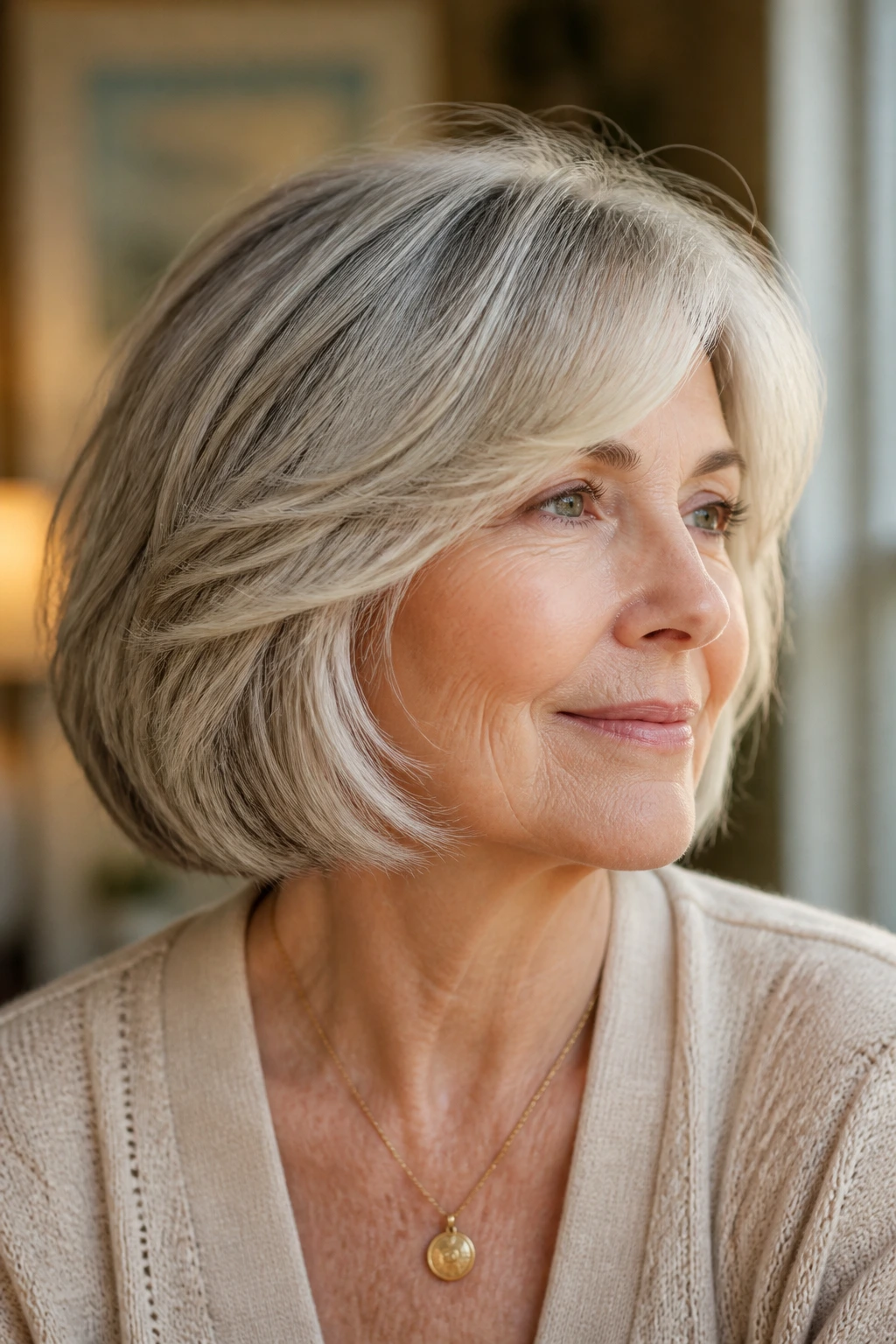
If blunt lines feel too strict, this is the friendlier version. The layers are tucked inside the shape, not hacked across the top, so the bob keeps its body while still moving when you turn your head. That matters if your hair tends to puff out at the ends or collapse at the crown.
This cut works because it does not overtalk. The haircut is there, but it isn’t shouting at the mirror. A light round-brush pass gives the front a soft bend, and that’s usually enough. On hair with a little wave, it can air-dry into a shape that feels easy rather than accidental.
Best for: women with fine-to-medium hair who want lift without choppiness.
3. The French Bob With Fringe
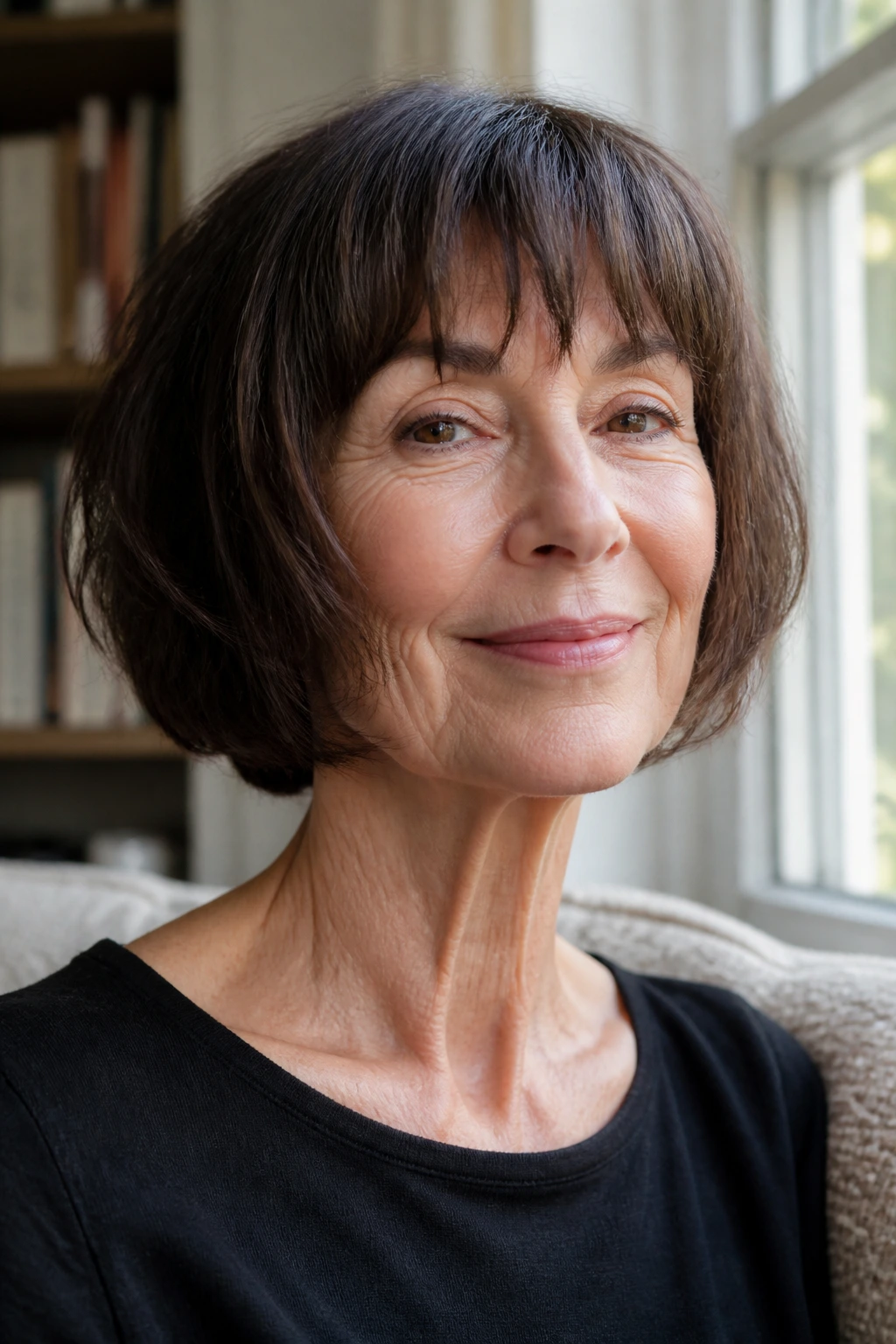
Short, cheekbone-skimming, and slightly cheeky — the French bob brings energy back to the face fast. The fringe does a lot of work here. When it lands somewhere around the brows, it can soften forehead lines, pull attention to the eyes, and make the whole cut feel deliberate.
This version is not for someone who wants to disappear into their hair. It has opinion. That’s the appeal. A little texture through the ends keeps it from reading stiff, and a touch of serum through the fringe helps it sit in pieces instead of one heavy curtain.
Best for: straight or softly wavy hair, smaller features, and anyone who likes a cut with a bit of attitude.
4. The Stacked Nape Bob
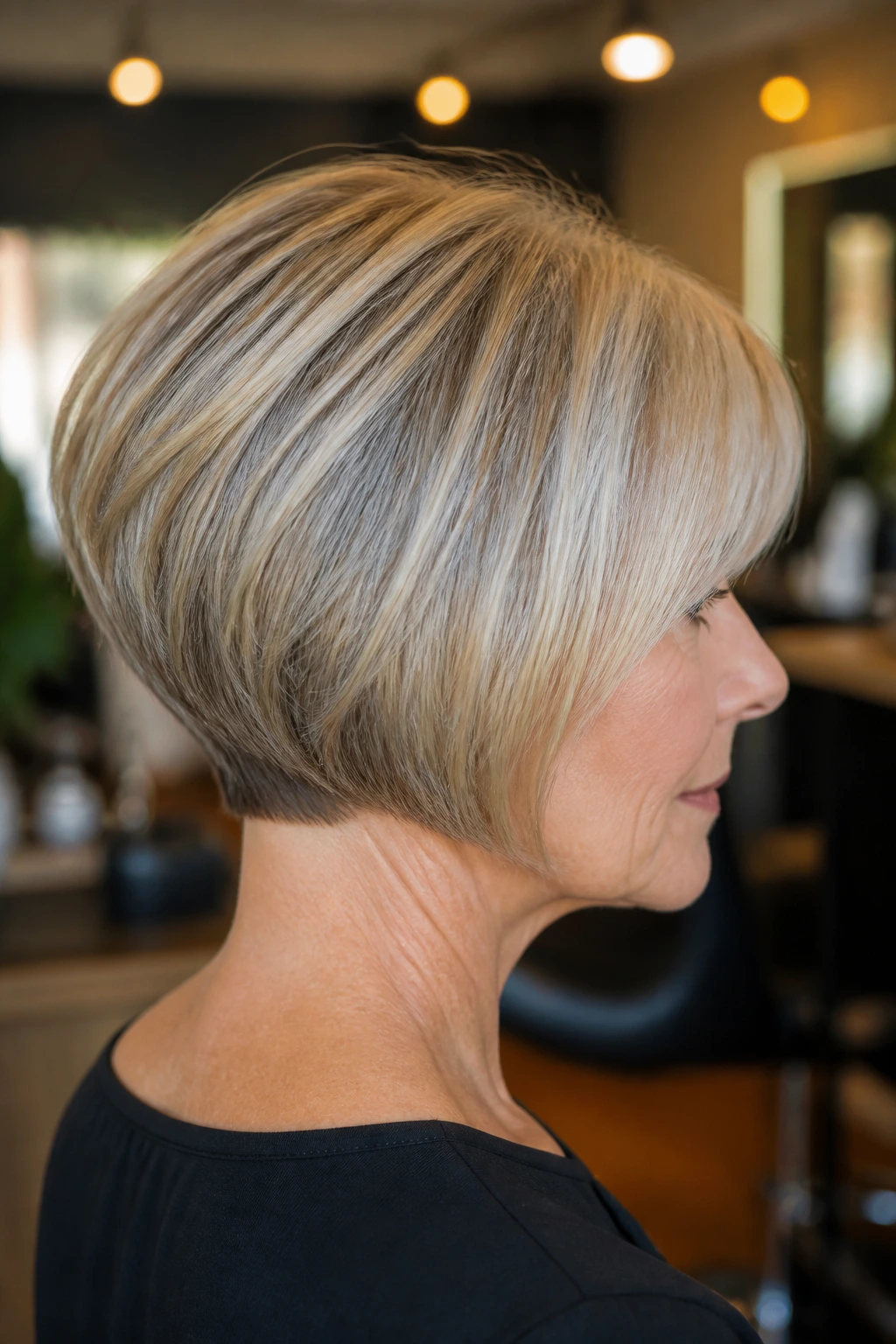
A stacked bob lives and dies by the back shape. Shorter layers are built at the nape so the crown gets a little lift and the neckline looks clean. It’s one of the best options if your hair has flattened at the back of the head and refuses to hold volume.
The trick is balance. Too much stacking can go dated fast. Too little, and you lose the point of the cut. Done well, the back sits close to the head while the front still has enough length to soften the face. It’s a haircut that looks tidy from every angle, which is rarer than it should be.
Best for: straight hair, finer density, and women who want a more polished silhouette.
5. The Angled A-Line Bob
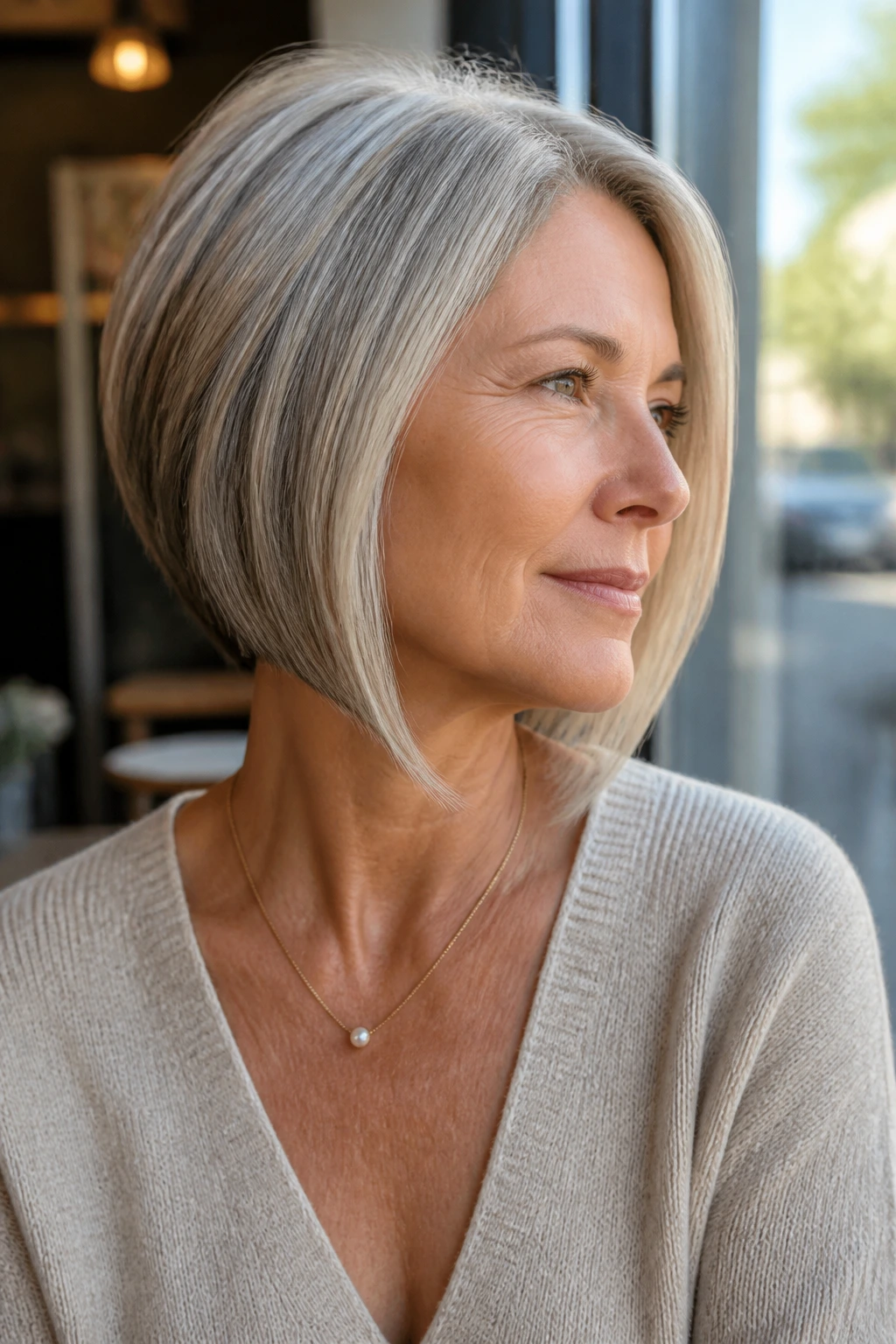
Here the front is longer than the back, and that angle does nice things for the jaw and neck. The shape draws the eye forward, which can make a fuller face look a bit longer and a short neck look less crowded. It’s a smart cut, and not in a boring way.
I like this bob for women who still want to tuck hair behind the ears but don’t want a full lob. You get that little swing in the front without carrying too much length around the collar. On thick hair, the angle can stop the ends from looking bulky; on fine hair, it creates the illusion of more structure.
Best for: round or square faces, medium hair, and anyone who wants a visible angle.
6. The Collarbone Lob Bob
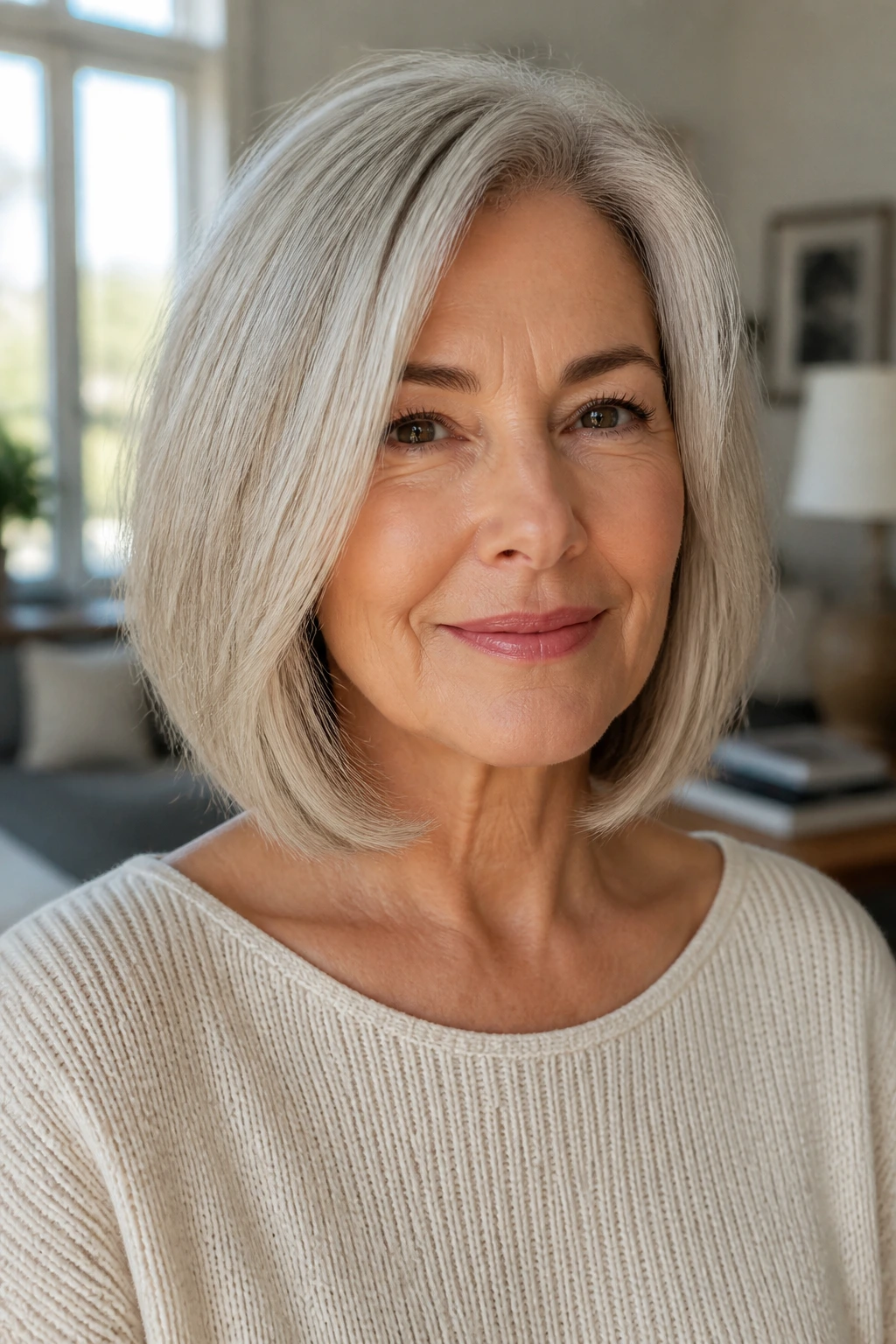
This is the comfort food of bob haircuts. It’s technically a lob, but it keeps the bob’s shape language: clean ends, controlled layers, and enough length to feel familiar. If you’ve worn long hair for years and want a short-ish cut without jumping straight to the chin, this is the safer doorway.
The length gives you room to curl it, wave it, or wear it straight without much drama. It also grows out gracefully, which matters if you dislike frequent trims. A collarbone lob can sit loose and easy with air-dried bends, or it can be brushed smooth for a neater finish.
Best for: first-time short-hair wearers, wavy hair, and anyone who wants flexibility.
7. The Rounded Curly Bob
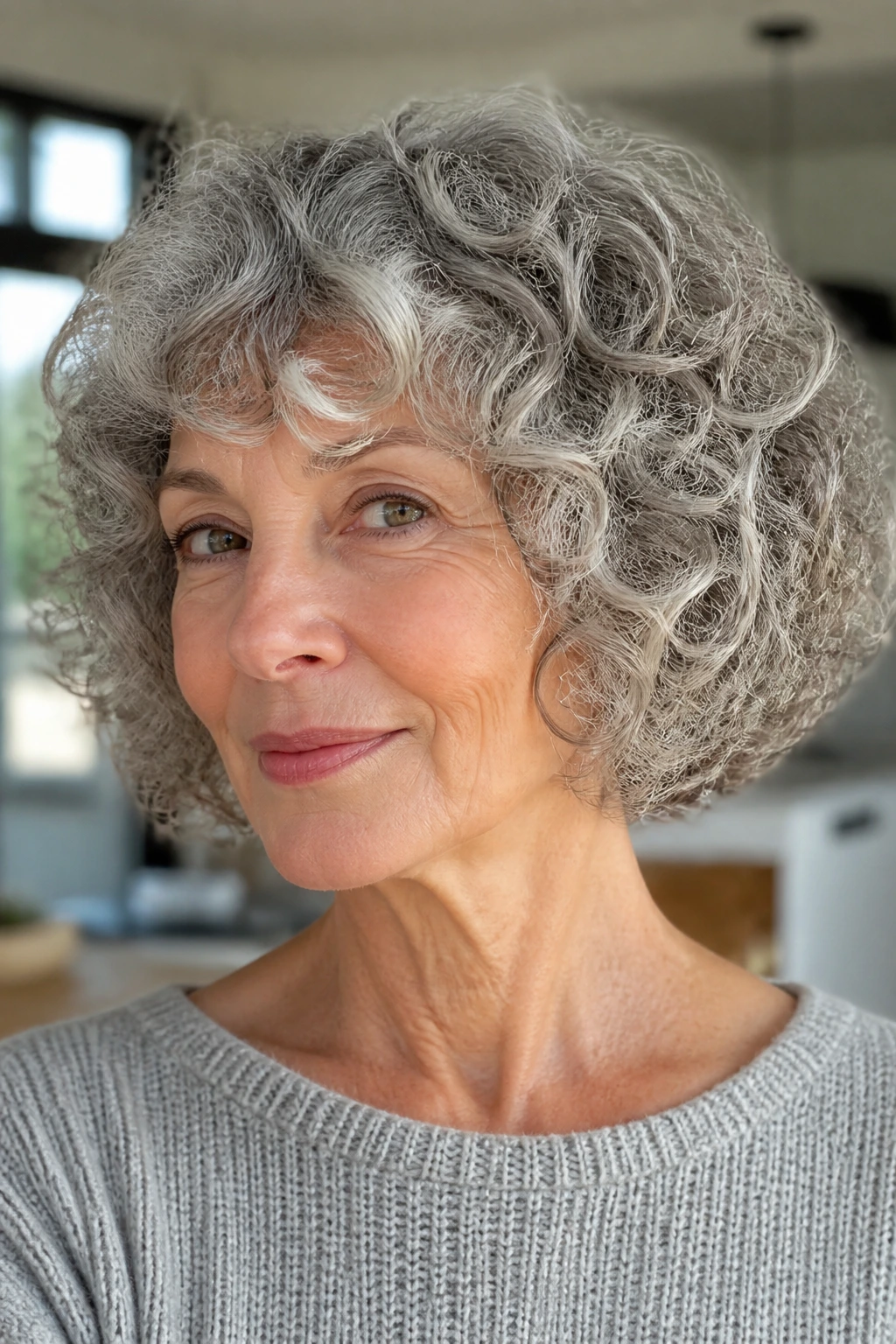
Curly hair likes shape. It does not like being forced into a flat, square outline and told to behave. A rounded bob gives curls room to stack and spring while keeping the perimeter soft enough that the volume feels intentional, not wild.
The best version is cut with shrinkage in mind. Wet hair lies. Dry hair tells the truth. That’s why a curly bob should usually be cut a touch longer than the final target, with the stylist checking how the curls bunch around the jaw and cheekbones. A diffuser and curl cream finish the job; a brush is usually the wrong tool here.
Best for: natural curls, coily hair with a soft round silhouette, and women who prefer air-drying.
8. The Feathered Side-Swept Bob
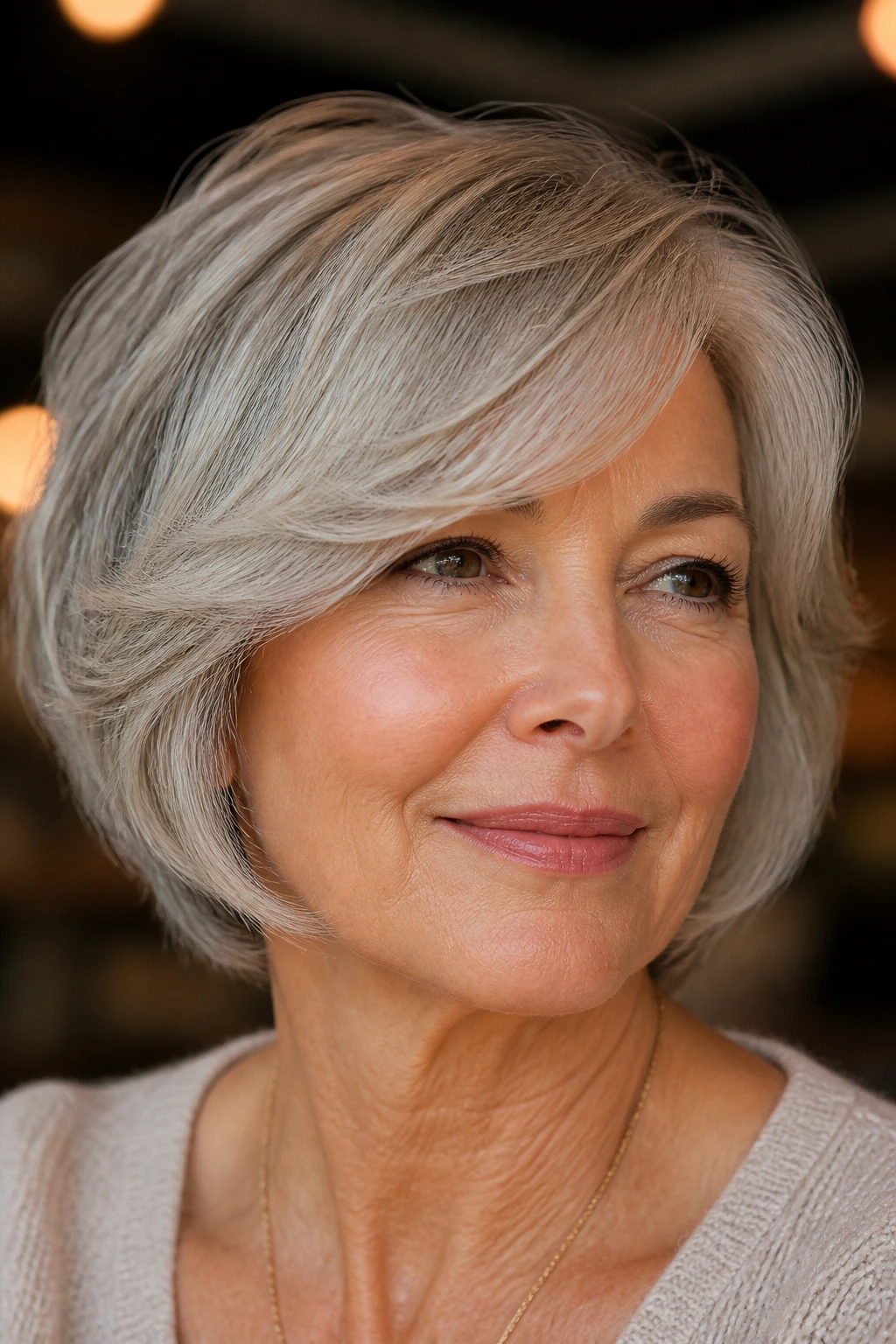
This one has a little swing in the front and a soft fall across the forehead, which makes it kind to lines, brows, and glasses frames. The feathering around the sides keeps the cut from feeling heavy at the cheeks, and the side-swept shape adds motion without going full shag.
A feathered bob is useful when you want movement but not a lot of visible layering. The pieces lift away from the face in a way that feels light, especially if you blow-dry with a medium round brush and direct the front sections away from the face. It’s one of those cuts that looks better when it’s not too perfect.
Best for: straight to wavy hair, medium density, and anyone who wants a softer forehead area.
9. The Silver Shag Bob
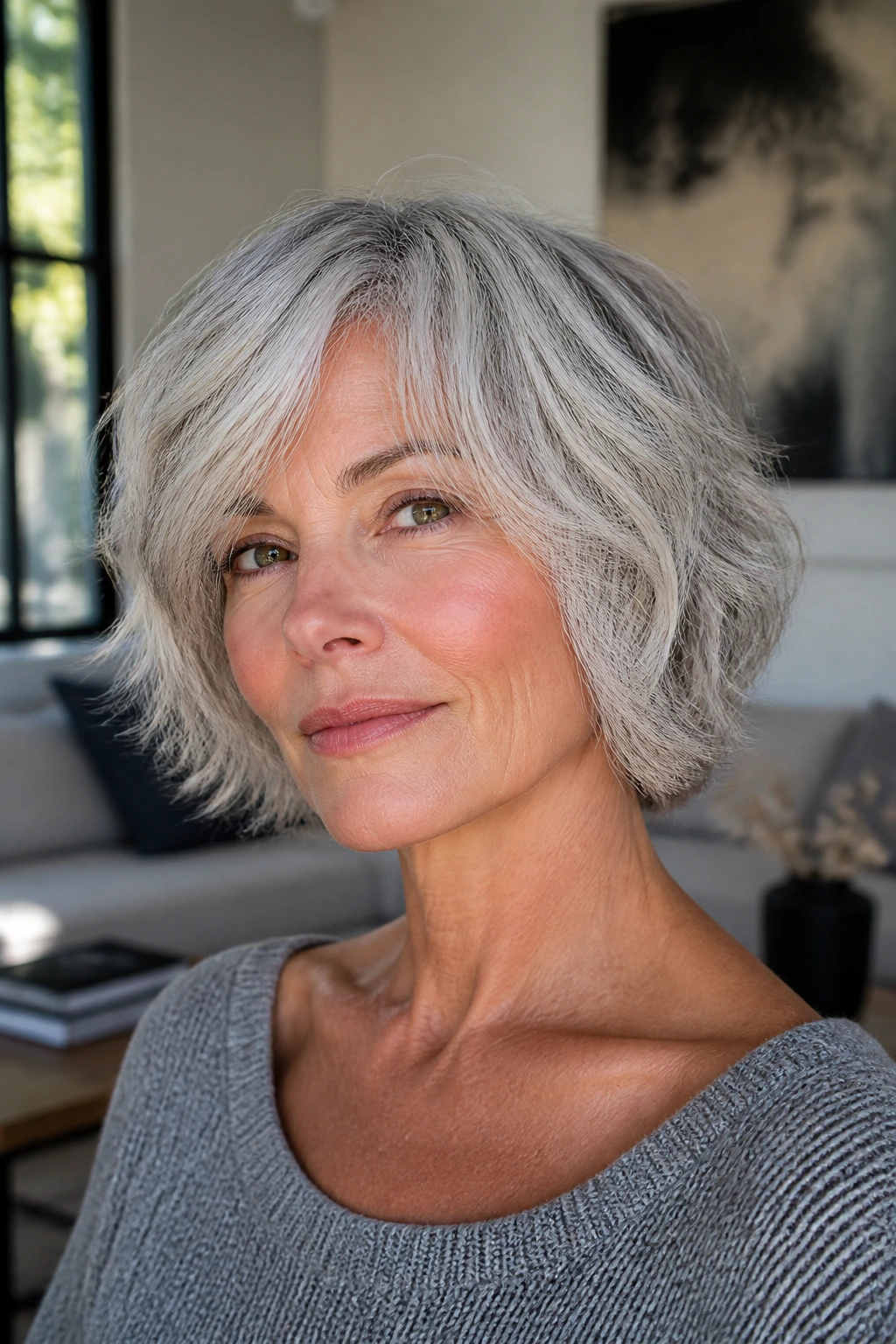
This cut loves gray hair. Loves it. The silver shag bob uses airy layers to keep the hair from looking blocky, and the textured ends make coarse strands move instead of sitting in a hard shell. If your gray has changed from fine to wiry, this shape can make peace with that.
The shag part means the cut is supposed to look lived-in, not shellacked. A dab of cream or light mousse is enough for most days. Too much heat and too much product can wreck the point. You want the texture visible. Not crunchy. Never crunchy.
Best for: coarse gray hair, natural waves, and women who want a little edge without a harsh line.
10. The Deep Side-Part Classic Bob

A deep side part can do more for the face than a lot of people realize. It lifts the roots on one side, softens the forehead, and gives the whole haircut a little old-school glamour without making it feel costume-y. On thinning hair at the crown, that lift is worth its weight.
This bob is usually cut to the chin or just below it, with clean ends and enough weight to sit well. The side part is the star. If your hair tends to flatten in the middle, this shape can change the whole read of the cut in five seconds. Sometimes that’s all you need.
Best for: fine hair, oval faces, and anyone who likes a little asymmetry without a dramatic angle.
11. The Textured Crop Bob
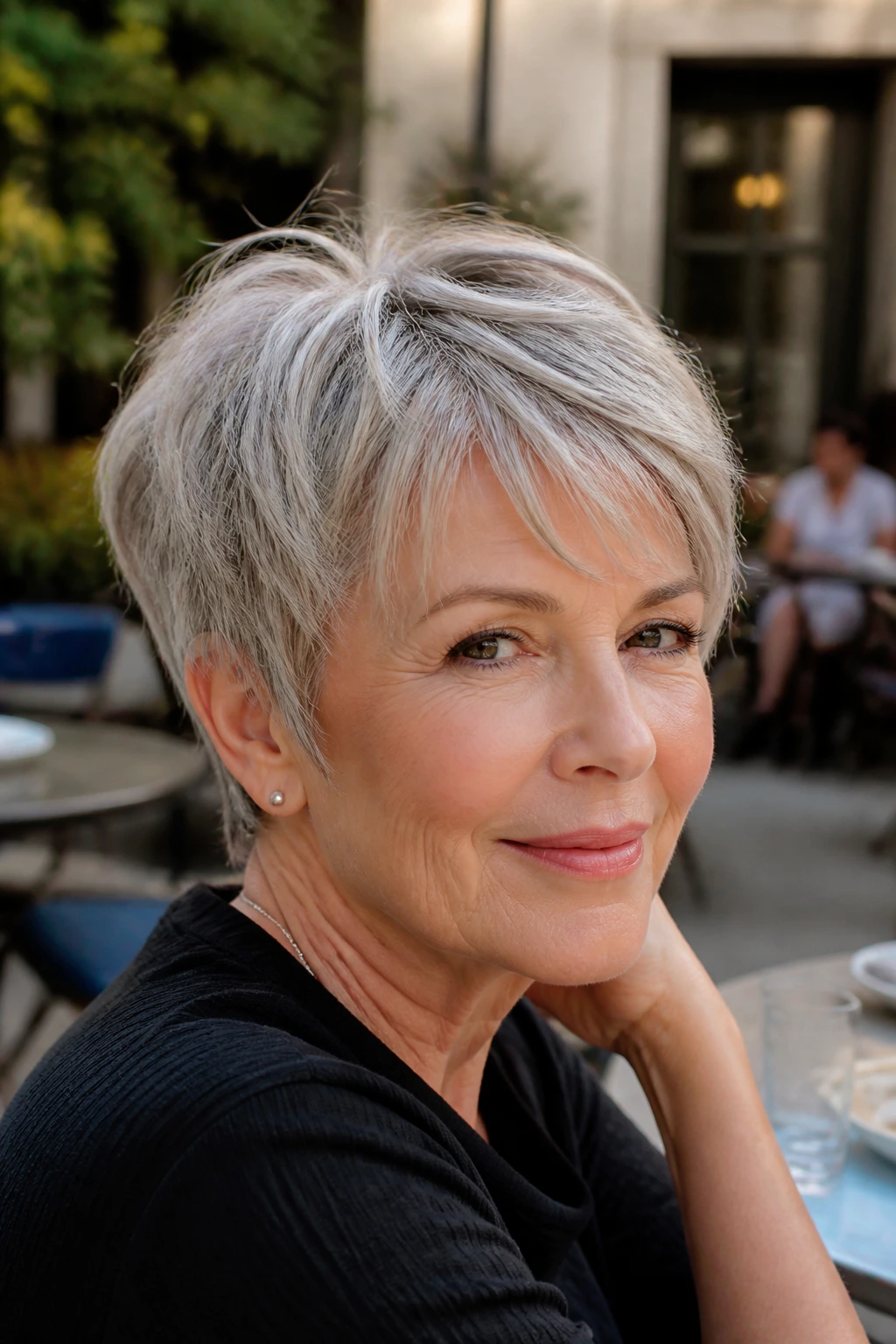
Shorter than a classic bob and less fussy than a pixie, the textured crop bob sits in that useful middle ground. It’s piecey, light, and a bit airy around the edges, which helps if you want to lose bulk around the ears and neck.
The risk with texture is overdoing it. A little separation is lovely. Too much slicing can make the ends look frayed, which is not the same thing as soft. Ask for texture where the hair naturally needs movement — around the temples, through the crown, at the front — and keep the line underneath neat enough to anchor the cut.
Best for: active styling routines, short-hair lovers, and women with fine to medium hair.
12. The Inverted Volume Bob
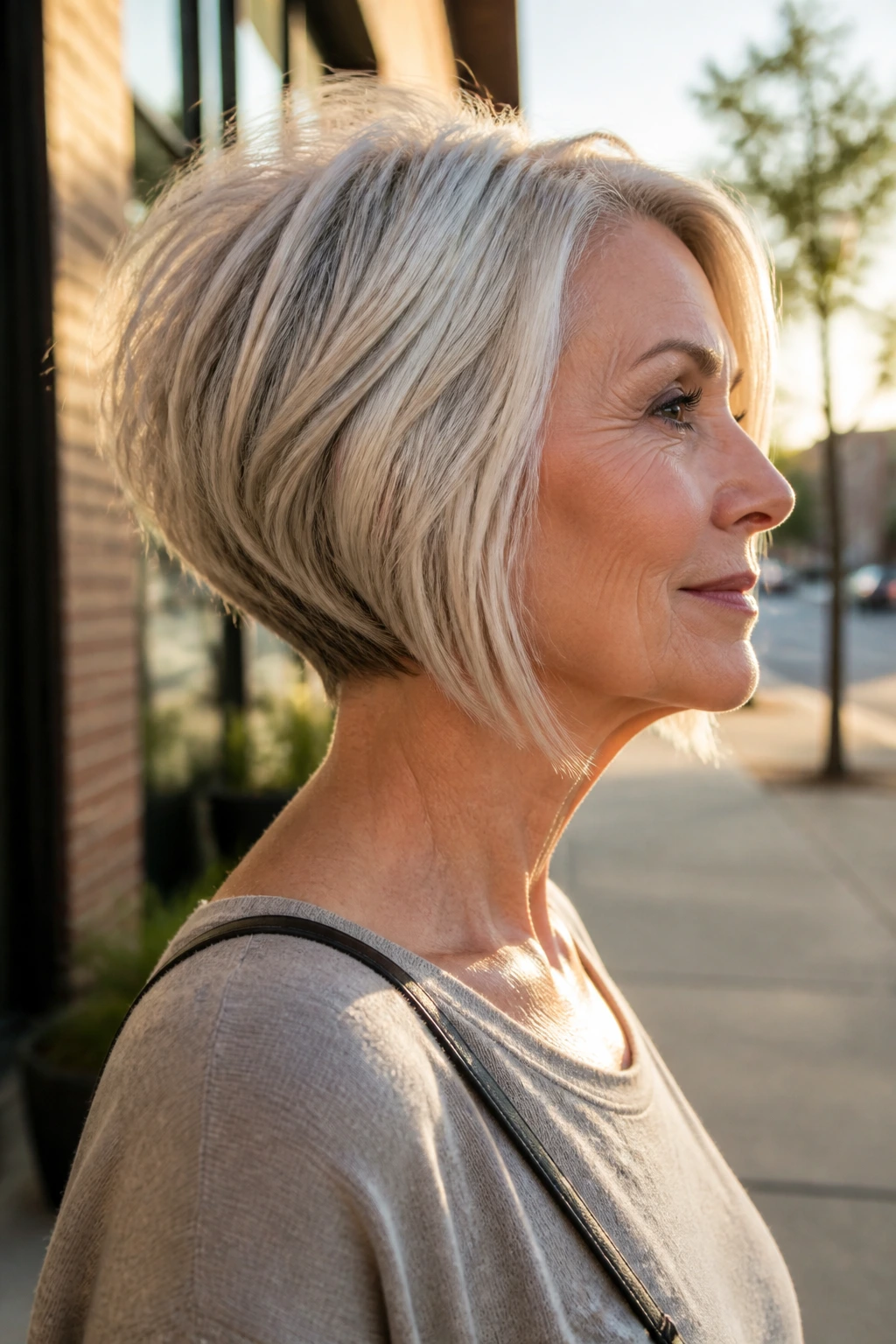
This bob builds height at the back and leaves the front longer, so the profile looks lifted instead of droopy. It can be a nice fix if your hair has started to collapse at the crown or if you simply want a shape that looks awake from the side.
The angle gives the haircut momentum. The back rises, the front falls forward, and the whole cut gets a sense of movement even when it’s straight. It does need some upkeep, though. If you let the nape grow out too far, the shape loses its snap quickly.
Best for: straight hair, flatter crowns, and women who want a visibly sculpted shape.
13. The Wavy Lob Bob

A wavy lob is the easygoing cousin in the family. It sits around the collarbone, which means it still counts as a bob in spirit, but it gives you more room to work with natural bends and soft waves. If you dislike the feeling of hair touching the jawline, this is a safer bet.
The shape is especially good when hair has a slight bend but not enough to curl cleanly. A wave spray or mousse, a bit of scrunching, and maybe one pass with a curling wand on the front sections — that’s often enough. It looks best when the ends are not too polished.
Best for: medium textures, relaxed styling habits, and grow-out in between shorter cuts.
14. The Full-Bang Bob
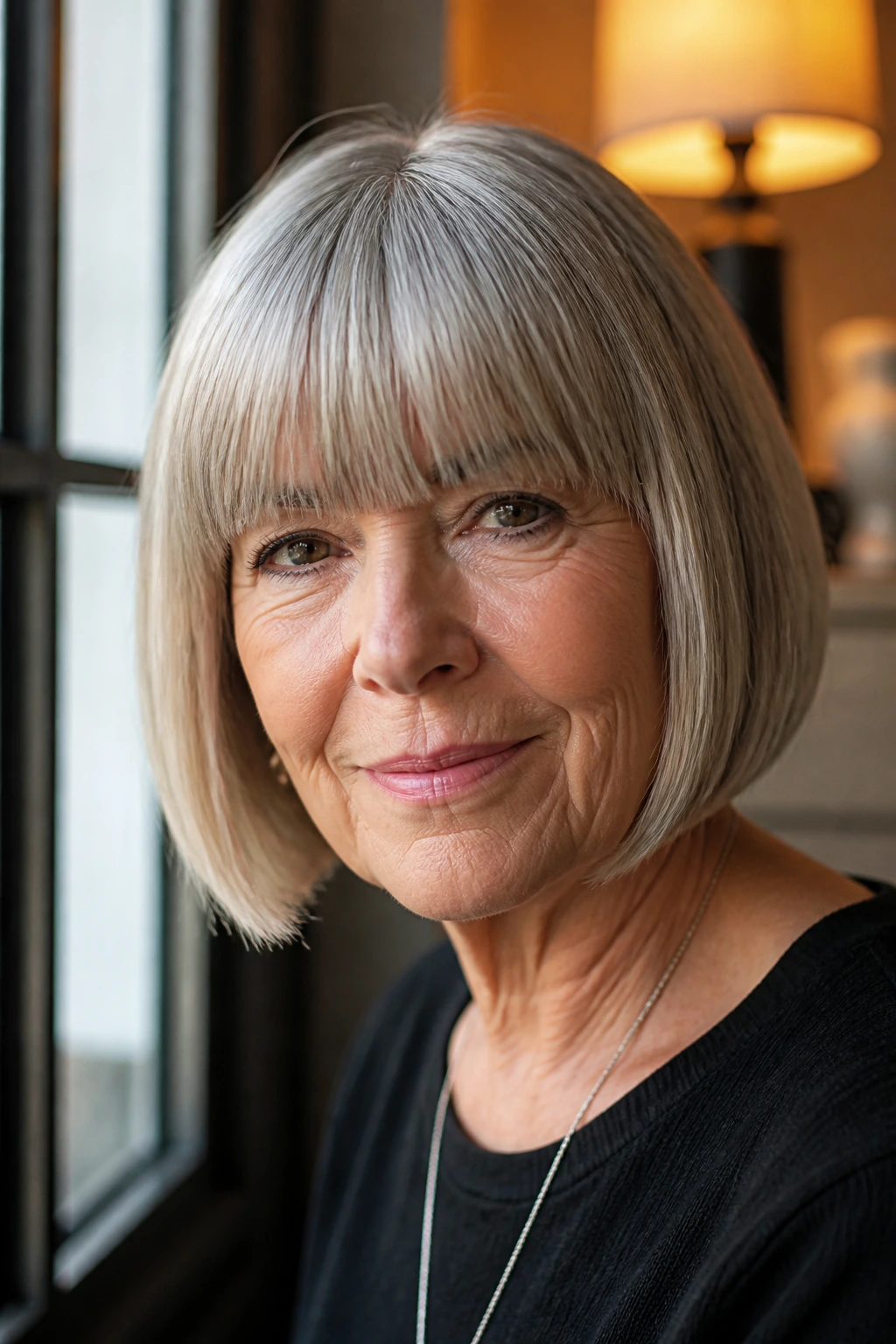
A bob with full bangs can be incredibly flattering when the fringe is cut with care. The bangs bring attention straight to the eyes and can balance a long forehead or soften a face that feels a bit too open at the top. The bob underneath should stay fairly simple so the fringe can do its job.
The important part is weight. Bangs need enough density to lie properly, but not so much that they sit like a shelf. On fine hair, they can look a little wispy unless they’re cut with precision. On thicker hair, they may need a tiny bit of internal removal so they don’t mushroom.
Best for: women who want forehead coverage and don’t mind a trim every few weeks.
15. The Graduated Fine-Hair Bob
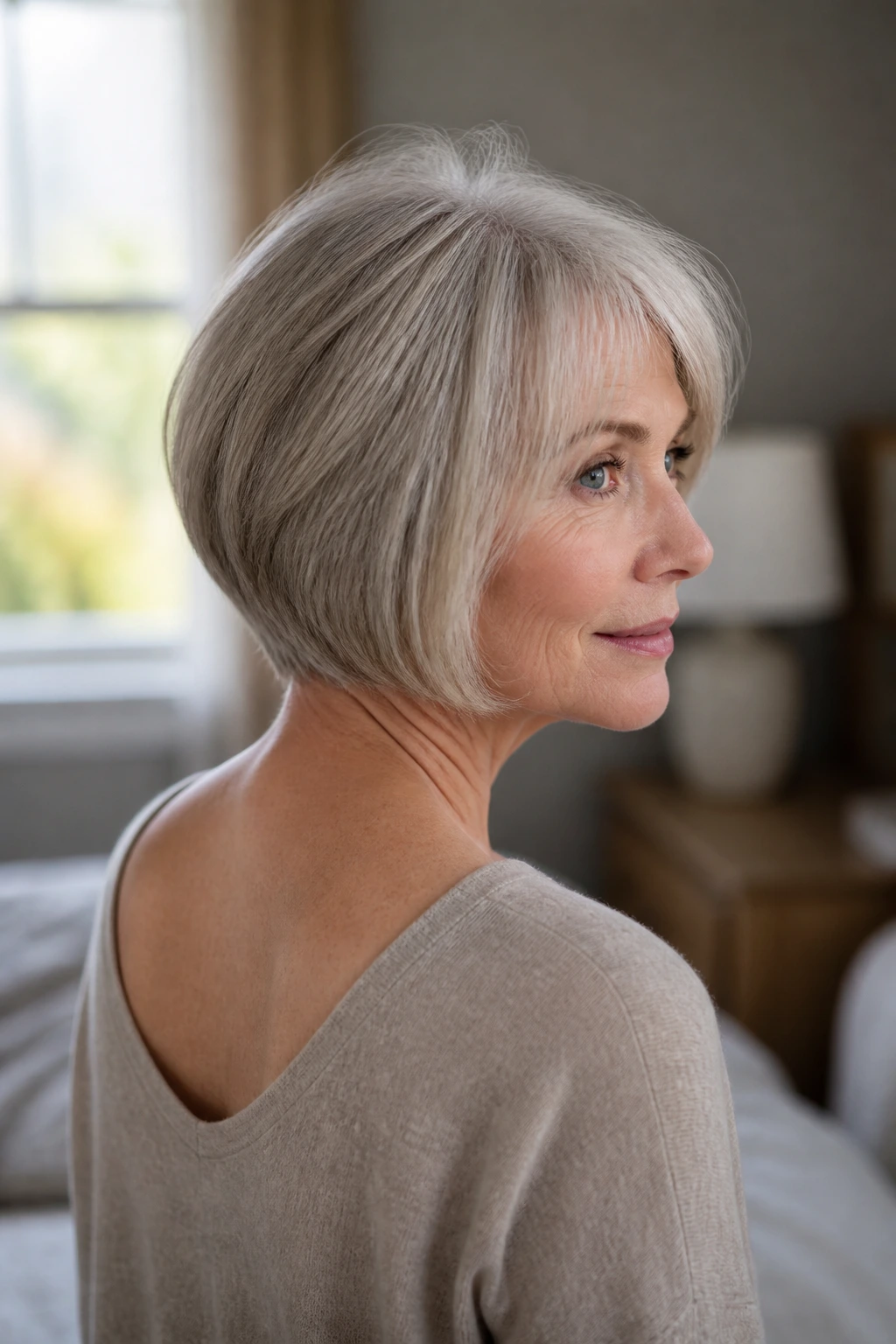
If your hair is fine and slippery, graduation is your friend. This bob uses a subtle build-up in the back to give the illusion of body without creating the stacked look of a more dramatic cut. It’s one of the smartest shapes for hair that needs a little backbone.
The best part is how neat it stays through the day. Fine hair can go limp around noon, especially if it’s all one length. A graduated bob keeps the outline from looking stringy, and a root-lift spray at the crown can make it hold its shape even better.
Best for: fine, straight hair and anyone who wants the haircut to do the heavy lifting.
16. The Tucked Chin Bob
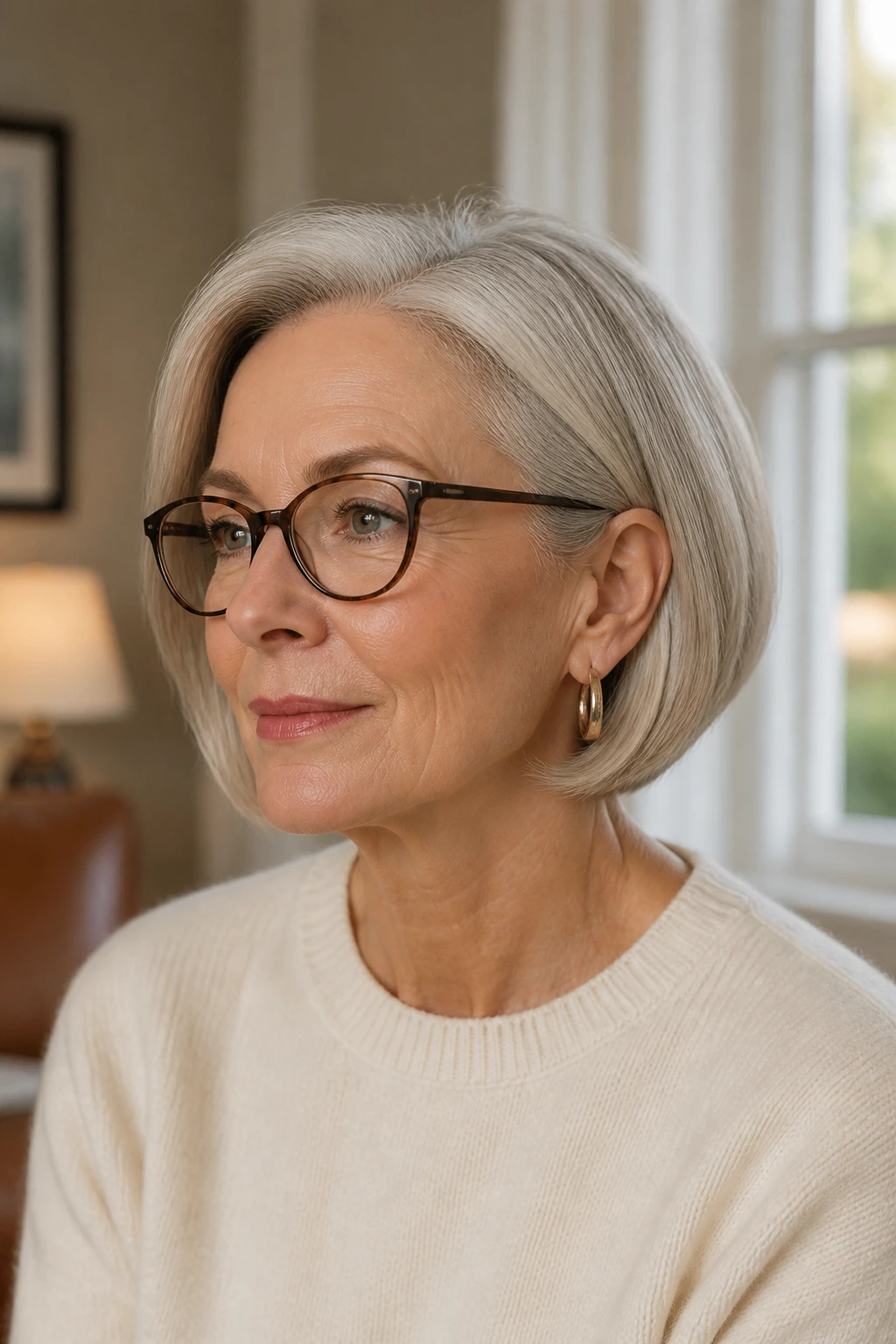
This is one of my favorites for women who love earrings or wear glasses and tuck hair behind the ears without thinking. The length sits at the chin, but the sides are cut so they can curve neatly under the ears instead of flaring out.
It’s a small detail. Huge payoff. The tucked shape makes the face look tidy and awake, especially if the hair has a little bend from the blow-dryer. If you like a haircut that looks good with one side pinned back or tucked on both sides, this one earns its keep.
Best for: glasses wearers, statement earrings, and low-fuss styling.
17. The Thick-Hair Tapered Bob
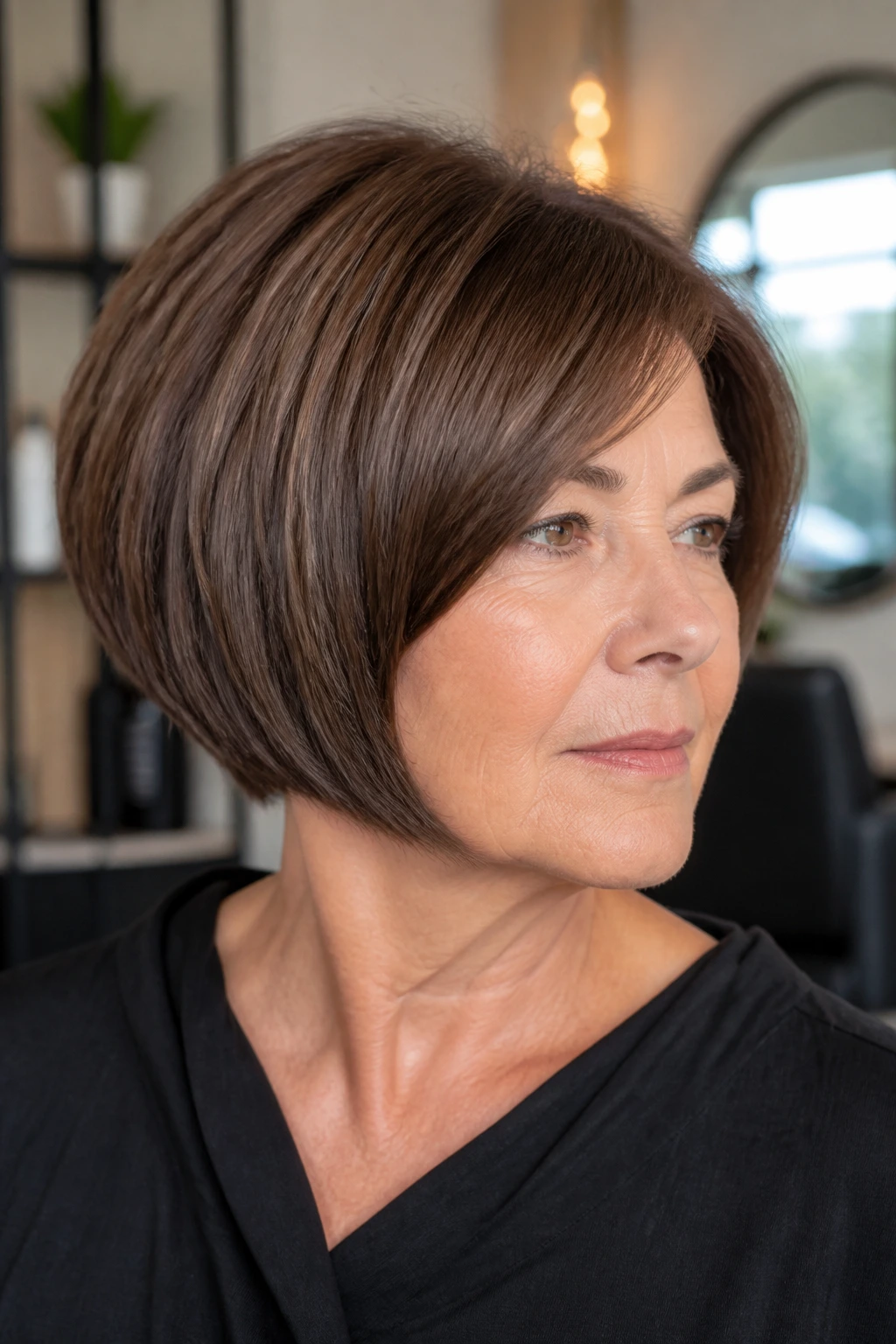
Thick hair can wear a bob beautifully, but only if the weight is controlled. A tapered bob takes bulk out through the interior and narrows the outline near the ends, so the whole cut sits closer to the head without looking thin.
I prefer this to aggressive texturizing on thick hair. A blunt perimeter with internal shaping often gives a cleaner result than slicing the ends to bits. Thick hair already has attitude. It does not need help. What it needs is direction.
Best for: dense hair, heavier textures, and women who want the bob shape without the puff.
18. The Razored Airy Bob
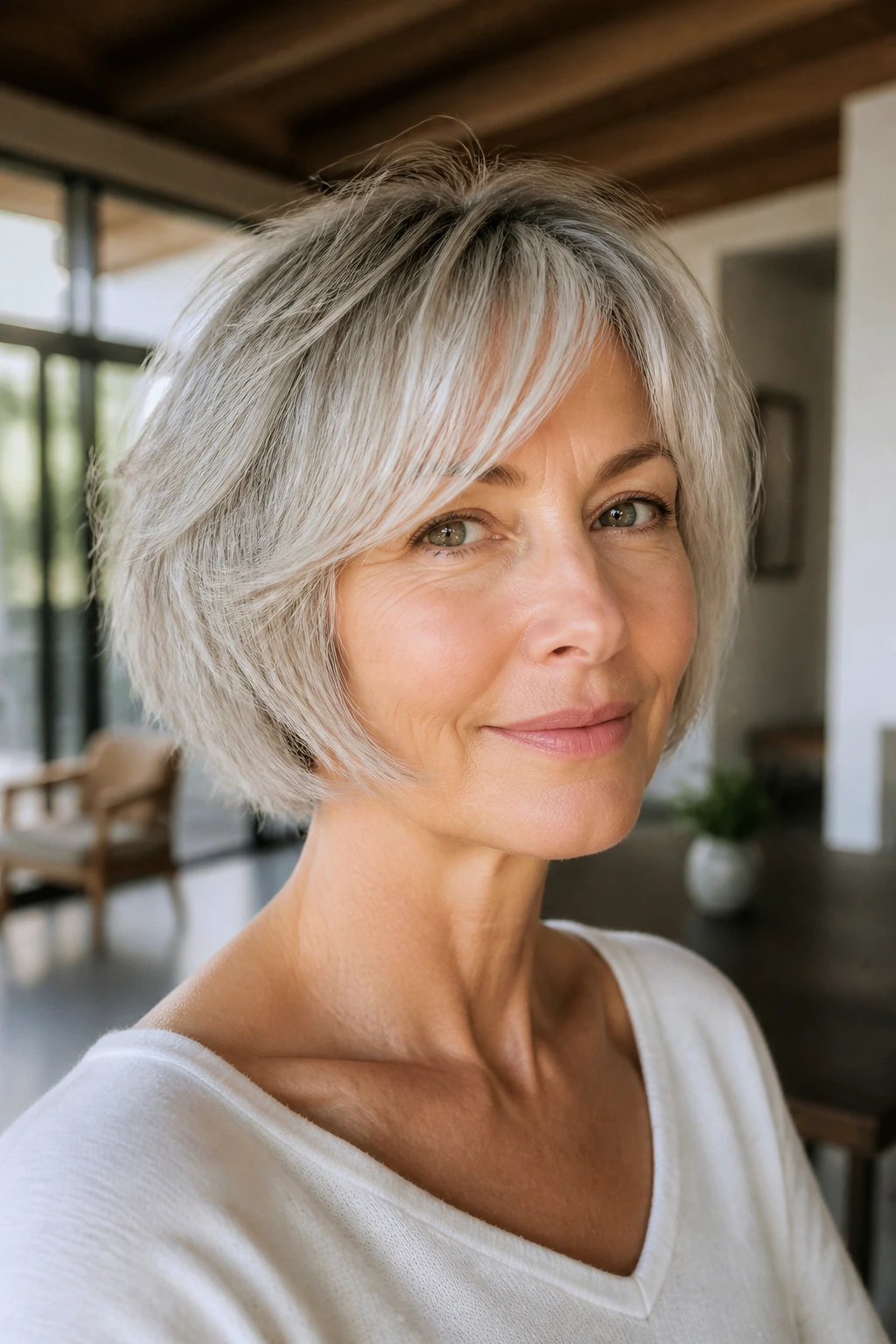
A razor cut can be excellent on the right hair. It creates a lighter, airier finish, especially on medium textures that tend to feel dense but not bulky. The ends move more freely, and the bob can feel almost feathered without looking overly layered.
Here’s the catch: razor work is not kind to every head of hair. On very fine or fragile hair, it can make the ends look see-through faster than you’d like. On the right texture, though, it gives that undone movement people keep trying to fake with too much product.
Best for: medium hair, soft waves, and women who like a looser finish.
19. The Italian Bob
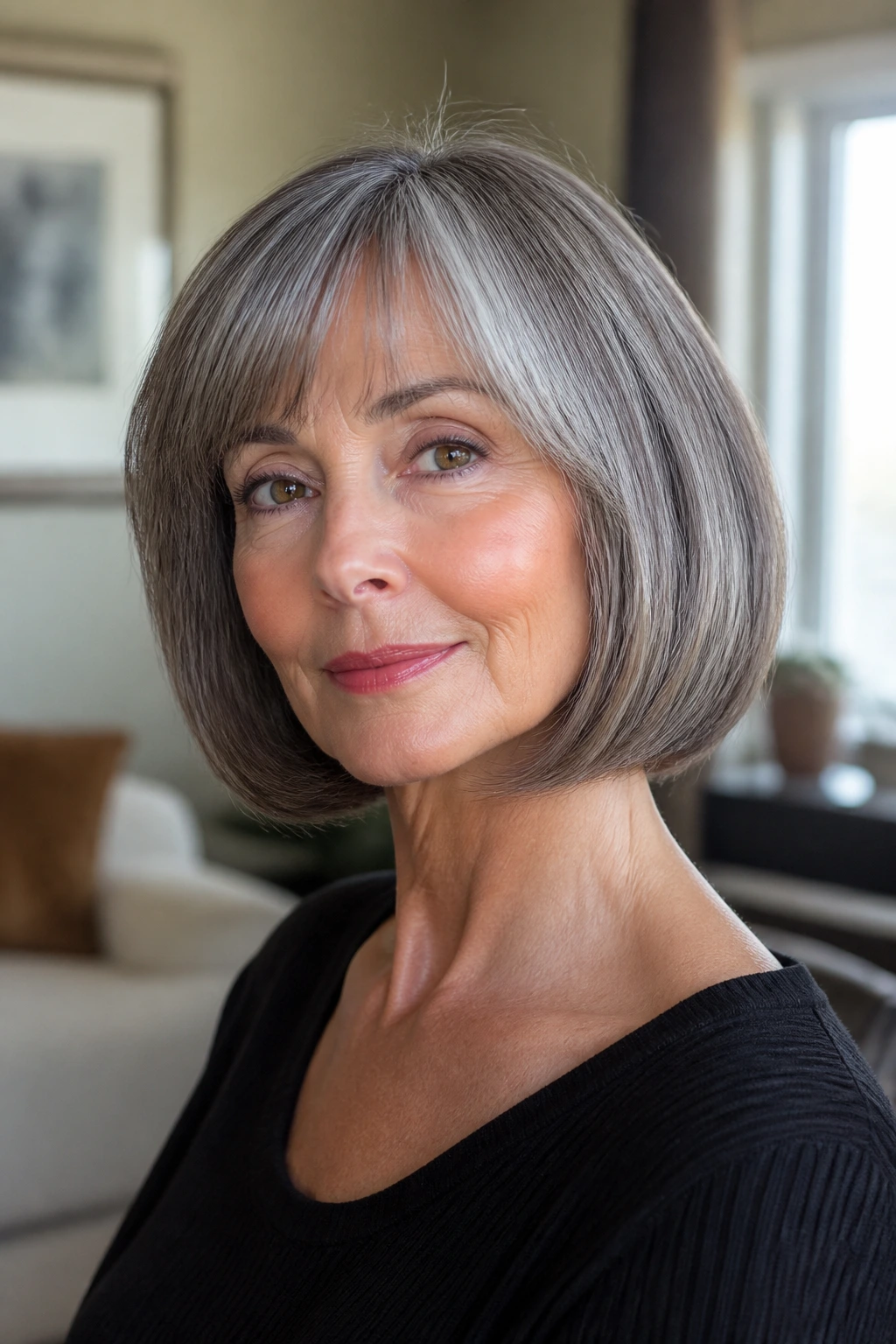
This cut sits fuller and richer through the ends, with enough body to look plush rather than airy. The Italian bob usually skims the jaw or the upper neck and is styled with a little bend, which gives it a polished, swingy finish.
I like this bob because it has substance. The edges aren’t thinned out to nothing. The line feels expensive in the practical sense — weight where you want it, shine where you need it, and movement that comes from the shape instead of the product pile. A smoothing cream and a round brush are usually enough.
Best for: medium to thick hair, polished styling, and women who want fullness.
20. The Micro Bob
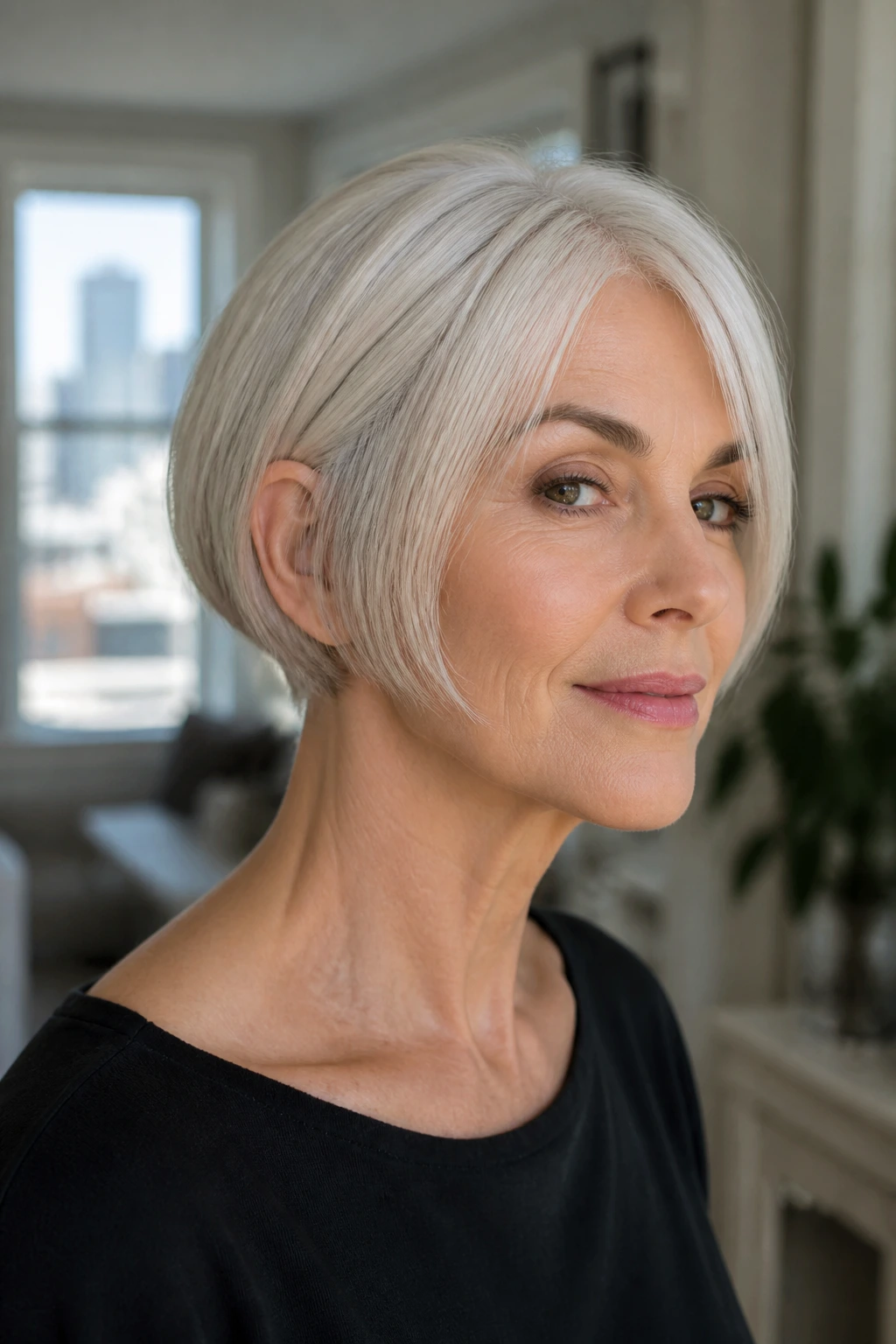
Short. Sharp. No hiding. The micro bob lands high on the face, usually around cheekbone or just under the ears, and it makes a strong statement without needing any extra decoration. If you like clean lines and a haircut that reveals the neck, this one has real presence.
It isn’t a timid cut, and that’s the point. The micro bob can be beautiful on silver hair because the shape itself carries the style. But it asks for confidence and good maintenance. Skip it if you want a haircut you can ignore for two months. This one wants attention.
Best for: strong features, great bone structure, and women who want a bold short shape.
21. The Asymmetrical Bob
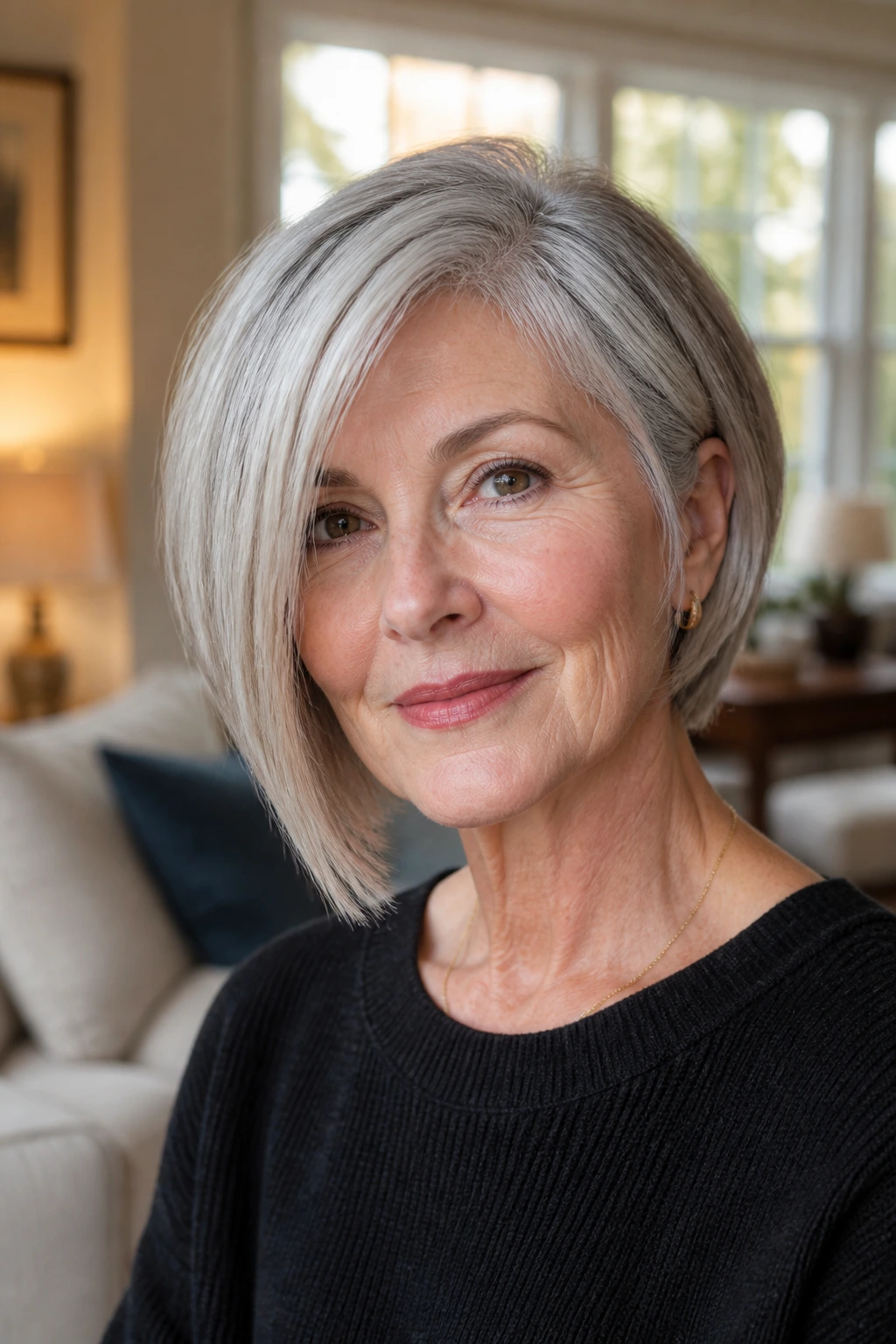
One side longer than the other sounds dramatic on paper, but in practice it can be quietly elegant. A slight asymmetry can balance facial differences, give a round face a longer look, or just make the cut feel more modern than a standard even bob.
The key is restraint. If the difference is too extreme, you start chasing the haircut every morning. A subtle version — maybe a half-inch to an inch longer on one side — is often enough. It gives the eye something to follow without turning the style into a trick.
Best for: women who want a little edge and a shape that softens facial imbalance.
22. The Curly Fringe Bob
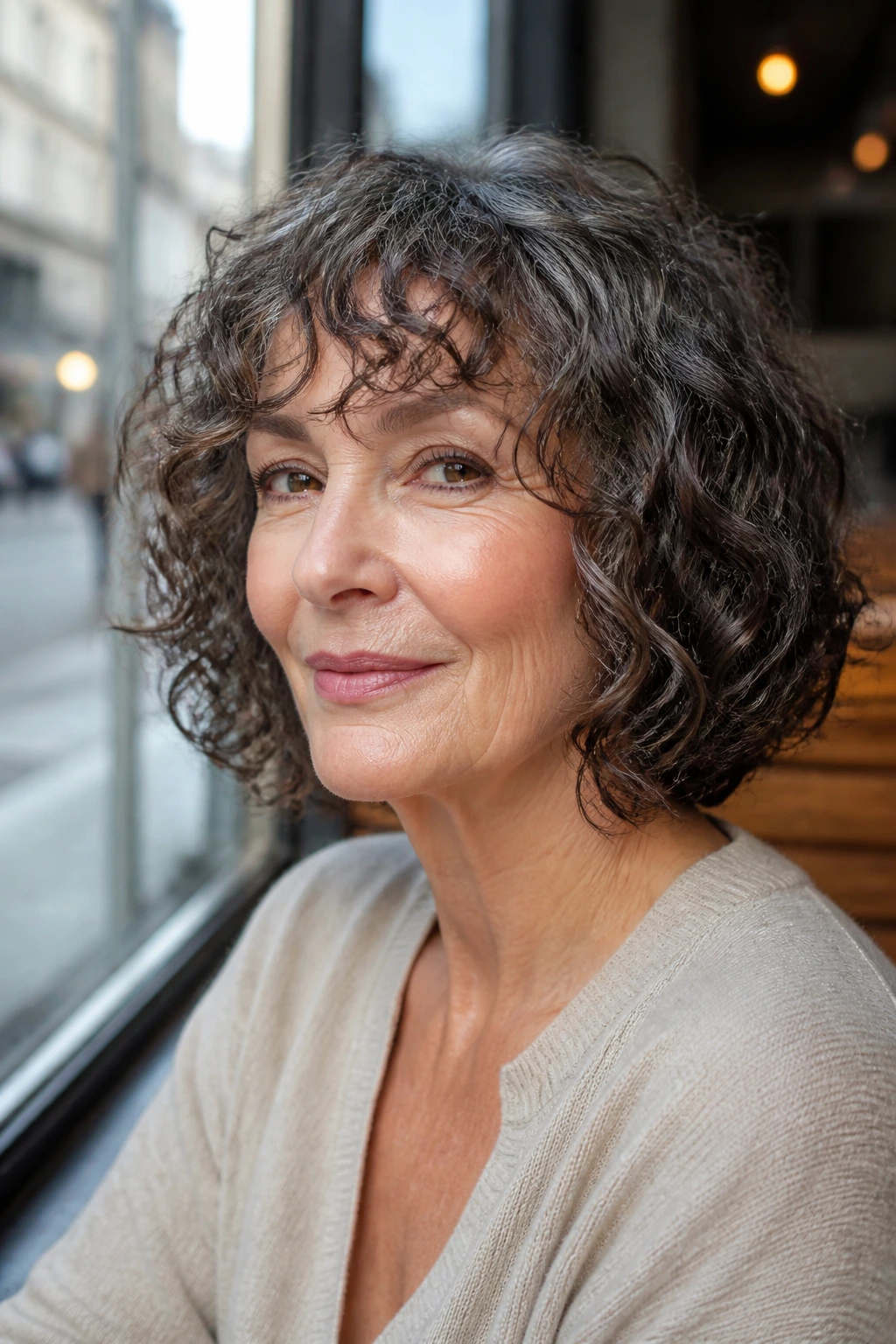
Curly bangs can go wrong fast if they’re cut too short or too dense, but when they’re handled well, they bring a lovely softness to the face. The bob underneath should keep enough shape to hold the curls in a tidy silhouette while the fringe breaks up the forehead area.
This is a good one for women who do not want their curls pushed back off the face every day. It keeps the hair visible in a flattering way. Just make sure the fringe is cut dry or near-dry if your stylist works that way, because curl shrinkage can turn “bouncy” into “oops” in one wash.
Best for: natural curls, soft features, and women who want a face-framing shape.
23. The Neck-Length Blunt Bob
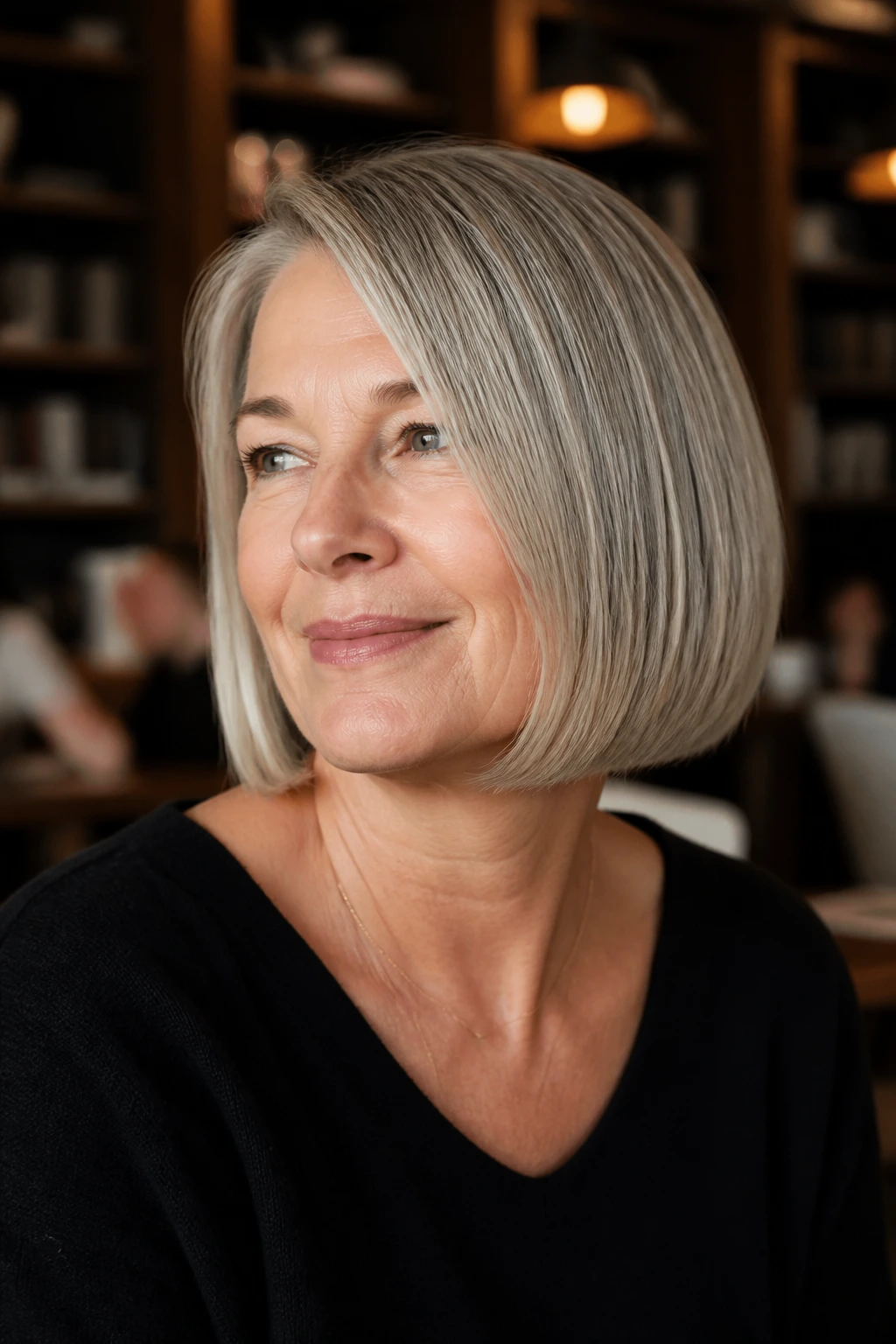
A little longer than the chin, this bob gives you the clean outline of a blunt cut without sitting right on the jaw. That can be a blessing if you don’t like the feeling of hair touching your face but still want a structured look.
The neck-length bob also plays well with necklaces, collars, and sweaters. It clears the face, but it doesn’t disappear into the neckline. If your hair is fine, the blunt edge helps; if it’s thick, the missing layers keep the outline solid. It’s one of the most sensible lengths in the group.
Best for: women who want polish with a little more coverage than a chin bob.
24. The Curtain Bang Bob
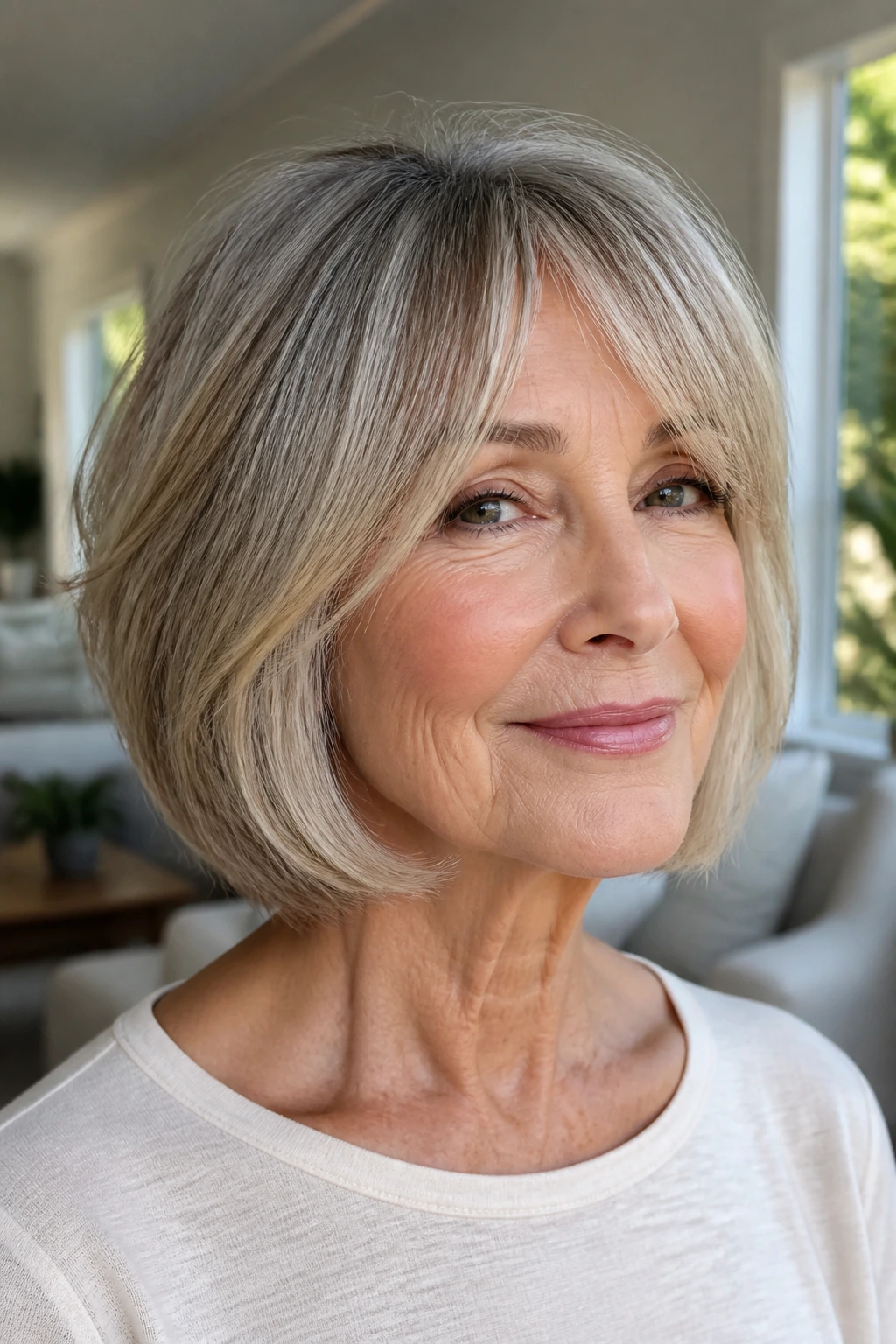
Curtain bangs have earned their place because they soften the forehead without building a wall across it. Paired with a bob, they open the face in the middle and frame the cheekbones on the sides, which is especially handy if you want some fringe but don’t want a full bang commitment.
This cut works well when the front pieces are long enough to blend into the bob rather than sit on top of it. That blend matters. If the curtain fringe is too short, it can separate from the rest of the haircut and look fussy. Done right, it feels easy and loose.
Best for: medium hair, broad foreheads, and women who want softness around the eyes.
25. The Glasses-Friendly Bob
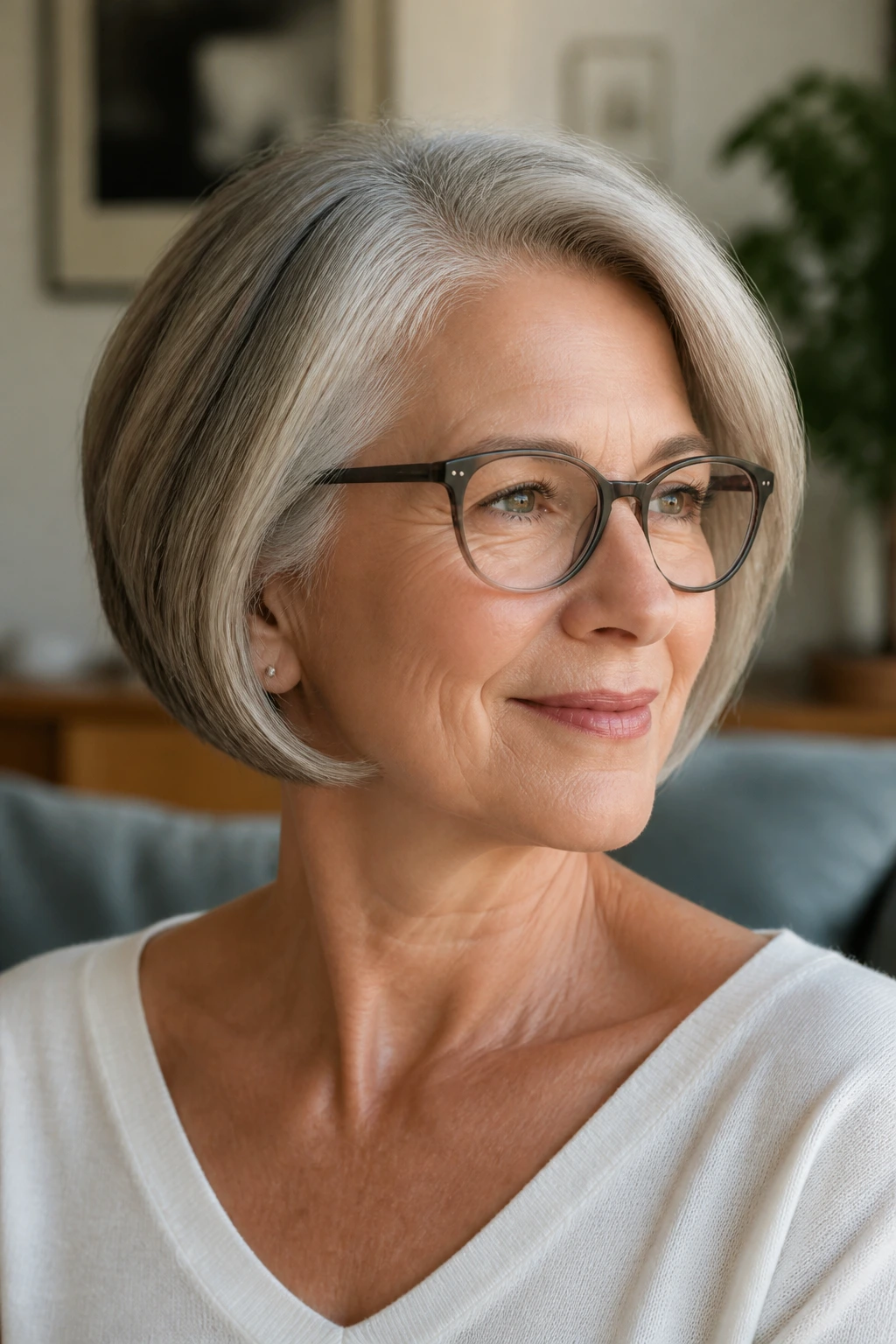
Hair and glasses can live in peace. They just need a little planning. A glasses-friendly bob usually avoids bulky bangs that hit the frame, keeps the temples a bit lighter, and lands in a spot that doesn’t crowd the cheeks.
This is one of those cuts where tiny changes matter more than big dramatic ones. A side part, a gentle bend away from the face, and a length that clears the frame arms by a touch can make the whole haircut sit better. If you wear glasses every day, this should be a design decision, not an afterthought.
Best for: frame wearers, softer face-framing, and low-friction morning routines.
26. The Sleek Tuck-Behind-Ears Bob
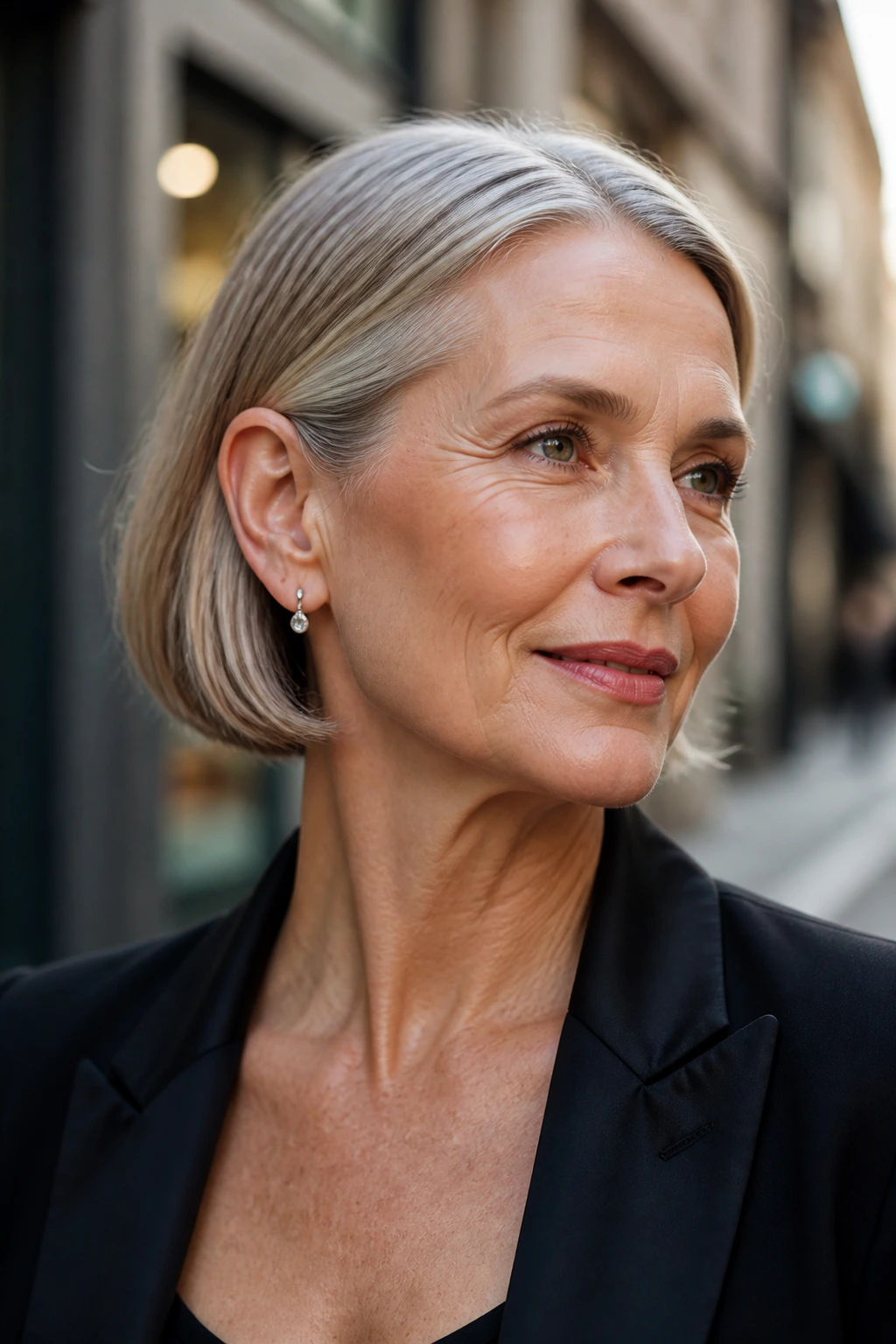
This bob is all about the neckline, the cheekbones, and the clean reveal when the hair is tucked back. It has enough precision to look tidy, but not so much that it feels stiff. A smooth blow-dry and a bit of shine serum usually do the trick.
I like it because it lets earrings and glasses speak. It also works well when you want to show off facial features instead of hiding them in fringe or heavy side pieces. The cut needs enough length to tuck, but not so much that it slips back out the second you move.
Best for: women who like a sleek finish, statement jewelry, and simple styling.
27. The Salt-and-Pepper Layered Bob
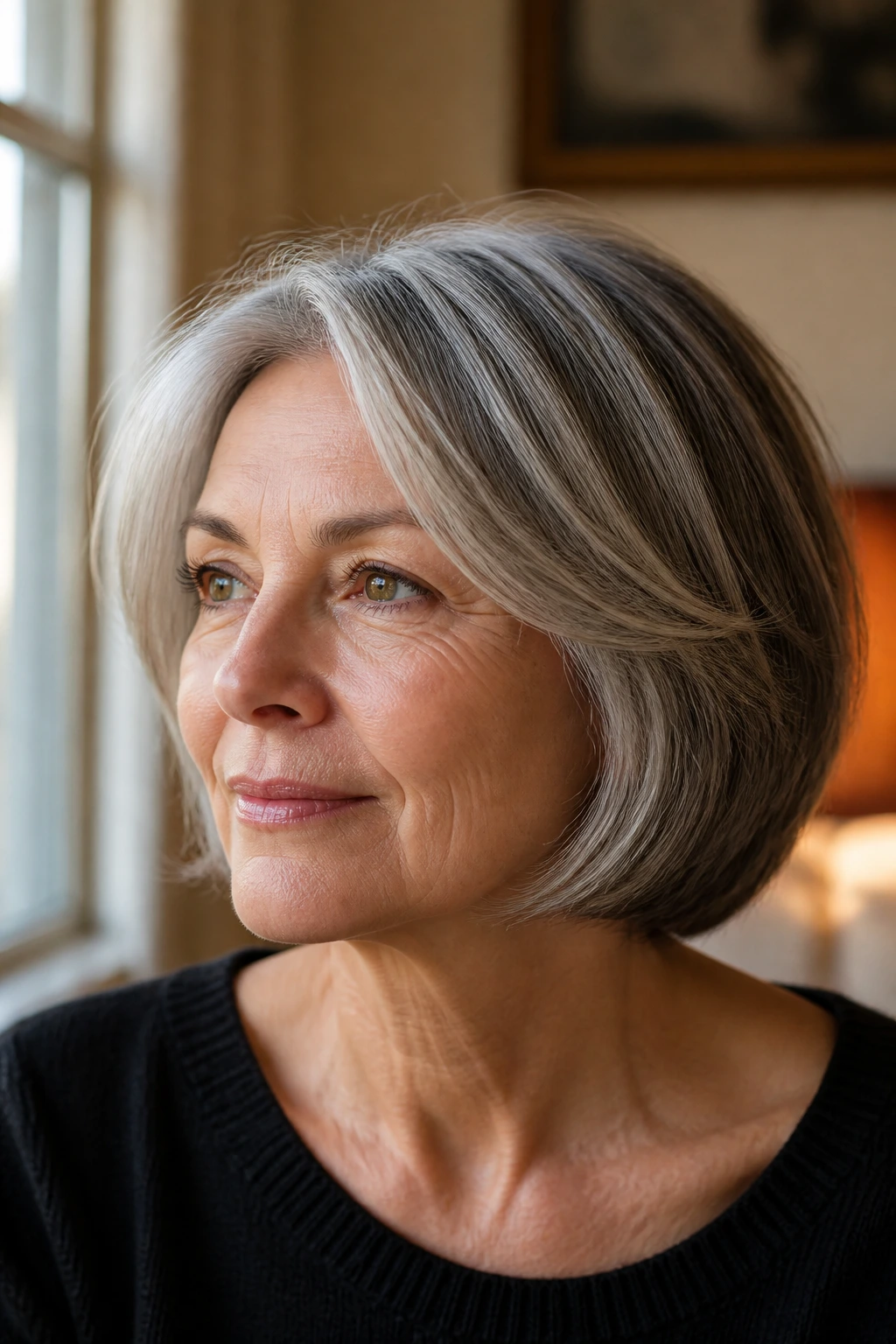
There’s a particular kind of beauty in salt-and-pepper hair when the haircut supports it instead of fighting it. This bob uses layers to keep the color variation visible and the shape from feeling blocky. The result is lively without being fussy.
The important part is restraint. Too many layers and the gray can look scattered. Too little and the cut can feel heavy. A soft layered bob with a clear perimeter usually shows the mix of silver and darker strands in a flattering way, especially when the light hits from the side.
Best for: natural gray blends, medium density, and women who want the color to stay visible.
The Shape That Makes a Bob Work in Real Life
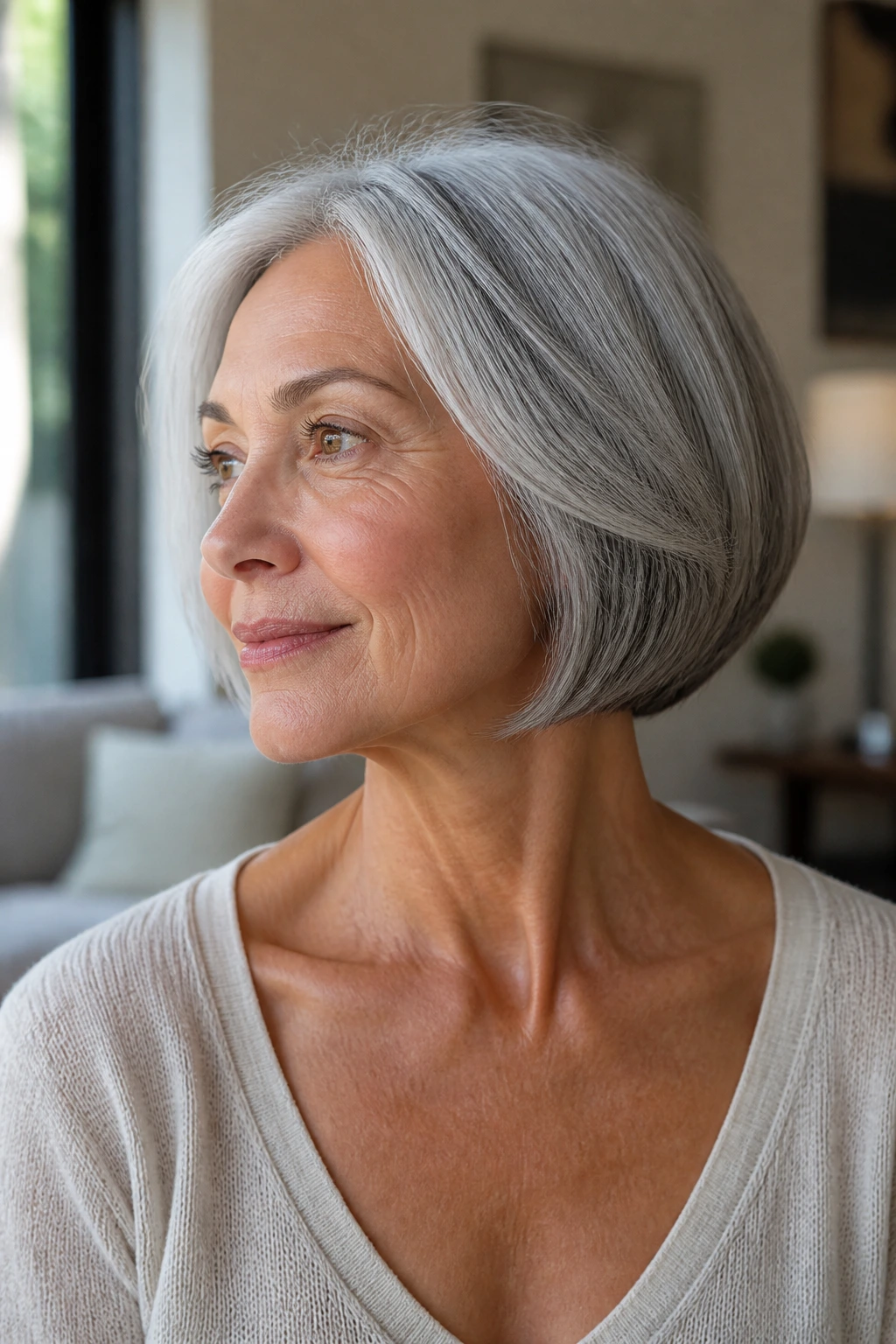
A bob looks best when it does a job, not when it just sits there and waits to be admired. The shape should clear the neck, frame the face, and hold up when the weather is a little humid or the roots are a little flat. That’s the standard. Everything else is styling decoration.
The smartest bob haircuts for women over 60 are the ones that respect texture. Fine hair needs a line. Thick hair needs release. Curly hair needs room. Silver hair needs clean edges and not too much chipping away at the ends. Once those pieces line up, the haircut starts to feel easy in the good sense — not lazy, just cooperative.
Essential Tools for Styling These Cuts
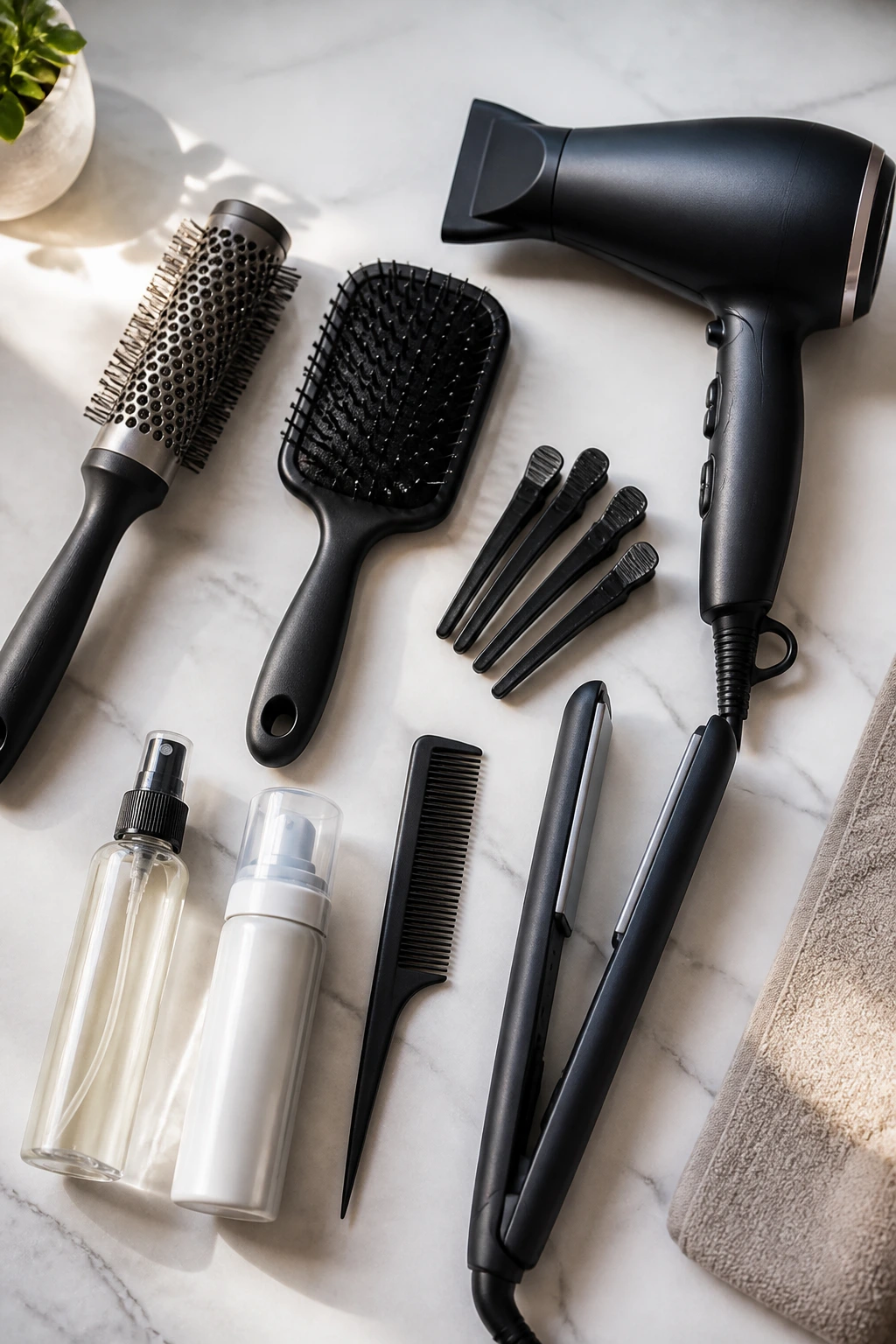
- 1-inch round brush: Best for creating a bend at the ends without a big curl.
- Paddle brush: Useful for smoothing blunt bobs and keeping the perimeter tidy.
- Blow dryer with a nozzle: The nozzle matters. It directs air so the hair dries smoother and frizzes less.
- Sectioning clips: These keep the top, sides, and back separate when you’re working with a brush.
- Heat protectant spray: Use it before any hot tool, especially on silver hair that can feel dry at the ends.
- Light mousse or root-lift spray: Good for bobs that need volume at the crown without sticky buildup.
- Fine-tooth comb: Handy for deep side parts, polished finishes, and checking the line at the nape.
- Flat iron or small curling iron: Optional, but useful if you want to sharpen ends or add a small bend to front pieces.
- Hand mirror: Non-negotiable for checking the back line and the nape. That’s where bad bob cuts reveal themselves first.
What to Ask for at the Salon and What to Buy for Home
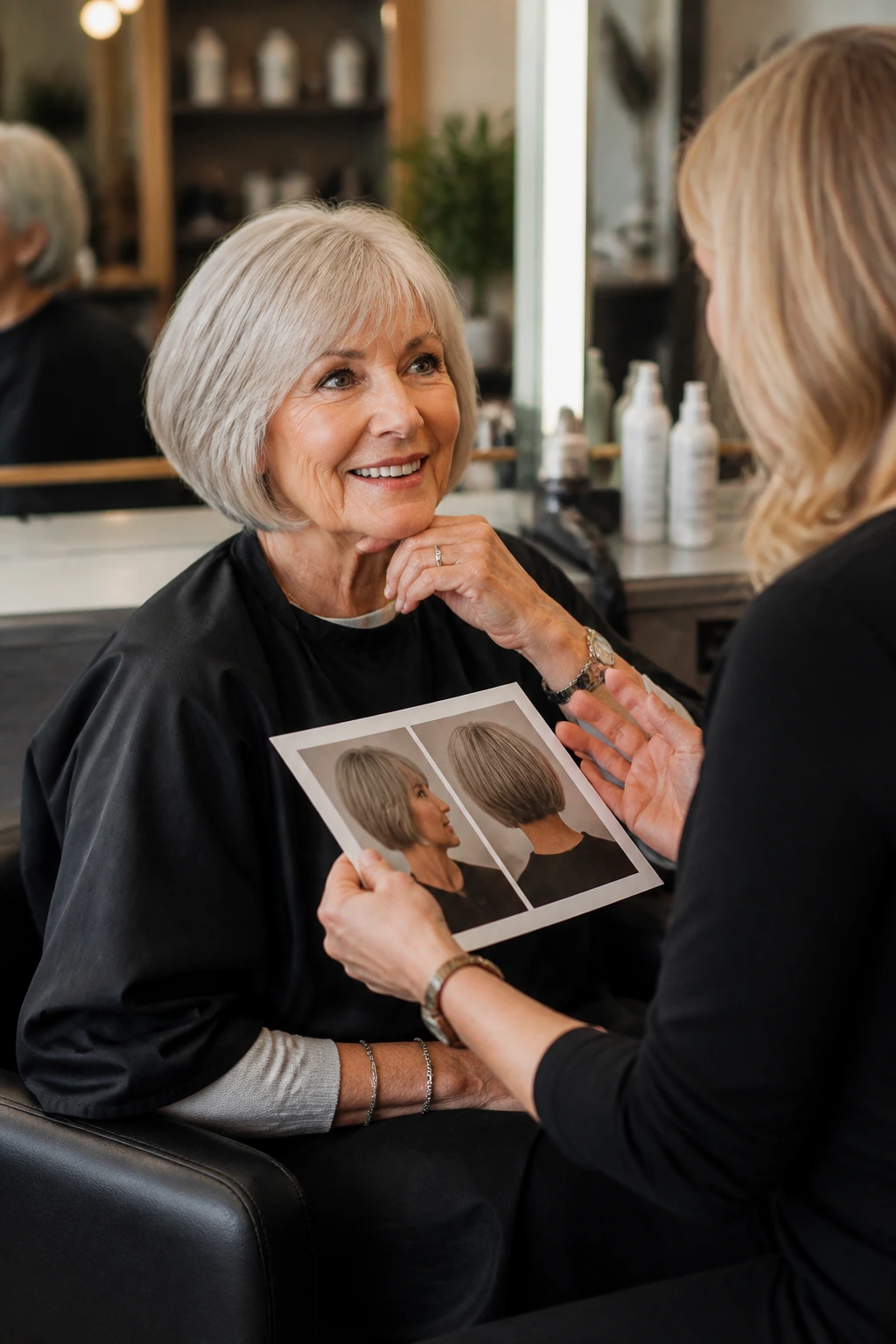
If you’re choosing a bob, the salon conversation matters almost as much as the scissors. Ask your stylist whether the cut should be blunt, lightly layered, graduated, or stacked. Those words change the result. “Bob” alone is too broad. A blunt bob and a feathered bob may both be bobs, but they live in different neighborhoods.
Bring one or two photos that show the length from the front and the side. A side view tells the truth about the nape and the angle. If you only show the front, you may end up with a shape you can’t maintain from home.
For products, keep it simple. A lightweight mousse, a smoothing cream, a heat protectant, and a dry shampoo cover most of these cuts. If your hair is silver or white, a purple shampoo once every week or two can help knock down yellow tones, but do not overuse it. Too much purple shampoo can make the hair feel dull or slightly violet at the wrong moment. Fine hair also tends to hate heavy oils near the roots, so keep shine products on the mids and ends.
How to Keep a Bob Looking Sharp Between Cuts
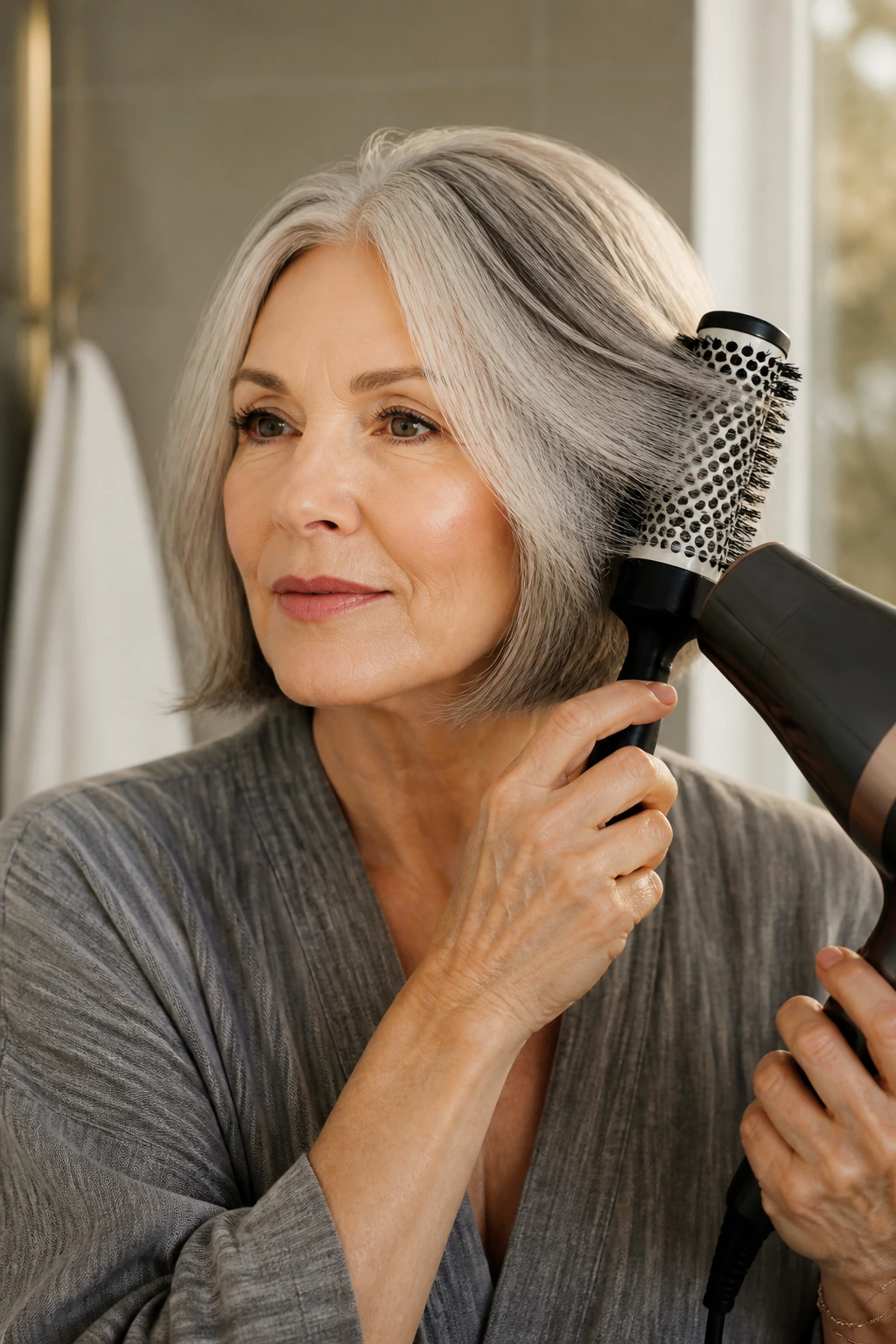
A bob shows growth faster than long hair does. That’s not a flaw. It’s part of the contract. The upside is that you can keep the shape in good condition with a few small habits instead of a complete restyle every morning.
Trim timing matters. Most bobs start losing their edge around six to eight weeks, depending on how fast your hair grows and how precise the shape is. A blunt chin-length bob will show grow-out sooner than a soft layered lob, while a stacked or inverted bob often needs more frequent cleanups to keep the back from collapsing.
Wash-day habits matter too. If the crown is flat, clip the roots up while they cool. If the ends flip out, use a round brush or a flat brush to bend them under while the hair is still warm. Day-two hair usually benefits from a tiny mist of water mixed with leave-in conditioner, then a quick brush and a blast of cool air at the roots. Don’t drown the whole head again unless you want to start over.
Small Tweaks That Make a Big Difference
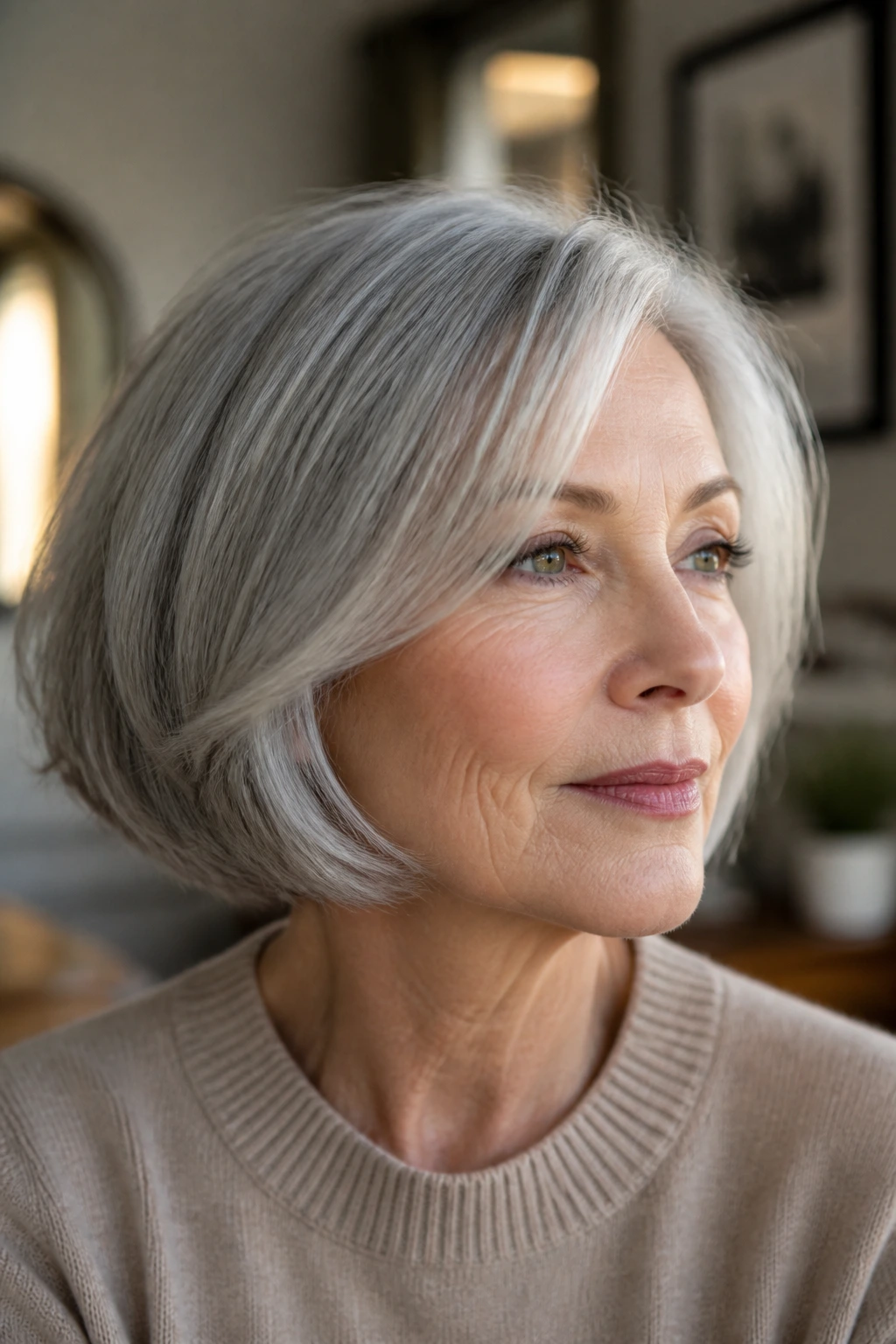
Root Lift: Put mousse at the roots while the hair is still damp, then rough-dry the top section before you start smoothing the ends. That gives the cut a little air where it needs it most.
Edge Control: If the perimeter of your bob looks fuzzy, run a paddle brush and dryer over just the bottom half-inch of hair. You do not need to redo the whole head. Usually you just need to calm the outline.
Shine Without Grease: Use one pea-sized drop of serum on the ends only. More than that can drag the haircut flat, especially on fine hair.
Make-It-Yours: If you wear glasses, shorten the front around the frame arms. If you have a stronger jaw, let the front skim it instead of stopping above it. If your hair is coarse, keep the perimeter heavier and the layering subtle.
Common Mistakes That Make a Bob Look Off
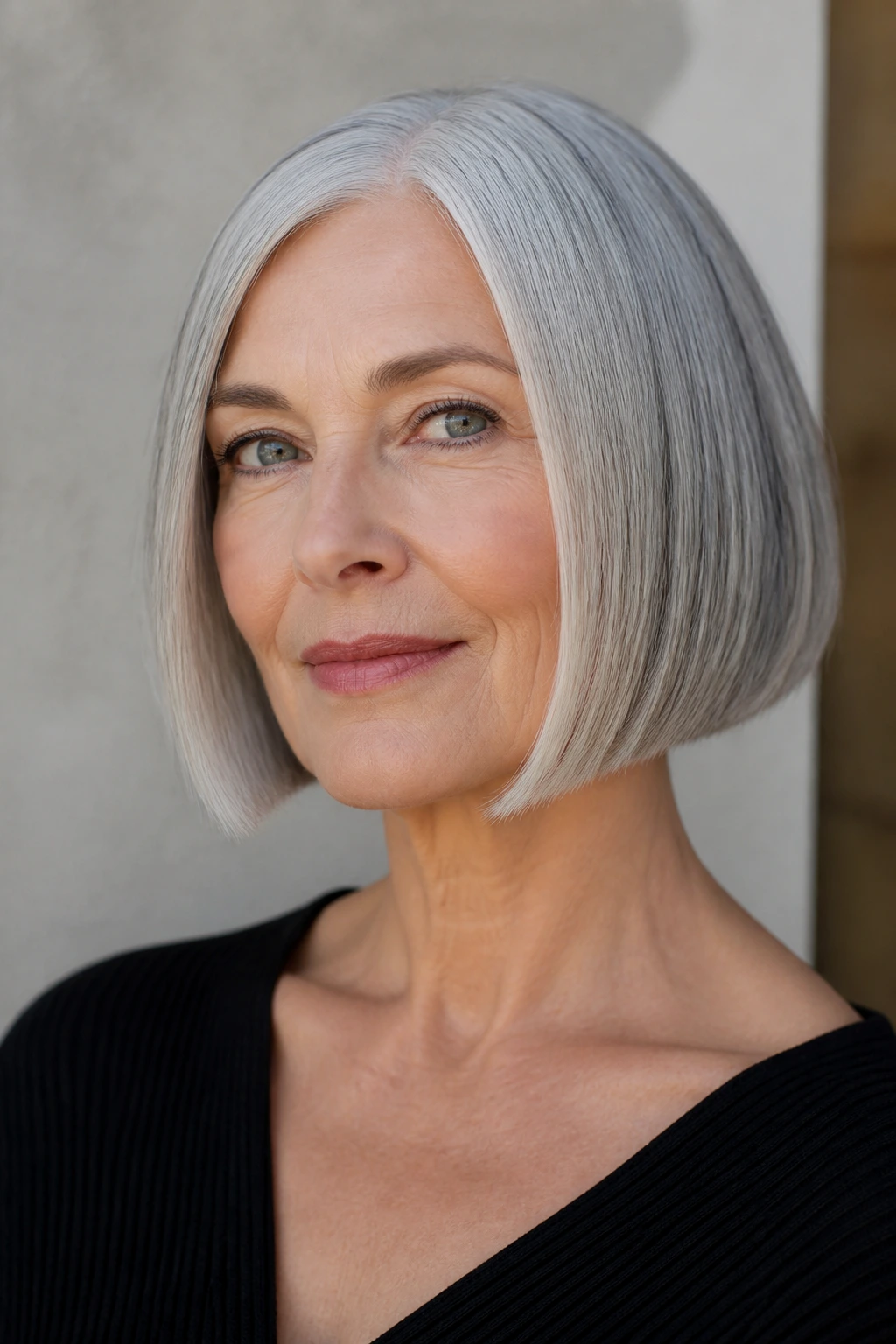
- Going too short around the face too fast: If the front pieces stop above the cheekbone when your face needs length, the cut can look boxy. Ask for the front to land near the jaw first, then shorten later if you want to go bolder.
- Over-layering fine hair: Too many layers can leave the ends see-through and make the bob collapse by lunchtime. A cleaner outline usually flatters fine hair more.
- Ignoring the nape: A messy neckline can ruin a good bob. The back should be checked often, because growth there changes the silhouette fast.
- Cutting curly hair like it’s straight: Curls shrink. A bob that looks perfect wet can become too short once it dries. Plan the cut with shrinkage in mind.
- Using too much product: Heavy creams and oils can turn a bob into a helmet or make the roots look greasy. Start small and add only if needed.
- Letting fringe drift into the eyes: Bangs that are too long or too heavy can make a bob feel tired instead of fresh. Fringe needs trims, not wishes.
Variations and Adaptations to Try

The Low-Maintenance Lob: Keep the length at the collarbone and skip heavy layering. This is the easiest jump if you’re not ready for a shorter bob and want something that behaves on ordinary days.
The Silver-First Cut: Ask for a blunt or softly graduated bob that shows off gray or white strands in clean bands. This works especially well when the color has dimension and you want the haircut to frame it rather than hide it.
The Volume-On-Top Version: If the crown has gone flatter over time, ask for stacking or graduation at the back and a deep side part. The height at the roots changes the balance of the cut fast.
The Curl-Friendly Shape: For natural curls, keep the perimeter rounded and the layers long enough to avoid frizz triangles. A diffuser and curl cream will do more for this version than heat tools ever could.
The Glasses-and-Earrings Edit: Keep the temples lighter, the fringe shorter or side-swept, and the sides soft around the frames. This keeps the haircut from crowding the face.
The Bold Short Version: If you want a cleaner neckline and stronger facial emphasis, move toward a micro bob or a short blunt bob. Start with a slightly longer version first if you’re not sure — there’s no prize for going shorter than you actually like.
Frequently Asked Questions
Which bob makes hair look thicker after 60?
A blunt bob or a lightly graduated bob usually gives the best illusion of thickness because the perimeter stays solid. If fine hair is heavily layered, the ends can look sparse faster, especially when the hair is dry or windy.
Are bangs a bad idea for women over 60?
Not at all. They just need to match the rest of the haircut and your styling routine. Side-swept fringe and curtain bangs are easier to live with than a dense, heavy bang that needs a trim every few weeks.
Can I wear a bob if I have curly hair?
Yes, and it can be one of the best cuts for curls. The trick is to cut for shrinkage, keep the shape rounded, and avoid slicing the curls so much that the silhouette turns uneven when dry.
What bob length works best with glasses?
A length that clears the frame arms and doesn’t sit right on top of the temples tends to work best. Chin-length and neck-length bobs are especially useful because they leave room around the face.
How often should a bob be trimmed?
Most bobs look best with trims every six to eight weeks. Very short or highly structured versions may need touch-ups sooner, while softer lobs can stretch a bit longer.
What if my bob flips out at the ends?
That usually means the ends need either a little more weight or a different brushing direction. Try drying the hair with the nozzle pointing down and use a round brush to guide the ends under while they’re still warm.
Can I ask for a bob if my hair is thinning at the crown?
Absolutely. A bob can help, especially with a side part, light graduation, or a bit of root lift at the front. The key is not to over-thin the ends, because that makes sparse areas stand out more.
Should I choose layers or a blunt edge?
If your hair is fine, start closer to blunt. If it’s thick, wavy, or hard to move, a few soft layers or internal removal can stop the shape from ballooning. The right answer depends on how your hair behaves when it dries.
A Sharp Line, A Softer Face
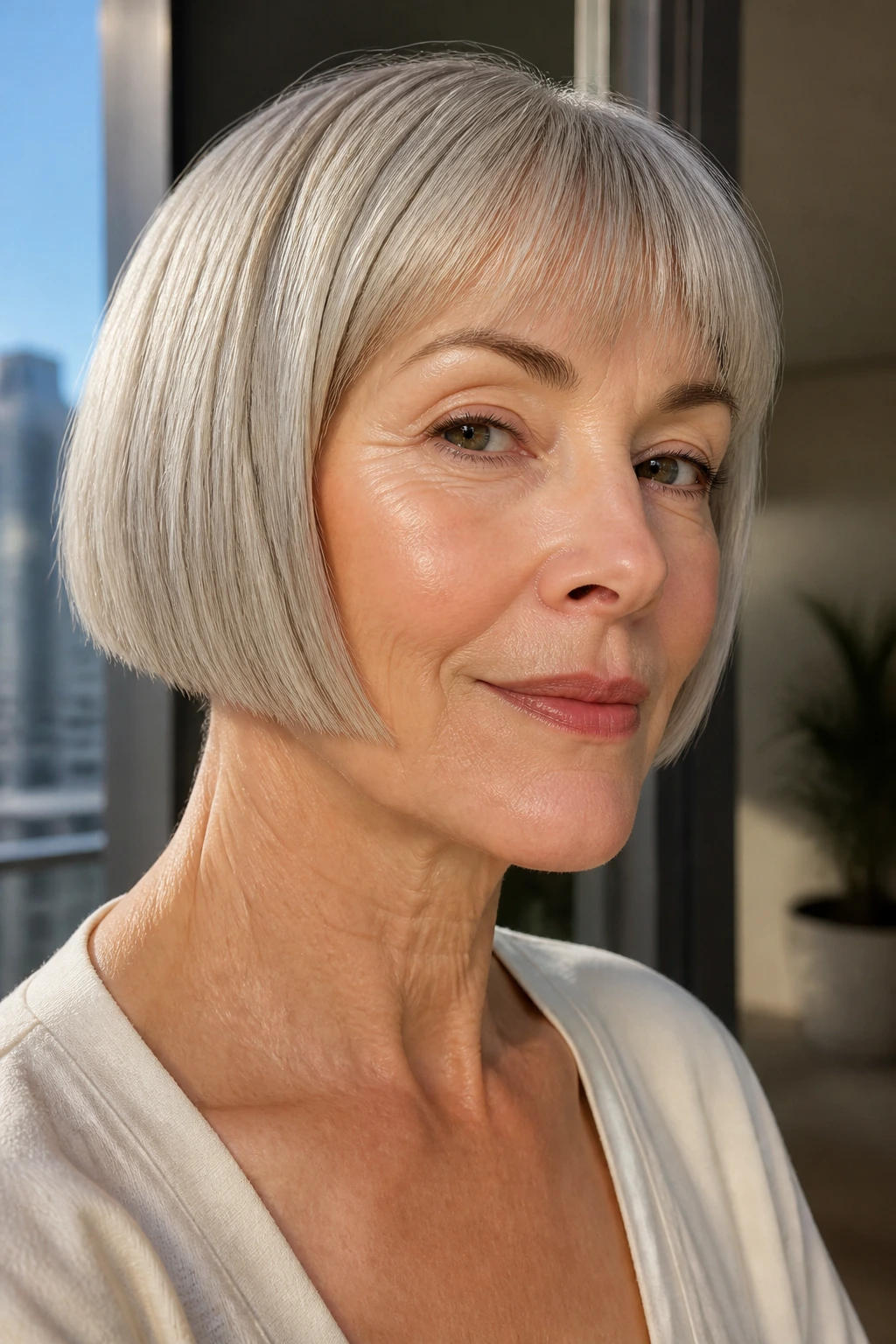
A good bob does not try to make you look younger. That’s the wrong goal, and it usually leads to hair that feels apologetic. The better goal is cleaner shape, better balance, and a cut that sits well with your features instead of around them.
That’s why bob haircuts for women over 60 stay relevant. They can be neat without being stiff, soft without losing shape, and short without looking severe. If you choose the right version for your hair texture and keep the outline trimmed, a bob has a way of looking like you meant it all along.
