



A stacked bob can look sharp enough to feel architectural, or soft enough to read almost playful. The difference lives in the back: the weight line, the graduation, the way the nape hugs the neck instead of puffing out like it has somewhere else to be. Get that part right and the whole haircut snaps into focus.
That’s why 25 cute stacked bobs for women can look wildly different and still share the same backbone. Some lean sleek and tidy. Some are airy and piecey. Some sit close to the head and some swing forward with a little more attitude, but they all rely on the same trick: remove weight where hair tends to flatten, then keep enough shape around the face to make the cut feel alive.
And “cute,” here, does not mean childish. It means a bob with bounce, clean edges, and enough movement to look finished without looking stiff. A good stacked bob should still look like a haircut after a windy drive, a long workday, or a quick scrunch with dry hands. That’s the whole appeal, really. Shape you can see. Shape you can trust. Shape that does not need a pep talk.
Why These Stacked Bobs Keep Winning on Different Hair Types
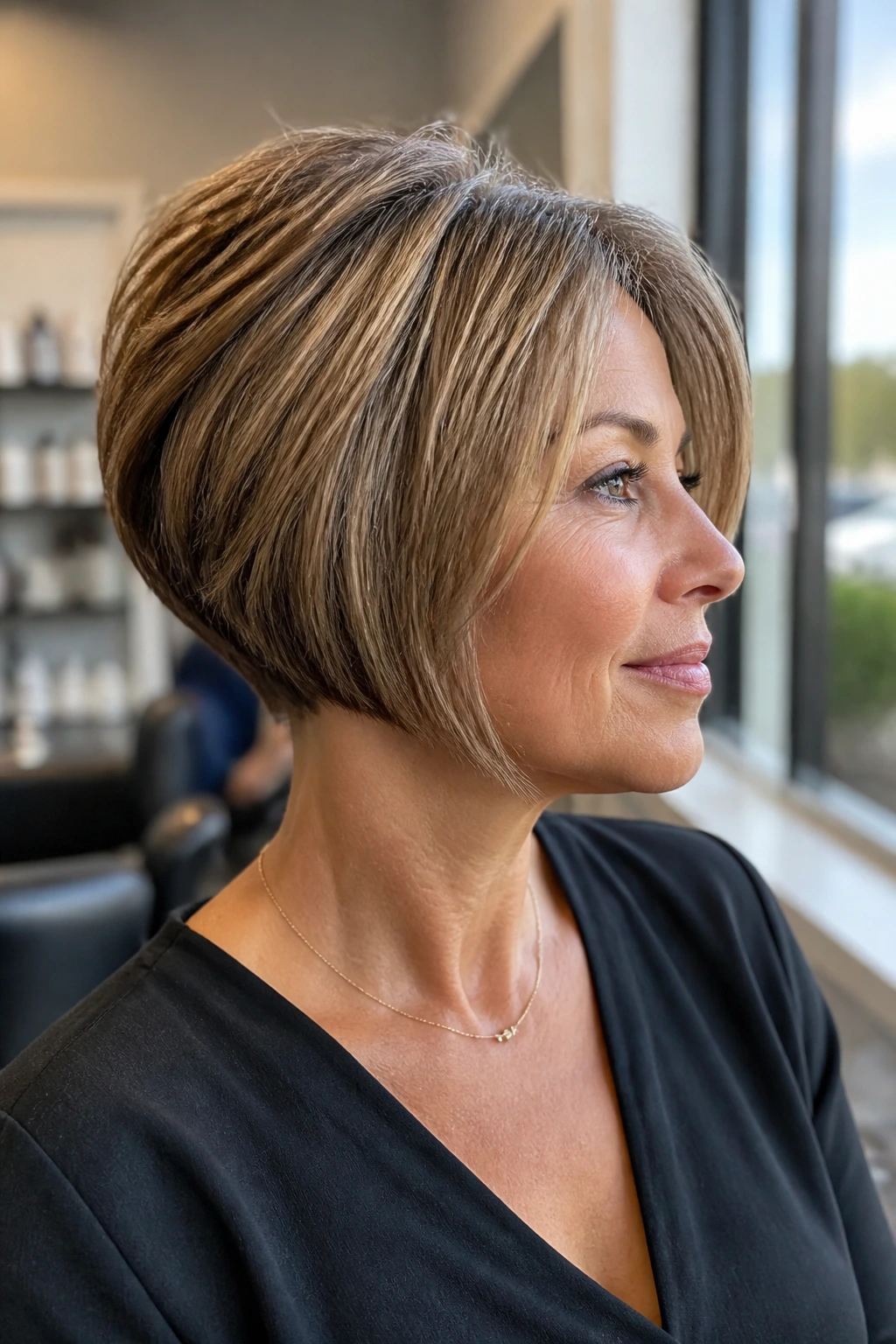
- Built-In Lift: The stacked back lifts hair at the crown before you reach for a round brush, which matters if your hair tends to collapse flat behind the ears.
- Clean Shape at the Nape: A short, tapered neck area keeps the outline crisp, even when the rest of the bob grows out a little.
- Easy to Tune: A stack can be soft, sharp, curly, angled, or blunt depending on how much graduation the stylist builds into the back.
- Face-Framing Control: The front can hit the jaw, chin, or cheekbone, so the same haircut can look softer or stronger without changing the whole silhouette.
- Fast Styling Payoff: A quick blow-dry, a bend from a flat iron, or a little mousse at the roots can change the mood in minutes.
- Works With Real Hair, Not Just Photos: Fine, thick, straight, wavy, and gray hair each need a different version of the stack, and that’s exactly why this haircut keeps showing up.
1. The Clean Nape Stack
A clean nape stack is the haircut that makes you notice the back of the head first, which is exactly the point. The graduation is tight, the neckline is tidy, and the curve from crown to nape looks deliberate instead of puffy. On straight hair, this version has a crisp little swing that makes even a basic tee and jeans look pulled together.
I like this cut on fine to medium hair because it gives the illusion of thickness where a bob usually goes limp. Ask for the stack to start just above the occipital bone, not halfway up the head; too much height back there and the shape starts to look lopsided. Keep the front around jaw length if you want the back to do the heavy lifting.
A center part makes it feel neat. A deep side part makes it a little sassier. Tiny shift, big change.
2. The Soft Angled Stack
If the clean nape stack is tidy, the soft angled stack is the version with a little eyeliner on. The back stays stacked, but the front drifts longer, usually by an inch or two, so the line angles down toward the chin instead of stopping abruptly. That extra length matters on round faces, square faces, and anyone who wants the haircut to frame the jaw instead of box it in.
The cut feels especially nice when the stylist softens the perimeter with a point-cutting finish. You still get a visible shape, but the ends don’t look carved with a ruler. On hair that flips at the ends, this one can look great with a round brush and a cool shot from the dryer.
A lot of people think angled bobs are dramatic by default. Not true. Keep the angle gentle, and it reads polished rather than severe.
3. The Side-Swept Fringe Stack
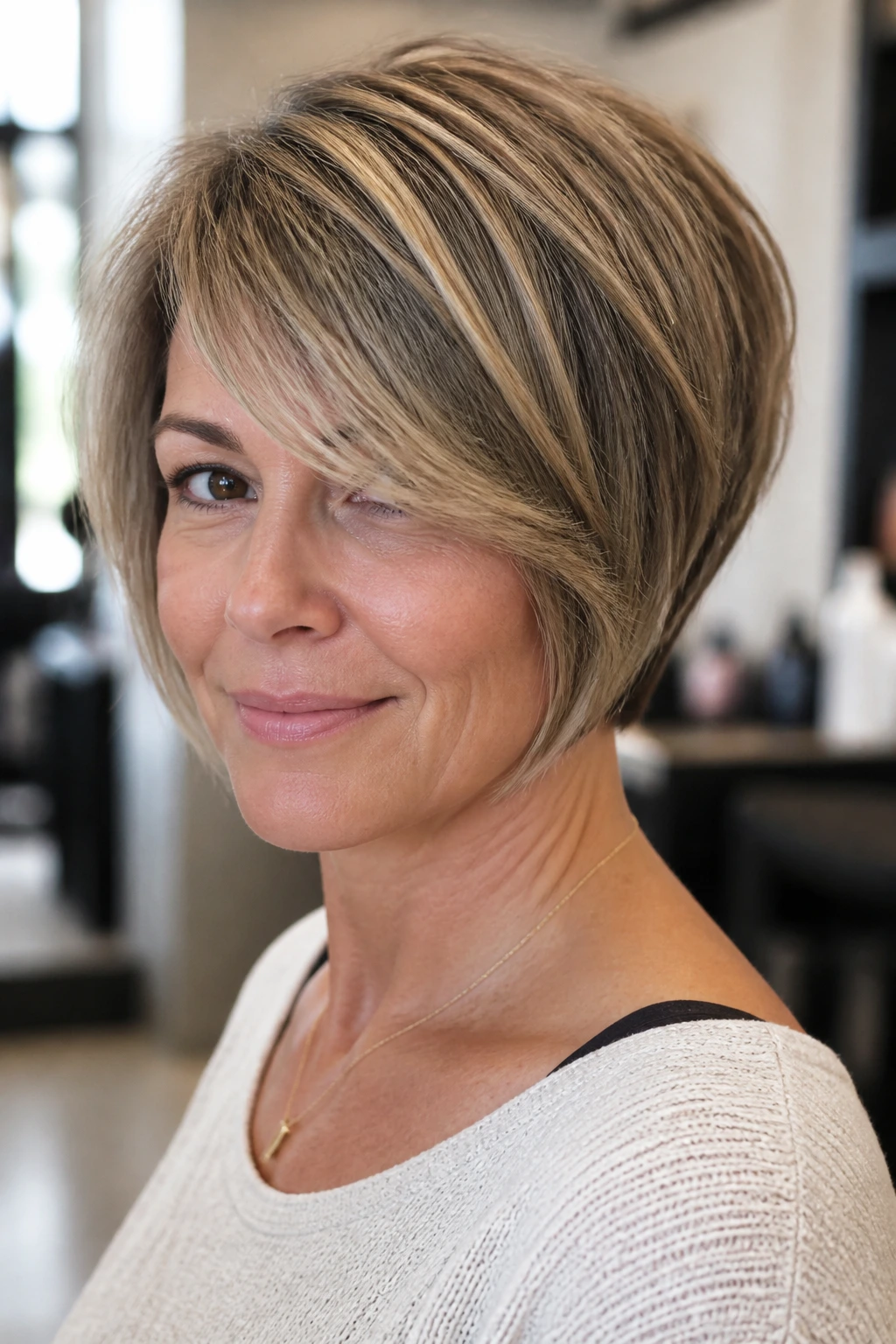
A side-swept fringe changes the whole mood of a stacked bob. The back still has that tucked-in volume, but the front is interrupted by a soft sweep that slides across the forehead and lands around the cheekbone or eyebrow. It’s a smart move if you want the haircut to feel lighter around the face without losing the structure in the back.
This version works well on women who wear glasses, because the fringe breaks up the space above the frames and keeps the cut from feeling too open. It also helps if you have a higher forehead or a hairline that you like to soften. The fringe should not be too thick. Too much hair in the bang area turns cute into helmet.
Ask your stylist to leave the front long enough to tuck behind the ear. That little bit of flexibility makes the cut easier to live with on messy mornings.
4. The Soft Layered Stack
Some stacked bobs are sharp. This one is kinder. The soft layered stack keeps the back graduated, but the layers melt into each other instead of making obvious steps, so the haircut moves when you turn your head. It’s a good choice if you like shape but not a hard outline.
This version is especially useful on medium-density hair that gets bulky at the ends. A little internal layering removes weight without shredding the shape. I would not over-thin it. That’s where people get nervous about “movement” and end up with wispy ends that look tired by noon.
Blow it dry with a medium round brush, then bend the front away from the face once or twice with a flat iron if you want a softer finish. That’s enough. No need to build a whole production around it.
5. The Curly Stack With Lifted Ends
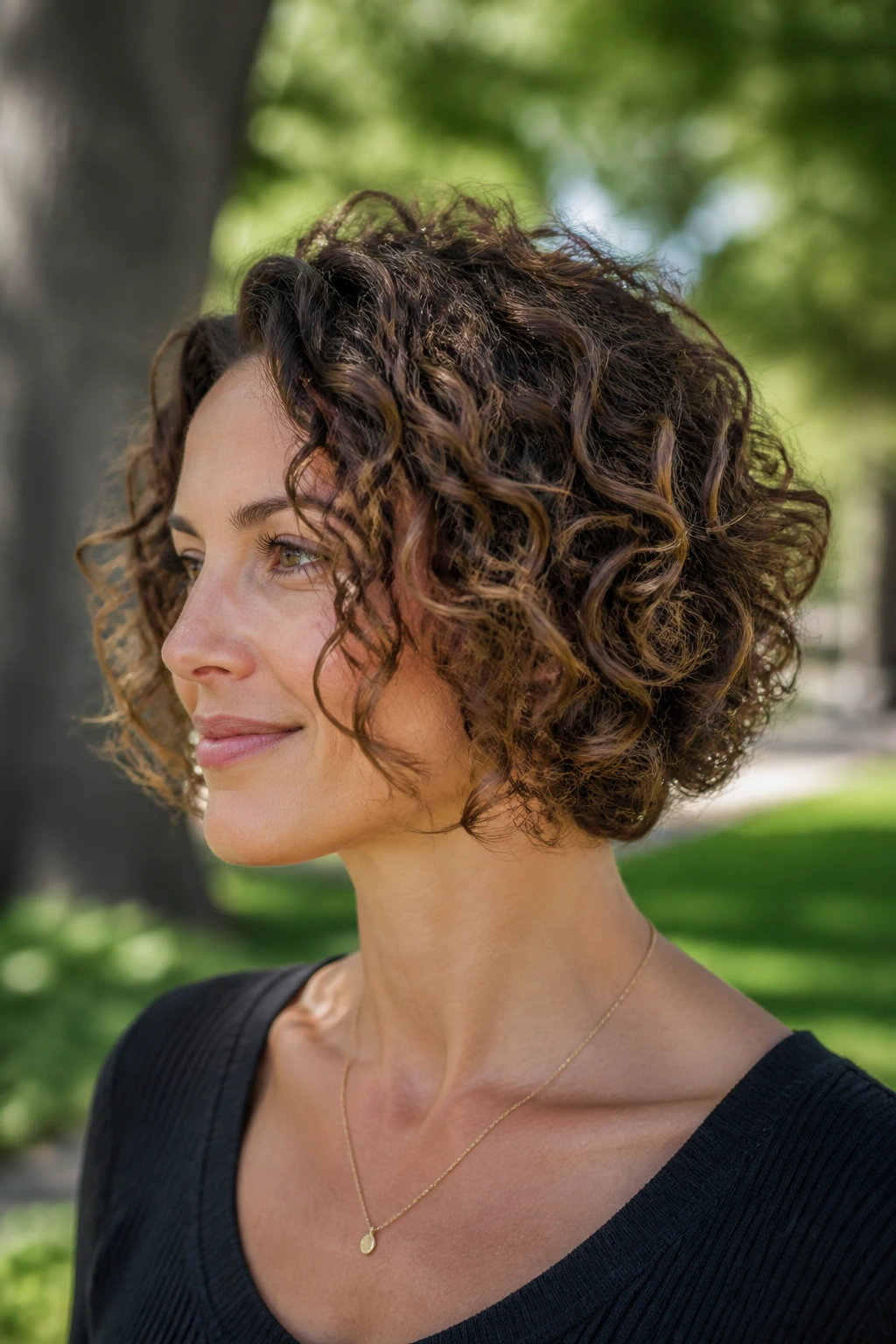
Curly hair and stacked bobs get along beautifully when the stack is cut with the curl pattern in mind. The back should be stacked, yes, but not chopped so short that the curl springs into a triangle. The trick is to leave enough length for the curls to form while still removing bulk where the head curves in at the nape.
A dry cut or a curl-by-curl finish usually works better than cutting curls wet and hoping for the best. Curly hair shrinks. A lot. If your stylist ignores that, the back can end up riding too high once it dries. Ask for a softer stack and a little extra room at the crown.
Use a curl cream, then diffuse on low heat until the roots are set and the ends feel springy, not crunchy. The result should look buoyant, not boxy.
6. The Inverted Stack With a Strong Front Line
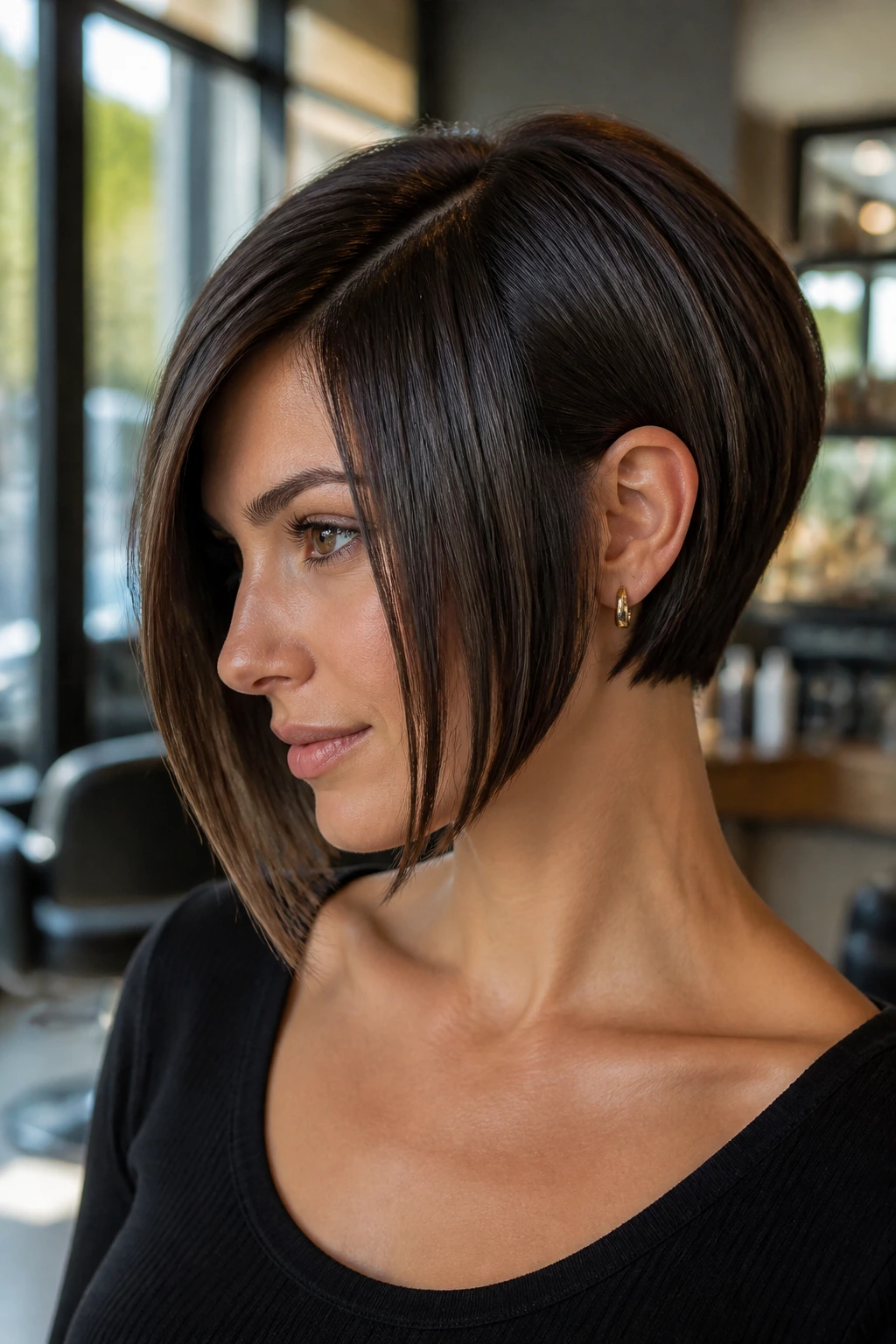
The inverted stack is the bolder cousin in the family. The back is clearly shorter, and the front sweeps down with a stronger angle, which makes the whole haircut look intentional from across the room. It has more edge than a classic bob, but it still belongs to the same short-hair tribe.
I think this version looks best when the front line is clean and the stack is compact. If both the back and front get too dramatic, the shape turns busy. One loud feature is enough. Let the angle do the talking.
This cut likes sleek styling. A paddle brush, a blow-dryer nozzle, and a little shine cream at the ends are usually enough. If you want it to feel more modern, keep the part off-center and tuck one side behind the ear.
7. The Chin-Grazing Stack
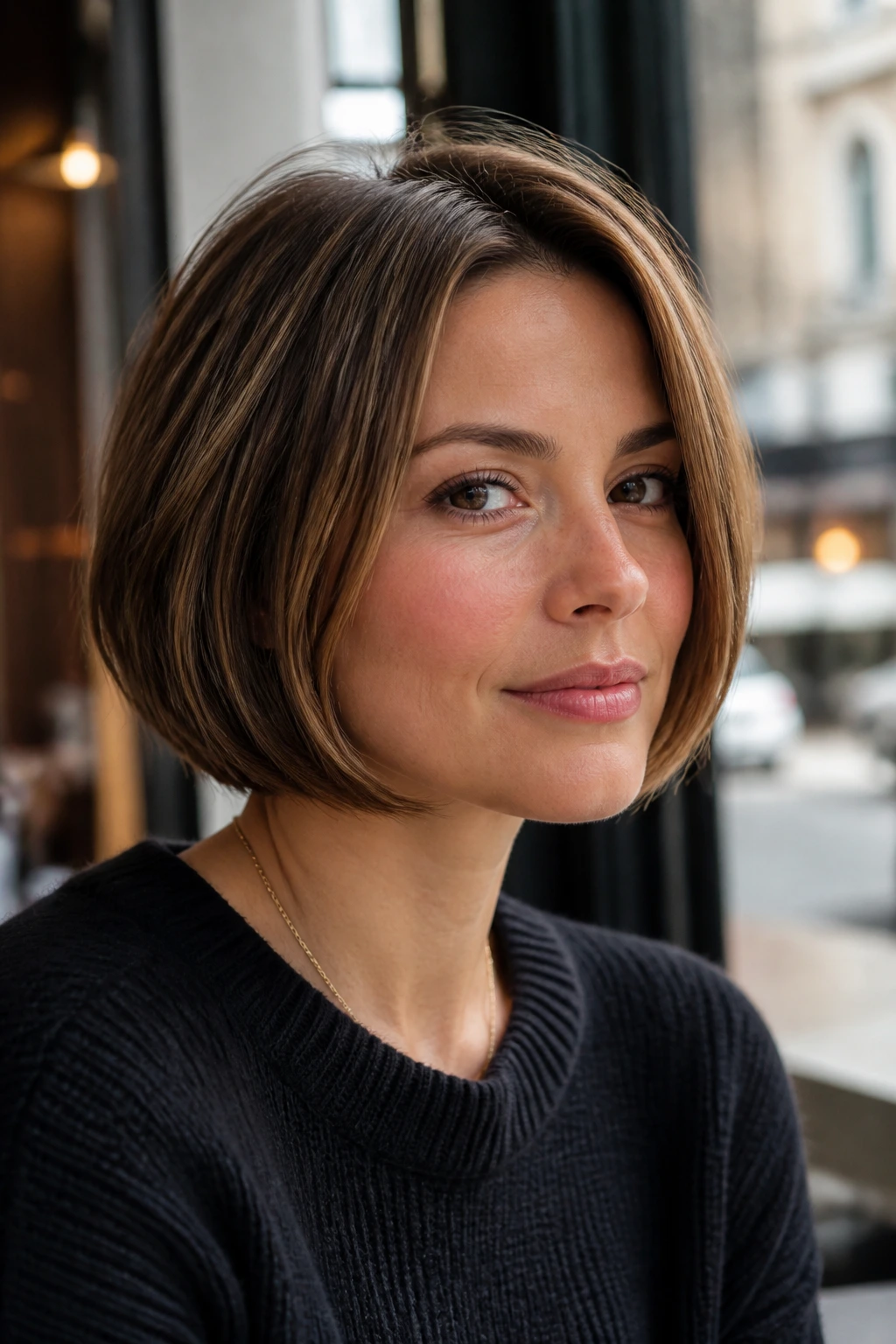
A chin-grazing stacked bob hits that sweet spot where the haircut feels short, but not severe. The ends skim the chin, which gives the face a little frame and keeps the stack from looking too back-heavy. It’s a nice choice if you want to show off the jawline without exposing every edge of the face.
This length is also forgiving on growing-out hair. The shape stays readable even when the back starts gaining a quarter inch here and there. That matters. Some short bobs fall apart the moment they grow; this one usually holds its line a bit longer.
A side part gives it a softer feel. A center part makes it look cleaner and more geometric. Both work, which is part of why people keep coming back to this length.
8. The Piecey Textured Stack
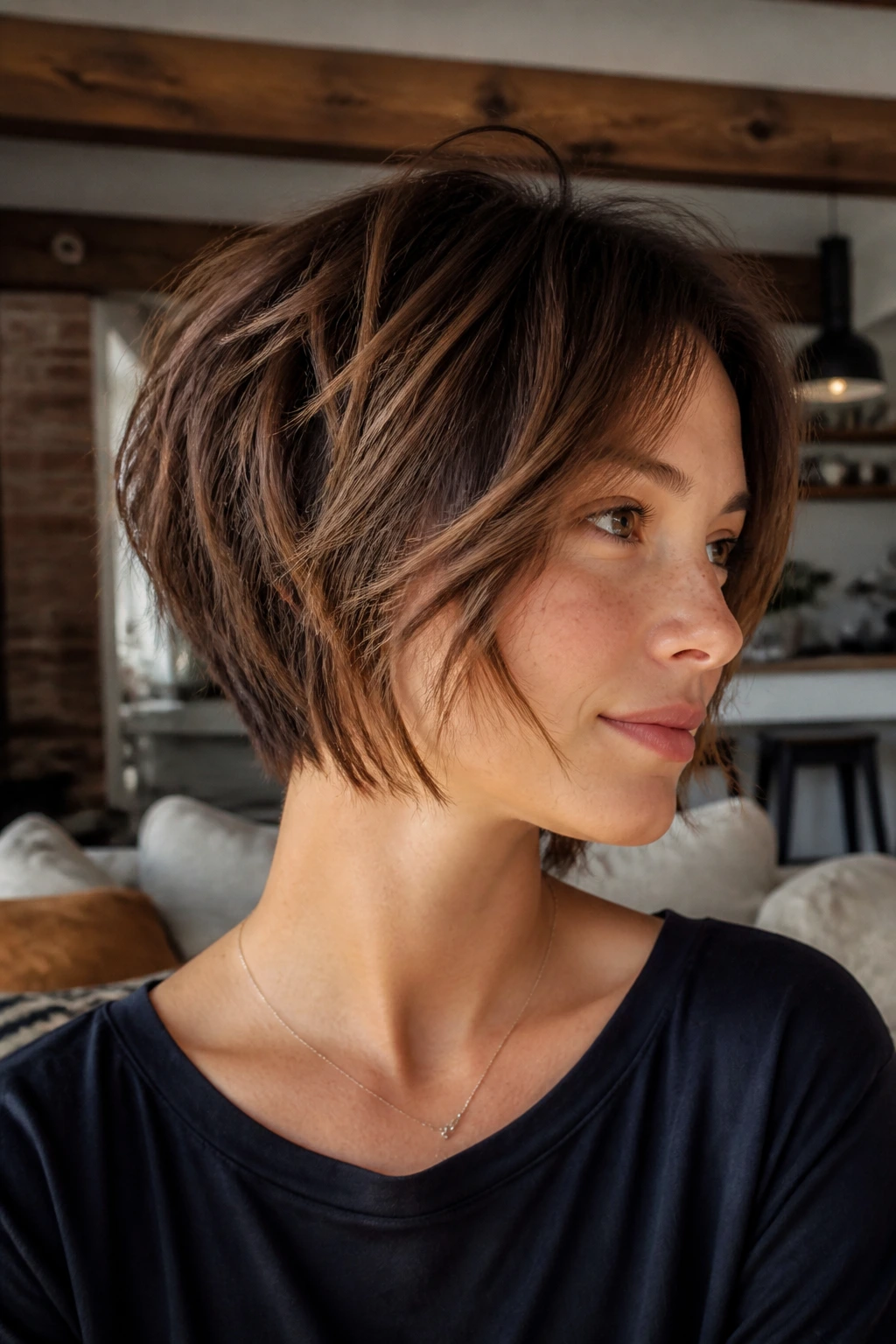
If you like hair that looks touched, not frozen, the piecey textured stack is where things get fun. The ends are lightly chopped so they separate a little instead of sitting in one smooth block. That separation makes the bob feel relaxed, which is handy if your style leans casual or slightly edgy.
This haircut works best on medium to thick hair, or on fine hair with a bit of natural bend. Too much texture on very fine strands can make the ends disappear. Ask for soft point-cutting, not heavy razoring, unless your hair is dense enough to handle it.
Best way to wear it
A dry texture spray at the root and a pea-sized bit of paste on the ends is usually enough. Don’t smear product everywhere. Pick 3 or 4 spots, twist the ends lightly with your fingers, and stop before it gets sticky. That little restraint keeps the bob looking cute instead of overworked.
9. The Curtain Bang Stack
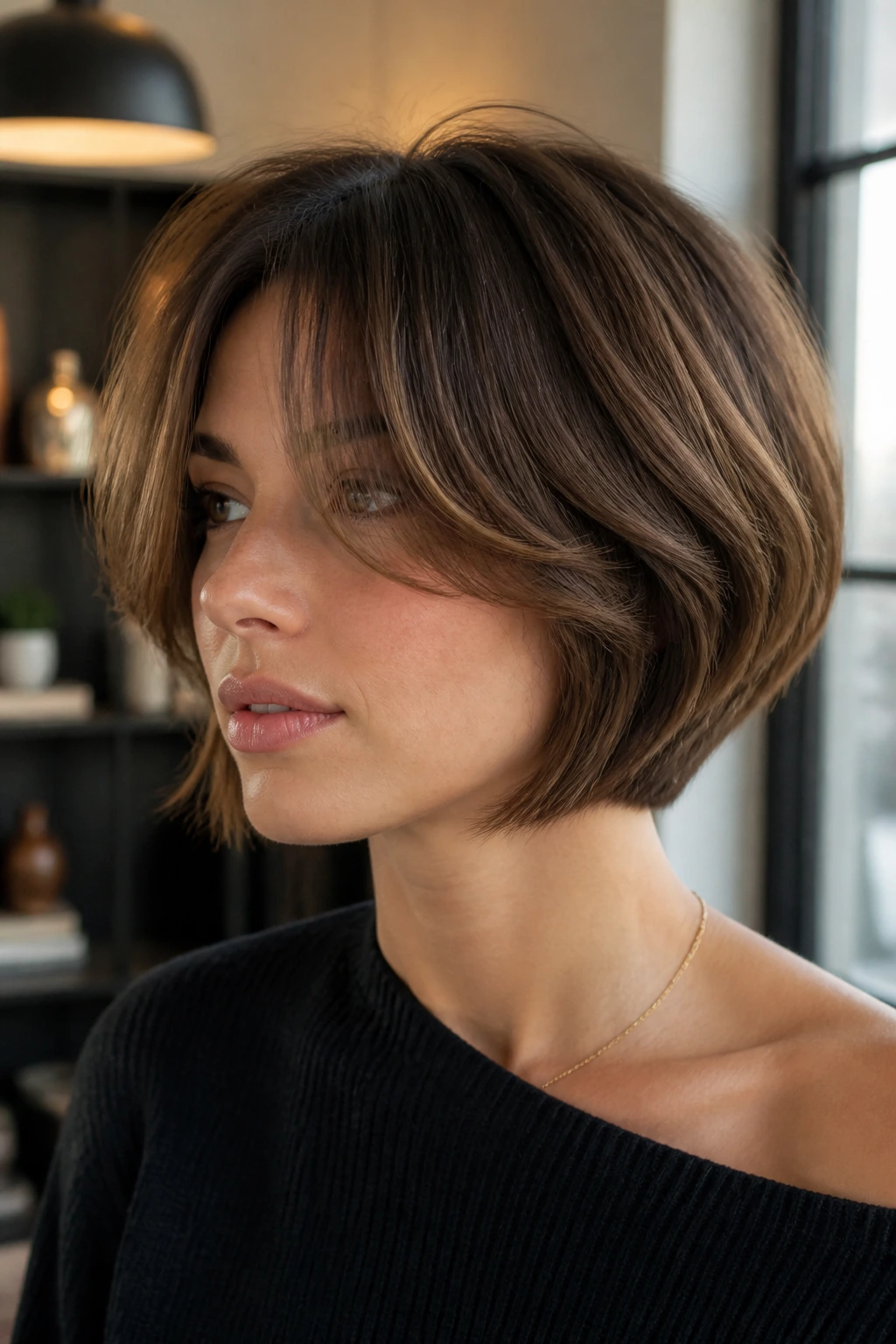
Curtain bangs and stacked bobs make sense together because both shapes are about movement. The bangs part in the middle, then sweep out toward the cheekbones, which breaks up the front of the haircut and keeps the whole style from feeling boxed in. The back still gets the stacked lift, but the front has a soft, face-framing curve.
This is a smart choice if you like having some forehead coverage without committing to full bangs. Curtain bangs are easier to grow out, and they work well when you want to change the mood of the bob without changing the bob itself. A quick round-brush blowout is usually enough to keep them from sticking flat.
The only catch is maintenance. Bangs need attention, even the soft kind. If you hate touching your fringe every morning, this is not the easiest option on the list.
10. The Balayage-Dimension Stack
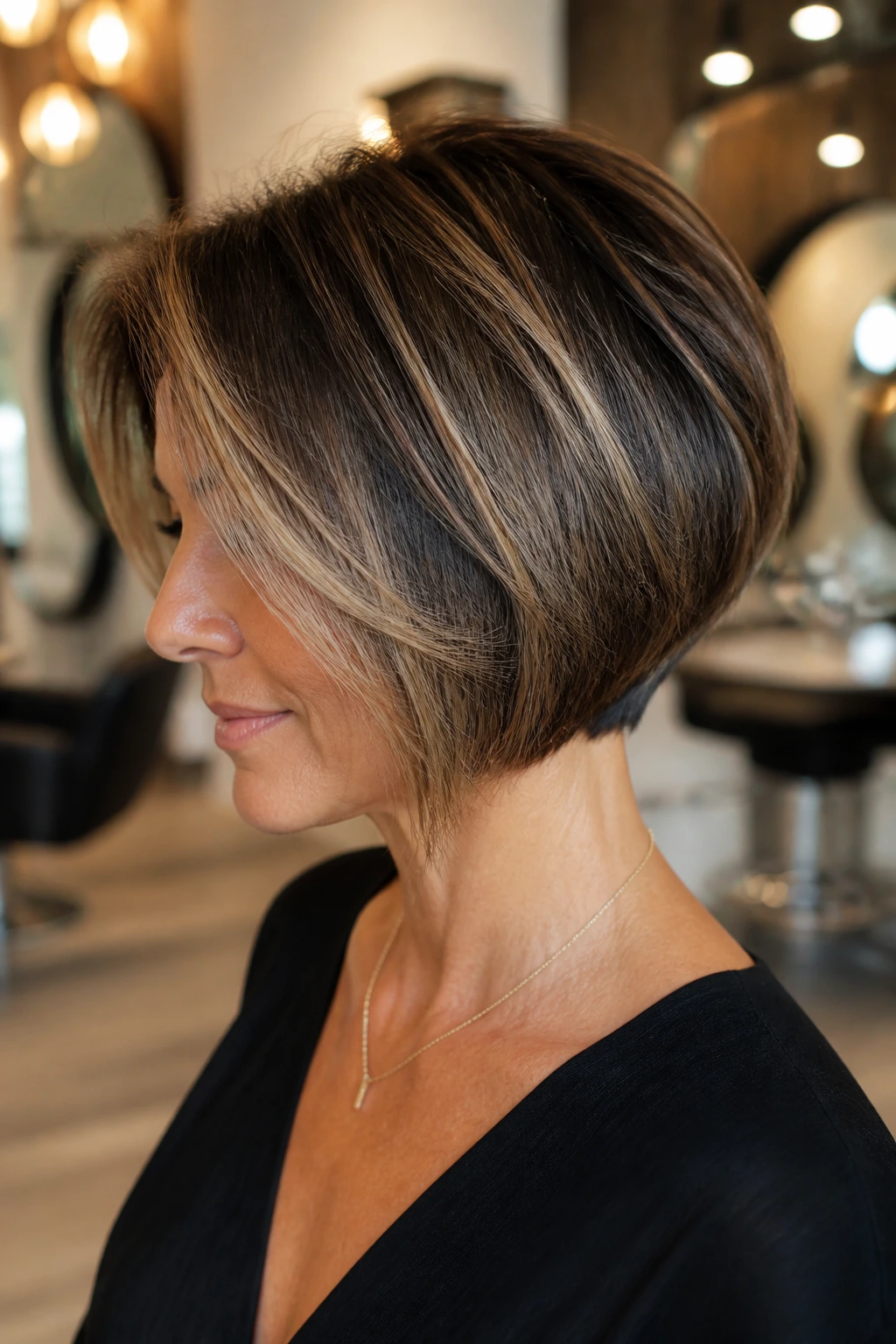
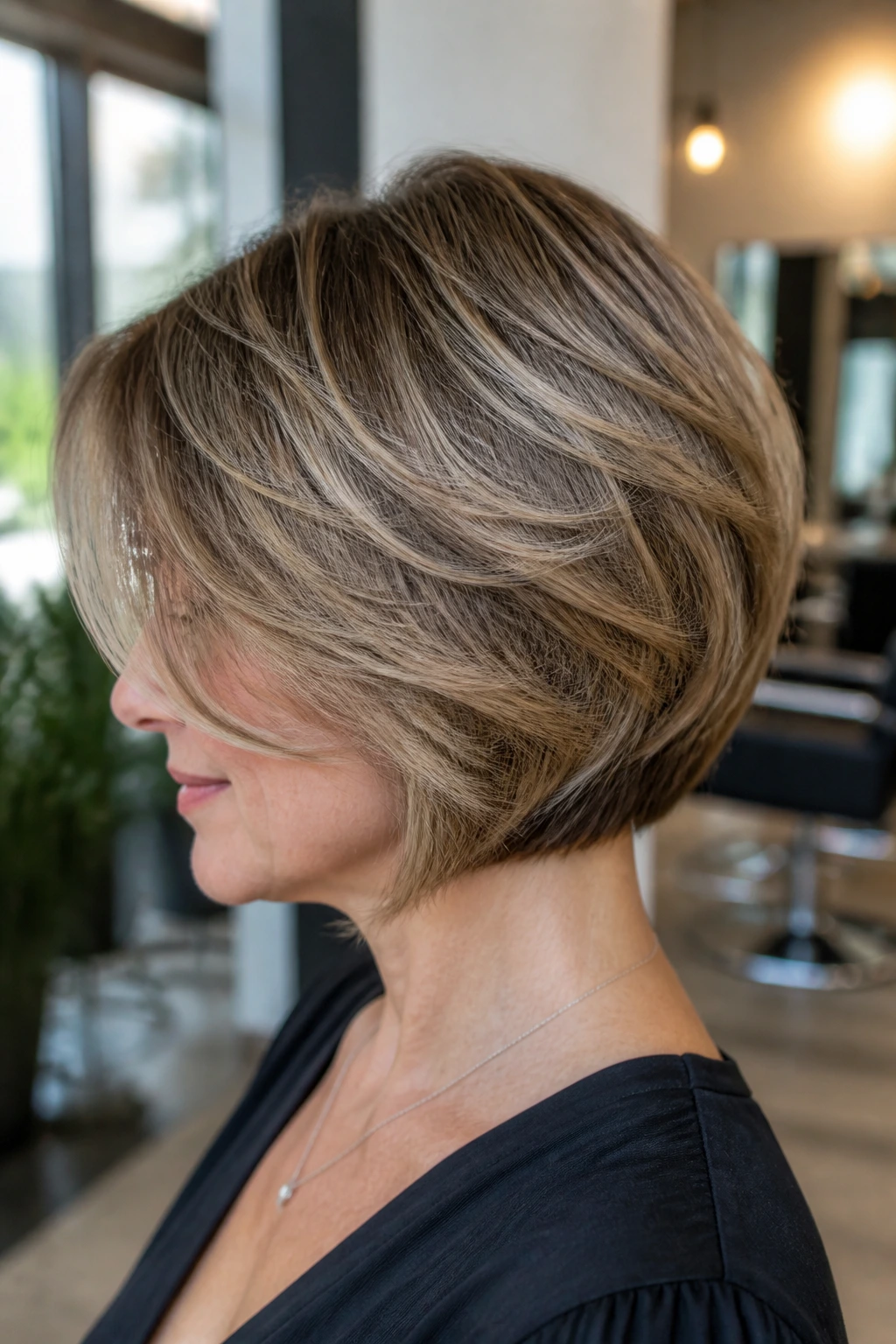
Color can make a stacked bob look twice as structured. Balayage does the heavy lifting by brightening the outer layers and leaving depth underneath, so the stack reads more clearly from every angle. On a flat single-tone bob, the graduation can disappear; with dimension, you actually see the layers.
I especially like this on medium brown, dark blonde, and brunette hair where the lighter pieces can sit just on the topmost bends. A soft root shadow keeps the cut from looking stripey. That contrast matters more than people think. The back needs depth. The front can take the light.
Styling is simple. A blowout that flips the ends under slightly will show the color placement better than tight curls. You want the movement to be obvious, not busy.
11. The Silver Gloss Stack
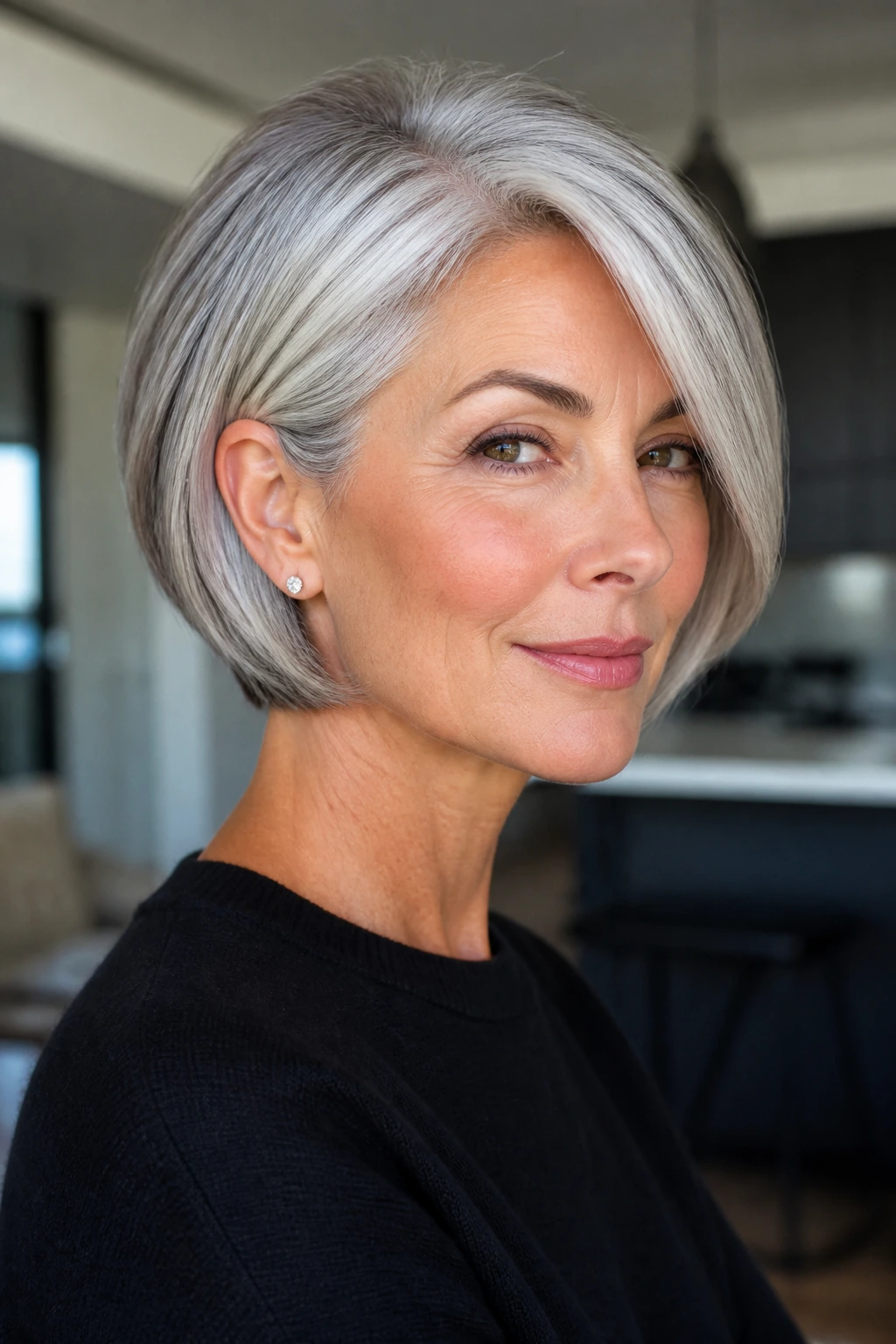
Silver hair looks striking in a stacked bob because the haircut gives the color a clean frame. There’s no hiding behind length here. The shape sits out in the open, and that makes glossy silver, white, or salt-heavy strands look polished rather than plain. The key is shine.
Use a violet shampoo sparingly if you need to keep brass away, but don’t overdo it. Too much purple product can leave pale hair looking dull and cold. A clear gloss treatment or a shine serum on the ends usually does more for silver hair than another round of toning.
This cut is lovely with a neat side part and an ear tuck. It shows off the neck, the cheekbone, and the color change all at once. Clean. Simple. Strong.
12. The Auburn Glow Stack
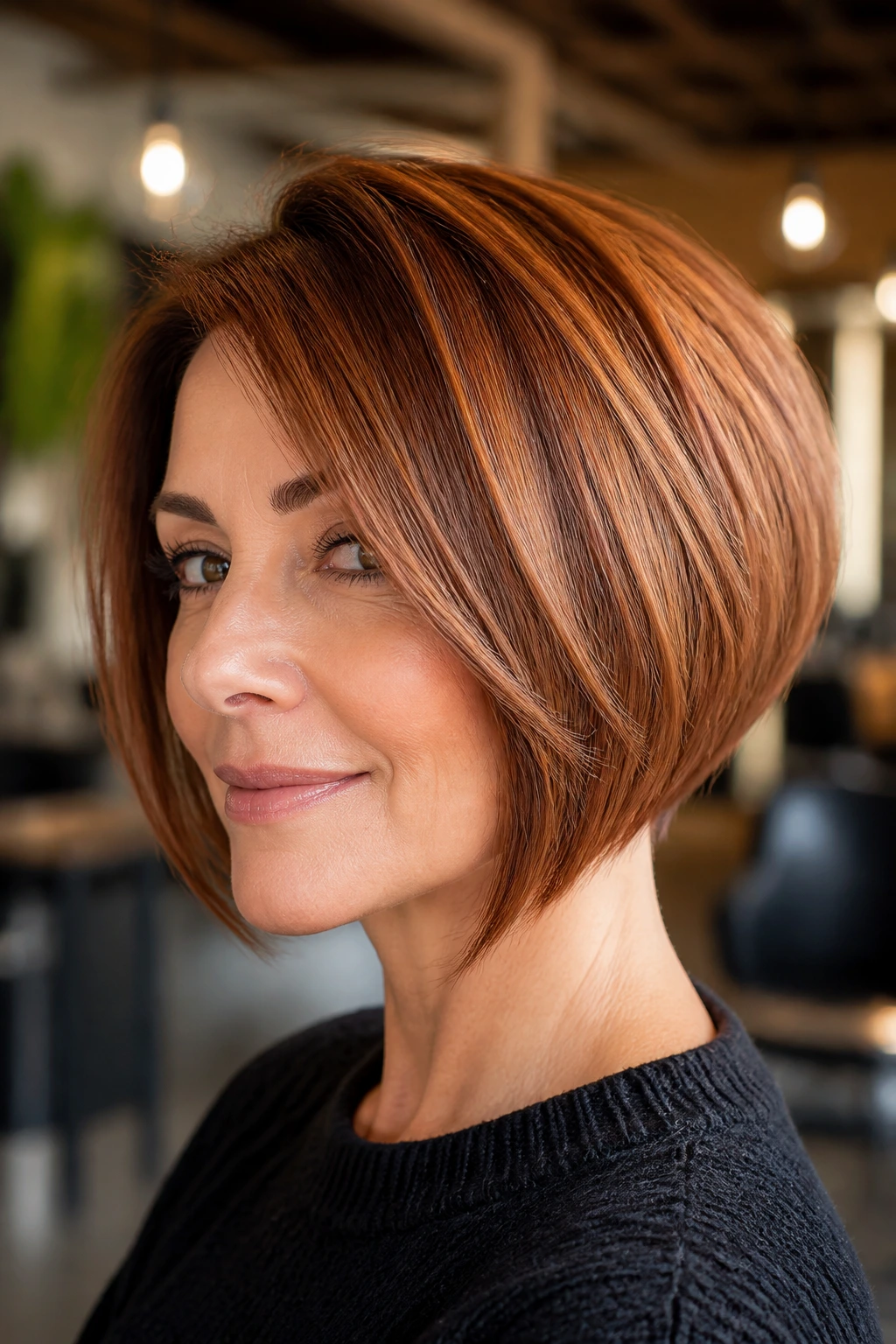
Auburn loves a stacked bob. Warm color picks up on every curve in the cut, so the graduation looks richer and the ends feel fuller than they actually are. Copper, cinnamon, and deep strawberry tones all work here, especially when the front is a touch longer than the back.
This is one of those styles that looks expensive when the finish is smooth and a little shiny. Not stiff. Just smooth. Use a heat protectant, then blow-dry with the nozzle pointed downward so the cuticle lies flat and the color reflects light instead of scattering it.
Auburn can make the stack look softer than a blunt dark bob. That’s part of the charm. The haircut keeps the shape, and the color keeps it from feeling hard.
13. The Blunt-Edged Stack
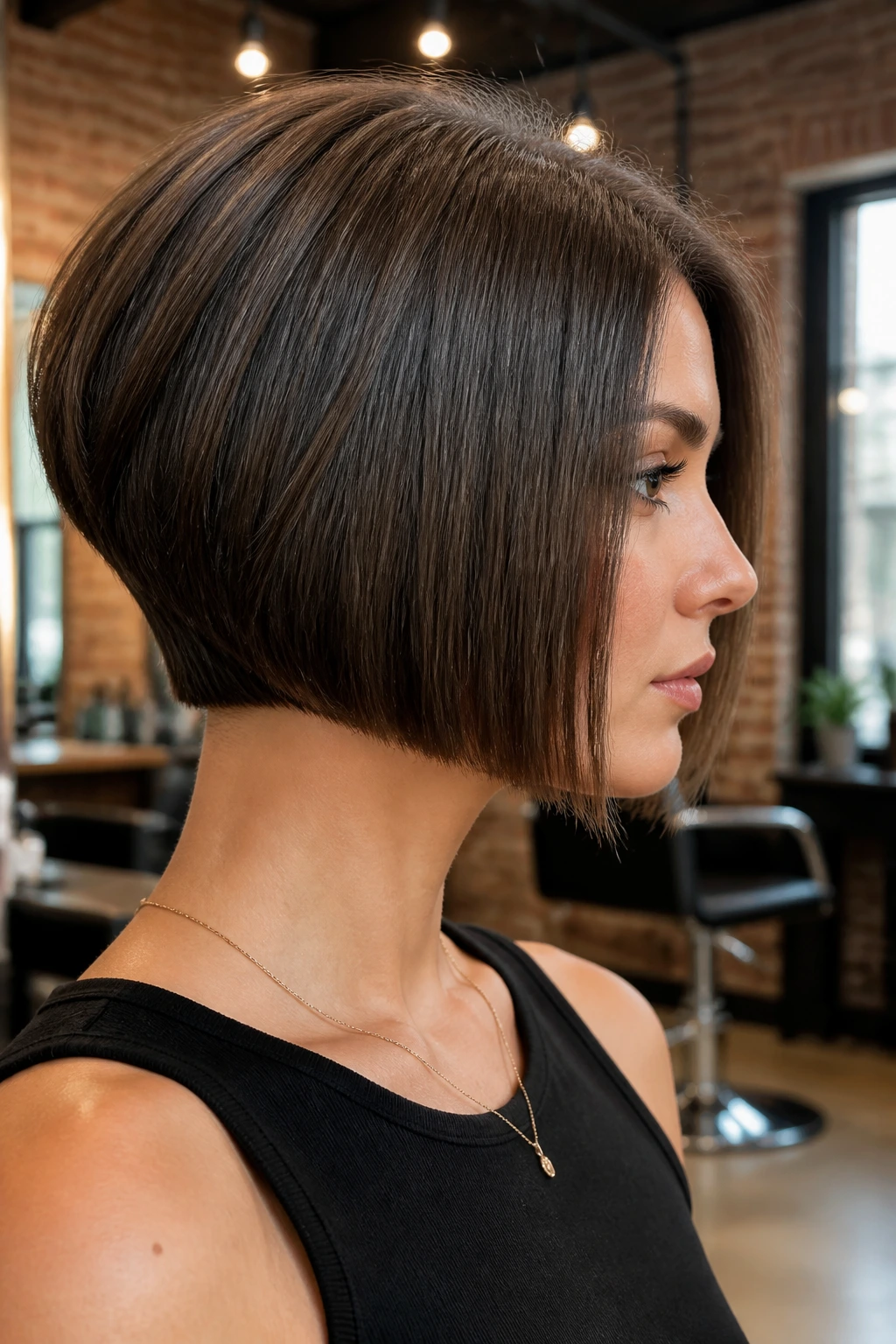
A blunt-edged stacked bob is for the person who wants density more than feathering. The back is stacked, but the perimeter stays clean and straight, which makes the ends look thicker. On fine hair, that blunt line can be a lifesaver. It gives the bob some visual weight instead of letting the ends fray into nothing.
The trick is balance. If the stack is too high and the front is too blunt, the haircut can read boxy. Keep the graduation tight and the line precise, and it looks sleek instead of heavy.
A flat iron bend at the ends, just a quarter turn under, is enough styling for this one. Don’t curl it into submission. The point is the straight edge. Let it show.
14. The Asymmetrical Stack
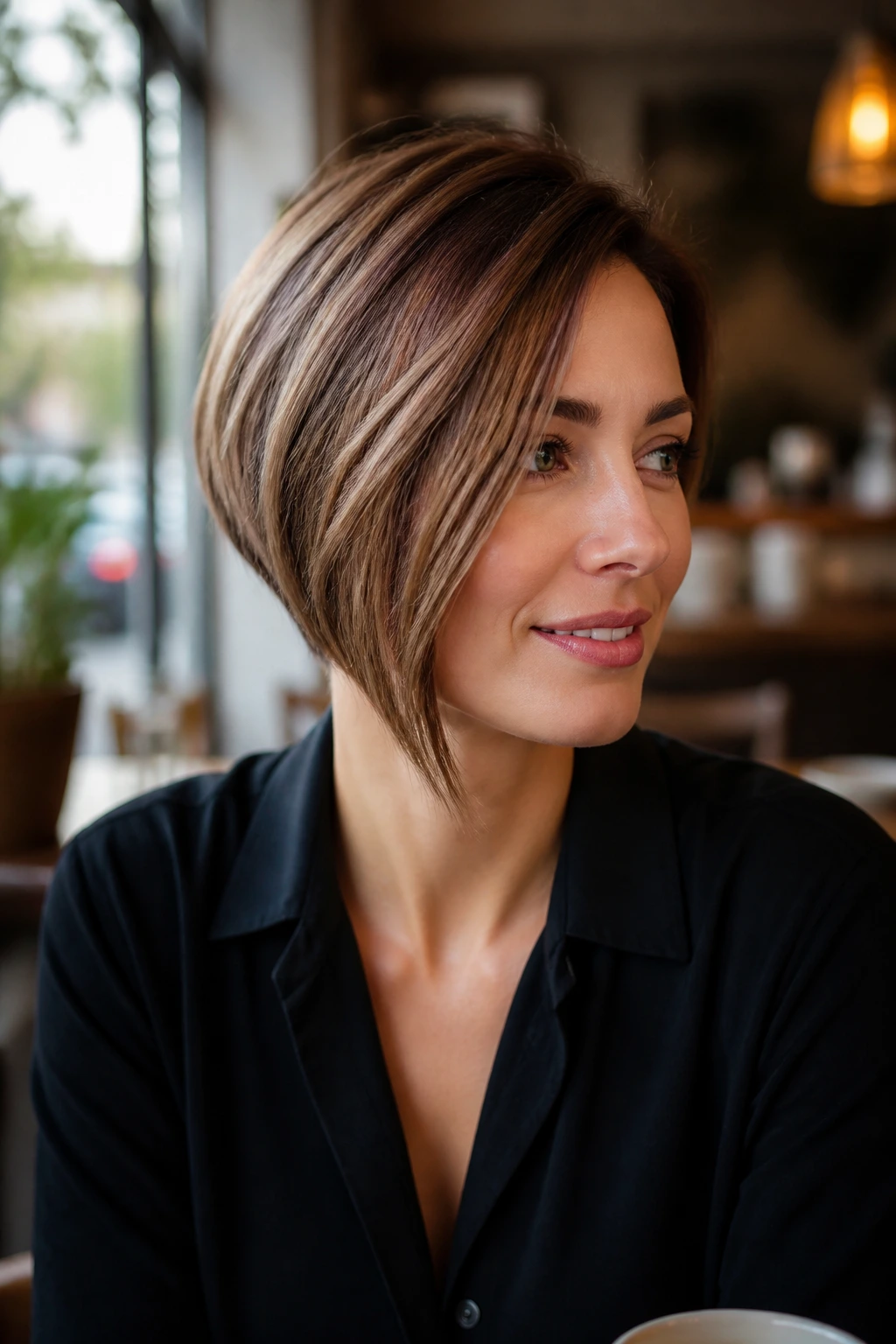
Asymmetry gives a stacked bob a little attitude without turning it into a costume. One side sits longer, the other side stays a bit tighter, and the back still holds the stacked structure so the haircut doesn’t lose shape. The result is playful, but not messy.
This works well if you like side parts and one-ear-tucked styling. The longer side can graze the jaw or chin while the shorter side shows off the neckline. Tiny difference, huge effect. About an inch can be enough.
I’d keep the asymmetry subtle unless you want the haircut to scream for attention. Mild asymmetry is easier to live with, easier to grow out, and easier to explain to a stylist who gets nervous about creative cuts.
15. The Flicked-Out Feather Stack
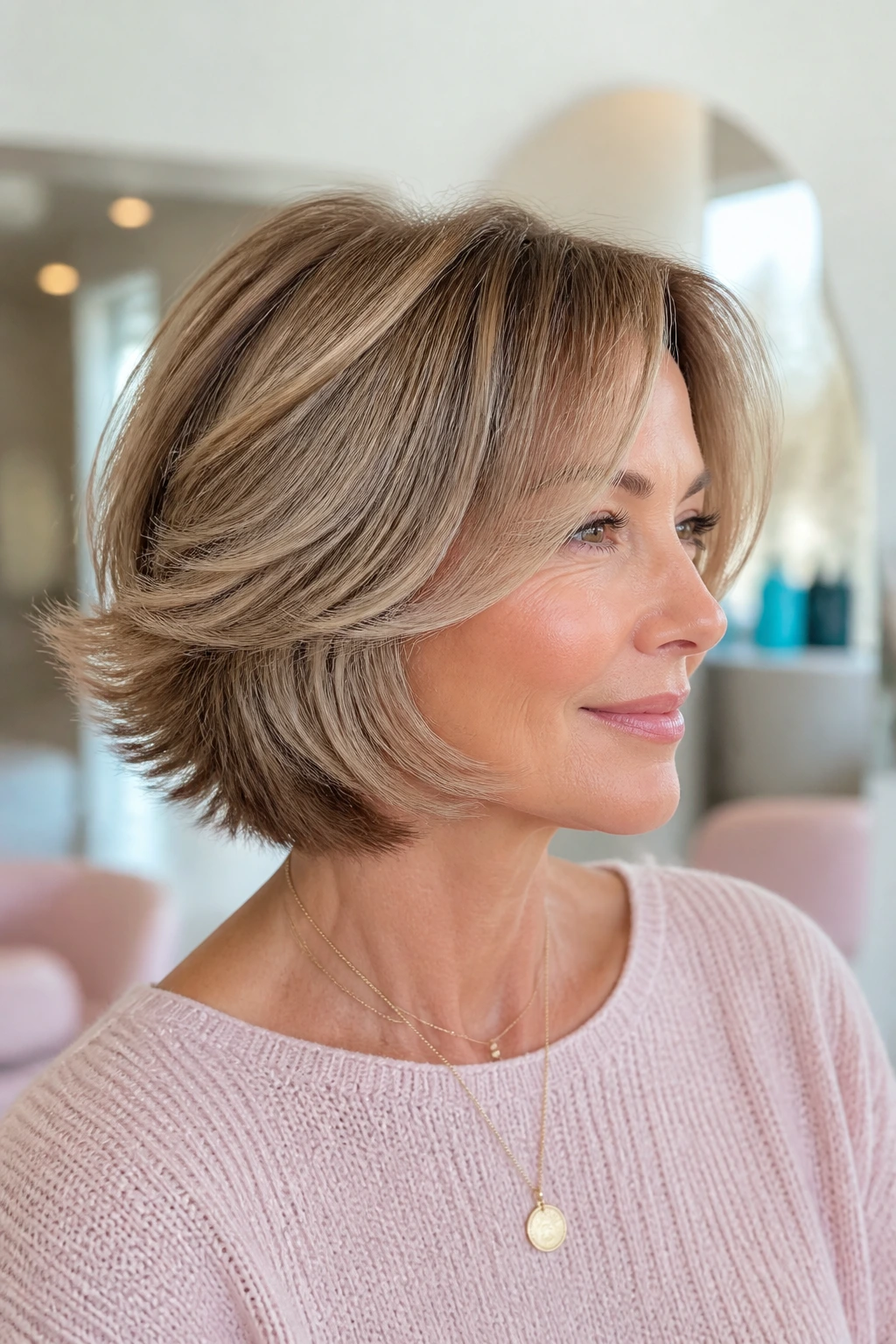
This is the one that feels a little retro in the best way. The back is stacked, but the ends are feathered and flicked outward instead of tucked under, which gives the haircut a light, airy movement. It’s a nice change if you’re tired of every bob looking like it was rounded with the same brush.
The feathering should happen in the mid-lengths, not just at the very ends. That’s what keeps the style from looking stringy. A lightweight mousse and a small round brush can help the top layer lift while the lower pieces turn just enough to show the shape.
It’s a flattering cut when you want softness around the face but don’t want curtain bangs or heavy fringe. The flick at the edge does the framing for you.
16. The Fine-Hair Mini Stack
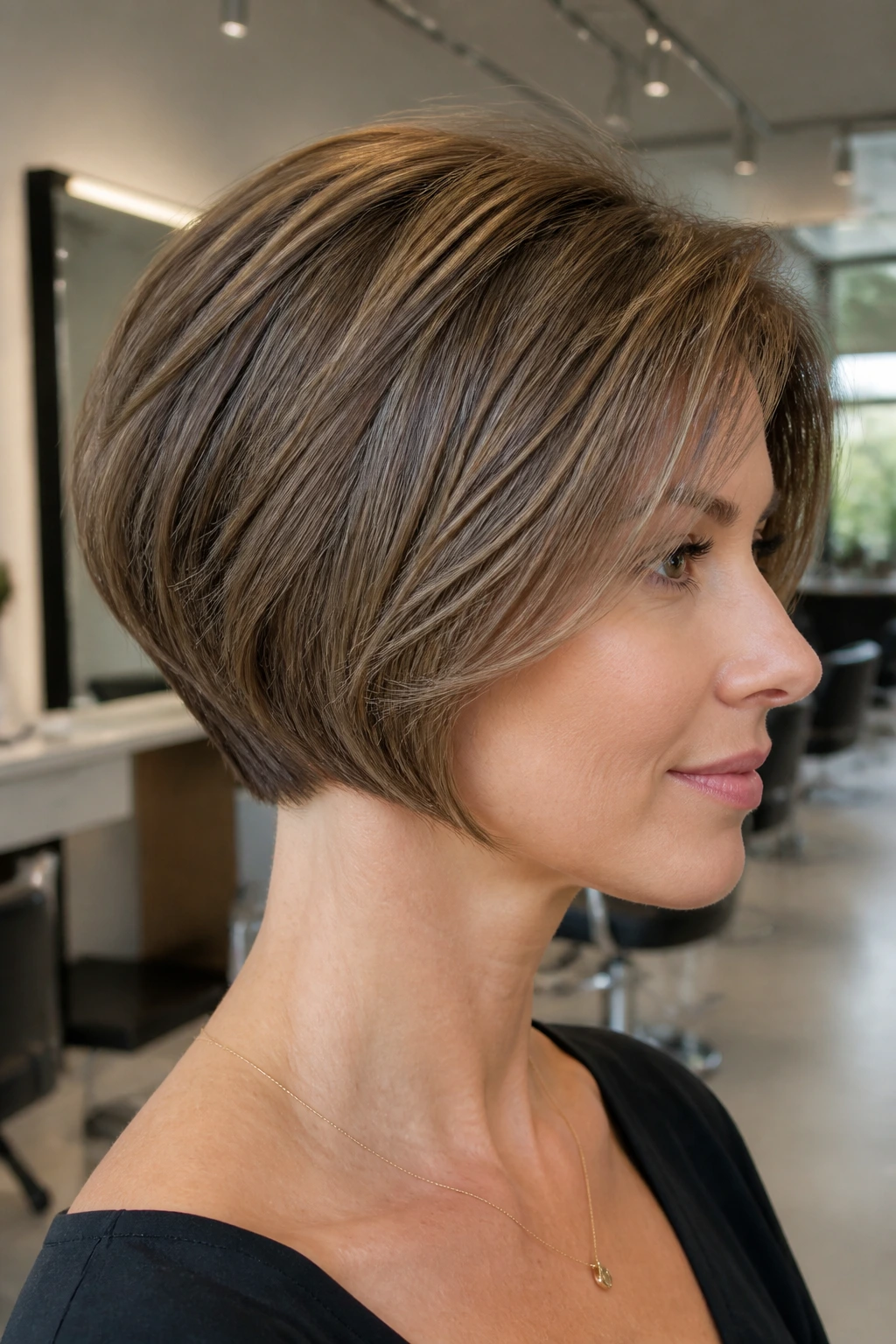
Fine hair needs a stack that respects what the strands can actually do. That means a compact shape, a clean nape, and not too much layer cutting inside the body of the bob. Over-layering fine hair is a mistake that leaves the ends looking thin and the whole back collapsing by lunchtime.
A mini stack keeps the graduation short and controlled. Ask for a bob that sits somewhere between the jaw and the top of the neck, with enough lift at the crown to fake density without sacrificing the outline. It’s one of the rare cases where less cutting usually looks better.
Use a root-lift spray before drying, then direct the top section upward with a round brush. That one step changes everything. Fine hair likes lift early in the routine, not after the shape has already fallen.
17. The Thick-Hair Weight-Removed Stack
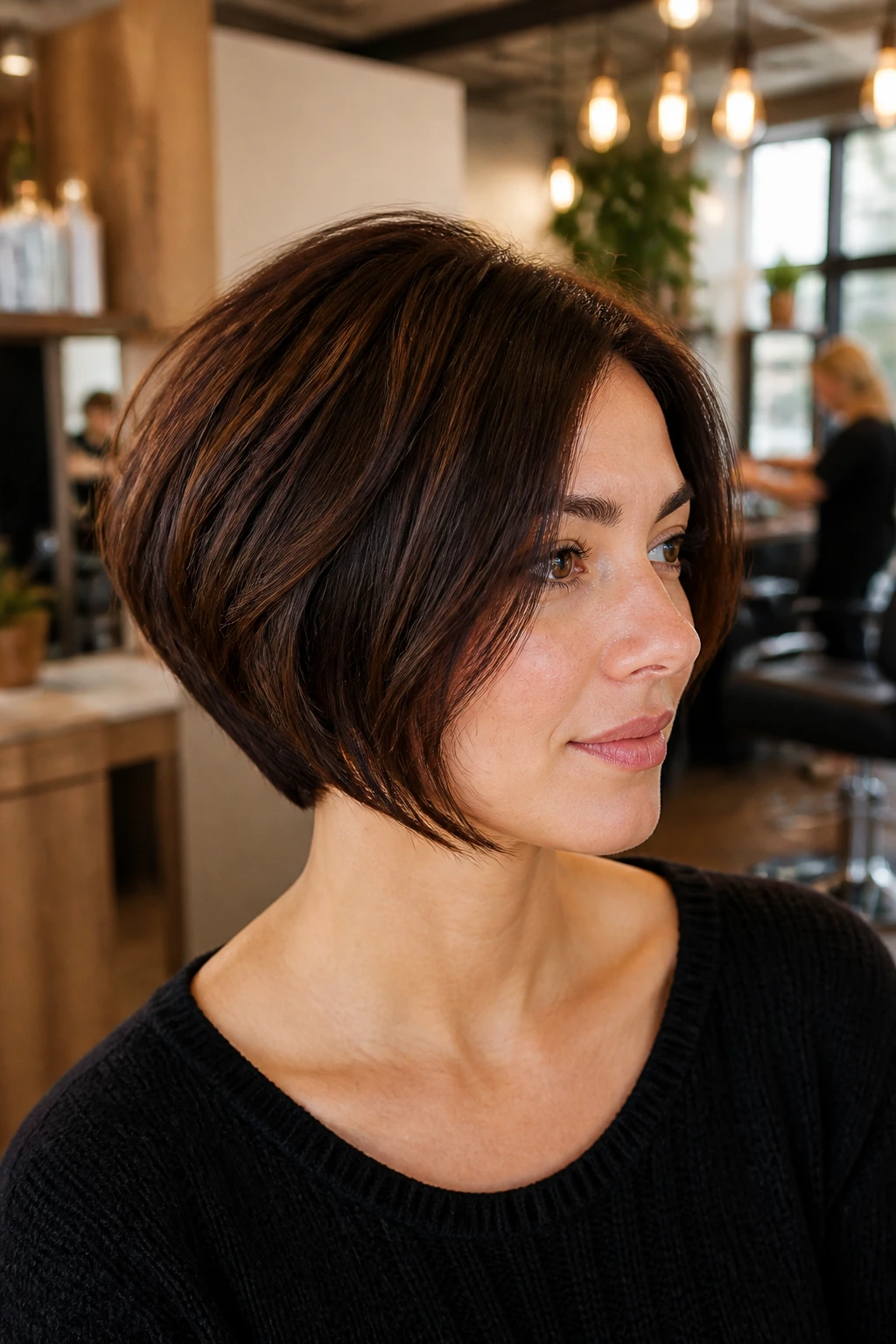
Thick hair can wear a stacked bob beautifully, but only if the interior weight comes out in the right places. The goal is to remove bulk where the hair wants to puff, not carve away the outline and hope for the best. Ask for hidden internal debulking and a shorter nape so the silhouette stays neat.
I’m wary of too much thinning with shears on thick hair. It can create frizz and odd little ends that flare up in humidity. Better to reduce weight with controlled layering and leave the perimeter solid enough to support the shape.
This cut feels especially good if your hair gets hot and heavy around the neck. A stacked bob with smart debulking can feel lighter by a mile without looking choppy.
18. The French-Girl Undone Stack
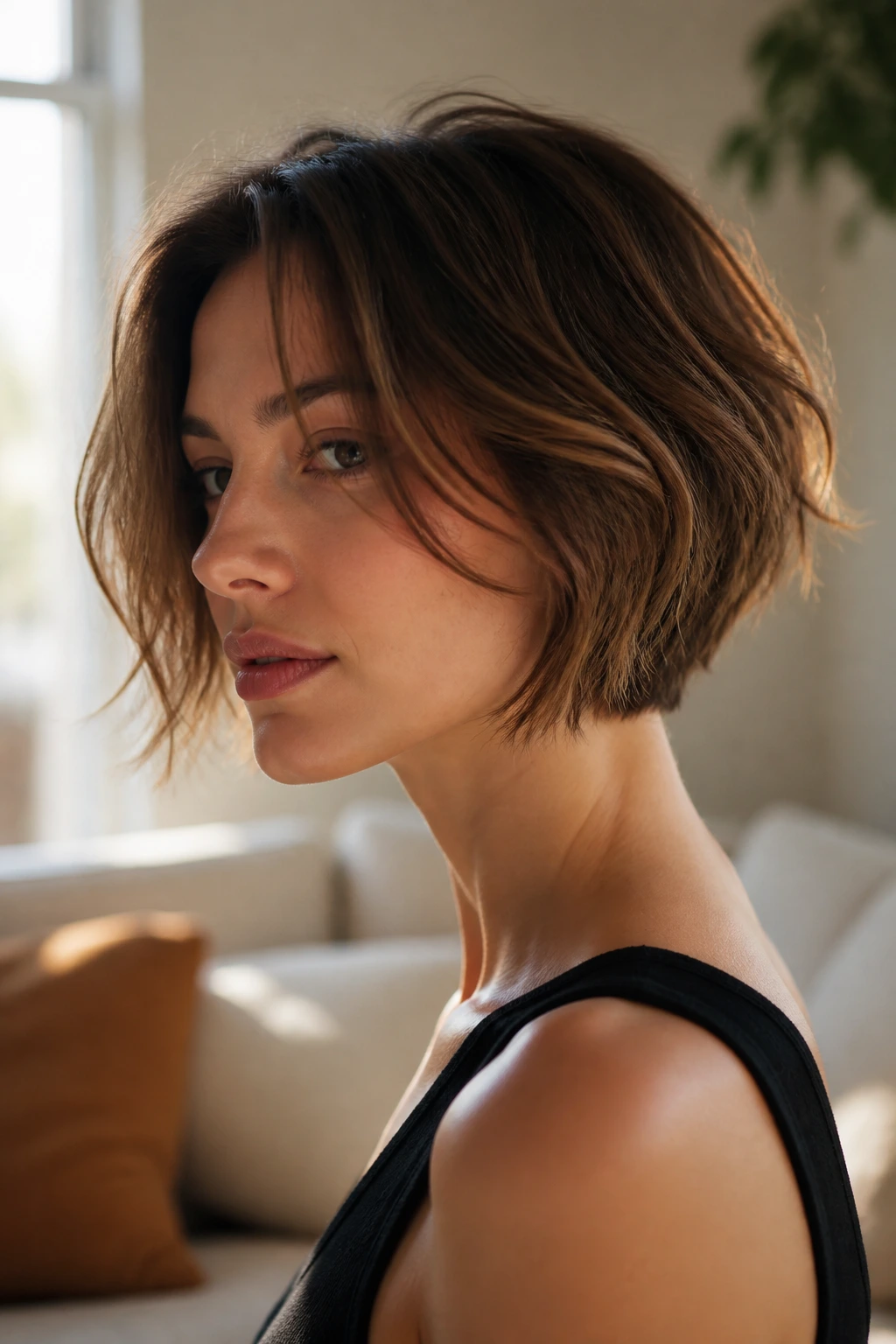
There’s a reason people keep chasing that slightly undone bob. It looks easy, but it still has a shape. The French-girl version of a stacked bob keeps the back controlled and the front a touch softer, then lets the finish stay a little imperfect on purpose. Not sloppy. Imperfect.
This haircut works best when the ends move freely and the root volume is modest instead of sky-high. A little air-dry time, a quick squeeze with a towel, and a touch of texture spray are often enough. If you blow it dry too neatly, the charm disappears.
The beauty of this version is that it forgives a rough morning. A few flat spots do not ruin it. In fact, they often help.
19. The Wavy Loose-End Stack
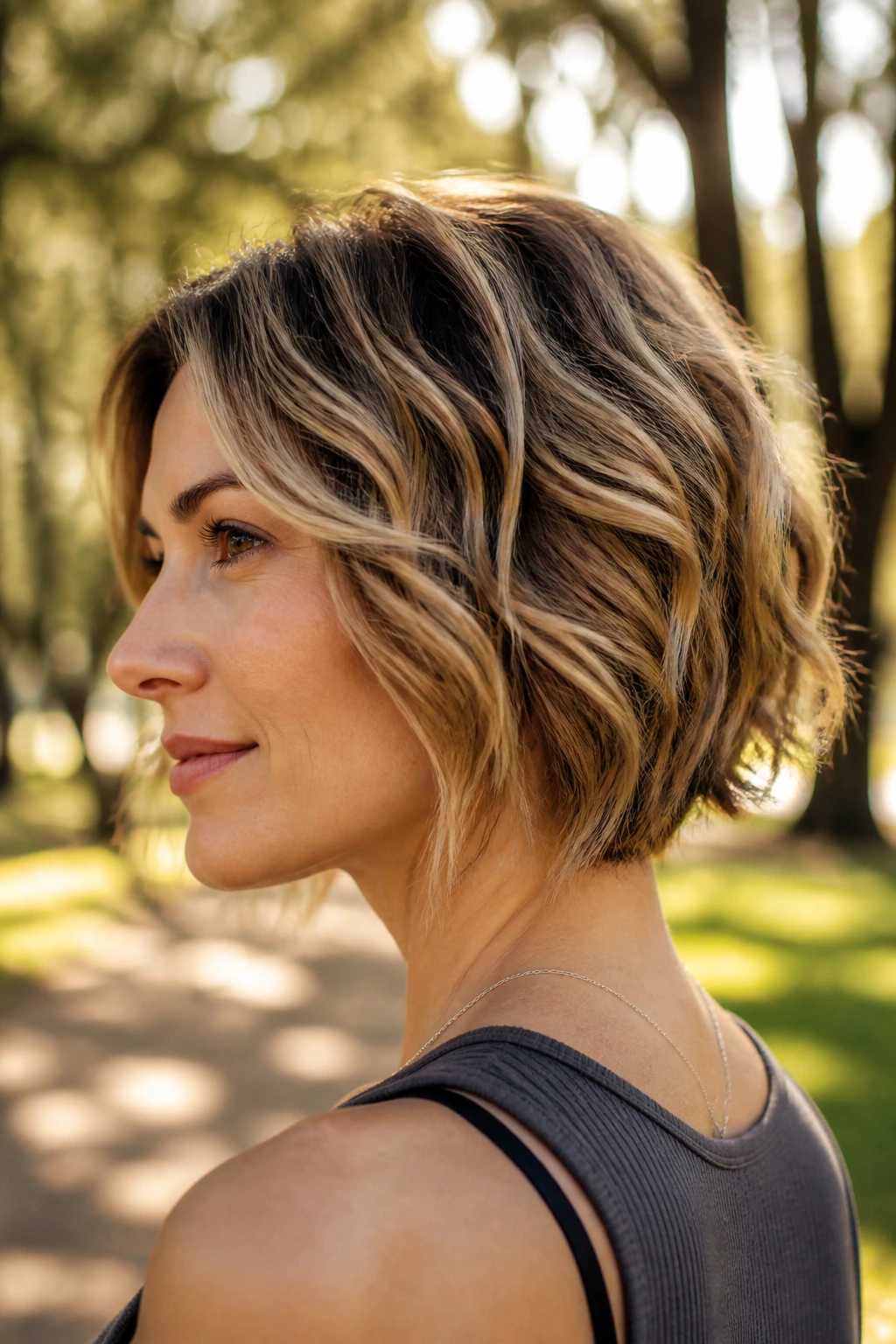
Wavy hair has a funny habit of making stacked cuts look better than sleek hair sometimes does. The loose ends give the graduated back a soft bend, and the waves keep the front from sitting too rigidly. The key is to let the wave pattern stay visible instead of brushing it into a smooth helmet.
A shoulder-dryer routine is usually too much here. Scrunch in a wave cream, dry with a diffuser or let the hair air-dry partway, then finish by bending only a few front pieces with your fingers. The ends should still look touchable.
If your waves puff at the bottom, ask for a little extra length in the perimeter. That prevents the stack from ballooning. Shape first. Texture second. Every time.
20. The Polished Office Stack
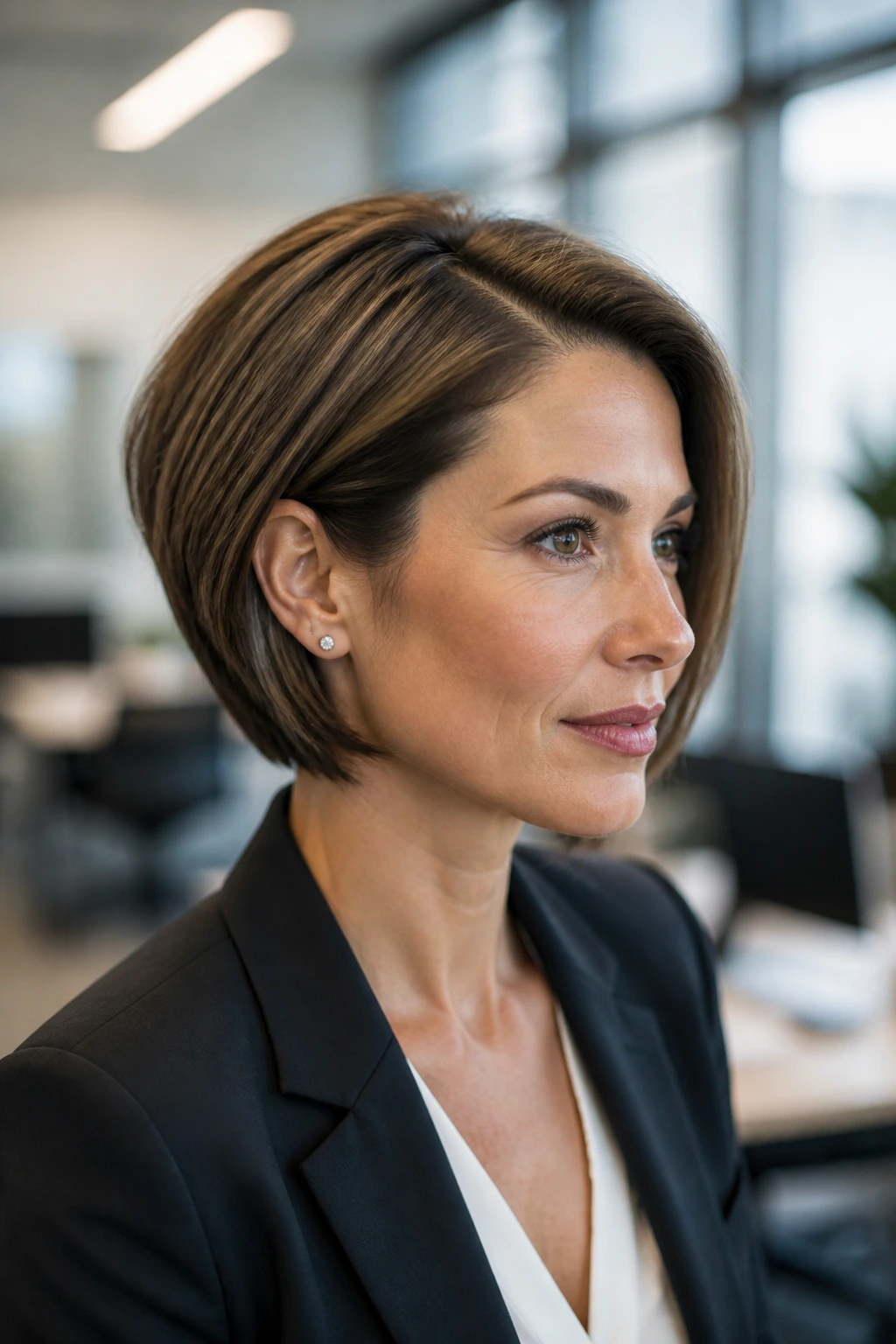
This is the stacked bob for women who need the haircut to behave in a meeting, under fluorescent lights, and during a long day of moving between desks. The shape is neat, the back is stacked without being spiky, and the front is long enough to tuck behind the ears when you want to look composed.
A side part makes this version especially clean. A dab of smoothing cream on damp hair keeps flyaways down, and a paddle brush gives the ends a soft bend without too much fluff. The goal is not a salon blowout every day. The goal is a cut that already looks organized.
It’s one of the easiest stacked bobs to wear with blazers, collared shirts, or anything with a sharp neckline. The haircut does not fight the clothes. That matters more than people think.
21. The Choppy Razor Stack
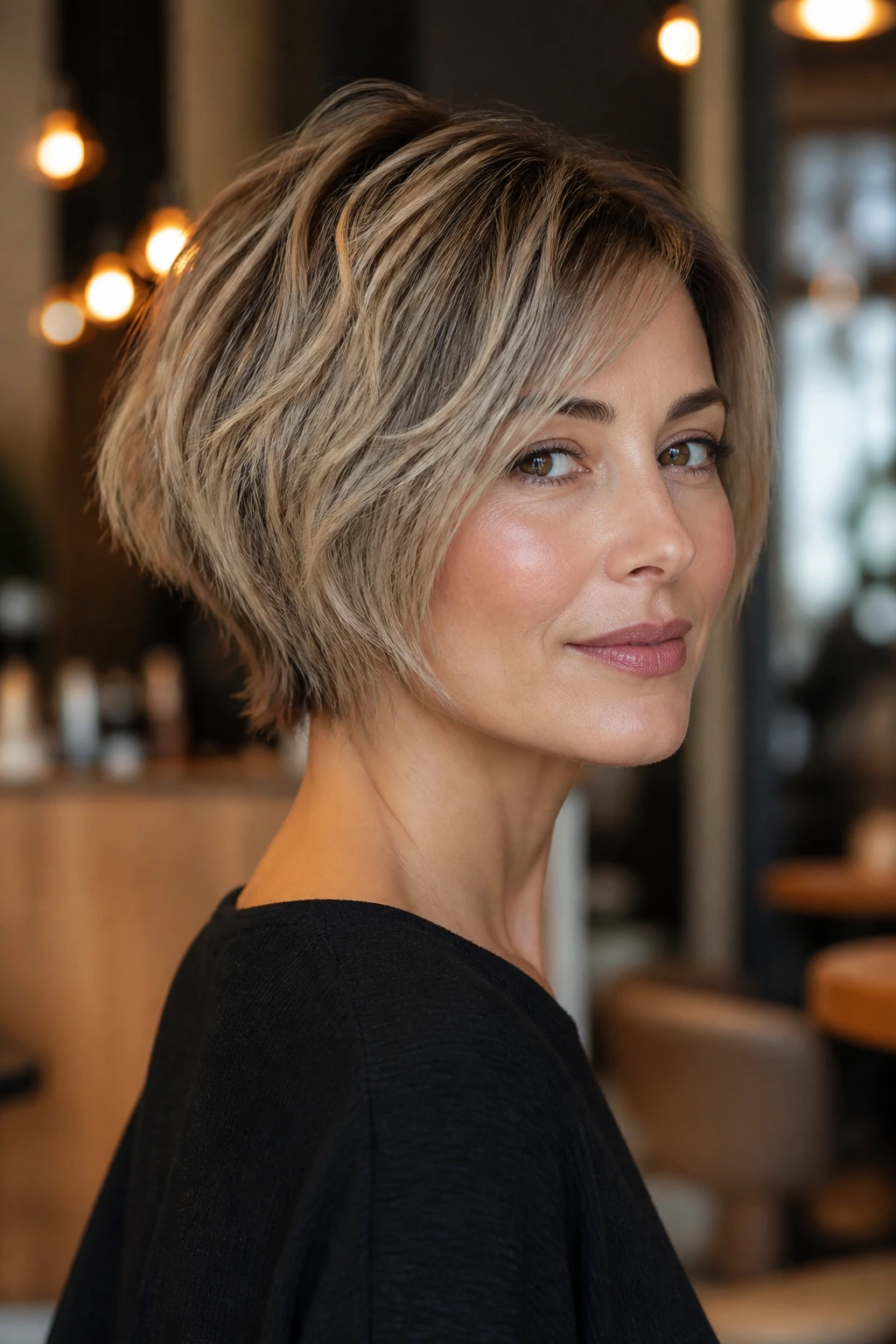
The choppy razor stack has a little bite to it. The ends are softened with a razor or point-cutting technique so the bob breaks into pieces instead of reading as one solid block. That separation gives the haircut movement and a slightly cool, undone edge.
This one is best on medium to thick hair that can handle the texture. On fine hair, too much choppiness can make the ends disappear. Ask the stylist to keep enough body in the base so the bob still feels like a bob.
A texture paste, used sparingly, brings the cut to life. Use it only on the bottom half of the hair. If you put product at the roots, the whole style can collapse into greasy little strings.
22. The Rounded Sculpted Stack
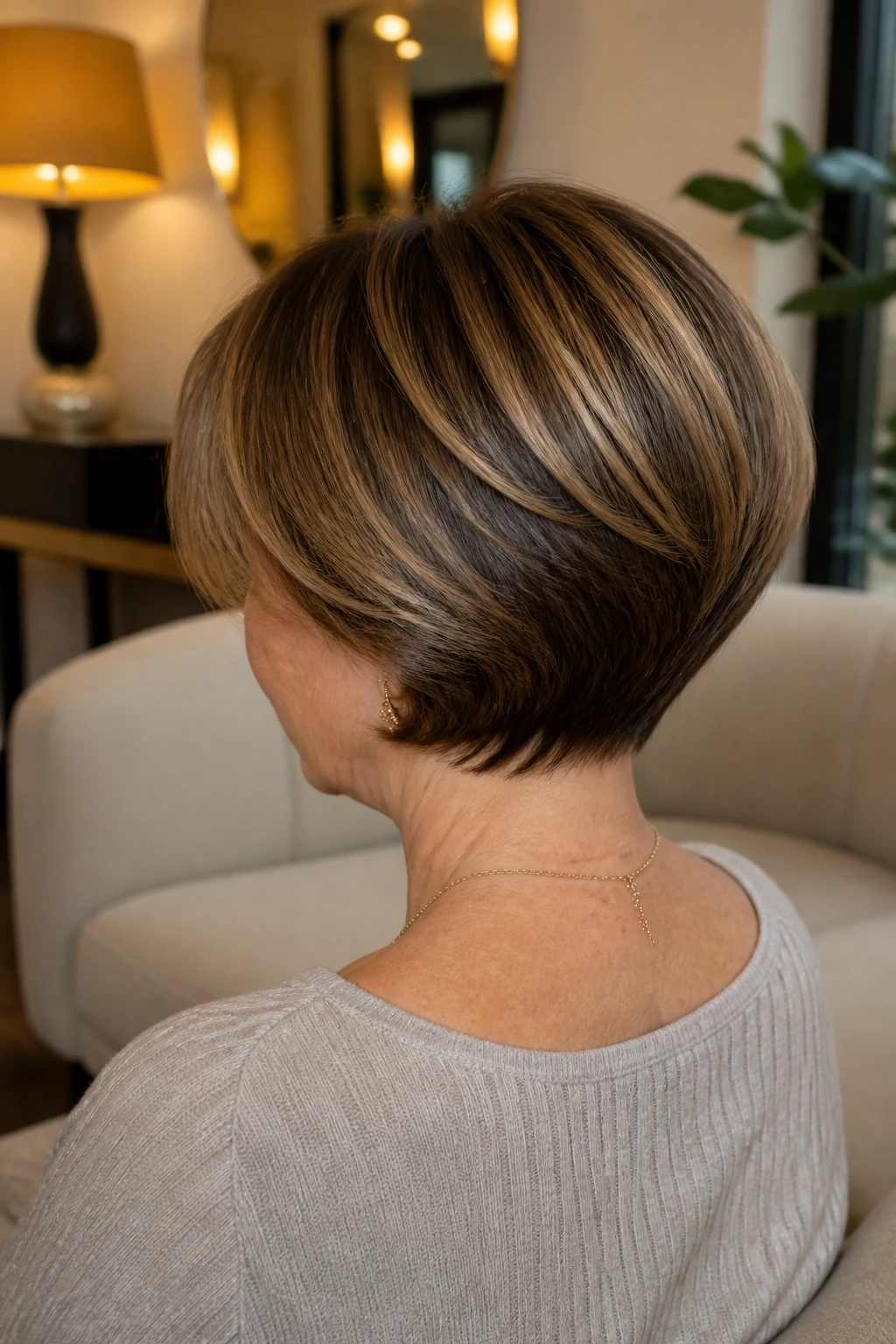
A rounded sculpted stack is for people who like shape with a little polish. The back curves into a neat dome, the top has controlled lift, and the outline follows the head in a way that looks almost tailored. It is one of the most elegant versions on the list, though it still counts as cute because the shape stays soft rather than severe.
This cut needs a blow-dry with intention. A round brush, a nozzle, and a little patience around the crown make a huge difference. You are not fighting the hair; you are guiding it into a shape it can actually hold.
It looks especially good on hair that naturally falls smooth. If your hair is bendy or coarse, you may need a touch more smoothing cream to keep the curve clean.
23. The Hidden Undercut Stack
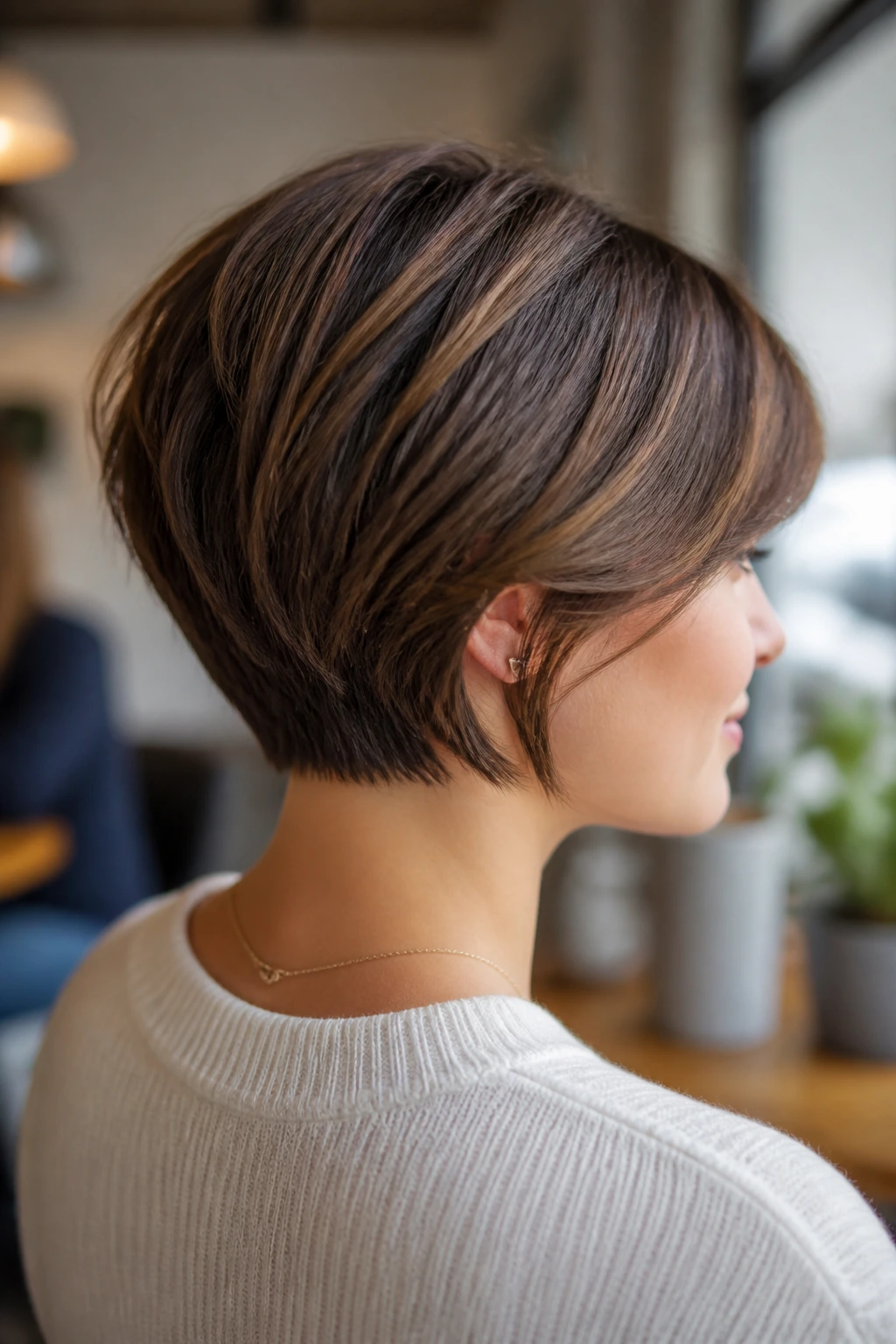
A hidden undercut can save a stacked bob on very dense hair. The top layers still look like a bob, but the underside gets trimmed shorter in the nape area so the bulk disappears where it tends to pile up. It’s a practical move disguised as a style choice.
You won’t always see the undercut, which is the whole point. The haircut looks full from the outside but feels lighter at the neck. If you wear a lot of turtlenecks or scarves, that extra comfort matters more than the photos do.
This version does need maintenance. Let the undercut grow too long and the shape loses its snap. If you’re committed to the cut, plan on neck cleanups between full appointments.
24. The Salt-and-Pepper Stack
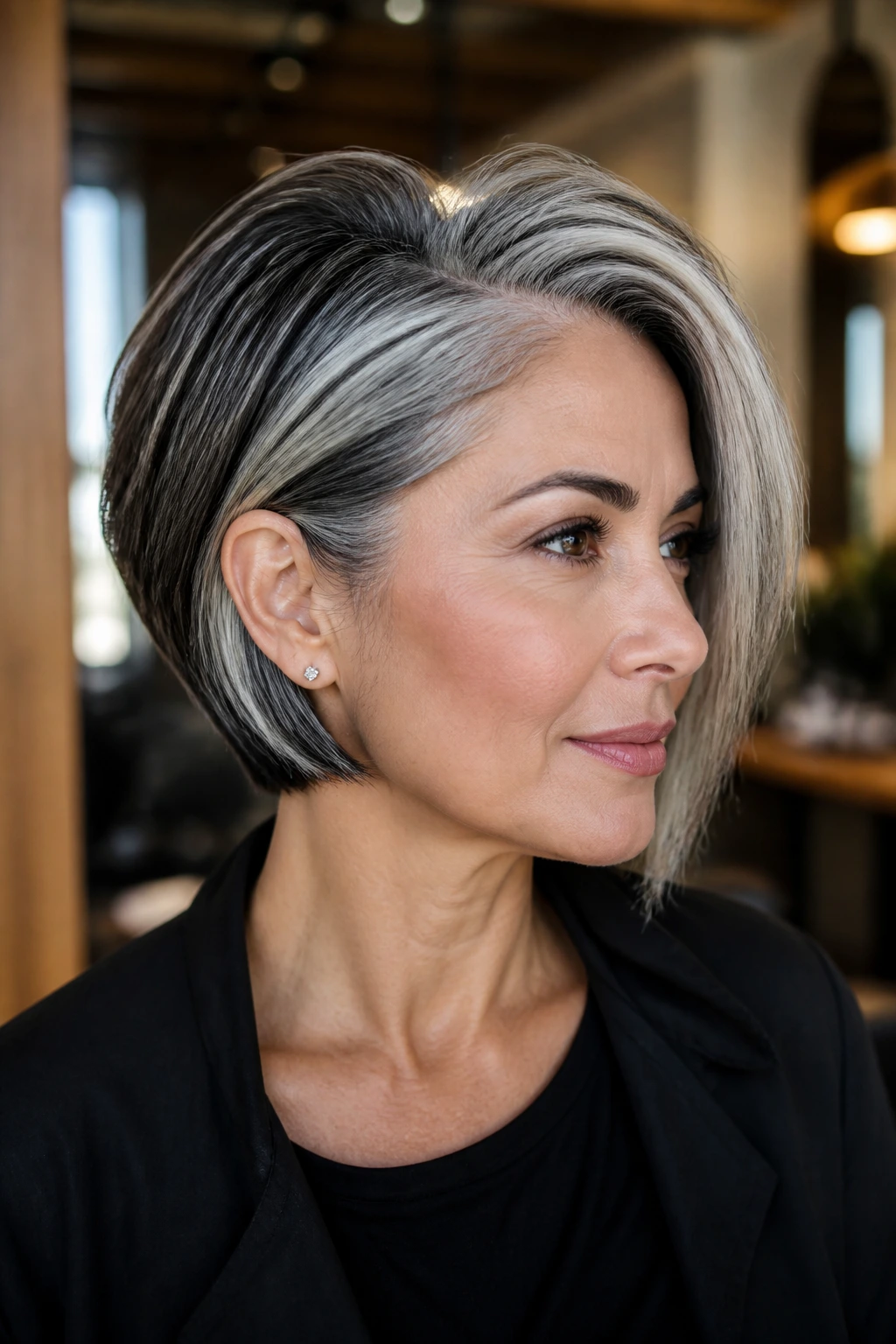
Salt-and-pepper hair has a lot of character, and a stacked bob lets that color pattern show off. The short back keeps the darker and lighter strands from hiding under length, while the front frames the face in a way that makes the silver pieces feel deliberate. Not random. Deliberate.
A gloss treatment can make the mix of colors look sharper, especially if the hair has gone a little dry. I like this cut with a smooth side part and one tucked side, because it shows the texture of the color as much as the shape of the haircut. The line is neat, but the color does the storytelling.
This is one of the easiest stacked bobs to wear when you want a haircut that looks grown-up without looking stiff. That balance is harder to get than people think.
25. The Long Grow-Out Stack
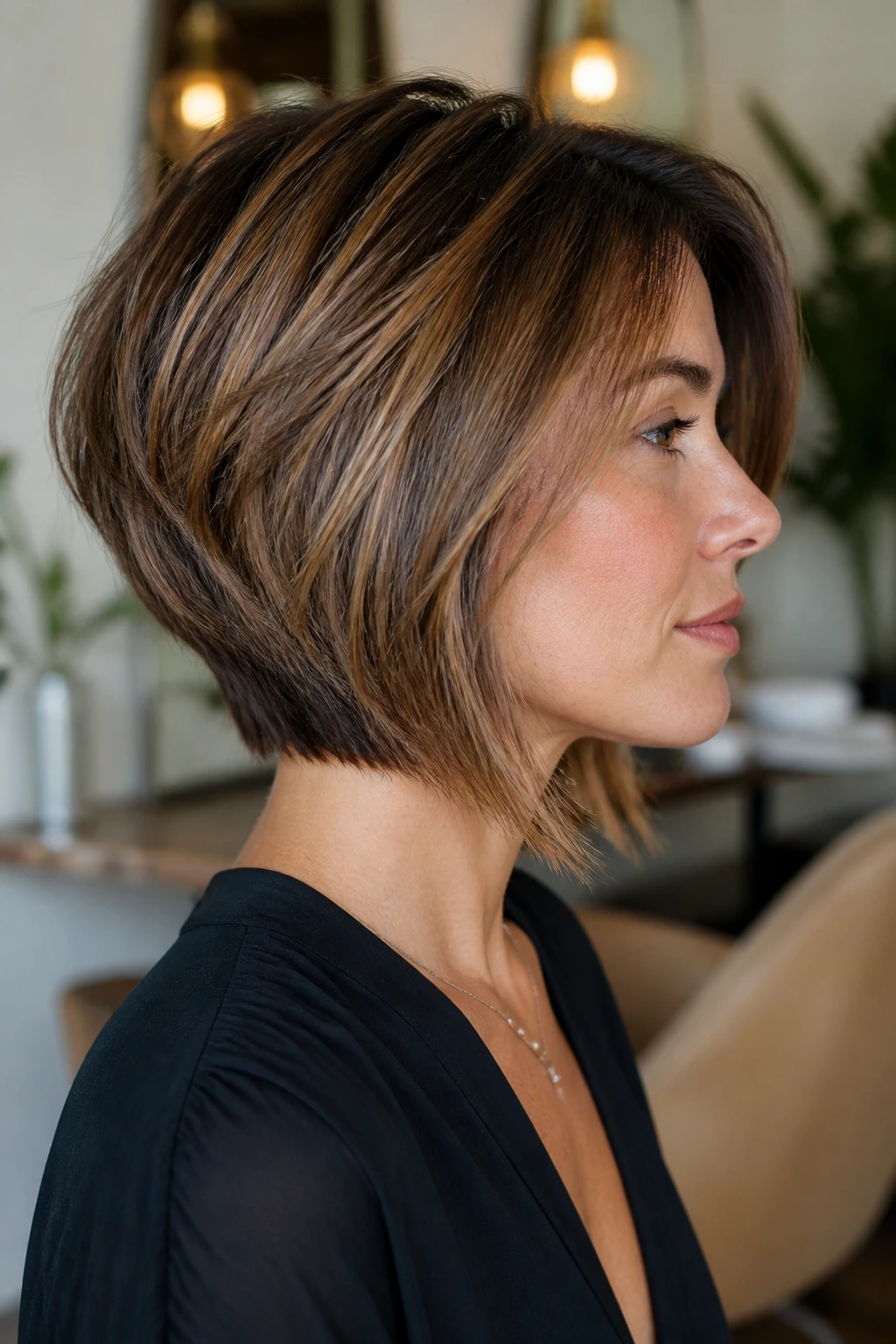
Some stacked bobs are built to live forever in the salon chair. This one is not. A longer grow-out stack leaves a little more length in the nape and a softer angle at the front, so the haircut keeps its shape even after several weeks of growth. It’s the best choice if you like the stacked look but hate a hard maintenance schedule.
The stack still matters, but it’s gentler. That softer graduation means the bob won’t suddenly collapse into a triangle the minute your roots grow out. It also gives you more room to switch between sleek blow-dry days and messy air-dry days without the cut looking confused.
If you want a bob that stays cute while your life gets busy, this is the one I’d pick. It forgives more than the sharper versions, and that is not a small thing.
What Gives a Stacked Bob Its Shape
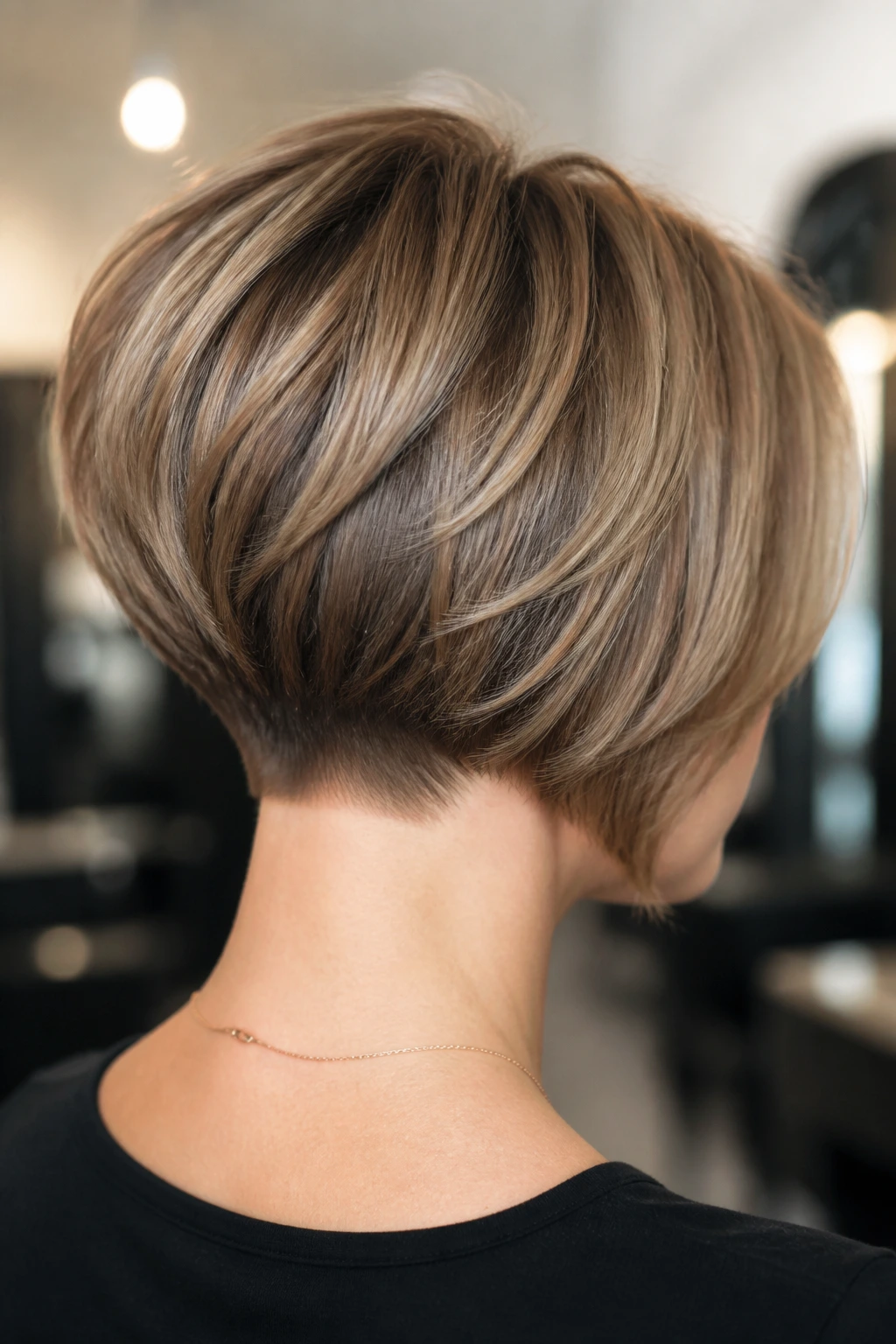
A stacked bob is not just a short haircut with layers sprinkled into it. The shape comes from graduation in the back, a controlled perimeter, and enough weight removed near the nape to let the crown rise on its own. That’s the secret, if you want to call it one. The haircut is built from the back forward, and the front only works if the back is doing its job.
The nape is the anchor
The nape is where the whole structure settles. Keep it too long and the bob slumps. Cut it too short without enough blend and the haircut starts looking like a wedge. The sweet spot usually sits close to the neck with enough curve to show the graduation but not enough bulk to fight it.
The crown decides the lift
Most people blame flat roots for a bob that falls dead, but the issue often starts in the cut. If the crown keeps too much weight, no amount of product will save the shape for long. That’s why the best stacked bobs for women tend to hold volume at the top without looking puffy.
The front changes the mood
The front can be jaw-length, chin-grazing, angled, blunt, or softly feathered. That one choice decides whether the haircut feels strict, sweet, modern, or a little edgy. The back gives the structure. The front gives the personality.
Essential Tools for Styling a Stacked Bob
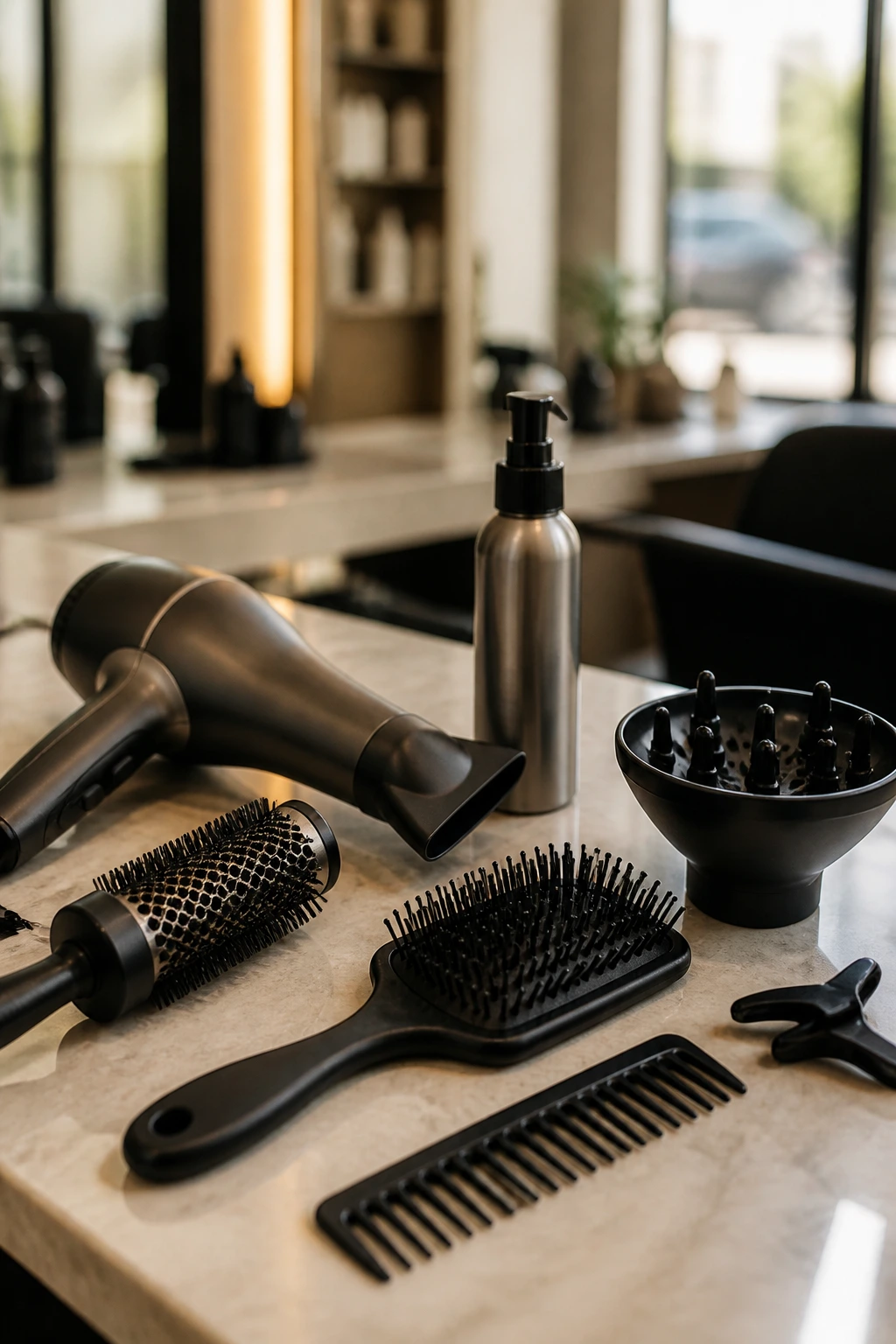
- Blow dryer with a nozzle: Directs airflow so the nape and front don’t puff in different directions.
- Round brush, 1 to 1.5 inches: Small enough to shape the bob without creating huge bends.
- Paddle brush: Useful for smoothing the top layer when you want a flatter, sleeker finish.
- Heat protectant spray: Keeps short hair from getting crisp at the ends, which happens faster than people expect.
- Root-lift mousse or spray: Helps the crown keep its height, especially on fine hair.
- Light texturizing spray: Good for piecey or undone versions of the cut.
- Flat iron: Handy for a slight bend at the front or a polished finish on angled bobs.
- Diffuser: Worth having if your bob is wavy or curly and you want the stack to stay soft.
- Tail comb: Helps with clean parting and neat sectioning at the crown.
- Small clips: Keep the top layers out of the way while you dry the back in sections.
How to Talk to Your Stylist About the Stack
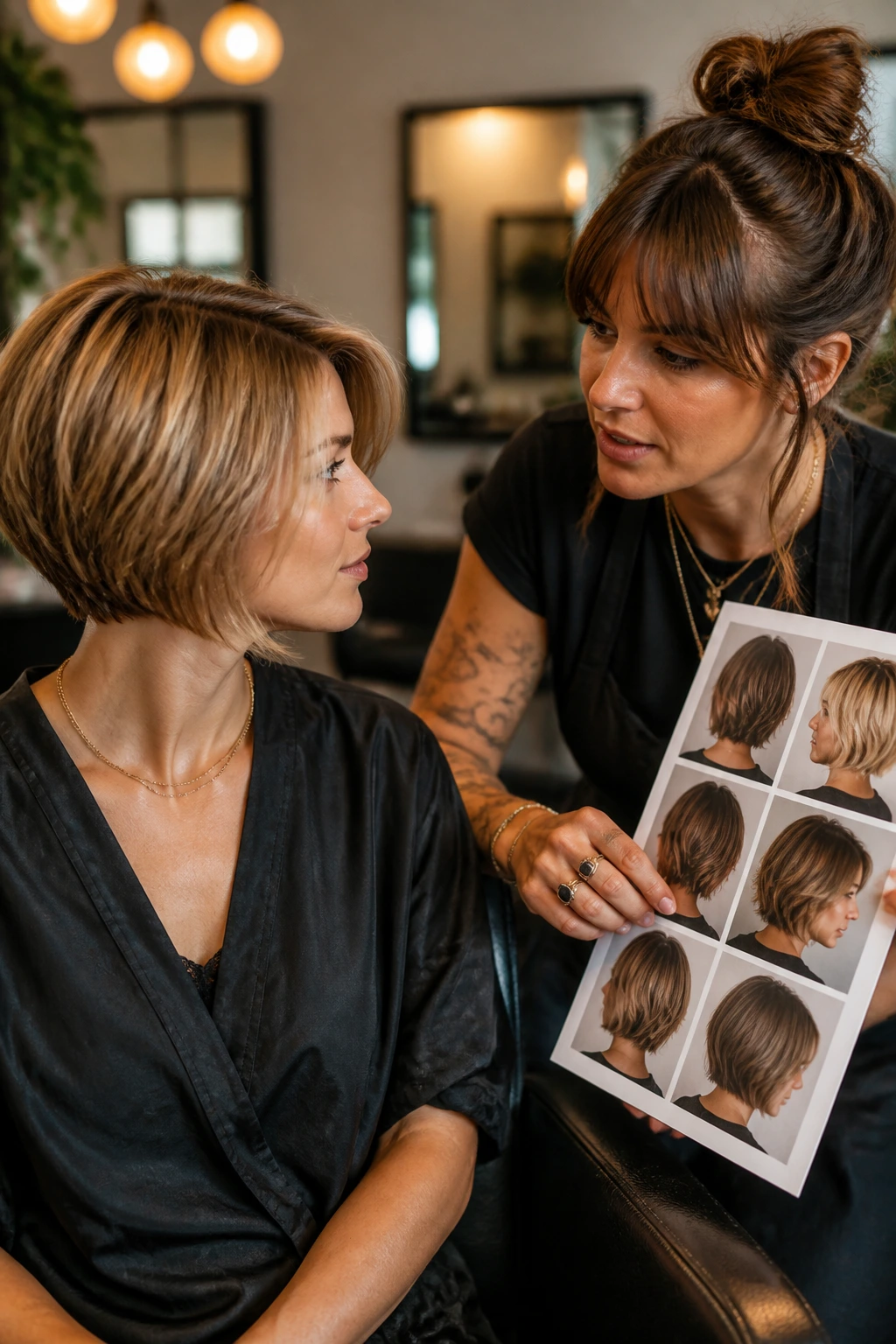
Bring pictures. Not one picture. Two or three, and at least one should show the back or side profile. A stacked bob can look completely different from the front than it does from the occipital area, and that’s usually where the mismatch starts when people say, “It’s shorter than I expected.” Shorter where? In the front? At the nape? That part matters.
Say how much styling you’ll actually do. If you own a round brush but rarely use it, say so. If you air-dry most days, say that too. A bob that looks perfect only after a 20-minute blowout is not the same as a bob that falls into shape with a little mousse and finger-drying. Your stylist needs that information before the shears come out.
Be specific about the stack. Ask where the shortest point should land at the neck, and tell them how much angle you want in the front. If you like to tuck one side behind the ear, mention that. If your hair has a crown cowlick, mention that too. The more honest the consultation, the better the cut behaves once you leave the chair.
Daily Styling Moves That Make the Cut Look Intentional
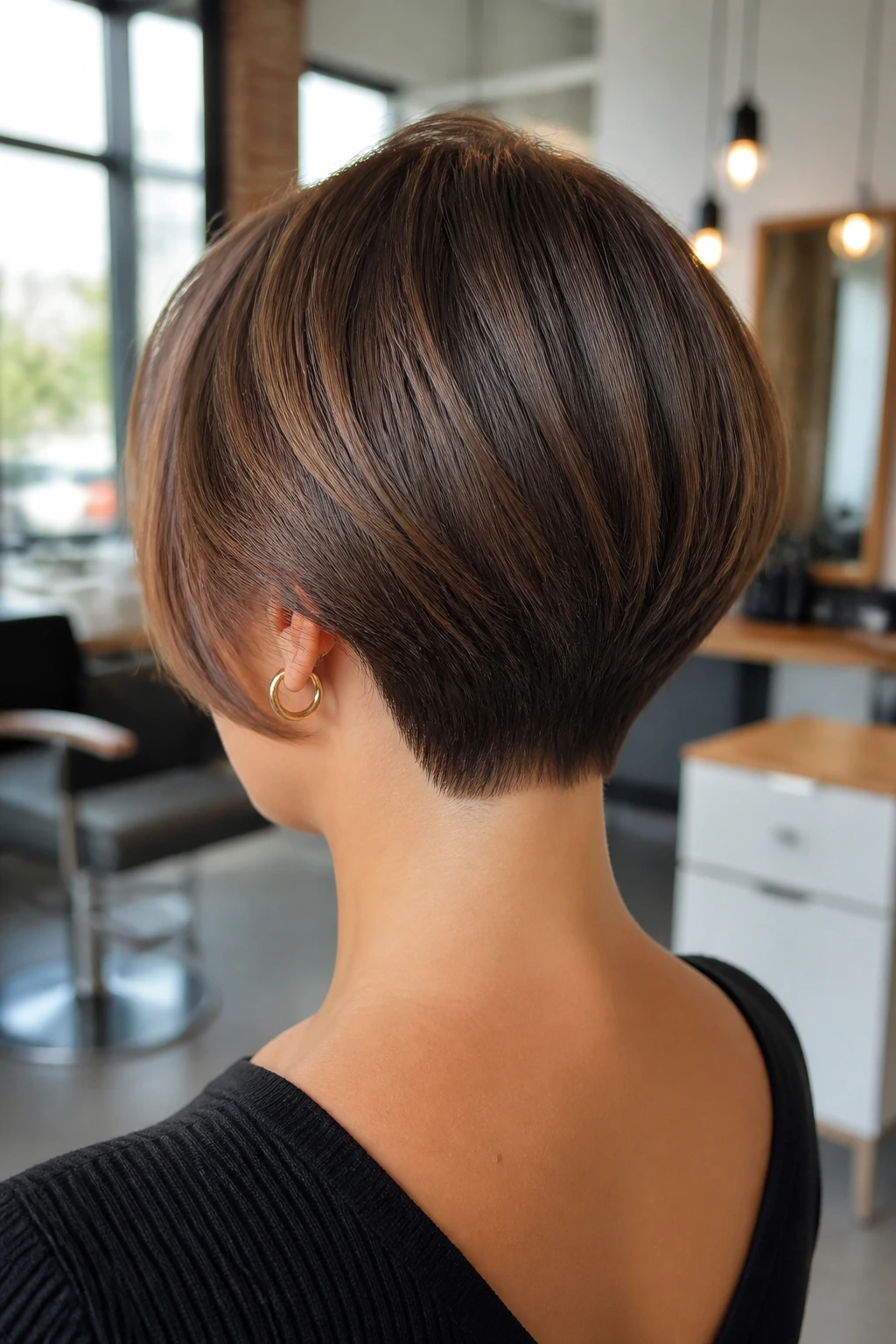
A stacked bob looks best when the roots have a little lift and the ends know where they’re supposed to go. That does not mean a heavy styling routine. It means a few small moves done in the right order, which is usually the part people skip. They blast the hair dry, smooth the front, and wonder why the back looks flat.
Root control: Dry the back first, lifting the crown section away from the scalp with your fingers or a brush. If the roots set flat, the stack loses its job before the day starts.
End direction: Decide whether you want the ends to tuck under, flick out, or sit straight. Pick one. If every section goes a different way, the bob stops reading as a haircut and starts reading as a compromise.
Parting matters: A center part makes a stacked bob feel neat and modern. A side part adds lift and can save hair that naturally falls flat on one side. Change the part before you decide the haircut is wrong.
Product discipline: Use less than you think. Short hair gets weighed down fast, especially at the crown. A pea-sized amount of cream or paste is often enough for the whole head.
And when the cut starts to lose shape, don’t panic. A little dry shampoo at the roots and a quick bend on the front pieces can bring it back without another full wash.
Extra Tips for Volume, Smoothness, and Texture
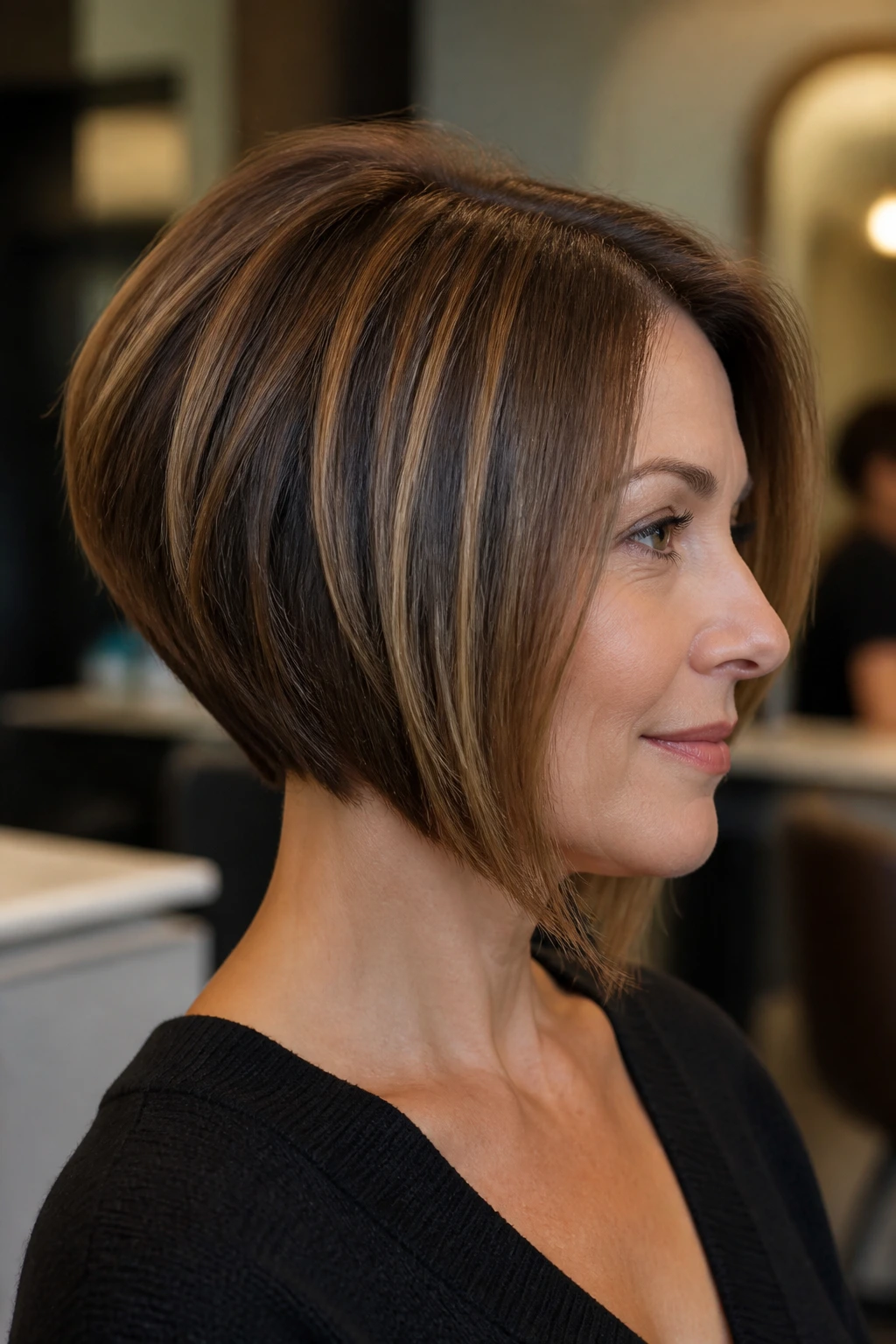
Lift at the crown: Blow-dry the top section in the opposite direction first, then reset it where you actually want the part. That one move gives the stack a cleaner rise than trying to puff it up after everything is dry.
Smoothness: If the back frizzes, concentrate the dryer nozzle downward through the nape and hold the brush under the ends for just a few seconds. Heat held too long on short hair makes it look fuzzy, not sleek.
Texture: For piecey styles, warm a tiny bit of paste between your fingertips and tap it onto the last inch of the ends. Don’t rake it through from roots to tip unless you want the whole bob to look heavy.
Shine: A drop of serum on the very outer layer of hair can make silver, auburn, and brunette bobs look cleaner. Keep it off the roots. Hair near the scalp gets greasy quicker than people expect.
Make-it-yours: If you like softer hair, keep the front longer and the stack gentle. If you want more attitude, ask for a stronger angle, a tighter nape, or a little asymmetry. Small changes. Big shift.
Keeping the Nape Clean Between Salon Visits
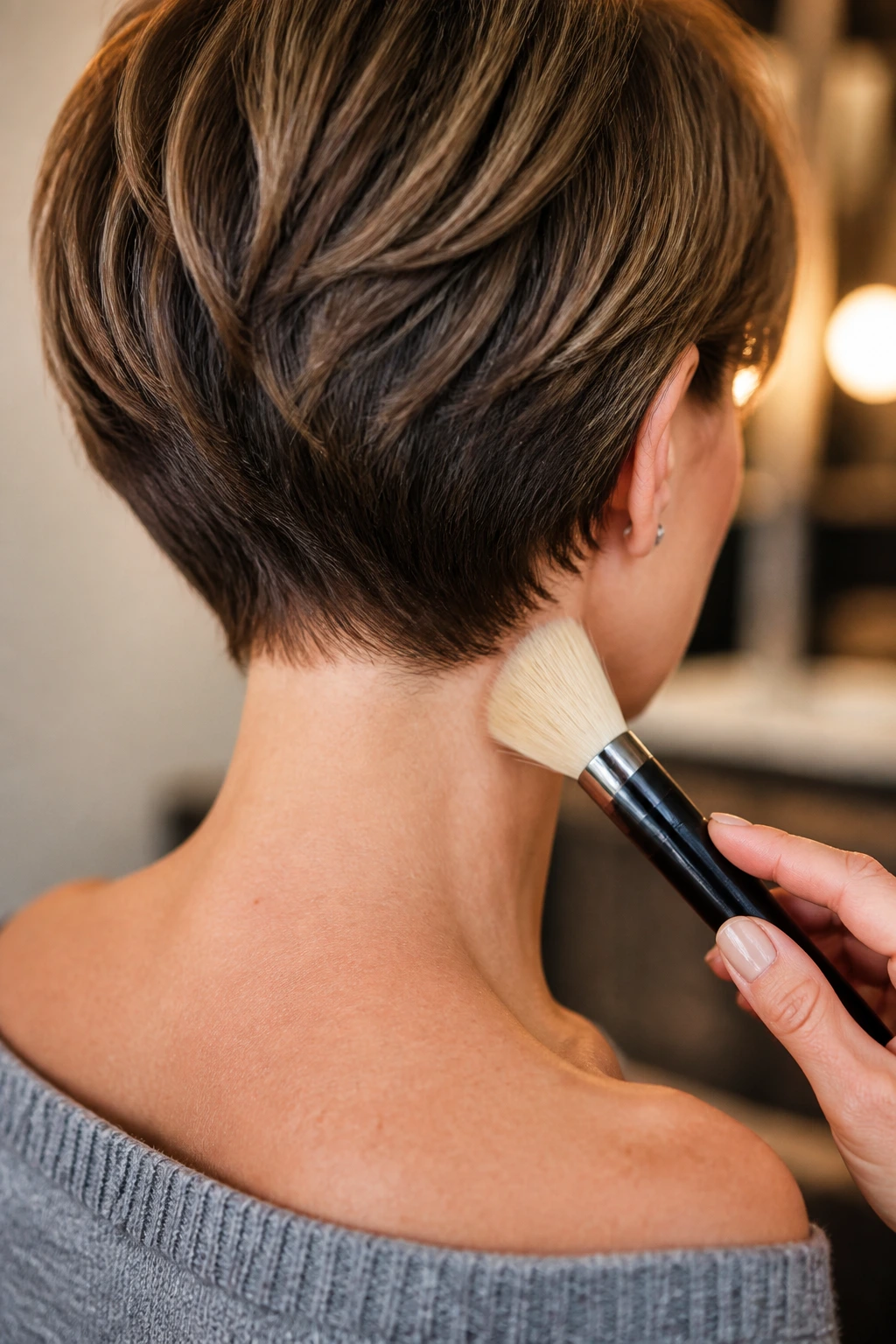
A stacked bob shows growth faster than long hair does, especially at the nape. That isn’t a flaw. It’s the tradeoff for having a clean shape. Most people do well with trims every 6 to 8 weeks if they want the stack to stay crisp, though very short versions can need cleanup a little sooner.
At home, focus on the neckline. A soft bristle brush, a light mist of dry shampoo at the roots, and a quick pass with a flat iron on the front pieces can keep the haircut looking fresh for days longer than a full restyle would. If the nape starts kicking out, don’t keep piling heavy cream on it. That usually makes the shape droop.
Sleep matters too. A smooth pillowcase or a loose clip at the crown can stop the back from getting smashed flat overnight. Short hair does not forgive rough sleep as quietly as long hair does.
Variations and Adaptations to Try
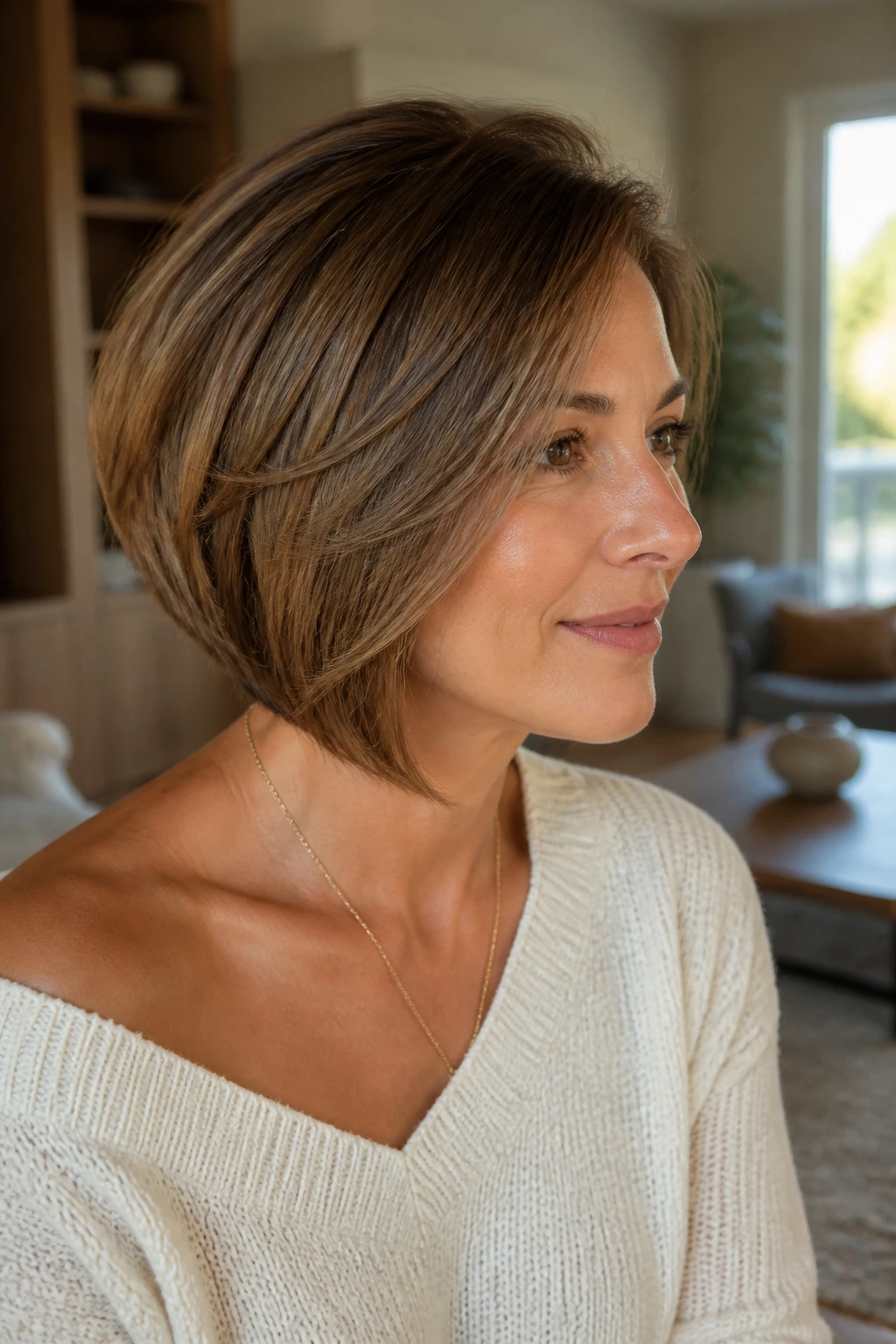
The Softer Stack: Keep the graduation light and the perimeter slightly longer if you want the cut to grow out more slowly and feel less severe.
The Curly-Friendly Stack: Leave extra room in the nape and cut the shape with curl shrinkage in mind so the back doesn’t balloon when it dries.
The Razor-Textured Stack: Add more separation through the ends for thick or dense hair that needs movement more than blunt fullness.
The Glossy Sleek Stack: Pair a neat side part with a smooth blow-dry and shine serum for a polished finish that works in formal settings.
The Color-Boost Stack: Add balayage, silver gloss, or warm copper pieces to show the curve of the cut more clearly and keep the shape from disappearing into one flat tone.
Common Mistakes to Avoid
- Stacking too high: If the graduation starts too far up the head, the back can look triangular. Keep the shortest layers near the nape, not halfway to the crown.
- Thinning out fine hair too much: The bob loses body fast when the ends get over-razored. Fine hair usually needs shape, not extra holes.
- Using heavy cream at the roots: The crown collapses, the stack loses lift, and the haircut looks shorter than it is.
- Ignoring your texture: A cut designed for straight hair will not sit the same on waves or curls. Ask for the version that fits how your hair dries on its own.
- Skipping trims too long: The nape grows first, and once that area gets bulky, the whole shape starts to widen.
- Forgetting the front: A good back stack with awkward front pieces still looks off. The face frame has to match the mood of the back.
Frequently Asked Questions
Will a stacked bob work on fine hair?
Yes, if the stack stays compact and the layers aren’t too shredded. Fine hair usually looks better with a cleaner outline, a little root lift, and a blunt or softly angled front that keeps the ends looking full.
Can curly hair wear a stacked bob without looking too round?
It can, but the stack needs to be softer and longer than a straight-hair version. The cut should account for shrinkage, and the curls need room to fall instead of stacking up into a triangle.
How often should a stacked bob be trimmed?
Most versions look best with trims every 6 to 8 weeks. If the nape is very short or the angle is sharp, you may want cleanup closer to 5 weeks so the shape does not widen out.
Is a stacked bob hard to grow out?
The shorter and steeper the stack, the more obvious the grow-out. A longer, softer version grows out better and can move into a bob or lob without looking awkward for long.
What parting works best with a stacked bob?
A center part gives a neat, balanced look. A side part adds lift and can soften a strong jaw or a wider forehead. The haircut changes with the part more than people expect.
Can I air-dry a stacked bob?
Yes, especially if your hair has some wave or texture already. You’ll usually get the best result by scrunching in a small amount of mousse or cream and letting the ends settle naturally while the crown keeps some lift.
Does a stacked bob suit thick hair?
It does, as long as the stylist removes weight in the right places. Thick hair needs internal shaping, not aggressive thinning through the ends.
What should I tell my stylist if I don’t want it too short in back?
Ask for a soft stack with a longer nape and show a photo that clearly reveals the side and back length. Say how much you want the front to angle down so the stylist knows how much contrast to build in.
A Last Word on Cute Stacked Bobs
A good stacked bob does something a lot of haircuts fail to do: it keeps its shape while still letting you move. That’s why it keeps showing up on women with fine hair, thick hair, straight hair, curls, silver strands, warm color, blunt ends, and soft fringe. The structure is flexible enough to bend around real life.
Pick the version that fits your texture and your patience level, not the one that looks good only under salon lights. The best stacked bobs are the ones that still look right when the mirror is unkind and the day is long.
