



A wavy French bob haircut lives in a narrow little corridor between polished and undone, and that’s exactly where the magic sits. Too sleek, and it starts to feel fussy. Too shaggy, and you lose the sharp line that gives the cut its nerve.
The best wavy French bob haircuts for soft texture keep the base tidy while letting the bend in the hair do the talking. The ends graze the jaw, the fringe sits with a bit of air in it, and the whole thing looks like it was cut by someone who understands that a little movement is more interesting than a perfectly round curl.
That balance is why this cut keeps showing up in good salons. It flatters strong cheekbones, it can soften a square jaw, and it doesn’t need a barrel of styling tools to look finished. A clean perimeter with loose texture is often enough. And once you start looking at the variations—short, long, fringe-heavy, side-parted, airy, dense, blunt, layered—the French bob stops feeling like one haircut and starts reading like a whole family of shapes.
Why These Wavy French Bob Haircuts Work So Well
-
The shape does the heavy lifting: The haircut itself creates the outline, so the wave only has to add bend, not build the whole look from scratch.
-
Soft texture keeps the bob from feeling severe: A few loose bends around the cheeks and jaw take the edge off a blunt line without making the cut fluffy.
-
Most versions grow out cleanly: A French bob can look better at six or eight weeks than it does on day one, which is a rare and lovely thing.
-
It works with air-drying and low-effort styling: If your hair already bends, a bit of mousse and finger-drying can be enough to make the cut look intentional.
-
The fringe options are flexible: Curtain bangs, baby bangs, no bangs at all—each one changes the mood without changing the basic idea.
-
It suits a lot of hair densities: Fine hair gets lift, thick hair gets shape, and naturally wavy hair gets to look like it has finally been understood properly.
1. Chin-Length Wavy French Bob with a Clean Edge
This is the version most people picture first: a chin-grazing bob with a blunt perimeter and a loose wave that breaks the line just enough to keep it soft. It sits right at that flattering point where the jaw still shows, but the hair doesn’t swallow the face. The result feels crisp, not harsh.
What to Ask Your Stylist
Ask for a one-length bob that lands at the chin, with very light point-cutting only at the ends. You want movement, not layers that break the silhouette apart. If your wave pattern is stronger on one side, mention that before the cut starts.
Why It Works
The short length keeps the shape bold, while the wave stops it from looking boxy. On medium-density hair, this cut can sit with enough weight to fall cleanly and enough texture to avoid that helmet effect. A tiny off-center part helps it look less formal.
Best for: oval, heart, and narrow face shapes.
Styling note: bend the front pieces away from the face with a 1-inch iron, then leave the ends slightly straight. That little contrast is what makes it look French instead of curled.
2. Curtain Bang Wavy French Bob
A curtain fringe changes everything. Suddenly the bob feels a little more lived-in, a little less strict, and a lot better if you want movement around the eyes. The fringe opens in the middle, skims the cheekbones, and blends into the sides in a way that makes the whole cut feel softer.
If your hair has a natural bend, this version is one of the easiest to wear. The bangs can air-dry with a soft curve and the rest of the bob can stay loose. It looks especially nice when the wave starts below the fringe, not at it. That keeps the front from puffing out.
How to Wear It
Keep the fringe light enough to move. Heavy curtain bangs can collapse on fine hair and start sticking to the forehead by lunch. A touch of mousse at the roots and a round brush just at the bang area is usually enough.
This is the kind of cut that looks better when it is not overworked. A little bend around the cheekbones, a little air at the root, and done.
3. Jaw-Grazing Wavy French Bob That Barely Brushes the Jaw
Here’s the version I’d choose for anyone who wants the French bob mood without cutting too high. It lands right at the jawline, which gives the cut a bit more swing and makes it easier to tuck behind one ear. The wave is usually a touch looser here, because the extra length gives the hair room to settle.
That matters. A jaw-grazing bob can turn puffy if it is over-layered or over-curled. Keep the ends blunt and let the texture live in the middle of the hair shaft instead. You get a swingy shape that moves when you walk, not a fluffy halo.
Key Details
- Length sits at or just below the jaw
- Ends stay blunt or only lightly textured
- Waves begin around the mid-lengths
- Works especially well with side parts
What Makes It Feel Soft
The jawline cut creates structure. The wave softens the edge. That pairing gives you the best parts of a French bob without the “did I just cut my hair too short?” panic that can happen with a tighter crop.
4. Micro French Bob with Loose Waves
Short hair can look charming or severe. The micro French bob lands on the charming side when the texture is handled with restraint. It usually sits above the jaw, sometimes just under the ear, and it relies on loose bends rather than big, round curls.
This version is not shy. It puts the face on display. That’s why it looks best when the wave is soft and a little imperfect—almost as if the hair dried that way on purpose, which, to be fair, is the point.
What to Ask For
A compact bob with a stable line and minimal internal layering. Tell your stylist you want the shape to stay full around the sides, not collapse inward. If your hair is fine, ask for a touch of crown elevation so the cut doesn’t flatten against the scalp.
My take
This is the bob for someone who likes clear shape and doesn’t mind showing a neck, earrings, or a sharp neckline. It looks especially good with a plain tee, a blazer, and no extra fuss.
5. Deep Side-Part Wavy French Bob
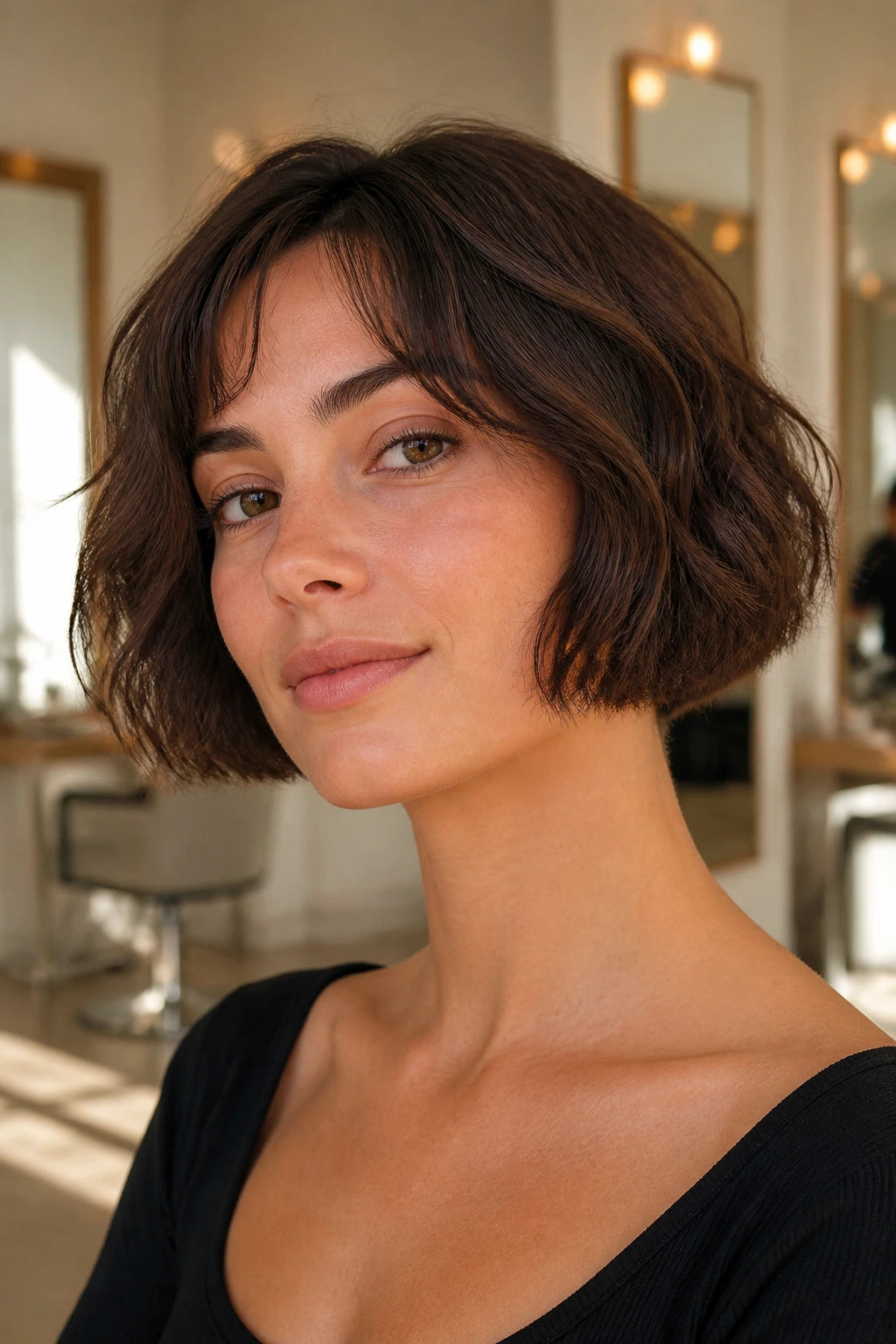
A deep side part changes the whole attitude of the cut. It gives height at the crown, swings the fringe across the forehead, and makes soft waves look a little more dramatic without adding length. The bob stays French, but the mood gets more polished and a bit sharper.
This is a smart move if your hair goes flat at the roots. The part creates lift where the head needs it most, and the wave catches that volume instead of fighting it. On round or square faces, the diagonal line can be especially flattering because it keeps the front from feeling too even.
Best for: hair that needs root lift and faces that like asymmetry.
How to style: mist the roots with a light volumizing spray, blow-dry the part first, then add one or two loose bends near the front. That’s enough. A side-part French bob does not need every strand curled.
6. Thick-Hair French Bob with Hidden Internal Layers
Thick hair can carry a French bob beautifully, but only if the bulk is handled well. The trick is to keep the perimeter solid and remove weight from inside the shape, not from the edges. If the outline gets too chopped up, the bob loses that satisfying, neat edge that makes it feel intentional.
Hidden internal layers let the hair move without fraying the shape. The outside still reads as a bob. Inside, the hair has room to bend and settle. That’s what keeps thick wave from turning into a triangle by midday.
What to Ask
Say you want the outline to stay blunt, with internal debulking only where the hair balloons out—often at the back of the head or near the mid-lengths. On very dense hair, a stylist may use slide-cutting or invisible layers to remove weight without leaving obvious steps.
This version is a workhorse. It looks controlled on day one and still behaves when the weather gets humid and the wave gets a little louder.
7. Soft Shag French Bob with Wavy Ends

This is the more relaxed cousin in the group. A soft shag French bob keeps the chin-length or jaw-length base, but it adds a little more texture through the crown and fringe so the wave can break up the shape. The result feels airy and a bit rock-and-roll.
It’s the cut I’d point someone toward if they want movement first and polish second. You still have the bob line, but the silhouette is looser. A few shorter face-framing pieces around the cheekbones can make the whole thing feel easier to live in.
Why It Works
A soft shag cut prevents the bob from sitting too rigidly on dense or naturally puffed-up hair. The shorter bits around the top help the wave stack in a pleasing way. You get bend, not bulk.
If you like your hair to look as though you ran your fingers through it and then stopped, this is the one.
8. Blunt-End Wavy French Bob
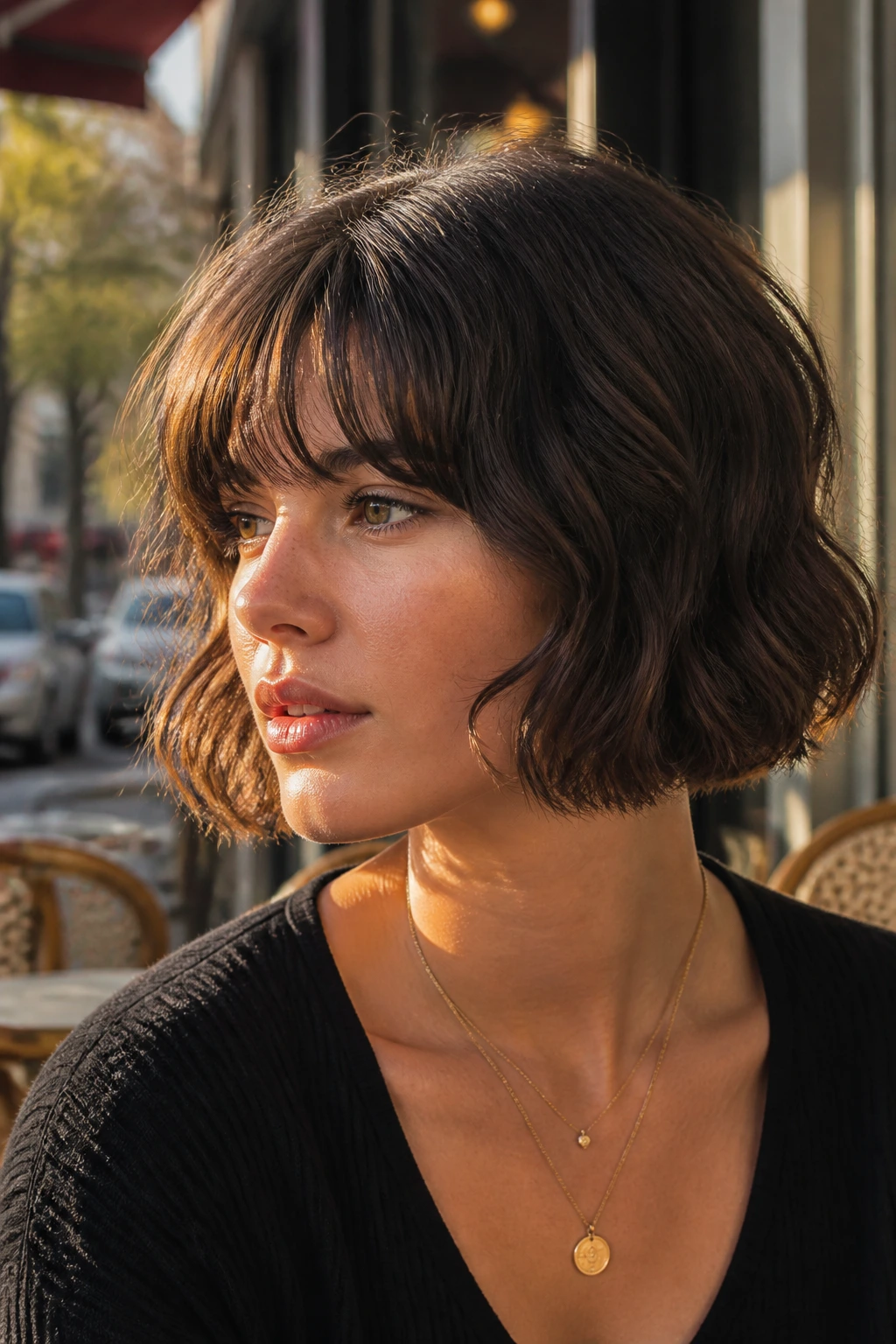
A blunt-end French bob sounds stern on paper. In practice, it can be one of the softest-looking versions because the blunt line gives the wave something solid to push against. The texture gets highlighted instead of hidden.
This cut works especially well when the ends are kept clean and the wave lives above them. The hair can be air-dried or rough-dried, then lightly shaped with a curling iron if needed. The ends should still look like ends, not like they were melted into a blob of curls.
A clean way to think about it
The blunt edge says “structure.” The wave says “ease.” Together, they create a bob that reads expensive without being stiff.
Styling note
Keep finishing products light. A pea-sized amount of cream or a few drops of oil through the mid-lengths is enough. Anything heavier will make the blunt edge disappear, and that is the whole point of the cut.
9. Baby Bang Wavy French Bob

Baby bangs shift the energy fast. They make the bob feel sharper, a little art-school, a little cheeky. With loose waves underneath, the short fringe keeps the look from becoming too sweet or too retro in the wrong way.
This version asks for confidence, but it pays off if you like a haircut with personality. The bangs should sit high enough to show the brows and soft enough to move. Hard, stiff baby bangs are a mistake here. You want them to feel light and touchable, not cut into a block.
Best for
Small or balanced foreheads, strong brows, and people who don’t mind a shape that gets noticed.
A useful warning
If your hairline has cowlicks at the front, talk about that before anything gets cut. Baby bangs and stubborn growth patterns do not always play nicely together. The right stylist will account for that and cut with the grain, not against it.
10. Flipped-Out Wavy French Bob
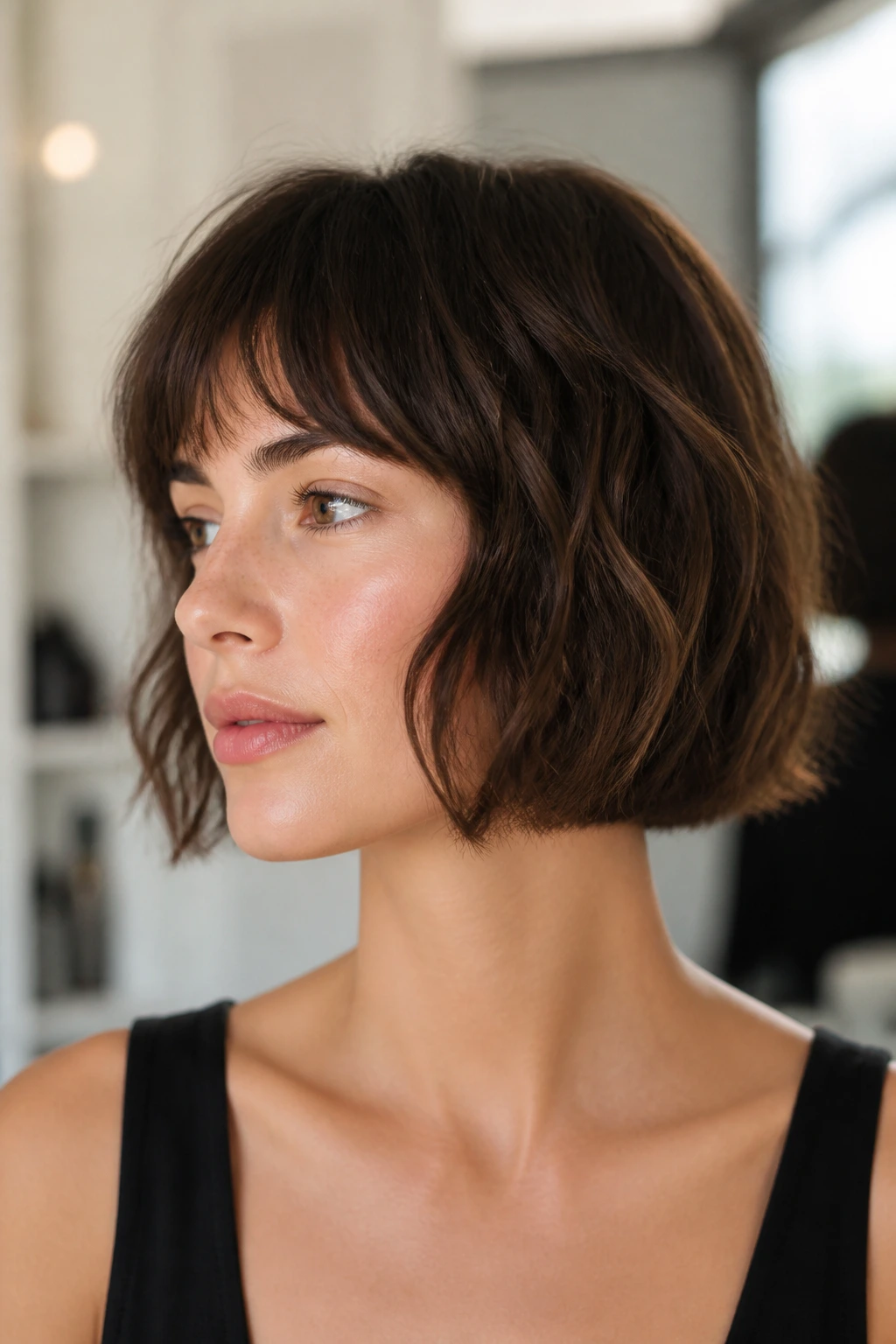
A flipped-out bob brings a bit of motion to the ends, which can keep a French bob from looking too compact. The flip adds lift at the bottom and gives the haircut a little bounce when you move. It also looks less precious than an inward-curved bob, which I think matters if you wear a lot of casual clothes.
This version can be built with a blow-dryer and round brush, or with a flat iron turned outward at the ends. The wave should stay loose and the flip should stay small. You want a flick, not a curl.
Good with: fine to medium hair, especially when you want the cut to feel lighter.
Style cue: flip only the last half-inch to one inch of hair. Any more and the shape starts reading retro in a way that can fight the French bob’s cleaner line.
11. Long French Bob with Soft Wave

A long French bob—call it a lob if you want, though the mood is still very French—gives you more room to play with wave placement. It usually lands between the jaw and collarbone, which makes it friendlier for people who are nervous about going short.
This is the easiest version to grow out, and that’s part of its charm. The shape can still feel compact around the face, but the extra length lets the wave fall in a more relaxed way. It’s the least fussy option on this list, and sometimes that’s the smartest one.
Where it shines
If your hair is in the awkward middle stage between bob and shoulder length, this cut cleans it up fast. It also works well if your wave pattern is irregular. The longer length gives the bend room to settle instead of puffing out at the sides.
12. Invisible-Layer French Bob for Fine Hair
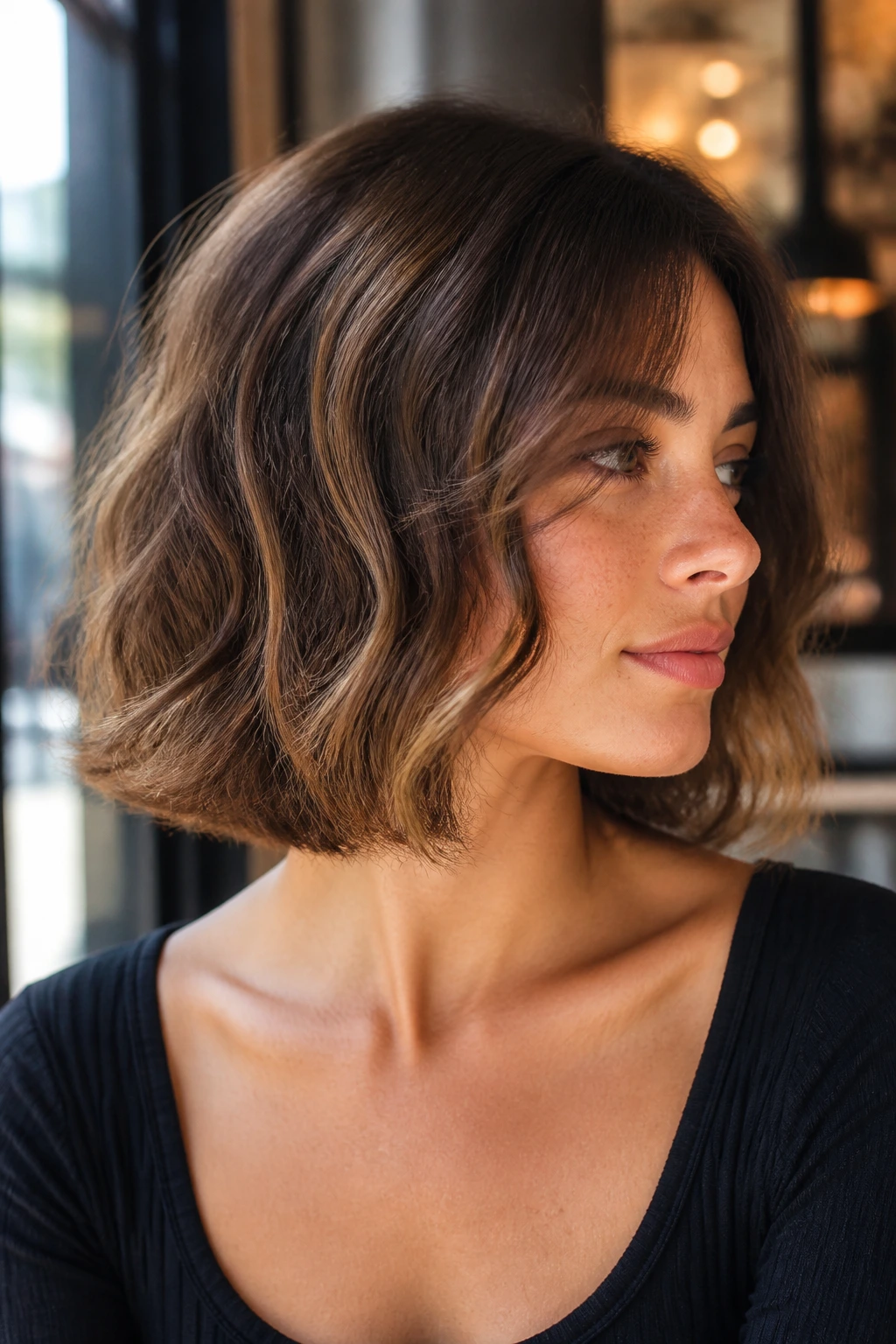
Fine hair needs a careful hand. Too many layers and the bob gets wispy. Too little structure and it goes flat. Invisible layers solve that problem by removing just enough weight to let the hair move while keeping the outer line looking full.
This style is one of the best examples of soft texture done right. The hair can look airy and a little piece-y without losing the shape. That matters because fine hair can turn limp fast if the bob is overtexturized.
What to ask for
A softly stacked interior, not obvious choppy layers. The outer perimeter should still feel blunt enough to hold its line.
Daily reality
A light mousse at the roots and a fast rough-dry are often enough. Fine hair usually looks best when it is not drenched in product. Keep it clean, keep it airy, and let the cut do the work.
13. Boxy French Bob Softened by Waves
The boxy bob is the one people often overlook, which is a shame. If you have a square face or angular features, the right amount of wave can soften the corners without hiding the bone structure. The shape stays a little graphic, but the movement keeps it from looking severe.
This version has a firmer outline around the sides, with the wave breaking things up near the cheeks and ends. It feels modern in a quiet way. Not loud. Just clean.
Why it works
A boxier perimeter gives the haircut a memorable silhouette. The wave keeps it from feeling too hard. That contrast is what makes the cut interesting in motion.
If your hair is naturally straight but bends a little after drying, this cut can be surprisingly easy to wear. It likes a small amount of texture spray and a little bit of finger movement, not a full blowout.
14. Rounded French Bob with C-Sweeps
A rounded French bob curves gently around the face instead of stopping in a hard line. The ends sweep in a subtle C-shape, which can make the haircut feel softer at the cheek and jaw. Add a loose wave and the whole thing looks almost upholstered—in a good way.
This cut is flattering when you want the bob to frame the face without cutting straight across it. It’s especially useful if your hair sticks out at the sides or wants to puff at the bottom. The rounded shape contains that energy.
How to wear it
Let the front pieces bend inward with a brush or iron, then leave the back a touch looser. The contrast gives the cut depth. If everything is too round, it turns sleepy. If everything is too straight, you lose the softness that makes this version special.
15. Collarbone French Bob with Loose Texture
The collarbone length gives this version a little more grace, less snap. It still has French bob attitude, especially if the ends are blunt and the top has some lift, but the longer line makes it easier to tie back, tuck, or pin.
This is the cut for someone who likes the idea of a bob but wants room to grow. It can handle waves that are stronger in some sections than others, and it often looks better on day two than on day one. That’s a nice bonus.
Best for: people testing the short-hair waters.
Styling note: keep the wave loose and concentrated through the front and middle, then leave the bottom mostly straight. The cut will look softer and longer, not bulky.
16. One-Side-Tucked Wavy French Bob
A tucked side changes the whole read of the haircut. One side slips behind the ear, the other keeps its wave and volume. The look is simple, but it gives the bob a nice asymmetry and makes earrings, collars, and jawlines more visible.
This is a practical cut if you want something that can move from casual to dressed up without a full restyle. The tucked side gives polish. The loose side keeps it from feeling too neat.
A useful detail
Ask for enough length around the temples to tuck one side without it popping back out. If the cut is too short there, the tuck becomes a fight. No one wants that.
I like this one for people who wear a lot of statement earrings. It gives them a place to live.
17. Tousled French Bob for Fine, Wavy Hair
Fine, wavy hair can be tricky. It wants movement, but it also collapses if you pile on too much product. A tousled French bob keeps the shape lightweight and uses loose bends to create the illusion of more body than the hair actually has.
The haircut should stay compact, with just enough texture to let the wave separate. If the layers are too aggressive, the ends fray. If there are no layers at all, the wave can look stringy. The middle path is the one that works.
What helps
A root-lifting mousse at the crown, a tiny amount of salt spray through the mids, and finger-drying. That’s often enough. You do not need six products and a diffuser ceremony.
This cut is proof that fine hair does not need to be “fixed.” It usually just needs the right shape.
18. Dense-Hair French Bob with a Heavy Line
Dense hair often looks best when the bob owns its weight. Instead of fighting volume, this version gives it a strong perimeter and uses the wave to move the shape around the face. The result is full, clean, and a little dramatic.
The heavy line keeps the haircut from frizzing apart at the ends. Internal thinning should be controlled, not enthusiastic. Too much removal and the bob turns fluffy at the wrong places. That is the last thing you want with dense wave.
The point of this cut
Structure first. Texture second. If you get that order wrong, the cut can mushroom.
A strong center part or a soft off-center part both work here, but I prefer a small shift off center. It keeps the density from looking too symmetrical and lets the wave settle more naturally.
19. Face-Framing French Bob with Soft Front Pieces
This version leans into the front. The sides are a touch longer, the pieces around the face are more deliberate, and the wave is placed where it can soften the cheekbones. It is a good choice if you want the haircut to feel flattering from the front camera angle without becoming over-layered.
The front pieces should blend in gradually. Sudden short pieces can look choppy fast, and this style does not need that kind of drama. It needs softness, a little curve, and a bit of length near the face.
How it reads
The silhouette stays bob-like, but the framing pieces make the cut feel easier. It’s a smart option for anyone who likes to tuck hair behind the ears on one side and leave the other side loose.
You can dress this up with a deep side part or wear it flat and casual. It has range.
20. Romantic Wavy French Bob with Airy Fringe
This is the gentlest version in the set, and maybe the prettiest when the texture is right. The fringe sits light on the forehead, the bob falls around the jaw, and the wave is soft enough to feel brushed out rather than curled. It has a little 1970s softness, a little French insouciance, and none of the stiffness that can make short hair feel dated.
It works especially well if you like a feminine shape without a lot of volume. The fringe should be light, broken up, and easy to part with your fingers. The ends should be textured just enough to move.
Ask for: a soft fringe that blends into the sides, a blunt base, and only a touch of point-cutting near the ends.
This is the cut I’d send to someone who wants the French bob mood but not the sharper edge.
What Gives a Wavy French Bob Its Soft Texture
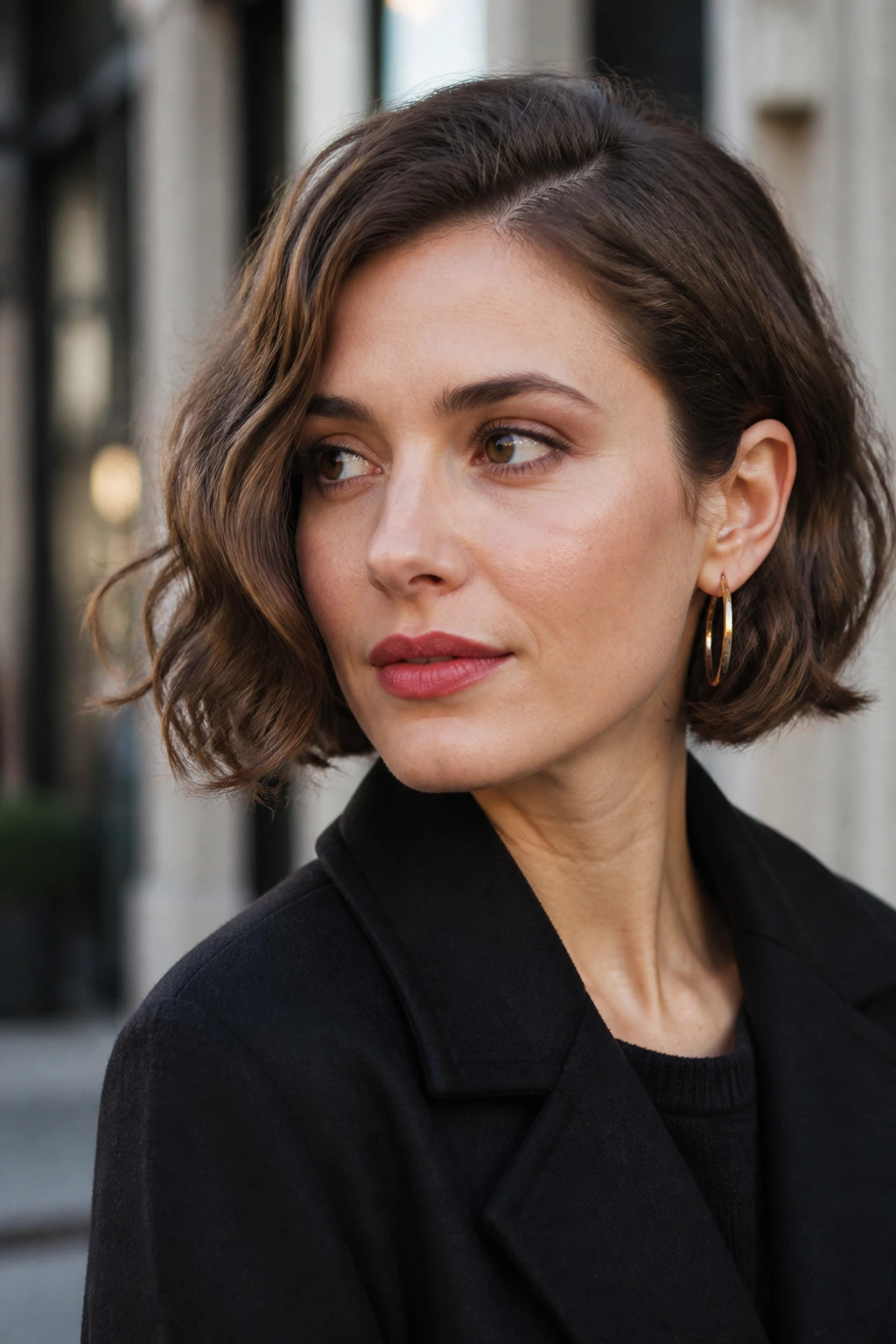
A French bob gets its softness from the relationship between the line and the bend. The line gives you shape. The bend keeps it from feeling frozen. If either one gets too strong, the whole haircut tilts off balance.
That’s why the best versions usually keep the perimeter clean and use texture in controlled places: around the ends, through the fringe, or just enough inside the shape to stop the hair from sitting like a block. A little roughness at the edge is fine. A lot turns into fuzz.
The other thing that matters is weight. Hair needs enough of it to fall, but not so much that it drags the wave flat. Dense hair often needs internal debulking. Fine hair often needs lift and restraint. The cut is the same idea, but the handling changes.
Choosing the Right French Bob for Your Face and Hair

Round faces usually like a bob that sits just below the jaw or skims it at a slight angle. That extra bit of length keeps the face from feeling boxed in. A side part or curtain fringe helps too, because it breaks the circle visually.
Square faces often look good with softer edges, rounded front pieces, or a wavy finish that interrupts the jawline. A blunt bob can work, but it’s better when the bend is loose and the ends aren’t cut too straight across at the cheek.
Oval faces can get away with almost anything, which is both useful and mildly annoying. Chin-length, micro, long, fringe, no fringe—it all tends to work. The real question is whether you want a bolder line or a more relaxed one.
Thick hair usually needs weight removed from the inside, not the outside. Fine hair usually needs the outline kept solid and the layers kept light. Curly or very wavy hair can go shorter than you think, but the shrinkage has to be planned for. Cut it wet without respecting the pattern and you may end up with a bob that feels a full inch shorter than intended.
How to Talk to Your Stylist About the Cut
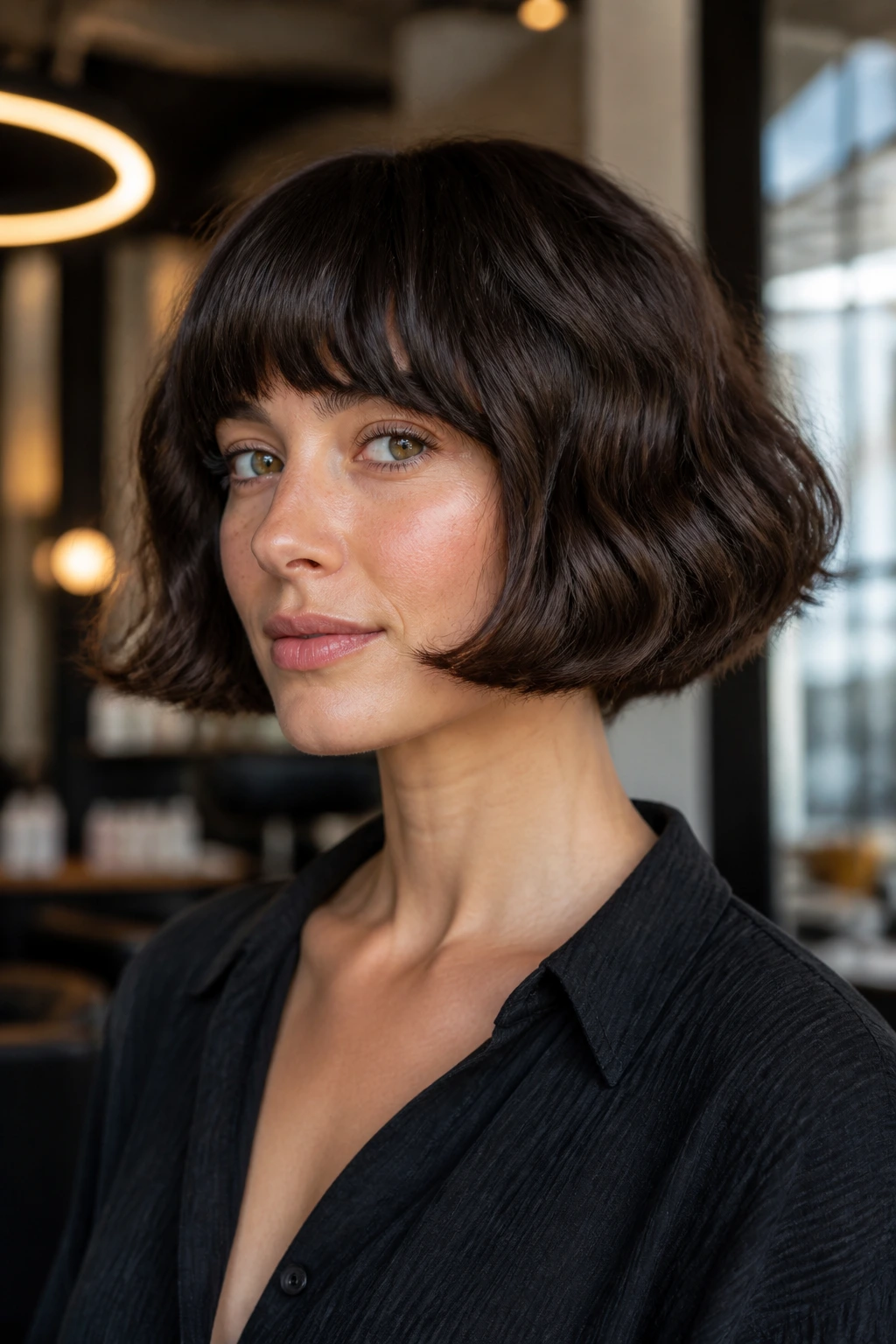
Bring photos, but bring useful ones. You want images that show the front, side, and back if possible, because a French bob lives or dies on the shape line. One front-facing picture is not enough.
Say where you want the length to land. Chin, jaw, below the jaw, collarbone. Those few inches make a huge difference. Then talk about how you wear your hair on ordinary days, not only on the best wash day of your life. If you usually air-dry, say so. If you blow-dry the front but let the rest dry loose, say that too.
Here are the details worth mentioning:
- Your natural part
- How much wave or bend you already have
- Whether your hair puffs at the sides
- Whether you want bangs, fringe, or no fringe
- How often you’re willing to trim it
That conversation saves regret. Haircuts are easier to refine at the chair than to explain after the fact.
Essential Tools for Styling and Maintenance
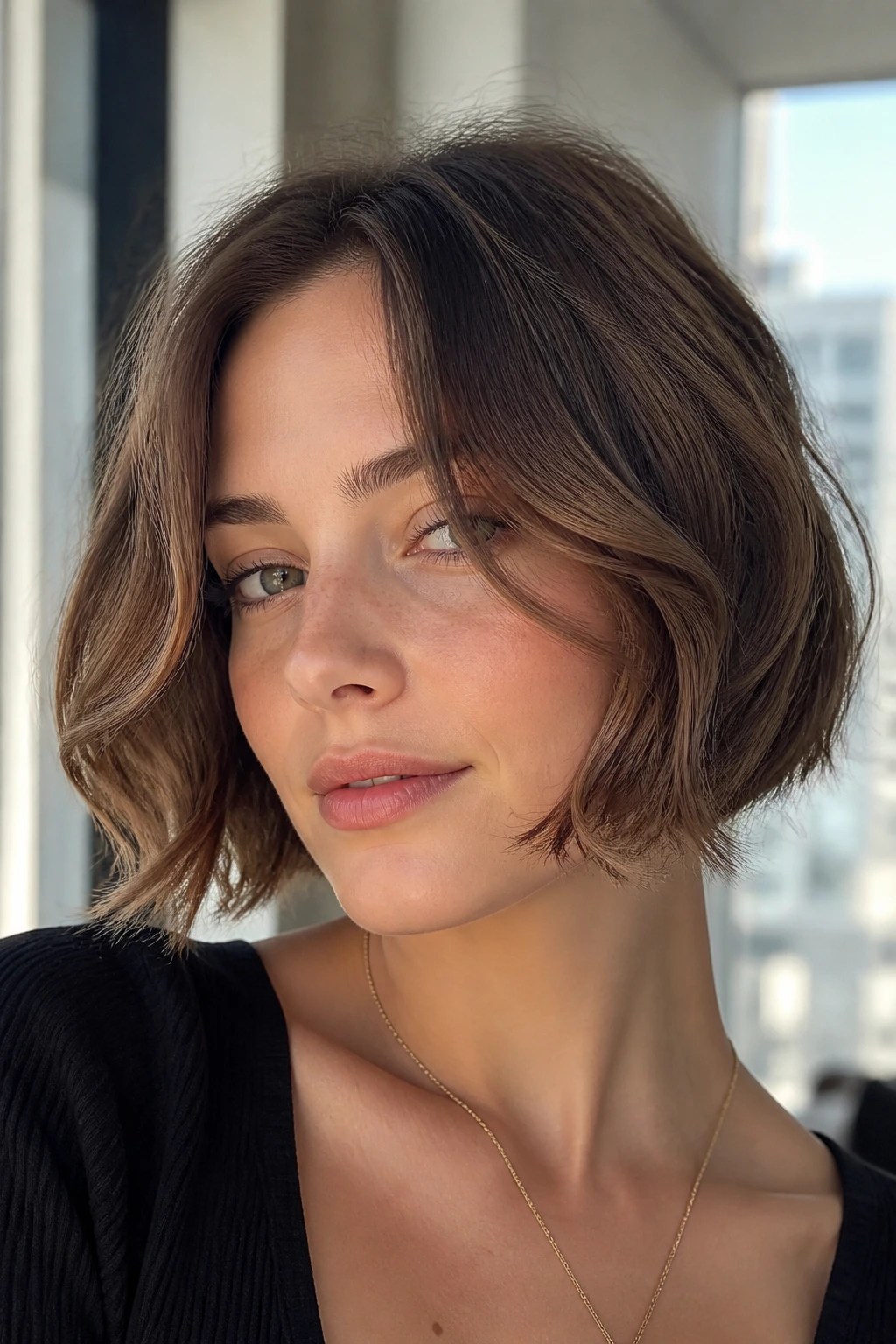
-
1-inch curling iron or wand: Best for creating loose bends without turning the bob into a curl set.
-
Blow dryer with a nozzle: Helps direct the front pieces and keep the root from flipping every which way.
-
Light mousse: Gives fine and medium hair some memory without making it stiff.
-
Texturizing spray: Useful for adding separation at the mids and ends, especially on day two.
-
Round brush, medium size: Handy for smoothing the fringe and softening the face-framing sections.
-
Wide-tooth comb: Better than a fine comb for keeping wave intact while detangling.
-
Heat protectant: Needed if you’re using iron work more than once a week.
-
Microfiber towel or T-shirt: Cuts down frizz during air-drying.
-
Silk or satin pillowcase: Helps preserve the bend and keeps the ends from looking flattened by morning.
Smart Product Choices for Soft Wavy Texture
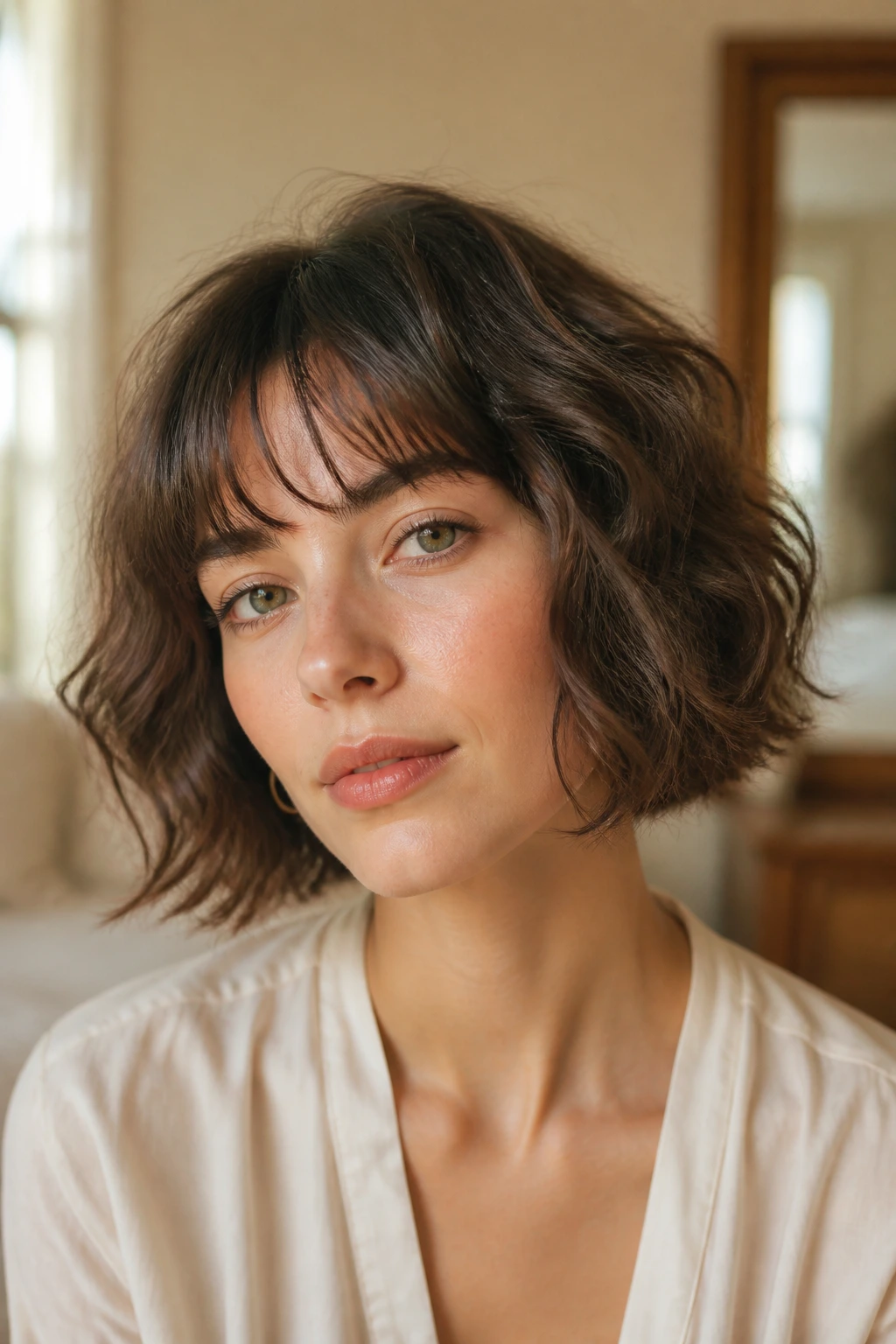
The product mistake people make with a French bob is overfeeding it. Heavy creams, thick oils, and rich leave-ins can erase the very thing you want: movement. A soft-texture bob likes lighter formulas.
Mousse works well at the roots and mid-lengths, especially when you want lift without collapse. A spray texture product can add separation without making the hair gritty. Cream should be used with a very small hand—usually just enough to smooth the ends, not coat them.
If your hair is dry, use a small amount of conditioner in the shower and stop there. The cut does not need to feel slippery to look soft. In fact, too much slip often makes short hair fall flat on the sides.
How to Style a Wavy French Bob Without Killing the Shape

Start with damp hair and work a small amount of mousse through the roots and mids. Not a fistful. A golf-ball-sized amount is too much for many bobs, especially fine hair. Rough-dry the roots first so the part settles, then let the mids stay a little damp before adding bends with your hands or a wand.
Root lift matters more than perfect curl pattern. If the crown is flat, the whole cut looks tired. If the crown has a little lift, even an imperfect wave reads as deliberate.
For day two, mist the hair lightly with water or a wave-refresh spray, scrunch the mids, and re-bend only the pieces that have gone limp around the face. Don’t redo everything. That’s how the cut starts looking too set and too shiny in the wrong way.
Common Mistakes to Avoid With a Wavy French Bob

The first mistake is cutting the bob too heavy around the jaw. You end up with a box that sits on the face instead of framing it. The fix is a cleaner perimeter with controlled weight removal, not random layering.
The second mistake is overcurling every strand. Soft texture isn’t the same as tight waves all over the head. If every section bends the same way, the cut loses its edge and starts looking overstyled. Leave some straightness in the ends.
The third mistake is choosing bangs that don’t match the density of the hair. Thick blunt bangs on a short bob can take over the whole haircut. Fine hair with too much fringe can look sparse. The fringe should belong to the bob, not fight it.
One more: using too much oil. The bob gets greasy-looking fast, and the wave falls out. If the style needs more shine, add it only to the ends.
Variations and Alternatives to Try
The Air-Dry French Bob: Keep the cut blunt and let the wave set on its own with a little mousse. Best for naturally wavy hair that already has a bend and doesn’t need much iron work.
The Sleek-to-Wavy Hybrid: Blow-dry the top smooth, then add movement only from the cheekbones down. This is a clean option for people who want polish at work and softness everywhere else.
The Curly French Bob: Let the bob sit a bit longer so the curls don’t spring too short. Ask for curl-by-curl shaping rather than a straight-across cut if your pattern is tighter.
The High-Texture Weekend Bob: Keep the perimeter neat, then use a diffuser and texture spray on days when you want more separation. It’s a good choice if your week involves different levels of effort.
The Grow-Out Friendly Bob: Start closer to the collarbone with longer front pieces. You keep the French attitude, but the cut stays wearable as it grows.
Maintenance, Trims, and Daily Upkeep
A short French bob needs regular shaping, or the line starts to drift. Most versions benefit from a trim every 6 to 8 weeks. If you have bangs, that timing can shrink to 3 to 4 weeks for the fringe alone. The rest of the bob may be fine, but the bangs will start asking for help sooner.
Day-to-day care is simple if you keep the products light. Refresh the wave with water or a mist, then rework only the areas that collapsed overnight. If the back starts flipping out in the wrong place, a quick pass with a round brush or flat iron is enough. You do not need a full restyle every morning.
For thicker or denser hair, watch the bulk at the back and sides. That’s where the shape usually drifts first. For fine hair, watch the crown. That’s where the cut can go limp before lunch.
Frequently Asked Questions
Will a wavy French bob work on fine hair?
Yes, if the cut keeps a strong outline and the layers stay light. Fine hair usually needs root lift more than heavy texture, so a small amount of mousse and a blunt perimeter help a lot.
Can I get a French bob without bangs?
Absolutely. A no-bang French bob can look cleaner and a little sharper, especially with a side part or a gentle face frame. The key is still the jaw-to-chin length and the soft bend through the mids.
Is this cut good for thick hair?
It can be excellent, but the haircut has to remove weight from inside the shape, not destroy the outline. Thick hair looks best when the perimeter stays clear and the bulk is managed carefully.
How short should a French bob be if I have a round face?
Usually just below the jaw or around the jawline works better than a super short crop. That little bit of length helps elongate the face, especially if you add a side part or a curtain fringe.
What if my waves puff out on humid days?
Use less cream, more lightweight spray, and keep the ends blunt. Humidity often makes over-layered bobs look bigger than intended, so shape control matters more than extra product.
Can curly hair wear a French bob?
Yes, but the cut has to respect shrinkage and curl pattern. A curly French bob often needs to be cut a little longer than expected, and it usually looks best when shaped dry or with the curls in their natural state.
How do I keep the bob from flipping into a triangle?
Ask for internal weight removal and avoid too much volume at the sides. A triangle usually means the hair is heavy at the bottom and too wide at the middle, which is a cutting issue as much as a styling issue.
Do I need to heat-style a French bob every day?
No. Many versions look better with a rough-dry and a little finger shaping. Heat is useful for the front pieces or the fringe, but it shouldn’t be doing all the work.
The Soft-Texture Bob That Stays Interesting
The best wavy French bob haircuts don’t try to force hair into one fixed shape. They give the hair a line to live inside, then let the wave bring the personality. That’s why the cut can feel crisp one day, softer the next, and still look like the same haircut.
That flexibility is the real appeal. Chin-length, jaw-grazing, fringe-heavy, side-parted, airy, dense, blunt—each version changes the mood without losing the idea. Pick the one that matches your hair’s habits, not just the photo you saved on your phone, and the result tends to behave much better in real life.
