



Fine hair can look flat the second the ends get too heavy. A choppy bob changes that by taking weight out of the right places and leaving enough line at the perimeter to keep the cut from turning wispy.
The part most people miss is this: not every “textured bob” helps fine hair. Too much slicing through the ends can make the whole shape look frayed, especially if your strands are soft and smooth to begin with. The better versions keep a clean outline, add movement where the eye needs it, and stop short of that shredded, over-thinned finish that always looks a little tired by day three.
That’s why the good choppy bob haircuts for fine hair feel a little different in the chair. They’re not chasing chaos. They’re building lift, width, and movement with restraint. Some lean chin-length and airy, some stay at the collarbone and use hidden layers, and some use bangs or a side part to do the heavy lifting up front. The common thread is shape. The rest is flavor.
Why These Choppy Bob Haircuts Work So Well on Fine Hair

-
They remove drag: Fine hair tends to collapse under its own length, so a shorter outline gives the roots a chance to stay up instead of being pulled down all day.
-
They keep the edge visible: A solid perimeter makes the haircut look thicker at a glance, even when the hair itself is soft and delicate.
-
They move the texture where it helps most: Choppy ends, internal layers, and face-framing pieces create movement without turning the whole cut into string.
-
They work with simple styling: A round brush, a light mousse, and a small mist of texturizing spray are usually enough. That matters when your hair goes flat fast.
-
They give you options: You can go short and crisp, longer and softer, or add bangs and side parts to build volume without asking for a dramatic chop.
Fine Hair Isn’t the Same Thing as Thin Hair
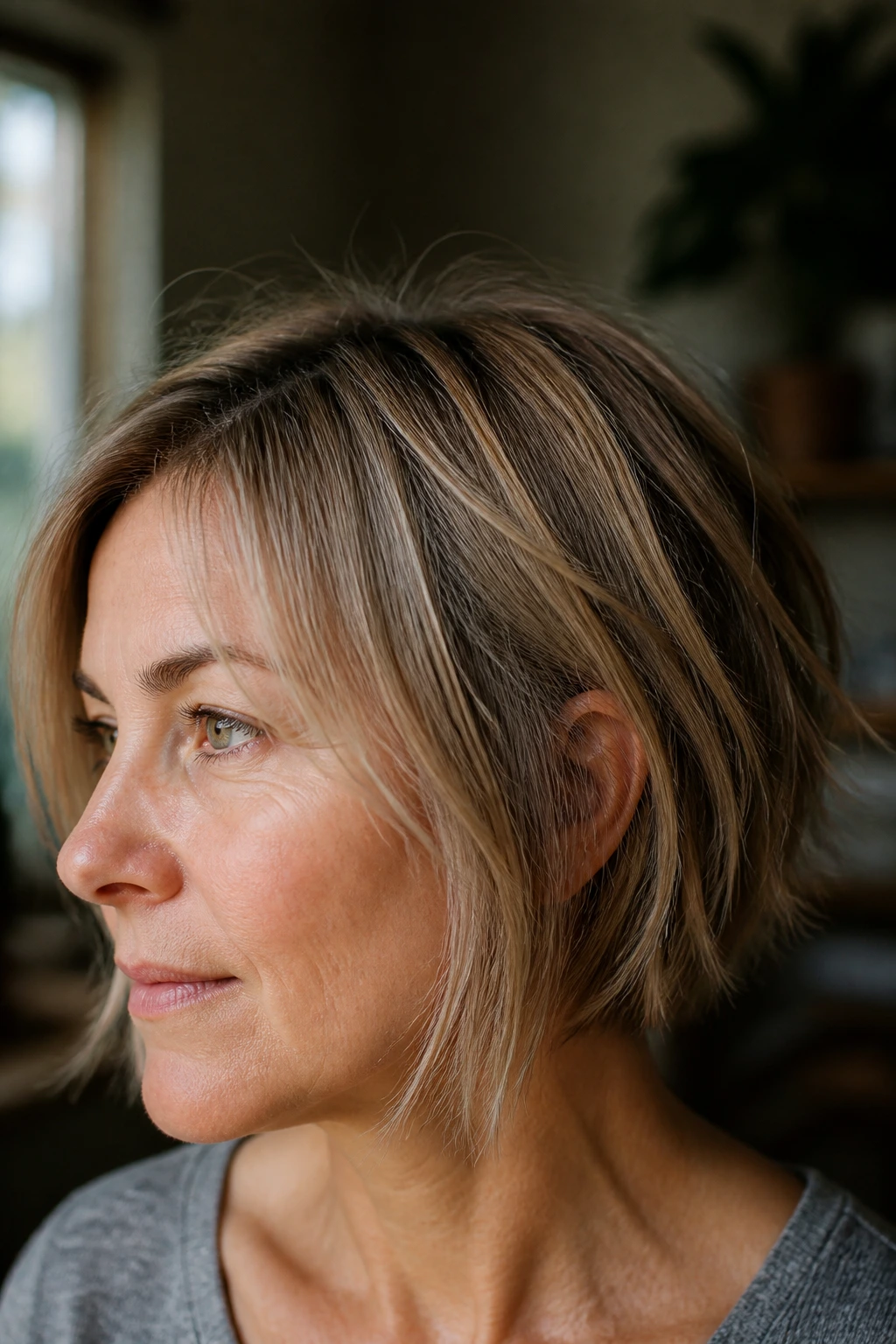
Fine hair and thin hair get mixed up all the time, and that leads to some terrible haircut advice. Fine hair means each strand is small in diameter. Thin hair means there aren’t many strands on the scalp. You can have one without the other, and the haircut should change depending on which one you’re dealing with.
That difference matters because a choppy bob on dense fine hair can handle more texture around the crown and sides. Fine but sparse hair needs a cleaner perimeter and a lighter hand with layers. If you pile on too much razoring or use thinning shears like a paintbrush, the ends can go see-through fast.
A good stylist reads the hair from the scalp to the tips. They look at where the crown falls flat, where the front line wants to tuck under, and whether the hair needs more body at the jaw or more softness around the face. That’s the real job here. Not just “making it choppy.”
How to Choose the Right Length for Your Face and Density

Shorter doesn’t automatically mean better. That’s the first trap. A chin-length bob can wake up fine hair almost instantly, but if your neck is short, your jaw is soft, or your hair grows in with a stubborn cowlick at the nape, you may want a little more length to keep the shape from kicking out at the sides.
Chin length
This is the sweet spot for a lot of fine hair because it removes enough weight to let the roots lift. It also keeps the cut near the strongest visual points of the face: jaw, cheekbones, lips, and eyes.
Collarbone length
If you want something softer or easier to grow out, collarbone length keeps the shoulder from swallowing the ends. It’s a safer choice for people who wear their hair tucked behind the ears or pulled into a loose clip most days.
Micro-short
A micro bob can look sharp and expensive on fine hair, but it also exposes everything — neck length, jaw shape, cowlicks, and posture. If you like a crisp outline and don’t mind regular trims, it can be a clean little power move.
What to Tell Your Stylist Before the First Snip
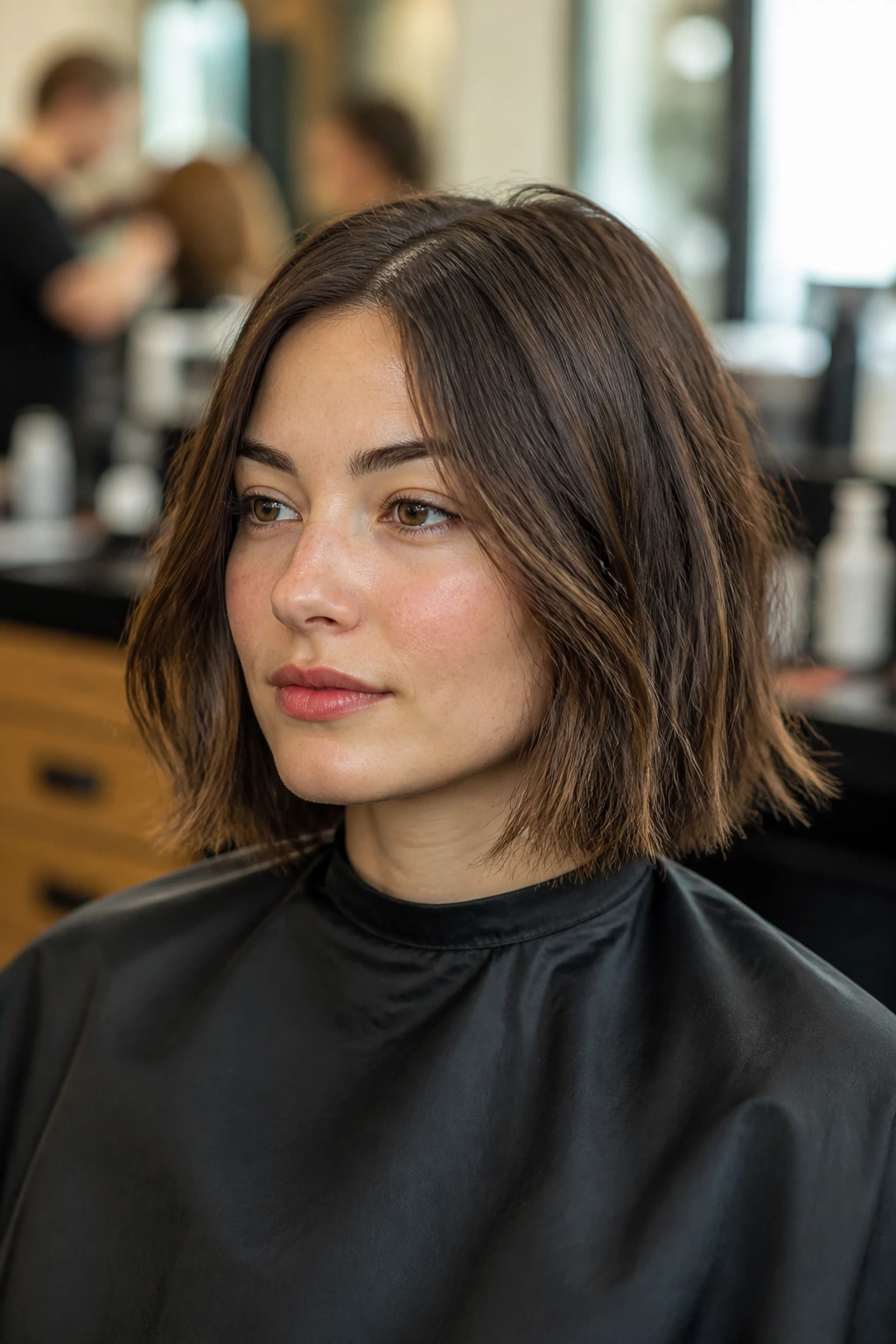
Bring photos, yes. Bring two if you can. One for the outline, one for the texture. Haircuts get messy fast when someone says “I want it choppy” and means three different things.
Say the words that matter: keep the perimeter full, don’t over-thin the ends, and use internal movement instead of shredding the whole shape. That last part is the big one. If the stylist hears “volume,” they may reach for thinning shears too quickly. On fine hair, the better answer is usually point cutting, controlled layering, or subtle internal removal — not a full-on texturizing attack.
Also tell them how you actually wear your hair. Air-dried? Blow-dried smooth? Rounded under with a brush? That changes where the layers need to sit. A bob that looks perfect in a salon mirror but falls apart when you let it dry on its own is not a win.
1. Soft Razored Chin-Length Bob
A soft razored chin-length bob has that easy, swung shape that fine hair loves when it’s cut with a light hand. The ends don’t sit in a hard line, but they also don’t look shredded. That balance gives the hair a little air without making it look sparse at the bottom.
Why It Works for Fine Hair
The chin-length shape keeps the weight off the shoulders, which is where fine hair often starts to drag. A gentle razor finish at the ends creates motion, but the cut still reads as a bob, not a fringe pile. That distinction matters. You want movement, not fray.
How to Wear It
- Ask for a clean perimeter with soft point cutting through the last half inch.
- Keep the crown slightly fuller so the top doesn’t collapse.
- Use a mousse at the roots and a small round brush to bend the ends under just a touch.
This cut is especially good if your hair lies flat when it gets longer. It gives you a little lift without forcing a dramatic chop.
2. French Bob With Wispy Fringe
This one looks effortless in the best possible way, but it’s not lazy. A French bob with a wispy fringe makes fine hair look deliberate because it keeps the shape compact and the forehead area light. The fringe brings attention upward, which is handy when the ends are fine and soft.
The trick is the fringe itself. Keep it airy, not heavy. A thick, blunt bang can swallow fine hair whole and make the sides feel narrow. Wispy fringe leaves space around the eyes and lets the bob keep its soft edge.
If your face is long or your forehead feels too open, this cut can bring the balance back without adding bulk through the sides. It works especially well when the ends are tucked under with a brush or flicked out just a little at the jaw.
3. Stacked Bob With a Lifted Nape
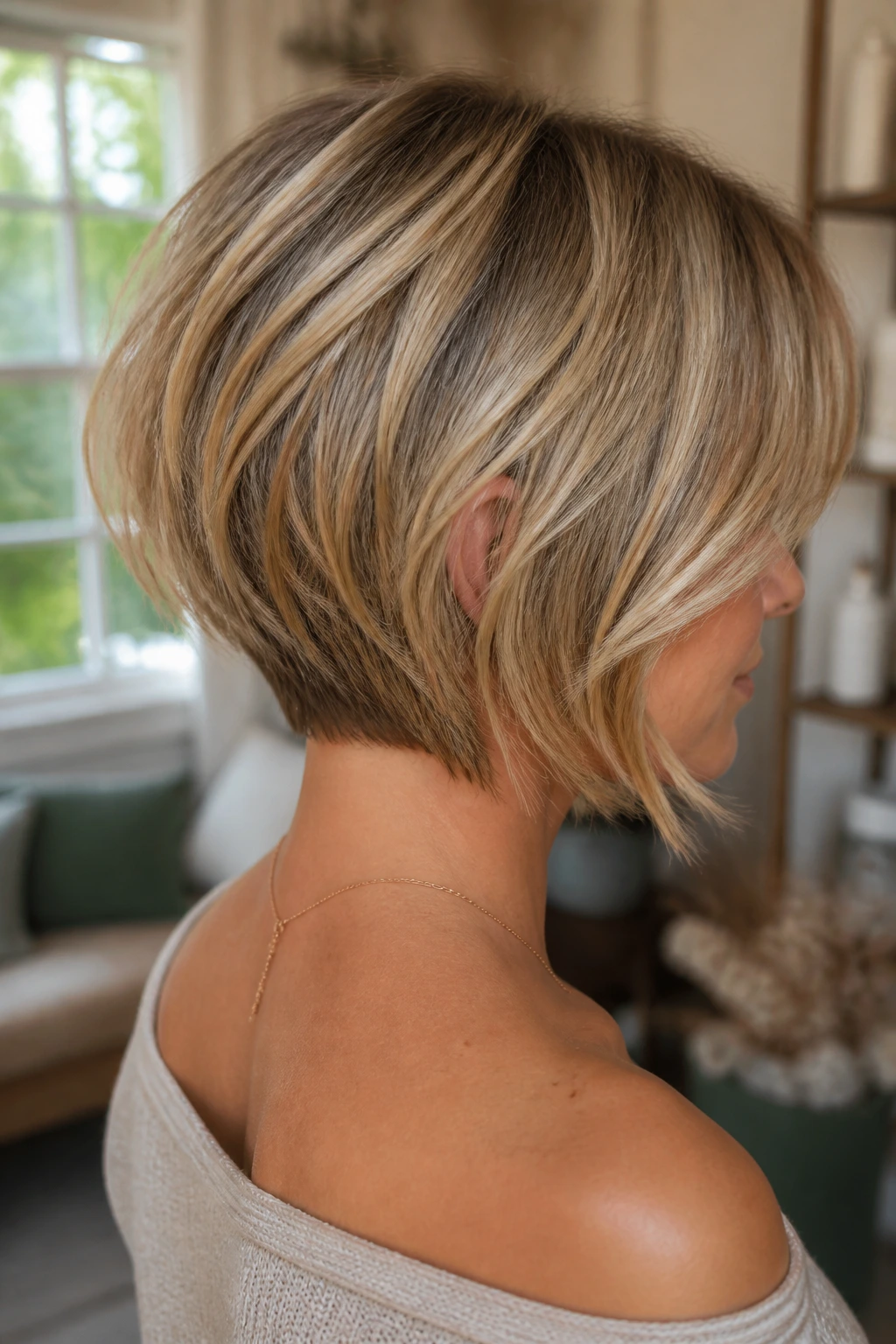
Can a stacked bob work on fine hair? Absolutely — if the stack is soft and controlled, not stiff. Fine hair at the crown often needs a little structural help, and this cut gives it exactly that by building shape through the back without turning the profile into a helmet.
The nape sits a touch shorter, then the lengths rise gently toward the occipital bone. That creates lift where the head needs it most. Done well, it gives the illusion of density through the back while keeping the front light and swingy.
Best for:
- Hair that collapses at the back of the head
- Faces that can handle a little width near the cheekbones
- People who like a blow-dry with round brush movement
Keep the stack soft. If it gets too steep, fine hair can start to look overworked and old-fashioned in a hurry.
4. Collarbone Bob With Hidden Layers
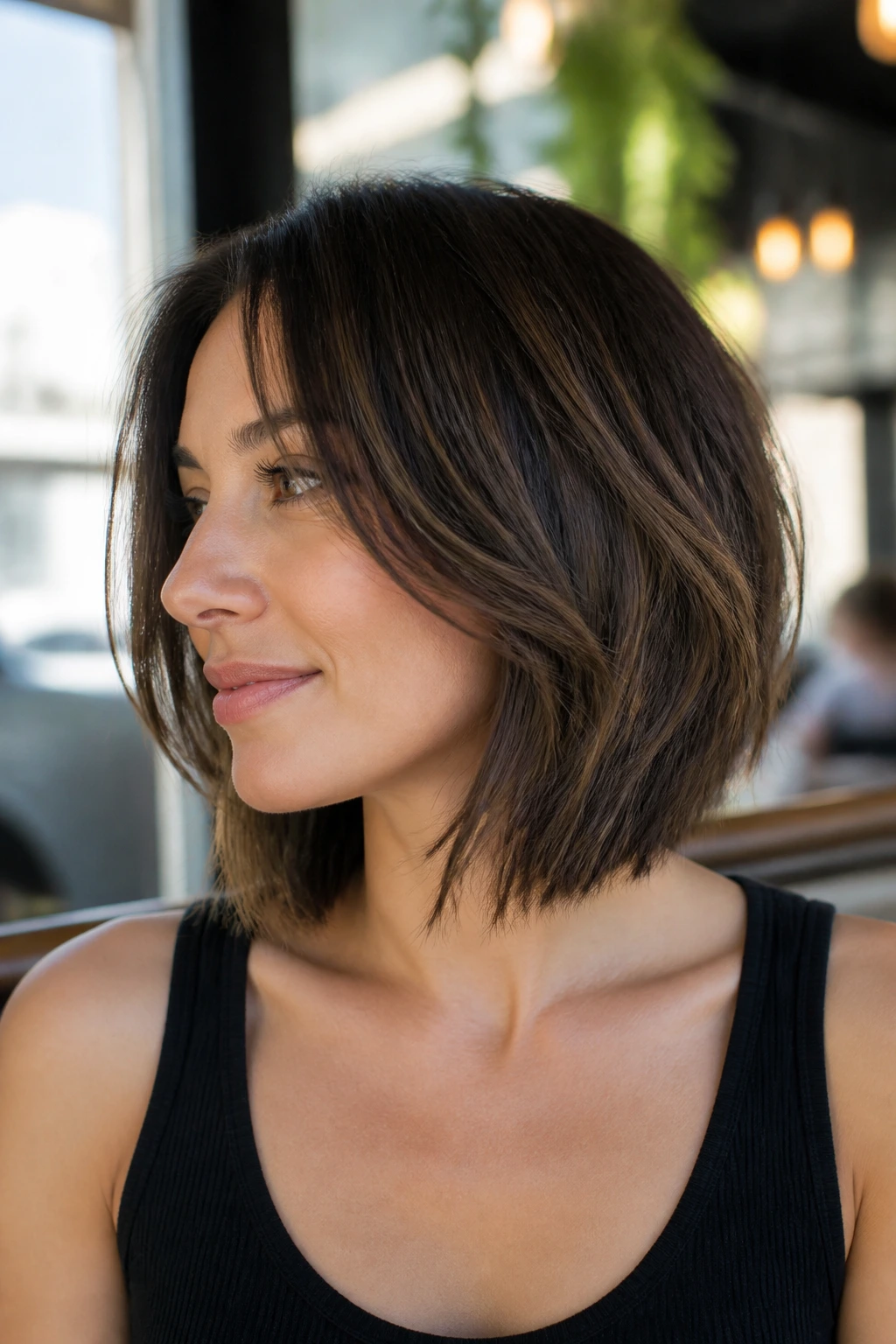
Not everyone wants to go chin-short. A collarbone bob with hidden layers is the safer landing place, and on fine hair it can be smarter than going shorter too fast. The length gives you a little weight, which helps hair behave, while the internal layers keep it from hanging like a curtain.
This cut is a quiet fix for anyone who has tried a blunt medium-length style and found that it just clings to the head. The hidden layers move the hair without exposing too much of the thinning inside line. You still get a clean surface. You just get more life underneath it.
It’s also one of the easiest shapes to grow out. If you’re nervous about maintenance, this is the bob that lets you test the waters without committing to a high-drama chop.
5. Shaggy Wavy Bob
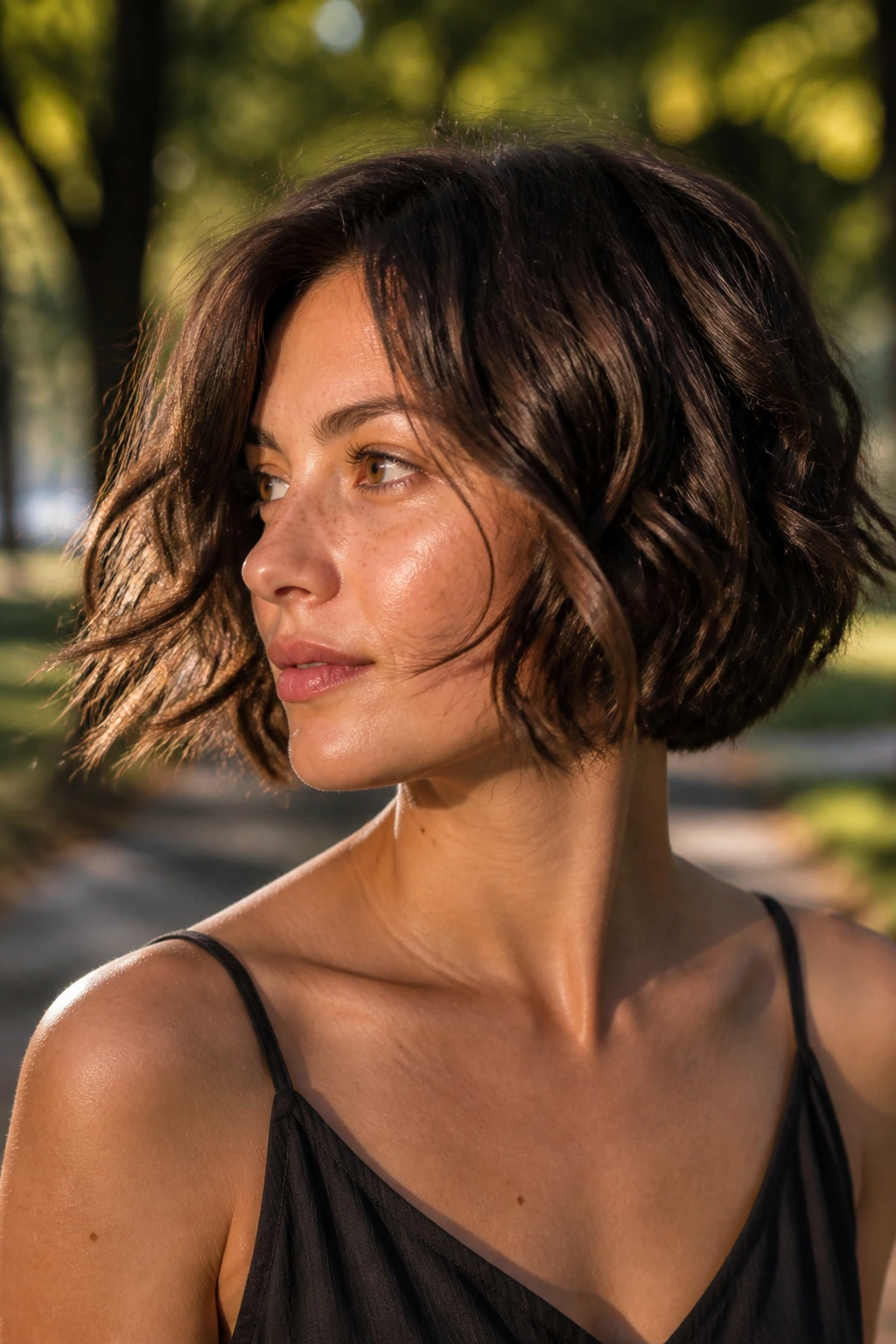
A shaggy wavy bob can be brilliant on fine hair if the wave is natural or easy to create. The point isn’t to make the hair look messy. The point is to break up the straight, flat fall that fine strands love to do the moment they dry.
If your hair bends a little on its own, this shape can look fuller because the wave pattern creates shadows and little pockets of lift. That visual texture makes the hair seem thicker than it is. The ends stay soft, and the layers catch movement instead of just sitting there.
Use a small amount of mousse, twist a few sections while damp, and don’t drown it in salt spray. Fine hair can go crunchy fast. A light hand keeps the wobble in the cut and the softness in the finish.
6. Blunt Bob With Choppy Ends
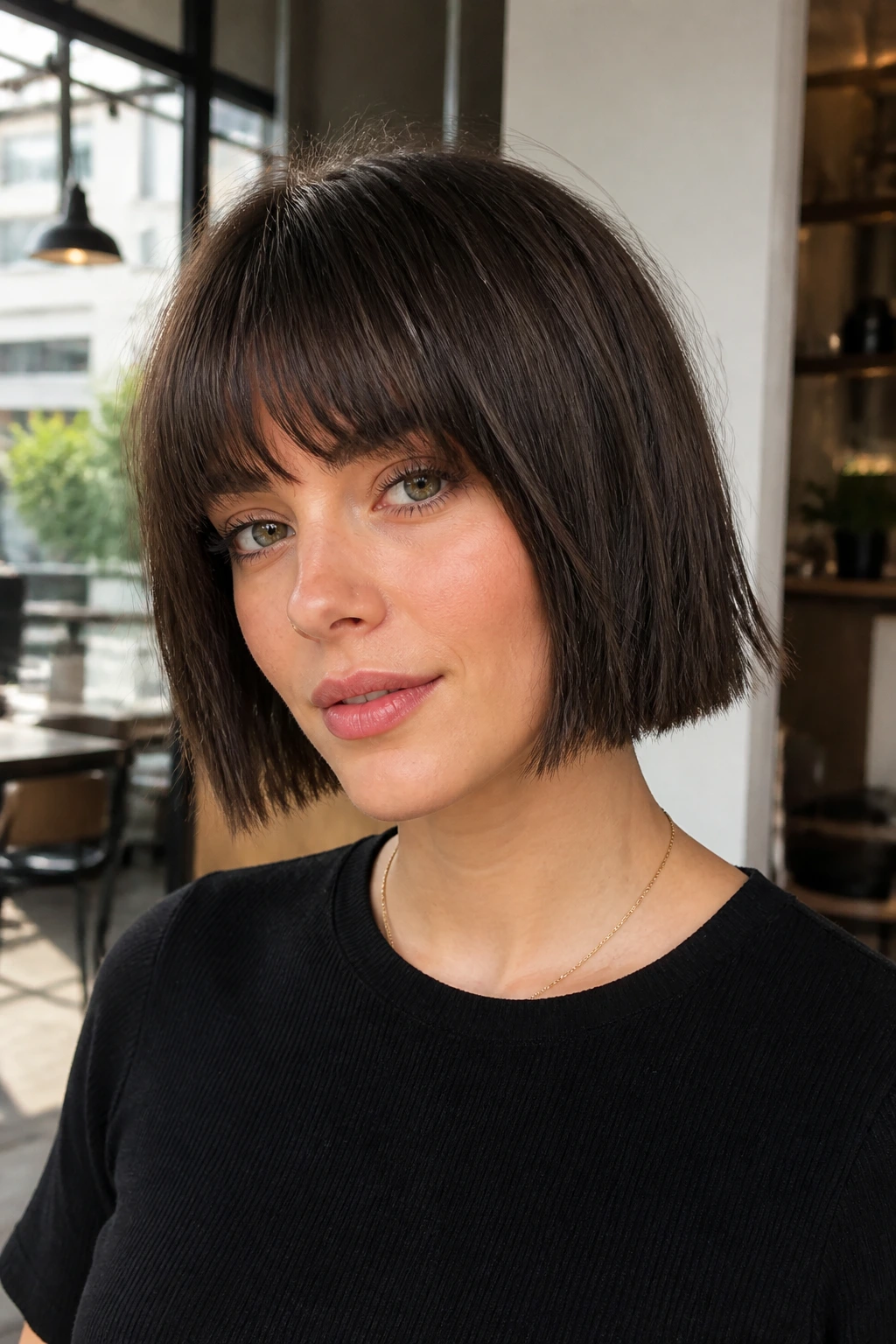
This is the smartest cut for a lot of people with fine hair, and I’ll say it plainly: a solid line beats over-layering almost every time. The perimeter stays blunt enough to look dense, while the very ends get a little point-cut texture so the line doesn’t feel too hard.
That slight choppiness is doing a subtle job. It keeps the bob from reading as a heavy block, but it also keeps the bottom from appearing see-through. When the hair is especially sparse, this is usually a better choice than a heavily layered shape.
The cut looks good straight, bent under, or with a tiny outward flip at the corners. It doesn’t need much. That’s part of the appeal. A little texture, a clean edge, and you’re done.
7. Side-Parted Asymmetrical Bob

A deep side part can do more for fine hair than a pile of products ever will. Shift the hair over, give one side a little more length, and the root at the part gets instant lift. The asymmetry also breaks up the symmetry that makes flat fine hair look even flatter.
This cut works because the eye doesn’t read a perfectly even shape. It reads movement. The longer side gives the haircut a little swing, while the shorter side keeps the profile neat and sharp. That diagonal line is useful if your hair tends to sit close to the head.
If your crown is flat, clip the heavy side up while it cools after blow-drying. It sounds minor. It isn’t. Those few minutes can decide whether the part collapses before lunch.
8. Bob With Curtain Bangs

Curtain bangs and fine hair can get along, but the fringe has to stay light. Heavy curtain bangs can steal too much density from the front. A softer version opens at the center and moves into the sides without building a thick block across the forehead.
That lighter fringe does a nice job of disguising a flat crown because the eye follows the fringe line outward. It also gives the bob a softer frame around the face, which helps if the rest of the cut is kept clean and slightly piecey.
Use a round brush or a small flat iron to bend the bangs away from the center, not straight down. That little bit of lift keeps the fringe from sitting like a curtain rod.
9. Micro Bob With Clean Edges
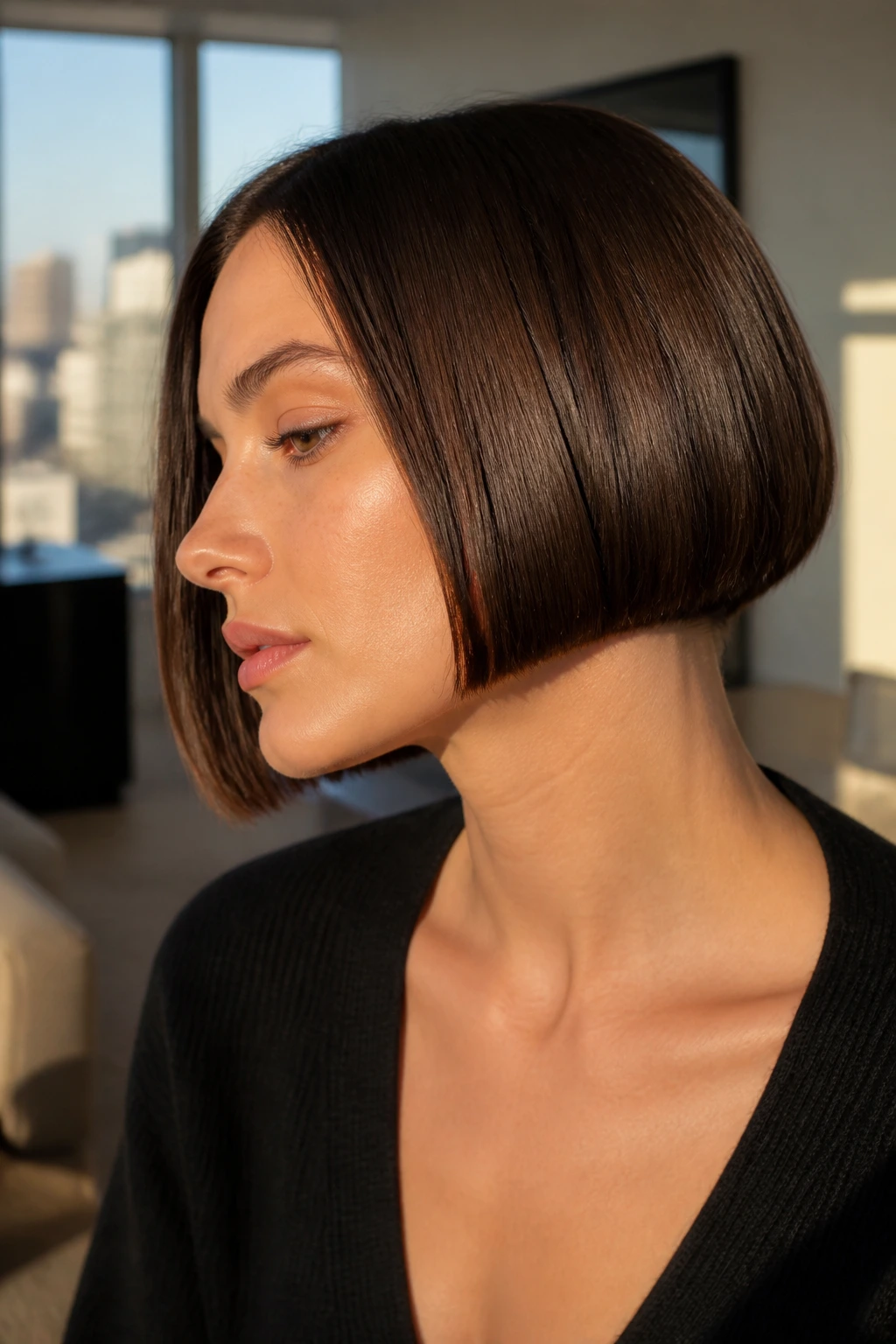
A micro bob is not for everyone, and that’s part of why it looks so good when it works. The cut sits high — sometimes around the lip line, sometimes at the cheekbone or just below the ear — and the shape is all about sharpness. Fine hair can wear this beautifully if the density is there.
The reason it helps is simple: less length means less drag. The hair doesn’t have to fight gravity all day, so the roots often stay perkier. Clean edges make the whole look feel intentional, not sparse.
But the cut needs confidence. If you’re fussy about ponytails or if your hair grows in unevenly at the nape, a micro bob will show it. It’s crisp. It’s honest. It also looks very expensive when it’s trimmed well.
10. Tousled Long Bob

The lob is the safe harbor in this whole lineup, and I don’t mean that in a boring way. A tousled long bob gives fine hair room to move without asking it to carry much length. The ends stay lighter, the shape stays soft, and the styling stays forgiving.
This version works best when the layers are subtle and placed to encourage bends rather than feathering the whole head apart. Think loose shape, not full shag. If your hair has even a small natural wave, the result can look fuller than a shorter, over-thinned bob that tries too hard.
For styling, a 1-inch iron or a big round brush can bend just the mid-lengths and leave the ends a little undone. That undone piece is part of the charm. If the hair gets too polished, the fine texture can disappear.
11. Face-Framing Bob
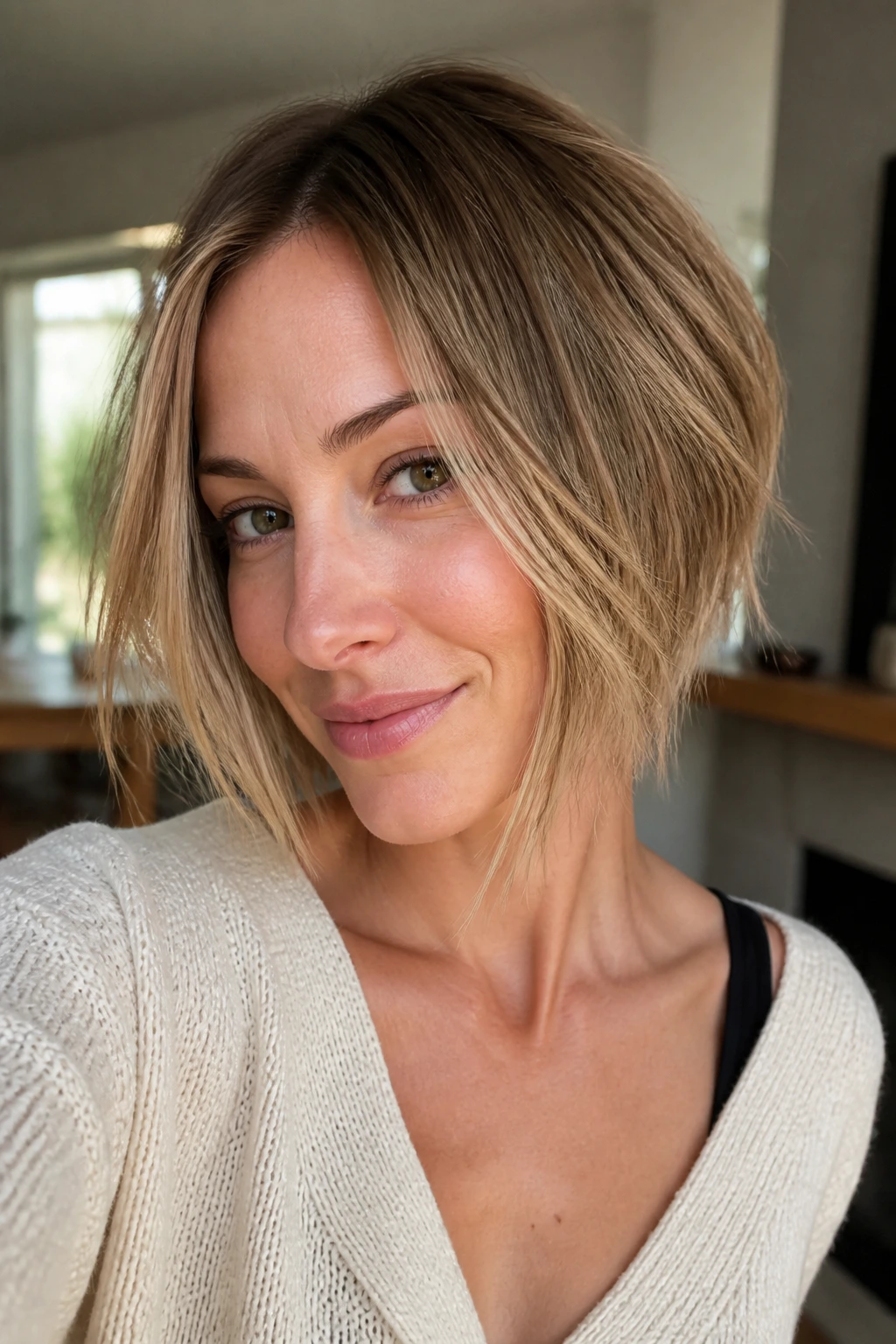
A face-framing bob gives you the easiest visual lift around the cheeks and jaw. The front pieces are left a little longer, while the back stays closer to the neck. That contrast makes the haircut feel lighter around the face without forcing the entire cut to go short.
This is a nice choice if you want to soften strong cheekbones, a square jaw, or a face that feels too wide at the sides. The front pieces pull the eye down and in. The bob still reads as neat, but the line isn’t severe.
I like this shape on people who wear their hair tucked behind one ear. That little asymmetry makes the cut move. It also stops the front from feeling too neat, which can make fine hair look thin.
12. Bob With Bottleneck Bangs
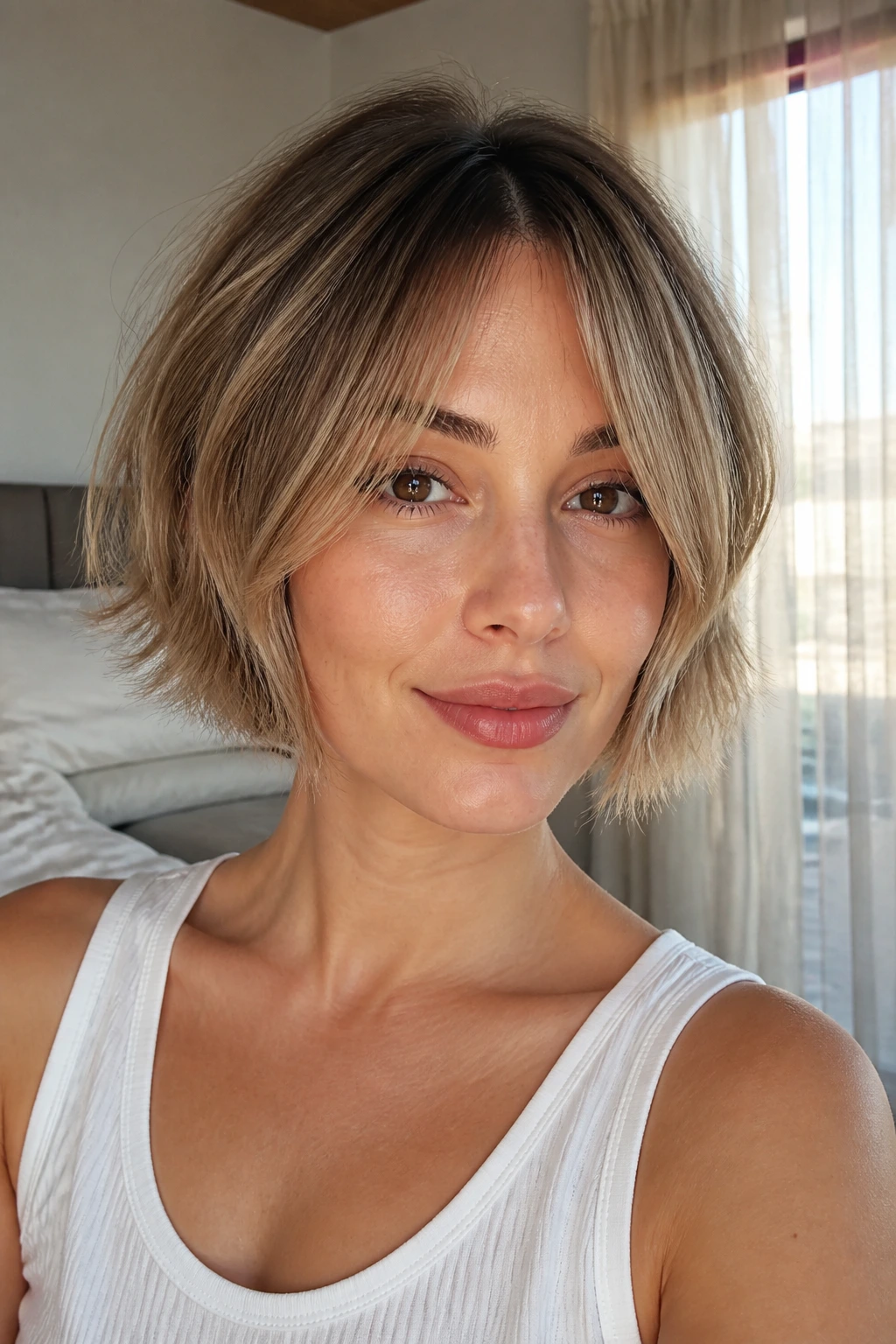
Bottleneck bangs are a sneaky good idea on fine hair. The center is narrow, then the fringe opens into longer side pieces, so you get softness without a heavy wall of hair across the forehead. That matters when every strand counts.
The fringe gives the top of the haircut a little built-in lift. It also draws the eye to the eyes and cheekbones, which can help the rest of the bob feel fuller by contrast. Fine hair often looks best when the shape is concentrated where it has the most visual payoff.
Keep the bangs light and a touch separated. If they get too dense, they’ll steal volume from the front and make the bob feel flatter than it should.
13. Feathered Bob
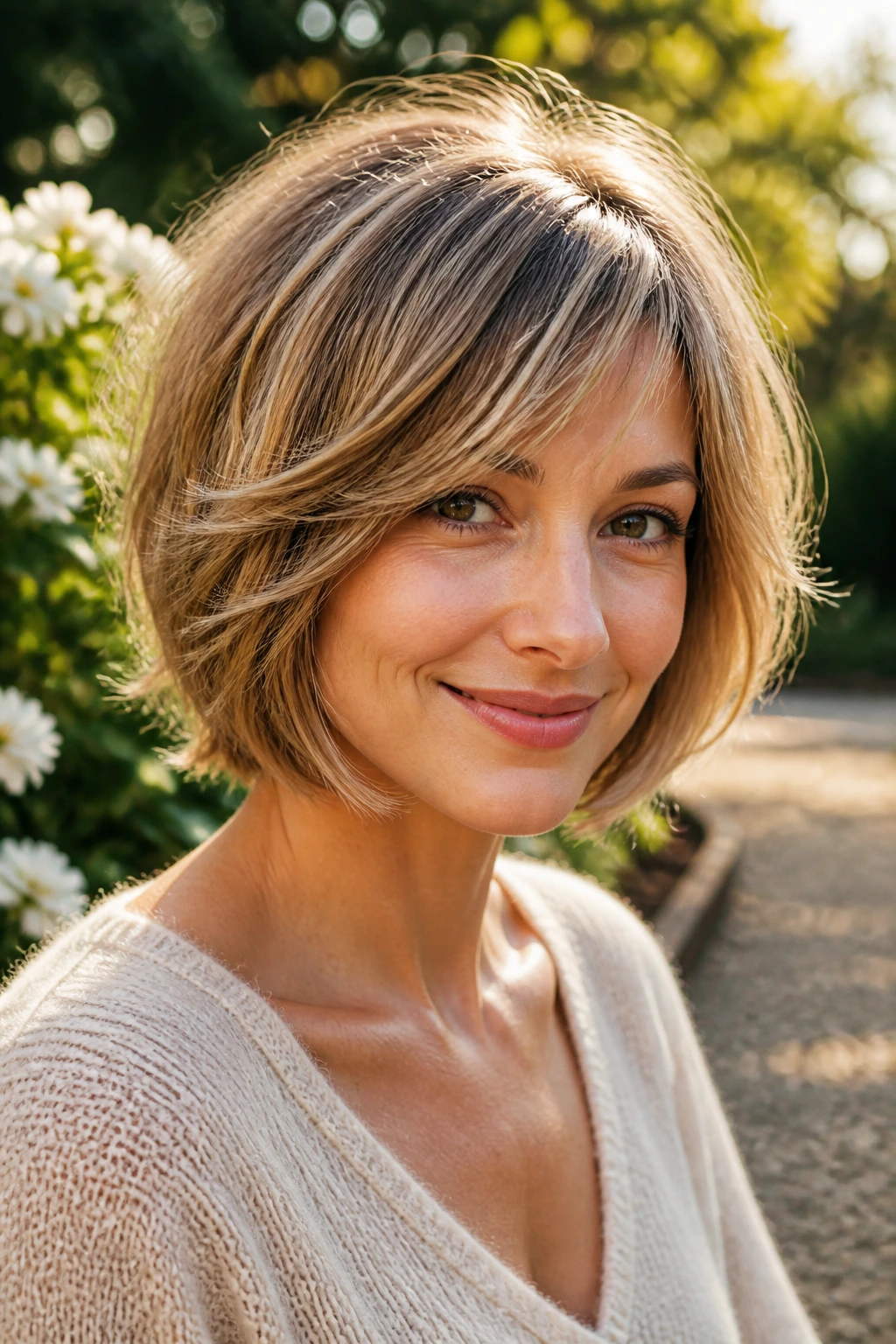
A feathered bob can be lovely on fine hair when the feathering is soft and the ends stay in control. This is not the place for aggressive thinning. You want a whisper of movement, not a fringe of broken strands.
The feathering works because it softens the outline without making the perimeter vanish. Fine hair can look harsh when it’s cut in a single hard line, but it can also look flimsy if it’s over-layered. Feathering gives you the middle road. The cut still has shape, but the ends breathe a little.
This is a good option if your hair is prone to static or if blunt ends make it feel too boxy. It has a gentle, almost brushed-out feel that suits everyday wear.
14. Curly Choppy Bob for Fine Waves

Curly or wavy fine hair needs a different approach. A dry cut or curl-by-curl shaping often makes more sense than slicing it wet and hoping for the best. The reason is simple: once the curl springs up, the haircut can look much shorter than it seemed in the salon.
A choppy bob for fine waves should keep enough length to let the pattern form, while still removing bulk from the places where the curl clumps too hard. That keeps the cut from becoming a triangle or a puff. The choppiness should be gentle, not jagged.
Use a diffuser on low heat, and stop touching it while it dries. Fine waves lose their shape fast when they’re handled too much. They also frizz faster than people expect.
15. Sleek Bob With Hidden Internal Layers
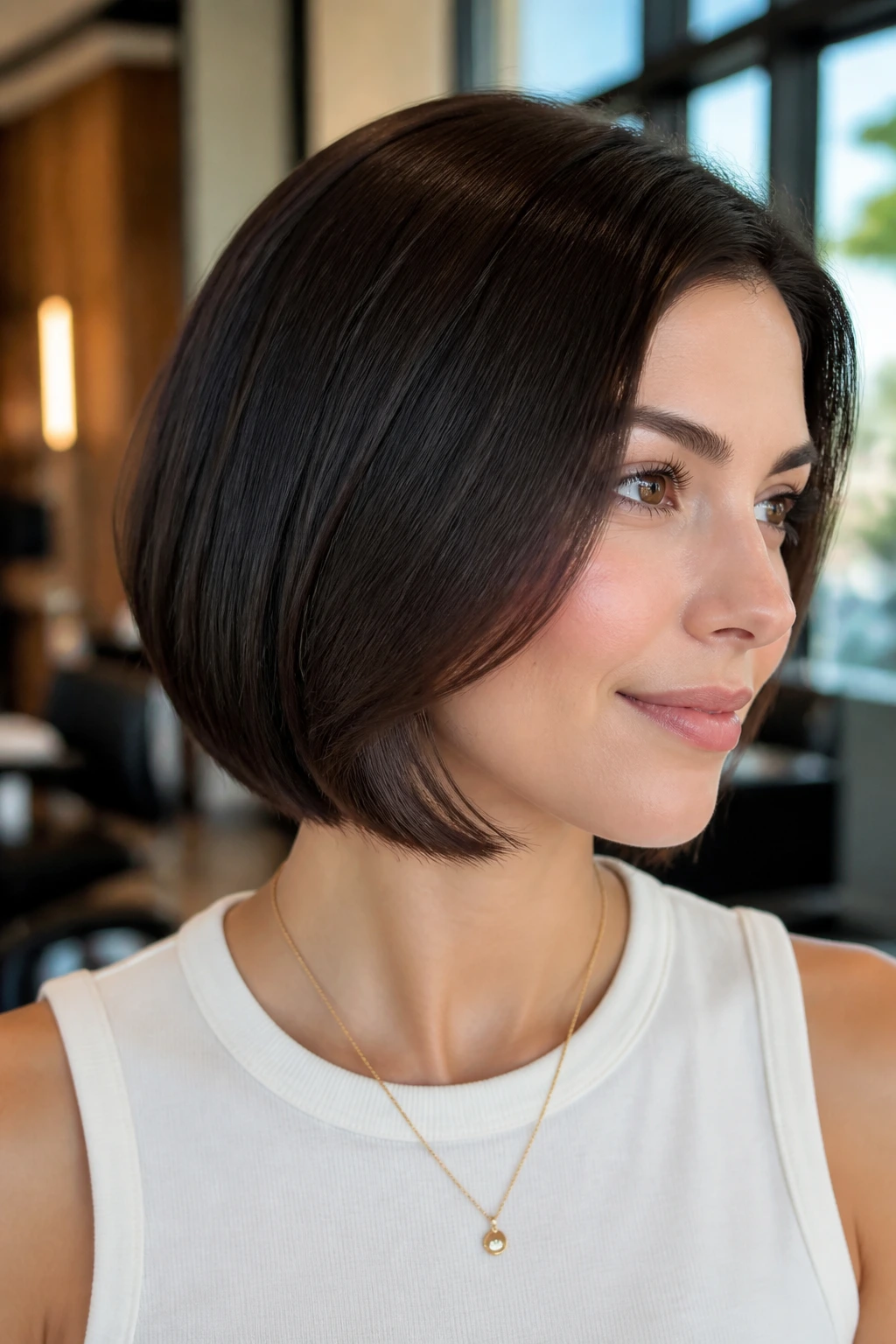
Some fine hair looks better smooth than piecey. A sleek bob with hidden internal layers keeps the surface polished while building lift inside the shape. From the outside, it reads clean and controlled. Underneath, the layers help the hair move instead of sitting like a flat sheet.
That’s a useful trick if you like a professional, neat look but still want the bob to have body. The internal layers prevent the heavy drop that a one-length cut can create, especially if your hair is straight and slippery.
Ask for movement inside the cut, not choppy ends all over the perimeter. That difference is what keeps the style sleek instead of frayed.
16. Italian Bob for Fine Hair

The Italian bob has that rounded, full shape that makes fine hair look plush without making it look puffed up. It usually sits a little longer than a classic chin bob, with body through the sides and ends that turn under or out with a soft bend.
This cut works because it uses form instead of a lot of visible layers. Fine hair often looks better when the overall silhouette is strong and the texture comes from the styling rather than the shears. The result is fuller through the middle of the head, which is where many fine-haired bobs go wrong.
It’s especially useful if you don’t want a piecey or shaggy finish. Some people like hair that looks touched and imperfect. Others want clean, rounded, and a little glossy. This is for the second group.
17. Razor-Cut Bob

A razor-cut bob can look very sharp, but it needs the right hair. On healthy, straight fine hair, a controlled razor finish adds soft movement and removes that blunt heaviness that can make the ends sit like a shelf. The key word is controlled.
If the hair is dry, porous, or prone to frizz, too much razor work can make the ends look fuzzy. That’s the danger. The cut should feel light, not torn apart. A good stylist knows where to stop.
This one has an editorial edge. It looks best with clean center or off-center parts, minimal layers, and a styling product that keeps the shape shiny without weighing it down.
18. Angled Bob
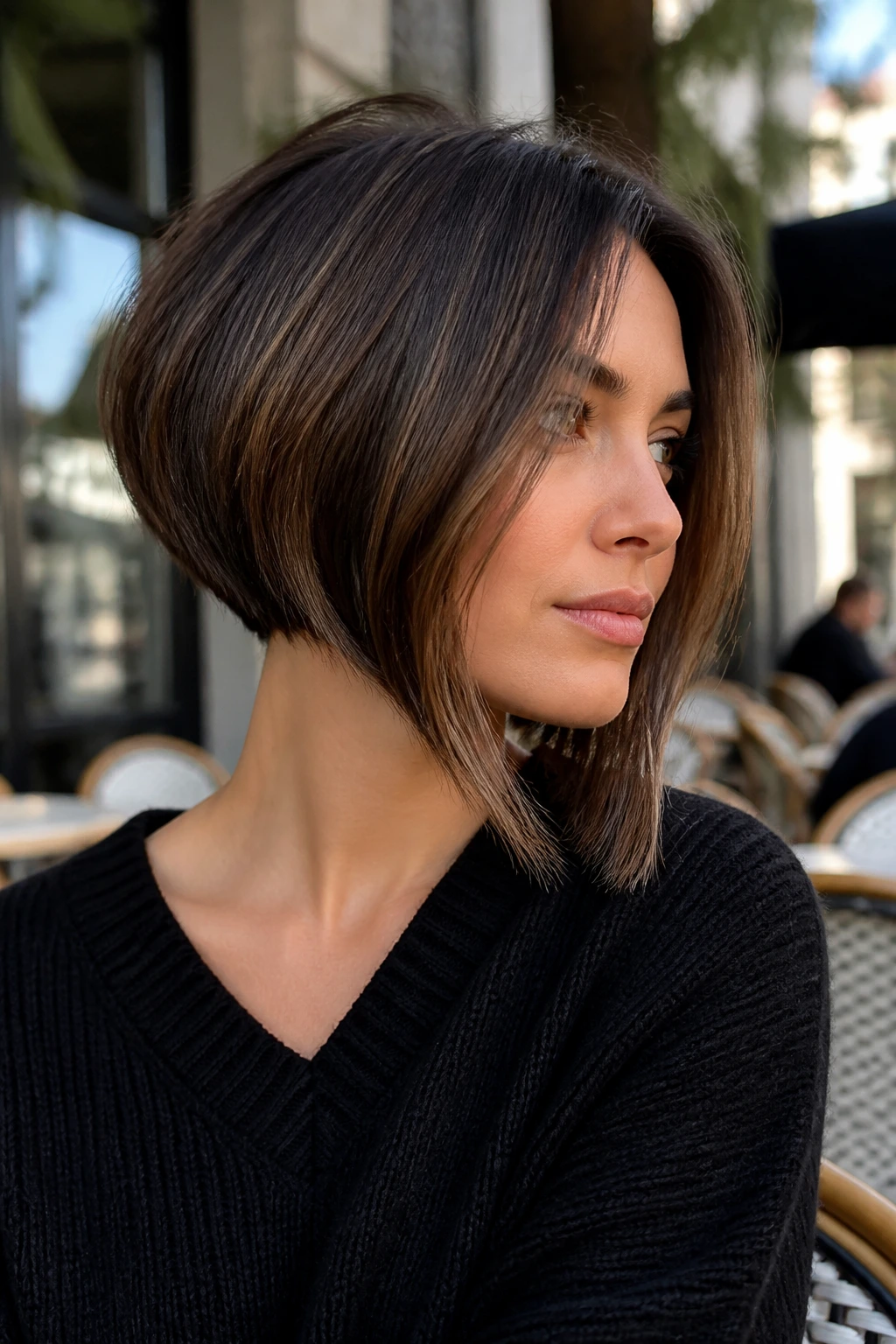
An angled bob is one of the easiest ways to make fine hair look intentional from every angle. The back is shorter, the front is longer, and that line creates swing. It also gives the face a longer vertical feel, which can be useful if your hair tends to sit wide at the cheeks.
The angle does the work that some people try to fake with too much curling. It gives the haircut forward motion. On fine hair, that forward motion often looks fuller because the hair is visibly moving rather than hanging.
Keep the angle subtle if your hair is sparse. A dramatic slope can make the back feel too bare. A softer angle usually reads fuller and wears better.
19. Rounded Bob With Swept-Back Volume
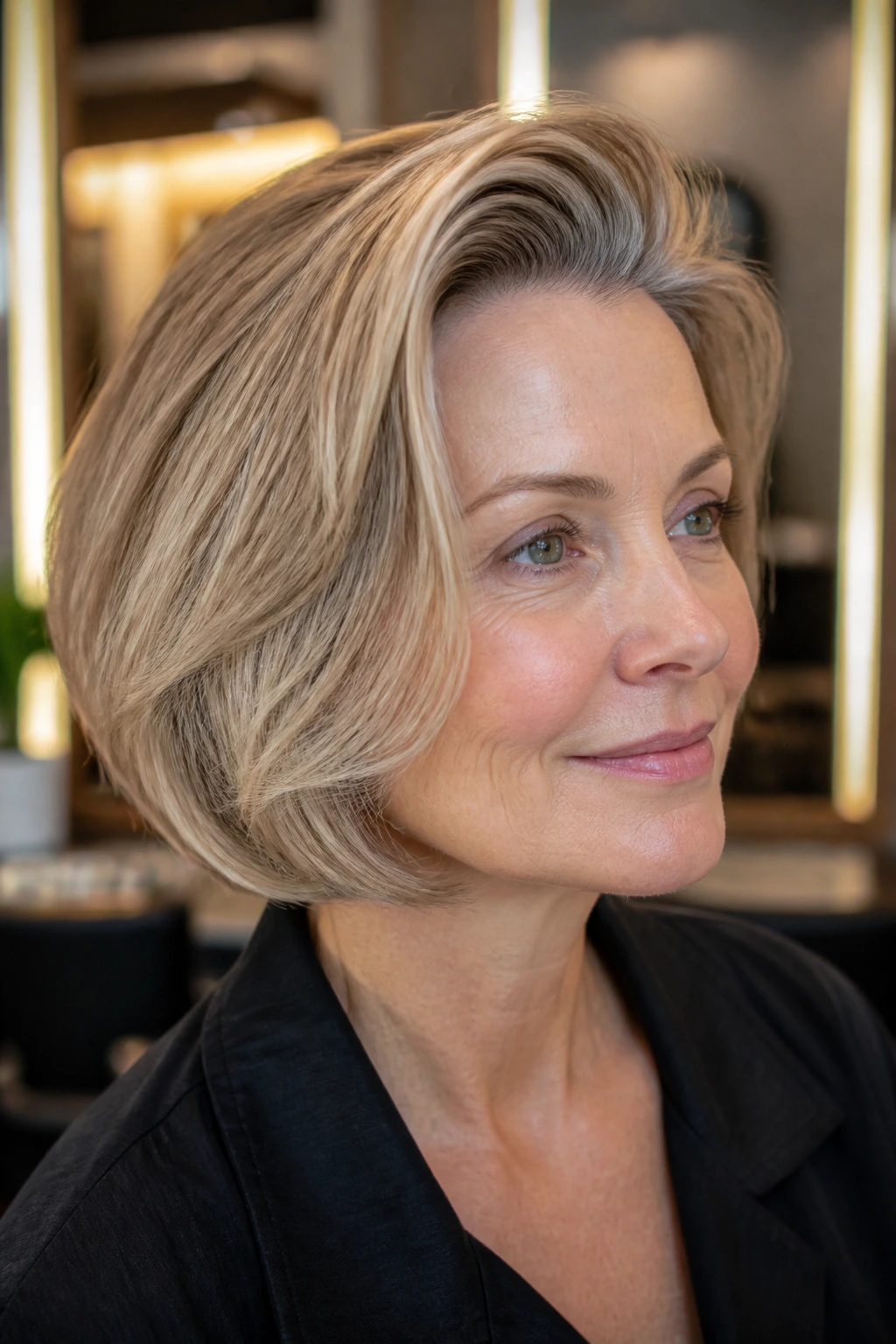
A rounded bob is a nice answer for fine hair that needs a little lift at the temples and crown. The shape curves gently around the head, which gives the haircut body without making it look puffy. Sweeping the top back slightly opens the face and keeps the front from dropping flat.
This is a quiet, polished shape. It suits people who like their hair to look clean and full rather than edgy or heavily textured. The roundness also works well if your hair naturally wants to curve under at the ends.
A round brush and a little root clip at the crown can make a big difference here. The shape is in the bend. If the bend is wrong, the whole bob loses its charm.
20. Chin-Grazing Bob With Crown Lift
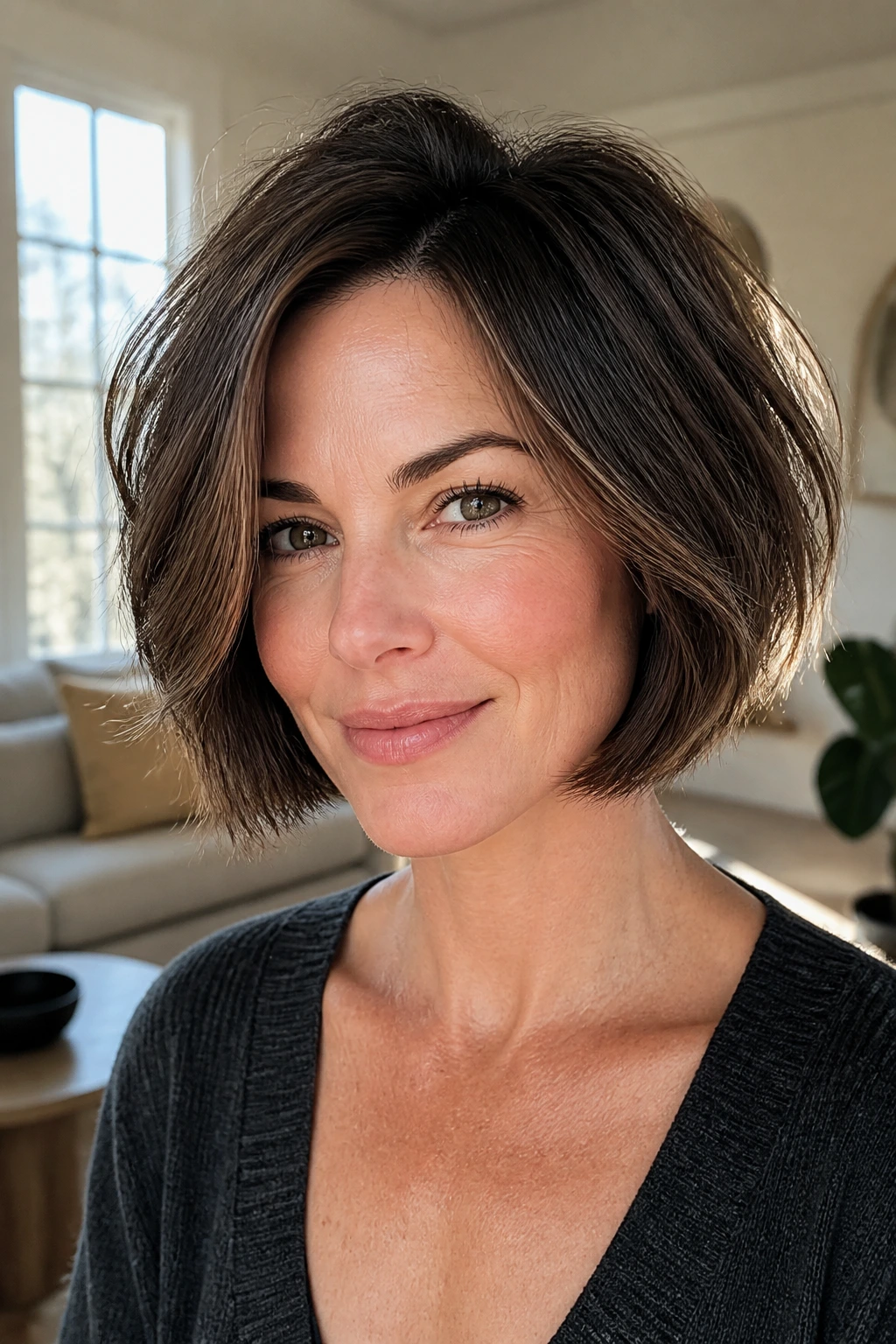
A chin-grazing bob with crown lift is one of the neatest ways to make fine hair look awake. The length is short enough to remove drag, but not so short that it turns severe. The crown gets a little height, which is where the eye looks first when hair starts to flatten.
This cut can be surprisingly flattering on people who think their hair “won’t do volume.” It often isn’t the hair. It’s the length and the direction of the drying. Once the crown has some lift and the outline sits right at the chin, the whole shape starts to feel fuller.
It’s especially good if you want a bob that looks tidy from the side and strong from the front. There’s a reason this length shows up again and again. It works.
How to Style a Choppy Bob So It Keeps Its Shape
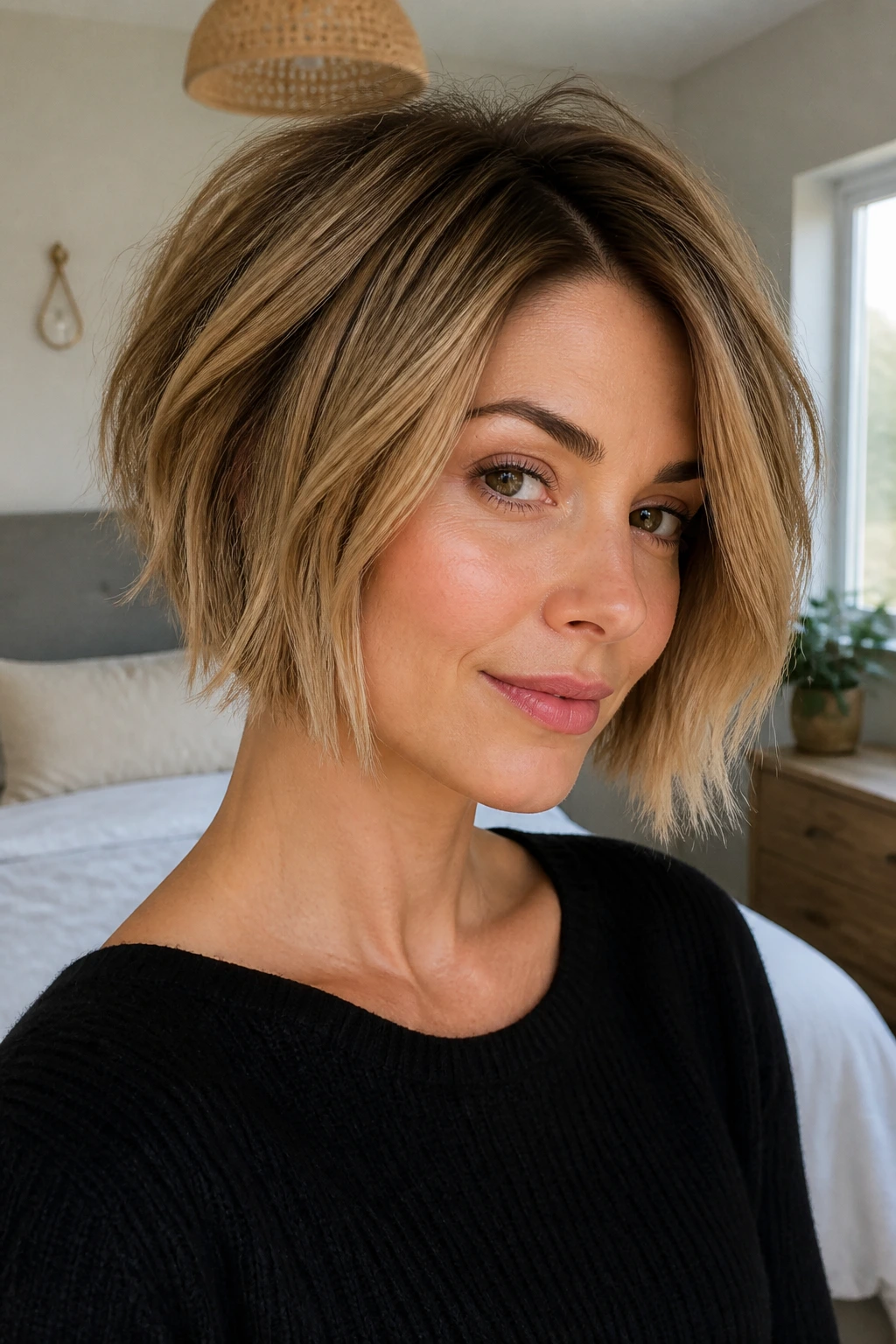
A choppy bob on fine hair lives or dies by the first 10 minutes after washing. If the roots dry flat, the whole cut follows them down. If you lift the roots early and let the ends dry with a little bend, the haircut keeps its body much longer.
Root Lift: Work a small amount of mousse or volumizing spray into damp roots, then blow-dry with the nozzle aimed up and away from the scalp. Fine hair usually does better with less product than you think. Too much mousse and the roots turn gummy.
Drying Direction: Dry the crown against its natural fall for a minute or two, then pin or clip that section while it cools. That tiny cooling period matters more than people expect. It locks the lift in place instead of letting the hair sink immediately.
Texture Control: Use a pea-sized amount of paste or cream only on the mid-lengths and ends. If you touch the roots with a heavy product, the bob will sag and separate. You want movement, not grease.
Second-Day Reset: Mist the front lightly with water, re-bend the pieces with a small iron or brush, and hit the roots with dry shampoo only where they need it. Don’t overwash a fine-haired bob just because it looks a little sleepy. Sometimes it only needs a reset.
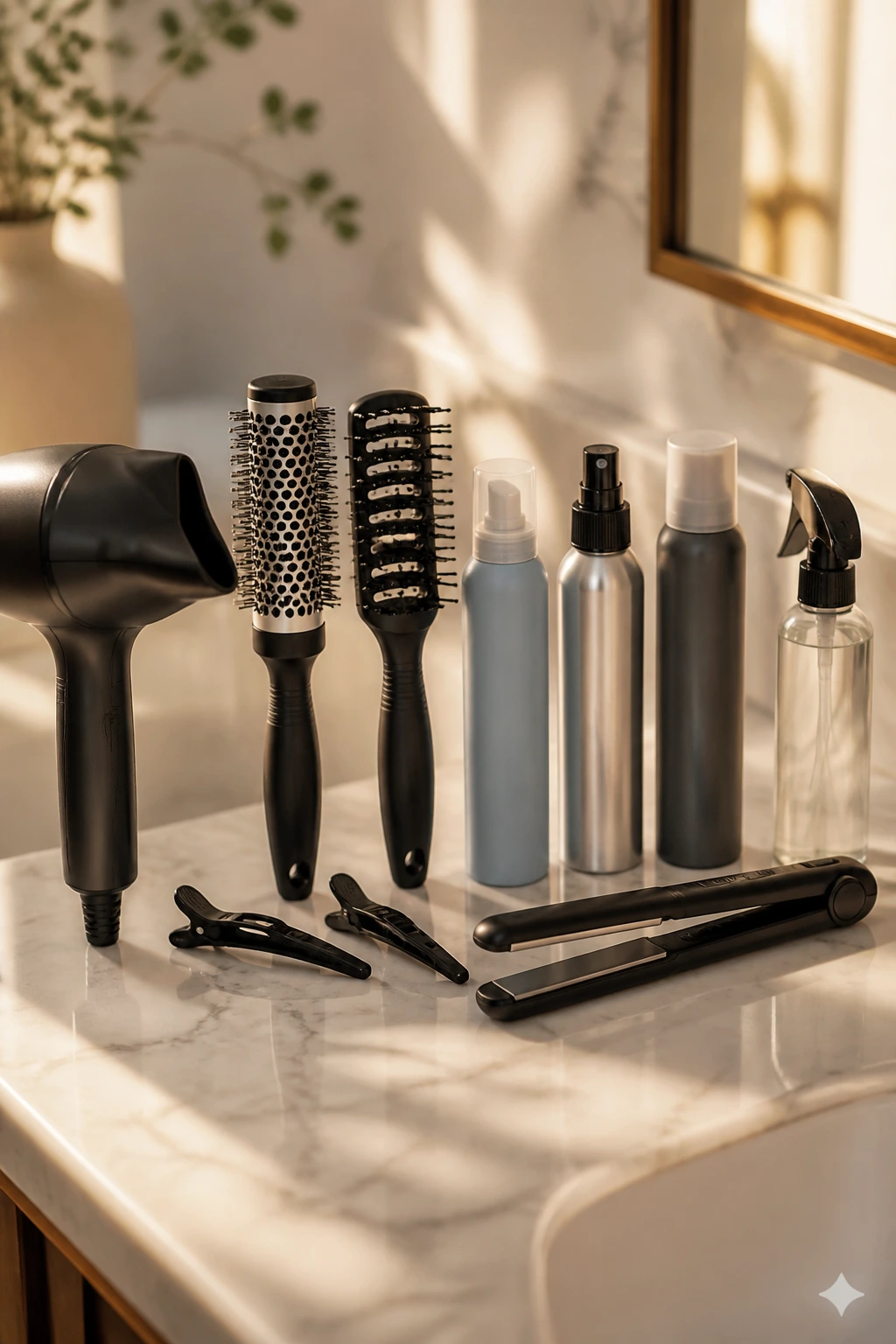
Essential Tools and Products for Fine Hair Bobs
-
Blow dryer with a narrow nozzle: Directs air at the roots so you can create lift instead of blowing the shape apart.
-
1 to 1.5-inch round brush: Big enough to bend the ends under, small enough to work near the crown and fringe.
-
Vent brush: Useful when you want a quicker dry and a softer finish with less tension.
-
Duckbill clips or sectioning clips: These help pin the crown up while it cools, which is one of the easiest ways to hold volume.
-
Lightweight mousse or volumizing foam: Gives the roots some support without the sticky weight that fine hair hates.
-
Texturizing spray: Best for the mid-lengths and ends; use a light mist, not a heavy coat.
-
Dry shampoo: Good for day-two lift and oil control, especially at the part and around the face.
-
Small flat iron or 1-inch curling iron: Handy for bending the front pieces or giving the ends a soft kick.
-
Heat protectant spray: Keep it light. Fine hair doesn’t need a rich cream that flattens everything under it.
How to Style a Choppy Bob So It Keeps Its Shape
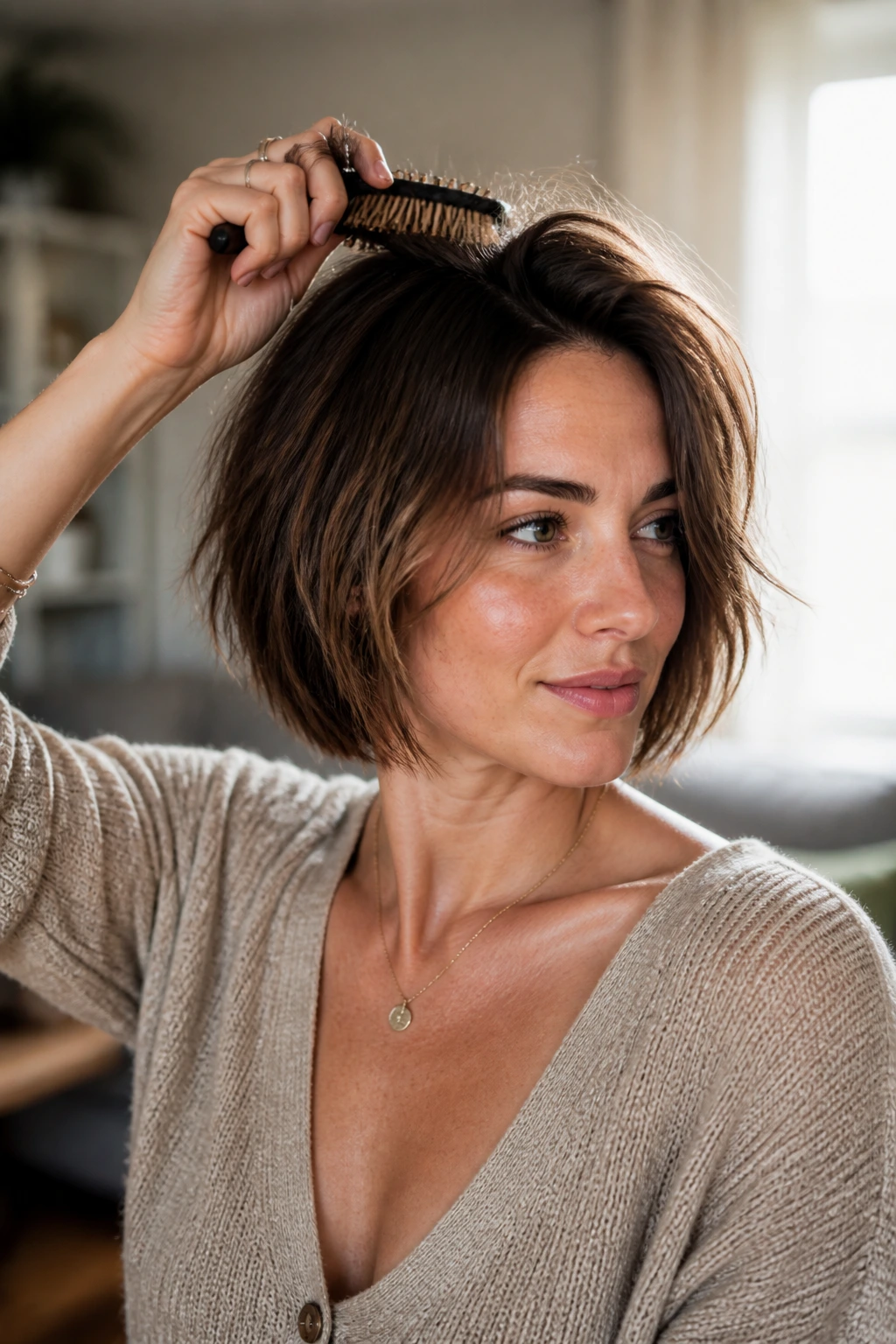
The easiest way to ruin a fine-hair bob is to overwork it. I see this all the time: too much oil, too much brushing, too much curling, then confusion when the hair looks flat by noon. Fine hair usually wants a lighter touch and a cleaner target.
Start at the roots. If you blow-dry only the ends, the roots stay lazy. Lift the hair at the scalp with your fingers or a brush and dry in sections until the base is almost dry, then finish the shape.
Choose one texture direction. If the bob is meant to be sleek, keep the finish smooth and let the cut do the work. If it’s meant to be piecey, keep the surface soft and use a little texturizing spray on the lower half only. Mixing three different finishes in one head usually looks muddled.
Use the brush to bend, not to puff. A small round brush can turn the ends under or out by half an inch, and that’s often enough. You do not need big salon curls on every section. Fine hair can start looking fluffy fast.
Reset often, not hard. Day-two hair usually needs a lift at the roots and a bend through the front, not a full wash. A choppy bob keeps its charm when it looks lightly moved, not freshly fought with.
Common Mistakes That Make Fine Hair Look Flatter
-
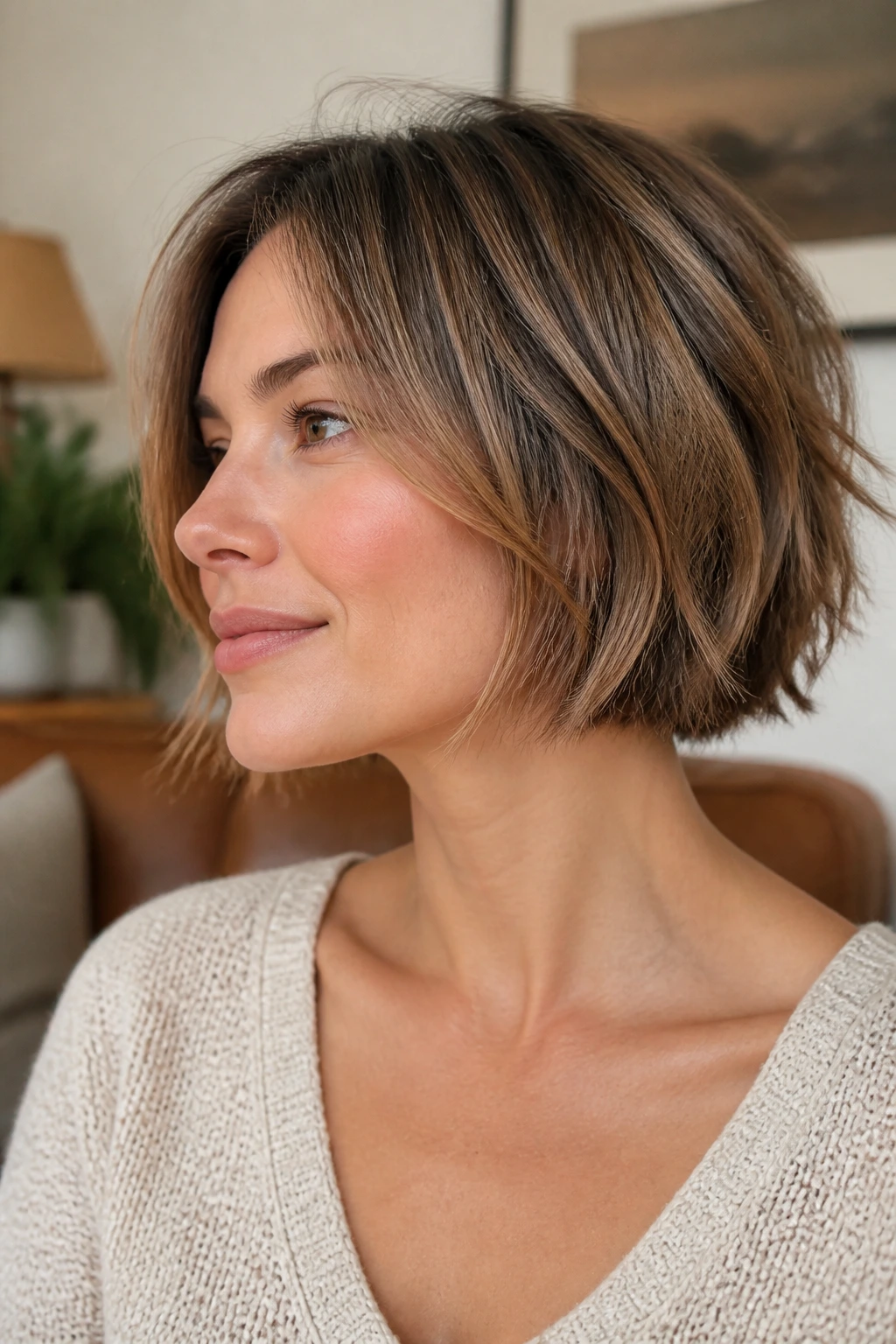
Over-thinning the ends: The haircut starts to look see-through, especially under bright light. The fix is a cleaner perimeter with only controlled point cutting.
-
Going too long: When fine hair hangs past the shoulders without enough shape, gravity wins. If the hair collapses by lunchtime, bring the length up to the jaw or collarbone.
-
Using heavy creams at the roots: The bob separates and loses lift within an hour. Keep rich products only on the last inch or two.
-
Ignoring the crown: If the top is flat, the whole style reads flat. Clip the roots while they cool, and don’t skip the dry shampoo on day two.
-
Trying to copy a shag on very sparse hair: A lot of layers can make the ends look thin instead of textured. Sparse fine hair often needs more outline, not more slicing.
-
Cutting for wet hair only: Fine hair can look much longer wet than dry. If the stylist doesn’t account for shrinkage and movement, the final shape can land wrong.
Variations and Alternatives to Try

The Air-Dry Bob: This version keeps the perimeter full and uses only a few soft internal layers. It’s a smart pick if you don’t want to spend time with a round brush, but it still needs a little product at the roots so the top doesn’t collapse.
The Fringe-Forward Bob: Swap in curtain bangs or bottleneck bangs if you want more volume around the face. The fringe creates lift in the front, which can make the bob feel thicker even when the lengths stay simple.
The Polished Bob: If you prefer a smoother look, keep the surface sleek and place the texture inside the haircut instead of on top of it. This works especially well on straight fine hair that looks messy the second it gets too much layering.
The Wavy Piecey Bob: Give the bob a loose bend with a curling iron or wave iron, then separate a few ends with texturizing spray. This version works when you want movement and body without the full shag effect.
The Grow-Out Bob: Leave the length closer to the collarbone, keep the corners soft, and avoid harsh graduation in the back. It buys you extra time between salon visits and still looks deliberate when the cut starts to soften.
How to Keep Choppy Bob Haircuts for Fine Hair Looking Fresh
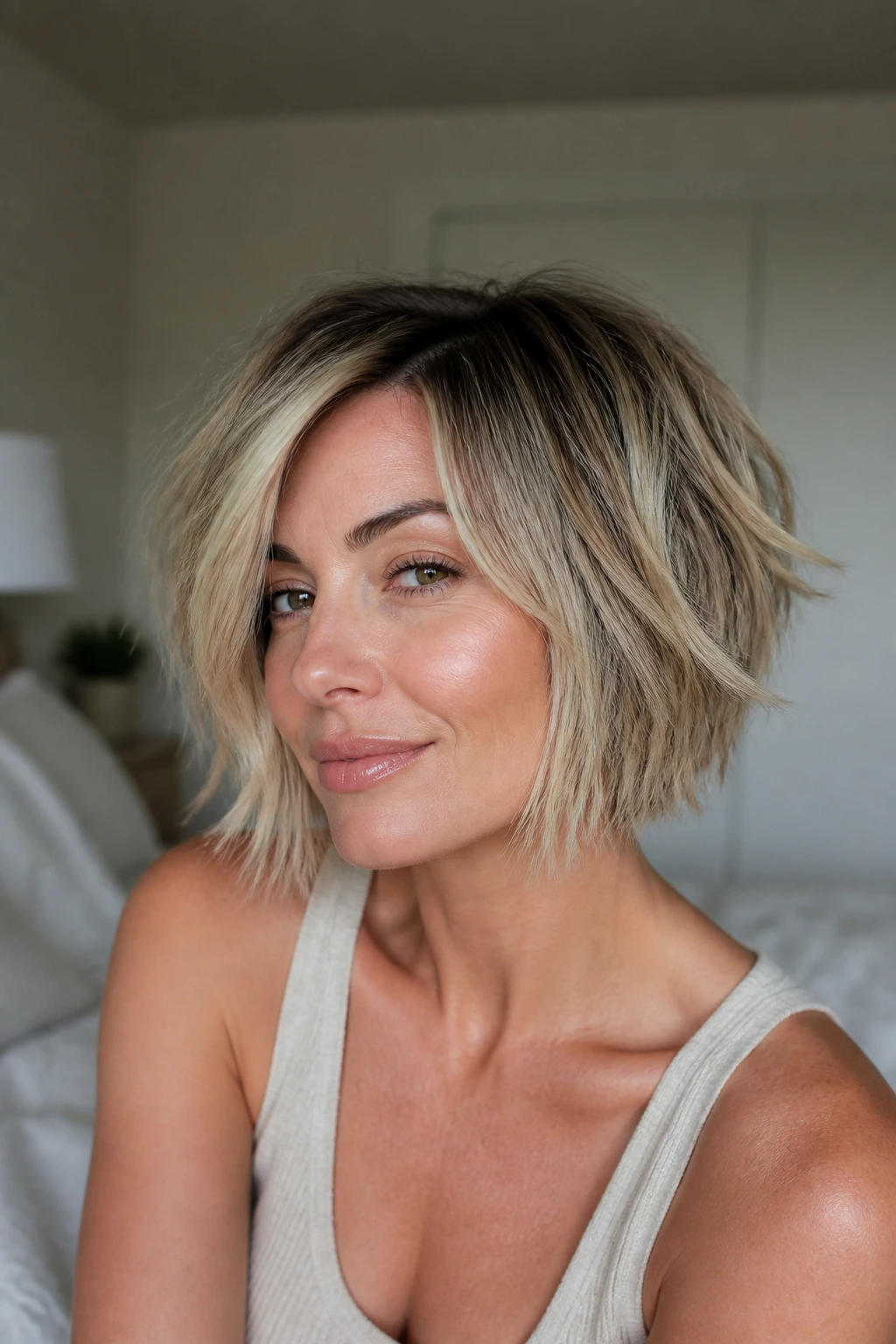
Fine hair usually does not forgive neglect, but it also doesn’t need obsessive upkeep. The sweet spot is small, regular maintenance. If the shape stays clean, the hair looks thicker. Once the ends start feathering out, the whole cut loses its edge.
Trim schedule: A chin-length or micro bob usually needs a trim every 5 to 7 weeks. A longer collarbone bob can often go 6 to 8 weeks, sometimes a bit longer if the perimeter stays solid. Don’t wait until the outline has gone floppy.
Washing rhythm: Fine hair often gets weighed down by product faster than thicker hair. If your roots start looking dull after one day, a lightweight shampoo and a very light conditioner on the mids and ends can help. Heavy conditioners at the scalp are a bad trade.
Nighttime care: A loose clip, a silk pillowcase, or even a soft bend pinned away from the face can help keep the style from getting crushed. If you sleep on a freshly styled bob with no protection, the crown usually loses the battle.
Humidity and buildup: Product buildup shows up fast on fine hair. A clarifying wash every couple of weeks can bring the lift back. In humid weather, keep styling products light and skip the creamy finishing layers that turn limp in seconds.
Grow-out plan: If you’re moving from a shorter bob to a longer one, ask your stylist to keep the line clean around the face while softening the interior. That way the cut grows into itself instead of into a fuzzy middle stage.
Frequently Asked Questions

Are choppy bob haircuts good for fine hair?
Yes, as long as the cut keeps enough perimeter weight. The best versions add movement without shredding the ends, which is what makes fine hair look fuller instead of stringy.
What length is usually best for fine hair?
Jaw to collarbone is the safe range for most people. Jaw-length gives the quickest lift, while collarbone length gives a little more softness and a friendlier grow-out.
Should fine hair have layers?
Some, but not too many. Internal layers and soft point cutting usually work better than heavy visible layers, which can make the ends look sparse.
Can I get a choppy bob if my hair is straight and flat?
Yes. Straight fine hair often shows the shape the best, but it needs root lift, a clean outline, and a little bend through the ends so the cut doesn’t sit like a sheet.
Will bangs make my fine hair look thinner?
They can if they’re too heavy. Wispy fringe, curtain bangs, or bottleneck bangs usually work better because they leave room for the rest of the cut to keep its volume.
How often should a choppy bob be trimmed?
Plan on every 5 to 8 weeks, depending on length. The shorter the bob, the faster the shape loses its edge.
Can a choppy bob work on fine curly or wavy hair?
Yes, but the cut should respect the curl pattern. A dry cut or a curl-by-curl approach usually gives a better result than cutting it flat and hoping the wave settles correctly.
What if the cut looks too fluffy after styling?
Use less root product, keep heavy cream off the scalp, and smooth only the mid-lengths. A too-fluffy bob usually means the drying direction was too aggressive or the texture product was overapplied.
A Shape That Leaves Room for Air
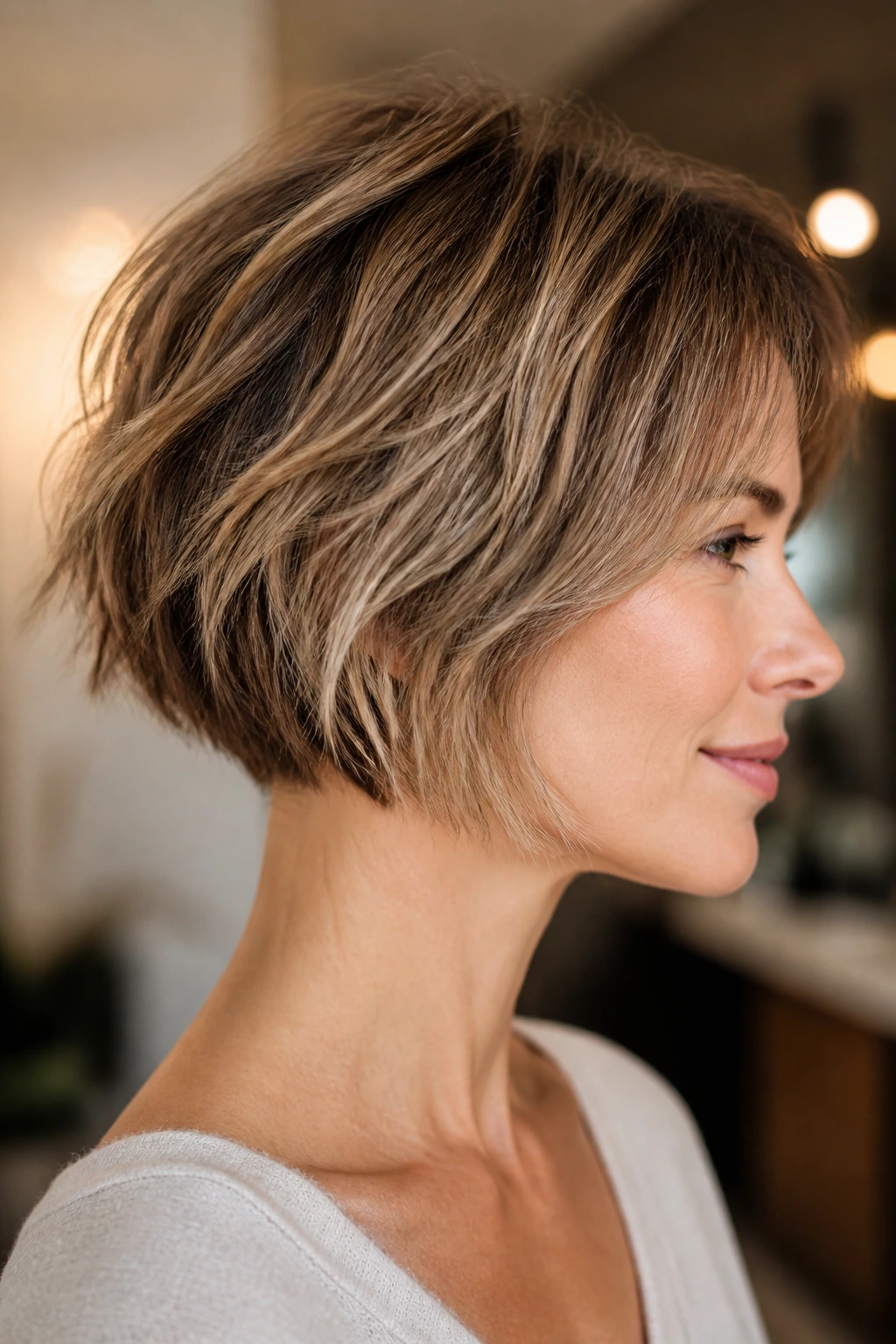
The nicest thing about a choppy bob on fine hair is that it doesn’t fight the hair’s nature. It works with softness, not against it. That’s why the cut can look sharper, fuller, and a little more alive than a longer style that keeps dragging the same delicate strands downward.
When the perimeter is clean, the texture is controlled, and the crown gets a little lift, fine hair starts to look deliberate. Not overstyled. Not overcut. Just shaped well.
That’s the whole game here. A bob with enough air in it to move, and enough structure to hold its own the next morning.
