



Layered haircuts for round faces work when they change the shape, not when they just add movement for the sake of movement. That’s the whole game. The right layers pull the eye downward, break up cheek width, and keep the face from reading as one soft circle in every mirror and selfie.
I have very little patience for the old advice that round faces need to be “hidden.” They don’t. They need better geometry. A blunt line at cheek level, a center part with too much volume at the sides, or short layers that stop right where the face is widest can make the whole thing feel heavier than it is. The fix is usually simpler than people expect: longer front pieces, smarter weight removal, and a cut that understands where your face actually opens up.
The best part is that this is not one haircut pretending to work for everyone. Fine hair needs a different approach than thick hair. Curls need more respect than straight strands. A short crop plays by different rules than a collarbone shag. So the 20 cuts below cover the whole spread, from polished and tidy to messy and lived-in, with the boring-but-important details that make them work in real life.
Why These Layered Cuts Work Better Than One-Length Shapes
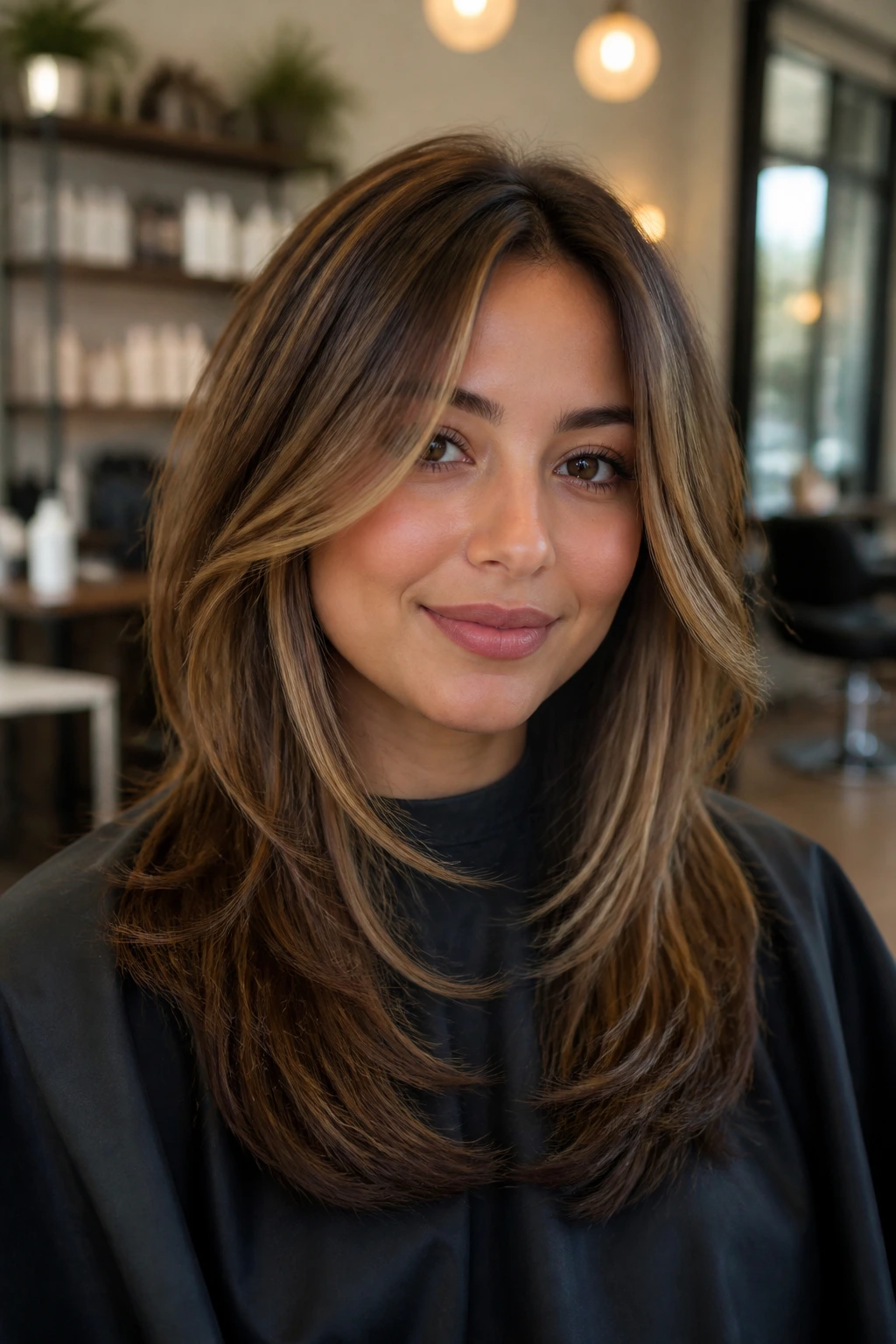
Why This Collection Is Different
- Vertical line first: Each cut here adds length in the visual sense, not just the literal sense, which helps when the cheeks are the widest part of the face.
- Layer placement matters: The shortest pieces stay below the cheekbone or move up to the crown, so you do not get that bulky “stopped in the middle of the face” effect.
- Texture gets a vote: Fine hair, thick hair, waves, and curls each need a different kind of layer, and pretending otherwise is how you end up with a shape you have to fight every morning.
- Grow-out is part of the design: These cuts are chosen because they still look deliberate after a few weeks, not because they win one salon-day photo.
- Styling reality is included: Some of these look best with a round brush. Some want a diffuser. Some are fine with air-drying and a little grit. That difference matters.
1. Chin-Length Layers with a Side Part
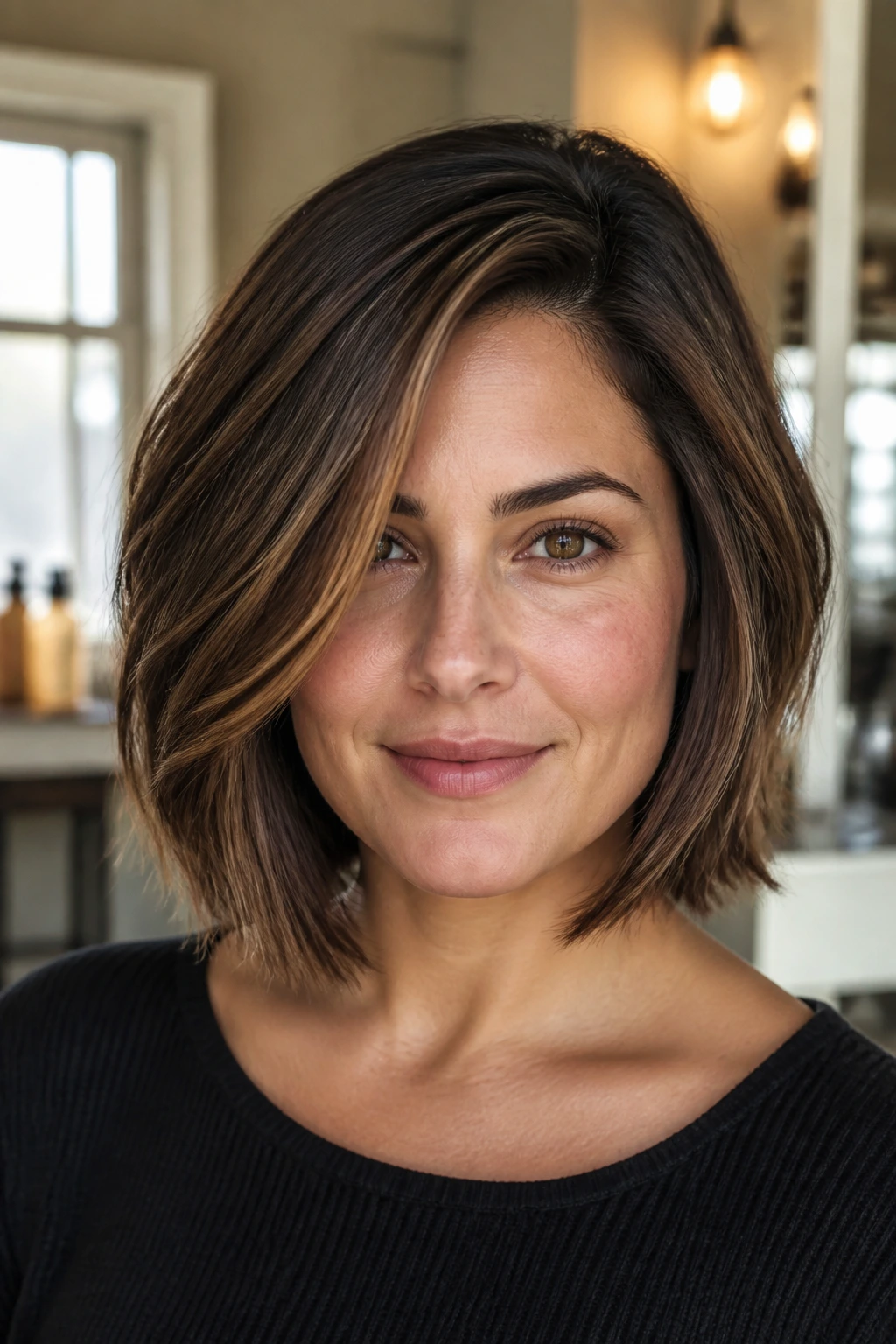
A chin-length cut can work on a round face, but only if it behaves. The trick is keeping the perimeter just below the jaw and letting the front pieces angle down instead of stopping at the cheeks. A hard, blunt line at the same height as your widest point is the thing that causes trouble.
Why the side part does the heavy lifting
A side part creates a diagonal line across the forehead, which gives the face a longer read before anyone even notices the layers. Keep the shortest front pieces about half an inch to an inch below the jaw, and ask for soft graduation at the ends, not chunky steps.
- Best for straight or lightly wavy hair
- Works well if you tuck one side behind the ear
- Looks sharper with a 1-inch round brush bend at the ends
My honest take: this cut looks expensive when the ends are clean and the part is committed. If you keep flipping the part around every day, it loses its shape fast.
2. Long Face-Framing Layers Past the Collarbone
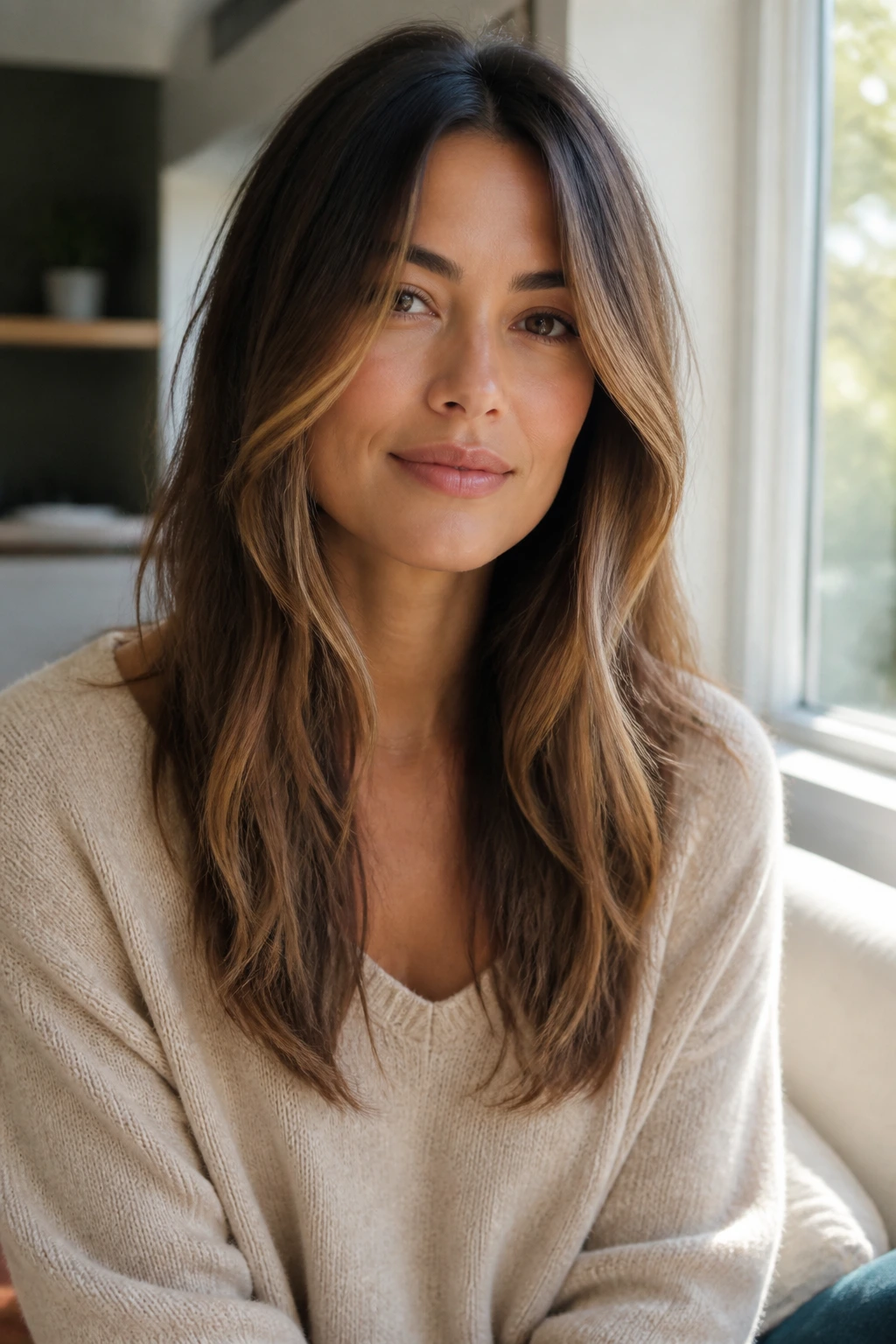
This is the cut I reach for when someone wants movement without losing length. It keeps the bottom heavy enough to hang straight, then uses long face-framing pieces to pull attention away from the cheeks. The starting point matters a lot here: if those front layers begin at the cheekbone, the cut widens the face. If they begin below it, the whole silhouette gets more graceful.
The best version starts the shortest front pieces around the mouth or just under the chin, then lets them fall into the collarbone and chest. That gives the eye a clear line to follow downward, which is exactly what a round face likes. I also prefer a soft side part with this one. Center parts can work, but they need extra styling discipline.
For styling, a blowout makes the layers read cleanly, but even a quick bend with a large-barrel iron helps. This cut is a dependable choice if you want something that still looks intentional when you’re in a hurry.
3. Butterfly Cut with a Soft Curtain Fringe
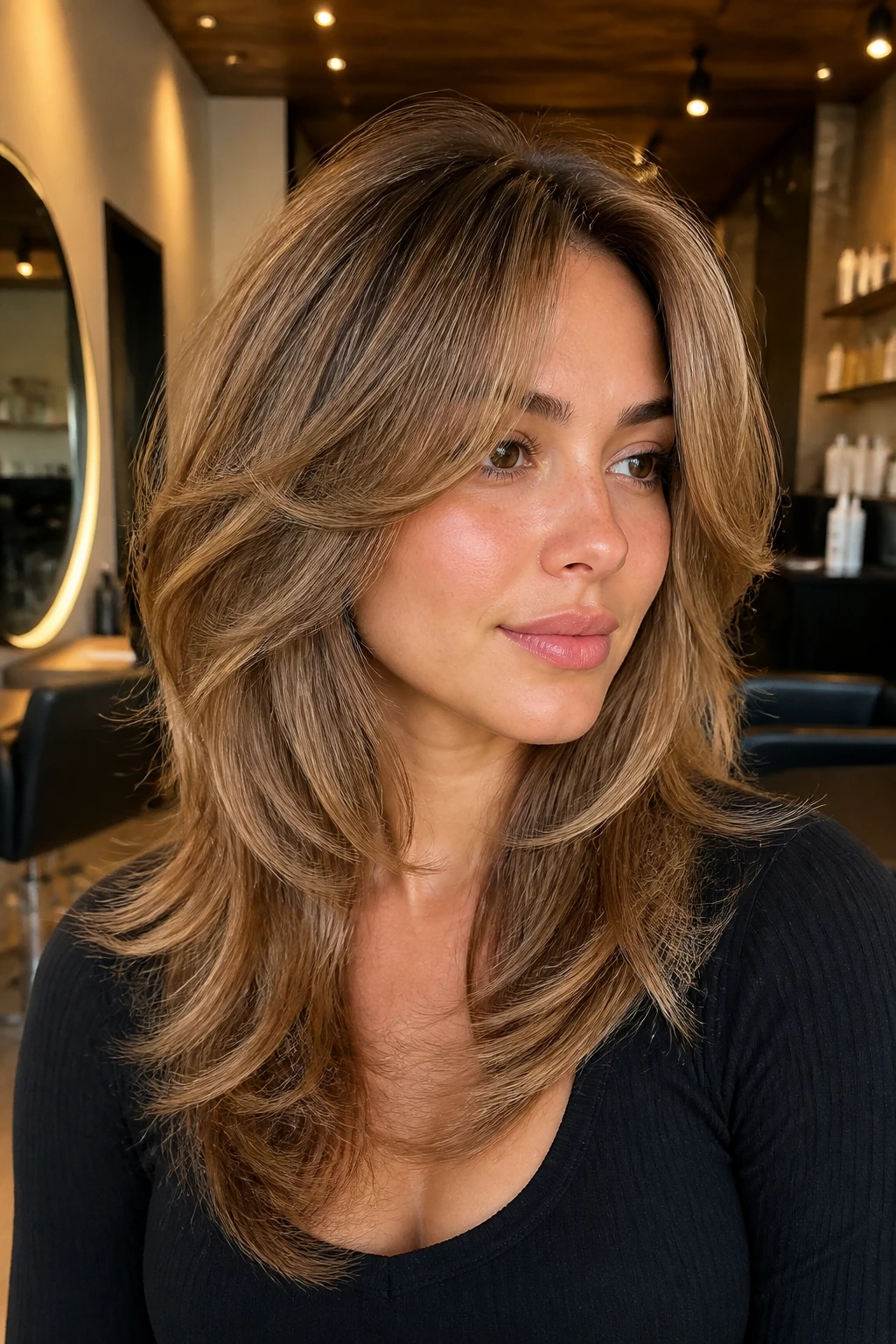
What makes the butterfly cut work on a round face? The crown volume is high, the front pieces are long, and the shortest layers stay away from the cheeks. That’s the whole secret, and it’s a good one. The butterfly shape gives you that big, airy blowout feeling without cutting the face into a box.
How to wear the fringe
The curtain fringe should open at the center and sweep away from the face, not sit as a dense curtain that lands right on the cheekbones. I like it best when the shortest point hits around the bridge of the nose or a touch below, then melts into longer side pieces.
A butterfly cut can look fussy if the top layers are too short, so keep the transition soft. You want lift at the crown, not a helmet. This is a strong pick if you like styling your hair with a blow dryer and a round brush, because the shape gets better when the top moves away from the face.
4. Collarbone Shag with Tapered Ends
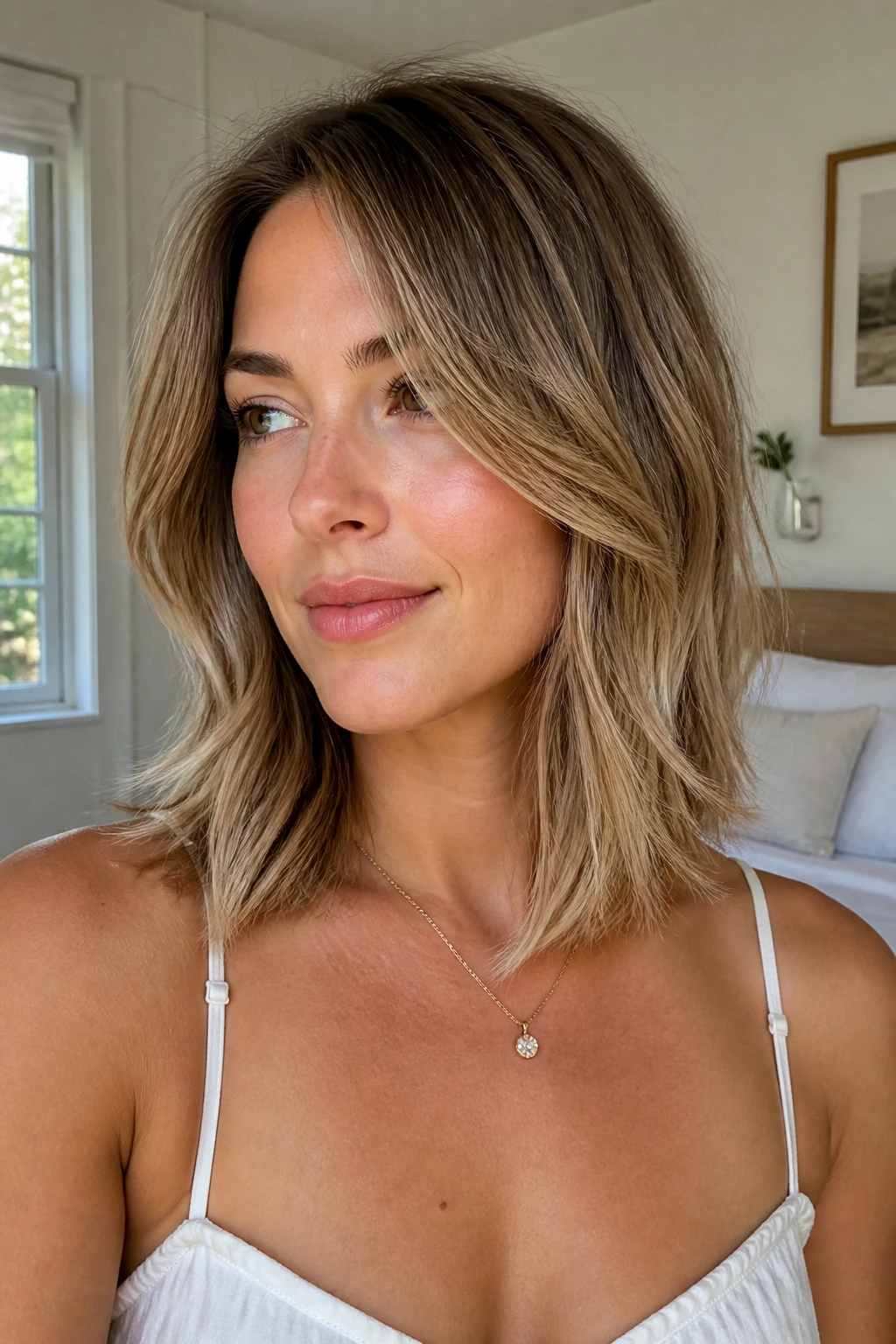
Picture a shag, but less wild and a little more grown-up. That’s the collarbone version, and it’s one of the easiest layered haircuts for round faces if you like texture. The length sits low enough to stretch the face, while the choppy bits break up any too-perfect roundness.
This cut works especially well if your hair has a little wave. The layers should be tapered, not hacked, so the ends stay light without puffing out. I’d keep the shortest layers around the cheekbone only if the rest of the cut is long enough to balance them. Otherwise, move those short pieces down a bit.
The good thing about this shag is that it looks better with a little mess. Air-dry it with mousse and a diffuser, or rough-dry it with your fingers and a dab of cream. If you hate spending ten minutes with a brush, this one is worth a serious look.
5. Razored Lob with Internal Layers
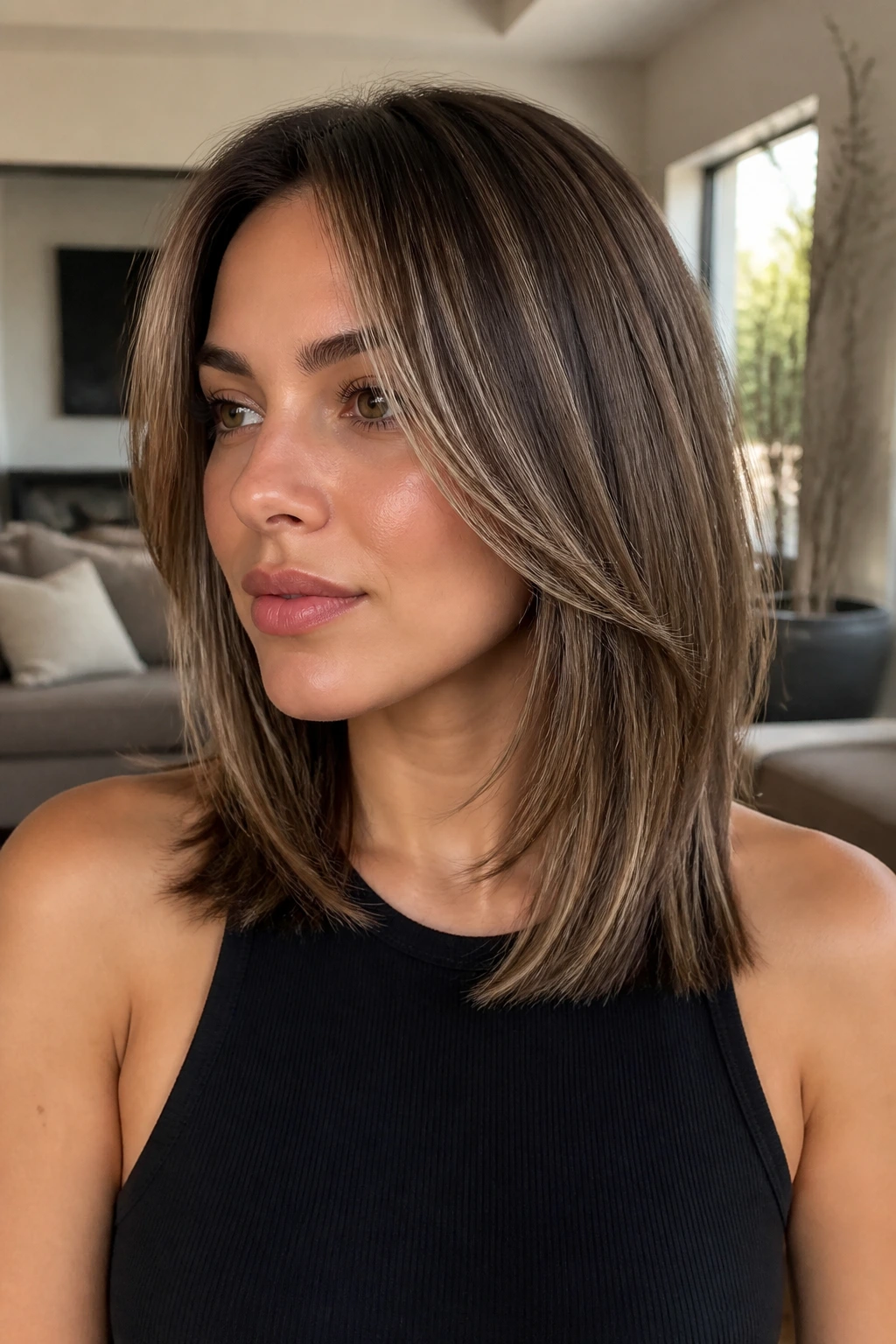
A razored lob can be gorgeous on a round face if the razor work is inside the cut, not all over the outside line. That distinction matters. You want the perimeter to stay fairly clean at the collarbone or just above it, while the internal layers remove bulk and keep the shape from ballooning.
I like this option for straight, dense hair that tends to sit in one solid wall. Internal layers break up that heaviness without making the ends look stringy. It’s a smarter move than taking a lot of length off the front, which can backfire and widen the face.
This cut is all about controlled movement. A flat iron bend at the ends or a quick brush-blowout keeps it sleek. If your hair gets frizzy the second humidity shows up, ask for softer texturizing instead of aggressive razor work. Not every head wants the same amount of slicing.
6. Long Layers with Bottleneck Bangs
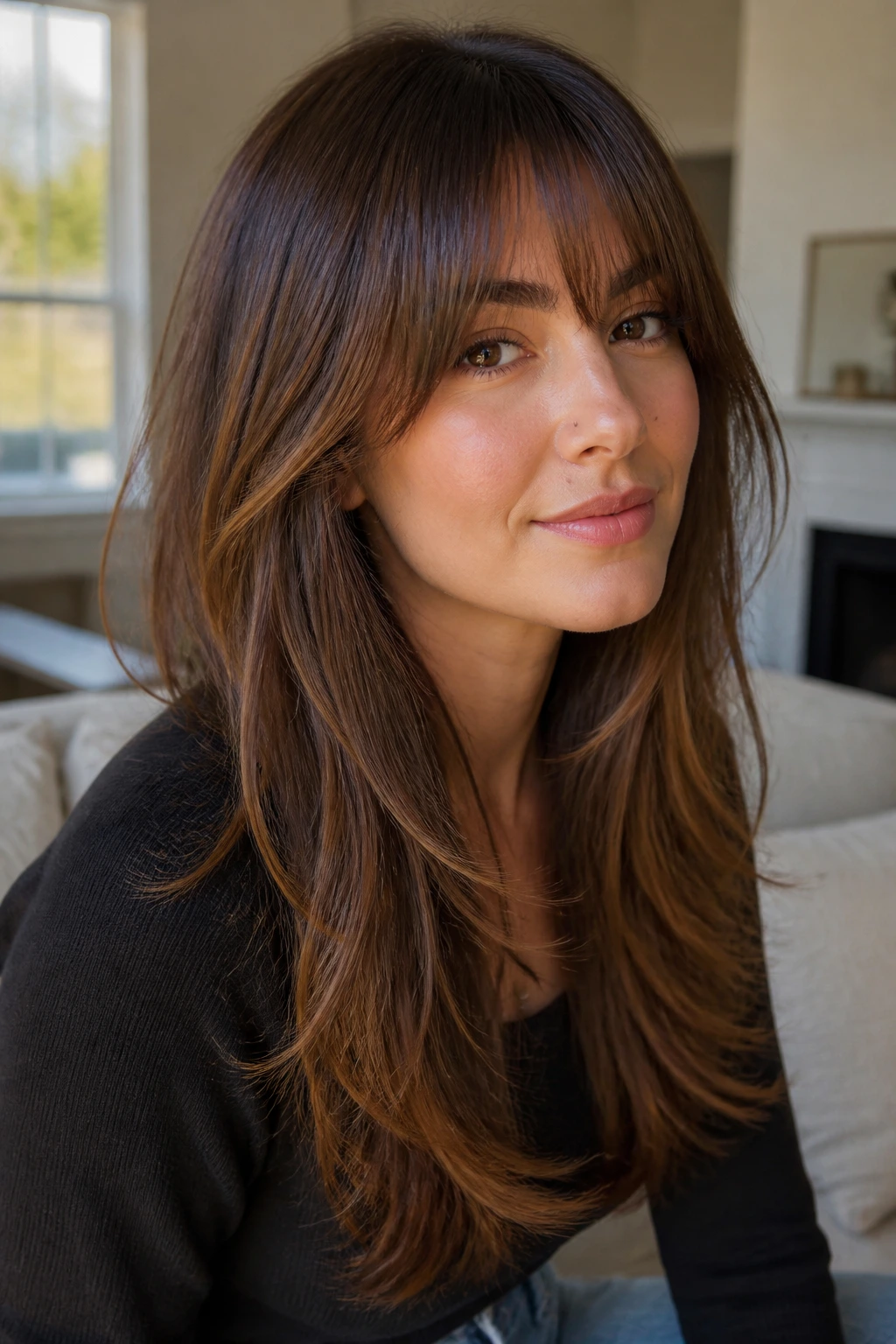
Bottleneck bangs are a better fit for round faces than blunt fringe nearly every time. They stay narrower at the center and open up as they move toward the temples, which gives the face a little lift without chopping it in half. Pair that with long layers that begin below the cheekbone, and you get a shape that feels balanced instead of busy.
The key is keeping the bangs soft enough to separate. You do not want a heavy, thick curtain sitting low on the forehead. That makes the face shorter. Bottleneck bangs should graze the brows and taper into longer side pieces that drift into the jaw and neck.
This cut is especially useful if you like to wear your hair down most days. The bangs give you a focal point near the eyes, and the long layers handle the rest of the movement. It’s a little more styled than a plain long cut, but not fussy.
7. Layered Pixie with Crown Volume
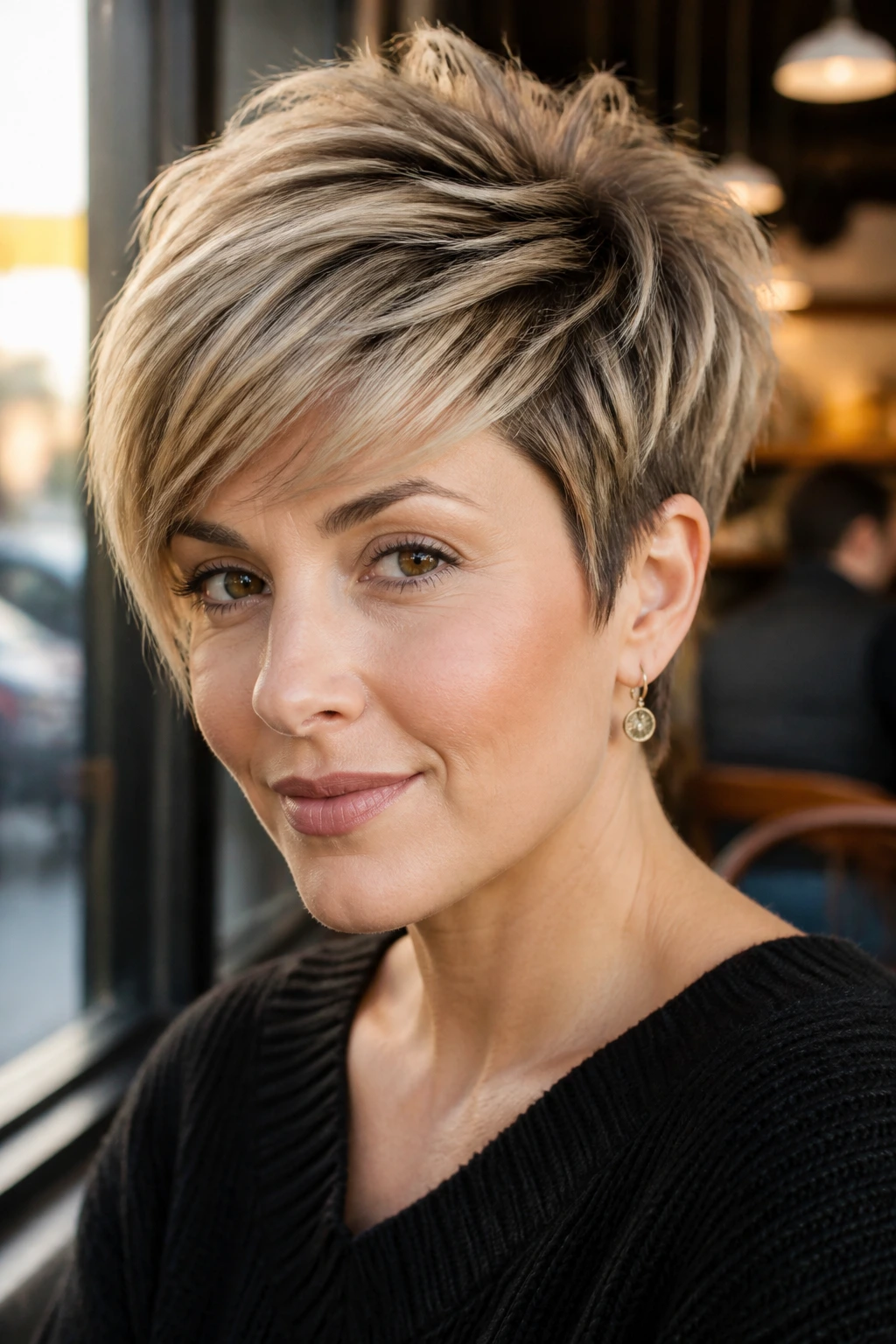
Can a pixie work on a round face? Yes, if the shape is built up top and kept tighter on the sides. That’s the non-negotiable part. A round face needs height, not width, and a layered pixie gives you exactly that if the crown is cut with longer pieces and the sides stay clean.
What to ask for in the chair
Tell your stylist you want the sides to sit close to the head, the crown to stay longer, and the fringe to sweep instead of sit straight across. The sweep is what keeps the cut from looking boxy. A little texture through the top is fine. Too much bulk at the temples is not.
This is not a lazy haircut. It needs regular trims and a small amount of styling paste or cream. But it has a sharp, modern energy that a lot of round faces wear beautifully. The trick is respecting the vertical line. That’s the whole job, really.
8. Feathered Mid-Length Cut
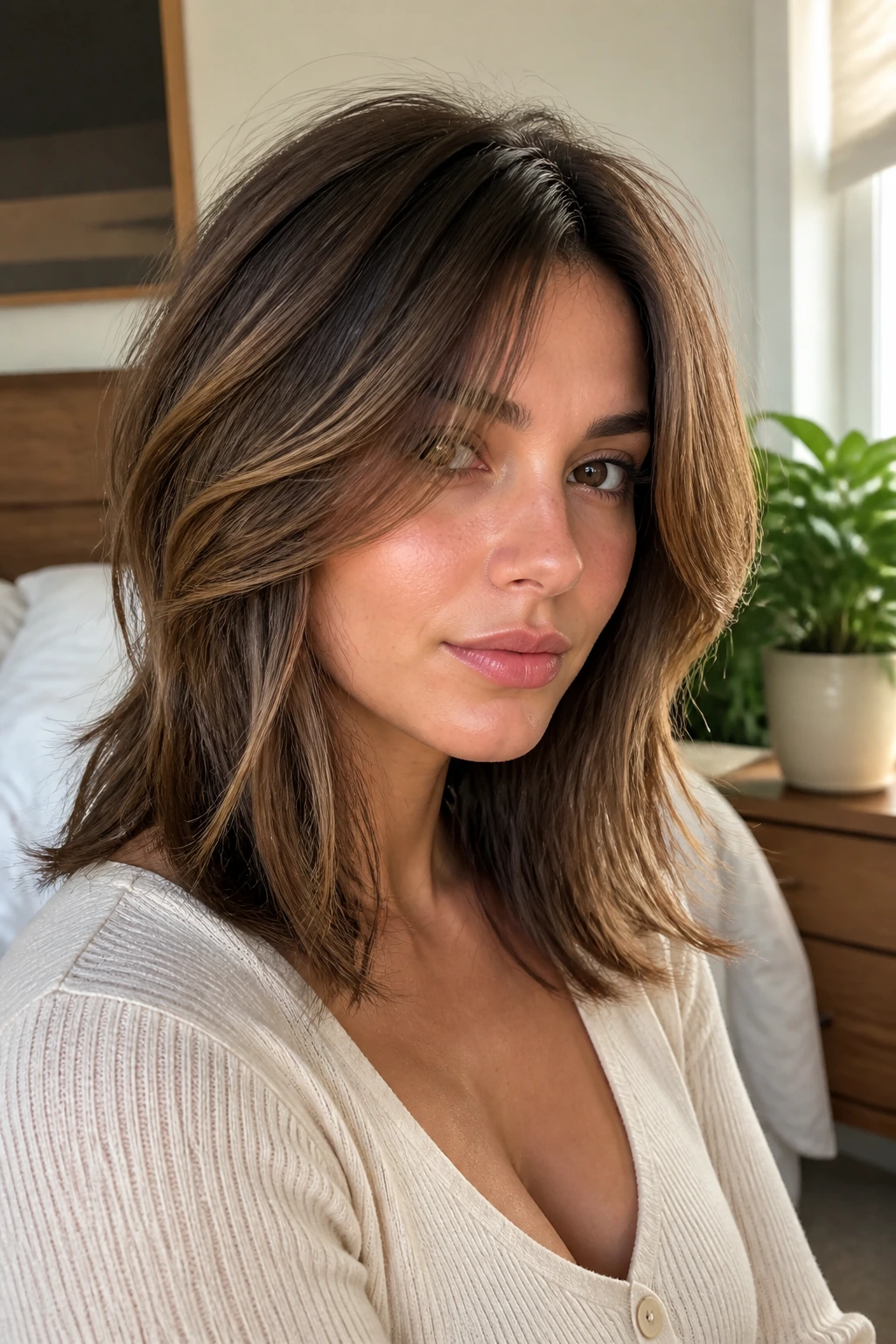
A feathered cut sounds retro, and honestly, that’s part of the charm. On a round face, soft feathering can be a relief because it breaks the hair into lighter pieces without making the whole head look too wide. Keep the length around the shoulders or a little below, then feather the front so it moves away from the cheeks.
The old-school version of this cut sometimes went too short at the sides. Don’t do that. The face-framing pieces should start low enough to skim the jawline and then drift down. When the layers are feathered properly, the cut has a floating feel instead of a hard shelf.
I like this one on medium-density hair that wants movement but not a messy finish. It works with a round brush, but it can also survive a quick bend from a curling iron. There’s a softness to it that feels easy, not sloppy.
9. U-Shaped Layers for Long Hair
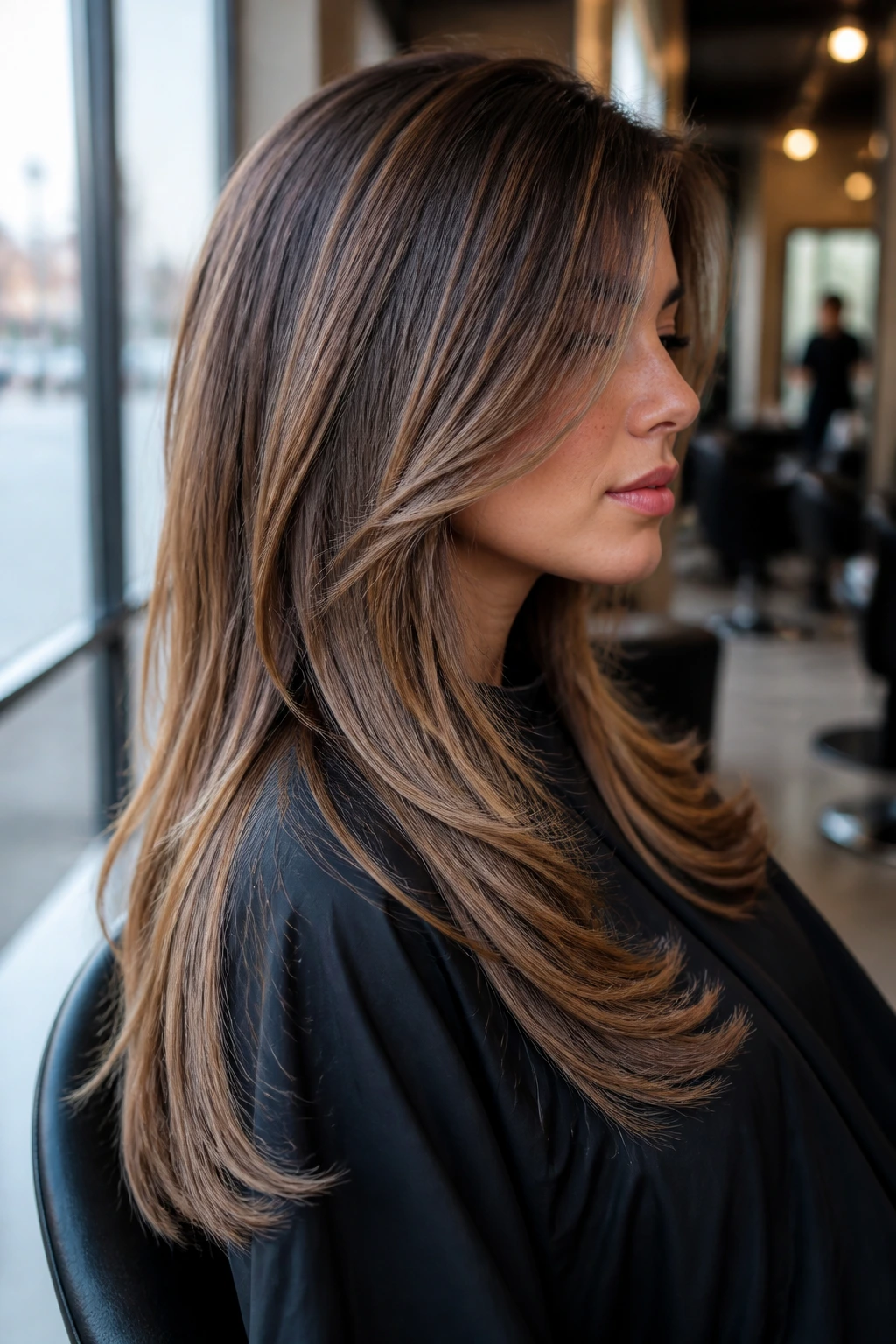
Long hair on a round face needs shape or it turns into a curtain. A U-shaped perimeter solves that problem by keeping the length longer in the back and slightly shorter around the sides. That little curve helps the eye read downward, and the layers can work without stealing too much density from the ends.
The best U-shape is subtle. You don’t want a dramatic dip that feels dated. You want a soft arc that frames the shoulders and leaves the front pieces long enough to narrow the cheeks. Ask for the first face-framing layer to begin below the chin if your face is especially full at the cheeks.
This cut is one of my favorites for people who love length but hate blunt heaviness. It also works well with balayage, because the long layers and face-framing pieces give the color somewhere to live. The result is movement that shows up in motion, not just in a still photo.
10. Soft Wolf Cut with a Tidy Perimeter

A wolf cut can go wrong on a round face if it gets too wild at the sides. The fix is to keep the perimeter tidy and the crown airy. You want the rebellious shape without the extra width. That means longer shaggier layers on top, then a cleaner outline underneath.
This is the cut for someone who likes texture and doesn’t need everything polished. It works best on wavy hair, but straight hair can wear it too if you’re willing to add bend with a curling wand. The front layers should angle down from the cheekbone toward the jaw, not sit at the cheekbone like parentheses.
The clean perimeter is the part most people skip. Don’t. It keeps the cut from mushrooming around the jaw. If you’ve seen a wolf cut that looked charming on one person and terrifying on another, that difference usually came down to where the weight sat.
11. Curtain-Bang Lob with Angled Sides

A lob with curtain bangs can do a lot of work for a round face, and I mean that in the best way. The length lands around the collarbone, which stretches the face, while the curtain fringe opens the forehead and softens the middle. The angled sides keep the eye traveling downward rather than out toward the cheeks.
The key detail is the angle. The front pieces should be slightly longer than the back, or at least styled that way, so the shape narrows as it moves down. If the lob ends at one flat line around the jaw, it gets too boxy. Keep the line soft and let the curtain bangs stay light enough to part naturally.
This is a strong pick if you want something that looks good with both straight styling and loose waves. It’s polished enough for work, but not stiff. A little root lift and a bend through the ends go a long way here.
12. Wavy Midi Cut with Invisible Layers
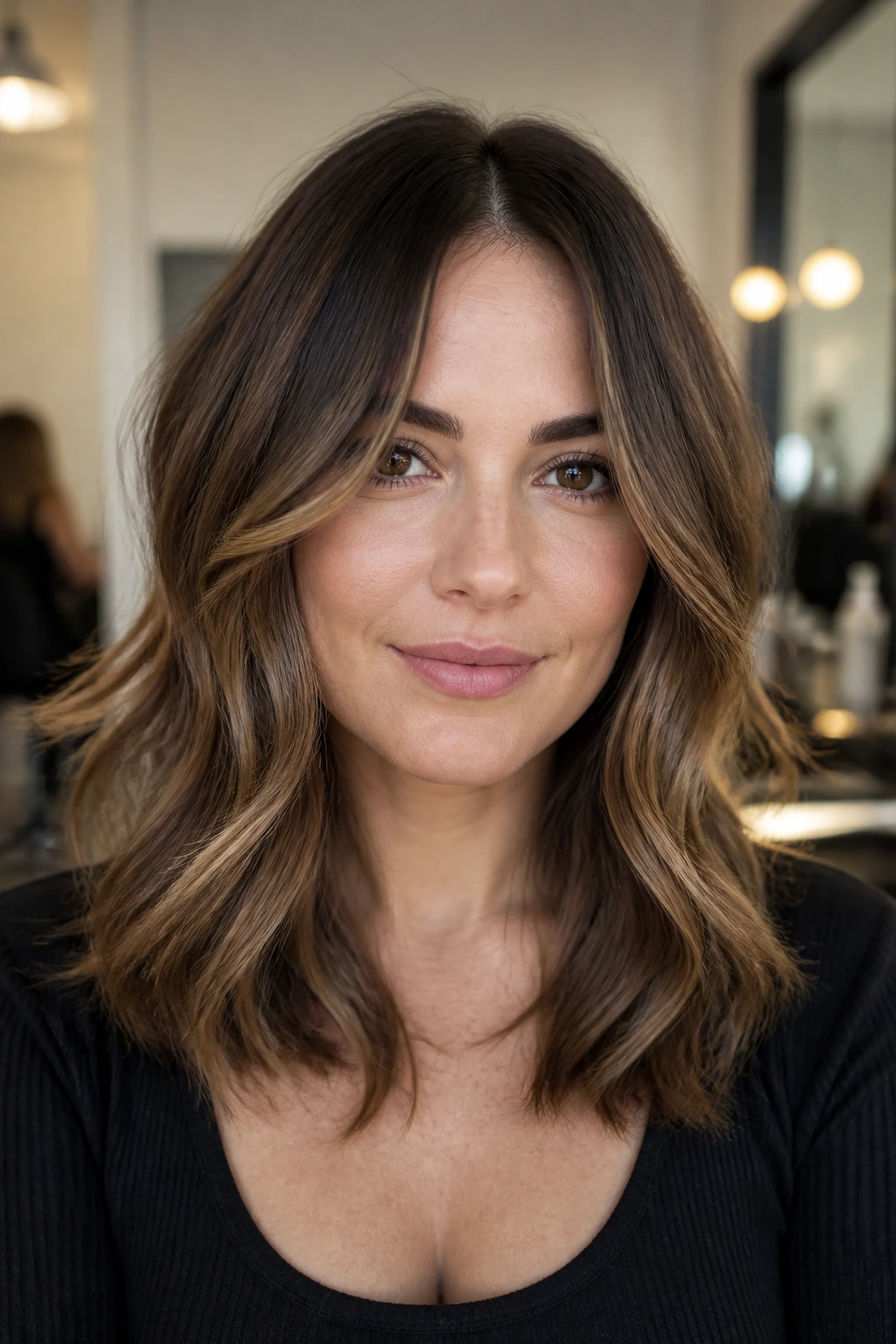
Invisible layers are the quiet ones. They sit inside the haircut and remove bulk without making the surface look choppy, which is ideal for a round face if your hair already has wave. The shape stays calm around the outside, while the inside gets enough movement to keep the head from widening.
I like this cut at the midi length, somewhere between the shoulders and the upper chest. That gives the face room. The layers should be long enough that the wave pattern still clumps nicely, not chopped into bits. If your hair gets triangle-shaped at the ends, this is the kind of cut that fixes it without making the top too fluffy.
This one is less flashy than a shag or butterfly cut. Good. Not every haircut needs a personality contest. Sometimes the best cut is the one that makes your natural wave look smoother and more organized with almost no visible effort.
13. Bouncy Layers for Fine Hair
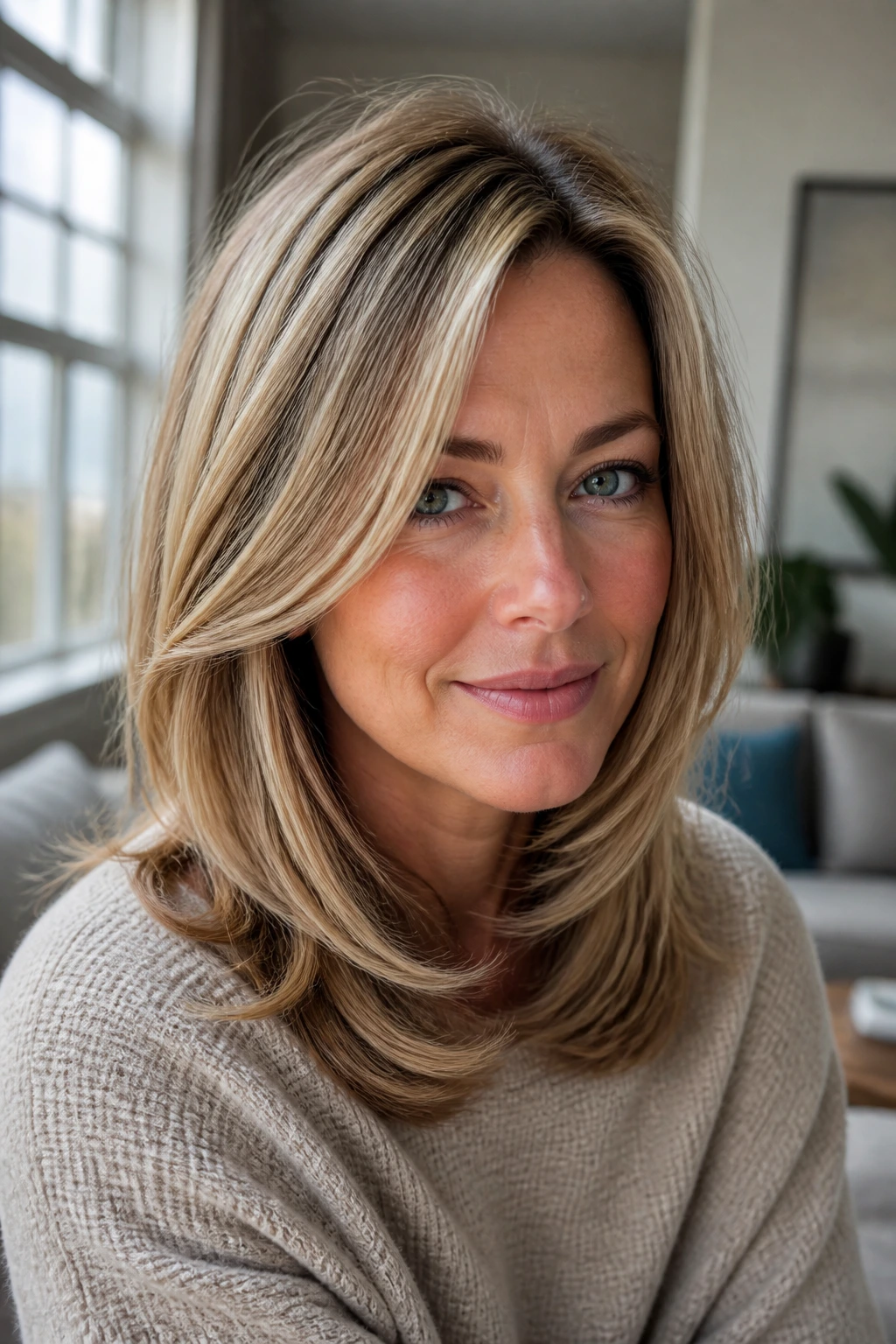
Fine hair on a round face needs a little strategy. Too many short layers can make the ends look thin, and thin ends with width at the cheeks is not a charming combo. The better move is to keep the layers longer, add controlled lift at the crown, and leave enough weight at the perimeter to give the hair swing.
What to avoid here
Skip heavy texturizing at the bottom. Skip anything that slices the top too aggressively. Fine hair needs shape, not shredding. A soft side part, a lightweight mousse, and a round brush at the roots will do more than a dozen random snips ever could.
This cut is especially good if your hair goes flat by noon. The bounce comes from the way the layers are stacked, not from taking off too much length. It’s a careful haircut, and that’s the point. Fine hair punishes overcutting faster than almost any other texture.
14. Weight-Removing Layers for Thick Hair
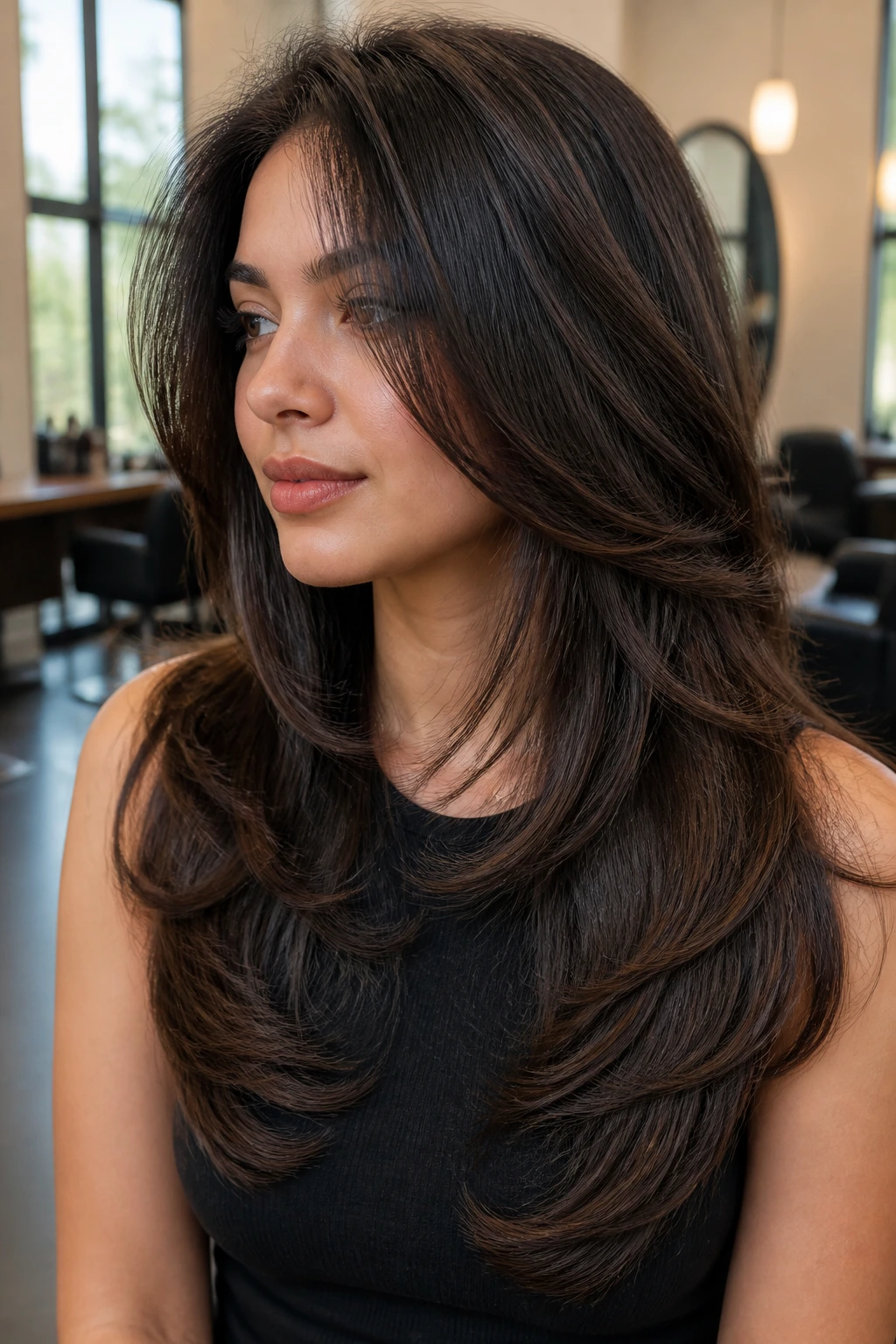
Thick hair can hide a round face if it’s cut into one giant block. That’s the problem. You get width where you wanted shape. The answer is a layered cut that removes weight from the inside while keeping enough length on the outside to hold the silhouette.
I prefer long, sliding layers here rather than lots of short chop marks. The shortest front pieces should start low, around the jaw or below, and the interior should be de-bulked so the cut falls instead of puffing. A good stylist will know how to reduce density without making the ends look see-through.
This is one of those cuts that feels lighter the second it’s dry. You can tell when it’s right because the hair moves instead of sitting in a shelf around the head. If your thick hair has a habit of expanding in humidity, this is the shape that gives you the best odds of keeping control.
15. Side-Swept Layered Crop
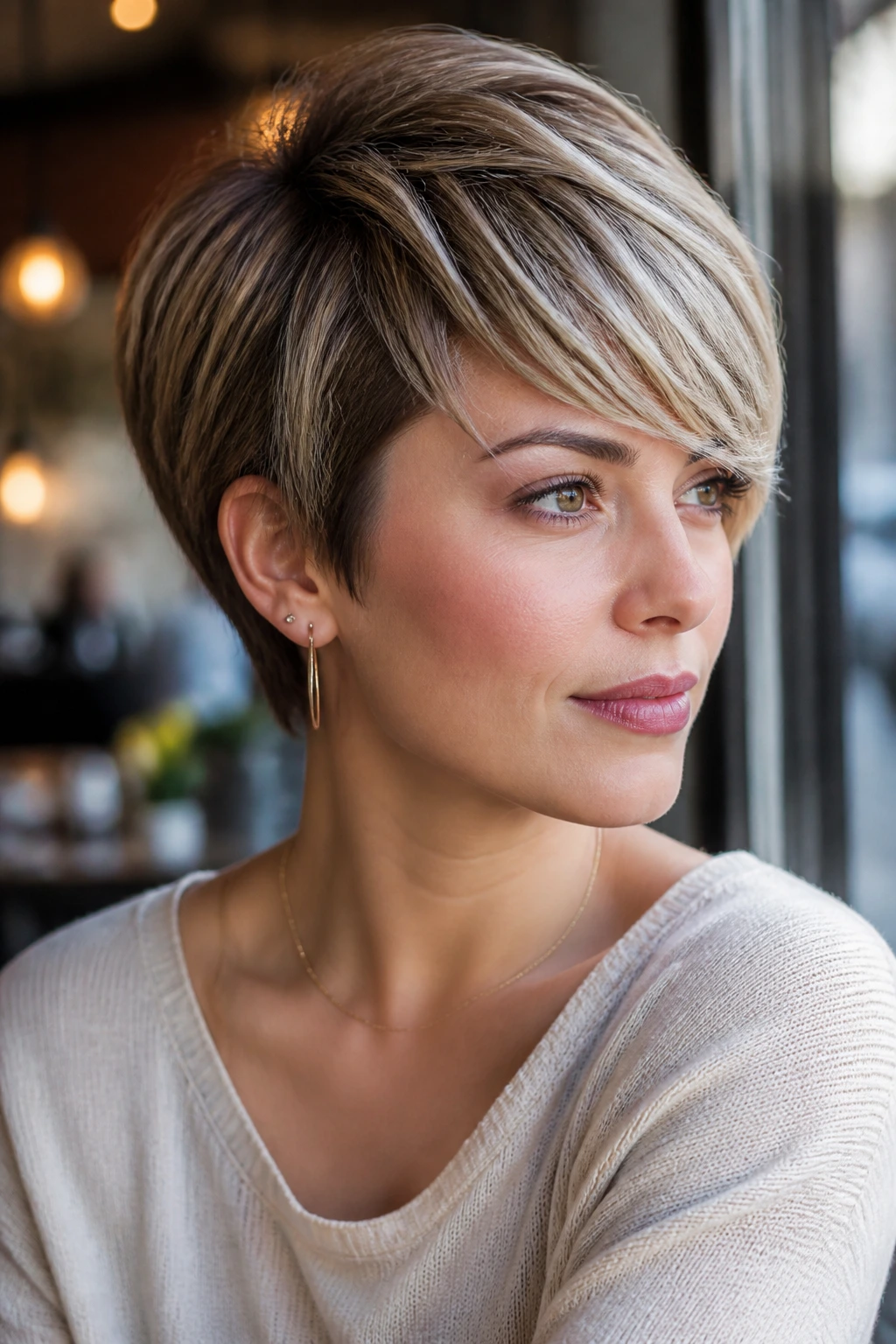
Short hair can be a wonderful choice on a round face, but the crop has to be angled in the right direction. A side-swept fringe gives the face a diagonal line, and the layered top adds height without building width at the sides. Keep the sides close and the crown slightly longer.
This cut is bold, but not loud. The sweep across the forehead keeps the shape soft, while the short nape and tapered sides stop the head from looking rounder than it is. I like it best when the fringe is long enough to tuck behind the ear on one side. That tiny asymmetry does a lot of work.
If you want a crop that feels cool instead of severe, this is a smart place to start. It does need upkeep. Short hair always does. But the payoff is a shape that looks crisp with almost no extra length hanging around your jawline.
16. Airy Layered Curls
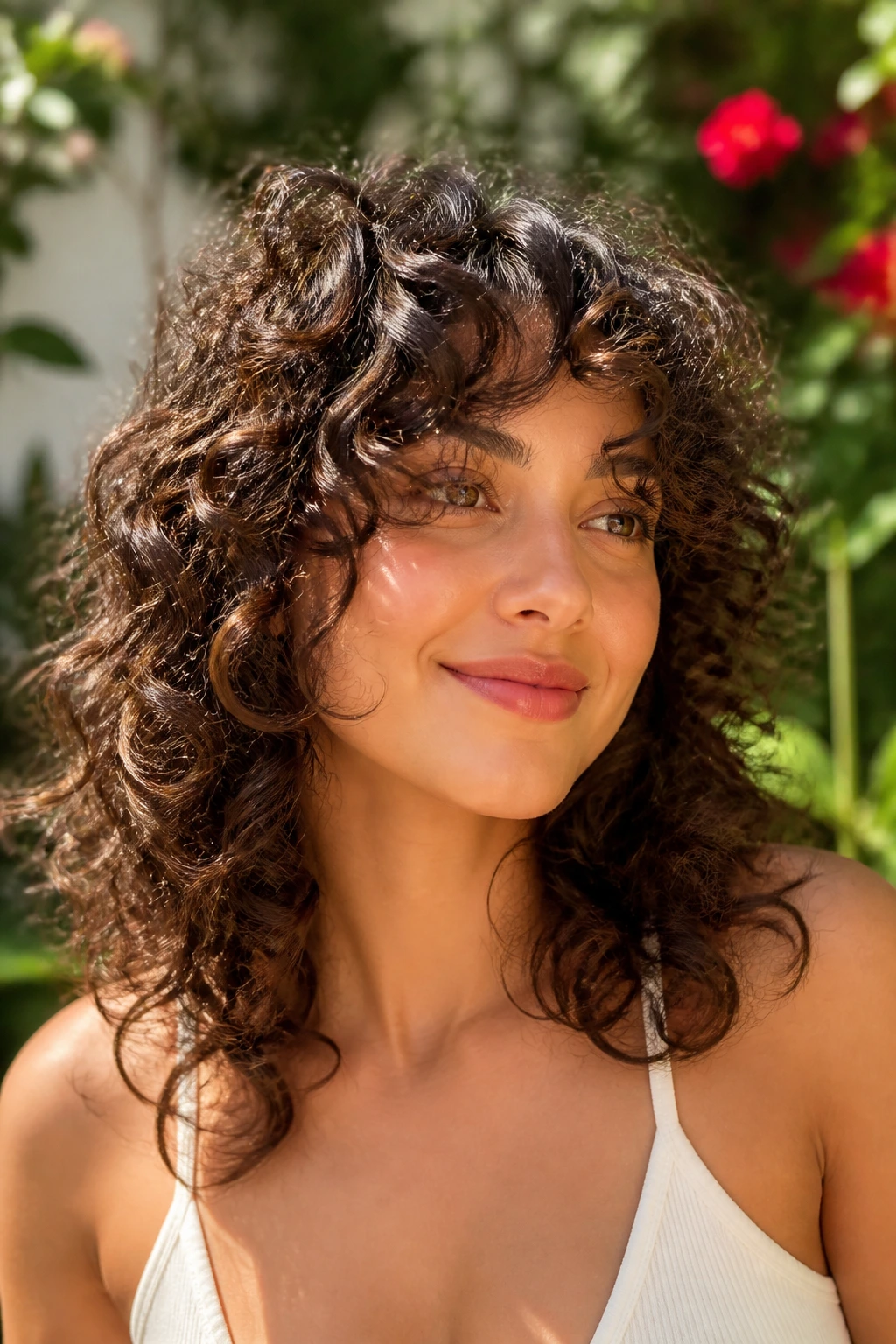
Curls need to be cut as curls, not as straight hair that happens to be curly. On a round face, the danger is a triangle shape or a puff of width around the cheeks. Airy layers solve that by letting the curls stack with space instead of all landing at the same level.
The best version keeps the shortest layers away from the fullest part of the cheeks and lets the top and crown carry some height. A dry cut is often the right call here, because curl patterns shift when wet. The face-framing pieces should be long enough to spring past the cheekbone rather than stop on it.
This cut looks best when the curls are defined, not brushed into a halo. Use a leave-in and a gel or cream that gives hold without crunch. A round face and curls can be a beautiful pairing when the cut respects the natural pattern instead of fighting it.
17. Sleek Layered Blowout Cut
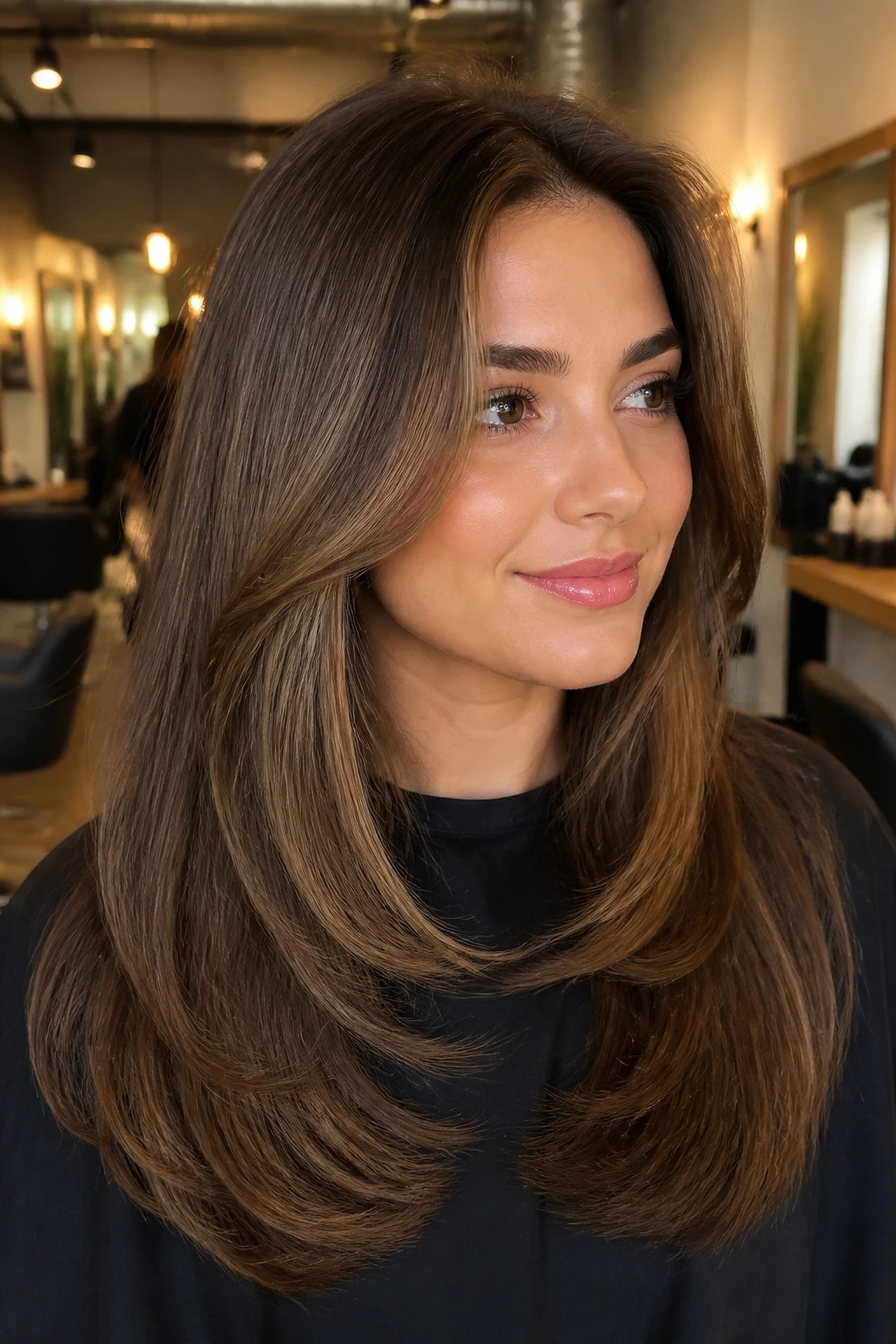
Some layered cuts are meant to look undone. This one is not. A sleek blowout cut uses smooth layers, polished ends, and a little root lift to create a shape that feels controlled from top to bottom. On a round face, the sleekness matters because it keeps the width from spreading outward.
I like this cut when the layers start below the cheekbone and the front pieces sweep back and down. It gives the whole face a longer profile. If you wear your hair straight most of the time, this is a very practical option. It still has movement, but it does not rely on texture to make the shape work.
The real payoff shows up when you blow it out with a large round brush or velcro rollers. The layers fall in a clean cascade instead of flipping out in random directions. That’s the look you want if you love polished hair with some swing.
18. Wispy Bangs with Long Frames

Wispy bangs can be a good idea on a round face when they stay light. Heavy bangs that cut the forehead in half tend to shorten the face, which is the opposite of what you want. A wispy fringe keeps some forehead visible and lets the long face-framing pieces do the narrowing work.
This cut works when the bangs are not too dense and the side pieces are long enough to sweep into the jawline. It’s a softer, more delicate version of fringe. I like it for people who want some brow coverage without committing to a full curtain bang.
The style reads best when the bangs are separated a little, not pasted together with too much product. A touch of dry texture spray is enough. If your hair is naturally fine or medium, this can be an easy way to add interest around the eyes without widening the face.
19. Tapered Shoulder-Length Cut
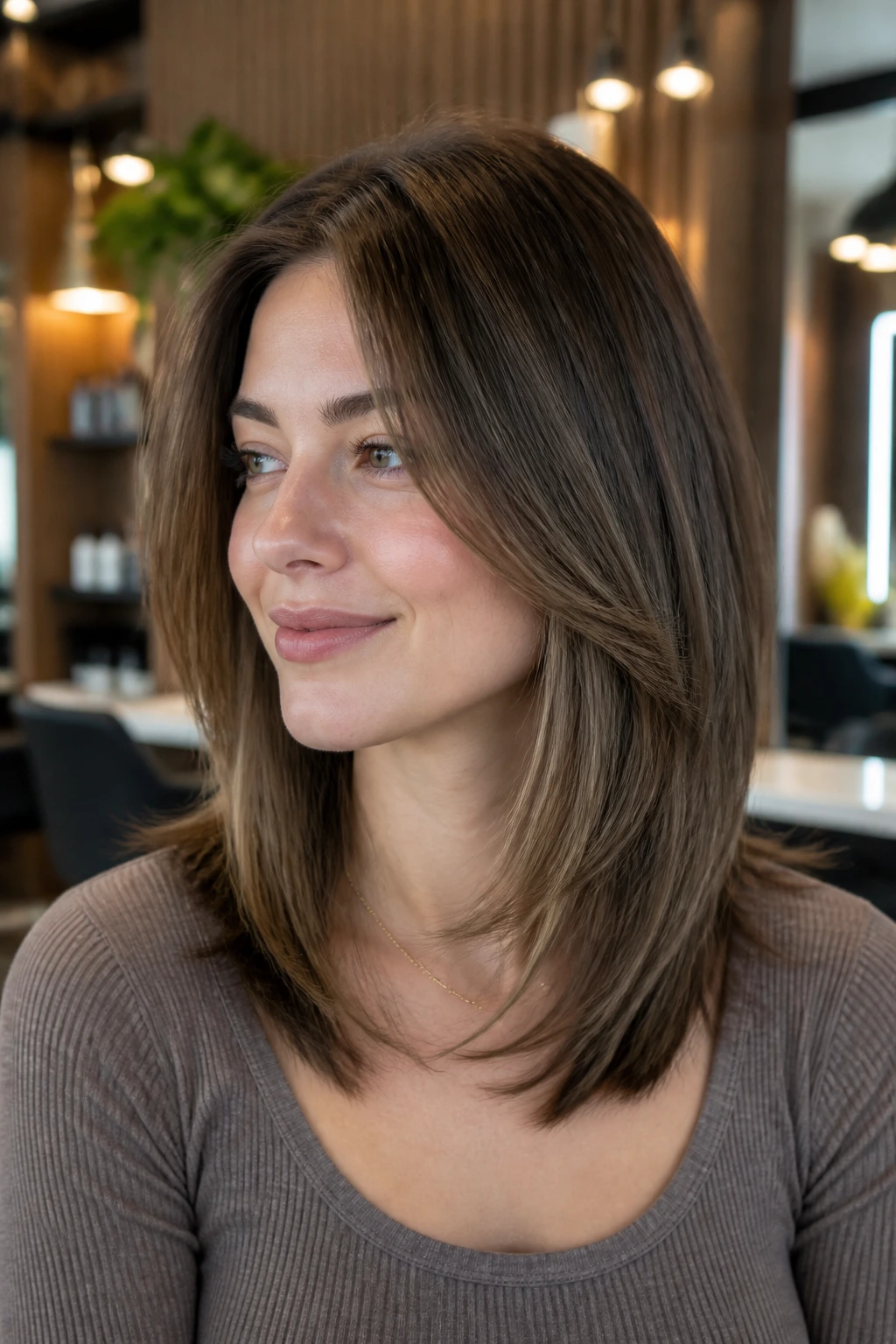
A shoulder-length cut can look boxy on a round face if the ends are left blunt and full. Tapering fixes that. The perimeter stays at the shoulders, but the ends narrow a bit and the layers slide softly inward, which gives the face a longer edge and the hair more movement.
This is one of the least fussy cuts on the list. It works for straight hair, waves, and even looser curls if the taper is gentle. The important thing is keeping the front a touch longer than the back, or at least angled that way when you wear it down. That small change keeps the eye moving down instead of outward.
I like this cut for people who want a straightforward shape with a little polish. It’s not dramatic. It doesn’t need to be. It just does the job without turning into a styling project every morning.
20. Mixed-Length Layers with a Long Fringe

This is the most editorial cut in the bunch, and it can be stunning on a round face if it’s handled well. Mixed-length layers create movement at different heights, while a long fringe keeps the front from looking too open. The key is balance: lots of activity in the cut, but not all of it at the sides.
The fringe should stay long enough to brush the cheek or jaw, not sit as a short block across the forehead. The layers can be piecey and modern, but the overall silhouette needs to point downward. I’d wear this one with a soft bend, not pin-straight. The movement helps the layers separate without spreading the width.
If you like a cut with some attitude, this one has it. It also handles face-framing color well, especially a few lighter ribbons around the front pieces. The color makes the shape easier to read, and that matters more than people think.
What Layer Placement Does to a Round Face
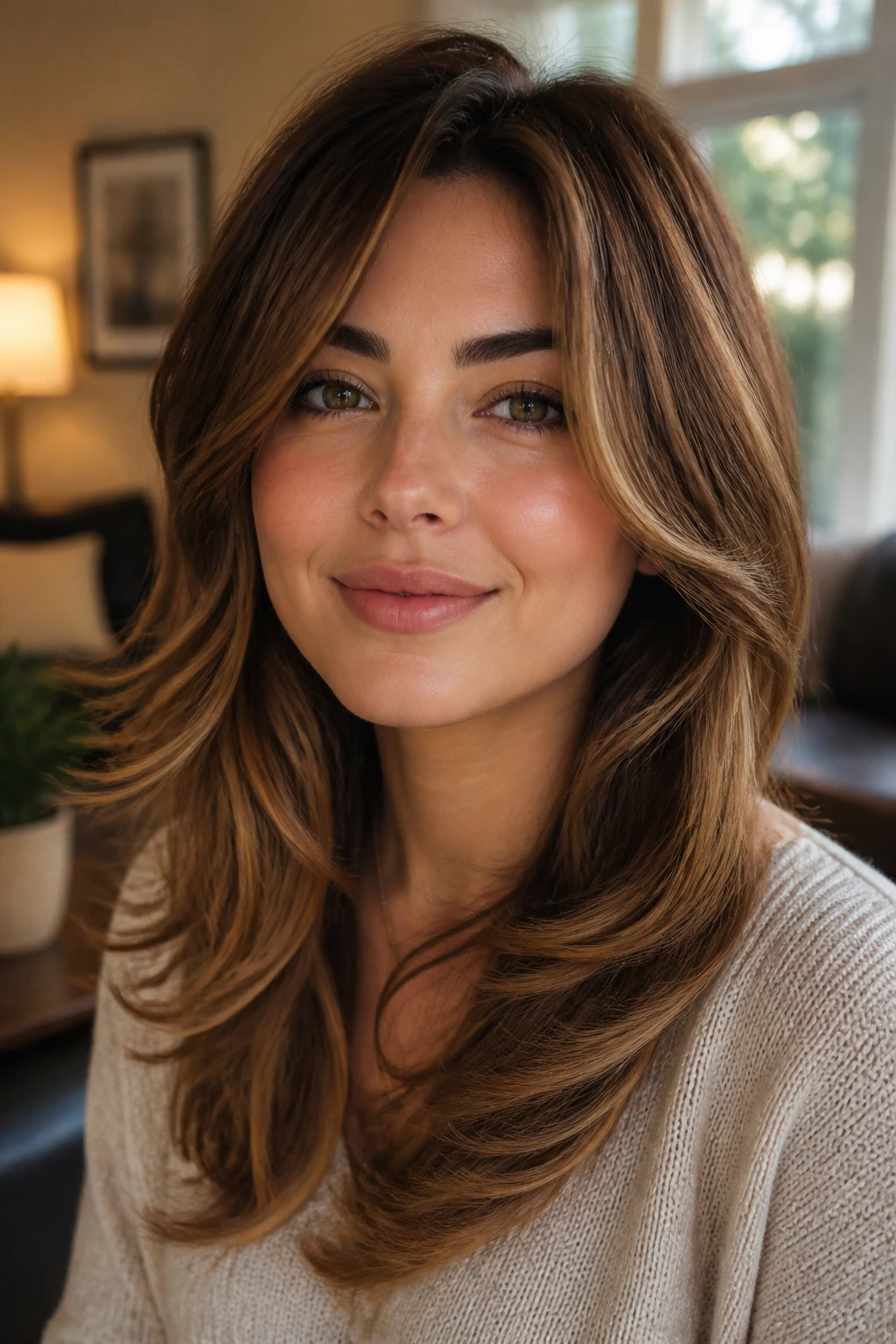
A round face is usually defined by width and length that are close together, with soft cheeks and a gentle jawline. That does not mean one haircut “fixes” it. It means the cut needs to create more vertical motion than horizontal bulk. Layers are useful because they can do both jobs at once, but only if they’re placed on purpose.
The biggest mistake is putting short layers right at the cheeks. That’s where the face is already fullest, so the haircut ends up echoing the shape you were trying to soften. A better plan is to push the shortest pieces lower, toward the chin or collarbone, or higher up at the crown where they can create lift without width.
One more thing people miss: not all volume is equal. Volume at the top of the head stretches the face. Volume at the sides can make it look broader. That’s why a round brush, a side part, or a little crown lift often changes the look more than another inch of length ever could.
How to Explain the Cut to Your Stylist

Bring photos, yes, but do not hand them over like they’re magic. Point to the exact parts you like. Say whether it’s the fringe, the length, the crown height, or the way the front pieces sit below the jaw. Stylists can work with that. “I like this haircut” is vague. “I like the length, but I want the front pieces longer and the part deeper” is useful.
Say where you part your hair every day. That alone changes the balance of the cut. If you always wear a side part but walk in wearing a center part, the haircut may be built around the wrong line. Also mention how much styling you’re willing to do. A butterfly cut on a person who air-dries in ten minutes is a different animal than the same cut on someone who blows out their hair with a round brush.
If you have thick hair, ask for internal weight removal rather than a lot of short layers. If you have fine hair, ask to keep some perimeter weight so the ends do not disappear. Those two requests sound small. They are not. They decide whether the haircut grows out well or goes weird by week three.
Tools That Make Layered Haircuts Easier to Wear
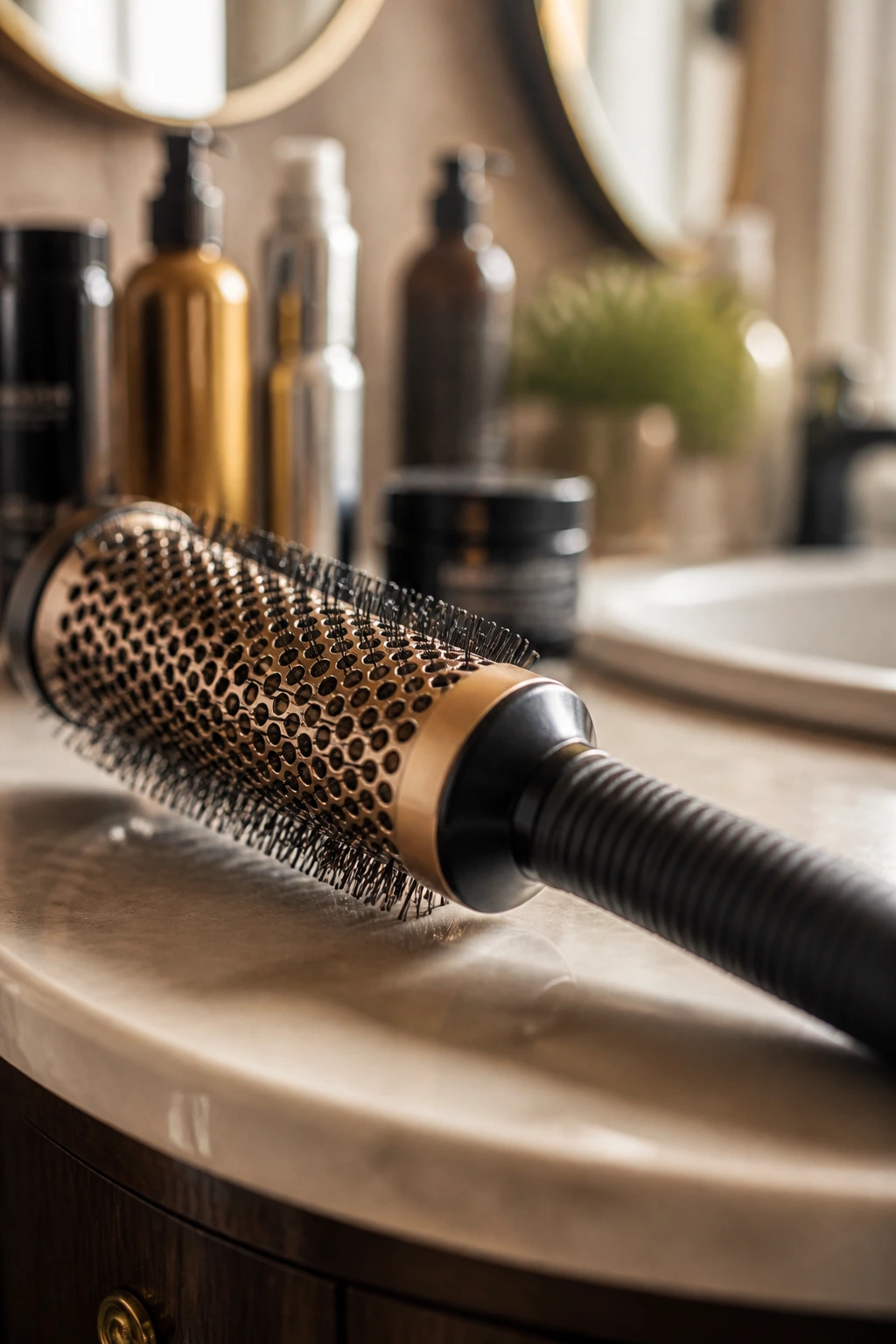
- 1- to 1.5-inch round brush: Best for creating bend at the ends and a little lift at the crown without huge curls.
- Blow dryer with a concentrator nozzle: Directs airflow where you want it, which matters when you’re trying to smooth the sides and keep the top lifted.
- Sectioning clips: Worth having if your hair is layered, because clipping the top away lets you dry the underneath without collapsing the shape.
- Heat protectant spray or cream: Use it before any hot tool; layered ends are the first things to get fried.
- Lightweight mousse: Good for fine or wavy hair that needs root support without stiffness.
- Texturizing spray: Useful on shags, wolf cuts, and feathered layers when you want separation rather than shine.
- Curling wand or 1-inch iron: Handy for giving long layers a soft bend away from the cheeks.
- Wide-tooth comb: Better than brushing curls or waves into a puffed triangle.
- Dry shampoo: Helps the crown stay up on second-day hair, which is often when layered cuts look best.
Small Styling Tweaks That Keep the Shape Sharp
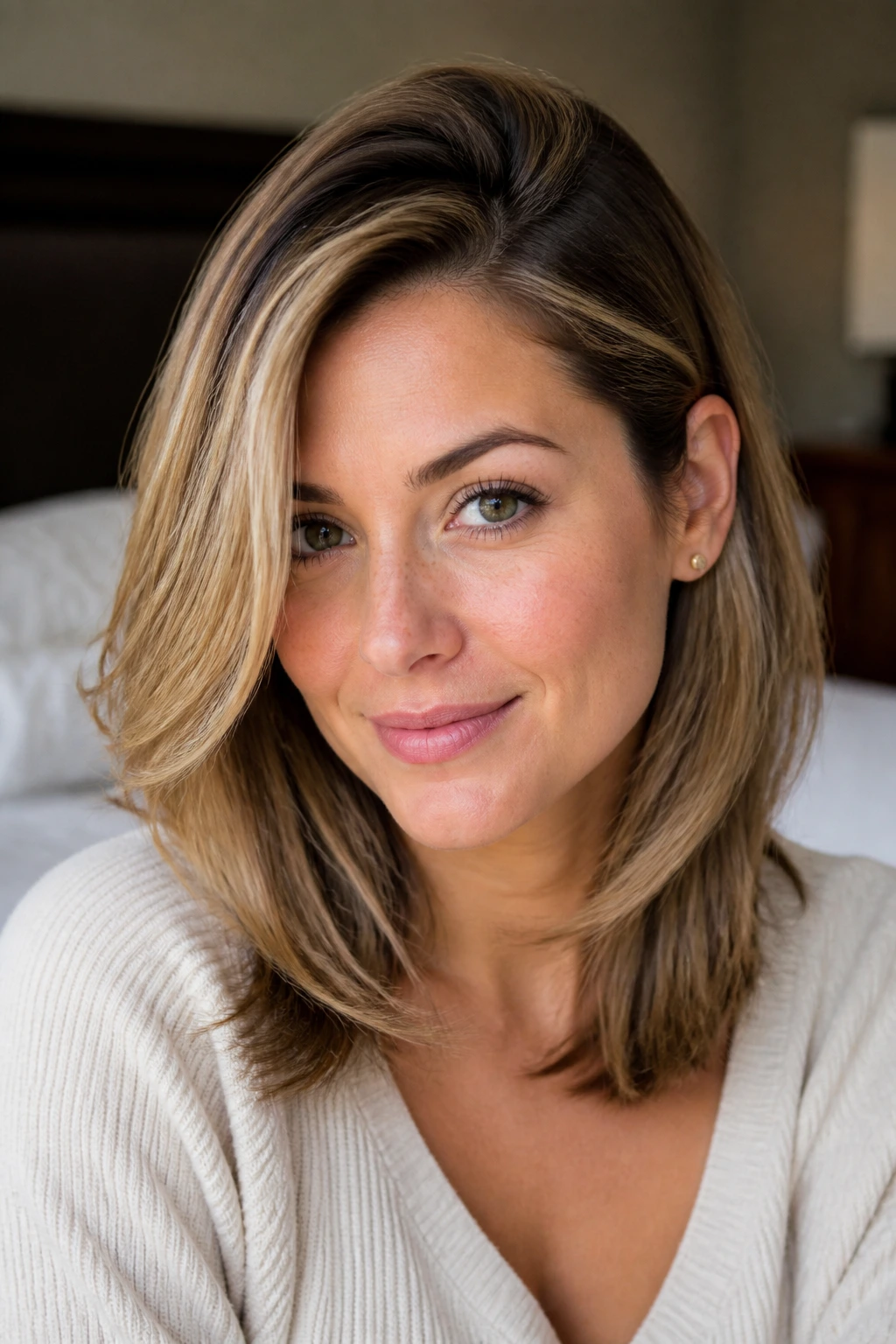
Part Placement: Move your part half an inch off center and look in the mirror. On a round face, that tiny shift can be the difference between “soft” and “wide.” It changes the whole front angle.
Root Lift: Put the lift at the crown, not the sides. A little mousse at the roots and a quick lift with a brush gives the face a longer outline. If you puff out the temples, you’ve missed the point.
Face-Framing Color: A few lighter ribbons around the front pieces can make layered cuts easier to read. I like this especially on long layers and curtain bangs, because the eye follows the color and the shape together.
Tuck One Side: This sounds too simple to matter, but it does. Tucking one side behind the ear creates asymmetry, and asymmetry is your friend on a round face.
Use Less Product Than You Think: Heavy cream, thick oil, and sticky wax can flatten the very movement you paid for. Start small. Add more only if the hair is actually frizzy or dry.
Smart Product Picks for Different Hair Textures
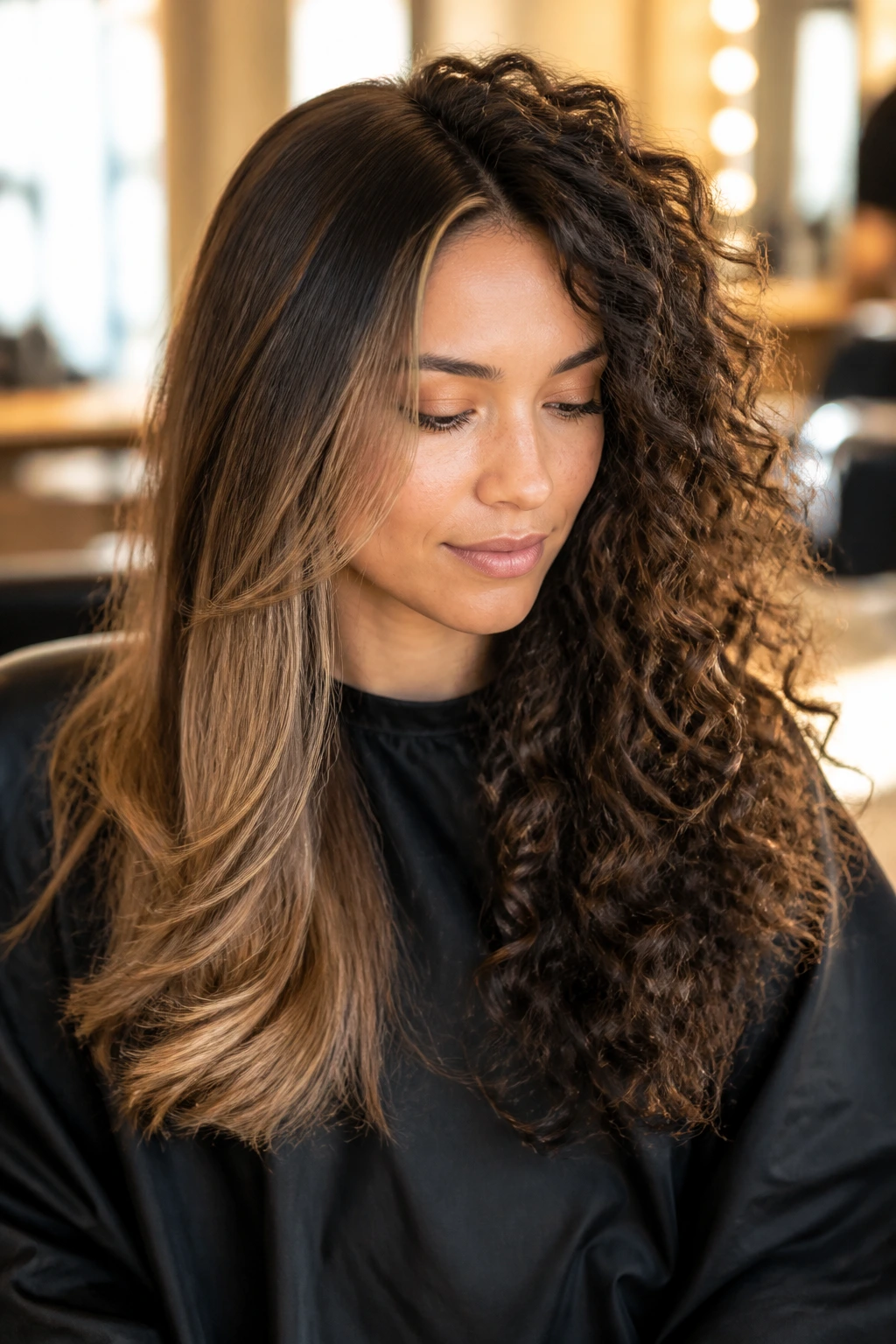
Fine hair wants support without weight. A light mousse at the roots, a volumizing spray on damp lengths, and a dry shampoo on day two usually do more good than a pile of smoothing cream. If your hair is fine and layered, stay away from heavy oils near the crown. They flatten the shape faster than people expect.
Thick hair needs control. A blow-dry balm or smoothing cream helps the cut fall into place, and a small amount of serum on the ends keeps the perimeter from puffing outward. When thick hair is layered well, it should move. It should not explode.
Wavy and curly hair usually like moisture plus hold. A leave-in conditioner gives slip, curl cream shapes the pattern, and a gel or strong mousse keeps the layers from frizzing apart. Straight hair can get away with lighter product and more hot-tool shaping. If you add too much texture spray to straight hair, the cut can start to look dusty instead of layered. That’s a real thing, and it is not cute.
Keeping the Cut in Shape Between Salon Visits

Layers age differently depending on the length. A pixie or side-swept crop needs a trim every 4 to 6 weeks if you want the shape to stay crisp. A lob or collarbone cut can usually go 6 to 10 weeks before the front pieces start losing their angle. Long layers often hold for 10 to 12 weeks, though bangs and fringe usually need a touch-up sooner.
Watch the front first. That’s where the haircut gives itself away. If the face-framing pieces start sitting right on the cheeks, the line stops elongating and starts widening. If a fringe falls into your eyes or splits in the wrong spot, it’s time for a trim, even if the rest of the cut still looks fine.
Sleeping habits matter too. A loose clip at the crown, a soft scrunchie, or a silk pillowcase can keep layers from kinking and flattening overnight. No, it will not save a bad cut. But it can make a good one behave for another day or two.
Variations and Adaptations to Try
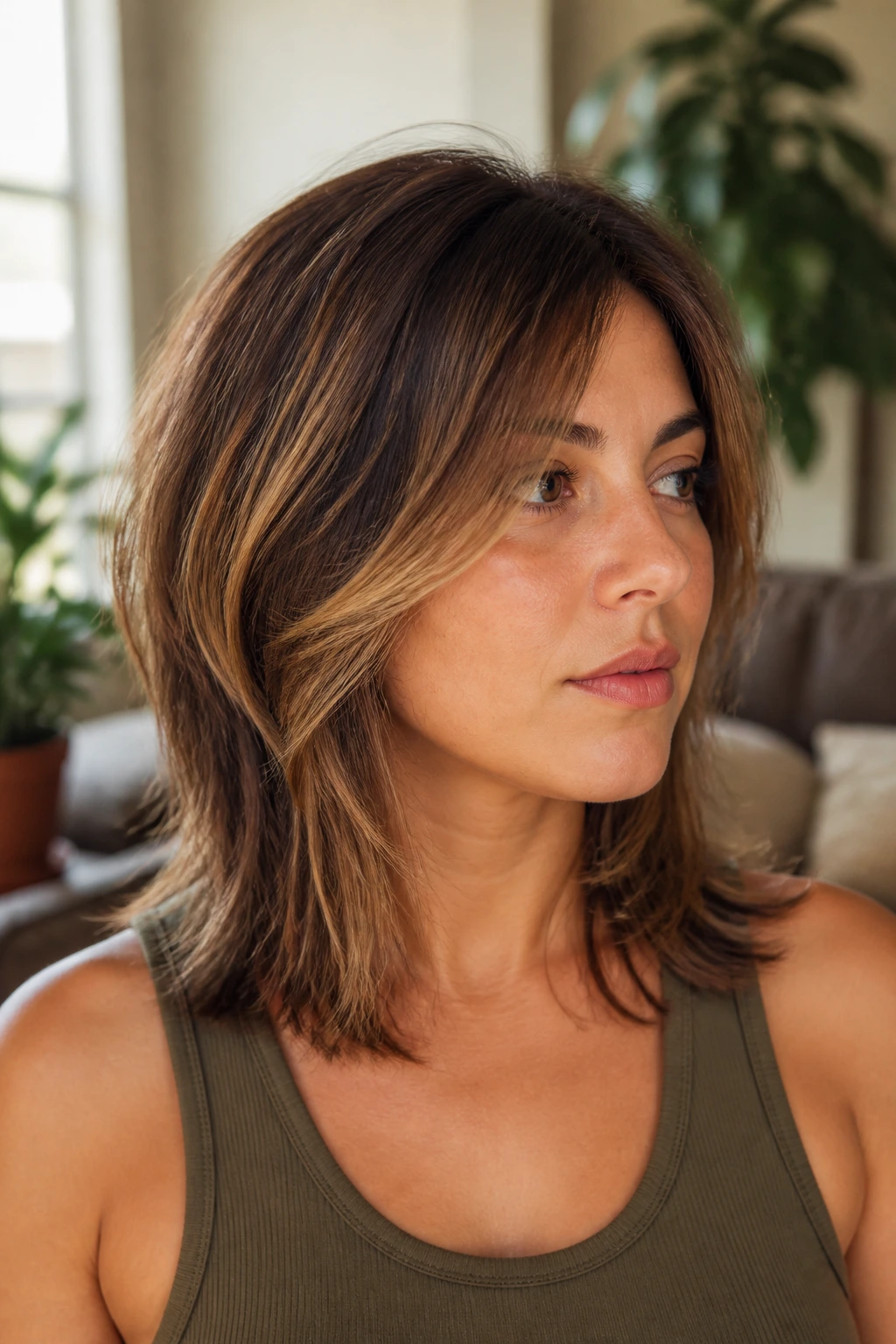
Fine Hair, Soft Lift: Keep the layers long and ask for crown support rather than lots of choppy pieces. This version avoids see-through ends and works best with mousse and a round brush.
Thick Hair, Internal Relief: Ask for hidden weight removal inside the cut so the outside line stays clean. This helps dense hair fall around the face instead of ballooning out at the sides.
Curly Hair, Dry Shape: Have the cut shaped in a way that respects the curl pattern, ideally with the hair dry or mostly styled. That keeps the curls from springing up into a wider shape than you planned.
Low-Maintenance Grow-Out: Choose shoulder-grazing or collarbone lengths with long front layers and fewer short pieces. The shape grows out slowly and still looks deliberate if you miss a trim window.
Balayage-Ready Framing: If you wear color, place the lighter pieces around the front layers and crown, not only on the outer surface. The haircut reads cleaner when the color follows the structure.
Common Mistakes to Avoid
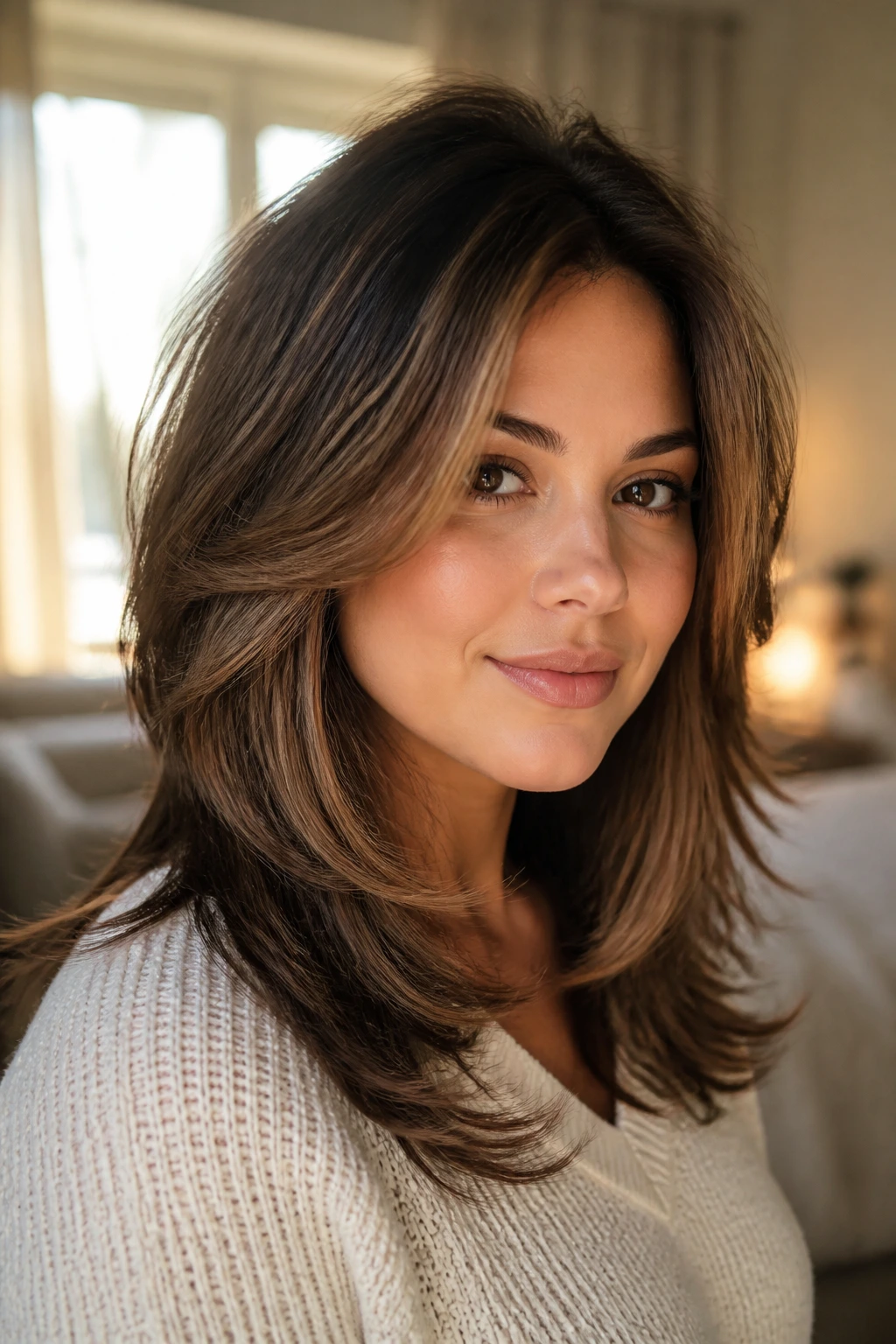
- Short layers at the cheekbone: The symptom is a face that looks wider the second the hair dries. The fix is to push those shortest pieces lower or keep them longer and softer.
- Too much side width: If the hair puffs at the temples, the face gets pulled wider. Keep the sides sleeker and put the lift at the crown.
- Over-thinning curly or thick hair: The ends can go frizzy or wispy, and the shape loses weight fast. Ask for long layers or internal removal instead of aggressive texturizing.
- A blunt center part with no shaping: Some round faces can wear a center part, but it needs movement. Without long front pieces, the part just splits the face in half.
- Ignoring daily styling habits: A cut that looks good only after 25 minutes with hot tools is not the same as a cut you can actually live in. Tell your stylist how you wear your hair, not how you wish you wore it.
- Cutting fringe too short: Short bangs can shorten the face fast. If you want bangs, keep them light, swept, or curtain-shaped unless your stylist has a very specific plan.
Frequently Asked Questions About Layered Haircuts for Round Faces
What layer length looks best on a round face?
The safest starting point is usually below the cheekbone or around the chin, then continuing into longer layers through the collarbone and chest. That keeps the eye moving downward instead of stopping at the widest part of the face.
Are curtain bangs good for round faces?
Yes, if they open away from the face and stay light. Dense curtain bangs that sit too low can shorten the face, while softer ones that blend into long side pieces help create a longer outline.
Can short hair work on a round face?
It can, and a pixie or crop can look very sharp if the sides stay close and the top has some height. The mistake is width at the temples. Height up top is your friend.
Do layers make fine hair look thinner?
They can if the layers are too short or too many. Fine hair usually needs longer layers, careful crown lift, and enough perimeter weight to keep the ends from looking sparse.
What about thick hair that puffs out?
Thick hair often needs internal weight removal, not more short layers. The goal is to help it fall around the face, not sit in a triangle. A good stylist will know how to thin it without wrecking the shape.
Should I avoid a center part?
Not automatically. A center part can work if the front pieces are long and the layers create movement. If the hair is blunt and bulky at the cheeks, though, a side part usually gives a better result.
How often should I trim a layered haircut?
Short cuts may need trimming every 4 to 6 weeks, while lob and shoulder-length layers usually hold for 6 to 10 weeks. Long layers can often go 10 to 12 weeks, but fringe usually needs attention sooner.
Will balayage help layered hair show up more?
Yes, especially when the lighter pieces sit around the face and through the moving layers. Color can make the cut easier to read, but it works best when the haircut itself already has a strong shape.
A Shape That Works in Real Life
The best layered haircut for a round face is the one that gives you room. Room at the cheeks. Room at the crown. Room to wear your hair down without it sitting like a neat little circle around your head.
That’s why the smartest cuts above keep the shortest pieces in the right place and leave enough length to keep the outline honest. If you walk into a salon with those rules in mind, the conversation gets much easier, and the result usually does too.
