



Winter is rude to hair color. It steals shine, flattens dimension, and turns a good brunette into something that looks a little tired by the time you’ve pulled on a coat and stepped outside. That’s where winter balayage earns its keep. Hand-painted placement, softer root melts, and the right toner can make hair look richer, cleaner, and more deliberate under low light, fluorescent office bulbs, and all the other unflattering things a cold month throws at it.
The best winter balayage ideas are not about going darker or lighter for the sake of it. They’re about balance. A beige blonde with a shadow root stays soft instead of stark. A copper that would read loud in midsummer can look polished and reflective when the air is gray. A brunette with smoked ribbons gets the kind of movement that straight-up one-color dye never gives you, no matter how expensive the gloss was.
Placement matters more than people admit. A few face-framing pieces can do more than a full head of streaks if they sit in the right place. A root smudge buys you weeks of grace. And once you start looking at hair that way — as shape, tone, and grow-out, not just “light” or “dark” — these 33 balayage looks for winter stop feeling trendy and start feeling useful.
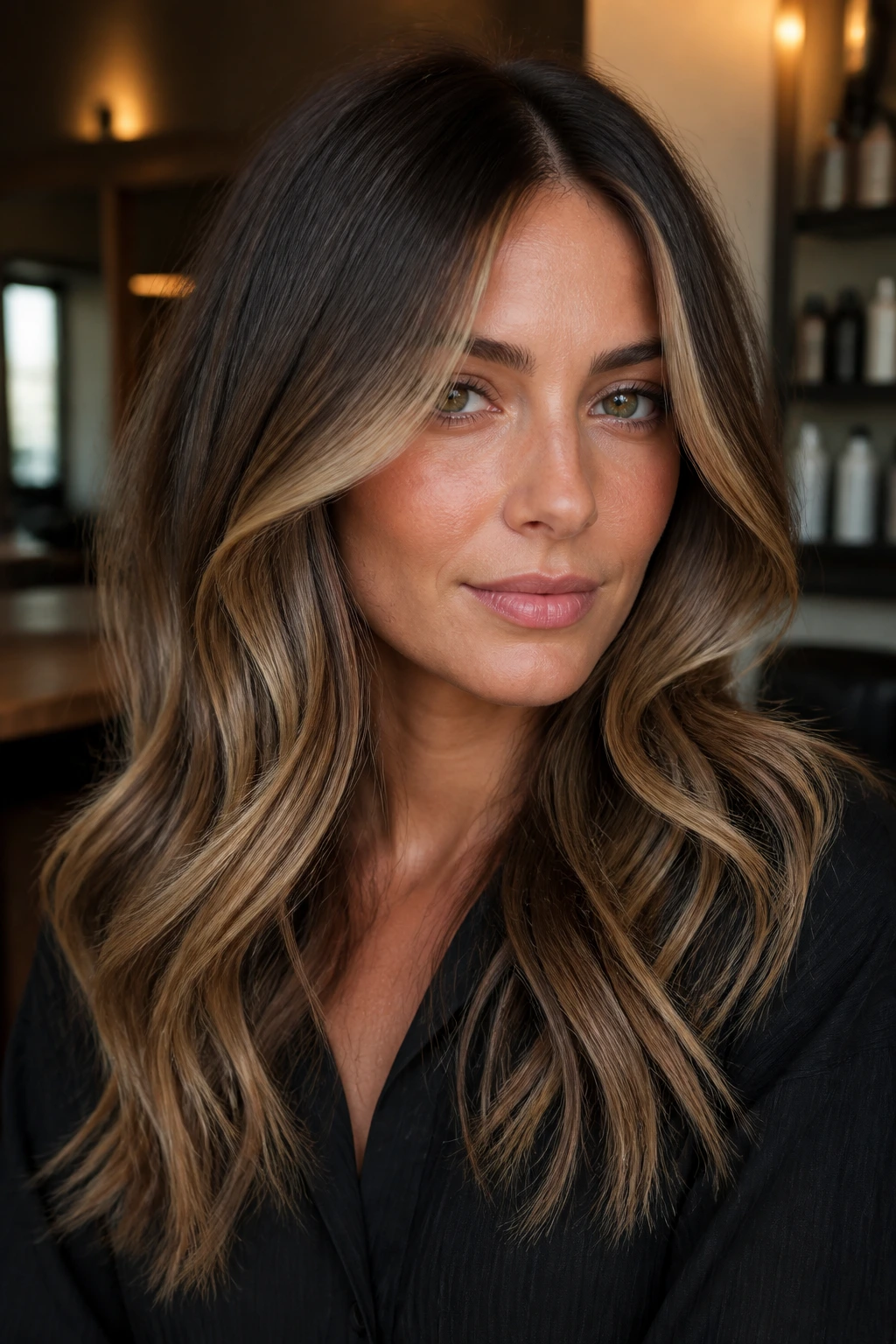
Why These 33 Winter Balayage Ideas Work So Well
-
They grow out cleanly: A soft root shadow keeps the line between your natural color and the lightened pieces blurred, which means fewer obvious “salon now” moments.
-
They suit low light: Beige, smoky, chestnut, and pearl tones hold more shape indoors than bright, flat blonde ever will.
-
They work with hats and scarves: Placement around the face and crown keeps the color visible even when the rest of your hair spends half the day tucked away.
-
They cover more than one base color: There are looks here for dark brunettes, medium browns, redheads, blondes, and gray-blending clients who want movement without a full overhaul.
-
They can be soft or sharp: You can keep it subtle with thin ribbons and a gloss, or push toward high contrast with icy ends and a brighter money piece.
-
They make toning easier: Winter is the season where one good gloss or toner can change everything. A shade that looks “almost right” in the salon chair can look dead wrong once you step outside, and these ideas are built with that in mind.
1. Cashmere Blonde Balayage with a Soft Root Shadow
Cashmere blonde is the kind of blonde that looks brushed, not blasted. The root stays a shade deeper — usually around a level 6 or 7 if your base is naturally darker blonde — and the painted pieces sit in beige ribbons through the mid-lengths and ends. That keeps the color from turning icy in a harsh way. It reads soft, warm, and expensive without trying too hard.
What to Ask For
Ask your colorist for hand-painted balayage with a soft level 6 root shadow and a beige-pearl gloss on the lightened pieces. If your hair is long, keep the brightest pieces below the cheekbone so the color moves instead of sitting in one flat band.
Best on: fine to medium hair that needs lift without looking striped.
Maintenance: gloss every 6 to 8 weeks, with purple shampoo only when the tone starts to yellow.
2. Mushroom Brown Balayage for Cool Brunettes
Mushroom brown is a quiet color, and that’s the point. Instead of warm caramel, you get taupe, ash, and soft brown pieces that sit on top of a dark brunette base without turning orange in week two. On shoulder-length layers, it has that smoky, almost suede-like depth that looks especially good when the hair is worn loose.
This is the shade I reach for when someone says they want dimension but hates anything that looks gold. It’s also one of the easier brunette balayage looks for winter to keep tidy, because the cooler tone hides minor fade better than a very warm formula.
It works best when the highlights are feathered through the mids rather than packed around the face. That keeps the whole head from going muddy. A blue shampoo once every 10 to 14 days helps if your base tends to throw brass.
3. Smoked Caramel Balayage Ribbons
Why does smoked caramel work so well in colder weather? Because the warmth has a little ash folded into it, and that keeps the color from swinging into orange when indoor heat dries it out. The result is caramel that feels calm, not candy-colored.
The Shape of the Color
Ask for thin ribbons painted through the top layers, then a gloss that softens the gold. The best version has a darker root and a medium-light finish on the ends, so the color looks like it melts instead of sitting in blocks.
Who it suits: medium brunettes, especially with wavy or curled hair.
Styling note: loose bends show off the caramel better than stick-straight hair.
4. Vanilla Cream Blonde Balayage
Vanilla cream blonde is brighter than cashmere, but it still keeps some softness. The tone sits in that pale, creamy space between beige and warm blonde, which makes it read clean under winter light instead of frosty in a way that feels flat. If your natural base is already light, this gives you lift without the hard edge of a platinum job.
The trick is to keep the root only slightly deeper, not smoky-dark. Too much contrast and the whole thing gets busy. Too little and you lose the hand-painted effect. On long layers, a few brighter ends around the front make the hair catch light even when it’s tucked under a scarf.
5. Cinnamon Chestnut Balayage
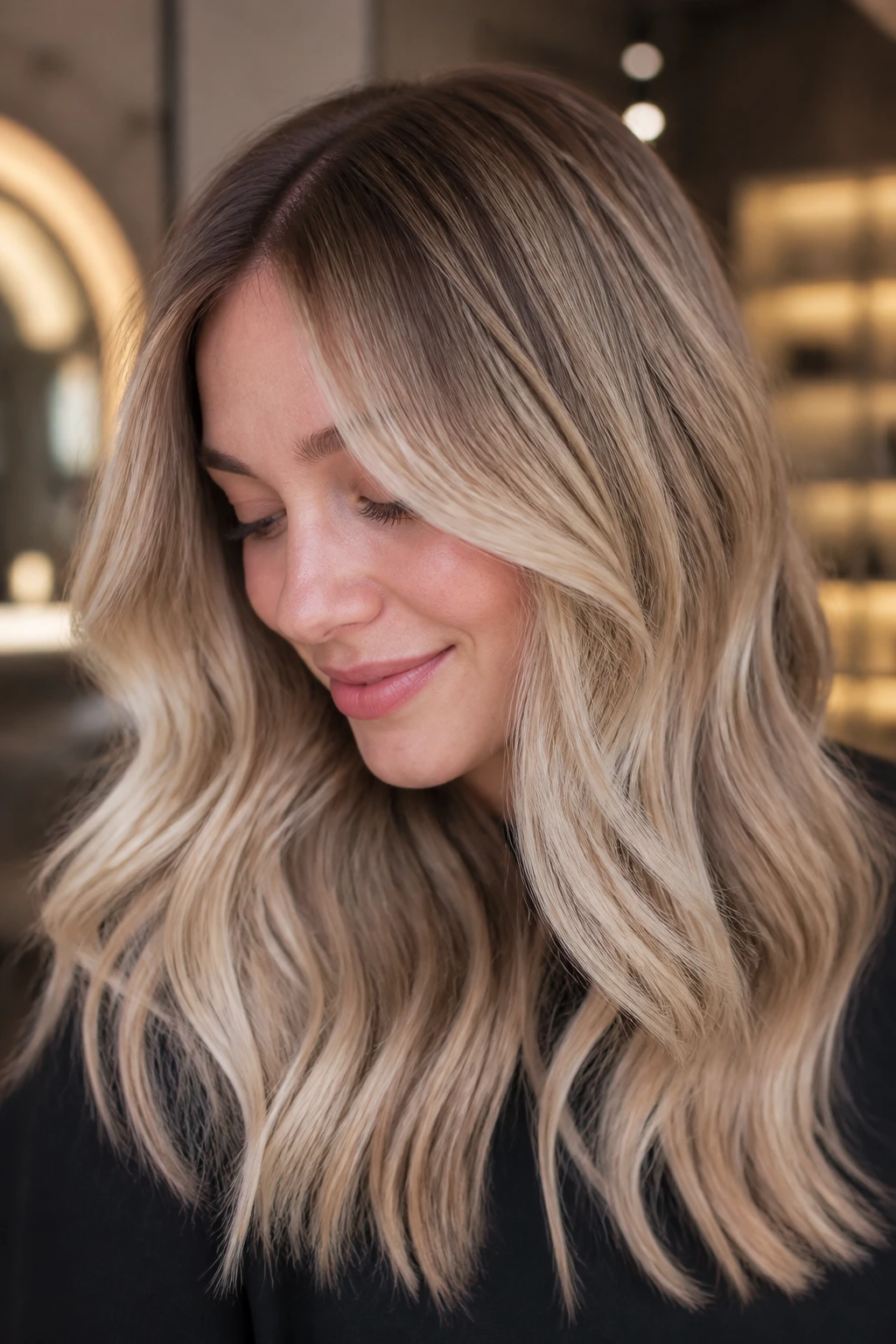
Cinnamon chestnut is what happens when brunette hair wants more warmth but doesn’t want to look red. The balayage pieces are painted in a cinnamon-brown tone over a chestnut base, so the finish feels rich and a little spiced rather than coppery. It’s one of the easiest ways to make dark brown hair look healthier without lightening it to the point of fragility.
This color likes movement. On curls, the cinnamon pieces pop in the bends; on straight hair, it reads more subtle and glossy. If your hair is coarse or thick, ask for the lightening to stay concentrated through the top third so the ends do not get frayed from overprocessing.
6. Espresso Gloss Balayage
Espresso gloss balayage is the quietest look in the group, and I mean that as a compliment. The base stays deep brown — almost black-brown — while a few ultra-fine ribbons are painted just a half-shade lighter. In motion, you see the shape. In stillness, it looks like a very expensive dark brunette with depth under the surface.
Why It Works
It works because low contrast is kind to winter hair. You get dimension without a bright regrowth line, and the gloss keeps the finish reflective instead of matte. If your hair is fine, this is one of the smartest choices on the board, because it creates visual texture without tearing up the ends.
Ask for: fine teasylights, not chunky highlights.
Toner note: a neutral brown glaze every 6 to 8 weeks keeps the espresso tone from going flat.
7. Iced Mocha Bronde Balayage
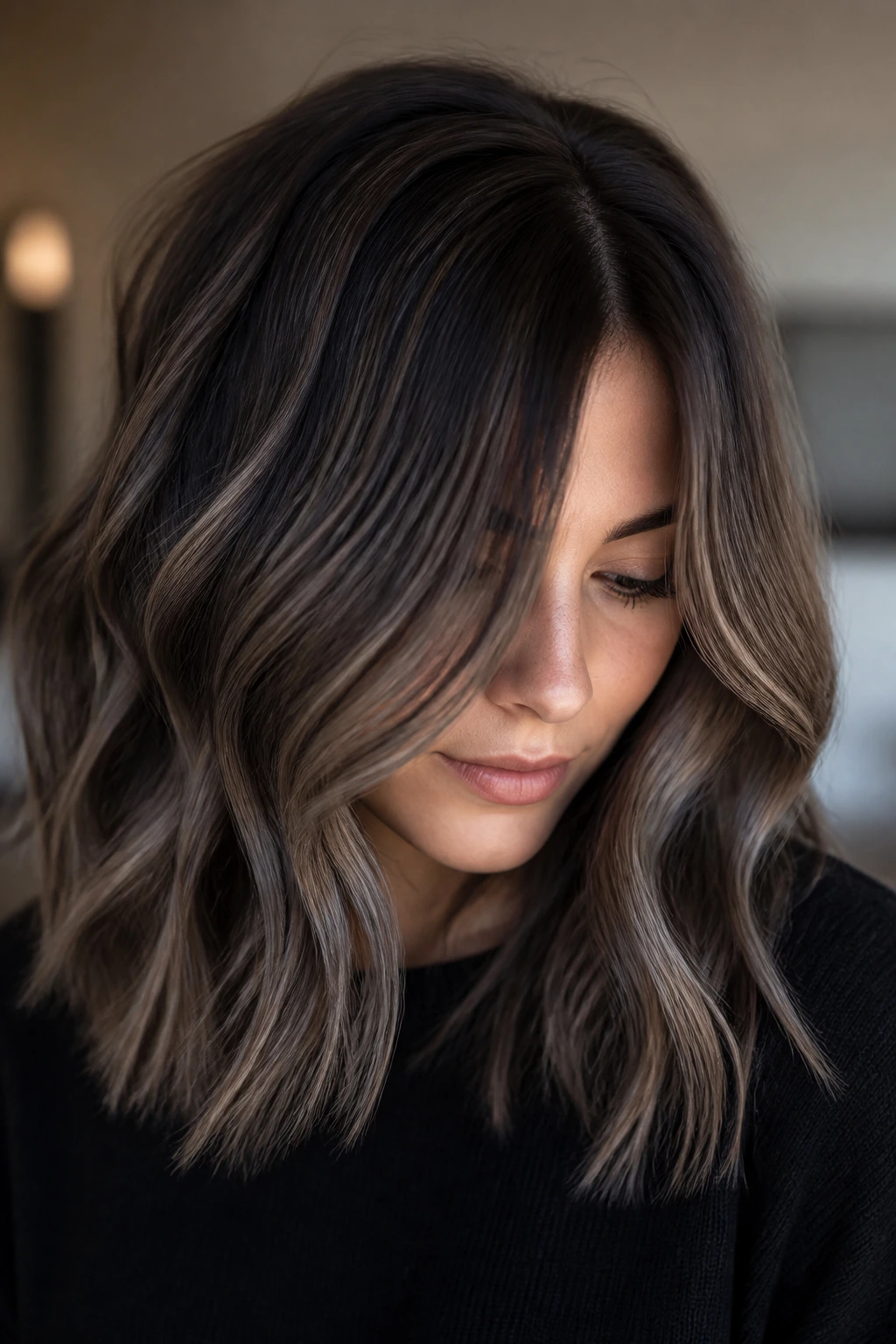
Bronde is one of those words that gets overused, but iced mocha earns it. The shade sits between brunette and blonde, with cooler beige highlights layered over a mocha base. It gives you the brighter look of lightening without losing the darker depth that makes winter hair look full.
If your hair tends to look flat at the root and brassy at the ends, this is the middle path. Ask for lowlights in a soft mocha brown and highlights that are toned beige, not gold. That little bit of coolness makes the whole head feel clean.
It is especially good on shoulder-length cuts, where too much darkness can look heavy and too much blonde can look patchy. Here, the balance does the work.
8. Copper Penny Balayage
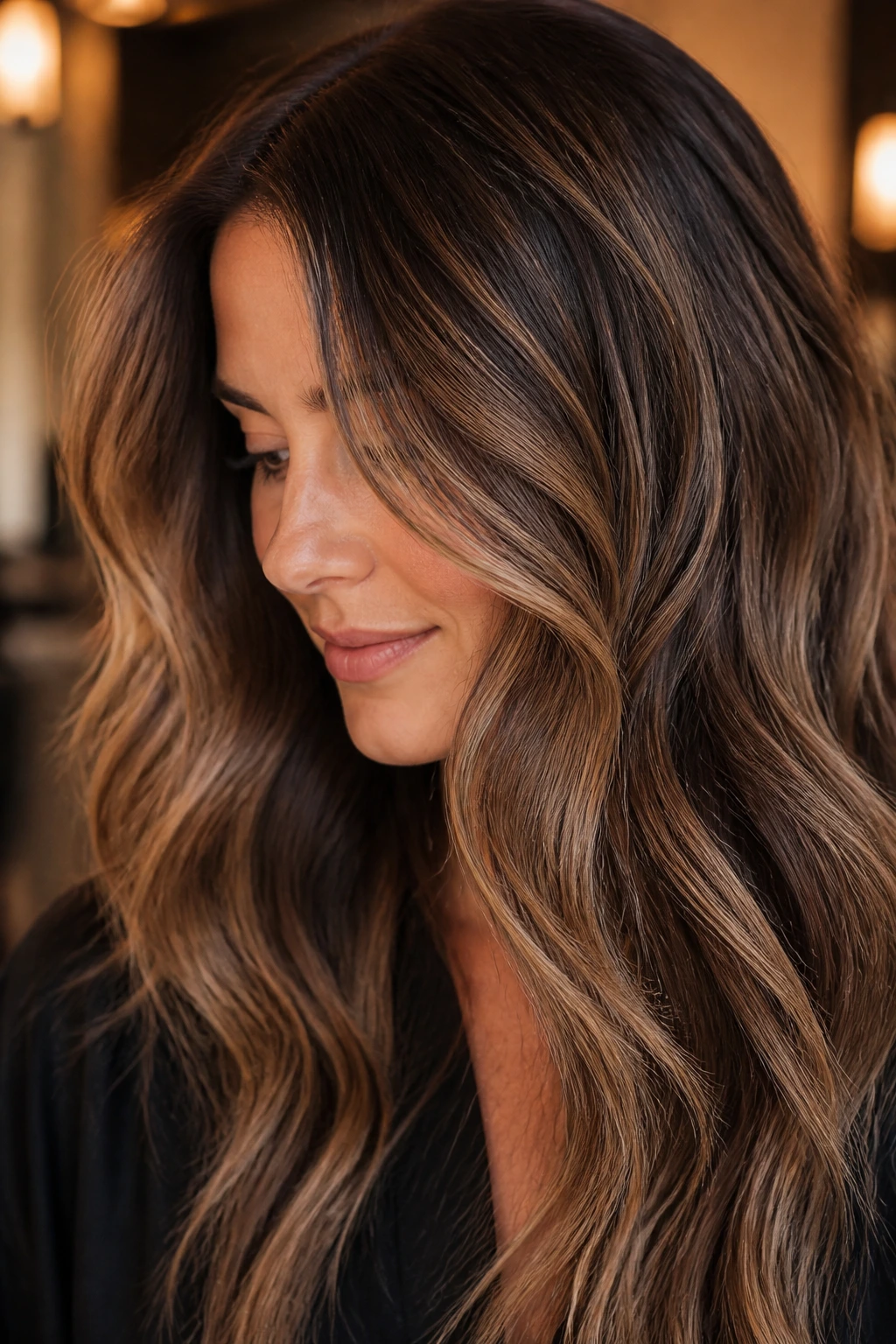
Copper penny balayage is the one that catches the eye from across a room, but it does it through shine, not neon brightness. The tone should land in a reflective copper with a little brown in the base, so it looks like metal warmed by a lamp rather than a traffic cone. Winter light loves this color because it gives back glow when everything around it feels gray.
Keep the placement soft. If the copper is painted too thickly, the look can tip into uniform red, which loses the whole point of balayage. Thin, airy ribbons through the ends and around the face are the sweet spot.
It fades faster than brunette shades, so a copper-depositing conditioner or gloss matters. Skip the hottest water in the shower. That stuff strips red faster than people expect.
9. Spiced Auburn Melt
Spiced auburn is for people who like red but do not want a hard redhead look. The base stays richer and deeper, while the painted pieces move into auburn, cinnamon, and soft rust. Done well, it looks like the hair has been warmed from within rather than colored on top.
A melt is the right word here. You don’t want a visible stop where the root ends and the lighter tone begins. Ask for a root melt with very fine hand-painted pieces through the mids. That gives you depth near the scalp and movement through the lengths.
This shade loves wavy hair and collarbone cuts. The movement keeps the auburn from reading blocky, and a gloss every 4 to 6 weeks keeps the red from disappearing into brown.
10. Pearl Beige Blonde Balayage
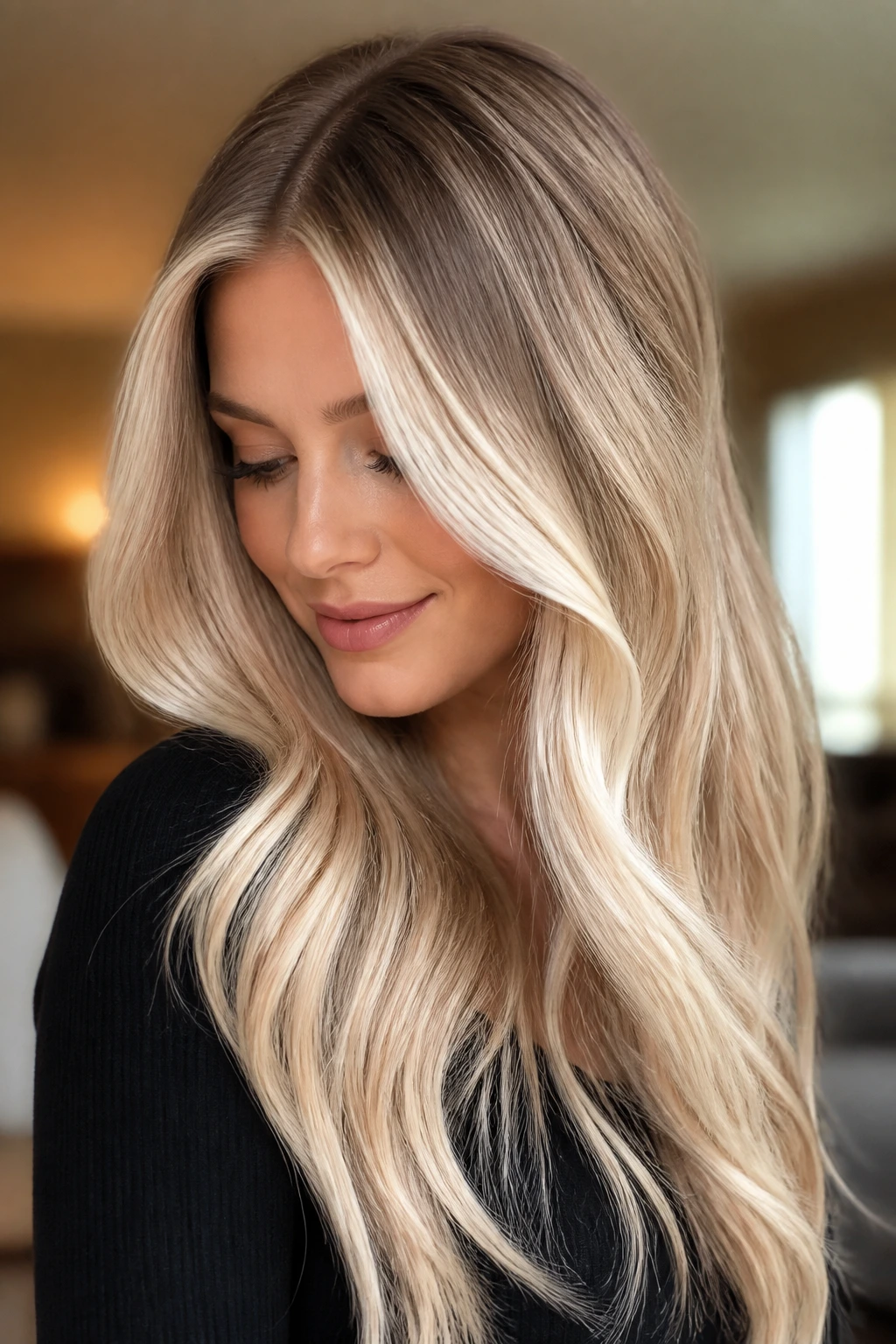
Pearl beige blonde is softer than platinum and cleaner than gold. It has a pale, luminous finish that feels winter-appropriate because it doesn’t shout. Instead, it sits in that pale beige lane with just enough coolness to avoid brass and enough warmth to keep the face from looking washed out.
If you have naturally light hair, this can be a nice way to stay blonde without chasing white-blonde upkeep. Ask for micro-fine babylights at the crown and broader balayage through the ends. The crown stays softer; the ends carry the brighter lift.
A silver or pearl toner is doing a lot of the heavy lifting here, so don’t let the tone go too long between appointments. Once pearl beige turns yellow, it loses its whole charm.
11. Toffee Ribbon Balayage
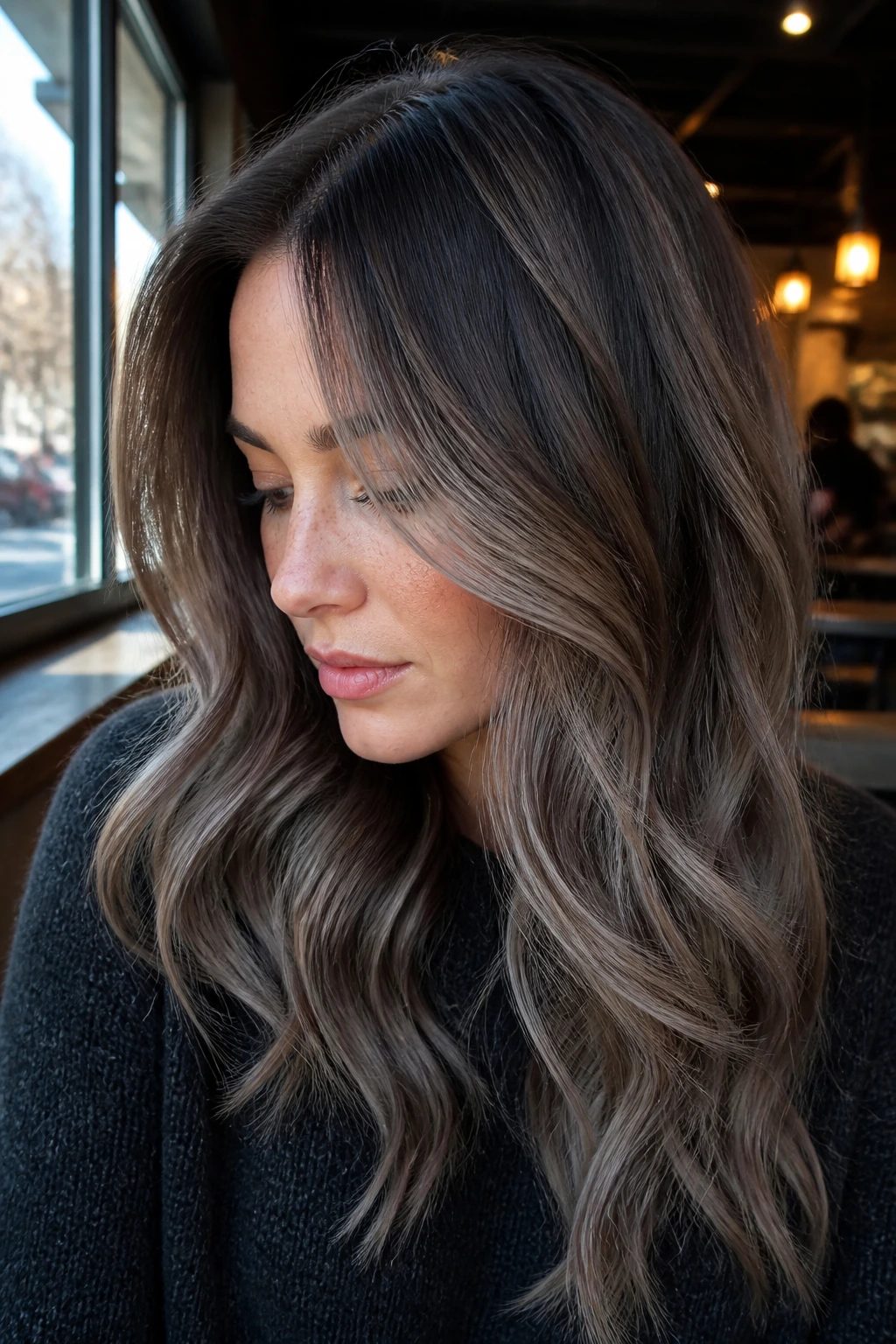
Toffee ribbon balayage is the shade that makes brown hair look like it has layers even when the cut is simple. The highlights are warm, golden-brown ribbons painted over a medium brunette base, but the warmth stays restrained enough to avoid looking orange. On long hair, it makes waves look thicker than they are.
What to Ask For
Tell your colorist you want toffee ribbons, not blonde streaks. That wording matters. You want the light pieces to live mostly through the surface layer and around the face, with a few deeper pieces underneath to keep the dimension from flattening.
Best on: medium brown hair and lived-in long layers.
Styling note: a loose blowout or soft bend shows the ribboning better than a tight curl.
12. Smoky Ash Brunette Balayage
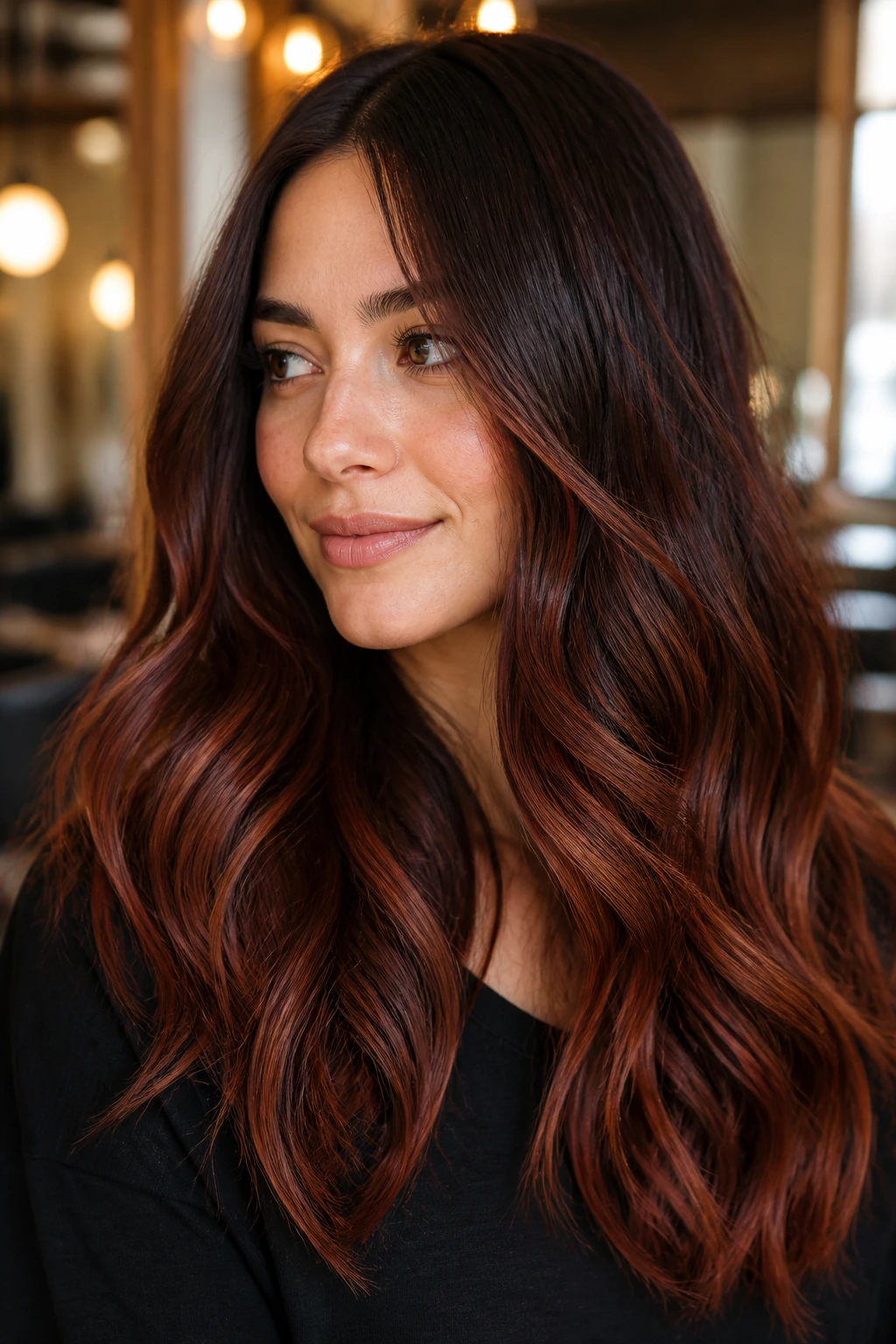
Can brunette balayage be cool without looking dull? Absolutely, if the tone stays smoky instead of flat. Smoky ash brunette uses ash-brown ribbons and a deep brunette base to create movement without much warmth at all. It’s one of the cleanest looks for anyone whose hair pulls red in the sun.
The danger here is going too gray. A little ash softens the brown. Too much and the hair can look drained. That’s why a gloss with a brown-violet tone usually works better than a hard toner swap. It keeps the finish cool but still alive.
This is a strong choice for straight hair and blunt cuts, where you need contrast just to keep the shape visible.
13. Cherry Cola Balayage
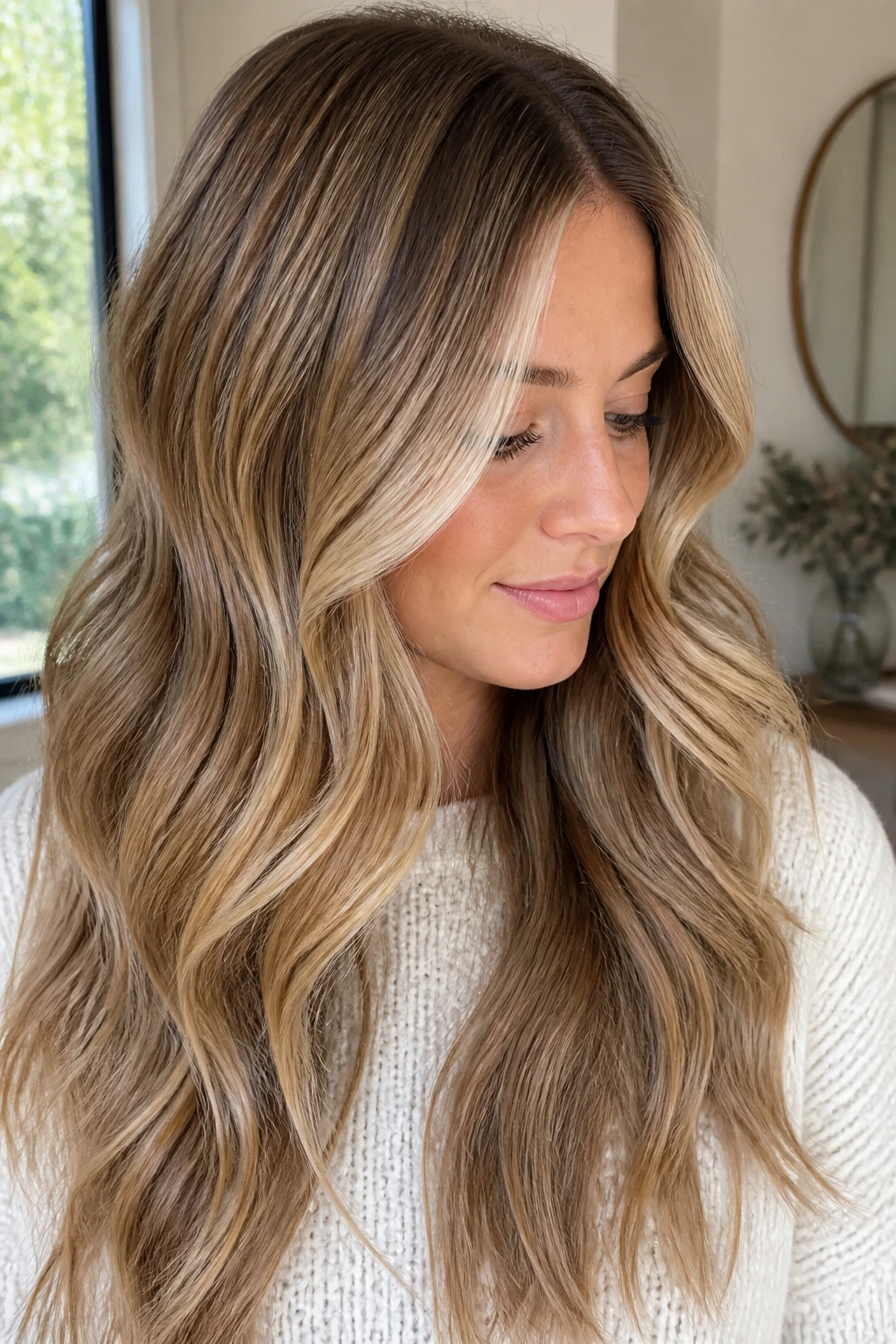
Cherry cola balayage has that dark, glossy richness that looks almost black until the light moves. Then the red-violet notes show up. It’s not a bright red. It’s a deep brunette with a cherry sheen, which makes it a good winter option for anyone who wants color that feels moody instead of loud.
The placement should be subtle. If the red pieces are too broad, the shade loses its depth and starts reading like a flat wine color. Fine hand-painted sections through the mids and ends keep the look dimensional, especially on layered hair.
This one is easier to wear if you like shine. A color-safe smoothing cream or serum helps the red reflect light instead of swallowing it.
14. Rose Gold Winter Balayage
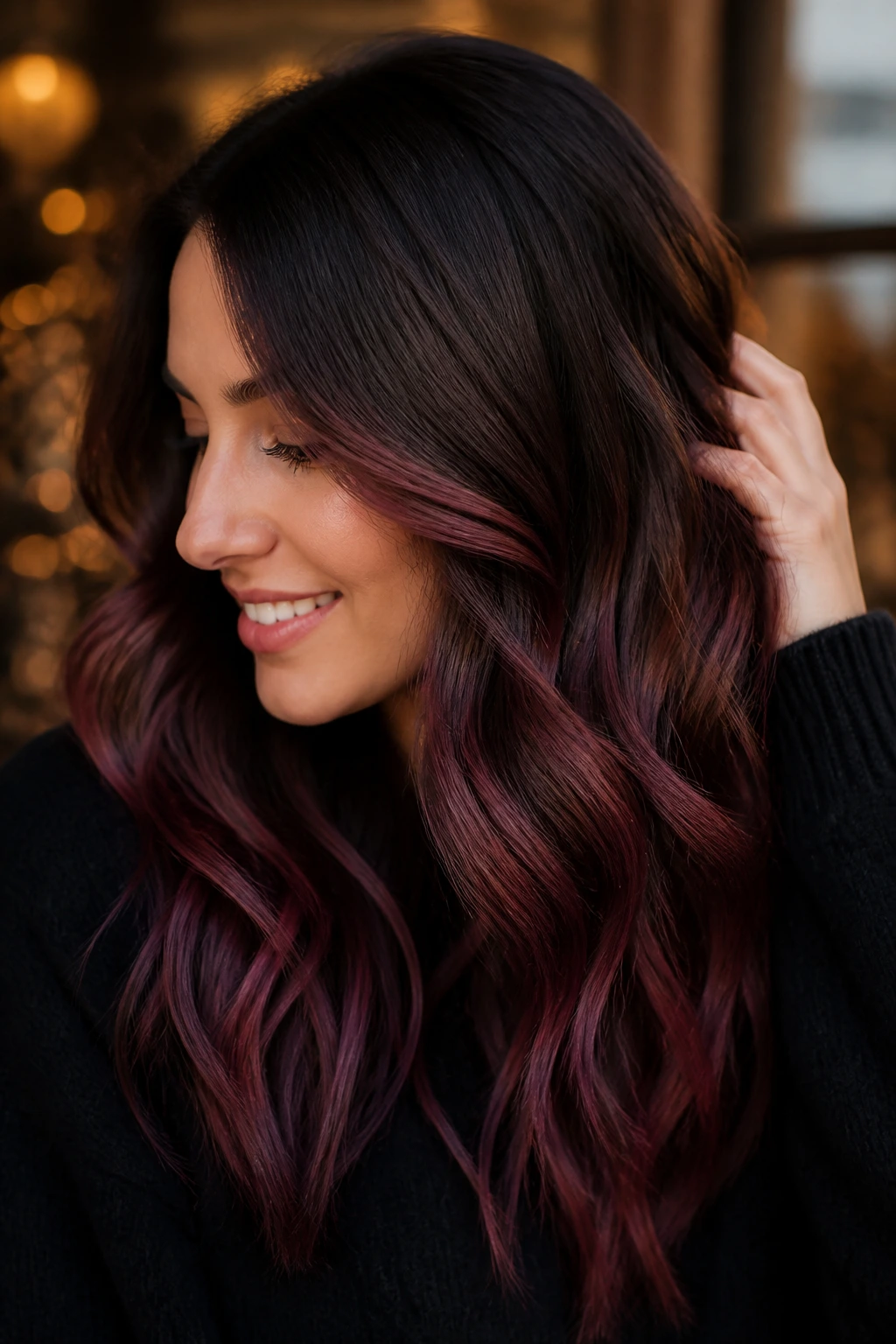
Rose gold in winter works because the pink is softened with beige, not pushed into bubblegum territory. The best version sits on a blonde base with a blush-gold gloss that makes the hair look warmer without getting brassy. It’s pretty on wavy hair, but the real charm shows up in loose, soft styling.
How to Wear It
Ask for rose-gold toner over pre-lightened pieces, with the brightest sections kept away from the very root. That keeps the grow-out easier and stops the whole look from turning patchy. If your hair is naturally very dark, expect a long color session — rose gold is prettier when the blonde underneath is properly lifted.
Maintenance: this fades quickly, so plan on gloss refreshes every 4 to 6 weeks.
Best on: pale to medium blonde hair that can take a pastel-leaning toner without looking muddy.
15. Silver Champagne Balayage
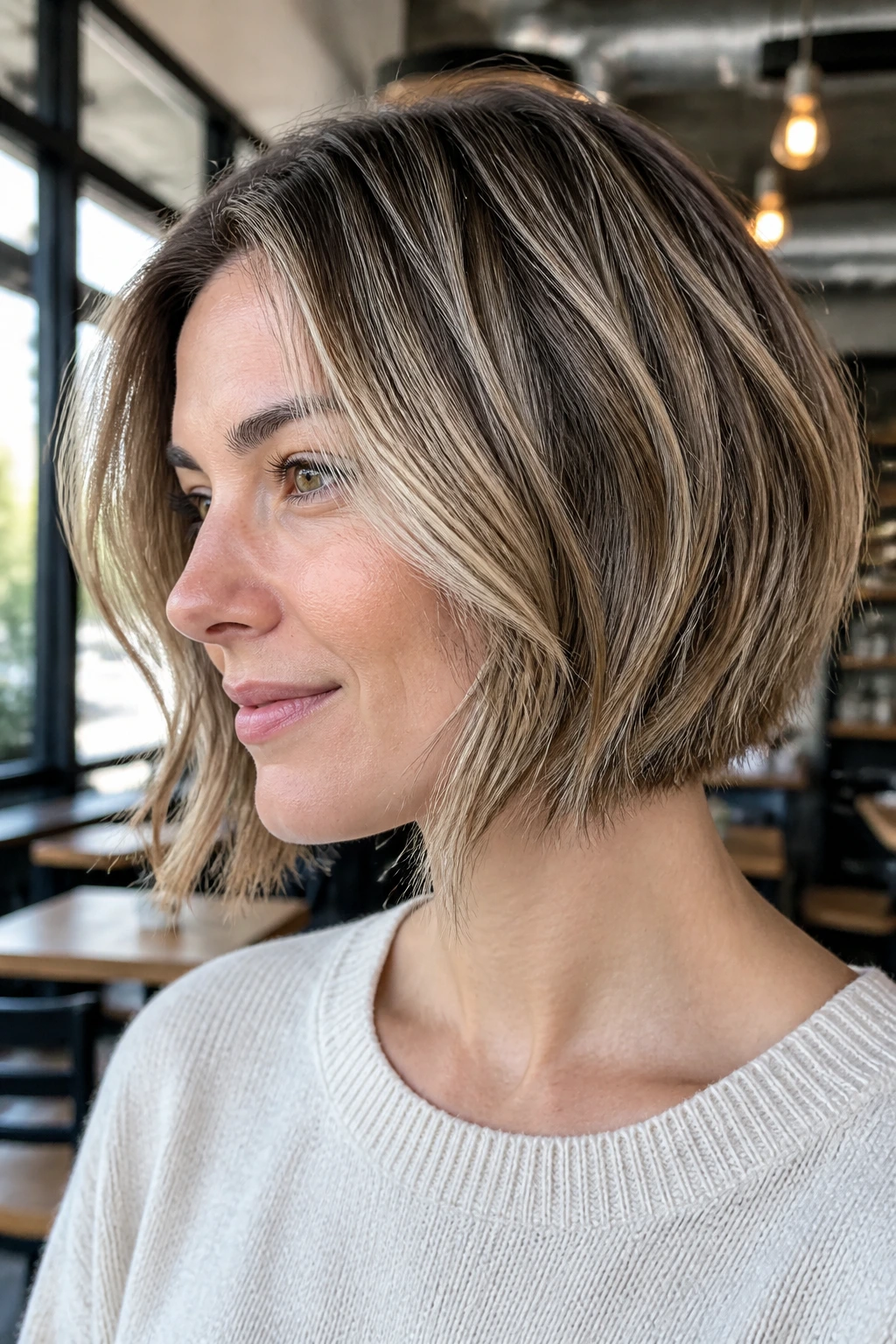
Silver champagne is the blonde for people who want something cooler but not stark. The champagne part keeps it soft and wearable; the silver keeps it crisp enough for winter. On the right base, it looks like light caught in satin instead of flat bleach.
I like this most when there’s a slightly darker root and a few lowlights woven through the underside. That tiny bit of depth stops the silver from becoming one-note. On long hair, it’s especially good when the ends are left a touch lighter than the crown.
This is not a low-maintenance color. It needs toner, heat protection, and a small amount of patience. If your hair is already porous, ask for a bond-building treatment during the service.
16. Hazelnut Lowlights and Balayage
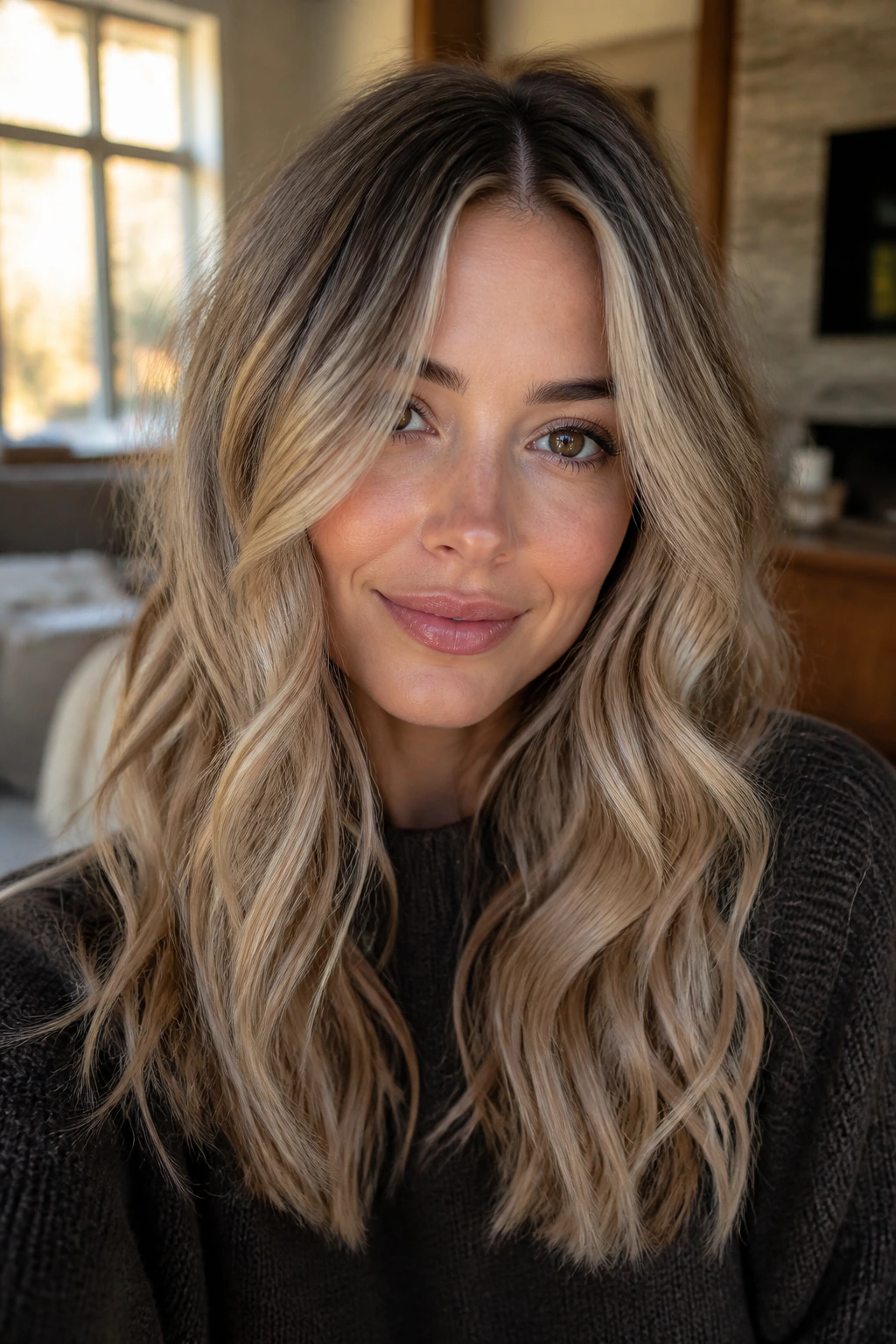
Hazelnut lowlights are the move when your hair needs depth more than lightness. Instead of pushing everything brighter, the colorist adds hazelnut tones beneath lighter balayage pieces so the whole head has a layered, nut-brown finish. It works because winter hair often looks best with contrast that isn’t obvious from the front.
This is a clever choice if your hair got too light in the warmer months. The lowlights restore shape near the root and under the mids, while the balayage still gives you movement where the light hits. The result is warmer, richer, and easier to grow out than a full correction.
It’s especially good for thick hair, where too much lightening can make the ends look frayed. Depth keeps the cut looking deliberate.
17. Bronde Balayage with a Money Piece
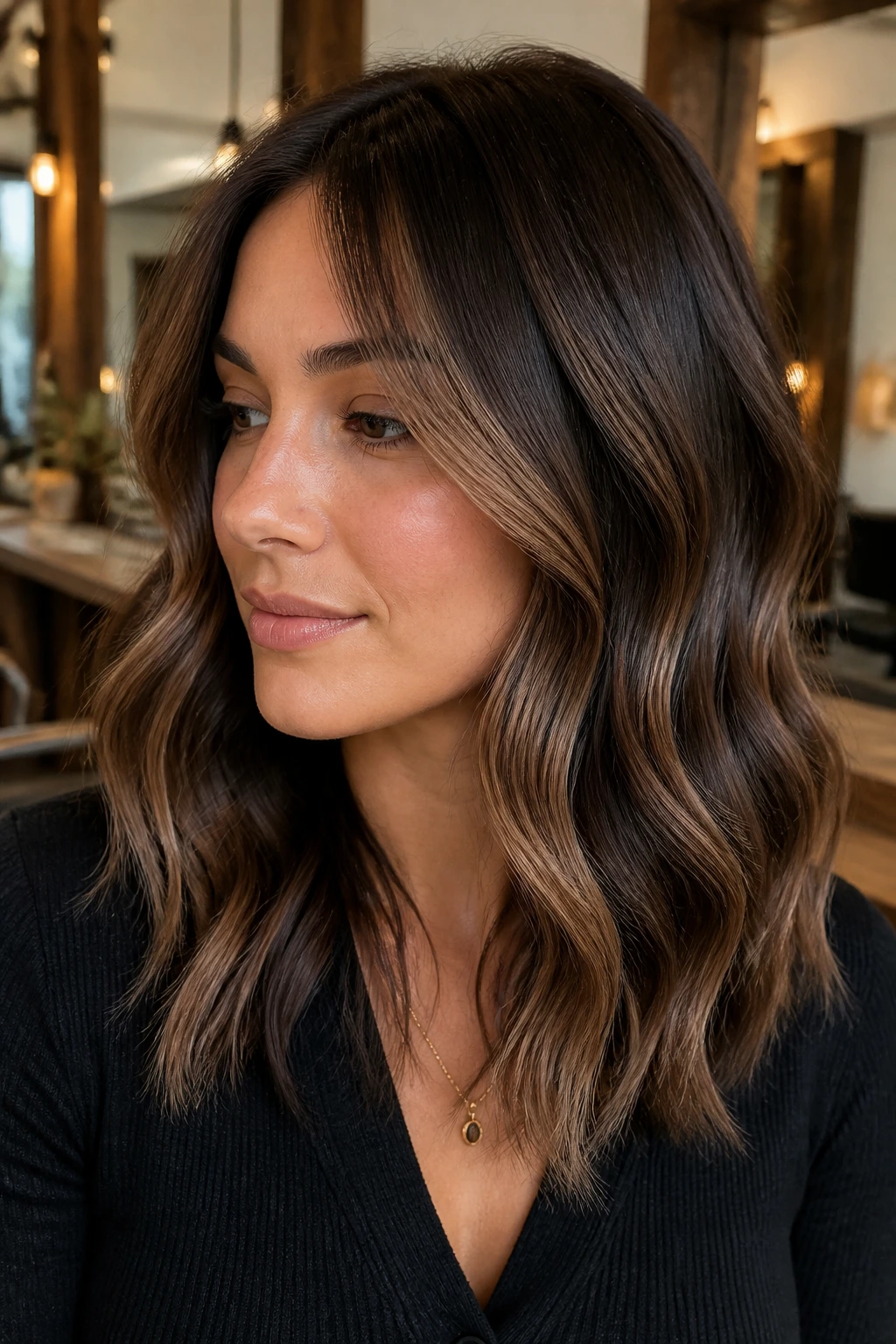
A money piece can save a bronde look from feeling sleepy. Here, the base stays brunette, the lengths get soft beige-brown balayage, and the front gets a brighter frame piece that starts near the cheekbone or a little higher. That one section gives you the brightness people notice first without turning the whole head blonde.
It’s useful if you want visible change without a full maintenance headache. The money piece can be refreshed separately, which means the rest of the balayage can stretch longer between visits. That makes the whole look less expensive to maintain over time, even if the first appointment takes a while.
Keep the front pieces soft, though. Too much brightness at the hairline makes bronde look disconnected instead of blended.
18. Cool Taupe Balayage
Cool taupe balayage sits in that gray-brown lane that photographers love and stylists reach for when they want softness. It’s not silver, not beige, not warm brown. It’s the middle. On medium brunettes, it keeps the color looking clean and restrained, which is a nice fit for winter wardrobes full of black knits and tailored coats.
The best taupe balayage uses very light hand-painting through the surface and a deeper root shadow underneath. That keeps the color from looking dusty. If the hair is naturally warm, a blue-based toner helps neutralize too much gold.
This shade reads especially well on straight, glossy styles. On curls, it becomes quieter, which can be lovely if you want the color to whisper rather than shout.
19. Mahogany Glow Balayage
Mahogany glow balayage has the depth of brunette and the warmth of red in one shot. The base stays dark and plush, then the hand-painted pieces drift into mahogany, berry-brown, and a little plum at the edges. It’s rich without going full burgundy.
This one loves shine. A gloss or glaze matters here because mahogany only looks good when the surface reflects light. If the hair is dull, the shade can flatten fast. Ask for the lightest pieces to sit around the front and through the upper layers so the color has movement when you turn your head.
It works on medium to dark brunettes who want a change that still feels wearable with makeup, work clothes, and minimal styling.
20. Buttercream Blonde Balayage
Buttercream blonde is softer than pearl and warmer than silver champagne. It gives you that creamy, pale blonde finish that looks especially good on layered cuts because the shade has enough depth to show the shape. The color should feel smooth, not bleached to death.
Here’s the thing: buttercream only works when the tonal balance is clean. If the blonde goes too yellow, it stops looking buttery and starts looking old. If it goes too cool, it loses the softness that makes the shade easy to wear. That is why a gentle beige toner usually beats an aggressive ash toner.
It is a good option if you like blonde but hate the feeling of being “too blonde.” The result is bright, but not sharp.
21. Mulled Wine Brunette Balayage
Mulled wine brunette balayage leans into red-brown depth with just enough berry in the mix to make the color feel winter-appropriate. Think dark cocoa with a splash of spiced wine under the surface. It’s dramatic in a low-key way, which is usually the most wearable kind of dramatic.
What to Ask For
Ask for a brunette base with wine-toned balayage pieces and a soft root melt. The color should deepen near the scalp and get a little brighter through the mid-lengths. That keeps the overall effect plush instead of streaky.
Best on: medium to dark hair with a little wave.
Upkeep: red tones fade faster, so a color-depositing mask helps between salon visits.
22. Frosted Bronde Bob
A bob changes the game because you have less hair to show the color, so placement has to be smarter. Frosted bronde gives a short cut enough contrast to move, with beige-blonde ribbons over a brunette base and a little extra brightness around the front. The frosting keeps the edges from looking heavy.
On a bob, I prefer fewer but more deliberate pieces. Too many highlights and the cut starts looking busy. A few well-placed ribbons through the surface and around the jawline are enough to break up the shape without making the hair look thin.
This is a strong winter choice if you want your cut to feel fresh without pushing into high-maintenance blonde territory. It also grows out gracefully, which matters a lot when the ends are already just grazing the collar.
23. Sandy Beige Waves
Sandy beige balayage sits in the clean middle between warm and cool. The blonde is soft, muted, and slightly dusty in a good way, so it does not scream summer beach hair. On winter waves, it looks expensive because the tone is calm and the movement is doing the heavy lifting.
Why does it work on so many people? Beige is forgiving. It plays nicely with neutral skin, cool skin, and warm skin because it isn’t trying to be gold or ash. The colorist can push it warmer with a few toffee pieces or cooler with pearl toner, depending on the base.
The key is keeping the wave pattern soft. Beige shines when the hair bends, not when it’s curled into tight springs.
24. Cocoa Contour Balayage
Cocoa contour balayage is basically face framing with a plan. The colorist keeps the sides a little lighter and the underlayers a little deeper, which creates a contouring effect without makeup-level drama. On a round or square face, it can make the hair feel like it has more shape around the cheeks and jaw.
This technique works because the eye goes where the light is. Put brighter pieces around the face, and the rest of the color recedes. Keep the crown and underside darker, and the color gains depth. It’s one of the smartest ways to use balayage if you want a subtle face-lift effect without going much lighter overall.
Ask for a cocoa base with ribboned light pieces starting at the temples and fading toward the ends. That keeps it soft.
25. Tangerine Copper Balayage
Tangerine copper is the most vivid look in the group, and it needs confidence. The copper has a brighter orange edge than penny copper, so the color feels energetic and bold instead of muted. On winter hair, that brightness can be striking in a good way because the rest of the season leans so dark and neutral.
But maintenance is real. Copper fades. It pulls the eye, and it also loses saturation faster than brunette shades. If you choose this one, expect to use color-safe shampoo, cooler water, and a depositing mask to keep the tone alive between visits.
This look is strongest on medium bases that can hold warmth without looking muddy. On very dark hair, it needs more lift; on very light hair, it can turn peach if the toner slips.
26. Plum Smoke Balayage
Plum smoke balayage is what happens when purple-brown gets dressed down a little. The plum stays muted, almost smoky, and it sits over a dark brunette base so the color only shows when the hair moves. That makes it one of the more wearable fashion shades for winter.
It is especially good if you want something different but not flashy. The undertone gives the hair a cool depth that plays well with black clothing, silver jewelry, and low winter light. Ask for a darker root and hand-painted plum pieces through the mids; too much plum at the ends can look flat if the hair is porous.
If your hair is fine, keep the pieces soft and thin. Heavy plum panels can swallow movement fast.
27. Toasted Almond Balayage
Toasted almond is a warm brunette with a clean, nutty finish. It sits between caramel and beige, which makes it easier to wear than pure gold on one side or pure ash on the other. This is the color I’d point someone toward if they want a little lightness but still want the hair to feel grounded.
The highlights should be subtle enough that you only really see them when the hair shifts. That’s what makes the look feel refined rather than streaky. A little brightness around the face helps, but most of the dimension should stay through the mids and ends.
It pairs especially well with long layers and easy, undone styling. The less you force the texture, the better the color reads.
28. Ice Blonde Dimension Balayage
Ice blonde is not the same thing as flat platinum. Good ice blonde still has dimension. It uses cooler toner, brighter ends, and some depth near the root so the hair doesn’t look like one painted sheet. That little bit of darkness at the base gives the lighter pieces something to sit against.
What Makes It Different
The difference is contrast management. Pure platinum can look harsh in winter, especially if your skin is already pale from less sun. Ice blonde keeps the brightness but adds depth and separation, so the color looks cleaner under indoor lighting.
Best on: naturally light hair or clients who are already committed to regular salon visits.
Care note: purple shampoo helps, but overusing it can make the hair look dull and purple-gray.
29. Maple Syrup Brunette Balayage
Maple syrup brunette balayage has warmth, but it’s the kind that feels smooth and amber, not orange. The highlights sit in a golden-brown space that catches light like syrup on a spoon. It’s a nice winter option because it warms up the face without fighting with heavy clothing and dim weather.
If your brunette hair tends to look flat in cold months, this is one of the easiest fixes. Ask for a darker root melt and maple-toned ribbons through the top layers. That leaves the underside deeper so the hair still has weight.
It is flattering on waves, but it also looks good on straight blowouts because the amber pieces show up in a clean line.
30. Raven Black Caramel Balayage
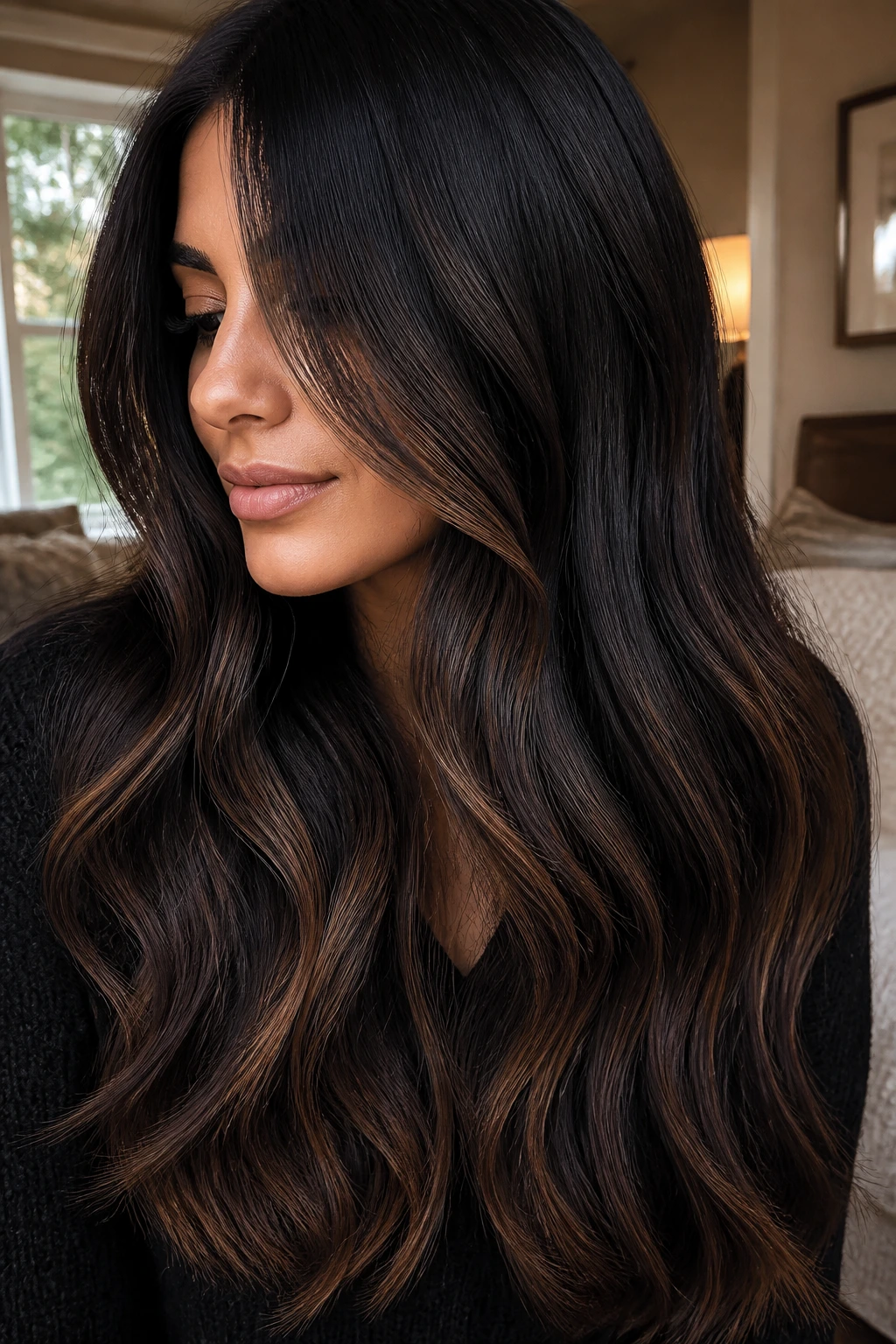
Raven black caramel balayage is for people who love dark hair but want motion. The black base stays dominant, while thin caramel ribbons are painted sparingly through the mids and ends. The contrast is enough to show texture, but not so much that the color starts to look striped.
This look is all about restraint. Too many caramel pieces and the raven effect disappears. Too few and you miss the point. Ask for fine hand-painted sections, mostly visible when the hair is curled or tucked behind the ear. That way the shade reveals itself in layers.
It’s a strong choice for long dark hair that can look heavy in winter. The lighter strands break that weight up without forcing you into full brunette-to-blonde maintenance.
31. Ginger Spice Balayage
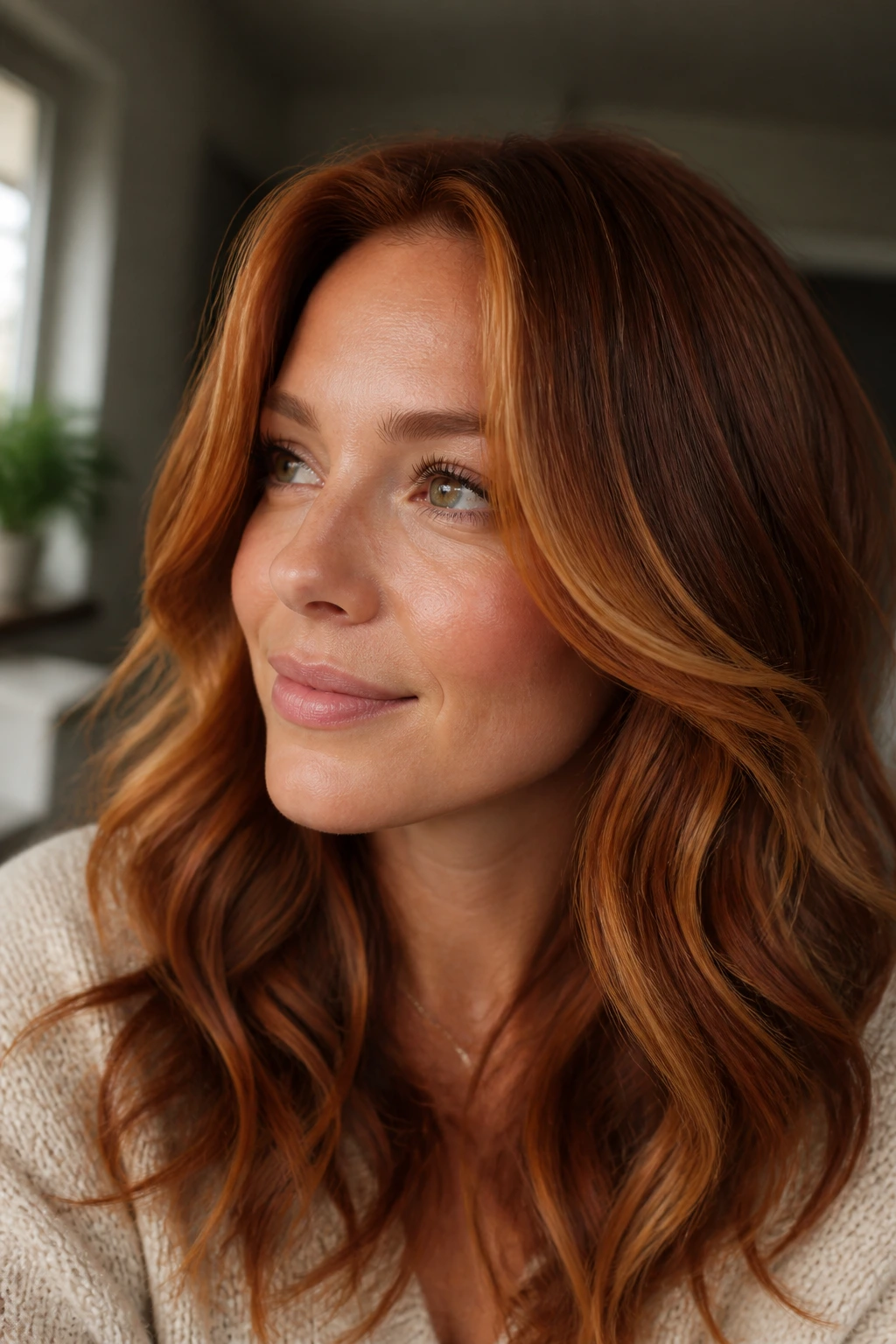
Ginger spice balayage sits between copper and auburn, with a slightly earthier finish than tangerine copper. It’s warmer around the face and softer through the ends, which makes it easier to wear if you want red without committing to a full head of it. On curls, it looks especially alive.
The best version keeps the root deeper and the ginger pieces concentrated where the light hits first. That can mean the front sections, the crown, and the top layer around the shoulders. It avoids the “all over orange” problem that happens when red is painted too evenly.
Maintenance matters here, too. Ginger tones fade fast, and the color looks dull the moment it loses saturation. A color gloss or depositing conditioner every couple of weeks can help keep the shade in its lane.
32. Smoke-and-Mirror Gray Blend
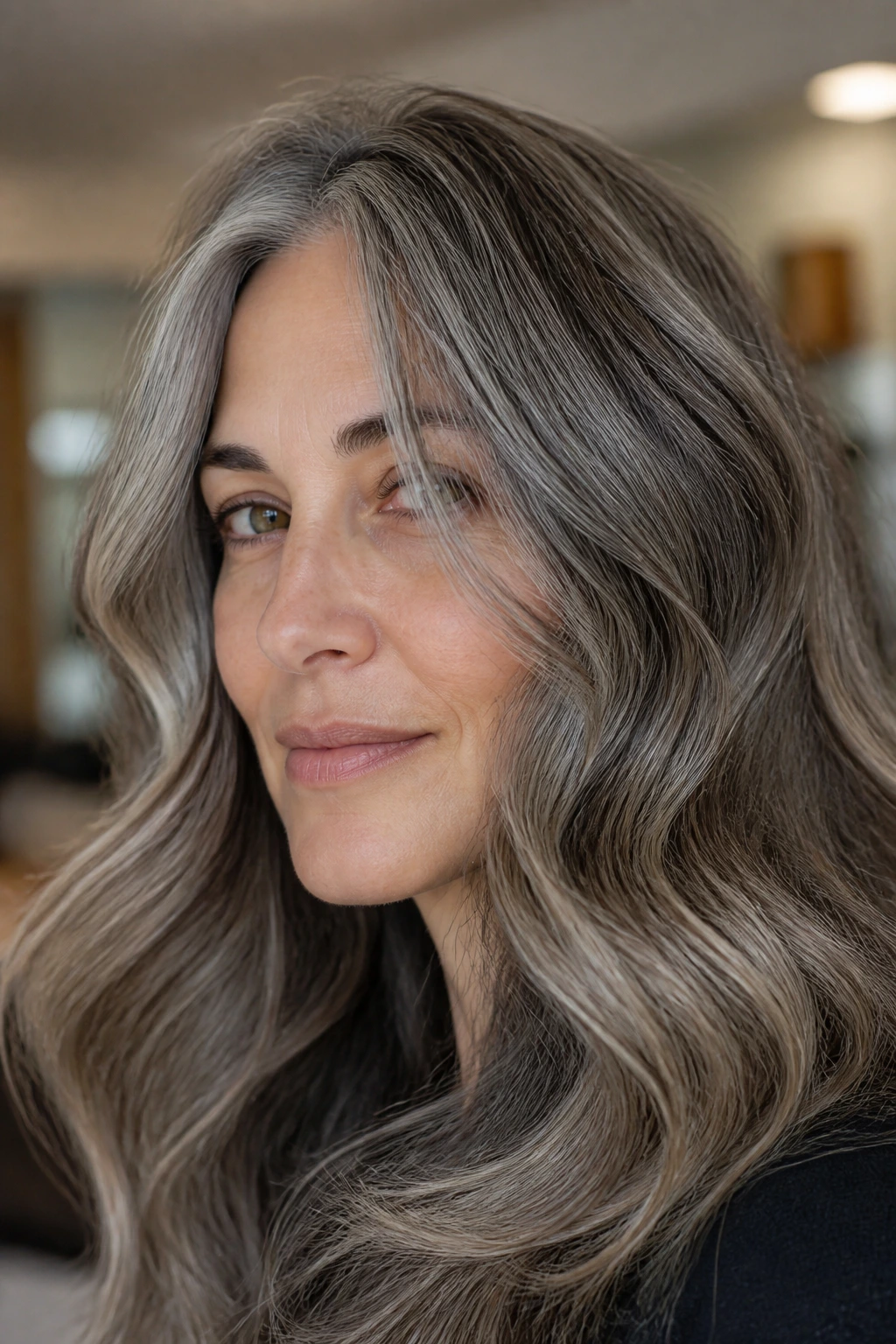
Smoke-and-mirror gray blend is one of the best answers to silver strands that people want to soften without hiding. The balayage pieces echo the natural gray with charcoal, pearl, and soft silver-brown tones, so the hair looks intentional rather than patched. It’s not about covering gray. It’s about making it move.
This look is especially useful when the hair is a mix of dark and gray strands, because the balayage can bridge the two instead of fighting one side. The colorist should keep the lightening gentle and use toner to bring the final tone into a smoky, reflective range. That keeps the result clean.
If you have coarse hair, a gloss treatment matters even more. Coarse silver strands can go wiry fast if they’re not conditioned well.
33. Soft Sable Balayage
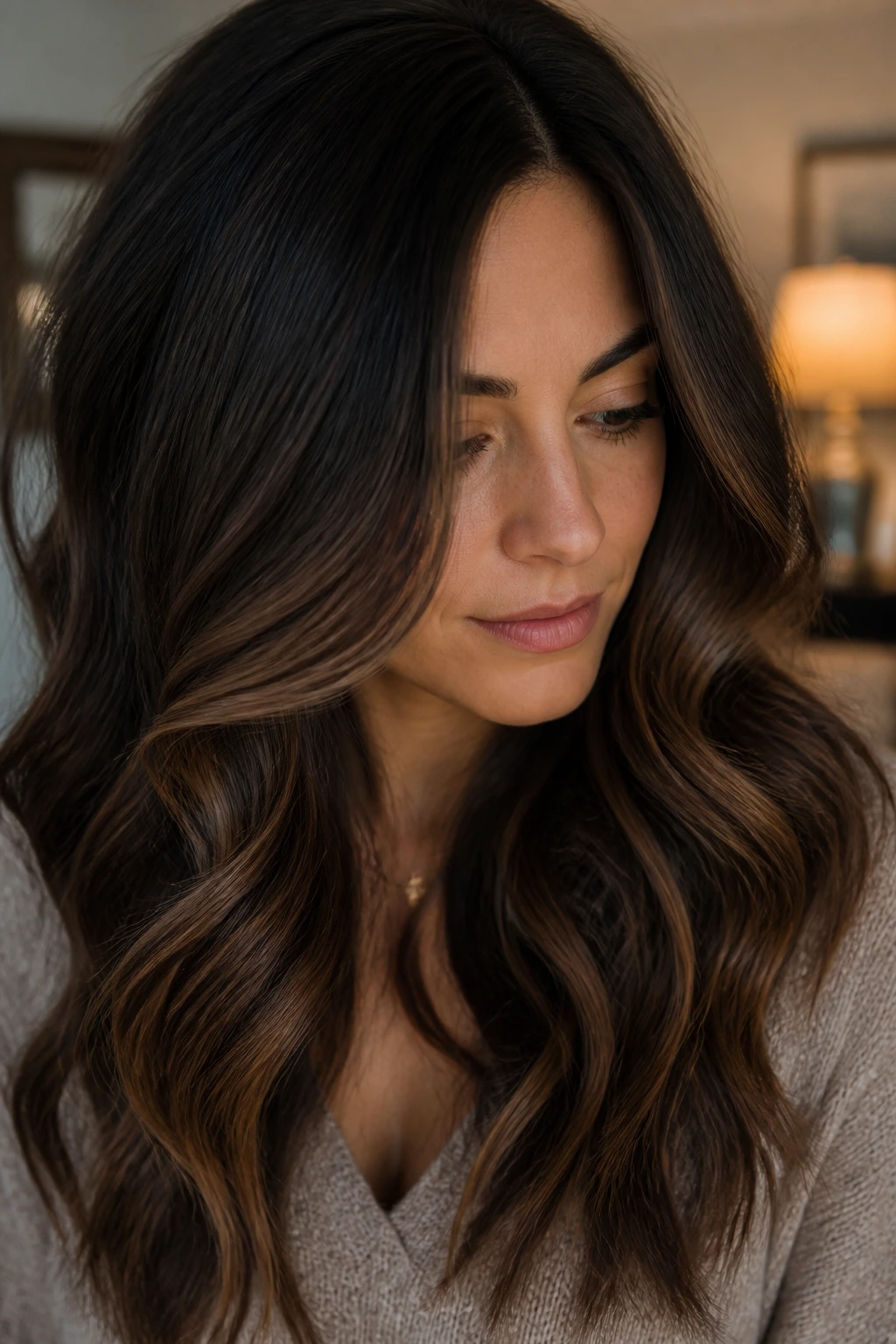
Soft sable is the deep brunette answer for people who want dimension but not obvious color. The base stays rich and dark, almost velvety, while a few sable-brown ribbons add movement through the surface. It’s subtle enough to pass as natural in some lighting, which is exactly why it works so well in winter.
This is the look for someone who wants the hair to look expensive without advertising the service. A soft root shadow and a few lighter threads around the face keep it from collapsing into one shade. On medium to long hair, it has a nice satin finish when styled with a blowout or loose wave.
If you’re nervous about balayage being too much, this is the safest entry point. The grow-out is easy, and the color still gives you shape.
Why Winter Color Needs Softer Contrast
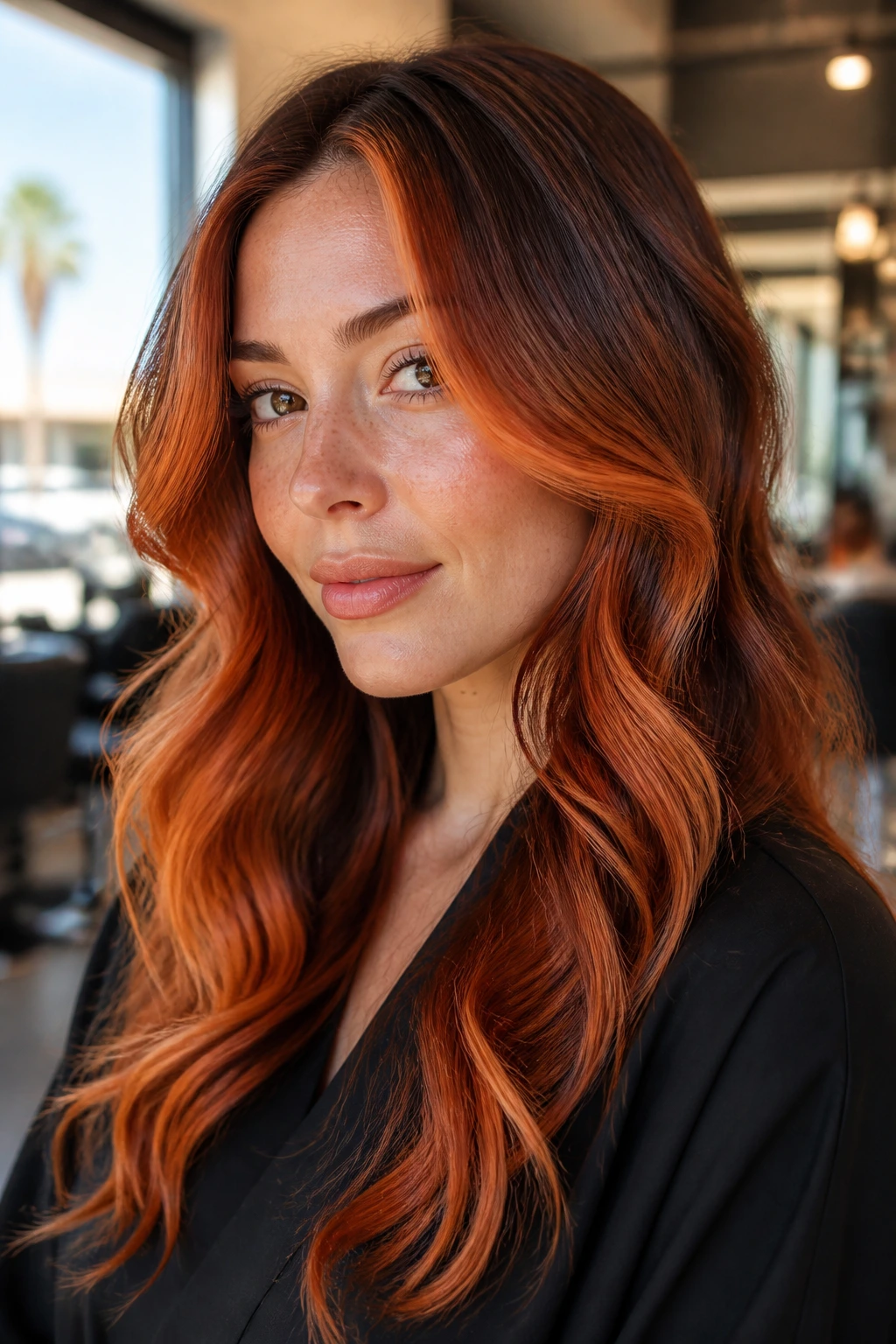
Winter light is mean in a specific way. It’s not bright enough to flatten everything into a crisp, sunny blur, but it’s not warm enough to soften harsh lines either. That means very high-contrast color can look stripy fast, while a softer root shadow and blended tone look richer for longer. The same highlight pattern that felt lively in full summer light can feel loud under a gray sky.
Indoor heating adds another layer. Dry hair scatters light instead of reflecting it, and balayage only looks good when the surface has some shine left in it. That’s why winter gloss appointments matter so much. A beige blonde without a toner looks tired; a brunette with smoked ribbons looks muddy if the cuticle is rough.
Hat hair is another thing people ignore until it ruins the shape of the color. Balayage that sits only on the very top layer disappears once it’s flattened. Color placed around the face, crown, and ends survives scarves and beanies better, which is why placement should be part of the consultation, not an afterthought.
Essential Tools and Products for These Looks
-
3 to 5 reference photos in daylight: Bring images that show tone, placement, and root depth separately if you can. One good photo in bad lighting is not enough.
-
Sectioning clips: Useful if you style at home and want to keep the face-framing pieces neat while blow-drying or curling.
-
Heat protectant spray: Pick one that protects up to at least 400°F if you use hot tools often. Balayage ends are the first thing to dry out.
-
Sulfate-free shampoo: Gentler washing helps preserve gloss and toner, especially on blonde, copper, and red shades.
-
Purple shampoo or mask: Best for blonde and beige balayage when brass starts creeping in. Use it sparingly so the hair doesn’t go flat.
-
Blue shampoo: Better for brunette balayage with orange undertones. It’s a sharper tool than purple, so use it only where brass is showing.
-
Color-depositing conditioner or mask: Handy for copper, auburn, plum, and cherry tones that fade fast.
-
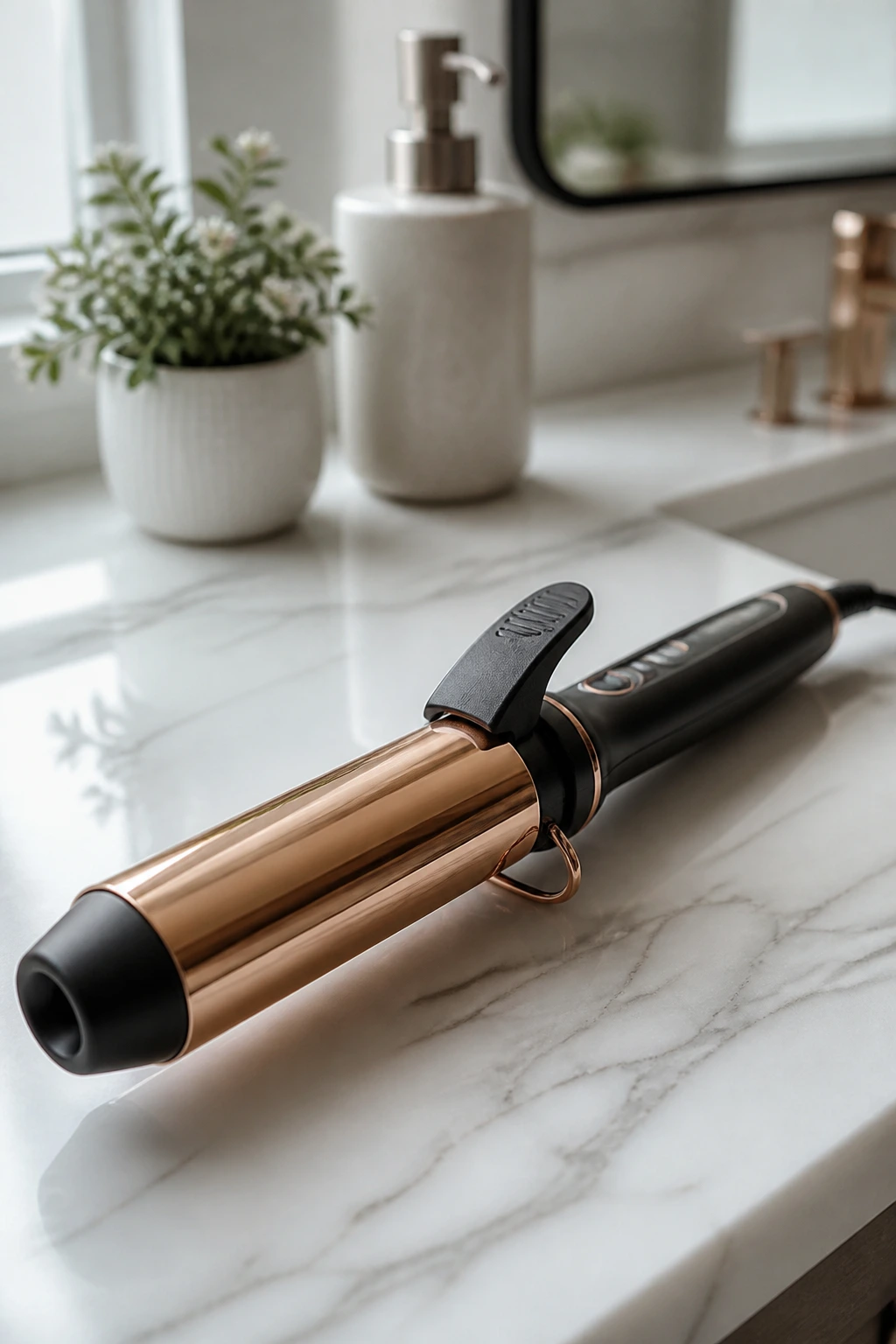
Wide-barrel curling iron or round brush: Soft bends show off balayage placement better than a tight curl or poker-straight finish.
-
Silk pillowcase or bonnet: Reduces friction, which helps the lighter ends stay smoother between washes.
-
Bond-building treatment: Optional, but smart if your hair has been lightened several times or feels gummy at the ends.
How to Brief Your Colorist for Better Results
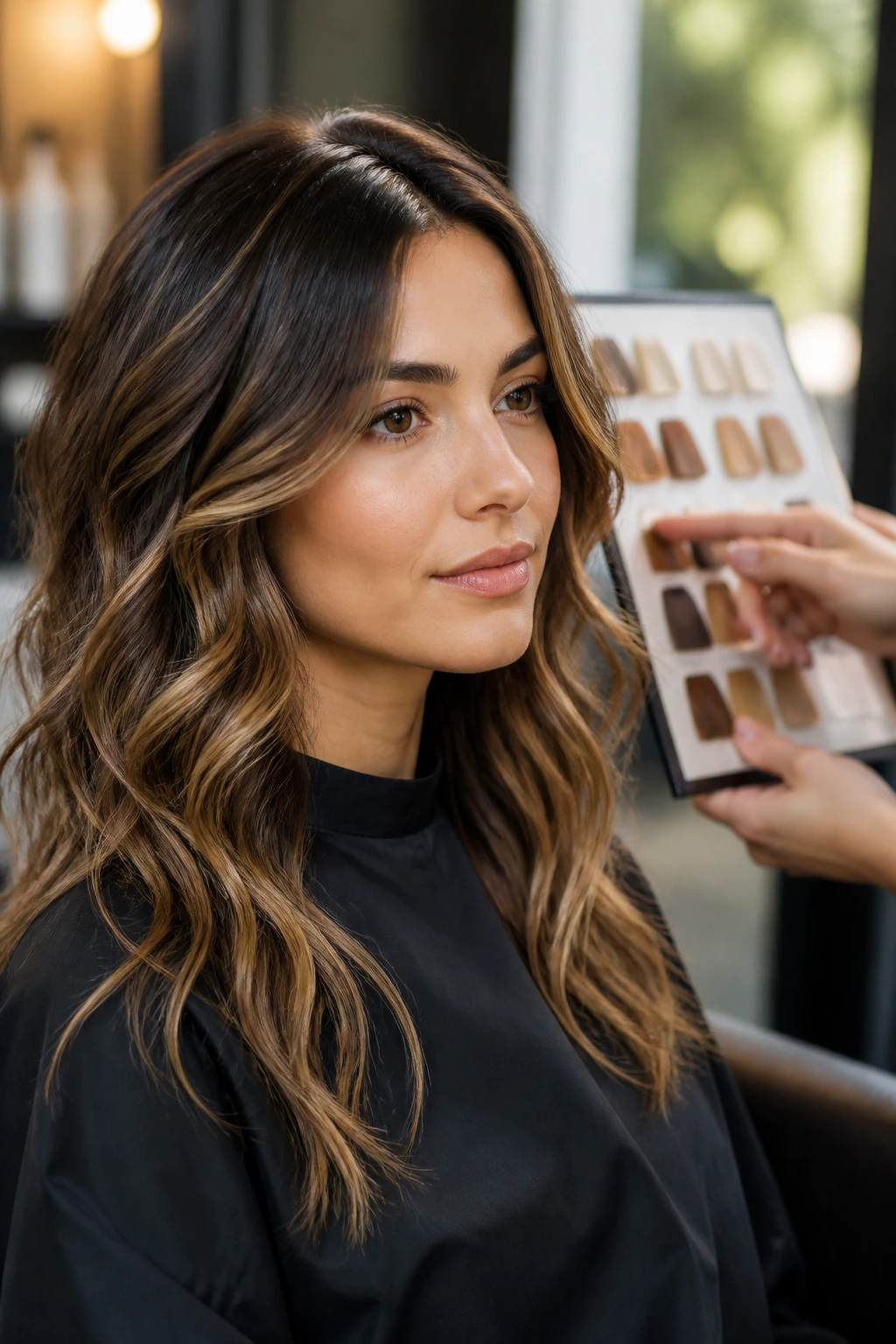
The best consultation is specific, not theatrical. Don’t walk in saying you want “winter hair.” Say whether you want soft, smoky, creamy, coppery, or icy, and bring a photo that shows the tone in daylight. Then tell your colorist how often you’re willing to come back. That one detail changes the formula more than people think.
Tone first: Beige, ash, copper, pearl, and mahogany all behave differently once the heat turns on indoors. If you know you want warmth, say warmth. If you hate orange, say that too. Hairdressers can work with blunt language better than vague praise.
Placement matters more than saturation: A few brighter pieces around the face can do the job of a whole head of highlights. If you style your hair mostly in a middle part, tell them. If you tuck one side behind your ear every day, that changes where the light should sit.
Be honest about maintenance: A silver champagne blonde needs more care than a smoky brunette. If you want low effort, the formula should respect that before the bowl even comes out.
Common Mistakes to Avoid
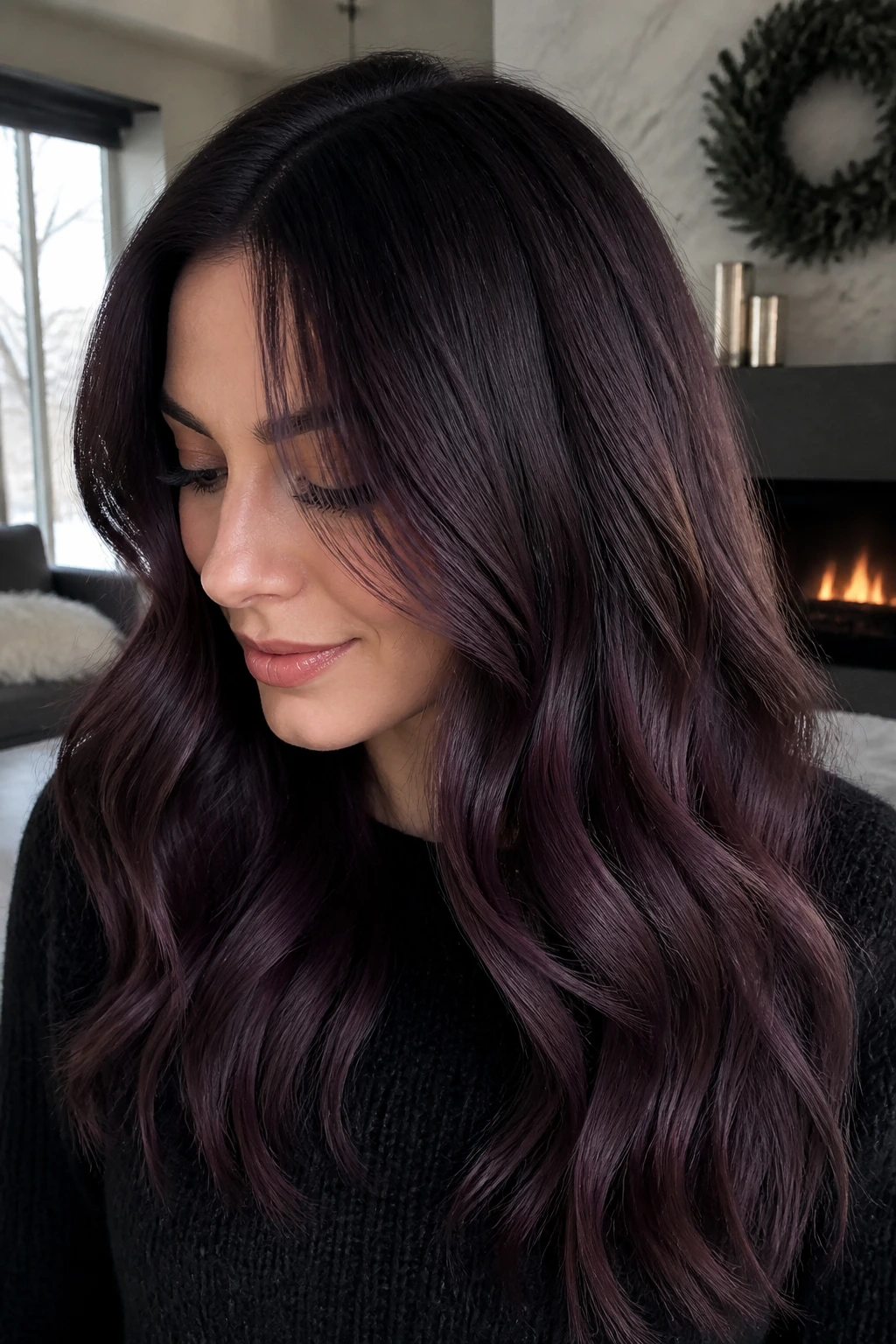
The biggest mistake is asking for lightness without naming the tone. A blonde can be beige, pearl, buttercream, silver, or gold, and those are not interchangeable. If you skip that part, you may leave the salon with something brighter than you wanted or cooler than you can wear.
Another one: putting the brightest pieces too high at the root. That’s how balayage starts looking like stripy highlights. The grow-out line gets obvious faster, and the color loses that soft hand-painted feel. A shadow root or melt usually fixes this before it starts.
People also overdo purple shampoo. One heavy-handed wash can turn a clean blonde dull and slightly violet, especially on porous ends. Use it only when brass is showing, not as a weekly ritual.
Skipping a gloss is another common miss. Balayage is paint and tone, not paint alone. Without a refresher, even good placement can look dry by the time the ends settle.
And finally, there’s the cut. Long, blunt hair can hide balayage if the placement is too low. Short hair can eat dimension if there are too many pieces. Color and shape have to agree.
Variations and Adaptations to Try
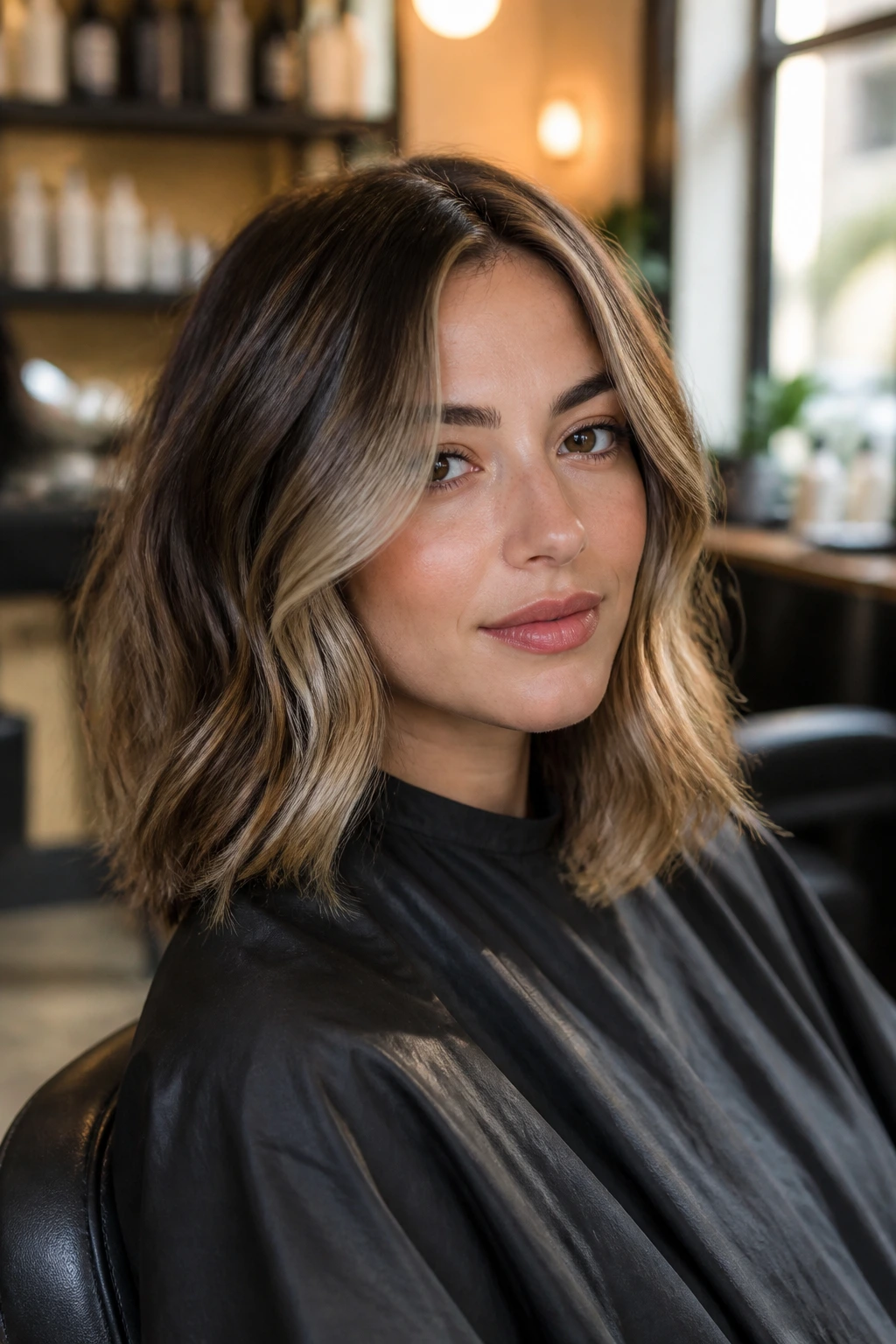
Low-Maintenance Root Melt: Keep your natural root deeper and ask for a softer transition through the mids. This works for busy schedules and makes the grow-out line less visible between gloss appointments.
Face-Frame Focus: Put the brightest pieces around the cheekbones and temple area, then keep the rest of the head quieter. That gives a visible change without a full-lightening session.
Curly-Hair Ribboning: On curls, ask for fewer but more deliberate ribbons so the shape doesn’t disappear into a blur. Curly hair shows color best when the placement follows the curl pattern instead of fighting it.
Gray-Blending Balayage: If you’re blending silver strands, keep the highlights close to your natural contrast level. Too much lift and the gray stops looking mixed in; too little and the silver reads patchy.
High-Contrast Winter Blonde: For people who like bold brightness, keep the root shadow soft but let the ends go lighter. It gives you the drama of blonde without making the scalp area look harsh.
Maintenance, Glossing, and Grow-Out
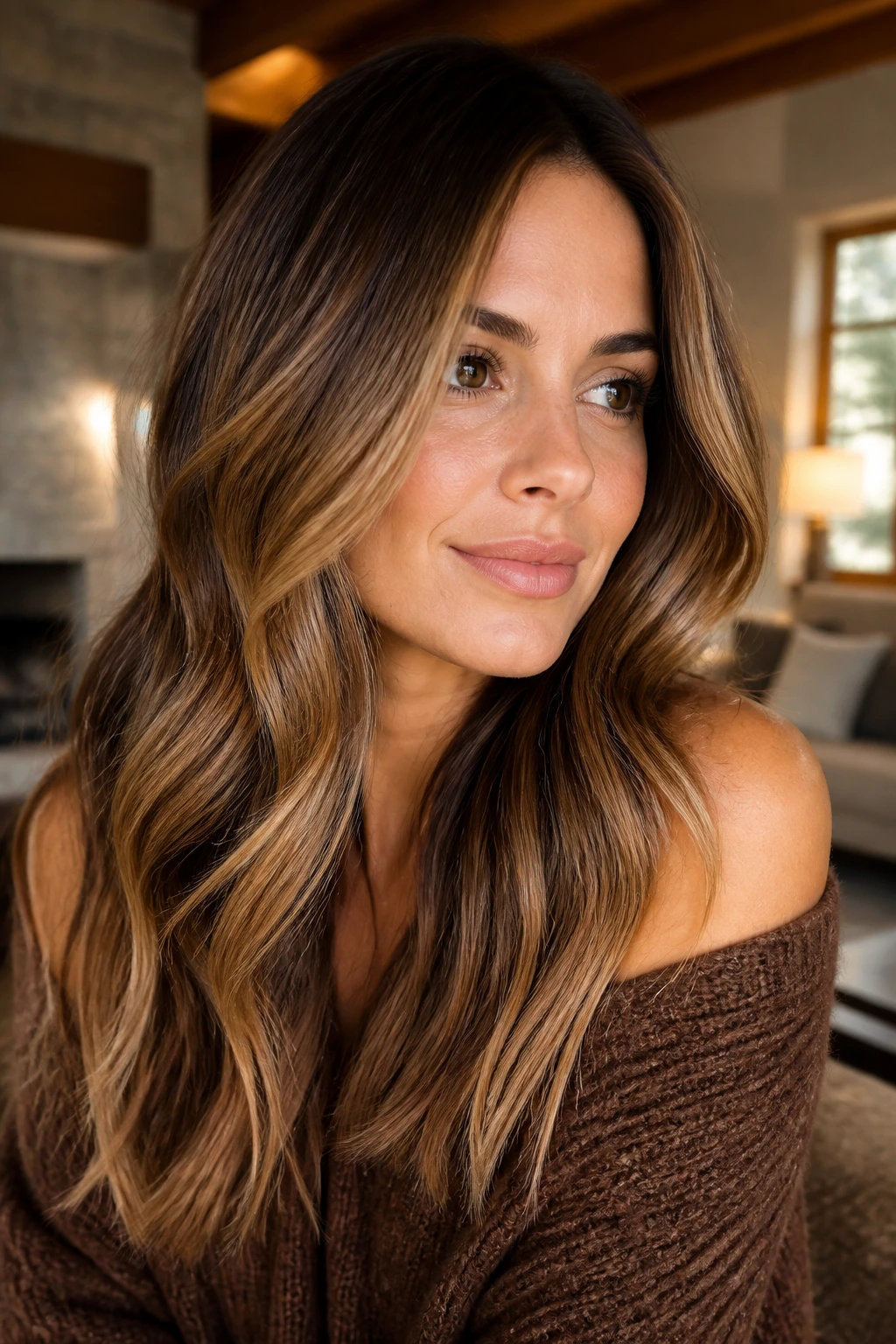
Balayage is forgiving, but it is not self-maintaining. Most winter looks stay nicest with a gloss or toner every 6 to 8 weeks, though copper, rose gold, cherry, and plum shades may need a refresh closer to 4 to 6 weeks because red tones fade faster. Brunette looks can usually stretch longer, especially if the root shadow was done well.
Wash less often if you can. Two or three shampoos a week is easier on the color than daily washing, especially when indoor heating makes the ends dry. Use lukewarm water, not hot water, because heat opens the cuticle and lets tone slip out faster.
If you use hot tools, spray heat protectant every single time. No exceptions. Balayage looks better when the lightened pieces stay smooth, and fried ends make even the best color look rough. A weekly mask helps too, especially on blonde and copper shades.
For the grow-out phase, a root shadow is your friend. It buys you time. If you want the color to last without obvious lines, ask the salon for a fuller gloss at the 6-week mark and a partial refresh only when the brighter pieces start losing shape.
Frequently Asked Questions
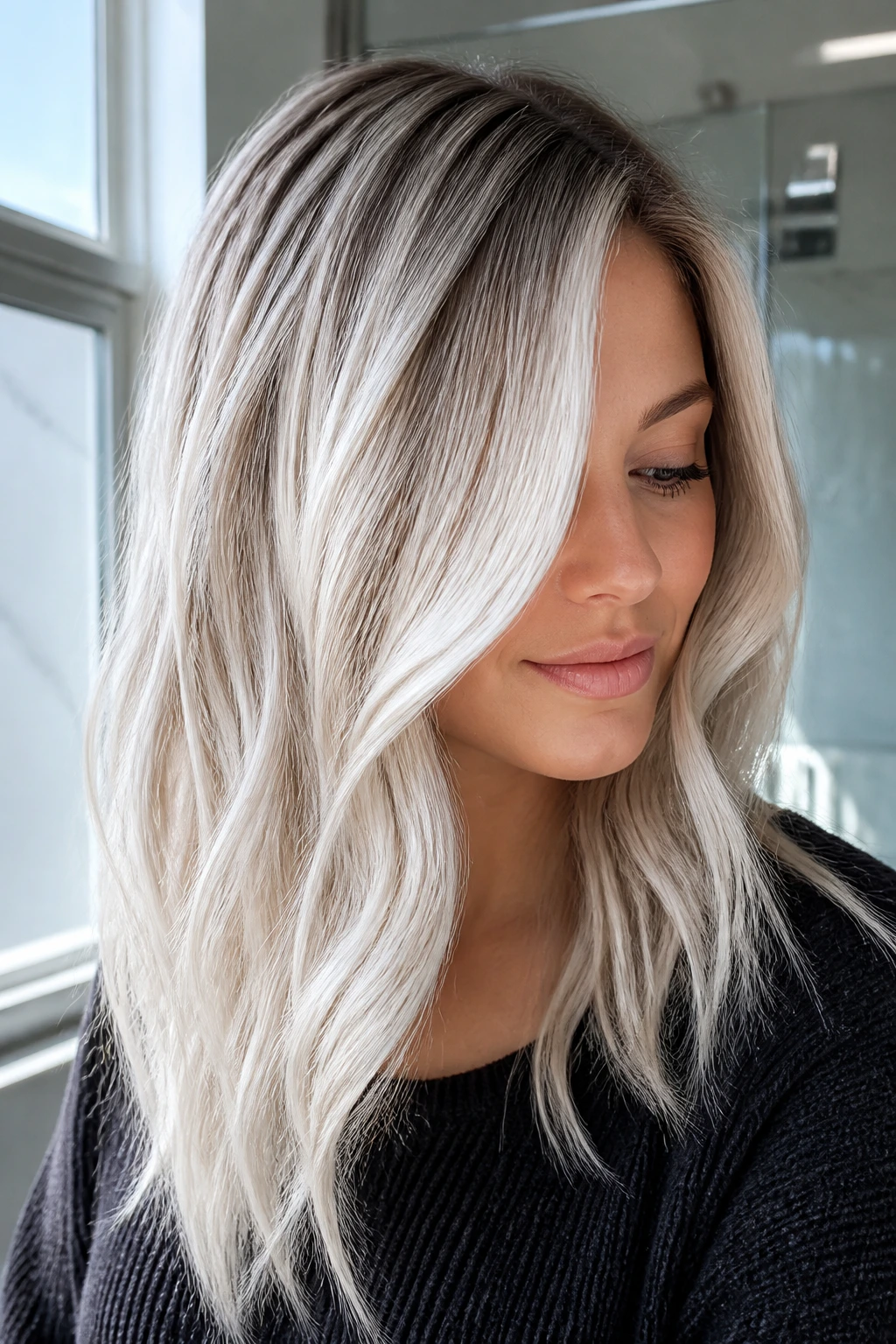
Can balayage work on very dark hair for winter?
Yes, but the result depends on how much lift your hair can handle and how subtle you want the finish to be. Raven black caramel, soft sable, and espresso gloss looks work especially well because they keep the contrast controlled and don’t force your hair into a pale blonde lane.
How often should I refresh winter balayage?
Most brunette balayage can stretch 8 to 12 weeks between bigger appointments, with a gloss or toner refresh sooner if needed. Blonde, copper, and red tones usually need more frequent attention because they fade faster and show brass or washout earlier.
Is balayage better than traditional highlights for winter?
For most people, yes, because balayage grows out softer and looks less obvious when hair spends time under hats and scarves. Traditional foils can still work, but they usually need a cleaner, more regular maintenance schedule if you want the color line to stay neat.
What if my hair turns orange after lightening?
That usually means the undertone was not lifted enough or the toner was too warm. A blue-based toner can help brunettes, while blondes often need a beige or ash gloss. The fix depends on how porous the hair is, so this is one of those times when a salon adjustment is smarter than guessing at home.
Can I get balayage if I already have gray hair?
Yes, and gray blending is one of the nicest uses of balayage. The trick is to work with the gray instead of covering it completely, using lowlights and soft highlights that make the silver strands look intentional.
Will balayage damage my hair?
Any lightening can stress the hair, especially if you go several levels lighter. The damage stays more manageable when the colorist uses bond builders, keeps the lightening controlled, and avoids over-processing the ends.
Does balayage work on curly hair?
Very well, if the placement follows the curl pattern. Curly hair usually needs fewer pieces and more thought about where the light hits, because too many highlights can blur the shape.
How do I keep blonde balayage from looking dull in winter?
Use a good conditioner, avoid overusing purple shampoo, and get a toner or gloss when the blonde starts looking flat. Soft beige, pearl, and buttercream tones usually stay nicer than harsh platinum if your hair is dry or porous.
Soft Light, Better Color
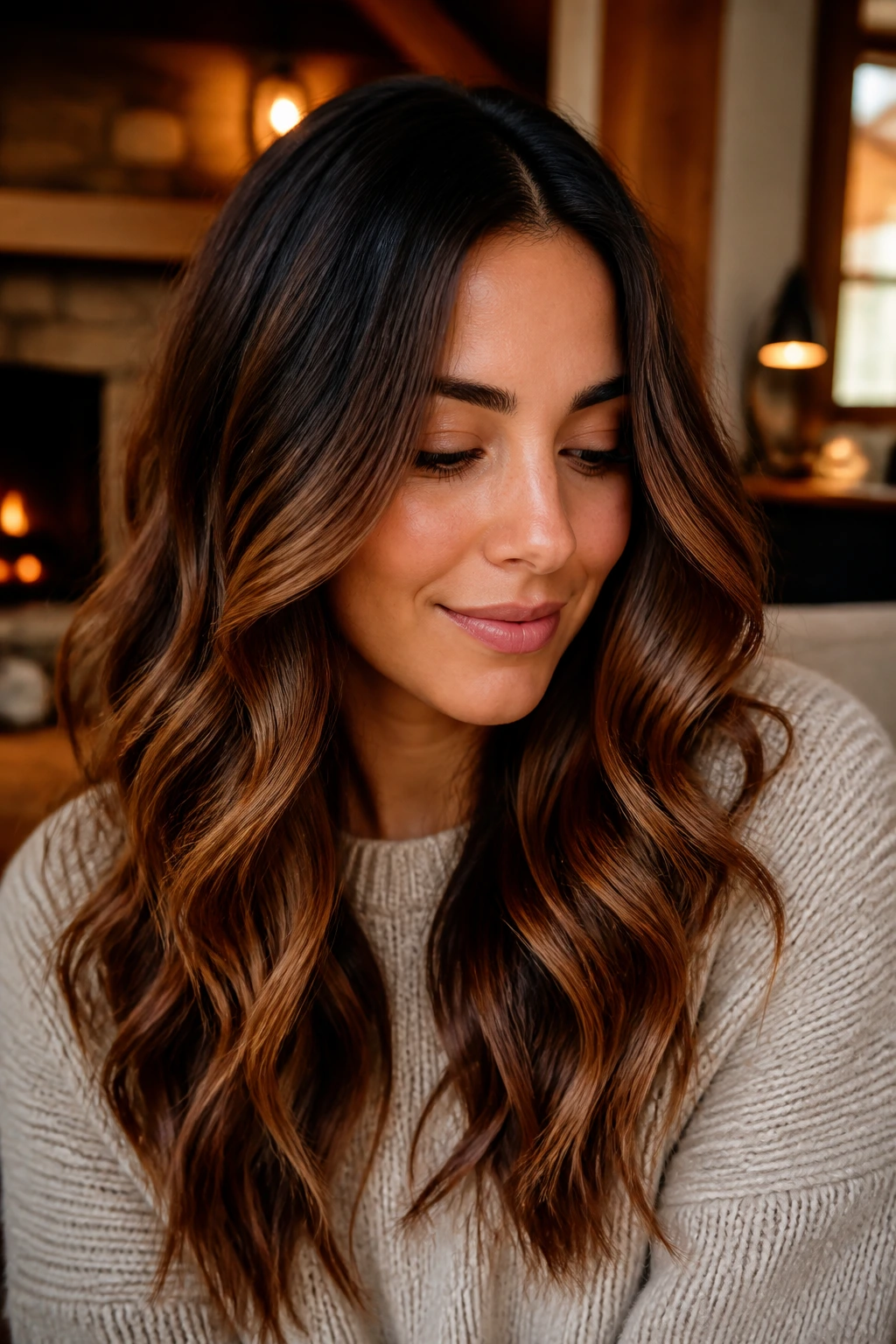
The strongest winter balayage ideas are the ones that respect the season instead of fighting it. Softer root shadows, careful placement, and tone choices that hold up in low light make a bigger difference than chasing the lightest possible blonde or the loudest possible red. That’s the whole trick, really.
Pick the shade that matches your actual routine. If you want easy grow-out, lean smoky or brunette. If you want brightness, keep the root softer than the ends. If you want copper or rose gold, plan for a little upkeep and enjoy the payoff while the tone is fresh.
A good winter balayage should look even better after it settles in for a week. If it does, you’ve got the right one.
