



Caramel hair color ideas for curly hair work because curls break light into little pockets, so warm ribbons look richer instead of flat. On a straight sheet of hair, caramel can read obvious fast; on a curl, it hides in the bends, flashes when the hair moves, and leaves that soft brown-gold glow people notice a few seconds later, not all at once.
That’s the part I love most. Curly hair doesn’t need loud color to look dimensional. It needs placement that respects the curl pattern, a caramel tone that sits in the right level range, and enough contrast to keep the shape from collapsing into one brown mass. Get those three things right and you get shine, movement, and depth that still looks like your hair, only better behaved.
The catch is that not every caramel is equal. A warm honey ribbon on 3B curls reads very differently from a smoky beige caramel on a dense 4A coil, and a chunky money piece can look chic on one head and stripey on another. So the useful ideas are the ones that match the curl type, the base color, and the amount of upkeep you’re willing to live with.
Why Curly Hair Changes the Caramel Game
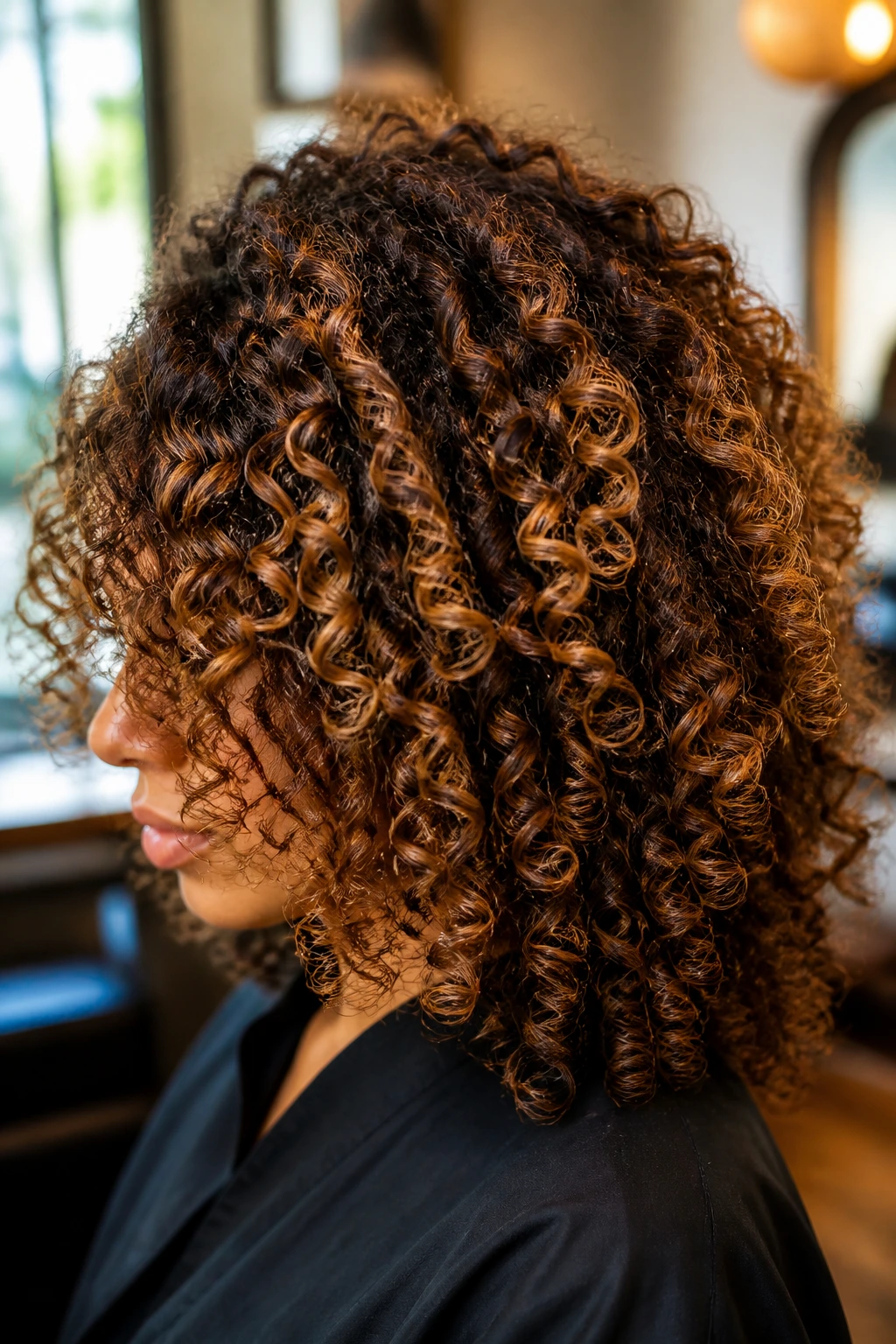
Curl pattern changes the way color sits. A ribbon of caramel that looks subtle on a smooth blowout can turn into a bright flash once the curl springs up, which is why stylists place highlights with shrinkage in mind.
Warmth has to be controlled, not sprayed everywhere. Caramel lives in the brown-to-golden zone, usually around level 6 to 8, and curls can make that warmth look deeper or brighter depending on porosity and density.
Low-contrast placement often looks more expensive on curls than big stripes. The bends in the hair create their own shadow, so you do not need every strand lightened to get dimension.
Grow-out is kinder on textured hair. A soft balayage or babylight pattern blurs as curls expand, which means the line between new growth and colored hair stays softer for longer.
You can build drama without bleaching the whole head. That matters for curl health. Fewer passes, smarter placement, and a good gloss usually give better results than chasing a lighter shade that starts fighting the curl pattern.
1. Soft Honey Caramel Ribbons
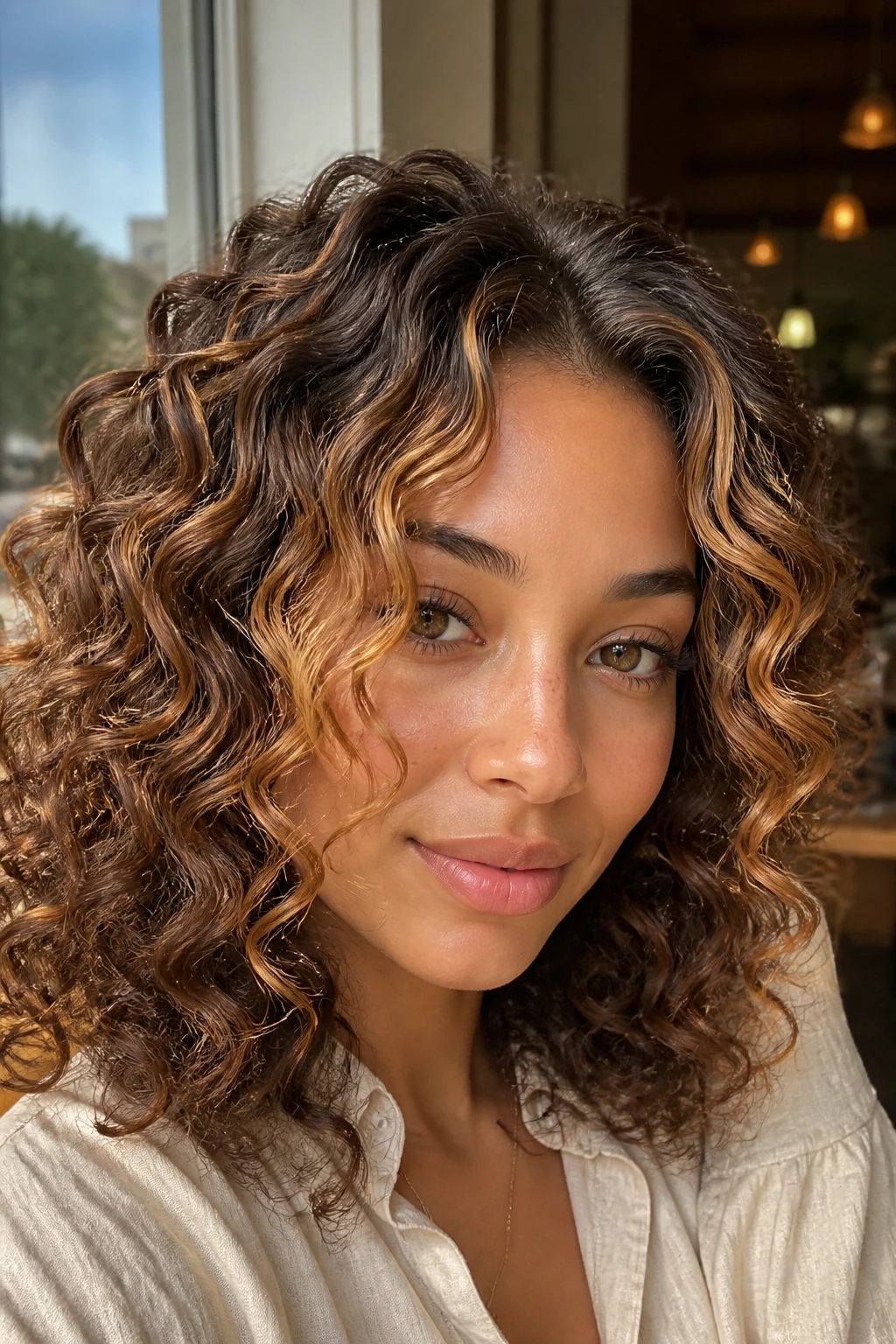
These are the caramel highlights I reach for when someone wants warmth but doesn’t want the hair to look “done.” The color lives in thin, curved ribbons that sit on the outer layer of the curl clump, so the shine shows when the hair moves and disappears into the curl when it rests.
What makes this version work is restraint. Keep the ribbons one to two levels lighter than the base, and let some darker space stay between them. That shadow is the difference between “dimension” and “I ran a comb through a box dye job.”
This idea flatters medium brunettes, chestnut bases, and anyone with 2C to 3B curls who wants softness around the face. It’s also one of the easier looks to grow out because the root line never gets loud. If your curls are fine, ask for fewer ribbons placed higher on the mid-lengths so the ends don’t feel over-lightened.
2. Chestnut-to-Caramel Balayage Melt
This is the look for someone who wants movement from root to tip, not a bunch of separate streaks. The caramel starts where the chestnut base begins to loosen into the mid-lengths, then melts into a warmer end shade that reads like brown sugar after sun.
Where the melt starts
The best version begins around the top of the ear or just below the cheekbone on shoulder-length hair. That keeps the root area deeper, which matters on curls because root lift can look patchy fast if the hair is pulled too light too close to the scalp.
The end result feels polished without looking stiff. On long spirals, the darker root gives the curl a frame, and the caramel picks up light as the curl bends away from the face. On tighter curls, the blend softens the visual line and keeps the shape from getting too blocky.
Best for: medium to thick curls, especially 3A to 3C.
Works well when: you want color that looks expensive on day one and still looks soft on week eight.
Ask for: painted placement, not uniform foils, plus a beige-gold gloss if the warmth starts leaning orange.
3. Face-Framing Caramel Money Piece
A bright face frame changes the whole mood of curly hair in a way a full head of highlights sometimes can’t. It lights up the front curls, pulls attention to the eyes, and gives the haircut a little lift even when the rest of the hair stays deep and rich.
Why this one works so well is simple: curls around the face move first. They’re the first pieces to dry, the first pieces to frizz, and the first pieces people see. If you place caramel there with a little shadow at the root, the face frame looks intentional instead of chunky.
If you wear curtain bangs, this is one of the easiest ways to make them stand out. The front sections can be painted a half-shade lighter than the rest of the hair so they open up when the fringe separates. Keep the contrast moderate, though. Too much brightness in the front can make curls look frayed instead of lifted.
4. Toasted Almond Babylights on Dark Curls
These are tiny highlights, not big streaks. Think of them as a whisper of caramel scattered through dark curls so the shape gets depth without shouting for attention.
The whole point is subtle movement. Babylights are especially good on deep brunettes who want a change but don’t want to spend the next six months managing high-contrast grow-out. Because each section is so fine, the color behaves like a shimmer instead of a stripe.
What makes them work
- The lift stays soft, usually just enough to move the hair into a toasted almond tone rather than full blonde.
- The highlights can be placed around the crown and upper sides where light hits naturally.
- Fine curls benefit because the tiny pieces don’t overwhelm the pattern.
- Thick curls need more spacing so the highlights don’t disappear inside the texture.
If your curls are very dense, this is one of those cases where the head can handle more pieces than the eye expects. The texture eats color a little. That’s not a flaw. It’s why babylights can look richer on curls than they do on flatter hair.
5. Cinnamon-Caramel Spiral Lights
Cinnamon-caramel sits right on the warm side of caramel without tipping fully copper. It’s the shade I’d pick for someone who likes richness with a little spice and doesn’t mind that the color leans alive in sunlight.
The spiral placement matters more than the exact formula here. Instead of painting in straight lines, the color is woven to follow the curl’s coil or bend. That gives the impression that the shade is wrapped around the curl rather than sitting on top of it.
A little warmth goes a long way on darker bases. On a level 4 or 5 brunette, cinnamon-caramel can look glossy and deep. On a porous curl, though, the same color can turn too orange if it’s lifted too far, so ask for a soft beige filter if your hair grabs warmth quickly.
This one is especially good for people who want dimension that still reads bold in photos and in daylight.
6. Bronze-Caramel Ribboning for Thick Coils
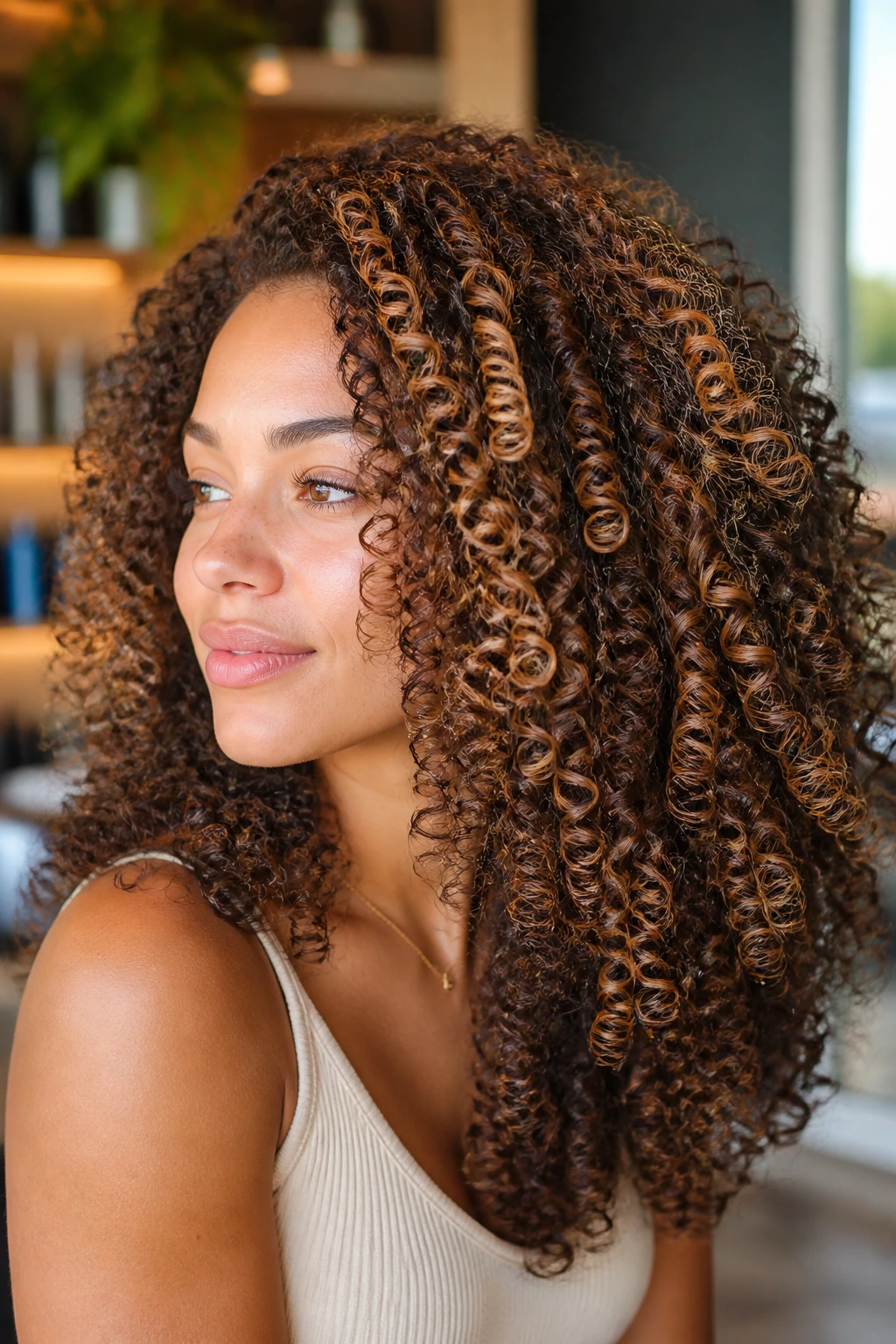
Thick coils need a different kind of attention. If you paint them like fine hair, the color gets lost inside the density. Bronze-caramel ribboning fixes that by making the lighter pieces broad enough to show through the curl stack without looking blocky.
The look has more weight than babylights but less punch than a full balayage. That middle ground is useful. It lets the curl pattern stay the star while the caramel acts like a frame around the shape.
Best placement: around the top layer, the front corners, and a few scattered sections in the back where the curl clumps are fullest.
Best tone: bronze with a gold-brown finish, not a yellow blonde. Bronze keeps the warmth grounded.
Best haircut pairings: layered cuts, rounded shapes, and long coils with movement at the ends.
If your hair is dense and coarse, you often need bigger pieces to get the same visual payoff. Small highlights can vanish. Bronze ribbons don’t.
7. Beige Caramel on Loose Waves
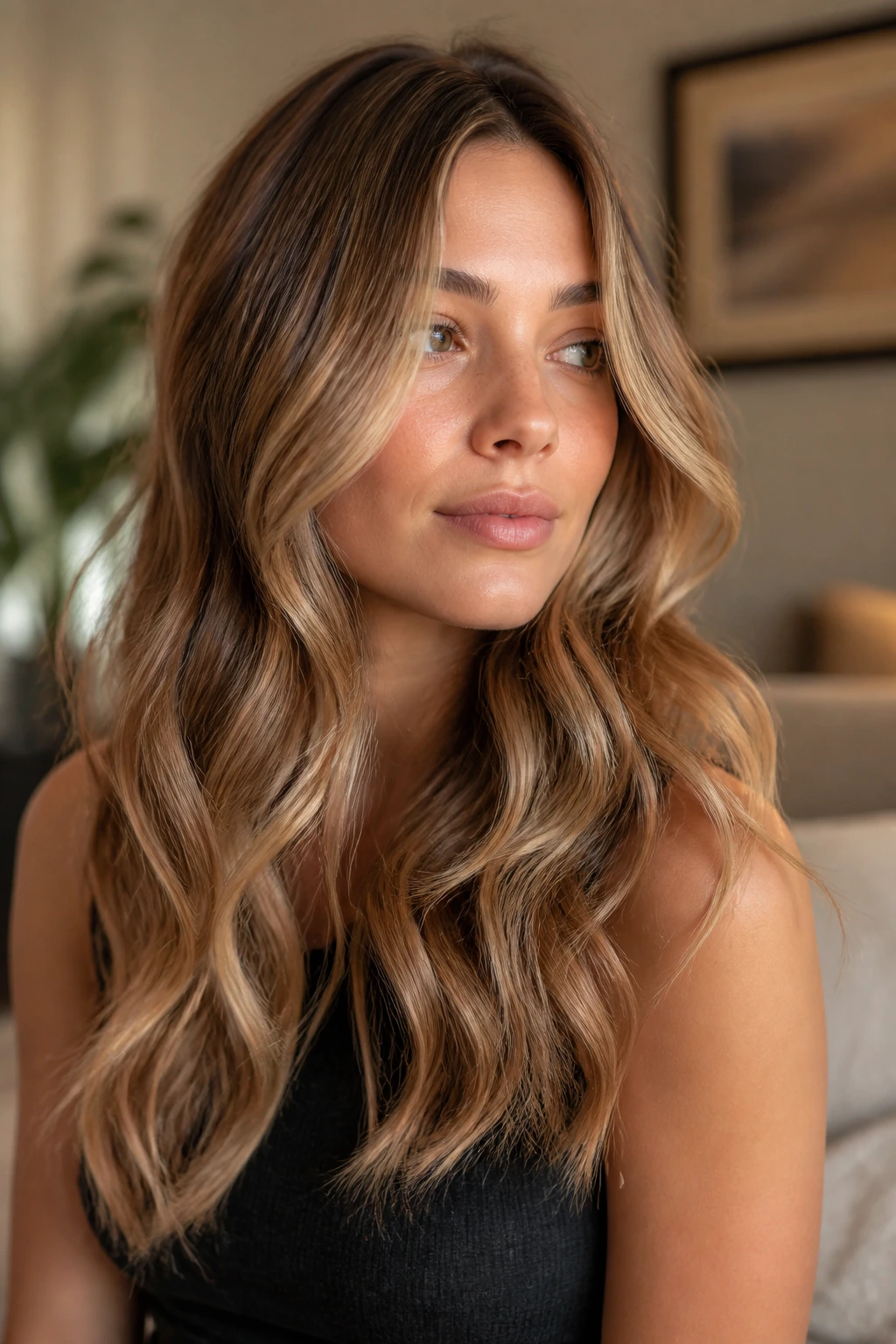
Beige caramel is for the person who wants warmth without the candy-coated look. It’s softer, cooler, and a little more muted than honey or toffee, which makes it a nice fit for loose curls and waves that already have a lot of shine.
The reason it works on 2A to 2C texture is that the pattern itself is less compact. You can see the color travel farther across the strand, so a beige tone reads polished instead of washed out. It also plays nicely with ashier brunettes that still need a touch of warmth to keep the hair from looking flat.
If you’re nervous about orange tones, this is the caramel lane to stay in. Ask for a beige-gold gloss over the highlights, not a pure gold toner. Pure gold can turn a bit too sunny once the hair is washed a few times.
The effect is quiet, but not boring. It’s the kind of color that makes a blowout look expensive and a diffuser day look deliberate.
8. Cocoa Base with Maple Ends
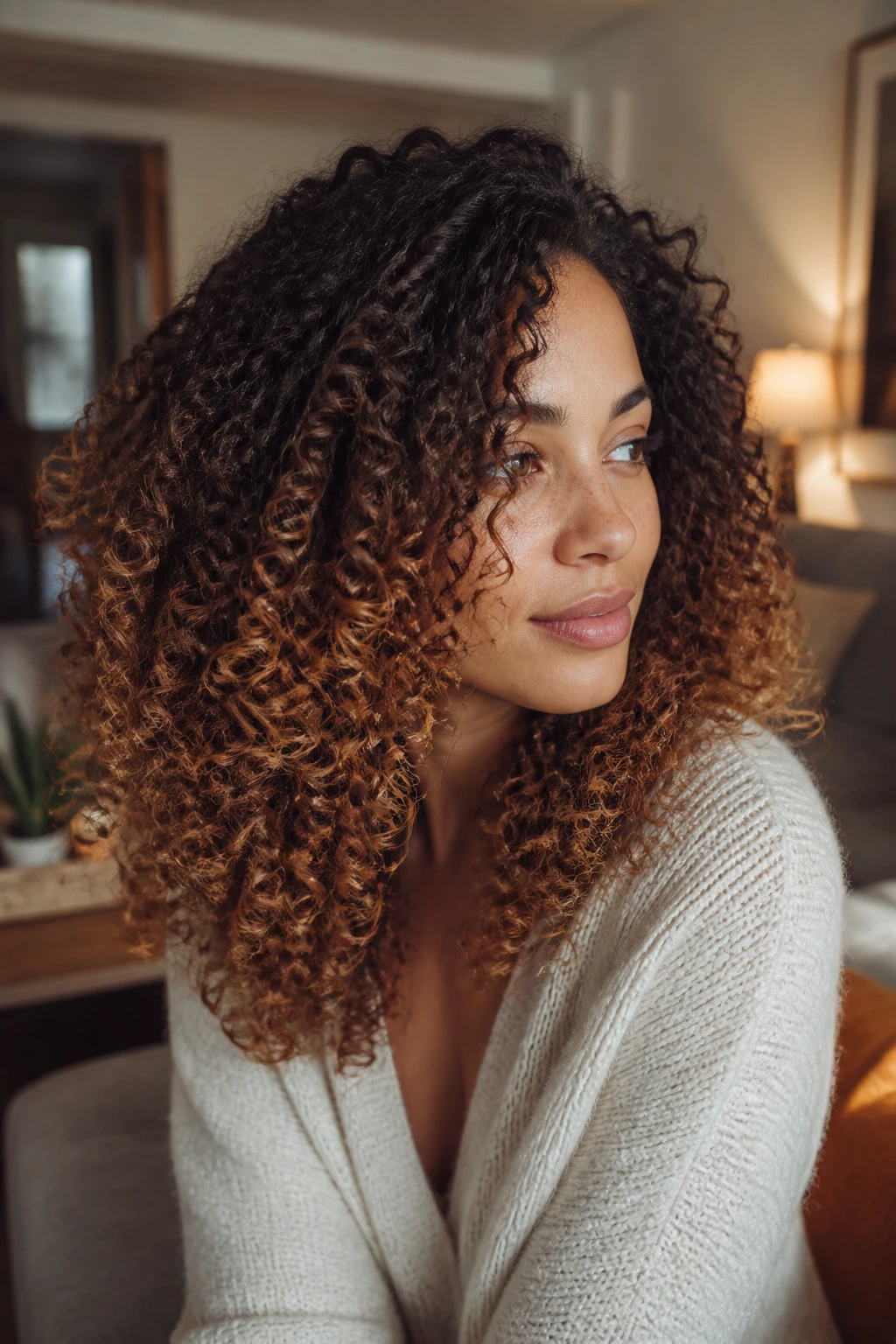
A deep cocoa root with maple-toned ends gives you a clear visual shift without making the whole head lighter. The roots stay dark and plush, the mids soften, and the ends catch the light with a warm maple glow that curls can wear beautifully.
This is one of my favorite ideas for long curly hair because it respects the way curls shrink. If the ends are the only section that gets the brightest lift, the style still looks grounded when the hair dries shorter and tighter than expected.
The trick is to keep the transition blurred. No harsh line. The best versions look like the color naturally faded toward the ends over time, but in a very flattering, controlled way.
It also buys you a little breathing room between salon visits. Dark roots on curls tend to grow out in a softer cloud, and that makes a maple ombre easier to live with than a full global lightening job.
9. Apricot-Caramel Peekaboo Panels
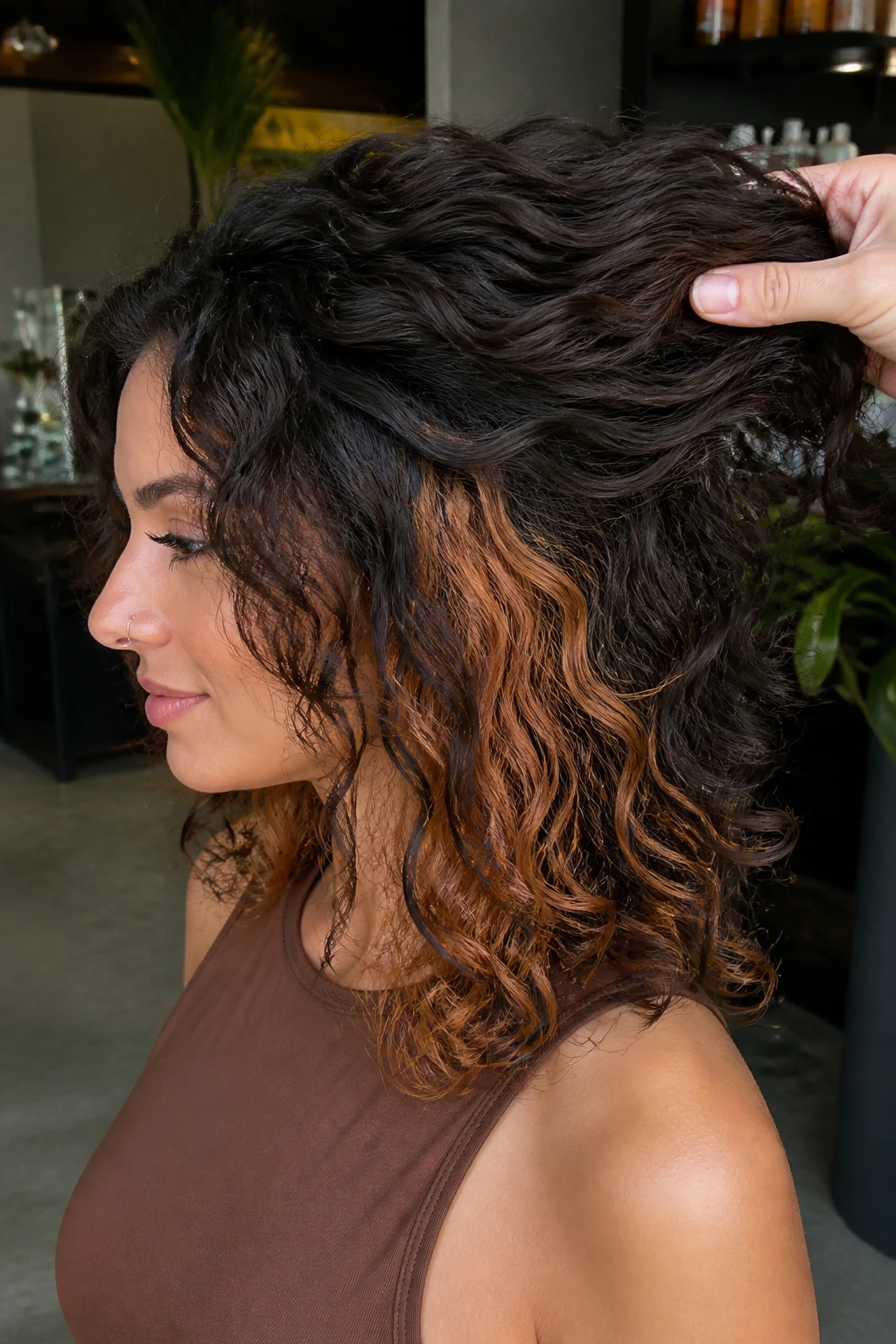
Do you want color that shows up when the hair moves and hides when it settles? Peekaboo panels are the answer. They tuck warmer caramel with a soft apricot edge underneath the top layer, so the surprise only comes out when the curls separate.
This works especially well on shoulder-length hair, layered shags, and curly lobs because those cuts naturally flip and open. The apricot note keeps the caramel from reading too brown, which is handy if you want warmth with personality.
Good places to put them
- Under the crown for a hidden flash.
- Around the lower sides so the color appears during motion.
- Beneath a face frame if you want the front to brighten when hair is tucked behind the ears.
The panels don’t have to be loud. In fact, the prettiest version is often the quietest. A few apricot-caramel ribbons under a dark top layer can make a haircut look more textured than a heavy all-over highlight job ever could.
10. Dimensional Caramel Streaks on a Curly Bob
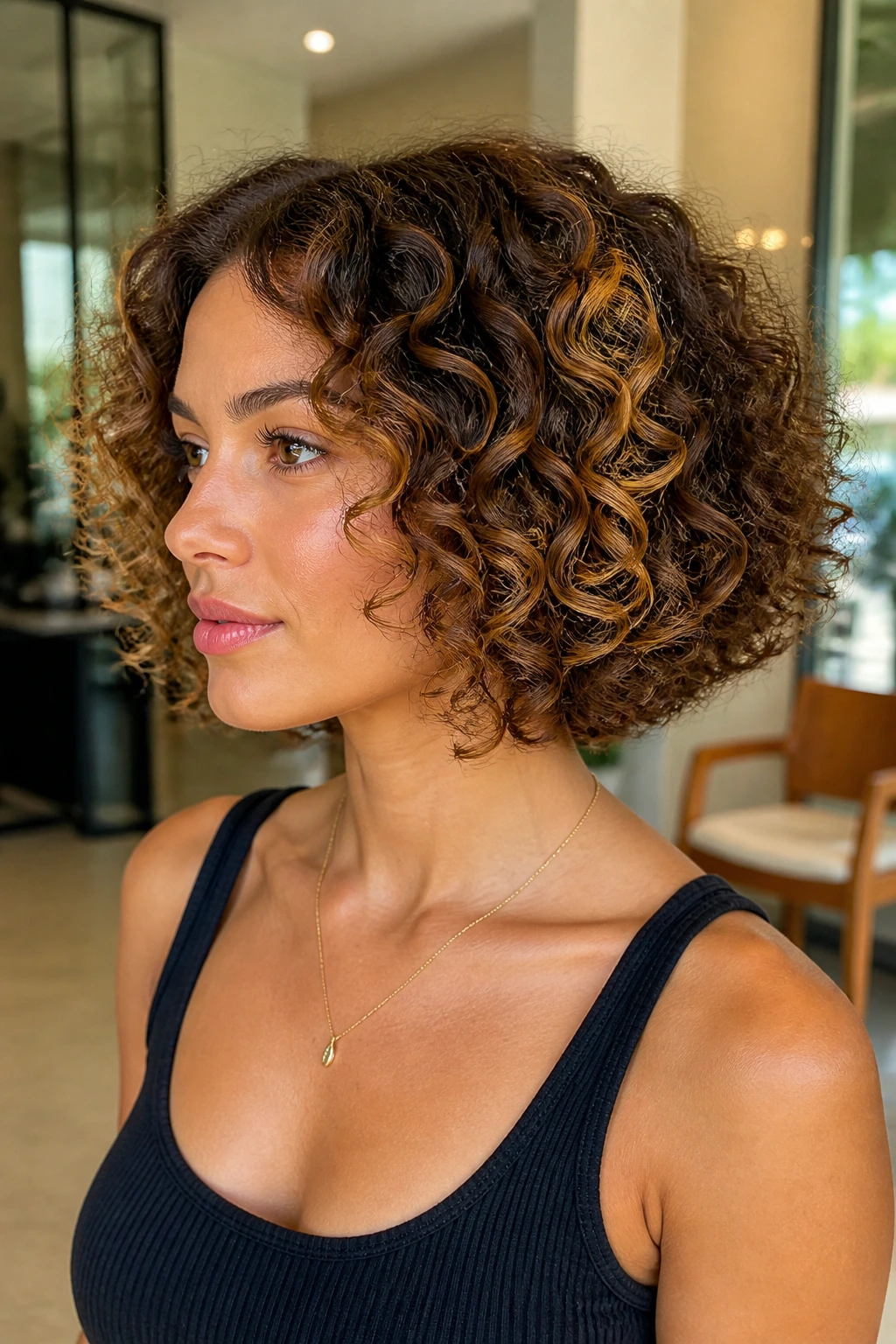
A curly bob needs color that respects the shape of the cut. Too much uniform brightness can make the bob look puffy at the edges, while a few well-placed caramel streaks sharpen the contour and keep the movement inside the cut.
This is where the perimeter matters. The color should graze the outer curve of the bob, then pick up a little extra brightness around the front and crown. That keeps the silhouette from looking helmet-like, which is the enemy of a good curly bob.
The streaks can be thinner near the nape and slightly wider at the sides. That little shift helps the hair move visually, which is important when curls stack against the jawline. If you wear a side part, put more brightness near the heavier side so the shape doesn’t collapse into a dark block.
A bob with caramel streaks looks clean, but not stiff. That’s the sweet spot.
11. Caramel Babylights for Fine Curls
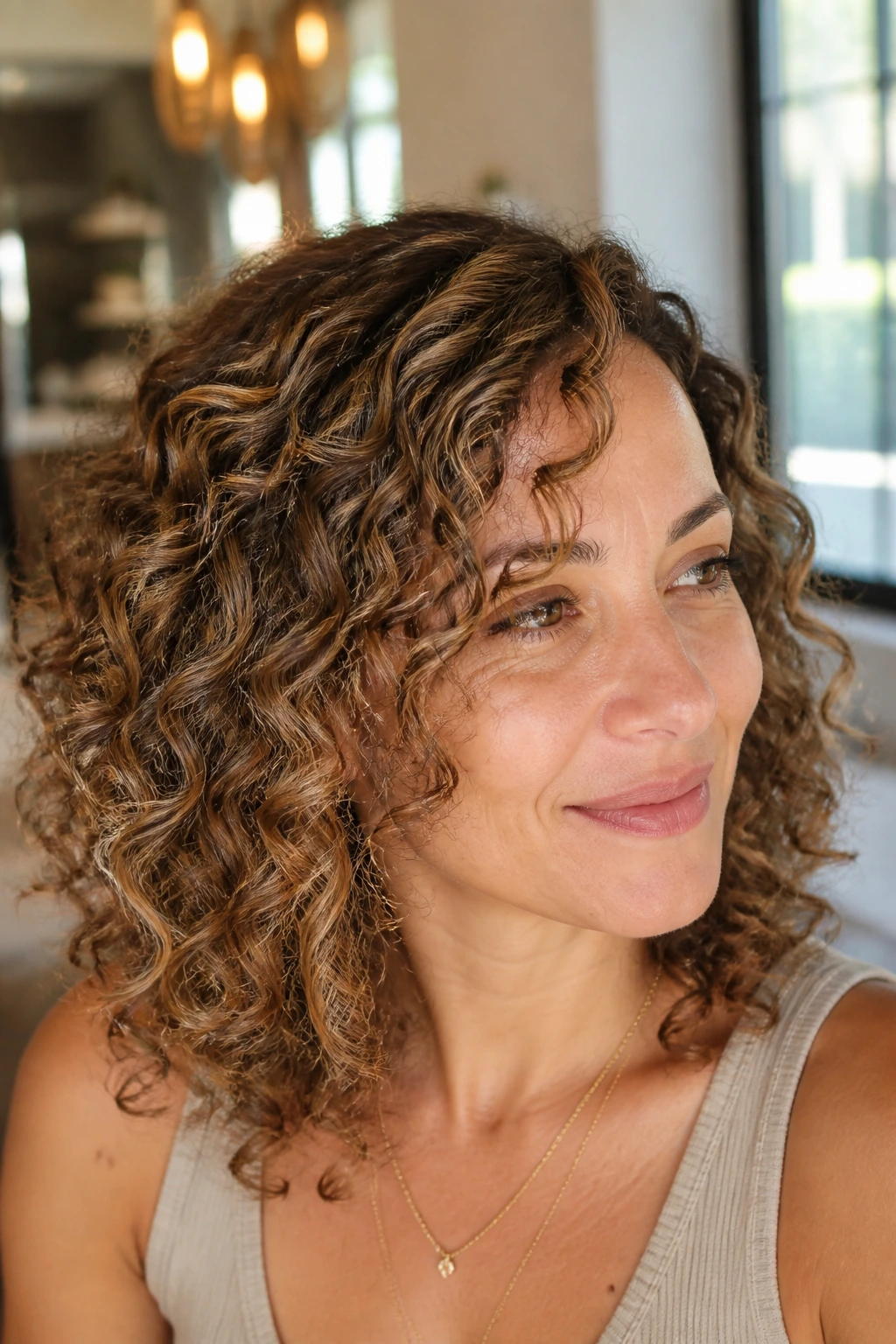
Fine curls need a gentler hand, and babylights are the gentlest caramel idea on this list. The highlights are tiny enough to give the hair shimmer without making the strands look thin or see-through at the ends.
Why fine curls love this placement
Fine curls already show more scalp than thick curls, so big highlights can look aggressive fast. Babylights blur into the curl pattern, which preserves softness and makes the hair look denser, not patchier.
The best results usually sit just one level lighter than the base. That may sound modest, but on fine curls the difference is plenty. You get reflectivity, especially around the crown and face frame, without exposing too much of the strand.
If the hair is fine and porous, keep the caramel more beige than gold. Gold can take over quickly. Beige stays calm.
For upkeep, this is one of the lower-stress caramel looks because the tiny pieces grow out gracefully. A soft gloss every few weeks keeps the tone clean.
12. Smoked Caramel Balayage on Deep Brunette Curls
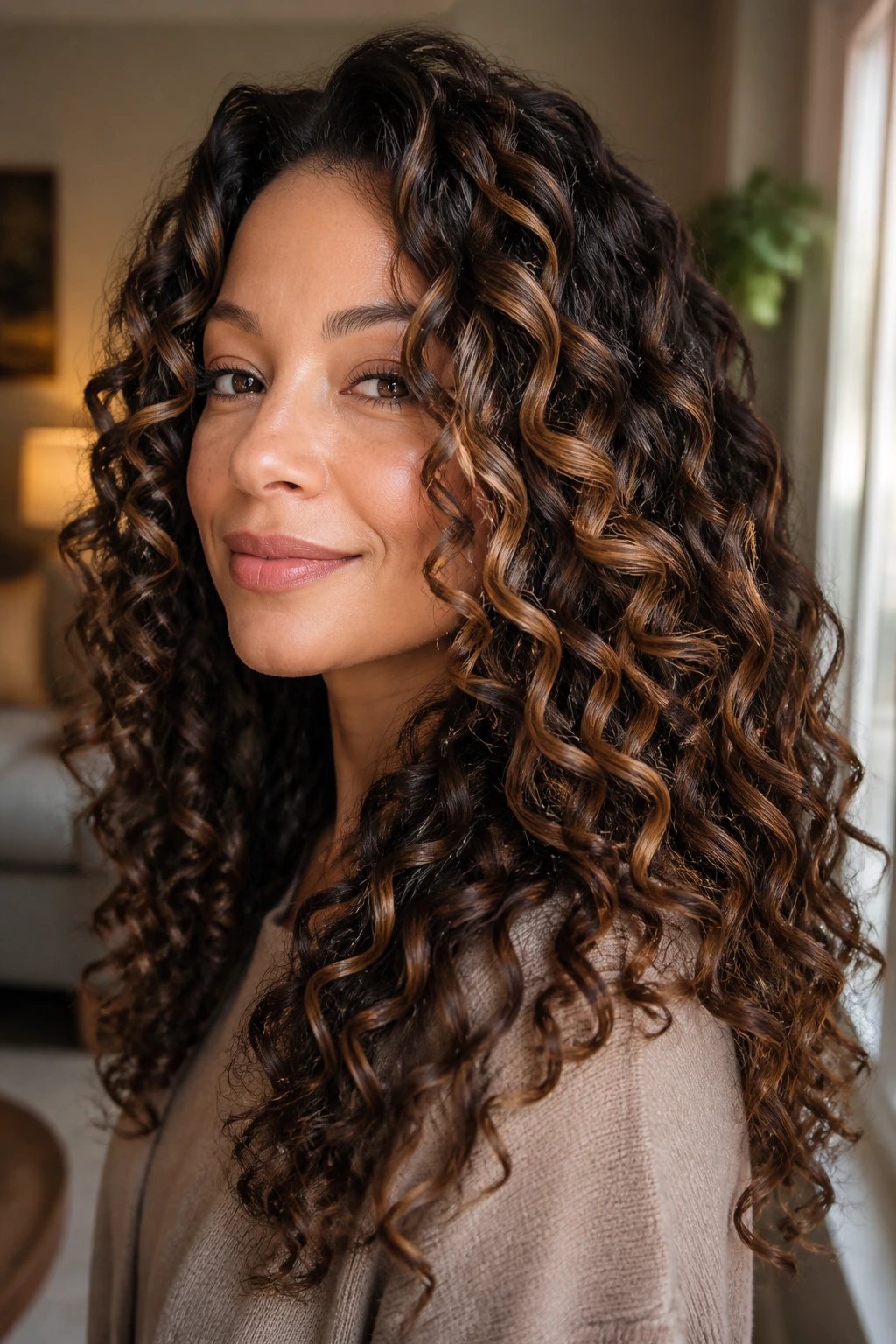
Smoked caramel is what happens when you want warmth, but not the kind that looks sunny. The tone is muted, brown-based, and a little hazy, almost like caramel that’s been filtered through a cup of espresso.
That makes it a smart choice for deep brunette curls. On dark bases, bright gold can look too sharp. Smoked caramel gives you the dimension without forcing the hair into a fake-blonde direction. It’s also one of the easiest shades to live with if you like low-contrast color that still moves.
The balayage should be soft and feathered, with the brightest pieces kept away from the root zone. The payoff comes from the contrast between the dark core and the muted caramel ends. On curls, that contrast gets broken up naturally, so the hair looks thicker and the color feels layered.
If you want warmth but hate brass, this is the safer road. Not dull. Just controlled.
13. Golden Toffee Curl-Paint
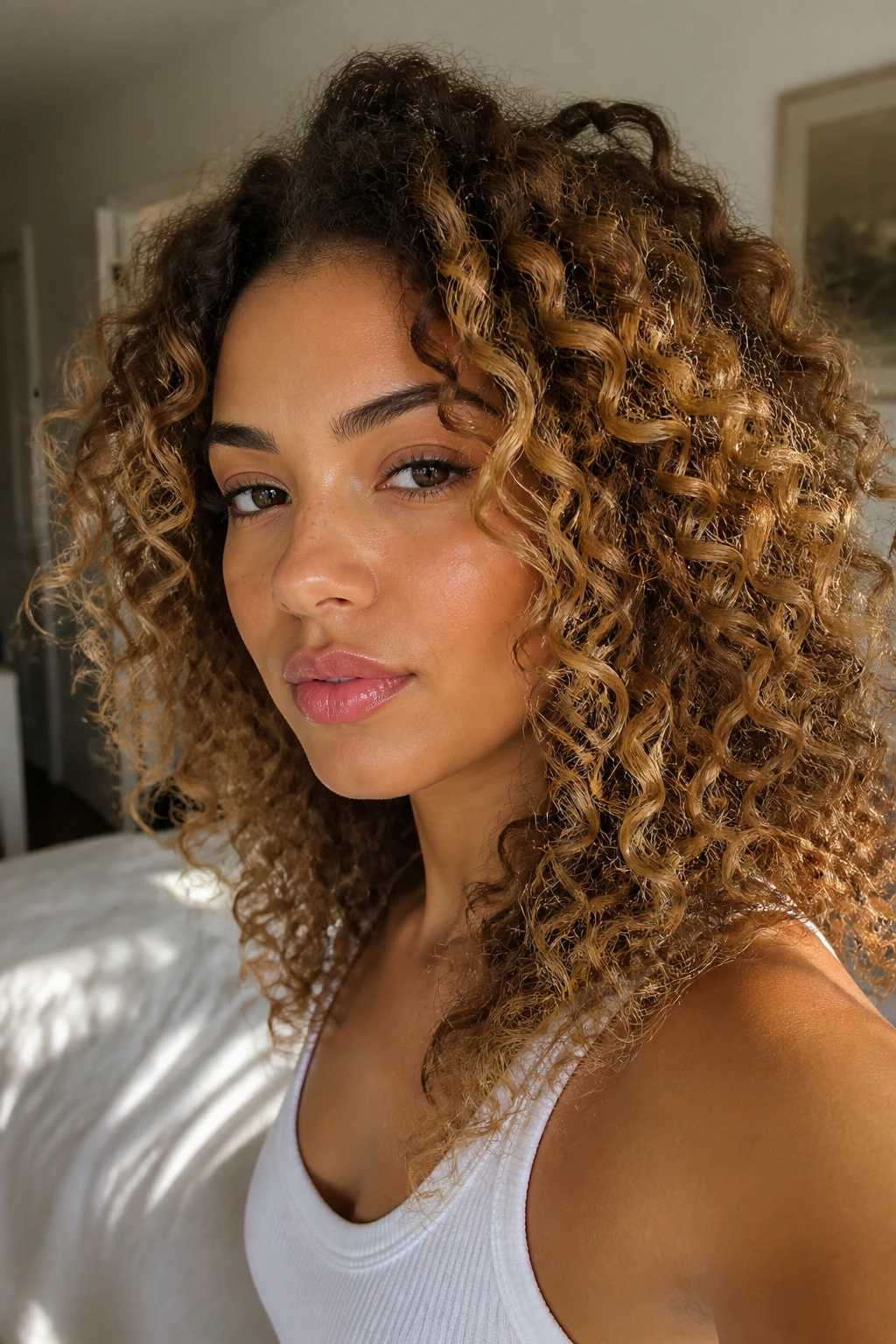
Think of this as caramel painted with a little more gold and less brown. The color is richer than honey, lighter than bronze, and especially nice on high-density curls that can carry a little more brightness without losing shape.
I like curl-painting for this idea because it follows the individual clump instead of the part line. That matters. Curls don’t behave like sheets, and the color should move with the coil, not fight it.
The texture notes that matter
- Works best on 3B to 4A curls with enough spring to hold the shape.
- Needs a little space between lighter pieces so the pattern can breathe.
- Looks best when the curl clumps are defined with a cream or gel, not brushed out dry.
Toffee caramel can skew too yellow if the hair lifts too far. Keep an eye on that. The prettiest version looks toasted, not blonded. There’s a difference, and on curls it shows immediately.
14. Caramel Ombre on Coily Hair
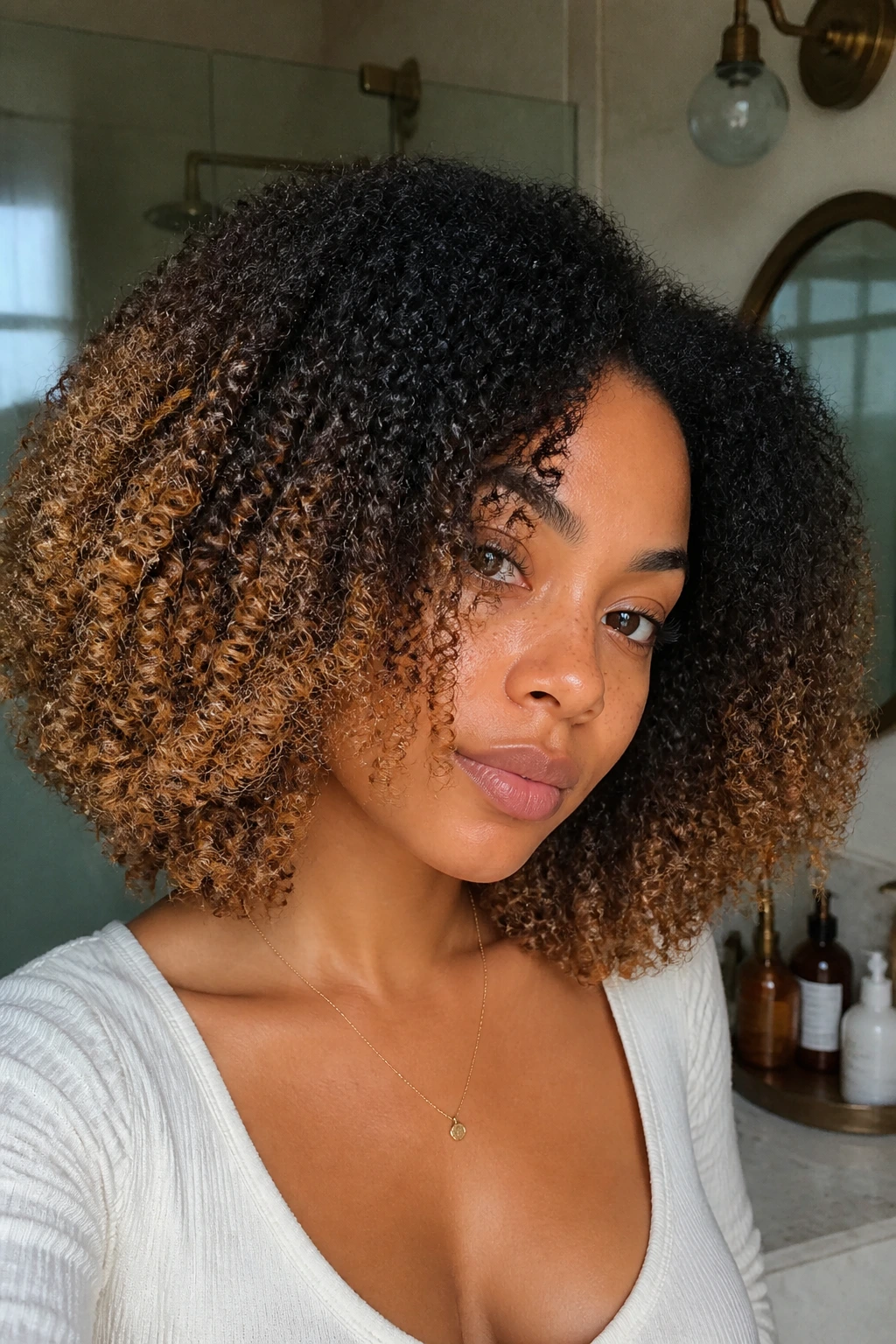
Coily hair can carry ombre better than people think, especially when the transition stays soft and the ends are treated with care. A caramel ombre on 4A to 4C textures gives you brightness where the hair moves most while keeping the root area deep enough to hold the curl pattern visually.
The key is not to overdo the lift. Coils shrink, and the more the hair moves inward, the stronger the color appears. That means a caramel end that looks moderate on wet hair may read brighter once dry. Plan for that.
A good ombre on coily hair does not start at the ears with a hard line. It usually begins lower, with a feathered shift from dark root to warm mid-length and then to a caramel end that still feels brown. If the ends are fragile, ask for a glossed caramel effect instead of a full bleach-heavy finish.
This one looks especially good on twist-outs, stretched styles, and puffs because the lighter ends catch the eye without flattening the root texture.
15. Honey-Glazed Curly Shag
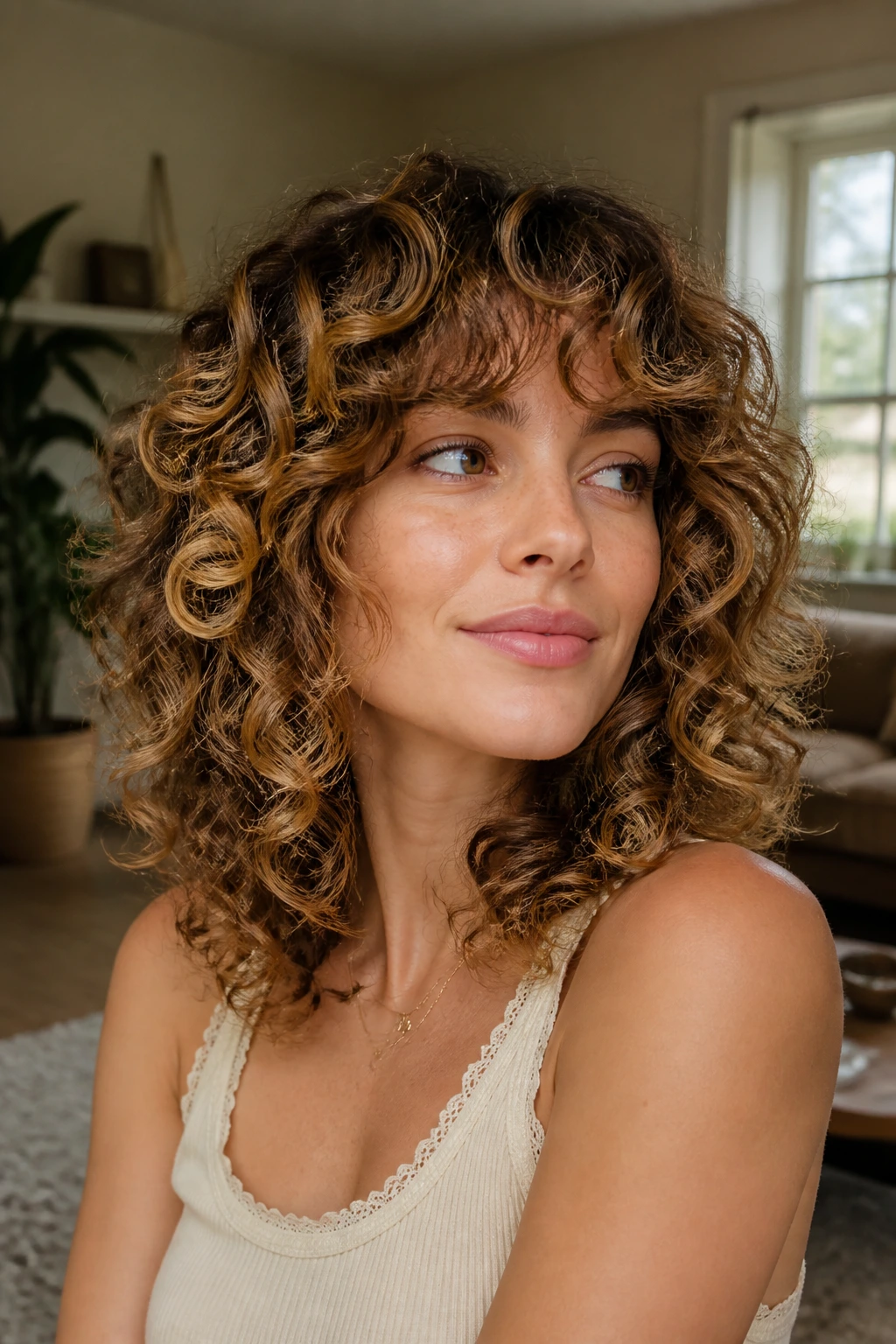
The curly shag already has movement built into it, so caramel has an easy job here. Honey-glazed pieces can trace the layers, brighten the fringe, and make the ends flick out with a little more attitude.
A shag also gives you natural places to hide or reveal color. The interior layers can stay darker, while the outermost curls carry the honey. That keeps the style from looking overloaded. It also helps if your curls frizz a bit, because the lower layers anchor the look instead of letting the whole cut go fuzzy.
This idea is great for people who like a lived-in feel. Not messy. Lived-in. The difference is that the caramel placement follows the haircut, so the texture looks intentional even when the hair air-dries in a hurry.
If you wear a shag and want one shade that makes the whole cut read more finished, honey caramel is a safe, flattering answer.
16. Sandstone Caramel Micro-Highlights
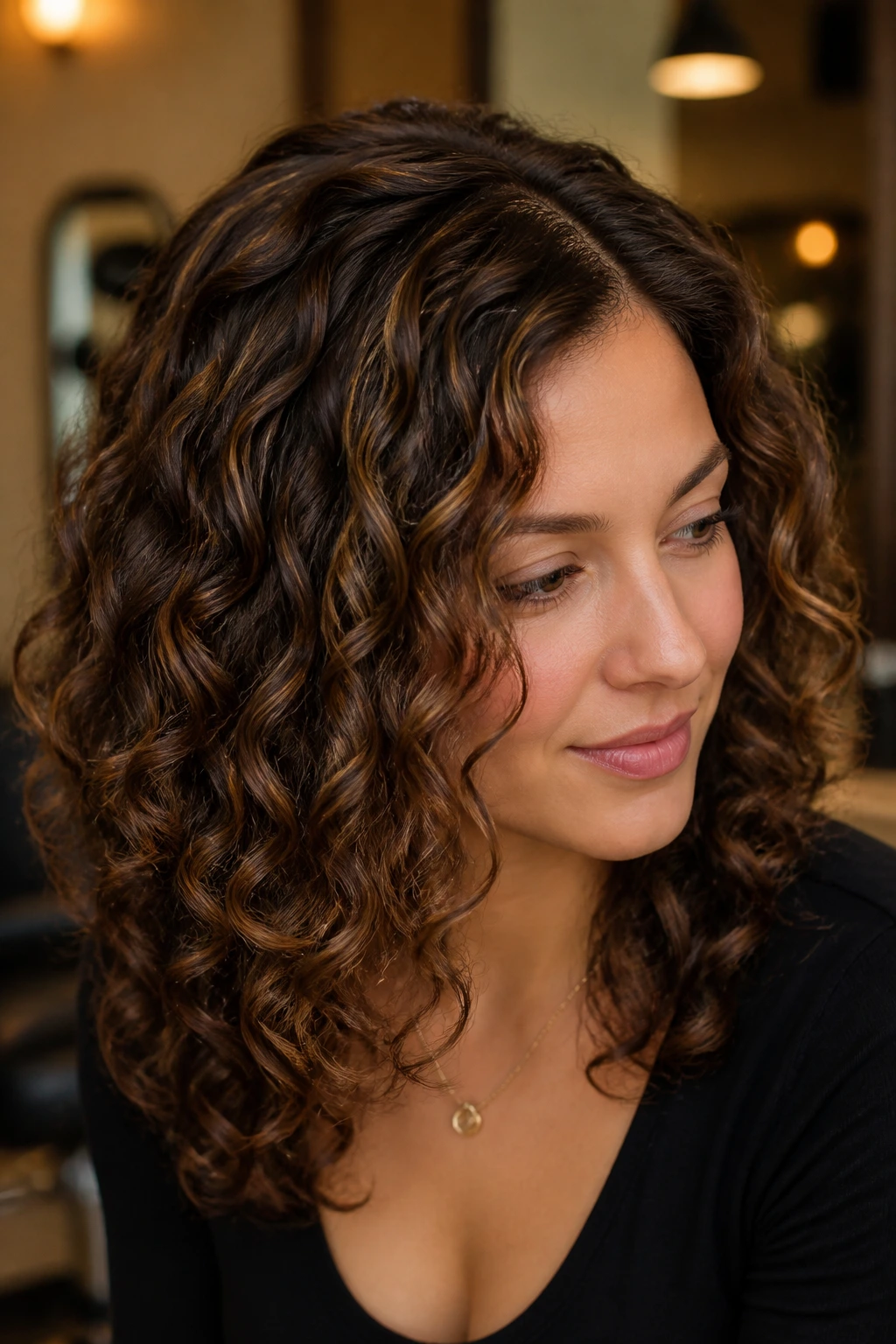
What if you want dimension, but barely anyone should be able to point to the color and name it? Sandstone micro-highlights do that. They’re tiny, sandy-caramel pieces scattered through the top layer so the hair feels lighter in motion but never streaky.
What makes them special
The result depends on spacing more than brightness. If the pieces are too close together, the color starts reading like a regular highlight job. If they’re too sparse, the effect disappears. The sweet spot sits in the middle, where the curls keep their depth but the surface gets a soft reflective dusting.
This idea works on medium brunettes, dirty blondes, and any curly client who wants to grow a haircut out without a dramatic color reset. It’s also friendly to layered cuts because the micro pieces travel nicely over the shape of the layers.
On a good day, sandstone highlights make the curls look like they have better lighting than the room does.
17. Mocha and Caramel Face Halo
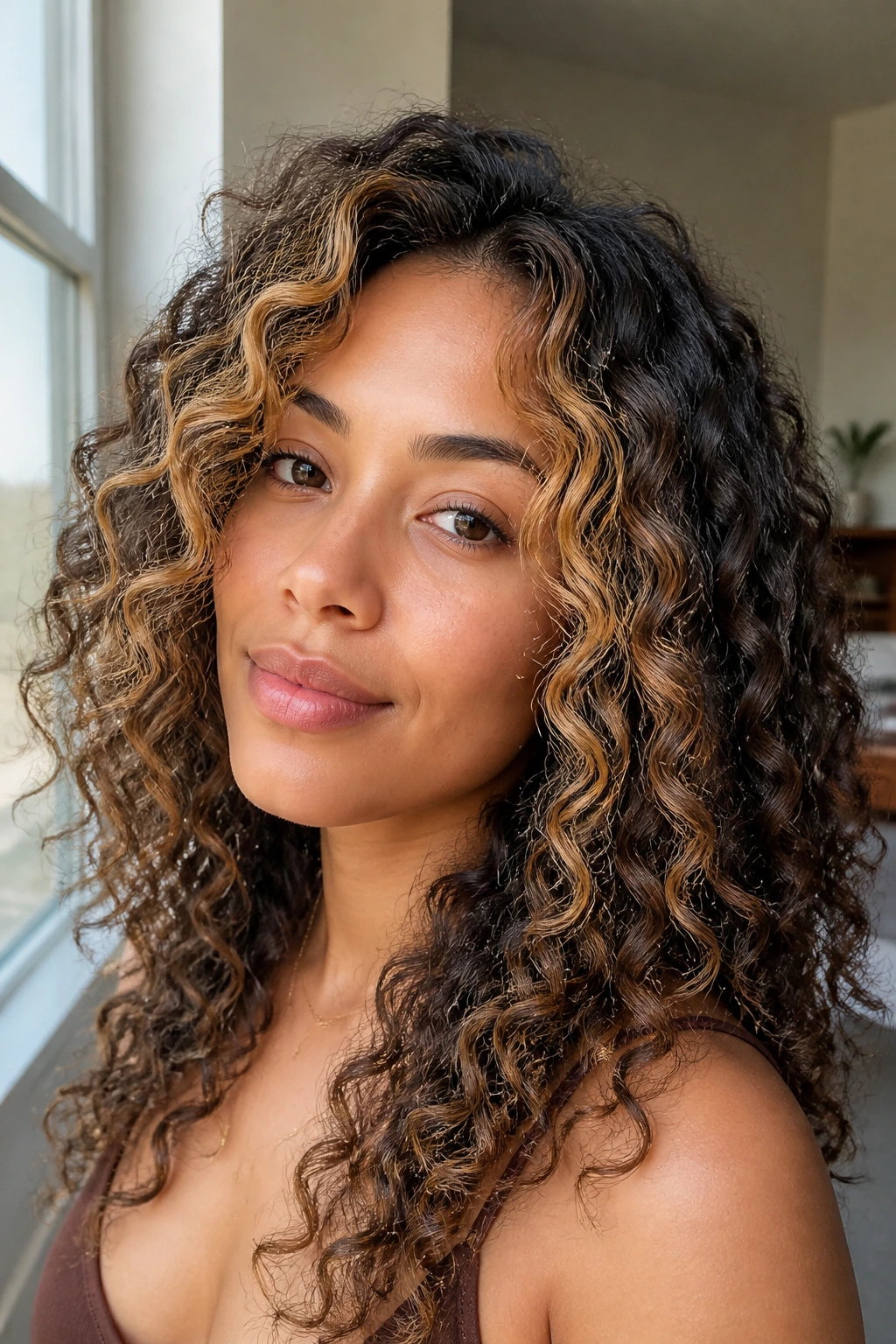
A halo of caramel around the face is one of the quickest ways to change the mood of curly hair. Add mocha depth through the rest of the hair, and the front pieces can look luminous without the head turning too bright.
This is a strong move for people who wear the same part most of the time. The halo sits where the eye lands first and where the hair frames the cheekbones. If the curls are springy, the pieces will lift off the face and show even more contrast.
The best version keeps the halo soft at the root and a little brighter through the ends. That keeps the front from looking cut out with a marker. And yes, that matters. Curly hair can take a hard line badly if the placement is too neat.
If your wardrobe lives in black, cream, olive, or camel, this one looks especially sharp. The caramel front just wakes everything up.
18. Gingered Caramel Ribbons for Warm Undertones
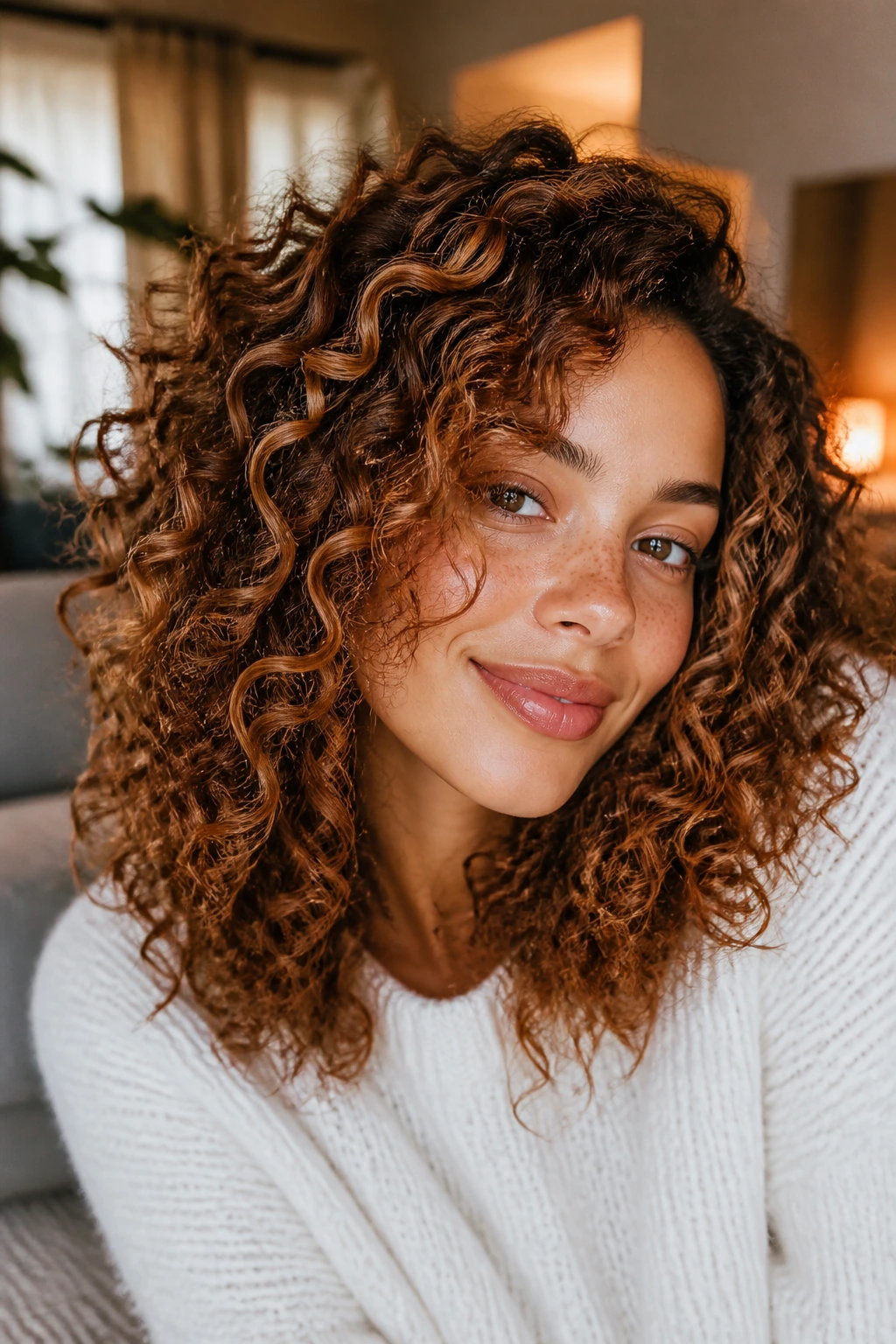
Warm undertones and caramel are natural friends, but they can still go wrong if the orange note gets too loud. Gingered caramel fixes that by keeping the warmth spicy and rich instead of flat gold.
The placement here should feel airy. Wider ribbons work on thick curls; thinner, more scattered pieces work on fine curls. Either way, the shade should bend toward cinnamon-gold rather than bright copper. That keeps it in caramel territory.
I like this idea on dark auburn bases and medium brunettes that already have a little warmth in the hair. The color doesn’t have to fight the base. It should sit on top of it and deepen the warmth the hair already has.
A good gingered caramel can make curls look sun-warmed even when they’re diffused indoors under plain light. That’s the whole charm.
19. Caramel Money Piece with Shadow Root
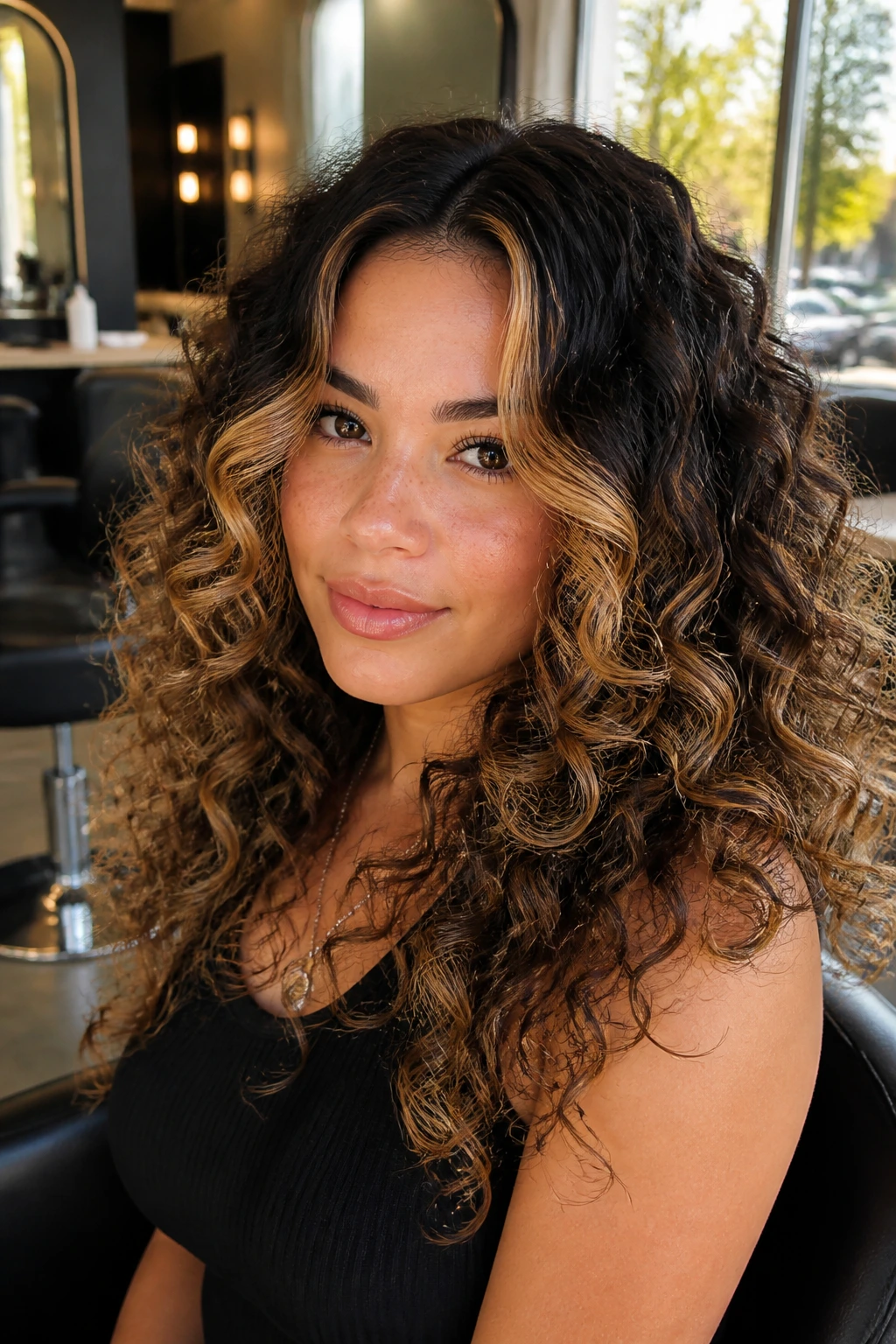
A shadow root is the unsung hero of good curly color. It keeps the top from looking too light and gives the bright front pieces a place to live. Pair that with a caramel money piece and you get contrast that lasts longer and grows out in a softer way.
This is especially useful if your curls are medium-to-thick or if your roots show fast. The dark root makes the front pieces feel brighter by comparison, so you don’t have to push the whole head light just to get a visible effect.
Why this combo works
- The root stays soft for easy grow-out.
- The money piece pulls focus to the face.
- The darker base helps the curls look fuller.
- The bright front pieces show shape even on humid days.
If you like a little drama but hate a high-maintenance highlight schedule, this is one of the smartest caramel choices on the list.
20. Sunlit Caramel Dip Ends
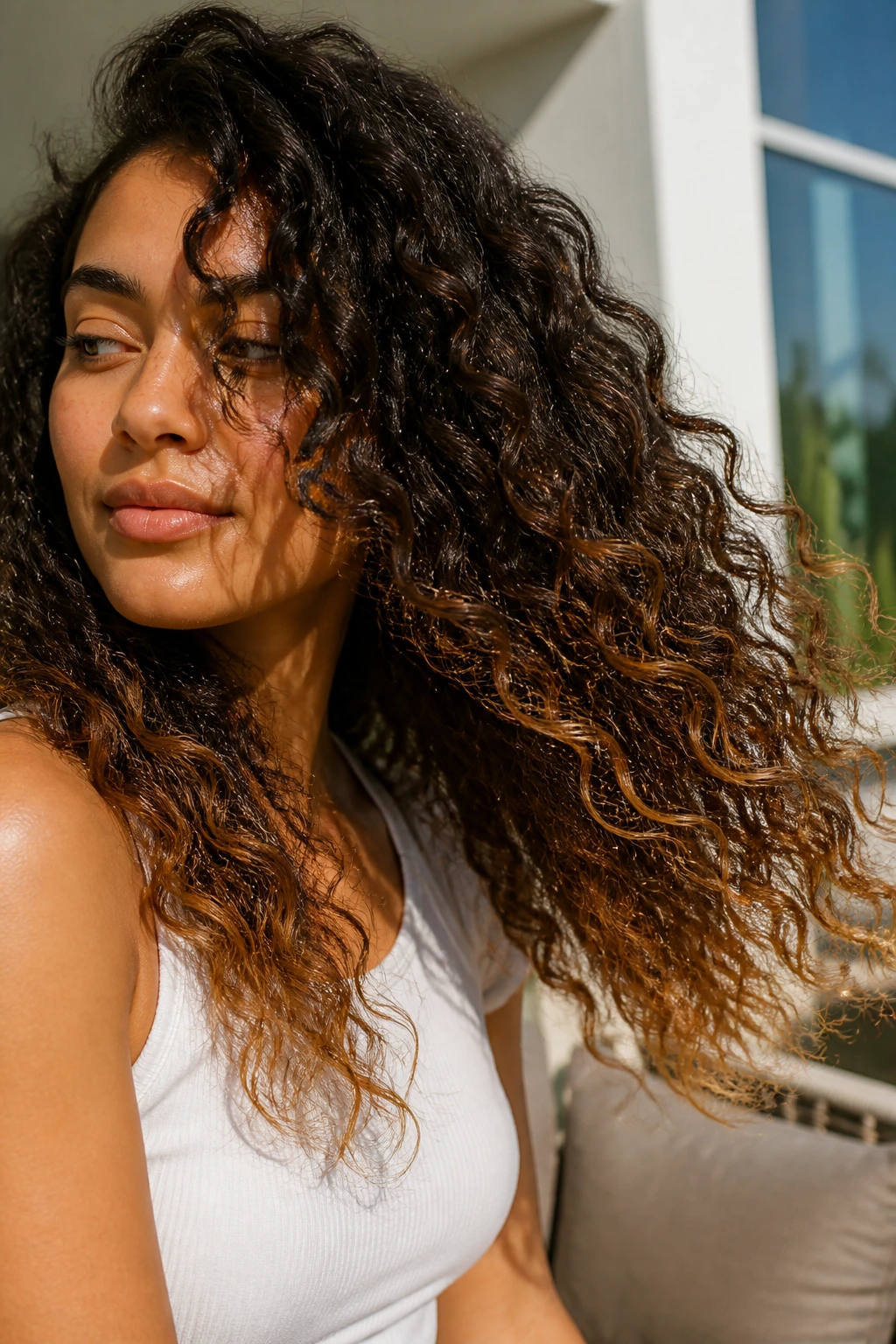
Dip ends are not the same thing as an ombre that starts high and blurs slowly. This version keeps the root and mid-lengths deep, then drops the caramel mostly into the last few inches so the ends glow when the curls separate.
The look works best on mid-length to long curls, especially when the haircut has some layering. Shorter layers can make dip ends look uneven if the color is too concentrated at the bottom. Long hair gives the color room to soften.
The nicest thing about sunlit ends is that they make the curl pattern look bouncy. You get that little flash of warmth at the tips without losing the darker frame at the top. On a fresh wash day, the effect is bright but still controlled.
If you are tired of lighter pieces near the roots, this is an easy way to keep the warmth low and the visual interest high.
21. Caramel Ribboning on Pixie Curls
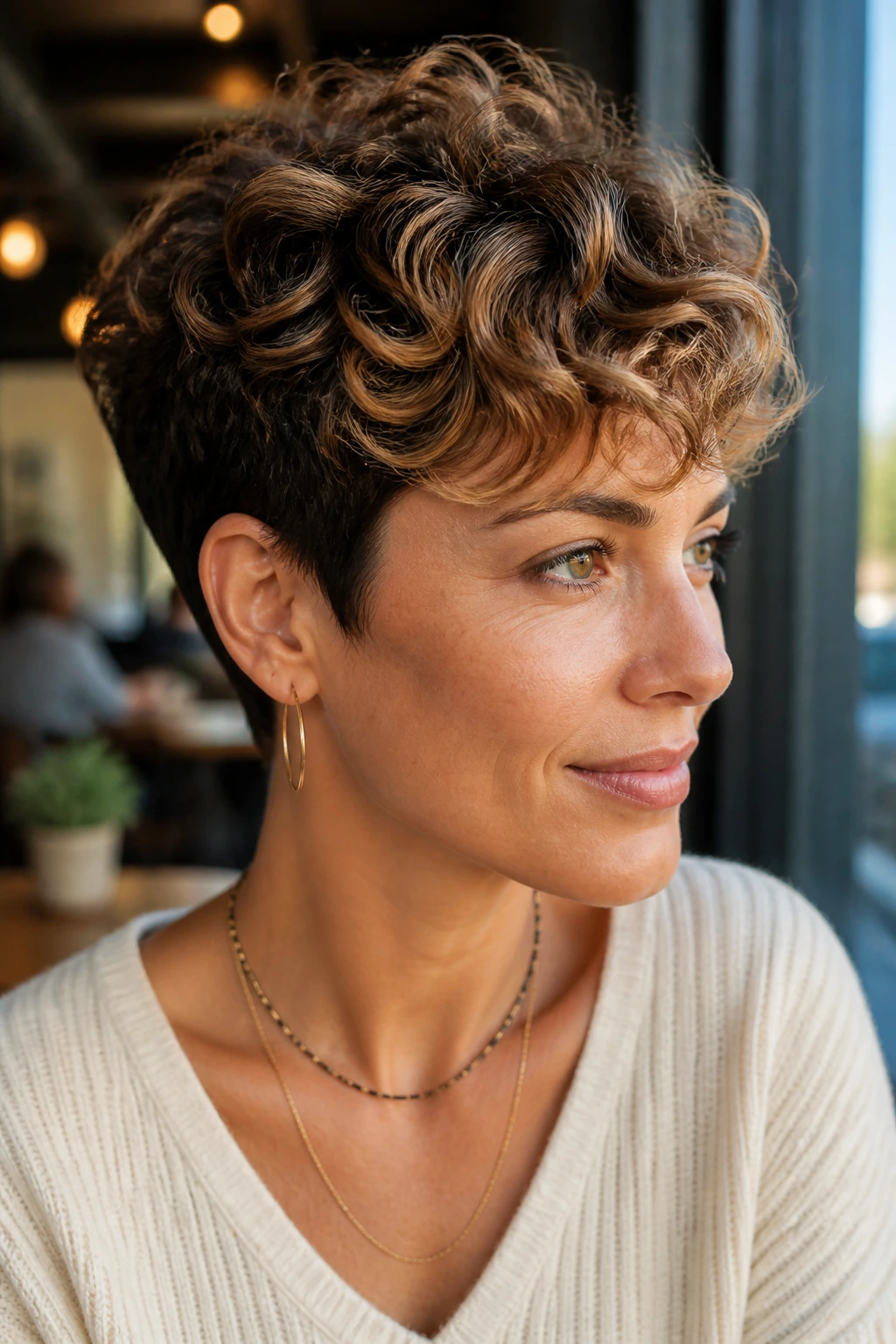
Short curls need a different kind of color logic. A pixie cut doesn’t have enough length for long, drifting balayage, so the caramel has to sit where the haircut has shape: the top, the fringe, and the curved sides.
The ribboning should follow the cut line. Brightness on the crown gives lift. Warmth near the fringe softens the face. A few darker pieces at the back keep the crop from reading too uniform. That balance is what makes a curly pixie look sculpted instead of fuzzy.
This is a smart choice if you want a low-fuss haircut with some personality. Short curls show color fast, so even a small amount of caramel can do a lot. You do not need a huge highlight map to make the style feel fresh.
A pixie with caramel ribboning has a cheeky, airy feel that a single-tone brunette crop rarely gets.
22. Espresso Base with Caramel Veil
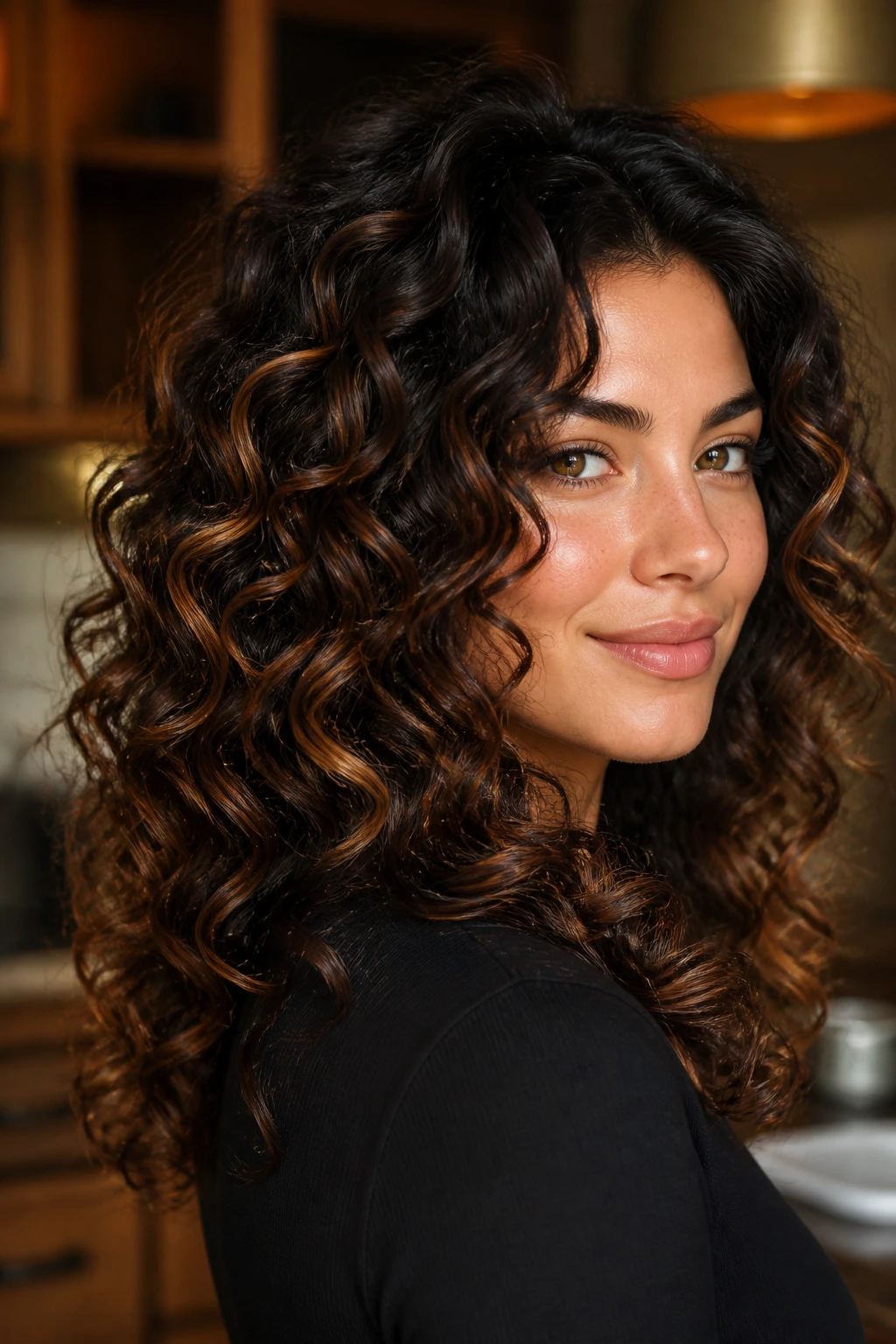
A caramel veil is a light overlay of warmth, not a loud highlight pattern. On an espresso base, it softens the dark color just enough to catch light while keeping the overall look rich and grounded.
This is the quietest idea here, and that’s why it’s useful. Some curly clients don’t want people to clock the color right away. They want hair that looks better in motion, not a color service that announces itself from across the room.
The veil is usually placed through the outer layers and the top surface. The curls underneath stay dark, which preserves density. On thick hair, that shadow is a gift. On fine hair, it keeps the style from looking washed out.
If your goal is “I changed something, but only the observant people will notice,” this is the one.
23. Creamy Latte Balayage for Curly Bobs
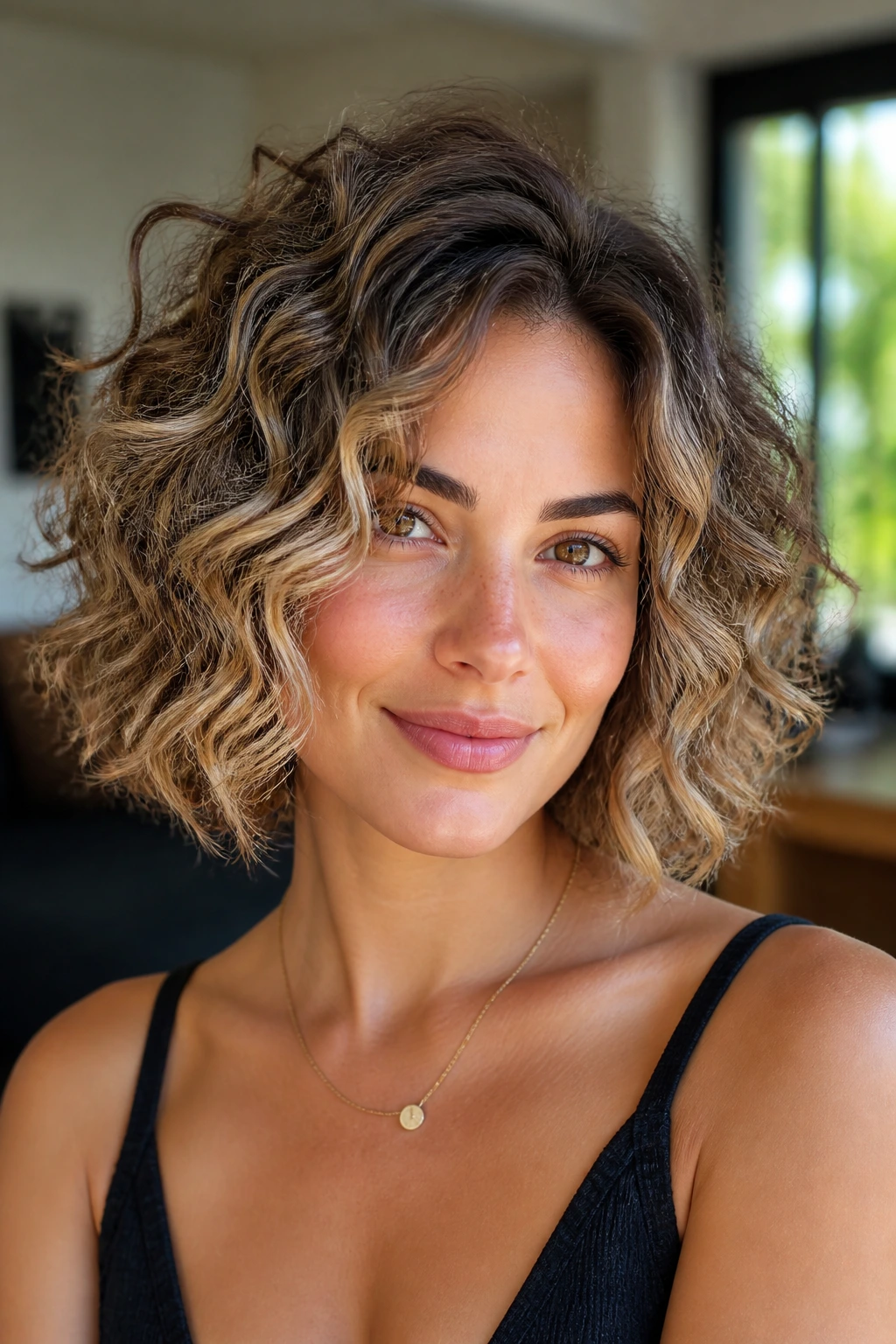
A curly bob with creamy latte balayage has a soft, polished feel that works on a lot of face shapes. The color is warm enough to feel like caramel, but the creamier finish keeps it from drifting too golden.
Where it shines
The bob’s shape gives the highlights a natural stage. A few brighter pieces around the sides and front create a clean frame, while softer pieces through the back keep the cut from puffing out visually.
This look is especially kind to 3A and 3B curls because the bob’s spring shows off the color movement without needing a huge amount of lightness. If the curls are tighter, keep the latte tone slightly deeper so it doesn’t vanish into the texture.
It’s a smart middle ground for anyone who wants caramel highlights that feel wearable, not flashy. The bob stays the focus. The color just makes it look more awake.
24. Rusty Caramel Copper Blend
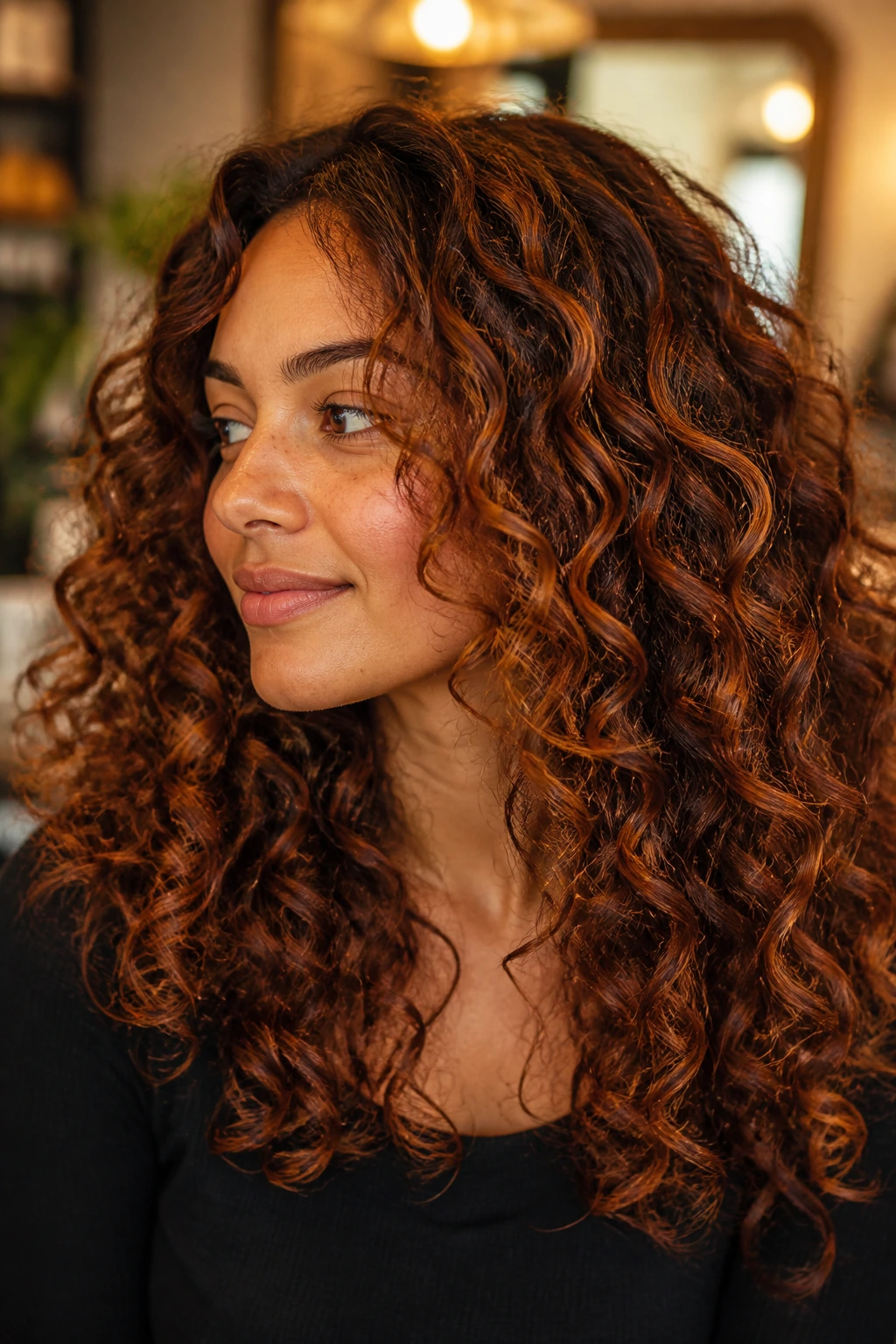
This one leans warmer and bolder than the rest, so it is not for everyone. Rusty caramel with a copper edge gives curls a vivid, spicy finish that looks especially good on people whose skin already likes warm tones.
The blend should still read caramel first. Copper should be the accent, not the whole story. If the copper takes over, the color can look loud in a way that fights the curl pattern instead of working with it.
I like this on dark brunettes who want a seasonal shift without going full red. The curls catch the copper in flashes, which keeps the hair from looking flat. And because curly texture already breaks up the line, the color feels richer than it would on a straight blowout.
If you want warmth with a little bite, this is the most assertive caramel idea in the set.
25. Soft Maple Glow with Gloss Finish
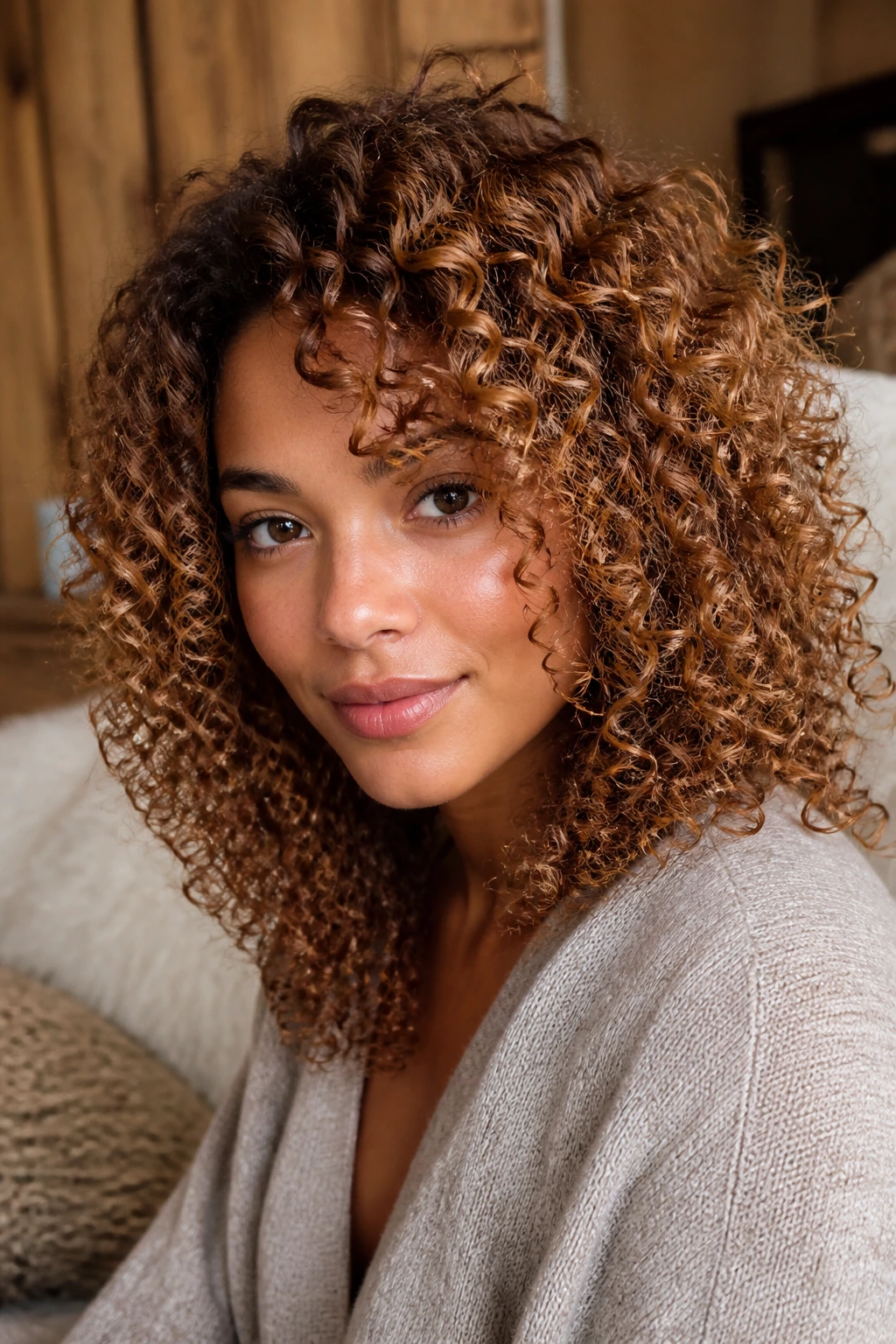
End with a gloss, and you change the whole mood of the color. A soft maple glow is less about heavy lightening and more about refining what’s already there, which is why it’s such a strong finish for curls that have been colored before.
The gloss gives the caramel a smoother surface, so the curls reflect light instead of just absorbing it. That matters on curly hair, because dullness tends to show up first at the bends and ends. A good gloss can make those sections look less thirsty in an instant.
This idea is especially useful if you want to refresh older caramel highlights without repainting the whole head. Tone the warmth, add shine, and let the existing curls do the rest. If the hair has good shape, the color almost takes care of itself.
For a lot of people, this is the sweet spot: warm, soft, and low-drama, with enough glow to make the pattern look intentional.
Why Painted Caramel Usually Beats Flat Color on Curls
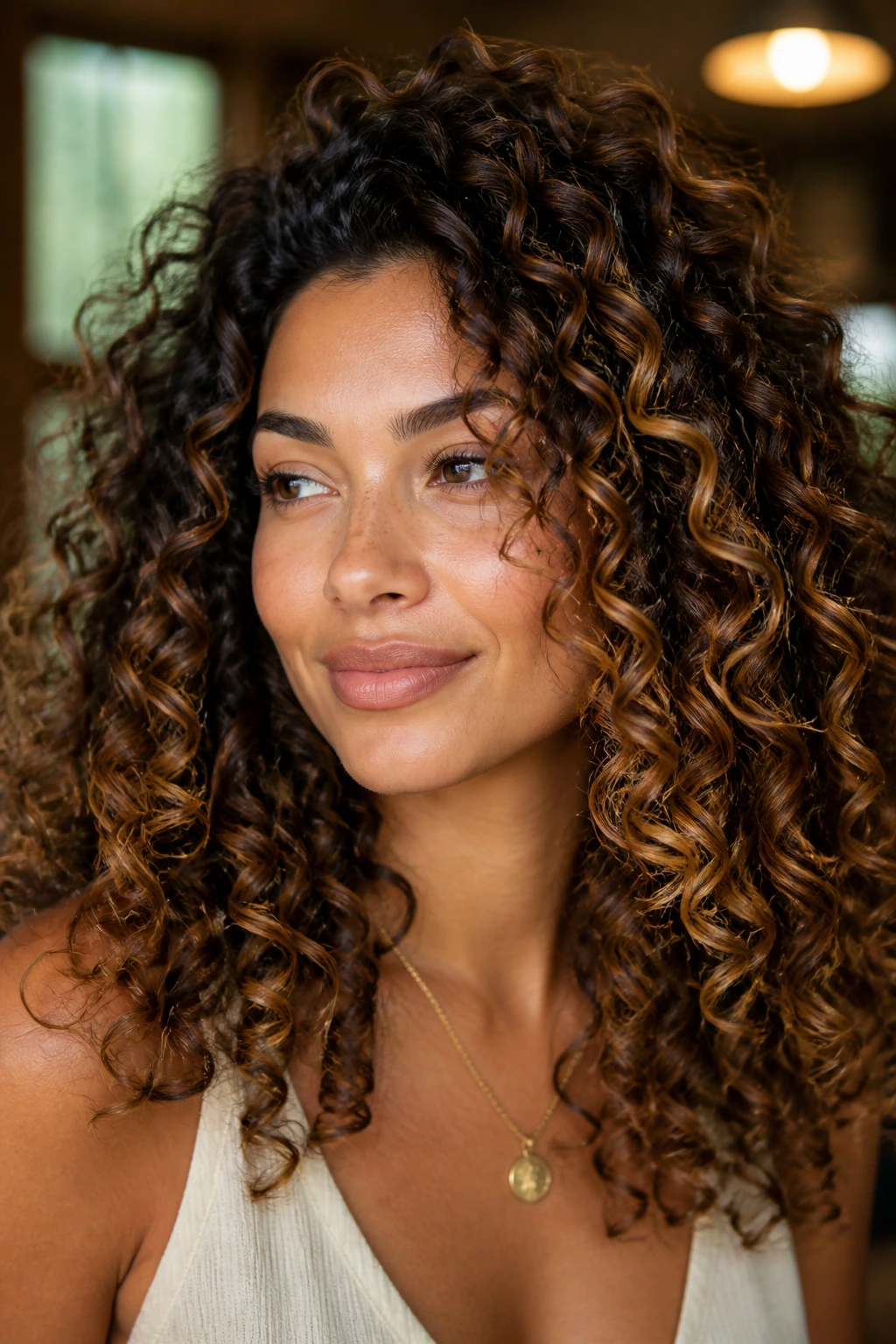
Curly hair doesn’t behave like a single surface. It behaves like a stack of curves, shadows, and little changes in texture, and that changes the way caramel needs to be placed. A flat all-over shade can make curls look heavier than they are, while painted ribbons keep the shape alive.
That’s the part people miss when they ask for “just caramel.” Caramel on curls is not one thing. It can be a honey ribbon on the outer bend, a smoky veil through the top layer, a bright money piece, or a gloss that warms up what’s already there. The method matters as much as the tone.
There’s also a health angle here. Curly hair usually has more points of dryness along the bend, so strategic lightening protects the pattern better than over-processing the whole head. Fewer foils, smarter placement, and a finishing gloss often leave the curl cuticle in better shape.
And honestly, that’s why caramel works so well here. It looks like it belongs to the hair, not like it was forced onto it.
Essential Tools for These Looks
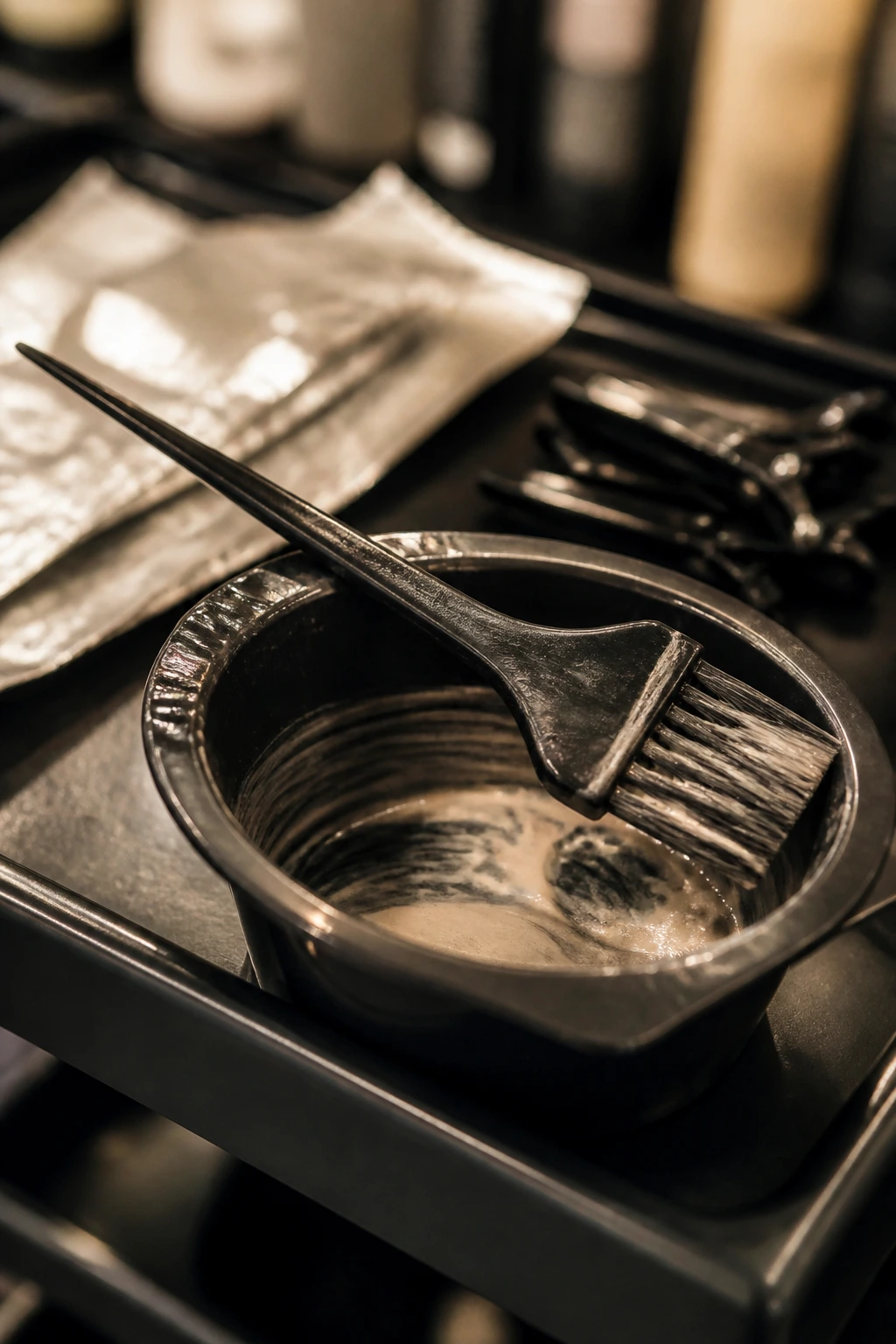
- Color brush and tint bowl: Needed for painting ribbons, babylights, and shadow-root melts with control.
- Tail comb: Helps separate clean sections so the caramel placement stays intentional instead of messy.
- Foils or balayage board: Useful for isolating pieces that need extra lift or a brighter money piece.
- Sectioning clips: Keep curl clumps out of the way while you work through dense hair.
- Gloves: Non-negotiable if any lightener or gloss touches the skin.
- Bond-building treatment: A smart add-on for any curly highlight service, especially if the hair is porous.
- Low-slip cape or towel: Curly hair can shed product and drip more than straight hair, so this saves a mess.
- Wide-tooth comb: Better than a fine comb for detangling without pulling apart the curl pattern.
- Microfiber towel or cotton T-shirt: Helps preserve curl shape while the color sets and after washing.
- Diffuser attachment: Useful for checking how the caramel reads when the curls are fully dry and spring back.
- Color-safe shampoo and conditioner: Keeps warm tones from fading into dull brown too fast.
- Clip-in or hand mirror: Handy for checking the back layers, where caramel can disappear or go stripey if you’re not careful.
Picking the Right Caramel Tone, Lift, and Finish
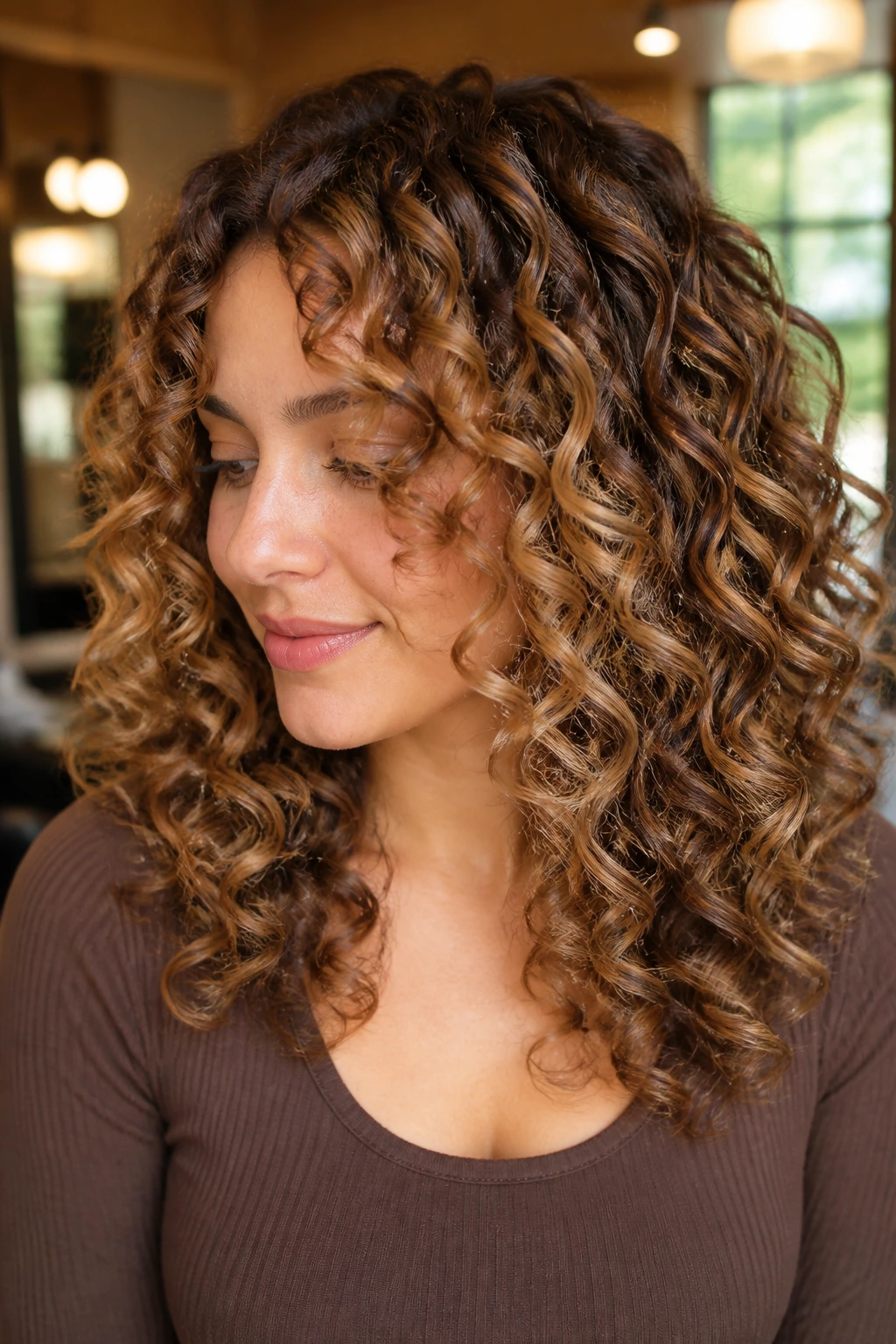
Caramel sounds like one color until you start matching it to a real head of curly hair. Then it turns into a whole set of choices: honey, beige, toffee, maple, bronze, cinnamon, or smoky brown-gold. The right one depends on the base, the porosity, and how bright you want the curl to read when it dries.
If your hair is a deep brunette, keep the caramel in the brown-gold lane. Pushing it too light usually loses the caramel identity and starts reading blonde. If your base is medium brown, you can get away with more gold or beige in the mids. If your curls are porous, stay a step softer than you think you need, because porous hair grabs warmth fast and can turn brassy on the second or third wash.
Tone matters too. Beige caramel is calmer. Honey is brighter. Toffee sits in the middle. Copper-leaning caramel brings attitude, but it also needs the best conditioning and the most careful toning. A glossy finish can fix a lot, but it cannot rescue hair that was lifted too hard in the first place.
When in doubt, choose the shade that makes the curl pattern look fuller rather than the shade that looks brightest on the swatch card.
How to Wear These Shades in Real Life
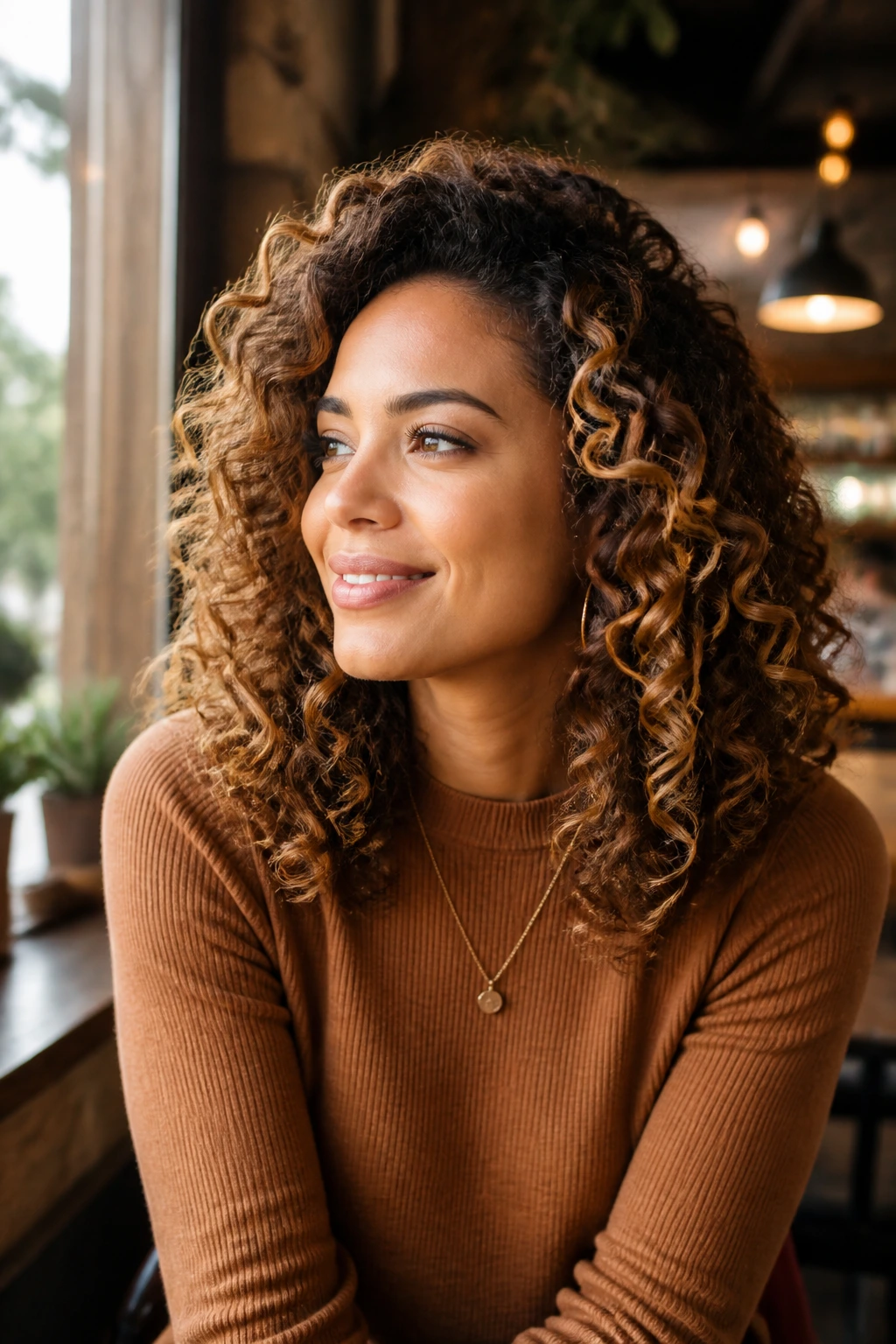
Presentation: Let the curls dry enough to clump before you judge the color. Caramel highlights show their best side when the curl pattern is defined, whether you diffuse, air-dry, or finger-coil the front pieces.
Accompaniments: Cream, olive, rust, camel, and soft black clothing tend to flatter warm caramel tones, while gold hoops, brown liner, and a peachy lip keep the hair from looking disconnected from the rest of the face. If you like cooler clothes, a beige caramel or smoked caramel reads easier than a bright honey.
Portions: On fine curls, a small amount of brightness can be enough—think a few face-framing pieces and soft surface ribbons. On thick curls and coils, the color often needs more surface area to show through the density, so a bolder balayage or money piece makes sense. The goal is balance, not max brightness.
Beverage Pairing: A long salon appointment is easier with iced coffee, sparkling water, or herbal tea, but the real pairing is patience and a good deep conditioner at home. That second part matters more than the first.
Additional Tips and Shine Boosters
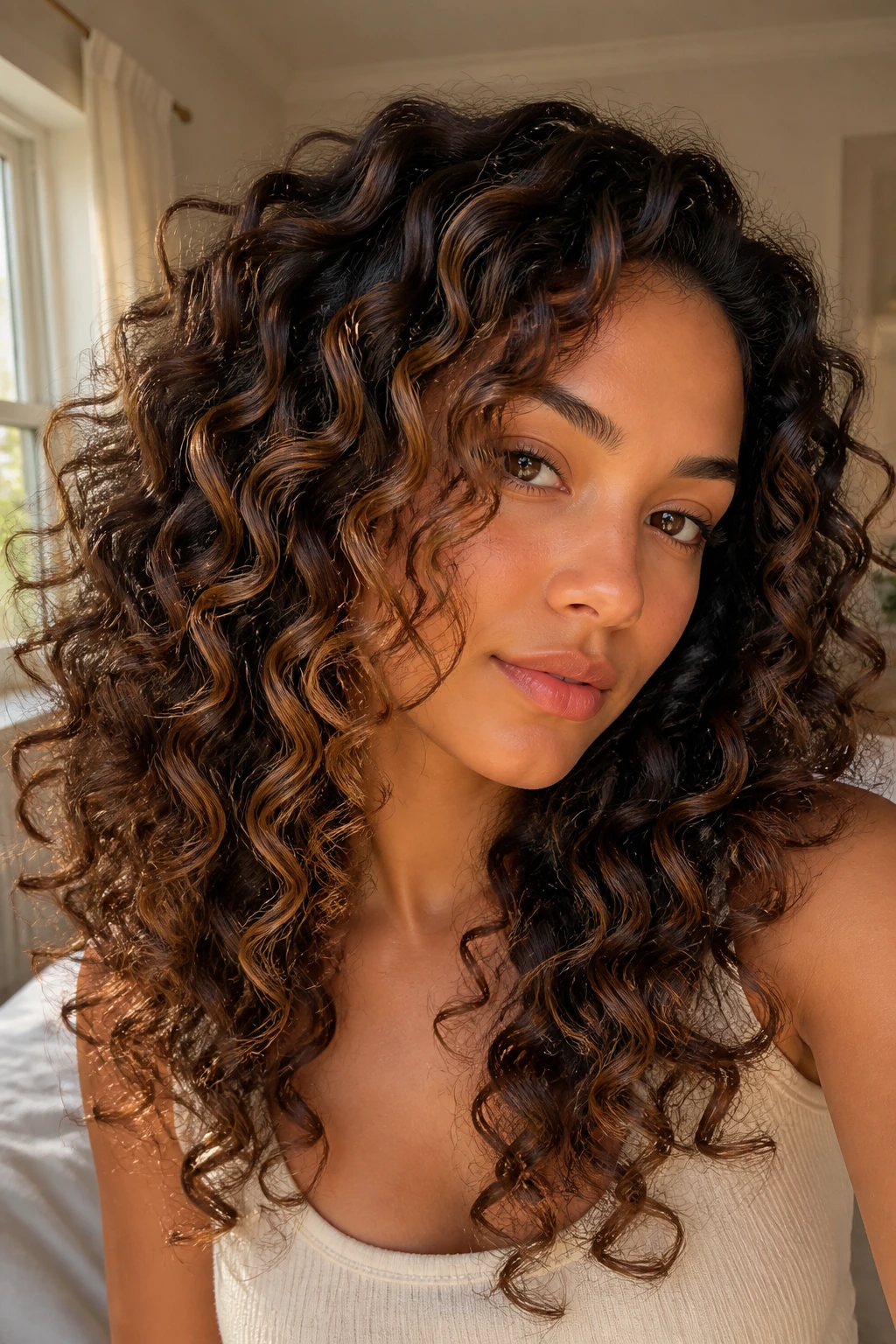
Tone Boost: If the caramel starts reading too orange, a beige-gold gloss can pull it back without flattening the dimension. I prefer this to a heavy ash toner on curls, which can suck the life out of the warmth and leave the color muddy.
Customization: Add a shadow root for softer grow-out, or tuck in a few lowlights if the hair needs more depth at the crown. If you want more drama without more lift, ask for brighter front pieces and leave the rest of the head quiet.
Serving Suggestions: Diffuse until the roots are dry, then let the ends finish air-drying so the highlights sit on a defined curl pattern. A little light serum on the mid-lengths helps the caramel reflect instead of looking dusty.
Make-It-Yours: For low-maintenance wear, stay within two shades of your base. For bolder color, push the ends brighter and keep the root deep. For very dry curls, choose gloss and placement over repeated lifting. That swap usually saves the texture.
Maintenance, Refreshing, and Protecting the Color
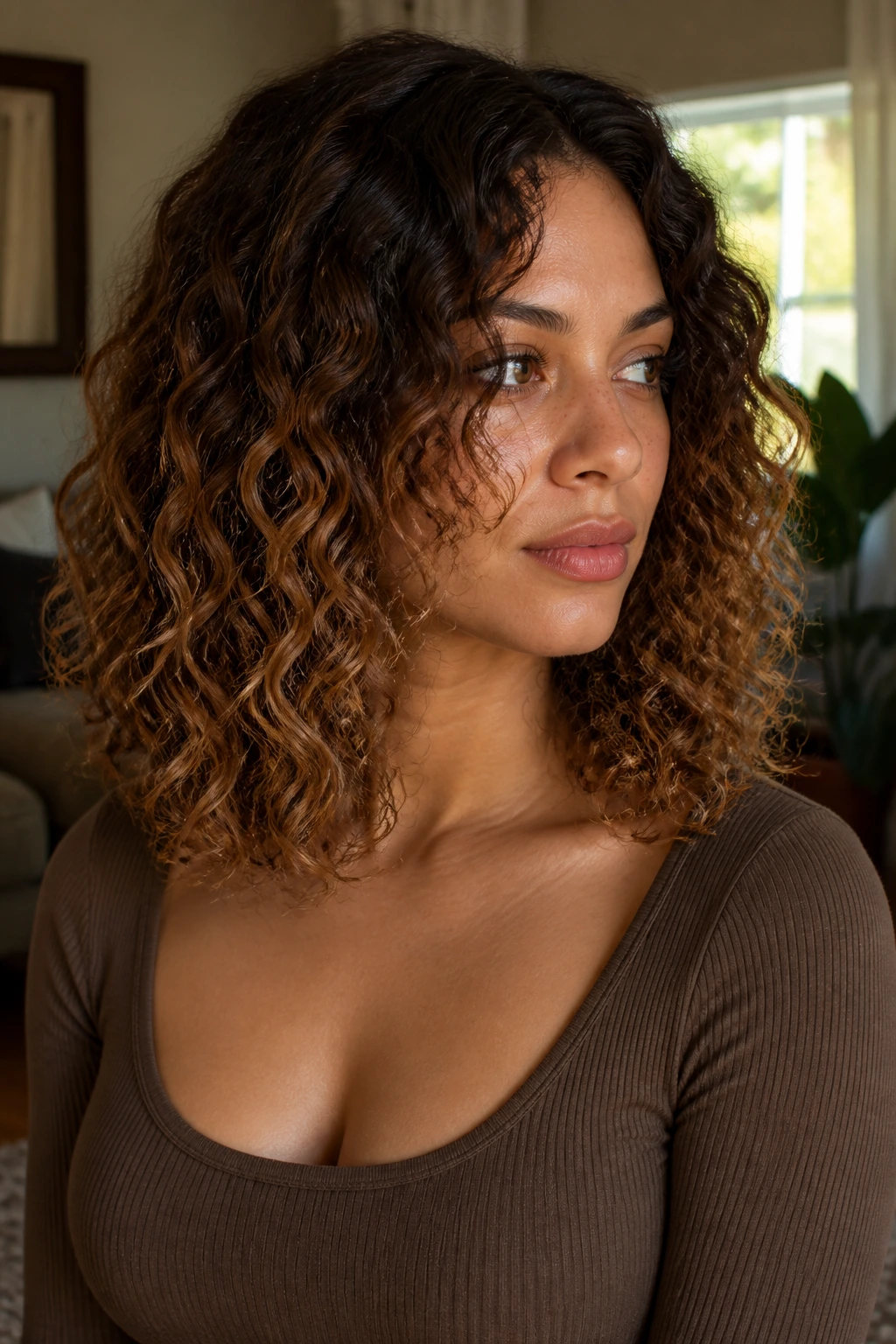
Caramel on curls usually looks best when the tone is refreshed before it gets brassy, not after. A gloss or toner every 4 to 8 weeks keeps honey and toffee shades from drifting too orange, especially if your water is hard or you wash often.
If you want the grow-out to stay soft, plan a root-smudge or shadow refresh every 8 to 12 weeks. That window can stretch a little if the highlight pattern is airy and the base is deep. It gets shorter if the front pieces are bright and the hairline grows fast. For many curls, the face frame is what needs the most attention.
Wash care matters too. A color-safe shampoo, a rich conditioner, and a weekly mask are the boring part of the routine, but they’re the part that keeps caramel from going dull. If the hair feels mushy, add a protein treatment every 2 to 4 weeks. If it feels rough or stiff, back off and lean into moisture.
Heat styling should stay gentle. A diffuser on low to medium heat is enough. High heat can flatten the curl pattern and make caramel look dry, especially on the lighter ends. And if you swim, coat the curls with leave-in before the pool and rinse them right after. Chlorine is brutal on warm tones.
Variations and Adaptations to Try
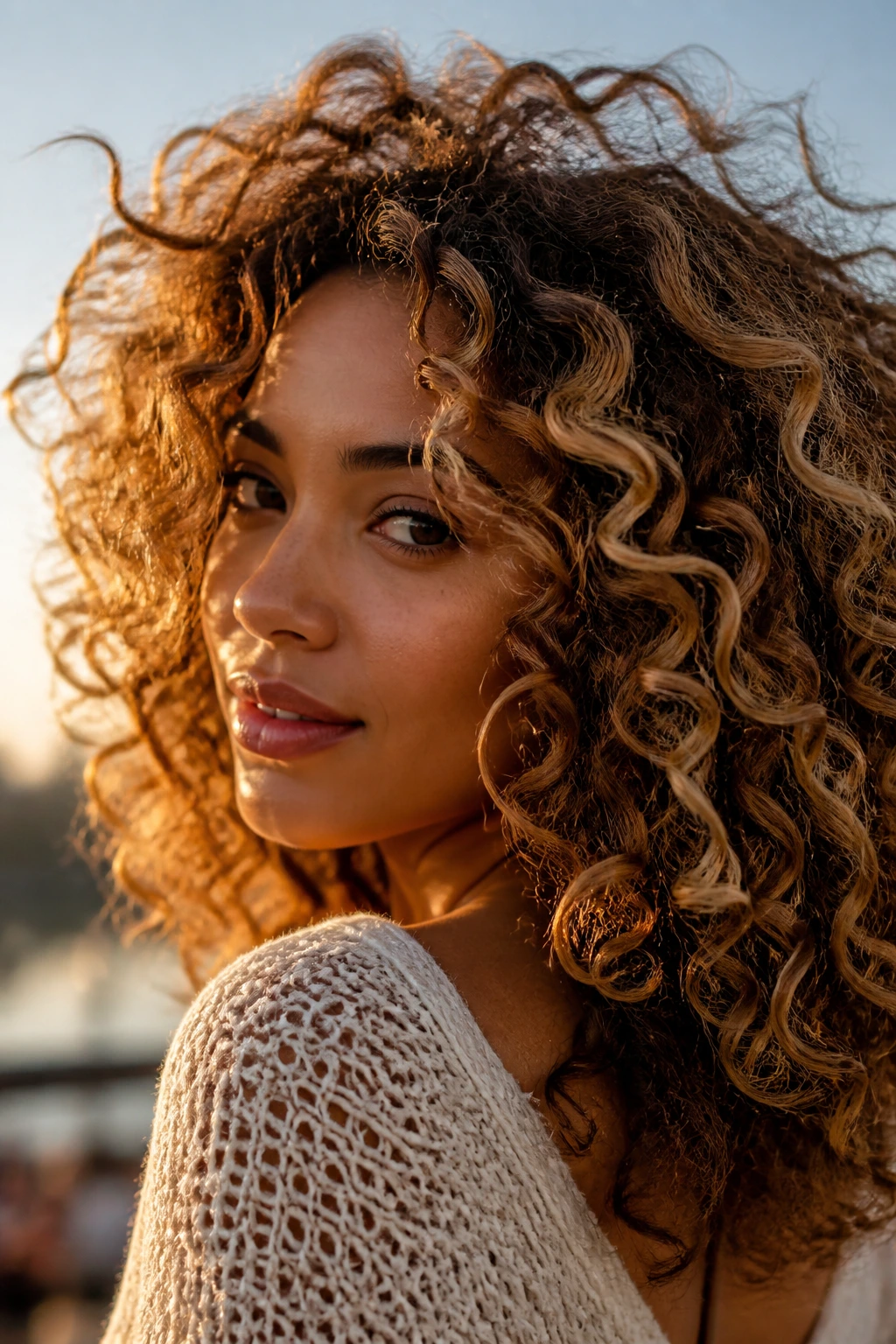
Low-Contrast Brunette Glow: Keep the caramel close to the base color and use only a few ribbons around the face and crown. This version is for people who want shine and depth, not a dramatic change.
Bold Front-Frame Drama: Brighten the money piece and the first few curls around the face while leaving the rest of the head deeper. It’s a fast way to make a haircut feel fresh without repainting everything.
Beige-First Caramel: Ask for a softer beige-gold tone instead of rich honey. This suits cooler wardrobes and anyone who gets nervous when warmth starts leaning orange.
Copper-tinged Caramel: Add a little rust or ginger to the formula for a warmer, spicier finish. Keep it controlled on porous hair so it doesn’t swing too red.
Gloss-Only Refresh: If the highlights are already there, skip major lifting and use a warm gloss to deepen the caramel and restore shine. This is the easiest adaptation for hair that’s been lightened before.
Coily-Texture Placement: For 4A to 4C hair, keep the brightness closer to the surface and the ends, and avoid packing light pieces too close together. The curl shrinkage does half the styling for you, so the color doesn’t need to be dense.
Common Mistakes to Avoid
Painting every curl the same way. That’s how curls start looking stripey. The fix is varied placement: more brightness around the face and surface, less through the hidden interior.
Lifting too light for the base. Caramel can turn into blonde fast, especially on porous hair. If the hair is dark, stay in the brown-gold range and let the curl pattern provide the contrast.
Using the wrong toner. Ash toner can make warm curls look flat and dusty. Beige, gold-beige, or soft caramel gloss usually keeps the color alive better.
Ignoring porosity. Porous curls grab warmth and process faster than you expect. That can create hot ends or uneven tone, so the colorist needs to watch the hair, not the clock alone.
Skipping bond care. If the curls feel rough, the color will look rough too. Bond support and moisture balance matter because caramel highlights show texture damage quickly on lightened curls.
Forgetting shrinkage. Highlights placed only on the lower visible length can disappear once the curls spring up. A little color higher on the surface helps the look stay visible when dry.
Frequently Asked Questions
Can caramel hair color work on very dark curly hair?
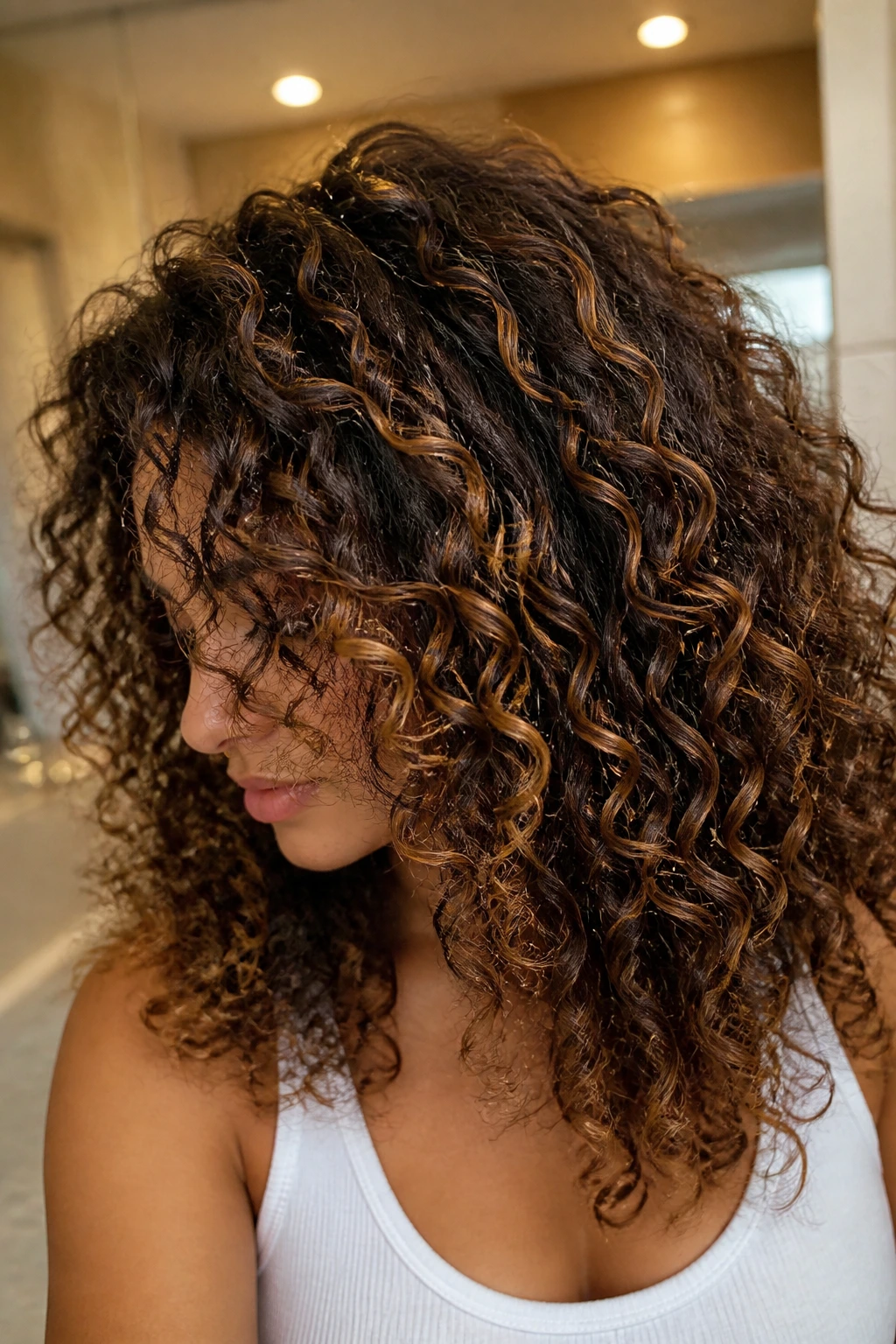
Yes, but the caramel should usually stay in the brown-gold range instead of pushing all the way to blonde. On a deep base, smoked caramel, bronze caramel, and soft honey ribbons tend to look richest because they keep enough depth to match the curl pattern.
Is balayage better than foils for curly hair?
Balayage usually gives a softer, more natural blend on curls because it follows the curl shape instead of cutting the hair into uniform stripes. Foils still have a place, especially for a bright money piece or babylights, but a painted approach often looks less harsh as the curls move.
Will caramel highlights make my curls frizzier?
They can if the hair is lifted too hard or over-toned. A careful placement strategy, a bond-building step, and regular moisture keep the cuticle smoother, which helps the curls stay defined instead of puffing out around the lighter pieces.
How light do my curls need to be for caramel to show?
Not as light as people think. Caramel often shows up beautifully one to three levels above the base, especially on curly hair where the bends create shadow and shine. Going lighter is not always better; it can erase the brown warmth that makes caramel look like caramel.
What caramel shade is best for fine curls?
Babylights, beige caramel, and soft honey ribbons usually work best. Fine curls can look stringy if the highlights are too chunky, so tiny pieces and a softer tone keep the hair looking fuller.
How often do I need to refresh caramel on curly hair?
A gloss every 4 to 8 weeks and a root or placement refresh every 8 to 12 weeks is a practical rhythm for many people. If you wash often, spend time in the sun, or use hard water, the warm tone may need attention a little sooner.
Can I get caramel color without bleaching my hair a lot?
Sometimes, yes. If your hair is already medium brown or has old highlights, a gloss or low-lift caramel service may be enough. On darker bases, though, a small amount of lightening is usually needed if you want the color to show clearly.
What if one section of my curls lifts lighter than the rest?
That happens more often on porous ends and around the face. A skilled colorist can correct it with a targeted gloss, lowlight, or a softened blend at the next visit, which is another reason to avoid chasing one perfectly even shade across every curl.
A Warm Finish for Curls That Move
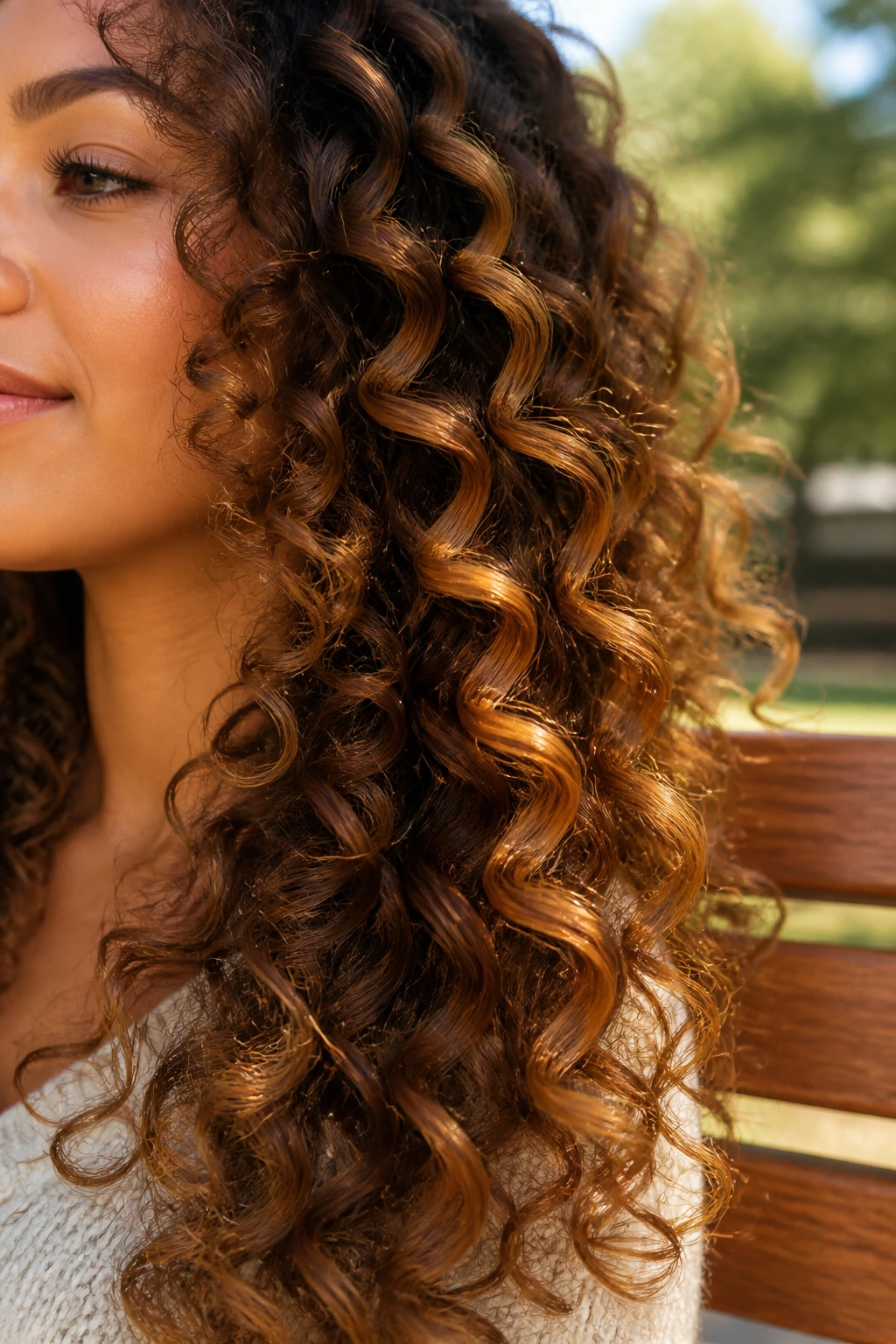
The best caramel on curly hair never looks pasted on. It looks like the curls were already carrying that warmth and shine, and the color just helped it show up.
Pick the shade that matches your curl pattern, keep the placement soft enough to let the bends do the work, and resist the urge to make everything lighter. The color will last longer, the grow-out will be kinder, and the curls will keep their shape instead of fighting the dye job.
That’s the version worth asking for.
