



A medium length hair balayage can do something a long mermaid wave sometimes can’t: it shows the color without hiding the cut. On a lob that skims the collarbone, a shaggy mid-length cut, or a blunt shape with a little bend at the ends, the painted pieces sit right where the eye lands first — around the face, through the mid-lengths, and along the curve of the hair when it moves. That is where balayage looks alive.
On this length, the color has enough room to fade softly from root to tip without losing its shape. Too short, and the placement can look abrupt. Too long, and the light pieces can drift out under all that weight. Medium hair gives you the sweet spot: visible dimension, less drag, and enough hair to make warm ribbons, smoky brunettes, creamy blondes, or unexpected fashion shades feel deliberate instead of loud.
The tricky part is choosing the right kind of dimension. A soft caramel sweep on brown hair behaves differently from a mushroom-brunette melt. A copper ribbon near the cheekbone reads differently than a hidden lavender panel tucked under the top layer. So the color idea matters as much as the shade itself, and medium length hair balayage is one of those styles where placement can make a plain color feel expensive in the best sense of the word — polished, wearable, and never flat.
Why These Balayage Ideas Work So Well on Medium-Length Hair
-
Soft grow-out: Hand-painted pieces blur better on shoulder-skimming cuts, so you don’t get that hard stripe where new growth starts.
-
Face-framing payoff: Medium hair gives enough length to place brightness around the cheekbones and jaw without dragging the lightness all the way down.
-
Less weight, more movement: Mid-length cuts show off the bend in each ribbon of color, which is why balayage looks more dimensional here than on one-length hair that hangs heavy.
-
Warm and cool shades both land well: Caramel, ash, beige, copper, rose gold, and pearl blonde all work on this length because the haircut gives each tone space to breathe.
-
Easy to style, easy to read: A loose wave, a round-brush blowout, or a flat iron bend will change how the color shows up, which makes medium hair a nice canvas if you like switching your styling routine.
-
Good for subtle or bold placement: You can keep the lighter pieces tucked into the mid-lengths for a quiet effect, or push the brightness right up to the face for more drama without needing extra length.
1. Caramel Ribbon Balayage
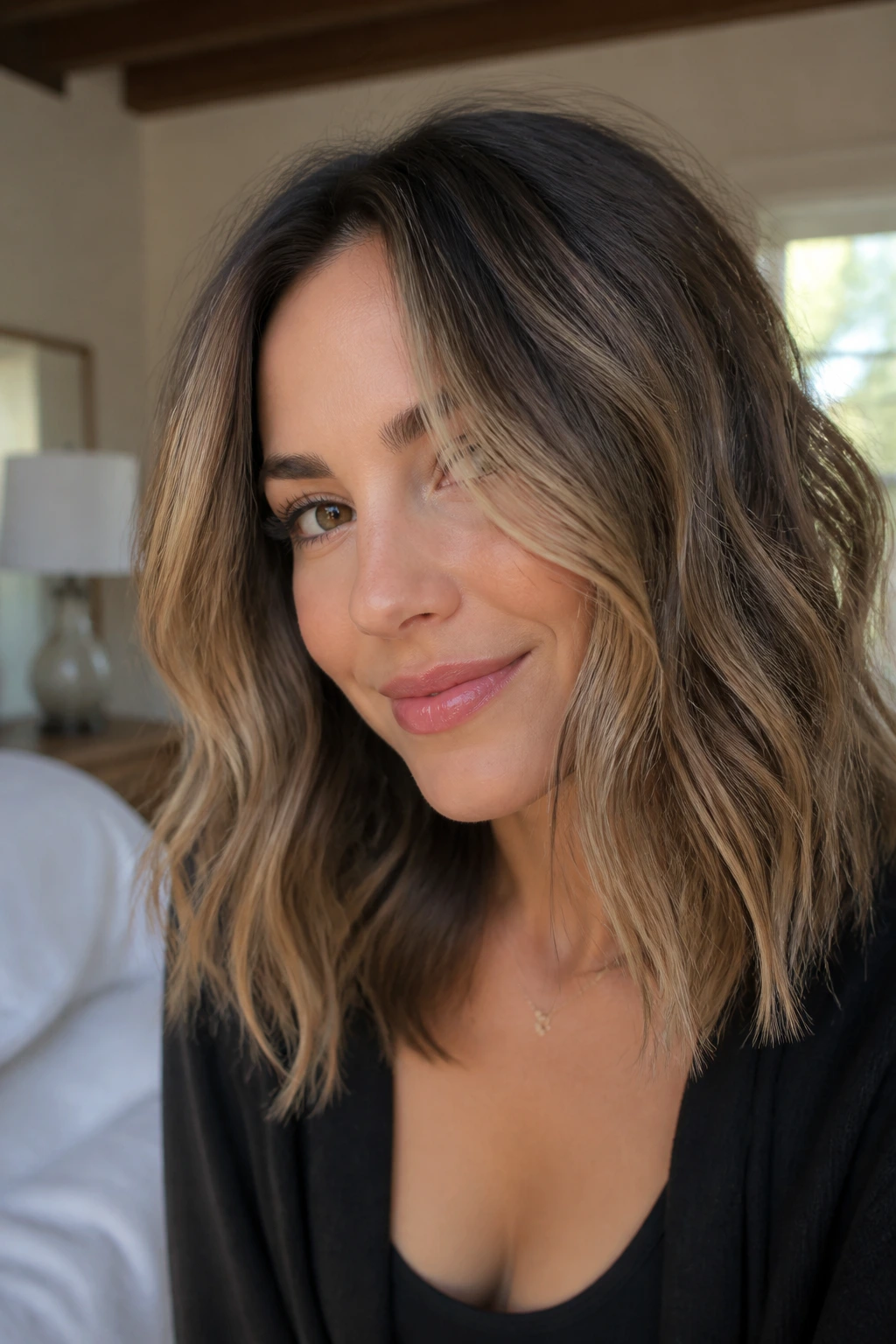
Caramel ribbon balayage is the shade I reach for when someone wants brown hair that looks richer instead of louder. On medium length hair, those warm ribbons sit in the bends of the cut and catch light in a way that feels easy to wear, not overdone. It’s especially nice on layered lobs because the color has somewhere to break up and float instead of settling into one flat block.
Why it works: The caramel tone lives just a step or two lighter than a medium brunette base, so it gives movement without a hard contrast line. On shoulder-length hair, that matters; the color shows in the outer layer first, then peeks through as the hair swings. If the goal is softness with visible shine, this is one of the safest bets.
What to ask for: Keep the brightest caramel pieces around the front and through the mid-lengths, then let the ends stay a touch deeper. That shadow near the bottom keeps the hair from looking stringy.
Style note: Loose waves show the ribbons best. A 1.25-inch curling iron and a quick brush-through give the color that smooth, banded look people always ask about.
2. Mushroom Brown Balayage
Mushroom brown has a quiet, smoky feel that looks excellent on medium hair because the cut gives the color room to shift from cool brown to soft beige. It’s not shiny-gold blonding. It’s more restrained than that, and I like it for people who want dimension without obvious warmth creeping in at the ends.
The shade works well if your natural base sits in the medium-brown range and you’re tired of brass. The cooler ribbons calm everything down, especially under indoor light where warmer balayage can sometimes read orange. On a lob, the tonal shift looks expensive and a little moody in a good way. The hair still moves, but the color doesn’t shout.
Best for: Straight blowouts, soft bends, and anyone who likes ashier makeup tones or cooler clothing colors.
Ask for: Smoky beige ribbons, not chunky highlights. The magic is in the blur.
3. Honey Face-Framing Balayage
Honey face-framing balayage is for the person who wants brightness right where it counts. The front pieces lift the eyes, soften the cheek area, and make medium length hair look lighter even if the rest of the color stays grounded and deep. It’s a smart move if you don’t want to brighten the whole head.
Here’s what makes it work: the front section gets the most visual attention, so even two or three lighter panels can change the whole haircut. On medium lengths, those honey pieces sit at the bend of the hair and show up when you tuck one side behind the ear or pull the front away from the face. Tiny move. Big payoff.
What to ask for
-
Keep the money piece one to two shades lighter than the rest of the balayage.
-
Blend the front pieces into softer beige or caramel through the lengths.
-
Leave the nape and the bottom layer darker so the look doesn’t turn stripey.
My take: This is one of the easiest ways to try balayage if you’re nervous about commitment. The front says “color,” but the back keeps things calm.
4. Beige Bronde Melt
Beige bronde is the middle ground that usually makes the most sense once you stop chasing extremes. On medium length hair, it gives you enough blonde to brighten the cut but enough brown to keep the whole thing rooted and wearable. The beige tone is the part that saves it from looking yellow or too warm.
This is a good choice if your hair lives naturally in the dark-blonde-to-light-brown zone. The transition from root shadow to beige mids to soft ends looks especially nice on a collarbone lob, because the shape has a clean edge that keeps the melt from turning muddy. The best versions never look like separate colors. They look like one tone that slowly changed its mind.
If you wear your hair wavy, the beige ribbons will show up in every bend. If you wear it straight, the subtle contrast stays more understated, which is useful when you want polished and not beachy.
5. Copper Cinnamon Balayage
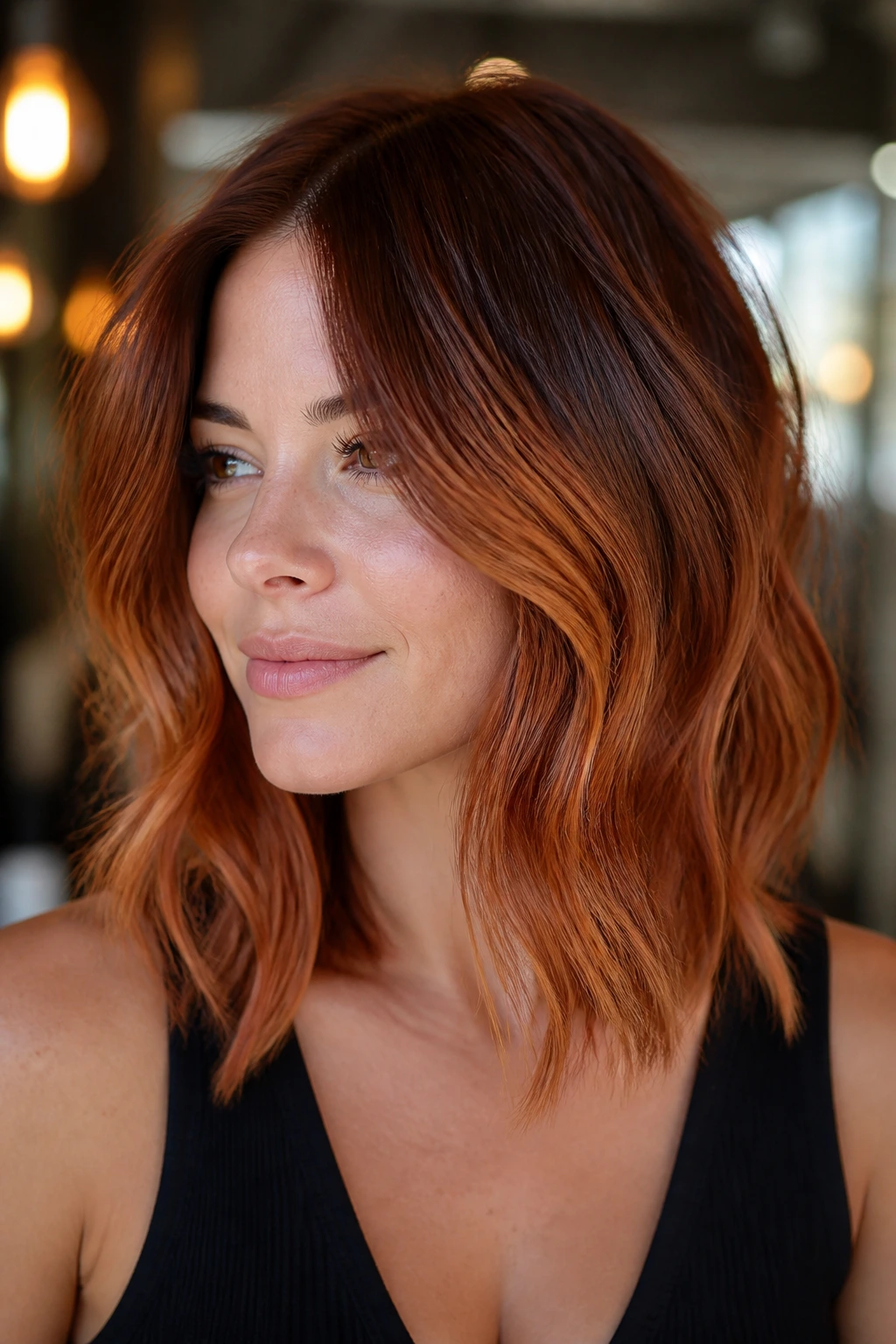
Copper cinnamon balayage has more heat to it, and medium length hair holds that heat well. Long hair can sometimes dilute vivid tones until they lose their spark. On shoulder-length hair, copper stays concentrated enough to read as intentional, especially when it’s painted through brunette lengths with a little extra saturation around the face.
I like this one on layered cuts and textured waves. The red-gold tone catches the light when the hair moves, then deepens again in the shadow between sections. It feels lively without turning neon. That balance is what makes it work.
The texture note
Copper always looks richer when the hair has a bit of bend. A flat, stiff blow-dry mutes the movement and makes the color less interesting.
What to keep in mind
-
Copper fades faster than beige or ash.
-
A gloss every 4 to 6 weeks keeps the tone from turning flat.
-
A color-depositing mask can help if your base tends to eat red pigment.
6. Ash Brunette Balayage
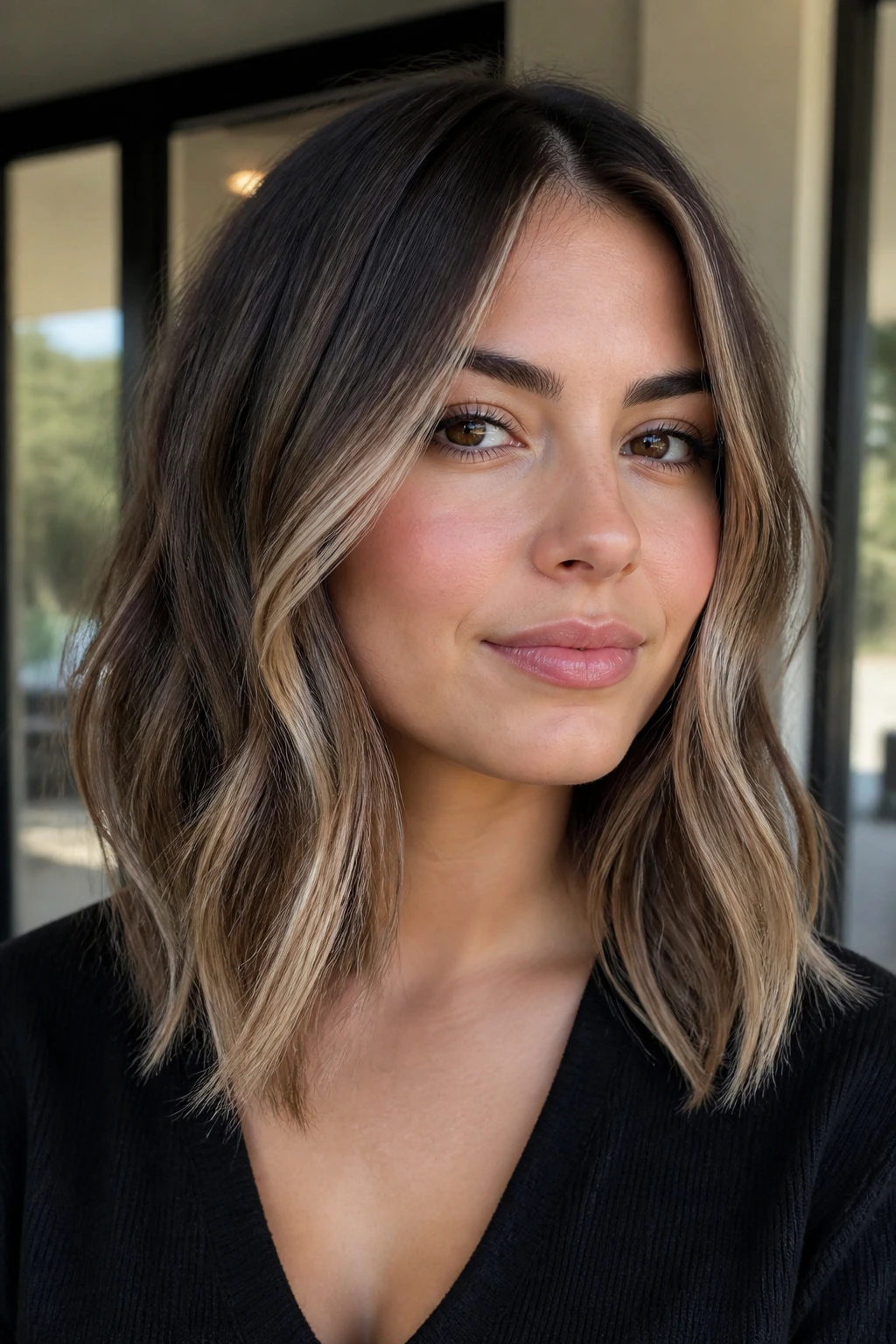
Ash brunette balayage is for the person who keeps saying, “I like dimension, but I do not want orange.” That’s the whole appeal. The ribbons are cool, smoky, and quiet, and medium length hair gives them enough room to show up without looking chunky at the root.
This shade is especially good if your natural color is a level 4 or 5 brunette and you want a cooler finish around the face and mid-lengths. On mid-length hair, ash pieces help the haircut look cleaner because they don’t flare out at the ends the way warmer highlights sometimes do. The result feels sharp in a restrained way.
A blue-toning shampoo can help between salon visits if your brown leans too red. Use it sparingly. Once a week is enough for most people, and leaving it on too long can make the hair look dull instead of cool.
7. Rose Gold Wash
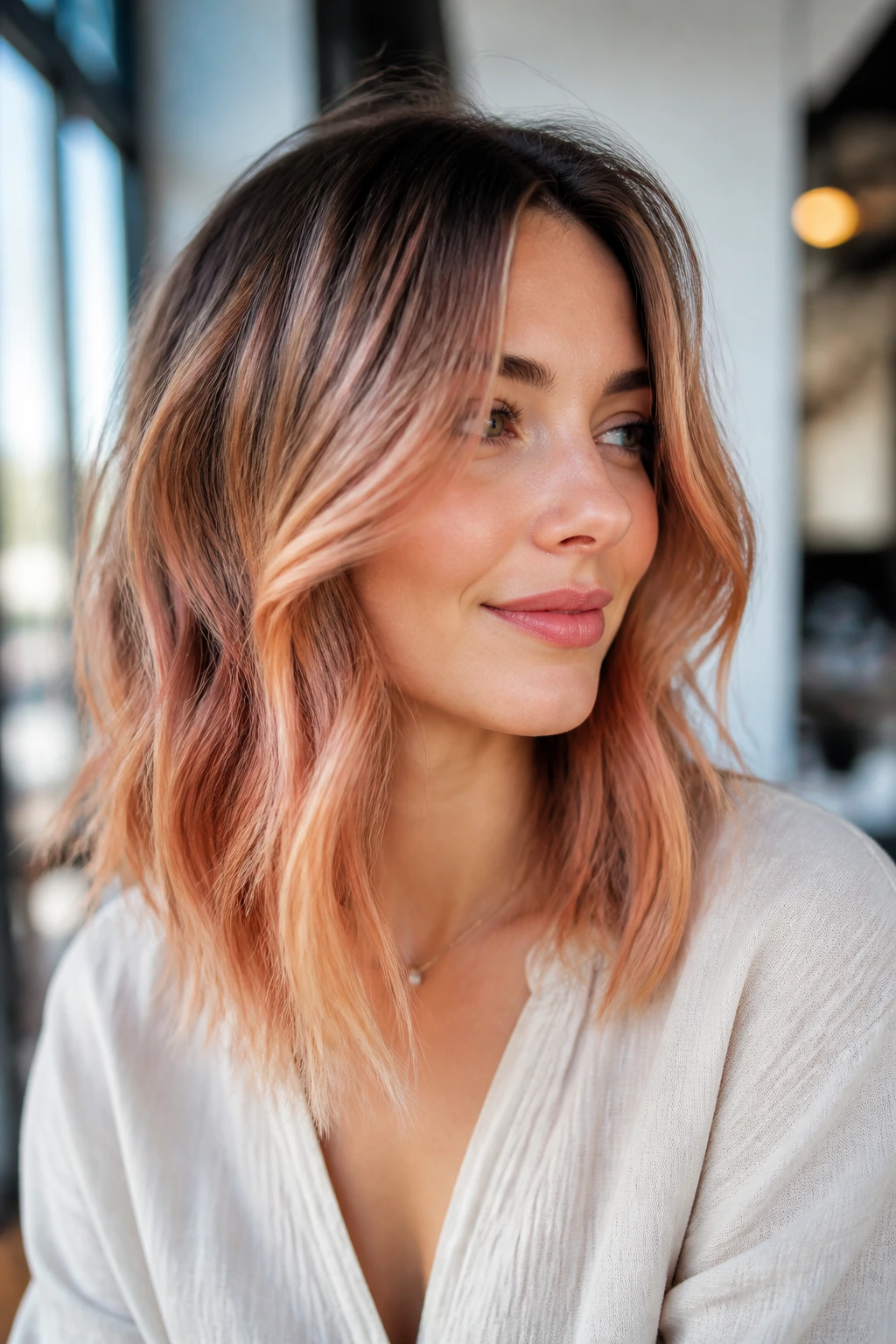
Rose gold on medium length hair has a soft metallic sheen that looks especially good when the haircut has movement. It’s not full pink. It’s more like a warm blush laid over pale gold, and on a lob it can feel playful without tipping into costume territory.
This one needs a lighter base than most brunette balayage ideas, so it works best if the hair has already been lifted. The good part is that medium length hair makes the color look fresh even when the pink fades a little. It turns peachier, then softer, then eventually lands in a warm beige-beige range. That fade can be pretty if the original lift was clean.
My opinion
Rose gold looks best when the tone stays sheer. If it goes too dense, it can look like a dye job instead of a highlight story.
Good pairing
Curtain bangs or a face frame with a little sweep at the cheekbone. The color likes softness around it.
8. Icy Beige Lob Balayage
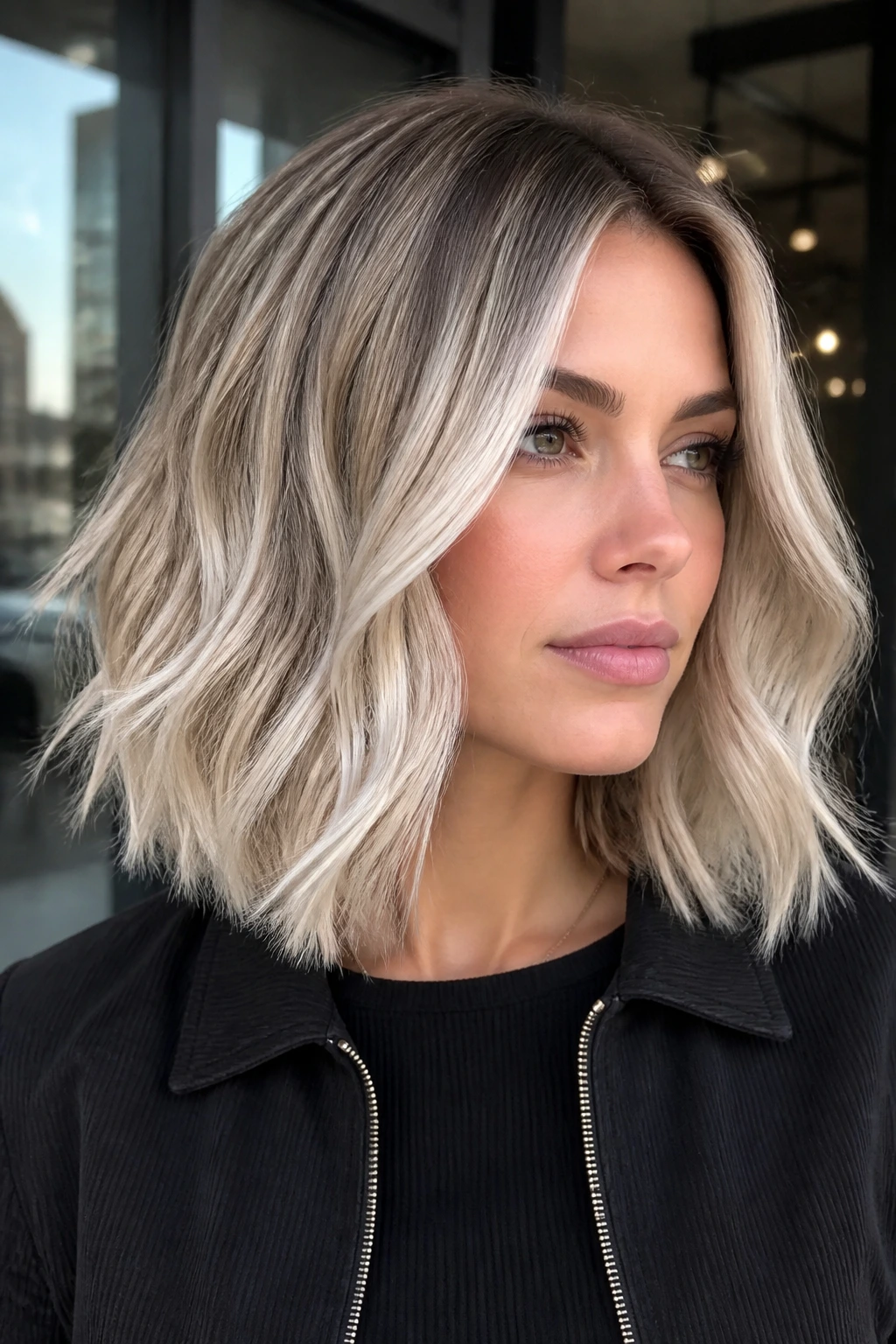
Icy beige balayage is one of the sharper looks in this lineup. It sits in that cool, pale zone between platinum and beige blonde, which means medium hair gets a more modern contrast than it would with honey or caramel. On a lob, the blunt edge keeps the lightness from looking wispy.
This look asks more of the hair. The lift needs to be clean, the toner needs to be chosen carefully, and the ends need care or they’ll snap and fray. But when it works, it has a crisp, airy finish that looks especially nice on straight or softly waved hair. The cool tone also gives the cut a neater outline.
If your skin leans cool or neutral, this is a strong choice. If you like warmer makeup or gold jewelry, it can still work — the right beige toner keeps it from going icy blue-gray.
9. Chocolate Mocha Shadow Lights
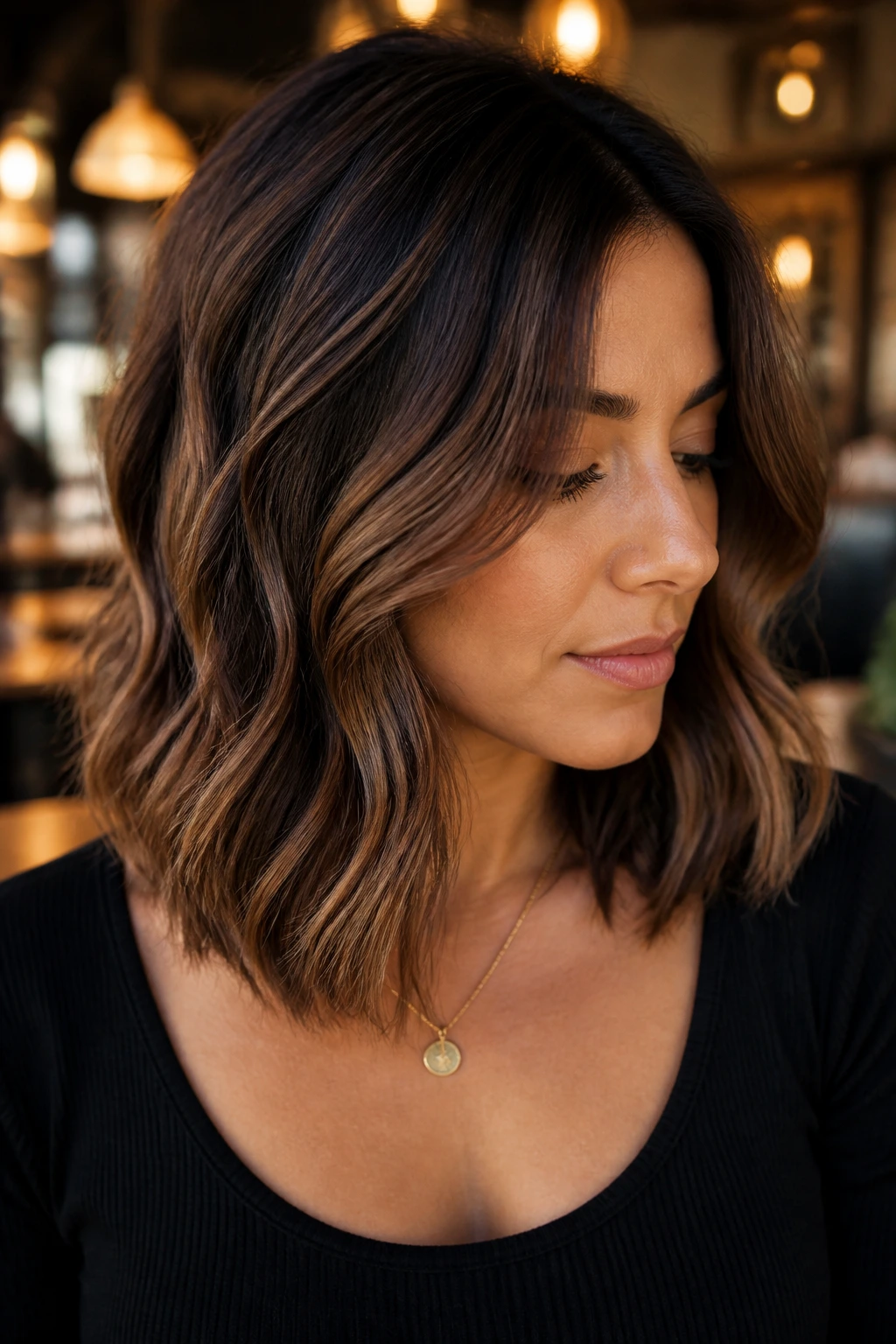
Chocolate mocha shadow lights are what I suggest when someone wants “something different” but doesn’t want their hair to announce it from across the room. The base stays chocolatey and deep, while the lighter ribbons live a shade or two up in mocha and soft taupe. On medium length hair, that small shift can make the whole cut look thicker.
The reason I like this idea on shoulder-length hair is simple: the lighter pieces don’t have to travel very far to be seen. They hit the surface, move with the wave, and then disappear back into the dark base. That rhythm makes the hair look denser and more dimensional at the same time.
Small detail, big effect
Ask for wider negative space between the lighter ribbons. Too many foils or too many painted pieces can turn a soft mocha look into a busy one.
10. Walnut and Toffee Balayage
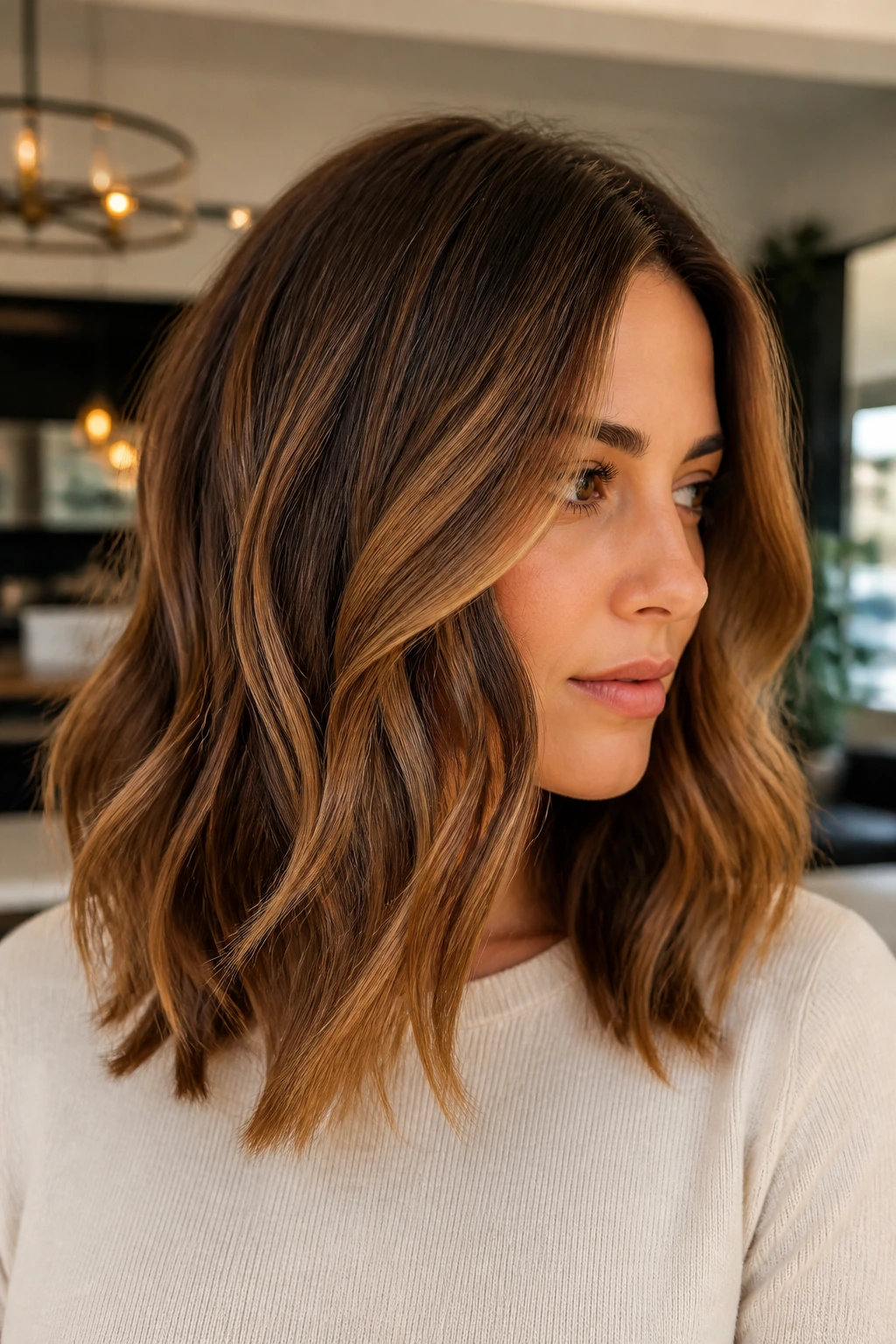
Walnut and toffee is the kind of brunette balayage that looks rich in any light. The walnut base keeps the hair grounded, and the toffee pieces give just enough brightness to break up the mids and ends. On medium length hair, the contrast lands well because the color transitions can be seen without needing extra inches.
This is one of the easiest shades to live with if you want warmth but not copper, blonde, or gold. It reads polished in a blowout and a little softer in waves. The trick is to keep the toffee a soft brown-gold instead of a pale blonde. That keeps the look sophisticated rather than streaky.
I also like this one on hair with a little natural texture. The movement helps each ribbon show up in a different place, which keeps the color from looking stamped on.
11. Strawberry Brunette Balayage
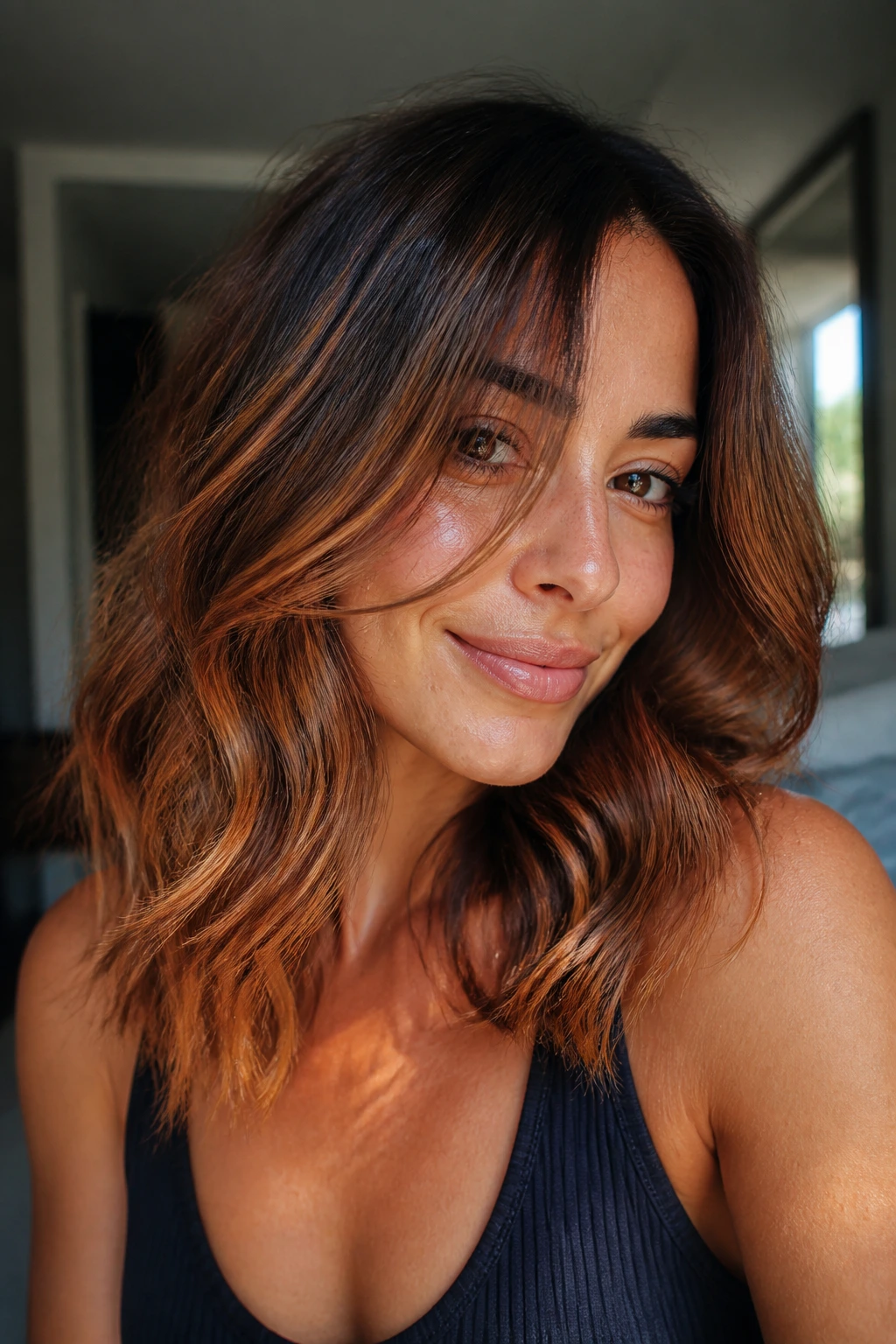
Strawberry brunette is a lovely middle lane between copper and brown. It has warmth, but not the full red punch of auburn, and medium length hair gives that soft red-gold glow enough space to show without becoming overwhelming. The effect is especially pretty when the hair bends around the chin and collarbone.
This one works best when the base is a medium brunette or dark blonde. The strawberry tone should feel like a glaze, not a block of color. Under sunlight, it gets a little sweeter and brighter. Indoors, it settles into something softer and more muted. That shift is the whole point.
When to choose it
Pick this if you want warmth but hate the hard edge of red. It’s gentler than copper and less orange-prone than gold.
12. Vanilla Blonde Money Piece
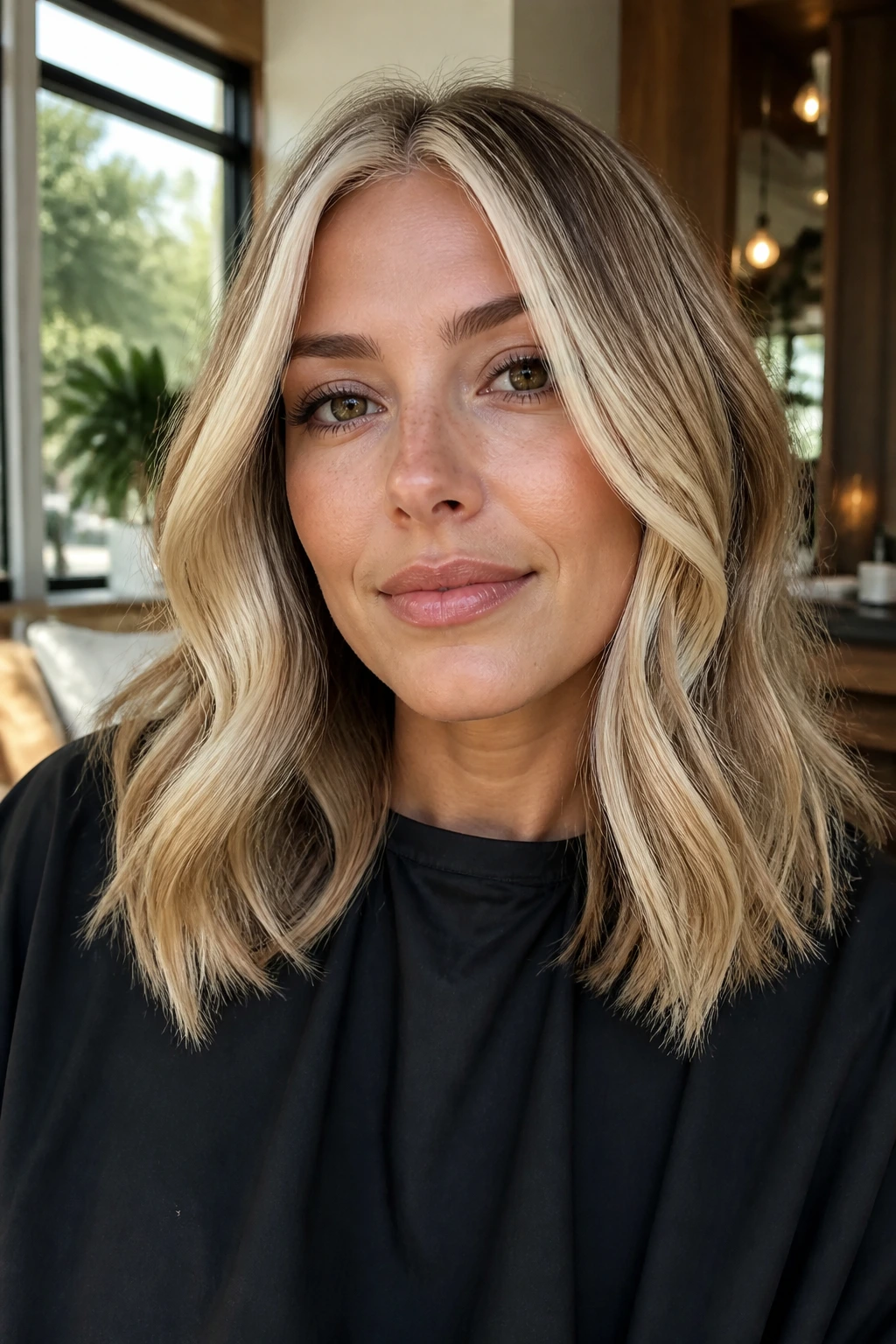
A vanilla blonde money piece is one of the fastest ways to wake up medium length hair. The front panels are lighter, creamier, and a little brighter than the rest of the balayage, which gives the face a clear frame without turning the whole head blonde. It’s a smart move if your cut has layers that already move well.
What makes it work is contrast. The money piece should stand apart just enough to show, then melt back into softer beige lengths. Medium hair gives that transition room to do its job. You get brightness at the front and softness at the ends, which is a better balance than throwing lightness everywhere.
If you wear a middle part, this can look very clean and balanced. If you wear a side part, the lighter front section can swing more dramatically. Both are good. They just tell the same color story in different ways.
13. Smoky Brunette with Soft Ends
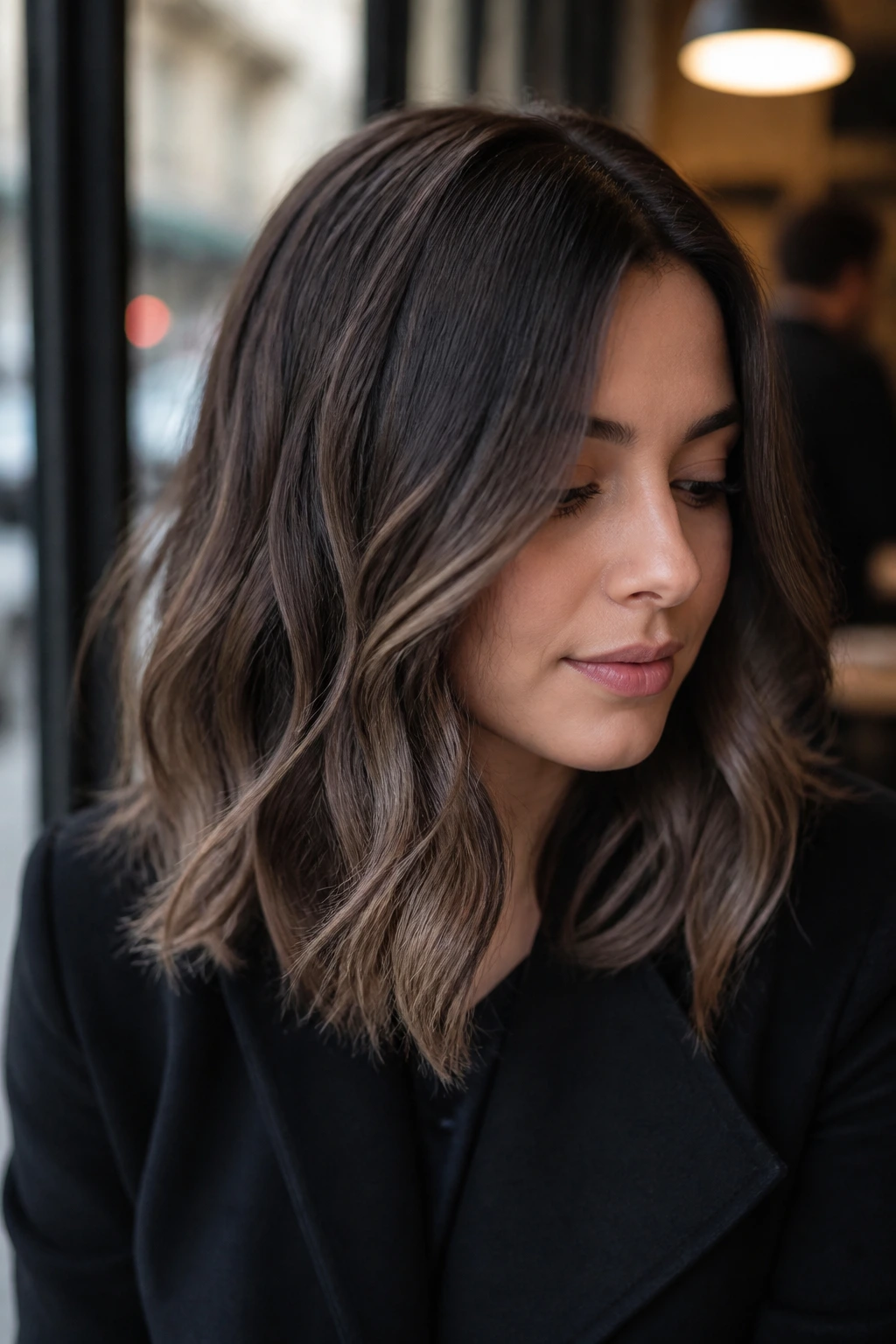
Smoky brunette with soft ends is for people who want movement but not a lot of visible lift. The roots stay dark, the mid-lengths pick up a cool haze, and the ends are just a touch lighter — enough to stop the hair from looking heavy, not enough to read as blonde. On medium length cuts, that restraint looks good.
This is one of those balayage ideas that gets better when the cut has good shape. A blunt edge makes the smoky tones look sleek; a few layers give them more texture. The color itself stays understated, which means the styling choice matters more than usual. A polished blow-dry shows the shadow. A rough wave makes it softer.
If you want a low-key salon visit that still changes the hair, this is the one I’d keep in the folder.
14. Sandy Beige Balayage
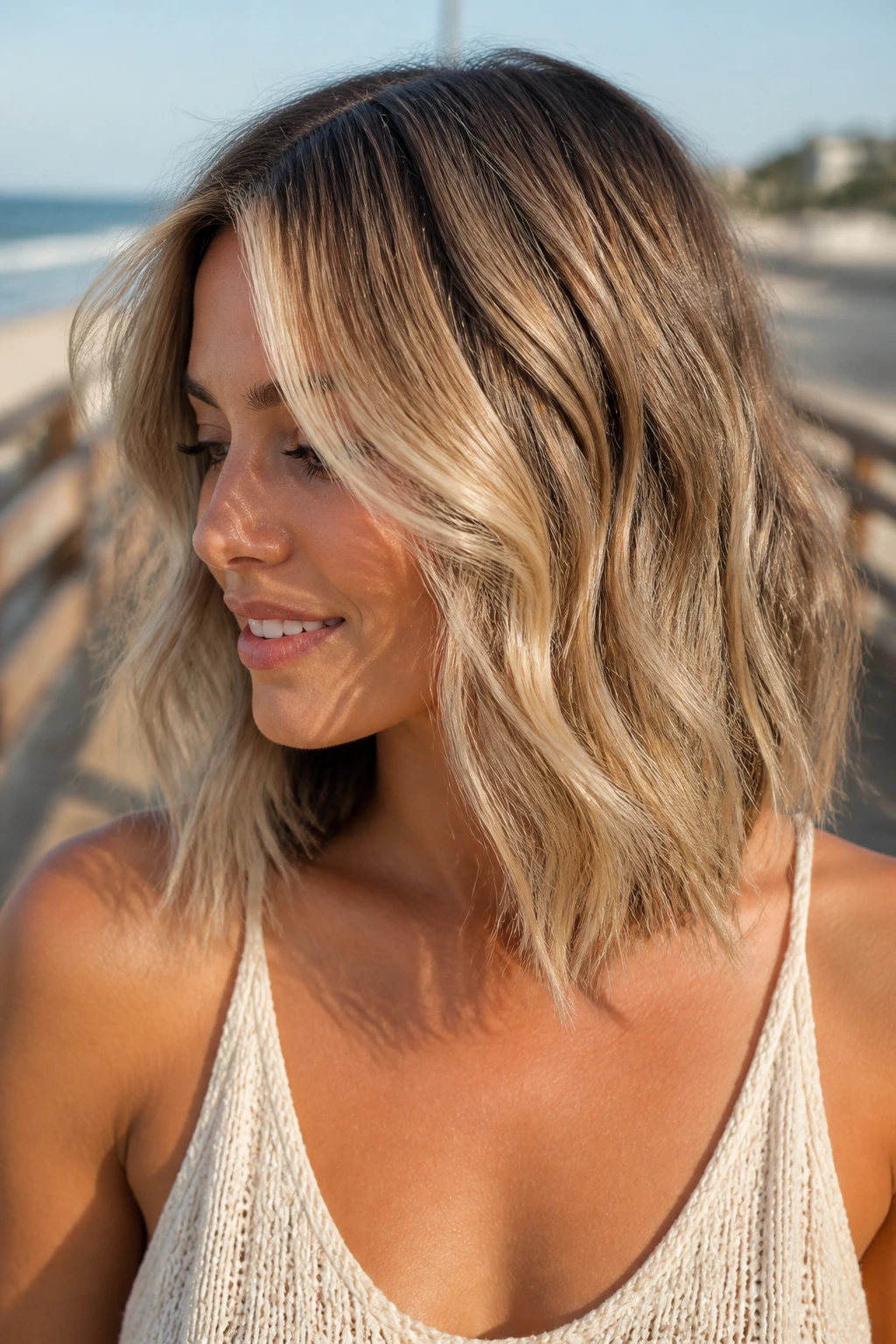
Sandy beige balayage has that dry, sun-washed feel that works well on medium hair because the color doesn’t need a lot of length to show. The beige is warmer than ash but cleaner than gold, so the result stays soft and wearable. On a layered lob, those sandy ribbons move through the cut instead of sitting on top of it.
This shade is especially nice on wavy hair. Each bend catches the lighter tone and then releases it again, which keeps the look from going flat. It’s also one of the easier shades to wear with minimal makeup because the color doesn’t fight your face. It just gives the hair a little more life.
Best if you like
A natural-looking lift, soft shine, and a finish that still looks good when the wave drops out by the end of the day.
15. Auburn-Ginger Balayage
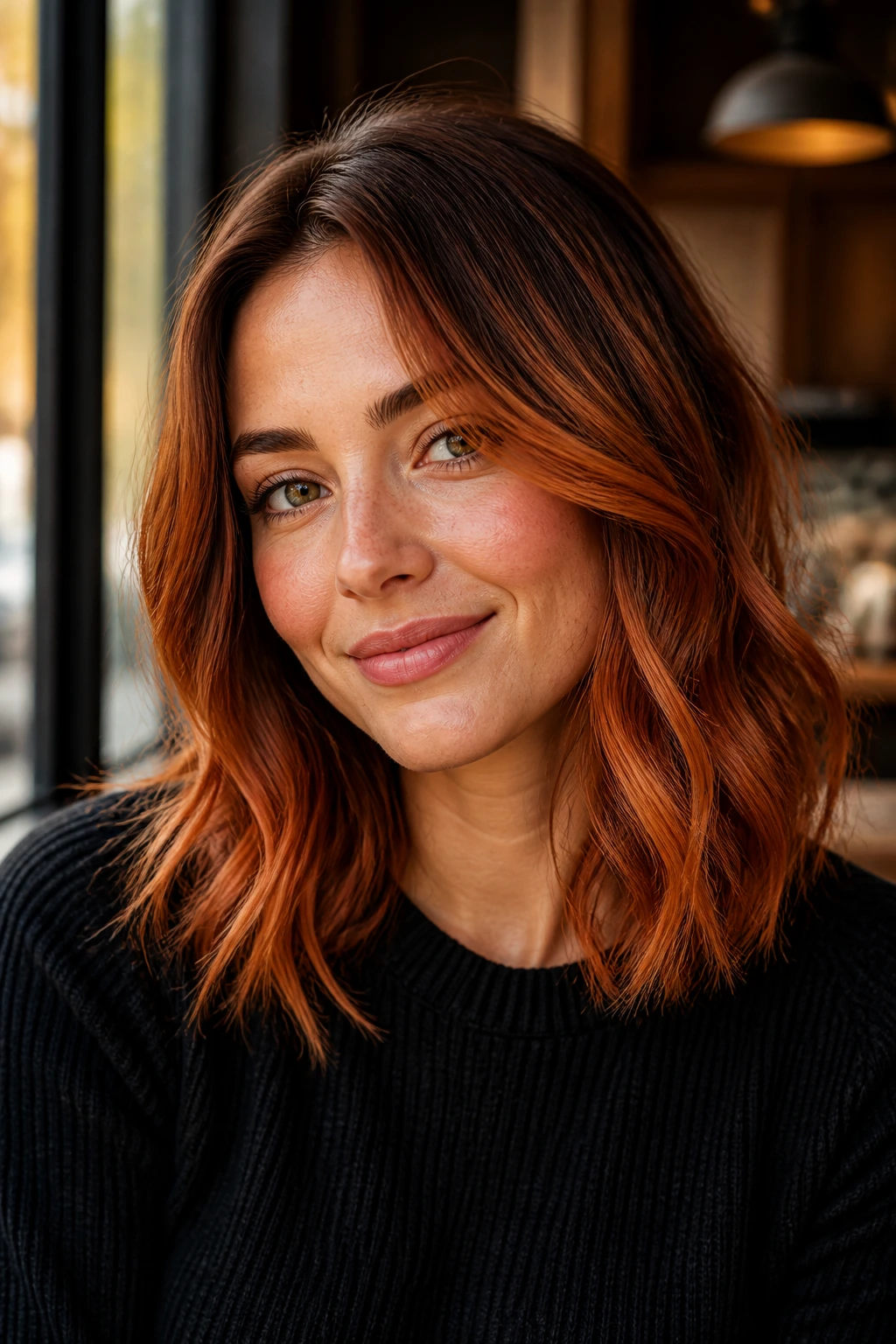
Auburn-ginger balayage brings more personality, and medium length hair handles that better than you might expect. The reason is proportion. You don’t need a long curtain of hair to make warm red-copper tones feel rich. A shoulder-length cut gives the color a neat boundary, which keeps it from becoming too sprawling.
I like this on textured hair and on cuts with a bit of weight removed at the ends. The ginger pieces catch light fast, and the auburn base makes the whole thing look expensive instead of bright for the sake of brightness. It’s a good shade if you want warmth that feels autumnal without leaning muddy.
This one does need maintenance. Red pigments fade faster than ash or beige, and that fade shows most on the surface layer. A color glaze every so often keeps the warmth alive.
16. Pearl Blonde on Dark Roots
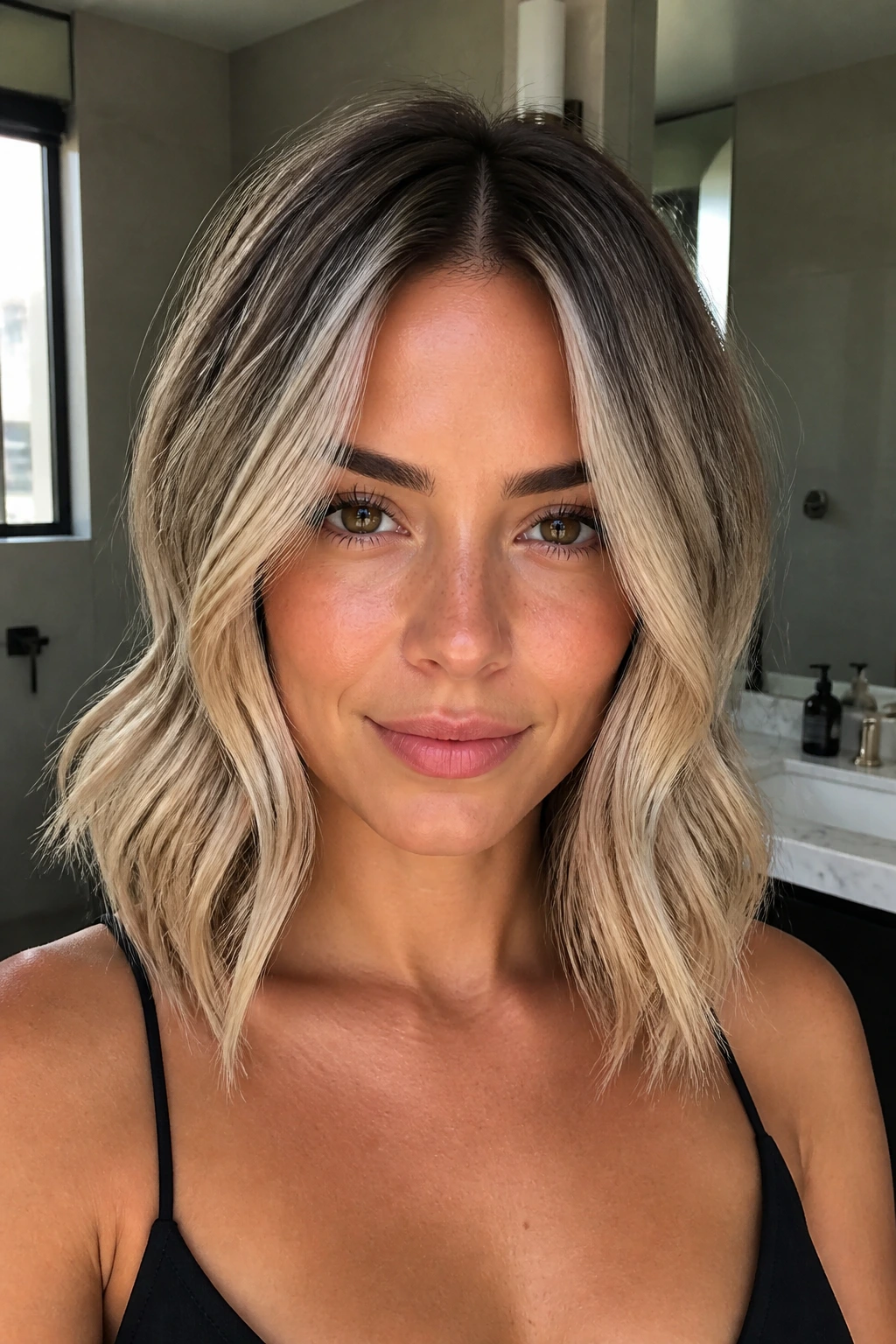
Pearl blonde with dark roots gives medium length hair a sharper contrast than most of the softer looks here. The root shadow keeps the color grounded, while the pearl tone brings in that pale, almost shell-like finish that looks crisp around the face and on the outer layer. It’s cool, but not flat.
This works best when the lightened pieces are clean and the toner is exact. On mid-length hair, you don’t have endless space for the fade to soften, so the transition needs to be thoughtful. The dark root helps a lot. It gives the blonde a place to start and keeps the color from reading as a solid block.
If you like a sleek style, this is strong. If your hair is rough-dried and airy, it still works, but the cooler tone can look a little edgier. That’s not a flaw. It’s the point.
17. Plum Bronde Balayage
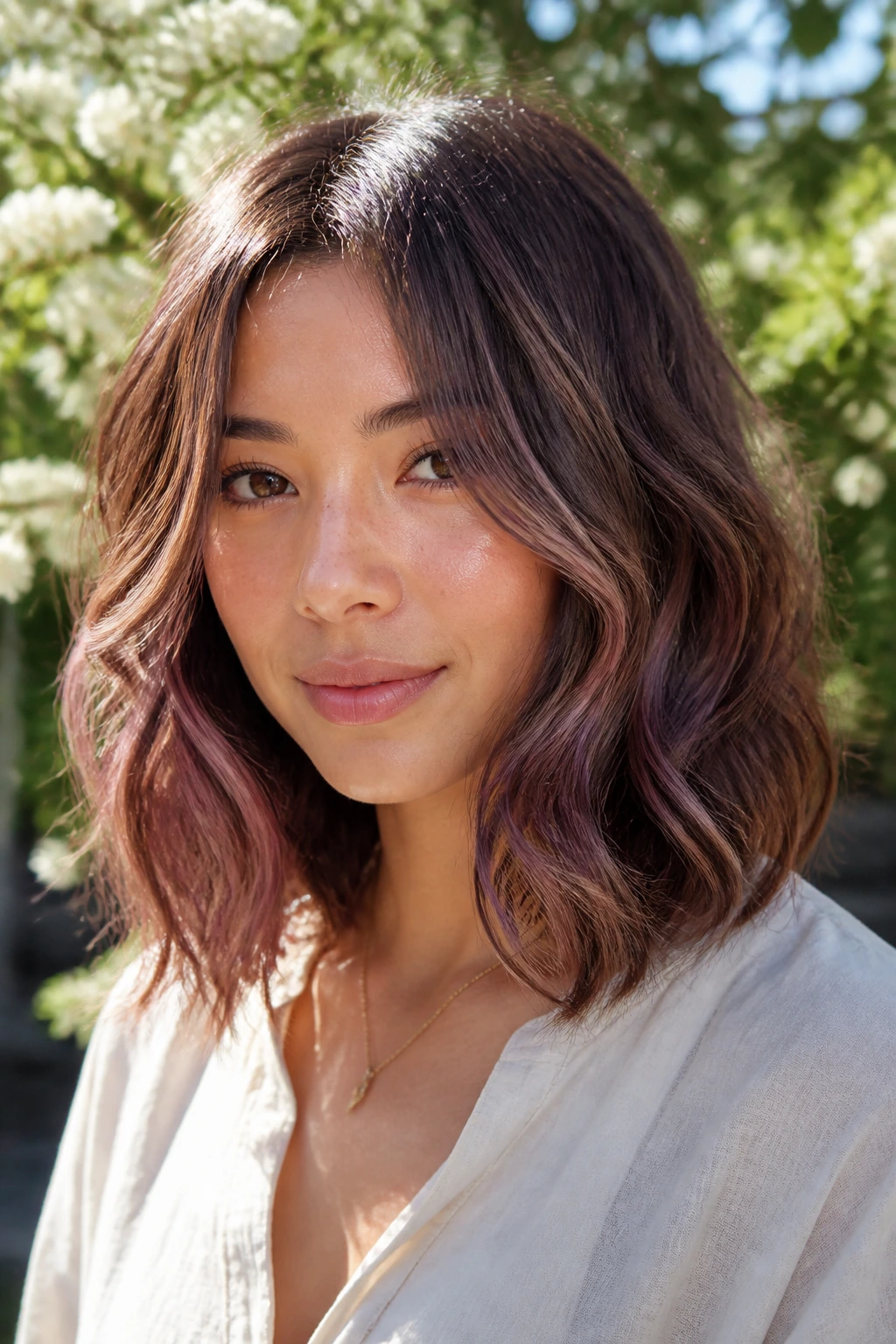
Plum bronde is one of my favorite “people will look twice” ideas because it stays wearable while still feeling a little unexpected. The brown base anchors it, and the plum or mauve-toned ribbons slip into the mid-lengths and ends without taking over the whole cut. On medium length hair, that hidden color shift gets seen when the hair swings.
It’s a good choice if you want something that feels creative but not costume-like. The plum tone can be soft and dusty rather than bright purple. That matters. The most wearable versions look like the hair picked up a wine-stain shadow in the sun, not like a bold fashion dye job.
Styling note
Soft curls and half-up styles show this color best. A tucked-behind-the-ear moment is enough to reveal it.
18. Sun-Kissed Chestnut Balayage
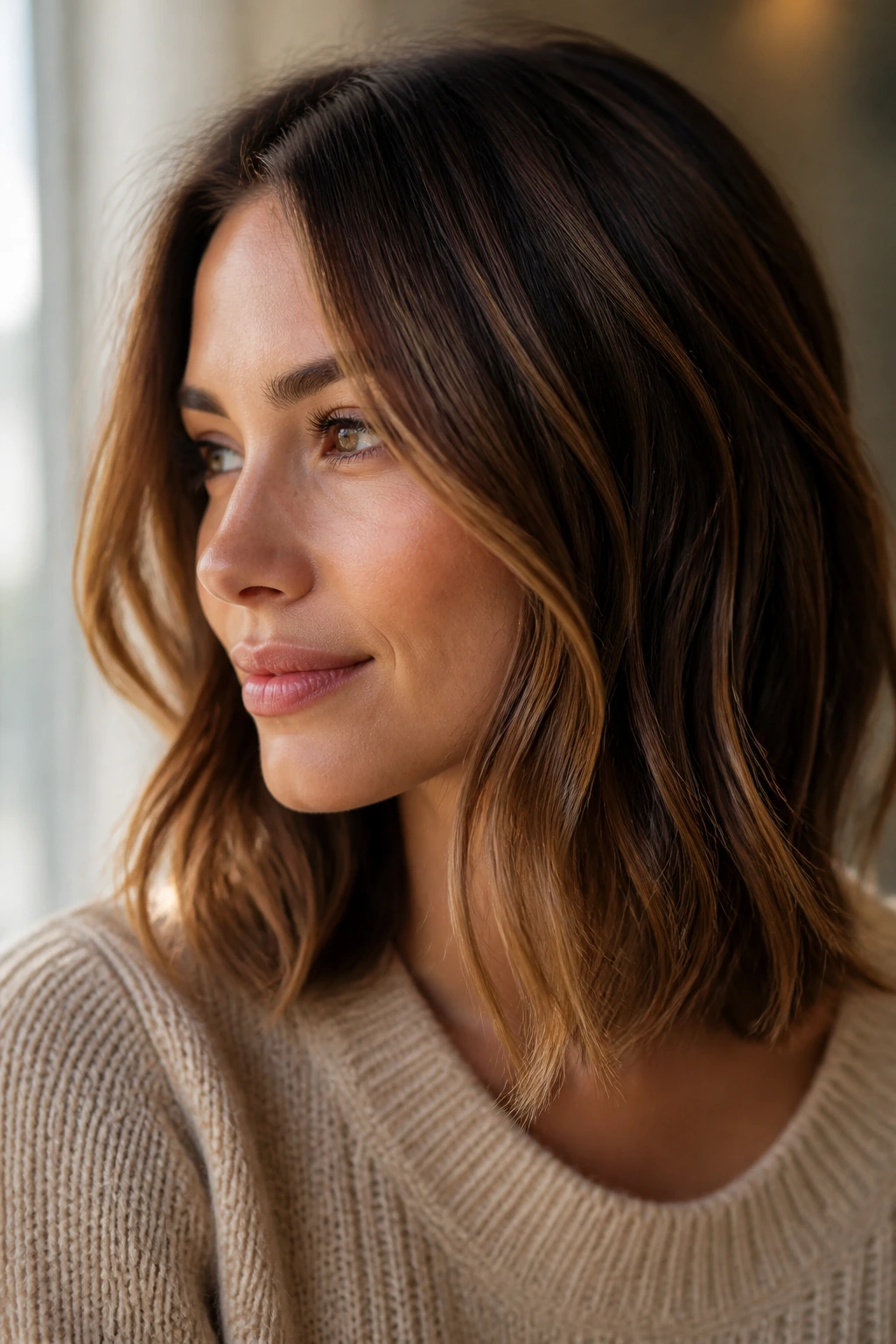
Sun-kissed chestnut balayage is the kind of shade that quietly makes medium length hair look healthy. The chestnut base adds depth, and the lighter pieces sit close enough in tone to feel believable. You don’t get a hard contrast; you get that gentle lift that makes the surface look touched by light.
This is one of the easier ideas to wear if you want a natural result. The color doesn’t depend on a dramatic money piece or a stark ash shift. It depends on subtle placement and a good gloss. On a collarbone cut, that softness can look cleaner than more dramatic blonde pieces because the shape already has enough visual interest.
I’d choose this for someone who wants salon color but doesn’t want the upkeep that usually comes with obvious blonde. It’s one of the least fussy shades in the whole set.
19. Champagne Caramel Balayage
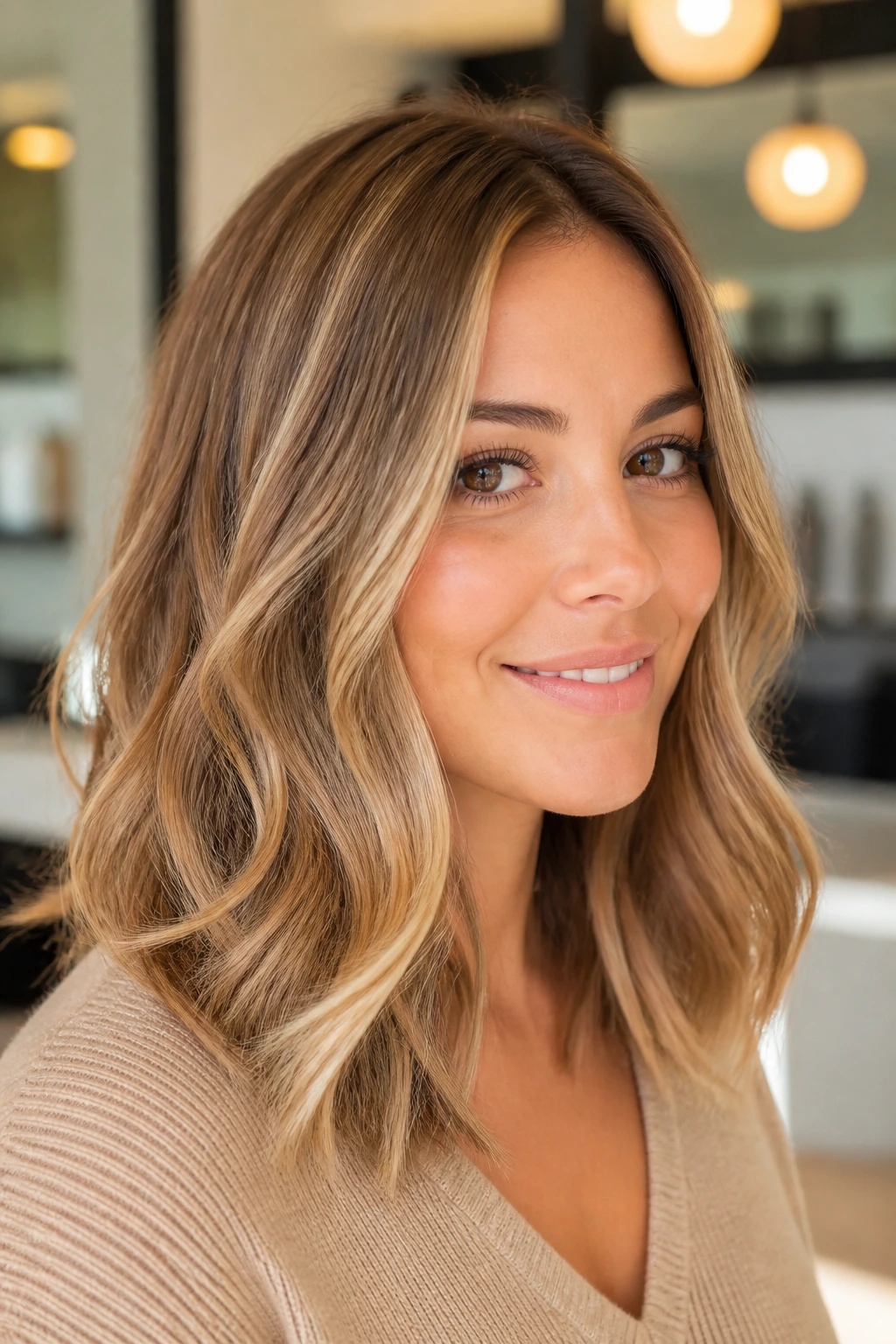
Champagne caramel is polished, warm, and a little glowy without veering too yellow. On medium length hair, the mix of beige-gold and caramel gives you a softer version of blonde that still looks clearly intentional. The finish can be smooth and glossy, which is why this one loves a blowout.
The best part is how the color shifts in motion. In stillness, it reads calm. In a loose bend, the champagne pieces flash a little brighter and the caramel pieces sink back. That contrast is subtle, but it keeps the hair from going flat.
If you like a neutral wardrobe, this shade is easy to live with. If your style leans warm, it can be even better because it works with gold jewelry and soft brown makeup without competing with either.
20. Peekaboo Lavender or Teal Underlayer Balayage
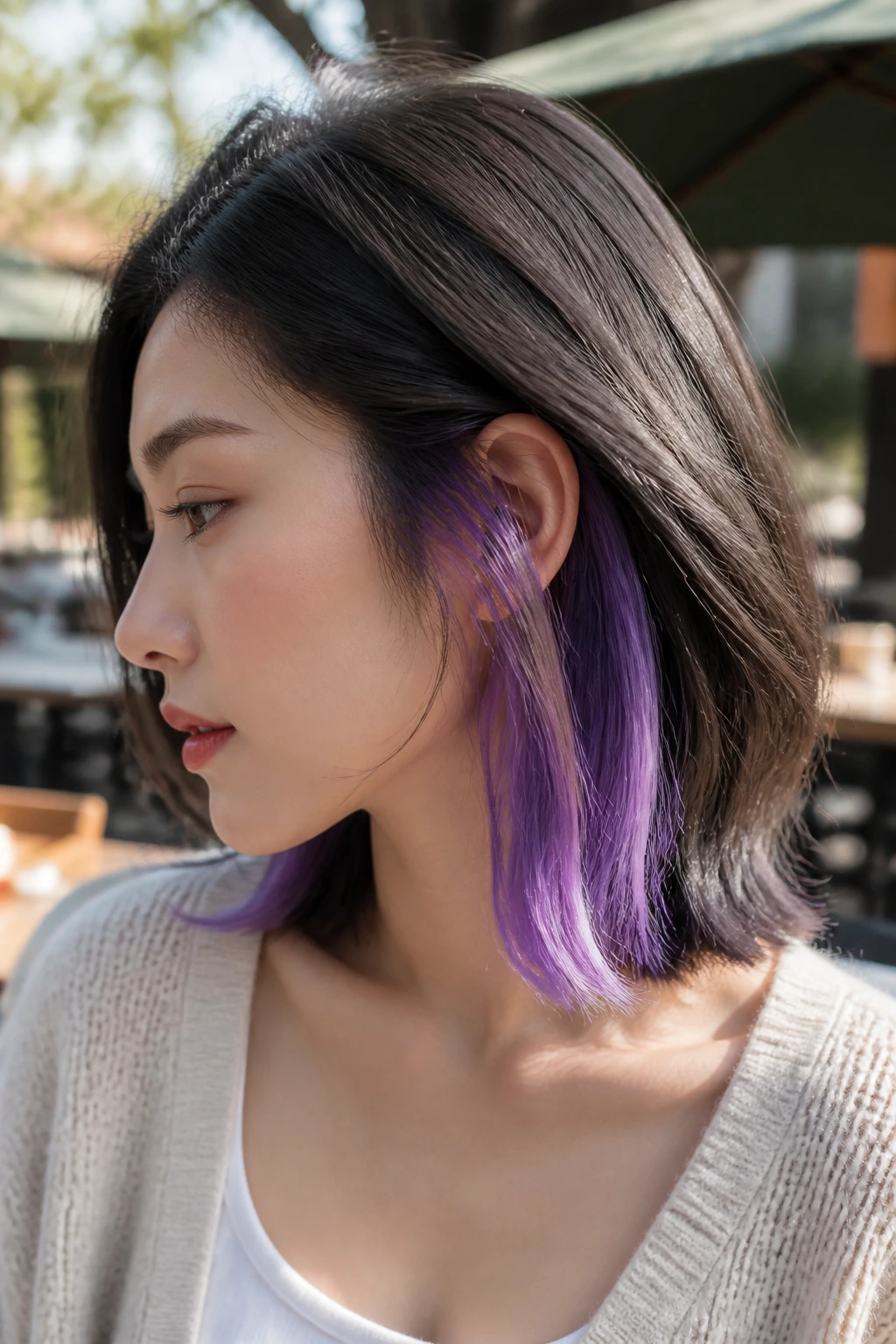
Peekaboo balayage is the wildcard, and medium length hair gives it a perfect stage. The top layer stays natural or softly toned, while the lavender or teal lives underneath, near the nape and through the hidden interior sections. The color shows when you tuck the hair behind your ear, twist it into a half-up, or let a breeze lift the outer layer.
This is a good option if you want fun color without committing every surface strand to it. Medium length hair helps because the hidden panels are easier to reveal than they are on very long hair, where the underlayer can disappear into the bulk. The contrast can be playful or moody depending on the exact shade you choose.
What to know
-
Lavender fades softer and faster.
-
Teal holds a bit longer but can stain lighter sections if the placement is sloppy.
-
The cleanest versions keep the top layer calm and let the hidden color do the talking.
Why Medium-Length Hair Gives Balayage So Much Room to Move
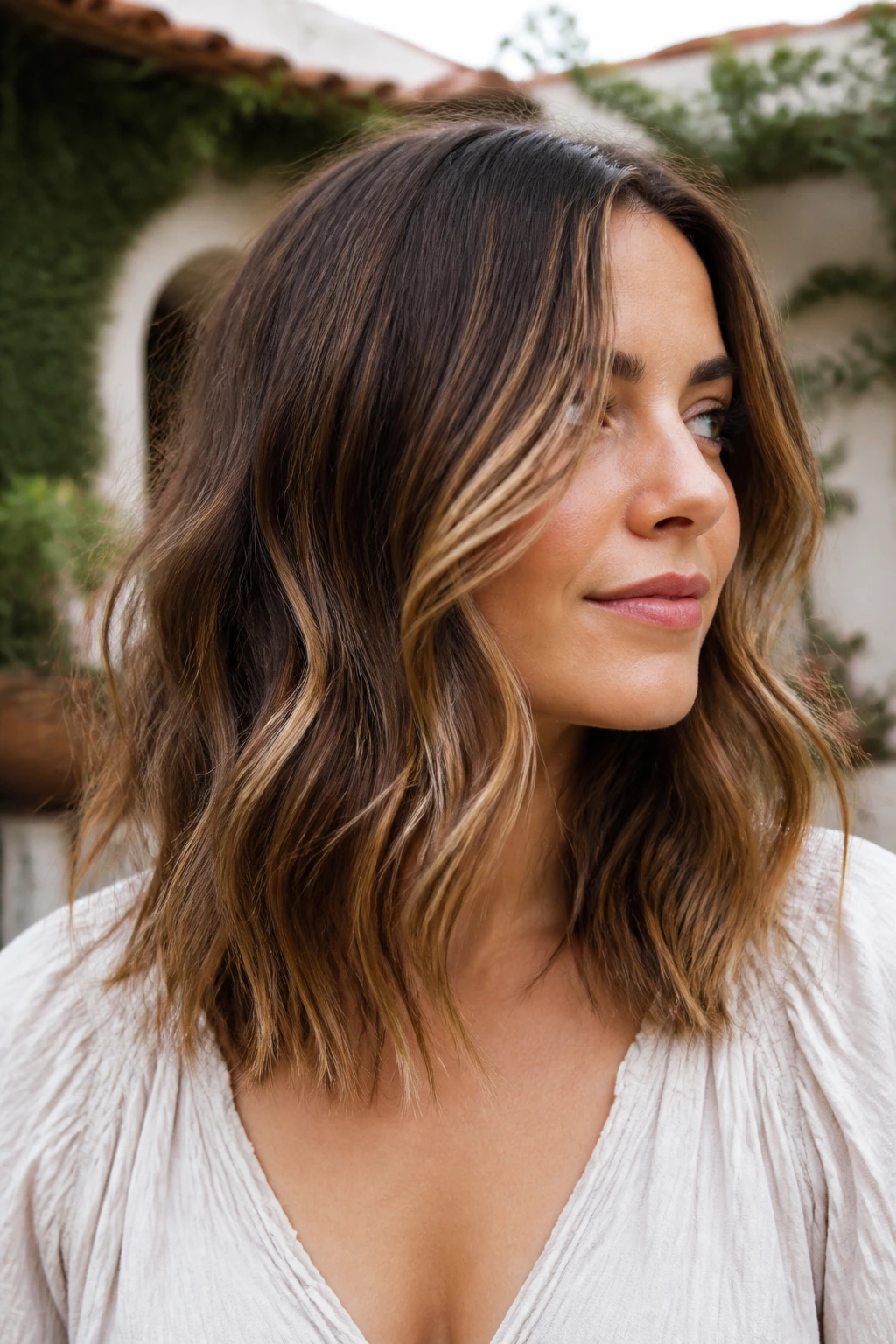
Shoulder-skimming hair is a sweet spot for painted color because it holds shape without swallowing it. The cut is long enough to show a real color shift, but short enough that the brighter sections don’t get lost in a heavy curtain of hair. That balance matters more than people think.
Medium hair also lets you control the story. A little brightness around the face can be the whole point. So can a soft melt through the ends. The same base shade can look almost sweet in a loose wave and sharper in a straight blowout, which is why this length gives you more room to play with tone, placement, and contrast.
There’s a practical side too. Hair that isn’t super long usually takes less time to dry, which means the shape of the balayage is easier to read once it’s styled. Colorists like that because they can see where the light pieces sit. You’ll like it because you can actually tell whether the tone is working or needs a quick gloss.
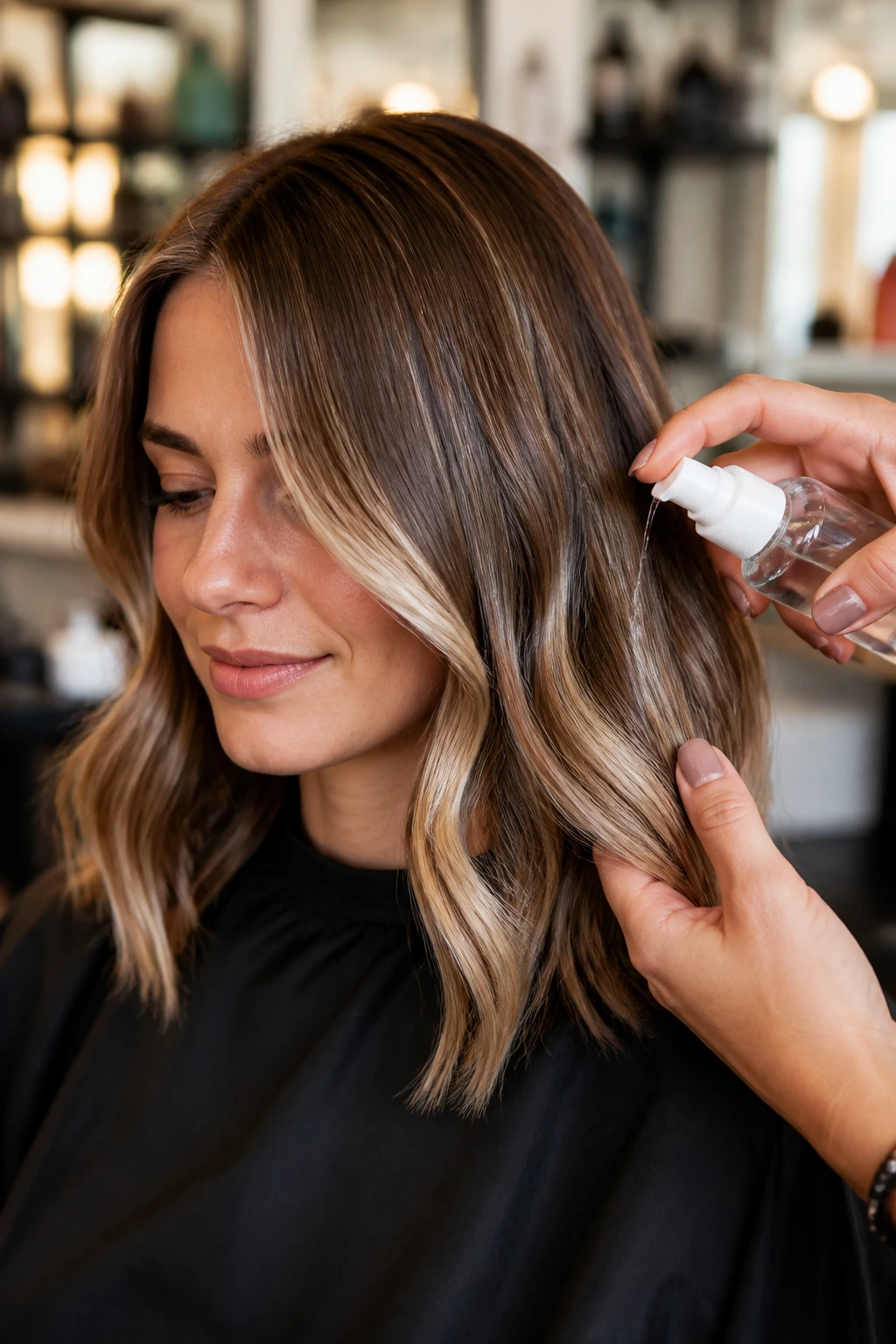
Tools and Products That Make the Look Easier to Wear
-
Sulfate-free shampoo: Keeps toner from stripping too fast, especially on blonde, beige, and rose-gold shades.
-
Color-safe conditioner: Helps the cuticle feel smoother after lightening, which matters when balayage has been painted through porous ends.
-
Heat protectant spray: Use it before blow-drying or curling; colored hair tends to show heat damage faster than virgin hair.
-
Wide-barrel curling iron or wand: A 1.25-inch barrel shows off ribbons and shadow better than tight curls, which can blur the placement.
-
Round brush and blow dryer: Useful if you want a polished finish that lets the dimension sit neatly.
-
Tail comb: Handy for checking where the face frame starts and for separating sections when you style.
-
Sectioning clips: Keep medium hair from collapsing while you dry or curl it.
-
Purple shampoo or mask: Best for beige, pearl, and icy blonde shades; use it sparingly so the hair doesn’t go flat.
-
Blue shampoo: Better for brunette balayage that pulls orange or copper between appointments.
-
Gloss or color-depositing conditioner: Helps warm tones stay lively and cool tones stay clean.
How to Choose the Right Shade Family Before You Book
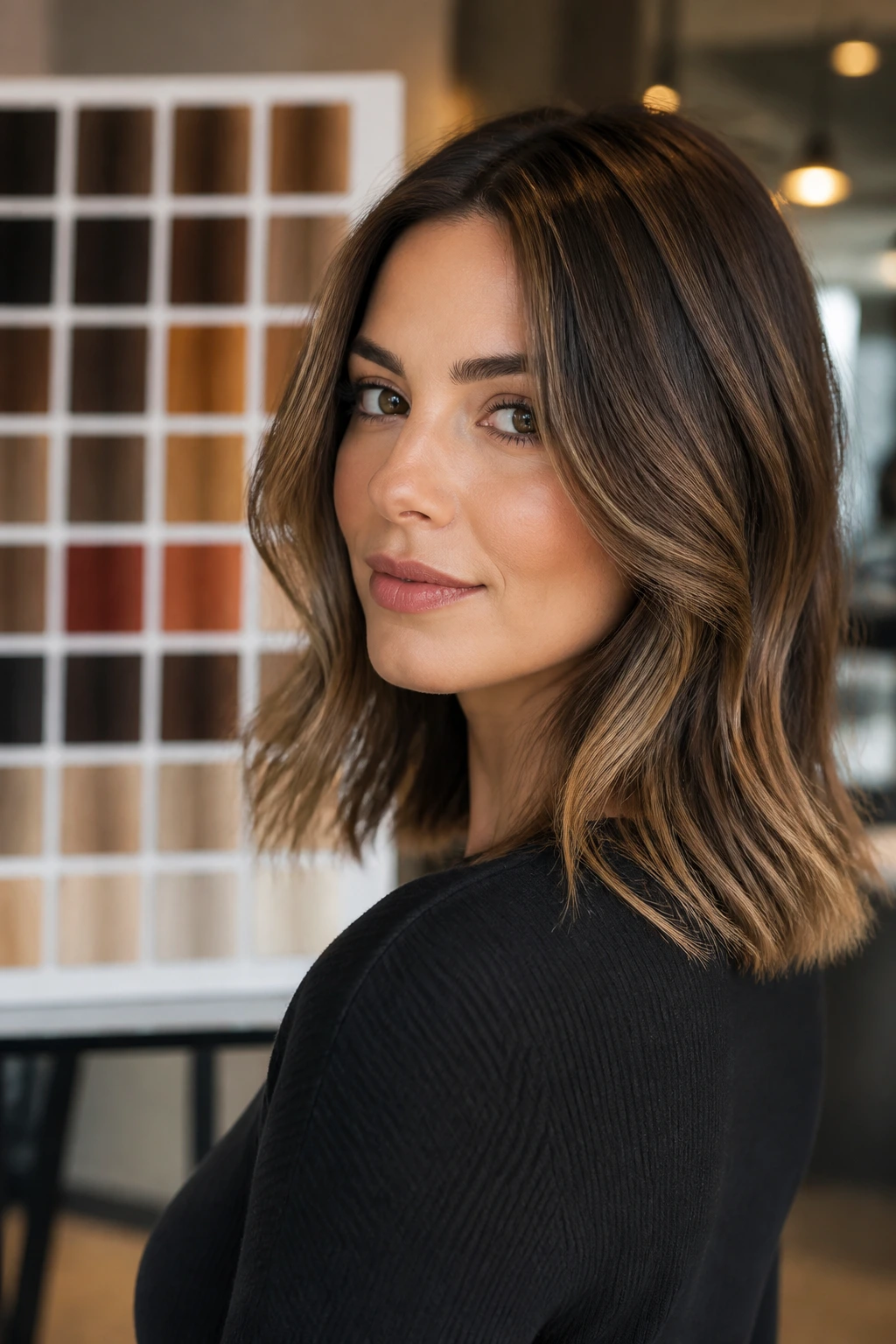
The easiest way to ruin balayage is to choose a pretty color that fights your base. Medium length hair makes that mismatch more visible because there’s less hair to hide it. A warm brunette with golden caramel ribbons usually reads more natural than the same hair with icy beige pieces shoved through the mids. Likewise, a cooler ash brunette often looks cleaner than honey if your natural base already leans red.
Bring photos that match your cut, not just your dream color. A long-haired influencer can make a shade look softer than it will on a blunt lob. If your hair is fine, ask how much contrast the colorist plans to leave between the base and the lightest pieces. Fine medium hair often looks fuller with medium contrast and a good shadow root, not with a blanket of pale blonde.
There’s also the undertone question. Warm skin tones often pair well with caramel, copper, chestnut, and champagne. Cooler or neutral skin tones tend to like mushroom brown, ash brunette, pearl blonde, and beige. That’s not a law. It’s a starting point. The real job is to keep the face frame from looking disconnected from the rest of the hair.
How to Style the Color So the Dimension Shows
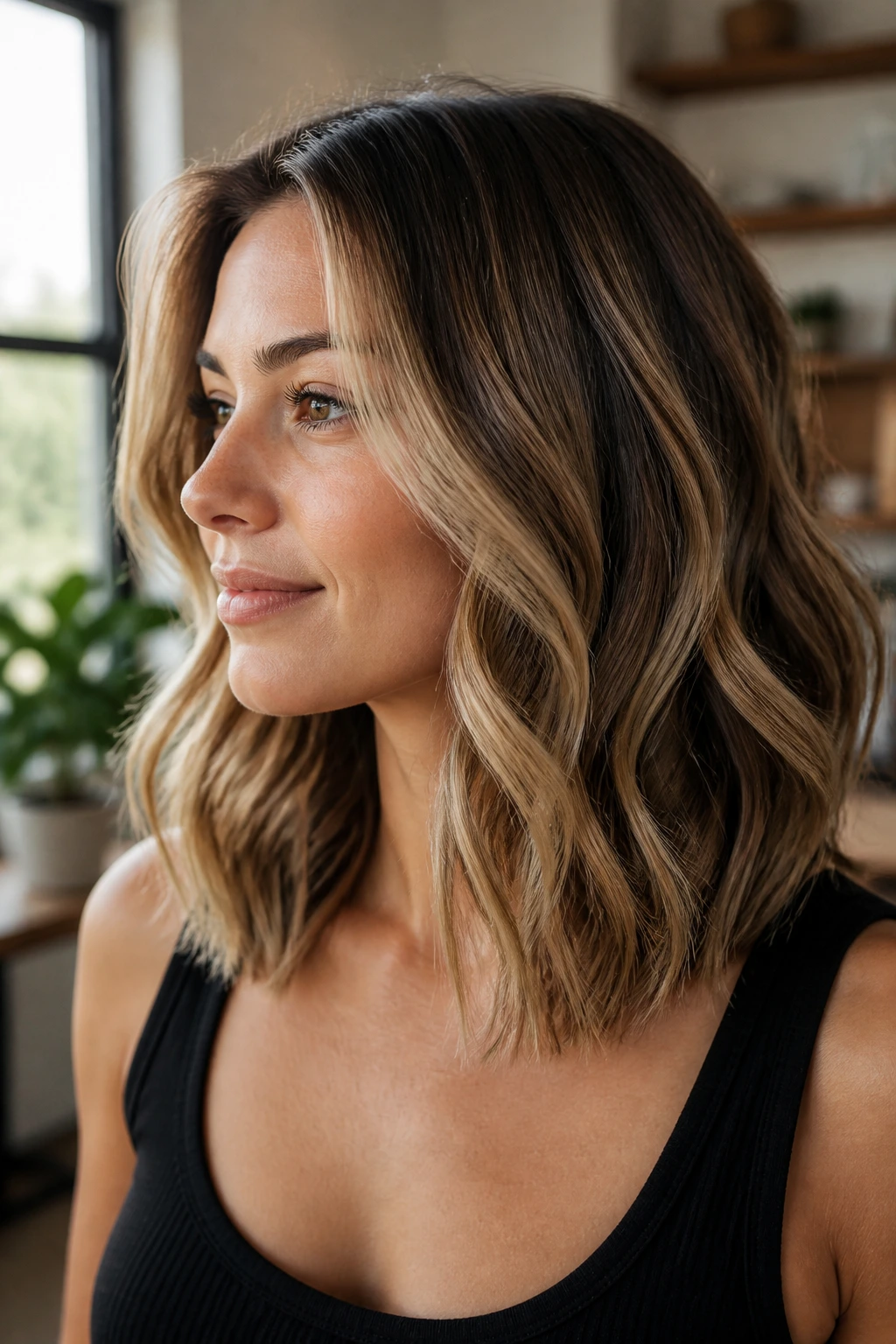
Presentation: Loose waves, soft bends, and a polished blowout show balayage better than tight curls or flat, pin-straight hair. On medium length hair, a little movement is enough for the ribbons to appear and disappear, which makes the color look layered instead of painted on.
Accompaniments: Curtain bangs, face-framing layers, a blunt lob, and a lightly shattered shag all give the color somewhere to land. If the cut has no movement at all, even good balayage can feel static.
Portions: If you want subtlety, keep most of the lightness in the top layer and around the front. If you want more contrast, ask for brighter ends and a stronger money piece, but leave some darker space between sections so the color doesn’t blur into one flat tone.
Finish: A small amount of lightweight serum on the ends will give the painted pieces a smoother line, while a matte texture spray will make the dimension feel more lived-in. Pick one. Too many styling products can coat the lightened strands and make them look dusty.
Additional Tips and Personalization
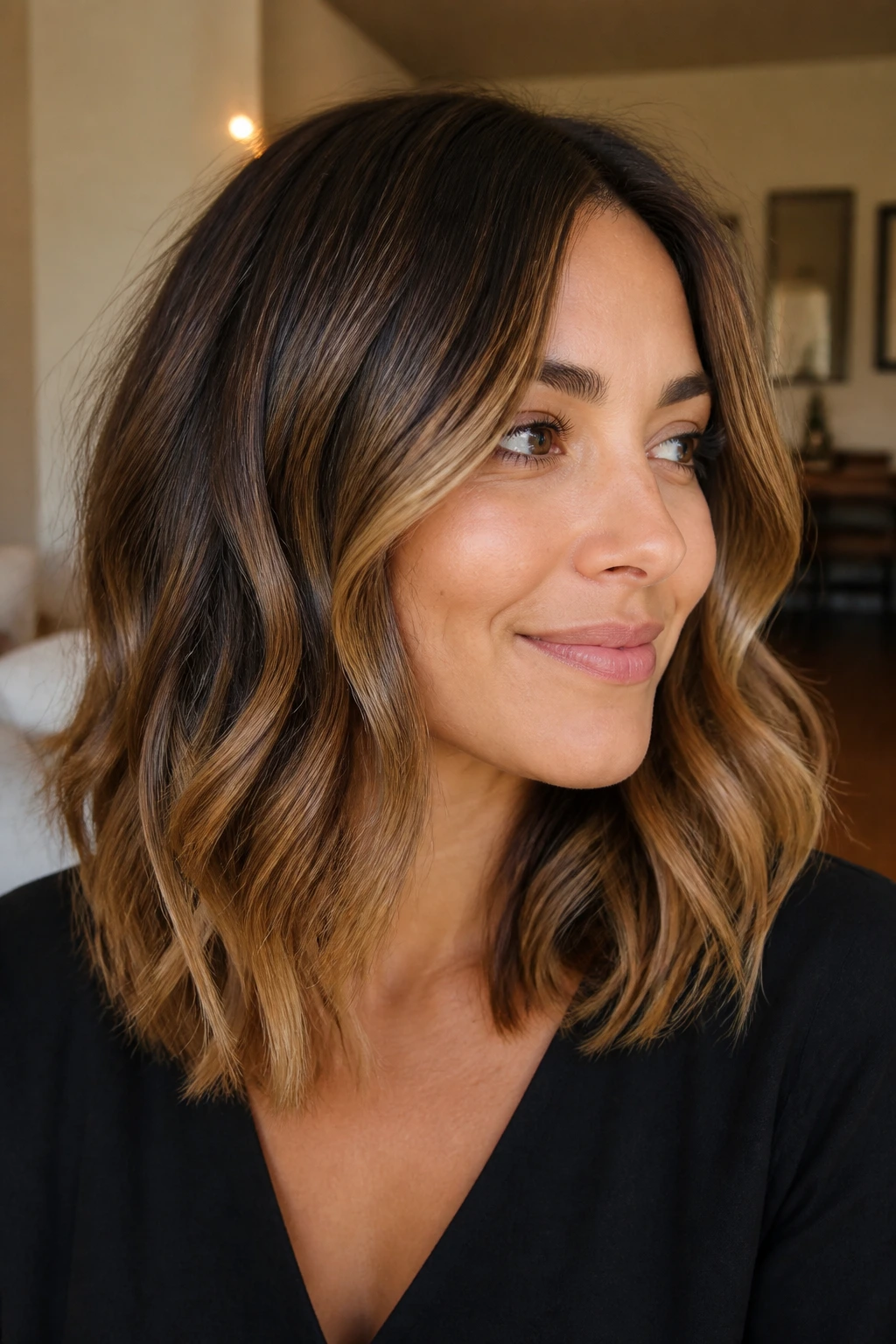
Brightness Boost: If your balayage feels soft but a little sleepy, ask for a gloss one level lighter than the base tone and concentrate it on the face frame. That small adjustment can make the whole haircut look cleaner.
Customization: Warm tones can be pushed toward caramel, copper, or champagne; cool tones can lean ash, mushroom, or pearl. You do not need to pick the loudest version of a shade to make it noticeable. Sometimes the second-darkest option wears better on medium hair because it holds shape longer.
Face-Frame Trick: A brighter front panel almost always pays off on medium lengths. Even if the rest of the hair stays subdued, the face frame catches light and makes the cut look fresher.
Low-Key Option: If you hate upkeep, ask for a root shadow and keep the lightest pieces just through the mid-lengths and ends. The grow-out stays soft, and the salon visit becomes more about tone than dramatic lift.
Make-It-Yours: Curly hair loves a little extra brightness on the outside curve of each curl. Straight hair usually needs more deliberate placement near the cheekbone and jawline so the color doesn’t disappear when the hair lies flat.
Common Mistakes That Flatten the Color
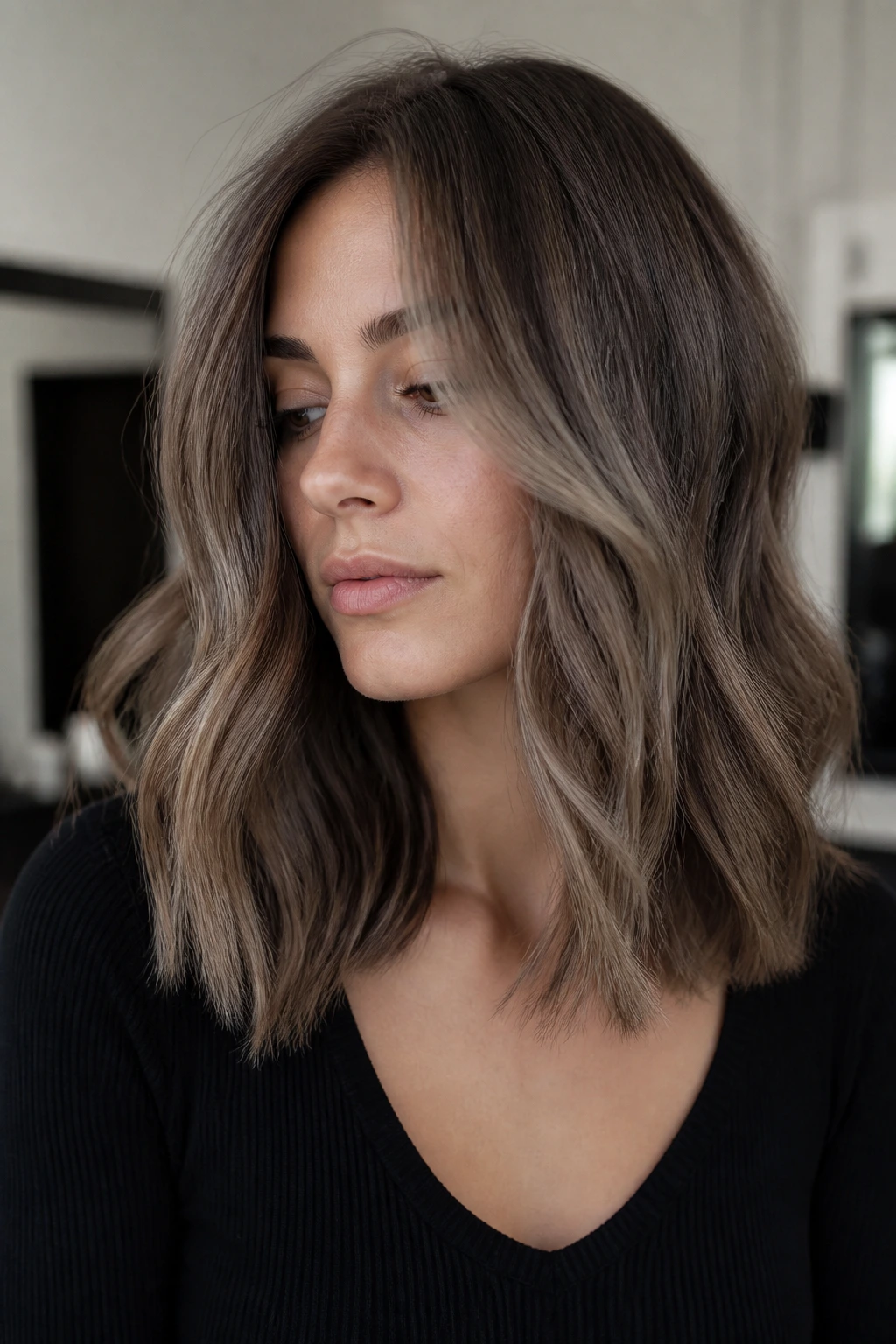
The biggest mistake is asking for too much lightness on already dry ends. Medium length hair often has old color history sitting on the lower half, and pushing it too pale can leave the ends looking frayed and see-through. The fix is simple: keep the ends one or two levels deeper than the lightest face-framing pieces, then finish with a gloss.
Another one: ignoring undertone. A warm blonde over a red brunette base can turn orange fast, and a cool ash placement over a golden base can look muddy if the toner isn’t chosen carefully. The colorist should be able to explain the tone plan in plain words. If they can’t, ask again.
People also overfill the hair with highlights. Medium length balayage needs space between the painted sections. If every inch is lightened, the cut loses shadow and starts looking busy. That negative space is part of the design, not wasted opportunity.
Heat is the quiet saboteur. A curling iron on dry, porous balayage can make the color look dull in a week. Use a heat protectant, stay under 350°F if your hair is fragile, and give the iron fewer passes. One slow, clean pass beats three quick ones.
Named Variations and Alternative Directions
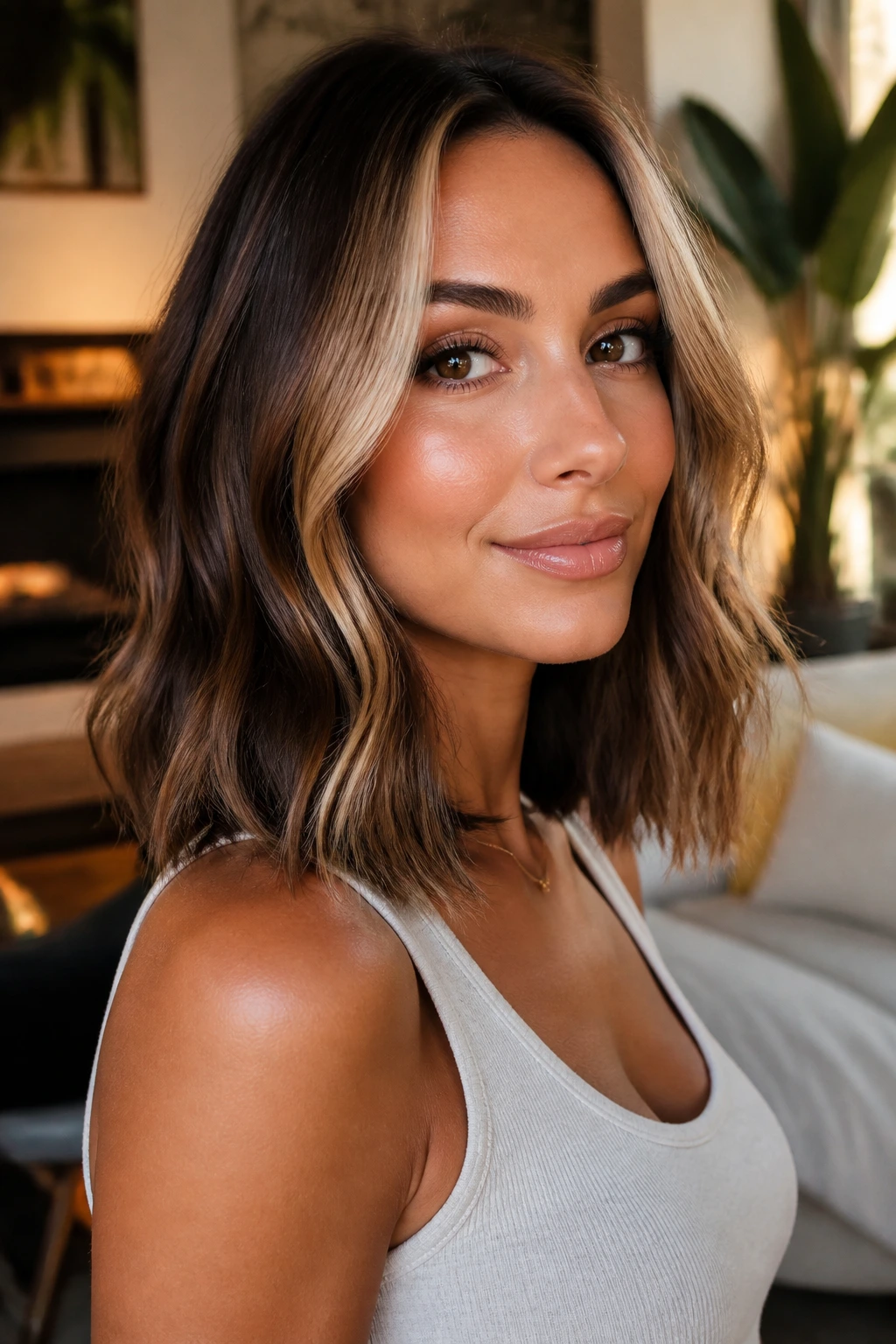
The Soft Melt: Keep the balayage only one or two shades lighter than the base and ask for a deep root shadow. This version is best if you want the color to look like part of the cut, not a separate event.
The Bright Money Piece: Pull the brightness forward around the face and keep the back more subdued. It works well if you want impact in photos and around the cheekbones without lightening every strand.
The Cool Smoke: Shift any warm brown into ash, mushroom, or taupe. This is the cleaner choice when brass drives you nuts and you like a cooler wardrobe, cooler makeup, or a more muted finish.
The Warm Glow-Up: Take a brunette base and nudge it toward caramel, honey, copper, or chestnut. This feels softer on layered medium hair because the warm pieces catch light as the hair moves.
The Hidden Pop: Keep the top layer natural and tuck a fashion shade underneath — lavender, teal, rose, or even a muted plum. It’s a good fit if you want something fun that still disappears in a workday ponytail.
Keeping the Tone Fresh Between Appointments
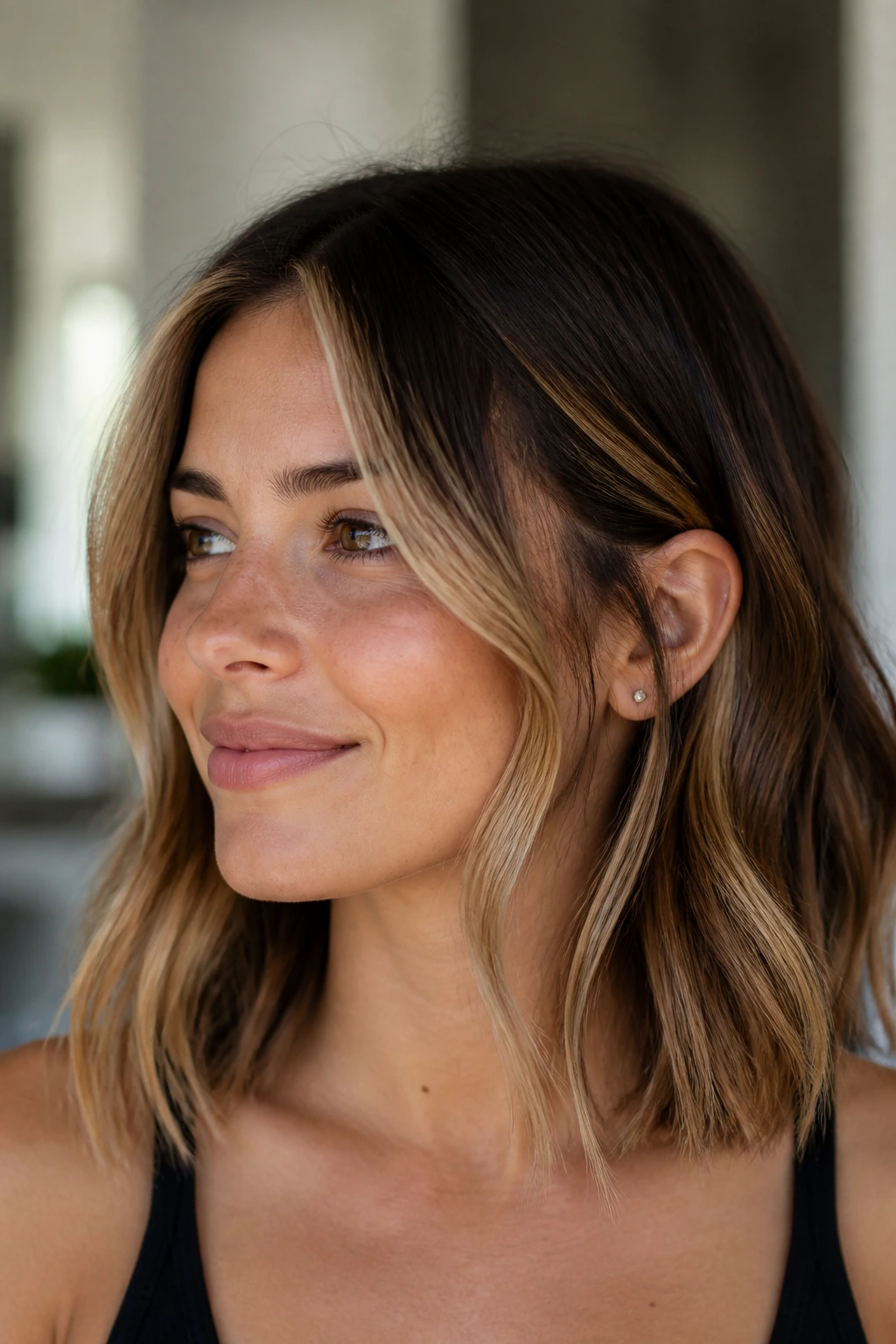
Balayage on medium length hair stays prettier when you treat the tone like part of the style, not an afterthought. For blonde, beige, or pearl shades, use a sulfate-free shampoo two or three times a week and lean on a purple mask once every one to two weeks if the hair starts turning yellow. For brunette balayage, blue shampoo once a week is usually enough to keep orange tones in check.
A gloss or toner refresh every 6 to 8 weeks keeps the painted pieces from drifting too warm or too dull. If your color is low-contrast — walnut, mocha, chestnut — you may stretch that longer. If it’s icy beige, rose gold, or pearl blonde, the tone usually needs more attention.
Heat and sun matter more than people want to admit. Blow-dry with a lower setting when you can, and use a hat or UV spray if your hair gets a lot of direct sunlight. If you swim, wet the hair with clean water first and apply conditioner to the mid-lengths before getting in the pool. That little trick keeps the hair from soaking up as much chlorine.
Frequently Asked Questions
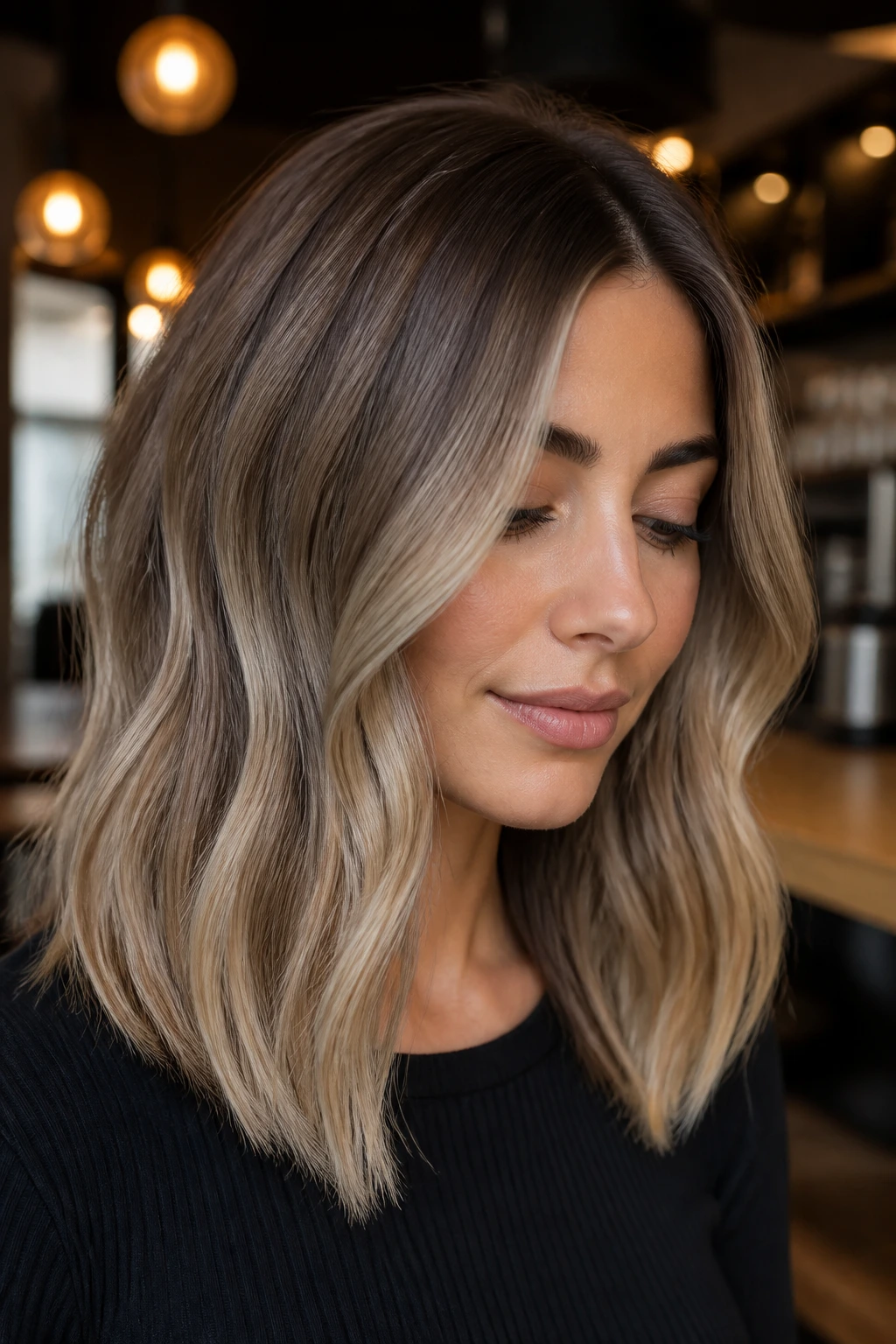
How is balayage different from regular highlights on medium length hair?
Balayage is painted by hand, so the lightness can be placed where the hair naturally bends and catches light. Traditional highlights are usually foiled closer to the root and tend to look more uniform. On medium hair, balayage often grows out softer because the color isn’t starting from a hard line.
What balayage colors work best on brown medium-length hair?
Caramel, toffee, honey, walnut, mushroom, ash brunette, and copper all work well on brown bases. The best one depends on whether you want warmth, coolness, or a strong front frame. If the goal is low upkeep, stay within two shades of your natural brown.
Will balayage make fine medium hair look thinner?
It can if the color is too light at the ends and too sparse at the root. Fine hair usually looks fuller with a shadow root, medium contrast, and a few brighter pieces around the face instead of a full pale blonde finish. Placement matters more than how much lightness you use.
How often do I need toner or glossing?
Most balayage tones benefit from a gloss every 6 to 8 weeks, though lighter blonde and rose-gold shades may need attention sooner. If the hair starts looking dull, yellow, or too orange before that, a toner refresh or color-depositing conditioner can help between salon visits. The goal is tone maintenance, not constant recoloring.
Can balayage work on curly or wavy medium hair?
Yes, and it can look excellent because the curls and waves separate the color naturally. The trick is placing the lighter pieces where they’ll show on the outside of the curl pattern, not only in the interior. Curly hair often needs a little extra brightness on the surface to keep the shape from swallowing the color.
What should I tell my colorist if I want soft balayage, not stripes?
Ask for painted ribbons, a blurred root transition, and soft negative space between pieces. Say you want dimension that follows the cut, not obvious highlight lines. A good stylist will know that means hand-painted placement, not a full foil pattern.
What if my balayage turns brassy fast?
That usually means the toner has faded or the underlying pigment wasn’t lifted evenly. Use the right toning shampoo for your base — purple for blonde, blue for brunette — and book a gloss rather than another full lightening service if the hair itself is still healthy. If brass keeps coming back quickly, the shade may need a different toner formula.
Can I do medium length hair balayage without going super blonde?
Absolutely. Some of the prettiest versions stay close to the natural base and rely on placement, not major lift. Mocha shadow lights, walnut and toffee, sandy beige, and soft caramel ribbons all give dimension without pushing the hair into high-maintenance territory.
The Cut That Lets the Color Speak
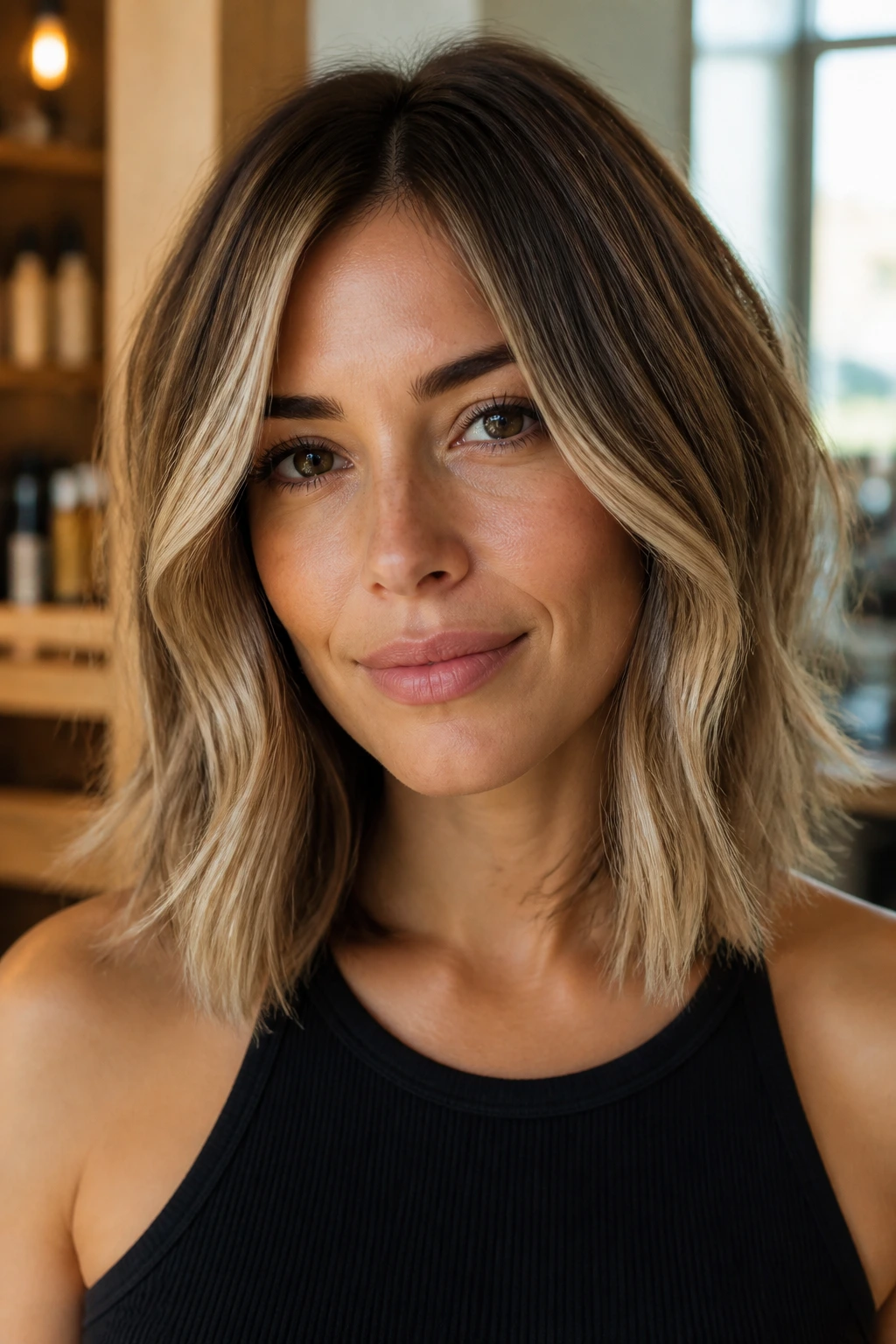
Medium length hair balayage works because the haircut leaves space for the color to do its job. The light pieces are visible, but they’re not swallowed by inches of extra length. The shape still moves. The tone still breathes. And the grow-out can look like part of the design instead of a problem you need to hide.
Pick one direction and commit to it. Soft and warm, cool and smoky, bright at the front, hidden underneath — any of those can look sharp on a lob or shoulder-length cut if the placement makes sense. The best version is the one that fits how you wear your hair most days, not the one that only looks good in a carefully staged photo.
