



Shoulder-grazing hair can be brutally honest. Put the wrong blonde on it and every stripy foil, brassy end, and awkward root line shows up at once. Put the right blonde on it and the cut starts moving—collarbone-length waves bend better, blunt lobs get a cleaner edge, and the whole shape looks a little more expensive with almost no extra effort.
That’s why medium length blonde hair color ideas matter more than people think. On this length, placement does half the work. A bright money piece can sharpen the face in a way long hair sometimes hides. A root shadow can make the grow-out look deliberate instead of overdue. A beige, honey, ash, or pearl tone can decide whether the whole style reads soft and creamy or flat and yellow.
The sweet spot is right here: enough hair to show dimension, not so much that the color disappears into the ends. You get room for balayage, babylights, chunky ribbons, and soft melts without losing the shape of the haircut. That combination is the whole game.
Why Medium-Length Blonde Has So Much Range
-
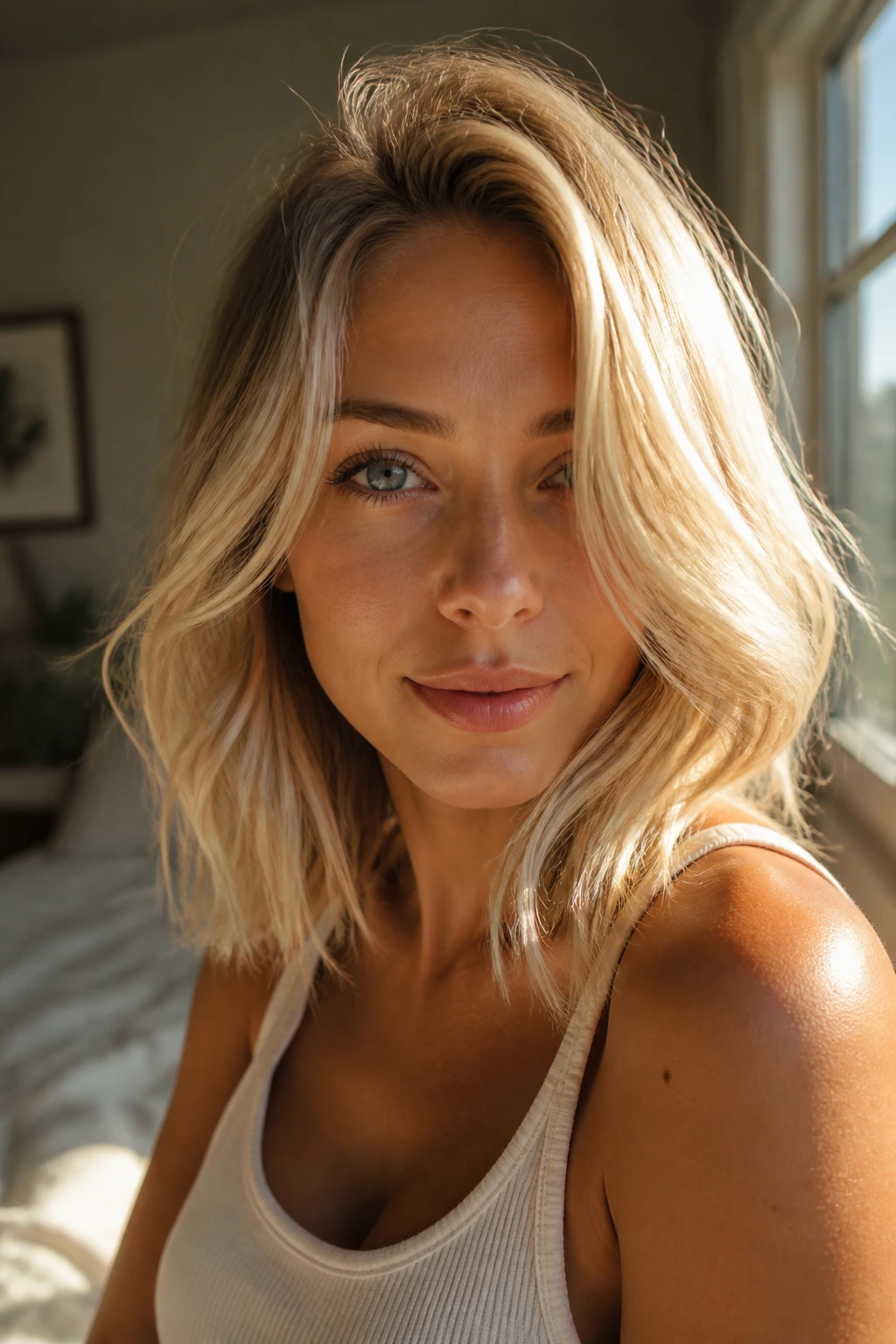
The placement shows fast: On a lob or shoulder-length cut, a 1-inch ribbon of blonde changes the look of the whole head instead of getting lost in long layers.
-
The grow-out can look intentional: A soft root shadow or shadow root blends more easily on medium hair because the transition happens over fewer inches.
-
Warm and cool tones both make sense: Beige, champagne, honey, ash, pearl, and bronde all read clearly at this length, so you can pick a blonde that matches your skin tone instead of forcing one style.
-
Cuts change the color’s mood: A blunt bob makes highlights look sharper; shaggy layers make balayage look softer; curtain bangs put the bright pieces right where the eye lands first.
-
You can go bold without overcommitting: Medium length hair can handle a bright money piece or high-contrast foilayage without needing a full-head platinum situation.
-
Maintenance can be matched to your life: Some of these shades need a toner refresh every 4 to 6 weeks, while others stay nice with a gloss and a careful washing routine.
1. Beige Blonde Lob with Soft Money Pieces
Beige blonde is the shade I reach for when I want the color to look polished instead of loud. On a collarbone lob, it keeps the whole cut from tipping too yellow, too white, or too flat. A few soft money pieces around the face wake up the shape without turning the front sections into a billboard.
Best when you want brightness, not drama
Ask for a beige toner over a neutral blonde base, then lift just the front pieces a touch lighter than the rest. The money pieces should start around the cheekbone or just below the part, not way back near the ears. That keeps the look airy and stops the face frame from swallowing the haircut.
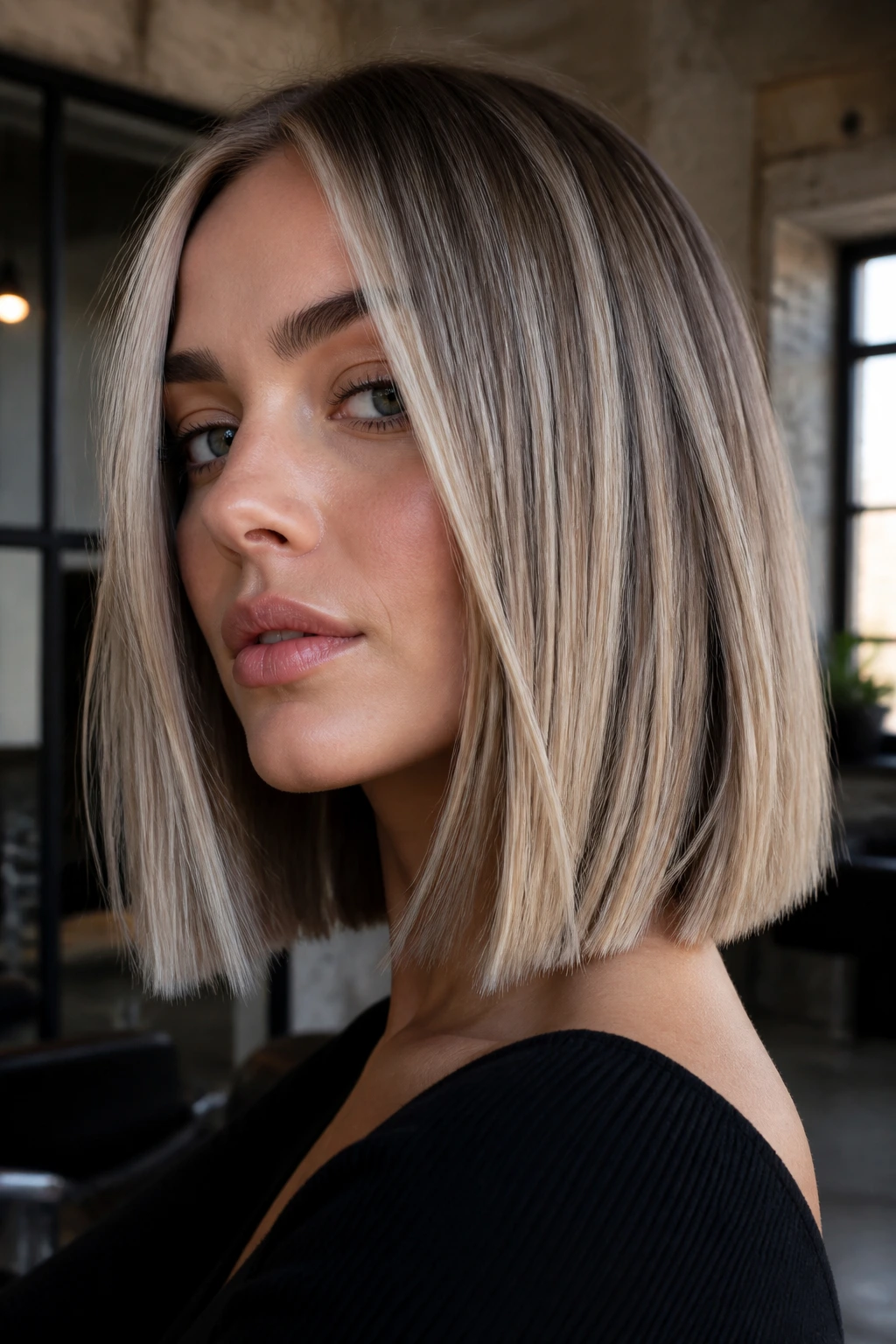
If your natural color sits around level 6 or 7, this shade is especially easy to wear. The contrast stays soft, and the grow-out line doesn’t scream for attention. On straighter lobs, it reads clean and sleek; on loose waves, the beige pieces break up the shape in a really nice way.
Best for: medium-density hair, oval and heart-shaped faces, and anyone who wants blonde that behaves during grow-out.
Ask for: a soft beige gloss, a subtle root shadow, and brighter face-framing pieces no wider than about 1/2 inch.
2. Honey Balayage on a Collarbone Cut
Honey balayage has a warmer, richer feel than beige blonde, and that warmth makes medium-length hair look fuller. On a collarbone cut, the lighter pieces catch the bend in the hair instead of sitting like stripes. That matters. A lot.
The trick is to keep the blonde ribbons woven through the mids and ends, not packed at the root. If the color starts too high, honey can turn chunky fast. Kept lower and softer, it looks like sunlight found the hair on its own. Loose waves are its best friend, but even a simple blow-dry gets a nicer outline from those warm ribbons.
What makes it different
Honey balayage works especially well when the haircut has some movement—layers around the face, a bit of internal shape, or ends that aren’t all cut to the same line. The warmth adds depth, which means the hair doesn’t need a heavy styling routine to look finished.
If your skin leans golden, peachy, or olive, this shade can be a smart move. It usually feels easier to wear than icy blonde because it doesn’t fight your natural warmth. Just keep the toner from drifting orange. That’s the line.
3. Ash Blonde Ribbons on a Blunt Lob
Want a blonde that makes a blunt cut look sharper? Ash ribbons do that job well. They add a cool edge that keeps the ends from reading too soft or too yellow, and on a blunt lob the effect is crisp in the best possible way.
The color itself should stay neutral-ashy, not gray. There’s a difference. Grayish blonde can look flat if the hair is porous or overtoned, while a clean ash ribbon still has brightness in it. On straight hair, the lines are obvious; on bendy waves, the ash pieces show up as clean streaks of contrast.
What to watch for
If your hair already pulls very cool, ask for ash only in the lighter pieces, not all over. Overdoing ash on a medium-length cut can make the style feel dry and tired instead of sleek. A soft root shadow helps, because it gives the cool blonde somewhere to land.
This one works especially well when you like a neat outline and a little polish. It is not the shade for anyone who wants sunshine and warmth. It’s for the person who wants the blonde to look deliberate.
4. Buttercream Blonde with Curtain Bangs
Buttercream blonde has that soft, creamy look that makes curtain bangs almost unfairly flattering. The shade sits in that middle zone between warm and cool, which means it can keep the hair looking light without bleaching out all the depth. On medium lengths, that balance matters because the bangs and face frame already pull a lot of attention.
The color should feel plush, not icy. Think pale butter rather than white paper. When the bangs are slightly lighter at the ends and a touch deeper near the root, they fold into the rest of the cut instead of floating above it like a separate piece. That small difference changes everything.
Why it works so well
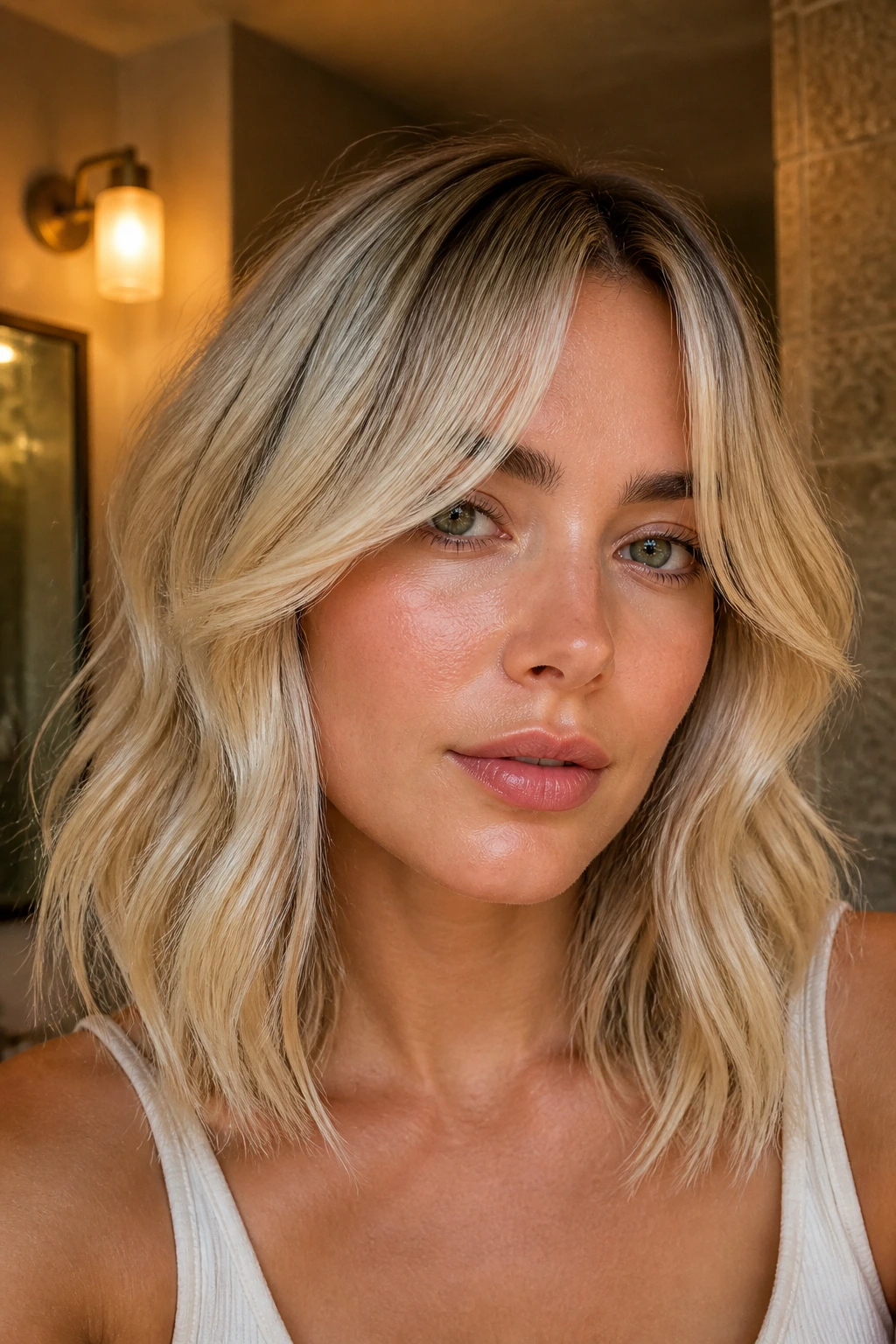
Curtain bangs need a color that moves with them. Buttercream blonde gives you enough softness for that, and the face-framing pieces can be kept just a little brighter than the lengths. That keeps the cut from looking heavy near the eyes.
If your hair tends to look dull under indoor light, this is a strong choice. It catches warmth from the surroundings and still stays clean. A round-brush blowout makes it read especially nicely, but air-dried waves still show the creamier tone.
5. Champagne Blonde with a Root Smudge
Champagne blonde has a tiny bit of sparkle to it. Not glittery. Just polished enough that the hair looks lit from within, especially when the strands move. On medium-length hair, a root smudge keeps that brightness from becoming too stark, which is the mistake people make when they go too pale too fast.
The best version is usually a pearl-beige blonde through the mids with a slightly deeper root at the top. Not a dark root. Just enough depth to soften the line at the scalp. That gives the color a more expensive finish and makes the grow-out less fussy between appointments.
This shade loves smooth styles. A brushed wave or a blunt blowout shows the champagne tone better than a very messy texture. If you want your blonde to look clean, reflective, and a little dressy, this is one of the better calls.
6. Mushroom Blonde with Smoky Low-Lights
Mushroom blonde is for people who want blonde, but not the kind that announces itself from across the room. It sits in that smoky taupe zone where the blonde is still there, just softened by low-lights and cool depth. On medium-length hair, that depth stops the cut from looking stringy.
Unlike brighter blondes, mushroom blonde relies on contrast that’s subtle, not loud. The low-lights give the mids something to cling to, which is handy if your hair is fine or naturally flat. A collarbone cut with a little wave looks especially good here because the cool pieces sit in the bends instead of fighting them.
Ask for this placement
Request a blended base with low-lights through the interior and a few lighter ribbons around the face and ends. Keep the tone ash-beige, not charcoal. Too much darkness can drag the hair down; too much light can erase the whole point.
This is a smart option if you’re moving from brunette into blonde slowly. It still feels like a change, but it doesn’t force a huge maintenance jump.
7. Icy Beige Blonde for Fine Hair
Icy blonde can look too hard on fine hair if the tone is all frost and no dimension. Icy beige solves that. It keeps the cool finish people love, but adds enough softness that the hair doesn’t look thin or brittle at the edges.
The key is to use narrower highlights instead of big wide panels. Fine hair needs the illusion of density, and little ribbons create that better than chunky slices. On medium lengths, especially straight or slightly bent lobs, the result is clean and crisp without looking sparse.
The part most people miss
Fine hair usually shows toner mistakes faster than thick hair. If the color gets too ashy, it can read dull. If it’s too beige, it can yellow. The sweet spot is a pale, cool beige with a glossy finish. Think polished, not snowy.
I like this shade on hair that has a sharp cut line. A blunt shoulder-length shape gives the icy pieces something solid to sit against, and the result looks intentional instead of airy in a fragile way.
8. Sandy Blonde Babylights for Easy Grow-Out
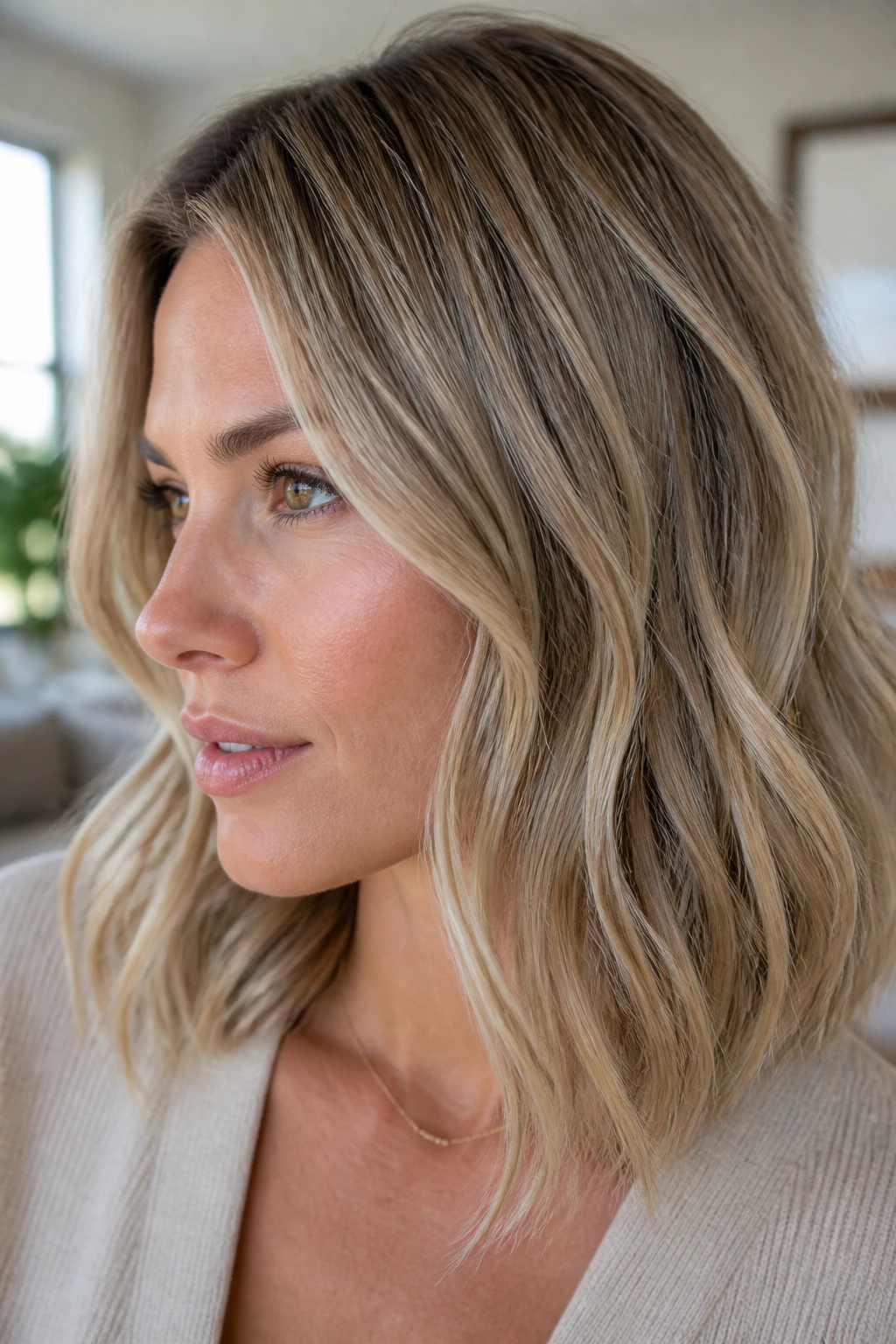
Want blonde that can survive eight weeks without a meltdown? Sandy blonde babylights are built for that. The individual pieces are tiny—thin enough that they blur together as the hair moves—so the grow-out line stays soft instead of forming obvious bands.
Babylights work beautifully on medium-length hair because there’s enough surface area for the color to show, but not so much length that the blonde disappears. Ask for very fine highlights through the top and around the part, then keep the ends a shade brighter than the mids. The effect is subtle, sun-touched, and easy to live with.
This one is especially good if you air-dry your hair a lot. The pieces don’t need perfect curls to make sense. They just need a little texture. That’s what makes sandy blonde one of the smartest low-maintenance choices in the bunch.
9. Caramel Bronde Melt with Bright Ends
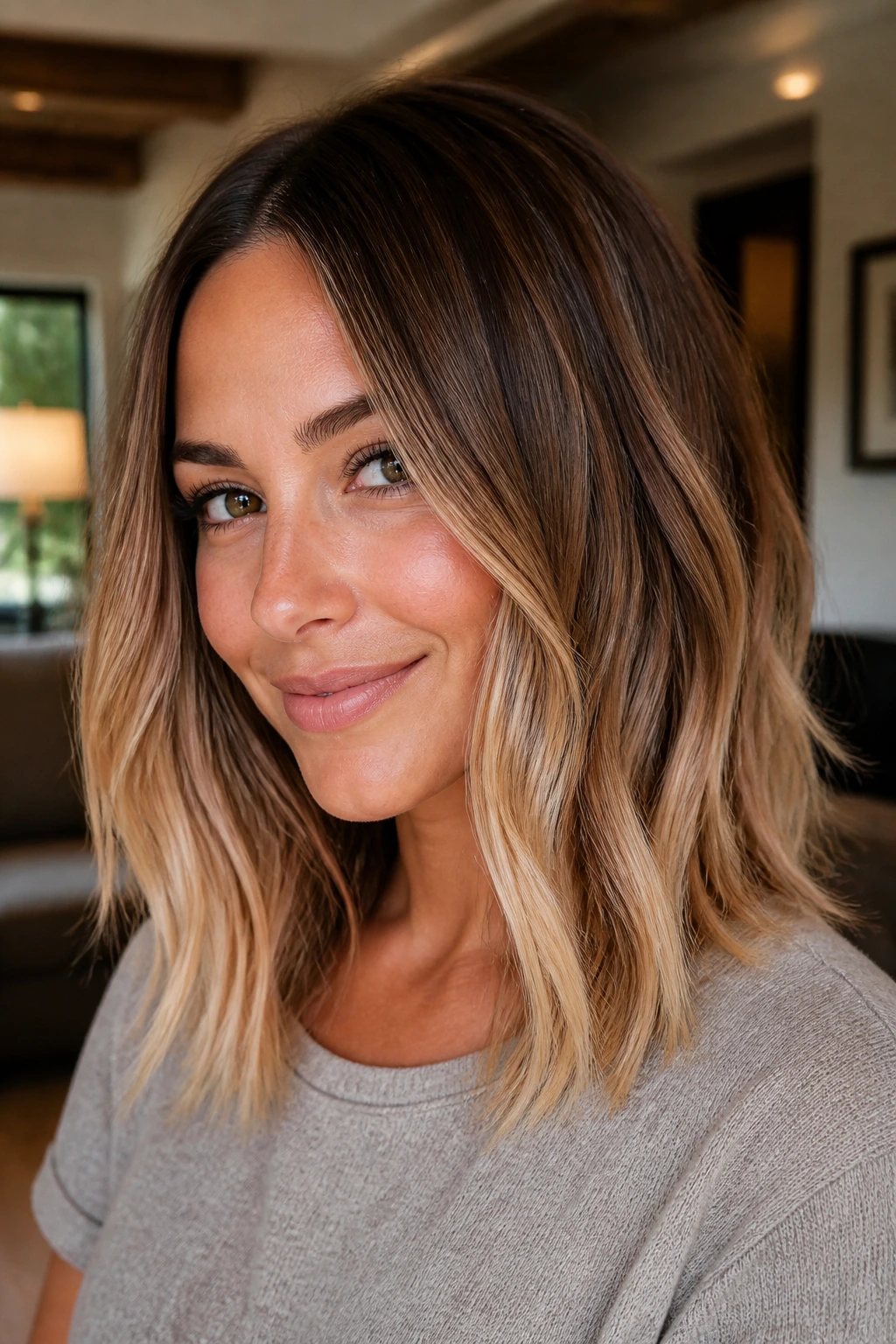
Caramel bronde is the bridge between brunette and blonde that doesn’t feel awkward on the way over. On medium-length hair, the melt from darker root to warmer mids to brighter ends has room to breathe, which keeps the color from looking chopped up. That transition matters more on shoulder-length cuts than people expect.
The best version uses caramel near the root area, then gradually gets lighter toward the ends. If the blonde jumps too fast, the whole thing can look stripy. Keep the ends brighter, but not pale. You want a warm glow, not a bleach job that forgot to be soft.
Why this shade earns its keep
It’s forgiving. That’s the truth. If you’ve got a darker base and want some blonde without making every appointment expensive or stressful, caramel bronde keeps the look grounded. It also plays well with loose curls, because the warm tones wrap around each bend instead of sitting on top of the hair like paint.
10. Pearl Blonde with Soft Lived-In Roots
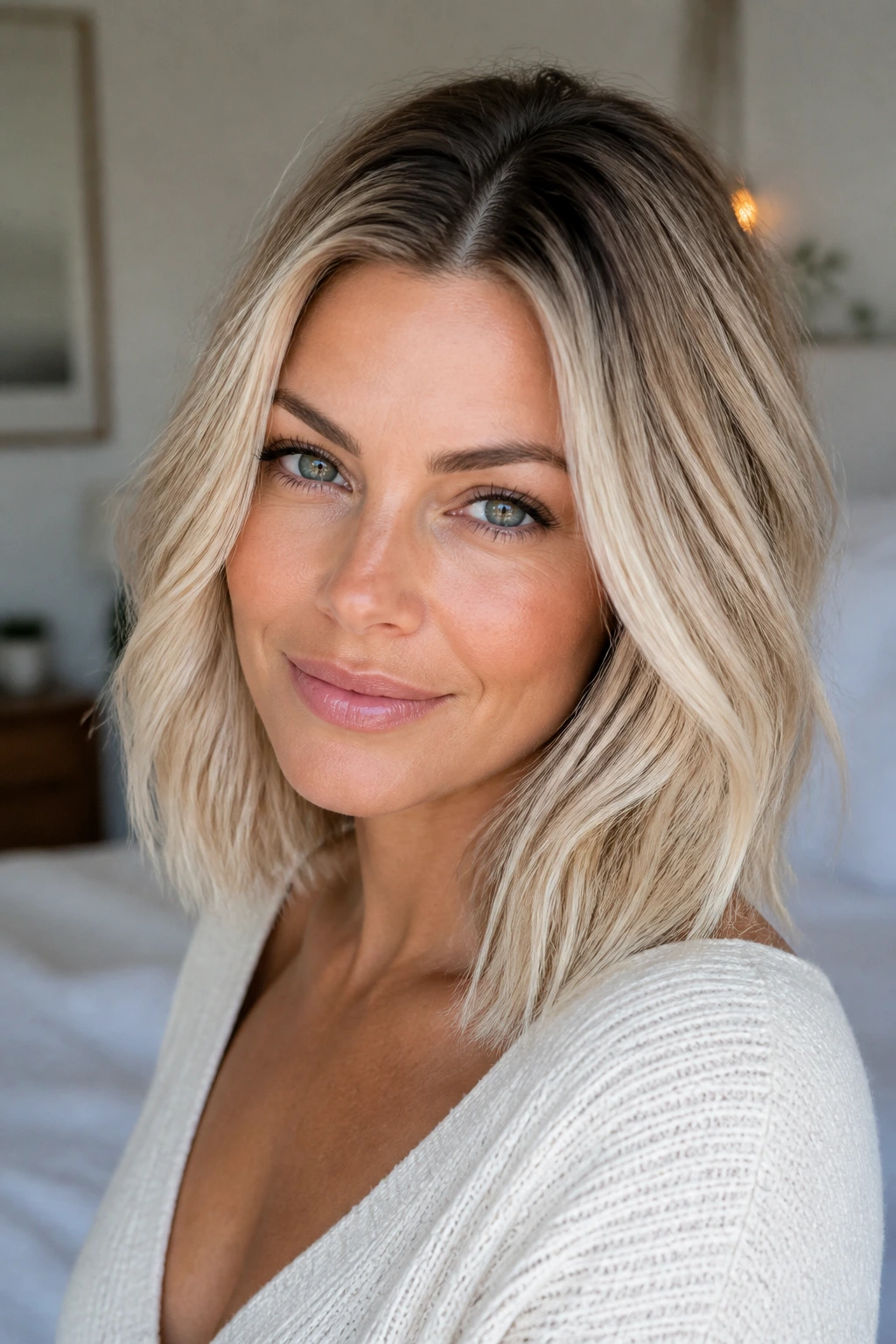
Pearl blonde has a cool, luminous finish that looks especially good when the roots stay a little deeper. That soft root area gives the color shape and keeps the crown from going flat. On medium-length hair, pearl tones can look expensive fast if the gloss is clean and the root melt is blended.
The thing to understand with pearl is that it’s not the same as icy. Pearl has a softer shine and a touch more beige in the base, which helps it feel wearable. It’s a nice choice for straight or lightly waved styles where you can see the reflection running through the strands.
If your hair is already light, pearl blonde may be one of the easiest ways to change the tone without changing the whole identity of the cut. It still feels blonde. Just a cleaner, quieter version.
11. Strawberry Blonde Blend on a Medium Shag
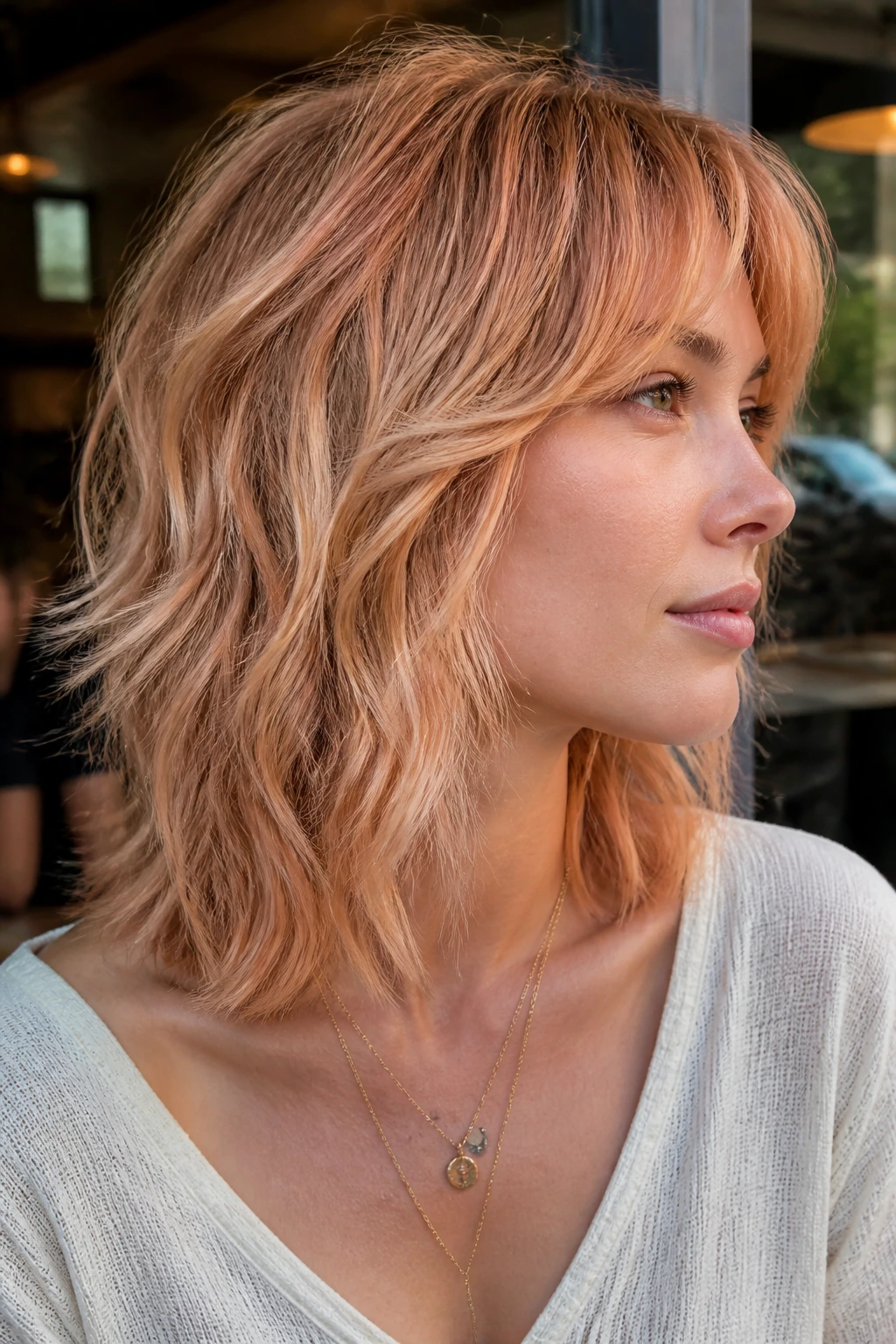
Strawberry blonde does something many blondes don’t: it gives the haircut a pulse. On a medium shag, the rosy-gold tone works with all those broken-up layers and airy ends. The style stops looking too soft or too beige and starts feeling lively.
This isn’t a full copper moment. It’s more delicate. Ask for blonde with a warm rose-gold glaze, then keep the lighter pieces near the face and through the top layers. The shag does the rest. Because the hair is cut with movement already built in, the color can be a little more playful without turning messy.
What to know
Strawberry tones fade faster than neutral blondes. The warm pigment doesn’t stick around forever, and that’s the tradeoff. A gloss every few weeks keeps it from drifting dull or salmon-colored. If you like hair that looks warm, a little romantic, and not too polished, this one has a lot going for it.
12. Bronzed Blonde with Sunlit Ribbons
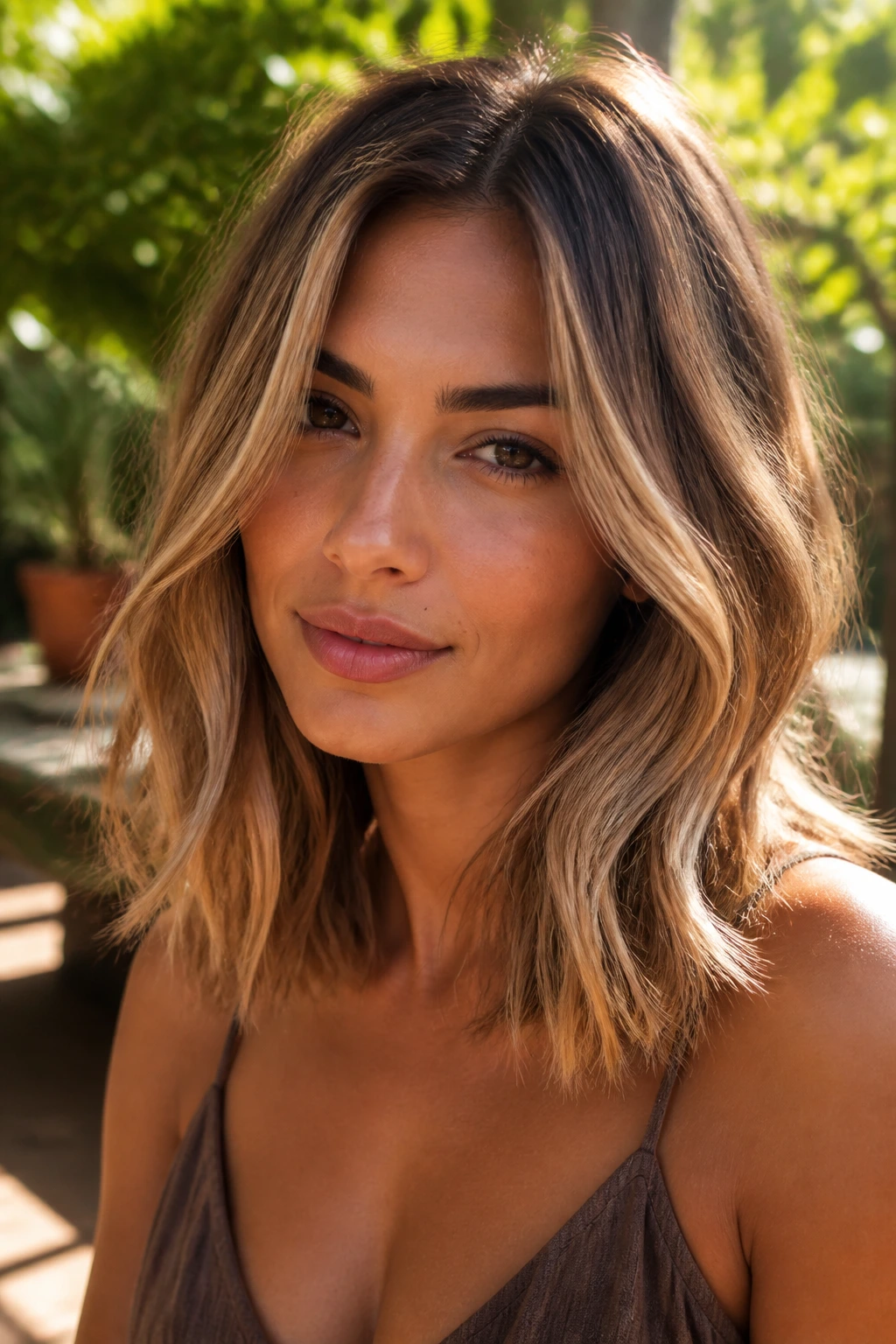
Bronzed blonde is what happens when warm blonde gets a little richer and more grounded. On medium-length hair, it can look better than paler blonde if your skin has olive, golden, or neutral undertones. The deeper bronze base gives the light pieces something to pop against, so the color reads dimensional from every angle.
The best version uses sunlit ribbons through the mid-lengths and ends, with the root staying a level or so deeper. That keeps the look from tipping into orange. Bronze should feel warm and expensive, not brassy. That’s a fine line, and yes, it matters.
This is one of those shades that can make a plain haircut look like it had more thought put into it than it did. A medium-length cut with soft bends and bronzed ribbons can look finished even on a basic air-dry day.
13. Platinum Money Piece with Dark Roots
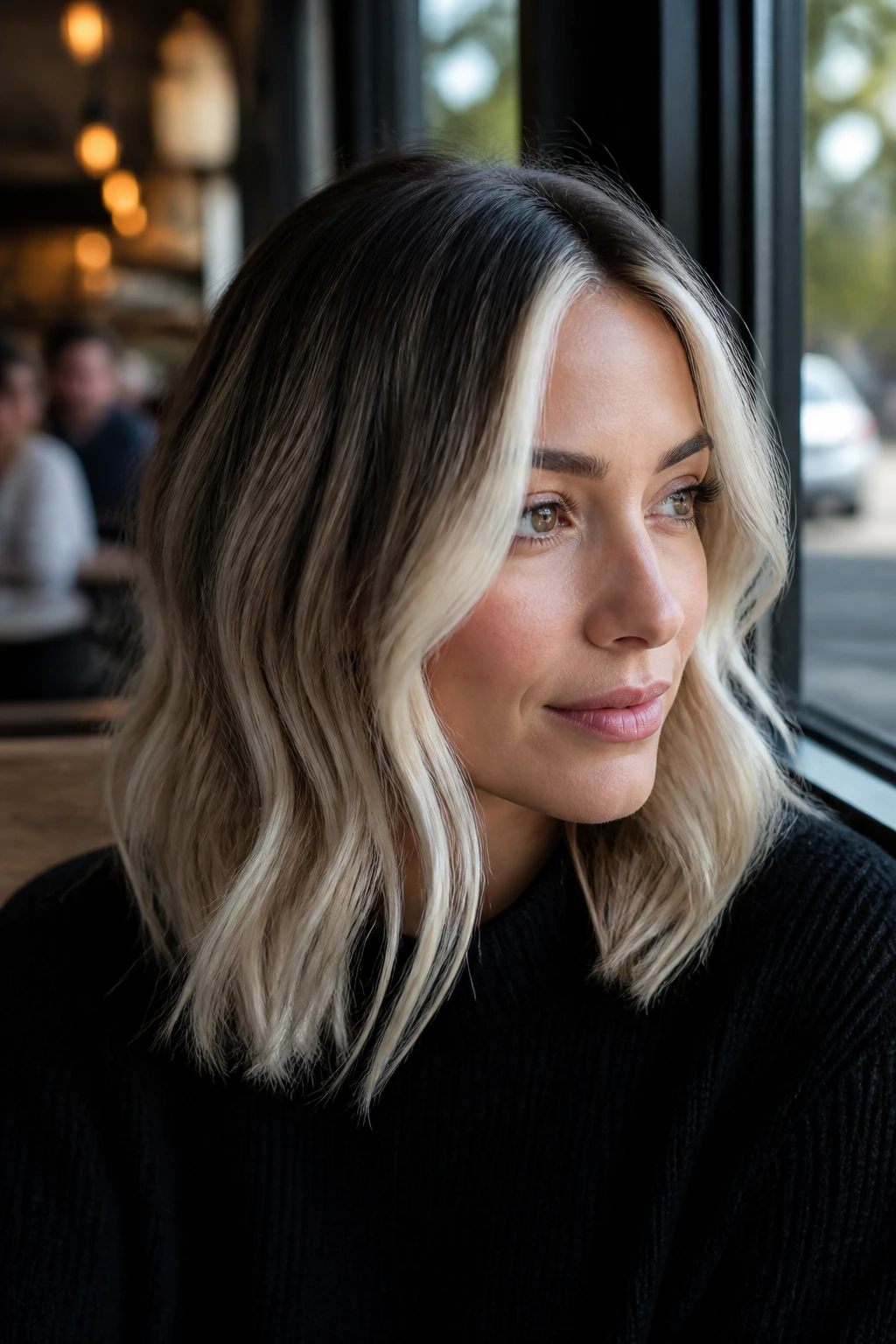
Can a bright front streak work without bleaching the whole head? Absolutely. In fact, on medium-length hair, a platinum money piece can be the exact right amount of drama. Keeping the roots dark turns the front sections into a frame instead of letting the color overwhelm the whole cut.
The money piece should be wide enough to show—about 1 to 1.5 inches per side—but not so thick that it swallows your face. The rest of the hair can stay beige, smoky, or softly blended. That contrast is what makes the look feel sharp.
This style does ask for confidence. It’s not subtle. But it’s also easier to maintain than all-over platinum because you’re only protecting the brightest pieces and the root area. If you want the color to read modern and a little editorial, this is a smart place to spend the lightening.
14. Bronde Melt with Face-Framing Foils
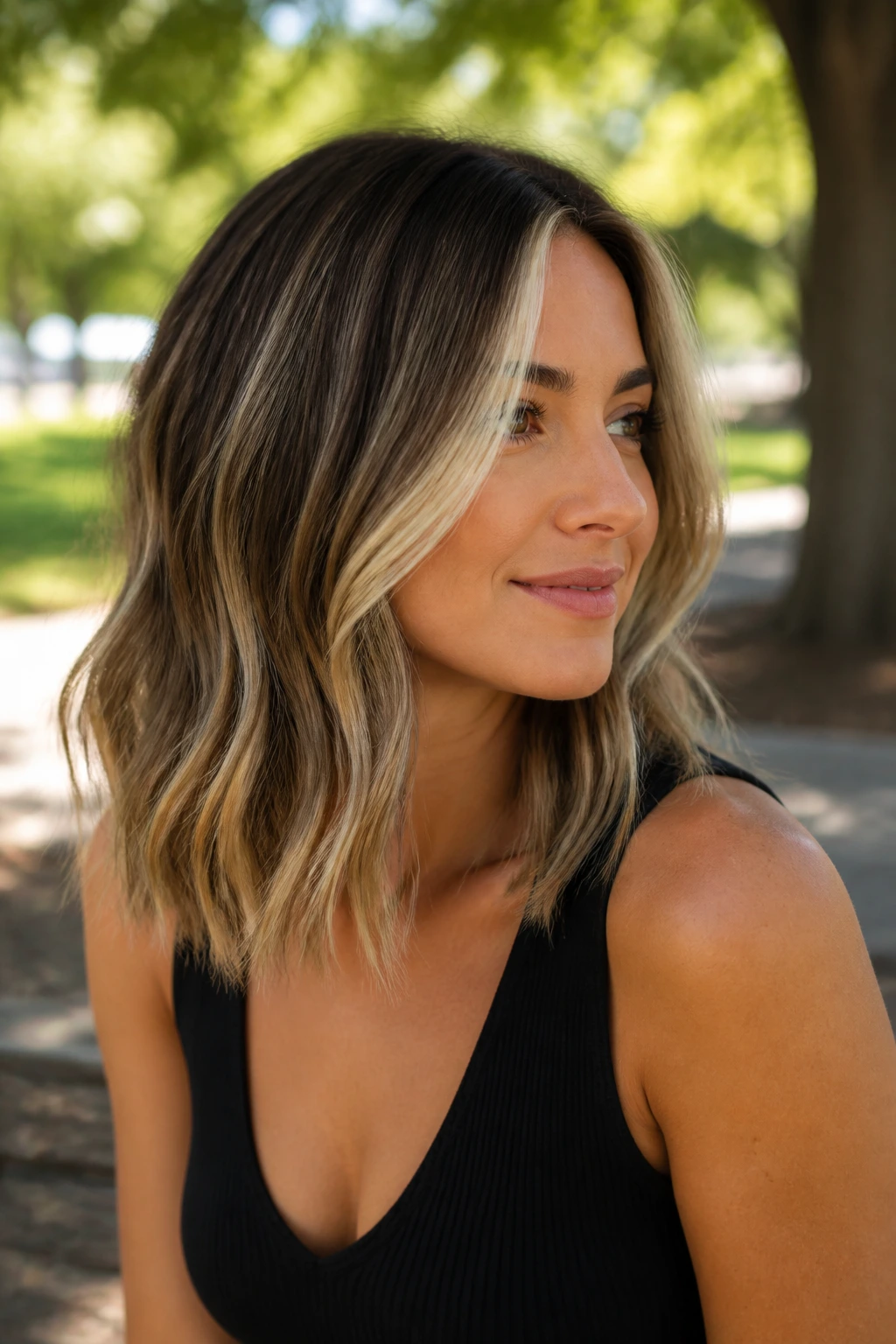
Bronde is the shade for people who want to look lighter without making a hard break from their natural brunette base. On medium length hair, the melt works especially well because there’s enough room for the color to shift from brown to blonde in a way that feels smooth. The face-framing foils are the part that sells it.
Those foils should sit around the cheekbones and jaw, not just at the hairline. That way the light pieces still show when the hair moves back or tucks behind the ear. The rest of the head can stay softly blended, which means the grow-out is kinder and the maintenance is easier.
If you like your hair to feel like it belongs to you, not like it was borrowed from someone else, bronde is the safest kind of blonde. Not boring. Safe.
15. Vanilla Blonde with Airy Layers
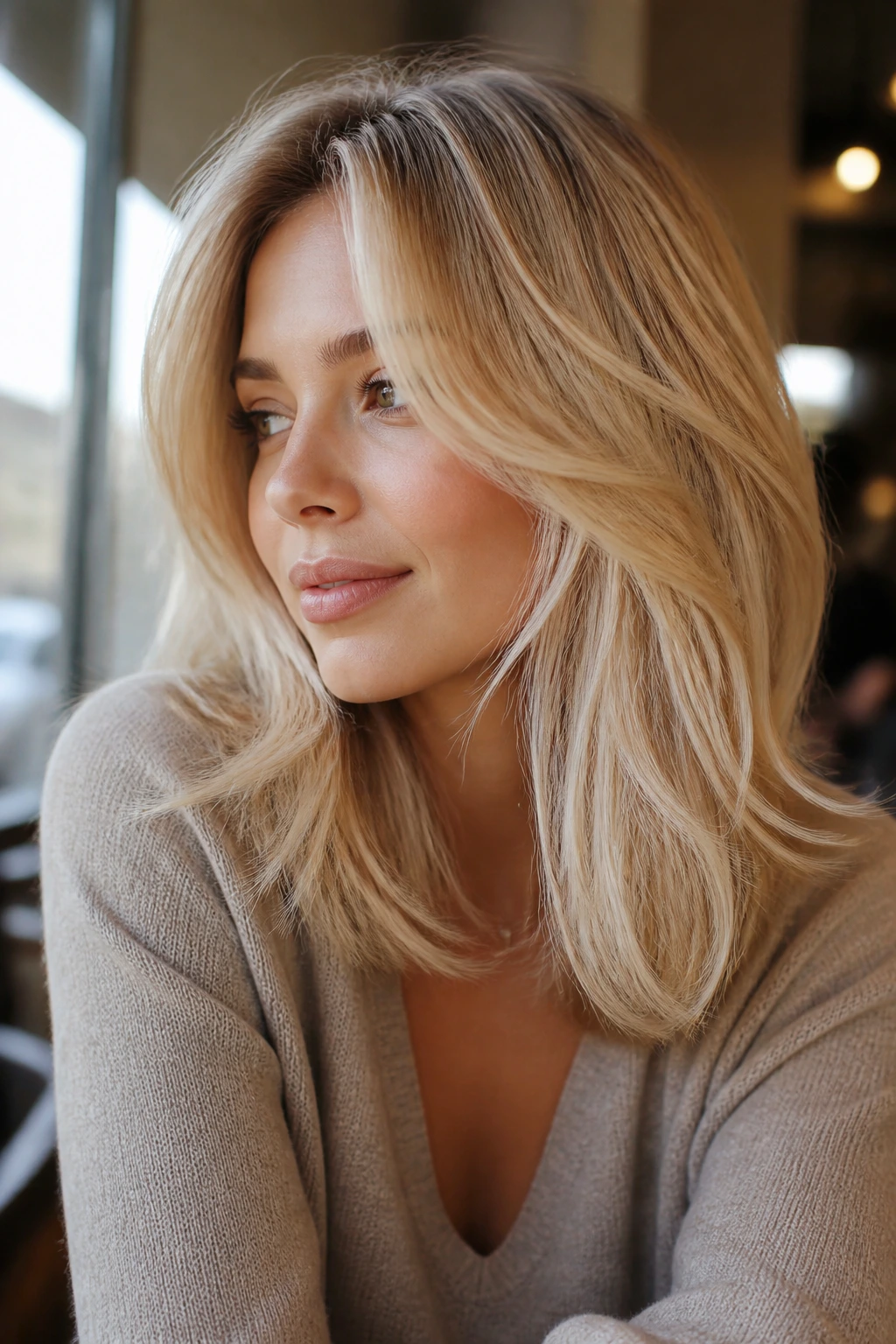
Vanilla blonde is creamy, light, and a little softer than pearl or champagne. On medium-length layers, it makes the haircut feel breezier because the ends don’t get weighed down by too much contrast. The lighter tone catches the movement in the layers and keeps the shape from disappearing.
This is one of those shades that benefits from a clean toner. If the blonde starts drifting yellow, the vanilla effect gets lost fast. Ask for a cool-beige finish rather than a stark silver tone. The hair should still look warm enough to wear, just polished enough to feel intentional.
Best pairing
Layered medium cuts, especially ones with face-framing angles, love vanilla blonde. The shade plays nicely with a round-brush blowout and still looks good when the hair is only half-dry. That flexibility is part of the appeal.
16. Golden Hour Blonde on Choppy Ends
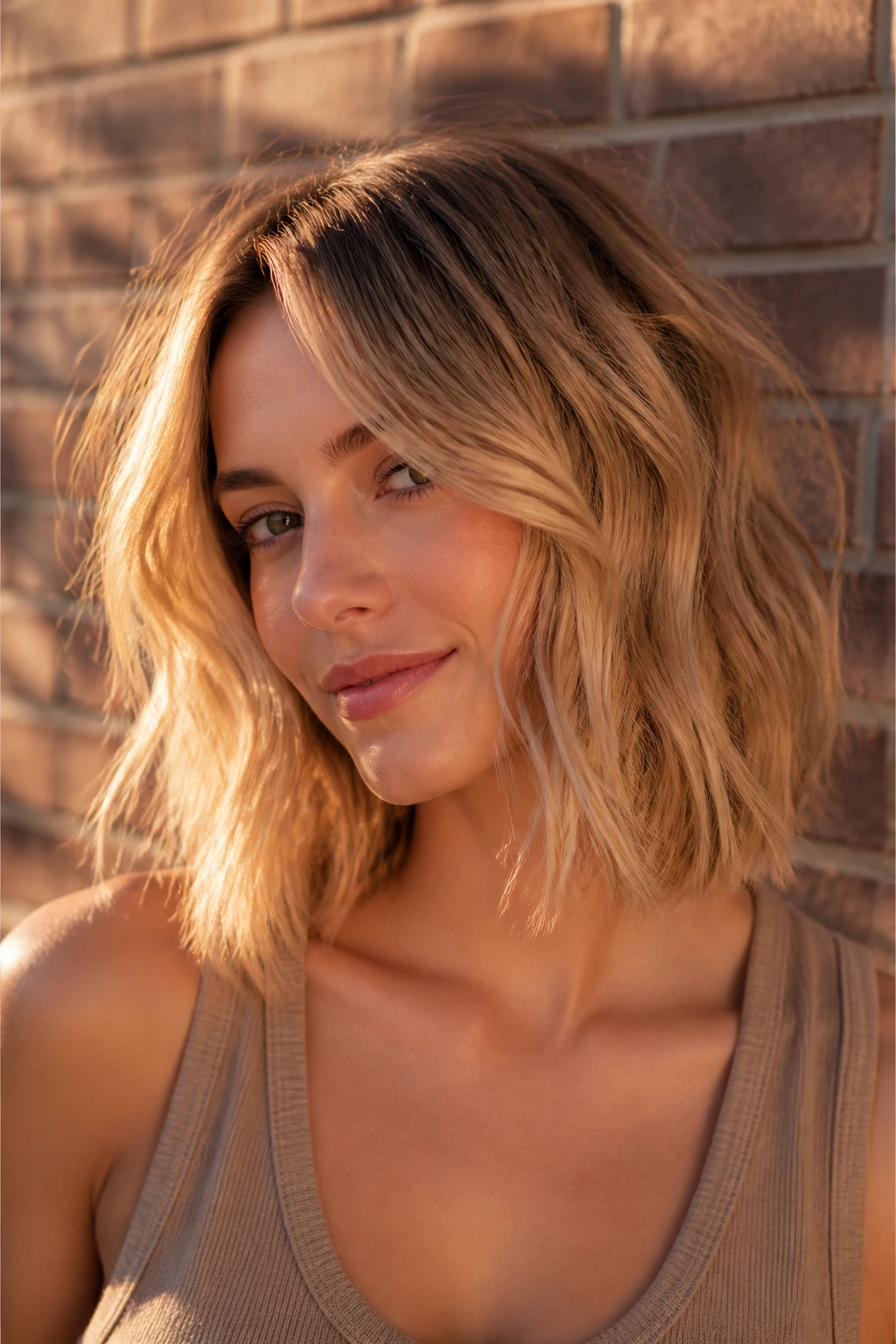
Golden hour blonde is richer and more textured than a clean beige blonde. It looks especially good on choppy ends because the warm pieces exaggerate the movement in the cut. The hair feels active. A little sunlit. Not frozen in place.
This shade is not for someone who wants invisible blonde. It’s for someone who wants the color to show. The ribbons can be slightly thicker through the ends and around the face, with the crown staying softer. That way the cut keeps its edge and the color doesn’t flatten out when the hair is worn down.
If you like tousled styling, this is one of the easiest shades to make sense of. Scrunching, rough-drying, and bendy waves all help the warm pieces separate and stand out.
17. Cream Soda Blonde with Retro Volume
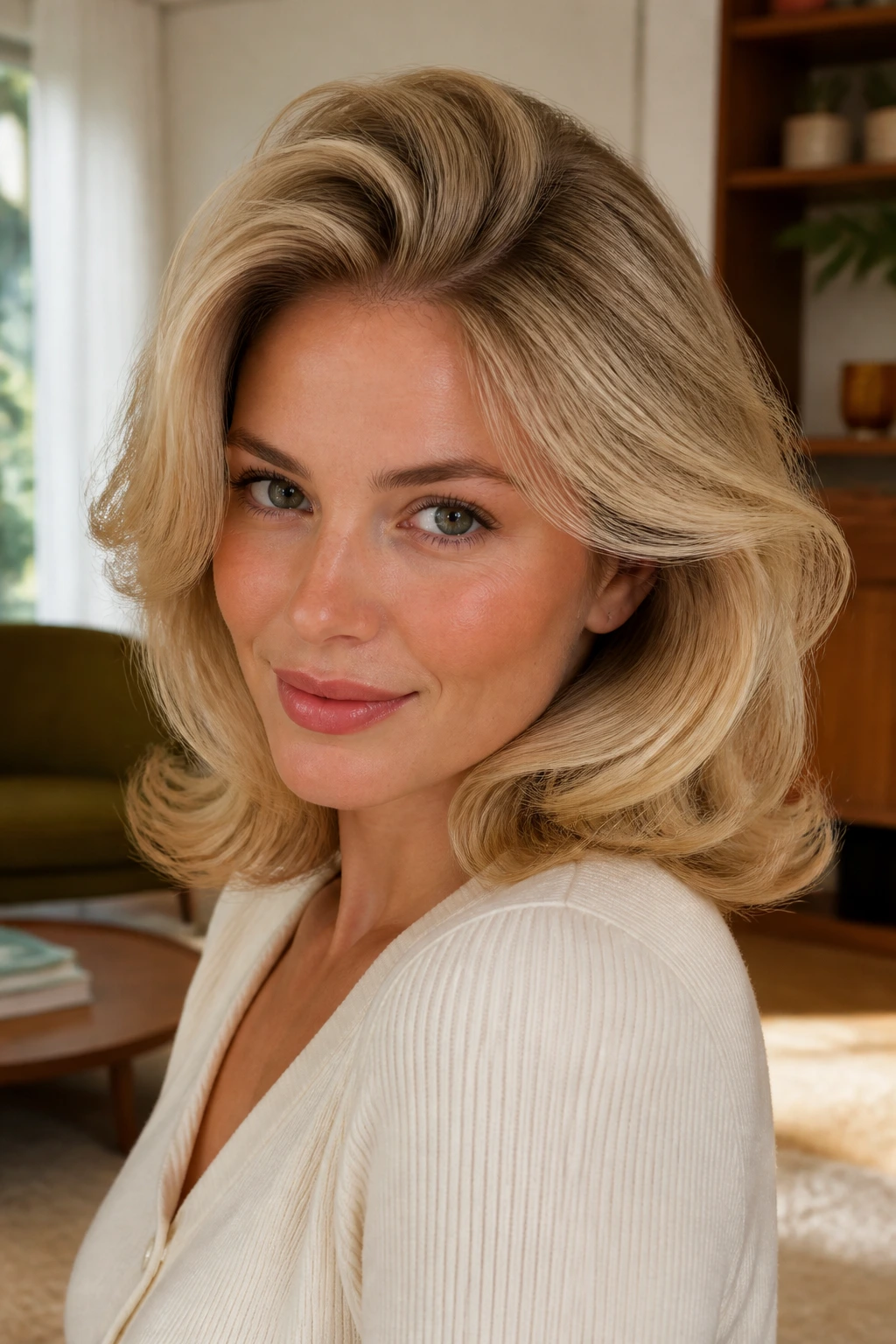
Cream soda blonde has a beige-gold softness that looks especially good with blown-out volume. Medium-length hair is a nice home for it because the color can sit on the surface of the shape without being lost in extra length. Think creamy, rounded, and a little bit throwback.
The tone should stay cushioned—not white, not yellow, just soft. When the hair is styled with a round brush or large rollers, the cream soda shade gets a polished finish that feels deliberate. It also pairs well with medium-length cuts that have a slight bounce at the ends.
Why it stands out
Some blondes need texture to look good. This one needs lift. The shape and the color support each other, which is why it looks so much better on a styled lob than on a flat, untrimmed length.
18. Cool Sandy Blonde with Lived-In Texture
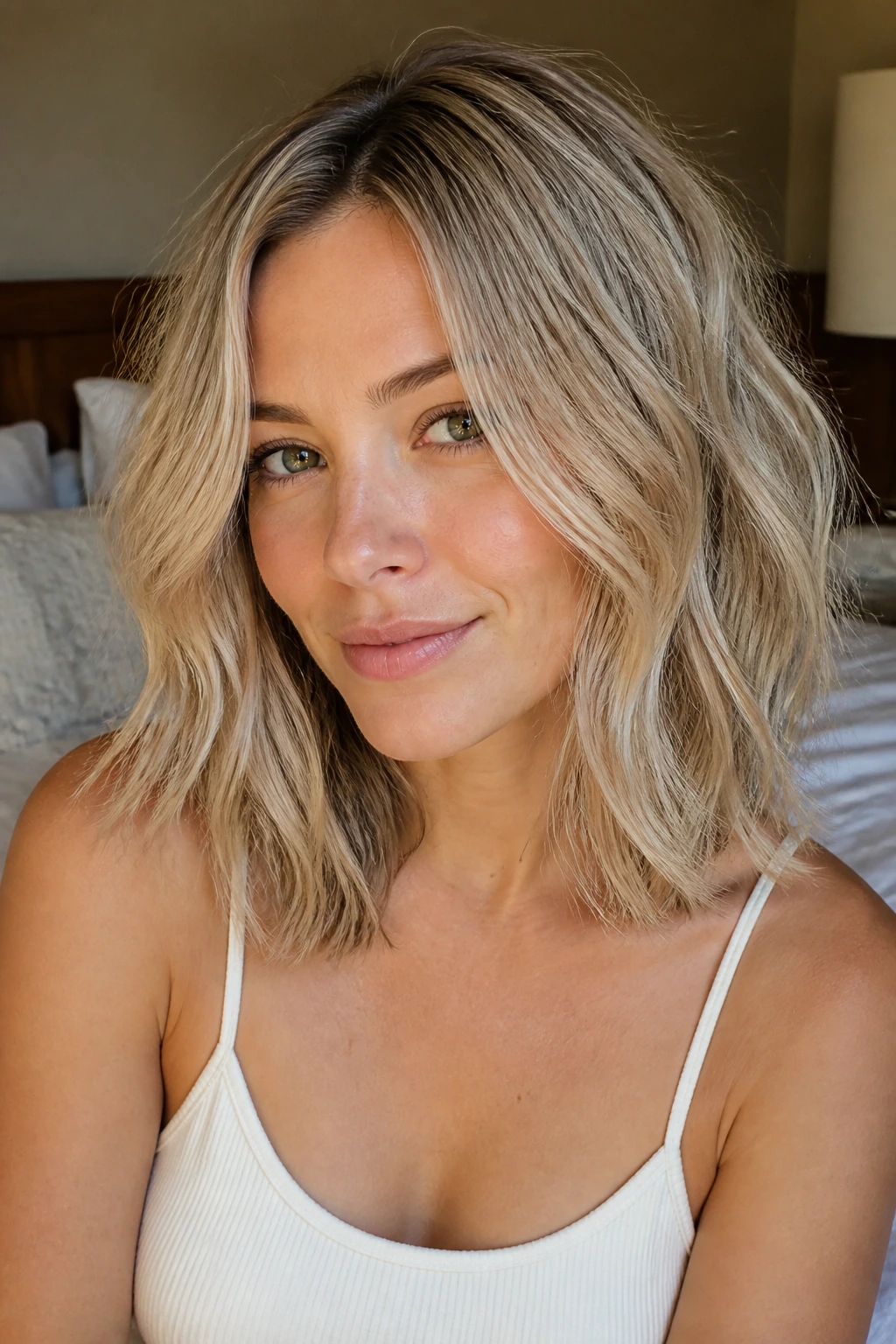
Cool sandy blonde is one of the most forgiving blondes on medium-length hair. It doesn’t demand a perfect curl pattern or a glossy blowout. It wants texture, a little bend, and a root that isn’t overly lightened. The whole point is for the color to feel like it settled in naturally.
Ask for micro-ribbons through the top, then keep the mids and ends a soft sandy beige. The cool tone prevents brass, while the texture keeps the look from reading too neat. That makes it a strong choice if your hair usually looks better slightly undone than freshly ironed.
It’s also one of the easiest shades to stretch between appointments. If your goal is blonde that looks like it has been there for a while—in the good sense—this is a dependable route.
19. Dimensional Foilayage with Chunky Ribbons
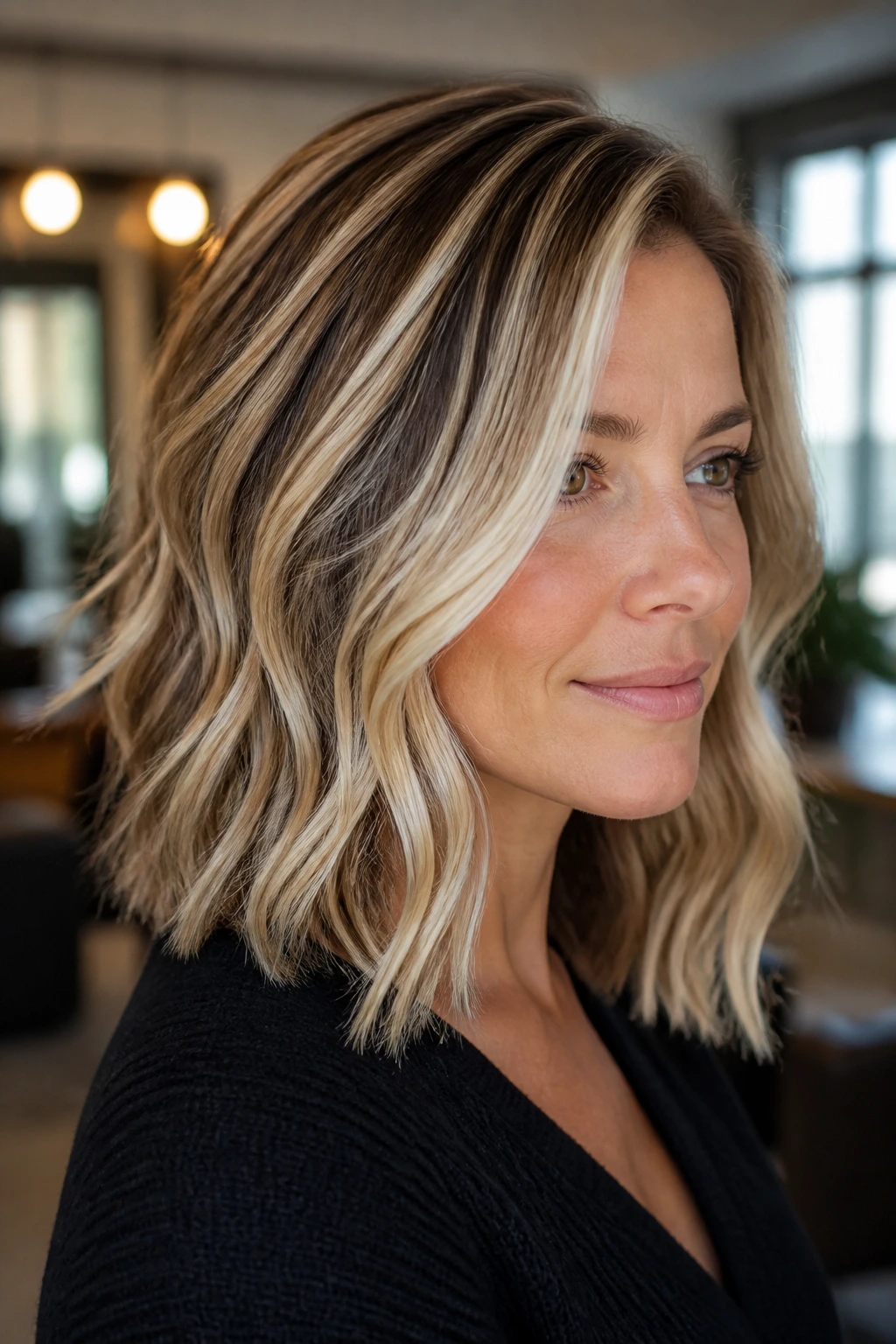
Foilayage gives you the best parts of foils and balayage in one head of hair. On medium-length cuts, it lets you place brighter pieces where they’ll show and softer pieces where the hair needs more depth. The result is dimensional rather than all-over light.
Chunkier ribbons around the part and temple area make the color visible right away. Then the rest of the head can stay softer, which keeps the hair from turning into a single pale sheet. That mix works especially well if you wear your hair with a side part or soft waves.
What it’s best for
This is the choice for someone who wants the color to read from across the room. Not subtle. Not shy. But because the brightness is controlled, it still grows out better than a full bleach blonde. That’s the whole point.
20. Smoky Bronde Melt with Bright Ends
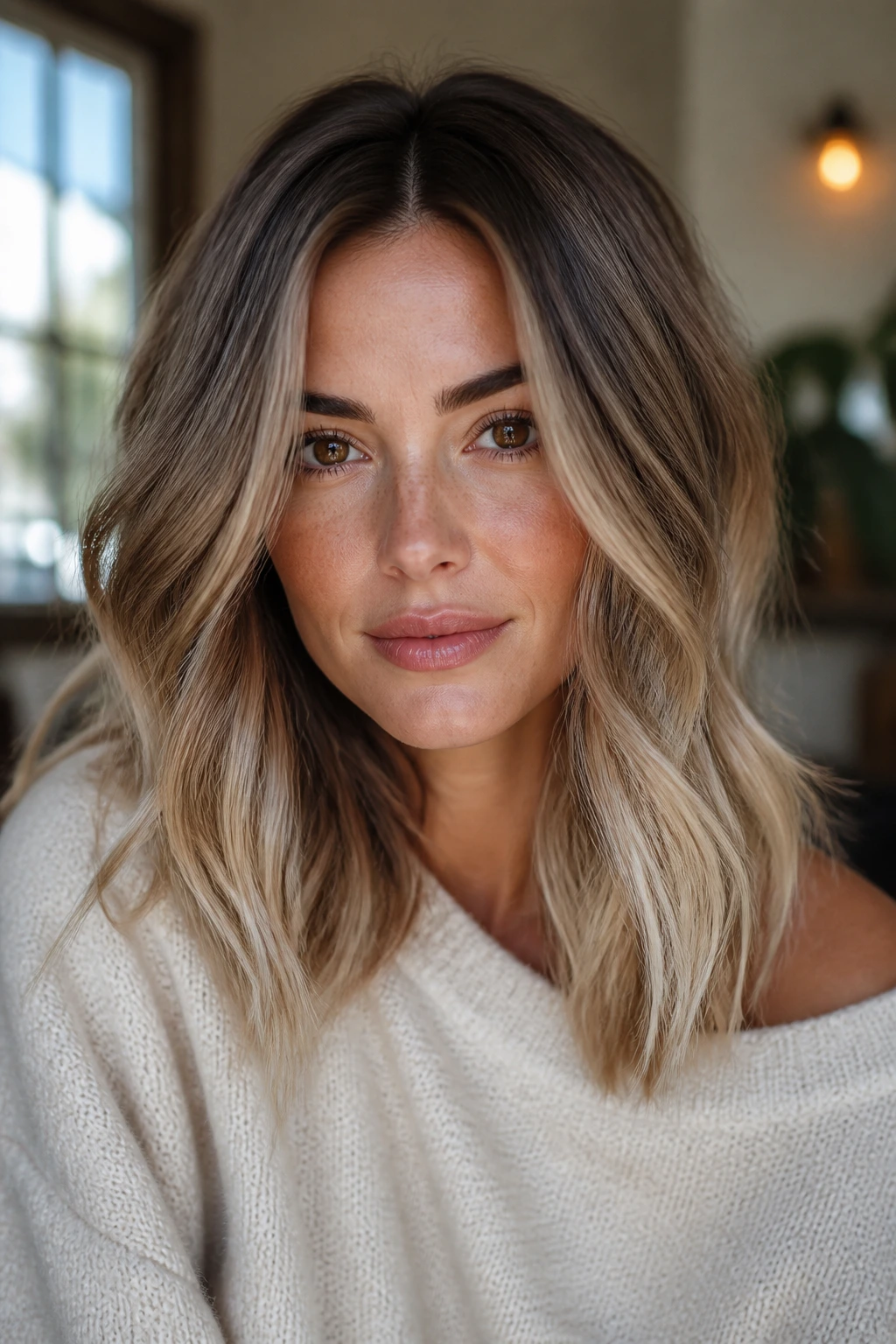
Smoky bronde melt is the most quietly expensive-looking option in the group, and I mean that in the plainest sense. The root stays darker and smoky, the mids soften into brown-blonde, and the ends brighten enough to keep the hair from feeling heavy. On medium-length hair, the shape of the cut makes the gradient easy to see.
This is a strong pick if you want depth at the root but still like the idea of blonde around the face and ends. The smoky tone helps the hair feel grounded, while the brighter ends keep it from becoming too dark. It’s a very sane blonde. Which is not a bad thing at all.
If you like color that looks polished without trying too hard, this is one to bookmark. It’s the kind of blonde that doesn’t need applause. It just works.
How to Choose the Right Blonde for Your Base Color
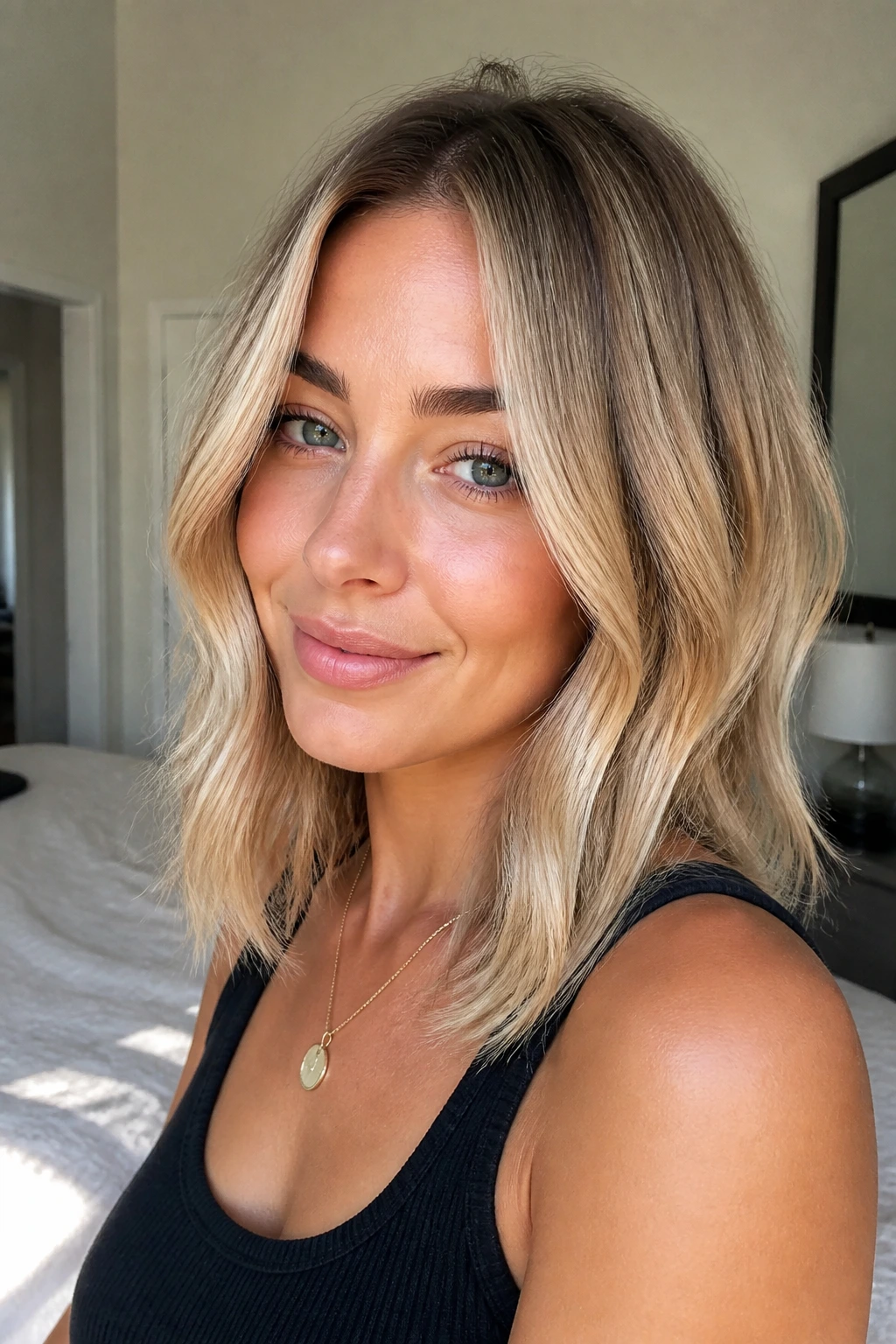
Start with your natural level, not with the photo you saved. That sounds boring, but it saves headaches. A level 5 brunette will need a different path than a level 7 dark blonde, and the gap matters because medium-length hair shows placement so clearly.
If your hair is level 4 to 5
You’ll usually get the best result from bronde, caramel melts, mushroom blonde, or smoky beige highlights. These shades respect the darker base and make the transition feel smooth instead of jarring. If you go too pale too fast, the contrast can look harsh and the condition of the hair takes a harder hit.
If your hair is level 6 to 7
This is the sweet spot for beige blonde, honey balayage, pearl, champagne, and soft ash ribbons. Your colorist has enough lightness to work with that the blonde can show without a huge lift session. Medium-length hair at this level can take face-framing pieces beautifully.
If your hair is already light
Icy beige, vanilla blonde, and platinum money pieces become much more realistic. Still, don’t chase the palest tone just because it’s lighter. A level 9 blonde with good tone and shine often looks better than a level 10 that’s dry and hollow.
Undertone matters too. Warm skin usually likes honey, cream soda, and bronzed blonde. Cooler skin can handle ash, pearl, and champagne. Neutral skin gets the easiest time of all.
What to Tell Your Colorist at the Chair
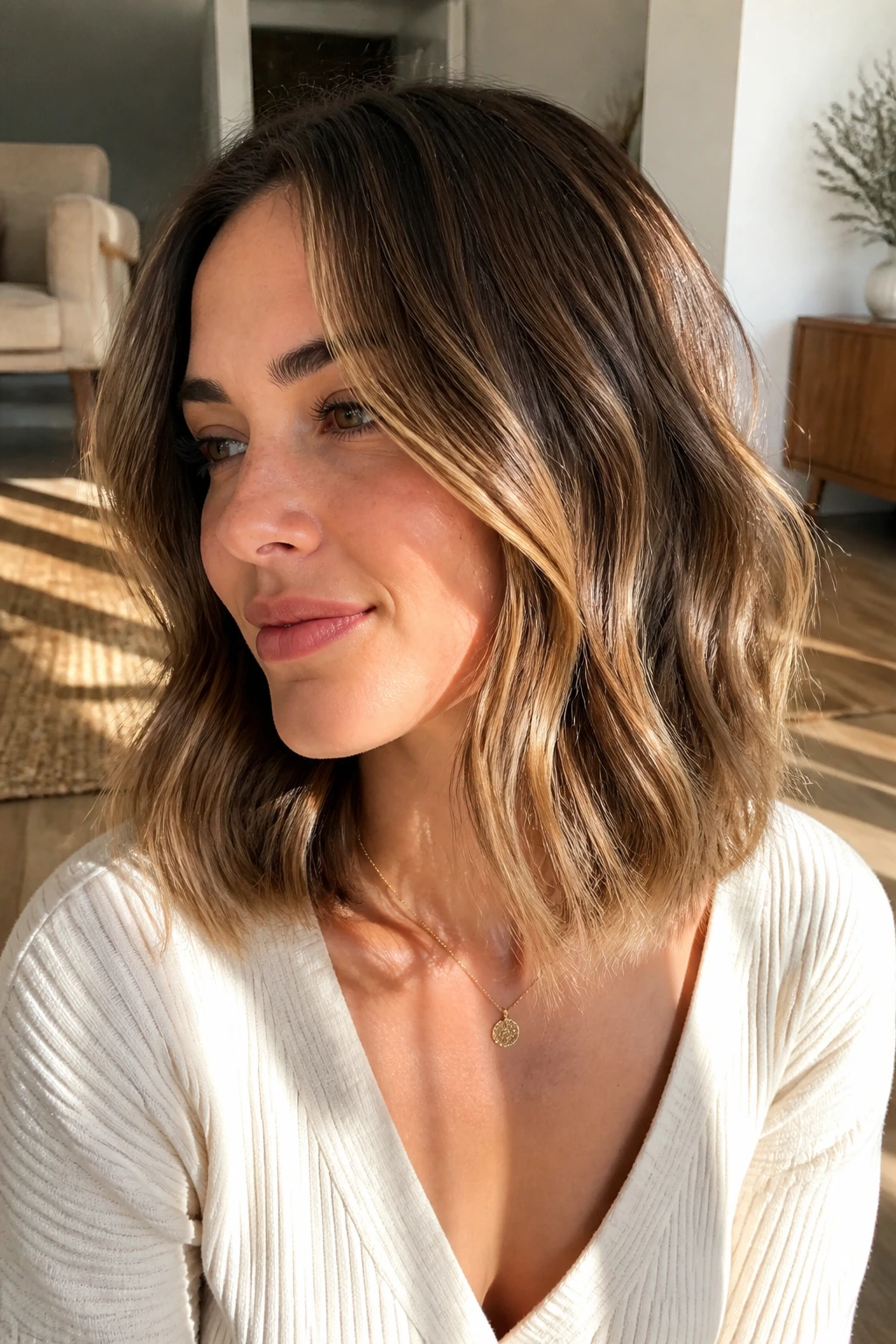
Bringing one reference photo is not enough. Bring two. One should show the tone you want; the other should show the placement you want. A champagne blonde on a blunt lob and a champagne blonde on a shag are not the same thing, and the cut changes the whole read.
Use plain words. Say money piece, shadow root, babylights, foilayage, or balayage if those are the parts you actually like. If the front pieces matter most, say that. If you want low upkeep, say how often you’re willing to come back—six weeks, eight weeks, ten weeks. That’s more useful than saying you want it “natural.”
A few phrases help more than people think:
- “Keep the root about a shade deeper than the mids.”
- “I want the blonde brighter around the face, softer through the back.”
- “Please keep the highlights fine, not chunky.”
- “I like beige, not yellow.”
- “I want grow-out to look soft for at least six weeks.”
That language gives your colorist a target instead of a mood board to guess from.
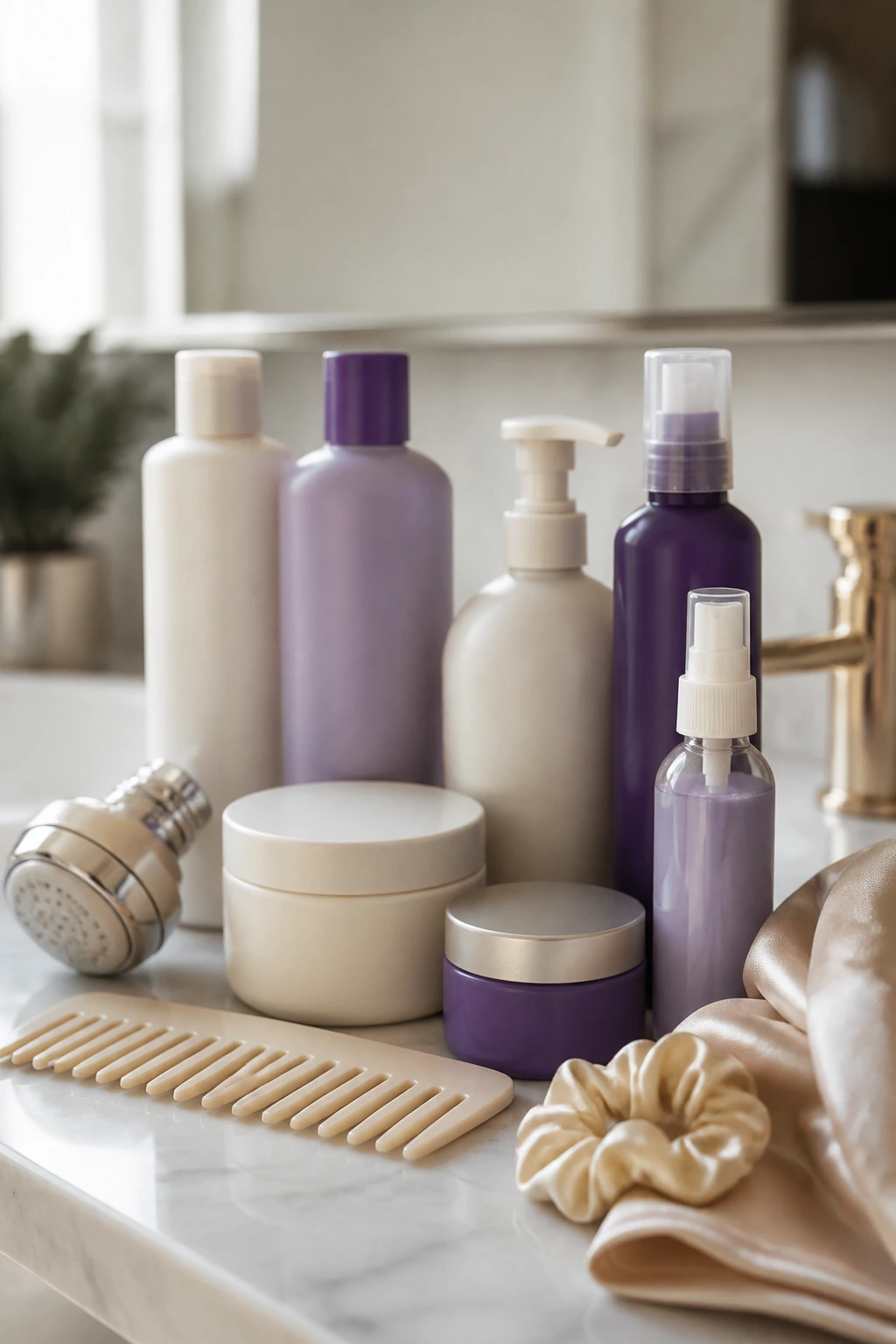
Essential Tools and Products for Keeping Blonde Clean
-
Sulfate-free shampoo: Helps keep toner from washing out too fast, especially on beige, pearl, and champagne blondes.
-
Purple shampoo: Use it once a week, maybe twice if your blonde leans yellow fast; leave it on only long enough to mute warmth, not stain the hair.
-
Color-safe conditioner: Blonde hair likes moisture, and medium lengths show dryness at the ends first.
-
Deep conditioning mask: Keep one on hand for every 1 to 2 weeks if the lightening process left the hair rough.
-
Heat protectant spray: Use it before blow-drying, curling, or flat ironing. Blonde hair burns faster than people expect.
-
Wide-tooth comb: Good for detangling wet hair without snapping the lighter pieces.
-
Gloss or toner appointment: A salon gloss every 4 to 8 weeks keeps the tone from drifting brass or muddy.
-
Silk pillowcase or bonnet: Not glamorous, maybe, but it cuts down on friction and helps the ends stay smoother.
-
Shower filter: Worth it if your water leaves mineral buildup. Hard water can turn blonde dull and yellow faster than a bad toner choice.
How to Keep Medium-Length Blonde Looking Fresh Between Appointments
Tone control: Use purple shampoo sparingly. Once a week is enough for most blondes. If the hair starts looking dull instead of yellow, back off. Overusing purple products can make beige and pearl shades look muddy.
Wash rhythm: Two to three washes a week is usually easier on blonde hair than daily shampooing. The shorter the wash cycle, the less toner gets stripped from the cuticle.
Heat discipline: Keep curling irons and flat irons in the 300 to 350°F range when you can. Higher heat can toast the lighter pieces, and medium-length ends are often the first part to get crunchy.
Moisture without heaviness: Use a light leave-in on the ends, not a heavy cream from root to tip. Blonde hair can look greasy fast at medium length, especially if it’s fine.
Trim timing: A small trim every 8 to 10 weeks keeps the ends bright. Blunt ends that split or fray make blonde look tired, even when the color is fine.
Water habits: If your shower water is hard, a filter is not a gimmick. It can slow down the dull, greenish tint that blondes sometimes pick up from mineral buildup.
Common Mistakes That Make Blonde Look Flat or Brass
Going too light all over: Full saturation can erase dimension on medium-length hair. The result often looks one-note instead of polished. Keep some depth at the root and through the interior.
Using the wrong toner shade: Ash on already cool hair can turn dull. Beige on overly warm hair can turn yellow. The fix is to match toner to the base, not to the inspiration photo alone.
Letting the face frame take over: A money piece that’s too wide can swallow the haircut. It should frame the face, not become the only thing anyone sees.
Skipping the haircut shape: Blonde looks different on a blunt lob than on shaggy layers. If the cut and the color ignore each other, the whole style feels off, even if the tone is pretty.
Overdoing purple shampoo: Violet pigment is useful. Too much of it muddies the blonde and can make the hair feel dry at the ends. Use it as maintenance, not as a daily fix.
Ignoring porosity: Damaged hair grabs toner fast and can darken more than expected. If the hair is porous, ask for a softer gloss and build the tone in stages.
Variations and Alternatives to Try
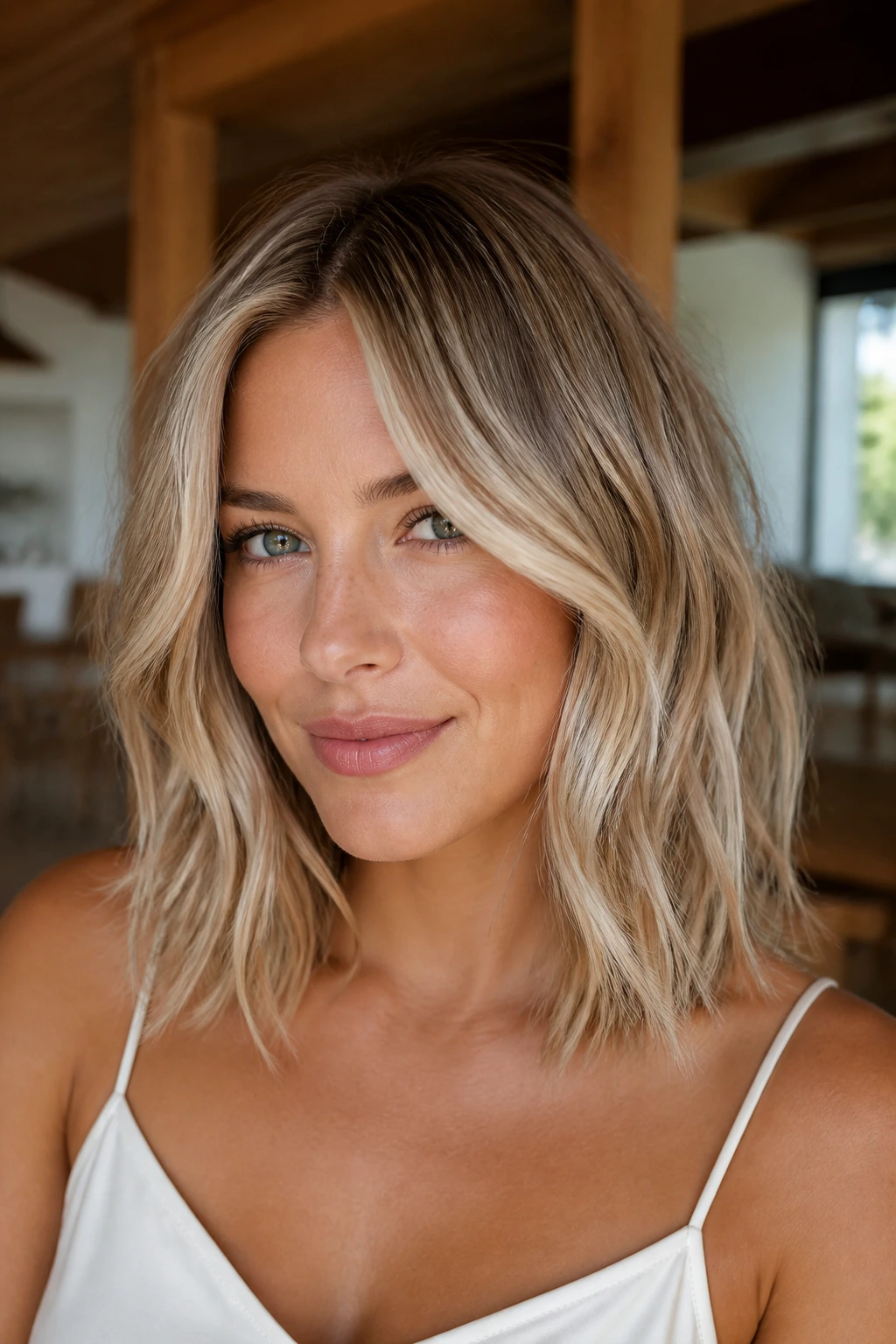
Soft Brunette-to-Blonde Melt: Keep the root darker and transition slowly into beige ends. This is the easiest route if you want blonde without the shock of a big lift session.
High-Contrast Money Piece Blonde: Bright front pieces against a deeper base. It gives medium-length hair a sharper, more fashion-forward look without coloring the whole head light.
Cool-Girl Mushroom Bronde: A smoky blend of brown, beige, and ash. Good for anyone who likes depth and hates obvious regrowth lines.
Creamy Vanilla Layers: Light, soft, and clean with a glossed finish. Best when the haircut has movement and the ends are regularly trimmed.
Warm Honey Ribbon Lights: Golden ribbons through the mids and ends. This works well on wavy, medium-density hair that needs a little fullness.
Icy Beige Balayage: Cool but wearable, especially if you want blonde that looks crisp in daylight and still feels soft indoors.
Maintenance, Tone, and Grow-Out Timing
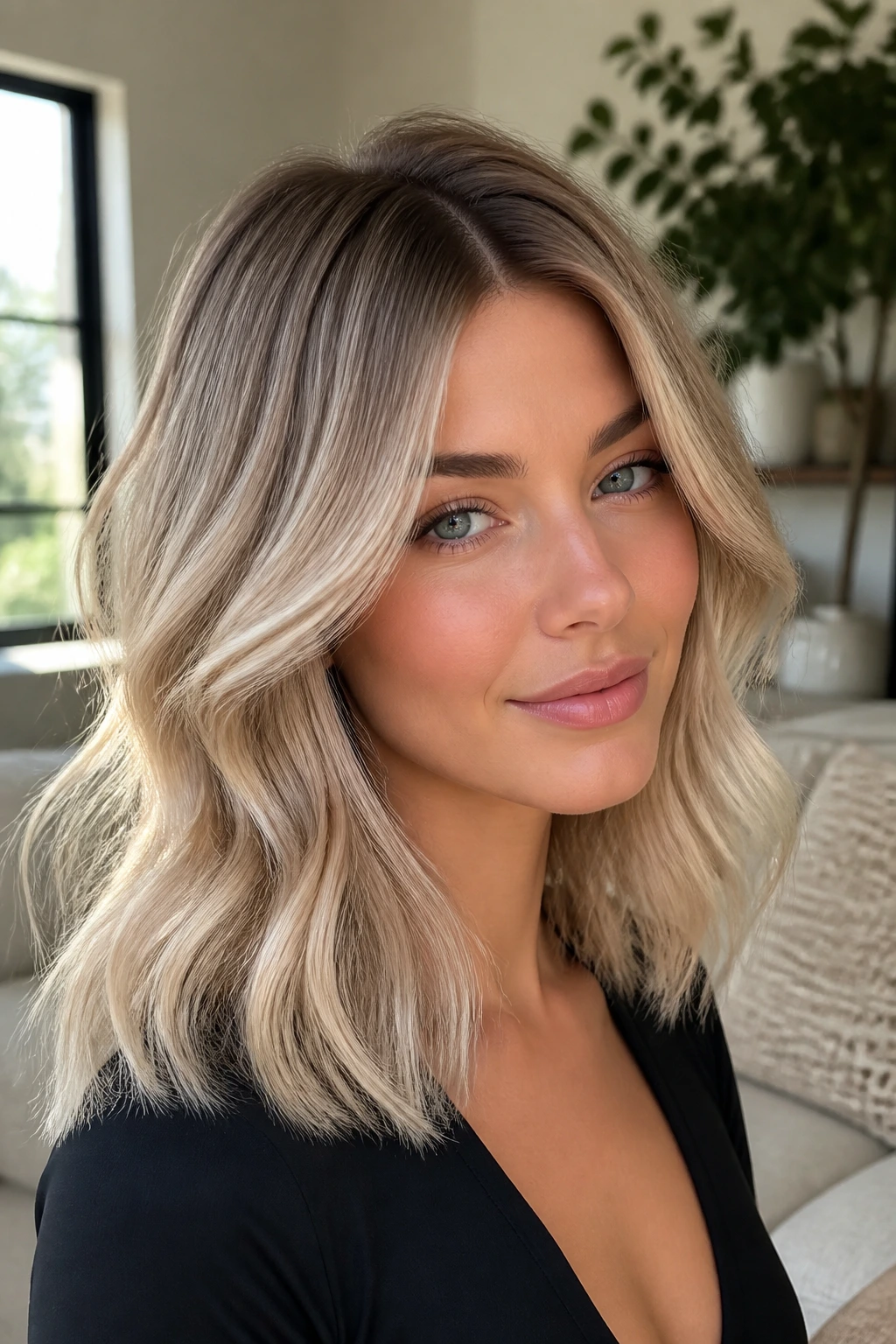
Most medium-length blondes do best with a gloss or toner refresh every 4 to 8 weeks, depending on how cool or warm the shade is. Platinum money pieces and icy blondes usually need attention sooner. Honey, bronde, and sandy shades can usually stretch longer because the tone isn’t so delicate.
Root touch-ups depend on the look you chose. A soft balayage or bronde melt may stay handsome for 8 to 12 weeks. A stronger highlight pattern or high-contrast money piece may need a cleaner reset a little sooner if you like the shape to stay crisp. Medium-length hair helps here, because the grow-out is easier to hide than on a blunt pixie but less demanding than on long hair.
If the tone starts sliding brassy, fix the problem with a gloss or toner, not just more purple shampoo. That’s a common trap. Purple shampoo can mute yellow, but it won’t rebuild the right beige, pearl, or ash tone if the color has drifted too far.
A final detail that gets ignored: trim the ends before they split. Blonde ends show wear faster because the light catches everything. Keep them neat, and the whole color looks more intentional.
Frequently Asked Questions
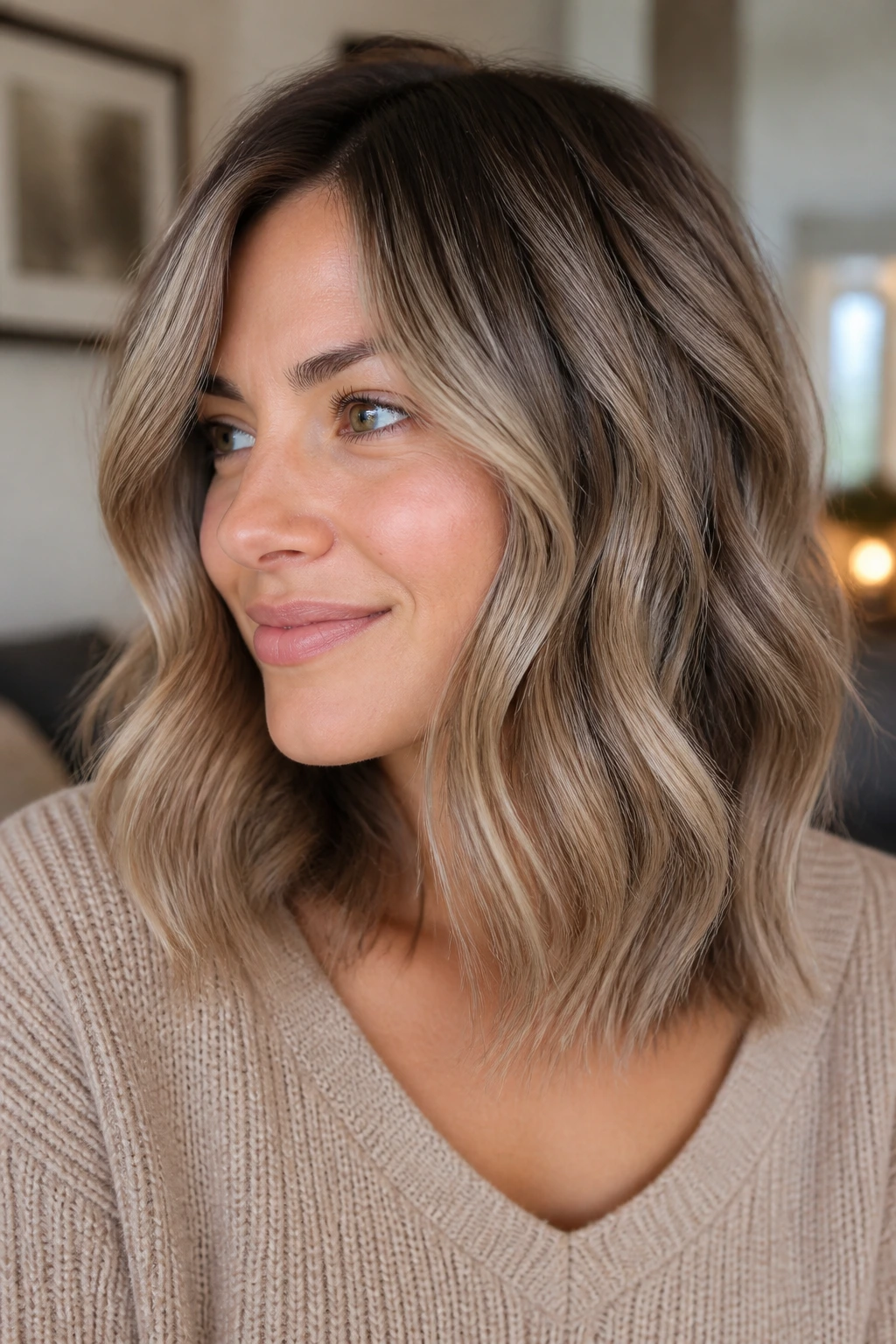
Which blonde shades work best on medium-length hair?
Beige blonde, honey balayage, bronde melts, pearl blonde, and sandy babylights are usually the easiest places to start. They show dimension well without making the haircut look overdone or hard to maintain.
Is balayage or foil highlights better for a medium-length blonde?
Balayage gives you softer grow-out and a more lived-in finish. Foils give you brighter lift and more contrast. If you want softness, choose balayage; if you want visible brightness, foils usually win.
Can I go blonde if my base is dark brown?
Yes, but the smart version is gradual. A mushroom bronde, caramel melt, or smoky beige highlight pattern usually looks better than trying to jump straight to icy blonde in one appointment.
How often should blonde hair be toned?
Most medium-length blondes need toner or a gloss every 4 to 8 weeks. The lighter and cooler the blonde, the sooner it tends to need a refresh.
Why does my blonde keep turning yellow or orange?
Heat, hard water, and toner that has faded out are the usual culprits. A shower filter, cooler water when rinsing, and a salon gloss can help more than purple shampoo alone.
Does medium-length blonde need more trimming?
Usually, yes. A trim every 8 to 10 weeks keeps the ends from fraying, and frayed ends make blonde look older than it is. It’s a small thing that pays off fast.
Will blonde make fine hair look thinner?
It can if the highlights are too chunky or too light all over. Fine hair usually looks better with babylights, soft dimension, and a cut that keeps some bluntness at the perimeter.
How do I ask for low-maintenance blonde?
Use the words shadow root, soft grow-out, and dimensional highlights. Then say how often you’re willing to come back. If you want eight weeks between appointments, say that out loud.
The Blonde That Fits the Cut
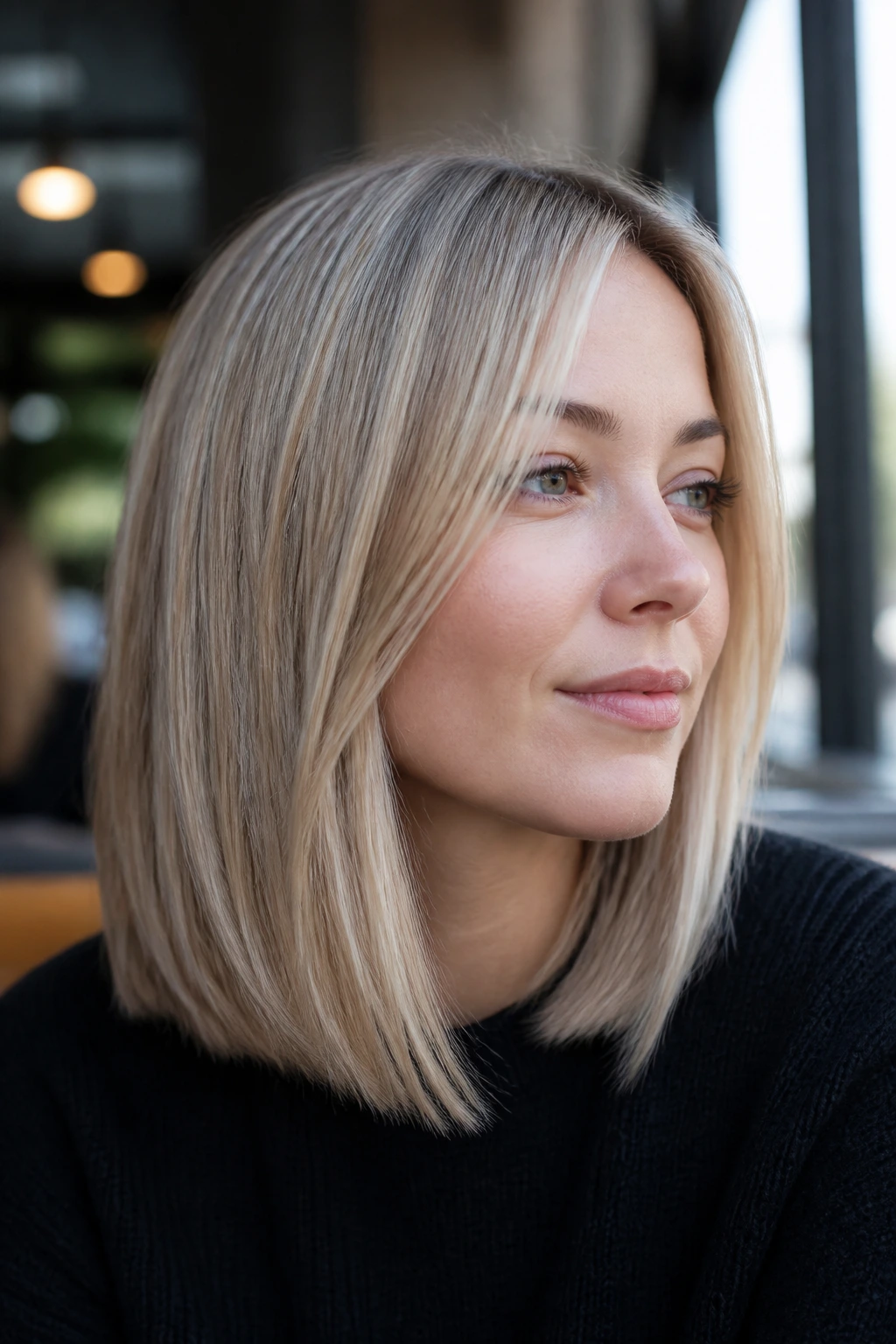
The best medium-length blonde is the one that respects the haircut. That sounds simple, but plenty of blondes fail because they ignore the shape sitting underneath them. A blunt lob wants cleaner lines. A shag wants broken-up brightness. A shoulder-length wave can carry a lot more dimension than people assume.
That’s the nice part about this length. It gives blonde a place to show off, but it still keeps the color honest. If the tone is off, you see it. If the placement is smart, you see that too. And when both are right, the result looks settled into the cut instead of pasted on top of it.
Pick the blonde that matches how you actually wear your hair, not just how it looks in a photo. That’s where the good stuff lives.
