



A long face can be gorgeous, but the wrong hairstyle makes it read even longer than it is. The best long face hairstyles for women do one thing with almost annoying precision: they interrupt the vertical line. A little width at the temples, a bend at the cheekbones, a fringe that skims the brow instead of chopping it off — that’s what changes the balance.
I’ve always thought the worst advice for an elongated face is to pile all the volume on top. That just stretches the shape. What works better is a haircut or style that sits a little lower, moves sideways a little more, and gives the eye a place to stop. Curtain bangs, side-swept pieces, soft waves, rounded blowouts, braided frames — they don’t hide the face. They give it shape.
And that’s the part too many style roundups miss. A long face isn’t asking to be disguised; it’s asking for proportion. Once you understand where to place the width and where to leave some softness, the whole hairstyle conversation gets easier, and frankly more fun.
Why Long Face Hairstyles for Women Need Width at the Cheekbones
-
Cheekbone width matters: Styles that flare out near the middle of the face make the face read shorter and fuller across, which is exactly what a long shape needs.
-
Crown height can backfire: A lot of lift at the top pulls the eye upward and makes the face look longer, so the smarter move is height at the sides, not a tower at the crown.
-
Bangs change the math fast: Curtain bangs, side fringes, and soft piecey fringe break up forehead length in a way that looks deliberate rather than heavy.
-
Movement beats flatness: Loose bends, waves, and curved ends stop hair from hanging in one long vertical line, which is where long faces start looking extra stretched.
-
Length can stay long: You do not need to chop your hair off to balance a long face; you need the right structure in the front and around the jaw.
1. Curtain Bangs and Long Layers
Curtain bangs are the easiest win if you want the face to read a little shorter without giving up length. The middle split opens the forehead, but the soft sweep at each side lands right where a long face wants help: near the cheekbones.
Why it flatters a long face
Ask for the shortest point of the bangs to hit around the cheekbone, not halfway up the forehead. That placement creates a soft horizontal line right where the eye needs one, and the long layers behind it keep the style from feeling boxy. I like this on straight to wavy hair because the bangs keep moving even when the rest of the style relaxes.
A round brush and a little bend at the ends make the whole thing look finished. If the bangs hang pin-straight, they lose the point. If they curve away from the face, the shape suddenly works.
2. Side-Swept Fringe and Loose Waves
Want a style that quietly changes the whole face without looking like it’s trying too hard? A side-swept fringe does that. It cuts across the forehead on a diagonal, and diagonals are good news for long faces because they interrupt the straight-down read.
Loose waves through the mid-lengths and ends keep the look soft. The trick is not to start the wave too high at the roots. Begin the bend around the cheekbone or lower, and let the front pieces sweep toward the jaw so the width sits where it matters.
This one is especially kind to women with a taller forehead or naturally straight hair that falls flat at the front. It gives you shape without making the hair feel overdone.
3. Collarbone Face-Framing Layers
Collarbone layers are a nice middle ground for someone who wants to keep the length but stop the hair from acting like a curtain from root to tip. The front pieces start near the chin or lower cheek, then travel down to the collarbone with a soft bevel.
- Best placement: Chin to collarbone, not eyebrow to chest.
- Best texture: Straight, wavy, or blow-dried smooth.
- Best effect: It breaks up the face length while keeping the silhouette clean.
I like this cut because it doesn’t rely on heavy styling every morning. A quick bend at the ends is enough. And if your hair is fine, these layers give it a little life at the sides instead of leaving everything hanging flat against the head.
4. Soft Shag with Piecey Ends
A shag can be a gift for a long face, but only when it stays soft. The point is not to create a giant crown and forget the rest. The point is to build movement around the cheeks and jaw so the face looks broader and more relaxed.
Piecey ends keep the style from turning into a stiff helmet. If your hair is thick, this cut removes some of that heavy drop at the bottom. If your hair is finer, ask for a gentler version with visible layers rather than aggressive thinning, or the ends can look see-through.
I prefer this on hair that air-dries with a little bend. A dab of texture spray at the mid-lengths gives the shag its shape back on day two, which is when it usually looks best anyway.
5. U-Shaped Cut with a Rounded Blowout
A U-shape is the quietest way to keep long hair looking polished on a long face. The hemline curves inward a little in the back and softly forward at the sides, which keeps the eye moving side to side instead of straight down.
This is the cut I reach for when someone wants length, shine, and a little structure without obvious layers. The rounded blowout is what sells it. Use a large round brush and lift the sides away from the face so the ends turn just enough to create width at the jaw.
It’s a clean look. Not fussy. Not flat. And that balance is why it works.
6. V-Cut with Light Texture
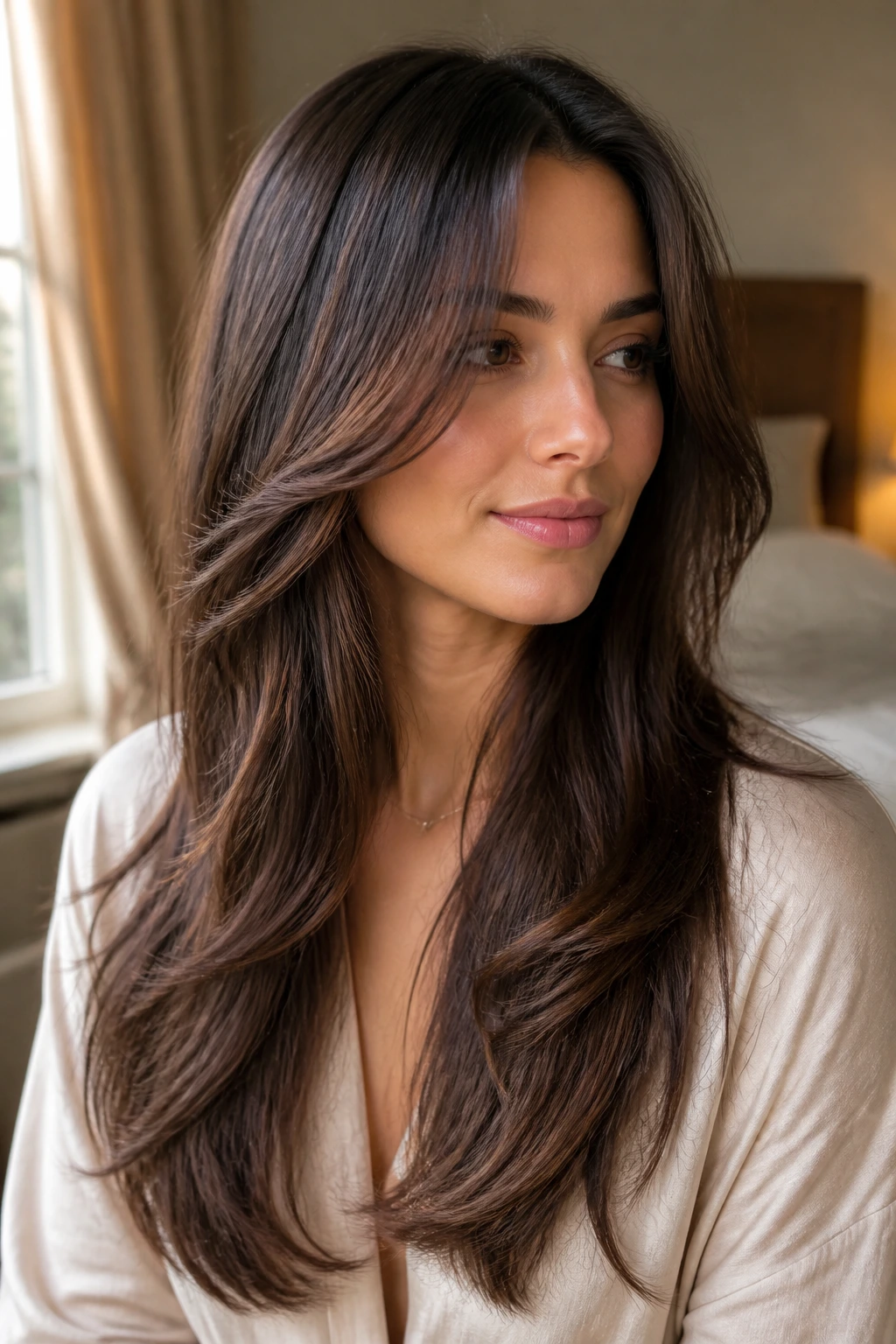
A V-cut can be risky on a long face if the point gets too sharp, because a hard point pulls the eye down. But soften it, and it becomes a useful shape for long, thick hair that needs movement without losing drama.
What to ask your stylist for
Tell them you want a soft V, not a dramatic one, and ask for the front pieces to stay fuller around the cheekbones. That keeps the length from feeling like one long spear pointing to the floor. A little texture in the ends helps the cut move instead of hanging in one clean line.
This is a good choice if you love long hair and do not want it to feel heavy. It works best when the front has enough width to balance the point in the back.
7. Deep Side Part and Old-Hollywood Waves
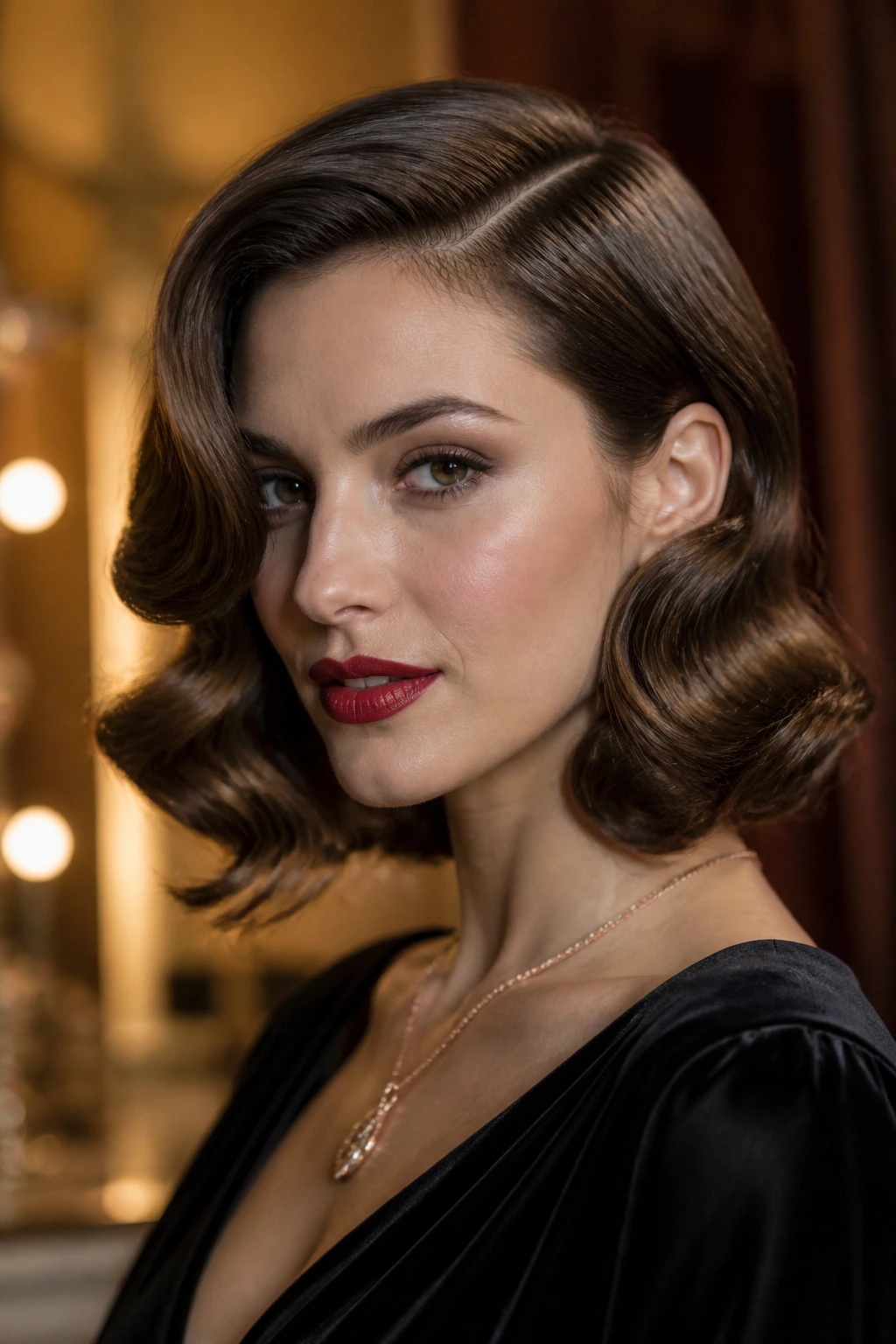
A deep side part changes the whole face shape in five seconds. It shifts the visual weight off the center line and creates more fullness on one side, which is exactly the kind of asymmetry a long face can use.
Old-Hollywood waves make that side part look expensive without needing a complicated cut. The waves should sit around the cheekbones and brush the jaw, not start at the roots and turn into a helmet. A 1.25-inch iron usually gives the right bend, though hair length and thickness will nudge that number a little.
This is one of the prettiest long face hairstyles for women when you want polish. The side sweep creates width, the waves soften the length, and the whole thing lands with enough structure to hold up for an event.
8. Long Curls with a Side Sweep
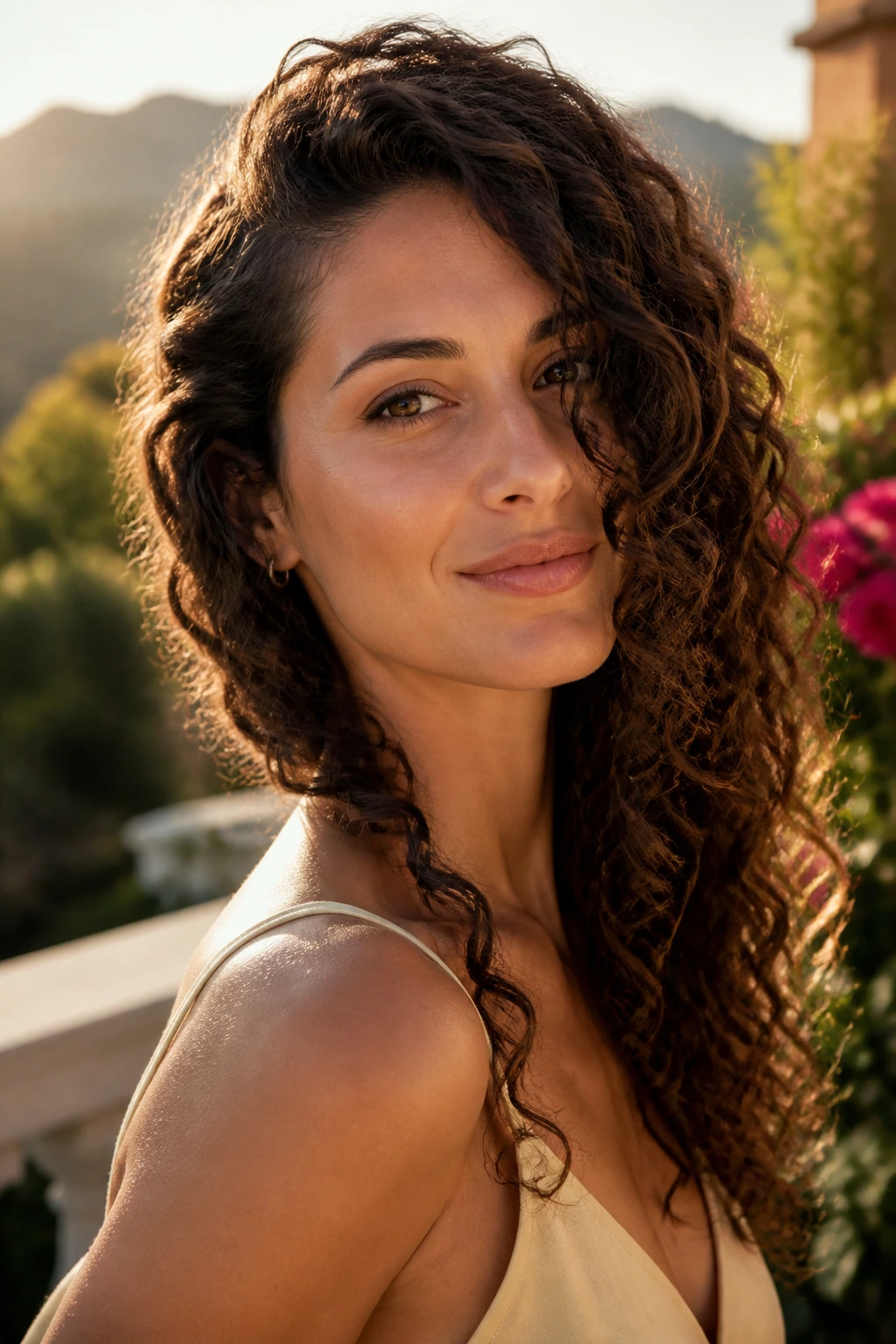
Natural curls are already doing half the work here. They add width on their own, especially when the curl pattern sits out around the cheeks and not just at the ends.
A side sweep makes the style less round at the top and more balanced across the face. If you wear your curls with a center part, try pinning one side back a little lower near the temple and leaving the other side fuller. That small shift can make the face feel broader without flattening the curl pattern.
I like this with a long side bang or a few curls directed forward over one cheek. It keeps the length from looking too open down the middle.
9. Middle Part with Cheekbone Bends
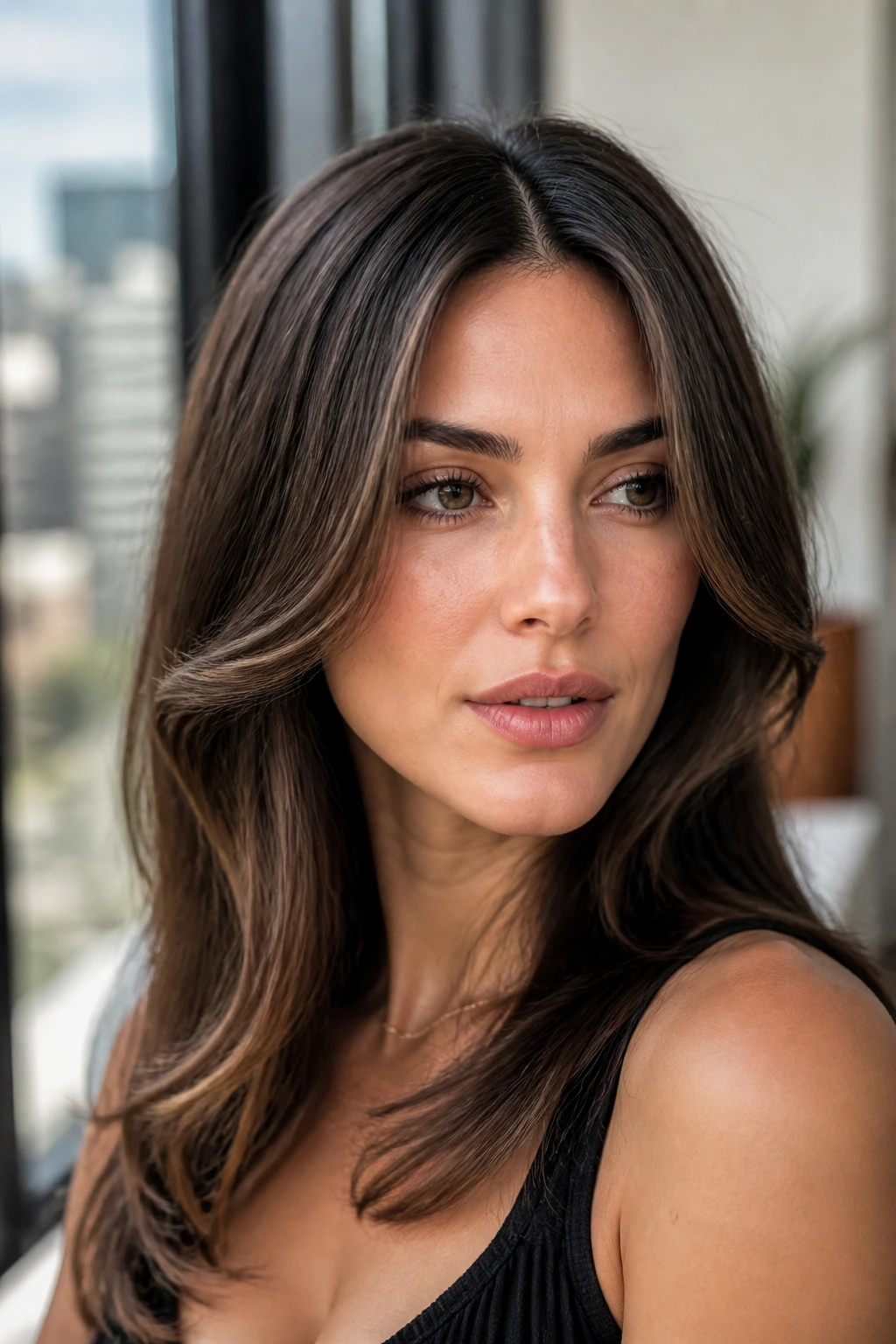
Yes, a middle part can work on a long face. The mistake is wearing it pin-straight and flat, which turns the whole face into one uninterrupted vertical line. Add width at the sides, and the same part starts behaving differently.
The answer is bent pieces that start around the cheekbones and turn outward at the ends. That gives the face a frame, and the frame matters more than the part itself. If your hair is naturally straight, a flat iron or curling wand can put just enough bend in the front to stop it from lying there like ribbon.
This style suits women who like a clean center line but still want a little softness. It feels modern without being harsh.
10. Half-Up Crown Volume
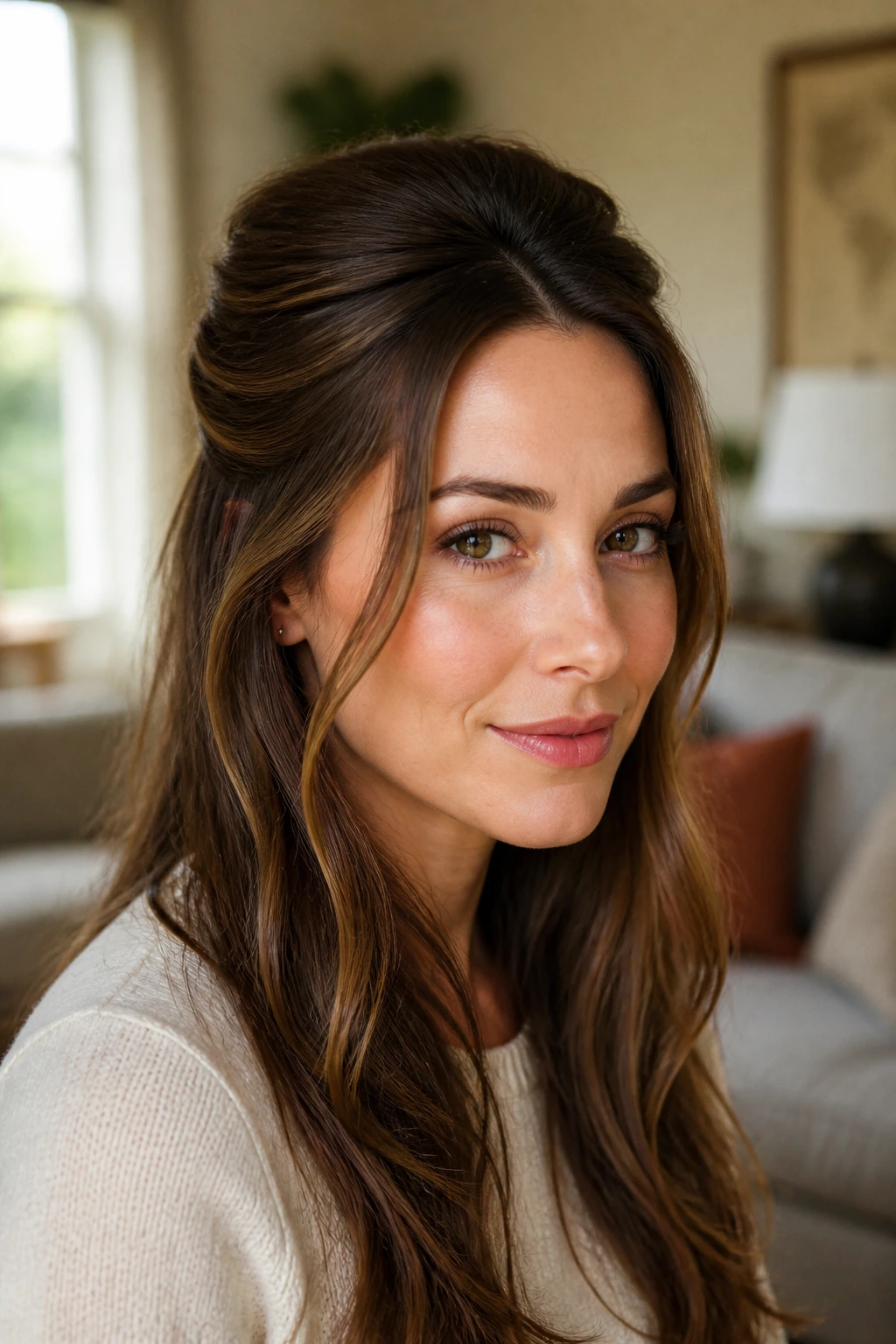
Half-up styles can be tricky on long faces because people often lift too much hair too high. That creates a little top-heavy shape that only makes the face longer. The smarter version keeps the lift modest and the width low.
Pull back the top section from just above the temples, not the crown. That leaves the sides fuller and lets the loose length frame the jaw. A small clip or barrette works better than a tight elastic here because it keeps the back from getting smashed flat.
This is one of those styles that looks better when it’s not too perfect. A few loose face pieces are doing real work.
11. Braided Crown and Loose Tendrils
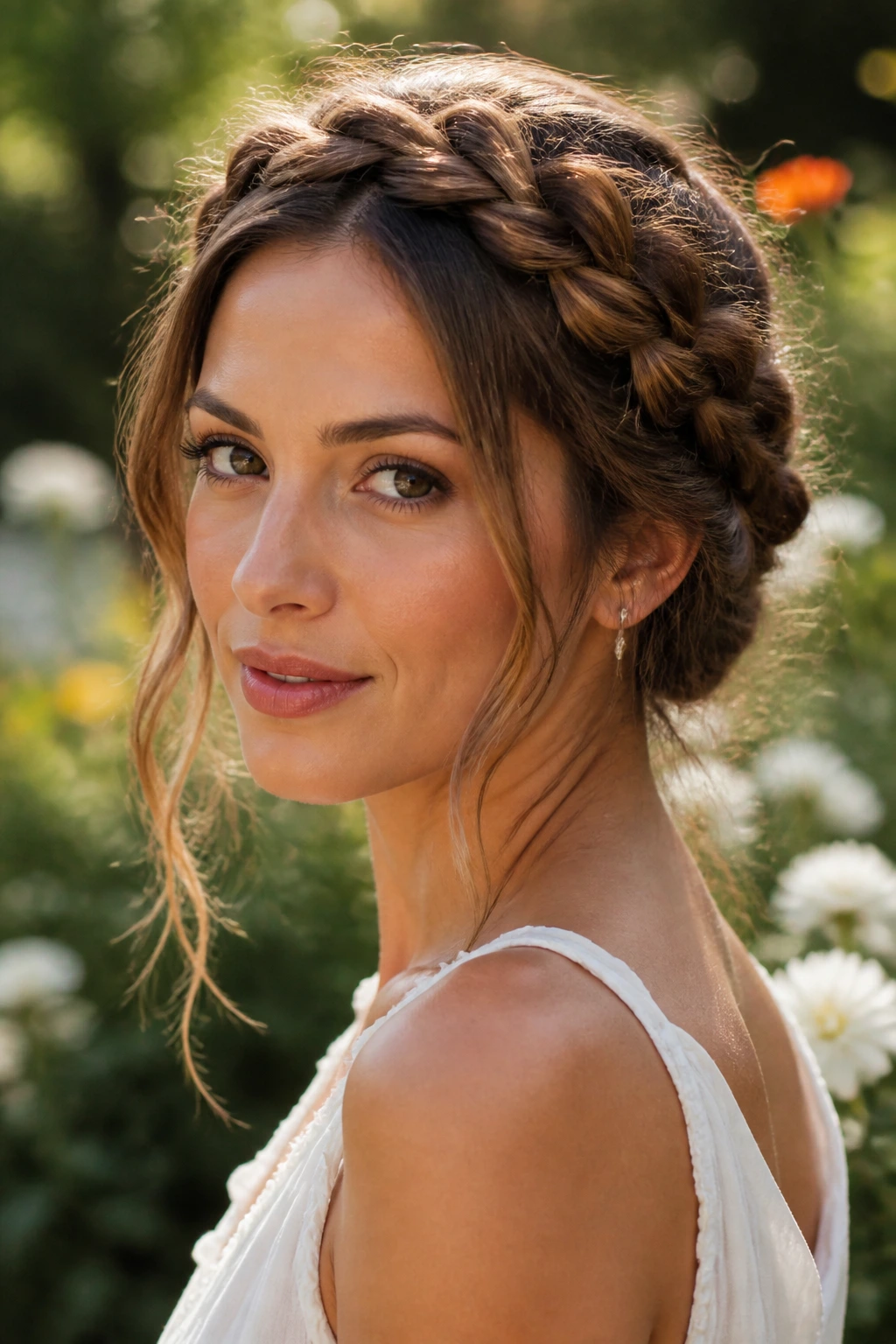
A braided crown gives you a horizontal line right at the hairline, and that line is gold for a long face. It interrupts the vertical flow before the hair even gets to the shoulders.
Leave a few tendrils loose near the temples and around the ears. If the braid is pulled too tight, the whole style can read severe, and severe is not the goal here. You want a little softness, especially if the face already has sharp lines.
This is a smart pick for weddings, warm weather, or days when you want the hair off your neck but still need some shape around the face.
12. Bubble Ponytail with Face Pieces
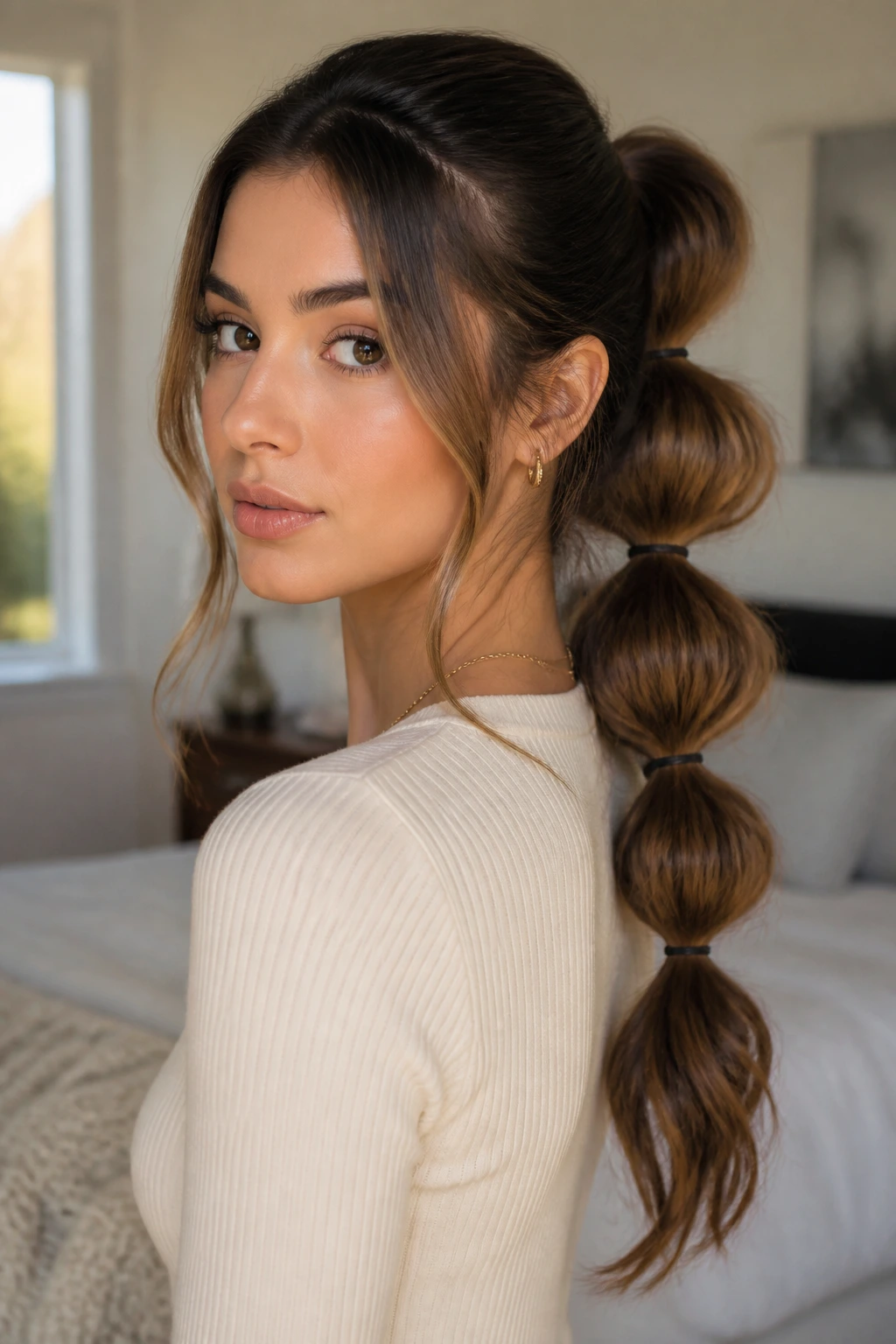
The bubble ponytail is one of the most underrated styles for long faces because it creates repeated horizontal breaks down the length of the hair. That segmented shape keeps the eye from sliding straight to the ends.
Add a few face pieces, and it gets even better. Those pieces soften the forehead and keep the ponytail from feeling too severe at the sides. Use clear elastics or small bands every 2 to 3 inches, then gently puff each section until the bubbles look rounded rather than stiff.
It works especially well on longer hair that tends to look flat in a plain ponytail. There’s more rhythm here. More shape.
13. Low Ponytail with Side Volume
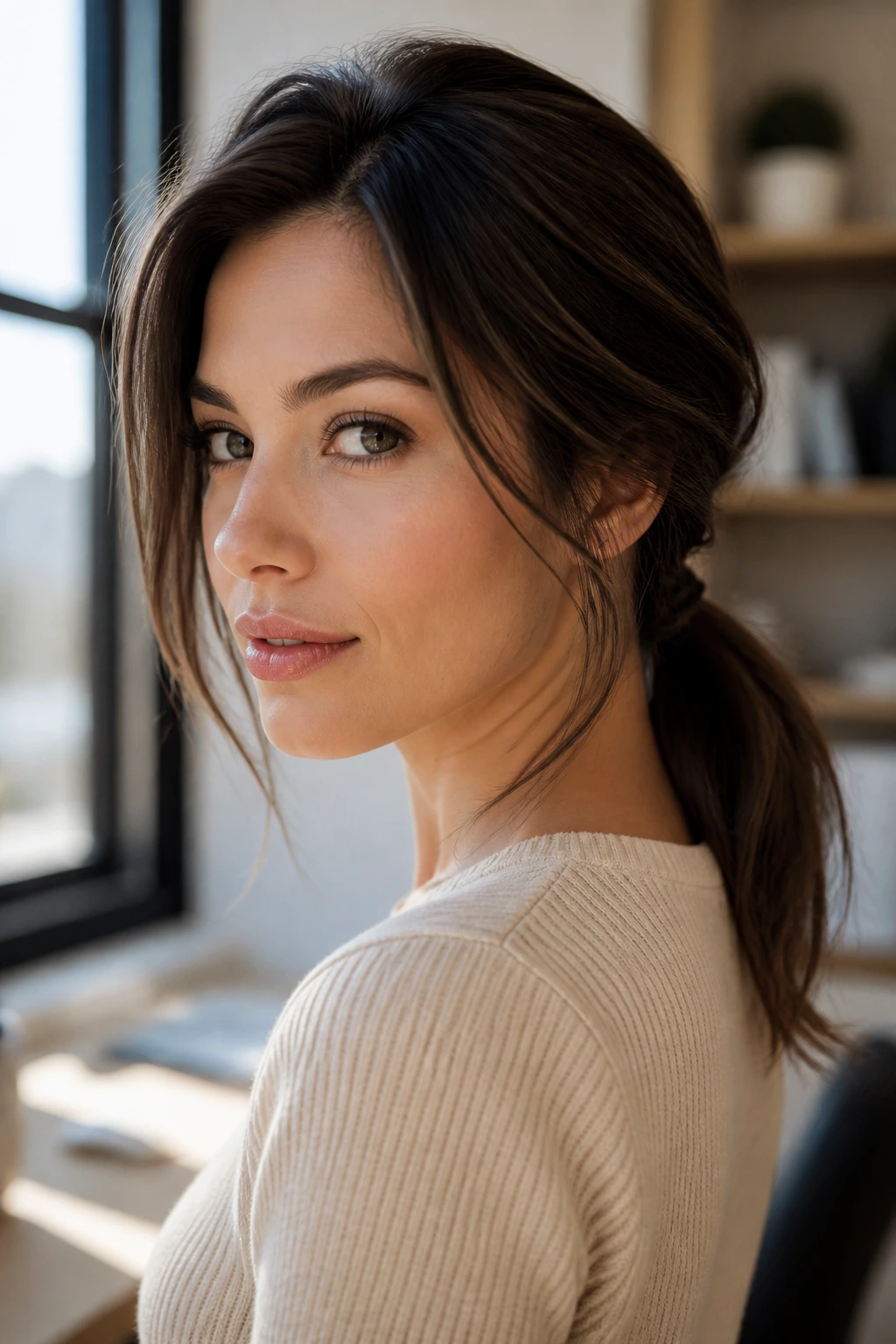
A low ponytail can absolutely flatter a long face, but only if it avoids that tight, slicked-back, center-heavy look. Keep the pony anchored at the nape, then add a little lift at the temples or a side part to create width where the face needs it.
Wrapping a strand of hair around the elastic makes the finish look cleaner. And if the front pieces are left soft instead of pinned tight, the style keeps the face from looking stretched. This is a very good office style because it reads neat without looking severe.
The height is low. The effect is broader. That’s the whole game.
14. Low Bun with Soft Front Strands
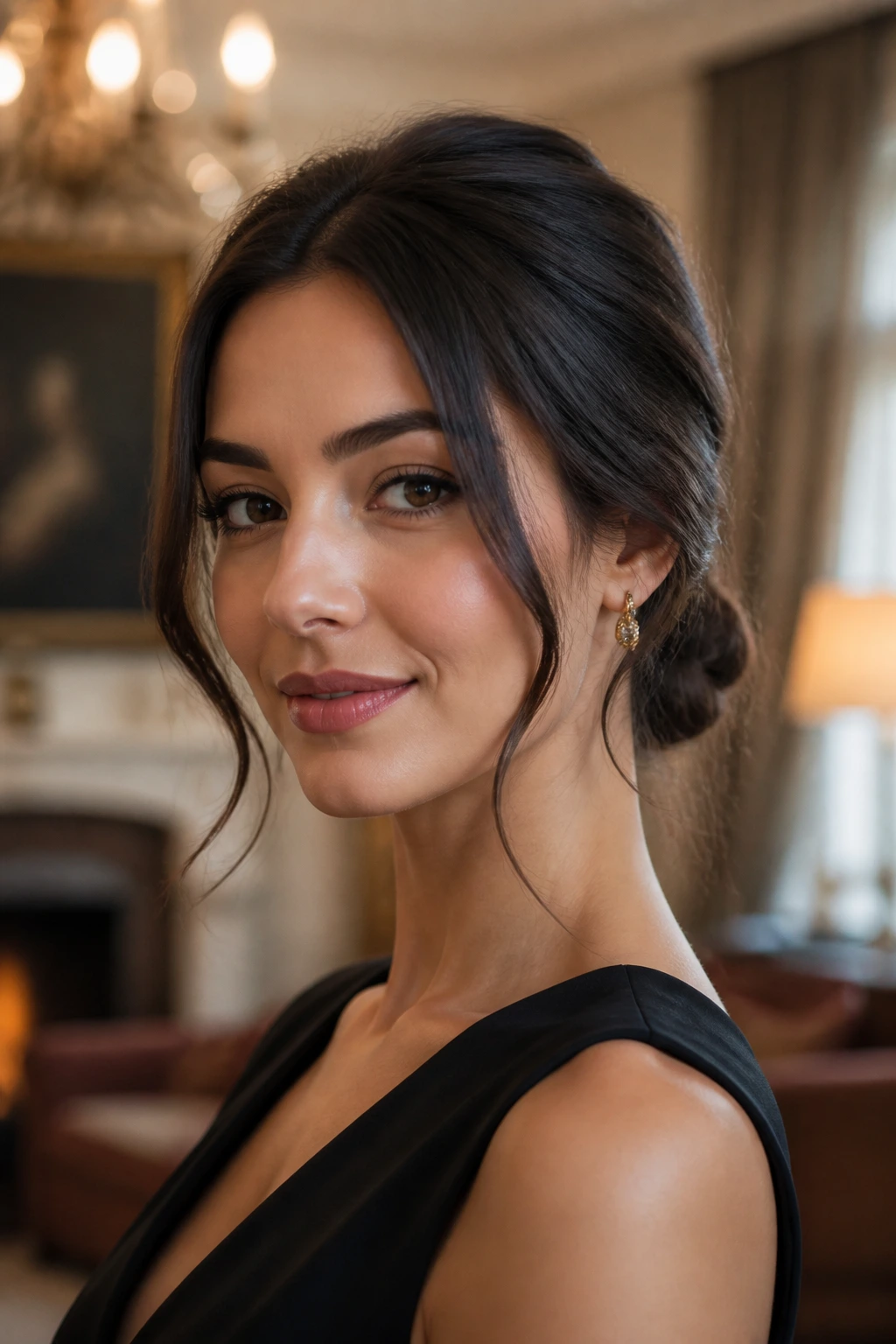
A low bun sits in the right place for a long face because it keeps the weight low and the line horizontal. A high bun pushes everything upward; a low bun settles the face down and makes the neck look longer without exaggerating the face itself.
The soft front strands matter. Leave two pieces near the temples or cheekbones, then bend them slightly with a curling iron so they don’t hang stiff. If the bun is too sleek and tight, the style can look severe in a hurry.
This is one of my favorites for formal events when you want the face to look balanced and the hair to stay out of the way.
15. Mermaid Waves with Layered Ends
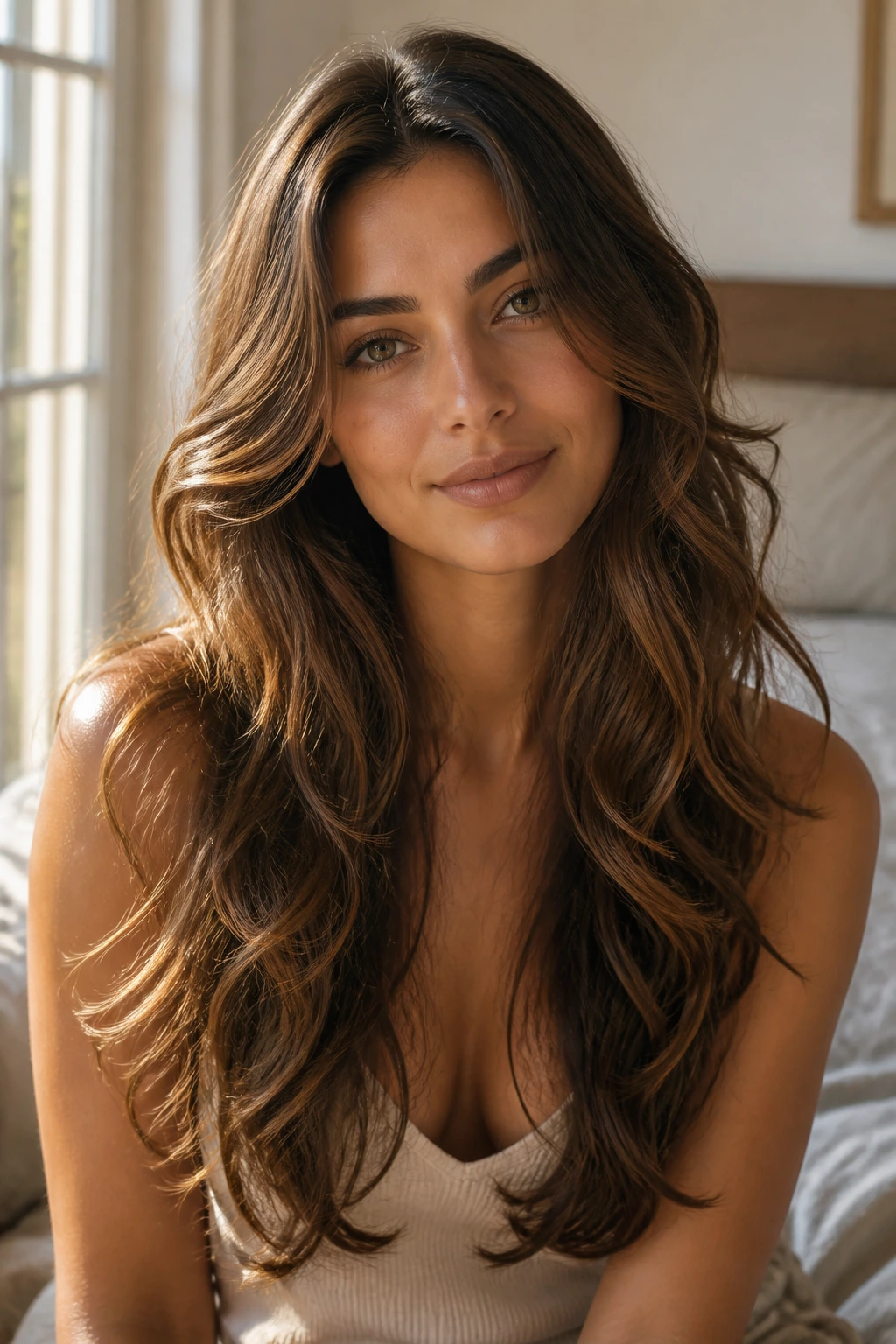
Mermaid waves work because they create a long, flowing shape that still has width in the middle. The wave should be loose enough to read as movement, not tight enough to turn the hair into a vertical rope of curls.
Layered ends keep the bottom from getting too heavy. Without them, long wavy hair can hang like one solid sheet, and that’s rough on a long face. The layers let the hair spread out a little around the shoulders and chest, which softens the whole silhouette.
This style is especially good if you already have long hair and want something that feels romantic without needing a full cut change.
16. Sleek Straight Length with Bent Ends
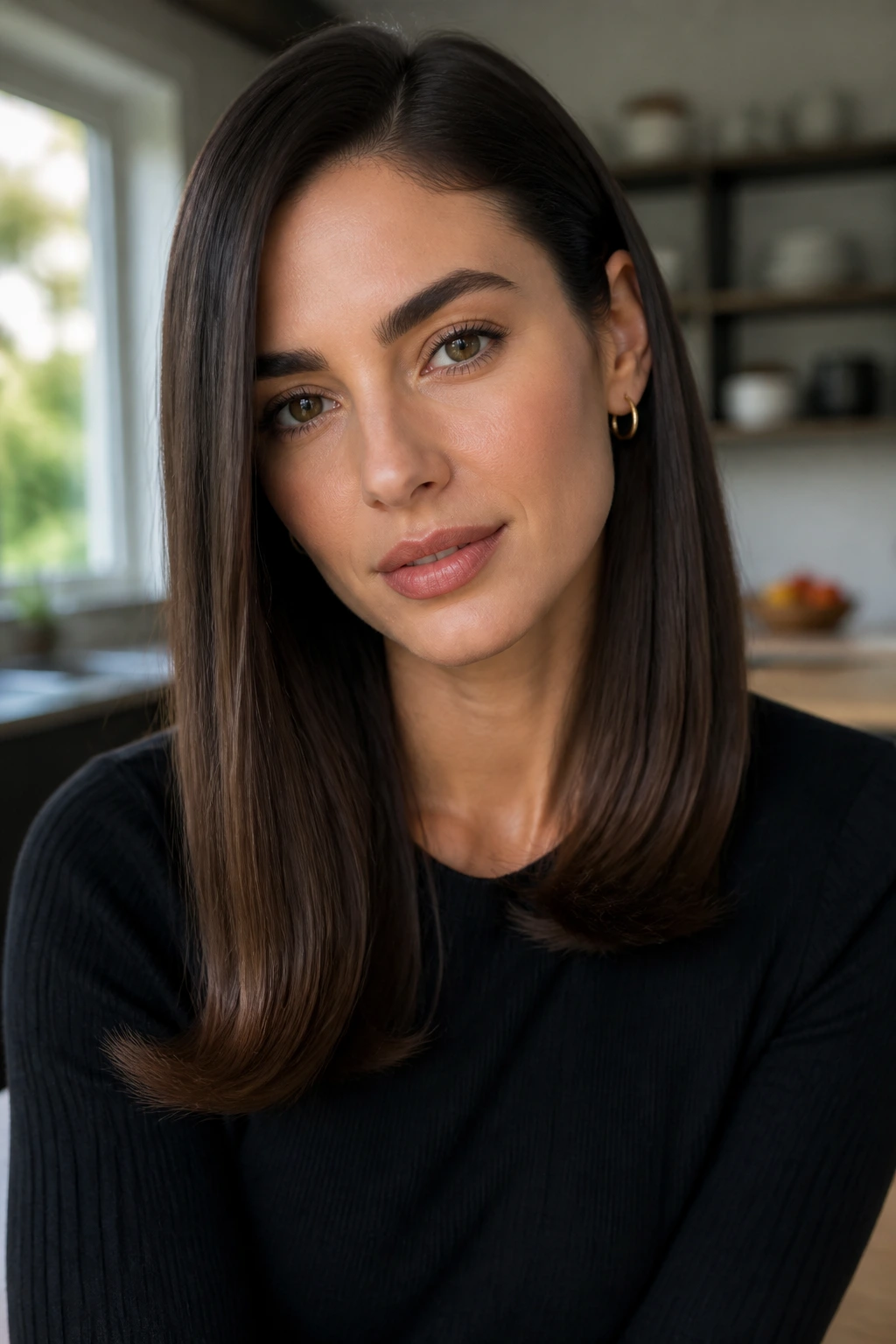
Straight hair is not the enemy. Flat, uninterrupted straight hair is the problem. If you love sleek hair, the trick is to give the ends a slight bend so the line stops at the right place instead of dropping cleanly down the body.
A small outward flip at the last inch or two creates a touch of width at the jaw and collarbone. That tiny change matters more than people think. Tuck one side behind the ear, leave the other side loose, and the face gets a little asymmetry for free.
This is the best choice for women who like a sharp, simple look but still want the face shape to feel balanced.
17. Feathered Ends and a Side Part
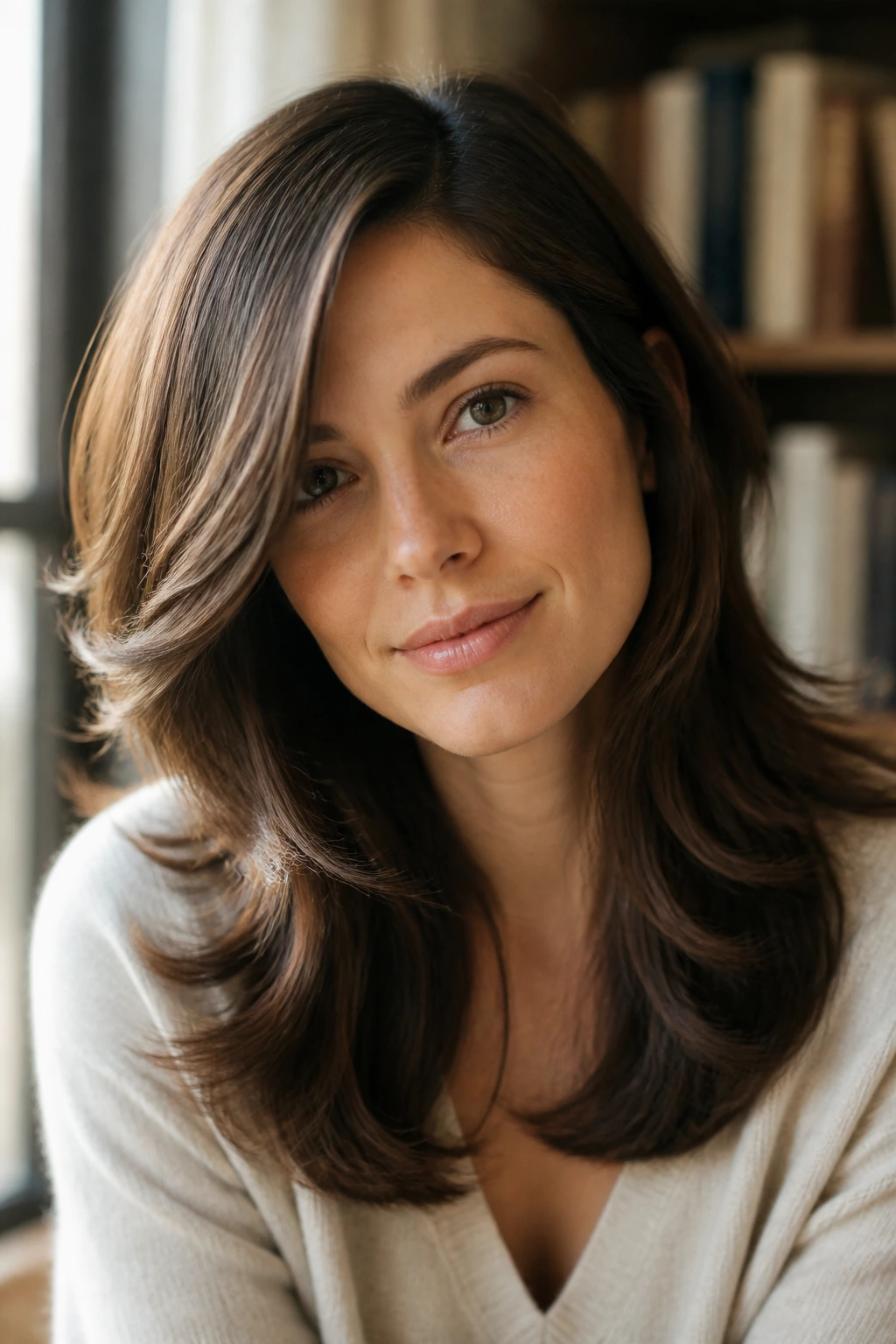
Feathered ends are basically a softer answer to long layers. They move away from the face instead of hanging straight, and that sideways motion is useful when the face shape already runs long.
A side part keeps the top from feeling too centered and flat. Together, the part and the feathered ends create a little roundness through the lower half of the cut. It’s especially nice if your hair is thick, because the feathering removes some bulk without making the ends look thin.
I like this style when someone says they want something light, but not choppy. It has enough edge to feel current and enough softness to keep the face in better proportion.
18. Loose Ringlets with Long Side Bangs
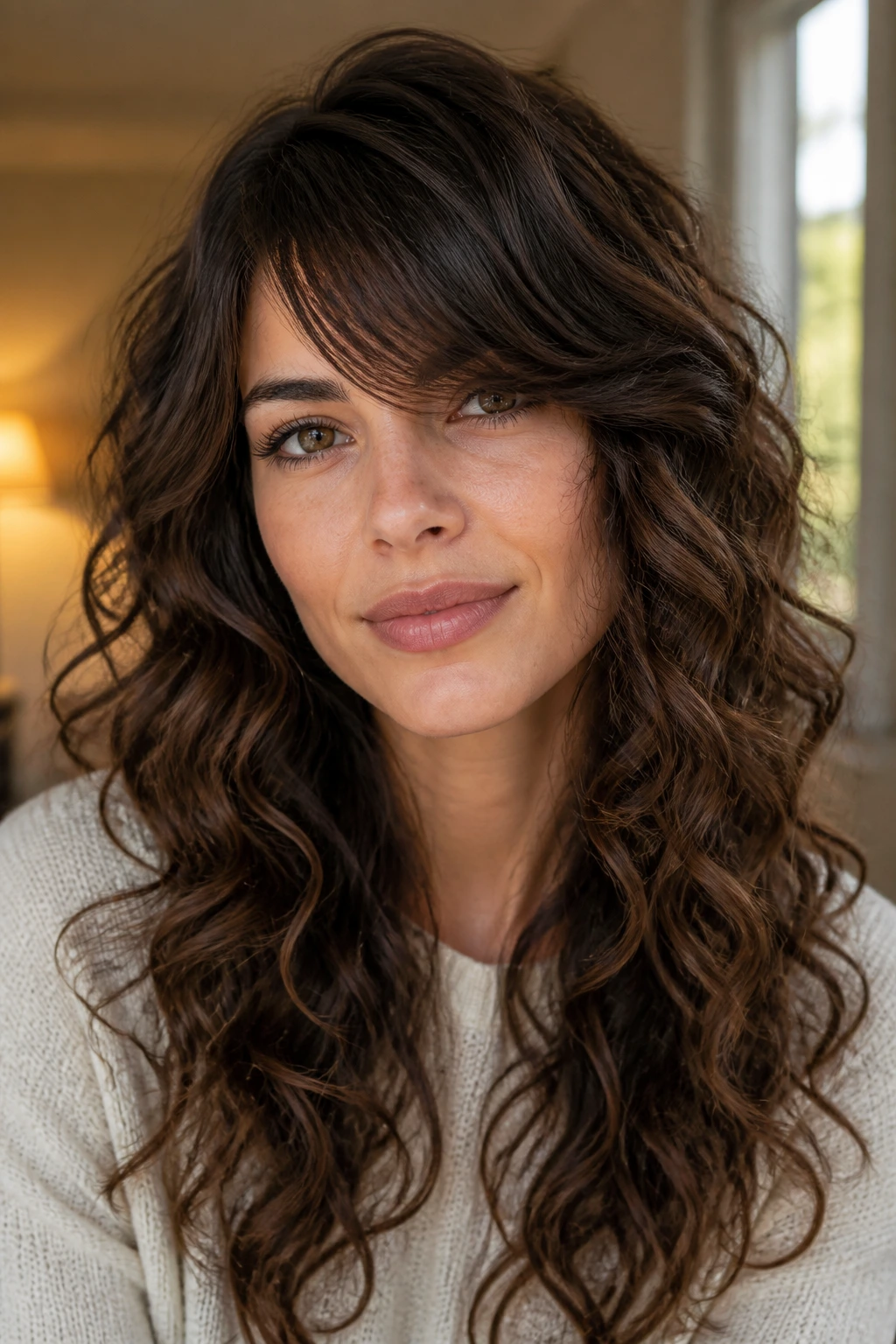
Curly hair and a long face can be a strong combination, but the ringlets need to be placed with some care. If all the curl sits down at the bottom, the face still reads long. If the curls surround the sides and a side bang crosses the forehead, the shape evens out fast.
The long side bang is doing real work here. It shortens the forehead visually while the curls add width through the cheeks. Don’t cut that bang too short; it should graze the brow or cheek, not sit high above the face like an afterthought.
This is one of the most flattering options for naturally curly hair because it lets the curl pattern stay intact while steering the shape.
19. Half-Up Twist with Temple Lift
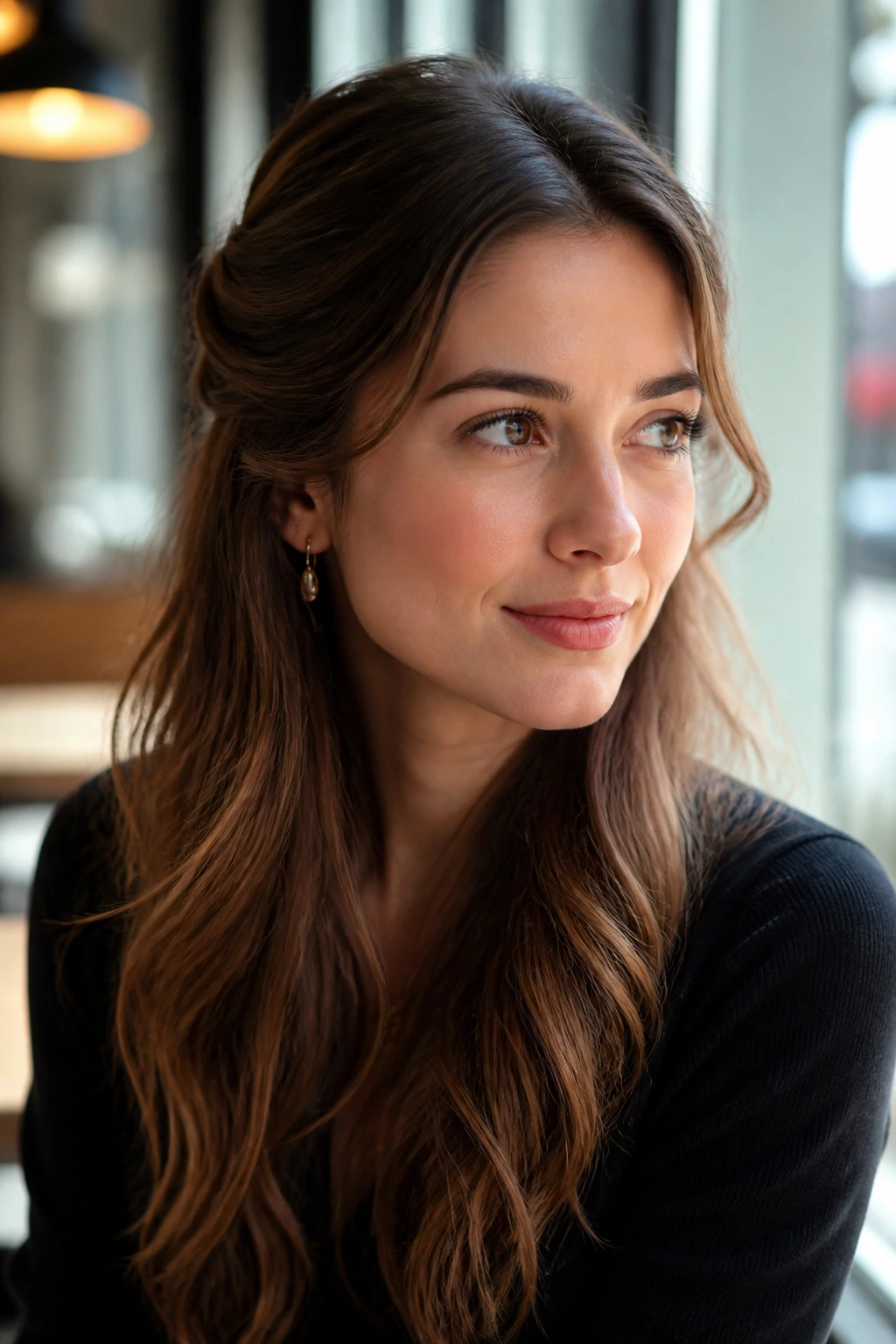
A half-up twist is a nice everyday fix when you want some hair back but do not want the face pulled bare. Twist small sections from the temples or just above them, then pin them loosely toward the back of the head.
The little lift at the temples creates width exactly where a long face likes it. The loose lengths below keep the style from rising too high. If the twist sits too close to the crown, you lose the point, so keep it low and soft.
This is a good day-two style because hair with a little texture holds the twist better than freshly washed hair. That slight grit is useful.
20. Waterfall Braid Over Loose Waves
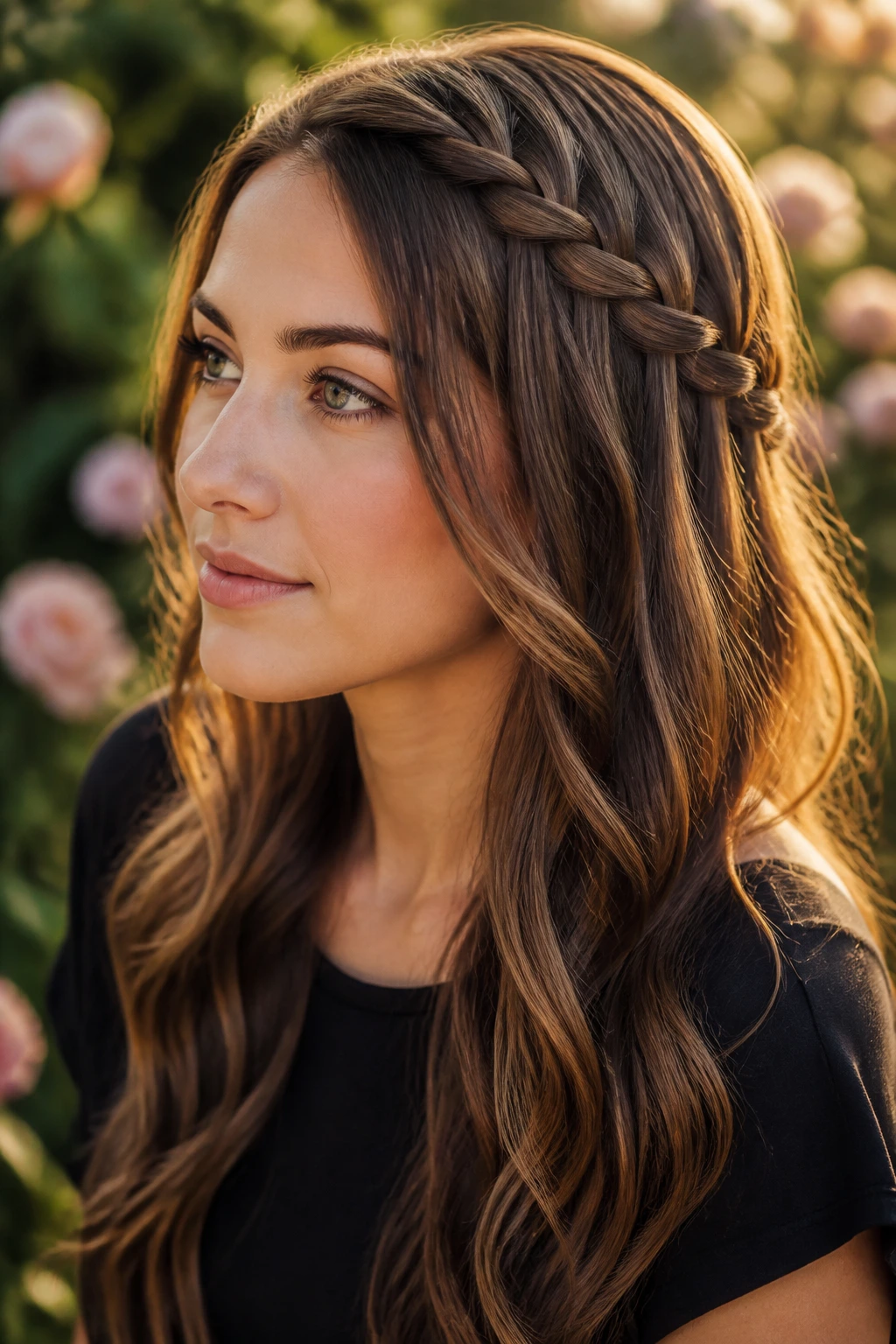
A waterfall braid has a built-in diagonal line, and diagonals are friendly to long faces. They break the vertical fall of the hair and draw the eye across the head instead of straight down it.
The loose waves underneath matter just as much as the braid. They give width through the sides and keep the braid from feeling too narrow or delicate. If you want the braid to look clean, keep it sitting a little above the ear rather than high on the head.
This is a sweet spot style for parties, photos, or any day when you want the hair to look styled without being stiff.
21. French Braid Into a Loose Tail
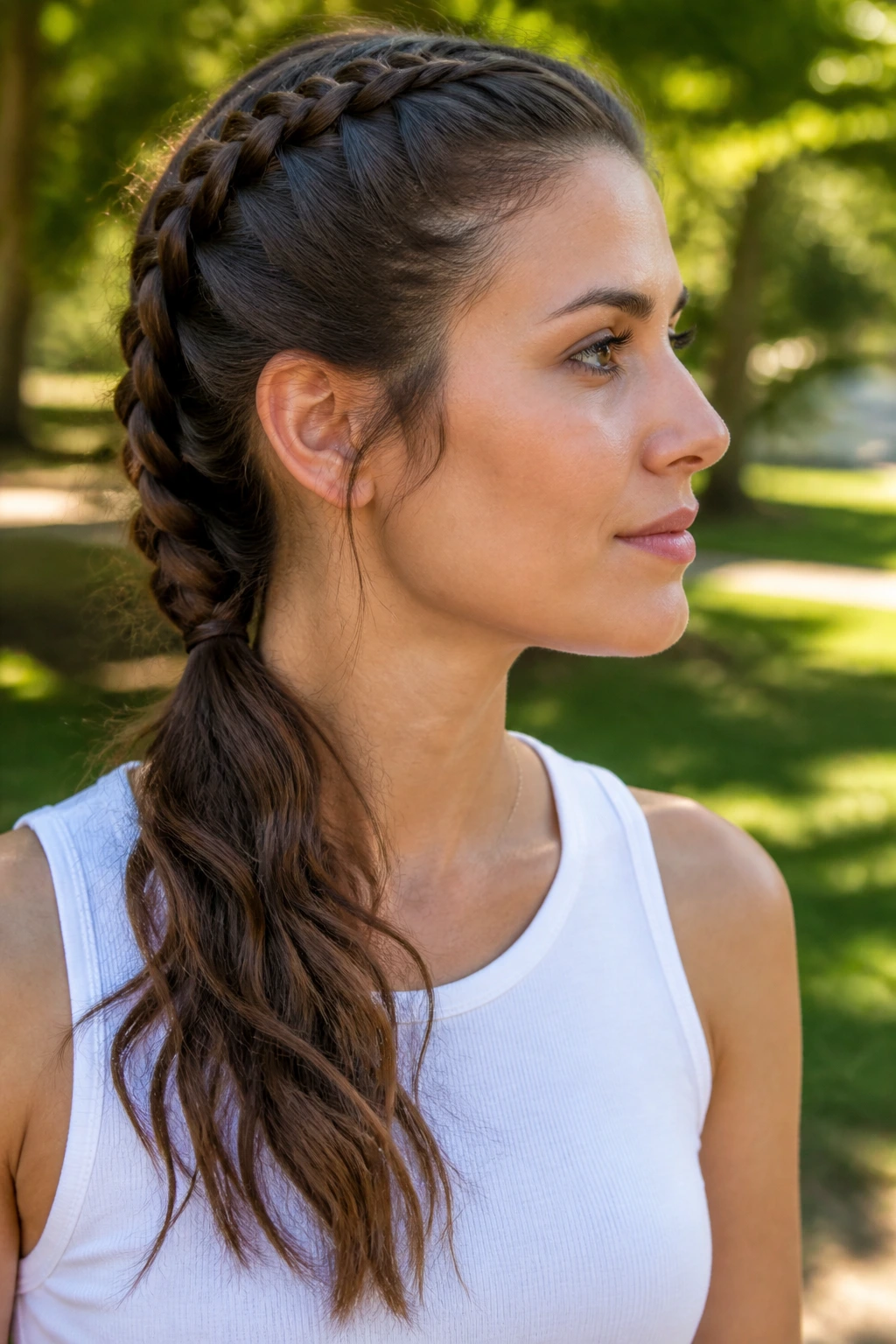
A French braid can be very flattering on a long face if it stays close to the head and ends in a loose tail instead of a tight finish. The braid creates texture and horizontal pattern through the scalp, which helps balance the face.
The loose tail is what keeps it from feeling too severe. Let the last section fall around the shoulders, then tug a few pieces free near the temples and nape. If the braid starts with too much crown lift, it loses the benefit, so keep the top smooth and the tension gentle.
This is a practical style. It stays put, it handles active days, and it still gives the face some structure.
22. Loose Top Knot with Curtain Pieces
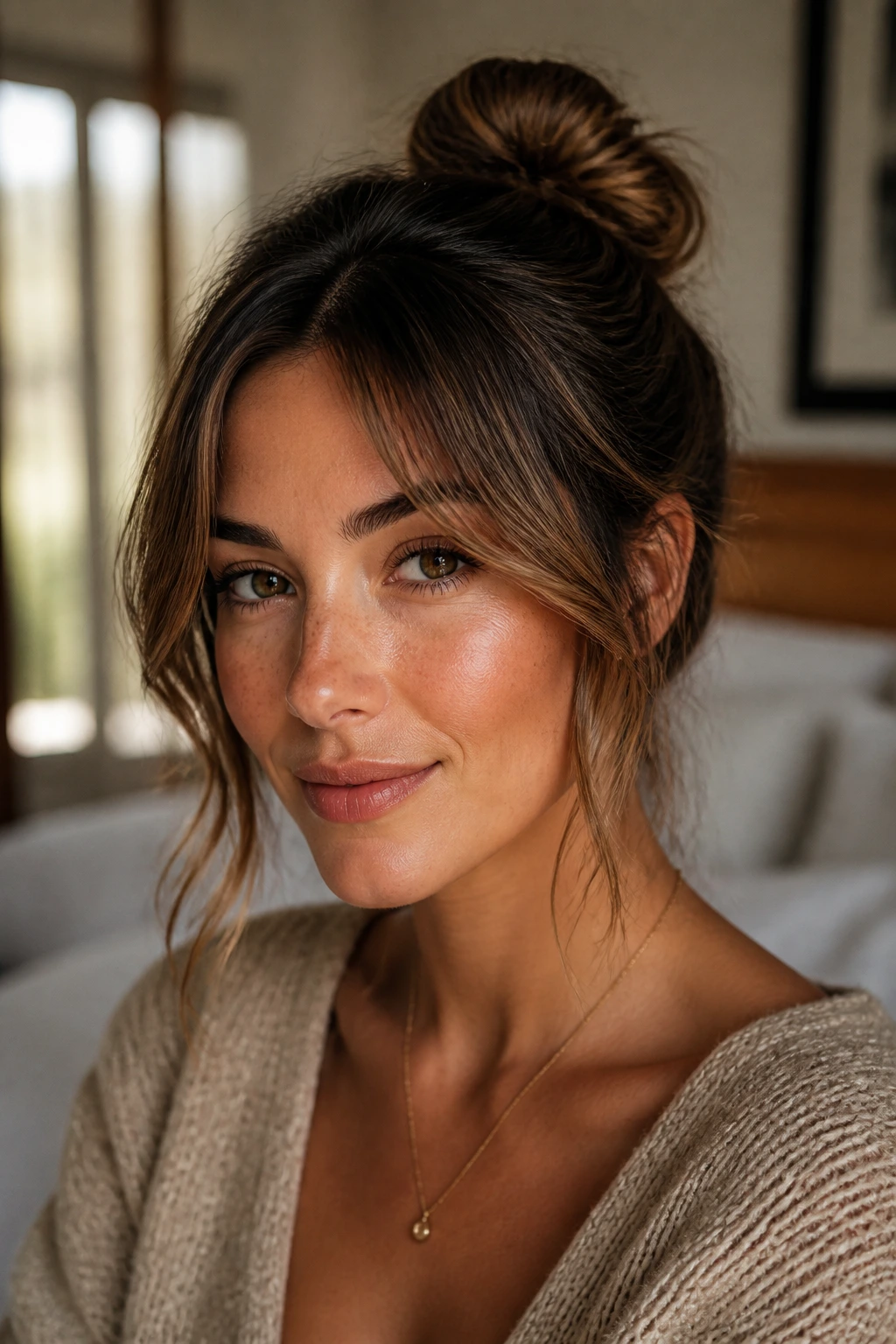
A top knot can work on a long face, but only when the knot is kept low enough to avoid turning the head into one long vertical line. I prefer a loose knot that sits a little behind the crown, not perched like a stack on top of the scalp.
Curtain pieces in front make all the difference. They break up the forehead and soften the side view, which is where a lot of long-face updos fail. Let the front layers fall with a little bend instead of pinning everything back tight.
This style is the fast answer when you need hair off your neck and still want some face-framing shape left in play.
23. Airy Blowout with Round Brush Movement
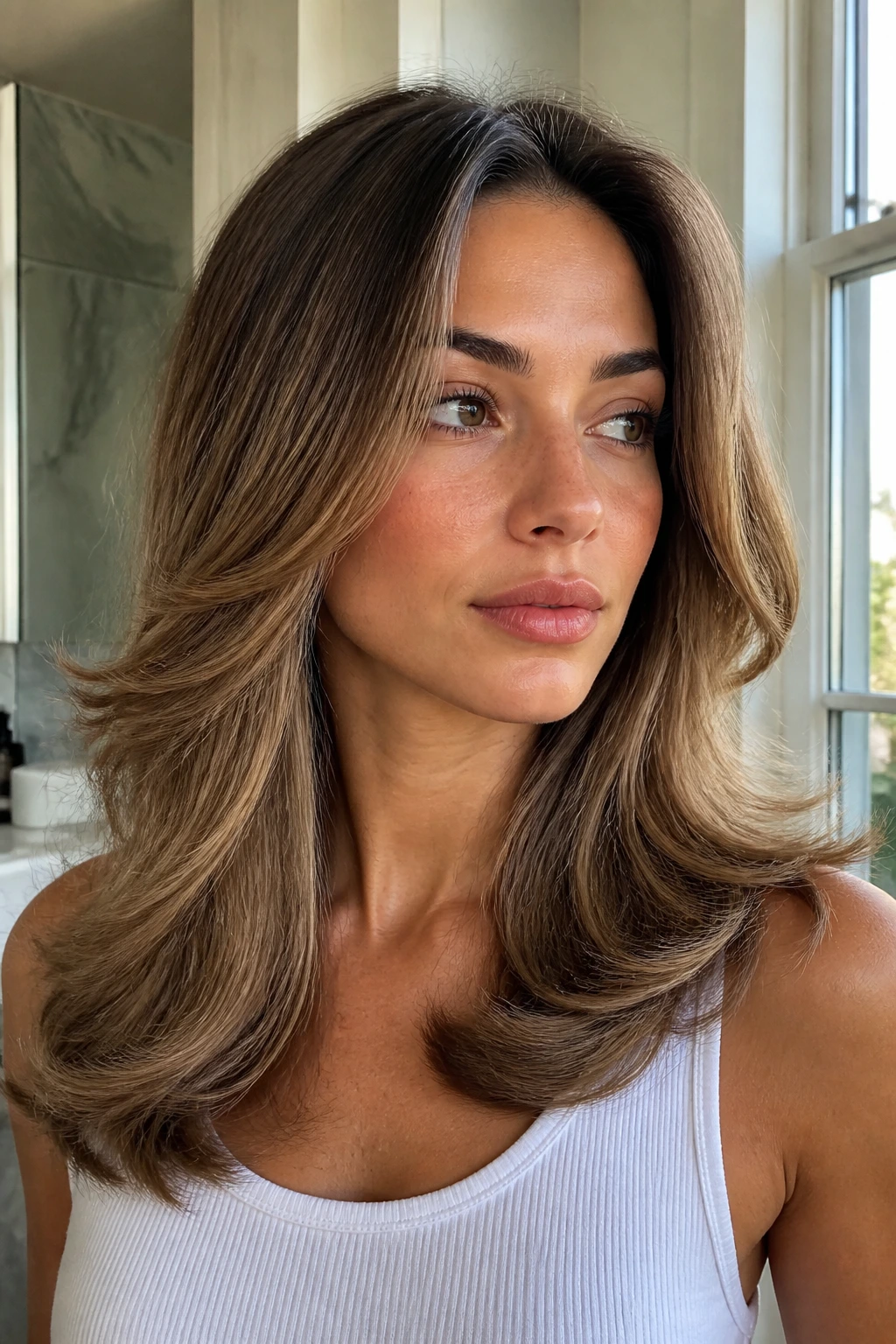
The airy blowout is one of the most reliable long face hairstyles for women because it creates side movement without committing to curls, braids, or bangs. The round brush lifts the hair away from the cheekbones and flicks the ends out just enough to broaden the silhouette.
Focus the shaping through the front third of the hair. The roots only need a touch of lift; the real work happens at the mid-lengths and ends. If you smooth everything flat with a paddle brush, you lose the width. If you over-tease the crown, you lose the balance.
This style looks especially good on hair with a little density, because the body holds the shape all day.
24. Long Layers with Flipped-Out Ends
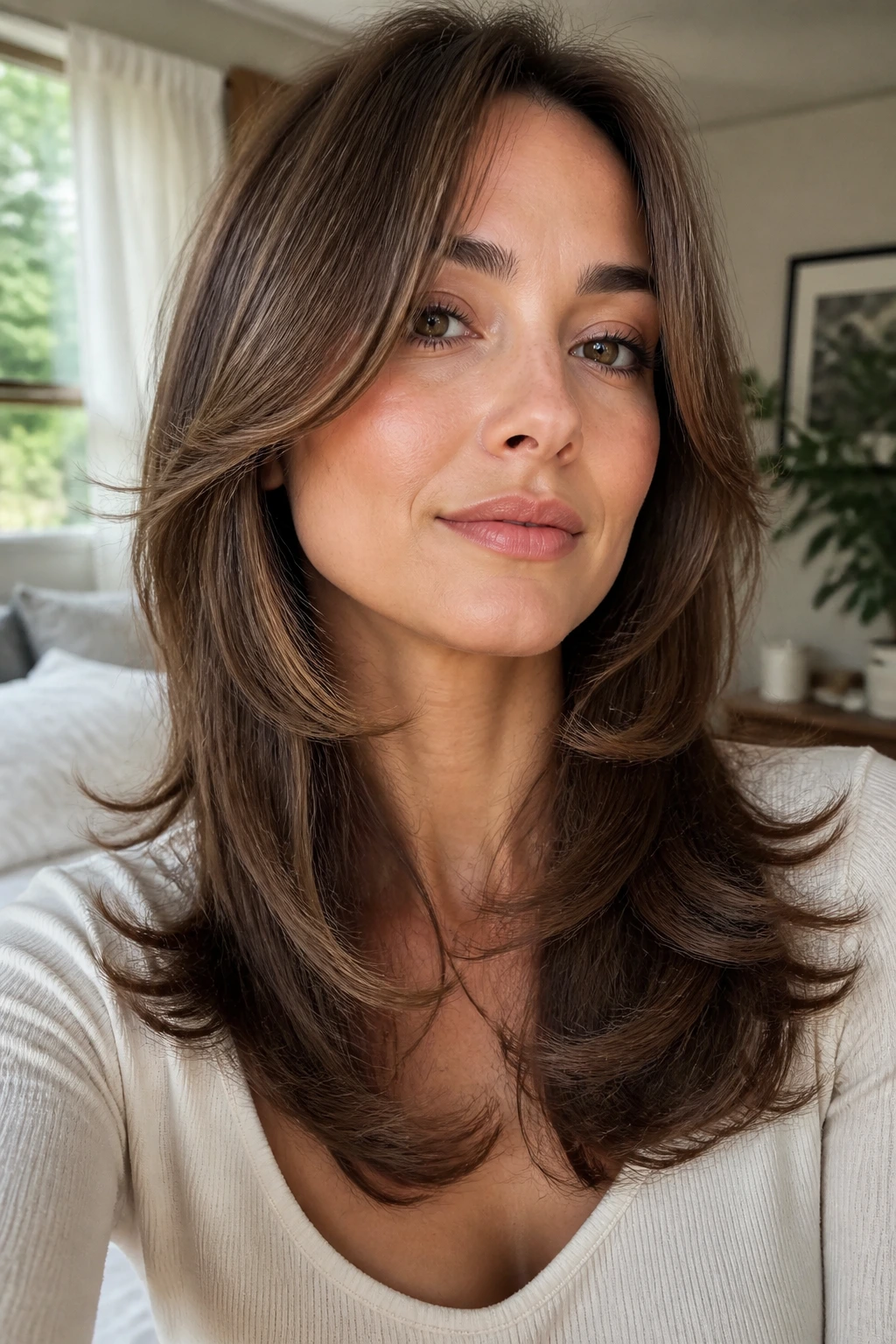
Long layers with flipped-out ends are the style I’d hand to someone who wants easy movement and does not want to fuss with bangs. The layers give the hair room to spread, and the flipped-out finish keeps the bottom from dragging the face down.
The flip should happen around the jaw or collarbone, not way down at the chest. That’s where the eye needs a stop. If the ends all turn the same direction, the style can look too polished, so I like a slightly imperfect flip — one side a touch higher, one side a touch softer.
It’s simple, but not flat. And for a long face, that’s a useful distinction.
The Shape Rules Behind a Flattering Cut
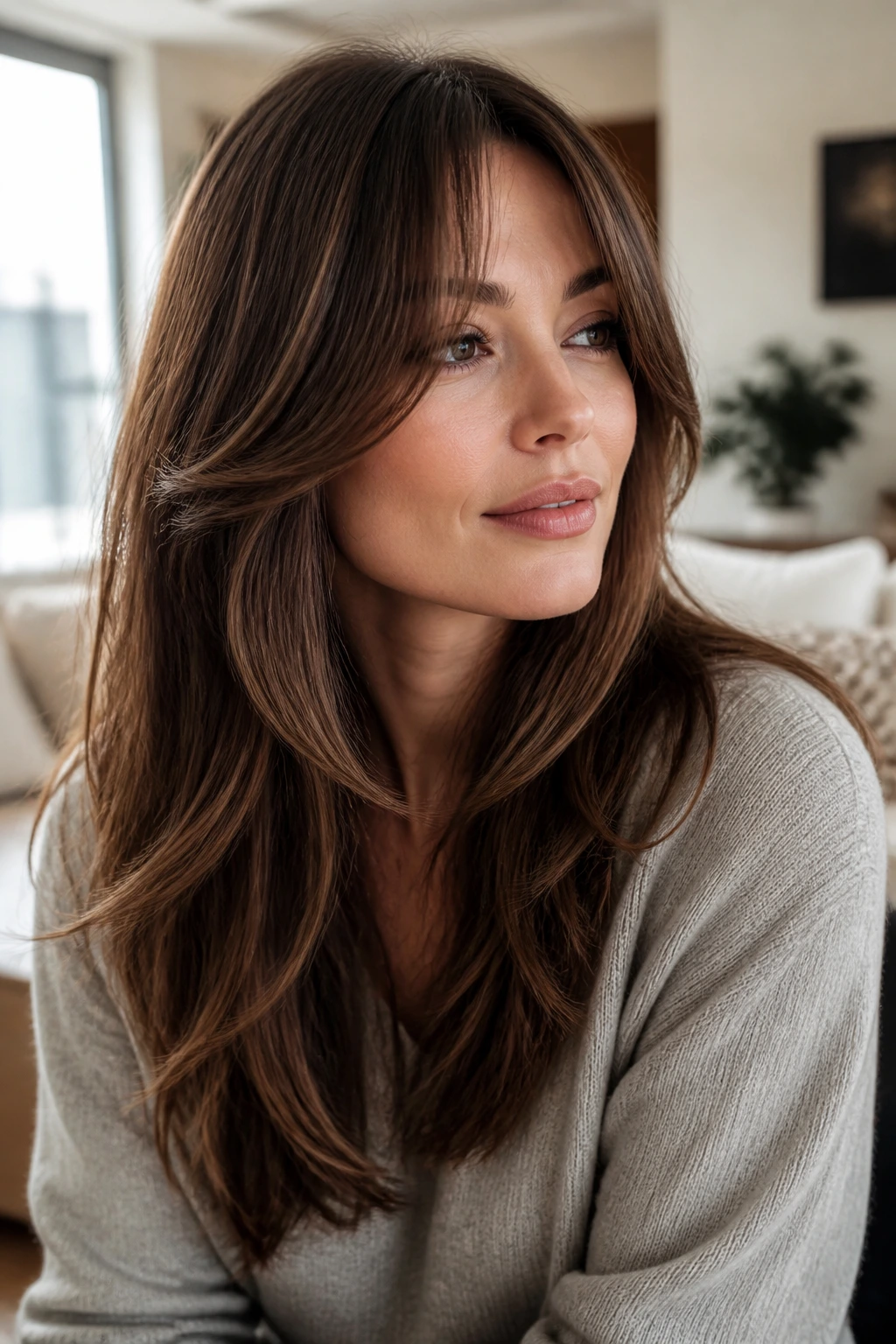
A long face doesn’t need more length. It needs interruption. That’s the cleanest rule I know, and it explains why some hairstyles feel instantly right while others seem to make the face keep going forever.
The useful shapes are the ones that add width at the sides of the head, especially around the temples, cheekbones, and jaw. Curtain bangs do it. Side parts do it. Waves do it. A braid across the hairline does it. Even a low bun can do it if the front is soft enough. The styles that usually miss the mark are the ones that pull everything upward or downward in one clean line.
A small amount of lift at the crown is fine. A giant bump is not. A little fringe is fine. A blunt line that cuts too short and sits flat is not. The face doesn’t need to be hidden, and it definitely doesn’t need to be buried under hair. It just needs a little horizontal movement so the eye has somewhere else to go.
Tools That Make These Styles Easier
-
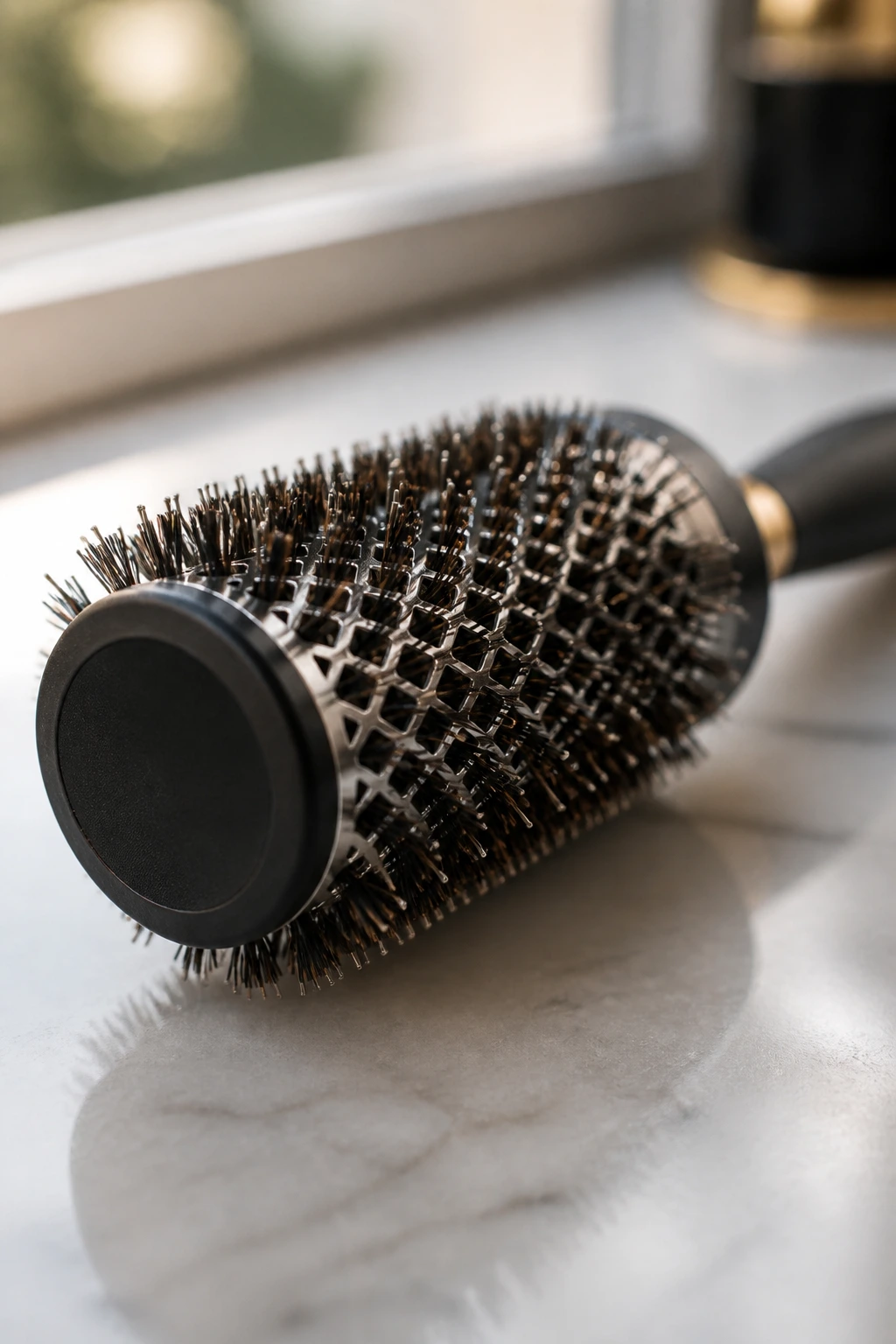
Round brush, 2.5 to 3 inches: Best for curtain bangs, blowouts, and rounded ends that land near the cheekbones.
-
1-inch curling iron or wand: Good for tighter bends, side-swept waves, and defined front pieces.
-
1.25-inch curling iron: Better for old-Hollywood waves, loose curls, and styles that need a softer arc.
-
Blow dryer with a nozzle attachment: Helps direct the hair sideways instead of puffing it straight up.
-
Tail comb: Useful for clean side parts, sectioning bangs, and lifting just the right amount at the roots.
-
Duckbill or sectioning clips: Keep the top layers out of the way while you shape the front.
-
Volumizing mousse: A little at the roots gives width without making the hair sticky.
-
Heat protectant spray: Needed any time you’re using irons, especially on the front pieces that get touched up often.
-
Flexible-hold hairspray: Holds movement in place without freezing the hair into one stiff shape.
-
Dry shampoo: Helps day-two roots keep a little lift, which is useful on long faces because flat roots make the shape feel longer.
-
Silk scarf or pillowcase: Keeps bangs, twists, and blowouts from being crushed overnight.
How to Ask for the Right Layers, Bangs, and Texture
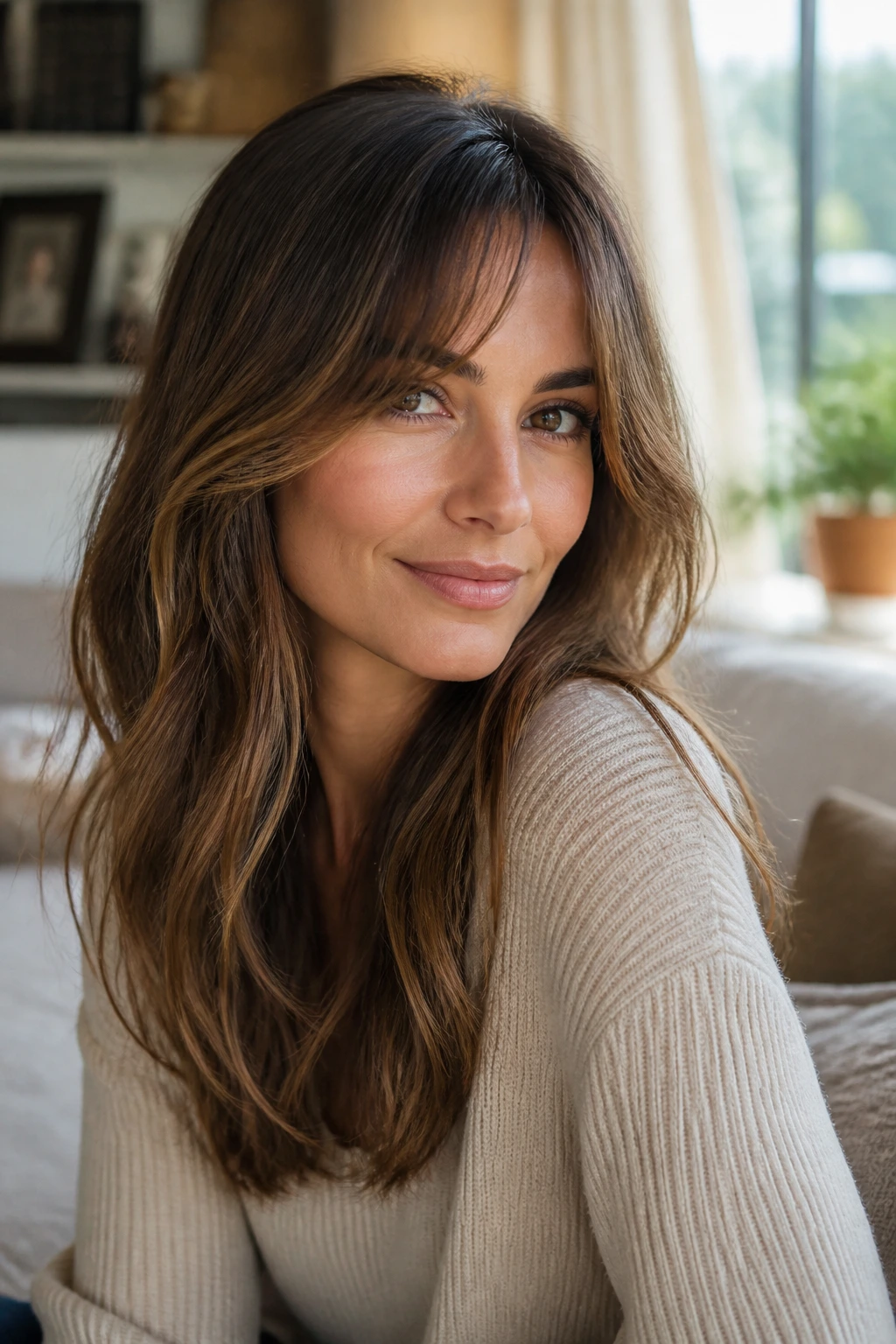
The salon conversation matters more than people think. If you ask for “layers,” you can get almost anything, including a cut that doesn’t help your face much. Be more exact. Ask for face-framing pieces that start around the cheekbone or lip, and say that you want width at the sides rather than height at the crown.
For bangs, the best words are usually curtain bangs, side-swept fringe, or long fringe that can be worn open. A blunt fringe can work too, but it needs the right brow length and enough softness at the edges. If your forehead is especially long, shorter bangs can look abrupt. If your hair is fine, ask for movement rather than heavy layering, because too much thinning can make the ends go stringy.
Products matter, but only if they match the cut. Mousse and blowout cream are useful for styles that need lift. Texture spray helps shags, waves, and braids keep some grip. A light serum is fine on the ends, but keep heavy oils off the root area unless you want the whole style to collapse by lunch.
How to Wear Them for Work, Weekends, and Dressier Nights
Office polish: Low ponytails, rounded blowouts, collarbone layers, and sleek straight lengths with bent ends all read clean without making the face look narrow. They sit neatly around a blazer or button-up shirt and don’t need much rescue halfway through the day.
Weekend texture: Curtain bangs with waves, soft shags, mermaid waves, and braided crowns are the styles that look better once they loosen a little. They can handle a looser finish, which is useful when you don’t want hair to look too controlled.
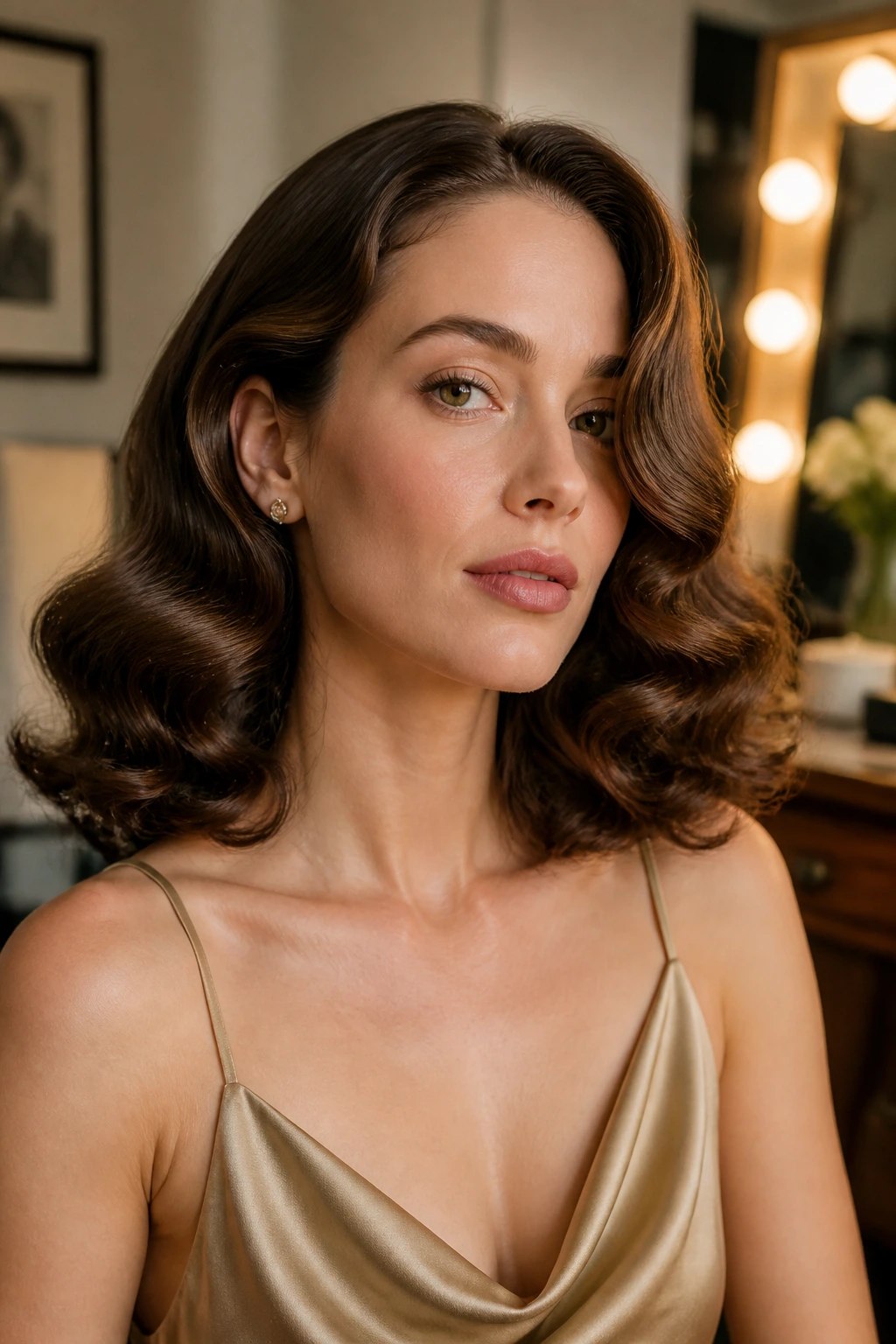
Dressier nights: Old-Hollywood waves, low buns with soft front strands, waterfall braids, and half-up crown styles give you shape and a little drama. The trick is still the same: keep some width at the sides and avoid stacking the volume straight on top.
Accessories: Wide headbands, low-set clips, and ribbons tied at the base of the hair work better than tall, narrow accessories. Anything that adds a lot of height at the top tends to fight the face shape instead of helping it.
Small Styling Moves That Change the Whole Face Shape
A few inches of placement can change everything. That sounds fussy until you actually look in the mirror and see how much difference it makes.
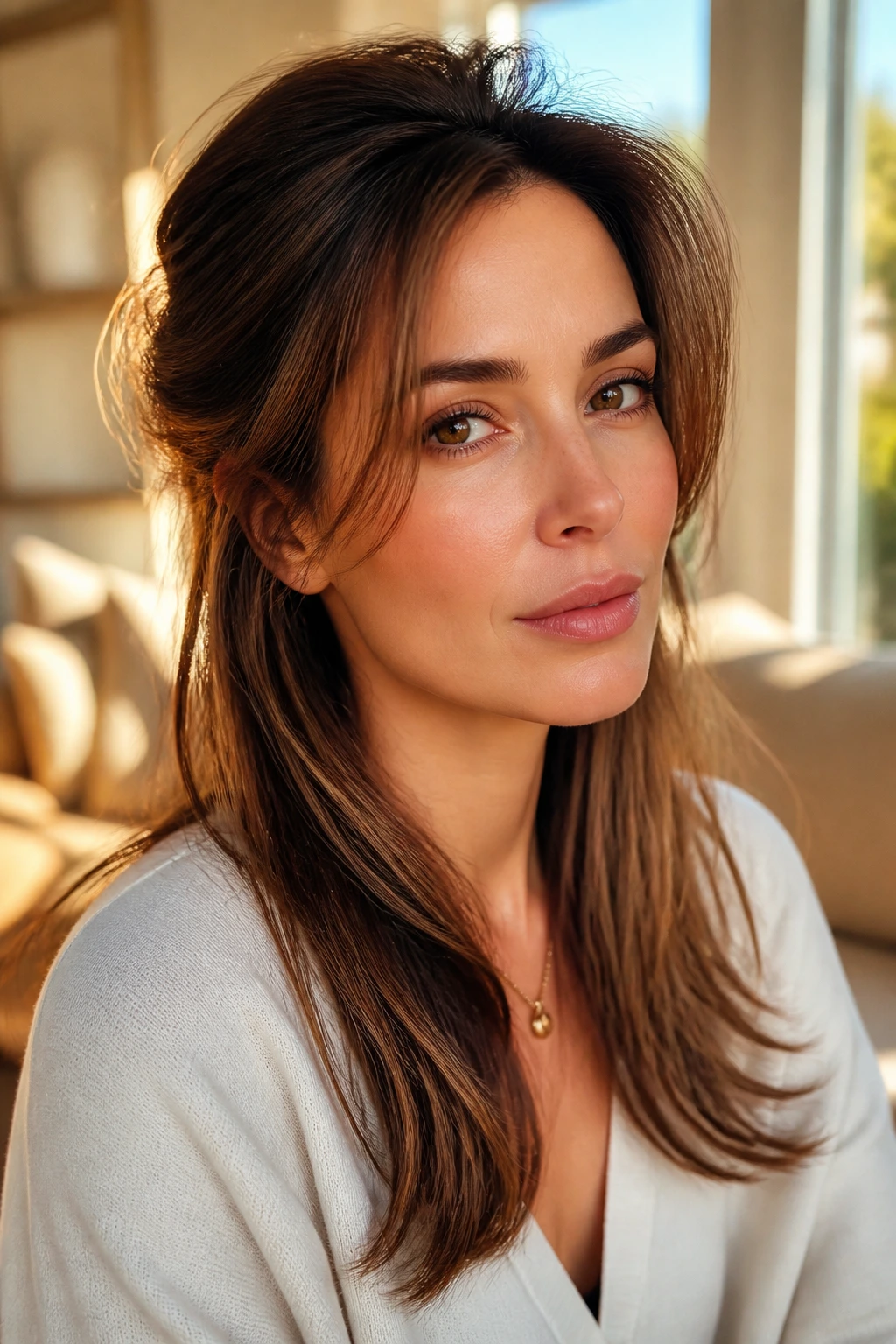
Volume placement: Put lift at the temples and upper sides first. A tiny bump at the crown is enough; the big lift belongs farther out, not higher up.
Front pieces: Leave a few strands near the cheekbones or jawline. If all the front hair gets pinned back, the face goes bare and long very fast.
Ends: Flip, bend, or curl the last 1 to 2 inches. Straight ends that hang down with no shape are the quiet villain in a lot of long-face hairstyles.
Parting: A slight off-center part is often easier than a severe middle part. If you love the middle, balance it with wave or bend on the sides.
Finish: Use flexible spray, not a stiff shell. Hair with a little movement looks softer around the face and stays more flattering as the day goes on.
Common Mistakes That Make a Long Face Look Longer
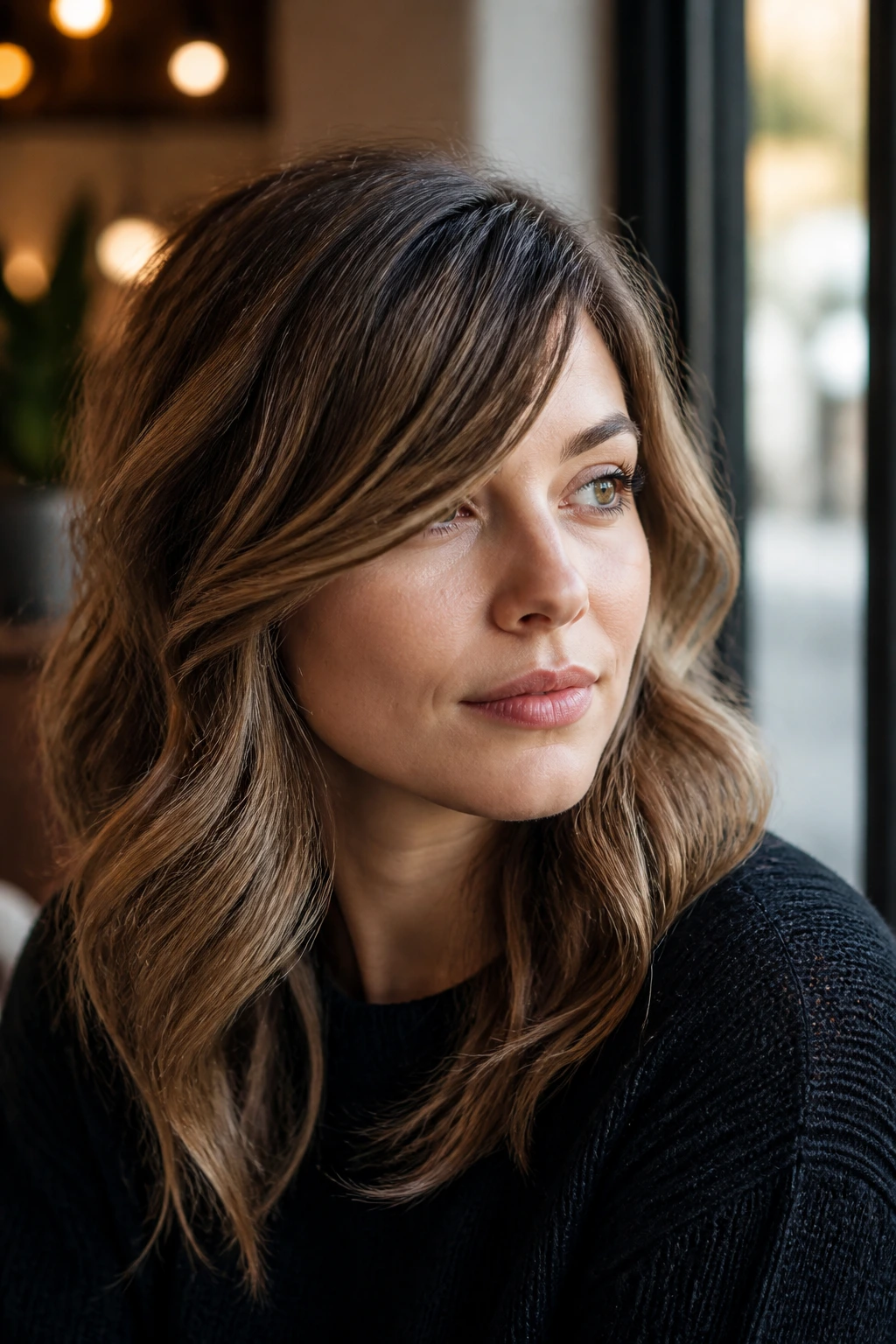
-
Too much crown height: A tall bump at the top stretches the face even more. Keep lift low and push the volume outward.
-
Bangs that are too short and too straight: A blunt fringe can work, but if it sits high on the forehead and lies flat, it calls attention to the length instead of breaking it up. Ask for softer edges or more length.
-
Slicking everything back tight: A tight ponytail or bun removes the width from the sides and leaves the face exposed. Leave temple pieces loose and keep the style low.
-
Over-thinning fine hair: Razor-heavy layers can make the ends look wispy, which weakens the shape. Fine hair usually needs movement, not aggressive removal of weight.
-
Flat roots with no side bend: If the hair lies close to the head from crown to shoulder, the face reads longer. Add root lift at the sides or a bend through the front.
-
Skipping the face frame entirely: Long hair with no front pieces can feel elegant on paper and unbalanced in the mirror. Even two soft strands can change the whole look.
Variations for Fine, Curly, Thick, and Heatless Hair
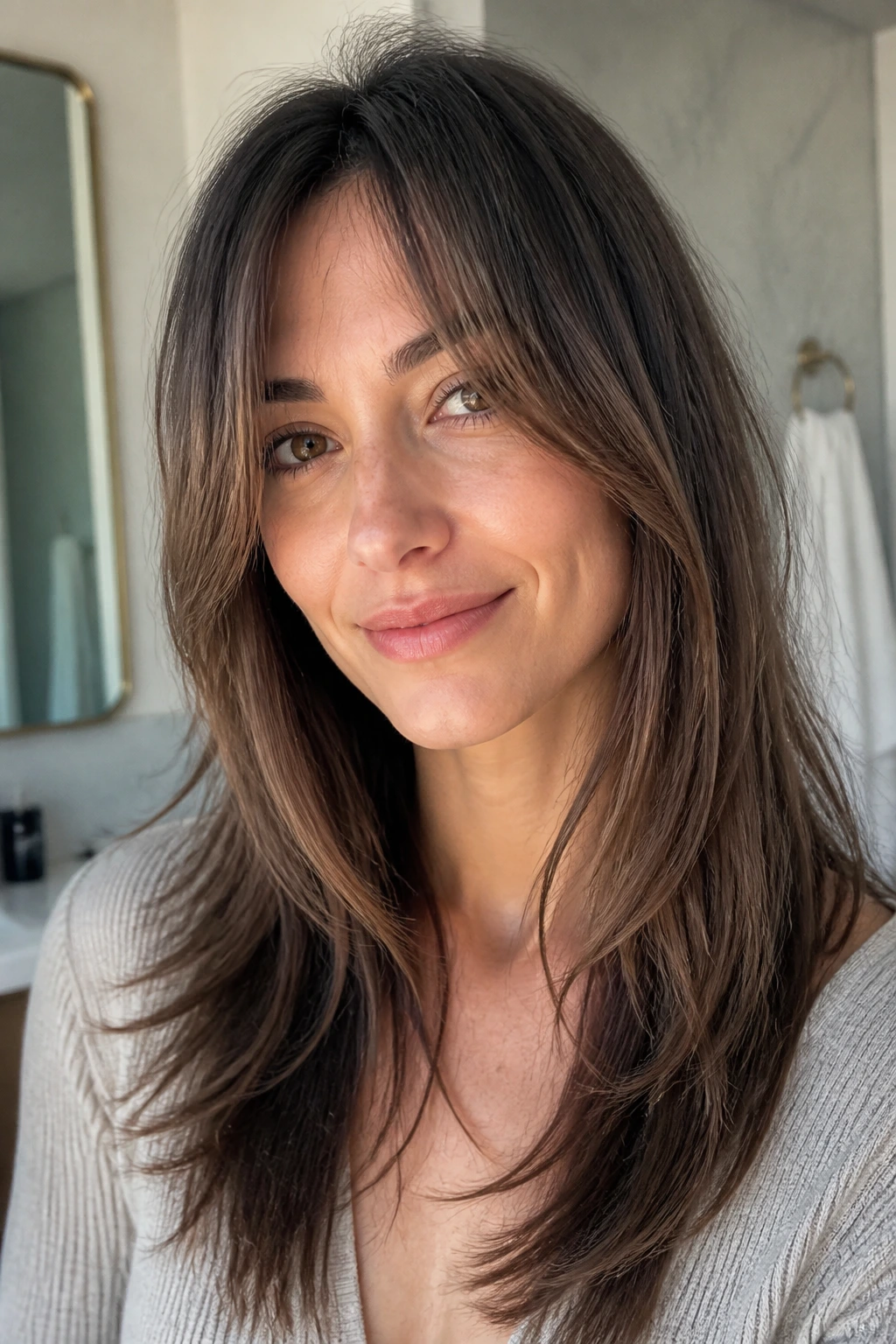
Fine-Hair Lift Version: Ask for light face-framing layers and a soft curtain fringe, then style with mousse at the roots and a round brush through the front. Fine hair needs fullness where the eye lands, not extra weight through the ends.
Curly-Hair Roundness Version: Keep the layers long enough to preserve curl shape, then encourage width at the cheeks with a side sweep or a long side bang. The goal is a rounder outline, not a pyramid at the crown.
Thick-Hair Weightless Version: Use internal layering and rounded edges so the hair doesn’t hang in one heavy block. Thick hair can handle braids, blowouts, and long shags especially well because it keeps some body after styling.
Heatless Styling Version: Overnight braids, socks curls, and loose twists can create the side movement a long face needs without hot tools. Let the bend sit lower on the hair, around the cheekbone and jaw, not just at the ends.
Humidity-Ready Version: Choose braids, low buns, bubble ponytails, and wavy styles that can loosen a little without losing their shape. The less the look depends on perfect curl definition, the better it holds up in damp air.
Keeping the Shape Between Wash Days
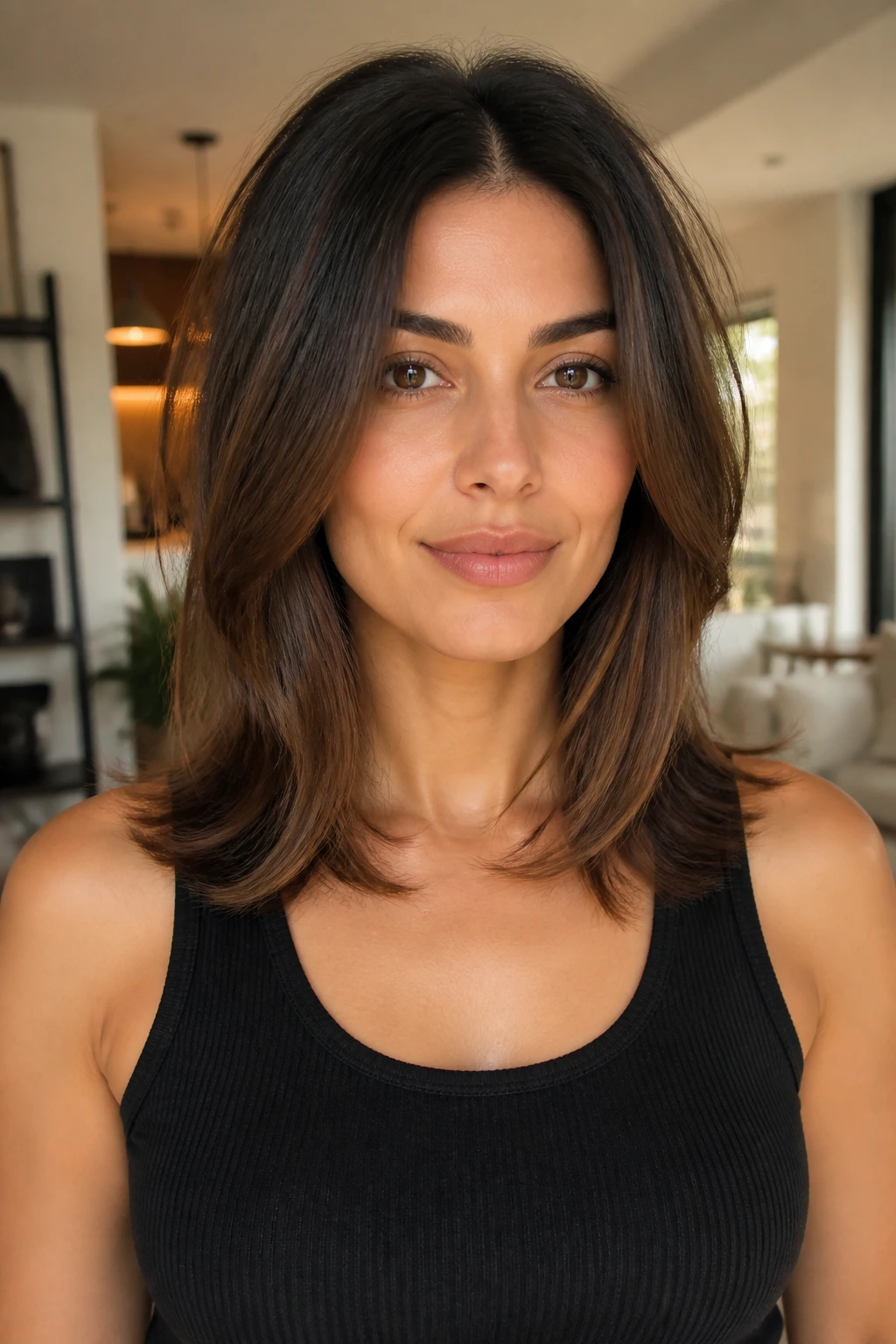
Long-face styles usually do well with a little age on them. Day one can be too clean. Day two often has the right amount of bend and grip, especially if the cut was done with some movement in the front.
At night, a silk pillowcase helps keep bangs and front layers from getting smashed flat. A loose braid or a soft low ponytail can save waves and curls, while a clip at the crown can preserve a blowout. If you’re wearing curtain bangs, pin them back very lightly or let them fall in a soft roll so they don’t kink awkwardly.
In the morning, dry shampoo goes at the roots, not the ends. Give it 2 or 3 minutes to settle, then brush it through. For blowouts, a few seconds with a round brush or a Velcro roller can revive the front sections. For curls, mist the hair lightly, scrunch, and let the shape wake back up on its own. Most of these looks hold for 2 to 4 days if you’re gentle. After that, the hair usually wants a full reset.
Questions Women Ask Before Choosing a Long-Face Style
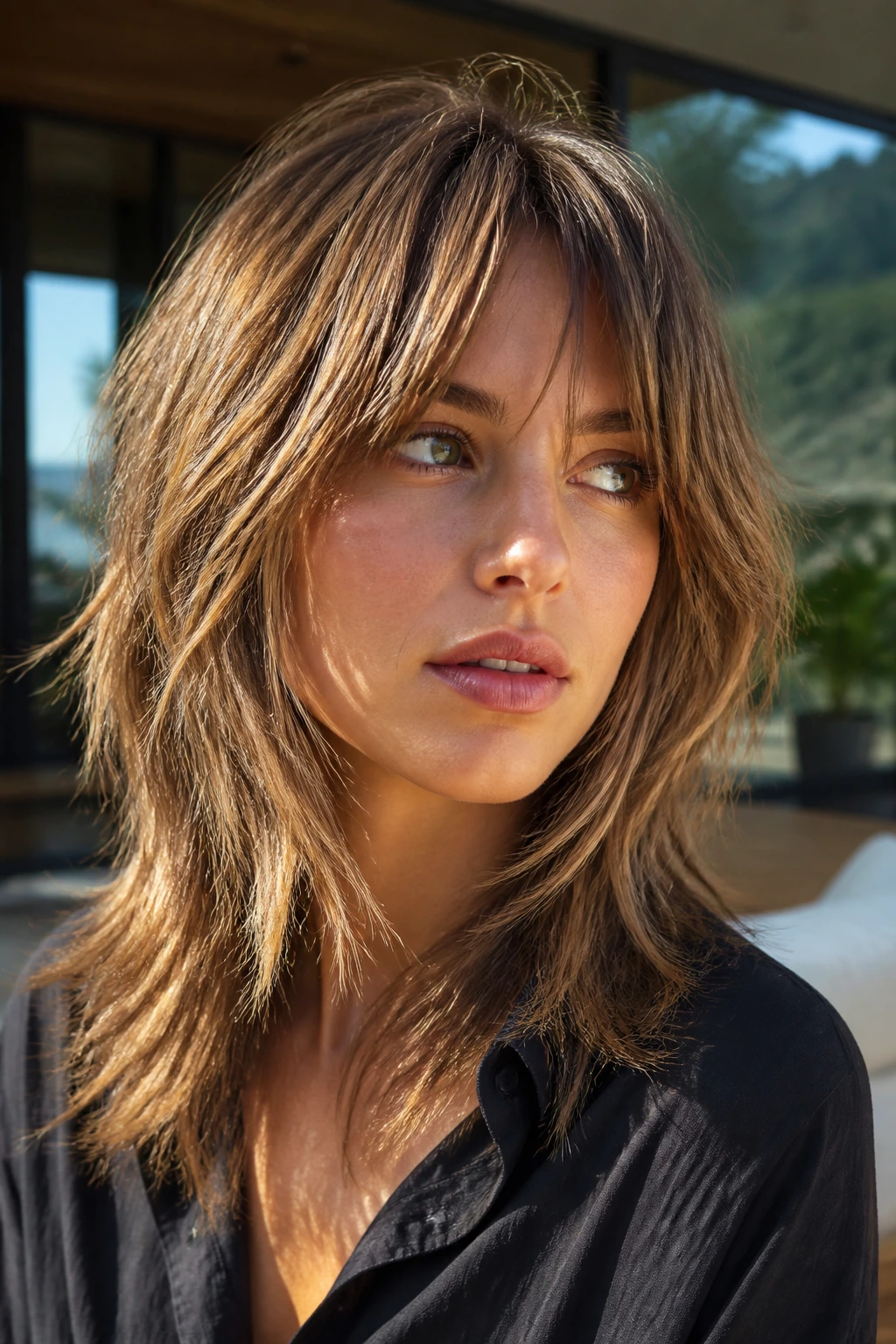
Do bangs always help a long face?
No, but the right bangs usually do. Curtain bangs, side-swept fringe, and longer feathered bangs tend to help more than short, blunt fringe because they soften the forehead and add width near the cheekbones.
Can a middle part work on a long face?
Yes, if the hair has side movement. A middle part with flat, straight lengths is the version that causes trouble; a middle part with bends, waves, or face-framing pieces can look balanced.
Are high ponytails a bad idea?
Not automatically, but they need some softness. A very high, tight ponytail pulls the eye upward, while a lower placement with loose pieces around the face usually reads better.
What if my hair is fine and flat?
Choose styles that build volume at the sides, not just at the roots. Curtain bangs, collarbone layers, and rounded blowouts tend to give fine hair more shape without making it look thin.
Do curly hairstyles work on long faces?
Absolutely. Curly styles are often a strong match because they create natural width. The important part is how the layers sit and whether the curls are allowed to frame the cheeks.
How short can front layers be?
Usually somewhere around the cheekbone or jaw is safer than cutting them way up near the forehead. If the face is especially long, a little more length in the front usually looks better than a sharp, short frame.
What should I tell my stylist?
Say you want width around the cheeks and temples, not height at the crown. That one sentence gets you much closer to the right cut than asking for vague “layers.”
Do these styles work with glasses?
Yes, and some work especially well. Curtain bangs, side parts, and soft waves sit nicely around frames because they don’t crowd the eyes; just avoid bangs that stop exactly where the glasses sit unless they’re intentionally cut for that.
The Shapes That Break Up the Length
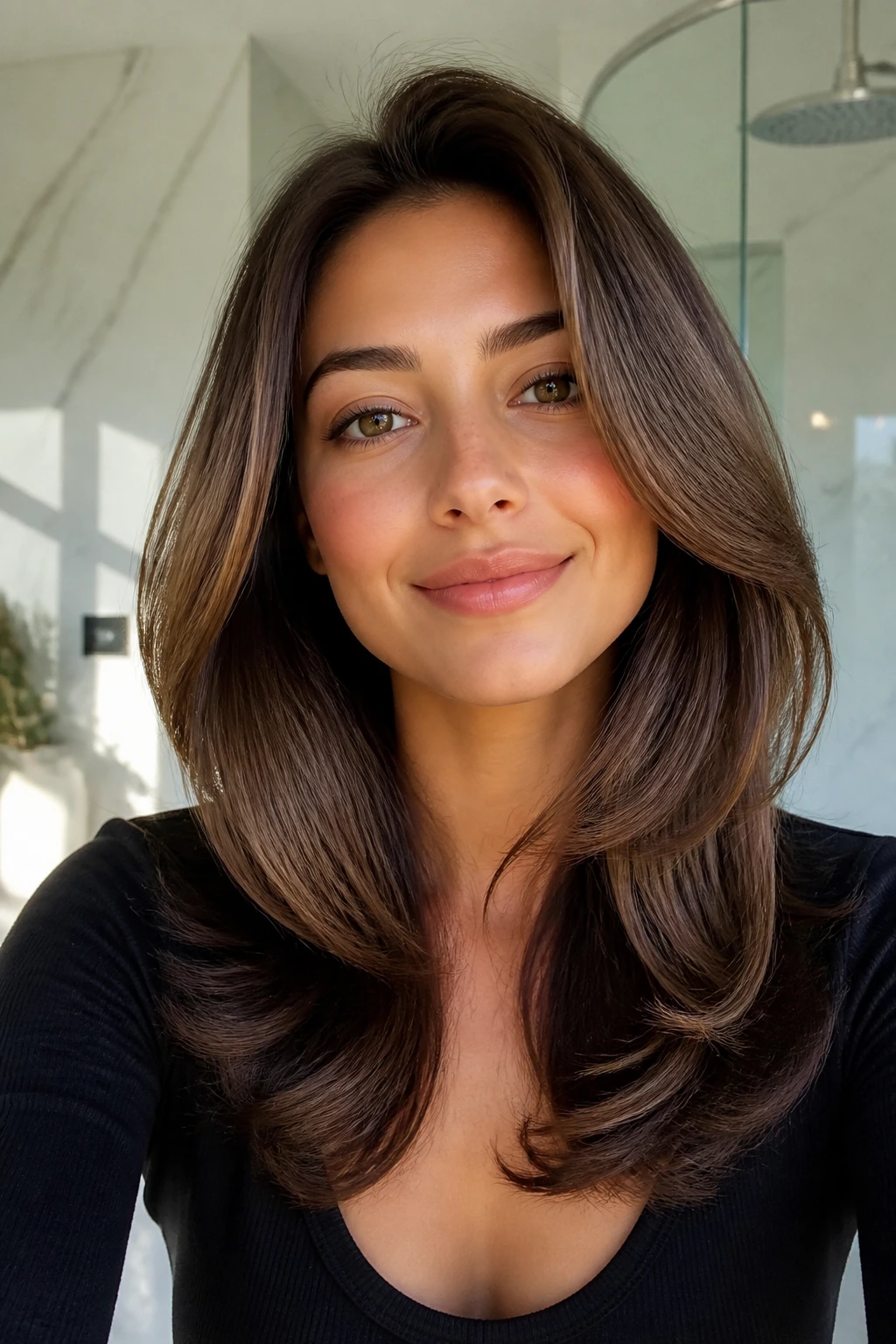
A long face doesn’t need a disguise. It needs a hairstyle that knows where to place its weight. Once you start looking for width at the sides, soft movement at the front, and a little interruption in the vertical line, the good options become obvious fast.
That’s why these long face hairstyles for women keep coming back to the same idea in different forms: cheekbone width, side movement, and a front frame that does some quiet work. The right cut or style doesn’t shout about the face shape. It just makes the proportions settle down in a way you can feel the second you look in the mirror.
