



Long hair can look expensive and tired at the same time. The difference is usually the shape, not the length.
That’s where long wolf cuts earn their keep. They take weight out of the crown, keep the perimeter long, and leave enough separation between layers that the hair moves when you move. The result is not neat. That’s the point. A good wolf cut has a little bite near the top, some softness around the face, and ends that do not sit there like dead rope.
The best versions for long hair are the ones that understand restraint. Too many short layers and you get a choppy mess. Too few, and you’re basically wearing long hair with a mullet-shaped rumor around the edges. The sweet spot is a cut that looks slightly wild when it’s dry, but still gives you length, swing, and enough control to wear to work without apology.
Why Long Wolf Cuts Keep Working
- Built-In Movement: Shorter layers at the crown stop long hair from hanging in one flat sheet, which is why the shape looks alive even after a rough air-dry.
- Length Without Drag: You keep the drama of long hair, but the ends stop feeling like they’re carrying the whole haircut on their backs.
- Texture-Friendly: Waves and curls have room to bend instead of exploding at one heavy line.
- Grow-Out Safe: A wolf cut usually softens as it grows, instead of turning into an obvious mistake at week six.
- Easy to Push Edgier or Softer: A little mousse and a diffuse creates attitude; a round brush and light serum make it feel cleaner.
- Works With Real Life: You can wear it messy, polished, pinned back, or half up, and it still reads like a deliberate cut.
1. Long Wolf Cut with Soft Curtain Bangs
This is the version I’d hand to someone who wants the wolf cut idea without jumping straight into the deep end. The curtain bangs open up the forehead, split around the cheekbones, and slide into long layers that keep the rest of the hair feeling feminine instead of blunt. It has movement near the front, which matters, because that’s the part people see first.
Why It Works
The crown layers remove weight where long hair usually gets sleepy, but the bang area keeps the cut from feeling too severe. Ask for the fringe to start around nose level and graduate down toward the cheekbones so the front doesn’t suddenly stop. On blow-dried hair, the bangs can swing outward a little; on air-dried hair, they break up the face in a softer way.
What To Ask For
- Keep the shortest face-framing pieces around the cheekbone.
- Leave the overall length below the shoulders.
- Ask for soft point cutting instead of blunt lines.
- Tell the stylist whether you want the bangs to split in the middle or slightly off-center.
If your hair is already wavy, this cut gets movement almost by accident. If your hair is straight, a round brush and a medium barrel brush-roller blowout give it more shape at the root.
2. Razor-Edged Wolf Cut for Thick Hair
Dense hair needs a firmer hand. Otherwise the top grows into a helmet and the ends feel heavy no matter how many layers you think you have. A razor-edged wolf cut can fix that, but only if the stylist knows where to stop. Too much razoring near the ends and the hair starts to look frayed instead of textured.
The best version takes visible bulk out of the interior, especially around the crown and upper midlengths, while leaving enough strength through the bottom so the cut still feels long. The surface should separate into chunky pieces when you shake it out. Not wisps. Pieces.
This style looks best when you want the haircut to have some attitude even on a no-fuss day. It’s also one of the few long wolf cuts that can handle a lot of hair without collapsing into an overworked shag.
3. Air-Dried Wave Wolf Cut
What if the cut does most of the work for you? That’s the appeal here. If your hair already bends a little when it’s damp, a long wolf cut can turn that natural wave into shape without forcing it through a round-brush session every morning.
The trick is to keep the layers long enough that the wave pattern survives. You want lift at the crown, not a bunch of short pieces that spring up like little antennas. A light mousse at the roots and a small amount of cream through the ends are usually enough. Scrunch, let it sit, and touch it as little as possible while it dries.
How To Wear It
- Put mousse on damp roots.
- Scrunch the midlengths upward with your hands.
- Let the hair dry 80 percent before you add any oil.
- Break the ends apart with a tiny bit of texturizing spray.
This version can look almost lazy in the best way. The kind of lazy that took planning.
4. Bottleneck Bang Wolf Cut
Bottleneck bangs are the neat little trick that makes a long wolf cut feel current without looking overdone. They sit narrow at the center of the forehead, then widen around the brows and taper into longer side pieces. On a long layered cut, that shape makes the whole front feel more sculpted.
I like this version on people who want fringe but don’t want to babysit it every morning. It’s less blunt than a full curtain bang and less fussy than a straight-across fringe. The side pieces soften the transition into the long layers, which means the haircut grows out with less drama.
If you wear glasses, this cut can be a smart move. The center stays open enough, and the side pieces can be tucked or blown away from the frame instead of crowding it.
5. Face-Framing Wolf Cut for Rounder Features
A wolf cut does not have to shout to do its job. If your face reads rounder and you want a little more vertical line, the right long wolf cut can stretch the shape without turning severe. The difference sits in the face frame: keep the shortest pieces below the cheekbone, not right at the fullest part of the face.
That small shift changes everything. Instead of the layers hugging the cheeks, they fall past them and draw the eye downward. The overall feel is still shaggy and lived-in, but the outline is cleaner around the face. I prefer this version when the wearer wants edge with a little restraint.
The back can stay longer and softer, too. You do not need a huge disconnect to get the effect. Sometimes a smarter front shape matters more than a wild back.
6. Curly Long Wolf Cut
Can a wolf cut work on curls? Absolutely. It just needs to respect shrinkage, which is where many bad versions go wrong. Curly hair cut wet can surprise you later, and not in a charming way. A good curly wolf cut is usually shaped dry or nearly dry, curl by curl, so the stylist can see how each bend falls.
The top layers should lift enough to keep the crown from flattening, but the lower lengths need enough weight to stop the curl pattern from puffing out. That balance matters. If the layers are too high, the cut becomes triangle-adjacent. If they’re too low, you lose the whole point.
Best Way To Style It
Use leave-in conditioner, then a light curl cream. Scrunch with a microfiber towel, diffuse on low, and stop before the curls are fully dry if you want a looser finish. If you let every curl bake into place untouched, the shape gets bigger and less defined.
7. Sleek Straight Wolf Cut with Piecey Ends
Straight hair can wear a wolf cut, but it needs a different attitude. You won’t get the same casual bend that waves give you, so the cut has to carry more of the visual load. That means careful layering, a touch of razor work through the interior, and ends that separate instead of falling into one long straight line.
This version looks sharp when the top is smooth and the ends are flicked just enough to show texture. A flat iron used on low to medium heat can put a slight bend in the midlengths without turning the whole thing into curls. The result is a cleaner, more editorial take on the wolf cut — less beachy, more deliberate.
I like this on people who want length and edge but do not want a fluffy finish. It behaves better in humid air than a huge blown-out shag, which counts for something.
8. Wolf Cut with a Heavy Crown Lift
Long hair that sits flat at the crown can be maddening. You wash it, dry it, flip it around, and it still behaves like it’s tired. A heavy crown lift wolf cut solves that by taking the most weight out of the top third of the head while leaving the back length intact.
The effect is immediate. The hair feels lighter around the roots, the head shape shows through more, and the whole cut gets a bit of lift before you even use product. This is one of the best versions for people whose hair gets crushed under hats, hoods, or long workdays at a desk.
Use a root-lifting spray or mousse at the scalp, then rough-dry with your fingers first. A round brush at the crown can finish the job, but honestly, sometimes a quick upside-down dry is enough. Don’t overdo the smoothing cream. That’s how the lift disappears.
9. Invisible-Layer Wolf Cut
This is the stealth version, and I mean that in a good way. From the front, it can look like long hair with a little movement. Then you turn your head and the layers show up in the sweep of the ends and the way the hair falls away from the neck. The shape is there, but it doesn’t wave a flag.
That makes it a strong choice for people who need a more understated haircut for work or family life, yet still want the texture and lightness of a wolf cut. The layers are usually cut more internally, with softer graduation around the face and very little hard separation at the perimeter.
The whole thing feels less rebellious and more sneaky. Which, frankly, I love.
10. Mullet-Leaning Wolf Cut with Extra Bite

If you want the wolf cut to look like it has teeth, this is the one. The crown comes up shorter, the back keeps a noticeable tail, and the front can be carved into a sharper frame. It’s closer to the mullet end of the shag family, and it looks best when the wearer is not trying to pretend otherwise.
The key is contrast. You want a clear difference between the top, sides, and bottom, but you still need enough length through the back for the haircut to feel intentional instead of costume-y. A little texture spray on dry hair helps the top layer separate into those sharper sections.
This version tends to photograph well because the shape reads from across a room. Not subtle. Not shy.
11. Long Wolf Cut with Money-Piece Brightening
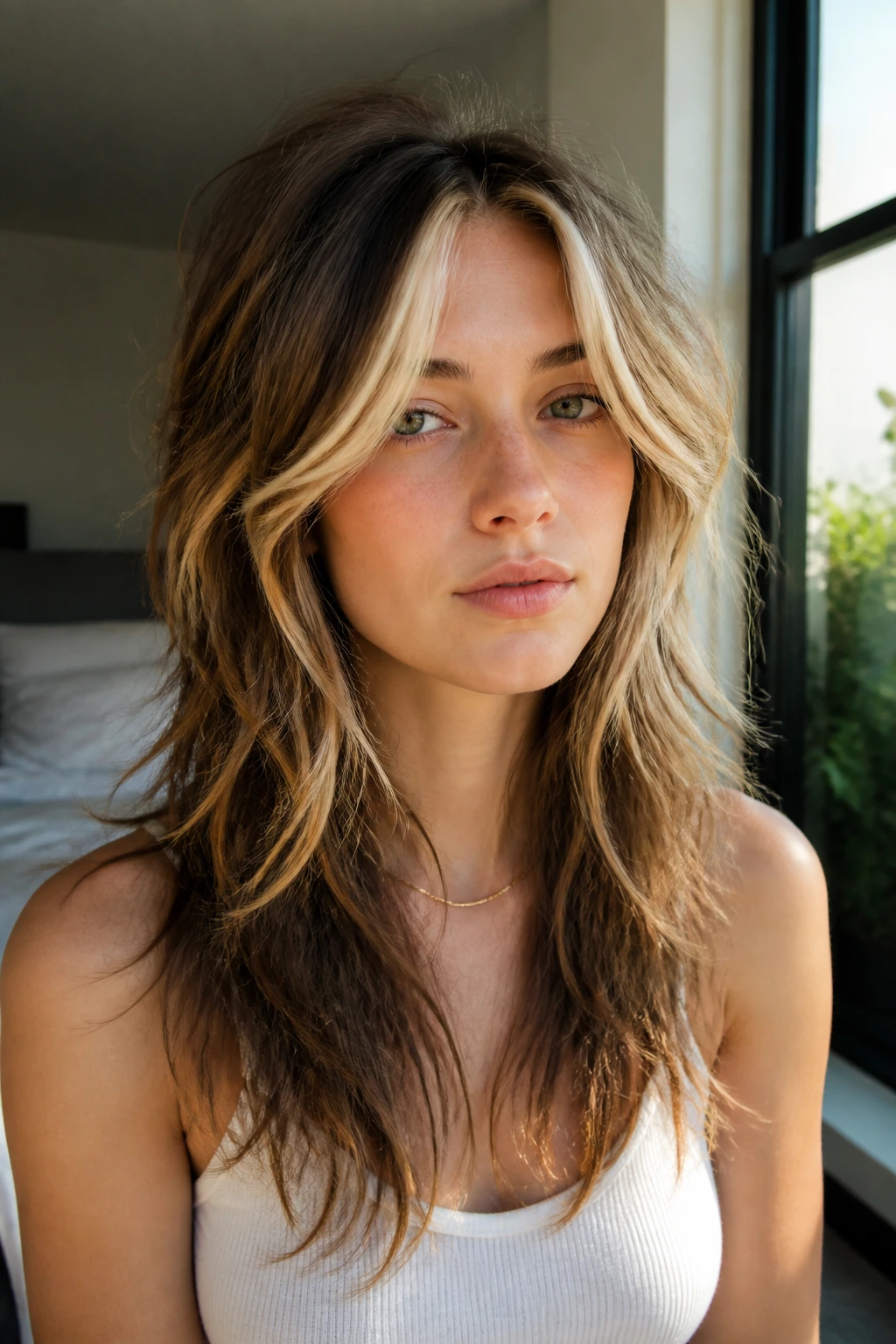
Color changes the cut more than people expect. A brighter frame at the front throws the layers into relief, especially when the face-framing pieces turn over a round brush or bend around a curling wand. If your long wolf cut feels too hidden, a money piece can wake it up fast.
The lightest sections should sit where the layers move: around the cheekbones, the part line, and the longer front edges. Don’t bleach every layer. That’s a waste of dimension and a fast route to dry ends. You want the bright pieces to act like underlining, not wallpaper.
This is a smart move if you like a wolf cut but need a little more visual contrast. The haircut becomes easier to read, especially in flat lighting.
12. Wispy Fringe Wolf Cut
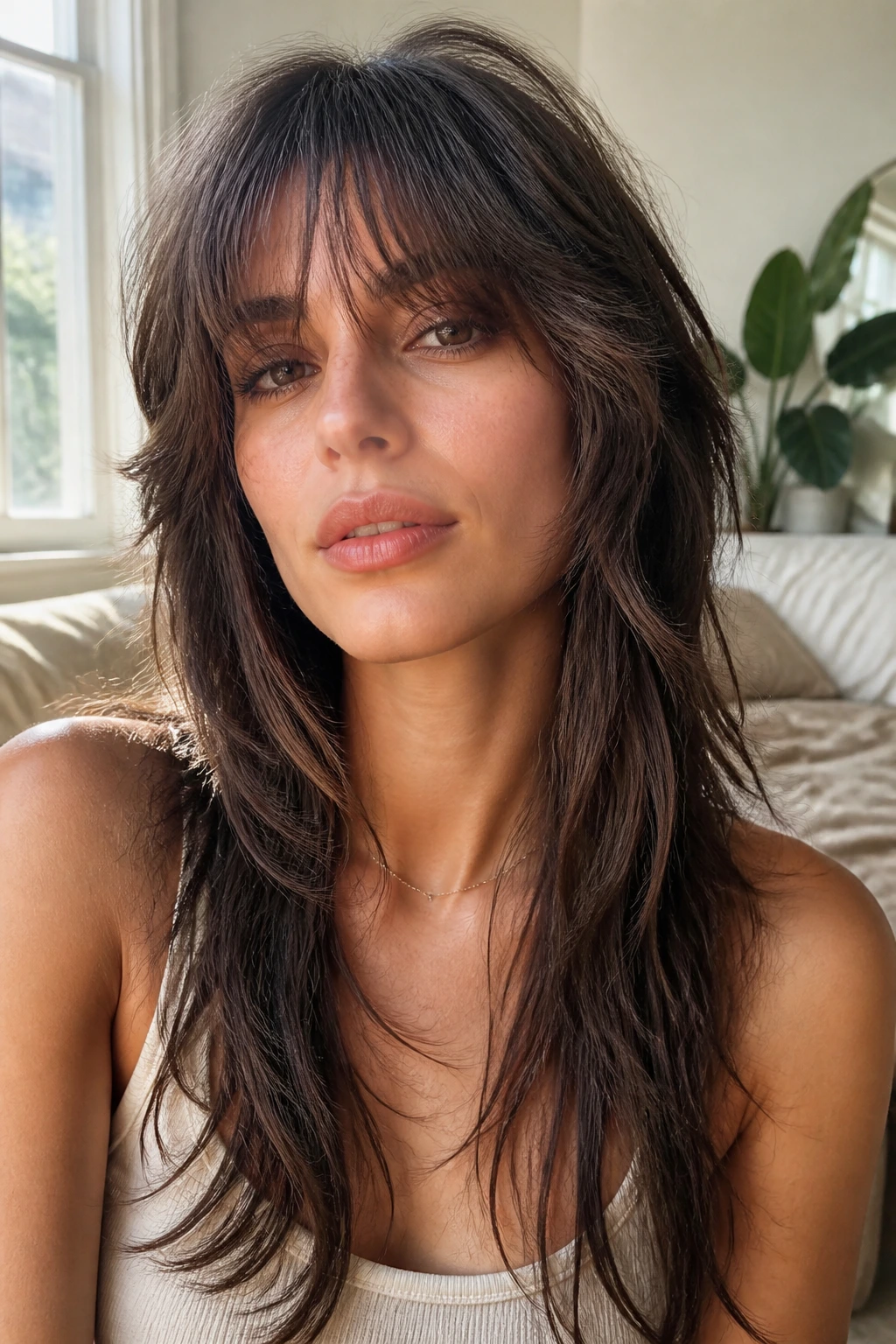
A wispy fringe gives the wolf cut a lighter personality. Instead of a full bang that commits hard, you get thin, airy pieces across the forehead that still break up the front of the style. It can feel a little French, a little rock, and a little less high-maintenance than a dense fringe.
The trick is to keep the fringe sparse enough that it moves. If it’s too thick, it starts fighting the rest of the layers and the cut loses its looseness. If it’s too short, it turns into a separate event. You want it to graze the brows or sit right above them, then disappear into the longer front pieces.
This works especially well on hair that gets greasy fast at the front. Less hair there means less collapse, which is a tiny practical detail that pays off every morning.
13. Deep Side-Part Wolf Cut
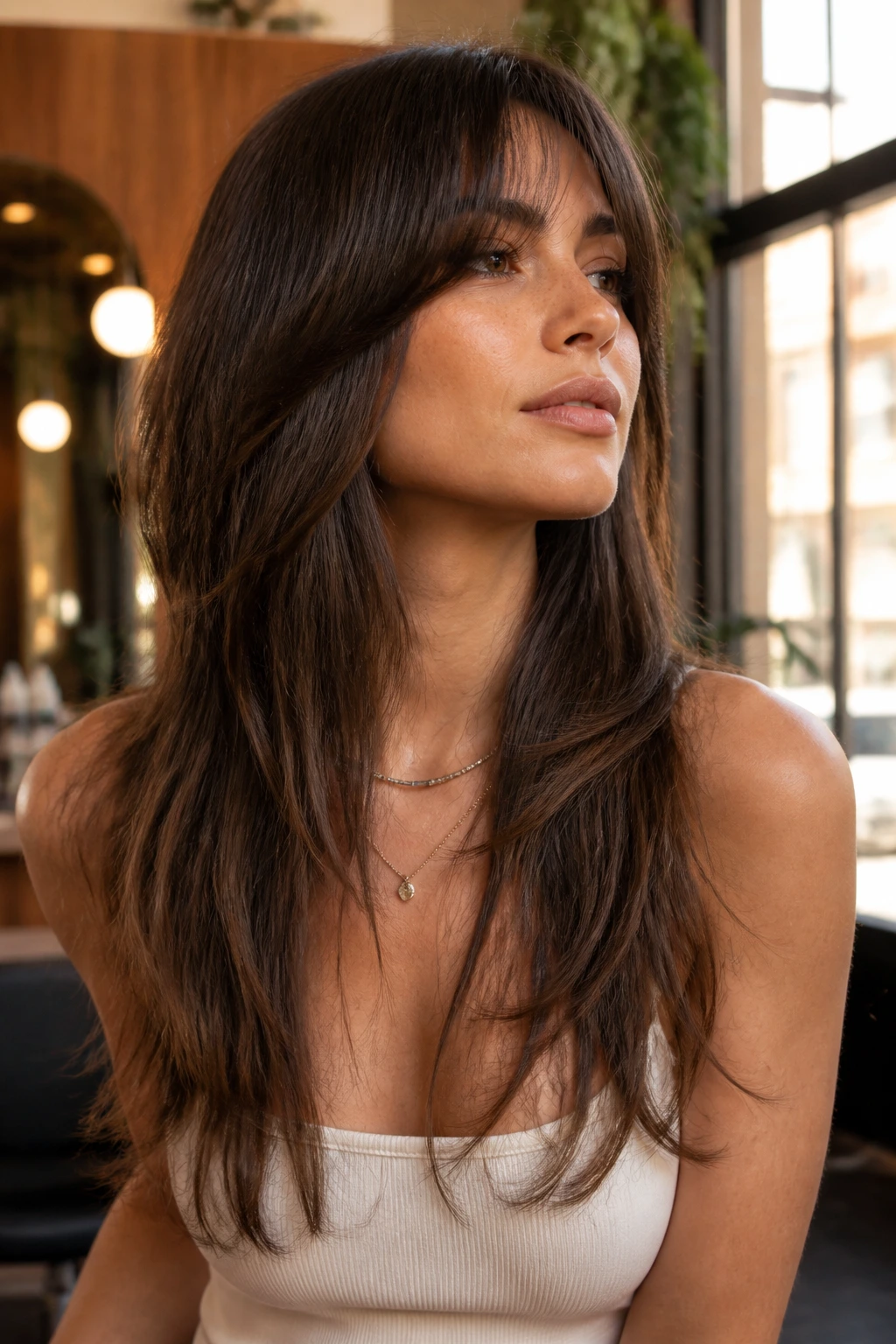
A deep side part can change a wolf cut from soft-edged to a little dangerous. The layers on the heavier side pile up, the opposite side gets sleeker, and the asymmetry gives the haircut a jolt of personality. It’s a good answer for hair that falls too evenly and ends up looking boring from the front.
This version is easy to miss if you only think about the cut itself. The part matters. A lot. Move it three or four inches off center, and suddenly the crown has lift, the front gets shape, and the long layers around the face stop behaving like one curtain.
If you have a habit of wearing your hair in the same part for years, this is the easiest way to make the style feel new without changing the entire cut.
14. Long Wolf Cut for Fine Hair
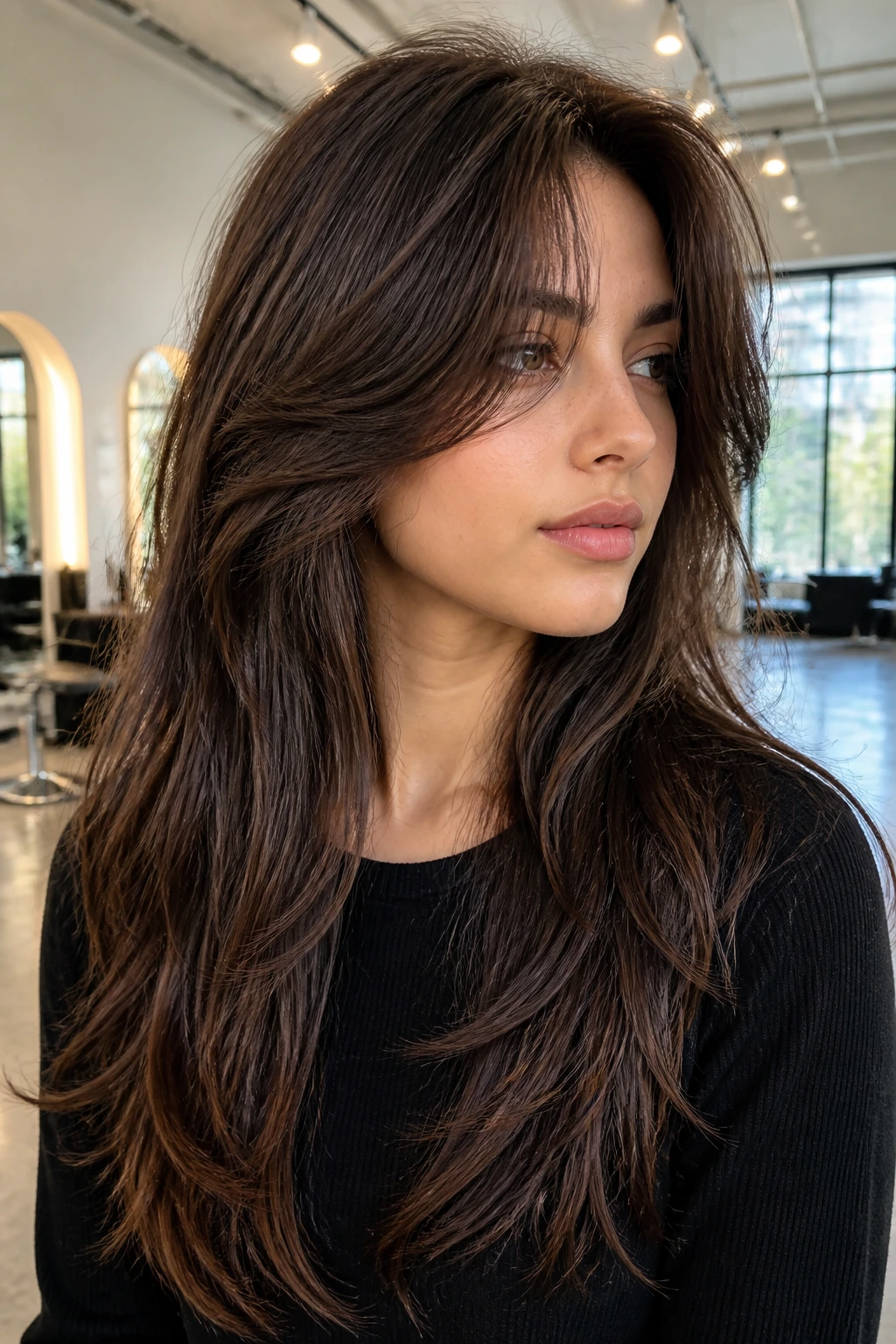
Fine hair needs the wolf cut with a softer hand. Too much thinning and the ends disappear. Too many short layers and the top sticks up while the rest of the hair goes limp. The point here is lightness, not shredding.
Ask for longer internal layers and keep the perimeter fairly full. That gives the cut movement without making the ends look sparse. A dry texture spray at the roots helps, but the real win is a clean shape that doesn’t depend on a mountain of product.
I would avoid very aggressive razoring on fine hair unless the stylist knows exactly how your hair behaves. Fine hair can look airy, yes. It can also look thin in a hurry. There’s a difference.
15. Long Wolf Cut for Dense, Coarse Hair
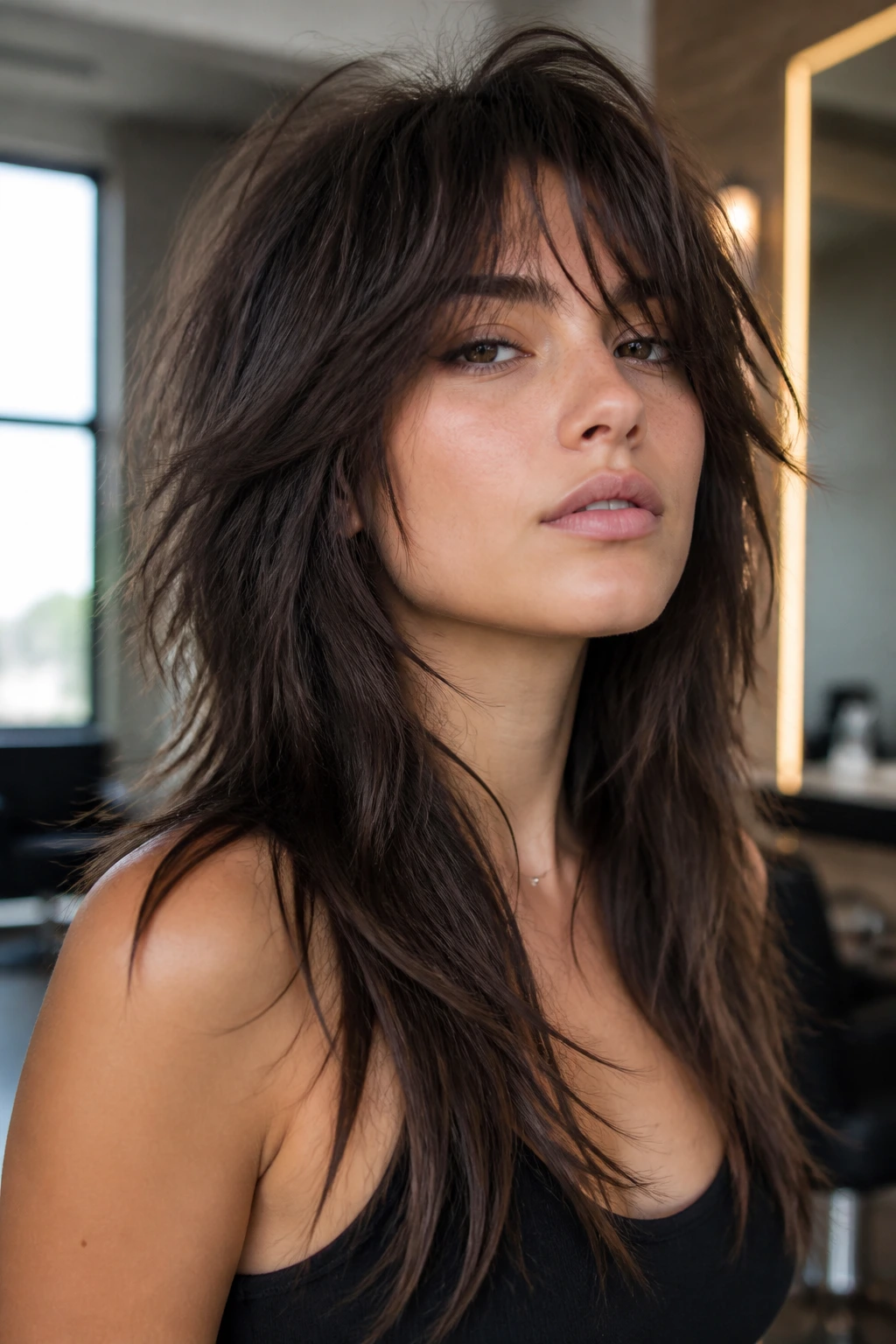
Dense hair is the opposite problem. It wants to hold on to weight like it’s personal. A long wolf cut can break that heaviness up, but it should do so in controlled sections rather than random chops. The interior needs debulking, especially around the crown and upper sides, while the bottom stays sturdy enough to keep the silhouette long.
This is where point cutting and careful slide cutting matter. You want movement, not shredded ends. If your hair is coarse, a smoothing cream and a nozzle dryer can help the cut settle into place after washing. If you skip that, the shape can expand more than you expected.
The good version of this cut feels lighter on the head but still substantial at the ends. That balance is the whole trick.
16. Soft Shag Wolf Cut with Feathered Ends

If the standard wolf cut feels too hard-edged, feathered ends soften the whole thing. The layers still have shape, but the perimeter doesn’t look chopped. I like this when someone wants the movement of a shag with a little less bite around the neck and shoulders.
The feathering should happen on the ends, not all the way up the hair shaft. That way the haircut keeps its long shape and only the edges go airy. It’s a better option for people who wear the hair down a lot and want the cut to feel touchable instead of aggressively piecey.
A round brush and a flexible-hold spray will push this version toward polished. Let it dry naturally, and it leans relaxed.
17. Wet-Look Editorial Wolf Cut
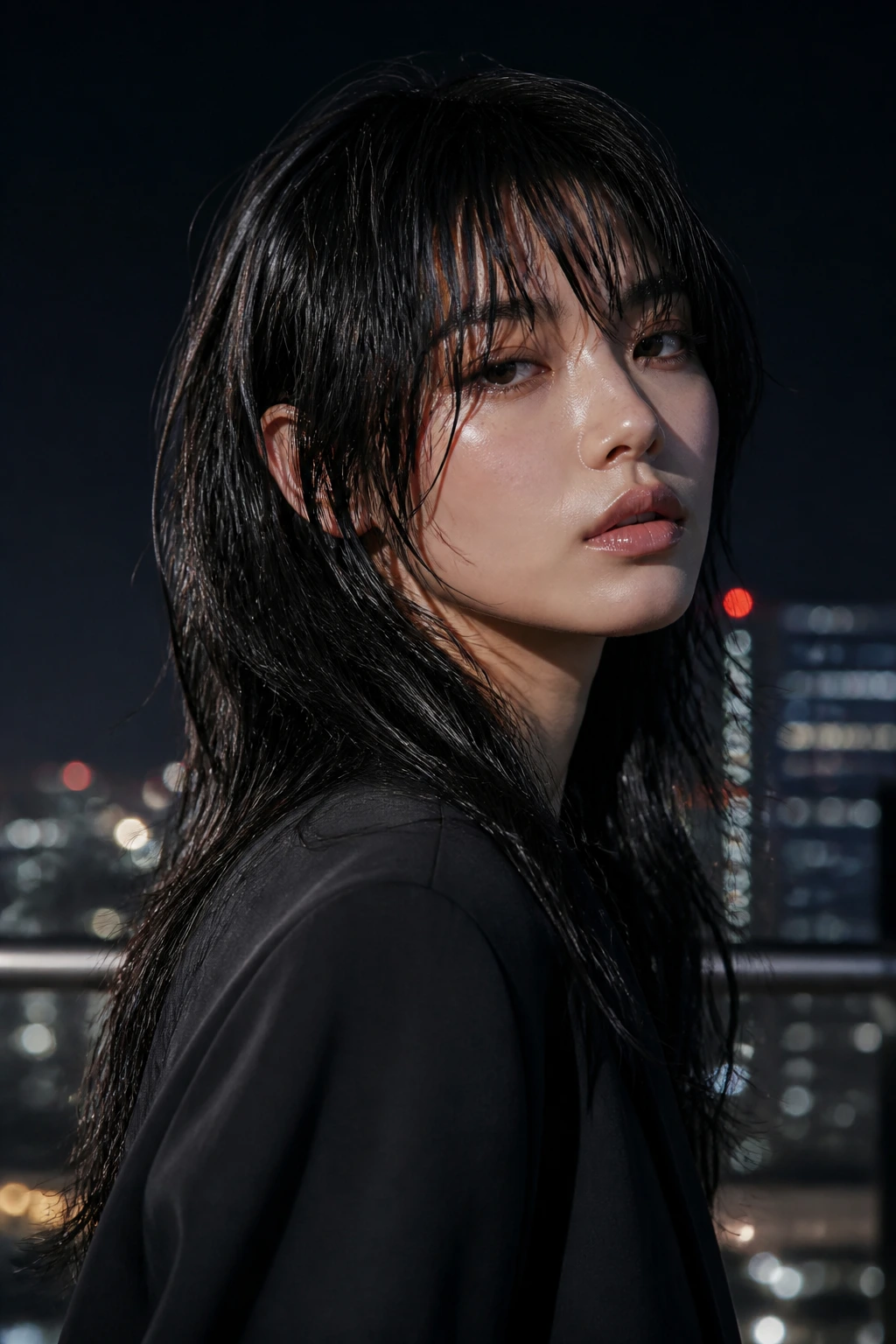
This one is for people who like a little drama. The roots and top layers get gel or a strong mousse, the midlengths stay more separated, and the ends are left loose so the cut still moves. The contrast between glossy top and drier ends is what makes it feel editorial instead of just slicked back.
It’s a smart night-out look on long hair because the wolf cut already has built-in texture. You’re not forcing the shape into a new personality; you’re just tightening the top and making the layers stand out more. Use a fine-tooth comb sparingly. Too much combing erases the point.
This is the kind of style that looks best when it is a little imperfect. Clean at the front. Messier at the ends. Nice balance.
18. Long Wolf Cut with a V-Cut Perimeter
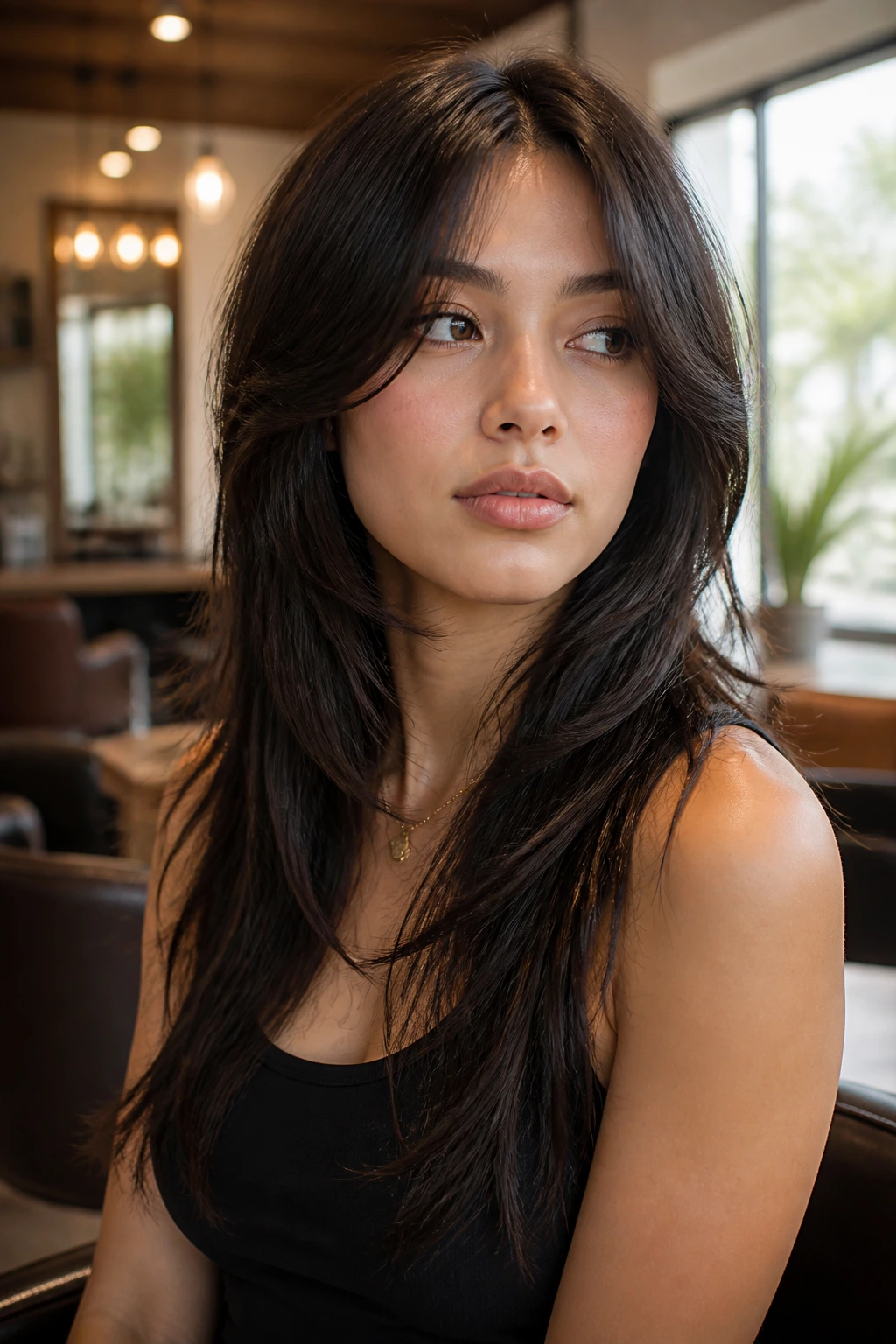
A V-cut perimeter gives the back a point instead of a blunt line, which makes the length feel even longer when it falls down the back. On a wolf cut, that shape keeps the ends from looking bulky while still preserving the long silhouette people usually want.
The interior layers should still be visible from the side. That’s what keeps the V from turning into a plain long cut. I like this version for people who wear ponytails often, because the shape still shows even when the hair is tied up. The tail peeks out with a little more attitude than a straight perimeter.
If you want the back to look full on the floor but lighter in motion, this is a smart shape. It’s not the loudest wolf cut. It’s one of the more elegant ones.
19. Low-Maintenance Grow-Out Wolf Cut
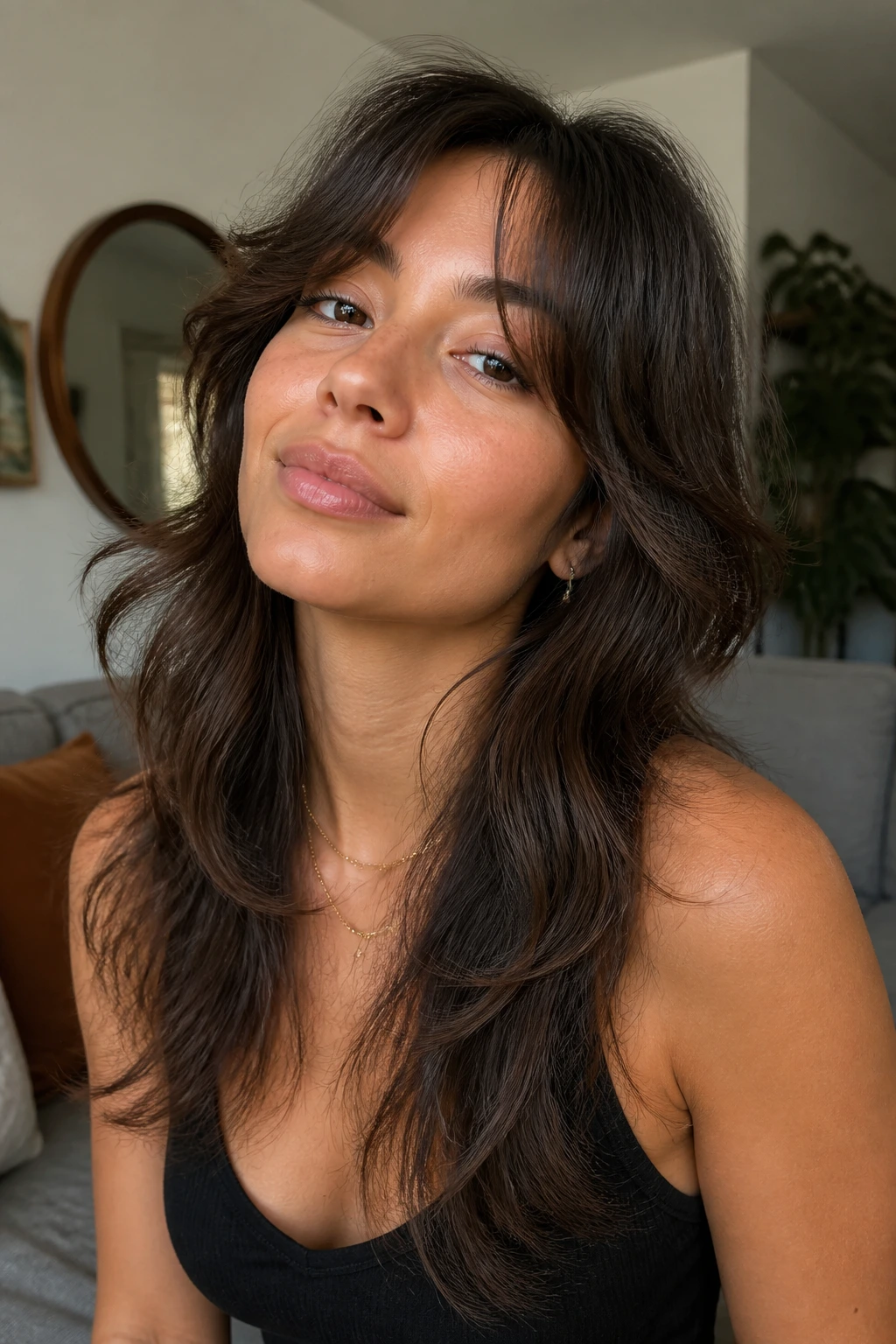
Can the wolf cut behave while it grows out? Yes, if it’s cut with that future in mind. The trick is to keep the shortest layers long enough that they don’t turn into tiny spikes after a few weeks, and to avoid bangs that need constant trimming unless you enjoy living near a salon.
This version usually has a softer front, longer face-framing pieces, and less dramatic disconnect between top and bottom. That makes it easier to live with over time. You can stretch the shape for a bit longer, and it still reads as intentional instead of neglected.
If you know you won’t be back for a trim on a strict schedule, ask your stylist to keep the shortest movable layer at least a few inches below the cheekbone. That little bit of length buys a lot of peace.
20. Max-Texture Wolf Cut with Razor Finish

This is the loud version. The one with the most separation. The one that looks like it has been touched by a stylist who likes movement and doesn’t fear a little mess. Razor finishing takes the edges down so the hair can break apart naturally, and the long layers sit in visible stacks rather than blending into one soft sheet.
It works best on wavy to thick hair that can hold shape. On hair that’s already fragile or very fine, it can go too far and look frayed. When it works, though, it has a real sense of edge. The top lifts, the ends swing, and the whole cut looks like it wants to keep moving.
This is the version people notice first. It doesn’t whisper.
Why the Long Wolf Cut Shape Works So Well
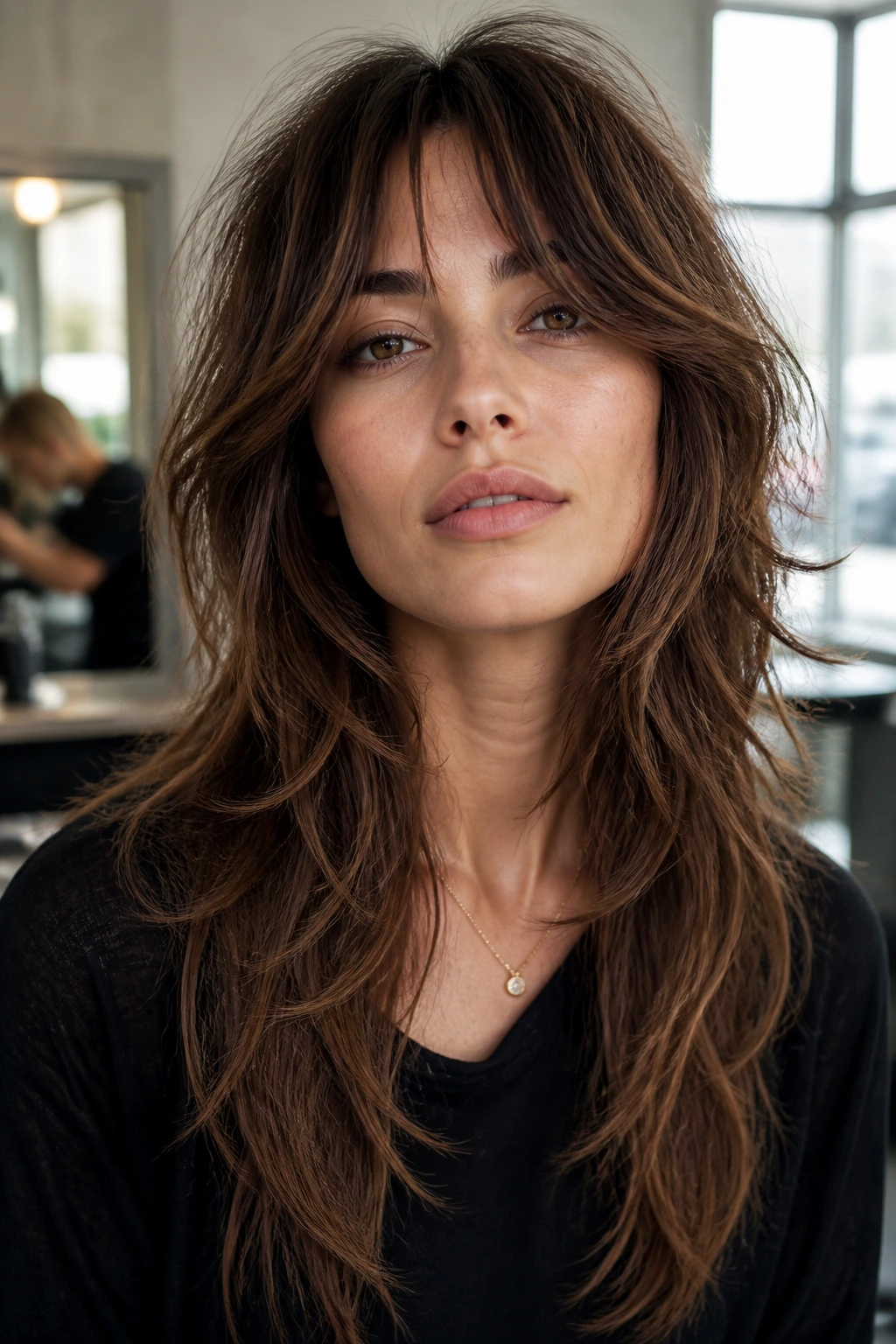
The reason long wolf cuts hold their shape is simple: they move the weight away from the crown and the upper sides, then leave enough length at the bottom to keep the haircut anchored. That mix is the whole trick. If you only add layers to the ends, long hair still drags itself flat. If you chop too much off the top, you lose the long shape that makes the wolf cut worth wearing in the first place.
A good wolf cut also creates friction between pieces. Shorter layers push up and outward a little, while longer layers fall underneath and keep the outline from exploding. That’s why the style can look slightly messy and still feel deliberate. It’s built that way. Not by accident.
Short Crown, Long Perimeter
The crown is where a lot of long hair goes limp. Taking weight out there gives the haircut a lift that product alone can’t fake. The longer perimeter keeps the rest from looking overly short or too feathered around the shoulders.
Why It Grows Out Better Than You’d Think
Because the layers are staggered instead of chopped into one harsh line, the grow-out is softer. The shape blurs before it falls apart. That matters if you hate trims every six weeks.
How To Explain the Cut to Your Stylist Without Losing the Length You Want
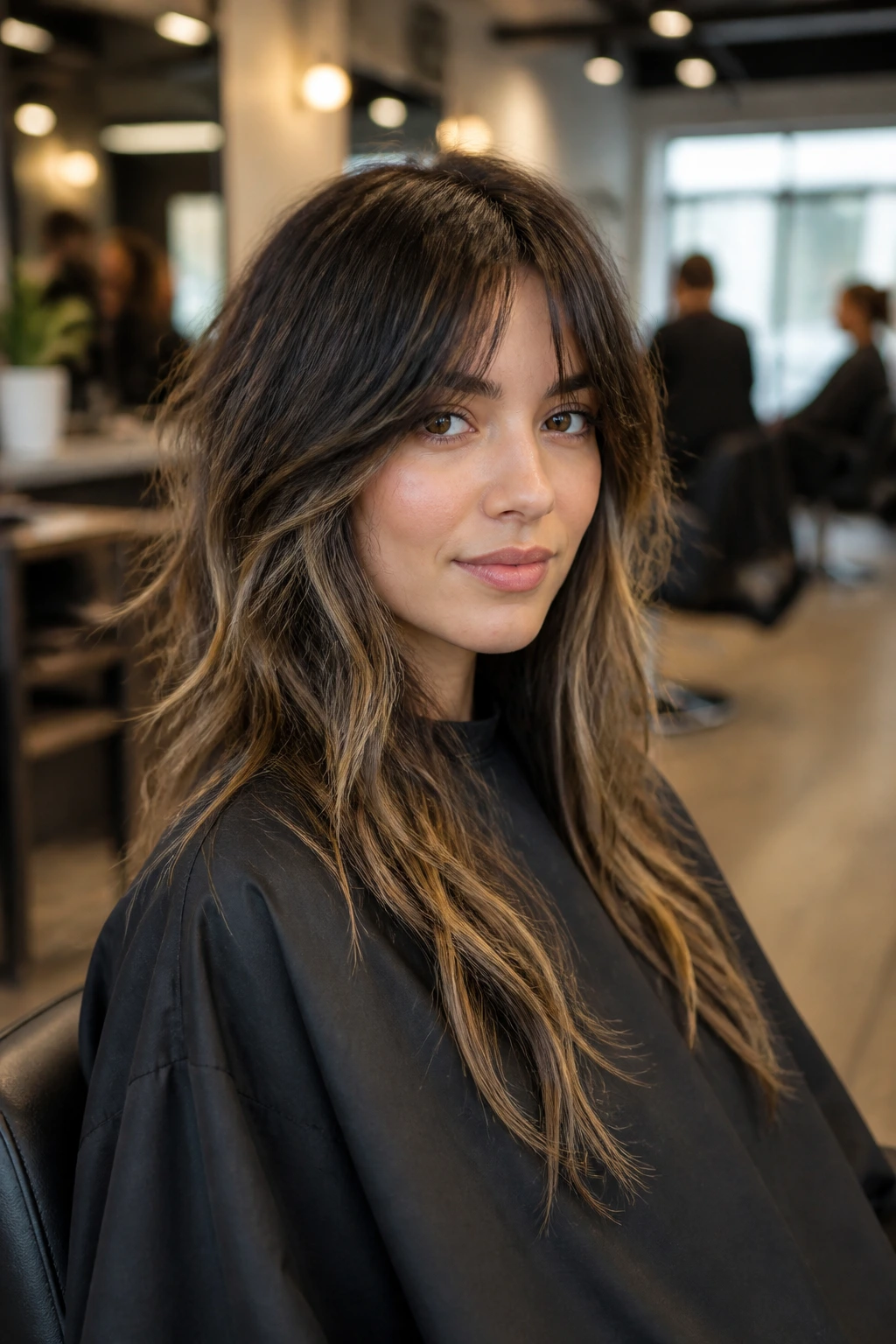
Bring photos. Not one photo. Three or four. And make sure they show the front, the side, and the back, because a wolf cut can mean very different things depending on the angle. A stylist can do a much better job if you say what you want to keep, not just what you want to remove.
Tell them the longest length you refuse to lose. Say it in plain words: collarbone, chest, ribcage, whatever the line is for you. Then explain how you wear your hair most days. Air-dried waves need a different internal shape than hair that gets blown out smooth.
If you want bangs, say so early. If you do not want bangs, say that twice. Fringe changes the whole face of the haircut, and a lot of people only realize they dislike bangs after the first shampoo. That is an expensive revelation.
A few useful phrases help:
- “Keep the perimeter long, but take weight out of the crown.”
- “I want soft movement, not shredded ends.”
- “The face frame should start around the cheekbone or lower.”
- “I style this mostly by air-drying / blow-drying / curling.”
If your hair is fine, ask for less aggressive thinning. If it’s dense, ask for internal removal of bulk instead of just surface layering. Those are not the same thing, and the difference shows up fast once the hair dries.
Tools, Brushes, and Products That Actually Help
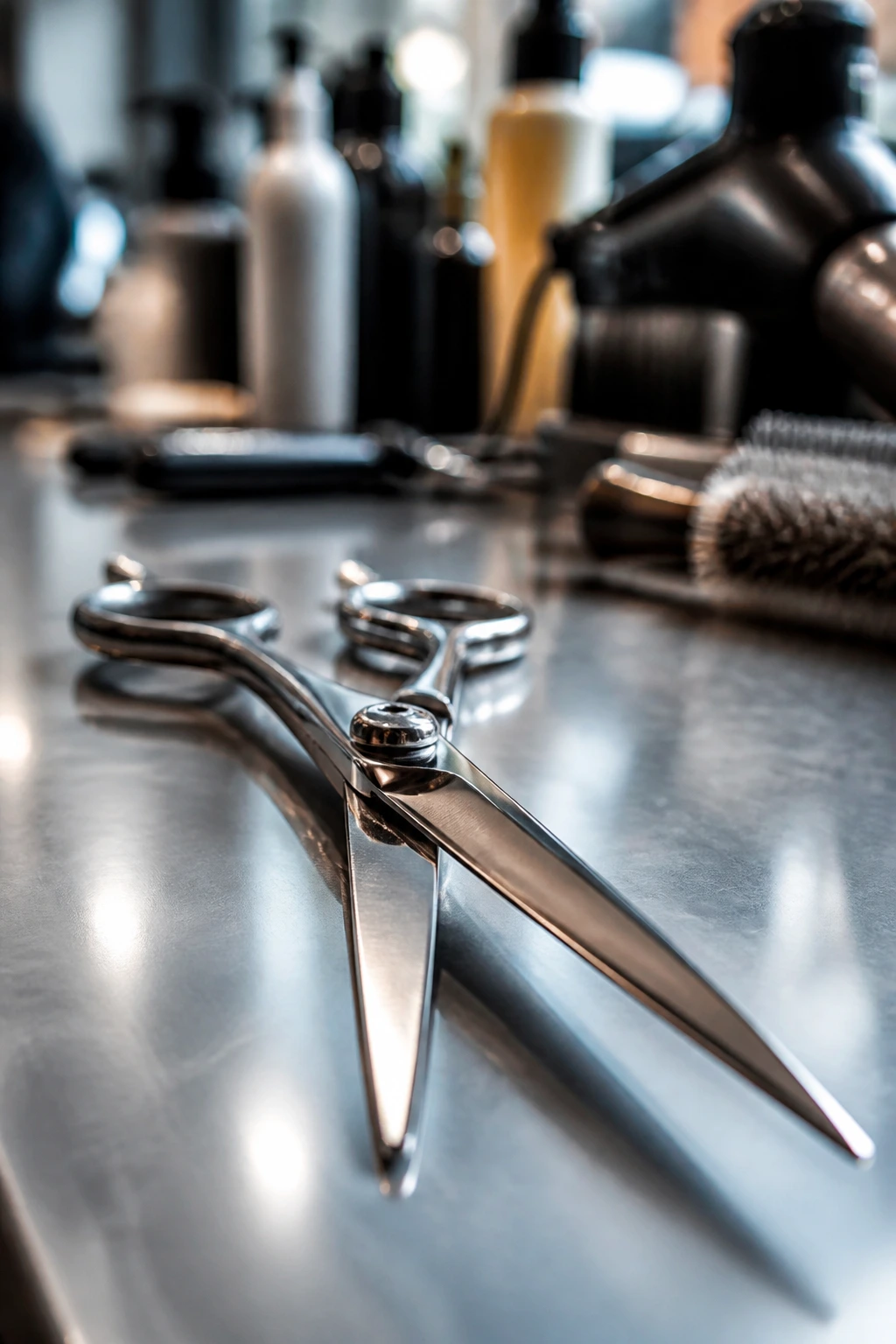
- Sharp cutting shears: Needed for clean layers; dull shears crush the ends and make the cut look ragged.
- Texturizing shears: Useful on thick hair when used lightly, especially around the crown and midlengths.
- Razor or feathering razor: Best in skilled hands for airy separation; not a toy for home experiments.
- Sectioning clips: They keep the crown, sides, and back organized when you’re styling or trimming bangs.
- Blow dryer with nozzle: The nozzle matters because it directs air and stops the layers from puffing everywhere.
- Diffuser attachment: Worth keeping if your hair has waves or curls and you want the shape without frizz.
- Round brush, 1.5 to 2 inches: Good for lifting the crown and turning the face frame under or away from the face.
- Light mousse: Gives root support without the sticky helmet effect.
- Texturizing spray: Adds separation and grit to the layers once the hair is dry.
- Heat protectant: Non-negotiable if you use a wand or flat iron on the ends.
- Light serum or oil: Use a tiny amount on the last few inches only, or the texture goes soft in a hurry.
- Microfiber towel or old T-shirt: Helps wave and curl patterns settle without roughing up the cuticle.
Styling Moves That Keep the Layers Piecey
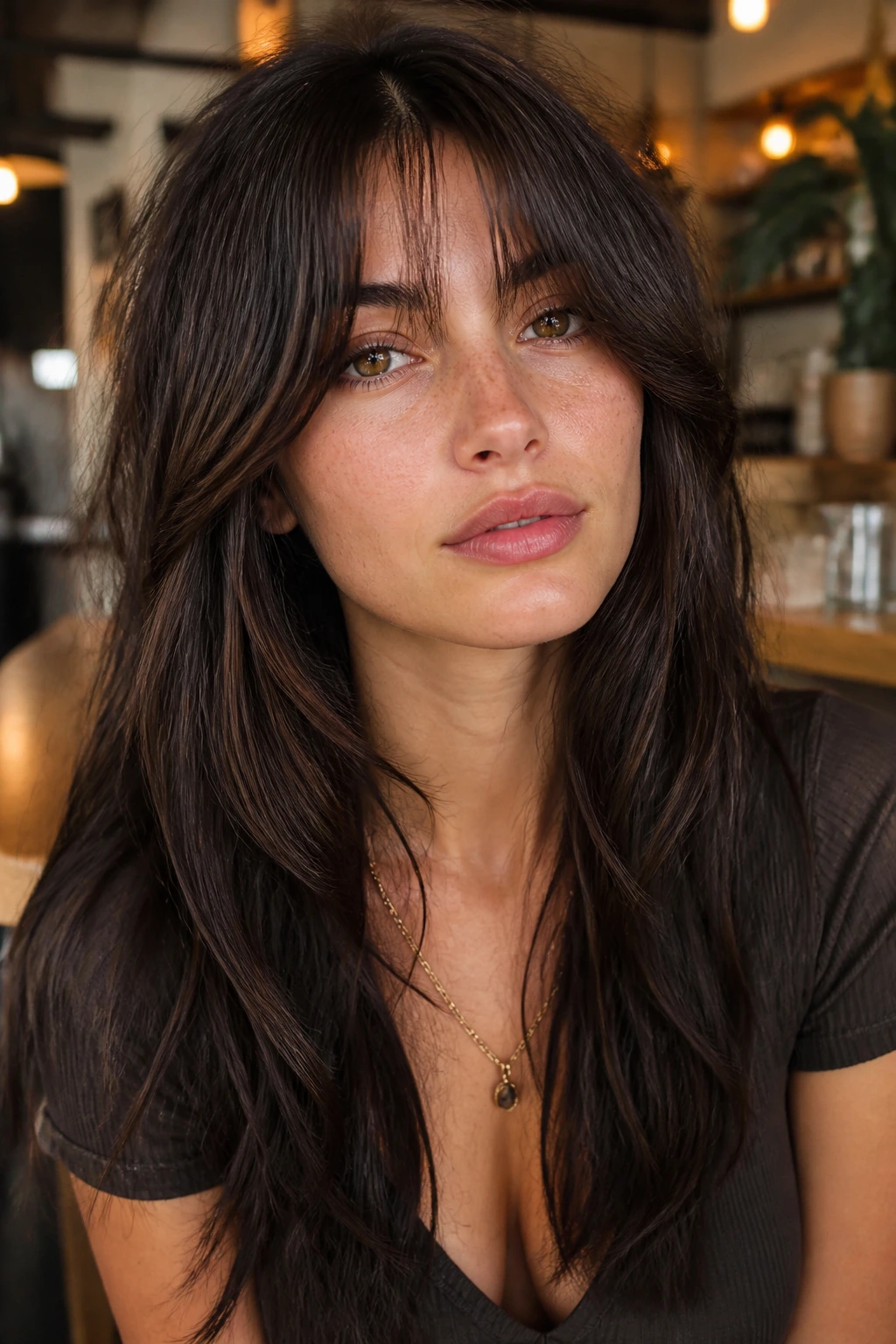
Root Lift: Start with mousse or root spray on damp hair, then rough-dry the crown first. If the roots go flat, the whole wolf cut slumps with them. A quick upside-down dry for 30 to 60 seconds can help, but don’t stay upside down so long that the ends tangle into one sad rope.
Piece Separation: Once the hair is dry, mist texturizing spray through the midlengths and pinch a few sections between your fingers. That little bit of separation matters more than more product. Heavy cream at this stage usually ruins the cut by making the layers cling together.
Heat Shaping: If you use a curling wand or flat iron, bend only the middle sections of the hair and leave the last inch straighter. That keeps the ends looking modern instead of curled into neat little springs. Alternate directions on each section so the pattern feels broken up.
Finish Lightly: A pea-sized amount of serum on the ends is enough for most hair. If your fingers feel slippery after applying it, you’ve already used too much. The wolf cut wants texture first, shine second.
Common Mistakes That Flatten a Wolf Cut
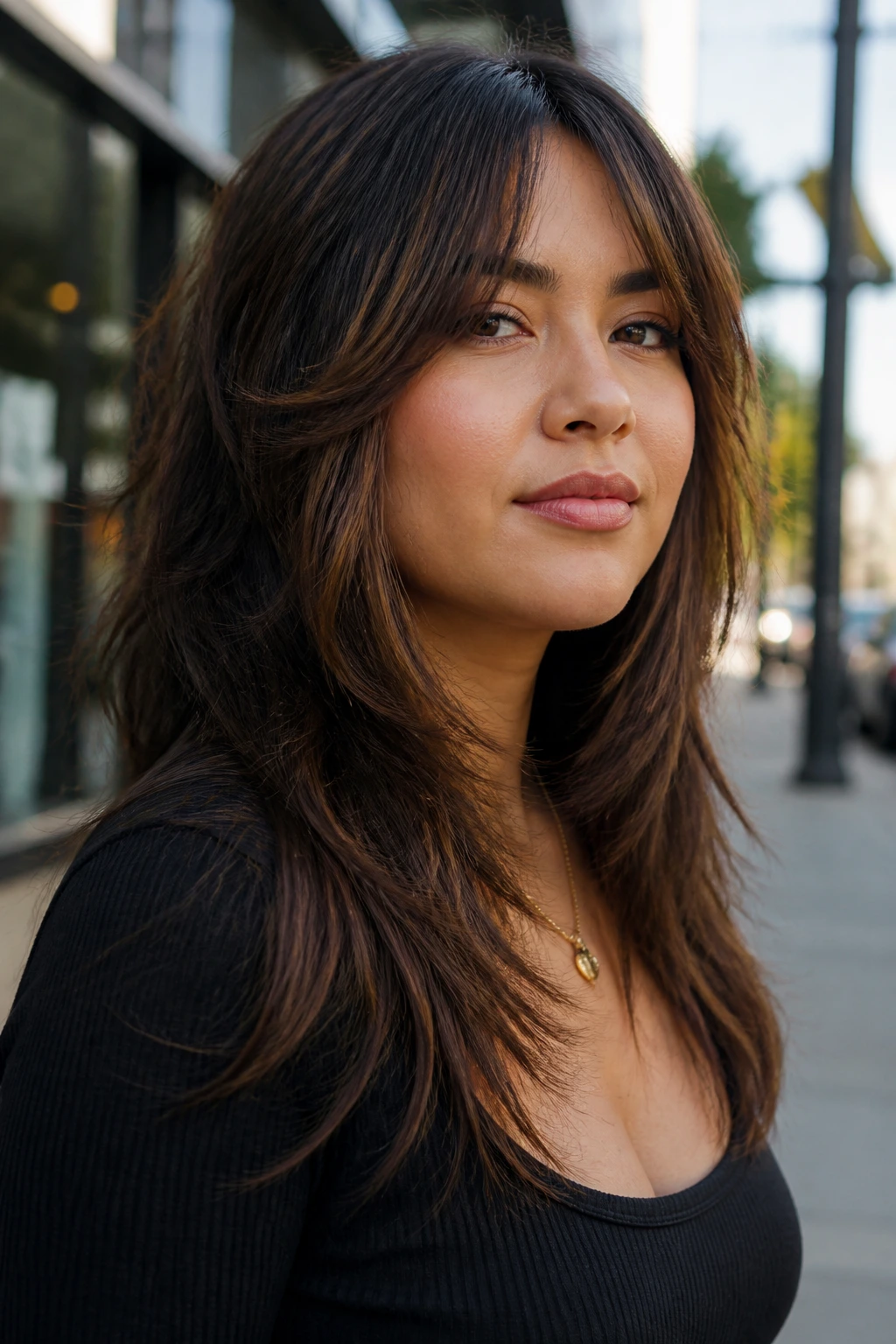
The biggest mistake is over-thinning the top. The haircut loses its body, and the crown starts to look see-through while the rest of the hair sits heavy underneath. If you see a wolf cut that looks stringy instead of piecey, this is usually why.
Another common one: bangs cut too short. A wolf cut already has strong movement around the face, so a fringe that’s chopped high can make the front feel disconnected. The fix is simple — keep the shortest point long enough to tuck, sweep, or split.
Heavy conditioner at the roots causes trouble too. It collapses the lift and makes the layers stick together in one wet-looking sheet. Put the conditioning product from midlength to ends, and rinse well. Hair that feels “soft” at the scalp is often just coated.
Blow-drying it straight with a paddle brush can flatten the whole idea. You can do a smooth finish, sure, but if every strand points in the same direction, the layered texture disappears. Use a round brush, twist the face frame, or at least rough-dry the crown first.
And please, do not ignore the back. A wolf cut needs shape from every angle, not just a flattering front shot. If the back sits too heavy, the whole cut feels unfinished.
Variations and Adaptations to Try
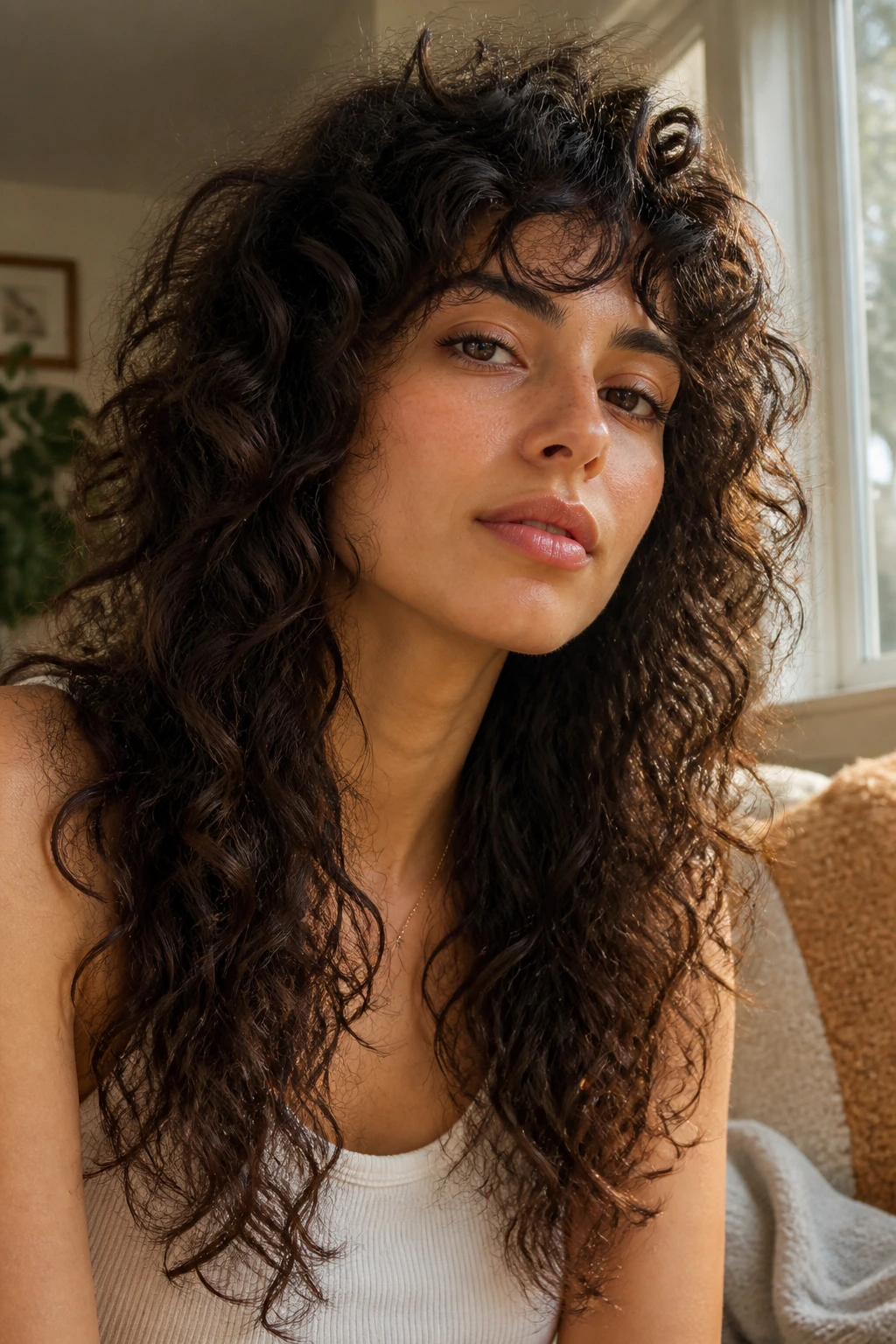
Soft-Edge Wolf: This version keeps the layered structure but removes the jagged finish. Ask for longer point cutting and softer face framing, especially if you want movement without looking too hard-edged. It’s the one I’d choose for someone who likes the idea of the wolf cut but hates anything that looks choppy in a mirror.
Razor Riot: This is the rougher, louder cousin. The stylist uses a razor more freely, and the layers break apart into visible pieces with more separation around the crown and ends. It works best on thick or wavy hair that can take the texture without fraying.
Curly Crown Wolf: Built for curls that need room at the top and weight at the bottom. The crown gets lift, the lower lengths stay longer, and the shape is cut with shrinkage in mind. If your curls spring up by an inch or more, this version needs a dry consultation or you’ll lose more length than expected.
Office-Friendly Wolf: Same family, fewer declarations. The layers are subtler, the fringe stays longer, and the outline reads as long hair with motion instead of a dramatic shag. Good if you want something you can wear tucked behind the ears and still have it look on purpose.
High-Contrast Wolf: Add money-piece highlights or a brighter face frame, then keep the interior layers darker and deeper. The contrast makes every bend and flip look sharper. It’s a smart move if you want the haircut to show up even when the styling is minimal.
Keeping the Cut Fresh Between Trims

Long wolf cuts do not need a salon appointment every few weeks to survive, but they do need a little attention. Bangs or fringe usually want a clean-up every 4 to 6 weeks if you’re keeping them crisp. The overall shape can often go 8 to 12 weeks before it starts feeling sleepy, depending on how sharp the layering is and how fast your hair grows.
Wash frequency matters more than people admit. If your roots get oily fast, dry shampoo on day two or three can save the crown from collapsing. Use it at the roots, wait a minute, then shake it through with your fingers. If you spray and go, it tends to sit on top and leave a chalky patch.
For waves and curls, a light re-wet with water and a dab of leave-in conditioner can revive the piecey texture the next morning. For straight hair, a quick pass with a curling wand on just the face frame and top layers can make the whole haircut look freshly cut again. You do not need to redo every strand.
Sleep helps too. A loose braid, a silk scrunchie, or a bonnet can keep the layers from smashing flat overnight. The goal isn’t perfection. It’s waking up with enough shape that you don’t have to fight the haircut before coffee.
Frequently Asked Questions About Long Wolf Cuts
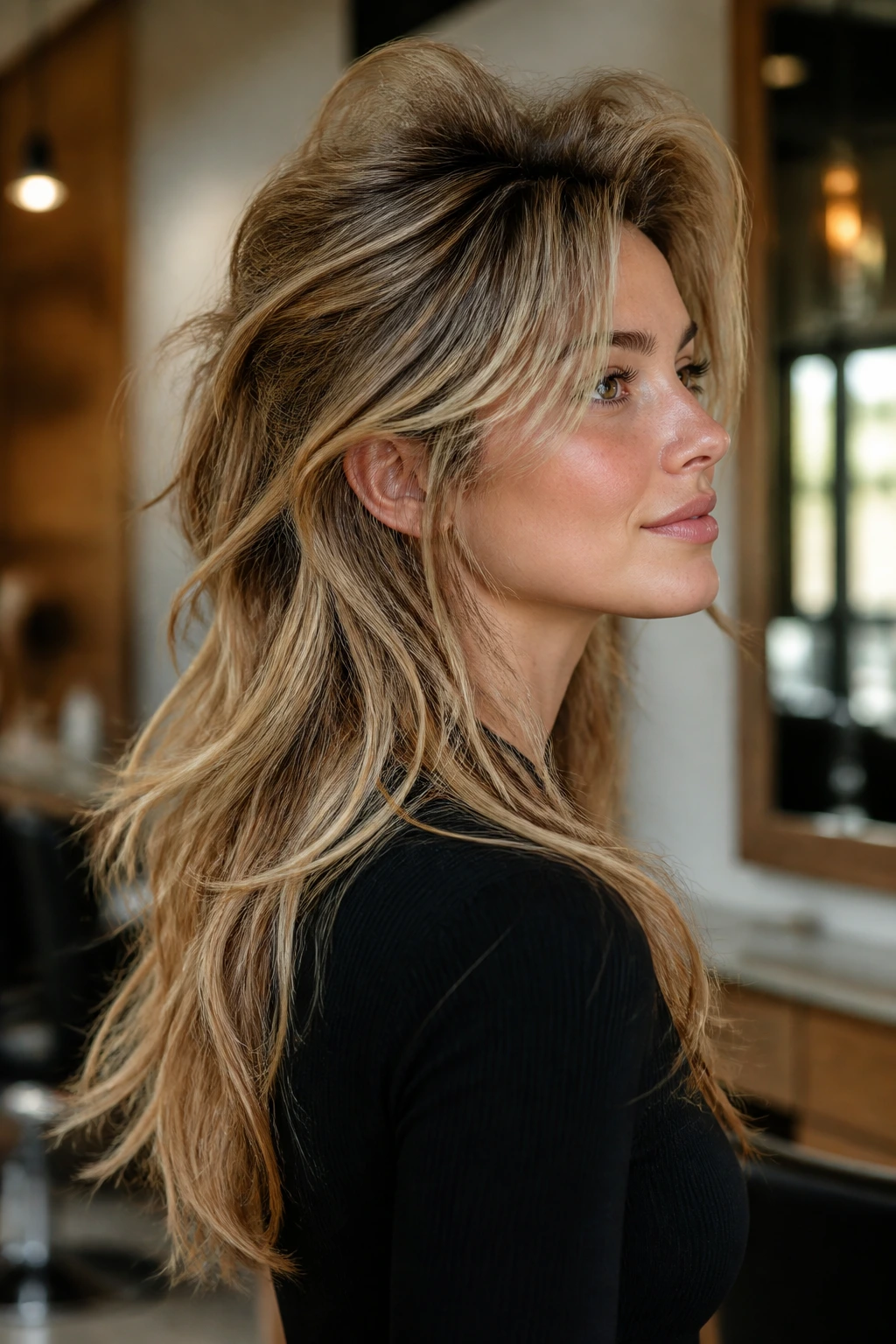
Will a long wolf cut work on straight hair?
Yes, but it needs a cleaner plan than a wavy version. Straight hair shows every layer line, so the cut should have soft internal movement and a little bend from styling to keep it from looking too sliced.
Is a wolf cut good for fine hair?
It can be, if the stylist keeps the layers long and avoids over-thinning. Fine hair usually does better with subtle internal shaping, a light root lift, and a perimeter that still feels full.
Does a long wolf cut need bangs?
No. Curtain bangs, wispy fringe, bottleneck bangs, or no fringe at all can all work. Bangs change the mood fast, so the choice should come down to how much forehead maintenance you want to deal with.
How often should I trim it?
Most people can stretch the shape to around 8 to 12 weeks, while bangs need more frequent clean-up. If the crown starts sitting flat or the face frame stops connecting, the layers probably need a refresh.
Can curly hair wear a wolf cut without looking triangular?
Yes, but the shape has to be cut with curl shrinkage in mind. Keeping enough weight in the lower lengths and lifting the crown without overdoing the top helps prevent that wide triangle outline.
What if I want edge but not a mullet look?
Ask for a long wolf cut with softer disconnect, longer face-framing layers, and a less dramatic tail in back. That keeps the movement without pushing the cut into full mullet territory.
Can I air-dry it every day?
Often, yes. If your hair has natural wave or curl, air-drying with mousse or leave-in can be enough. Straight hair may need a little root lift or a few bent pieces to keep the shape from falling flat.
What should I do if my stylist cuts too many short layers?
Stop adding more texture products, because that usually makes the problem look worse. Let it grow for a few weeks, use smoothing cream sparingly, and ask for balancing trims rather than more thinning. Sometimes the fix is patience, not another snip.
The Kind of Edge That Grows Out Well
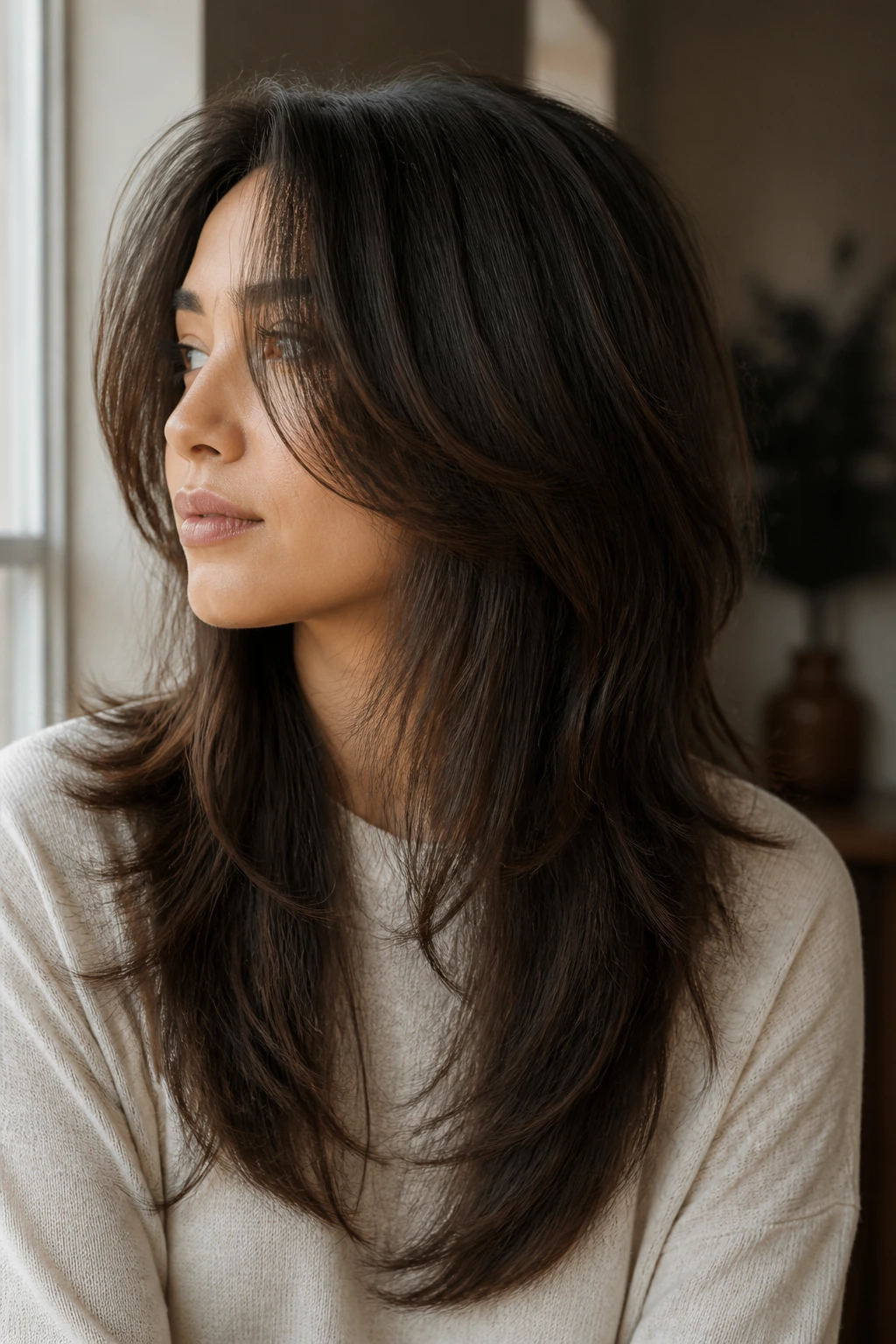
The best long wolf cuts don’t feel like a costume. They feel like hair that finally got a shape with some nerve in it. That’s a useful thing, especially if you’ve spent years wearing long length that looked pretty but sat there like it was waiting for permission.
What makes this haircut stick is the balance: crown lift, long perimeter, and enough texture to keep the ends from acting bored. Get those three things right and the cut has a weirdly useful life span. It works messy, it works polished, and it still looks like you meant it when it starts to grow out.
If you’re taking one idea from all twenty styles here, make it this: long wolf cuts are not about removing length. They’re about putting the length to work.
