



These wolf cut bob haircuts work because they refuse to sit still. The outline is still a bob — short, clean, and close enough to the neck to feel deliberate — but the layers inside it are chopped, feathered, and broken up so the shape moves when you do. On the right head of hair, that gives you edge without turning the whole thing into a costume.
The best versions solve a problem most short cuts run into. A classic bob can collapse at the sides and go flat at the crown. A shag can drift too far and lose its shape. The wolf cut bob lands in the middle, keeping enough weight to read as a real haircut while opening up the ends and fringe so the whole thing feels lighter, a little rougher, and more alive.
And that’s the sweet spot. Some of these cuts look better air-dried. Some need a round brush and three minutes of effort. Some are made for curls, some for fine hair, some for people who want a sharp jawline frame without a blunt helmet line. The trick is picking the version that suits your texture instead of forcing every hair type into the same chopped-up silhouette.
Why These Wolf Cut Bob Haircuts Work So Well
-
They keep the perimeter readable: A strong bob line stops the cut from looking vague, even when the inside layers are messy and piecey.
-
The crown gets lift without teasing: Short internal layers around the top remove bulk where hair tends to lie flat, which matters more than people think.
-
The fringe changes the whole mood: Curtain bangs, bottleneck bangs, or no fringe at all make the same cut feel soft, sharp, or a little punkier.
-
Texture is the point, not the problem: These styles look better with a bit of bend, fray, or separation, so you are not fighting every strand into submission.
-
They can be tailored to hair density: Fine hair needs a lighter hand and smarter layering; thick hair often needs internal debulking and a steadier outline.
-
They grow out with more grace than a blunt chop: The layers blur gradually, which buys you a longer stretch between trims if your schedule is messy.
1. Chin-Length Shattered Wolf Bob
This is the version that makes the wolf cut bob feel sharp from the first glance. The length lands around the chin, where the jawline can hold the shape instead of fighting it, and the ends are point-cut so they don’t sit like a straight shelf. It has enough structure to look intentional, but the shattered edges keep it from feeling stiff.
I like this cut on hair that bends easily and on people who want a little attitude without a heavy fringe. Ask for the crown layers to start a couple of inches below the part, not right at the scalp, or you’ll lose the bob shape and wind up with a halo of fluff. The point is movement, not collapse.
What to ask for
- A chin-length perimeter with soft, broken ends
- Crown layers that remove bulk without exposing too much scalp
- Light face-framing pieces that skim the cheekbones
- Optional side-swept fringe if you want the front to feel softer
Best for: straight to wavy hair, oval faces, and anyone whose hair goes limp by lunchtime.
2. Curtain Fringe Wolf Bob
Want the easiest way to make short hair look less severe? Add a curtain fringe. Split down the middle and longer at the sides, it opens the face instead of closing it off, and it gives the layers somewhere to land so the whole cut doesn’t feel too boxy.
This version works especially well if you like a bob that moves when you tuck it behind one ear and flops forward in a nice way when you shake it loose. The fringe should start around eyebrow level in the center and blend down toward the cheekbones; shorter than that, and you’ll be styling it every single morning.
A little round-brush bend at the front makes the cut behave. No need to curl everything. Just give the fringe a curve away from the eyes and let the rest stay rough.
3. Piecey Micro Wolf Bob
A micro wolf bob is for the days when you want the haircut to look almost architectural. The length sits above the jaw or right at it, and the layers are sliced just enough to create separation, not so much that they explode outward. It has a sharp little bite to it.
I’ve seen this cut look best on fine hair that tends to lie flat, because the shorter length keeps the ends from dragging the whole silhouette down. It also photographs well in real life, which is not the same thing as saying it looks polished. It looks alive. That matters more.
Quick read on the shape
- Short perimeter, usually grazing the jaw
- Very light internal layering
- Best worn with a slight bend, not pin-straight
- Needs a texturizing spray or matte paste to show the layers
Tip: If your hair is thick, ask for internal removal only. Too much thinning on a micro length can make the ends puff out like a bell.
4. Soft Razor-Layered Wolf Bob
A razor can give a wolf bob that broken, whispery finish people chase after with too much product. The trick is restraint. A soft razor layer around the midlengths keeps the cut airy, but the perimeter still needs enough weight to stop it from looking flimsy.
This version is a favorite for fine-to-medium hair because it creates the illusion of more movement without forcing hair into a big, poofy shape. The ends should look feathered, not shredded. There’s a difference, and a good stylist will know it.
If your hair naturally parts in the same place every day, this cut can wake it up a little. The layers catch light from different angles, and the shape stops reading as one solid block. That alone can make a blunt bob feel older than it is.
5. Curly Wolf Cut Bob
Curly hair changes the rules, and this cut is happier when you stop trying to flatten it. A curly wolf cut bob needs dry cutting or at least partial dry cutting, because curls shrink, spring, and twist in ways that wet scissors can’t predict cleanly. If you cut it too short while wet, the crown will pop higher than you expected and the sides can get too round.
The best curly versions keep a strong outline and then layer the interior enough to remove bulk. That stops the halo from turning into a triangle. You want shape, not fluff. The difference shows up the second the hair dries.
Drying rule
Let the curls clump on their own, then diffuse on low heat until they’re about 90% dry. Touch them too much early on and the layers separate into frizz before the curl pattern has a chance to settle.
6. Wavy Collarbone Wolf Bob
This one is a little longer, and that’s the point. A collarbone-length wolf bob gives the layers room to fall in a more relaxed way, so the cut feels less dramatic and more wearable if you don’t want a hard chop. The ends can flick out at the shoulders while the top stays just loose enough to look casual.
It’s a good cut for people who want to keep enough length to tuck sections behind the ears or throw them into a half-up knot, but still want the edge of choppier texture. The collarbone length also helps if your waves need room to form. Too short, and the pattern can go fuzzy.
This is one of those cuts that looks better after you’ve lived in it for a day. The wave breaks up the layers, the fringe loosens, and the outline still hangs together. That’s the sweet spot.
7. Shaggy French Girl Wolf Bob
There’s a reason this version keeps showing up on people with naturally airy hair. It has a little bite, but it doesn’t scream for attention. The fringe tends to be soft and slightly uneven, the layers sit around the cheeks and jaw, and the finish is less polished blowout, more I brushed it with my fingers and left the house.
The important part is balance. The bob line stays visible, but the top is light enough that the cut doesn’t feel helmet-like. If you add too many short layers around the temples, the whole thing can get puffy. Keep the crown broken up, not shredded.
A matte texture spray at the ends and a quick bend with a flat iron usually does the job. Don’t overthink the styling. This haircut loses its charm when every strand is behaving.
8. Asymmetrical Wolf Cut Bob
A little asymmetry goes a long way here. One side sits longer than the other, which gives the wolf cut bob a sharper profile and makes the texture look even more intentional. It is not the cut for someone who wants symmetry and calm. It’s the cut for someone who likes a haircut with a visible point of view.
The longer side should not be wildly longer, though. A difference of about one to two inches is enough to make the shape interesting without turning the style into a math problem. The layers need to follow the angle so the front doesn’t look like a separate haircut from the back.
This version pairs well with side parts, tucked ends, or a single statement wave on the longer side. If your hair naturally falls to one side already, that’s a bonus. You can work with the habit instead of fighting it.
9. Bottleneck Bang Wolf Bob
Bottleneck bangs give the cut a little more polish than a full shag fringe. They start narrow in the center, then widen toward the cheekbones, which means they frame the face without swallowing it. On a wolf bob, that shape keeps the front soft while the back and sides stay broken up.
The bangs should be long enough to split and move, not cut straight across the forehead like a shelf. If they end too high, they’ll pin the whole haircut into one mood. Too long, and they stop doing their job entirely. Chin-to-cheekbone territory is usually the sweet spot.
This is one of the better options if you like to wear makeup or earrings that deserve a little space. The fringe points the eye toward the face without crowding it. Clean, but not boring.
10. Tousled Italian Wolf Bob
This version borrows the body of a blowout and the texture of a shag, and I mean that in the best possible way. The roots stay lifted, the ends flick out just a little, and the layers are shaped so the haircut has movement even when it is brushed. It feels a bit more polished than the grungier wolf bob styles, but the edge is still there.
The difference lives in the styling. A round brush, a medium barrel brush, or even a large velcro roller at the crown can give this cut the float it needs. Use a light mousse at the roots, then bend the ends away from the face so they don’t collapse into a blunt line.
A lot of people want texture but still want to look put together for work or dinner. This is the compromise that doesn’t feel like a compromise.
Works best when
- You want body at the crown
- Your hair bends easily but goes flat fast
- You like the ends to flick instead of sit heavy
- You can spare five minutes with a dryer
11. Sleek-Top Shattered-Ends Bob
You do not have to make the whole head messy. That’s the nice surprise with this cut. The top stays smoother and closer to the skull, while the ends are cut with a rougher hand so the perimeter has a little bite. It creates a strong contrast, and that contrast is what makes the haircut feel modern.
This version is smart for anyone who hates big volume near the crown but still wants texture at the ends. It also works if your hair frizzes easily, because the smooth top can make the finish look cleaner even when the ends are deliberately broken. Think of it as controlled chaos.
Use a soft cream on the upper section and a texturizing spray only at the lower third. If you put heavy product everywhere, the distinction disappears. The cut needs the difference to read.
12. Air-Dried Natural Texture Wolf Bob
If your hair already has wave, bend, or curl, this is the easiest place to start. The cut is shaped to work with whatever your hair does after a towel blot and a little leave-in product. No hot tools required, which sounds lazy until you’ve seen how good the right air-dried bob can look.
The key is leaving enough length for shrinkage. A curly or wavy bob can jump up by an inch or two when it dries, so the layers need to be mapped with that in mind. Ask your stylist to cut with your natural pattern visible, not stretched straight.
How to wear it
- Apply a lightweight leave-in or curl cream to damp hair.
- Scrunch once, gently. Not aggressively.
- Let the hair dry without touching it until the shape sets.
- Break the ends apart with a drop of serum only if they feel crunchy.
That last part matters. Too much product makes air-dried texture look greasy instead of deliberate.
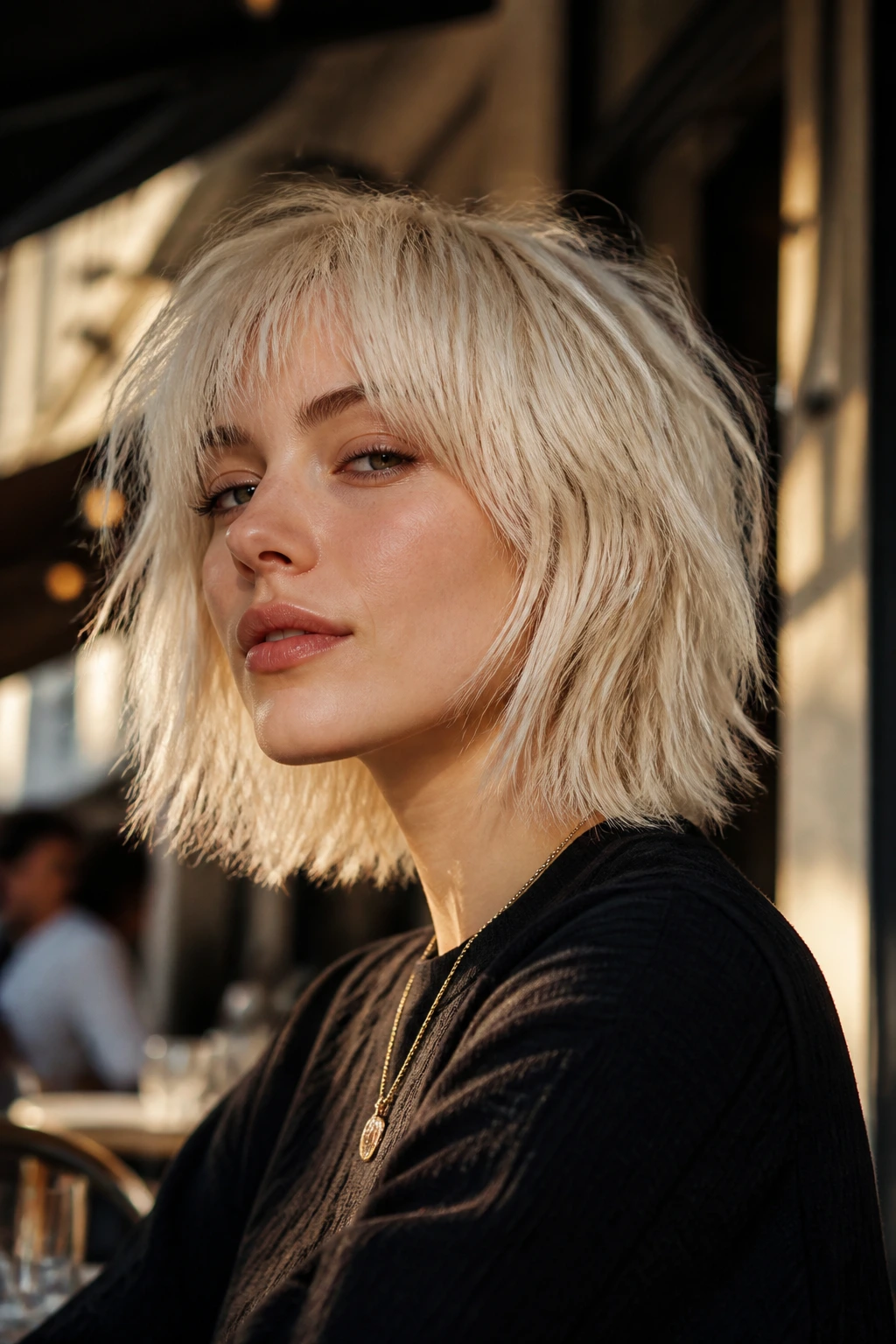
13. Platinum Razor Wolf Bob
Bleached hair shows every layer. That’s why a platinum wolf bob can look so stark and so good when the cut is done well. The pale color throws the texture into relief, which means each broken end and feathered section reads louder than it would on darker hair. It is a haircut that refuses to hide.
The warning is obvious but worth saying anyway: lightened hair needs softness in the cut, or it can look brittle fast. Ask for the ends to stay light, not over-thinned. A razor can help create separation, but only if the hair is healthy enough to handle it. Dry, overprocessed strands and aggressive layering are a bad mix.
This shape works best when the styling stays understated. A little serum, a little air, and not much else. Let the cut and color do the talking.
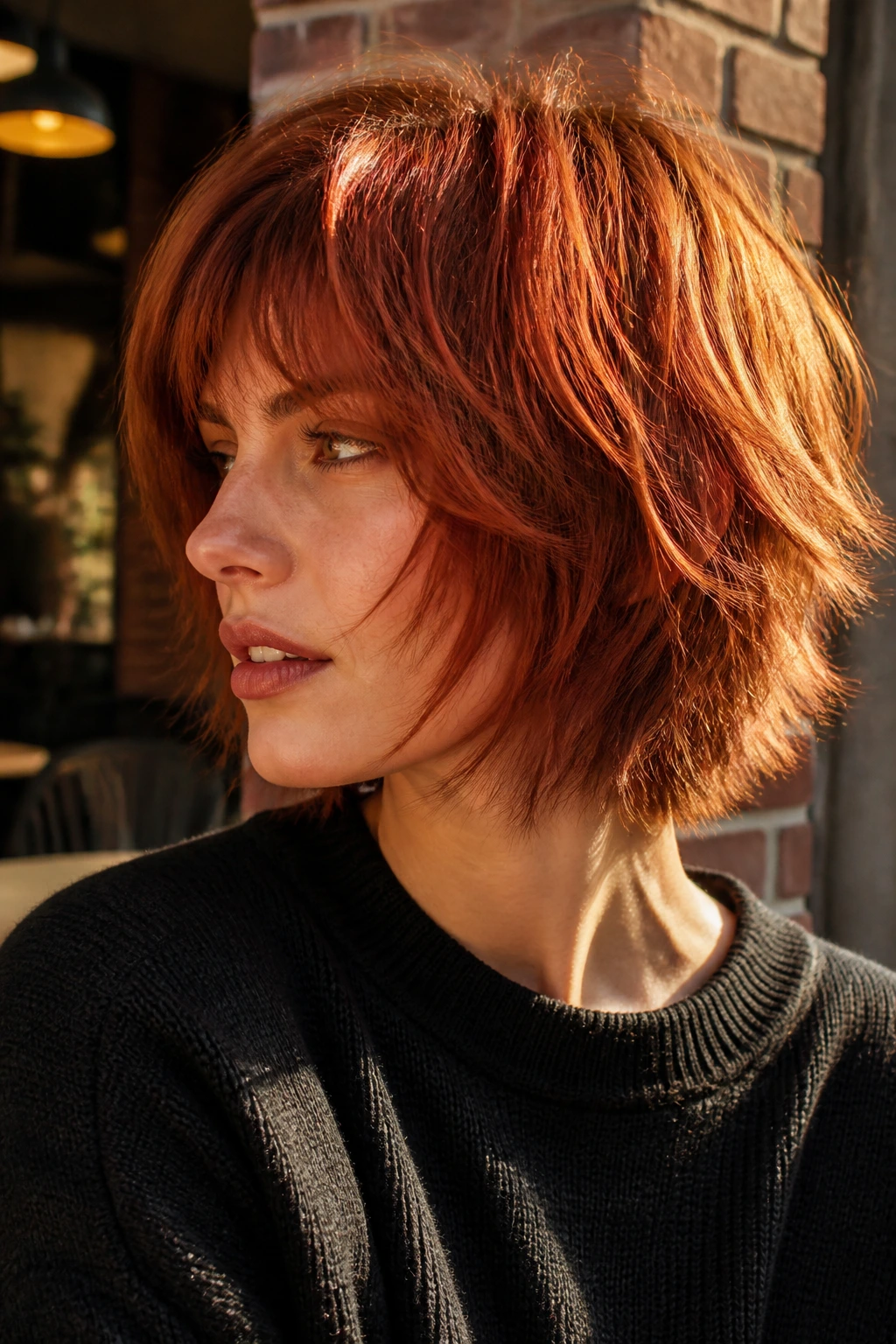
14. Copper Flame Wolf Bob
Warm color and chopped texture get along better than people expect. Copper, auburn, and deep ginger tones catch on the layers and make the cut read fuller at the ends, especially when the light hits the broken perimeter. A wolf bob in a warm shade looks less stark than platinum and a touch more plush.
If the haircut is airy, the color keeps it from disappearing. That’s useful on medium-density hair, where too much internal removal can make the shape feel sparse. Warm tones add visual weight. Strange, but true.
A side part can be nice here, especially if you want the fringe to fall across one cheekbone. The color and shape do a little choreography together. That’s the charm.
15. Dark Root Wolf Bob with Heavy Fringe
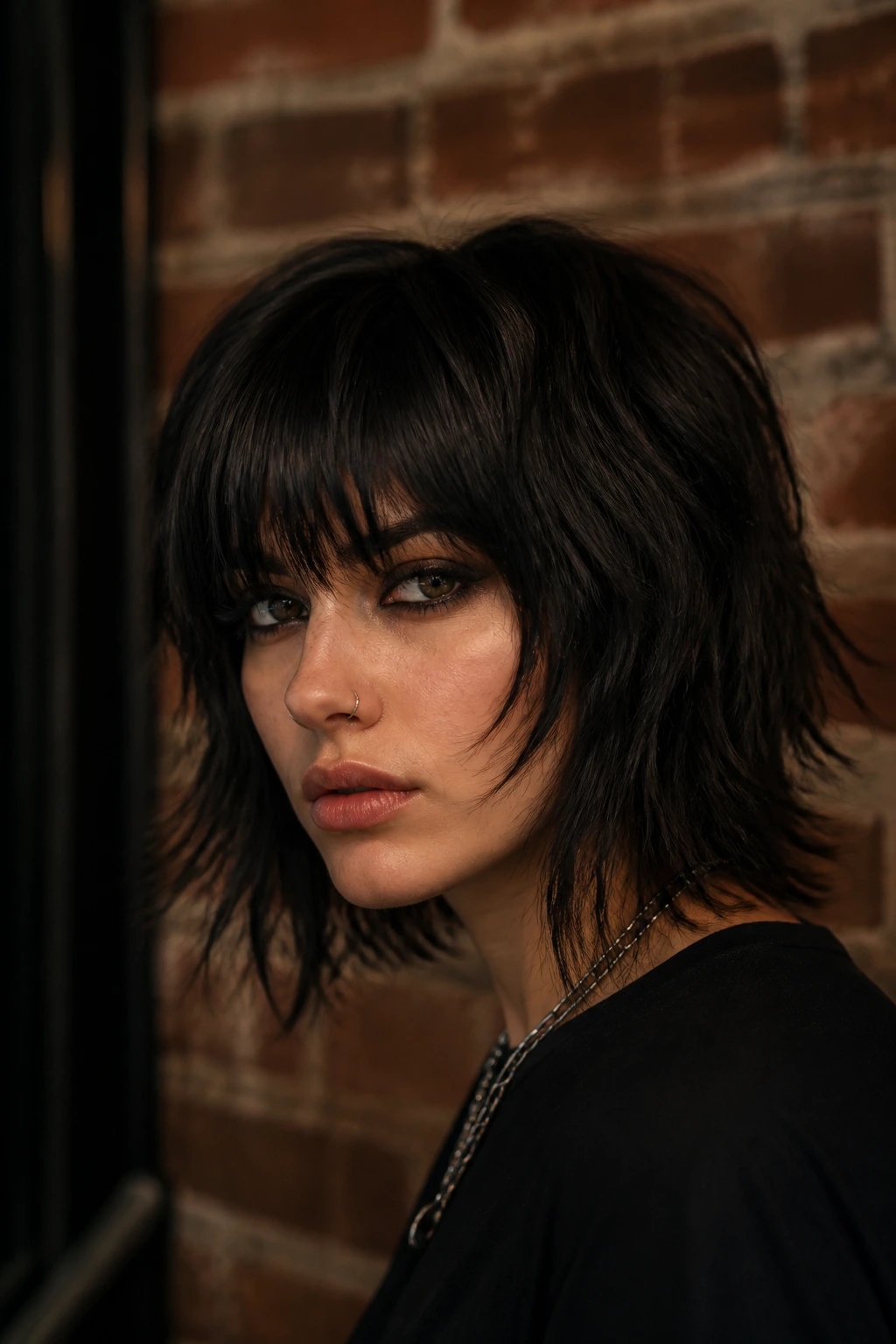
This is the version for people who like a little shadow at the top and a lot of attitude in the front. A darker root gives the cut depth, while a heavier fringe anchors the face so the rest of the layers can stay choppy and loose. The result is moody without becoming severe.
Heavy fringe can go wrong if it’s cut too blunt or too dense. The fix is to keep the ends broken and the sides slightly longer so the bangs can separate instead of sitting like a curtain. They should feel weighty, not helmet-like.
What makes it work
- Dark root adds contrast at the crown
- Fringe balances a strong jaw or wide forehead
- Choppy sides keep the front from feeling boxed in
- Matte paste at the tips helps the separation hold
Best for: thick straight hair that needs control without losing edge.
16. Face-Framing Wolf Bob for Round Faces

Can a wolf bob work on a round face without making it look wider? Yes, if the front is built correctly. The trick is to keep the face-framing pieces longer than the shortest point of the cheek, then let them angle down toward the jaw instead of stopping right at the widest part of the face. Shorter layers up top can still lift the crown, but the front should travel.
That longer front section draws the eye vertically. It gives the shape a little stretch, which keeps the bob from sitting too boxy. I’d avoid an ultra-short fringe here unless the rest of the cut is deliberately longer and softer.
A side part can help, too, because it breaks the symmetry and adds lift where round faces usually need it. The cut should skim, not pinch. That’s the difference.
17. Long Bangs and Flicky Ends Wolf Bob
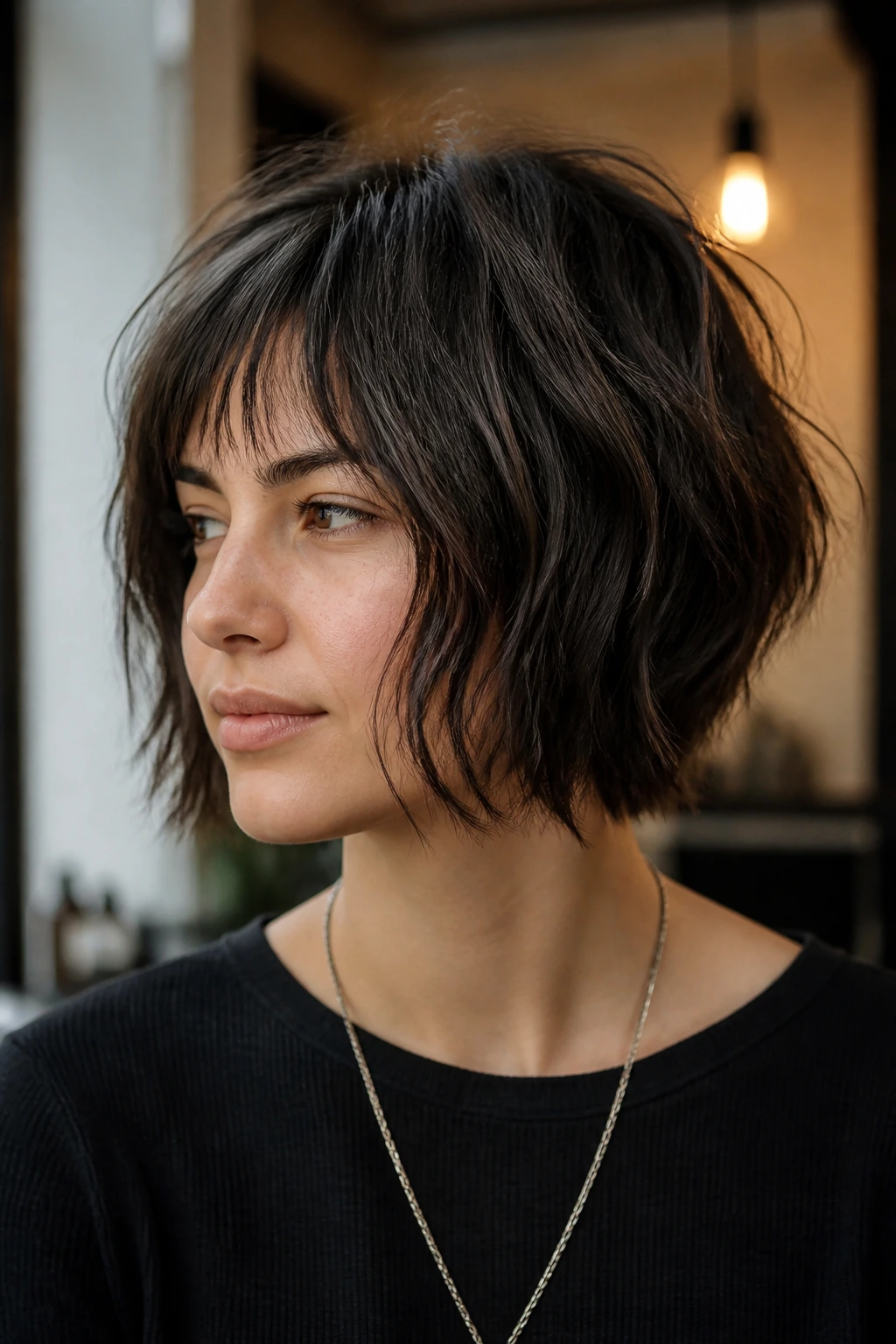
This one has a quieter edge. The bangs are long enough to tuck back or split apart, and the ends flip just slightly so the haircut never sits flat against the neck. It’s a good choice if you want movement without an obvious shag fringe.
Compared with a blunt bob, this shape feels less formal the second you move. Compared with a full wolf cut, it behaves a little better. That middle ground is useful. You can wear it to work, then rough it up with your hands and make it look less buttoned-up later.
Use a 1-inch flat iron only on the last inch of the ends if you want that flick. A tiny bend is enough. Too much curl and the whole thing gets precious, which is not the point here.
18. Undercut Wolf Bob
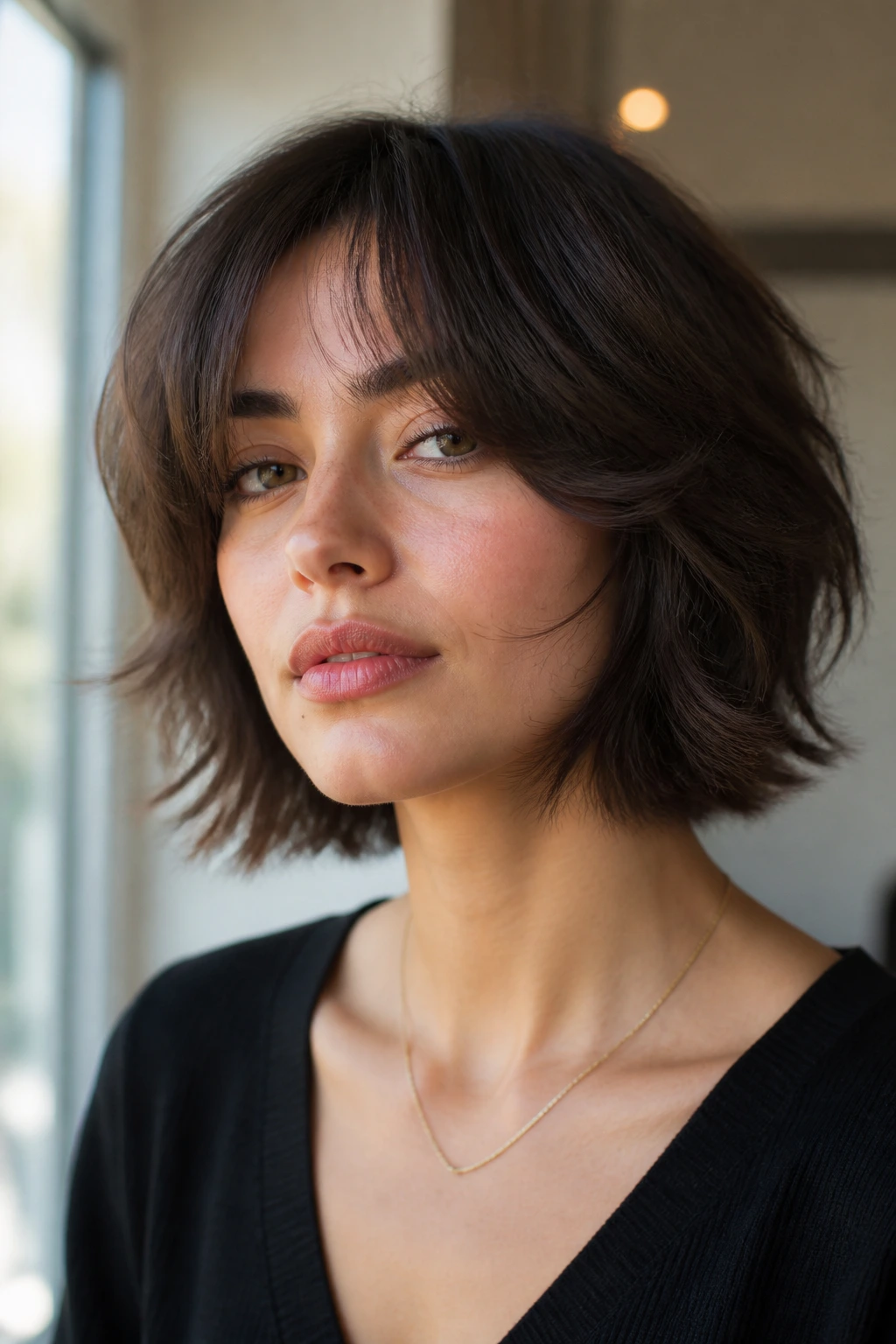
There’s a hidden version of edge that works especially well when you have thick hair: the undercut. A nape undercut or a soft side undercut removes bulk where it tends to swell, which lets the top layers sit cleaner and move better. From the outside, the haircut still reads as a bob. Underneath, it has a secret.
This is the kind of cut that helps if your hair feels hot, heavy, or hard to dry. It also changes how the wolf layers fall, because the internal weight is gone and the top can shape itself more easily. The result is sharp, especially when worn with a little rough texture instead of glassy smoothness.
If you’re nervous, ask for a hidden undercut that stays covered by the top layer. You can always go bolder later. Going the other direction is harder.
19. Blunt Base, Wild Layers Wolf Bob
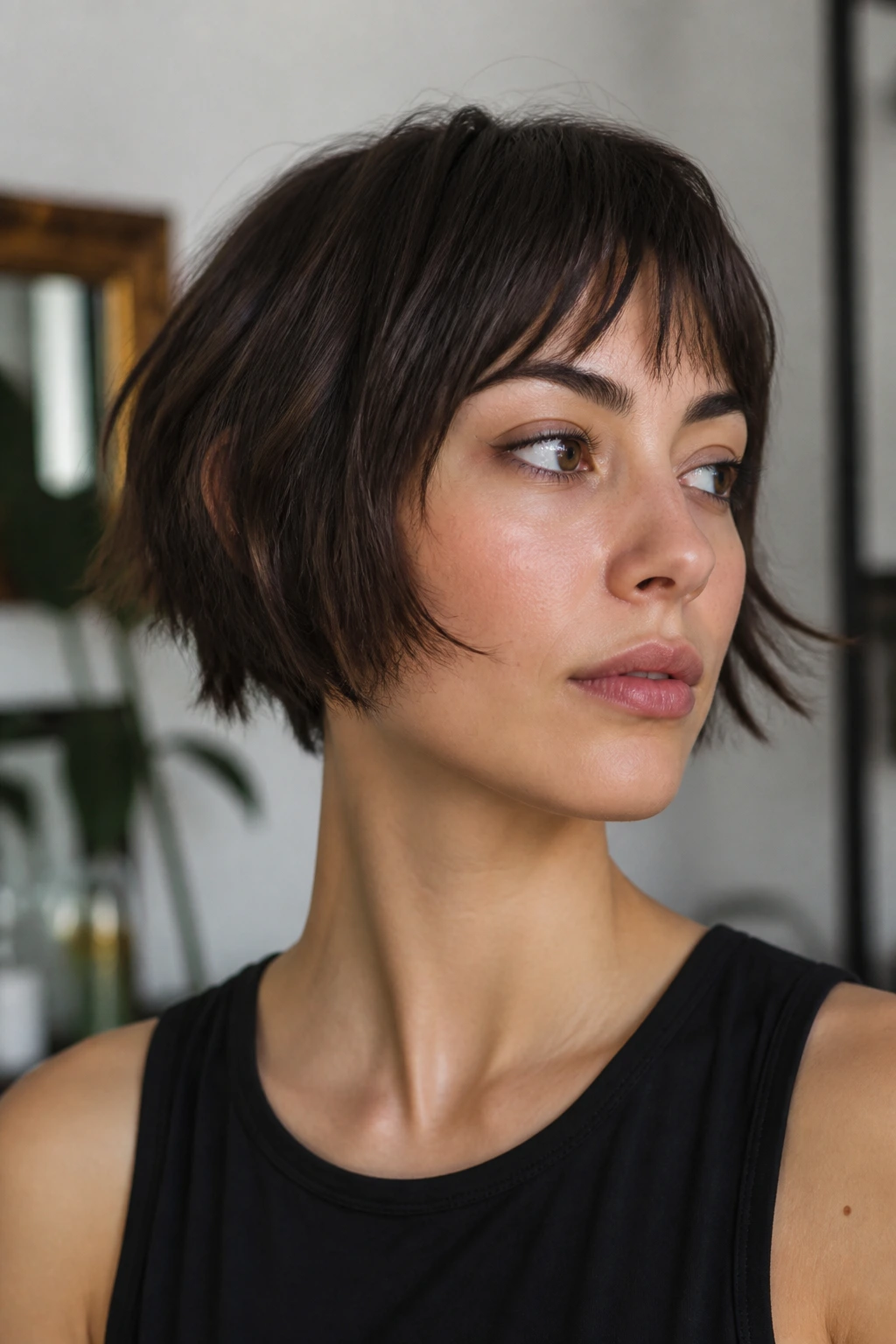
This is my favorite kind of contradiction in hair. The base line is blunt and clean, which gives the eye something solid to hold onto, but the internal layers are wild enough to move and separate. You get the reassurance of a real bob and the energy of a shag.
It works especially well on hair that needs the outline to keep its shape. Fine hair benefits from the stronger edge. Thick hair benefits from the bulk removal inside. Somehow it serves both camps, which is rare.
The styling should stay somewhere between sleek and tousled. If you overstyle the top, you kill the contrast. If you rough up the entire head, you lose the neat base and the haircut turns vague. That base line is the whole trick.
20. Mini Mullet Wolf Bob
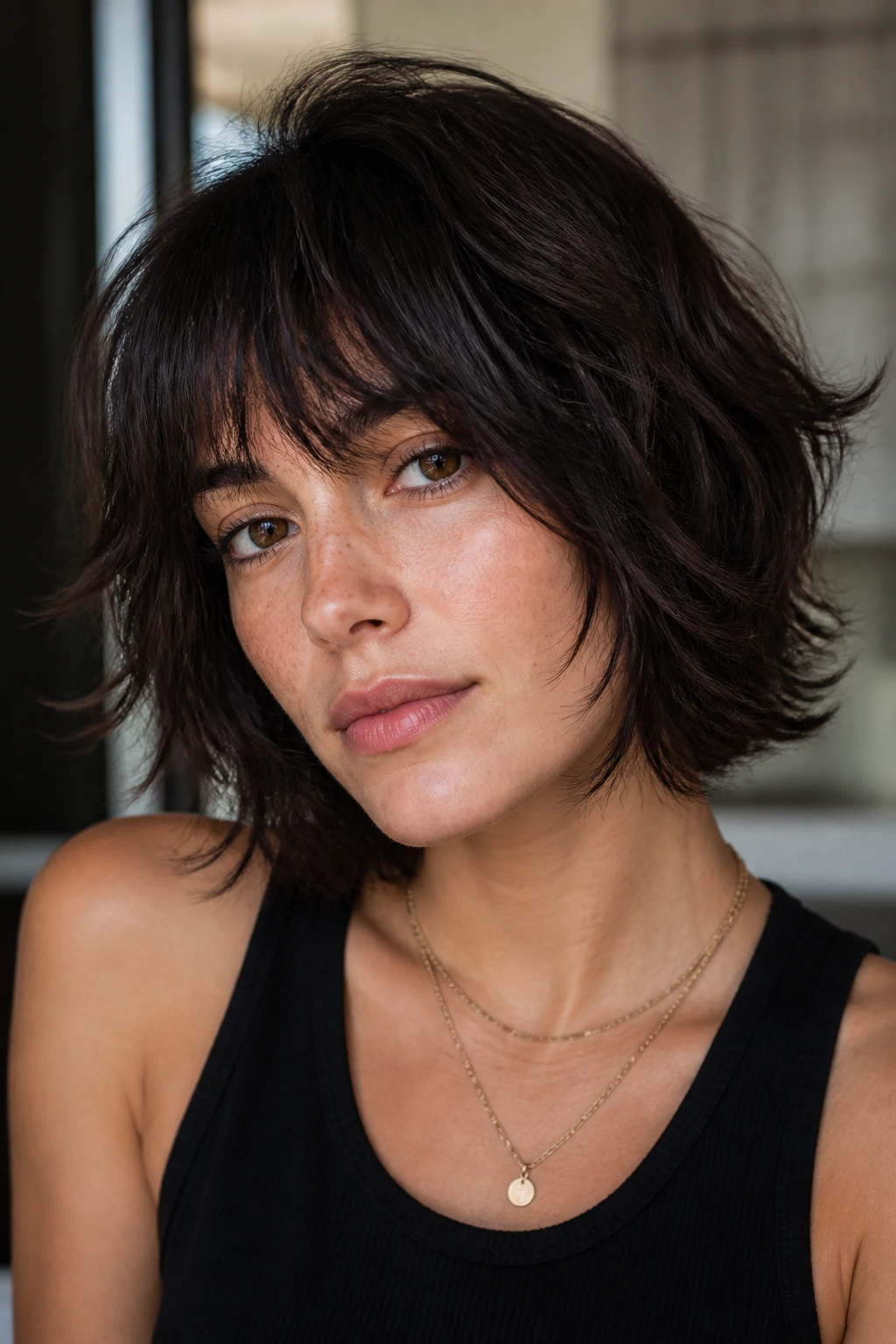
This is the boldest version here, and it’s not shy about it. The front and sides stay close to bob territory, while the back stretches just enough to hint at a mini mullet without tipping into costume. It’s the wolf cut bob with a little more teeth.
You need confidence and a decent stylist for this one. The transition from the crown to the nape has to be smooth enough that the shape feels intentional, not disconnected. If the back gets too long and the front too short, the balance falls apart fast.
I like this cut on people who already dress with a little edge and don’t mind a haircut that starts conversations. It also pairs well with messy texture, because the shape is already doing some of the work. That makes the styling less fussy than it looks.
21. Side-Parted Wolf Bob with Soft Lift
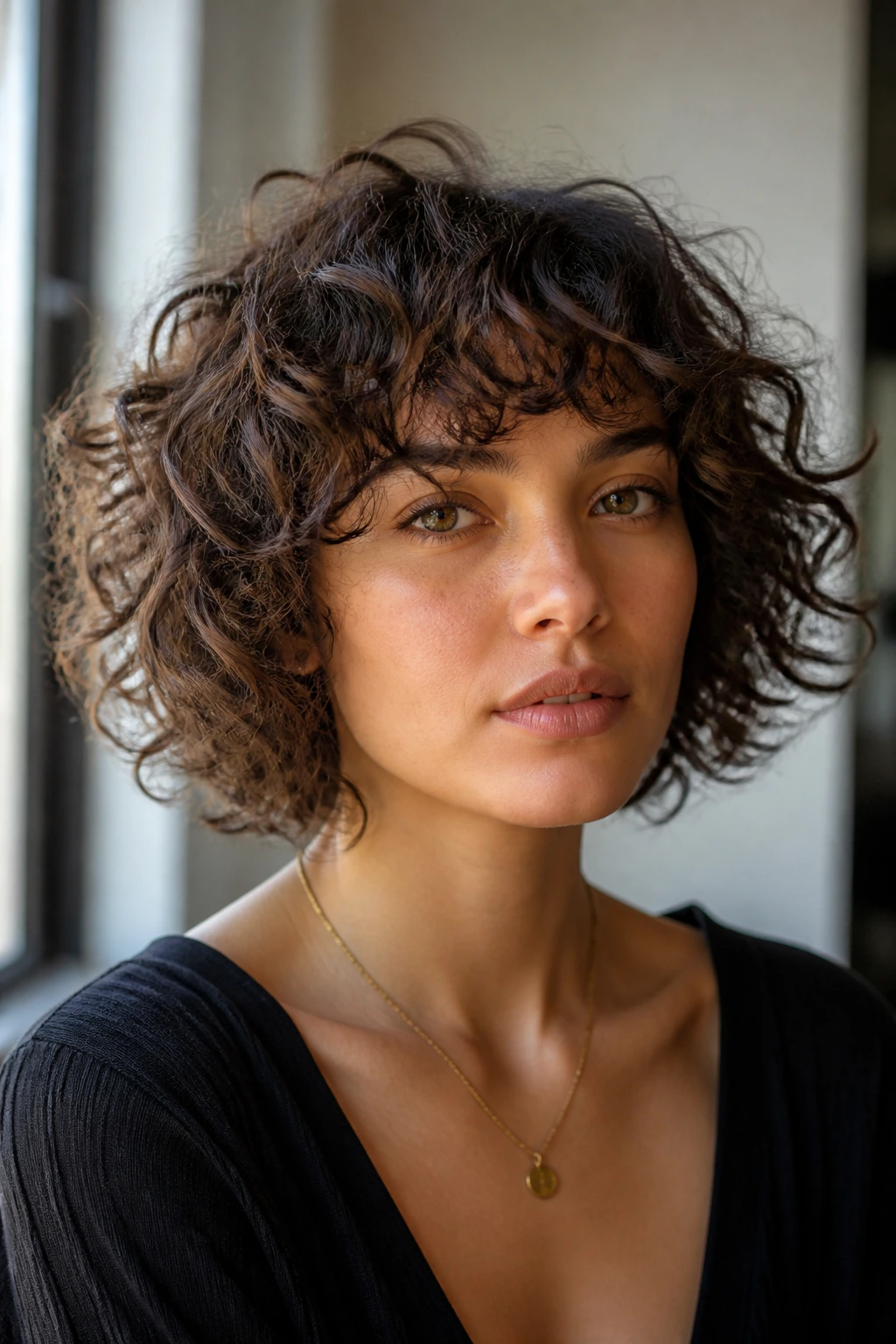
A side part can rescue a bob that feels too symmetrical or too flat. When you set the part off-center and build a little lift at the root, the whole cut loosens up. The layers fall in a softer sweep, and the front gets a bit more drama without needing extra length.
This version is smart for straight hair that collapses at the crown. A side part gives the root a place to stand up, and the wolf layers can do the rest. If you use a root spray and a quick blast from the dryer, the movement holds longer than you’d expect.
It’s one of the most wearable choices in the bunch. Not because it is tame. Because it’s flexible.
22. Wet-Look Wolf Cut Bob

A wet-look finish changes the whole mood of the haircut. Instead of trying to make every layer fluffy or fluffy-adjacent, you let the shape sit close, glossy, and separated. The ends still show off the choppiness, but the top stays smooth and deliberate. It’s a sharper, more evening-ready version of the wolf bob.
The product choice matters here. Use a gel or gel cream on damp hair, then comb it into place and let the lengths clump into defined ribbons. Too much oil will make it greasy; too little gel and the finish falls apart. You want hold first, shine second.
This style is especially good when the haircut itself is strong enough to carry the look. If the layers are badly cut, wet texture only exposes the problem faster. If the layers are good, though, the shape looks almost architectural.
Why the Wolf Cut Bob Keeps Its Shape Even When It’s Messy
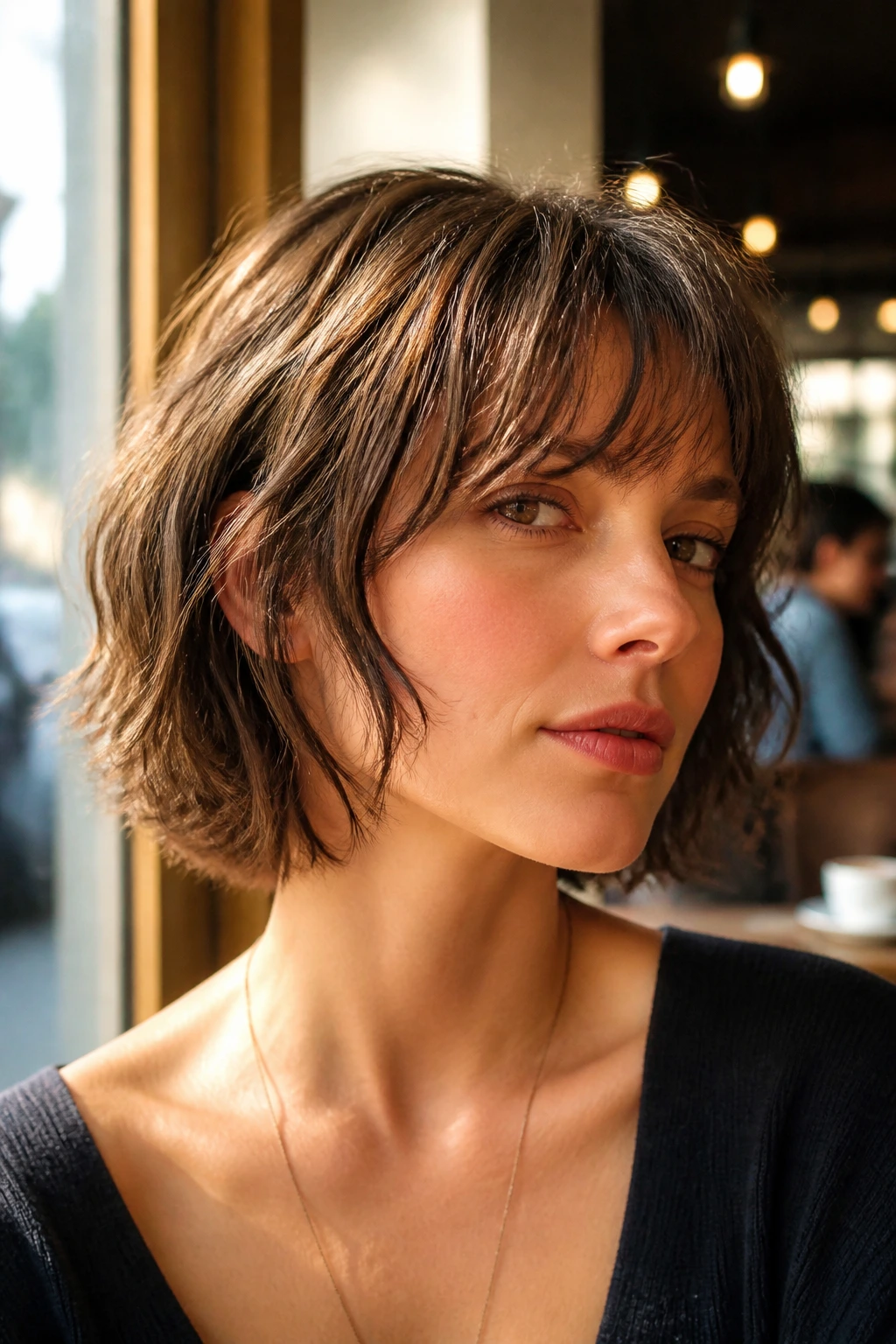
The cut works because the outline and the interior layers are doing two different jobs. The outer line keeps the haircut readable from across a room. The layers inside break up the surface so the hair can move, bend, and separate instead of hanging like one solid block. That balance is what makes a wolf bob feel edgy instead of just chopped up.
A lot of people blame texture when the real problem is placement. Short layers sitting too high on the crown can make the hair puff. Too much weight left at the bottom can make the whole thing droop. A good wolf bob solves both by cutting enough away to create lift, then leaving enough edge at the perimeter to keep the shape grounded.
The three parts that matter most
- The crown: This is where lift comes from. Cut it too short and you get fluff, not volume.
- The face frame: This controls how soft or sharp the haircut feels.
- The perimeter: This is the line that stops the style from disappearing into chaos.
When those three parts are balanced, the cut still looks good after sleeping on it, after a quick rinse, and after a long day in humid air. That’s the whole appeal.
How to Brief Your Stylist Without Talking in Circles
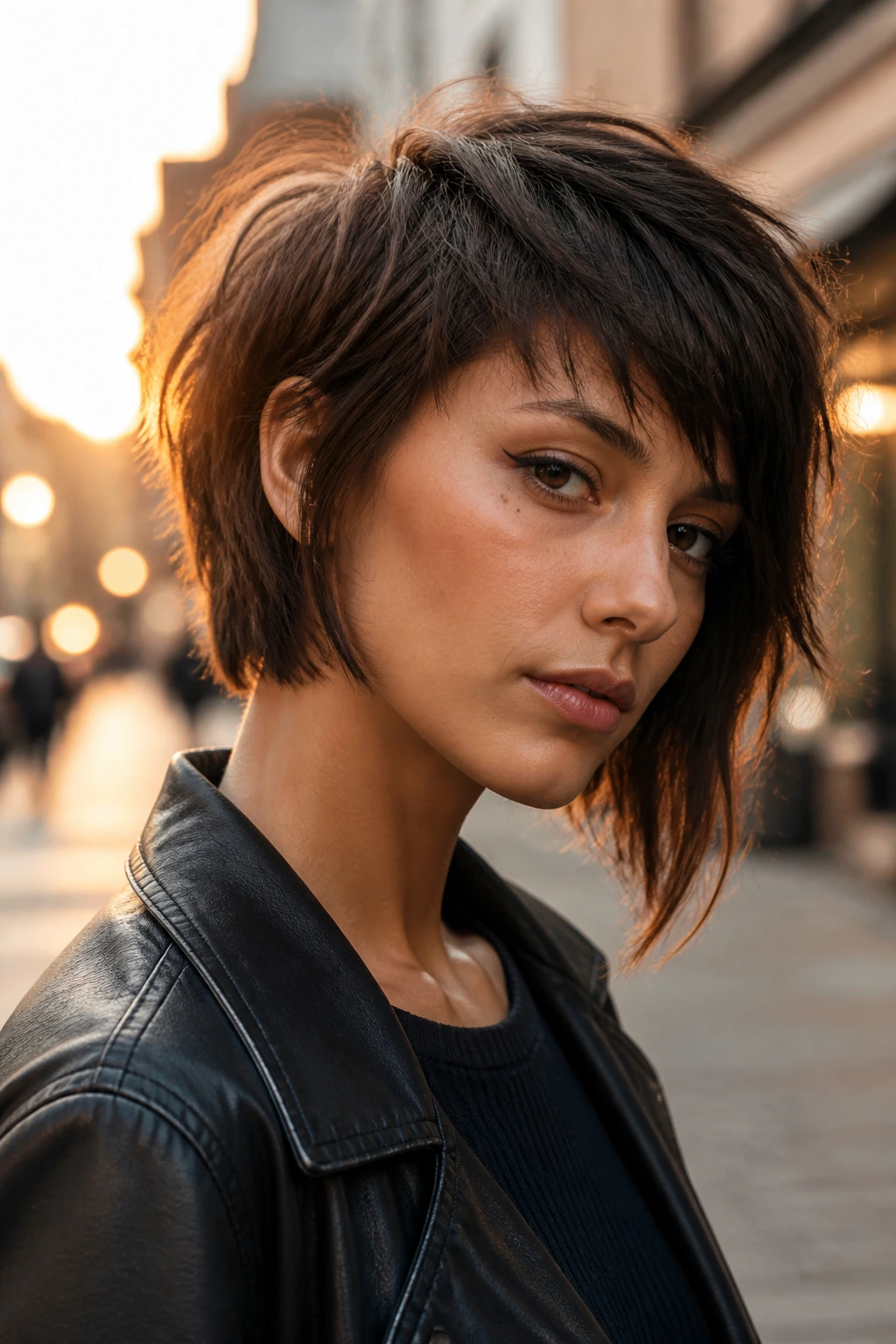
Bring photos, yes, but bring the right ones. One photo should show the overall shape. Another should show the fringe or front length. A third should show the texture you want, because “wolf cut bob” can mean very different things depending on who’s holding the scissors. One person’s cool, jagged bob is another person’s triangle with bangs.
Tell your stylist how you wear your hair on an average day. If you air-dry, say so. If you use a diffuser once a week and ignore the rest, say that too. If your hair has a strong cowlick, a deep side part, or a swirl at the crown, that matters more than the photo of some model with frictionless waves.
Ask for specifics. Say where you want the shortest layer to fall, whether you’re open to fringe, and how much length you can lose. If your hair is fine, ask for internal layering instead of heavy thinning. If your hair is thick, ask how the bulk will be removed so the ends don’t bell out.
And one more thing: mention how often you’re willing to trim it. A wolf bob with bangs and a sharp perimeter needs more maintenance than a grown-out shaggy version. That’s not a flaw. It’s just geometry.
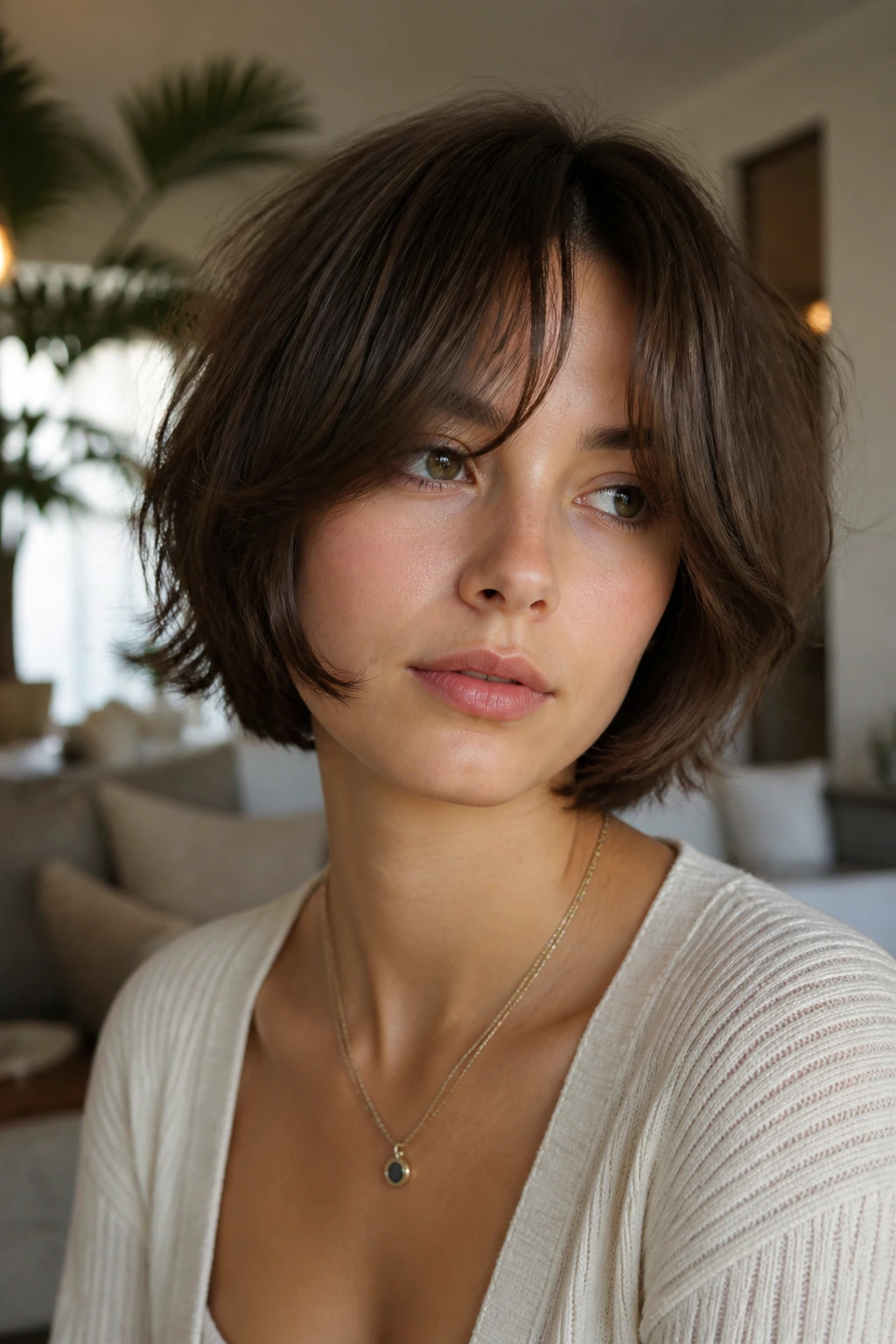
Essential Tools for Styling Short Layers and Fringe
-
A 1- to 1.25-inch curling iron or wand: Best for adding a quick bend to the ends and the front pieces without making the whole cut curly.
-
A blow dryer with a nozzle attachment: Helps control the root area and keeps the layers from blowing every direction at once.
-
A small round brush: Useful for lifting the crown and curving the fringe away from the face.
-
A diffuser: The right tool for wavy or curly versions when you want the pattern to stay intact.
-
Texturizing spray: Gives the layers separation and a slightly dry finish without turning the hair crunchy.
-
Lightweight mousse: Good for root lift and air-dried wave memory.
-
Matte paste or cream-wax: Best for piecey ends and short fringes that need definition.
-
Duckbill clips: Handy for pinning the top while you dry the lower layers or setting a side part in place.
-
A wide-tooth comb: Safer than a fine comb for distributing product through wavy or curly versions.
-
Silk pillowcase or scarf: Not styling gear in the strictest sense, but it keeps the ends from getting roughed up overnight.
How to Style a Wolf Cut Bob Without Flattening the Crown
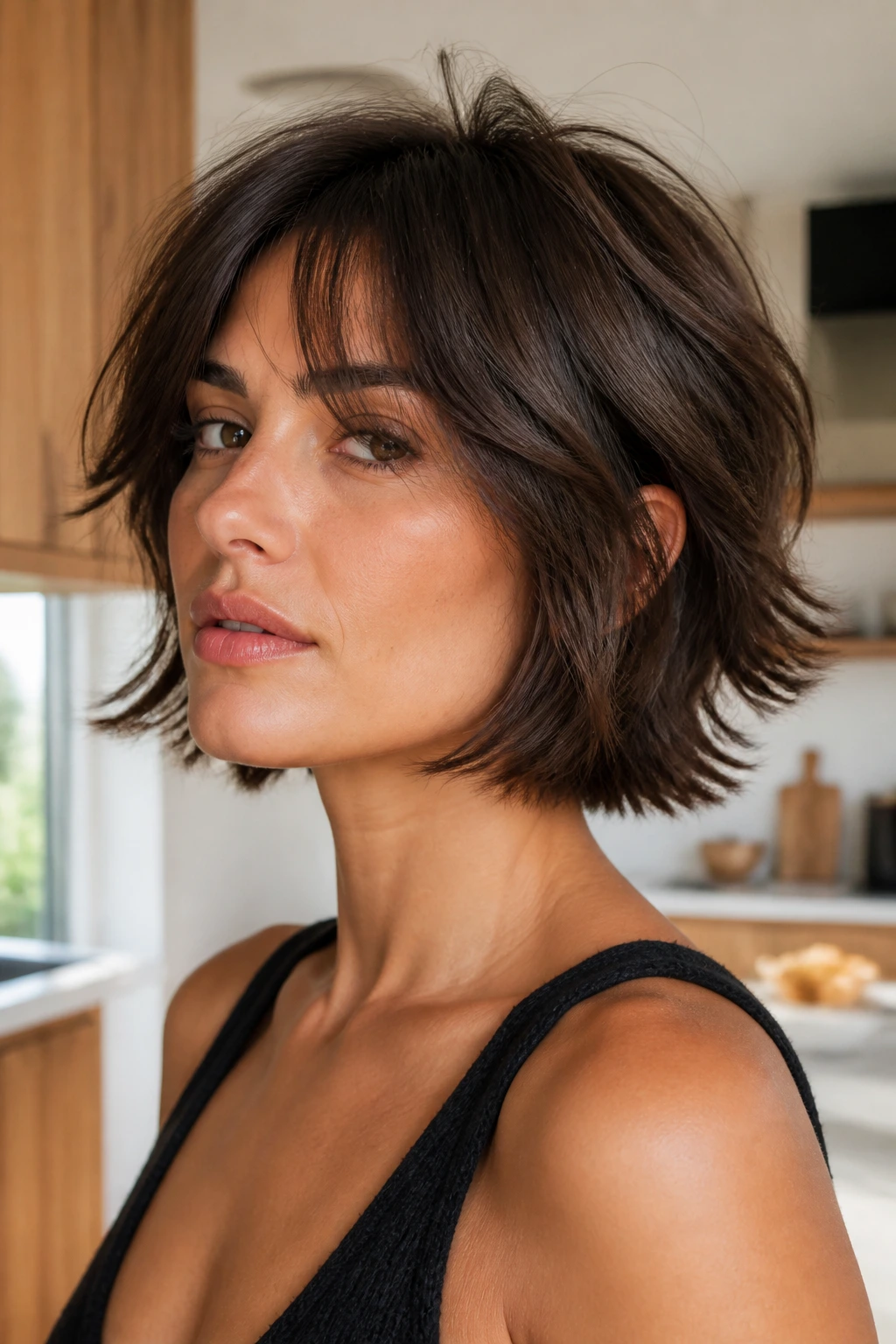
The biggest styling mistake is trying to smooth every strand into the same direction. That kills the point. Start with damp hair, add a light mousse or root spray at the crown, and rough-dry the roots first so they get a little lift before the length starts to dry. If the top is already flat, the rest of the style has to work twice as hard.
Fast Air-Dry: Scrunch wave or curl patterns, tuck the front pieces behind your ears once, then leave the hair alone until it’s mostly dry. Touching it too much creates frizz at the exact spot where you want movement.
Blowout Lift: Use a round brush only at the top and around the fringe. You don’t need a full salon blowout. A slight bend at the ends and a lifted crown are enough to make the shape read.
Piecey Finish: Warm a pea-sized amount of paste between your palms and tap it into the last inch or two of the layers. Don’t rake it through from roots to ends. That just clumps the haircut in odd places.
Fringe Repair: If the bangs split weirdly during the day, mist the front with water, twist the fringe side to side with your fingers, and hit it with a dryer for 20 seconds. That resets the shape faster than a full restyle.
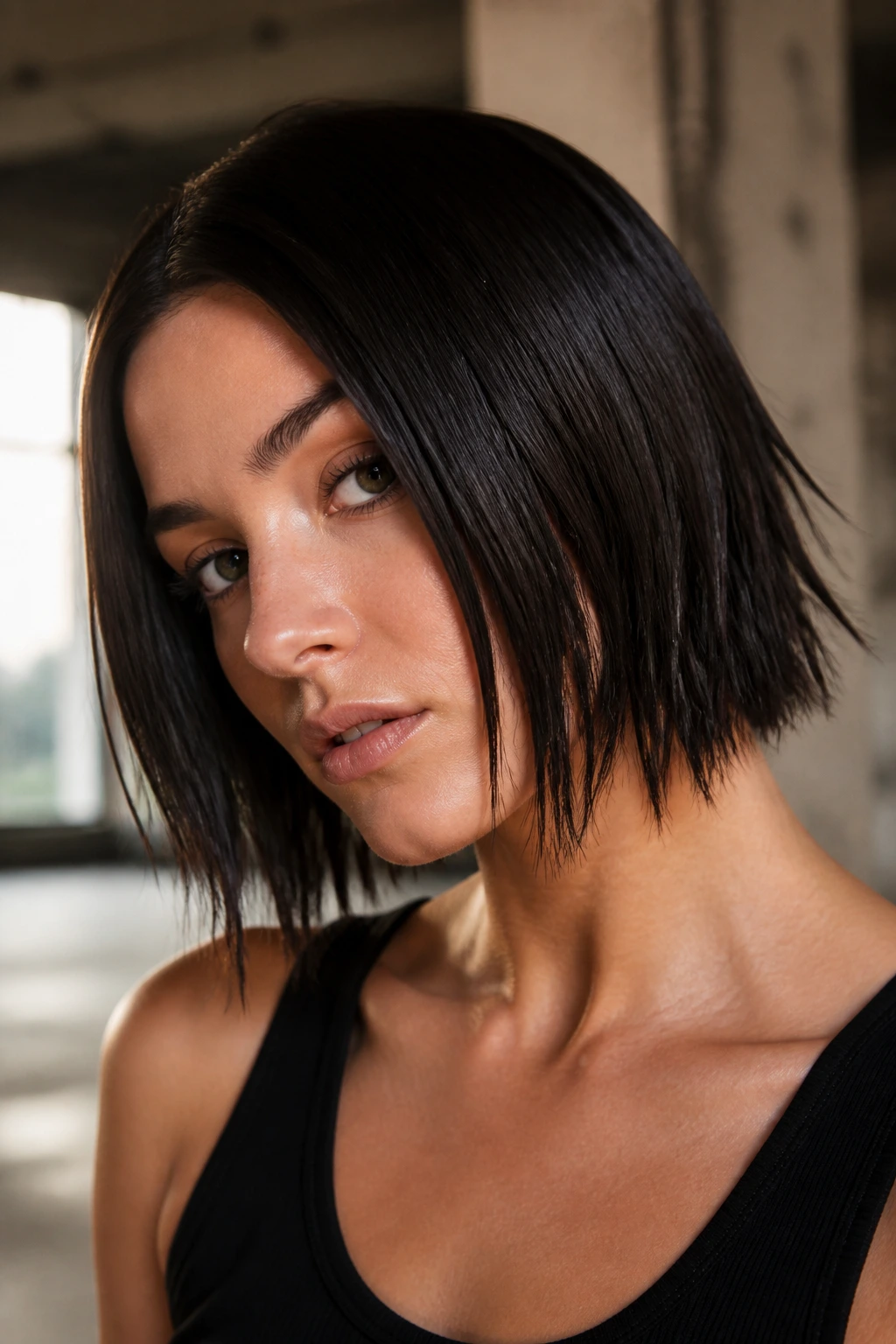
Common Mistakes That Make the Layers Look Choppy for the Wrong Reason
-
Layers cut too high at the crown: The symptom is a fluffy, loose top with no visible bob shape. The fix is to keep the shortest interior layers lower and preserve more weight at the perimeter.
-
Over-thinning thick hair: If the ends look wispy and the shape puffs out at the sides, the hair was taken out too aggressively. Ask for internal removal, not a blanket texture pass with thinning shears.
-
Styling everything sleek: A wolf bob needs some separation. If you iron every strand straight and tuck the ends under, the cut loses its edge and starts looking like a safer bob with a bad attitude.
-
Bangs cut too short: Short fringe can be fun, but if the bang sits above your brow and you aren’t styling daily, it grows awkward fast. Leave a little extra length if you’re on the fence.
-
Too much product at the roots: Heavy creams and oils at the crown collapse lift immediately. Keep richer products on the ends, and use lighter sprays where the volume lives.
-
Waiting too long between trims: The shape starts to balloon at the sides and the fringe falls into your eyes. A clean bob line needs regular cleanup, or the whole cut drifts.
Variations and Adaptations Worth Trying Next
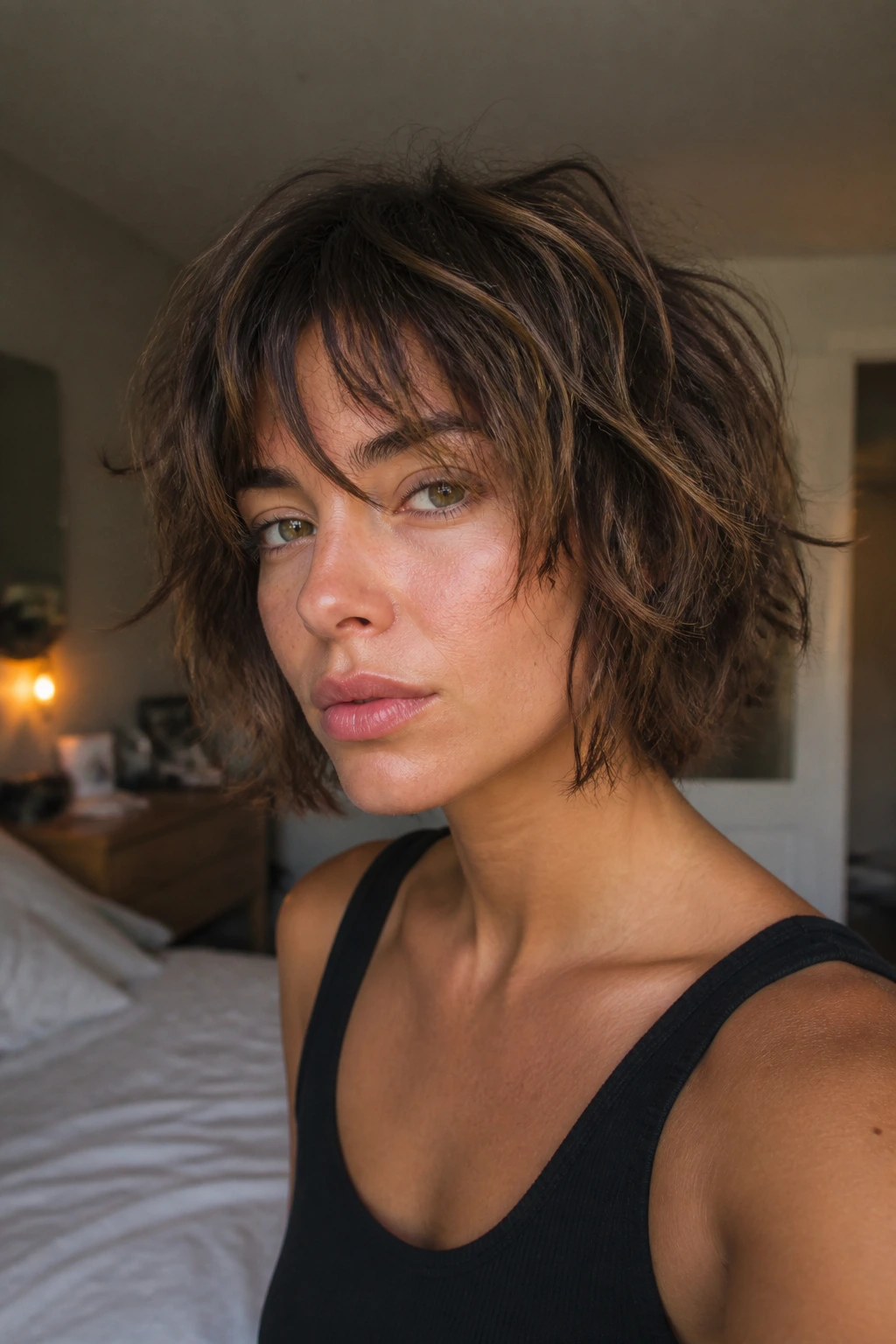
The Soft-Edge Wolf Bob: Keep the layers airy but round off the perimeter a little more. This works if you want texture that still feels office-friendly and not too jagged.
The Razor-Heavy Rebel: Push the separation harder with more pronounced piecey ends and a rougher fringe. Best on hair that can handle a little fraying without looking damaged.
The Curl-First Version: Let curls or waves lead the shape instead of forcing a straight bob outline. Ask for dry cutting and a perimeter that follows the natural spring of your hair.
The Long-Front Wolf Bob: Keep the back shorter and let the front pieces drop a little lower toward the collarbone. It gives the face more framing and makes the cut feel less boxy.
The Slick-Night-Out Finish: Same haircut, different mood. Use gel or gloss cream on damp hair and comb the layers into clean ribbons for a sharper, dressier look.
How to Keep the Layers Fresh Between Salon Visits
Wolf cut bob haircuts usually need a little more attention than a blunt bob, but not as much as people fear. Most shapes stay tidy for 6 to 8 weeks before the perimeter and fringe start to lose their best line. If you wear bangs, plan on a trim around 3 to 4 weeks if they start sliding into your eyes or splitting too far apart.
The day-to-day routine is mostly about protecting the shape at night. A loose clip at the crown, a silk pillowcase, or a soft scarf can keep the top from getting mashed flat. In the morning, a mist of water on the front pieces is often enough to wake the layers back up. You do not need to wash the whole head every time the ends misbehave.
Dry shampoo can help, but only at the roots and only in moderation. Too much will make the ends look dusty and dull, especially on darker hair. If the haircut starts to feel heavy between washes, refresh the crown first, then reshape the fringe with a brush or fingers. That little two-step rescue often buys you another day or two before a full shampoo.
Questions People Ask Before the First Chop
Does a wolf cut bob work on fine hair?
Yes, if the layers are handled carefully. Fine hair usually needs a lighter internal shape and a strong perimeter so it doesn’t go see-through at the crown. Skip heavy thinning and ask for lift only where the hair naturally collapses.
Can I get this cut without bangs?
Absolutely. A fringe is not required. Long face-framing layers can give you the same edge without the daily maintenance of trimming bangs and reworking them every morning.
What if my hair is curly?
Curly hair can look excellent in this shape, but it should be cut with shrinkage in mind. Dry cutting or curl-by-curl shaping usually gives a better result than cutting it stretched out and hoping for the best.
How do I keep it from turning into a mullet?
Keep the perimeter strong and avoid letting the back grow too far past the sides. The wolf bob needs a visible bob line; once the back stretches too much, the balance tips. Regular trims help more than fancy products here.
Is it hard to style every day?
Not if the cut matches your texture. Wavy and curly hair can often air-dry with a little product, while straighter hair may need a quick bend at the front and crown. The wrong version of the cut is the one that fights your routine.
Can I part it in the middle and still keep some edge?
Yes, and that’s where curtain fringe or longer front layers help. A center part can look flat if the front is too blunt, but it works well when the face-framing pieces have enough length to move.
What should I avoid if my hair frizzes easily?
Too much razor work and too much rough drying. Use a lighter hand with layering, keep the ends hydrated, and don’t rub the towel like you’re scrubbing a stain out of it. That just opens up the frizz.
Will this grow out awkwardly?
It grows out better than a sharp bob with no texture, which is one reason people keep coming back to it. The layers soften over time, so the shape changes gradually instead of turning into one hard line.
The Shape That Keeps It Interesting
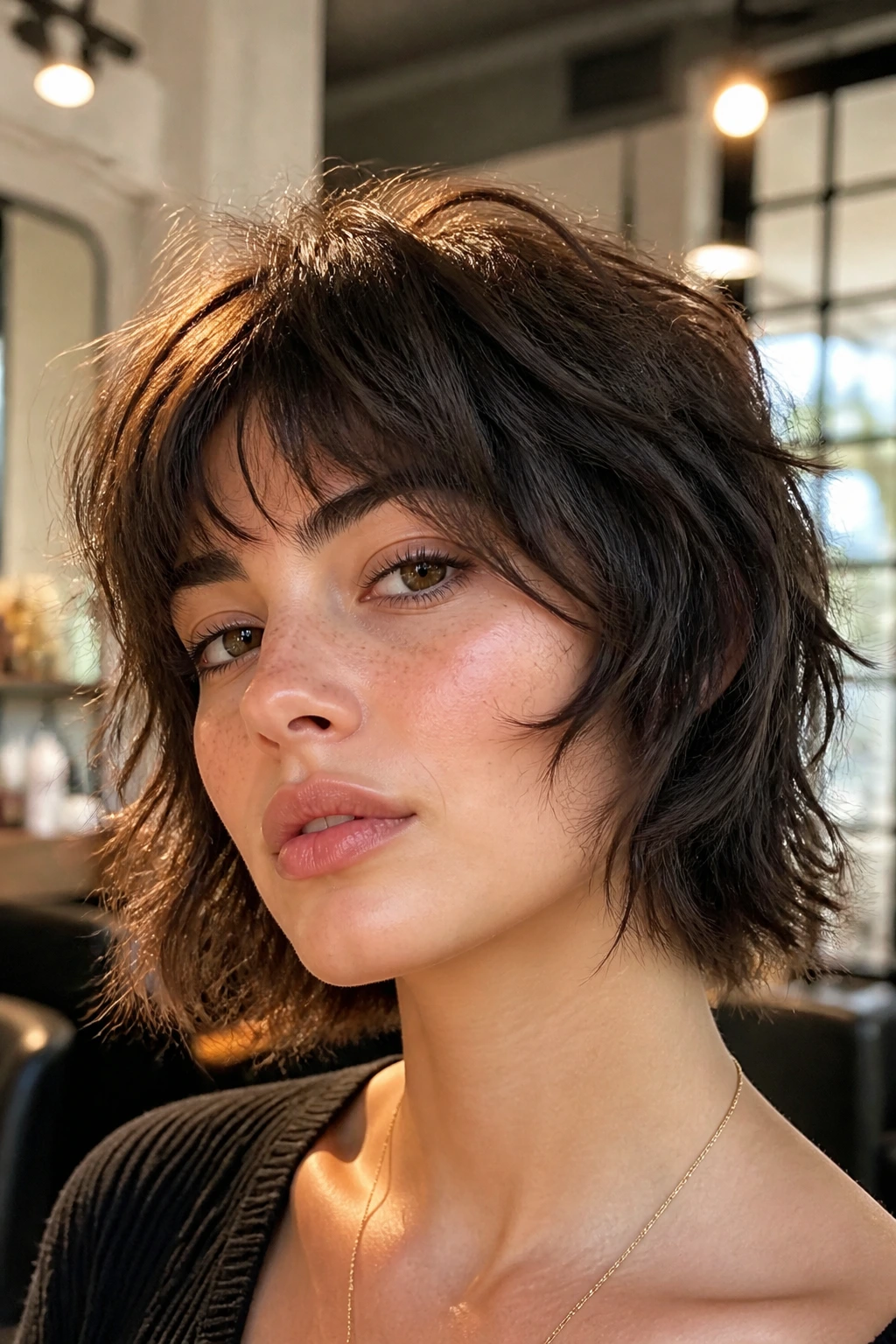
A good wolf cut bob does something a blunt bob can’t quite manage. It gives you structure and disorder at the same time, which sounds impossible until you see the layers move. The outline stays honest. The texture gets to misbehave a little. That’s the whole appeal.
Pick the version that fits the way your hair already falls, not the version that looks most dramatic on a perfectly styled photo. A cut like this should do some of the work for you, not turn your morning into a battle with a brush. When the shape is right, the cut looks better when it’s slightly messy than when it’s overdone.
And that’s why these wolf cut bob haircuts keep working. They have enough edge to feel current, enough structure to feel real, and enough variation to fit a lot of heads without all looking the same. Choose the one that matches your texture, and the haircut starts pulling its own weight.
