



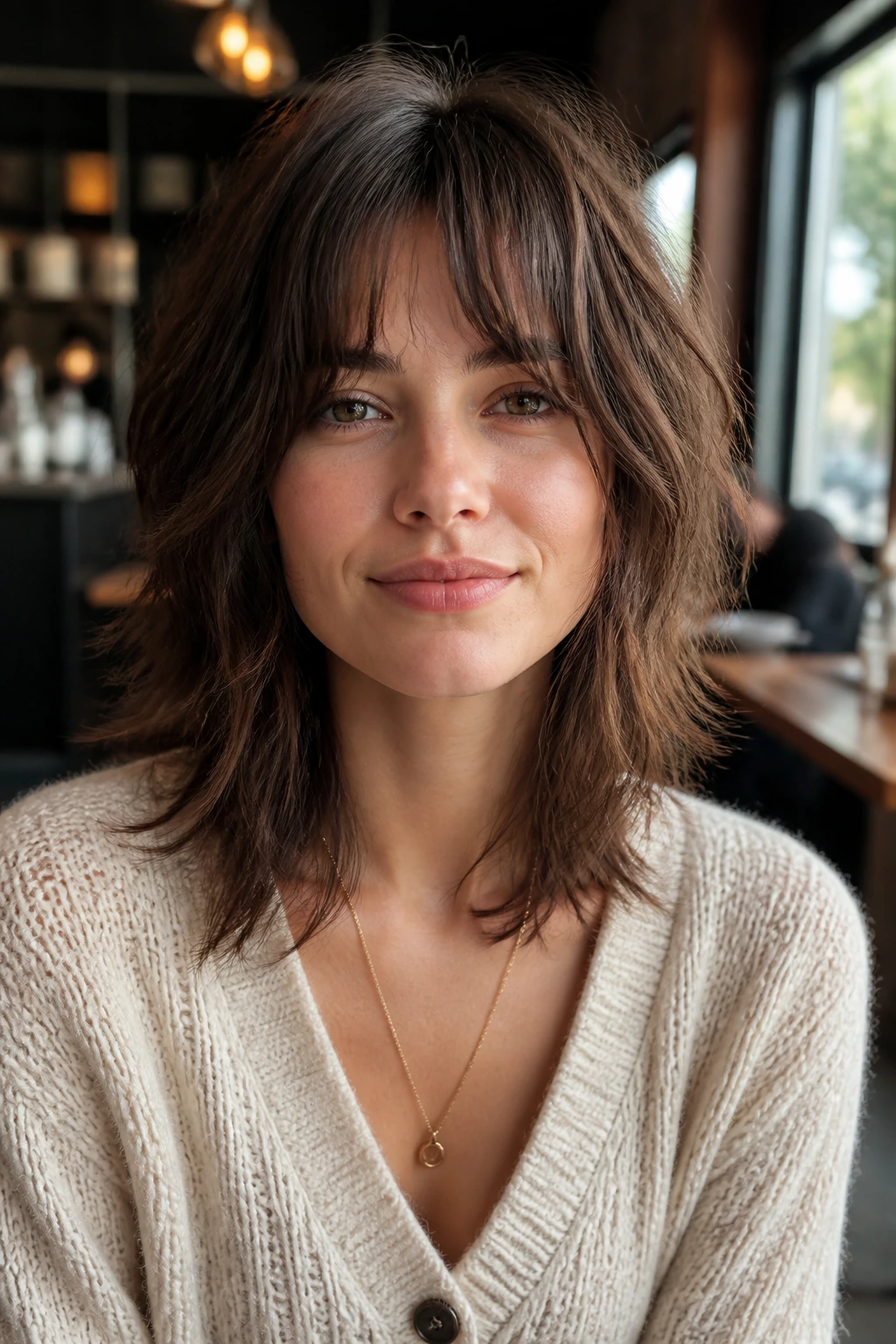
The best wolf cuts look a little unruly on purpose. The crown sits lighter than you expect, the sides break apart around the cheekbones, and the back keeps enough length to stop the whole thing from turning into a fluffy triangle. That balance is why the wolf cut keeps showing up on people who want edge without giving up movement.
And the phrase wolf cuts covers more ground than people think. Some versions are soft and airy. Some lean hard into mullet energy. Some are almost civilized until you catch the layers from the side and realize, no, that shape has teeth.
The real trick is choosing the version that works with your hair instead of fighting it. Fine hair needs a cleaner outline and less internal thinning. Thick hair needs weight removed in the right places, not shredded into static. Curly hair wants the layers placed where the curl pattern already bends, or the whole thing balloons out and starts making its own bad decisions.
Why These 25 Wolf Cuts Stand Out
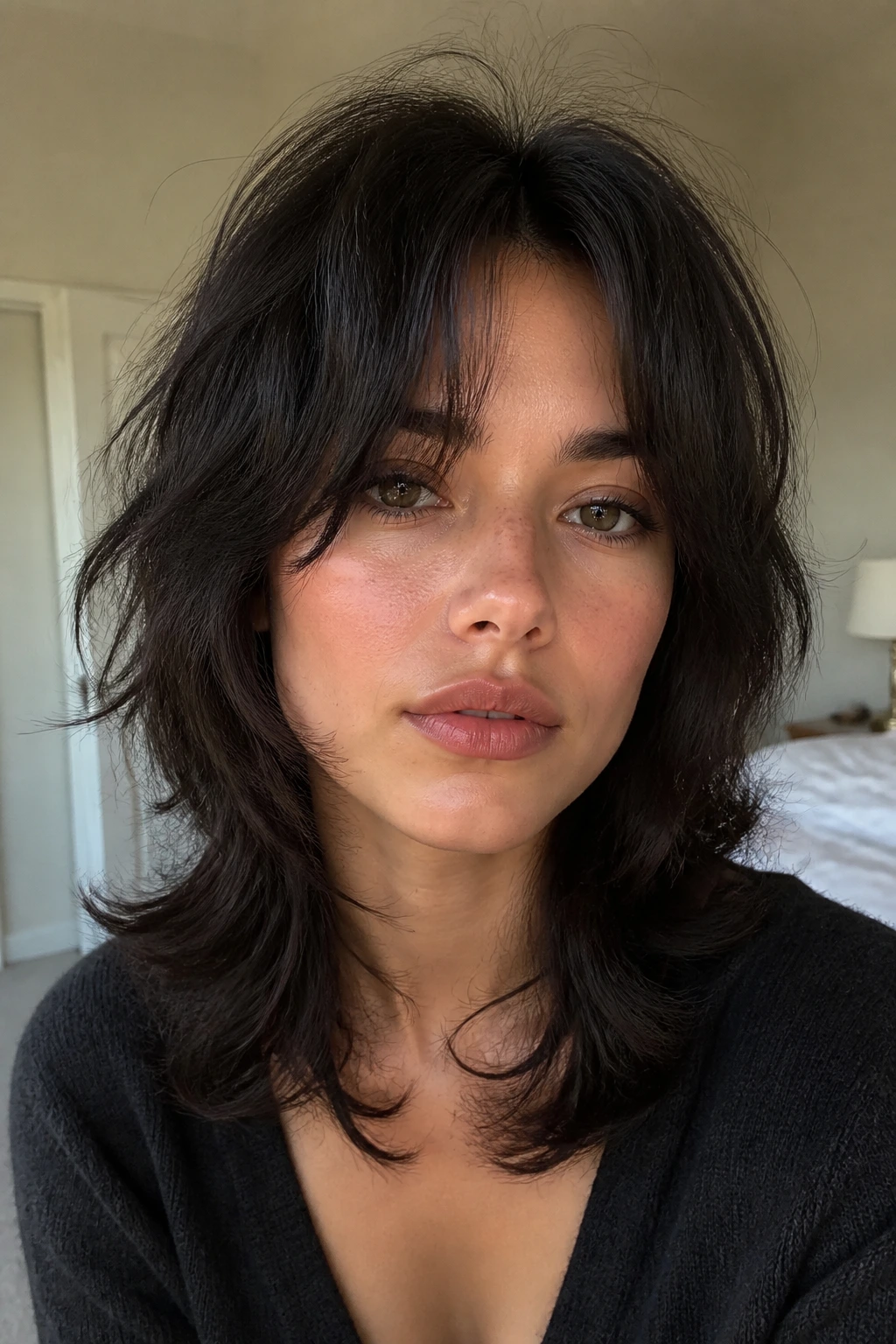
- Shape First: The best wolf cut keeps the crown light and the perimeter longer, which gives you lift without losing the frame around your face.
- Texture With Purpose: Choppy layers should create movement, not random gaps that leave the ends looking chewed up.
- Easy to Bend Your Way: A good version works with air-drying, diffusing, rough blow-drying, or a quick pass with a round brush.
- Grow-Out Matters: This cut softens as it grows, which is exactly why it can look deliberate for weeks instead of turning harsh on day one.
- Not One Texture Only: Straight, wavy, curly, and coily hair all get a different reading here, and that’s the fun part.
- Edge Without Costume: You can go punk, soft, shaggy, glam, or low-key messy without leaving the wolf-cut family.
1. Soft Curtain-Bang Wolf Cut
This is the version I hand to anyone who wants the shape without looking like they raided a backstage dressing room. The curtain bangs split softly at the center, the crown stays airy, and the face-framing layers drift down toward the jaw instead of stopping in a hard line.
It works because it gives you the wolf cut’s lift without making the fringe feel heavy. Ask for the shortest layers to sit around the brow line, then let the sides open out toward the cheekbones. If your hair is medium density, this is one of the easiest places to start.
- Best on shoulder-length to collarbone-length hair.
- Ask for longer outer lengths so the cut can grow out cleanly.
- Skip this if you want a sharply cropped, punkier outline.
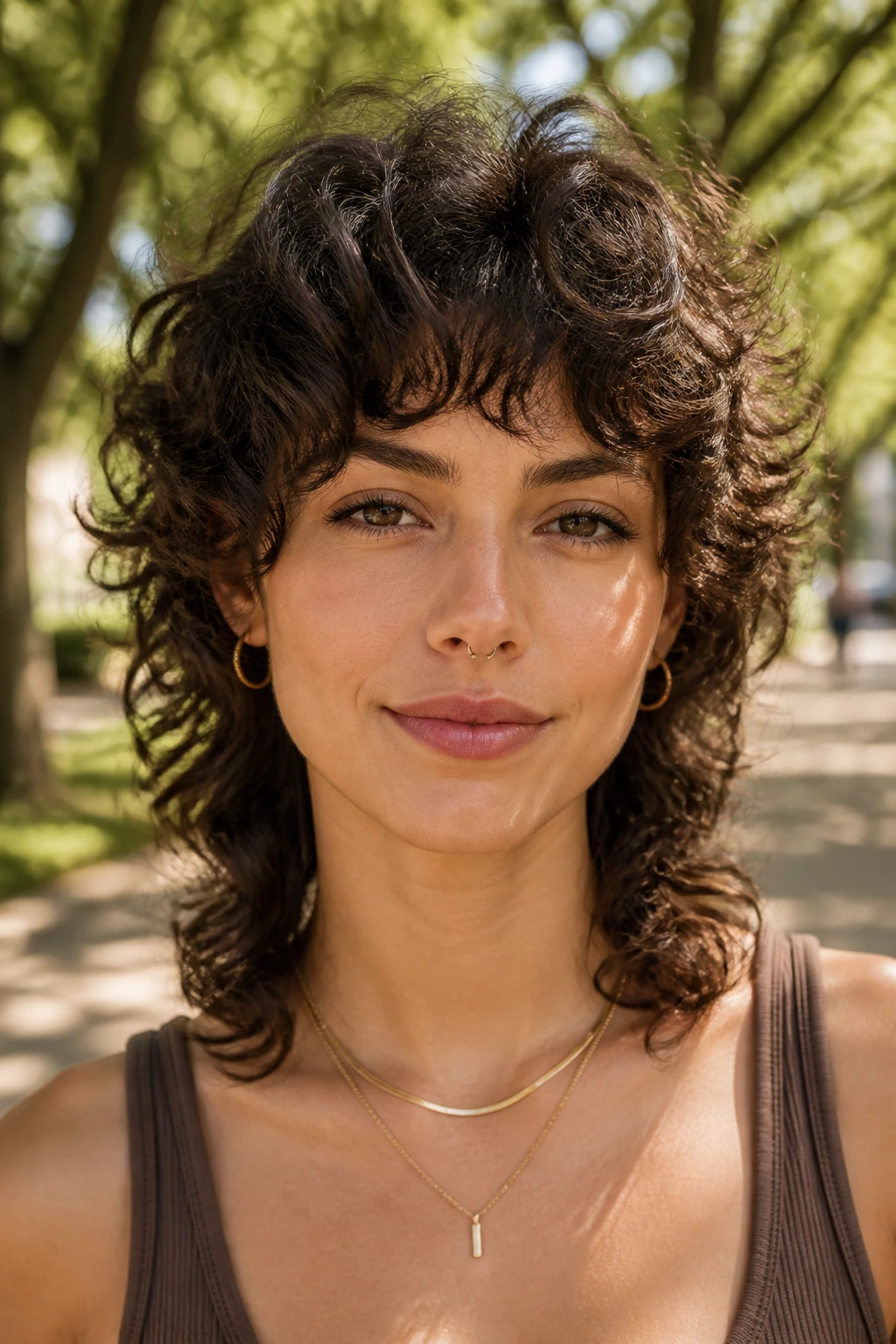
2. Curly Wolf Cut With Rounded Crown
Curly hair changes the whole math, and that’s a good thing. A rounded crown keeps the silhouette from bulging at the top, while the layers follow the curl pattern instead of chopping through it.
The mistake people make is over-thinning. That gives curly hair the weird halo effect that looks bigger in the wrong places. A better version keeps the interior soft, leaves enough weight at the ends, and lets the curls stack naturally around the ears and nape.
Why the Rounded Crown Helps
When the top is cut with the curl’s spring in mind, the shape lifts instead of puffing. The result feels lived-in, not hacked apart.
3. Razor-Feathered Wolf Cut for Fine Hair
Fine hair gets crushed by bulky layers, which is why this version has to stay light and controlled. A razor can soften the edges and build movement, but only if the stylist leaves enough body at the perimeter.
What I like here is the way the ends separate without looking sparse. Ask for feathering around the mid-lengths, not wild texturizing at the bottom, or you’ll end up with see-through points that collapse by noon.
- Keep the crown layers only moderately shorter than the rest.
- Use a lightweight mousse at the roots, not a heavy cream.
- Avoid aggressive thinning shears at the ends.
4. Micro-Fringe Wolf Cut With Bite
A micro fringe changes the mood fast. The cut feels sharper, a little more graphic, and more deliberately edgy than the softer curtain-bang versions.
The key is keeping the rest of the cut loose enough to balance that tiny fringe. If the crown is too heavy, the micro bang can look like an afterthought; if the layers are too jagged, the whole shape turns noisy. I like this version with straight or slightly wavy hair because the fringe stays visible.
Best for: people who want the cut to read as fashion-forward the second they walk in.
Watch out for: a fringe that sits too short against a strong brow line. That can look harsh in a hurry.
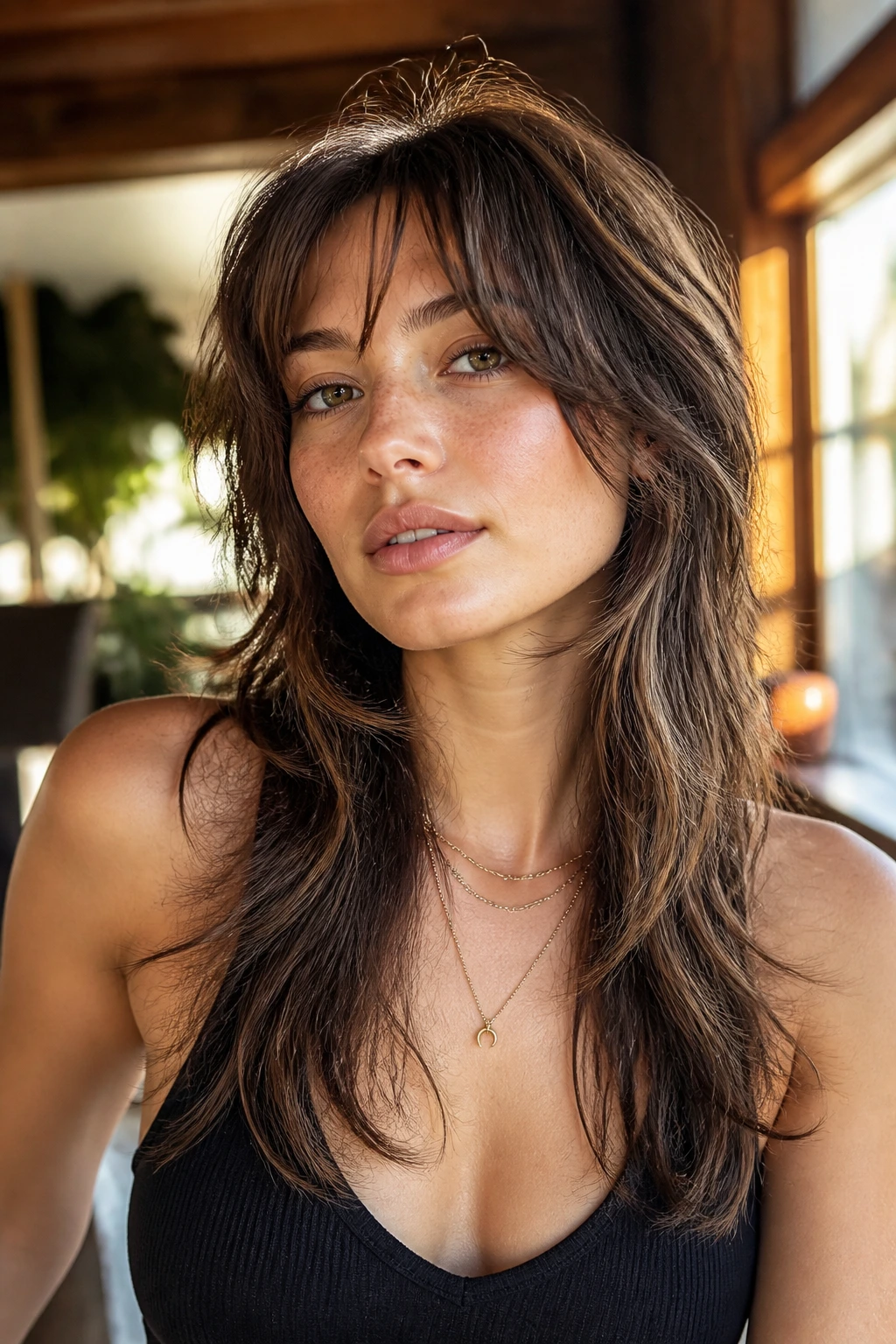
5. Long Wolf Cut With Face-Framing Ribbons
This is the wolf cut for people who don’t want to lose their length. The outer line stays long, almost like a soft layered cut, but the interior gets choppier through the crown and around the face.
The face-framing pieces should start near the cheekbone and cascade toward the collarbone, with enough separation that you can actually see the layers when the hair moves. It’s a good choice if you wear your hair down most days and want texture without going full mullet.
What to Ask For
Ask for internal layering first, then a softer perimeter. That order matters. If the outer line gets thinned too much, the length stops doing its job.
6. Chin-Length Wolf Cut Bob
A chin-length wolf cut bob has attitude without the commitment of long hair. The bob line gives you structure, while the top layers break up the shape so it doesn’t sit like a helmet.
This one is smart for hair that hates volume at the roots but still needs some lift through the sides. The shape should tuck under just a little at the jaw, then kick away in choppy pieces. If the cut is done well, it looks sharp from the front and messy in a flattering way from the side.
Short and blunt? Too stiff.
Short and over-thinned? Too airy.
This version sits in the useful middle.
7. Bottleneck-Bang Wolf Cut
Bottleneck bangs are one of those details that quietly do a lot of work. They’re narrow at the center, then widen as they sweep outward, which makes them feel softer than a heavy fringe and more polished than curtain bangs that have been cut too wide.
They suit the wolf cut because the top section already has movement. A bottleneck bang adds shape at the front without stealing the show from the layers around the temples and jaw. If your face is longer or your forehead is on the broader side, this is a nice balance.
The best ones skim the lashes at the center and open below the brow line near the sides.
8. Thick-Hair Wolf Cut With Big, Loose Layers
Thick hair needs room. Lots of it. If the layering is timid, the cut turns into a block with some texture sprinkled on top, and that is not the point.
This version removes weight through the crown and mid-lengths while keeping enough bulk in the perimeter to stop the ends from fraying. I like it because it gives thick hair a cleaner swing. The movement shows up when you turn your head, not just when someone photographs the back of it.
Ask for layers that are disconnected enough to move but not so shredded that the cut starts standing out from your head in triangular chunks.
9. Straight-Hair Wolf Cut With Piecey Ends
Straight hair can make a wolf cut look too neat if the layering is timid. It can also expose every bad cut line if the texture work is sloppy, so this version needs a stylist who understands how to break up the edges without making them fuzzy.
The trick is in the ends. They should flip, separate, or tuck with a little bend, not sit in a dead straight sheet. A small round brush, a flat iron bend, or a quick wrap around a large curling iron can all help. If you prefer sleek hair, this is the one that keeps the style from looking flat.
One sentence can sum it up: straight hair needs movement built in, not painted on later.
10. Heavy Fringe Wolf Cut for Square Jawlines
A heavier fringe can soften a strong jawline in a way that side-swept bangs sometimes cannot. The front becomes the anchor, and the layers around it fan out instead of competing with it.
This cut works best when the fringe sits dense enough to read from across the room, then breaks into softer side pieces that skim the cheekbones. If the fringe is too wispy, the whole thing loses its point. If it’s too blunt, it can feel severed from the rest of the cut.
Good wolf cuts don’t hide your face. They frame it with intent.
11. Pixie Mullet Wolf Cut
This is the boldest version on the list, and I mean that in a good way. The top and sides are short, the back hangs longer, and the shape leans hard into the mullet side of the family tree.
It’s a strong choice if you like seeing the neck open up and want the haircut to look alive even when you barely style it. A pixie mullet wolf cut needs precise outlining around the ears and nape, or it can slide from edgy into awkward fast.
If you want a cut that looks better with a leather jacket, a tiny bit of paste, and a bad attitude, this is the one.
12. Money-Piece Wolf Cut With Bright Front Layers

Color changes the read of a wolf cut faster than almost anything else. Bright face-framing pieces draw your eye to the layers, especially when the crown stays darker and a little more shadowy.
The haircut itself should still do the heavy lifting. The money pieces just make the movement easier to see. I like this with medium-length hair because the bright front layers can follow the cheekbones and then drop into the rest of the shape like a neon outline.
If you color the front, keep the cut soft enough that the bright pieces don’t look pasted on.
13. Wavy Wolf Cut With Air-Dried Texture
Wavy hair and wolf cuts get along because neither one wants to be too neat. The cut can encourage the wave pattern, shape the bulk, and still leave enough chaos for the movement to feel natural.
This version is made for a wash-and-go routine. Work in a light mousse or wave cream, scrunch from the ends upward, and let the hair dry with a little space around the crown. If you touch it too much while it’s drying, the texture gets frizzy instead of piecey.
Air-dried texture can look lazy. Done well, it looks expensive in the best possible sense: easy, but not accidental.
14. Hidden-Undercut Wolf Cut
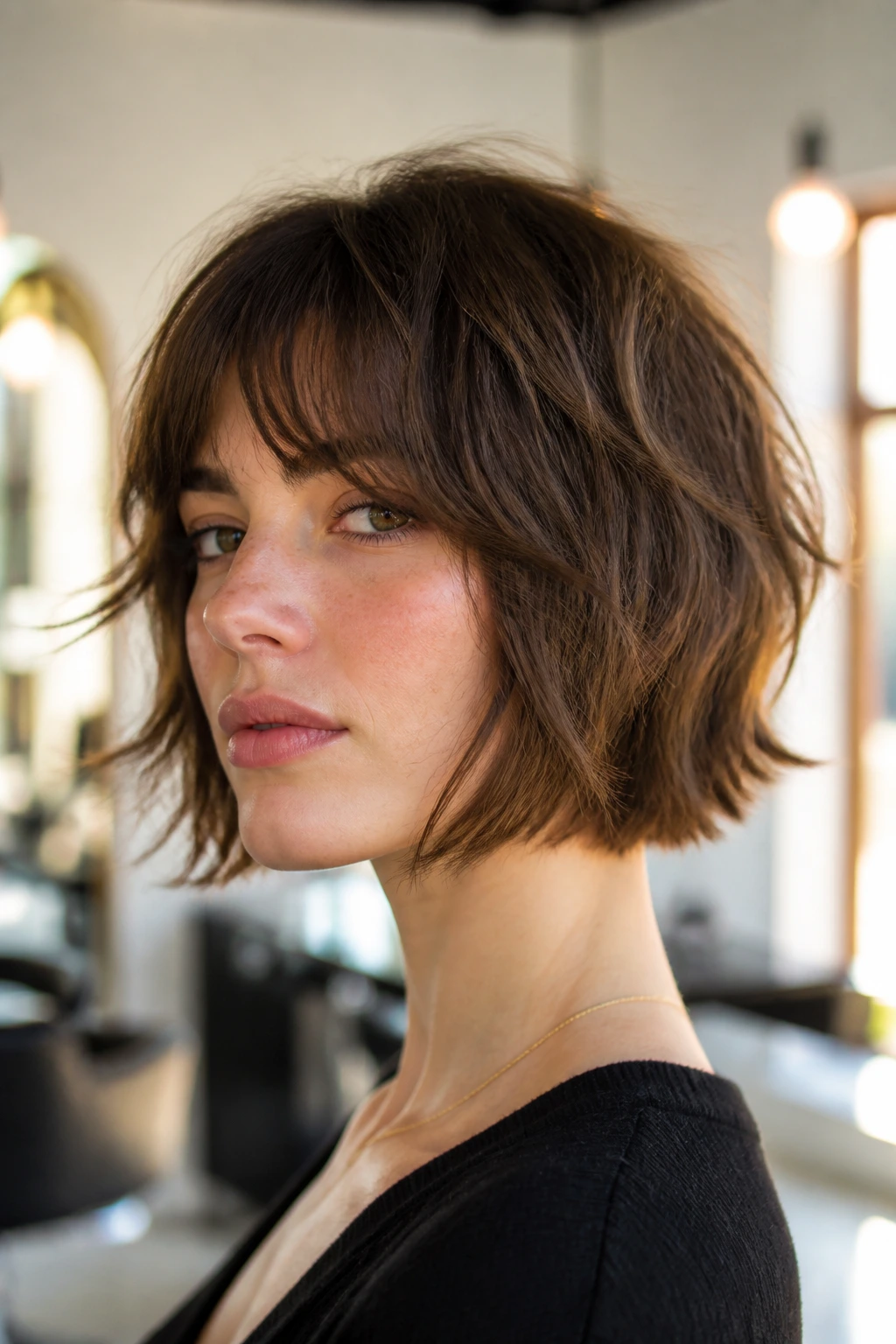
This one is sneaky. The top layer reads like a normal shaggy wolf cut, but the weight underneath has been removed so the shape falls more cleanly and feels lighter around the neck.
It’s a smart fix for very dense hair that gets hot, bulky, or puffy under a collar. The hidden undercut also gives you a little drama when the hair swings open, which is the whole point if you like a haircut with some surprise built into it.
Not for everyone. But if your hair feels too heavy even when it’s freshly washed, this version can make the silhouette behave.
15. Airy Wolf Cut for Fine, Flat Hair
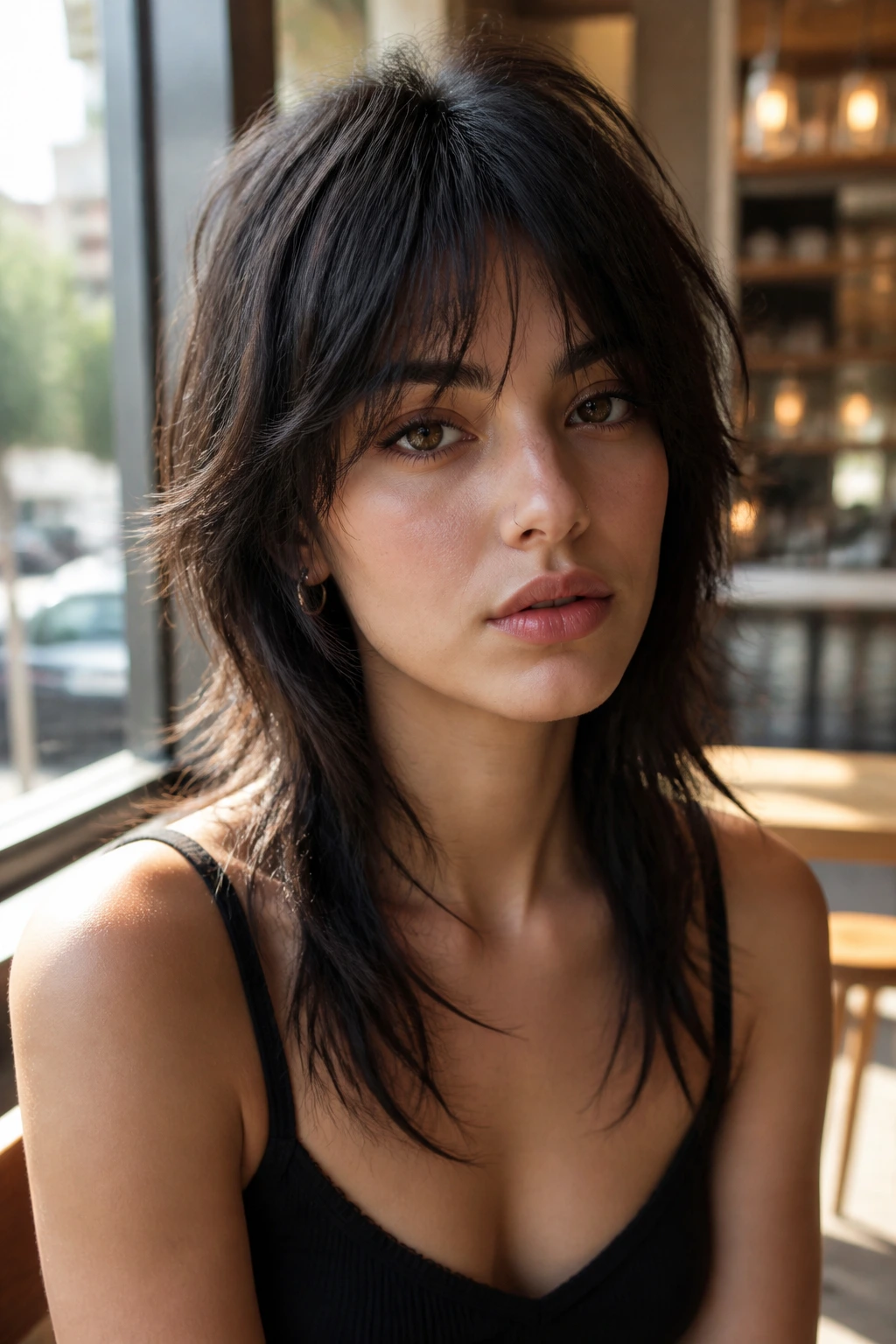
Fine, flat hair needs lift at the root and restraint everywhere else. That sounds boring until you realize restraint is what keeps the shape from collapsing.
I’d keep the outer length a bit longer here and build the texture in softer layers near the crown and around the temples. A root-lifting spray, a quick round-brush dry at the top, and a little dry shampoo at the part can do more than heavy layering ever will. Too much texturizing paste just makes fine hair stick in the wrong places.
The goal is air, not emptiness.
16. Blunt-Edge Wolf Cut With Choppy Interior

If you like structure but still want the wolf-cut vibe, this is a good compromise. The perimeter stays cleaner and more blunt, while the interior layers break things up enough to keep it from looking stiff.
That contrast is the point. From the outside, it looks more controlled than the wildest versions. From the inside, it still has that uneven, restless movement that makes the style feel current instead of salon-safe.
This is a smart pick for people who want to wear the cut to work without losing the edge that made them want it in the first place.
17. Side-Swept Fringe Wolf Cut
Side-swept fringe takes the sharpness down a notch and makes the cut easier to wear if you’re not into center parts. The sweep also helps redirect volume, which can be useful if one side of your hair is more stubborn than the other.
The layers should follow that diagonal motion, not fight it. If the fringe drops too long, it loses lift. If it’s cut too short, it starts looking like a grown-out side bang from another decade.
This version is softer, but not soft-spoken.
18. Perm-Texture Wolf Cut
Permed curls or set waves can make a wolf cut look alive in a way straight textures sometimes have to work harder for. The main job of the cut is to protect the pattern, not beat it into a shape it never wanted.
Ask for layering that respects the curl spring and leaves enough length in the outer shape to stop the perimeter from puffing out. A perm-texture wolf cut looks best when the curls stack in little broken clouds around the crown and fall looser toward the neck.
If the cut is too short, it can go wide. If it’s too long, the whole thing loses its bite.
19. Shaved-Nape Wolf Cut
The shaved nape makes the silhouette feel sharper without changing the whole top section. It’s hidden when the hair sits down, then flashes a little edge when the layers lift.
This version works especially well if you like long hair but hate the feeling of a heavy neck. It also plays nicely with color, because the short underlayer gives the longer pieces a darker frame to fall over.
A shaved nape is not subtle. But it is practical, and sometimes that’s the better kind of edgy.
20. Blowout Wolf Cut With Flipped Ends
This is the cleanest-looking version on the list, which might sound odd until you see how the layers move after a round brush or large roller set. The crown gets lifted, the ends flip out or under, and the whole cut feels styled without losing the choppy shape.
It’s a good pick if you like volume but don’t want the messy finish all the time. The layers need to be cut with enough control to hold a bend. Too much shredding and the blowout loses its polished edge.
Think less bedhead, more rock-star who owns a decent hairdryer.
21. Second-Day-Hair Wolf Cut
Some cuts fight day-two hair. Wolf cuts often get better with it.
This version is designed to work after the hair has a little grit. Dry shampoo at the roots, a tiny bit of texture spray through the mids, and a quick finger reshape around the bangs can bring the shape back to life without a full wash. The layers separate more easily when they’re not squeaky clean, which is why this cut can look more interesting after a night of sleep.
If you hate styling from scratch every morning, pay attention to this one.
22. Grown-Out Fringe Wolf Cut
A grown-out fringe gives you the wolf-cut outline without forcing a hard bang decision. The fringe starts soft, sits a little longer, and blends into the side pieces instead of making a sharp front line.
I like this for people who want the cut to move from month to month without looking awkward in the mirror. It also works well if your hairline has cowlicks or a part that never sits where you tell it to sit.
The shape feels easy. Not lazy. There’s a difference.
23. Asymmetric Wolf Cut
Asymmetry gives the cut more swagger. One side can sit slightly longer, the fringe can sweep harder in one direction, or the back can angle a little differently from left to right.
This version needs a steady hand, because a tiny imbalance can look intentional or messy depending on how it’s handled. The best asymmetric wolf cuts still keep the crown and nape balanced enough that the difference feels designed, not accidental.
If you like clothes with off-center seams and sunglasses that don’t quite sit straight, this haircut will make sense to you.
24. Ultra-Choppy Crown-Heavy Wolf Cut
This is the loud one. The crown is heavily textured, the layers break up fast, and the whole cut leans into that spiky, restless energy that makes the wolf cut feel almost feral.
It’s strongest on hair that can support volume without puffing into a triangle. The top needs enough product and shape to stay separated; otherwise it can look messy in the wrong way. Use a matte paste or a touch of styling wax if you want the pieces to stay visible.
This is not a shy haircut. That’s the appeal.
25. Soft-Edged Wolf Cut for Low-Drama Grow-Out
If you want the wolf-cut shape but don’t want the upkeep to bite you in the neck, this is the one. The layers are there, but they’re blended enough that the cut grows into itself instead of out of it.
It still gives the crown movement and some cheekbone framing, just with a quieter outline. I’d recommend it for anyone who likes texture but doesn’t want every trim appointment to become a whole event. The shape reads as intentional even when it’s starting to soften.
That matters. A haircut should not punish you for having a life.
Why Wolf Cuts Work Best When the Layers Have Room to Move
The whole point of this shape is motion. If the top is too heavy, the haircut sits like a cap. If the perimeter is chopped too short, the ends flare out and steal the balance. The best wolf cuts hold a longer outline and use the interior to build lift where hair usually collapses.
That’s also why the style plays so differently across hair types. Straight hair needs more help creating bend. Wavy hair does half the work on its own. Curly hair needs the layers cut with the curl pattern in mind, or the silhouette turns wider than anyone asked for.
What I like most is the grow-out. A blunt cut often looks obviously grown out once it starts to lose shape. A good wolf cut softens instead. The fringe gets a little looser, the crown loses some edge, and the whole thing stays wearable longer than people expect.
Essential Tools for Styling the Texture at Home
- 1.5- to 2-inch round brush: Useful for lifting the crown and turning the ends under or out without giant curls.
- Hair dryer with a nozzle attachment: The nozzle keeps airflow pointed where you want it, which matters when you’re trying to smooth the top and leave the ends piecey.
- Diffuser: A must for curly and wavy versions if you want the shape to dry with more definition and less frizz.
- Lightweight mousse: Gives root support without the crunchy helmet effect that heavier gels can create.
- Texture spray or dry finishing spray: Good for separating layers once the hair is dry.
- Heat protectant: Use it before any blow-dry brush, curling iron, or flat iron bend. Dry ends show damage fast.
- Clips for sectioning: Especially useful if the crown needs more lift than the sides.
- Wide-tooth comb: Better than a fine comb for curls and waves; it keeps the pattern from getting tugged out.
- Microfiber towel or cotton T-shirt: Helps remove water without roughing up the surface.
How to Ask for the Right Wolf Cut at the Salon
Bring reference photos. Two or three is enough, but make them specific: one front view, one side view, and one shot that shows the back if you can find it. A picture of “vibe” hair with no angles is not much use to the person holding the shears.
Say what you want to keep, not just what you want to lose. Tell the stylist how much length you need at the nape, where your bangs usually sit, and whether you wear your hair air-dried or styled. If your hair has a strong cowlick, a deep side part, or curls that spring tighter when cut, say that before the cape goes on.
I’d also be blunt about upkeep. If you do not want to style your hair every morning, say so. If you love a grown-out fringe, say that too. A wolf cut can be soft, shaggy, mullet-leaning, or almost polished, and that range is exactly why vague instructions create bad haircuts.
Styling Wolf Cuts Without Making Them Crunchy
Texture should move. It should not feel like lacquer.
Start with a small amount of mousse at the roots and a lighter touch through the mids. Rough-dry the hair until it’s about 80 percent dry, then decide whether you want to finish with a round brush, a diffuser, or just your hands. If you blow-dry the crown upward and leave the ends alone until the last minute, the cut keeps its lift without losing that broken, lived-in edge.
For straight or slightly wavy hair, a flat iron bend on just the last inch or two can add a much cleaner finish than over-curling the whole head. For curls, scrunching in a little leave-in and then diffusing on low heat usually gives the best shape. Heavy oils and thick serums belong only on the driest ends. Put them anywhere near the roots and the cut collapses before lunch.
How to Keep Wolf Cuts Looking Intentional Between Washes
The second-day version is often better than the first, but only if you help it along a little. Dry shampoo at the roots keeps the crown from sinking, and a tiny mist of water or leave-in spray can wake up the front pieces if they start to bend the wrong way.
Sleep matters too. A loose claw clip, a soft scrunchie, or a silk pillowcase keeps the layers from getting mashed flat overnight. If the fringe wakes up crooked, don’t panic. A quick pass with a round brush or even a hand twist around the front sections usually resets it in under two minutes.
Wolf cuts like a bit of grit. They do not like being drowned in product or brushed into obedience every day.
Common Mistakes That Flatten the Cut
- Cutting the crown too short: The top springs up and the back starts to look disconnected. Ask for lift, not a mushroom cap.
- Over-thinning thick hair: The ends turn wispy while the bulk stays underneath. The fix is weight removal in the right zones, not random stripping.
- Using too much smoothing cream: The texture goes limp and the cut stops reading as layered. Start with half as much as you think you need.
- Ignoring the fringe shape: Bangs can make or break the silhouette. If they’re too blunt or too sparse, the whole style looks off.
- Skipping the grow-out plan: A wolf cut changes as it grows. If you want it to stay sharp, keep the trims regular; if you want it softer, ask for that on purpose.
Variations and Alternatives to Try
Soft Shag Drift: Keep the crown layers long and the fringe wispy. This is the safest lane if you want the idea of a wolf cut without the sharper mullet edge.
Punkier Mullet Lean: Shorten the top more aggressively and let the nape hang longer. This version reads louder and works best if you like texture that looks a little rebellious.
Curly Cloud Shape: Preserve curl clumps and round out the silhouette. The layers should support the curl pattern rather than splitting it apart.
Blowout-Ready Version: Leave enough length in the mid-lengths to wrap around a brush. The result is smoother and more polished, with less of the shag effect.
Low-Drama Grow-Out: Soften the fringe and keep the perimeter blended. This is the version to choose if you want to live with the cut for a while without constant trims.
Maintenance, Trims, and Grow-Out
A wolf cut stays handsome when you keep the outline under control. Most people do well with a shape refresh every 8 to 12 weeks, though bangs may need a touch-up sooner if they sit in your eyes or split badly. If you love a sharper nape or a more deliberate mullet lean, the back may want a trim more often than the front.
The grow-out is part of the charm, but it works best when it’s managed. A little extra length around the face can look soft and flattering; too much weight in the crown can make the whole haircut slump. If you want to stretch time between trims, ask your stylist to leave softer transitions at the first cut. That gives you room to live with the shape instead of racing it.
Questions People Ask Before They Sit in the Chair
What’s the difference between a wolf cut and a shag?
A shag usually spreads the layers more evenly through the head, while a wolf cut pushes harder on the short crown and longer nape. The wolf shape feels a little more directional and a little more undone.
Does a wolf cut work on fine hair?
Yes, but it needs restraint. Fine hair usually looks better with softer layering and a cleaner perimeter so it still has enough body to move.
Can curly hair pull this off?
Absolutely, as long as the layers follow the curl pattern. A bad cut can make curls puff wide, which is why curl-aware shaping matters so much here.
How do I ask for one without sounding vague?
Bring photos and say what you want the top, fringe, and nape to do. “I want more lift at the crown and a longer back” is much more useful than “I want something edgy.”
Will it grow out into a mullet?
Only if the layers are cut very aggressively and never trimmed. A softer wolf cut usually grows into a shaggy, layered shape before it turns anything like a mullet.
Can I wear it without bangs?
Yes. A wolf cut without bangs leans more on the crown and cheek layers, which can look cleaner if you don’t want hair on your forehead.
What if the cut feels too puffy after wash day?
Use less product at the root and more directional drying at the crown. A bit of weight at the perimeter can also help bring the shape back in.
Is this cut high maintenance?
It can be, but it does not have to be. The softer versions are easy to live with, while the sharper, choppier versions ask for more styling and more frequent shaping.
The Shape That Keeps Its Edge
A good wolf cut should feel a little alive even when the hair is still. That’s why the strongest versions on this list all share the same basic idea: lighter crown, broken layers, longer outline, and enough room for movement to show up when you turn your head.
Pick the version that matches your texture, not the one that looks wildest in a photo. The right cut will make the styling easier, the grow-out softer, and the whole thing look intentional long after the salon cape is gone.
