



Thick hair and a wolf cut can be a dream pairing, or they can turn into a helmet with bangs if the layers are handled badly. The difference is usually not the idea of the cut itself. It’s where the weight gets removed, how much line is left at the perimeter, and whether the top is shaped to move instead of puffing into a shelf.
That’s why wolf cuts for thick hair deserve more than a few blurry salon screenshots. Dense hair can carry a sharper crown, a messier fringe, or a stronger mullet shape than fine hair ever could, but it also needs restraint. Too many short layers at the wrong height and you get a triangle. Too much thinning and the ends go fuzzy. Too little shaping and the whole thing just sits there like a block.
The best versions of the wolf cut work with thickness instead of fighting it. They keep enough weight in the bottom to hold the silhouette, then break up the upper half so the hair can actually bend, flip, and move. Some lean soft and face-framing. Some go heavy on the fringe. Some are nearly shaggy mullets. The trick is picking the version that fits the way your hair grows, dries, and behaves when you walk out the door.
Why These Cuts Work So Well on Thick Hair
Built-in structure: Thick hair already has the body a wolf cut needs, so the shape doesn’t collapse the way it can on finer hair. The layering has something to grab onto.
Less bulk, more bend: A good wolf cut removes weight in the interior and around the crown, which keeps thick hair from sitting in one wide, stubborn block. The ends still hold enough density to look intentional.
Room for fringe: Curtain bangs, bottleneck bangs, and heavy fringe all look stronger on dense hair because they’re not fighting to exist. They can actually frame the face instead of disappearing into the rest of the hair.
Better grow-out: Thick hair often grows into a wolf cut with surprising grace. The shape usually softens instead of collapsing, which means you don’t need a trim the second it gains half an inch.
Works with texture: Straight, wavy, and curly thick hair each get a version that makes sense here. The cut changes a little with the pattern, but the core idea stays the same: lift where the hair needs air, keep line where it needs control.
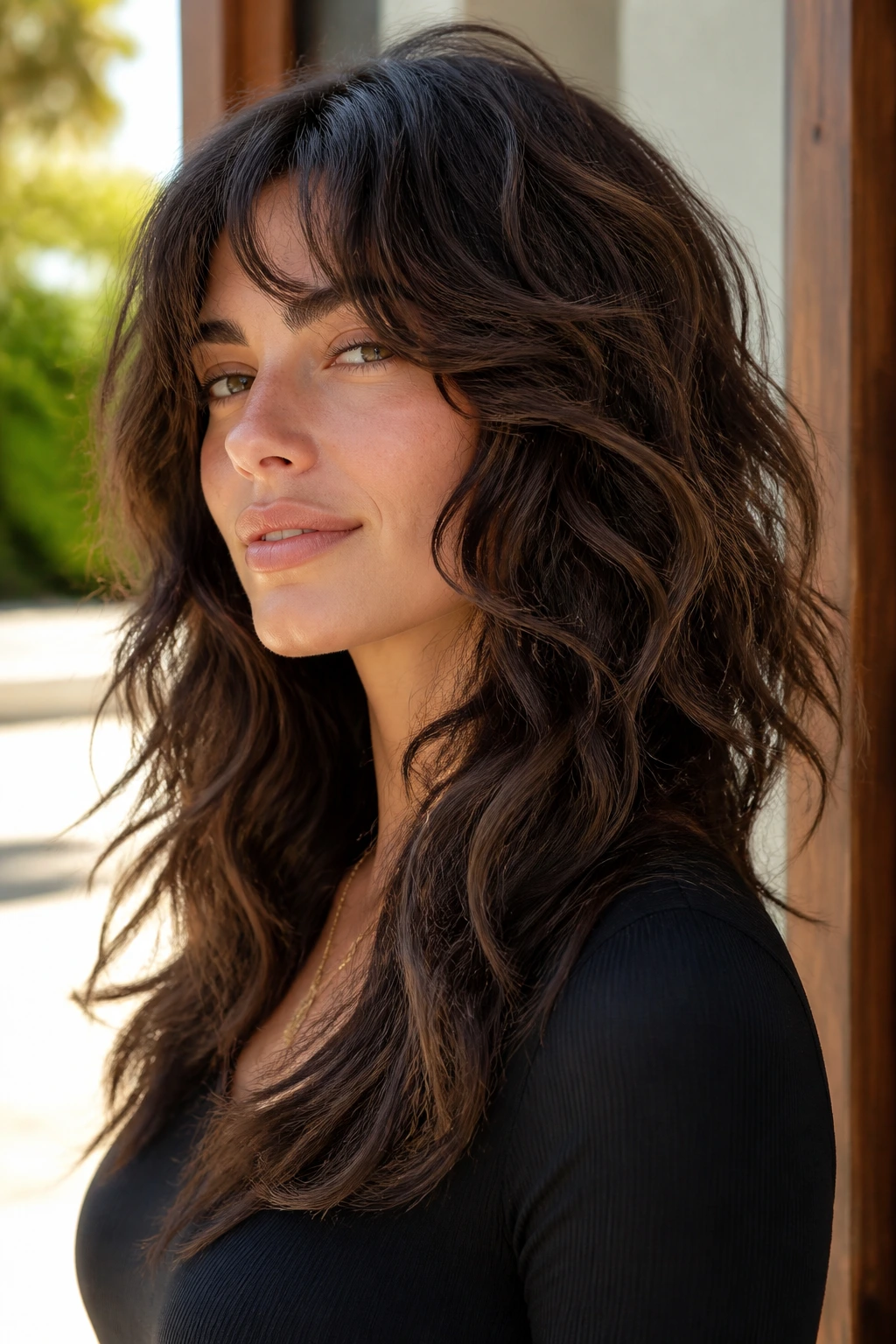
1. Curtain-Bang Wolf Cut That Starts at the Cheekbones
A curtain-bang wolf cut is the safe bet that still looks cool. The cheekbone-length fringe opens the face, while the layers around the crown keep thick hair from turning into a blunt wall. I like this version because it gives movement without making the haircut scream for attention.
What to ask for
Ask for curtain bangs that begin around the cheekbones, then blend into layers that hit somewhere between the chin and collarbone. The perimeter should stay full. That matters. If your stylist takes too much from the bottom, the cut loses the heavy line that keeps thick hair from ballooning outward.
A quick blow-dry with a round brush or even a large Velcro roller at each front section is enough to make this shape work. The bangs should bend away from the face, not curl into a perfect barrel. Slightly imperfect is the point.
Why it suits thick hair
Thick hair can hold the width of curtain bangs without making them disappear. You get that split-frame effect around the face, but the rest of the cut still feels grounded. If your hair is dense at the temples, this version makes the side area feel lighter without removing every ounce of body.
Best for: round, oval, and heart-shaped faces.
Avoid if: you hate any fringe touching your cheeks on humid days.
Styling note: A center part plus a quick bend with a 1.25-inch iron gives the bangs that loose, bent shape fast.
2. Long Wolf Cut With Invisible Layers
If you refuse to lose length, this is the least risky wolf cut on the list. The layering sits inside the shape instead of chopping the outside edge into a jagged line, so thick hair keeps its length while still moving when you walk. It’s the version I’d point people to when they want softness, not drama.
The word “invisible” matters here. You want internal weight removal, not obvious stairs from shoulder to waist. That’s especially useful for long, dense hair that tends to hang heavy at the sides and puff at the ends. A stylist who uses point cutting and subtle slide cutting can keep the surface clean while taking pressure out of the interior.
This cut likes a middle or slightly off-center part. Air-dry it with a little leave-in cream, or blow-dry just the top half and leave the ends alone. The mix of polished crown and free ends gives the length a lived-in swing that a one-length cut never gets.
3. Curly Wolf Cut With a Rounded Crown
Can thick curls take a wolf cut without turning into a pyramid? Yes, if the cut respects the curl pattern instead of bulldozing through it. The rounded-crown version keeps the top from getting too wide while allowing the curls to stack in a shape that feels springy, not bulky.
The best version is usually cut dry or mostly dry, one curl cluster at a time. That lets the stylist see where the curls actually sit, which matters because thick curls shrink and shift in ways straight hair simply doesn’t. If the layers are cut wet and too short, the crown can spring up too high and the bottom can go narrow fast. That’s the pyramid nobody wants.
How to style it
Use a lightweight curl cream or gel on soaking-wet hair, then diffuse on low heat until the roots are set. Once dry, break the cast with dry hands or a tiny bit of oil on the palms. You want shape and bounce, not a crunchy halo.
Best for: 2C through 3C textures with dense hair.
Ask for: long layers around the face and slightly shorter top layers, never a heavy thinning pass.
Watch for: any razor work that frays the curl ends instead of defining them.
4. Razor-Shaped Wolf Cut for Pin-Staight Density
Straight thick hair can look magnificent in a wolf cut, but it can also look blunt in a way that feels almost architectural. A razor-shaped version breaks that stiffness fast. The ends get feathery, the layers move, and the whole cut stops behaving like a heavy curtain.
The catch is obvious: razor work is not for every head of hair. If your hair is coarse, dry, or already frizzy, a blunt razor pass can make the ends look shredded. In that case, point cutting with scissors gives you the same movement without the rough edge. I’d rather see a clean point-cut wolf than a fuzzy razor one any day.
- Best for: pin-straight, dense hair that hangs heavy at the sides.
- Ask for: internal layers with a soft, feathered perimeter.
- Style with: a flat iron bend at the ends or a quick blow-dry and texturizing spray.
- Skip: heavy creams near the roots; they’ll flatten the lift you just paid for.
The end result should look light at the edges but still full through the body. That balance is the whole point.
5. Shoulder-Length Wolf Cut With Flipped Ends
Shoulder length is a smart place for thick hair because it leaves enough weight to control the shape while giving the layers room to show. This version usually lands just above or just below the shoulders, which means the ends can kick out instead of hanging straight down like a blanket.
That flipped movement matters more than people think. On thick hair, a small outward bend at the ends keeps the silhouette alive. Without it, shoulder-length layers can read as bulky even when the cut is good. A round brush, a medium-barrel curling iron, or even a quick tuck behind the ear while the hair cools can create that little kick.
I like this cut for people who want a wolf shape but do not want the haircut to feel overly rebellious. It still has texture at the crown and face, but the overall impression is easier to wear with clean lines, button-down shirts, or anything that would fight a messier mullet shape.
6. Bottleneck Bang Wolf Cut
Bottleneck bangs are the quieter cousin of curtain bangs. They sit narrower at the center and widen toward the cheekbones, which makes them a smart choice for thick hair that needs face framing without a lot of visual noise. The shape softens the forehead and gives the wolf cut a more polished front.
What makes this version work is the way the fringe changes width. Thick hair can support a denser bang line, so the bangs don’t turn stringy after two days. That’s a small thing, but if you’ve ever had a fringe break apart into five sad pieces by lunchtime, you know why it matters.
This is the version I’d choose if you want softness around the eyes without giving up a strong lower half. Ask for the shortest point to land just below the brow line, then let the sides taper longer toward the cheekbones. It’s a neat little trick. Quiet, but not boring.
7. Midi Wolf Cut With Face-Framing Slices
The midi wolf cut sits in that useful middle zone between bob and long hair, usually somewhere between the jaw and collarbone. On thick hair, that length can either feel fresh or turn boxy in a hurry. The face-framing slices are what keep it from getting heavy.
How to ask for it
Tell your stylist you want movement through the front, but not a big collapse of length at the back. The shortest face frame can start near the mouth or chin, then melt into fuller layers through the sides. The surface should still read as a shape, not a bunch of disconnected chunks.
This is a strong pick if your hair has a natural wave. The slices let the wave pattern show without needing hours of styling, and the length sits where thick hair still has some swing. If you’re growing out a shorter cut, this version gives you a wolf shape without the commitment of a true shag-mullet hybrid.
A little dry shampoo at the roots and a quick bend through the front pieces is usually enough. Easy, but not flat.
8. Bixie Wolf Cut for Thick Hair That Needs a Reset
Sometimes thick hair gets so heavy that you stop feeling the shape at all. It just sits there. A bixie wolf cut—part bob, part pixie, part shag—takes enough length off to feel like a reset without going all the way to a true pixie.
The trick is keeping the top soft and the nape clean. Thick hair can get puffy if it’s chopped too bluntly at this length, so the interior needs careful removal, not random snips. Ask for short, feathered layers around the crown and a slightly longer fringe so the front doesn’t shoot straight up.
This cut is not subtle. That’s the point. It brings the ears and neckline into the picture, which makes thick hair feel lighter on the head and faster to style in the morning. If you’re tired of spending twenty minutes wrestling a dense bob into submission, the bixie wolf is a sharp, practical alternative.
9. Wolf Mullet With a Tapered Nape
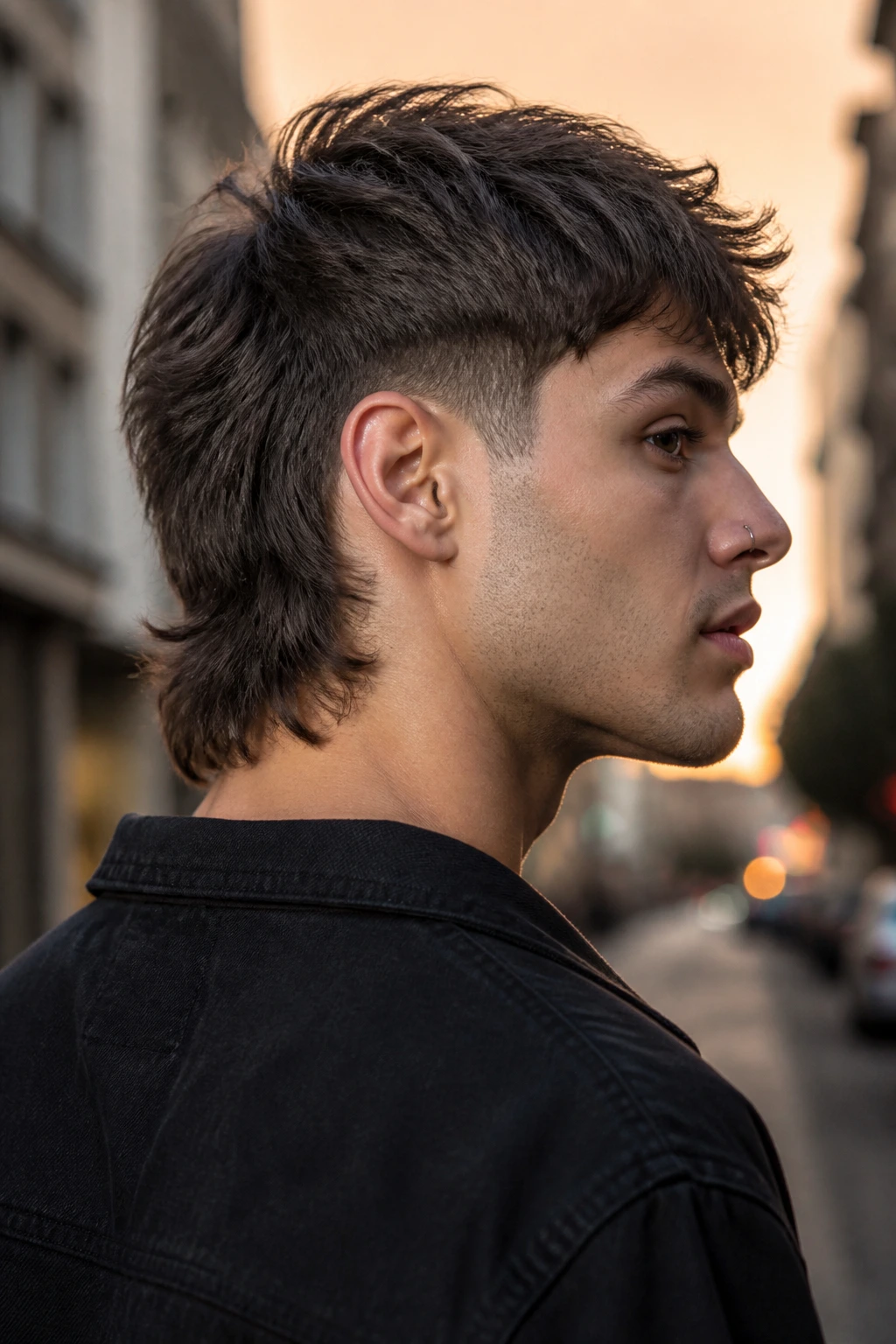
This is the one for people who want the shape to read from across the room. A wolf mullet pushes the short top and longer back contrast a little harder, but the tapered nape keeps it from looking blocky. Thick hair makes this cut stronger, not weaker, because the density gives the mullet shape more body.
The nape should be tapered cleanly, then the crown should stay airy enough that the haircut doesn’t become one giant hump. Ask for a visible difference between the top and the back, but keep the transition blended enough that it still feels like a wolf cut, not a hard mullet from a music video.
This style loves a little grit. Matte paste, rough-drying, and piecey texture all help. If you prefer polished hair every day, this one may feel like too much. If you like shape and a little attitude, it’s hard to beat.
10. Lob Wolf Cut With Broken-Up Ends
A lob wolf cut is the compromise cut for someone who likes structure but wants the hair to move when they turn their head. It usually lands around the collarbone, which is a sweet spot for thick hair because the weight is still there, but the ends can be broken up enough to avoid that heavy shelf effect.
The broken-up ends matter. If the bottom line stays too blunt, the whole cut can look too solid. A few well-placed point cuts through the ends loosen the shape without making it look thin. That’s a useful distinction. Thin is bad here. Lighter is good.
I’d pick this for someone who wants to wear the hair down most days but still likes to tuck it behind the ears or throw it into a claw clip. The lob wolf cut does both jobs without acting like it’s above the shoulder or committed to being long. It just works.
11. Wavy Wolf Cut With S-Curve Layers
Wavy thick hair is where the wolf cut starts to feel almost obvious. The texture already wants to bend, and the right layers encourage that bend into an S-curve instead of a puffed triangle. You want the hair to look like it moved on its own, not like it was convinced to move by a curling iron.
The best shape keeps the outer length intact and uses the layers to make the wave pattern breathe. If the cut is too short at the top, the wave can spring upward and create width. If it’s too long and blunt, the waves get trapped under the weight. The middle path is the good one.
Use mousse at the roots, a curl cream or light gel through the mids, and a diffuser on low. Then stop touching it. Thick wavy hair often gets frizzy when it’s handled too much, and the wolf cut loses its line fast if you keep combing through it after drying.
12. Heavy Fringe Wolf Cut for Strong Brows

A heavy fringe changes the whole mood of a wolf cut. Instead of the soft split of curtain bangs, you get a stronger front line that sits around the brows and gives the haircut a bit more punch. Thick hair is useful here because it can support the fringe density without breaking apart into wisps.
This version works best when the fringe is cut with enough weight to stay together, but not so much that it feels like a solid slab. You want a little separation, a little motion, and enough body that the bangs still sit neatly after a full day. If your hair is coarse, the fringe may need a touch of internal layering so it doesn’t puff outward.
It’s a bold look. Not a loud one. There’s a difference. The rest of the cut can stay softer and more layered, which keeps the fringe from taking over the face. Think strong brows, clean eyes, and a little disorder through the ends.
13. Hidden-Underlayer Wolf Cut That Removes Bulk at the Back
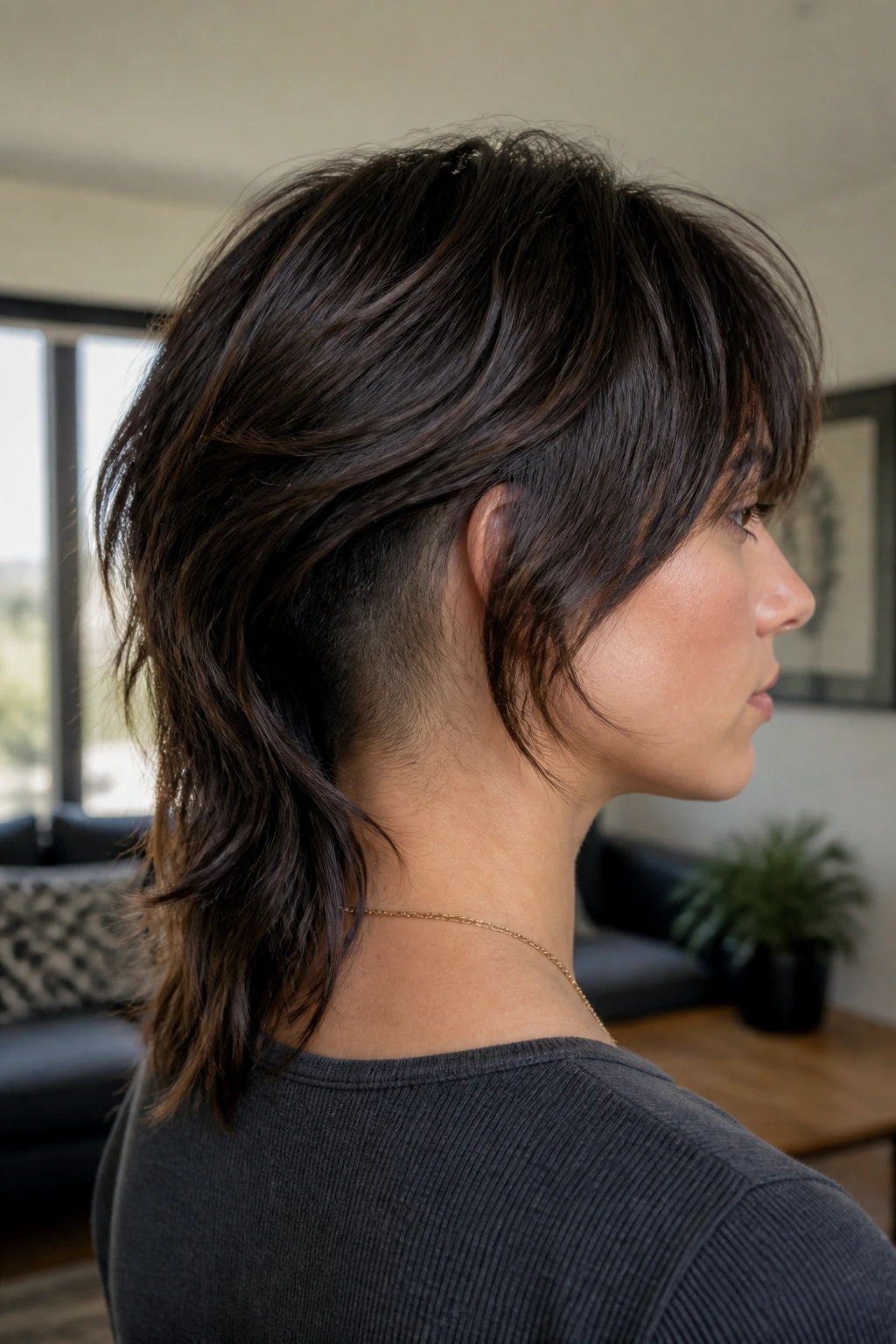
Ever feel like the back of your thick hair is wearing the haircut, not the other way around? This version fixes that by taking weight out of the underlayer where it tends to build up and create a shelf. From the outside, the cut still looks full. Inside, it breathes.
That hidden removal is especially useful if your hair flips under at the ends or sits flat at the crown but balloons at the back. A stylist can carve out some of that bulk without changing the visible length too much. It’s a quiet haircut. Sneaky, even.
The best part is that it looks normal from every angle. No one sees a big undercut strip or a dramatic chop. They just see hair that moves more easily and doesn’t sit like a dense block against the neck. If you’ve got enough thickness to feel the weight after a short day, this one deserves a serious look.
14. Off-Center Part Wolf Cut With Sweeping Bangs
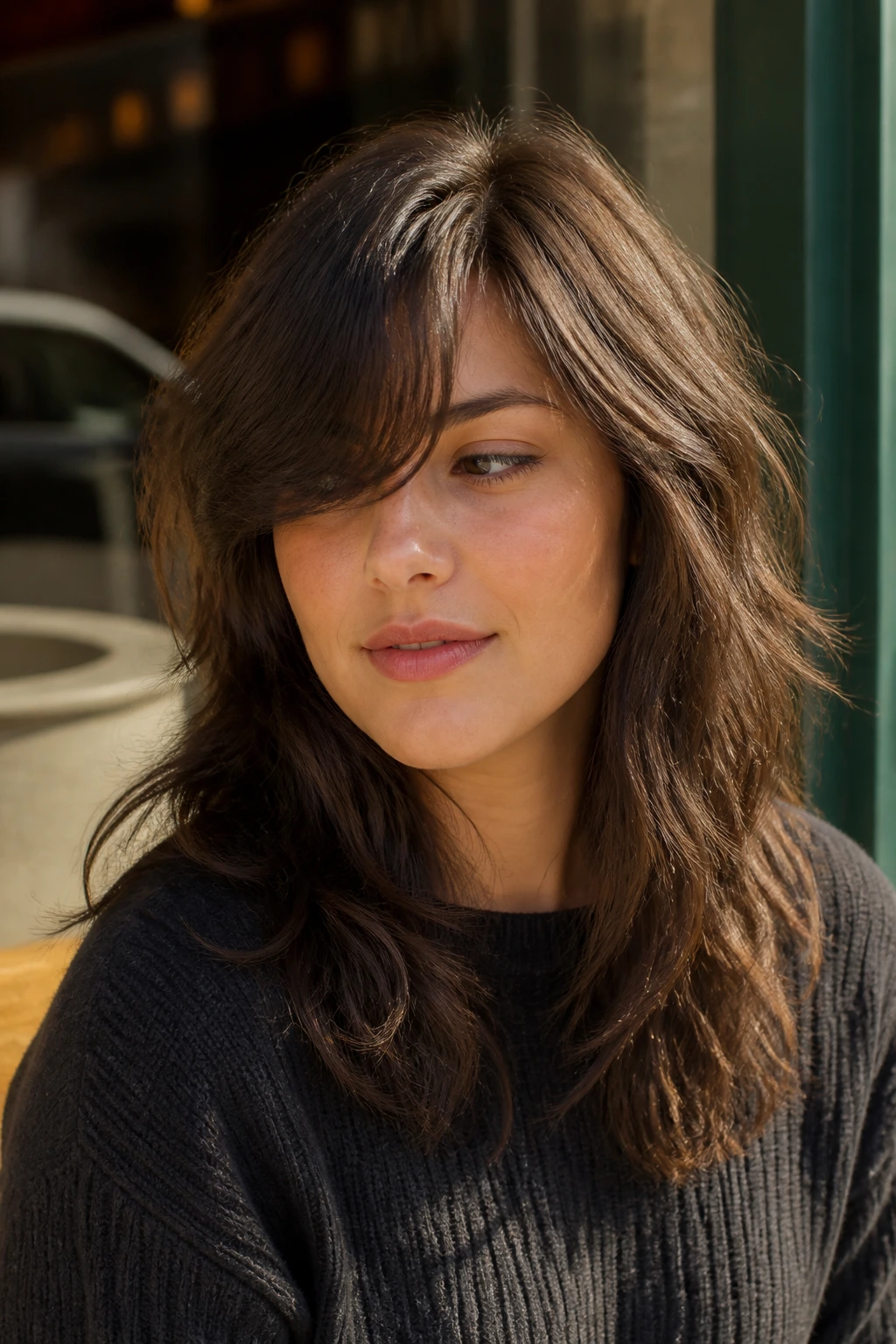
A small part shift can change the whole haircut. An off-center part gives thick hair a direction to fall in, which can take some of the width out of the silhouette and make the layers read softer. Add sweeping bangs, and the front gets a clean diagonal line that looks especially good on dense hair.
This shape is useful when a center part makes the hair too symmetrical and heavy. Thick hair often looks broader when it’s split dead down the middle, especially if the ends are blunt. Moving the part just a little off-center and letting the bangs sweep across one brow breaks that blocky feeling fast.
It’s a simple fix, but I like simple fixes. They’re easier to live with, and they grow out more gracefully. If you wear your hair tucked, clipped, or pinned on one side, this is one of the easiest wolf cut versions to keep looking intentional between appointments.
15. De-Bulked Halo Wolf Cut for Triangle-Prone Hair
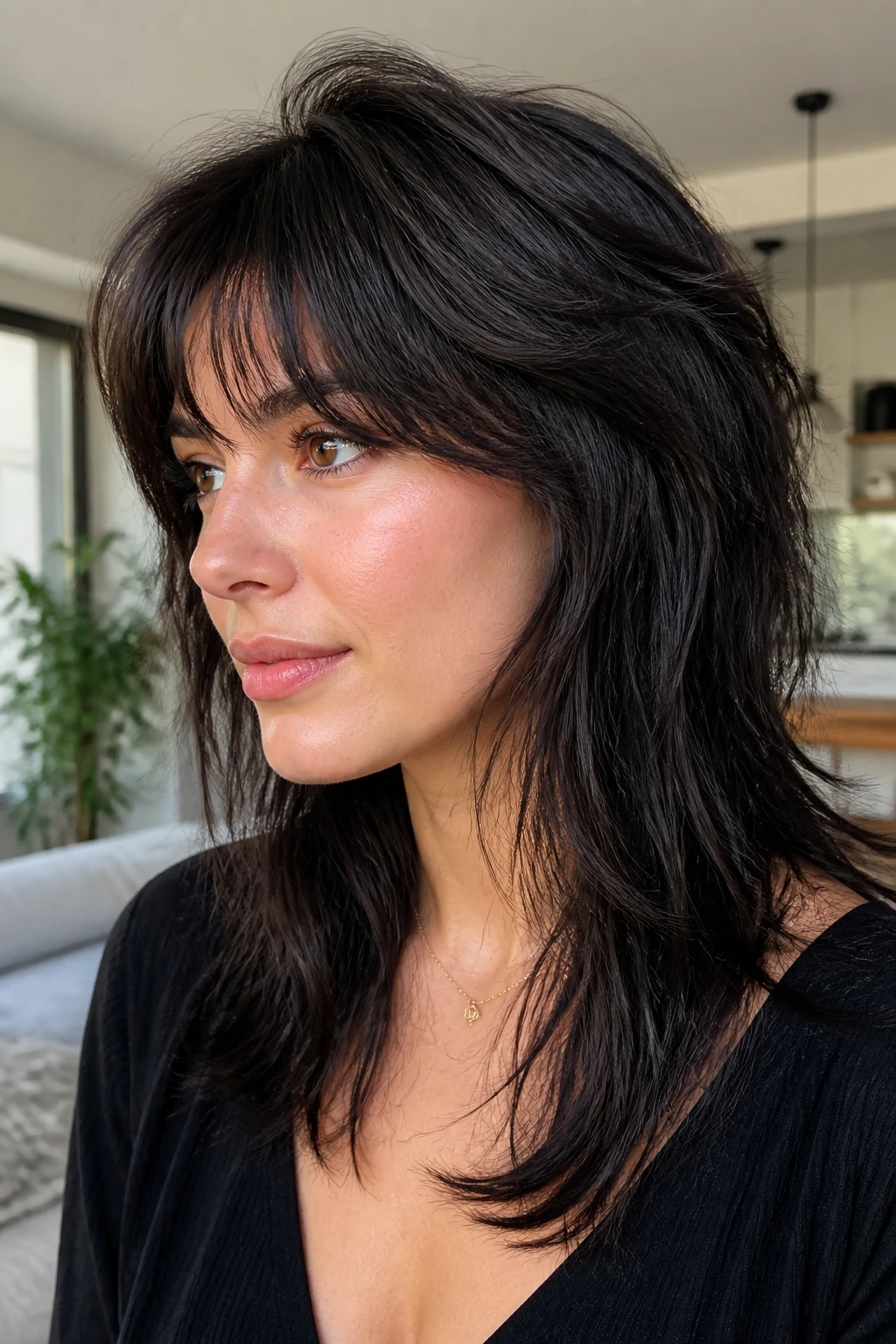
If your thick hair gets wider at the sides while the top lies flatter, this is the shape to study. The halo version takes weight out of the upper side area and around the crown so the haircut doesn’t spread outward like a bell. The name sounds dramatic. The effect is actually quite practical.
The key is not to over-shorten the crown. That’s where people get into trouble. You want strategic removal around the mid-head and upper sides, plus enough length through the bottom to keep the outline controlled. The result is a haircut that sits closer to the head without losing its wolf-cut looseness.
I’d recommend this for anyone whose hair grows into a triangle after a few weeks. The shape needs space at the top and a little discipline at the sides. If your stylist understands that balance, the cut can look much lighter without sacrificing density where it matters.
16. Soft Professional Wolf Cut With Blended Layers
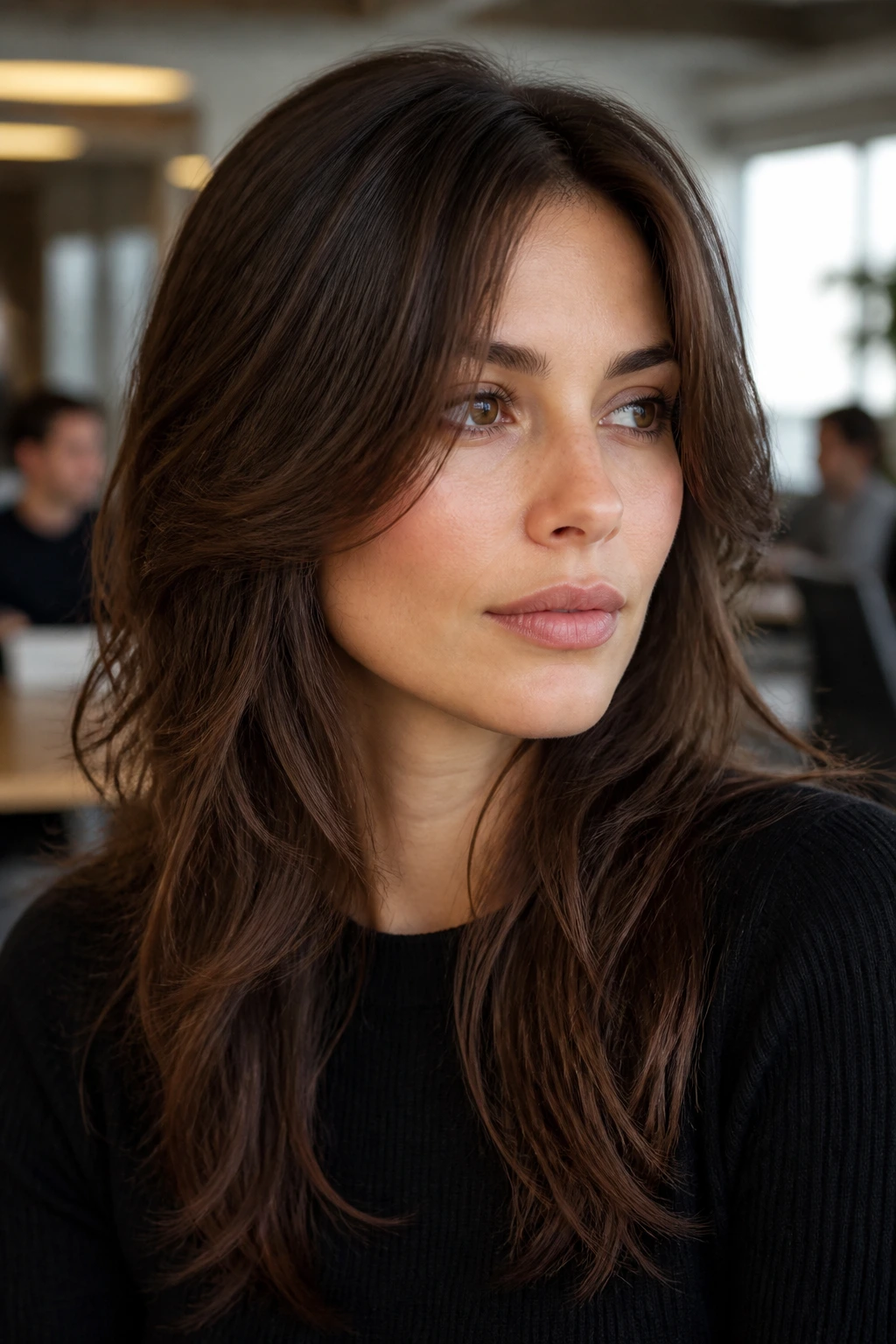
Not every wolf cut needs to read edgy. Some people want the movement, the lift, and the face framing without the sharper mullet line or the choppy texture that can feel too raw for their day-to-day life. The soft professional version keeps the layers blended enough to work in a meeting or on a crowded train without looking overstyled.
This cut usually keeps the fringe long or skips bangs entirely, then melts the face frame into the rest of the shape. The surface stays smooth. The ends still move. Thick hair gets the benefit of removed weight, but the overall outline feels tidy.
It’s one of the better options if you like changing your part, clipping it back, or blowing it out straight. The haircut can bend toward sleek or messy depending on the day. That flexibility is its real strength.
17. Mullet-Lite Wolf Cut With a Clean Neckline
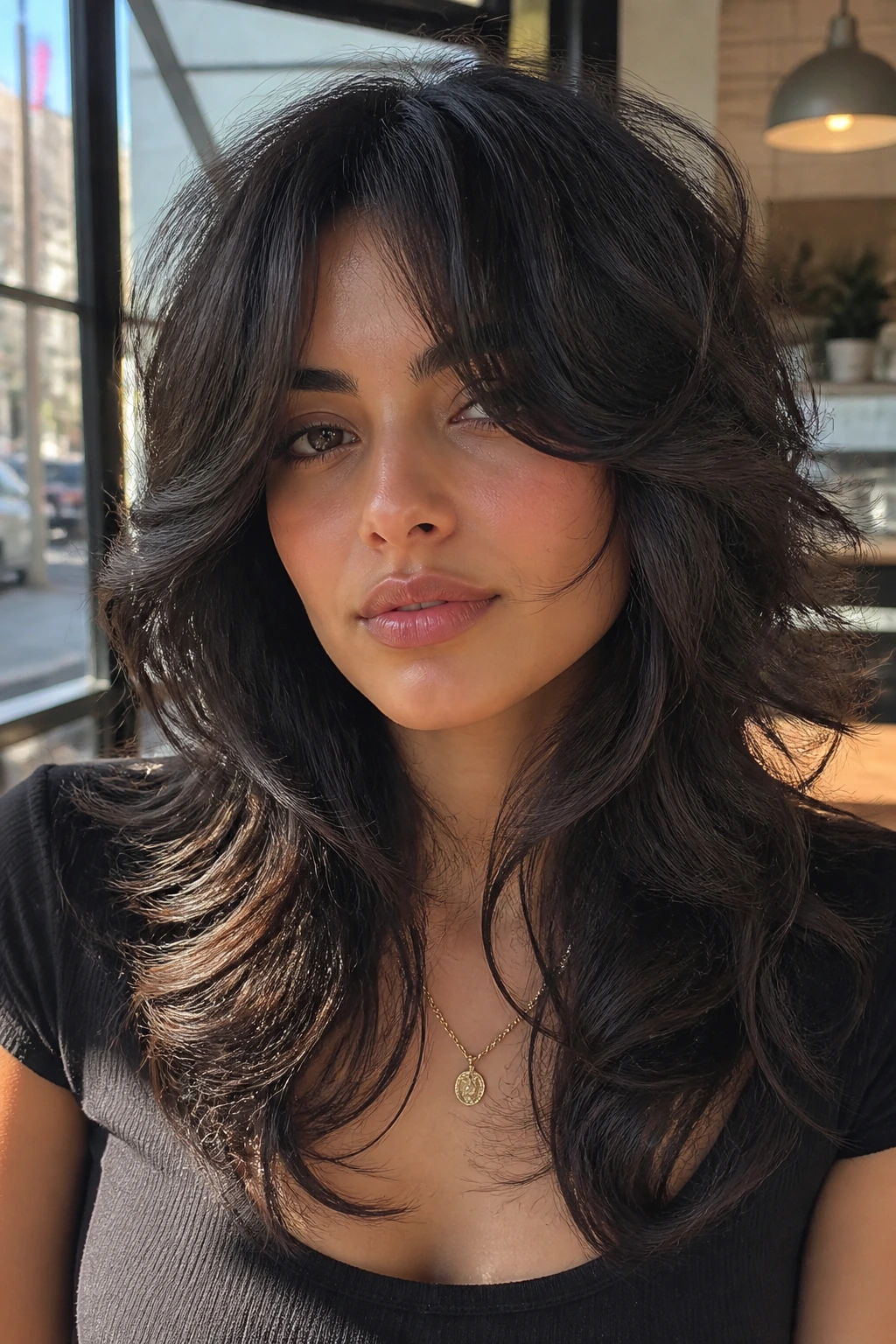
Some people want the mullet shape, but only a little. Enough to feel modern. Not enough to make the back look theatrical. Mullet-lite is that middle road, with a clean neckline and a softer transition from crown to nape.
The clean neckline is what keeps this from turning into a shaggy grow-out too early. Thick hair tends to bulk up at the back if the neckline is ignored, so a neat taper there matters more than people think. Keep the front pieces soft and layered, but let the bottom contour stay controlled.
This version is a smart move if you want a haircut that still looks sharp when it’s tied back. It also grows out better than the stronger mullet shapes. The outline stays readable for longer, which means fewer emergency trims and less frustration when your schedule gets messy.
18. Boho Wolf Cut With Long, Frayed Curtain Bangs
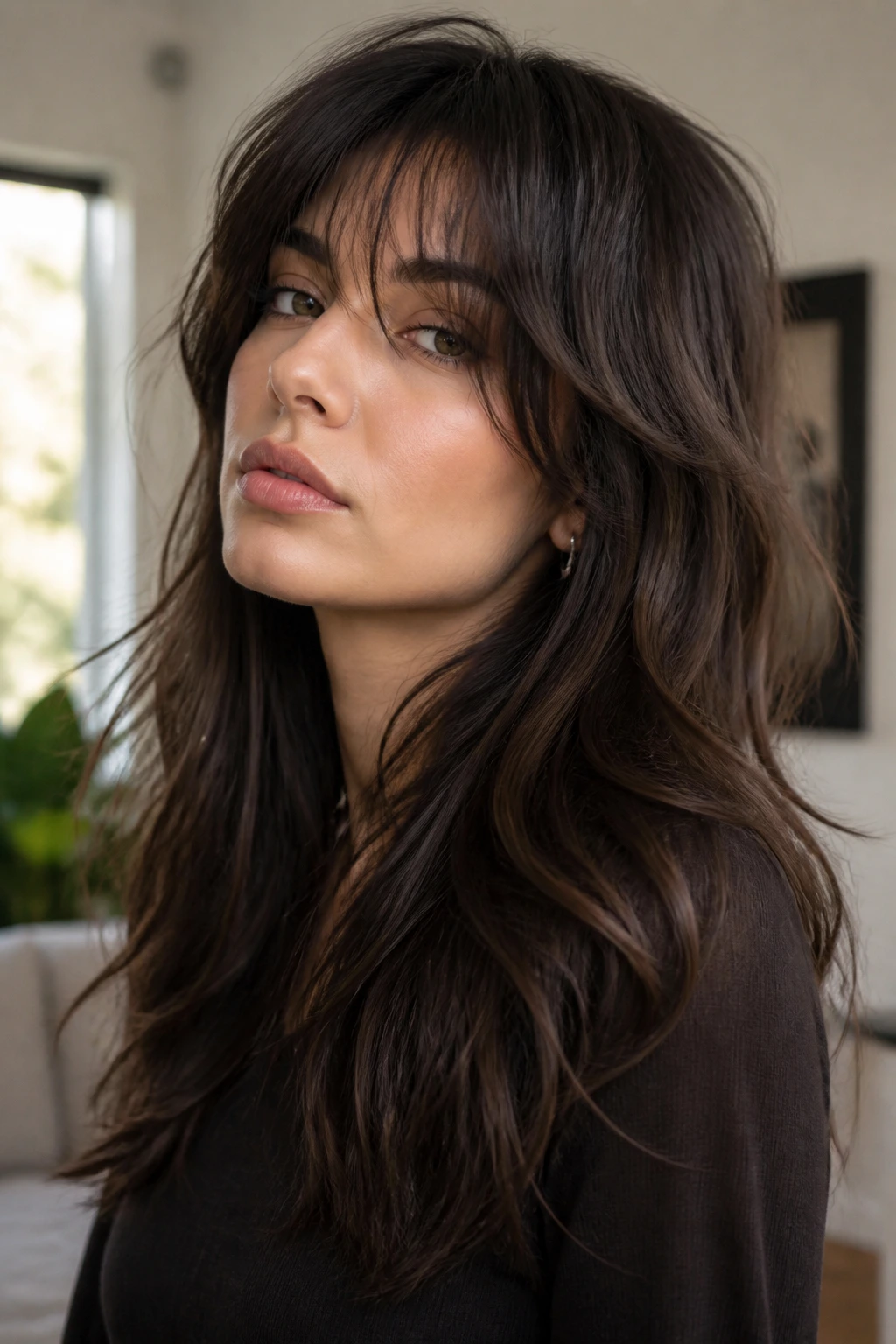
This one leans loose and lived-in. The curtain bangs are kept longer and a little frayed, so they sit around the cheekbones instead of snapping right at the brow. On thick hair, that softness keeps the front from feeling too blunt or too precious.
The frayed finish matters more than the length. You want the bangs to look broken up in a soft way, not choppy in a hacked-up way. That usually means point cutting the ends and leaving a little irregularity on purpose. Thick hair can handle that texture without losing the shape.
If you like pieces that fall into your face and shift when you move, this is a strong choice. It works well with messy buns, claw clips, and the kind of half-up styles that let the front layers wander where they want.
19. Blowout Wolf Cut That Looks Best with a Round Brush
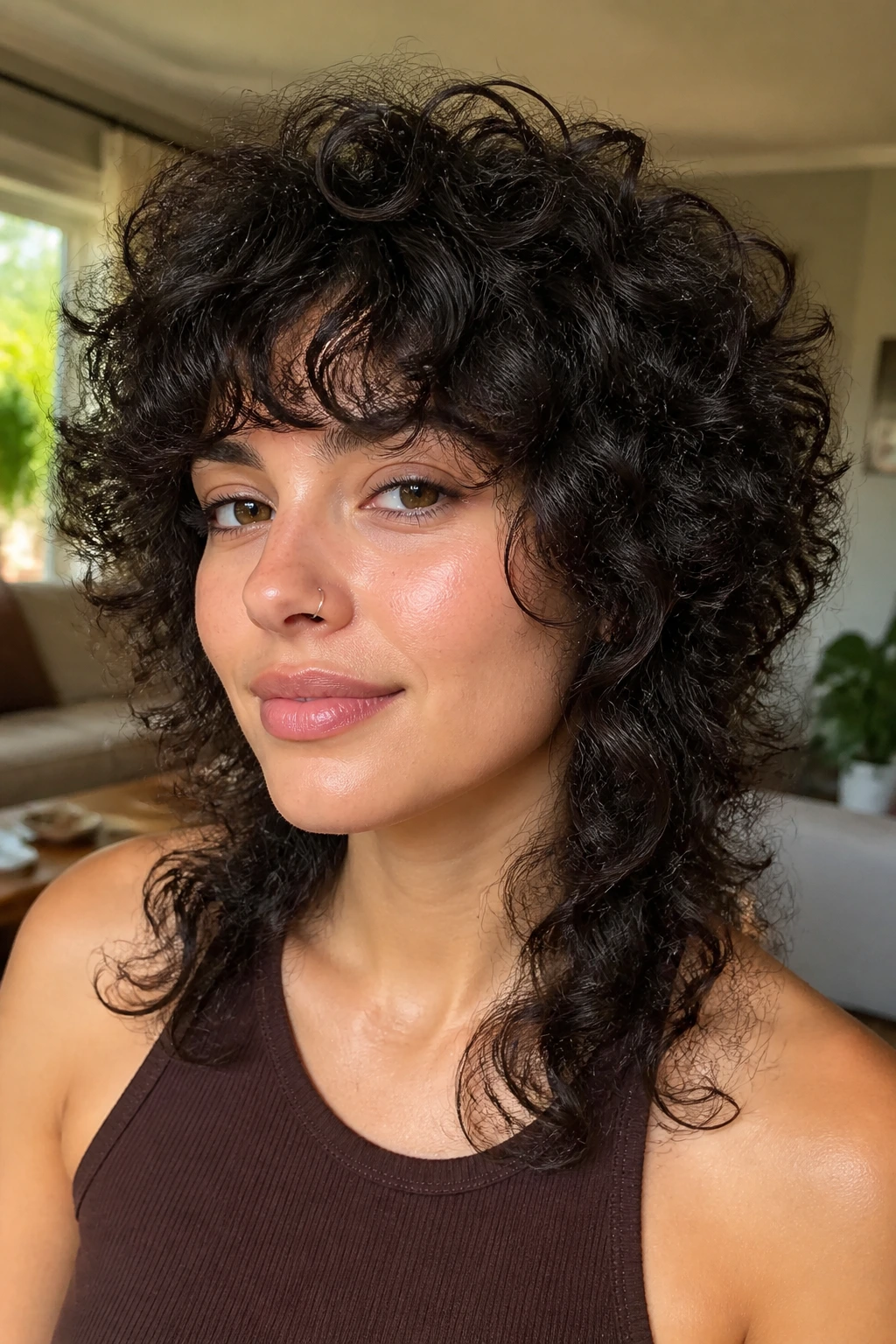
If you love volume that looks styled rather than accidental, this is the cut. The layers are designed to flip and lift under a round brush, which gives thick hair a soft salon finish instead of the heavier air-dried texture. It’s one of the few wolf cuts that can look equally good on day one and day three.
The crown gets the most attention here. Lift the roots with clips while the hair cools, then bend the ends under or out depending on the mood. A 1.5-inch round brush is usually enough. You do not need a giant blowout kit or twelve products. A good shape and the right brush matter more.
This cut flatters thick hair because the hair holds the blowout. The volume doesn’t collapse in ten minutes the way it can with finer hair. That staying power is the whole reason to choose this version if you like the feeling of polished texture.
20. Air-Dried Wolf Cut That Lets Thick Hair Do the Work
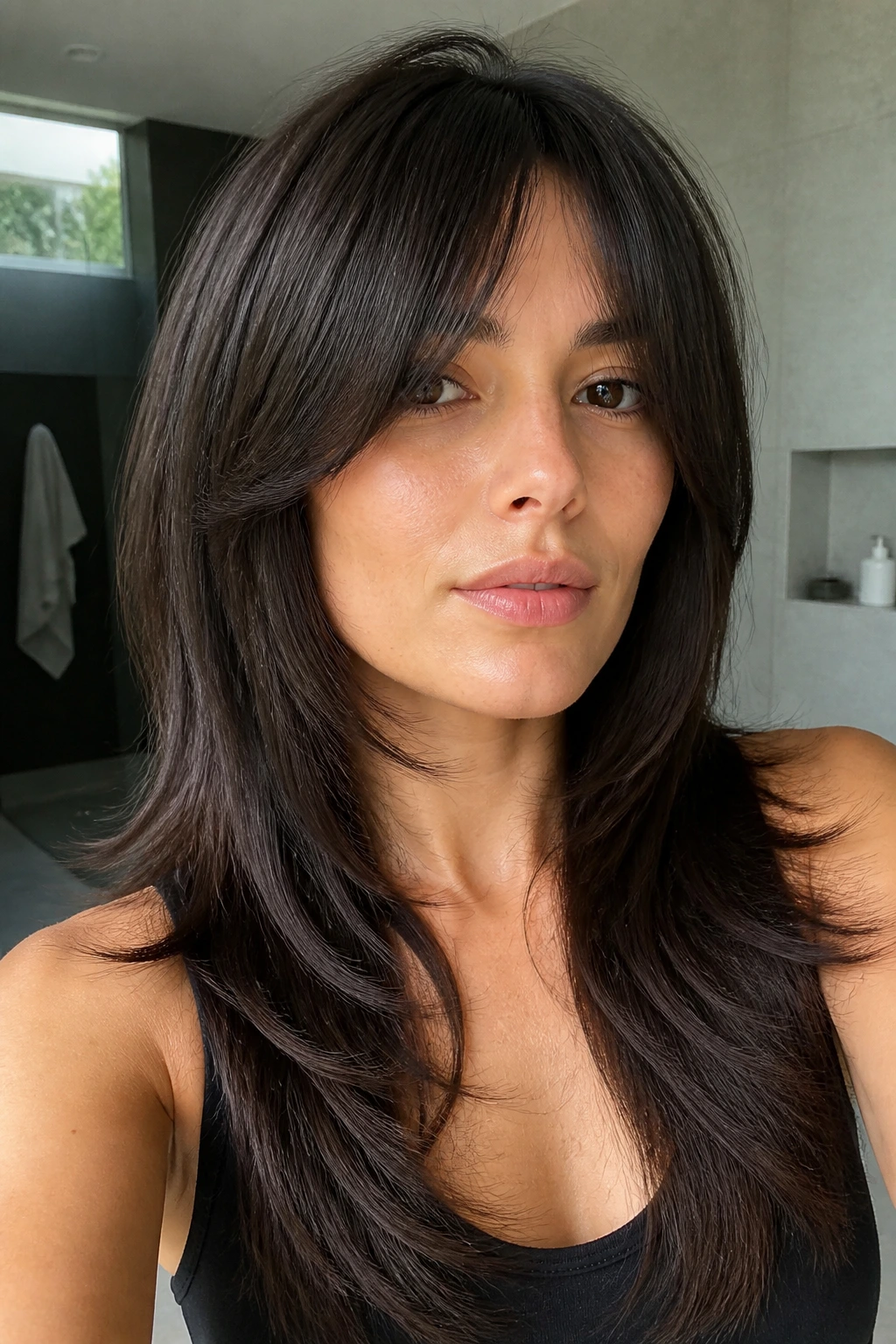
Sometimes the best wolf cut is the one that doesn’t ask for much. This air-dried version keeps enough weight in the ends to settle naturally, then uses shape and texture instead of a blow-dryer to do the rest. For thick hair, that can be a very good thing.
The cut should still have structure. Air-dried does not mean shapeless. It means the layers are placed so the hair can fall into movement on its own, especially if you already have wave, bend, or loose curl. A little leave-in, a little mousse, and a few finger-coils at the front are often enough.
I like this version for people who are over styling routines. Same. If you want the wolf cut look but you’d rather spend five minutes in the bathroom than twenty, this is the one to keep on your shortlist. It should look relaxed, not neglected.
Why a Wolf Cut and Thick Hair Work Better Than You’d Think

Thick hair gives a wolf cut something fine hair often cannot: a solid base. That sounds simple, but it changes everything. Layers need structure to read as shape instead of random pieces, and dense hair keeps the silhouette from disappearing by lunchtime. You can be more playful with bangs, crown lift, or a stronger back shape because the hair has enough body to support it.
The best wolf cut on thick hair is not a pile of short layers. That’s where people go wrong. The cut needs a clear perimeter, then careful weight removal inside that perimeter. If the whole head gets thinned equally, the ends go fluffy and the top can puff up. If the crown stays too heavy, you get a wide mushroom. Neither is flattering, and both are avoidable.
I also think thick hair gets away with more texture than anyone admits. A few frayed bits at the front can look deliberate here. A softer mullet line can feel chic instead of severe. The shape can be more expressive because the density keeps it from falling apart. That’s the real gift.
The Tools That Keep Thick Hair from Puffing Up
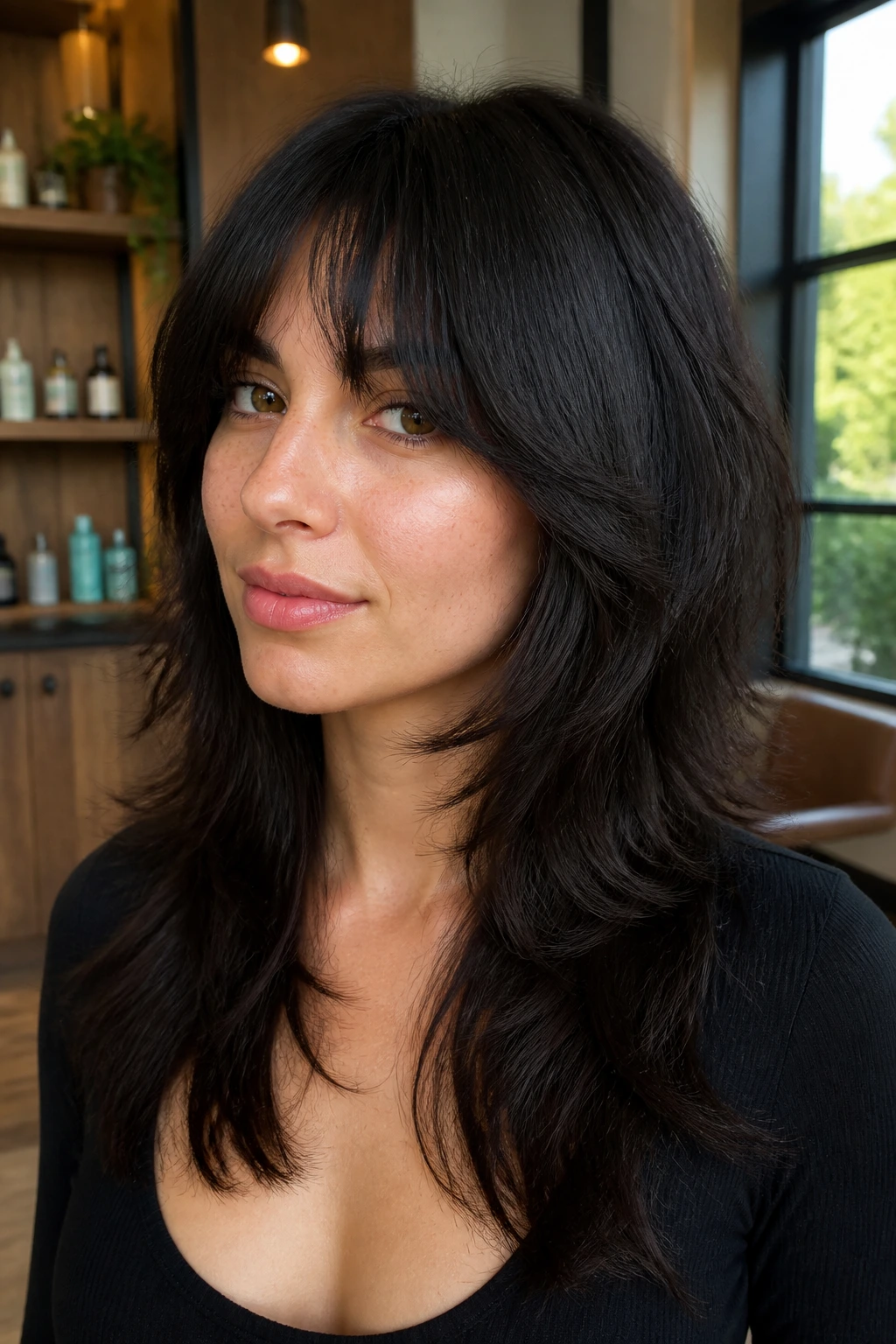
-
Blow dryer with a concentrator nozzle: The nozzle helps direct air along the hair shaft, which matters when thick hair wants to frizz in every direction.
-
Diffuser attachment: If your thick hair is wavy or curly, a diffuser keeps the layers from blasting apart and helps the crown set without losing its curve.
-
1.25-inch round brush: This is the sweet spot for bending curtain bangs and face-framing layers without creating tight curls.
-
Wide-tooth comb: Good for detangling dense hair in the shower or after a leave-in conditioner goes on. Pulling a brush through wet thick hair can create extra breakage.
-
Sectioning clips: Thick hair needs sections. Four clips are the bare minimum; six is better if your hair is long or very dense.
-
Heat protectant spray: Use it before blow-drying or ironing. Thick hair can hide damage for a while, then split ends show up all at once.
-
Texturizing spray or dry shampoo: These help keep the crown lifted and the layers piecey instead of heavy and flat.
-
1-inch curling iron or straightener: Small heat tools create bends in the front pieces more easily than a big barrel. That’s especially useful when the haircut needs a little edge, not big curls.
Product Picks That Match Thick Hair’s Texture

Thick hair usually needs hold more than shine. That’s the part people get wrong. A heavy oil can make the ends look nice for fifteen minutes, then drag the crown down. Start with a shampoo and conditioner that clean well without turning the hair into straw, then build the styling from there.
For coarse, dry thick hair: a leave-in cream with slip in the mid-lengths and ends helps the layers lie down instead of exploding outward. Silicone is not the enemy here. Used correctly, it can smooth the cuticle and keep the edges from fraying.
For thick hair that gets oily at the roots: use a light conditioner from ear level down and keep the scalp cleaner. A root-lift mousse or foam works better than a rich styling cream at the crown.
For wavy or curly thick hair: pick a curl cream or gel that gives shape without crunching the layer pattern. The wolf cut already creates movement; you don’t need a product that fights it.
For straight thick hair: texturizing spray, dry shampoo, and a light heat protectant do more than a glossy serum ever will. The goal is controlled movement, not slickness.
A clarifying shampoo every couple of weeks also helps. Thick hair picks up product faster than people expect, and once residue builds up, the cut loses its swing.
How to Style a Wolf Cut Without Flattening the Crown
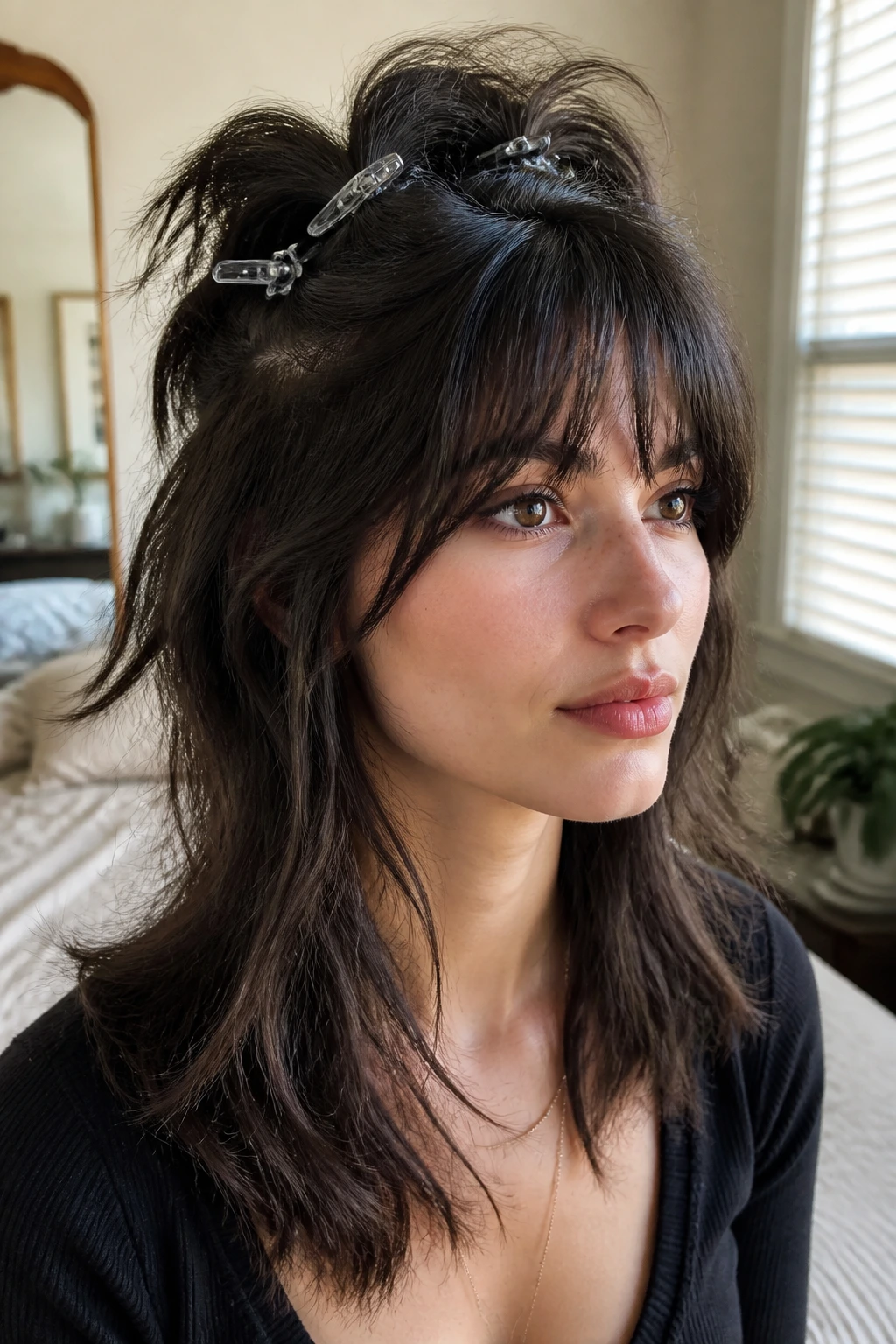
Air-Dry Texture: If your hair has wave or curl, scrunch in a lightweight mousse while it’s wet, then flip the head once or twice before leaving it alone. The crown should be lifted with clips for a few minutes, not pressed flat by a towel.
Blow-Dry Lift: Blow-dry the roots first, aiming the nozzle upward at the crown for a few seconds at a time. Once the top has some memory, use a round brush only on the front pieces and the ends. That keeps the shape from ballooning.
Broken-Up Ends: If the ends look too solid, bend the last 1 to 2 inches with a flat iron or small iron, then let them cool in your hand before touching them. Cooling matters. Warm hair reshapes easily; cooled hair holds the bend.
Quick Reset: Mist the layers lightly with water, add a touch of leave-in, and twist the front pieces while they dry. It takes almost no time, and it keeps thick hair from losing the wolf shape by noon.
Small Moves That Make the Shape Yours
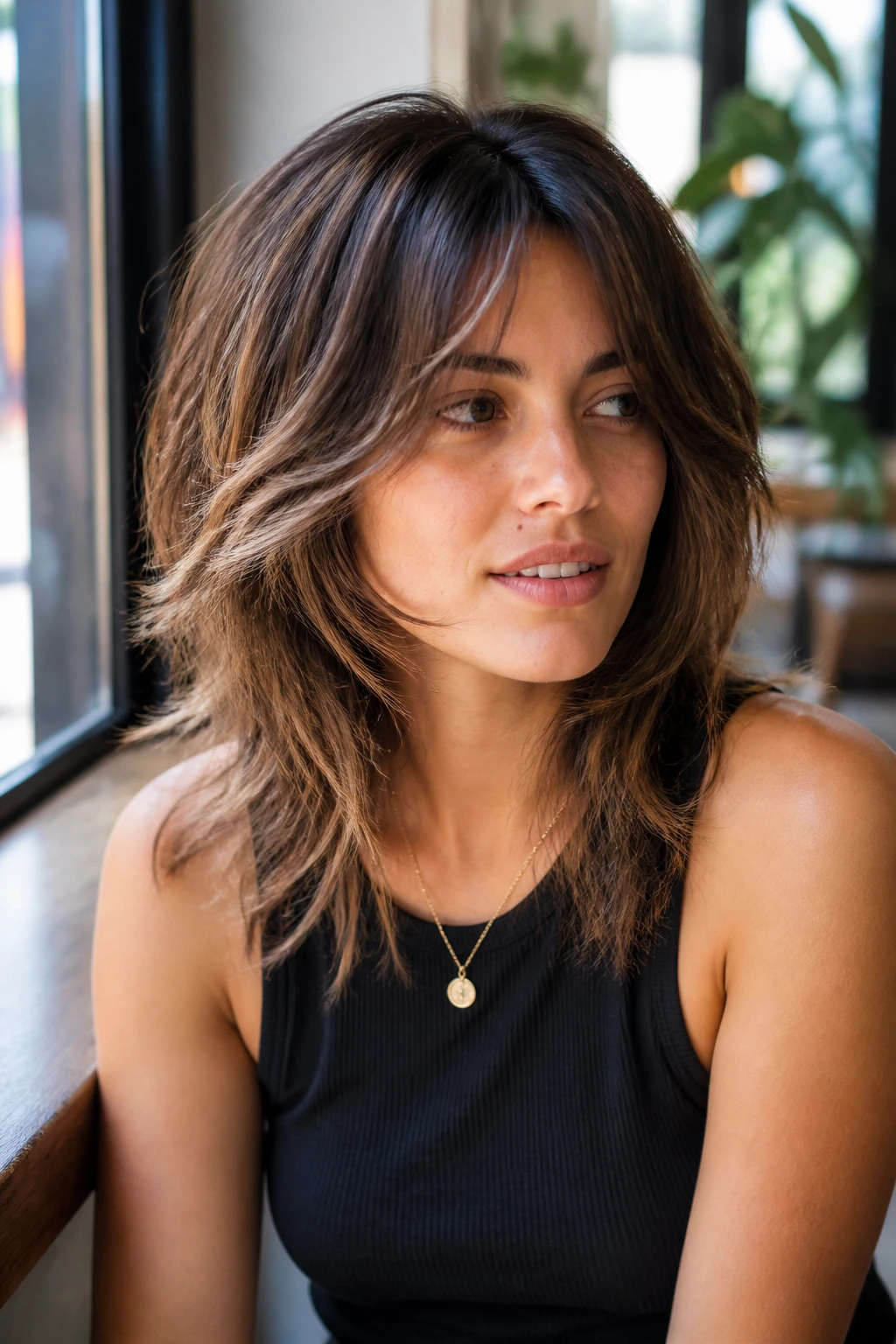
Texture Boost: A pea-sized amount of styling cream on the ends is enough for most thick hair. Put it on the bottom half only. The roots need lift, not slickness.
Customization: If your face is broader around the jaw, keep the front pieces longer and start the shortest face frame closer to the lips than the cheekbones. If your forehead is short, skip heavy fringe and use swept layers instead.
Finishing Moves: Tuck one side behind the ear, clip one temple back with a flat barrette, or let the bangs fall slightly uneven. Small asymmetry makes the cut feel lived-in instead of overworked.
Make-It-Yours: Curly thick hair usually looks best with longer crown layers and less thinning. Straight thick hair can take more point cutting through the ends. Coarse thick hair often needs more weight left in the perimeter than people think.
Keeping the Shape Between Salon Visits
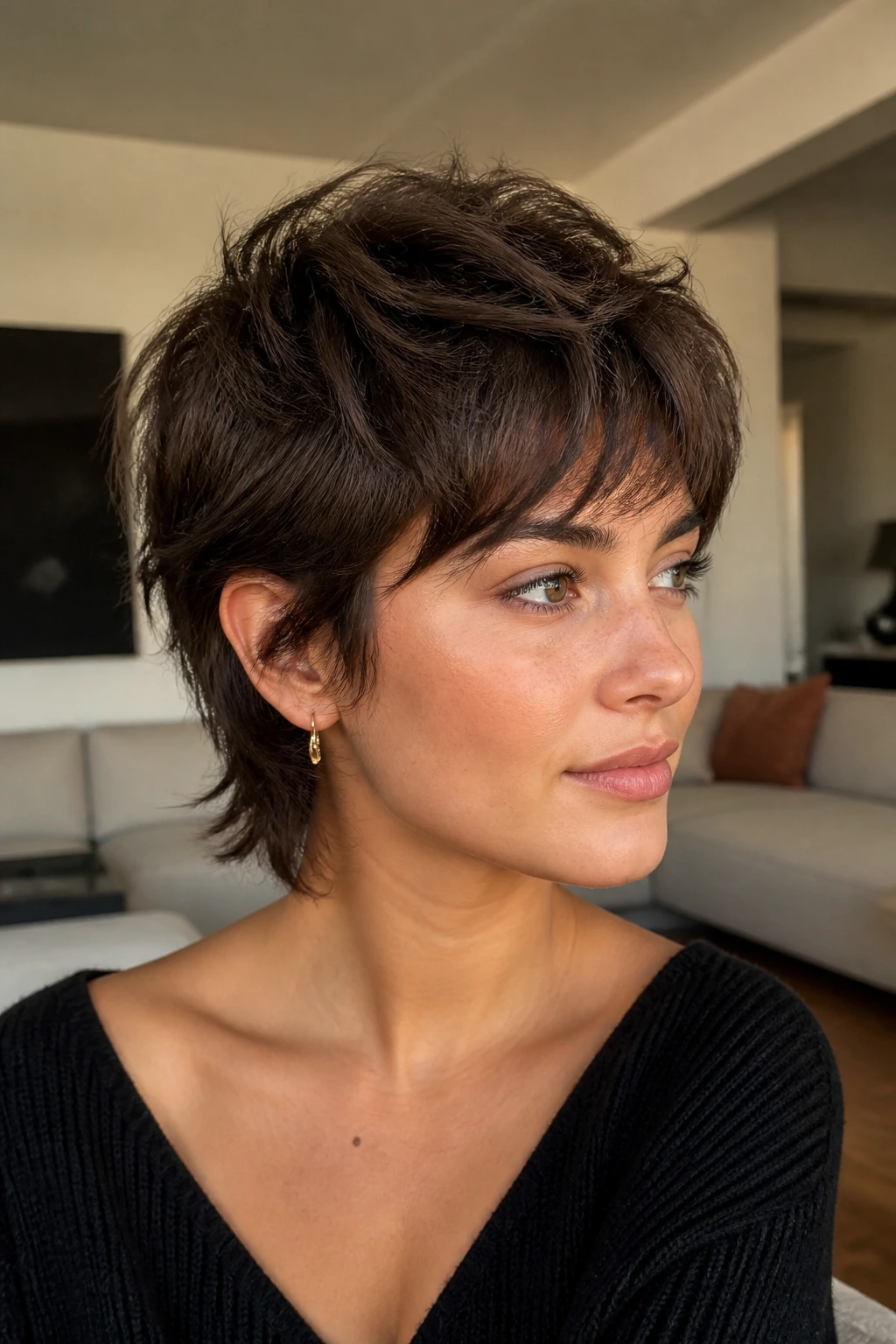
Thick hair hides growth better than fine hair, which is a blessing and a trap. The shape can stay decent for weeks, but the fringe, neckline, and face frame still need attention if you want the haircut to keep reading as a wolf cut rather than a random grow-out.
A trim every 8 to 10 weeks is a good rhythm for most versions. If you wear bangs, the fringe may need a dusting every 3 to 5 weeks. That tiny trim changes the whole face-framing effect. Skip it too long and the bangs start falling into your eyes in a way that looks accidental, not stylish.
Product buildup matters too. Thick hair can hold onto dry shampoo and texture spray, especially if you use them for volume every day. A clarifying shampoo every 2 to 4 weeks keeps the crown from going dull and heavy. If your ends feel coated but your roots are flat, that’s a sign the hair needs a real wash, not another spray.
At night, a satin pillowcase or a loose top clip can keep the layers from getting mashed. In the morning, a light mist of water and a quick scrunch is usually enough to wake the shape back up.
Variations and Adaptations to Try
The Softer Office Wolf: Keep the layers blended and the fringe long, so the haircut reads polished from a distance. This version still has movement, but it does not push hard into mullet territory. It’s the best pick if you need the shape to work with button-down shirts and clean lines.
The Curly-Crown Wolf: Cut the top a touch shorter and let the curls expand around the crown. The lower layers stay longer so the silhouette doesn’t balloon out at the cheeks. This is the version that makes dense curls look playful instead of bulky.
The Heavy-Duty Debulked Wolf: If your hair feels like a winter coat, ask for careful interior weight removal through the back and sides. The outside line stays full, but the inside loses enough bulk to make day-to-day styling less of a fight. It’s a practical cut, not a flashy one.
The Bang-Free Wolf: Skip the fringe and lean on face-framing layers that start near the jaw. This is a good option if you wear glasses, hate anything touching your forehead, or want a shape that can live in a ponytail without awkward pieces falling out.
The Grow-Out Wolf: Keep the perimeter strong and the layering soft, so the haircut can drift into a shag as it grows. This one makes sense if you do not want to live in a salon chair every six weeks. It softens nicely, which is half the battle.
Common Shape Mistakes to Avoid

-
Taking too much weight off the crown: The cut gets puffy on top and flat underneath. The fix is internal layering, not a short top section that sticks up on its own.
-
Thinning the ends until they look see-through: Thick hair can take texture, but it still needs density at the bottom. If the perimeter looks fuzzy or wispy, the haircut was over-texturized.
-
Ignoring the way your hair falls at the nape: Thick hair often collects bulk at the neckline. If that spot is left untouched, the whole shape can feel heavy even when the top is layered.
-
Using heavy cream at the roots: The hair goes soft, then flat, then limp. Keep richer products from the scalp down and save them for the ends.
-
Choosing bangs without checking your cowlicks: Fringe that splits apart every morning is a daily annoyance. If your front hairline fights you, go longer with curtain or bottleneck bangs instead of forcing a blunt fringe.
Frequently Asked Questions
Is a wolf cut good for very thick hair?
Yes, when the layers are placed with intention. Thick hair gives the wolf cut the body it needs, but the stylist has to remove weight in the right places so the shape doesn’t puff outward.
Will a wolf cut make my hair look thinner?
It can make the ends look lighter, but that is not the same as looking thin. The goal is to reduce bulk and create movement while keeping enough density in the perimeter to preserve the silhouette.
Should thick hair get a wolf cut wet or dry?
Straight thick hair is often cut wet, then refined dry. Curly or very wavy thick hair usually benefits from some dry cutting or a dry check, because shrinkage changes where the layers sit.
Can I get a wolf cut without bangs?
Absolutely. Face-framing layers can do the job without a fringe. That’s often the better choice if you wear glasses, sweat at the forehead, or simply do not want bangs in your life.
How often should I trim a wolf cut on thick hair?
About every 8 to 10 weeks keeps the shape neat. If you have bangs or a strong fringe, the front may need a touch-up sooner so it does not fall into your eyes.
What if my wolf cut looks too puffy?
Usually the crown is too short or the styling products are too heavy. Switch to a lighter mousse or texturizing spray at the roots, and ask for more internal weight removal instead of more layers on top.
Can thick hair air-dry into a wolf cut shape?
Yes, if the layers are cut to work with your texture. Wavy and curly thick hair usually air-dries well with a little mousse or leave-in; straight thick hair may need a bend through the front to keep the shape from sitting too square.
What should I tell my stylist if I want a softer version?
Say you want the movement of a wolf cut, but with blended layers and a cleaner outline. Bring photos that show the front, the back, and the side view so the stylist can see how dramatic you want the shape to be.
The Shape That Lets Thick Hair Move
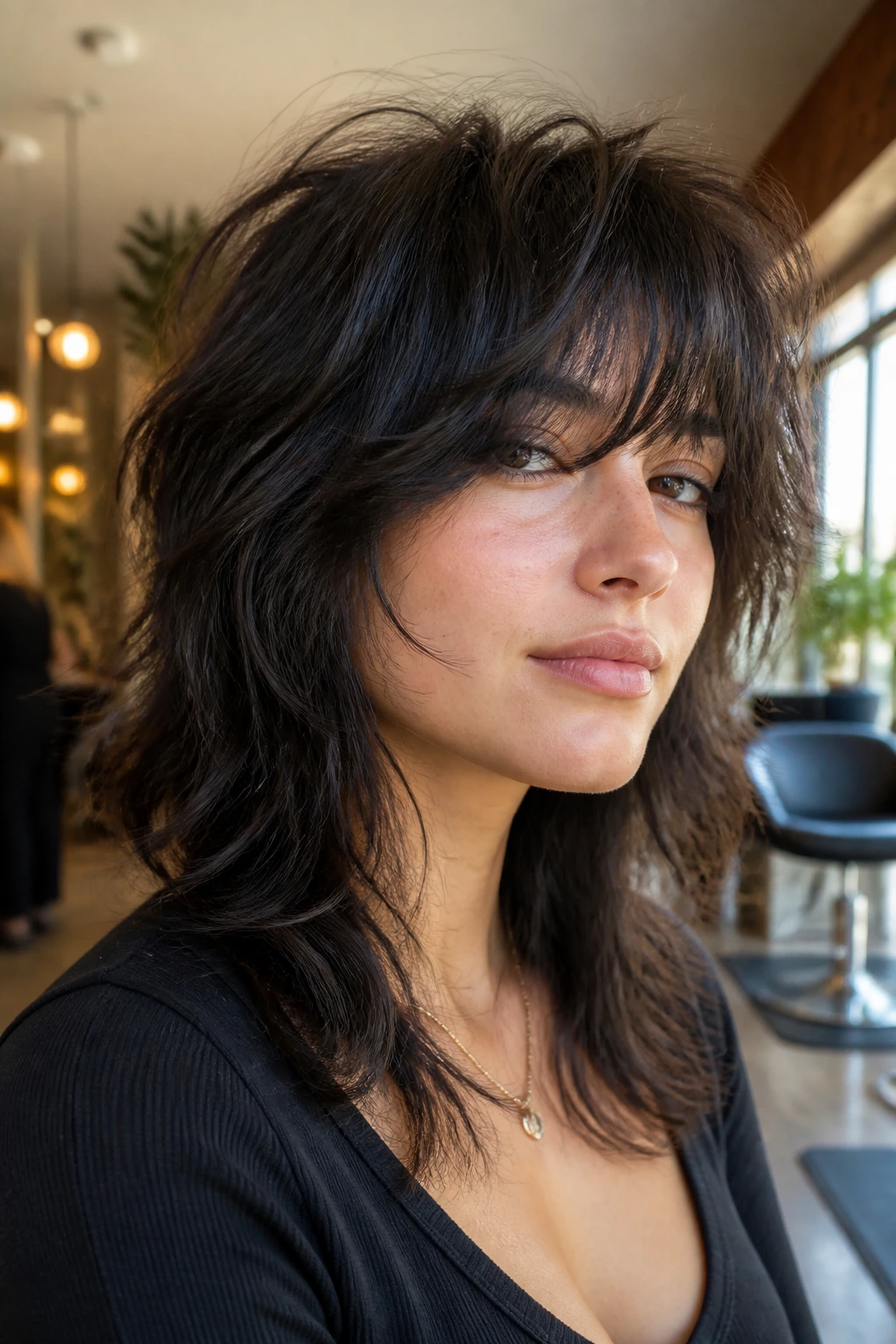
The best wolf cut for thick hair doesn’t fight the density. It gives it a job. The layers lift the crown, the fringe frames the face, and the perimeter keeps enough weight to hold the whole thing together instead of fraying into nothing.
That’s the reason this haircut works in so many forms. It can be soft, sharp, curly, straight, long, cropped, polished, or messy. Thick hair gives the cut options, and the right version keeps those options useful instead of fussy.
Bring a real photo, talk in inches, and be honest about how much bulk you want gone. Do that, and the haircut has room to breathe.
