



A good wavy wolf cut doesn’t look controlled. That’s the charm. The crown lifts a little, the sides fall in soft bends, and the ends keep their movement instead of sitting there like a chopped-off shelf.
The difference between a flattering wolf cut and a headache of a haircut is usually softness. Too much thinning at the wrong spot, and the wave pattern turns fuzzy. Too little shaping, and the cut loses that loose, face-skimming curve that makes the style feel alive. Wavy hair is honest hair. It shows every decision.
These 20 wavy wolf cuts for soft texture are the versions I keep coming back to when I want shape without stiffness, edge without that crunchy, overworked finish. Some are short. Some skim the collarbone. Some lean shaggy, some lean romantic, and a few sit right on the border between “I woke up like this” and “my stylist absolutely knew what they were doing.”
Why This Collection Works So Well
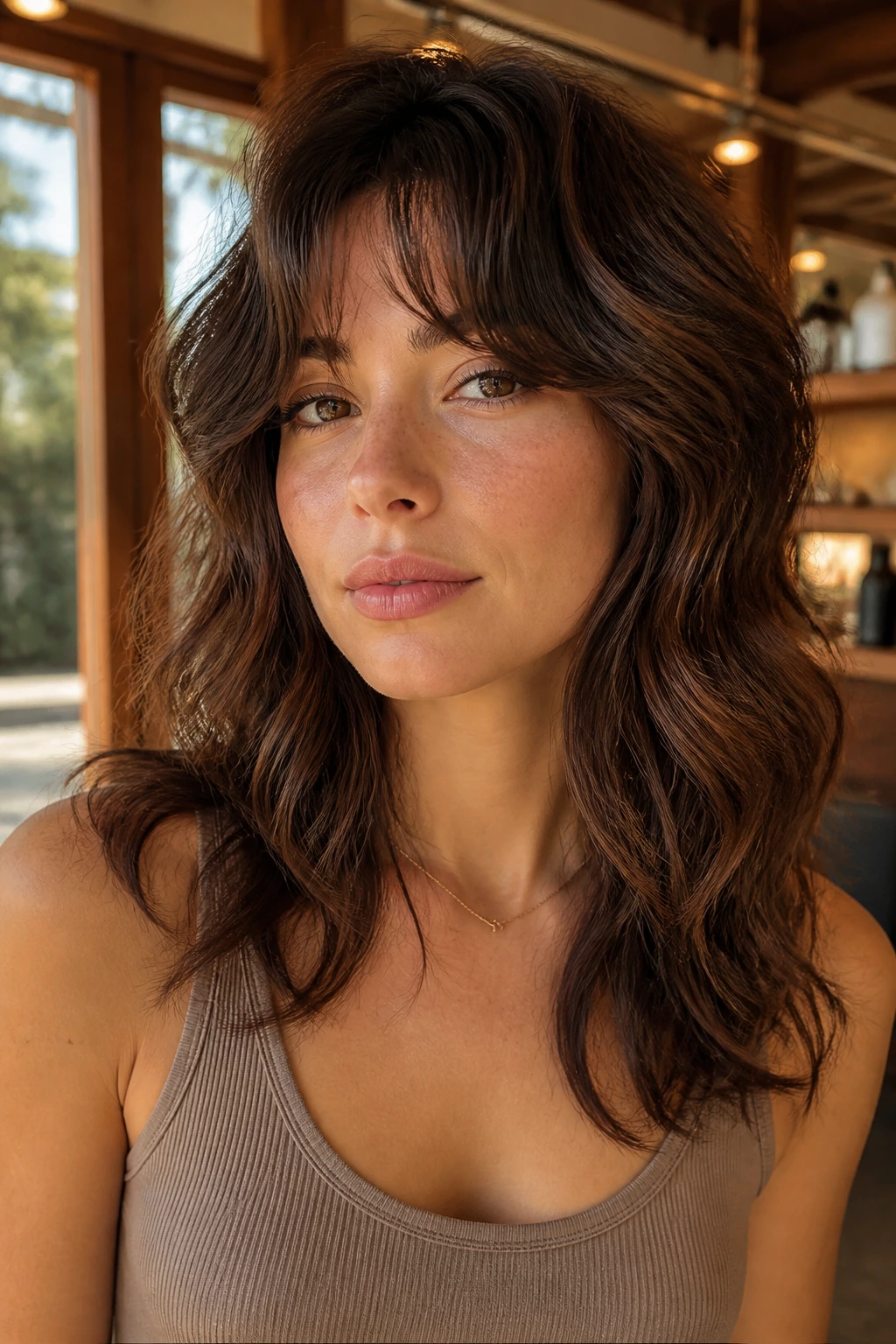
- Soft texture keeps the wolf cut from looking overdone: The wave pattern already gives you bend and lift, so the haircut only needs to guide it.
- The right layers reduce bulk without killing movement: Shorter crown pieces and longer perimeter pieces create shape without turning the ends wispy.
- These cuts grow out with less drama: A good wolf cut does not fall apart after a few weeks; it just turns into a softer shag.
- You can tune the attitude up or down: Curtain bangs, side parts, and face-framing pieces change the mood fast without changing the whole silhouette.
- They work with air-drying and diffuser styling: That matters. A cut that only looks good after 40 minutes with a round brush is asking for trouble.
- Fine waves and thick waves both have options here: The trick is choosing where the layers start and how much weight gets removed underneath.
1. Collarbone Wolf Cut with Curtain Bangs
This is the version I’d hand to someone who wants a wolf cut but doesn’t want to look like they borrowed it from a music video. The collarbone length keeps the hair feeling soft around the shoulders, while the curtain bangs break up the front without making the whole haircut feel heavy. On wavy hair, those bangs fall into a bend that looks intentional even when you barely style them.
Why It Flatters Soft Waves
The collarbone sits in that sweet spot where waves have enough room to swing, but not so much length that they stretch flat under their own weight. That matters. Once hair gets much longer, the wave pattern can start to droop at the bottom, and the cut loses energy.
Curtain bangs are doing a lot of work here. They open the face, but they also keep the front from feeling blunt or boxy. Ask for the shortest pieces to land somewhere between the cheekbone and the tip of the nose, then let them blend into longer layers at the jaw.
- Best for: medium-density waves that need shape without losing softness.
- Styling note: scrunch in mousse, then diffuse until the roots are about 70% dry.
- Ask for: soft internal layers, not a heavily razored finish.
- Watch the ends: if they get too thin, the whole cut can flip outward in a jagged way.
Salon note: tell your stylist you want the bangs to blend out, not sit as a hard curtain line.
2. Chin-Skimming Wolf Cut with Cheekbone Fringe
Why does this length feel so fresh? Because chin-skimming hair gives the wave pattern a place to bounce, and the cheekbone fringe lifts the face without swallowing it. The result is light, swingy, and a little cheeky in the best way.
This version works when you want movement around the jaw but you don’t want a lot of length hanging around your neck. It’s especially good if your waves clump nicely near the top and loosen out toward the ends. The cut lets that happen on purpose instead of by accident.
Ask your stylist for layered pieces that hit around the cheekbones and slide into a soft perimeter that lands at or just below the chin. Not blunt. Never blunt. A blunt chin-length wolf cut can look boxy fast, and the whole point here is softness.
What to Style It With
A pea-sized amount of lightweight curl cream is enough if your waves are fine. If your hair is thicker, use a mousse at the roots and a tiny bit of cream through the mids.
This cut looks best when you keep your fingers out of it while it dries. That’s the annoying part. It’s also why it works.
3. Long Wolf Cut with Feathered Ends
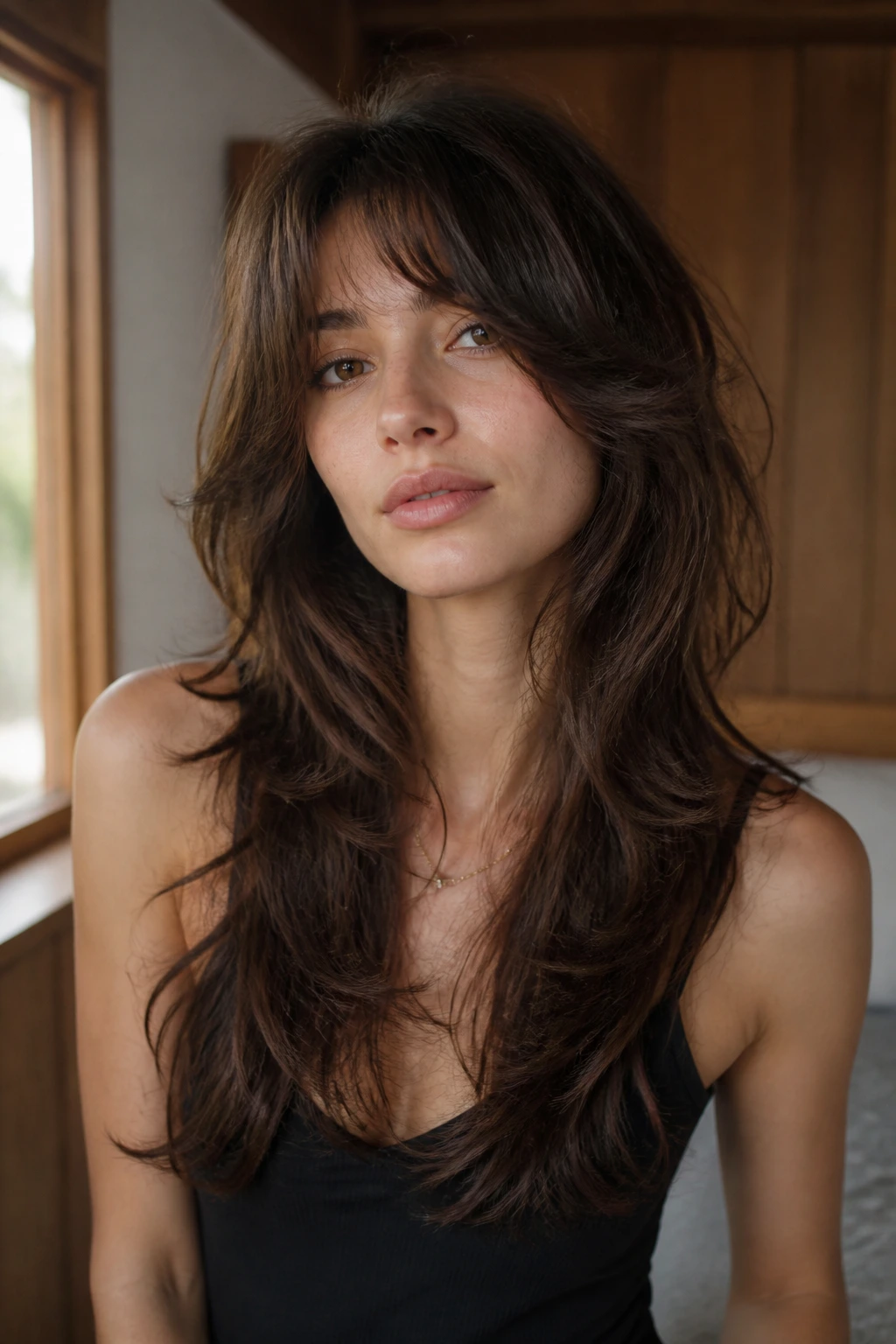
The long wolf cut is for people who want the shape but refuse to give up length. Good call. When the layering is done well, the hair keeps its sway, and the ends don’t look like one heavy curtain.
Feathered ends matter more here than on shorter versions. Long hair can carry a lot of weight, so the stylist needs to remove bulk carefully through the interior while leaving enough length at the bottom to keep the silhouette soft. If the ends are over-thinned, the wave pattern starts to split into scraggly little pieces. Not cute.
This version looks especially nice when the layers begin somewhere below the cheekbones and blend gradually into the lower half of the hair. You should still see a wolf-cut shape, but it won’t feel aggressive. Think motion, not spikiness.
Best Use Case
- You like wearing your hair down most days.
- You want a cut that still works pulled back into a low claw clip.
- Your waves need room to stretch without falling flat.
- You hate the look of a blunt, one-length hem.
Pro move: keep the finishing product away from the last 2 inches of the hair if your ends tend to frizz. Let those ends stay airy.
4. Crown-Lift Wolf Cut with Invisible Layers
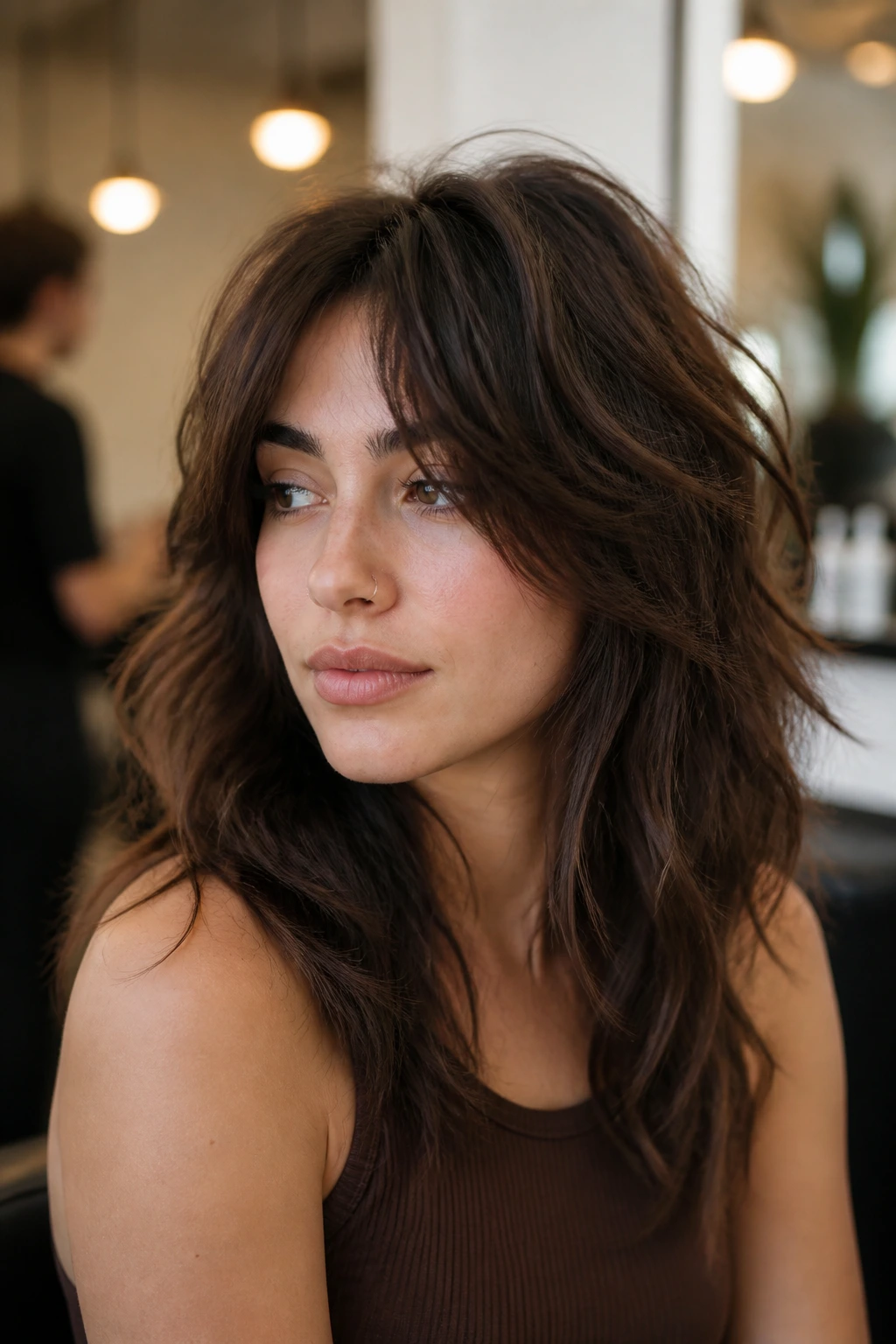
This one is all about the top of the head. A lot of wolf cuts fail because the crown is left too flat, then the sides get over-textured to compensate. That gives you a triangle with a bad attitude. The better move is to build lift up top and keep the layers underneath soft enough to disappear into the waves.
Invisible layers are the trick. They sit inside the haircut instead of shouting from the ends, which means the shape reads as fuller and softer rather than chopped. On wavy hair, that subtle lift is enough to make the style look done without feeling styled.
Ask for crown layers that start higher than you think, especially if your hair is medium to thick. The crown should have a little air around it. Not helmet hair. Air.
A center part keeps this cut relaxed, but a slight off-center part adds more height at the root. Both work. The main thing is that the top doesn’t go limp by noon.
5. Bottleneck Bang Wolf Cut for Soft Frames

Bottleneck bangs are a smart middle ground. They’re shorter in the center, then they open and soften toward the sides, which means they don’t slam the face with a hard line. On a wolf cut, that shape works beautifully with wavy hair because the fringe bends instead of sitting stiff.
Why It Works
The narrower center keeps the eyes clear, while the longer sides blend into the cheek and jaw layers. That matters if you want softness around the face but still want some structure. The cut doesn’t need to be loud to be effective.
This style is especially nice on hair that likes to separate into loose, piecey waves. The fringe gives the front some focus, and the rest of the cut can stay slightly undone. You end up with shape near the face and movement everywhere else.
Ask for These Details
- Keep the center of the fringe just above the brows.
- Let the outer corners lengthen into the cheekbone area.
- Add soft layers through the side panels, not just the top.
- Avoid heavy texturizing at the very tips.
One-line tip: if your fringe dries flat, clip it side-to-side while it cools; that tiny bend saves the whole front.
6. Air-Dry Wolf Cut for Loose Waves
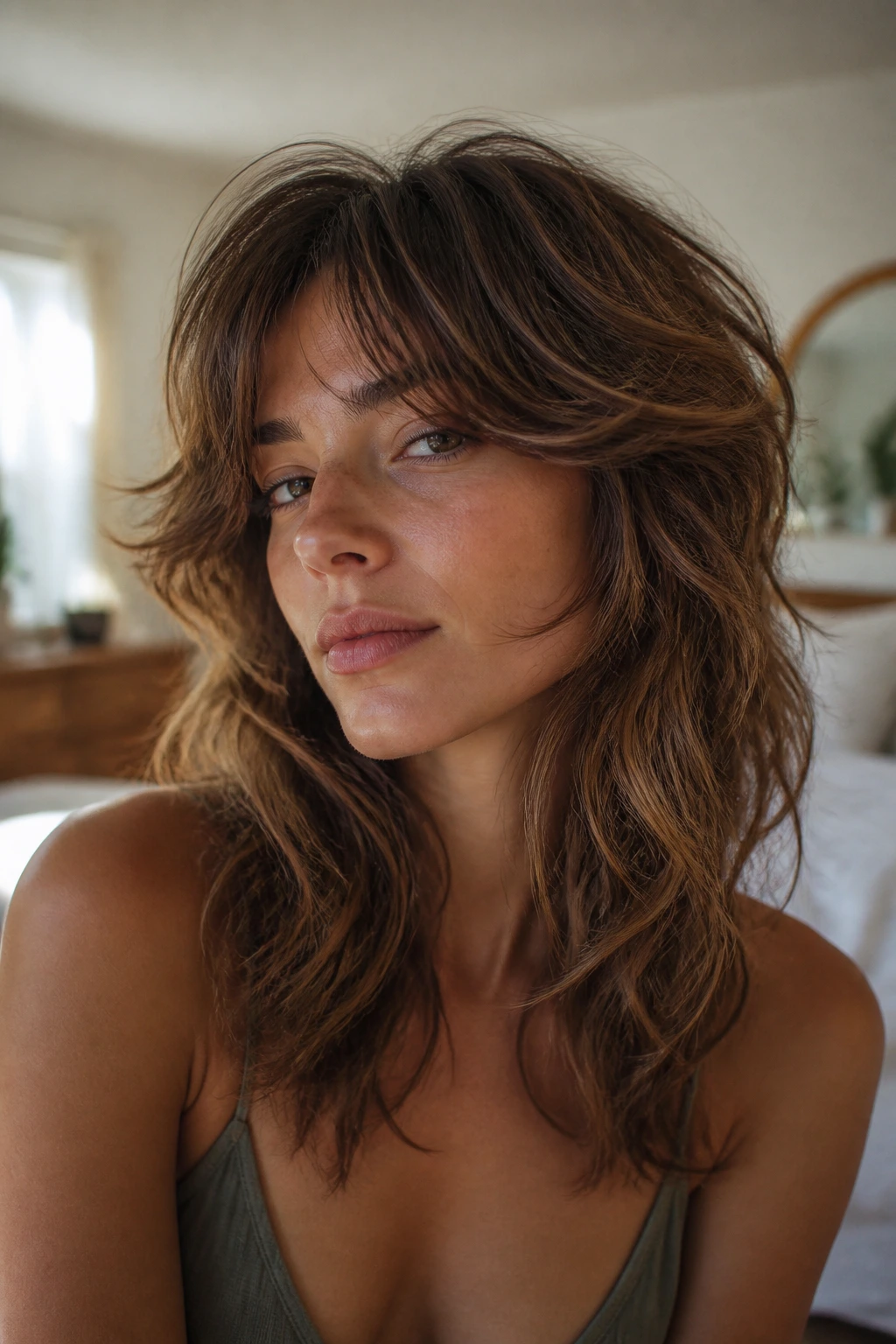
If you’re the kind of person who would rather let the shower do the heavy lifting, this is your cut. The air-dry wolf cut relies on a shape that already knows how to fall. It should look good with minimal intervention, which means the layers need to be soft, balanced, and not too aggressively razored.
This cut shines when the wave pattern is loose but consistent. A little mousse or leave-in, a quick scrunch with a T-shirt or microfiber towel, and you’re done. No round brush. No complicated sectioning. If you need a whole routine to make the cut behave, it’s not the right cut.
The face-framing pieces should be long enough to settle naturally as the hair dries. Short front layers can puff up if left to air-dry untouched, and that’s where the softness gets lost. Let the movement happen lower down.
A small amount of gel can help if your waves frizz at the temple area. Use it sparingly. You want hold, not cast-iron crunch.
7. Deep Side-Part Wolf Cut
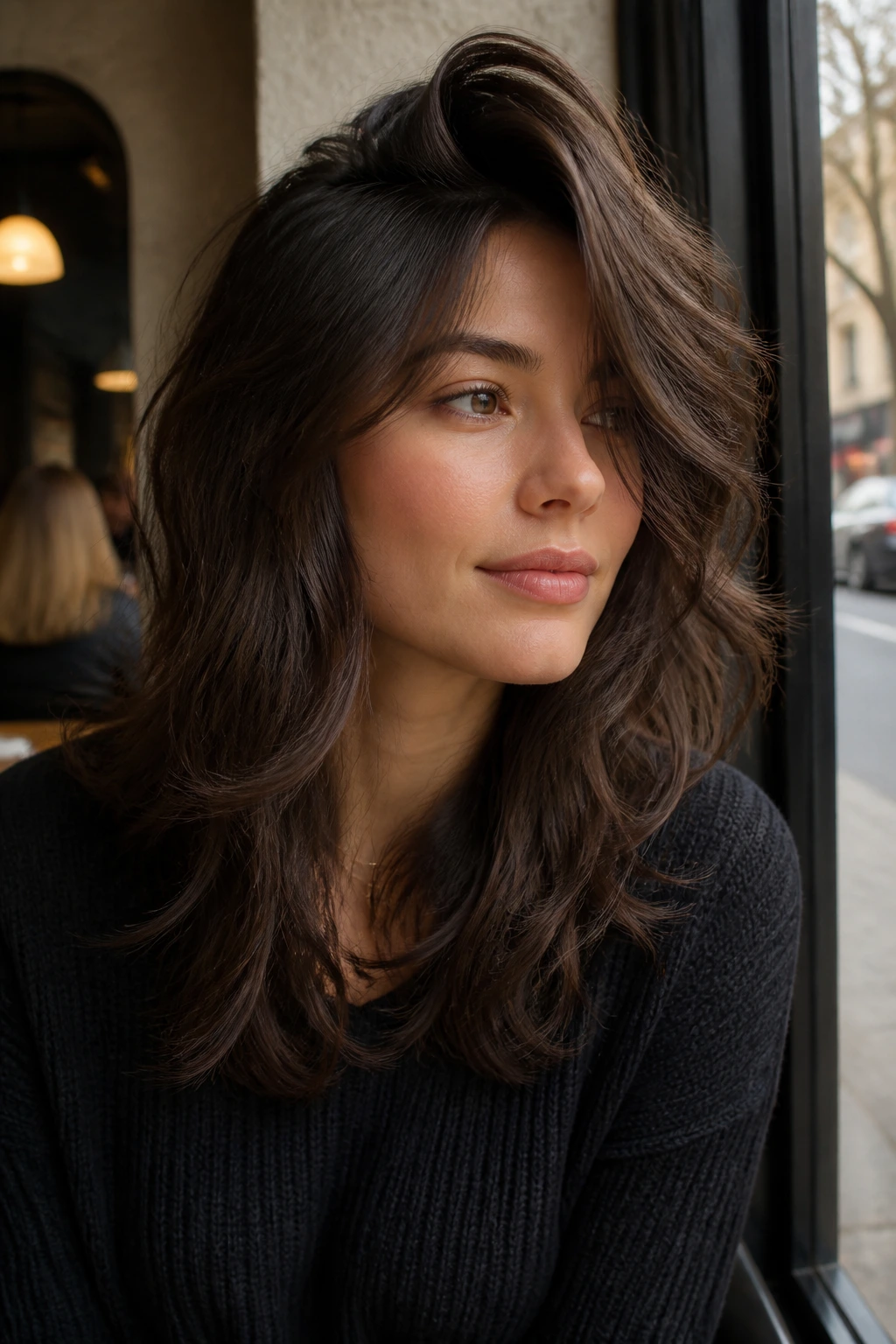
A deep side part changes the whole mood of a wolf cut. The shape feels softer on one side and fuller on the other, which is a nice trick when you want movement without lots of extra layering. The wave pattern falls diagonally instead of straight down, and that diagonal line tends to look elegant even when the hair is shaggy.
This version is a favorite for anyone who finds center parts too severe. It also helps if one side of your hair lies flatter than the other. The part gives the flatter side a little lift right at the root, and the longer fringe side creates a natural sweep across the forehead.
Keep the layers soft around the part so you don’t end up with a bulky ridge. If your stylist cuts too much weight near the front, the part can collapse by afternoon. That is the curse of over-textured hair. It looks fine for ten minutes and then gets weird.
A deep side-part wolf cut looks especially good when the ends are lightly flipped under or left to swing loose. Either way, the shape should feel fluid.
8. Thick-Hair Wolf Cut with Interior Debulking
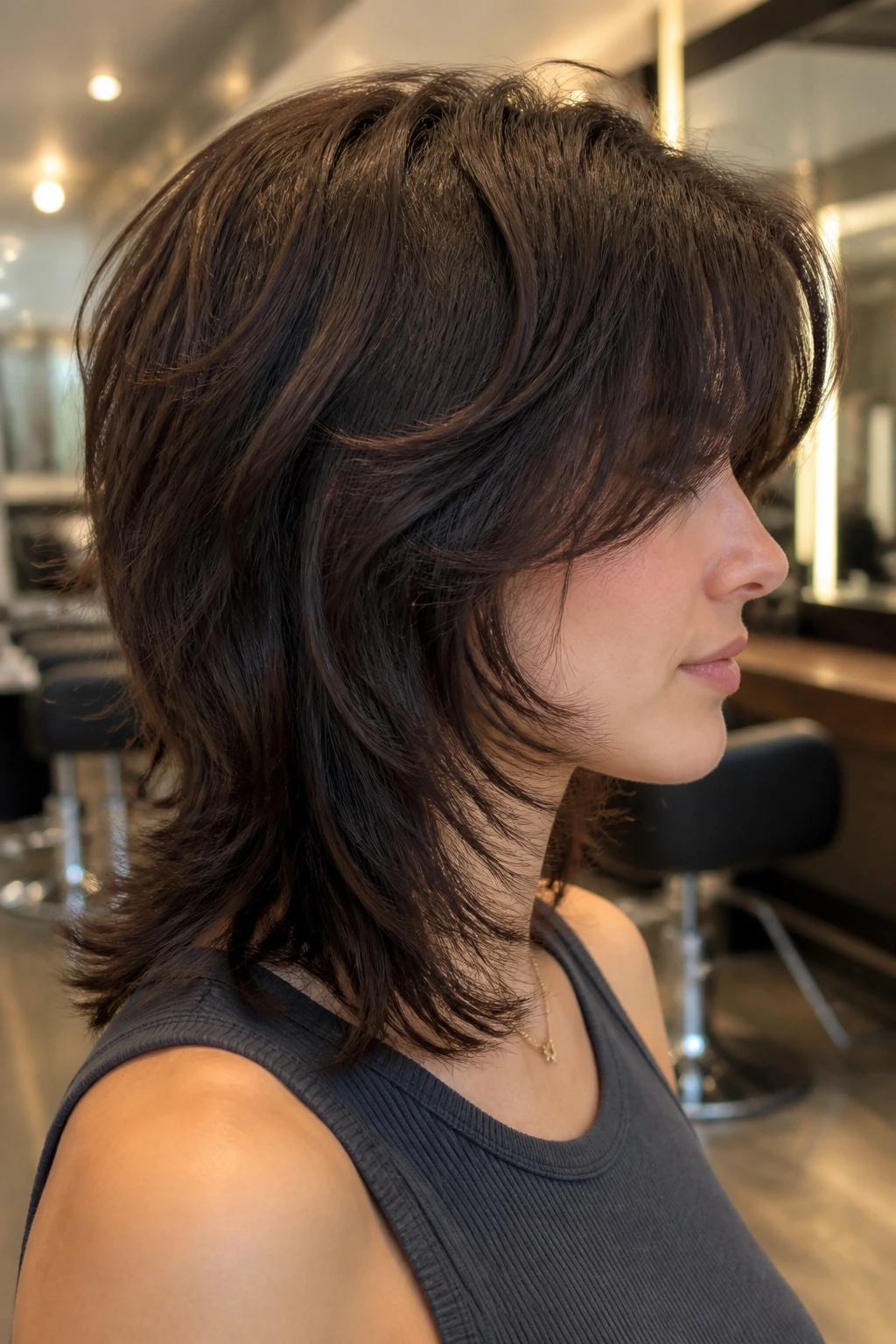
Thick wavy hair can wear a wolf cut better than almost any other texture, but only if the bulk is removed inside the haircut instead of hacked off at the perimeter. That’s the part people get wrong. They try to “lighten” thick hair by taking chunks off the surface, and then the cut puffs out like a mushroom.
Interior debulking keeps the outline smooth while freeing the wave pattern underneath. You still get the wolf-cut lift at the crown and the broken-up texture around the face, but the overall shape feels controlled. Soft, not poofy.
What to Ask For
- Weight removed through the interior, especially from the mid-back section.
- Longer outer layers to keep the outline from exploding.
- Careful point cutting instead of aggressive razor work.
- A neckline that tapers gently, not a blunt shelf.
Thick hair usually wants a little more product than fine hair, but don’t drown it. A mousse at the roots and a light cream through the mids is enough most days. If the hair starts to feel coated, you’ve gone too far.
9. Fine-Wave Wolf Cut with Floating Layers

Fine waves need a gentler touch. Too many layers, and the hair starts to look stringy. Too little, and the waves collapse into the scalp. The floating-layer version sits right between those two problems, giving the hair lift without stripping away the body you actually need.
This is the wolf cut for people who want movement but don’t want to lose the look of fullness. The layers should be subtle enough that they seem to hover, especially around the crown and cheekbones. From a distance, the hair should read as airy. Up close, you should see soft graduation, not choppy holes.
A lightweight mousse is your friend here. So is a root clip while the hair dries. Tiny metal clips or even plastic duckbill clips can lift the crown while the roots set. That’s not glamorous, but it works.
Avoid heavy oils at the root. Fine waves collapse fast when they get coated, and then the whole softness turns flat. Keep shine products for the mid-lengths and ends only.
10. Short Wolf Cut with a Tapered Nape
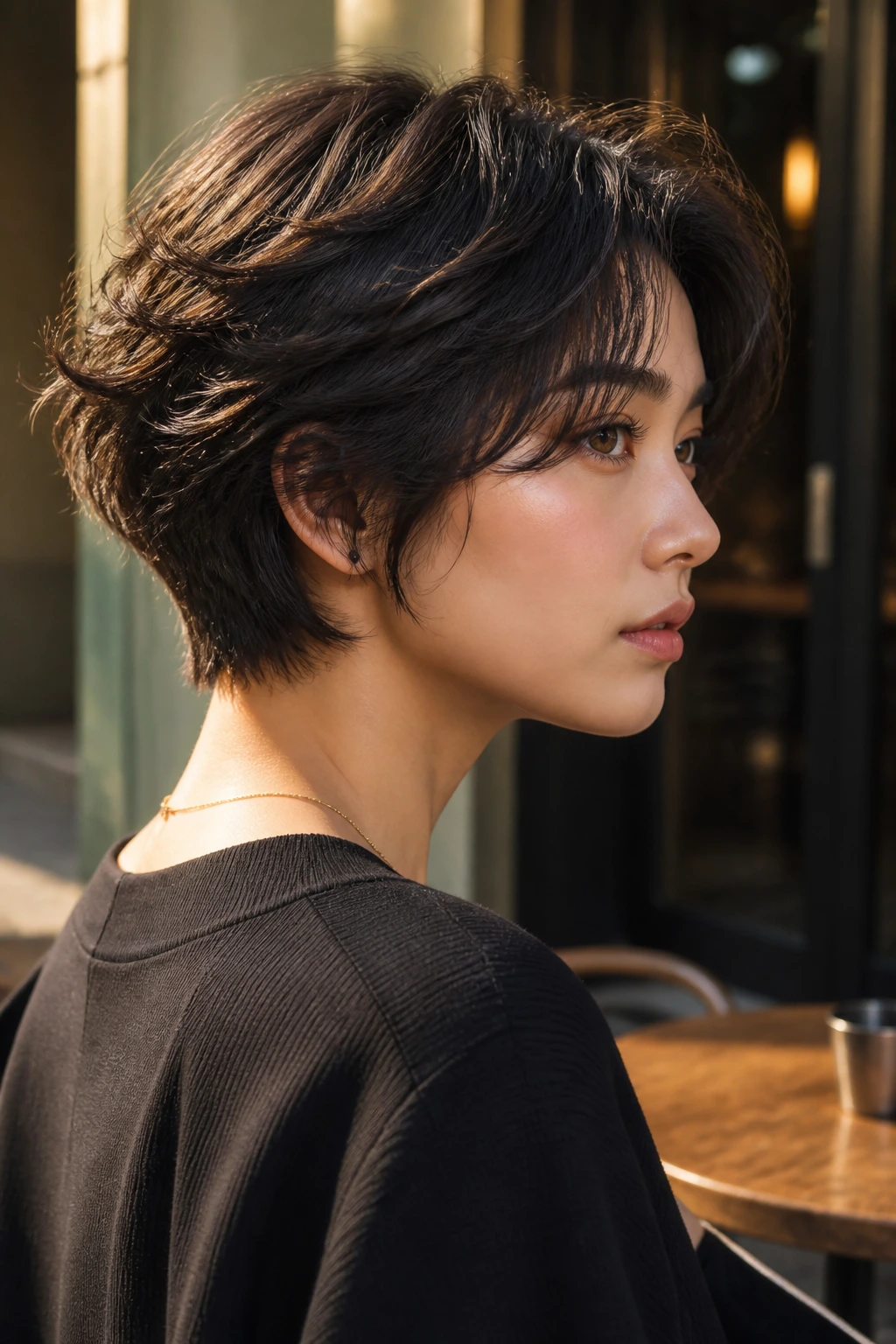
Short wolf cuts can be brilliant or chaotic. The difference is usually the nape. If the back is tapered cleanly, the cut feels modern and soft. If it’s too blunt or too choppy, the whole shape turns into a dense little block with bangs attached.
This version keeps the length around the ears and jawline while shaving some visual weight from the back of the neck. That gives the top more lift and helps the waves flick outward instead of hanging straight. It’s a sharp silhouette, but not a harsh one.
The shorter the cut, the more important the finishing shape becomes. The nape should fade into the rest of the layers with a soft line. No hard shelf. No awkward line right at the collar.
Best for: people who want less hair on the back of the neck, more texture around the face, and a cut that dries fast. It also works nicely if you wear collars, scarves, or jackets that tend to crush longer hair.
A dab of texturizing cream at the ends is enough. Don’t overwork it. Short wolf cuts look best when the movement feels a little loose.
11. Rounded Lob Wolf Cut with a Soft Perimeter

Here’s the version for anyone who likes a longer bob but wants more personality than a plain lob. The rounded perimeter gives the cut a softer finish, while the wolf layers keep the crown from lying completely flat. It’s one of the easiest wavy wolf cuts to wear because the shape feels polished without becoming stiff.
The rounded outline matters more than people think. A sharply angled lob can fight with waves, especially if the hair bends unevenly. A softer perimeter lets the wave pattern sit inside the haircut instead of poking out at the edges.
Ask your stylist for long layers that start around the cheekbone or slightly below, then ask them to preserve fullness through the bottom line. If the ends get too sparse, the cut loses its soft silhouette. If the perimeter stays a little cushioned, the waves look richer.
This one is especially nice if you want to keep enough length for tucking behind the ears or flipping forward over one shoulder. It has options. I like that in a haircut.
12. Razor-Soft Wolf Cut with Feathered Sides
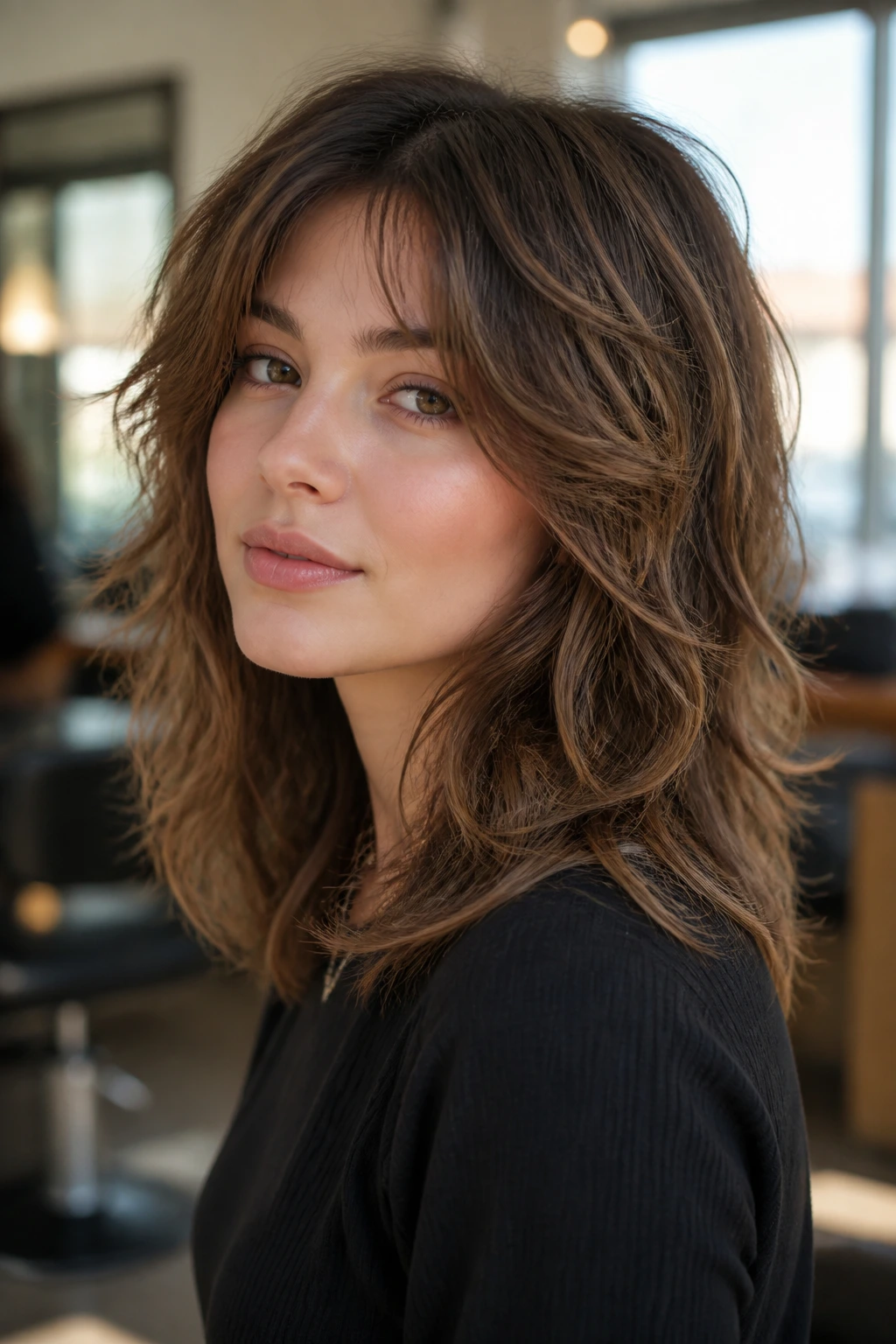
Razor cutting can be a mess on the wrong head of hair. On the right one, though, it gives a wolf cut that almost floats. The sides break up into feathered movement, which works beautifully when your waves are loose and you want the haircut to feel light instead of chunky.
What Makes It Different
A razor-soft wolf cut removes line, not just length. The result is more airy around the face and less blocky through the ends. That’s useful if your hair holds shape well but tends to sit heavy when cut with scissors alone.
Best Styling Match
Use a soft-hold mousse or foam, then diffuse on low heat. High heat tends to rough up the feathered ends and make the texture look thirsty. If you air-dry, don’t rake your fingers through it every ten minutes. Let the pieces set.
This version suits people who like a bit of edge but want the overall finish to stay gentle. It’s not a crunchy rock-star cut. It’s more like a good shirt with the sleeves rolled just enough.
13. Romantic Wolf Cut with Long Bangs
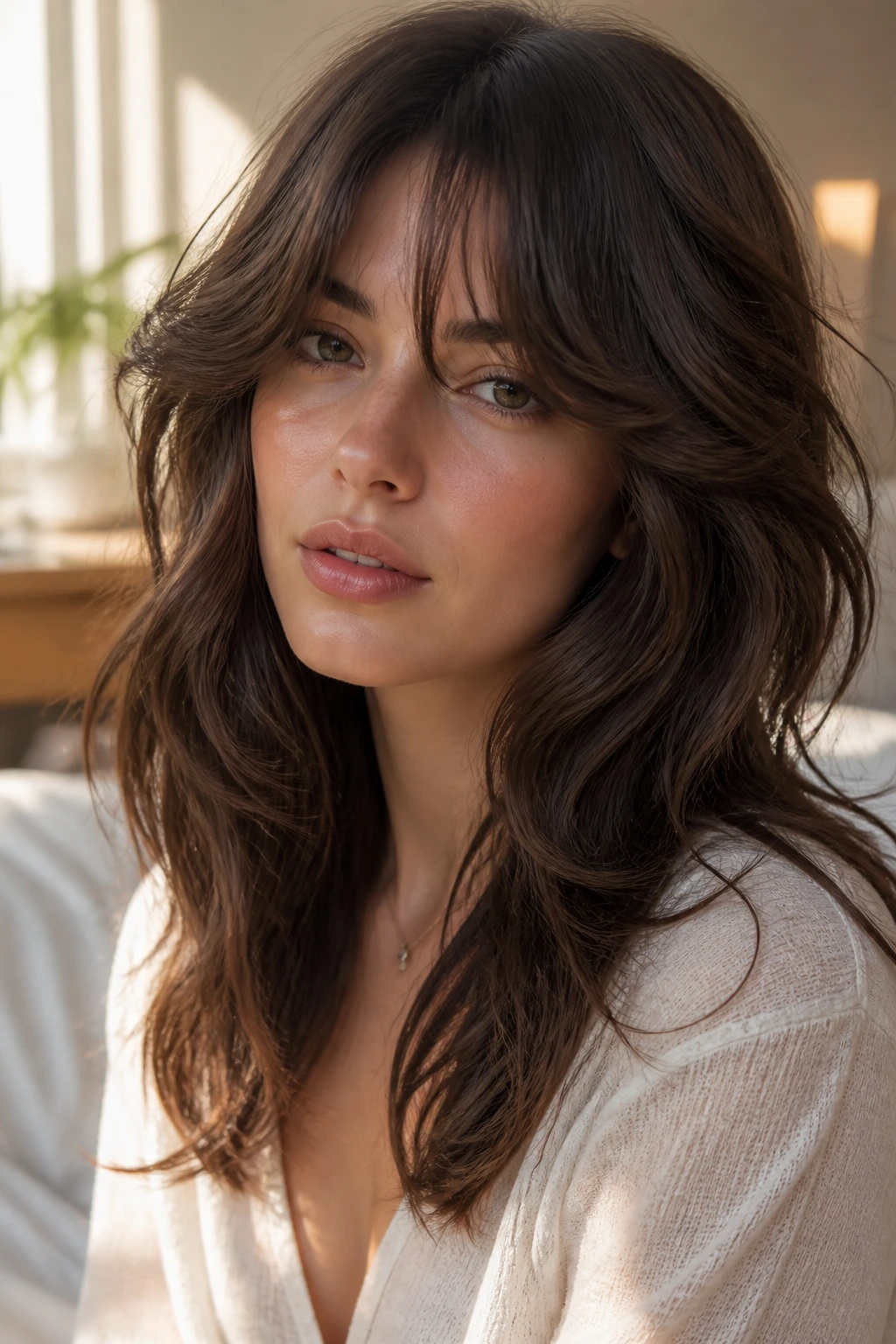
This is one of my favorites because it knows how to be soft without going limp. The long bangs sweep into the sides and create a frame that feels face-friendly rather than aggressive. On wavy hair, they bend naturally and give the whole cut a looser, more romantic feel.
The trick is keeping the bangs long enough to tuck behind the cheekbone when needed. If they’re cut too short, the softness disappears and you start fighting them every morning. Long bangs give you options. Side-swept one day, center-parted the next, clipped back when you want your face clear.
A Simple Styling Rule
- Let the bangs dry in the direction you want them to live.
- Don’t blast them with hot air from underneath.
- Use a round brush only if the fringe is collapsing into your eyes.
The rest of the haircut should stay a little broken up, but not too shredded. The whole point is softness. If the layers feel too spiky, the romance vanishes.
A tiny bit of lightweight serum on the very ends can help. Tiny. Not a waterfall.
14. Grown-Out Wolf Cut with Transition Layers

Some cuts are designed to look sharp on day one and awkward by week six. This is not that cut. A grown-out wolf cut with transition layers is built so the hair can stretch a little and still look deliberate. That makes it one of the easiest soft-texture options to live with.
Transition layers bridge the gap between the crown and the ends. Instead of a dramatic jump from short to long, the lengths step down gradually. That keeps the haircut from looking ragged when it grows and gives the wave pattern more places to settle.
This version is especially smart if you do not want to maintain a strict salon schedule. It looks softer as it grows, which is a nice trait in a haircut. More styles should do that, honestly.
Ask for a shape that still has a visible wolf-cut silhouette at the start, but with a gentle blend at the sides and back. The result is movement without a harsh outline.
15. Micro-Fringe Wolf Cut with Soft Sides

Micro-fringe is a gamble. On a wolf cut, though, it can work if the sides stay soft and the rest of the haircut is kept airy. The contrast between the short fringe and the loose wave pattern gives the whole style a little attitude without tipping into costume territory.
How to Keep It From Looking Severe
The side pieces matter more than the fringe itself. If the sides are long and feathery, the micro-bang reads as a cool detail. If the rest of the cut is too heavy, the fringe looks disconnected and blunt.
This version suits people who like their hair to have a point of view. It is not the easiest low-maintenance option, because the fringe needs regular trim attention. But if you enjoy that tiny front edge, the payoff is real.
Use a small round brush or your fingers to guide the fringe, then let the waves around it stay loose. The contrast between the neat front and the soft sides is what makes it work.
16. Wavy Bob Wolf Cut with a Loose Crown
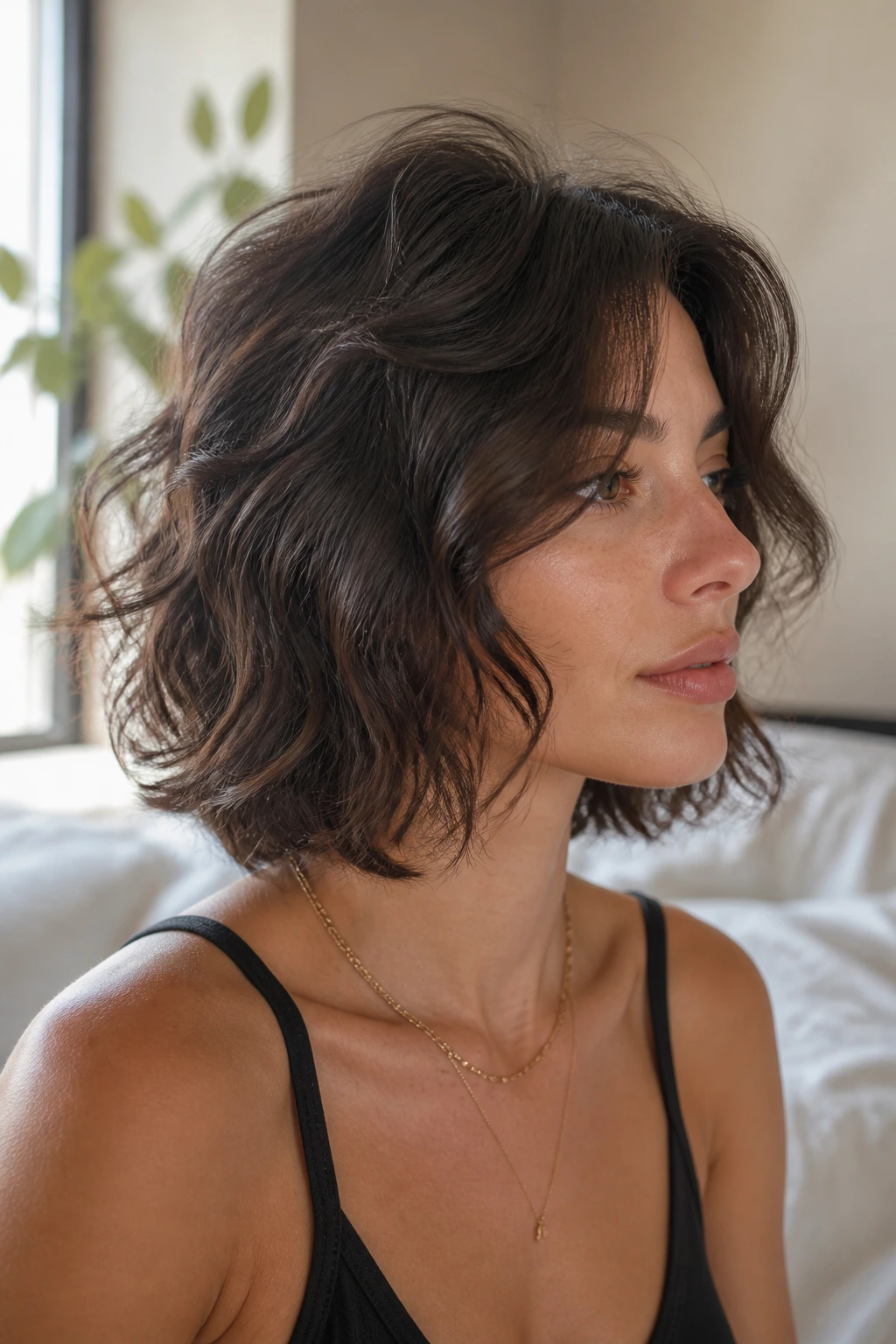
A bob can absolutely carry wolf-cut energy if the crown is handled right. The loose crown gives the top lift, while the bob-length perimeter keeps the whole cut neat enough to wear every day. It’s a good compromise for someone who wants softness but doesn’t want a lot of hair touching the shoulders.
This version looks best when the waves are defined but not ringlet-tight. The shape should sit a little rounder on the head, with pieces that curve inward and outward just enough to keep the silhouette from feeling boxy. If the bob is cut too uniformly, you lose the wolf-cut personality. If it gets too shredded, you lose the bob.
Ask your stylist to leave fullness through the lower back section and to build movement at the temples and crown. That balance keeps the style soft instead of mushroom-like.
A side part can make this cut feel a little swingier. A center part makes it calmer. Both are good. The hair decides some of this, whether we like it or not.
17. Invisible-Layer Wolf Cut for Low-Maintenance Days
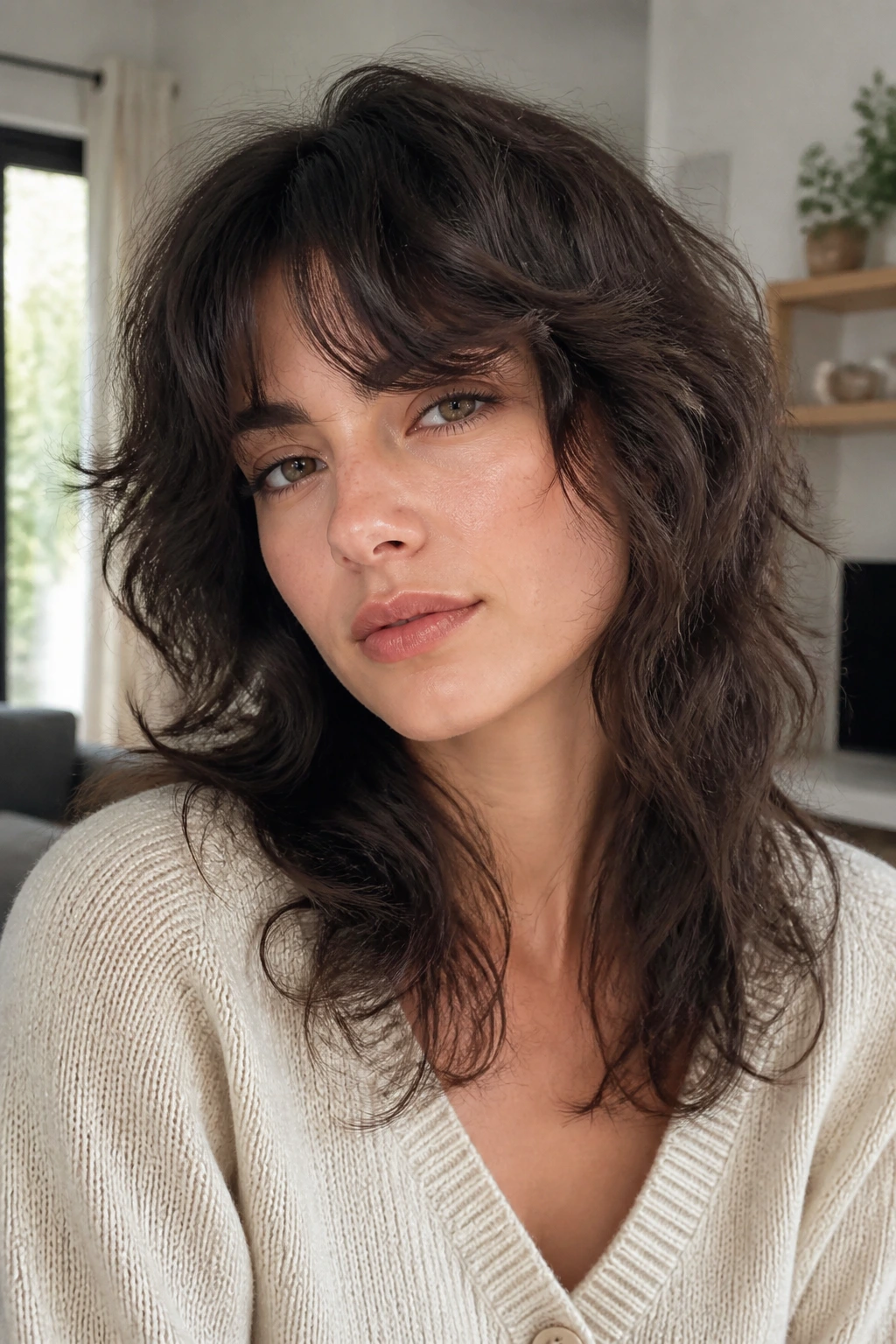
If you want the wolf cut look without obvious choppy lines, this is the one. Invisible layers sit under the outer surface and give the hair movement from within. From the outside, you get softness. From the inside, you get shape.
That’s useful when you want the haircut to live quietly. No dramatic spikes. No obvious disconnect between the top and the bottom. Just a soft, easy bend that shows up most when the hair moves.
Invisible layers are a gift for people who wear their hair half-up, clipped back, or tucked behind the ears. The cut still looks full from the front because the shaping is hidden in the body of the hair. Very few styles manage that trick cleanly.
What to tell the stylist: keep the perimeter cushioned, remove weight with restraint, and avoid carving too much into the surface layers. The goal is motion, not obvious texture.
18. Flipped-Out Wolf Cut with Soft Movement

A little flip at the ends can make a wolf cut feel playful instead of heavy. On wavy hair, those outward kicks happen naturally if the cut is layered well and the ends aren’t over-thinned. The result is a shape with energy, especially around the shoulders and jaw.
This style works best when the layers are soft enough to move but not so shredded that the ends split into little strings. The flip should feel like a bend, not a blowout from three summers ago. There’s a difference, and it matters.
I like this one for people whose hair naturally resists lying perfectly flat. Instead of trying to suppress that, the cut uses it. The finish can be casual, especially when you scrunch in a light texture cream and let the ends dry on their own.
If you want a little polish, twist the front pieces away from the face while they’re damp. Just a small twist. Nothing theatrical.
19. Cheekbone-Opening Wolf Cut for Face Framing
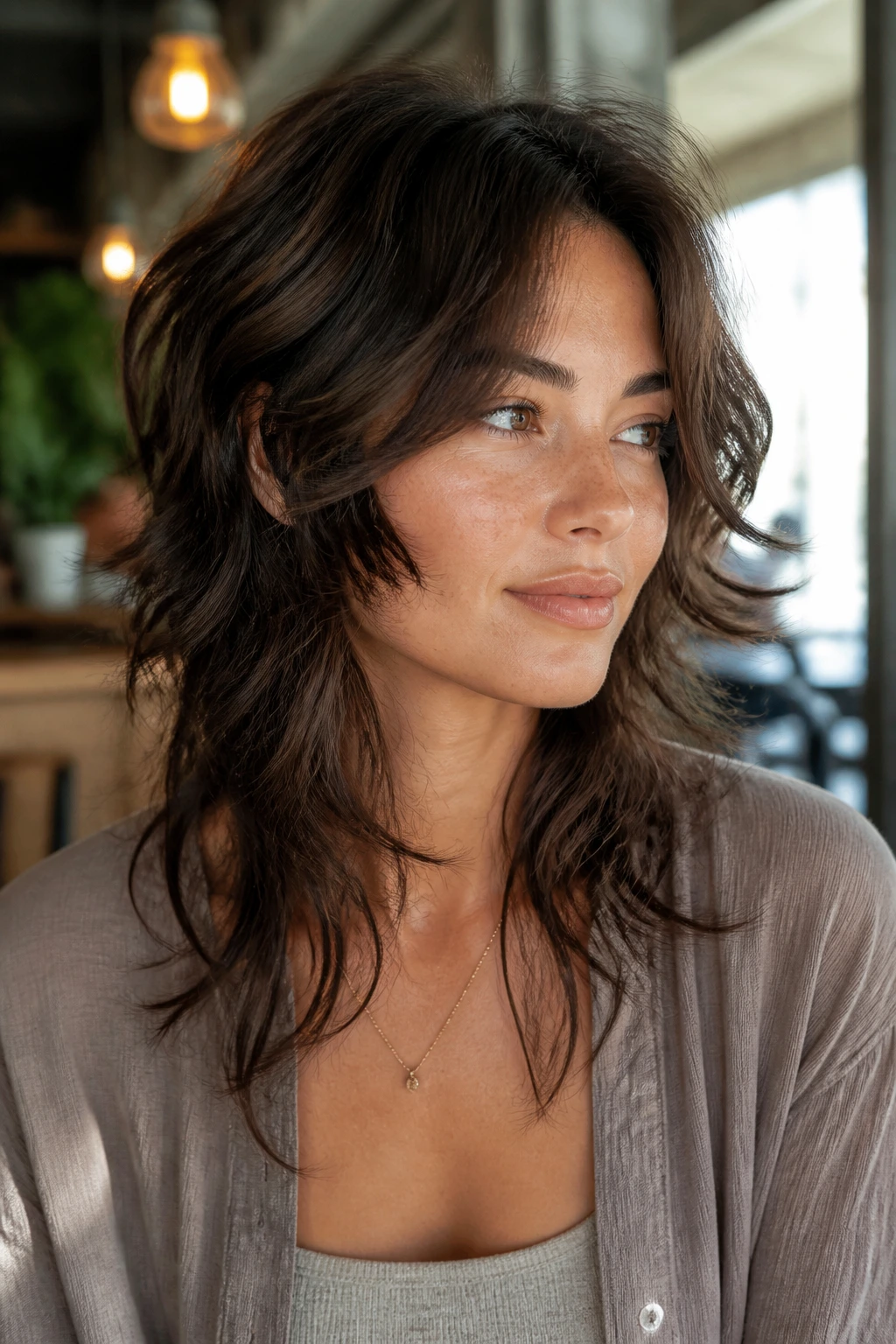
Some haircuts make the face disappear behind them. This one does the opposite. The cheekbone-opening wolf cut pulls attention up and out, which gives soft waves a pretty, lifted frame without overbuilding the rest of the style.
The front layers should start around the cheekbone and taper into longer lengths near the jaw. That creates a soft arc that follows the face instead of boxing it in. It’s one of the easiest ways to make a wolf cut feel flattering without making it fussy.
This version is especially kind to people who like their hair to move when they turn their head. The side pieces catch light, the bangs separate a little, and the waves fall into those easy S-shapes that make soft texture look expensive without trying to be.
A center part will keep the framing balanced. A side part pushes the front pieces more dramatically across the face. Both are useful. Pick the one that makes your cheekbones look awake.
20. Polished Wolf Cut with Tucked Ends
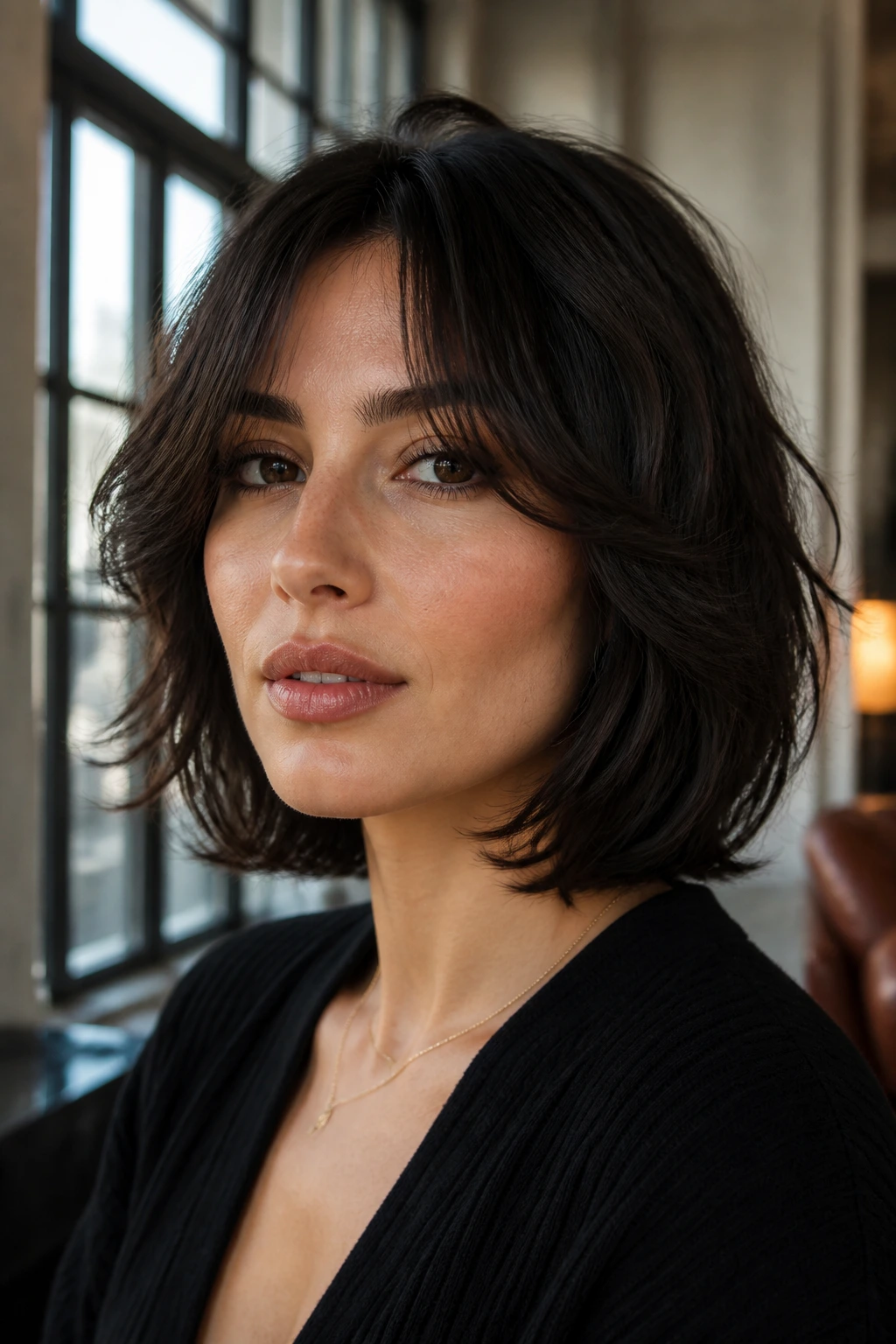
Can a wolf cut look neat? Yes, if the layers are controlled and the ends are tucked just enough to keep the outline clean. This version is for anyone who likes the wolf-cut silhouette but needs it to behave in a more polished setting.
The softness comes from the wave pattern, but the polish comes from restraint. The layers are present, yet not jagged. The crown has lift, yet not a spike. The ends bend inward or sit close to the neck, which keeps the shape tidy without killing movement.
This is the version I’d choose for someone who wants one haircut to work with jeans, a blazer, and a claw clip. It can shift from relaxed to clean fast. That’s a useful trait.
If your hair tends to frizz at the ends, smooth a tiny amount of cream only on the last inch or two after drying. Tiny. Too much product and the polish turns greasy.
Why Wavy Wolf Cuts Feel Soft Instead of Choppy

Soft texture in a wolf cut is not luck. It comes from where the weight is removed and how much line is left at the perimeter. When the crown is lightly lifted and the sides are allowed to taper gently, waves can sit inside the haircut instead of sitting on top of it like a rough draft.
The best versions usually keep the outer edge a little cushioned. That’s the piece most people forget. They get excited about layers and forget that the bottom line needs to anchor the shape. If the perimeter is too ragged, the cut starts to look frayed, especially once the natural wave expands in humidity.
Dry cutting can help here. So can cutting some pieces in their natural dry state, because wavy hair rarely lies the same way wet and dry. A stylist who pays attention to that will shape around the wave instead of fighting it. That alone can save you from the usual triangle problem.
The softest wolf cuts also tend to move well on day two. That’s not an accident. The layers are placed to let the waves separate in a pleasing way after the initial set has loosened a little. If a cut only looks good the minute you leave the salon, it was probably cut too aggressively.
What to Ask for at the Salon Chair
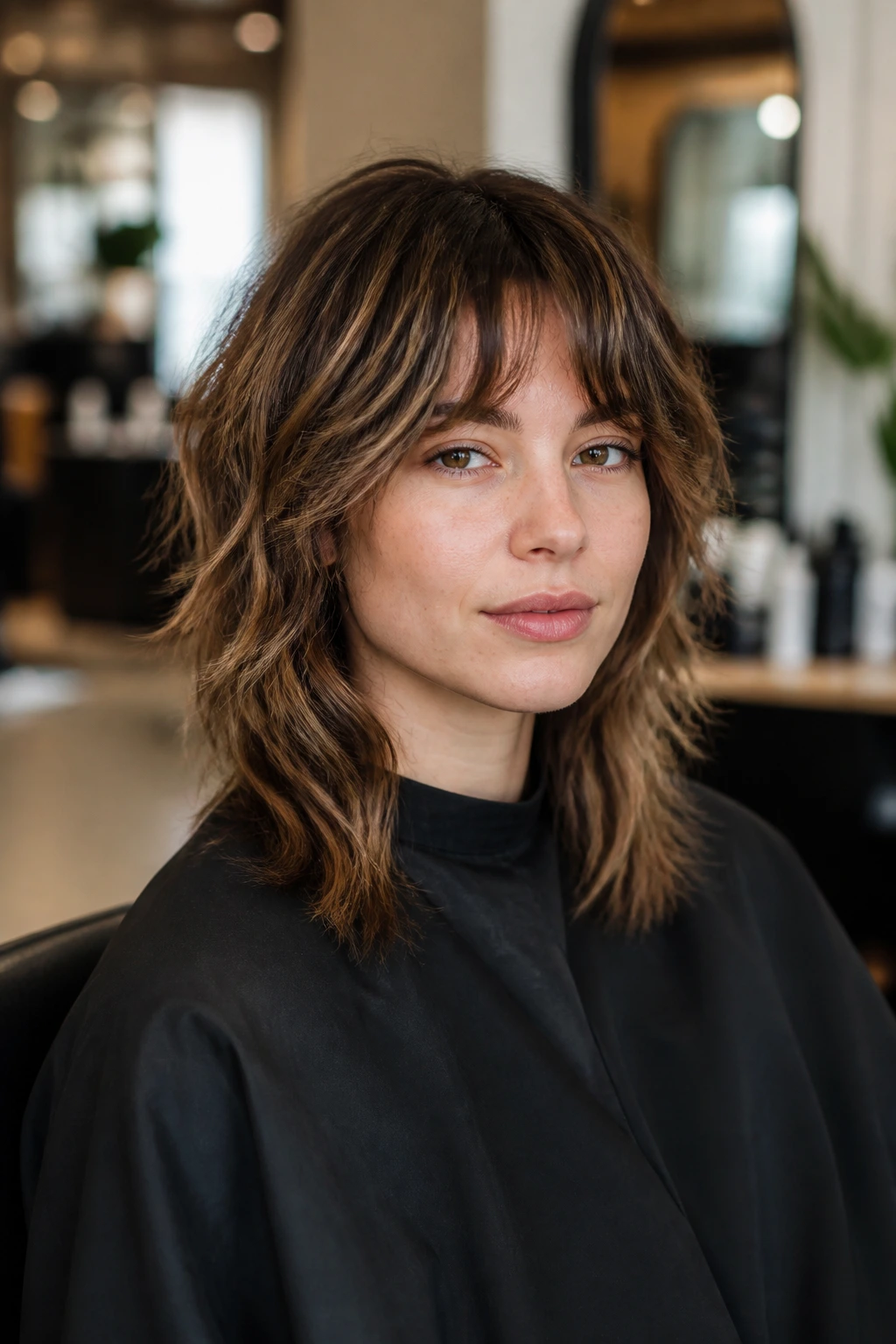
Bring a photo. Then bring a second one, because one photo is never enough with wolf cuts. The first should show the silhouette you want. The second should show a version you do not want — usually the one that looks too shaggy, too puffy, or too mullet-heavy for your taste.
Say the words out loud: soft texture, not heavy choppiness. That phrase matters because stylists hear “wolf cut” and can read it a dozen ways. Some hear short crown, big bangs, and lots of edge. Others hear shag with some movement. You want the version that keeps the wave pattern soft and touchable.
If your hair is fine, ask for layers that start a little lower and blend gently. If it’s thick, ask where the bulk will be removed underneath. If your waves are uneven, tell the stylist which side collapses and which side bends too much. That information helps more than vague praise ever will.
One more thing. Ask whether they plan to cut wet, dry, or both. On wavy hair, a combination approach usually gives the best read on how the hair actually behaves.
The Tools and Products That Keep the Shape Soft
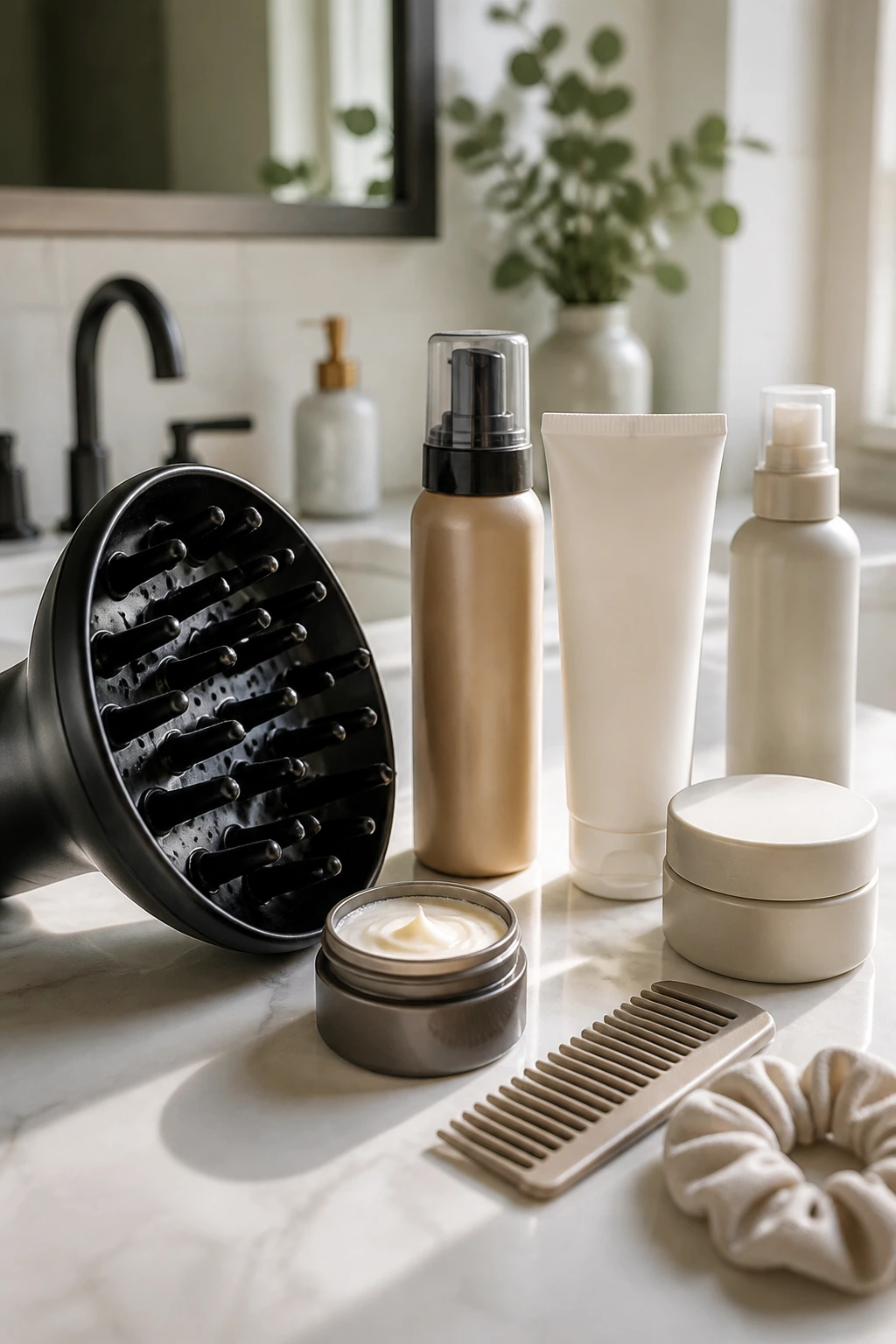
You do not need a suitcase full of styling gear. You need a few things that behave well together.
- Sharp haircutting shears: these matter if you trim at home, because dull blades crush the ends.
- Wide-tooth comb: useful for distributing product without ripping apart the wave pattern.
- Microfiber towel or cotton T-shirt: dries the hair without roughing up the cuticle as much as a bath towel.
- Diffuser attachment: keeps waves lifted while reducing the blown-apart look that plain airflow can create.
- Lightweight mousse or foam: gives root support without the sticky feel of heavy gel.
- Flexible-hold gel: handy if your wave pattern frizzes and needs a cast you can scrunch out later.
- Light curl cream: best on the mids and ends, where softness matters most.
- Heat protectant: non-negotiable if you use a dryer, even on low heat.
- Duckbill or clip-on root clips: small thing, big payoff for crown lift while the hair sets.
I’d keep the product lineup simple. Too many creamy products stacked together will flatten the wave and turn soft texture into damp-looking fluff.
How to Pick the Right Version for Fine, Thick, or Uneven Waves

Fine waves need space, not over-layering. If your hair is thin around the ends, choose versions like the floating-layer lob or the invisible-layer cut. They keep the perimeter fuller while still lifting the crown.
Thick waves want interior debulking and a shape that doesn’t flare outward at the bottom. That’s where the tapered nape, the polished wolf cut, and the thick-hair debulking versions make sense. The more hair you have, the more important the outline becomes. You can remove weight without destroying the silhouette.
Uneven waves are a special case. Some sections bend beautifully. Others refuse. In that situation, avoid super-short face layers that will dry in different directions and make the mismatch louder. A more graduated cut, with soft transition layers and a collarbone or lob length, tends to play nicer. The goal is harmony, not perfection.
And if one side of your hair is flatter than the other, ask for the part and the layers to be built around that reality. Hair does not always match its own mirror image. Annoying, yes. Useful to know, definitely.
How to Style Wavy Wolf Cuts Without Crunch
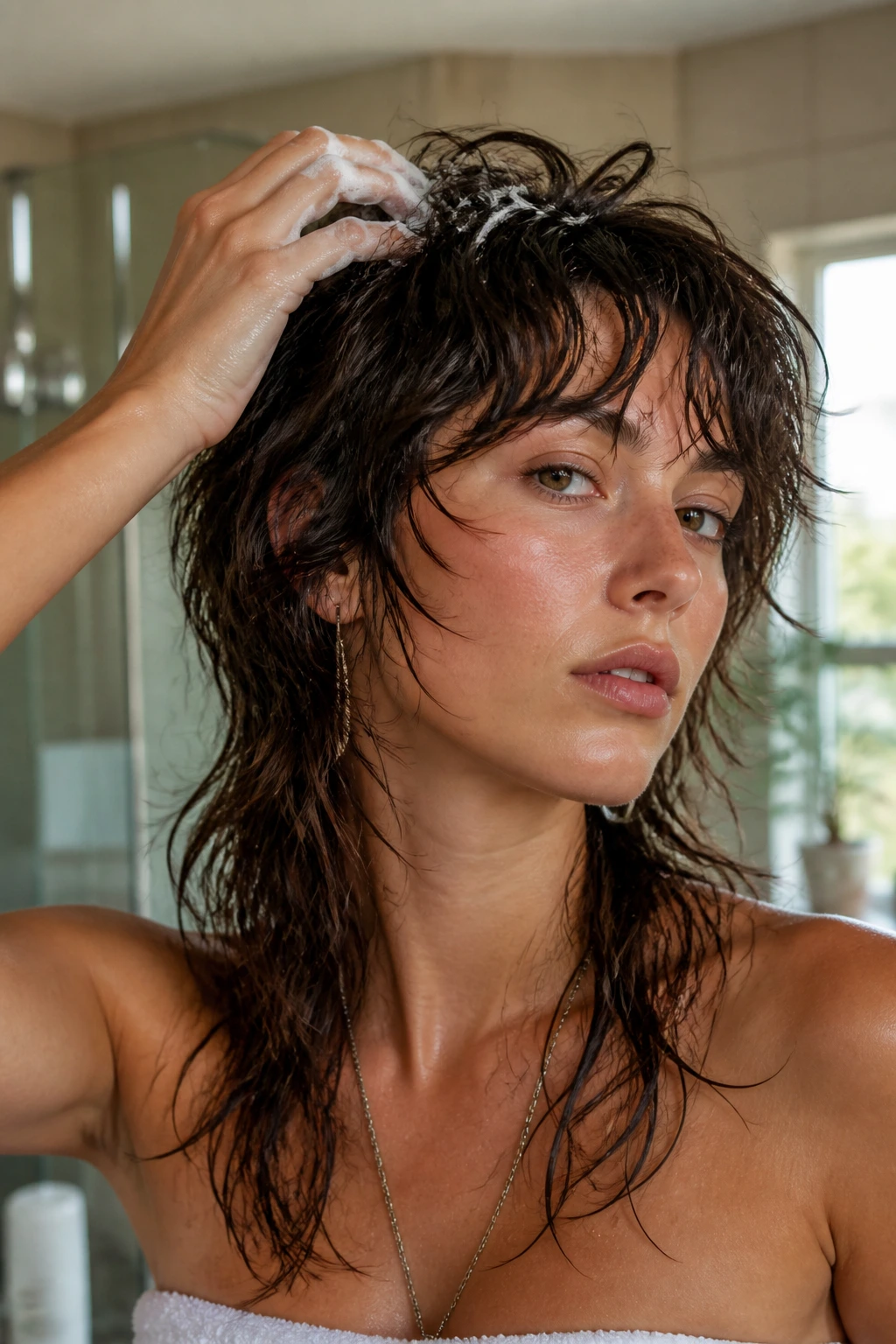
Start on damp hair, not dripping-wet hair. That one detail saves time and helps the product spread evenly. Work in a small amount of mousse at the roots, then glide a light cream through the mids and ends only if your hair needs more softness.
Scrunch gently. Not aggressively. If you squeeze the wave pattern too hard, the ends can clump into little bends that look odd once dry. Then either diffuse on low heat or let the hair air-dry with the crown clipped up for a little lift.
When the hair is about 80% dry, stop touching it. That is the hard part. Reaching for the ends every five minutes breaks the surface and turns touchable movement into fuzz. Once the hair is dry, shake the roots with your fingers, then use a pea-sized amount of serum on the very tips if they need smoothness.
If you like volume, flip the part while the hair is still warm from the dryer and let it cool that way. That tiny reset adds a real lift at the root.
Common Mistakes That Make a Wolf Cut Look Puffy or Flat

The first mistake is over-thinning the ends. You’ll know it happened when the perimeter looks see-through and the hair kicks outward in little wisps. The fix is simple: keep more weight at the bottom next time and ask for interior layering instead of aggressive texturizing.
The second mistake is cutting too much crown shortness into fine waves. That sounds like volume, but it often creates a flat top with broken ends. Fine hair needs structure, not a lawn-mower fade near the crown.
The third mistake is using heavy cream all over the head. Soft texture doesn’t mean product soup. If the roots get coated, the lift disappears and the hair lies close to the scalp in a greasy sheet.
The fourth mistake is choosing bangs that are too short for your wave pattern. Wavy fringe shrinks, bends, and changes shape as it dries. If you don’t leave enough length, the bangs can spring up higher than planned and sit awkwardly on the forehead.
The fifth mistake is expecting the same styling method to work on every version. A polished wolf cut with tucked ends wants less product and more control. An air-dry cut wants more slip and less fuss. Match the routine to the cut.
Variations and Adaptations to Try Next

Soft Fringe Swap: If curtain bangs feel like too much maintenance, ask for longer face-framing pieces that can be parted in the center or swept to the side. You still get softness, but the forehead stays more open.
Thick-Hair Relief Cut: For dense waves, shift the weight removal deeper into the interior and keep the perimeter cushioned. This version gives you the wolf-cut shape without turning the outline into a frizz cloud.
Fine-Wave Lift Version: Ask for lower-placed layers and a more intact bottom line. The goal is a haircut that creates movement without exposing too much scalp or leaving the ends stringy.
Short-and-Soft Edit: If you want the attitude of a short wolf cut but not the sharpness, keep the nape tapered and the face layers longer. That gives you the shape without the hard edge.
Grow-Out Friendly Blend: For people who hate frequent trims, choose transition layers and a rounded perimeter. It keeps the haircut looking deliberate even after it starts to stretch out.
Keeping a Wolf Cut Looking Fresh Between Trims

A wavy wolf cut usually holds its shape well for about 8 to 12 weeks before the front starts getting too heavy or the layers lose their balance. Bangs may want a touch-up sooner. That part grows fast, and it changes the whole face frame.
Between trims, dry shampoo can help at the roots, but don’t use it as a cover for product buildup. If the hair starts feeling waxy, wash it. Soft texture looks better when the strands are clean enough to move.
Sleeping matters more than people admit. A loose pineapple on top of the head, a silk or satin pillowcase, or even a low clip can keep the waves from getting smashed flat overnight. If the front pieces wake up bent the wrong way, mist them lightly and twist them back into place while they dry.
If you use heat styling at all, keep it to the fringe or front layers, and keep the temperature low. Wolf cuts can get brittle-looking fast when the ends are blown around too much.
Frequently Asked Questions
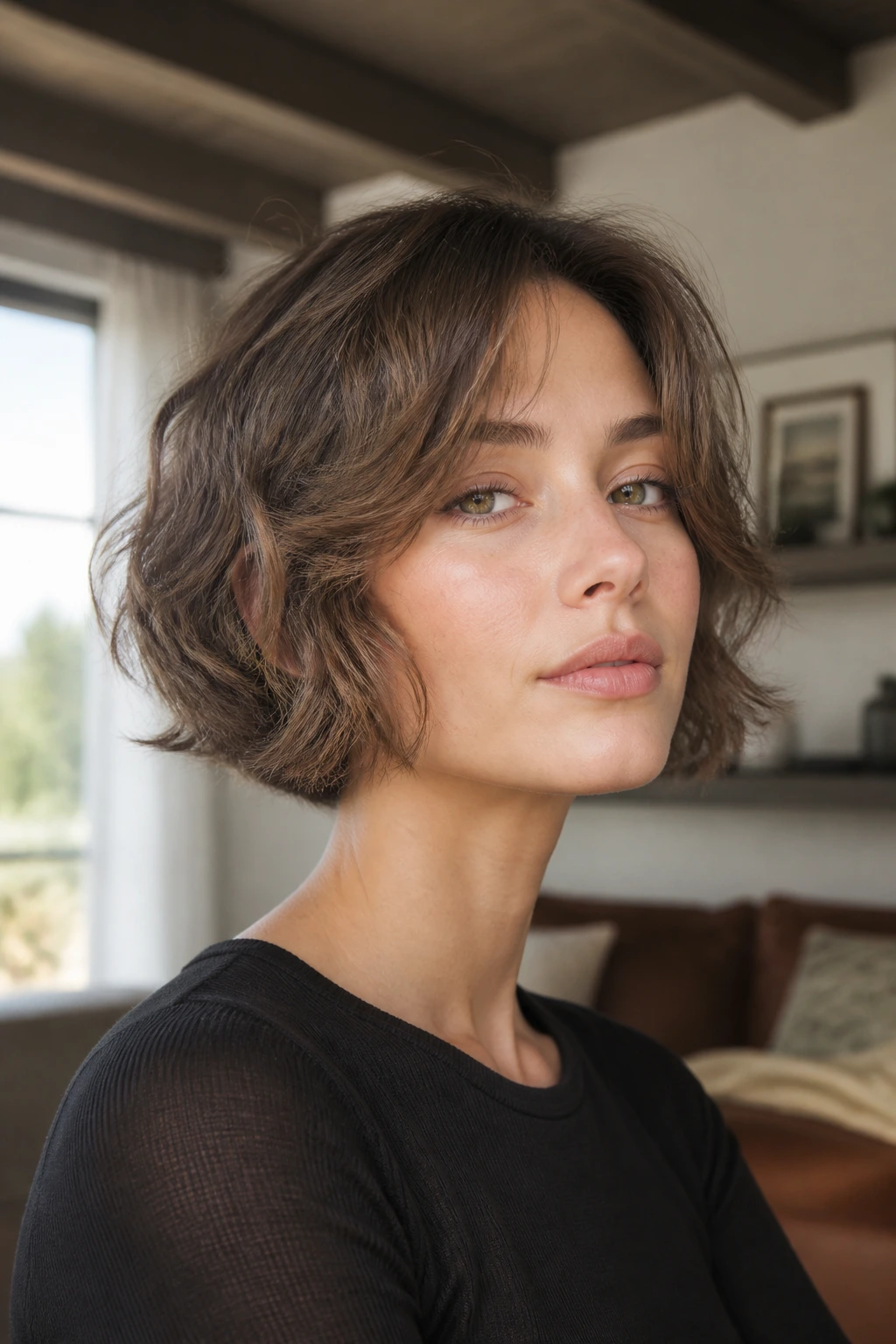
Does a wolf cut work on naturally wavy hair, or do I need to style it every day?
Naturally wavy hair is the easiest home for this cut. You’ll still need to shape it a little, but most versions only want mousse, a quick scrunch, and either a diffuser or air-dry time. If your waves are loose and soft, the haircut should do most of the visual work for you.
What face shapes do wavy wolf cuts flatter most?
They’re flexible, which is why they stay popular in salons. Curtain bangs and cheekbone layers flatter longer faces, side parts can soften round faces, and longer face-framing pieces help square jaws feel less boxed in. The real issue is not face shape alone — it’s where the shortest layers land.
Can fine hair handle a wolf cut without looking stringy?
Yes, but the layers need to be lighter and less aggressive. Ask for movement near the crown and face, while keeping the bottom line fuller. Fine hair usually looks best with a soft lob-length or collarbone-length wolf cut rather than a heavily shredded short version.
How do I ask for soft texture instead of a choppy wolf cut?
Use plain language: soft layers, blended ends, movement through the crown, and no harsh texturizing at the bottom. Bring a photo that shows the finish you want. Stylists can read “wolf cut” in a dozen different ways, so the photo does half the talking.
Will a wolf cut make thick wavy hair puff out?
It can, if the weight is removed in the wrong places. Thick hair usually needs internal debulking and a cleaner perimeter, not just more cutting everywhere. If the hair tends to pyramid out, ask for softness at the top and control at the bottom.
Are curtain bangs high-maintenance with a wolf cut?
A little, yes. They need more attention than side pieces, especially if your waves have a strong bend or dry oddly at the front. If you want less upkeep, choose long fringe pieces that can drift into the sides instead of a strict curtain shape.
Can I air-dry a wolf cut without it getting frizzy?
You can, but the product and the cut both matter. Use a light mousse or gel on damp hair, scrunch once or twice, and leave it alone while it dries. If the cut was over-thinned, air-drying usually makes the frizz problem worse, not better.
How often should I trim a wolf cut to keep it soft?
Bangs may need a cleanup every 4 to 6 weeks if you wear them forward. The rest of the shape usually holds for around 8 to 12 weeks, depending on growth and density. The earlier the layers start near the face, the faster they show wear.
What if my waves are uneven from side to side?
Then the haircut should be built around that. Ask for a little more length on the flatter side and more movement where the bend is stronger, so the silhouette stays balanced. Uneven waves are common, and a good wolf cut can make them look intentional instead of awkward.
Soft Texture, Better Shape
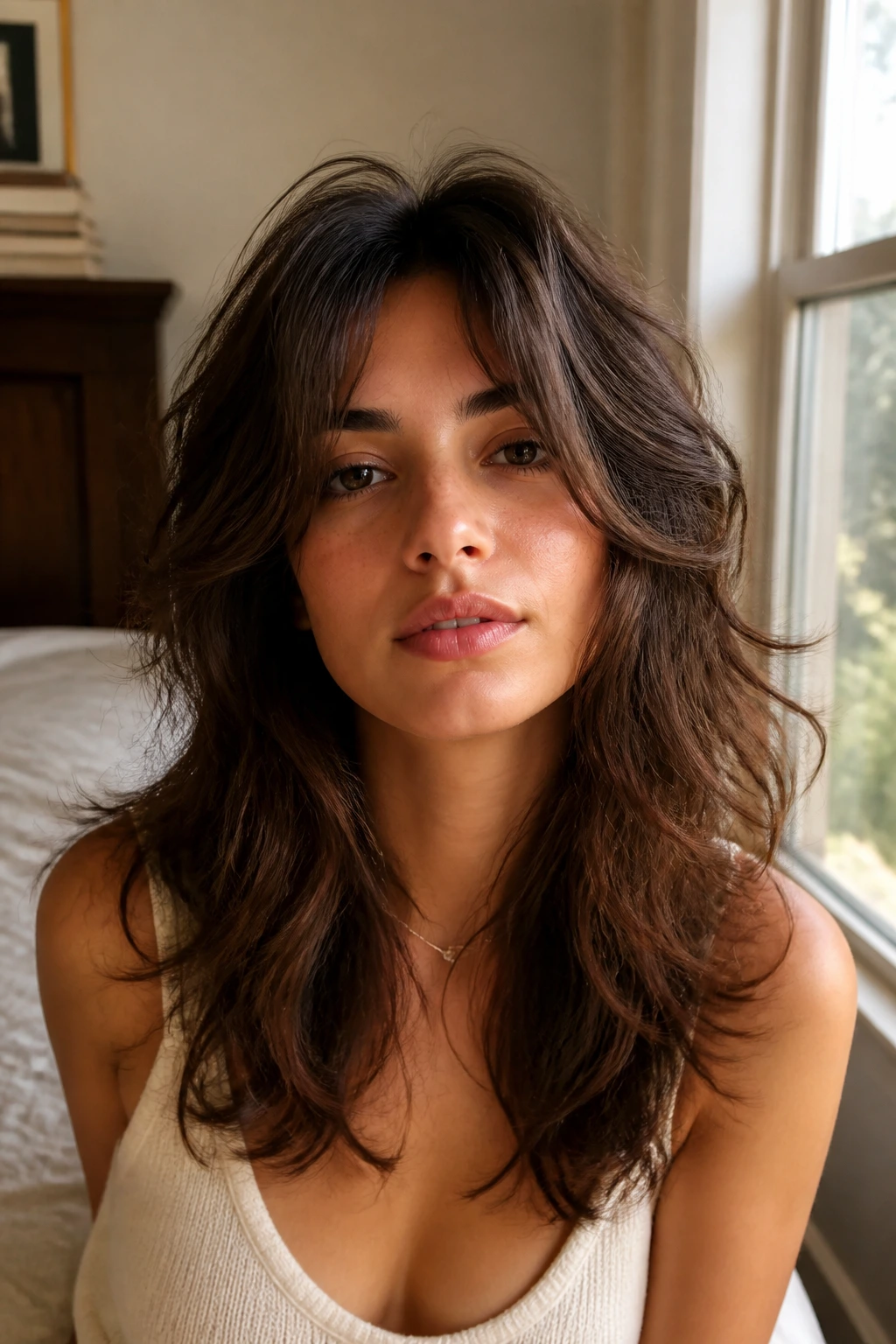
A wavy wolf cut works when it respects the wave pattern instead of trying to boss it around. That’s the whole thing. The softest versions let the crown lift, keep the perimeter cushioned, and give the front enough shape to frame the face without turning stiff or overstyled.
If you’re choosing between versions, start with the one that matches how you actually wear your hair. Air-dry people should lean into softer layers. Diffuser people can handle a little more texture. Thick hair needs a cleaner outline, fine hair needs more restraint, and bangs need enough length to bend rather than fight.
The best wolf cuts don’t look overworked. They look like they know exactly where the wave should fall, and they leave enough room for the hair to do the rest.
