



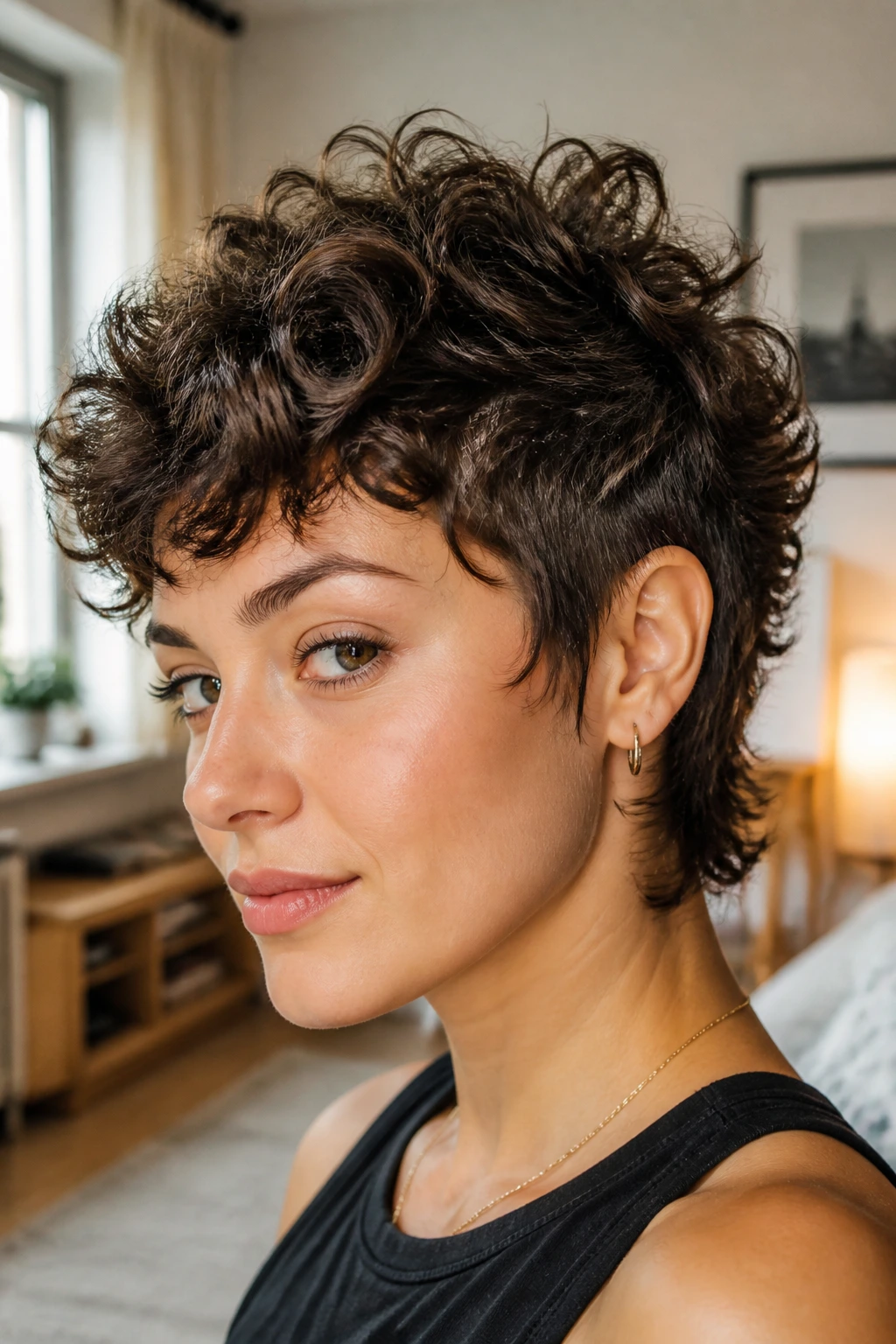
Curly hair and a blunt pixie usually fight each other. One wants to spring, bend, and puff; the other wants to sit flat and behave. Pixie wolf cuts for curly hair work because they stop asking curls to act like straight strands and start building the shape around shrinkage, lift, and movement instead.
I like these cuts best when the top is left a touch longer than feels safe at the chair. Curls lie. They look one length wet, then bounce up an inch or two once they dry, and that difference is exactly why so many cropped curly cuts end up too short in the wrong places. The wolf-cut part gives the haircut room to breathe; the pixie part keeps it from drifting into a shaggy helmet.
The sweet spot is in the layering. Not too neat. Not too precious. Just enough length at the crown, sideburns, and nape to let the curls stack in a shape that looks deliberate instead of accidental. Some versions are sharp and editorial. Some are soft and fluffy. A few are almost mischievous. All of them work because they treat texture as the main event.
Why This Collection Is Different
-
Built for shrinkage, not against it: These shapes leave room for curls to spring up, so you don’t end up with a haircut that looks perfect only in the salon mirror and then vanishes at home.
-
Short where it counts: The nape, sides, and around-the-ear area stay tight enough to keep the cut feeling like a pixie, even when the crown has a little chaos.
-
Easy to personalize: Micro bangs, side sweeps, undercuts, and longer fringe pieces can change the whole mood without changing the basic haircut.
-
Works with real curl routines: Most of these cuts behave with a leave-in, a gel, a diffuser, and five minutes of scrunching. That’s the sort of math I can get behind.
-
Grow-out is less awkward: The wolf layers soften as they lengthen, which means the cut can move from cropped to shaggy without turning into a bad shape in the middle.
-
Plays well with density: Fine curls, thick coils, loose waves — each can get its own version instead of being squeezed into one cookie-cutter shape.
1. Crown-Lift Pixie Wolf
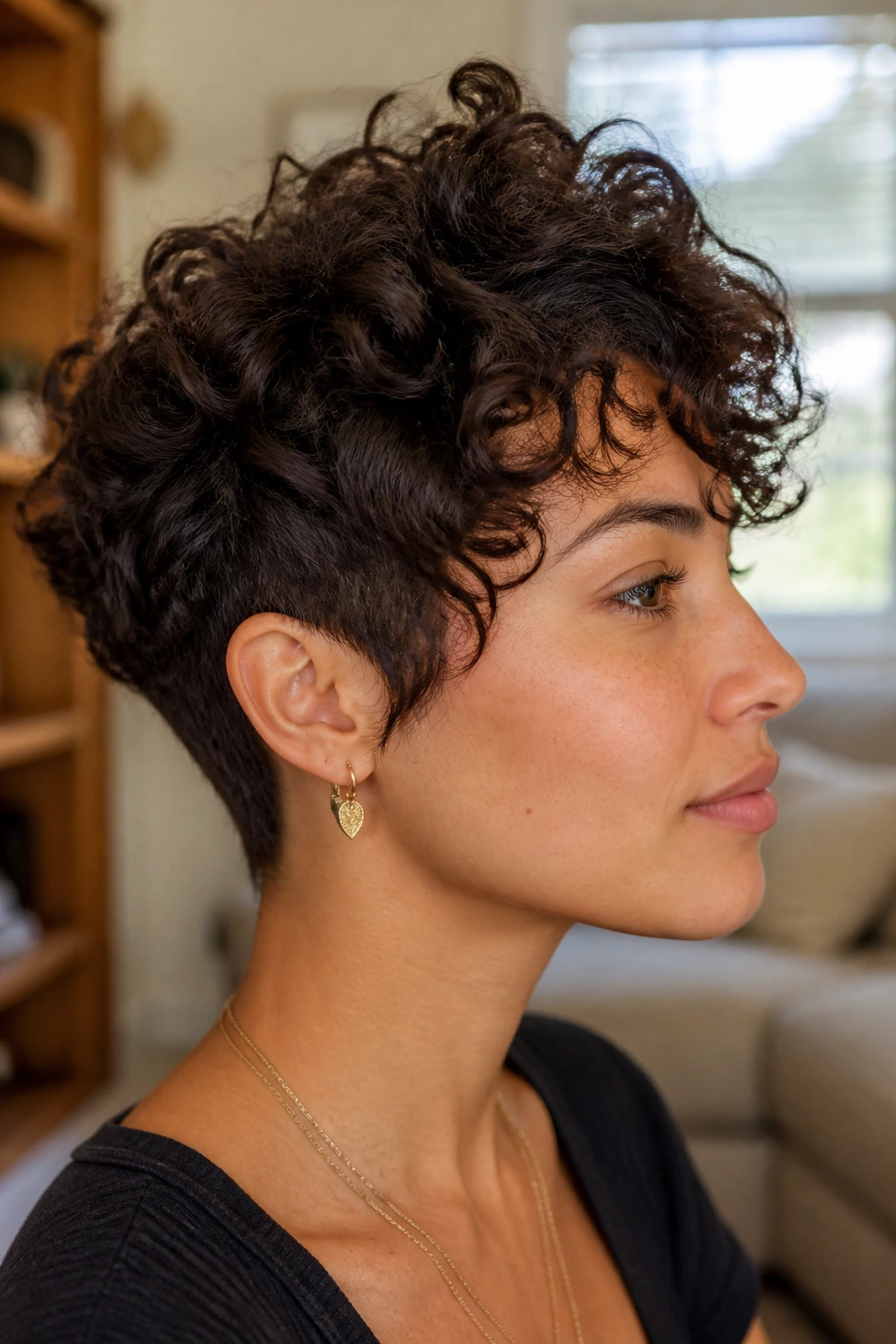
This is the version I reach for when the top of the head goes flat but the sides have too much personality to leave alone. The layers are stacked higher through the crown, then softened as they fall toward the temples, so the silhouette reads lifted instead of round. On curly hair, that matters more than people think.
Why it works
The crown gets the visual lift, while the shorter sides keep the cut from drifting into a mushroom shape. Ask for the top layers to stay about 1 to 1½ inches longer than the shortest perimeter if your curls shrink hard. That gives you enough length to fluff, scrunch, or diffuse without losing the pixie feel.
Styling note
Use a small clip at the crown for the first half of your diffuser time. It sounds fussy. It isn’t. That tiny lift at the roots can keep the whole cut from collapsing by noon.
2. Micro-Bang Pixie Wolf

Can curly bangs actually work? Yes — if they’re cut with a little restraint. Micro bangs on curly hair can look sharp, playful, and a bit dangerous in the best way, but they need to be cut dry and checked in natural curl formation, not dragged down wet and hoped for.
A good micro-bang pixie wolf sits high enough to show the brows, then lets the rest of the curls loosen around the forehead. If the fringe is too short, it turns into a little curly shelf. If it’s too long, the whole front gets heavy and starts stealing light from the face.
Best for: people who want the haircut to announce itself the moment they walk in.
3. Tapered Nape Pixie Wolf
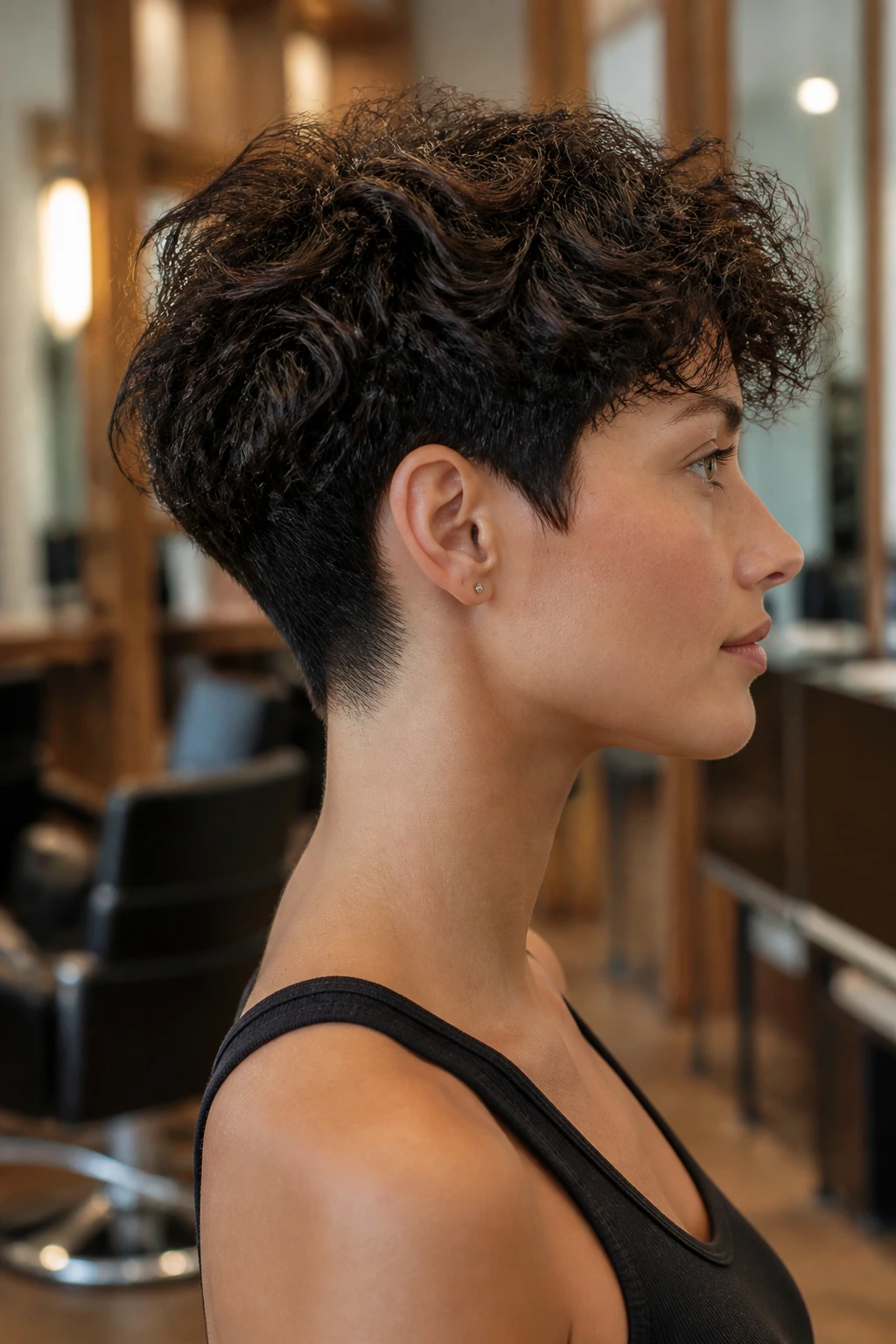
The nape is where this cut either feels crisp or looks like you forgot to finish it. A tapered nape cleans up the neckline and gives the back of the head a neat edge, while the curly layers above it stay soft and full. That contrast is the whole trick.
If your curls cling to the neck when damp, ask for the taper to be kept slightly shorter than you think you need. Curly hair drops and swells in different directions; a nape that looks tidy in the chair can puff out after a full day. The shape is much better when the stylist leaves just enough length to avoid a hard line.
4. Ear-Grazing Shag Pixie Wolf
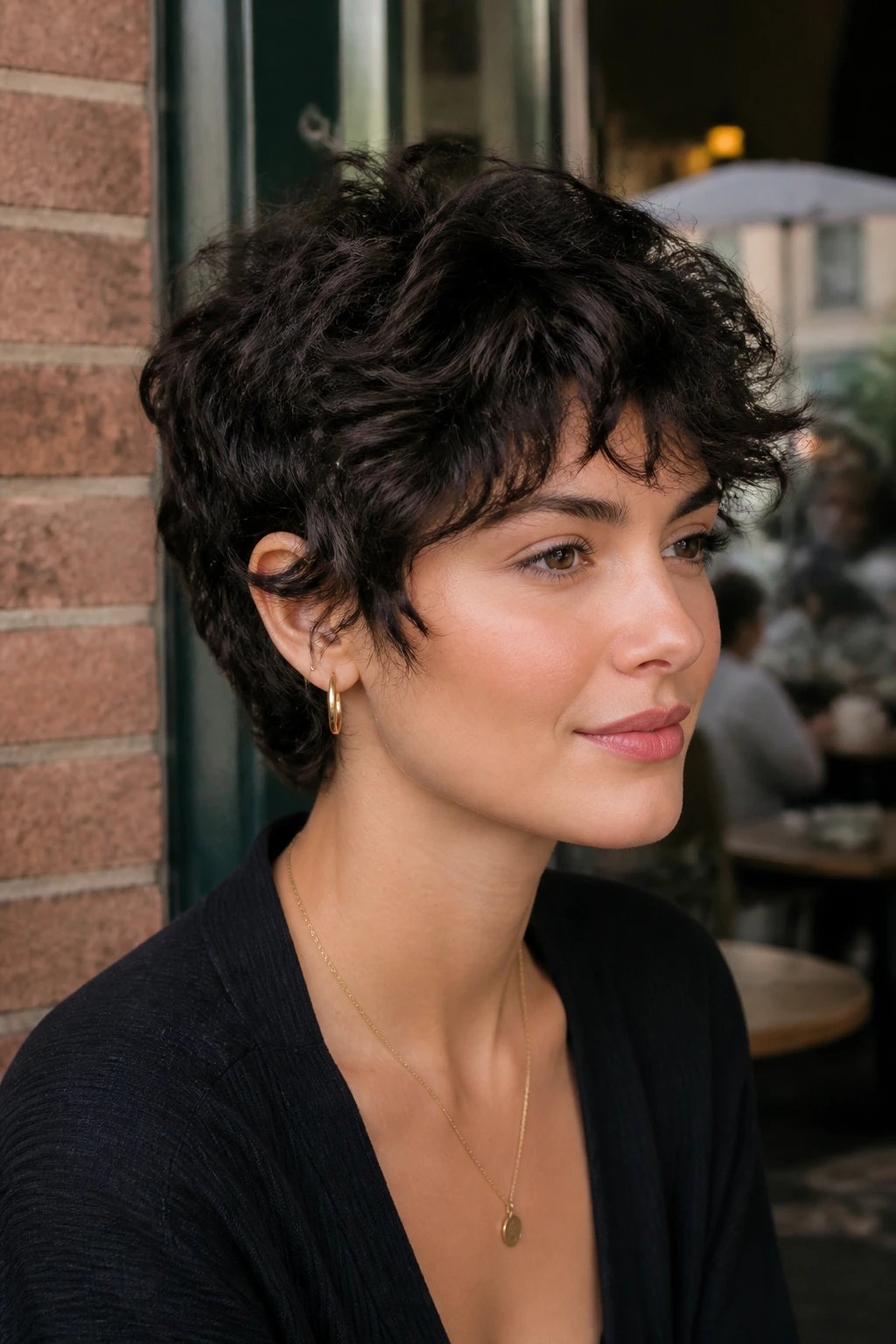
There’s a sweet spot where the curls barely brush the ears, and that’s where this cut lives. It feels lighter than a classic shag, but it doesn’t lose the cropped, face-open feeling that makes pixie cuts so addictive. The ears stay framed, not buried.
Why it stands out
The side layers are long enough to fold over the ears in a soft curve, while the back stays tighter so the shape doesn’t sprawl. It’s a good one if you want movement without the full drama of a long wolf cut. You get the texture, the fluff, the little bit of edge — minus the bulk.
Who should try it
Anyone with curls that flatten when too much length is removed from the sides. This version keeps the silhouette airy and makes glasses look intentional instead of crowded.
5. Rounded Halo Pixie Wolf

This one leans into softness. The silhouette is rounded around the head, almost like a halo of curls, but the wolf-cut layering keeps it from looking too polished or too formal. It’s a strong choice for tighter curls and coils because the shape honors natural volume instead of trying to carve it down.
The cut works best when the perimeter is left slightly fuller than a classic pixie. Not bulky. Just full enough to let the curl pattern create a smooth dome instead of a narrow cap. The result feels gentle, but not sleepy.
6. Asymmetrical Sweep Pixie Wolf
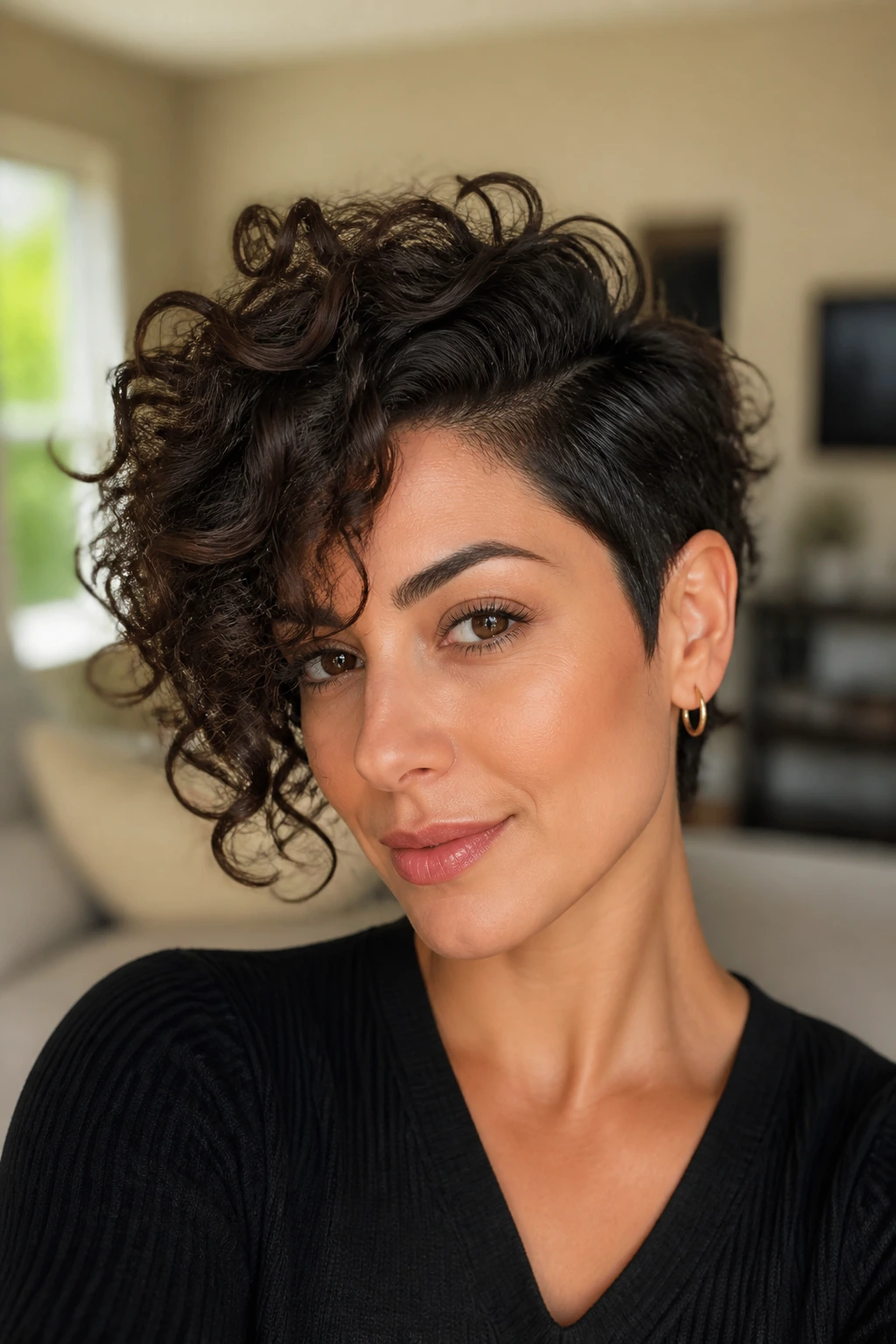
One side longer. One side tighter. That uneven tension gives curly hair a lot of life, especially when the curls don’t behave symmetrically anyway — which, let’s be honest, they usually don’t. An asymmetrical sweep can make a side part look deliberate instead of accidental.
Ask for one temple piece to sit about 1 to 2 inches longer than the opposite side if you want the imbalance to show. A deep side part helps, and so does tucking the shorter side behind the ear. It reads sharp without needing much product.
7. Cheekbone Frame Pixie Wolf
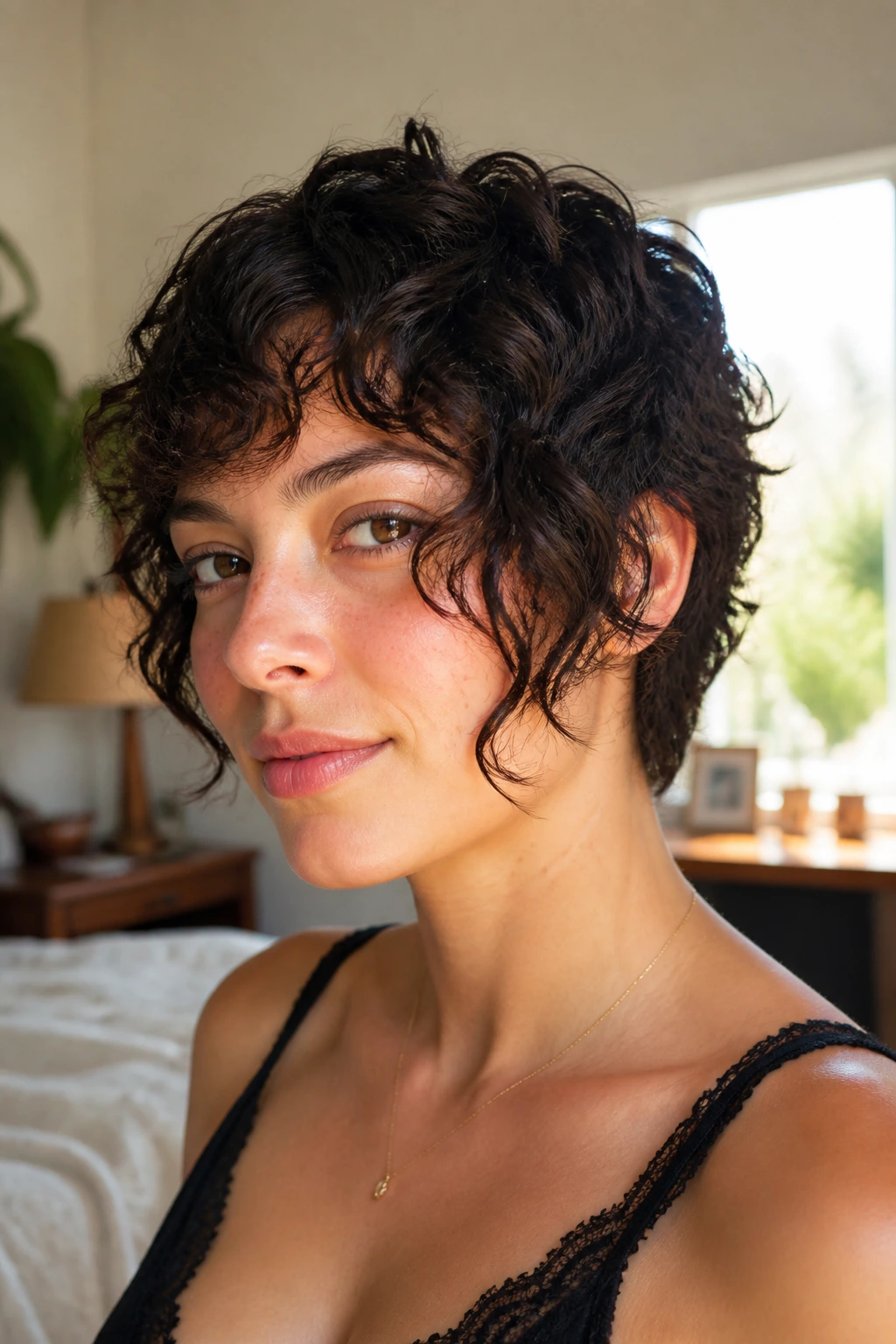
This is the cut that knows the face is part of the haircut. The front pieces land near the cheekbones, which gives the curls something to curl around instead of floating out in random directions. If your face gets swallowed by too-short layers, this is the fix.
The best versions keep the front slightly heavier than the back. That way, the curls fall into the cheek and jaw area, where they can do a little softening work. A stylist who understands curl shrinkage will usually leave the front longer than seems necessary. Good. That’s the right instinct.
8. Hidden Undercut Pixie Wolf
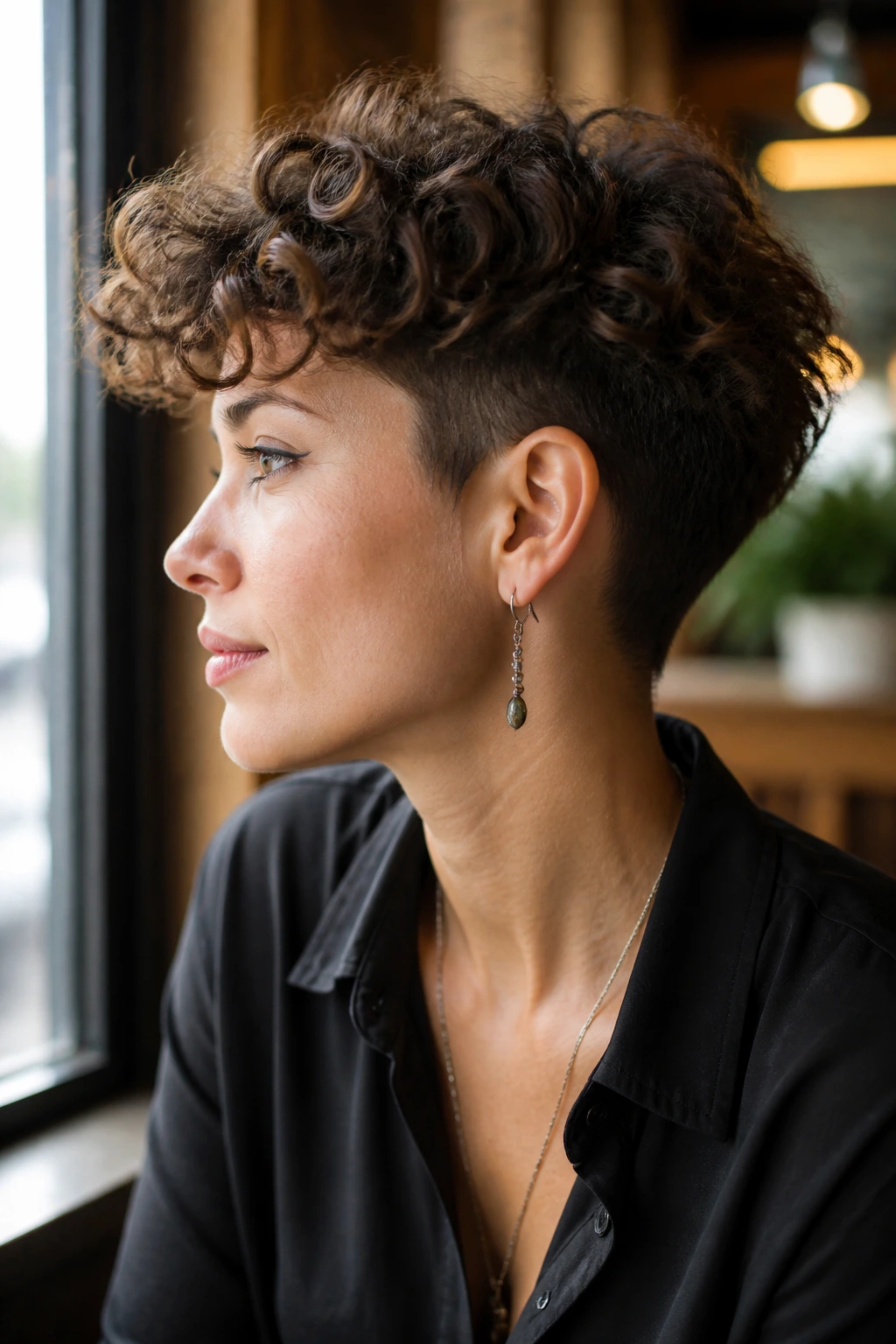
If your hair is thick, this is one to keep in your pocket. A hidden undercut removes bulk from underneath the top layers, which makes the crown lighter and easier to shape. The haircut still reads full on top, but the heaviness that causes triangle-shaped puff disappears.
What to ask for
Tell the stylist you want the underside thinned or clipped short only where the hair traps bulk, not around the whole head. That keeps the upper curls soft and visible while the dense stuff underneath stops fighting the silhouette.
My take
This is the version that buys you time in the morning. Less mass means less drying time, less frizz from over-manipulating, and less of that frustrating “my hair is shaped like a seat cushion” moment.
9. Curly Mullet Pixie Wolf
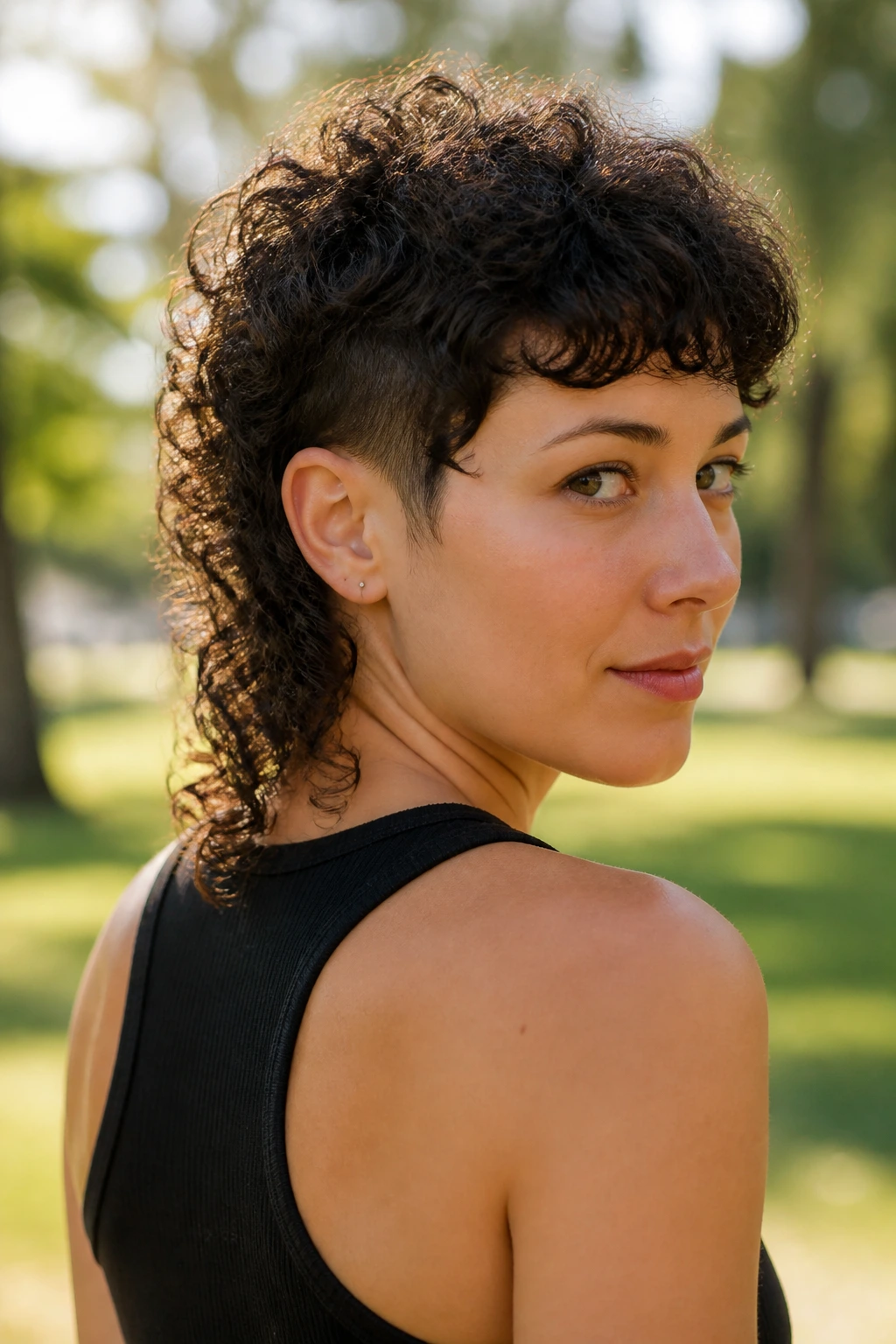
A mullet-pixie hybrid sounds dramatic because it is dramatic. But curly hair makes the shape feel less rebellious and more natural, since the back can grow into a soft tail of curls while the front stays cropped and lively. It’s a strong choice if you want the haircut to have some bite.
The important part is balance. Keep the back long enough to show the wolf-cut lineage, but not so long that the sides start looking unfinished. On curls, two to three inches of extra length at the back can be plenty. That little tail changes the whole attitude of the cut.
10. Glossy Wet-Set Pixie Wolf
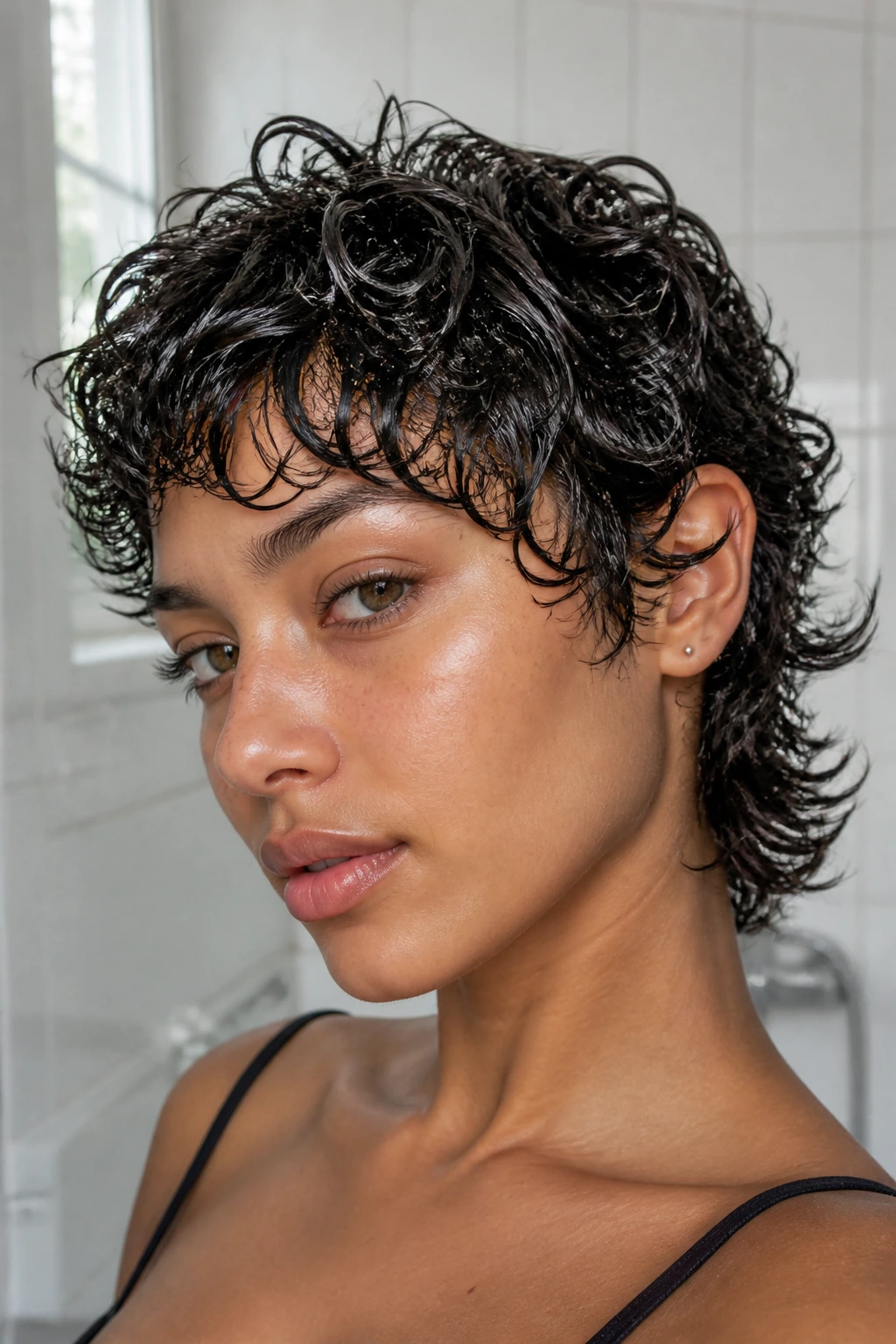
This version shines when the curls are defined, damp, and coated enough to hold their shape as they dry. It’s the least shy of the bunch. You’ll see the curl pattern, the separation, the ridges of each ringlet — all of it. If you love a slicker finish, this is the one that gives it to you.
A light gel or foam at the roots and mid-lengths keeps the shape from frizzing out before it sets. Don’t rake too hard through the top. You want clean sections, not a blown-apart cloud. Once the cast forms, scrunch it out only when the hair is dry and cool.
11. Piecey Coil Pixie Wolf
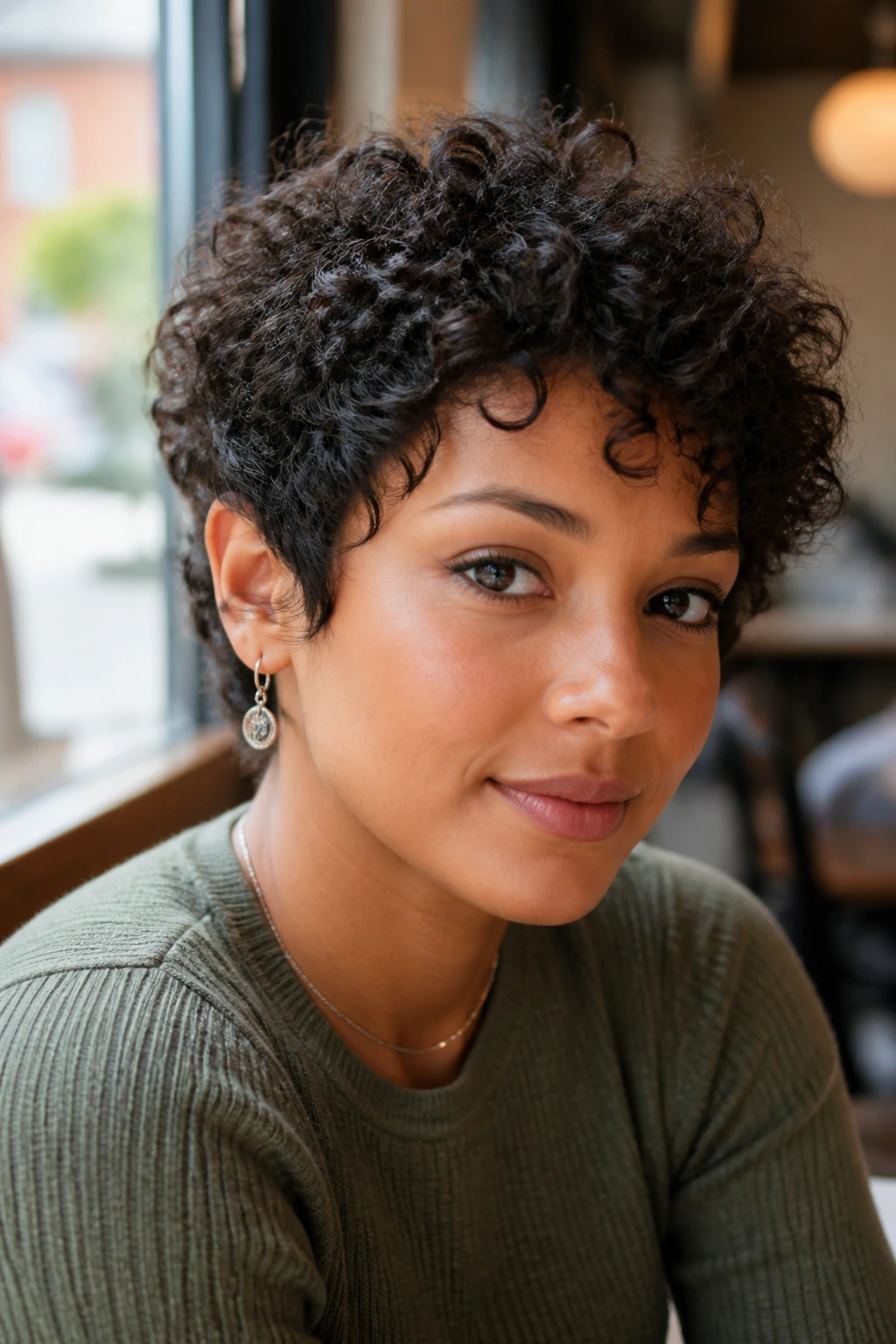
Want definition without the stiff look? This is the answer. Small, separated coils around the crown and fringe create a textured finish that feels lively rather than controlled. It’s especially good if your curls naturally clump into neat little groups.
The trick is to style in sections and then separate a few curls by hand after drying. Not all of them. Just enough to break up the hard lines. If every curl is separated, the cut gets fuzzy fast. Leave a few groupings intact so the shape has some weight.
12. Copper Glow Pixie Wolf
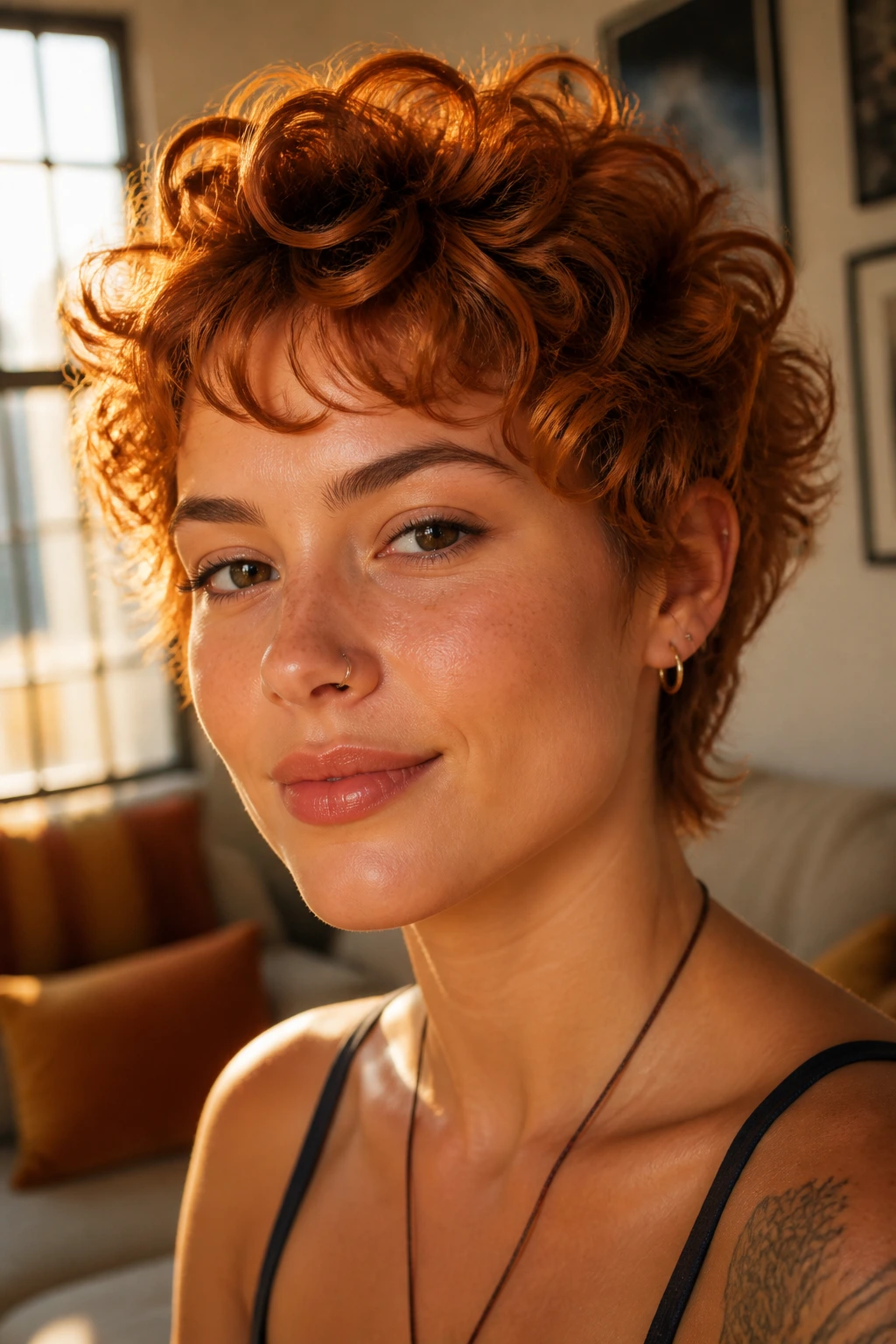
Color can change the whole haircut, and this cut is proof. Warm copper or auburn tones make the layers read brighter, especially where the curls flip at the ends. The result is less about the color being loud and more about it showing off the movement.
Why the shade matters
Curly pixies swallow detail if the color is too flat. A copper gloss catches the bends in the hair shaft, which makes each layer easier to see. Ask for a tone that sits close to your natural warmth if you want something manageable, or go richer if you want the texture to pop harder.
Styling note
Use a color-safe curl cream. Heavy oils can mute the shine.
13. Silver Shine Pixie Wolf
Gray, silver, and white curls look especially good in a pixie wolf shape because the layers give the hair room to move, and movement keeps cool tones from reading flat. The cut has a clean outline, but the texture stops it from feeling severe.
A shine spray or a tiny bit of lightweight serum on the outer curls can help, especially if your silver strands tend to look dry at the ends. Keep the product off the roots. Silver hair goes dull fast when it’s coated too heavily, and the whole point here is to let the texture reflect light, not drown in oil.
14. Soft Wave Pixie Wolf
Not every pixie wolf has to be all corkscrews and high drama. If your hair sits in loose waves, this version gives you the wolf-cut shape without making the cut feel overworked. The layers are longer, the edge is softer, and the finished look has a little breeze to it.
This works well when the shortest pieces are only trimmed enough to keep the neck open. The top can fall forward or sideways, depending on how you part it, and the whole thing feels more easygoing than engineered. A side part and a touch of mousse are usually enough.
15. Shaved Side Pixie Wolf
A shaved side changes the haircut fast. One side can be taken down to a short clipper length or a close taper while the curls on top and the opposite side stay full and textured. The contrast is strong, clean, and hard to ignore.
Who it suits
People who want the haircut to look sharper at first glance and who don’t mind regular upkeep around the shaved section. If you’re fine with touching up every 2 to 4 weeks, the shape stays crisp. Let it go longer and the contrast softens, which can be a nice thing too — just not the original effect.
Styling tip
Part the curls away from the shaved side while they’re damp so the top dries in the direction you want.
16. Curtain Fringe Pixie Wolf
Curtain bangs with curls can be gorgeous when they’re handled with some restraint. The fringe splits softly down the center and opens the face instead of blocking it. On a pixie wolf shape, that front movement keeps the haircut from feeling too cropped.
The key is length. The front pieces usually need to sit around nose level when wet so they can rise into a cheekbone-skimming fringe as they dry. Cut them too short and they’ll spring up like little springs with opinions. Leave enough room, and they’ll fold into the rest of the shape.
17. Jawline Kiss Pixie Wolf
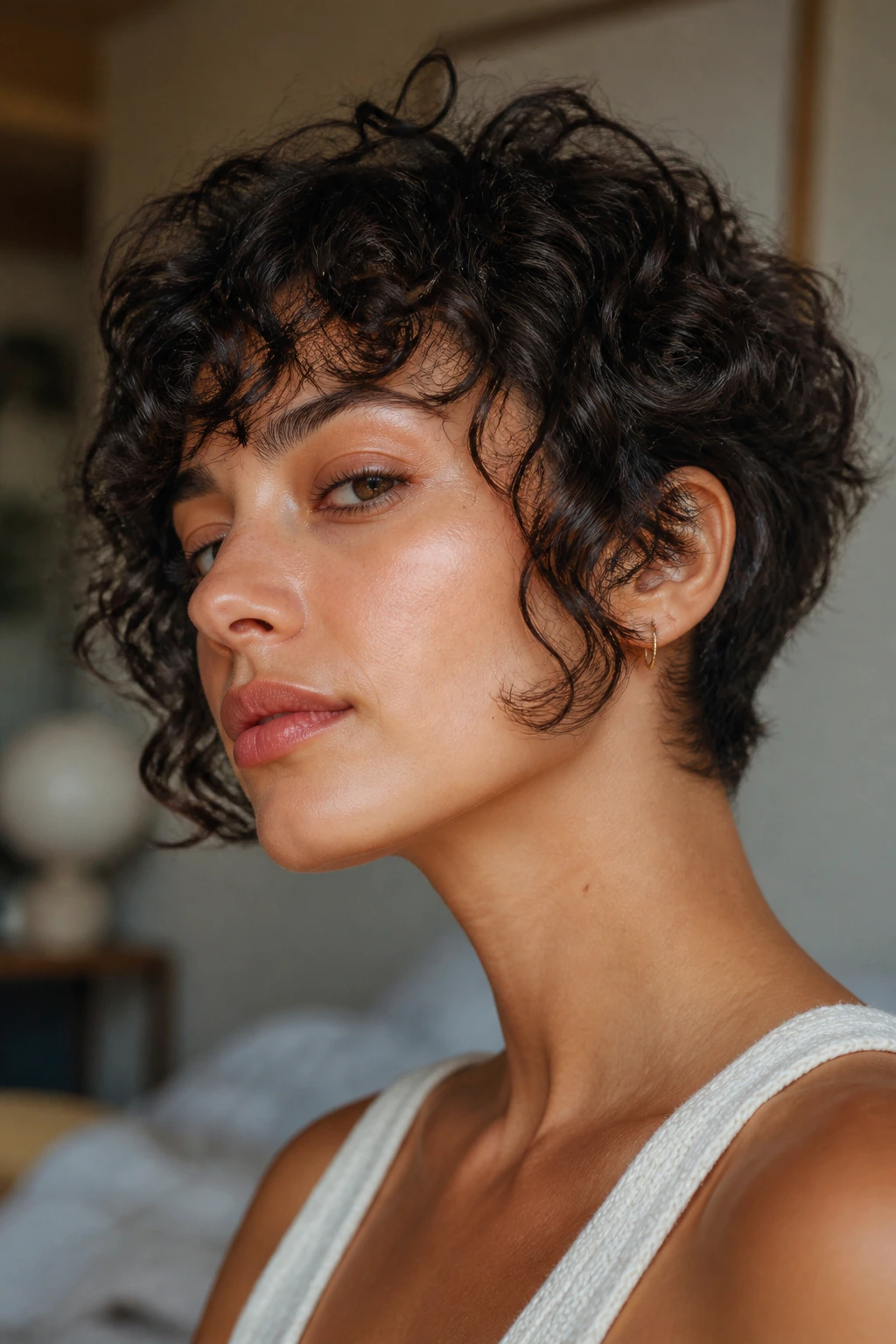
This cut is all about the jaw. The front curls are long enough to brush the jawline, and that tiny detail changes the whole read of the haircut. Instead of a pure crop, you get a shape that frames the lower face and keeps the profile soft.
It’s one of the better choices if your curls get wider at the sides and you want to avoid the boxy look. The front should be long enough to bend under or flick out, depending on how your hair dries. That little bit of movement near the jaw keeps the cut from becoming static.
18. Micro-Layer Pixie Wolf
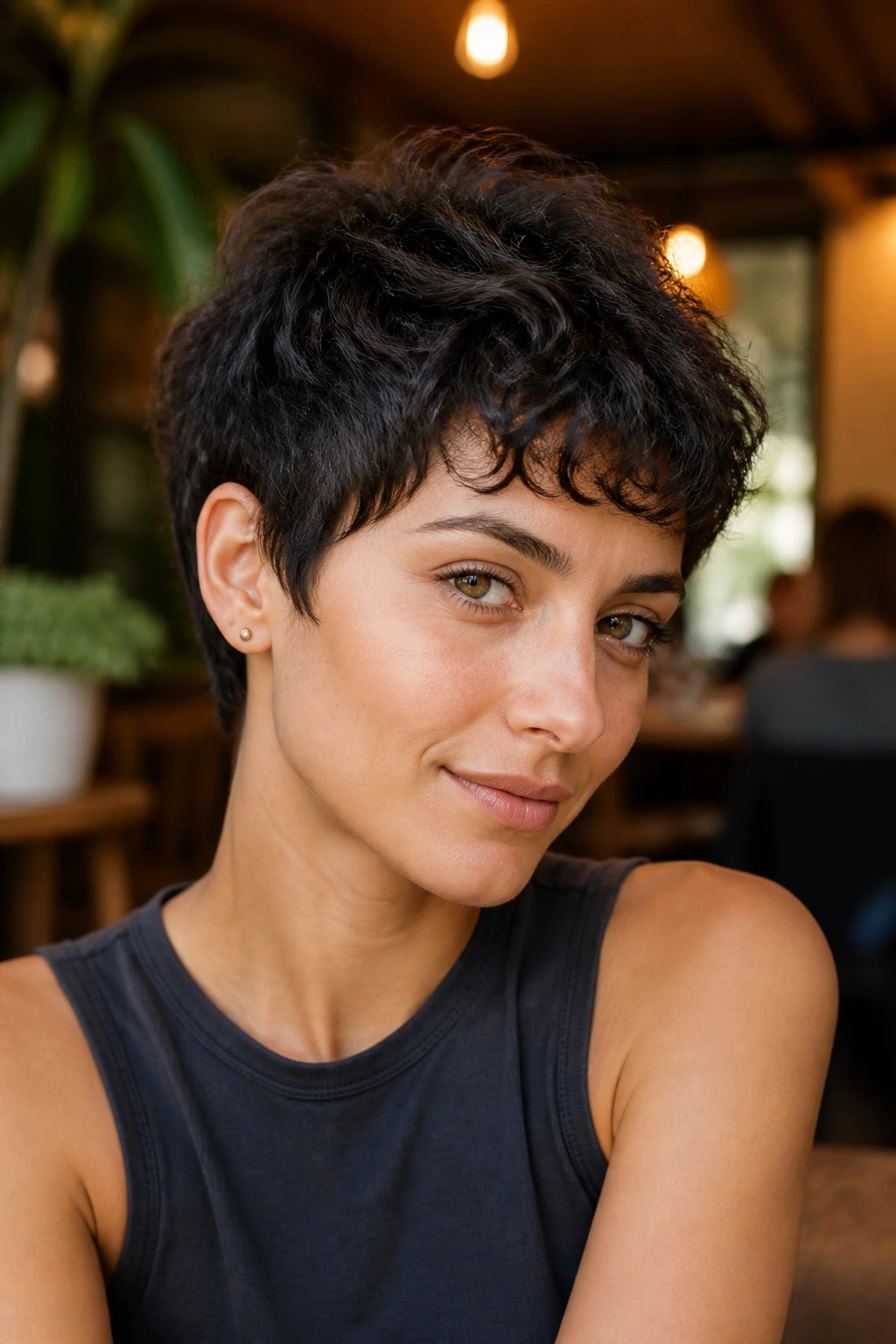
Sometimes the fix is not more length. It’s better layer placement. A micro-layered pixie wolf uses small internal cuts to remove bulk without visibly chopping the surface shape to bits. The haircut ends up lighter, but the outline stays controlled.
This is a smart choice for curls that stack on top of each other and create a heavy puff around the crown. The stylist can use tiny increments — think half-inch to one-inch shifts — instead of dramatic slices. The result feels cleaner and more wearable, especially if your hair is dense but not coarse.
19. Fine-Hair Lift Pixie Wolf
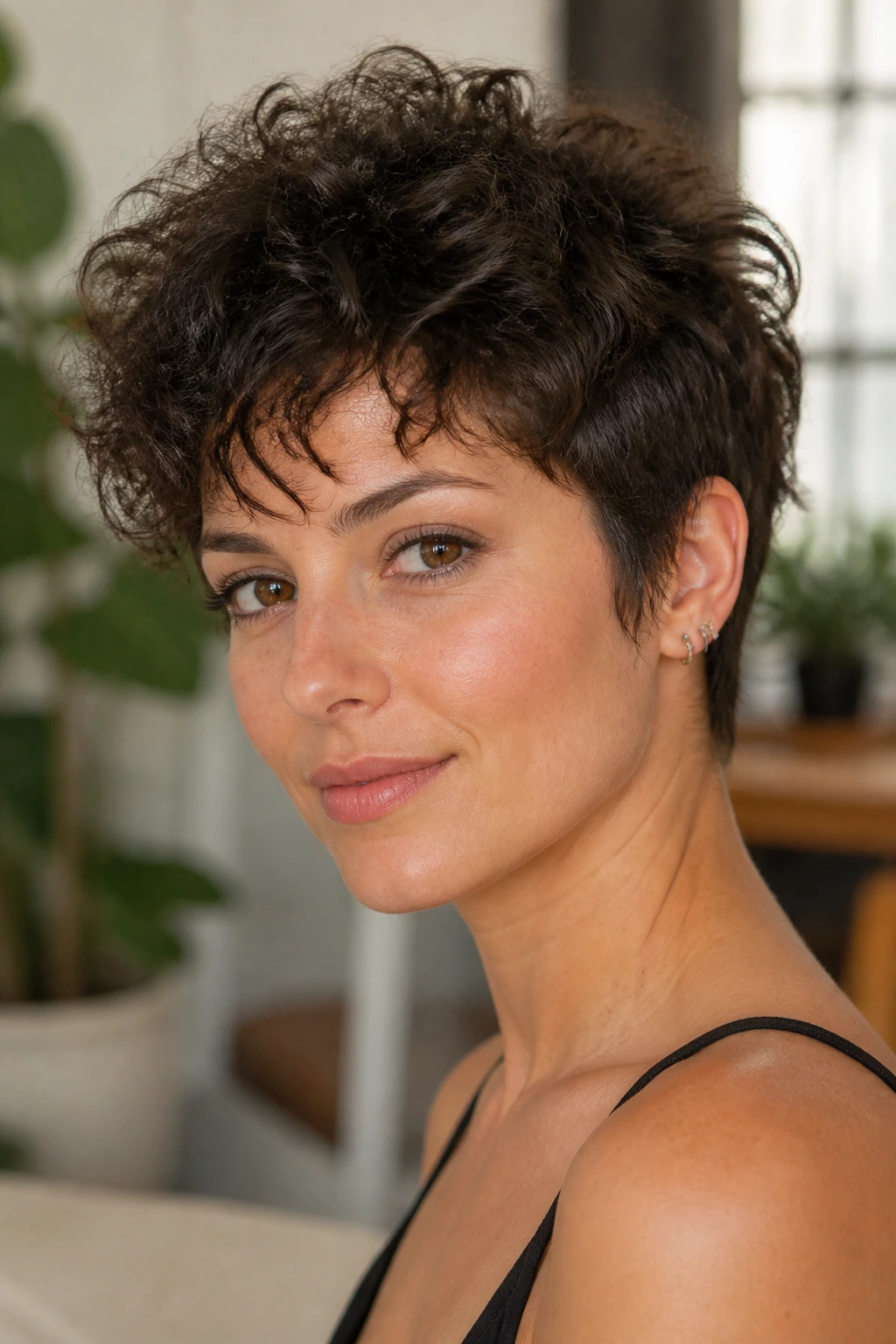
Fine curly hair needs a different hand. Too many layers and it turns wispy. Too little and it collapses. This version sits in the middle, with enough lift at the crown to fake more fullness while the perimeter stays tidy enough to hold shape.
A foam or light mousse beats heavy cream here. Heavy product drags fine curls down the neck, and then the whole cut loses its point. If your hair is fine, ask for the shortest layers to stay modest and the ends to be softened with point cutting, not aggressively thinned.
20. Thick-Hair Sculpted Pixie Wolf
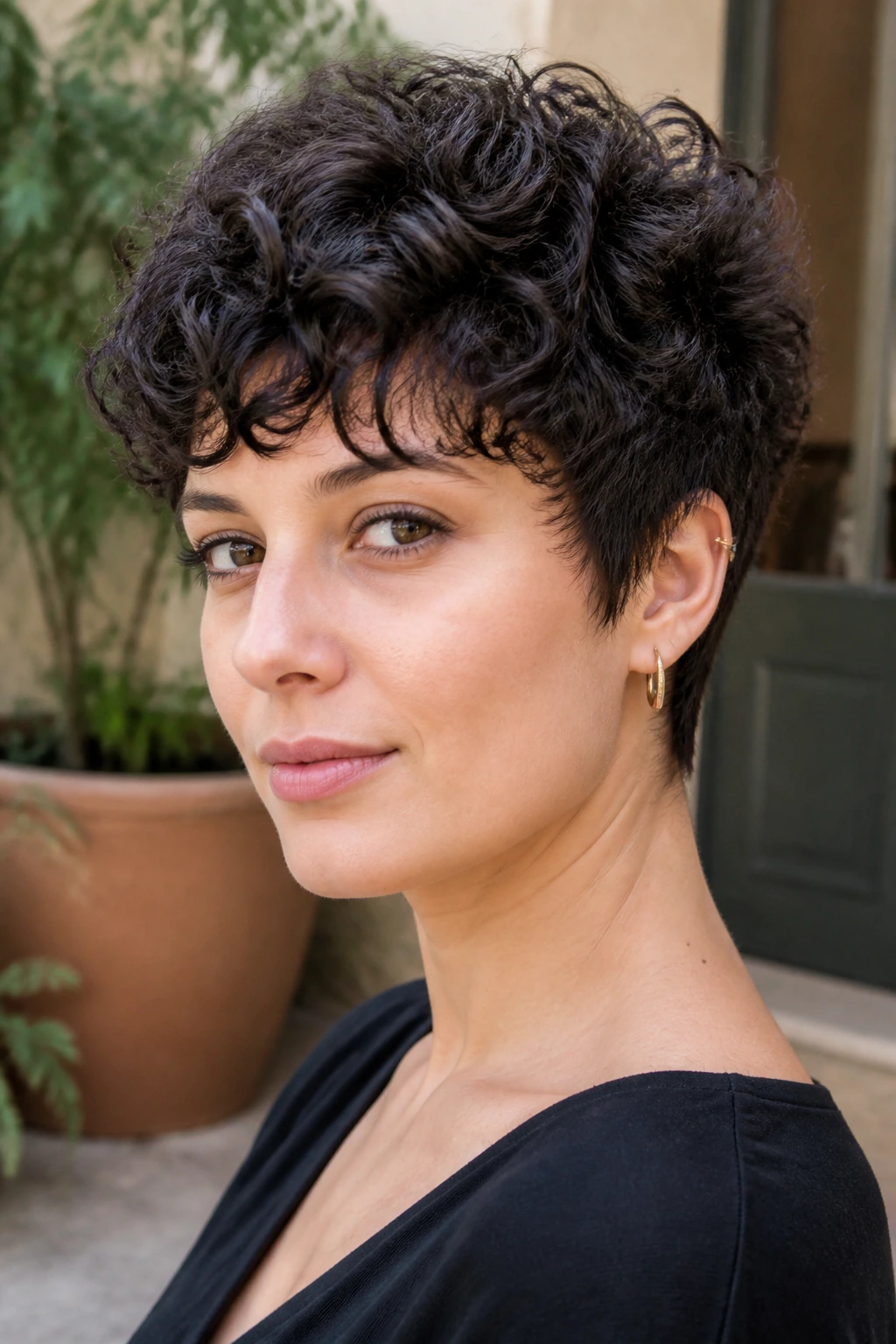
Thick hair can wear a pixie wolf beautifully, but it needs real shaping, not just removal. This version cuts into the mass under the surface so the curls don’t balloon into a solid wall. The top stays lively, and the sides stop feeling like a weightlifting event.
Why it’s different
The haircut should be built to reduce bulk where the hair naturally piles up — around the ears, the crown, and the back of the head. When that’s done well, thick curls suddenly look expensive and airy instead of heavy. If the cutter only snips the surface, you’ll still end up fighting the same puff.
Watch for this
Ask the stylist not to overthin the ends. On thick curly hair, too much thinning makes the cut frizz faster.
21. Coily Forward Fringe Pixie Wolf
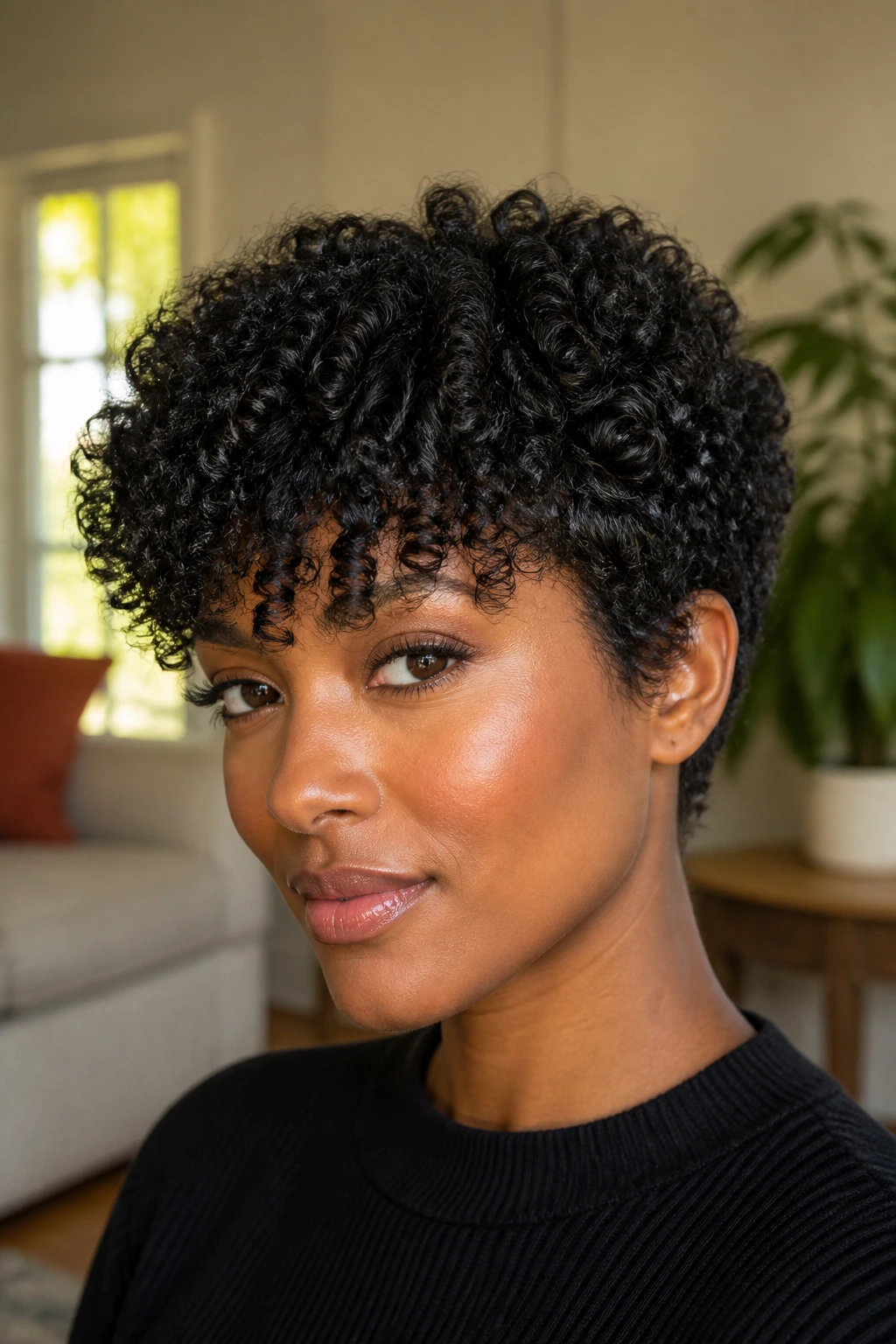
This is for coils that want to move forward instead of up and out. The fringe is left long enough to bend toward the forehead, while the sides and back stay shorter to keep the silhouette compact. It creates a strong frame without needing a full bang commitment.
The look is especially good when you want the eyes and brows to stay visible but not exposed. A little curl cream and a pick at the roots are enough to wake it up. Let the fringe sit too short and it loses the softness that makes it work.
22. Soft-Edge Romantic Pixie Wolf
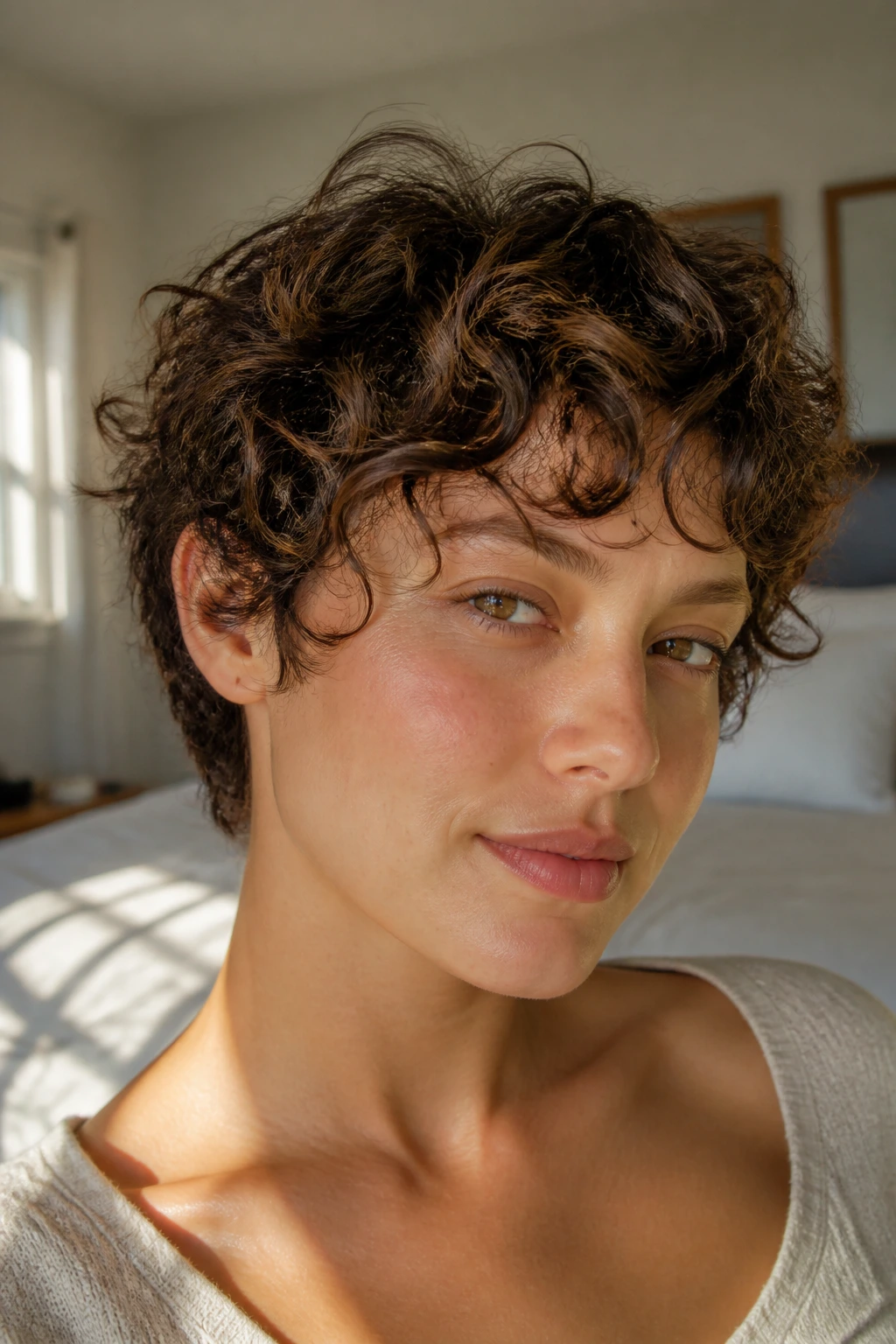
Not every cropped cut has to feel edgy. This one softens the perimeter, rounds off the corners, and lets the curls fall in a way that feels a little dreamy. It’s still a pixie wolf, but the edges are gentler and the layers are less choppy.
That softness helps if you want movement without the sharper shaggy look. It also plays nicely with earrings, glasses, and side-swept styling because the haircut doesn’t compete with the face. A bit of mousse and a diffuser are usually enough; you do not need a complicated routine to keep this one alive.
23. Sporty Wash-and-Go Pixie Wolf
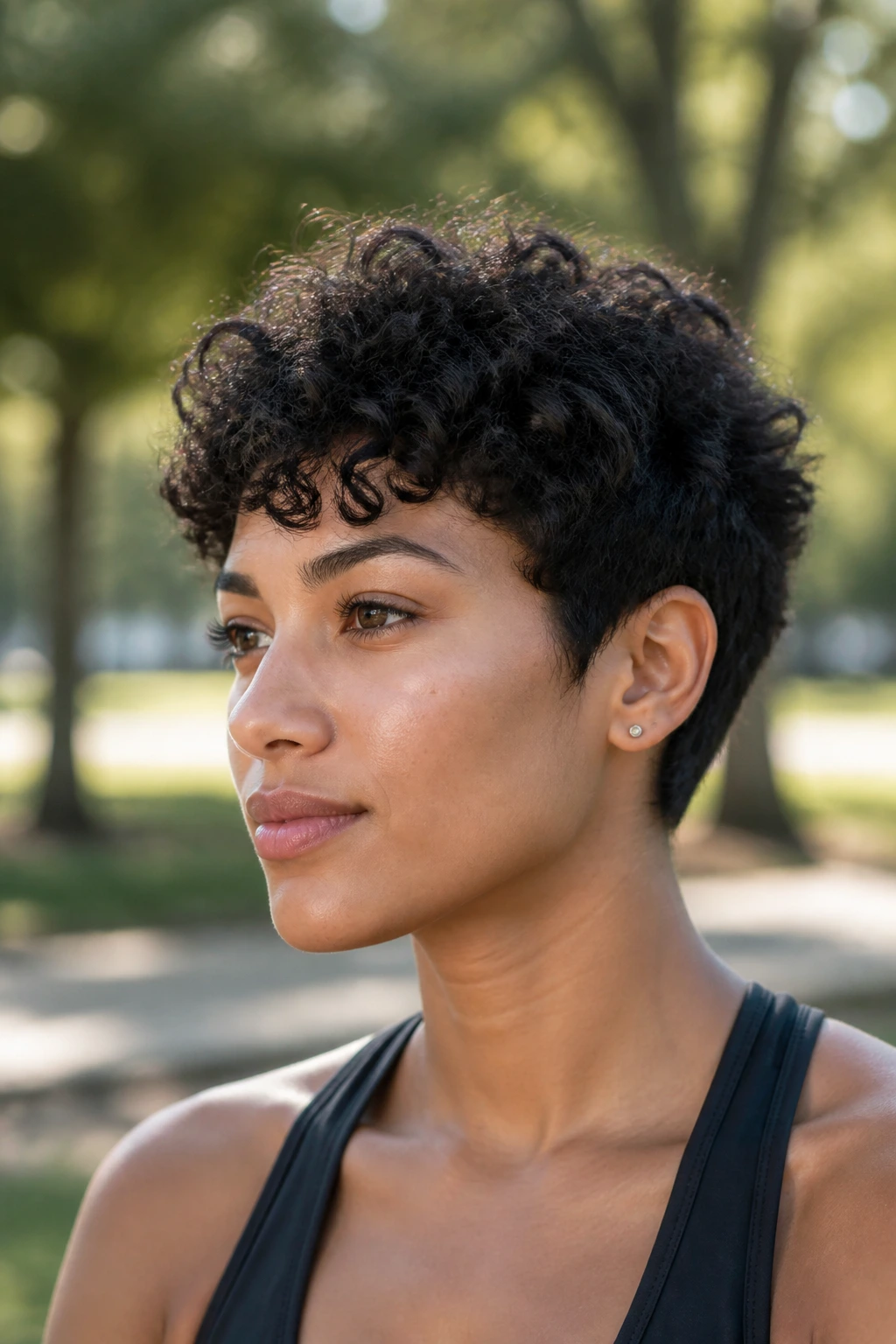
This cut is for people who want to wash, scrunch, and leave. The shape is built so the curls can air-dry with minimal fuss, which means fewer products and fewer mornings spent negotiating with a mirror. It’s short, quick, and honest.
Keep the layers even enough that the shape doesn’t require constant correction. If the crown is too heavily cut, you’ll spend your life trying to stop it from puffing. If it’s too long, you’ll lose the cropped feel. The sweet spot is a compact silhouette that still lets the curl pattern do the work.
24. Sharp Perimeter Pixie Wolf
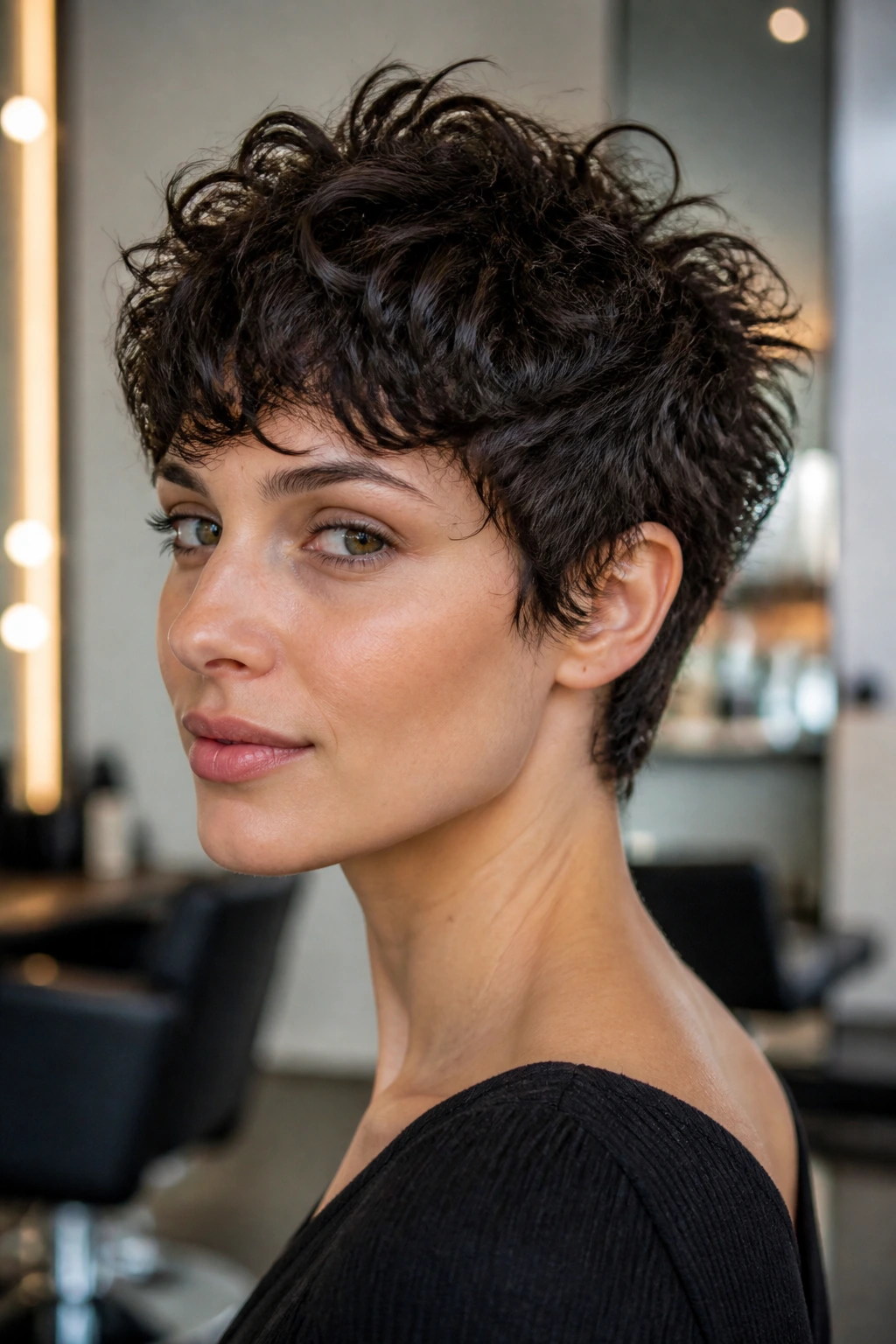
This is the crisp one. The outline around the nape and sides is kept clean, while the crown and top stay textured and a little messy. That sharp edge makes the curls above it look fuller and more intentional.
Why it works
The hard perimeter gives the haircut a strong frame, which can make even loose curls appear denser. It’s a useful contrast if your texture tends to frizz out when the edges are left too soft. The trick is making the line clean without making it harsh — a tiny difference, but one that shows up in real life.
Good to know
Plan on cleanups every 4 to 6 weeks if you want the outline to stay sharp. Let it go longer and the neat edge turns soft fast.
25. Salt-Spray Messy Pixie Wolf
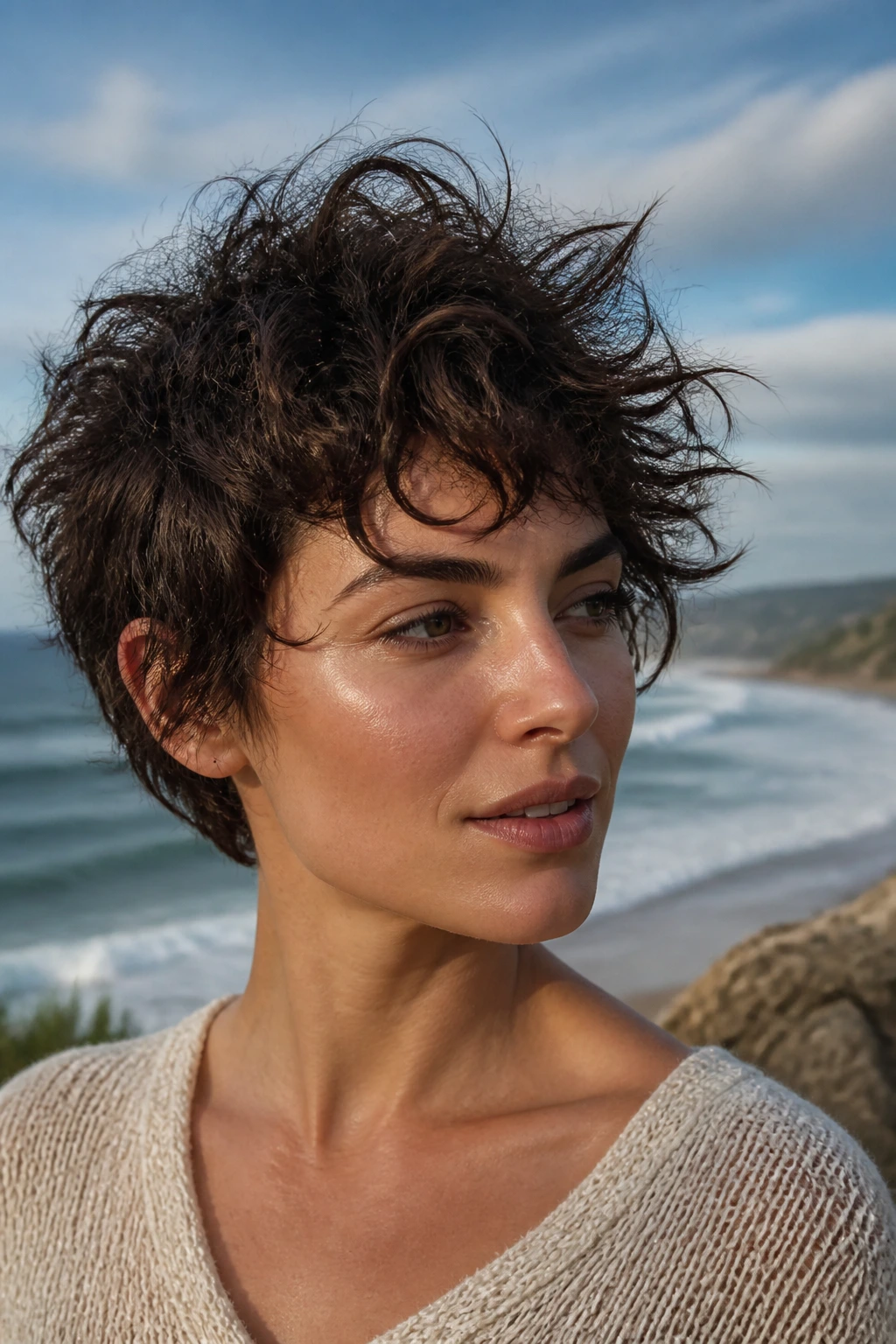
Salt spray and curls can be tricky. Too much, and the hair turns dry and grippy. Too little, and nothing changes. This version uses the product sparingly to rough up the finish and give the pixie wolf a windblown, piecey texture that feels easy rather than polished.
I’d keep this one for hair that already has some natural bend and can handle a little grit. A quick mist, scrunch, and diffuse is enough. Pair it with leave-in underneath so the salt doesn’t suck all the moisture out of the ends. That balance matters.
26. Side-Part Glam Pixie Wolf
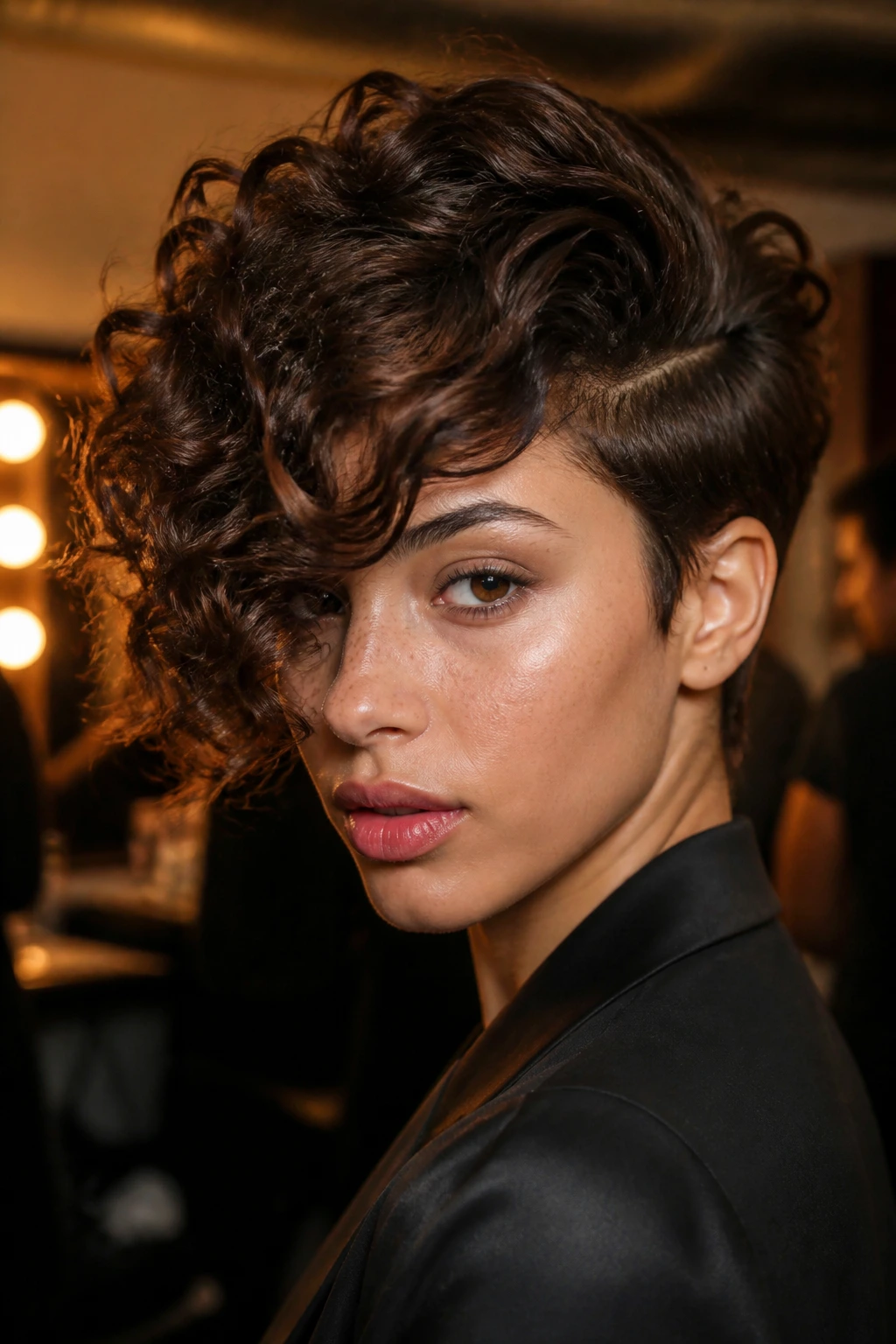
A deep side part turns a curly pixie wolf into something with a little old-school drama. The front lifts high, the longer side falls across the face, and the shorter side stays close enough to keep the crop in place. It’s polished without becoming stiff.
This is one of the best versions for events or for anyone who wants the haircut to look a touch more dressed up. Pin one side back if you want cheekbones on display, or let the fringe drape for a softer finish. Either way, the part does most of the talking.
27. Grow-Out Friendly Pixie Wolf
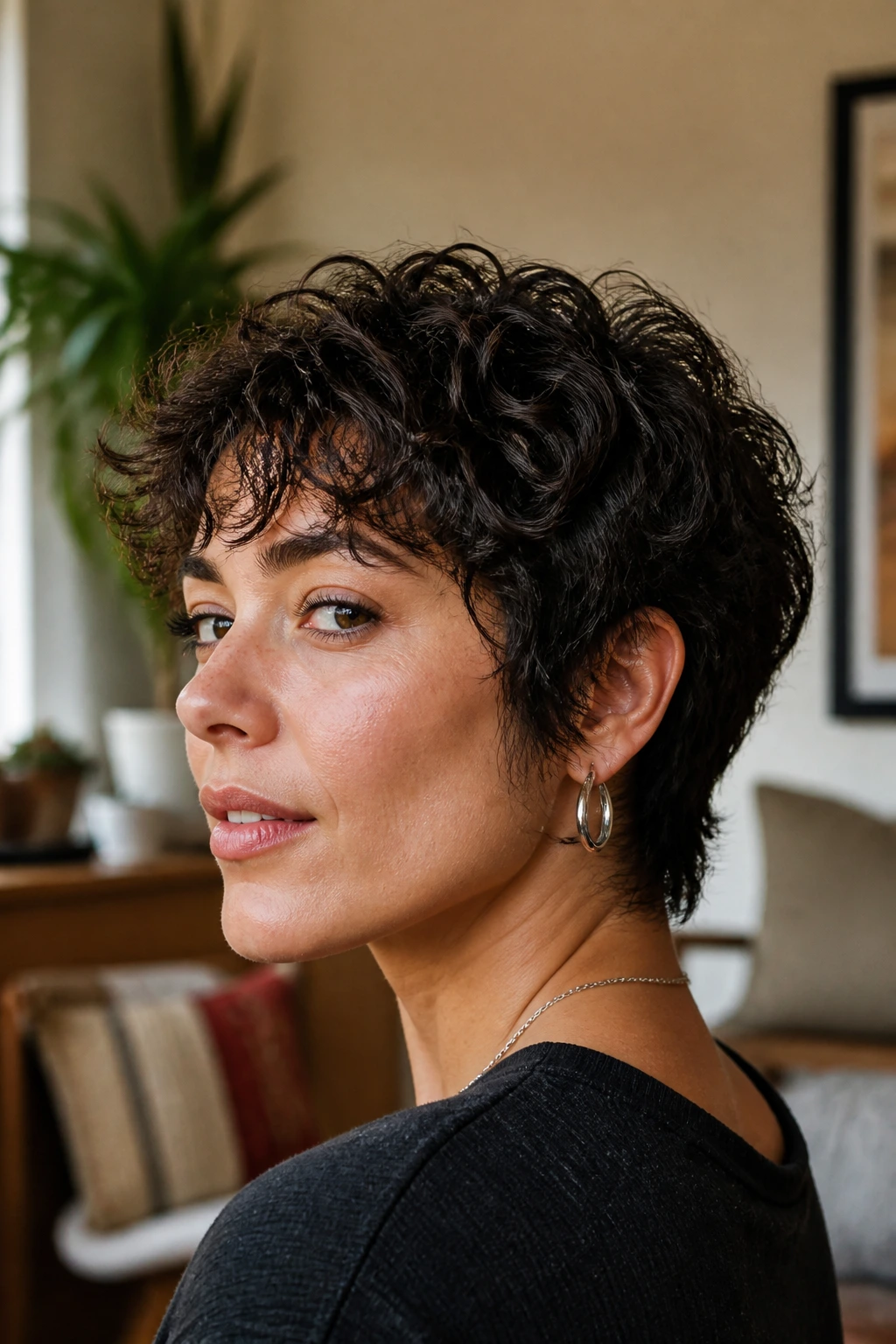
If you hate the awkward middle stage, build for it from the start. A grow-out friendly pixie wolf keeps the back soft, the side layers slightly longer, and the fringe flexible enough to fall two different ways. That way, when the cut gains length, it turns into shape instead of shagging out unpredictably.
What to ask for
Tell your stylist you want a version that can last 8 to 10 weeks before it starts losing its outline. That means avoiding razor-thin ends and keeping enough length at the temples to tuck, sweep, or flip. The cut should look intentional at week one and only softer — not sloppier — by week eight.
My preference
This is the one I’d choose if I wanted the least drama later. Hair grows whether we like it or not, and this version respects that.
Why Pixie Wolf Layers Work So Well on Curls
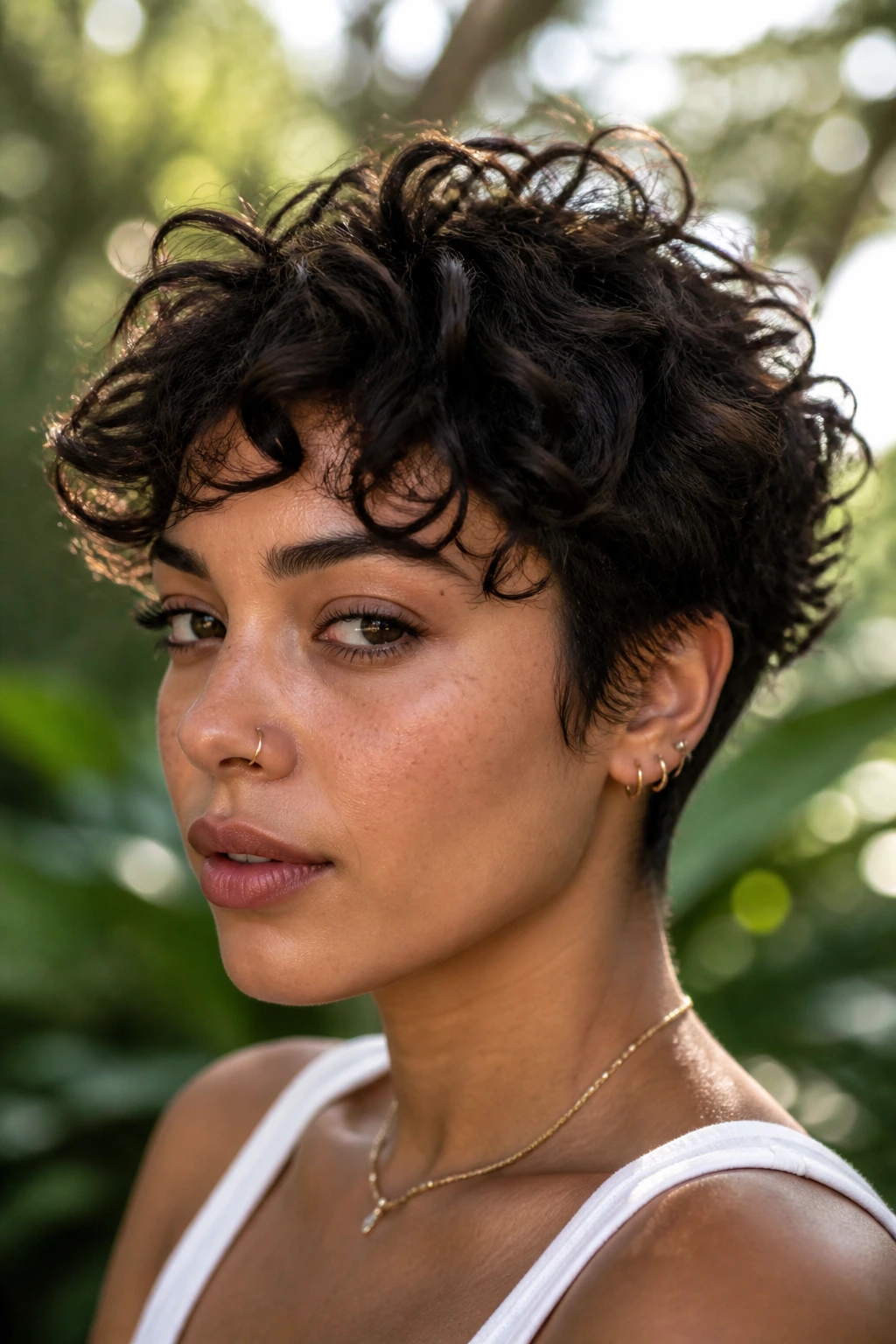
Curls already bring shape. The haircut just needs to steer them. That’s why a pixie wolf can feel better than a classic crop on textured hair: the layers create air pockets, the shorter sides stop the width from taking over, and the crown keeps enough length to show off the curl pattern instead of hiding it.
The other quiet advantage is shrinkage. A wet curl can lie to you in ways that straight hair never will. It can drop to the chin and spring back to the nose, or sit at the jaw and finish at the cheekbone. A wolf-inspired pixie accepts that reality. It doesn’t ask for obedience. It asks for shape.
And that shape can be soft, sharp, or somewhere in between. That’s the part people miss when they think all short curly cuts have to look boyish or all wolf cuts have to stay shaggy. They don’t. The right layering map changes everything.
How to Ask for Pixie Wolf Cuts for Curly Hair at the Salon
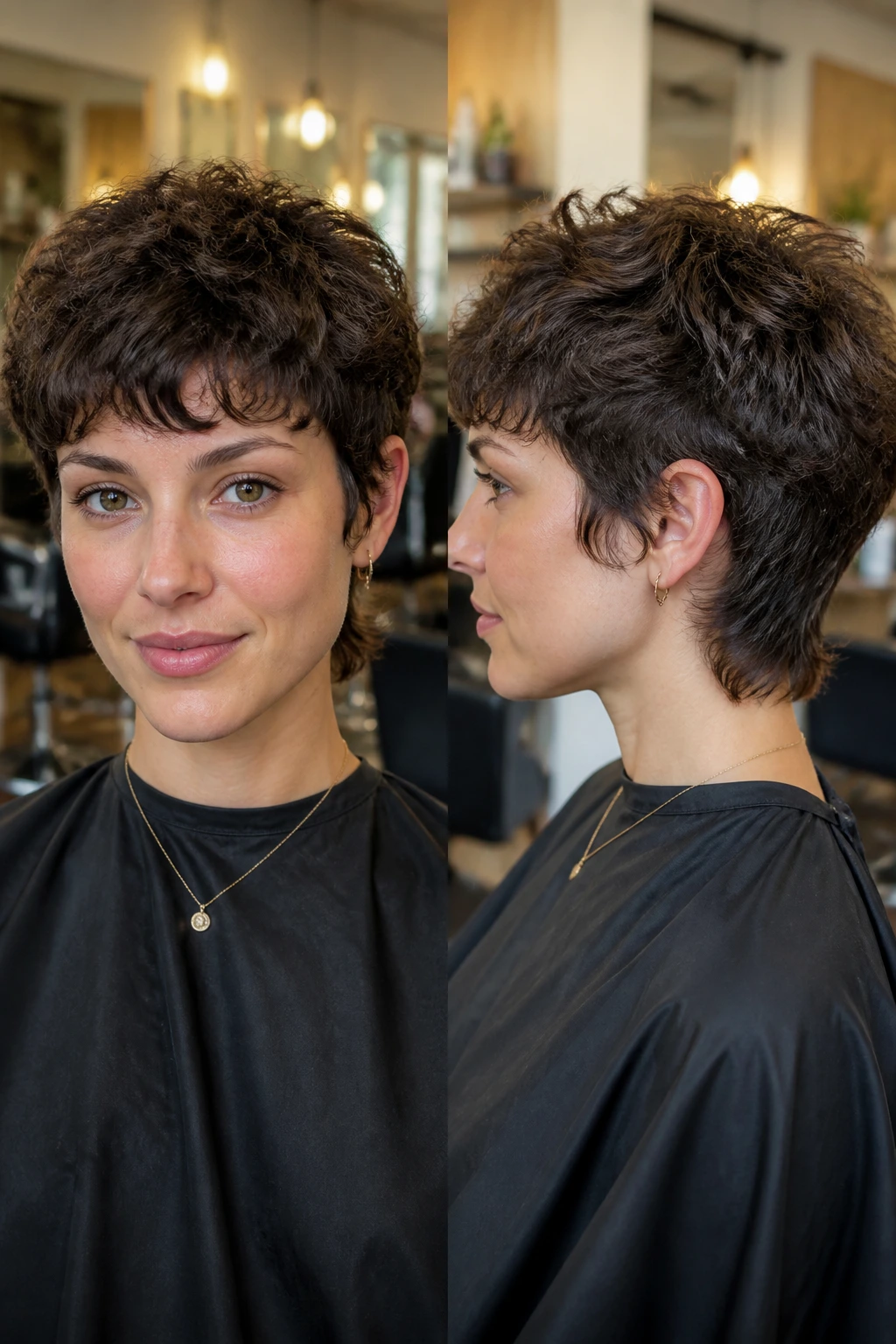
Bring photos, yes, but bring words too. Photos can show mood; words tell the stylist how much maintenance you’re willing to live with. Say whether you want the nape tapered, the crown lifted, the fringe short, or the front pieces left cheekbone length. Those details matter more than saying you want it “edgy.”
Ask for a dry check before the final snip if your curls shrink hard. That one request saves a lot of regret. Also mention how you wear your part most often, because a deep side part and a center part create very different weight lines in a pixie wolf shape.
If your hair is dense, say so. If your hair is fine, say that too. Stylists can work with almost anything, but they need the right target. “I want volume at the crown, less bulk around the ears, and a fringe that can fall either side” is a lot more useful than “make it textured.”
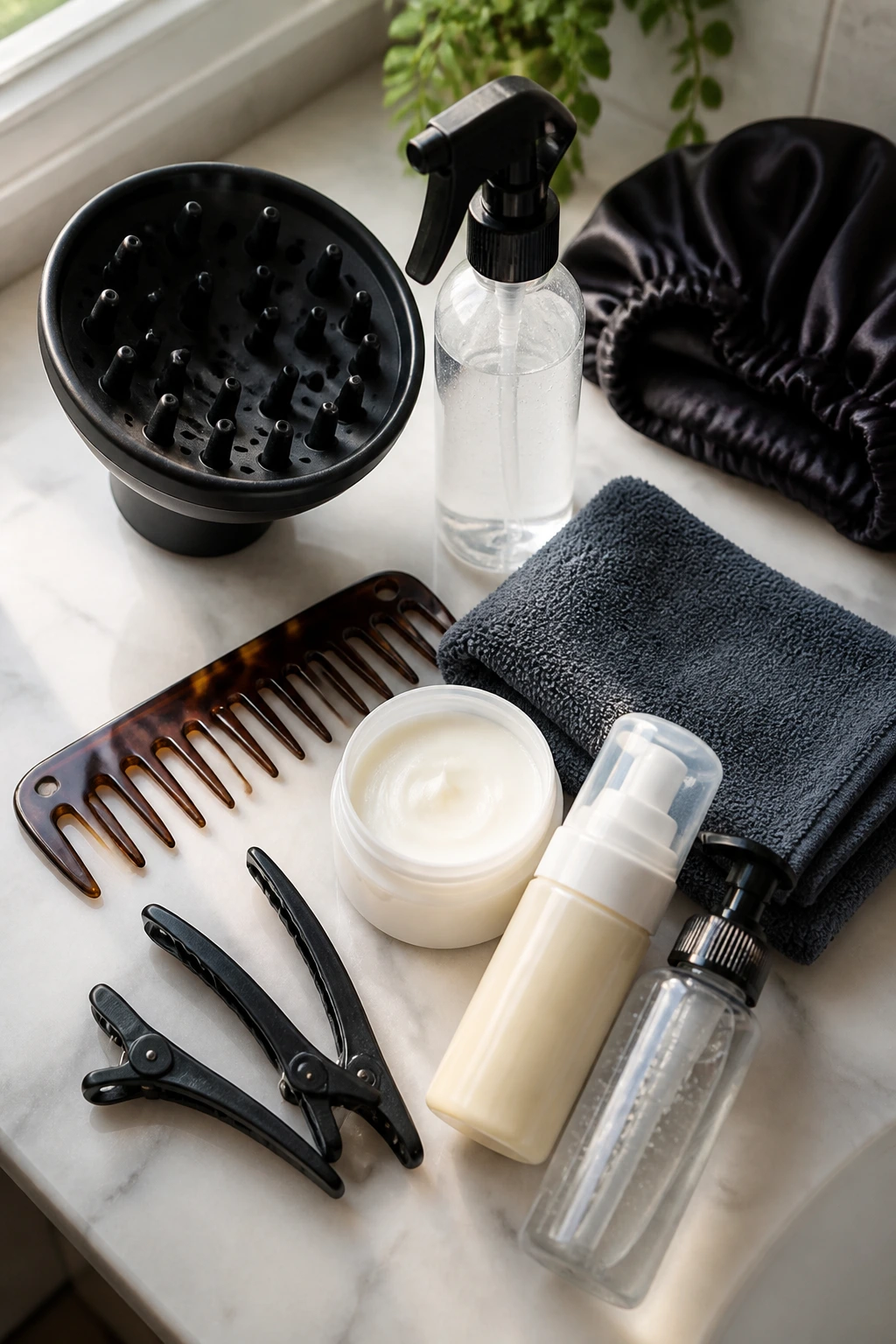
Essential Styling Tools for Curly Pixie Wolf Cuts
-
Diffuser attachment: Helps set the curls without blasting the shape apart; low heat and low speed are the safe settings.
-
Spray bottle with water: Useful for reactivating curl cream at the front and crown without soaking the whole head.
-
Wide-tooth comb or detangling brush: Best for distributing conditioner in the shower and for gentle sectioning while the hair is wet.
-
Microfiber towel or cotton T-shirt: Cuts down on friction, which matters a lot when the curls are short and easy to frizz.
-
Sectioning clips: Handy for lifting the crown or pinning the fringe while you dry the rest.
-
Lightweight curl cream or leave-in: Gives shape without loading the haircut down; start with less than you think.
-
Gel or foam: Gel gives hold and a cast; foam gives lift. Short curly cuts often need one or the other, not both in huge amounts.
-
Satin bonnet or pillowcase: Keeps the nape and fringe from getting crushed overnight.
Practical Tips for Making the Shape Pop

Dry-Cut Mindset: Even if the haircut starts wet, ask the stylist to check the shape dry before the final line is set. Curls change direction when they dry, and those changes are magnified on short hair.
Product Load: Use less cream than you would on a shoulder-length curl cut. Short hair gets oily and heavy faster, and a dime-sized amount can be enough for the fringe and crown combined.
Root Lift: Clip the crown at the roots while diffusing for the first few minutes. That tiny bit of lift can change the whole silhouette, especially on fine or flat-curving hair.
Refresh Rule: Don’t rewash every time the front gets a little weird. A mist of water, a pinch of leave-in, and a few scrunches usually revive the shape faster than starting over.
Keeping Pixie Wolf Cuts for Curly Hair in Shape Between Visits
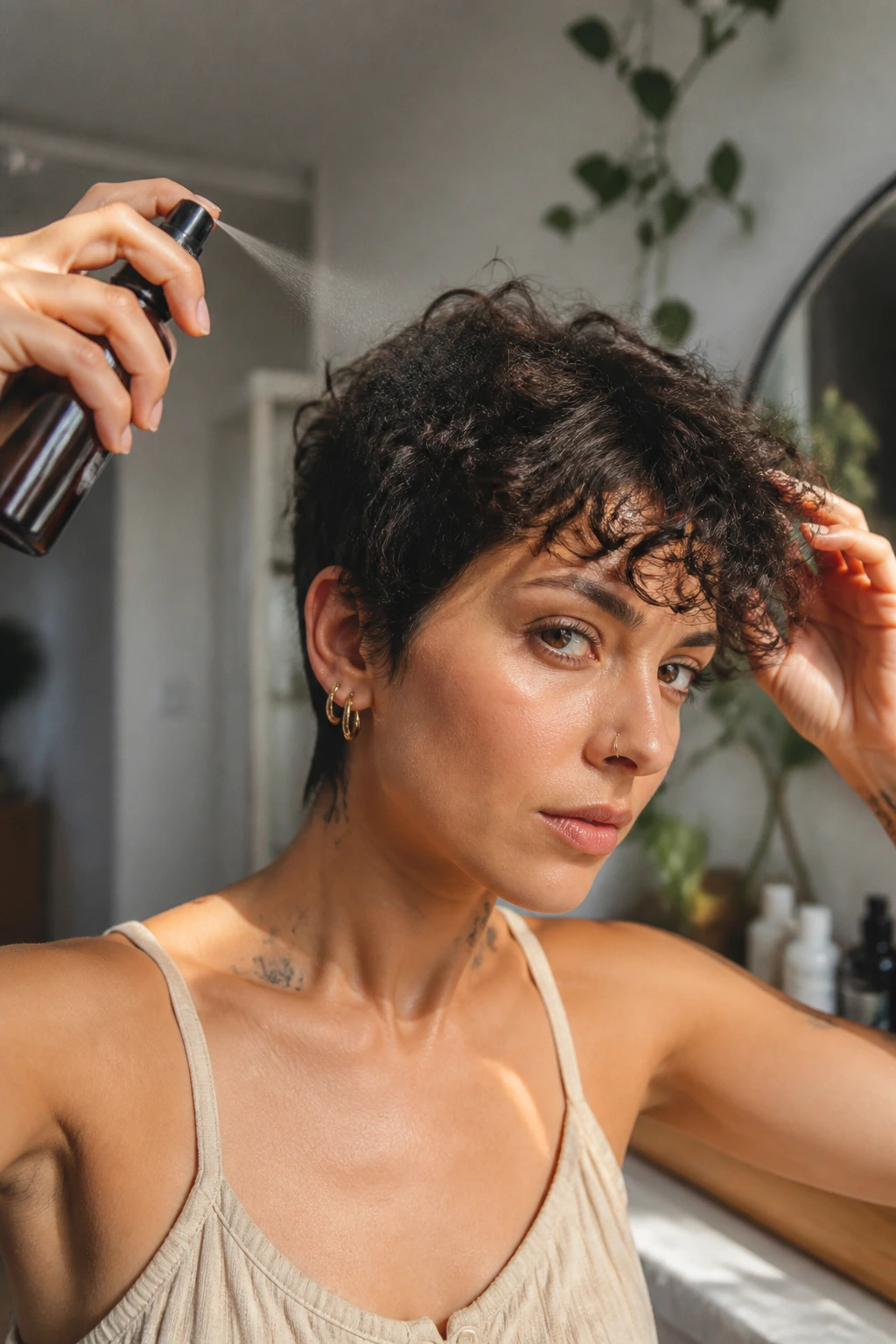
Short curly cuts need maintenance, but not the kind that takes over your life. Most pixie wolf shapes hold best with a tidy-up every 5 to 8 weeks, though the sharper versions — especially the shaved side or crisp perimeter looks — usually want trims a bit sooner. Once the neckline starts bending out in a weird way, the whole cut reads messier than intended.
At home, the simplest routine usually wins. Wash when the scalp needs it, not because the curls had a tiny bad day. After rinsing, blot with a microfiber towel, add a small amount of curl cream or foam, and diffuse until the roots are set. If the ends puff up overnight, a satin bonnet or pillowcase helps more than people expect.
Between washes, a spray bottle is your friend. Hit the front pieces, scrunch them back into place, and let them dry for five minutes instead of soaking the whole head. That’s enough to wake up the shape without turning a cropped cut into a frizzy reset project.
Common Mistakes to Avoid
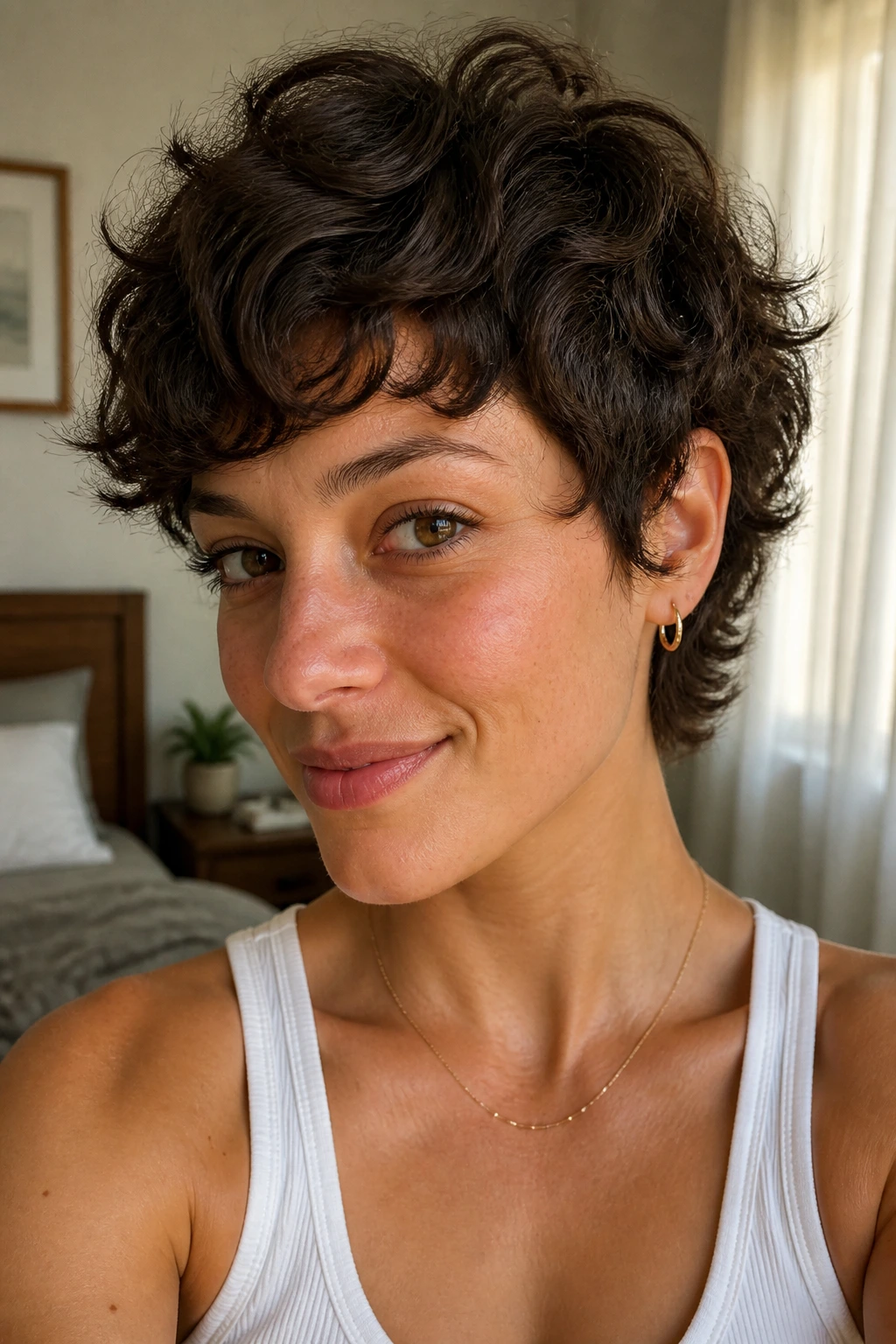
The first mistake is trusting wet length too much. Curly hair shrinks, sometimes by a lot, and a front section that seemed safe in the chair can bounce up above the brows by the time it dries. The fix is plain: ask for a dry check and leave the fringe slightly longer than you think you want.
Another common one is using too much heavy cream or oil. Short curls don’t have much length to absorb product, so they get weighed down fast. If the crown starts looking greasy before lunch, the problem is probably not the haircut — it’s the product load.
People also ask for too many layers without enough bulk control. That can leave the cut puffy at the sides and thin at the ends. Internal shaping matters. So does the neckline. If the nape is left too full, the whole cut can go from pixie to puffball in one bad grow-out.
Variations and Alternatives to Try
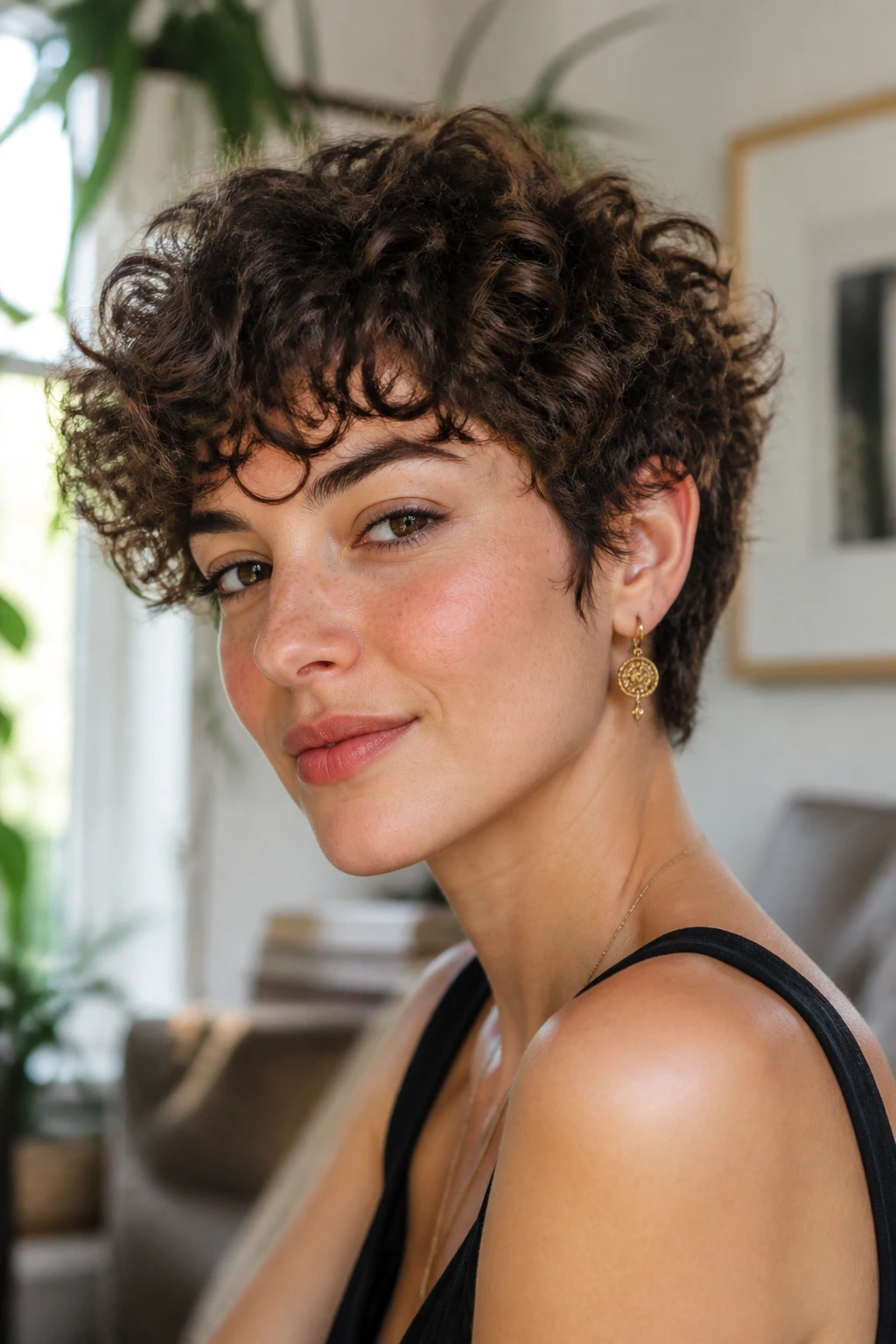
For Loose Waves: Keep the top longer and the layers softer. A 2A to 2C wave pattern can disappear if the cut gets too choppy, so leave more weight through the crown and let the side pieces do the framing.
For Tight Coils: Choose a rounded halo shape or a forward fringe version. Coils like structure, but they also need room to spring, so the outline should stay balanced rather than aggressively tapered.
For Fine Hair: Use shorter, controlled layers and a light foam instead of heavy cream. The goal is lift, not fluff. Fine texture looks fuller when the cut creates shape at the roots rather than stripping the ends too hard.
For Thick Hair: Ask for internal debulking and a cleaner nape. Thick curls need subtraction in the right places, or the haircut turns into a block. A hidden undercut can help without changing the surface look much.
For Low-Maintenance Grow-Out: Keep the front pieces longer and the edges softer. That way, when the cut grows, it shifts toward a softer shag instead of breaking into a weird in-between stage.
FAQ
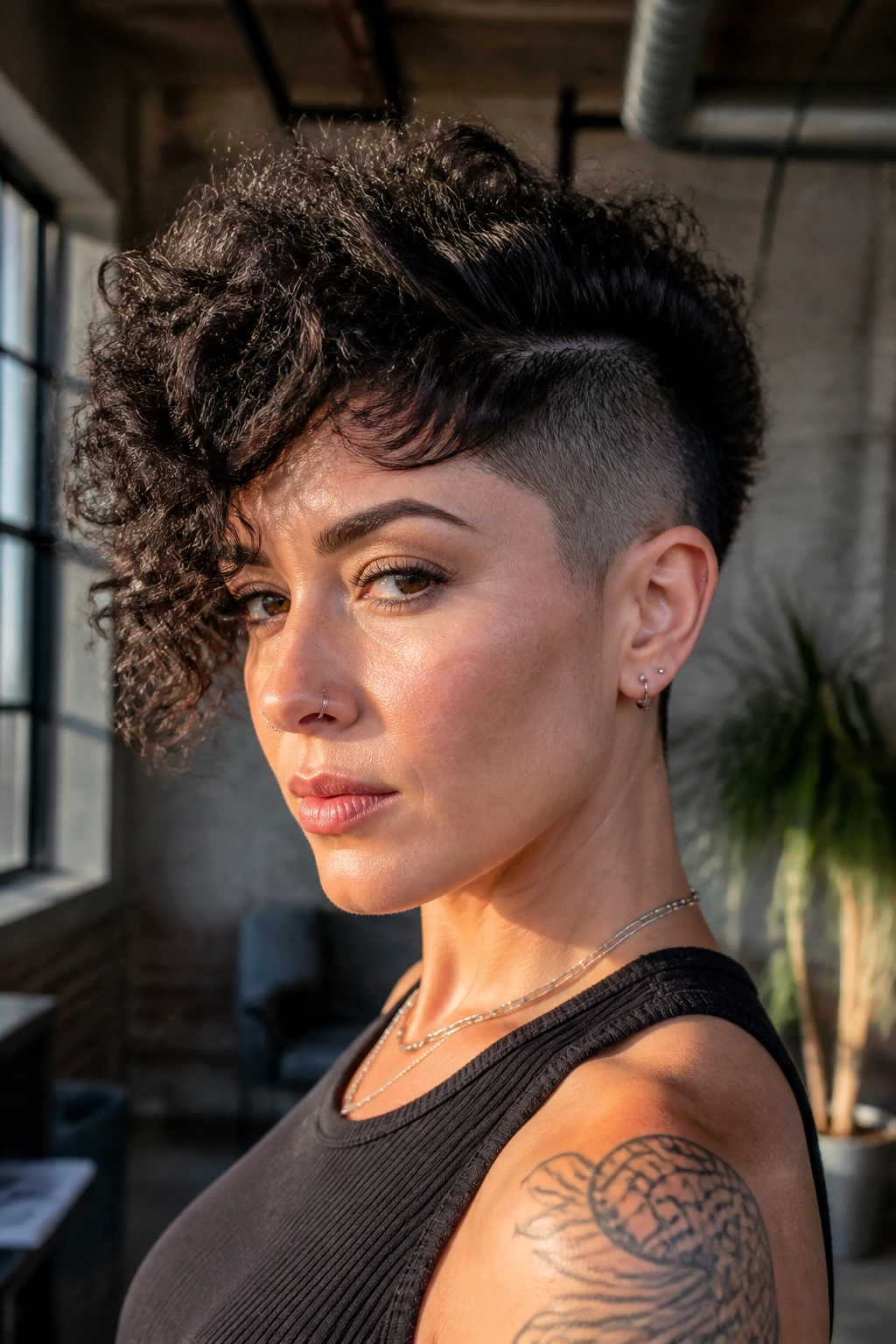
How short can curly hair go before a pixie wolf cut stops working?
Shorter than most people expect, but there’s a limit. If the curls are cut too close to the scalp, the wolf layers lose their ability to show movement, and the shape can start looking more like a clipper crop than a textured pixie.
Do pixie wolf cuts work on 2C hair as well as tighter curls?
Yes, though the layering should be lighter. Wavy and loose-curly hair can lose its pattern if too many chunks are removed, so the best versions keep the top a little longer and use the sides for framing.
Should my stylist cut this wet or dry?
Both, in a sense. A skilled stylist may start wet for the rough shape and then refine dry, because curly shrinkage changes everything. If your curls spring a lot, the dry check is the part you do not want skipped.
Can I wear this cut if my curls are very thick?
Absolutely, but the haircut needs internal removal of bulk. If the stylist only trims the outside, the shape can balloon. Thick curls look best here when the underside is shaped and the top is left loose enough to move.
What products keep the shape from turning frizzy?
A lightweight leave-in plus gel or foam usually does the job. The exact mix depends on how much hold your curls need, but short hair almost always behaves better with less product than a longer curly cut.
How often should I trim a pixie wolf cut?
Every 5 to 8 weeks is a solid range for most versions. Sharper shapes, shaved sections, and crisp necklines usually need more frequent cleanup so they don’t lose the outline.
Can I grow one of these into a bob later?
Yes, and that’s one of the better things about the shape. The wolf layers soften as they grow, so the transition into a curly bob usually looks more intentional than the grow-out from a blunt pixie.
What if my hair puffs out too much at the sides?
Ask for more bulk removal near the ears and a slightly longer crown. Side puff usually means the cut is holding too much width in the wrong place, not that your curls are “too hard to manage.”
The Shape That Keeps Moving
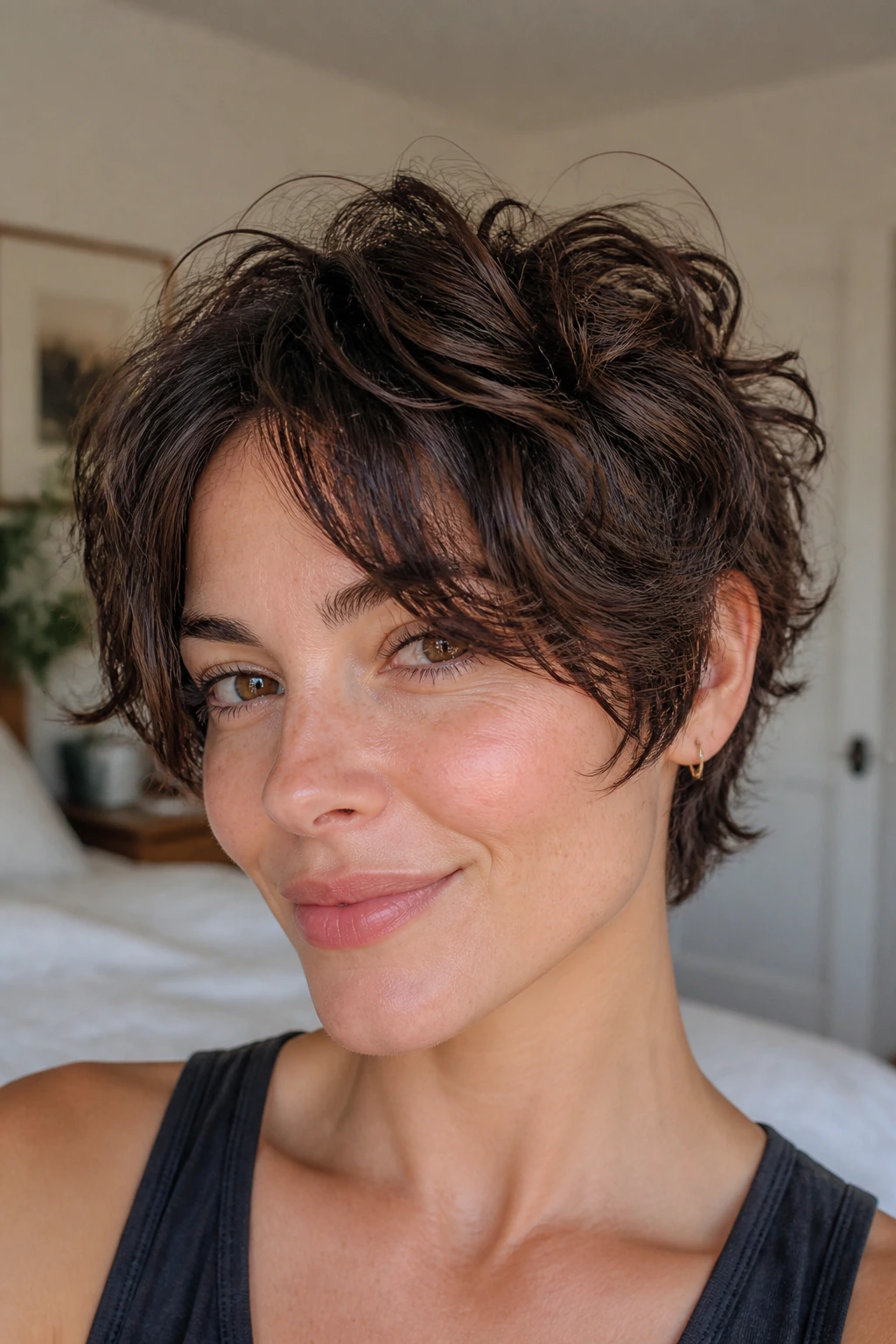
The best thing about pixie wolf cuts for curly hair is that they don’t try to freeze texture in place. They leave room for motion, shrinkage, and a little bit of rebellion. That makes the haircut feel alive from the first wash to the eighth week, which is rare for short curly hair and worth protecting.
If your curls have been boxed into blunt shapes, one of these versions can change the whole experience. Pick the version that fits your density, your curl pattern, and your tolerance for styling, then let the layers do their work.
