



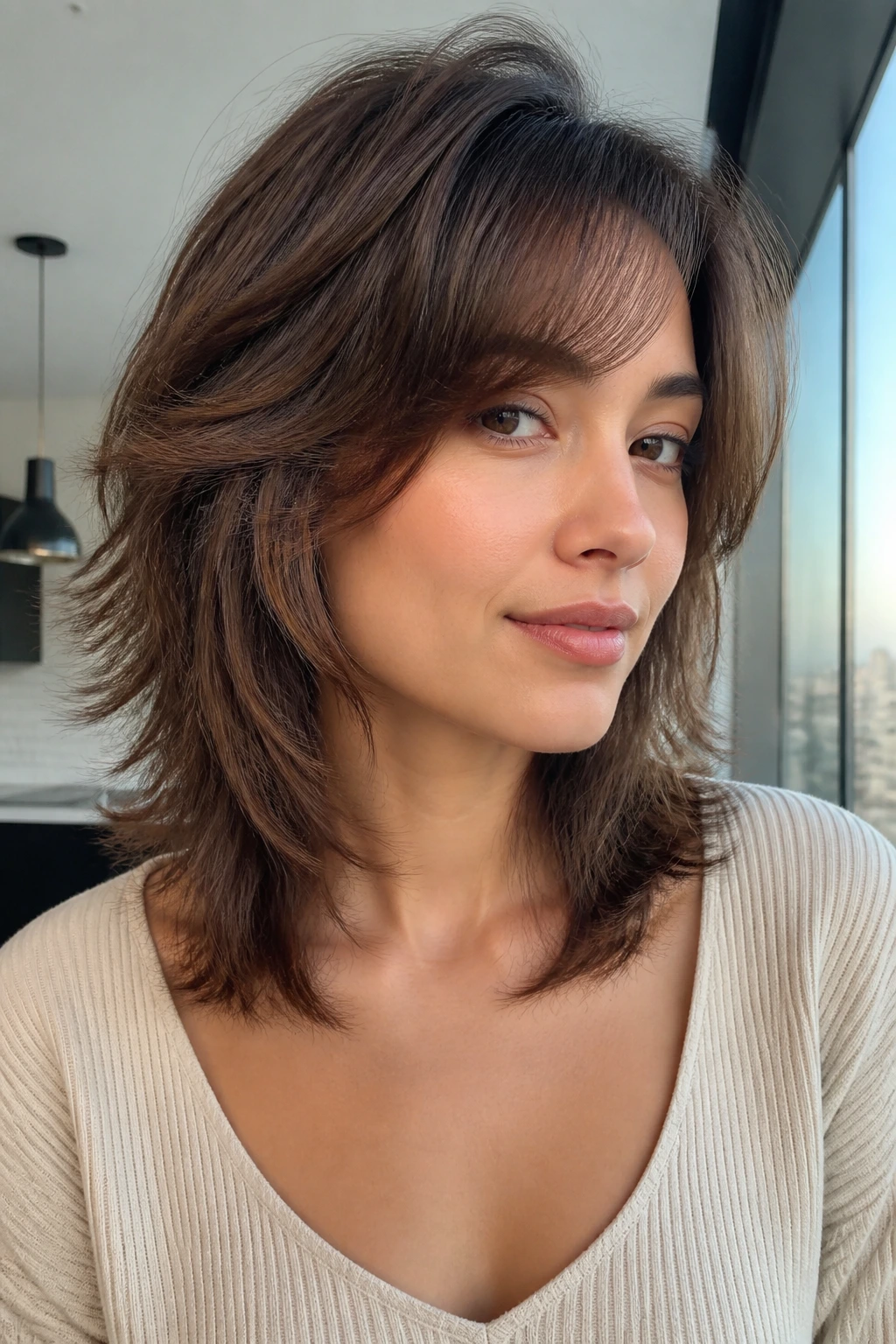
A wolf cut with side bangs has a sneaky talent: it can make hair look busier, softer, and more alive without asking for a full blowout every morning. The short crown, broken layers, and longer ends do the heavy lifting; the side bangs are the piece that keeps the whole shape from turning harsh or costume-y.
That sweep across the forehead matters more than people think. Cut it too blunt and the whole haircut starts shouting. Cut it too short and you lose the easy face-framing line that makes a wolf cut feel wearable instead of theatrical.
If you’ve ever wanted the messiness of a shag, the edge of a mullet, and the kind of fringe that doesn’t trap you in one styling routine, this is the sweet spot. The real trick is picking the version that fits your hair density, texture, and face shape, because wolf cuts with side bangs are not one haircut — they’re a family of them.
Why These Pairings Work So Well
-
Face-framing balance: Side bangs break up the strong vertical drop of wolf cut layers, so the cut feels softer around the eyes and cheekbones instead of collapsing into one block of texture.
-
Built-in movement: The uneven crown layers, mid-length texture, and angled fringe all move in different directions, which keeps the haircut from lying flat on straight or fine hair.
-
Lower-stress grow-out: A side bang blends into the front layers faster than a blunt fringe, so the shape stays readable even when your trim schedule gets loose.
-
Texture-friendly design: Wolf cuts can handle waves, bends, and a little frizz better than many layered cuts because they’re supposed to look broken-up, not perfectly polished.
-
Salon-friendly customization: The same haircut can be cut softer, sharper, shorter, longer, or more dramatic just by changing where the crown layers start and how heavy the bangs sit.
1. The Soft Classic Wolf Cut With Long Side Bangs
This is the version I recommend when someone wants the wolf cut shape without looking like they borrowed it from a music video. The crown gets shorter layers, the ends stay longer, and the side bangs sweep past the outer corner of the eye so the whole cut feels lived-in rather than severe.
What makes it work is the ratio. The front isn’t chopped off, and the layers don’t start so high that the hair balloons around the ears. Instead, the cut keeps enough length to tuck behind the ear or clip back, which matters on busy mornings when you are not negotiating with your hair.
What to ask for
Ask your stylist for soft internal layers at the crown, long side bangs that reach the cheekbone, and face-framing pieces that blend into the jawline. If they use a razor, keep it light; point cutting usually gives a cleaner, less frayed finish here.
The result should feel touchable, not piecey in a brittle way. If the bangs still need a quick bend with a round brush, fine. If they need a rescue mission every day, the front was cut too short.
2. The Collarbone Wolf Cut With a Swept Fringe
This one is the easiest entry point if you’re nervous about the wolf cut looking too extreme. The length sits around the collarbone, so the cut has enough weight to stay grounded, but the layers still kick out just enough to keep it from reading like a plain long-layered haircut.
The swept fringe is the real restraint here. It starts deep enough to move across the forehead, then softens into the rest of the front layers instead of sitting there like a separate piece. That keeps the haircut from splitting into “bangs” and “everything else.”
For fine or medium hair, this length is a smart compromise. It gives you shape without robbing the ends of all their density, and that matters if your hair tends to look thin when it gets over-layered.
- Best for: Anyone who wants movement but still likes ponytail length.
- Styling note: A little mousse at the roots and a 1.5-inch round brush are enough.
- Salon ask: Keep the bangs long enough to tuck and long enough to grow out cleanly.
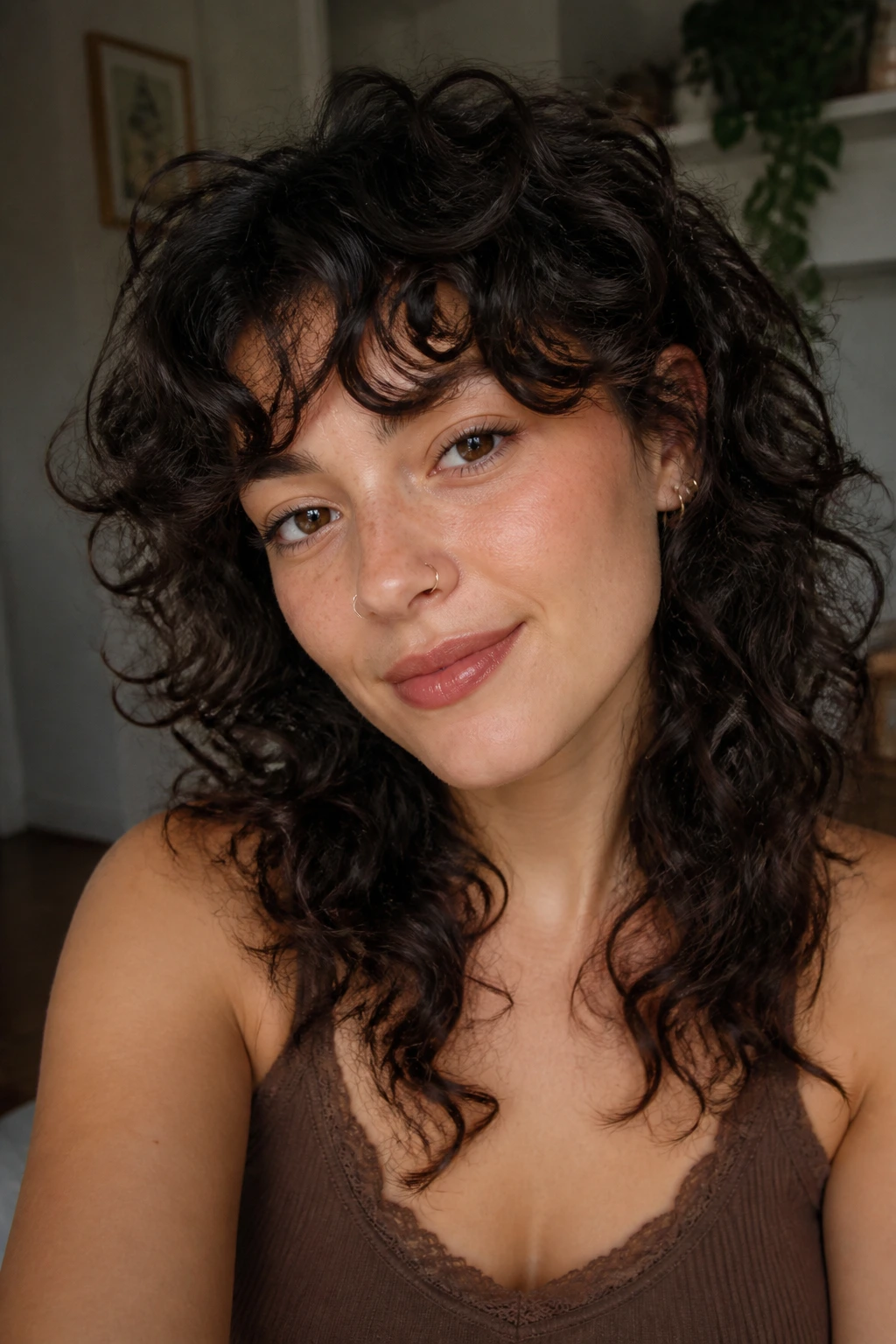
3. The Curly Wolf Cut With Side Bangs
Can curls wear side bangs without turning into one giant puff? Absolutely — if the cut respects the curl pattern instead of fighting it. A curly wolf cut needs the layers placed where the curl clumps naturally want to sit, not where they look neat on a straight-hair sketch.
The side bangs should usually be cut dry, or close to dry, so the stylist can see the spring and shrinkage. That keeps the front from bouncing up to your forehead the second it’s washed. A good curly version feels airy around the crown but still leaves enough weight in the perimeter to stop the silhouette from going triangular.
Styling note
Use leave-in conditioner first, then a curl cream or foam, and let the bangs be their own little project. I like to finger-coil the bang section once, then leave it alone.
A diffuser helps, but don’t blast the front with too much heat. Curly side bangs look best when they dry into a soft bend, not a crunchy strip.
4. The Straight-Hair Wolf Cut With a Soft Diagonal Fringe
Straight hair can make a wolf cut look flat in a hurry if the layers are too timid. The fix is a little more interior movement and a side bang that isn’t cut as a neat little curtain. A diagonal sweep gives the front some life, even before you add any styling product.
This version leans on clean separation. The ends should move, not cling together. A stylist who knows how to slide-cut or point-cut can take out bulk without leaving the lower lengths wispy.
If your straight hair tends to fall limp by noon, keep the fringe longer than you think. Short side bangs on straight hair can slide open in weird ways. Longer pieces can be brushed back, tucked, or pushed into a bend with a flat iron in about thirty seconds.
5. The Thick-Hair Wolf Cut With Feathered Side Bangs
Thick hair is where the wolf cut starts to make real sense. You get enough density to support the short crown layers, and the side bangs can be feathered without disappearing. The haircut can look full, but it doesn’t have to feel heavy.
The mistake here is over-thinning. I’m not a fan of carving thick hair to pieces with thinning shears unless the stylist really knows where the weight is. Better to remove bulk internally, keep the outline strong, and let the bangs taper softly into the rest of the cut.
The bangs should sit light against the forehead, almost like they’re lifting off the face rather than lying on it. That’s the move that keeps thick hair from forming one solid curtain across the front.
6. The Fine-Hair Wolf Cut With a Light Side-Swept Fringe
Fine hair needs a different kind of confidence. Too many layers and the ends start to look see-through; too much texture and the haircut loses the little bit of weight it needs to look healthy. So this version keeps the crown lift, but it’s disciplined about the lower lengths.
The side-swept fringe should stay light and a touch longer, because short wispy bangs on fine hair can separate into little strings. That sounds cool in theory. In real life, it often looks tired by lunch.
A better approach is to let the fringe blend into the front face frame, then use a root-lifting spray at the scalp and a quick round-brush bend through the bang area. The shape reads as soft, not sparse.
7. The Shoulder-Length Wolf Cut With Face-Framing Bangs
Shoulder-length is the sweet spot for people who want movement but need enough hair to pin up, clip back, or stuff into a low pony without drama. The wolf shape shows up clearly here because the layers can flare a little at the ends without eating the whole length.
The face-framing bangs are doing some hidden work in this cut. They soften the transition from crown to jaw, which keeps the haircut from looking top-heavy. And because they’re not blunt, they grow out into useful front layers instead of an awkward shelf.
Why it grows out well
The front pieces can be tucked behind the ears, split down the middle, or swept sideways on days when you want less forehead. That flexibility matters more than people admit. Haircuts that only look good on day one are a headache.
8. The Long Wolf Cut With Side Bangs
Long hair and wolf cuts can get along, but only if the layers are placed with some nerve. If the cut is too timid, the length drags everything down and the top goes flat. If it’s too aggressive, the ends fray and you lose the whole point of keeping the length.
The side bangs help the haircut hold a shape from the front. They break up that long, uninterrupted line that makes extra-long hair look heavy, especially when it’s straight or slightly wavy. A longer fringe also makes the cut easier to style with a quick bend instead of a full curling routine.
I like this version for anyone who refuses to give up length but wants the shape to look intentional. It reads softer than a mullet, less polished than a layered blowout, and much less precious than a perfect cut with blunt ends.
9. The Edgy Wolf Cut With Choppy Ends and a Deeper Side Bang
This is the version with teeth. The layers are more obvious, the ends are rougher, and the side bang starts deeper on one side so it sweeps across the forehead with a little more drama. If you want the haircut to register from across the room, this is the lane.
The key is contrast. The crown should feel short and broken up, while the lower lengths stay just long enough to keep the silhouette from exploding outward. That tension is what makes the cut look sharp instead of just messy.
- Texture product: A dry texturizing spray near the ends.
- Finish: Bend the front sections away from the face with a flat iron.
- Best on: Hair that already holds a bend or wave.
The cut gets stronger when you do less to it. That’s the whole joke with this version.
10. The Soft Blowout Wolf Cut With Side Bangs
If you like the wolf cut shape but don’t love a rough finish, this is the polished middle ground. The layers are still there, but the styling makes them look feathered and airy instead of choppy. The side bangs get a round-brush bend, so they sweep neatly into the cheekbone area.
This version is nice on days when you want the haircut to behave around work clothes or sharper outfits. A wolf cut can absolutely look clean. It just needs a little more brush work and a little less salt spray.
I’d call this the “I have places to be” version. It still has movement, but it doesn’t look like you rolled out of bed and called it a concept.
11. The Messy Bedhead Wolf Cut With Side Bangs
This is the one that looks best when it’s not trying too hard. The texture lives in the air between strands — that dry, broken-up, slightly wild finish that makes the haircut feel like it has been lived in for a while. Side bangs keep the front from going all one way, all the time.
The best part is how forgiving it is. If your hair bends in different directions, or if the ends flare out a little, the cut can absorb it. That’s half the charm.
You do want enough product to keep the shape from puffing up. A light mousse, a pinch of paste at the ends, and a few scrunches are plenty. Too much cream will make the whole thing collapse into a heavy sheet.
12. The Wet-Look Wolf Cut With a Sleek Side Fringe
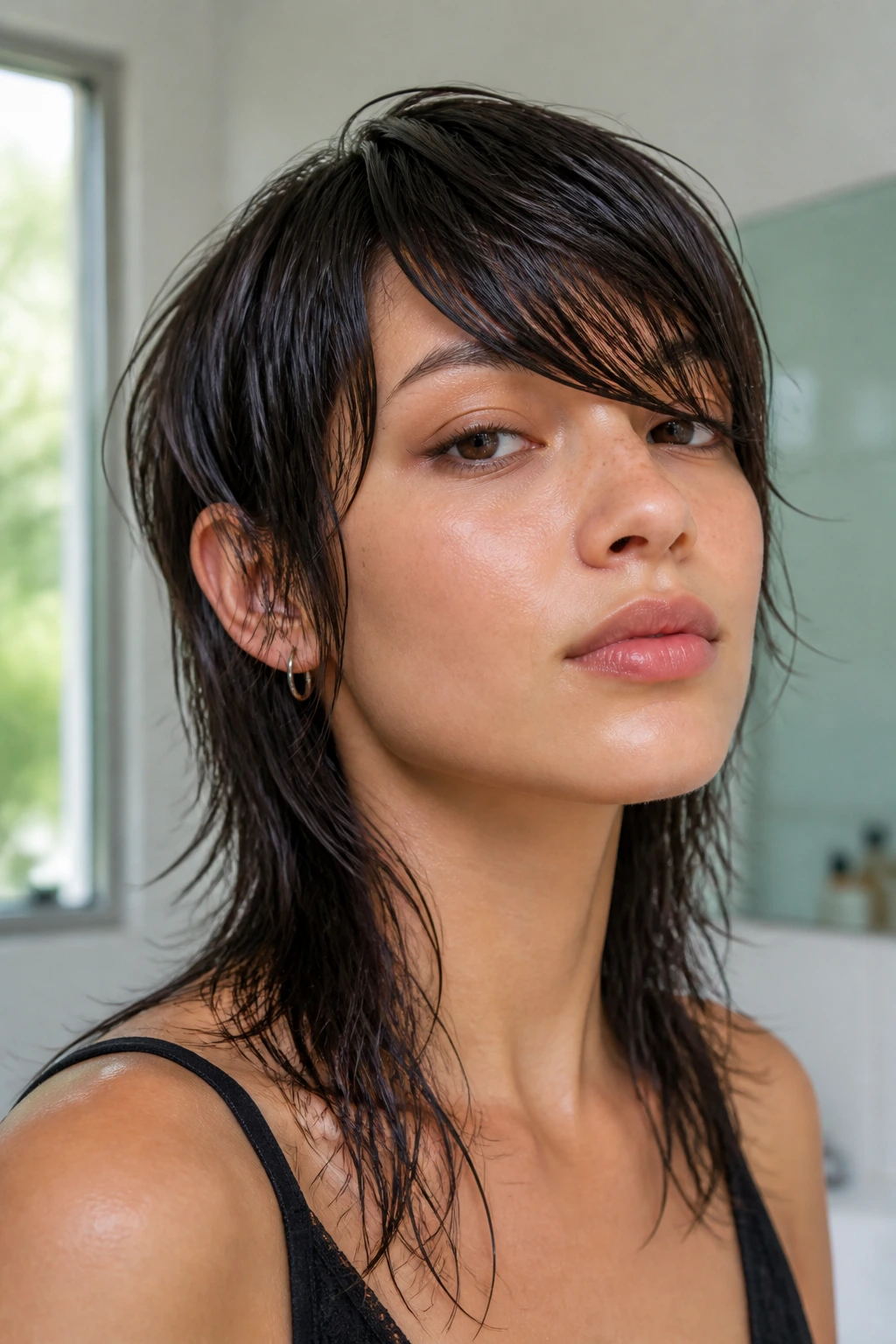
A wolf cut does not have to be fluffy to work. Put a little gel or styling cream through the front, comb the side bangs into a sleek sweep, and suddenly the haircut feels sharper, more deliberate, and a bit more fashion-forward.
The contrast matters here. The top and fringe can sit smooth while the lower lengths stay piecey, which gives the cut a more dramatic outline. It’s a strong look for straight and wavy hair, especially if your ends are already layered enough to move on their own.
Be careful not to drown the roots in product. Wet-look hair needs shine, not grease. The front should still separate into clean sections instead of clumping into a heavy helmet.
13. The Wolf Cut for Round Faces With Diagonal Side Bangs
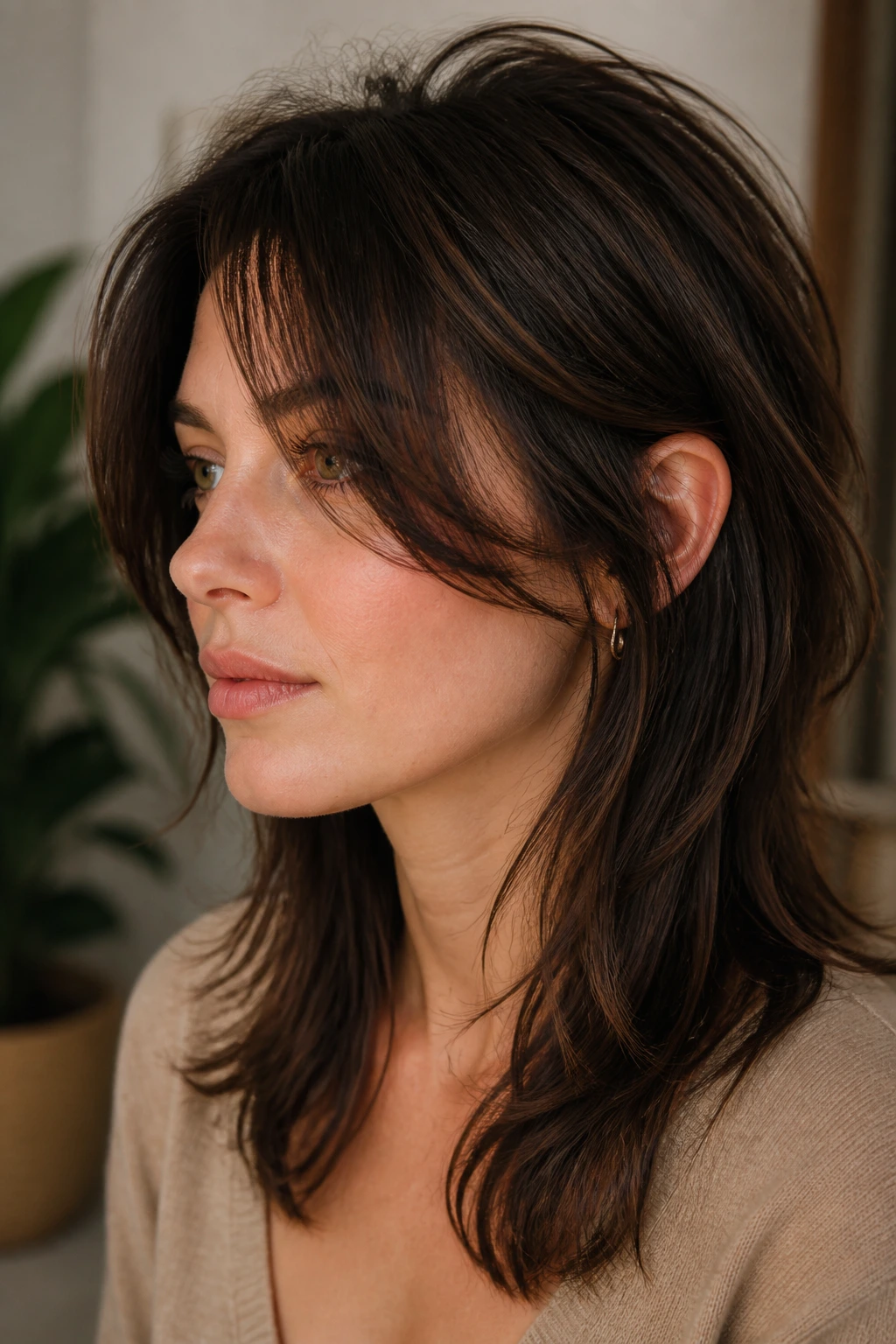
A round face needs some vertical pull, and side bangs are one of the easiest ways to get it. The diagonal line of the fringe creates a visual angle that slims the center of the face a bit, while the longer layers below keep the cut from bunching at the cheeks.
The trick is not to let the shortest point of the bang hit right at the broadest part of the face. Keep it a touch lower, usually around the cheekbone, and let the front pieces lengthen as they move toward the jaw. That gives the eye something to follow downward.
Does it have to be exact? No. But the angle matters. A soft diagonal is much kinder than a blunt, horizontal fringe when the goal is to keep the face from looking wider than it is.
14. The Wolf Cut for Square Faces With Broken-Up Side Bangs

Square faces usually look best when the haircut softens the corners instead of echoing them. That’s why broken-up side bangs work so well here. They interrupt the straight lines around the forehead and jaw, which keeps the face from looking boxy.
I’d avoid a heavy, blunt side bang on this shape. It can make the upper face feel too solid. Better to keep the fringe light at the ends, with a little separation so it falls in pieces instead of one strong slab.
If your jaw is strong, let the front layers brush just below it. That length helps the haircut taper around the face, and it gives the wolf shape some room to move instead of sitting squarely on top of your features.
15. The Color-Boosted Wolf Cut With Balayage and Side Bangs
Color and wolf cuts get along because the layers give the light places to land. Balayage shows off the short crown pieces, the front fringe, and the longer ends in a way that makes the haircut read even when the styling is minimal.
The side bangs are especially useful here because they act like a little spotlight. A few lighter ribbons around the fringe can pull attention to the eyes and cheekbones without needing a full face frame. Darker roots under the crown keep the depth intact, which is what stops the haircut from going puffy.
Best color placement
- Put lighter pieces through the side bang and the first face-framing layer.
- Keep the crown a shade deeper if you want the layers to look thicker.
- Avoid chunky highlights that stop abruptly at the fringe.
A good color job makes the cut look more expensive. A bad one just looks striped.
16. The Low-Maintenance Wolf Cut With Grow-Out-Friendly Side Bangs
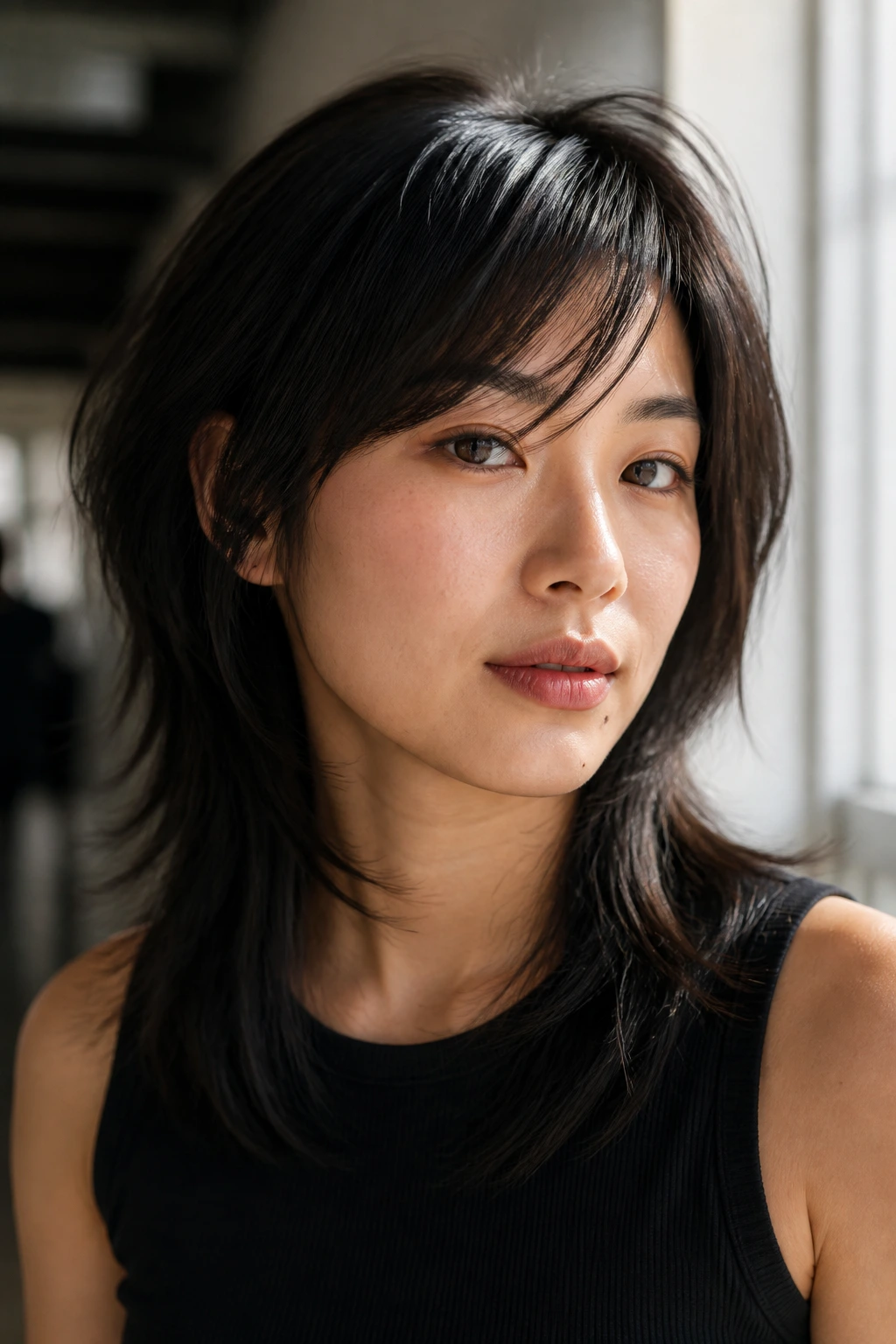
Some wolf cuts are made for people who book trims on time. This one is for everyone else. The layers stay blended, the fringe stays long enough to split naturally, and the shape can live for weeks without getting weird.
The side bangs are the secret. If they’re cut with enough length and softness, they can behave like face-framing pieces once they grow out. That means fewer emergency trims and less annoyance around the forehead line.
This is the version I’d suggest if you want the idea of a wolf cut more than the daily labor of a highly sculpted one. It still has movement, but it doesn’t fall apart the minute the salon blowout fades.
17. The Retro Wolf Cut With a 70s Flip and Side Bangs
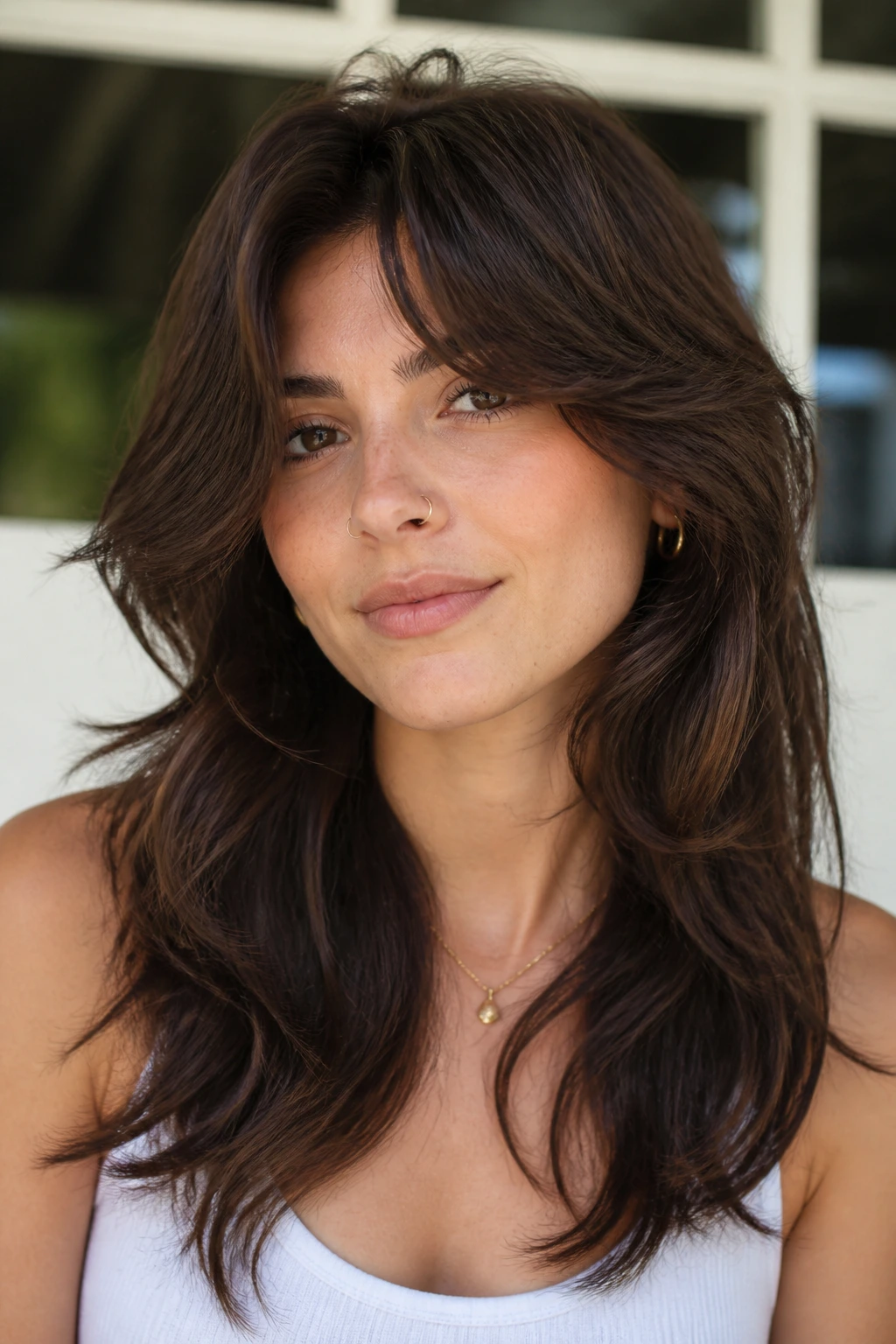
This cut leans into the feathered, brush-out energy of the 70s, but it keeps the sharper wolf silhouette underneath. The side bangs sweep across the forehead with a big, soft bend, and the ends flip out just enough to keep the whole shape from looking too neat.
It’s a good choice if you like volume that sits away from the head. Not teased volume. Not helmet volume. Just enough lift at the crown and movement at the ends to make the haircut feel intentional.
A round brush, a blow-dryer, and maybe a couple of velcro rollers near the front do most of the work. If you want the fringe to sit with that airy bend, let it cool in the direction you want before you touch it again.
18. The Bold Wolf Cut With Heavy Texture and a Dramatic Side Sweep

This is the loudest version in the stack. The layers are broken up more sharply, the side bang is deeper and more visible, and the whole cut leans into contrast. If the soft classic is a whisper, this one speaks up.
It works best when the styling is clean enough to define the shape but rough enough to keep it from looking overdone. A deep side part, a bit of root lift, and some separation through the ends are usually enough. Anything too polished tends to flatten the attitude right out of it.
If you want a wolf cut that makes people notice the haircut first and the person second, this is the one. Not subtle. Not timid. And that’s the point.
Why Wolf Cuts and Side Bangs Keep Working Together
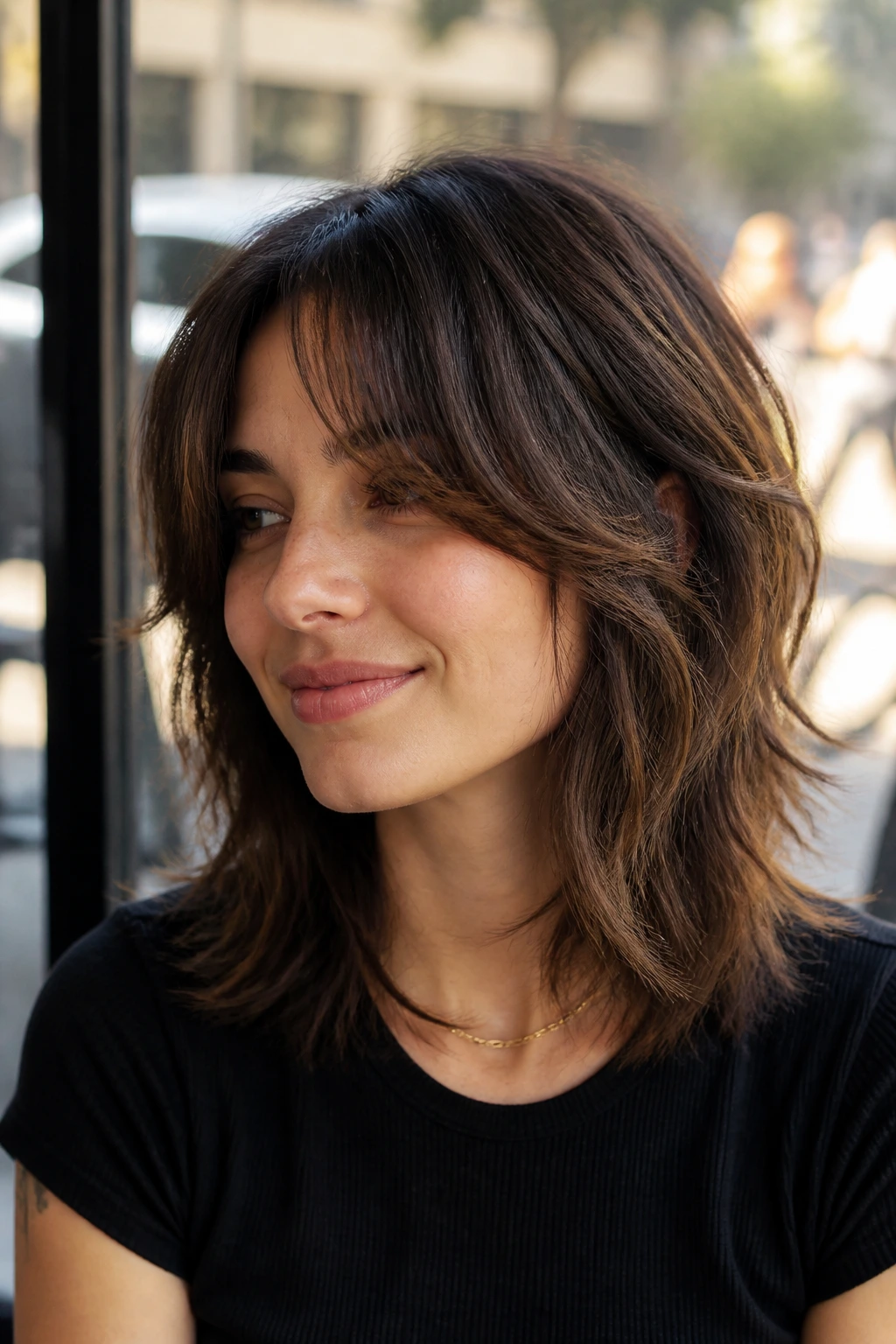
The pairing works because each part fixes the other’s weak spot. A wolf cut without any front movement can drift into mullet territory fast, especially when the crown is short and the ends are left long. Side bangs break that line, pull the eye across the face, and make the haircut feel like a shape instead of a dare.
The other advantage is growth. Straight-across bangs can turn annoying in a hurry, but side bangs have built-in escape routes. They can split, tuck, bend, or lengthen into face-framing pieces without looking like a failed plan. That buys you time between trims, which matters more than salon photos ever admit.
This combo also plays nicely with imperfect hair days. A little wave, a little frizz, a wrong part line — none of that breaks the haircut. In fact, some of it makes the shape better. That’s the real reason people keep circling back to it.
How to Choose the Right Version for Your Hair Texture and Face Shape
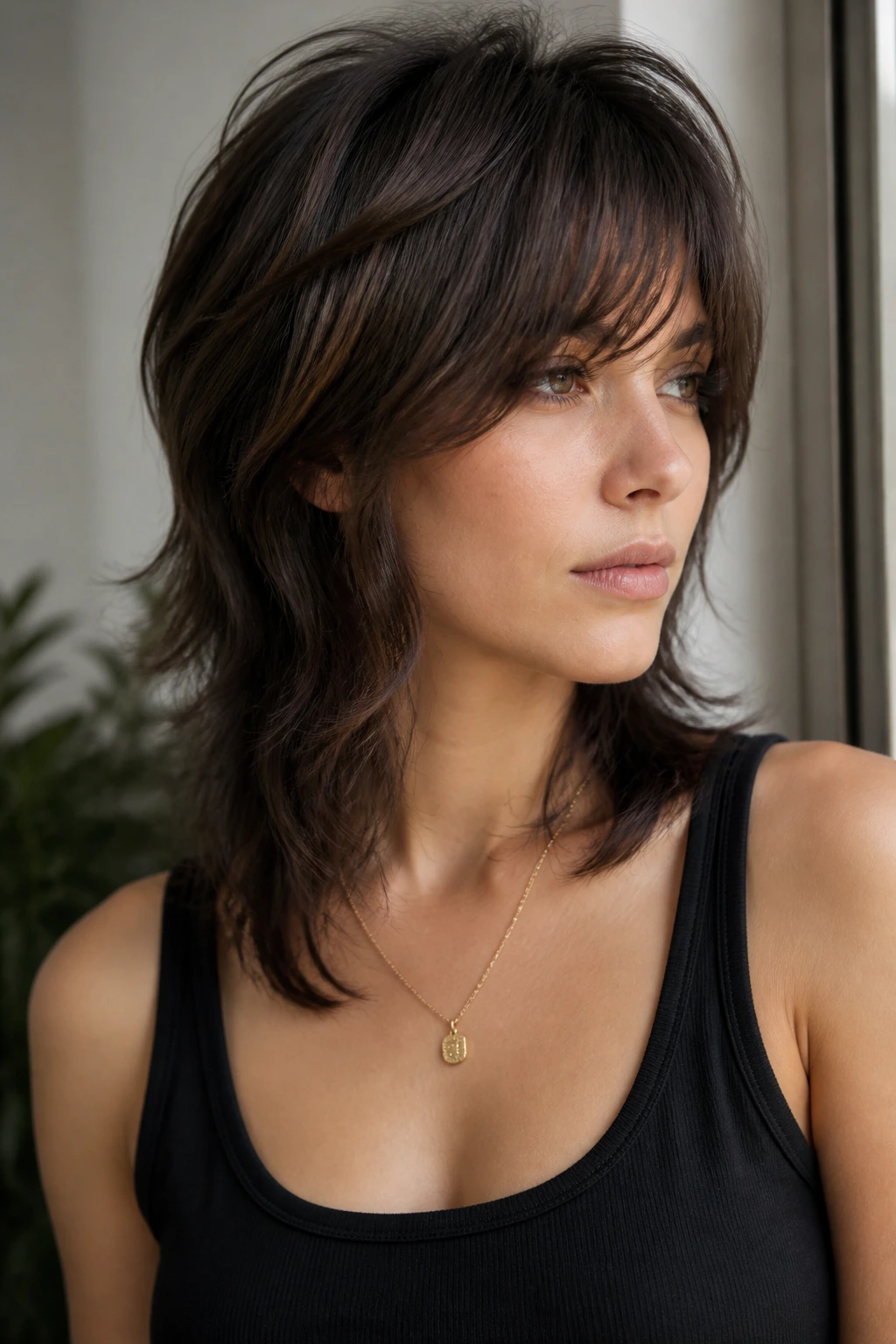
The smartest wolf cut is the one that matches your hair’s actual habits, not the habits you wish it had. Fine hair usually needs softer layers and longer bangs so the ends don’t disappear. Thick hair wants more internal removal so the crown doesn’t turn into a triangle by the afternoon.
Straight hair often needs the most styling help, because the cut can read flat if the layers are too gentle. Wavy hair lands in the sweet spot, since a few bends and bends in the wrong places make the texture feel purposeful. Curly hair needs the most respect from the cutter; if the layers ignore shrinkage, the front can spring up higher than anyone wanted.
Face shape matters, too. Round faces usually benefit from longer diagonal bangs and face-framing pieces that fall below the cheekbone. Square faces tend to look softer with broken-up fringe and ends that taper around the jaw. Long faces can handle a bit more width through the bangs, because the front helps shorten the visual stretch.
Bring photos, yes. Bring three, not one. One should show the length you want, one should show the fringe you like, and one should show the texture of hair that behaves like yours. That last part is the one people skip, and it’s the reason half the bad haircut stories start in the salon chair.
Styling Tools That Keep the Layers in Line
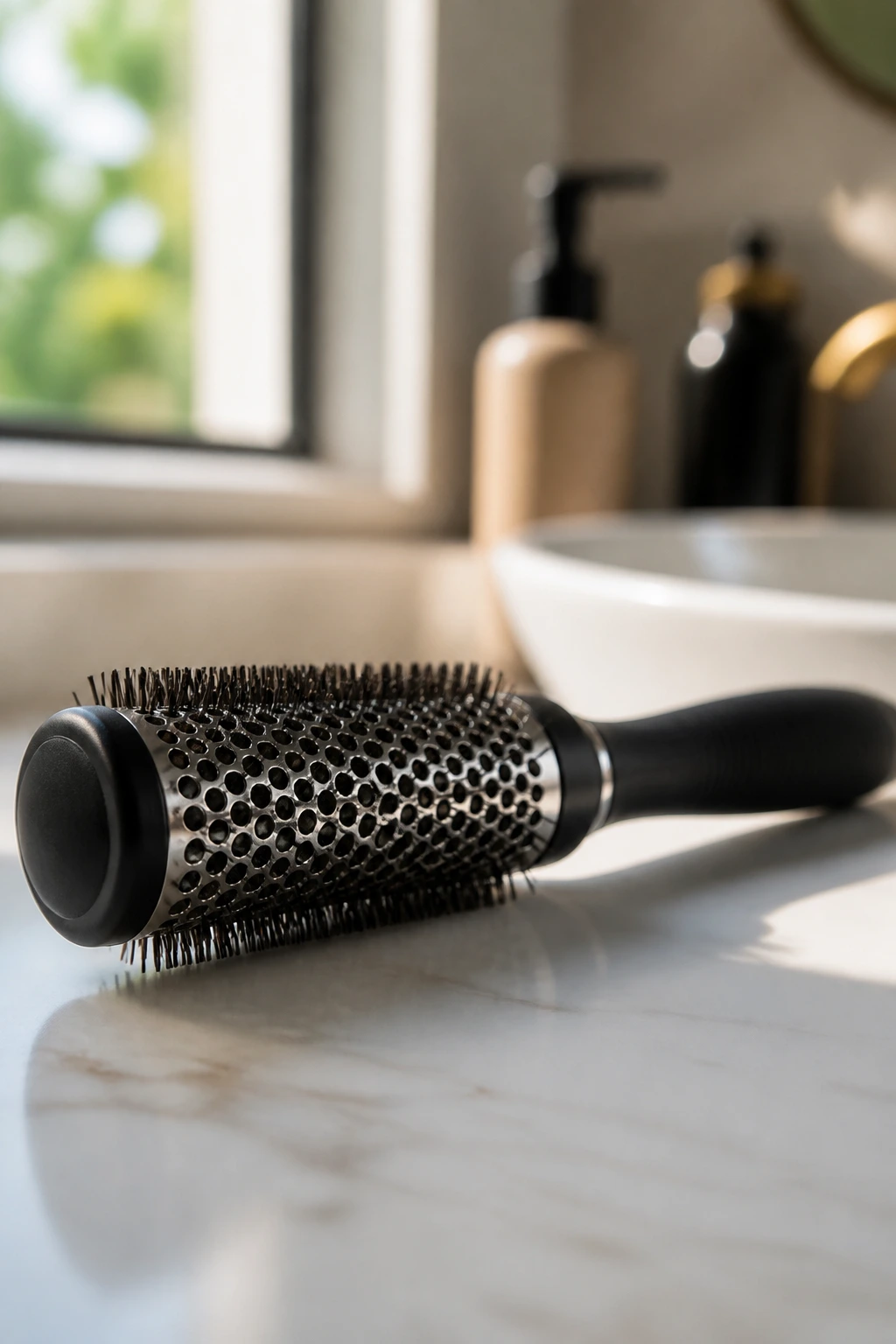
A wolf cut with side bangs doesn’t need a cabinet full of gadgets, but it does need the right few tools. The haircut depends on shape, and shape lives or dies by the way the front dries.
- Blow-dryer with a nozzle: Helps direct the fringe so it bends across the forehead instead of puffing up.
- Round brush, 1 to 1.5 inches: Best for lifting the crown and giving the bangs a soft curve.
- Wide-tooth comb: Useful for curl and wave patterns when you don’t want to break up the texture too much.
- Texturizing spray: Adds separation through the ends without making the hair sticky.
- Volumizing mousse or root spray: Gives the top section enough lift so the cut doesn’t sit flat.
- Heat protectant: Non-negotiable if you’re using a flat iron or brush-drying the fringe.
- Sectioning clips: They make the bang area easier to control, which sounds boring until you’ve tried drying a fringe without them.
If you want one tool to splurge on, make it the brush. A cheap brush can snag the front and leave the bangs looking bent in the wrong places.
How to Style the Bangs Without Losing the Shape
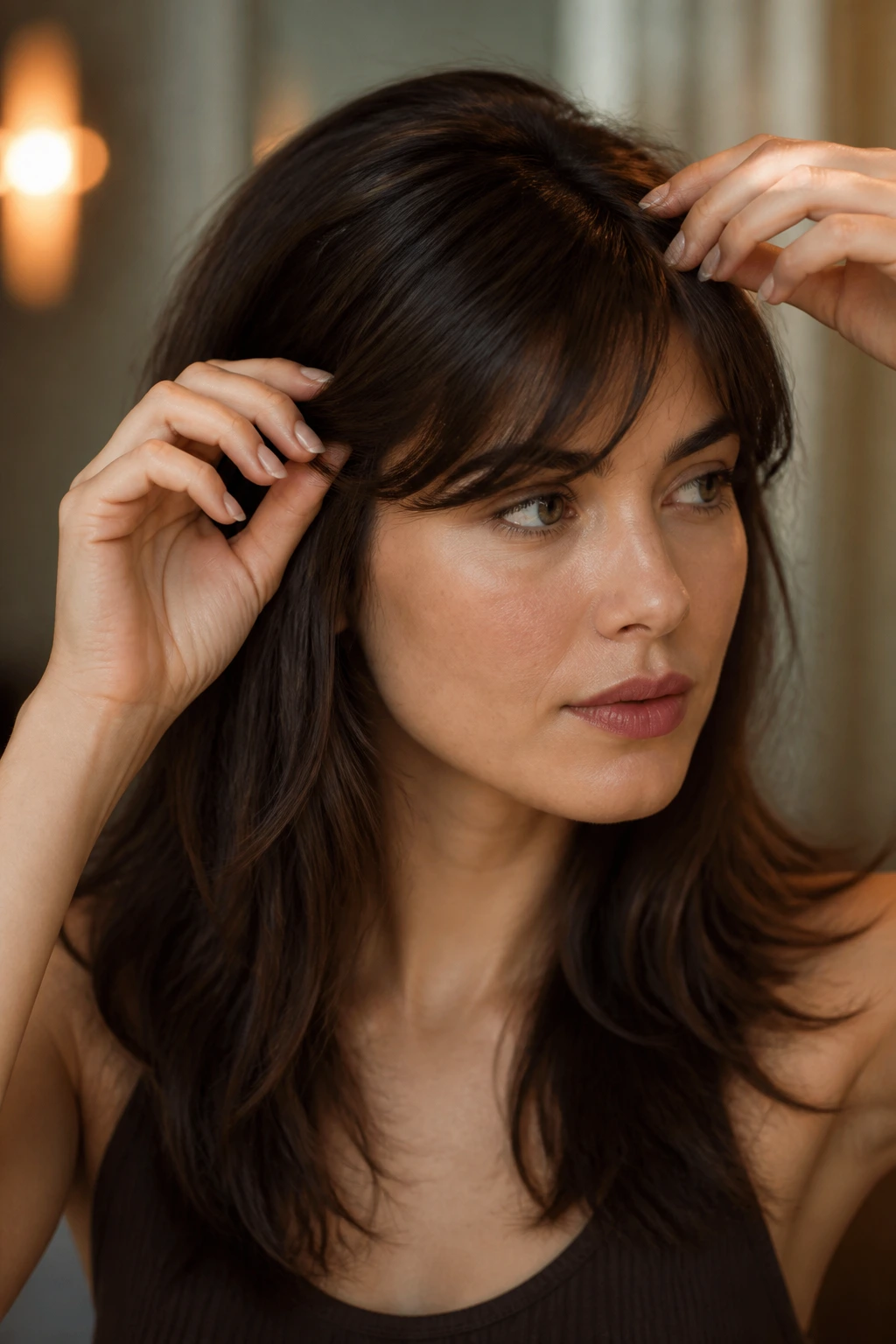
The fringe should help the haircut, not fight it. That starts with drying the bangs first or at least early, while they’re still damp enough to reset. If they dry the wrong way and you try to fix them later, you’ll spend twice the time and still end up chasing cowlicks.
Root lift: Aim the dryer at the base of the bang section, then brush it down and across the forehead so the bend lands where you want it. Let it cool on the brush for a few seconds. That little cool-down step matters more than people think.
Texture control: If the fringe is too fluffy, use a pea-sized amount of cream or a touch of paste on the very ends only. Keep it away from the roots unless you want the whole front to collapse.
Shape memory: Side bangs usually behave better when you train them in the same direction for a few days after the cut. Same part. Same dry direction. Less drama.
And if they split anyway? Pin them while they’re slightly damp, then let them dry in the direction you want. It’s old-school. It works.
Common Mistakes That Make the Cut Fall Flat
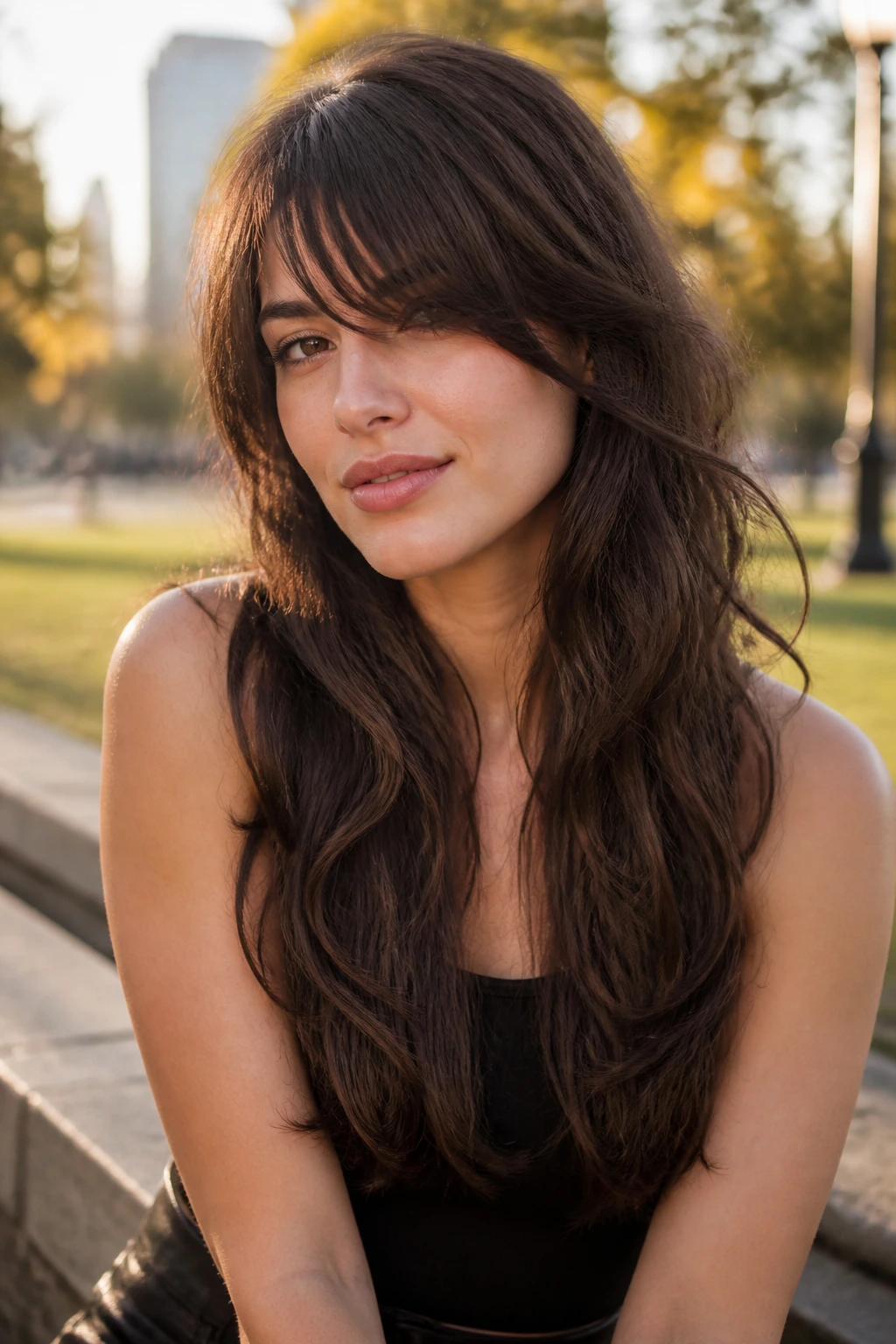
The first mistake is asking for too much layer too high up the head. The haircut may look dramatic in the chair, but once it dries, the crown goes poofy and the ends look thin. The fix is simple: keep the top layers short enough to create lift, but leave enough weight in the lower lengths to anchor the shape.
Another one: cutting the side bangs too short. Short fringe can be cute, sure, but in a wolf cut it often grows awkward fast and loses the easy sweep that makes the style work. Ask for the bangs to start longer than you think, because length is what lets them tuck, bend, and grow out without getting fussy.
Over-styling is a real problem. If you use too much cream, oil, or heavy smoothing product, the whole haircut loses its broken-up texture. You want separation, not clumps.
And one more: ignoring your natural part. If your hair insists on falling left, don’t force a right-side sweep just because a photo showed it that way. The cut should cooperate with your growth pattern, not stage a fight with it.
Variations and Alternatives to Try
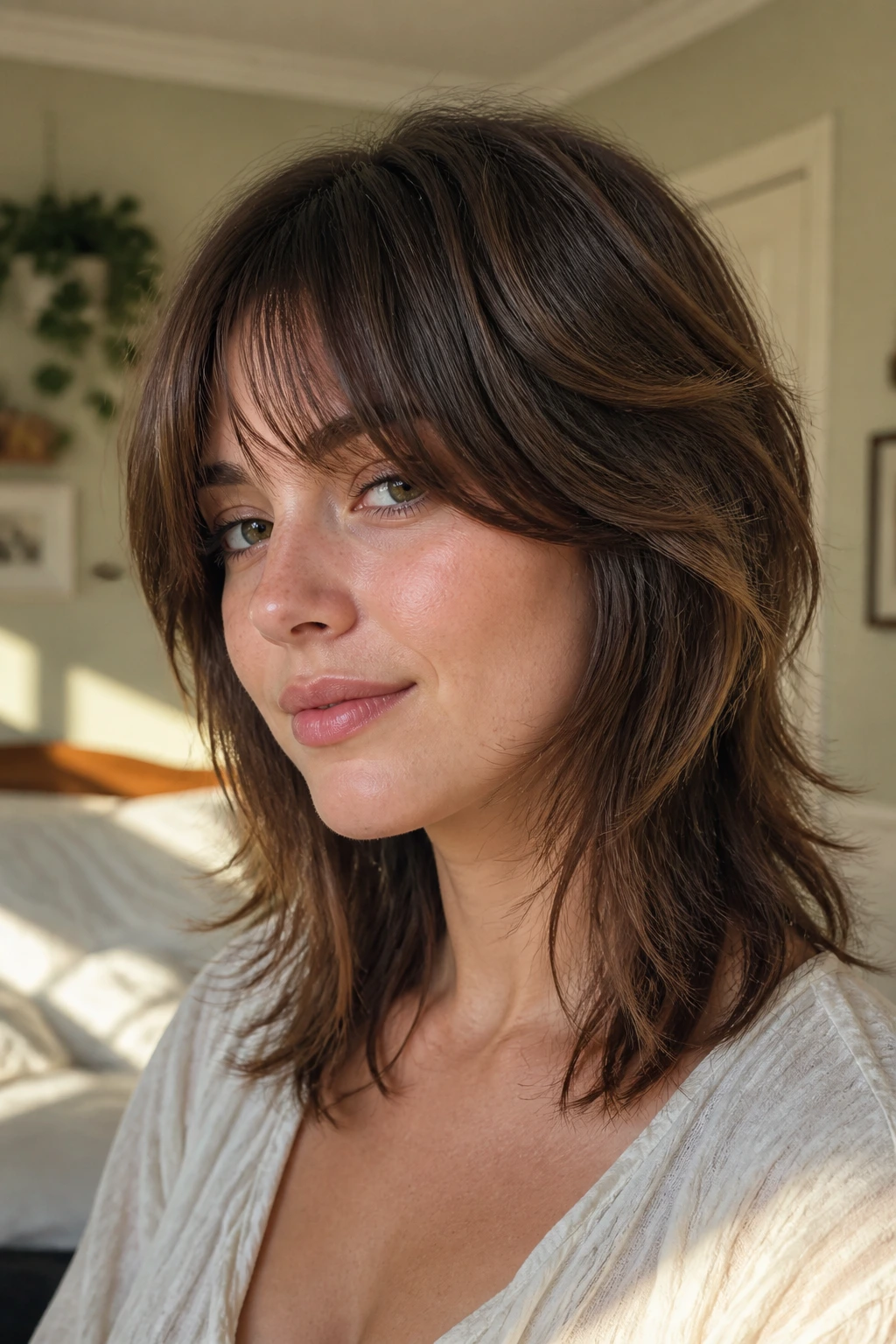
The Soft Air-Dry Wolf
This version keeps the layers gentle and the side bangs long enough to fall naturally with very little heat. It’s a good choice if you like movement but hate spending time with a brush.
The Glossy Blowout Wolf
Same haircut, cleaner finish. Blow-dry the crown, bend the front with a round brush, and keep the ends smooth enough to show off the cut line. It works best when you want the haircut to read a little more polished.
The Curl-First Wolf
Built for waves and curls that want room. The side bangs are cut to respect shrinkage, and the layers are placed so the front doesn’t balloon around the temples.
The Sharp Texture Wolf
This is the edgier option, with more visible separation through the ends and a deeper side sweep across the forehead. It suits people who like the haircut to look a little broken up on purpose.
The Grow-Out Wolf
Longer fringe, softer layering, less maintenance. The front pieces can drift into face-framing layers once the cut grows out, which makes the shape easier to live with between appointments.
Keeping the Cut Sharp Between Salon Visits
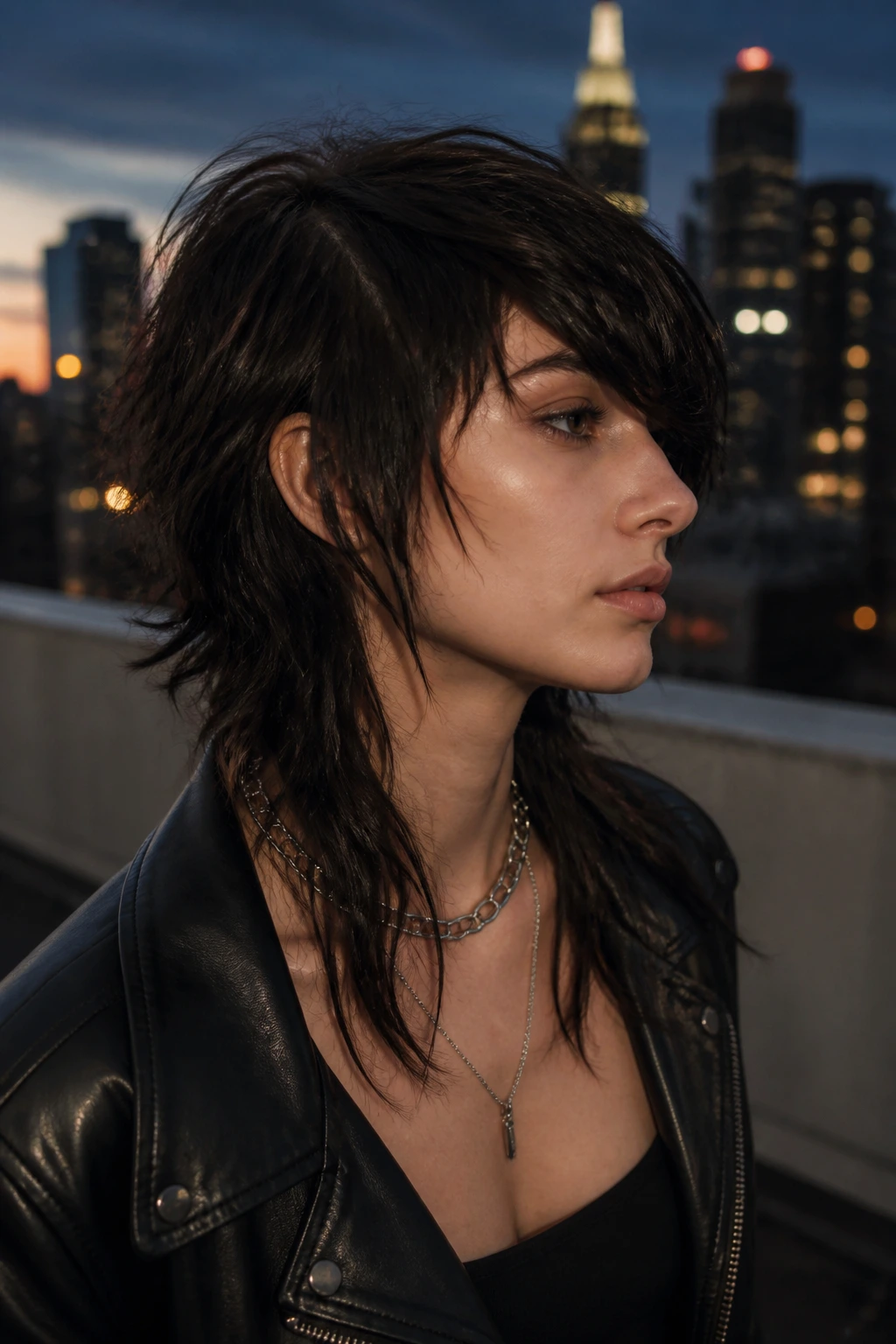
The best wolf cuts hold their shape for a while, but they still need a little maintenance. Bangs usually need a trim every three to five weeks if you want the sweep to stay clear instead of dropping into your eyes. The rest of the cut can go longer, often eight to twelve weeks, depending on how fast your hair grows and how much internal layering the stylist used.
Between washes, dry shampoo near the roots can save the crown from going limp. Don’t overdo it. A little at the part line and temple area is enough to revive the front without making the hair chalky.
For styling refreshes, mist the bangs lightly with water, re-bend them with your fingers or a round brush, and use a blast of cool air to lock the direction. Curly and wavy hair may only need a small re-scrunch with leave-in conditioner. Straight hair usually wants a bit more brush work.
Sleeping on a satin pillowcase or tying the front loosely back can keep the bang area from getting crushed. Not glamorous. Very useful.
Frequently Asked Questions
Will wolf cuts with side bangs work on very fine hair?
Yes, if the layers are kept controlled and the bangs are left long enough to hold shape. Fine hair usually does better with soft crown layers and a lighter fringe, not a heavily thinned front.
Can I get this cut if my hair is straight and flat?
You can, but the cut needs a little styling help. Ask for internal movement and a side bang that can be bent with a round brush or flat iron so the front doesn’t fall limp.
How do I ask for a wolf cut with side bangs at the salon?
Bring photos of the length, the fringe, and the texture you want. Then say whether you want the cut soft, edgy, grow-out-friendly, or more dramatic. Those words matter because the same haircut can be cut four different ways.
Do side bangs need more maintenance than curtain bangs?
Usually, yes, especially if you want the sweep to sit in one direction. Curtain bangs are more forgiving when they grow out; side bangs need occasional trimming to keep the diagonal line clean.
What if my bangs keep splitting in the wrong place?
That usually means your natural part or cowlick is stronger than the cut. Try drying the bangs in the opposite direction for a few minutes, then flipping them back into place while they’re still warm.
Can curly hair wear a wolf cut without looking bulky?
Yes, but the layers need to be shaped around the curl pattern, not against it. A dry cut or curl-by-curl approach usually gives the best control over the fringe and crown.
How often should I trim the overall shape?
Most people do well with a fringe trim every few weeks and a full shape refresh every two to three months. If your hair grows fast or your crown layers are short, you may want it sooner.
Is a wolf cut with side bangs high-maintenance?
Not in the way a blunt fringe is high-maintenance. The haircut can look good with imperfect styling, but it does need the right cut proportions so the side bangs and layers grow out gracefully.
The Shape That Holds Its Own

A wolf cut with side bangs works because it knows how to be messy without turning shapeless. The side sweep gives the front a job, the layers create motion, and the whole thing keeps its edge even when the styling is quick and imperfect.
That’s why I keep preferring it to more rigid layered cuts. There’s room here for straight hair, curly hair, thick hair, fine hair, and every haircut decision that sits somewhere between soft and sharp. If the cut is tailored well, it doesn’t fight your hair — it rides with it.
