



Shoulder-length layered haircuts have a very specific kind of usefulness that people underestimate until they cut their hair to the collarbone and realize the whole head suddenly has more movement. Not more drama. Movement. The hair flips easier, bends cleaner, and stops clinging in one heavy curtain around the jaw.
That sweet spot between chin and shoulder can be tricky, though. Too blunt, and the cut sits there like a block. Too many layers in the wrong place, and the ends start looking wispy while the crown gets all the body. The good shoulder-length layered haircut does something subtler: it changes how the hair falls when you turn your head, tuck it behind your ear, or let it air-dry for twenty minutes and hope for the best.
I’ve always thought this length is where a haircut starts earning its keep. It can sharpen a face, lighten thick hair, fake fullness in finer textures, and make balayage look like it was placed with a ruler and a very steady hand. The details matter. A few inches of elevation at the crown can change the whole silhouette.
Why Shoulder-Length Layered Haircuts Keep Showing Up on Save Lists
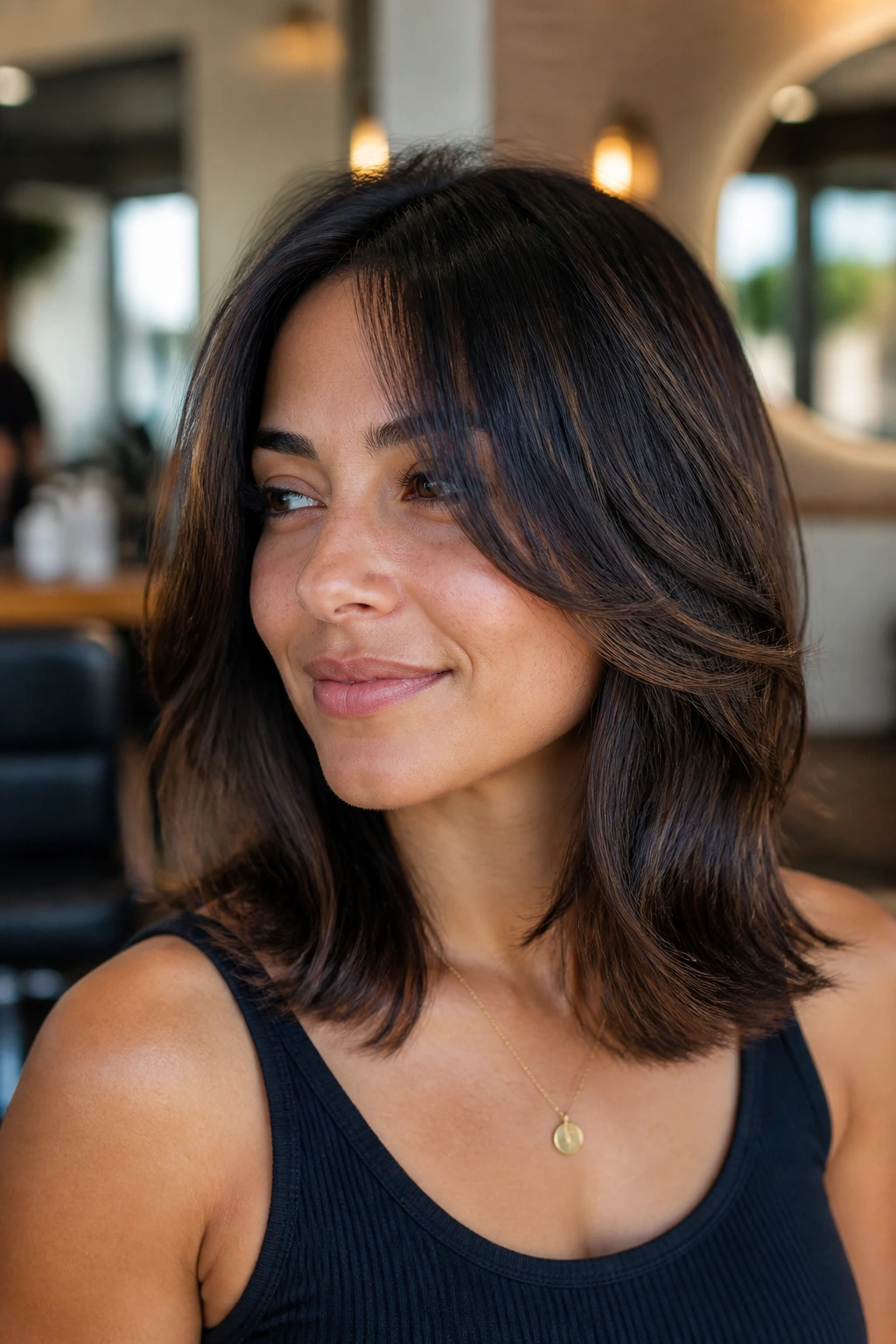
Built-in shape: Shoulder-length layers keep the outline visible, which means the cut still looks intentional on day one and week eight, not just right after the salon blowout.
Real movement: Layers remove enough weight to let the ends bend, but not so much that the hair frays into thin, broken-looking pieces.
Texture-friendly: Straight, wavy, curly, and coily hair all benefit from a different layer pattern at this length, which is rare. Most cuts favor one texture and quietly punish the rest.
Color-friendly: Balayage, money pieces, and ribbon highlights have room to show themselves because the layers create little shelves of light and shadow.
Easy to personalize: A shoulder-length layered cut can lean soft, shaggy, polished, edgy, or airy without abandoning the base shape.
Grows out well: When the shortest layers are placed with care, the cut doesn’t collapse into a triangle or a box as it gets longer. That’s the part people notice three weeks later.
1. Soft Face-Framing Layers
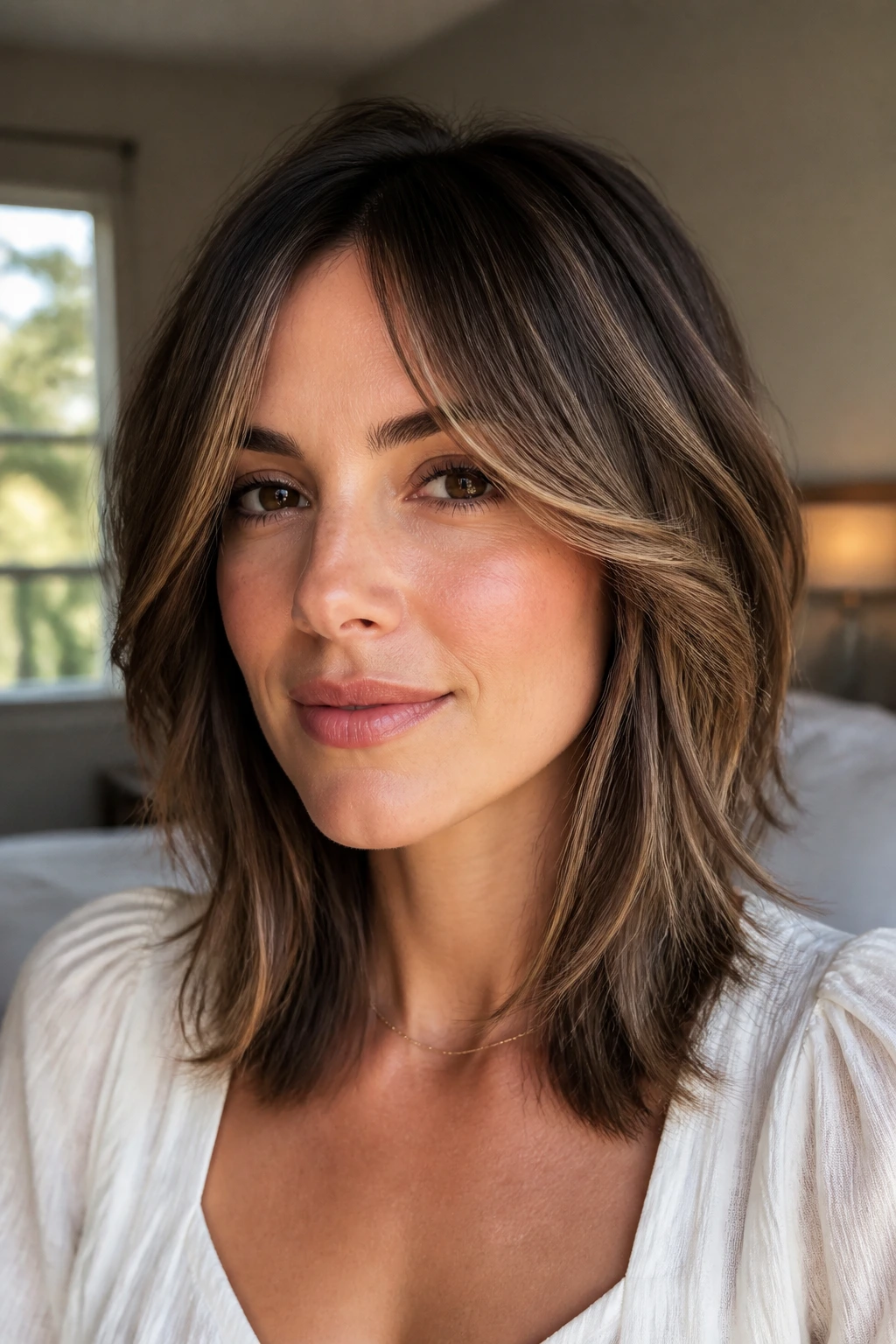
Soft face-framing layers are the safest place to start if you want movement without looking “cut up.” The longest pieces skim the cheekbones, then taper toward the jaw and collarbone, which gives the face a little lift without stealing length from the rest of the cut. It’s the haircut equivalent of turning the volume up two clicks, not ten.
What makes them work
The trick is placement. If the front layers begin too high, the shape can get fluttery and overdone. When they begin around the cheekbone or just below it, they create that easy bend people usually want from a shoulder-length cut, especially if the hair is blow-dried with a round brush.
This is one of the best shoulder length layered haircuts for people who want to keep things wearable. The shape is obvious enough to matter, but quiet enough that it doesn’t fight with glasses, strong brows, or a sharp part.
A good version of this cut also plays well with color. A soft money piece near the front can pick up the shortest layers and make the face look brighter without needing heavy all-over highlights.
- Best for straight to slightly wavy hair
- Works especially well with center or slightly off-center parts
- Ideal when you want movement around the face, not a shaggy outline
My take: if you’re nervous about layers, start here and stop pretending you need a full reinvention.
2. The Modern Shag at Collarbone Length
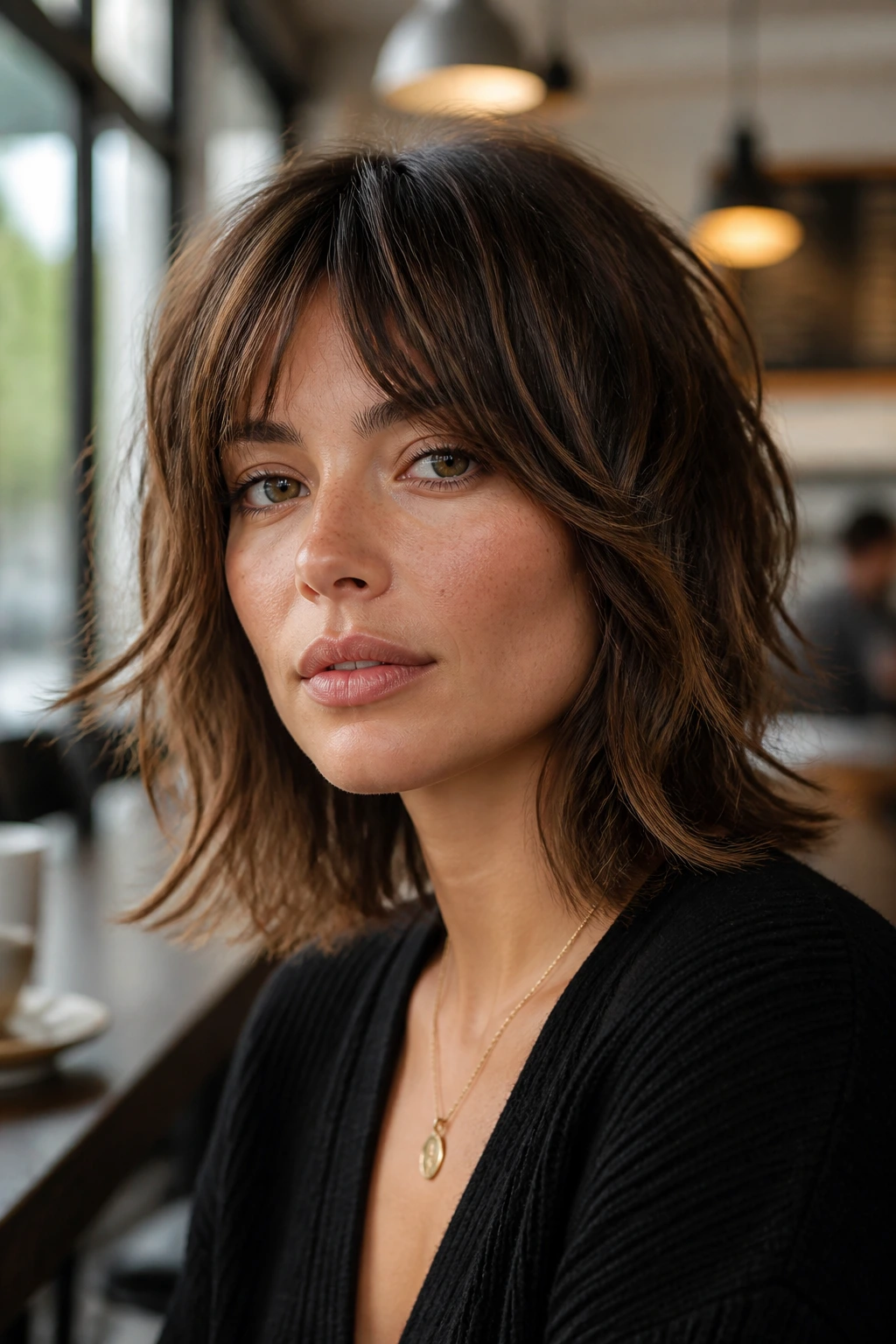
The modern shag at shoulder length is for people who want texture that looks deliberate, not accidental. It has choppy ends, a bit of lift at the crown, and enough separation through the lengths to keep the whole cut from feeling heavy. Think of it as controlled mess, which is harder to pull off than it sounds.
What separates a good shag from a tired one is proportion. The top layers should create movement near the crown, but the bottom perimeter still needs enough density to keep the cut from turning into a puffball. If your stylist over-thins the ends, the shape loses its backbone fast.
This cut shines on wavy hair, but straight hair can wear it too if you’re willing to add a little styling cream or sea-salt spray and rough-dry the roots. It’s not a wash-and-go miracle. Nothing that looks this cool is.
For shoulder-length hair, the modern shag also avoids one common problem: too much mullet energy. When the layers stay balanced and the length hugs the shoulders, it reads as edgy without going costume-y.
3. Butterfly Layers That Flick Away From the Face
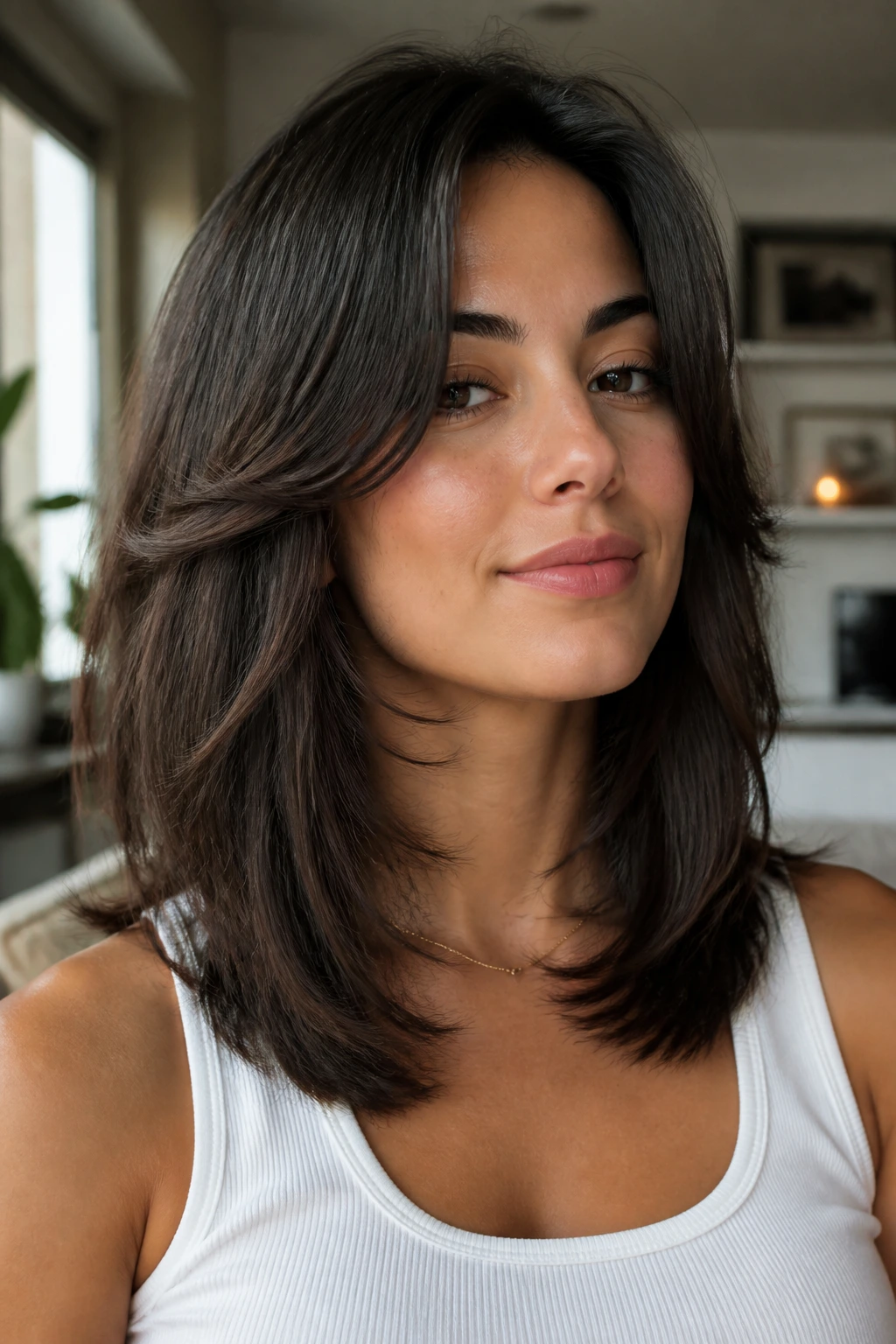
Ever notice how some layered cuts seem to float upward as soon as the hair gets a little blowout? That’s the butterfly effect at work. The top layers are cut shorter so they sweep away from the face, while the bottom length stays fuller and longer, which makes the silhouette look airy without losing the security of shoulder length.
The cut is especially good if you like a round-brush finish. The shorter front layers flip out with very little effort, and the longer underlayer gives the cut a second shape underneath. That contrast is the whole point.
How to style the lift
A 1.5-inch round brush, a nozzle on the dryer, and a quick bend at the ends will do most of the work. If you want the front to separate more, mist a little lightweight volumizing spray at the roots before drying and keep the heat focused at the crown for a few seconds longer than you think you need.
This is a strong pick for medium to thick hair. The shortest pieces create movement, but the longer base keeps the haircut from looking sparse.
It also photographs well with balayage because the top layers catch the light and the lower sections stay soft underneath. Very pretty. Very practical.
4. Curtain-Bang Layers for a Soft Center Part
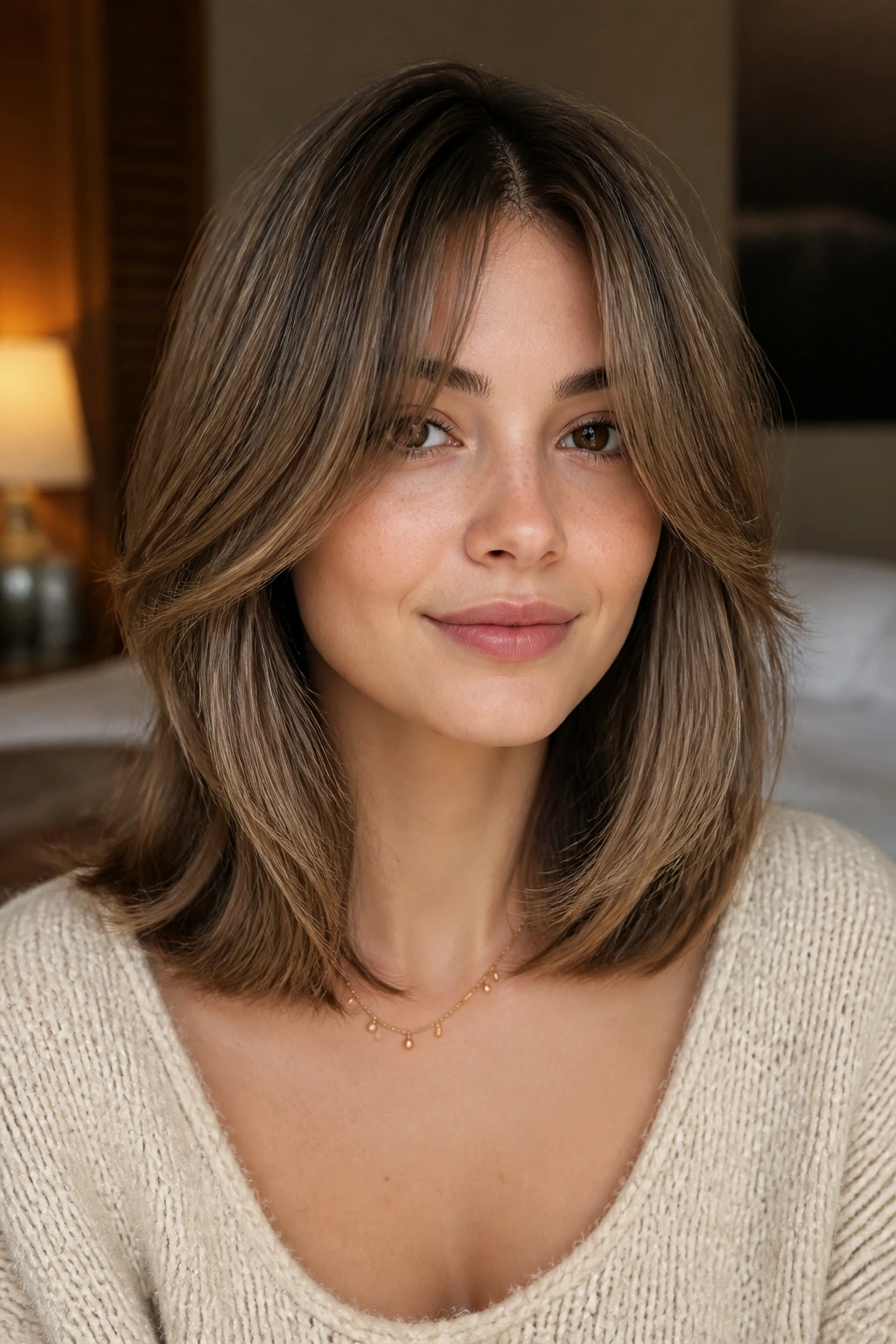
Curtain bangs with shoulder-length layers are one of those combinations that can look expensive even when the rest of your routine is pretty plain. The bangs open in the middle, taper at the cheekbones, and blend into the front layers so the haircut feels connected instead of chopped into parts.
The key is to keep the bangs long enough to split cleanly. If they hit too high on the forehead, they start demanding attention in a bad way. If they fall just below the brow and angle toward the jaw, they sit in that sweet, lazy zone that makes a center part look intentional.
A stylist should think about the front pieces and the rest of the layer pattern together. Otherwise you get bangs that belong to one haircut and lengths that belong to another. That mismatch shows.
Curtain-bang layers are a smart choice if your face feels a little long with a blunt center part. The bangs compress the vertical line just enough, while the shoulder-length layers keep the sides from flaring out.
5. Razor-Cut Texture for Straight Hair
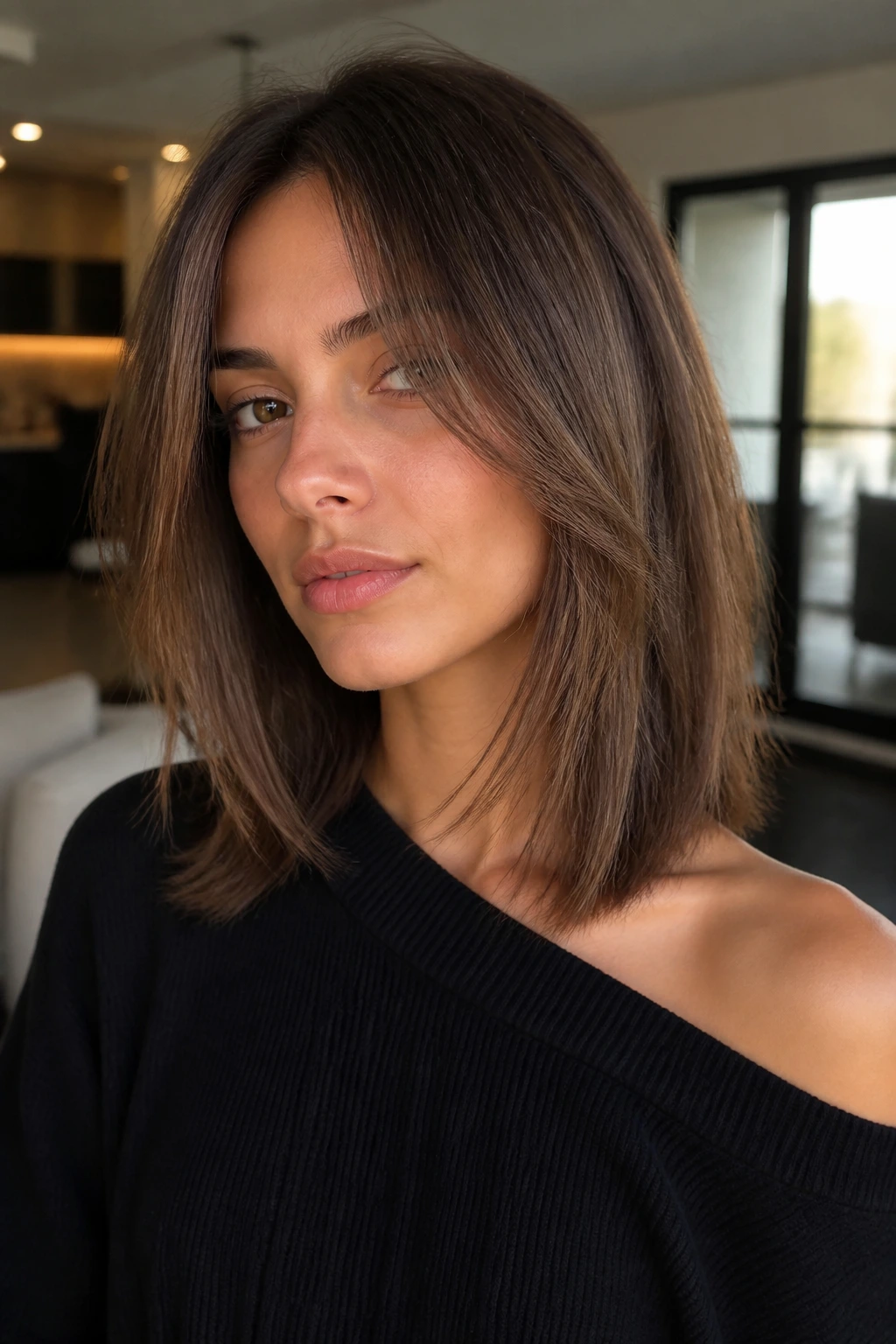
Razor-cut shoulder-length layers can look brilliant on straight hair because they stop the ends from sitting there like a rigid bar. The blade creates a softer edge, which gives the cut a wispy, lived-in finish that scissors sometimes miss. That said, this is not the cut I’d hand to every head of hair without thinking.
If your hair is coarse, dry, or frizz-prone, a heavy razor pass can make the ends look fuzzy by lunchtime. On sleek, dense, or naturally straight hair, though, the movement can be fantastic. The finish is lighter, the ends separate a bit, and the whole cut feels less formal.
This is also a good option if you want your layers to show but don’t want obvious stair-step lines. Razor cutting tends to blur those transitions. That can be a blessing or a problem, depending on how much control you like.
I’d ask for this when the goal is softness, not volume. If you’re chasing body at the crown, a rounder layer pattern usually wins.
6. Feathered Layers With a Light Blowout
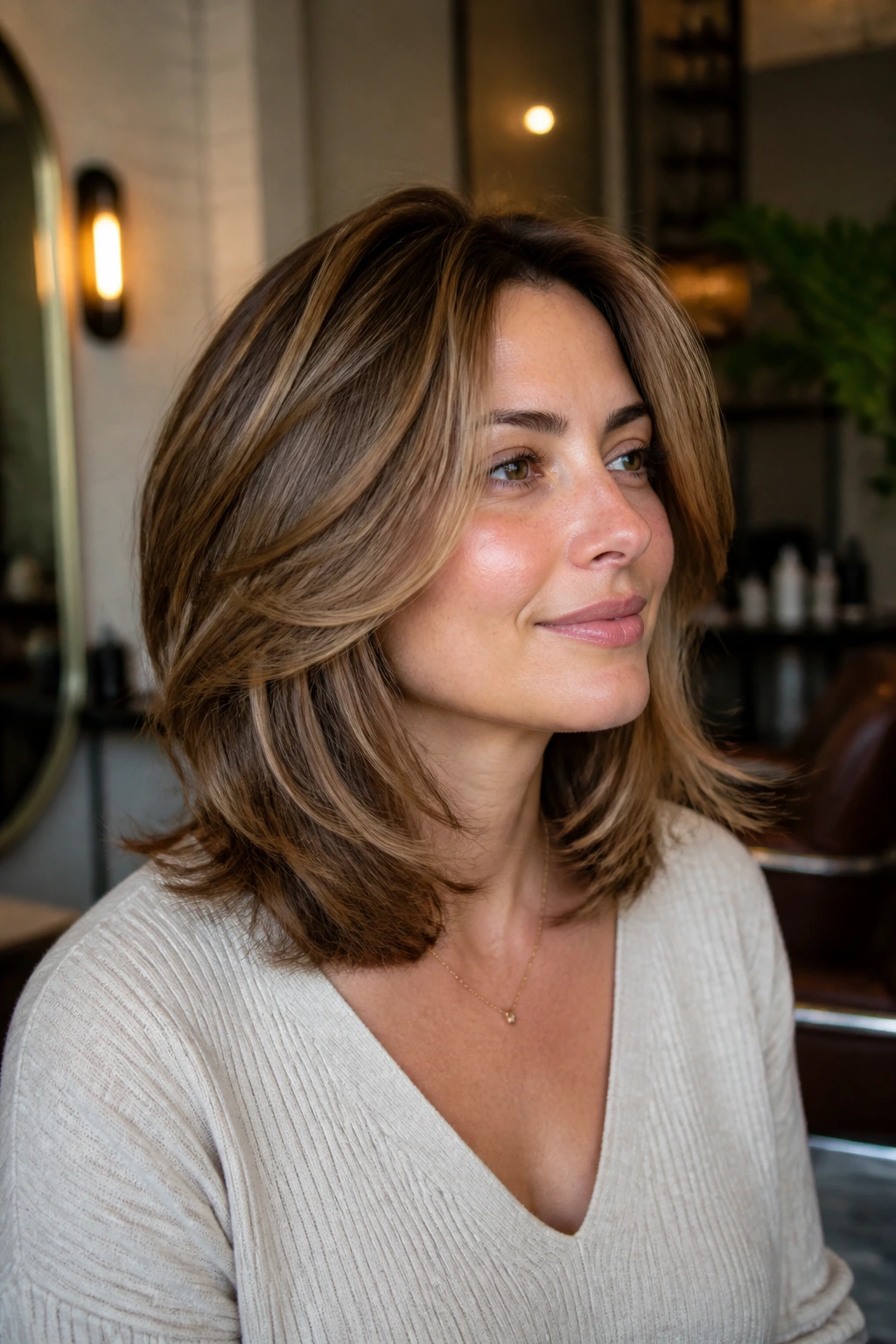
Feathered layers are the haircut equivalent of a good sleeve roll: small detail, big payoff. The layers are lifted and tapered so they sweep away from the face and skim the shoulders instead of hanging in one flat sheet. On shoulder-length hair, that feathering can make the whole cut feel lighter without sacrificing the outline.
The best version of this cut usually sits somewhere between classic and modern. It borrows the soft edges of older layered blowouts, but it keeps the finish cleaner and less helmet-like. You want bounce, not a grocery-store-pageant shape.
Why it flatters so many textures
- Fine hair gets the illusion of movement without having to be chopped to pieces.
- Thick hair loses bulk where it tends to puff out around the sides.
- Wavy hair gets a built-in bend that doesn’t need a curling iron every morning.
A small round brush and a little root lift spray are usually enough. I like this cut because it doesn’t ask for much after washing. A half-decent blow-dry does the job.
7. The Blunt Lob With Invisible Internal Layers
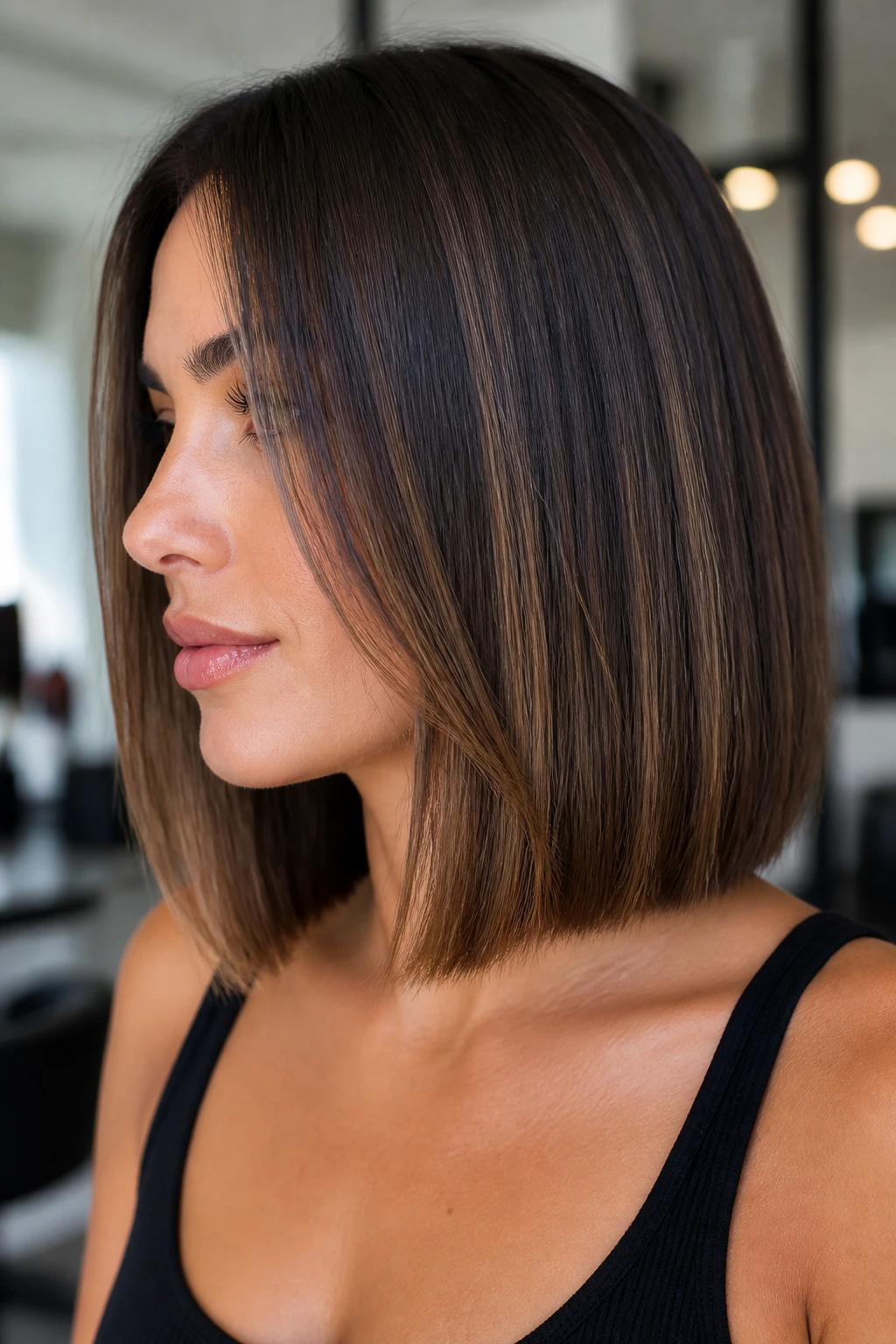
This one is for people who love a clean line but secretly want the hair to move. The outer shape stays blunt at the perimeter, which keeps the cut polished. Inside that shell, though, the stylist removes weight with internal layers so the haircut doesn’t feel like a cardboard box.
That combination is sneaky in the best way. From the front, it reads as a sleek lob. When you turn your head or tuck it behind your ear, the hidden layers show up as softness and lift. The result is controlled, not stiff.
It’s especially useful for hair that has one annoying habit: looking dense at the ends and flat at the roots. Internal layers help distribute that weight more evenly. You still need some styling, but the cut does part of the work.
I like this shape on people who wear minimal makeup or tailored clothes. It has enough structure to hold up next to a crisp collar or a clean neckline. No fuss.
8. Choppy Midi Layers With Extra Edge
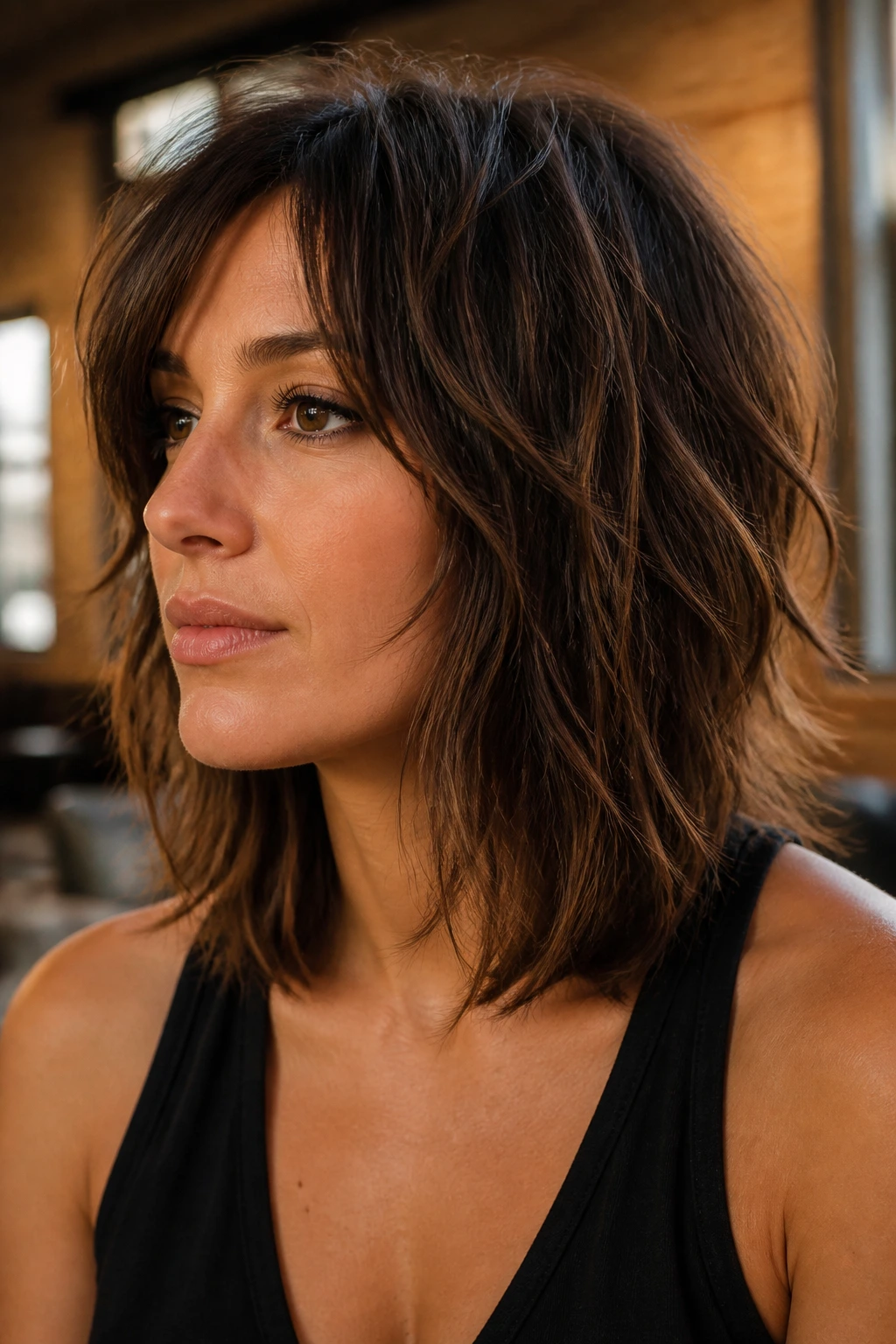
If soft layers feel too polite, choppy midi layers bring a little attitude to the room. The ends are broken up with more visible texture, so the shoulder-length shape looks piecey and deliberate. It’s not chaotic. It just doesn’t sit still.
The best version of this cut keeps enough length to swing, then adds uneven movement through the lower half. That means the hair can still tuck into a coat, tie back into a half-up look, or bend around a scarf without losing its shape. The layers do the visual work.
This style plays well with a rough finish. A matte paste, texture spray, or even a light bend from a flat iron can make the pieces separate in a way that feels modern rather than overly styled.
If you have very fine hair, ask for choppiness in moderation. Too much removal at the ends can make the hair look stringy. You want air, not gaps.
9. Curly Shoulder-Length Layers That Respect the Curl Pattern
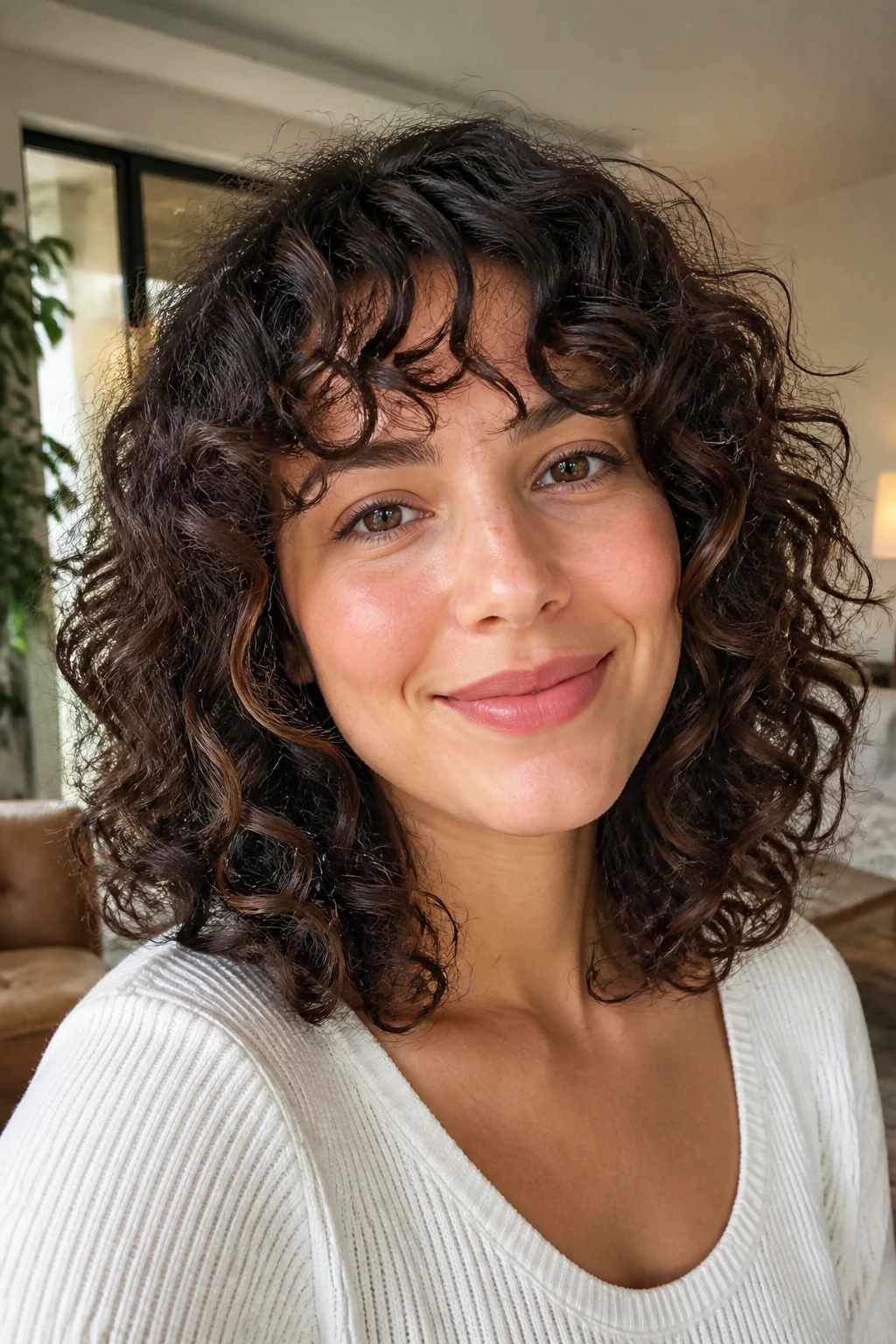
Curly hair at shoulder length needs layers that follow the curl, not fight it. Otherwise the cut balloons in the wrong places and the bottom edge shrinks too far up the neck. When the layers are placed well, the curls stack with shape instead of sitting like one round cloud.
A good curly layered cut is often done with the natural pattern in mind, sometimes even dry or damp in sections so the stylist can see where the curls actually land. That matters. Curls do not all spring the same amount, and guessing usually leads to uneven corners around the sides.
What to ask for
- Layers that keep the perimeter full enough to hold shape
- Face-framing pieces that land where your curls naturally bend
- Enough weight removed at the right spots so the crown doesn’t collapse
This cut is one of the most useful shoulder length layered haircuts if you want definition without losing the length that keeps curls from puffing out. Done right, it gives the curl room to breathe.
10. Beachy Wavy Layers With Soft Ends
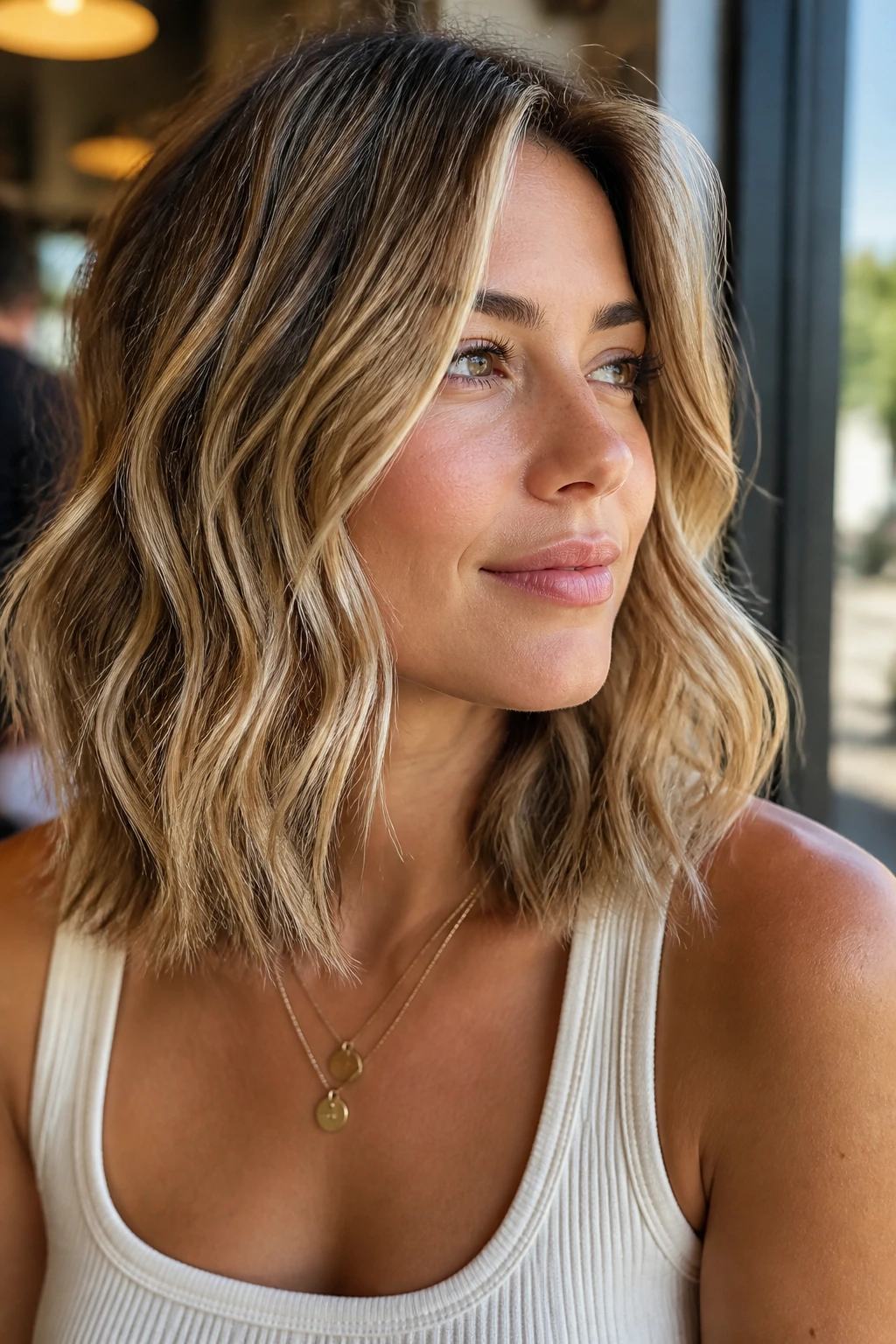
Beachy layers are the easygoing cousin of the feathered blowout. The haircut is built to look good when the hair bends naturally, which means the layers should be long enough to catch a wave but not so short that they disappear once the hair dries. This is a cut that likes movement from the middle down.
If your hair already has some wave, the shape will usually come alive with a little salt spray and scrunching. If your hair is straighter, a quick wrap around a curling wand in alternating directions can fake the effect without making it look too styled.
The nice part is how forgiving it is. A slight bend near the face, a little unevenness at the ends, and the style starts to feel intentional. It doesn’t need perfect symmetry. In fact, a little asymmetry helps.
I’d choose this cut when you want hair that looks better a few hours after washing than it does immediately after blow-drying. Some cuts fight the weather. This one leans into it.
11. Deep Side-Part Layers That Build Instant Volume
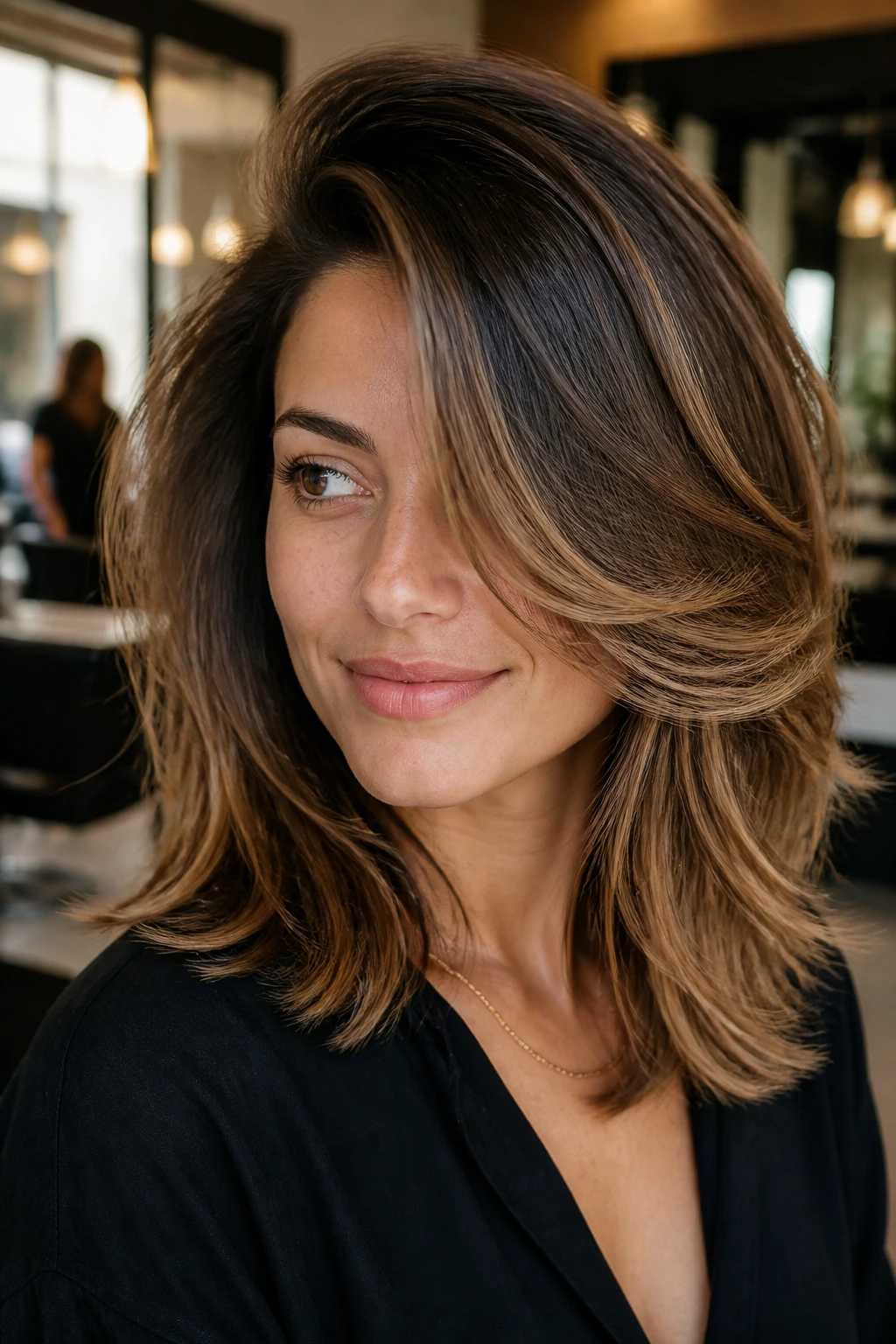
A deep side part can rescue a shoulder-length layered cut that’s gone a little too flat. The part shifts weight to one side, the layers rise on top, and the whole profile gets more lift at the crown. Sometimes that’s all the haircut needed.
This is a good option if your hair naturally falls limp at the center part. Instead of cutting more layers and hoping for the best, change the architecture first. You’ll often get more height from a part switch than from another inch of layering.
The side-part version also gives the front a little drama without turning the haircut into a full retro blowout. One side can tuck behind the ear. The other side can sweep across the cheek and create a softer frame. Simple move. Strong effect.
For fine hair, this is one of my favorite tricks. It makes the cut look fuller without sacrificing the ends.
12. U-Shaped Layers That Keep Length in Back
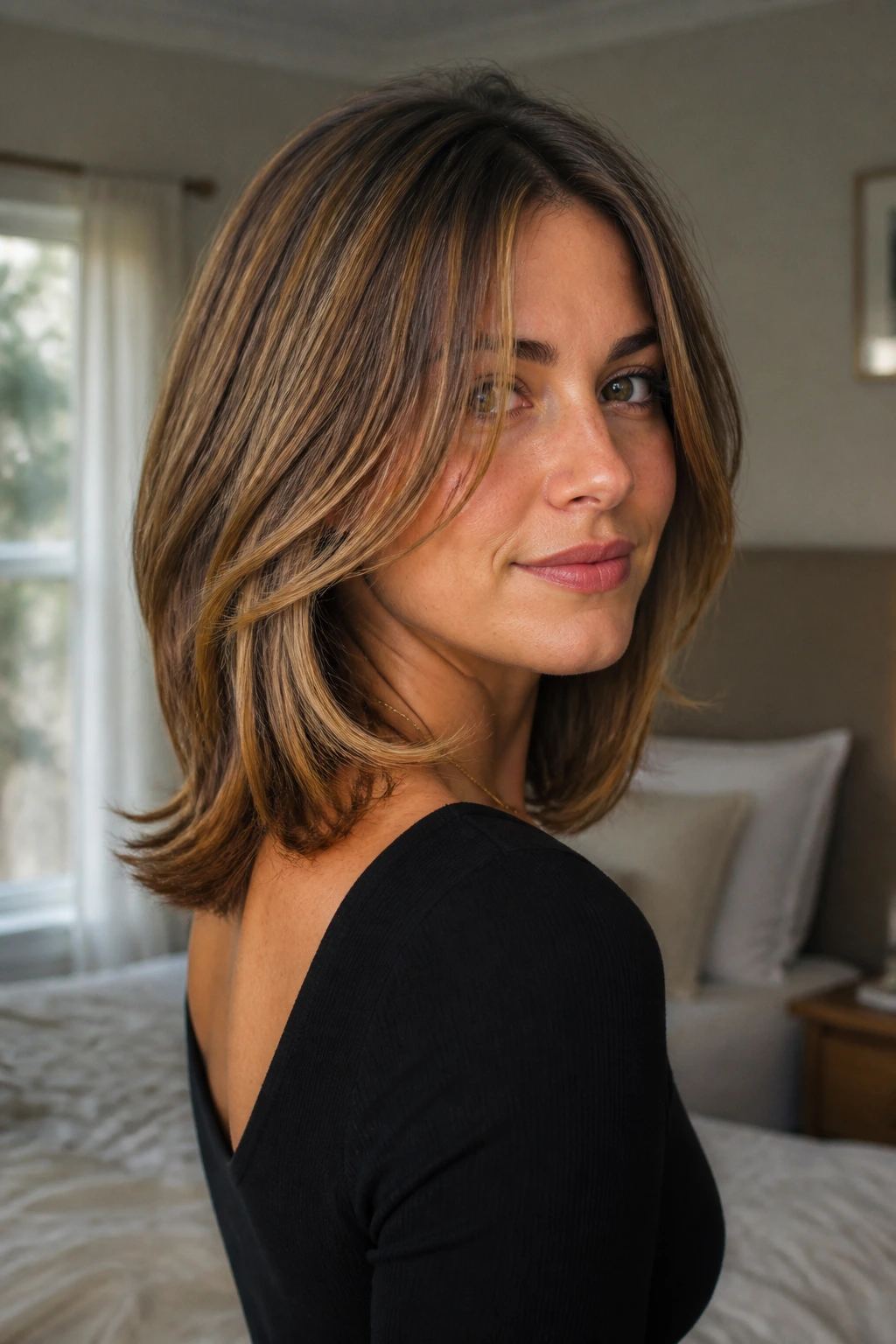
A U-shaped layered cut keeps the back a touch longer than the sides, which creates a soft curve instead of a hard edge. On shoulder-length hair, that curve is subtle, but it matters. It makes the cut feel fuller through the back while still giving the sides enough movement to avoid boxiness.
This is the right shape if you like the feeling of length near the nape but hate the blunt shelf that sometimes happens with a straight-across cut. The U gives the illusion of a longer cascade in back without turning into a dramatic V.
The layers should be light enough to move but not so short that they pull the back upward. If the stylist overdoes the top, the U loses its calm line and starts looking disconnected.
I like this shape on people who wear their hair down most of the time and want a softer outline around sweaters, jackets, and high collars. It sits nicely with clothes. That sounds minor until you notice how often hair and clothing fight each other.
13. Angled Layered Lobs That Lift the Neckline
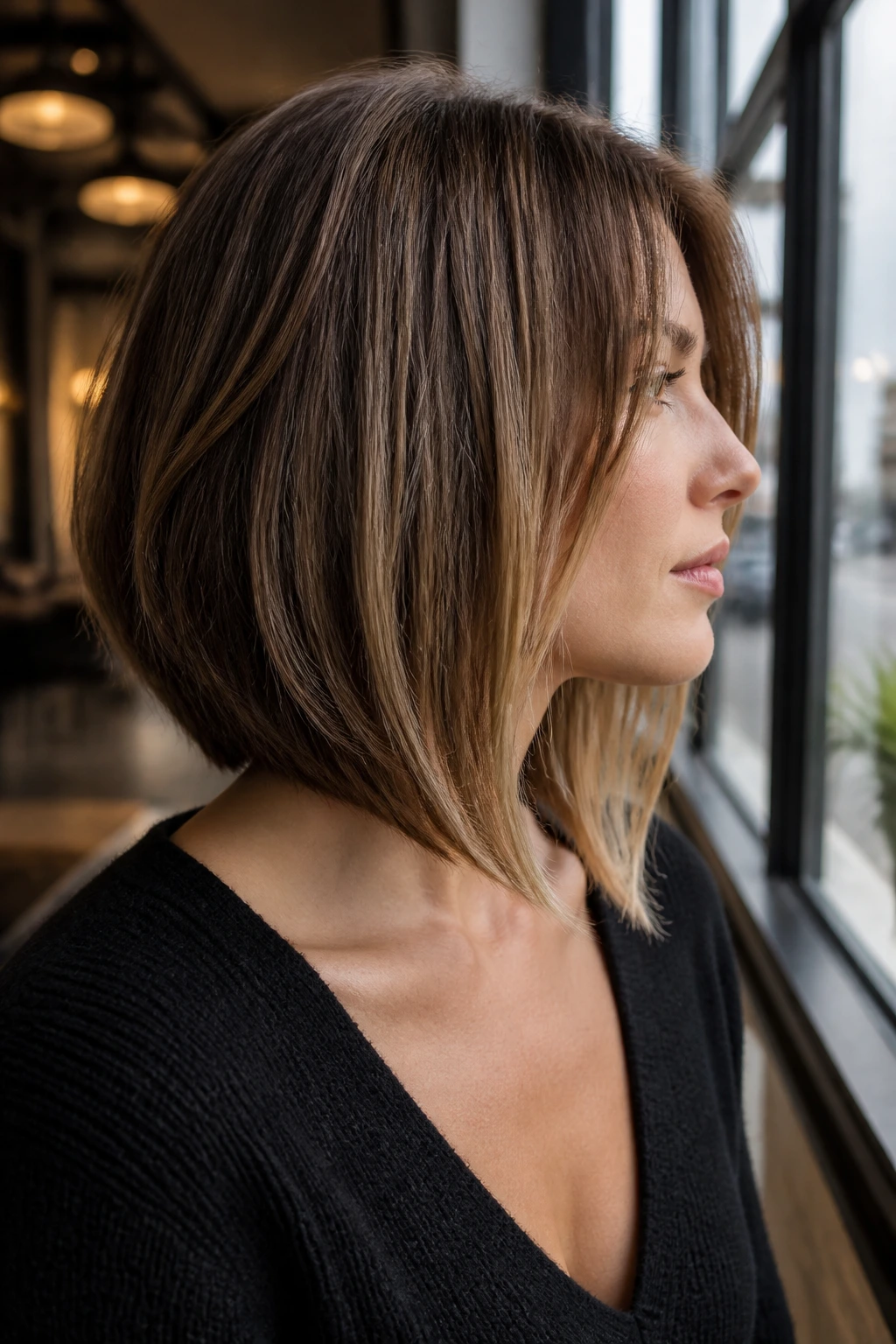
An angled lob is one of the cleanest ways to make shoulder-length hair look sharper. The front pieces sit a bit longer, the back is slightly shorter, and the layers create a line that draws the eye downward along the jaw and neck. It’s sleek, but not boring.
Compared with a blunt lob, the angled version has more movement around the face. Compared with a shag, it keeps more structure. That middle ground is why it works so well for people who want polish without stiffness.
The angle also pairs nicely with highlights. Light pieces through the front lengths emphasize the diagonal shape, which makes the haircut look even more deliberate. If the color is placed badly, the angle can disappear. If it’s placed well, the whole cut wakes up.
This is one of the better options when you want a haircut that looks good from the side. That matters more than people admit. We don’t stand facing front all day.
14. The Wolf-Cut Lite for People Who Want Edge, Not Chaos
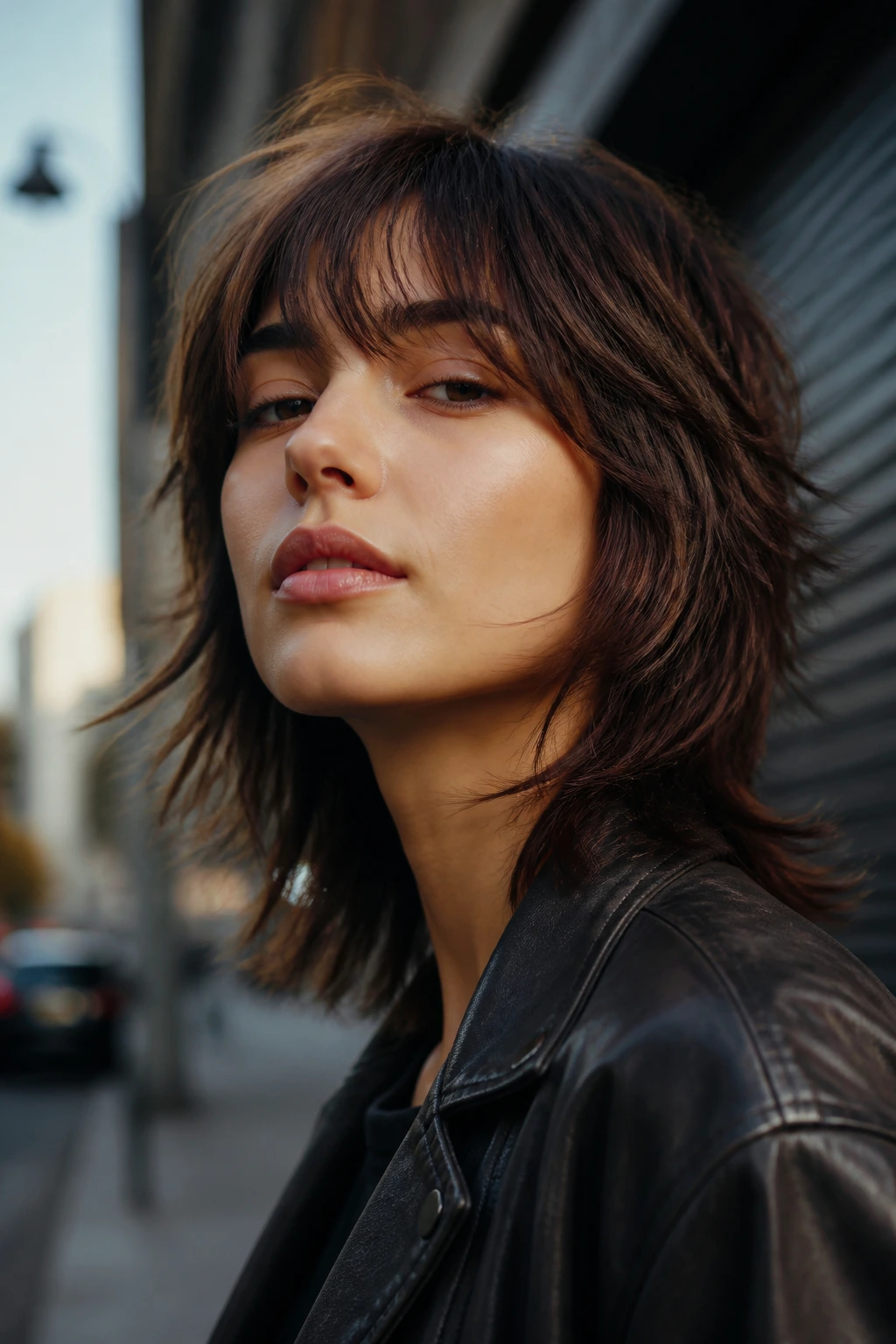
A full wolf cut can be a lot. The lighter version at shoulder length keeps the choppy crown and textured ends, but tones down the extreme separation. You still get that slightly undone, rock-and-roll shape, just without looking like you forgot to finish the haircut.
The appeal here is attitude. The shorter top layers give the crown lift, the longer bottom layers keep some swing, and the whole thing lands in a space between shag and mullet. That sounds messy on paper. On hair, it can look sharp.
This version is best when the texture wants to live on its own. Wavy hair is the obvious candidate, but straighter hair can wear it too if you’re willing to add texture spray or rough-dry with your fingers. The style does not need perfect symmetry.
I’d skip the full-on wolf if your hair is already very thin at the ends. The lite version has enough shape to give personality without exposing too much scalp through the lengths.
15. Internal Layers for Thick Hair That Eats Volume
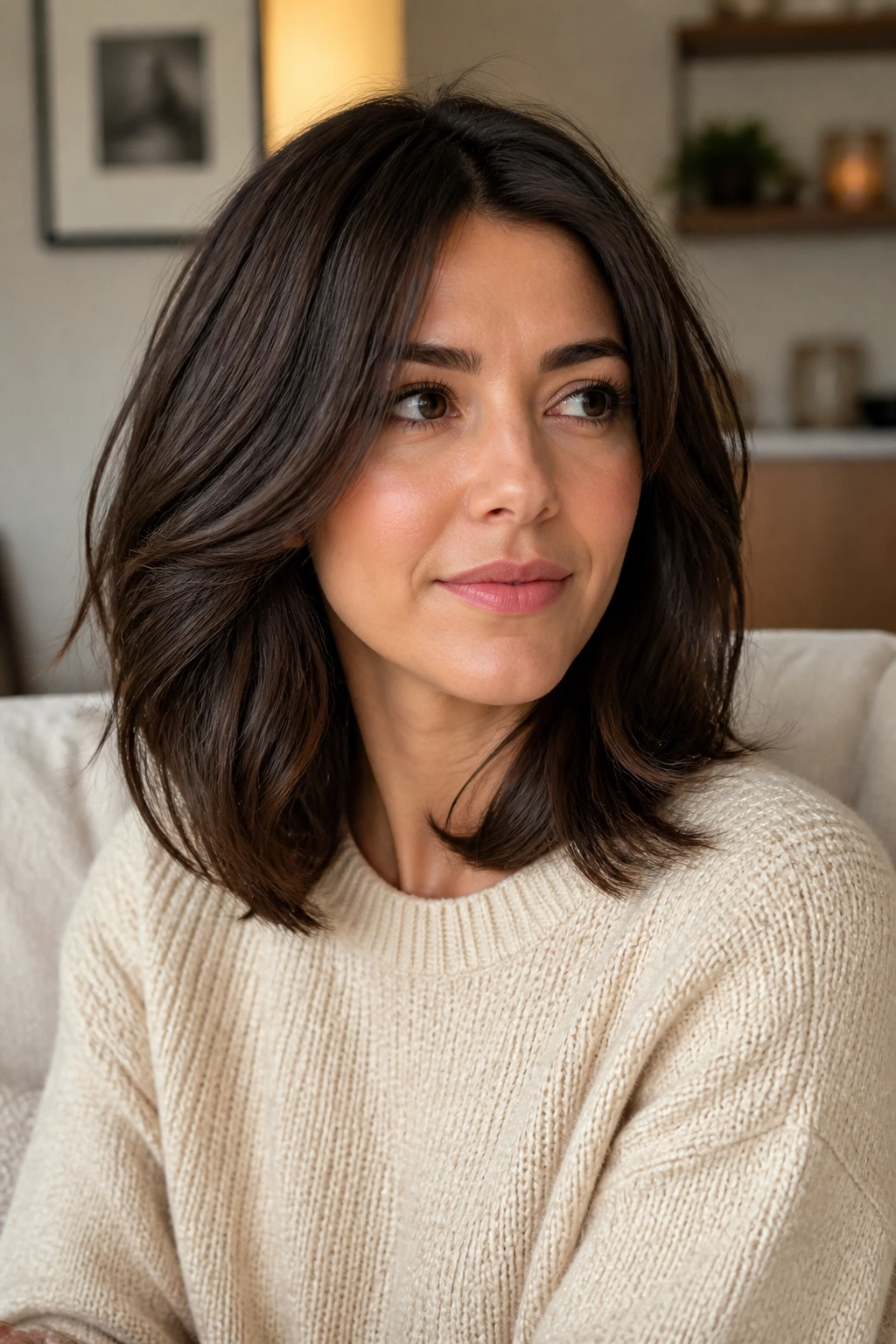
Thick hair can look luxurious right up until it starts sitting like a wool blanket on your shoulders. Internal layers are the fix I reach for when the perimeter needs to stay solid but the inside needs weight removed. You keep the outside line, then lift some of the mass from within.
That matters at shoulder length because thick hair has nowhere to hide. If the stylist only chops the outer surface, the haircut can puff outward in a blunt halo. Internal layers let the ends swing instead of sticking straight out from the head.
This cut works especially well when the goal is movement without losing richness. The hair still looks full, but the ends aren’t dragging the whole shape down.
A stylist needs to be careful with the shears here. Too much removal can make thick hair feel frizzy at the edges, and that’s a bad trade. You want strategic reduction, not a thin, fluffy finish.
16. Fine-Hair Layers That Fake Density
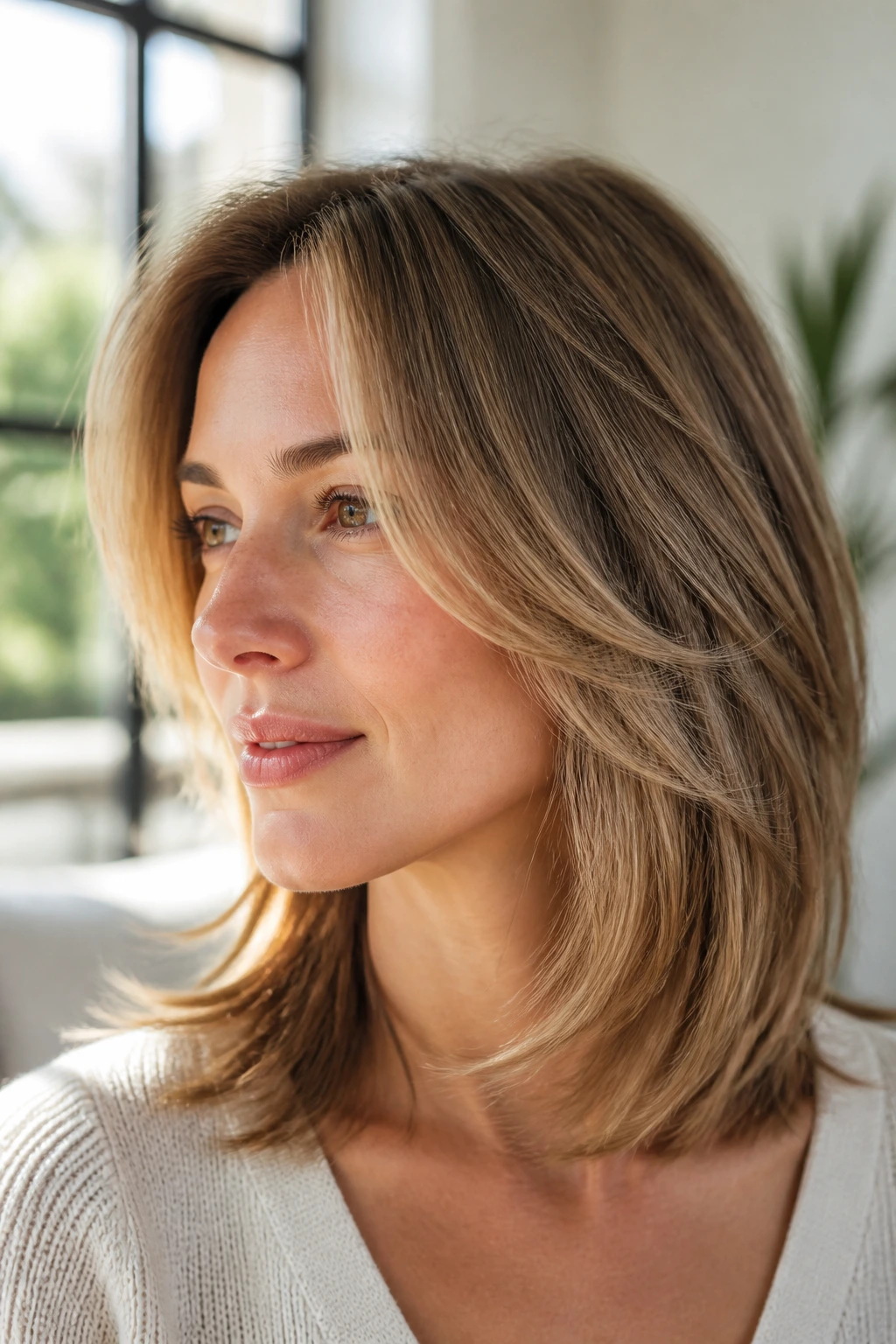
Can fine hair wear layers without looking sparse? Yes, but the layers need to stay long and well-placed. Short, choppy layers on fine hair are a fast way to expose too much scalp and leave the ends hanging with no body. Long layers, though, can give the illusion of density where the hair needs it most.
The smartest version of this cut keeps the perimeter fairly solid and adds only enough layering to create lift around the crown and cheeks. That means the hair can still look like it has a full outline, which is what fine hair usually needs.
A little root-lifting mousse goes a long way here. So does a blow-dry with the head turned upside down for the first minute or two, then finished upright with a round brush at the crown. No need to build an entire production around it.
This is one of those cuts that gets better with restraint. More layers are not the answer. Better layers are.
17. Collarbone Cut With Long, Lazy Layers
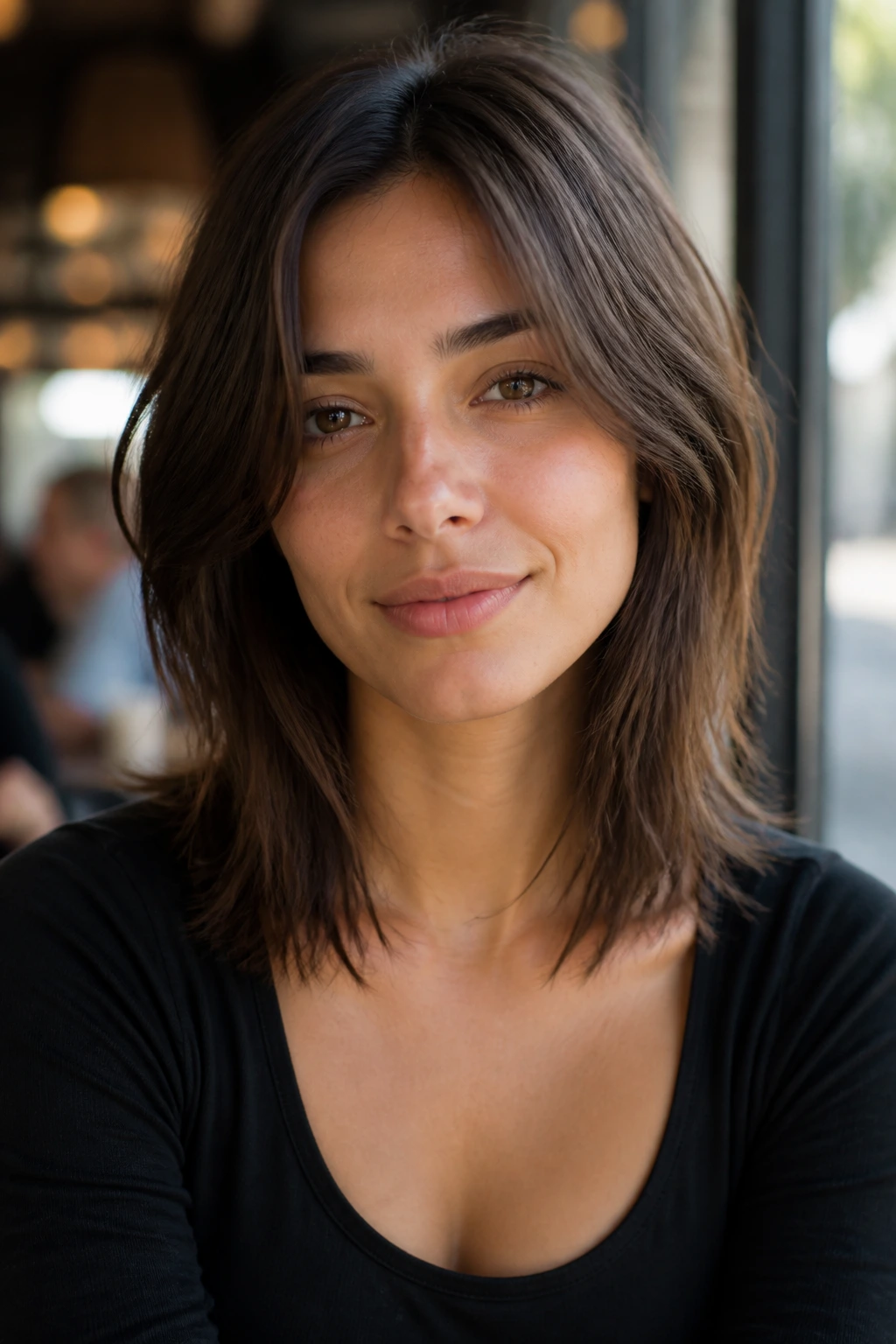
The collarbone cut with long, lazy layers is for people who want the easiest possible relationship with their hair. The shape sits a touch below the shoulders, the layers are long enough to blend softly, and the whole cut can air-dry without looking like it lost a fight.
I like this one because it doesn’t force the hair into a corner. You can smooth it, wave it, clip one side back, or let it do its own thing. The long layers create enough bend that the cut feels deliberate even when the styling is minimal.
It’s especially useful if you wear your hair up a lot. The longer lengths still gather into a ponytail or claw clip, but the layers drop out in a way that softens the face. A plain one-length collarbone cut can’t do that as well.
If you want a haircut that looks good with five minutes of effort, this is a strong contender. Not glamorous. Practical. Which is often better.
18. Air-Dry Layers for Low-Styling Mornings
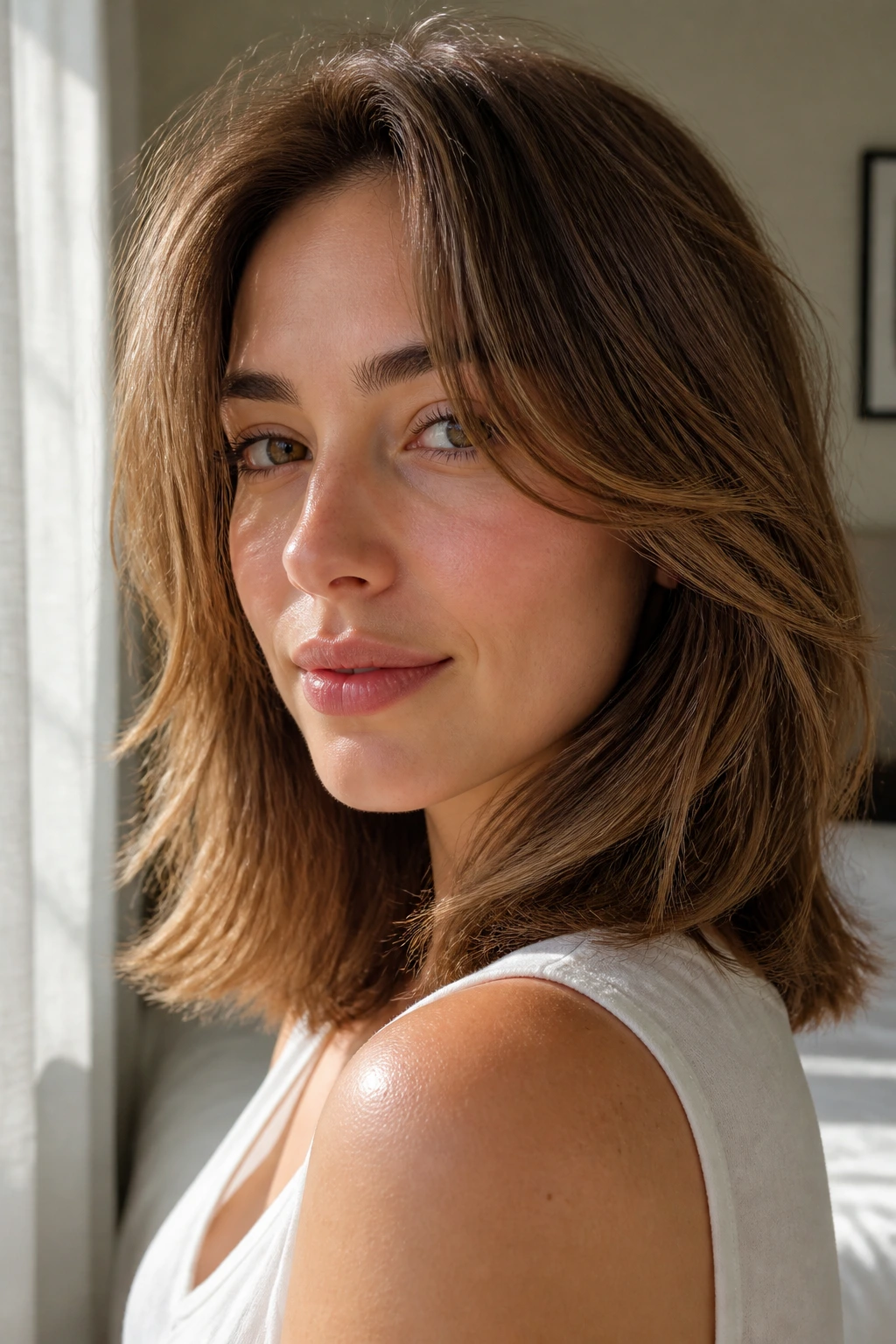
Air-dry layers are cut to behave once you leave them alone. That means the layers should support the natural bend of the hair instead of fighting it. On shoulder-length hair, this can be a very smart move because the weight is short enough to dry in a reasonable time, but long enough to keep a shape.
The cut usually works best when the stylist leaves some softness through the ends and avoids over-layering the crown. If the top gets too chopped, air-dried hair can puff in odd places while the lower sections hang limp. Nobody wants that split personality.
A leave-in cream or lightweight wave balm helps the layers clump together in a clean way. A towel squeeze, not a rough rub, keeps the cuticle calmer and the ends less frizzy.
This is one of my favorites for people who dislike styling tools. It’s not magic. It’s geometry. The haircut has to be designed to fall well on its own.
19. The Rachel-Inspired Layered Cut, Updated
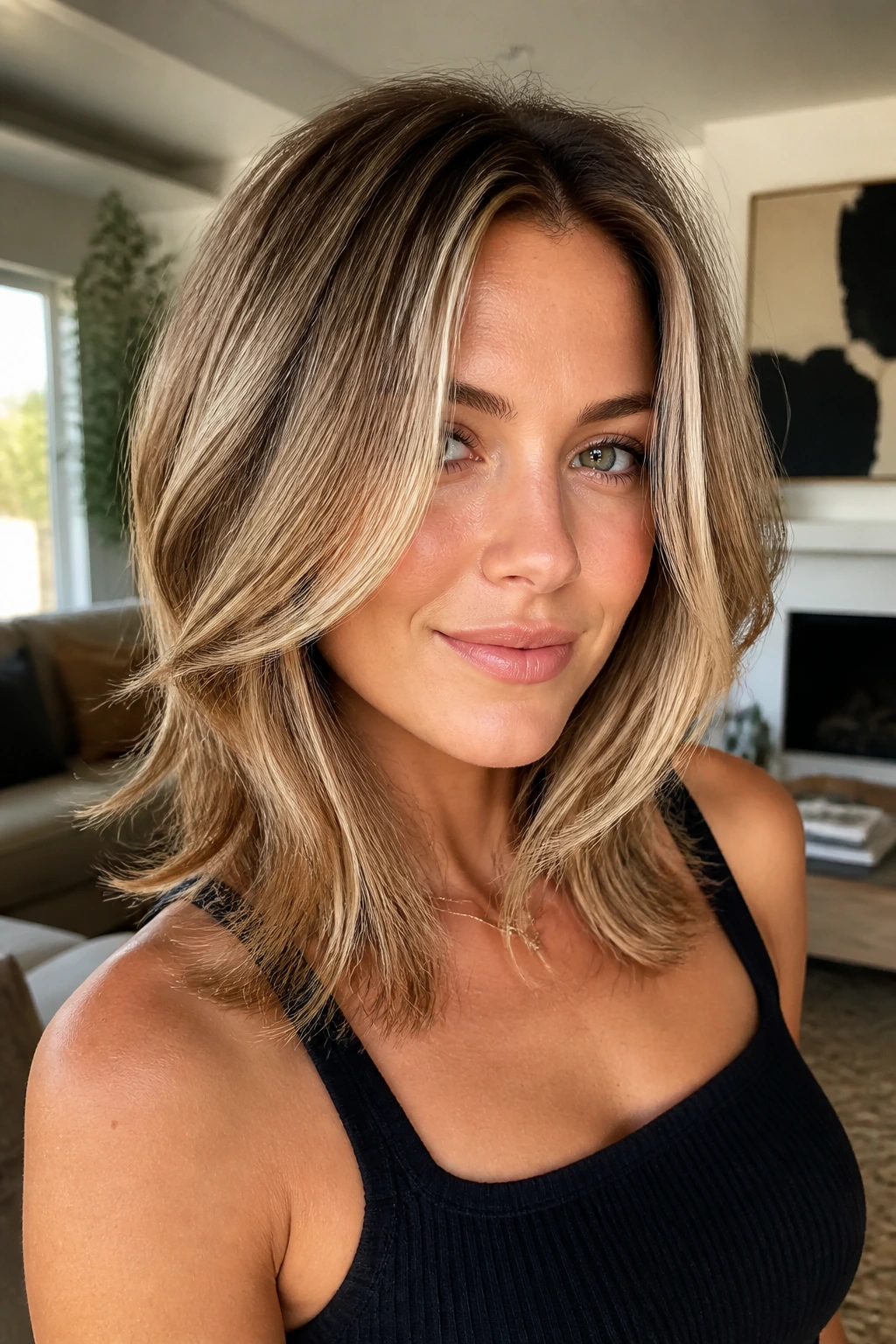
The Rachel still lives because the structure works, not because we all miss the exact same blowout. The updated version keeps the bouncy, face-framing layers and the lifted shape around the cheeks, but softens the obvious step lines so the cut feels more current and less costume-like.
On shoulder-length hair, this shape can look especially good because the layers have room to show without becoming too dramatic. The front opens around the face, the middle lengths hold volume, and the ends stay full enough to keep the silhouette grounded.
A modern version should avoid too much round-brush helmet. That old finish can make the cut feel dated fast. A little bend is enough. The goal is movement with a soft edge.
If your hair is medium density and you want a layered cut that still feels familiar, this one lands in a comfortable place. There’s a reason it keeps coming back. The shape is useful.
20. Money-Piece Layers That Make Highlights Pop
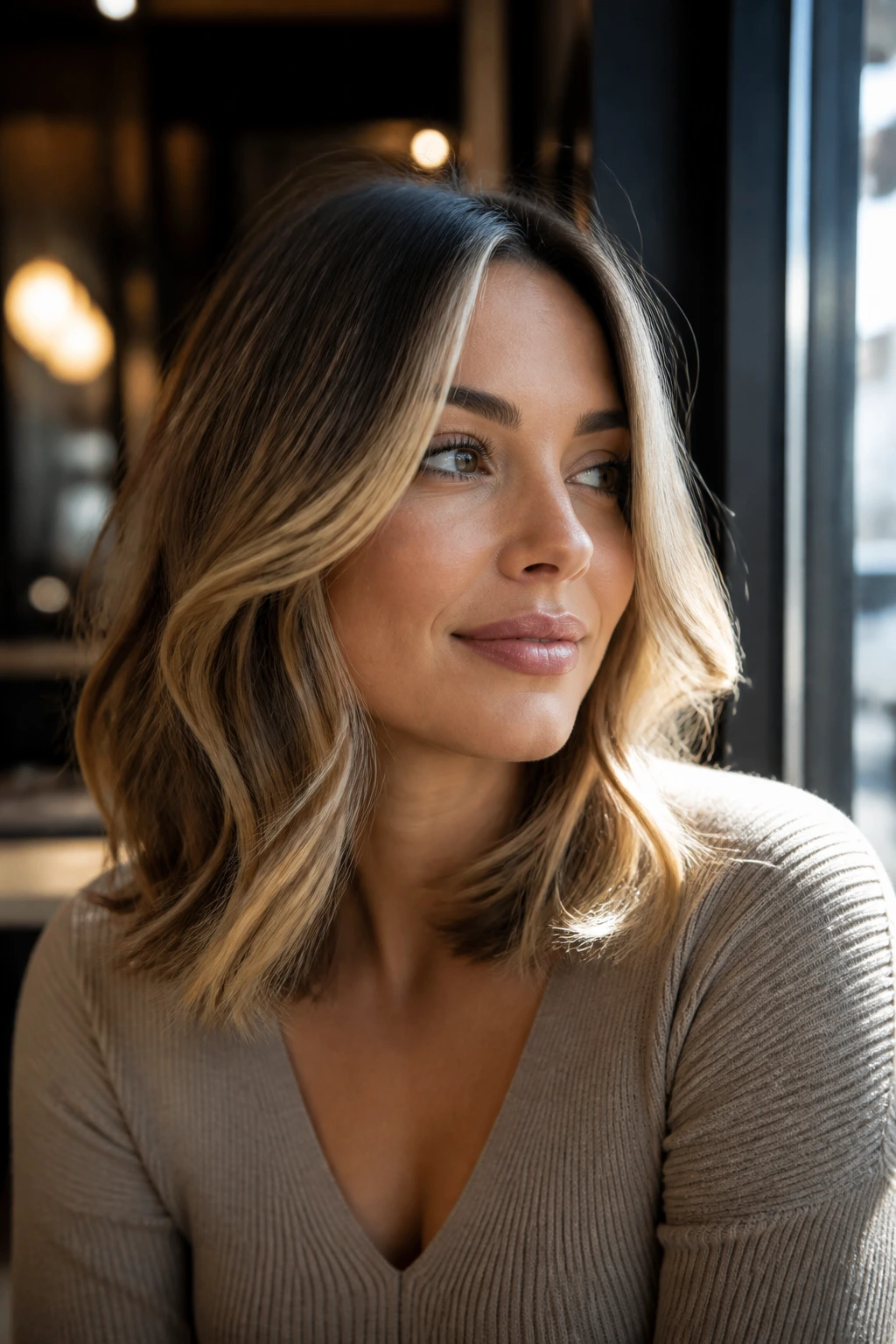
Money-piece layers are where haircut and color shake hands. The front sections are cut to frame the face, and the brightest highlights sit there so the whole shape catches the eye first at the cheekbones and jaw. On shoulder-length hair, that front brightness can make even a simple cut look more dimensional.
The layers matter here because they give the highlight placement somewhere to land. Without layers, the money piece can feel like two bright strips sitting on a flat surface. With layers, the light shifts as the hair moves, which is the whole charm.
This cut works with subtle brightness or bold contrast. A soft beige ribbon near the front can make fine hair look fuller. A brighter blonde streak can sharpen a darker base and give the haircut a little pop.
I’d choose this if you want your cut to look alive from the front, even on days when the rest of the hair is barely styled. The color does the announcing. The layers do the speaking.
Why Shoulder-Length Layers Work So Well
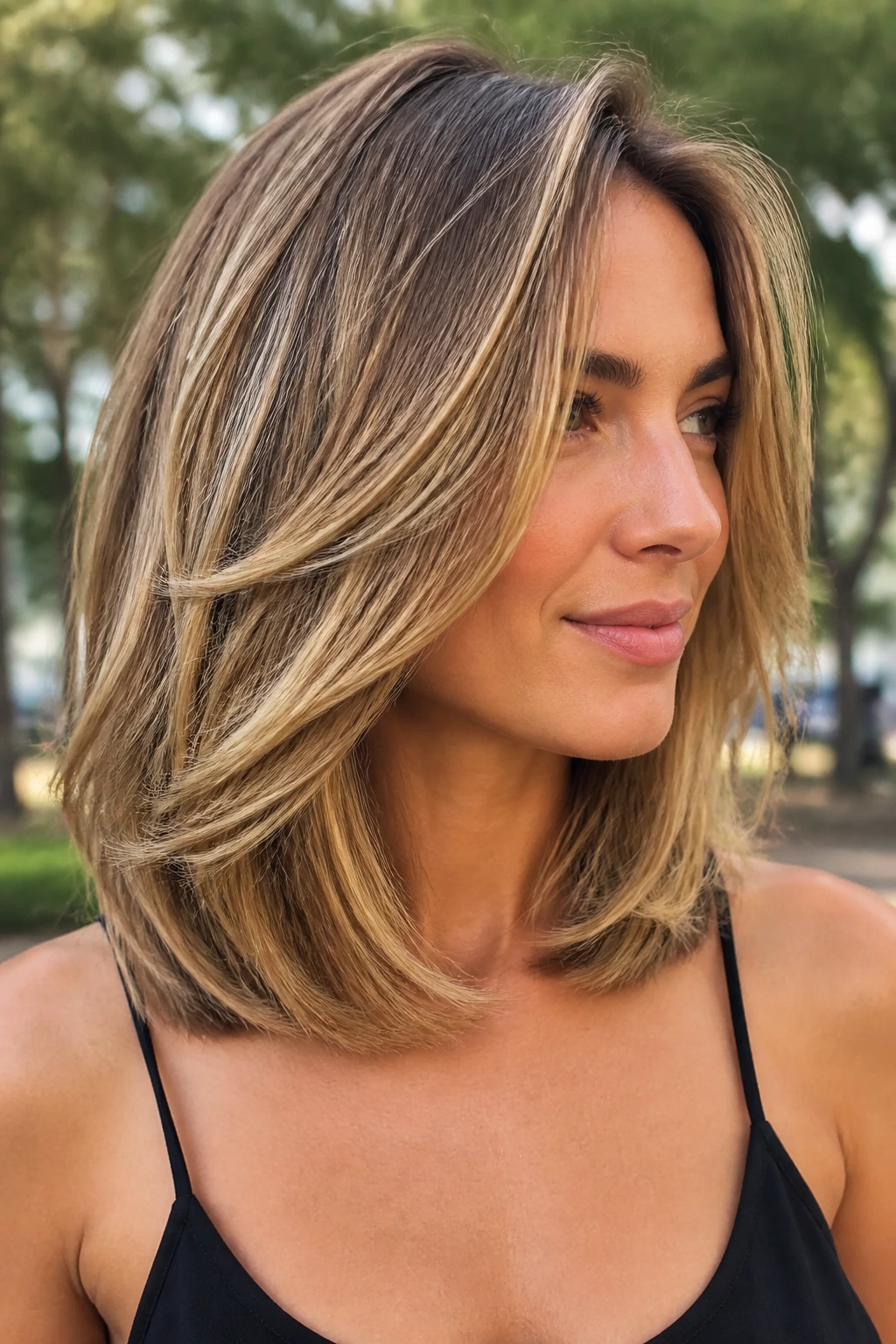
The shoulder is a hinge point. Hair that lands there moves differently than hair that sits above the jaw or below the chest. It bends, flips, and catches on clothing in a way that makes layers show up fast.
That’s the real reason these cuts are so useful. The length gives the layers a stage. Short layers at the crown can lift, long layers near the front can soften the face, and the ends can still keep enough weight to avoid that thin, choppy look that happens when a haircut gets overworked.
There’s also a practical side. Shoulder-length hair is long enough for clips, low buns, and half-ups, but short enough that the shape still matters after a rough night’s sleep. You can’t hide a bad cut as easily as you can with long hair, so the placement has to be smarter. When it is, the haircut pays you back every morning.
Balayage and highlights look especially good here because the layers change how the light travels. A few well-placed ribbons can make the cut look deeper, not busier. That’s a small difference in theory. In the mirror, it’s obvious.
Tools That Help These Cuts Behave
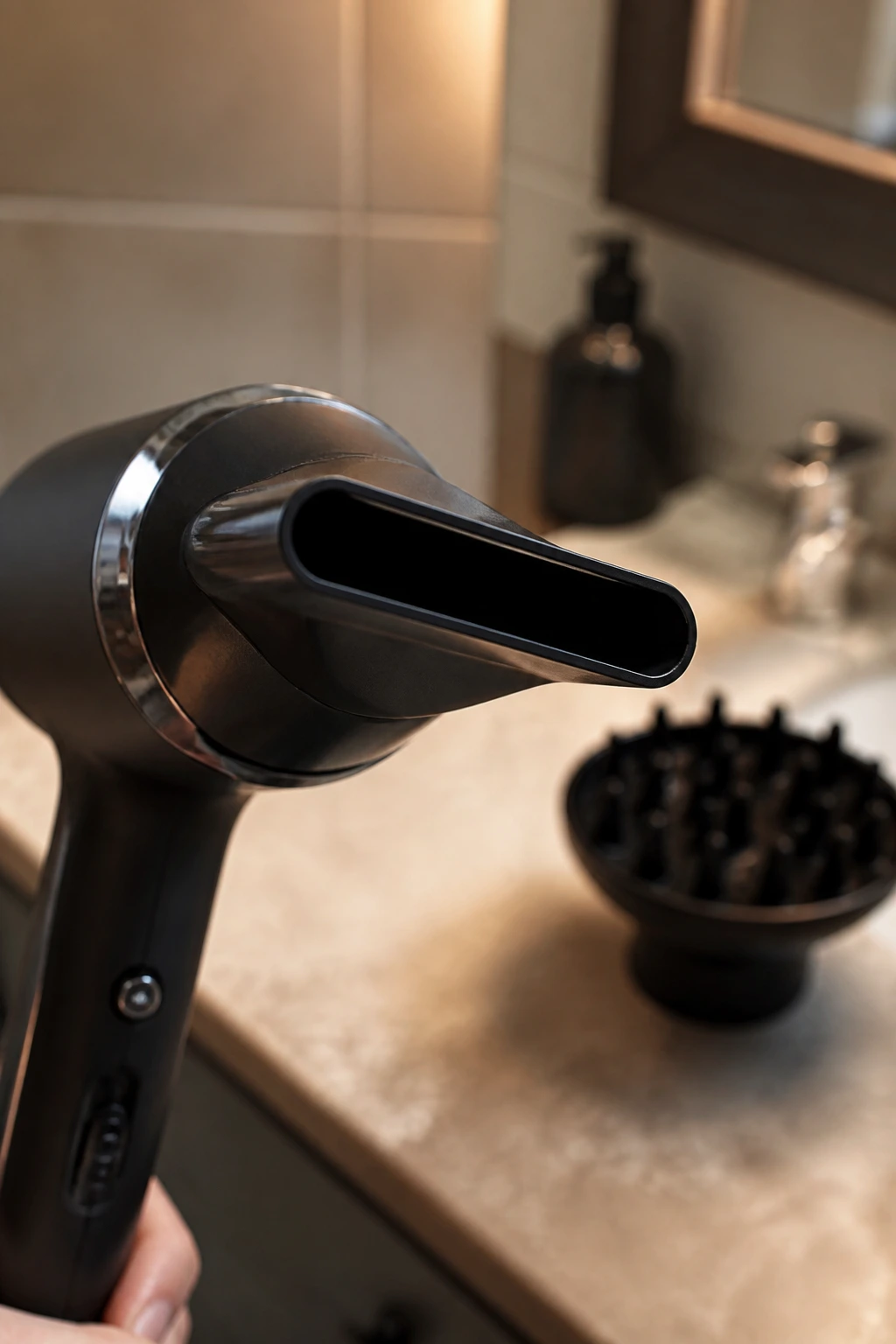
You do not need a suitcase full of styling gear to make shoulder-length layers look good. You do need a few reliable tools, and the wrong ones show fast at this length.
- A blow dryer with a nozzle: The nozzle directs air so the layers don’t get blown into frizz before they’re dry.
- A 1.5- to 2-inch round brush: This size gives enough bend for the ends without making the cut curl too tightly.
- A wide-tooth comb: Useful for detangling wavy or curly layered hair without wrecking the shape.
- A diffuser: Non-negotiable for curls or strong waves if you want the layers to stay defined.
- A flat iron or curling wand: Optional, but handy when you want to refine the ends or add bend to the front pieces.
- Light mousse or volumizing spray: Good for fine hair or cuts that need lift at the crown.
- Leave-in cream or curl balm: Helps air-dried layers clump together instead of puffing apart.
- Texturizing spray: Best for shaggy, choppy, or wolf-light cuts where separation matters.
The most useful thing on that list is the one people skip first: the nozzle. Hair at shoulder length needs direction more than volume.
What to Ask for at the Salon Chair
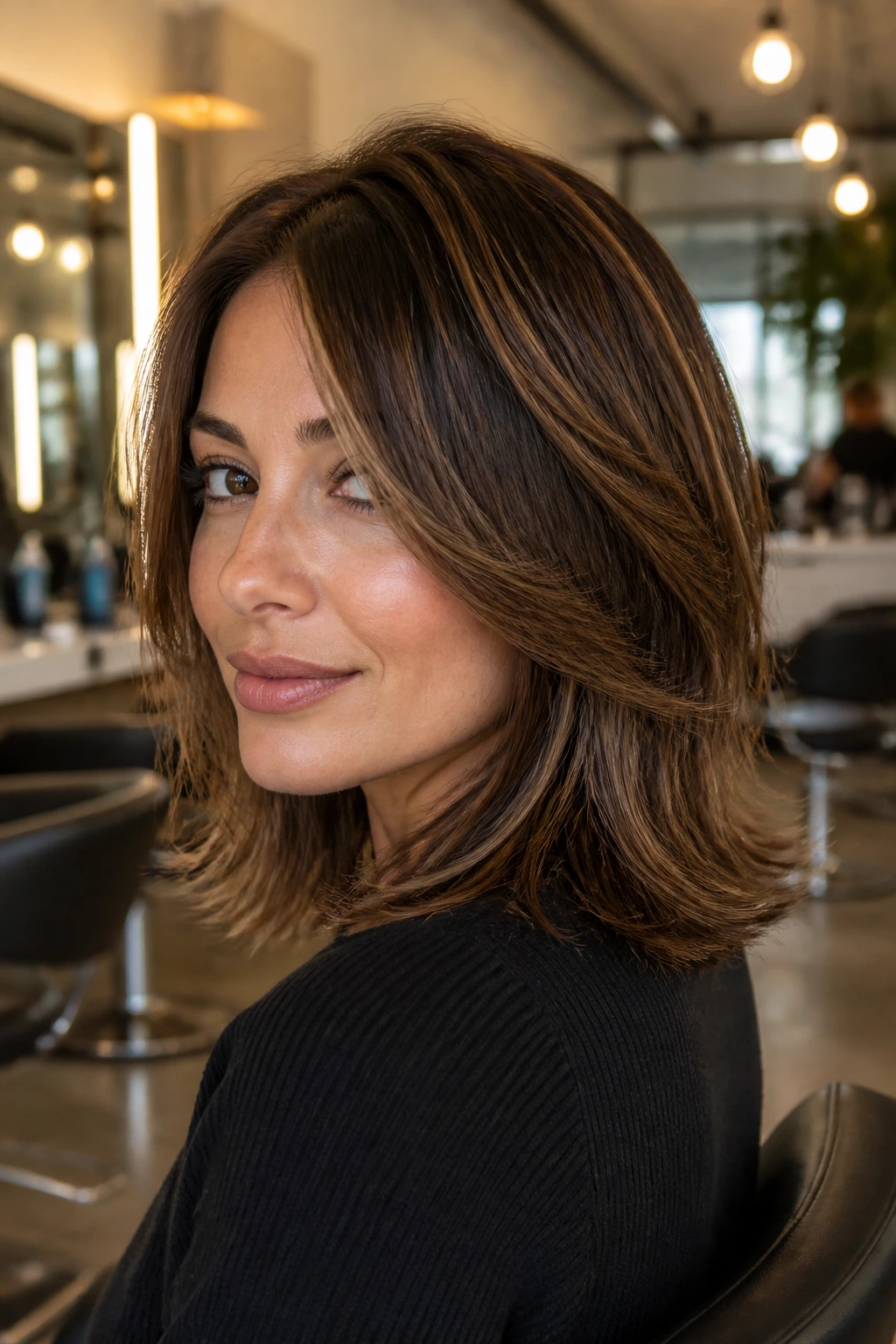
The haircut lives or dies in the consultation. Bring photos, sure, but also say what the hair does at home. Does it puff at the sides? Go flat at the crown? Curl only underneath? Those details matter more than a pretty picture with studio lights and three rounds of styling.
Ask where the shortest layers will start. That single question can prevent a lot of regret. If you want softness, the face-framing pieces should begin lower. If you want lift, you need a little more elevation near the crown. If you want density, the layers should stay long and blended.
For curly hair, ask whether the cut will be shaped dry or with the curl pattern in mind. For thick hair, ask how much internal weight removal is planned. For fine hair, ask how the stylist will protect fullness at the ends.
One more thing. Ask how the cut will grow out. Good shoulder-length layered haircuts look thoughtful not only on day one, but two months later when the salon visit is already fading from memory.
How to Wear Shoulder-Length Layers Day to Day
Smooth and polished: Blow-dry with a round brush, then finish with a tiny drop of serum on the ends. This makes feathered, angled, and blunt-with-layers cuts look deliberate and clean.
Air-dried and loose: Work in leave-in cream, scrunch the lengths, and leave the hair alone until it’s about 80 percent dry. Air-dry layers and beachy cuts like this best when you resist touching them every ten minutes.
Lifted at the roots: Flip the part, mist the crown with root spray, and dry the top section first. Deep side-part layers and fine-hair cuts need this more than they need extra length off the ends.
Pinned back or clipped up: Face-framing layers and curtain pieces soften a half-up style without needing much heat. This is the easiest way to make a casual cut look considered.
Hair at this length often looks best when it’s not overdone. That’s the trick most people miss.
Styling Tweaks and Small Upgrades
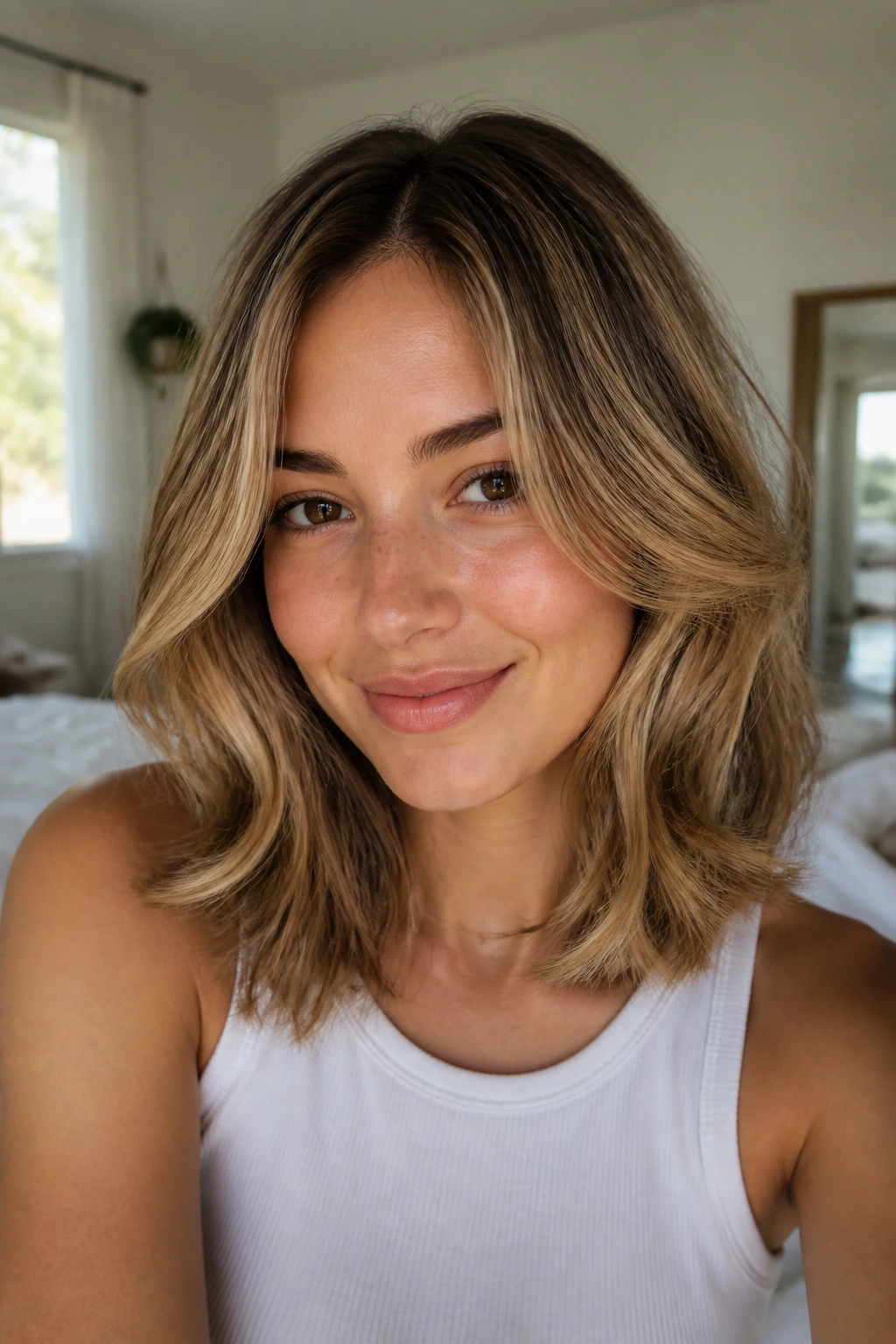
Texture boost: A little texture spray at the mid-lengths can make choppy layers and shags read more clearly, especially on hair that dries too smooth and slips flat by noon.
Color placement: Balayage looks strongest when it follows the layer pattern. Ask for brightness around the face and through the upper lengths if you want the haircut to show movement, not just color.
Bang pairing: Curtain bangs soften center parts. A blunt fringe changes the whole mood. Either can work, but they send different messages, so don’t let the choice happen by accident.
Part changes: A side part can wake up fine or flat hair fast. A center part tends to show off symmetrical face-framing layers. Try both before blaming the cut.
Finish choice: Shine cream gives a smoother, dressier result. Matte spray or dry texture spray pushes the haircut toward shag or wolf energy. Same cut. Different attitude.
Keeping the Shape Between Salon Visits
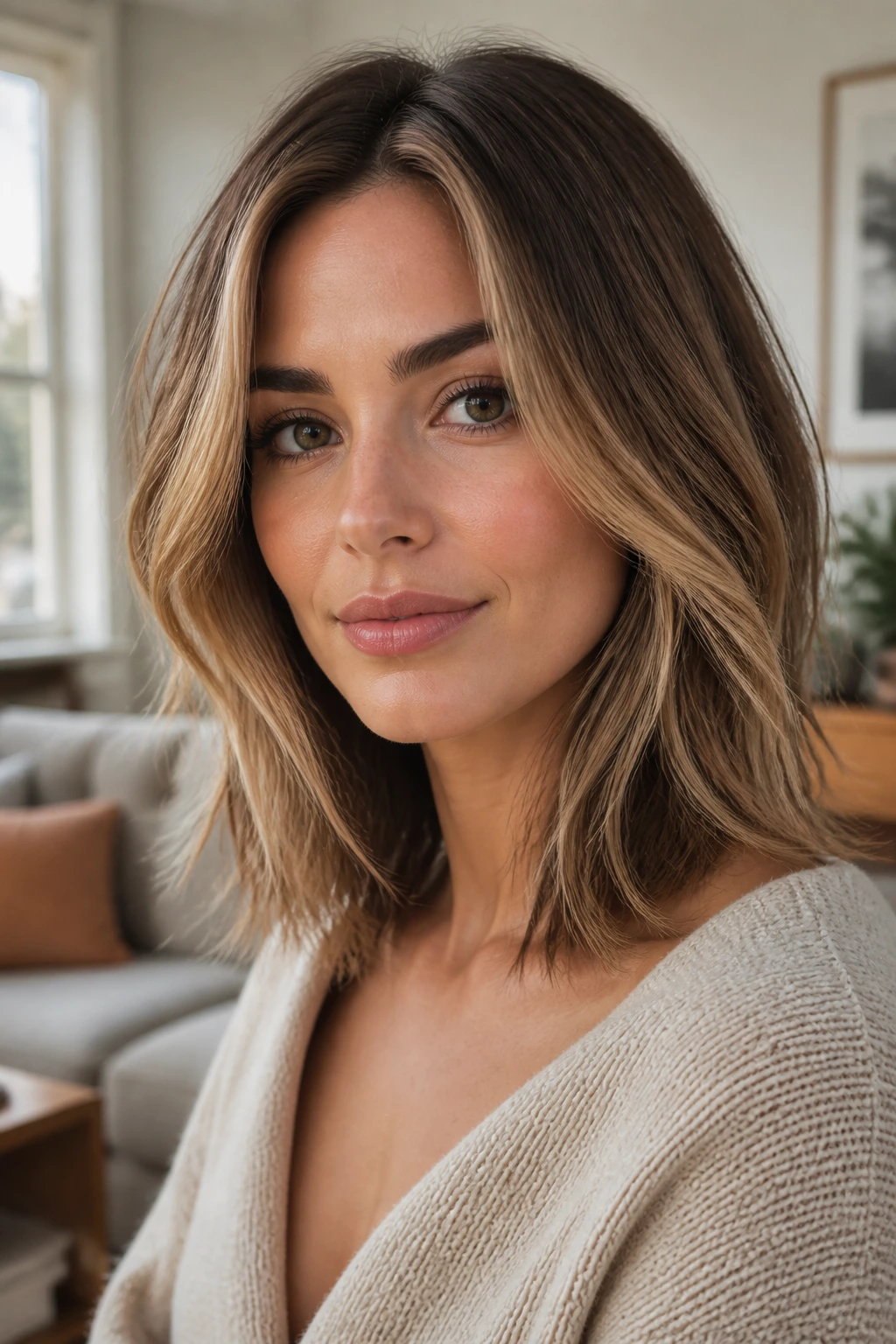
Shoulder-length layers need a trim more often than people think, mostly because the shape shows when it starts to drift. A good rule is every 8 to 10 weeks for sharper cuts, and 10 to 12 weeks for softer, longer-layered shapes. Curly hair can sometimes stretch a little longer, but not forever.
Sleep habits matter too. A silk or satin pillowcase cuts down on friction, which helps the shorter pieces around the face stay smoother. If the cut tends to flip weirdly in the morning, clip the front section with a loose roller or pin it across the crown for ten minutes while you get ready.
Dry shampoo helps at the root, but too much of it can make the layers look dusty. Use a light dusting at the scalp, not a cloud through the mid-lengths. That mistake is everywhere, and it ages the cut in a day.
If the ends start to look blunt or the layers stop moving, don’t wait for the shape to collapse. A tiny trim often fixes what a dozen styling products cannot.
Variations and Adaptations to Try
The Curly-First Version: Keep the layers longer and let the stylist cut with the curl pattern in mind. This version is for curls that need shape, not shrinkage, and it usually looks best with a diffuser and a leave-in balm.
The Fine-Hair Lift Edit: Ask for long, soft layers and preserve a strong perimeter. This version gives the illusion of thickness without exposing too much scalp through the ends.
The Thick-Hair Weight-Release Cut: Remove bulk from the inside, not the outer line. This one keeps the hair from puffing around the shoulders while still leaving the surface full.
The Air-Dry Shape: Build the cut around your natural bend and avoid too much crown layering. It’s the best choice if you live in leave-in cream and don’t want to own a round brush.
The Color-Forward Version: Add balayage, money pieces, or soft ribbons around the front so the layers have more visual contrast. The haircut looks richer when the color follows the movement.
The Edge-Softened Shag: Take the shag or wolf cut ideas, then calm them down. You get texture and a little attitude without the aggressive silhouette.
Common Mistakes That Flatten the Cut
Starting the shortest layers too high: The haircut suddenly looks busy at the top and thin at the bottom. The fix is simple: keep the shortest face-framing pieces lower unless you actually want a shag.
Over-thinning thick hair: If the ends feel airy but the shape looks frizzy by midday, too much bulk was removed. Ask for internal weight removal next time, not a heavy razor session.
Letting fine hair get chopped too much: Short pieces can make fine hair look stringy. Long layers and a full perimeter usually work better.
Ignoring how the hair is worn most days: A cut designed for a center part can look off if you always wear a side part. The same goes for air-drying versus full blowouts. The cut should match the routine.
Skipping trims until the layers stop talking to each other: Once the shape loses its clean connection, styling turns into damage control. That’s a trim problem, not a product problem.
Frequently Asked Questions
Are shoulder-length layered haircuts good for fine hair?
Yes, if the layers stay long and the perimeter stays full. Fine hair usually looks best with movement around the crown and face, not with lots of short pieces removed from the ends.
Do layers make thick hair less bulky?
They can, but only if the stylist removes weight in the right places. Internal layers and careful texturizing usually work better than aggressive thinning, which can make thick hair feel frizzy.
What’s the difference between a shag and a layered lob?
A shag has more separation, more crown lift, and a looser outline. A layered lob keeps more structure and usually looks cleaner around the perimeter. One feels undone; the other feels shaped.
How often should I trim shoulder-length layers?
Most people do well with trims every 8 to 10 weeks. If the cut is soft and long, you may push that a little farther, but once the layers stop blending, the style starts looking tired.
Can curly hair wear shoulder-length layers without turning into a triangle?
Yes, but the layers need to respect the curl pattern and the curl’s shrinkage. A dry cut or curl-aware shaping usually gives the best result.
Should I ask for face-framing pieces?
If you want the haircut to soften your features, yes. They make a big difference at this length, especially with center parts, glasses, or strong jawlines.
Can I still put shoulder-length layered hair into a ponytail?
Usually, yes, though some of the shorter layers will fall out around the face. That’s often the point. If you wear your hair up a lot, ask for longer face-framing pieces so the style can still gather neatly.
What if the layers look too choppy after the cut?
Give it one wash and one proper blow-dry before panicking. If it still feels broken up, the layers may have been cut too high or too short for your texture, and a small refining trim is usually the fix.
Keeping the Shape Sharp
The nicest thing about shoulder-length layered haircuts is that they don’t need to shout. When they’re cut well, the hair just falls better. The face looks a little more open, the ends move instead of hanging like a weight, and the whole head gains a shape you can actually work with.
That’s what makes this length such a reliable favorite. It can be soft, edgy, polished, airy, or curly, but it still has to be cut with intention. When the layers match the texture and the styling routine, the haircut does half the job before you pick up a brush.
And that’s the version worth asking for. A cut with room to move, room to grow, and enough shape left in it that you don’t have to start from scratch every morning.
