



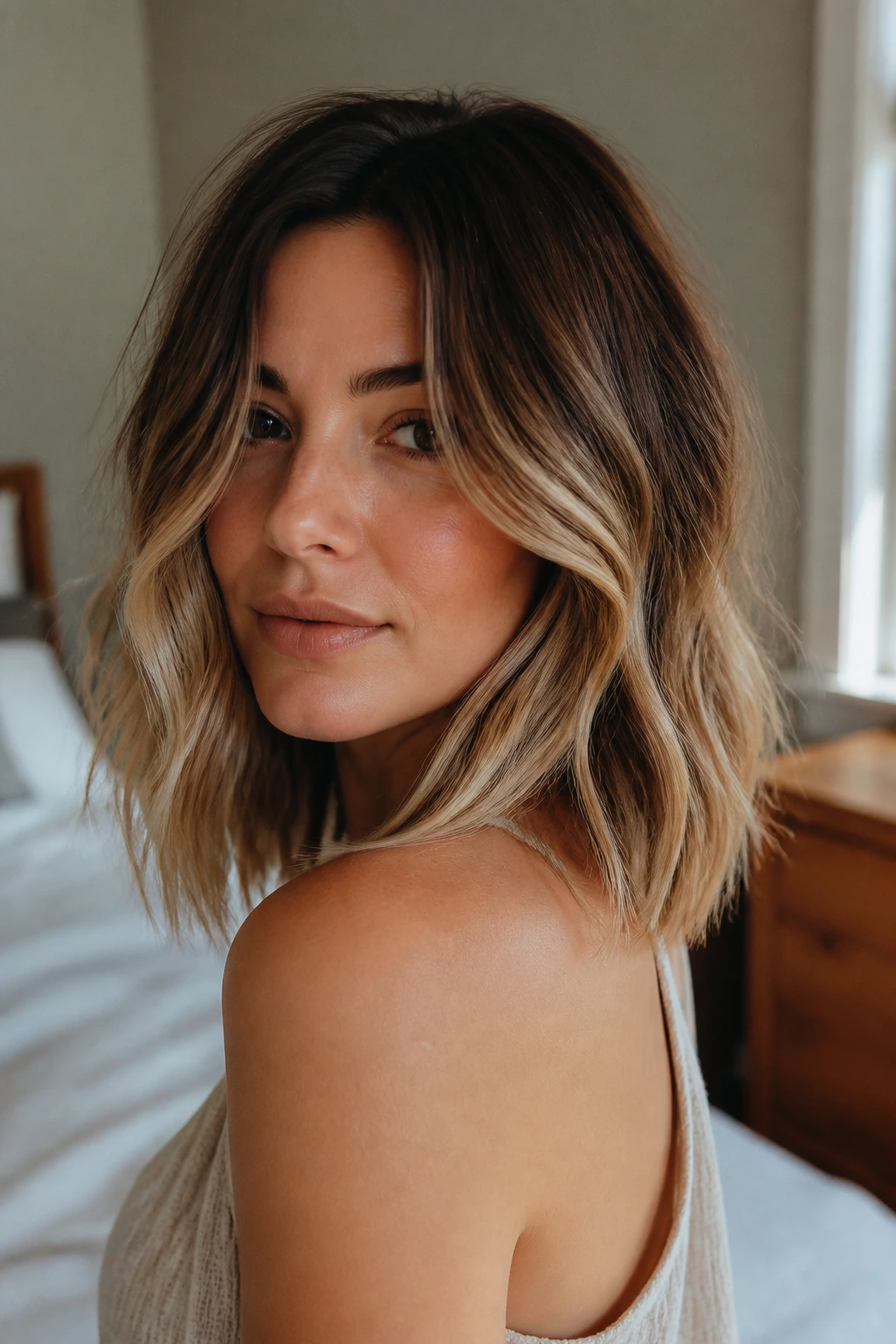
Shoulder-length hair is the sweet spot for a soft ombre. There’s enough length for the fade to breathe, but not so much that the lighter ends get stringy or drag the whole shape down.
That’s why a shoulder length hair ombre can look polished in a way longer gradients sometimes don’t. On a lob, the lighter pieces sit right where the eye wants movement: around the jaw, the collarbone, and the ends that flick out when you turn your head. A good fade on this cut doesn’t scream for attention. It moves.
The tricky part is restraint. Too high, and the color starts looking stripey. Too light, and the ends can go hollow, especially if your hair is fine or naturally cool-toned. The best versions keep the root area believable, let the midlengths do some of the work, and finish with a shade that feels like a natural step down from your base rather than a hard jump.
Why This Collection Feels Different
-
Built for shoulder-length hair: These fades are chosen for cuts that hit the shoulders or skim the collarbone, so the lighter color lands where the shape still has movement.
-
Soft, not stripy: Every idea leans on blended placement, glossed ends, or a root shadow so the color shift looks gradual instead of painted on.
-
Warm and cool options included: If caramel makes you happy, it’s here. If ash beige or smoky lilac is more your speed, that’s here too.
-
Easy to show a stylist: Most of these can be described with levels, tones, and placement points, which gets you farther than saying “just make it ombre.”
-
Works with everyday styling: These looks don’t rely on curling your hair into submission. Air-dried waves, a round brush, or a flat iron bend all help the fade show up.
-
Room to make it yours: A one-inch shift in where the lightest pieces start can change the whole mood of the color. On shoulder-length hair, that matters a lot.
1. Espresso to Caramel Melt
A dark espresso base that melts into caramel ends is one of those shoulder-length hair ombre ideas that never looks fussy. The brown stays rich near the roots, then loosens into warm ribbons through the midlengths before landing on ends that catch the light instead of shouting for it. It’s especially good on a lob with soft bends, because the movement keeps the gradient from feeling flat.
Why It Works
Caramel sits in that sweet spot between golden and brown, so it doesn’t turn brassy the way some blondes do on darker hair. Ask for the fade to begin around the cheekbone or just below the jaw, not right at the roots.
- Best base: Level 3 to 5 brunette.
- Best finish: A beige-caramel gloss, not orange-gold.
- Best styling: Loose 1-inch waves or a bent blowout.
- Maintenance note: A gloss every 6 to 8 weeks keeps the caramel from going muddy.
Pro tip: Keep the lightest pieces around the front a touch brighter than the back. That tiny difference makes the whole cut look more alive.
2. Mocha Roots with Beige Ends
This one is quieter, and that’s the point. Mocha at the root fading into beige ends gives you a soft ombre that reads expensive without trying to be loud about it. On shoulder-length hair, the effect is clean and calm, especially if you usually wear your hair straight or tucked behind one ear.
The beige matters. Not blonde. Beige. Blonde can push the contrast too hard on a shorter cut, while beige keeps the edge soft and cool. If your hair pulls orange, this is the version to ask for because the finish tone keeps the whole thing from warming up too much.
You also get a nice visual trick here: the darker top half makes the lob look thicker near the scalp, while the lighter ends keep it from feeling heavy.
3. Chestnut to Honey Ribbon Fade
Can’t decide between brunette depth and blonde warmth? Chestnut to honey ribbons is the compromise that doesn’t feel like a compromise. The chestnut base keeps the color grounded, then the honey picks up just enough brightness through the lower half to read sunlit rather than bleached.
What to Tell Your Colorist
Ask for fine ribbon-like lightening, not one broad swath of blonde. That keeps the ombre soft on shoulder-length hair, where big color blocks can look abrupt. The brightest pieces should sit around the ends and a few face-framing strands, with the nape left a touch deeper.
A shoulder-length cut loves this because the hair swings at the collarbone. The honey catches movement without looking overdone. If you wear your hair in waves, the ribbons will peek through; if you wear it sleek, the color reads smoother and more refined.
4. Chocolate Cherry Ombre
Chocolate cherry has a moody side that looks gorgeous on a lob. The base stays deep and brown, then the midlengths pick up a red-brown tint before the ends land in a soft cherry tone that flashes more in daylight than under indoor bulbs. It’s the kind of color that changes personality depending on the light, which is half the fun.
This is a good choice if you want warmth but don’t want caramel again. The red note keeps the fade from feeling ordinary, and on shoulder-length hair it stays contained enough to look intentional instead of dramatic for the sake of it. A slight curl at the ends helps the cherry pieces show up, but even straight hair gets a lot of dimension from the tone shift.
5. Ash Brown to Mushroom Blonde
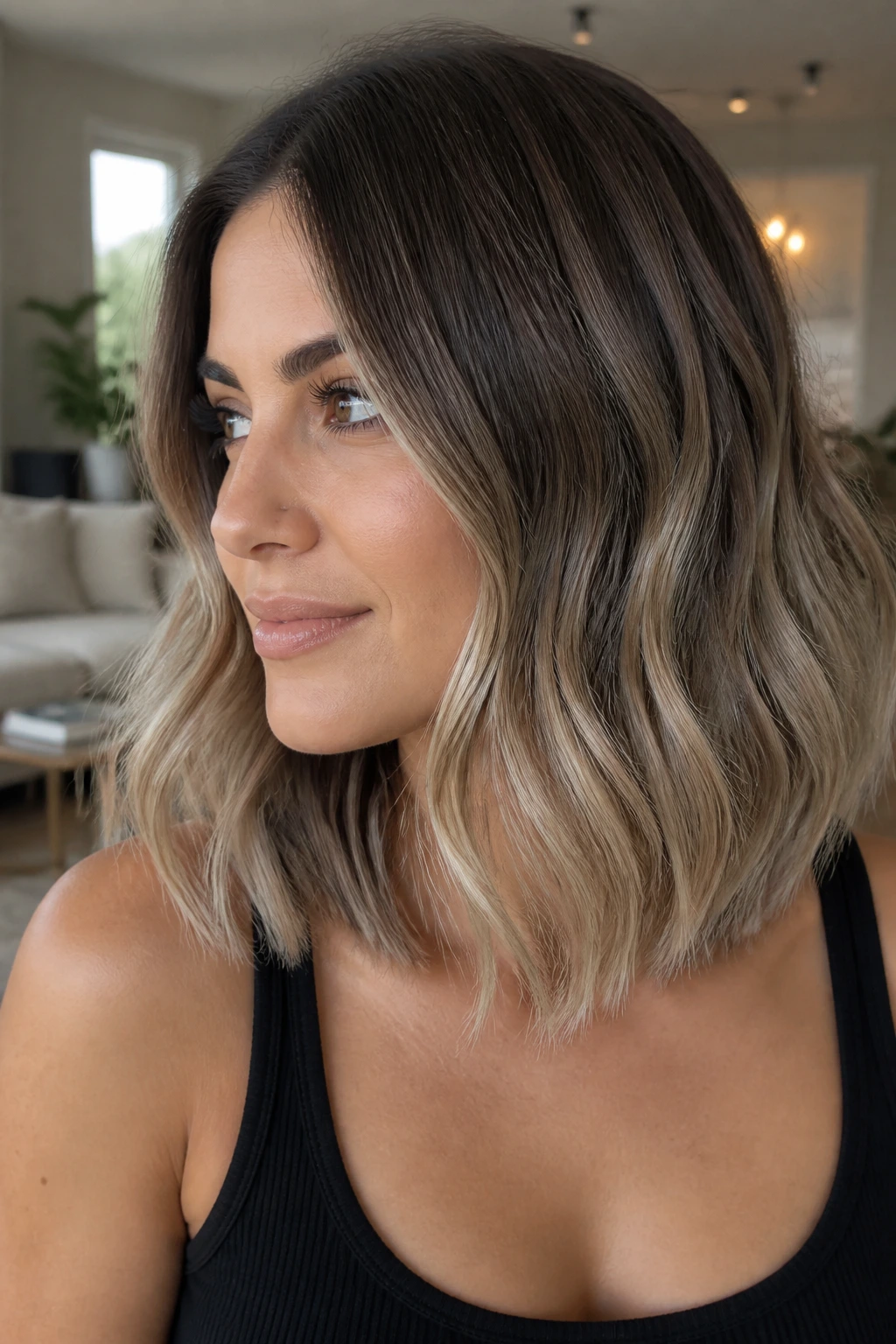
Want ombre that stays cool instead of going gold? Ash brown fading into mushroom blonde is the smart move. It’s earthy, muted, and a little smoky at the ends, which makes it a strong fit for shoulder-length hair if you like a cleaner, more understated finish.
How It Reads on the Hair
The ash brown root keeps the top from looking flat, while mushroom blonde gives the ends a soft taupe cast. That taupe is the whole trick. It stops the lighter part from reading bright yellow, which can feel too stark on a shorter cut.
- Best for: Cool or neutral undertones in the hair.
- Best cut pairing: Lob with a blunt edge or soft layers.
- Best styling product: A light smoothing cream to keep the tone looking sleek.
- Watch out for: Over-toning. If it goes too gray, the whole thing can look dull.
Quick take: This is one of the best shoulder-length ombre ideas if you want dimension without warmth.
6. Bronde S-Curve Fade
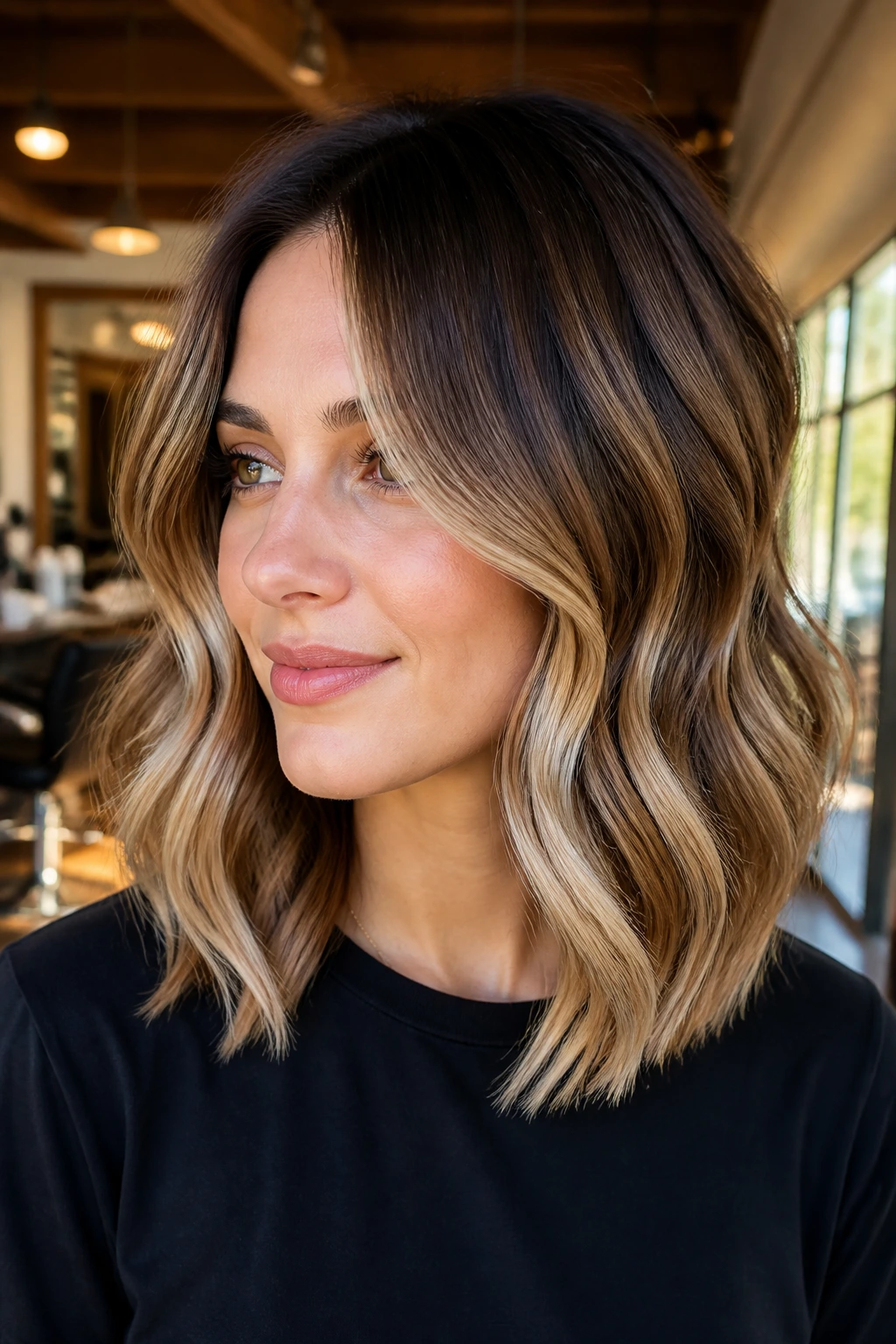
Bronde is the bridge between brunette and blonde, but the S-curve placement is what makes it feel modern on shoulder-length hair. Instead of lightening straight across, the color bends around the face and dips lower through the ends, which gives the gradient a soft, curved feel. It’s a small detail. Huge payoff.
Unlike a straight dip-dye, this version follows the haircut. That matters on a shoulder-length lob because the shape itself is already strong. The S-curve softens the edge and makes the transition look like it belongs to the cut, not pasted onto it. If you like movement but don’t want obvious streaks, this is the version to ask for.
7. Brunette to Copper Penny Ends
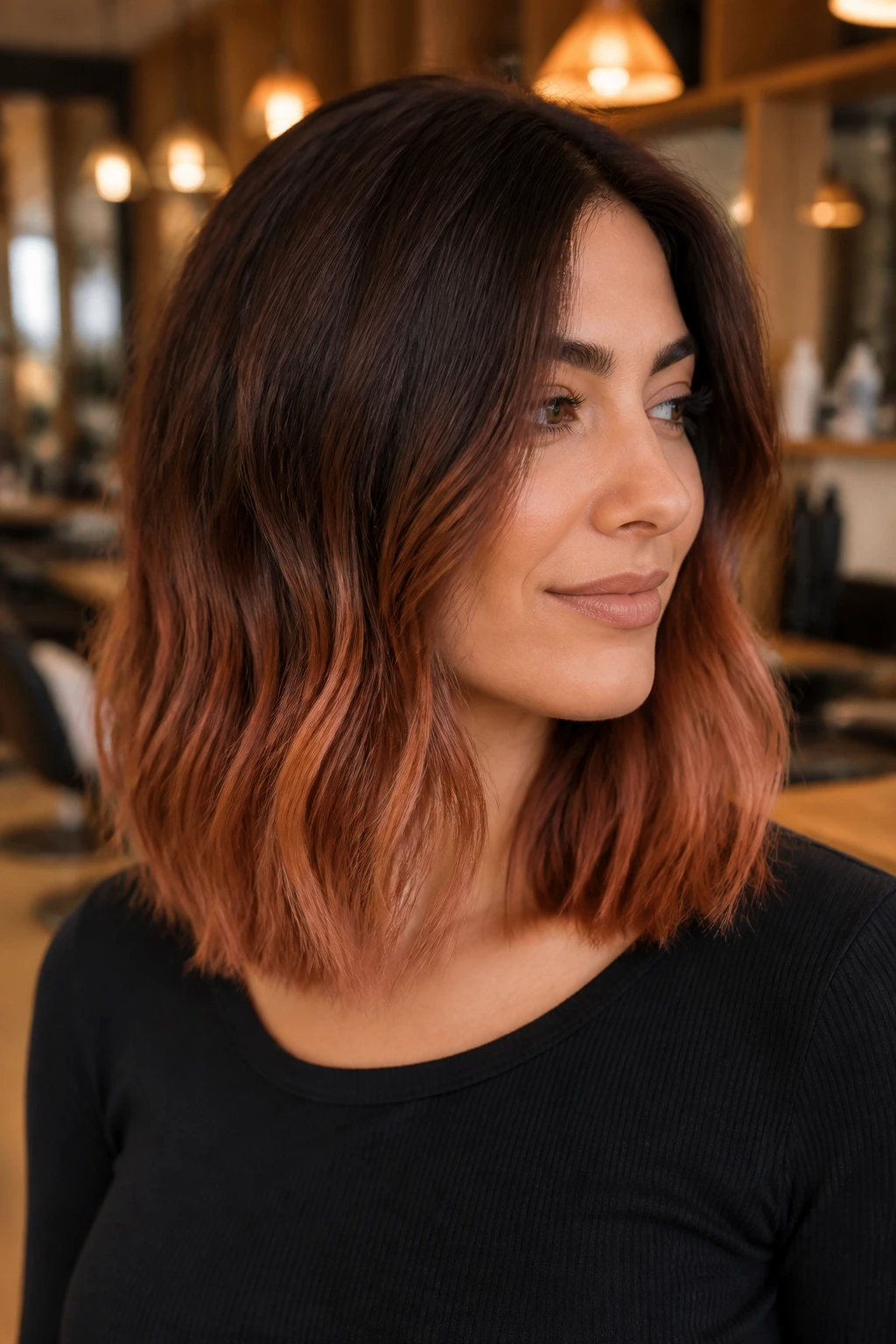
Copper penny ends give a brunette ombre a warm, glossy edge without turning the whole look red. The top stays deep brown, then the lower half warms into a penny-copper shade that looks especially good when hair swings at the shoulders. It’s bright enough to be noticed, but not so bright that it takes over the cut.
Why It Works on Shoulder-Length Hair
Copper can be a little much when it’s stretched across very long hair. On a lob, it stays compact and punchy. The fade feels deliberate because the color has less distance to travel.
- Best if you want: Warmth with a little spark.
- Best finish: Glossy, not matte.
- Best maintenance move: Copper fades faster than brown, so plan on gloss refreshes every 4 to 6 weeks.
- Best styling: A round-brush bend or soft curl at the ends.
A tiny warning: copper reads louder in daylight. If you want the color to stay soft, keep the lighter ends more penny than orange.
8. Smoky Root Shadow to Pearl Blonde
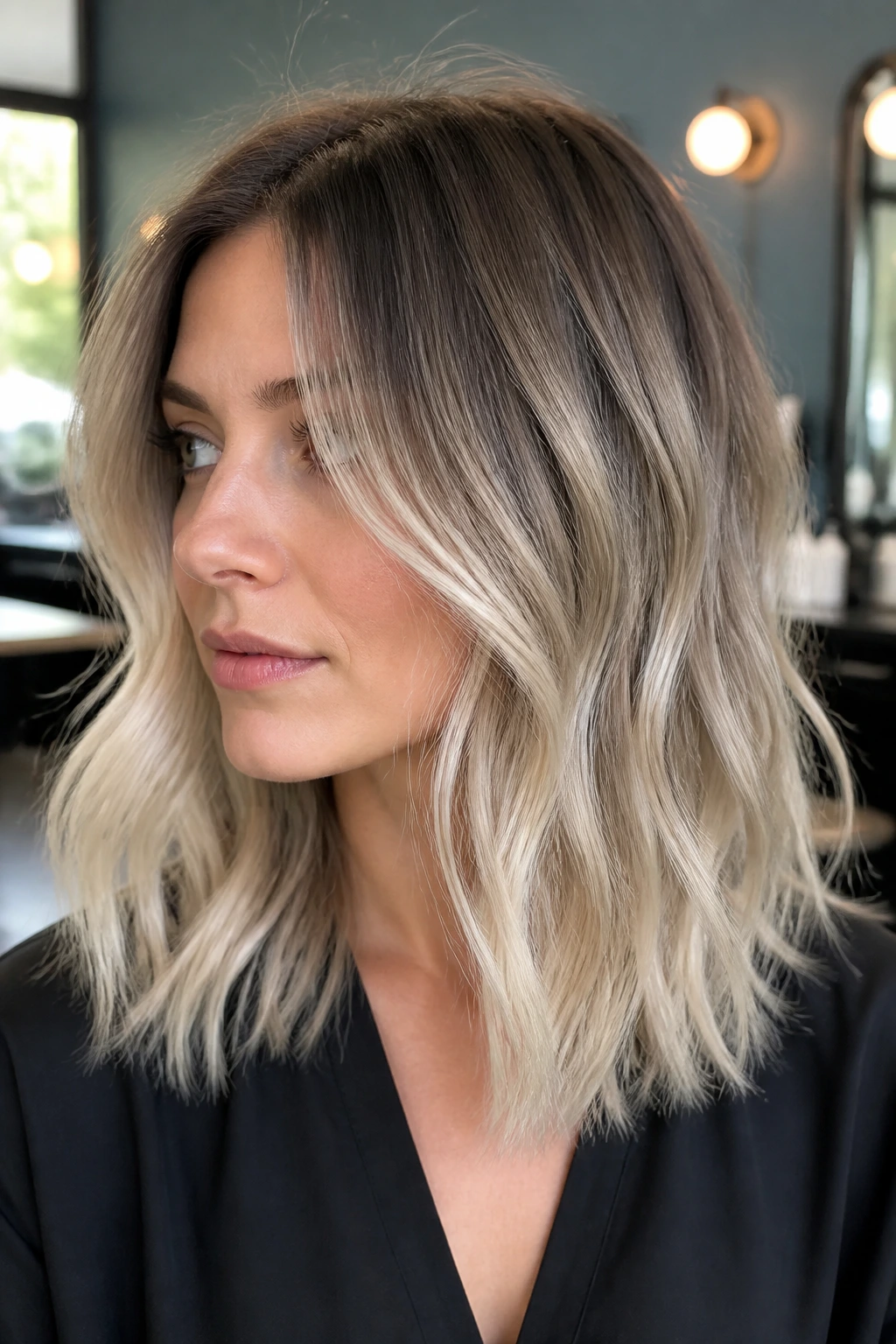
Pearl blonde on the ends is delicate, but it needs a smoky root shadow to keep it believable on shoulder-length hair. Without that shadow, the lightest pieces can look disconnected from the cut. With it, the fade feels airy and polished, almost like the color is floating upward from the ends.
This is one of the more maintenance-heavy shoulder-length hair ombre ideas, and I’d only recommend it if you’re fine with toning and occasional refreshes. Pearl blonde is gorgeous, though. It has that cool, milky brightness that looks especially nice against a blunt lob or a haircut with crisp ends.
If your hair is fine, the shadow root is your friend. It gives the illusion of density at the top and keeps the ends from looking too thin.
9. Sun-Kissed Honey Blonde Fade
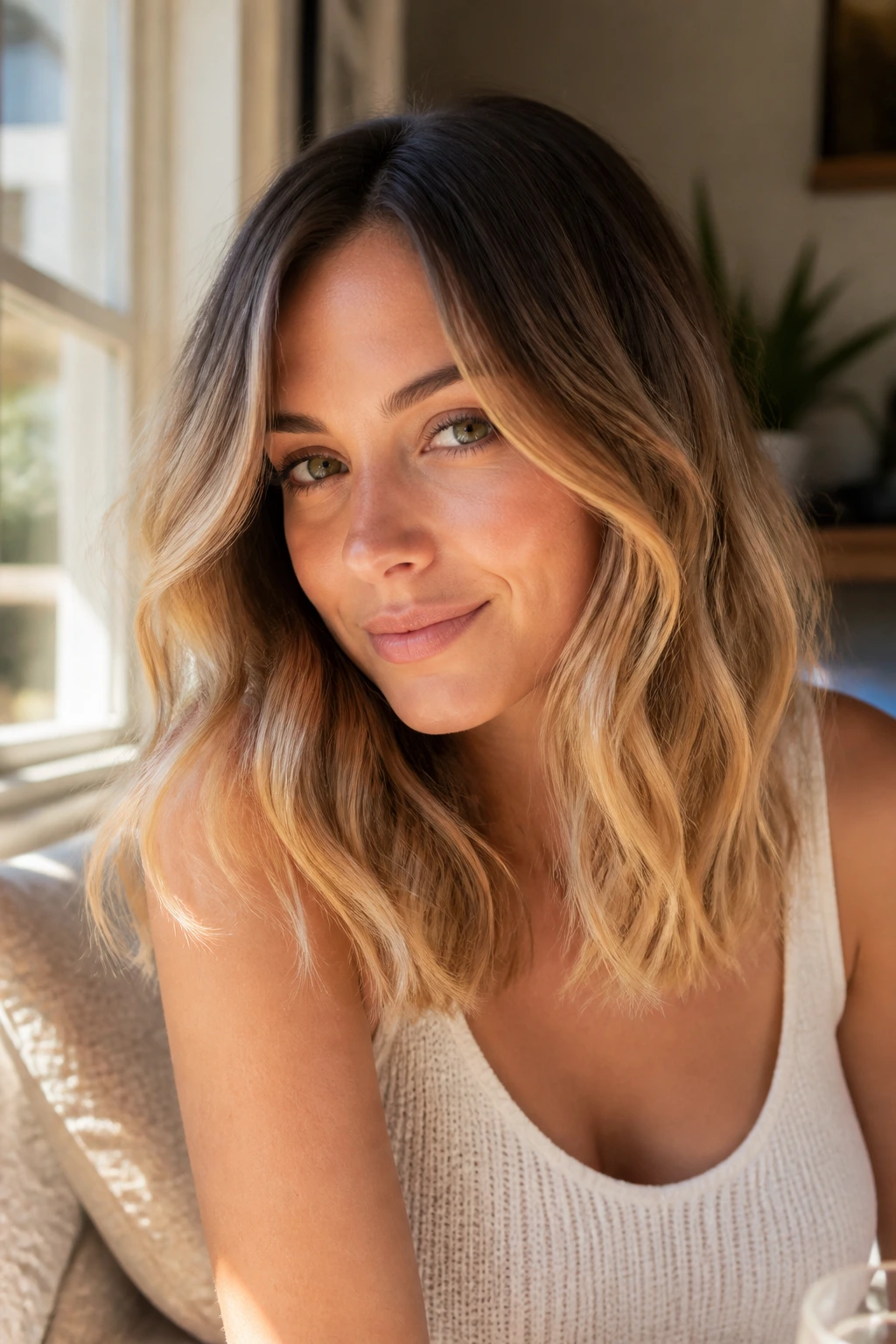
You know the look: soft brown at the root, then honey blonde pieces that look like they were lifted by sunlight, not bleach alone. That’s the whole point here. A sun-kissed honey fade should feel like your hair spent time near a bright window, not like it sat under foils for hours.
What Makes It Easy to Wear
This version works because the contrast stays gentle. The honey is warm enough to lift the face, but not so pale that it jumps off a shoulder-length cut. It plays well with loose waves, especially if the ends are a little undone instead of blown into a perfect curl.
A middle part makes it feel modern. A side part gives the face-framing pieces more impact. Either way, the fade should start around the upper midlengths, not at the scalp. That’s what keeps it from looking like grown-out highlights instead of intentional ombre.
10. Black Velvet to Toffee Ombre
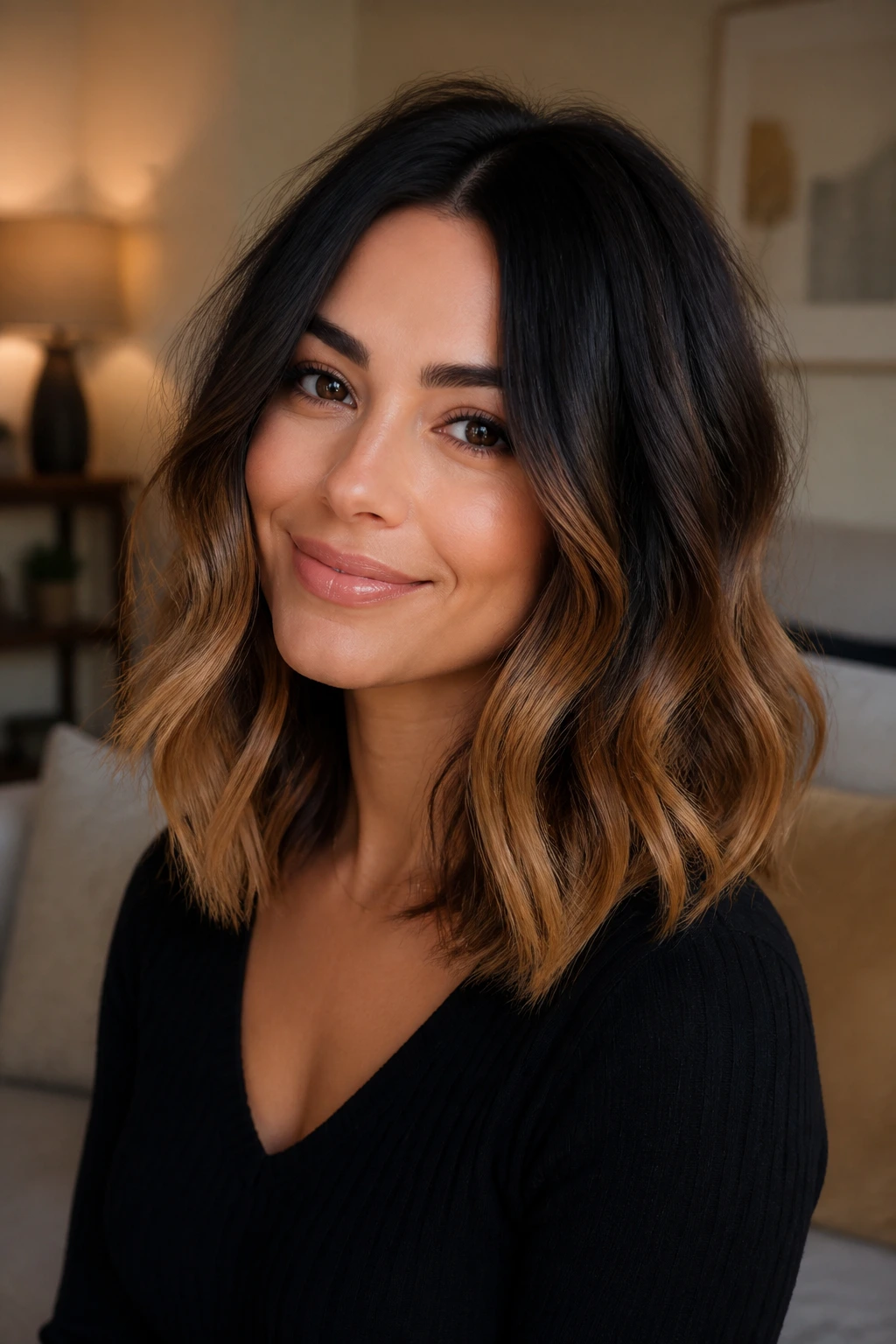
Black velvet roots fading into toffee ends is the dramatic brunette version that still knows how to stay soft. The darkest color stays near the crown and upper lengths, then the toffee emerges below the shoulders, where the lighter pieces can breathe. The contrast is real, but because the finish stays warm and brown-based, it doesn’t harden the haircut.
This is a good choice if you have very dark hair and want change without going blond. On shoulder-length hair, the toffee lives just long enough to show movement, which keeps the color from looking heavy. I like this version on a blunt lob with a slight bend at the ends. It gives the fade a clean line without losing the softness.
11. Auburn to Cinnamon Spice Blend
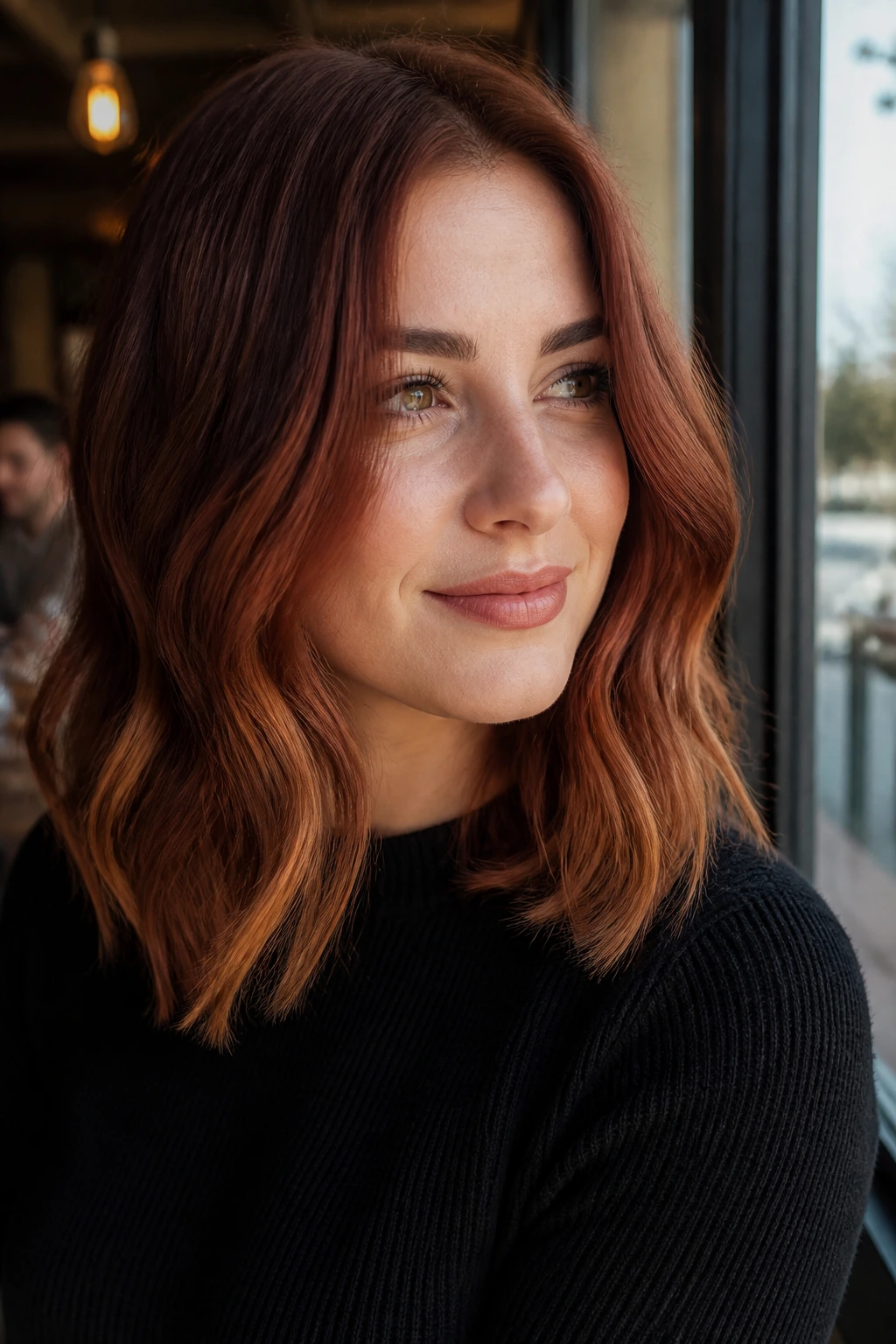
Auburn sliding into cinnamon spice is warm, rich, and a little old-school in the best way. There’s a softness to it that red shades often miss, because the cinnamon end tone keeps the color from becoming too vivid or too flat. Shoulder-length hair gives that blend enough space to show off, especially if your cut has layers.
What to Ask For
Ask for a translucent red-brown overlay on the top and a lighter cinnamon glaze through the ends. That keeps the shift soft instead of blocky. If the colorist starts with a strong copper or bright red base, the fade can turn loud fast.
This one looks best when the hair has some bend in it. Straight hair shows the tone change in a smooth, velvet way. Waves make the cinnamon flicker.
12. Rose Brown to Dusty Rose Ends
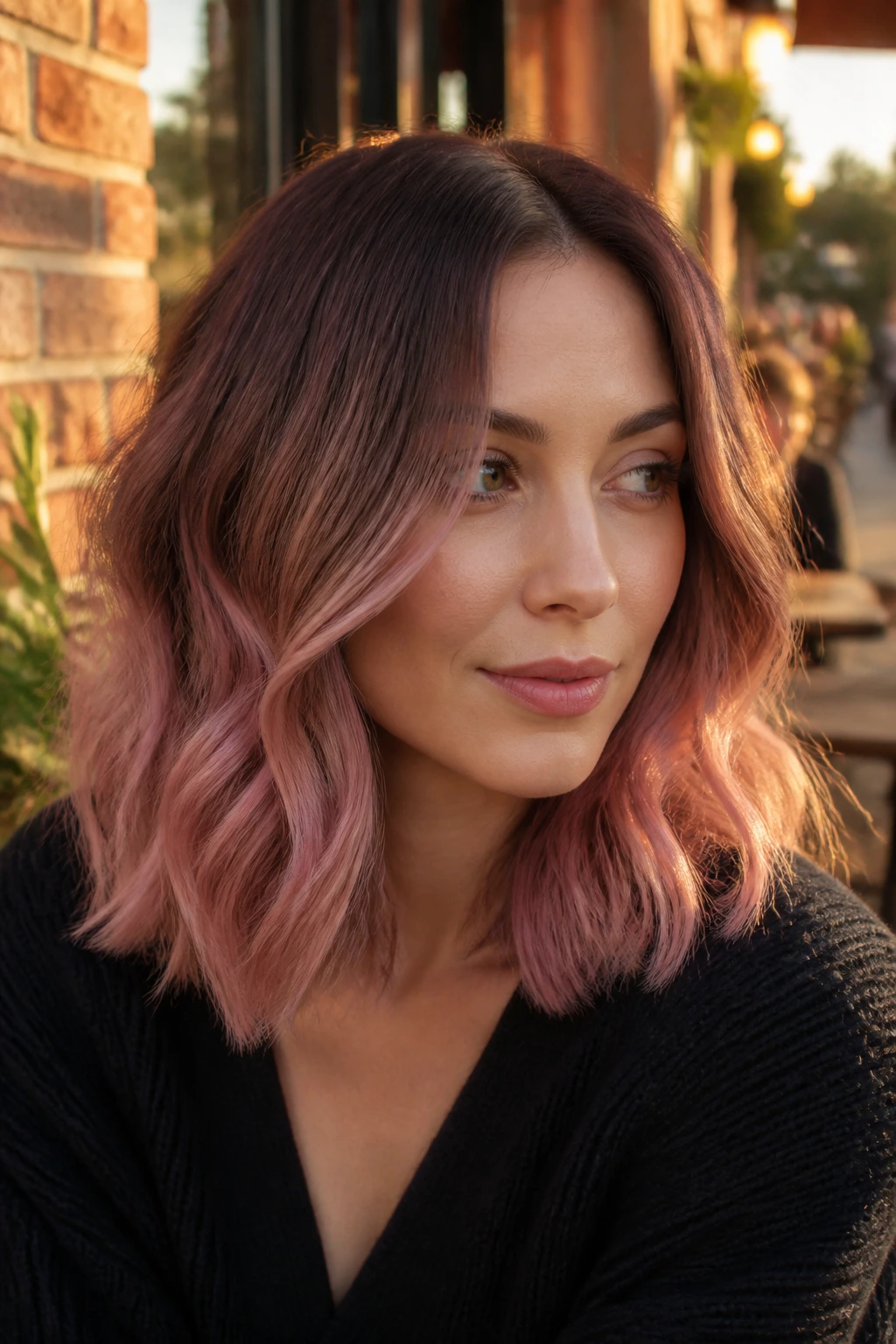
Rose brown is one of those shades that sneaks up on people. It looks like brunette at first, then you notice the muted pink-brown note, then the dusty rose ends, and suddenly the whole cut feels more interesting. On shoulder-length hair, the shorter length keeps the fashion tone from feeling sugary.
The reason this ombre works is that the pink stays muted. Dusty rose is not bubblegum. It sits lower, softer, almost dusty in the light, which helps the fade stay grown-up. If you want color without a hard fashion statement, this is a good lane.
A light wave helps the rose ends separate a little. Too much curl can make the pink look busy, so think soft bends, not barrel-roll ringlets.
13. Cocoa to Champagne Blonde
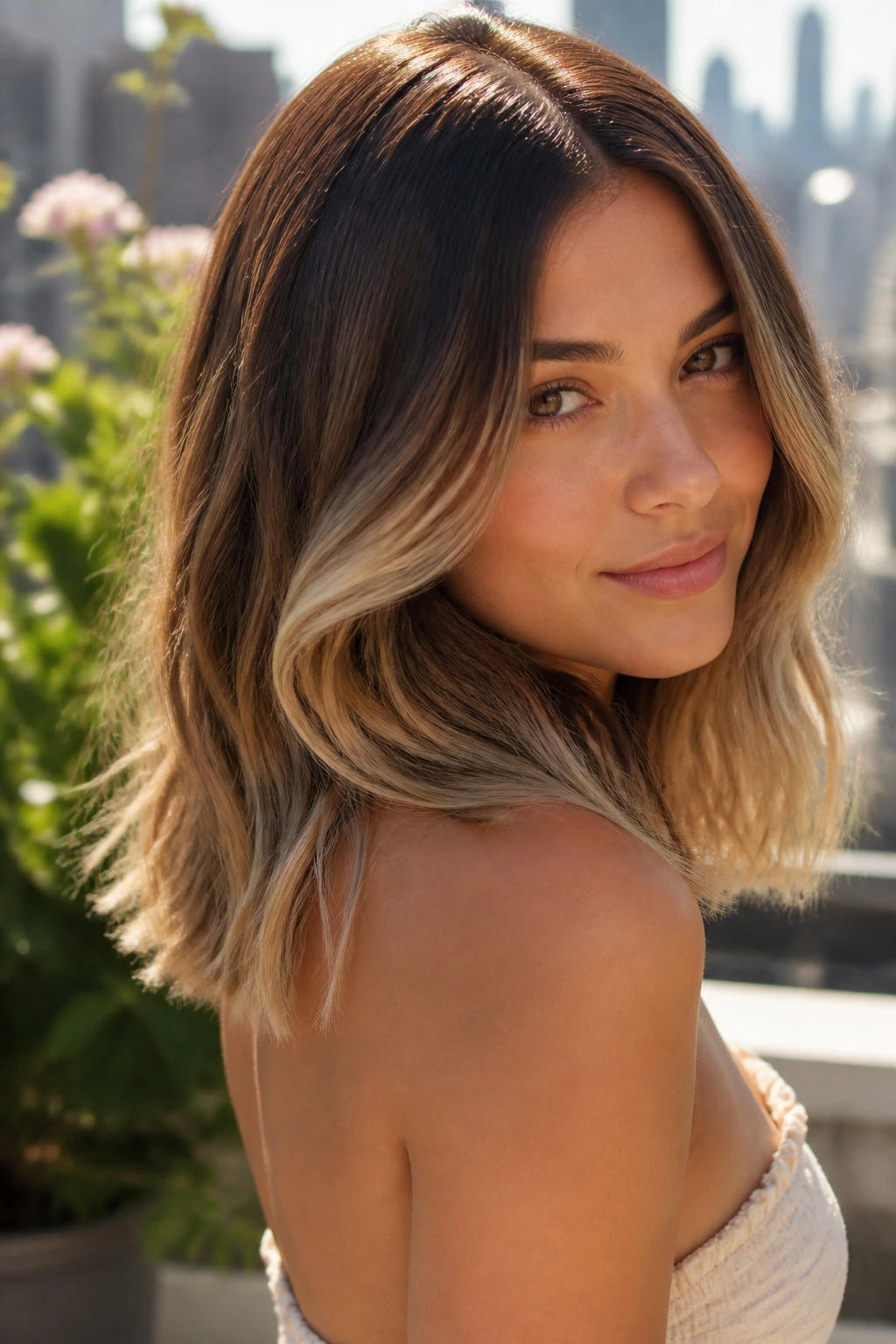
Cocoa to champagne blonde is the polished version of brunette-to-blonde ombre. The cocoa base is deep and smooth, then the ends lighten into champagne, which has a pale beige warmth instead of a loud yellow note. It’s one of the best shoulder-length hair ombre ideas if you want brightness but hate brass.
Why It Feels Balanced
Champagne blonde gives you lift near the collarbone without making the haircut look top-heavy. That matters on shoulder-length hair, where too much pale color can start to overwhelm the shape.
- Best cut: Layered lob or soft shoulder-length cut.
- Best tone: Beige-champagne, not icy silver.
- Best upkeep: Purple shampoo only when the ends start to yellow; overuse can make champagne look chalky.
- Best styling: Loose blowout or soft horizontal wave.
My take: If you want one bright ombre that still feels restrained, this is the one I’d pick.
14. Warm Brunette with Face-Framing Buttercream
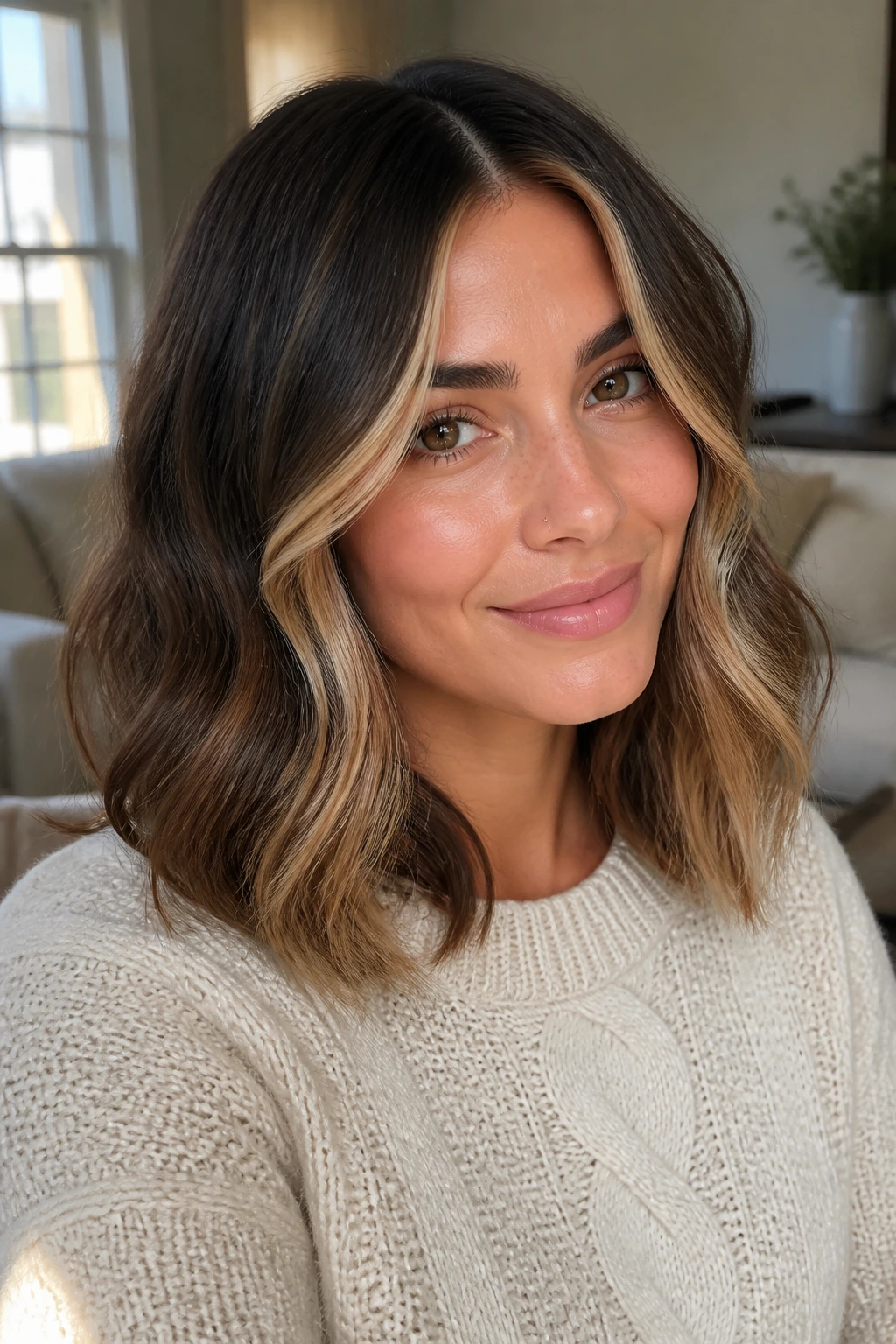
This is not the kind of ombre that lights up the whole head, and that’s why it works so well. The brunette base stays warm and dimensional, while the front pieces and ends pick up buttercream brightness. On shoulder-length hair, that face-framing placement does a lot of heavy lifting because the lighter pieces sit right where the eye lands first.
The best part is how easy this is to wear. You can keep the back deeper and just let the front move. It’s a smart choice if you want a softer change without committing to a full all-over lightened look. Ask for the buttercream to start near the cheekbone and melt downward, not stop in a hard stripe near the jaw.
15. Strawberry Bronde
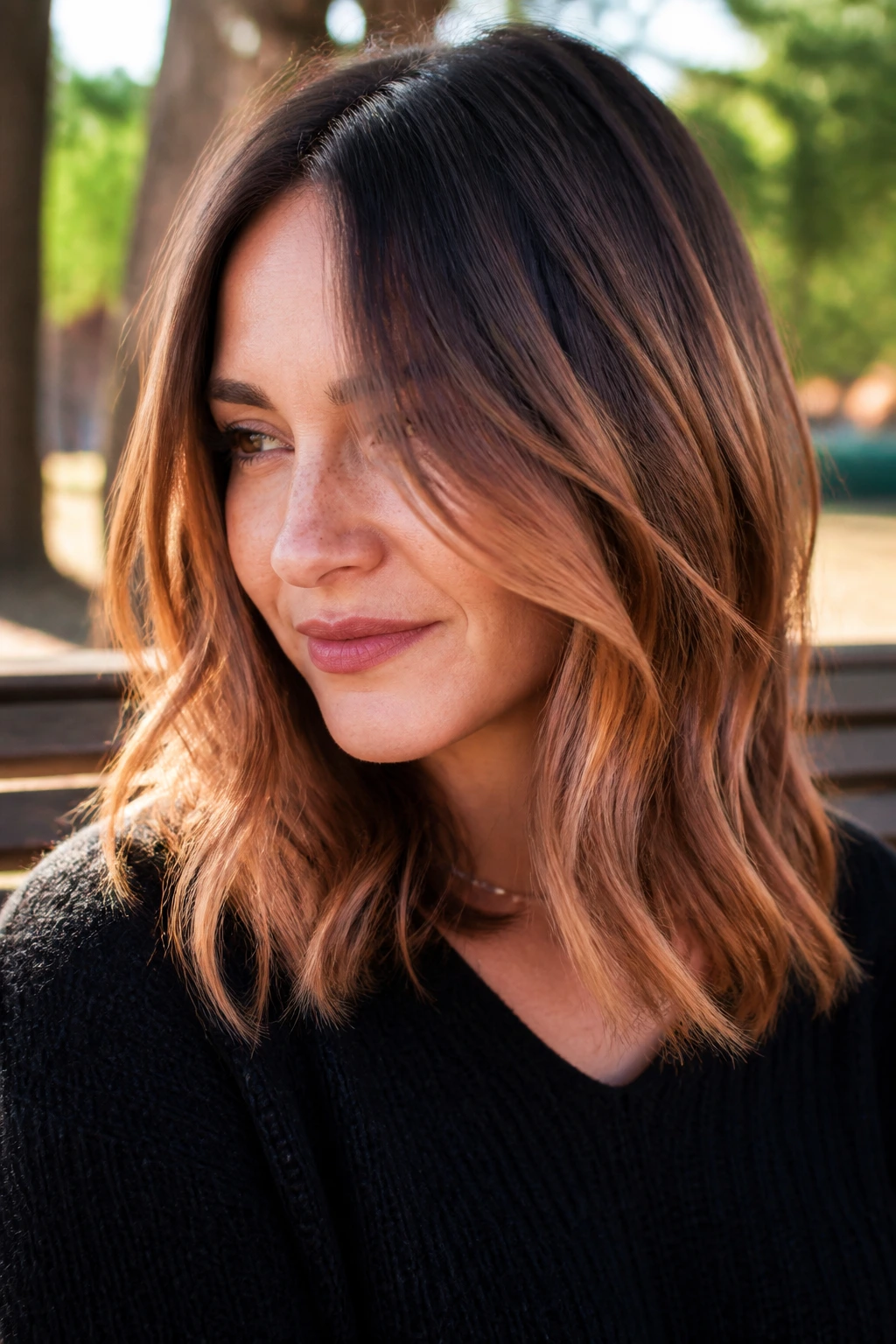
Strawberry bronde sits between brunette, blonde, and a whisper of peachy red. That sounds chaotic on paper. In real life, it’s one of the prettiest soft fade options for shoulder-length hair because the color never lands in one bucket. It shifts.
Why It Works
The strawberry note gives the blonde more warmth, and the brown keeps it from looking cotton-candy light. The result is soft and glowing, not sugary. This is the kind of ombre that looks best when the hair has a little movement and the ends are trimmed clean, because split ends can make the peach tones look dull.
If you wear a lot of gold jewelry or warm makeup, this shade tends to sit in the same family. If you keep your styling simple, even better. Let the color do the talking.
16. Burgundy to Plum Fade
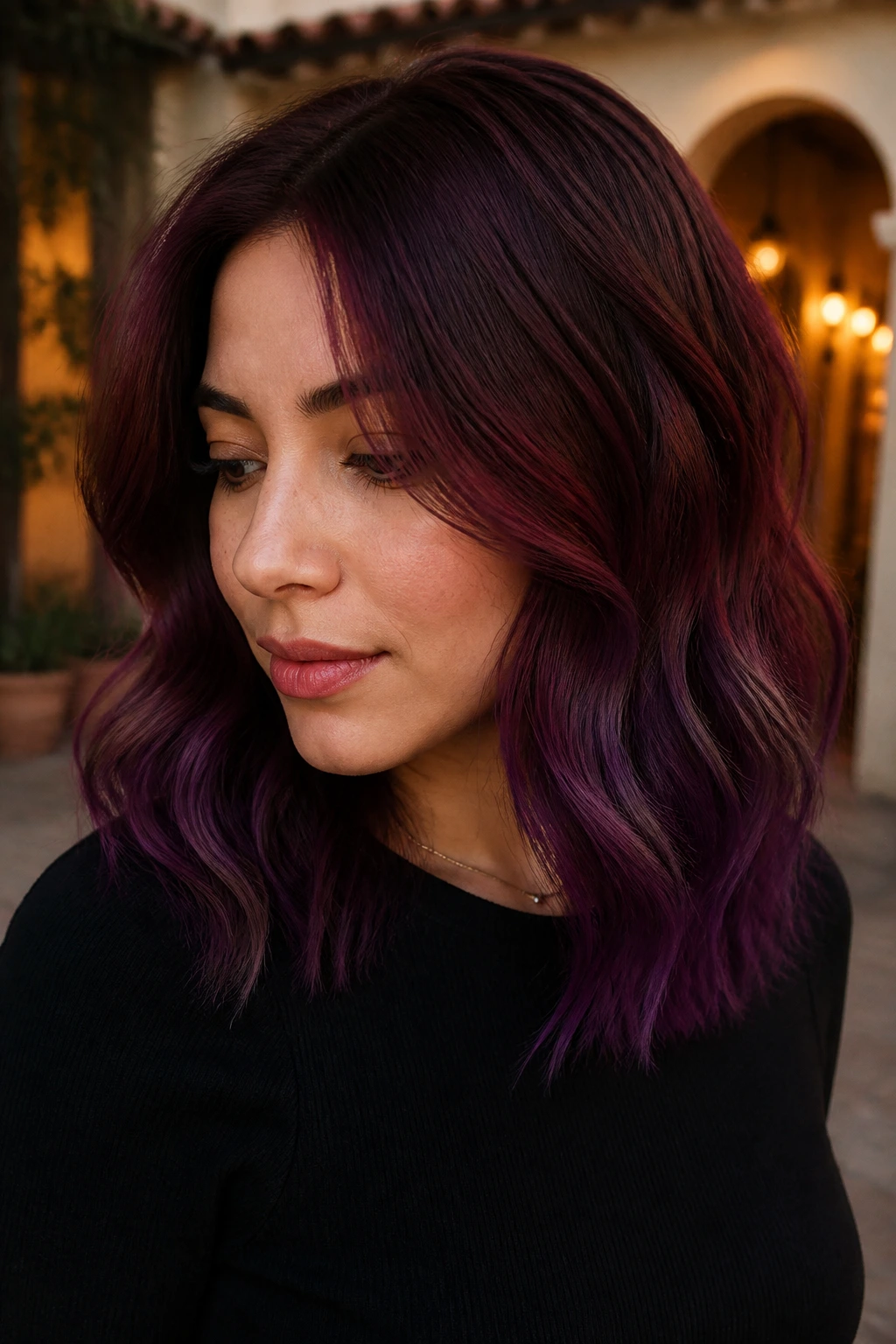
Burgundy fading into plum has a richer, darker mood than most ombre looks, which is part of its charm. The burgundy top layer gives depth, while the plum ends add a cooler violet-brown finish that still feels soft. On shoulder-length hair, the two tones stay close enough together to blend instead of clash.
The key is keeping the plum muted. If the ends go too vivid, the fade loses its softness and starts looking like two separate colors. The best version feels like wine glass reflections in low light, not neon.
This is a strong choice for medium to thick hair because the color has enough body to show up. Fine hair can wear it too, but the transition should be tighter and the ends slightly darker.
17. Dark Blonde to Vanilla Cream Ends
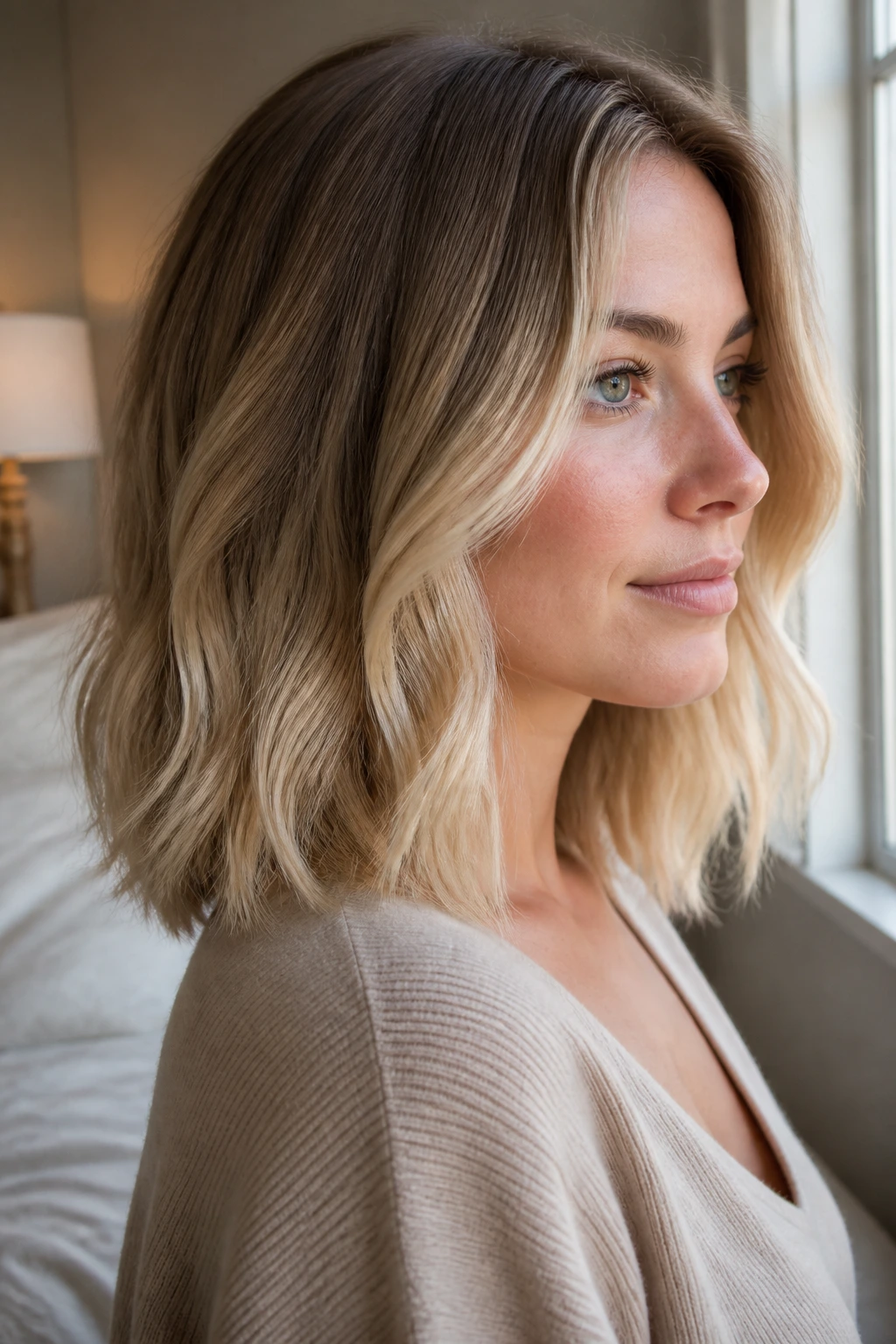
Dark blonde to vanilla cream is a lighter, creamier take on ombre that works beautifully on shoulder-length hair with layers. The darker blonde base gives the style a natural starting point, then the vanilla cream ends brighten the cut without reading icy. It feels soft, smooth, and clean.
You want to avoid lifting the ends too far past cream. Once they go stark platinum, the gradient gets harsher. Vanilla works because it’s milky and low-contrast. If your hair already has a light base, this can be a great way to add dimension without committing to deep brunettes or heavy shadow roots.
A soft bend through the ends keeps the cream tone from looking flat. Straight, blunt styling can make the shade seem more one-note than it really is.
18. Latte Balayage Ombre
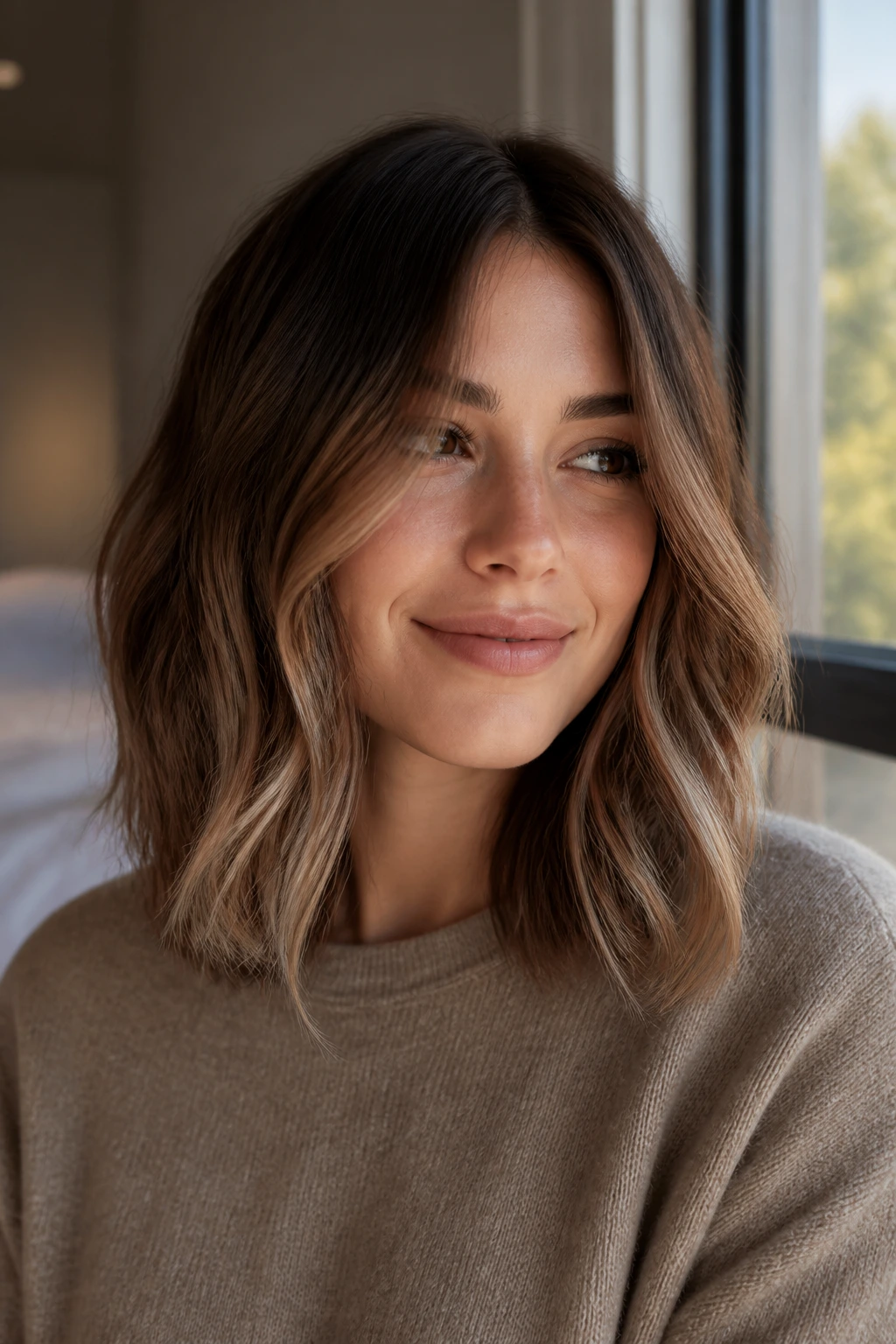
Latte balayage ombre is for people who want the fade to whisper instead of announce itself. The root stays coffee-toned, the mids pick up soft milk-chocolate ribbons, and the ends lighten just enough to look like latte foam around the edge. It’s subtle, and that’s the appeal.
What Makes It Different
Unlike a classic ombre that shows a clear shift from dark to light, latte balayage spreads the brightness through the hair in hand-painted pieces. On shoulder-length hair, that stops the color from pooling only at the ends. You get movement all the way through the cut.
This is one of the easiest ways to grow out color without fighting a harsh line. It’s also a safe bet if you wear your hair straight for work and wavy on weekends. The color holds up in both shapes.
19. Deep Brown to Peach Apricot Ends
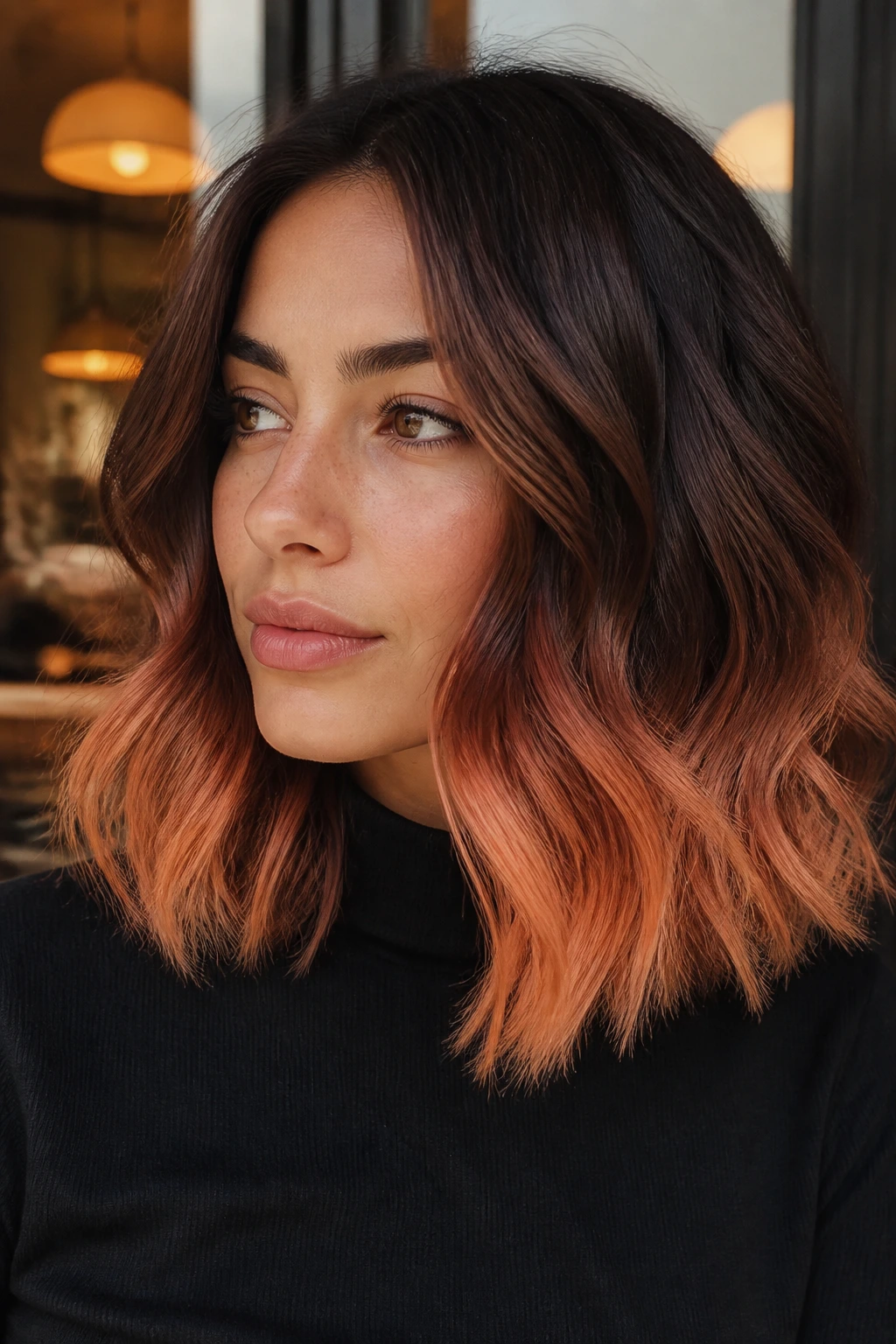
Peach apricot ends add a little glow without turning the whole look into a statement color. The deep brown base keeps things grounded, then the peach lifts the bottom of the hair with a soft fruit tone that can lean warm and friendly or slightly playful, depending on the shade. On shoulder-length hair, it reads as a smart accent.
Why It Works on a Lob
The shorter length keeps the peach from becoming too much. If this were waist-length hair, the bright tone could stretch and feel louder. On a lob, it stays contained and neat.
- Best base: Deep brunette or warm brown.
- Best finish: Peach-beige, not neon coral.
- Best styling: Soft waves or a half-bend with a flat iron.
- Best upkeep: Color-depositing gloss when the peach starts to wash out.
This is a good choice if you want something a little unexpected but still wearable. It’s the opposite of boring, which is enough.
20. Sand Beige to Platinum Whisper
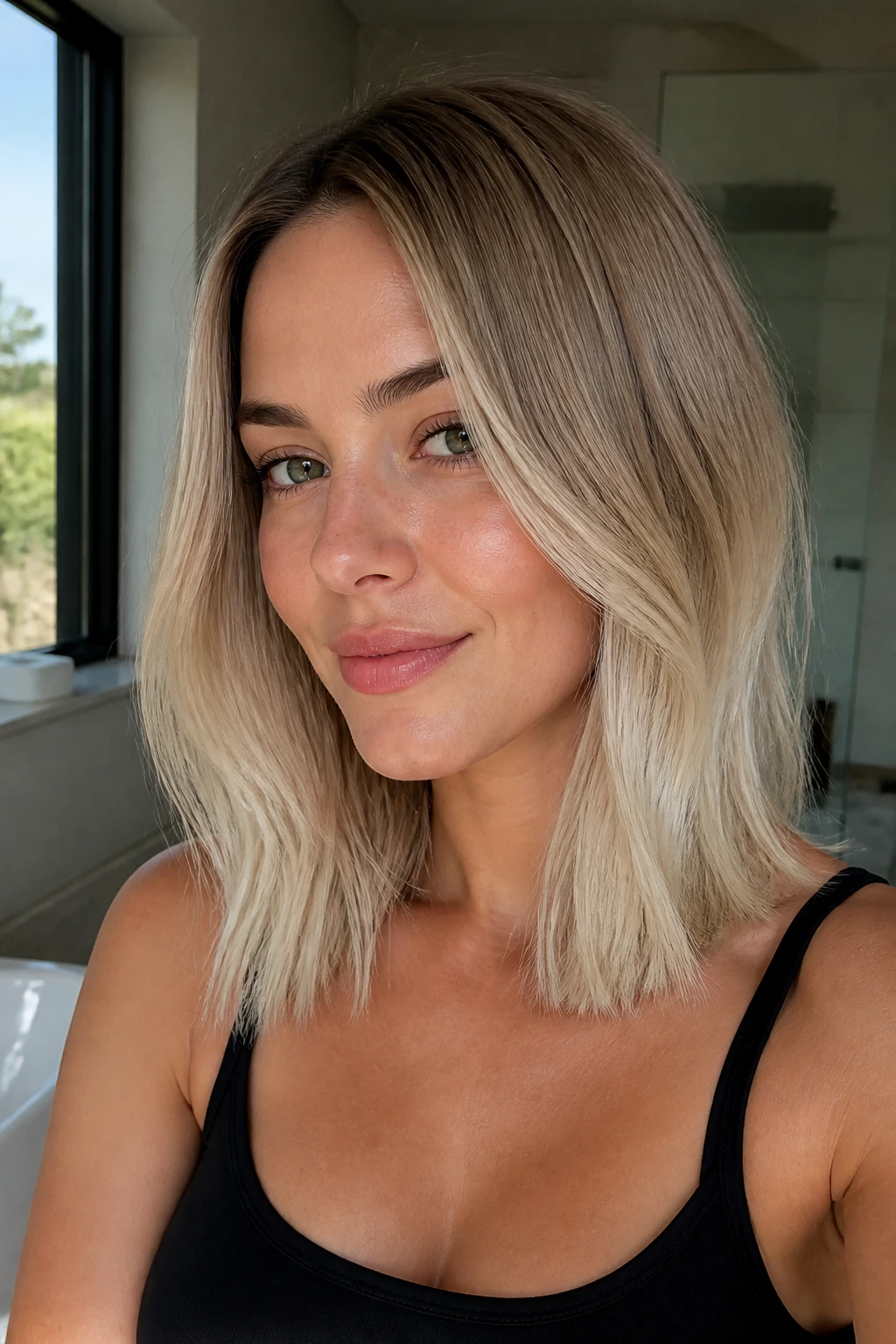
Sand beige fading into platinum whisper is for the lighter-hair crowd who still want softness. The beige root area keeps the cut from looking overly processed, while the platinum ends bring brightness at the bottom without a hard edge. On shoulder-length hair, the fade should be narrow and finely blended, or it can get too stark.
This one is pretty demanding on the hair. If the ends are already dry or fragile, I’d think twice before pushing them all the way to platinum. But if your hair can handle lightening, the result is clean and airy. The platinum should feel like a whisper, not a block.
A polish spray or light serum helps here because platinum can look dry fast if the finish is rough.
21. Soft Red Copper Melt
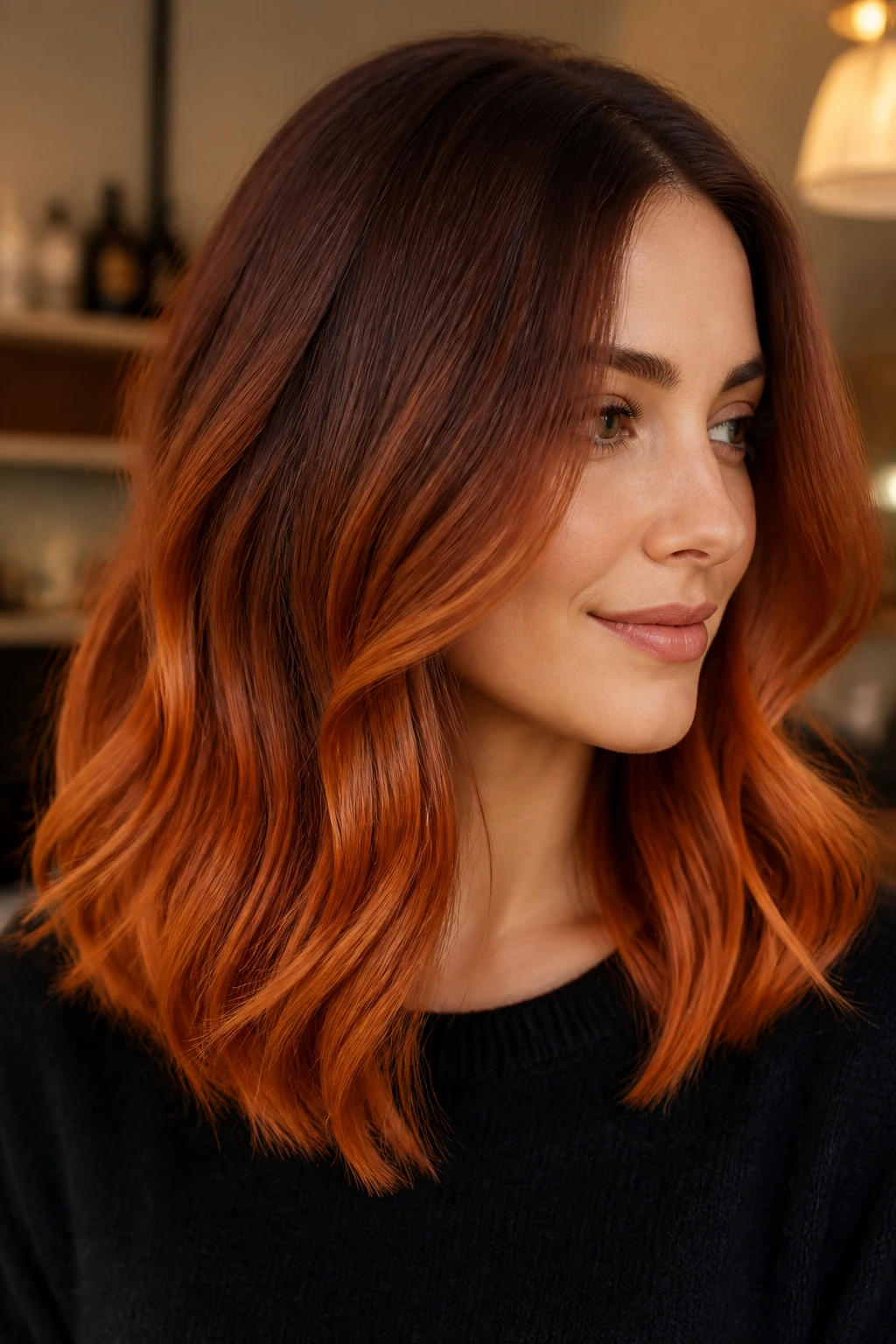
Soft red copper melt is what happens when copper gets blended instead of painted on in one go. The root stays deeper, the mids warm up, and the ends carry the brightest copper note. On shoulder-length hair, that gradual change looks especially good because the color doesn’t have to travel far to make an impression.
How to Keep It Soft
Ask for copper that still has brown in it. Pure orange gets loud, and shoulder-length hair can’t hide that much brightness for long. A red-brown copper with a glossy finish is the safer, better-looking version.
The style looks strongest with movement around the shoulders. A tucked-under blowout can make the color feel smooth and shiny. Soft bends give the copper places to catch the light.
22. Midnight Brunette to Slate Gray Ends
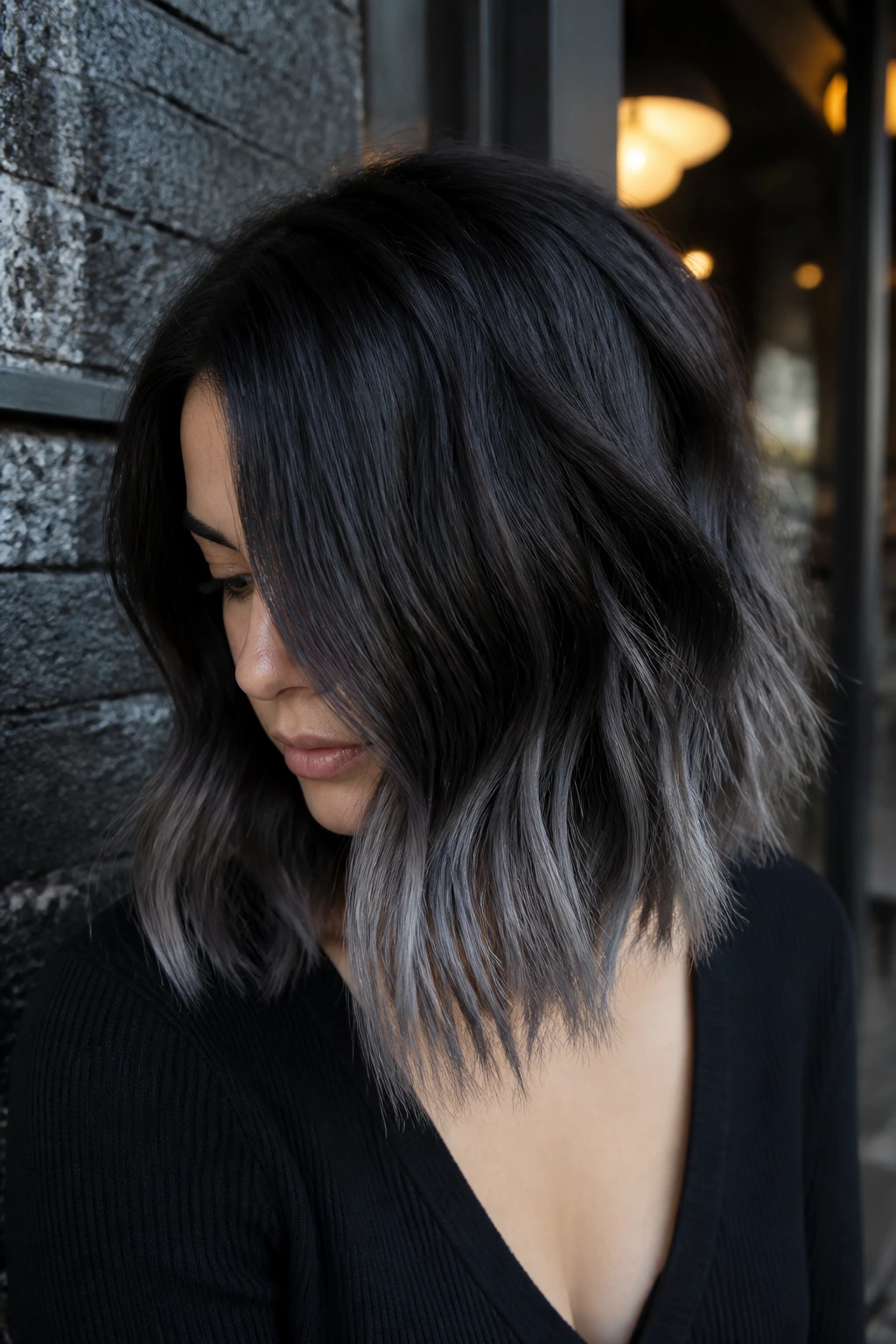
Midnight brunette into slate gray is cool, edgy, and much softer than silver. The ends don’t go bright; they go smoky. That matters, because shoulder-length hair can lose shape fast if the lightest piece is too stark. Slate gray keeps the fade moody instead of harsh.
This is one of the few gray-based ombre ideas that still feels wearable without being timid. The trick is texture. Flat, pin-straight hair can make slate look a little heavy. Broken waves or a blunt lob with a slight bevel help the tone look intentional.
If you like cool makeup, dark eyeliner, or crisp monochrome outfits, this shade has a lot of visual sense. It’s not trying to be sunny.
23. Honeyed Auburn to Gold Dust
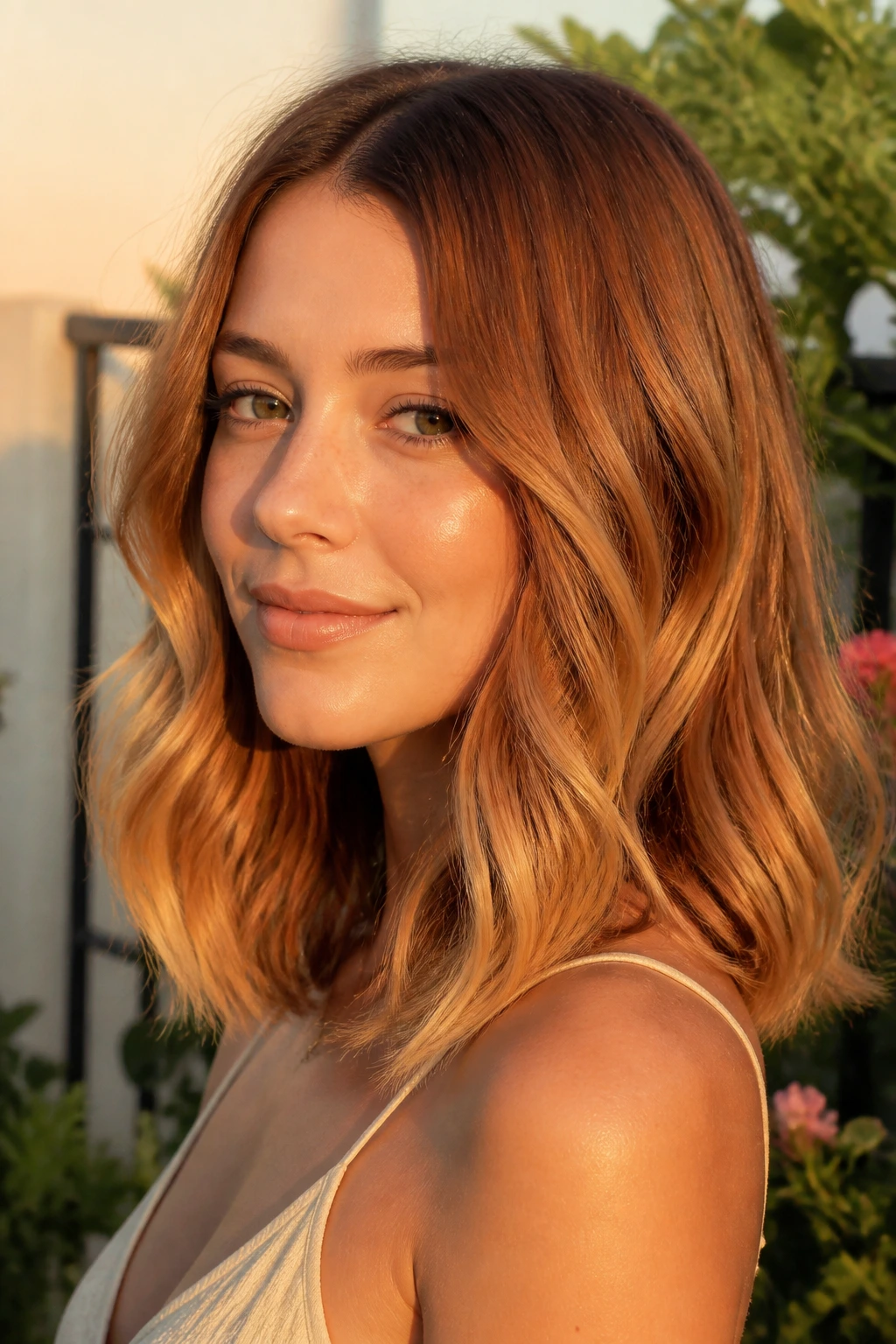
Honeyed auburn fading into gold dust is warm, glowing, and easy to like without being plain. The auburn base brings depth, then the ends pick up a fine gold note that looks like a light mist rather than a full blonde shift. On shoulder-length hair, that soft metal-like finish catches movement in a neat, contained way.
This is one of the most flattering warm ombre directions if your hair already has some natural red or copper in it. The fade doesn’t fight the base; it follows it. That’s why it looks so believable when done well.
A little wave at the ends helps the gold dust separate from the auburn. Too much layering can make it busy, so keep the cut clean.
24. Chestnut Lob with Smoky Lilac Tips
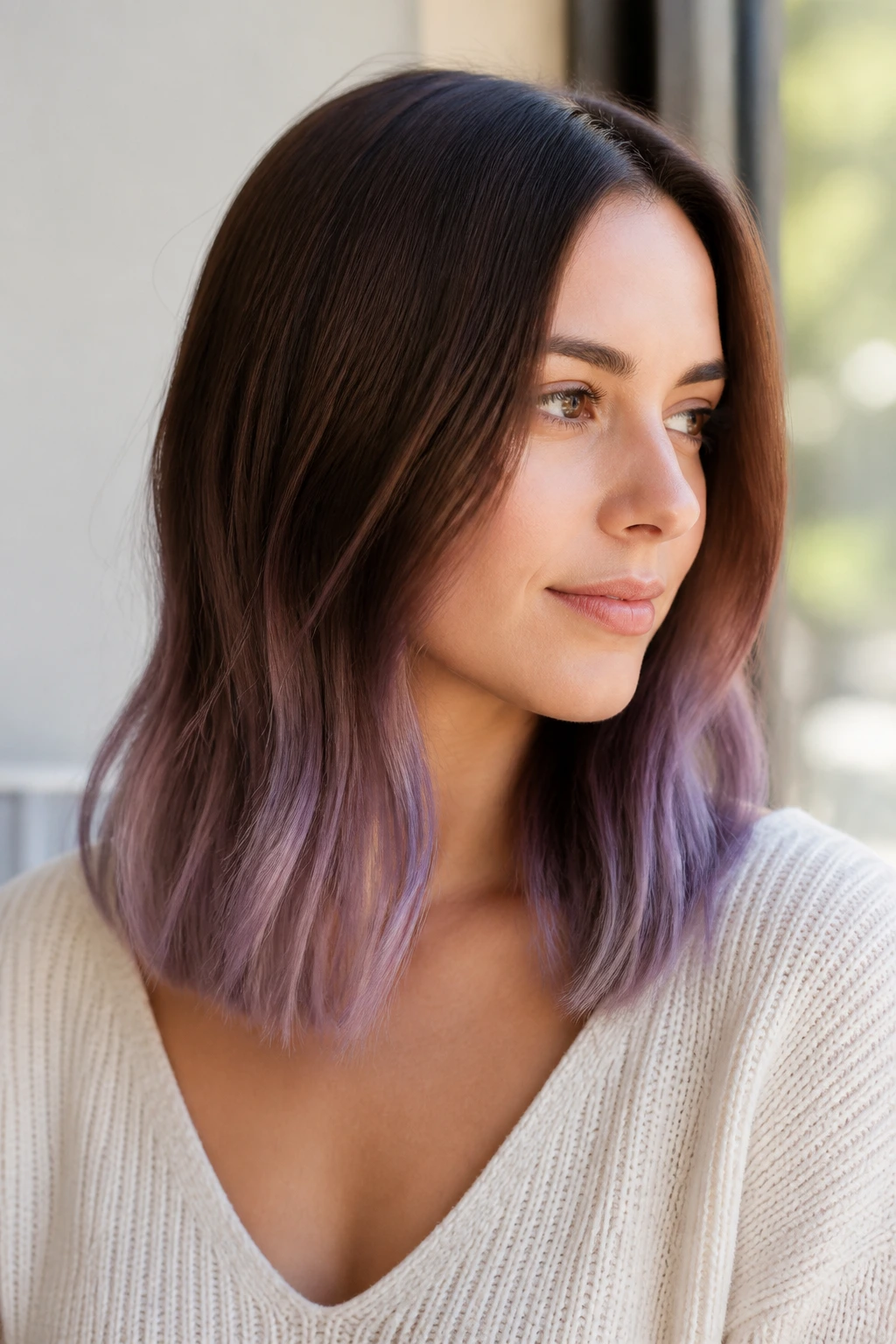
If you want a touch of fashion color without going full neon, smoky lilac tips are the move. The chestnut base keeps the look grounded, and the lilac stays muted with a gray undertone so it doesn’t read as pastel candy. On shoulder-length hair, that little pop at the ends feels deliberate instead of costume-like.
Where It Fits Best
This shade works best when the lilac is confined to the bottom couple of inches and softened with a shadow root or dark mids. That keeps the color fade gentle and lets the lob still feel wearable.
- Best for: People who want a playful edge.
- Best placement: Just the bottom third, especially on blunt ends.
- Best styling: Smooth blow-dry or a loose S-wave.
- Best caution: Lilac fades fast, so plan for toning.
It’s one of my favorite “fun but not loud” ombre ideas on shorter hair.
25. Natural Root to Surfer Blonde Fade
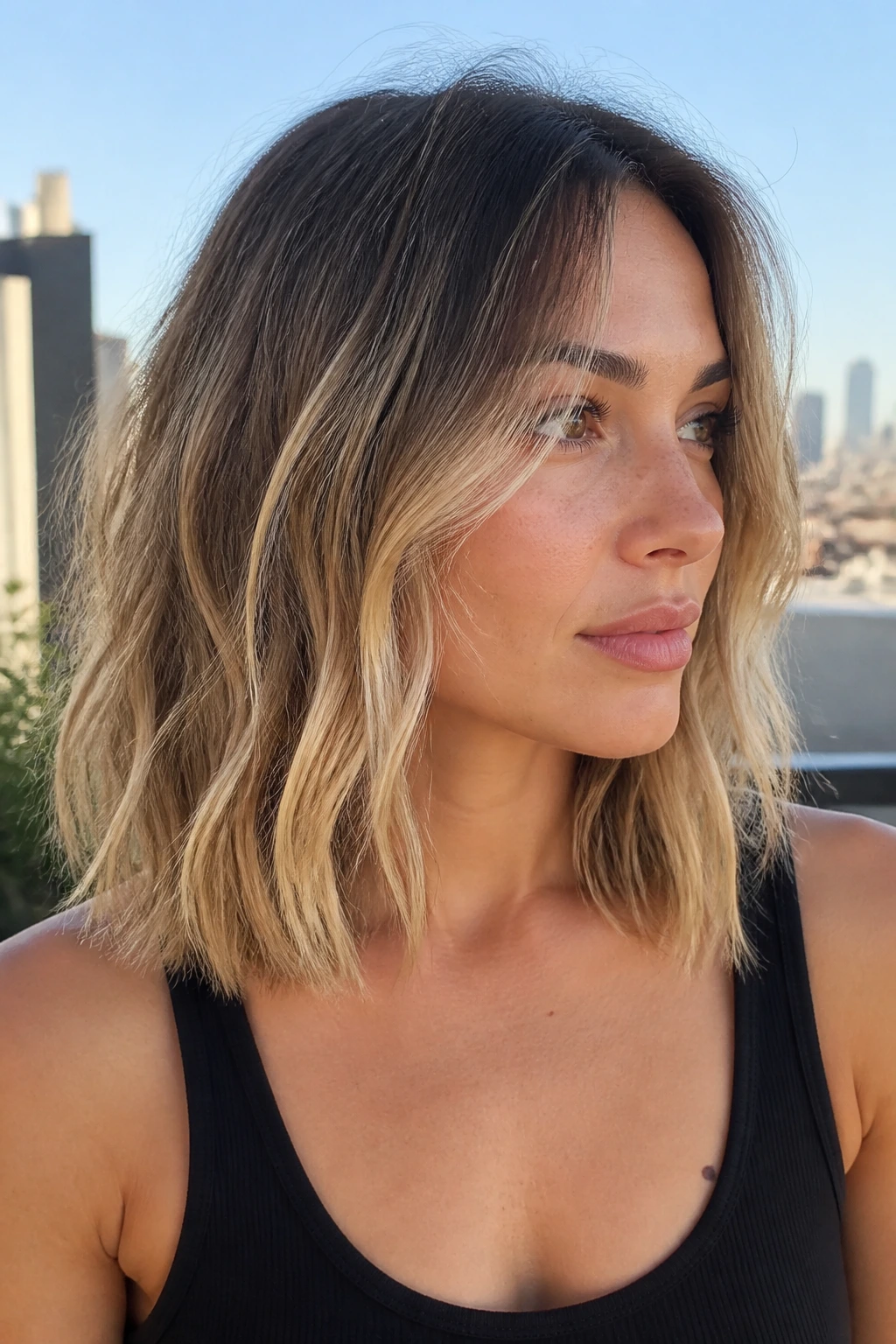
This is the easiest kind of ombre to live with: keep your natural root, then let the mids and ends drift into surfer blonde. The color should look like it grew in with the sun over time, not like it was painted in one obvious pass. On shoulder-length hair, that grown-out softness feels especially believable.
The best versions keep the root untouched or only lightly shadowed, then brighten the lower half in narrow, broken pieces. That broken placement matters. It keeps the blonde from turning into a block, which is the main thing that can go wrong on a lob.
If you want a color that can go a little longer between appointments and still look considered, this is the one to bookmark. It wears the most easily of the bunch.
Why Shoulder-Length Hair Makes the Fade Look Intentional
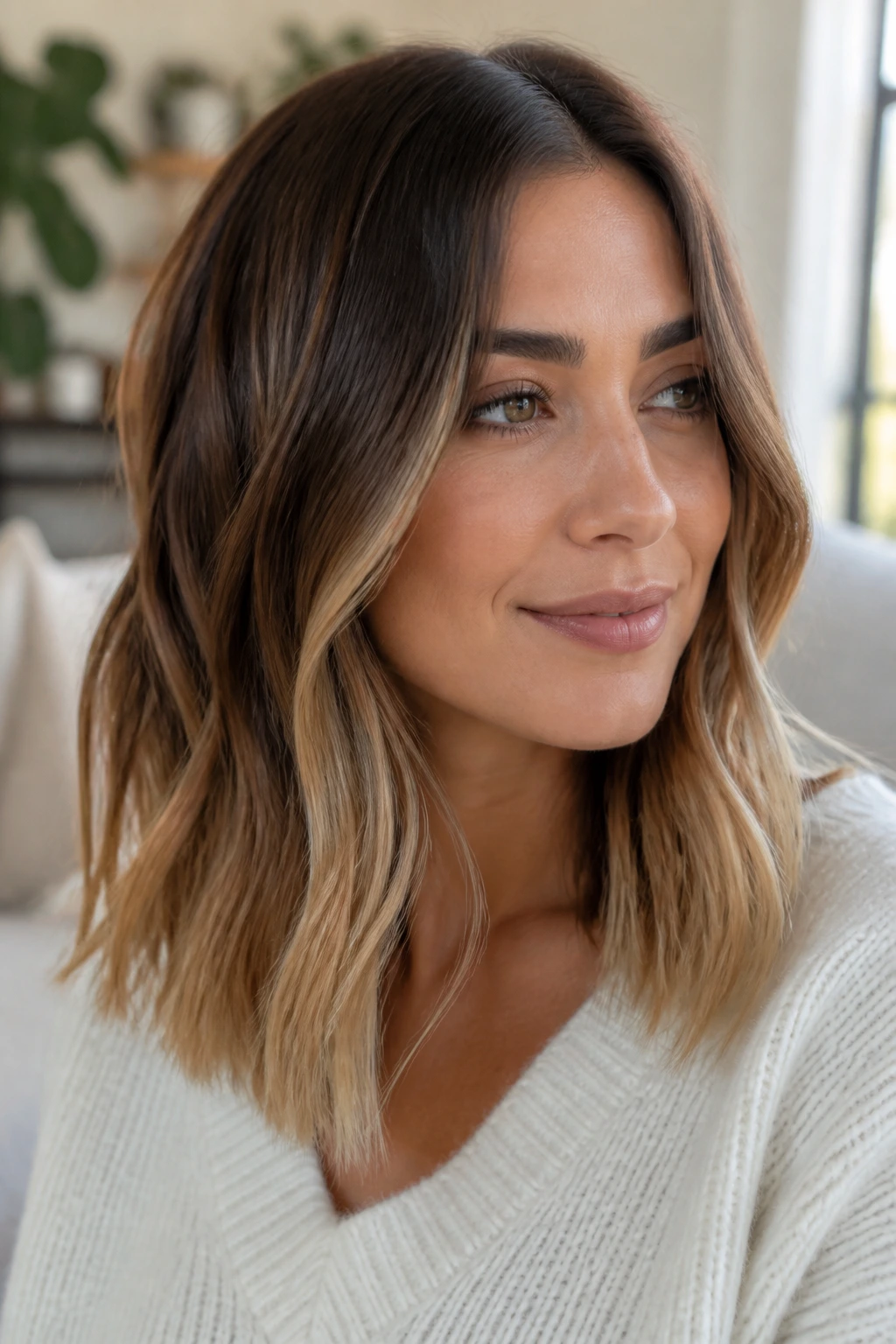
Shoulder-length hair gives ombre something longer cuts sometimes lose: a strong shape that still has space for color to move. The fade can start low enough to stay soft, but high enough to show up when the hair swings at the collarbone. That balance is the whole game.
A lob also gives you a cleaner read of tone. Too much length can make the lighter ends look disconnected from the base. Too little, and the fade has no room to breathe. Shoulder-length hair sits in the middle, where the eye can catch the transition in the front, the sides, and the ends without the color taking over the cut.
That’s why placement matters more here than drama. A one-inch shift in where the lightest pieces begin can change the whole result.
How to Ask for the Right Shade Range
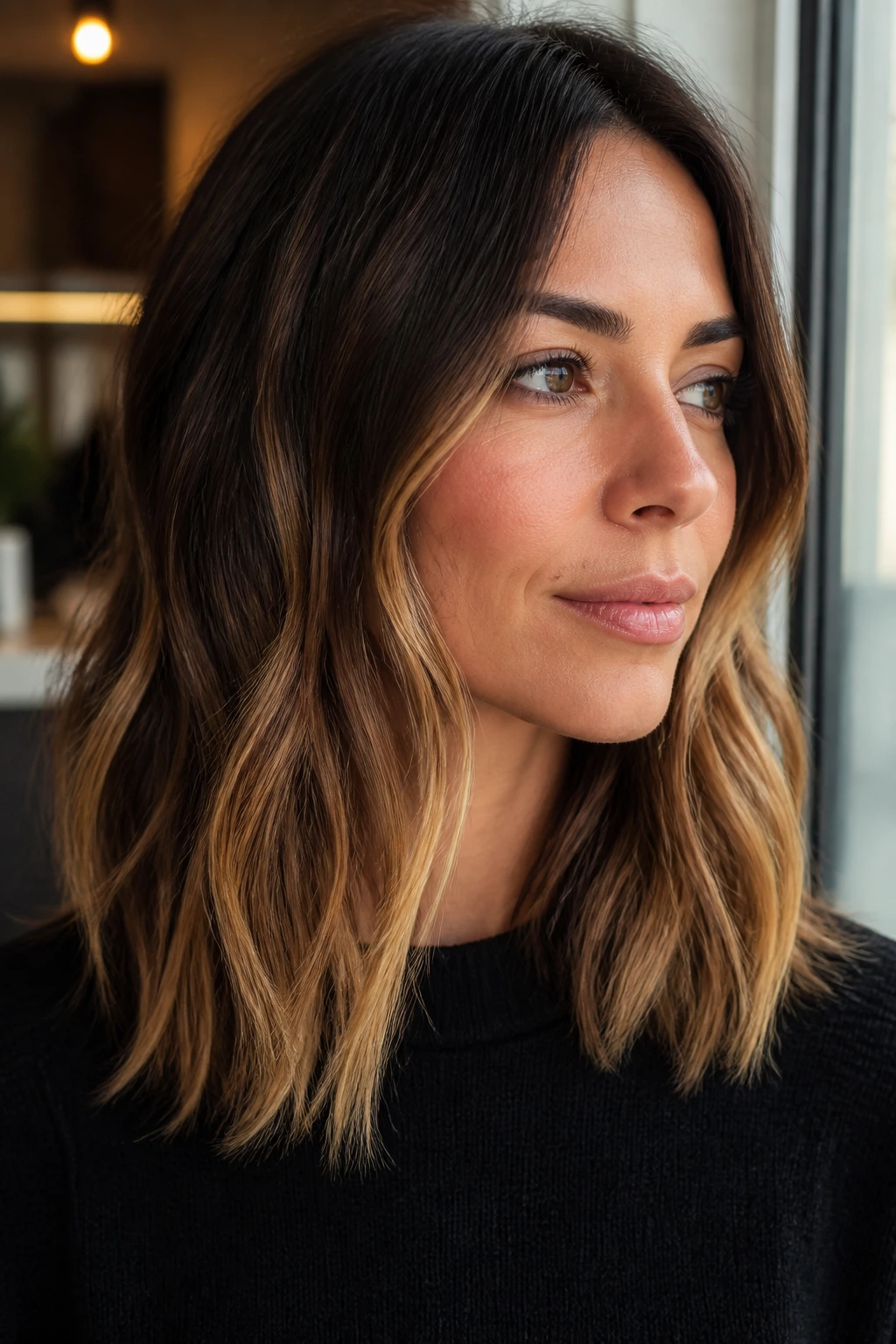
Bring photos, yes, but bring the right photos. Show your stylist the angle, the part, and the finish you want, because a curled photo and a straight photo can look like two different colors. If your hair is shoulder length, tell them exactly where you want the fade to start: cheekbone, jawline, or just below the collarbone.
Level numbers help too. If your base is a level 4 brunette, ask whether the ends should land at a level 6, 7, or 8. That sounds technical, but it keeps everyone honest. It also helps your colorist decide whether you need a root shadow, a gloss, or both.
One more thing. If your hair tends to pull orange, say so. If it pulls yellow, say that instead. Those little details shape the final shade more than the word “blonde” ever will.
Essential Tools for Salon Visits and Color Care
-
Sectioning clips: Useful for keeping your hair separated while you photograph or blow-dry the color pieces you want to show off.
-
Tail comb: Helps divide the hair cleanly if you’re doing a home gloss or checking placement at the ends.
-
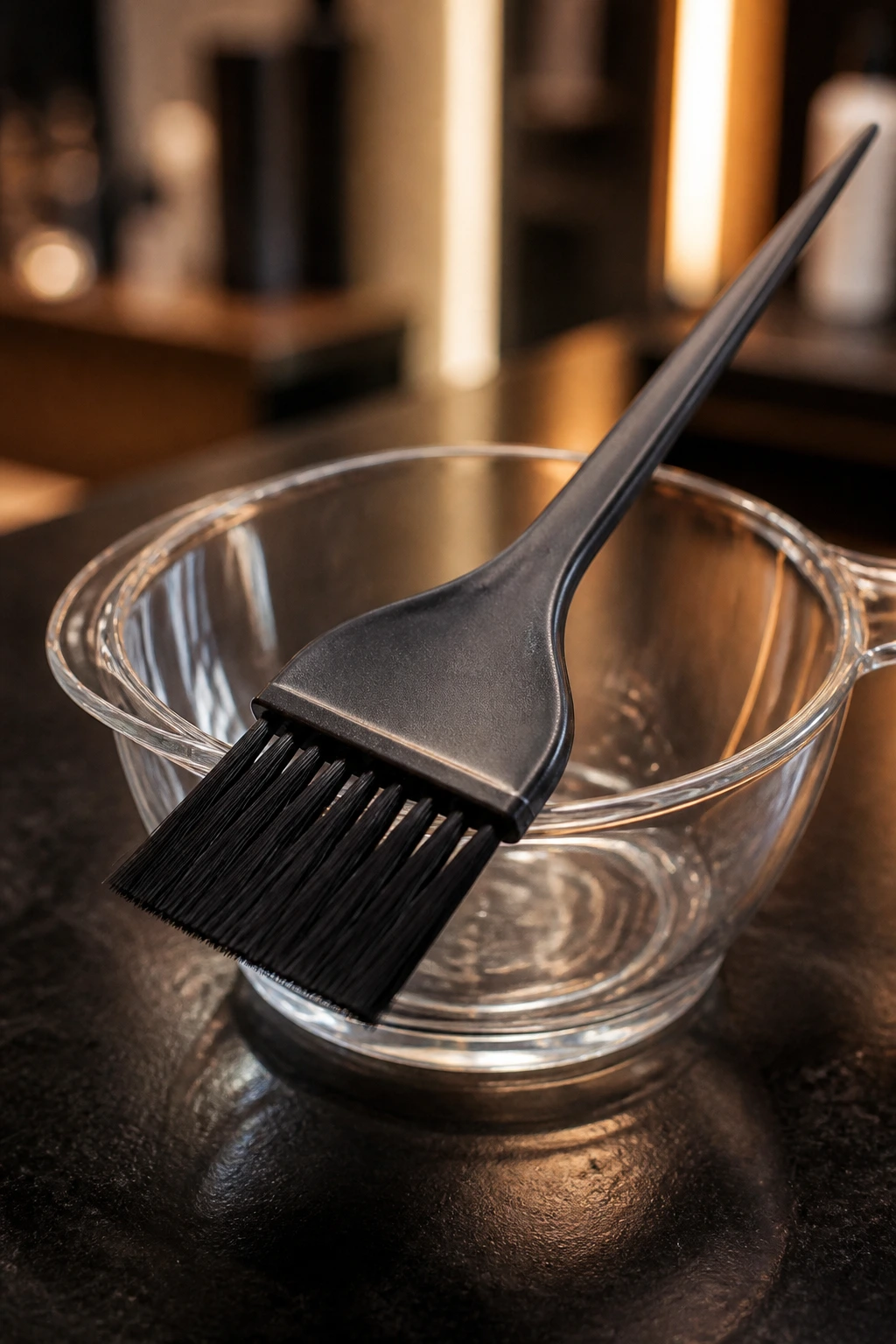
Tint bowl and brush: Handy for root shadow, color masks, or at-home toners when you’re maintaining the fade between salon visits.
-
Color-safe shampoo and conditioner: Look for gentle formulas that don’t strip toner off the ends in two washes.
-
Purple shampoo or blue shampoo: Purple helps blonde and beige ends stay from going yellow; blue helps brown-to-blonde fades stay from turning orange.
-
Bond-building treatment: Worth having if your ombre involved lightening. It helps the hair feel less brittle after bleach or repeated toning.
-
Heat protectant spray: Non-negotiable if you blow-dry or flat iron the ends, because the lightest pieces are the first to dry out.
-
Microfiber towel or old T-shirt: A small thing, but it cuts down on rough friction when the hair is wet and fragile.
How to Style a Soft Ombre So the Fade Shows
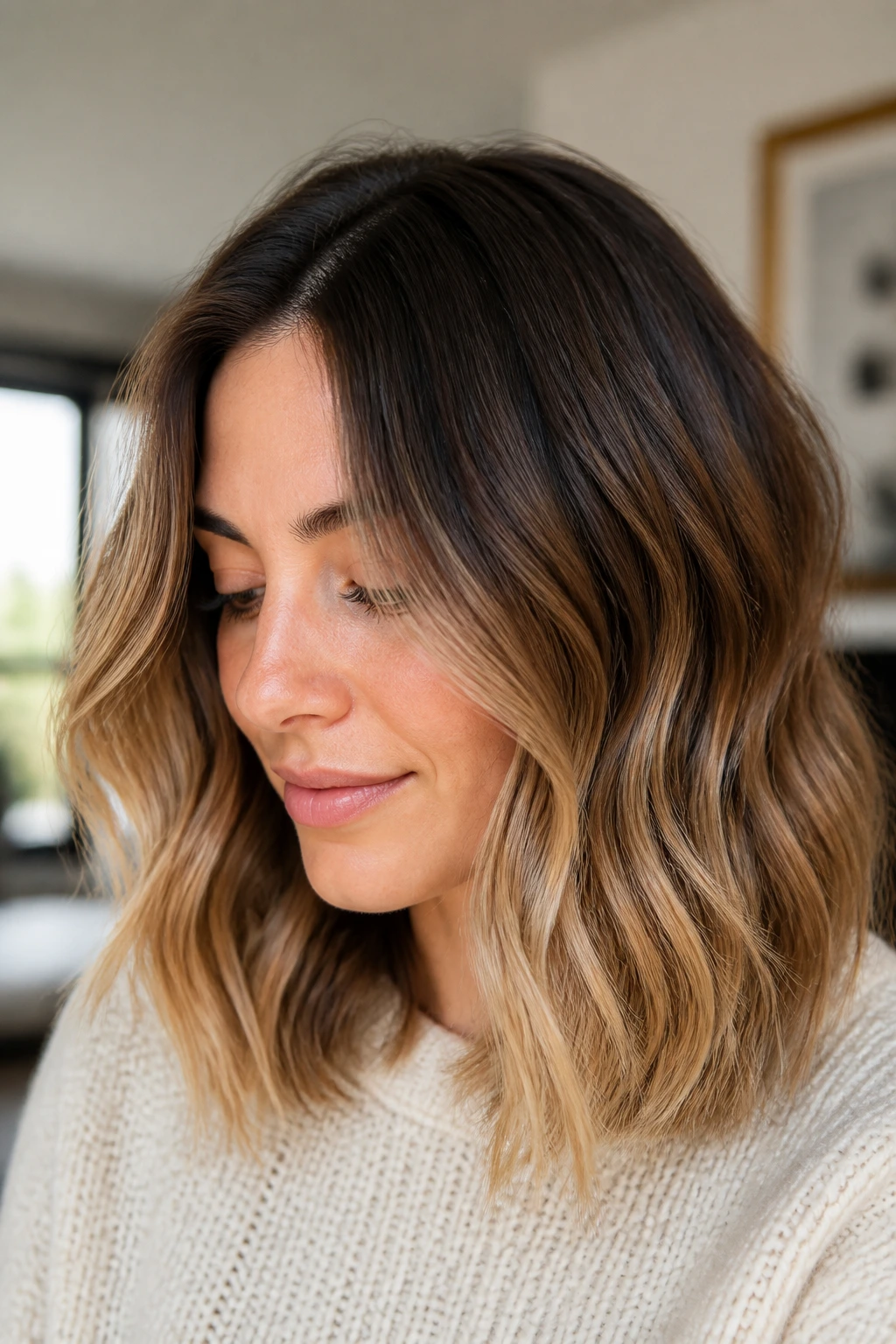
Styling: Loose bends are the safest bet. A 1-inch curling iron, wrapped away from the face, gives the ombre movement without making the ends look corkscrewed. If your hair is naturally straight, a tiny bevel at the ends is enough to reveal the fade.
Parting: A middle part makes the gradient look symmetrical and modern. A deep side part shifts the lighter pieces to one side of the face, which works well if your front sections are the brightest part of the color.
Finish: A soft cream serum or a light shine spray is better than heavy oil. You want the ends to look smooth, not greasy. On shoulder-length hair, the shine should sit on the surface and catch the bend of the cut.
Accessories: Small hoops, barrettes, and tucked-behind-the-ear styles show the color better than oversized clips. The ombre looks strongest when part of the front section stays visible.
Additional Tips and Color Boosters
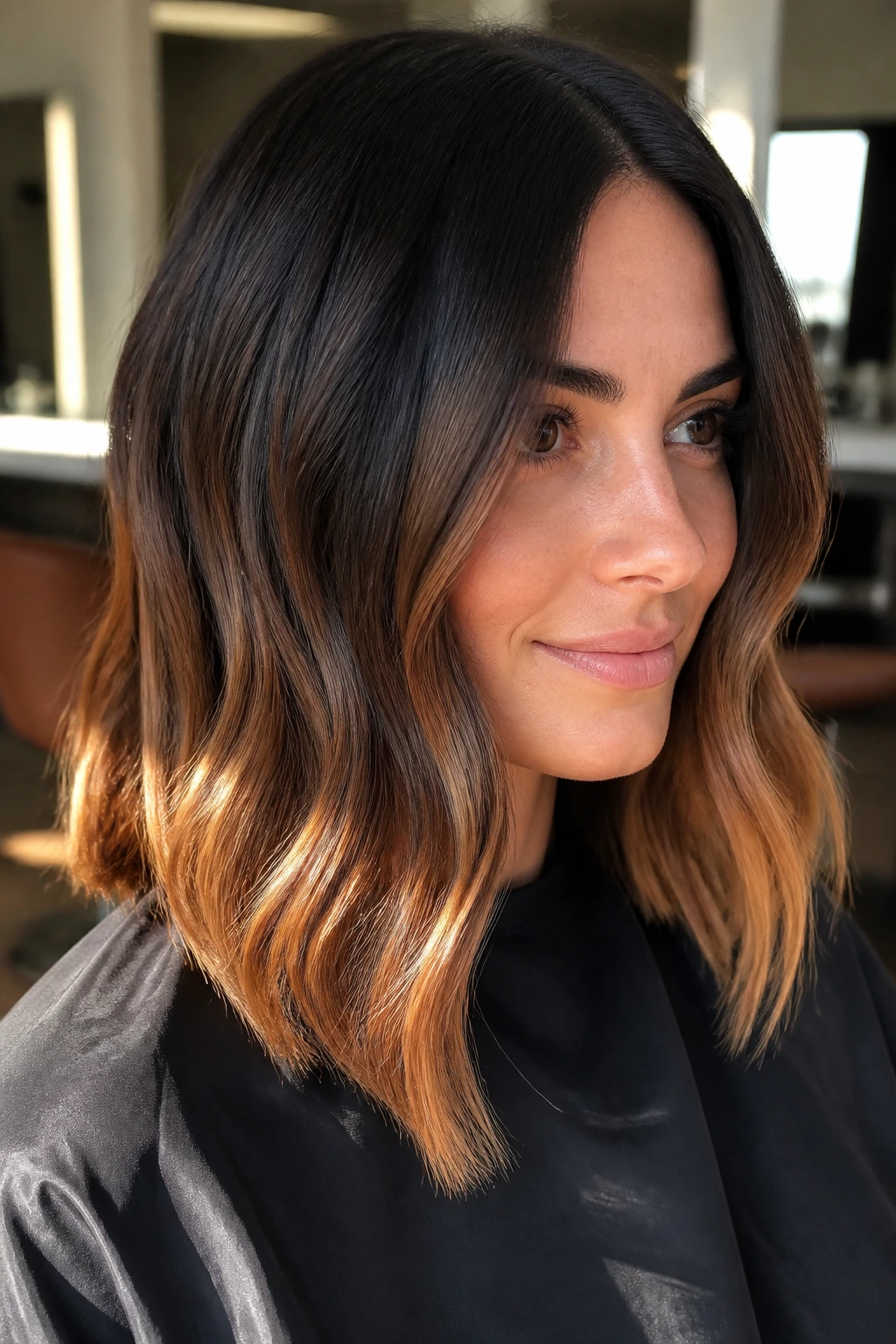
Tone Choice: Beige and mushroom tones are your safest bet if you hate brass. Caramel, honey, and copper work better if your hair naturally runs warm. Pick the tone that matches your base, not the one that looked good on someone with a different starting color.
Placement Trick: On shoulder-length hair, keep the lightest pieces mostly from the cheekbone down. That stops the gradient from feeling top-heavy and gives the haircut a cleaner line.
Color Boost: A clear gloss every few weeks can make the fade look fresher without changing the shade. It’s one of the easiest ways to keep shoulder-length ombre from looking dry or dusty.
Make-It-Yours: Fine hair usually looks better with thinner ribbons and less contrast. Thick hair can carry stronger shifts, especially if the ends are textured. Curly hair needs wider painted sections so the color doesn’t disappear once the curl shrinks up.
Keeping Shoulder-Length Ombre Fresh Between Appointments
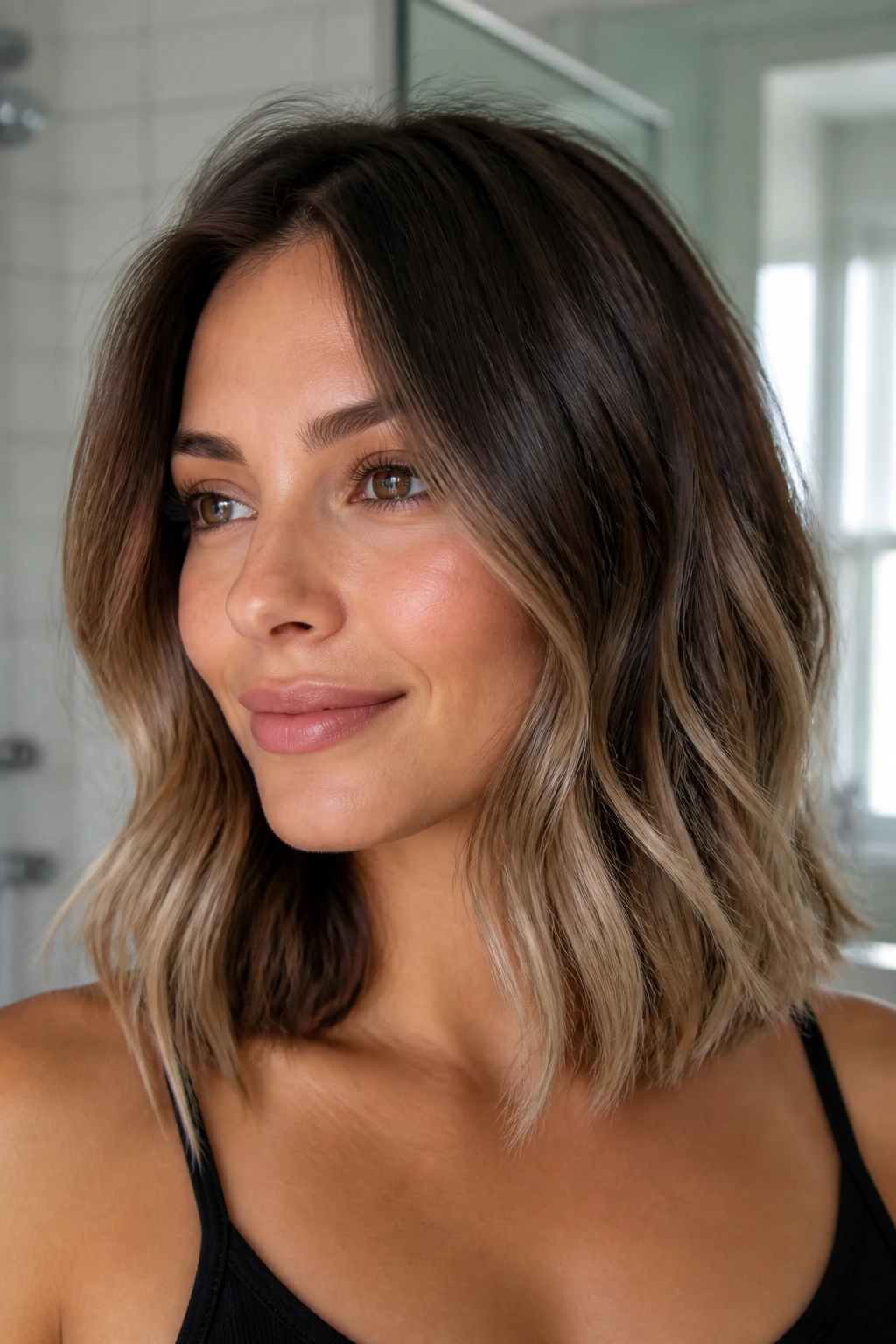
Soft ombre can go stale if you treat it like one-and-done color. Most shoulder-length styles look best with a small maintenance routine: gentle shampoo, regular conditioning, and a gloss or toner refresh before the ends start to look flat. If you use heat often, a protectant every single time matters more than an occasional deep mask.
For blonde, beige, pearl, or champagne fades, a purple shampoo once every 7 to 10 days is enough for most people. Leave it on too long and the tone can go chalky. For copper, peach, or auburn fades, color-depositing masks help keep the warm note from washing away too quickly.
A salon gloss every 4 to 8 weeks keeps the color clean. If the look is higher contrast, you may want a touch-up sooner; if it’s a soft root-shadow style, you can usually stretch it longer. The cut itself matters too. A shoulder-length trim every 8 to 10 weeks keeps the ends blunt enough that the fade still looks intentional.
Variations and Adaptations to Try
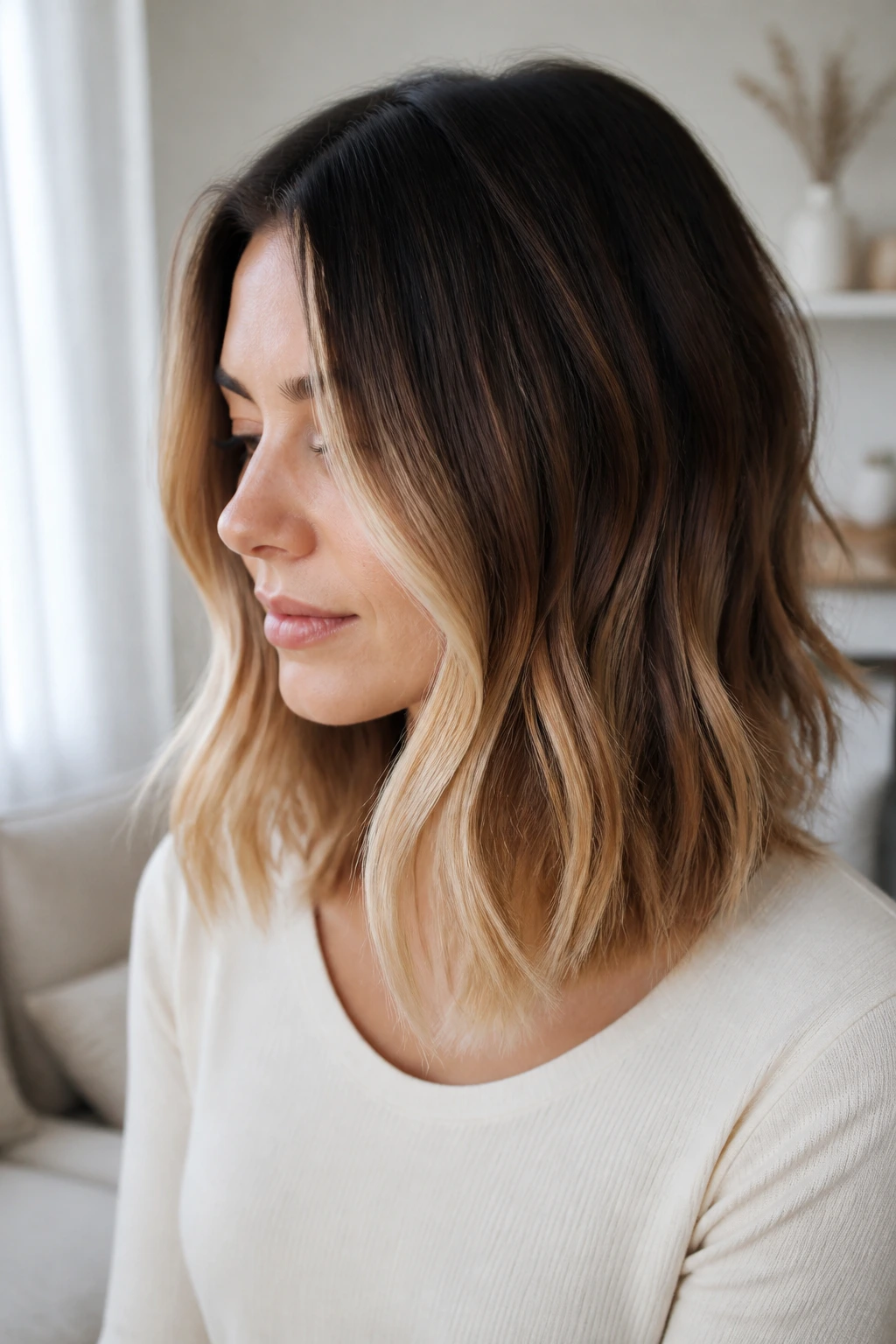
Barely-There Fade: If you want a soft ombre with almost no contrast, keep the difference to 1 or 2 levels and use a tone that stays close to your base. This works especially well if you wear your hair straight or tucked behind the ears.
Face-Frame Lift: Brighten the front pieces more than the back and keep the nape deeper. It’s a smart move for shoulder-length hair because the face-framing color carries the look even when the rest of the cut is tucked into a coat or sweater.
Curly Ribbon Ombre: Use wider painted sections so the color doesn’t disappear in curls. A faded ombre on curly shoulder-length hair should look like soft rings of light, not random patches.
Warm Glow Edit: Lean into caramel, honey, copper, or auburn if your base naturally carries warmth. These shades usually grow out in a softer way than cool ash tones.
Fashion-Tone Finish: Add lilac, peach, plum, or rose only to the last few inches. That keeps the color playful without forcing the whole haircut into a trend-heavy look.
Common Mistakes to Avoid
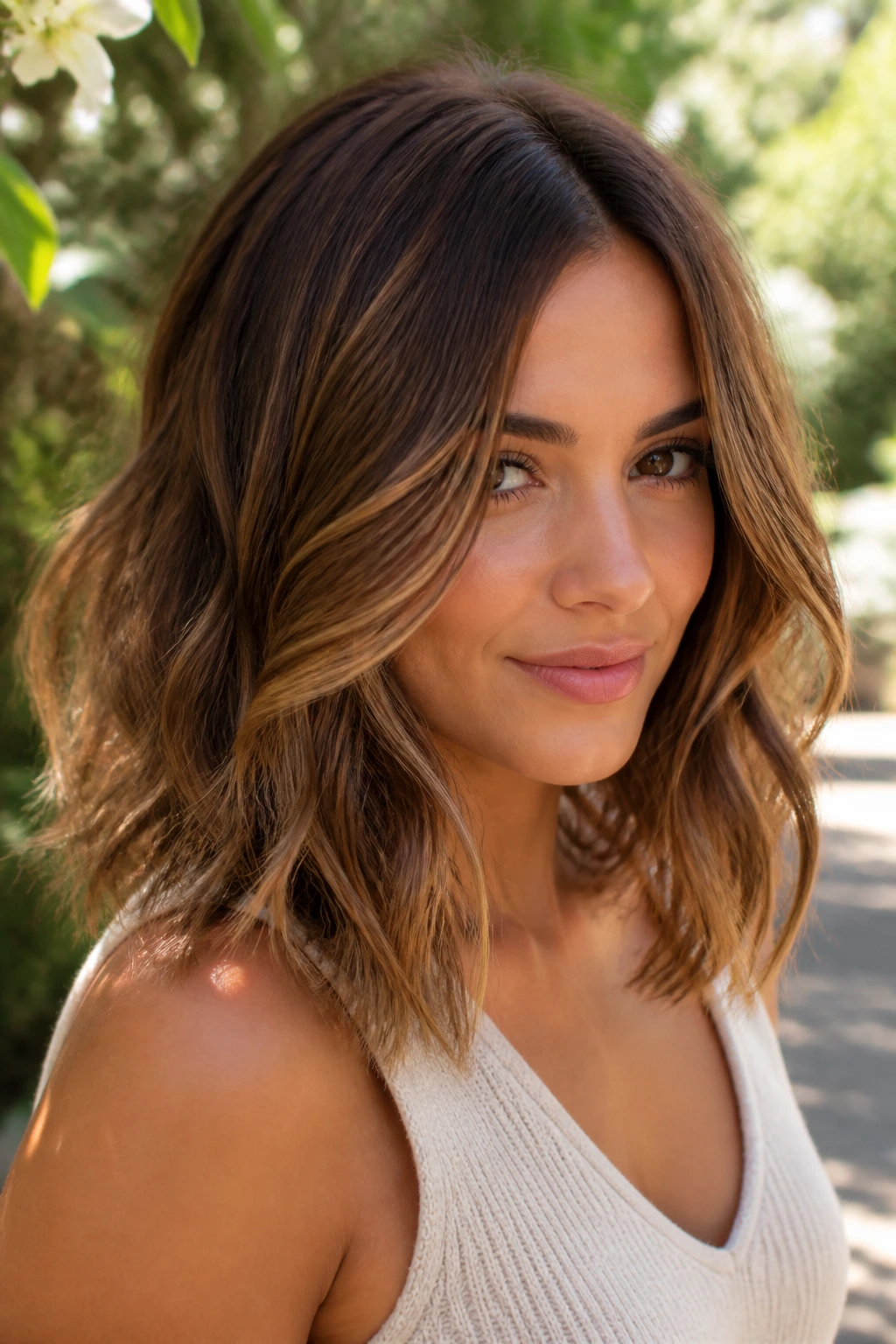
The first mistake is starting the fade too high. On shoulder-length hair, that usually turns into a stripe near the eyes or cheeks, and the whole thing starts looking blunt. Keep the transition lower unless you want a high-contrast look on purpose.
Another one: lifting the ends too far. Pale blonde, bright copper, or strong pastel can overwhelm a short cut fast. The symptom is hair that looks thin at the bottom. The fix is simple—stay within 2 to 4 levels of contrast unless your stylist has a specific plan for a stronger fade.
People also ignore undertone. Warm hair with cool toner can look dusty. Cool hair with yellow blonde can turn brassy fast. Match the finish to the base, and the fade stays soft longer.
Last, don’t style it flat every time. The gradient needs movement to read properly. Even a slight bend at the ends helps the ombre show its shape.
Questions Worth Asking Before You Book the Color
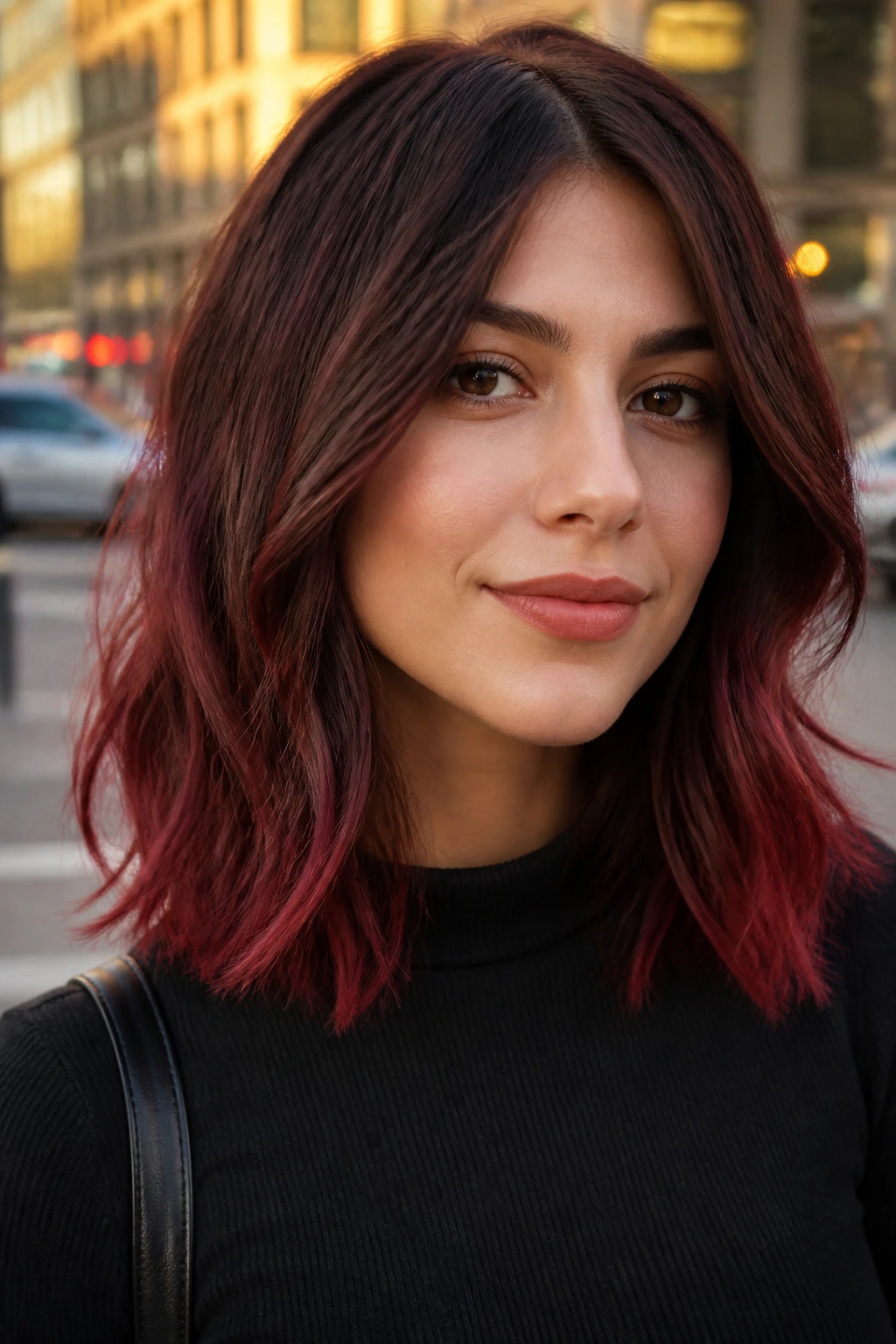
Can shoulder-length hair really carry ombre without looking dated?
Yes, if the fade is blended and the lightest pieces land low enough. The cut has enough length for a gradient, but not so much that it needs a dramatic contrast to read.
Is balayage the same thing as ombre on a lob?
Not exactly. Balayage is a placement method; ombre is the overall fade effect. A shoulder-length hair ombre often uses balayage or a shadow root to keep the transition soft.
How light can I go without making the ends look thin?
Usually 2 to 4 levels lighter than the base is the safe zone for a soft look. If you go brighter than that, the ends need excellent condition and a careful toner plan.
Will this work on curly hair?
Yes, but the color needs to be painted in wider ribbons because curls shrink up and hide fine streaks. If the sections are too narrow, the fade can disappear into the texture.
How often will I need a toner?
Most blonde or beige fades need a refresh every 4 to 6 weeks. Copper, peach, and rose tones may fade sooner, especially if you wash often.
Can I ask for ombre without bleach?
Sometimes, if your hair is already light enough. On darker bases, though, true ombre usually needs some lightening for the ends to show contrast.
What if I want low maintenance?
Ask for a root-shadowed caramel, beige, or honey fade and keep the contrast gentle. Those shades grow out with less drama than high-lift blondes or fashion colors.
What should I bring to the salon?
Bring daylight photos of the front and back if you can find them, plus one sentence about how much upkeep you’ll actually tolerate. That keeps the conversation honest.
Soft Fade, Clean Shape
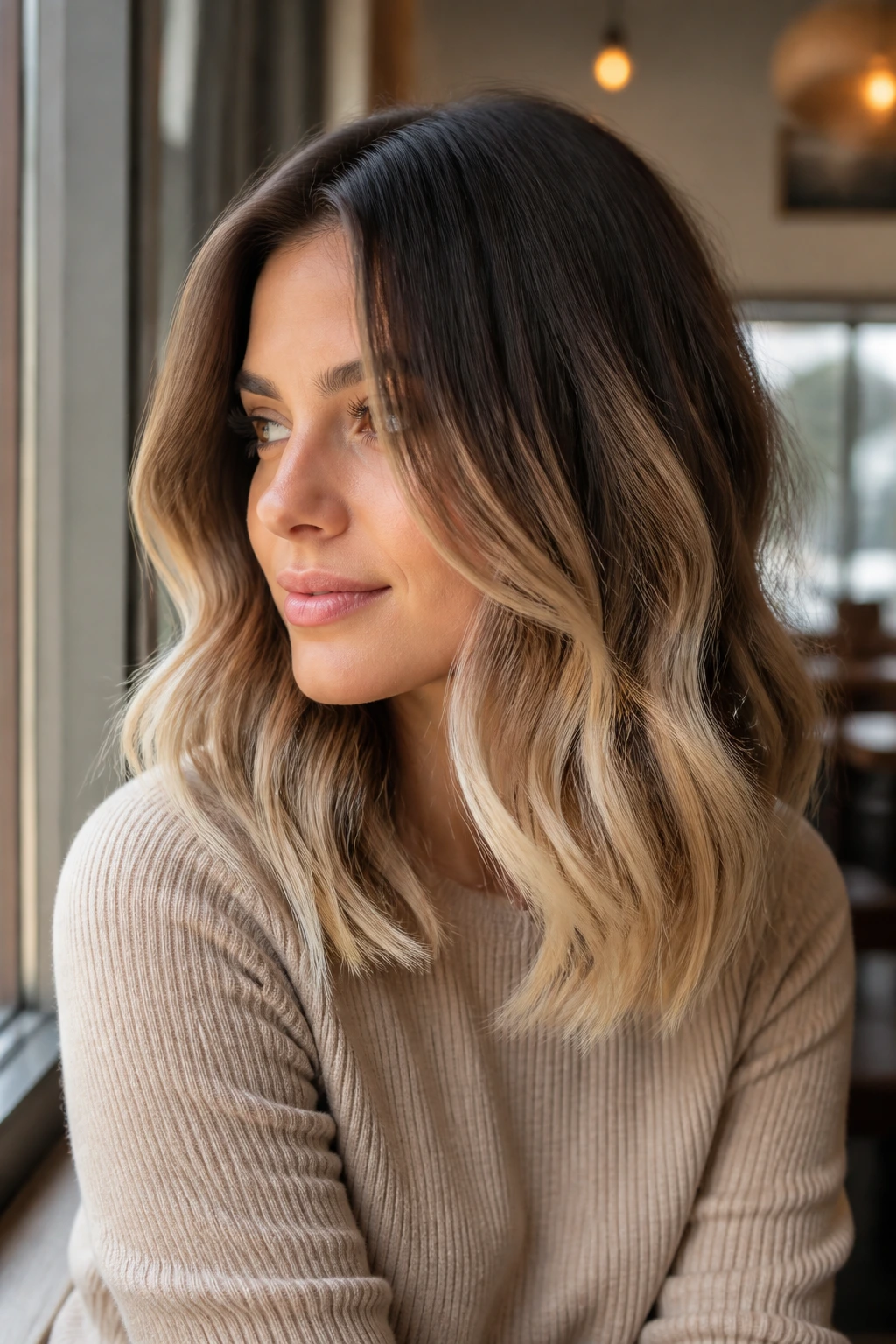
A good shoulder-length hair ombre doesn’t need to be loud to work. In fact, the best ones usually aren’t. They keep the root believable, let the middle layers do some visual work, and land on ends that feel like a natural extension of the cut rather than a color stunt.
That’s the real advantage of this length. It gives you enough room for a fade, enough structure to keep it neat, and enough movement for the color to shift when you do. Pick the tone that matches your base, keep the transition soft, and the whole look stays wearable long after the first salon blowout.
