



Medium-length hair is where highlights stop being a background detail and start doing actual work. A lob grazing the collarbone, a layered cut at the shoulders, even a blunt shape that flips at the ends — all of them can hold color in a way long hair sometimes can’t. The lighter pieces sit close enough to the face to wake everything up, and there’s enough length for ribbons, lowlights, and money pieces to move instead of sitting like paint lines.
That’s why medium-length hair is such a smart canvas for highlight ideas. You can go soft and blended, or sharp and high-contrast, and the haircut usually keeps the whole thing readable. On very long hair, some color gets lost in the length. On short hair, the placement has to work harder because there’s less canvas. Medium-length hair gives you room.
Here’s the part most people miss: the best highlight isn’t the brightest one. It’s the one that matches how your hair falls when you tuck it behind your ear, curl it with a 1.25-inch iron, or let it air-dry into bends. If you choose the placement well, the color looks intentional even on a blunt, low-maintenance cut. That’s where these 22 ideas earn their keep.
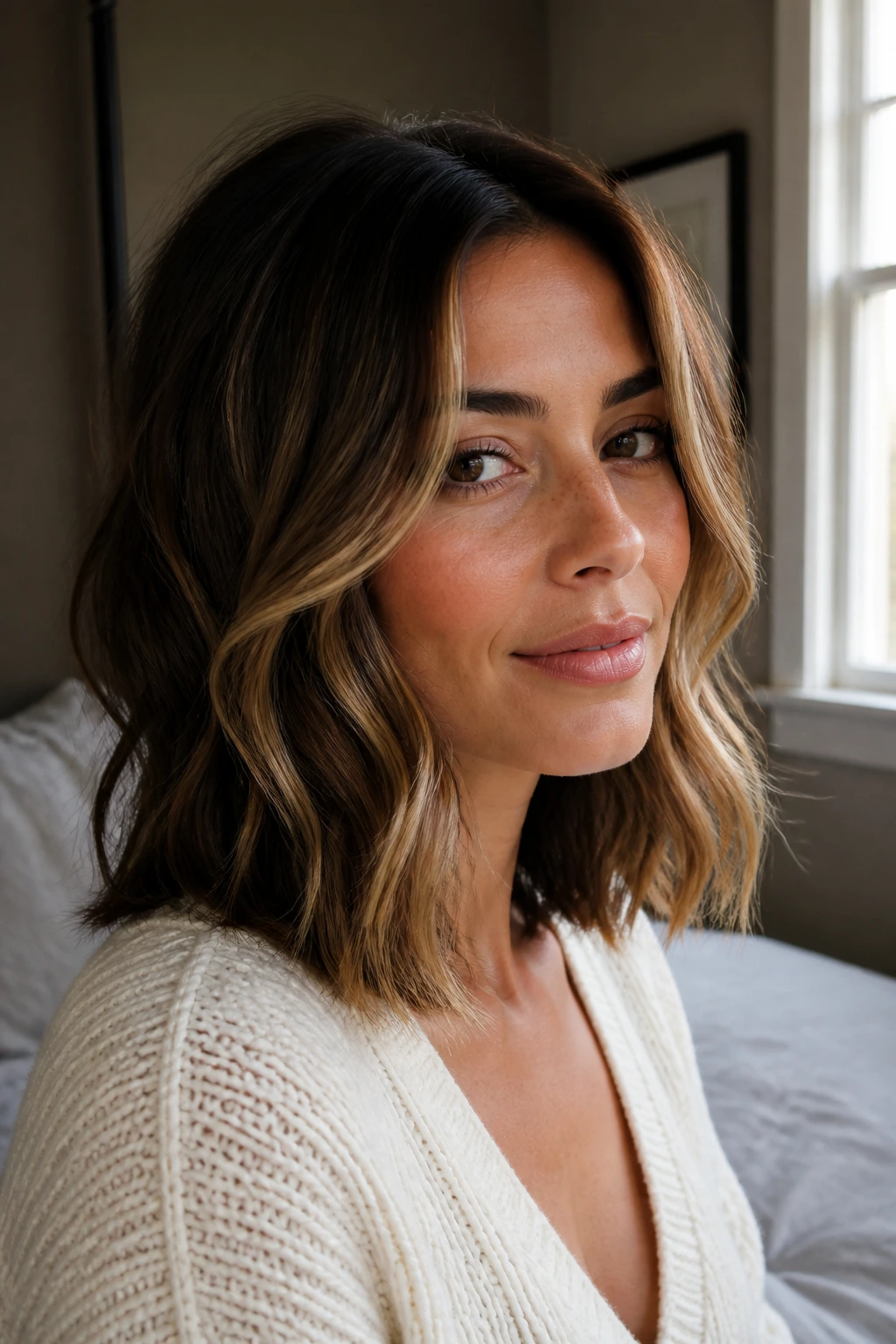
Why Medium Length Hair Gives Color More Room to Move
-
Face-framing payoff: Collarbone-length cuts sit near the jaw and cheekbones, so a few lighter pieces around the front do more than the same amount of brightness buried in waist-length hair.
-
Less upkeep pressure: A root shadow or soft balayage can grow out for weeks without looking abandoned, which makes bold tones and brighter blondes less risky.
-
Movement shows faster: Waves and bends appear in less hair, so caramel ribbons, ash babylights, or champagne slices read from the first blow-dry instead of disappearing into the length.
-
Better use of budget: Partial highlights, money pieces, and halo placement can cover the pieces people actually see, so you often need fewer foils than you would on long hair.
-
Styling changes the color story: Straight hair shows slices and contrast. Wavy hair shows ribbons and blends. Medium-length cuts can wear both without looking overloaded.
1. Caramel Ribbon Balayage
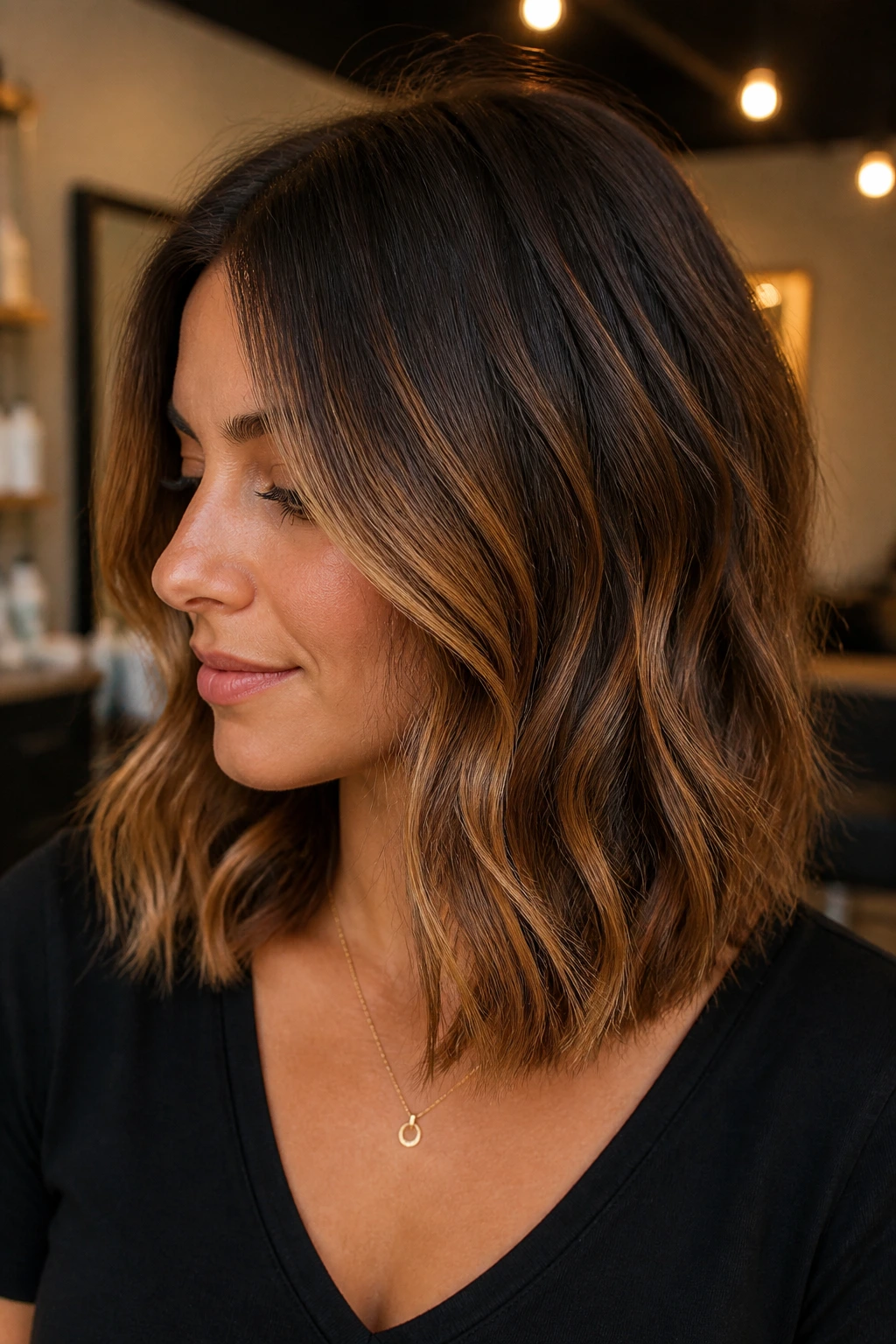
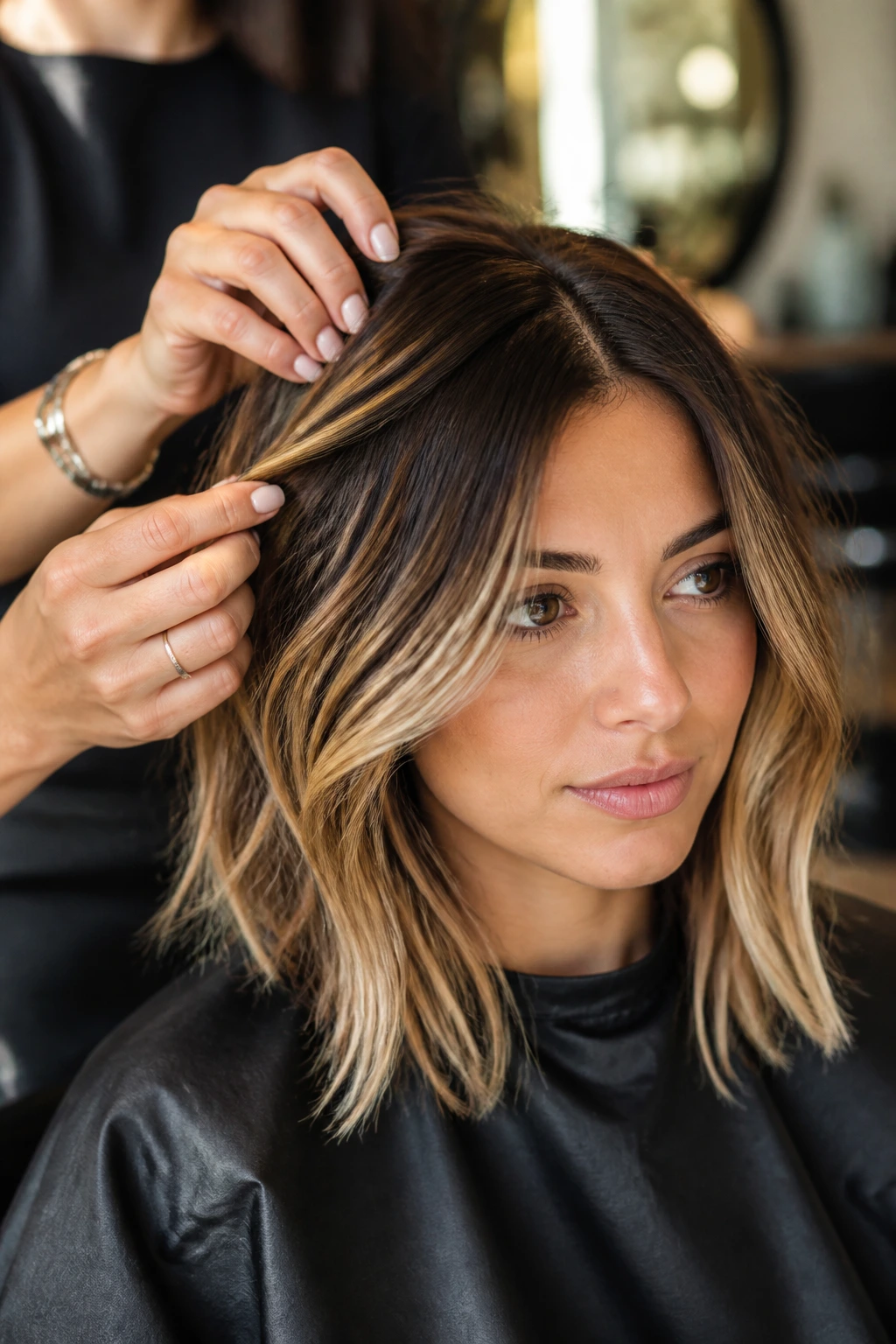
Caramel ribbon balayage is the kind of warm, hand-painted color that makes medium-length hair look fuller without shouting for attention. The ribbons sit inside brunette or dark blonde bases, so you get soft contrast when the hair bends around the shoulders. On a lob, that movement matters. The color flashes when the ends flip out instead of only showing at the root line.
Why It Works on a Mid-Length Cut
Balayage gives you scattered brightness rather than a rigid stripe, and that keeps a medium cut from looking boxy. Ask for ribbons that start around the mid-shaft and get lighter toward the ends, with one or two brighter pieces near the front. If the base is level 4 or 5, caramel usually lifts enough to read without turning loud or orange.
- Keep the lightness to about 2-3 levels above your base.
- Ask for a soft root shadow so the grow-out stays blurry.
- Curl with a 1.25-inch iron to make the ribbons separate.
Best move: leave one brighter ribbon next to the cheekbone on your stronger side. It sounds tiny. It isn’t.
2. Cool Beige Babylights
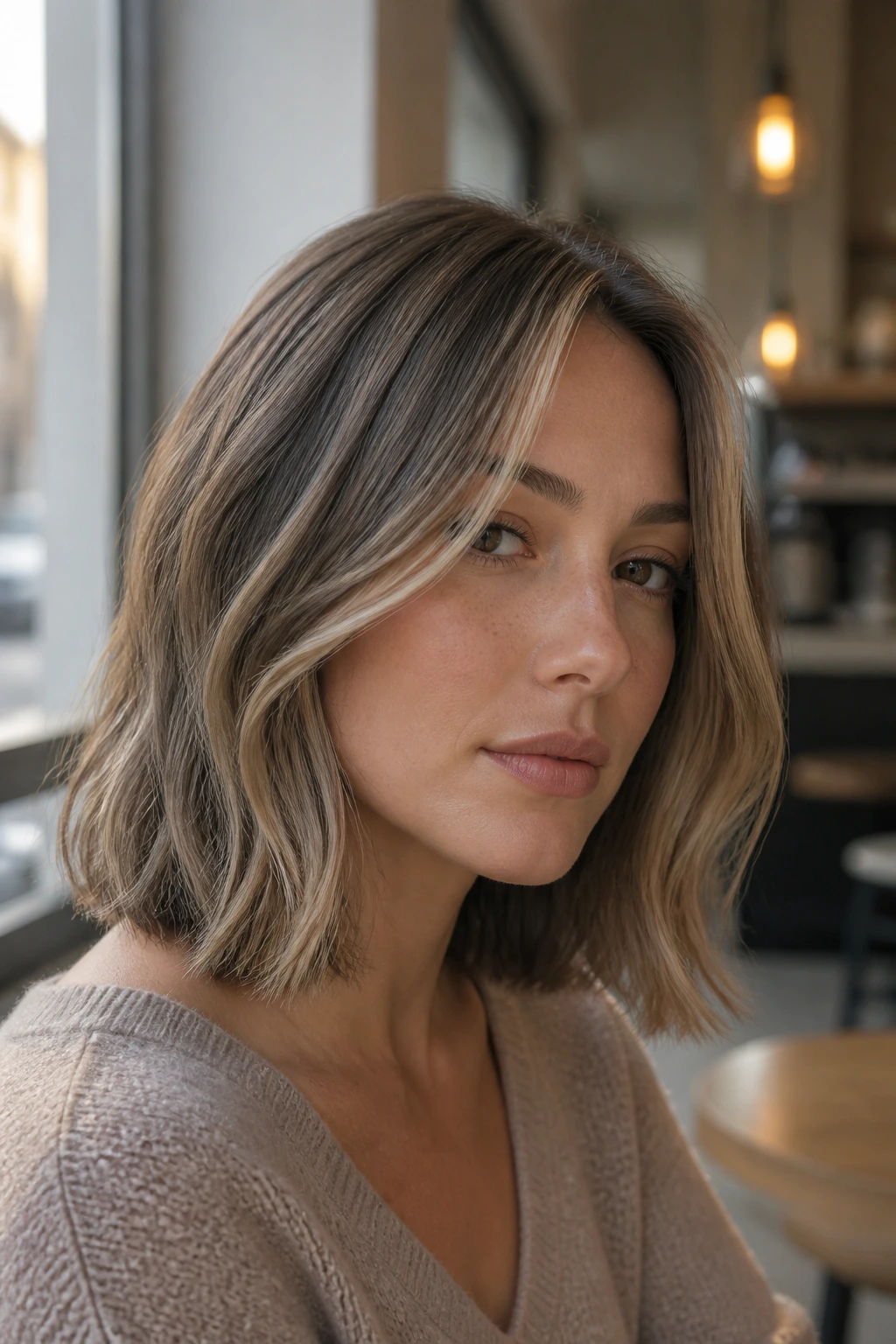
If you want dimension and don’t want anyone pointing at your hair and saying, “You got highlights,” babylights are the quietest way to change a medium cut. The strands are so fine they blur into the base color, which keeps the result airy instead of striped. That matters on a shoulder-length bob, where even one heavy foil can look obvious.
Babylights work especially well when the goal is density rather than drama. Fine hair looks thicker because the light catches more points on the surface. The trick is to keep the toner beige or pearl, not icy. Too much ash can flatten the whole thing and make the hair read matte instead of soft.
A clean center part helps, but so does a slight off-center part. The tiny brightness around the part line and temples is what makes this look worth the money. Everything else can stay closer to your natural shade.
3. Face-Framing Money Piece
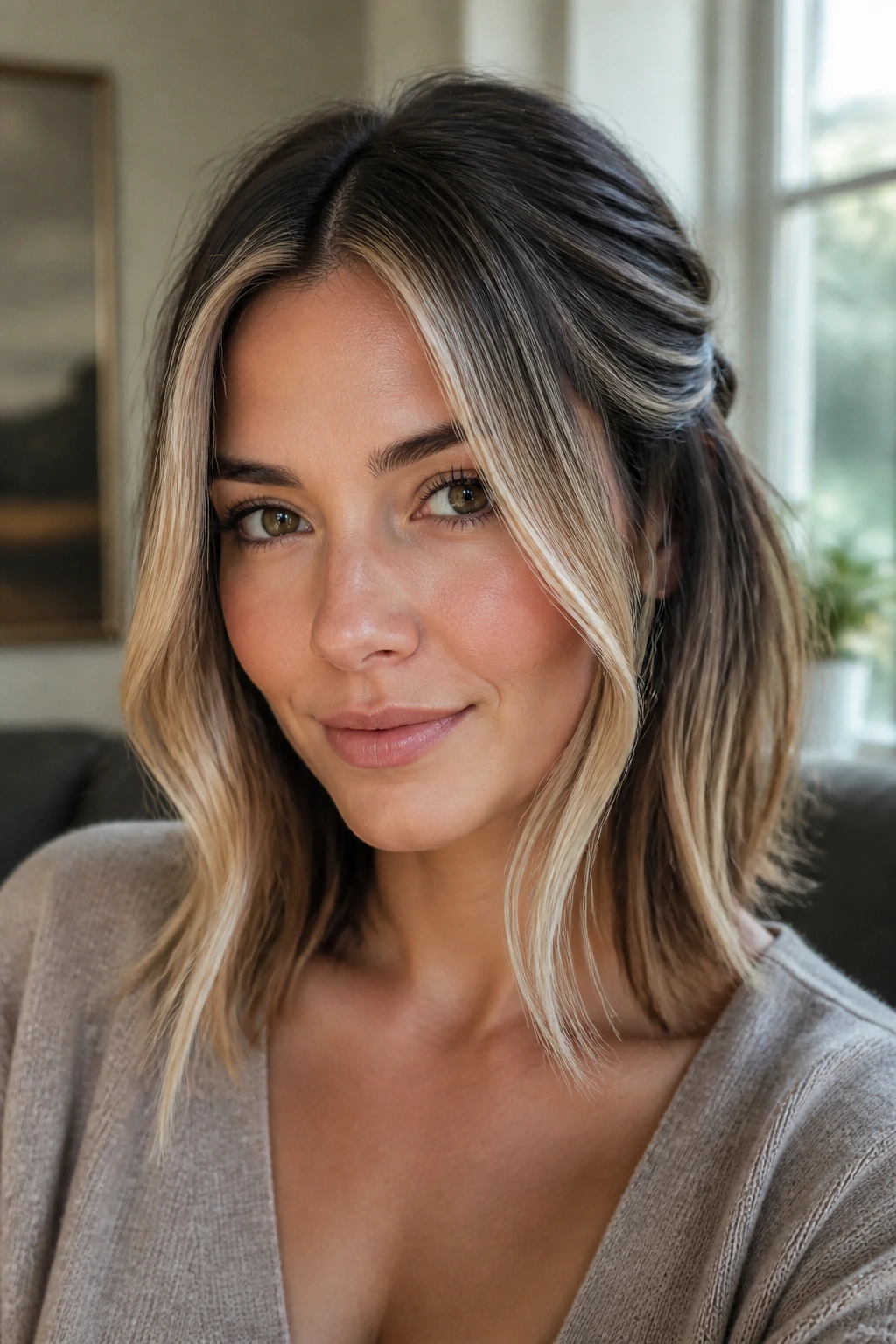
Why does one bright panel change a medium cut so much? Because the front section is always in motion. It shows up when you tuck your hair back, throw on sunglasses, clip one side behind the ear, or pull everything into a low ponytail. A money piece makes the haircut look brighter even when the rest of the color stays quiet.
How to Ask for It at the Salon
Tell your colorist you want brightness concentrated at the front hairline and through the first few inches of the crown, not a full-head blonde session. On medium-length hair, that usually means the front pieces start near the eyebrows or cheekbones and continue through the ends. The back can stay deeper, which keeps upkeep sane.
If your hair is naturally dark, a strong money piece can be a better first step than trying to lift the whole head at once. It gives you contrast without making the mid-lengths and ends carry the entire bleach load. That’s the part many people skip, then regret later.
4. Mushroom Brown Dimension
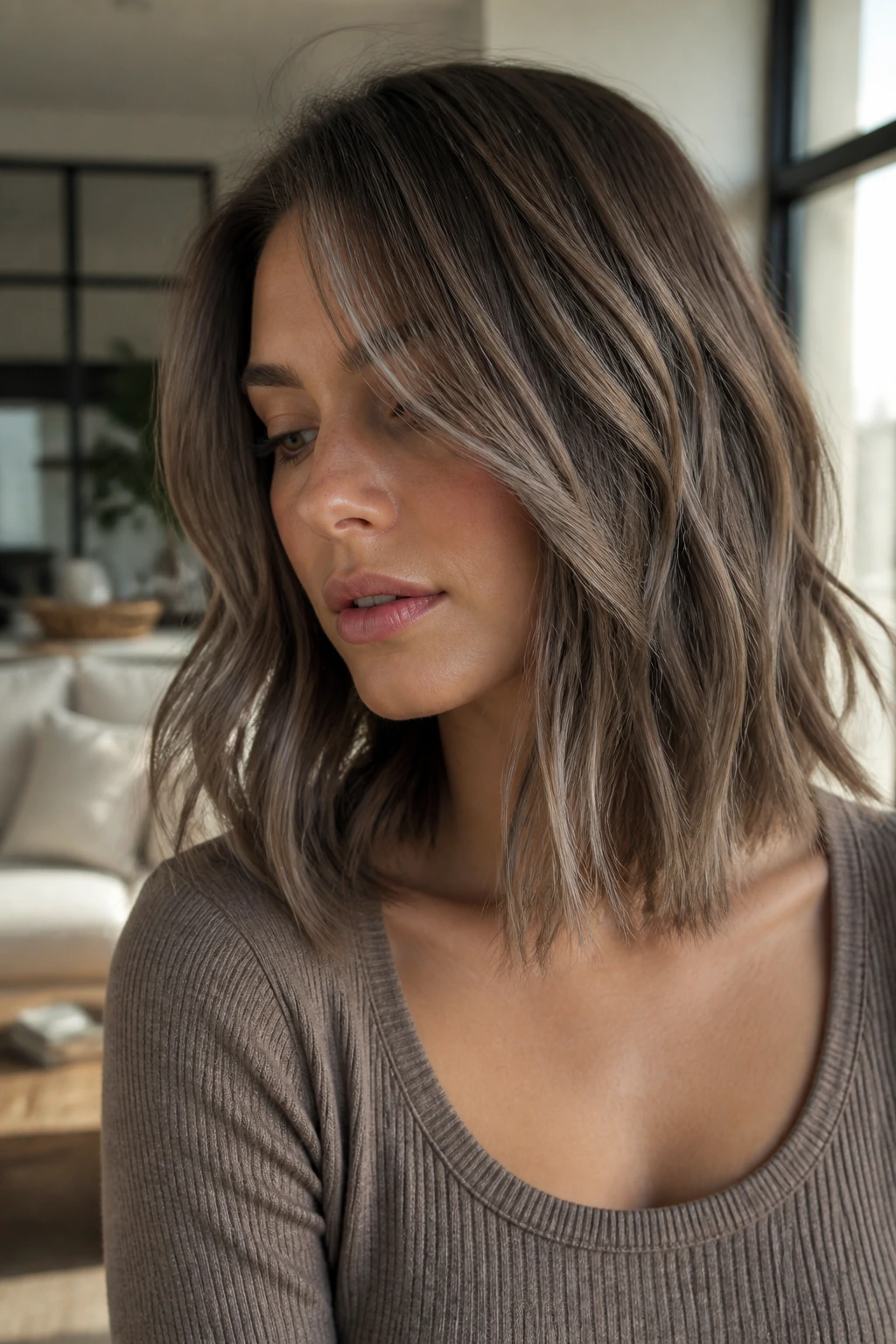
Picture a shoulder-grazing brunette cut that looks flat indoors and then suddenly catches depth near a window. That’s mushroom brown doing its job. The tone sits between beige, ash, and soft taupe, so it keeps warmth under control without turning the hair muddy. Medium-length cuts love that middle ground because the different tones show as the hair swings.
Ask for a mix of lowlights and cool beige highlights rather than one flat brown gloss. The whole point is to create a smoky, expensive-looking surface. If your base is around level 5 or 6, mushroom brown can be built with subtle lift and a neutral toner, which keeps the result from drifting orange.
- Best when your natural hair leans warm but you want to calm it down.
- Looks especially good on layered lobs and loose waves.
- Needs a toner or gloss refresh when the ash starts fading.
The finish should feel polished, not chalky. That’s the difference.
5. Honey Blonde Foilayage
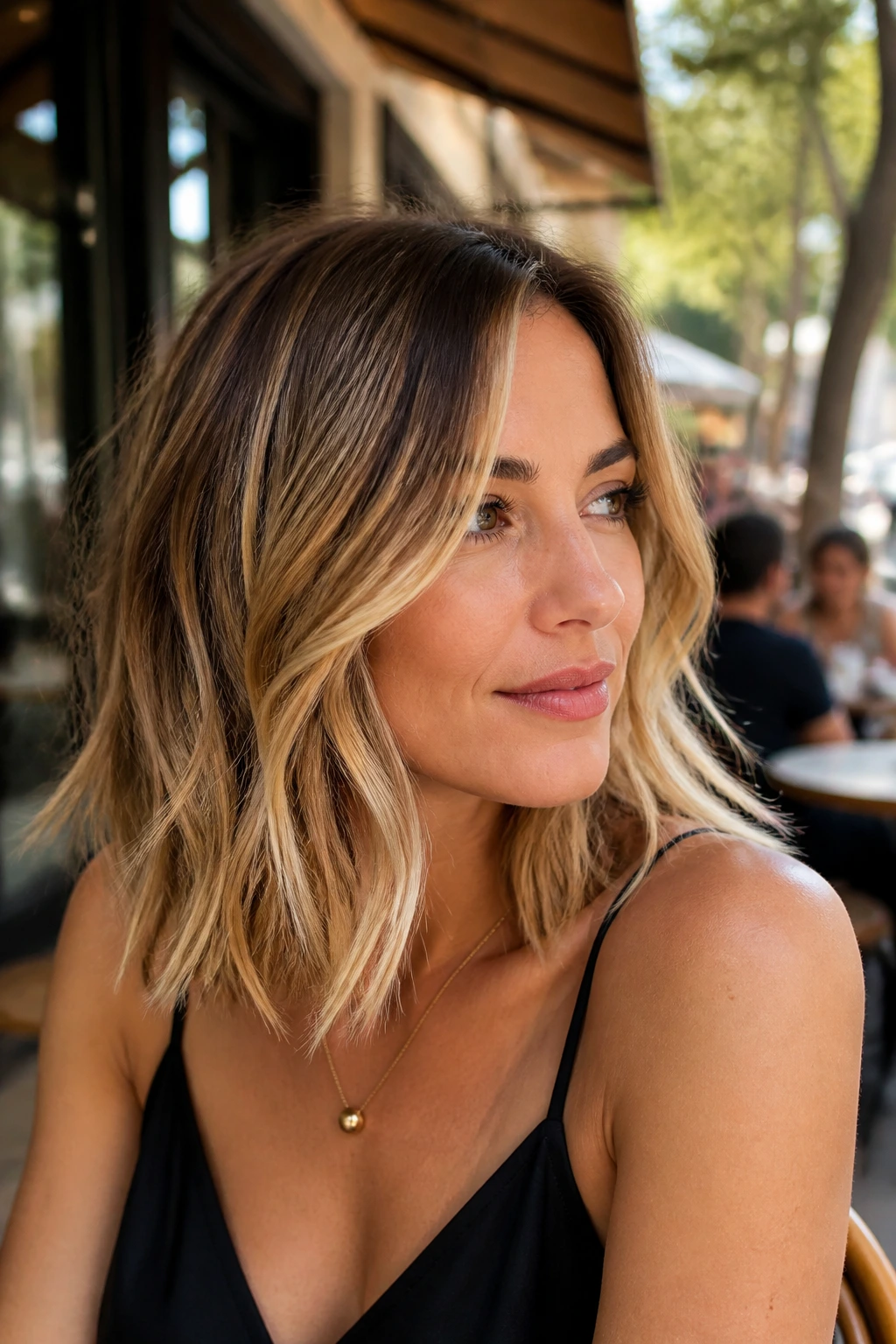
Foilayage is the bridge between brighter foil highlights and softer balayage, and medium-length hair gives it a clean shape. The foils help lift the hair higher, while the hand-painted placement keeps the result from looking rigid. On a lob, that means you can get honey blonde brightness through the mid-lengths and ends without loading every strand with bleach.
This is one of those looks that comes alive the second the hair gets a bend in it. Straight, it reads sleek and smooth. Wavy, it shows off the different zones of light and shade. That’s why honey blonde foilayage is such a good fit for medium-length hair that gets blown out or curled often.
If your base is dark blonde or light brown, ask for brightness that begins at the face and gets a little denser through the top layer. The back can stay softer. You want the color to move, not scream.
6. Copper Veil Highlights
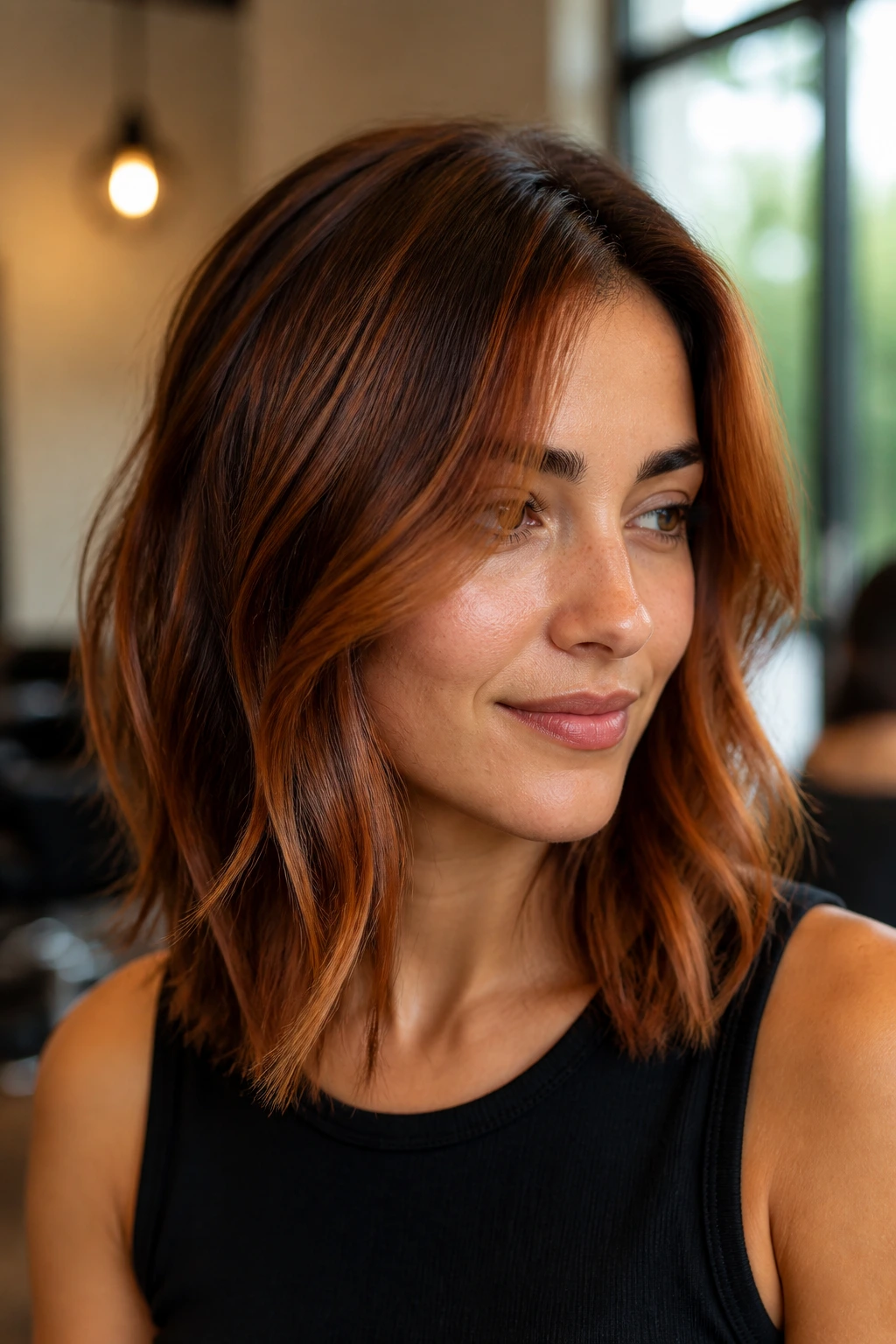
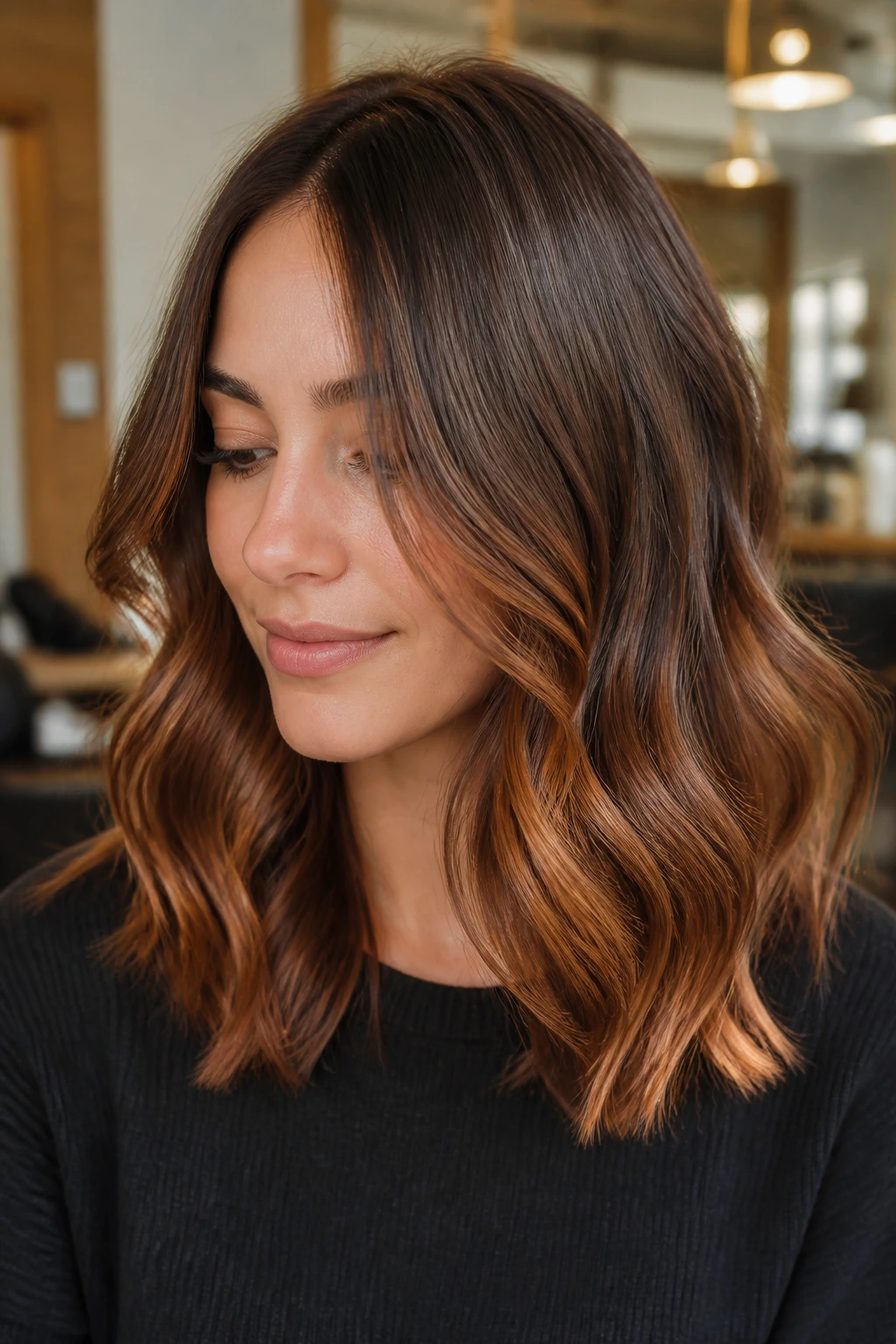
Copper veil highlights are for anyone who wants warmth with a little edge. Unlike blonde, copper doesn’t need your hair to be pushed to the moon in order to show. That means medium-length brunettes can often get a richer result with less damage, especially if the goal is shine and tone rather than pale lift.
The word “veil” matters here. You’re not asking for thick orange streaks. You want translucent copper that sits over the surface and flashes when the hair moves. On medium-length cuts, that effect is gorgeous around the front and through the top layer, where the color can catch the light without taking over the whole head.
Copper also fades in a way I like more than some blondes do. It softens into apricot or warm gold instead of turning dusty. If you’re someone who likes your color to look expensive for a few weeks and then still stay decent after that, copper is a strong choice.
7. Peekaboo Color Panels
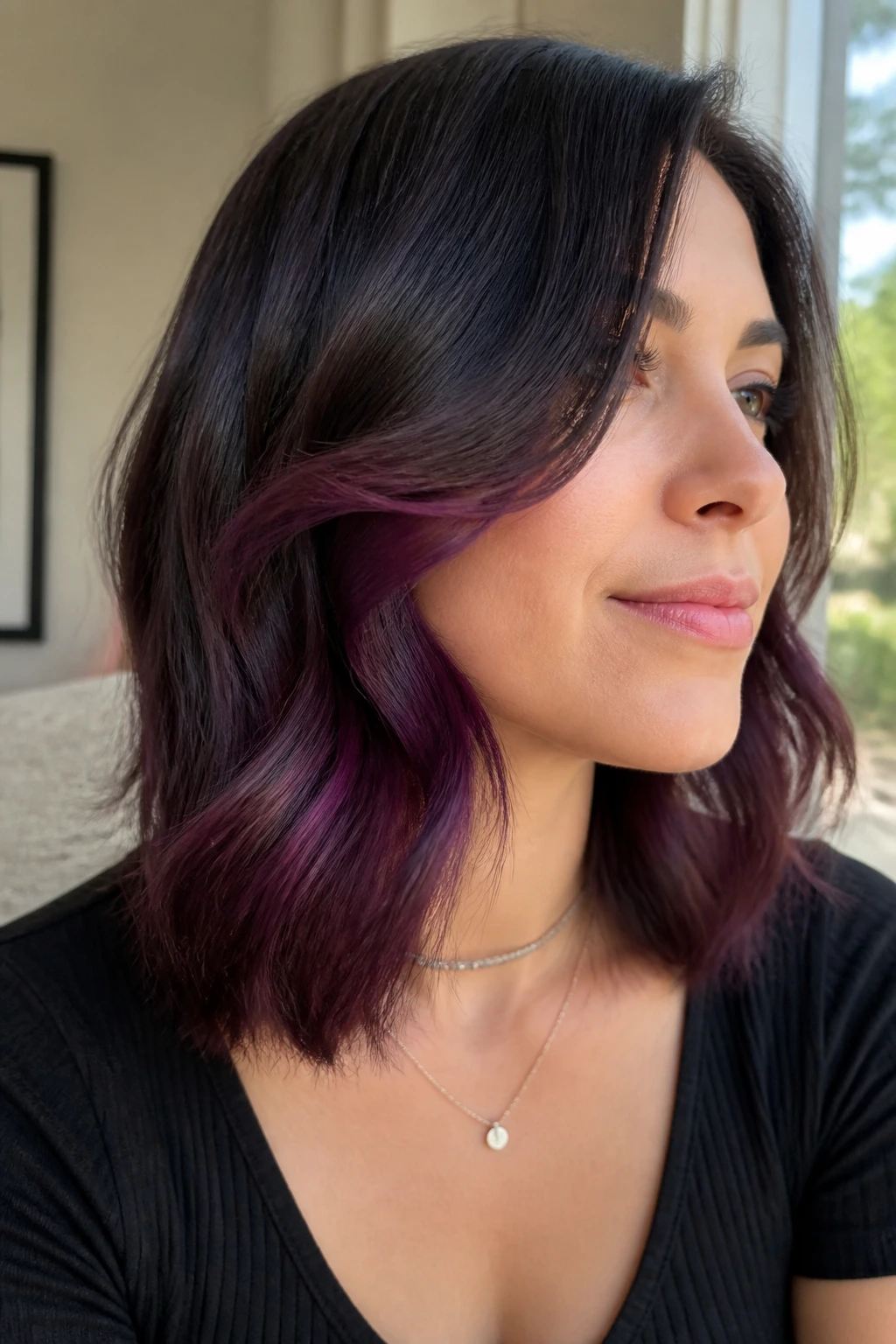
Peekaboo highlights are the mischievous cousin in this group. They hide under the top layer and only show when you curl your hair, tuck it behind your ear, or flip the ends. On medium-length hair, that hidden strip has enough length to reveal itself without looking juvenile or too busy.
This is the place for berry, plum, teal, or even a deep copper if you want a little surprise without changing your whole head. The top section can stay close to your natural color, which means the panels feel deliberate rather than loud. That’s useful if you need the color to play nice in a conservative setting.
Where They Work Best
- Under the crown on a layered lob.
- Along the nape for a flash when hair is lifted.
- Beneath face-framing pieces if you want the color to peek through curls.
The real appeal is movement. Still hair looks restrained. A bend in the hair reveals the fun part.
8. Chunky ’90s Blonde Ribbons
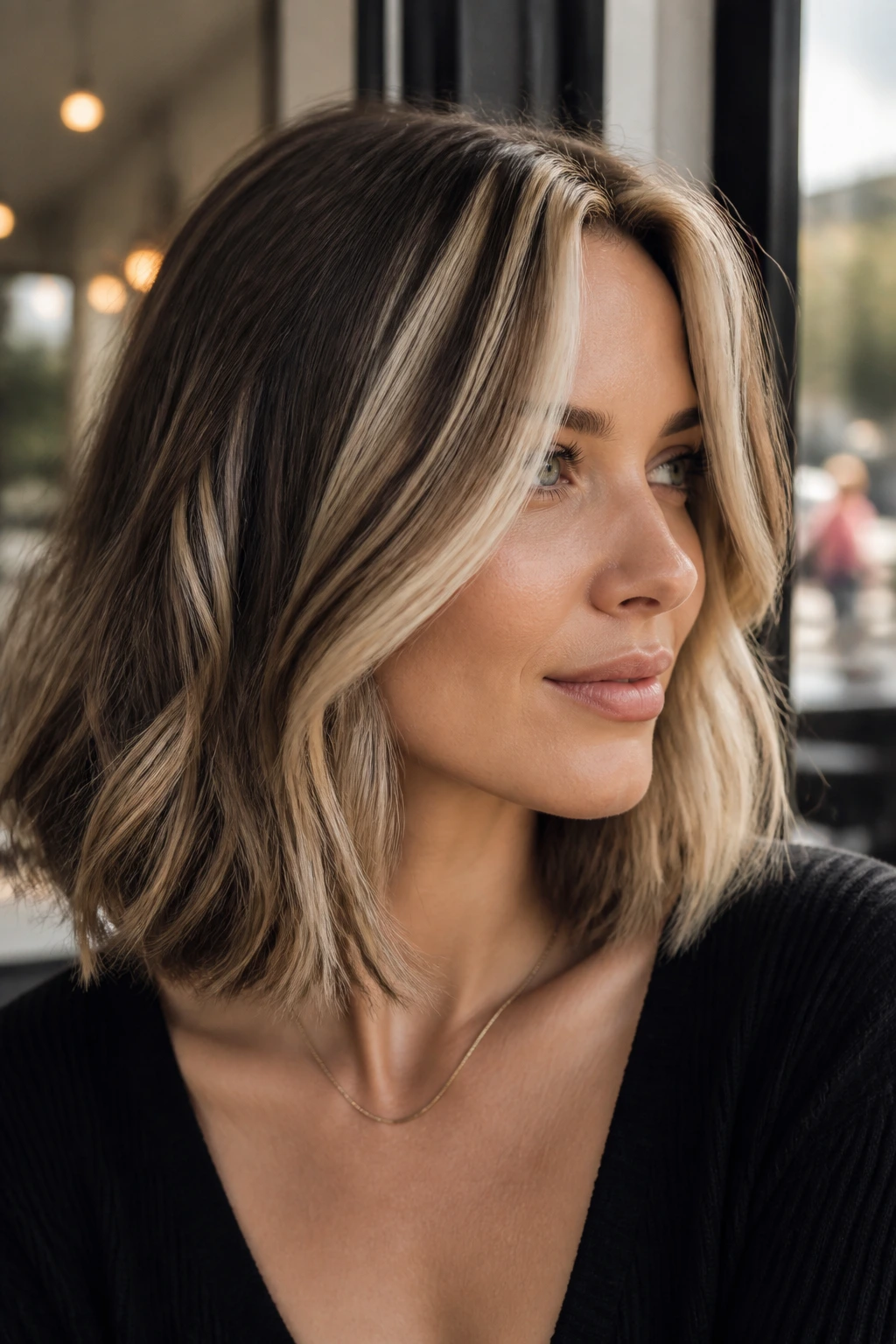
Not every highlight needs to whisper. Chunky blonde ribbons are back because they do something modern babylights can’t: they create bold blocks of contrast that medium-length hair can actually carry. On a blunt lob or a shag with pieces around the face, the thicker lightening looks intentional, especially if the base color stays deep enough to frame it.
The key is placement. You do not want chunky ribbons scattered all over like a zebra print gone wrong. You want a few broader pieces at the front, through the crown, and maybe one or two low pieces that echo the top. The hair should still have dark zones between the lighter ones.
These are the highlights that look best when the hair is styled. A loose wave, a round-brush bend, or a flipped-out end gives the ribbons shape. Flat-ironed to death, they can look harsher. So if you like this look, learn to bend the ends a little. It helps more than people think.
9. Soft Cinnamon Brunette
Want warmth without drifting into orange? Cinnamon is the sweet spot. It’s a red-brown tone that sits on brunette hair like a soft filter, giving medium-length cuts a richer, spicier edge without making them look copper-heavy. I like it most on hair that already has some movement, because the bends show the color shifts without needing a bright blonde contrast.
How to Wear It
Ask for cinnamon-toned ribbons or a cinnamon gloss over lighter pieces if your base is already brunette. On a medium cut, the color usually looks best when it starts near the mid-lengths and brightens slightly toward the ends. That keeps the roots calm and the finish dimensional.
This works well if you’re tired of ash brown but don’t want gold. It sits in the middle, which is rare and useful. On shoulder-length hair, that middle ground can make the cut look thicker because the color isn’t competing with the shape.
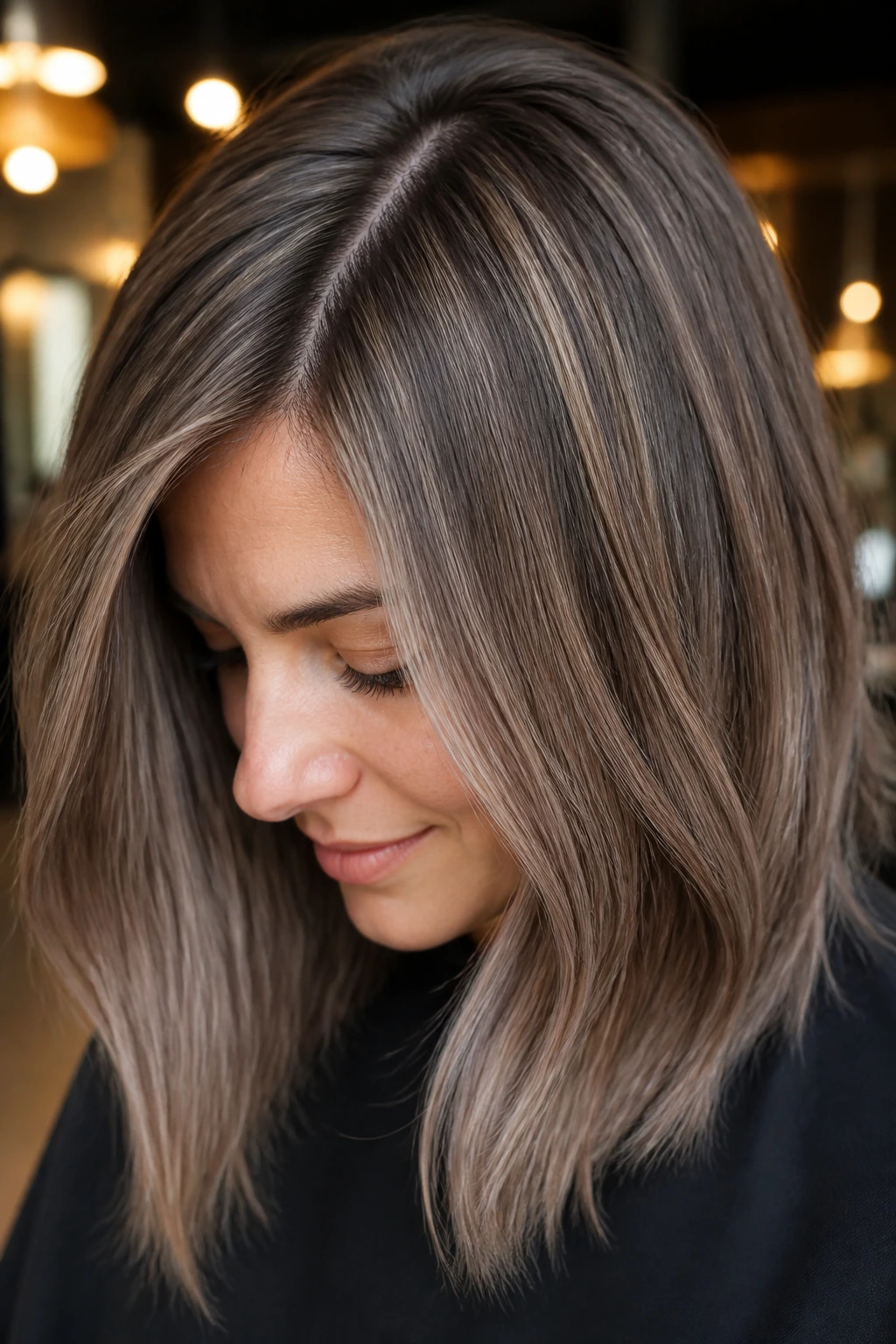
10. Ash Brown Micro-Highlights
Ash brown micro-highlights are the answer when you want your hair to look less one-note but you don’t want anyone to clock obvious color. The strands are tiny, cool-toned, and tucked into the surface layer, so they break up dark hair without turning it blonde. On medium-length hair, that subtle movement matters because the ends can otherwise look heavy.
These are especially good for fine hair. The little shifts of tone make the hair look like it has more density. They also help if you’re blending early gray, because the cool pieces mingle with silver instead of fighting it. The color should stay smoky, not green, so the toner choice matters more than people realize.
- Ask for very fine foils around the part and temples.
- Keep the lift mild; the goal is softness, not pale contrast.
- Refresh the toner before the ash drifts too far beige.
A lot of people overlook this look because it sounds subtle. That’s the appeal.
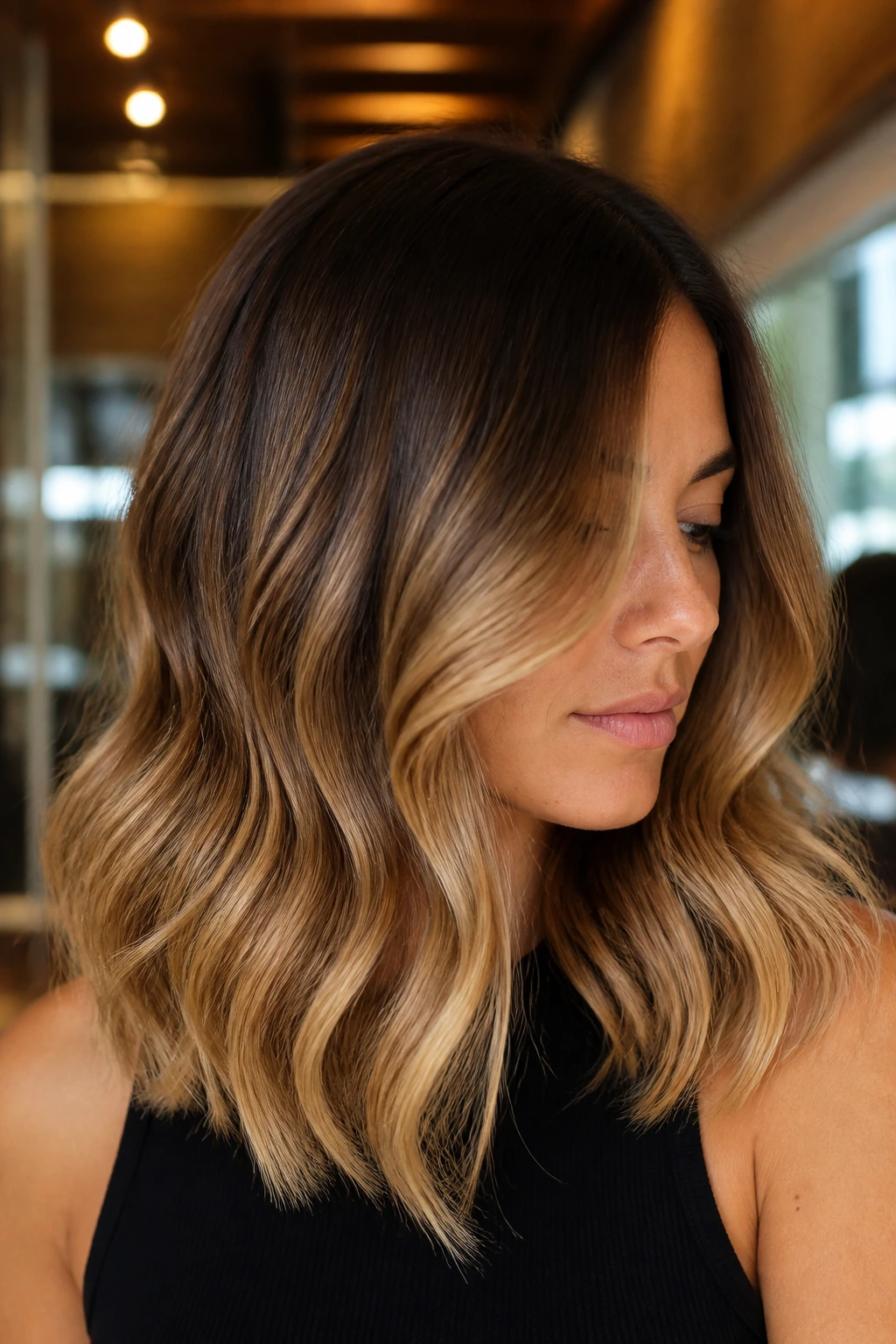
11. Golden Honey Ombré
Golden honey ombré is one of those colors that looks simple until you see it moving. The darker roots melt into warm honey mids and ends, so the whole head feels lighter without a hard line. Medium-length hair is a sweet spot for that shift because there’s enough length to show the gradient, but not so much that the transition gets lost.
This is a strong choice if you like your hair to look softer when it’s pulled back and brighter when it’s down. Waves make the gradient obvious. A straight blowout makes it look sleek and deliberate. Either way, the warm gold tone keeps the ends from looking flat.
The best version starts the lighter section lower than most people expect. If the transition begins too high, the hair can look like it grew out too fast. Keep the roots a shade or two deeper than the mids, and the whole thing stays believable.
12. Rose Gold Wash
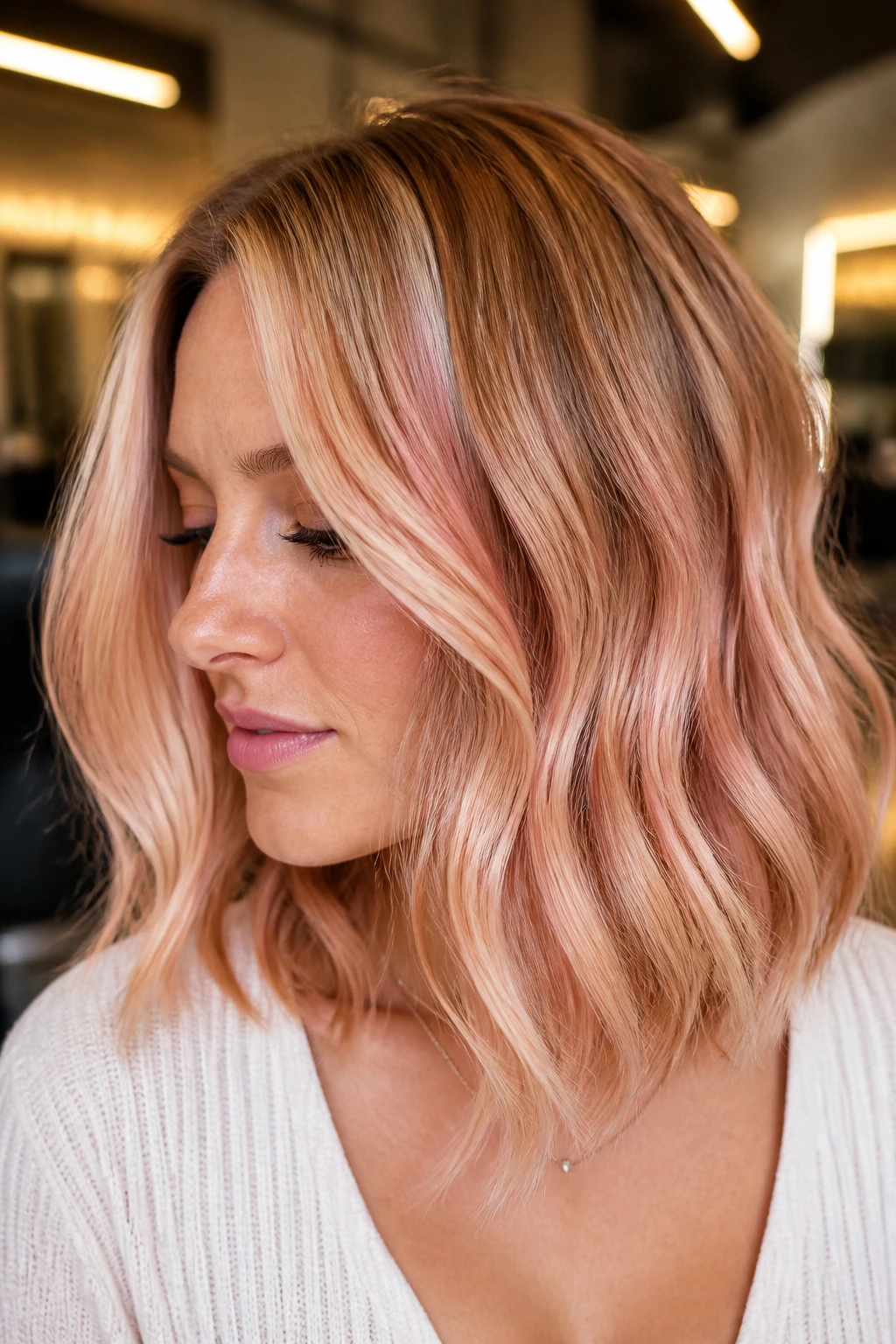
Rose gold is one of the few fashion tones that can still look grown-up on medium-length hair. The trick is not to go neon. You want a translucent pink-copper wash over light blonde or pale brown pieces, so the color lands somewhere between blush and peach. The result is soft, reflective, and a little unexpected.
This shade works best when the underlying highlights are already in place. Trying to force rose gold onto dark hair in one pass usually gives you a murky result. On a medium cut, though, a rose glaze over pre-lightened sections can be enough to change the whole mood of the hair.
It fades in a useful way, too. The pink softens, the copper lingers, and then the hair slides toward beige. That means you get a few stages out of one color service. If you like your hair to change a little over time instead of staying frozen, rose gold has more life in it than people assume.
13. Platinum Halo Highlights
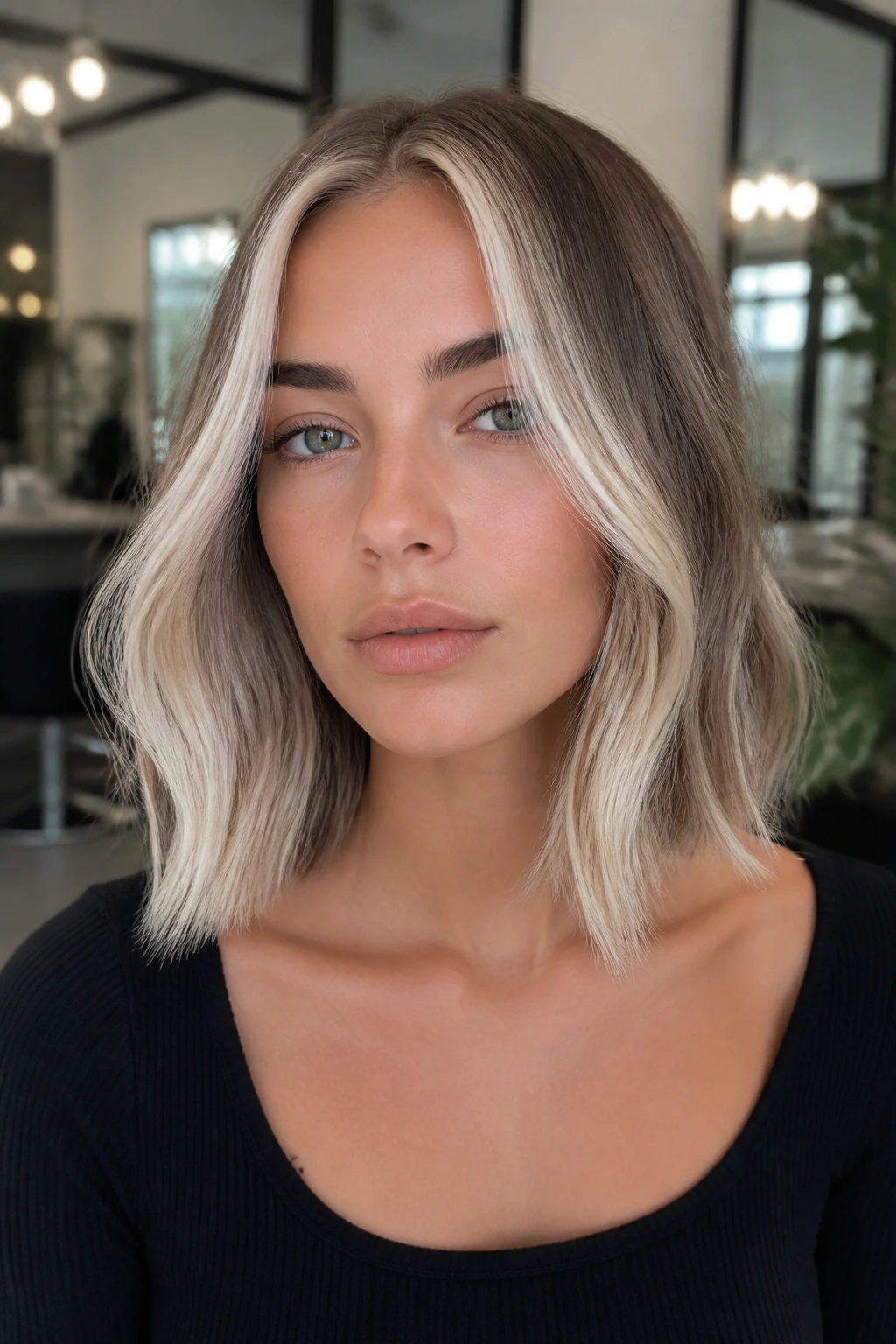
Platinum halo highlights concentrate brightness around the hairline and the top crown, which is exactly where medium-length hair can use it most. The halo sits like a frame, so the face gets lit up even if the rest of the head stays deeper. On a lob or shoulder-length cut, that can make the whole shape look sharper.
Why the Halo Reads So Cleanly
Because the lighter pieces sit where the eye lands first, you don’t need to bleach every strand to get impact. A well-placed halo around the temples, part line, and front lengths can do more than a whole-head highlight that never quite lifts evenly. The key is keeping the tone clean and icy, not yellow.
This is one of the higher-maintenance options here. Platinum shows every fade and every stain of brass. But if you want the brightest possible frame and you’re willing to keep toner in rotation, the payoff is huge. It looks especially good when the ends are blunt or the hair is tucked behind the ears.
14. Toasted Toffee Balayage
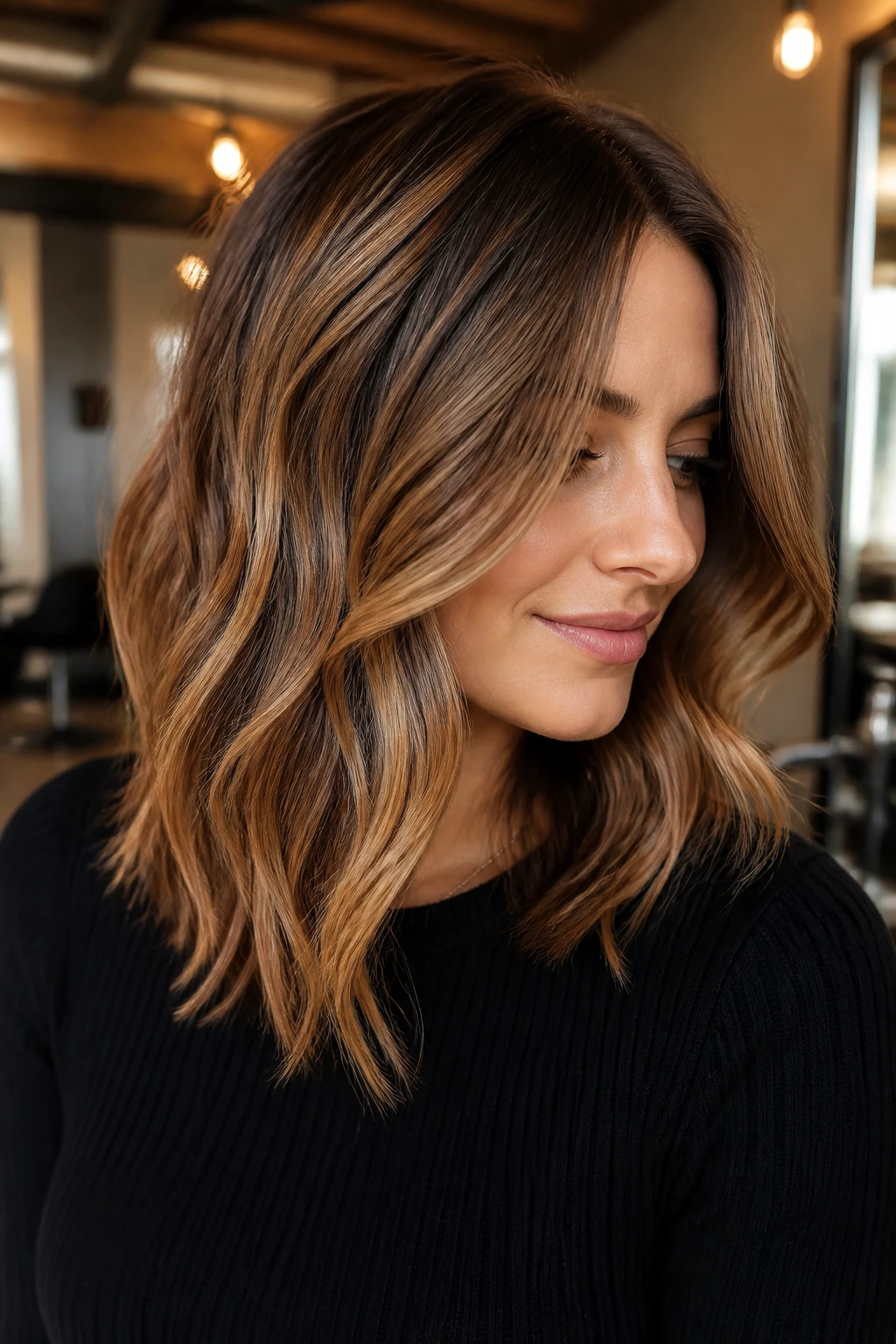
Toffee balayage sits a little deeper than caramel and a little softer than blonde, which makes it one of the easiest warm tones to live with on medium-length hair. The highlights are creamy and brown-leaning, not gold-heavy, so the color keeps depth even when the light hits it hard. That matters on a cut that sits around the shoulders and gets moved around all day.
I like this look on brunettes who want warmth but get nervous when the word “blonde” comes up. The result feels polished without demanding constant toner appointments. If the hair has some layers, the toffee ribbons show through the ends in a way that makes the cut look less blunt.
The best version stays a shade or two away from the base rather than leaping straight to pale. That restraint is what makes it wearable. It isn’t loud. It isn’t flat either.
15. Sandy Beige Lowlights + Highlights
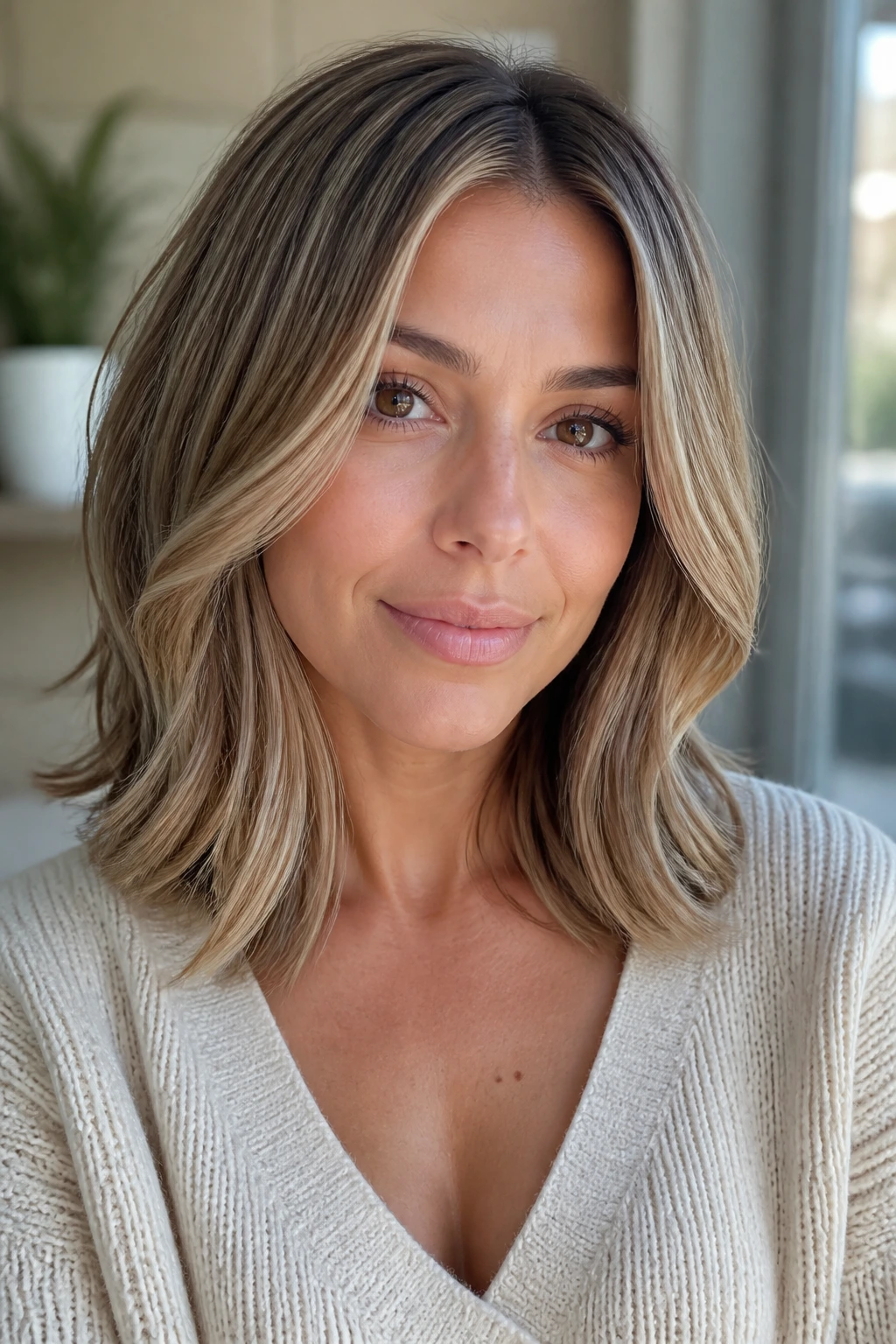
Want blonde that doesn’t flatten out by the second week? Put light pieces and darker pieces in the same head. Sandy beige lowlights and highlights keep medium-length hair from turning into a sheet of one tone, which happens fast when the base is all the same level. The lowlights matter more than people think; they give the lighter strands a place to live.
How to Ask for It
Tell your colorist you want sandy, neutral beige brightness on top, then slightly deeper pieces underneath or around the interior. On a medium cut, that contrast keeps the shape from looking over-processed. It also helps if your hair is fine, because the darker threads can make the overall texture read thicker.
This is a smart move for people who like blonde but hate that washed-out look that can happen after a few washes. Beige tones are forgiving. The lowlights keep them honest. The combination gives you brightness without the flat, pasted-on finish that too much uniform blonde can create.
16. Smoky Silver Ribbons
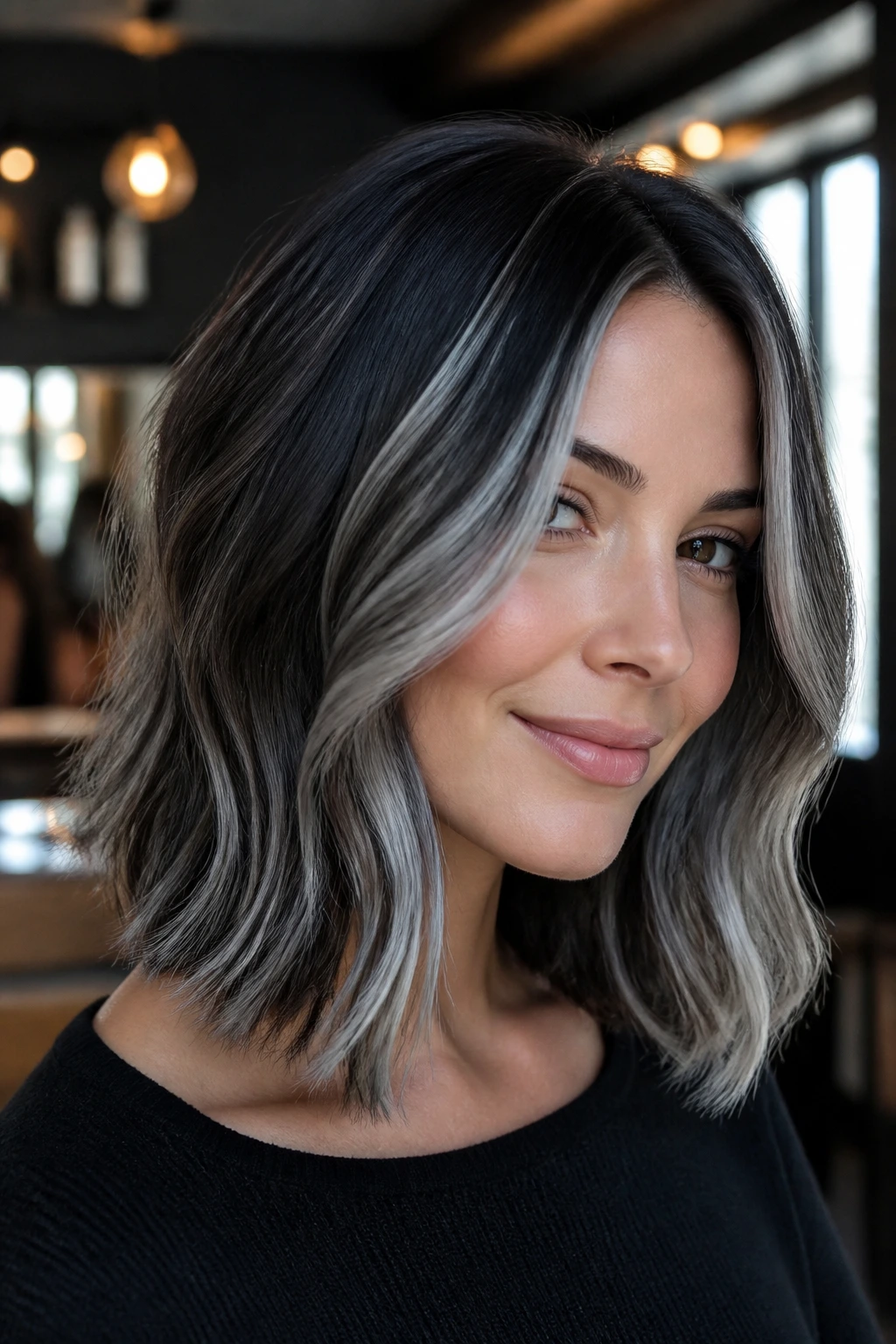
Smoky silver ribbons are not the same thing as icy platinum. They’re softer, darker, and a little moodier, which makes them a strong option for medium-length hair that needs contrast but not full brightness. On a dark base, the silver can look metallic and dimensional rather than loud, especially when it’s woven through the top layer and around the face.
This is also one of the better ways to blend natural gray if you’re not trying to hide it completely. The silver pieces can merge with regrowth instead of fighting it. On a shoulder-length cut, the ribbons show every time the ends swing, so the color gets a lot of visual mileage.
- Use a cool toner that stays smoky, not white.
- Keep some depth near the root so the silver has contrast.
- Protect the ends; pre-lightened hair can get brittle fast.
The finish should feel sleek. If it looks chalky, the toner went too far.
17. Auburn Veil Highlights
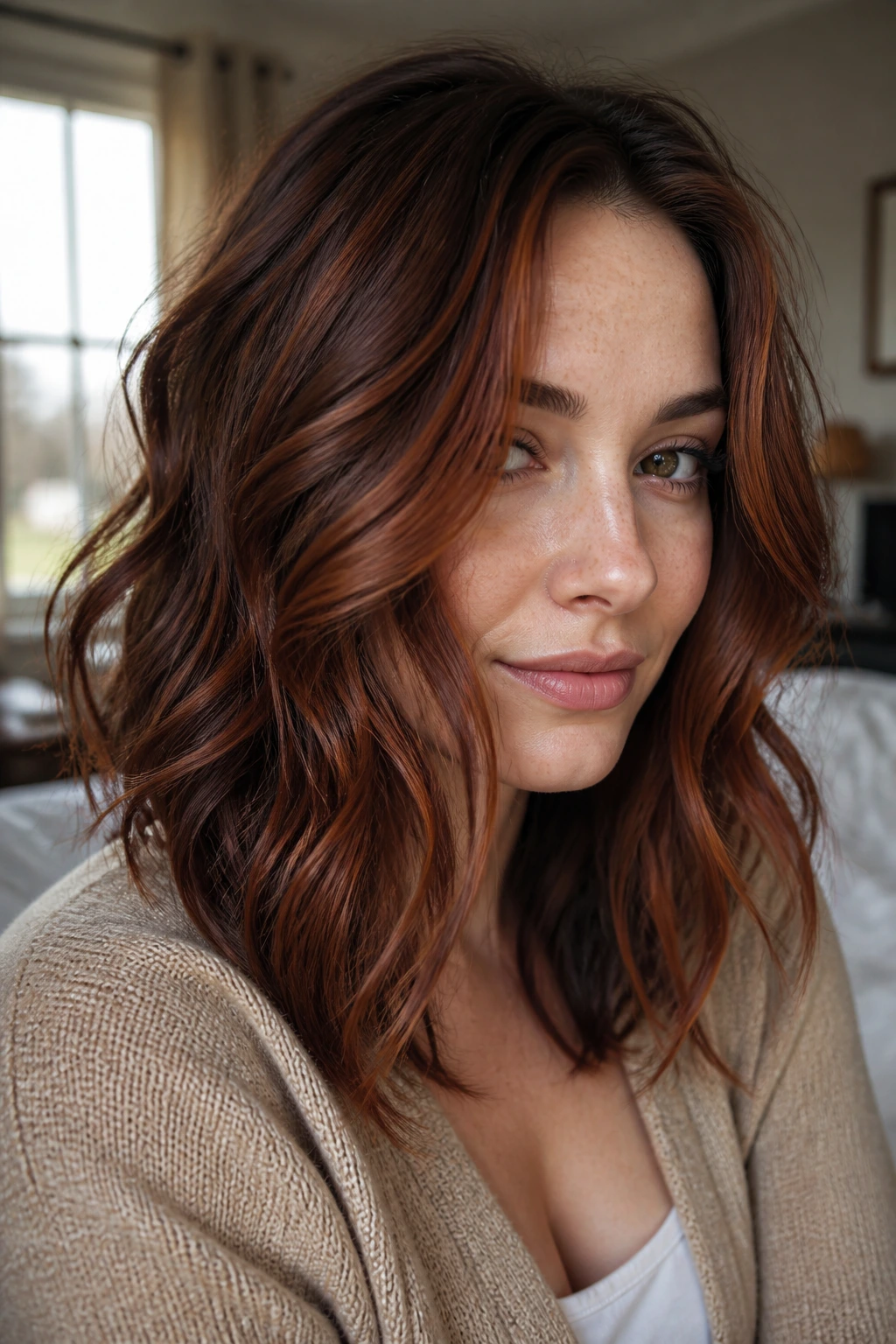
Auburn veil highlights bring a red-brown warmth that sits somewhere between copper and chocolate. On medium-length hair, that tone can be surprisingly rich because the color shows through the bends instead of needing a bright blonde strip to announce itself. If your natural shade is brown, auburn pieces can make the hair look fuller without pushing it into obvious red.
This is a good choice for wavy cuts and soft shags. The different lengths catch the color in separate places, which keeps the auburn from reading as one flat overlay. I like it especially on medium cuts that live in a loose blowout, because the movement makes the color look intentional rather than seasonal or themed.
If you want the auburn to stay elegant, ask for a veil effect rather than a heavy block of color. The tone should glow, not blaze. There’s a real difference.
18. Champagne Blonde Slices
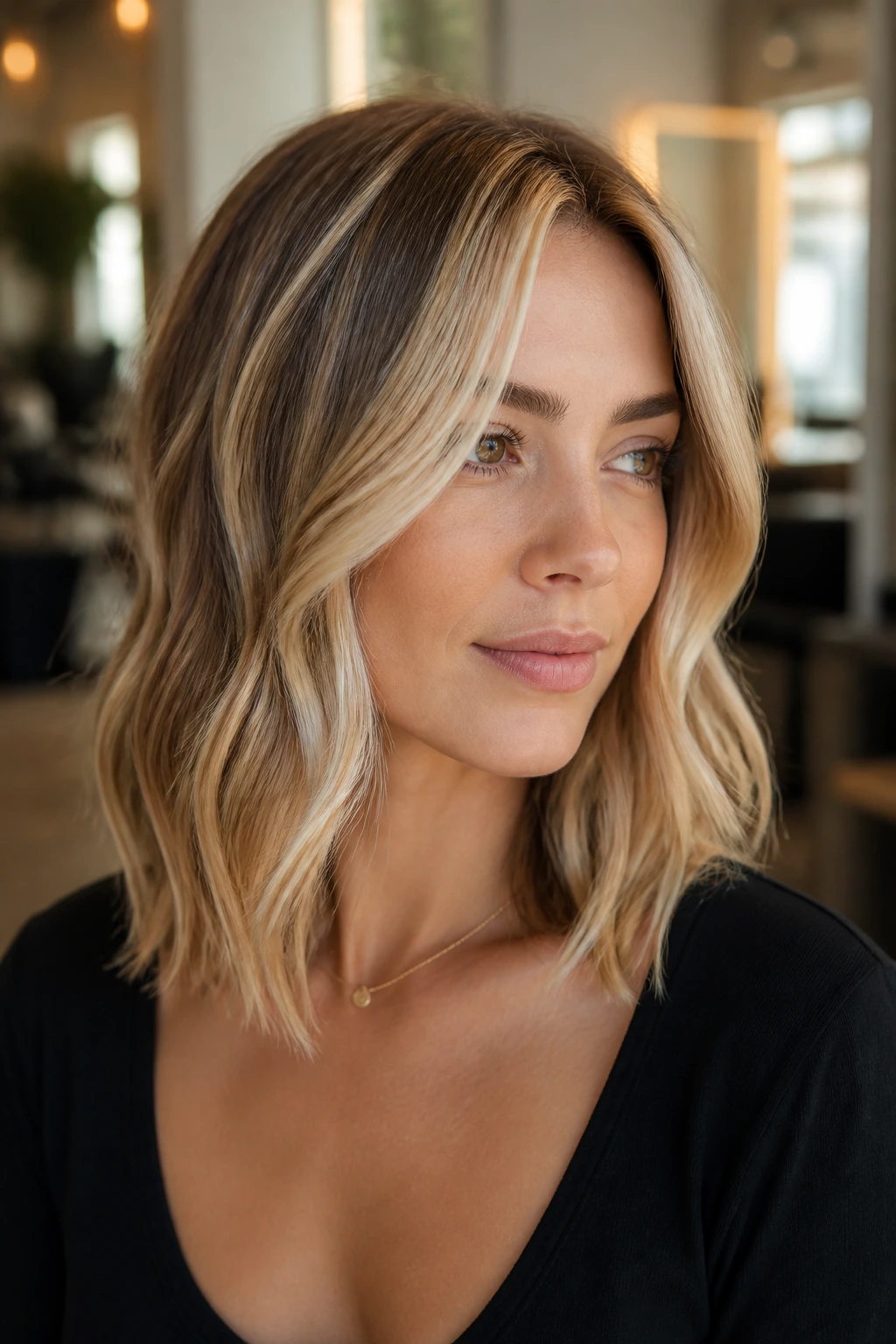
Champagne blonde slices are brighter and wider than babylights, which makes them useful when medium-length hair needs visible light without turning into full-on platinum. The color sits in a balanced zone — not too gold, not too icy — so it reflects light without pulling harsh on the skin. That middle tone is why it photographs cleanly and still looks believable in person.
Unlike babylights, slices give the hair a more deliberate shine. You can see where they live, especially on blunt ends and denser hair. If your cut has a solid outline, a few champagne slices can break it up fast.
They’re best used sparingly at the front, crown, and around the top layer. Too many, and the effect loses shape. Just enough, and the hair looks expensive in the old-fashioned sense — glossy, controlled, and not trying too hard.
19. Rich Brunette Dimension
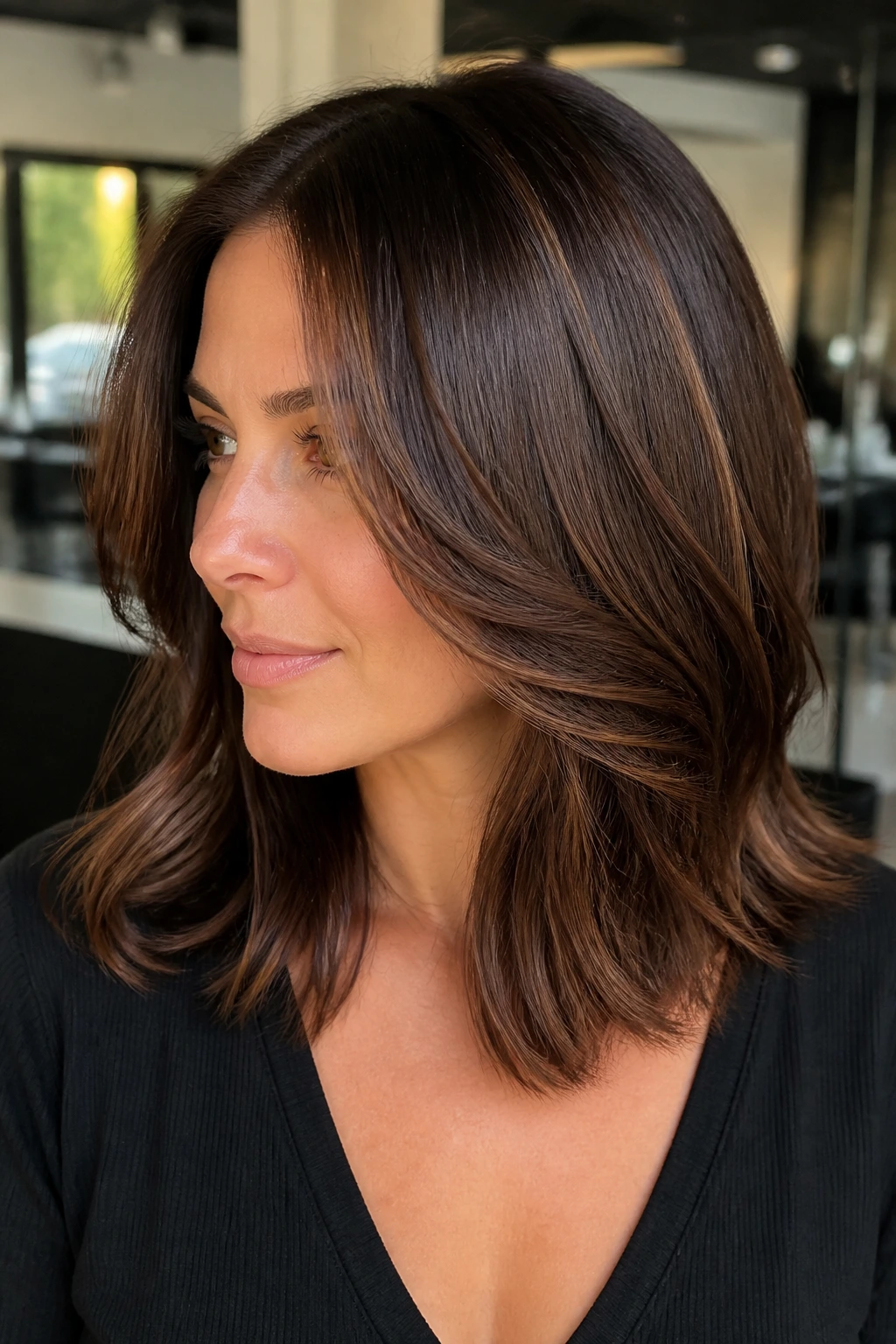
A brunette doesn’t need to become blonde to look dimensional. In fact, some of the nicest medium-length color comes from mixing chocolate, mocha, chestnut, and a softer brown glaze so the hair catches light in different places. Rich brunette dimension is all about that layered surface. It’s restrained, but it isn’t boring.
What Makes It Read So Well
The trick is to keep the tones close enough that the color still looks brunette from a distance. The contrast shows up when the hair moves or when light hits the ends. Ask for a gloss at the finish — that shine matters as much as the color choice.
This is a favorite for medium-length cuts because the shape stays visible. The color doesn’t swallow the haircut. If you wear a lot of black, white, or denim, rich brunette dimension has a clean contrast against clothes without competing with them.
20. Butter Blonde Ends
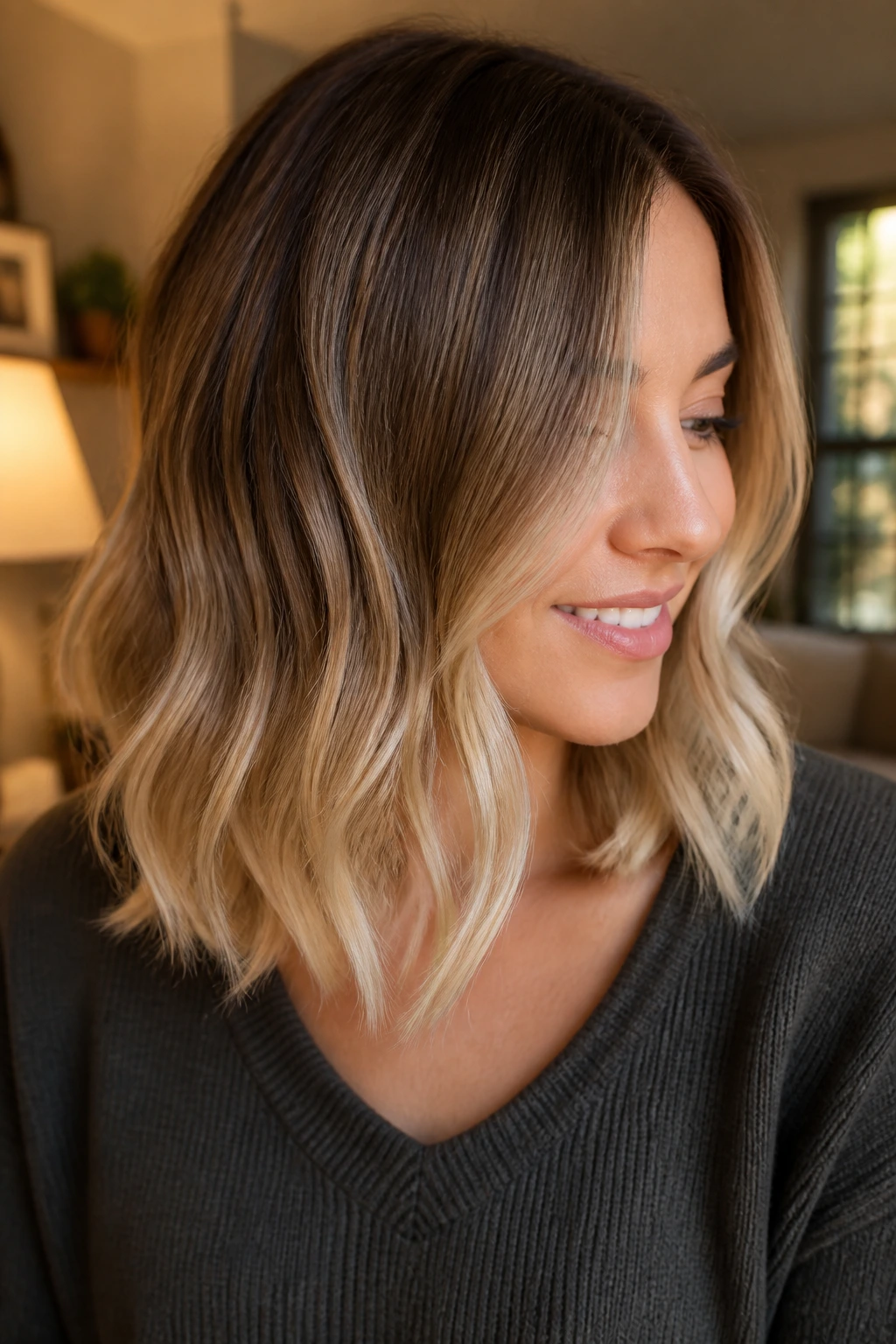
Butter blonde ends are the boldest choice in this group, and that’s exactly why they can be so good on medium-length hair. The look keeps the roots and mid-lengths a little deeper, then pushes the ends into a creamy, pale blonde. On a shoulder-length cut, that bright finish gives the hair a clear direction and keeps the bottom half from disappearing.
The main caution is damage. Bright ends need patience. If the hair is already fragile, asking for a softer ribboned lift may be smarter than bleaching the full lower section. But if the hair can handle it, the effect is striking in a clean, modern way.
This style looks best when the cut has enough movement for the ends to separate. A blunt edge can make the lightness feel blocky. Layers or a slight bevel in the cut help the blonde feel deliberate, not stranded.
21. Dimensional Mocha Swirls
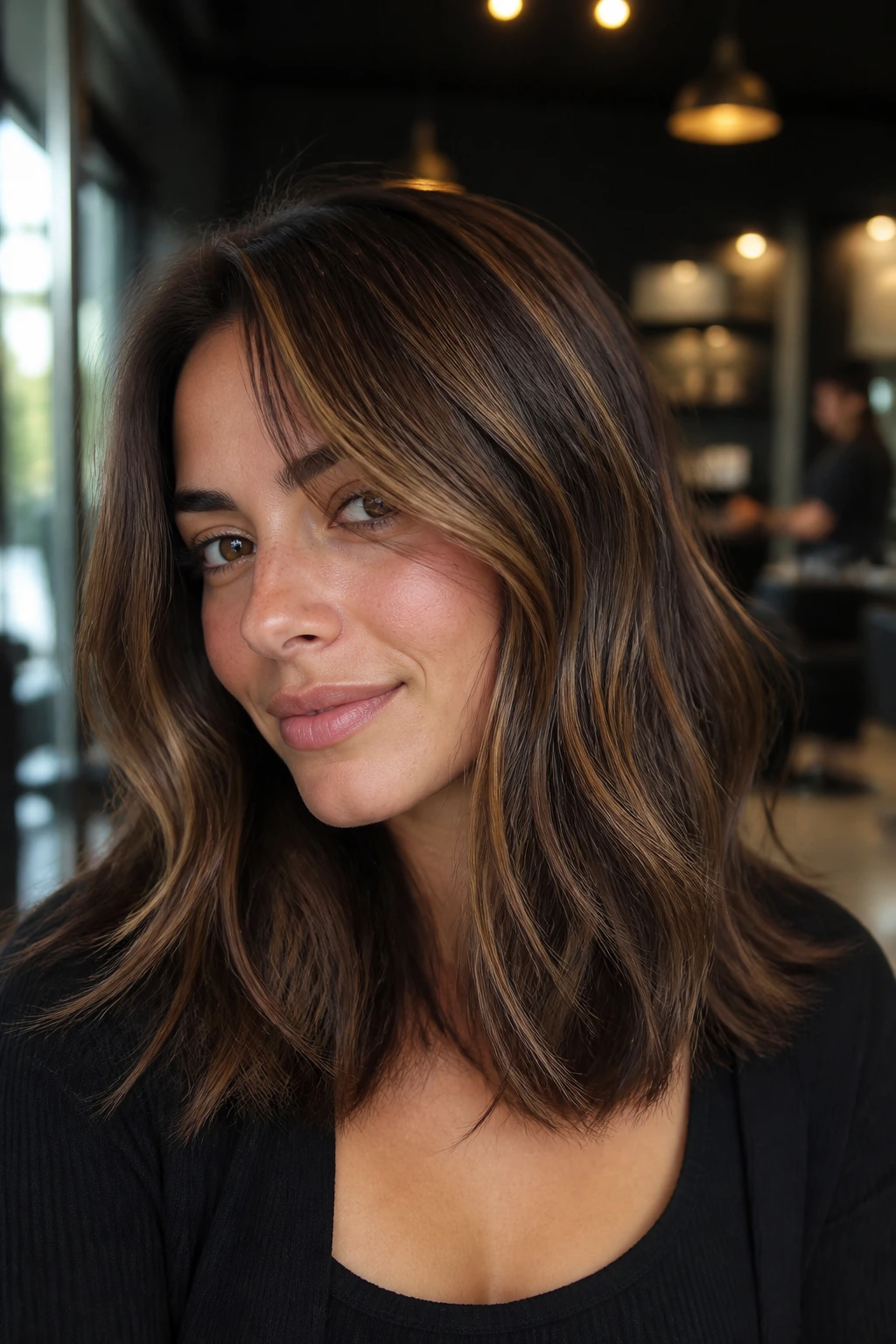
Can you get movement without going blonde? Absolutely. Dimensional mocha swirls use tone-on-tone contrast — espresso, cocoa, mocha, and a slightly lighter brunette glaze — to make medium-length hair look deeper and more textured. The point isn’t to change the shade dramatically. It’s to stop the hair from reading like one flat block.
The Trick Behind It
Place the lighter brown pieces where the light naturally hits: around the face, through the top layer, and across the ends that flip out. Keep the darker pieces underneath so the color has somewhere to rest. That contrast is what makes the haircut look fuller.
This is a smart choice if you work in a setting where subtlety matters, or if you simply don’t want blonde maintenance in your life. It’s soft, polished, and easier to grow out than most people expect.
22. Subtle Brunette Babylights
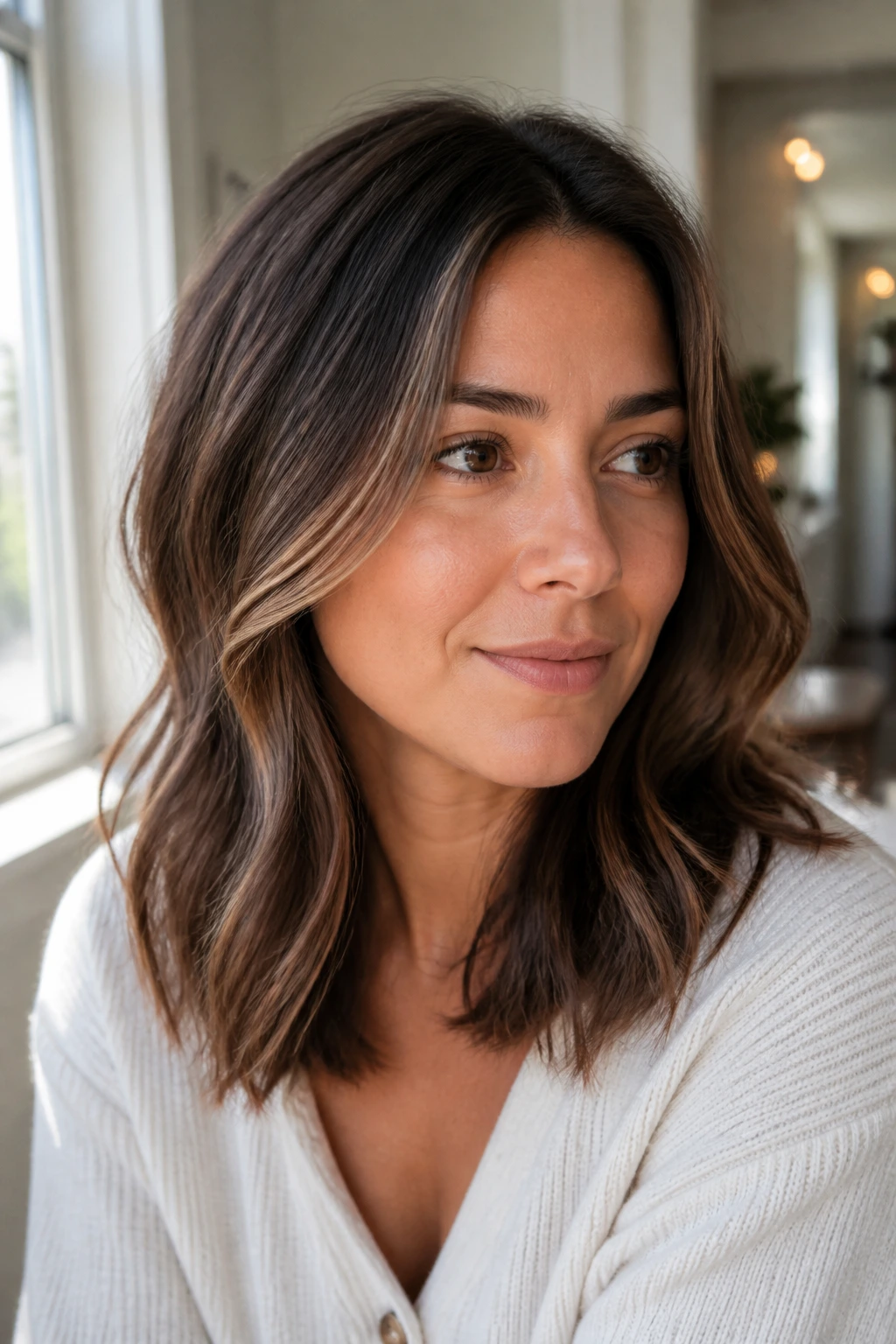
Subtle brunette babylights are for the person who wants the smallest possible nudge toward dimension. The strands are so fine they barely read as highlights at first glance, but they stop medium-length brunette hair from looking one-note. Around the part line and temples, that tiny brightness can change the whole face.
These are especially useful if you’re trying highlights for the first time. They let you test how your hair reacts to lift without making a huge commitment. If the hair is healthy, the result looks airy and soft. If it’s a little porous, the fineness of the pieces helps keep the color from getting too chunky or stressed.
- Ask for micro-foils near the face and top layer.
- Keep the tone close to your natural base.
- Refresh with a gloss before brassiness creeps in.
It’s a quiet look. That’s the point.
How to Talk to Your Colorist About Base, Lift, and Tone
A good highlight service starts before the foils come out. Bring photos, yes, but bring context too. Tell your colorist how often you wash your hair, how hot your tools run, and whether you wear your hair straight, curled, or air-dried most of the time. Those details change placement more than people realize.
The other big conversation is your base color. A level 4 brunette, a level 6 dark blonde, and a previously lightened level 7 all behave differently. If you’ve used box dye, had henna, or spent a few summers in chlorine, say so plainly. No drama needed. Just honesty. That history affects lift, tone, and how much of your hair should be left alone on the first visit.
If your goal is low maintenance, say that too. A colorist can build a root shadow, place lights lower, or mix in lowlights so the grow-out line stays soft. If your goal is brightness, they may need to use foils instead of open-air painting on the pieces you want to push lighter. The more specific you are, the less guessing everyone has to do.
Essential Tools and Products for Fresh Highlights
- Color-safe shampoo: Keep sulfates low if your hair loses tone fast; it helps the color last a little longer between washes.
- Purple shampoo: Best for blonde, beige, and champagne highlights when brass starts showing in the ends or face frame.
- Blue shampoo: More useful on brunette and caramel pieces that drift orange.
- Deep conditioner: Lightened hair gets thirsty, and a weekly mask keeps the ends from feeling rough.
- Leave-in heat protectant: Use it before blow-drying or curling so the lightened sections don’t fry at the tips.
- Wide-tooth comb: Good for detangling wet hair without snapping the highlighted areas.
- Round brush or 1.25-inch curling iron: Helps medium-length hair show the ribbons, slices, and layers instead of hiding them.
- Shower filter or clarifying shampoo: Helpful if your water runs hard and leaves mineral buildup on blonde or silver tones.
- Color-depositing gloss or toner: Optional, but useful if you want to stretch the time between salon visits.
How to Style Medium Length Hair So the Highlights Show Up
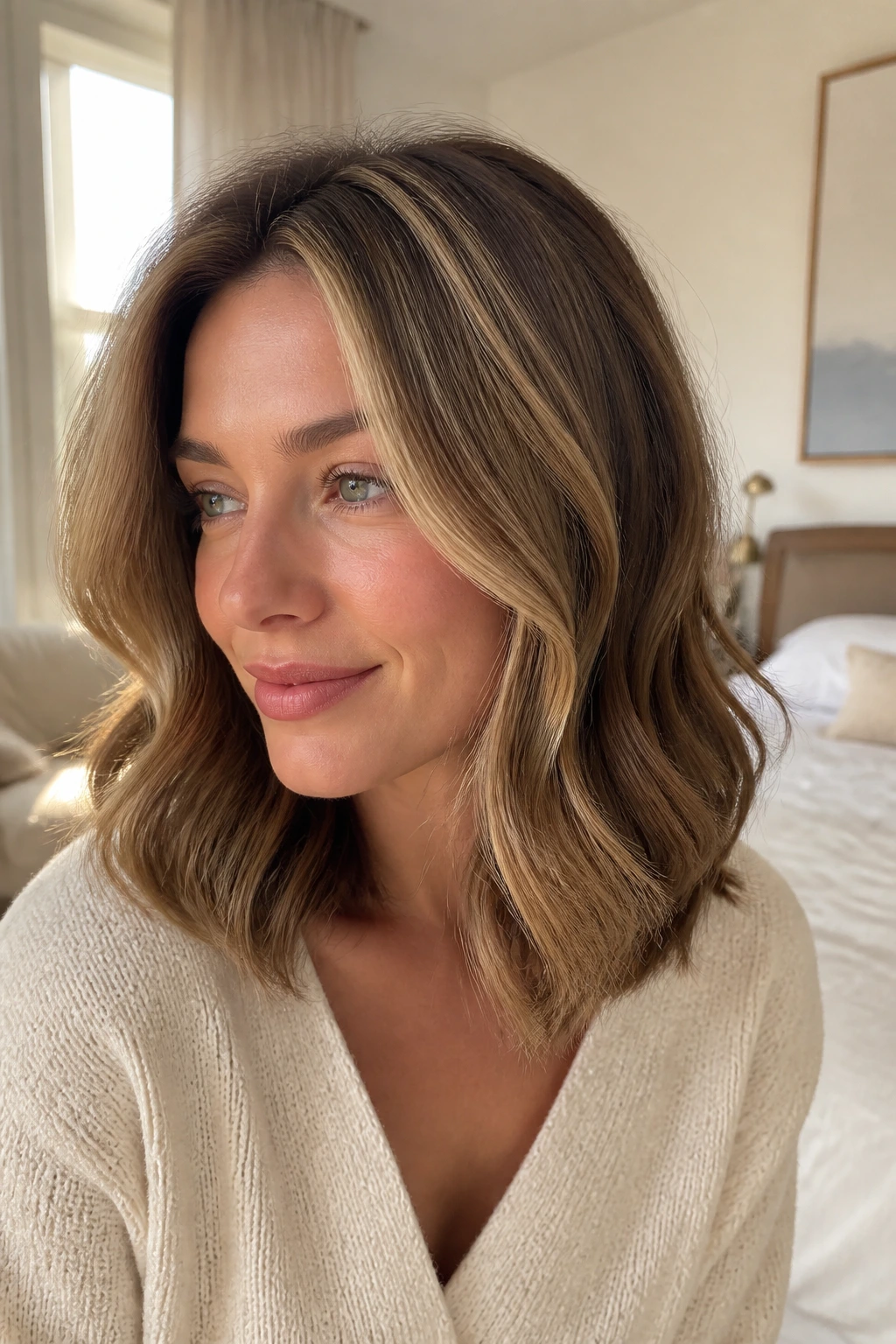
Color can’t do all the work on its own. The cut and styling make half the difference. If you want highlights to read clearly on medium-length hair, start with some lift at the roots. A flat, collapsed top hides the brightest pieces, especially around the crown and part line.
A blowout with a round brush is the easiest way to show dimension. Aim the brush up at the roots for a few seconds, then curve the ends under or out depending on the cut. A 1 to 1.25-inch curling iron also helps because it bends the highlighted sections just enough to separate them. Don’t curl every piece the same direction. Alternate a few away from the face and a few toward it so the color doesn’t collapse into one wave.
Straight hair can still look good with highlights, but it usually needs a stronger placement around the face and crown. Wavy hair is easier because the bend does the showing off for you. And yes, a half-up clip or a tucked-behind-the-ear style can make money pieces, halo highlights, and platinum frames look sharper in seconds.
Small Tone Tweaks That Make the Color Look Richer
Glossing: A clear or tinted gloss every 4 to 6 weeks can pull the highlights back together after washing and heat styling have dulled them. On blondes, it keeps the beige from getting flat. On brunettes, it restores shine without changing the whole color.
Placement: Ask for a few deeper pieces under the top layer. That hidden darkness gives the surface highlights somewhere to sit, which makes medium-length hair look fuller instead of washed out.
Heat control: Keep hot tools in check. If your ends are lightened, repeated high heat is what makes them feel rough and see-through at the ends. A good protectant matters more than people like to admit.
Styling rhythm: Highlights often look best one day after styling, not ten minutes after the salon blowout. The toner settles, the hair falls a little softer, and the contrast reads better. Strange, but true.
Common Mistakes That Flatten the Color
The first mistake is chasing one photo without translating it to your own hair. A champagne blonde slice on thick level-6 hair is not the same thing as a champagne slice on fine level-4 hair. The tone, the lift, and the upkeep all change. Bring the idea, not the fantasy.
Another one: making every strand equally light. Nope. Medium-length hair needs depth. If the whole head is the same shade, the haircut loses shape and the color starts looking like a helmet.
People also ask for blonde when they really want brightness near the face. Those are not the same request. A money piece or halo highlight can change the whole look with less damage than a full lightening service.
And then there’s toner overload. Too much ash can turn beige hair dull, and too much violet can make blonde look chalky. Ask for a toner that supports the undertone you already have rather than trying to erase it completely.
Variations for Different Hair Types and Routines
Fine-Hair Feathering: If your hair is thin or wispy, ask for babylights, micro-slices, or a soft halo rather than thick ribbons. Fine hair often looks fuller with small, repeated points of light. Big panels can overwhelm the cut.
Curly Ribbon Mapping: For curls and waves, place the lighter pieces where the curls separate naturally — around the front, top layer, and outer curve of the shape. That keeps the color from disappearing once the hair shrinks up.
Gray-Blending Weave: If silver strands are part of the picture, mix babylights with lowlights instead of trying to cover everything. The gray blends into the highlight pattern, which usually looks softer than a flat permanent color.
Low-Maintenance Shadow Root: Want softer grow-out? Keep the root 1 to 2 levels deeper and melt the color downward. It works especially well on caramel, honey, and toffee shades.
Bold Frame Lights: If you live for contrast, keep the rest of the hair deeper and make the front pieces brighter. It’s the fastest way to get a dramatic shift without a full-head commitment.
Keeping the Color Fresh Between Appointments
Most medium-length highlight looks stay in good shape with a gloss or toner refresh every 4 to 8 weeks, depending on how light they are. Platinum, ash, and champagne shades usually need attention sooner. Caramel, toffee, auburn, and brunette dimension can often go longer because the tones fade in a softer way.
Washing habits matter more than brand loyalty. Two to three washes per week is easier on highlighted hair than daily shampooing, especially if the ends are lightened. Use cool or lukewarm water, not hot, and squeeze water out with a towel instead of rubbing the hair raw. That keeps the cuticle calmer.
For blondes and silver tones, purple shampoo once a week is usually enough. For brunette and caramel shades drifting orange, blue shampoo every week or two can help. Don’t leave either one on too long the first time. Hair takes color differently after a few minutes, and porous ends grab fast.
Protect the color from heat, sun, and pool water. A heat protectant before styling is non-negotiable. A hat or UV spray helps in strong sun. After swimming, rinse the hair right away so chlorine or salt doesn’t sit on the lightened parts and turn them rough.
Questions People Ask Before They Sit in the Chair
Which highlight style is lowest maintenance on medium-length hair?
Soft balayage, a root-smudged ombré, or brunette babylights usually grow out the best. They blur the line between your natural color and the lighter pieces, so the regrowth doesn’t look harsh.
Can dark brown medium-length hair go blonde in one appointment?
Sometimes, but not always safely. If your hair starts dark or has old color on it, a colorist may need to lift it in stages to avoid rough ends and patchy warmth. One session can get you brighter, but pale blonde often takes more than that.
What’s the difference between foil highlights and balayage?
Foils usually give more lift and a cleaner, brighter result. Balayage is painted by hand and looks softer at the grow-out line. On medium-length hair, foilayage often gives you the best of both.
How do I keep highlights from turning brassy?
Use the right shampoo for your tone, don’t over-wash, and book a gloss before the color goes too warm. If the brass is strong, a toner or salon glaze will fix it faster than trying to fight it at home.
Do chunky highlights work on medium-length hair?
Yes, if the placement is controlled. A few thicker ribbons around the face and crown can look sharp and modern on a lob or shag. Too many chunky stripes everywhere will look busy.
What if my hair is curly or wavy?
Curly and wavy hair actually show dimension well because the bends reveal different tones. The placement needs to follow the curl pattern, though, or the highlights can disappear when the hair shrinks.
How often should I get a gloss?
Every 4 to 8 weeks is a normal rhythm for most highlighted hair. Pale blonde and silver tones usually need it sooner, while caramel and brunette dimension can stretch longer.
What if my highlights look stripey after the appointment?
Sometimes the color settles after the first wash and the first blow-dry. If it still looks stripey a week later, the placement may have been too wide or too even, and a gloss or lowlight service can soften the hard lines.
Keeping the Dimension Moving
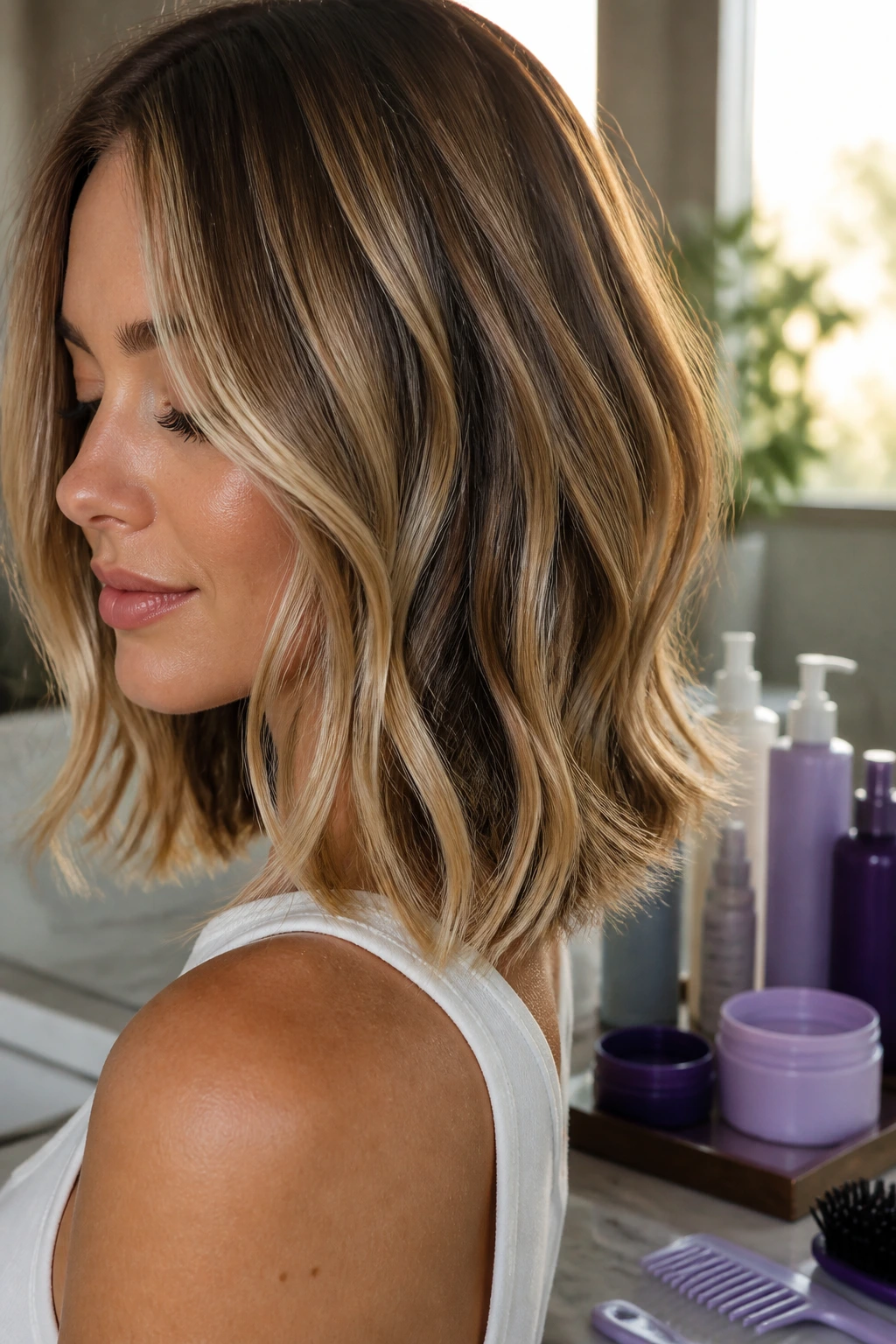
Medium-length hair is the rare cut that can handle both whisper-soft babylights and bold face-framing brightness without losing its shape. That’s what makes these ideas so useful. You’re not trapped in one lane. You can lean warm, cool, shiny, smoky, subtle, or loud, and the length usually gives the color enough room to make sense.
My honest take? Pick the idea that matches how you actually wear your hair, not the one that looks best on a salon wall. If you air-dry most days, placement near the face and surface layers matters more. If you curl your hair, ribbons and slices will show better. If you want less upkeep, keep the root deeper and let the light live where it can grow out gracefully.
Choose the color that moves with your cut. That’s the part that keeps medium-length hair interesting long after the appointment is over.
