



Long hair gives balayage room to breathe. Short cuts can handle a hard line or a chunky highlight. Waist-length waves need something softer, looser, and a little more patient. That’s where soft dimensional color shines: the root stays believable, the mids carry the movement, and the ends catch light in a way that feels natural instead of painted on.
The best long hair balayage does not scream for attention. It slides from one tone to another, usually with a deeper root, a mid-tone bridge, and lighter ends that never look chopped off from the rest of the head. The difference is subtle enough to grow out well, but not so subtle that it disappears once you step away from the mirror. Good placement matters more than extra blonde. Always has.
Some of the prettiest results on long hair are not the palest ones. They’re the ones with a clear tone story: honey over espresso, mushroom brown over dark brunette, beige blonde over dark gold, copper over chestnut, pearl over a rooted brunette base. Those combinations keep the length from looking flat, and that flatness is what ruins a lot of long-hair color. A long curtain of hair can swallow weak highlighting in a second.
Why This Collection Works on Long Hair
-
Soft grow-out: Balayage placed a few inches off the scalp keeps regrowth from looking striped, which matters even more when your hair hangs below the shoulders and every line gets stretched out visually.
-
Real movement: Long layers, loose waves, and blowouts give the lighter ribbons somewhere to move, so the color reads as depth instead of a single flat shade.
-
Tone control: Brunette, blonde, copper, beige, and smoky neutrals all work here, because long hair can carry a root shadow, a mid-tone bridge, and a brighter end without looking overworked.
-
Face-framing power: The front pieces can do a lot of heavy lifting. A few lighter strands around the cheekbones can change the whole cut without flooding the rest of the head with blonde.
-
Salon-friendly variety: You can ask for soft, lived-in dimension, or push it warmer, cooler, brighter, or more coppery. The framework stays the same; the tone changes the mood.
-
Easier upkeep than all-over lightening: Most of these looks need a gloss or toner refresh, not full re-lightening every time the root grows out.
1. Honey Ribbon Balayage on Espresso Lengths
Honey ribbons on an espresso base are a safe place to start if you want warmth without losing depth. The contrast is there, but it does not shout. The lighter strands sit inside the length like sun caught in the hair, not on top of it.
Why It Works
On very dark brown hair, honey reads softer than caramel because it sits a little closer to gold. That keeps the dimension warm but not orange. Ask for the brightest pieces around the face, then keep the rest of the ribboning lower through the mids and ends so the top stays rich.
A Few Details That Matter
- Best on level 3–4 brunette bases.
- Looks strongest on loose waves and soft bends.
- Usually needs a gloss every 6 to 8 weeks to keep the honey from turning brassy.
- A root shadow keeps the whole look grounded, especially on long hair that can otherwise look over-light at the ends.
Pro tip: Keep the front pieces slightly thinner than the back. Long hair can handle more light in the lengths, but the money pieces are the first thing to look chunky if they’re too wide.
2. Mushroom Brown Balayage with Beige Veil Ends
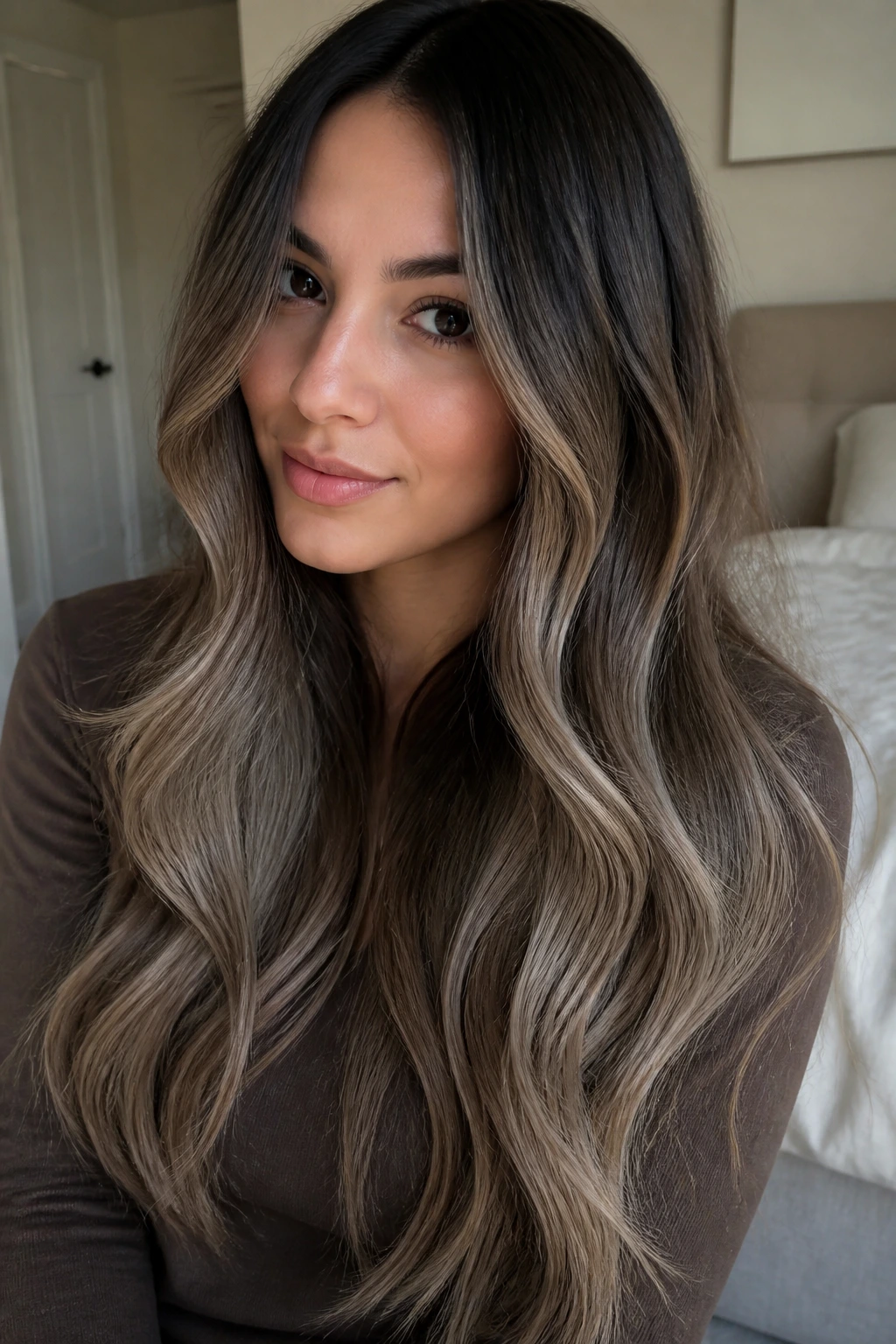
If you’re tired of warm caramel but do not want ash that looks flat, mushroom brown is the sweet spot. It has that cool, earthy cast that sits somewhere between taupe and soft brown, and on long hair it feels calm in the best way.
What Makes It Different
This is the look for someone who hates obvious highlight lines. The beige ends are more veil than streak, which means the color fades into the length instead of sitting on top of it. It’s especially good on straight or slightly waved hair, where every tone shift shows.
Long hair can make cool color look heavy if the pieces are too thick. That’s why this one works best when the balayage is feathered through the mids and the ends are toned to a soft beige rather than a stark silver. That difference matters. A lot.
Best When You Want
- A cooler finish without full ash.
- Less warmth at the ends.
- A smooth grow-out on medium to deep brunettes.
- A color that looks expensive even when the styling is simple.
3. Champagne Blonde Balayage on Dark Blonde Hair
Champagne blonde is what I reach for when someone wants brightness but still wants the hair to look like hair. It has sparkle, not frost. On a dark blonde base, it gives you that lifted, polished feel without turning the whole head icy.
The trick is keeping the root area a shade or two deeper than the ends. That shadow gives the champagne room to glow. If you lift everything too evenly, the result can look like one big pale block, and long hair really does not forgive that.
How to Wear It
A loose blowout makes the champagne tones catch at the bends. Straight hair works too, but then you need enough variation in tone from root to end or the color flattens out fast. I also like this with curtain bangs. The front pieces end up doing a lot of the talking.
Good For
- Dark blondes who want to go lighter without a harsh blonding session.
- Fine hair that needs a brighter look without too much visual weight.
- Anyone who likes a glossed finish more than a high-contrast stripe.
4. Cinnamon Copper Balayage on Chestnut Waves
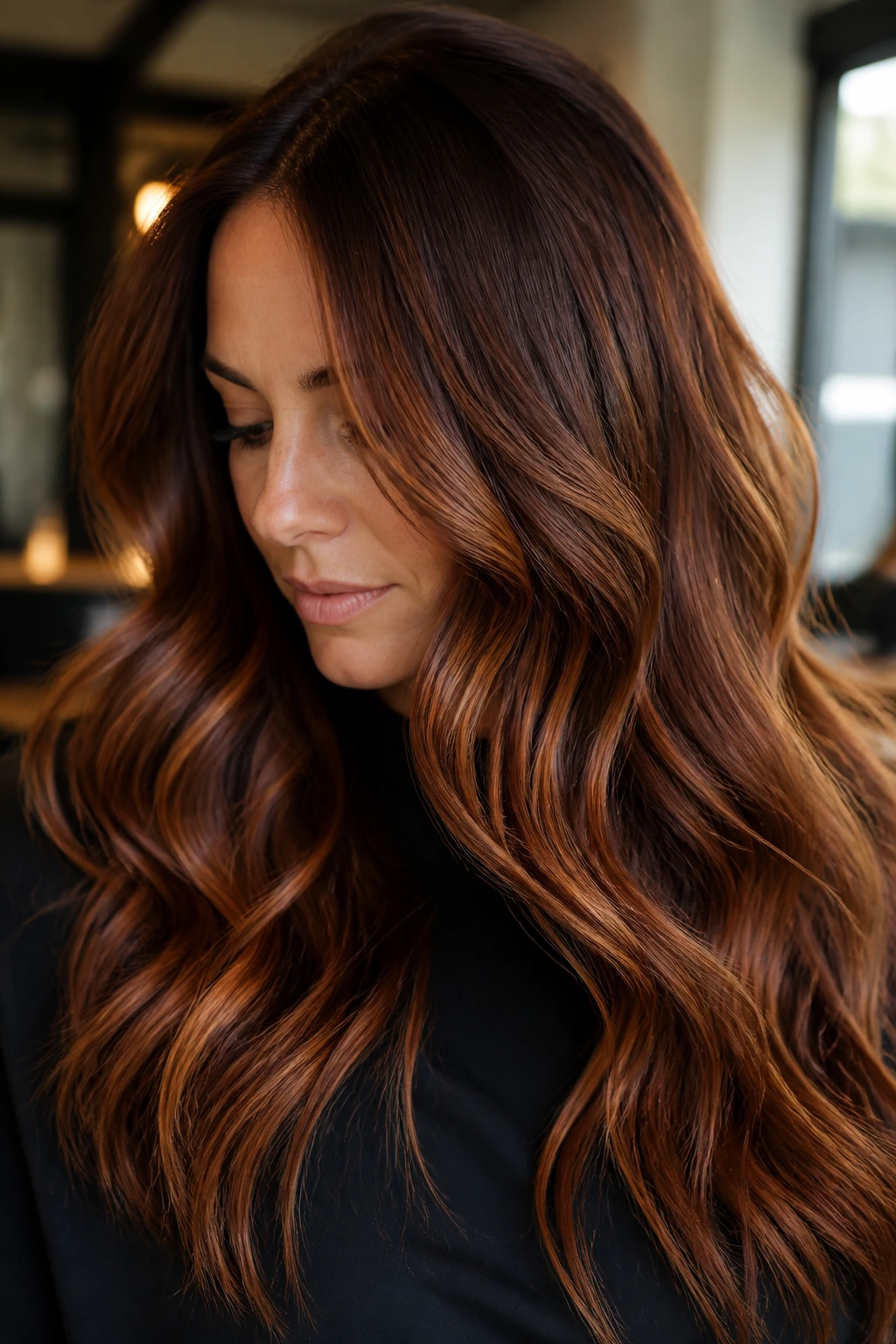
Cinnamon copper has real depth. It sits above auburn and below bright red, which makes it one of the easiest warm balayage choices for long hair that needs life. Chestnut bases take this tone especially well because the copper warms the brown instead of fighting it.
It’s a strong look on long waves because the copper pieces flash in motion. On straighter hair, the tone looks more grounded and less fiery, which can be a good thing if you want something wearable at work and still interesting in sunlight.
H3: Why It Flatters Long Hair
The mid-lengths do the heavy lifting here. If the copper is only at the ends, the color can feel disconnected. If it starts just below the cheekbones and then deepens again toward the bottom, it looks intentional and dimensional.
Ask For
- Cinnamon, copper, or auburn ribbons through the mids.
- A chestnut or chocolate root.
- A clear gloss so the red tones stay clean, not muddy.
- Softer placement around the face, especially if your hair is one length.
5. Face-Framing Money Piece with Soft Caramel Panels
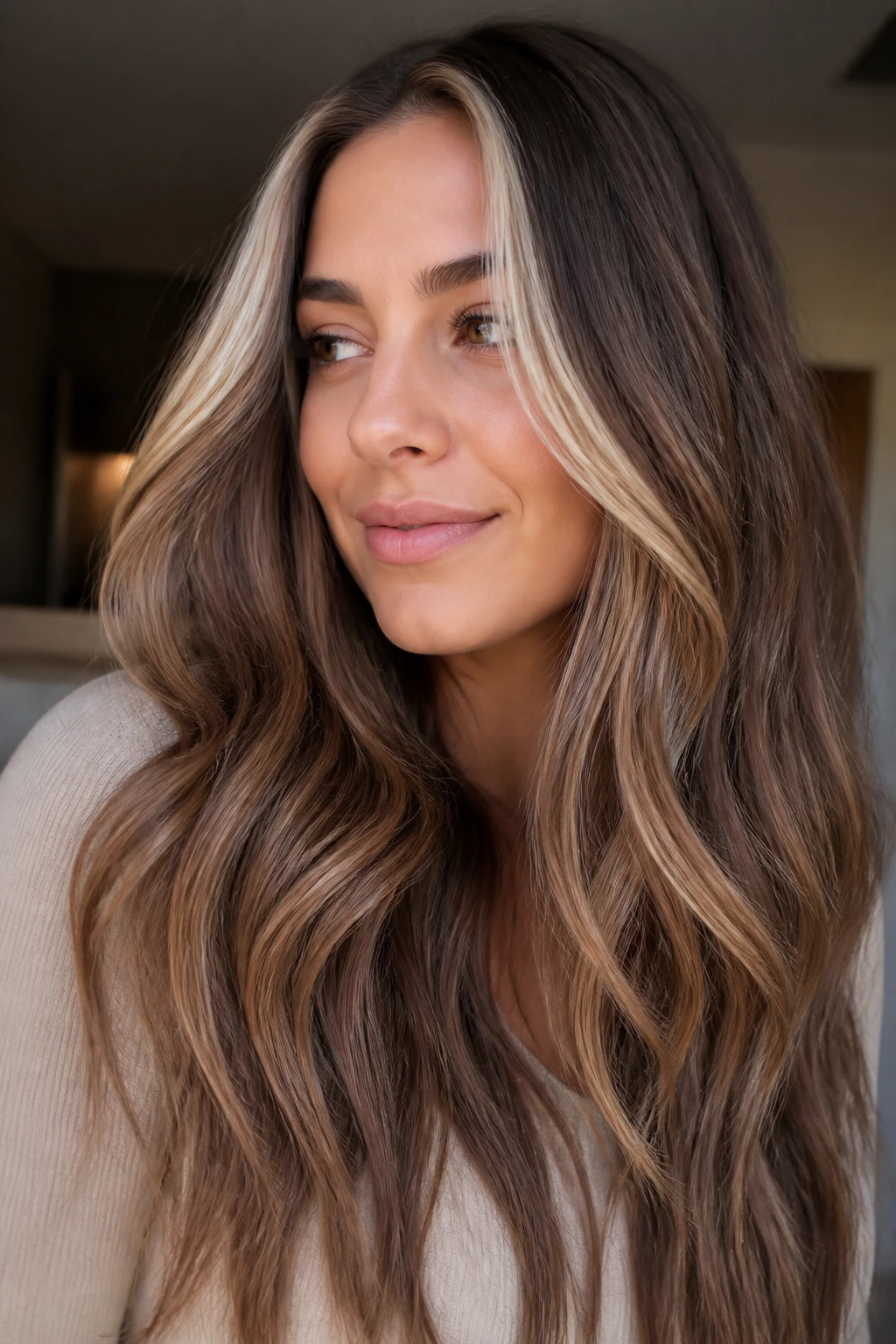
This is the most face-focused version of long hair balayage, and I mean that literally. The caramel pieces live around the front, then relax into softer panels through the rest of the length. It gives you contour without needing a dramatic all-over shift.
A lot of people ask for a money piece and end up with something too chunky. Don’t do that here. On long hair, the front can go thick fast. The better move is a narrow, bright face frame with a couple of softer caramel ribbons dropping into the sides so the color doesn’t stop at the temple.
Why I Like It
It does a lot with a small amount of lightening. If you wear your hair down often, the front pieces keep the look active. If you throw your hair into a low bun, the brighter strands still show and the style doesn’t disappear.
Best For
- Oval and round faces that benefit from visible brightness near the cheekbones.
- Long layers that need a little contour.
- People who want a noticeable change without repainting the whole head.
6. Buttery Beige Balayage on Long Layers
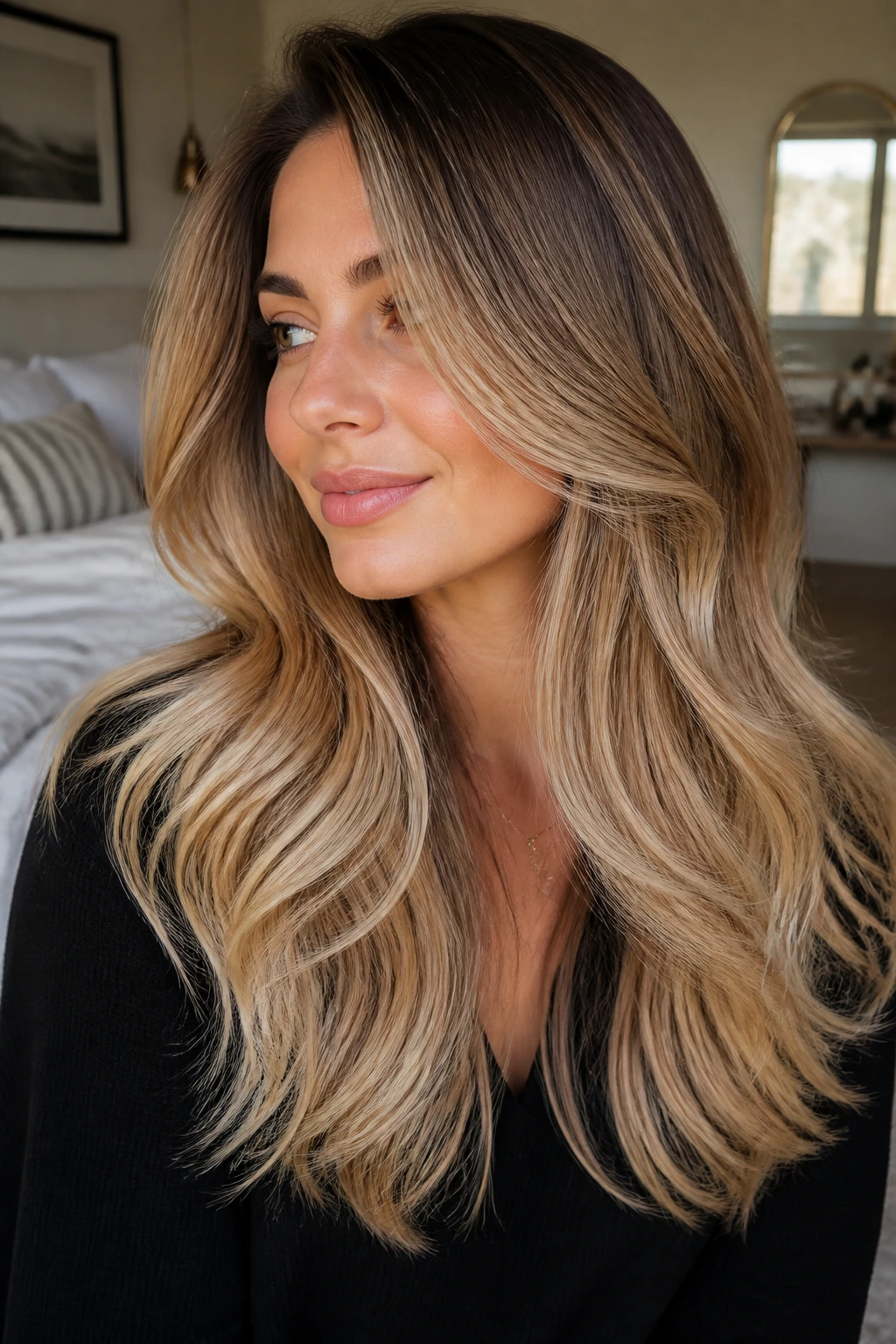
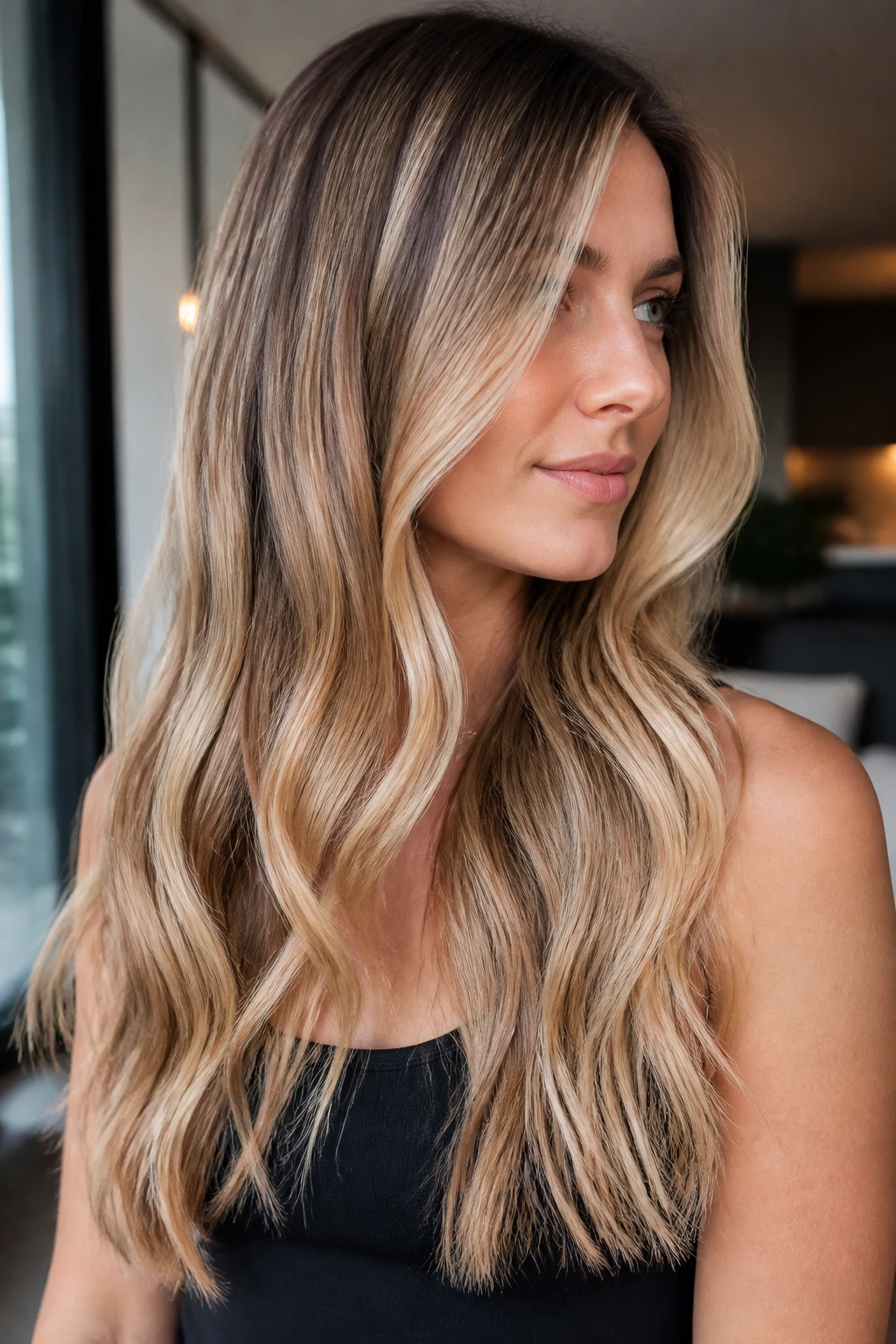
Buttery beige is softer than platinum and cleaner than raw gold. On long layers, it lands in a very sweet middle ground: bright enough to lift the face, muted enough to stay graceful as it grows.
The color works because beige bridges warm and cool. That makes it easy to wear with different skin tones, and easier to keep from turning too yellow. The layers matter here. If the cut has movement, the beige catches on the different lengths and the whole look reads woven, not striped.
Small but Useful Detail
This is one of those shades that looks more expensive when the ends are slightly irregular. Not damaged. Just not bluntly even. A softly feathered perimeter keeps the light pieces from sitting in a hard line at the bottom.
Best If You Want
- Brightness without icy blonde.
- A soft, creamy finish that flatters natural waves.
- A shade that works with warm makeup and neutral makeup alike.
7. Rose Gold Balayage on Medium Brown Base
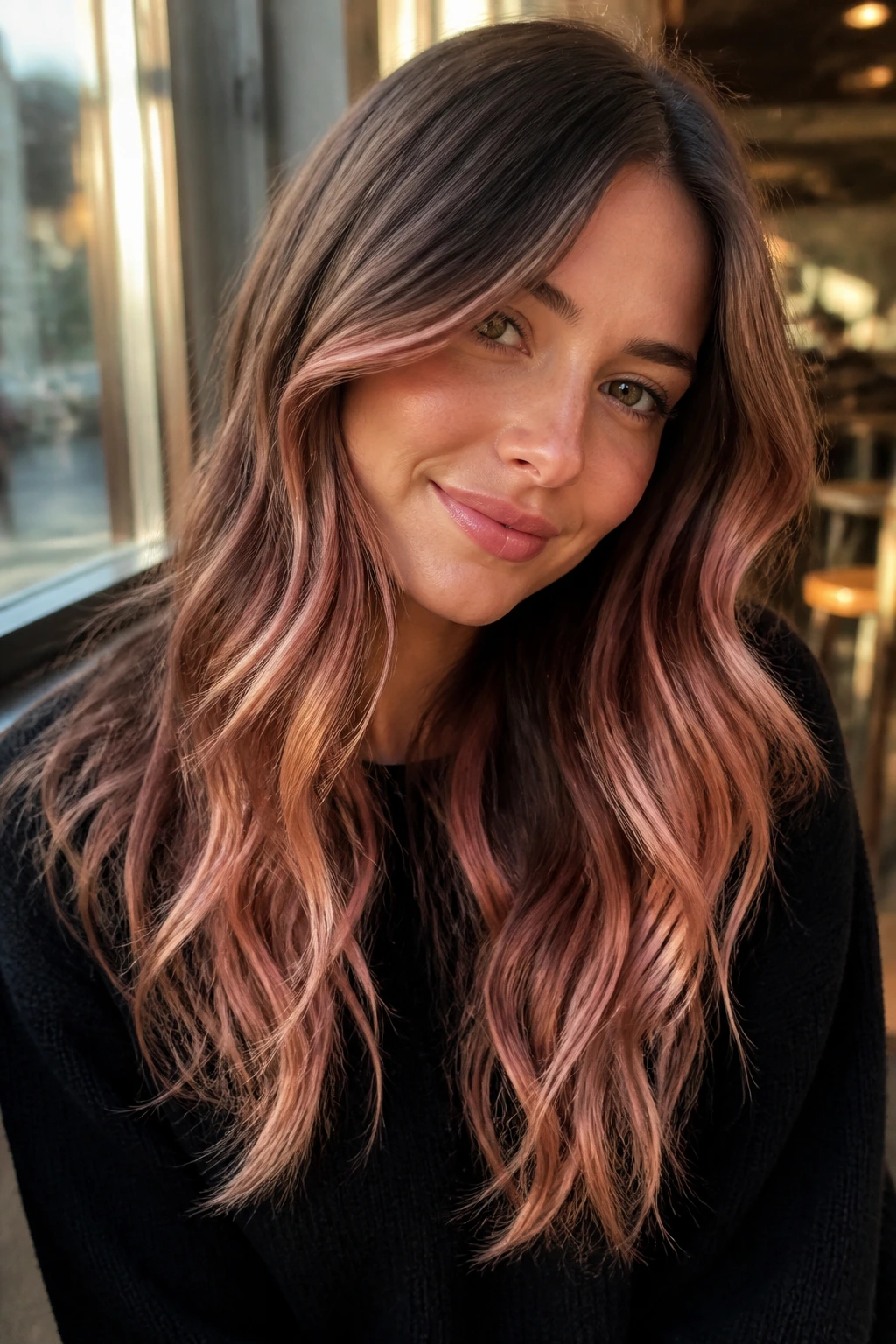
Rose gold is tricky in the wrong hands. Too much pink and it tips costume. Too little and the whole thing just looks warm blonde. On a medium brown base, though, it can be one of the prettiest long-hair balayage options because the brown keeps the tone grounded.
I like rose gold best when it’s washed into the lighter pieces, not painted as a solid color through the ends. That way the pink-gold effect shows in motion and fades gently into the brunette base. Long hair gives the tone room to breathe, which matters. Short hair can make rose gold feel busy.
What to Tell Your Colorist
- Keep the root deeper than the mids.
- Use a rose-gold gloss, not a full pink overlay.
- Focus the brightest areas around the front and lower mids.
- Avoid over-lightening if your natural brown is already warm.
A good rose gold balayage should look like light with a blush in it. Not bubblegum. Not copper. Somewhere in the middle.
8. Smoky Brunette Balayage with Mocha Ribbons
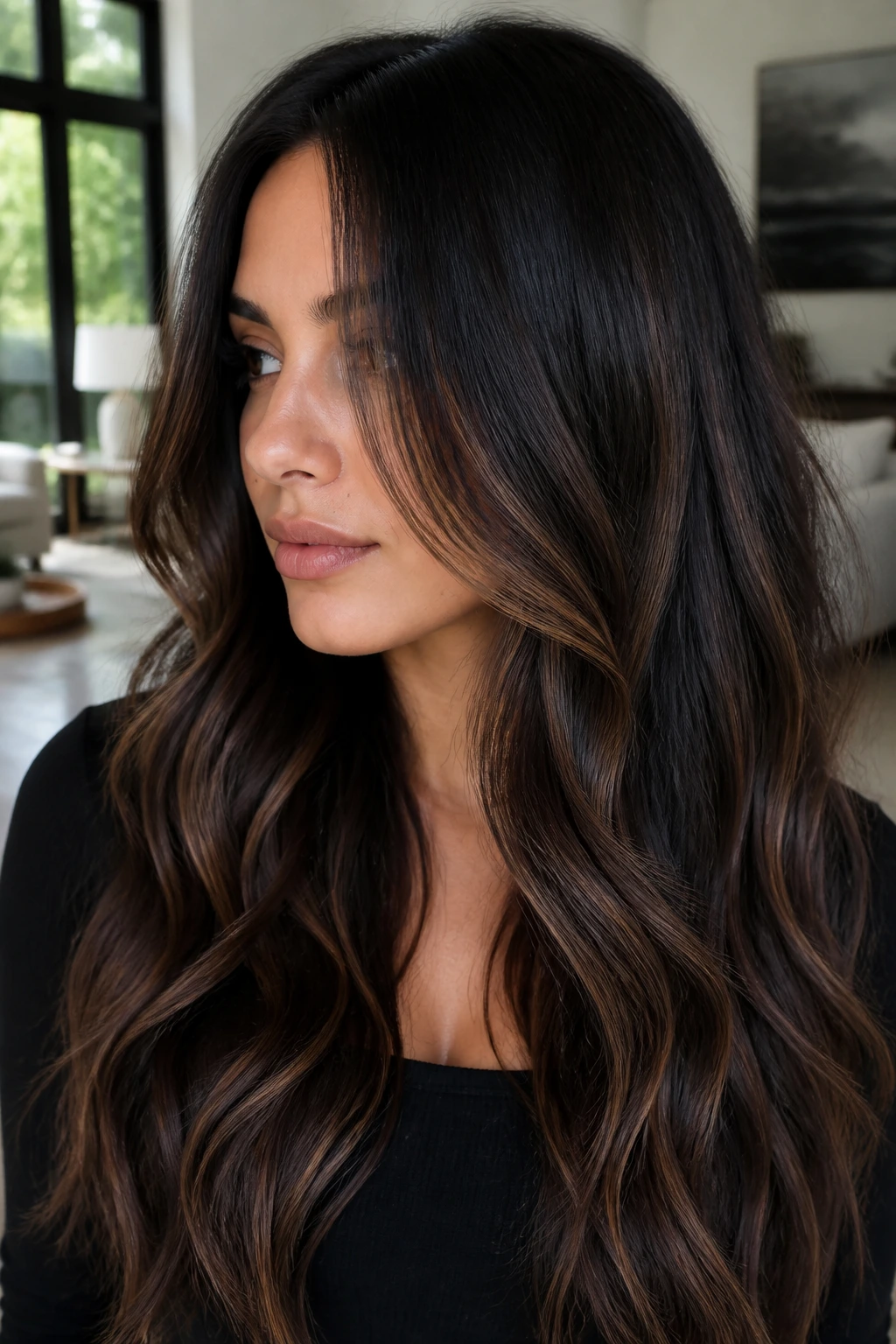
Smoky brunette balayage is for the person who wants dimension but doesn’t want strangers to clock the work from across the room. The mocha ribbons sit inside the dark base, so the whole head looks richer rather than lighter.
This is one of my favorite options for very long hair because it keeps the weight visually intact. Heavy blonde can make long hair look stringy if the ends are fine. Smoky mocha does the opposite. It thickens the look of the hair without adding actual bulk.
H3: Where It Succeeds
- Keeps dark hair looking glossy.
- Adds movement without high contrast.
- Grows out quietly because the lighter pieces are only a few levels above the base.
Styling Note
A center part shows the ribbons cleanly. A soft side part gives the face-framing pieces more lift. Either works, but straight-from-the-shower air-drying is not the best move here; a quick bend with a large iron or brush blowout keeps the mocha tones visible.
9. Pearl Blonde Balayage with Root Shadow
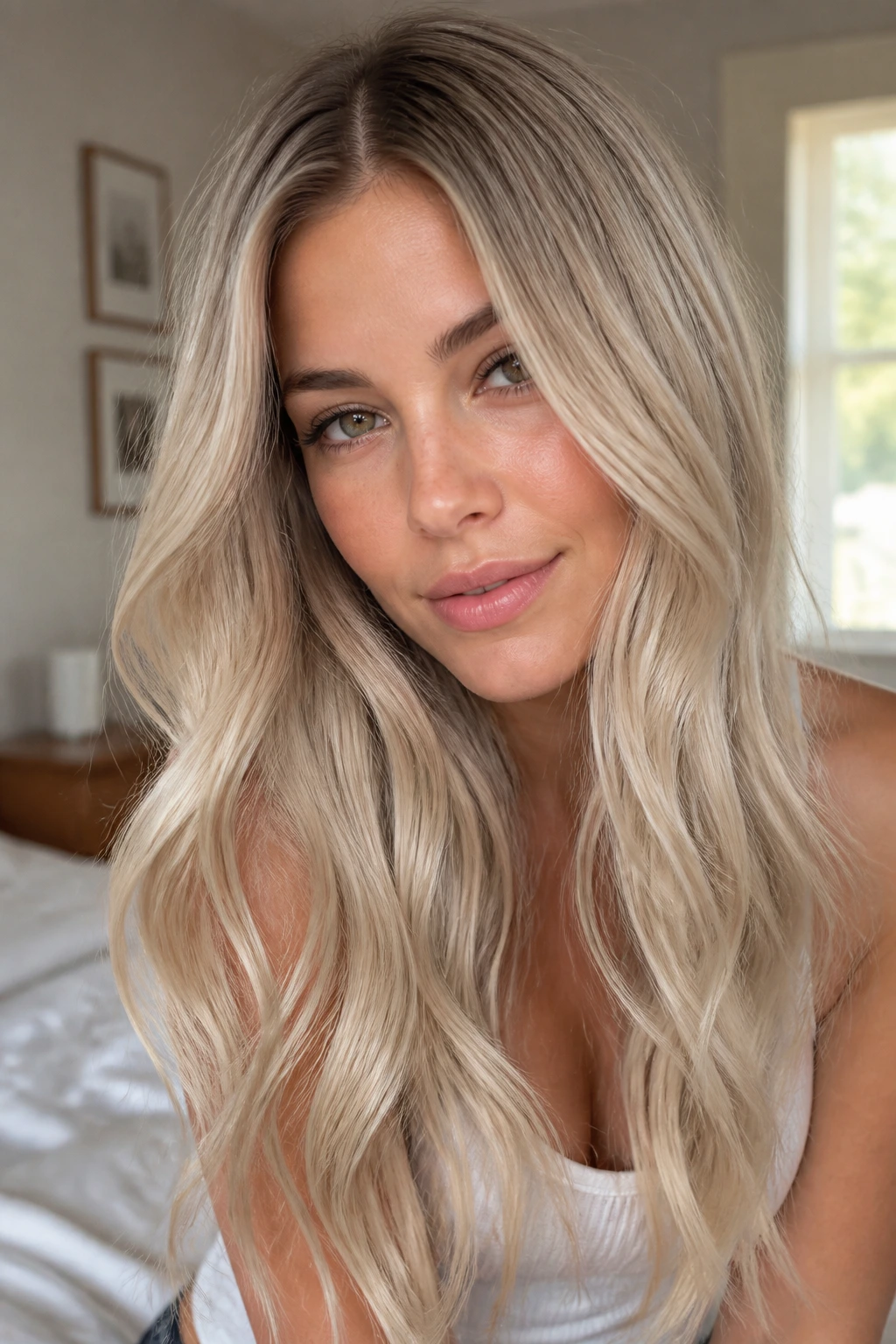
Pearl blonde is cooler and softer than stark blonde, which is why it looks so good with a deliberate root shadow. The deeper root gives the pearl pieces a frame, and on long hair that frame keeps the brightness from turning washed out.
This is not a no-maintenance blonde. Let’s be honest. It needs toner attention, and the ends need moisture. But if you want a lighter look that still feels plush instead of crunchy, pearl is a strong choice.
A Useful Rule
The lighter the pearl tone, the more the placement has to be controlled. A few wide pieces near the front, thinner ribbons through the mids, and a soft fade toward the ends usually read better than trying to brighten every inch of the length.
Best For
- Medium to light brunettes who want a cool blonde finish.
- Thick hair that can hold a bright tone without looking thin.
- Long layers that need a little sparkle around the face.
10. Toffee Balayage with Sunlit Ends
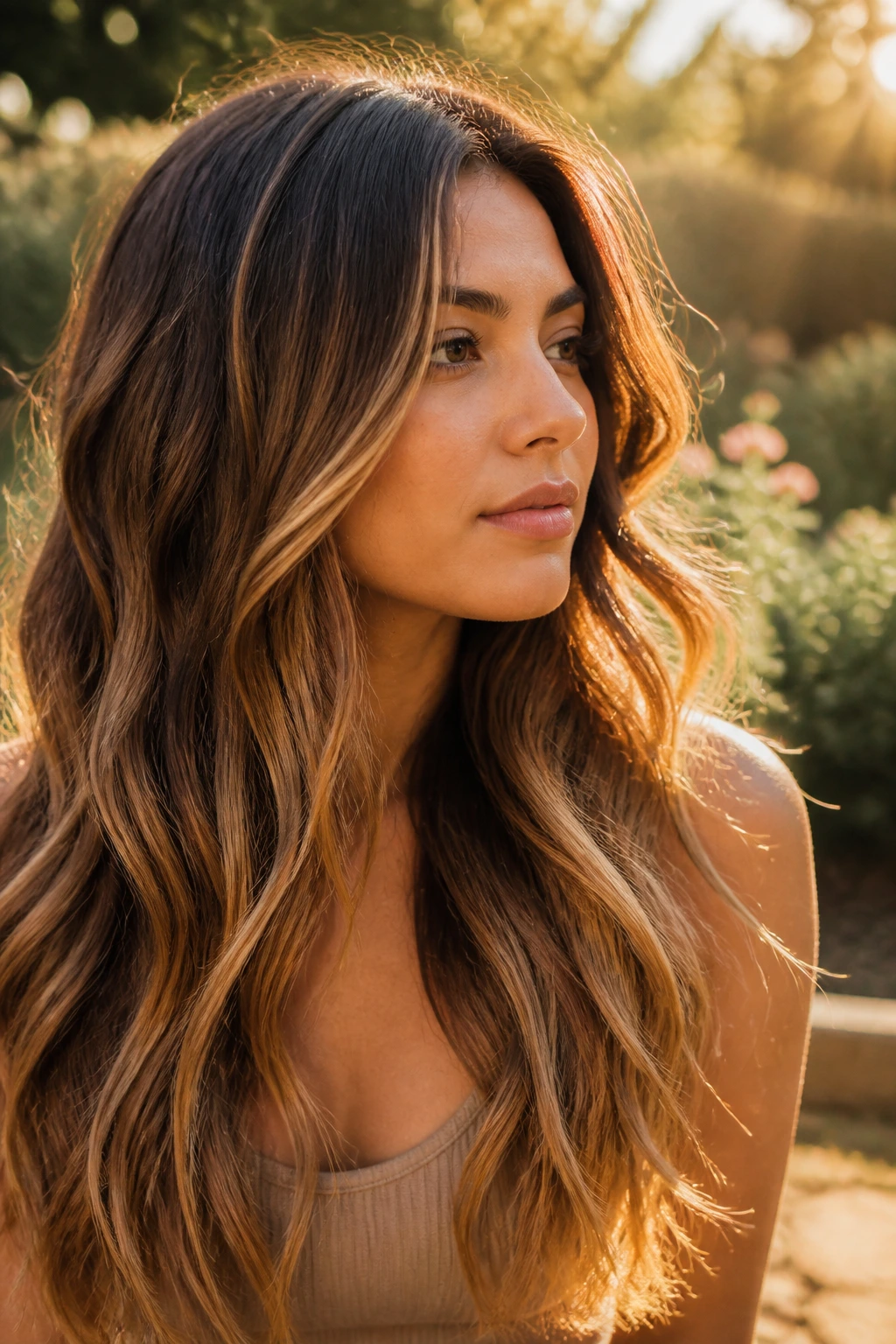
Toffee is the color that makes people say your hair looks healthier than it is. Not because of magic. Because warm brown and golden ribboning create shine. On long hair, those sunlit ends catch movement in a way that reads natural and lived-in.
This shade works especially well if your base is already brunette and you don’t want a dramatic blonde contrast. The toffee pieces sit in the middle of the hair shaft and then fade lighter at the bottom, which gives the eye somewhere to travel without breaking the silhouette.
Why It Stays Soft
The ends are lighter, but they’re not pushed all the way to pale blonde. That keeps the finish from looking dry. If your hair is naturally thick or coarse, toffee is usually friendlier than lighter beige because it doesn’t expose every little rough edge.
Good Pairings
- Loose S-waves.
- Face-framing layers.
- Warm glosses with a little gold, not copper.
11. Bronde Balayage with a Feathered Finish
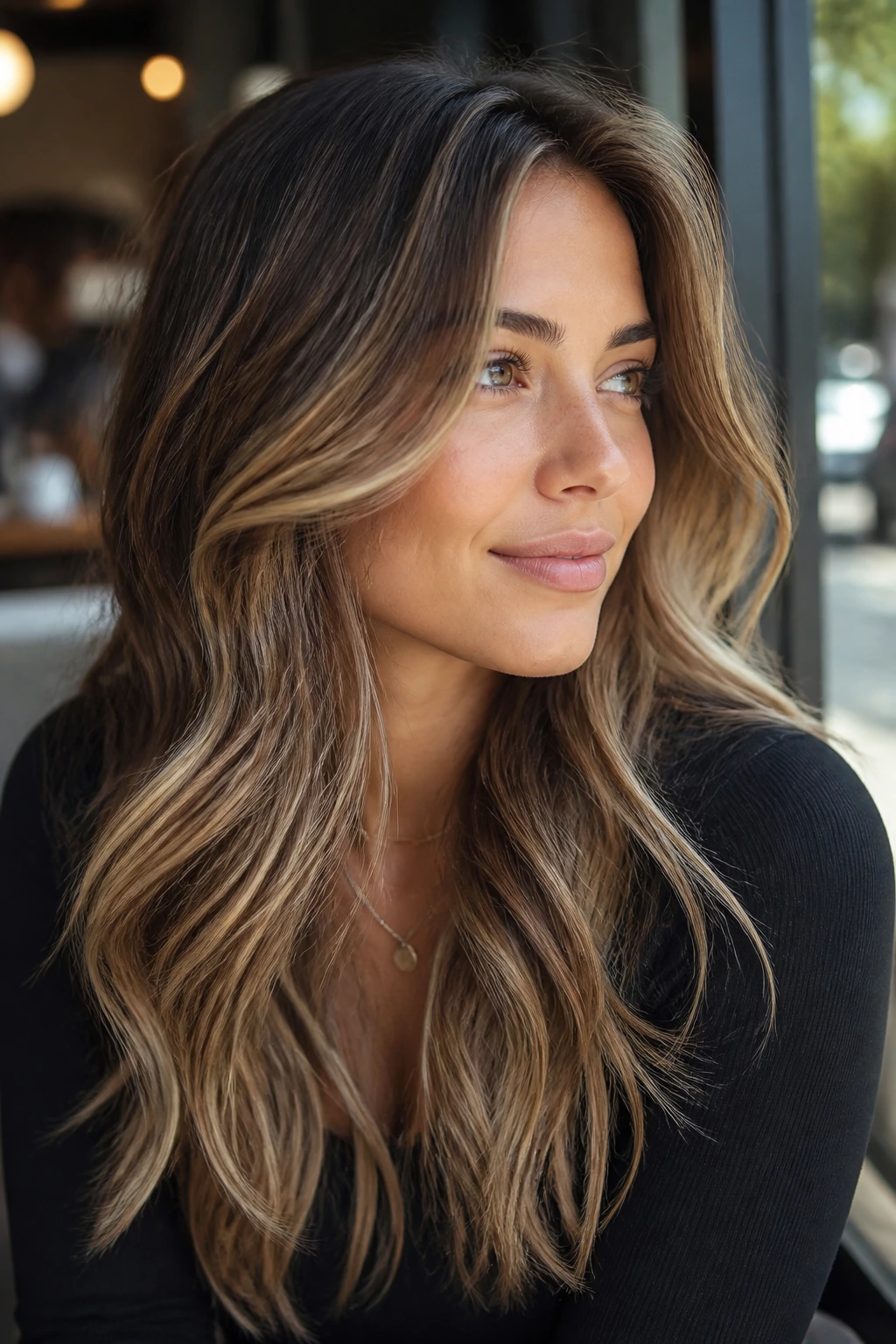
Bronde is still one of the easiest long-hair balayage ideas to wear because it sits right between brunette and blonde. The feathered finish is the part that matters. Without that soft edge, bronde can look flat or too obvious at the striping level.
The best bronde looks on long hair have thinner ribbons near the crown and broader strokes through the mids. That makes the color read airy. Heavy bronde placement can weigh down the top and leave the ends looking too light. Nobody needs that.
Why It’s Useful
Bronde is the kind of shade you can live in for a long stretch without needing a huge color shift. It works with warm undertones, neutral undertones, and a lot of different cuts. It’s also a good bridge if you’re moving from brunette toward blonde and don’t want to rush it.
Ask For
- A brunette base with beige or gold ribbons.
- A root smudge for softness.
- Feathered ends, not blunt lines.
- A gloss that keeps the tones blended, not yellow.
12. Vanilla Cream Balayage on Dark Blonde Hair
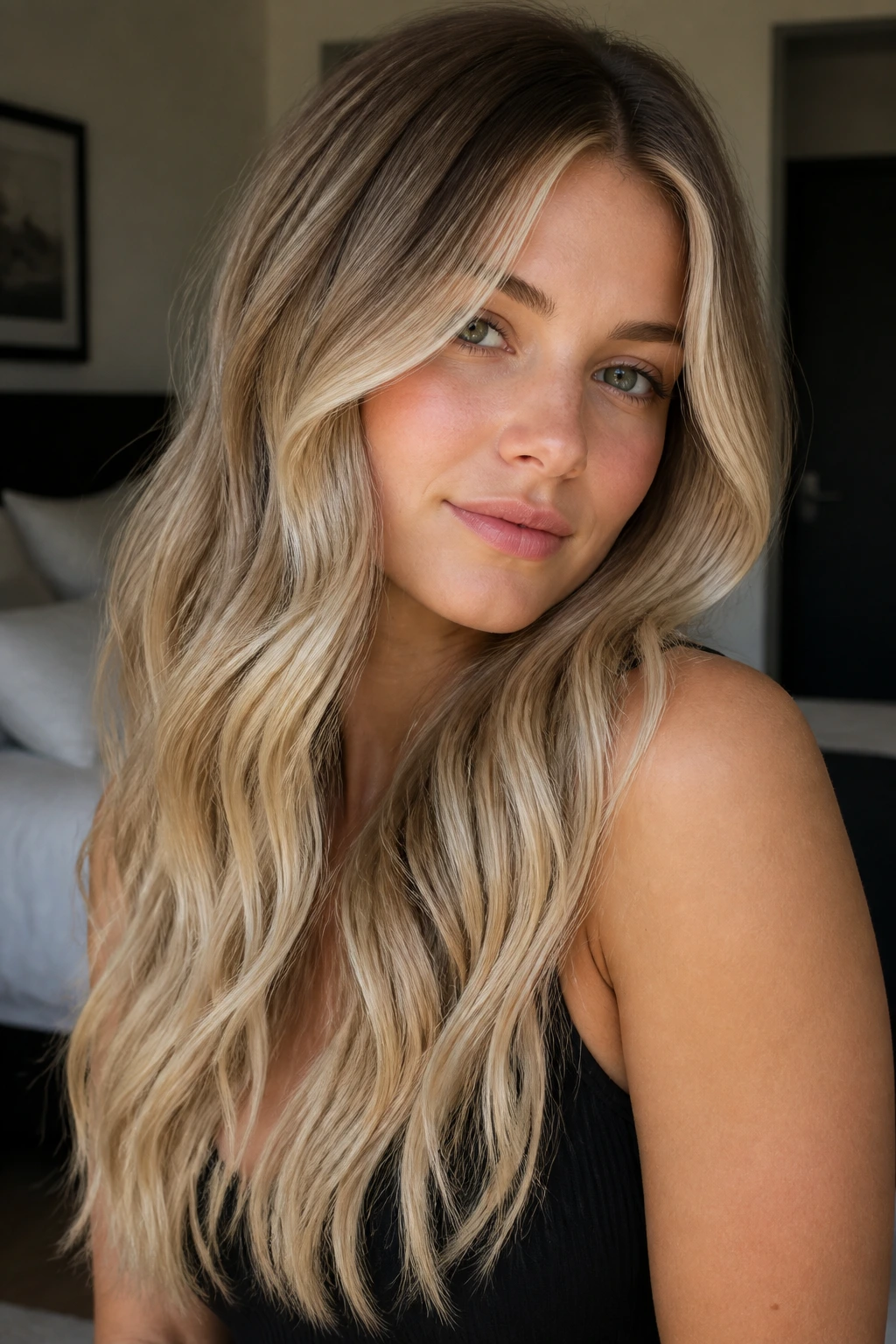
Vanilla cream is brighter than beige and calmer than icy platinum. On dark blonde hair, it creates that smooth, creamy lift that looks polished in a braid and even better in soft waves.
The shade works best when the dimension is still visible near the root. Long hair can handle a lot of lightening, but if the color lifts uniformly from top to bottom, the ends can lose shape. Vanilla cream needs contrast. A little shadow at the root and a slightly deeper mid-tone make the blonde feel expensive instead of flat.
H3: What to Watch For
Porous ends soak up toner fast. If the ends grab too much ash, vanilla cream can turn hollow. A colorist who checks porosity section by section will save you a lot of frustration here.
Best For
- Dark blondes who want a softer, lighter finish.
- Long layered cuts.
- Anyone who prefers a creamy blonde over an icy one.
13. Auburn Balayage with Glossed Mids
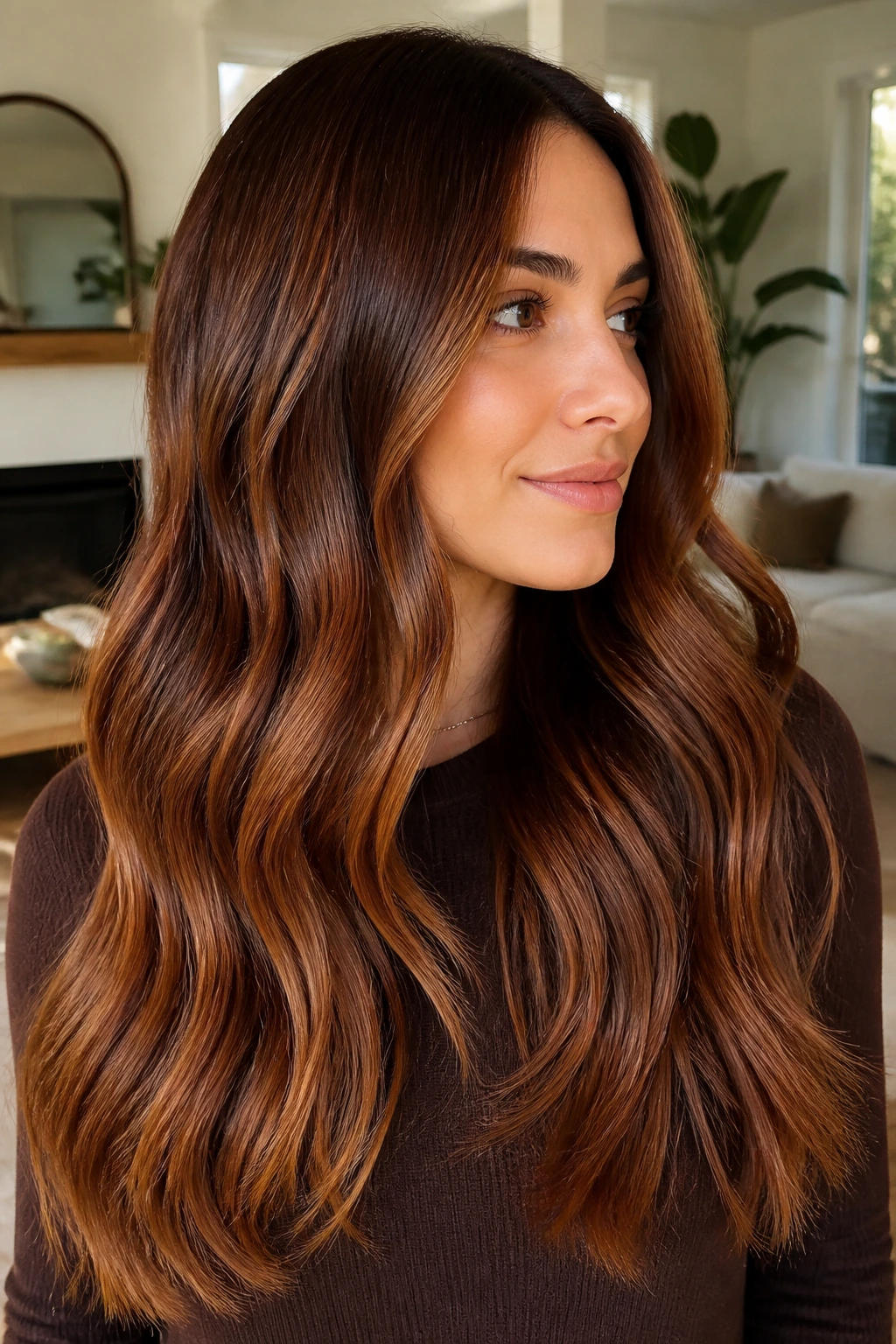
Auburn on long hair has a velvet quality when it’s done well. The glossed mids are what make it work. Without that shine through the center lengths, auburn can look heavy, especially on thick hair. With it, the color moves.
This is a smart pick if you want warmth with a bit more depth than copper. Auburn leans red-brown rather than orange-red, so it feels richer and a little moodier. It’s also flattering on long waves because the bends give the reddish pieces a chance to flicker instead of sitting flat.
Why It Feels Balanced
The root can stay chocolate, the mids pick up the auburn gloss, and the ends can hold a deeper cinnamon-red. That three-part structure keeps long hair from turning into one note. And yes, that matters more than people think.
Best When
- Your natural color is already warm.
- You want a change that still reads brunette.
- You’re willing to refresh the gloss every 4 to 6 weeks if you want the red to stay vivid.
14. Mocha Contour Balayage for Long Layers
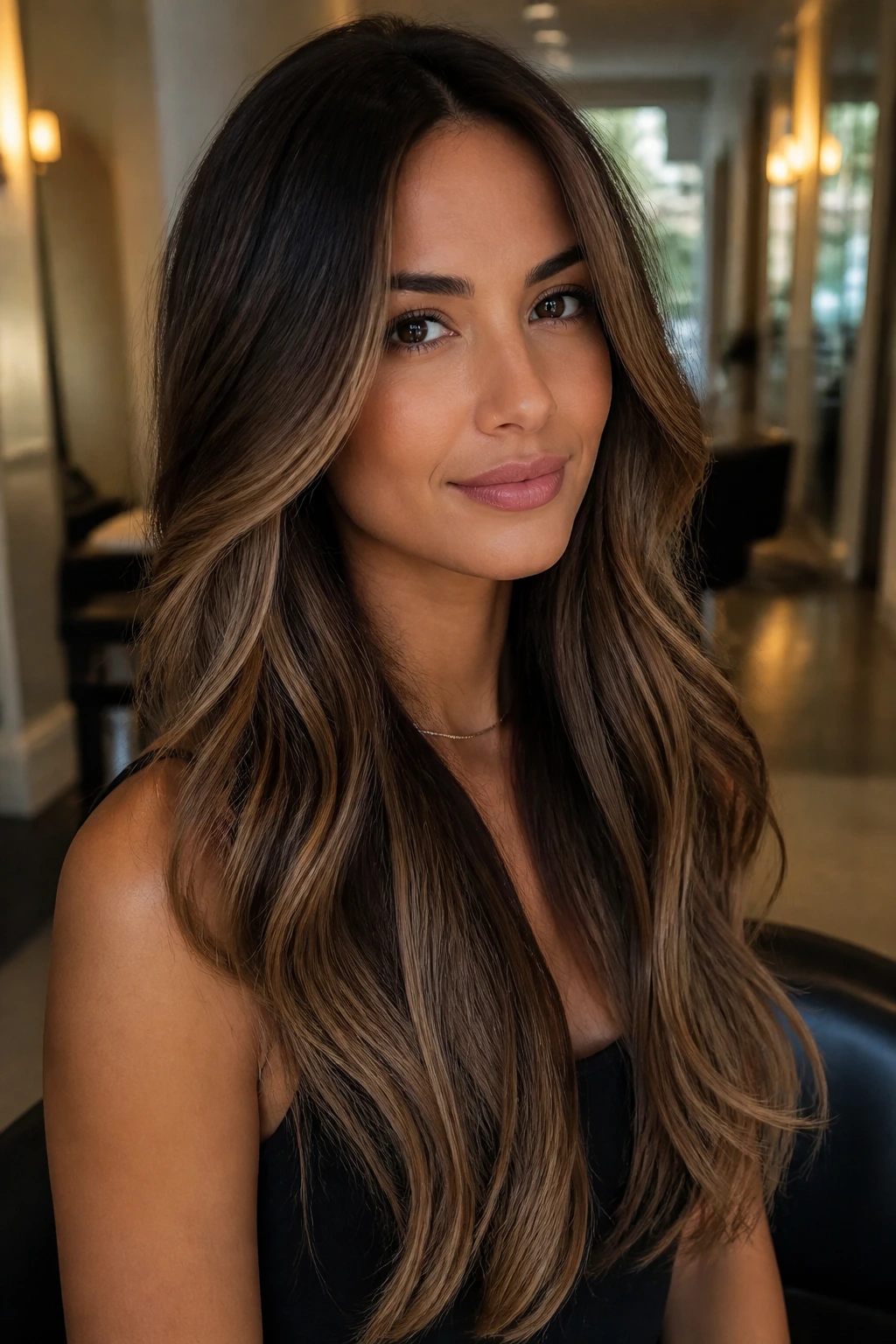
Mocha contour balayage is basically face framing with a quieter hand. The lighter mocha pieces are placed where the haircut already moves — around the cheekbones, through the lower layers, and at the front edge of the lengths. That gives the cut shape instead of just color.
I like this on long layers because the cut and the color talk to each other. A one-length cut can make contour pieces feel too obvious. Layers let them slide into the rest of the hair. The result is softer, and softer is usually better on long length.
Best For
- People who wear their hair down most of the time.
- Dark brunettes who want dimension without blonde.
- Hair that needs help looking full through the sides.
Quick Note
If the contour pieces are too wide, they take over. Keep them narrow enough to frame the face, not redraw it.
15. Scandi Blonde Balayage on Layered Lengths
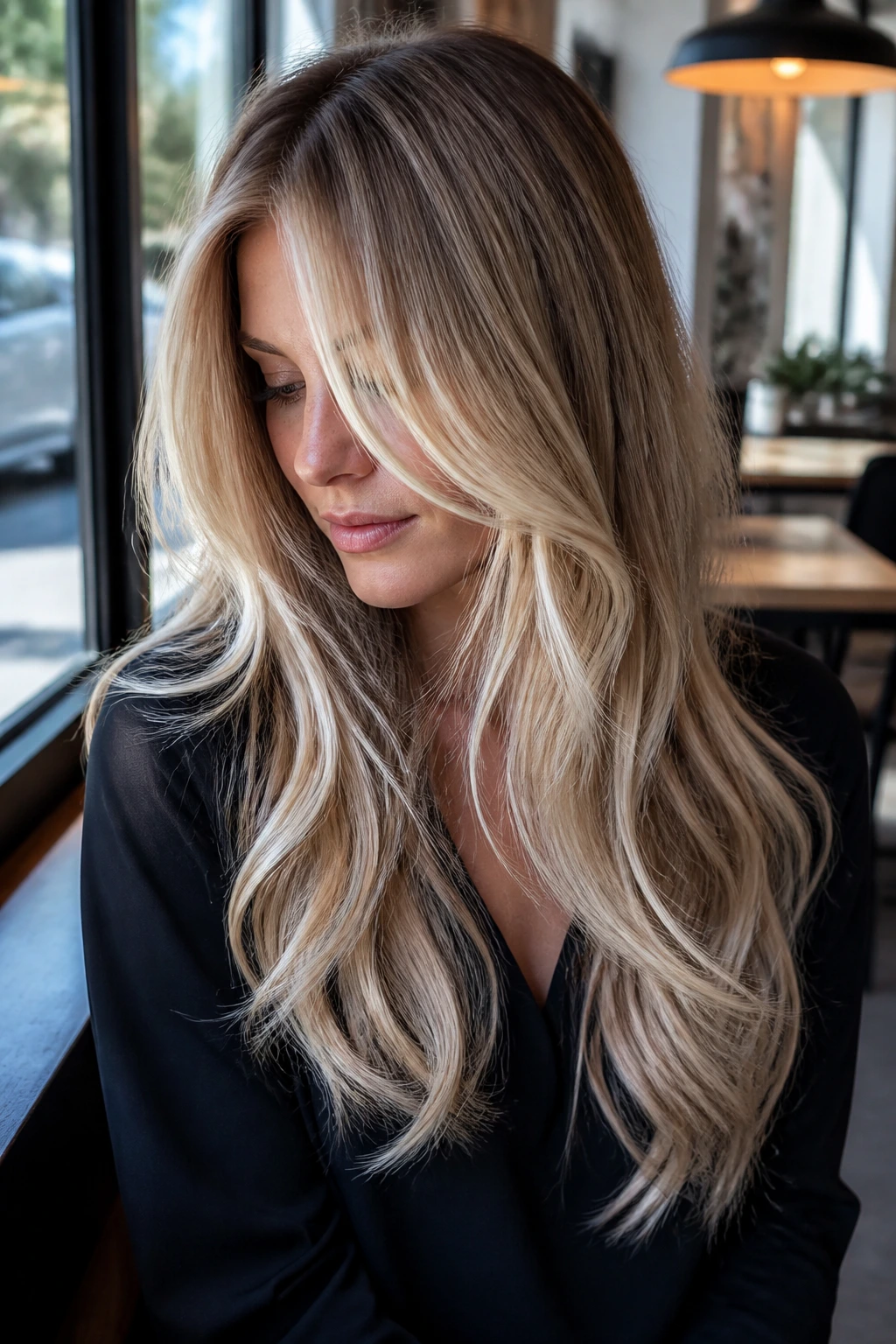
Scandi blonde is clean, bright, and cool enough to read crisp instead of brassy. On layered long hair, it looks airy because the lighter pieces lift off the darker base and the cut keeps the ends from clumping together visually.
This is one of the more high-maintenance looks in the set. Not because it’s difficult to wear, but because cool blonde shows warmth fast. If you’re willing to use blue or purple shampoo in moderation and book toner refreshes, it stays sharp. If you’re not, the color will slide toward yellow quicker than you want.
H3: Why It Works on Layers
Layers break up the blonde. That’s the whole point. On one-length hair, Scandi blonde can look too blocky. On layered hair, it reads like scattered light.
Best For
- Cooler skin tones.
- Hair that lifts well.
- Anyone who wants bright blonde without a heavy yellow cast.
16. Bronzed Brunette Balayage with Warm Dimension
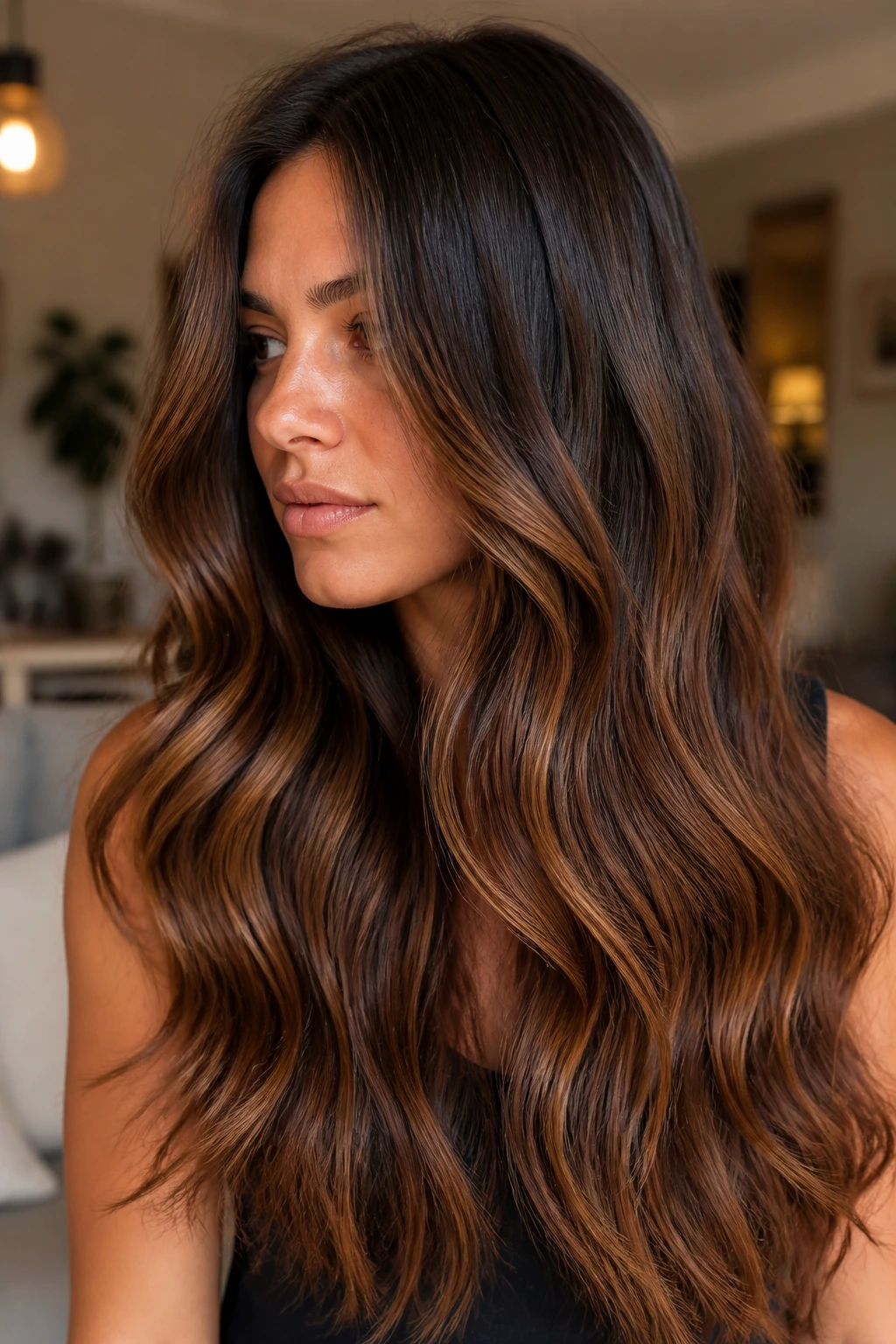
Bronzed brunette is a warm, metallic-looking option that sits between caramel and deep gold. On long hair, it gives a little sheen to the mids and ends without swallowing the depth of the base.
This is one of those shades that looks particularly good in natural light. It doesn’t need a dramatic curl pattern to show up. A smooth blowout is enough, which is useful if you’re not into constant styling. The bronze tones catch on straight sections and soft bends alike.
Why It’s Different
Bronzed brunette is warmer than mushroom or mocha, but less sweet than honey. That makes it a strong middle ground for brunettes who want glow, not blonde. It’s also flattering on dense hair because the warmth keeps the length from looking too dark at the ends.
Ask For
- Bronze or golden-brown ribbons.
- A soft root melt.
- Mid-length brightness rather than heavy ends.
- A gloss that keeps the tone rich, not orange.
17. Sable-to-Sand Balayage for High Contrast Lengths
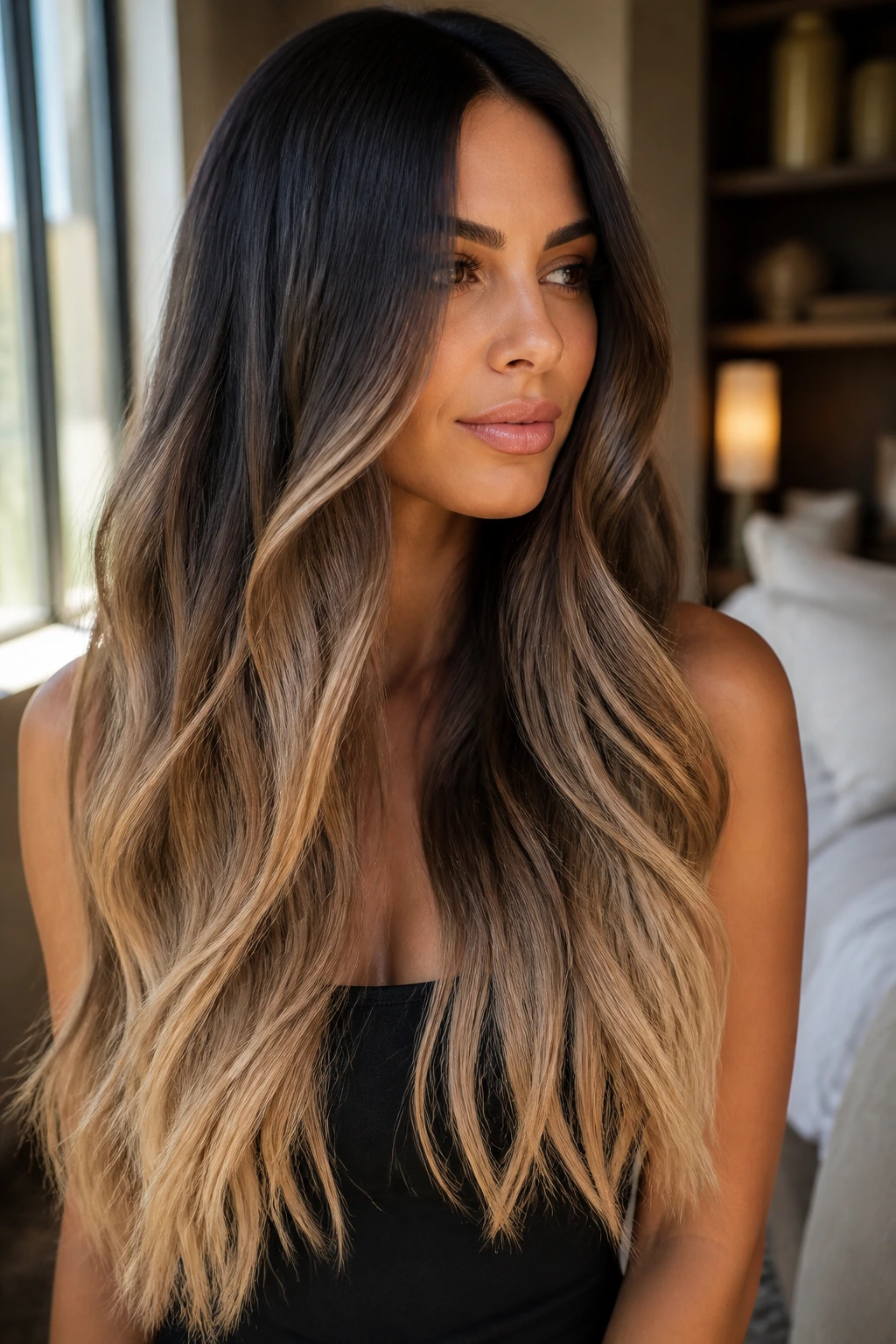
Sable-to-sand is for people who want contrast, but controlled contrast. The sable root stays deep and glossy. The sand ends are softer and lighter, but never pushed so pale that the whole look feels disconnected. On long hair, that gradient can be gorgeous.
This kind of balayage needs good placement discipline. If the lighter pieces start too high, the head can look striped. If they start too low, the color disappears until the last few inches. The sweet spot is usually somewhere from mid-ear down to the lower third of the hair, depending on length and density.
What Makes It Work
The contrast is strongest at the ends, where long hair has space to show it. That’s why this approach works better on long lengths than it does on shorter cuts. There’s enough room for the tone shift to unfold.
Good For
- Very long hair.
- People who like noticeable dimension.
- Thick hair that can hold both deep and light tones.
18. Caramel Swirl Balayage on Curly Long Hair
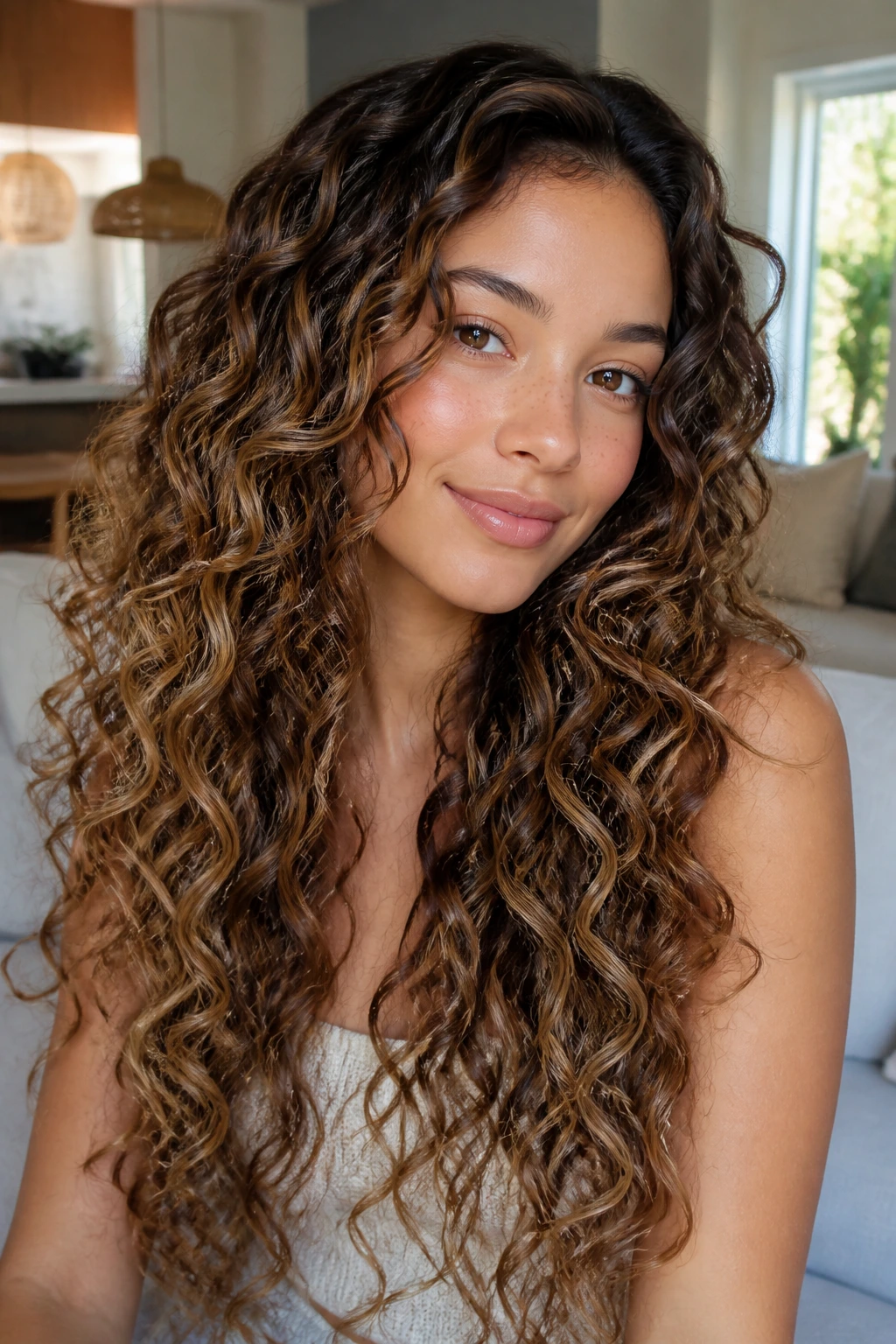
Curly long hair needs a different map. Straight-up ribbons can disappear inside the curl pattern if they’re placed wrong. Caramel swirl balayage works because the lighter pieces follow the curl clumps instead of fighting them.
The goal is to brighten the outer curve of the curls, where the light would naturally hit. That gives you movement without breaking the curl shape. Caramel is a smart tone here because it warms the curl pattern and makes the texture look fuller, not frizzy.
H3: Best Placement
- Around the face and crown for lift.
- On the outer bend of larger curl clumps.
- A little lower through the lengths so the color reads when the hair moves.
One Honest Warning
Do not over-lighten curly ends. They’re often drier to begin with, and too much lift can make the curl look fuzzy. Caramel, not pale blonde, is usually the better call.
19. Taupe Beige Balayage for Cooler Undertones
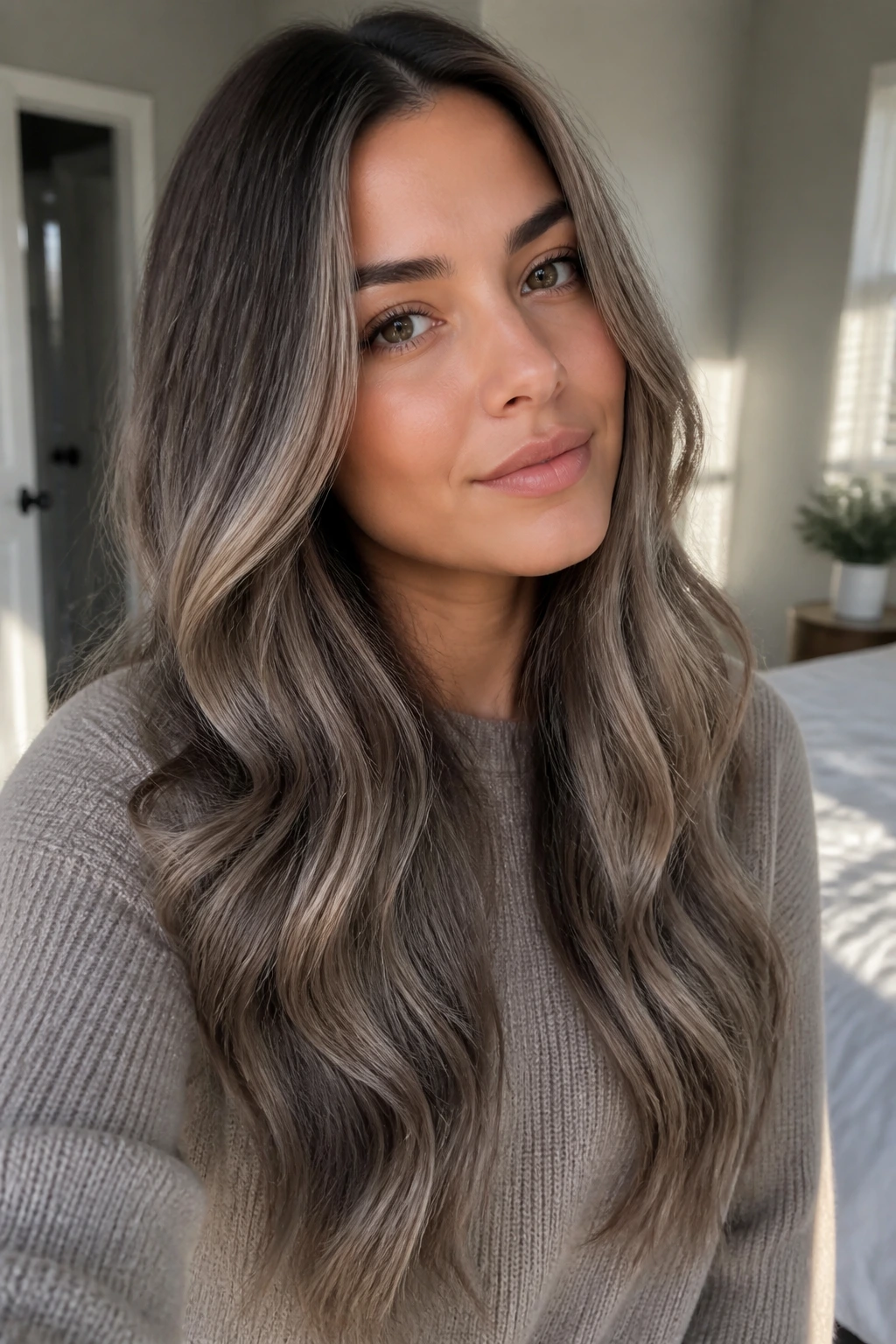
Taupe beige has that soft, dusty quality that cooler undertones tend to love. It is less golden than honey, less silver than ash, and much easier to live with on long hair than very icy blonde. It looks muted in the best way.
This shade does a nice job of keeping dimension without too much heat. If your natural color pulls ashy or your skin looks better next to muted tones, taupe beige is worth a hard look. Long hair gives the shade room to drift from a slightly deeper root into a softer beige end, and that transition is what keeps it from feeling flat.
Why It’s Smart
A cool beige tone can be hard to wear if it’s too pale. On long hair, the length itself softens the look, so the tone can stay muted without disappearing. That’s the advantage.
Best Pairings
- Air-dried waves.
- Low-gloss styling creams.
- Dark blondes and medium brunettes with cool undertones.
20. Strawberry Brunette Balayage with Apricot Light
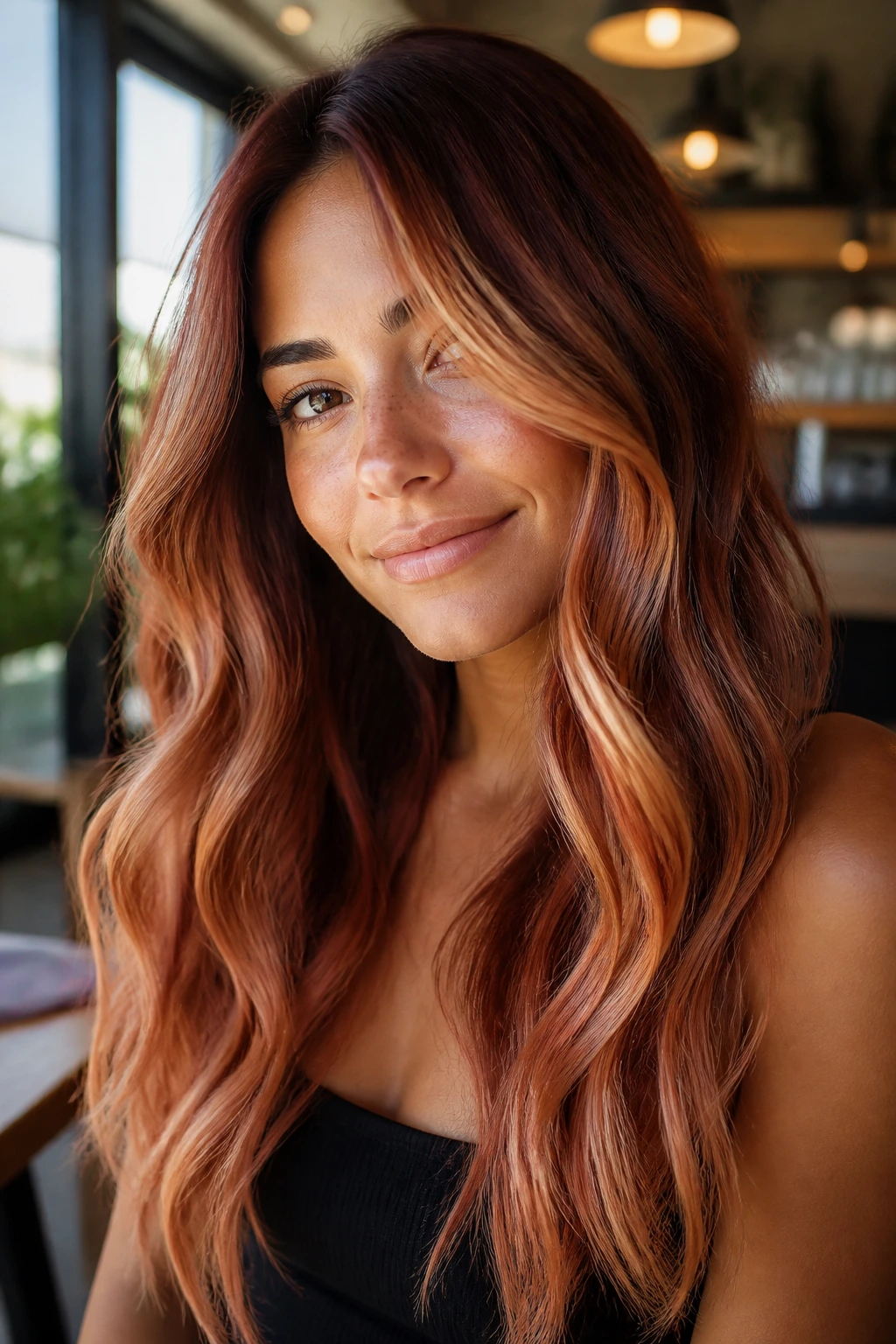
Strawberry brunette is for anyone who wants a hint of red without committing to full copper. The apricot light keeps the shade from reading too pink, and the brunette base keeps it grounded. On long hair, that mix can look especially soft because the length allows the colors to blend gradually.
This one leans warm and slightly playful, but it still stays wearable. The trick is keeping the strawberry tones in the lighter pieces rather than flooding the mids with red. A few apricot ribbons around the front and through the lower lengths are usually enough.
What It Needs
A gloss matters here. Red-toned balayage fades faster than people expect, and on long hair the fade shows in the mids before the ends. If you want the apricot warmth to stay visible, plan on refreshing the tone more often than you would with brunette-caramel color.
Best For
- Warm skin tones.
- Brunettes who want a subtle red shift.
- Long waves with movement.
21. Smoky Gold Balayage on Thick Waves
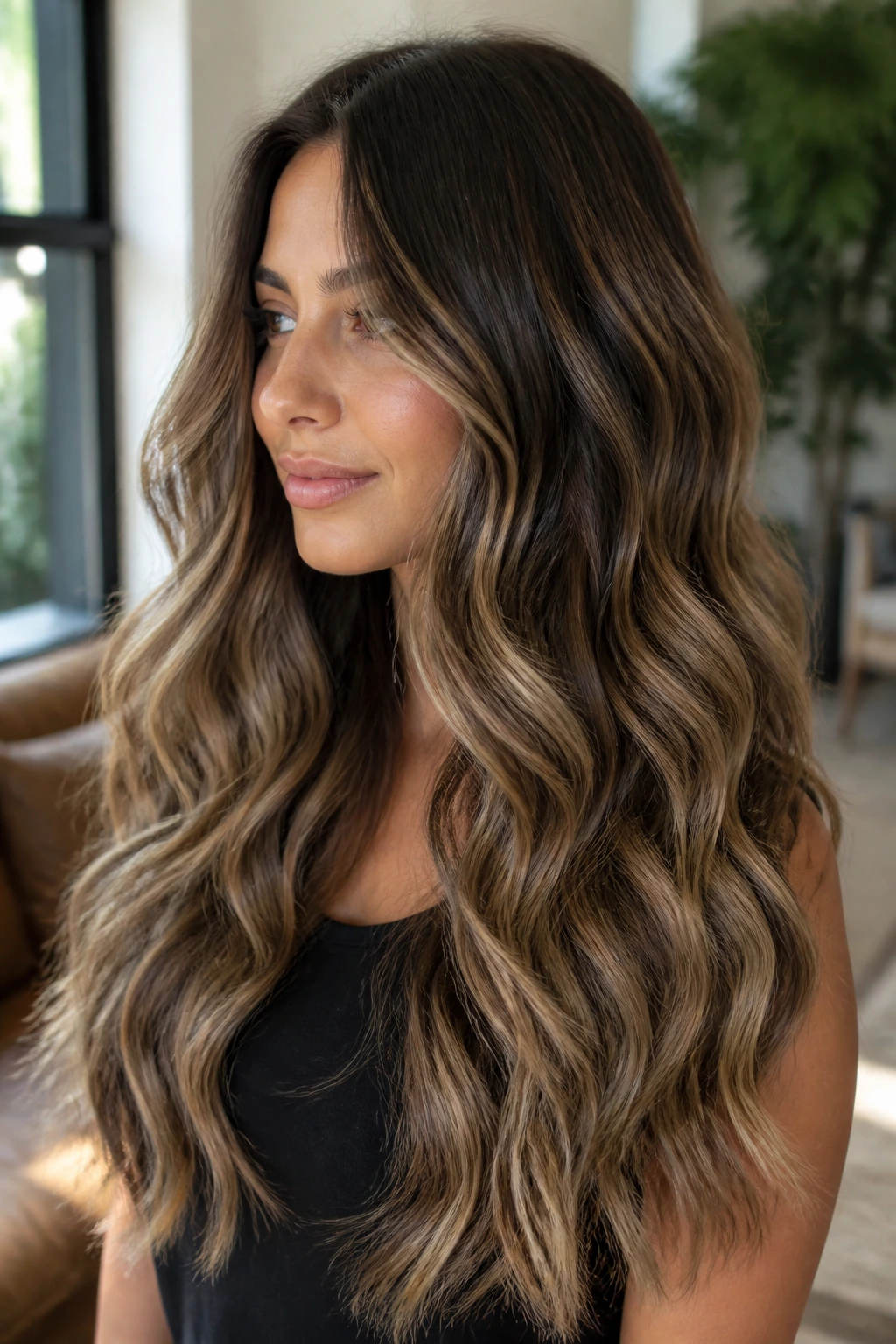
Smoky gold sounds flashy, but it’s not. The “smoky” part is what keeps it from turning brassy. On thick long hair, that balance matters because the density can make bright blonde look heavy if the tone is too yellow.
This shade works because the gold catches light while the smoky base keeps the edges soft. Thick waves are ideal. The wave pattern gives the gold somewhere to break up, so the color looks airy instead of layered on top like frosting.
H3: Why Thick Hair Loves It
Thick hair can take brighter ribbons without looking sparse. Smoky gold uses that to its advantage. The color shows through movement, not through sheer contrast alone.
Best When
- You have a lot of hair.
- You want brightness but not icy blonde.
- You like a softer finish around the face and stronger brightness through the lower lengths.
22. Cinnamon Sugar Micro-Ribbon Balayage
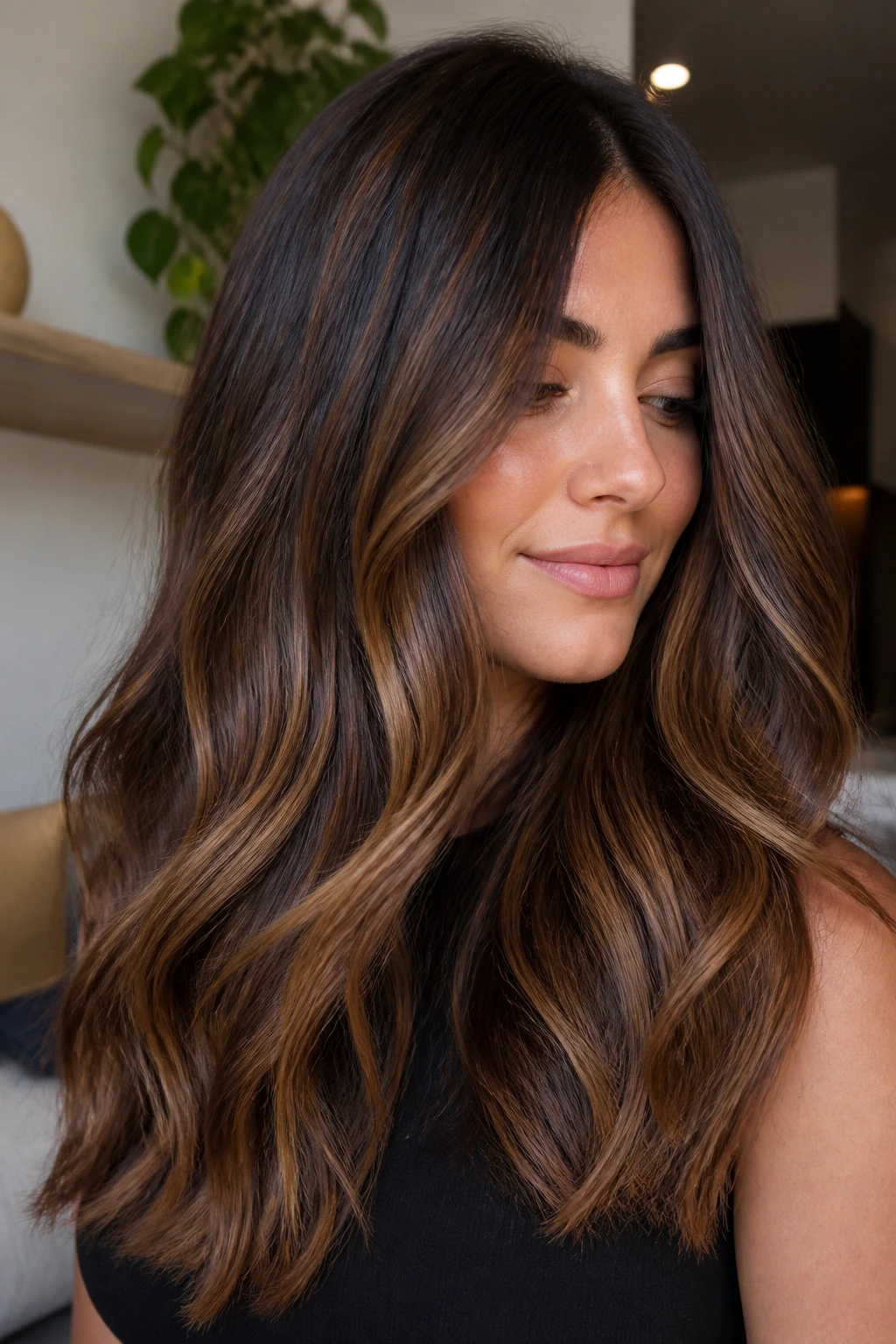
Micro-ribbon balayage is the quietest look in the bunch, and that’s exactly why some people love it. Tiny cinnamon and sugar-toned pieces are painted close together so the hair looks more textured than highlighted. On long hair, this is subtle in a way that still reads as intentional.
The benefit is control. Instead of wide stripes, you get a fine scatter of light that keeps the base visible. That makes this a strong option for someone who wants dimension but hates the feeling of “having highlights.” The cinnamon warmth also softens dark brown hair without pushing it orange.
A Good Rule of Thumb
If your hair is straight, micro-ribbons give it movement. If your hair is wavy, they make the bends look fuller. If your hair is very dark, keep the cinnamon tone gentle and let the root stay rich.
Best For
- Low-contrast lovers.
- Fine to medium hair.
- Anyone who wants long hair balayage that whispers instead of announces itself.
Why Balayage Lays So Well Across Long Lengths
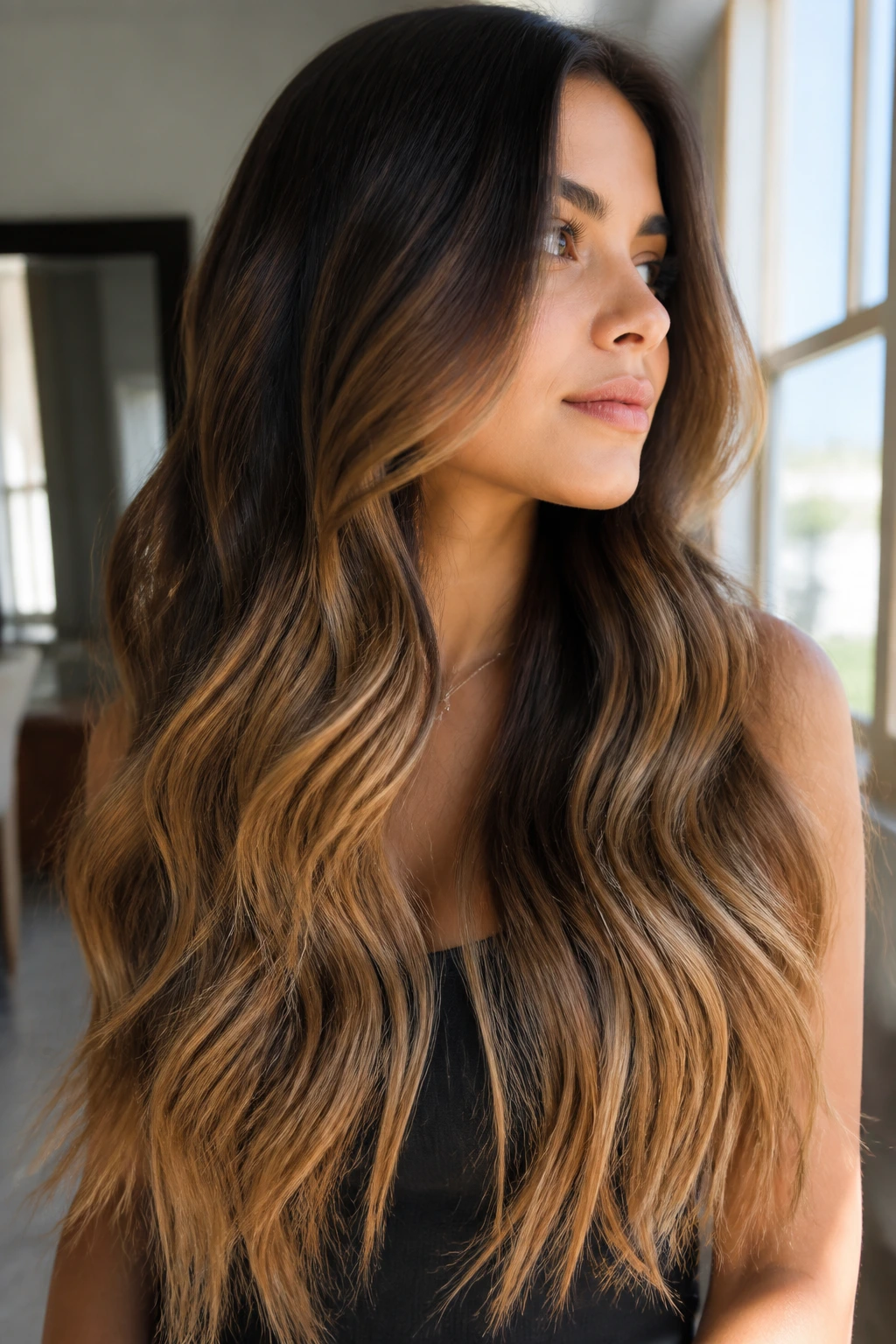
Long hair changes the job of color. On a bob, every ribbon has to work hard because the eye lands on it fast. On long layers, the color has space to fade, bend, and overlap. That gives balayage a real advantage, but only if the placement is thoughtful.
The best long-hair color stories use three levels: a deeper root, a middle tone that keeps the transition soft, and lighter ends that don’t look pasted on. That’s the part a lot of home-color advice skips. People chase brightness and forget the bridge between dark and light. The bridge is where soft dimension lives.
Texture matters too. Waves make hand-painted pieces show up in movement, while straight hair lays every transition flat and asks more from the toner. Curly hair needs placement around the curl pattern, not against it. Long hair is forgiving in the sense that it gives you room to work, but it’s unforgiving if the lightening is too blunt. You can hide a lot in the length. You can also reveal every mistake.
The Tools and Products Worth Having Around
-
Inspiration photos from the front and back: One pretty face-framing photo is not enough; long hair needs placement seen from the side and back too.
-
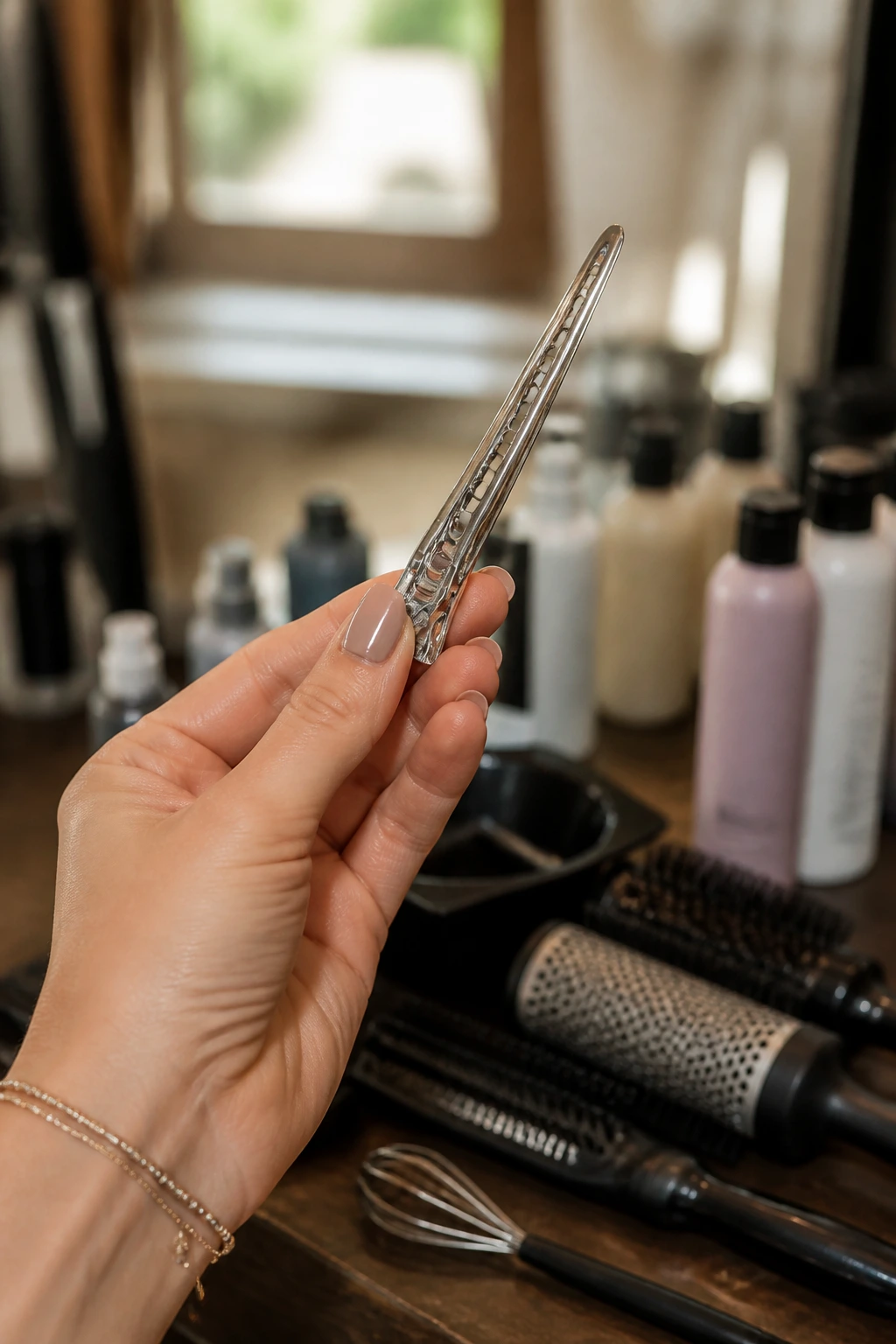
Sectioning clips: Good clips keep long hair from slipping while you style, tone, or dry it.
-
Wide-tooth comb: Useful for detangling without pulling apart the lighter pieces.
-
Color-safe sulfate-free shampoo: Helps slow down fading and keeps the tone from rinsing out too fast.
-
Purple or blue shampoo: Purple is usually better for blonde and beige tones; blue helps knock back orange warmth in brunette balayage.
-
Deep conditioning mask: Long, lightened ends get dry fast, and a weekly mask gives them a little more slide and shine.
-
Heat protectant spray: Non-negotiable if you blow-dry or curl often. Lightened pieces burn faster than the darker base.
-
Glossing oil or serum: A tiny amount on the ends smooths frizz and keeps the ribboned pieces from looking rough.
-
Microfiber towel or soft T-shirt: Less friction after washing means less fuzz around the highlights.
-
Tail comb or tint brush: Helpful if you’re sectioning at home or doing careful product application.
How to Choose the Right Shades for Your Base and Undertone
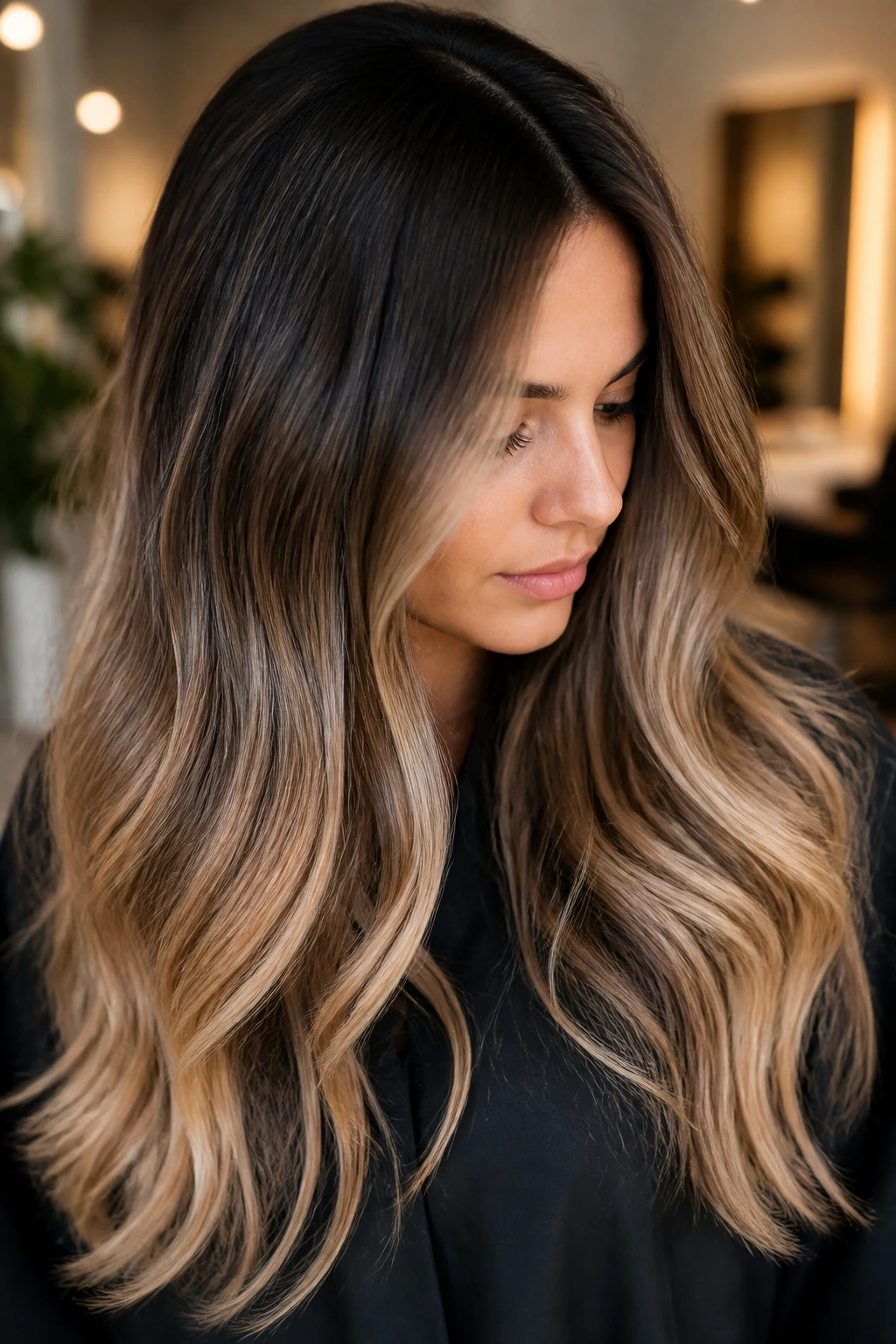
Picking the right long hair balayage shade starts with your base, not your dream photo. If your natural color is a level 3 or 4 brunette, honey, caramel, mocha, and bronzed ribbons usually make more sense than jumping straight to pale blonde. The darker the base, the more your highlights need a bridge.
Level 5 to 6 hair has more room. You can go beige, champagne, taupe, toffee, or soft vanilla cream without losing the underlying depth. That’s one reason these medium bases are so easy to work with. There’s enough light already in the hair that the color doesn’t need to do all the heavy lifting.
Undertone matters more than people like to admit. Warm skin usually likes gold, honey, bronze, copper, and apricot. Cool skin often looks calmer next to mushroom, taupe, pearl, and smoky beige. Neutral skin can move in either direction, but the haircut and wardrobe still affect how the tone lands. If you wear a lot of black and denim, cooler dimension can look sharper. If your closet is full of cream, camel, and olive, warm balayage usually feels easier.
Porosity changes the result too. Dry ends grab toner fast and can turn too ashy or too dark if nobody watches them. If your hair is porous, ask for separate toning on the mids and ends. That small thing saves a lot of regret.
How to Style Long Hair Balayage So the Dimension Shows
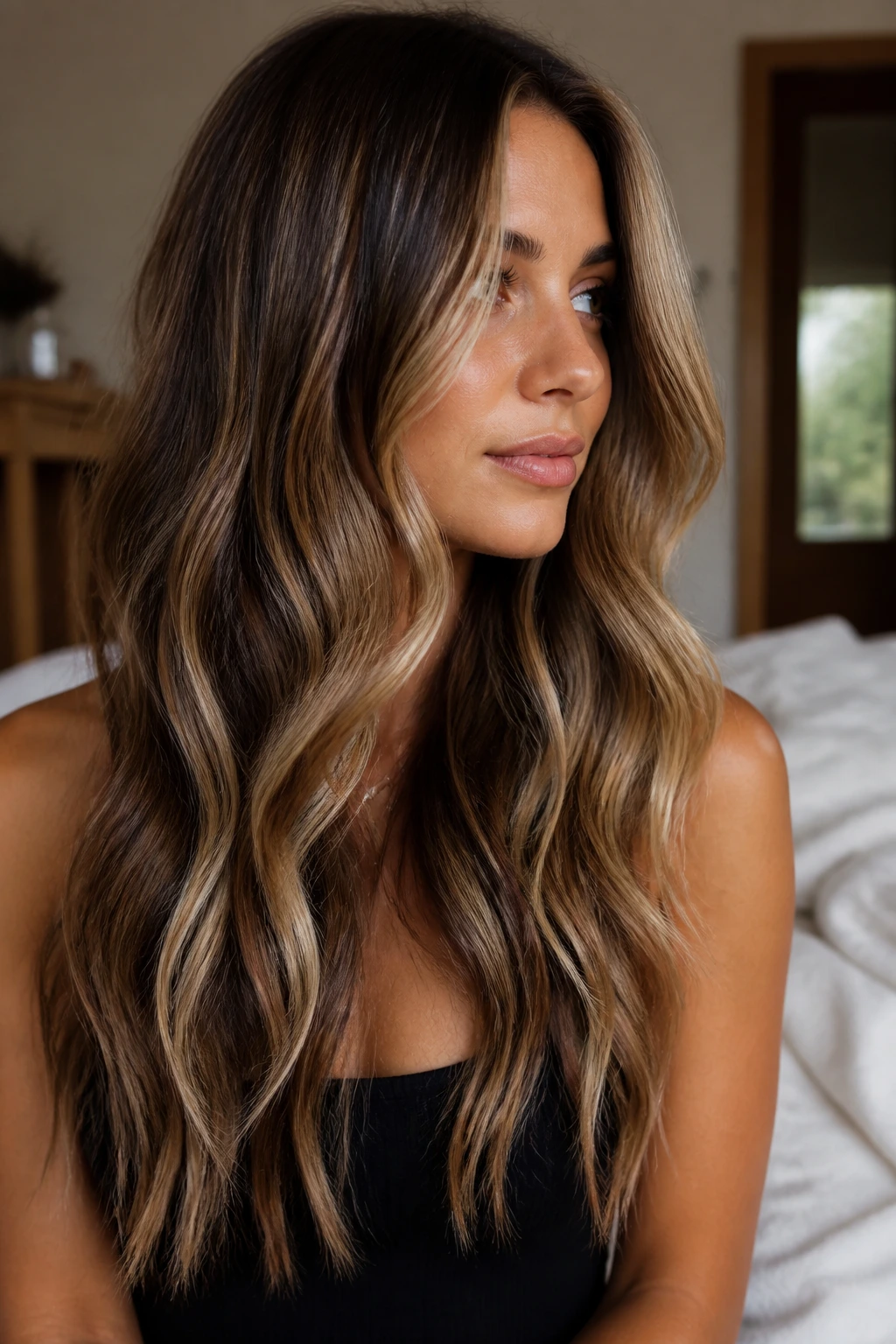
Presentation: Wear the hair in loose waves, a soft blowout, or a polished bend if you want the ribbons to show. A straight finish can work, but it asks for more thoughtful placement because the color has nowhere to hide.
Accompaniments: Curtain bangs, face-framing layers, and long layers do the most for soft dimensional color. They break up the length so the light pieces do not sit in one long curtain. A blunt one-length cut can still work, but it usually needs softer placement around the face.
Portions: If your hair is very long, keep the brightest pieces concentrated through the front and lower thirds so the color does not look overdone at the crown. On medium-long hair, you can push the ribbons a little higher because there is less vertical space to cover.
Beverage Pairing: Coffee is for the salon chair. Kidding, sort of. The real pairing is the hairstyle with your wardrobe and makeup — warm balayage likes peach blush and soft browns, while cool tones sing next to berry lips and clean liner. The hair should feel like it belongs to the rest of the look.
The Small Habits That Keep Soft Dimension Looking Soft
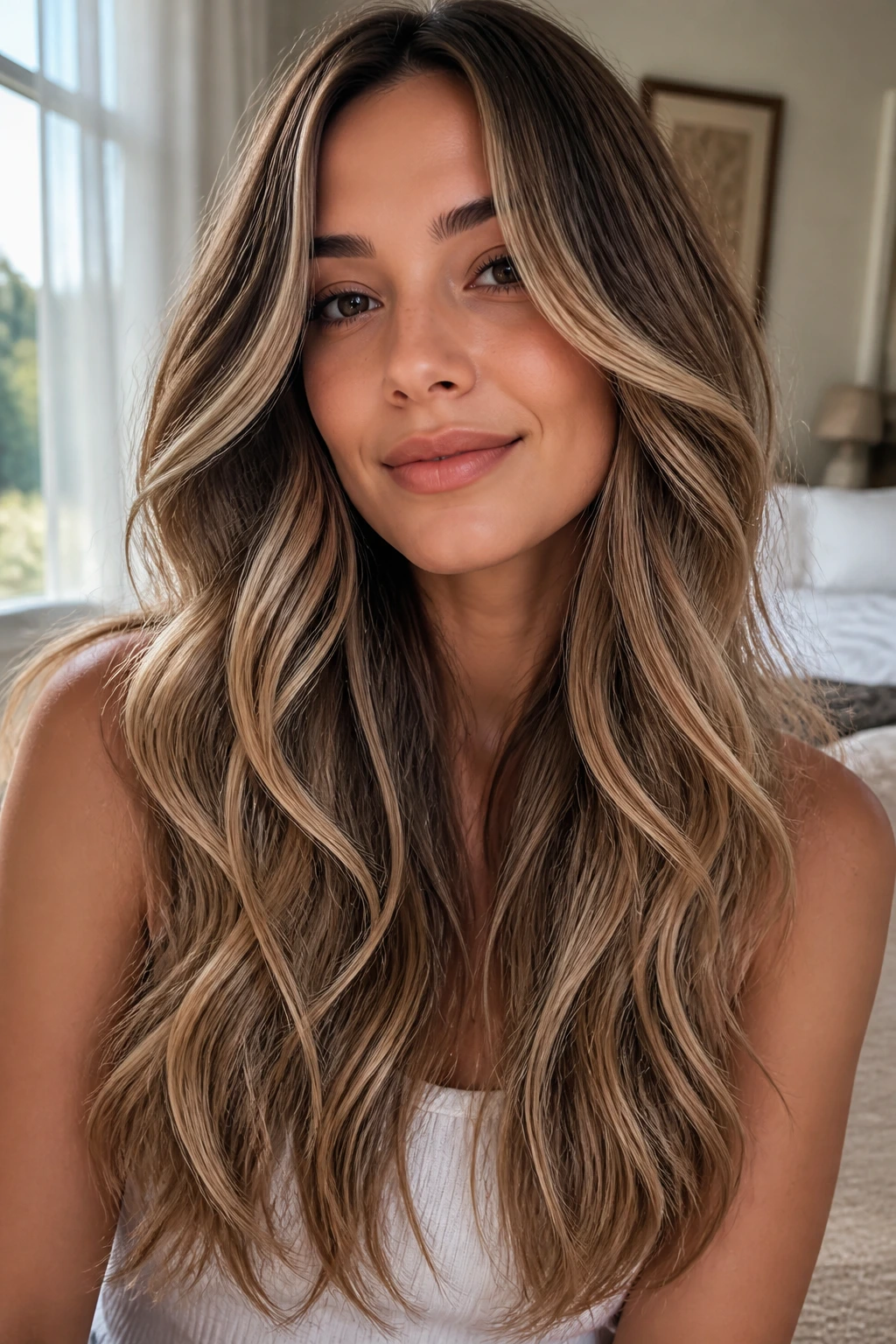
Gloss Enhancement: A salon gloss every 6 to 8 weeks keeps beige, caramel, champagne, and smoky tones from drifting dull. It is the cheapest way to make balayage look intentional for longer.
Customization: If you wear your hair in waves most of the time, ask for slightly brighter lower pieces because they show better in movement. If you wear it straight, keep the pieces narrower and let the front do more of the work.
Serving Suggestions: Use a pea-sized amount of oil only on the last 2 to 3 inches. Too much and the lighter ends look greasy; too little and they start to puff up.
Make-It-Yours: Fine hair usually looks better with a softer root shadow and thinner ribbons. Thick hair can carry wider panels, but the color still needs a few untouched spaces so the whole head does not blur into one beige sheet.
A tiny bit of toning discipline goes a long way. So does a haircut that supports the color instead of swallowing it.
Common Balayage Mistakes That Flatten Long Hair
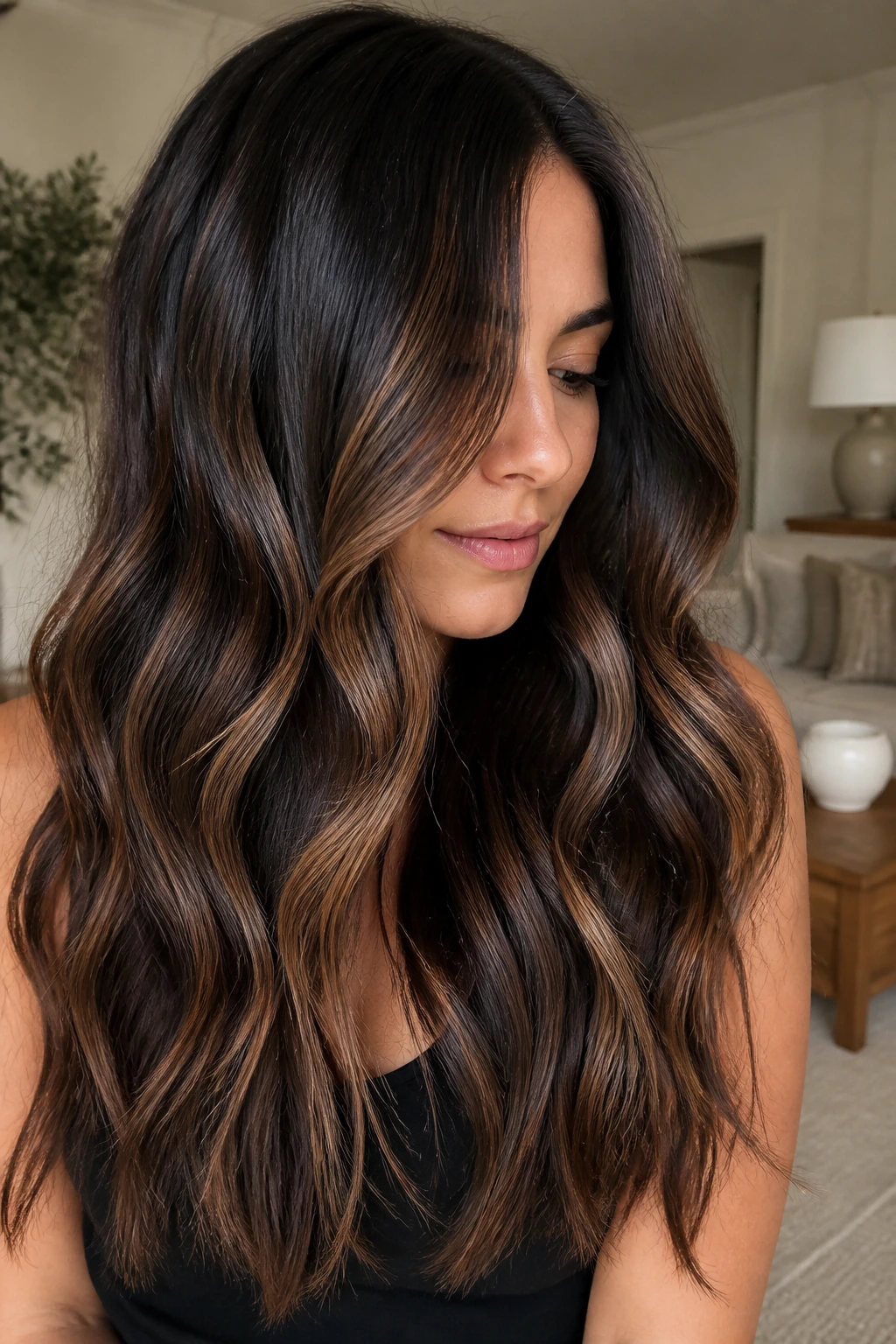
The first mistake is pushing the lightening too high around the crown. On long hair, that can create a banded look that feels stripy instead of soft. The fix is simple: keep the brightest pieces below the root area and let a root shadow do its job.
Another common error is using the same toner on every part of the head. Porous ends need different care than healthy mids. If everything gets the same formula, the ends can grab too much ash or turn muddy while the mids stay too warm. Separate toning solves that mess.
People also overdo purple shampoo. Once a week is usually enough for blonde and beige tones. Twice a week if the brass is moving fast. More than that, and the hair can start looking flat and chalky.
Then there’s the haircut problem. Very long one-length hair can make even pretty balayage look heavy at the bottom. A few long layers or face-framing pieces help the color move. Without that, the dimension sits there without much life.
Heat is the last one. Bleached or lightened pieces need protectant every time. Every time. If you skip it, the ends will show it before the root does.
Variations and Color Directions to Try
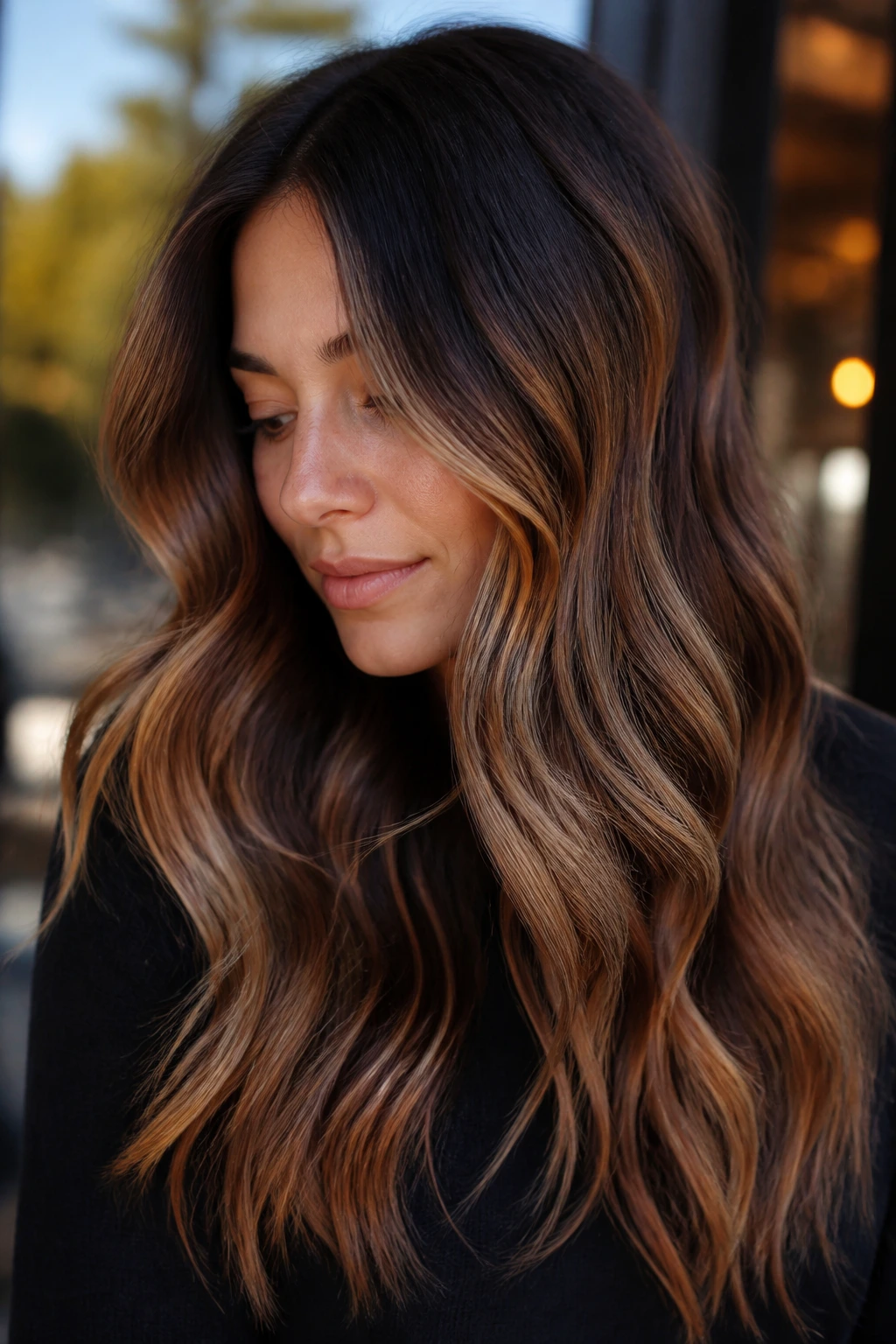
Soft Root Melt Blonde: Keep the base deeper and let the lighter ribbons stay below the crown. This works if you want a softer grow-out and fewer obvious salon lines.
Copper Glow Drift: Push the caramel and bronze tones warmer, almost into auburn territory. It’s a nice shift if your skin likes warmth and you want the hair to read richer in natural light.
Cool Smoke Blend: Use mushroom, taupe, and beige instead of gold. This version keeps brunettes from going brassy and fits people who like muted tones.
Bright Face-Frame Focus: Concentrate the lightest pieces around the cheekbones and temples, then let the rest of the balayage stay lower and softer. This is the easiest way to change the face without changing the whole head.
Curly Ribbon Layout: For curls and coils, place lightening around the outside curve of each section rather than in straight panels. The result is softer and more believable once the hair springs up.
Keeping Long Hair Balayage Glossy Between Visits
Long hair balayage usually looks best in the first few days after a gloss or toner refresh, but you can stretch that window if you treat the hair like it matters. Wash with a color-safe shampoo two or three times a week, not daily, unless your scalp needs more. Hot water strips tone faster than lukewarm water, and long lightened ends feel that loss first.
Use purple shampoo only when the blonde starts drifting yellow or the beige starts looking tired. For brunette balayage with orange warmth, blue shampoo can help, but keep it light. Once every 7 to 10 days is usually enough for most people. More often than that, and the hair can lose its softness.
A weekly mask is worth the time, especially on the lower third of the hair. Leave it on for 5 to 10 minutes after shampooing, then rinse until the hair feels slippery but not coated. If the ends still snag after rinsing, they want more moisture, not more oil.
Trim the ends every 8 to 12 weeks if the hair is lightened. Split ends make balayage look rough from the bottom up, and the whole point of soft dimension is that the ends move cleanly. Heat protectant belongs on every blow-dry and every curling iron pass. Sun, chlorine, and hard water can all shift tone too, so a UV spray or a quick rinse after swimming is worth the trouble.
Frequently Asked Questions
How often does long hair balayage need a refresh?
Most long balayage looks hold their shape for 8 to 12 weeks, but the toner may need a quicker refresh if you picked blonde, beige, or red tones. Brunette-heavy looks usually stretch longer because the base is doing more of the visual work.
Is balayage less damaging than all-over highlights on long hair?
Usually, yes, because the lightener is not applied from root to tip on every section. That said, any lightening process can dry the hair, especially at the ends. The real difference is in placement and how much of the hair gets lifted.
What shade works best if I want very soft dimension, not a big change?
Mushroom brown, smoky brunette, taupe beige, and cinnamon sugar micro-ribbons are all quiet choices. They keep the hair looking rich while still giving the length some movement.
Can balayage work on straight long hair, or does it need waves?
It works on both, but straight hair shows the placement more clearly, so the tone map has to be cleaner. On straight lengths, thinner ribbons and a stronger root shadow usually look better than wide panels.
How do I ask for long hair balayage at the salon?
Bring photos from the front, side, and back, then describe the finish in plain language: warmer, cooler, brighter around the face, or softer through the ends. Tell the colorist how often you want to come back and how you usually wear your hair.
Why do my light pieces turn brassy so fast?
That usually means the toner is fading, the hair is porous, or the water is pulling warmth back into the color. Purple or blue shampoo can help, but if the brass keeps returning, you may need a gloss or a slightly different tone formula.
Can curly hair get balayage without losing definition?
Yes, if the placement follows the curl pattern instead of slicing across it. Lighter pieces on the outer curve of the curl keep the shape intact and stop the hair from looking frizzy.
What if my hair feels dry after balayage?
That’s common on long hair because the ends are older and more porous. Cut back on heat for a week, use a mask, and switch to a softer conditioner with more slip. Dry ends usually need moisture and less friction, not more product piled on top.
Soft Dimension That Grows Gracefully
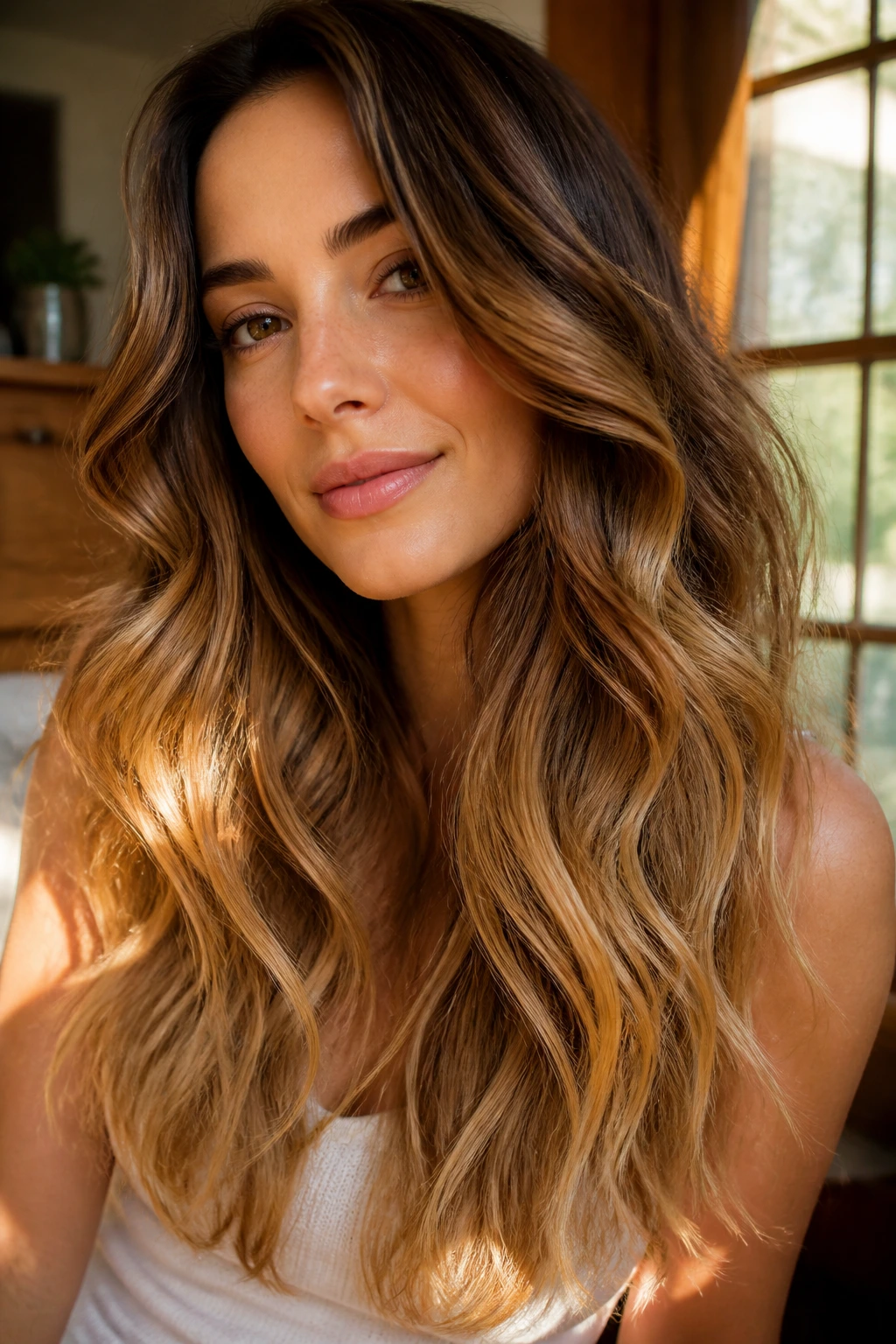
Long hair gives color room to drift, and that’s the whole reason balayage works so well here. The best versions do not fight the length; they use it. A deep root, a thoughtful mid-tone, and lighter ends that move together can make even simple styling look finished.
The safest place to start is the tone family that already feels like you. Honey, mushroom, caramel, pearl, copper, beige, bronze — each one changes the mood without changing the basic logic of soft dimensional color. Pick the one that fits your base, your upkeep tolerance, and the way you actually wear your hair. The rest falls into place faster than people expect.
