



Medium length black hair has one unfair advantage: it can look razor-sharp one day and soft, glossy, and expensive the next, depending on the shade sitting on top of it. The catch is that black is not one color. On a collarbone-length cut, a flat black can swallow the shape of the haircut, while the right blue-black, cherry-black, or soft espresso-black makes every bend and layer look deliberate.
The best medium length black hair color ideas use shine, undertone, and placement to do the heavy lifting. A blunt lob loves a mirror finish. A shag needs ribbons and lowlights. If you pick the wrong undertone, the whole thing can turn heavy or muddy under indoor light. If you pick the right one, though, the cut starts doing that thing black hair does so well: it looks clean, expensive, and a little bit dangerous.
That’s why these ideas are not just darker-and-darker shades. They’re different ways to make black hair move.
Why You’ll Love This Collection
- The cut does the work: Medium length gives black hair enough surface area for shine and dimension, but not so much that upkeep becomes a second job.
- You get real range: There’s everything here from glossy jet black to burgundy peekaboo panels, so you can go subtle or push the contrast.
- Most of these looks are salon-friendly: A lot of the best versions use a gloss, demi-permanent color, or strategic ribbons instead of a full bleach session.
- Black hair doesn’t have to look flat: Placement matters more than people think, and the right money pieces or lowlights can keep the shape alive.
- These shades age well as they grow out: Shadow roots, blended balayage, and underlayers tend to look intentional longer than hard lines.
- The ideas work on different textures: Straight, wavy, coily, and blown-out medium cuts all have a version in here that makes sense.
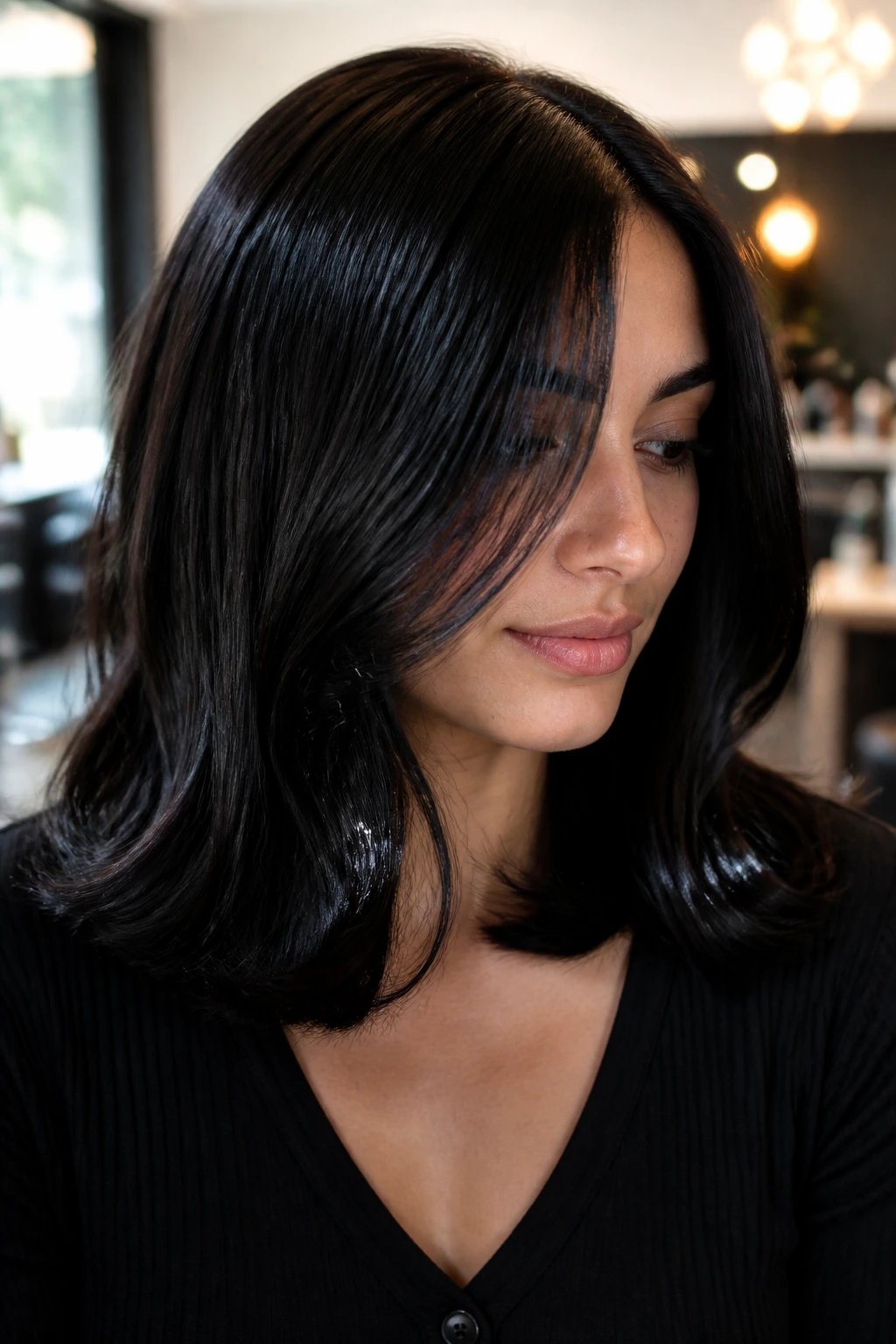
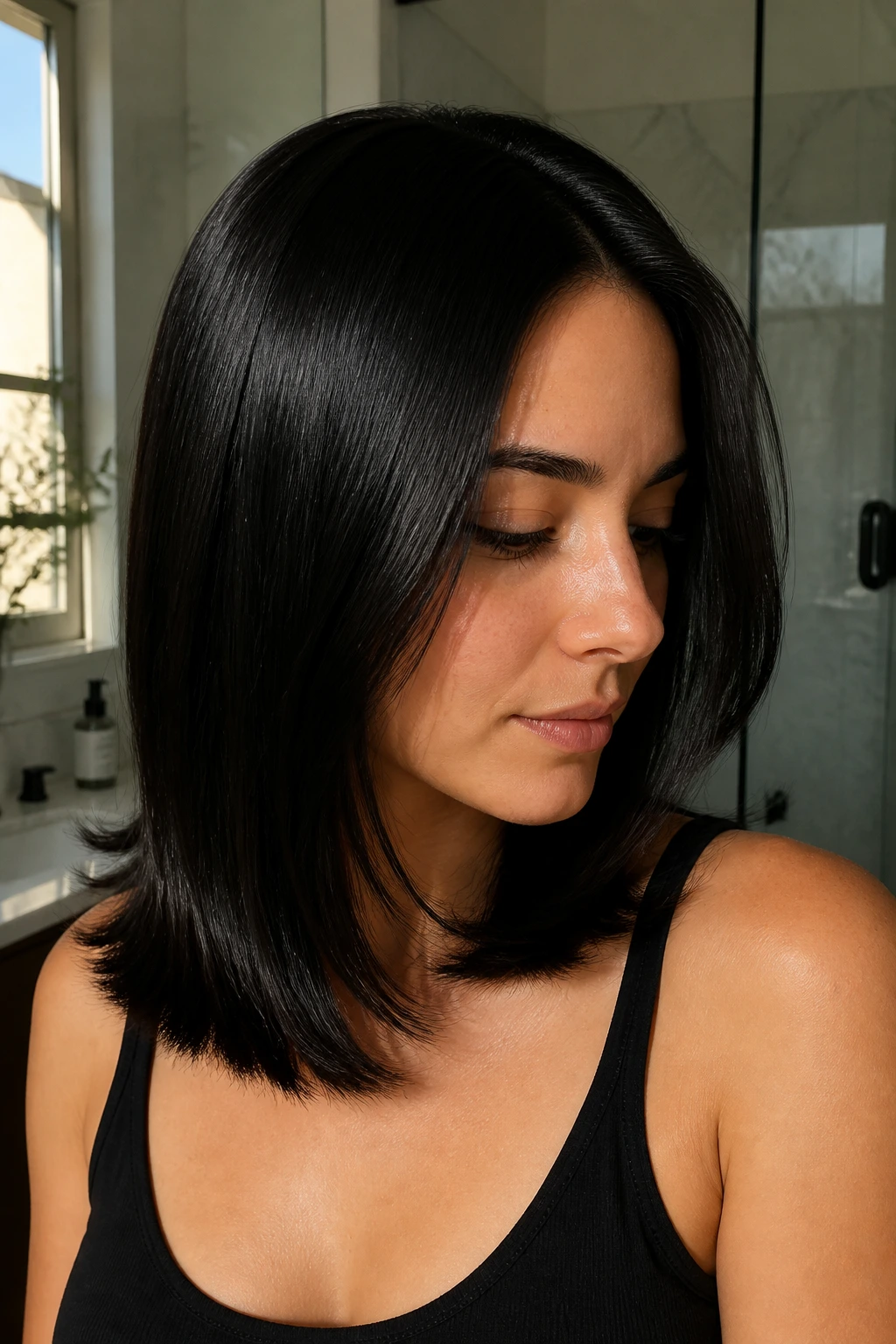
1. Jet-Black Lob With Mirror Shine
A blunt lob in jet black is the closest thing hair has to a tailored coat. The line sits clean at the collarbone or just above it, and the color needs to be just as precise: deep, even, and glossy enough that light lands on it instead of disappearing into it.
What makes this work is restraint. No warm fade. No obvious highlight pattern. Just a solid black base with a glassy finish, especially at the ends where blunt cuts can either look crisp or look stiff. I like this best when the hair is blow-dried smooth with the ends tucked slightly under. It reads polished, not helmet-like.
What to ask for
Ask your colorist for a level 1 or very deep level 2 black with a gloss that boosts shine rather than changing the tone too much. If your natural hair is already dark brown, a deposit-only formula can keep the result softer and easier to grow out.
2. Blue-Black Collarbone Cut
Blue-black is for anyone who wants black hair that flashes a little extra under daylight without tipping into obvious fashion color. Indoors it can look almost inky; outside, the blue undertone gives the surface that cool, reflective edge that makes dark hair look almost wet.
On medium length hair, this shade loves a straight finish or a soft bend through the mid-lengths. The movement shows off the blue reflect without breaking the line of the cut. If your skin tone runs cool or neutral, this one can be startlingly flattering. If your hair is porous, though, keep the blue side controlled. Too much pigment on damaged ends can go muddy.
A clear gloss or blue-toned demi over a dark base keeps the color looking intentional instead of over-tinted. That matters.
3. Raven Black With Soft Layers
Raven black sounds dramatic, and honestly, it should. The color is deep and inky, but the haircut softens it: long internal layers, a touch of movement around the face, and ends that don’t hang like a heavy curtain.
This is the version I’d pick for someone who likes black hair but doesn’t want the whole head to look carved from one block. On layered medium-length hair, the darkness still feels rich, but the layers catch light differently and keep the shape from going dull. A loose bend with a 1.25-inch iron helps, though even air-dried texture can work if the ends have some separation.
Why it works
The layers create shadows inside the cut, so the black reads dimensional without needing visible highlights. That’s the whole trick. If you love dark hair but hate the “flat sheet” problem, this is the cleaner answer.
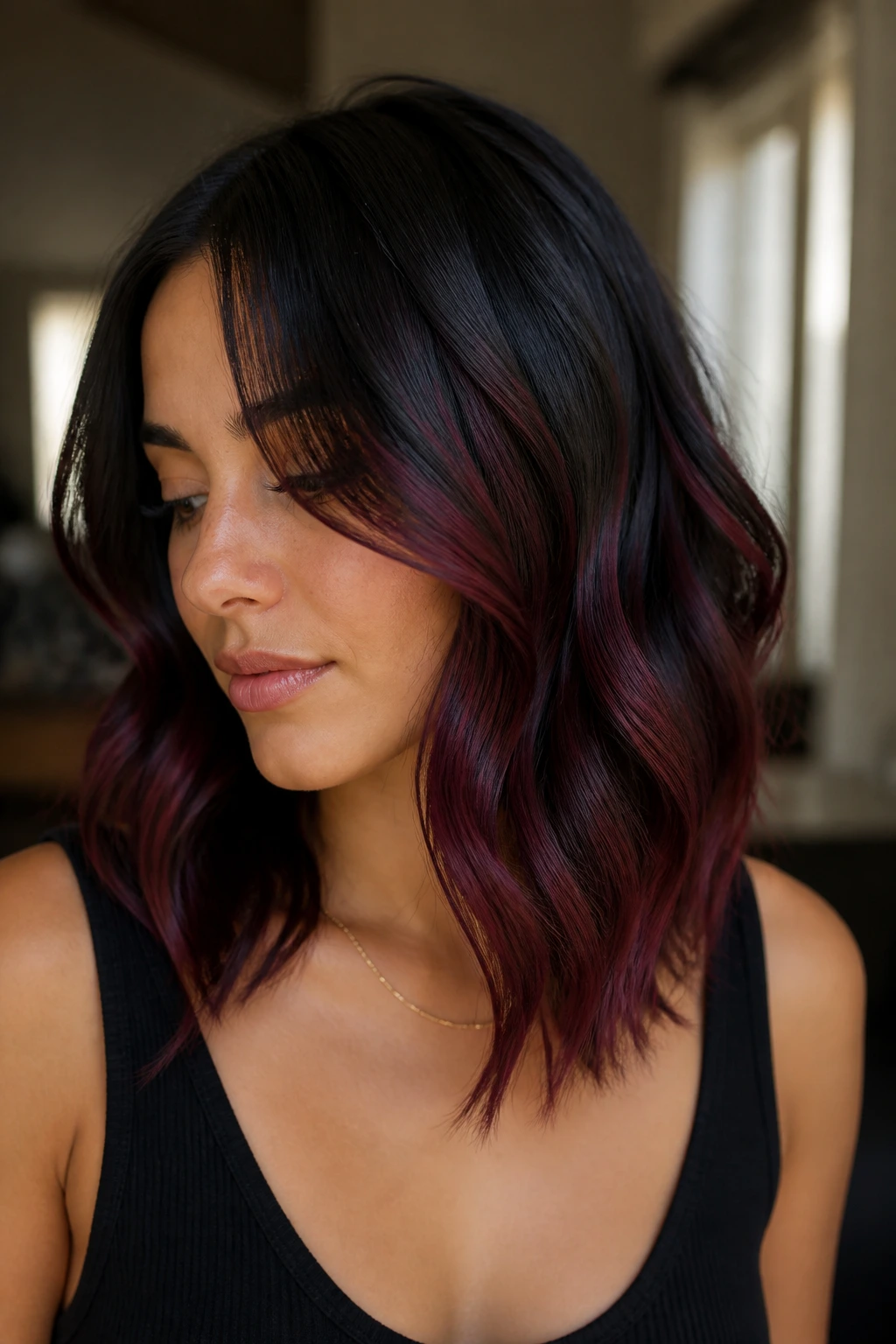
4. Black Cherry Balayage
Black cherry balayage is one of those shades that looks understated in one room and deliciously rich in another. The base stays black, but the balayage ribbons carry red-violet tones that show up most clearly when the hair moves or catches direct light.
Medium length is perfect for this because the color isn’t buried in endless length. You see it at the face frame, through the mid-lengths, and along the ends where the tone shifts from black to berry without a hard line. I prefer this on soft waves, where the red-violet pieces appear and disappear as the hair turns. It’s a little theatrical in the best way.
If you’re starting from a dark base, the colorist may need to lift selected sections to a level 5 or 6 before depositing the cherry tones. Skipping that step usually leaves you with faint warmth instead of the wine-red dimension you wanted.
5. Espresso Black With Curtain Bangs
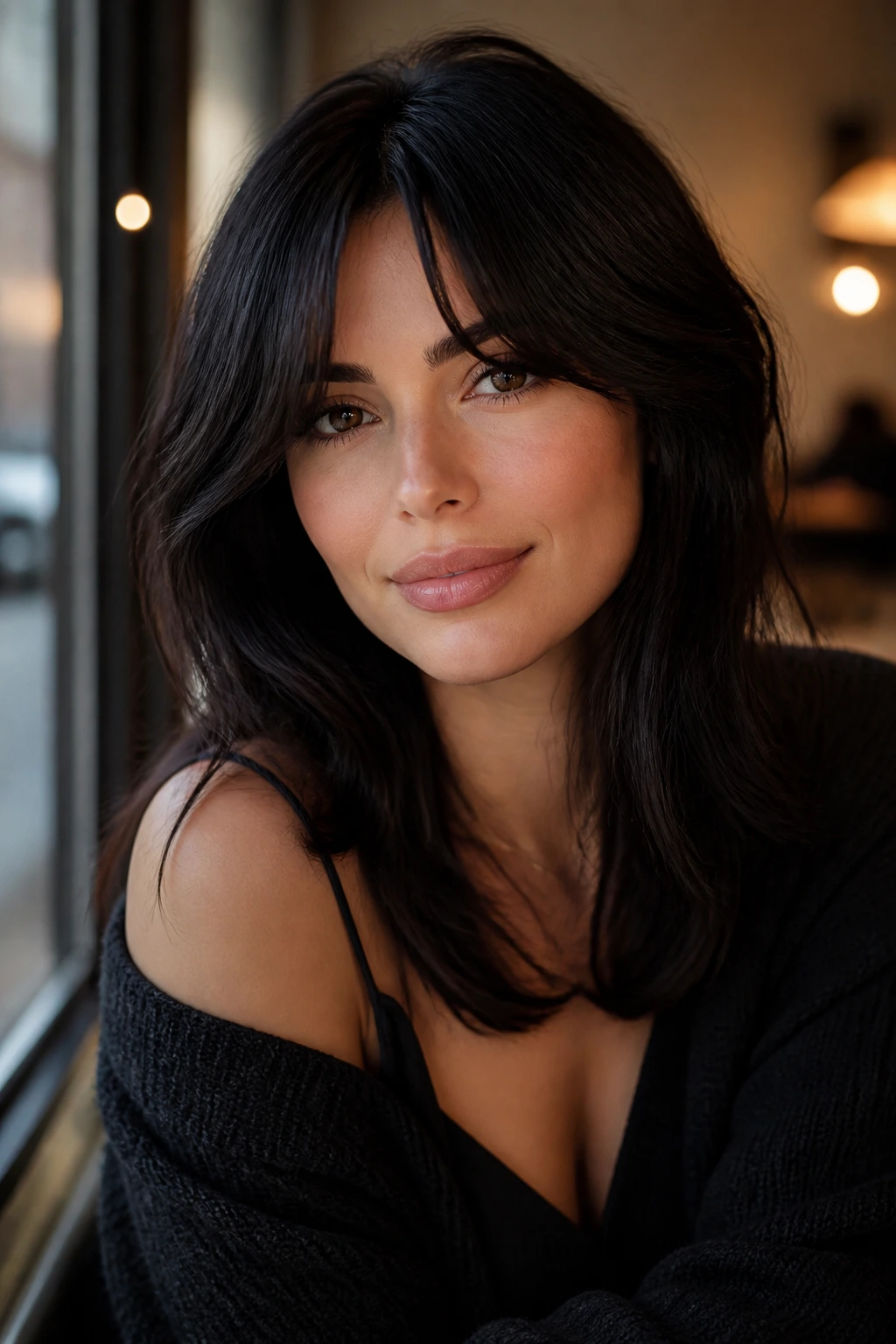
Espresso black is the friendliest version of black hair. It still reads dark, but the brown undertone makes it easier on skin that needs warmth near the face. Add curtain bangs and you get a shape that feels softer around the forehead and cheekbones, which is a smart move on medium length cuts.
This shade is especially good if you don’t want the severe edge of blue-black or true jet black. Espresso-black catches light at the crown and through the fringe, so the hair looks full without shouting for attention. It’s also one of the better choices if you want a low-drama grow-out. The line between roots and ends stays gentler than a pure black dye job.
If your hair is layered or slightly wavy, even better. The bangs keep the front from feeling heavy, and the black-brown mix gives the cut some warmth it can lean on.
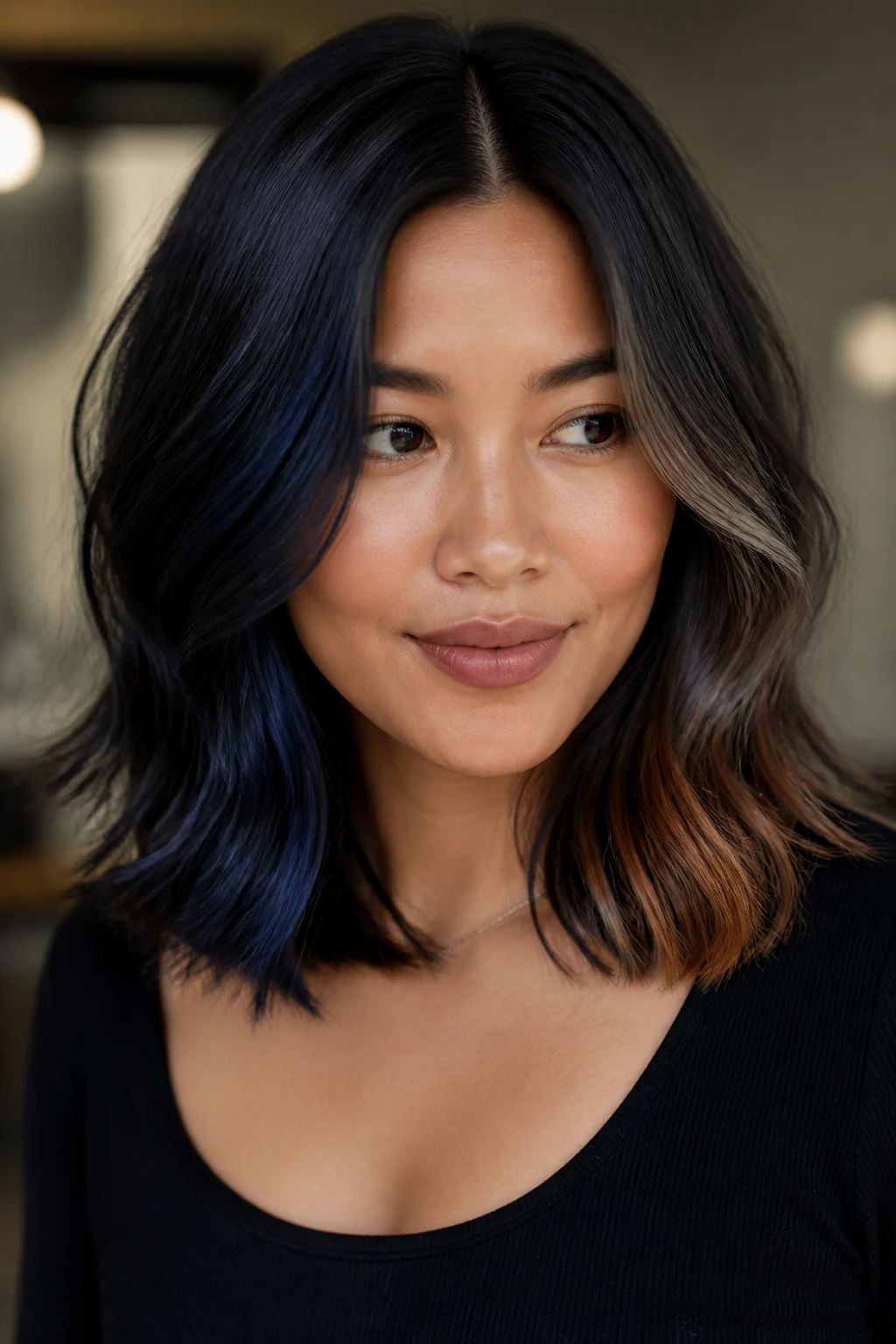
6. Smoky Black With Ash Brown Ribbons
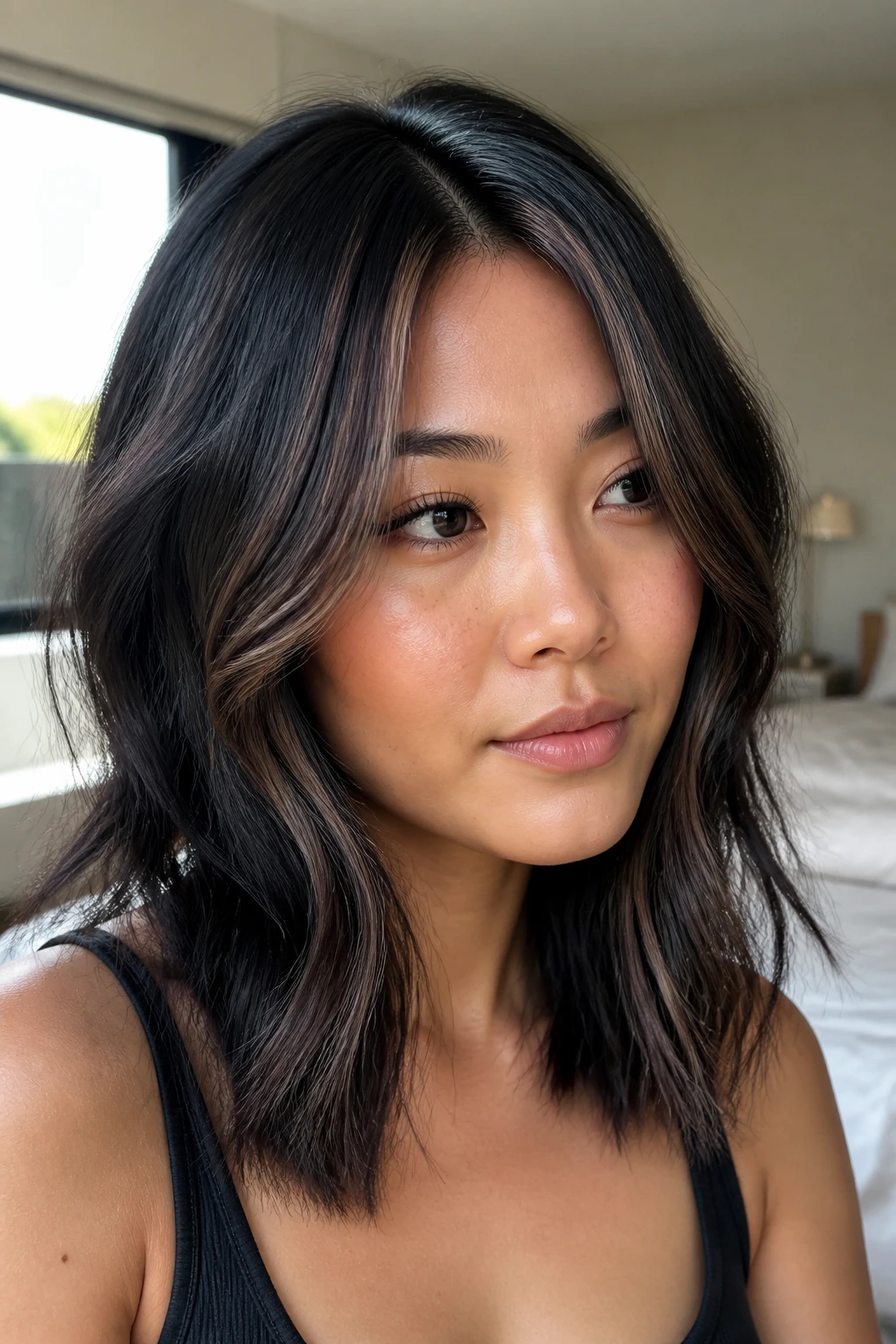
Smoky black is what happens when black hair gets a little gray-brown smoke around the edges. It’s cooler than espresso, softer than blue-black, and a lot more wearable than people expect when it’s placed well. The ash brown ribbons are the key. Too chunky and the whole thing looks striped. Too fine and you lose the effect entirely.
On a medium-length lob or lob with loose waves, the smoky contrast looks expensive in a quiet way. That is the appeal here. It’s not loud. It looks like the hair has depth from the inside out.
How to use it
Ask for thin, hand-painted ribbons around the top layer and face frame, then keep the base a neutral black or very deep dark brown. If your ends are porous, ask for a bond-building treatment before any lightening. Ash tones can go hollow fast on dry hair.
7. Black Hair With Caramel Money Pieces
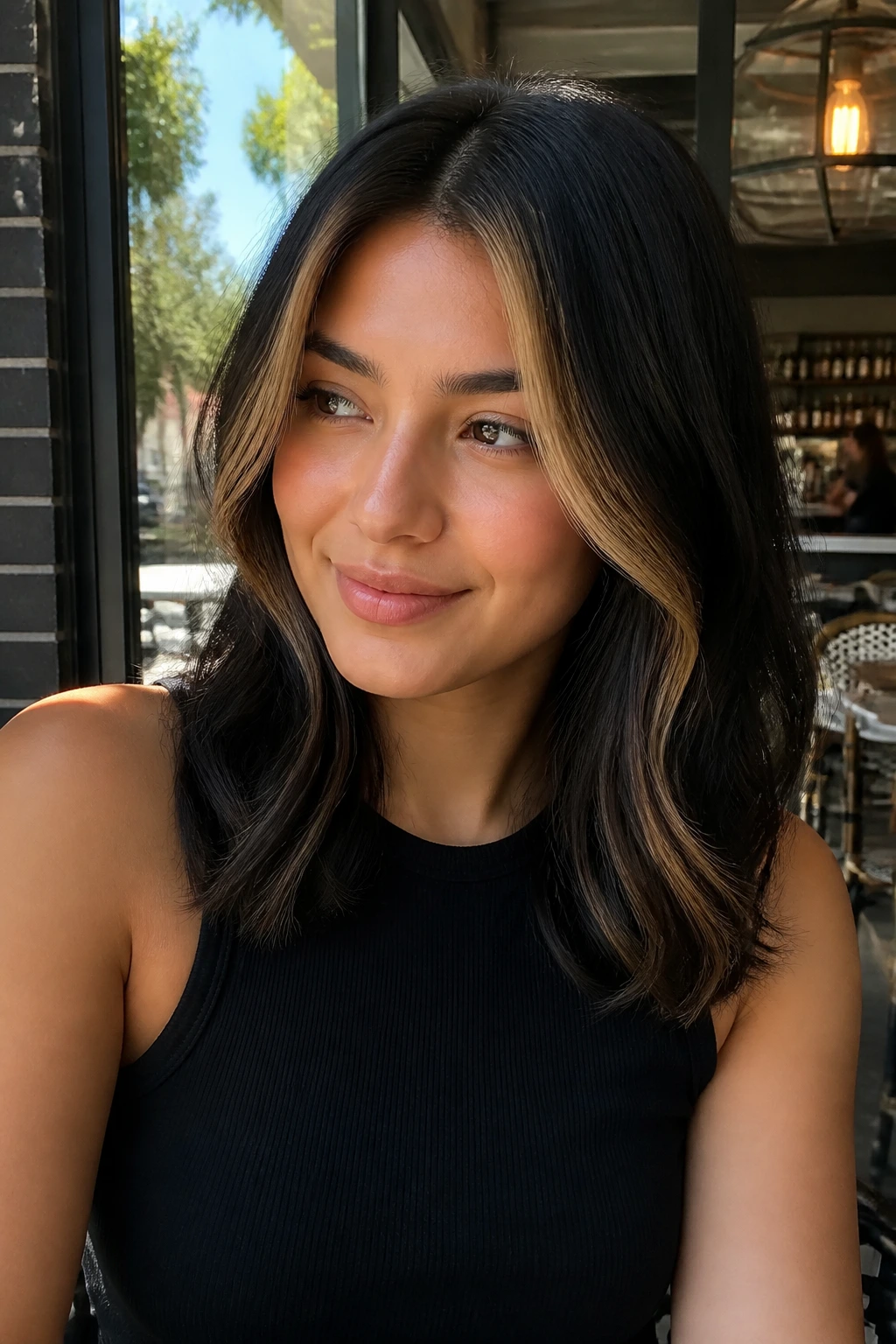
Caramel money pieces are the easiest way to keep black hair from feeling too heavy around the face. A few lighter ribbons right at the front do more than a full head of highlights often does, because they lift the whole cut where people actually look first.
On medium length hair, money pieces sit in the sweet spot. They’re visible when your hair is down, and they still show when you tuck the front behind one ear or push it into a half-up clip. I like caramel here more than pale blonde because it stays warmer and easier to blend into black. Pale blonde can be a little jarring unless the rest of the cut has a very fashion-forward shape.
Maintenance is the trade-off. The front pieces fade and grow out first, so expect touch-ups more often than with a full black gloss. If you want dimension without constant work, ask for soft caramel rather than bright amber.
8. Plum-Black Lob
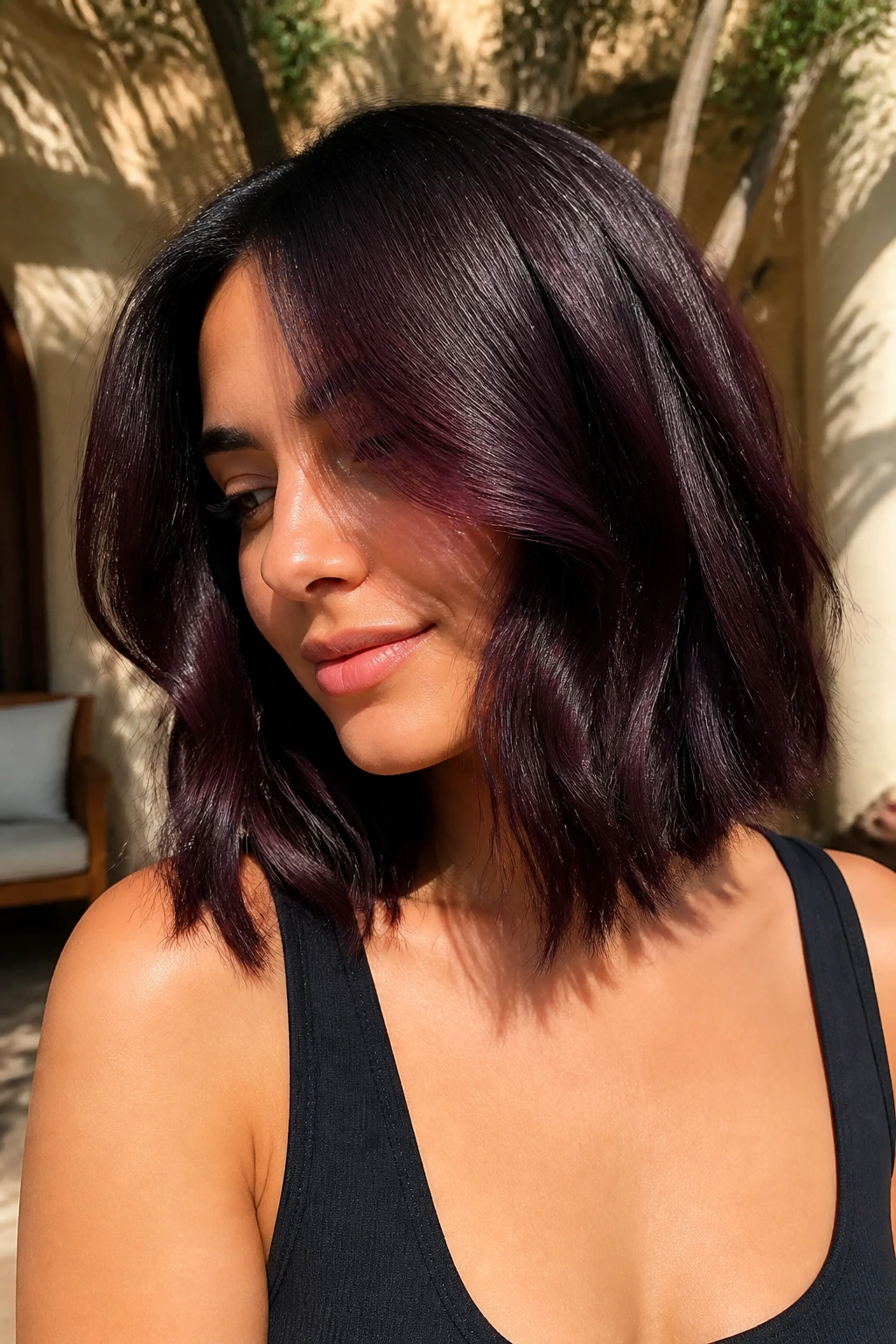
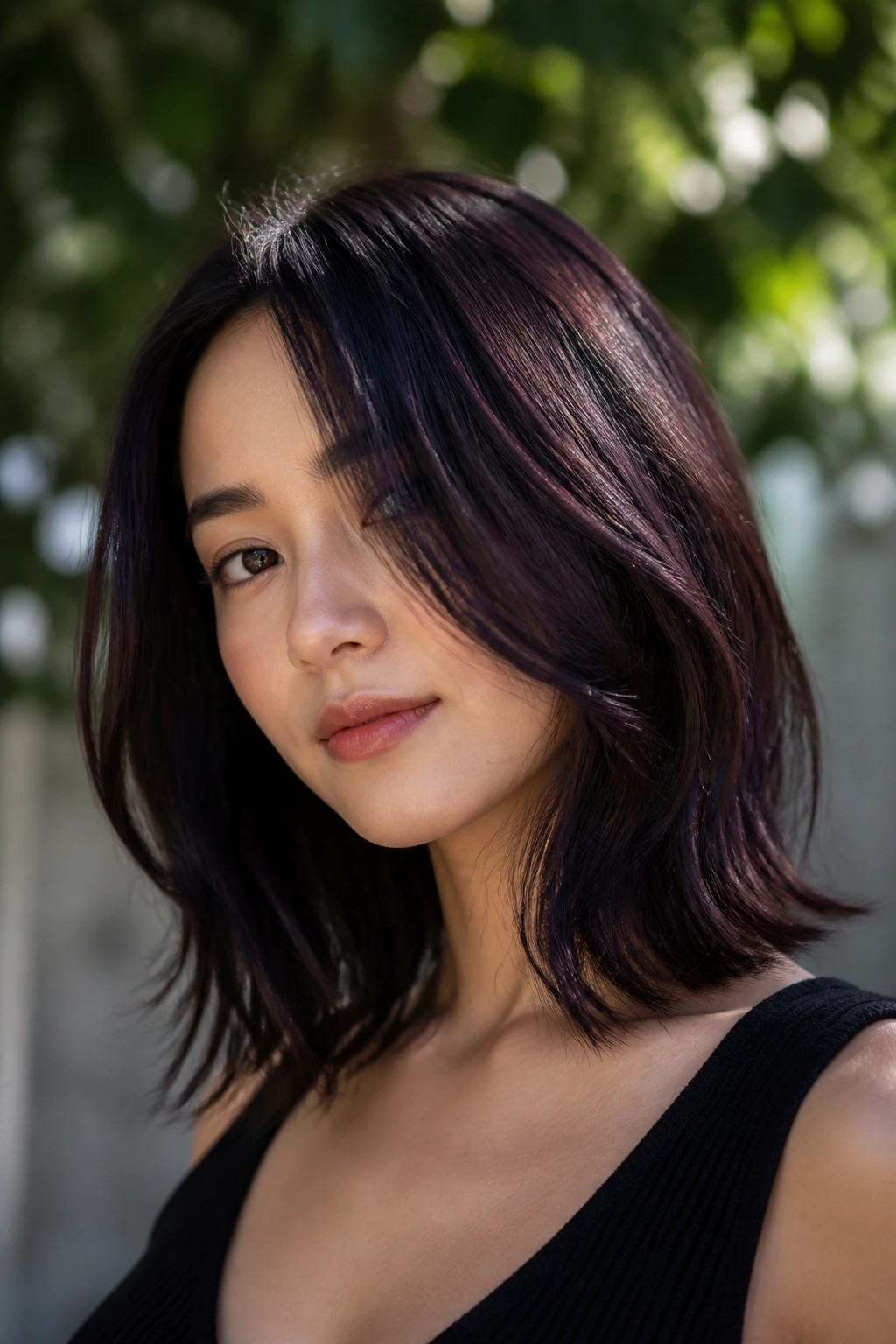
Plum-black is black hair with a violet bias, and on a medium-length lob it can look sleek rather than dramatic. That’s the nice surprise. You get the richness of black with a subtle purple cast that shows up most in sunlight, under warm indoor lighting, or when the hair is freshly blow-dried.
This shade works beautifully on fine to medium hair because the violet reflect gives the illusion of depth without needing chunky highlights. If the cut has a blunt line, the plum tint makes it look richer. If the cut is softly layered, the color keeps it from reading flat.
What makes it different
Unlike brighter fashion violet, plum-black doesn’t scream for attention. It’s the kind of shade you notice on the second glance. That makes it a smart choice if you want something a little uncommon but still polished enough for everyday wear.
9. Soft Black With Chocolate Lowlights
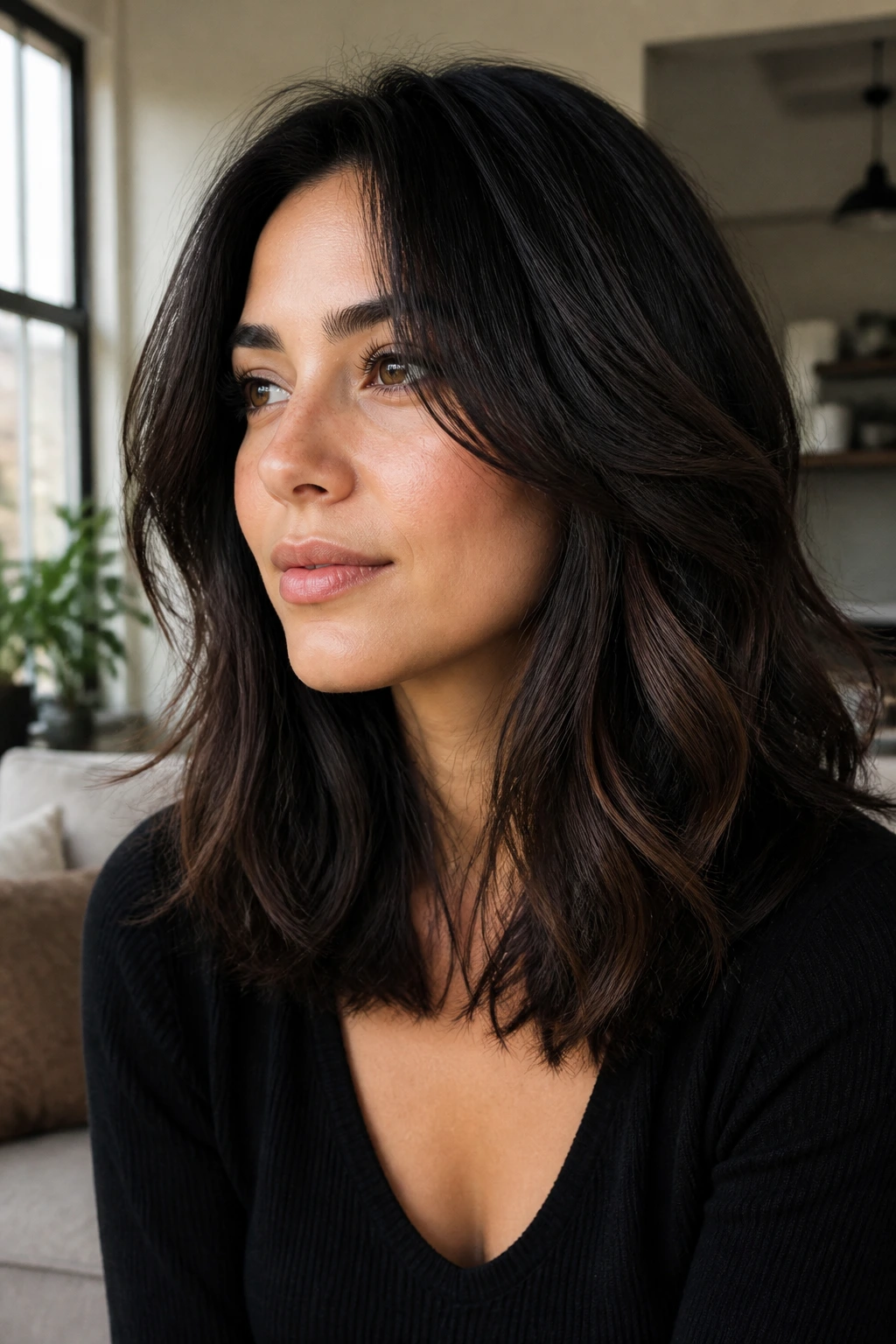
If your natural hair is already dark, chocolate lowlights can do more for it than another layer of permanent black dye. Soft black with lowlights creates depth by weaving in a slightly warmer brown beneath the surface, which keeps the color from looking like one dense block.
This is one of my favorite options for shoulder-length hair because it feels believable. Not fake. The chocolate tones show around the underlayers and through movement, especially if the cut has a little bend or a layered perimeter. Straight hair can still wear it, but waves make the lowlights wake up.
Ask for lowlights no lighter than a deep level 4 or 5 if you want them subtle. That range keeps the result grounded and avoids obvious streaking. It’s a smart choice for anyone who likes black hair but wants more softness at the ends.
10. Burgundy Peekaboo Black Bob
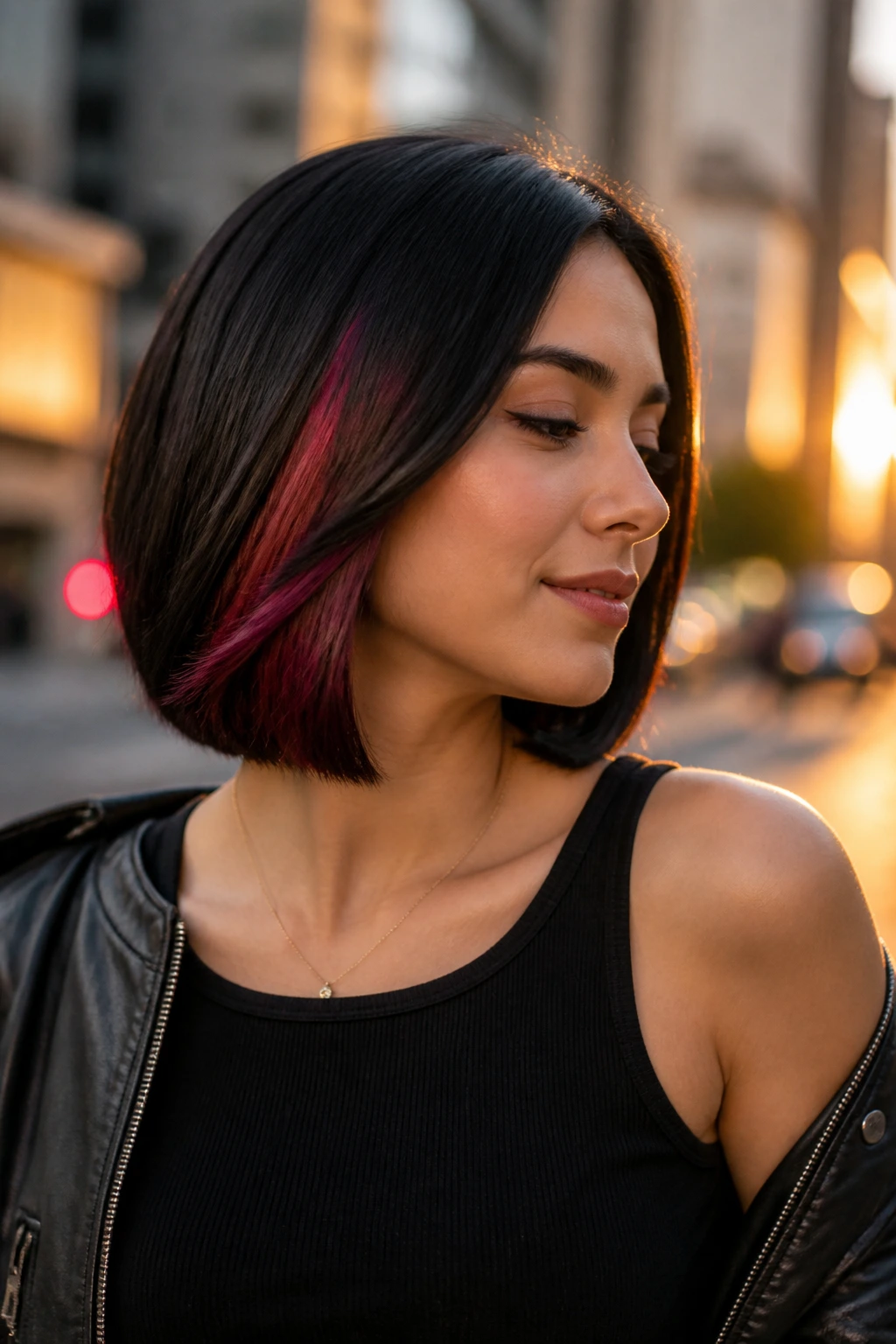
Peekaboo color is one of the few fun-color tricks that still makes sense at medium length. The burgundy lives under the top layer, so the hair looks like a rich black bob most of the time. Then it shifts. A turn of the head, a tuck behind the ear, a half-up clip — and the color flashes.
Burgundy works especially well because it sits close to black on the color wheel. That means it feels deep rather than sugary. On a blunt bob or shoulder-grazing cut, the hidden panels add a little mischief without blowing up the whole look into full fashion territory.
If you like having color but don’t want to babysit it every morning, this is a strong pick. The panels can be refreshed without touching the whole head, and the grow-out is easier because the visible section stays mostly dark.
11. Black Velvet With Glossed Waves
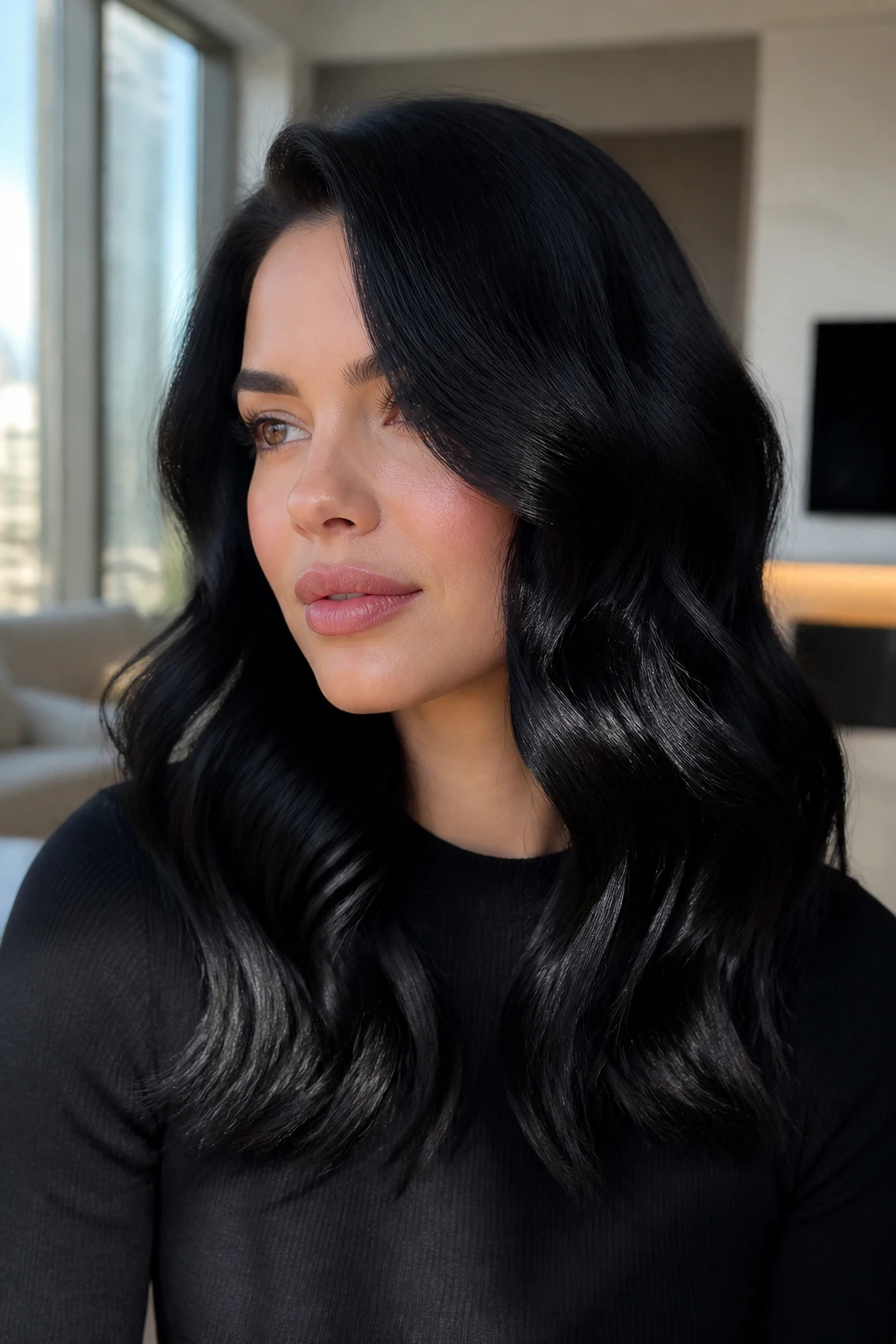
Black velvet is less about pigment and more about finish. The color itself can be a simple neutral black, but the styling turns it into something richer. Soft waves, a clean gloss, and a medium-length cut give the surface that plush, light-catching look that velvet fabric has when it moves.
This one works because waves break up the darkness just enough. You don’t need brighter highlights. You need shape. A gloss service every few weeks keeps the ends looking wet and smooth instead of dusty, which matters more than people think with dark hair. Black hair shows dryness faster than brown hair does. Annoying, but true.
If you want a safe bet that still looks intentional, this is probably it. It’s the kind of black that looks at home in daylight and in the mirror after a good blowout.
12. Cinnamon-Kissed Black Layers
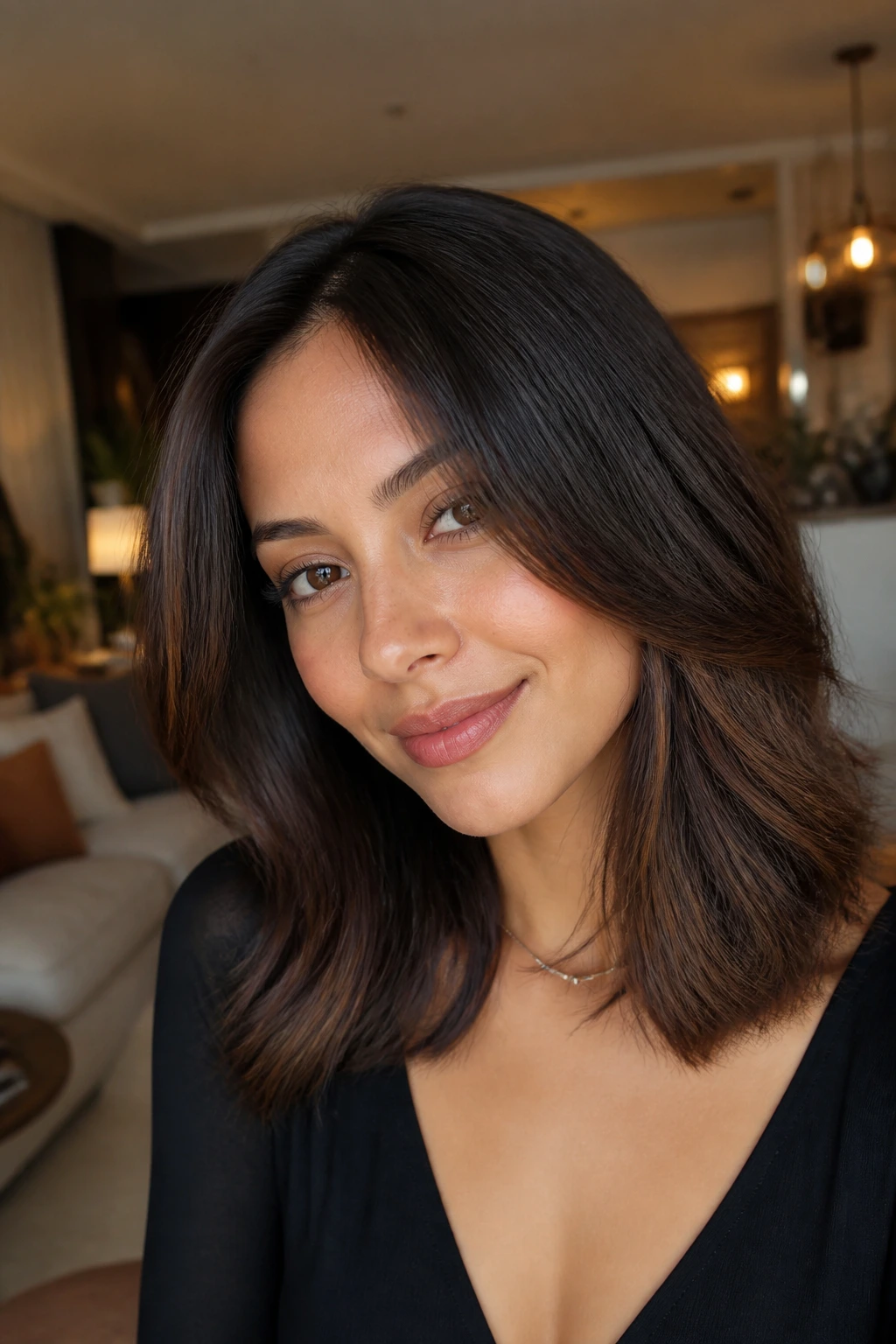
Cinnamon-kissed black is warm, subtle, and a lot less red than it sounds. The cinnamon lives as a soft undertone in the layered pieces and around the ends, so the hair keeps its black base but gains a little warmth where the light hits.
Medium-length layers make this easy to wear. The shorter top pieces pick up the tone first, while the longer ends keep the overall look anchored. It’s a smart choice if your skin looks better with a touch of warmth near the face or if pure black tends to make your features feel too sharp.
This color also grows out in a forgiving way. A warm gloss can refresh it between bigger appointments, and the cinnamon tone fades into a rich brown rather than a hard line. Nice. That’s the kind of maintenance I can get behind.
13. Ink Black With Face-Framing Copper
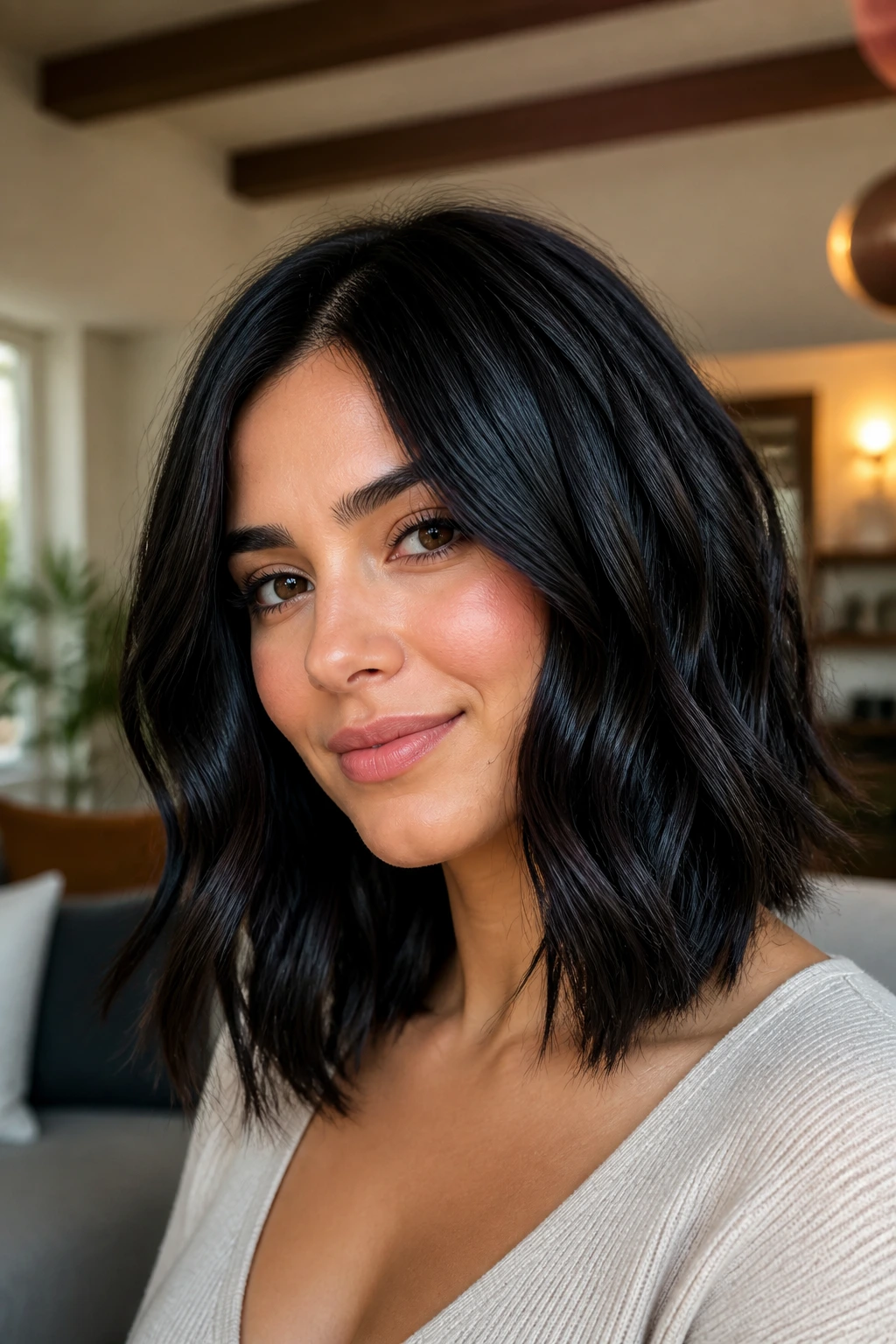
Copper against black hair is a sharp contrast, and that’s why it works so well on medium length cuts. The copper pieces sit around the face and brighten the whole haircut, while the rest stays dark and ink-like. You get drama without needing to color the entire head lighter.
This look does ask for commitment. Copper fades faster than almost any other warm shade, and if your hair has been previously dyed dark, the front pieces may need careful lightening to a level 7 before the tone can really show. Done well, though, it’s memorable. The black base makes the copper look even richer than it would on brown hair.
I’d pick this for someone who likes a bold front view and doesn’t mind refreshing the tone. It looks especially good with a slightly curved blowout or loose wave around the cheekbones.
14. Graphite Black With Silver Streaks
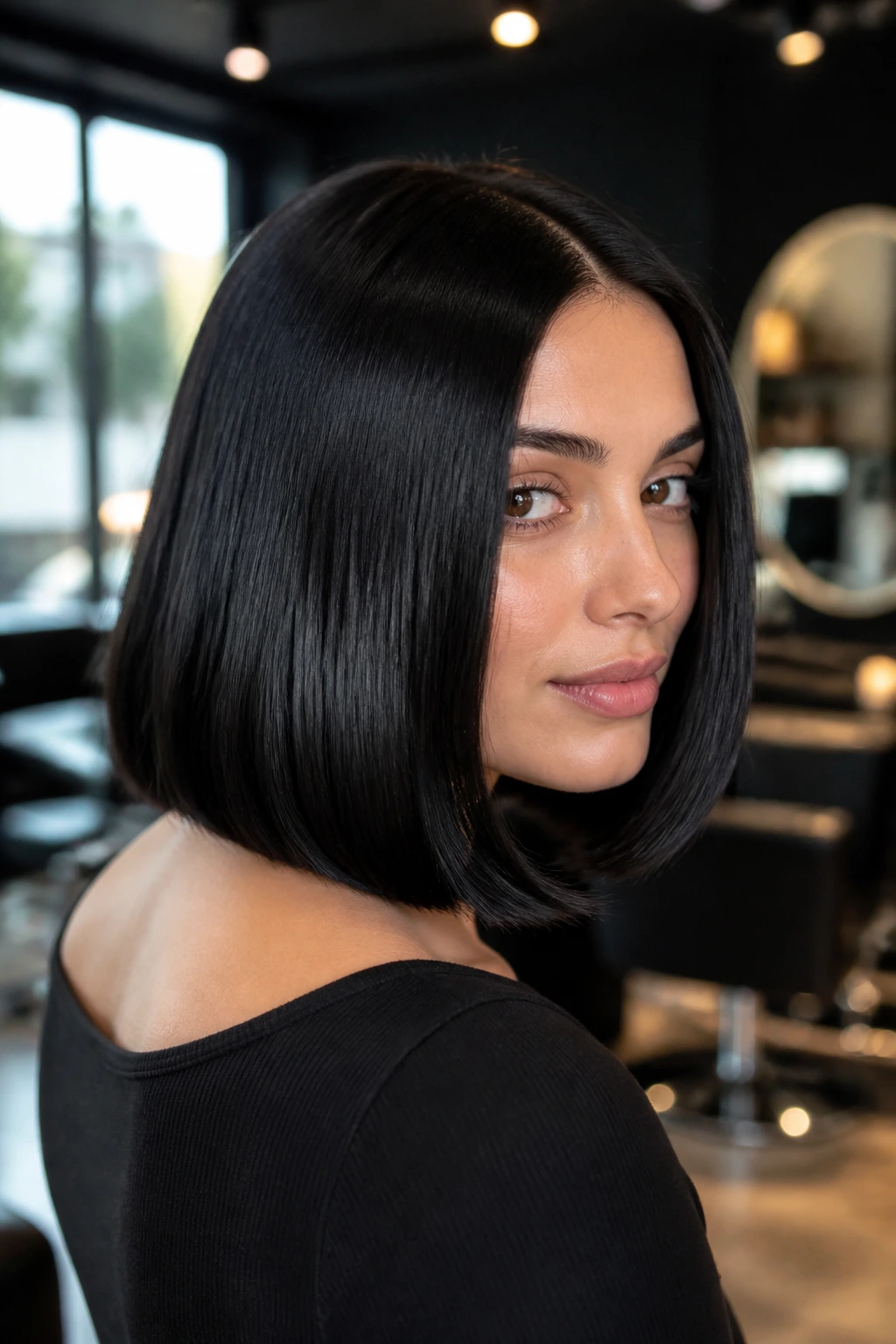
Graphite black with silver streaks has a cool, almost metallic feel that looks fantastic on medium length hair because the cut isn’t so long that the silver disappears. You can see it. That’s the point.
This is a strong choice if you’re blending grays or if you want an intentionally cool, fashion-forward look. The graphite base keeps the silver from floating away from the rest of the color, and the streaks can sit around the crown, part line, or front pieces depending on how much contrast you want. On straight styling, the effect is cleaner. On waves, it turns a little softer and more lived-in.
What to watch for
Silver tones are unforgiving on dry hair. If the strands are rough, the silver can go chalky fast. A gloss and a good mask make a bigger difference here than people usually admit.
15. Mahogany Black Shag
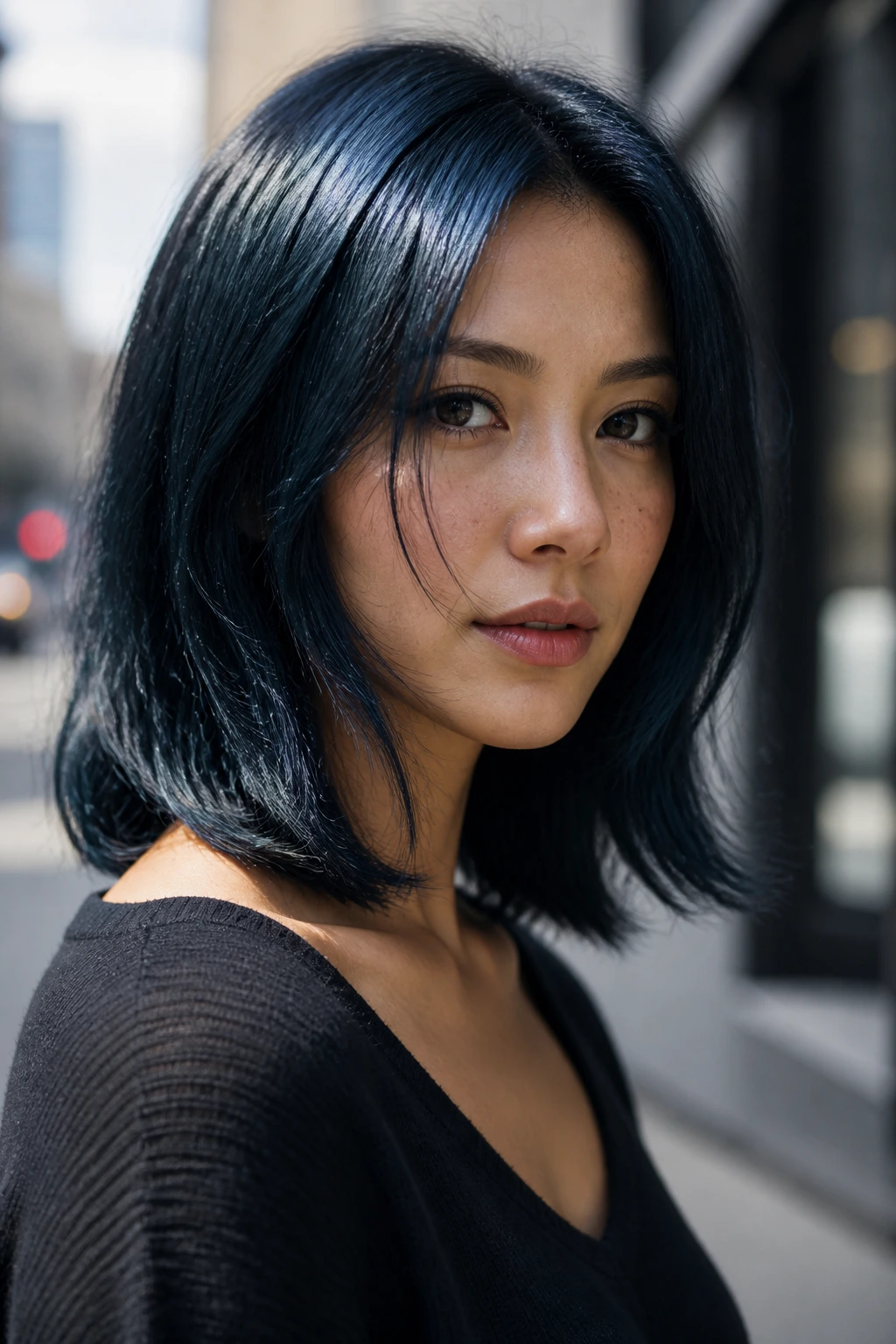
Mahogany black is for anyone who wants warmth but refuses to go light. The red-brown reflect sits under the black base and comes alive in a shag cut, where the layers create movement and keep the color from becoming too heavy.
This look works because a shag needs depth in different places. The crown, the cheekbone pieces, and the feathered ends all pick up the mahogany tone at different moments, so the haircut and color support each other. It’s one of the easiest ways to make black hair feel softer without losing the dark mood.
If you wear texture in your hair — air-dried waves, diffused curls, or a rough blowout — this is a strong fit. The warmth is subtle enough for everyday wear but still visible enough that it doesn’t feel like plain dark brown pretending to be black.
16. Cherry Cola Black With Curved Ends
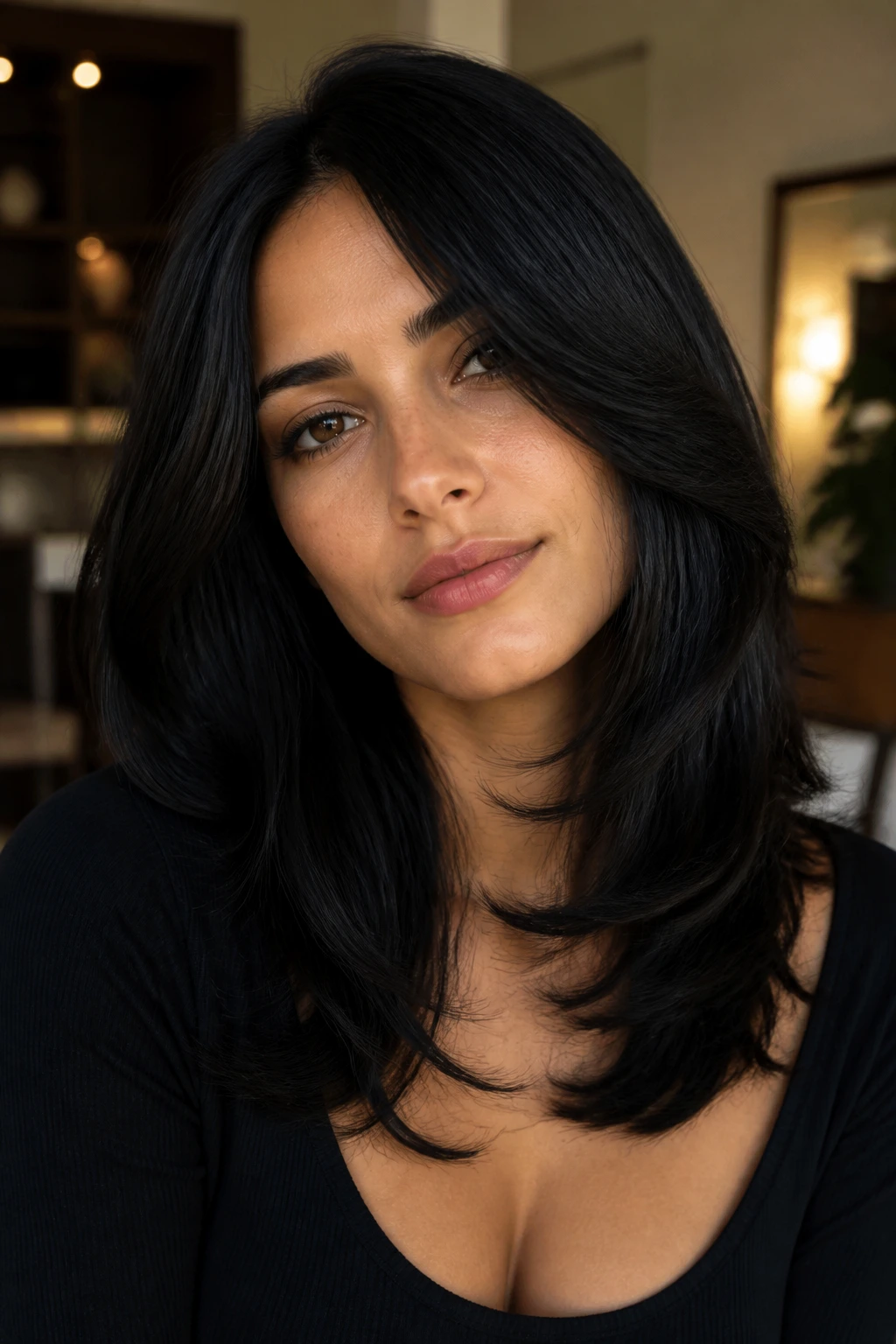
Cherry cola is the dark, drinkable cousin of burgundy. It blends black, red, and brown into one deeper tone that looks rich instead of loud. On medium-length hair with curved-under ends, it gives the cut a little old-school polish, which I like more than I should probably admit.
The curved ends matter here because they show off the color shift at the perimeter. On a straight, blunt finish, cherry cola can look nearly black indoors. Curl the ends under just a bit, and the red-brown undertone appears at the edges like a shadow with warmth in it.
This is a good choice if you want a dark shade with movement but don’t want obvious highlights. It’s also one of the more flattering options for people who like warm jewelry tones, brick lipstick, and deep browns in clothing.
17. Black Hair With Toffee Balayage
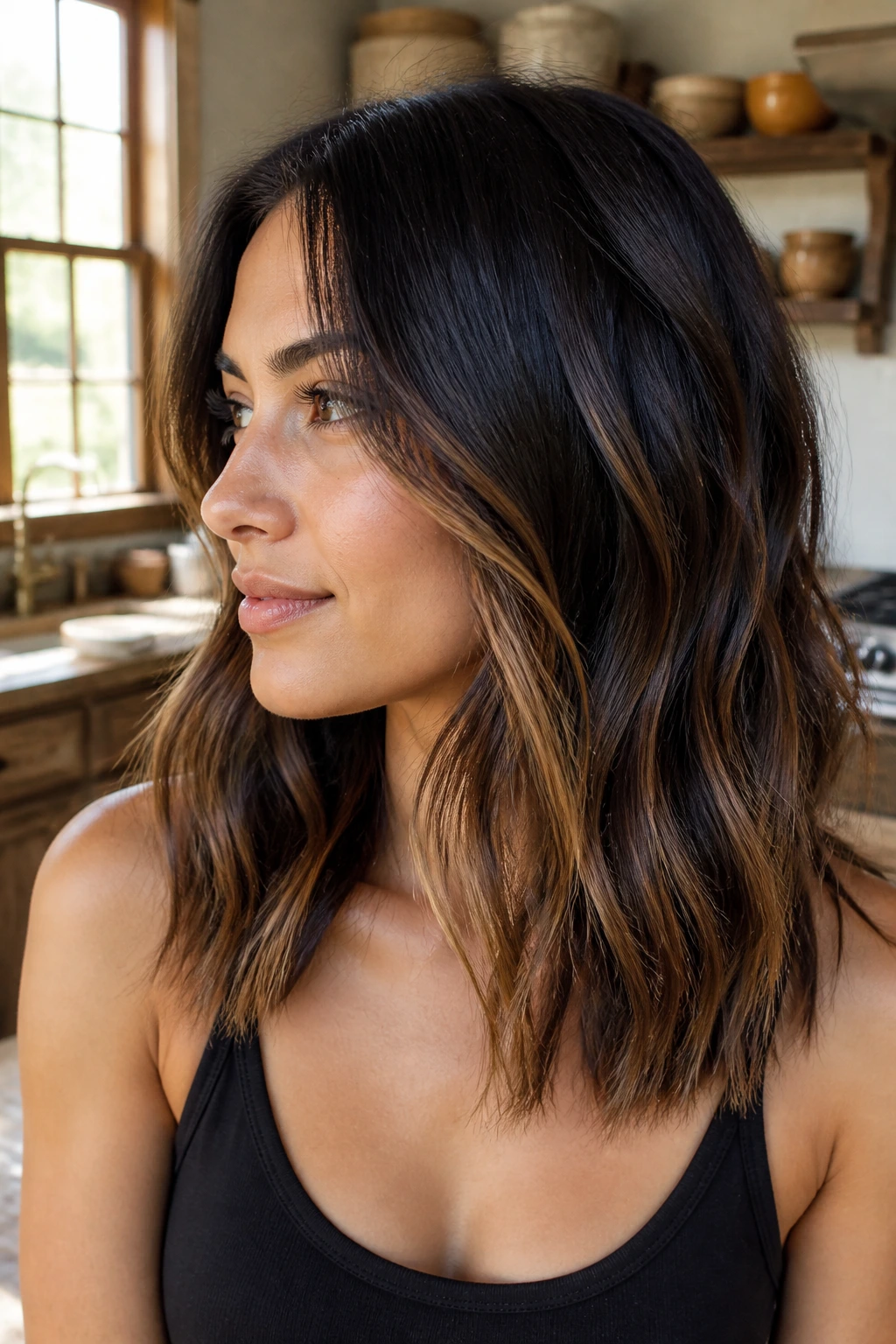
Toffee balayage sits between caramel and honey, which is why it tends to look softer than both. On black hair, it reads as a warm, buttery ribbon rather than a high-contrast stripe. That softness is what makes it work so well on medium-length cuts.
Because the length is moderate, the toffee pieces don’t have to travel far to matter. A few hand-painted sections through the mids and ends give the whole shape more dimension, especially if the haircut has layers or a slight bend. I prefer toffee over brighter blonde highlights on black hair because it blends into the base more naturally and doesn’t turn the whole look into a hard contrast story.
If you want warmth without orange brassiness, this is the shade family to ask for. Not honey-yellow. Not pale beige. Toffee.
18. Velvet Blue-Black With Blunt Cut
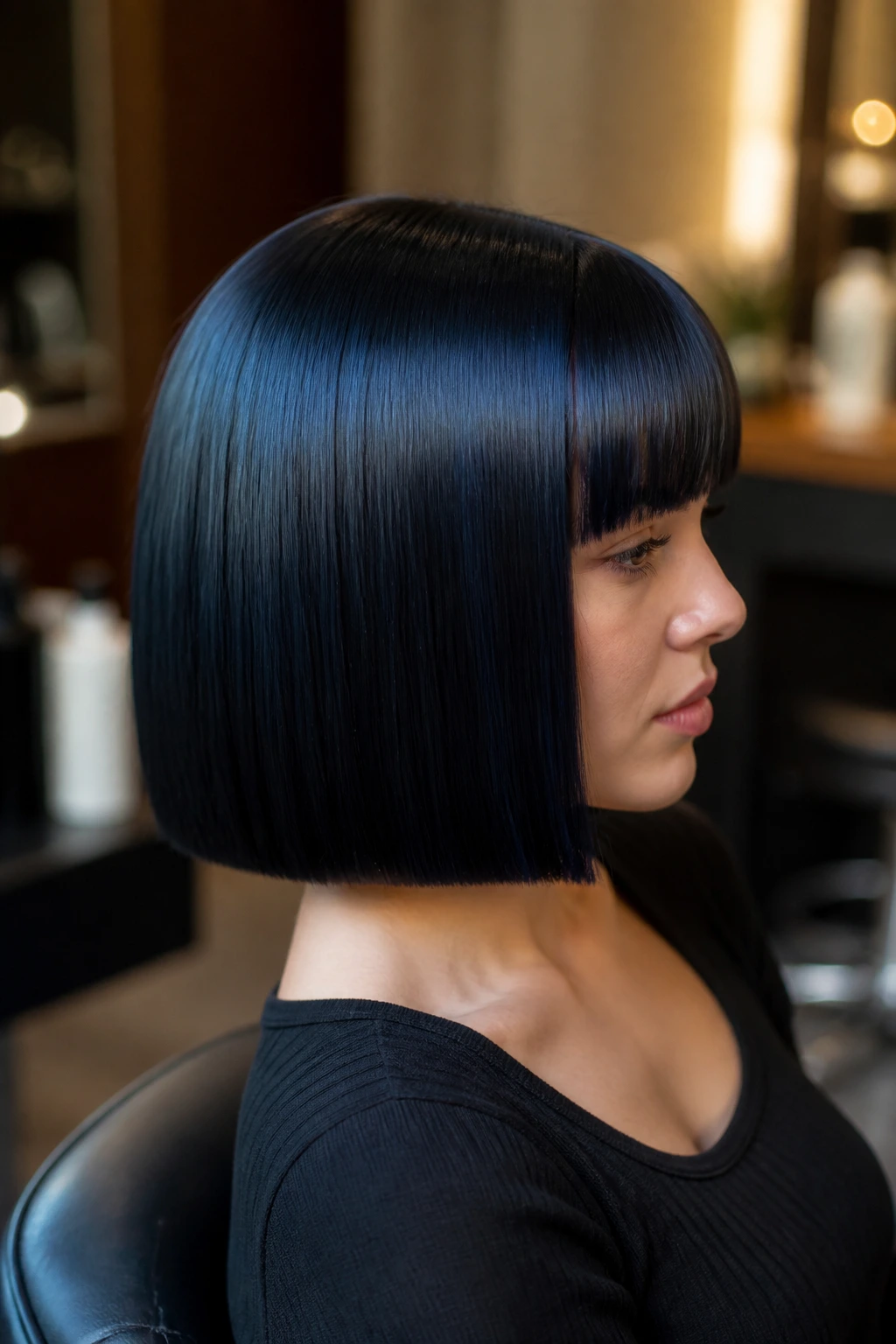
This is the more dramatic cousin of blue-black: deeper, darker, and cleaner at the edge. The cut should be blunt or nearly blunt, because that straight perimeter gives the color a surface to sit on. Without that structure, the shade can lose some of its impact.
Velvet blue-black is gorgeous on dense hair that holds shape well. The finish should be glossy, almost liquid, with the blue reflect showing when the light hits at a side angle. It’s not a loud color. It’s a controlled one. That’s the difference.
If your hair tends to puff at the ends, use smoothing cream and a heat protectant before blow-drying. Blue-black can look amazing on day one and a little dull on day four if the surface gets rough. The gloss has to be maintained.
19. Black Rose Tint
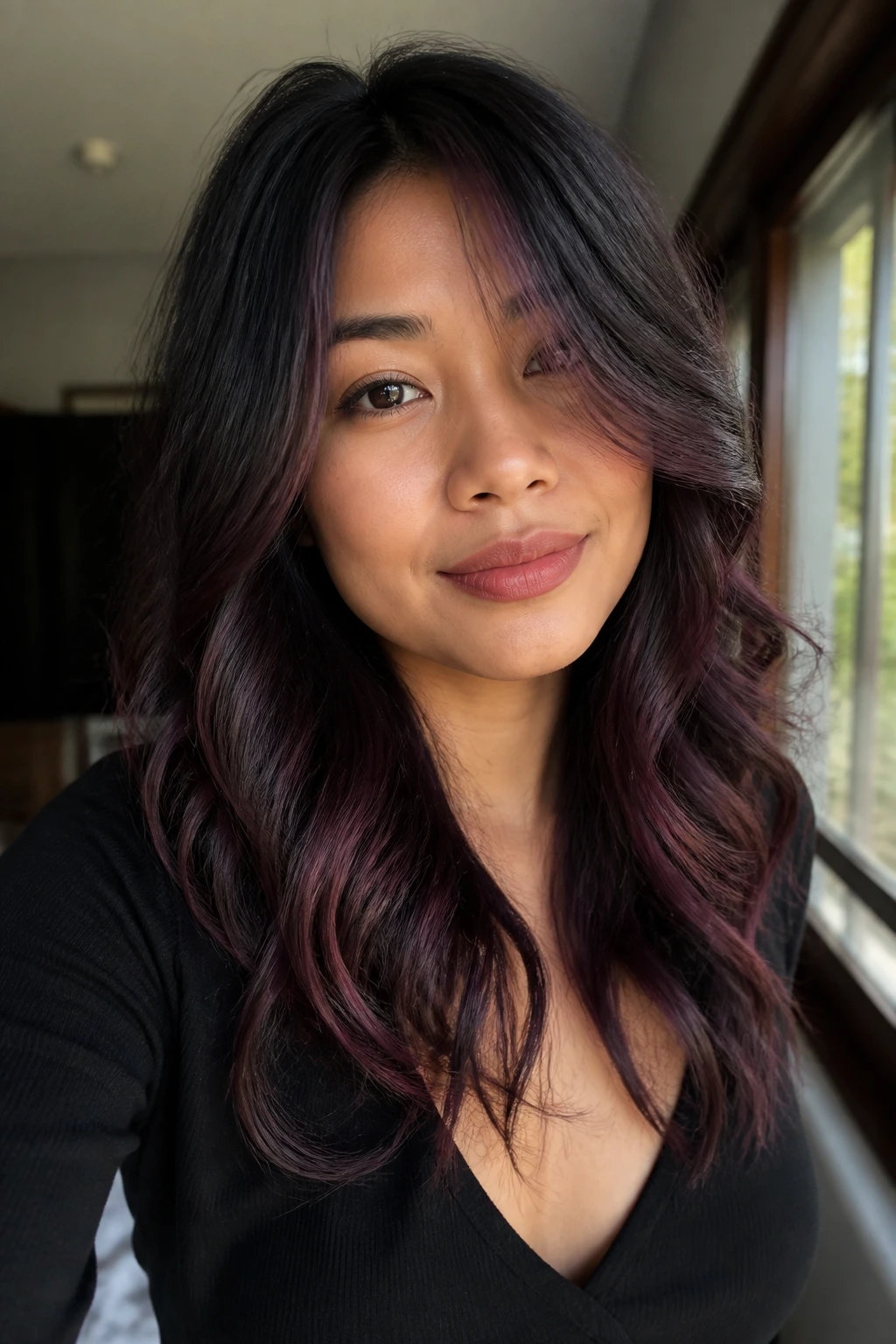
Black rose is what happens when black hair takes on a dusty rose-violet cast instead of a bright pink one. It’s subtle enough to wear without looking like you raided a box of neon dye, which is a relief. On medium length hair, the tint shows best in waves or softly curled ends.
This color has a lot of personality without needing a big contrast. The rose tone lives in the reflect, not on the surface, so the hair still reads dark from a distance. Up close, it feels richer and a little more romantic. That makes it a smart choice for anyone who wants a fashion color that doesn’t shout from across the room.
You’ll get the best result on hair that can hold tone without looking porous. Overprocessed ends can make rose tones fade too quickly, and then the color just looks brownish. That’s not the point.
20. Chestnut Underlayer Black
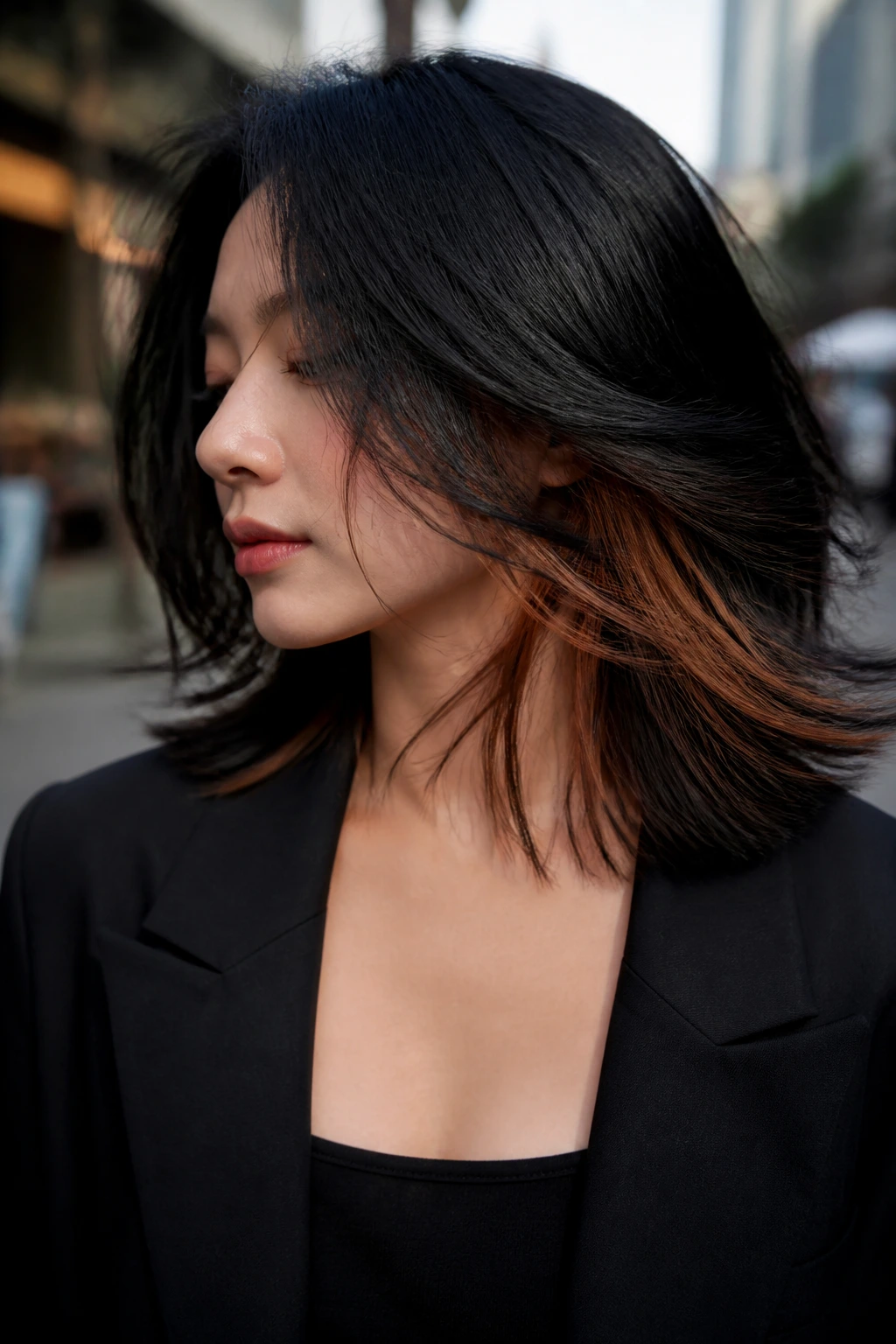
Chestnut underlayers are one of those ideas that sound modest but end up looking clever. The top layer stays black, and the warmer chestnut tone sits underneath, showing when the hair swings, flips, or goes half-up. On medium length hair, you see the movement fast.
This is especially good if you want warmth without giving up the darkness on top. It keeps the overall appearance clean and dark, but the hidden color prevents the cut from feeling too severe. If you have a bob or lob with a bit of layering, the effect gets better because the chestnut can peek out at different points.
I like this idea for people who wear their hair tucked behind the ears a lot. That tiny habit turns the color on and off in the nicest way.
21. Soft Black With Beige Babylights
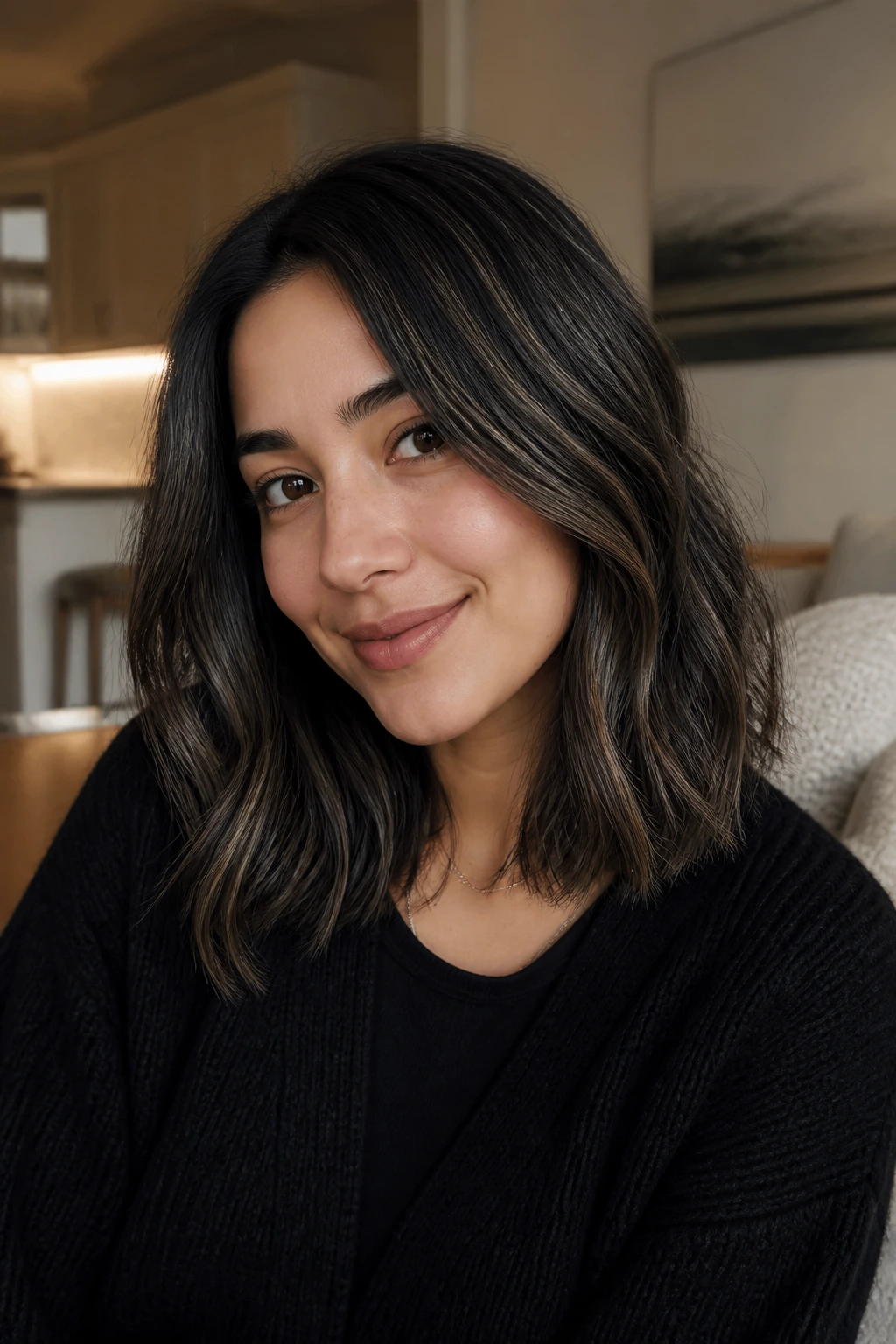
Babylights are tiny. That’s the whole charm. On black hair, beige babylights create a faint shimmer through the surface instead of obvious stripes, which is exactly what medium length hair needs if you want dimension without obvious color blocks.
The beige tone has to be chosen carefully. Too light and it turns yellow. Too cool and it loses warmth against the black base. When it lands right, though, the result looks expensive in a very low-key way. A medium-length cut with a slight wave or bend makes these tiny highlights show up just enough.
This is one of the best choices if you like black hair but want the kind of movement people can’t quite name. They see depth. They don’t always know why.
22. Smoky Espresso Black Wolf Cut
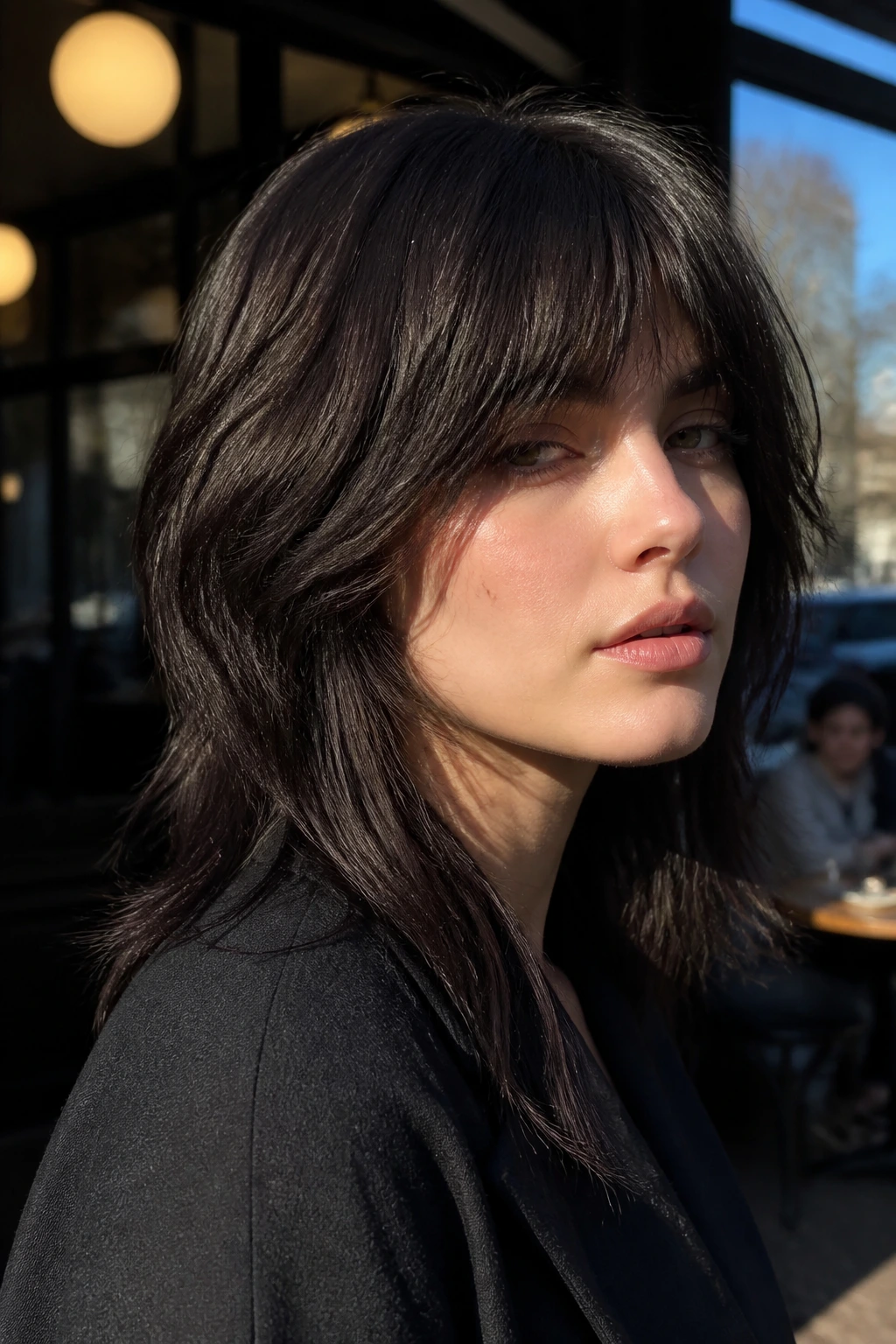
A wolf cut needs separation. Flat color can make it look messy in the wrong way, which is why smoky espresso works so well here. The dark brown-black mix gives the shaggy layers enough shadow to keep the shape interesting without making the texture look harsh.
On medium-length hair, the wolf cut’s shorter crown and longer perimeter benefit from a shade that changes slightly in different light. Smoky espresso does that. It’s darker than brown, softer than jet black, and a little more forgiving if your hair naturally has movement or wave.
The science behind it
The cut already creates motion, so the color doesn’t need to. It just needs to support the shape. That’s why this looks better than a single hard black on a wolf cut. The layers can breathe.
23. Black With Violet Ends
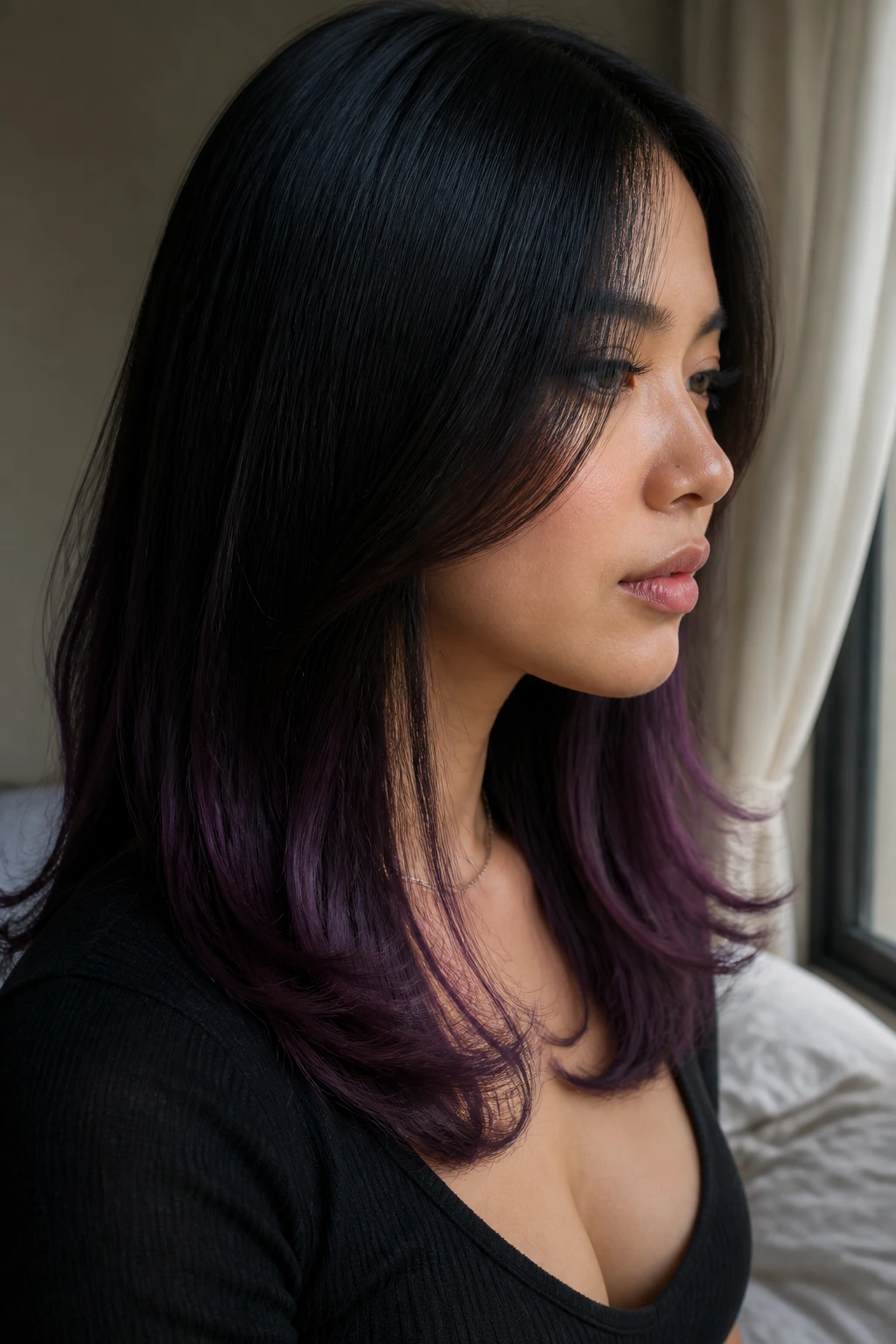
Black with violet ends is for people who like a little bite at the bottom of the haircut. The top stays dark, and the lower lengths shift into violet, usually through an ombré or dipped-end effect. On medium length hair, the color change shows clearly without needing endless length to work.
This is not subtle. It’s also not chaotic if the violet is deep enough. Plum-violet or aubergine works better than a bright purple because it stays rich against black. The ends need to be lightened enough to hold the pigment, which means this one is better suited to hair that can tolerate a bit of processing.
Wear it with smooth waves or a blunt finish. Both make the color transition readable, and that’s where the appeal lives.
24. Midnight Black With Golden Accents
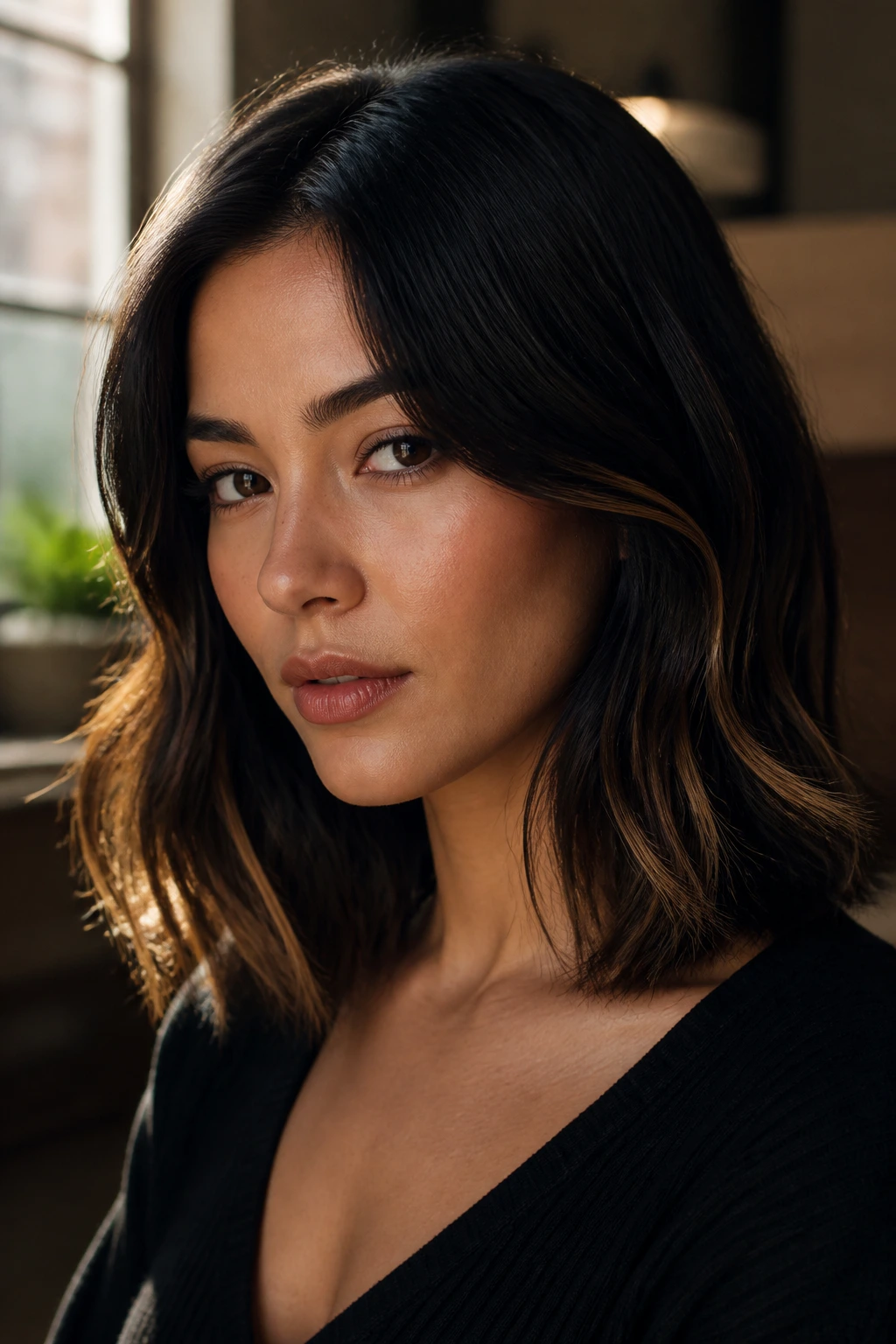
Golden accents on black hair can go wrong fast if they’re too yellow or too chunky. Done carefully, though, they can make medium-length black hair glow at the edges and around the face. The trick is keeping the gold deep and warm, more like antique metal than bright blonde.
This works best when the highlights are sparse and intentional. Think a few pieces that catch the light, not a full weave of yellow strands. On a collarbone-length cut, that restraint matters. Too much contrast and the whole thing starts looking loud. Just enough, and the black base feels richer because of the warmth beside it.
If you wear warm-toned makeup or jewelry, this idea fits naturally. It gives the hair a little sunlit lift without losing the darkness that makes black hair so strong.
25. Dimensional Black Lob With Mixed Tones
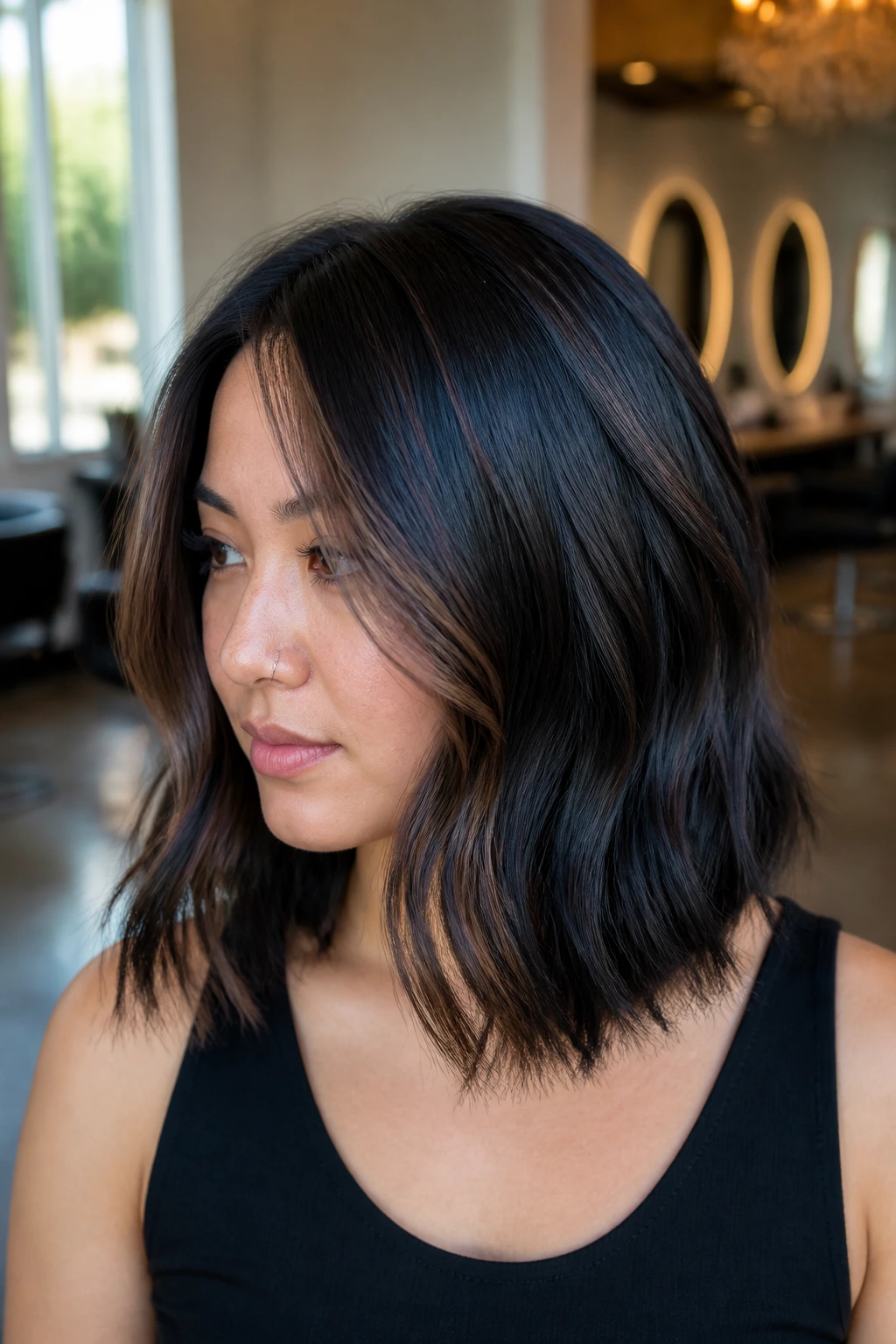
If you can’t choose just one note, mixed-tone black is the safest place to land. A dimensional lob can hold espresso lowlights, a few blue-black pieces, and tiny caramel ribbons near the front without turning muddy. The medium length is what makes this work. There’s enough room for the tones to live separately, but not so much that the color starts feeling overworked.
This is the version I’d recommend to someone who wants black hair ideas but also wants flexibility. You can keep the base deep, shape the face frame, and add movement in the mids and ends. It grows out with a softer edge than a single-process black because the different tones blur together over time instead of leaving one hard line.
It’s the most adaptable idea in the bunch. Not the flashiest. Probably the smartest.
Why Medium Length Black Hair Gives Color More Shape
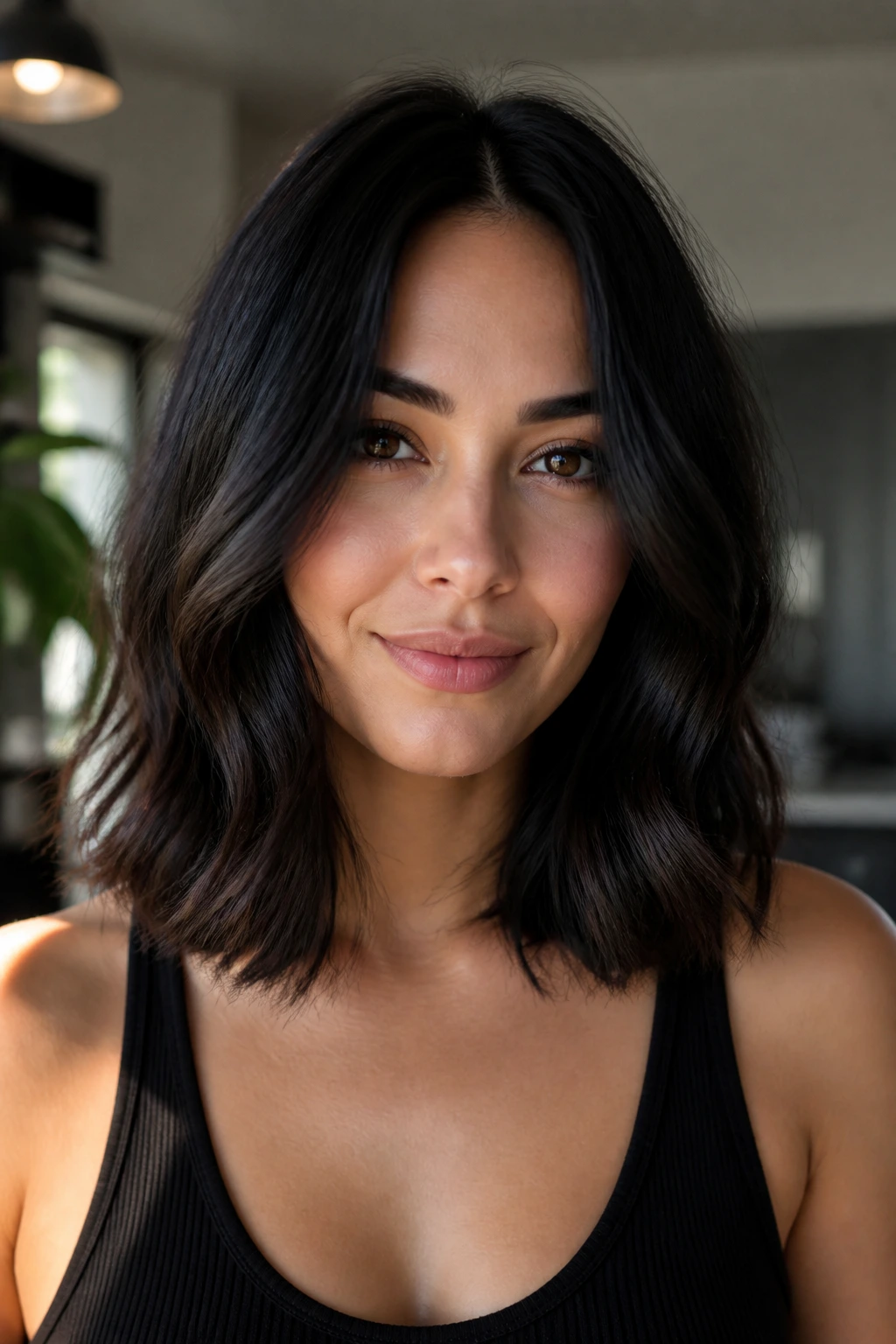
Medium length is the sweet spot for black color because the hair has enough room to show depth without turning into a wall of darkness. A shoulder-grazing lob, a collarbone cut, or a layered mid-length shape can show off shine, contrast, and undertone in a way that very long hair often hides. The movement is closer to the face, which matters more than people think.
That’s also why black hair can look expensive at this length. The cut doesn’t have to rely on dramatic color to feel finished. A blunt perimeter, a soft bend, or a few internal layers can change the way the same black dye reads under daylight.
Essential Tools for These Looks
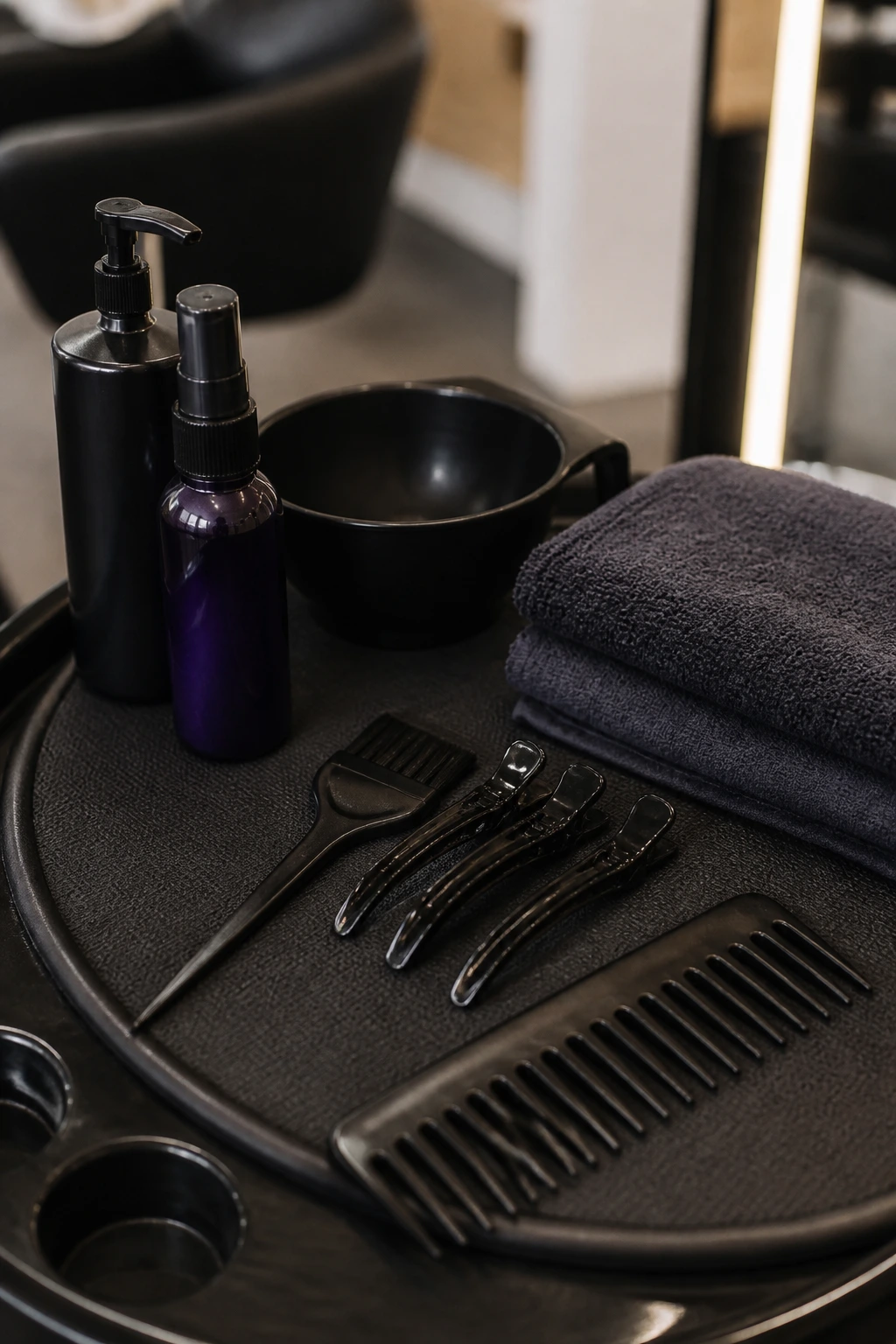
- Color-safe shampoo and conditioner: Keeps black shades from losing shine and keeps highlighted pieces from turning brassy.
- Gloss or clear glaze: Useful for refreshing jet black, blue-black, and espresso-black without adding more permanent pigment.
- Tint brush and color bowl: Handy if you’re doing money pieces, peekaboo panels, or a root-smudge appointment at home.
- Sectioning clips: Non-negotiable for balayage, babylights, or any placement work that needs clean parting.
- Heat protectant spray: Black hair shows dryness fast, especially on the ends of lobs and shags.
- Microfiber towel or soft T-shirt: Cuts down on frizz after washing and helps shiny black shades stay smooth.
- Wide-tooth comb: Better than yanking a brush through damp color-treated hair.
- Purple or blue shampoo: Use only if you have lightened pieces that need brass control; don’t overuse it on solid black hair.
- Flat iron or 1.25-inch curling iron: Useful for making medium-length black hair reveal its shine and dimension.
Smart Shade Selection and Salon Consultation Notes
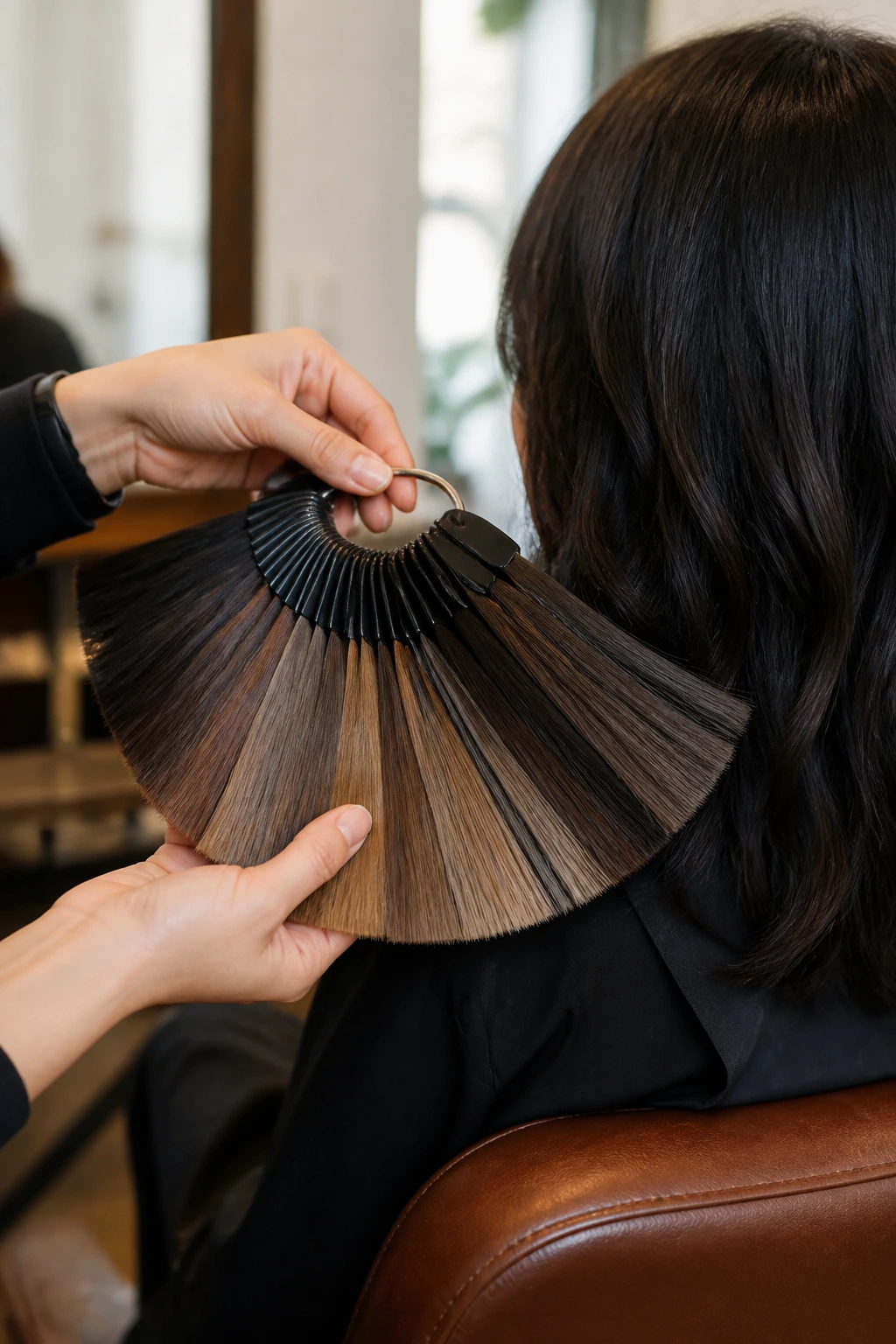
Black hair color is one of those things that looks simple from a distance and gets complicated the minute you sit in the chair. The biggest mistake is asking for “black” without saying what kind. Cool black, soft black, blue-black, espresso-black, and black cherry all behave differently once they’re on your hair.
Bring photos shot in natural light and indoor light if you can. That’s not being fussy. That’s how you avoid ending up with a shade that looks right on a phone screen and wrong everywhere else. If you’re adding balayage, money pieces, or babylights, ask how much lift is required and whether the colorist will tone the pieces back down to keep them from screaming yellow or orange.
If your hair has been lightened before, mention it. Porous ends grab dark dye fast and sometimes unevenly. A good colorist may pre-fill warm pigment before laying down black or deep brown so the final result doesn’t come out hollow. That one step saves a lot of disappointment.
How to Style and Show Off Medium Length Black Hair
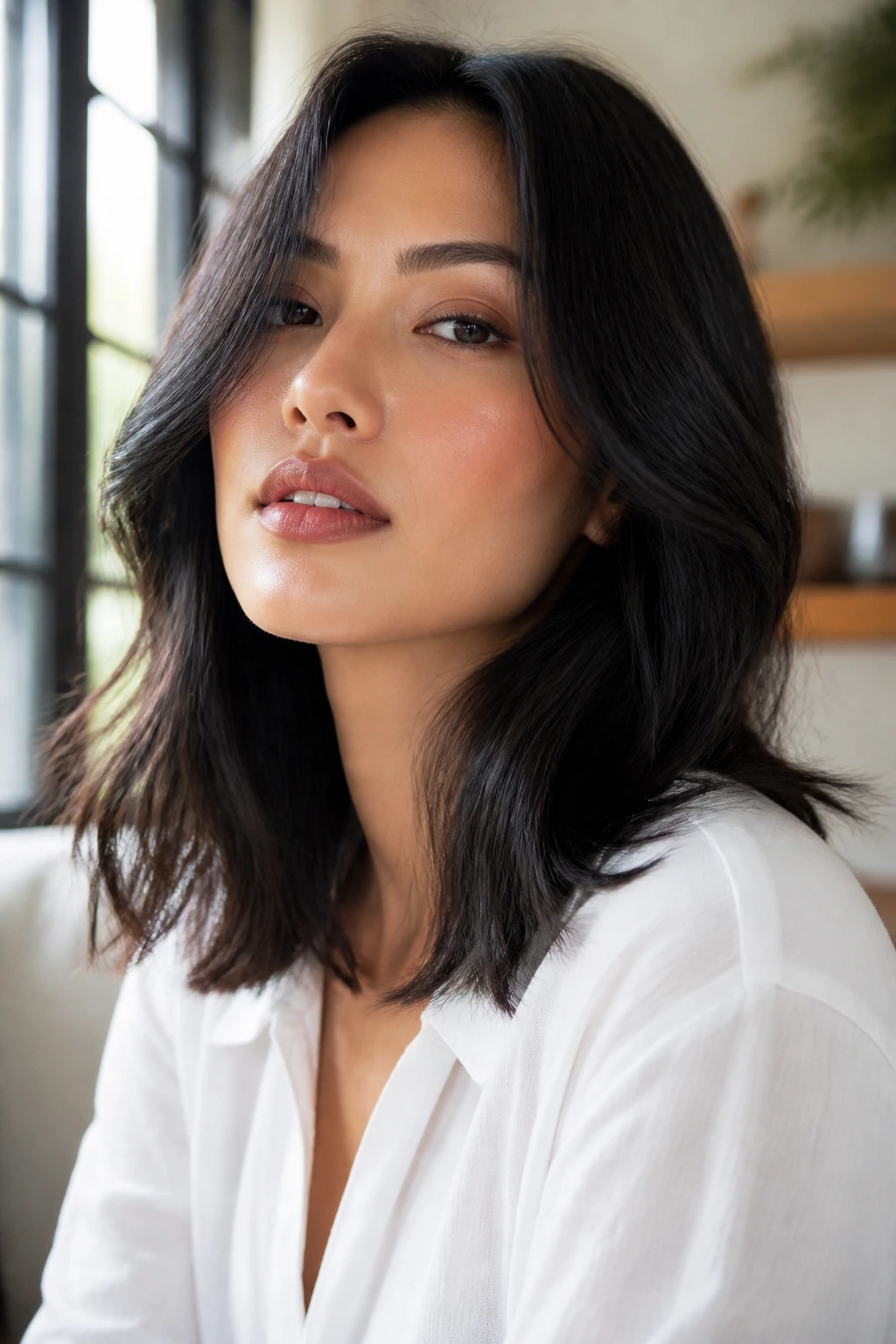
Finish: Straight styles emphasize the shine of jet black, blue-black, and graphite shades. Soft waves make balayage, peekaboo panels, and cherry tones pop a little more, which is why I keep coming back to them on medium-length cuts.
Best parting: A middle part sharpens blue-black and blunt lob looks. An off-center part softens heavier shades like jet black or mahogany, especially if you have face-framing layers.
Best pairings: Warm black shades tend to play well with gold jewelry, terracotta makeup, and cream or camel clothing. Cool shades lean harder into silver jewelry, berry lipstick, charcoal, and crisp white.
When to wear them loose: If the color has ribbons, underlayers, or money pieces, wear the hair down at least some of the time. Otherwise you’re hiding the best part.
Additional Tips and Finishers
Gloss boost: A clear or tinted gloss every 4 to 6 weeks keeps black hair from going dusty. That matters more than chasing extra darkness, because dull black reads older than rich black.
Customization: Fine hair usually looks better with babylights, money pieces, or a single color gloss. Thick hair can take broader balayage ribbons or hidden panels without losing shape. Curly hair usually benefits from internal layers and softer contrast, not chunky stripes.
Serving the look: Use a light serum on the ends only. Use too much, and the hair goes greasy before it goes glossy. A pea-sized amount is enough for most medium cuts.
Make-it-yours: If you want low maintenance, pick a shadow-root black or soft espresso. If you want edge, go with violet ends, burgundy panels, or copper face-framing pieces. If you want the most natural finish, choose chocolate lowlights or a neutral black gloss.
Common Mistakes to Avoid With Black Hair Color
- Choosing the wrong undertone: If blue-black makes your skin look drained or warm black makes your features look muddy, the issue is the tone, not the darkness. Fix it by switching to neutral black, espresso-black, or a softer glossed finish.
- Over-lightening the front pieces: Money pieces and caramel ribbons can turn orange fast. Ask for staged lifting and proper toning instead of pushing all the brightness in one appointment.
- Ignoring porous ends: Black dye on dry, pre-lightened ends can look hollow or patchy. Pre-fill with warmth or treat the ends first so they take pigment evenly.
- Going too chunky with highlights: Thick streaks on medium-length black hair often look dated and break up the cut in an awkward way. Softer ribbons, babylights, and targeted placement age better.
- Skipping shine care: Black hair shows matte dryness faster than brown shades do. Use a mask, heat protectant, and gloss schedule if you want the color to keep its depth.
Variations and Adaptations to Try
Low-Maintenance Shadow-Root Black: Keep the base dark and let the root stay slightly softer than the mids. This works well if you don’t want a hard line every time your hair grows half an inch.
Cool-Tone Blue-Black Edit: Push the reflect into blue or blue-violet for a sharper, cooler finish. It’s a smart pick if your wardrobe lives in black, gray, silver, and crisp white.
Warm Cinnamon Black: Add a soft cinnamon or mahogany reflect through the layers. The result feels less severe than jet black and usually flatters warm undertones nicely.
Peekaboo Color Panel: Hide burgundy, plum, or copper beneath the top layer. You get the fun color payoff when the hair moves, but the everyday look stays dark.
Gray-Blending Black: If you’ve started getting silver strands, blend them with a soft black base and deeper lowlights instead of covering every strand with one flat dye. It looks more natural and grows out with less drama.
Maintenance, Touch-Ups, and Color Care
Black hair color doesn’t usually fail by fading into nothing. It fails by losing shine, and that’s a different problem. Once the surface gets rough, the whole shade looks older and flatter, even if the pigment is still there. A good sulfate-free shampoo helps, but so does washing less often and using cool or lukewarm water.
If you’re wearing a solid black gloss or permanent black, root touch-ups usually fall somewhere around every 4 to 6 weeks if you like a clean line, or a bit longer if you prefer softer grow-out. Balayage pieces, money pieces, and peekaboo panels often need toner or gloss refreshes every 6 to 8 weeks, depending on how much heat and sun they see. Highlighted sections need more care than the base. That’s the trade.
A weekly mask is worth it, especially on medium-length hair where the ends sit near friction points like collars, scarves, and shoulder straps. Heat protectant should be non-negotiable before a blow-dry or flat iron. And if you have blue-black, plum-black, or cherry tones, a color-depositing conditioner used sparingly can keep the reflect from turning dusty between salon visits.
Frequently Asked Questions
Does black hair color make medium-length hair look thinner?
It can, if the cut is very one-length and the finish is flat. Add soft layers, a gloss, or a few lighter ribbons around the face and the shape gets more air and movement.
What black shade looks best if my skin tone is warm?
Espresso-black, mahogany black, cinnamon-kissed black, and cherry cola black usually sit nicely on warm undertones. They keep the depth but add enough warmth that the face doesn’t look washed out.
Can I get black hair with highlights without bleaching everything?
Yes. Money pieces, babylights, peekaboo panels, and balayage can be placed selectively, so only the sections that need lightening are lifted. That said, darker starting points and previous color history matter a lot.
How do I stop black hair from looking flat?
Use shine, shape, and placement. A blunt cut with a gloss, a layered shag with lowlights, or a lob with face-framing color will usually look better than one solid, dry black tone.
What if my hair is already blonde and I want one of these black shades?
It usually needs a color-filling step first, especially if you want a rich black instead of greenish or hollow ends. A salon colorist will often add warm pigment before depositing the black base.
Is permanent black dye a bad idea?
Not always, but it is more serious than a gloss or demi. Permanent black can be harder to lift later, so if you like changing your color often, a softer deposit-only option is usually safer.
Which of these looks is the lowest maintenance?
Soft black, espresso-black, and glossy jet black with no highlights tend to be the easiest to live with. Once you add caramel pieces, copper, burgundy, or silver, the upkeep goes up.
Can gray hair be blended into black styles without covering everything?
Yes, and it often looks better that way. Use soft black with lowlights or graphite-black blending rather than forcing one flat color over every gray strand.
The Shade That Still Feels Fresh
Medium length black hair works because it has enough shape to show tone, but not so much length that the color gets lost. That’s the quiet power here. A blunt lob can turn jet black into something crisp. A shag can make mahogany or smoky espresso look lived-in. Even a tiny ribbon of caramel or copper changes the whole reading of the cut.
The smartest choice is not the darkest one. It’s the one that keeps its shine when you turn your head, move under bad indoor lighting, or let the ends brush your collar. Pick the black that does that, and the haircut starts doing half the work for you.
