



Straight hair is ruthless. That’s the charm and the headache.
A good ombre on sleek, flat-ironed lengths looks clean in a way curls can’t quite copy. A bad one looks like a hard line someone forgot to soften. There’s nowhere to hide the transition. Every brushstroke shows.
That’s why ombre ideas for straight hair need more than a pretty brunette-to-blonde picture. The best versions respect the haircut, the level of lightness, and the way straight strands reflect light in a single, uninterrupted sheet. Get those things right and the color looks deliberate. Miss one, and the whole thing reads as blunt.
Why These Ombre Ideas Work So Well on Straight Hair
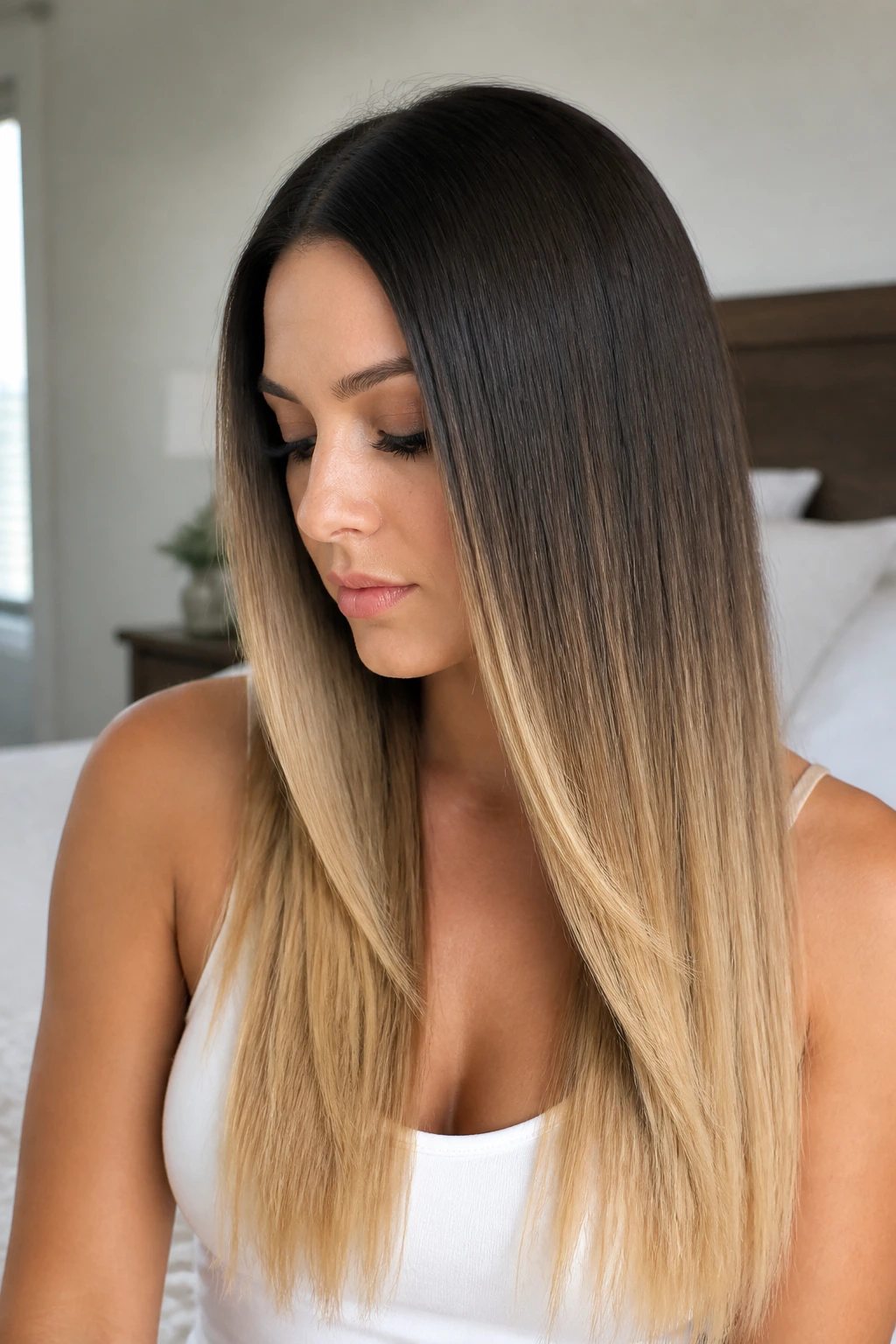
- The fade is easy to see: Straight hair shows the transition from root to tip with very little distortion, so a soft blend looks crisp instead of fuzzy.
- The grow-out stays cleaner: Keeping the root deeper means you can go longer between appointments without the color line screaming for attention.
- Warm and cool both work: Caramel, mushroom brown, beige, navy, copper, and rose beige all read differently on a flat surface, which gives you real room to choose a mood.
- Fine hair can look fuller: Lighter ends and a slightly deeper root create depth, and depth is what keeps straight hair from looking like one flat sheet.
- You can go subtle or bold: A barely-there brunette melt and a navy-to-black fade are both on the table; straight hair just makes the difference easier to control.
- Toner does a lot of heavy lifting: On straight hair, tone matters more because the shine is constant. Beige reads cleaner, ash reads cooler, and gold reads warmer.
Why Straight Hair Changes the Ombre Formula
Straight hair is honest. That’s the nicest way I can put it.
A fade that looks soft in waves can suddenly show its edges once it’s blown straight. The transition needs a longer landing zone, especially around the mid-lengths. On a blunt bob, a color band that sits too high will look like a ruler line. On longer hair, you have more room to breathe, but even there the blend needs overlap.
Where the fade should start
The safest place for the lightest part is usually lower than people think. Around the jawline works for shorter hair. On collarbone or longer cuts, the shift can start lower and still look balanced. If you wear your hair pin-straight most days, ask for a softer, wider transition than the photos online usually show.
Warm tones read softer than icy ones
Caramel, honey, copper, beige, and rose beige tend to flatter straight hair because they keep the surface lively. Ash and silver can look chic, but they need better lift and better toning or they go dull fast. Fashion shades are a different animal altogether. They need even pre-lightening, or the color will patch out the second the flat iron hits it.
The cut matters as much as the color
This part gets skipped too often. A blunt, dry-looking end can make even a beautiful ombre feel heavy. A cleaner trim before coloring usually gives the lighter ends a better shape to sit on. Straight hair does not forgive split ends the way textured hair sometimes does.
1. Espresso to Caramel Ombre
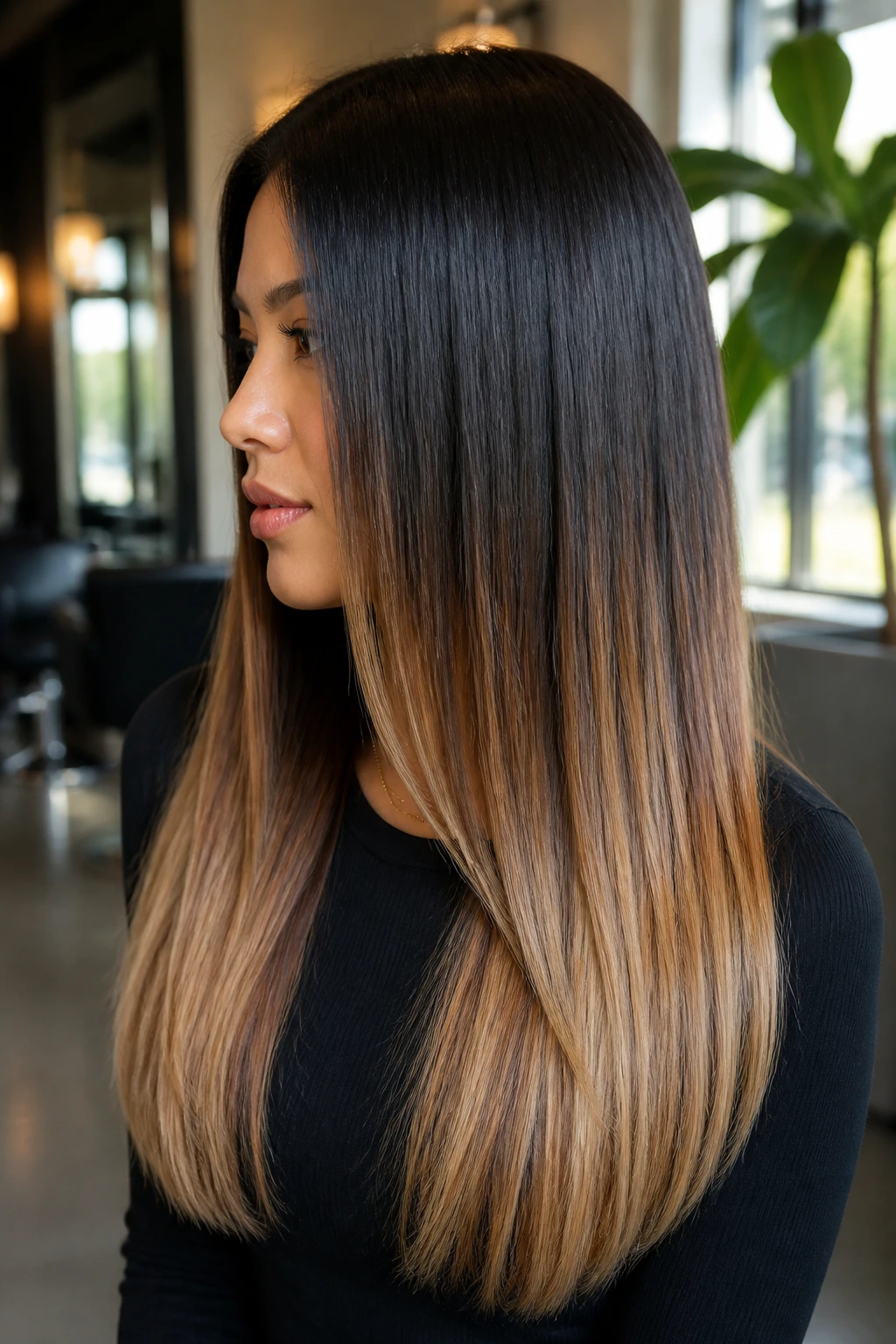
This is the classic for a reason. Deep espresso at the crown melting into caramel lengths gives straight hair a rich, glossy ribbon effect that looks polished without trying too hard. The color shift is big enough to notice, but it doesn’t shout.
What makes it work on straight hair is the warmth. Caramel sits around that sweet spot where it brightens the face and end areas without drifting into yellow. I’d keep the transition below the cheekbone on medium and long hair so the fade doesn’t land right where the eye catches the shape of the head.
If you wear a blunt lob, ask for a softer, feathery melt through the mid-lengths. The darker root should overlap the lighter zone by a few inches, not stop dead. That overlap is what keeps it from looking striped.
2. Mushroom Brown Ombre
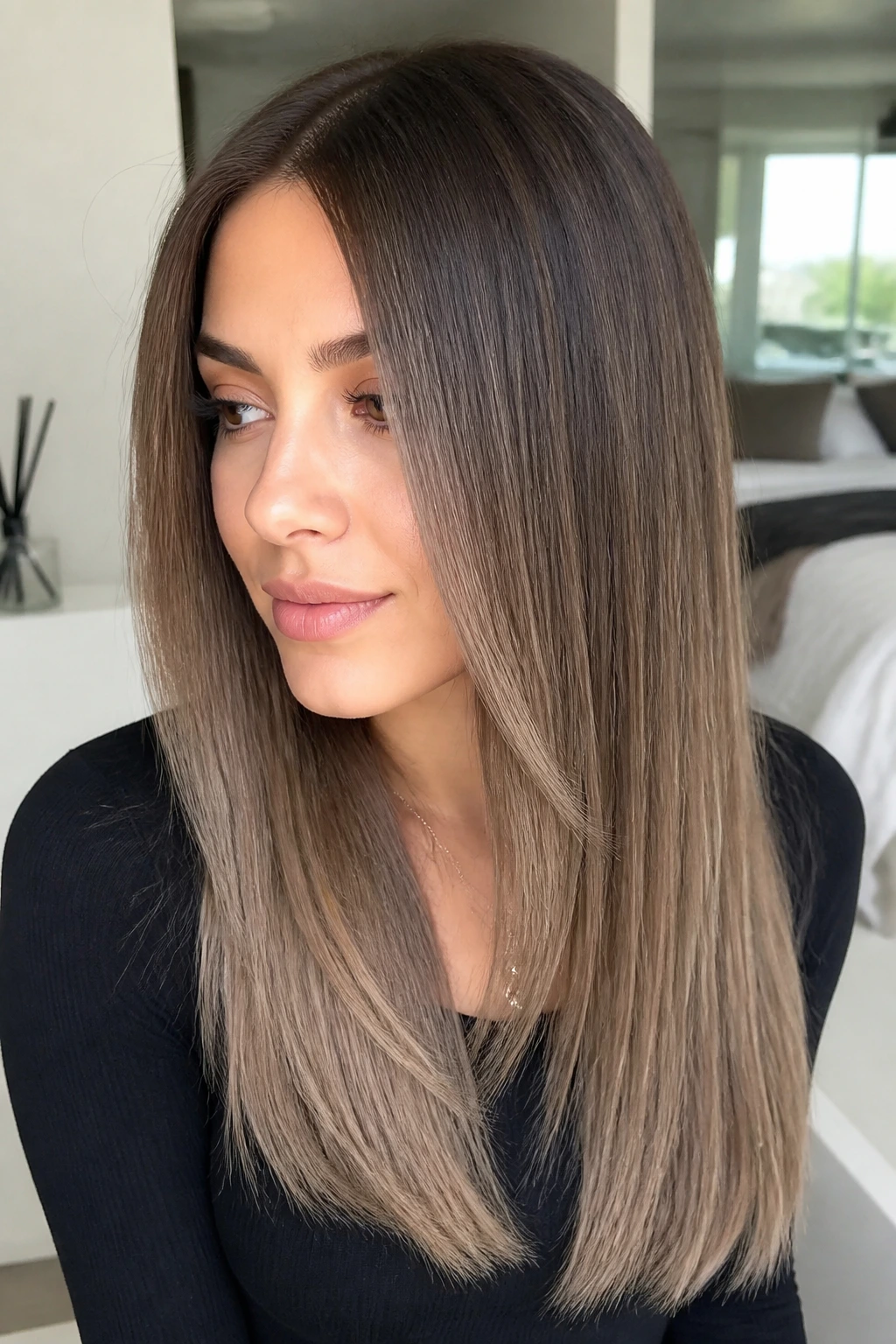
Mushroom brown is for people who like their color to look expensive and a little quiet. On straight hair, the cool taupe base and beige-brown ends show off every tone shift in a subtle way that waves can actually blur too much.
Why it suits sleek hair
The coolness reads cleanly when the strands are smooth. If the ends are lifted too far, though, the whole thing can go flat or muddy. I’d stop at a soft beige rather than pushing all the way to icy blonde unless your base is already very light.
This look is especially strong on blunt cuts and shoulder-length hair. It gives you movement without obvious streaks, and it grows out with a soft edge. That matters. A lot.
3. Chestnut to Copper Ombre
Warm brunettes love this one. Chestnut roots flowing into copper mid-lengths and ends create a kind of burnished glow that straight hair carries beautifully because the surface catches light in one long line.
The trick is to keep the copper rich, not neon. You want rust, penny, and amber notes, not orange marker ink. On straight hair, over-bright copper can turn loud fast. A gloss with a little gold and red gives better depth than a flat, bright dye job.
This one looks especially good when the hair is layered lightly at the ends. The copper pieces move just enough when you turn your head, and that motion keeps the finish from looking too solid.
4. Black to Smoked Mocha Ombre
If you love dark hair and don’t want a dramatic blonde moment, this is the move. Jet black roots fading into smoked mocha ends keep the whole look moody, sleek, and expensive-looking.
Straight hair shows off shine best when the tone stays deep. That’s why this ombre works so well. You’re not fighting the depth; you’re leaning into it. The end shade can sit only two or three levels lighter than the root and still count as ombre. It doesn’t need to scream to do the job.
Best on medium to thick hair. Very fine strands can look sparse if the ends go too pale, so keep the mocha dense and glossy.
5. Chocolate to Honey Blonde Ombre
This is the friendlier, brighter cousin of the espresso look. Chocolate roots easing into honey blonde ends give straight hair a warm, sun-touched finish that still feels deliberate.
The important part is the mid-zone. If you jump from dark chocolate straight into honey, the blend can look abrupt on straight hair. Spread the transition over a few inches and keep the honey more beige-gold than yellow-gold. That keeps the ends from going brassy the first time you shampoo.
This works especially well on thick hair. There’s enough density for the lighter ends to look full, not stringy. If your ends are already dry, I’d trim first and color second.
6. Ash Brunette to Beige Blonde Ombre
Cool brunettes, this is your lane. Ash brunette melting into beige blonde gives straight hair a soft, modern finish that looks controlled instead of beachy.
The beauty here is restraint. Beige blonde is usually a better target than stark platinum because straight hair reflects everything. If you go too pale, the color can start to look chalky or thin. Beige keeps a little warmth in the shine, which prevents that washed-out look.
This shade pair is especially good if your wardrobe leans neutral. Gray sweaters, black tees, silver jewelry, and this ombre all get along without trying to compete.
7. Dark Blonde to Icy Pearl Ombre
This one has a sharper edge. Dark blonde roots moving into icy pearl ends look polished on straight hair because the cool pale tone sits like glass across the surface.
It’s also less forgiving than people expect. If your hair is porous, the icy end can grab too much toner and go dull blue-gray. If your ends are dry, the finish will show it immediately. So this shade is best when the cut is fresh and the condition is decent.
On longer straight hair, pearl blonde can look almost liquid under indoor light. That’s the appeal. It’s clean, crisp, and a little bit severe in a good way.
8. Bronde With Face-Framing Brightness
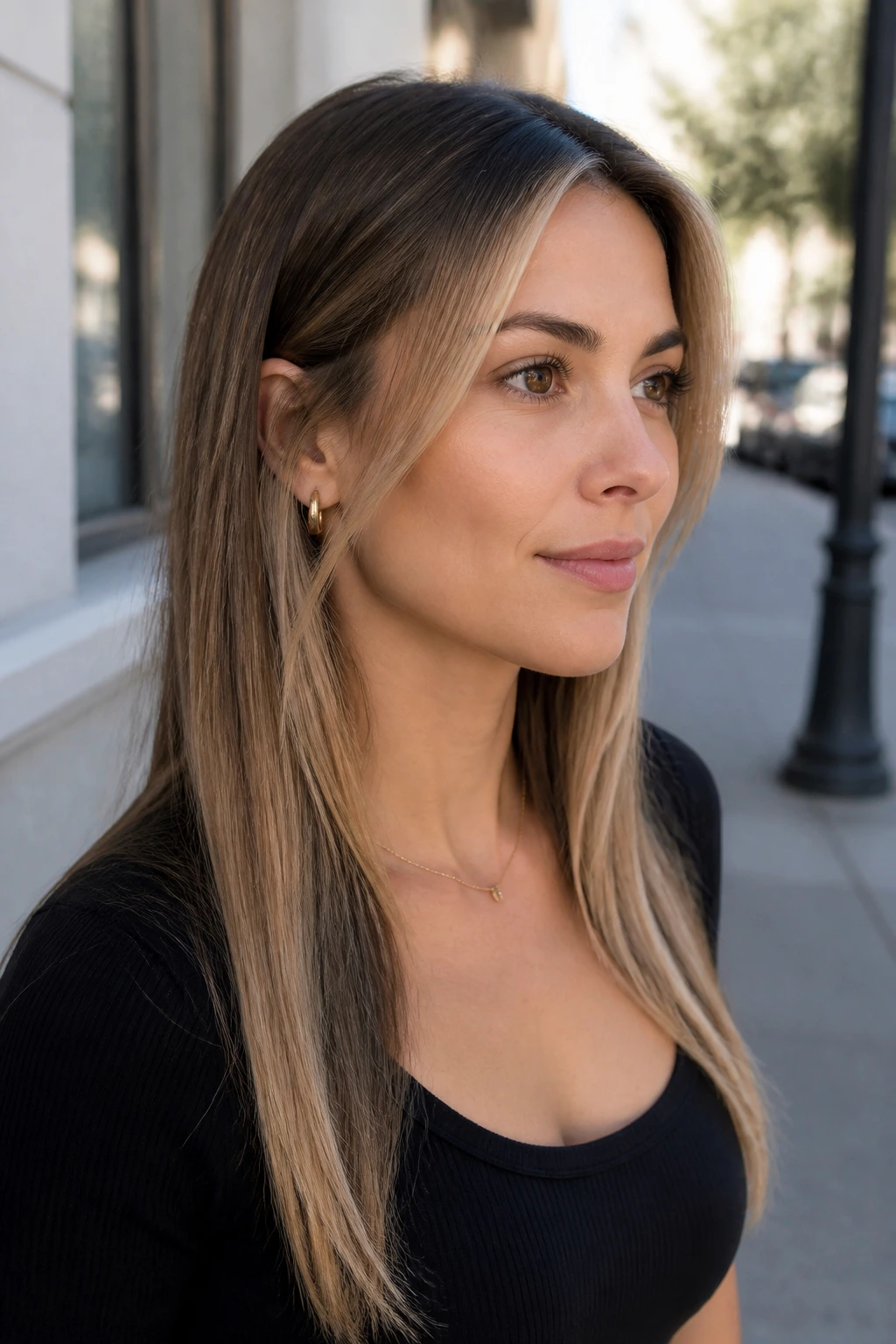
This is the safe bet for someone who wants dimension without a full makeover. A bronde base with brighter pieces around the face keeps straight hair from looking flat, and the ombre effect stays soft through the back.
The face frame is doing a lot of work here. It breaks up the weight of the darker root and gives the eye a clear point of interest. The rest of the hair can stay muted—walnut, toffee, ash-brown, whatever sits closest to your natural color.
If you wear straight hair tucked behind the ears, this one is especially good. The brighter front sections catch light at the exact moment the hair moves away from the face, which makes the whole look feel more alive.
9. Cinnamon Brunette to Peach Ends
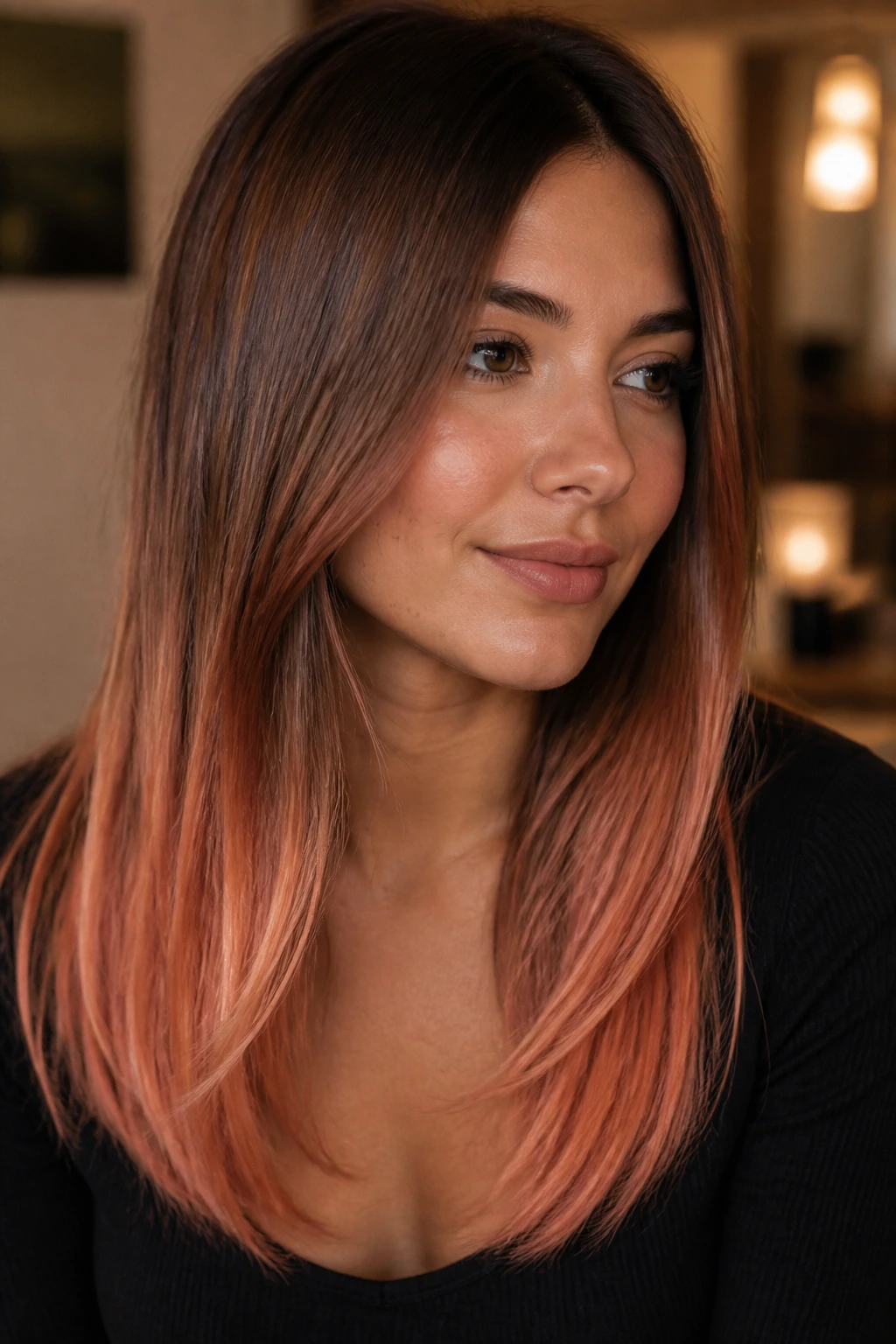
Warm, playful, and a little unexpected. Cinnamon brunette fading into peach ends gives straight hair a soft color shift that feels modern without tipping into costume territory.
What to watch for
Peach is easy to mess up. Too pale and it turns weak. Too orange and it starts looking like a correction job. The best peach has a blush tone under it, almost like apricot skin. On straight hair, that tone reads much better than a sugary pastel.
This is a strong choice if your base already has copper or auburn in it. The warm family stays connected, so the transition feels natural even though the color is clearly stylized.
10. Cherry Cola Ombre
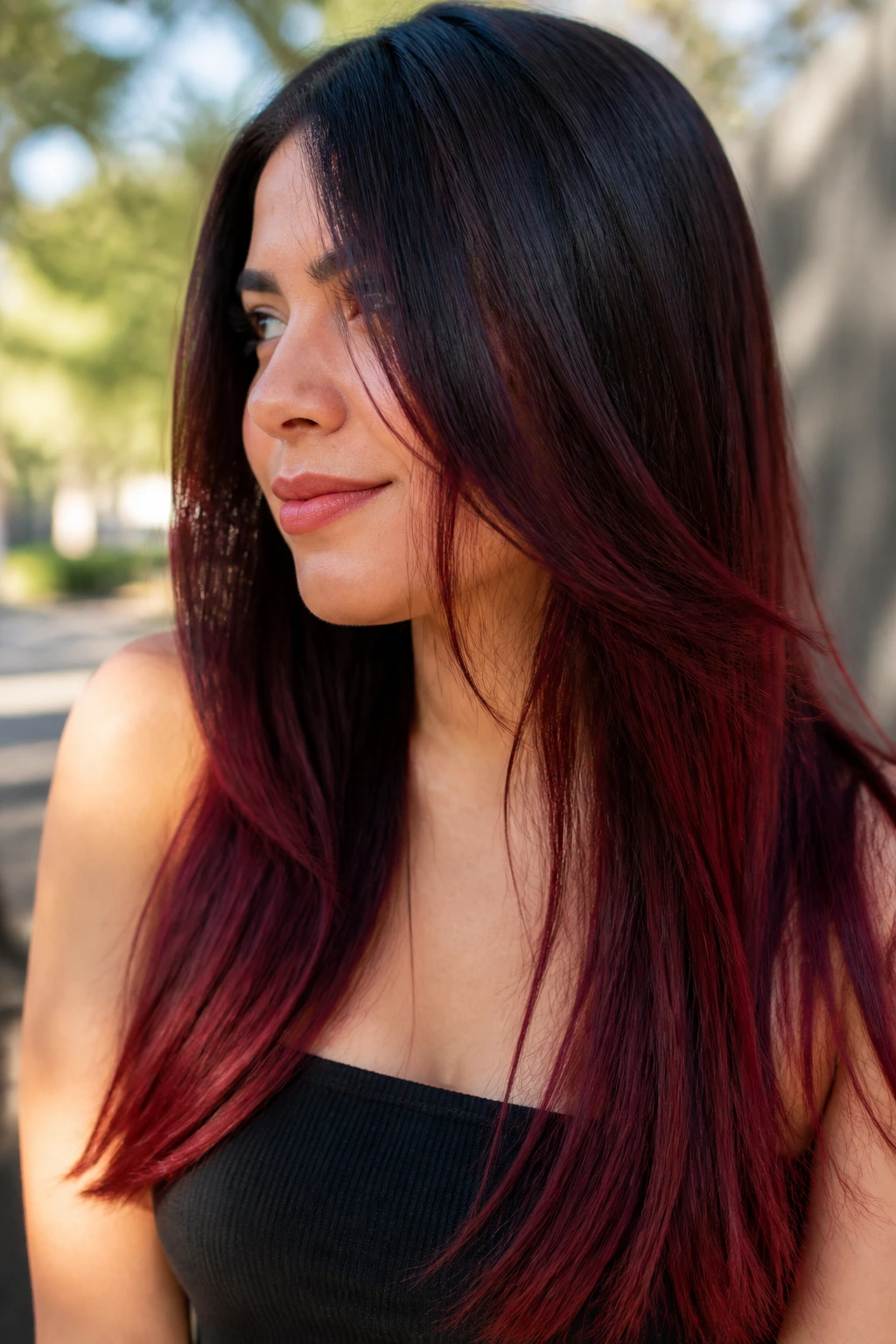
Cherry cola is one of those colors that looks rich in a mirror and even better in motion. On straight hair, the deep brunette base with wine-red ends gives you that dark, glossy finish that changes under light instead of screaming for attention.
I like this look because it stays wearable. Indoors, it reads as a deep brunette with a secret. Outdoors, the cherry comes forward. That shift is the whole point.
It also grows out more softly than bright red. If you want red without the upkeep of copper or strawberry blonde, cherry cola is a smarter lane. Use a color-depositing mask between appointments, and the ends keep their depth longer.
11. Blue-Black to Midnight Navy
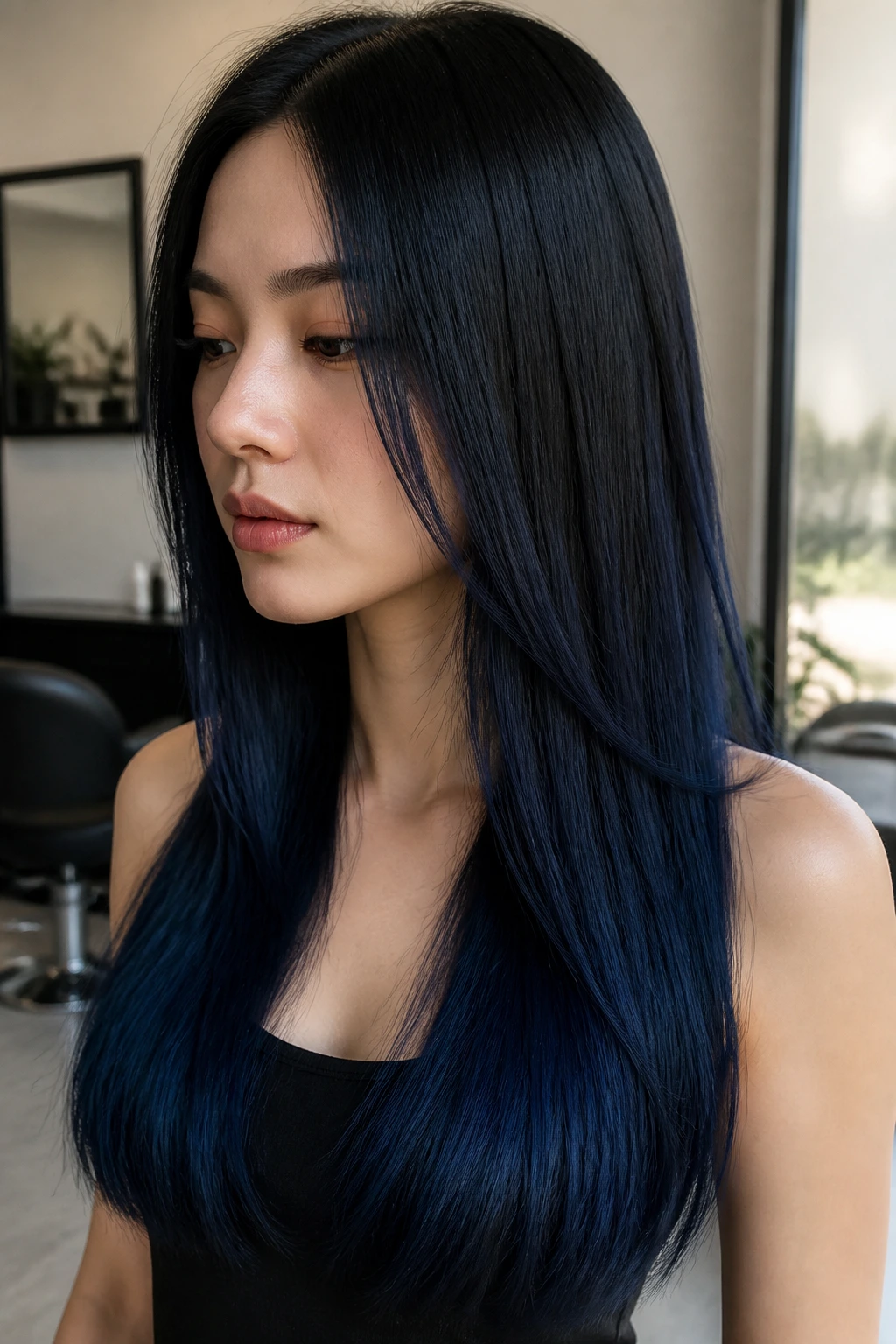
This one is for the people who like their hair to look inky and deliberate. Blue-black at the roots slipping into midnight navy ends gives straight hair a hard-edged shine that curls often soften too much.
The navy doesn’t need to be bright. In fact, it shouldn’t be. On straight hair, a deep navy sheen shows when the light hits the surface, and that’s enough. Too much brightness and the finish starts looking costume-y.
Best on thick hair or hair with a naturally deep base. Fine hair can wear it, too, but I’d keep the navy slightly closer to black so the ends don’t look thinner than they are.
12. Rooted Vanilla Blonde Ombre
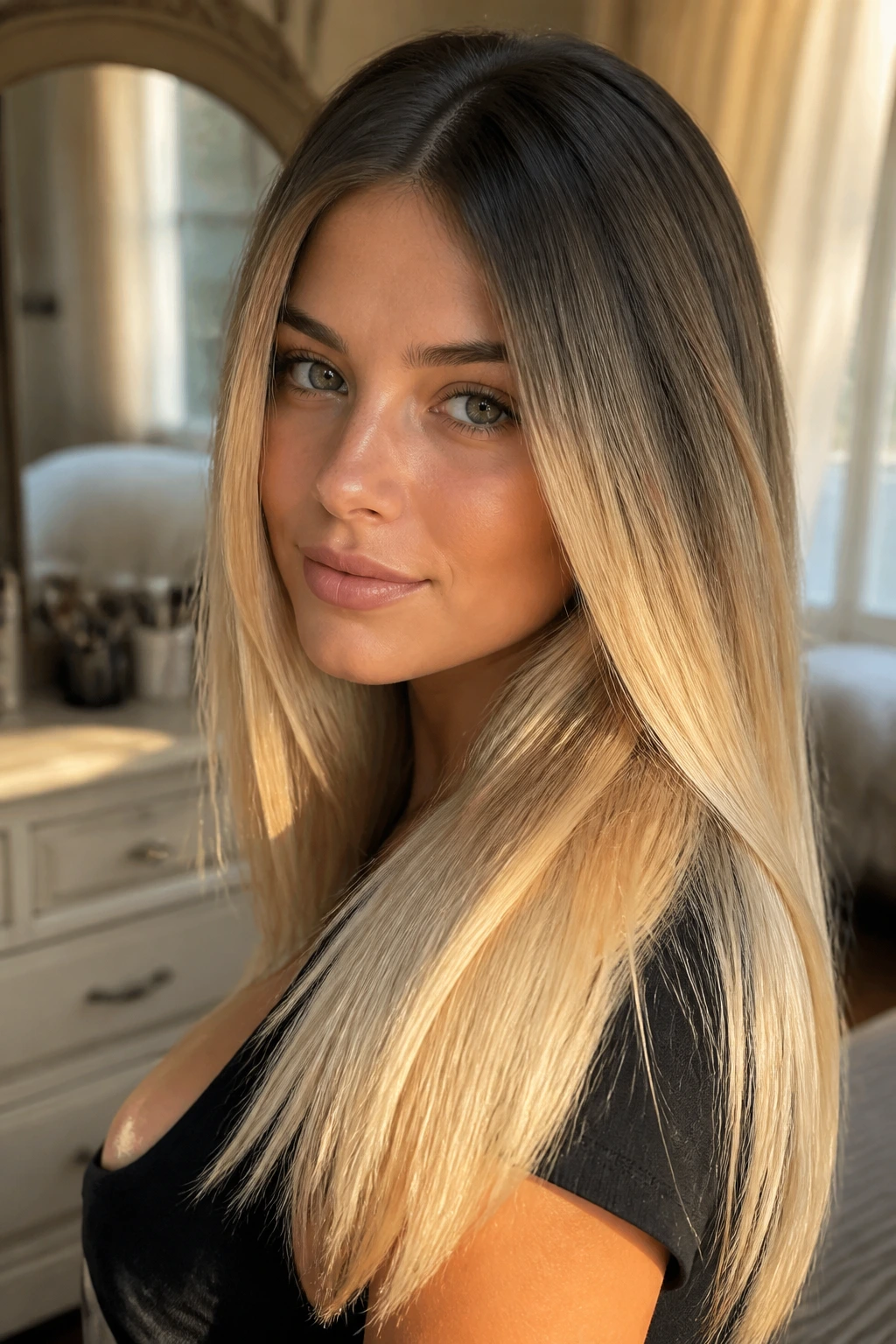
This is a clean, creamy blonde look with a shadow root that saves it from looking flat. Darker roots melting into vanilla ends create a softer blonde on straight hair than an all-over light color ever will.
The shadow root matters here. Straight hair makes root regrowth more visible, so the darker band at the scalp is not a flaw—it’s the whole strategy. It keeps the blonde from floating too high on the head and gives the end color somewhere to land.
I’d choose vanilla over stark white almost every time. Vanilla holds a touch of warmth, which stops the ends from looking wiry or chalky. That matters most on blunt cuts.
13. Soft Auburn to Strawberry Blonde
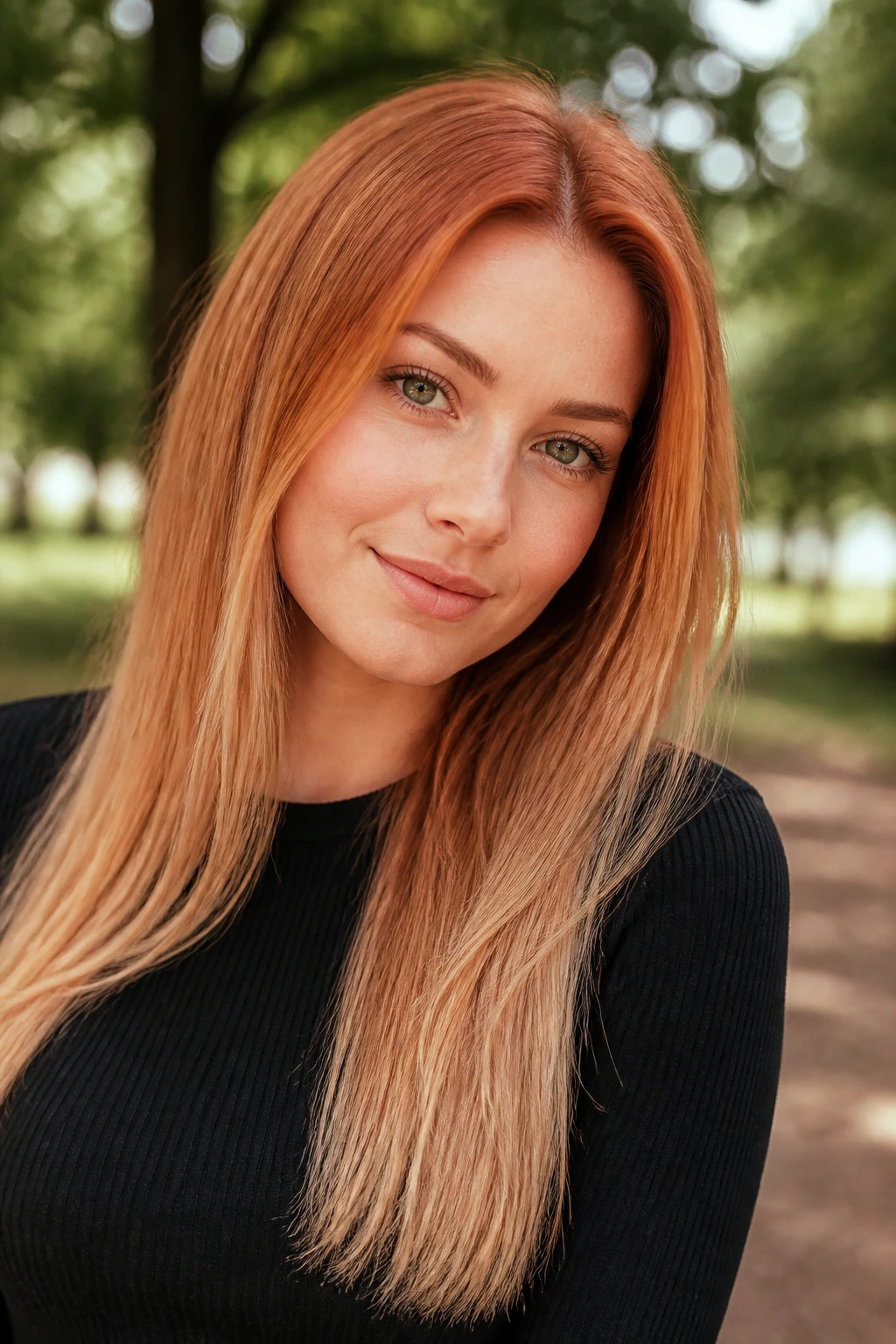
If your hair naturally lives in the red family, this ombre can be a lovely way to brighten it without losing the warmth. Soft auburn roots tapering into strawberry blonde ends give straight hair a lighter finish that still feels connected.
This is one of those shades that looks better when it’s subtle. A heavy hand can make strawberry blonde turn bubblegum or coppery in the wrong way. Keep the lighter ends airy, not neon. A gloss does a lot of the work here, which is helpful because direct color usually keeps red-toned ombre looking fresher than bleach-only lightening.
Straight hair makes the strawberry tone look clean and polished. There’s no curl pattern to muddy the line, so the shade reads exactly as placed.
14. Taupe Brown to Silver Smoke
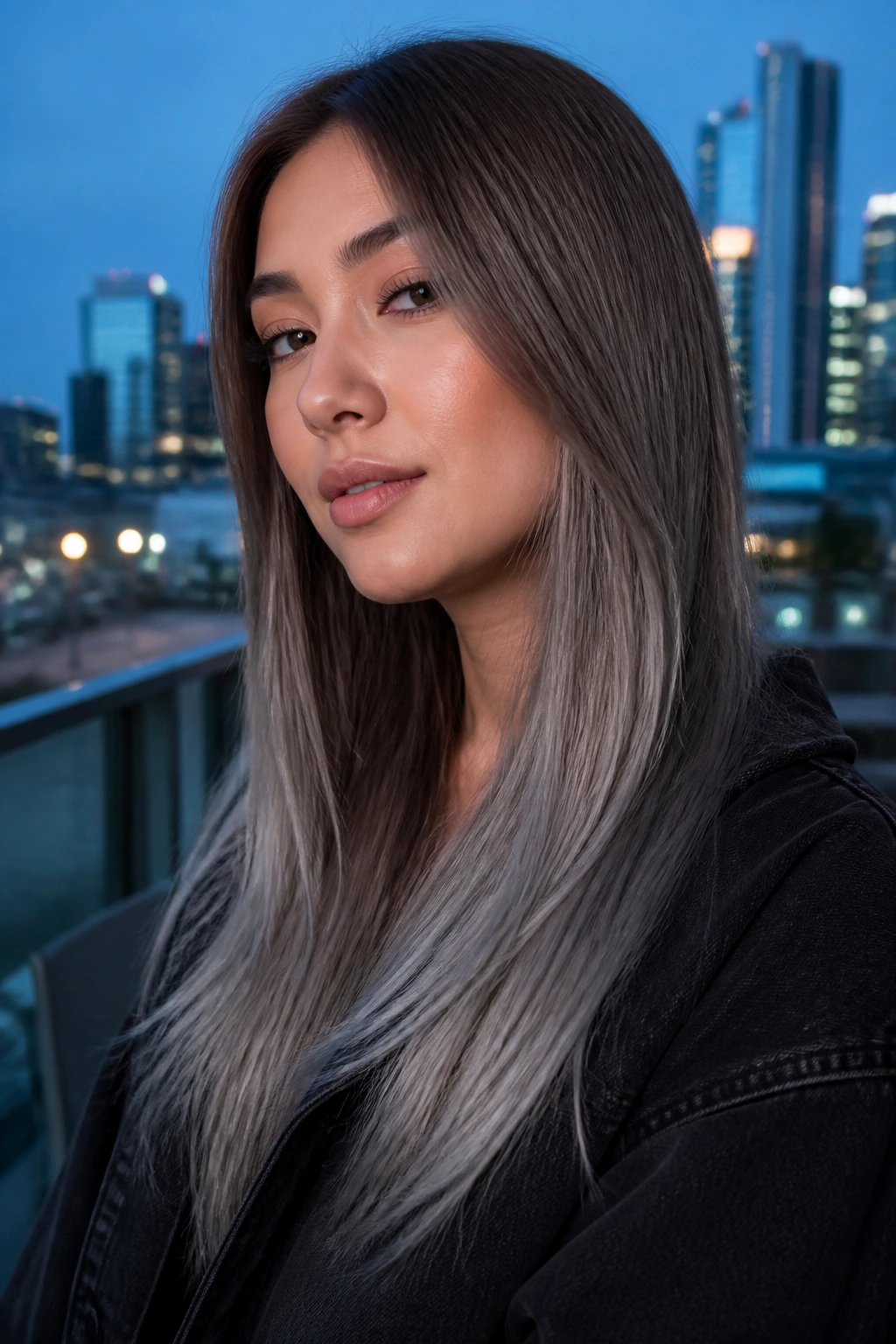
Cool, modern, and a little bit sharp. Taupe brown fading into silver smoke gives straight hair a graphite-like sheen that’s especially good on blunt bobs and long, glassy lengths.
The silver part needs careful lift. If the hair isn’t light enough, silver smoke turns dull fast. If it’s too light, it can look washed out. The sweet spot is a smoky silver with enough tone to stay visible against the shine of straight strands.
This is one of my favorites for people who want something fashionable without leaning pastel. It has attitude. Quiet attitude, but still.
15. Chocolate to Butterscotch Ribbons
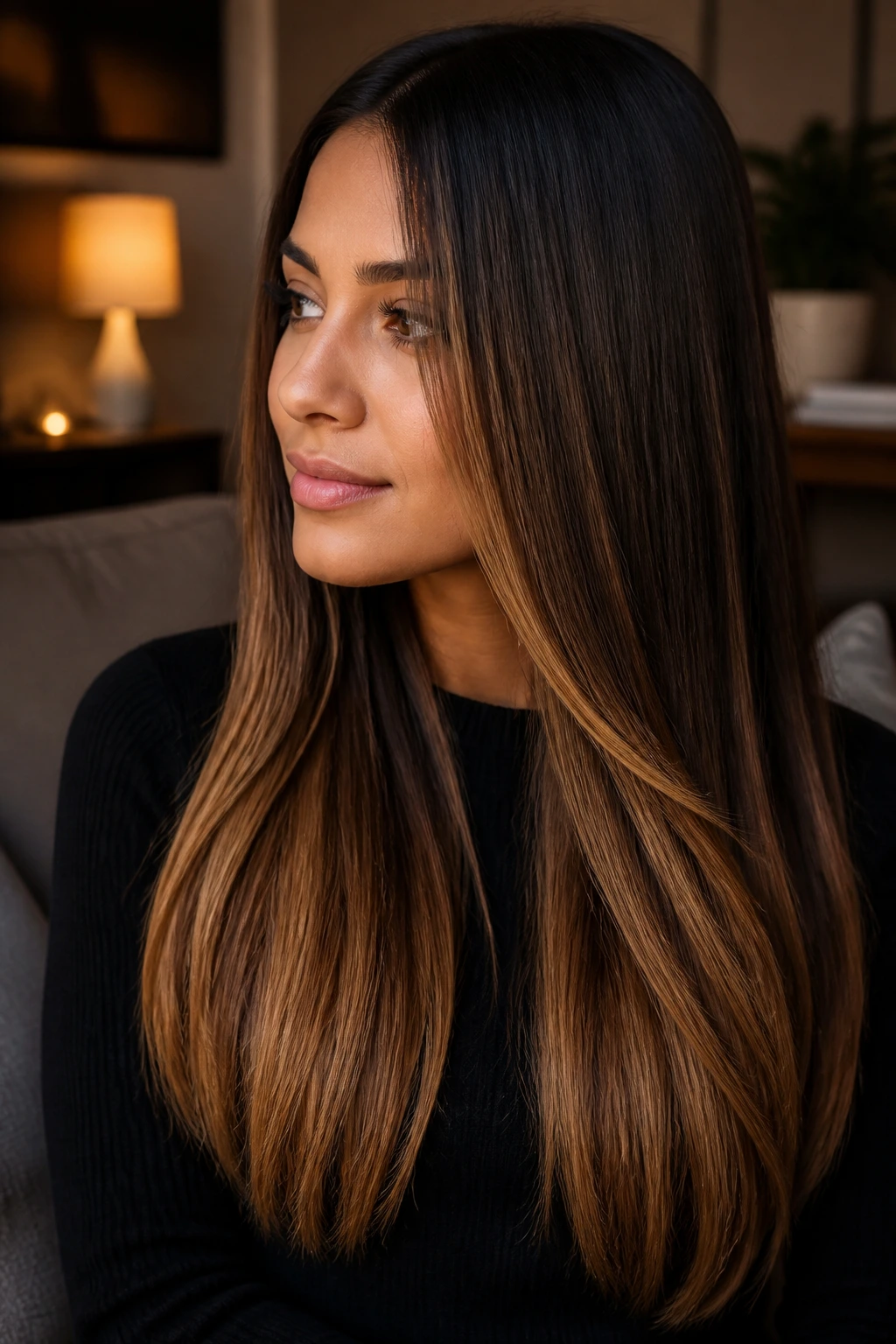
This is a softer, more dimensional take on ombre. Instead of a hard graduation, chocolate lengths move into butterscotch ribbons that sit lower in the hair and keep the straight finish from looking one-note.
It’s especially good for fine hair. The butterscotch adds the illusion of density because warm light reflects off the ends and across the sides. On thick hair, it keeps the color from feeling heavy.
I’d keep the ribbons more concentrated through the lower half rather than spreading them everywhere. Straight hair looks best when the bright pieces have a purpose.
16. Jet Black to Burgundy Wine
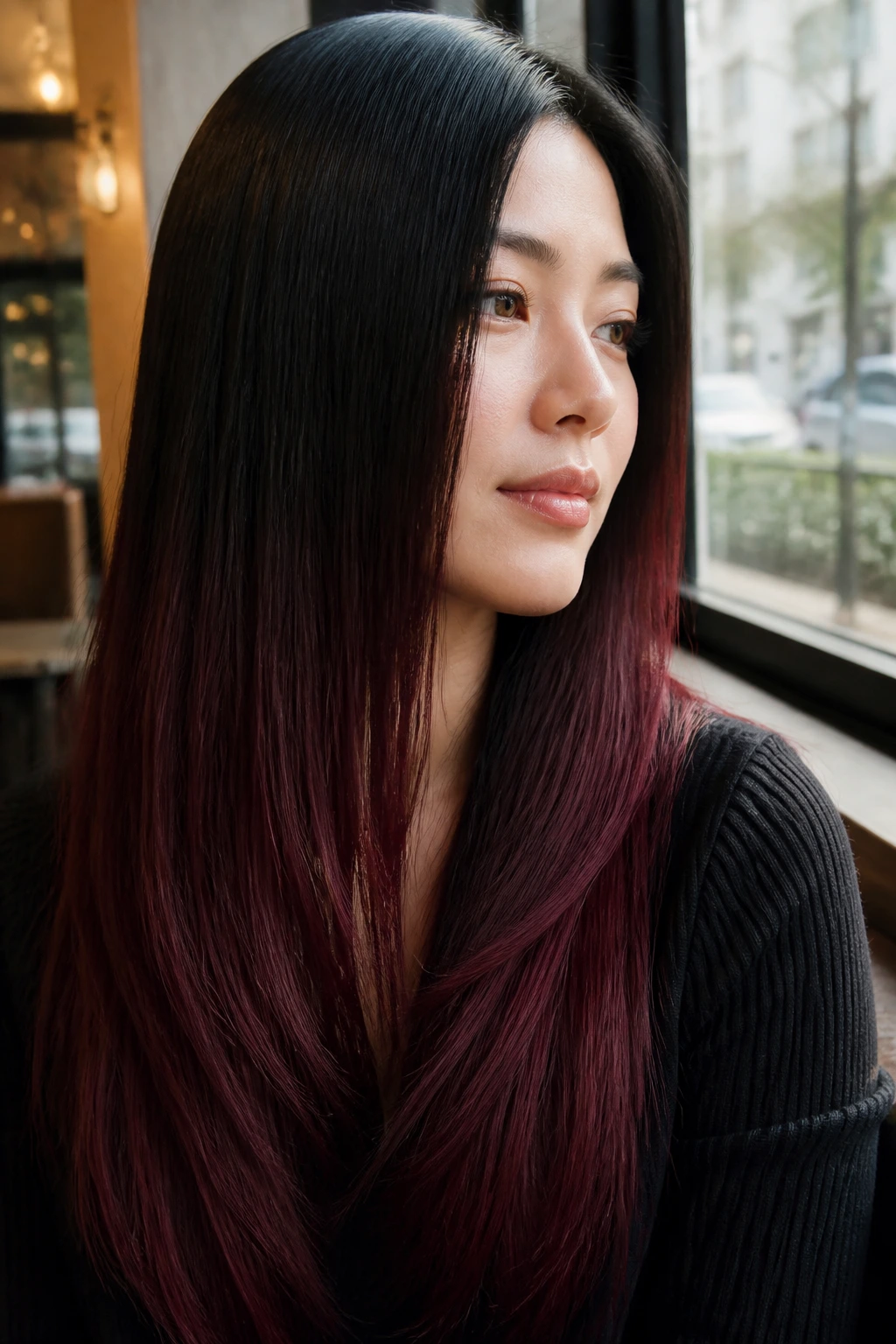
This is the dramatic one that still feels grown-up. Jet black roots fading into burgundy wine ends give straight hair a rich red finish that shows up in sunlight and stays deep in shade.
Burgundy works better than bright red here because it plays well with the flat surface. The color looks smooth, not fluffy. If your hair is coarse, this is a smart way to add dimension without losing that dark, sleek feel.
A deposit-only gloss can help keep the burgundy from fading into brown too fast. If the undertone disappears, the whole look can lose its point.
17. Milk Tea Brown to Toasted Cream
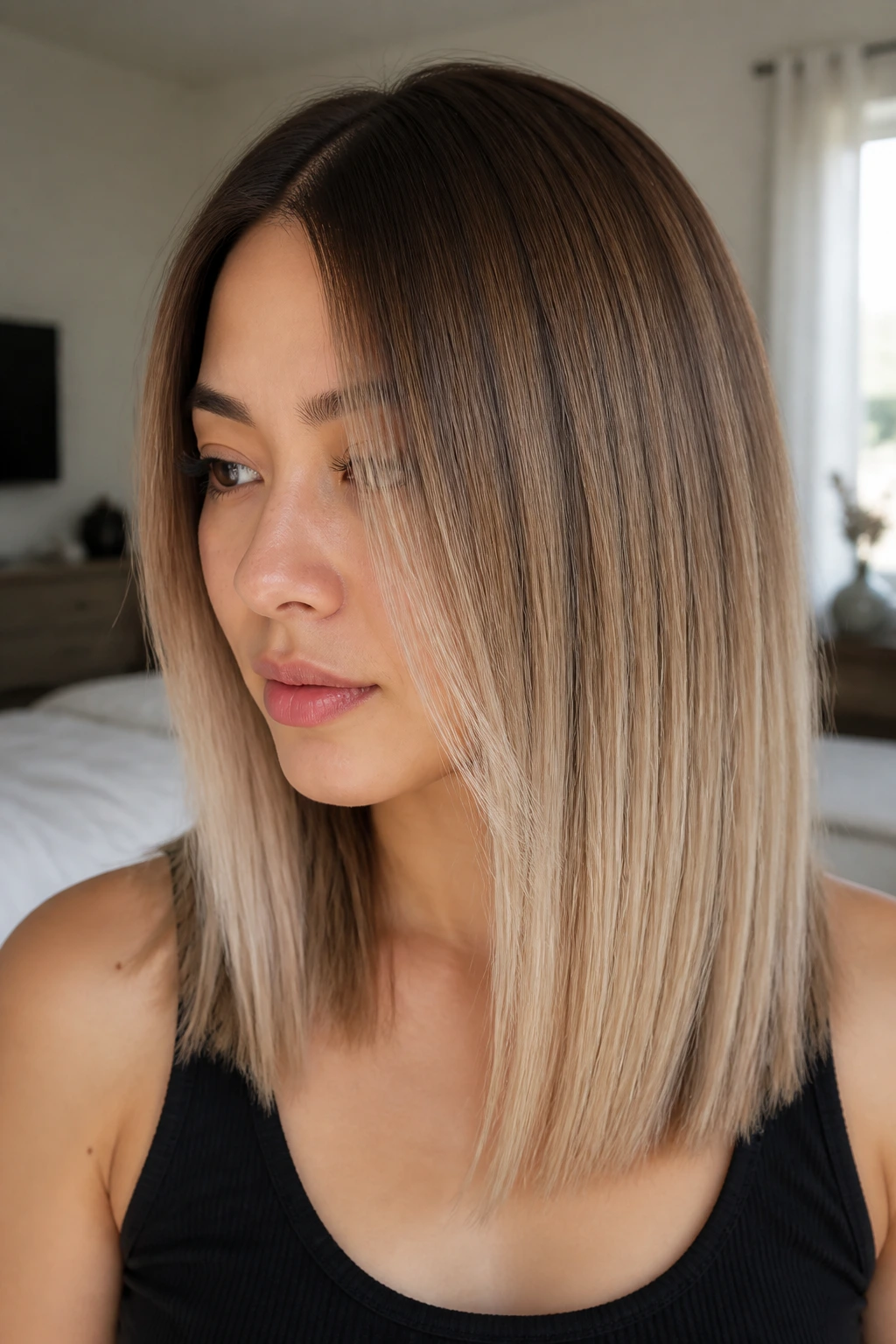
Milk tea brown is one of the cleanest tones for straight hair. It sits in that neutral zone between beige, taupe, and soft brown, and when it fades into toasted cream, the whole look stays glossy instead of brassy.
The key here is tone control. Straight hair reflects a lot of light, so the cream ends need to stay creamy, not yellow. A beige toner is usually better than a high-wattage blonde toner that strips too much warmth.
This color family looks especially good on sleek, center-parted hair. The smooth middle part and even tone line give it that polished, almost liquid finish people chase in salon photos.
18. Reverse Ombre With Cream Roots and Mocha Ends
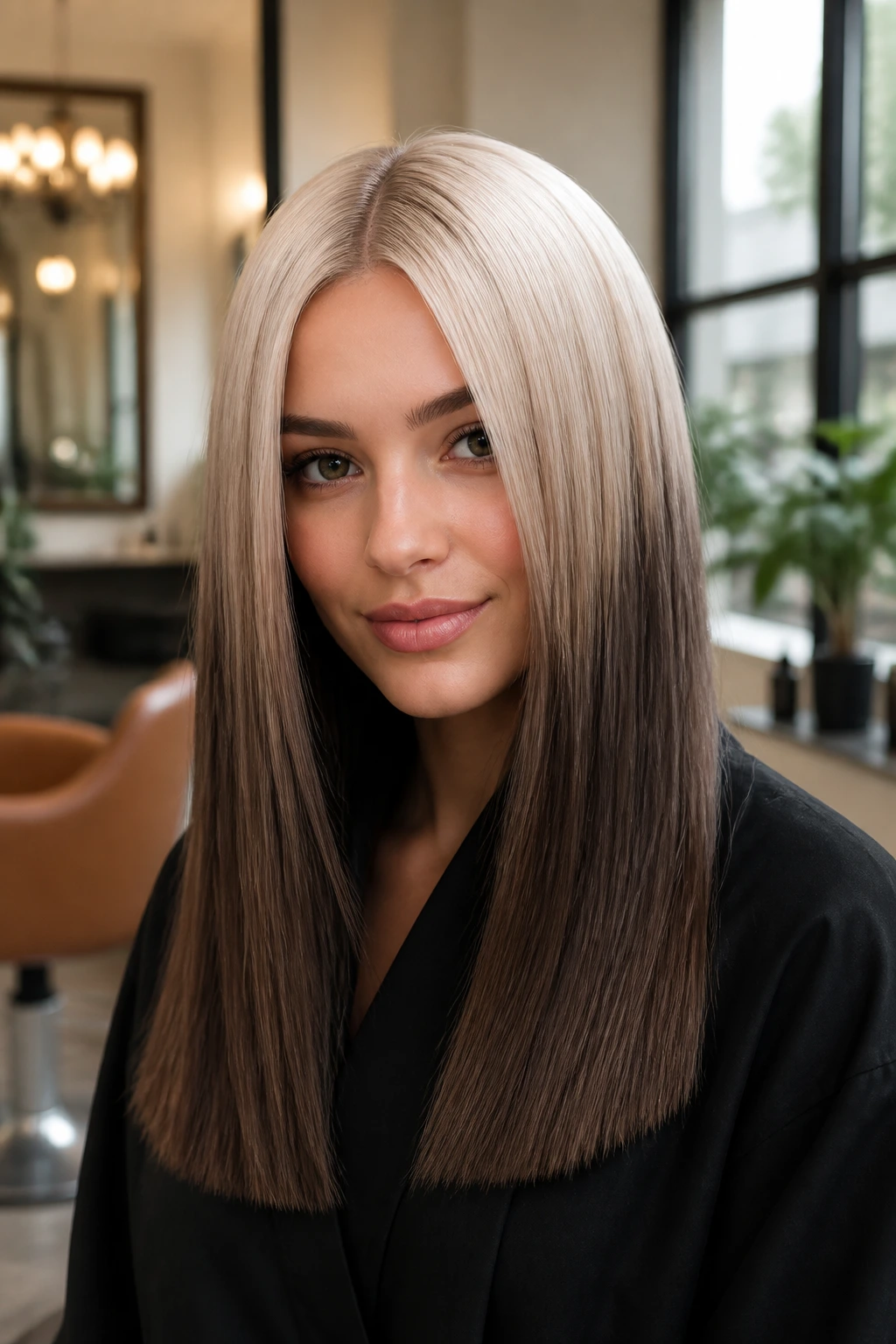
Reverse ombre is the one that flips the script. Light roots and darker ends can look bold on straight hair, but only if the color shift stays soft enough to feel intentional.
Creamy roots flowing into mocha ends work better than a harsh blonde-to-black jump. The contrast is still there, just cleaner. Straight hair makes the darker ends look sleek rather than heavy, especially on a blunt lob or a long one-length cut.
This is not the first choice for everyone. It does best when the haircut is sharp and the tone is careful. Sloppy reverse ombre looks like grow-out. Good reverse ombre looks styled.
19. Sandy Brunette to Rose Beige
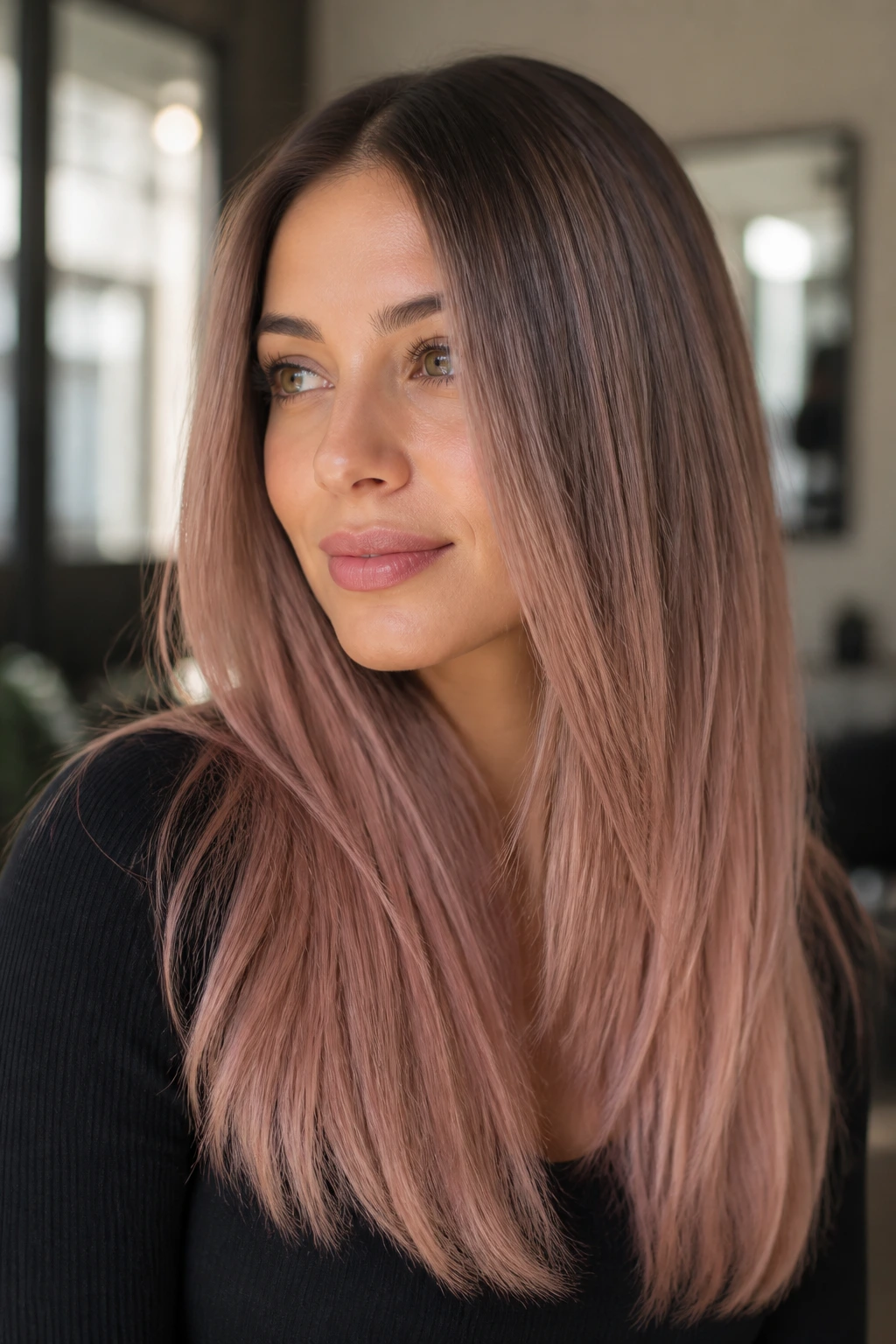
Rose beige is one of those shades that looks expensive without trying to be flashy. On straight hair, the soft blush note sits neatly over a sandy brunette base and gives the fade a gentle warmth.
The rose needs a neutral starting point. If the base is too orange, the whole thing can veer salmon. If it’s too ash, the pink note disappears. Sandy brunette gives you enough balance for the tone to stay soft.
This one is lovely on medium-length straight hair, especially if you like a low-drama color that still feels custom. It’s not loud. That’s the appeal.
20. Ash Brown to Smoky Lavender Ombre
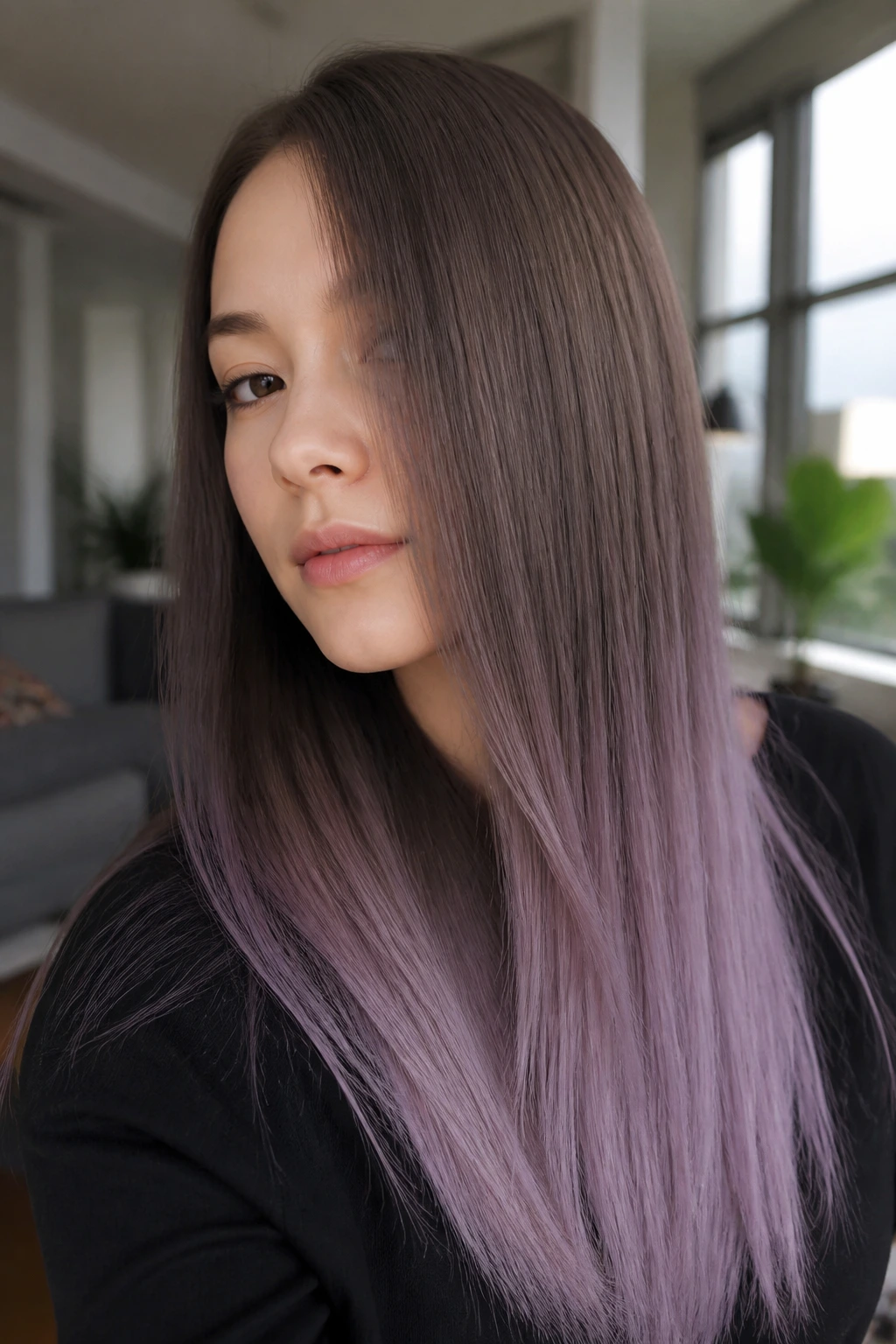
If you want fashion color without going full neon, this is the sweet spot. Ash brown fading into smoky lavender ends gives straight hair a cool, sleek finish that reads modern instead of playful.
The lavender has to be built on pale enough ends or it won’t show cleanly. Once the lift is there, the smoke in the tone keeps it from looking candy-bright. Straight hair is actually an advantage here because the color sits like a clean wash across the surface.
I’d keep this one a shade deeper than your first instinct. Very pale lavender can disappear under strong light. A smoky version holds up better in real life.
How to Keep the Fade Soft and Clean on Straight Hair
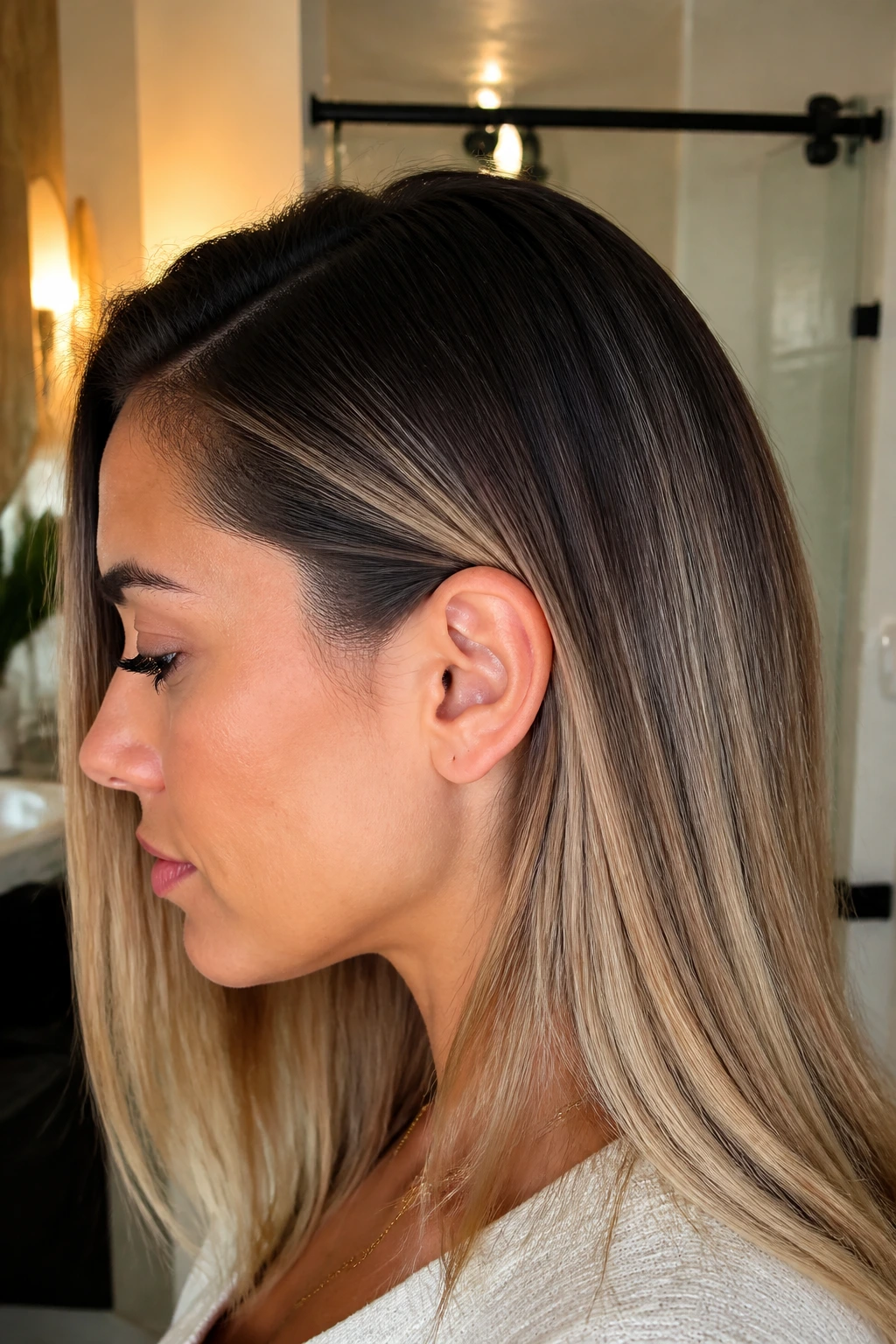
Placement: Ask for a transition that overlaps by a few inches. Straight hair can make even small placement errors obvious, so a longer melt usually looks better than a tight band of color.
Tone: Choose beige, caramel, mocha, or smoke tones that match the direction of your base. Cool over warm, or warm over cool, can work, but only when the toner is chosen on purpose.
Cut: Get the haircut fresh before the color service if the ends are ragged. Lighter ends look much better when they have a clean edge to sit on.
Heat: Keep your flat iron around 300–330°F and use heat protectant every single time. Higher heat strips gloss fast and leaves the ends looking tired.
Refresh: Brunette ombre usually needs a gloss refresh every 6–10 weeks. Blonde, silver, and fashion colors often need sooner attention because the tone fades before the hair does.
Common Mistakes That Make the Color Look Harsh
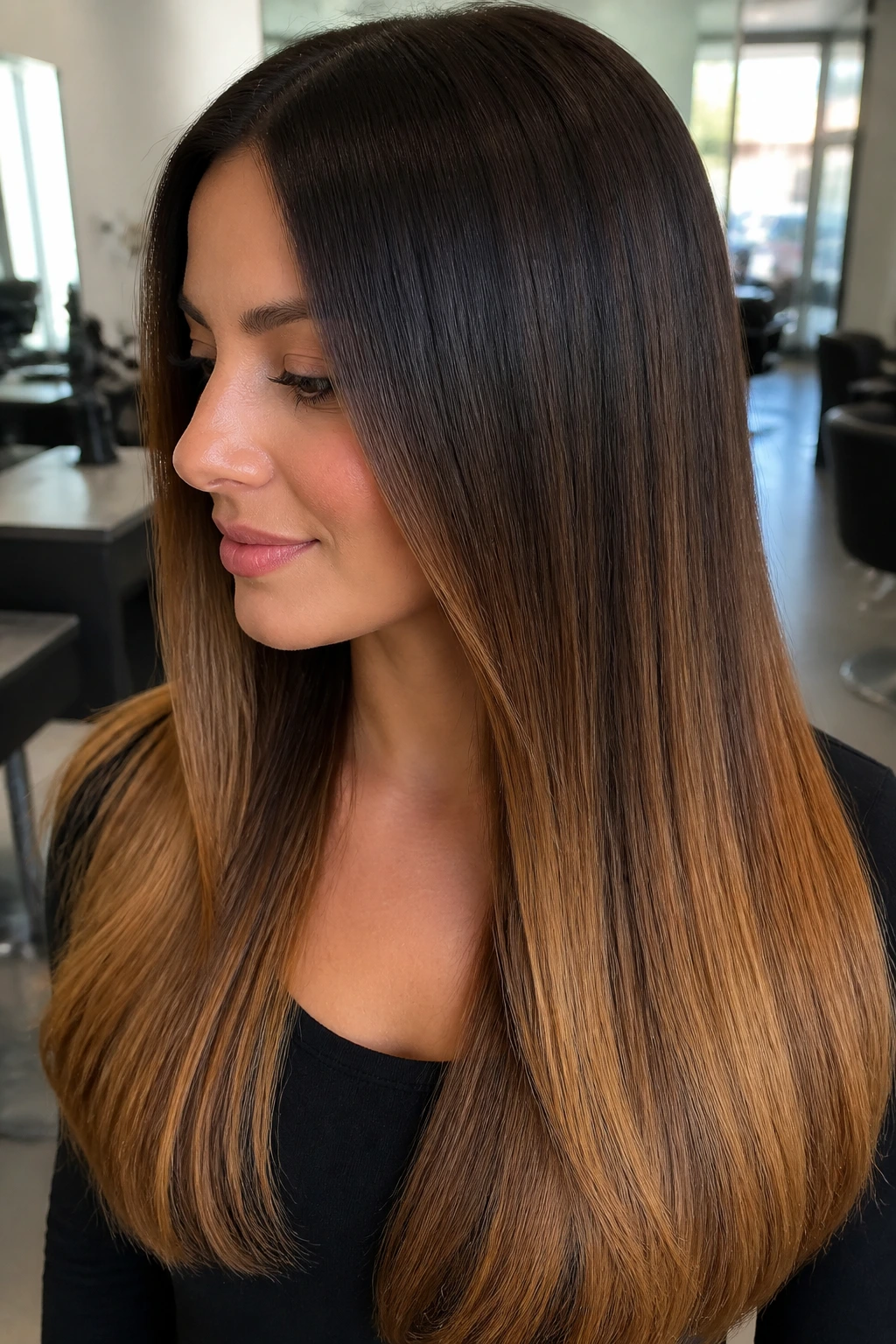
- Starting the light area too high: On straight hair, a fade that begins near the eyes or too close to the roots can look like a stripe. Keep the lightest zone lower and feather the overlap longer.
- Lifting the ends too far: Ends that go too pale can look thin, especially on fine hair. Stop at beige, caramel, or vanilla if you want the hair to keep its thickness.
- Ignoring undertone: Orange brass, muddy ash, and weird yellow are all signs the toner doesn’t match the lift. Pick the finish tone on purpose instead of hoping the salon shampoo will fix it later.
- Skipping trims: Light ends make split ends easier to spot. A trim every 8–12 weeks helps the fade look tidy instead of frayed.
- Flat-ironing at full blast: High heat roughs up the cuticle and makes the lighter ends look dry. Lower the temperature and stop running the iron over the same section three times.
- Trying to force a fashion shade onto dark hair without enough lift: Lavender, silver, navy, and rose beige all need a clean base. If the hair isn’t lifted enough, the color goes dull fast.
Ways to Adapt Ombre for Different Hair Goals
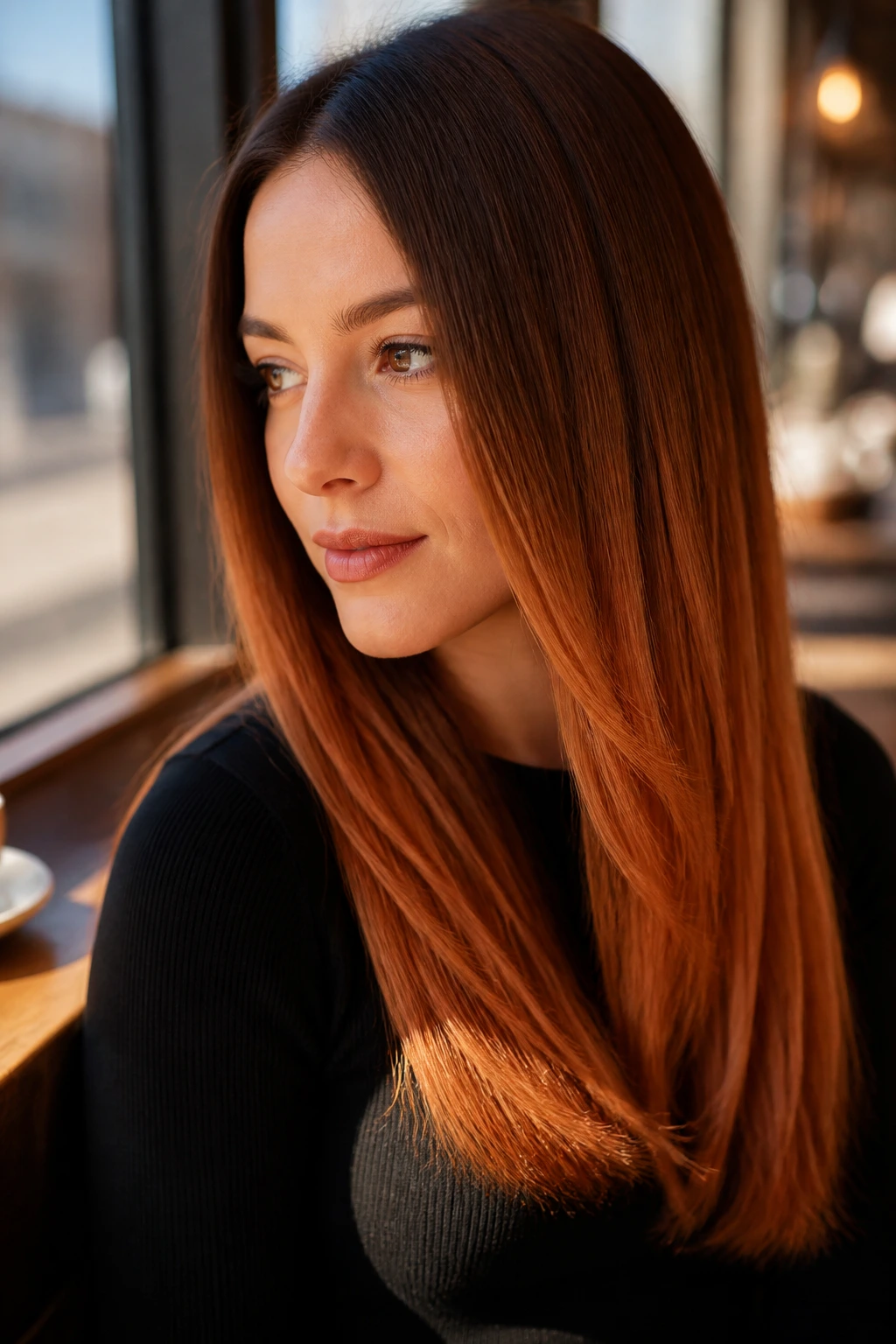
The Barely-There Melt: This version keeps the shift to one or two levels, which is perfect if you want movement without obvious contrast. It works best on straight hair that already has a nice shine and a good cut.
The Face-Framing Lift: Brighten just the pieces around the face and keep the back more muted. Straight hair benefits from this because the front panels catch light every time you tuck hair behind the ears.
The Reverse Switch: Light roots and darker ends can look sharp on straight hair if the cut is blunt and the tones stay soft. It’s a good choice if you’re tired of the same dark-to-light formula and want something less expected.
The Fashion-Color Detour: Cherry cola, navy, lavender, and burgundy all fit here. Straight hair gives them a cleaner edge, which means the shade reads as intentional rather than playful in a costume way.
The One-Length Lob Version: A blunt lob needs a wider blend and softer contrast than longer hair does. If the fade is too narrow, the color can look chopped off at the bottom.
Tools, Products, and Resources That Make Coloring Easier
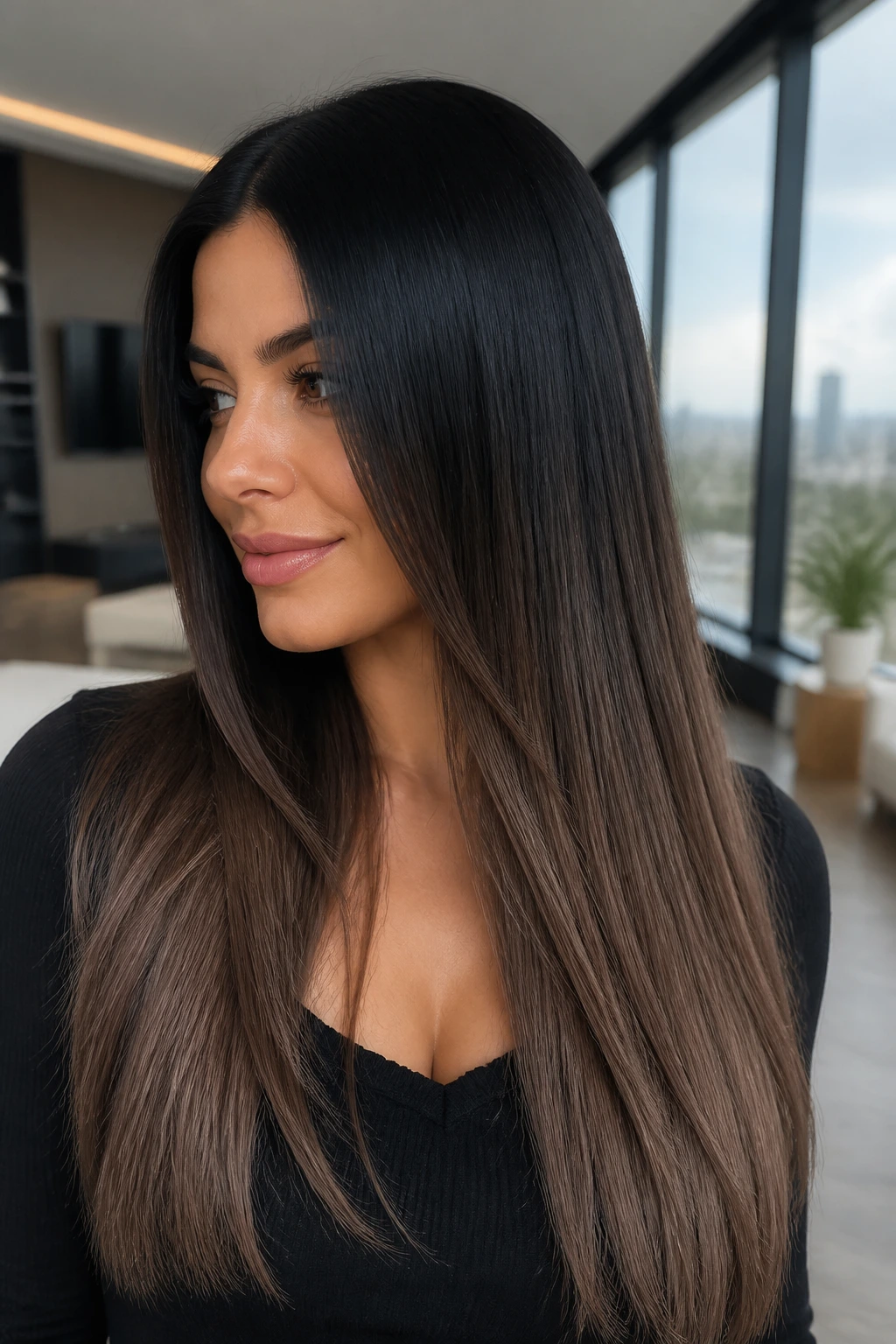
- Tail comb: Good for clean sectioning and checking where the fade actually starts.
- Sectioning clips: Keep the hair separated so the light and dark zones don’t bleed together.
- Color brush and bowl: Better control than squeezing color out of a bottle, especially for soft ombre placement.
- Foils or a balayage board: Helpful when you want lift or a more controlled transition.
- Gloves and a salon cape: Not glamorous, but they keep everything from turning into a mess.
- Blue shampoo: Useful for brunette and copper ombre when brass starts creeping in.
- Purple shampoo: Best for blonde, beige, pearl, and silver ends, but don’t overuse it or the hair will look dull.
- Color-safe shampoo and conditioner: They help the tone last longer and keep the finish smoother.
- Heat protectant spray: Non-negotiable if you flat-iron straight hair often.
- Deep conditioner or bond-building treatment: Handy when the ends have been lightened more than two levels.
- Microfiber towel: Cuts down friction right after washing.
- Wide-tooth comb: Less snagging, less breakage, less fuzz on the ends.
- Silk or satin pillowcase: Helps the smooth finish stay smooth overnight.
Keeping Straight-Hair Ombre Glossy Between Appointments
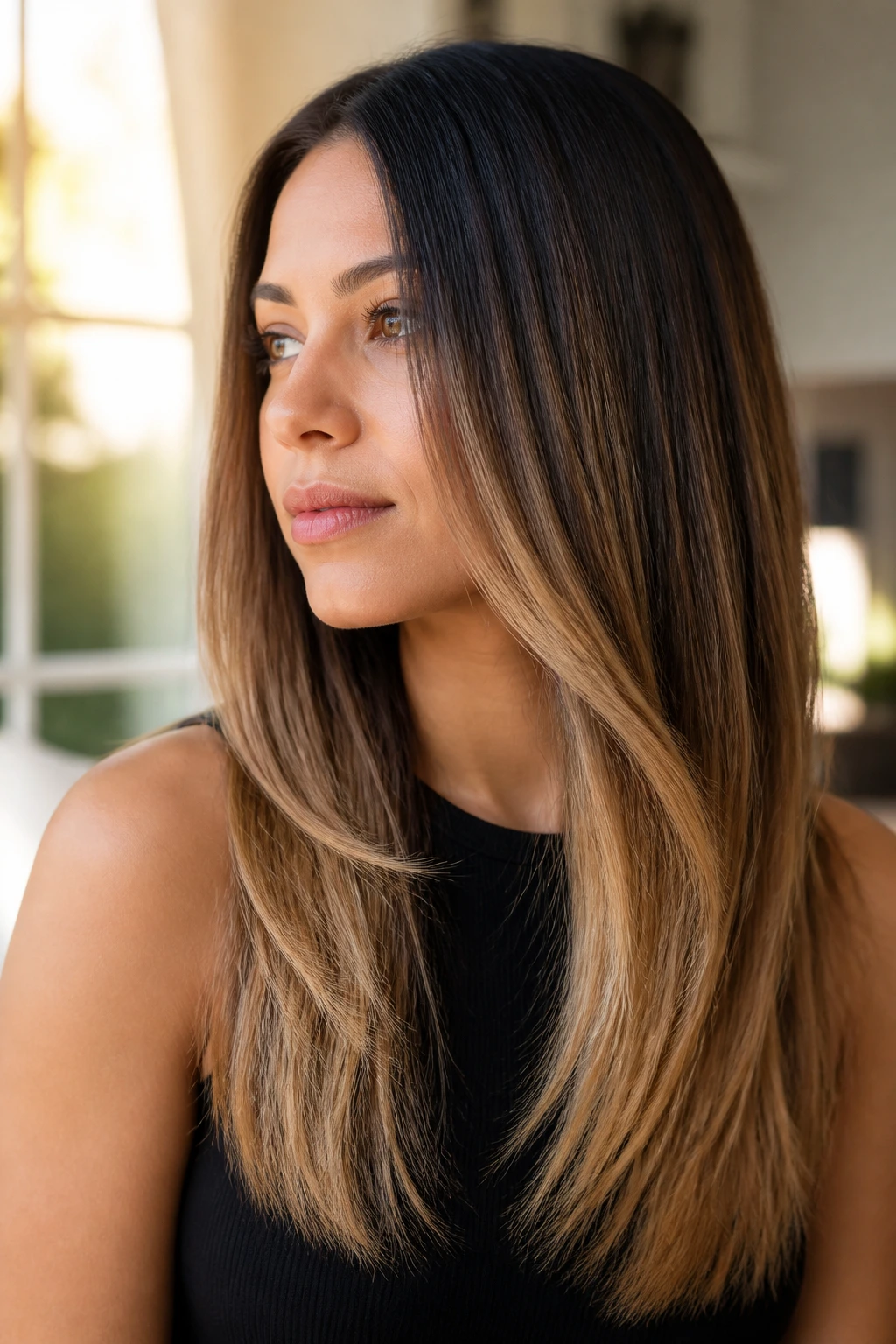
Straight hair shows fade and dryness faster than most textures, so the maintenance routine matters. Wash two or three times a week if you can, and use lukewarm water instead of hot. Hot water pulls tone out fast, especially from copper, red, and beige shades.
Brunette ombre usually likes a gloss refresh every 6–10 weeks. Blonde, pearl, silver, and lavender tones often need more frequent toner, sometimes every 4–8 weeks depending on how porous the ends are. Red and burgundy shades fade faster than almost anything else, so a color-depositing conditioner can keep them alive between salon visits.
Trim the ends every 8–12 weeks. That’s the difference between a sleek fade and a scraggly one. A good trim doesn’t erase the ombre; it gives it a cleaner shape.
If you flat-iron often, don’t go past 330°F unless your hair is unusually coarse and healthy. And use heat protectant on dry hair, not damp hair. Damp hair plus hot iron is a fast track to rough, puffy ends.
Frequently Asked Questions About Ombre on Straight Hair
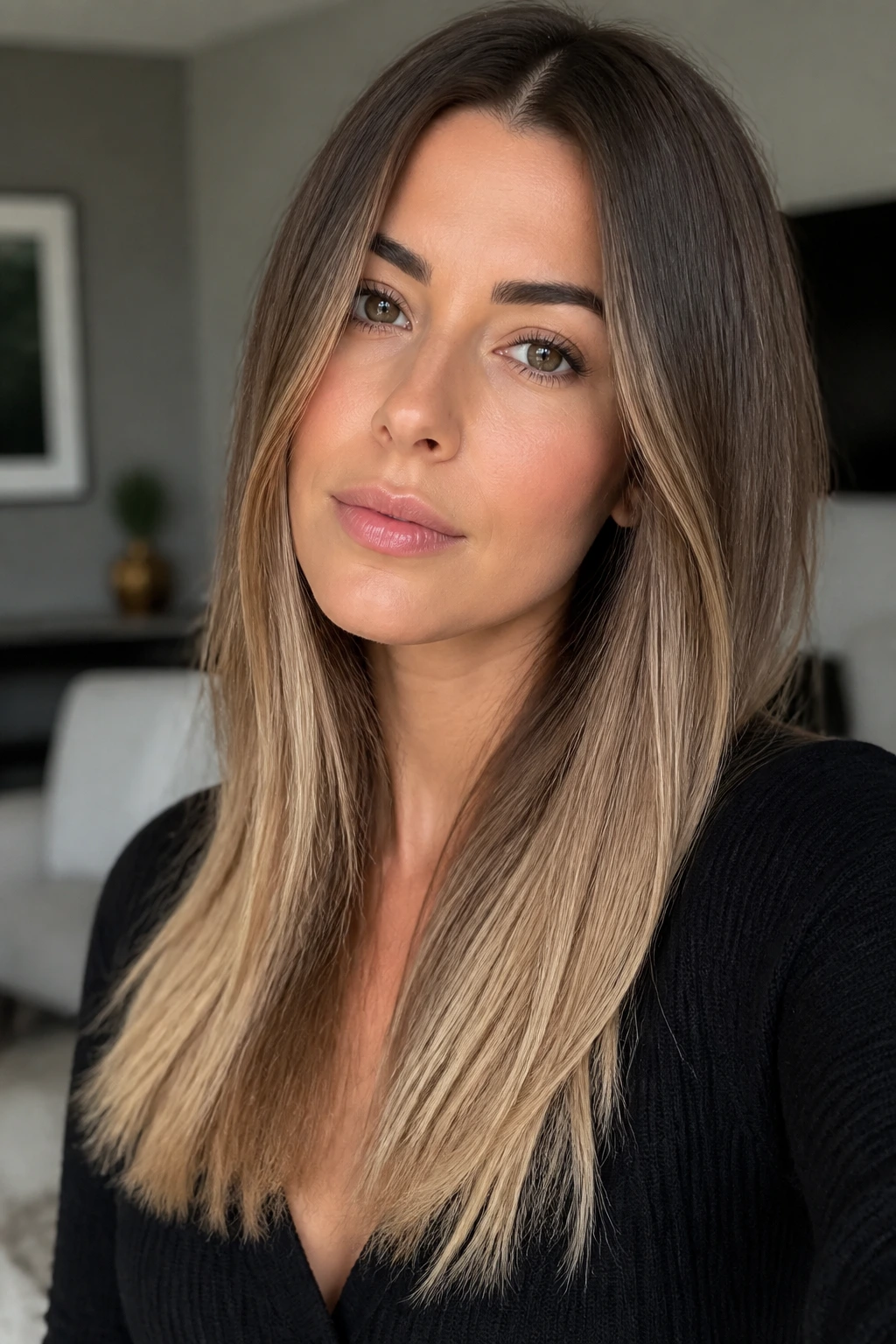
Does ombre work on straight hair, or does it look too harsh?
It works very well on straight hair if the transition is wide enough. The trick is to avoid a sharp color line and let the darker and lighter zones overlap over a few inches.
What ombre shade makes straight hair look fuller?
Warm brunettes with caramel, honey, or butterscotch ends usually create the most depth. The eye reads warmth and contrast as thickness, especially on one-length cuts.
Is ombre better than balayage for straight hair?
Ombre usually gives you a more obvious root-to-end shift, while balayage can be softer and more scattered. Straight hair often shows the ombre shape more clearly, which is useful if you want the gradient to read from a distance.
Can I get ombre on a blunt bob?
Yes, but the fade has to start lower and softer than it would on long hair. A blunt bob with a high light band can look boxy, so beige, caramel, or mushroom tones usually work better than very bright blonde.
How often does ombre need toning?
Brunettes and warm tones may only need a gloss every 6–10 weeks. Blonde, silver, and fashion colors usually need more frequent refreshes, sometimes every 4–8 weeks, because the tone fades before the hair itself changes.
Can you do ombre without bleach?
On lighter brunettes and dark blondes, yes. You can move into caramel, copper, beige, or soft rose shades with high-lift color or glossing, but dark hair will still need some lift if you want a true blonde, navy, lavender, or silver end.
What if the transition line looks stripey after styling?
That usually means the blend was too narrow or the tone jump was too sharp. A gloss, a soft root shadow, or a better placement pass can blur it, but the fix starts at the salon chair, not the shower.
Will ombre damage my hair less than all-over blonde?
Usually, yes, because only part of the hair is lightened. The ends still need care, though, and straight hair makes dryness show fast, so skipping conditioner or heat protectant defeats the point.
A Fade That Stays Sharp
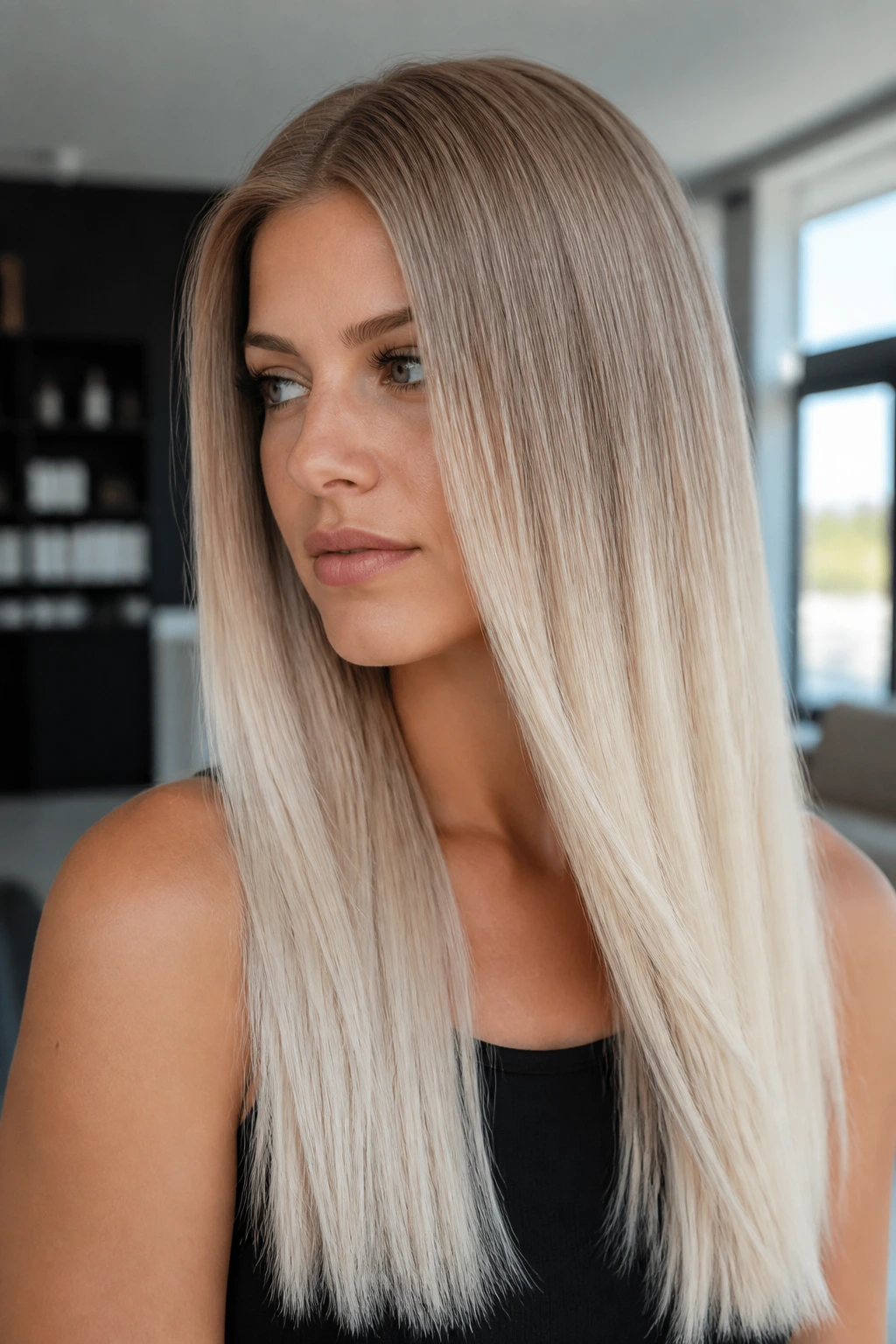
Straight hair gives ombre a very specific kind of honesty. The transition is right there in front of you, clean and visible, which is exactly why the best versions feel so satisfying when they’re done well.
A good fade respects the haircut, the tone, and the amount of lightness the hair can actually hold. When those pieces line up, the color doesn’t just sit on the hair. It shapes it.
Pick the version that suits your base and your daily styling habits, not the loudest photo you saved. The right ombre on straight hair should look crisp from every angle and still feel easy when it grows out.
