



Wavy hair and blonde color have a funny relationship: the moment the shape starts moving, the shade starts talking back. A flat, one-note blonde can make waves look sleepy. A better-planned blonde hair look for wavy hair gives each bend a job to do — one ridge catches a pale ribbon, the next dips into shadow, and suddenly the whole head has depth instead of a wash of yellow.
The best blonde hair looks for wavy hair do not fight the texture. They work with it. That means root shadows where you need softness, brighter pieces where waves naturally break, and tones that make sense against your base instead of pretending every head of hair should be the same champagne postcard. I’ve always thought this is where blonde gets interesting: not in the brightest possible lift, but in the way the color moves when the hair moves.
Some of these ideas are quietly low-maintenance. Some are bold enough to make a blunt cut feel sharper or a long layered wave feel almost liquid. A few lean warm and sunlit; others go cool, icy, and clean. The right one depends on how much upkeep you want to sign up for, how light your base already is, and whether you want the blonde to whisper or announce itself from across the room.
Why These Wavy Blonde Looks Work So Well
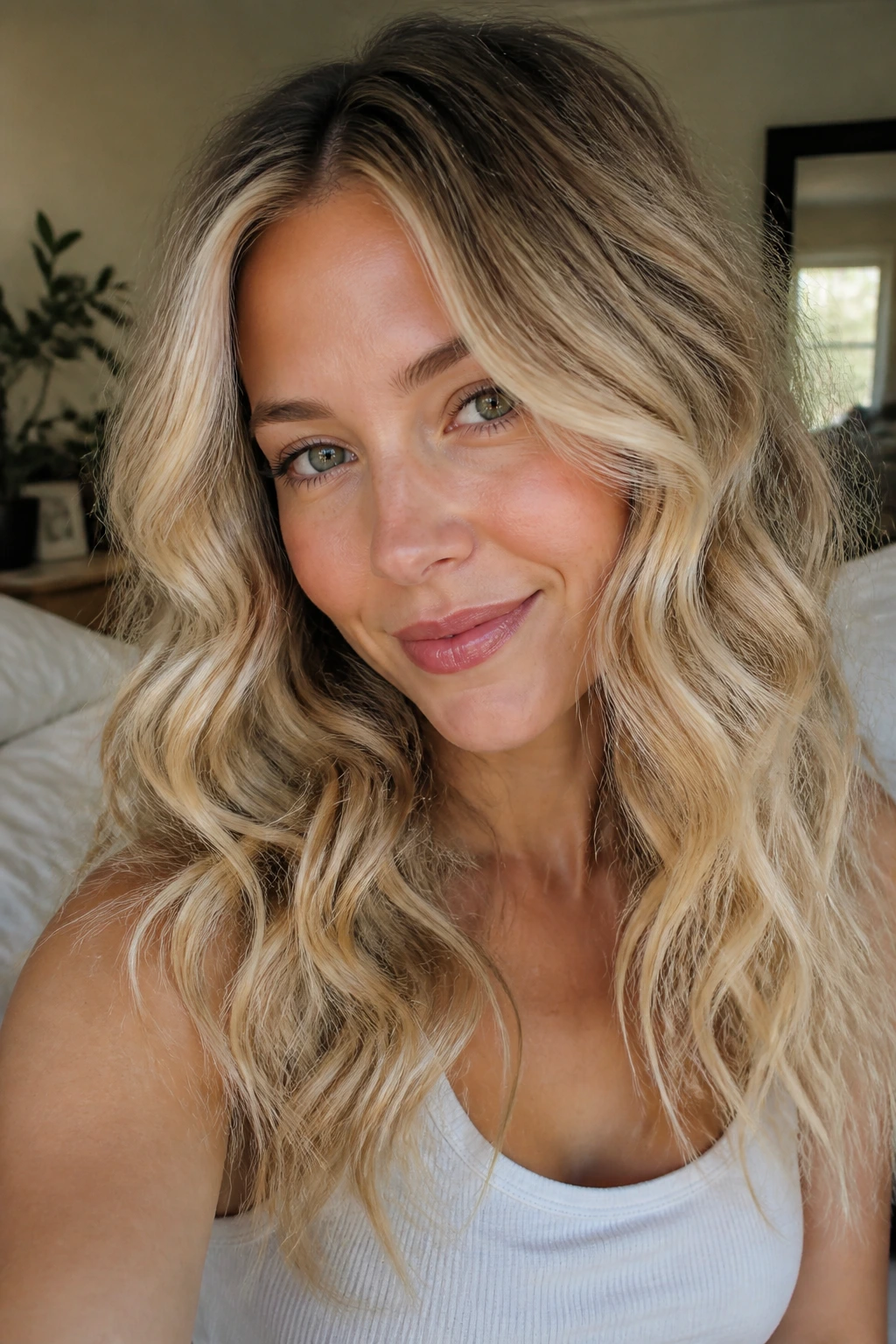
- Wave pattern does half the styling: Lighter ribbons land on the high points of the wave, so even a subtle highlight placement reads as movement instead of noise.
- Root depth keeps the blonde from going chalky: A soft shadow root makes the top of the head look fuller and keeps the ends from floating off into one pale mass.
- Tone matters more than people think: Beige, honey, ash, pearl, and champagne all sit differently on waves, and the wrong tone can make texture look dry.
- Face-framing pieces do heavy lifting: A few lighter strands around the cheekbone or jaw can change the whole read of a cut without needing full-head brightness.
- Wavy hair forgives dimension: You can mix lowlights, babylights, and ribbon highlights without the color looking busy, because the bends break everything up naturally.
1. Rooted Beige Blonde With Loose Collarbone Waves
This is the blonde I recommend to people who want polish without drama. The base stays a shade or two deeper at the root, then melts into beige blonde through the mids and ends, which keeps the wave pattern from looking striped. On collarbone-length waves, it has that easy, grown-in feel that never looks like you tried too hard.
Why It Works on Wavy Hair
The beige tone is the trick. It sits between warm and cool, so it won’t go brassy fast and it won’t look flat under indoor light either. Ask for a level 7 or 8 base with level 9 beige ribbons and a soft 1- to 2-inch root shadow.
Best For
- Medium brown to dark blonde bases
- Hair that needs softer grow-out
- Waves with a little frizz, because beige hides roughness better than icy blonde
A little root depth goes a long way here. Too much lightness at the scalp and the whole look loses its calm.
2. Honey Balayage Lob With Airy Ends
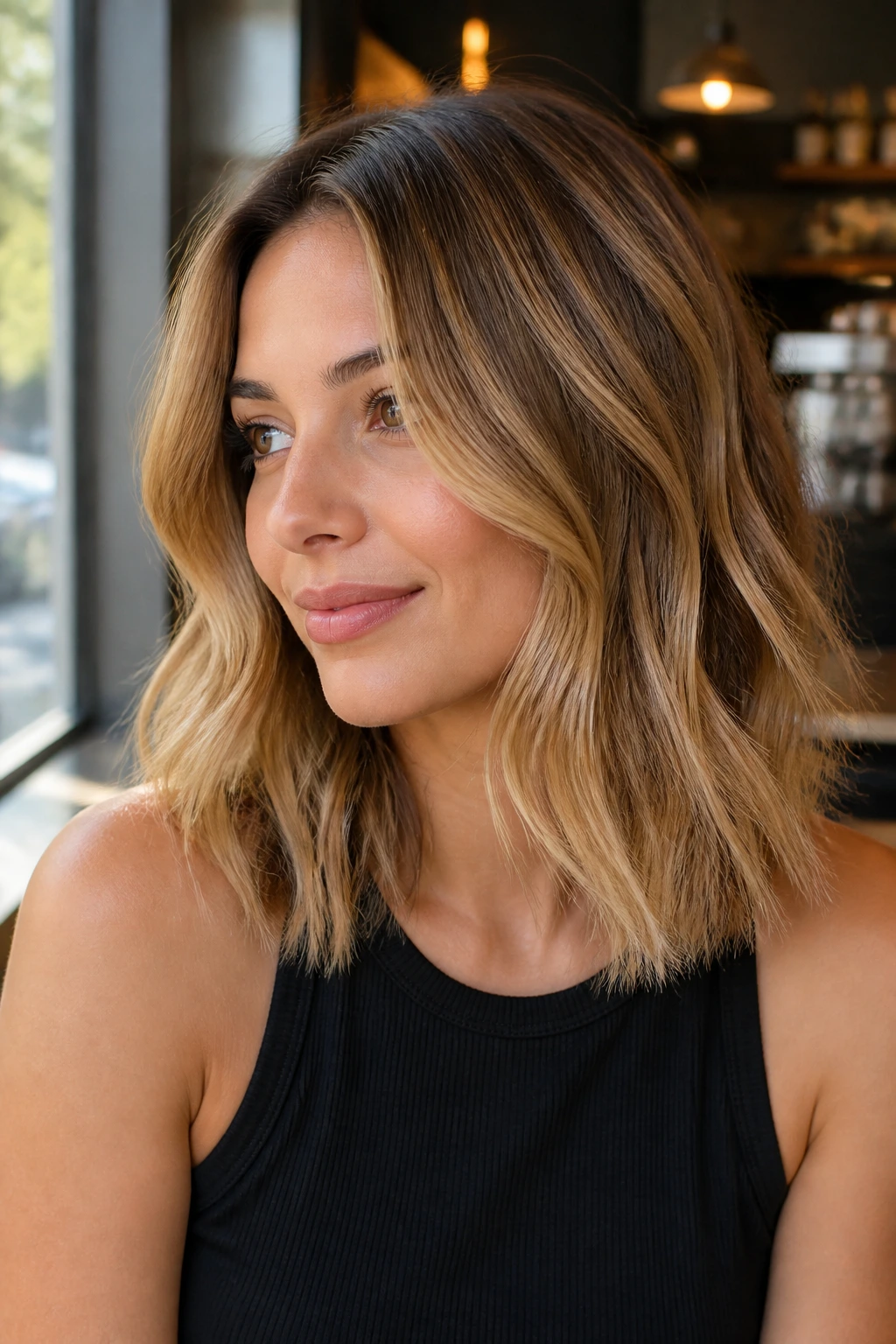
Honey blonde on a lob is one of those combinations that just makes sense. The color warms up the face, and the shorter length keeps the ends from getting stringy, which can happen when wavy hair gets too long and too light. This version leans golden, but not orange, and the brightness sits in ribbons instead of one solid stripe.
The payoff is texture. Loose waves pick up the honey pieces without making the hair look heavily highlighted.
If your hair is naturally a level 5 or 6, this is one of the friendliest blonde hair looks for wavy hair because you do not need to push to an ultra-pale lift. A gloss in the 8G to 9G range can keep the tone soft and shiny between appointments.
3. Champagne Face-Framing Blonde On Long Waves
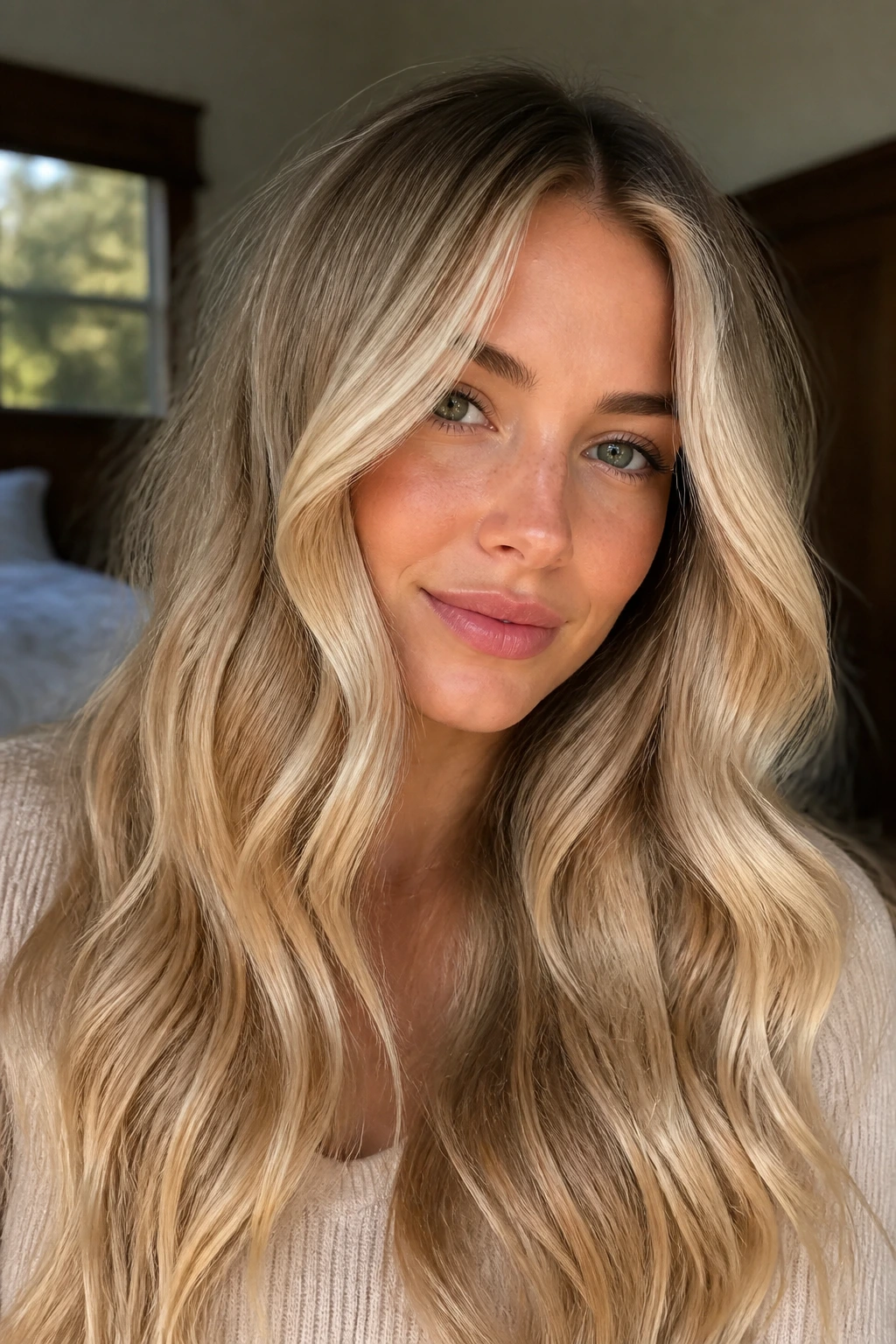
Champagne blonde is the move when you want the front sections to do the talking. The face-framing pieces are lighter and a touch cooler than the rest, and the back stays a little deeper so the waves still have shape. Long waves love this because the color rides along the bend instead of sitting on top of it.
What Makes It Different
A strong money piece can look harsh if the rest of the hair is too dark. Champagne is gentler. It gives you brightness near the face without that blunt stripy look some high-contrast blondes can have.
For best results, ask for the brightest pieces at the cheekbone and chin, then let them taper back into a beige or neutral blonde. It looks especially good when the hair is parted slightly off-center.
4. Creamy Vanilla Blonde Shag
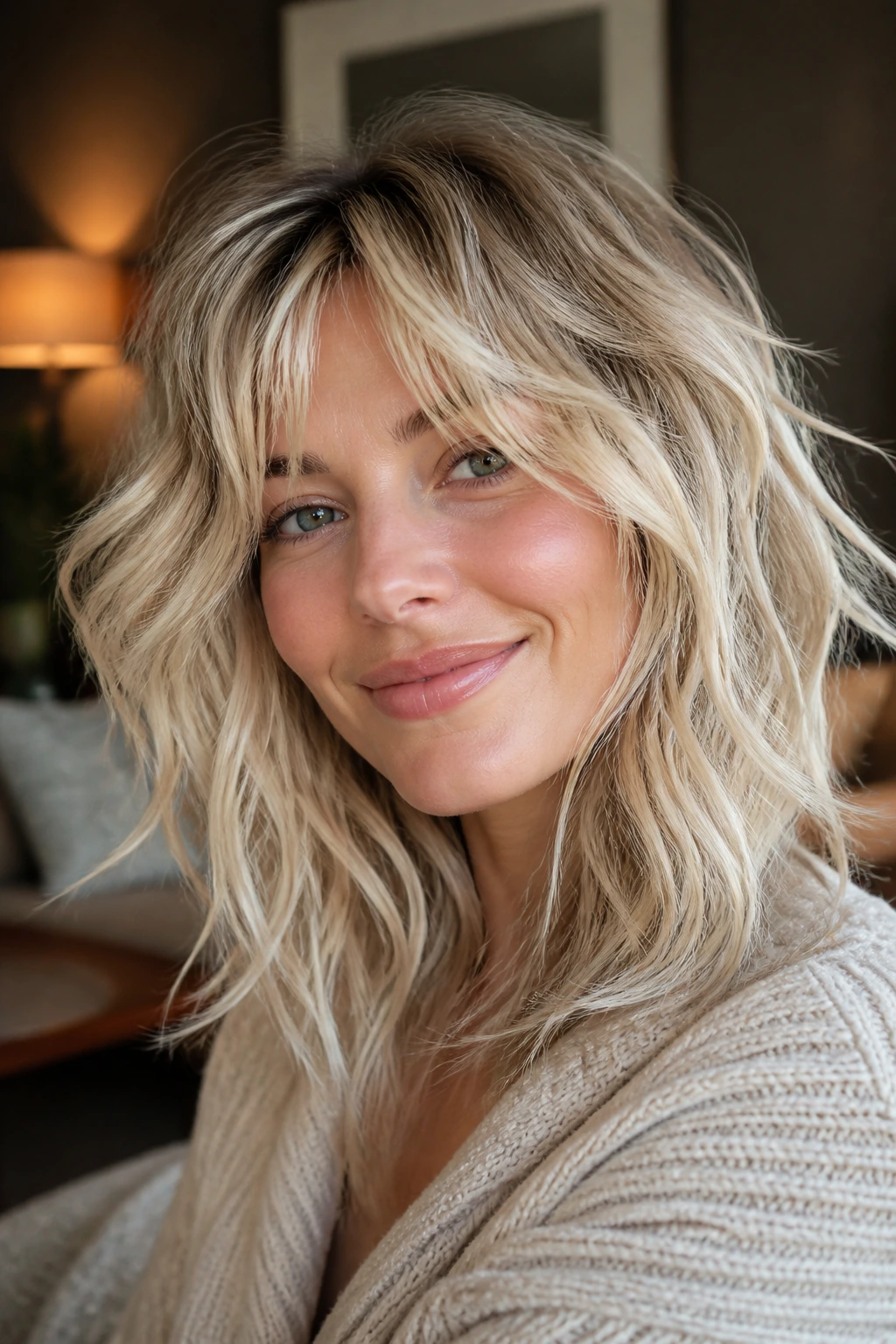
A shag cut and vanilla blonde are a good pair because both rely on broken-up texture. The layers keep the ends from feeling heavy, and the creamy tone softens the whole shape so the cut looks airy instead of choppy. On waves, the result is a lived-in blonde that still feels deliberate.
The key is keeping the tone creamy, not yellow. Think soft milk-and-honey warmth with enough lightness to show the movement in the layers.
Good When You Want
- A lighter look without full platinum upkeep
- A cut that can air-dry and still look shaped
- Blonde that flatters thicker wavy hair
If your waves puff up at the sides, this is one of the smarter choices. The layers and the soft tone work together instead of competing.
5. Icy Pearl Blonde With S-Bends
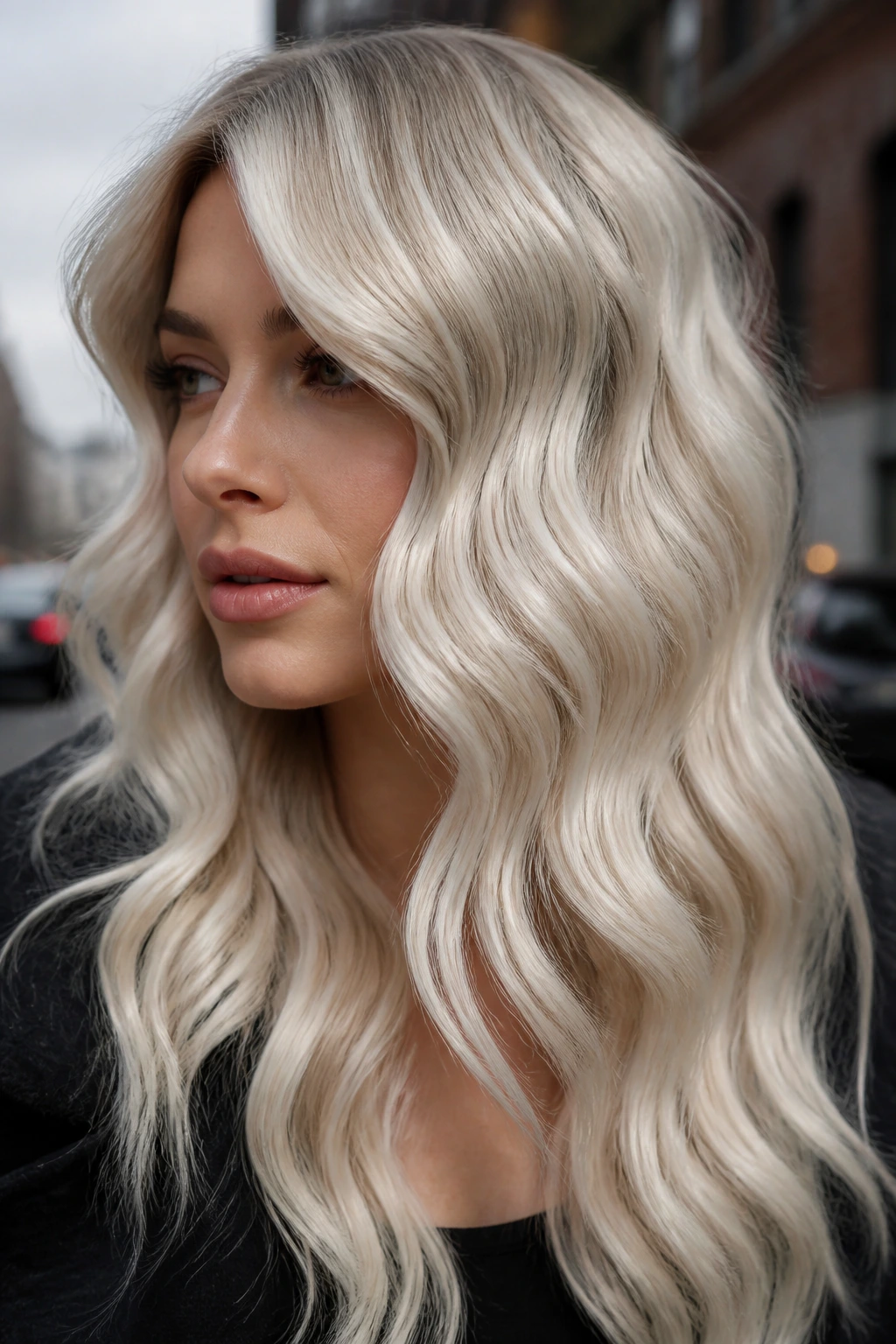
Pearl blonde is cool, pale, and a little glossy — the kind of blonde that looks crisp against a dark sweater and even crisper in clean, defined waves. On S-bends, it reads as sleek rather than stiff. That matters, because very light blondes can go flat fast if the styling is lazy.
This look suits people who are willing to keep up with toning. Violet or blue-violet shampoos should be used lightly, not every wash, or the hair can turn dull and chalky.
I like pearl blonde most on medium to thick waves. Fine hair can look sparse if every strand is pushed to the palest level.
6. Buttery Ribbon Highlights On Mid-Length Waves
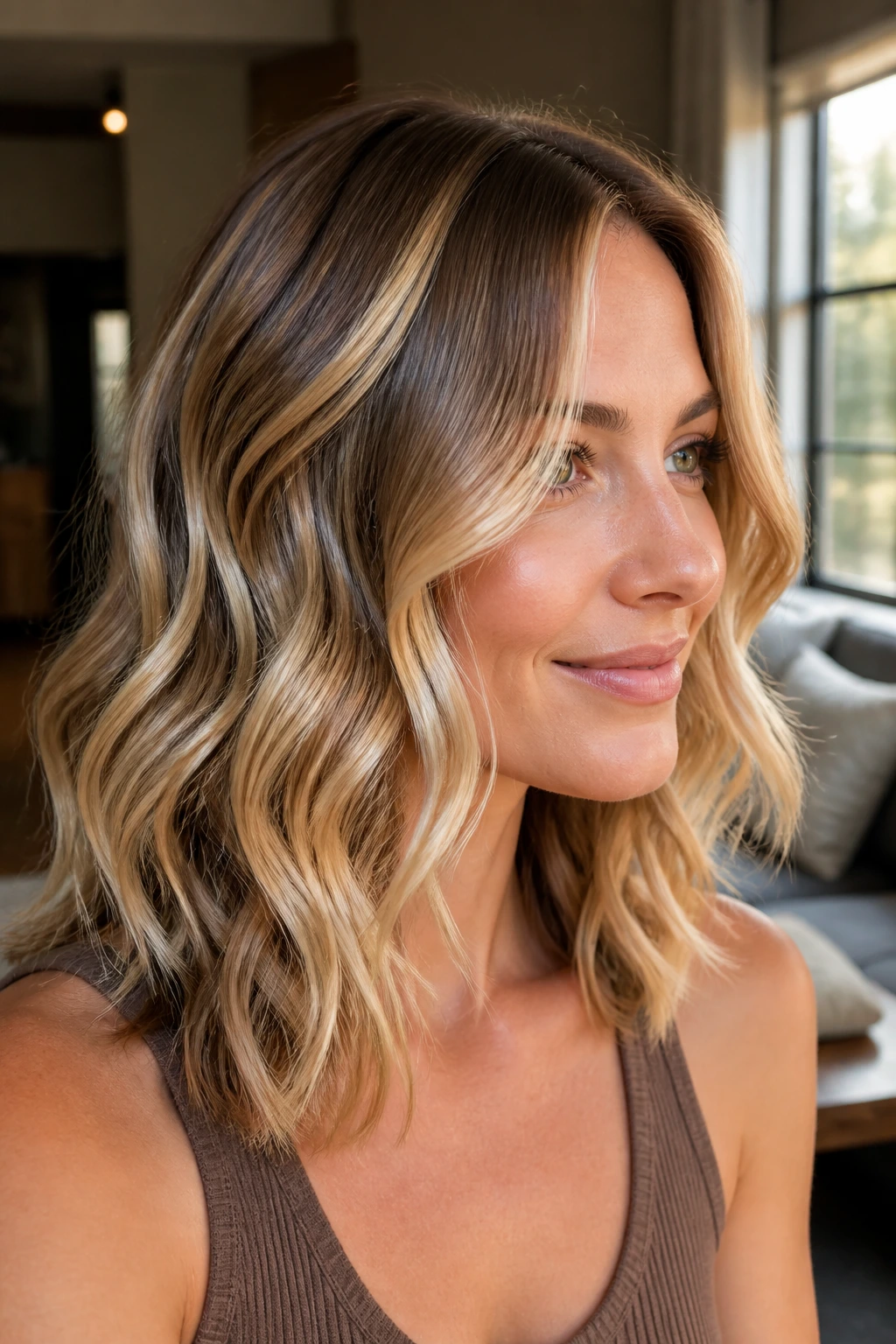
Buttery ribbons are the classic move for a reason: they brighten the hair without making it feel overprocessed. Mid-length waves are a sweet spot for this because the highlights have room to show, but the ends are not so long that they disappear into the back.
A few well-placed buttery strands around the top layers can change the whole shape. The color reads sunny, not brassy, if the toner stays in a soft gold-beige lane.
Quick Note
- Ask for ribbon highlights, not a blanket of fine foils.
- Keep the root a shade deeper for better lift and depth.
- Finish with a clear or beige gloss if the blonde starts to look dusty.
7. Sandy Caramel Blonde With a Soft Shadow Root
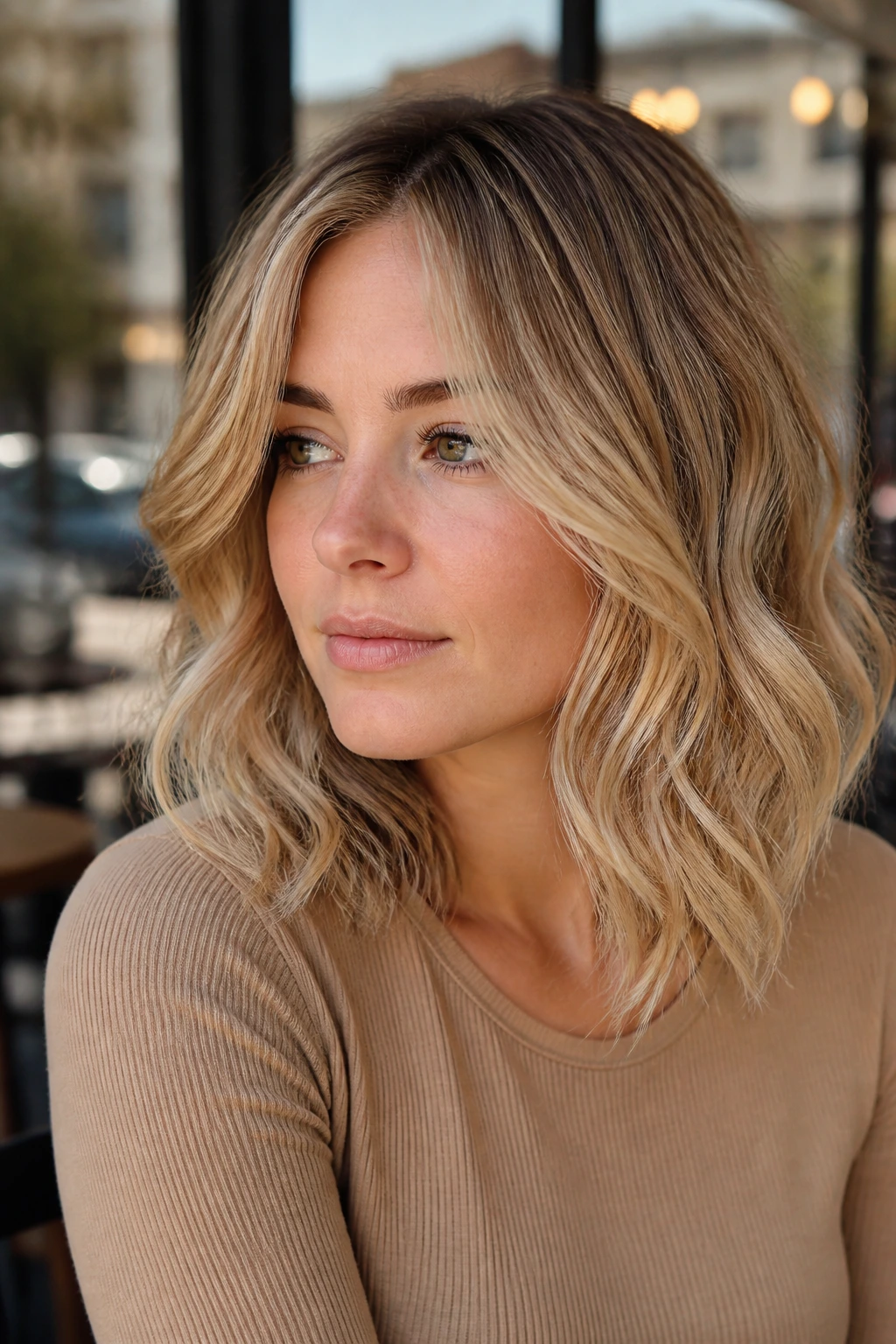
This is the blonde for people who want warmth without going full honey. Sandy caramel sits in that nice middle zone where the hair still looks dimensional, but the overall effect is soft and easy. The shadow root makes grow-out kinder, which matters more than most people want to admit.
It’s especially good on wavy hair with a bit of natural body. The caramel pieces bend with the wave, and the sandy blonde keeps the finish from looking too red or too gold.
A shoulder-length cut works well here, but long layers help if your waves are thick and need air around them.
8. Platinum Money Piece Waves
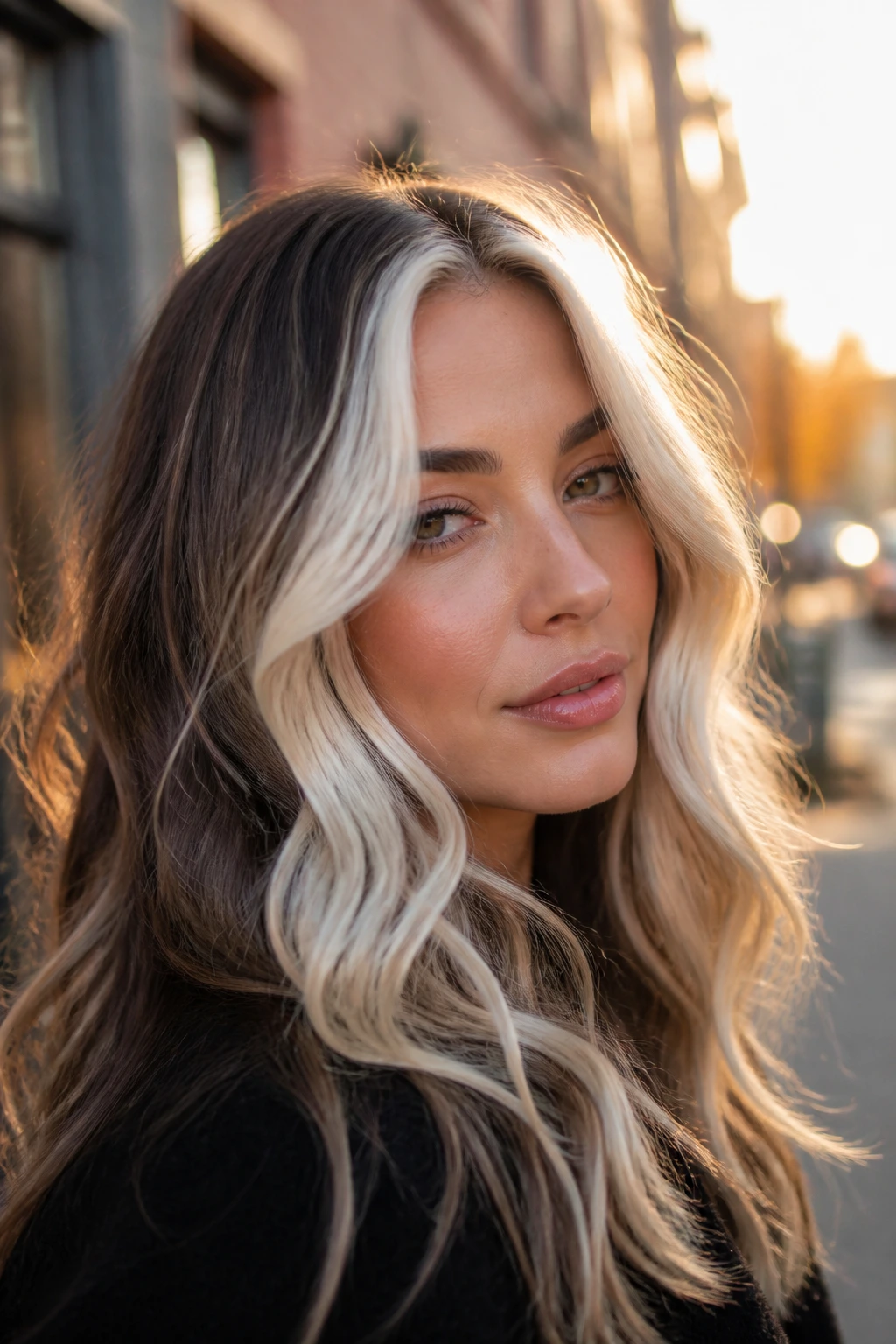
If you want the front of your hair to do all the work, this is the loudest option in the set. The base stays darker, then a sharp platinum money piece frames the face and runs into loose waves. The contrast is the point. It gives wavy hair a clear outline, which is useful when the rest of the hair is a neutral brown or dark blonde.
Why People Pick It
The platinum front brightens the eyes and makes the hairline look clean. It also means you can keep the rest of the head more natural, which lowers upkeep a little even though the front pieces themselves need care.
This look needs heat protection and gentle washing. Platinum turns dull fast if you rough it up with too much shampoo or too much hot iron work.
9. Wheat Blonde Bob With Broken Texture
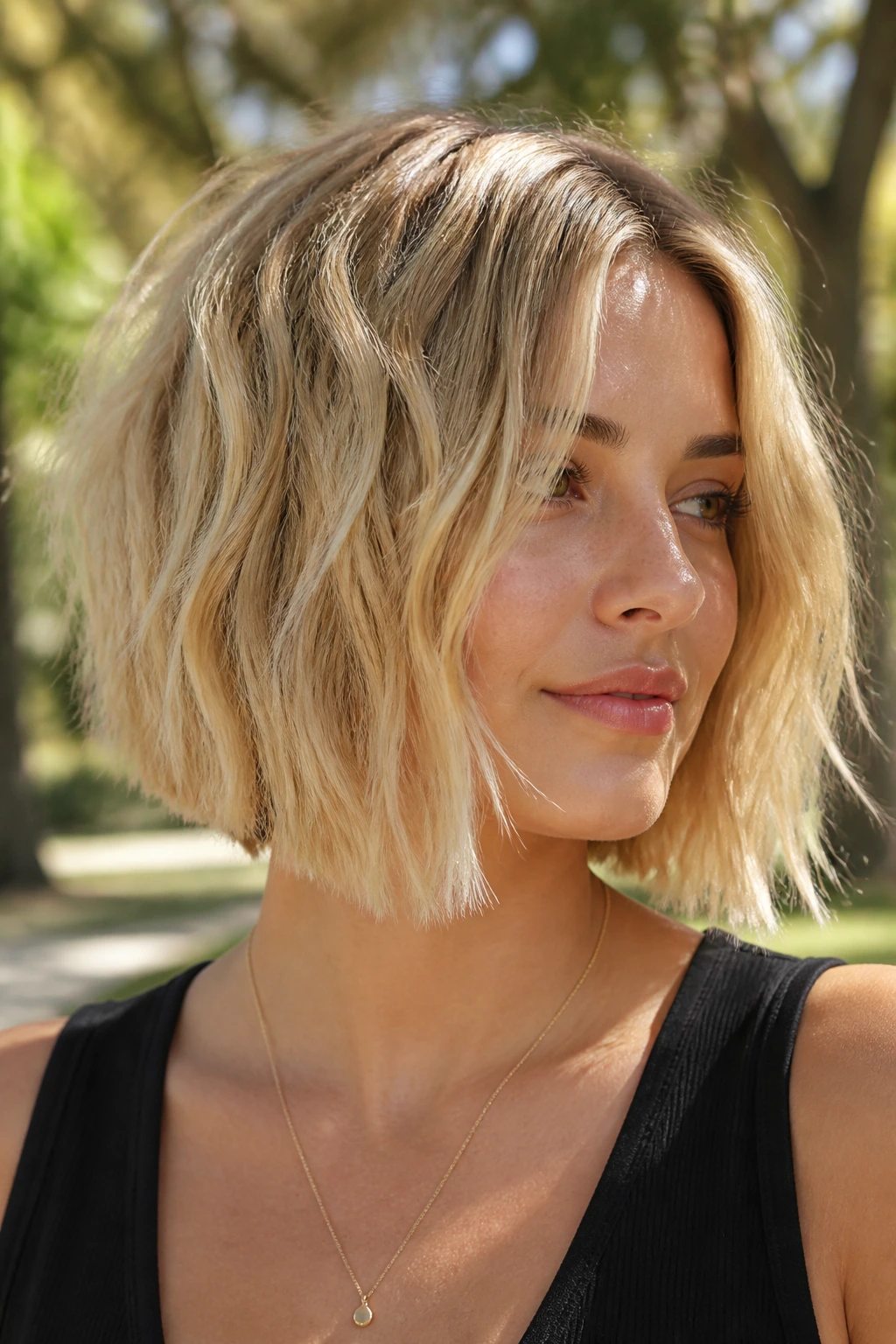
A bob can look stiff if the color is too uniform. Wheat blonde fixes that by giving the cut a soft, grainy warmth that works with irregular wave movement. It’s lighter than honey, but not beige in a dry, ashy way. Think pale straw with a clean finish.
The broken texture matters here. A blunt bob with clean waves and wheat blonde can look too tidy, almost helmet-like, if the ends are all the same length. A few shorter pieces around the face help.
This is one of the better short blonde hair looks for wavy hair when you want something that dries fast and still has shape.
10. Beige-To-Butter Ombré
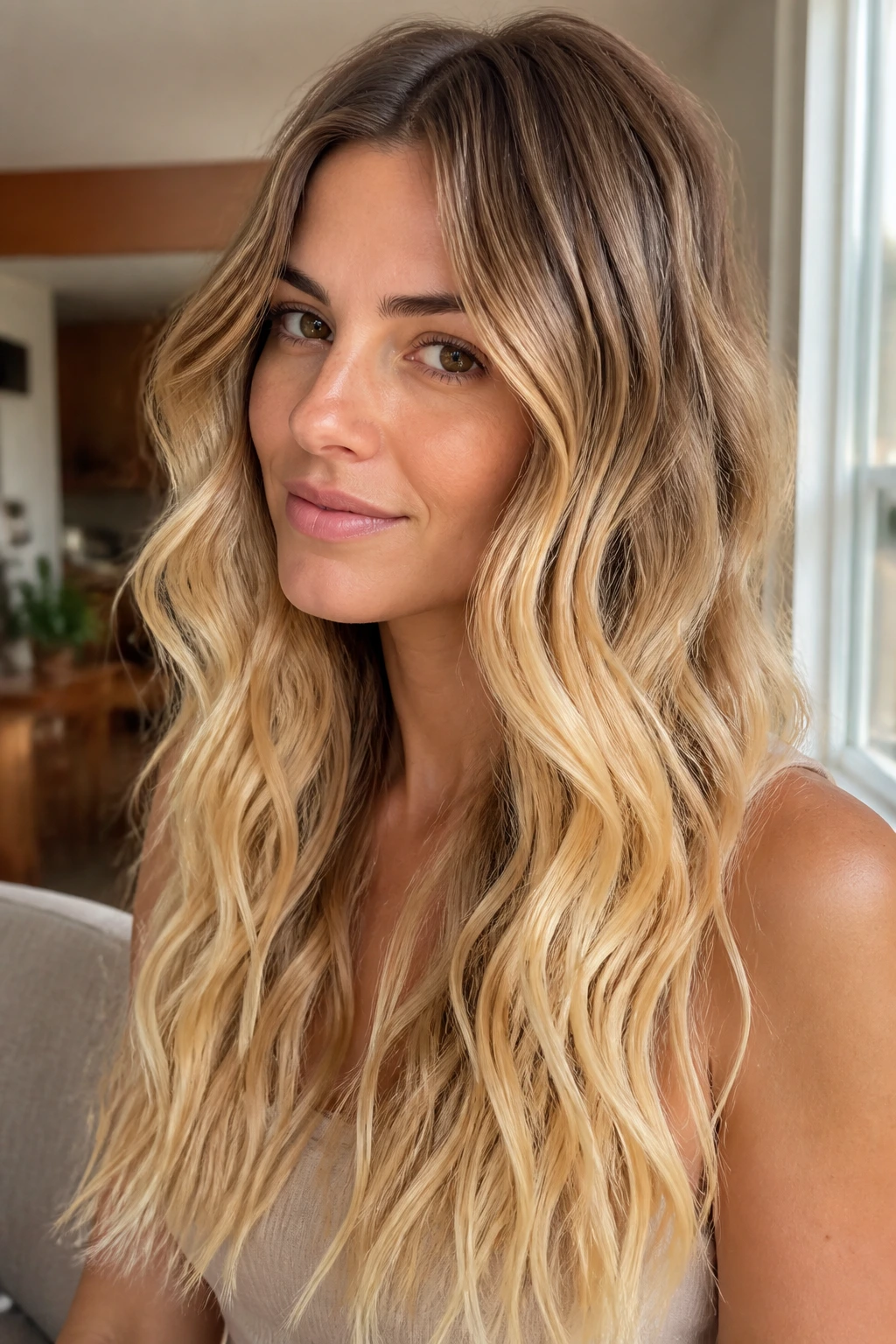
This one starts calm and gets warmer as it moves down. Beige at the top, butter blonde through the mids, and a little more glow at the ends. On waves, the gradient feels natural because the bends help the eye move down the hair in soft steps.
What Makes It Work
The color shift should be gradual, not obvious. If the blonde jumps too fast from cool beige to yellow butter, the whole thing looks like a correction job. Ask for a long melt with no hard line.
Best on longer hair, where the ombré has room to breathe. Shorter cuts can use the idea too, but the fade has to be very soft.
11. Honey Curtain Bangs and Long Waves
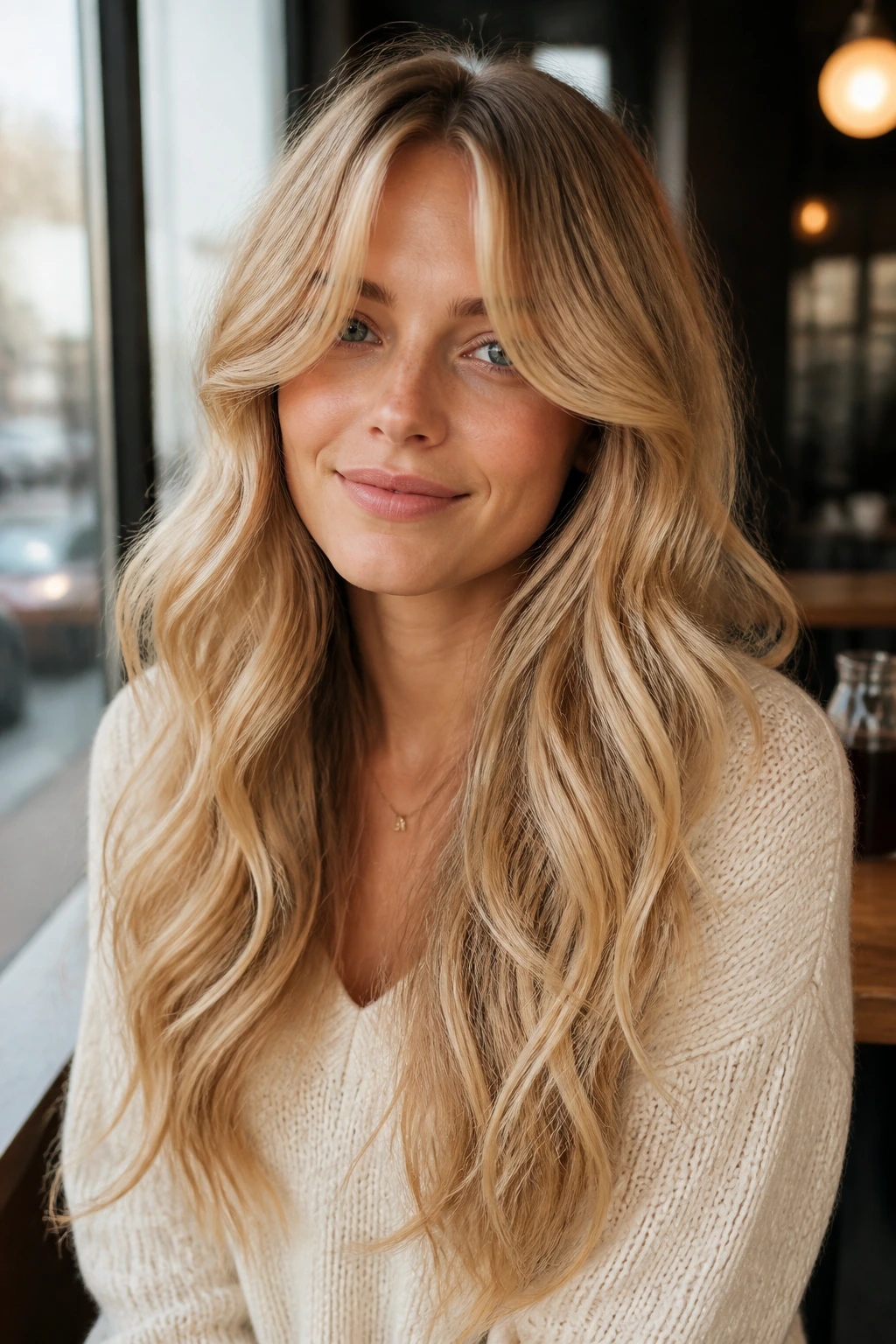
Curtain bangs with blonde are a good idea when the tone around the face is warm and soft. Honey shades make the fringe look plush, not wispy, and long waves behind them stop the cut from feeling too retro. This is one of those styles that looks easy even when it took a few careful passes to get the placement right.
The bangs should be a touch lighter around the tips so they don’t look heavy against the forehead. The rest of the hair can stay a little deeper for contrast.
If your hair flips out at the ends, honey blonde helps hide the irregularity. It reads as movement instead of mistake.
12. Toasted Almond Blonde Layers
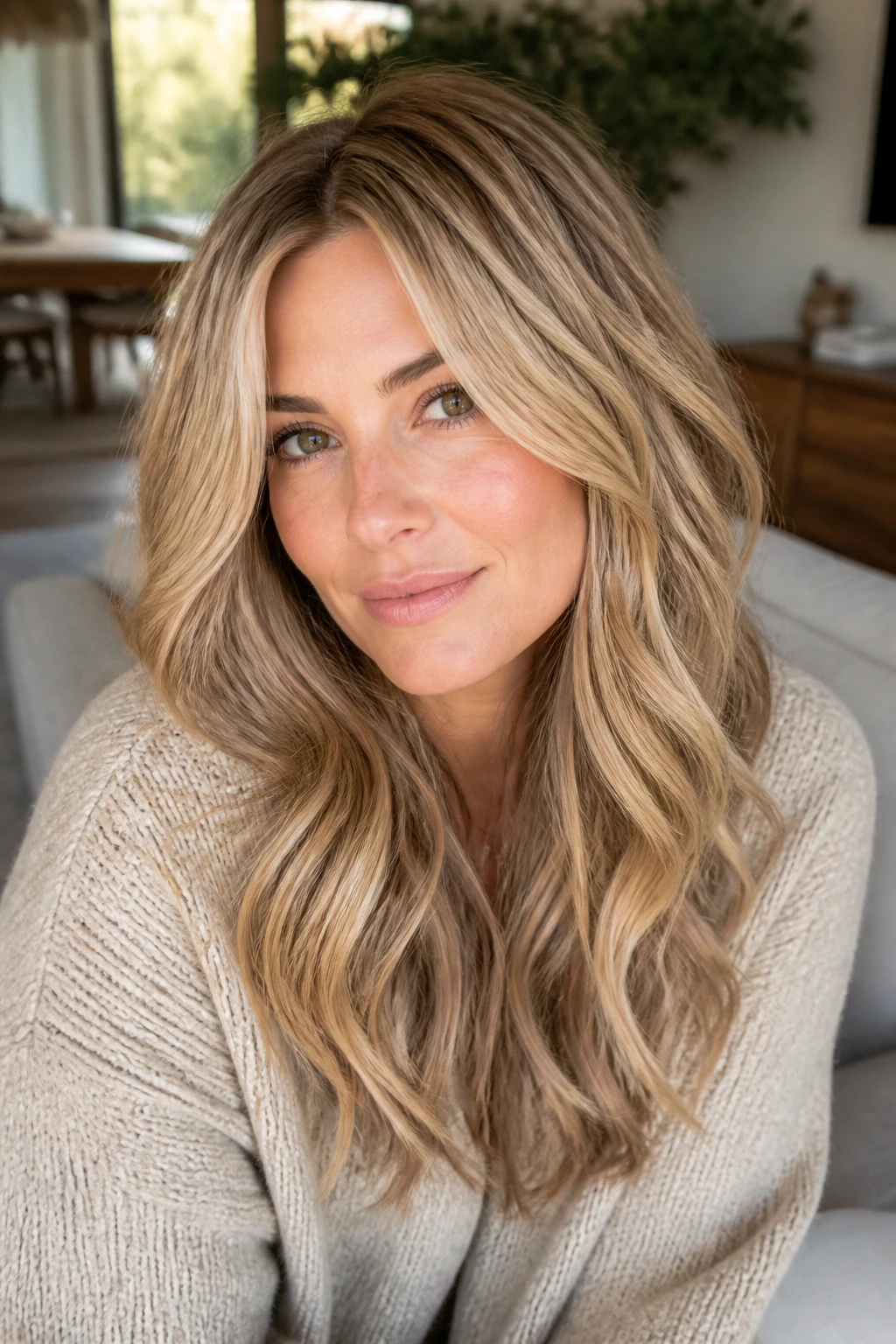
Toasted almond blonde is deeper than most people expect, and that’s what makes it useful. It gives waves a warm, nutty tone with enough depth to keep the hair from going too pale. On layered cuts, the shade creates a soft shadow between sections, which makes the wave pattern easier to read.
It’s a strong choice for brunettes easing into blonde. The color can live around level 7 or 8, which means less stress on the hair and a more believable grow-out.
A gloss with a touch of gold and beige keeps this from leaning orange. Skip overly copper toner here. That turns it too rusty.
13. Mushroom Blonde Wavy Cut
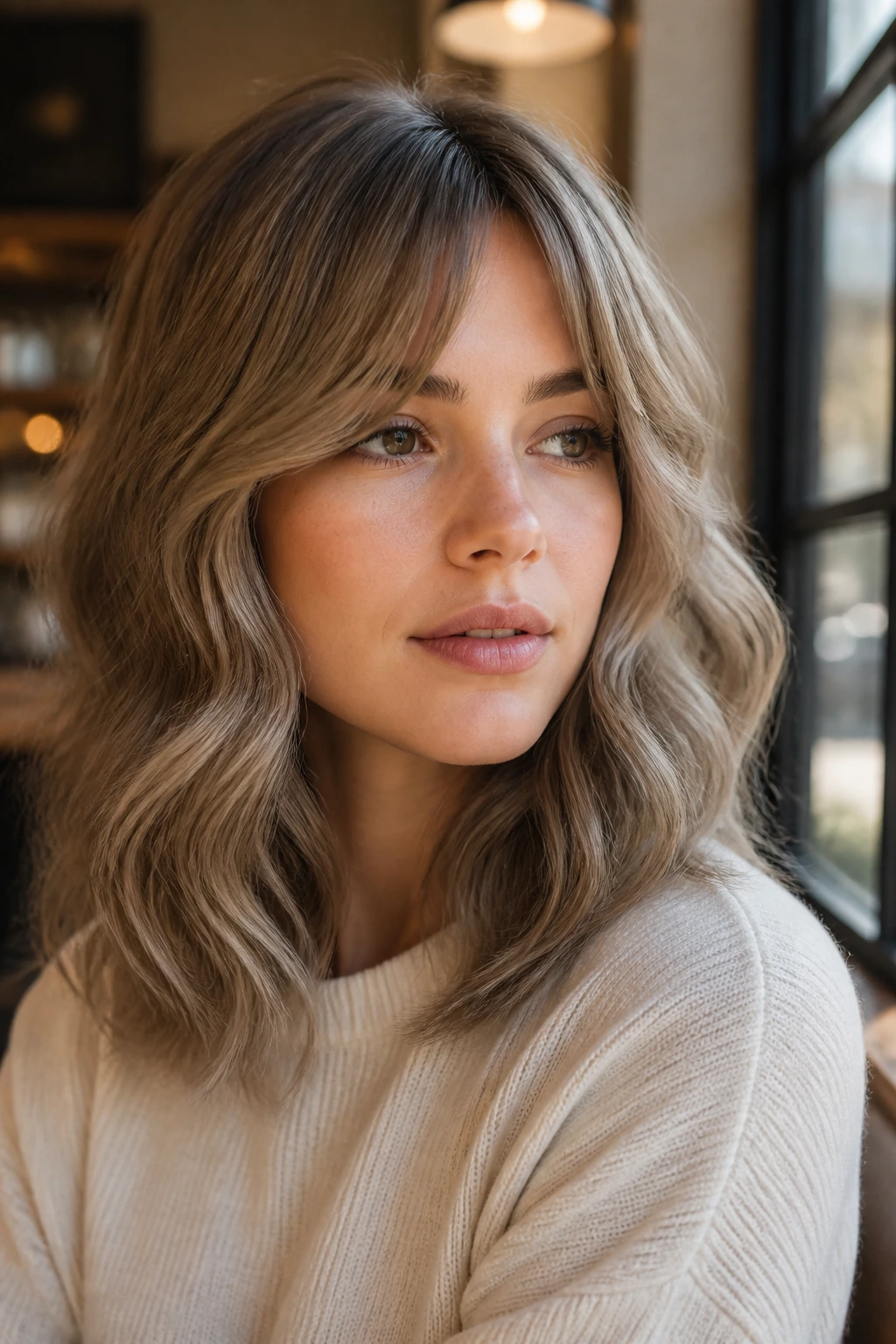
Mushroom blonde is the quiet one in the room, and I mean that in a good way. It’s ash-beige, cool without going gray, and it gives wavy hair a soft suede look that feels expensive without shouting about it. On medium-length waves, it has a natural shadow that flatters almost every base.
Why It Stands Out
Unlike warmer blondes, mushroom tones don’t bounce too hard in bright light. That makes the color feel controlled. If your hair pulls orange, this shade can be a relief.
It’s best on people who want low-key blonde rather than golden shine. If you love warmth, skip this one. If you like smoky knit sweaters and soft makeup, this is probably your lane.
14. Rose-Gold Blonde With Warm Ends
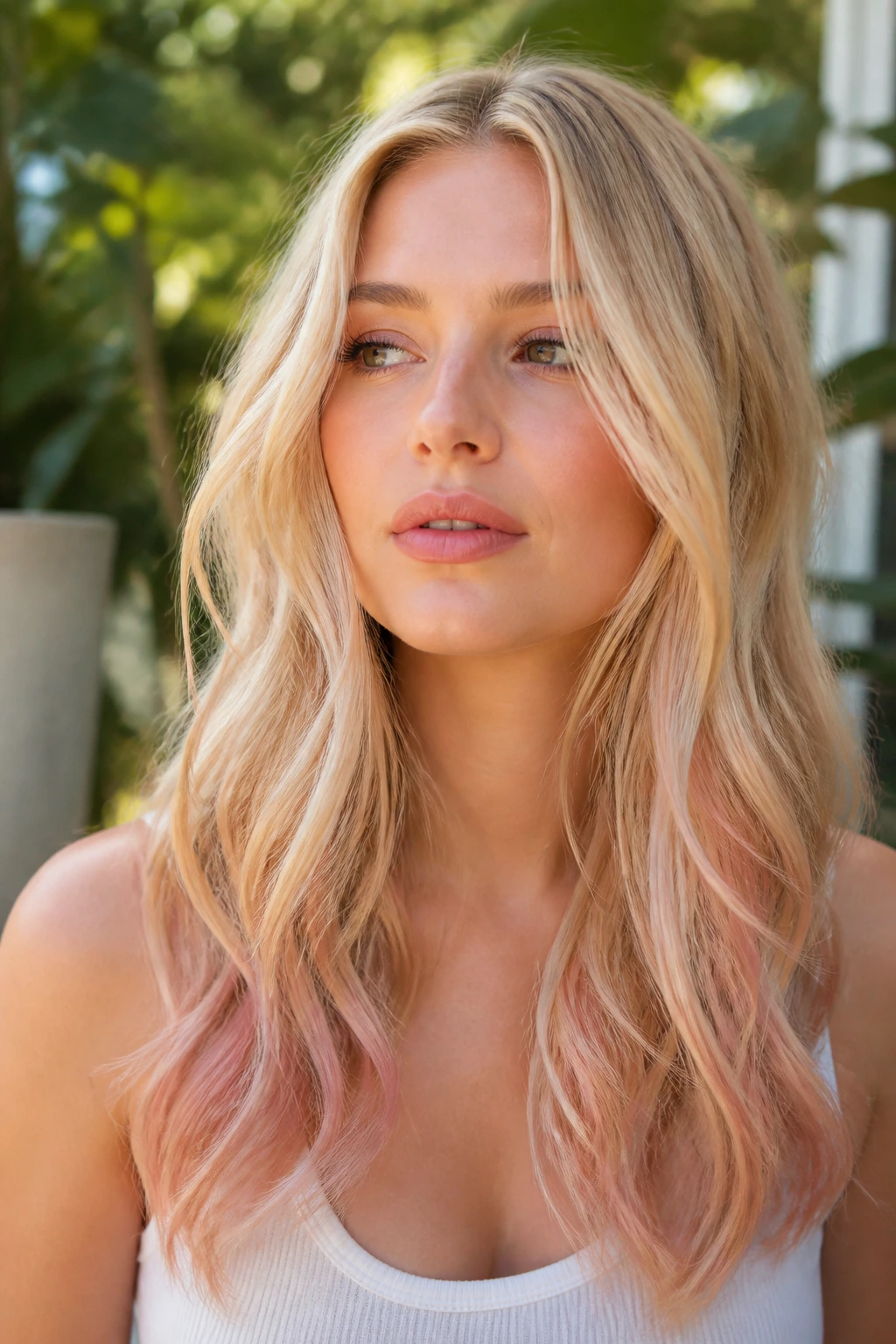
Rose-gold blonde is a little playful, but not cartoonish when it’s done right. The blush tone sits lightly over blonde, so the hair still reads blonde first, pink-beige second. On waves, that soft tint is strongest near the mid-lengths and ends, where the movement is most visible.
This works best when the rose tone is subtle. Too much pink and the hair starts to look like a festival wig. A trace of warmth is enough.
It’s one of the more fun blonde hair looks for wavy hair if you want something softer than copper but less expected than beige. Keep the curls loose so the color can read through the shape.
15. Scandinavian Bright Blonde With Undone Waves
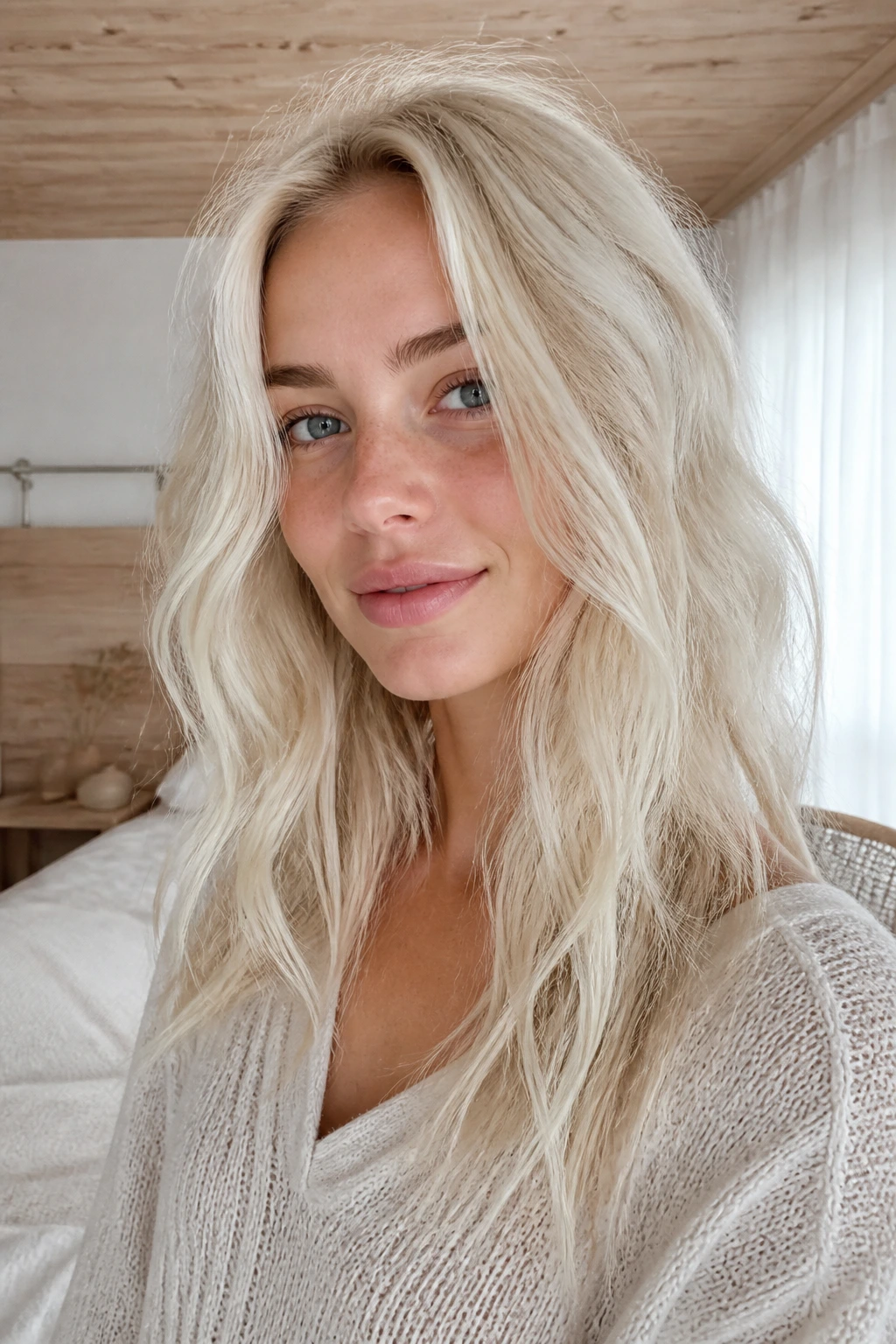
This is the bright one. Clean, pale, almost white-blonde brightness with waves that are intentionally rough around the edges. The contrast is what makes it interesting: a very light tone with a relaxed, almost slept-in wave pattern.
You need a healthy base for this, or a color plan that gets there in stages. Trying to rush to that brightness can leave the hair fragile and the texture rough. I’d rather see this done slowly and kept in good condition than forced all at once.
Best on thick hair or hair that handles lightening well. Fine hair can wear it, but the cut needs shape.
16. Vanilla Latte Blonde on Long Layers
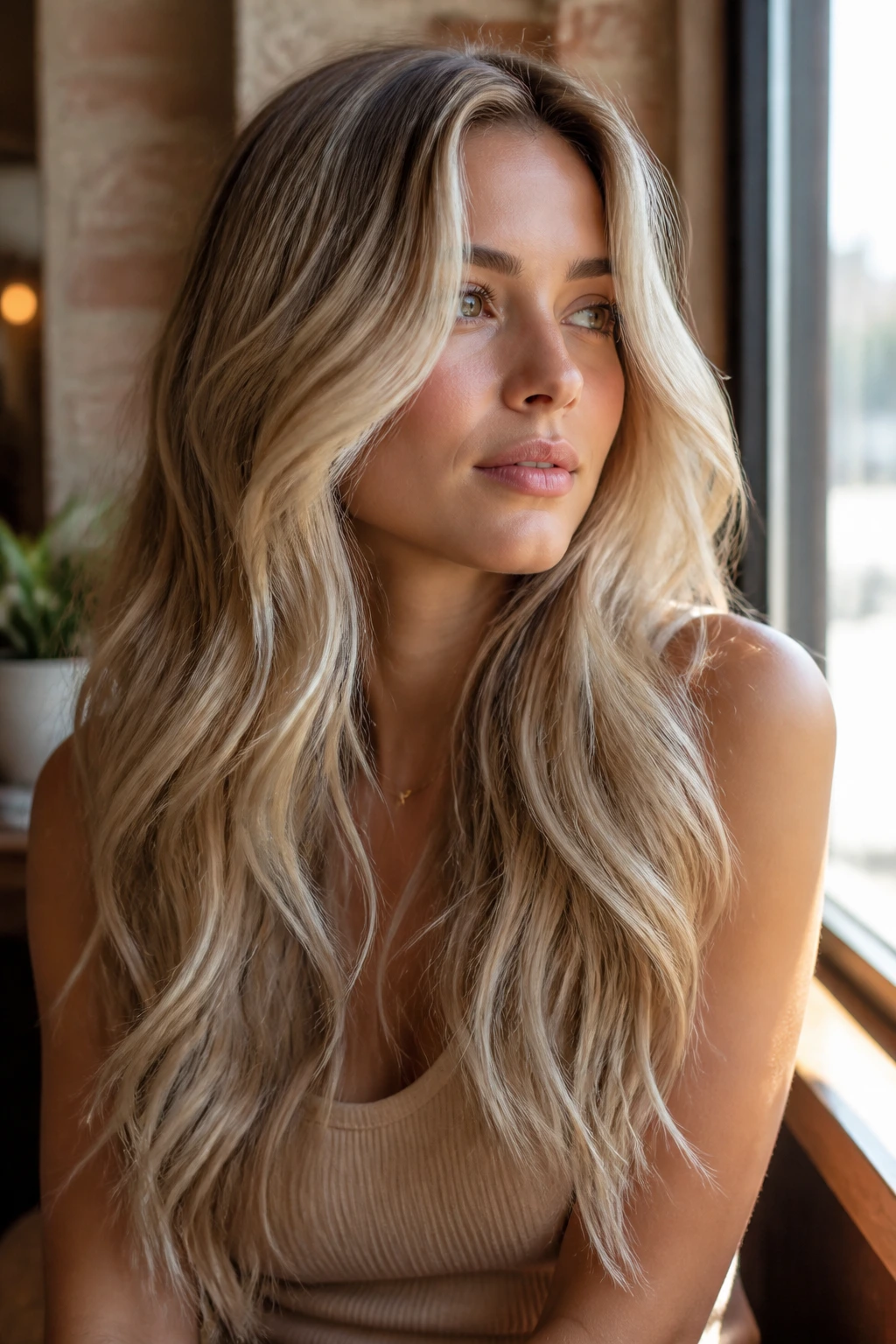
Vanilla latte blonde lands in that creamy neutral zone that always looks polished. It has a pale coffee-and-cream feel, with enough beige to keep it from turning yellow and enough warmth to keep the face from looking washed out. Long layers help the color stretch out and show all the different tones.
The waves should be loose, not tight. This blonde likes movement, but it does not need to be overstyled.
A toner that sits between pearl and beige often works well here. Too cool and the hair loses the latte effect. Too warm and it gets sticky-looking.
17. Golden Apricot Blonde
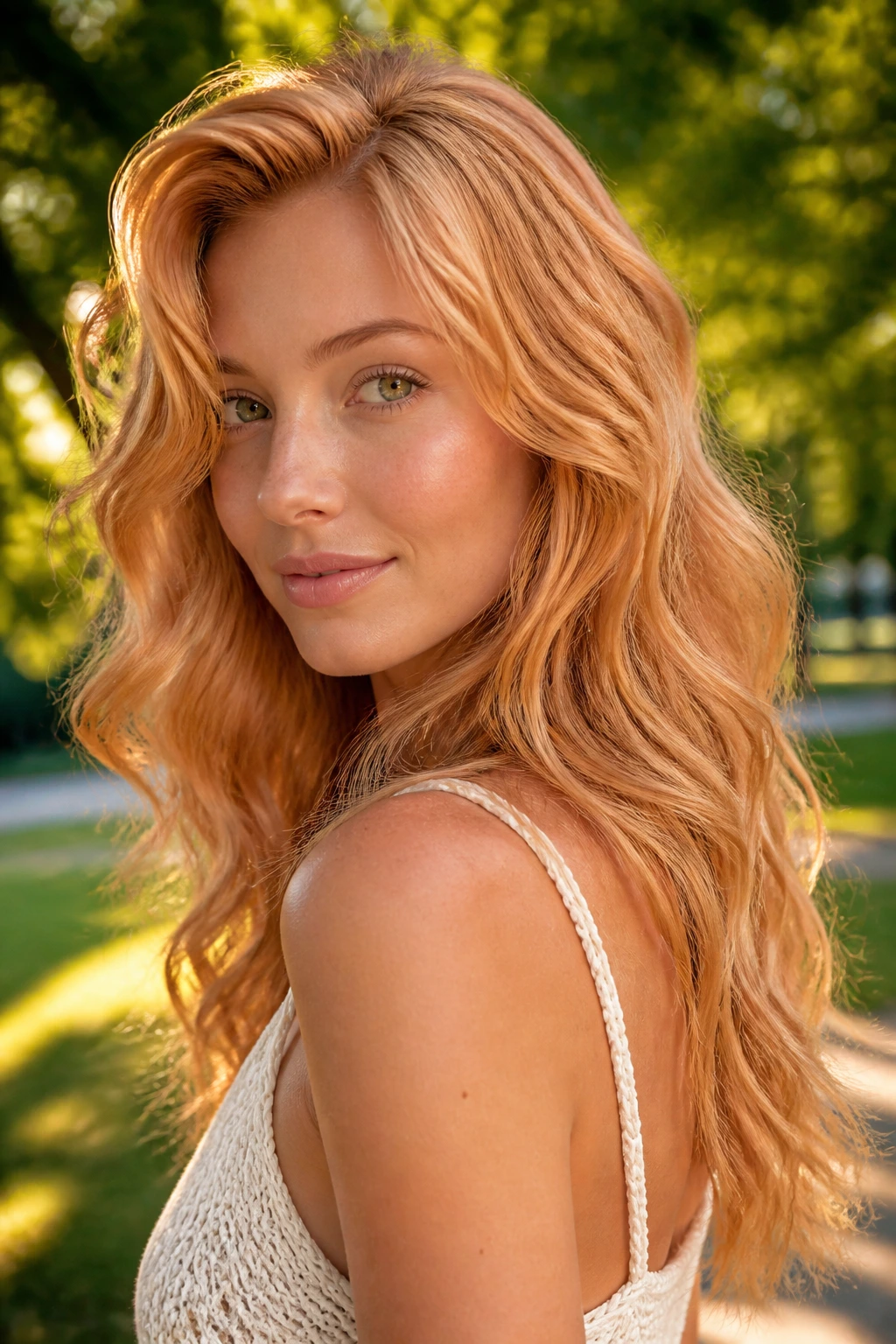
Golden apricot is the warm, happy blonde in the group. It has a peach-gold cast that flatters skin with warmth in it and gives wavy hair a bright, sunny finish. Because the tone is richer, it can make coarse or dry waves look smoother than an icy blonde would.
Best For
- Medium brown bases
- Hair that has a little natural texture
- People who want warmth without copper
The apricot note should be subtle, not orange. Think soft fruit skin, not candy. It looks best when the highlights are scattered, not packed too tightly, so the waves can break the color up.
18. Ash Blonde Beach Waves
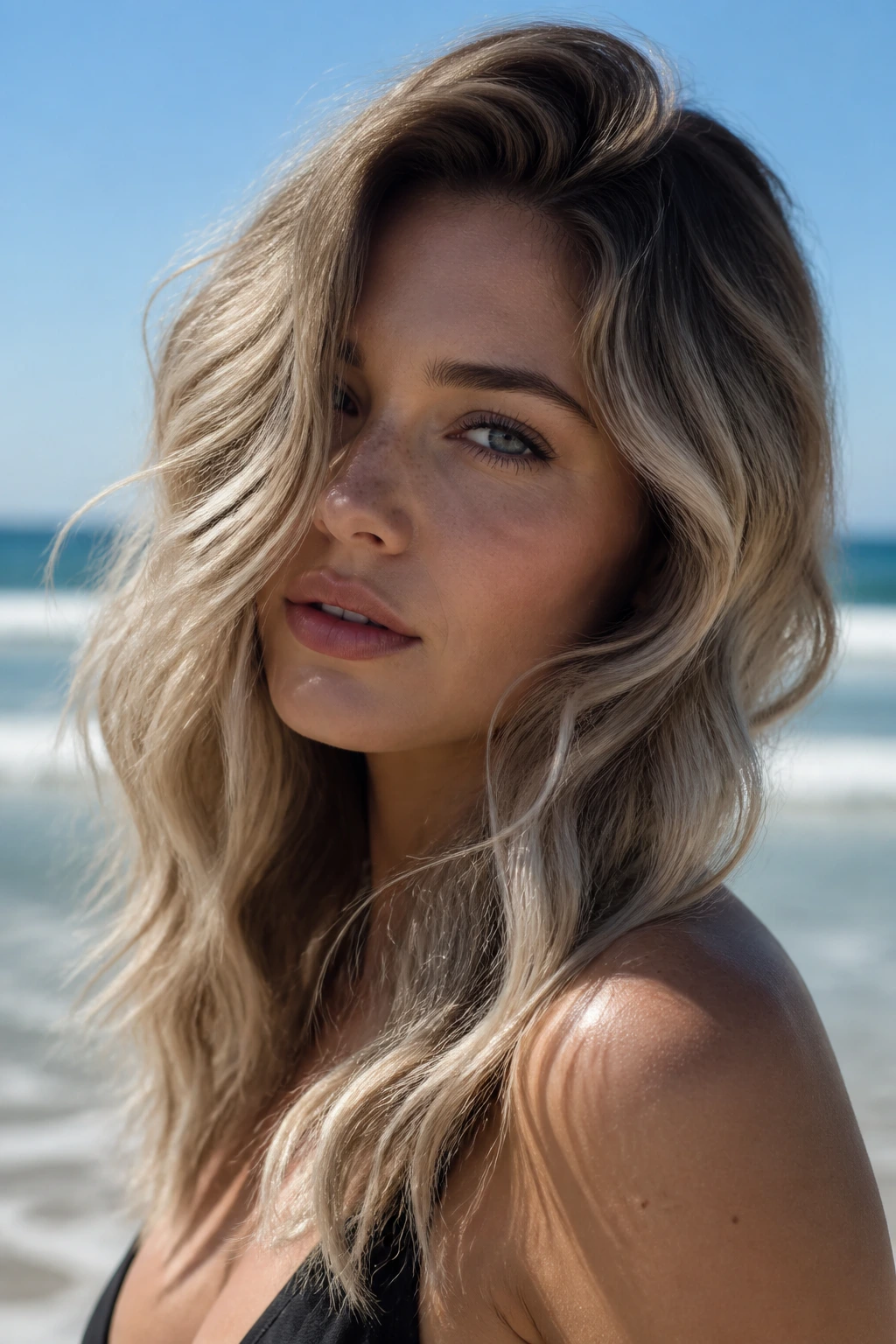
Ash blonde and beach waves can be tricky together, but when they work, they look sharp. The cool tone gives the hair a smoky finish, while the loose wave pattern keeps it from feeling severe. This is the blonde for someone who likes a cleaner, drier color story and doesn’t mind a little upkeep.
Ash works especially well if your base pulls red or gold. It can knock the warmth back without making the hair look muddy.
A blue-toned shampoo can help, but don’t overdo it. Too much cool pigment and the hair loses shine. And ash blonde without shine can go flat fast.
19. Cream Soda Blonde With Deep Root Shadow
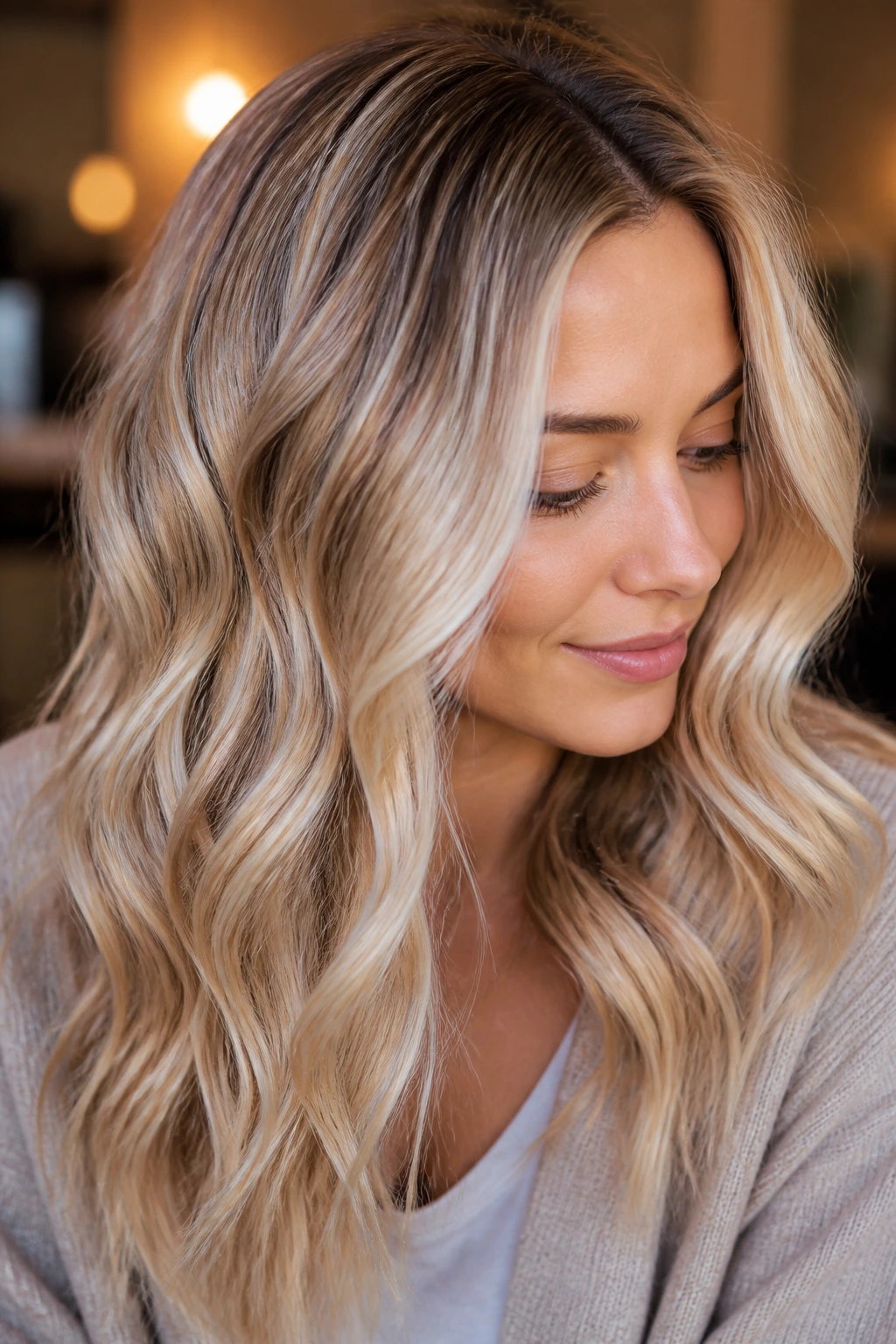
Cream soda blonde sounds playful, but it’s really a clever blend of beige, pale gold, and a soft root shadow. The deeper root makes the lighter mids and ends look brighter by comparison, which gives wavy hair an easy dimensional lift. Loose waves make this color behave the way it should — airy, soft, and a little glossy.
It’s a nice middle ground if you want brightness without going stark. You can keep the root around level 6 or 7, then push the ends up lighter.
This is one of the better options if you hate obvious regrowth lines. The shadow buys you time.
20. Baby Blonde Babylights on Soft Waves
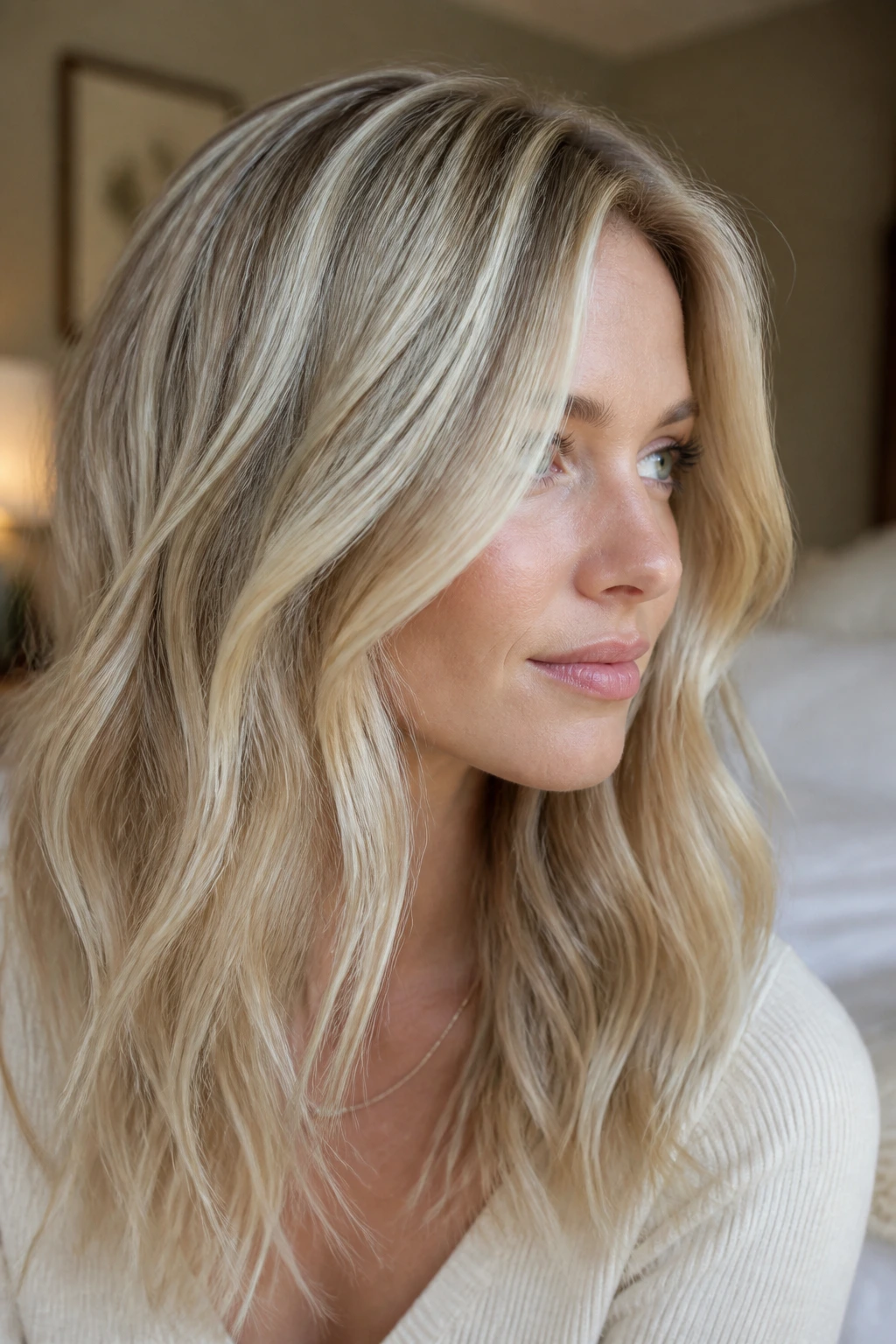
Babylights are tiny, fine highlights, and on soft waves they can look almost like natural sun shift rather than obvious color work. Baby blonde is the lightest version of that idea without going full white. It’s gentle, detailed, and better for people who want blend over drama.
The catch is patience. Tiny highlights take time to build, and the payoff is in the subtlety. They’re not meant to scream from across the room.
What Makes It Different
The highlights are so fine that the wave texture does the visual heavy lifting. This is a smart pick if your hair is fine and you don’t want chunky foils creating gaps.
21. Bronze-To-Blonde Melt
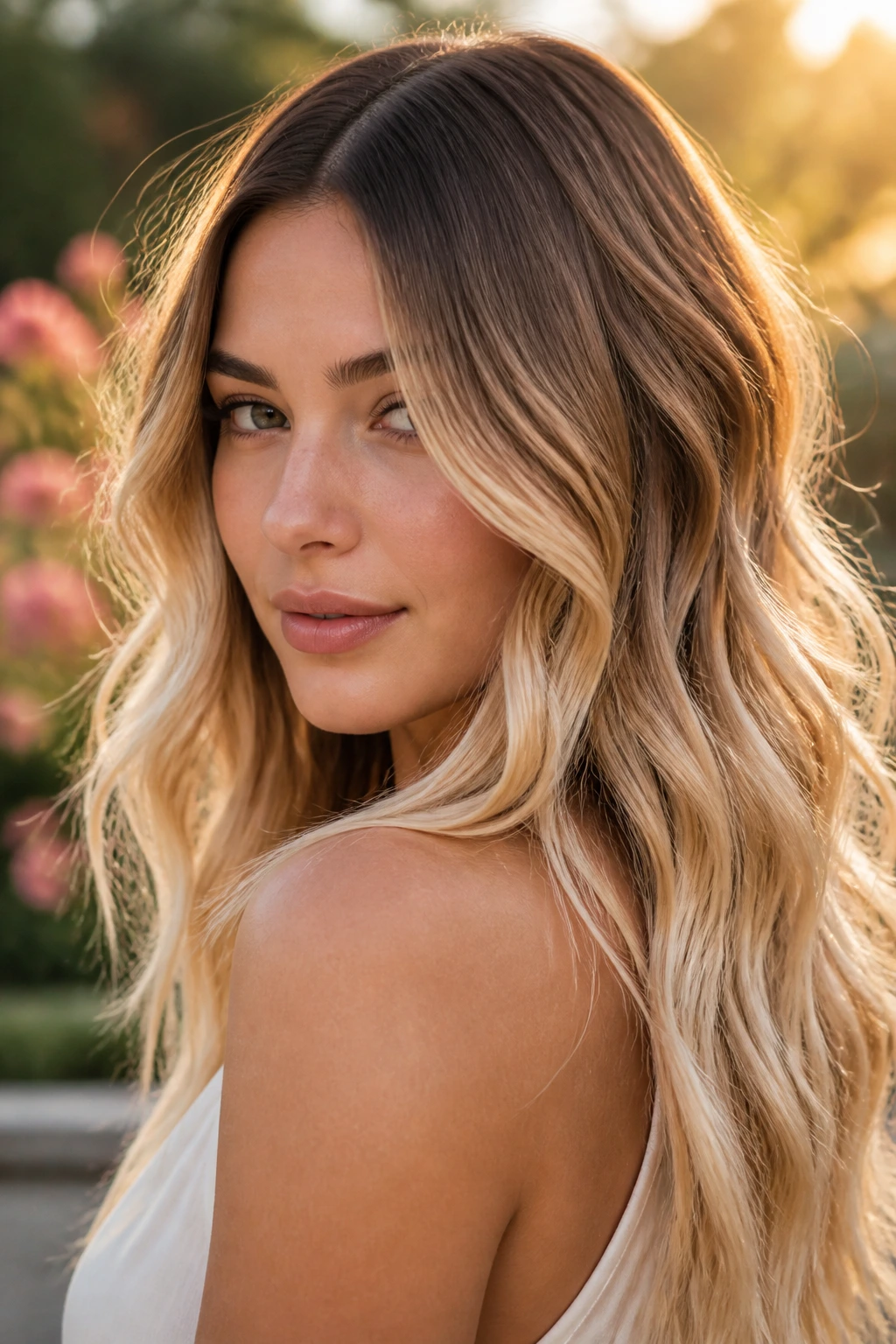
A bronze base melting into blonde ends sounds bold, but on wavy hair it can look incredibly smooth. The richer root gives depth, the blonde on the ends gives lift, and the transition through the mids keeps everything soft. Think of it as a color that respects the way waves stack on top of one another.
The bronze should be warm, not orange. The blonde should be creamy, not icy. That balance is the whole point.
If your hair is dark and you want blonde without losing all sense of your natural base, this is one of the smartest routes. It’s generous on grow-out too.
22. Spun Sugar Platinum Waves
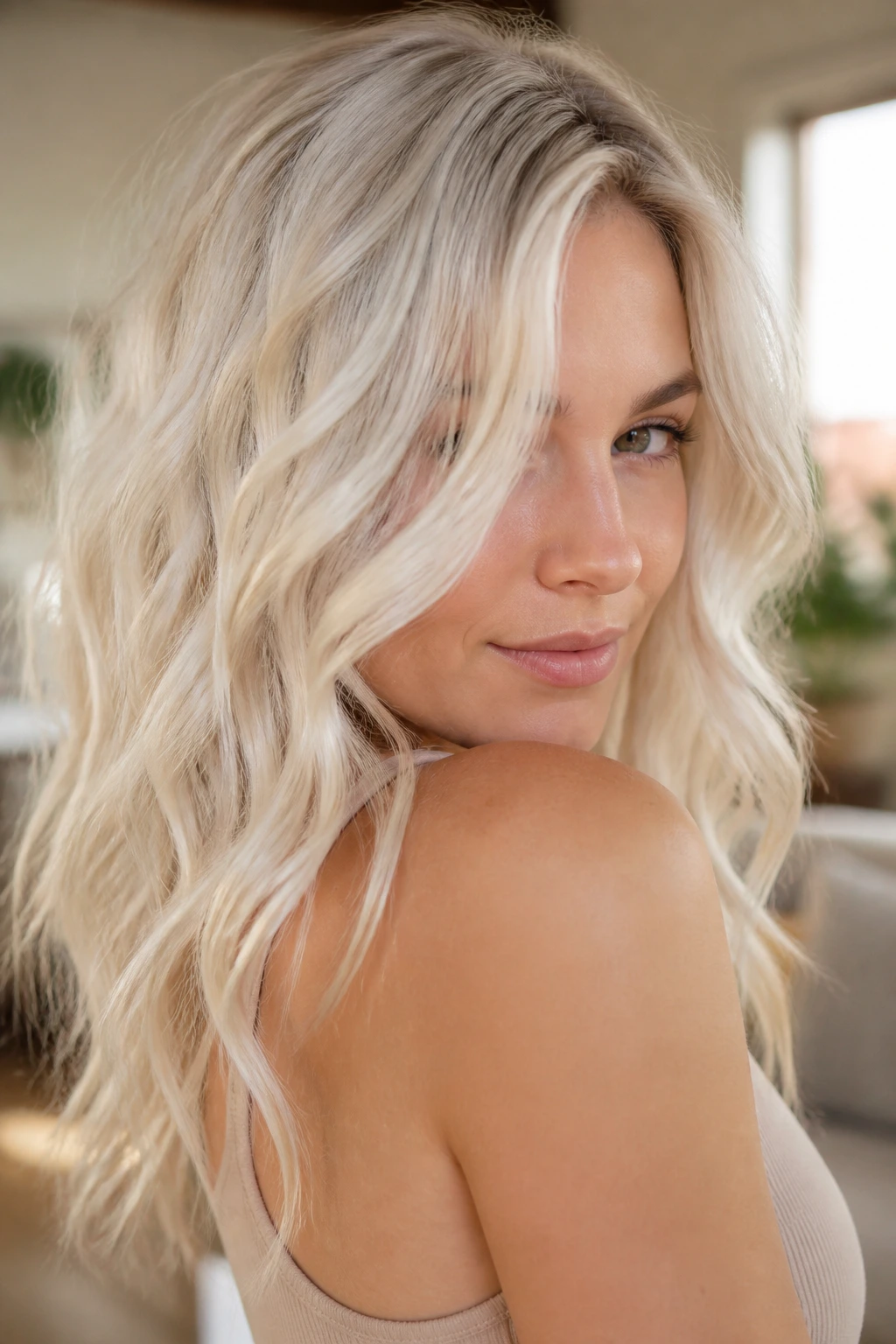
Spun sugar platinum is the airy, almost translucent version of platinum blonde. It looks lighter than pearl and softer than bright Scandinavian blonde because there’s a faint sweetness to the tone. On waves, the color becomes less harsh, which helps it feel wearable.
This shade asks for healthy ends. If the hair is frayed, platinum makes every split a little louder. Keep trims regular and use bond-building care if your hair has gone through a lot.
Wavy hair can make this feel less severe than straight hair does. The bend softens the edge.
23. Biscotti Blonde With Face-Framing Pieces
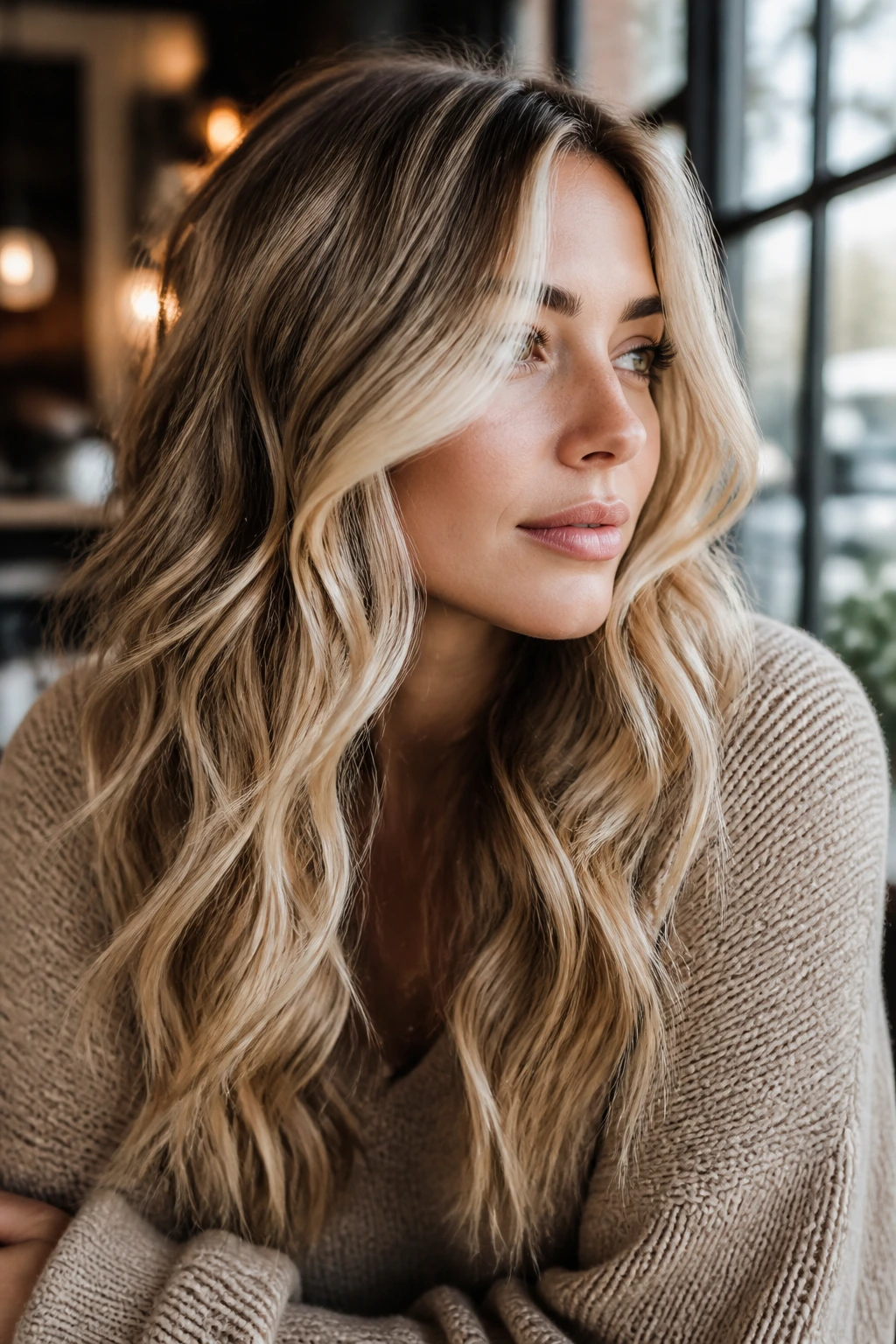
Biscotti blonde is one of my favorite neutral blondes because it does not pick a fight with undertones. It has a cookie-brown base feeling at the root and a creamy blonde finish in the face-framing bits, which keeps the overall look grounded. Wavy hair loves that kind of balance.
The front pieces should be the brightest part. That brings the eye to the face without bleaching the whole head to one level.
If you want a blonde that works with soft makeup, gold jewelry, and casual hair texture, this is an easy yes. It grows out well and doesn’t look fussy.
24. Pearl Blonde Pixie Wave
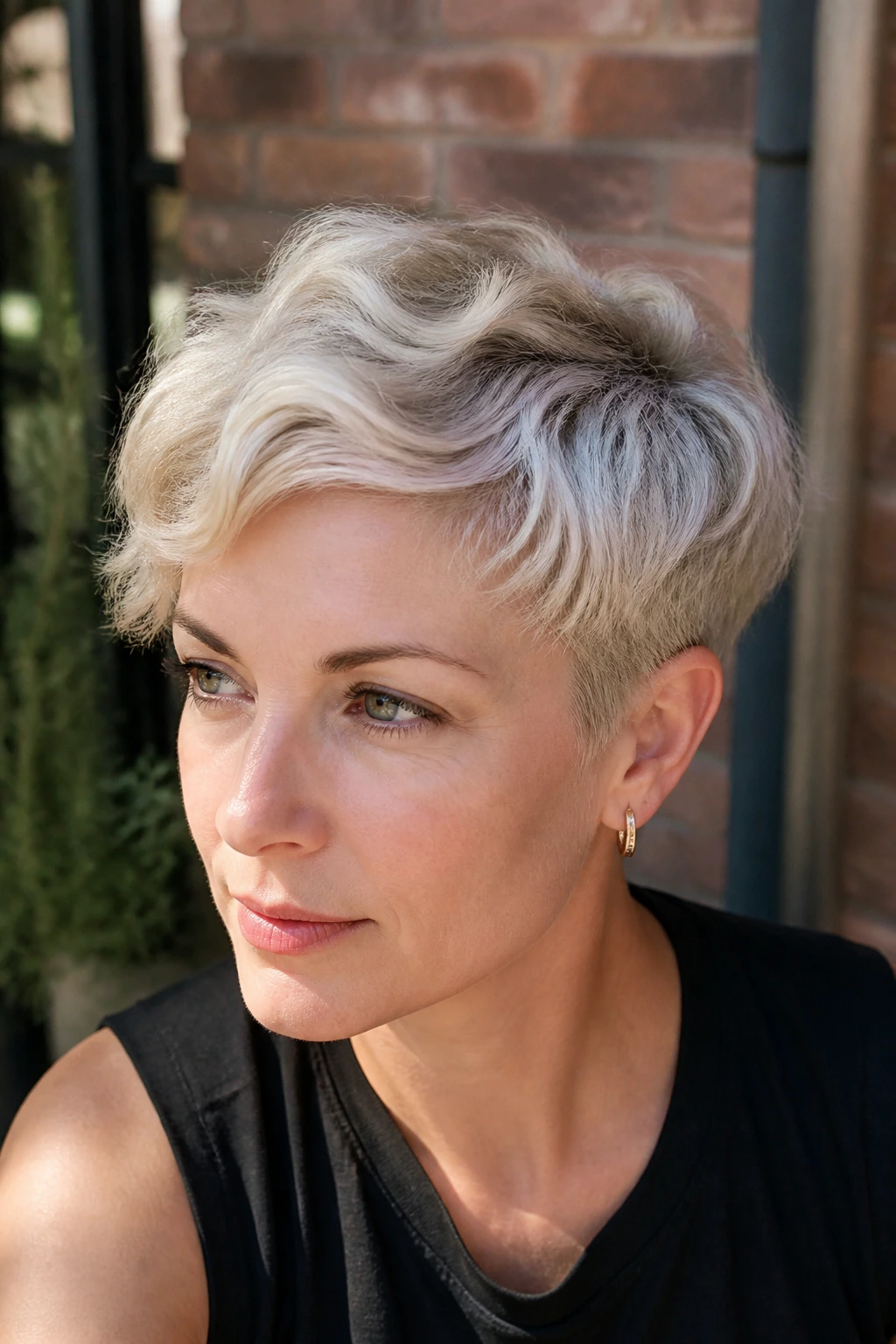
A pixie with wave is not the first place people think of for blonde, which is exactly why it works. Pearl blonde on a short crop highlights the movement in the top layers and makes the texture look intentional instead of messy. The cooler tone keeps the short shape clean.
How It Wears
- Best when the top has enough length to bend
- Needs styling cream or light mousse, not heavy oil
- Works well if you want a short cut with some edge
The shorter the hair, the more the tone matters. On a pixie wave, even a small shift in blonde can change the whole read of the cut.
25. Buttercream Blonde Lob
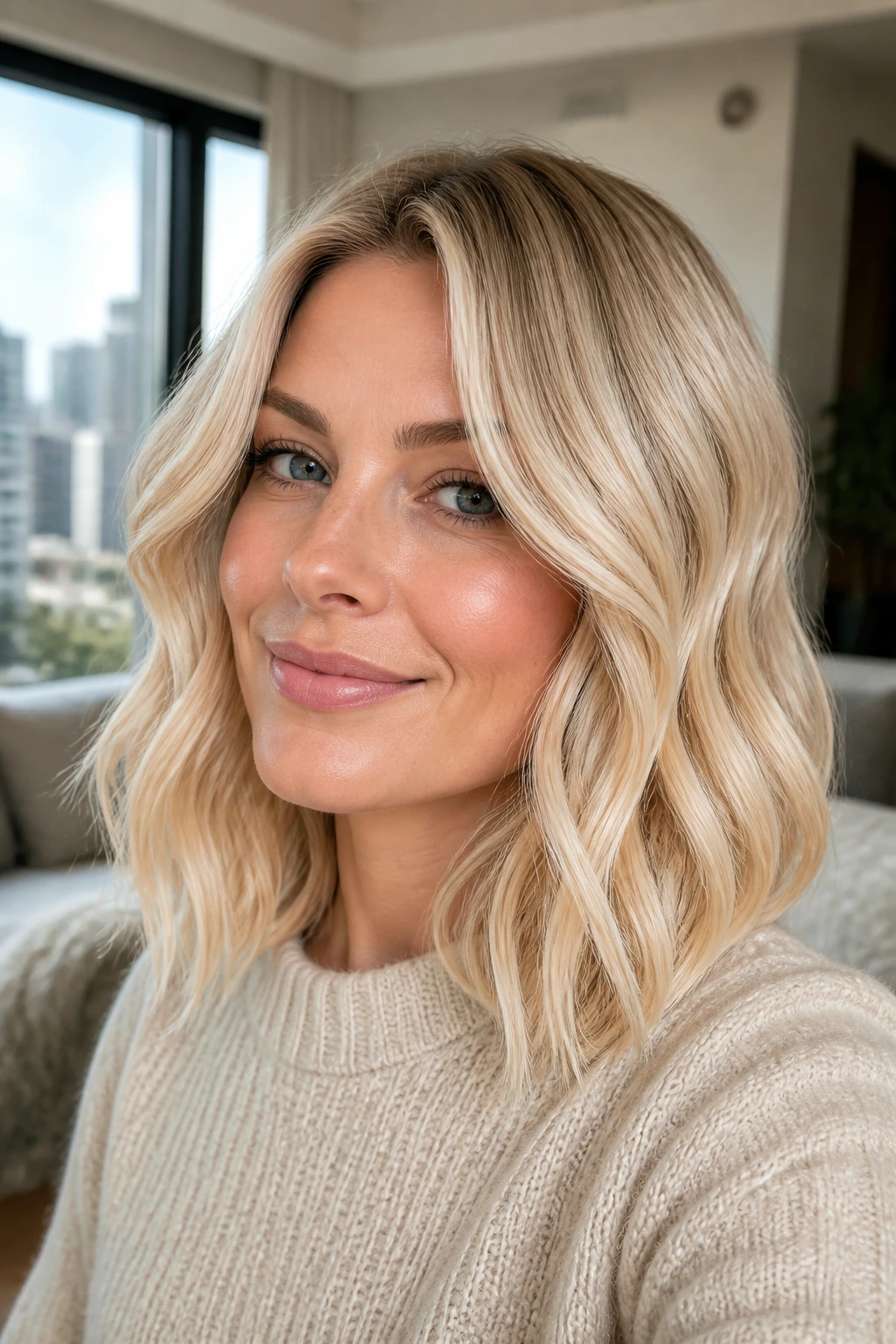
Buttercream blonde is richer than vanilla and a little softer than yellow gold. On a lob, it gives the hair a full, creamy finish that makes loose waves look thicker. This is one of those styles that looks expensive because the tone is so even and flattering.
It’s especially good if your hair has medium density. The shade adds visual fullness without forcing the waves to work too hard.
Ask for a buttery gloss, not a warm orange toner. Buttercream should feel soft and milky.
26. Soft Gold Balayage With a Deep Part
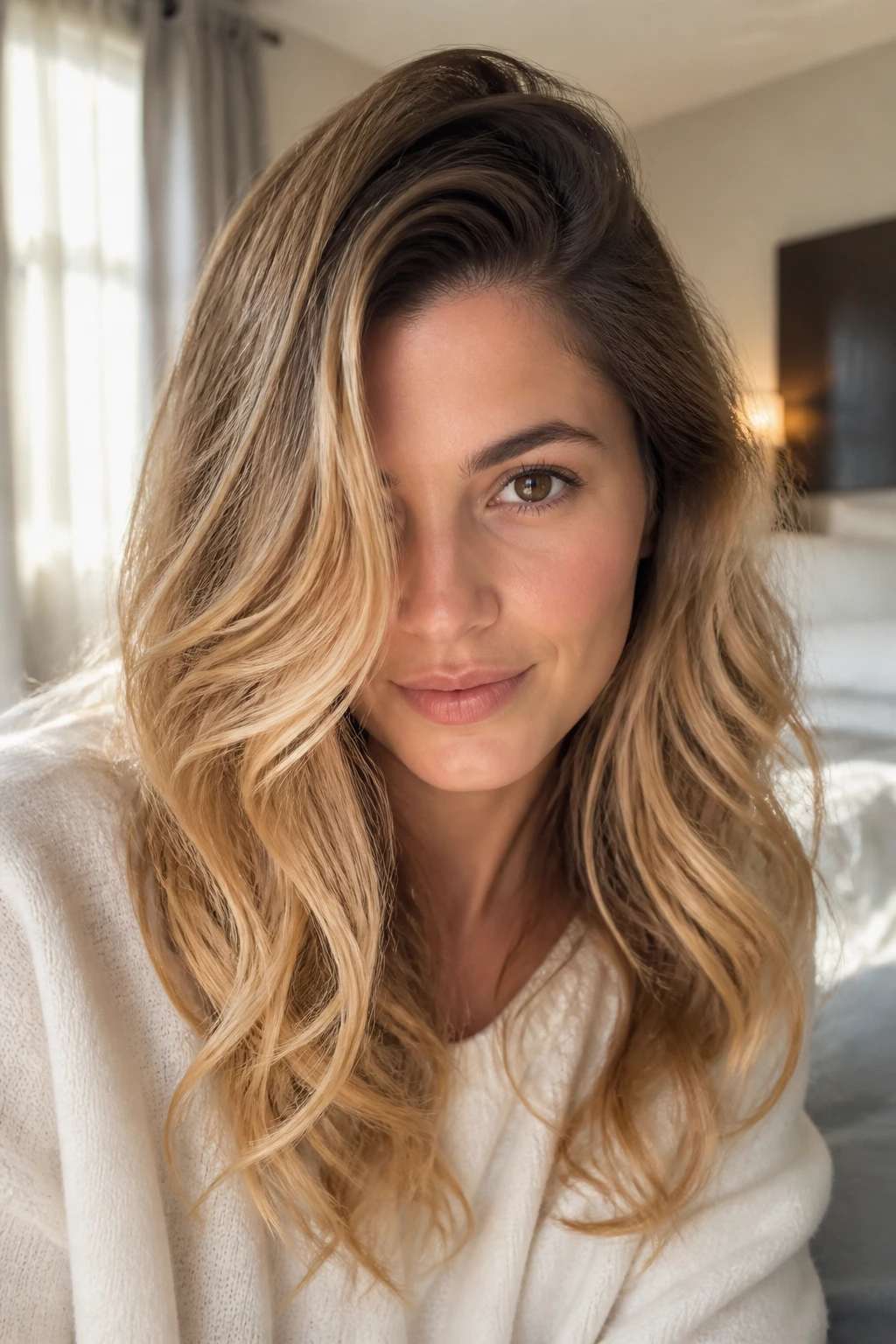
A deep part changes everything here. It lets the gold balayage sit on one side of the face a little more heavily, which gives wavy hair a dramatic swoop without extra brightness. The gold should be soft and warm, not metallic.
This style is good when you want asymmetry. The waves can fall more casually on one side while the highlights bring the eye back to the front.
If your hair tends to collapse at the crown, the deep part and the lighter side pieces can give it some lift. That’s a small thing. It matters.
27. Smoky Beige Blonde and Wide Waves
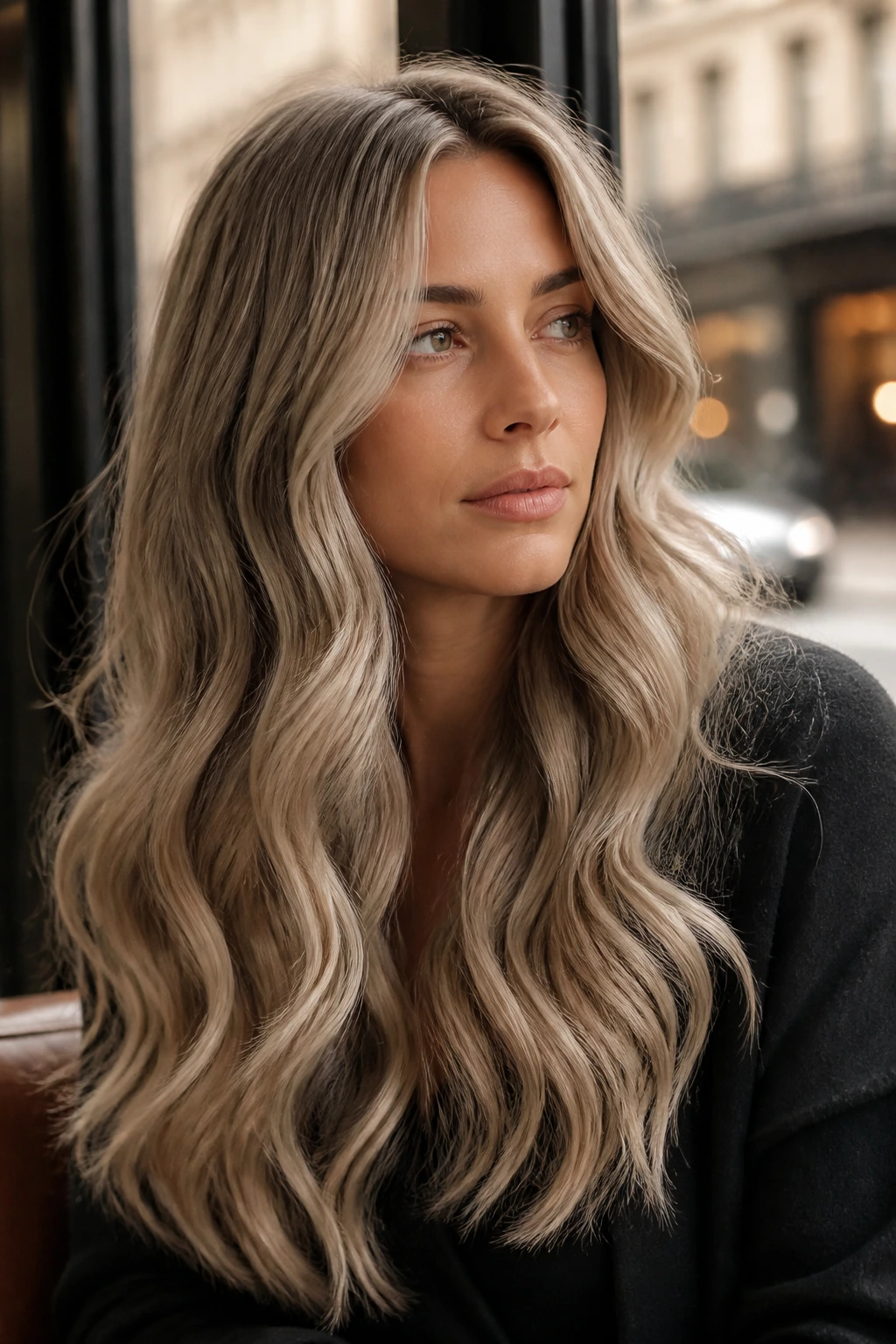
Smoky beige blonde is for people who like their blonde a little muted. The tone is dry in the best way — not dull, just quiet and refined. Wide waves suit it because the bends are larger and slower, which lets the smoky tone spread out instead of looking flecked.
This shade works well on medium and long lengths. Tight curls can make it feel too busy, while loose waves keep it calm.
Use a light gloss between salon visits. Smoky beige can lose its shape if the ends go porous and frayed.
28. Honeysuckle Blonde
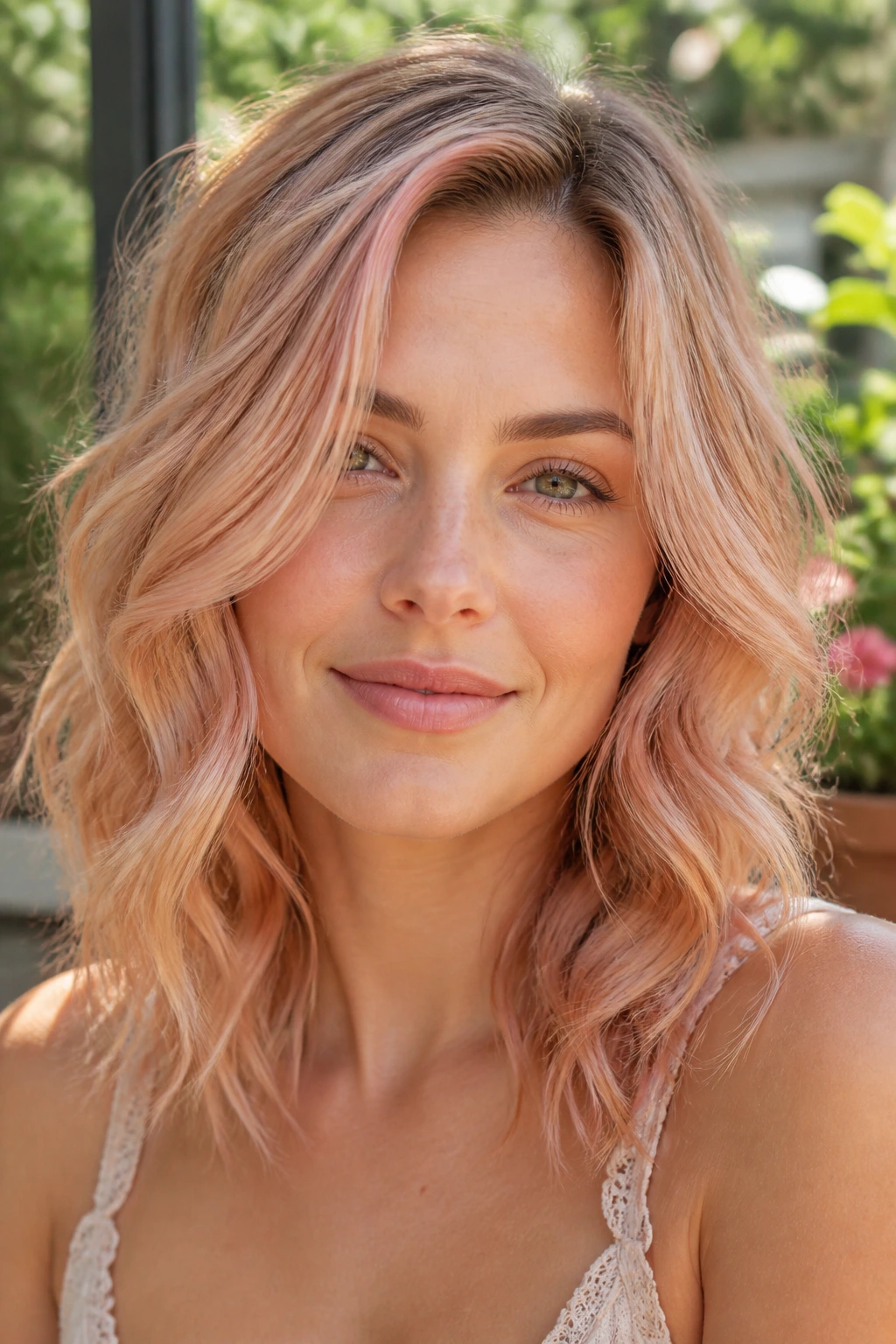
Honeysuckle blonde sits between honey and soft floral warmth. It has a hint of pink-gold, but it stays blonde first. On waves, the color can look especially sweet around the face and in the mid-lengths, where the bends catch the lighter tone.
It’s a good choice if you want warmth that feels fresher than plain gold. The shade gives a little glow without going copper.
A shoulder-length cut with long layers can make this one sing. Too much bulk at the ends and the color gets crowded.
29. Cool Cream Balayage
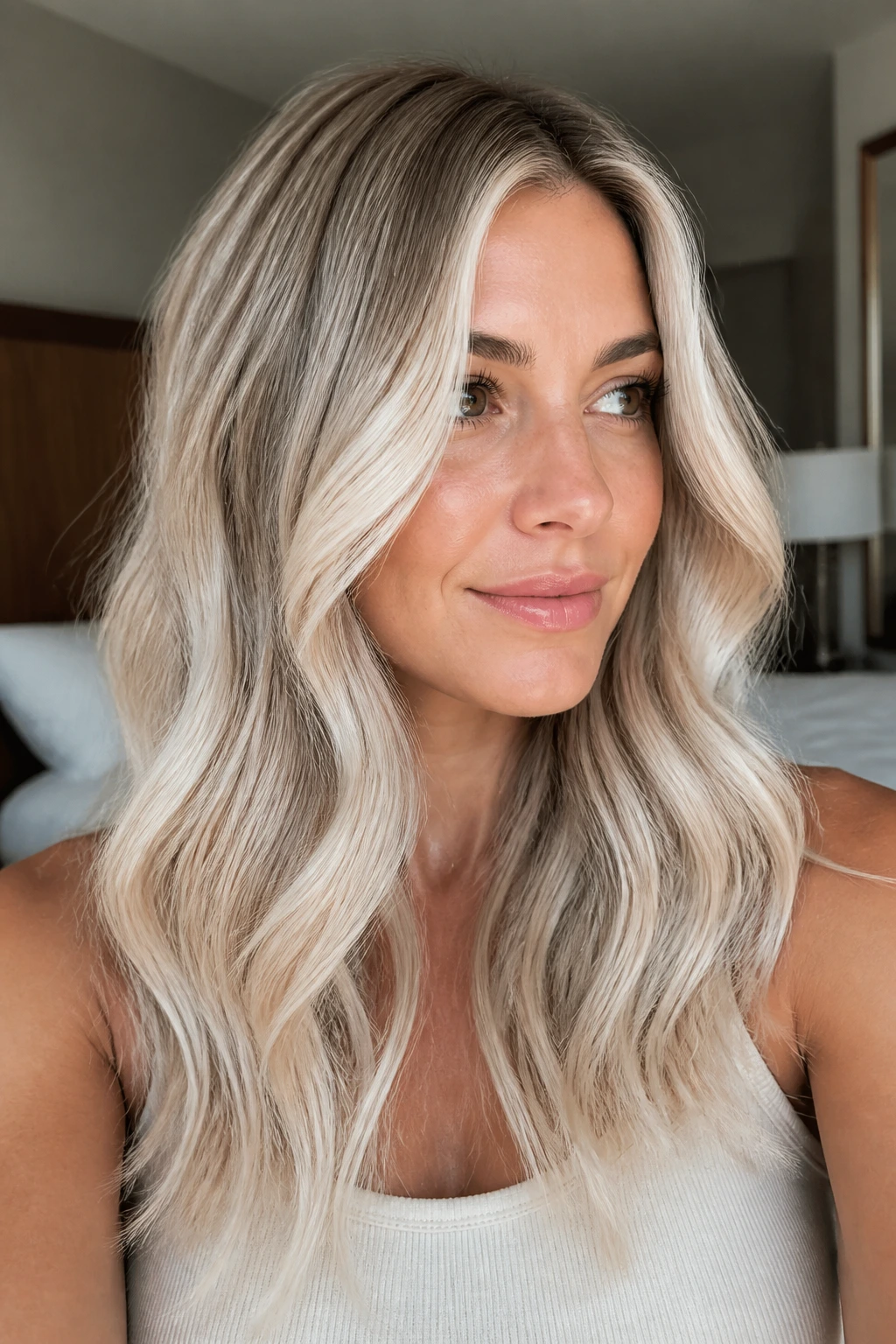
Cool cream balayage is for people who want a neutral blonde that leans pale but not icy. It sits in that soft off-white space that flatters waves because it reflects enough light to look bright while still keeping some depth. The result is smooth, not stark.
The lightness should be concentrated on the outer layers and around the face. That way, the hair still has some shadow inside the wave pattern.
This is a good compromise blonde. It works when you want lighter hair but don’t want the maintenance of full platinum.
30. Sunflower Blonde With Wispy Ends
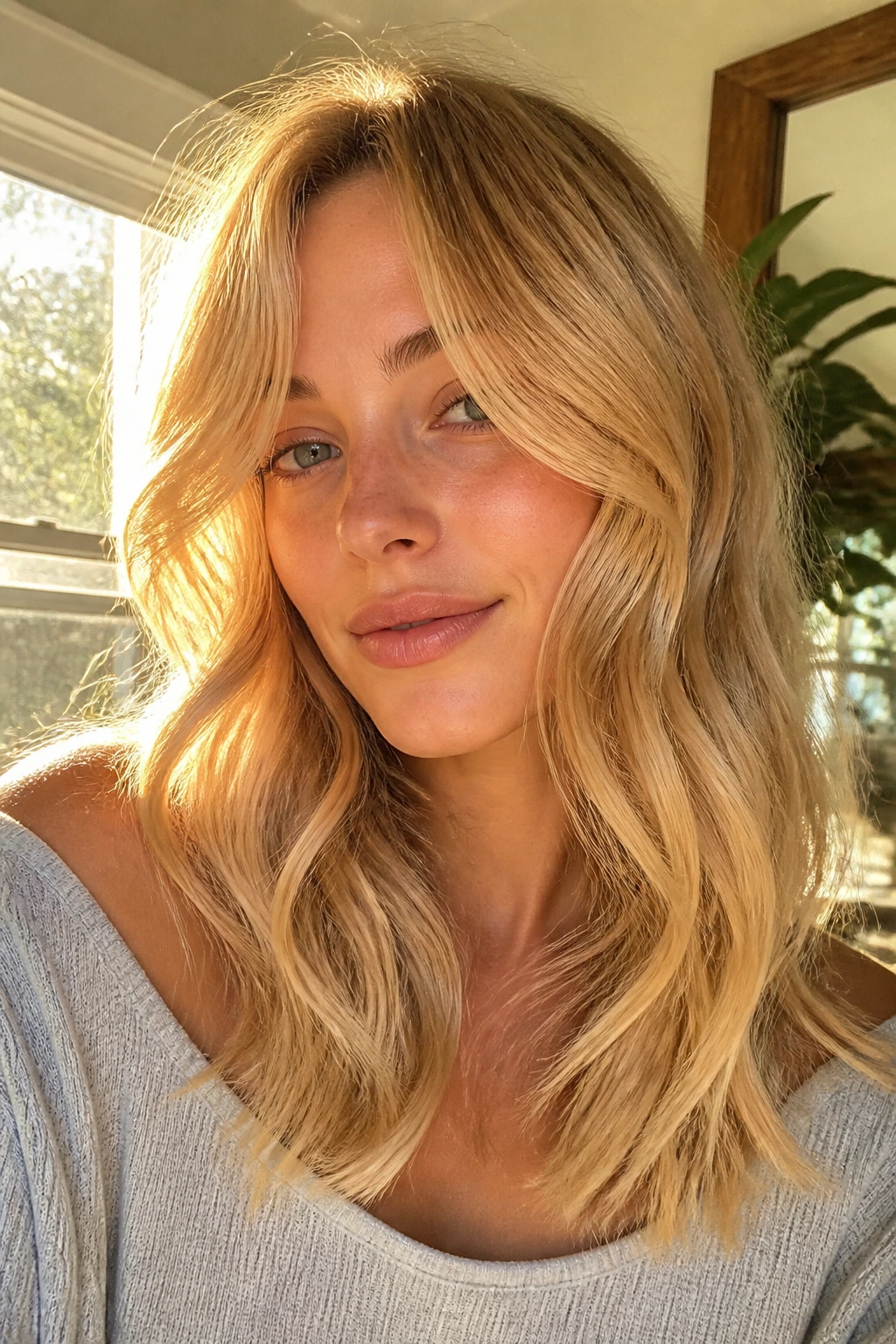
Sunflower blonde is warmer, brighter, and a little more obvious than beige or mushroom. On wavy hair with wispy ends, it looks lively because the ends move instead of sitting in a heavy block. The warmth can be lovely on skin with gold in it.
The trick is not pushing every strand to the same brightness. Leave some depth under the top layer so the color has room to breathe.
If your hair is fine, keep the ends blunt enough that the blonde doesn’t fray visually. Too many wisps and the look can go thin.
31. Ice-Toast Blonde
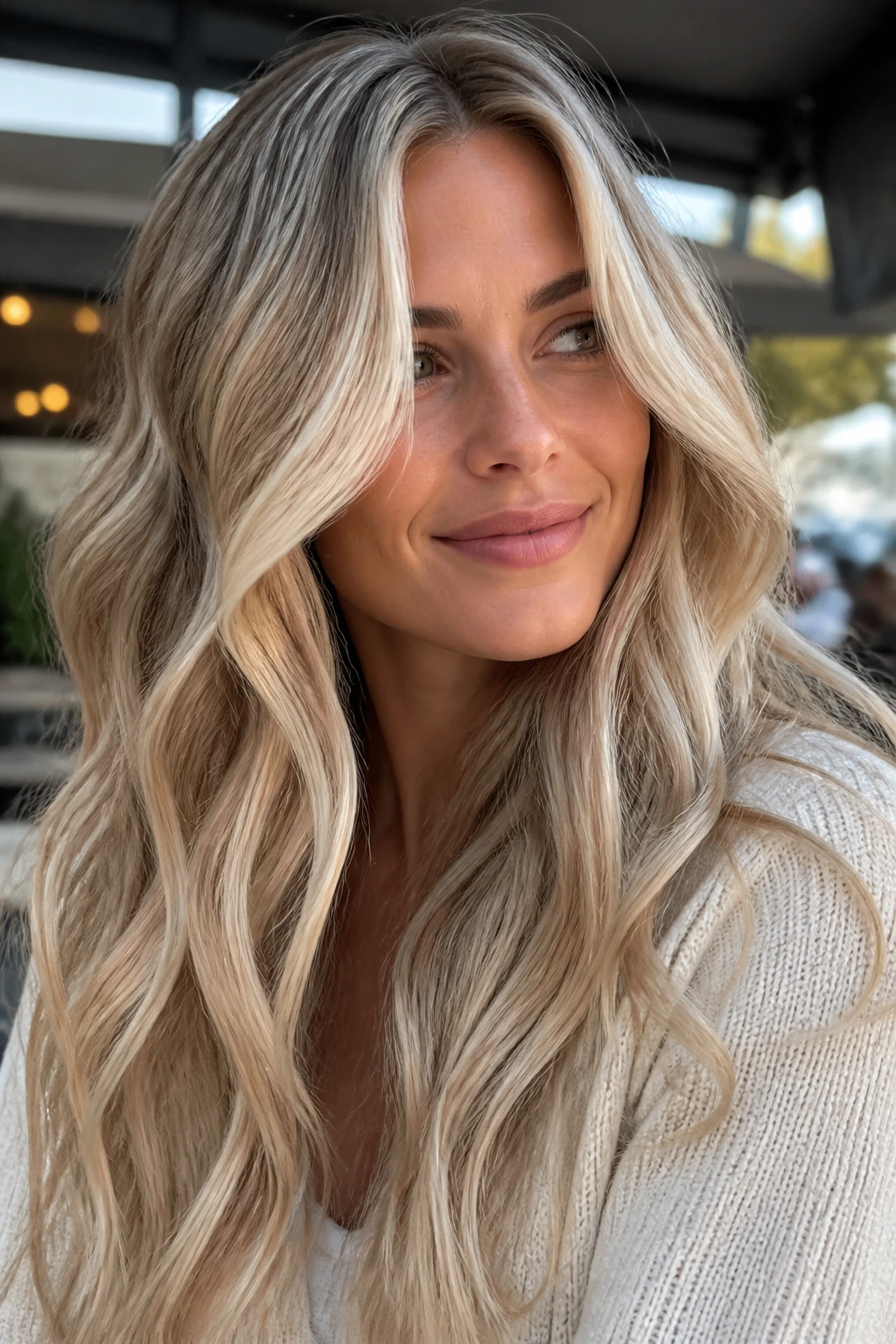
Ice-toast blonde is a smart blend of cool and warm pieces. The lighter strands sit in a frosty lane, while deeper blonde or beige pieces keep the tone from going sterile. On waves, that mix can look like sunlight and shade in the same hairstyle, which is exactly why it feels dimensional.
This is a useful choice if you like contrast but don’t want full ash. It’s also a good route if your natural base is between dark blonde and light brown.
The color should be blended enough that the waves carry the transitions. If the sections are too obvious, the look gets patchy.
32. Sandy Champagne Curls
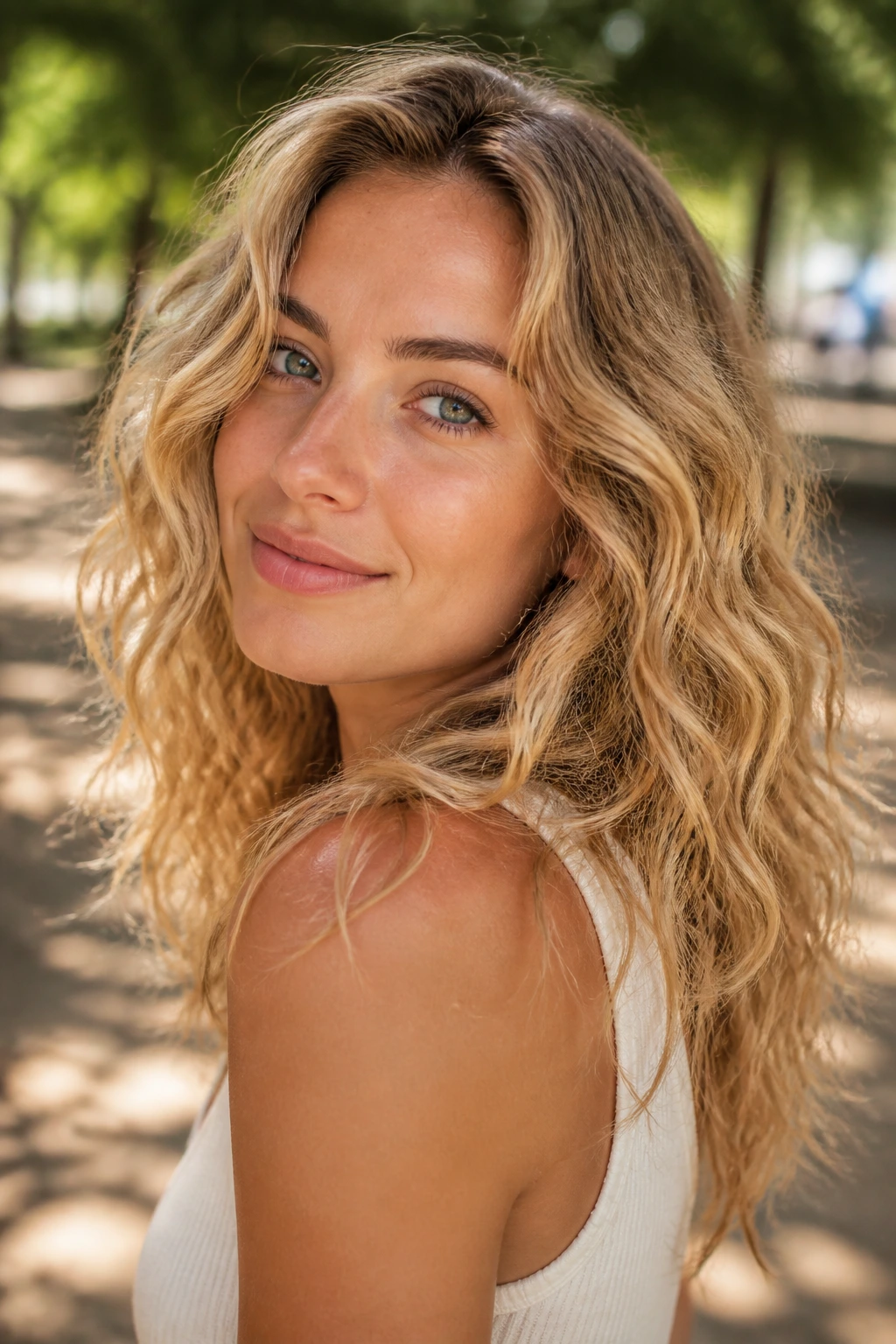
Sandy champagne sits lighter than beige but softer than pearl. On loose curls or deeper waves, it has that soft fizz of brightness without going too pale. The champagne note keeps the blonde from looking dry, and the sandy base grounds it.
This is a flattering choice for medium-density hair because the shape holds the color nicely. The curls give the light and dark pieces places to sit.
A gloss with neutral beige and a tiny hint of gold can keep this from leaning flat. Cool shampoo should be used only when the blonde starts to warm too much.
33. Pale Wheat Waterfall Layers
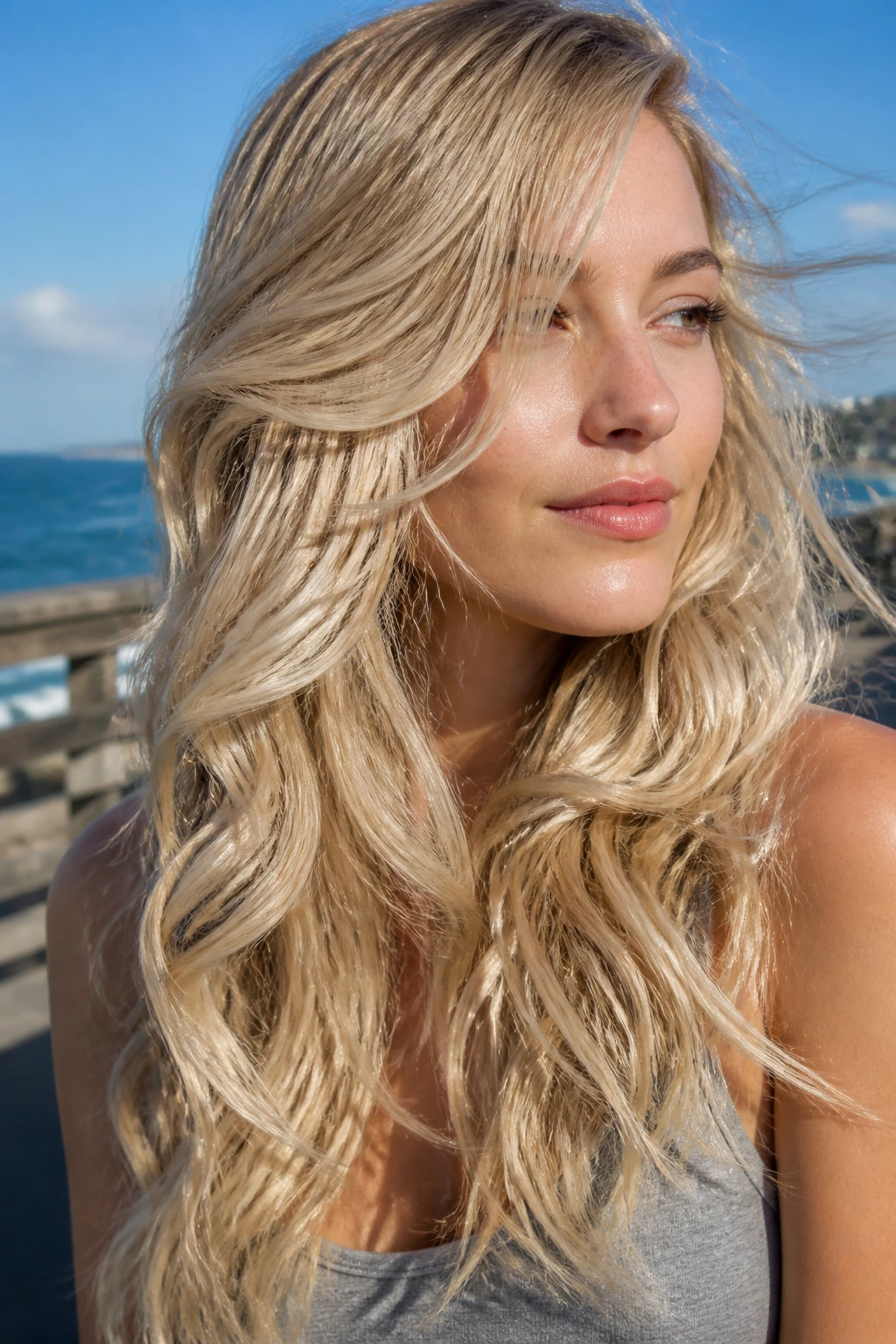
Waterfall layers and pale wheat blonde go together because both rely on movement. The cut creates a soft cascade, and the color gives each layer a lighter edge. The tone is light but not empty, which keeps waves from looking overbleached.
I like this on longer hair that needs shape. The layers stop the length from dragging down the wave pattern, and the pale wheat tone helps the movement show from root to tip.
A good stylist should keep some depth underneath. If everything is lifted the same amount, the layers lose their purpose.
34. Honey Butter Wave Crop
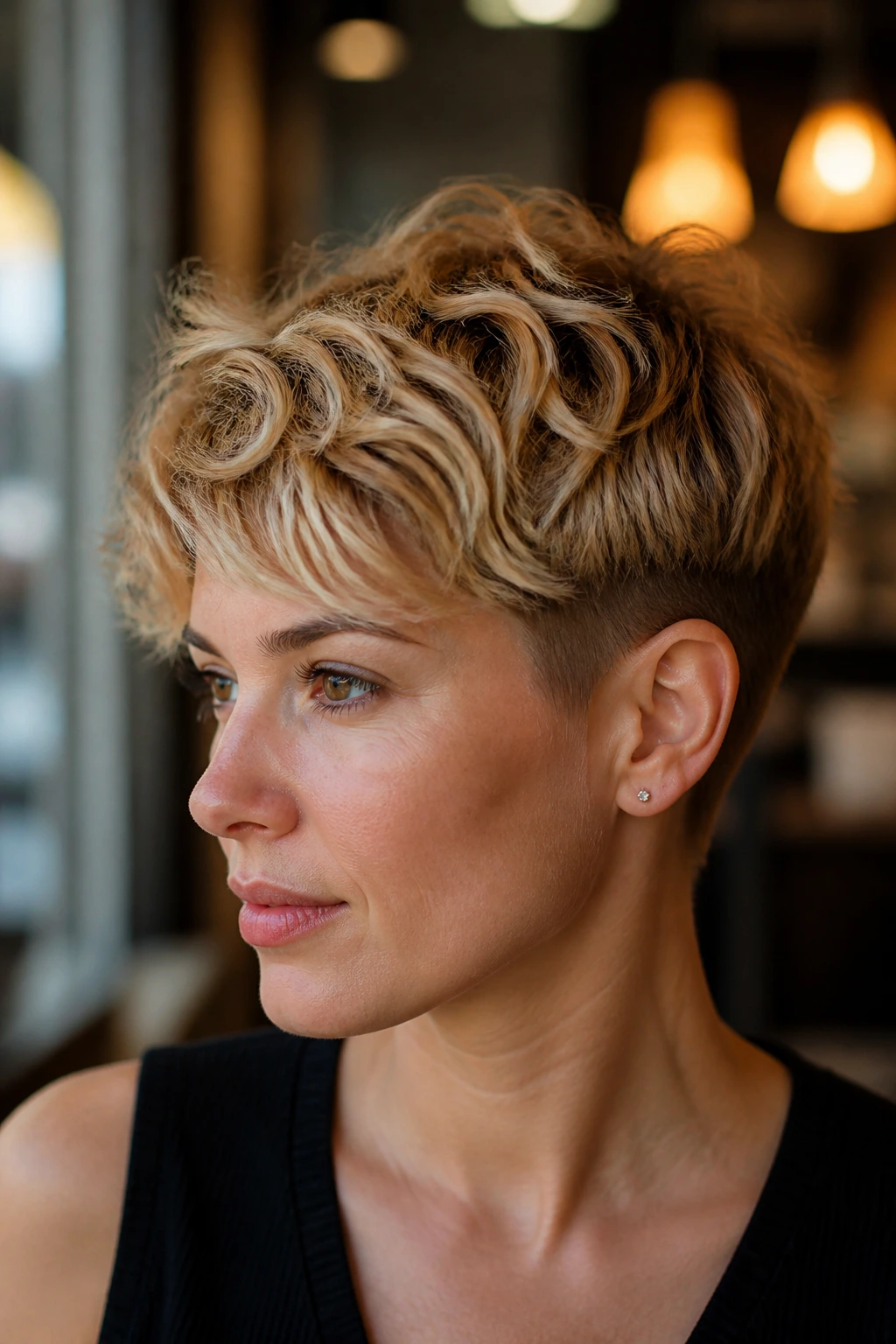
A crop with waves can still wear blonde well, and honey butter is a smart tone for it. It’s warm, creamy, and rich enough to give short hair more presence. The cut gets the shape; the color gives it softness.
This is a nice option if you want short hair that still feels feminine and easy to style. The tone catches on the top texture and around the face.
Keep the sides a little deeper if you want the top to stand out. A one-tone honey crop can look heavy; a little shadow keeps it lively.
35. Vanilla Sand Blonde
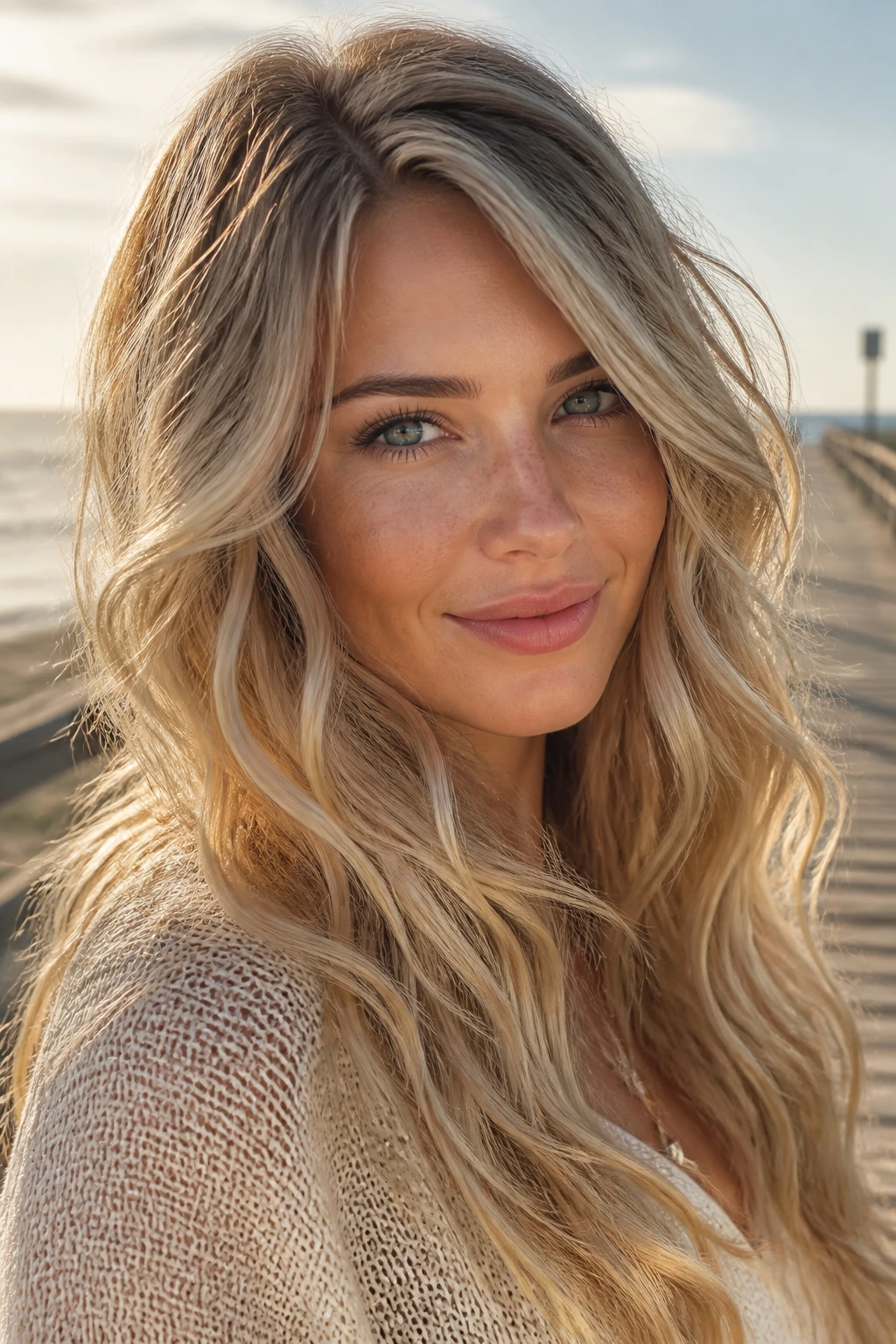
Vanilla sand blonde is neutral with a soft, beachy finish. It’s pale enough to read blonde first, but there’s enough beige in it to keep the color from looking dry. Wavy hair likes that because the texture can already lean dry on its own.
The shade works well on people who want a softer blonde than gold but not the cooler bite of ash. It also grows out in a friendly way because the root-to-blonde shift is not abrupt.
If your hair tends to dull under fluorescent light, a vanilla sand toner can help keep the color looking clean.
36. Sunkissed Maple Blonde
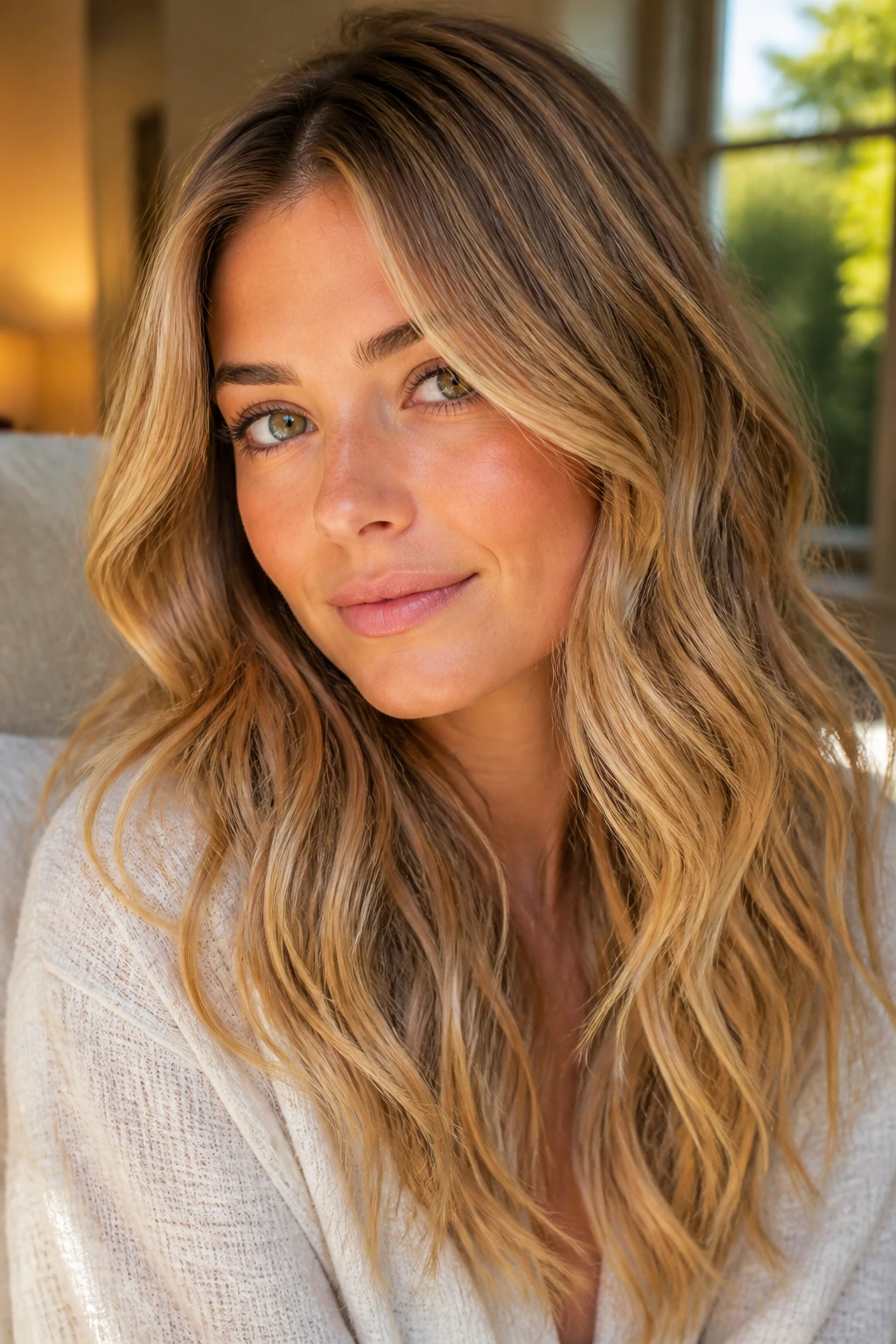
Maple blonde has warmth with a little depth, which makes it feel grounded. On wavy hair, sunkissed placement keeps the brighter pieces around the surface while the darker maple tone stays underneath, and that contrast gives the hair an easy layered look.
It’s a good choice if your natural hair is already warm brown. The color shift feels believable instead of forced.
The brighter pieces should be scattered, not packed. Too many and the maple warmth disappears. Too few and the blonde barely shows.
37. Crème Brûlée Blonde
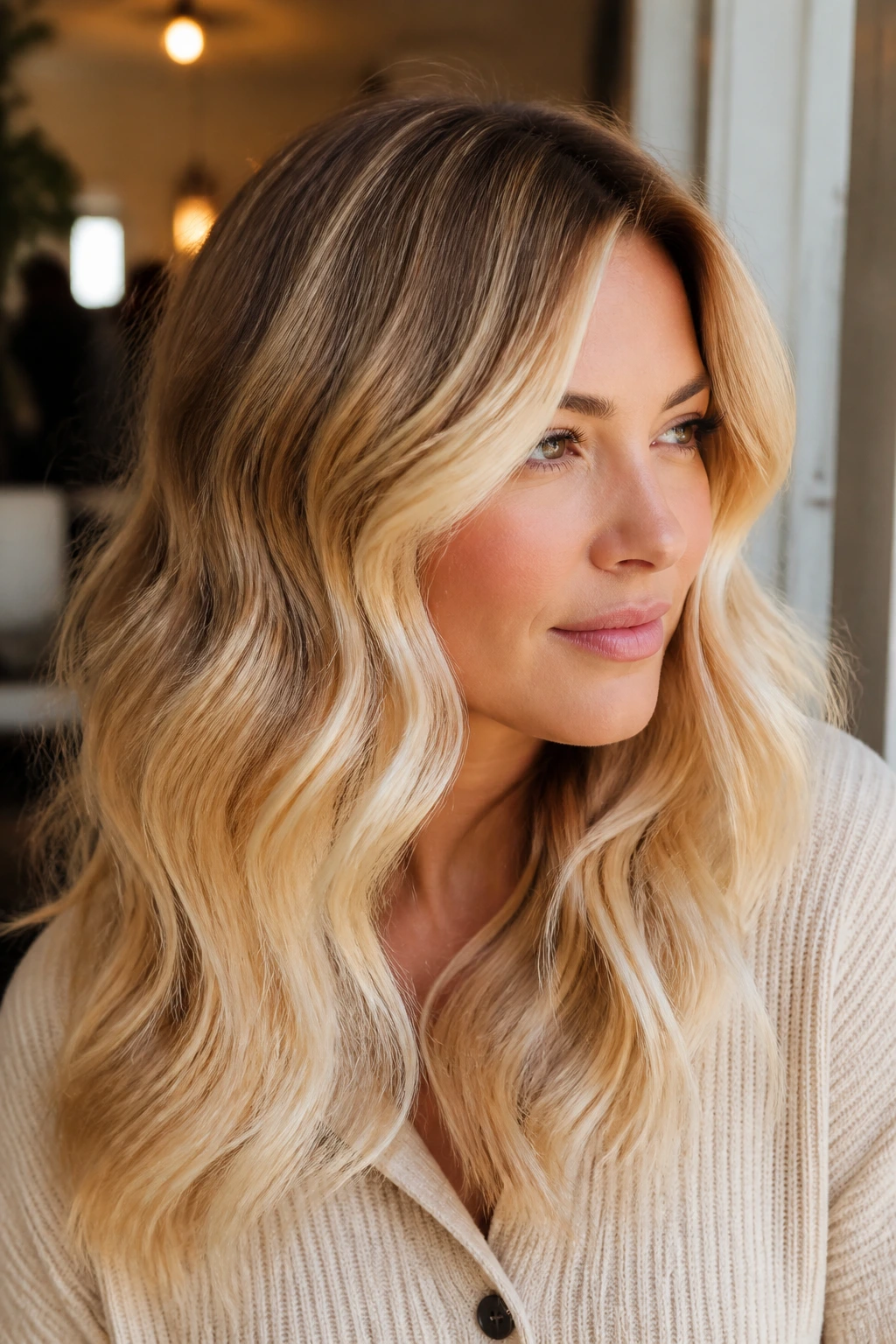
Crème brûlée blonde has a caramelized root and a creamy blonded finish that feels rich without being loud. The root depth makes the waves look thicker at the crown, while the lighter ends keep the look airy. On wavy hair, this shape of color makes a lot of sense.
It’s one of the more forgiving styles on the list. Even if the waves fall unevenly, the root shadow keeps the color from looking messy.
Ask for a soft melt, not a hard ombré line. The magic is in the transition.
38. Bright Mica Blonde With Airy Waves
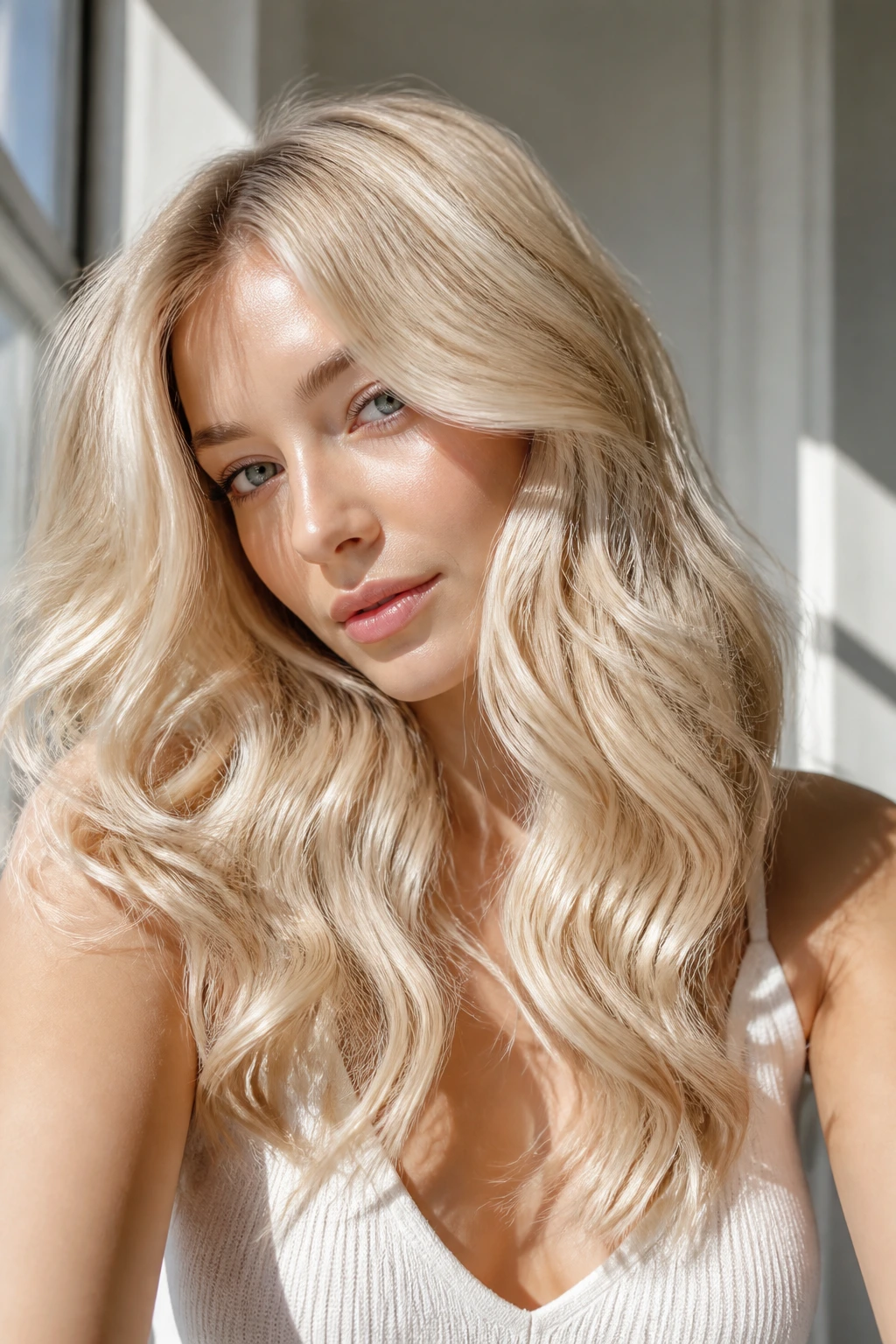
Bright mica blonde is pale, reflective, and a little translucent in the way mineral stone can be. On airy waves, it looks light without feeling flat because the movement breaks up the brightness. This is the kind of blonde that benefits from a very clean cut and regular toning.
Why It Lands
The name says it: mica has sheen, not glare. That’s what you want here. A reflective, bright tone that still leaves room for the wave pattern to show.
If your hair is damaged or very porous, this look can turn patchy fast. It’s best when the canvas is healthy and the styling is gentle.
Why Blonde Placement Changes the Way Waves Read
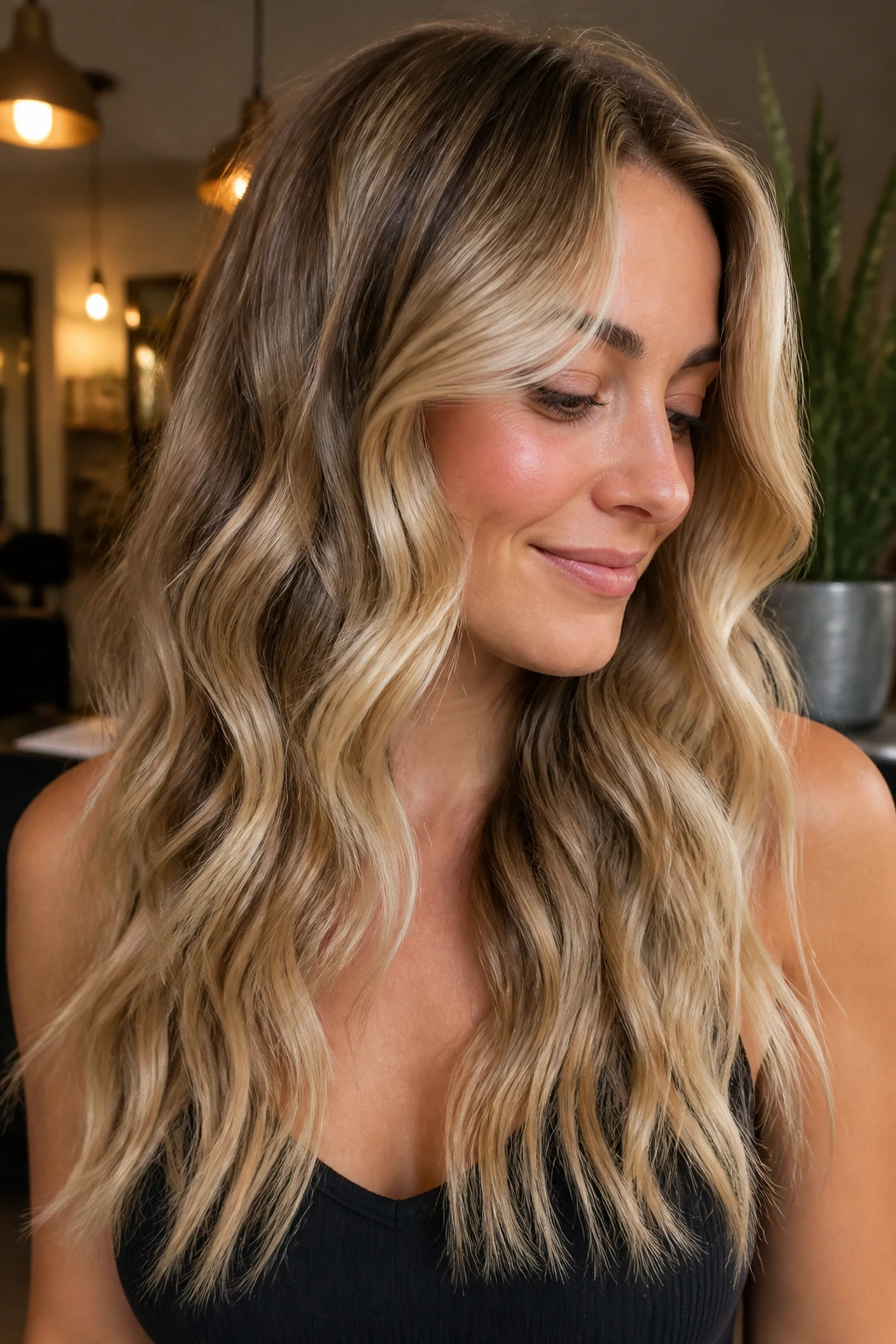
Wavy hair is not a flat surface. That sounds obvious, but it matters more here than people think. Every bend creates a little ridge of light and a little dip of shadow, and blonde placement can either work with that or bulldoze right over it. A single all-over blonde often erases the shape. Dimension gives the wave something to show off.
That is why root smudges, babylights, ribbon highlights, and face-framing pieces keep showing up in the best blonde hair looks for wavy hair. They let the hair move. A lighter piece at the bend of a wave looks brighter than the same piece on a straight strand, so you can get more visual lift without bleaching every inch of hair to the same level.
There’s also a practical side. Wavy hair tends to show dryness at the ends first. If you push every strand to the lightest possible blonde, the ends can start looking frayed and the whole style loses polish. A deeper root and a few lowlights can make the ends look fuller, which I’ll take over a pale but wispy finish any day.
Tools That Keep the Color and Waves Coherent
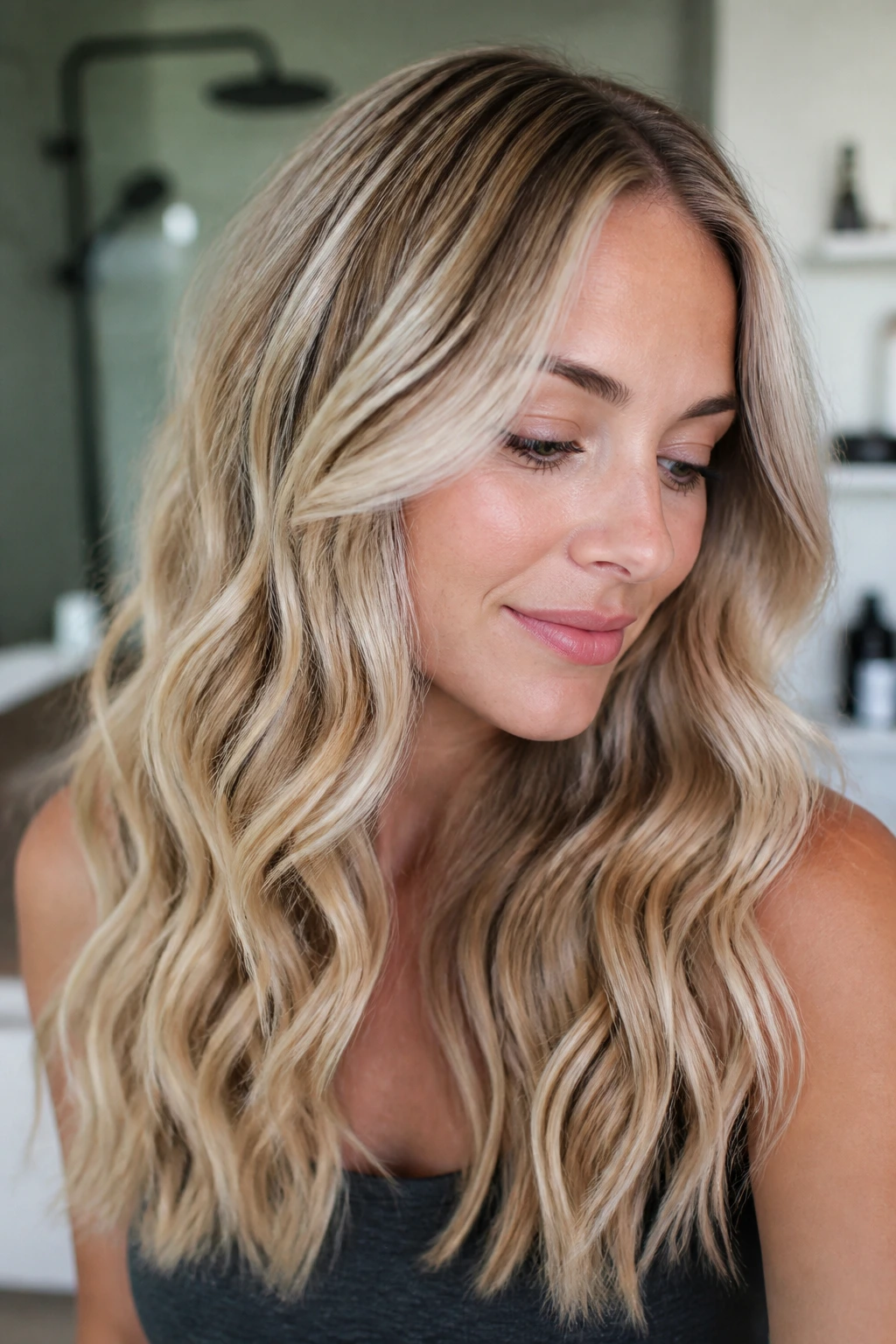
- Color-safe shampoo: Use one that cleans without stripping; harsh detergents can make blonde look dull and rough around the ends.
- Purple or blue shampoo: Helpful for keeping brass in check, but one wash every 1-2 weeks is usually enough for most blondes.
- Heat protectant spray: Mist it from mid-lengths to ends before waving or diffusing, especially if the hair has been lightened.
- 1-inch curling wand or iron: This gives a soft bend that matches most wavy blonde looks without making the pattern too tight.
- Wide-tooth comb: Better than a brush when hair is damp and highlighted, because it doesn’t yank the wave pattern apart.
- Microfiber towel or cotton T-shirt: Squeezes out water without roughing up the cuticle as much as a bath towel can.
- Glossing mask or conditioner: Use it weekly if the blonde starts looking dusty or dry.
- Section clips: Not glamorous, but useful when you want the light pieces placed cleanly while styling.
Choosing the Right Blonde Shade for Your Base
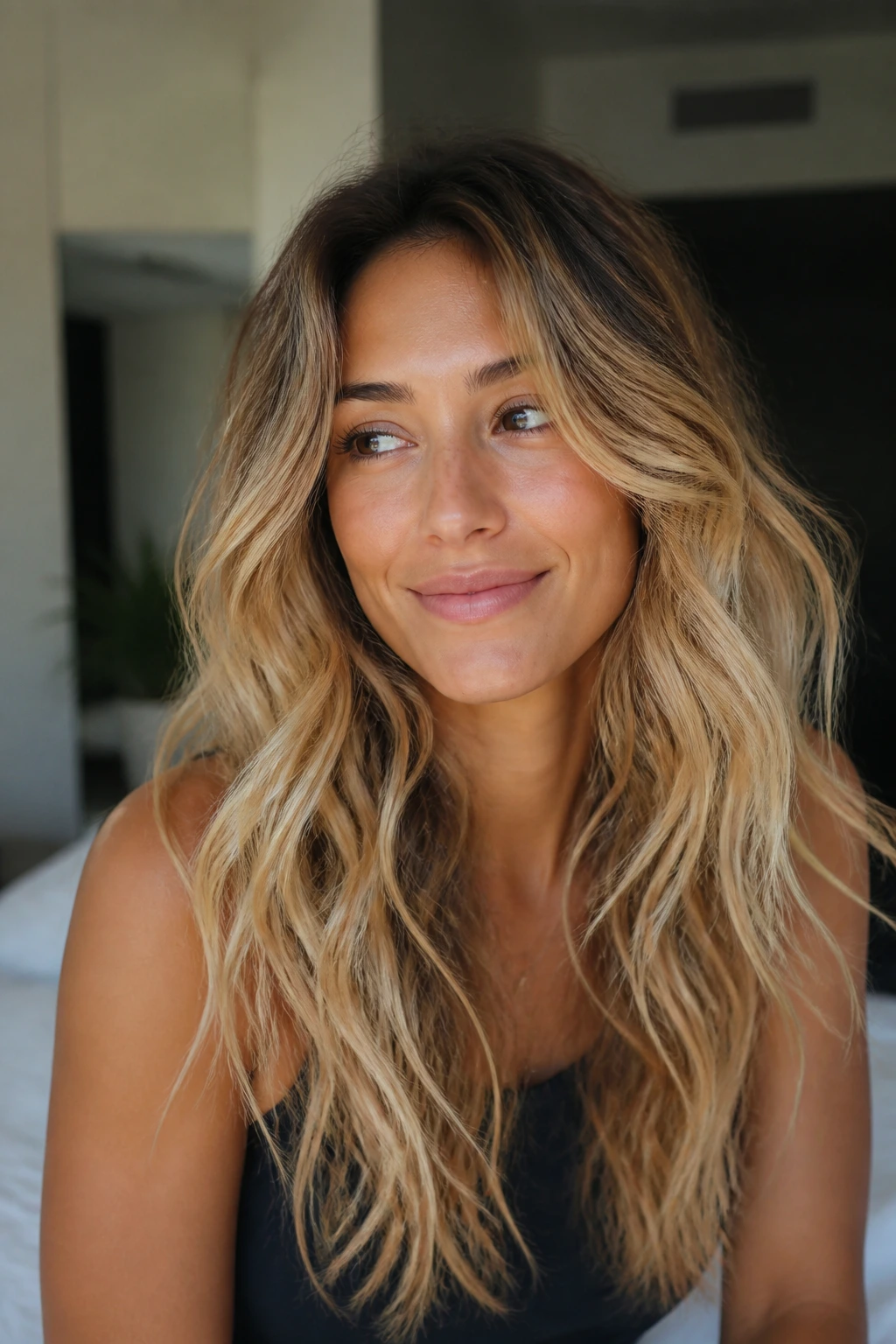
The easiest mistake is picking a shade from a photo and ignoring your starting point. A level 5 brunette who wants a pearl blonde is signing up for a different process than a level 7 dark blonde who wants beige ribbons. That doesn’t mean you cannot get there. It means the route and the upkeep are different.
Your base level: Darker bases usually look best with rooted blondes, melts, or dimensional highlights. Mid-blonde bases can support brighter pieces and still keep the hair feeling full.
Your undertone: Warm skin often plays well with honey, butter, apricot, and cream soda tones. Cooler skin usually likes pearl, ash, mushroom, and cool cream. Beige is the peace treaty if you are stuck in the middle.
Your wave pattern: Loose waves can wear bigger ribbon highlights and a stronger contrast. Tight, irregular waves tend to look better with finer babylights or softer melts, because the texture already creates visual movement.
Your hair health: Porous or damaged hair grabs toner fast. That can make an ash blonde go muddy or a pale blonde go flat. Healthy ends hold tone more evenly, and they reflect light in a cleaner way.
Bring photos. Better yet, bring photos of hair that looks like yours in texture and length, not just color. That one detail saves a lot of bad expectations.
How to Wear the Color So the Waves Do the Work
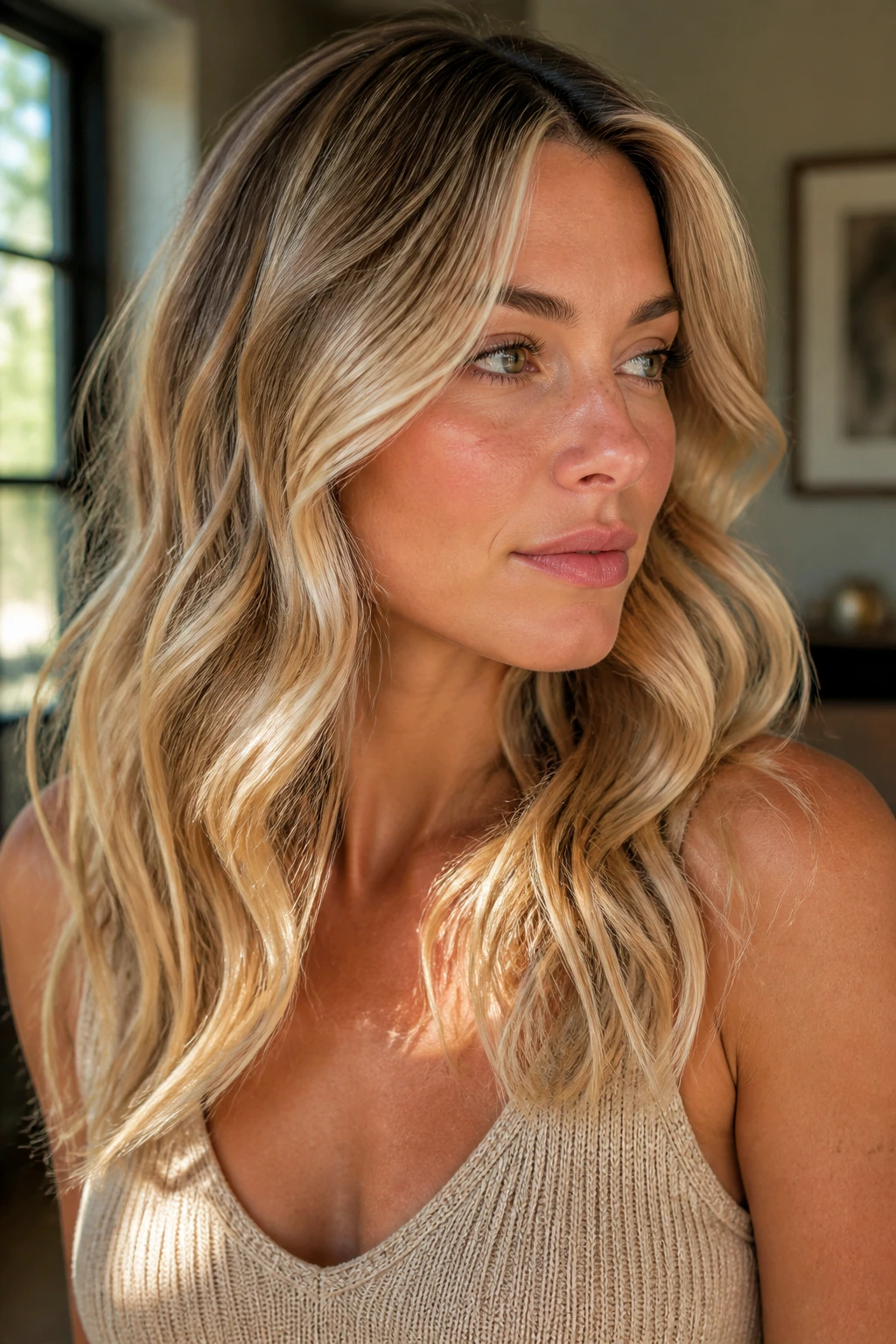
Presentation: Let the brightest pieces sit where the wave bends around the cheekbone, jaw, and collarbone. Those are the spots that move when you turn your head, and that’s where the blonde looks alive instead of static.
Styling: A soft bend with a 1-inch wand or a diffuser and curl cream is usually enough. The point is not to make perfect spirals; the point is to make the lighter ribbons separate just enough that the dimension shows. Keep the ends slightly undone.
Maintenance: Rooted blondes and melts can usually go longer between salon visits than solid platinum shades. If you choose an icy or very pale look, plan on more regular toning and trim appointments because dryness shows faster on wavy hair.
Best Matches: Long layers, curtain bangs, shags, lobs, and soft bobs all make blonde look more layered. A blunt cut can work too, but it needs enough texture to keep the color from sitting like one block.
Small Tweaks That Make Blonde Look More Expensive
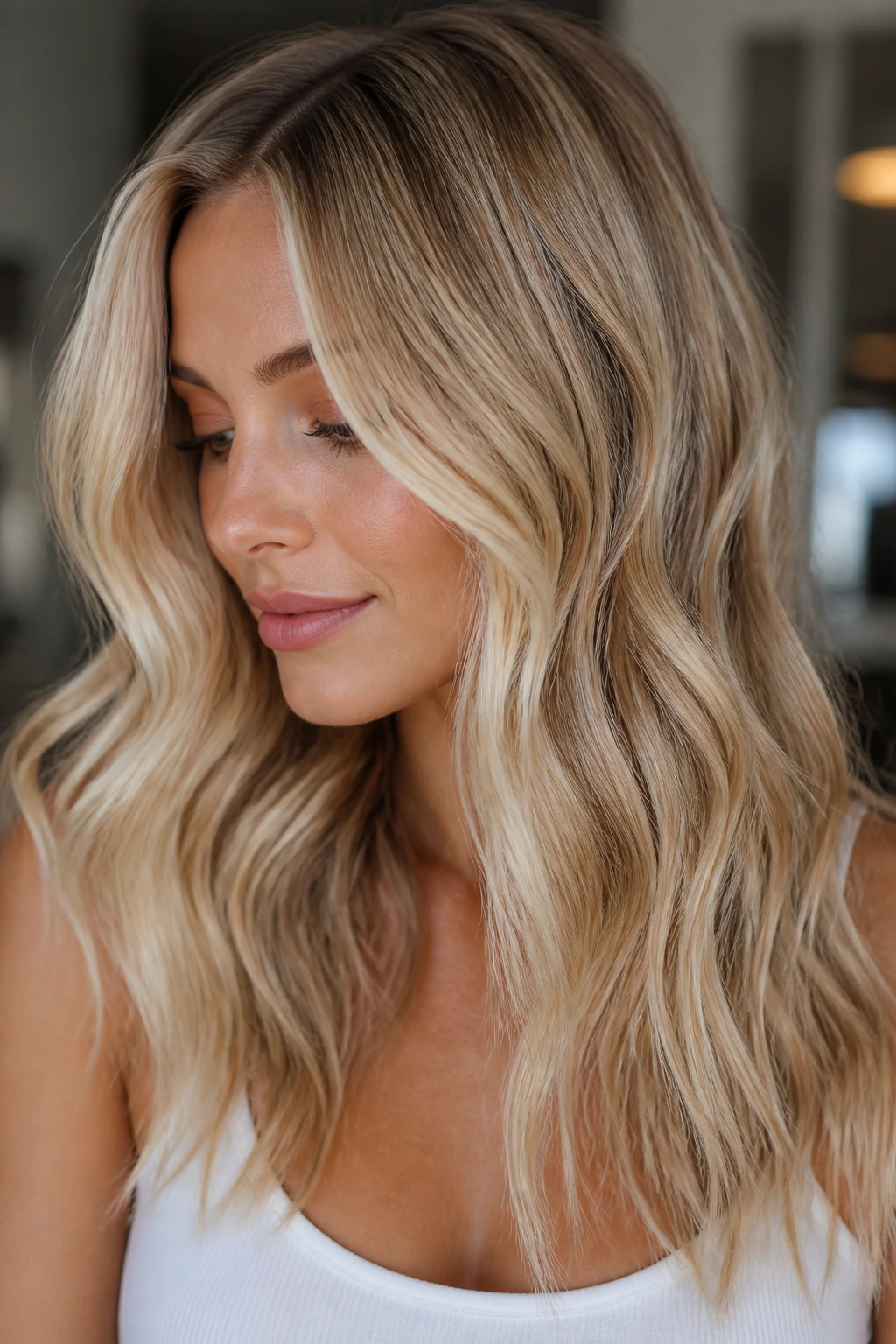
Tone Enhancement: A clear gloss or beige toner between highlight appointments can keep the blonde from turning chalky. If the ends look dry, skip strong purple shampoo for a week and use a moisturizing mask instead.
Customization: Ask for more brightness around the hairline if you want a lifted face effect, or ask for scattered lowlights if your waves feel too wide and airy. Both changes make a big visual difference without changing the whole head.
Finishing Touches: A pea-sized amount of lightweight oil on the ends can calm frizz, but use it sparingly. Too much and the blonde turns slick and heavy. A soft finishing spray with a little hold is often better for keeping the wave shape intact.
Make-It-Yours: Fine hair usually needs finer highlights. Thick hair can handle chunkier ribbons and stronger contrast. If your skin leans warm, ask the colorist to keep the blonde beige-gold rather than icy-white.
Common Mistakes That Flatten Wavy Blonde
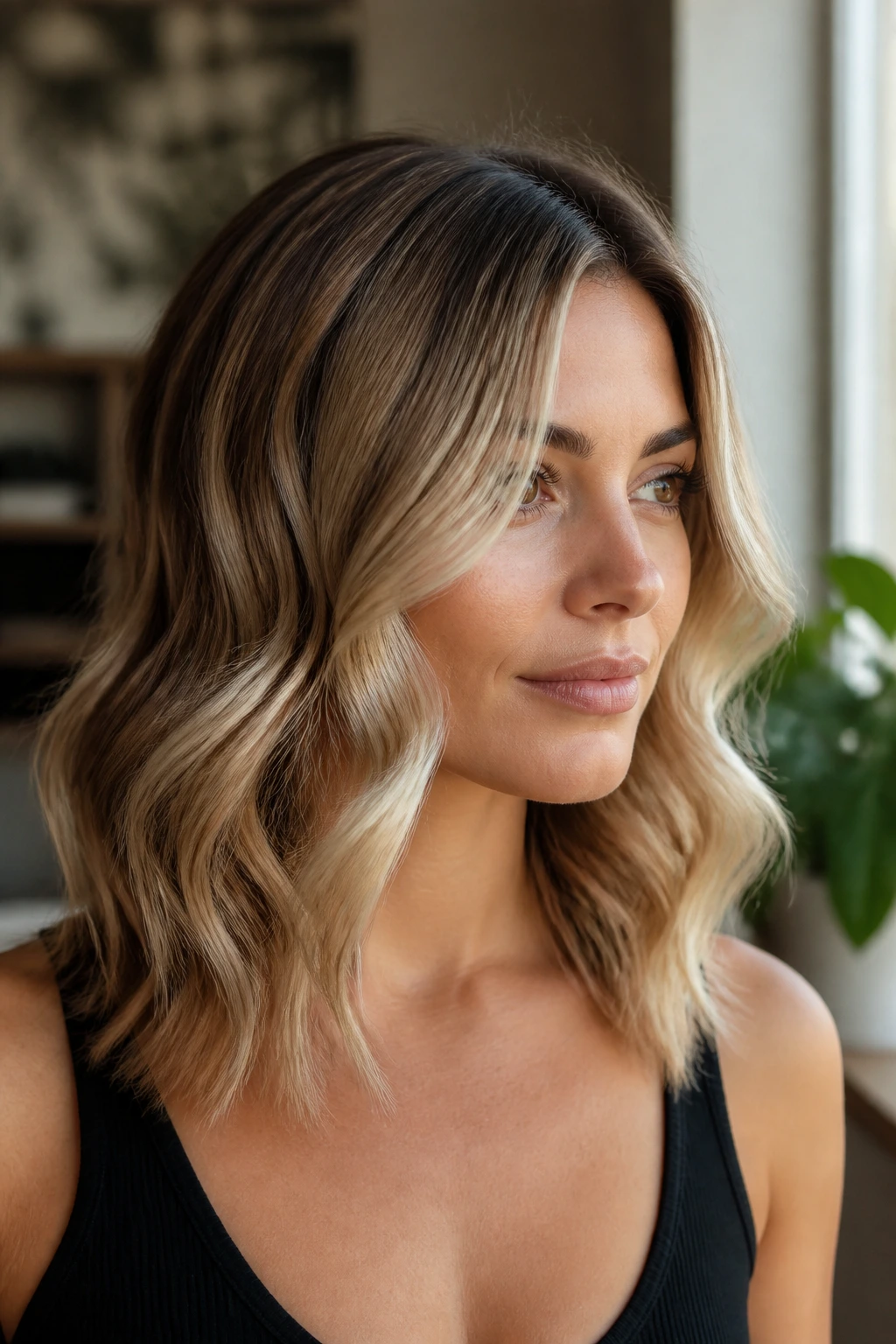
One of the biggest mistakes is going too light everywhere. When every strand is lifted to the same level, wavy hair loses its shadow and starts looking puffy at the top, thin at the ends. The fix is simple: keep some root depth and let a few darker ribbons stay in the mix.
Another one is choosing toner by name alone. “Ash” sounds cool and chic until it lands on porous hair and turns dull. “Honey” sounds friendly until it pulls orange on a warm base. Toner has to match the starting canvas. That part does not get enough respect.
People also overuse purple shampoo. It can help, but it is not a daily cleanser for most blondes. Use it too much and the blonde gets flat, dry, and oddly muted.
And then there’s the styling problem. Tight curls on a heavy highlight pattern can make blonde look busy instead of dimensional. Loose waves or a broken bend usually show the color better and keep the hair from looking too edited.
Variations and Adaptations to Try
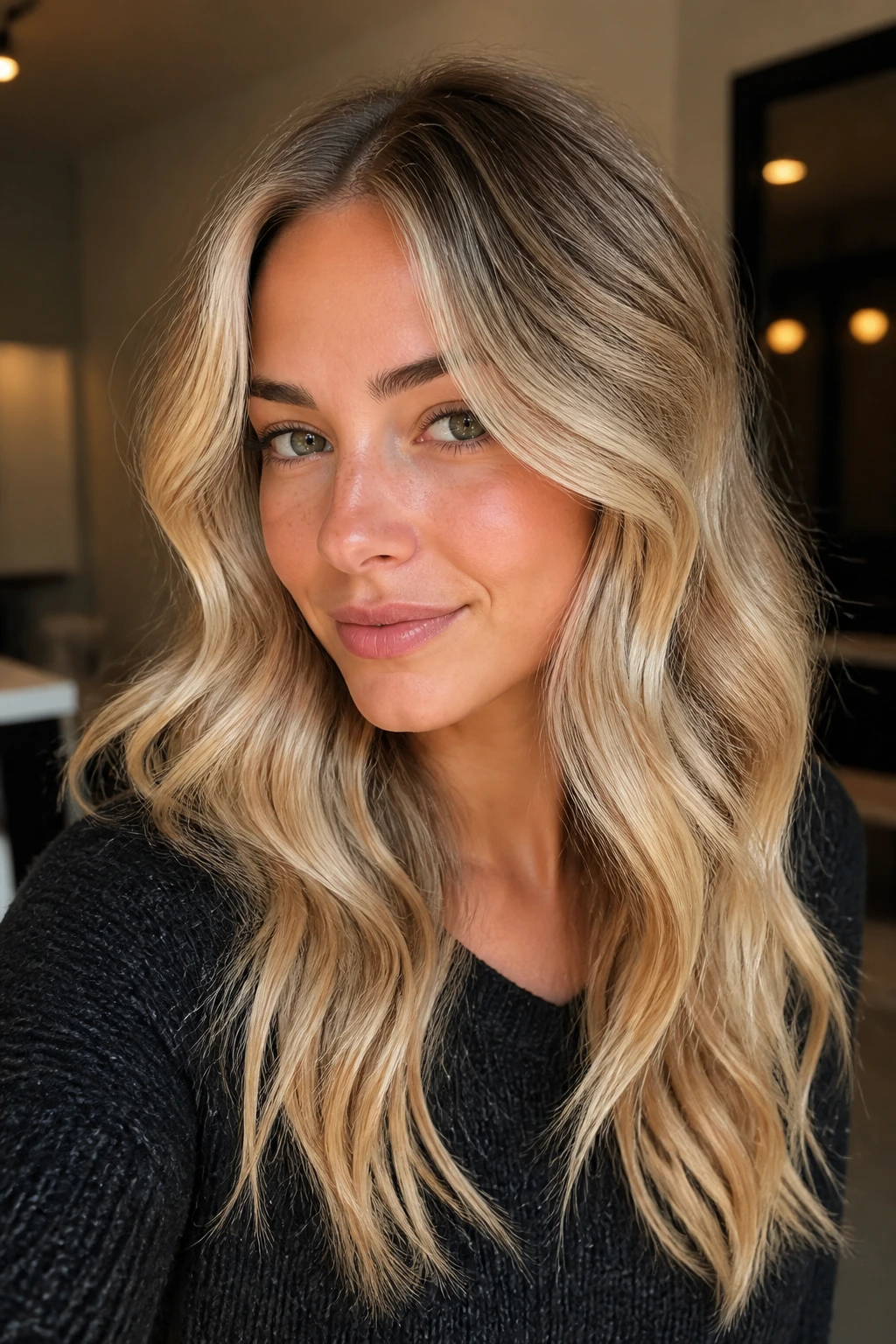
Low-Maintenance Root Melt: Keep the root darker and the blonde softer through the mids. This is the easiest version to live with if you do not want a harsh line every few weeks.
High-Contrast Bright Front: Go heavier on face-framing pieces and leave the back more muted. That creates lift around the face without requiring a full-head blonde commitment.
Warm Honey Upgrade: Swap beige or ash toner for honey-gold pieces. It works best if your skin has warmth in it or if your base already leans golden.
Cool Smoke Version: Keep the blonde in mushroom, ash, or cool cream territory. This suits people who like a more muted finish and don’t want their waves to read beachy-sweet.
Tiny Babylight Blend: Use ultra-fine highlights instead of chunky ribbons. Fine hair, soft waves, and a cautious grow-out plan all benefit from this softer approach.
Keeping the Blonde Bright Between Salon Visits
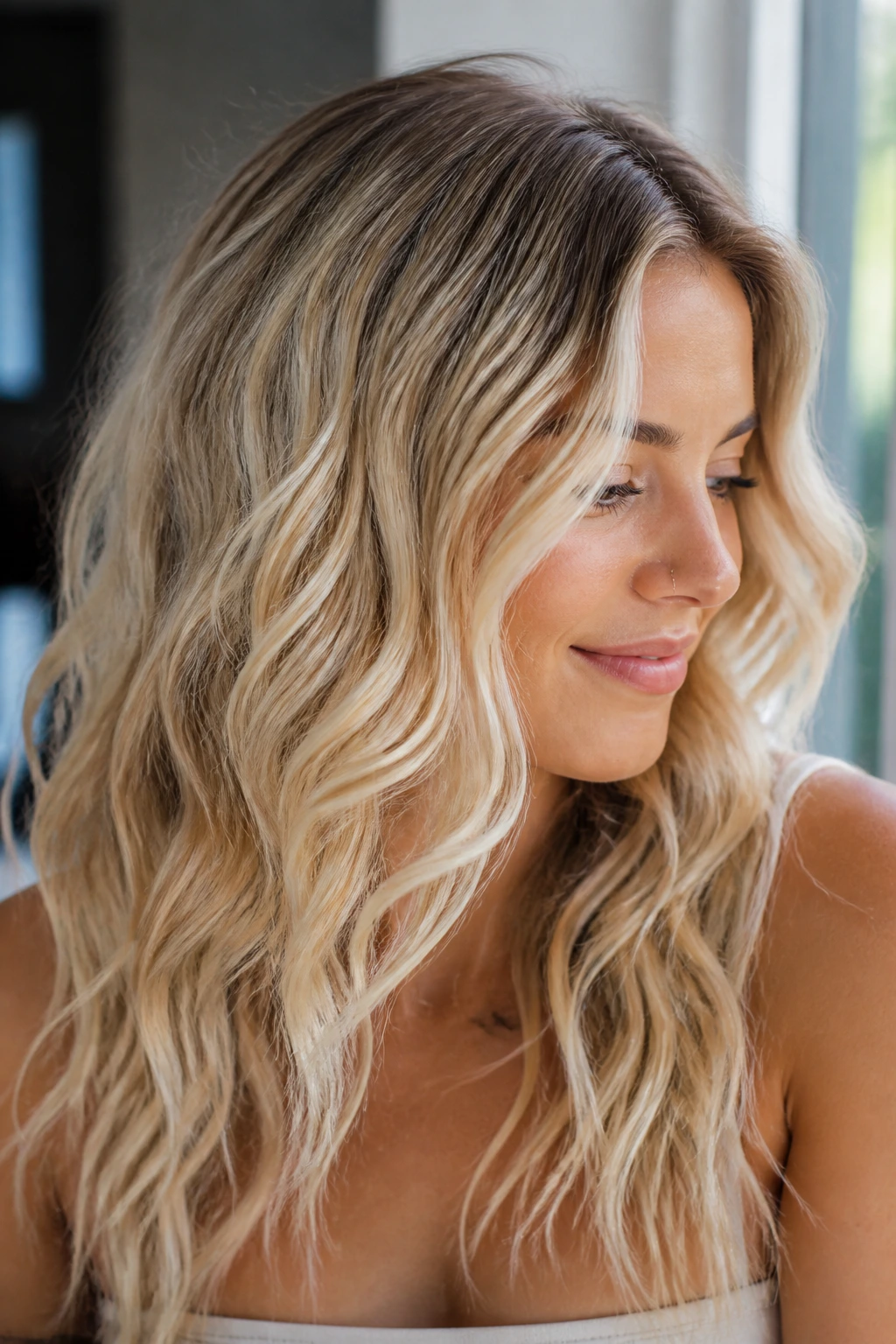
Blonde on wavy hair needs maintenance, but not every blonde needs the same kind. A rooted beige melt can often go 8 to 12 weeks before it looks tired, especially if you keep the toner fresh and the waves soft. A high-lift platinum or icy pearl look needs more attention because the cuticle and tone show every bit of dryness.
Wash with color-safe shampoo and keep hot water in check. Scalding water roughs up the hair and can make blonde fade faster than you expect. Once a week, use a moisturizing mask on the mid-lengths and ends. If brass starts creeping in, use purple shampoo sparingly — think one wash, then a break, not a full takeover.
Glosses and toners usually do their best work in the 4- to 8-week window, depending on how fast your hair grows and how strong the blonde is. Trims matter too. Wavy hair looks better when the ends are blunt enough to hold shape; if the ends get too wispy, the blonde starts looking thin even if the color is still good.
Heat protectant is not optional on lightened hair. Not even close. If you blow-dry or wave the hair often, a thermal spray can save the ends from that rough, papery look that ruins a clean blonde faster than brass does.
Questions People Usually Ask Before Going Blonde on Waves
Which blonde shade is easiest to maintain on wavy hair?
A rooted beige, cream soda, or soft gold balayage usually gives the best mix of brightness and grow-out. The shadow root and the blended placement hide regrowth better than all-over light blonde.
Do waves need balayage more than traditional highlights?
Not always, but balayage often looks softer on waves because the painted placement follows the bend of the hair. Foils can work too; they just need a careful layout so the pieces don’t feel too stripey.
Will blonde make my waves look frizzy?
It can if the hair is lightened too far or styled too aggressively. A lower-lift blonde with a gloss finish usually reads smoother, and a good leave-in conditioner helps keep the wave clumps from fraying apart.
Can fine wavy hair wear blonde without looking thin?
Yes, but the placement has to be light and controlled. Babylights, face-framing brightness, and a slightly deeper root help preserve the look of fullness.
How often should I tone blonde hair on waves?
Most people do well with a toner or gloss every 4 to 8 weeks, depending on how warm or porous the hair is. If the blonde still looks clean, do not rush it just because the calendar says so.
Is platinum a bad idea for wavy hair?
No, but it asks for more care. Platinum looks sharp on waves when the cut is healthy and the ends are trimmed, but it shows damage faster than beige or honey tones.
What if my hair is dark brown and I want a blonde look?
Start with a rooted melt, bronze-to-blonde blend, or thick face-framing pieces instead of trying to reach pale blonde in one appointment. Dark bases usually look better and feel healthier when the lightening is staged.
How do I keep the blonde from turning yellow?
Use cool shampoo only when needed, not every wash, and keep the hair moisturized so the ends do not go dull and porous. A beige gloss often works better than aggressive purple shampoo for keeping the tone clean.
A Blonde That Moves With the Wave
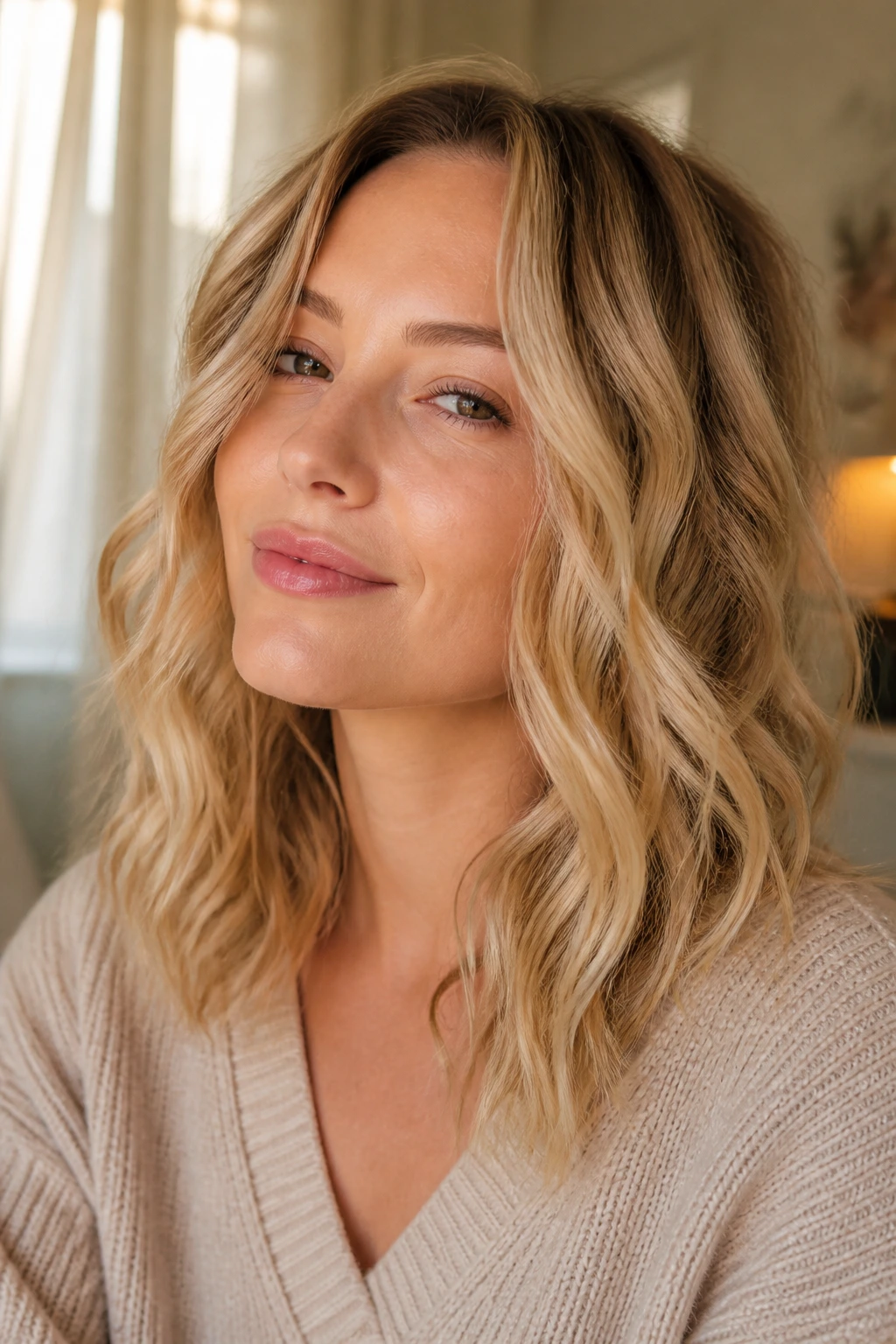
The best wavy blonde is never just about being light. It’s about the way the color breaks across a bend, the way the root gives the ends somewhere to live, and the way the tone fits the hair you already have instead of bulldozing it. That’s why a rooted beige wave can look better than a flashier platinum job, and why a tiny money piece can sometimes do more than a whole head of highlights.
If you pick one of these looks, think about how you actually wear your hair. Air-dried and a little wild? Go softer and more blended. Always blow it out or wave it with a wand? You can get away with sharper contrast and brighter framing. The blonde should make the texture look like a feature, not a problem to hide.
And that’s the part worth remembering: wavy hair gives blonde somewhere to go. Use that movement well, and the color starts doing work for you every time the hair shifts.
