



Spiky haircuts for round faces work best when the height is real and the sides stay disciplined. Too many cuts called “spiky” end up doing the exact wrong thing: they puff out at the temples, round off the top, and make the face look wider than it is. That’s not a spike. That’s a mushroom with ambition.
The fix is geometry, not magic. You want vertical lift above the brow line, broken texture through the crown, and narrower sides that don’t flare out near the cheekbones. A good spike should pull the eye upward in a clean line, then stop. No helmet. No helmet-shaped chaos. And definitely no shiny gel that turns the whole thing into a stiff little cap.
What makes this category useful is how much it can be tuned. You can go short and neat, messy and rebellious, office-friendly, curly, coarse, soft, or sharply faded. The same basic idea — height on top, control on the sides — can be adapted a dozen different ways depending on your hair type, your work life, and how much time you want to spend in front of a mirror. The right spike can make a round face read sharper, taller, and cleaner before you even touch a beard trimmer.
Why These Cuts Earn Their Keep
Face-lengthening shape: Every cut in this collection keeps the eye moving upward instead of outward, which is the whole game with a round face.
Cleaner side profile: The best versions use taper, fade, or tight side length so the widest part of the face doesn’t get extra volume sitting beside it.
Flexible for different hair types: Straight hair can stand up fast, wavy hair gets texture with less product, and curly hair can be shaped into smaller, sharper points instead of fighting its natural bend.
Easy to personalize: You can make these styles bolder with a skin fade, softer with a taper, or more polished with a side part and a touch of matte cream.
Low-drama maintenance: A lot of these cuts look sharp with a 30-second blow-dry and a pea-sized amount of product, which is a nice change from styles that need a full ritual.
1. High-Volume Classic Spike
This is the clean, old-school answer when you want a spiky haircut for a round face without overthinking it. The top stands up in separate points, the sides stay tight, and the whole shape reads taller than it is wide. On a round face, that extra height does the heavy lifting.
Why It Flatters the Shape
Ask for about 2.5 to 3.5 inches on top and a low or mid fade on the sides. That gives you enough length to create actual lift, not just little bristles that fall back down by lunch. Use a blow dryer from damp hair, push the front up first, then pinch the crown into pieces with matte clay.
A round face usually needs a stronger vertical line than a square face does. This cut gives you that line without turning the hair into a flat plane or a round cap. It’s simple. That’s the point.
2. Textured French Crop with a Spiked Top
A French crop can get too blunt on a round face if the fringe is heavy and straight across. The spiked version solves that by breaking the top into short, choppy pieces that sit forward and up instead of out. It still feels neat, but it loses the bowl-cut softness that can make a face look wider.
What Makes It Work
Keep the fringe short enough that it doesn’t hang past the brow, then ask for point-cut texture through the top. That tiny bit of irregularity matters. It keeps the front from forming one solid line across the forehead, which is exactly what you do not want.
This one works especially well if your hair is fine or straight and tends to lie flat. A dab of matte paste and a quick finger rake is enough. No comb drama. No shellacked finish.
3. Short Quiff Spike
If you want height with a little sweep instead of straight-up rebellion, the short quiff is a strong move. It builds lift at the front, then angles the hair back just enough to stretch the face visually. On round faces, that diagonal shape is gold.
How to Wear It
The key is keeping the front longer than the rest of the top — usually around 3 to 4 inches — so the quiff has somewhere to go. If the front is too short, it collapses into a blob. If it’s too long, it starts looking like a pompadour that missed its train.
Use a round brush or your fingers with a dryer nozzle pointed upward and slightly back. A matte cream gives softer control than gel, and it’s a better choice if you want movement instead of a frozen ridge. Good cut. Better angle.
4. Temple Fade Brush-Up
This is one of my favorites for round faces because it quietly does two jobs at once: it trims away side width around the temples and builds a cleaner vertical line on top. The brush-up is less aggressive than a full spike, but it still adds the height you need.
A temple fade keeps the sides crisp near the ears and cheek area, which is where round faces often need the most help. The top can stay medium-short and textured, then get brushed up with a vent brush and a light hold product. It looks polished without feeling stiff.
5. Skin Fade with a Jagged Crown
A skin fade is not subtle. Good. Round faces usually benefit from contrast, and this cut gives it in a very direct way. The tight sides make the top look taller, and the jagged crown breaks up any softness that might otherwise make the face look fuller.
The trick is to keep the spikes uneven. Don’t build one perfect line across the top. That creates a flat shelf. Instead, ask your barber for point-cut texture so the top has little peaks of different heights. It’s a small detail, but it changes the whole silhouette.
6. Messy Crew Cut Spike
This one is for the guy who wants structure without looking like he spent 20 minutes sculpting his hair into a shape. The crew cut base keeps the sides clean, while the top is left just long enough to rough up into short spikes. On a round face, that little bit of height is enough to sharpen the outline.
The best part? It grows out well. The style doesn’t collapse into a weird shape after ten days. It just softens. Use a small amount of paste, work it into towel-dried hair, and push the top forward and up with your fingers. Simple. Effective. No nonsense.
7. Modern Mullet Spikes
Yes, a mullet can work on a round face — if the shape is narrow, the sides are controlled, and the top carries the visual weight. This version is more about texture than nostalgia. The front and crown stay spiky, the sides hug the head, and the back is left a little longer without turning fluffy.
This cut only works when the nape stays tidy. If the back widens, the face reads rounder. That’s the trap. Keep the silhouette tight and let the spikes do the talking.
8. Angular Fringe with a Spiked Top
This is for anyone who wants a little forehead coverage but does not want the dead weight of a blunt fringe. The trick is to cut the fringe into points and angle it slightly to one side, so it breaks the roundness instead of echoing it.
How to Make It Read Sharper
The fringe should never sit like a straight curtain. It should look broken, almost jagged, with one side a bit longer than the other. That asymmetry matters more than people think. Round faces look better when the eye has to travel, not settle.
Use a blow dryer to direct the fringe diagonally, then finish with a dry paste. If your hair is thick, ask for internal thinning so the top doesn’t puff up in a triangle.
9. Faux Hawk Fade
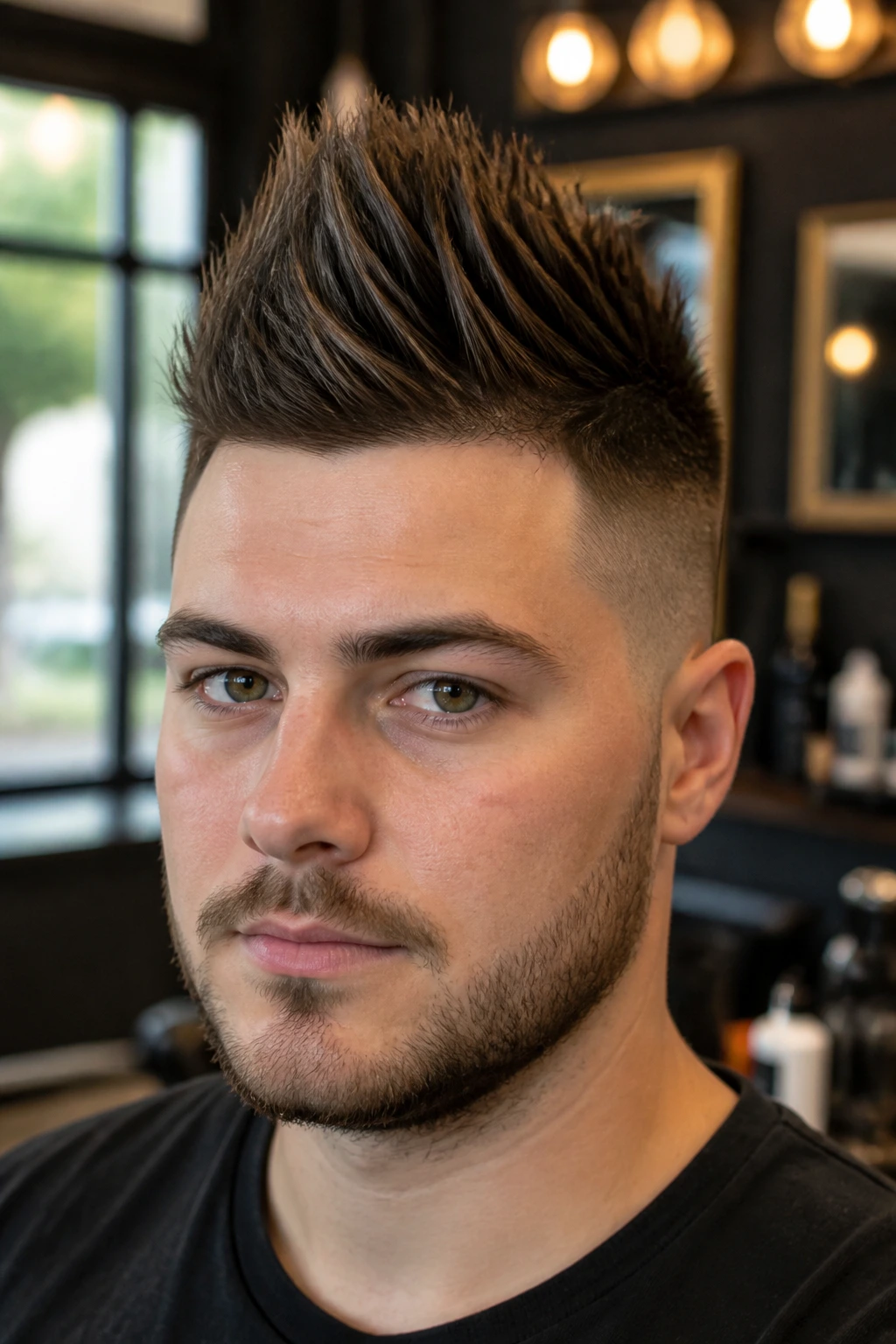
The faux hawk is the loudest version here, and sometimes that’s exactly the point. It compresses the sides and concentrates the height down the middle, which is a very efficient way to make a round face look longer and narrower.
Keep the center strip textured, not crispy. A faux hawk that’s too stiff turns cartoonish fast. A good one should have movement, with the outer edges feathered down into the fade. If you want a style that looks deliberate even in bad lighting, this is a solid pick.
10. Ivy League with a Spiky Finish
The Ivy League usually gets filed under “safe,” but a slightly spiked finish gives it just enough edge to work for round faces. The side part creates direction, and the short top can be pushed up at the front for a little lift. It’s neat. It’s not boring.
This is a smart choice if you wear glasses or a blazer more often than a bomber jacket. It keeps the face open and clean while still giving the top some shape. Use a light product — cream or soft paste — so the hair stays touchable instead of glossy.
11. Taper Fade and Cropped Spikes
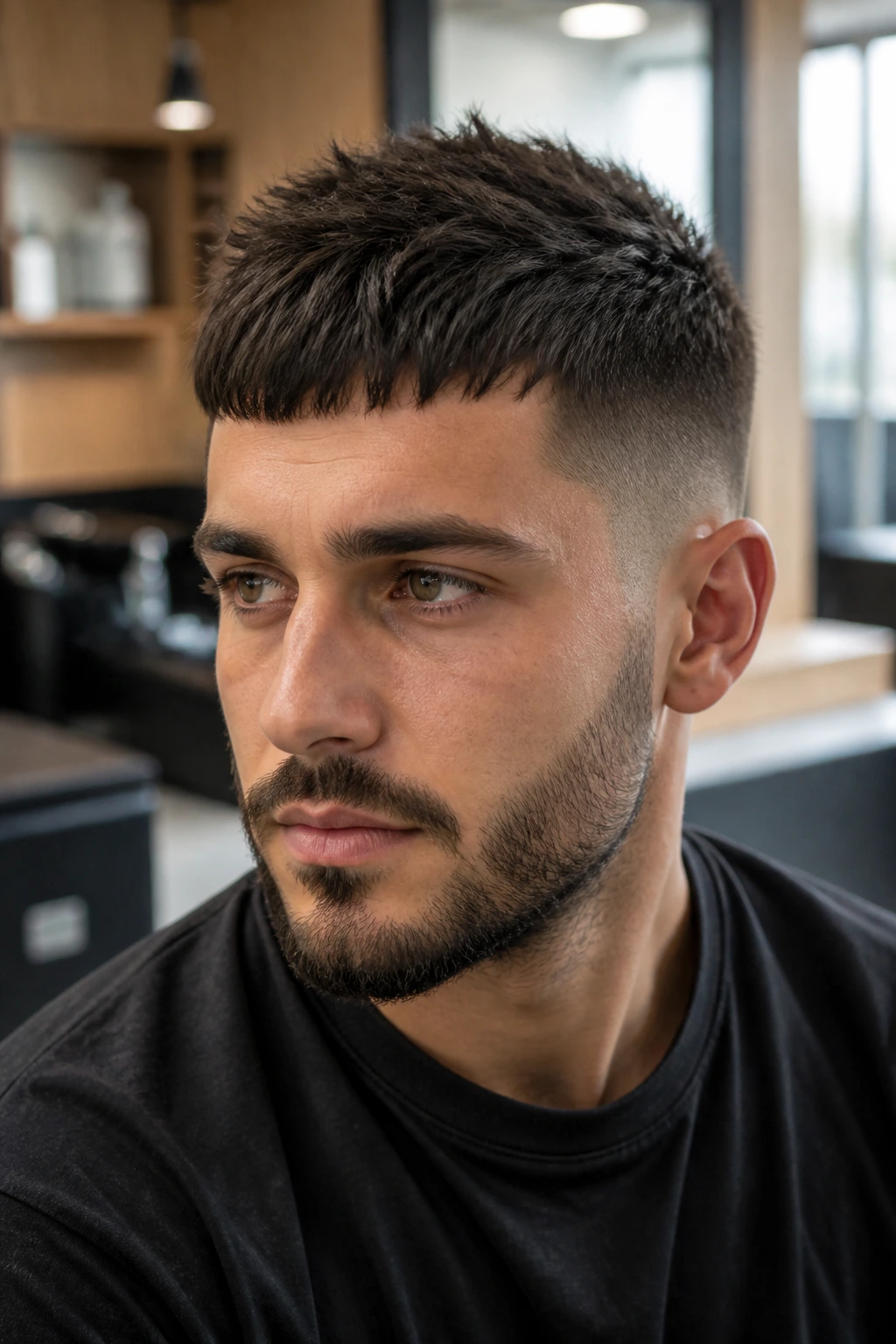
A taper fade is the quieter cousin of a skin fade, and that makes it useful for people who want structure without a hard edge. The taper tightens the silhouette near the ears and neckline, while the cropped spikes up top add just enough height to keep the face from reading too full.
Ask your barber for a top length around 1.5 to 2 inches, then point-cut the ends so the texture looks broken rather than blunt. That’s what keeps the cut from looking like a short brush cut. If you work in a more conservative office, this is one of the easiest options to wear daily.
12. Side Part with Upright Texture
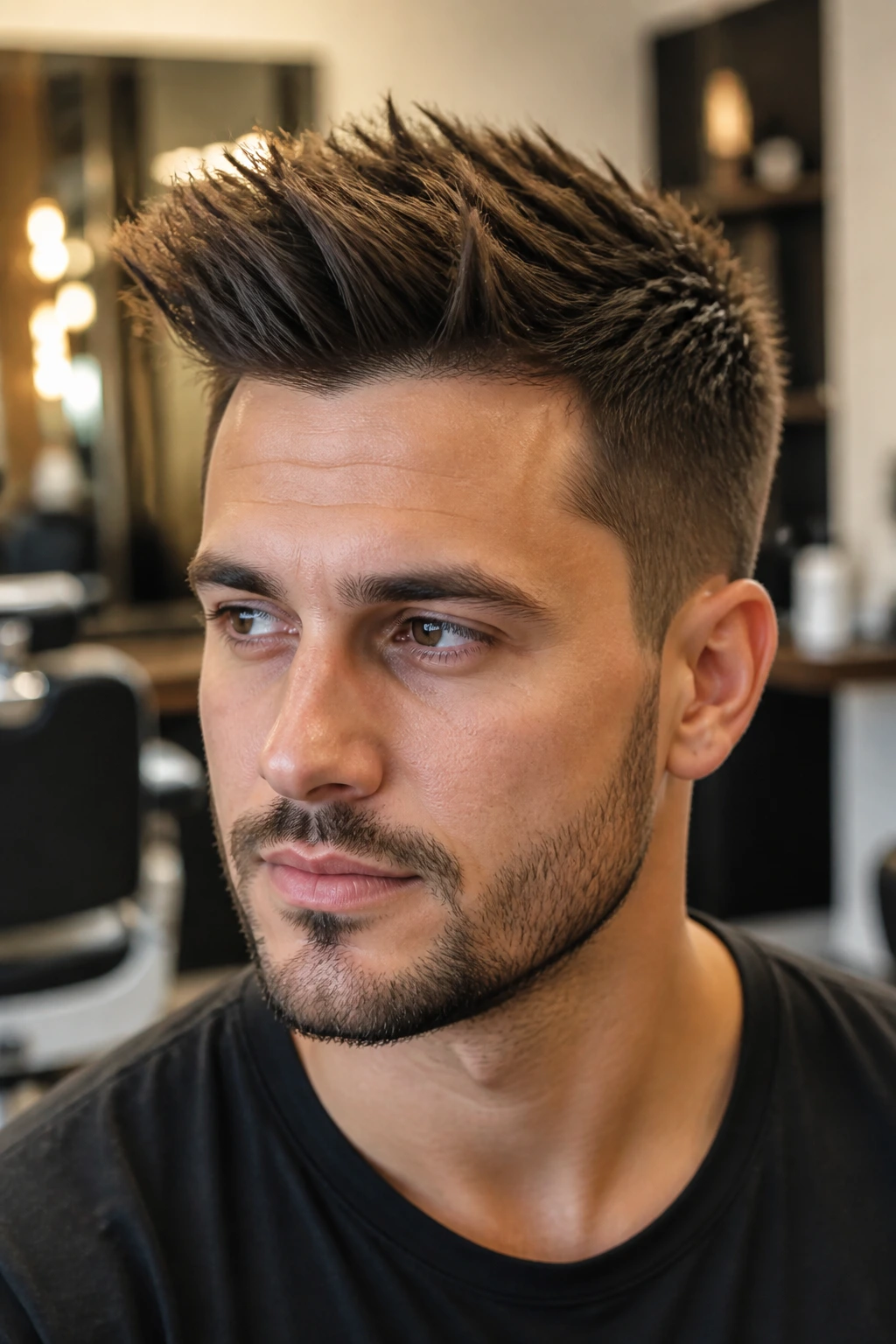
A side part sounds tame until you rough up the top a little. That small shift changes everything. Instead of one centered shape that mirrors the roundness of the face, you get a diagonal line, a bit of asymmetry, and a lifted top that steals attention upward.
I like this for guys who hate hair that looks “styled.” It still is styled, obviously, but it doesn’t announce itself. Use a comb for the part, then break the top with your fingers so it doesn’t fall flat. The result is cleaner than full spikes and less predictable than a flat comb-over.
13. Burst Fade Spiky Top
The burst fade wraps around the ear in a curved shape, which gives this cut a little personality right where many round faces need the most slimming. Pair that with a spiky top, and you get contrast in two directions: tight around the sides and higher through the center.
Keep the sides lean. That part matters. If the burst fade grows out into a fuzzy halo, the face starts looking broader again. The top should stand on its own, not blur into the fade.
14. Curly Spiky Crop
Curly hair can spike. It just does it in a different language. Instead of needle-like points, you get small, lifted pieces that bend at the ends and give the cut a textured, airy look. On a round face, that extra vertical texture helps without making the hair seem overworked.
The best version of this cut keeps the curls short enough to lift but long enough to keep their shape. Too short, and the hair looks fuzzy. Too long, and the top becomes a round mass. A curl cream plus a light matte product is usually enough. Then stop touching it.
15. Spiky Pompadour
This is the tallest style in the group if you want a more dramatic profile. A pompadour already builds height, and the spiky finish keeps it from looking too smooth or too retro. For round faces, that upward sweep can be especially useful because it pulls the eye from the cheeks to the forehead.
It does need a dryer and a bit of patience. You are not getting this from a quick hand-ruffle. Blow-dry the front up and slightly back, then use a firm but matte product to keep the shape. If the sides stay tight and the top stays clean, the whole cut feels deliberate rather than oversized.
16. Drop Fade with Vertical Texture
A drop fade dips behind the ear, which gives the haircut a more sculpted outline than a straight fade. That contour helps break the roundness of the face by making the side profile less boxy. Add vertical texture on top, and you’ve got a cut that looks sharp from the front and side.
This one works best when the top isn’t too broad. Keep the spikes concentrated toward the center strip and let the front rise a little higher than the crown. If you’ve got thick hair, ask for point-cutting or razor texture so the top doesn’t swell into a block.
17. Disconnected Undercut Spikes
A disconnected undercut is not subtle, and that’s the charm. The sides drop away sharply while the top stays long enough to stand up in distinct spikes. That hard separation creates a stronger vertical shape, which is exactly what a round face can use.
The downside is obvious: it grows out with attitude. If you skip trims too long, the disconnect stops looking sharp and starts looking accidental. Keep the top lifted and the sides clean, and this cut has a bold, almost graphic look that suits people who like a little drama in the mirror.
18. Messy Spiky Caesar
A Caesar cut usually keeps things short and forward, but the spiky version adds a bit of lift and breaks the straight fringe line. That matters on a round face, because a heavy, flat fringe can make the face look shorter and fuller than it is.
This is a smart option if you’re dealing with a receding hairline or thinning at the front. The short fringe gives you coverage without pretending the hair is longer than it is. A small amount of paste, rubbed between the palms first, is enough. Anything heavier makes the front clump.
19. Soft Spiky Slick-Back Hybrid
Not every spike has to stand at attention. This hybrid pushes the hair back with just enough separation at the ends to keep it from becoming a flat slick-back. That slightly broken finish makes the face read longer without adding harsh corners.
It’s a good match for straight hair that likes to lie down, because you’re working with that tendency instead of fighting it. Use a light cream and a dryer to guide the hair back and up, then separate a few strands at the front with your fingers. The result is less aggressive than a full spike, but cleaner than a loose sweep.
20. High Fade and Layered Spikes
A high fade is a strong move on a round face because it strips bulk from the sides fast. Pair it with layered spikes on top, and you get lift, texture, and a clear contrast between top and sides. That contrast is the whole point.
What makes this version stand out is the layering. The top should not be one even length; it needs shorter and longer pieces so it doesn’t balloon into a solid shape. Use a medium-hold matte product and work in sections. If the hair is thick, this is one of the best ways to stop it from sitting like a block.
21. Short Spiky Afro
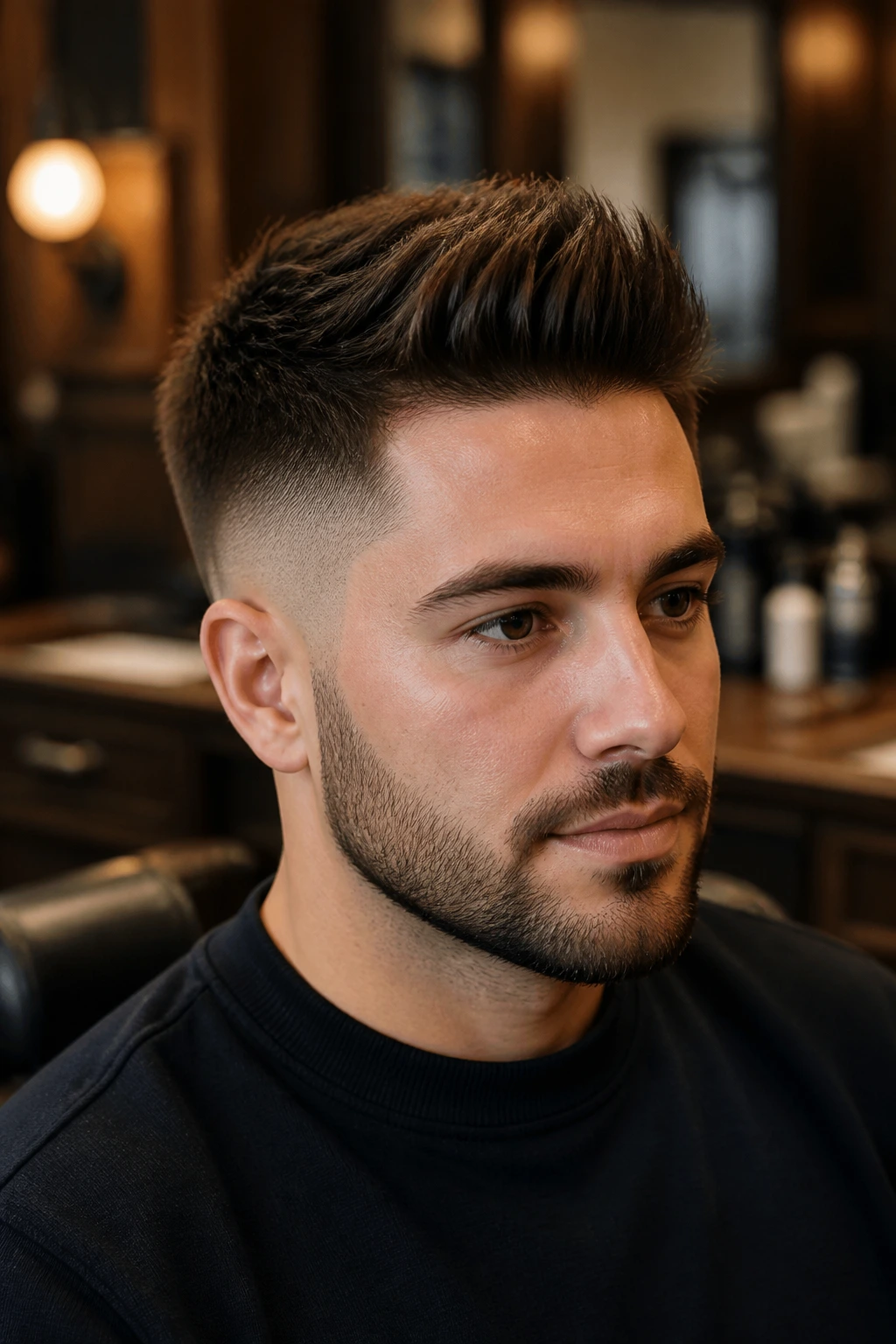
Coily hair can look incredible in a short spiky shape when it’s controlled instead of forced. You’re not chasing sharp little needles here. You’re shaping height and direction, keeping the sides tight, and letting the top stand with texture. On a round face, that vertical lift does serious work.
The best part is the natural shape. Coily hair already wants to live away from the scalp, so the cut can feel less sculpted than straight-hair spikes. Keep the sides tapered and the top even enough to read as intentional. A sponge, pick, or a small amount of curl cream can help define the lift without flattening it.
22. Spiky Top with Beard Balance
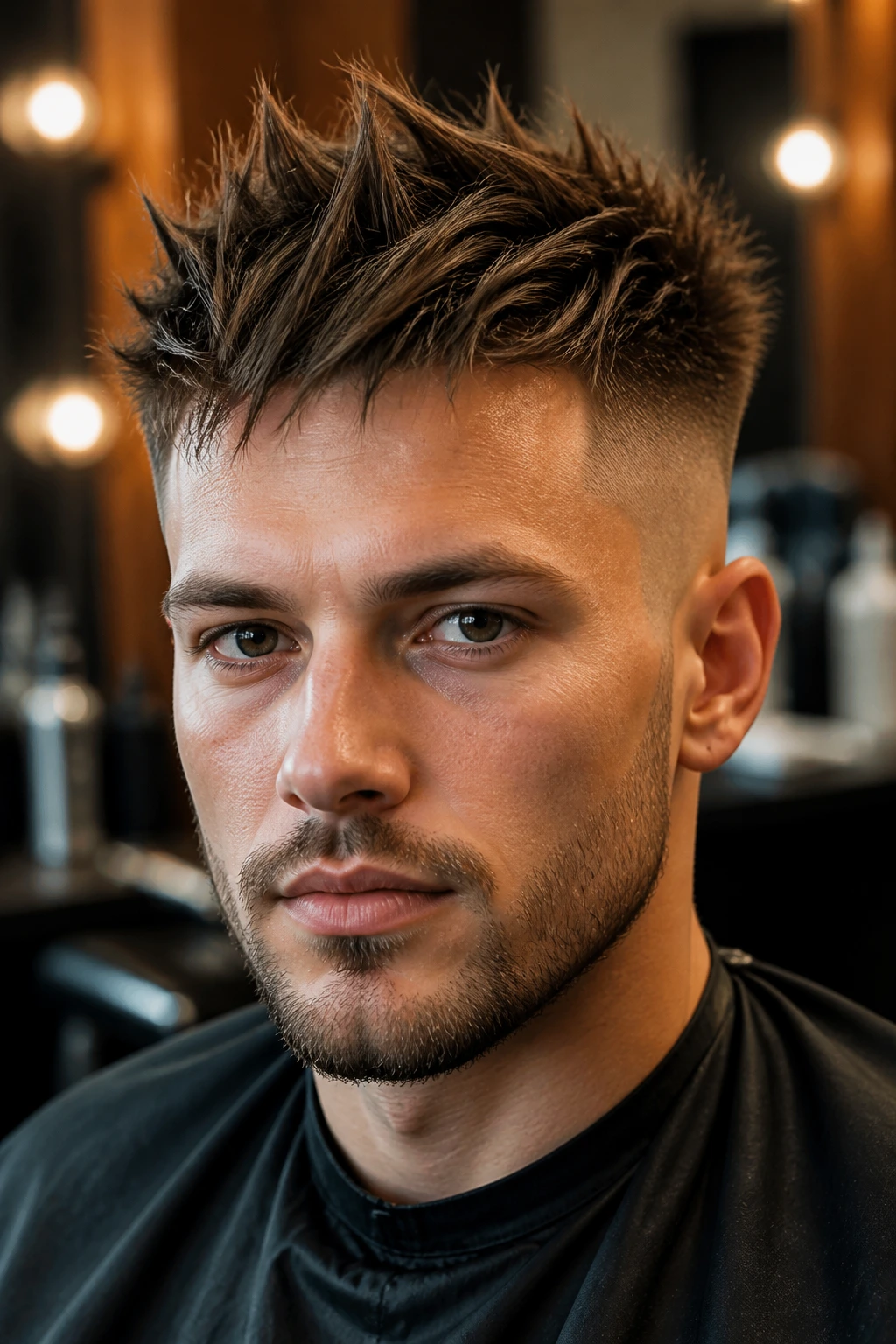
A good beard can change the whole effect of a spiky haircut on a round face. The hair up top adds height; the beard adds length below. That combination stretches the face in both directions, which is why it works so well when the beard is shaped instead of left wild.
Keep the beard slightly narrower at the cheeks and fuller at the chin. If the beard flares outward, it fights the haircut and brings the roundness back. The top can stay medium-short and spiky, while the jawline gets a cleaner taper. That balance looks intentional, not overdone.
23. Razor-Cut Shag with Spikes
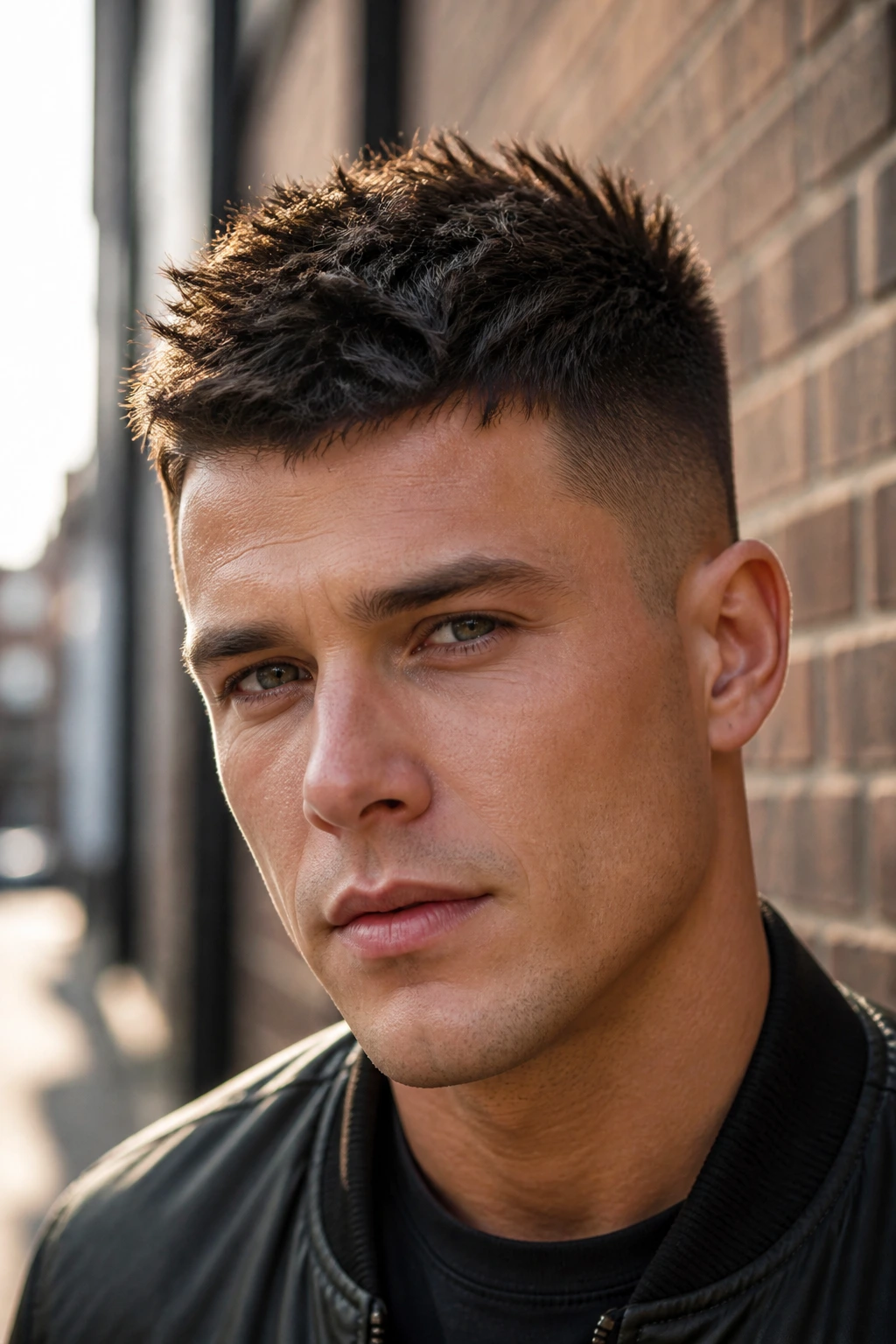
This one has more movement than most of the other cuts here. A razor-cut shag gives the top feathered edges and a little swing, which can be pushed into soft spikes instead of rigid ones. It suits wavy hair especially well because the texture already has some bend in it.
The shaggy shape can go wrong if it gets too wide, so the sides need to stay controlled. Ask for layers that lift the top but don’t puff at the cheekbone line. If you like hair that looks like it has life in it by noon, this is a strong pick.
24. Low-Taper Spikes for Work
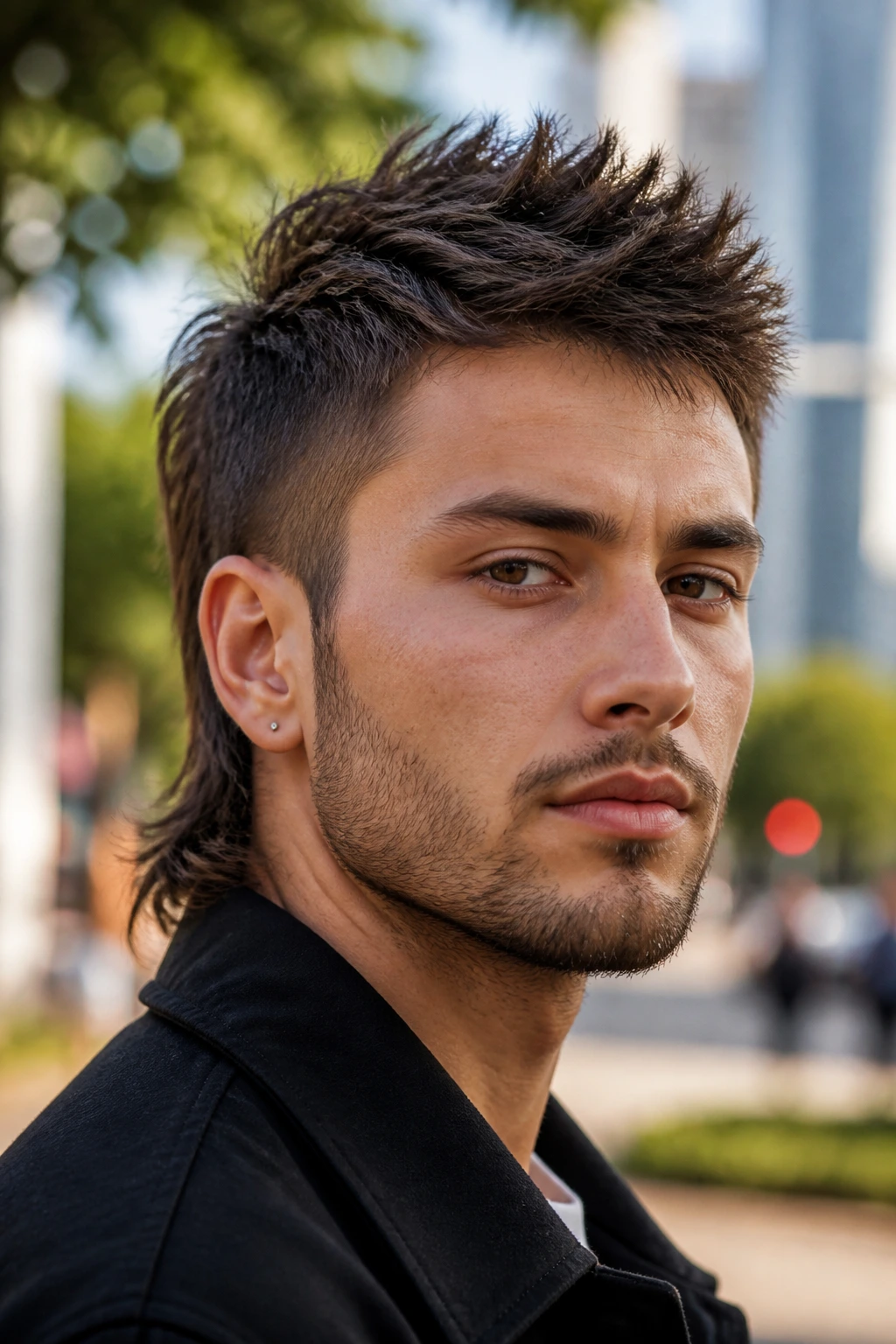
If you want something you can wear in a meeting without thinking about it, this is the one. A low taper keeps the haircut tidy around the ears and neckline, while the top gets just enough height to flatter a round face. It’s not loud. That’s the selling point.
The spikes should be small, separated, and slightly soft. Think texture, not sculpture. A pea-sized bit of paste is enough for most hair lengths here. You want the front to rise a little, the top to stay neat, and the whole cut to look like it was done in three minutes because, most mornings, it was.
25. Sharp Spiky Crop for Thick Hair
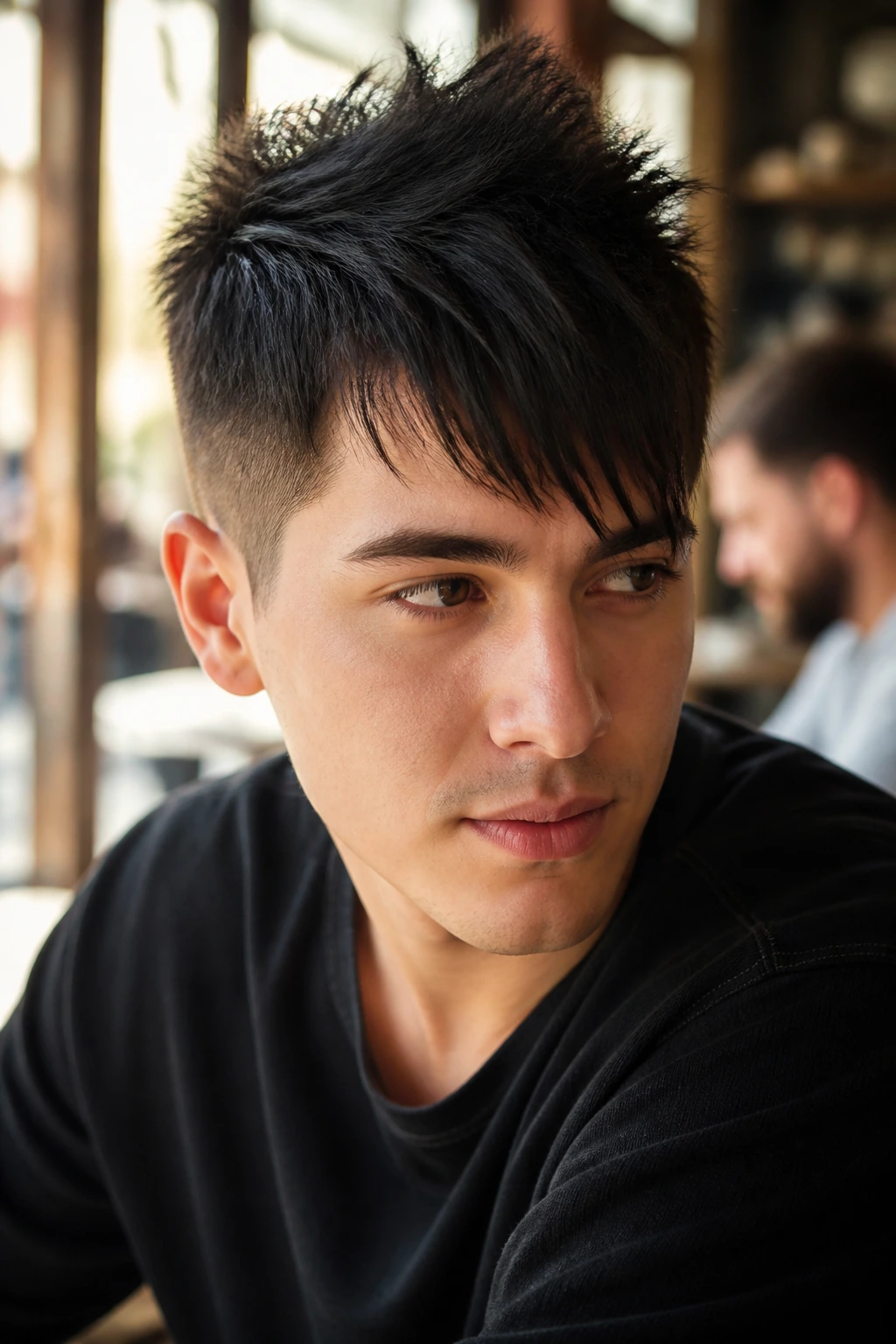
Thick hair can be a blessing and a curse. Give it too much length and it explodes outward. Keep it too short and it turns into a bristly helmet. The sharp spiky crop lands in the middle, using internal debulking and point-cut texture to keep the shape tight and lifted.
This is one of the most reliable options if your hair naturally fights you. Ask for about 2 to 2.5 inches on top, a tight fade or taper on the sides, and clear texture through the crown so it doesn’t sit heavy. The payoff is a cut that looks deliberate even when it’s grown out a little. That matters more than people admit.
Why Height, Taper, and Texture Change the Whole Face Shape
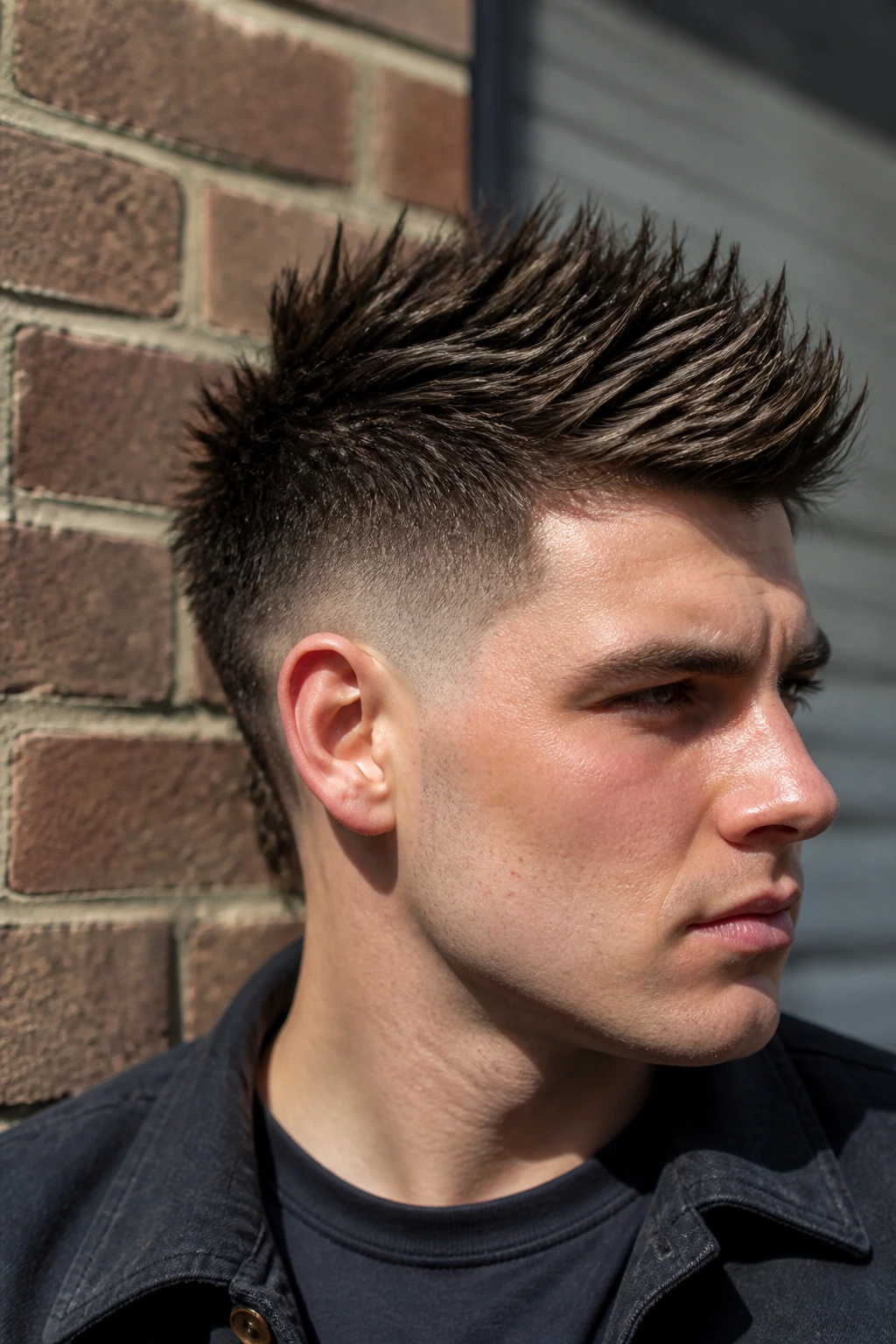
Round faces usually have softer jawlines, similar width across the cheeks, and less built-in angular contrast. That does not mean you need to hide the face. It means the haircut has to create direction where the face is naturally softer. Height on top helps. Tighter sides help. Texture helps because it breaks up smooth, round shapes that read as wider than they are.
The worst thing you can do is ask for “spiky” and end up with even width all the way around. A spike should live on top of the head, not spread into the sides. When the temples and cheek area get bulky, the face starts looking more circular. When the top rises and the sides slim down, the face reads longer and leaner almost immediately.
I also like to think in lines. Vertical lines lengthen. Horizontal lines widen. That’s why a blunt fringe, a puffy temple area, or a rounded crown can work against you even if the haircut looks trendy in the chair. The shape needs to be built with intent. Not aggressively. Just clearly.
Essential Tools for Cutting and Styling the Shape
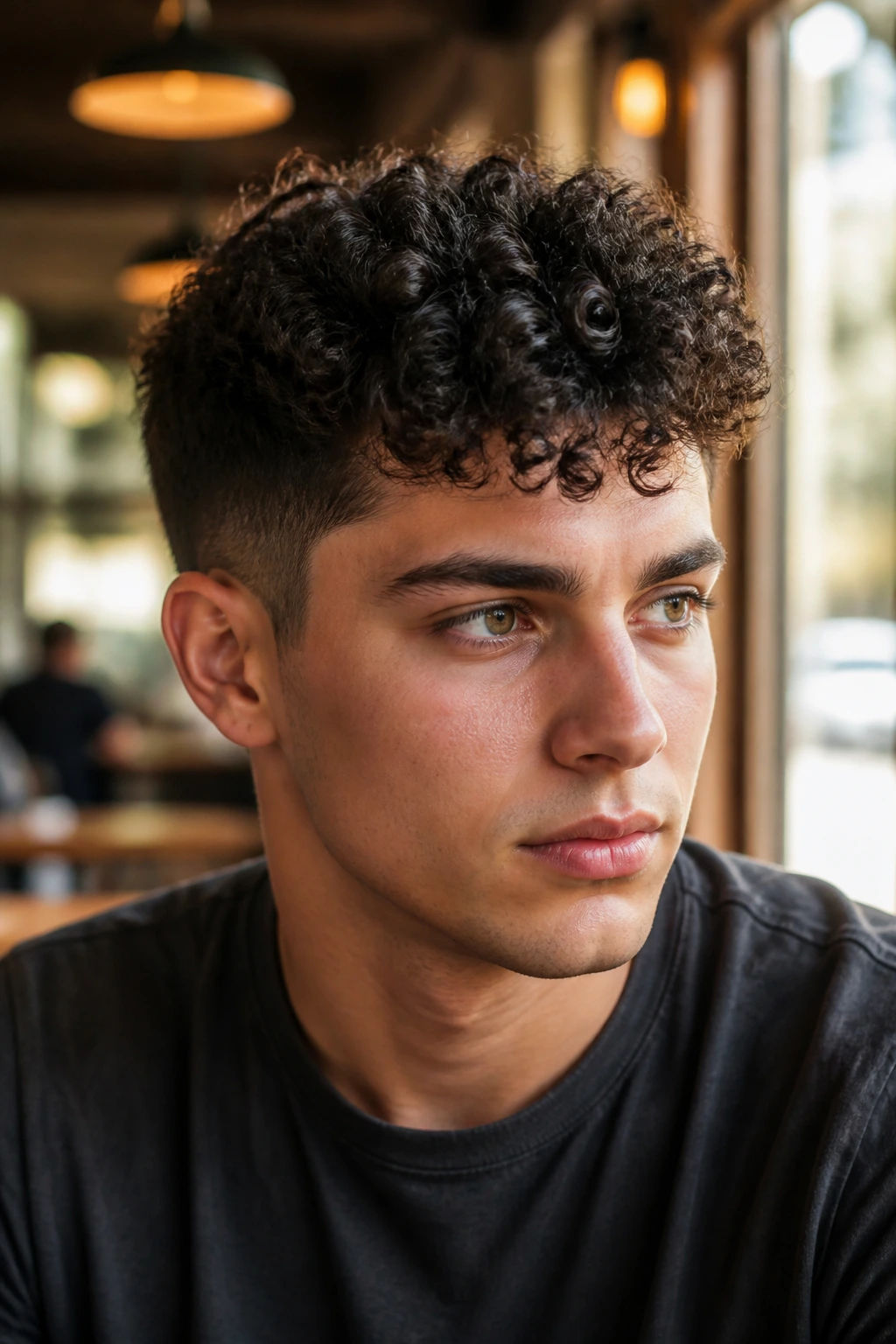
Blow dryer with a nozzle: This is the fastest way to build lift at the roots and direct the hair upward without making it fuzzy.
Matte clay or matte paste: For most spiky styles, this gives hold without shine. Shine makes hair look flatter and smaller.
Sea salt spray: Use it on damp hair when you want grit and separation before blow-drying.
Vent brush or round brush: A vent brush is better for quick lift; a round brush gives more shape at the front if you want a quiff or pompadour.
Fine-tooth comb: Handy for parts, cleaner direction, and sharper control on styles like Ivy League or side-part spikes.
Hair clippers and trimmer: If you maintain fades at home, you’ll need both. The clipper handles bulk; the trimmer cleans edges.
Texturizing shears: Optional, but useful for a barber session if your hair is thick and tends to puff out.
Hand mirror: Not glamorous. Necessary. Especially if you’re checking side symmetry and neckline shape.
How to Ask for the Cut and Pick the Right Product
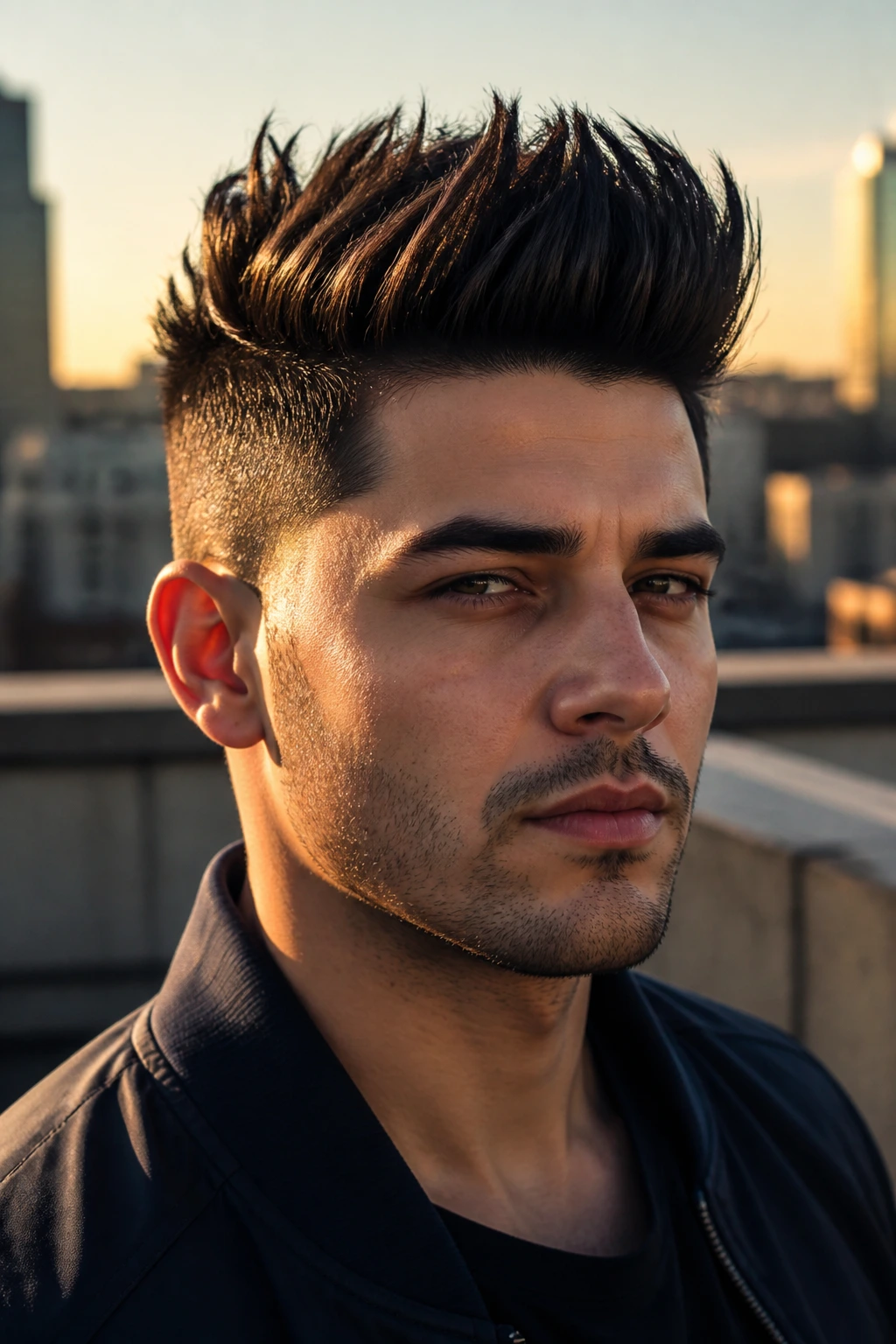
Bring pictures, but bring the right pictures. Show your barber at least two photos of the same type of shape — one front view and one side view — because a front shot alone can hide how wide the sides are. Then say what you want in plain language: height on top, tight sides, and broken texture through the crown. Those three things matter more than the style name.
If you have fine hair, ask for shorter, choppier texture so the spikes don’t fall under their own weight. Fine hair usually does better with clay or paste than with heavy wax. If you have thick hair, ask for debulking inside the top; otherwise it will sit like a block no matter how much product you use.
Choose product by finish, not by hype. A matte clay is the safest first buy for most of these styles because it adds control without shine. A cream is softer and better for relaxed or office-friendly looks. Gel gives you more hold, but it can make the hair stiff and flat if you overuse it. And you will overuse it if the bottle is in front of you. Don’t.
How to Wear These Styles Without Fighting the Face Shape
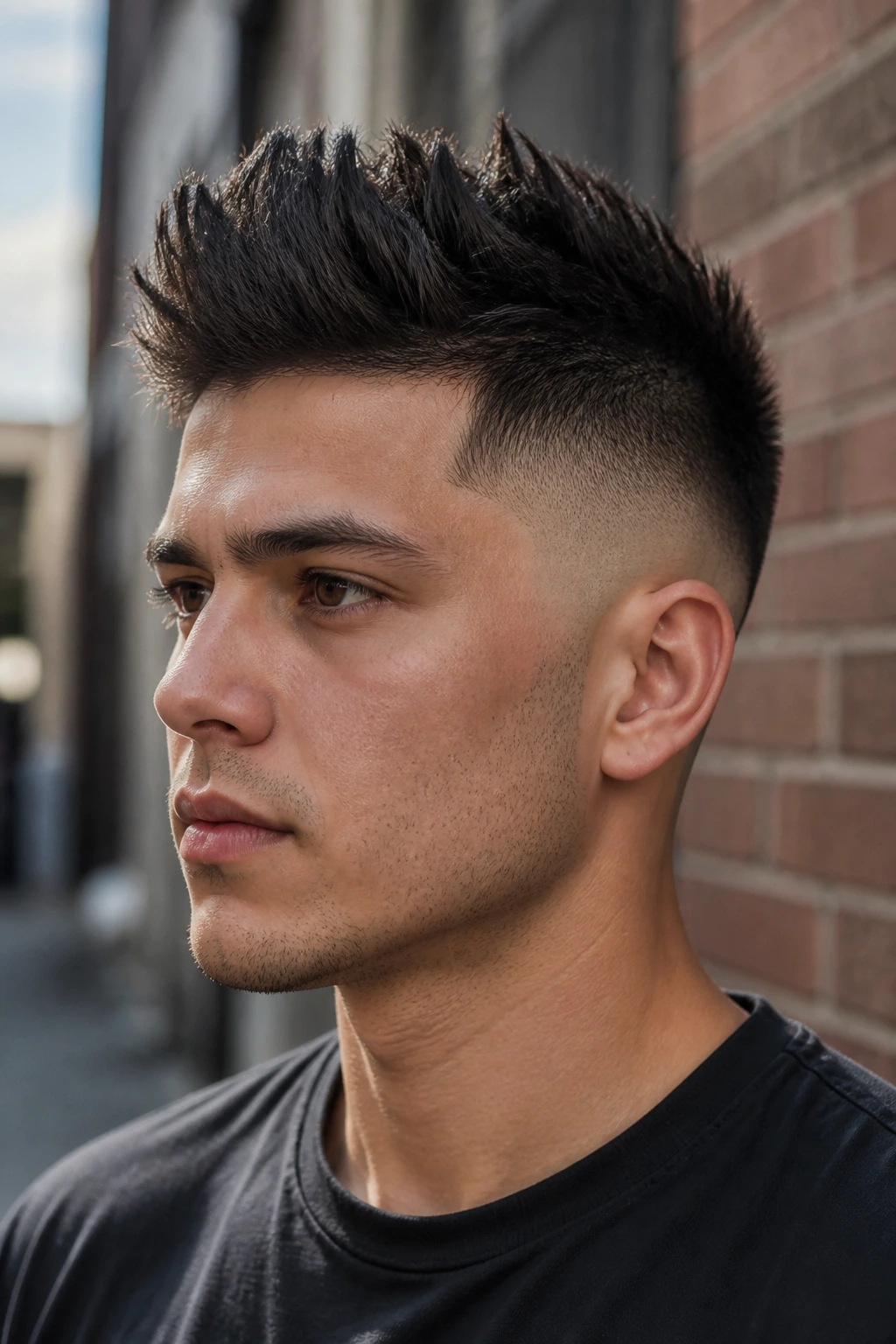
Presentation: Keep the visual weight on top and slightly forward, especially if your face is widest through the cheeks. A little height at the front usually works better than a wide, rounded crown.
Pair It With: A tapered beard, subtle stubble, or clean jawline edges can help the haircut do its job. Glasses with a stronger frame can also balance soft facial lines nicely.
Daily Routine: Most of these cuts only need damp hands, a small amount of product, and 30 seconds of lift at the roots. If your hair collapses later, mist the top lightly with water and rework it with your fingers.
Finish: Matte beats shiny almost every time here. Shine flattens the silhouette and makes the style feel smaller, while a dry finish keeps the points visible and the shape clean.
Practical Tips for Better Lift and Cleaner Shape
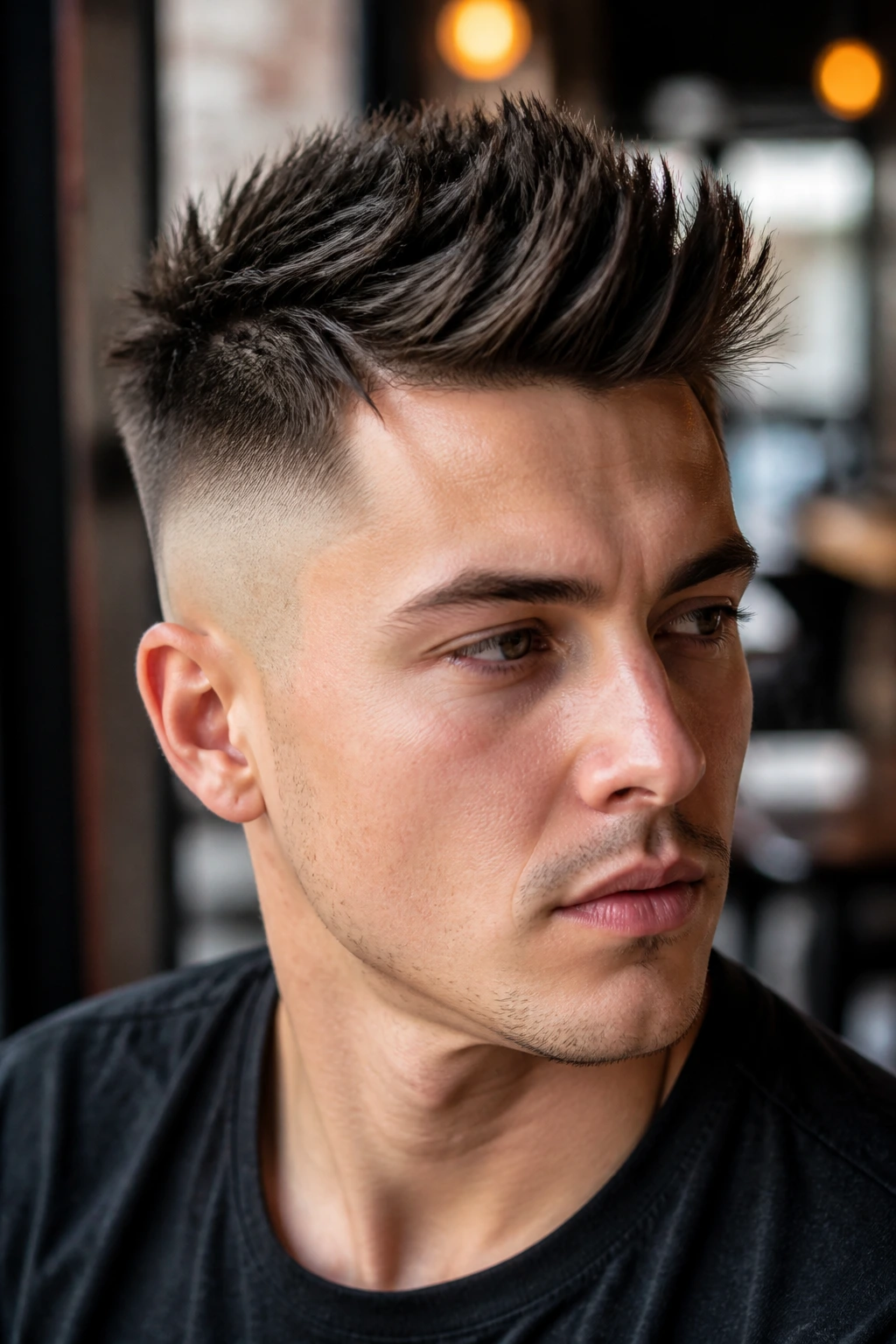
Lift at the roots first: Don’t start by rubbing product on the ends. Work it into the base, then push the hair upward while it’s still slightly warm from the dryer.
Use less product than you think: A pea-sized amount is enough for short styles. Too much clay turns spikes into clumps and brings the hair down instead of up.
Keep the sides quieter than the top: If the temple area gets bulky, the whole cut loses the face-lengthening effect. Ask for clean tapering, and maintain it before it gets fuzzy.
Separate the tips, don’t iron them flat: Spikes should look piecey. Pressing them into one hard ridge makes the haircut look older and heavier.
Match the beard to the haircut: If you wear facial hair, keep the cheek line under control. A wild beard can undo the clean angles you built up top.
Common Mistakes That Make the Face Look Wider
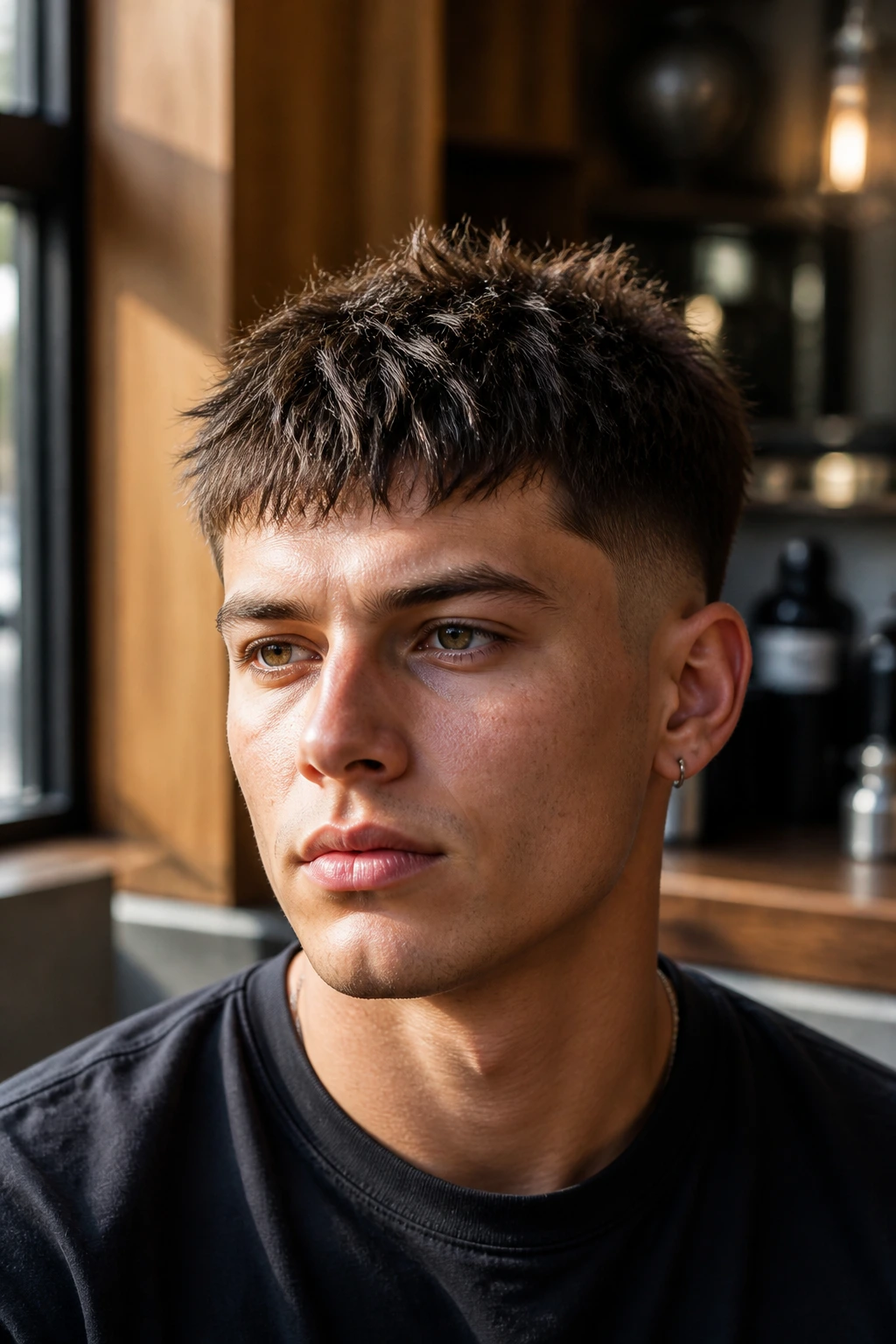
Too much width at the temples: This is the most common problem. If the hair flares out near the sides, the face reads broader. Fix it with a tighter fade or a lower taper and a barber who knows how to remove side bulk.
Shiny product overload: Bright, wet-looking hair lies flatter and makes roundness more obvious. Switch to matte clay or paste and use less of it.
A blunt, straight fringe: A straight line across the forehead can shorten the face visually. Break it up with texture or angle it slightly to one side.
Sides cut too low and left too puffy: A low fade that isn’t blended well can create a mushroom shape as it grows out. Ask for a clean transition and book a shape-up before the blur sets in.
Trying to force every hair straight up: Some hair types bend better than others. If your hair fights vertical spikes, work with a quiff, brush-up, or soft spike instead of making the top look stiff and unnatural.
Variations and Alternatives Worth Trying

Office-Soft Spike: Keep the top short, use a cream instead of clay, and brush the hair up with just a little bend. It still lengthens the face, but it won’t scare anyone in a meeting.
Curly Lift Version: Let the curls keep their natural bend and shape them into lifted clusters. This works well if you want texture without crisp edges.
High-Contrast Fade: Push the sides almost down to the skin and leave the top textured and high. The contrast gives strong face-lengthening power, though it needs more regular maintenance.
Longer Texture Version: Keep 4 inches on top and style into looser spikes or a short quiff. This suits thicker or wavier hair and gives you more styling range.
Beard-Balanced Style: Pair a shorter spike with a tapered beard that narrows at the cheeks. The haircut and beard work together instead of competing for attention.
Tools and Resources That Make Styling Easier
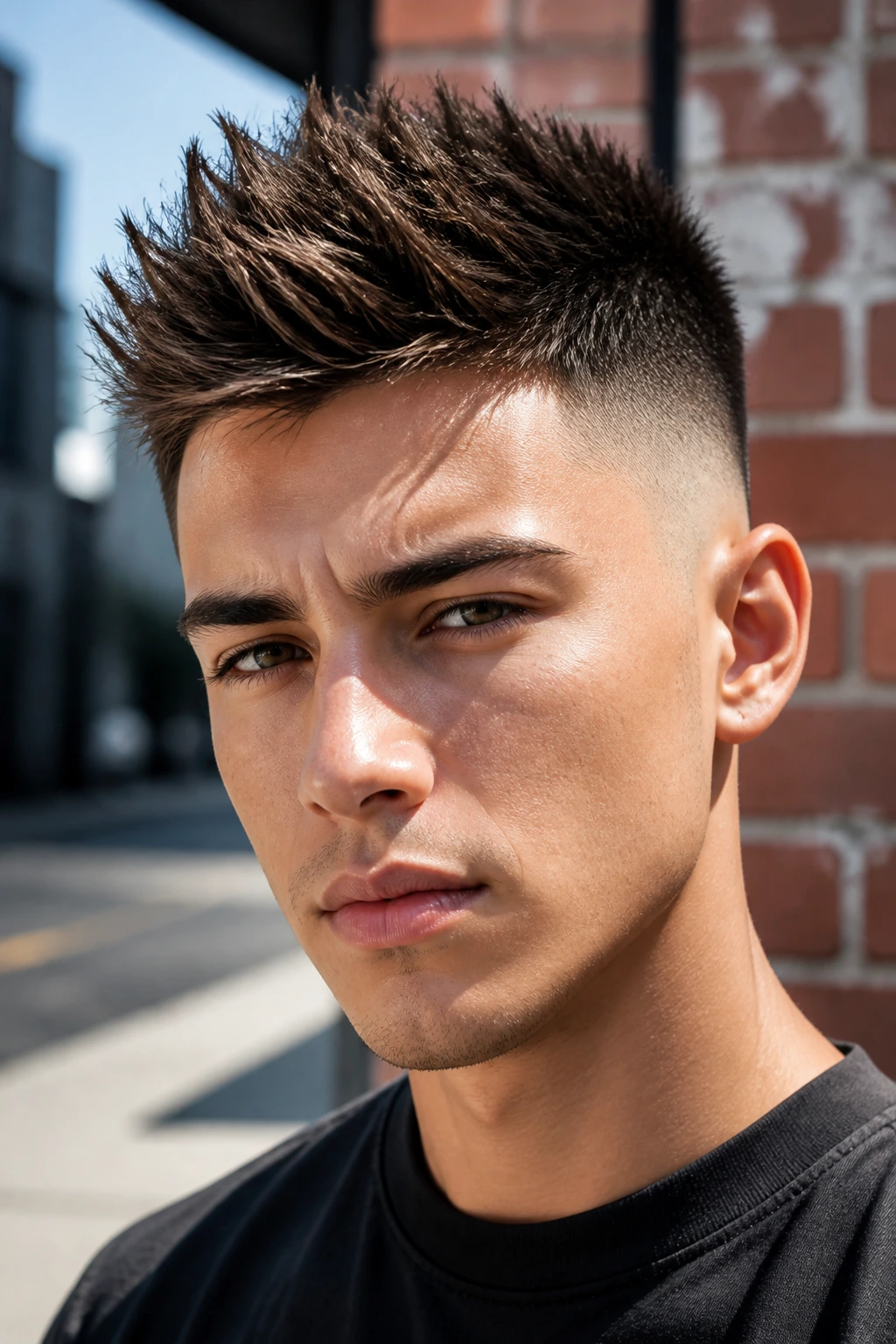
- Blow dryer with nozzle attachment — Gives you directional lift instead of random puffing.
- Matte clay or paste — Best all-purpose styler for most spiky looks on round faces.
- Sea salt spray — Adds grit to fine or soft hair before blow-drying.
- Vent brush — Good for fast root lift and quick morning shaping.
- Round brush — Useful for quiff, pompadour, and brush-up styles.
- Fine comb — Helps with parts, cleaner sectioning, and more precise shaping.
- Clippers and trimmer — Handy for keeping fades neat between barber visits.
- Hand mirror — Lets you check the side profile, which matters more than people realize.
- Hair clips — Optional, but useful if you’re blow-drying longer top sections in stages.
Maintenance, Cleanup, and Grow-Out
Most of these cuts look best with a cleanup every 2 to 4 weeks, depending on how fast your hair grows and how tight the fade is. A skin fade or disconnected undercut gets messy faster than a taper, so don’t stretch the schedule too far if you care about shape. Once the sides blur, the face starts reading rounder again.
Wash frequency depends on product and hair type. If your hair is fine, washing every other day may be enough. If it’s thick or very dry, you may want to shampoo less often and reset with water, leave-in conditioner, or a tiny bit of product instead of stripping the hair every morning.
At home, the easiest reset is simple: dampen the top, blow-dry it upward for 20 to 30 seconds, then add a small amount of product and pinch the tips back into place. Don’t keep piling on product day after day. That’s how you get buildup, dullness, and spikes that refuse to move.
Frequently Asked Questions
Can spiky haircuts work on a round face if my hair is thin?
Yes, but the cut needs to stay short and textured. Fine hair usually does better with a cropped spike, a short quiff, or a side-parted version with matte paste, because longer spikes tend to fall flat.
How short should the sides be on a round face?
Most of the time, tighter is better, but not every face needs a skin fade. A low taper, mid fade, or temple fade can slim the sides without making the haircut feel harsh. The main goal is to avoid bulk near the cheeks.
Do spiky cuts work with curly hair?
They do, but the “spikes” will look softer and more piecey. Keep the top short enough to lift, use a light curl cream or matte product, and avoid cutting the curls so short that they puff outward.
What product gives the best hold without shine?
Matte clay is usually the safest first choice. It holds shape, keeps the finish dry, and works well on straight, wavy, and thick hair. If your hair is finer, a lighter paste may be easier to control.
Can I wear a spiky haircut with glasses?
Absolutely. In fact, a clean spike can balance a stronger frame nicely. The key is to keep the sides tidy so the hair and glasses don’t compete for space around the temples.
How often should I get the haircut cleaned up?
Every 2 to 4 weeks is the sweet spot for most of these styles. If the fade starts blurring or the top loses its shape, the haircut stops doing the face-lengthening work it was meant to do.
What if my hair falls flat by midday?
That usually means too much product, not too little. Start with a smaller amount, blow-dry at the roots, and use a light mist of water plus a quick finger reset if it sags later.
Which style is best if I don’t want to look too flashy?
Try the Ivy League with a spiky finish, the low-taper spikes, or the messy crew cut spike. They keep the face shape in better balance without looking like you’re trying to make a scene.
The Shape That Does the Heavy Lifting
The best spiky haircuts for round faces do one thing first: they change the silhouette. Everything else — the product, the fade, the fringe, the beard — sits on top of that idea. If the sides are clean and the top lifts in the right place, the whole face looks more structured without needing a dramatic overhaul.
That’s why this kind of haircut keeps working across hair types and style moods. You can keep it neat, messy, sharp, soft, or a little rebellious. Just don’t let the shape go soft around the temples. That’s where the whole trick disappears.
Pick the version that fits your hair and your routine, then keep the outline honest. A good spike should feel like it knows exactly where to stand, and once you get that right, the rest falls into place.
