



The best balayage looks do one thing classic highlights often fail to do: they grow out softly enough that a half-inch of root doesn’t look like a mistake. That’s the real appeal here. The color is painted where it matters—usually from mid-lengths through the ends, with a root shadow or a gentle blur at the top—so the line between your natural shade and the lighter pieces stays fuzzy instead of marching across the head like a stripe.
That blur matters. A deep brunette can wear caramel ribbons for weeks without looking overdue. A blonde can keep beige brightness without chasing every sliver of regrowth. Even curly hair, which can swallow color in strange places if it’s placed badly, gets an easier life when the lighter strands are tucked where the curl pattern opens them up. Low-maintenance balayage is less about being subtle and more about being smart with placement.
What follows is a stack of 30 looks that keep the grow-out civilized. Some are warm and buttery. Some lean ash, pearl, or smoky. Some are for bobs. Some are for long layers. A few are almost whisper-light; a few let the contrast speak a little louder. The trick is picking the one that fits your base color, your haircut, and how often you actually want to sit under a cape.
Why These Balayage Looks Stay Soft Between Salon Visits
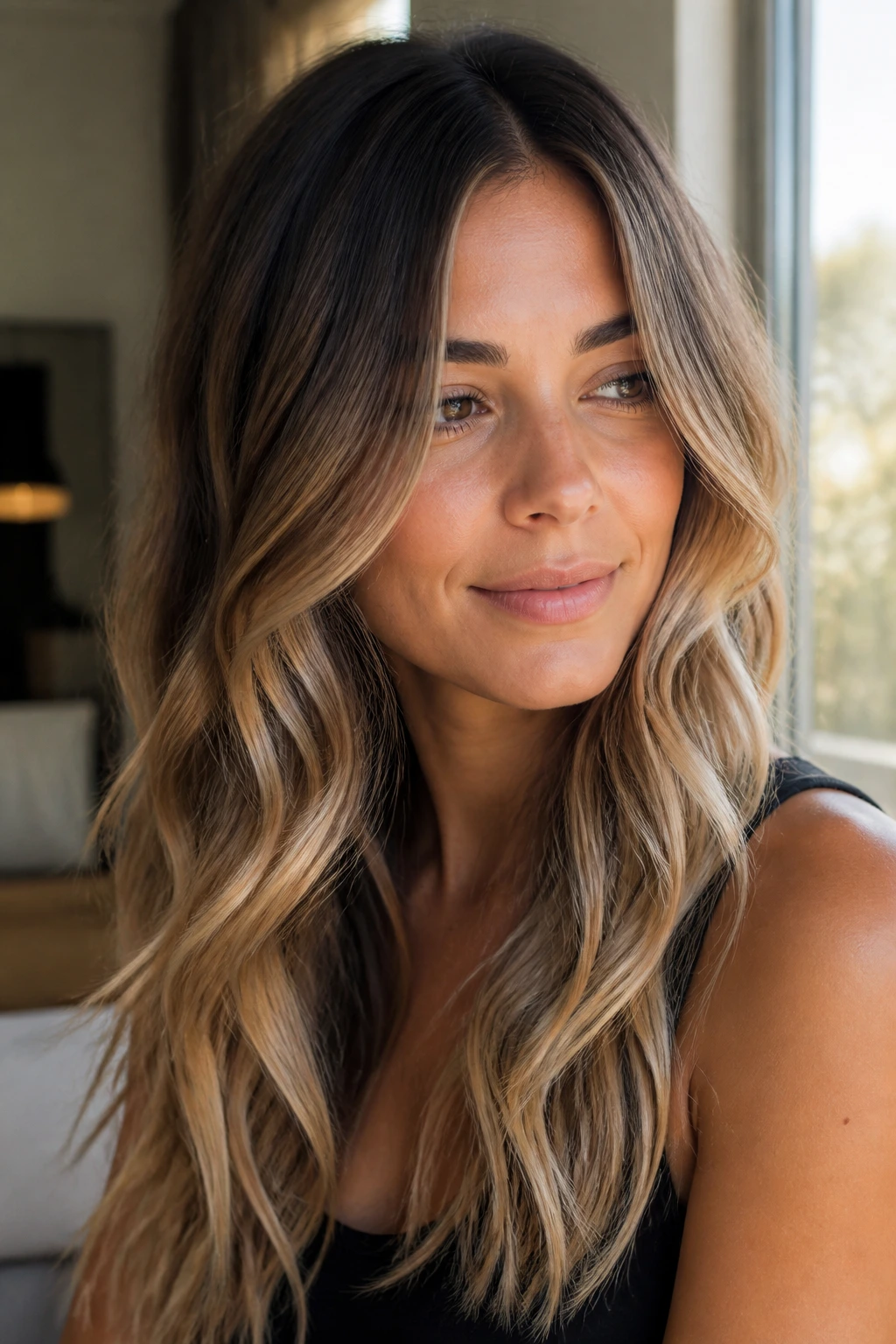
Grow-Out Blur: Most of these shades keep the root darker on purpose, so the regrowth line is broken up before it ever gets sharp.
Toner-Friendly Shades: Beige, caramel, mushroom, bronze, and honey tend to fade more gracefully than ultra-icy blonde, which is the sort of thing that asks for more salon babysitting.
Placement Beats Brightness: The hand-painted pieces sit where the hair moves, not right at the scalp, so the color still reads even after several weeks.
Easy to Personalize: Each look can be nudged warmer, cooler, lighter, or deeper by one level without losing the whole idea.
Works With Real Haircuts: Bobs, lobs, long layers, curls, and even straight blunt cuts all get their own version here, because placement matters more than the shade name on the board.
1. Smoky Mushroom Balayage
Smoky mushroom balayage has that cool, earthy softness that makes brunette hair look richer instead of louder. Think taupe-brown ribbons, a shadowed root, and just enough beige in the mids to catch light without turning the whole head blond.
Why It Stays Low-Maintenance
The trick is restraint. Keep the lightest pieces one to two levels above your base and let the root stay deep; that way a little regrowth looks intentional, not neglected. This is one of the easiest looks to wear on medium or dark brunettes who want dimension without the constant tug of toner appointments.
What to Ask For
- A root shadow that stays close to your natural level.
- Fine, airy ribbons through the mids and ends.
- A beige-taupe toner rather than a stark silver one.
- Soft face-framing pieces only if you want a little extra brightness.
If your base pulls orange, tell the stylist you want the warmth muted, not erased. Mushroom shades look best when they feel like softened daylight, not gray paint.
2. Caramel Ribbon Brunette
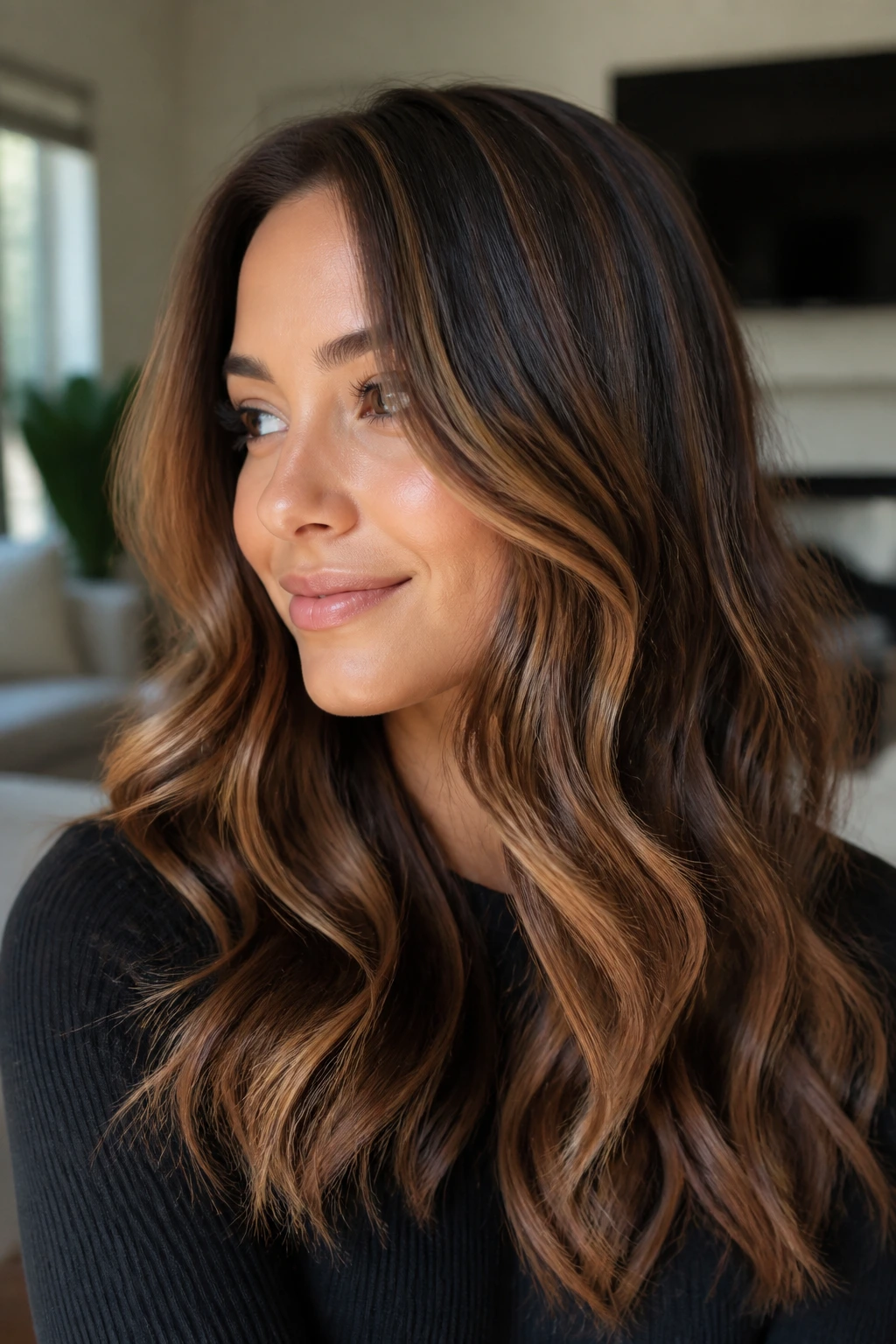
Caramel ribbon brunette is the look I’d hand to someone who wants color people notice without the maintenance spiral that comes with a full blonde shift. The ribbons sit inside a chestnut or cocoa base, so the overall effect reads glossy and dimensional, not streaky.
The reason it works is simple: caramel wears down well. When a few warm pieces fade, they still sit in the same color family as the natural hair, so the grow-out doesn’t shout for attention. Ask for hand-painted mid-lengths and ends, plus a brighter thread around the face if you want your features lifted.
3. Bronde Melt
Why does bronde keep showing up in good salons? Because it solves the “I want lighter hair, but I don’t want to babysit it” problem better than almost anything else.
Bronde is that middle ground between brown and blonde, and the best versions melt rather than stripe. The root stays soft, the mids brighten slowly, and the ends carry the lightest tone. It’s especially good if your hair is naturally medium brown and you want the color to look expensive in a low-key way.
Who It Fits Best
- Medium brunettes who want a gentler blonde transition.
- Long layered cuts that need movement.
- Anyone who prefers warm beige over icy blonde.
Ask for a gradual lift, not a sudden jump. A good bronde melt should make people wonder if you spent a weekend at the beach, not a week in the chair.
4. Face-Framing Money Piece Balayage
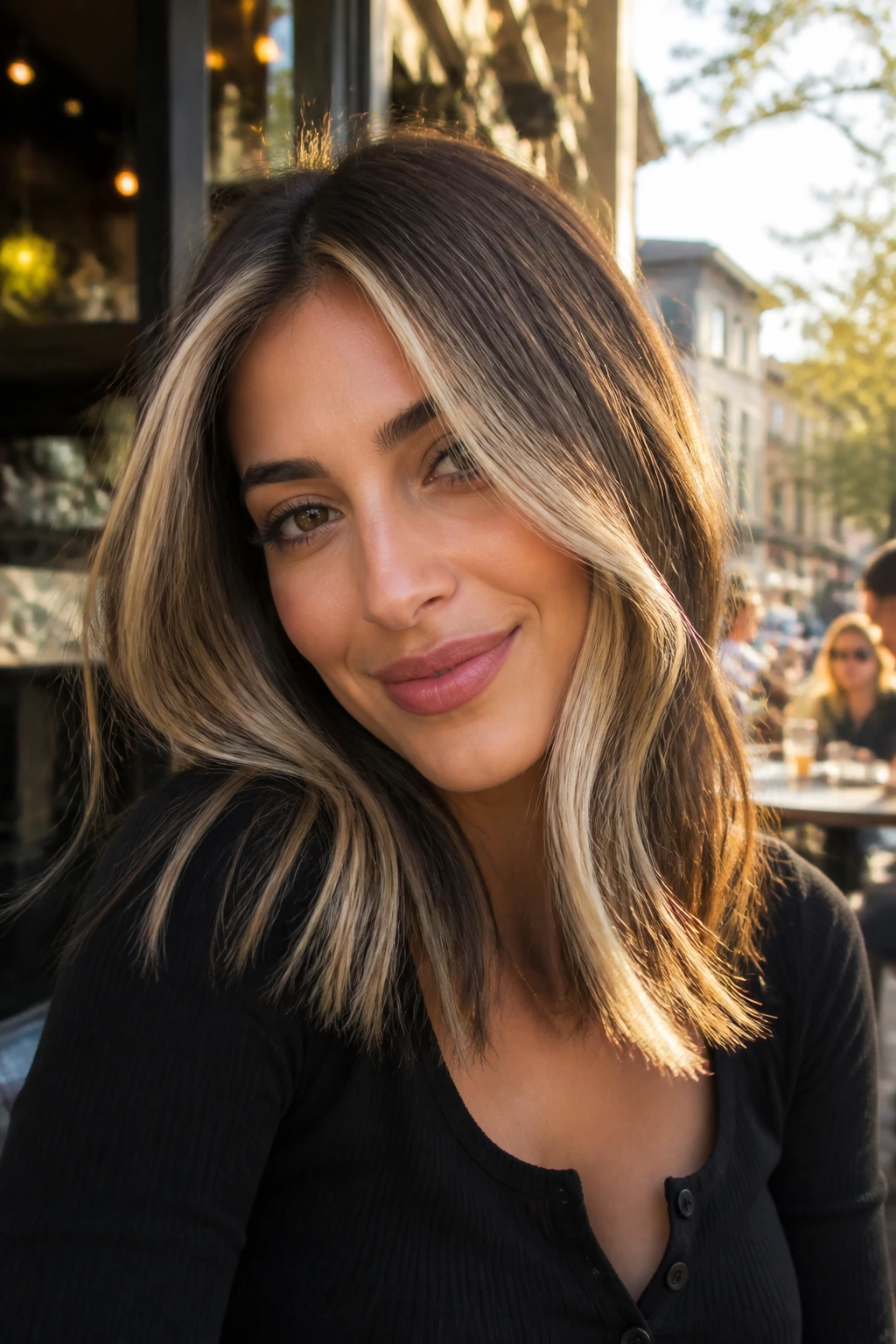
A money piece can be loud, but it doesn’t have to be. When the front sections are lifted a shade or two brighter than the rest, the face gets instant light while the interior stays soft and easier to maintain.
This is the look for someone who wants brightness where it counts and less work everywhere else. You can tie your hair back and still see the color. You can leave the rest of the head deeper, which means the root line grows out quietly instead of announcing itself in the mirror every morning.
Quick Notes
- Best on shoulder-length hair and longer.
- Works beautifully with curtain bangs or a center part.
- Keep the money piece a soft beige, honey, or caramel tone rather than a harsh platinum strip.
The danger is overdoing it. Too-wide front pieces can look disconnected, so keep them blended at the root and feathered into the sides.
5. Beige Blonde Root Shadow
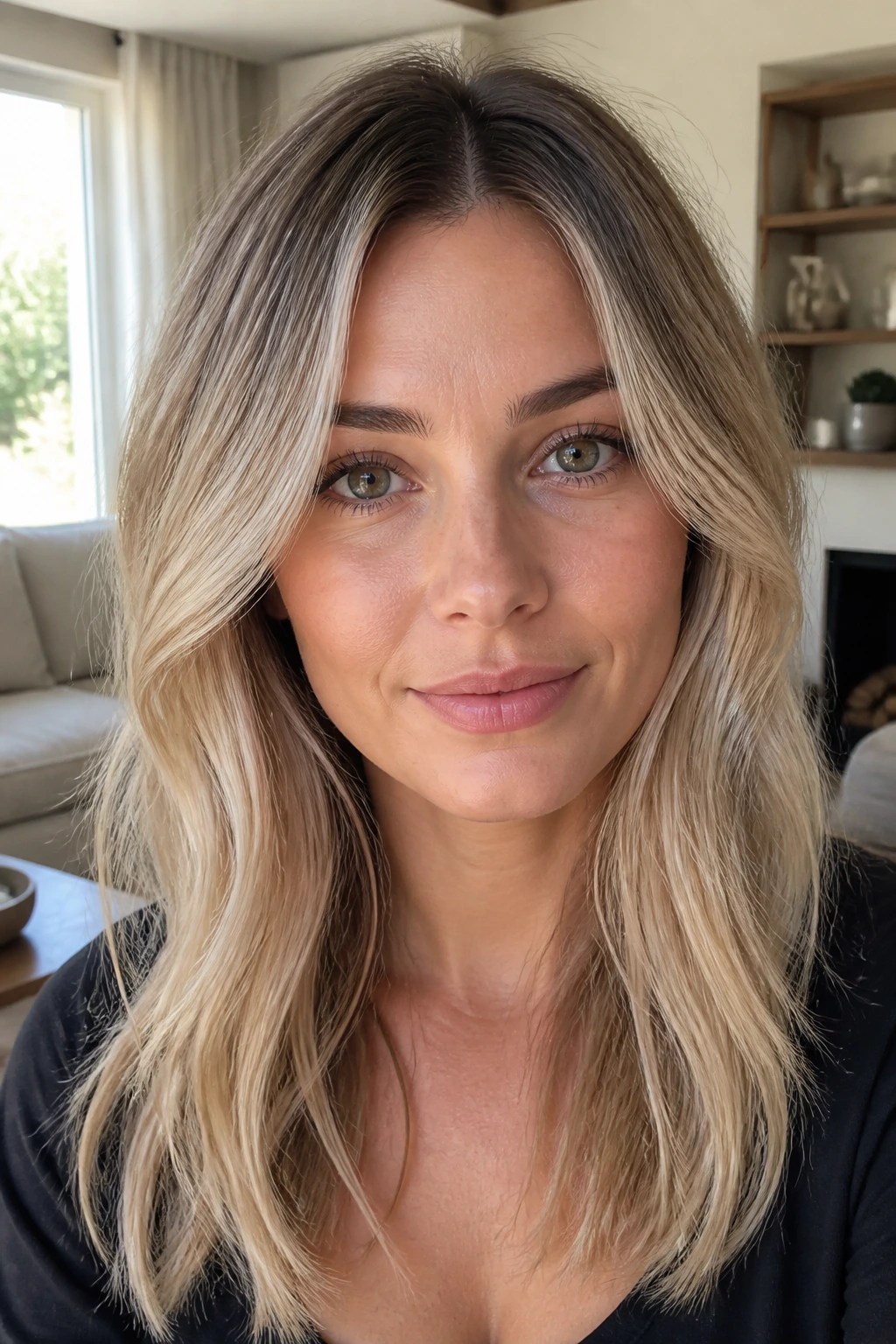
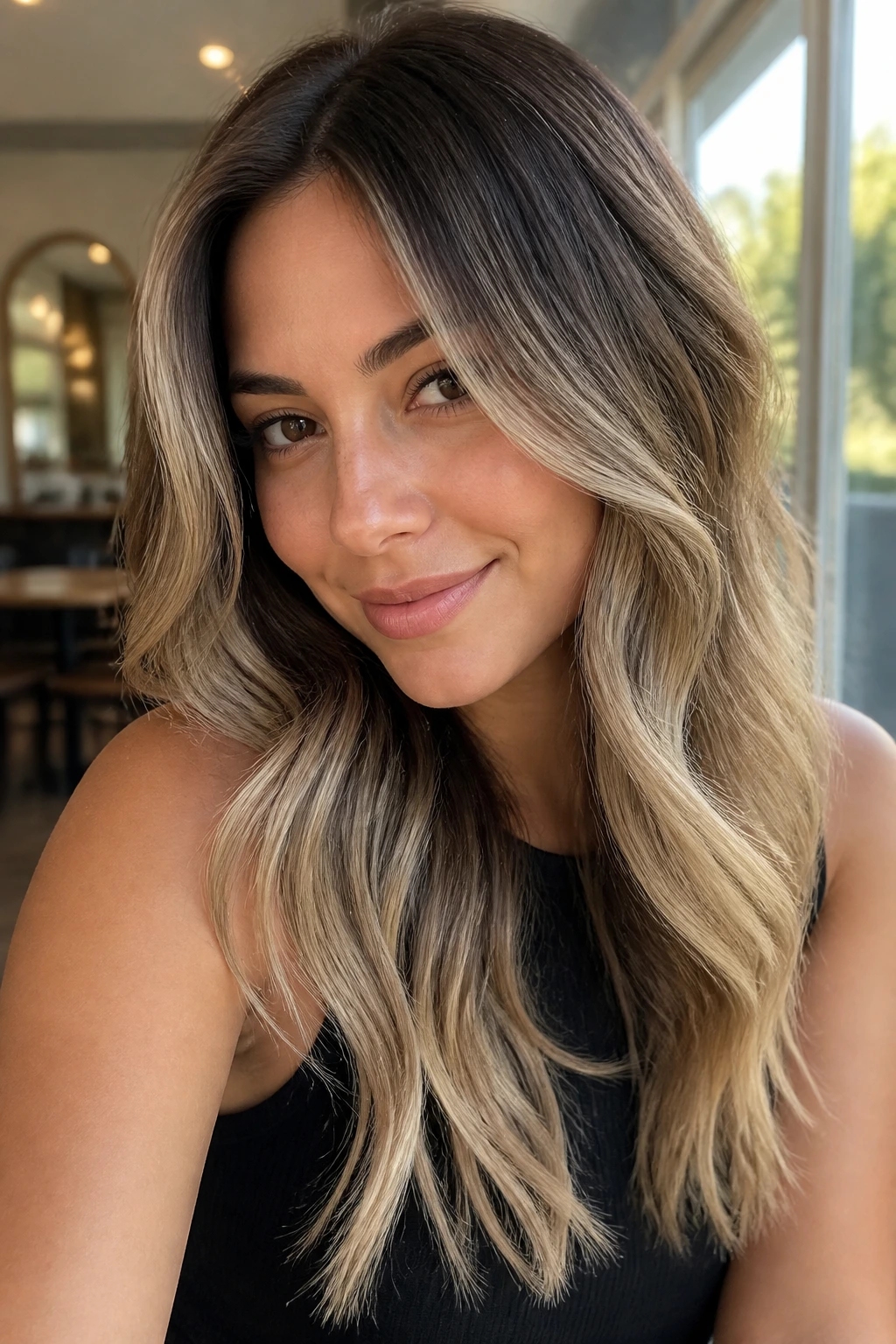
Beige blonde with a root shadow is the salon version of a good neutral sweater: soft, dependable, and easier to live with than a bright-white statement piece. The root stays a shade or two darker, then the blonde moves through creamy beige through the mids and ends.
That root smudge is doing all the heavy lifting. It buys you time between appointments and keeps the top from looking flat. If your skin looks best near soft gold or neutral tones, this is one of the cleanest ways to go blonde without signing up for endless upkeep.
If you wear your hair in loose bends, the color looks even better because the curves show the shift from root to beige. Straight and glossy works too. It just reads a little more polished and a little less beachy.
6. Copper Buttercream Balayage
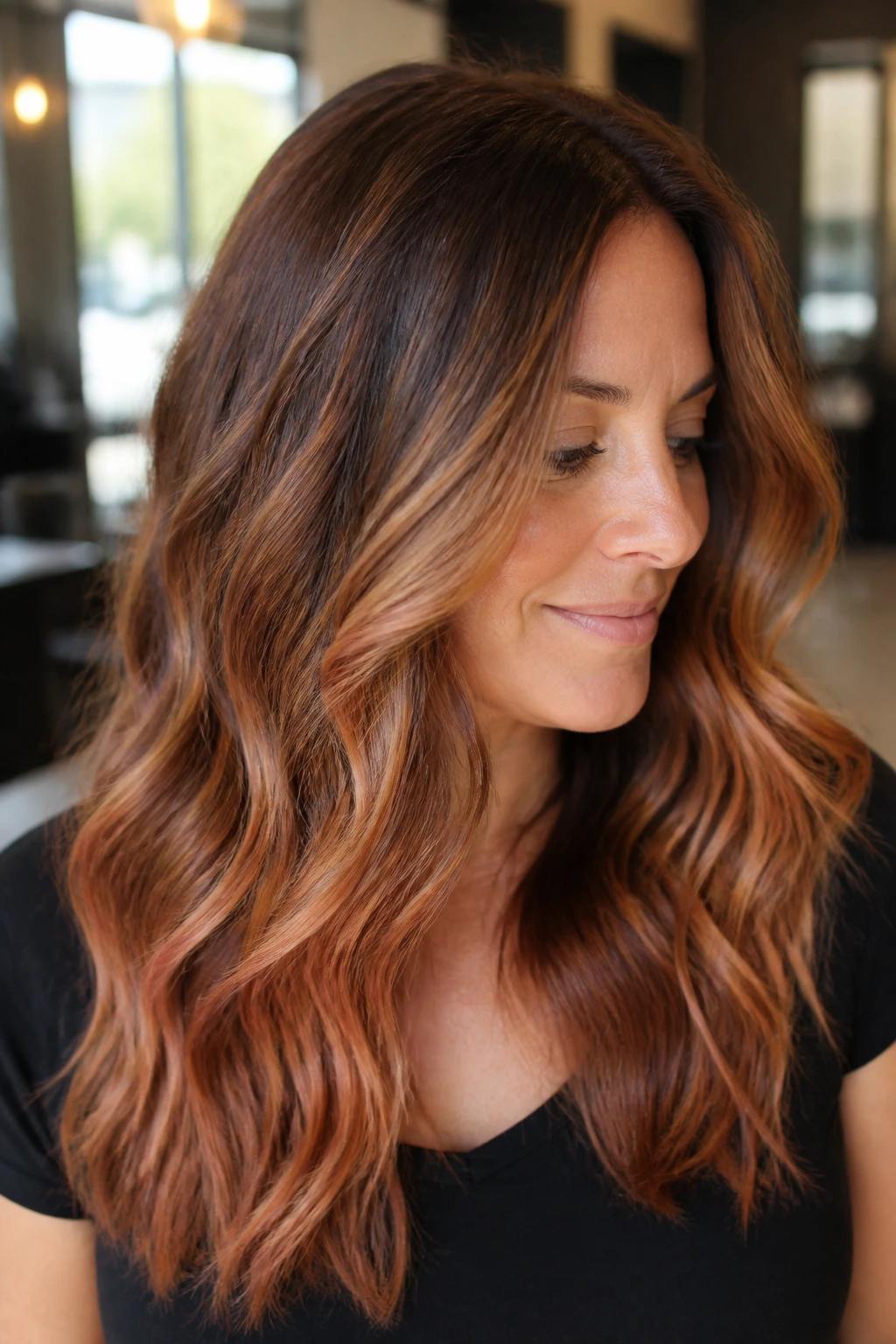
Copper buttercream balayage is what happens when warm brunette color gets a soft, creamy lift instead of a neon red blast. The copper sits in ribbons and glaze-like strokes, often over a chestnut or auburn base, so the grow-out remains close to the natural family.
Unlike a bright copper all over, this version ages with less drama. As the red softens, it slides into warm brown rather than fading into a weird muddy line. Ask for copper concentrated on the mids and ends, then softened with a neutral or gold gloss at the root.
Best For
- Warm skin tones.
- Dark brunettes who want more glow.
- People who don’t want red hair that screams for salon attention every few weeks.
Keep the red pieces away from the scalp if you want the look to stay relaxed. That’s the whole point here.
7. Espresso-to-Mocha Melt
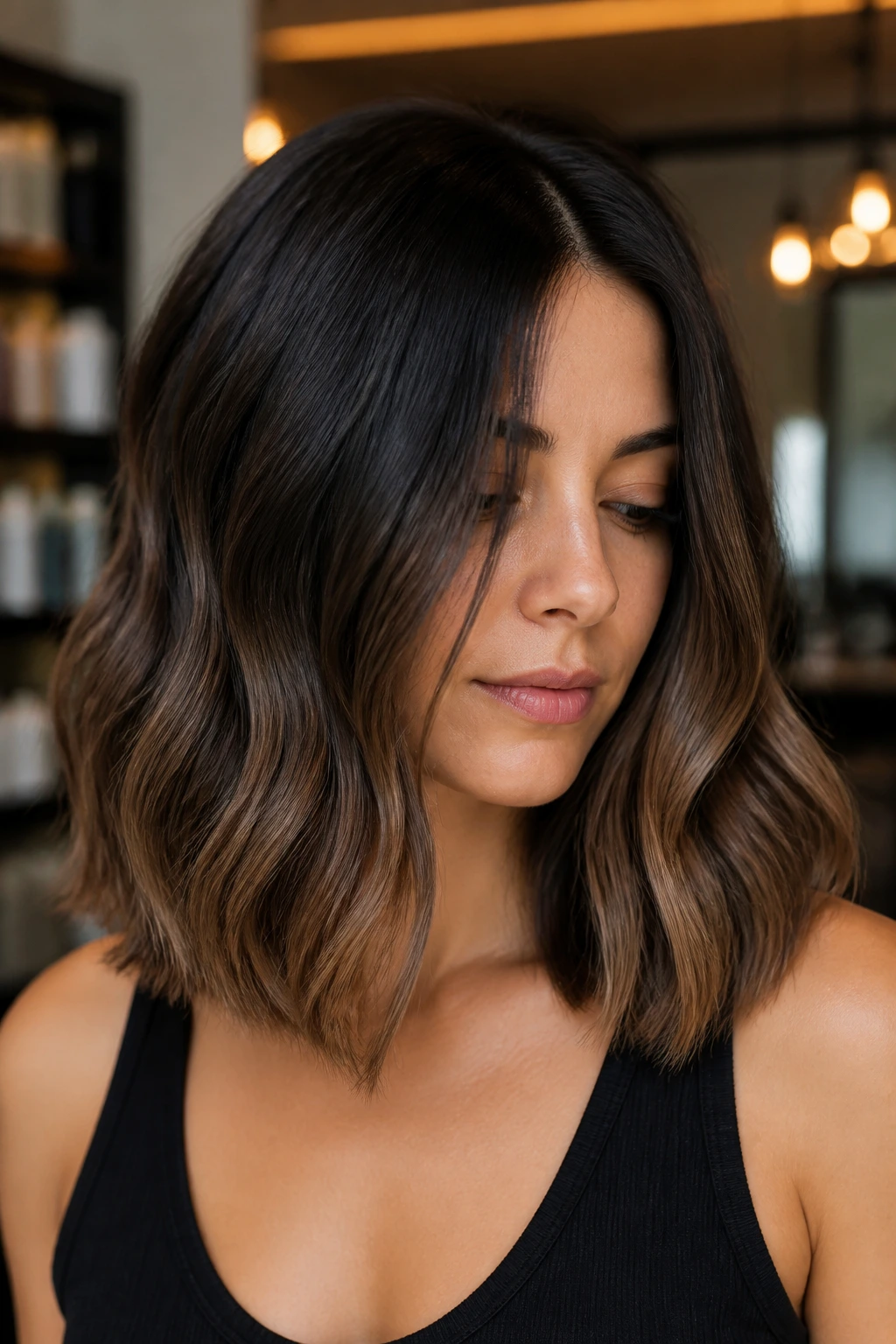
Espresso-to-mocha balayage is a quiet one, and I mean that in the best way. The root stays deep and glossy, then the color eases into mocha through the lower half of the hair, so the contrast is there without feeling sharp.
This is a smart choice if you’re nervous about lightening but still want movement. The grow-out is almost invisible on dark hair because the shades are close together. A gloss every 8 to 10 weeks keeps the mocha from going flat, but you won’t need constant re-lightening just to keep it looking intentional.
A shoulder-grazing cut or long layers make this one sing. The color should look like it belongs to the hair, not pasted on top of it.
8. Sandy Lob Balayage
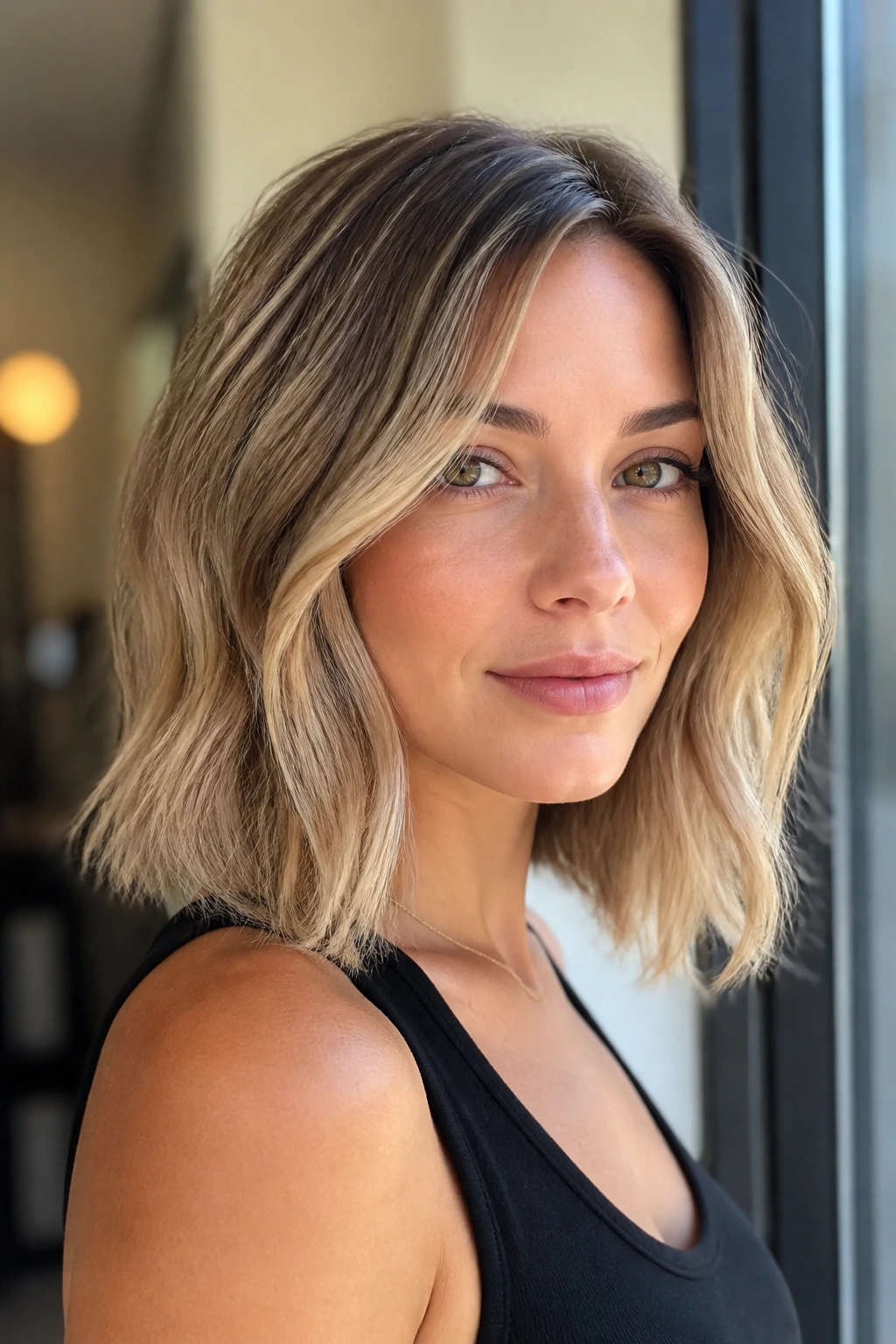
A sandy lob balayage is one of those cuts-color combos that looks easy because, honestly, it is. The length stays short enough that the ends don’t drag on forever, and the sandy beige pieces give the lob texture without requiring big maintenance.
The best version uses thin, scattered lightening through the top layer and a slightly deeper base underneath. That gives you movement when the hair swings and keeps the color from looking overworked when it’s tucked behind the ears. If you air-dry a lot, ask for soft, sun-faded pieces near the front and ends.
9. Icy Beige Babylights
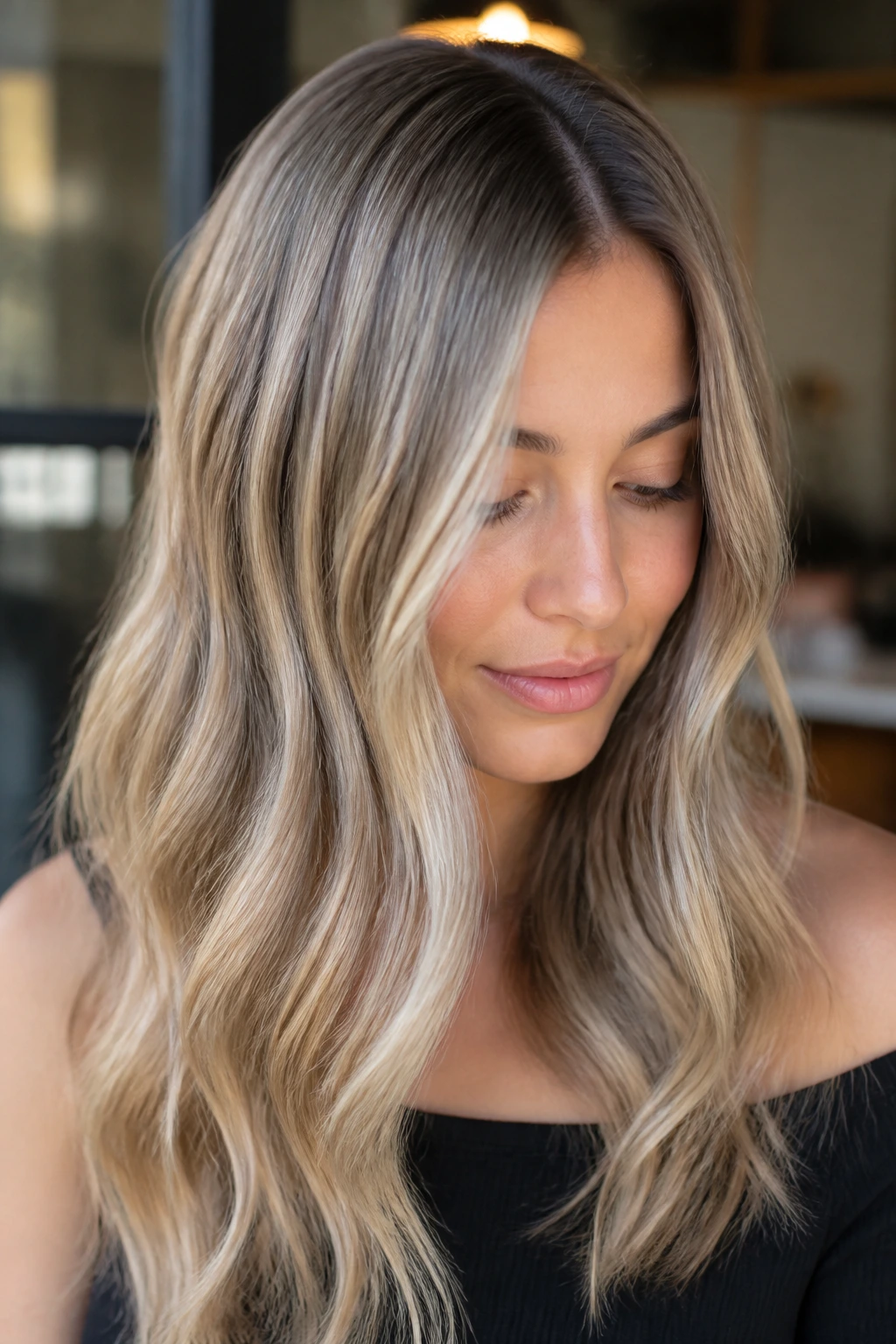
Do icy tones have to be high-maintenance? Not if you keep them soft and narrow. Babylights lay down tiny threads of lightness instead of chunky strips, which makes the whole blonde feel more blended and less fragile.
This look works best when the icy note is softened with beige rather than pushed all the way to white. The root shadow helps a lot here too, because bright blonde with a clean scalp line is where maintenance starts to climb. If your hair is already light, babylights can add a delicate shimmer without forcing a full recolor.
Ask For
- Very fine slicing.
- Beige-ice toner, not silver that turns harsh.
- A deeper root at the part and crown.
That tiny strand size matters. It keeps the blonde from looking striped when it starts to grow.
10. Chocolate Cherry Balayage
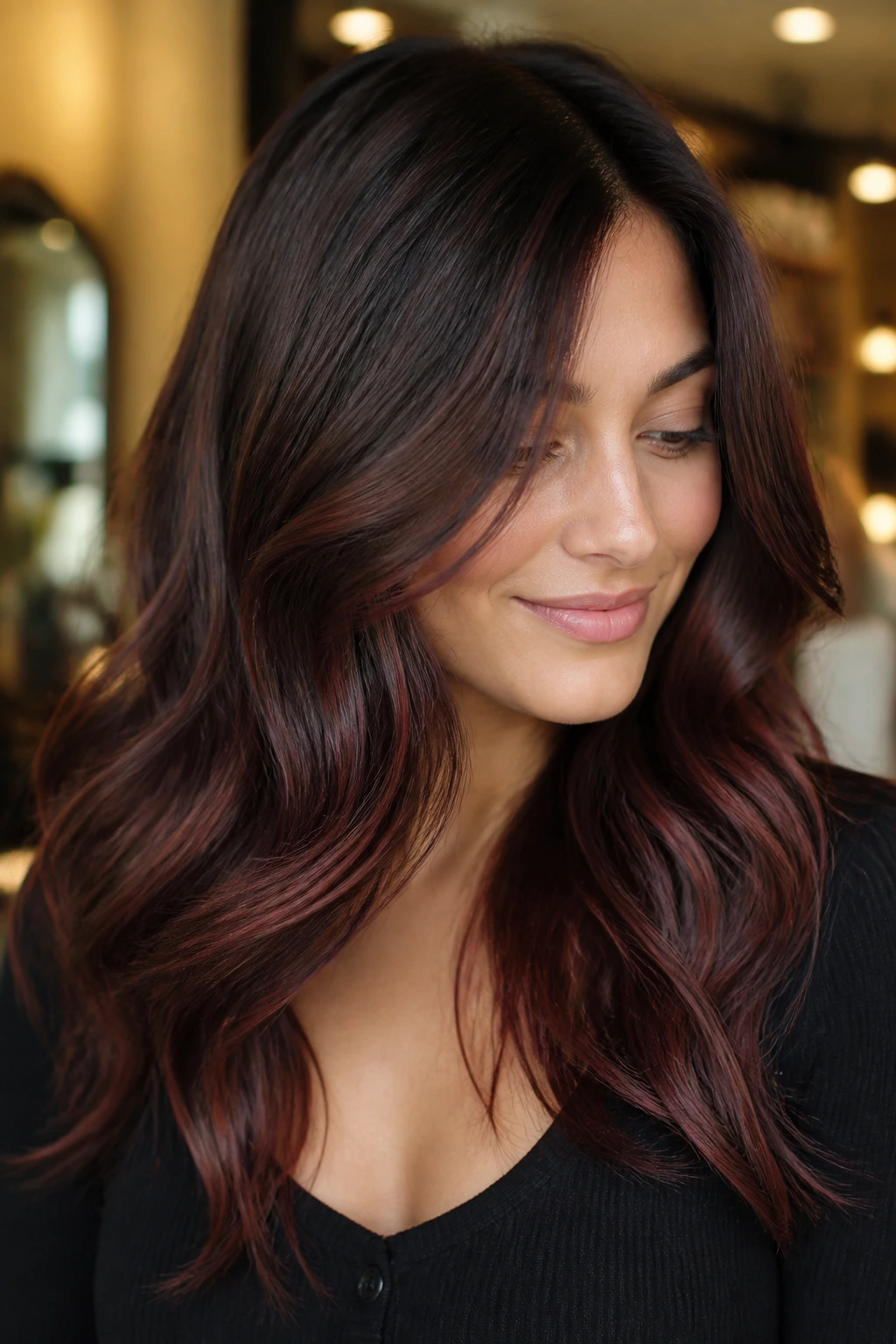
Chocolate cherry is one of my favorite sneaky-color looks because it gives you richness first and red second. In low light it reads deep brown; in daylight, the cherry ribboning comes out around the face and ends.
It stays manageable because the red is buried inside the brown, not layered on top like a loud fashion shade. When the color fades, it becomes a deeper brunette with a warm edge instead of a dull brick tone. That’s a huge difference if you want something interesting but don’t want to rebuild it every month.
A gloss in burgundy-brown tones every 6 to 8 weeks keeps the cherry note alive without forcing a full color service.
11. Golden Honey Waves
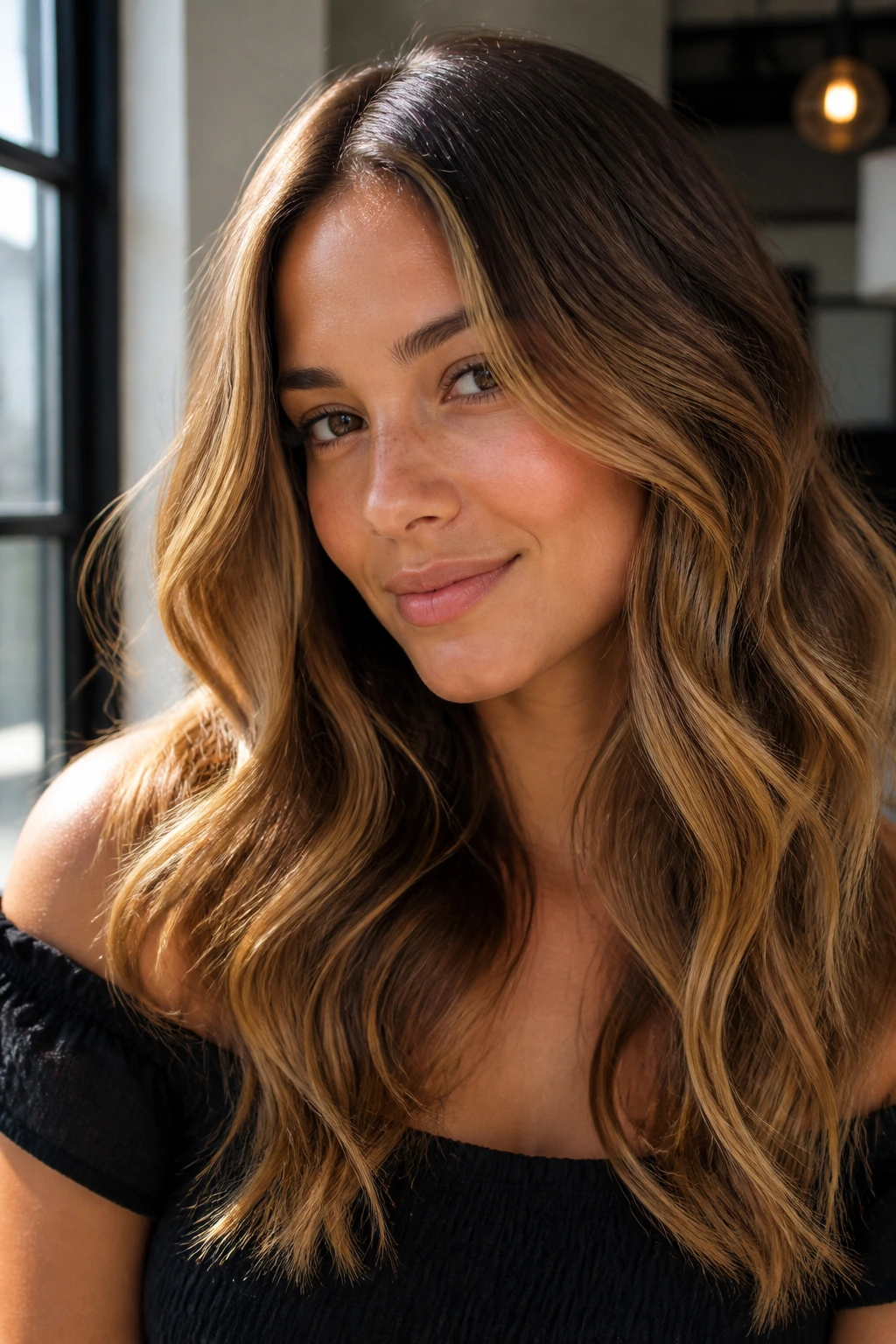
Golden honey waves are warm without being brassy, which is a trick a lot of color work tries and fails to pull off. The honey tone sits on top of a medium brown or dark blonde base and catches movement in the hair instead of sitting there like a hard stripe.
This version is low-fuss because the warmth blends naturally with regrowth. You are not trying to hide the root; you’re making the root part of the palette. If your hair tends to look dull, honey is a better bet than ash because it brightens the mid-lengths without needing extra lift.
Loose waves show the dimension best. Straight hair still looks good, but it reads a touch subtler.
12. Cool Taupe Balayage
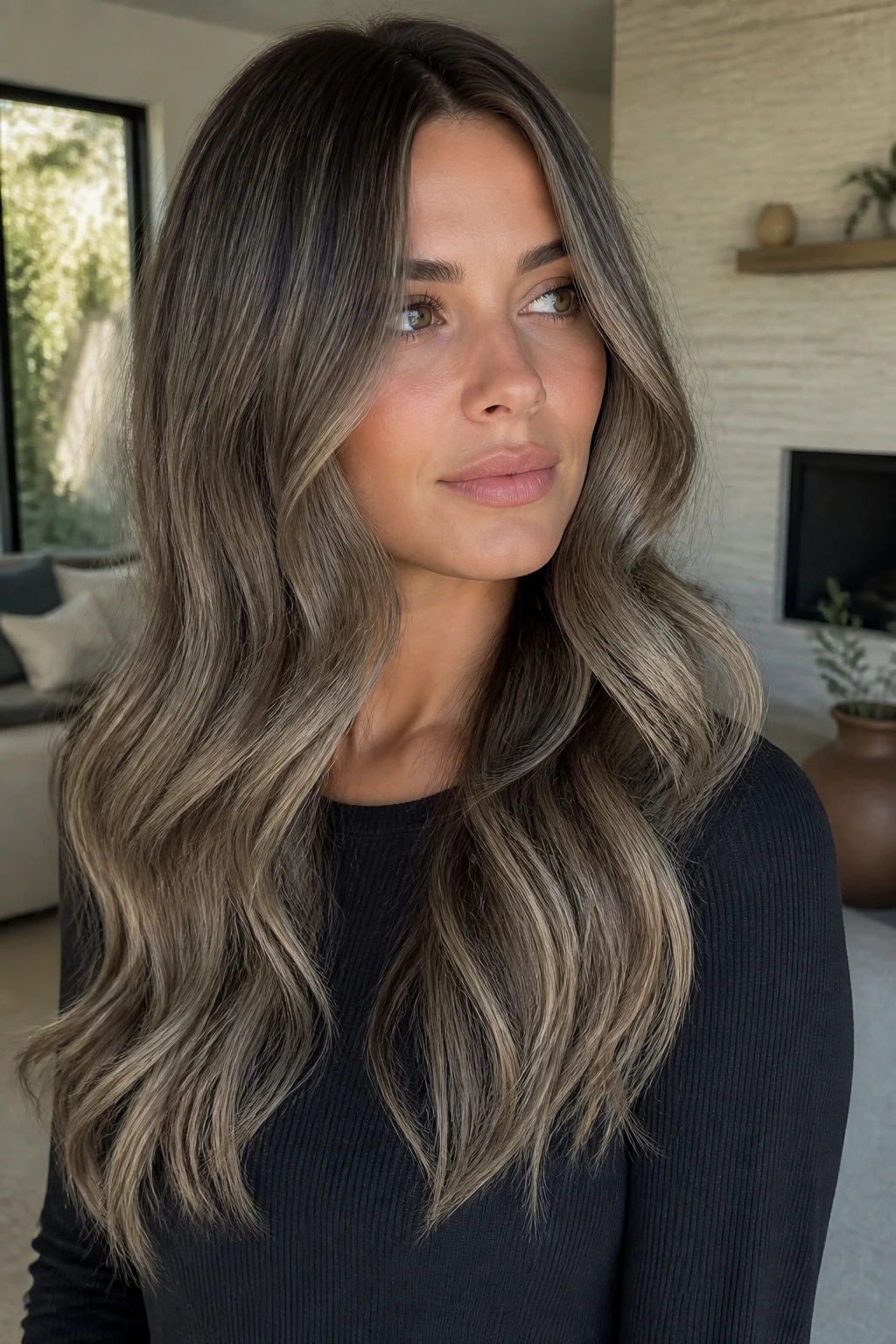
Cool taupe balayage is for people who hate gold. Not “sometimes prefer cooler tones.” Hate gold. There’s a difference, and this is the shade family that respects it.
Taupe sits between brown, beige, and soft gray, so it gives brunettes a muted finish that grows out with a calm edge. It’s a good choice if your natural color is ash-brown or if your makeup and clothes lean cool. The maintenance stays lighter when you keep the lift modest; pushing taupe too pale can make the ends feel hollow and dry.
Comparison Point
Unlike a bright ash blonde, taupe keeps more of the natural depth, which means fewer toner emergencies and less visible fading.
If your stylist reaches for a strong violet toner here, ask them to ease off. Taupe should look cool, not dusty.
13. Auburn Glaze Balayage
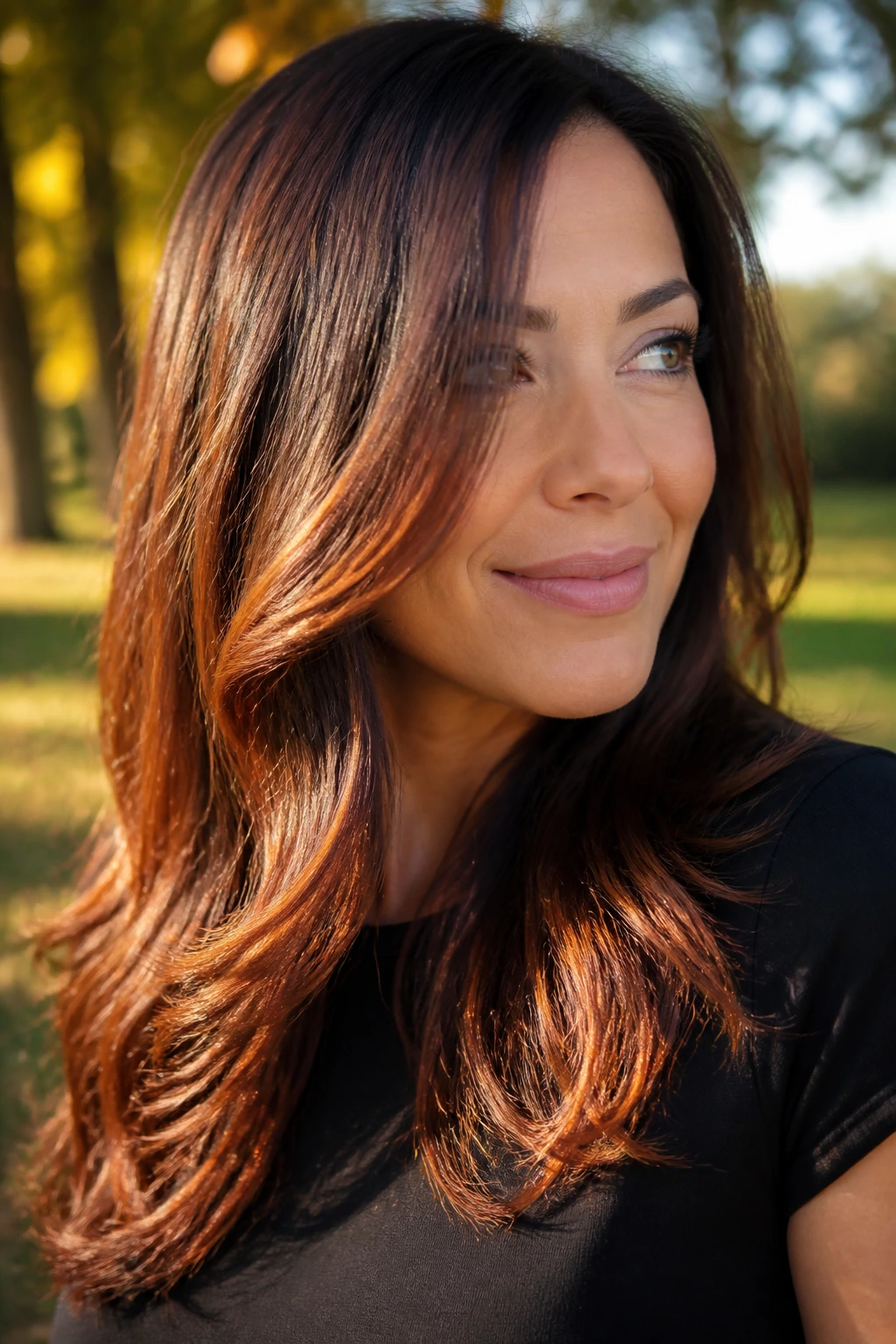
Auburn glaze balayage gives brunette hair a warm red-brown shimmer without going into full copper territory. The color is often placed in broad, soft strokes so it catches light when the hair moves and disappears back into brown when it doesn’t.
This is a nice low-maintenance option because auburn and brunette already live close to each other. The fade is graceful. The grow-out is soft. The ends keep some warmth even as the gloss dulls, so you’re not racing back to the salon just to stop the color from looking flat.
Ask for the auburn to live mostly on the mid-lengths and ends, with a soft face-framing piece if you want more glow near the cheekbones.
14. Walnut Smoke Balayage
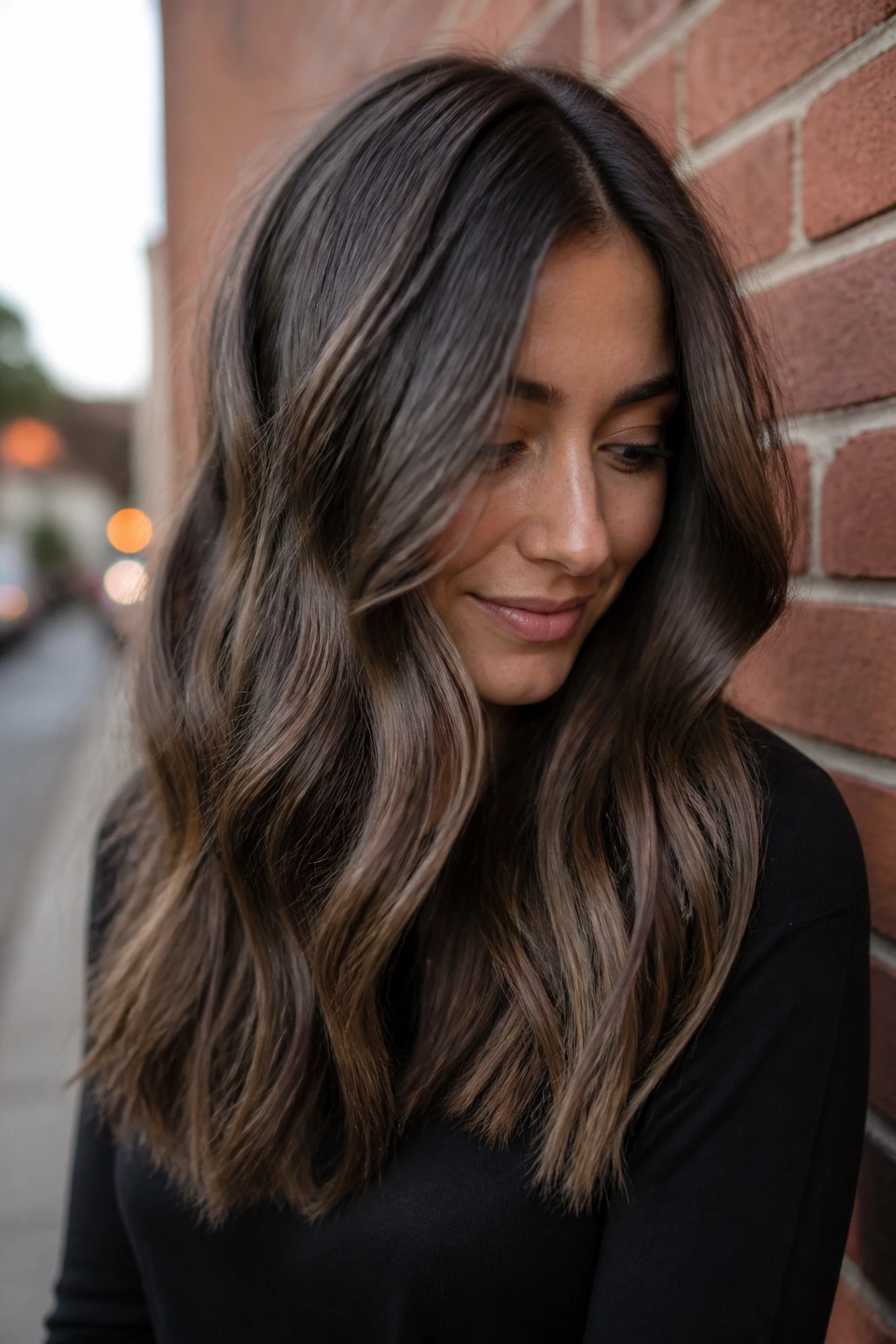
Walnut smoke balayage is what I reach for when someone wants dimension but does not want their hair to look dyed from across the street. It’s a muted brown blend with smoky undertones and a finish that sits somewhere between matte and glossy.
The maintenance stays tame because the contrast is gentle. The light pieces are never too pale, so the regrowth looks like part of the transition instead of a hard reset. This is especially good on medium brunettes with naturally dense hair, where a whisper of lighter brown can stop the shape from looking blocky.
A slightly off-center part helps show the color. It keeps the smoke effect from looking too symmetrical.
15. Champagne Face-Framer
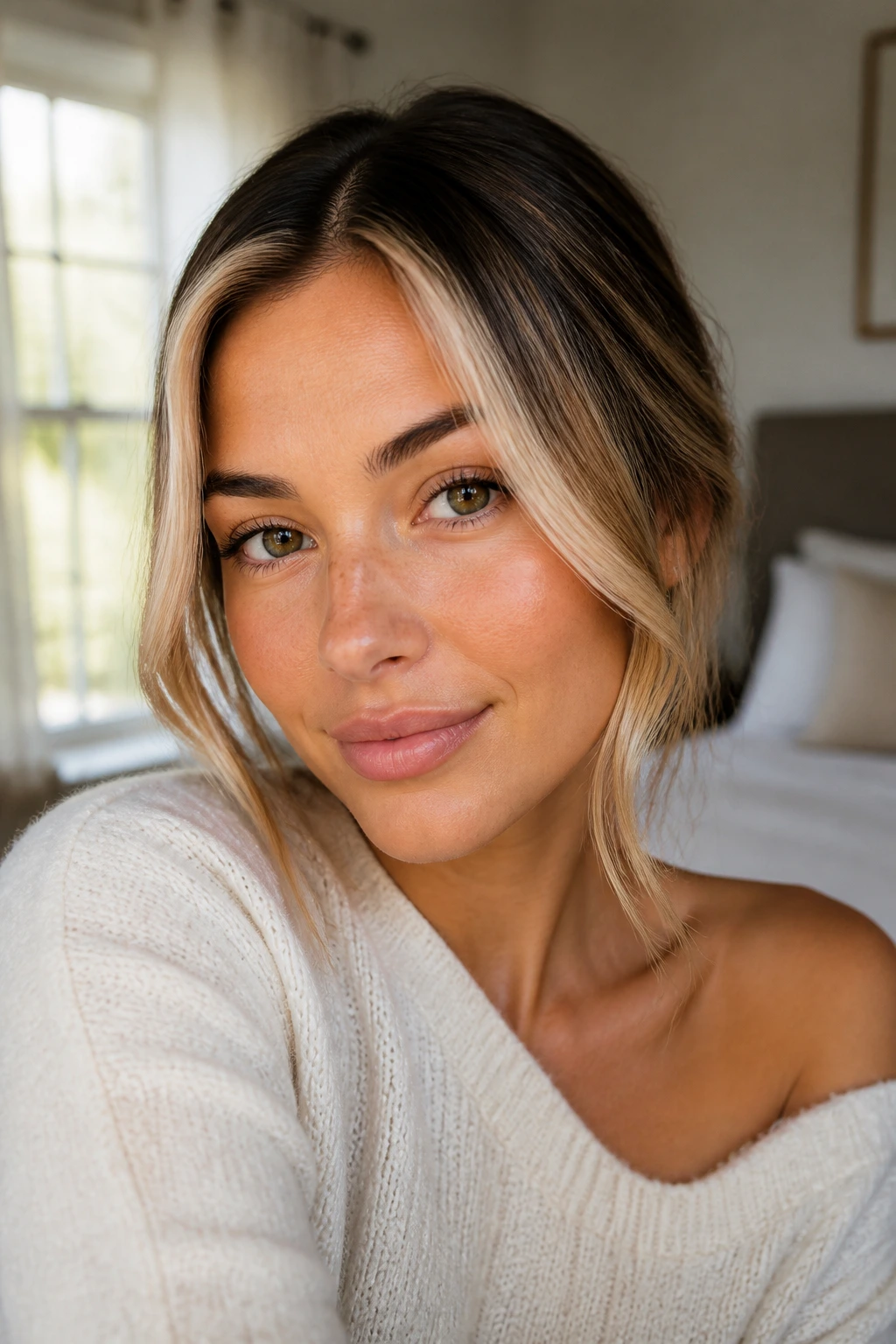
Champagne face-framing pieces are for someone who wants lightness near the skin without building a whole blonde service around it. The tone should sit between beige and pearl, with just enough warmth to avoid looking chalky.
What makes this low-maintenance is the limited placement. You brighten the front and leave the rest soft, so the grow-out mostly hides in the deeper interior. It’s a smart choice for someone who wears their hair up often, because the front pieces still do the work even in a ponytail or bun.
Who It Suits
- Light brunettes and dark blondes.
- Layered haircuts with movement around the face.
- People who want a brighter look without all-over lightening.
Keep the champagne note soft, not metallic. That’s where the elegance comes from.
16. Curly Halo Balayage
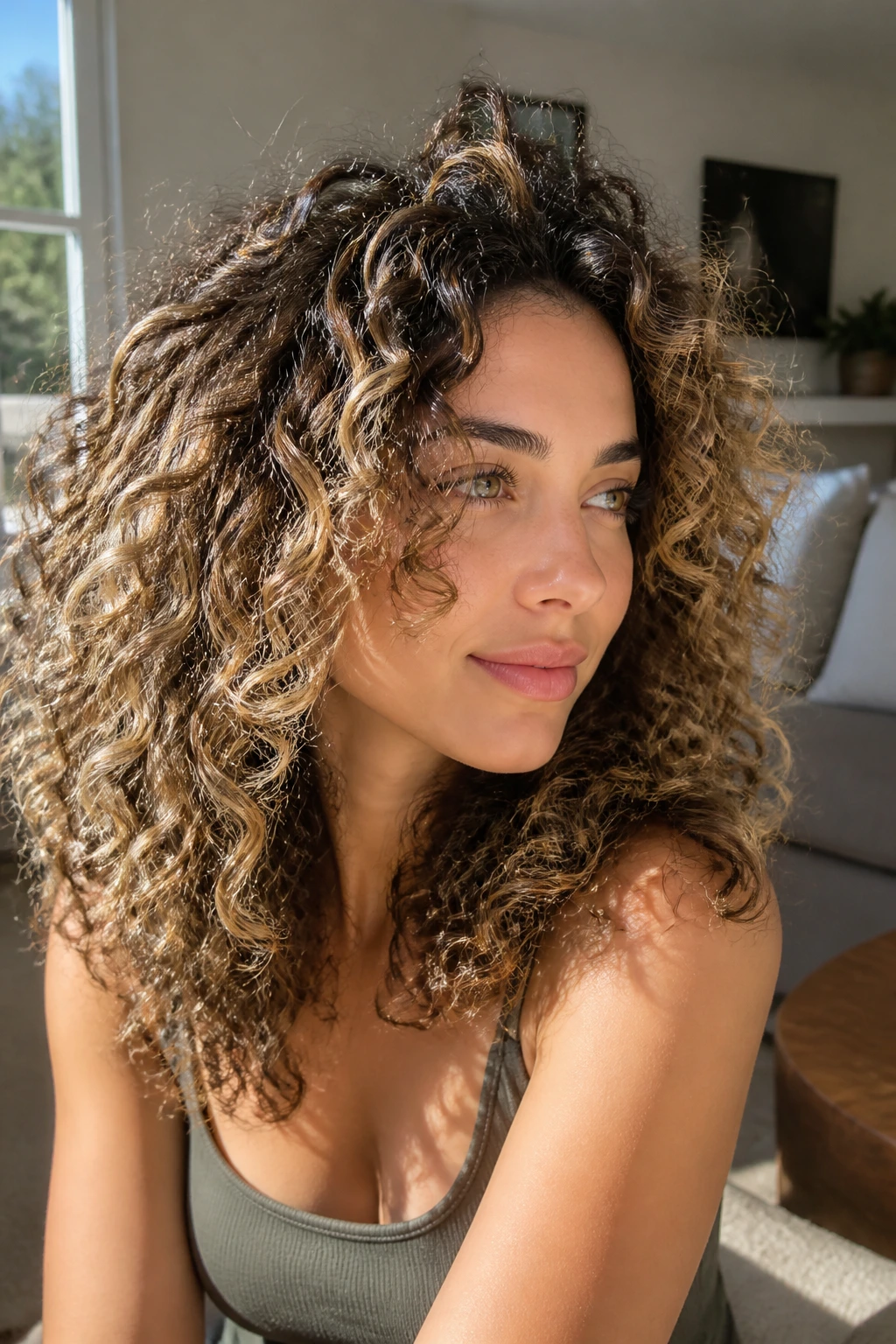
Curly hair changes the rules a little, because the curl itself decides where the color shows. That’s why a halo placement works so well: the lighter pieces sit around the outer ring of the curls and near the top layers where light naturally lands.
This isn’t about flooding every coil with blonde. It’s about putting brightness where the pattern opens and where the eye already goes. The grow-out is easier because the root stays darker and the color is distributed in a way that doesn’t need perfection to look right. In fact, a little irregularity helps.
What to Ask For
- Painted pieces around the face and crown.
- Less saturation underneath.
- A gloss that keeps the curls from going dry-looking.
A curly halo should still look like your hair, only with the lights turned up a notch.
17. Fine-Hair Sliced Balayage
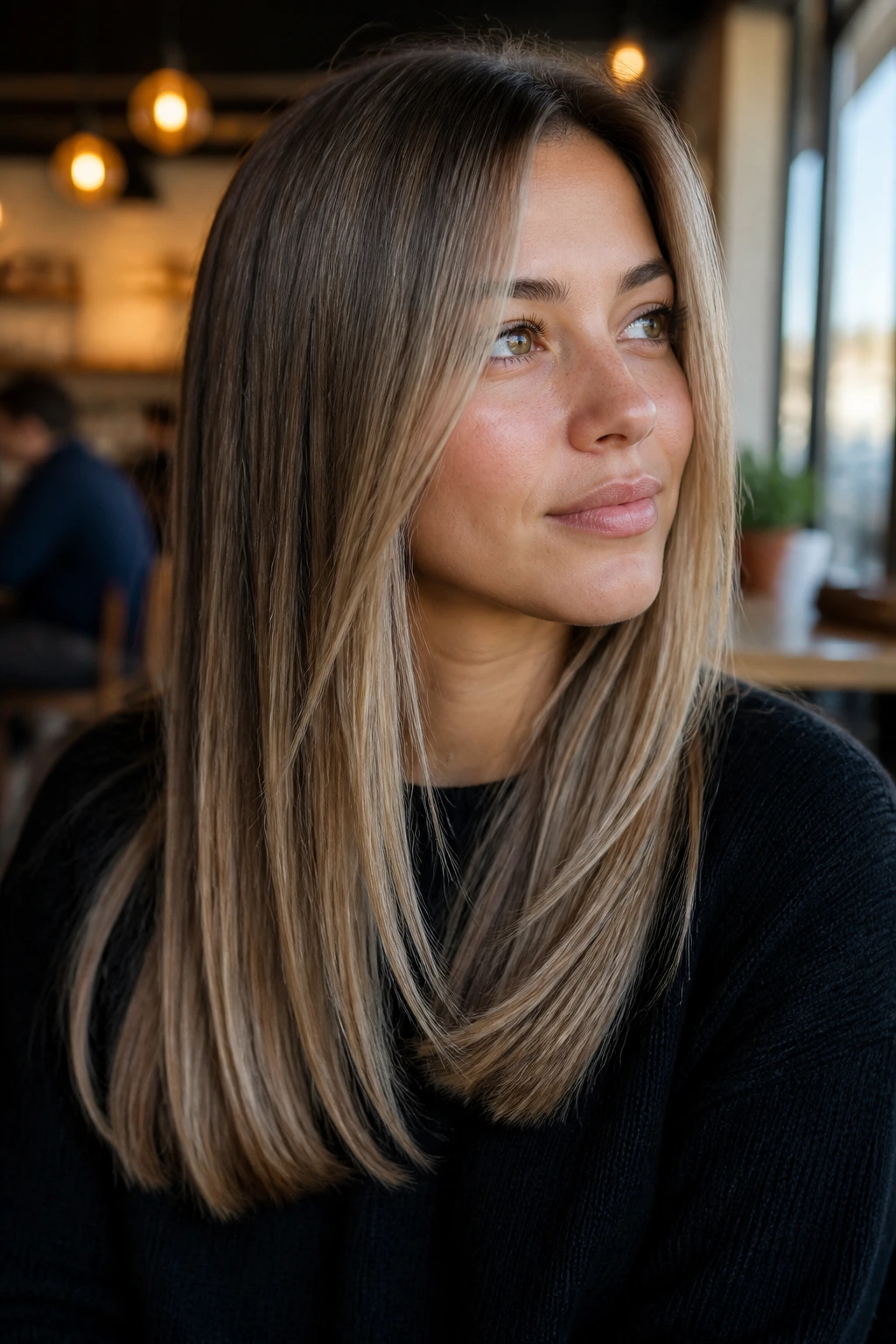
Fine hair does not need chunky, wide color panels. It needs slices—thin, controlled ribbons that build the illusion of density without eating up too much hair in one spot.
That’s why sliced balayage can be a better bet than big dramatic pieces. The light threads give the hair movement, and the root shadow keeps the scalp area from showing too much contrast. If your hair is fine and straight, keep the pieces closer together but lighter in width rather than making them fewer and thicker.
A gloss with a neutral-beige finish helps keep the strands looking glossy instead of washed out. And please, skip the urge to over-lighten the ends. Fine hair looks better with dimension than with pale, brittle-looking tips.
18. Gray-Blending Salt-and-Pepper Balayage
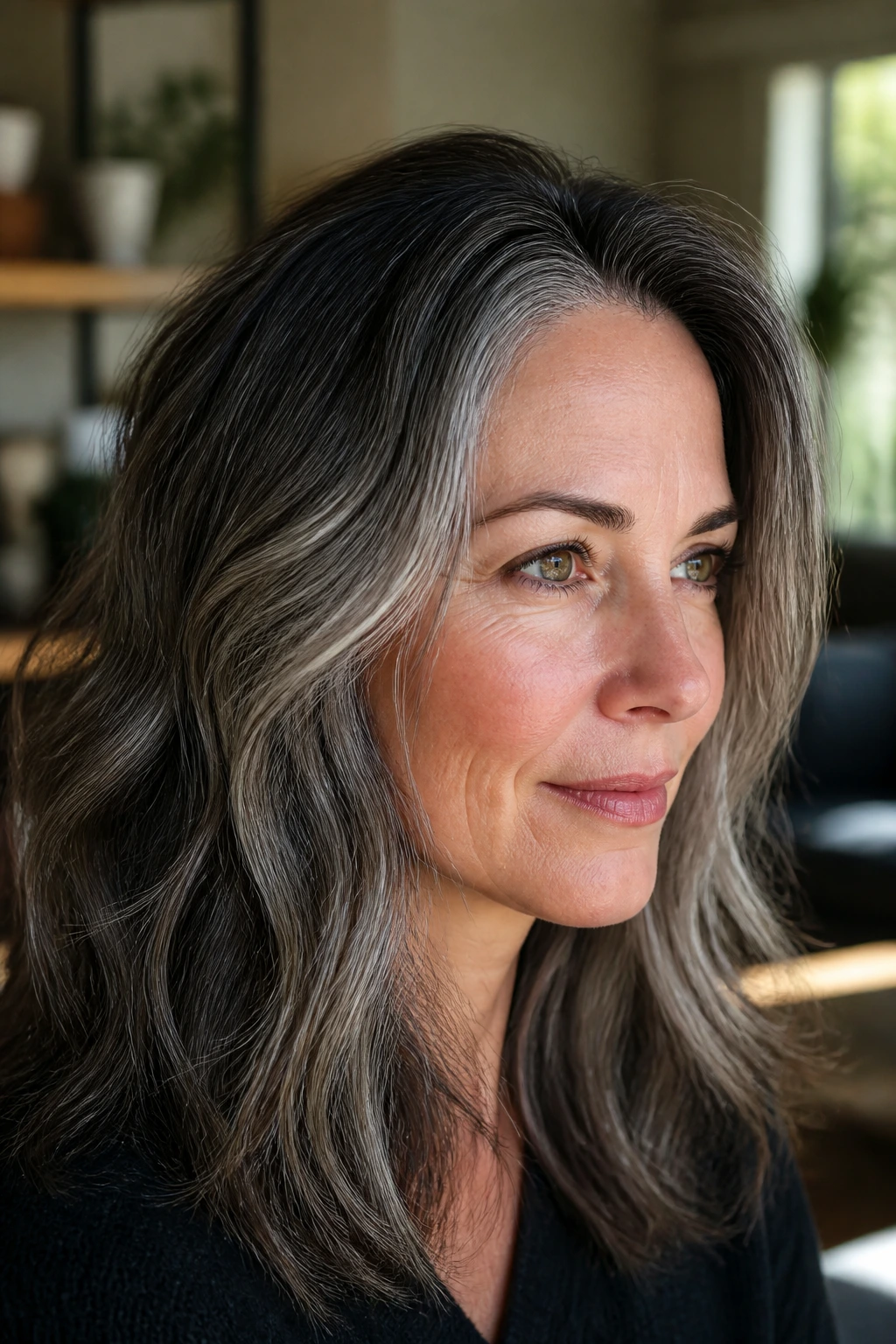
Gray-blending balayage is not the same thing as covering gray, and that’s exactly why it works so well for low maintenance. Instead of hiding the silver, it folds it into the pattern, pairing the gray with cool brown, charcoal, or soft beige so the transition looks deliberate.
This is one of the most practical ways to grow out natural gray without a harsh line. The root can stay close to your own silver pattern, while the lighter pieces soften the contrast along the part and temple area. If you’re tired of monthly cover-ups, this approach buys a lot of breathing room.
Best For
- People in early gray transition.
- Anyone with peppery regrowth around the temples.
- Clients who want dimension, not full coverage.
Ask for a neutral-to-cool gloss. Too much warmth tends to make the gray look yellow.
19. Short Bob Balayage
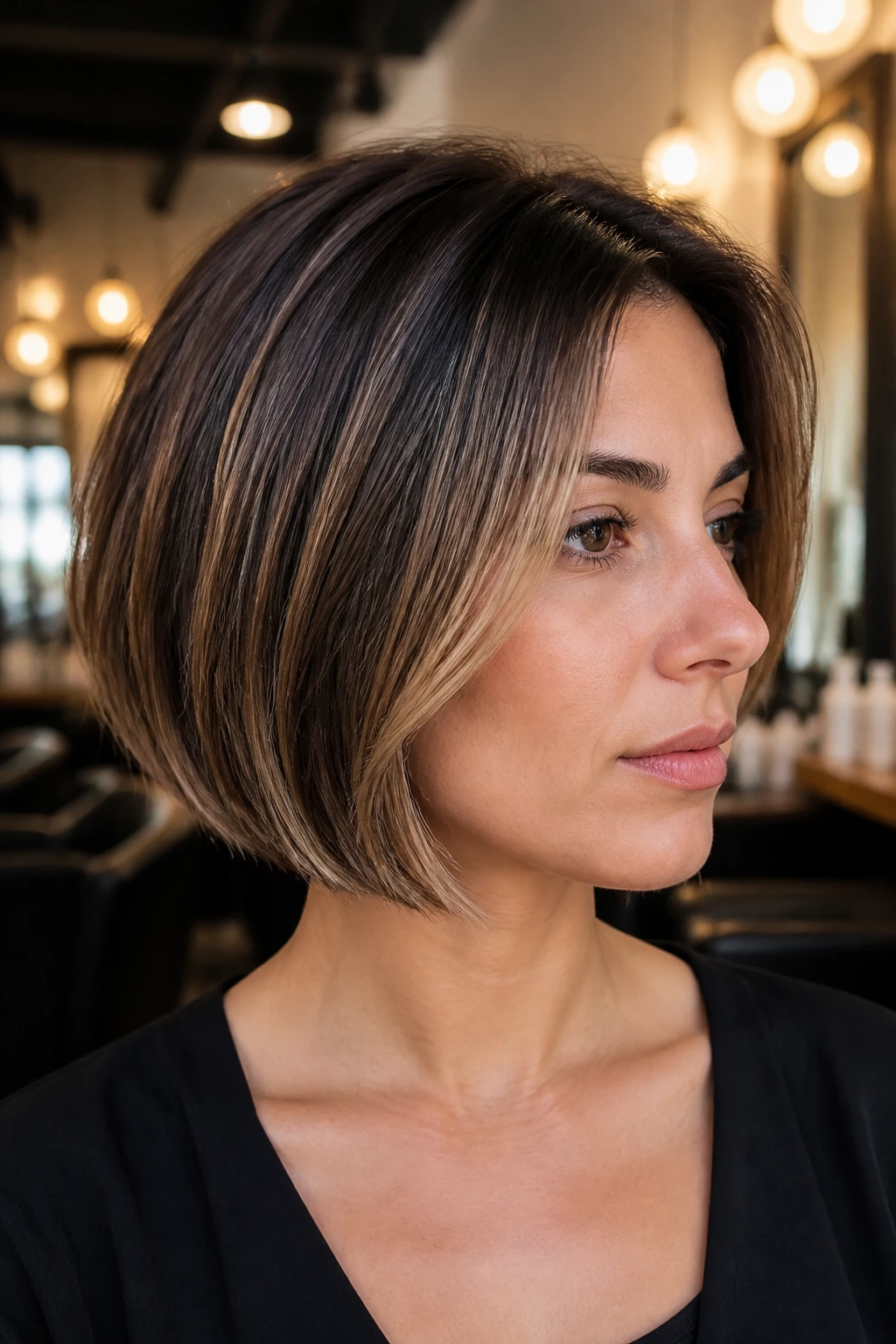
A bob needs precision, not chaos. The best balayage on short hair is subtle and well-placed, with the lighter pieces tucked through the top and front so the cut still looks sharp.
Because the length is short, the color doesn’t have as much space to diffuse, so less is more. Thin painted sections and a soft root shadow keep the bob looking expensive instead of stripey. This is a low-maintenance choice because the shape itself does some of the work; the cut stays polished even when the color has eased a little.
If the bob is blunt, keep the color understated. If it’s layered, you can add a touch more brightness through the interior.
20. Long Layered Balayage
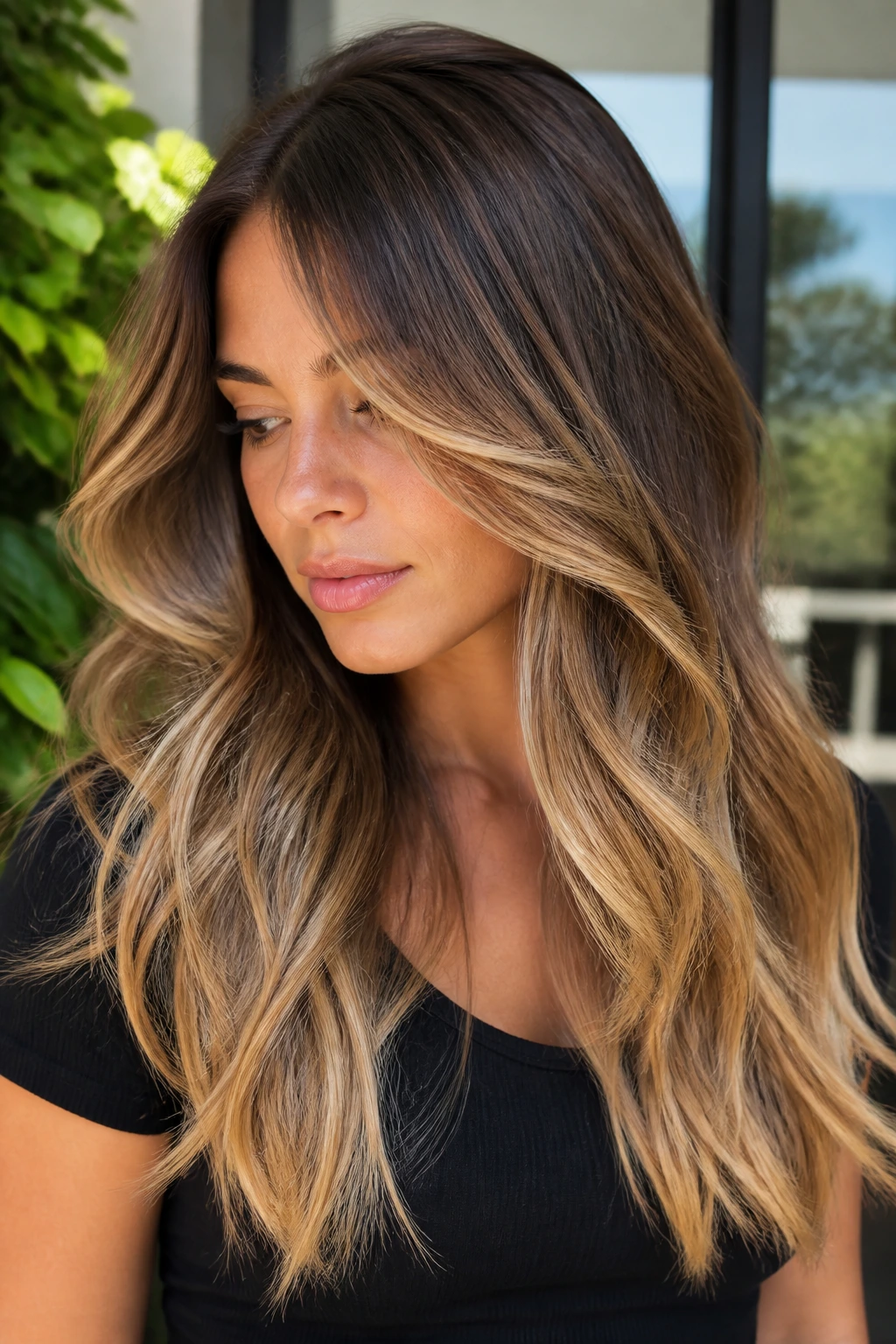
Long layers and balayage have a natural chemistry. The color sits along the movement lines of the cut, so every bend and flip of hair shows a slightly different tone.
The low-maintenance part comes from blending. You want the brightest bits through the lower half and the softer, darker pieces higher up. That keeps the grow-out quiet and stops the length from looking overprocessed. If your hair is long enough to wear in a braid or ponytail, ask for enough depth near the crown so the roots don’t vanish into a giant blanket of blonde.
A gloss every 8 weeks usually keeps long layered color from dulling at the ends.
21. Toffee Swirl Balayage
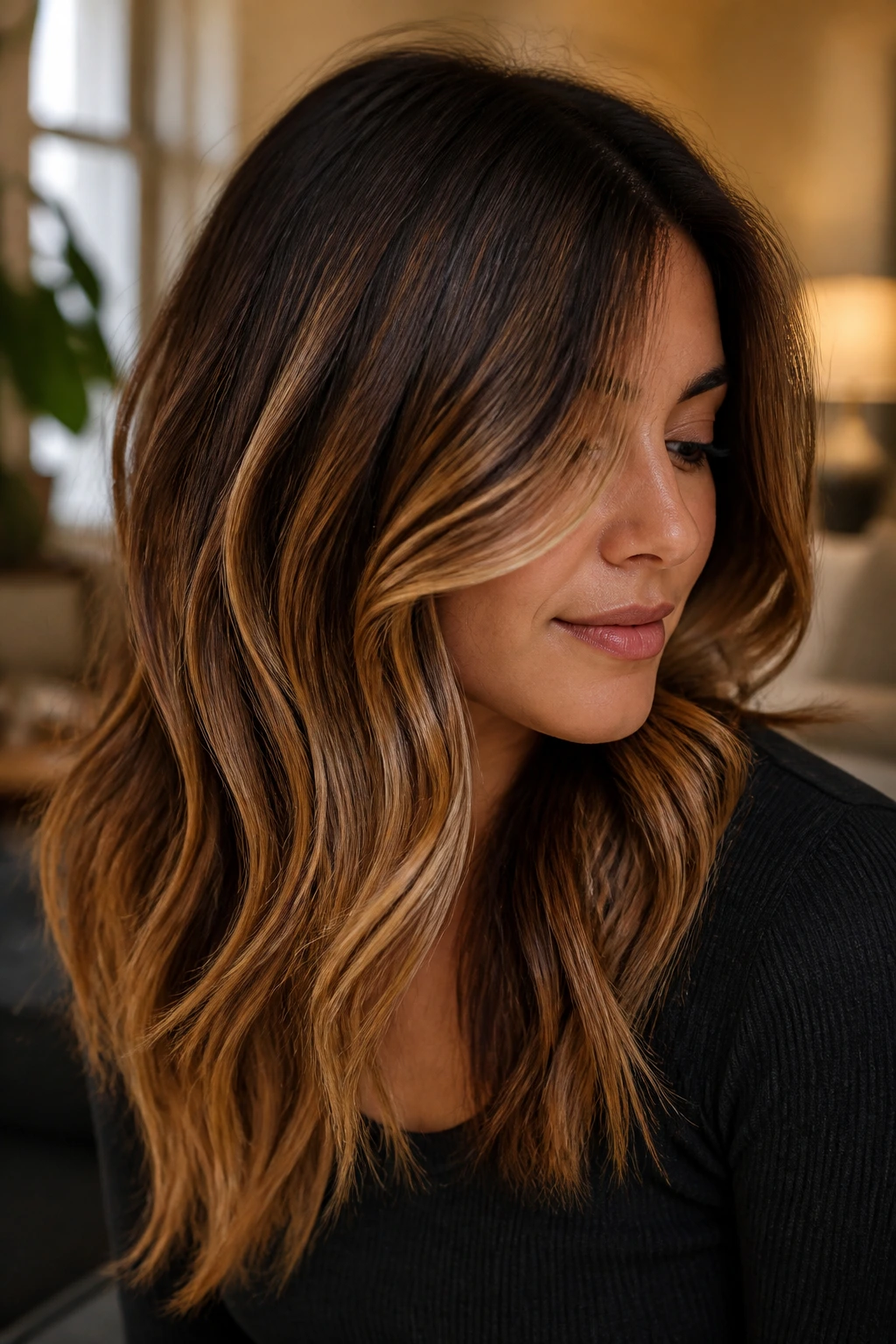
Toffee swirl balayage has a warm, rounded richness that sits beautifully on medium brunettes. It’s deeper than caramel, a little softer than honey, and far less likely to veer into orange if the tones are balanced well.
This is a smart option if you want warmth without the upkeep that bright copper or blonde can bring. Toffee grows out in a calm way because it stays inside the brown family. The lightness is there, but it’s woven through rather than parked on top.
Ask For
- Medium ribbons rather than wide slices.
- Warm beige-toffee toner, not gold foil brightness.
- A slightly darker root at the crown.
If your hair tends to frizz, this shade looks especially good with a smoothed blowout. The shine helps the caramel-brown tones read richer.
22. Sandalwood Blonde Balayage
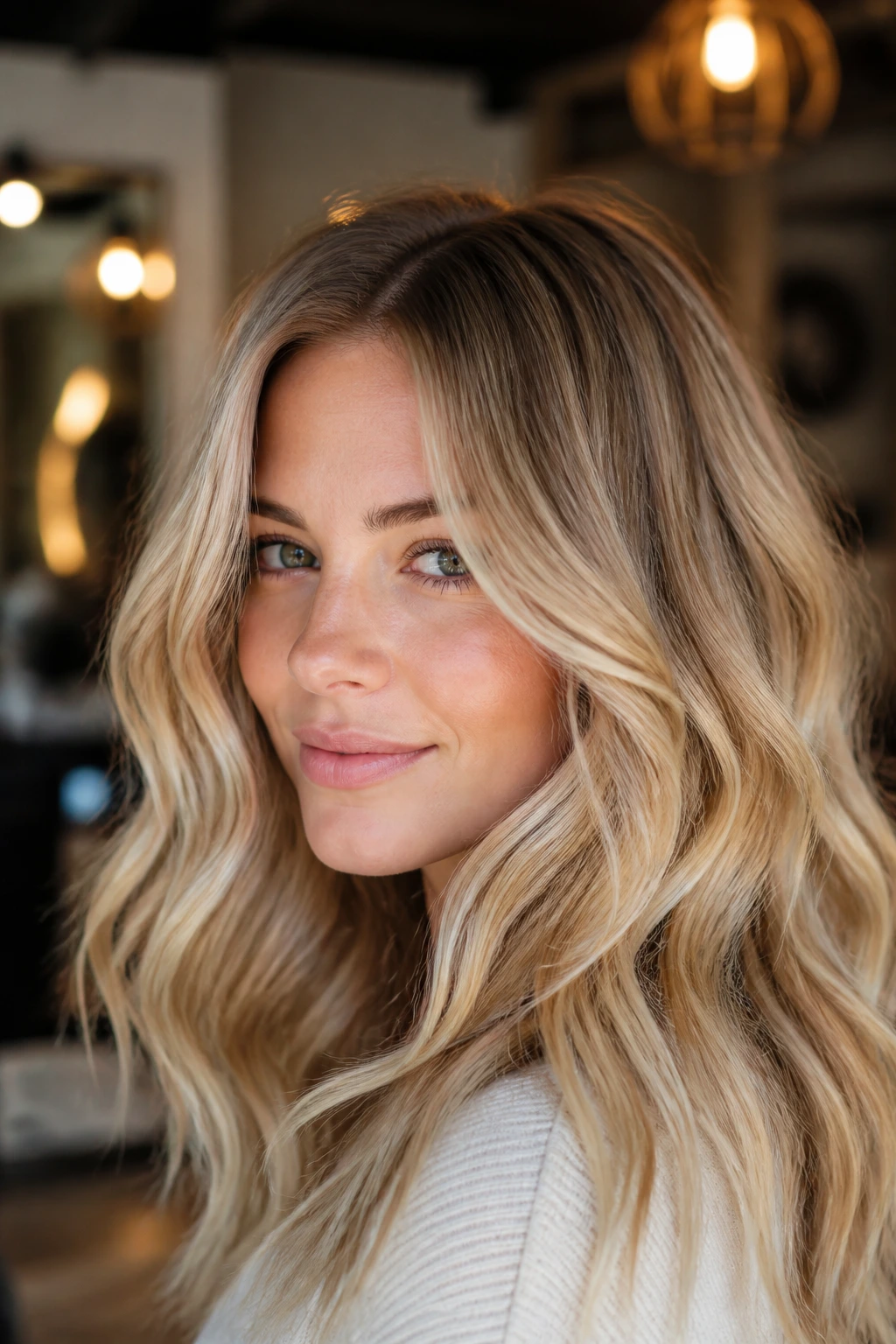
Sandalwood blonde is soft, creamy, and a little muted, which is exactly why it doesn’t feel fussy. The tone sits between beige blonde and pale sand, so it brightens the hair without turning harsh or icy.
This works well on lighter brunettes and dark blondes who want an airy finish. Because the shade is so neutral, it doesn’t scream for weekly toner touch-ups the way a bright platinum look might. Keep the root shadow subtle and the pieces feathered, and the whole thing stays relaxed.
It looks especially good with loose texture. Straight, flat ironing can make it feel a little more serious than it needs to be.
23. Bronze Root-Smudge Balayage
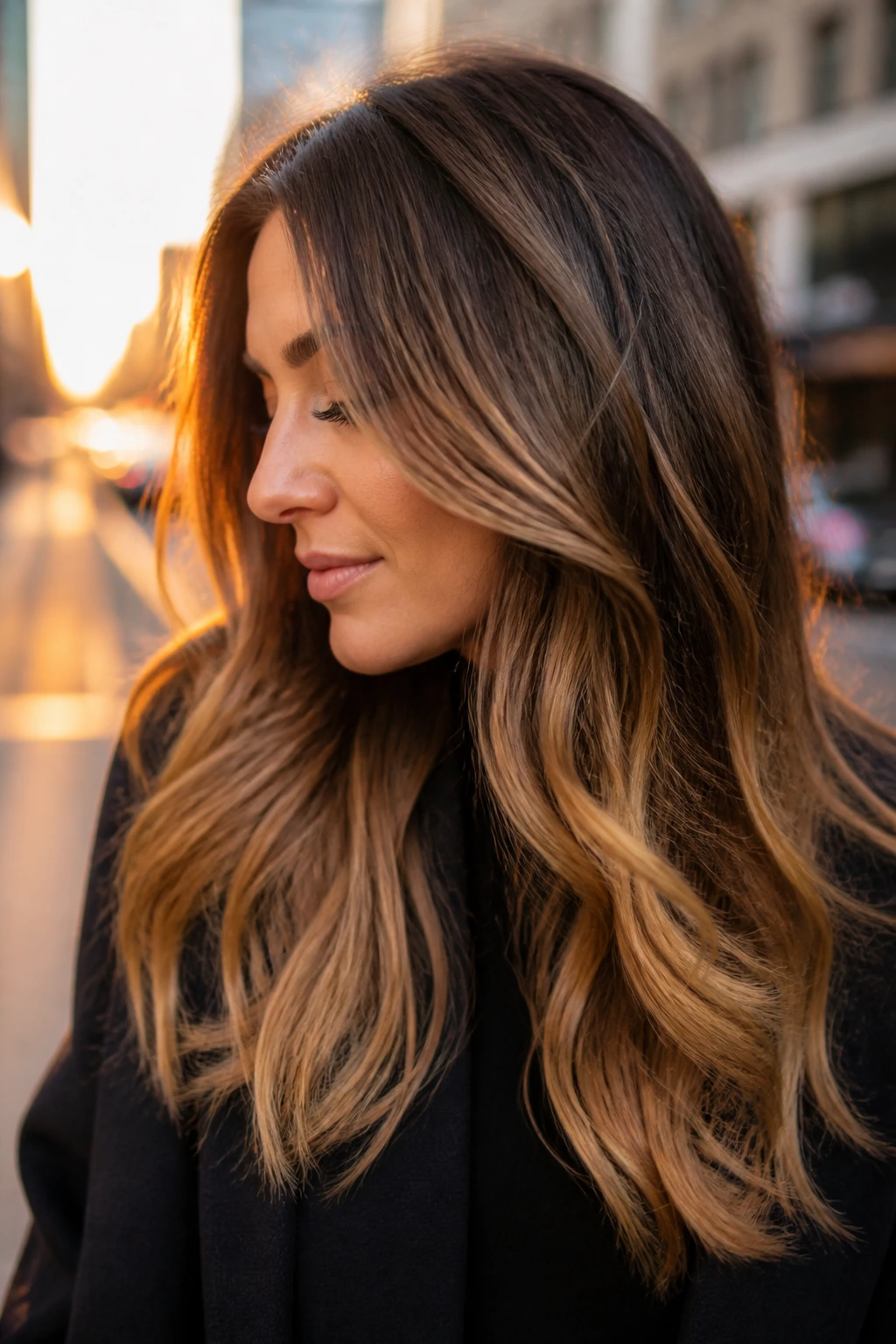
Bronze root-smudge balayage is richer than a standard caramel look and easier to wear than a bright copper. The root stays deep and smoky, then the mids and ends pick up bronze-gold warmth that catches light in motion.
The shadow root is doing real work here. It lets the bronze look luxe while hiding the grow-out line, which is exactly what low-maintenance color should do. Ask for a bronze that leans brown, not orange, so the fade stays soft and the ends don’t turn loud.
This is a good move for medium to deep brunettes who want warmth that still feels grounded.
24. Cinnamon-Tea Balayage
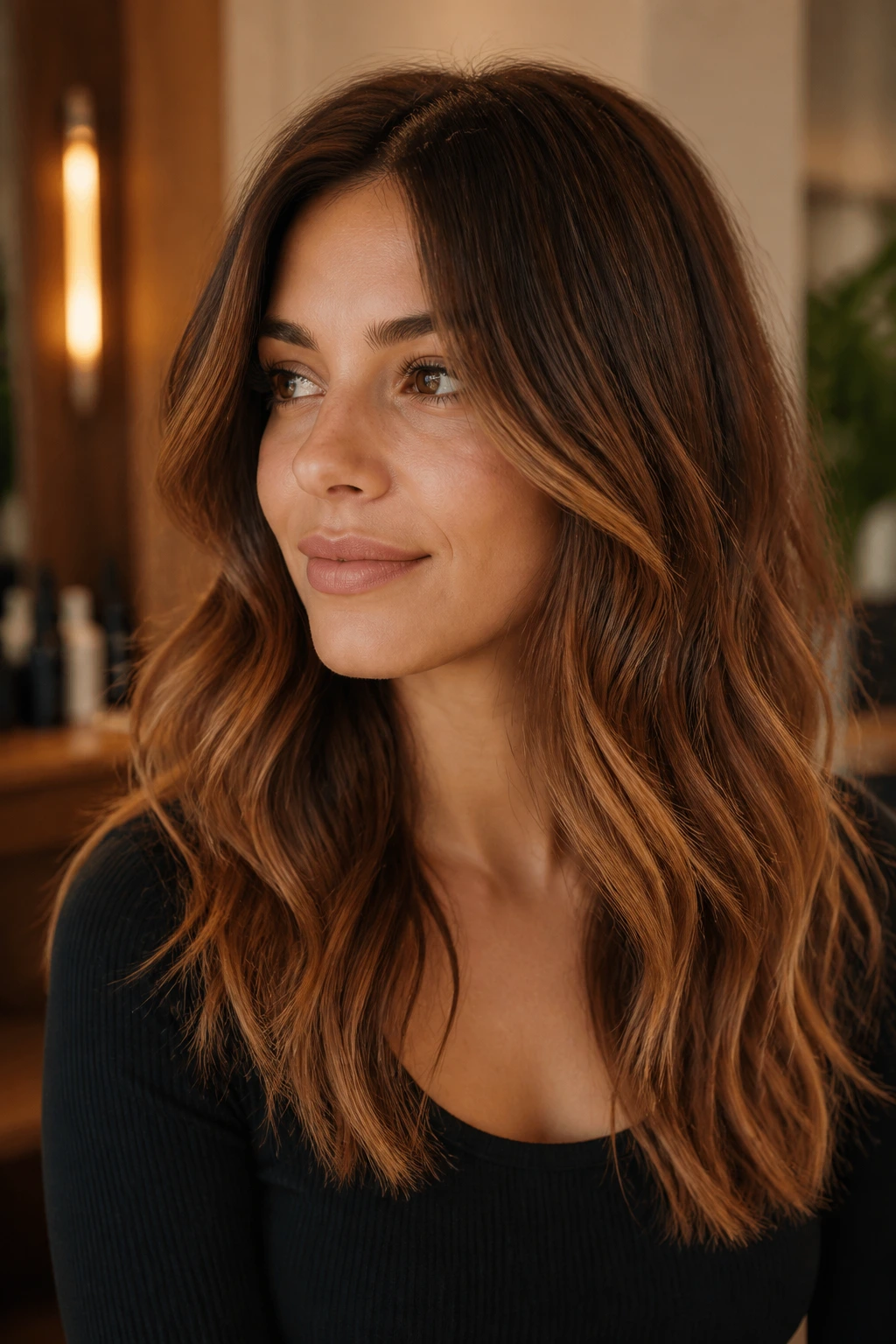
Cinnamon-tea balayage is warmer than mushroom brown but quieter than true copper. Think spice-infused brunette rather than red hair trying to behave.
That middle ground is why it stays manageable. The cinnamon tone blends back into brown as it fades, and the tea-stained softness keeps the color from looking stale between visits. I’d use this on hair that already has a little depth and wants movement, not a full identity shift.
Comparison Point
Unlike a brighter copper balayage, cinnamon-tea reads like a lived-in gloss first and a color statement second.
Keep the pieces concentrated through the surface layers so the warmth shows when the hair moves.
25. Pearl Blonde Melt
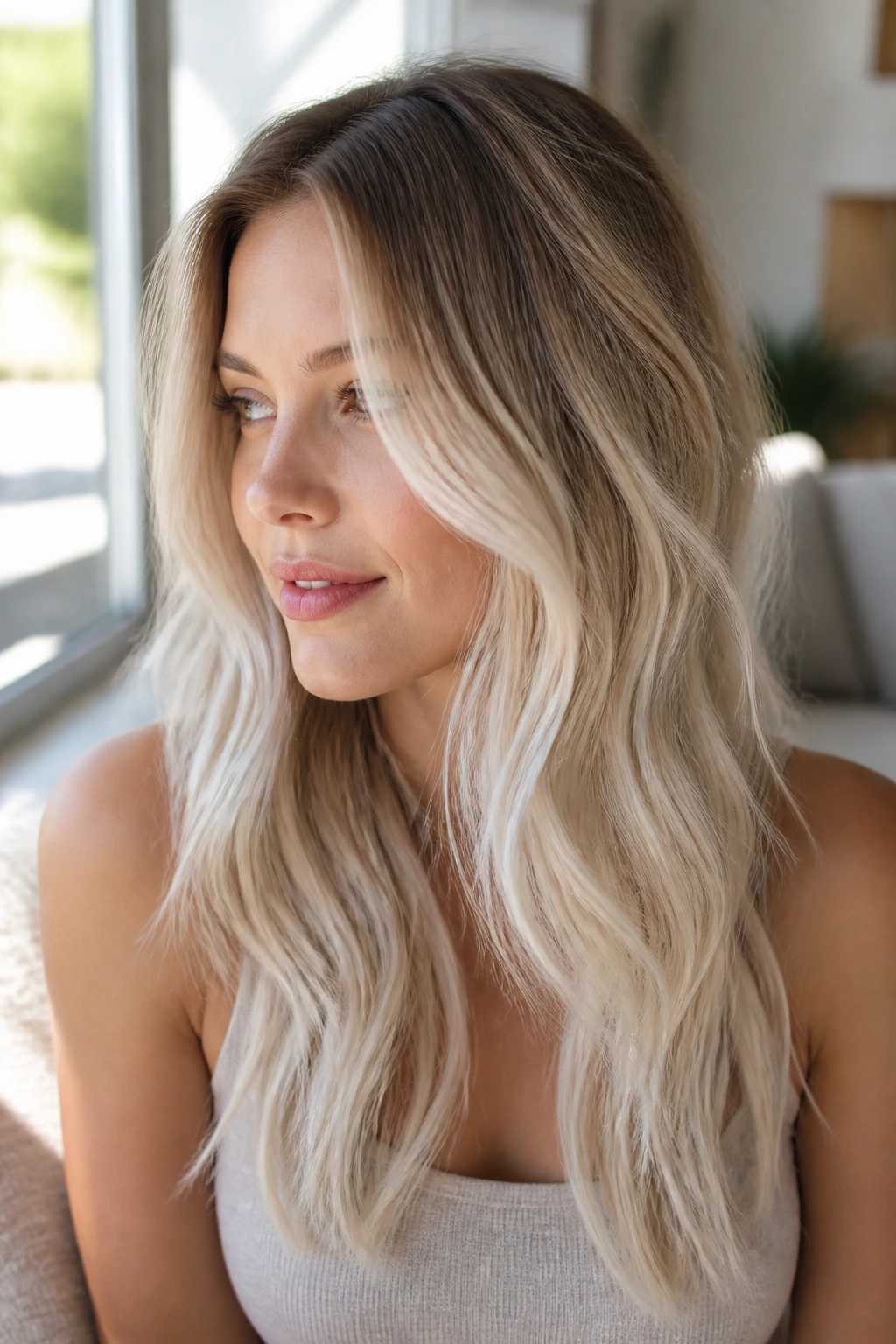
Pearl blonde can look expensive or it can look flat. The difference is usually the root melt. Keep the top a soft shadow, move through creamy beige in the mids, then let the ends carry the pearl note without pushing all the way to stark white.
That gradation keeps the grow-out cleaner. A full pearl blonde with no depth at the root can look neat for a week and fussy after that. A melt, though, gives you enough softness to stretch the time between salon visits without losing the blonde effect.
What Helps
- A neutral gloss, not a heavy violet one.
- Soft curls or bends to show the gradient.
- Careful heat styling so the ends don’t dry out and go hollow.
Pearl blonde is prettier when it looks airy, not brittle.
26. Soft Smoke and Sand
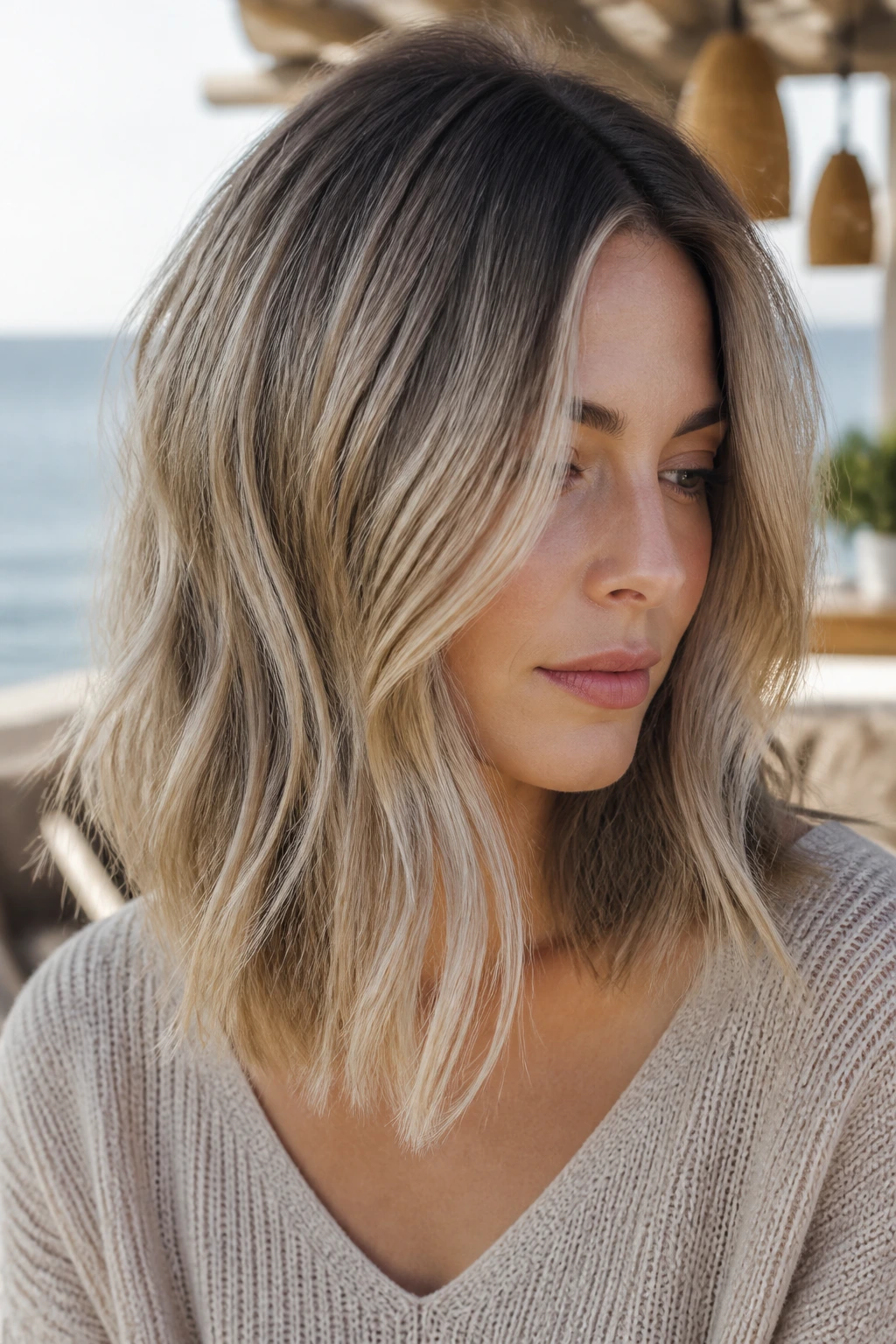
Soft smoke and sand is one of the best neutral balayage looks for people who can’t decide between warm and cool. The color sits in the middle, with smoky depth near the root and sandy beige through the lengths.
That mix is useful because it doesn’t swing too far in either direction as it fades. Warm tones can get brassy. Cool ones can get muddy. Neutral shades tend to age more calmly, which is exactly what you want when low maintenance is the goal.
It works especially well on shoulder-length cuts and longer, where the color can move from darker to lighter over a bigger canvas. Keep the ends lighter than the mid-lengths, but only by a shade or two.
27. Warm Chestnut Balayage
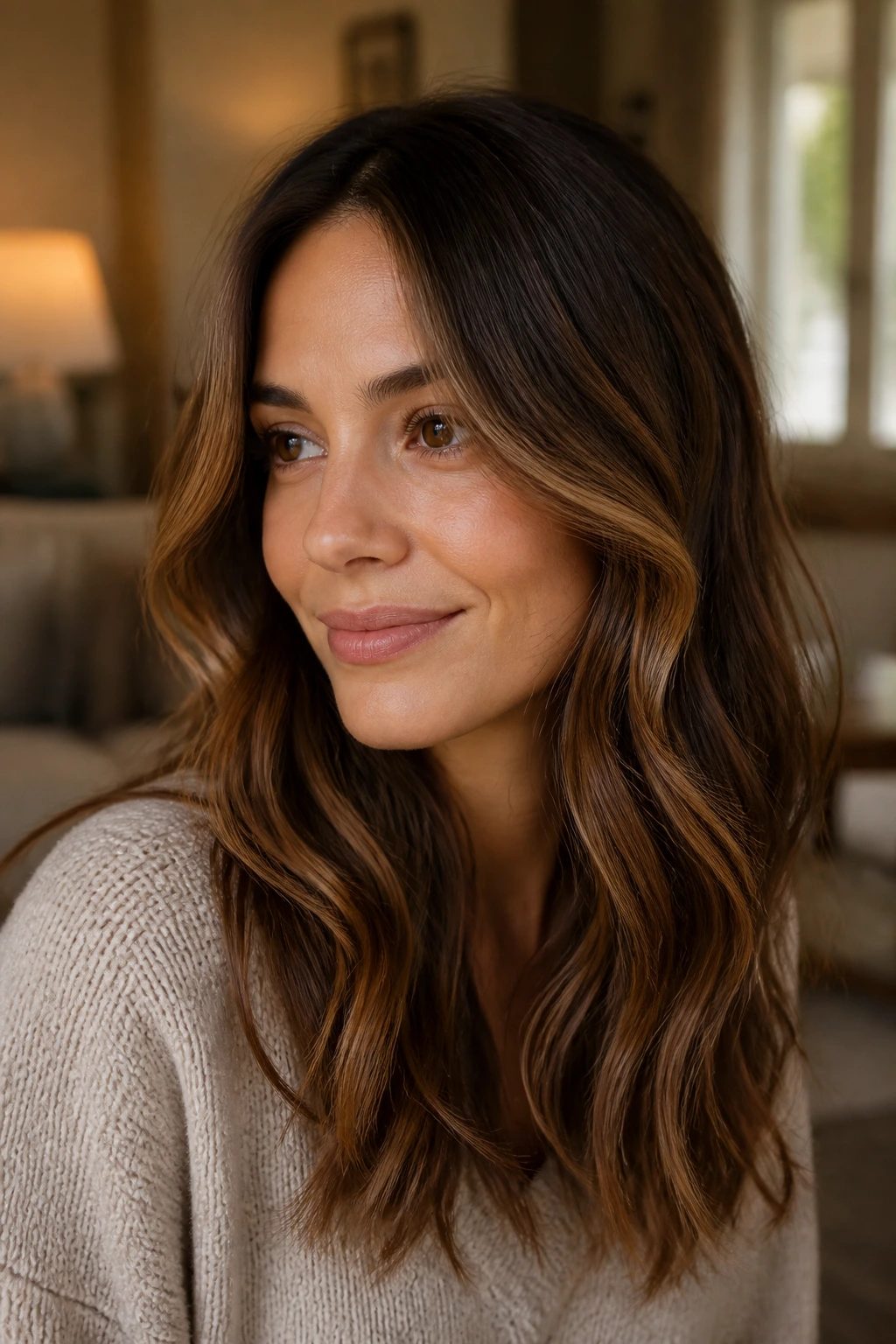
Warm chestnut balayage is a brunette look for people who want glow, not drama. The chestnut base gives the color richness, and the painted highlights sit inside that warmth instead of fighting it.
This is one of the easiest color families to live with because chestnut already feels natural on a lot of bases. The maintenance is light, the fade is soft, and the grow-out stays tidy if the root is left slightly deeper. Ask for the brightness mostly on the top layer and around the face so the depth underneath keeps the style from looking flat.
If your hair is thick, chestnut balayage can help break up the bulk without making the ends look sparse.
28. Sunlit Caramel Ends
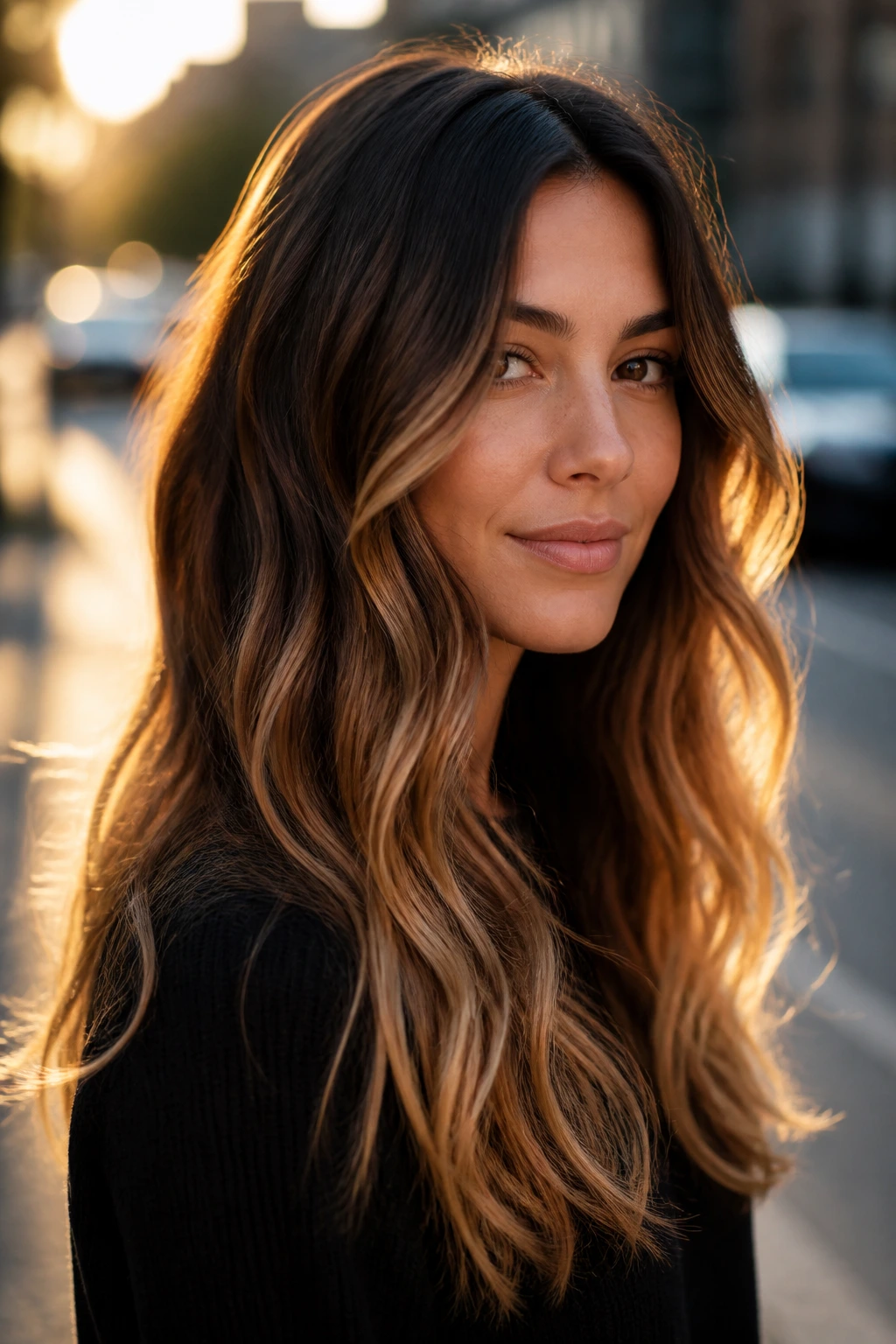
Sunlit caramel ends are for the person who wants the lightness only where the hair already gets the most motion. The roots and mids stay deep; the ends get the warm caramel finish.
That limited placement is why this look stays so manageable. You’re not lifting the whole head. You’re adding brightness at the edge, where regrowth barely matters and where the color fades into a soft lived-in look. It’s also a useful option if you like to wear your hair tucked behind your ears or in a low bun, because the ends still give the style some shape.
Best For
- Long hair with blunt or softly layered ends.
- Brunettes who want a subtle brighten-up.
- Anyone who wants color that shows in motion, not just at the part.
A little gloss on the ends every so often keeps them from looking dry.
29. Almond Cream Balayage
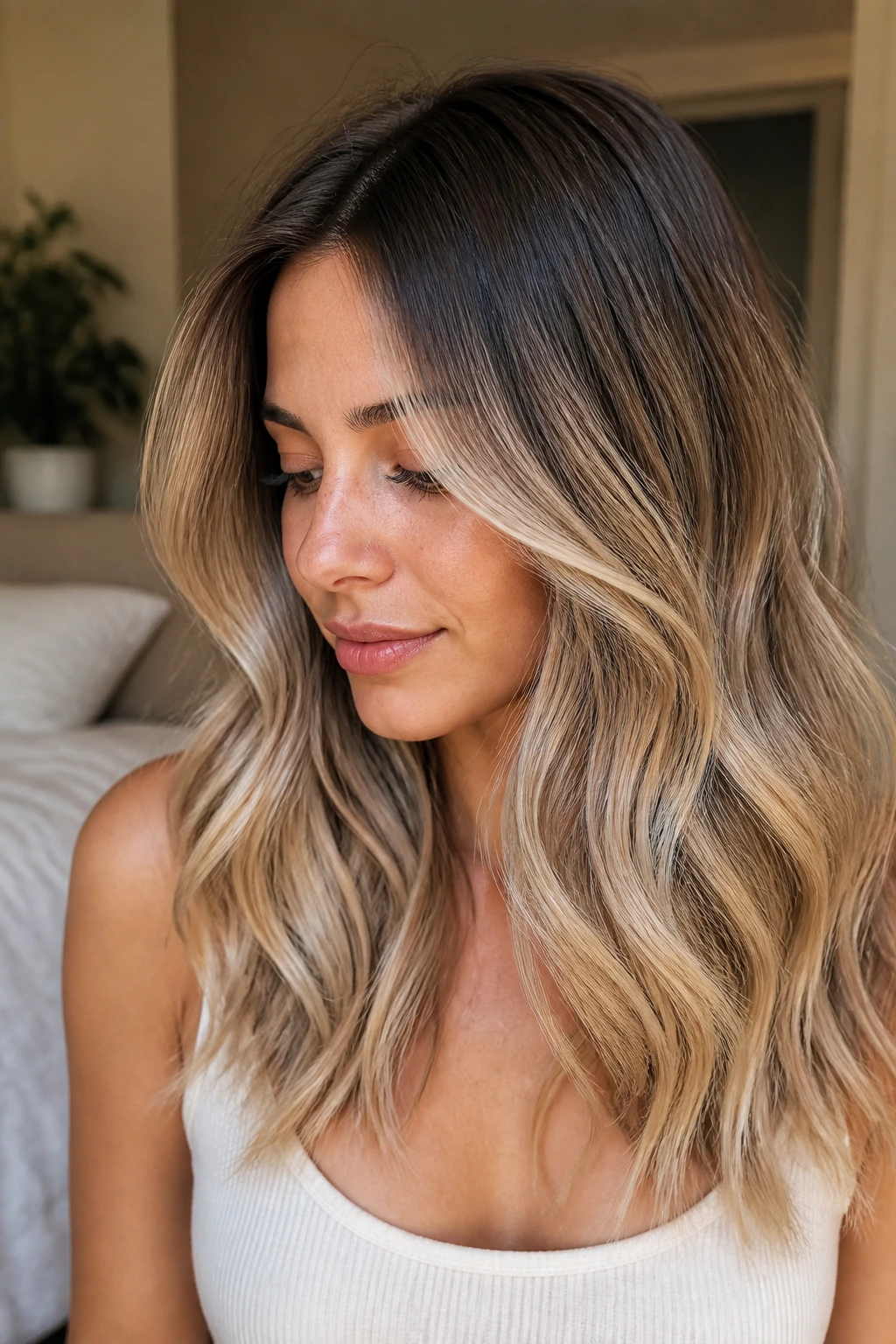
Almond cream balayage has a soft pale warmth that sits between beige and ivory, which makes it a nice choice for people who want lightness without a sharp blonde edge. The root is usually kept deeper so the whole look can breathe a little.
This is low maintenance when the lift stays controlled. Push it too pale, and you invite toner fatigue. Keep it in the almond family and the color reads soft, shiny, and wearable. It’s especially good on medium brown bases that need just enough brightness to lift the face.
Loose waves, a round brush blowout, or even a smooth tucked-behind-the-ear style all show this one nicely.
30. Dark Brunette Ribbon Lights
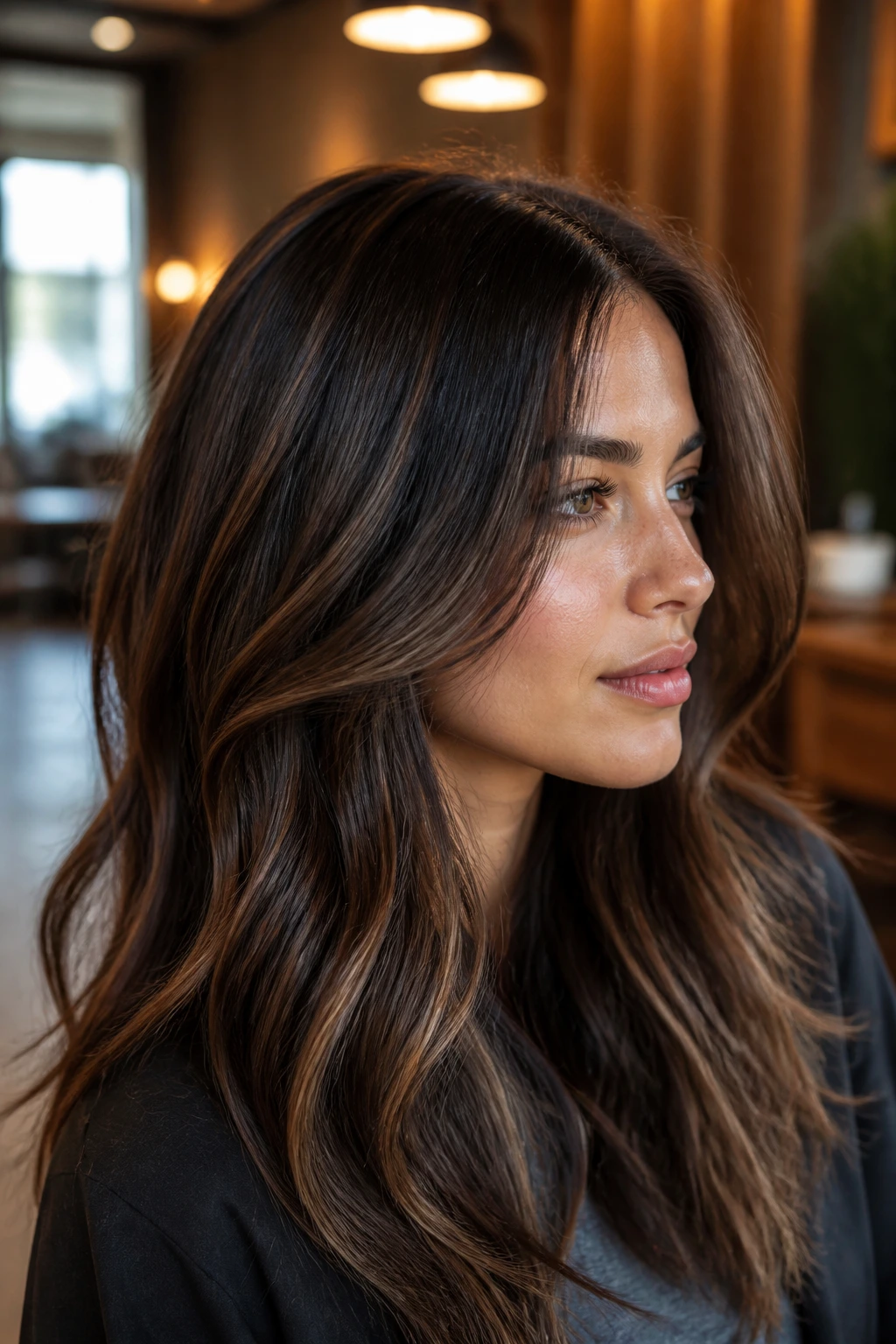
Dark brunette ribbon lights are for people who love depth and only want a few carefully placed bright threads. The goal is not to turn the hair lighter. It’s to make the dark base look more dimensional, with movement that appears and disappears as the hair shifts.
Because the contrast is modest, the grow-out stays calm. This is one of the most forgiving low-maintenance balayage looks for deep brunettes, especially if you want the hair to look glossy and expensive rather than blonde. Ask for narrow ribbons through the top and a few softened pieces around the face; too much lightness can break the mood.
If you wear your hair straight, keep the ribbons subtle. If you wear it wavy, the dimension shows a little more.
Why Balayage Grows Out Better Than Traditional Highlights
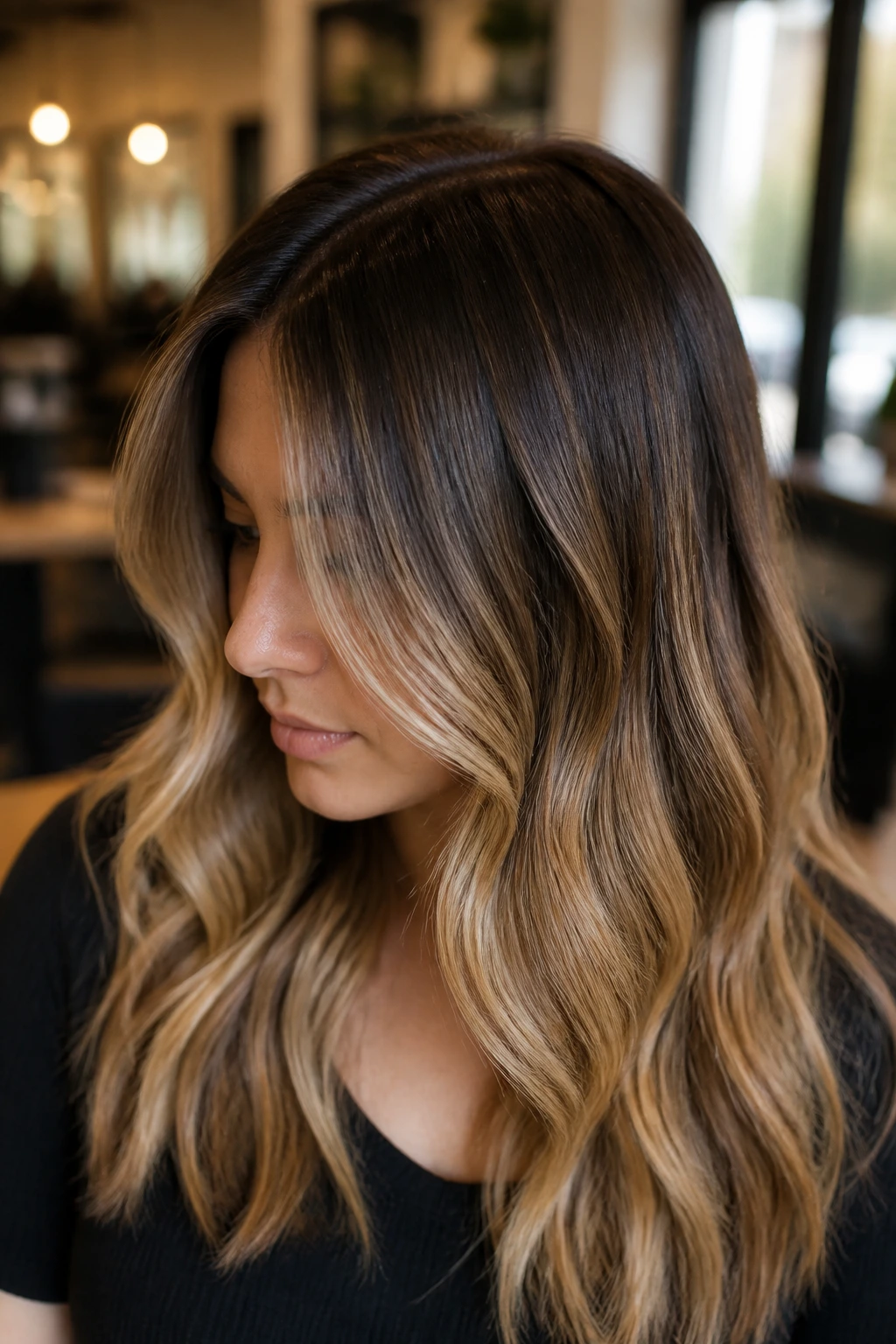
Traditional highlights often start too close to the root and create a visible line as soon as the hair grows. Balayage works differently. The lightener is painted mid-shaft and blurred toward the root, so the base shade stays in the design instead of sitting like an afterthought.
That’s why so many of these looks can stretch several weeks longer between appointments. The regrowth has somewhere to land. A root shadow, a gloss, or a soft melt buys you time, and time is the whole game if you want hair color that fits real life rather than a salon calendar.
There’s another advantage people forget: the ends can be lighter without the whole head needing to be high lift. That matters because the brightest hair is usually the most fragile hair. By keeping most of the lightness lower down, balayage leaves the top more intact and the grow-out less obvious.
Essential Tools for These Balayage Looks
- Sectioning clips: They keep the hair cleanly divided, which matters when you want soft, deliberate placement instead of patchy color.
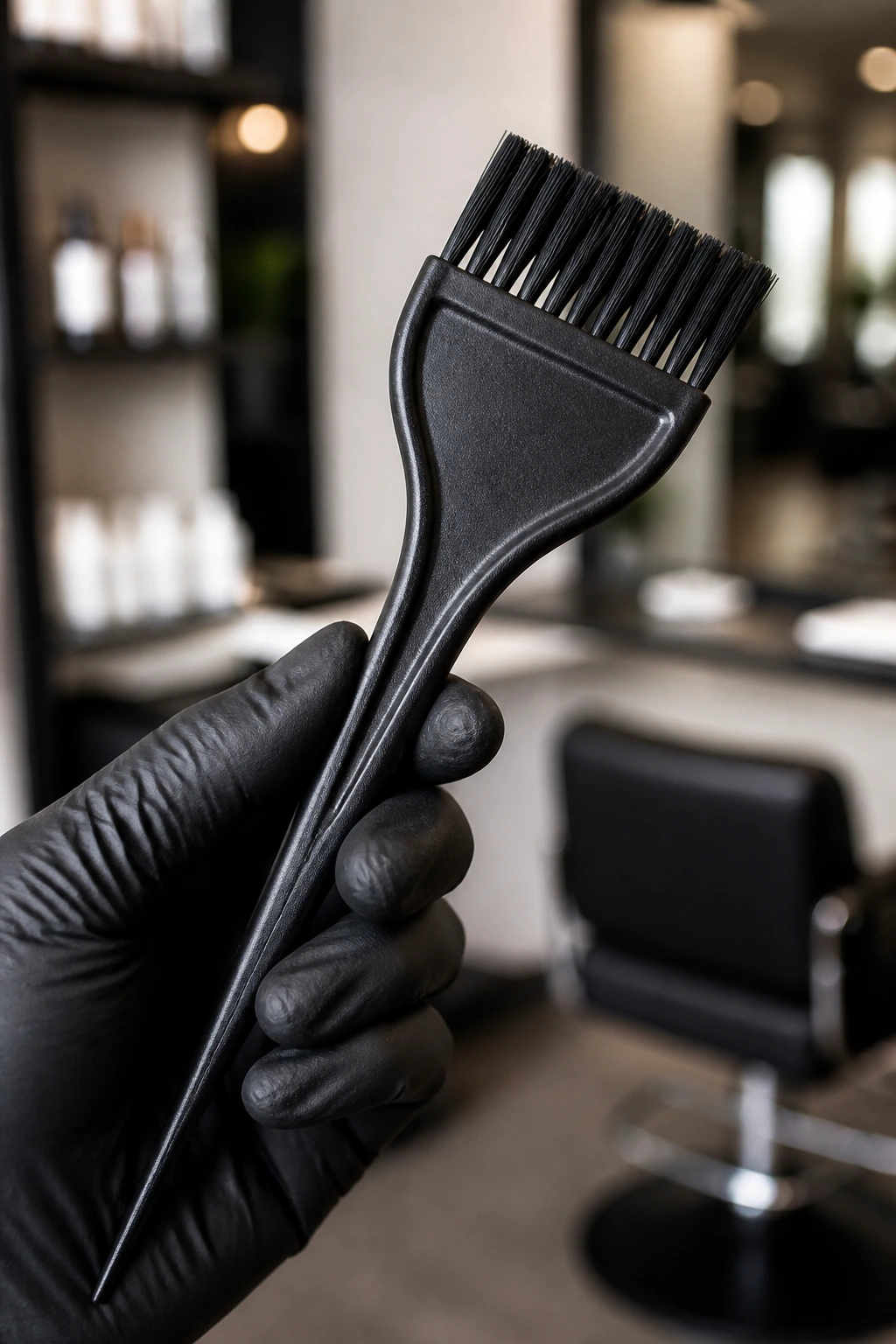
- Tint brush with angled bristles: A good brush gives you feathered edges, and feathered edges are what make balayage look expensive instead of harsh.
- Balayage board or paddle: Optional, but helpful for painting long sections with control and even saturation.
- Tail comb: Useful for clean parting and for lifting fine slices on bob and fine-hair looks.
- Foils or meche strips: Not every balayage needs them, but they help when you want a little more lift around the face.
- Mixing bowl and whisk: For lightener, gloss, or toner; keep one set for color only.
- Color-safe shampoo and conditioner: These keep the finish from fading too quickly, especially on warm caramel, pearl, or copper shades.
- Purple shampoo: Best for blonde, beige, and pearl looks, though it should be used sparingly.
- Deep conditioning mask: A weekly mask helps lightened ends stay smooth instead of brittle.
- Heat protectant spray: Non-negotiable if you blow-dry or iron the hair.
Smart Balayage Shade Selection and Consultation Notes
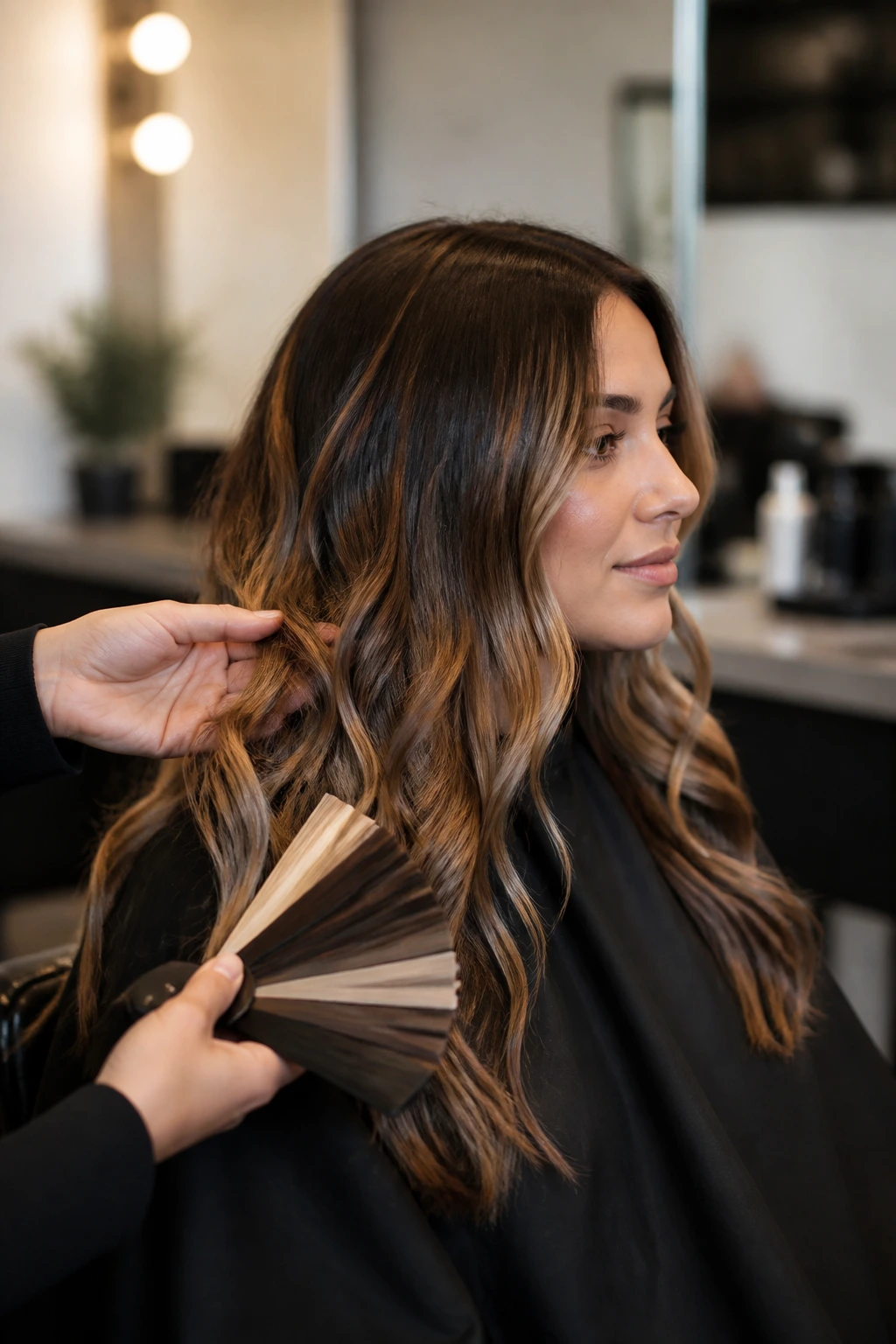
The easiest way to get a low-maintenance balayage is to start with the right depth, not the right photo. Hair levels matter. If your natural base is a deep brown, a look that stays within two or three levels of that base will usually grow out more softly than one that jumps all the way to pale blonde.
Bring reference photos, yes, but bring the right ones. Look for images that match your texture, haircut, and root color. A glossy wave on level-6 hair can look completely different on level-3 hair, and phone screens play tricks with undertones anyway. If your favorite picture is under warm light, say so. If you hate brass, say that too. Stylist shorthand only helps when it’s specific.
Ask your colorist what the lightest piece should be and where it should sit. A subtle face frame can do more than an all-over brightening job if you care about grow-out. And if your ends are porous from old color or heat, expect the toner to fade faster there. That’s not failure. That’s chemistry.
I’d also be honest about your washing habits. If you shampoo every day, the most delicate blonde may not stay as pretty for as long. If you can stretch washes and use the right conditioner, you can usually wear more depth at the root and more softness through the mids without the color going flat.
How to Wear These Balayage Looks Without Fighting the Cut
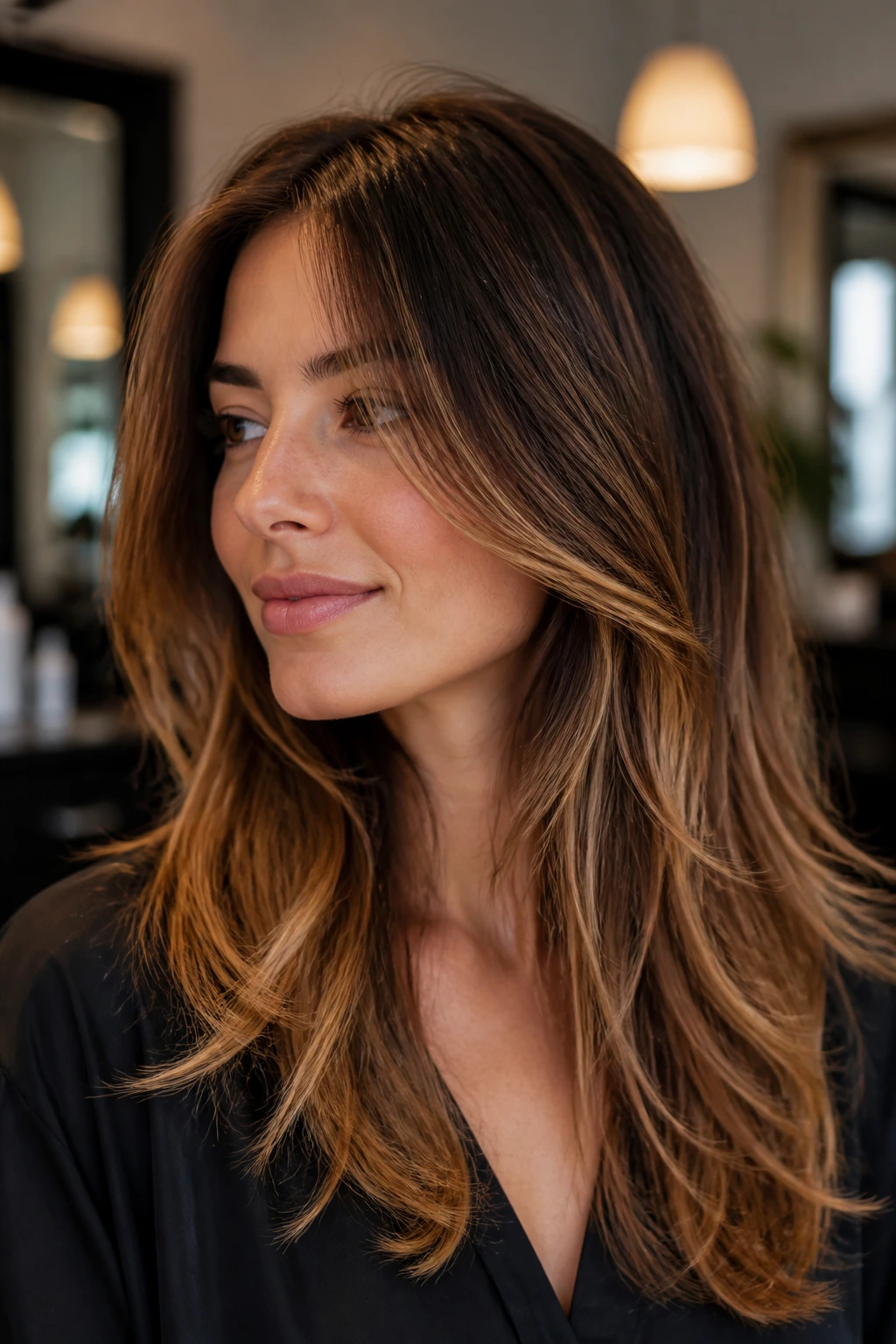
Presentation: Put the light where the hair moves. Around the face, through the upper surface, and along the ends is where balayage reads best when you’re actually living in it, not posing for a photo.
Accompaniments: Soft layers, curtain bangs, collarbone lobs, bobs with a little internal texture, and loose bends are the cuts that show this kind of color well. A blunt cut can still work, but it usually needs more careful placement near the ends so the dimension doesn’t disappear.
Portions: If you want the easiest grow-out, keep the brightest pieces limited to 20-30% of the head. If you want more visual pop, ask for more saturation at the front and top layers, but leave the root deeper than you think you need.
Best Match: Warm caramel, honey, bronze, and copper tend to flatter brunettes that already carry gold in the skin or makeup. Beige, taupe, smoke, and pearl look cleaner if you prefer cooler tones or wear a lot of black, gray, or jewel colors.
Extra Shine and Dimension Tips
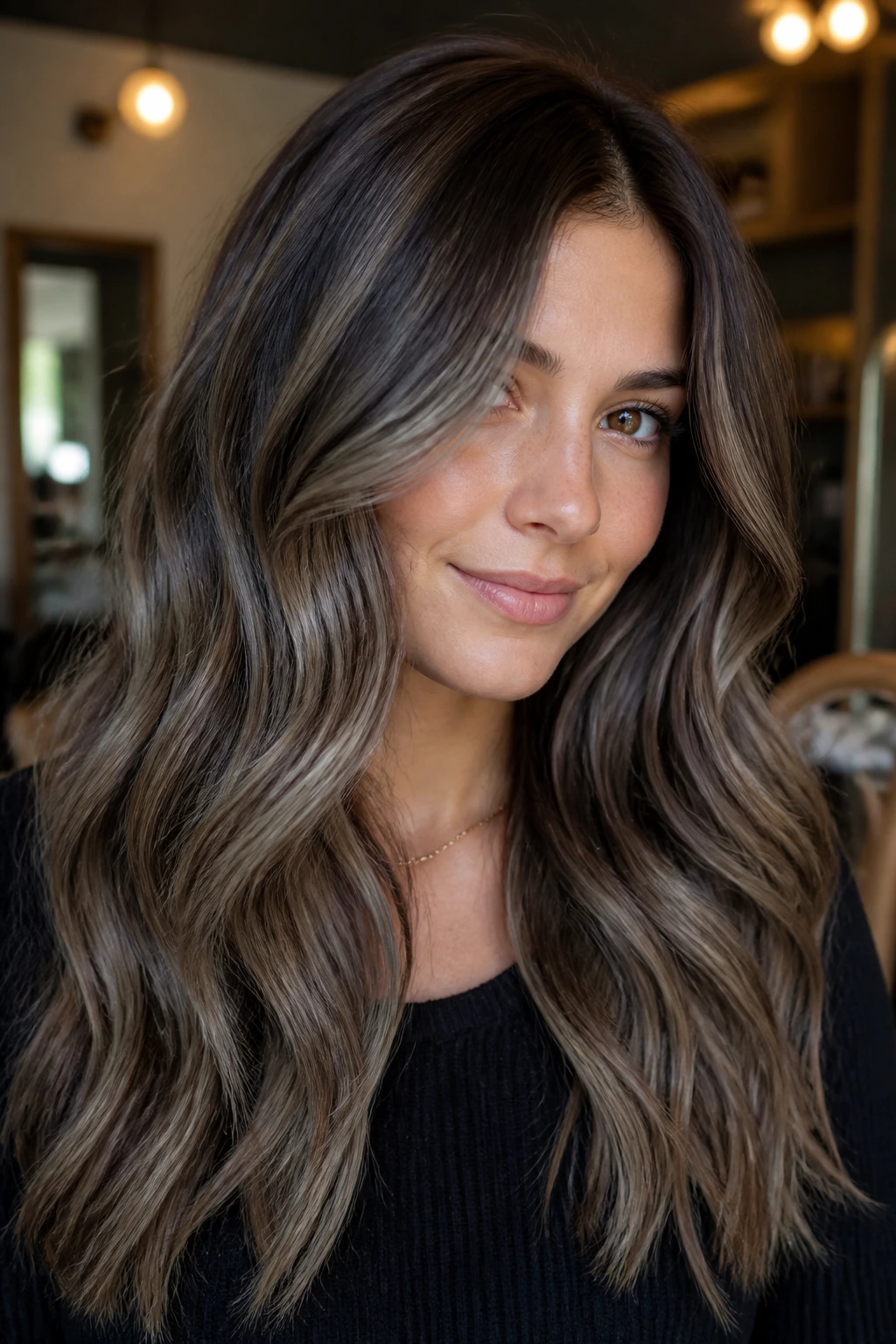
Gloss Boost: A clear or lightly tinted gloss every 6 to 10 weeks keeps the painted pieces from looking dry, especially on the ends. Gloss does more for balayage than people realize; it gives the hair that smooth, light-catching finish without forcing another round of lightening.
Dimension: Ask your colorist for at least two tones inside the lighter sections. One flat blonde shade can look one-dimensional fast, while a mix of beige, honey, or taupe keeps the movement alive.
Texture: A loose bend from a 1.25-inch iron, a large hot brush, or a rough air-dry with curl cream shows off placement better than pin-straight hair. The color is there either way, but movement makes it easier to read.
Make-It-Yours: If you want less upkeep, keep the face frame soft and the root deep. If you want more drama, brighten the money piece or the ends first, then leave the interior alone. That’s usually the cleaner move than bleaching the whole head one shade lighter.
Maintenance, Washing, and Recolor Timing
Balayage is low maintenance, not no maintenance. That distinction matters. Most looks in this collection will stay attractive for about 6 to 10 weeks with basic at-home care, and many can stretch longer if the root is soft and the toner family is forgiving.
Wash with lukewarm water and a color-safe shampoo. Hot water strips the toner faster and roughs up the cuticle, which is why the ends start looking thirsty before the rest of the hair does. For blonde, beige, and pearl looks, use purple shampoo only once every 1 to 2 weeks, and leave it on for 1 to 3 minutes. Too much purple shampoo can make the hair dull or slightly gray, which is not the same thing as chic.
If your color is warm—caramel, honey, copper, chestnut—use a color-depositing conditioner or gloss every 1 to 2 weeks if your stylist recommends it. Warm shades are gorgeous when they stay full, but they can fade out faster than brunette-based neutrals.
Plan on a gloss refresh every 6 to 8 weeks and a more noticeable color touch-up around 8 to 12 weeks, depending on how light you went. If you chose a deep brunette melt or gray-blending look, you may be able to push the service farther. If you chose champagne, pearl, or icy beige, the toner will ask for more attention.
Sleep on a silk or satin pillowcase if you can. It cuts down on friction and keeps the ends from looking roughed up after a few nights of turning your head against cotton.
Variations and Adaptations to Try
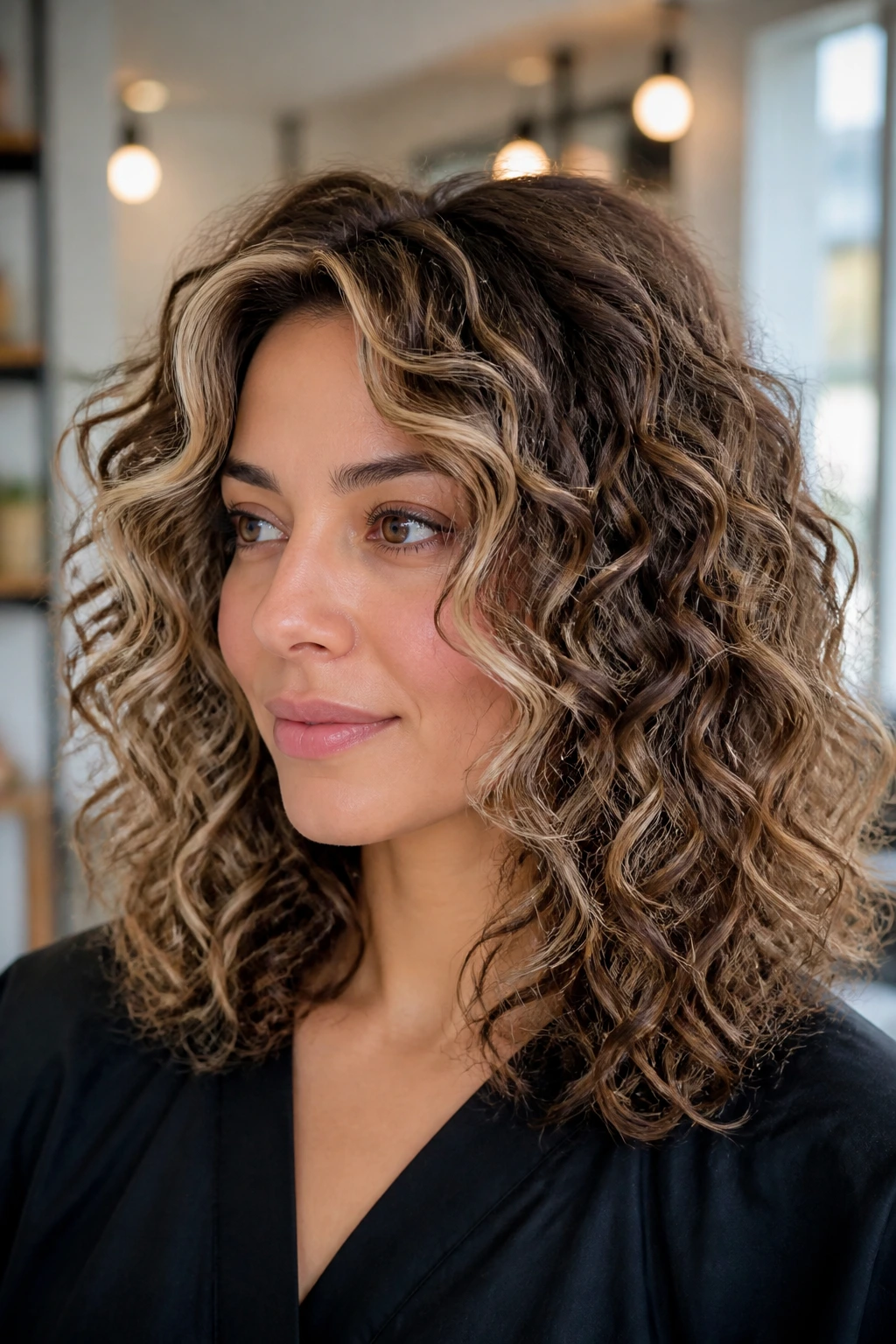
Curly-First Placement: For curls and coils, put the brightest pieces where the curl opens—around the face, crown, and outer halo. That keeps the color visible without flooding the whole strand and creating patchy lift.
Gray-Blending Bronze: If you’re easing into gray, ask for bronze ribbons instead of a hard cover-up. The silver and bronze together look intentional, and the grow-out is less fussy because the gray stays part of the story.
Budget-Friendly Partial: Focus the lightener on the face frame, top layer, and ends only. You’ll get the soft balayage effect with less salon time and fewer foils, and the root shadow does the rest.
Cooler Beige Finish: If warm blonde pulls yellow on you, ask for a beige-toned gloss rather than a strong ash toner. Beige tends to look cleaner over time, while heavy ash can turn muddy if the hair is porous.
Copper With More Depth: For anyone who loves warmth but hates frequent maintenance, keep copper on the mids and ends, then root-smudge it down into chestnut. That gives you the glow of red without the panic of bright regrowth.
Short-Hair Slice-Up: On bobs and pixies, use finer slices and tighter placement. Short hair shows every line, so soft ribbons work better than big chunky sections.
Common Mistakes to Avoid
Lifting Too High at the Root: This is the easiest way to kill the low-maintenance part of balayage. If the lightening starts right at the scalp, the grow-out becomes obvious fast. Keep the root deeper and let the lighter pieces begin lower down.
Choosing the Wrong Toner Family: A cool ash toner on warm hair can go muddy, and a gold toner on ash-brown hair can look brassy in the worst way. Match the toner to the base, not to a screenshot that looked nice in filtered light.
Overusing Purple Shampoo: One too many violet washes can leave blonde, beige, or pearl hair looking dull and chalky. Use it sparingly, rinse it out on time, and pair it with a moisturizing conditioner.
Ignoring Haircut Shape: Balayage without a cut to support it can fall flat. Long layers, a lob, curtain bangs, or even a tidy bob help the color move. Flat ends with no shape make the highlights look pasted on.
Going Too Light in One Session: If your natural hair is dark and you jump straight to pale blonde, the ends may look rough before the grow-out even starts. A softer first session with a gloss and a second appointment later usually ages better.
Questions People Ask Before Booking Balayage
How long does low-maintenance balayage usually last?
Most soft balayage looks can go 8 to 12 weeks before they need more than a gloss or toner refresh. If the root stays deep and the lift isn’t extreme, you can often stretch the time even more without the color looking tired.
Is balayage better than highlights for grow-out?
For most people who want a softer regrowth line, yes. Traditional highlights usually start closer to the root and can show a sharper line as they grow; balayage is painted lower and blurred more, so the transition looks calmer.
Can balayage work on dark brown or black hair?
Absolutely, but the first session should be realistic. Deep brunettes usually look best with caramel, mocha, bronze, or walnut ribbons first, then lighter pieces later if the hair can handle it.
Does balayage damage hair less than other lightening methods?
Usually it can, but only if the lightening is placed carefully and the hair isn’t pushed too pale too quickly. The real damage comes from over-processing, not the word balayage itself.
What if my balayage turns brassy?
That usually means the warm pigment underneath started showing through as the toner faded. A salon gloss, a blue or purple shampoo used sparingly, or a color-depositing conditioner can calm it down, depending on whether the brass is orange or yellow.
Can balayage cover gray hair?
It can blend gray beautifully, but that’s different from full coverage. If you want to keep some silver visible and soften the line, gray-blending balayage is a strong option. If you want complete coverage, you need a different formula.
Is balayage good for fine hair?
Yes, as long as the placement stays delicate. Fine hair usually looks better with thin slices and careful brightness than with big chunky pieces, which can make the hair look sparse.
Can I ask for balayage on a bob or pixie?
You can, and it often looks better than people expect. Short hair just needs finer placement and a lower contrast plan, because there’s less length to diffuse the color.
Soft Grow-Out, Fewer Salon Emergencies
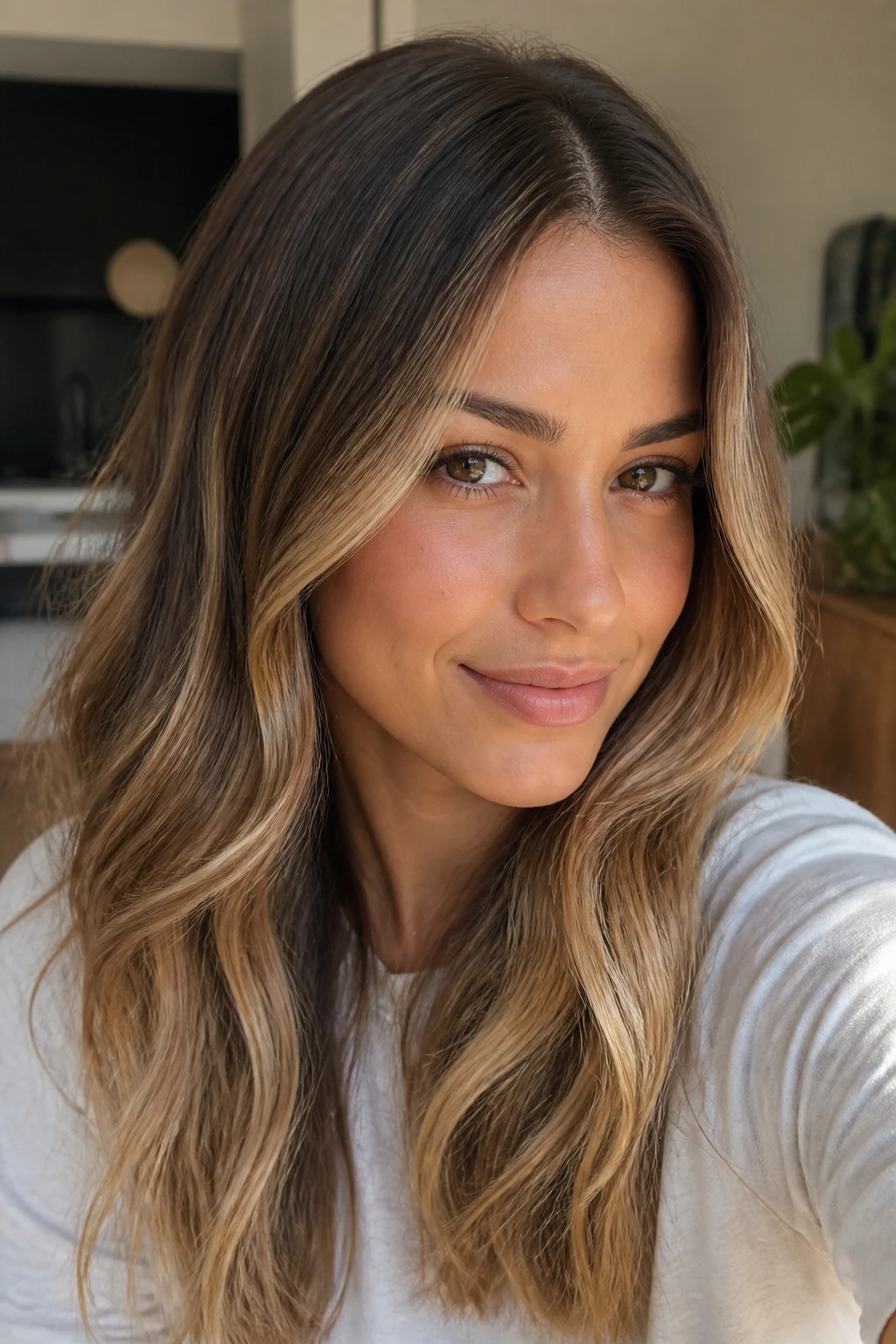
The nicest thing about low-maintenance balayage is not the color itself. It’s the way it lets your hair stop being a chore. A soft root, a decent gloss, and a shade family that fades gracefully can buy you weeks of breathing room without making the style look lazy.
That’s the sweet spot these 30 looks are aiming for. Some are warm and easy. Some are cool and quiet. Some give you brightness right where your face needs it, which is often enough. Pick the one that matches your base, your haircut, and your patience level, and the grow-out will do half the work for you.
