



Short wavy hairstyles have a funny habit of looking effortless only when the cut is doing half the work. A jaw-length bob with the wrong weight line can puff out at the sides and go boxy fast. The same wave pattern, cut with a little interior softness and a perimeter that still feels crisp, lands in that sweet spot where the hair bends, moves, and still has shape at 4 p.m.
That’s why soft texture matters so much here. Short hair shows every decision the cutter makes: where the layers start, how much bulk is removed from the crown, whether the ends are blunt or feathered, and how the fringe sits against the cheekbones. Get those details right and the wave looks touchable. Get them wrong and the style turns into a helmet, a triangle, or a fuzzy cloud that never settles down.
The 20 looks below cover the range from polished to piecey, from low-maintenance to slightly editorial, and from fine-hair friendly to dense-hair tamer. Some lean soft and French, some lean shaggy, some rely on a side part or a tucked ear to do the heavy lifting. All of them keep the texture light enough to move.
Why Short Waves Look Better When the Texture Stays Soft
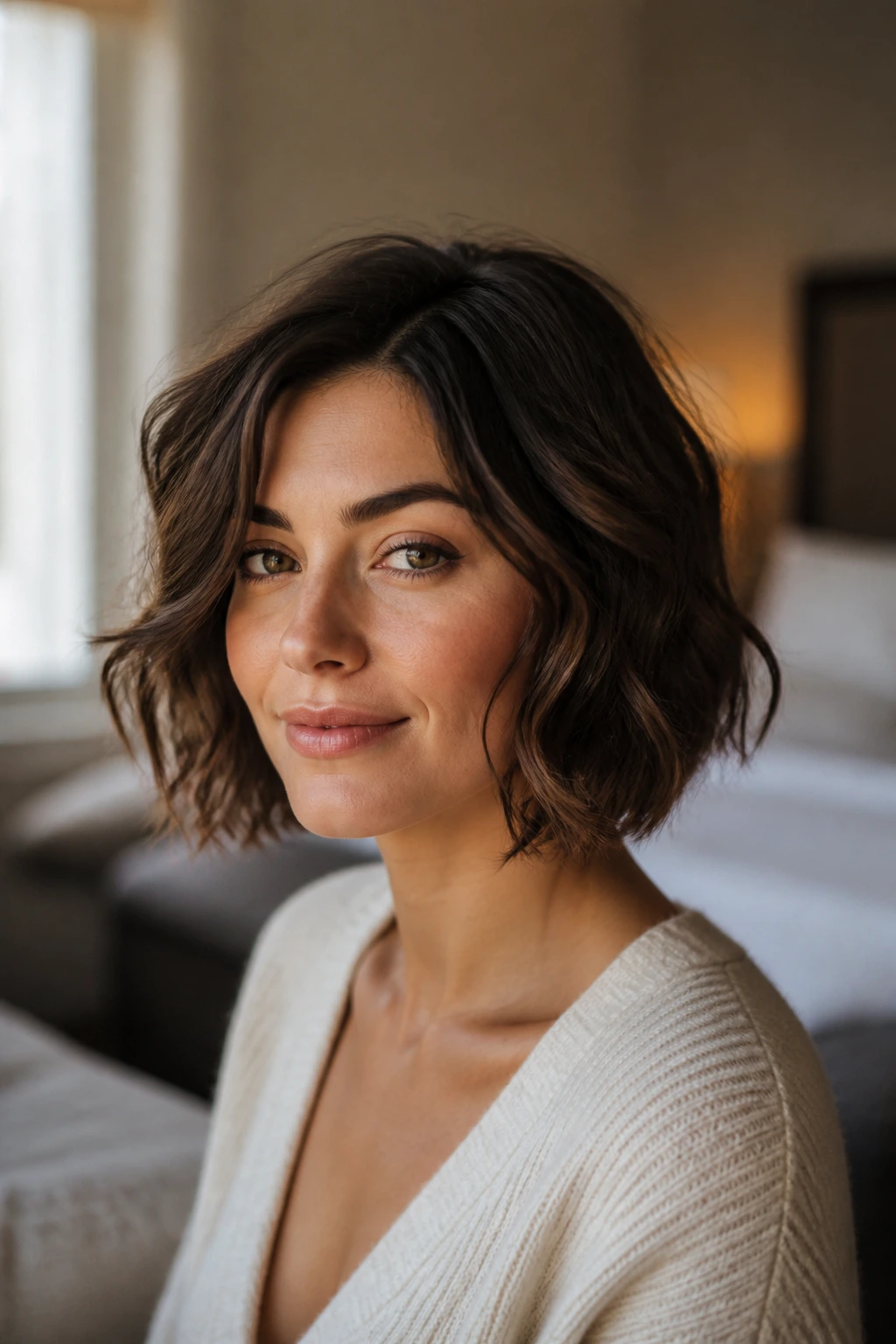
They keep the bend visible: When waves land around the jaw, cheekbone, or collarbone, they hold their shape instead of being dragged flat by extra length.
They shrink the styling battle: Shorter lengths need less product, fewer passes with a hot tool, and less time trying to force every strand into line.
They stop the puff at the crown: A little internal layering removes bulk where short wavy hair often balloons, especially around the temples and back of the head.
They grow out in a nicer way: The best short wavy cuts still look intentional six weeks later, which is a gift if you hate obvious grow-out lines.
They play well with day-two hair: A mist of water, a dab of mousse, and a quick scrunch usually bring the shape back. That’s the kind of low-effort maintenance that makes a haircut feel worth it.
1. Chin-Length Tousled Bob
A chin-length tousled bob is the classic answer when you want short wavy hair that still feels soft at the ends. The length sits right where the jaw starts to narrow, so the wave has somewhere clean to land. Too much volume and it turns square. Too little and it looks flat. This version lives in the middle, which is exactly why it works.
Why It Flatters Wavy Hair
The best chin-length bob keeps the perimeter tidy and the interior lightly carved out. That means the wave shows up as movement, not as a frizzy halo. A side part helps, especially if your hair naturally wants to split in the middle and collapse.
Keep the styling loose. A palmful of mousse on damp hair, a scrunch with the head tipped to one side, and a diffuser on low heat is usually enough. Stop drying when the hair is about 80 percent dry and let the rest air-dry. Full dryness before you touch it often makes the shape stiffer than it needs to be.
Small Details That Make It Better
- Ask for ends that are slightly beveled, not razor-thin.
- Keep the layers minimal at the back so the bob doesn’t kick out.
- Use a light cream only on the mid-lengths. Heavy roots kill the lift.
- If your waves are uneven, tuck one side behind the ear and leave the other loose.
Best tip: A chin-length bob looks better with a tiny bit of imperfection. If every wave is trying to be identical, the style loses the soft texture that makes it interesting.
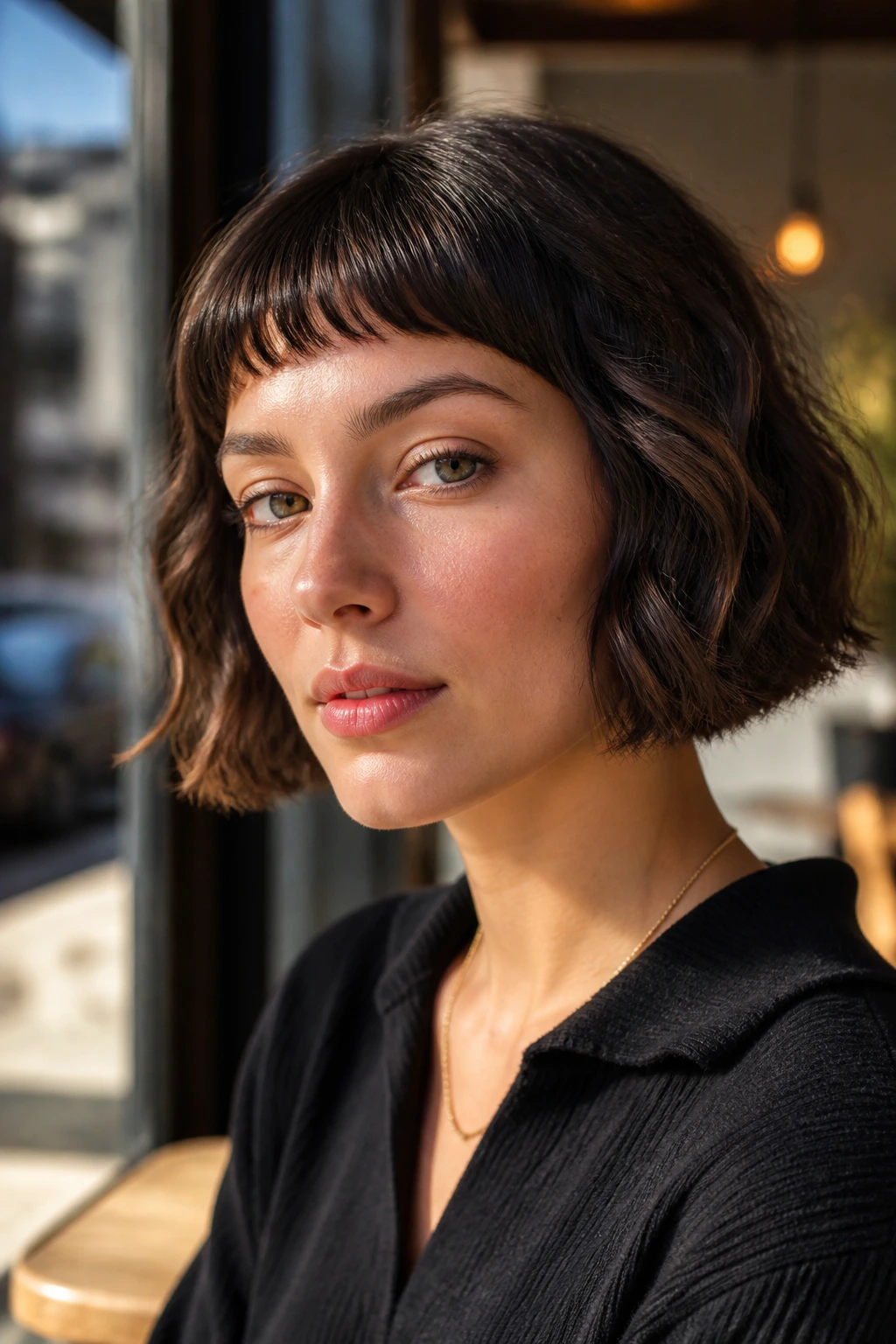
2. French Bob With Micro Bangs
A French bob with micro bangs is sharp at first glance, then unexpectedly soft once the wave settles into it. The trick is the contrast: a short, blunt-ish outline around the face and just enough bend in the body of the hair to keep it from feeling severe. If your wave pattern likes to sit near the root, this cut gives it room to show off.
Micro bangs are the risky part. They look best when they skim high on the forehead and stay airy, not chopped into a little brick. On wavy hair, that usually means the fringe needs its own styling routine. Dry the bangs first with a small round brush or your fingers, then let the rest of the hair do its thing.
The shape suits cheekbones and smaller faces especially well, but I’ve also seen it work on stronger jawlines because the short fringe pulls the eye upward. The whole thing feels tidy, but not stiff. That matters.
What to Watch For
If your wave pattern is strong right at the front hairline, micro bangs can spring up more than you want. Ask for a fringe that’s a touch longer than you think you need; a quarter inch changes the whole mood. Too short and they look finicky. Slightly longer and they sit with that easy, lived-in bend people chase.
3. Bixie With Feathered Crown
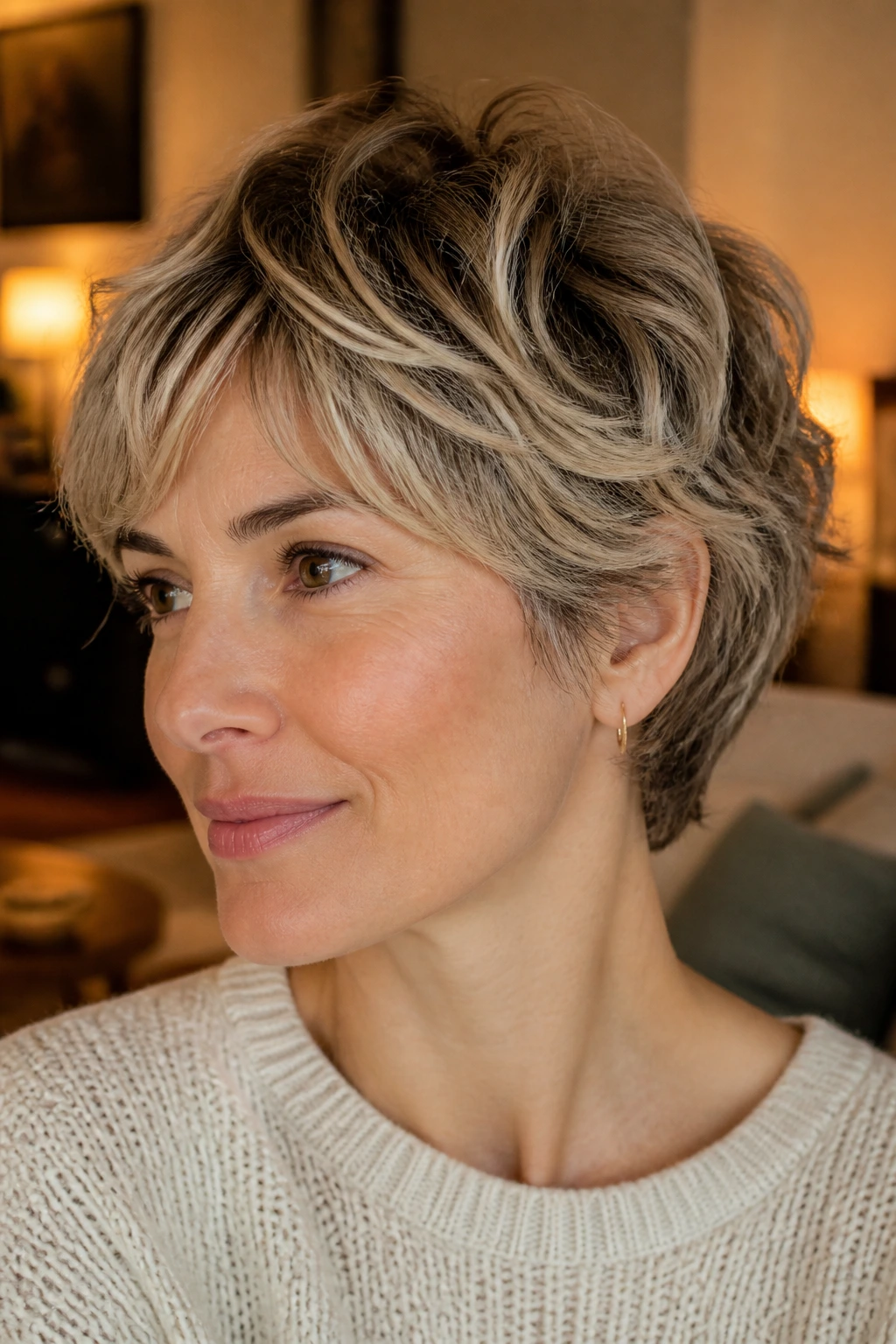
The bixie lives in the space between a bob and a pixie, and that awkward little in-between zone is exactly why it’s so useful on wavy hair. A feathered crown gives the top some air while the sides stay soft enough to frame the ears and cheekbones. It’s shorter than a bob, but it doesn’t have the hard stop that can make a crop feel severe.
Why It Works
The feathering at the crown keeps the wave from stacking too much weight on top of the head. That’s the part that usually makes short wavy hair look puffy or helmet-like. With a bixie, the shape is broken up just enough for the wave to bend and separate.
You can push it forward for a looser fringe, or tuck the top behind one ear and let the side pieces fall where they want. Both options work because the haircut already has movement built in. A little styling paste at the ends goes a long way. Too much and the feathered texture starts to look dry.
- Best on hair that has natural lift at the roots
- Good choice if you want short hair but not a strict pixie
- Works well with a side part or a soft center part
- Needs trimming every 5 to 7 weeks to keep the crown from sprawling
4. Layered Pixie With Long Top
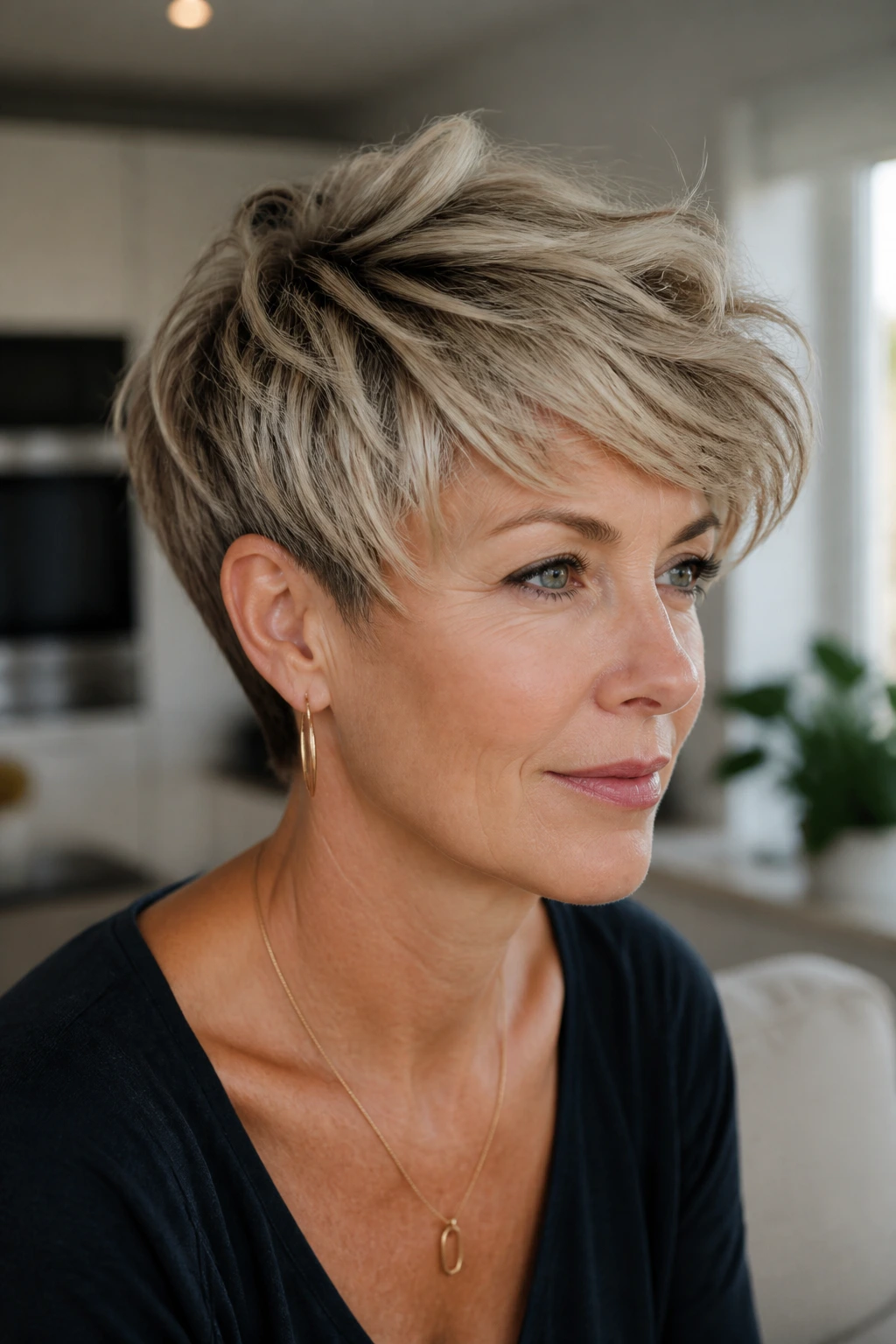
A layered pixie with a longer top is one of those cuts that looks simple until you notice how much shape it’s actually carrying. The sides stay close, the top has room to bend, and the front can be swept over, pushed up, or left to fall in a soft wave. It’s a smart cut for anyone who likes short hair but still wants a little styling range.
The long top matters. Without it, wavy hair can collapse into the scalp or stick up in random places. With it, you get a piecey ridge of movement through the crown and front. That’s the part that gives the cut personality.
Use a pea-sized amount of styling cream, then rough-dry with your fingers first. Once the roots are about half dry, lift sections at the crown and aim the dryer at the base for a few seconds each. You’re not trying to make it stiff. You’re trying to teach it where to sit.
Best for: fine to medium hair that needs lift, or thick hair that needs some weight taken out without losing shape.
5. Collarbone Lob With Loose S-Bends
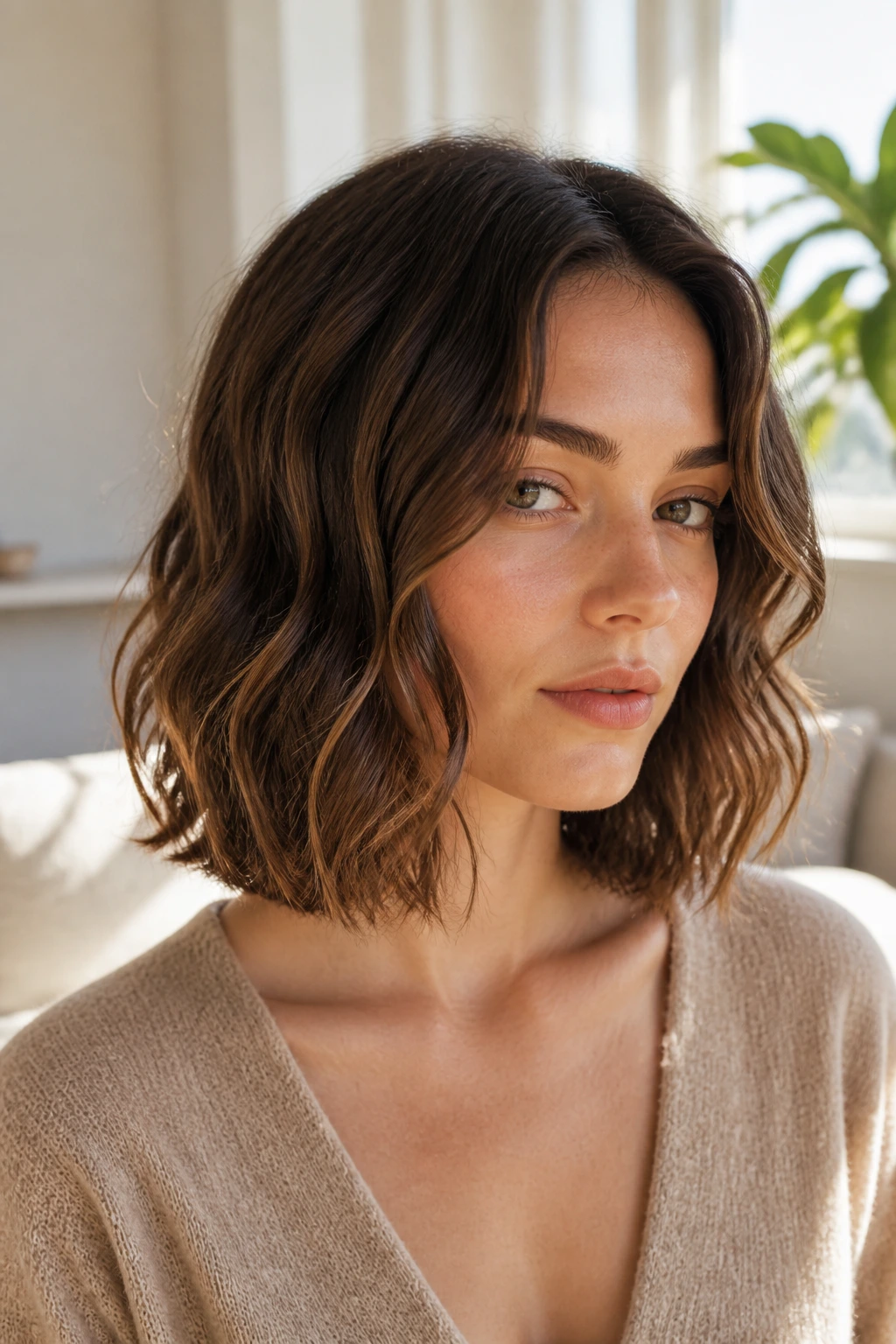
A collarbone lob is the “short enough to feel fresh, long enough to fake a ponytail” haircut. Add loose S-bends and the whole thing turns into one of the easiest soft-texture looks on the list. It’s not a bob pretending to be longer. It’s a long bob that knows exactly what it is.
The appeal here is versatility. You can wear it air-dried with a touch of leave-in cream, or you can add a few bends with a 1-inch iron and call it done. The bends should look broken up, not curled into a ringlet pattern. One wrap around the iron, leaving the ends out on some sections, is usually enough.
How to Keep It Soft
The collarbone length is flattering because it creates movement without crowding the neck. If your hair is dense, ask for internal layering only. If it’s finer, keep the ends blunt and use a light mousse at the roots so the shape doesn’t sag by lunch.
This cut works especially well if you want short wavy hairstyles that still let you pull the front back with a clip when the day gets annoying. Practical. Quietly pretty. No drama.
6. Shaggy Bob With Curtain Bangs

A shaggy bob with curtain bangs is what happens when you want softness but refuse to wear a neat little helmet of hair. The layers start near the cheekbones, the fringe splits in the middle, and the whole cut falls with a bit of built-in movement. It’s one of the easiest ways to make waves look deliberate instead of accidental.
Curtain bangs are doing real work here. They frame the face, break up the forehead, and let the rest of the bob stay light. The bang pieces should graze the cheeks or just kiss the jawline; if they’re too short, the balance gets thrown off fast. Dry them first, then let the rest of the hair fall around them.
A shaggy bob can drift into frizz if you use too much salt spray or rough it up too much while drying. I prefer a foam mousse for this cut, plus a tiny bit of cream at the ends. That keeps the texture soft but still gives it a little backbone.
Best Way to Wear It
Part it down the middle when you want a softer, more relaxed mood. Push it off-center when you want the bangs to fall with more face-framing shape. Either way, this cut looks better when you resist the urge to over-style every piece.
7. Angled Bob With Soft Bend
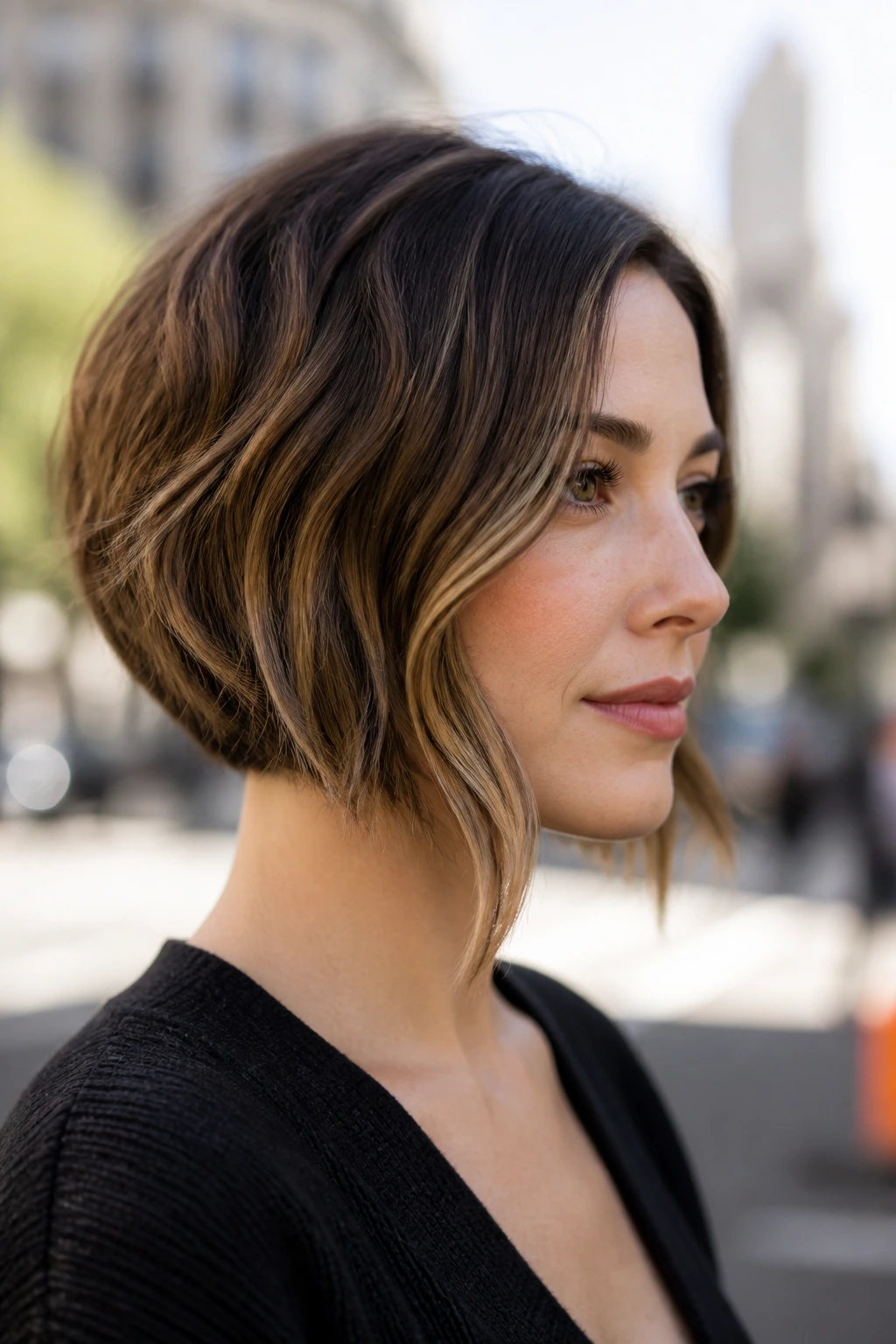
What makes an angled bob interesting on wavy hair is the geometry. The back sits shorter, the front stretches forward a little, and the bend softens the whole line so it doesn’t look sharp or architectural in a bad way. It’s a clean cut, but it still moves.
The angle gives the eye a direction. That matters more than people think. Without it, short wavy hair can fan out evenly and lose its shape. With the front hanging a touch longer, the wave has a path to follow, and the haircut looks intentional even on a lazy hair day.
How to Style It
Use a medium round brush or your fingers to guide the front pieces slightly under while drying. Don’t try to curl them. Just encourage a bend. The back should stay airy, not flattened against the neck.
This one suits straight-to-wavy hair especially well because the angle creates the feeling of more shape than the hair may naturally have. If your waves are coarse, keep the layers under control. Too much slicing and the front pieces start sticking out at odd angles. Nobody wants that.
8. Wavy Wolf Cut Lite

The wolf cut gets a bad reputation when it’s overdone, which usually means too much mullet and not enough softness. The lite version is smarter. It keeps the crown lifted, the ends broken up, and the face-framing layers light enough to move without turning into a full rock-band haircut.
This is a good cut if your waves are a little wild and you don’t want to fight them into bob behavior. The top layers help the crown lie closer to the head, while the longer pieces around the face keep the shape from going too severe. It feels casual in the best way.
What makes it different: a true wolf cut can be heavy on the drama. The lite version trims that back and makes room for the wave pattern to do the talking. If you want a bit of edge but still like your hair to look soft in daylight, this is the lane.
A diffuser helps here, but only on low. If you blast the shape with high heat, the layers separate too much and the ends start looking ragged instead of piecey.
9. Piecey Jaw-Length Cut
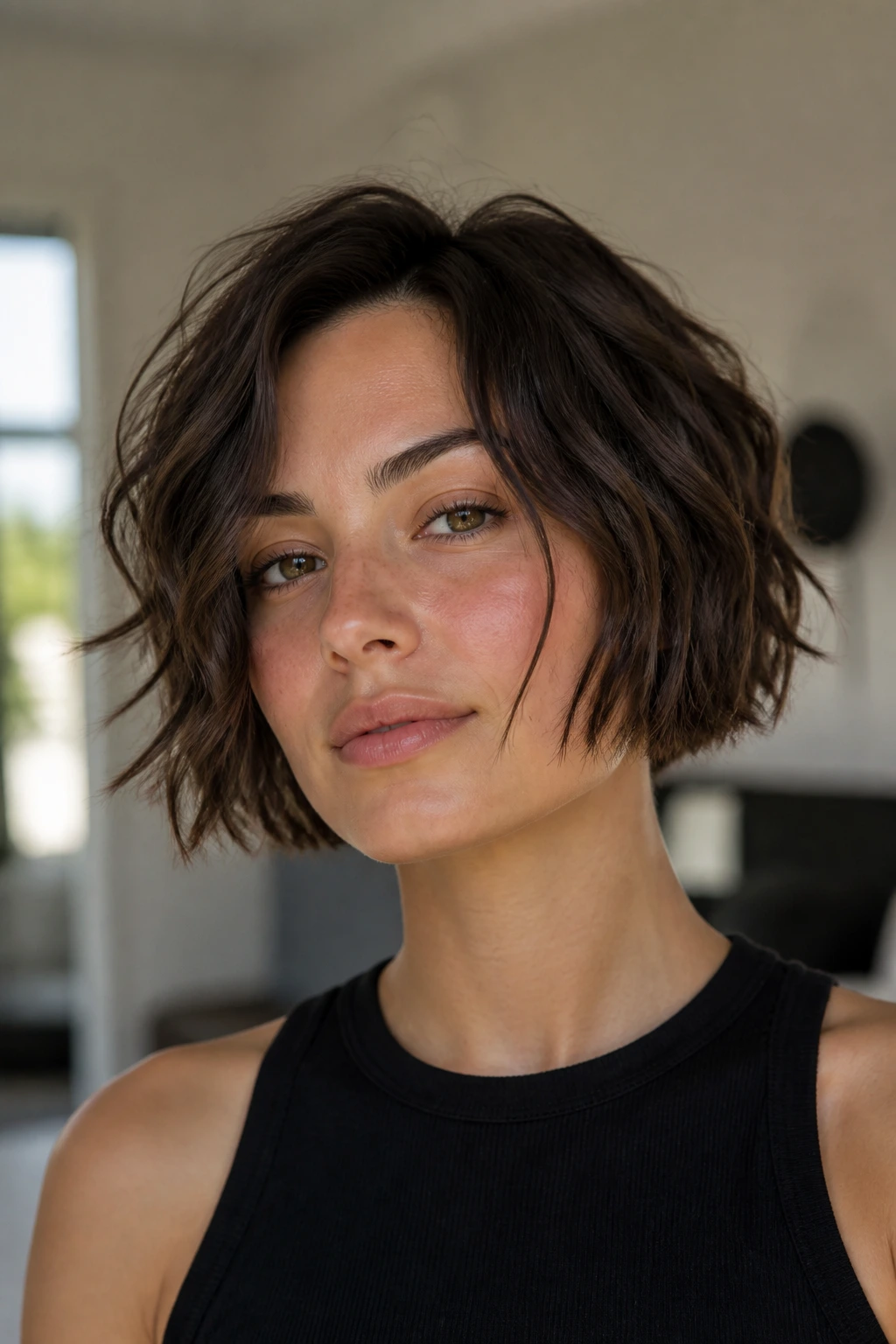
A piecey jaw-length cut is for people who like their texture a little more defined than tousled and a little less polished than a classic bob. The length hits around the jaw, which gives the waves a strong frame, but the finish stays separated and touchable. Think small, visible sections instead of one smooth wave sheet.
This style works best when the haircut itself doesn’t do too much. Clean lines, a little internal reduction, and a light hand with product. Then the texture gets built with the fingers. A dab of cream between the palms, scrunched through the ends, can be enough. If you use a wax or balm, go tiny. A pea-sized amount is usually plenty.
Key Details
- Best for hair that naturally clumps into waves
- Looks good with a middle part or a soft diagonal part
- Needs regular scrunching if you air-dry
- Avoid heavy oils at the roots; they flatten the top fast
The piecey finish makes this cut feel modern without trying too hard. That’s the whole point.
10. Deep Side-Part Bob
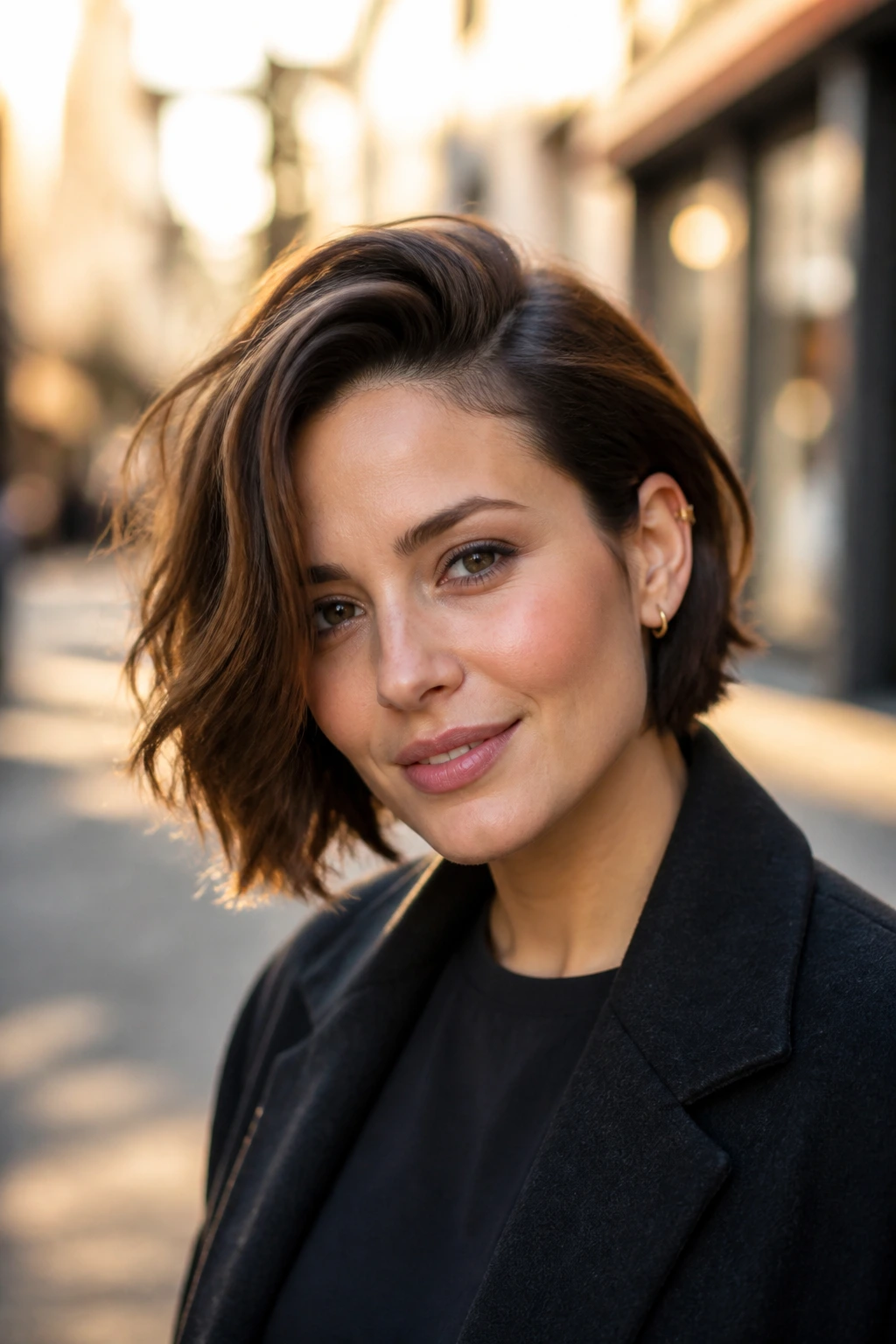
A deep side-part bob is one of the simplest ways to make short wavy hair look fuller at the root. The part shifts the weight, the top lifts a little, and the wave on the heavier side falls with a softer curve. It’s a small move that changes the whole haircut.
If your hair lies flat on top, this is a good place to start. You do not need more length. You need a different direction. The side part creates a natural swoop, and the bob shape keeps the ends from wandering all over your shoulders. Add a root spray at the crown before drying, then direct the hair away from the part with your fingers.
The shape suits square and round faces especially well because the off-center part breaks up the symmetry. It also gives you a nice place to tuck one side behind the ear without losing the wave pattern on the other side.
Small trick: while the hair is still damp, clip the front pieces away from the face for ten minutes. That small bend at the front keeps the part from collapsing.
11. Rounded Crop With Side Sweep

A rounded crop with a side sweep has a soft, almost pillowy shape that works beautifully when the hair is dense or grows out with a lot of natural width. The outline curves around the head instead of building out at the sides, which keeps the style tidy. Then the side-swept front adds movement so it doesn’t look too neat.
This is one of my favorite options for someone who says, “I want short hair, but I don’t want to look severe.” Fair enough. The rounded shape is friendly. The side sweep gives it just enough lift to avoid that old-school schoolmarm finish.
The secret is keeping the top airy and the sides controlled. A tiny bit of mousse at the roots, then a blow-dry with a small round brush or fingers, usually does the job. If the side sweep wants to split open, pin it in place for a few minutes while it cools. Hair remembers the shape when it sets.
12. Airy Mullet Bob
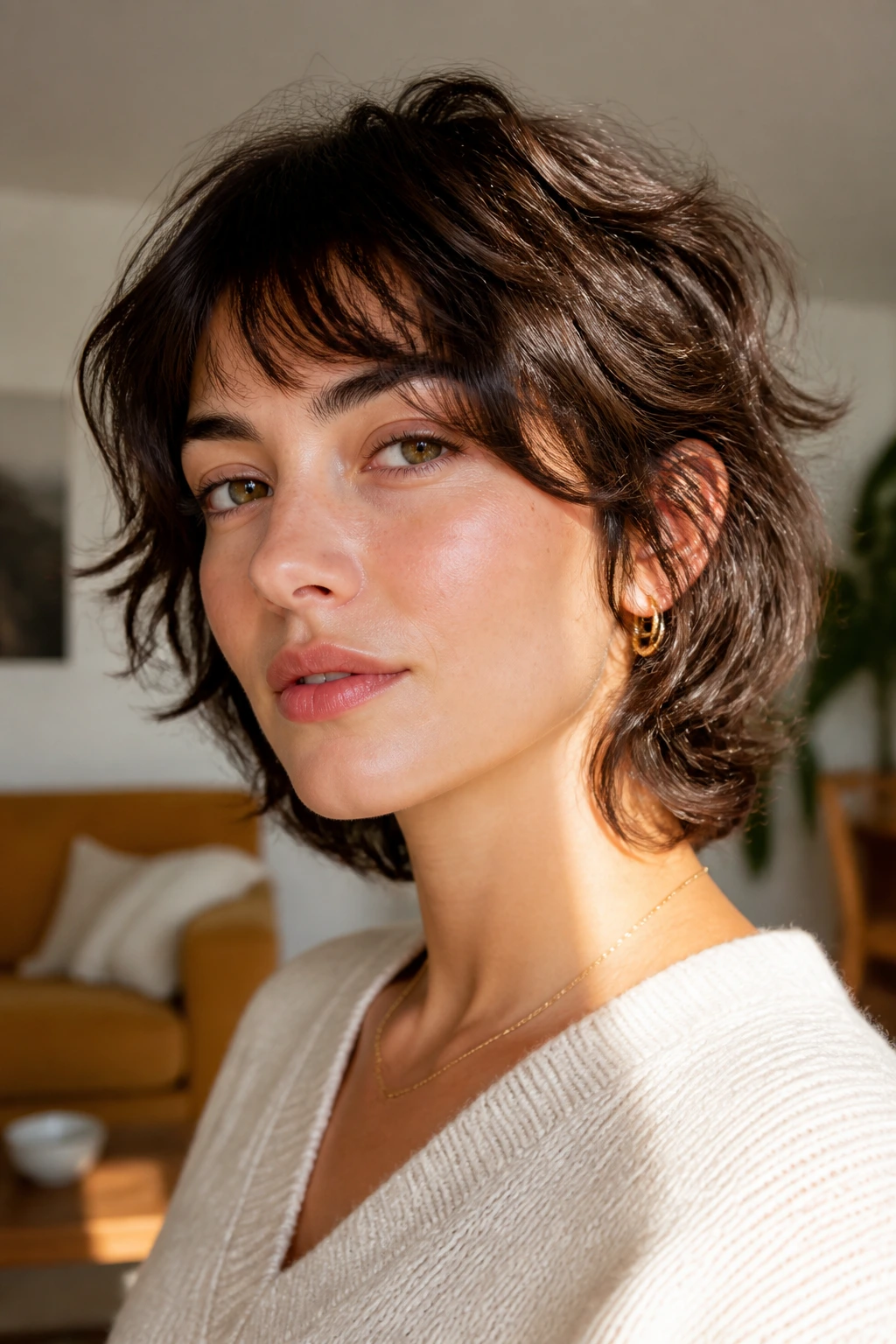
An airy mullet bob sounds more rebellious than it feels. Done right, it’s a soft, wearable version of the mullet idea: shorter and lifted at the crown, a little longer through the nape, and light pieces around the face that stop the whole thing from going heavy. The word airy is doing a lot of work here.
This cut suits waves that naturally bend out at the crown and hug a little closer at the ends. The extra length in back gives the wave a place to land, while the crown stays feathered enough to avoid the dreaded helmet effect. If you like a bit of movement around the neckline, it’s a smart choice.
The shape works best when the texture stays broken up. A little mousse, a little finger-tousling, and a diffuser on cool or low heat keep the layers from sticking together in odd chunks. If you want it softer, ask for blended transitions around the ears rather than sharp separation.
It’s edgy, yes. But not scream-at-you edgy. More like a haircut with opinions.
13. Flipped-Under Short Cut

A flipped-under short cut brings a neat curve to waves that might otherwise puff outward. The ends tuck slightly inward at the perimeter, which gives the haircut a controlled edge and a softer profile around the jaw and neck. It’s especially good for fine hair, because the shape reads as full without needing much bulk.
The trick is the finish. You want the line to be smooth, but not flat. A round brush or a quick pass with a flat iron at the ends can create the underbend. Then let the rest of the wave stay relaxed. The contrast is what makes it work.
What Makes It Different
Unlike a blunt bob that can feel heavy on wavy hair, the flipped-under version uses the bend to soften the outline. That tiny inward turn keeps the cut from spreading outward at the sides. If you’ve ever watched your short hair fan out in humid weather, you know why that matters.
Keep the product light. Too much cream will flatten the flip, and too much spray will make the bend look sticky instead of soft.
14. Grown-Out Pixie With Wave
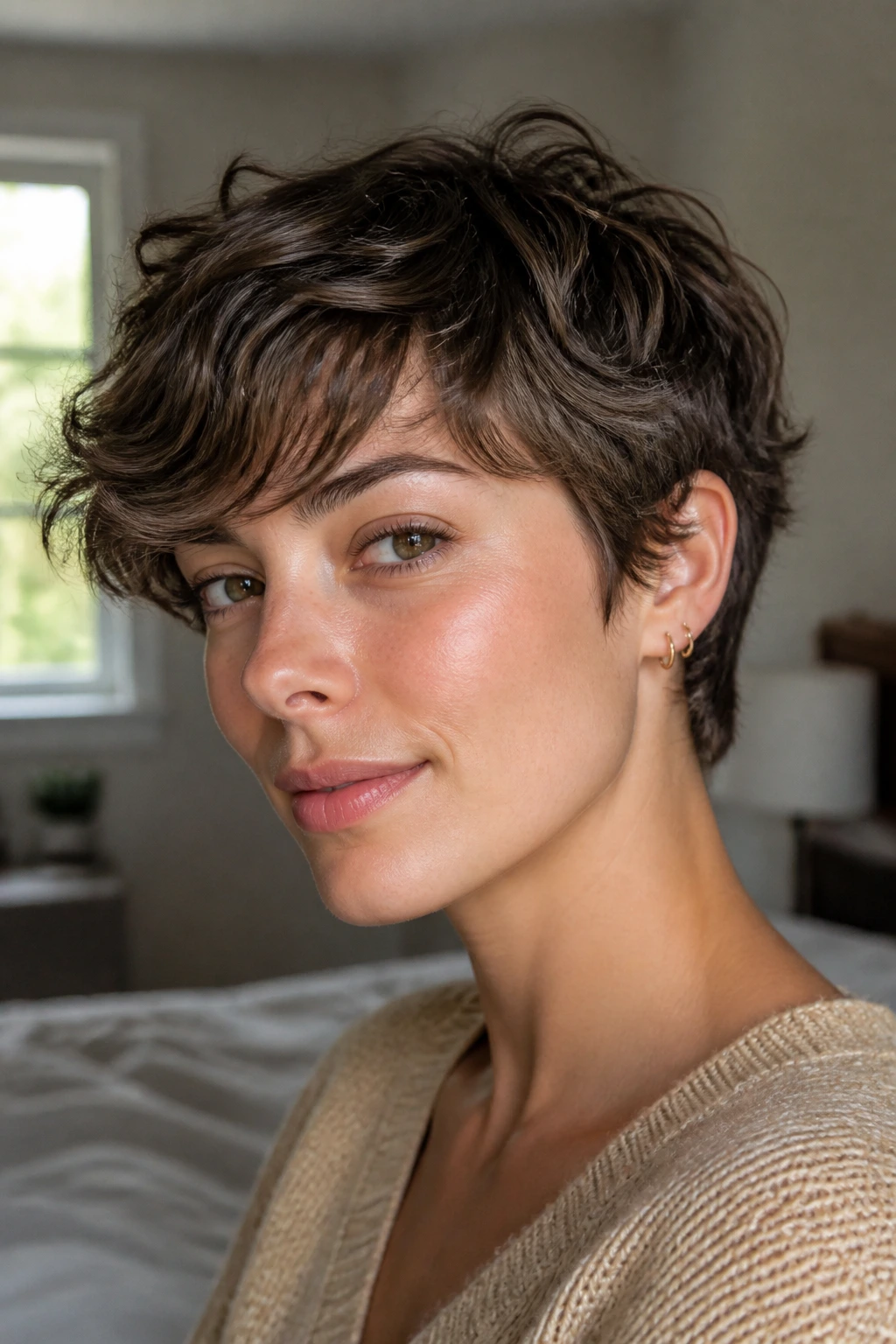
A grown-out pixie with wave is one of the easiest cuts to live with if you want short hair that doesn’t feel locked into a strict shape. The top has enough length to bend, the sides stay close enough to keep the profile clean, and the fringe can drift across the forehead or sit up a little messily.
This style has a nice looseness to it. It doesn’t ask for perfection. If your hair has a slight cowlick at the front or bends in different directions, the grown-out pixie often handles that better than a sharper crop. The extra length gives the wave somewhere to land.
A little styling cream on damp hair, followed by finger-drying, keeps the texture soft. If you need more lift, lift the front sections at the root with your fingers and blow the base for a few seconds. Don’t aim for full smoothness. Aim for shape.
It’s the kind of cut that can look casual with a sweatshirt and polished with earrings. That flexibility is half the reason people keep coming back to it.
15. Invisible-Layer Bob
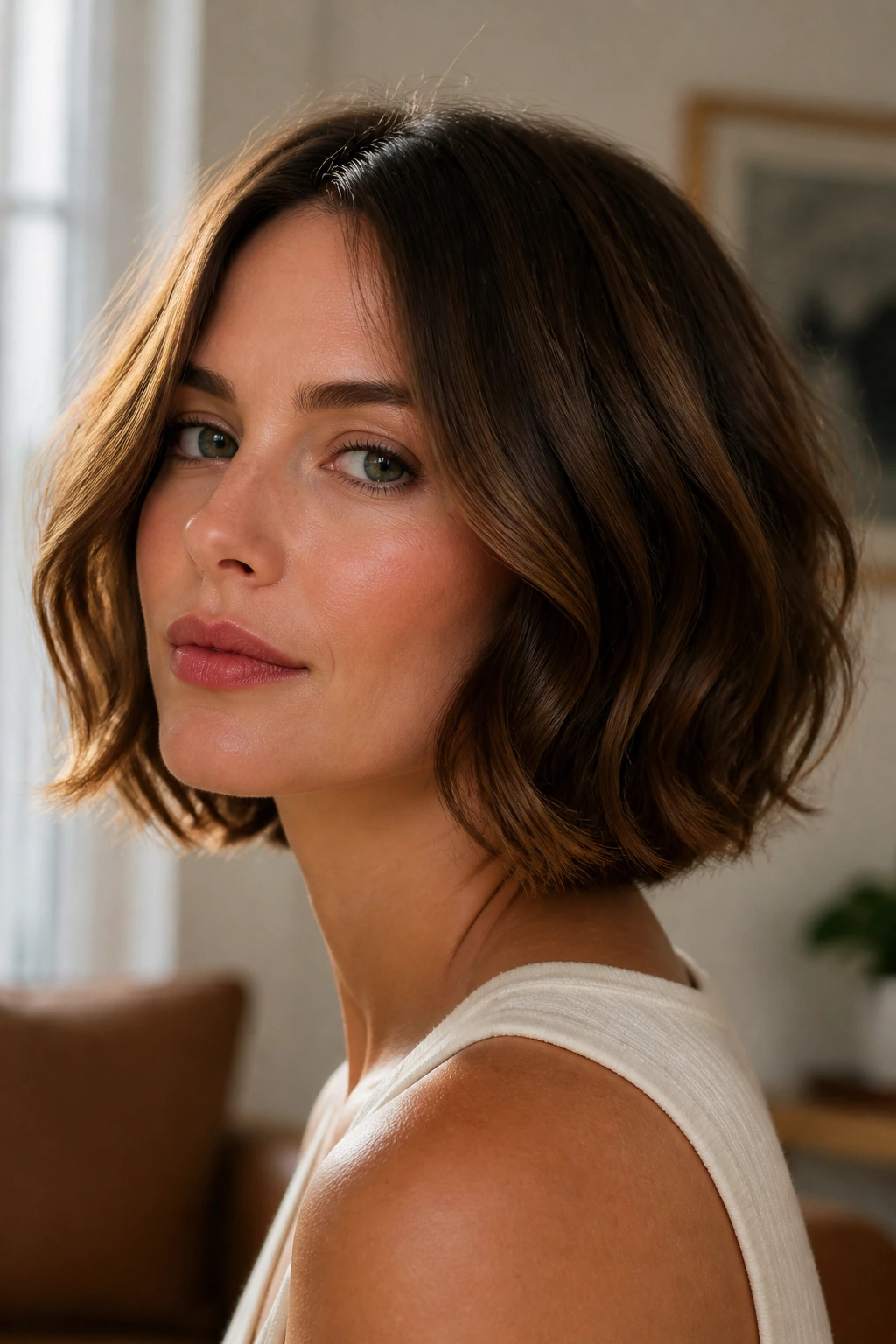
An invisible-layer bob is for people who want movement without obvious choppiness. The layers are tucked inside the shape instead of sitting on the surface, so the cut keeps a clean outline while the wave pattern still has room to breathe. It’s a quiet haircut, which is a compliment.
This is a smart choice for thick hair. A blunt bob on dense waves can feel heavy at the bottom and mushroom at the sides. Hidden layers remove that bulk without turning the ends frayed. The result is smoother, softer, and easier to dry.
How It Behaves
The haircut looks polished when it’s straightened, but it gets even more interesting when the waves show up. That hidden movement makes the style feel expensive in a practical way — not fussy, just balanced. If your stylist knows how to point-cut the ends lightly, the bob will sit better and bend more cleanly.
Use a medium hold mousse at the roots and a small amount of cream through the middle. You want the wave, not the crunch.
16. Side-Tucked Wavy Bob

A side-tucked wavy bob is half haircut, half styling decision, and I mean that in the best possible way. One side gets tucked behind the ear, the other stays loose, and the asymmetry creates instant softness around the face. It’s simple. Also sneaky. The hair looks more styled than it actually is.
The cut itself can be a plain bob, a slightly layered bob, or even a jaw-skimming lob. What matters is that the front pieces are long enough to tuck without fighting back. If the cut is too blunt at the jaw, the tuck can look forced. If it’s too layered, the tucked side loses its shape. That middle ground is where the magic sits.
This style is useful on days when your waves are cooperating on one side and acting strange on the other. Let one side be the polished one and give the other side room to move. The result feels intentional instead of messy.
A small barrette near the temple can hold the tucked side in place if the hair slips. Useful. And not boring.
17. Soft Undercut Pixie
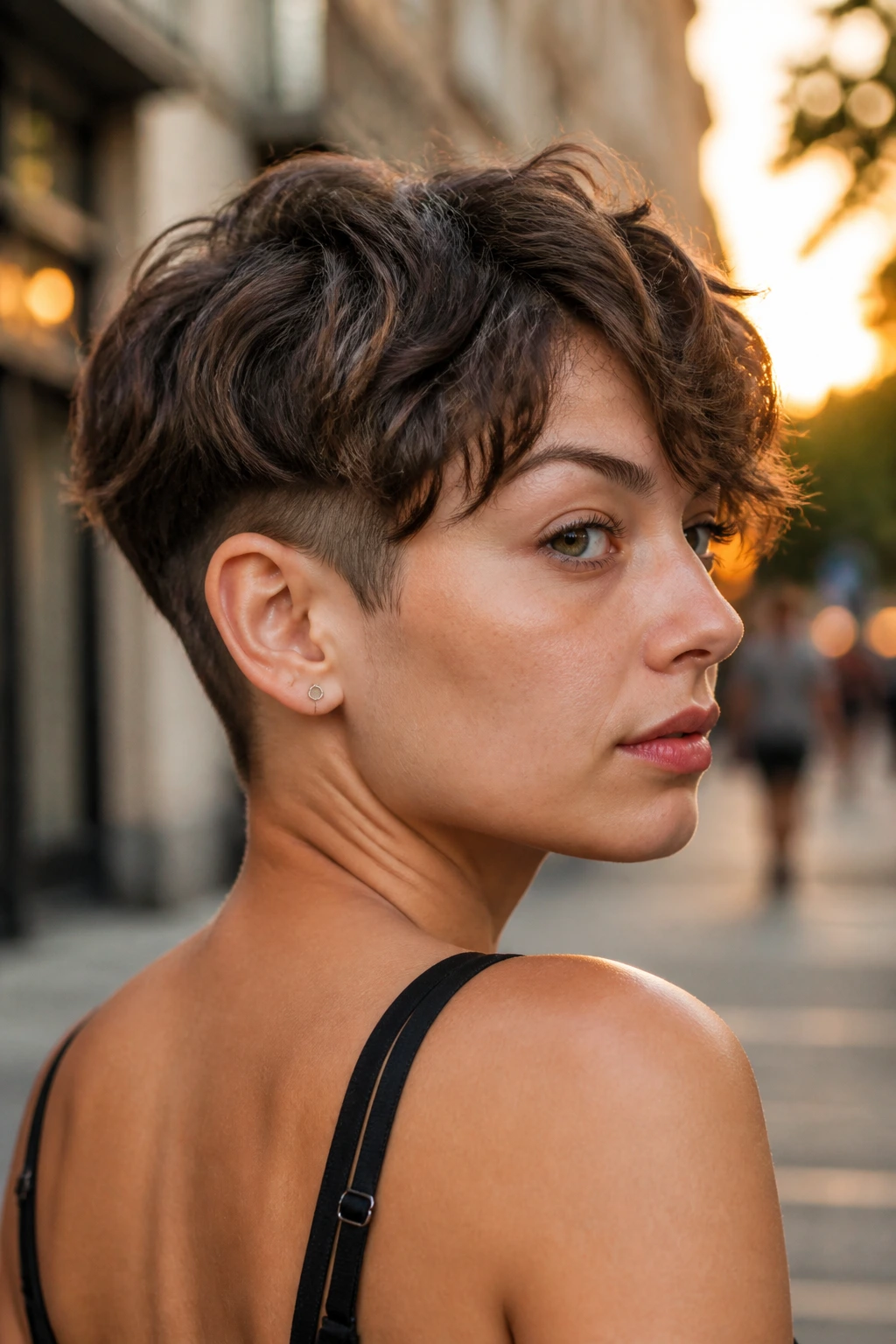
A soft undercut pixie is the answer when you have thick, wavy hair that keeps trying to grow outward instead of downward. Removing some bulk underneath lets the top waves sit more lightly, which changes the whole silhouette. The cut still feels feminine and soft, but it stops fighting your head shape.
The undercut doesn’t need to be dramatic. In fact, I prefer it subtle. The goal is to remove the hidden bulk at the nape or around the lower sides so the top can move. If the top is left too short, you lose the softness and end up with a shape that feels clipped down instead of styled.
Use this when your waves spring up at the root and the lower layers get too thick to lie flat. It’s especially good in humid weather because the cut has less weight to balloon out. A little pomade through the top pieces can define the wave without freezing it.
If you’ve always avoided pixies because you thought they’d look too severe, this version is worth a closer look. It has air in it.
18. Tapered Curly Bob
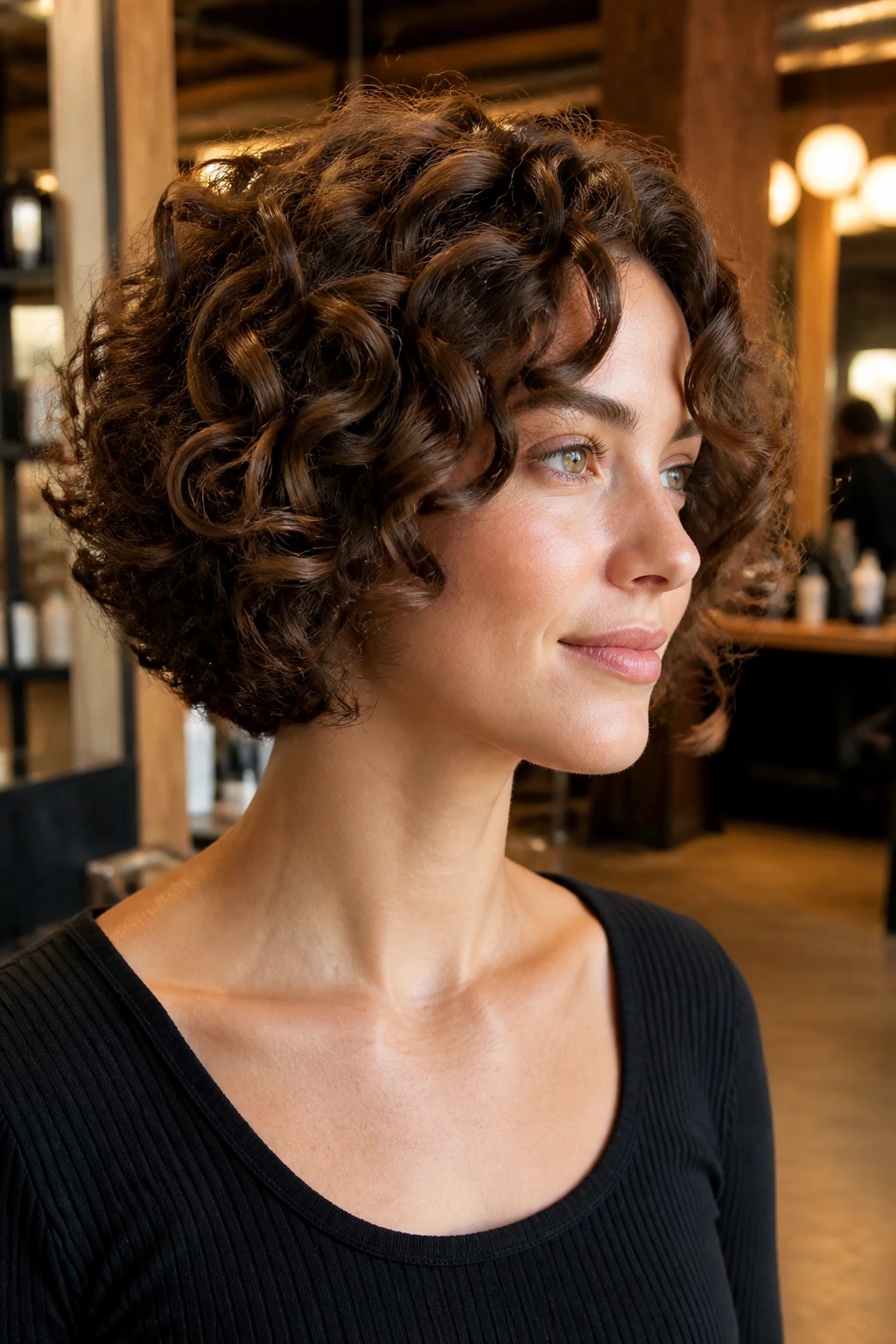
A tapered curly bob sits close to the head at the nape and widens just enough through the crown and sides to let the wave or curl pattern breathe. It’s a strong shape for hair that leans curly at the ends but still wants a soft finish. The taper keeps the perimeter from turning triangular.
This cut is useful when your hair is denser at the bottom than you’d like. The taper helps balance the whole silhouette, so the hair doesn’t collect into a heavy shelf. If your waves sometimes act like curls and sometimes don’t, the shape still holds.
Pro Styling Note
Dry the hair in sections. Start at the nape, then move upward, so the taper sets cleanly. If you dry the crown first, the top can swell while the lower pieces stay damp, and then the shape gets awkward fast. A little discipline here saves a lot of second-guessing later.
For product, choose a light curl cream or foam, not a thick butter. You want separation and soft hold, not clumps that dry stiff.
19. Boxy Bob With Broken Texture
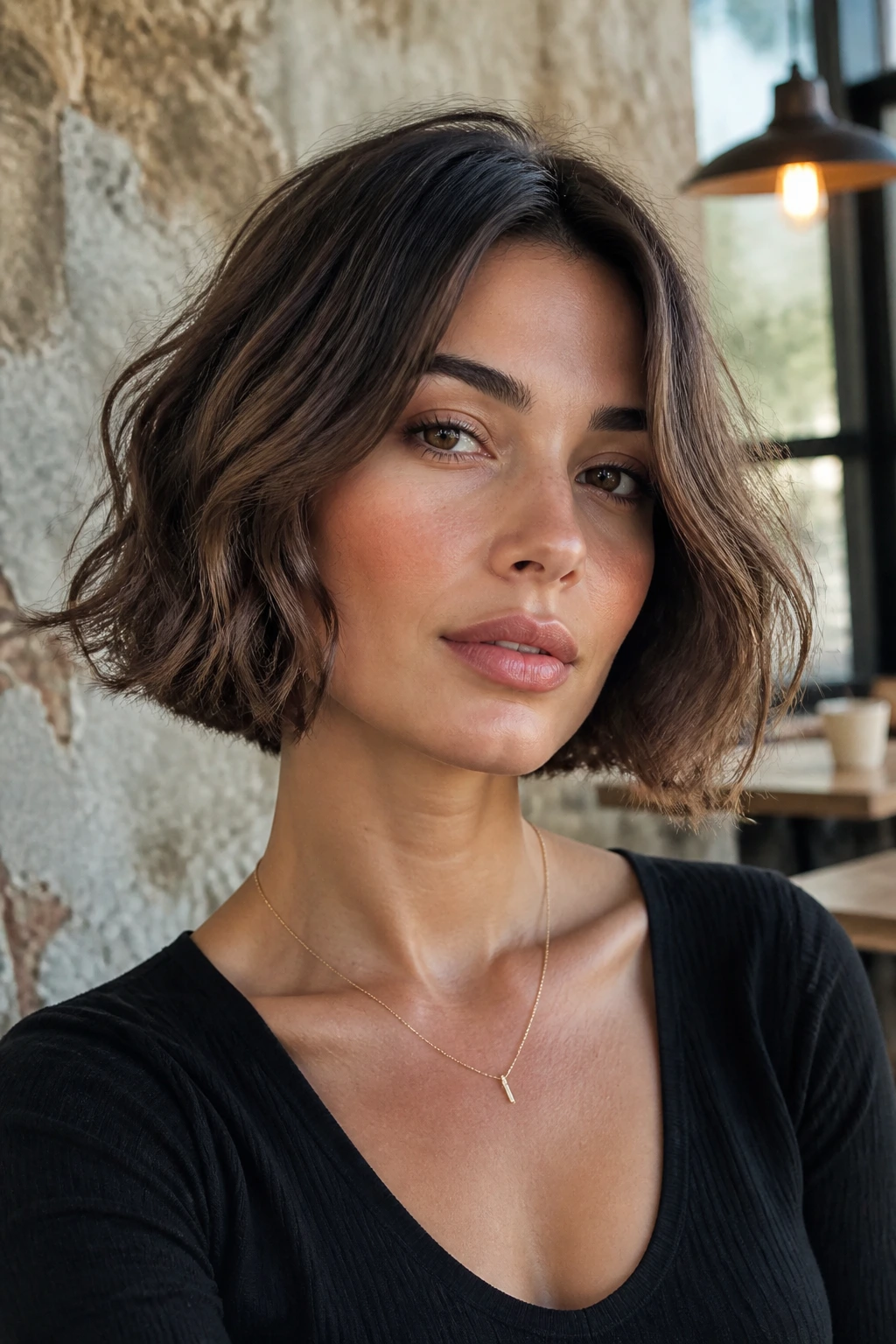
A boxy bob sounds like something you’d avoid, but the right version can look striking on wavy hair. The shape is more defined at the edges, almost architectural, while the texture is deliberately broken up so it doesn’t feel rigid. That contrast gives the haircut some bite.
This look works best if your waves are loose and your hair has enough density to support a clean line. The broken texture can come from point-cut ends, a few interior layers, or simply the way you dry it with fingers instead of a brush. The key is not to over-soften the outline. The boxy edge is the point.
If you’re tired of the same airy, feathered finish everyone asks for, this is a nice left turn. It reads modern because it has structure, then it softens as the waves move. That little tension is what makes it interesting.
A middle part keeps it sharper. A side part softens it up. You can steer the mood either way.
20. Sculpted Crop With Soft Fringe
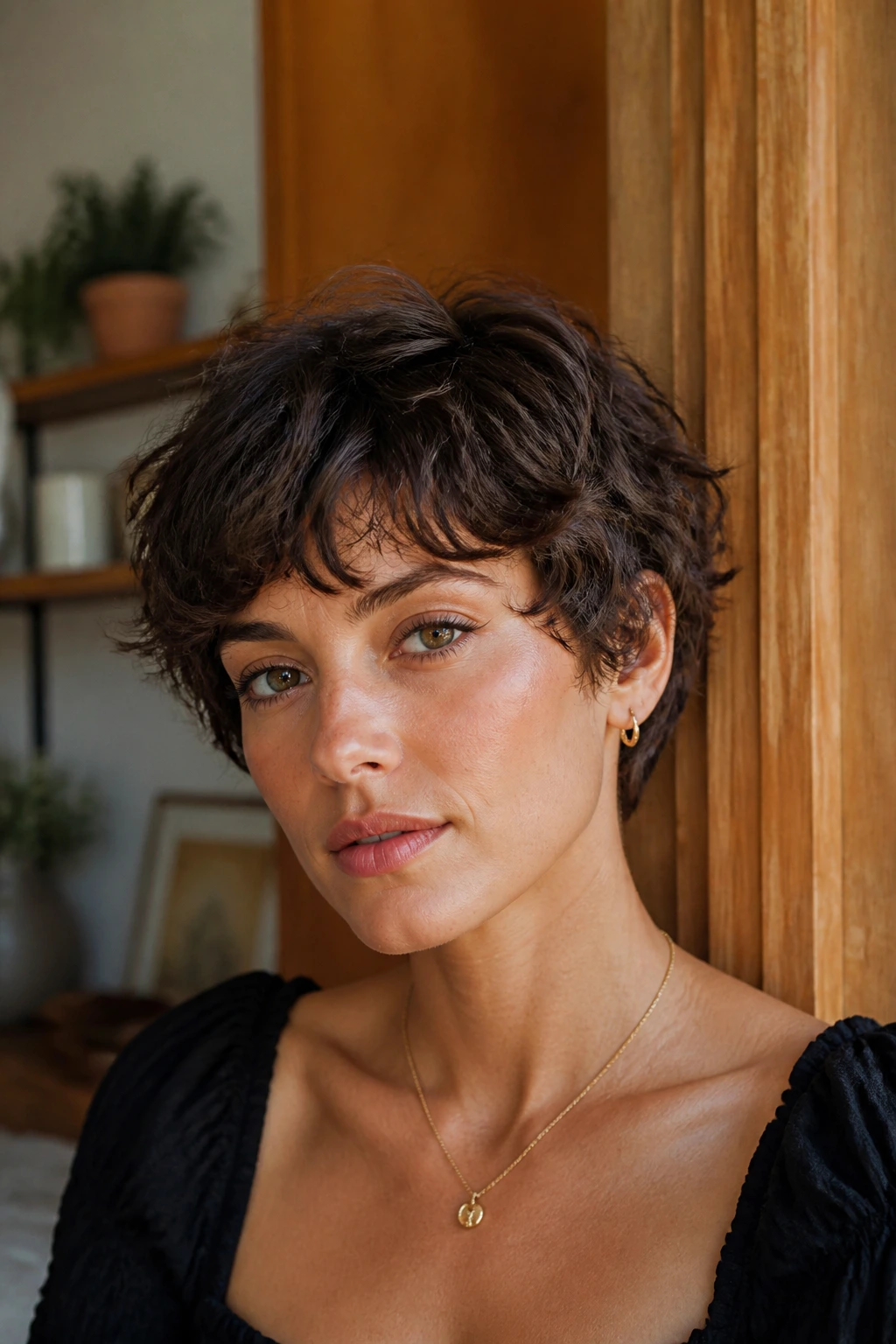
A sculpted crop with a soft fringe is the short hairstyle for people who want their waves to look deliberate, not unruly. The sides stay neat, the top keeps enough length for movement, and the fringe falls in a soft line across the forehead instead of sitting there like a blunt stamp. It’s controlled, but not cold.
This cut suits oval, heart, and longer face shapes especially well because the fringe shortens the forehead just enough and the crop draws attention upward. If your hair has a natural bend at the front, the fringe will pick that up and make it look intentional. If not, a small round brush and a quick blast of air will set it.
Why It Works
The sculpted part comes from the perimeter. The soft fringe keeps the whole style from looking severe. That combo is what lets short wavy hairstyles stay feminine and airy even when the haircut itself is quite short.
I like this look with a matte styling cream or a light wax on the ends. The goal is separation, not shine-heavy pieceiness. The softer the finish, the better the crop looks.
Why Short Wavy Hair Responds So Well to a Soft Cut
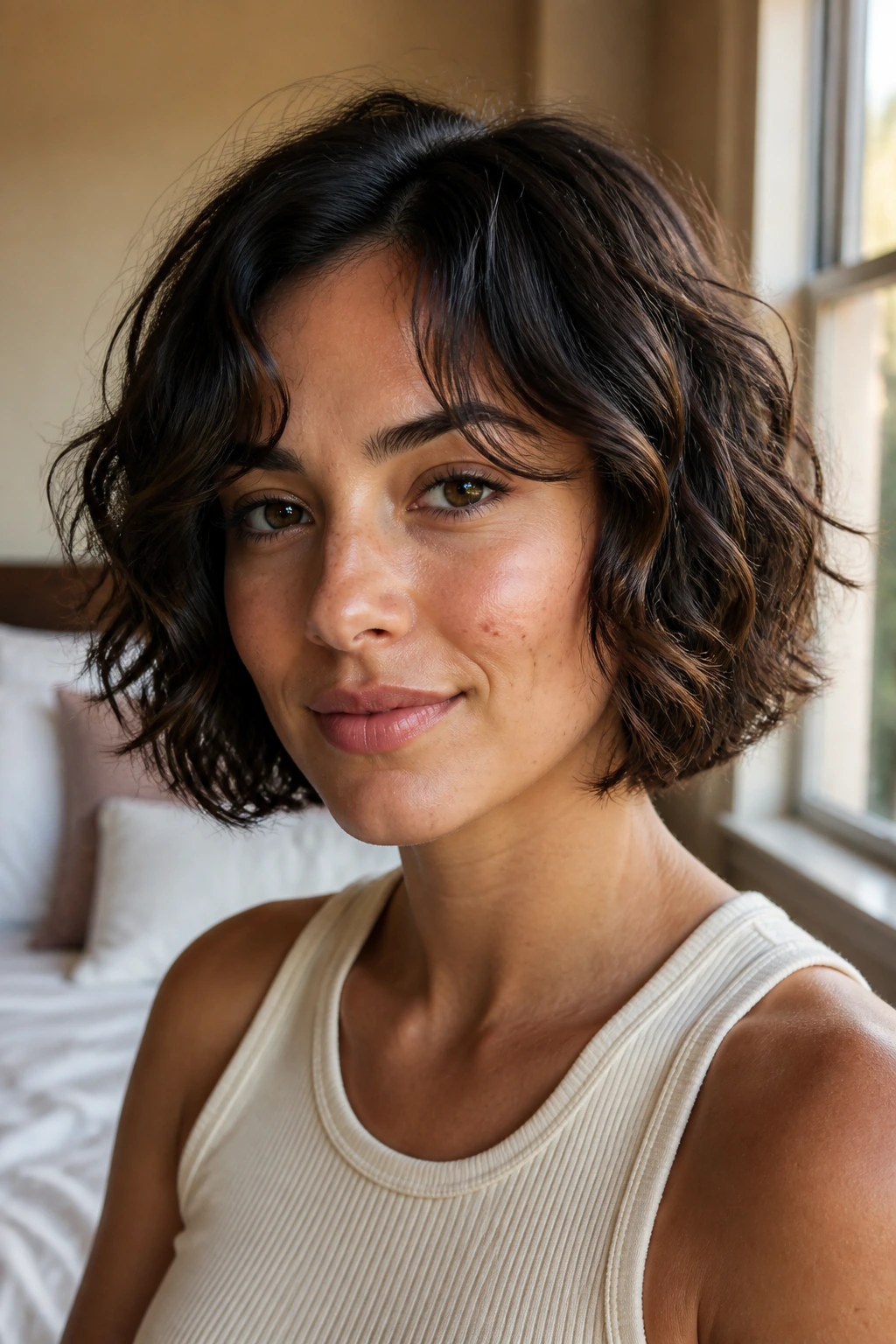
Short wavy hair has less room to hide bad decisions. That sounds harsh, but it’s the truth. When the cut is too blunt, the wave loses shape. When the layers are too high, the hair puffs out. When the perimeter is too thin, the ends fray and look wispy in a way that never feels intentional.
Soft texture solves that by letting the hair keep some edge while still moving. The cut doesn’t need to force the wave into a curl or flatten it into submission. It just needs to give the wave a good frame. That usually means a controlled perimeter, light interior shaping, and a finish that keeps the hair touchable instead of crunchy.
There’s also a practical upside. Short wavy hairstyles dry faster, pick up less weight from water, and respond better to a quick refresh spray on day two. If you’ve ever stood in front of the mirror trying to coax a long wave into behaving, the difference is obvious. Shorter hair often needs less correction. Less fuss. Better odds.
The Tools That Make Short Waves Easier to Shape
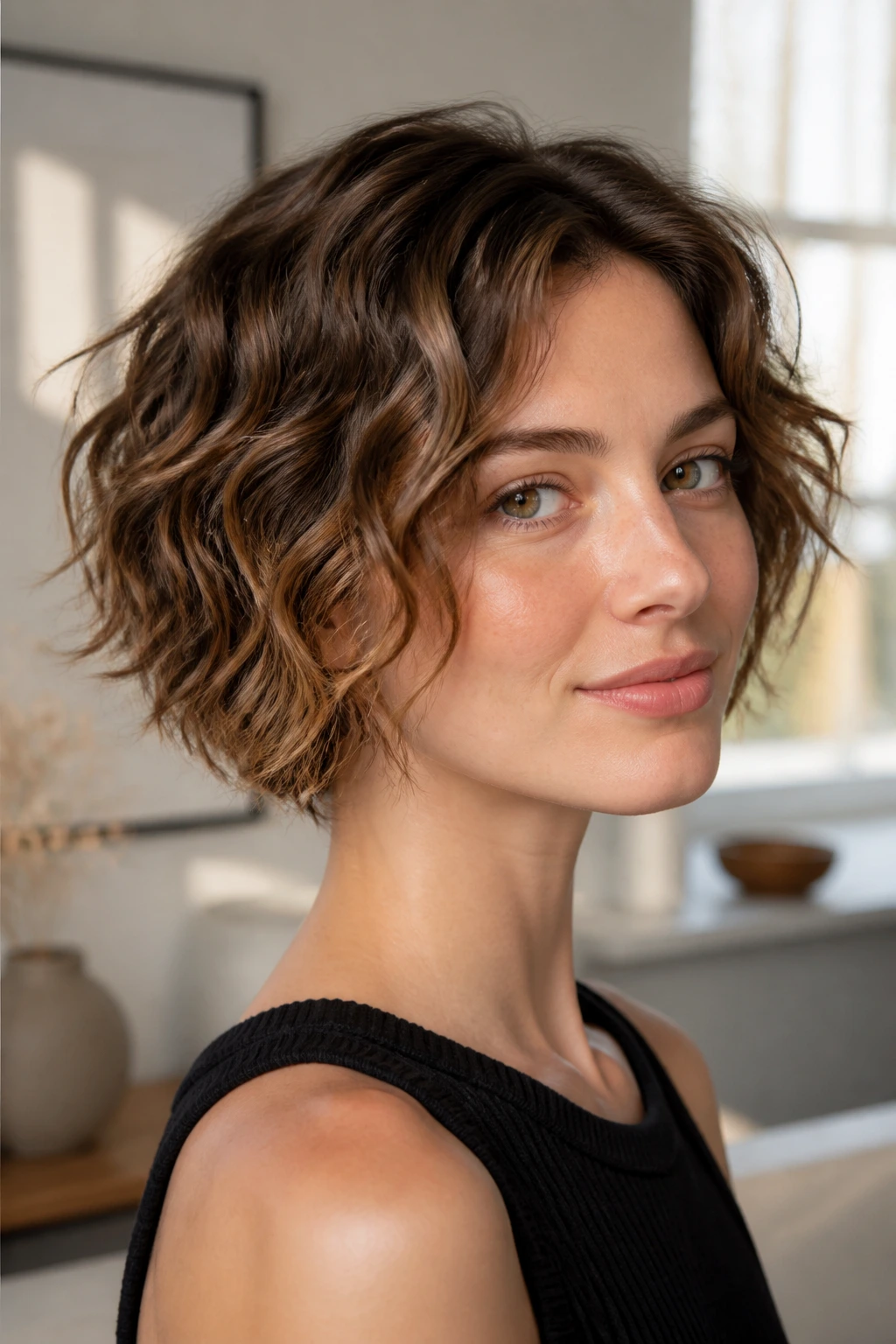
You do not need a drawer full of gadgets, but a few things make a big difference. Short wavy hair can go from soft and separated to fluffy and confused if you use the wrong brush or too much heat.
- Microfiber towel or soft T-shirt: Blots water without roughing up the cuticle the way a bath towel can.
- Wide-tooth comb: Good for distributing leave-in conditioner through damp hair without stretching the wave out.
- Light mousse or foam: Gives roots a little lift and helps the wave keep its shape as it dries.
- Light cream or leave-in: Best for smoothing the ends and calming frizz, especially on dense hair.
- Small diffuser attachment: Useful when you want the wave to dry with body instead of collapsing at the crown.
- 1-inch curling iron or wand: Handy for refreshing the front pieces or fixing one side that dried oddly.
- Heat protectant spray: Non-negotiable if you use hot tools, even for quick touch-ups.
- Duckbill clips or small setting clips: Great for pinning bangs, crown lift, or an off-center bend while the hair cools.
A good brush matters, too. If your hair is prone to puffing, a boar-bristle brush can over-smooth the wave and make the ends kick out. Finger styling often wins.
How to Style Short Wavy Hair So It Stays Soft

The styling sweet spot is usually damp, not soaking. Start with towel-blotted hair and work a small amount of product through the mid-lengths first, then whatever’s left on your hands through the roots. That order matters. If you load the roots with cream before the ends get anything, the whole top can go limp.
For air-drying, scrunch once or twice, then leave it alone. Touching short wavy hair every few minutes is a fast track to frizz. For diffusing, use low heat and low speed, and stop before the hair is fully dry if you want the wave to stay loose. The last bit of moisture often sets the softest shape.
If you want a cleaner finish, use a round brush only at the front pieces or fringe. Don’t go chasing every strand. That’s how short wavy styles lose their movement and start looking overworked. Better to let the back stay slightly imperfect.
The final step is tiny but important: once the hair is dry, rub one drop of serum or a pea-sized amount of cream between your palms and skim it lightly over the ends. Not the roots. The ends. That’s where softness lives.
Additional Tips That Keep the Texture Light
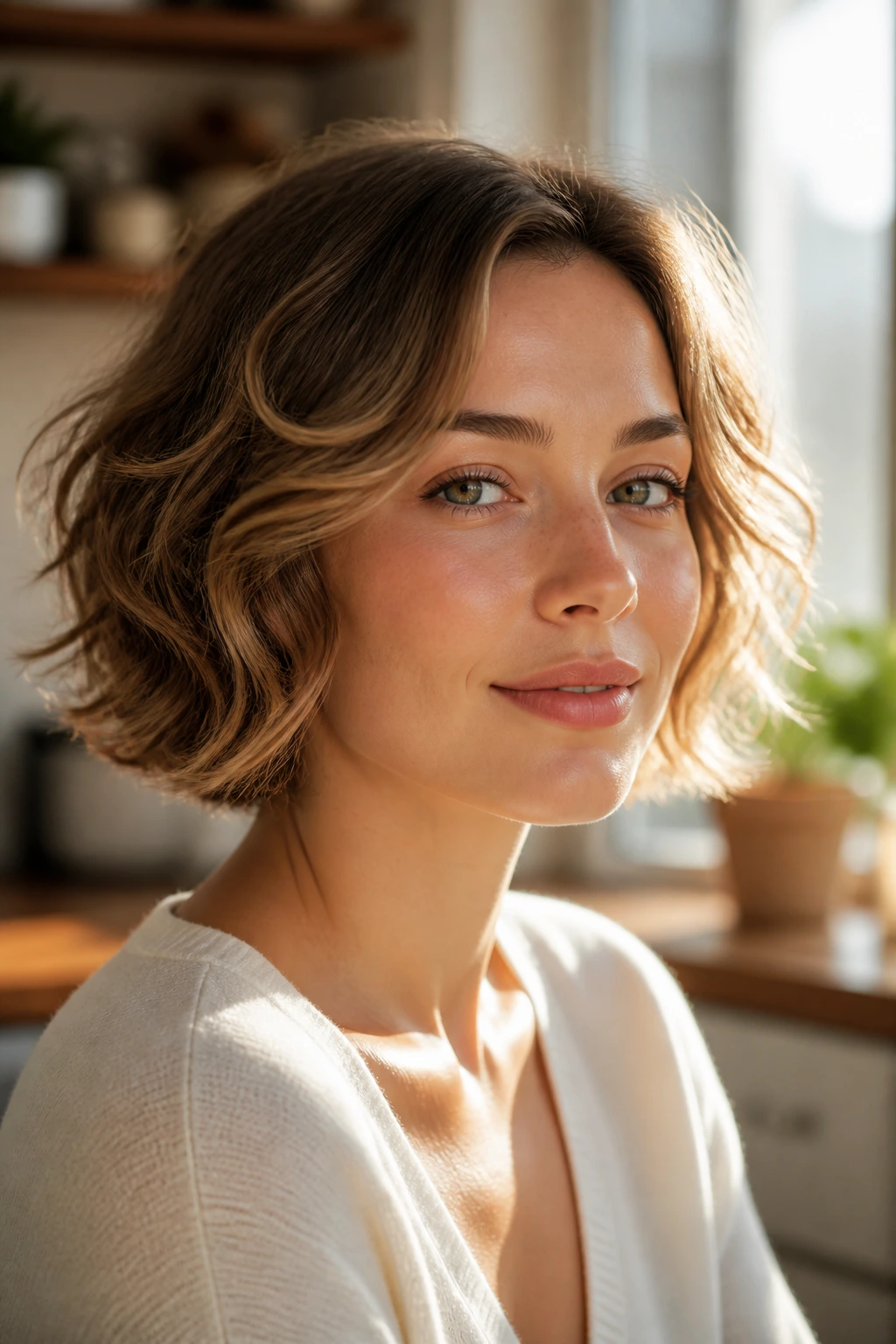
Root Lift: If the crown falls flat, clip the top sections up for 10 minutes while they cool. That little set can change the whole silhouette on short waves.
Softness Control: Use cream on the ends and mousse at the roots instead of coating the whole head in one product. Short hair gets overloaded fast.
Frizz Management: If the surface fuzzes up, smooth it with damp hands first, then add a tiny bit of serum. Dry product on dry frizz usually makes it worse.
Shape Memory: A side part or tuck behind one ear can train the front pieces into a nicer fall pattern by day two. It sounds minor. It isn’t.
Time-Saver: When you’re in a hurry, refresh only the front, crown, and the top inch of the sides. That’s where people look first anyway.
Common Mistakes That Flatten or Puff Short Wavy Hair
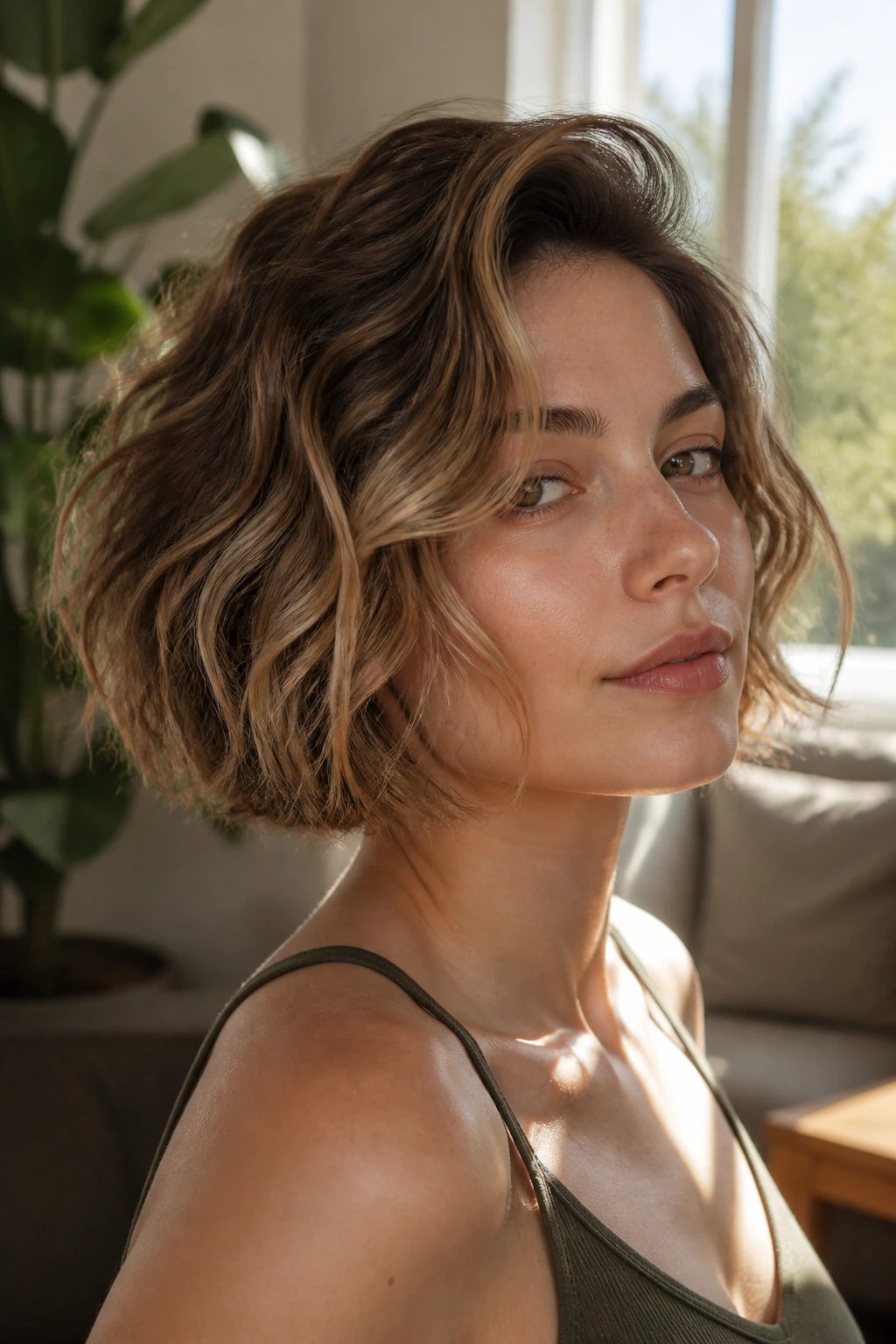
Using too much product. The symptom is obvious: the hair looks damp long after it’s dry, or the ends clump in greasy-looking strands. Short hair needs less than you think, especially if the cut already has internal layers. Start with a dime-size amount and add only if the wave is still too loose.
Cutting the layers too high. When the layers start near the crown, short wavy hair can turn fluffy and uneven at the sides. The fix is a softer interior shape and a perimeter that still carries some weight. A little bulk at the bottom often looks better than too little.
Blowing it dry too aggressively. High heat and high speed can stretch the wave out, then make it frizz when it snaps back. Use low heat, a diffuser, or a round brush only where you need direction. Everything else can air-dry.
Ignoring the part. A center part can be lovely, but on some short wave patterns it splits the hair too evenly and makes the sides billow. Move the part an inch, maybe less. That tiny shift can bring the whole cut back into balance.
Trying to make every wave match. They won’t. Short wavy hair looks better when some pieces are softer, some are more defined, and a few ends move a little differently. That small variation is part of the charm.
Variations and Adaptations to Try
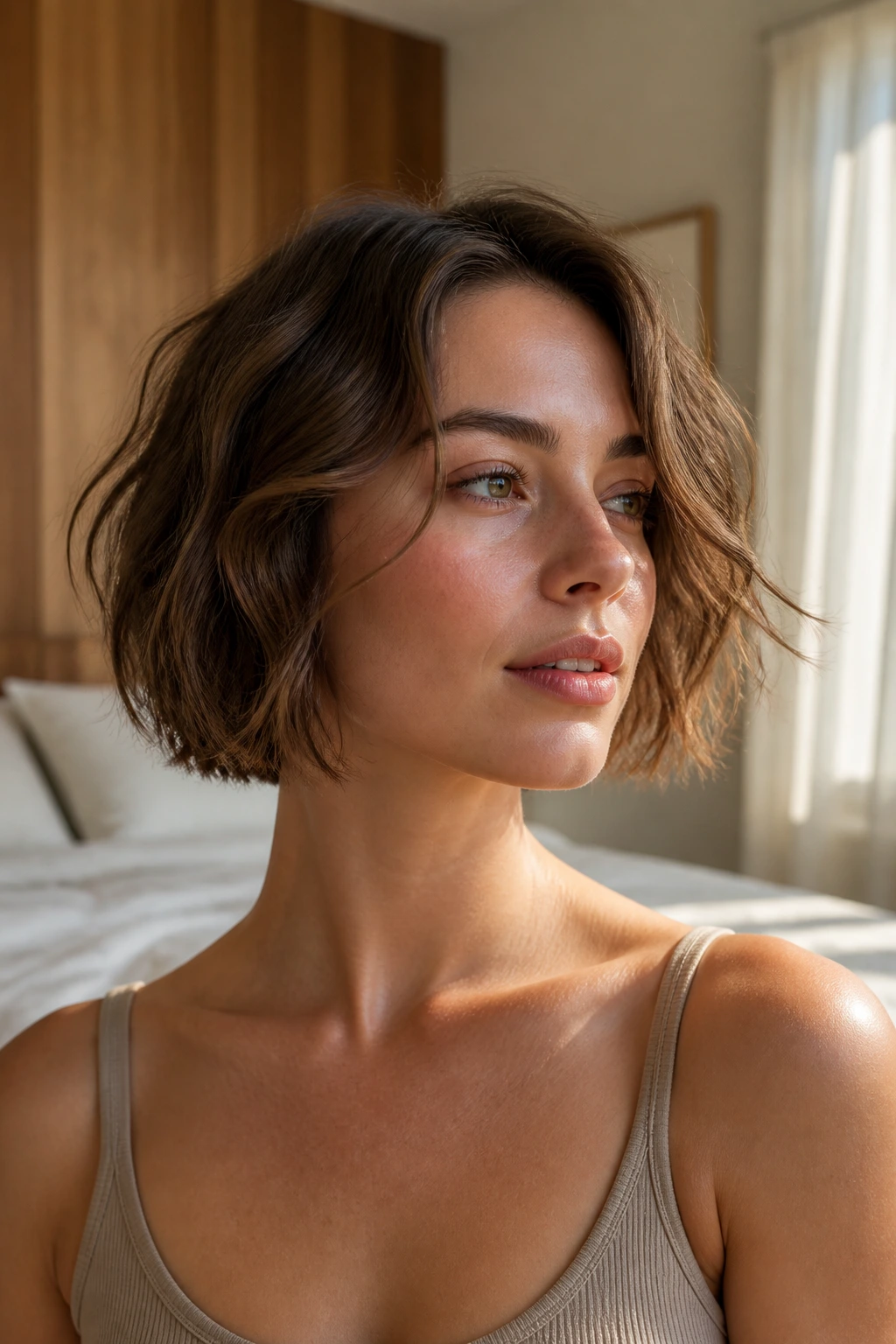
The Fine-Hair Whisper Cut: Keep the outline blunt and the layers barely there. Fine hair needs shape, not shredding, or the ends start looking thin.
The Thick-Hair Airy Edit: Ask for internal debulking and a lighter crown. This keeps dense waves from piling up around the head and makes the finish easier to dry.
The Frizz-Friendly Humidity Version: Use a cream-gel hybrid and keep the layers long enough to stay connected. Too many short slices can make humid days feel like a fight.
The Heat-Free Refresh Cut: Choose a style that still looks good with a mist bottle, a little mousse, and finger scrunching. Bobs and grown-out pixies do well here.
The Sharper Editorial Version: Keep the perimeter cleaner and the texture more controlled. This is for people who want the wave to look styled, not beachy.
The Low-Maintenance Grow-Out Version: Favor bobs, bixies, and layered lobs that lose shape gracefully. A cut that looks good on day one and day fifty is worth more than one that only behaves after a salon blowout.
How to Keep the Shape Between Washes
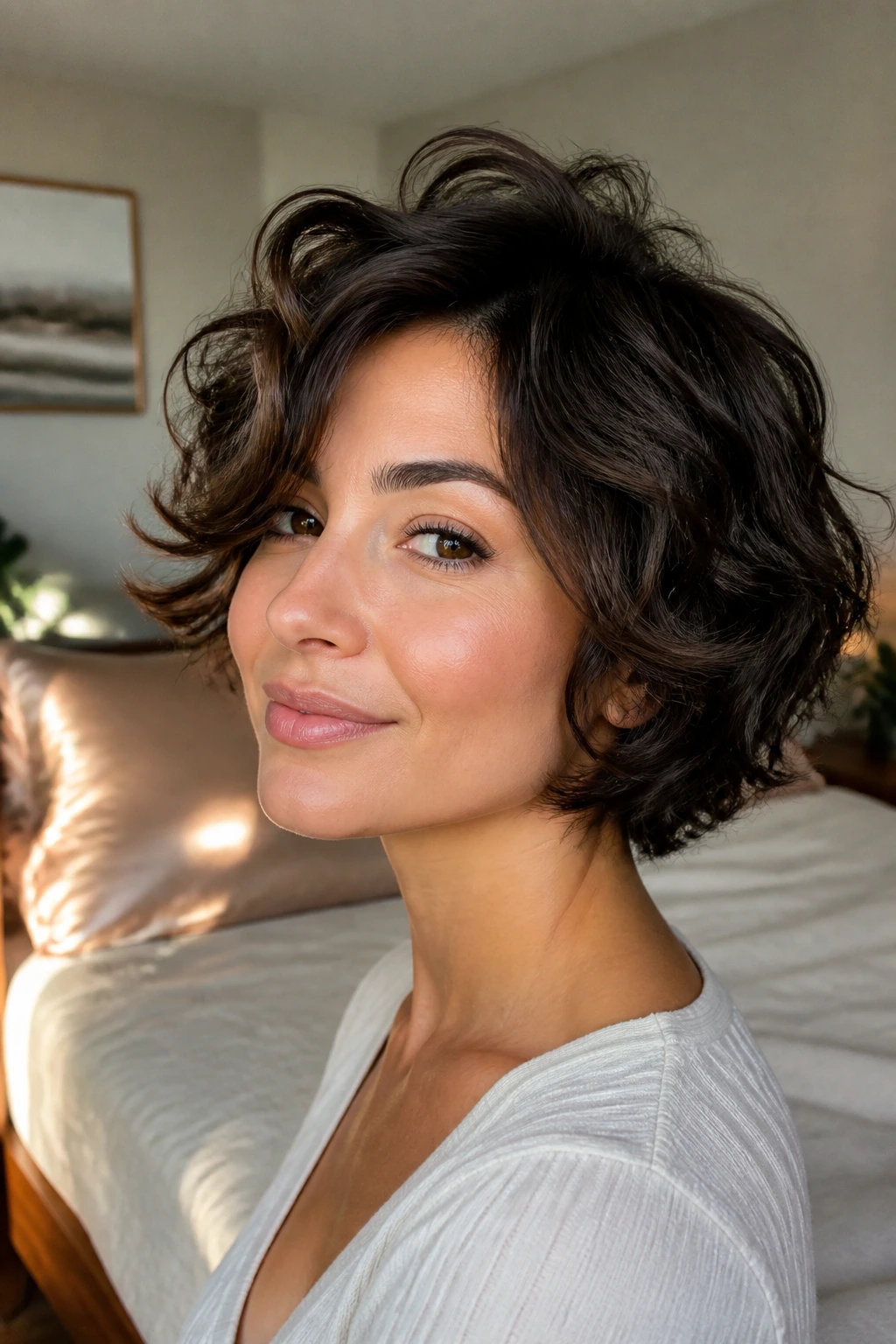
Short wavy hair usually holds up for two to three days if you treat it well. The first thing I’d protect is the shape while you sleep. A satin pillowcase helps, but a loose, low clip or a soft scrunchie can keep the front from getting smashed flat if your fringe or side pieces are part of the look.
On day two, skip the full wash unless the roots are greasy. Mist the mids lightly with water, then scrunch in a pea-sized amount of foam or cream. If the roots need help, use dry shampoo at the crown and give it a minute to sit before you massage it in. Rubbing too soon just smears the powder around and dulls the texture.
Trim timing matters more with short cuts than with longer waves. Bobs and pixies usually want a trim every 5 to 8 weeks to keep the outline from going fuzzy. Lobs can stretch to 8 or 10 weeks. If the fringe is part of the cut, you may want a bang cleanup even sooner. Fringes have opinions.
If you use heat tools often, keep a heat protectant in the routine and clarify the hair every couple of weeks if product buildup starts making the waves droop. Short hair can hold onto residue in a way that’s sneaky. The hair looks fine one day and then suddenly goes limp the next. Usually that’s buildup, not the cut.
Frequently Asked Questions
Which short wavy hairstyles work best for fine hair?
Bobs with a blunt perimeter, flipped-under ends, and soft side parts usually help fine hair look fuller. Avoid too many short layers at the crown, because they can leave the hair looking airy in a bad way.
What if my waves are uneven on each side?
That’s normal. A deep side part, tucked-ear styling, or a soft fringe can balance the mismatch without forcing the whole cut into symmetry. Uneven waves often look more alive anyway.
Can short wavy hair still be styled sleek?
Yes, but keep the finish light. A smoothing cream on damp hair, a small round brush on the front pieces, and a soft bend at the ends usually give you a controlled look without killing the movement.
How often should I trim a short wavy cut?
Most short cuts need cleanup every 5 to 8 weeks. If you’re wearing a pixie, bixie, or fringe-heavy style, stay closer to the shorter end of that range so the shape doesn’t drift.
Is a diffuser better than air-drying?
For some cuts, yes. A diffuser helps preserve the lift at the crown and keeps the wave from drying into random flat patches. Air-drying works fine too, but it often needs a bit more product planning.
What products should I avoid on short waves?
Heavy oils, thick butters, and sticky gels can weigh the style down fast. Short hair has less surface area, so even a small amount of the wrong product can make it look stringy or greasy.
Can I wear bangs with short wavy hair?
Absolutely, but they need some attention. Curtain bangs, side-swept fringe, and soft micro bangs can all work; they just need to be dried with intention so they don’t split weirdly or puff up.
What if my hair gets frizzy in humidity?
Use less salt spray, more smoothing cream, and keep the layers a little longer. Humidity and short waves are not enemies, but they do require a calmer finish and less roughing up during drying.
Keeping the Wave Soft
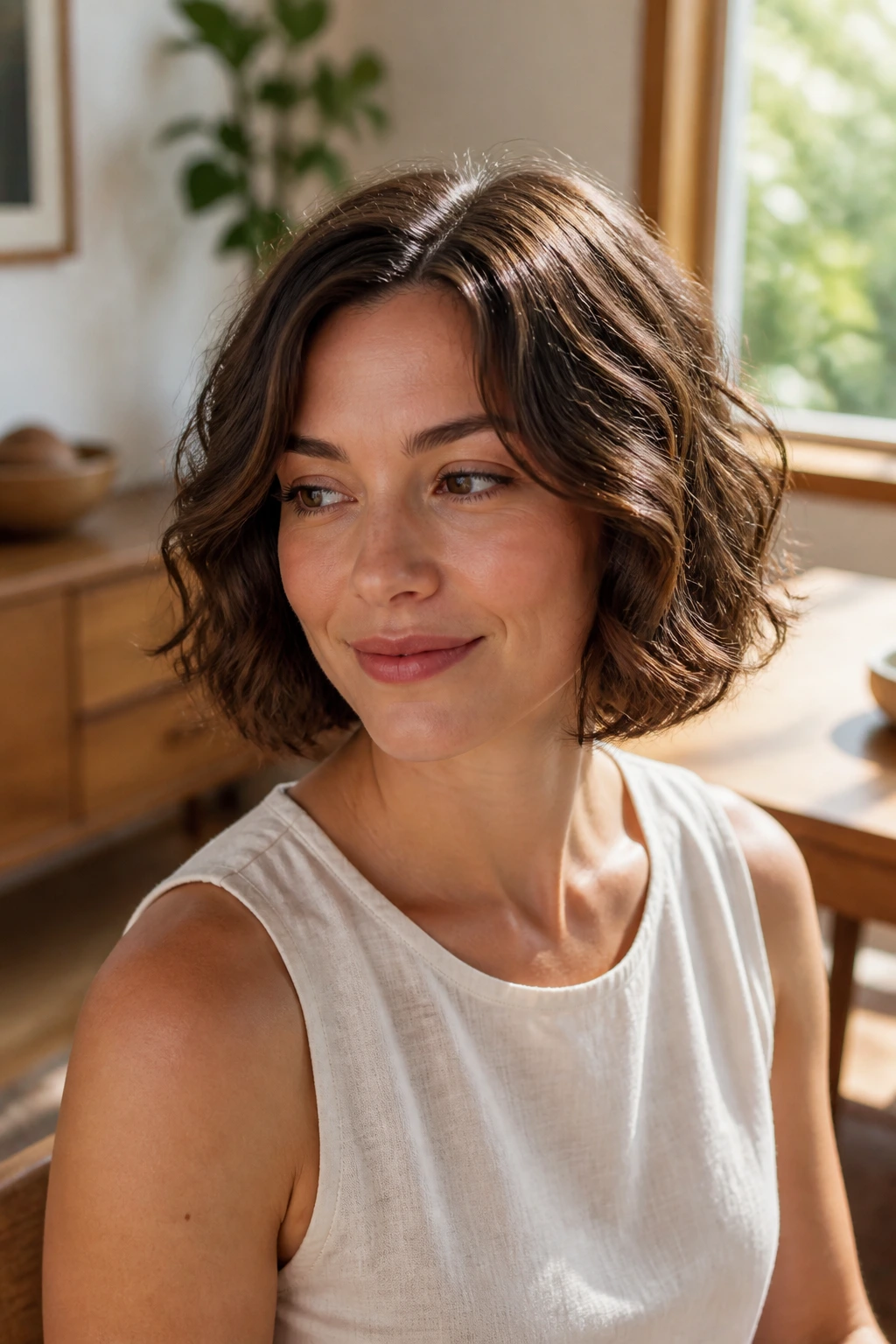
Short wavy hairstyles work best when the cut gives the texture room to breathe. That usually means cleaner lines, a little interior shaping, and a finish that doesn’t try to lock every strand into place. Soft texture is not a compromise here. It’s the whole point.
The best versions of these cuts move when you turn your head, tuck behind the ear cleanly, and still look like hair the next day instead of a project. That’s the standard I’d use. If a cut can do that, it earns its keep.
If you’re choosing between two short wavy ideas, pick the one that lets your hair bend naturally instead of fighting the shape you already have. That’s where the good ones live.
