



The best wavy hairstyles stop asking your hair to be straight when it isn’t. That sounds obvious, but a surprising number of cuts still try to bully wave into behaving like a sleek blowout, and the result is usually puff at the ends, flat roots, or a shape that only looks decent right after a salon visit. A good low-maintenance wavy hairstyle works with the bend, the swell, the random little kick at the front, and the bit of frizz that shows up when the air gets heavy.
That’s why some of the most wearable options are not the fanciest ones. A collarbone lob with clean edges. A shag that keeps the top light and the bottom soft. A blunt bob that lets the wave do the texture work. Even a messy claw-clip twist counts, because the whole point is to spend less time negotiating with your hair every morning.
Low-maintenance does not mean “no care at all.” It means the cut holds its shape when you air-dry, the styling routine stays short, and the grow-out does not turn into a week-long crisis. If your hair tends to look better on day two than day one, or if you’ve ever spent 25 minutes scrunching only to end up with a halo and two flat pieces near your temples, these ideas make sense fast.
Why These Wavy Hairstyles Stay Easy
-
The shape does the work: A good wave-friendly cut keeps the silhouette in place even when you skip heat styling, which is why lobs, shags, and soft bobs show up here again and again.
-
They grow out cleanly: These styles keep their lines soft enough that a trim can wait a little longer without the haircut looking chopped up or awkward.
-
They don’t need perfect waves: Some of these work on loose 2a bends, some on stronger 2c texture, and a few still look fine when one side dries flatter than the other.
-
Heat stays optional: Most of these can be air-dried, rough-dried with a diffuser, or pinned up with a claw clip and left alone.
-
They’re easy to refresh: A mist of water, a pea-sized curl cream, or a little dry shampoo at the roots is usually enough to bring the shape back.
-
They travel well between settings: You can wear the same cut to work, to dinner, and to bed without needing three different styling systems.
1. The Collarbone Lob That Air-Drys Clean
A collarbone lob is the quiet achiever of wavy hairstyles. It hits that sweet spot where the ends still move, but the hair is short enough that it doesn’t drag your waves straight by their own weight. On most heads, this length gives you enough shape for a clean air-dry and enough length to tie back when you’re annoyed with it.
What makes it low maintenance is the balance. It looks intentional with a center part, a side part, or a loose tuck behind one ear. If your waves bend more at the bottom than the roots, this is one of the easiest cuts to live with because the shape still reads even on a lazy day.
2. Long Layers That Barely Need Styling
Long layers are for people who want movement without committing to a big chop. The trick is keeping the layers soft and spaced out, not sliced all over the place. Too many short layers on wavy hair can make the crown puff up and the ends thin out faster than you’d like.
With the right cut, long layers let the wave pattern drop into place on its own. A little leave-in conditioner and a light mousse is often enough. Air-dry it, twist a few damp pieces around your fingers, and stop fussing. That last part matters.
3. Curtain Bangs and Loose Waves
Curtain bangs look especially good when the rest of the hair has a bend rather than a hard curl. They split open naturally, which means you do not need a round brush and a prayer every morning. A little side-to-side brushing while they’re damp usually gets them sitting where they should.
This style works best when the bangs are cut long enough to tuck behind the cheekbones. Too short, and they lose the easy feel that makes curtain bangs worth keeping. Too blunt, and they stop blending into the rest of the hair. The sweet spot is soft and face-skimming.
4. The Chin-Grazing Wavy Bob
A chin-length wavy bob has a sharper mood than a lob, but it still counts as low maintenance if the ends are cut cleanly. It gives waves a little spring instead of dragging them down. On fine hair, it can make the whole head look fuller fast.
I like this one when the hair has a natural S-shape and not too much bulk at the bottom. A quick scrunch with mousse is often enough. If one side flips out more than the other, that’s not a flaw. That’s the haircut doing its thing.
5. The Collarbone Shag with Soft Pieces
A shag can be easy to wear or impossible to manage, and the difference is usually in the layers. For low-maintenance wavy hair, you want a softer shag with fewer sharp steps and enough length left through the perimeter to keep it from fraying out. Think movement, not choppy chaos.
The collarbone version is especially good because it keeps the shape from getting too wild. You can air-dry it with a curl cream and a bit of mousse, then shake it out once it’s dry. That’s usually enough. If you like a little edge without spending every morning on it, this is a strong pick.
6. The Blunt Midlength Cut with Soft Ends

Blunt cuts on wavy hair have a reputation for being hard to manage, but that’s only true when the ends are too thick or the cut is too short. A blunt midlength shape can look crisp and modern while still letting the wave show through. The line at the bottom gives the whole style structure.
What I like here is the predictability. It doesn’t split into ten different shapes on windy days. It sits. It moves a little. It does not demand a fresh round brush blowout just to look finished. If your hair is dense and your waves are loose, this one is worth serious attention.
7. Face-Framing Layers at the Cheekbones
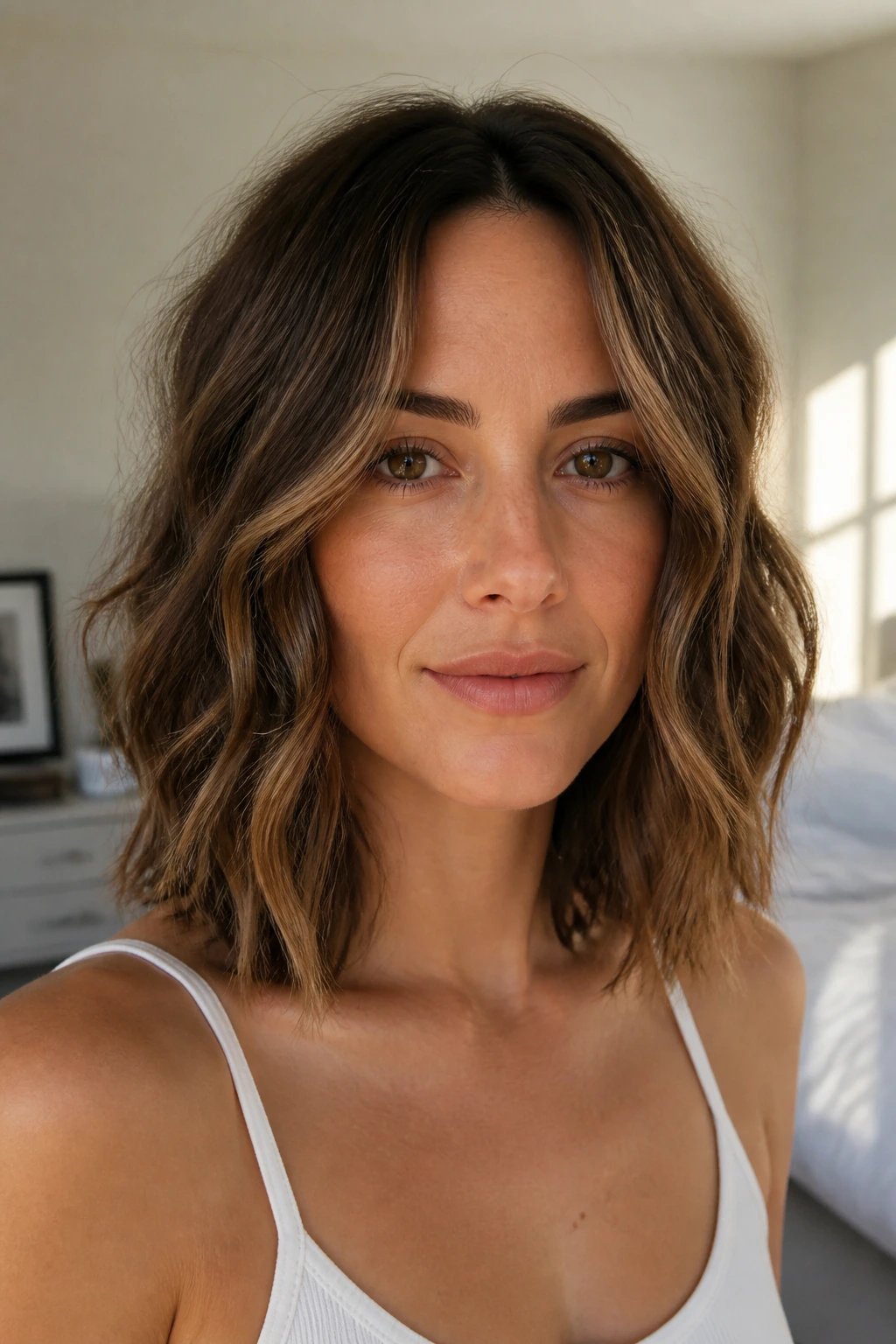
Face-framing layers are the easiest way to make wavy hair feel lighter without tearing the whole cut apart. The best version starts around the cheekbones or jaw, where the pieces can soften the face instead of hanging like random side bangs. That little detail changes the whole mood.
Why It Works So Well
You get movement around the face without losing length everywhere else. The rest of the hair can stay relatively simple, which is the part that matters on rushed mornings. A few damp twists away from the face, then leave it alone.
- Best for: Hair that feels heavy at the front.
- Styling time: 5 to 10 minutes.
- Maintenance: A trim every 8 to 12 weeks keeps the face pieces from drifting into your mouth.
8. The Deep Side Part with S-Shape Waves
Why does a side part make such a difference? Because it changes the direction of the wave before the hair even dries. A deep side part gives loose waves a more defined bend, and that shape often stays put longer than a center part on the same cut.
This is one of my favorite low-effort fixes for hair that falls flat at the roots. Switch the part, mist the crown with water, and clip it while the hair dries for 10 minutes. Done. It looks deliberate without needing a hot tool.
9. The U-Shaped Long Cut
A U-shape keeps long wavy hair from looking like a flat curtain. The gentle curve at the back gives the ends a little lift while keeping the length intact. It’s subtle, which is exactly why it works.
Compared with a straight-across long cut, the U-shape tends to feel softer when the waves dry naturally. The shape doesn’t disappear the second you step outside. If you hate the heavy, blocky look that long hair can get, this is a smarter option.
10. The Soft Wolf Cut

A soft wolf cut is the cooler cousin of the shag, with a bit more edge and a bit less chaos. The layers are shorter near the top, but the overall shape still keeps enough weight to stop the hair from going fuzzy. That balance is the whole point.
It’s low maintenance if you don’t over-style it. Scrunch in a light mousse, air-dry, then break up the roots with your fingers once it’s dry. The cut should look lived-in, not polished to death. If you want hair that looks slightly undone on purpose, this one delivers.
11. The Clavicut with Invisible Layers
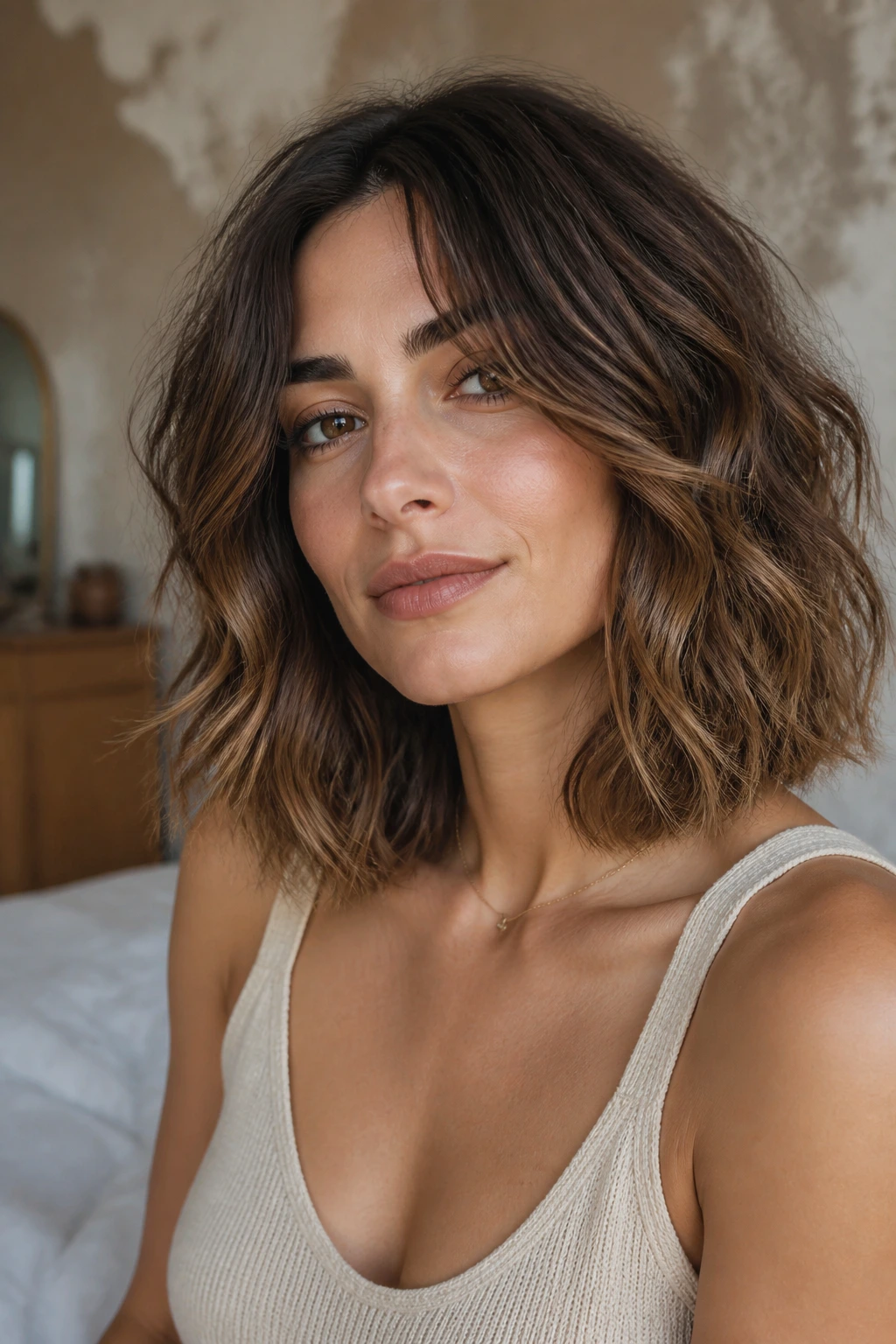
A clavicut sits right at the collarbone, which makes it one of the most forgiving lengths for wavy hair. Add invisible layers, and you get movement without obvious choppy steps. The haircut still looks clean from the back, which I find oddly satisfying.
This is a quiet cut. It doesn’t shout. It just behaves. If you want your waves to fall into place with a minimal routine, a clavicut gives you a neat perimeter and enough weight to keep the ends from exploding outward.
12. The Messy Top Knot with Loose Front Pieces
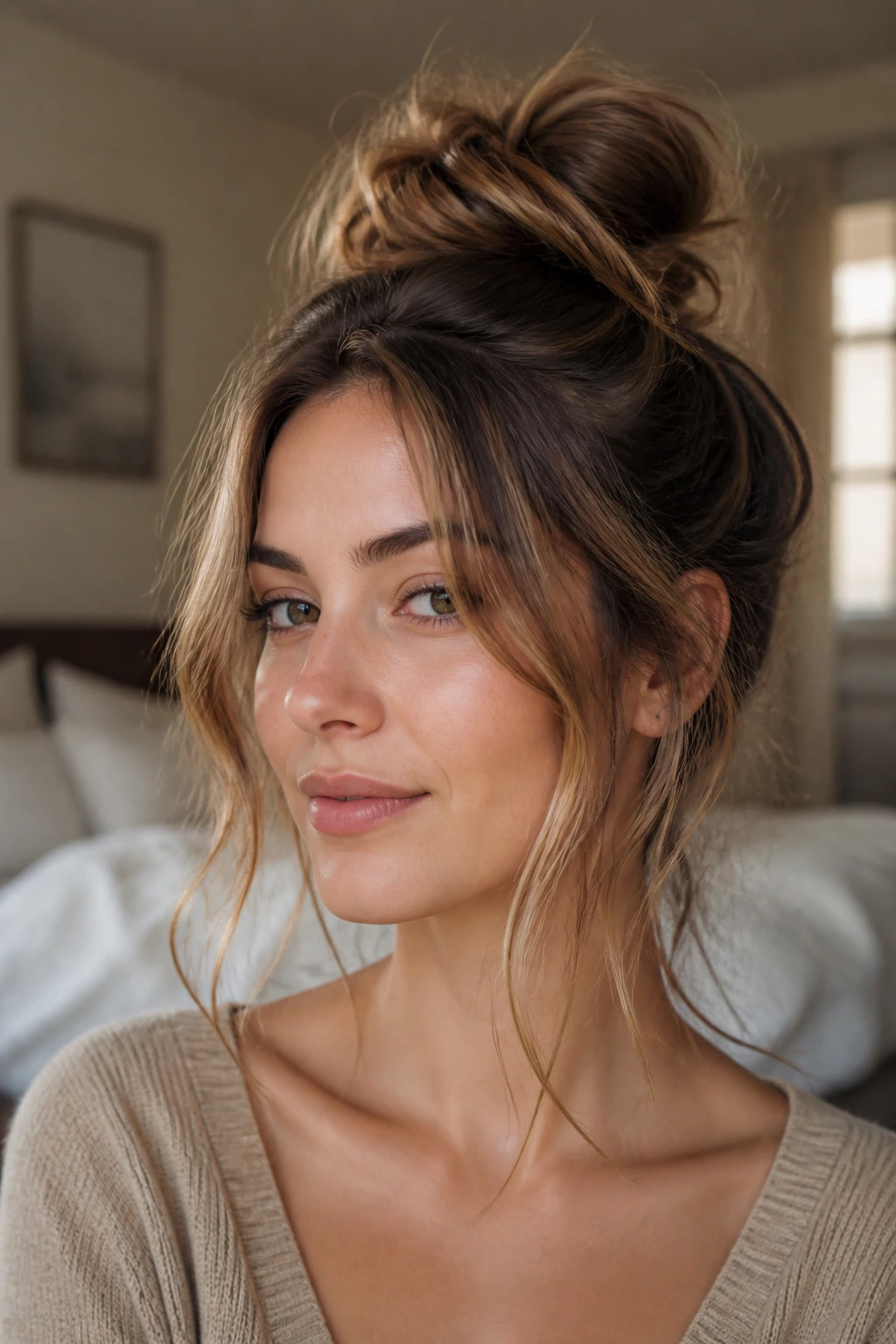
A messy top knot is less about perfection and more about getting your hair off your neck without creating a headache. The key is not pulling it too tight. Leave a little lift at the crown, let two front pieces fall out, and keep the elastic low-stress.
Quick Styling Notes
- Use a soft scrunchie instead of a tight band if your hair snaps easily.
- Pull the knot apart a little after tying it so it doesn’t look pasted down.
- Let the front pieces stay wavy rather than flattening them with a brush.
This works especially well on day two or day three hair, when the roots need a reset but the mid-lengths still have enough texture.
13. The Half-Up Twist with Natural Texture
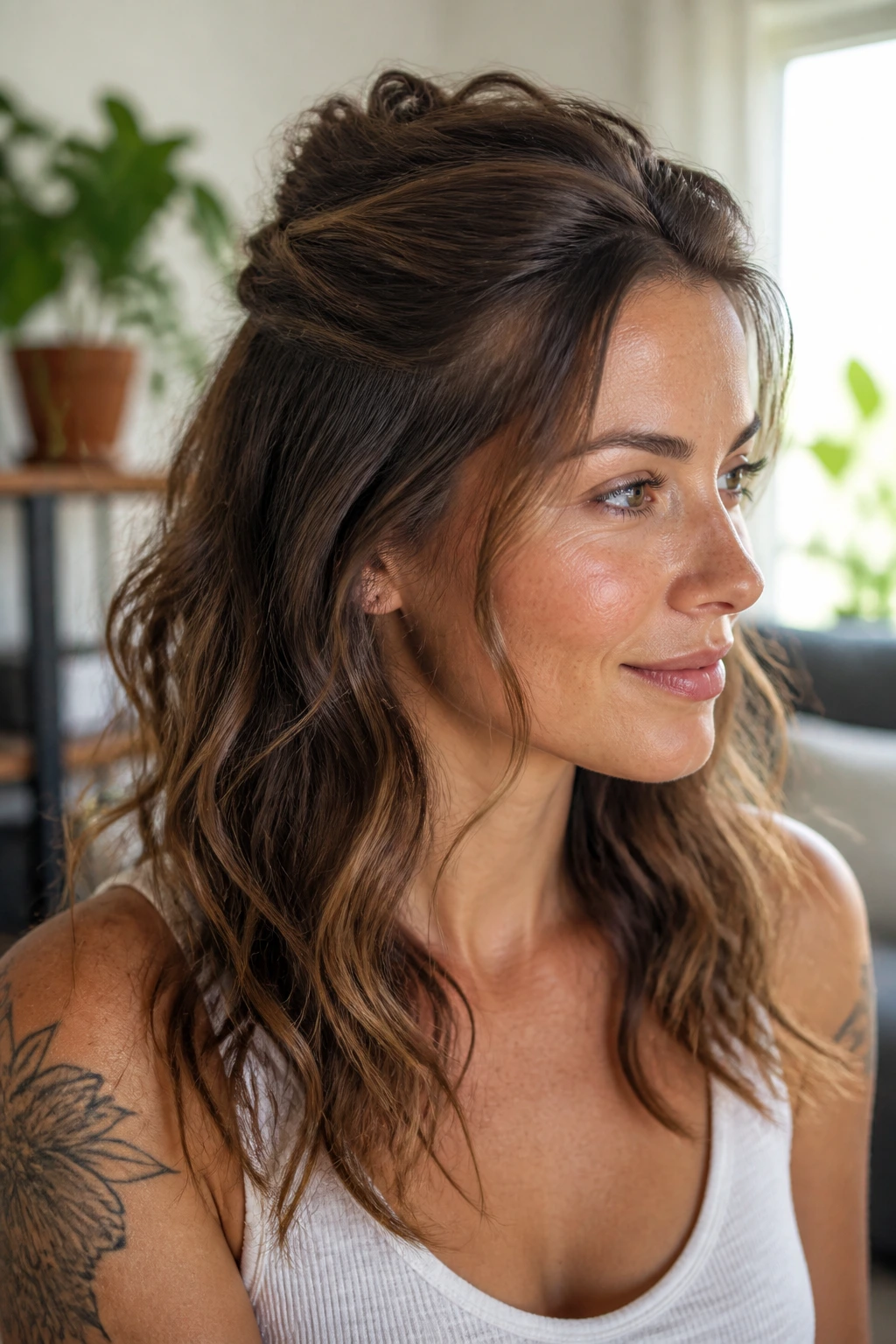
A half-up twist is the kind of style that makes waviness look intentional even when the hair didn’t get a proper styling session. It lifts the front sections away from your face, which is useful if your roots tend to puff at the temple line.
The trick is to twist loosely and pin with a couple of bobby pins, not load the back of your head with ten clips. Keep the lower half open so the wave pattern still reads. It’s low effort, and it usually looks better a little imperfect.
14. The Wavy Pixie-Bob
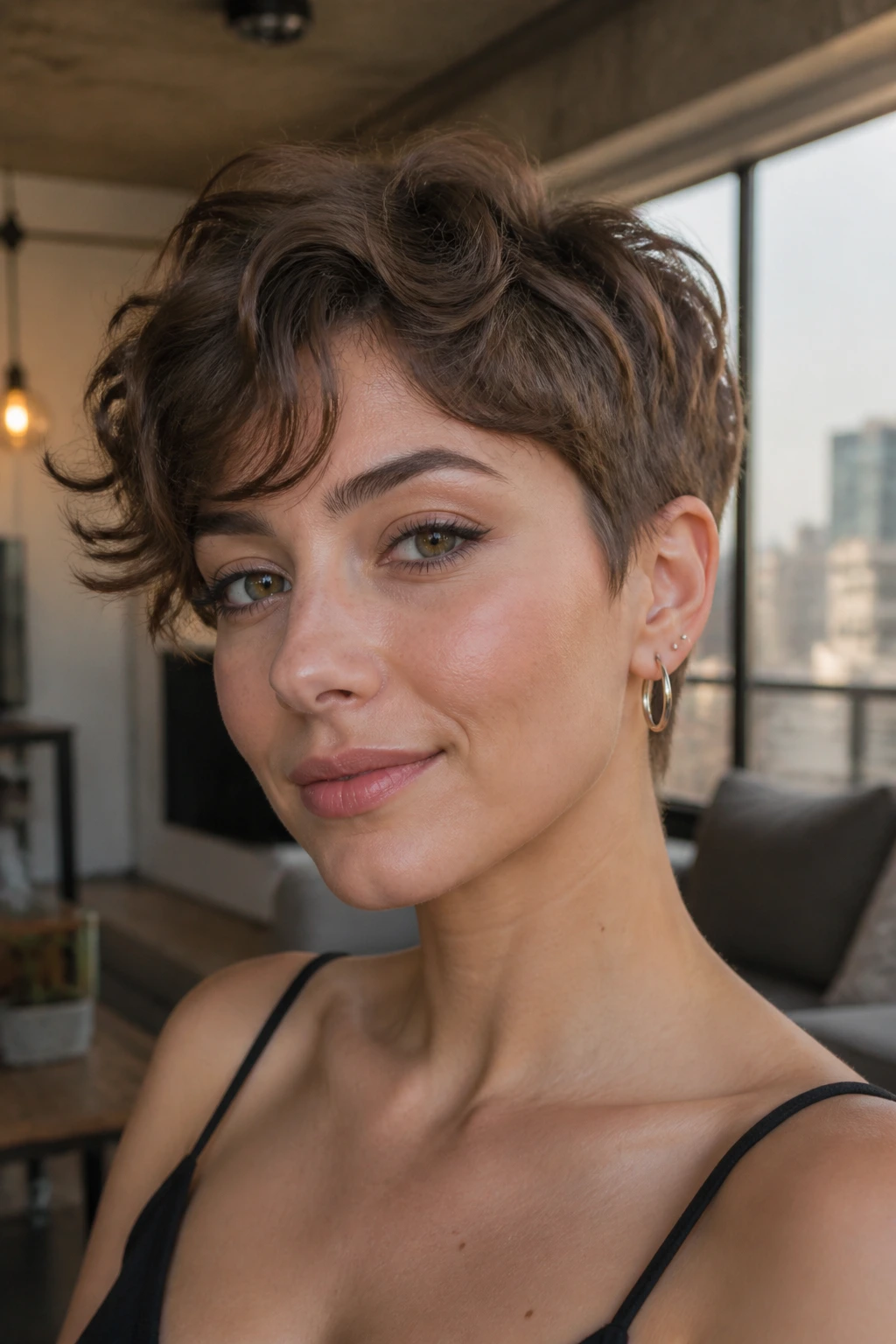
A pixie-bob gives you the shape of a short cut without the constant upkeep of a true pixie. The top stays long enough to show off a wave, and the sides stay short enough to keep the whole cut neat. That combination is practical, not precious.
It suits people who want less hair to deal with, but not a haircut that needs a trim every four weeks. A dab of cream through the top and a quick finger-tousle is usually enough. If you have a strong wave pattern near the crown, this cut can look especially good.
15. The Shoulder-Length Cut with Internal Layers

Internal layers remove weight from inside the haircut while leaving the outside shape calm. That means your waves can move without the ends turning ragged. It’s one of the better choices if your hair is thick and tends to swell when humidity shows up.
This cut is one of those things that looks simple from the outside and more thoughtful once you live with it. You can still clip it up, braid it, or let it air-dry, but it won’t collapse into a triangle. That matters more than most people admit.
16. The Center-Parted Long Wave
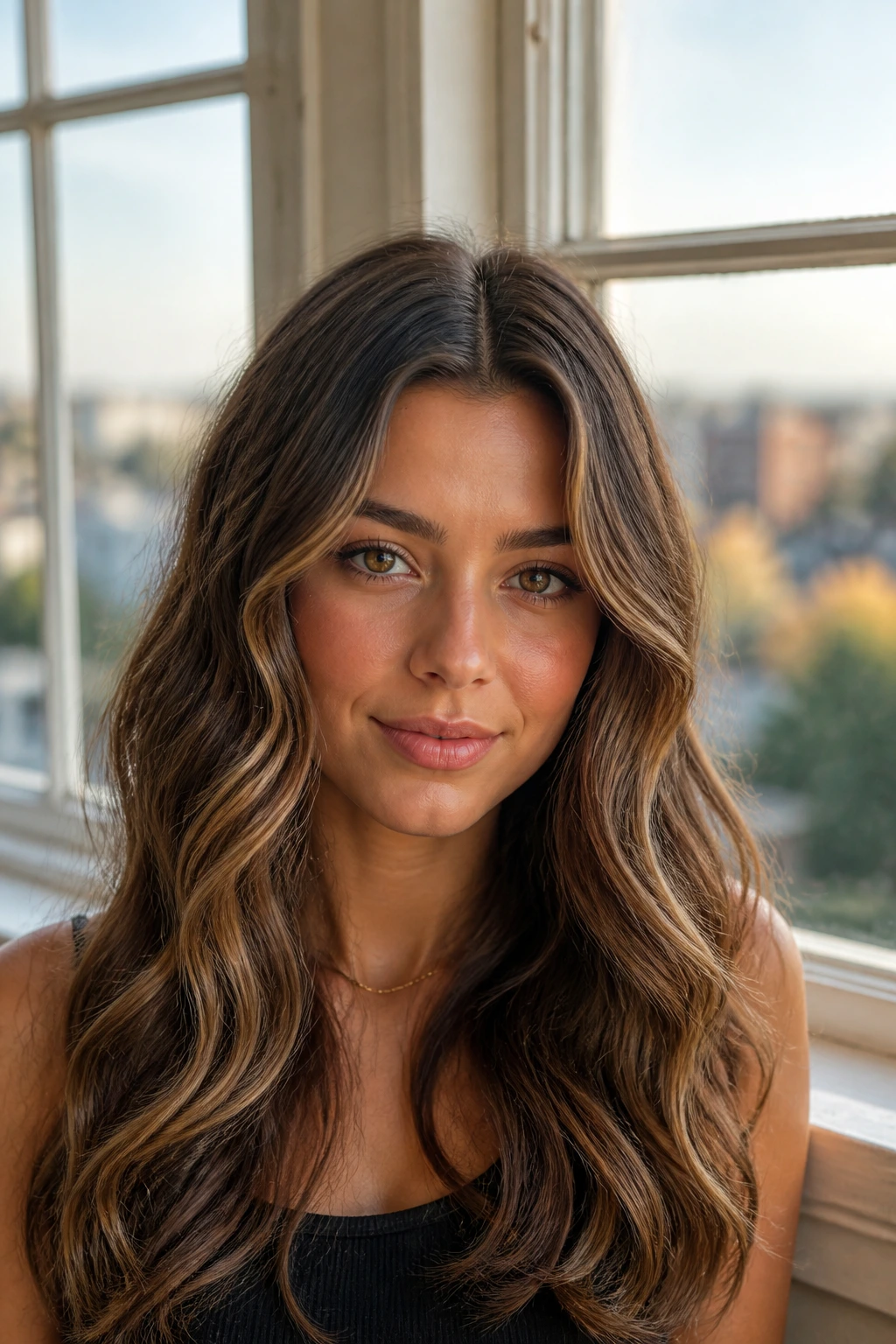
A center part on long wavy hair sounds basic, and that’s the point. It’s easy to keep, easy to refresh, and easy to pair with almost anything. When the length is healthy, the shape feels calm rather than plain.
I like this look when the waves are loose enough to fall in long lines. You can twist the front pieces after a shower, let the rest dry, and move on with your day. It’s one of the few styles that still looks deliberate when you barely touch it.
17. Flipped-Out Ends on a Lob
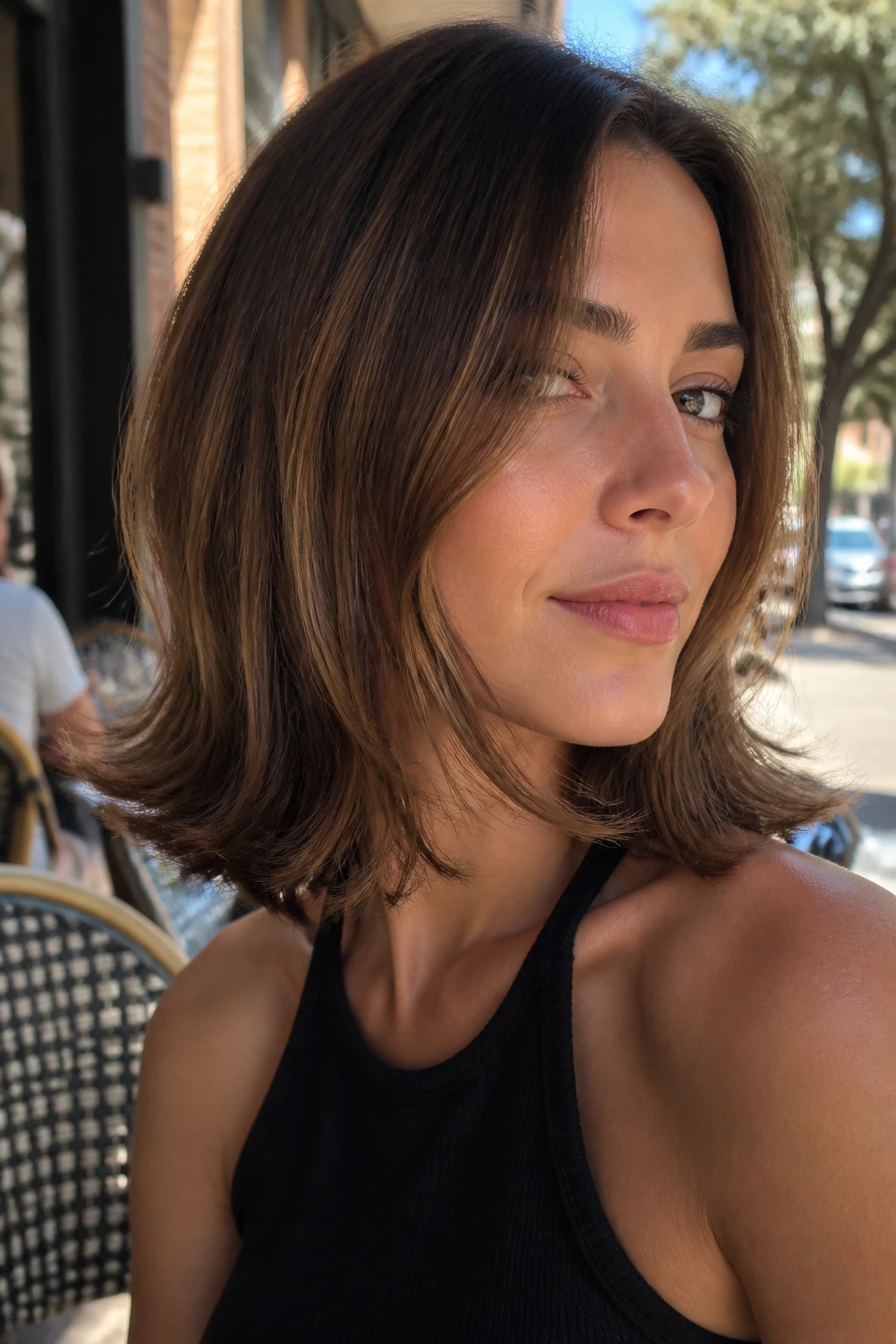
Flipped-out ends give a lob a bit of personality without turning it into a high-maintenance blowout. A slight bend at the bottom makes the cut look finished, even if the rest of the hair air-dries naturally. It’s a useful trick for hair that tends to settle flat.
Use a round brush only on the last inch or two if you want to encourage the flip. You do not need to curl every section. A single directional bend at the ends is enough. Small effort. Big payoff.
18. The Low Messy Bun with Tendrils

A low messy bun works because it respects the texture instead of flattening it. Keep the bun loose at the nape, leave a few wavey tendrils near the ears, and don’t chase symmetry. The charm is in the looseness.
This is a good move for days when your waves are half-behaved and half-mad about life. Pin the bun with two or three bobby pins, then let the texture around your face do the softening. If the bun looks a little imperfect, that’s the correct version.
19. Braided Overnight Waves
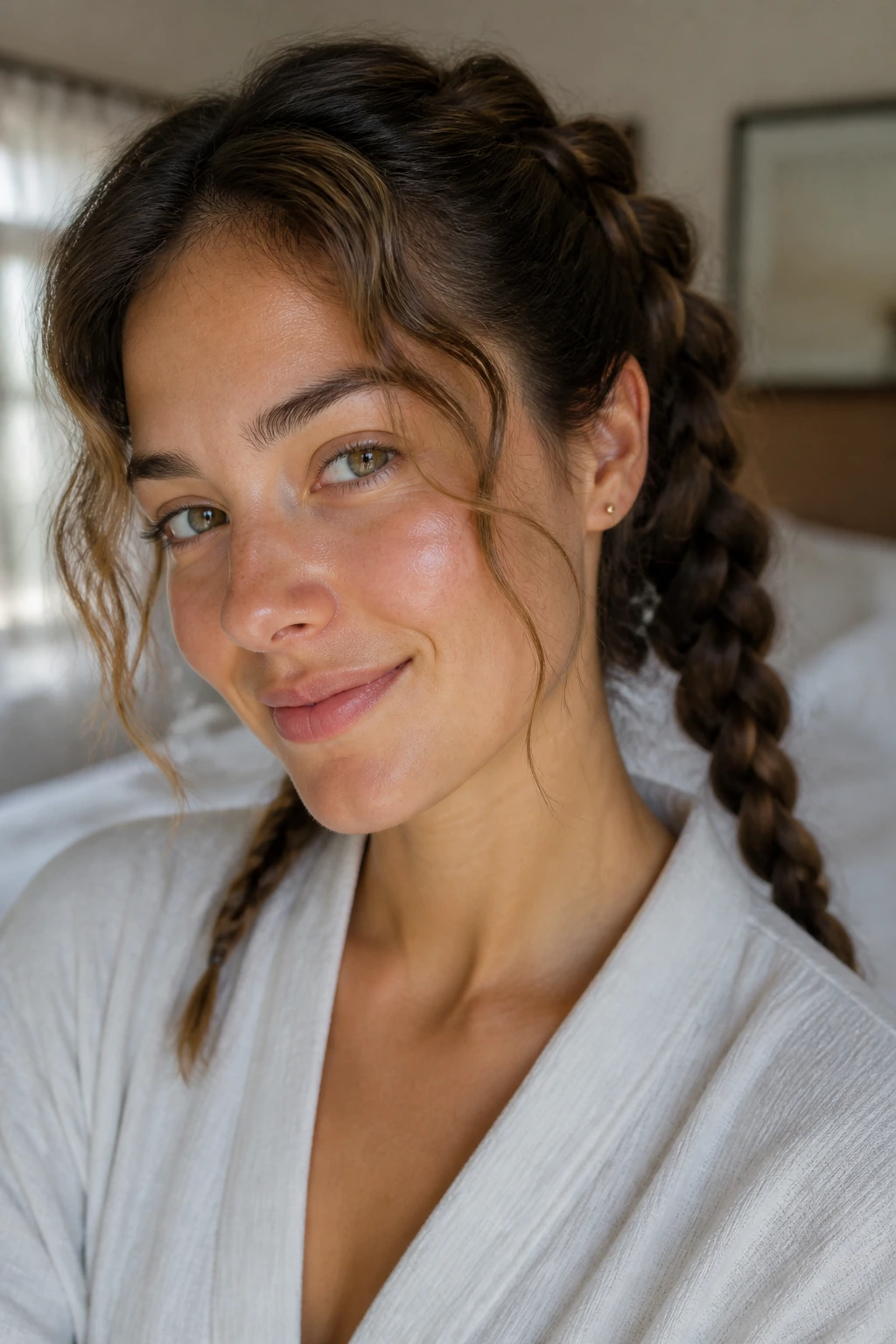
Braids are the oldest low-maintenance wave trick in the book for a reason. Two loose braids before bed can give you a soft, stretched wave pattern by morning without heat. The best part is that you can adjust the tightness depending on how much texture you want.
How to Make It Work
Start with hair that is about 80 percent dry. Braid too wet and you get a damp, lumpy finish that takes forever to dry. Braid too dry and the effect barely holds. A touch of leave-in on the ends helps the braid slide and keeps them from feeling crispy in the morning.
- Loose braids: Softer waves.
- Tighter braids: More texture and bend.
- Two braids: Usually easier to sleep on than one heavy braid down the back.
20. The Tapered Midi Cut
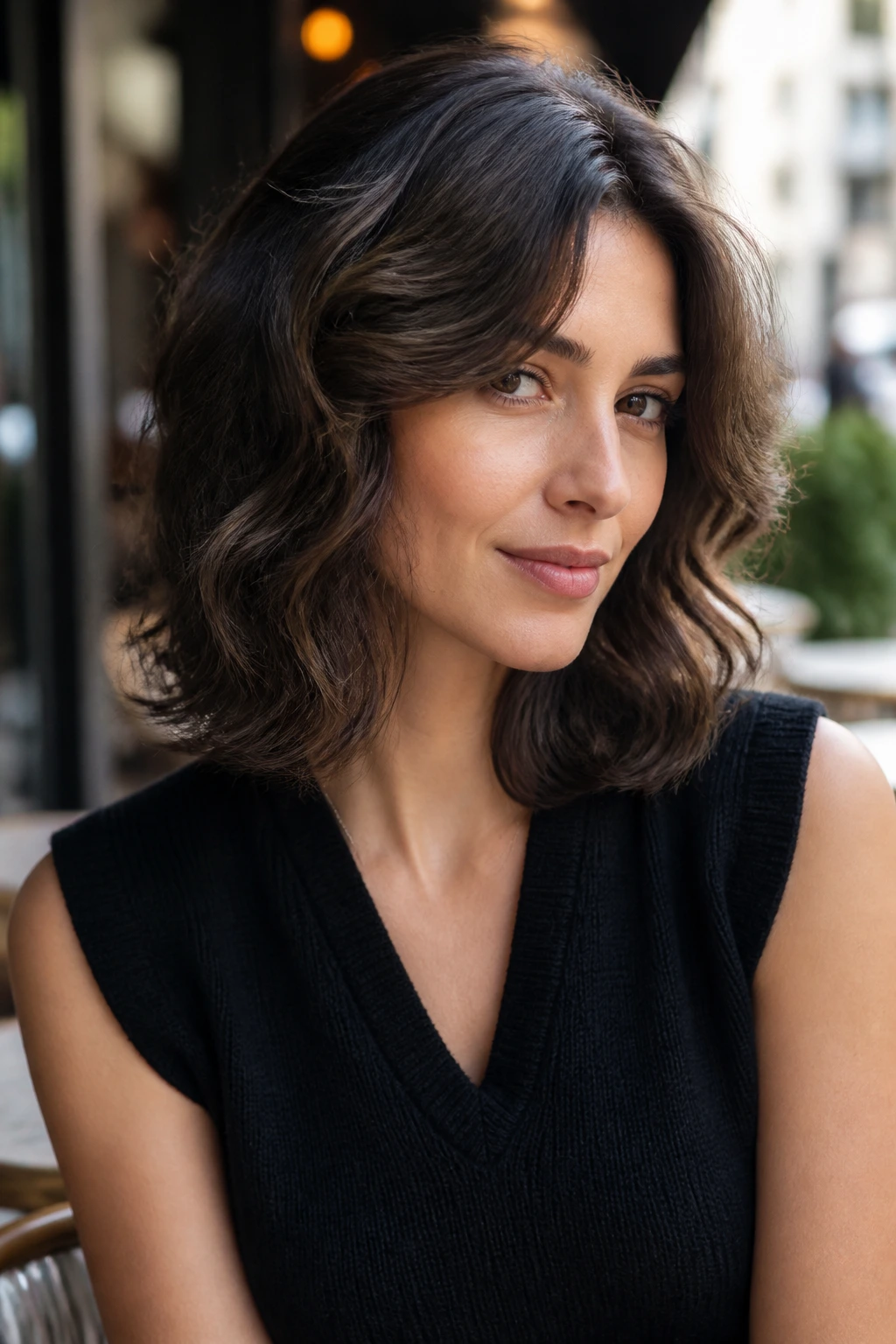
A tapered midi cut keeps the bulk in the right places. Shorter pieces around the inner layers make the shape lighter, while the outside perimeter keeps enough length to look polished. For wavy hair, that means fewer puffed-out corners and more smooth movement.
It’s especially useful if your hair gets triangular when it air-dries. The taper reins that in. You still get body, but you don’t get the helmet effect. That alone makes it worth considering.
21. The Wavy Shag with Micro Layers
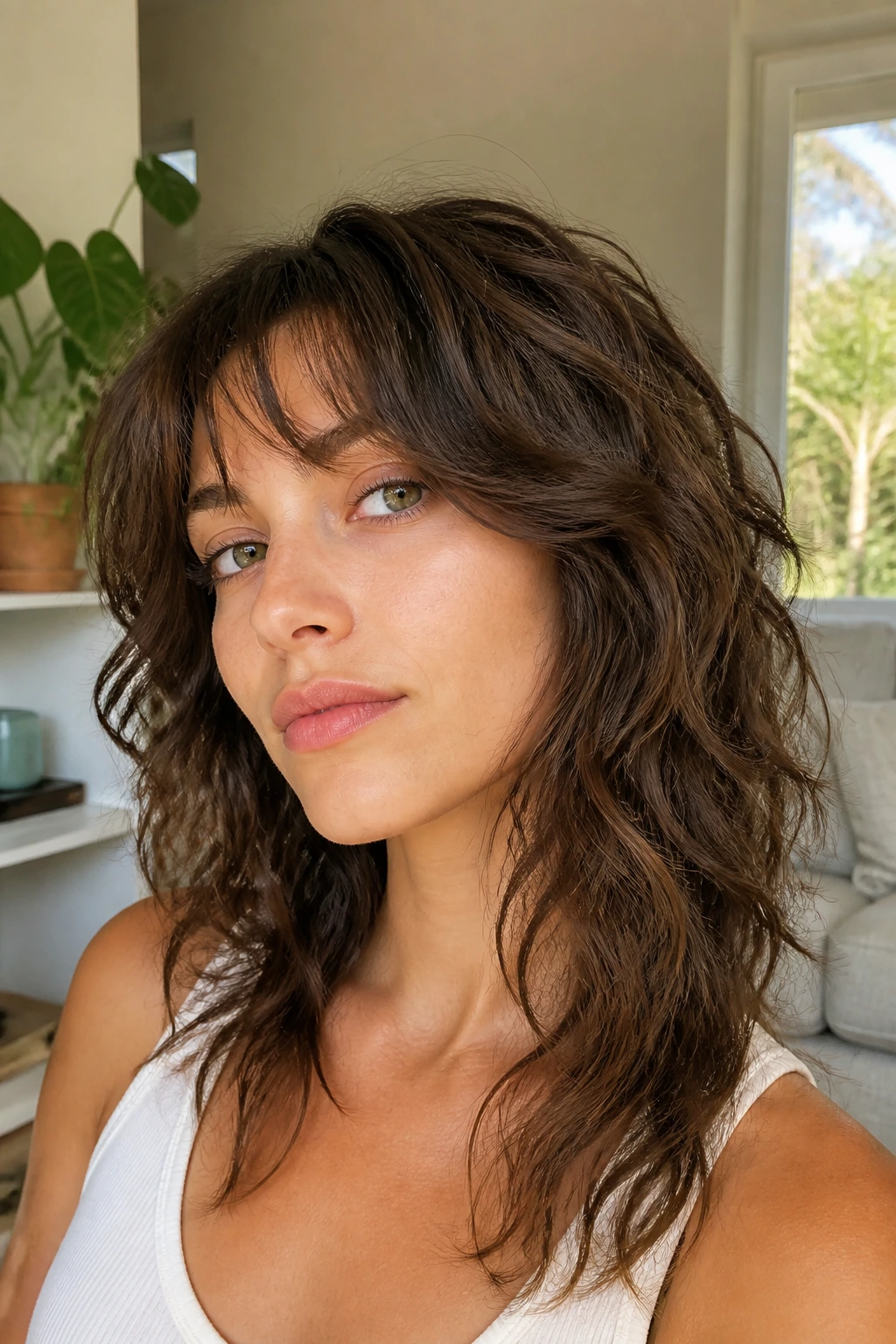
A shag with micro layers is for someone who wants texture to be obvious. The cut works because the wave is already doing the visual work, so the tiny layers just help it move. But here’s the catch: too many short pieces can tip into frizz territory fast.
The best version keeps the top light and the perimeter long enough to stay grounded. Let it air-dry with a mousse or a salt-free wave spray. Then stop touching it. Seriously. The more you fiddle with micro-layered hair, the worse it behaves.
22. The Claw-Clip French Twist
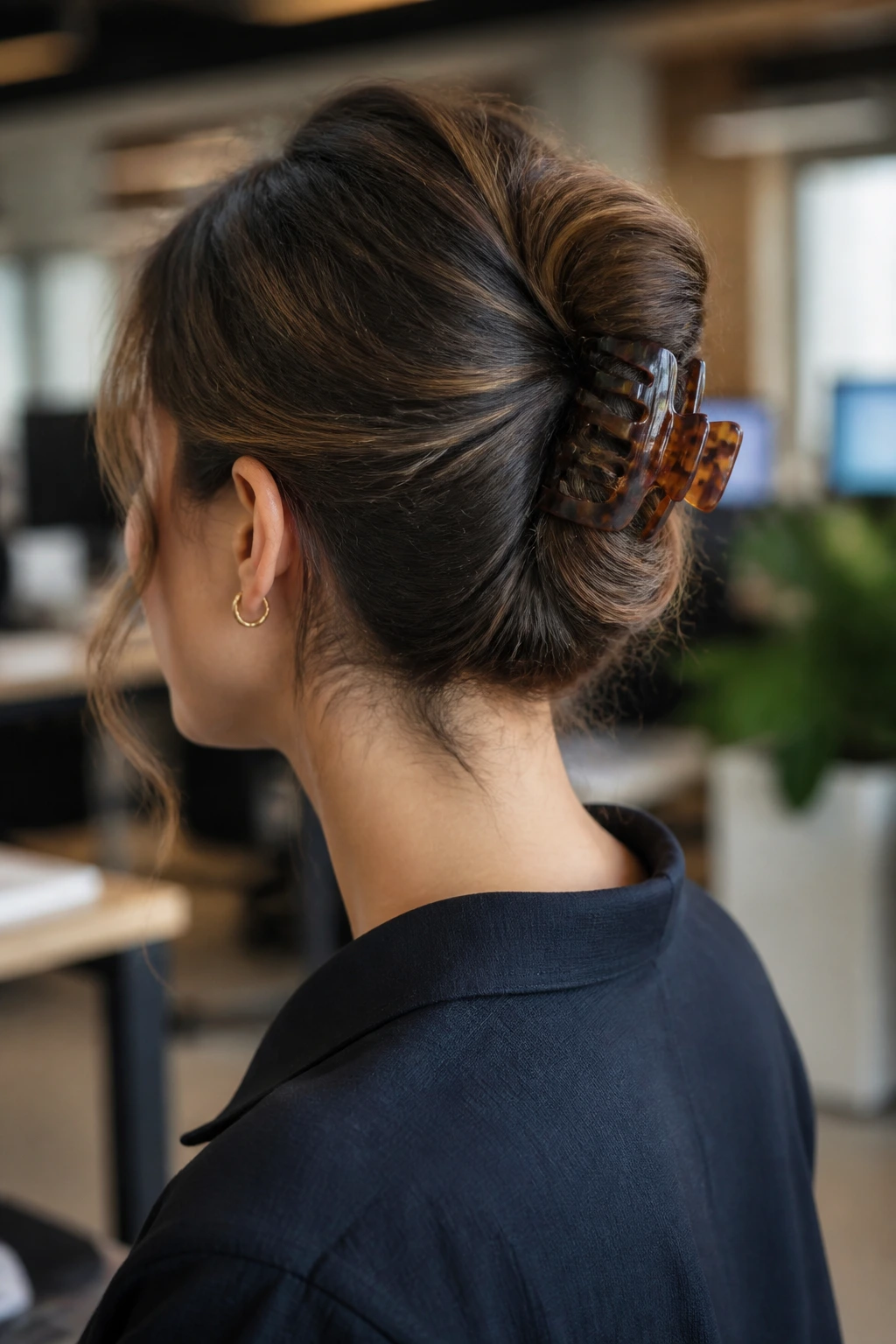
A claw-clip French twist is the kind of lazy-girl styling that still looks tidy enough for a meeting. Twist the hair upward, tuck the ends in, and clip near the middle of the twist so the weight sits securely. If the clip is too small, the whole thing slips.
I prefer this on hair that’s already textured from the previous day. It holds better when there’s a little grit in the strands. It also keeps the neck clear, which is one of those small comforts that suddenly feels essential.
23. Beachy Waves with Diffused Roots
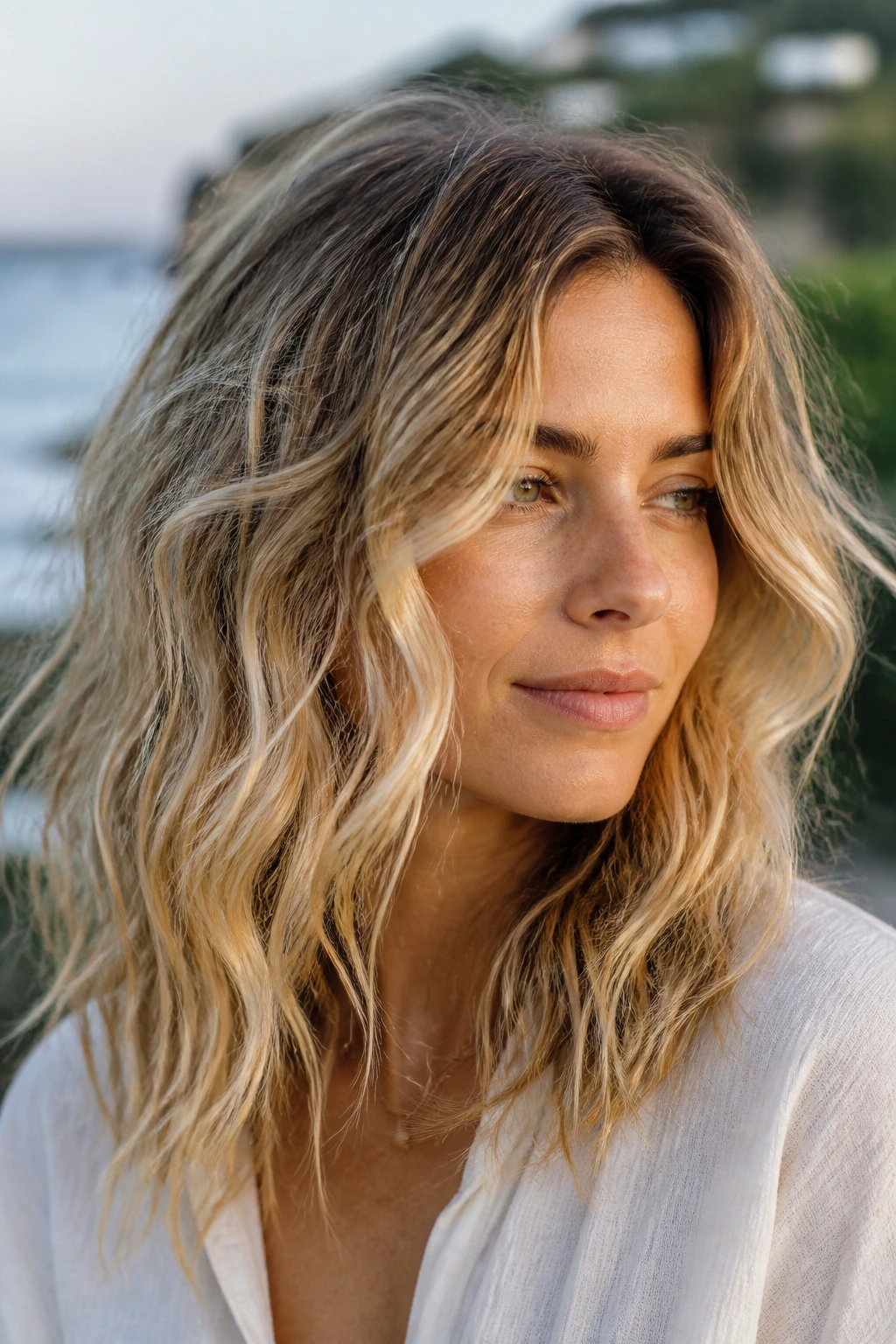
Beachy waves sound fancier than they are. The style mostly comes down to drying the roots with a diffuser and leaving the ends a little soft and irregular. That contrast creates movement without a stiff finish.
The important part is not blasting the hair until it’s frizzy. Use low heat, keep the diffuser still for a few seconds at a time, and stop before the hair is bone-dry. A little dampness at the very ends can settle into a better shape as it finishes on its own.
24. The Curls-Waves Hybrid Cut

Some heads sit between wave and curl, and a hybrid cut handles that better than a one-note style. The layers need enough room to let tighter sections spring, but not so much that the looser parts lose their body. It’s a balancing act.
This shape usually does best with a tiny bit of product scrunched through the mid-lengths and a quick shake once dry. No heavy creams. No hard cast unless you really need it. The goal is to let the hair be what it already is.
25. The Wavy Mullet Lite

A mellow mullet can be surprisingly wearable when the contrast between top and bottom stays soft. The crown gets a bit more lift, the back keeps some length, and the sides don’t get too sharp. It’s less costume, more shape.
This is the cut for people who want movement and don’t mind a little attitude. The maintenance stays low because the haircut itself carries the style. You can air-dry it and walk out the door looking like you made a choice, which is half the battle.
26. The Halo Braid
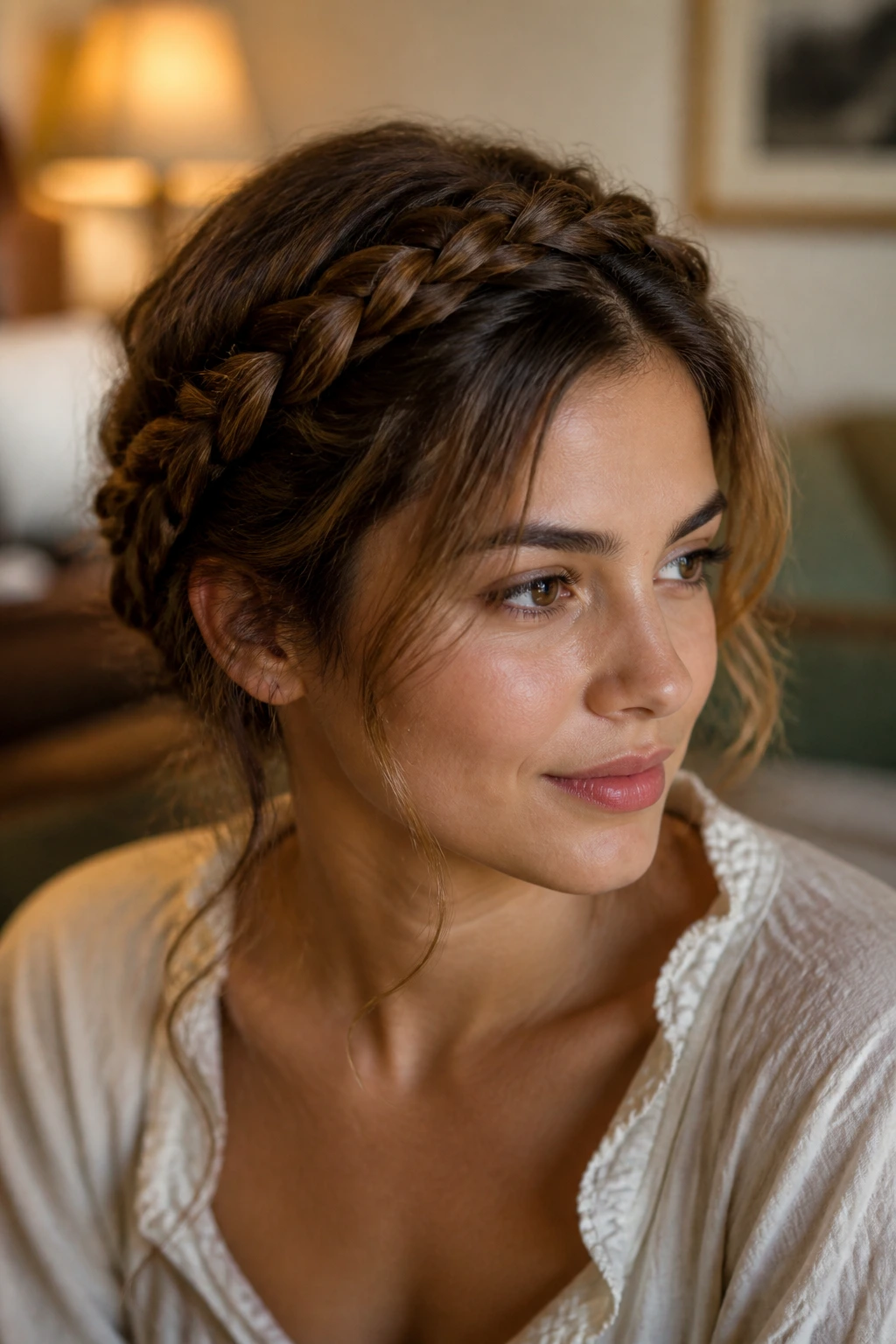
A halo braid takes a minute to learn, then pays you back every time your hair is too second-day to wear down. It keeps waves tucked away in a way that still looks soft, especially if you leave a few shorter pieces loose around the hairline.
If your hair is layered, this style gets easier when you mist the lengths first and smooth the surface with a small amount of leave-in. Don’t braid tightly against the scalp. A little looseness keeps it from feeling severe.
27. The Slicked-Back Wet Look
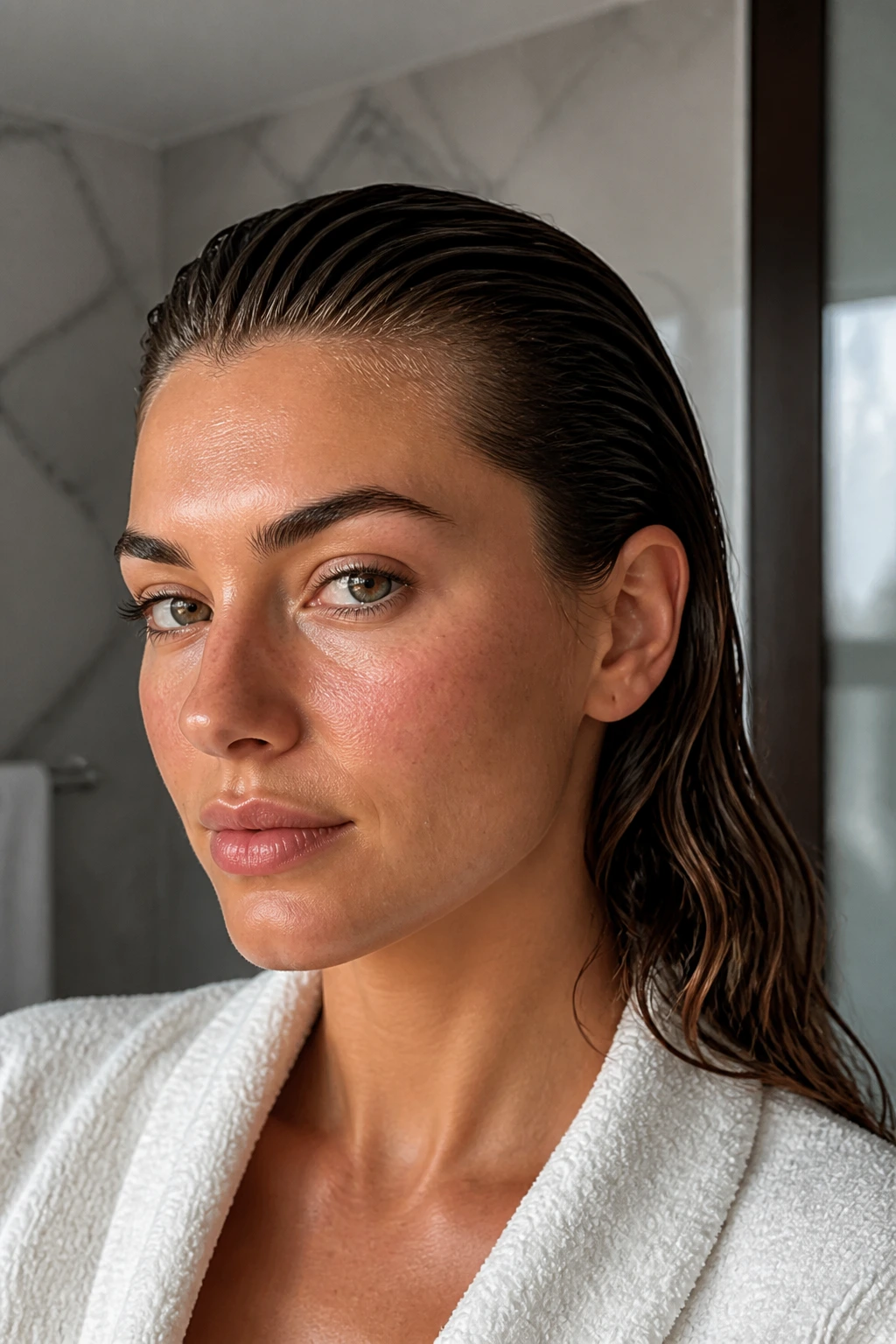
The slicked-back wet look isn’t for every day, but it is a brilliant low-effort option when you want the hair out of your face and you don’t want to fight texture. Gel, comb, and go. That’s the whole pitch.
What makes it work on wavy hair is that you’re not trying to erase the wave forever. You’re just flattening the front and letting the length do whatever it wants behind your shoulders. It’s sharp, quick, and useful on humid days when the usual routine gives up.
28. The Wavy Ponytail with a Wrapped Base
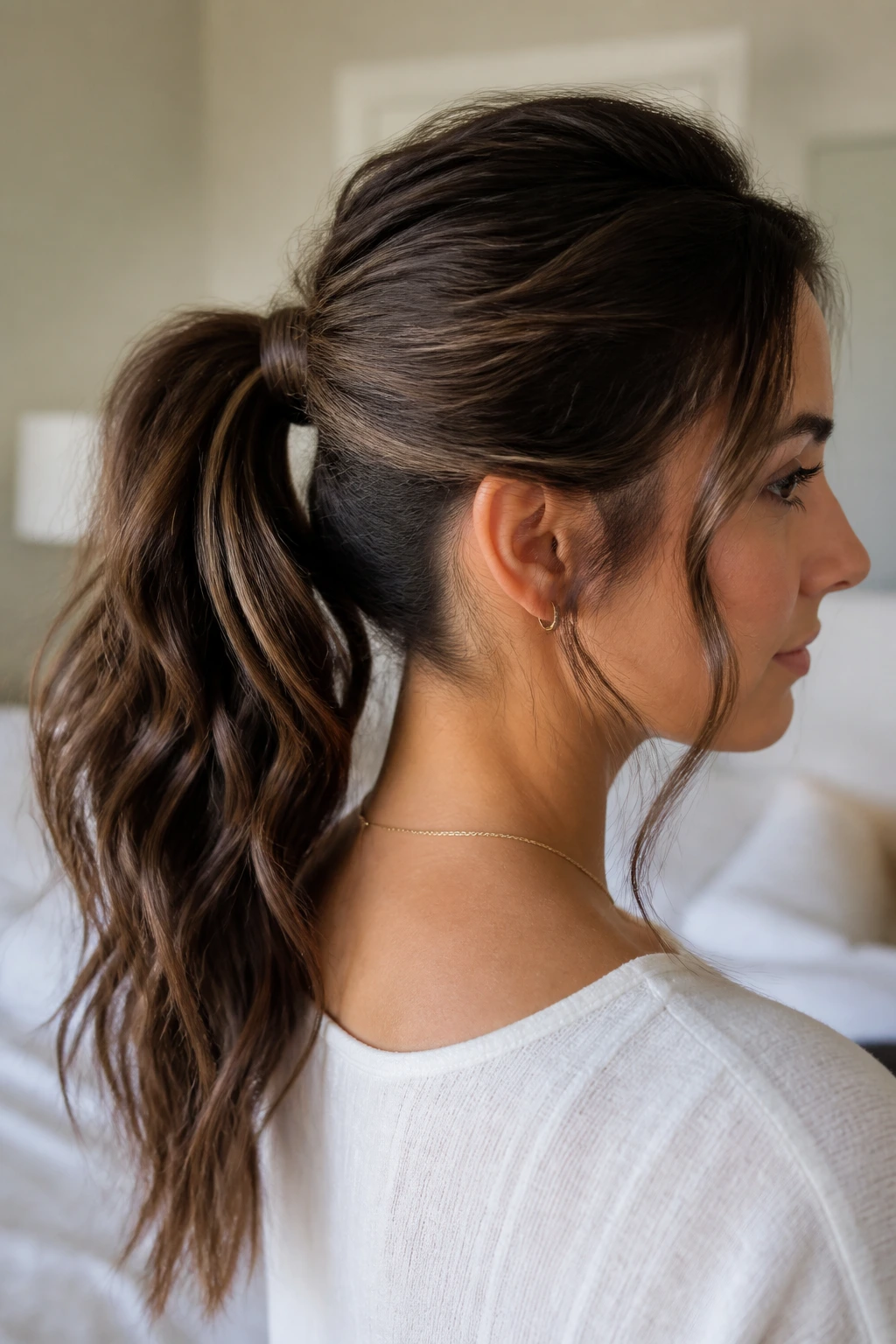
A ponytail can be boring, or it can look polished in a way that still feels easy. Leave the texture in the lengths, wrap a small strand around the elastic, and let a little crown lift stay in place. That wrapped base makes a cheap elastic look more finished.
The ponytail works especially well if your waves are stronger through the mid-lengths and less predictable near the roots. Pull the top tight only where it needs control. The rest should stay soft. That contrast is the point.
29. The Rounded Long Cut with Soft Corners
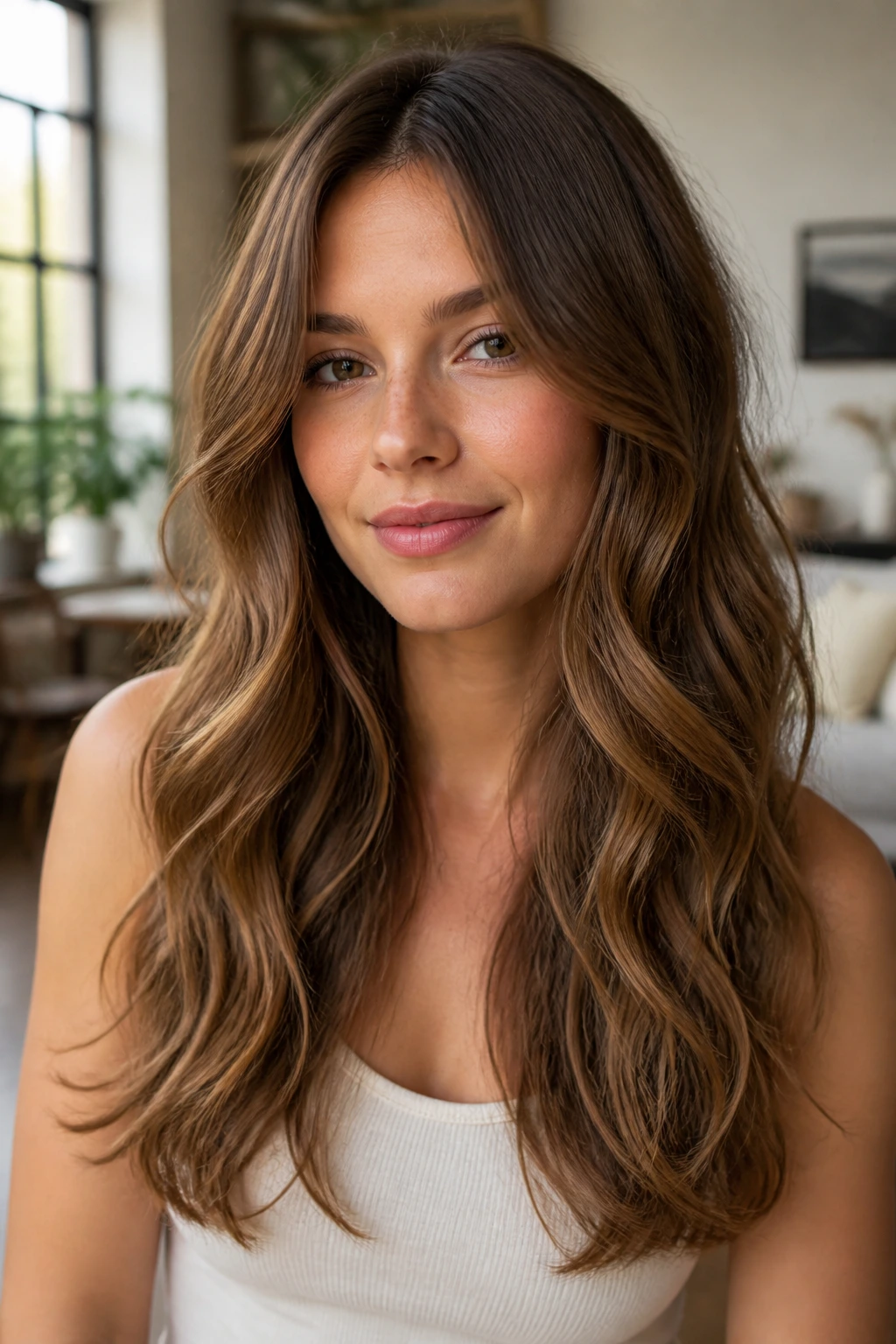
A rounded long cut keeps the perimeter from hanging like a sheet. The soft corners help the hair move when you turn your head, which is one of those details you only notice after a few days of living with a haircut. It makes long wavy hair feel lighter without sacrificing length.
I’d pick this over a blunt straight cut if the hair is thick or if the ends tend to feel heavy. It gives a little curve where you need it. Not dramatic. Just enough.
30. The Shoulder-Length Flip-and-Go

The flip-and-go is basically a shoulder-length cut that behaves after a rough dry. The ends kick out a little, the wave pattern lives in the middle, and the roots don’t need perfect smoothing. If you’ve got 10 minutes and a towel, you can make this work.
A small amount of mousse at the roots and a touch of cream through the mid-lengths are enough. Shake the hair out once it’s 90 percent dry. Don’t brush it to death. That’s where the nice shape disappears.
31. Loose Dutch Braids
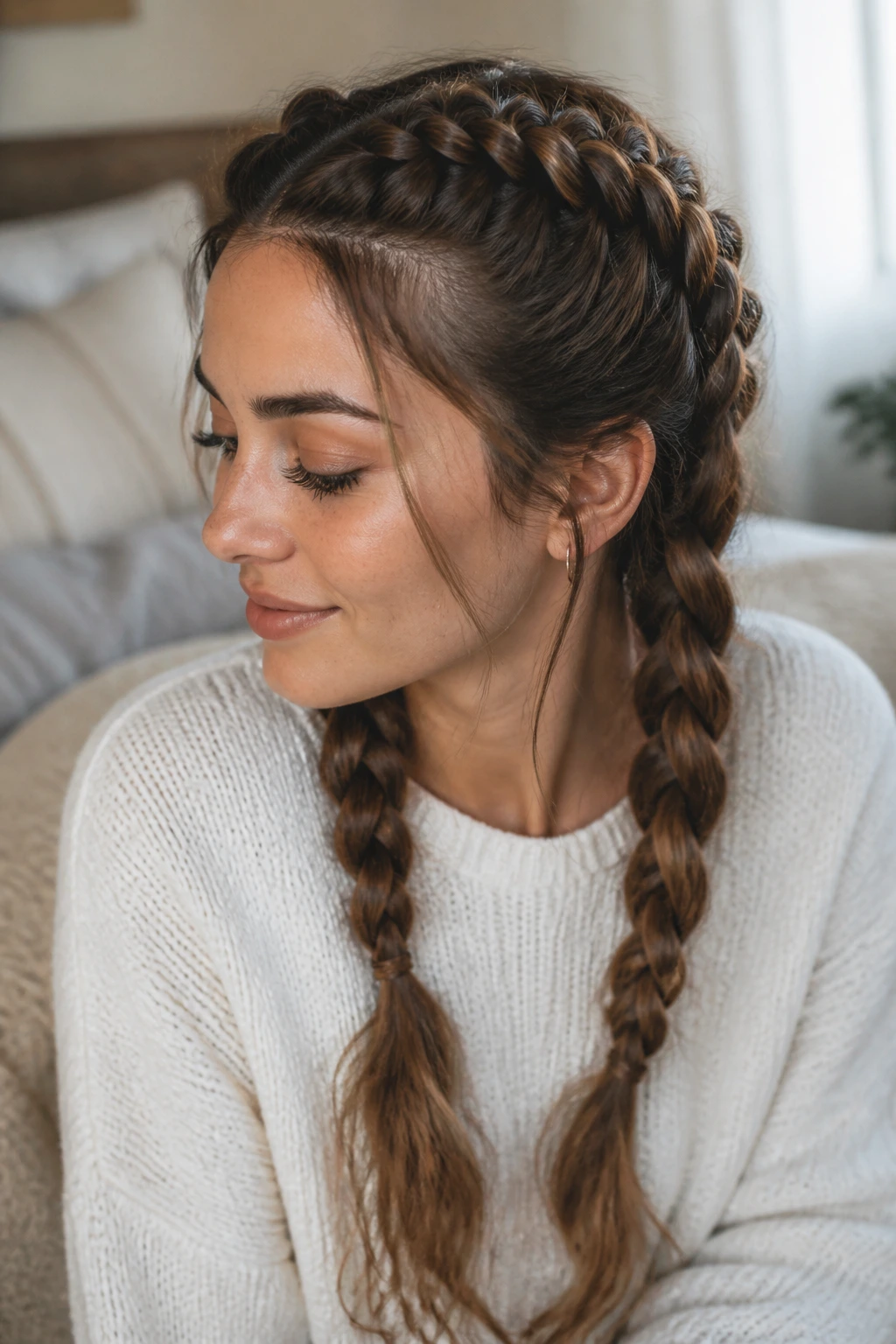
Loose Dutch braids are one of the easiest ways to protect wavy hair overnight without flattening it into a weird crease. They hold texture, keep tangles down, and leave you with a softer wave the next day. The key word is loose.
Tight braids pull too hard at the scalp and create a line that takes forever to settle. Keep the first inch near the hairline relaxed, then braid gently through the rest. If a few ends stick out, let them. It looks better that way.
32. The Rounded Bob with Side Bangs
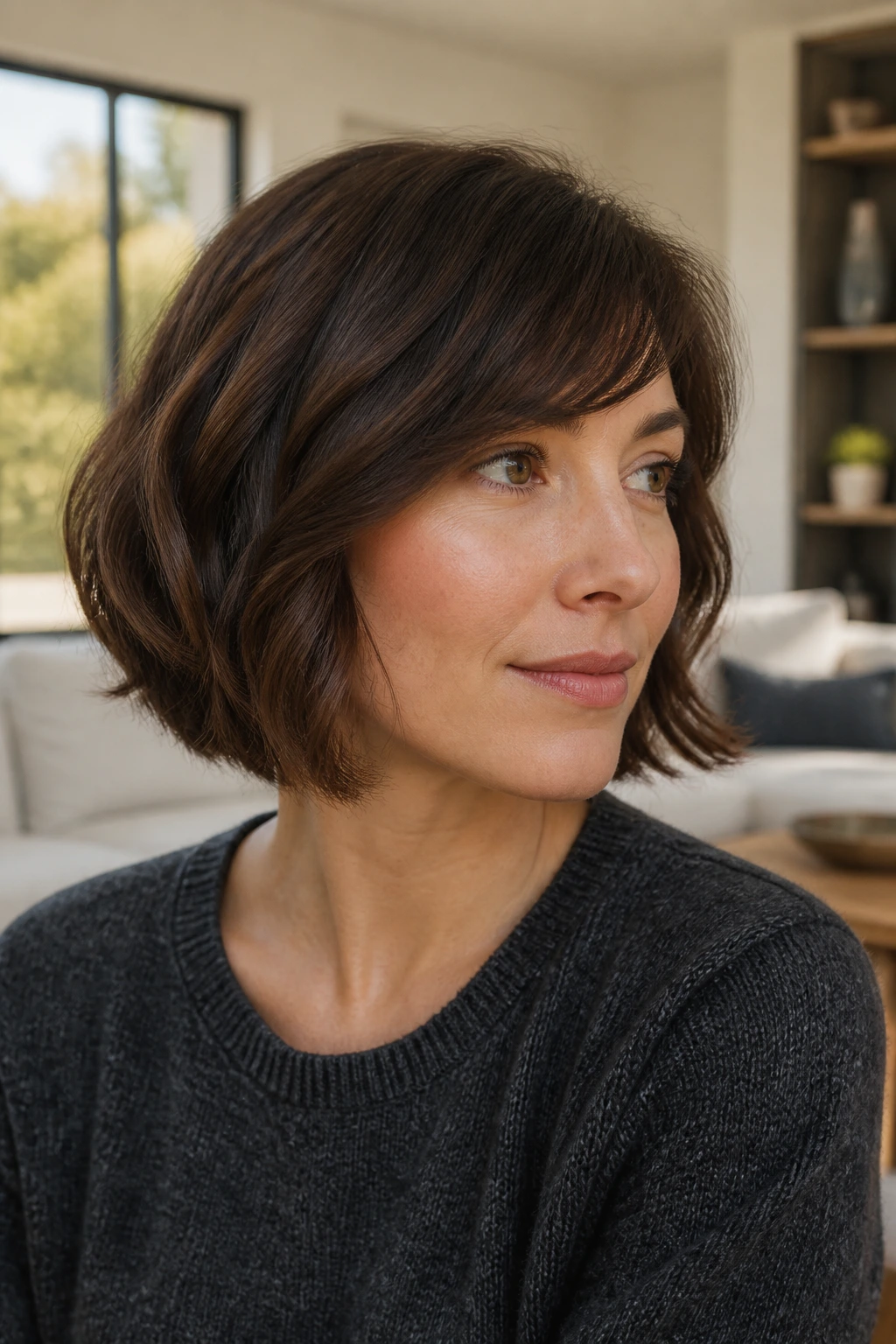
A rounded bob with side bangs gives wavy hair shape without asking for much daily styling. The curve at the bottom keeps the bob from sitting boxy, and the side bangs soften the front without needing a full fringe routine. That combination is practical and flattering.
Tiny Details That Matter
- Ask for the nape to stay a touch shorter than the front.
- Keep the bangs long enough to tuck back on bad hair days.
- A small diffuser pass at the roots helps the bob keep its curve.
If you want a short style that still feels easy to grow out, this one makes sense.
33. The Air-Dried Grown-Out Fringe

A grown-out fringe is one of the least annoying ways to wear bangs with waves. It has enough length to blend into the face frame, but it still gives you that little bit of movement across the forehead. The trick is letting it dry without over-brushing it flat.
I like this style because it forgives lazy mornings. Push the fringe from side to side while it dries, clip it back for 10 minutes if it’s sticking weirdly, and move on. It looks softer than a crisp fringe and needs less obedience.
34. The Mid-Length Razor Cut

A razor cut can be fantastic on wavy hair when it’s done with restraint. The edges get a soft, feathered finish that helps the waves separate rather than clump. Done badly, it can fray. Done well, it takes weight out in a way that feels light.
This is best for hair that is dense enough to handle the texture removal. If your ends already feel thin, I’d be careful. But on thicker wavy hair, a razor cut can reduce the need for daily reshaping because the haircut already has movement built in.
35. The Low-Tension Twist-Out
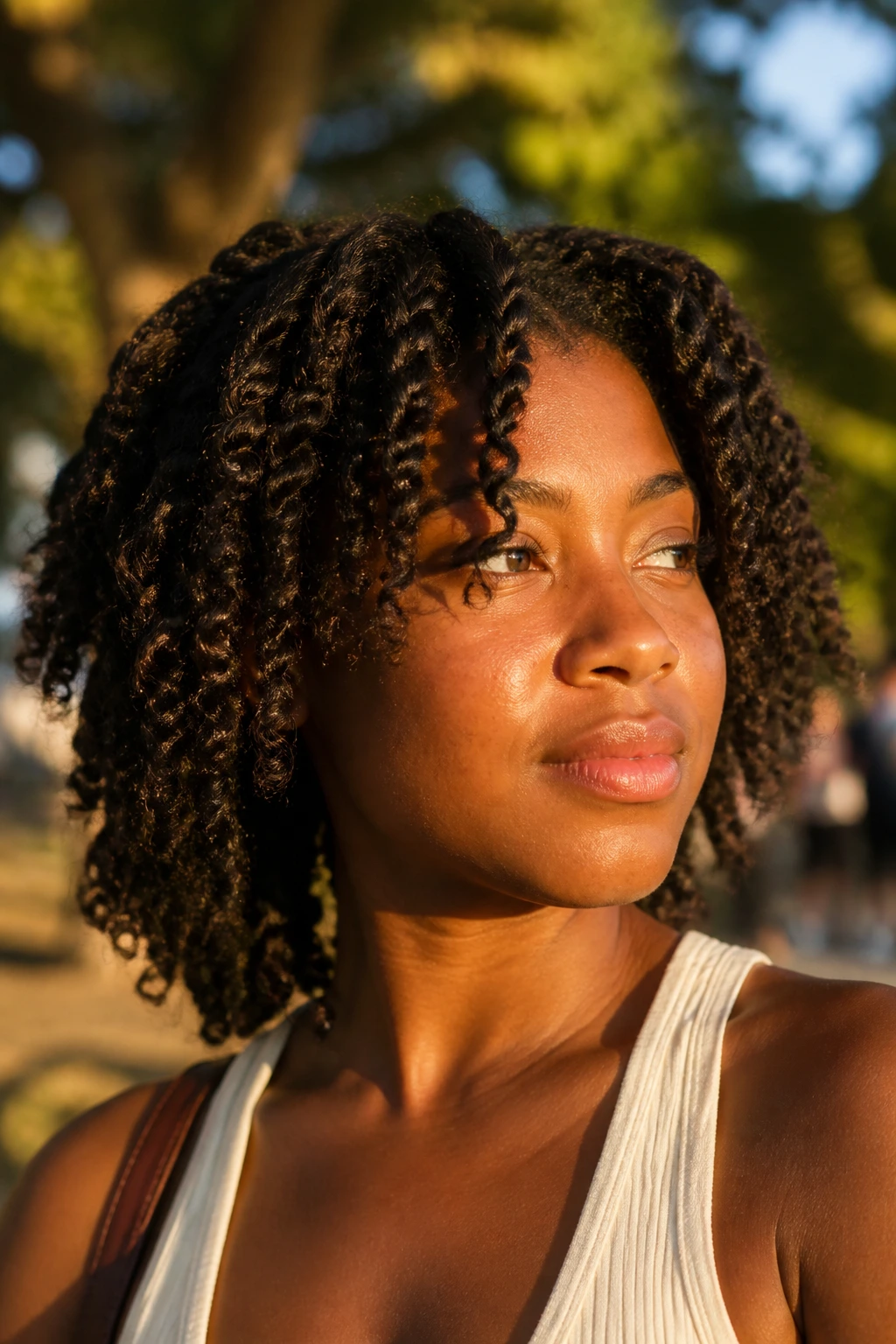
A low-tension twist-out is basically a styling routine that creates waves without heat and without heavy pulling. Twist damp sections, keep the tension gentle, and let the hair set fully before unraveling. The looser you twist, the softer the wave.
This is one of those styles that rewards patience but not perfection. If one twist dries a little tighter than the rest, finger-comb it lightly and keep going. I’d pick it when I want a more defined shape than air-drying alone, but I still don’t want to drag out hot tools.
36. The Jaw-Length Curved Bob

A jaw-length curved bob is tiny, sharp, and much easier to wear than people expect. The curve keeps it from looking too severe, and the short length means your waves have less hair to wrestle with. That matters if your hair gets big fast.
It’s a bold cut, but the maintenance can stay mild if the perimeter is kept neat. A little cream, a little air-drying, and maybe a couple of clips at the crown while it sets. Short hair does not automatically mean high effort. This is proof.
37. Half-Up Pinned Back Waves
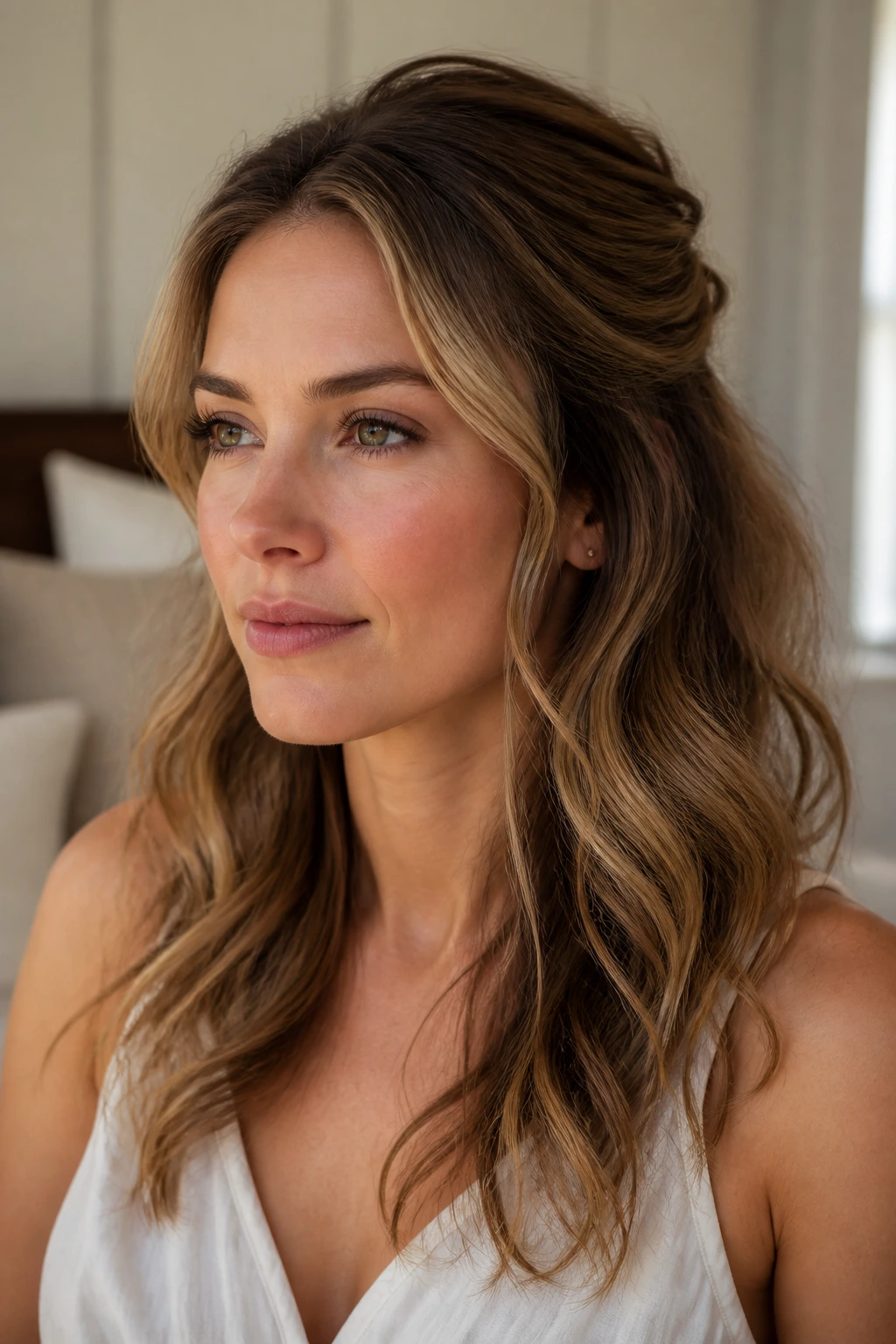
Half-up pinned back waves are the answer when you want the texture visible but the front sections off your face. Pin the temples back loosely and leave the bottom half alone. That keeps the shape soft instead of stiff.
This style works for almost every wave length past the chin. It’s especially useful on days when the top layer has too much volume and the lengths are behaving. A few bobby pins and a finger’s worth of curl cream can change the whole mood.
38. The Grown-Out Layered Lob

A grown-out layered lob is probably the most forgiving haircut in the whole bunch. It has enough length to tie back, enough layers to keep movement, and enough shape to still look deliberate after a long stretch between trims. It’s the haircut I’d choose if I wanted one style to do most things.
The beauty of this one is that it improves with a little wear. Day one looks tidy. Day two usually looks even better. By day three, you might want a dry shampoo lift at the roots, but the cut still holds its line. That’s the kind of low maintenance people actually mean.
Why Wavy Hair Looks Better When the Cut Respects the Bend
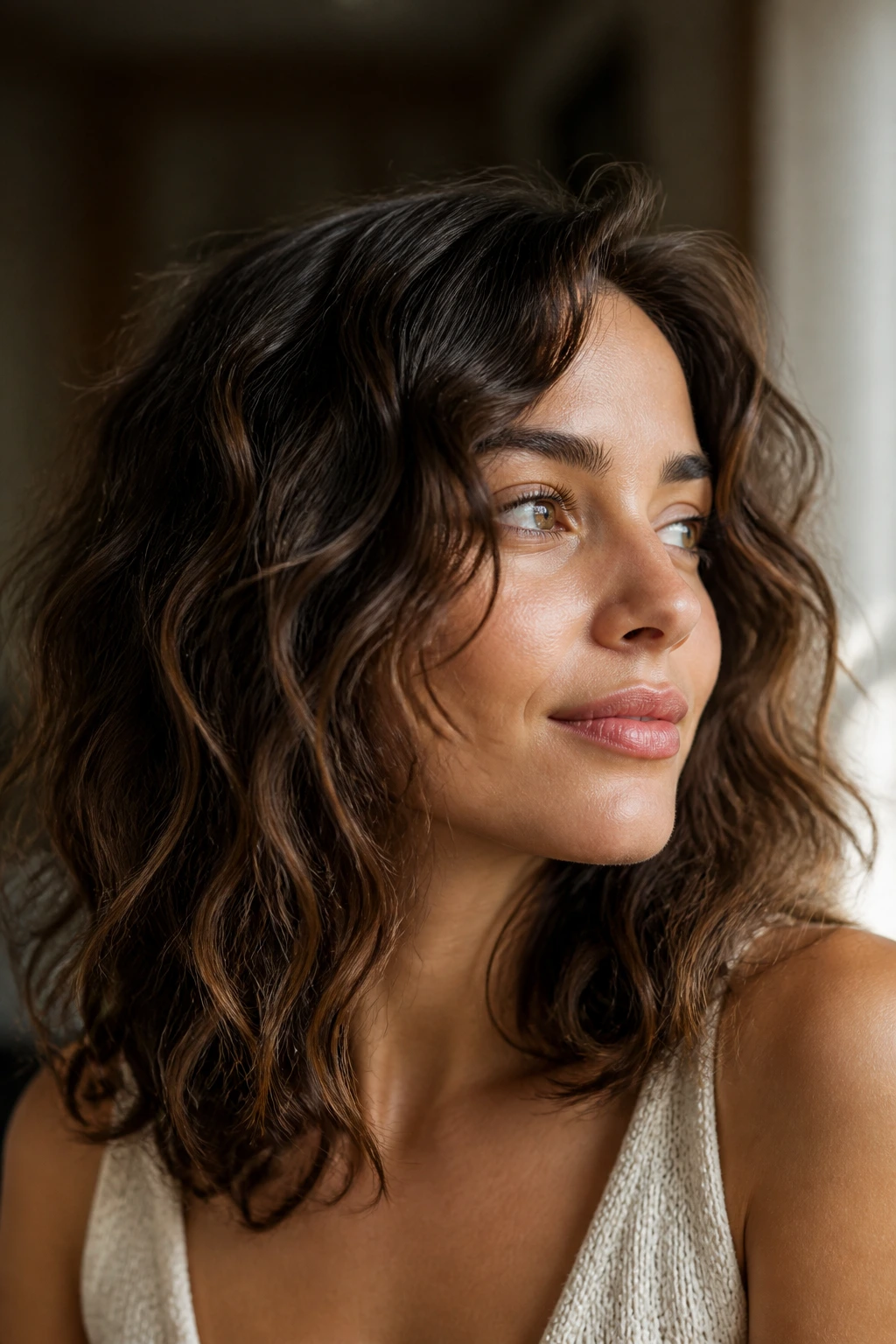
A low-maintenance wavy haircut is less about chasing a trendy silhouette and more about cutting the hair in a way that lets the wave fall where it wants. If the haircut is too long and heavy, the waves stretch out and lose shape. If it is chopped too short in the wrong places, the hair puffs at the sides and frays at the ends. There’s a narrow middle ground, and that’s where the easy looks live.
The best cuts for wavy hair usually do one of three things: they remove weight in the right spots, they keep a perimeter that supports the wave, or they shorten the style enough that the bend becomes obvious without heat. That’s why lobs, shags, bobs, and soft layered cuts show up so often. They give the hair a path.
Humidity matters too. Hair that looks tidy in a dry room can turn puffy the second you step outside, especially if the layers are too short or the ends are over-thinned. A good shape keeps some structure when the air changes. That’s the difference between “I styled my hair” and “my hair styled itself and I approved.”
How to Ask for a Wavy Cut That Grows Out Well

The salon conversation matters more than people think. If you tell someone you want “layers,” you might get a haircut that looks good on day one and starts behaving strangely after the first wash. Better to describe what you want the hair to do: sit at the shoulders, stay soft at the ends, move around the face, or avoid a triangle shape.
I’d ask for longer layers, weight removal in the interior, or a dry cut if the stylist works that way and the hair texture is very wave-forward. Those phrases usually lead to a better result than vague requests. If you want bangs, ask for them longer than you think you need. Wavy bangs almost always spring up more than straight hair bangs.
Good things to mention
- Whether your waves are loose, medium, or almost curly
- How often you wash
- Whether you air-dry or diffuse
- The spot where your hair tends to puff or collapse
- How long you want the cut to look good between trims
A stylist can only work with the information you give them. Be specific, and you’ll save yourself a lot of “Why does one side look like that?” later.
The Tools and Products That Make These Styles Easier
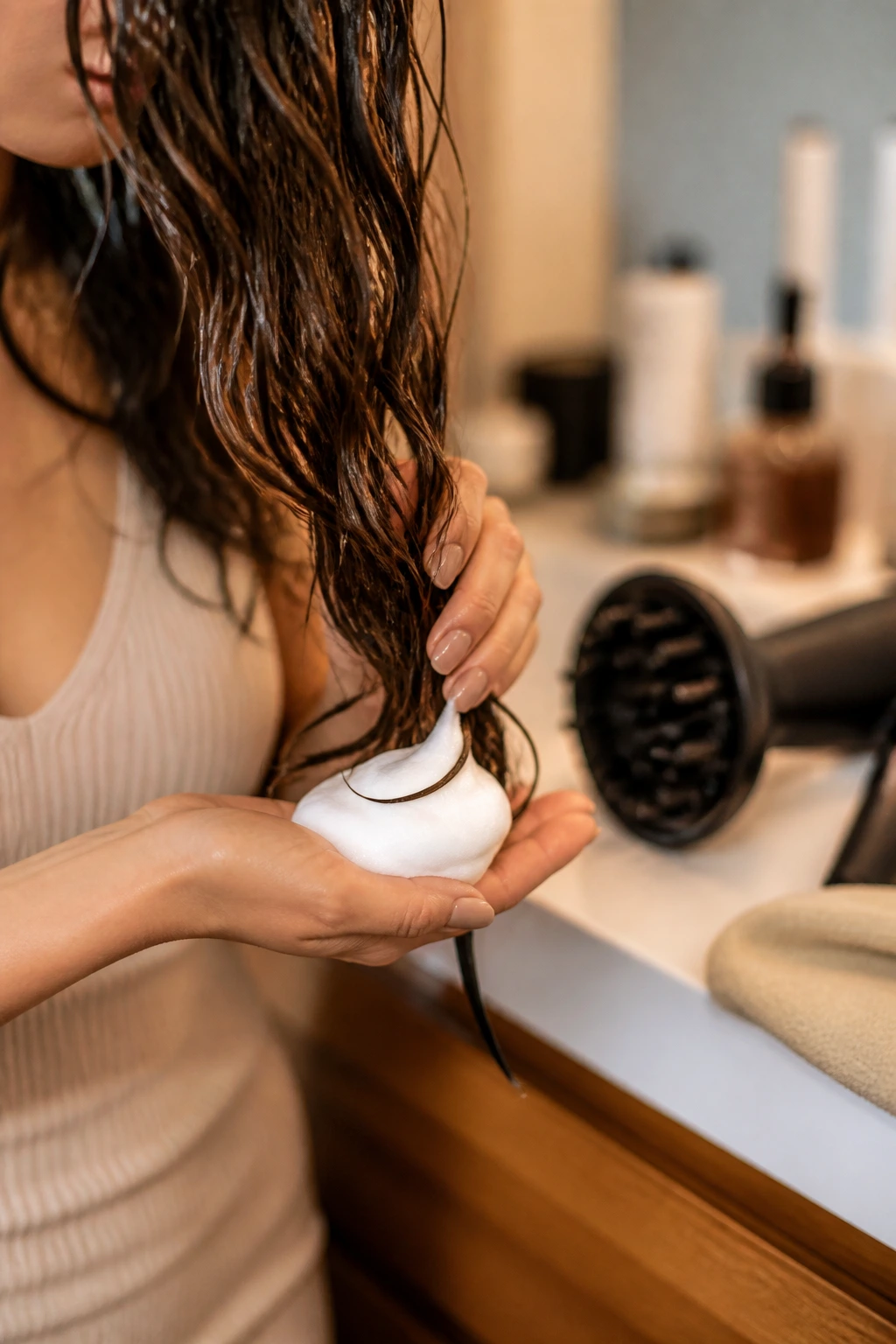
You do not need a bathroom shelf full of bottles. A few well-chosen tools do the heavy lifting for most low-maintenance wavy hairstyles, and the rest is mostly restraint. That’s the part a lot of people skip.
- Microfiber towel or cotton T-shirt: Cuts down on rough frizz when you squeeze out water.
- Wide-tooth comb: Good for detangling in the shower without destroying wave clumps.
- Mousse: Helps waves hold their shape without making them stiff.
- Light curl cream or leave-in conditioner: Adds slip and keeps ends from looking dry.
- Diffuser attachment: Useful if you need a little root lift without full blow-drying.
- Dry shampoo: A small amount at the crown buys you an extra day.
- Bobby pins and claw clips: Cheap, useful, and much kinder than tight elastics.
- Silk or satin pillowcase: Cuts down on roughing up the hair while you sleep.
A lot of people overbuy product and underuse the basics. If you already have a good cut, you may only need mousse and a light leave-in. Start there.
How to Wear These Looks Without Overthinking Them

Low-maintenance waves look best when the rest of the styling stays relaxed too. You don’t need a rigid outfit formula, but a few habits help the whole look feel finished.
Everyday wear: Keep the front pieces soft and let the hair sit naturally around the shoulders. A simple tee, sweater, or button-up works because the hair brings enough texture on its own.
For work or events: Tuck one side behind the ear, add a clip at the back, or smooth the crown with a tiny amount of cream. That gives the style enough polish without flattening the wave pattern.
With accessories: Small hoops, matte clips, tortoiseshell combs, and plain scrunchies usually sit better than heavy, shiny pieces. They don’t fight the texture.
Best pairings: These styles play nicely with collars, scarves, and glasses because the hair already has movement. If your hair is short, bigger earrings can be a nice balance. If it’s long, keep the accessories cleaner.
Quick Habits That Keep Wavy Hair Easy
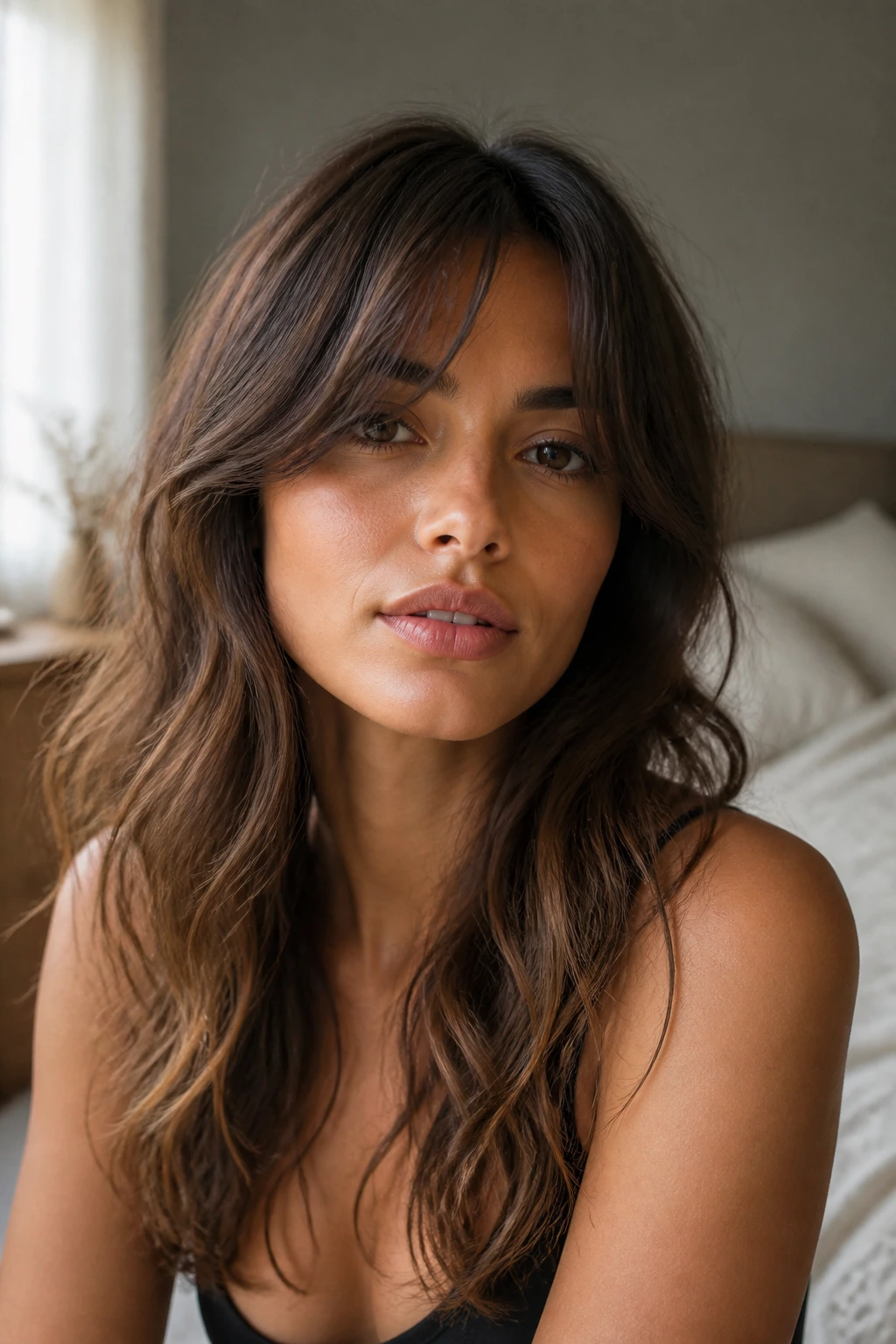
The easiest way to keep wavy hair low maintenance is to stop treating every wash day like a full styling event. Some days need more product. Some days need less. But the shape always holds up better when you don’t overwork it.
Texture Boost: Scrunch mousse into very damp hair, then twist two front sections away from the face and leave them alone until dry. That gives a better bend near the hairline without making the whole head crunchy.
Frizz Control: Use a microfiber towel only to remove dripping water. Rubbing hair with a regular bath towel opens the cuticle and makes the surface rough. That’s usually where the halo starts.
Make-It-Yours: Fine hair usually likes lighter mousse and shorter cuts. Thick hair tends to behave better with internal layers and a little more hold. If humidity is your enemy, skip heavy oils near the roots and keep your finishing product to the mid-lengths and ends.
Time-Saver: Refresh the front pieces and crown only. The back of the head rarely needs as much attention as you think.
Mistakes That Make Wavy Hair Harder Than It Needs to Be
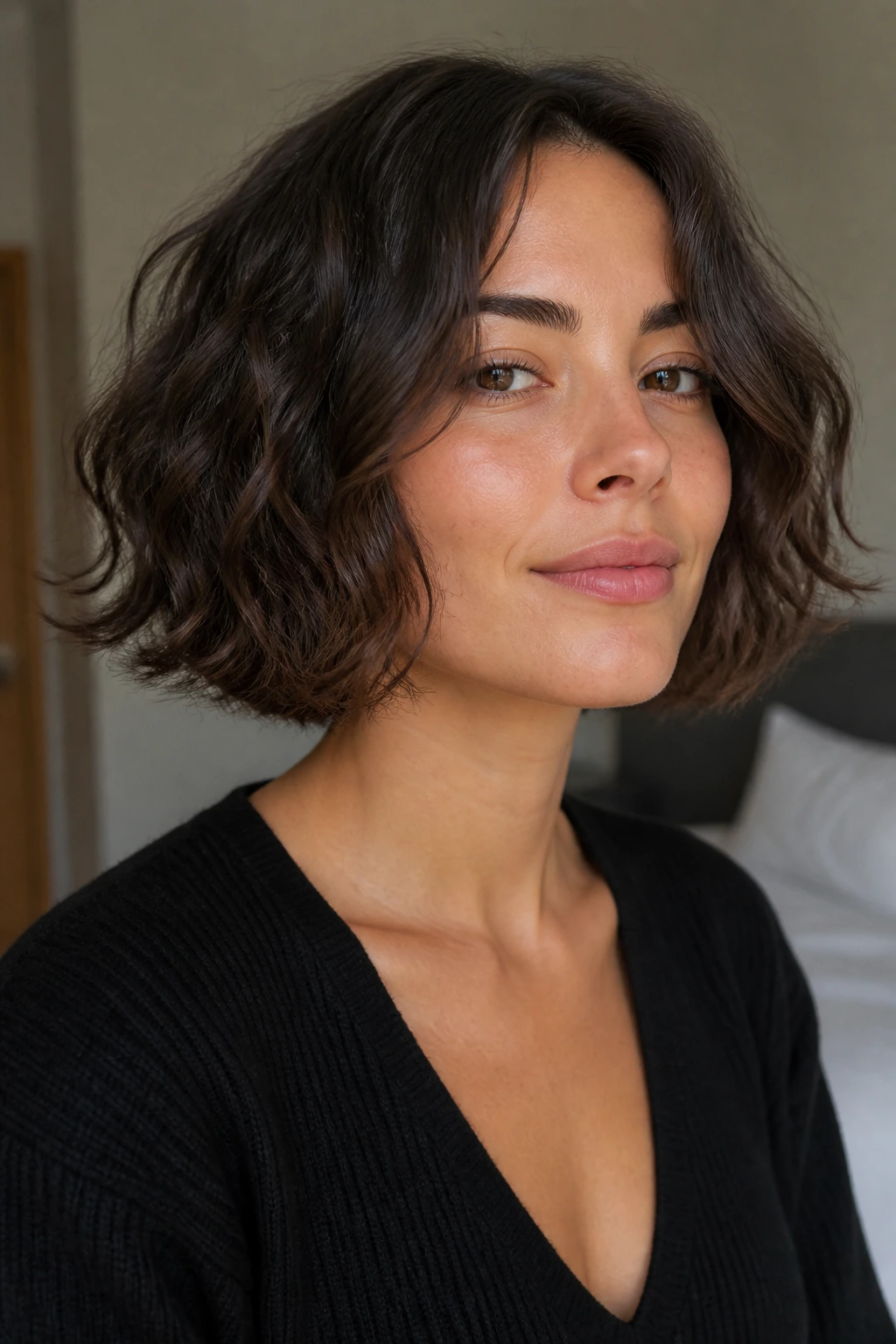
The most common mistake is over-layering. People want movement, so they ask for lots of layers, then wonder why the ends look wispy and the top goes wide. Waves need structure. Too many short pieces can make the silhouette messy rather than soft.
Another bad habit is brushing waves once they’re dry. That’s how you turn separate bends into a puffed-out cloud. Use your fingers or a wide-tooth comb on damp hair, then leave it alone. If you need to refresh on day two, mist with water first.
Tight elastics cause trouble too. They leave a crease, pull at the hairline, and can flatten the wave pattern right where you want it to stay lively. Use a soft scrunchie or a claw clip when possible.
And yes, heavy product can ruin the whole thing. A thick cream or too much oil makes many wavy heads hang limp by noon. Start smaller than you think. You can always add a touch more to the ends.
Easy Variations for Fine Hair, Thick Hair, and Humid Days
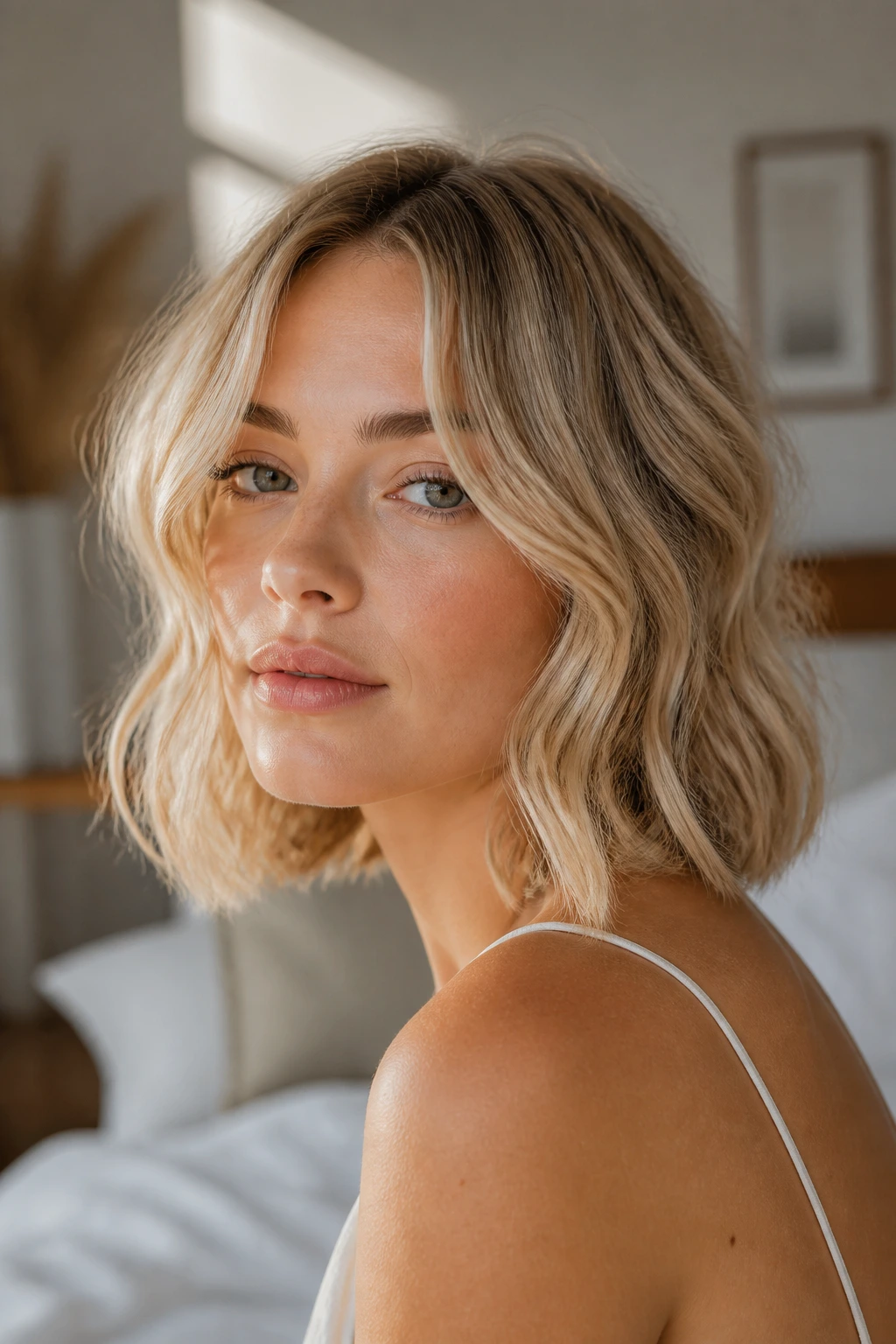
Fine-Hair Lift: Choose lobs, bobs, and blunt-ish cuts with minimal layers. Fine wavy hair often needs a stronger perimeter to look full, not more and more cutting inside the shape.
Thick-Hair Control: Ask for internal layers, a soft shag, or a tapered midi cut. Those styles remove bulk where it matters and keep the hair from ballooning outward.
Humidity Shield: Keep the haircut a little longer than you think and favor products with light hold instead of rich cream. The less the hair swells at the start, the less chaos you get later.
Short-Length Swap: If you like a bob but your hair puffs easily, keep the nape neat and the front pieces slightly longer. That gives the wave room without making the cut boxy.
Heat-Free Version: Braids, twist-outs, and air-dried lobs make sense when you want to keep tools out of the routine. The cut matters more here, because the shape has to carry the style.
Questions People Ask Before Cutting Their Waves
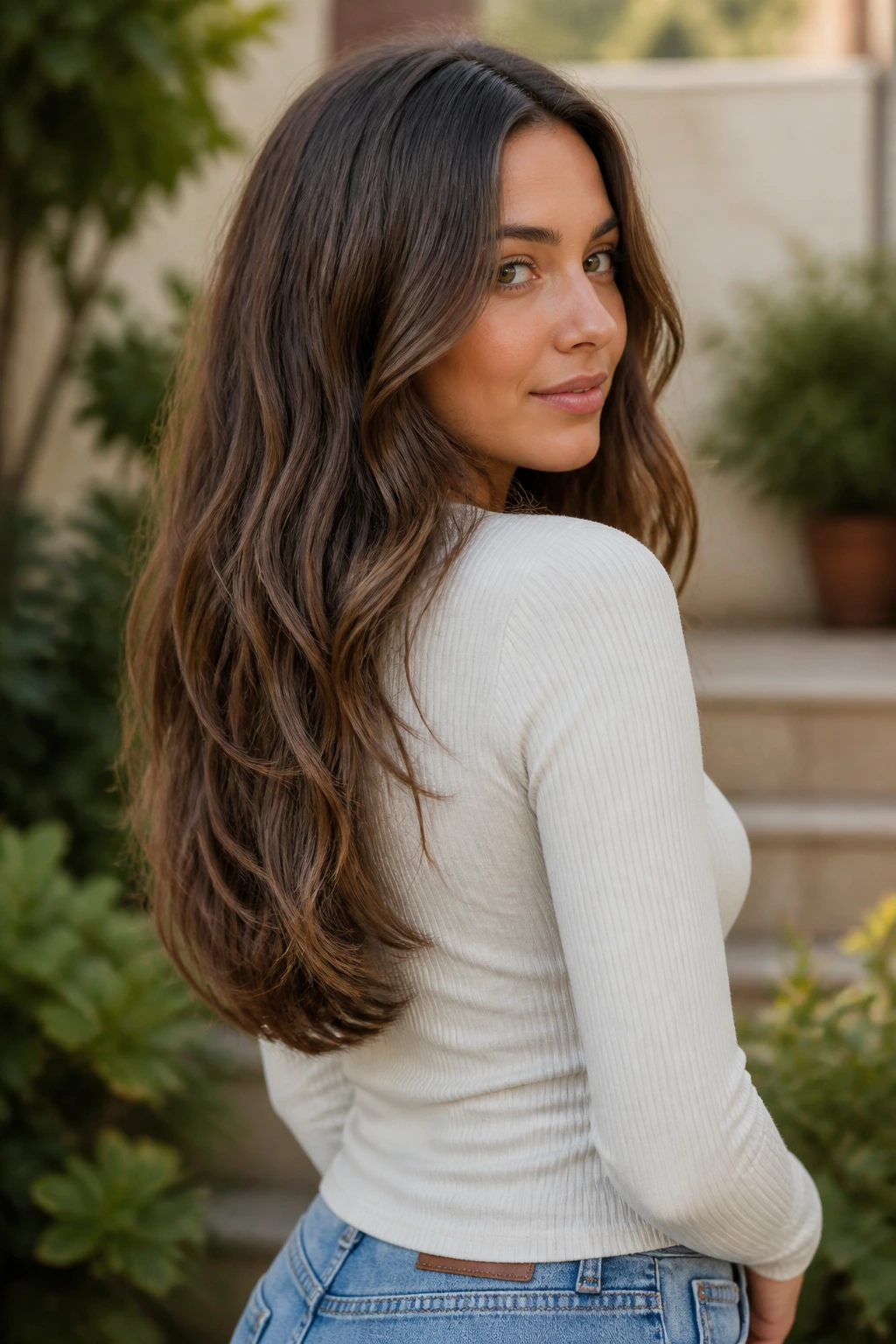
What is the easiest wavy hairstyle to maintain?
A collarbone lob or a long layered cut is usually the easiest place to start. Both can air-dry well, both grow out cleanly, and both still work if you only style the front.
Should wavy hair be cut dry or wet?
Dry cutting can help a stylist see how the waves fall, especially if your texture changes a lot when it dries. Wet cutting still works, but the person doing it needs to know how much wave spring to expect.
Do layers make wavy hair frizzier?
Too many short layers can, yes. Softer, longer layers usually help waves move without making the ends look shredded.
Can fine wavy hair wear a shag?
Yes, but keep the shag soft and not too chopped up. Fine hair needs enough length and perimeter to keep the shape from looking thin.
How often should I trim a low-maintenance wavy cut?
Most of these styles hold up for about 8 to 12 weeks, depending on growth and density. Short bobs and fringe pieces usually need attention sooner than longer lobs.
What product should I start with if I only buy one thing?
Mousse. It gives hold without weighing down the wave the way heavy cream sometimes can. If your hair is dry, add a light leave-in under it.
Why does my wavy hair look better on day two?
Because the natural oils and the slight memory from drying help the wave settle. That’s why many low-maintenance cuts are built to improve a little after the first wash day.
Sleep, Refresh, and Stretch-the-Style Routines

Wavy hair usually behaves better when you protect it overnight instead of starting from scratch every morning. A silk pillowcase helps, but the real trick is keeping friction down. If your hair is long enough, a loose pineapple or a soft braid can stop the ends from getting smashed flat.
Day-two refreshes should stay small. Mist the front pieces, scrunch the ends, lift the roots with dry shampoo if needed, and walk away. You are not trying to recreate the full wash-day shape. You’re just giving it enough life to make it through the day.
If a style keeps falling apart by lunch, the cut may be too heavy in one area or the product may be too soft for your hair type. That’s usually a haircut issue before it’s a styling issue. People love to blame the cream. Sometimes the scissors are the real culprit.
Final Touches That Make a Low-Fuss Cut Look Finished
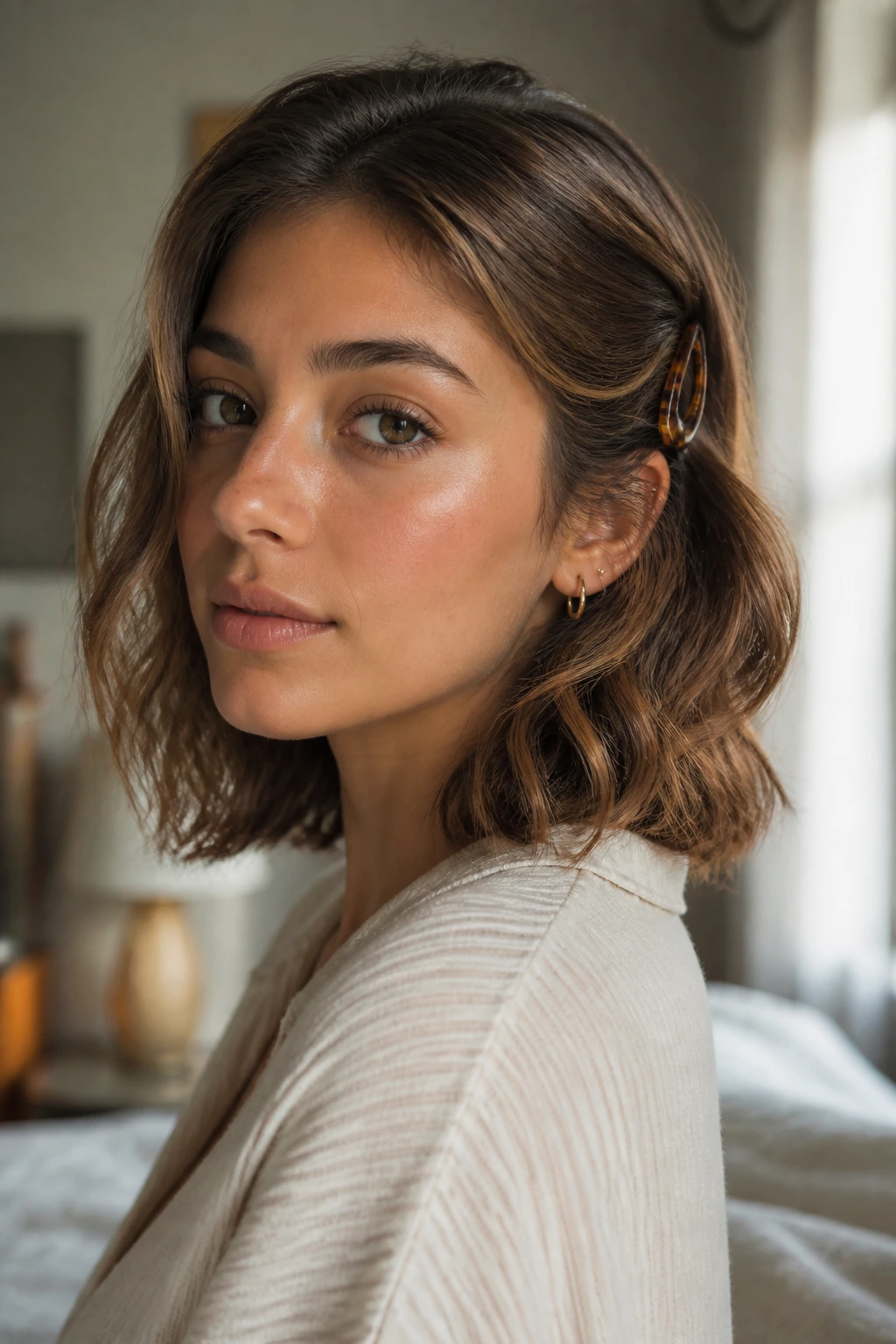
A low-maintenance style still benefits from one tiny finishing move. Tuck one side behind the ear. Add a small clip. Smooth only the top layer. That little bit of intention keeps wavy hair from looking like you forgot about it.
The nice thing about these cuts is that they don’t need constant rescue. They need a shape that fits your texture, a product routine that stays light, and a willingness to leave a few bends alone. That’s it. The hair does the rest.
The Shape That Lets Wavy Hair Breathe
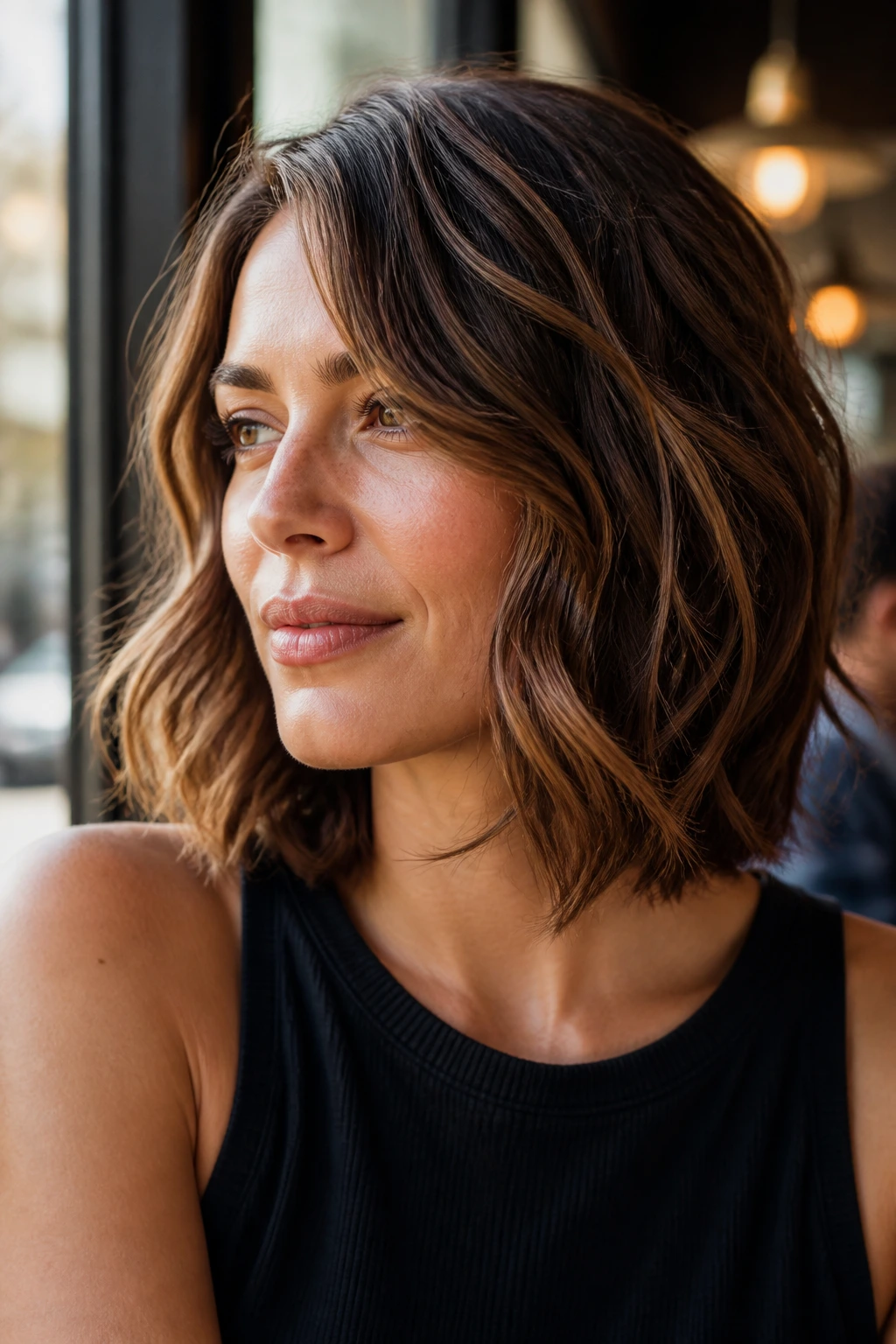
The best part of low-maintenance wavy hairstyles is not that they look effortless. It’s that they stop wasting your time. A good lob, bob, shag, long layer, or soft updo gives your hair enough structure to behave without making you fight it every morning.
Pick the shape that matches how your hair already wants to move. Then let it live a little. The easiest styles are usually the ones that make room for a wave instead of trying to flatten it out.
Wavy Hair That Works With You
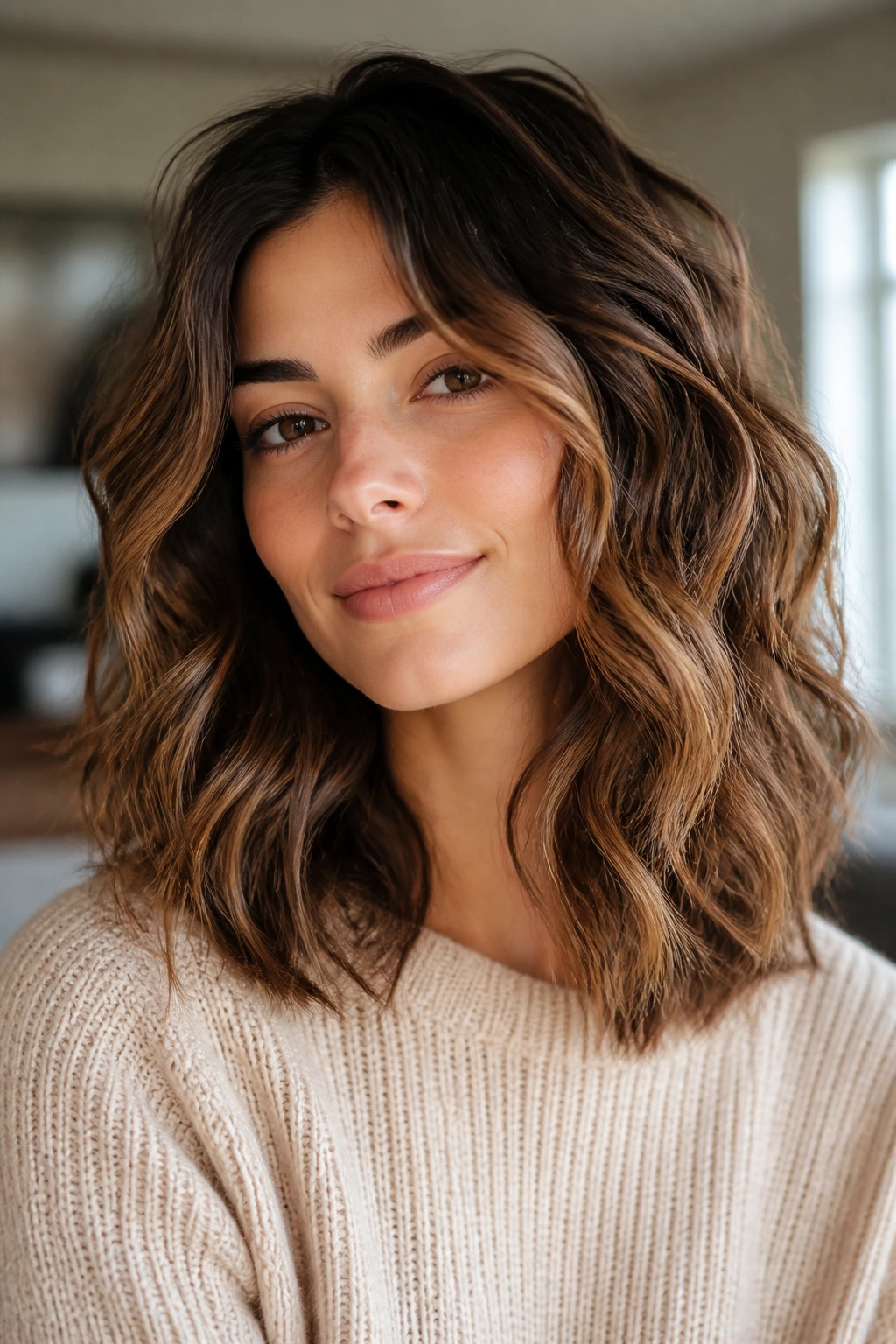
If your hair has a bend, a kick, or a little stubborn texture, there’s probably a cut in this list that will make mornings calmer. The trick is choosing a shape that keeps its outline after a shower, after sleep, and after a long day in ordinary weather.
That is the real test. Not the first hour. The whole day.
