



Gray hair can look expensive before it ever looks “done.” The catch is the cut has to earn its keep. A blunt length that was fine with dyed hair can go a little sleepy once the pigment disappears, because silver strands reflect light differently and show shape, weight, and dryness all at once.
That is why the best gray hair looks for women over 50 usually do one of two things: they build clean structure—think sharp bobs, tapered pixies, and collarbone layers—or they let texture do the work with waves, curls, and movement around the face. The wrong shape can make gray hair look heavy or wiry. The right one makes the color read deliberate, not accidental.
I keep coming back to this point, and not just because it sounds tidy. Gray hair is rarely the problem. A flat part, old ends, and too much length are the real troublemakers. The looks below lean into what silver hair does well, and they steer around the places where it tends to go dull, puffy, or stringy. Start with the shape that matches your texture.
Why These Gray Hair Looks Earn Their Keep
- They work with regrowth, not against it: Salt-and-pepper roots stop looking like an emergency when the cut has clean edges or purposeful texture.
- They respect changing texture: Gray hair often feels drier and a touch wirier, so these looks use shape, layers, or shine in ways that make that texture useful.
- There’s something for every density: Fine hair gets lift, thick hair gets movement, and curly hair gets room to spring.
- They age the face in a clean way: Side parts, soft fringe, and face-framing pieces can open the cheekbones and soften the jaw without hiding your face.
- They don’t demand a round brush every morning: Some of these need polish, sure, but plenty of them look better with a little bend and imperfect texture.
- They make silver read as style, not surrender: That matters more than people admit. The cut is what tells the room whether the gray is intentional.
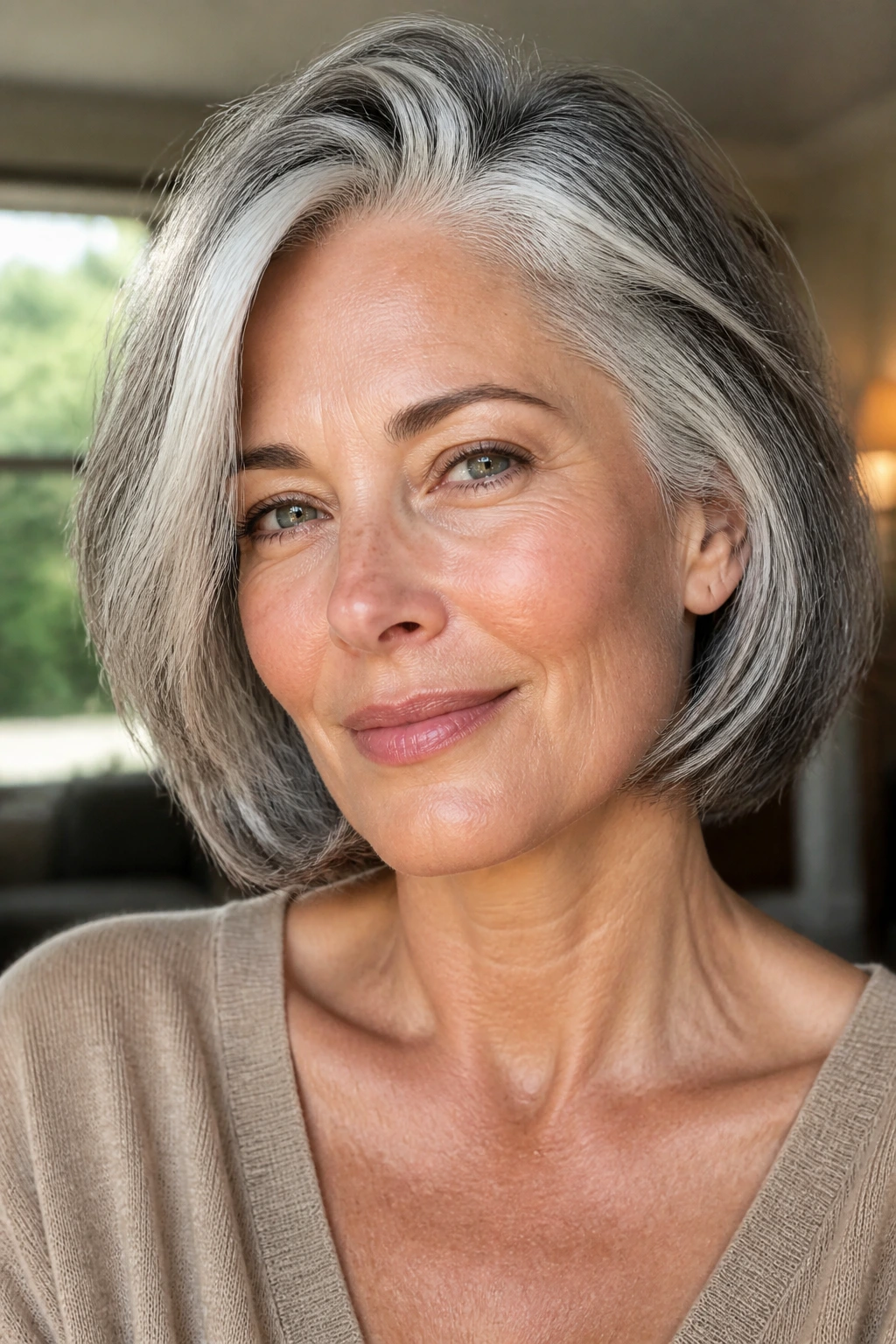
1. Soft Silver Layers at the Collarbone
This is the look I reach for when someone wants gray hair that moves without falling apart. Collarbone-length layers give silver strands a place to swing, and the length is long enough to tuck behind the ear but short enough that the ends don’t drag the whole style down. On straight hair, the edges sit clean; on wavy hair, they catch a little bend and break up the heaviness that long gray can pick up fast.
The shape works because it gives light and shadow somewhere to land. Gray hair loves that. A little layering around the front keeps the face from getting buried, and the collarbone length avoids the “grown-out but not on purpose” problem.
If you want a style that can air-dry on a Tuesday and still look polished enough for dinner, this one is hard to beat. It also grows out gracefully, which is a gift when you’d rather not live at the salon.
2. Feathered Pixie with a Side Sweep
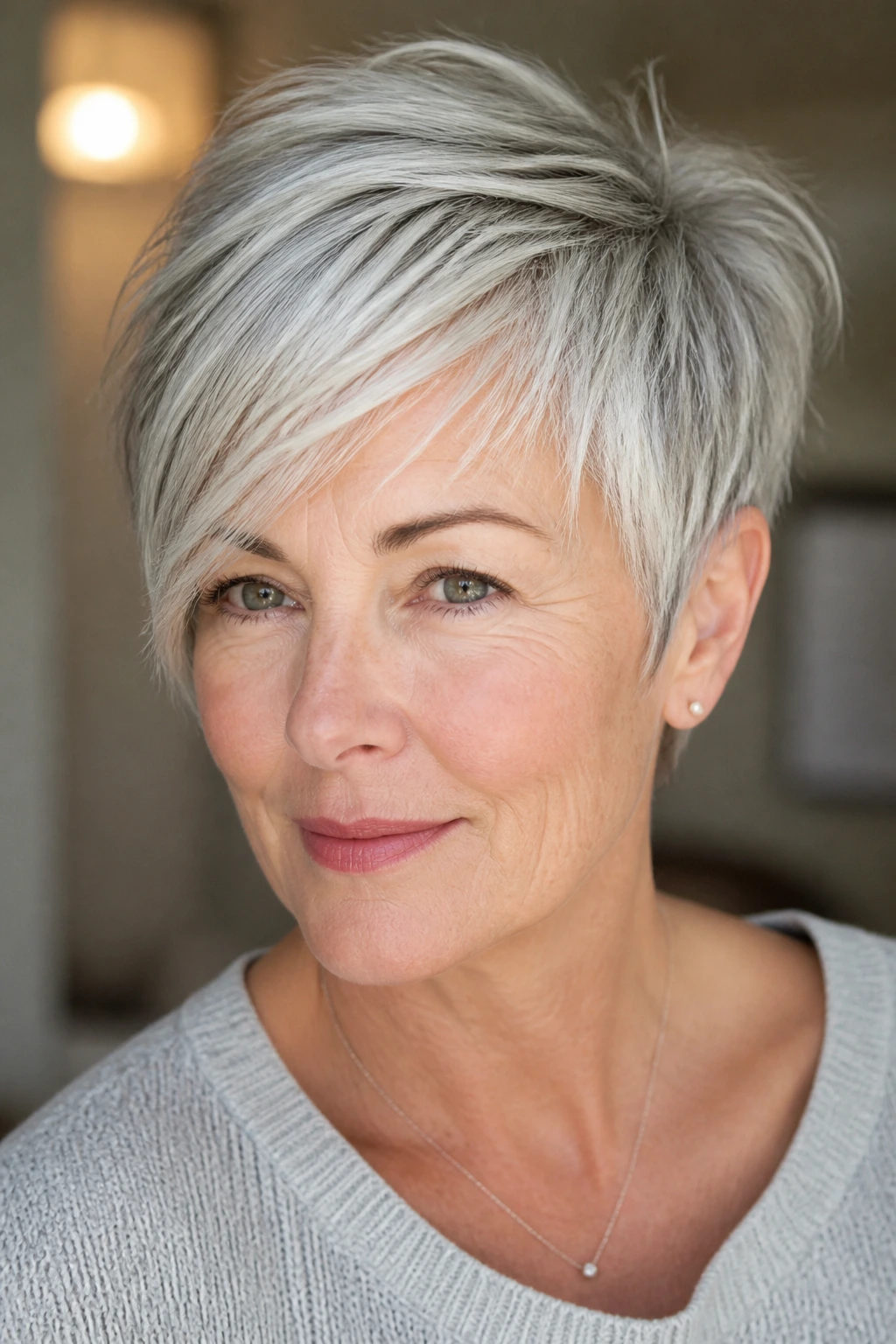
Want a cut that lifts the face without asking for a lot of styling time? This is the one. A feathered pixie uses short, soft layers to keep gray hair light, and the side sweep adds a little curve near the brow and temple where the face usually wants softness most.
Why It Reads So Well in Gray
The feathering keeps the crown from going flat, which is the main thing that can make a pixie feel dated. Gray hair tends to show shape quickly, so a blunt, boxy pixie can look harsh. Feathered edges break that up and make the whole cut feel lighter.
A side sweep also gives you a little control over forehead lines and cowlicks. Not cover, control. That’s the better goal.
- Best for: Fine to medium hair that needs lift.
- Styling note: A pea-sized dab of styling cream is enough; too much product turns the texture stringy.
- Salon ask: Keep the nape tight and the top piecey, not helmet-smooth.
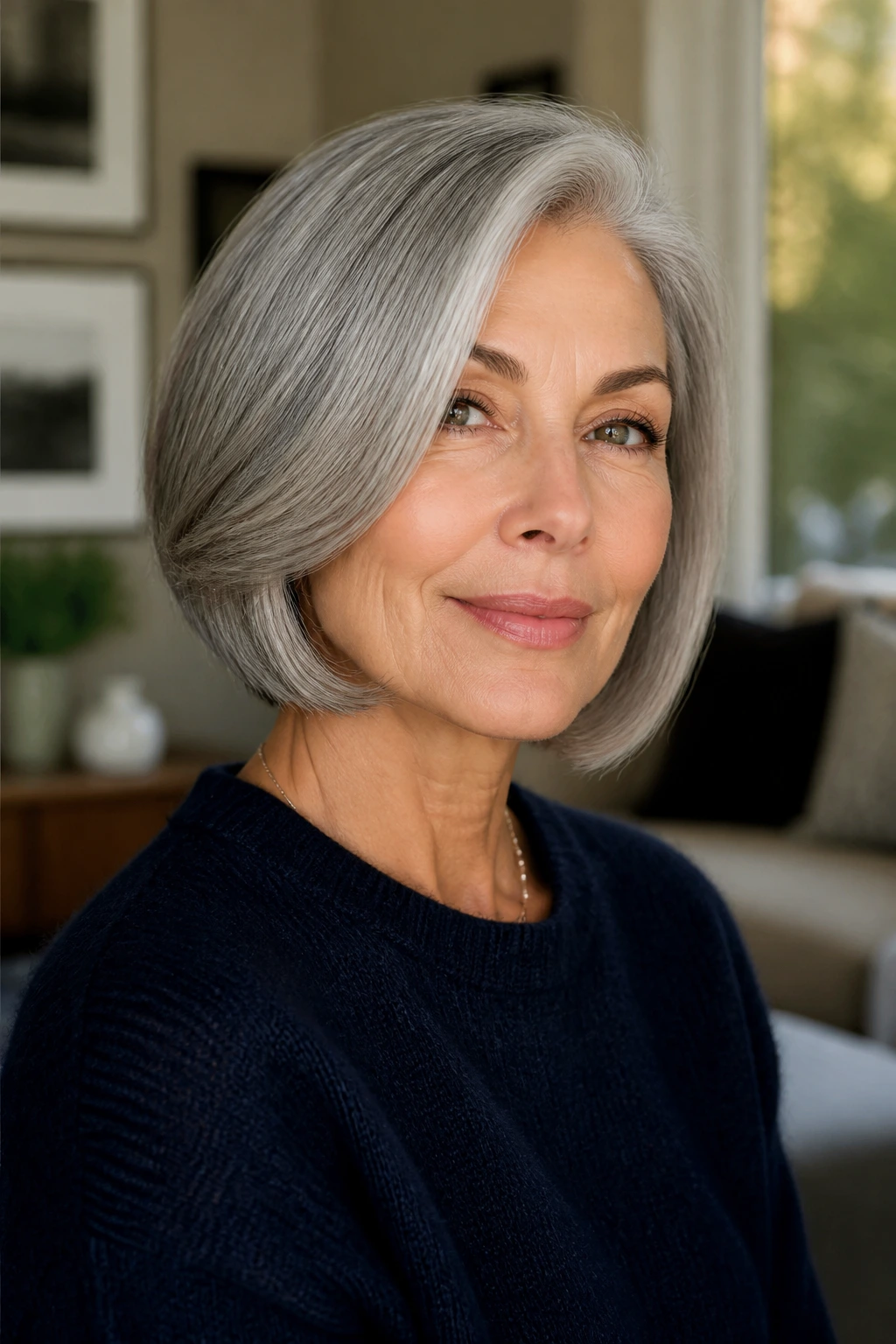
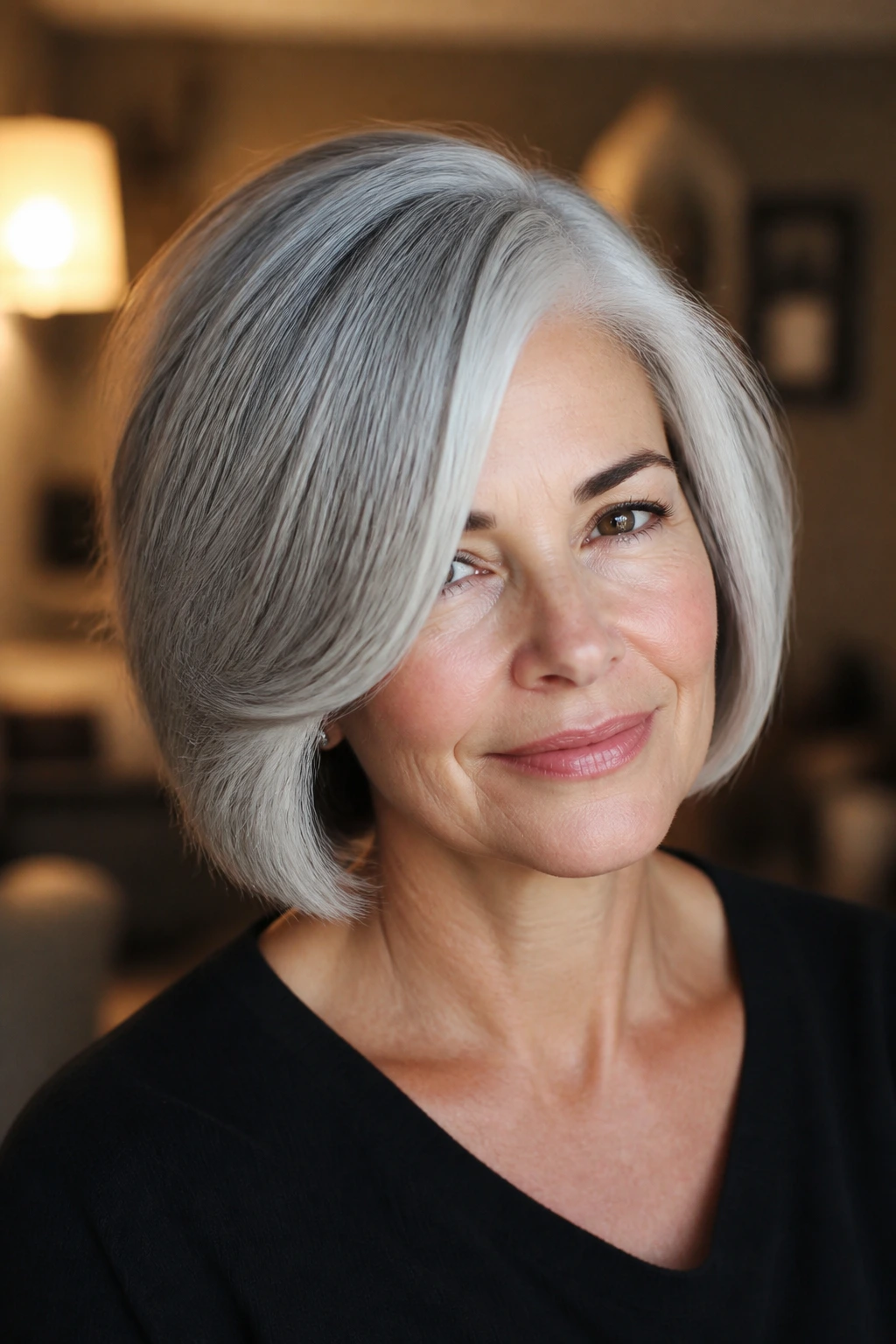
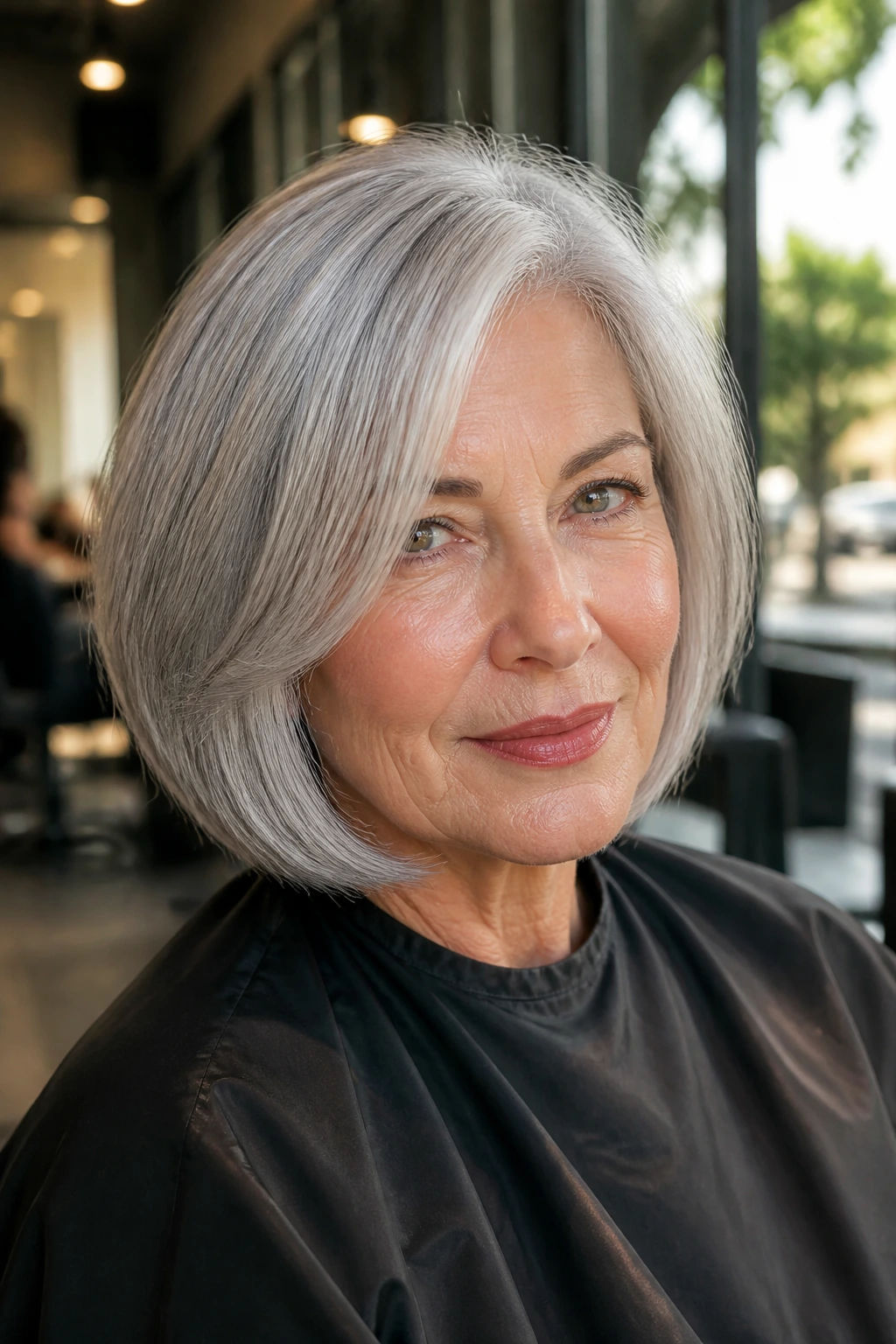
3. Chin-Length Bob with a Deep Side Part
A chin-length bob is one of the cleanest gray hair looks for women over 50. It gives shape right where the jawline needs it and puts the silver at eye level, which makes the color feel intentional and crisp. The deep side part adds a little asymmetry, and asymmetry is useful when you want a bob to feel modern instead of severe.
This cut is especially smart if your hair has started losing density at the ends. A shorter line makes the ends look fuller, and the bob’s bluntness can give fine gray hair a thicker edge. It’s the haircut equivalent of a clean white shirt.
I like this one with a slight bend under the jaw, not a hard curl. Too much curl can make it bubble out. Too little makes it sit flat. The middle ground is where it shines.
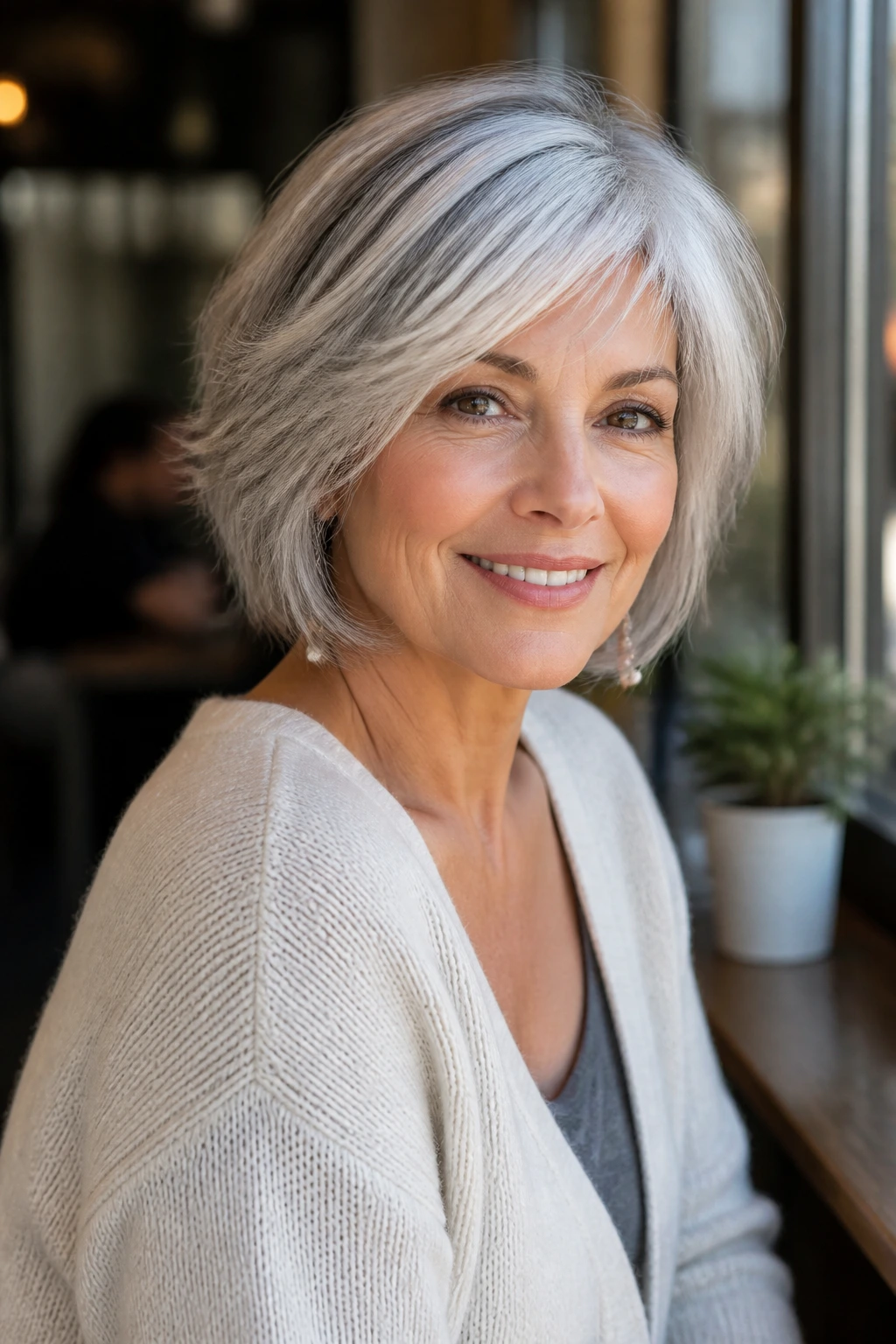
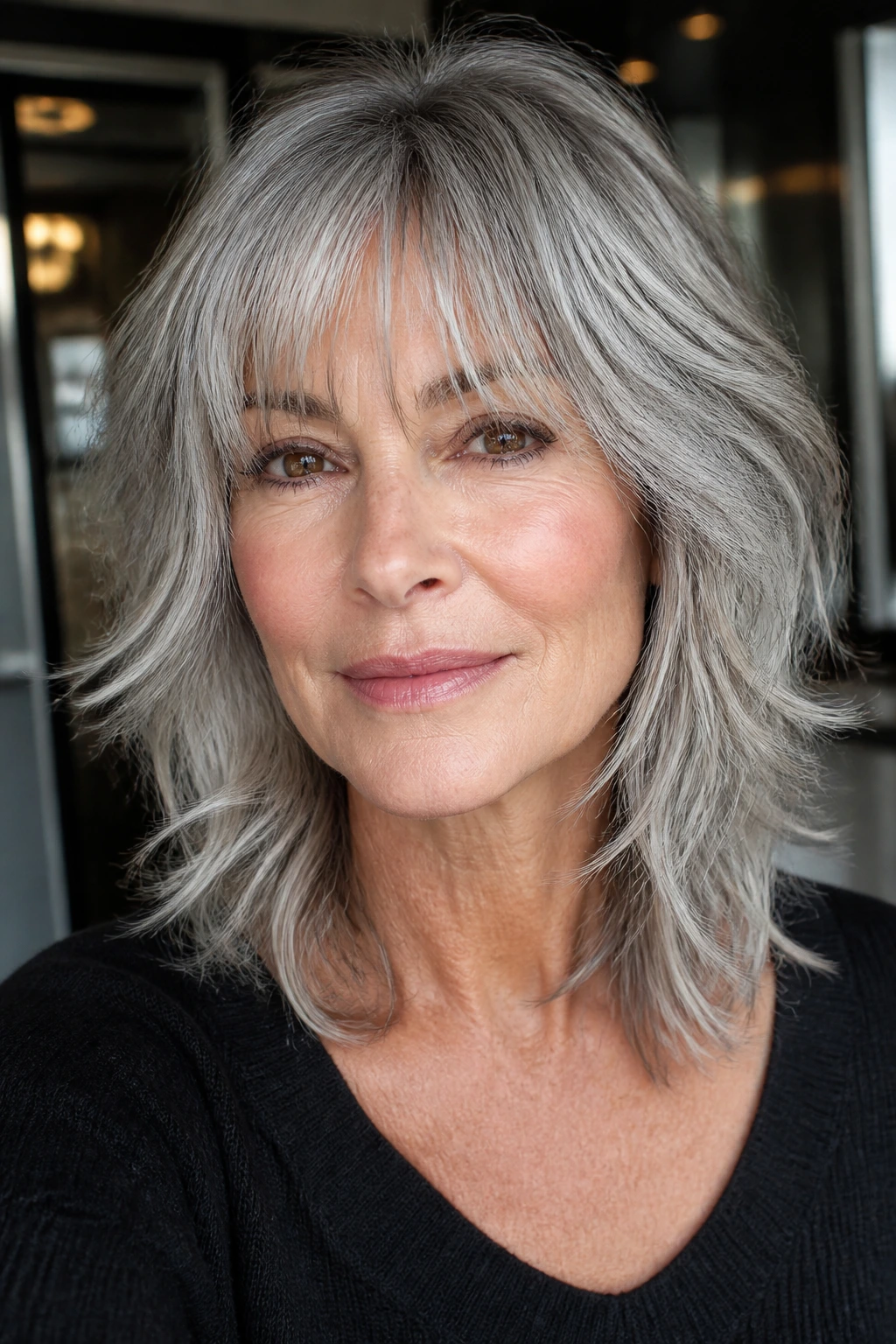
4. Silver Shag with Airy Bangs
A good gray shag has a bit of swagger. It moves. It doesn’t sit there politely. The layers fall in different directions, the bangs skim the brows, and the whole cut looks better with a touch of lift than with perfect control.
This is a smart choice when gray hair has gone a little coarse or wavy, because shag layers make that texture part of the design. Instead of fighting the bend, the cut uses it. Airy bangs are the key. Heavy bangs with gray hair can feel dense fast, while soft bangs open the forehead and keep the cut from looking too covered.
It’s one of those styles that looks like you styled it for five minutes even when you spent two. That kind of efficiency is worth paying attention to.
5. Wavy Lob with Face-Framing Pieces
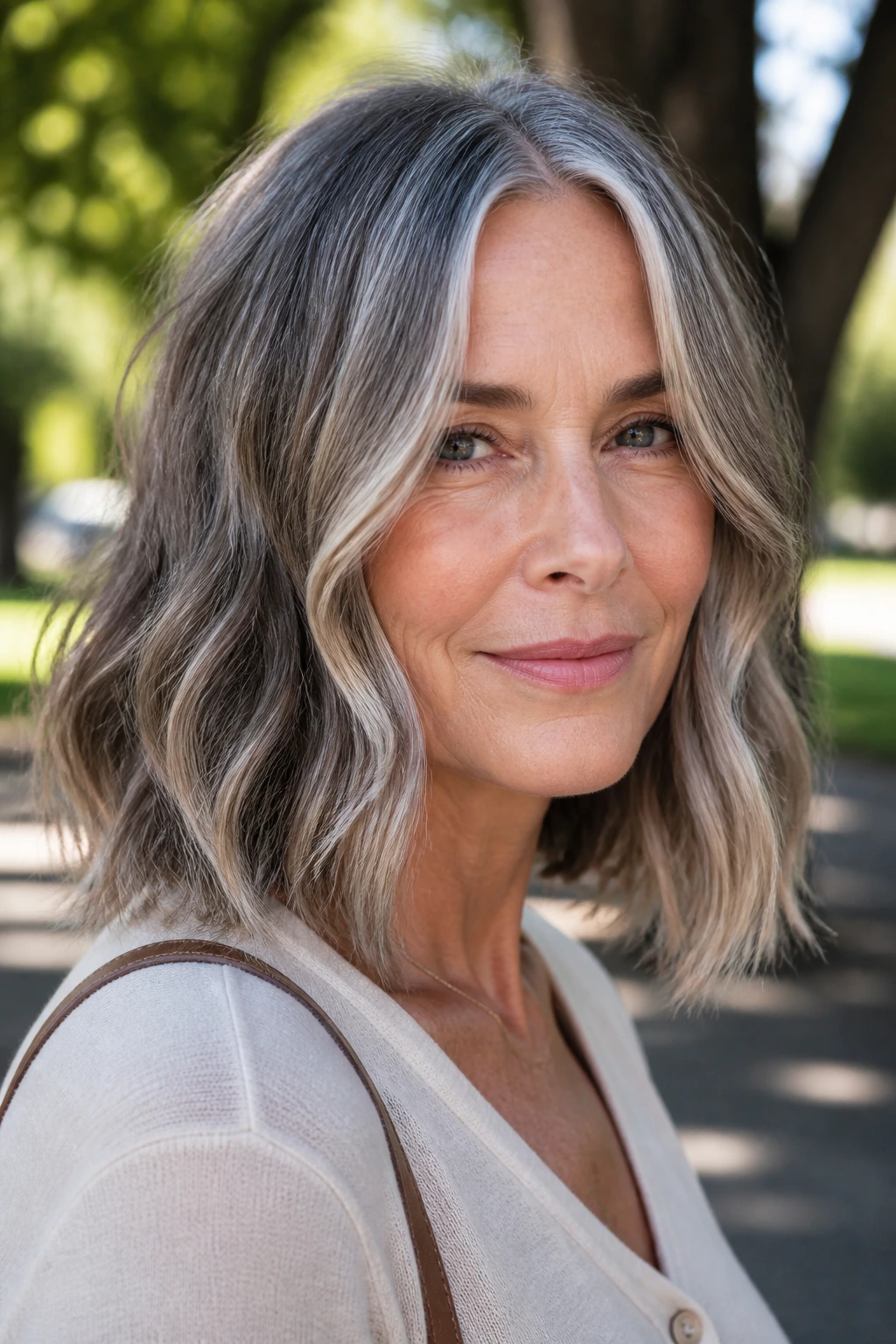
A lob is a safe word, but this version isn’t boring. The length sits around the collarbone or just above it, and the face-framing pieces bring the focus upward so the whole cut doesn’t read as one long block. On gray hair, that matters. Long, one-length silver can look heavy fast. A lob with internal movement solves that.
The best part is how forgiving it is. If your wave pattern is loose, the cut still looks good air-dried with a bit of cream. If your hair is straighter, a large-barrel curling iron gives it enough bend to keep the ends from staring straight down.
This is a good bridge cut too. If you’re growing out something shorter, the lob gives you structure while the length comes back.
6. Rounded Curly Cut with Definition
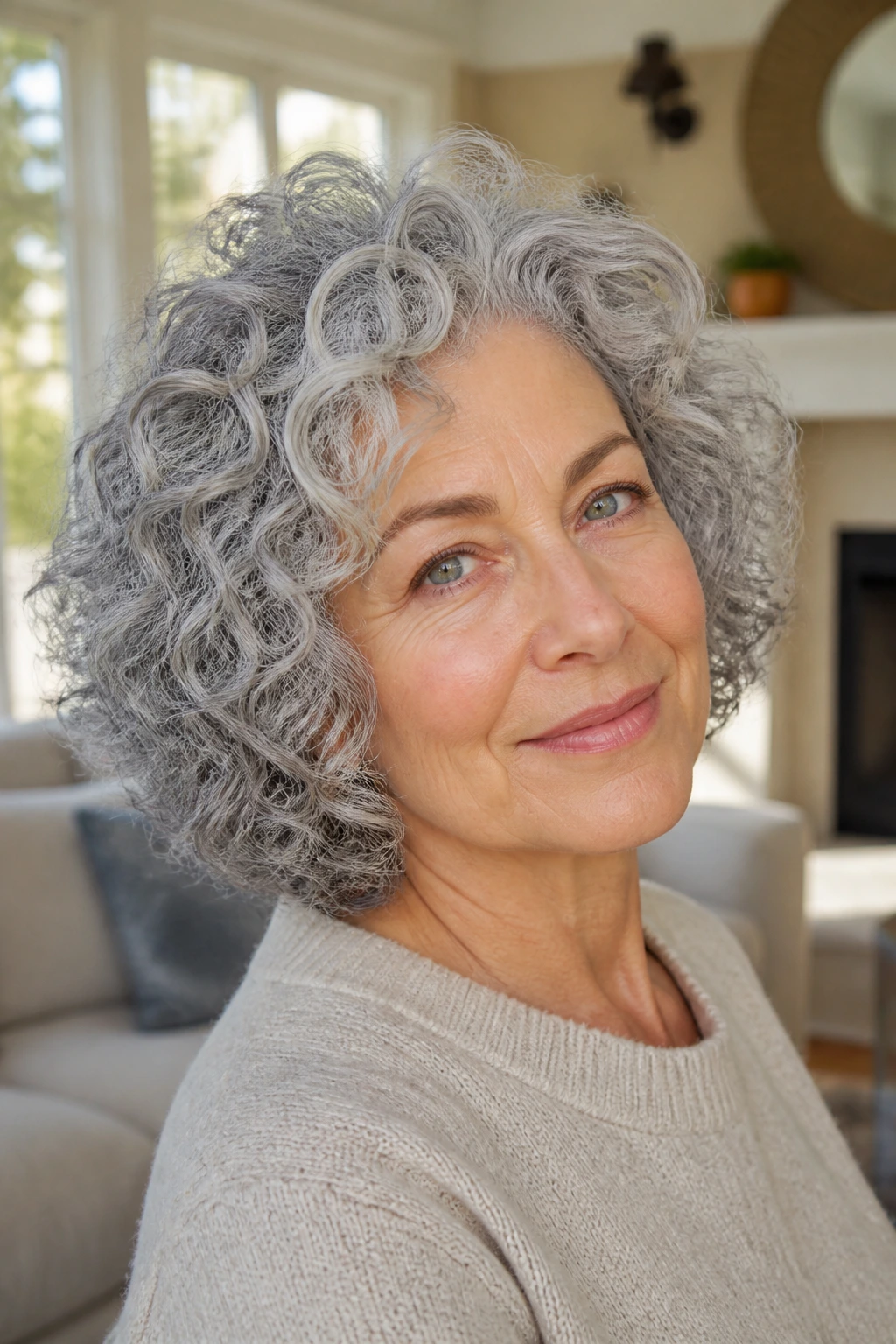
Curly gray hair needs shape more than it needs length. The rounded cut keeps the bulk where it belongs and prevents the sides from drifting out like a triangle. That shape is especially useful once the curls turn silver, because gray curls can look both drier and more wiry if they’re left too long and too same-length.
The trick is definition, not stiffness. You want curls that spring, not crunch. A diffuser helps, but the cut does a lot of the work before the product ever shows up.
A rounded outline also flatters the neck and cheekbones without stealing the whole show. If you’ve got tight curls or ringlets, this is one of the few gray styles that looks better when it’s a little imperfect. Perfect curls can look too formal. A bit of frizz at the edges is part of the charm.
7. Tapered Crop with Lift at the Crown
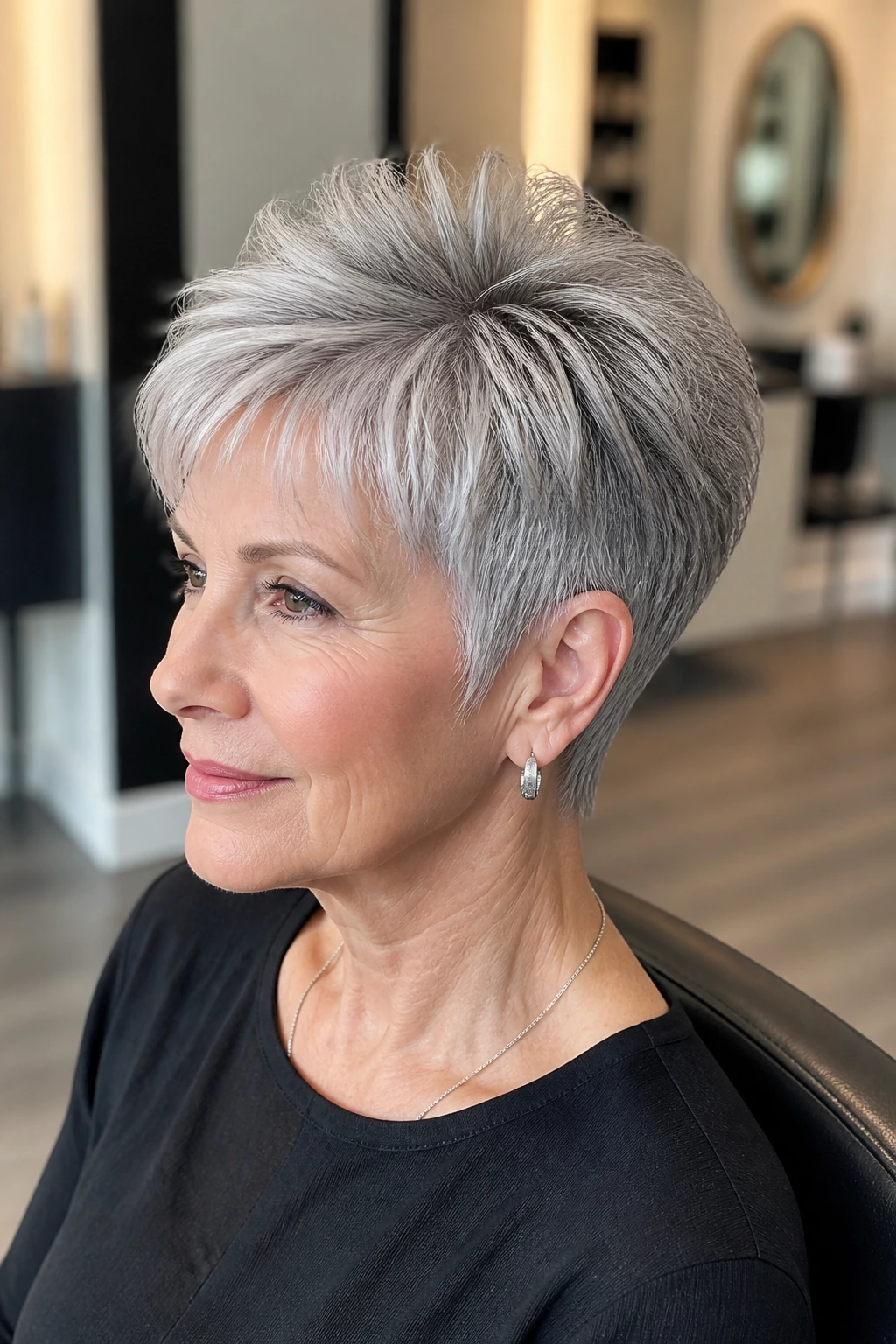
Can short gray hair feel soft? Yes, if the crown has height and the sides taper cleanly. That little bit of lift keeps the profile from collapsing, which is the mistake that makes many short styles look flat on mature hair. A tapered crop gives the top room to breathe and the nape a neat finish.
The Small Detail That Changes Everything
The crown needs to be cut with intent. If the top is too short, the style turns puffy. If it’s too long, the roots fall. The sweet spot is a textured top that can be pushed up with fingers and a touch of mousse.
- Best for: Straight or slightly wavy hair.
- Ask for: Soft taper at the ears and nape, not a hard clipper fade unless you want it very sharp.
- Good styling tool: A small round brush or just fingers and a blow-dryer nozzle.
8. Blunt Bob with a Glossy White Finish
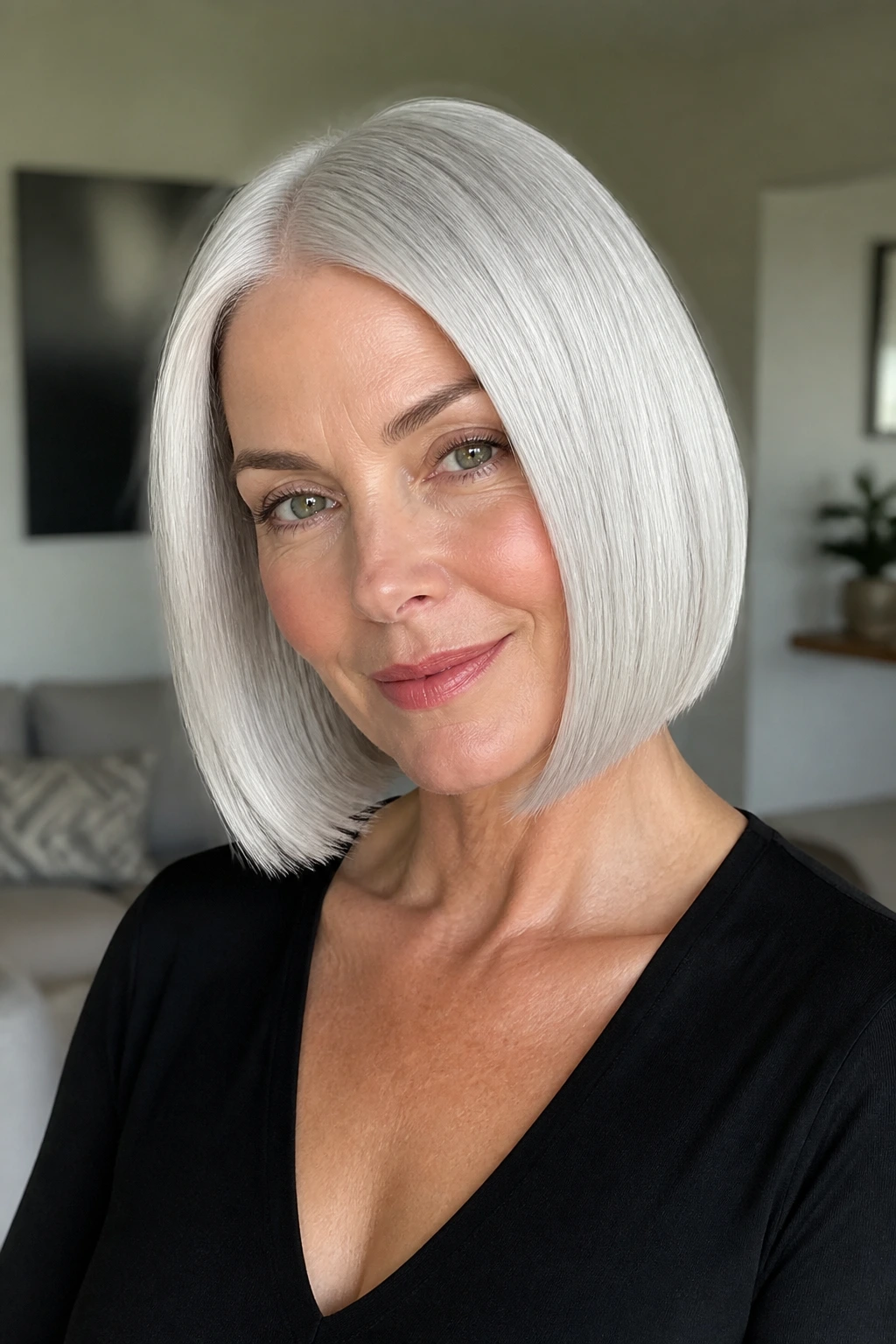
This one has real presence. A blunt bob with a glossy white or bright silver finish looks clean because the line is so clear. No shag, no extra movement, no fuss. Just a hard-edged silhouette and reflective color. If your hair is dense enough to support it, the result can look striking in a way that layered cuts cannot match.
The catch is maintenance. A blunt bob shows every split end, and gray hair doesn’t hide damage well. If you choose this look, trims matter. So does a good gloss. I’d rather see a slightly shorter blunt bob with healthy shine than a longer one that frays at the bottom.
This is the look for someone who likes clean geometry. It’s not soft, and that’s the point.
9. Long Gray Waves with Invisible Layers
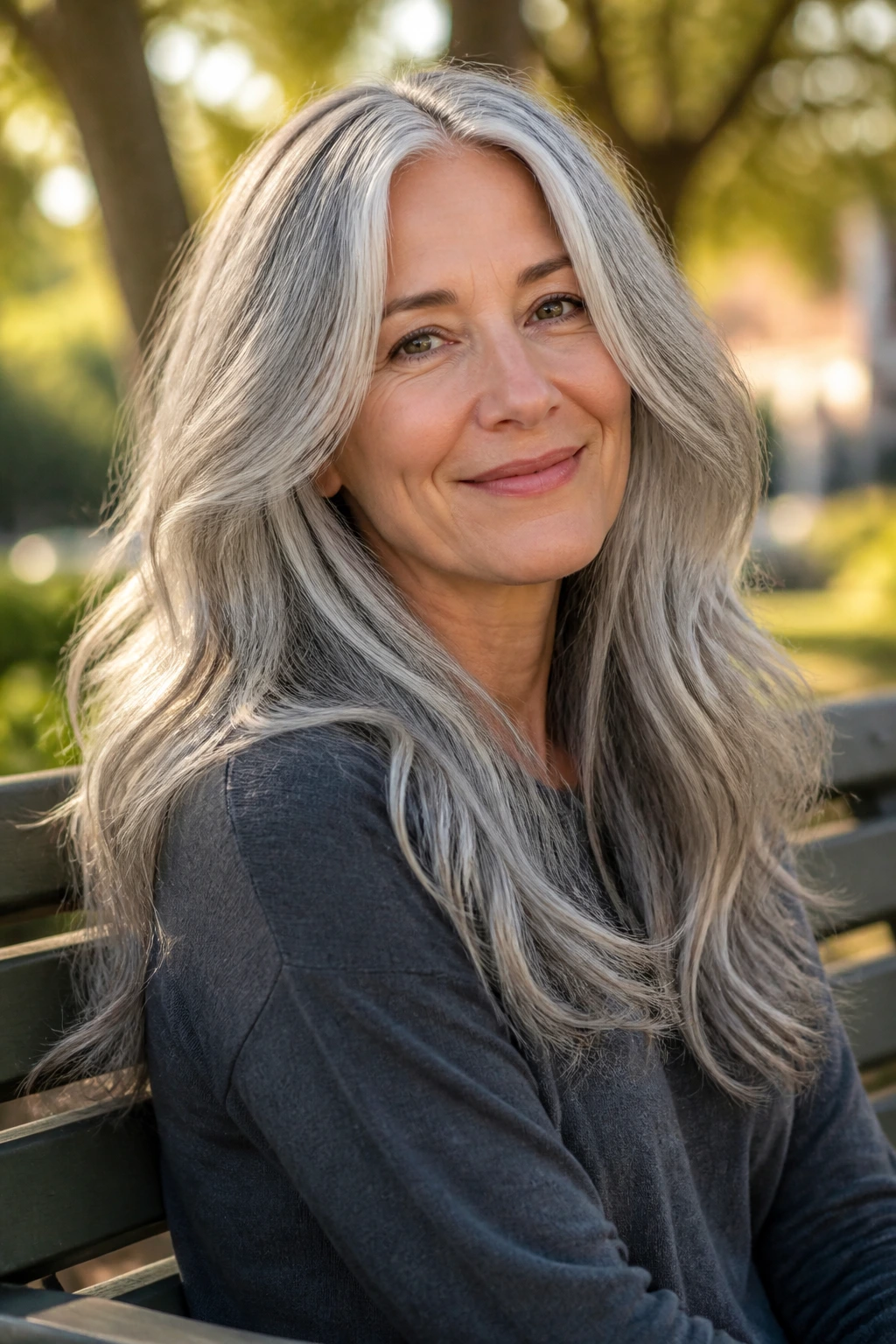
Long gray hair works best when the layers are there but you don’t see them shouting at you. Invisible layers remove weight from the inside of the cut, so the surface still looks smooth. That keeps long silver from turning into one heavy curtain.
A lot of people assume gray hair has to be short. It doesn’t. It does, though, need help. Long ends can look dry quickly, and the weight of the hair can pull the top flat. Invisible layers solve both problems without making the length choppy.
I like this look when the waves are loose and brushed out, not tight and sticky with product. It feels softer that way. A satin pillowcase helps too. Long gray ends are needy. Pretending otherwise is silly.
10. Salt-and-Pepper French Bob
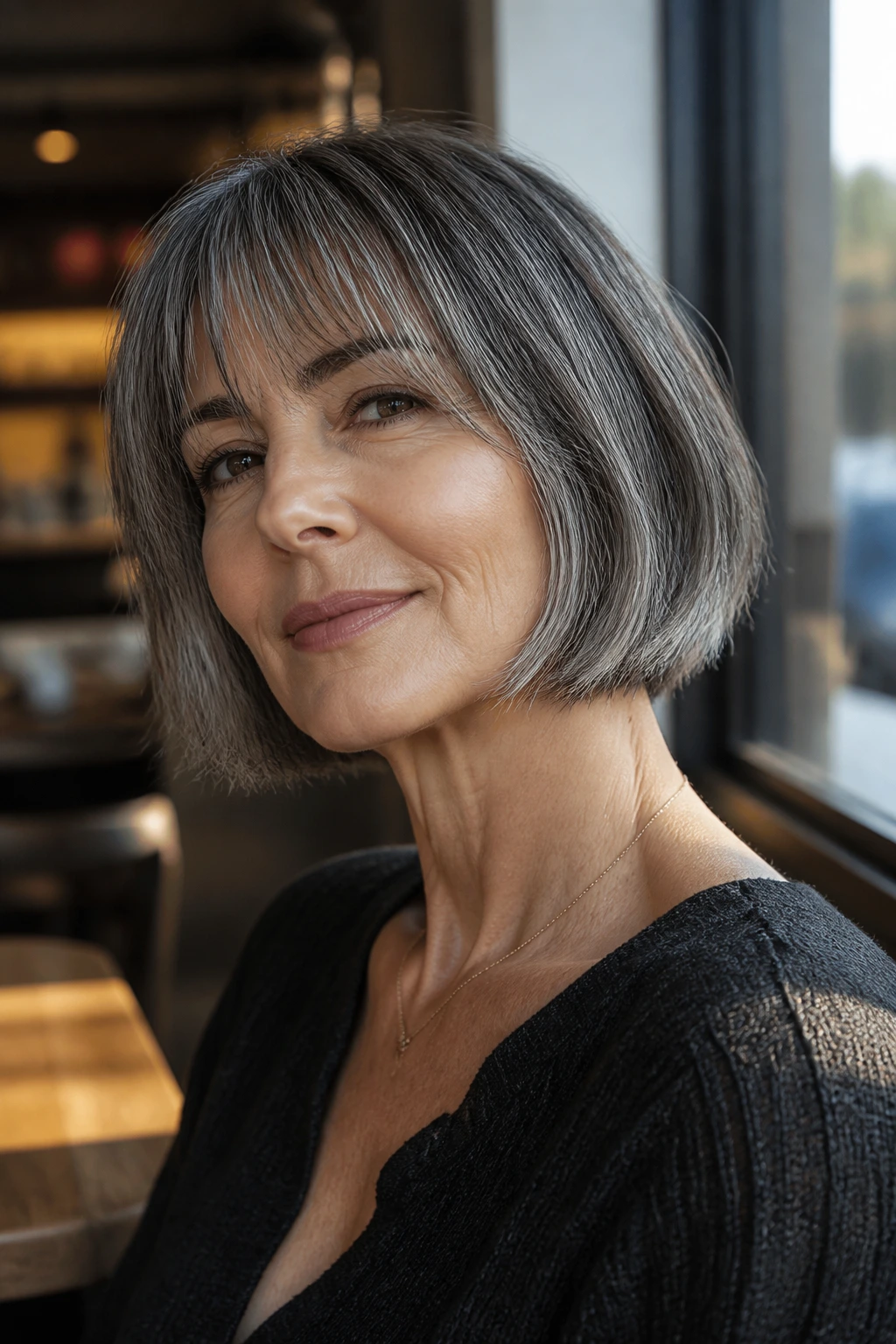
A French bob has a little attitude built in. The cut usually sits around the cheekbone or jaw, often with a fringe or soft side fringe, and it gives salt-and-pepper hair a sharp frame. The style feels older in the best sense: concise, sure of itself, not trying to prove anything.
What makes it flattering is the way it opens the neck and lets the face do the work. Gray hair can sometimes blur the edges of the face if the cut is too long or too feathered. This bob fixes that. It also looks especially good when the color contrast is strong—white streaks, darker lowlights, or a clean salt-and-pepper blend.
If you like red lipstick, earrings, and a strong collar, this haircut plays nicely. It has backbone.
11. Wispy Crop with Light Bangs
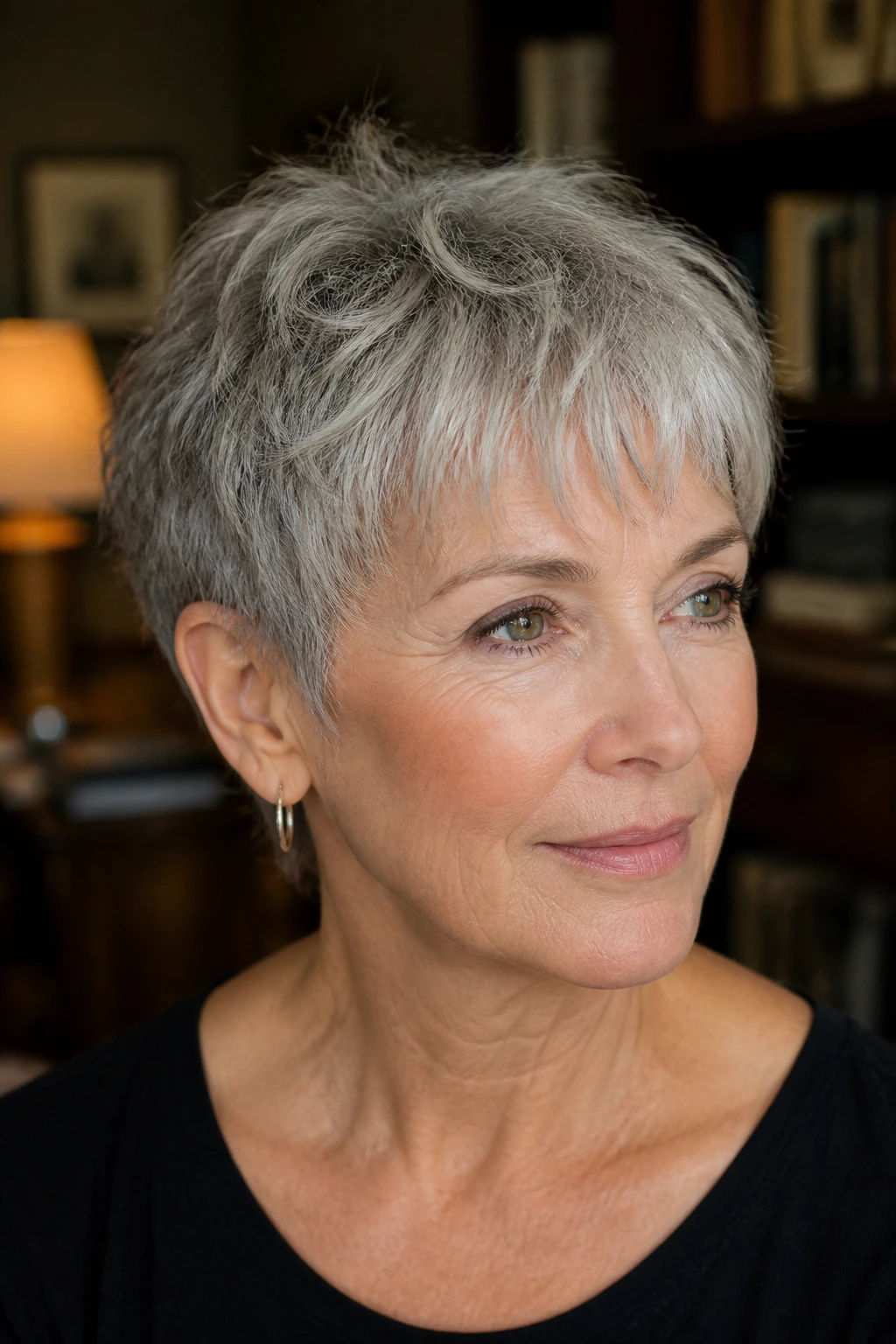
This is the softest short look in the bunch. The cut stays close to the head, but the bangs are light enough that they don’t swallow the forehead. That matters with gray hair, which can make a heavy bang line look even heavier.
The wispy crop works especially well when hair has thinned a bit at the temples or crown. Rather than fighting that change, the style builds softness around it. The result is neat without feeling tight. Clean. Airy. A little playful, which a lot of short gray cuts forget to be.
I’d call this a “good glasses haircut” too. The light fringe doesn’t fight the frames. It just sits there and behaves.
12. Side-Swept Layers for Fine Gray Hair
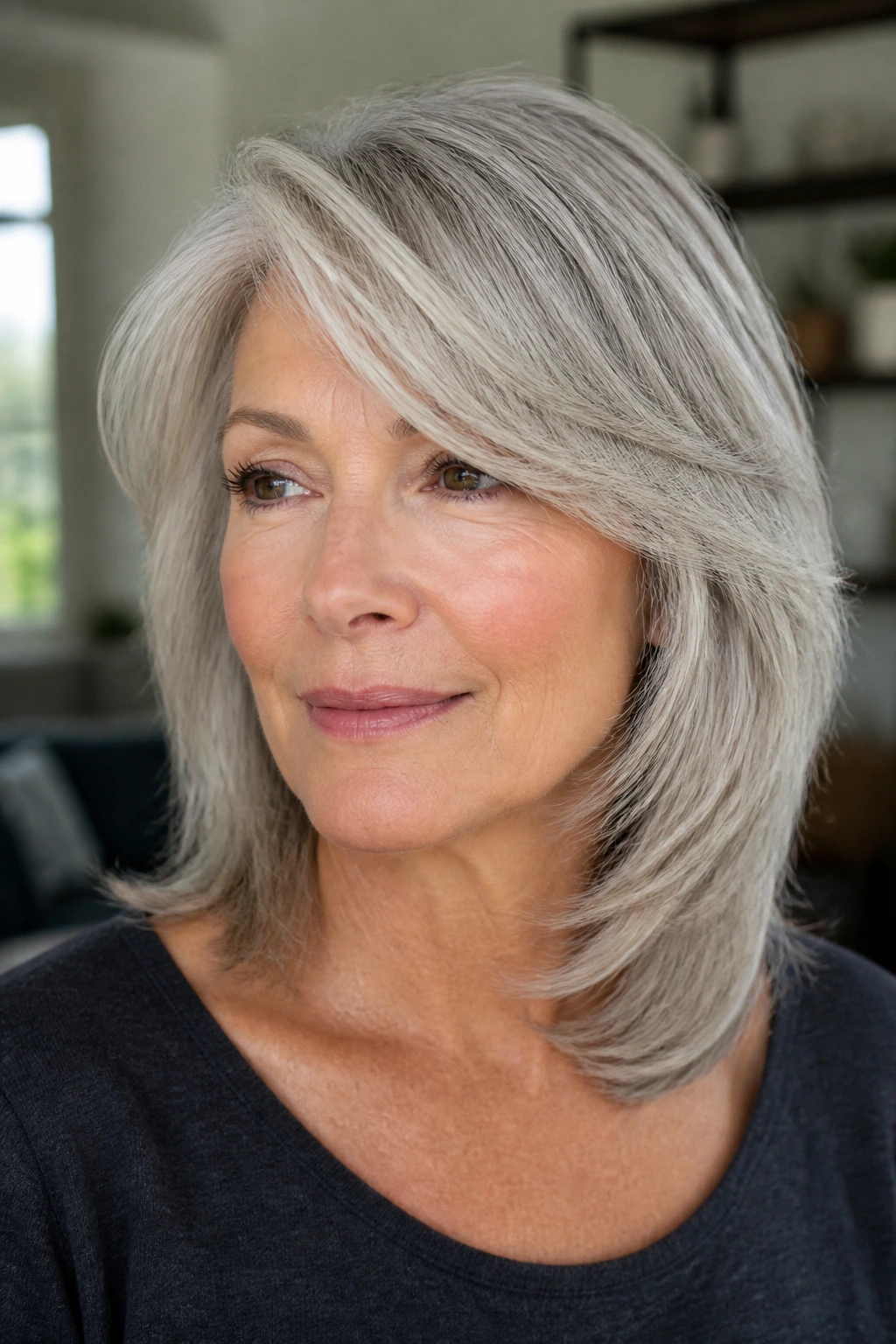
Fine hair needs a haircut that understands weight. Side-swept layers do that by keeping too much bulk from pooling at the bottom and by giving the front a little motion that makes the whole head look fuller. If you’ve noticed gray hair going flatter after the color changed, this is one of the easiest fixes.
A side sweep is better than a hard center part here. The diagonal line creates the illusion of density at the crown and softens the edge near the cheek. I’ve seen this small change do more than a whole shelf of products.
What to Ask the Stylist For
Ask for layers that start below the chin if your hair is very fine. That keeps the top from looking choppy. You want movement, not gaps.
13. Collarbone Cut with Curtain Bangs
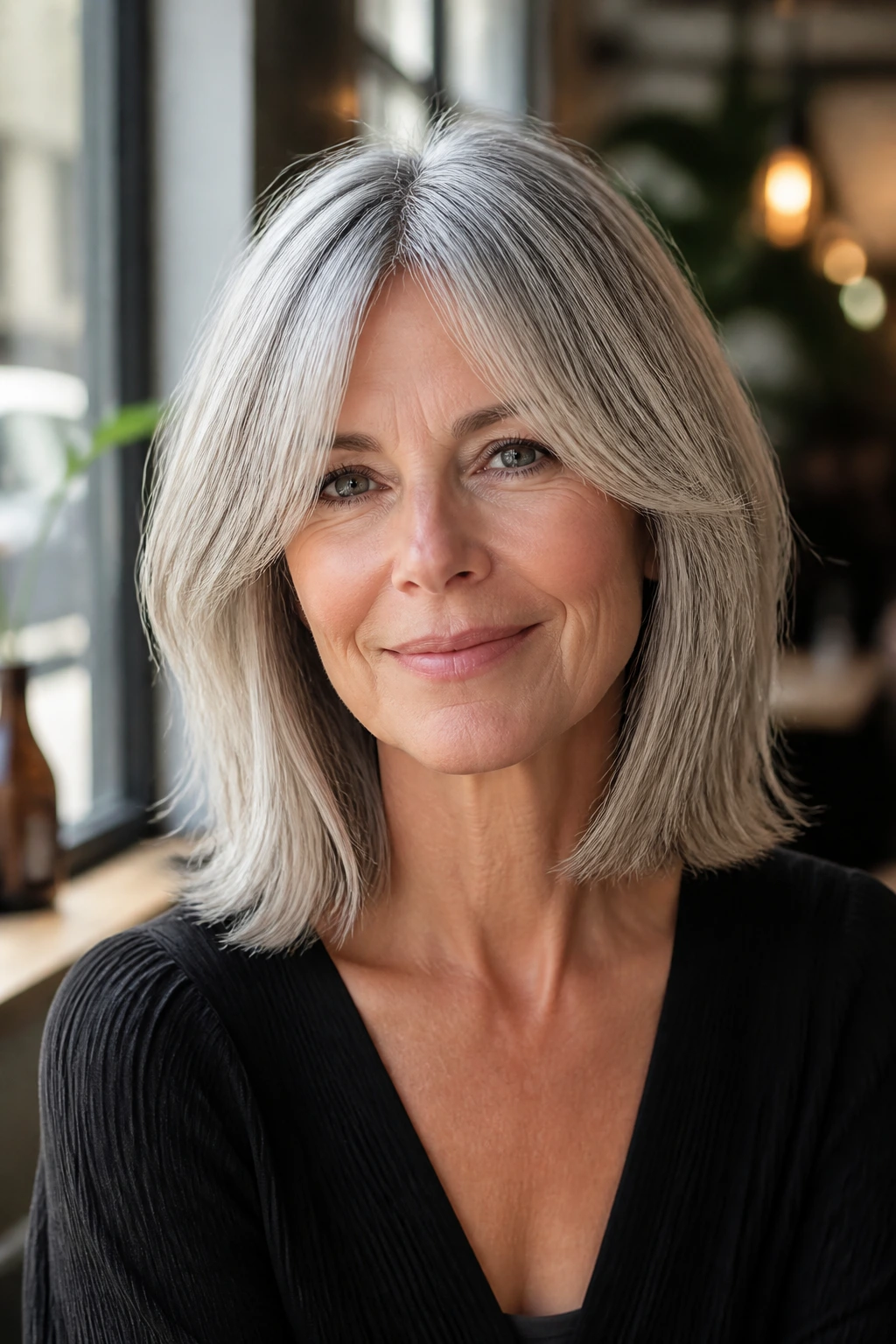
Curtain bangs can be flattering on gray hair because they split the face without blocking it. Paired with a collarbone-length cut, they make the style feel open and current without looking trend-chasing. The longer fringe also helps if your hairline has changed a little and you want a softer frame around the eyes.
This cut is especially useful if your face is longer or narrower. The bangs add width where you want it, and the midlength cut keeps the rest of the shape balanced. Too short and the style can feel top-heavy. Too long and the bangs disappear into the rest of the hair. This middle length holds both parts in view.
It’s one of those looks that grows out politely, which matters more than people think. Bangs that misbehave every three weeks are not a gift.
14. Polished Blowout with Soft Ends
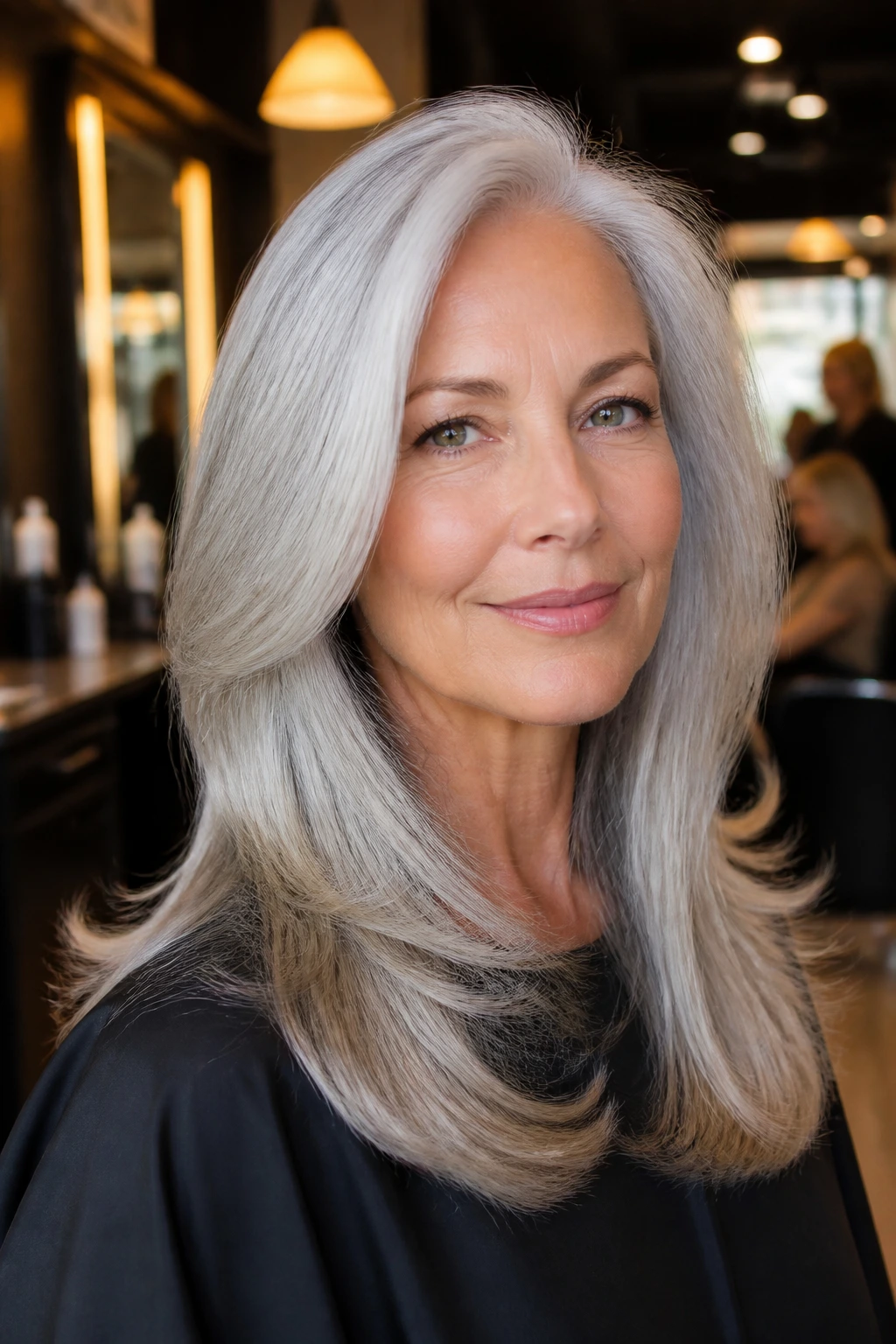
A polished blowout on gray hair has a different personality than it does on dyed hair. The shine shows more. The movement at the ends looks cleaner. And the silver gives the whole style a kind of brightness that can feel almost luminous under indoor light.
This is the one for days when you want the hair to look deliberate. Not stiff. Deliberate. A round brush, a heat protectant, and a little bend at the ends are enough. If the ends flip too much, it starts to look dated. If they stay too straight, the cut can feel unfinished. The point is a soft curve.
I like this style with blunt or slightly layered cuts, because the blowout smooths the line while keeping the body.
15. Defined Natural Coils in a Rounded Shape
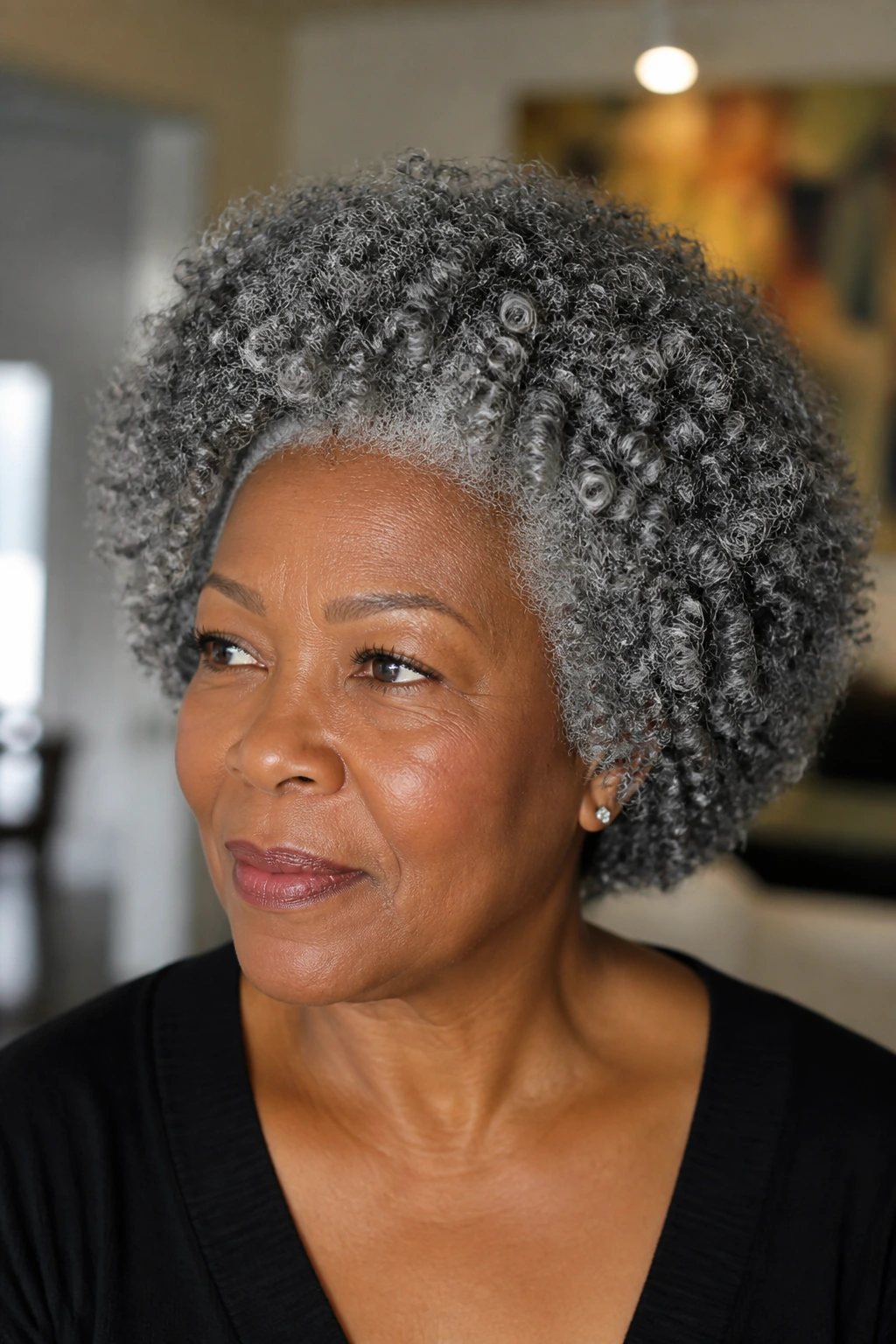
Natural coils deserve shape that respects their spring. A rounded silhouette keeps the fullness even and avoids the triangle that can happen when gray curls are cut too flat on the sides. The gray itself makes the texture stand out more, which is a gift if the shape is right and a headache if it isn’t.
Why the Shape Matters
Coils lose length in a way straight hair never does, so the haircut has to account for shrinkage. If the cut ignores that, the top can look squat and the bottom can flare. A rounded shape keeps the eye moving around the head instead of getting stuck on one heavy area.
- Best for: Tight coils, dense curls, and mixed textures.
- Styling cue: Apply conditioner or leave-in while the hair is soaking wet so the coil pattern clumps cleanly.
- Avoid: Heavy oils on the roots; they flatten the lift fast.
16. Asymmetrical Bob with a Deep Part
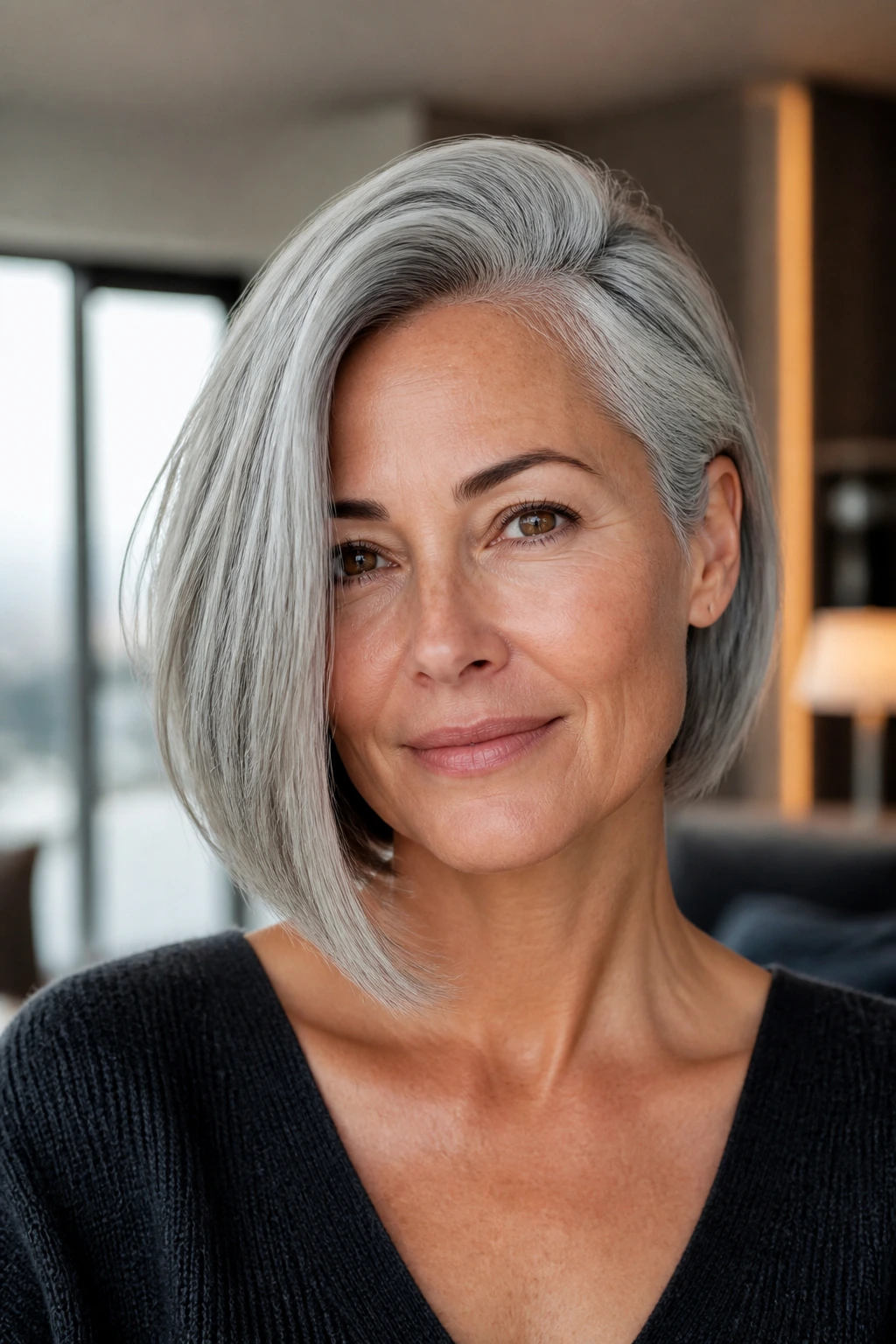
A little asymmetry goes a long way once the hair turns gray. This bob uses a deeper part and a slightly longer side to create motion, which is useful if one side of your hair naturally falls flatter than the other. The shape feels modern without needing obvious tricks.
The asymmetry also helps if you want to soften a strong jaw or break up a broad forehead. One side can skim the cheek; the other can tuck behind the ear. That contrast gives the cut a pulse.
I like this style when someone wants polish but not rigidity. It’s neat, but not stern. That’s a narrow lane, and this cut drives it well.
17. Gray Pixie with a Tapered Nape
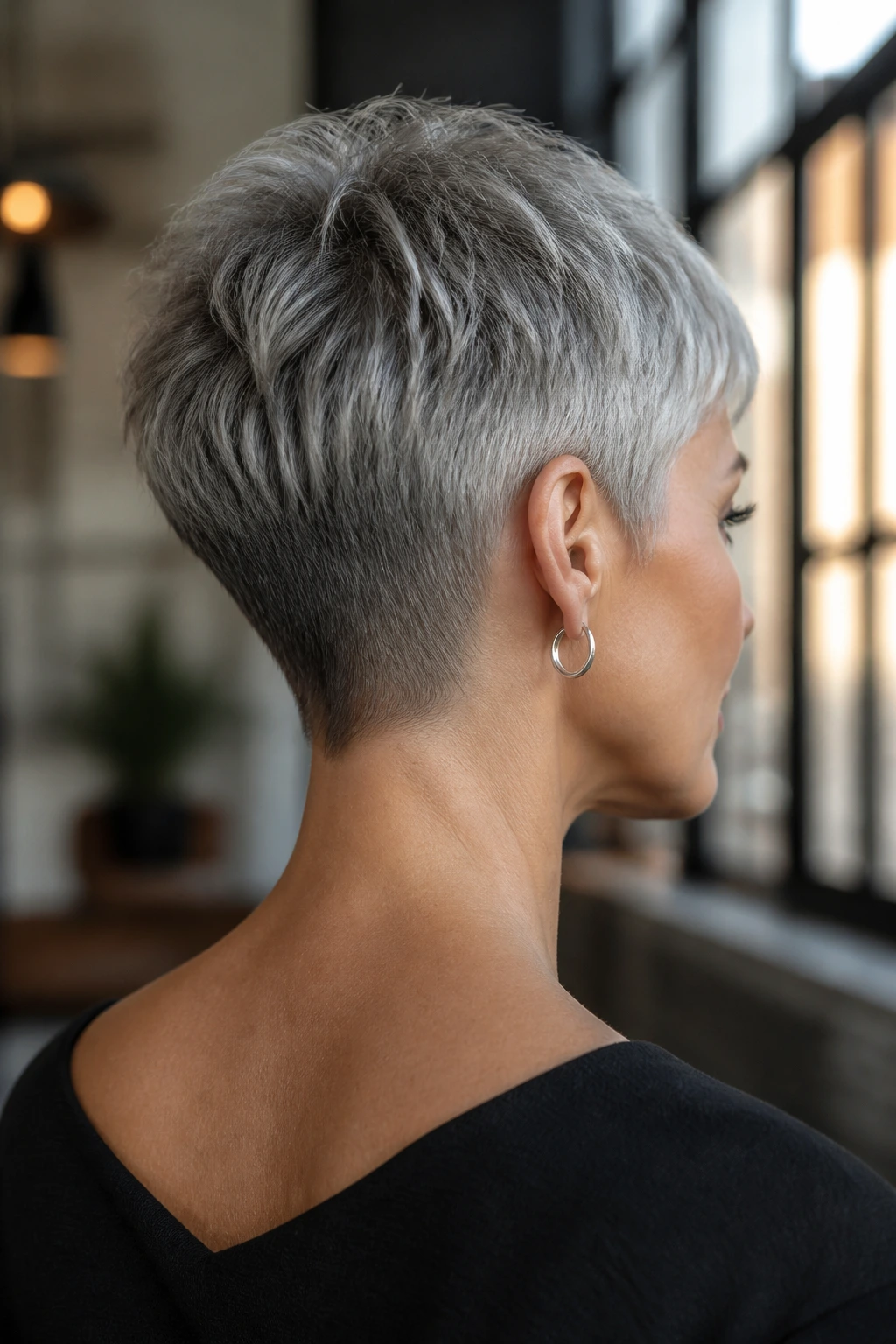
A gray pixie with a tapered nape is clean in the way good tailoring is clean. The nape hugs the head, the sides stay close, and the top has enough length to keep the style from feeling shaved down. If you’ve got a strong jaw or pretty eyes, this cut puts them out front.
- Why it works: The tight nape removes bulk where short cuts can puff out, and the longer top gives you enough hair to move.
- Styling note: A matte paste gives separation; a gloss cream gives shine. Pick one. Using both usually muddies the shape.
- Best on: Hair that can hold a line and doesn’t mind frequent trims.
This is a good cut if you’re done babysitting the ends.
18. Midlength Layers with Air-Dried Texture
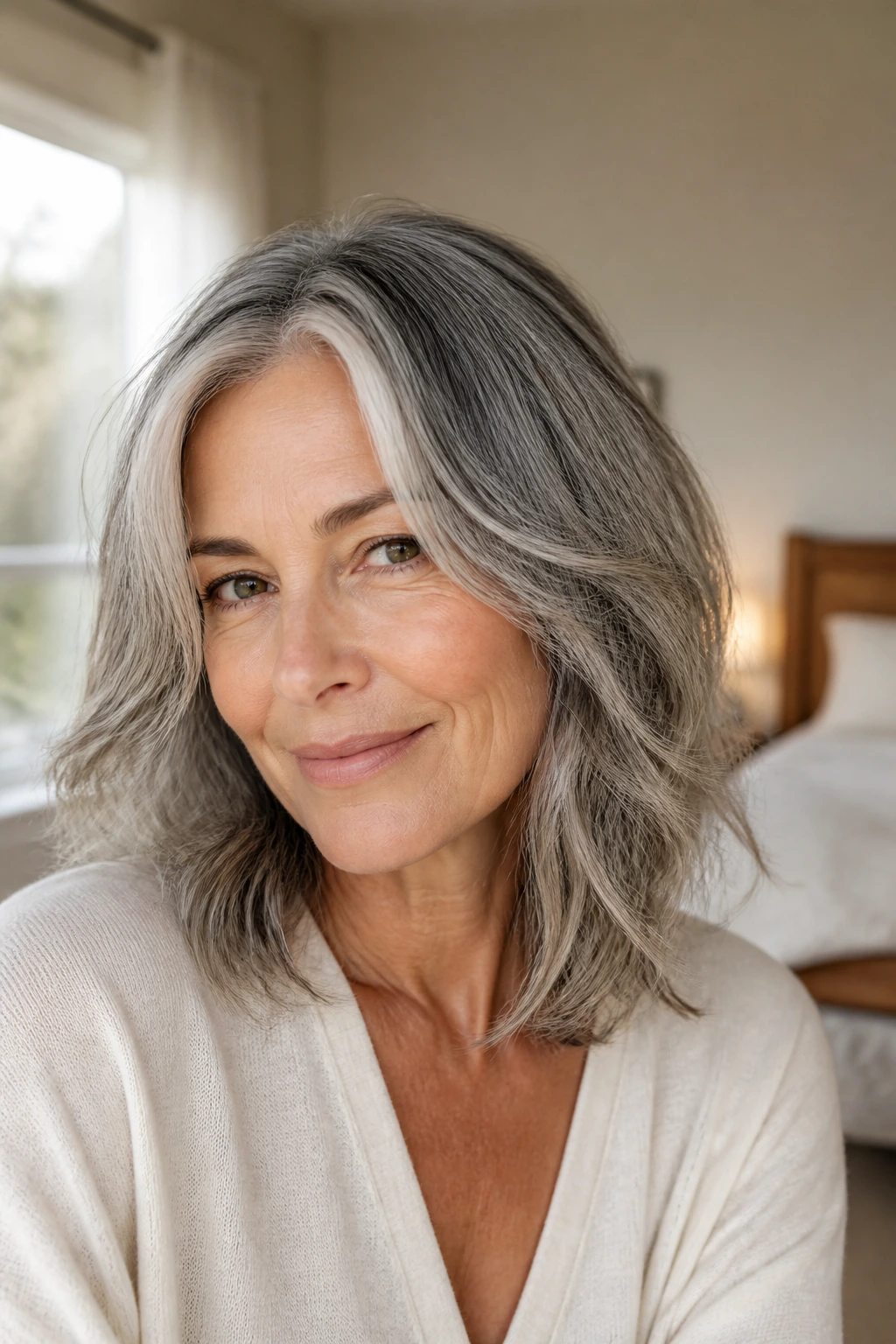
This look feels a little more relaxed than the polished collarbone cuts, and that is the point. Midlength layers let gray hair dry into its own shape instead of forcing it into one. If your natural wave pattern is uneven—or if you’ve got a few cowlicks that refuse to follow instructions—this cut can make them look intentional.
It’s a friendly cut for real life. You can scrunch it, twist it, or clip the front back while it dries. The layers keep it from becoming a triangle or a curtain, and the length gives you enough hair to tuck, braid, or pin when you want a change.
I’d call this the best “do less” option for people who still want movement. There’s no shame in that. Plenty of hair styles are overworked. This one isn’t.
19. Sleek Low Ponytail with Silver Shine
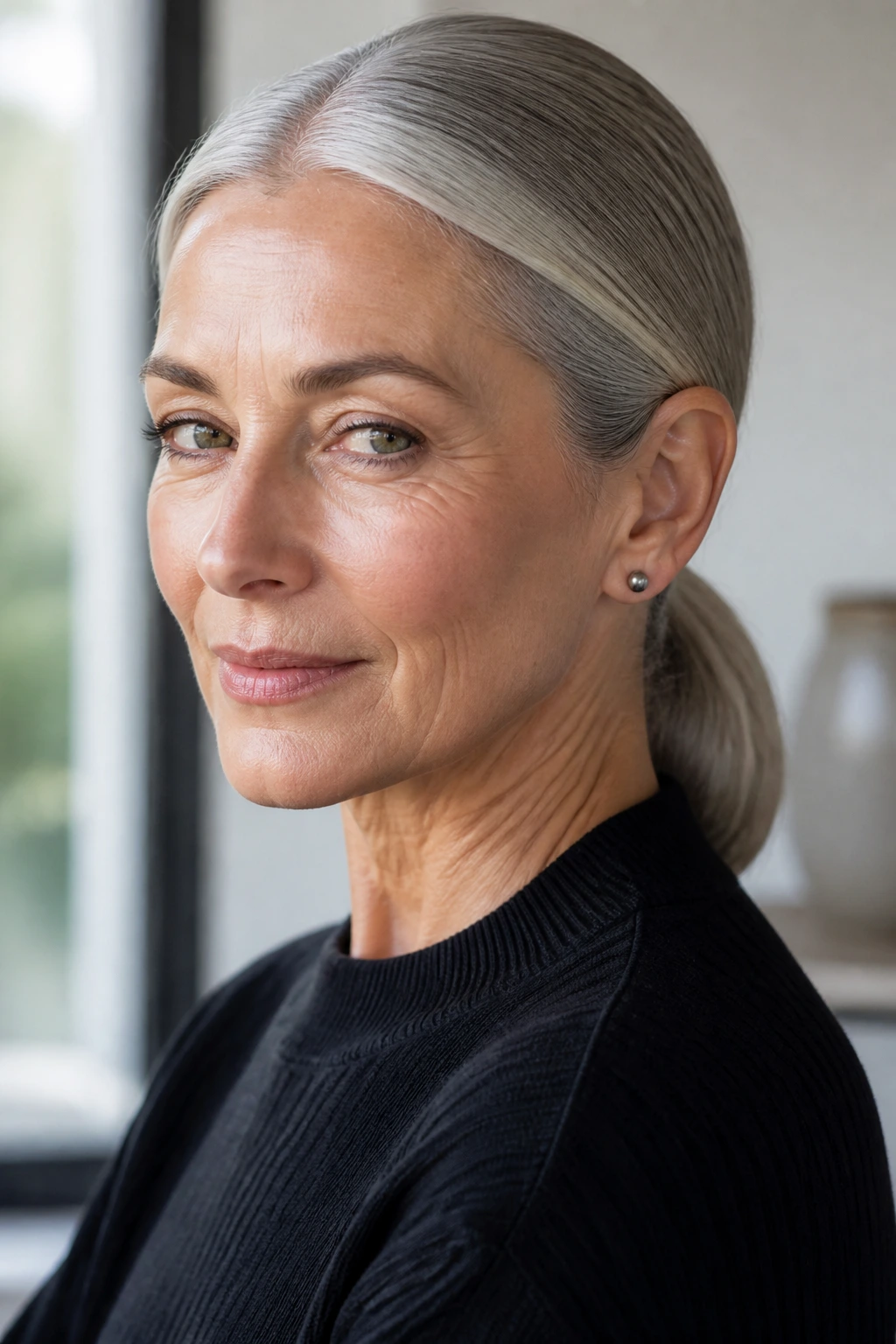
A low ponytail sounds basic until the gray starts shining through a smooth finish. Then it looks elegant in a quiet way that doesn’t need a lot of accessories. The trick is to keep the crown smooth, the part clean, and the pony low enough that it follows the line of the neck.
This works especially well on longer gray hair that doesn’t want to be worn loose every day. A little serum on the midlengths, a soft brush on the top, and a wrapped section of hair around the elastic make the whole thing look finished. No need for a tight, shiny ballet bun unless that’s your thing.
It’s also kind to weather. A low pony handles humidity better than loose blowouts do.
20. Braided Crown or Twisted Updo for Special Moments
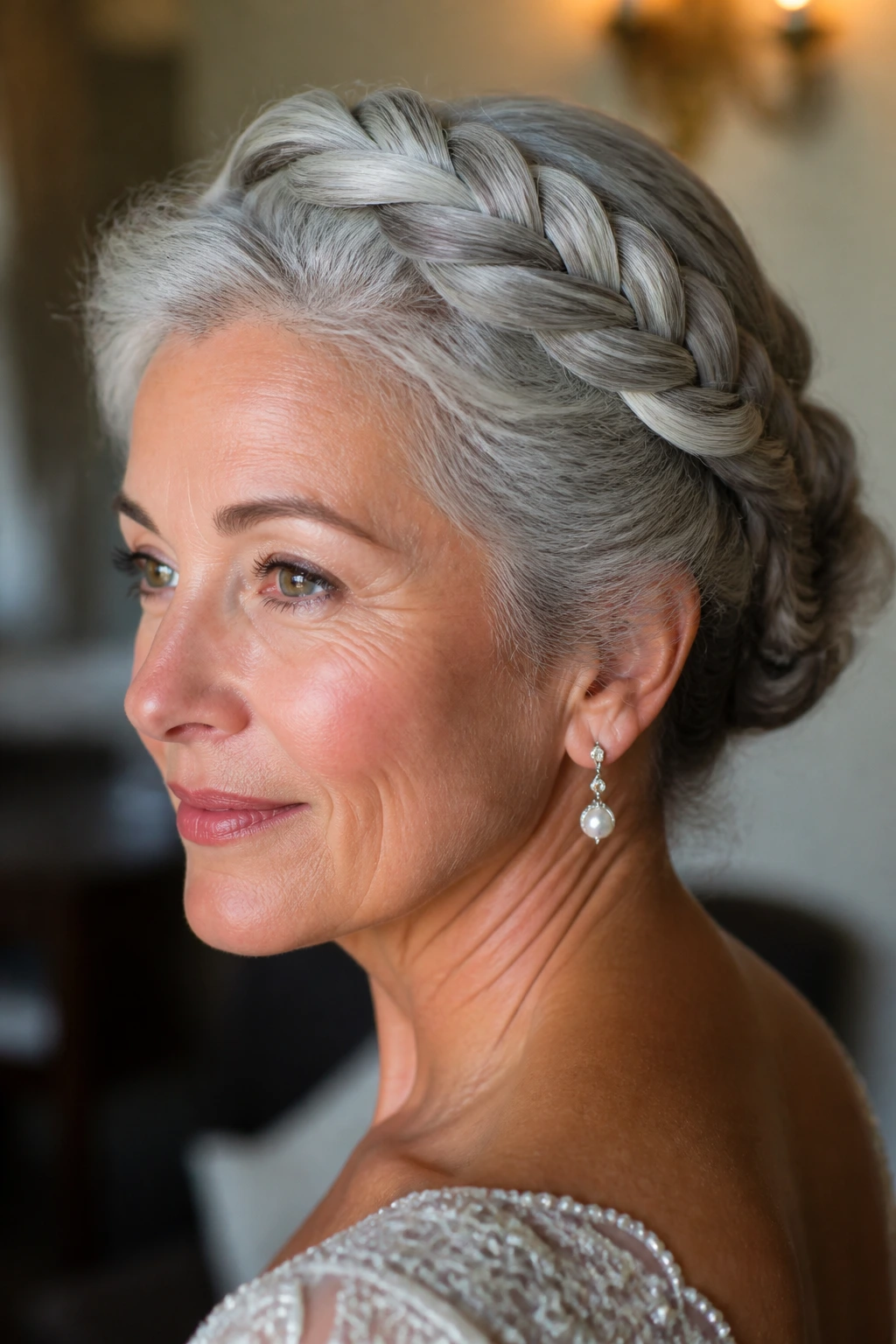
Need a gray hair look that feels special without looking fussy? A braided crown or twisted updo does the job. The gray threads through the braid like ribbon, which gives the style a lot of texture even when the hair itself is fine. On white-gray hair, the braid almost glows.
When This Style Makes Sense
It’s especially good for weddings, dinners, and any night when you want the neckline open. The braid or twist pulls the hair back, but it doesn’t flatten the color the way a severe bun can. A few soft pieces around the temples keep it from looking too stern.
- Best with: Medium to long hair.
- Helpful product: A light texturizing spray before braiding.
- Watch out for: Over-tight tension at the scalp. It can make the look sharp in a bad way.
21. Long White-Gray Layers with a Satin Finish
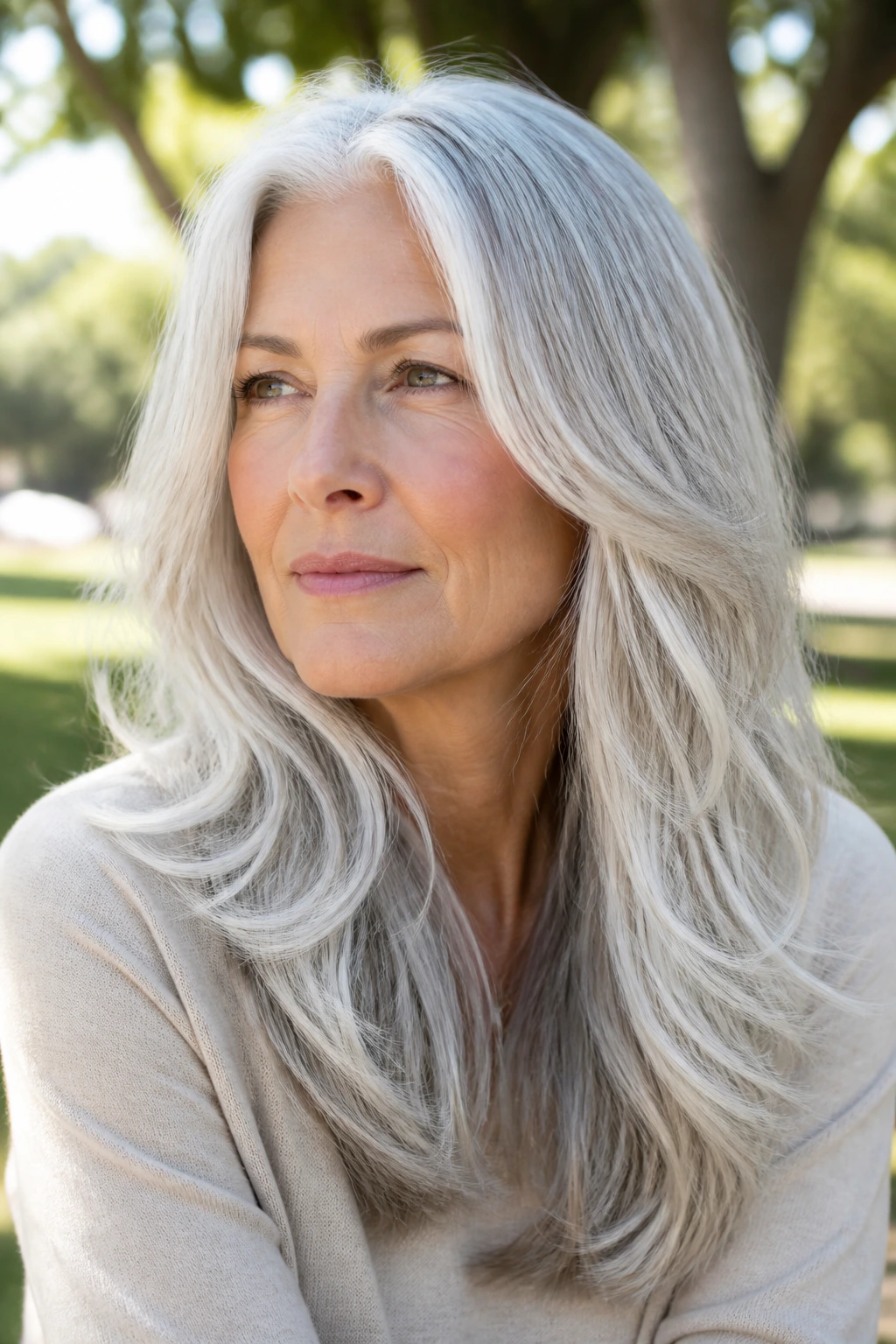
Long white-gray hair can look remarkable when the layers are placed with restraint and the finish is satin, not greasy. The length lets the color read like a sheet of light, while the layers prevent the whole thing from dragging down the face. This is not a cut for every head of hair, and I’d never pretend otherwise. But when density is there, the effect is hard to ignore.
A middle or slightly off-center part usually works better than a hard side part here. It keeps the weight balanced and lets the white tones move evenly from root to end. The styling goal is soft reflection, not glassy stiffness.
This is the look for someone who likes length and has the patience to care for it. When the ends are trimmed well and the shine is there, it’s quietly striking.
What Makes Gray Hair Read Polished Instead of Puffy
Gray hair changes the game because it changes both color and texture. The pigment is gone, yes, but the bigger shift is often the feel. Hair can become drier, a little rougher at the cuticle, and more prone to either puffing out or lying limp depending on the cut and humidity. That’s why the most flattering gray hair looks for women over 50 are usually built around shape, not just length.
I like styles that create a clean silhouette first, then add movement where it helps the face. A blunt bob, a tapered pixie, a layered lob, a rounded curl cut—they all solve a different shape problem. What they have in common is that none of them leave the gray to fend for itself. Gray hair needs a frame. Not a cage. A frame.
There’s also a shine issue. White and silver strands show dullness fast, so a good cut plus a clear gloss or a light serum can change the whole read of the hair. The difference between “flat” and “expensive” is often only a trim and a little light bounce off the surface.
Gray Hair Looks for Women Over 50: How to Pick the Right One
Start with texture, then move to density, then face shape. In that order. If you flip the process, you end up chasing a photo that looked good on someone with a totally different head of hair. Fine gray hair usually likes blunt lines or short crops with lift. Thick gray hair often needs layering, internal weight removal, or a shape that keeps the sides from expanding.
Face shape matters, but not in the cliché way people talk about it. A soft fringe can ease a long forehead. A chin-length bob can sharpen a soft jaw. Curtain bangs can open the face without flooding it with hair. You do not need to “correct” your face. You’re just deciding where the eye lands first.
I’d also pay attention to how much styling you’ll actually do. If you reach for the blow-dryer three times a week, you can handle a bob or a polished lob. If you’d rather air-dry and go, choose a shag, a rounded curl cut, or a textured crop. The best-looking style is the one that survives your own life.
Essential Tools for Styling Gray and Silver Hair
- Heat protectant spray: Gray hair can scorch and yellow more easily when it’s overworked with heat.
- Lightweight smoothing cream: Helps tame puffiness without making fine hair collapse.
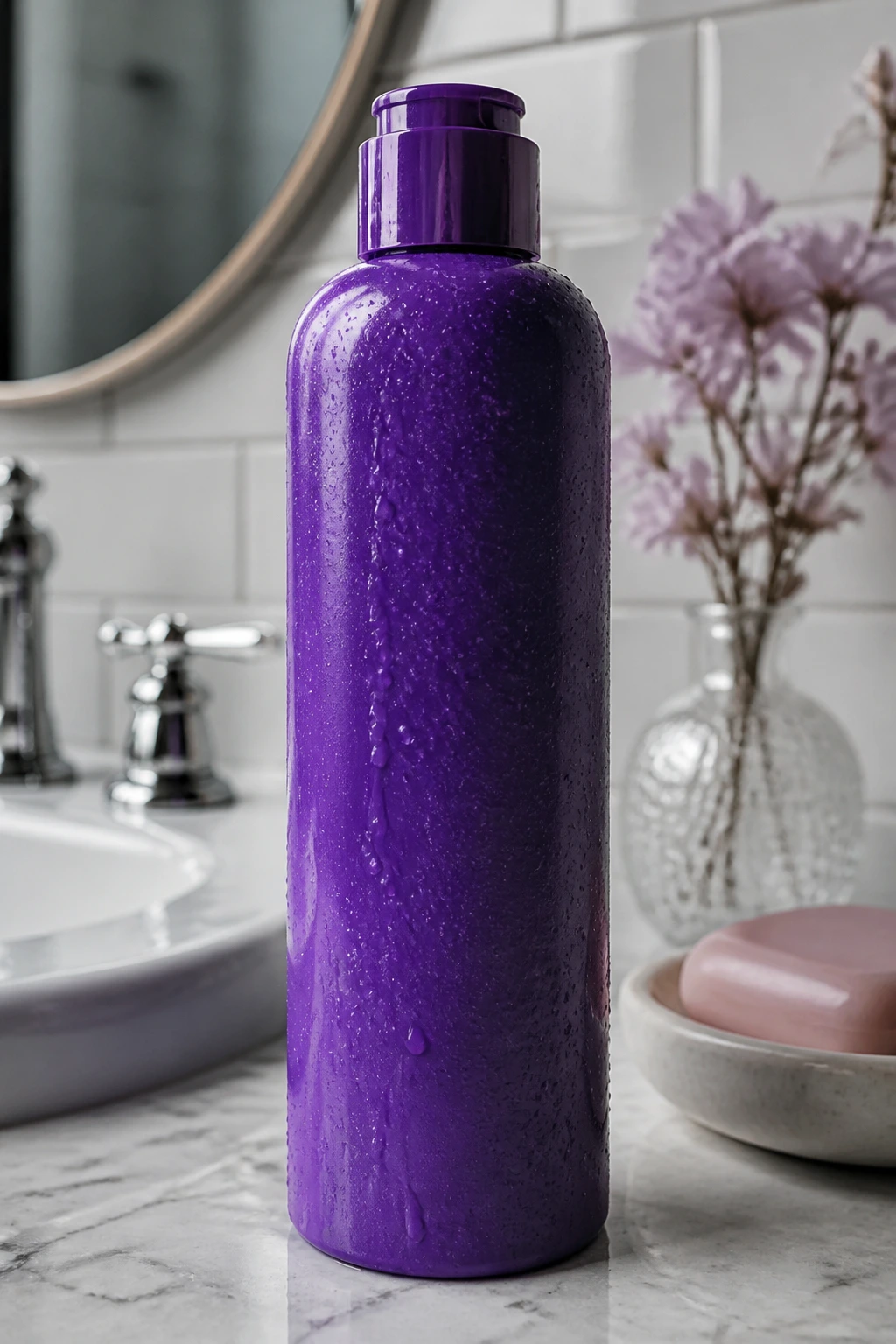
- Purple shampoo: Useful when white or silver hair starts reading dull or yellow from water, sun, or product buildup.
- Clear gloss or shine spray: Gives the surface a cleaner reflection without changing the color.
- Round brush: Handy for bobs, lobs, and blowouts that need a little bend at the ends.
- Diffuser: A must if you wear curls or waves and want definition without frizz.
- Wide-tooth comb: Better than a fine brush on wet curls and less likely to break fragile ends.
- Microfiber towel or soft cotton T-shirt: Cuts down on friction after washing.
- Small styling paste or wax: Best for pixies and crops where piecey texture matters.
- Silk or satin pillowcase: A small thing that keeps the cuticle from roughing up overnight.
Smart Shopping for Gray Hair Looks for Women Over 50
A good gray look starts in the chair, not the mirror. If you’re booking a trim, look for a stylist who talks about density, growth pattern, and texture—not just face shape. That’s the conversation that tells you whether the cut will actually behave after the blow-dryer is off. If your hair is wavy or curly, ask whether they cut dry. Dry cutting often shows the real fall of the hair better, which matters when gray strands have their own stubborn personality.
Products matter too, but not in the giant-routine way the internet likes to sell. A clear gloss every so often can keep silver from looking chalky. A purple shampoo helps when the white tones drift yellow, but leave it on for a short time at first—about 30 to 60 seconds—so you can see what it does before you overdo it. Heavy masks can be useful on coarse gray ends, though fine hair usually wants lighter formulas that rinse clean.
If you color the rest of your hair while growing gray, ask about blending. A soft root melt or lowlights often looks better than hard coverage lines. That approach keeps the transition from screaming for attention.
How to Wear These Looks With Glasses, Necklines, and Makeup
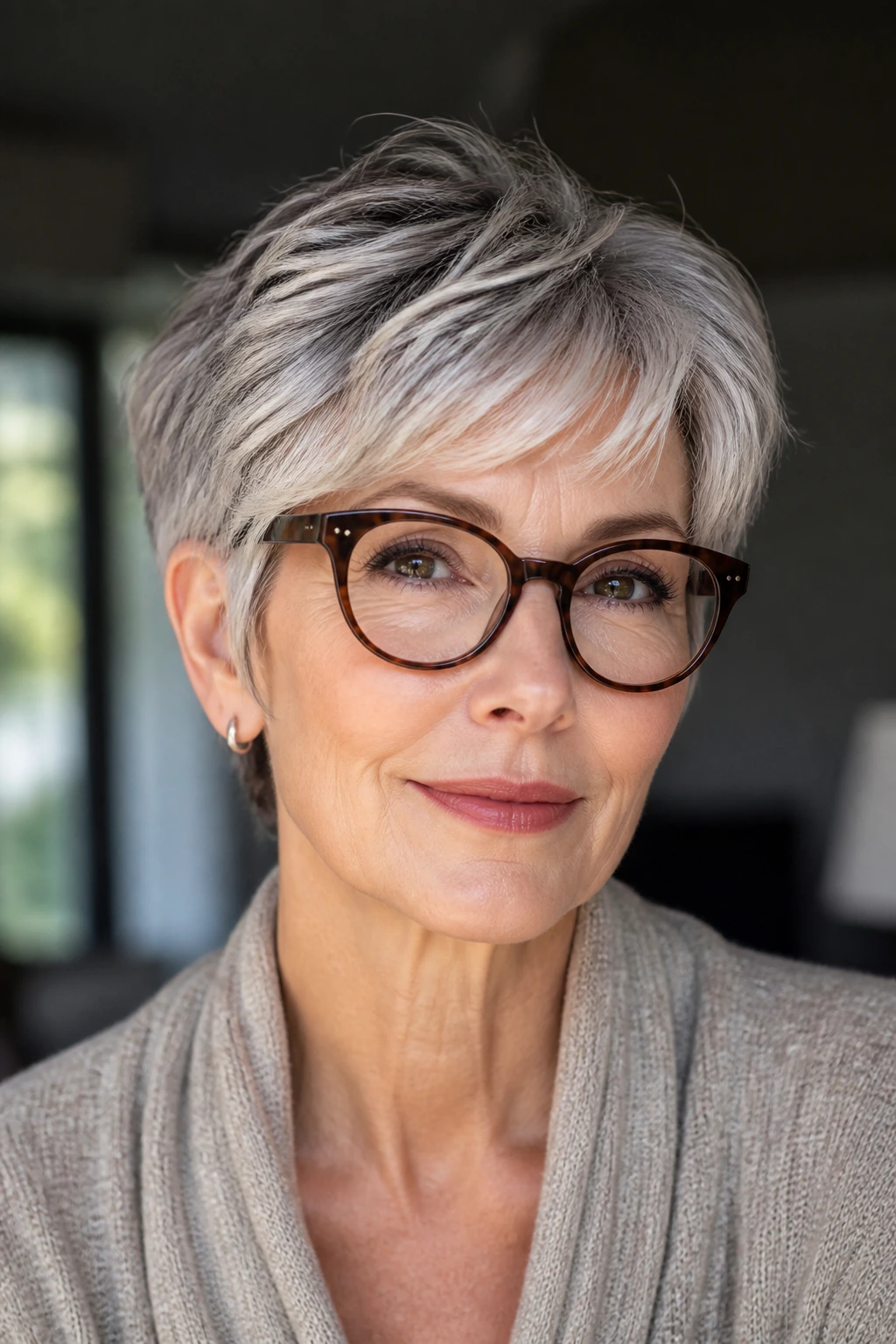
Glasses: A side-swept pixie, French bob, or curtain fringe should stop near the frame line, not fight it. If the bangs keep landing right on your glasses, you’ll spend half the day pushing hair away from your lenses.
Necklines: Short cuts like crops and bobs look especially good with open necklines, V-necks, and collars that show a little skin. Long silver waves can handle a higher neckline because the hair already gives the face enough air.
Earrings: Short gray hair makes earrings do more work, so hoops, drops, or a clean metal stud can look sharp. With long hair, you may want a little more size or shine so the jewelry doesn’t disappear.
Makeup: Gray hair can soften contrast around the face, which means brows, blush, and lip color often need a touch more definition. Not a heavy hand. Just enough so your features don’t get washed out beside the silver.
Additional Tips and Shine Boosters
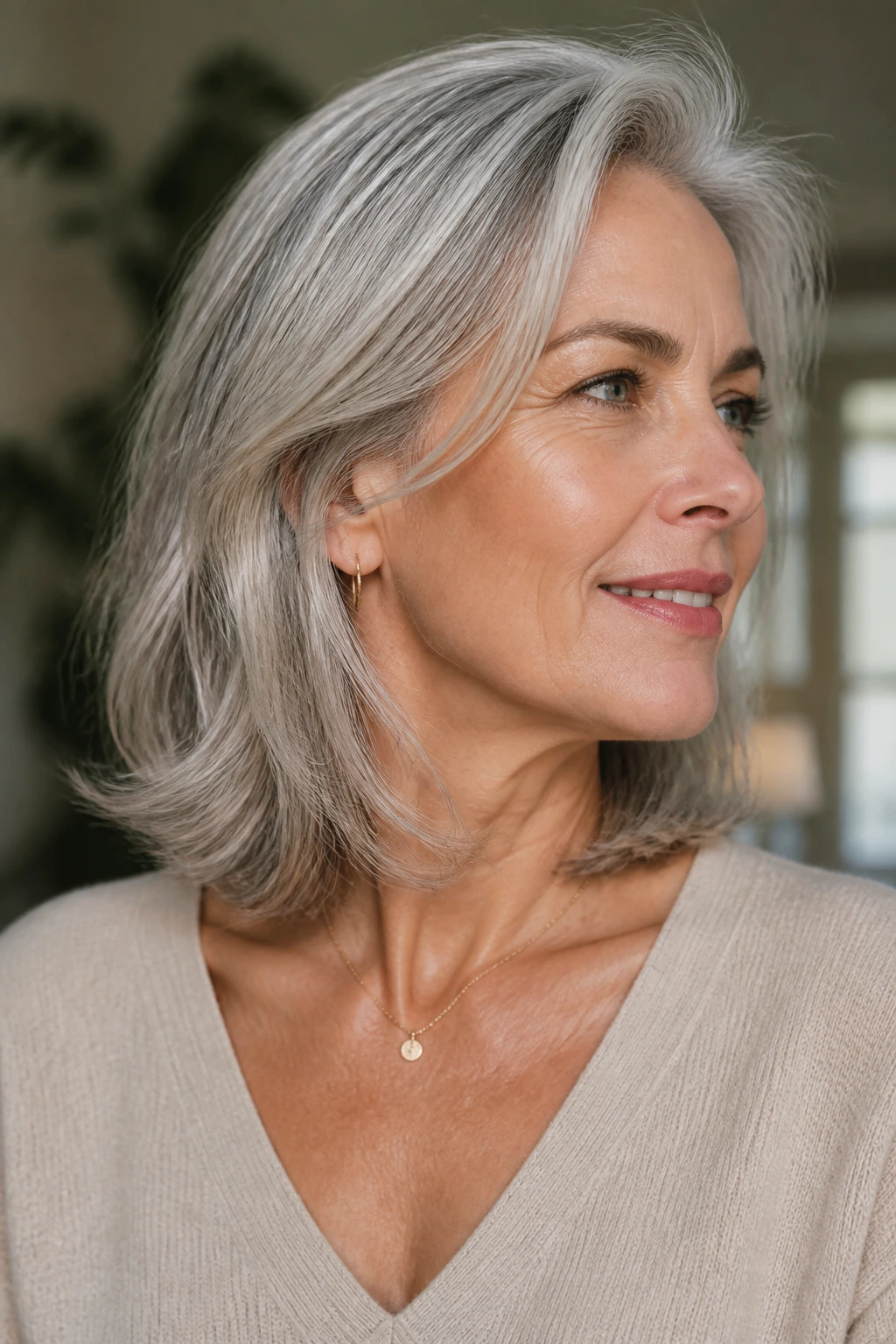
Shine Enhancement: A clear gloss every 6 to 8 weeks can keep gray hair from looking dusty, especially on blunt bobs and long silver layers. If glossing feels like too much, a drop of lightweight serum on the midlengths and ends does a smaller version of the same job.
Customization: Add a curtain fringe if you want softness around the eyes, or keep the nape tighter if you want the cut to feel sharper. Those tiny changes matter more than people think. They can make the same base haircut look gentler, bolder, or easier to manage.
Styling Shortcut: For hair that frizzes up fast, mist the ends with water and a little leave-in, then twist two front sections away from the face while they dry. You get movement without a full hot-tool session.
Make-It-Yours: If you like low maintenance, choose texture and air-dry shape. If you like polish, lean into a round brush, a clean part, and a smoother finish. Gray hair wears both well when the cut is honest about what it is.
Keeping Gray Hair Fresh Between Appointments
Gray hair can stay beautiful between salon visits, but it needs a steadier rhythm than people expect. Short cuts usually want a trim every 4 to 6 weeks because the shape shows quickly once the neckline and sides grow out. Bobs can stretch a little longer, closer to 6 to 8 weeks, if the edges are blunt and the ends stay healthy. Long layers are more forgiving, though dusting the ends every 8 to 12 weeks keeps them from splitting and turning ragged.
Washing is its own game. If your scalp runs dry, every 2 to 4 days is often enough. If the roots get oily faster, use a gentle shampoo more often and keep conditioner off the scalp. Purple shampoo can help once every 1 to 2 weeks when silver starts turning warm or yellow. Don’t chase the purple on every wash. That’s how hair ends up flat or slightly lilac in the wrong light.
Heat protectant belongs on the hair every single time you use a dryer, iron, or hot brush. Every time. Gray strands don’t forgive sloppy heat the way darker hair sometimes seems to. If you swim, rinse afterward and use a chelating shampoo occasionally to strip out mineral buildup. Hard water can make silver hair look dull in a way that has nothing to do with age and everything to do with residue.
At night, a silk or satin pillowcase reduces friction, and that matters more as hair gets drier. A loose braid or low ponytail can also keep long gray strands from tangling into a nest by morning. Tiny habits. Big payoff.
Common Mistakes That Make Gray Hair Look Flat or Harsh
The biggest mistake is keeping the same shape you wore when your hair was darker. Gray changes the way light hits the hair, and an old cut can suddenly look heavy or washed out. If the ends are stringy or the crown has gone limp, the answer is usually a trim, not another styling product.
Another common slip is using too much purple shampoo. The color can go from bright silver to dull and slightly muddy if toning products are left on too long or used too often. Start small. Watch the result. Gray hair is not a sink for extra pigment.
Heavy bangs cause trouble too. A thick fringe on silver hair can make the face look boxed in, especially if the rest of the cut is long or dense. Softer bangs, side sweeps, or curtain fringe usually read better because they keep the forehead open.
Ignoring moisture is another one. Gray strands tend to rough up faster, so a cut that looks sharp on paper can puff and fray without some conditioning. The fix is a lightweight mask once a week if your hair is dry, plus a serum on the ends.
And then there’s the parting problem. A part that worked ten years ago might fight your growth pattern now. If one side flops, switch the part, even slightly. A half-inch shift can make the whole style look more awake.
Variations and Alternatives to Try
Soft Salt-and-Pepper Blend: If your gray is coming in unevenly, ask for lowlights or a root melt that softens the contrast. The grow-out looks calmer, and you don’t get that harsh line where dark meets white.
Glossy White Veil: This one is for high-white hair that could use a little polish. A clear gloss and a blunt cut make the white read clean and reflective, almost like brushed metal.
Low-Commitment Grow-Out: Keep the length at the collarbone with long layers and avoid heavy fringe. It’s a smart choice if you want to keep some styling options while the gray transitions.
Curl-First Shape: For curls, let the cut follow the curl pattern instead of fighting it. That means more rounding, less thinning, and a shape that respects shrinkage.
Sharp and Structured: Choose a bob or pixie with cleaner lines if you like the hair to look crisp. This works especially well with strong earrings, tailored clothes, and a little more makeup definition.
Warm and Dimensional: If your silver has yellowed or looks flat, add subtle beige or pearl lowlights around the face. The goal is not to cover the gray. It’s to give the eye a little movement.
Frequently Asked Questions
What gray hair look is most flattering for women over 50 with fine hair?
A blunt bob, a side-swept pixie, or a collarbone cut with light layers usually gives fine gray hair the most life. Those shapes make the ends look fuller, which is half the battle when density starts to soften.
Do I need to cut my hair short when I go gray?
No. Short hair can be easier to manage, but long gray hair can look gorgeous if the ends are healthy and the cut has layers or movement. The real issue is shape, not length.
How do I keep gray hair from turning yellow?
Use a purple shampoo every week or two if yellow tones show up, and rinse well after swimming or washing in hard water. Heat protection matters too, because heat damage can make silver hair look dull and warm at the same time.
Do bangs work with gray hair?
Yes, but the type matters. Soft bangs, curtain bangs, or a side sweep usually flatter gray hair better than a thick, blunt fringe unless the rest of the cut is very clean and structured.
What if my gray is coming in patchy?
That’s where blending cuts and lowlights help. A layered bob, shag, or lob can make patchy growth look intentional while the color transition settles in.
Is a center part better than a side part for gray hair?
Neither is always better. A center part can look crisp on symmetrical faces and blunt cuts, while a side part often softens the face and adds lift at the crown. Try both before deciding; hair often tells you the answer in ten seconds.
How often should I trim gray hair?
Short styles usually need trims every 4 to 6 weeks. Bobs and lobs can go 6 to 8 weeks, and longer layers can stretch to around 8 to 12 weeks if the ends are still healthy.
Can gray hair still look glamorous without a salon blowout?
Absolutely. A good air-dried shag, a rounded curl cut, or a sleek low ponytail can look polished with the right product and a clean finish. The trick is keeping the silhouette tidy.
The Shape That Lets Silver Speak
Gray hair gets blamed for a lot that really belongs to the cut. Flat crown, ragged ends, harsh fringe, too much length—those are the usual culprits. Once the shape is right, the silver starts doing what it does best: catching light, showing texture, and giving the face a cleaner frame.
The smartest looks here do not hide the gray. They give it structure. That’s a better deal, and honestly a more interesting one.
Bring the right photo to the salon, talk honestly about your texture, and let the haircut do the heavy lifting. The silver will handle the rest.
