



The best gray hair looks for women over 60 don’t try to hide the silver. They give it shape, shine, and a cut that understands what the hair is doing now. That matters more than people think. Gray strands often feel drier, can get a little wiry at the ends, and pick up light in a way dyed hair never quite does. A good style works with that change instead of wrestling it into something stiff.
What I keep seeing, over and over, is that the right gray hairstyle can do three things at once: soften the face, make the neckline feel cleaner, and keep the hair from looking puffed up or flat in all the wrong places. A blunt line can be gorgeous. A feathered edge can be even better. The trick is matching the shape to the hair’s texture, density, and how much time you want to spend in front of the mirror.
And there’s a nice side effect. The silver itself becomes the feature. Not the problem. Not something to cover. Just hair with a little attitude and a better shape around it.
Why These Gray Hair Looks Deserve a Second Look
-
Shape beats length every time: A clean line around the jaw, cheekbones, or collarbone can make gray hair look more intentional than a heavy curtain of unlayered length.
-
Texture works in your favor: Silver strands usually have more grip than dyed hair, which means waves, pieces, and feathering often hold better than they did before.
-
Several of these styles are low-fuss: A good pixie, bob, or tapered crop can look finished with a round brush, a little mousse, and ten minutes.
-
They play nicely with glasses and earrings: The right fringe or side sweep keeps the face open instead of crowded.
-
You can go soft or sharp: Gray hair can look airy, polished, edgy, or romantic without losing dignity. That’s the fun part.
What Gray Hair Changes in Texture, Shape, and Shine
Gray hair is not just “hair that lost color.” The strand itself changes. Melanin drops away, the cuticle can feel rougher, and the hair often feels drier because the scalp tends to make less oil. That’s why silver hair can frizz faster, stick out at the crown, or look dull under harsh light if it’s cut too heavily or washed with the wrong shampoo.
This is also why a lot of women over 60 get better results from shape than from length alone. Layers can stop the ends from hanging like a curtain. A side part can wake up a flat crown. A soft fringe can shorten a long forehead or balance glasses. Little things. They add up.
The other piece is shine. Gray and white hair can look icy and clean, but yellowing from hard water, heat, sun, or heavy product buildup can make it look tired fast. A cut that moves well, plus the right gloss or purple shampoo used carefully, keeps the silver looking crisp instead of muddy.
1. Feathered Pixie with Side-Swept Bangs
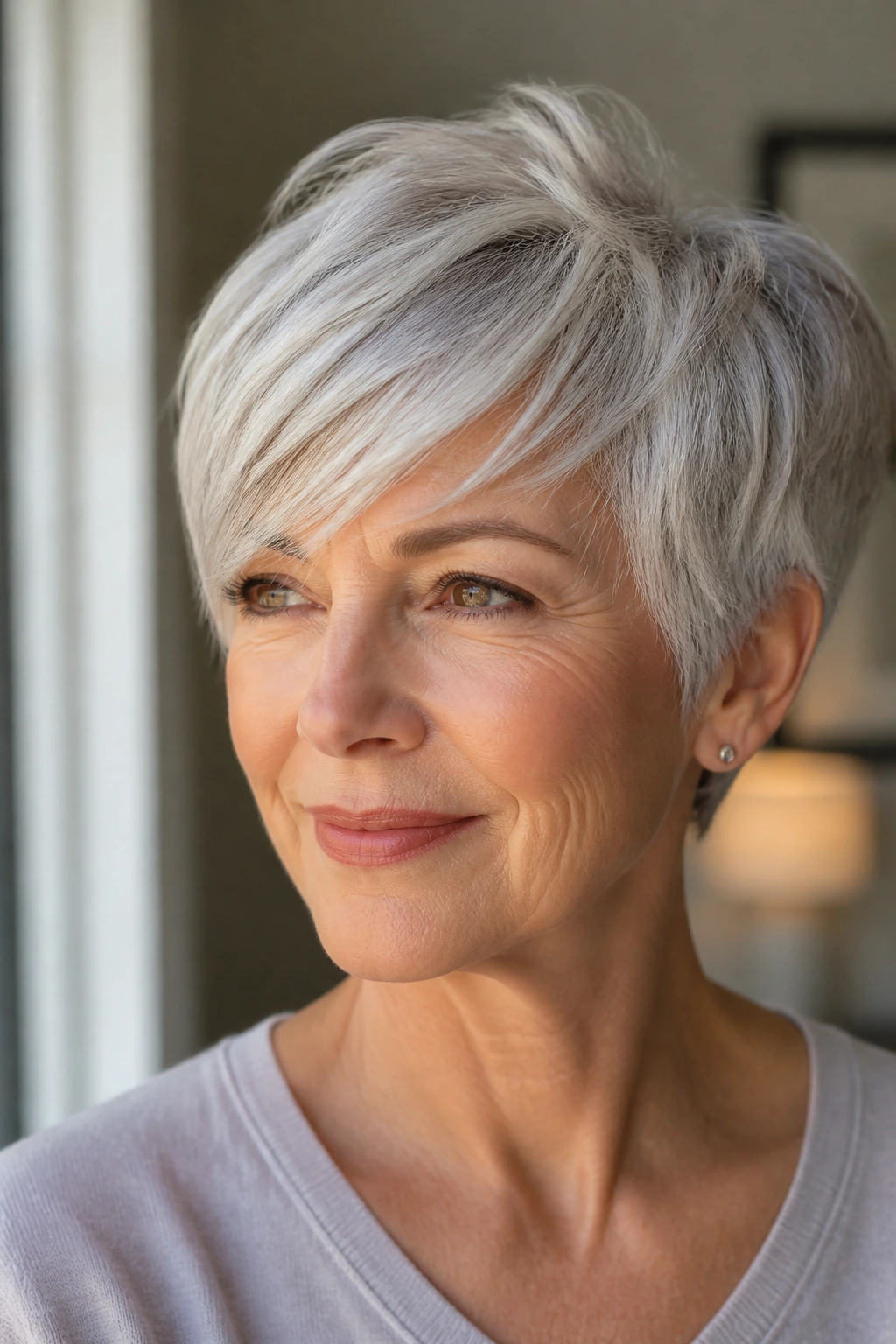
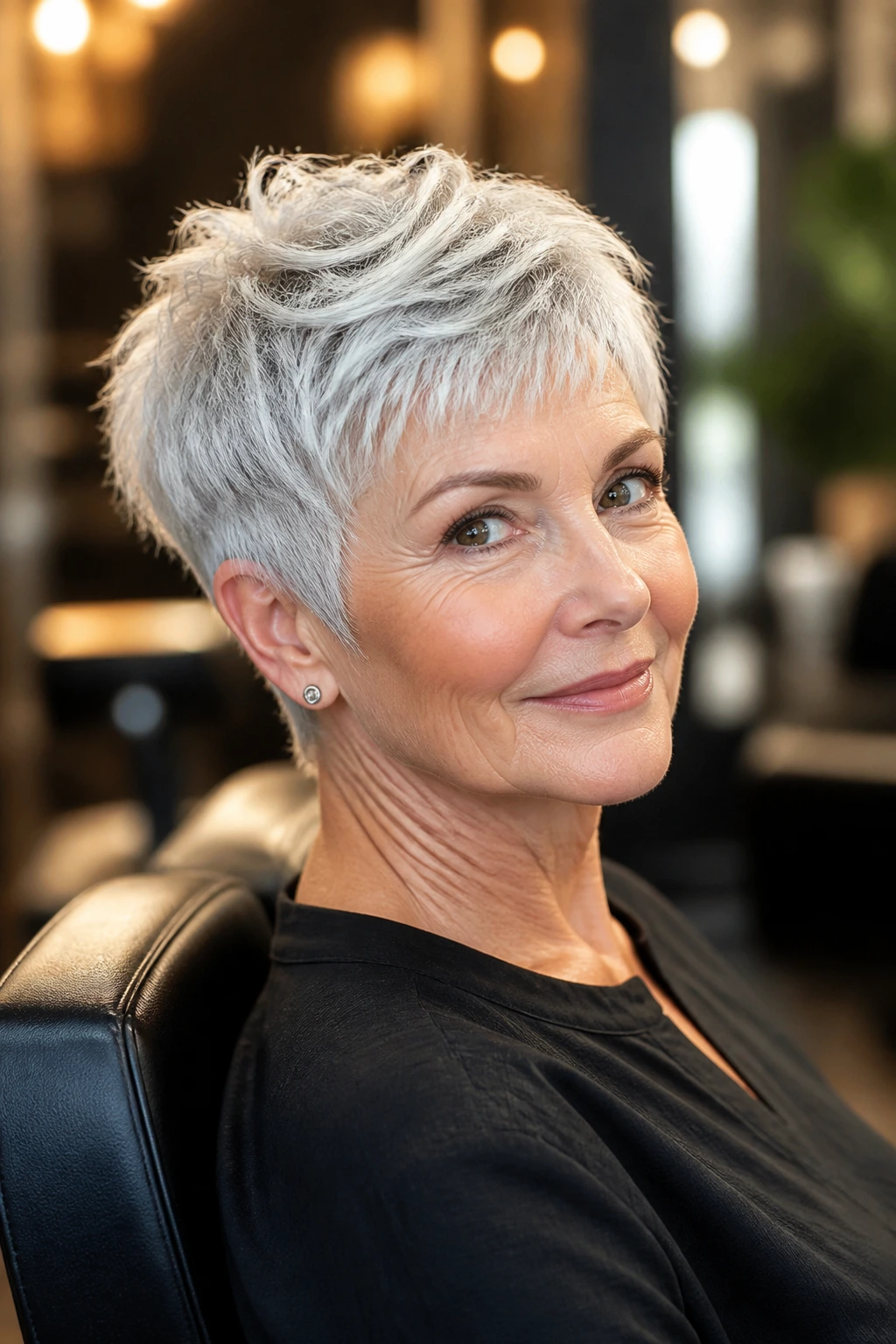
A feathered pixie is one of those cuts that makes gray hair look lively the second you tuck one side behind the ear. The feathers at the crown lift fine or medium hair, and the side-swept bangs keep the front from feeling severe. It’s a smart cut if your hair has lost some density over the years and needs a little visual puff without actual bulk.
What I like most is how forgiving it is on busy mornings. A dime-size amount of mousse at the roots, a quick blast with a blow dryer, then a little finger shaping is usually enough. If the bangs fall too straight, run a round brush under them for ten seconds and move on. No drama. Just clean lines and a little softness around the forehead.
Best for: fine hair, a smaller face, or anyone who likes a cut that shows off earrings and doesn’t collapse by lunch.
2. Chin-Length Silver Bob with Soft Ends
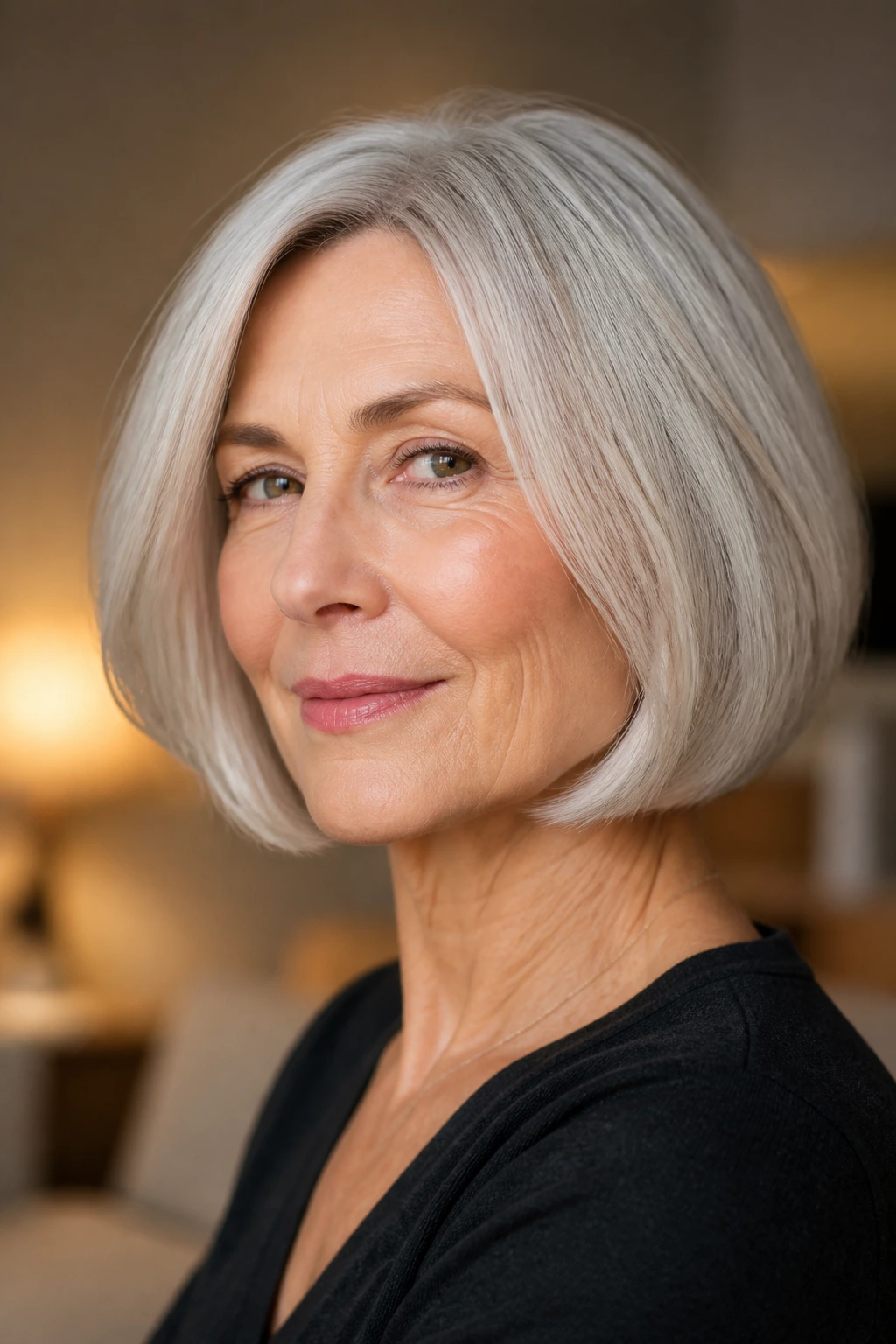
A chin-length bob sits right where the jaw starts to do interesting things, which is why it flatters so many women over 60. The soft ends keep the shape from turning boxy. On gray hair, that matters. A hard blunt line can look sharp in a way that works for some people, but softening the perimeter usually makes the cut feel more flattering and less helmet-like.
This is also one of the easiest styles to dress up or down. Tuck one side behind the ear and you get a neat, open look. Add a bend with a one-inch iron and it feels a little more relaxed. If your hair is straight and fine, ask for point-cut ends so the bob doesn’t look too heavy at the bottom.
The whole cut lives on the line of the jaw. Keep that line clean, and the style stays polished.
3. Layered Shoulder-Length Cut with Face-Framing Pieces
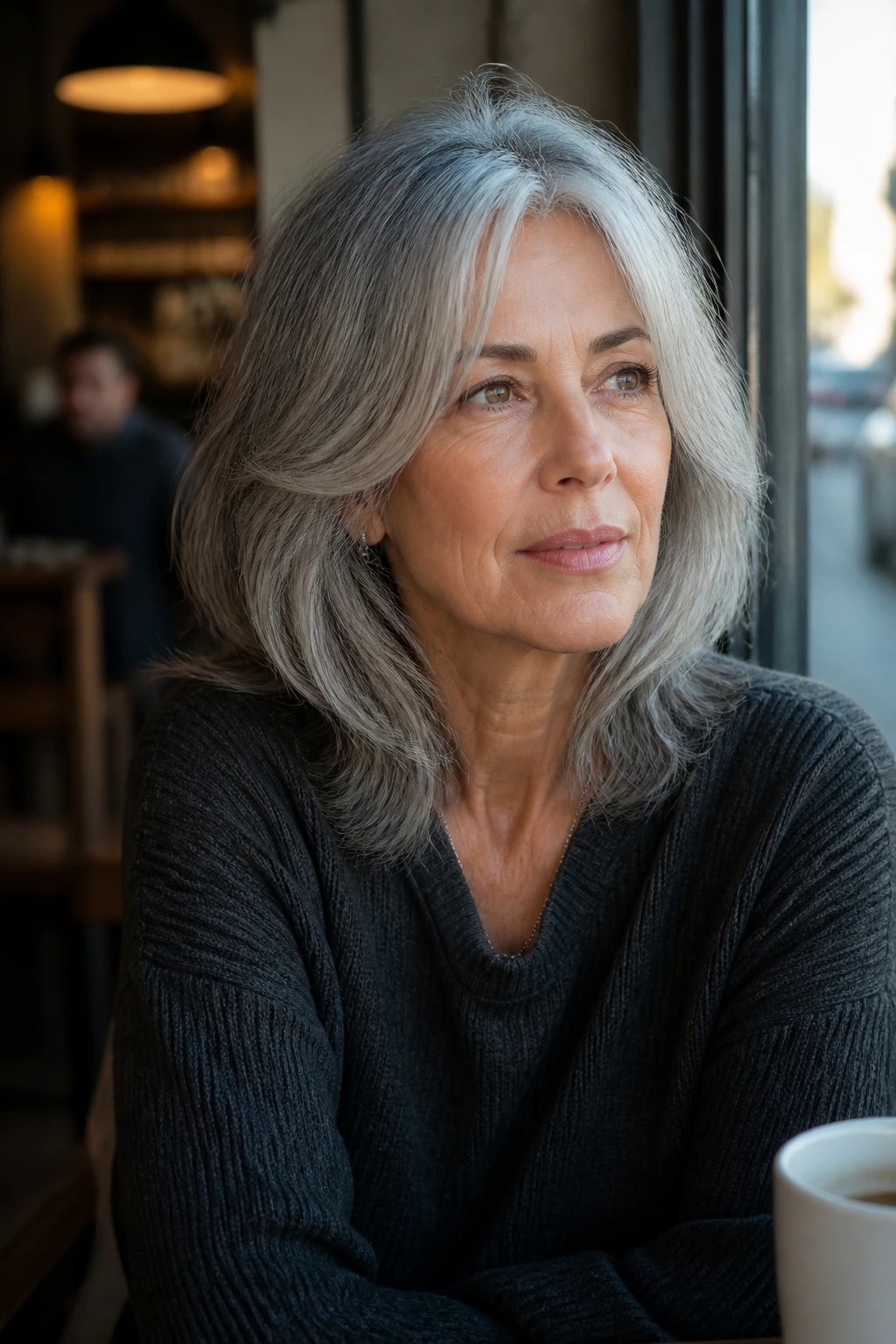
Want to keep some length without letting the hair drag your face down? This is the move. A shoulder-length cut with long layers and face-framing pieces gives gray hair room to move, but it still leaves enough length for a bun, clip, or half-up twist when you want it.
The face-framing pieces are the secret. They should start around the cheekbone or just below it, then blend softly into the rest of the cut. That kind of layering can soften the jaw and make the whole style feel lighter. If the layers start too high, the cut can get choppy fast. Too low, and it just hangs there.
This style is especially good if your hair has some wave. A little cream, a rough dry, and a few bends around the front can make the silver look dimensional rather than flat.
4. Curly Shag with Rounded Volume
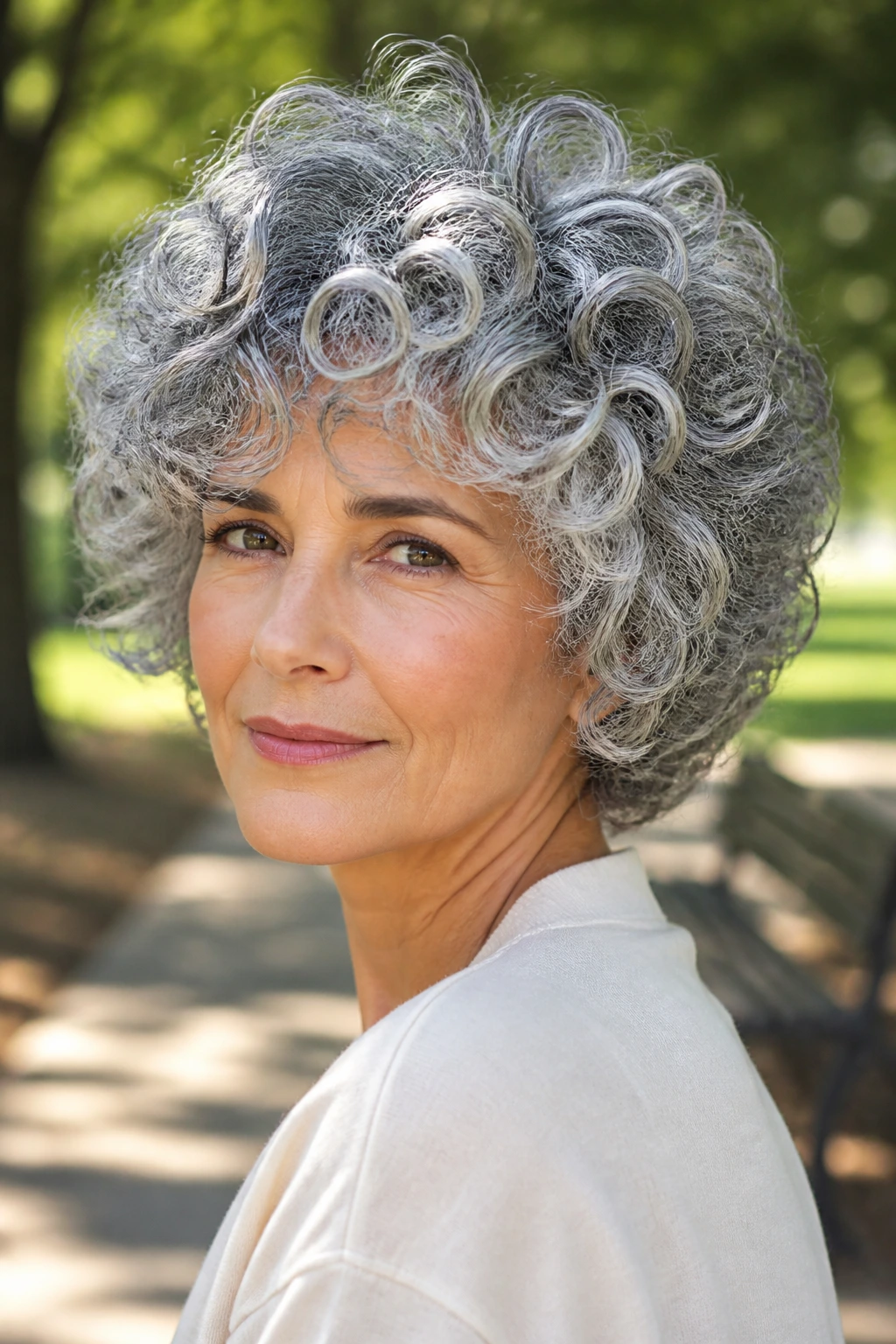
A curly shag can be glorious on gray hair because it respects the curl instead of fighting it. The shorter crown and stacked layers help the curls lift instead of balloon outward at the bottom. That rounded silhouette is the whole point. It gives shape without making the hair look stiff.
Gray curls often get drier and a little more porous, so the styling product matters. A leave-in conditioner followed by a curl cream or light gel usually works better than a heavy oil. Diffuse on low heat and stop when the curls are about 80 percent dry. If you keep touching them while they cool, they’ll frizz. Tempting. Don’t.
This cut has personality. It doesn’t whisper. It shows up.
5. Sleek Tapered Crop
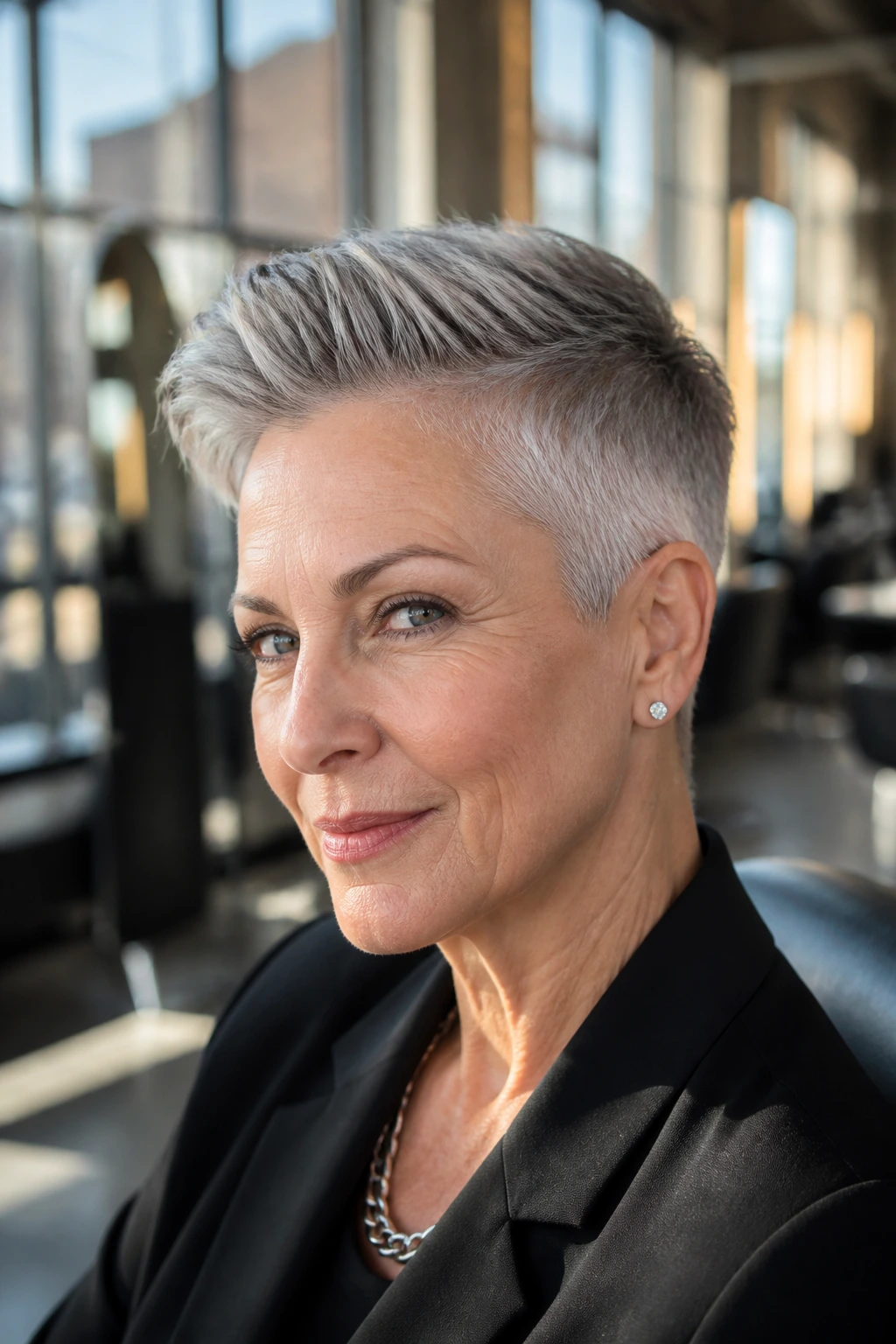
A tapered crop is sharp in the best way. The sides and nape stay close, while the top keeps enough length to sweep, spike, or brush forward. Gray hair takes to this shape nicely because the contrast between the shorter sides and longer top makes the silver look crisp instead of fuzzy.
This is a strong choice if your hair is thick, coarse, or grows in a way that puffs at the neckline. The taper removes the weight where it tends to swell, and that can make the whole head look neater by a mile. A matte paste gives control without the greasy look that can flatten silver hair fast.
If you like structure and don’t want to deal with a lot of blow-drying, this one earns its keep. It’s tidy. It’s modern. And it doesn’t apologize.
6. Wavy Lob with a Deep Side Part
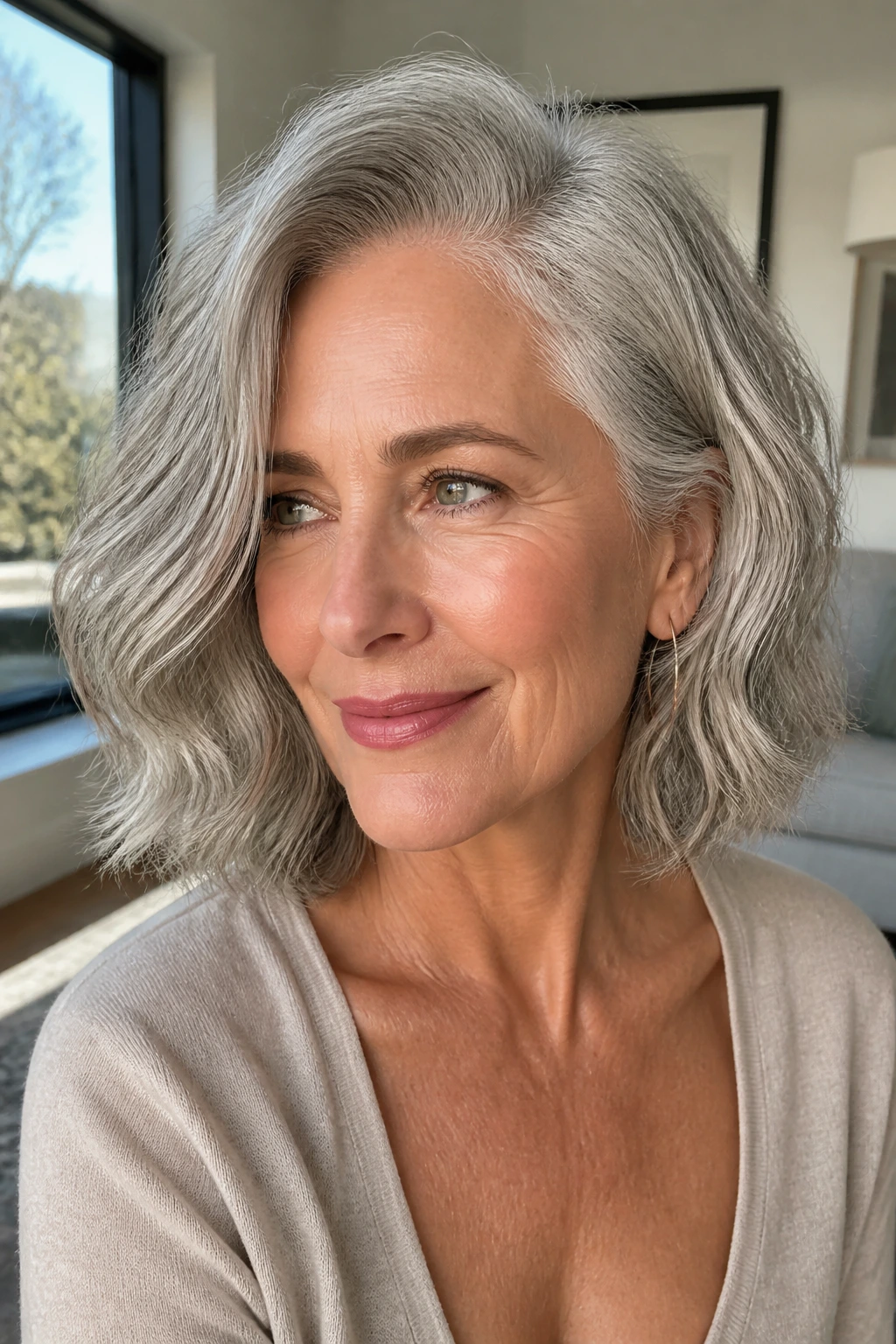
A deep side part changes everything here. The lob itself—usually collarbone to just above the shoulders—gives gray hair enough length to wave, but the side part lifts the front and keeps the crown from going limp. On fine hair, that little shift can mean the difference between “flat” and “finished.”
I prefer this look with soft, loose waves rather than tight curls. A curling iron or flat iron bend through the mid-lengths, then a finger comb once the hair cools, gives you movement without turning the style into ringlets. Gray hair can hold this wave well, and the side part adds a bit of drama without trying too hard.
If your face feels longest in the middle, this cut helps break that line up. It’s one of those quietly useful styles.
7. French Bob with Tucked-In Ends
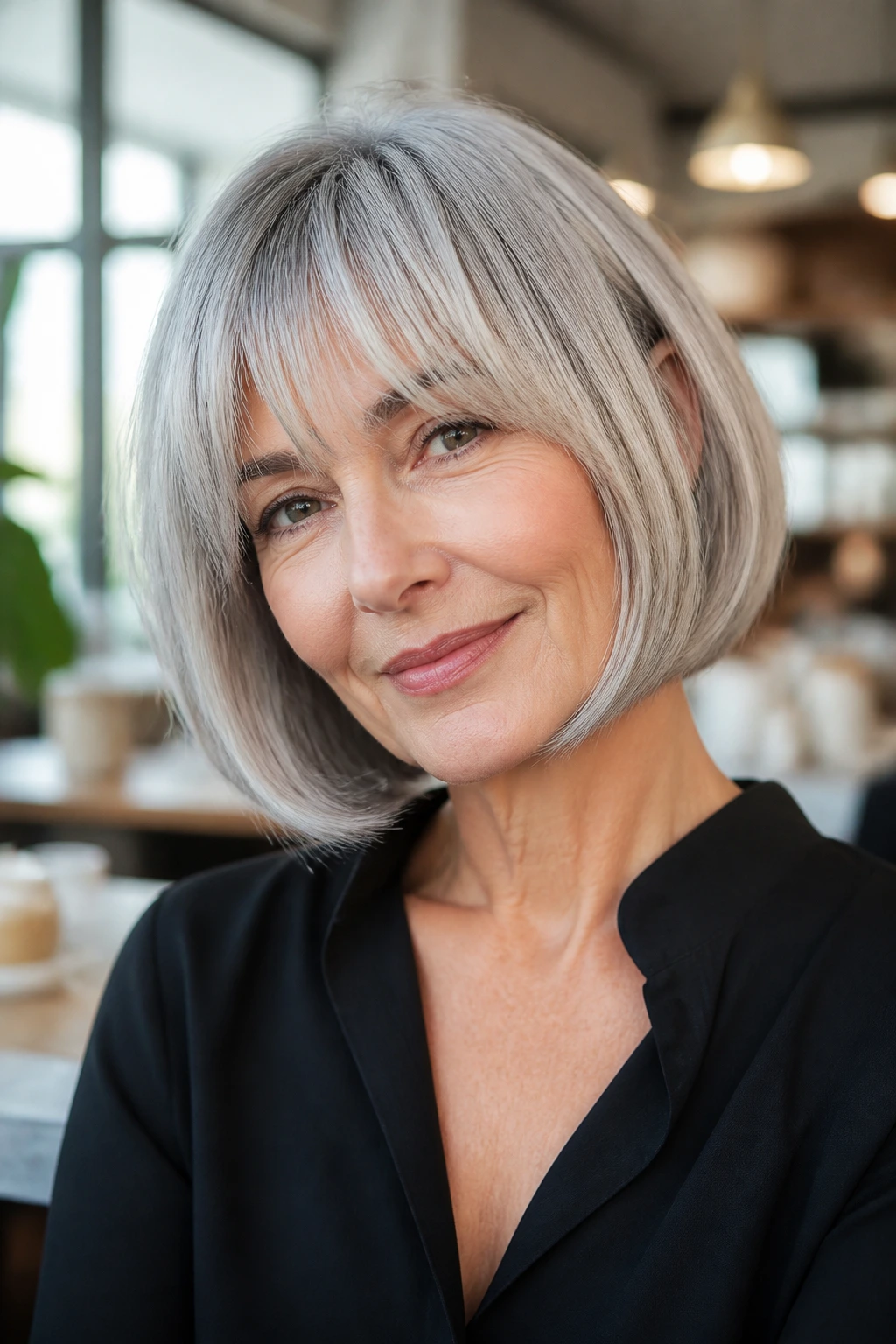
The French bob has that neat, almost cheeky feel that works beautifully with silver hair. The ends skim the jaw or sit just below it, and the shape usually includes a soft bend inward. That tucked-in edge makes the bob look deliberate, not severe. It’s a small thing. It changes the whole mood.
This look works best when the hair is straight or only slightly wavy. A quick round-brush finish gives the ends that subtle curve, and if you tuck one side behind the ear, the shape gets even cleaner. It’s especially nice if you want your glasses, earrings, or lipstick to do some of the talking.
The French bob is polished without feeling fussy. That’s why it keeps showing up on women who know exactly what they like.
8. Long Silver Layers with Curtain Bangs
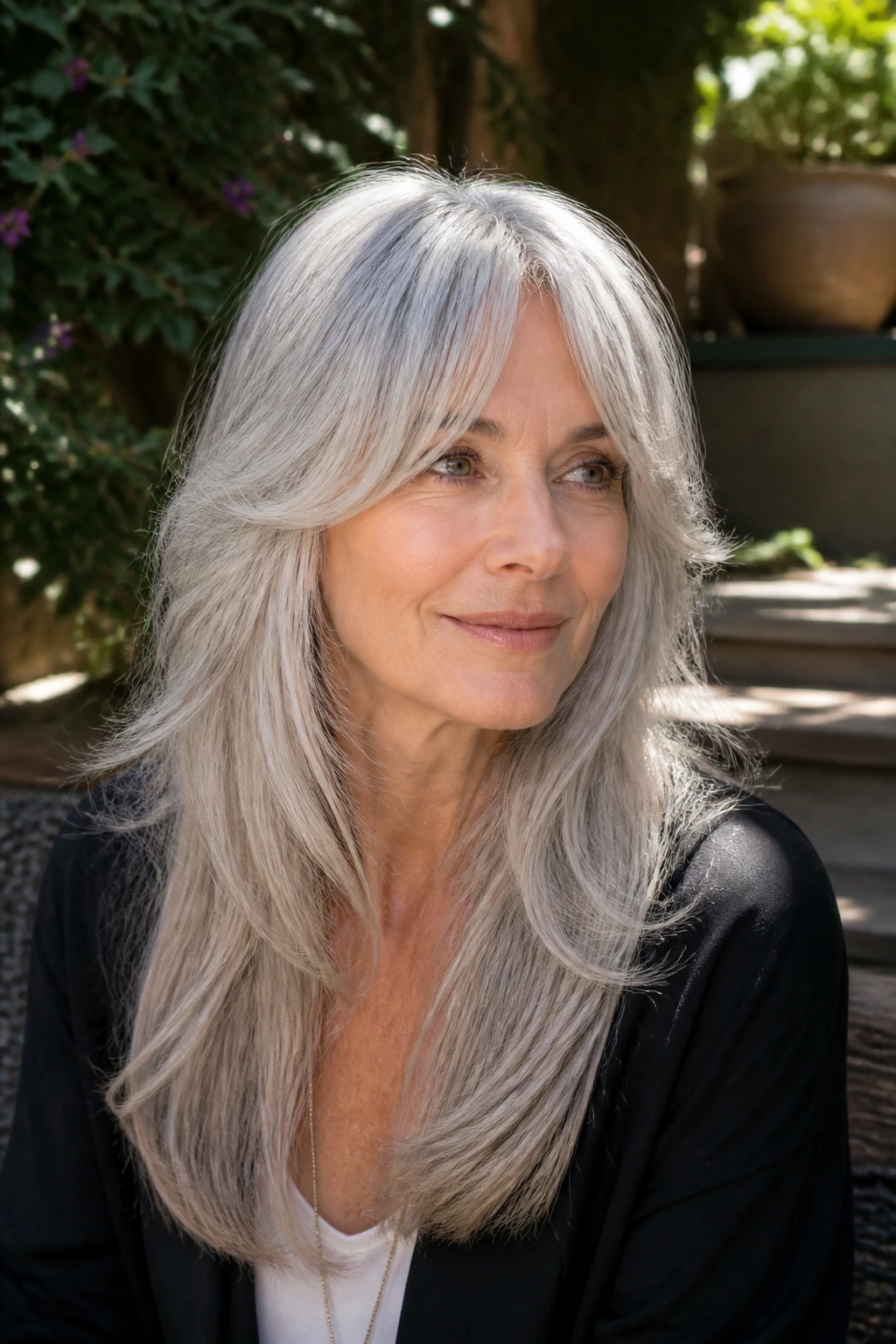
Can gray hair stay long after 60? Absolutely. The trick is not pretending long hair behaves the same way it did at 35. Long silver layers need movement, or they start to look heavy and tired. Curtain bangs help by opening the face at the center and blending into the sides instead of cutting across the forehead like a brick.
This style is good if you still like the feeling of length on your shoulders or back. Keep the layers soft and spaced out, not chopped all over. Too many short layers in long gray hair can create frizz and make the ends look thin. A little gloss or lightweight serum on the mid-lengths and ends helps the silver reflect light instead of going fuzzy.
It’s a graceful shape. And yes, graceful can still have edge.
9. Stacked Bob with Lift at the Crown
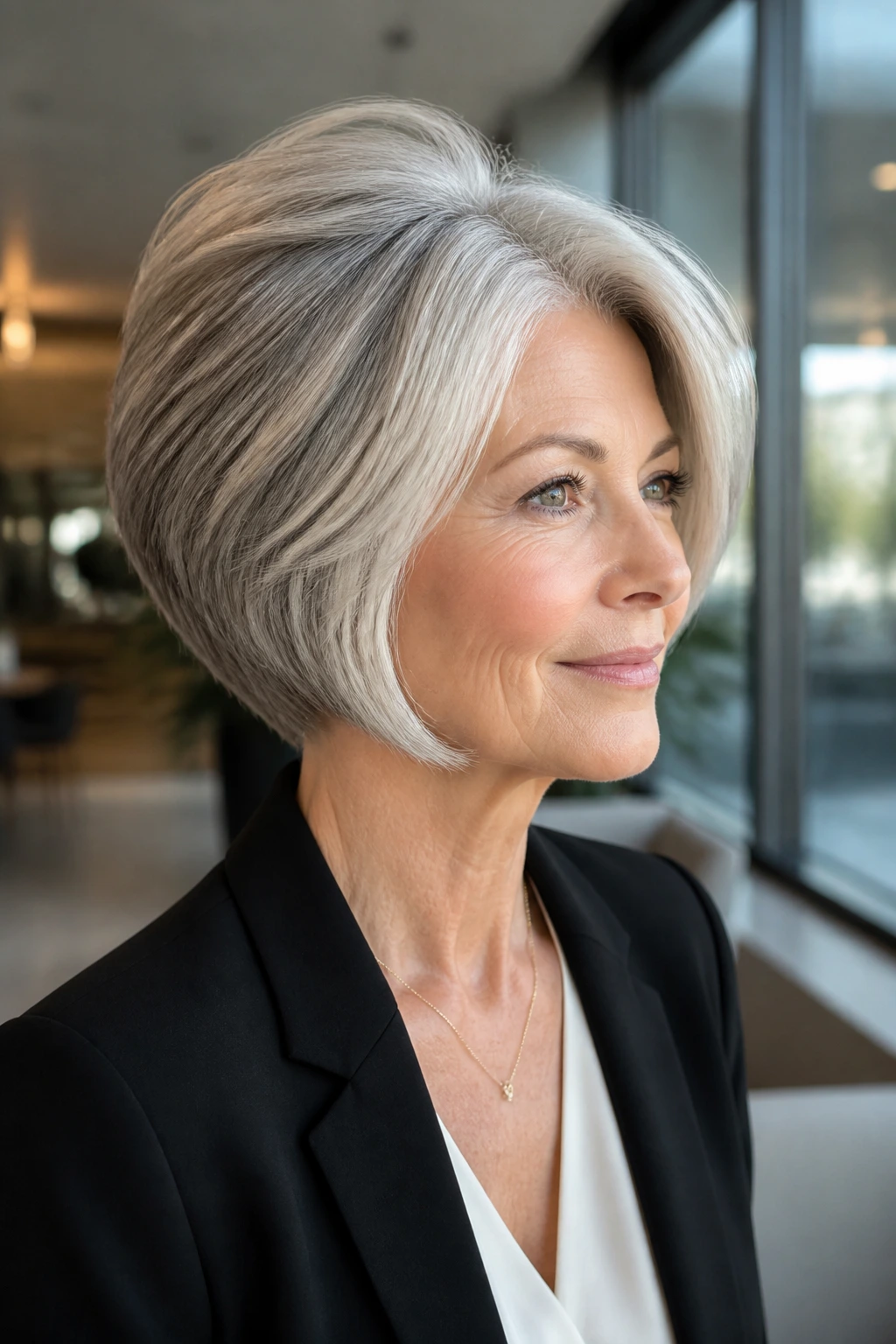
A stacked bob gives you height where gray hair often needs it most: the crown. The back is cut shorter and graduated, which creates built-in lift, while the front stays a little longer to soften the line around the face. On finer hair, that stacked shape can make the whole head look fuller without requiring teasing or a mountain of spray.
This is one of my favorite options for women who want a true haircut, not just a trim. The silhouette does the work. You’ll need regular shaping to keep the stack clean, usually every 5 to 7 weeks, because once it grows out, the back can lose its architecture fast.
If you want silver hair that feels neat, sculpted, and easy to wear with a blazer or a clean neckline, this is a strong choice.
10. Blunt Lob with a Glossy Finish
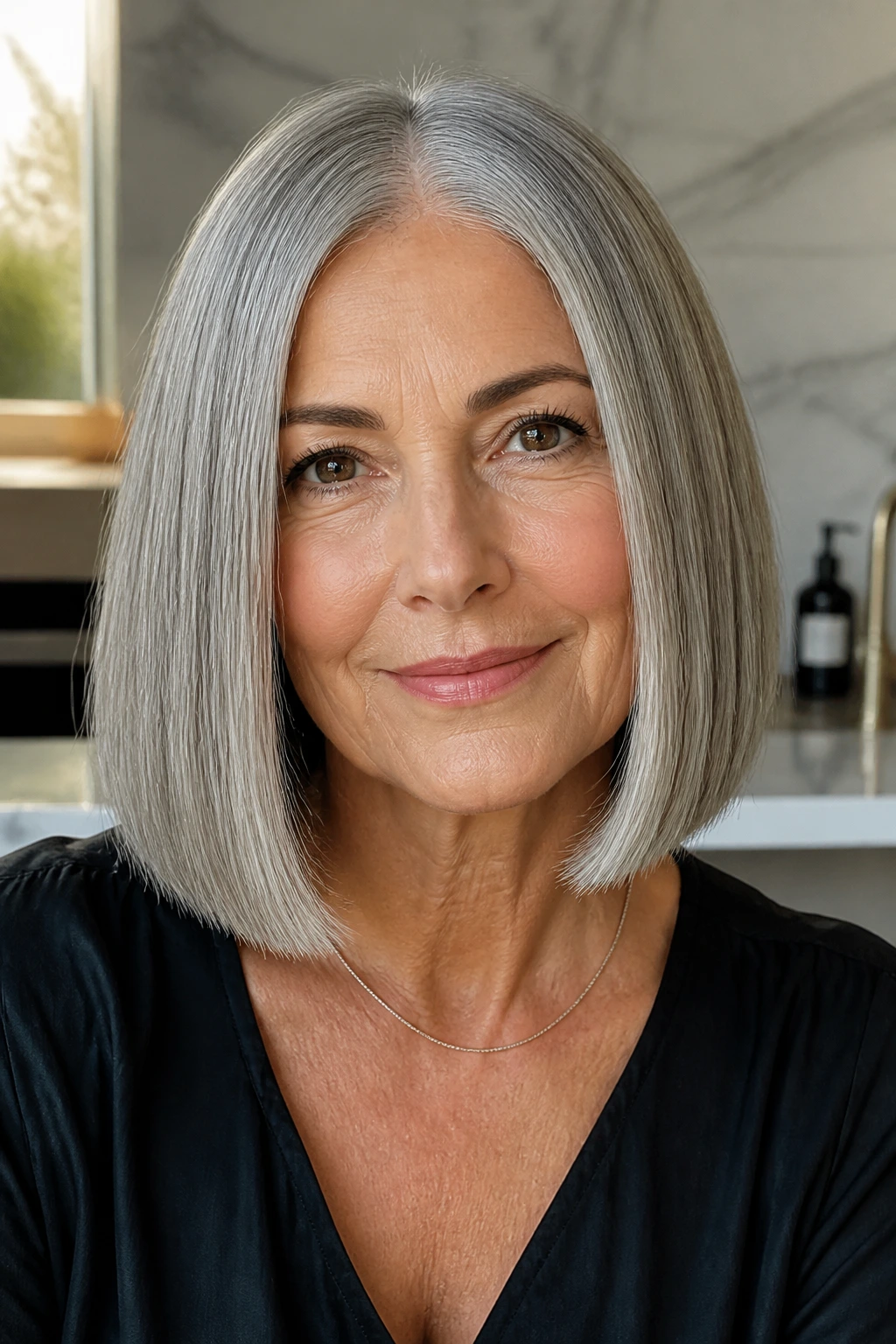
A blunt lob is the hairstyle equivalent of a sharp white shirt. Clean lines. No nonsense. It’s usually cut at the collarbone or just below, with little to no layering at the perimeter. On healthy gray hair, that straight edge can look striking because it shows off the color shift in a bold, uncluttered way.
This style is at its best when the hair is smooth and shiny. A heat protectant, a paddle brush, and a final pass with a flat iron or blow dryer can make the silver look sleek rather than puffed. If your hair is very fine or the ends are wispy, ask for a tiny bit of internal softening so the cut doesn’t end in a see-through line.
It’s a strong look. Not loud. Just clean enough to make the silver the star.
11. Natural Curls Shaped into a Soft Halo
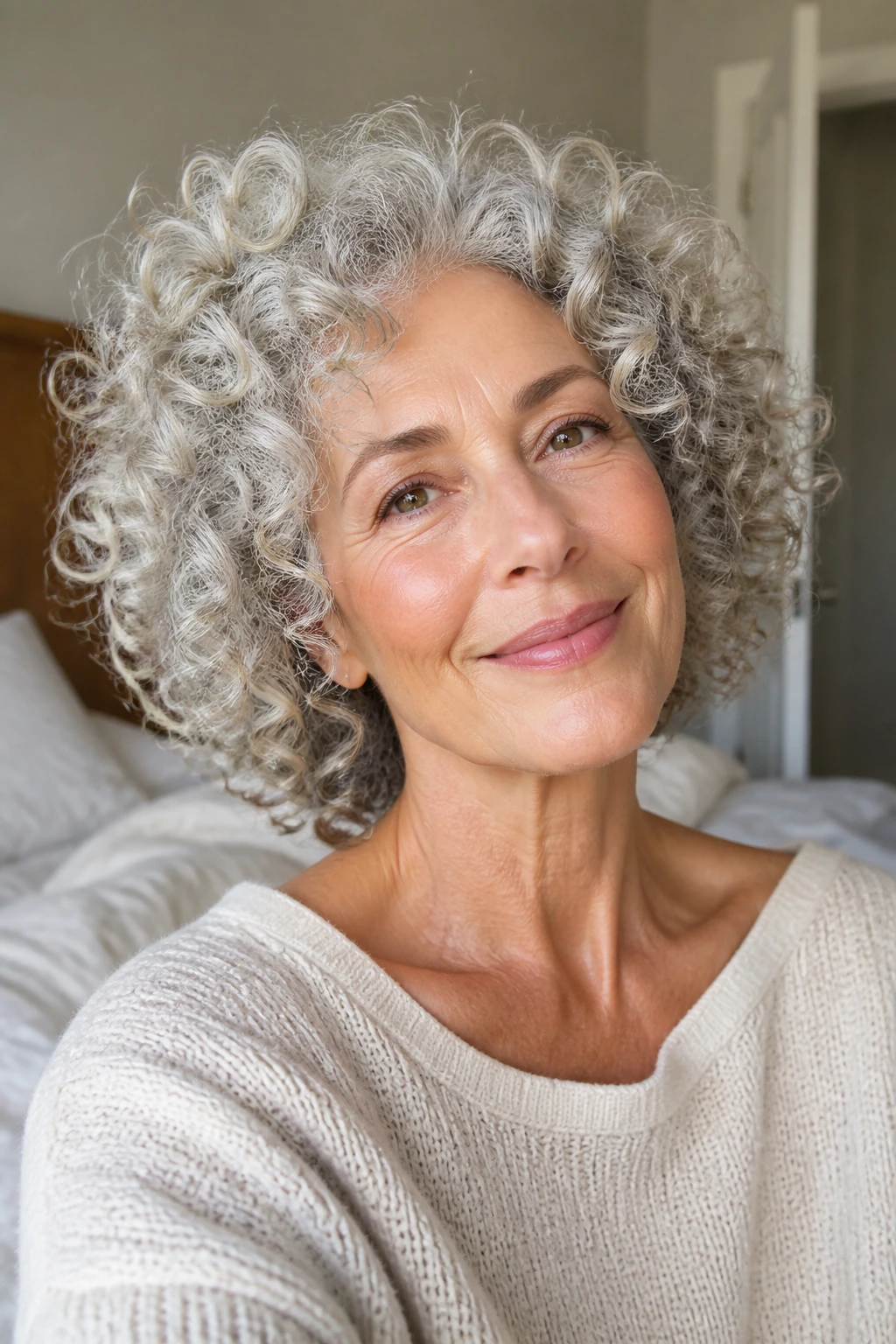
A soft halo shape works with curls instead of forcing them into a square or triangle. The cut follows the head, leaves room at the crown, and keeps the sides rounded so the whole style feels balanced. Silver curls can look almost luminous in this shape because the light lands on all those bends and coils.
Moisture matters here. A leave-in, a curl cream, and a diffuser on low heat are usually enough. If one curl goes rogue around the face, pin it while damp or rewet that section rather than drowning the whole head in product. Too much cream can weigh silver curls down fast.
This is a beautiful choice if you want your natural texture to lead. The haircut should support the curl pattern, not flatten it.
12. Side-Parted Feathered Midi Cut
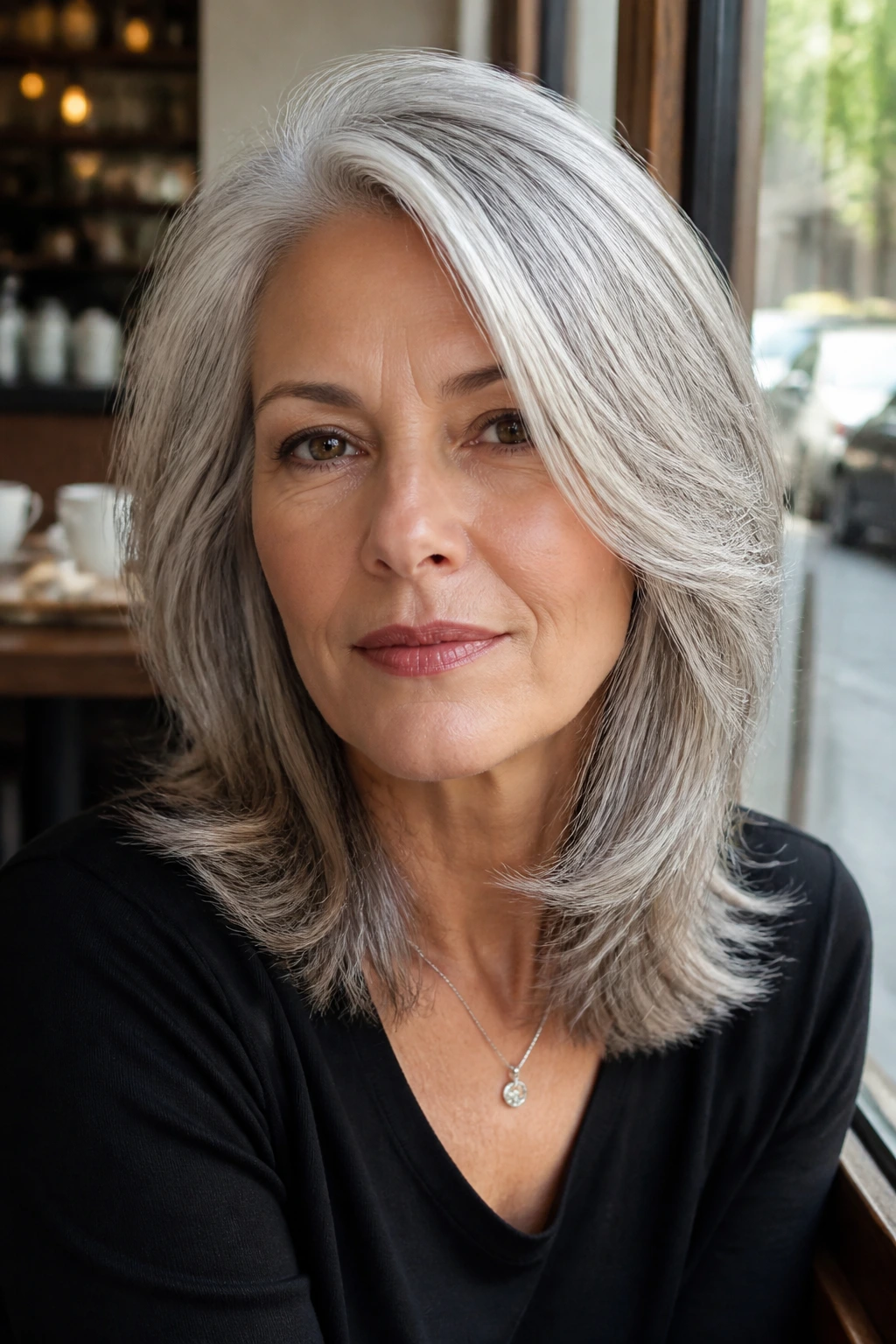
A midi cut sits in that in-between zone—long enough to feel feminine if you like length, short enough to stay manageable. Add feathering and a side part, and the whole thing gets lift without losing softness. It’s a smart option for medium-density hair that needs movement but not a lot of scaffolding.
The side part keeps the face from looking too symmetrical, which can matter if your hair has started to thin a bit at the temples. Feathered ends also help the silver move when you turn your head. That little motion makes the cut feel alive. Without it, a medium cut can sag into “grown-out” territory fast.
If you want something that can go from a neat blowout to a looser air-dried shape, this one sits right in the middle.
13. Textured Crop with Glasses-Friendly Fringe
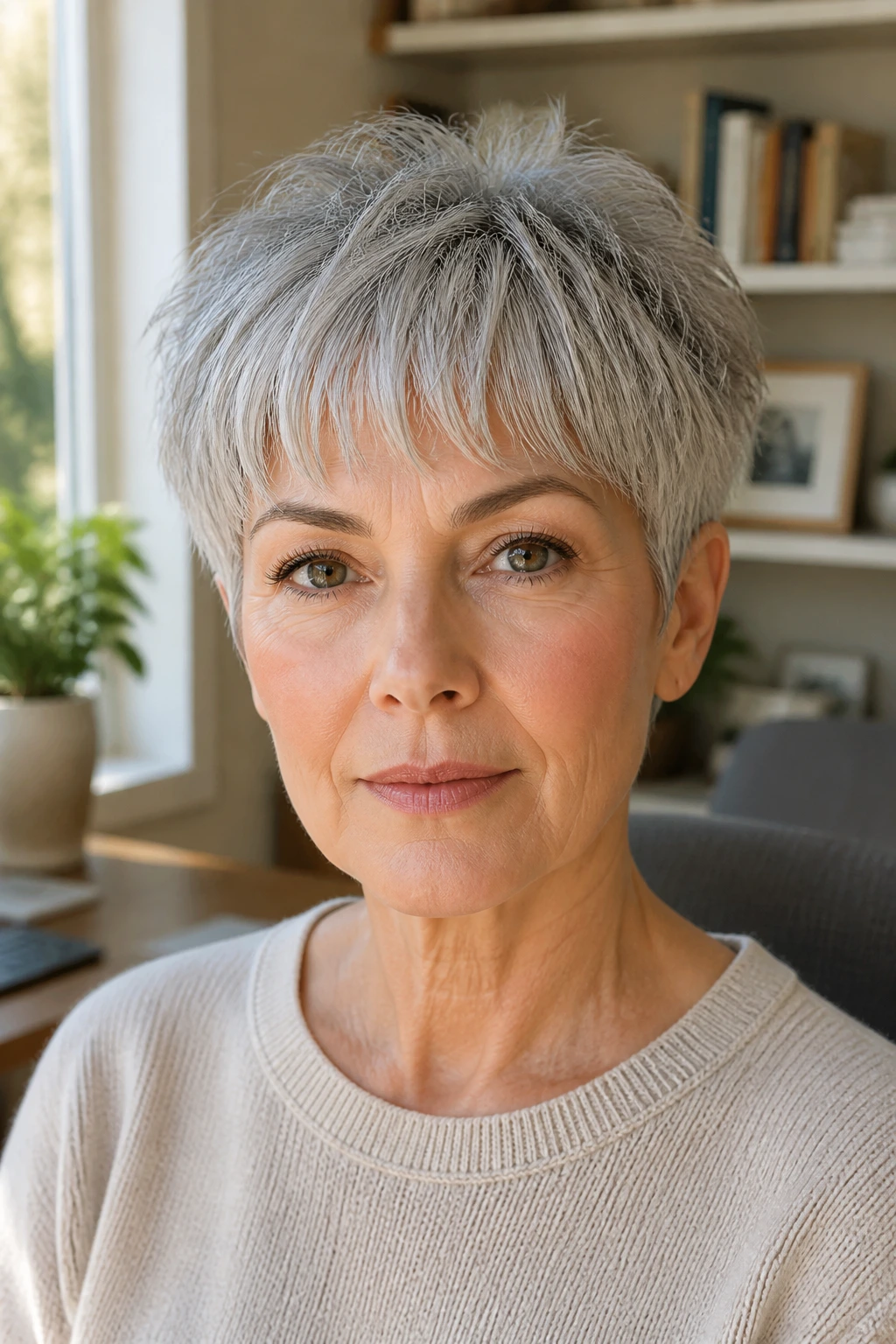
Glasses and bangs can get into a fight if nobody intervenes. This cut settles that argument. The crop stays short and textured, while the fringe is soft enough to sit above the frames or sweep off to one side instead of crashing into the lenses.
That tiny bit of texture is what keeps it from looking too severe. Ask for choppy ends, not a hard shelf across the forehead. On gray hair, especially if it’s fine, that extra movement keeps the style from reading as helmety. A dab of styling paste on dry hair is usually enough to separate the pieces and give the front some shape.
If you wear glasses every day, this is one of the smartest short cuts around. It respects the frames instead of pretending they aren’t there.
14. Soft Flip-Out Bob
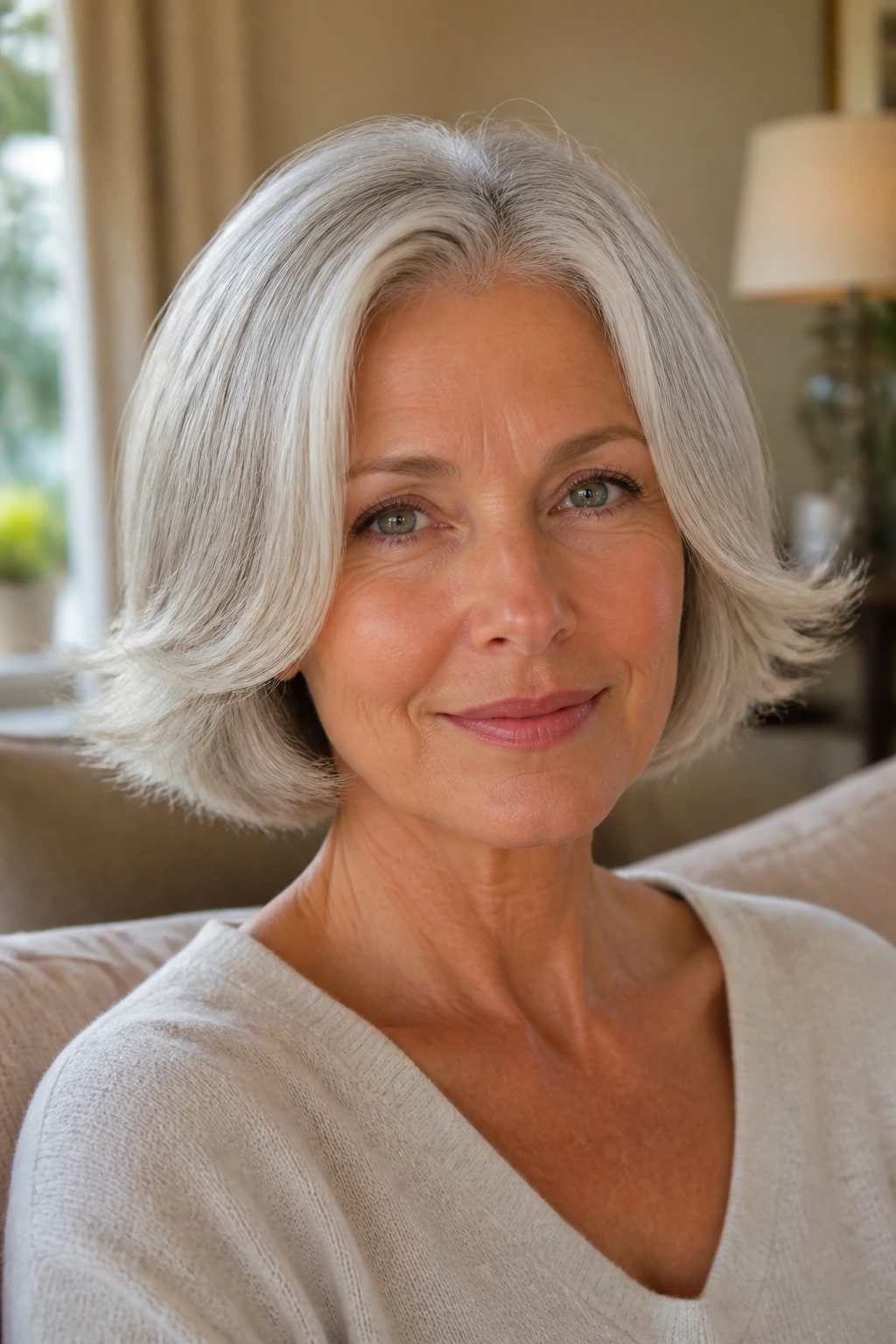
A soft flip-out bob has a little swing at the ends, almost like the hair is deciding to flirt with the collarbone and then changing its mind. The flip keeps the shape open around the neck and jaw, which is especially nice if you want a bob that feels lighter than a blunt line.
The styling part is straightforward. Blow-dry with a round brush, rolling the ends away from the face. If your hair resists, use a flat iron just on the bottom inch and turn your wrist slightly outward. That’s enough. You don’t need a pageant wave. Too much curve can make the style look dated fast.
What I like here is the ease. The flip gives the bob a bit of air, and gray hair often needs that small break from heaviness.
15. Asymmetrical Bob with Longer Front Pieces
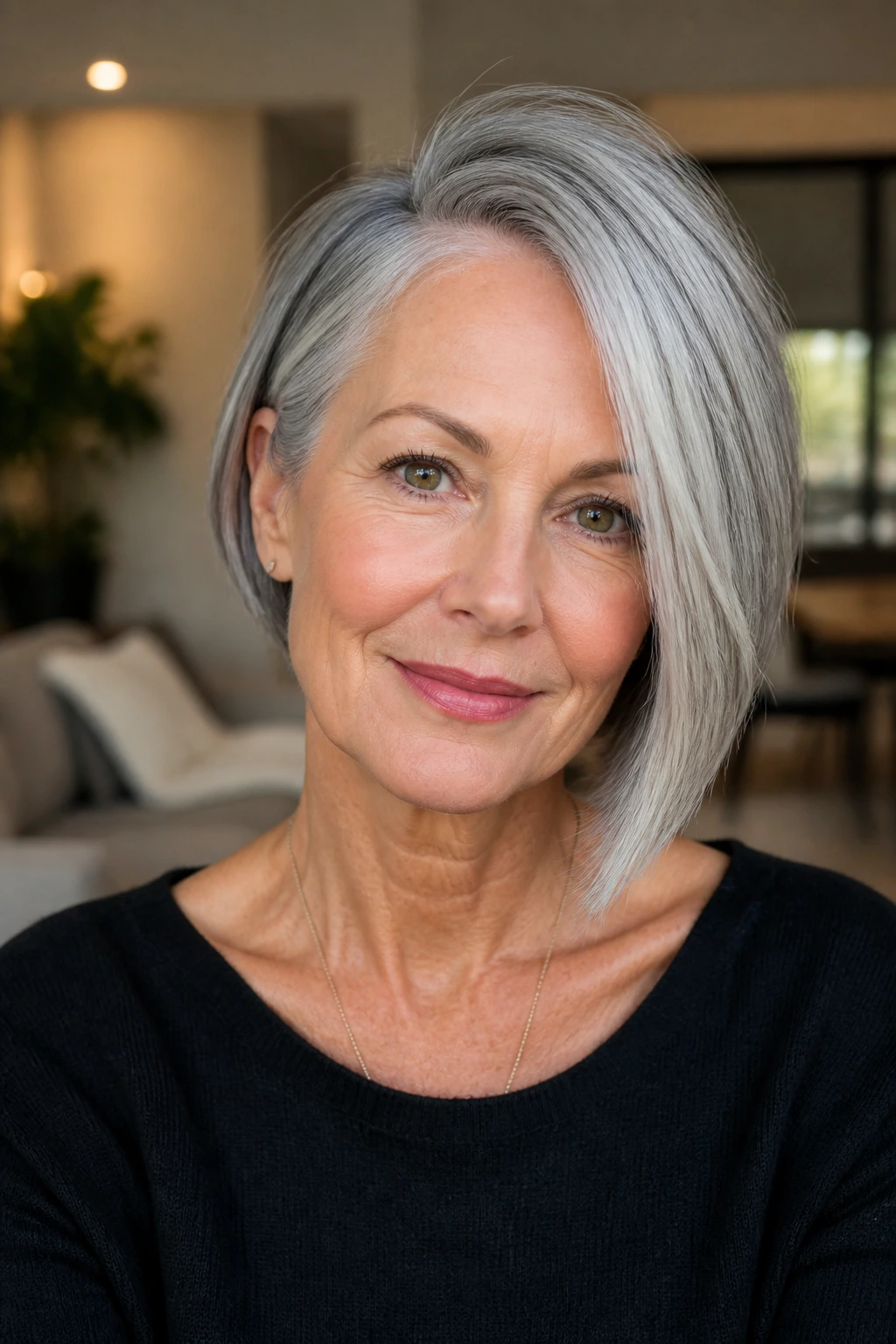
An asymmetrical bob gives the eye something to follow. One side sits a little longer, or the front angles down more sharply on one side than the other. That line can be a lifesaver for gray hair that needs a bit of structure but not the sameness of a standard bob.
The longer front pieces help lengthen the neck and soften the jaw. They also make it easy to tuck one side behind the ear while letting the longer side do its work. I prefer this cut when the asymmetry is subtle, not theatrical. A few millimeters of difference can be enough. You don’t need a dramatic slash unless that’s the point of your style.
It’s a tidy haircut with a little edge. If you like your silver hair to feel modern without looking like it’s trying too hard, this one lands well.
16. Low Chignon with a Wrapped Base
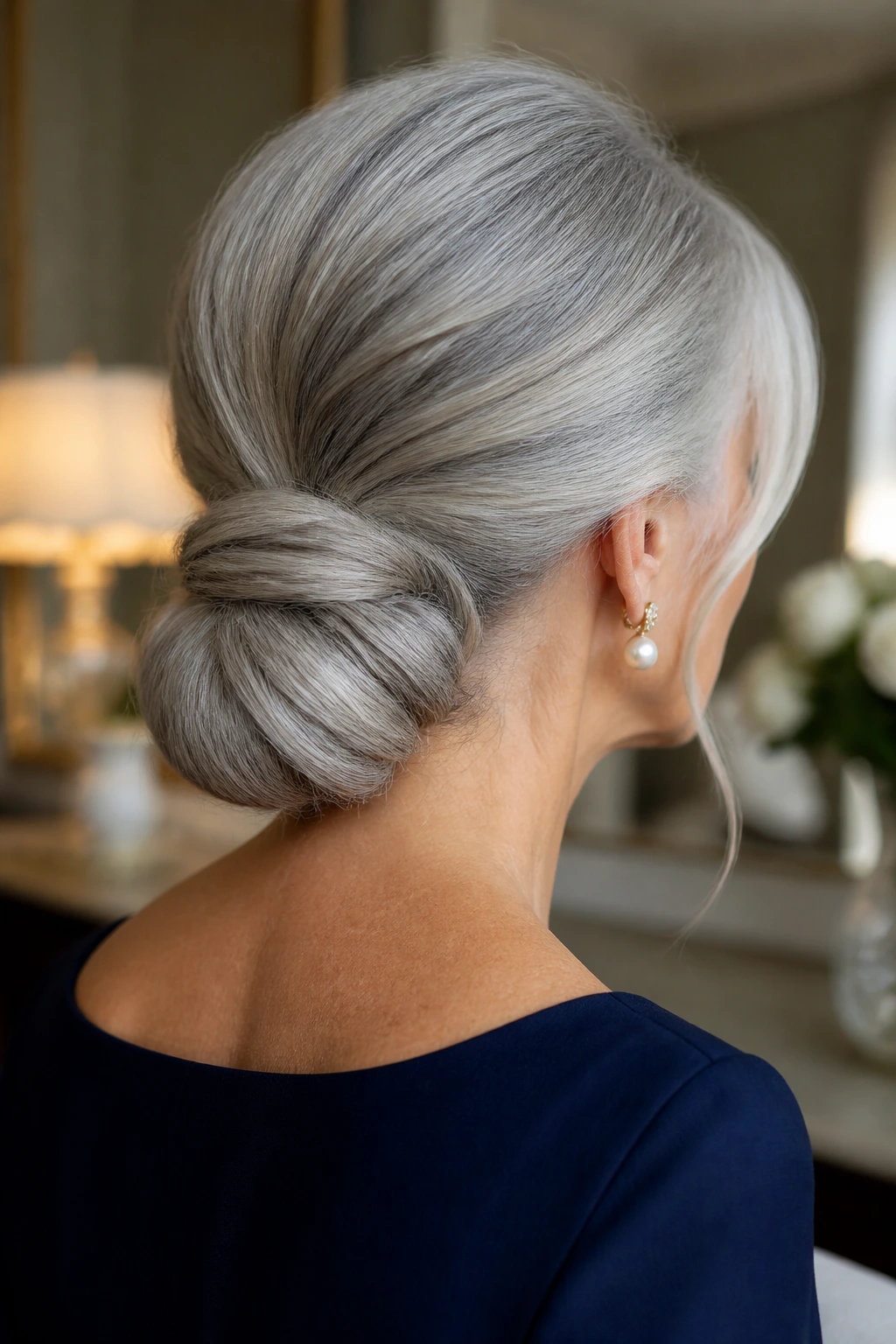
A low chignon can look far more relaxed than people expect. The key is keeping it low at the nape, soft around the edges, and wrapped with a section of hair instead of a visible elastic. That wrapped base makes the style feel finished even if the rest of the bun is loose and not perfectly symmetrical.
This is a good choice for dinners, weddings, church, or those days when your hair feels like it has developed opinions. Leave a few wisps around the temples if you want softness. Keep the crown a little lifted so the style doesn’t drag downward. Silver hair in a chignon has a lovely, almost satin look when it’s smoothed just enough.
Not every gray-hair look has to be cut short. Sometimes it just needs a better knot.
17. Braided Crown on Silver Hair
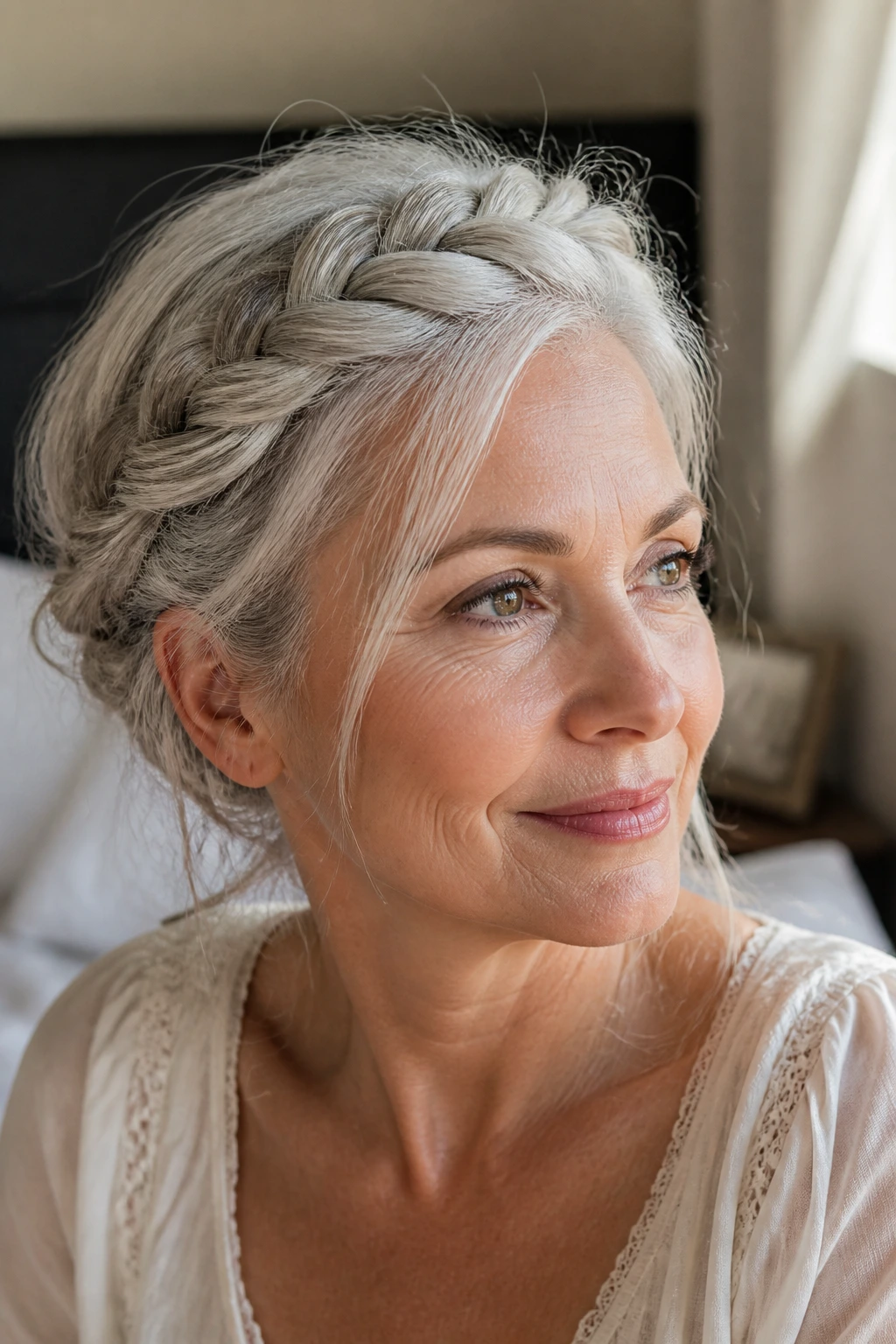
A braided crown is one of the prettiest ways to show off silver, white, and salt-and-pepper strands because the braid itself becomes a kind of woven highlight. It works especially well on medium to long hair that has a bit of texture. The braid doesn’t need to be tight. In fact, a looser braid often looks better because it keeps the face soft.
If your hair is slippery, add a little texturizing spray first. If it’s dry or coarse, use a leave-in so the braid doesn’t fray by the end of the day. Pin the ends under and hide the elastics where you can. A crown braid that looks too perfect can feel stiff; a slightly lived-in one tends to flatter more women.
It’s practical, too. Hair off the neck. Face open. Silver showing everywhere.
18. Short Sculpted Cut with a Long Top
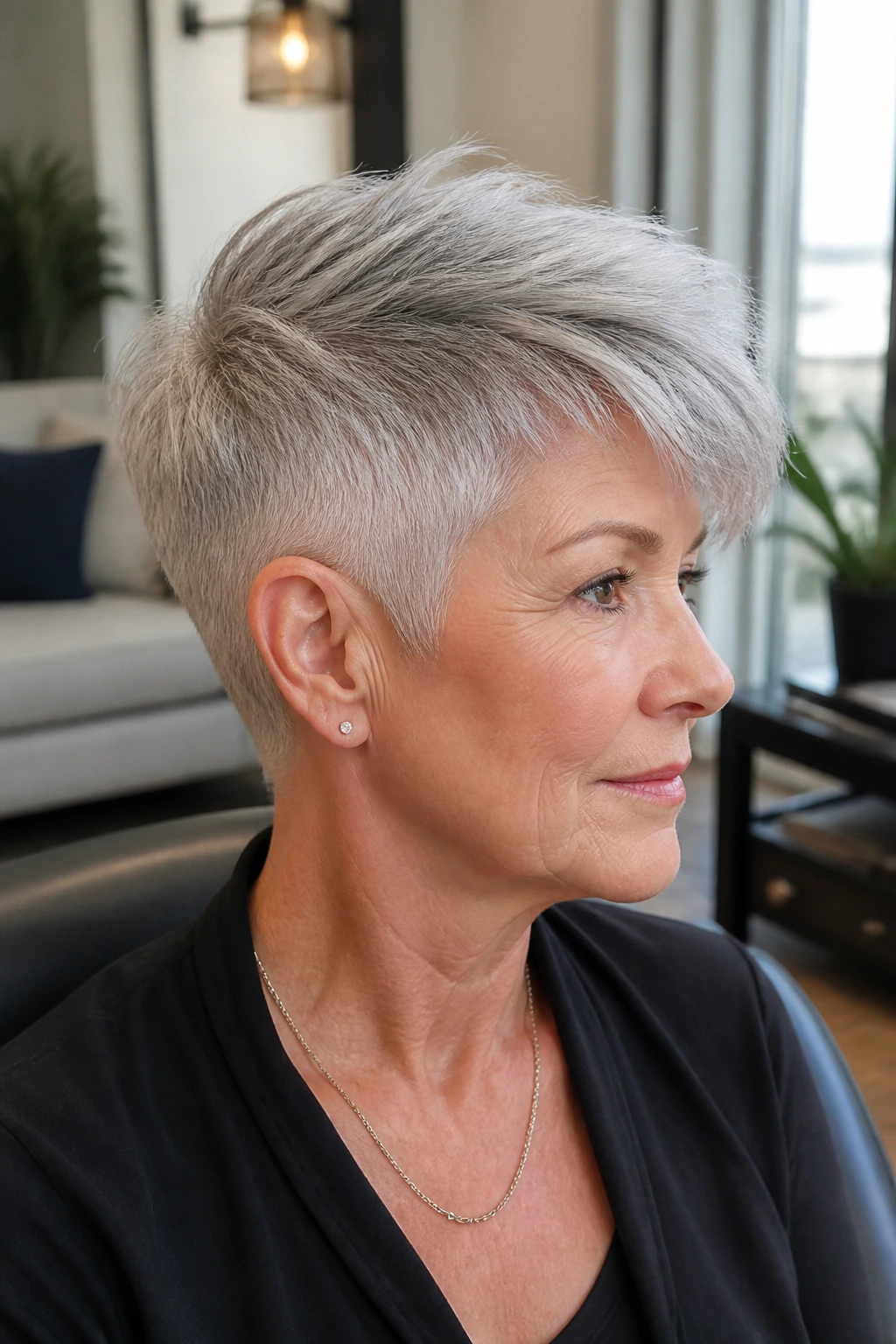
This cut has a bit of swagger. The sides and back stay short and close, while the top is left longer so it can be swept forward, brushed up, or raked to one side. That contrast gives gray hair shape and keeps coarse strands from ballooning outward.
A short sculpted cut works well when you want something neat but not boring. The long top adds movement, and the shorter sides make the whole thing feel lighter around the ears and neckline. Use a matte paste or light cream so the top has texture without looking greasy. Gray hair will show shine quickly if you overload it.
It’s a good pick if you like a sharper silhouette and don’t mind a little styling. Short does not have to mean plain.
19. Brushed-Out Waves on Medium Length Hair
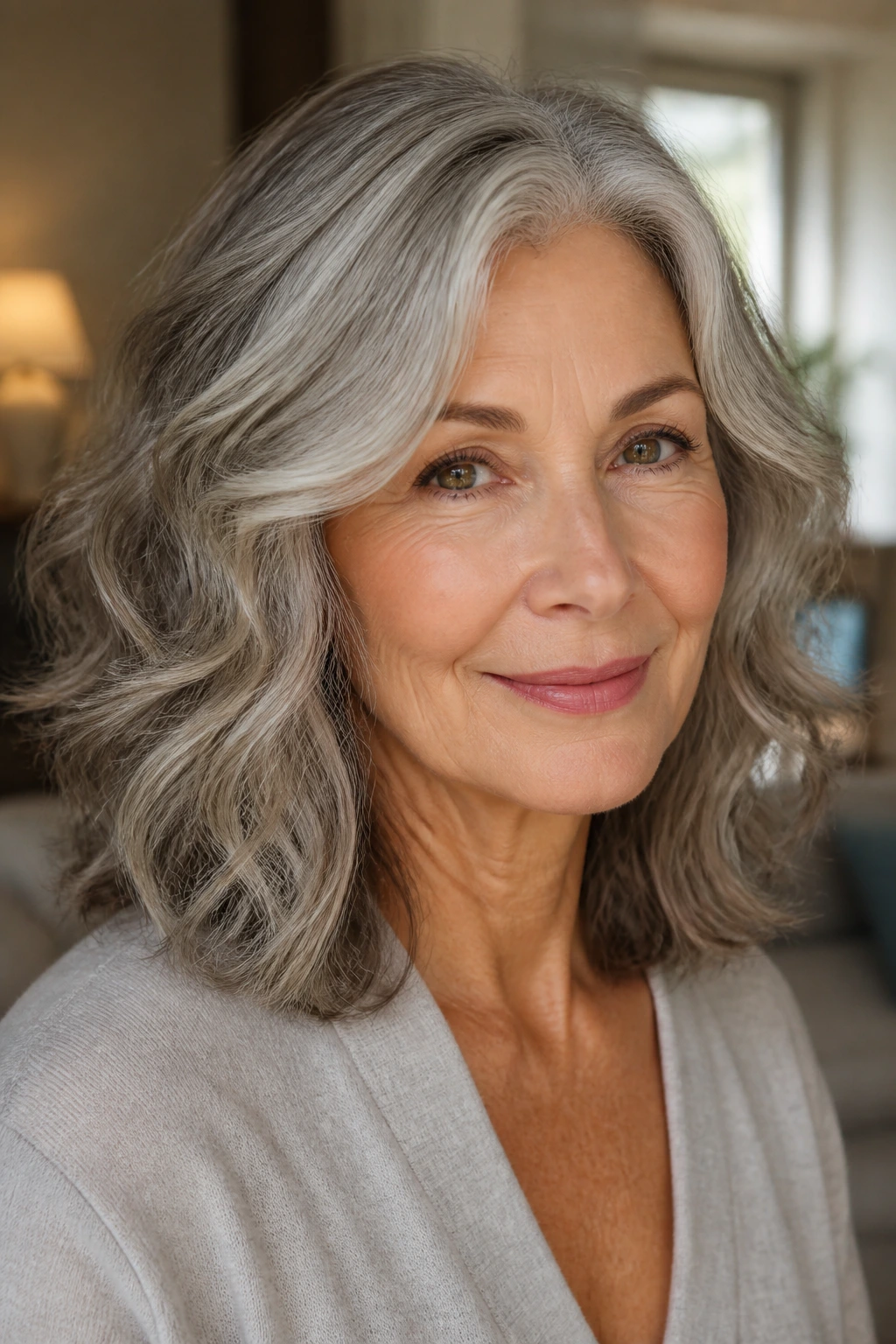
Brushed-out waves have a softer, more grown-up feel than tightly defined curls. They’re especially nice on gray hair because the brush breaks up the shape just enough to keep it from looking too set or formal. The result is plush, not crunchy.
The key is to set the hair first, then brush it out after it cools. Use a large curling iron or roller set, then run a brush through once the hair has settled. A tiny amount of serum on the ends finishes it. Too much and the waves fall flat. Too little and they can look dusty instead of soft.
If you want a style that feels polished for dinner but still relaxed enough for daytime, this one sits in a sweet spot.
20. Silver Ponytail with Lift at the Crown
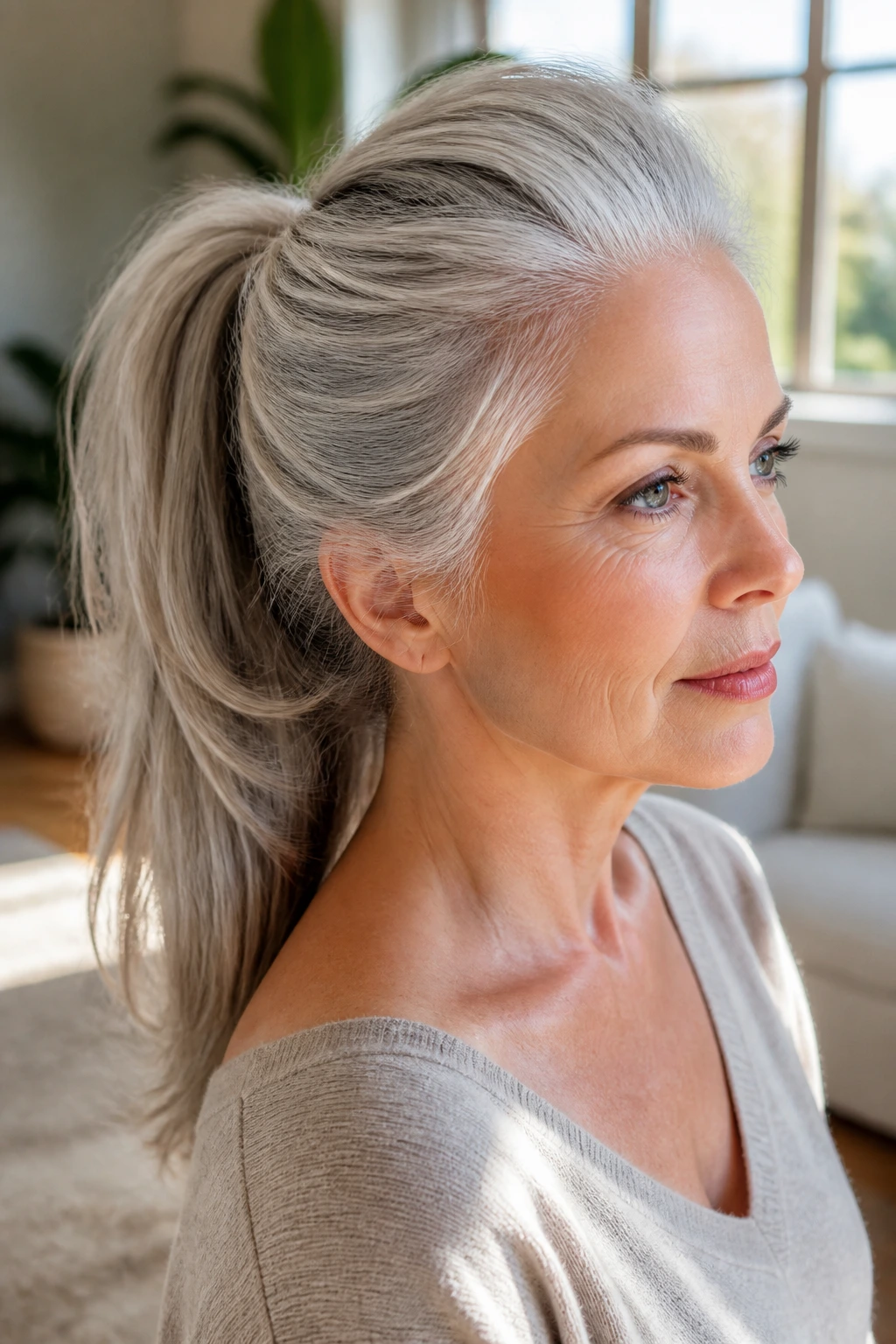
A ponytail sounds ordinary until you give it a proper crown and a wrapped base. Then it turns into something much better. With gray hair, the lift at the top matters because a flat ponytail can make the face look longer than it is and pull the whole style backward.
This works on medium to long hair. Tease the crown lightly or blow-dry with volume at the roots, gather the ponytail at the nape or slightly higher, and wrap a section of hair around the elastic. Leave the tail smooth or add a loose bend through the lengths. A polished ponytail is not about hiding the hair. It’s about letting it look clean and intentional.
It’s also one of the quickest ways to get the hair off the neck without giving up shape.
21. Half-Up Twist on Shoulder-Length Hair
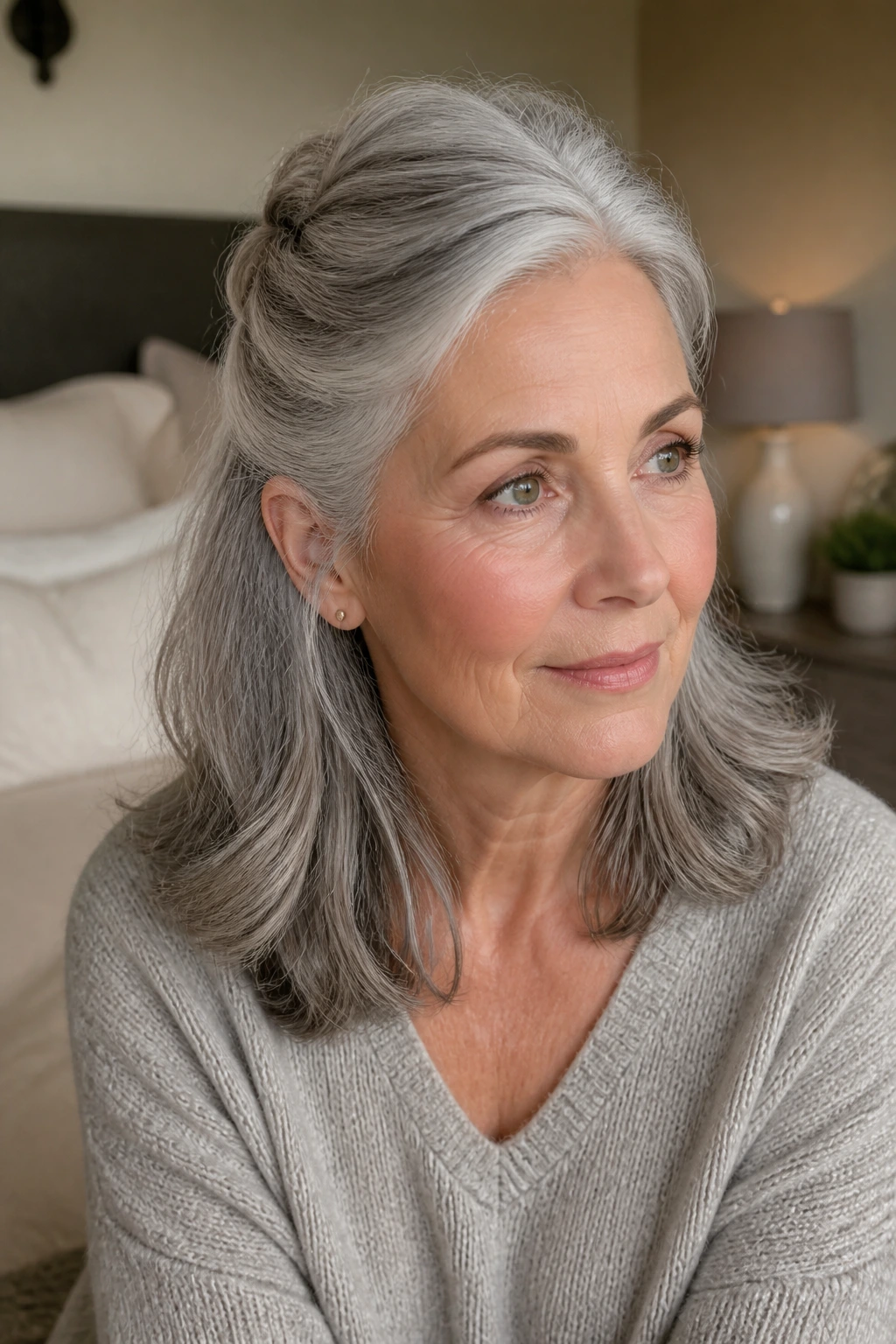
Half-up styles can go stale fast if they’re too tight or too neat. A soft twist avoids that. Pull back the top section from the temples, twist or cross it, and pin it at the back of the head while leaving the rest loose. That gives the crown some lift and keeps the face open.
This look is especially useful while growing out a cut or dealing with in-between layers. It controls the top, but it doesn’t fight the length. On gray hair, the contrast between the pinned section and the loose ends shows movement nicely. Add a little wave to the bottom half if the hair tends to fall flat, and the whole thing feels more finished.
It’s an easy one to wear on a regular day. No ceremony needed.
22. Salt-and-Pepper Beach Waves
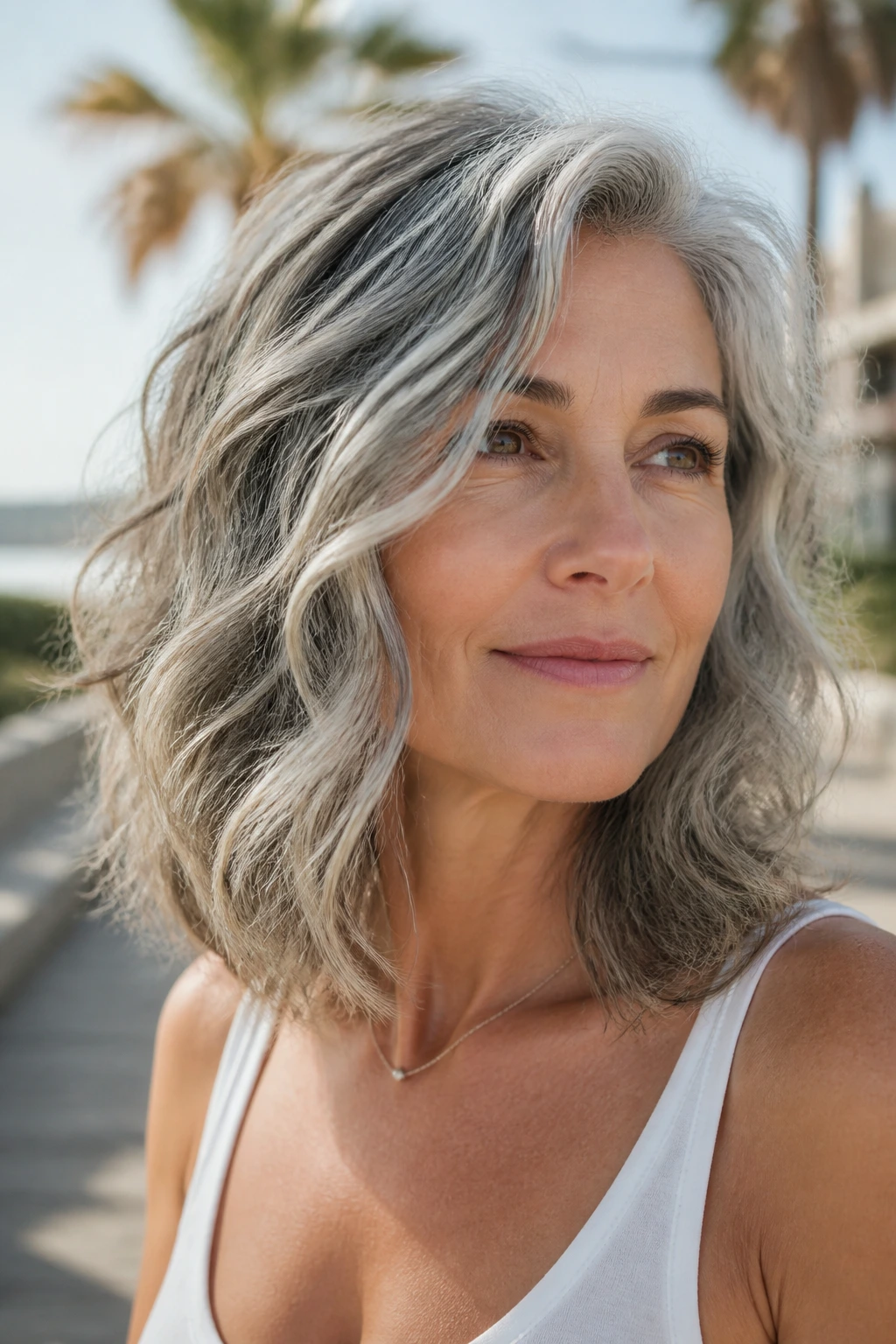
Beach waves can turn silly if they’re too perfect. On salt-and-pepper hair, the better version is loose, bendy, and a little irregular. That irregularity is what makes the darker strands and silver strands catch the light in different ways. The color mix becomes part of the style.
A sea-salt spray can help, but use it lightly. Too much and gray hair can go dry and crisp, which is not the vibe. I prefer a wave cream or mousse on damp hair, scrunching with the hands and diffusing just enough to set the bend. If the ends get fuzzy, add a drop of serum only there.
This is one of the easiest ways to make mixed-tone gray hair look lived-in in a good way. Not messy. Just relaxed.
23. Tapered Cut for Coily or Natural Texture
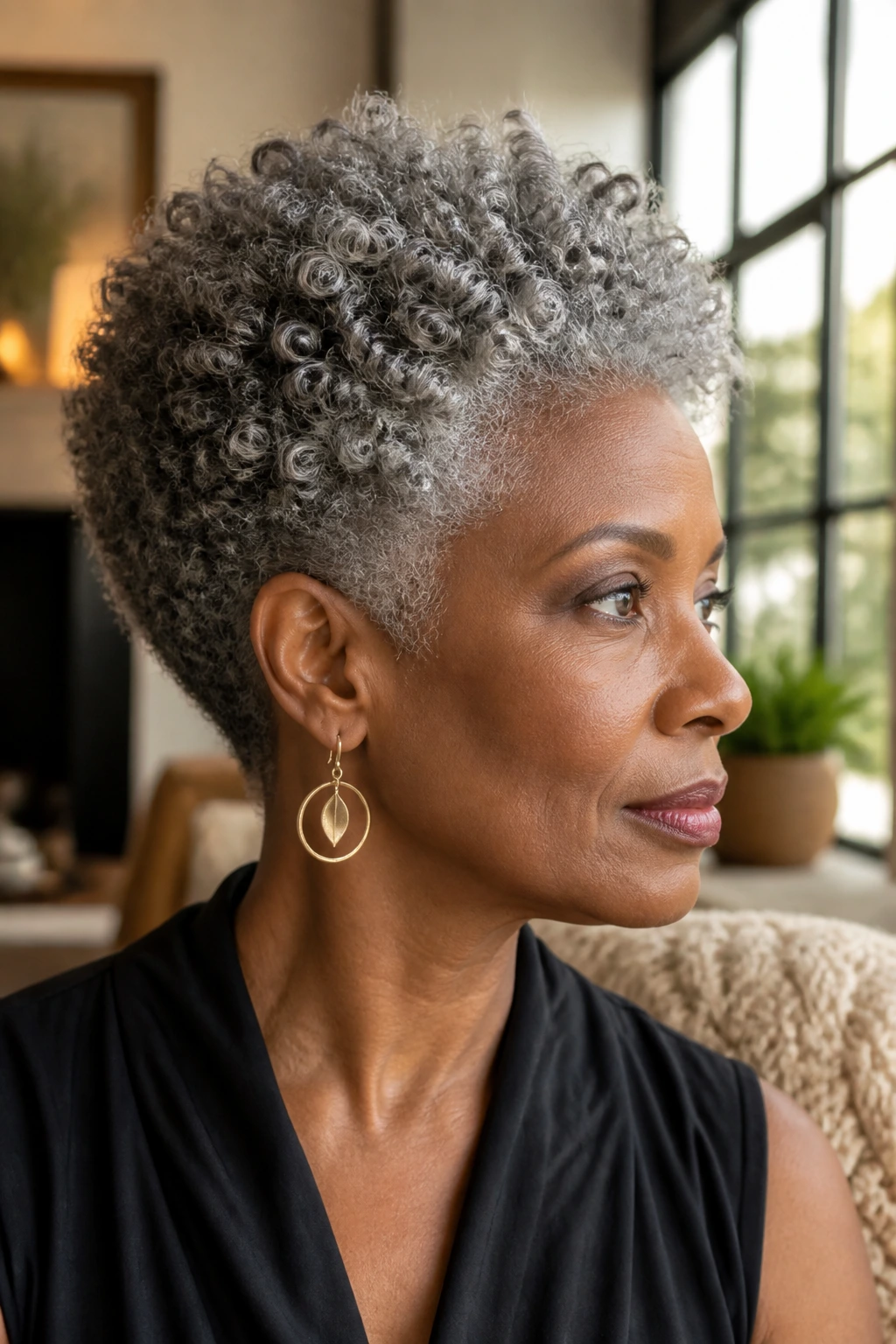
A tapered cut can be a gift for coily hair because it follows the shape of the texture instead of trying to flatten it. The sides and nape stay shorter, the top keeps more length, and the silhouette becomes rounded in a way that looks clean without losing personality. Gray coils can look beautiful in this shape because the silver catches on each bend.
Moisture is everything here. Use leave-in conditioner, a cream or butter that suits your texture, and a diffuser only if you need it. A satin bonnet or pillowcase helps a lot, since coily gray hair can lose moisture faster overnight. Don’t fight shrinkage. Work with it. That’s where the shape lives.
If you have natural texture, this is one of the easiest ways to make silver hair look polished without losing its spring.
24. Polished Short Layers with a Side Sweep
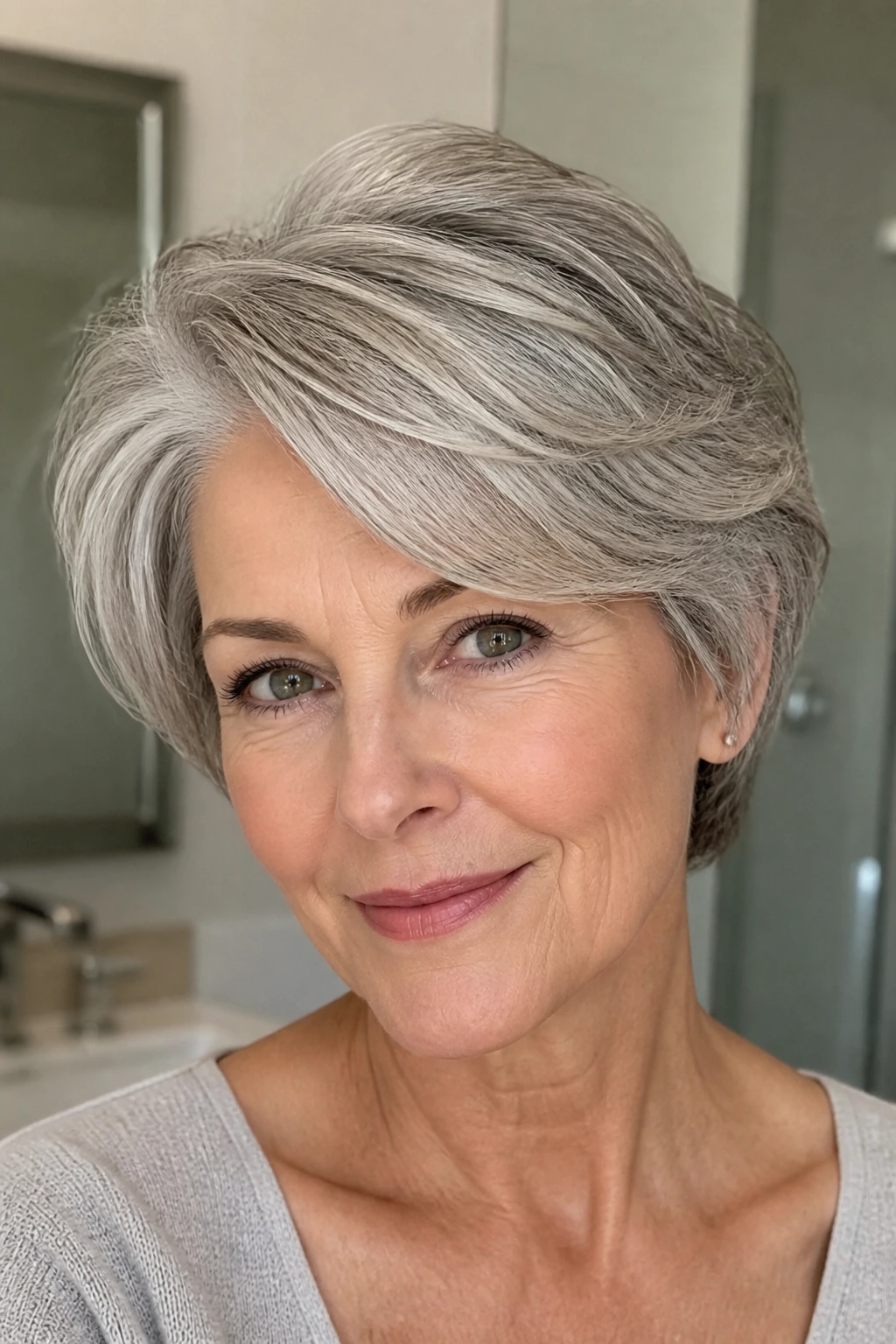
A polished short layered cut with a side sweep is the kind of style that quietly does a lot. It keeps the neckline clean, gives the crown some movement, and uses a side-swept front to soften the whole shape. The result feels neat without reading as severe.
I like this look for women who want a tidy cut that doesn’t demand a long styling routine. A round brush at the front, a quick blow-dry at the roots, and a light serum through the ends are usually enough. If the hair is fine, the layers should be light and controlled. If it’s thick, the layers can be a touch more airy so the shape doesn’t get bulky.
It’s a strong final note for this collection because it proves something simple: gray hair doesn’t need to be hidden. It just needs a cut that knows where to stop.
How to Make Gray Hair Look Fresh Between Cuts
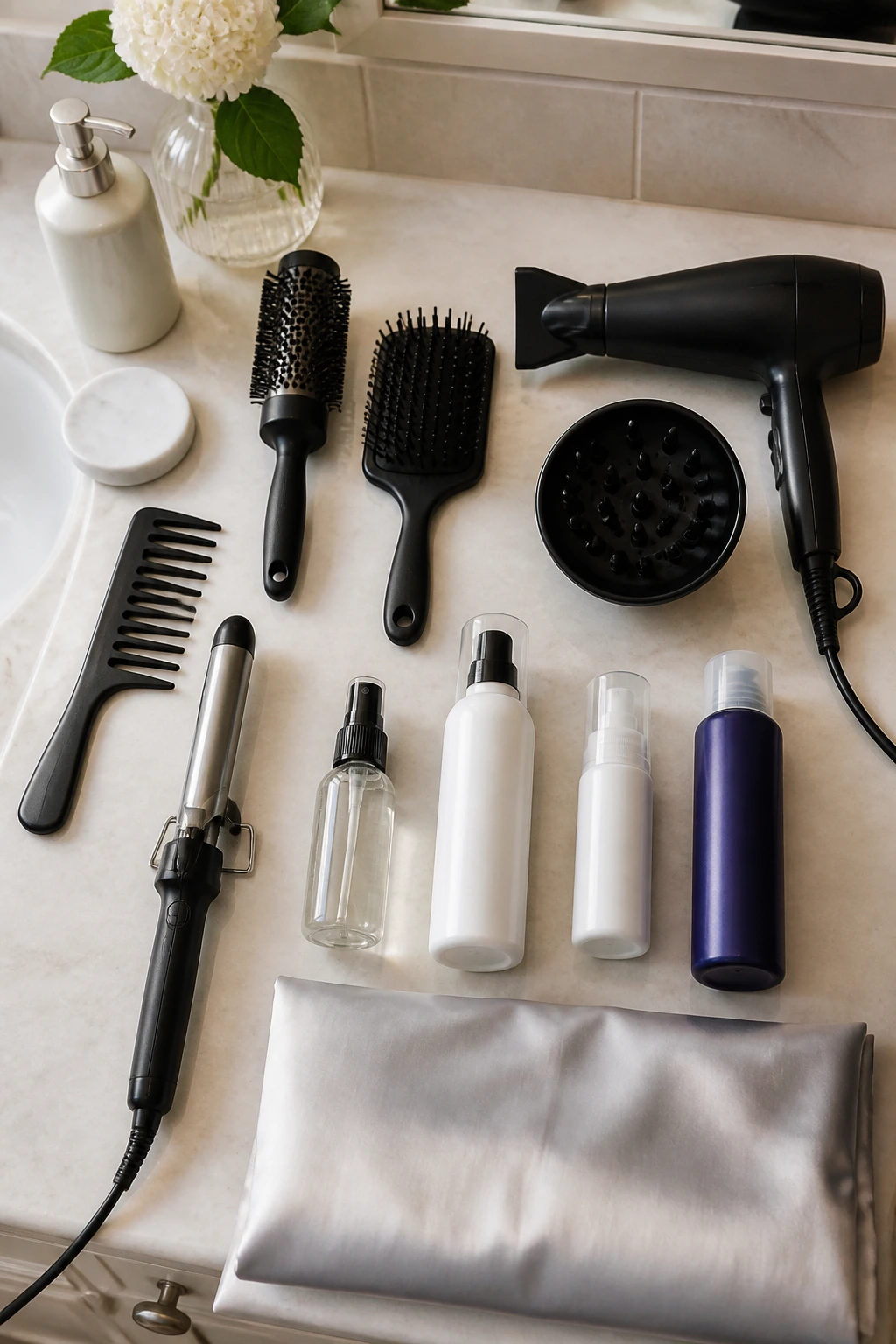
A good gray hairstyle can lose its shape fast if the daily styling gets sloppy. The biggest win is moisture without weight. Gray hair usually likes a light leave-in on damp strands, then a root-lifting product at the crown before drying. That combination gives you a little bend and body without the greasy helmet effect that heavy creams can cause.
Purple shampoo is useful, but it’s not a hobby. Once a week is enough for most people, and some hair only needs it every other week. If the silver starts looking violet or dull, back off immediately. A clarifying shampoo once every 3 or 4 weeks helps if your hair picks up buildup from hard water, hairspray, or dry shampoo.
Heat needs a ceiling. Keep tools on the lower side if your hair is fine or fragile, and always use a heat protectant. A quick trim rhythm matters too: short cuts usually need shaping every 4 to 6 weeks, bobs every 6 to 8, and longer layers every 8 to 10 if you want the line to stay clean.
Common Mistakes That Make Silver Hair Look Flat
The easiest mistake is cutting gray hair into one blunt shape and then never moving it. That can work on some textures, but on many women it creates a hard block around the face. The fix is not always a shorter cut. Sometimes it’s just a few face-framing layers, a better side part, or softening the ends with point cutting.
Another problem is product overload. Gray hair shows it fast. Too much oil, too much serum, too much cream at the roots—suddenly the silver looks stringy instead of shiny. Keep heavy product to the ends and use only a pea-size amount unless the hair is long and coarse.
Purple shampoo can also go wrong when it’s used too often. The hair can pick up a dull cast or look flat and dry. If the silver starts losing its brightness, switch to a gentler cleanser and use a deep conditioner instead of adding more violet pigment.
There’s also the fringe issue. Bangs that sit right on the eyelashes or bang into glasses frames can make the whole face feel crowded. A better fringe sits slightly above the brow, sweeps to one side, or blends into the rest of the cut.
Ways to Adapt These Looks to Your Hair and Routine
The Fine-Hair Lift Plan: If your hair has thinned a bit, lean toward pixies, stacked bobs, or blunt lobs with light internal shaping. Root-lift spray and a quick round-brush dry give more payoff than piling on layers that collapse by noon.
The Thick-Hair Control Plan: Thick gray hair usually looks better with weight removed in the right places, not all over the head. A tapered crop, layered lob, or long layers with face framing can stop the triangle effect and keep the silhouette calm.
The Curl-First Shape: Curly and coily textures do best when the cut follows the pattern the hair already wants. Rounded shags, tapered cuts, and halo shapes keep the silver curls springy instead of puffy.
The Glasses-Friendly Edit: If you wear frames every day, choose fringe that clears the lenses and side pieces that don’t crowd the temples. Soft side sweeps and textured crops usually behave better than dense, straight-across bangs.
The Low-Maintenance Routine: If you do not want to fight your hair every morning, aim for cuts that still look good air-dried. Chin-length bobs, tapered crops, and shoulder-length layers with a little cream are the safest bets.
Tools That Earn Their Place on the Counter
-
Round brush: Best for lifting the roots, curving bob ends, and giving short layers a finished bend.
-
Paddle brush: Useful for smoothing blunt lobs and keeping long silver layers from puffing out during blow-drying.
-
Wide-tooth comb: Gentler on gray hair when detangling in the shower or distributing conditioner.
-
Blow dryer with a nozzle: The nozzle directs airflow and helps you control the crown instead of blasting it into frizz.
-
Diffuser: Essential for curls, waves, and any hair that frizzes when hit with direct heat.
-
1-inch curling iron or flat iron: Handy for soft bends, flip-outs, and loose waves that don’t look overdone.
-
Root-lift spray or mousse: Gives the crown some air, especially on fine or aging hair that goes flat fast.
-
Lightweight leave-in conditioner: Keeps silver hair from feeling rough and helps the ends behave.
-
Purple shampoo: Use it sparingly to cut yellow tones; choose a gentler formula if your hair is dry.
-
Heat protectant spray: Non-negotiable if you use hot tools more than once in a while.
-
Silk or satin pillowcase: Reduces friction overnight and helps gray hair keep its shape a little longer.
-
Hair clips and duckbill clips: Useful for setting volume, pinning fringe, or letting a side part dry in place.
Keeping Gray Hair Soft, Bright, and Shaped
Gray hair usually behaves better when it gets a little more care than dyed hair used to need. A weekly moisturizing mask is a solid habit if the hair feels dry at the ends. If your hair is fine, keep the mask on the mid-lengths and ends only so the roots don’t go limp. Once a month, a clarifying wash can help remove the dull film that builds up from styling products and hard water.
If yellowing is a problem, think in terms of prevention, not rescue. Use purple shampoo lightly, rinse well, and keep heat from running too hot. If the water in your shower is hard, a shower filter can make a noticeable difference over time. So can a salon gloss every 6 to 8 weeks if you like the silver to look bright and clean.
For maintenance cuts, short styles need the most frequent attention. Pixies and tapered crops usually need a trim every 4 to 6 weeks to keep the neckline neat. Bobs and lob-length cuts can stretch a little longer, but once the ends lose their line, the style starts to sag. That’s the point where the haircut stops helping and starts working against you.
Frequently Asked Questions
Should women over 60 keep gray hair short?
Not necessarily. Short cuts can be easier to shape, but long gray hair can look beautiful when it has layers, movement, and a bit of shine. The key is not the length itself; it’s whether the shape still supports your face and texture.
How do I keep gray hair from turning yellow?
Use a purple shampoo sparingly, rinse out heavy product buildup, and protect the hair from sun and excess heat. Hard water can also push silver hair toward yellow, so a clarifying wash or shower filter may help if the color keeps dulling.
Is a bob better than a pixie for thinning hair?
A pixie can give the illusion of lift, while a bob can make the ends look fuller if the hair still has decent density. Fine hair often does well in a stacked bob or feathered pixie, depending on how much styling you want to do.
Can I wear bangs with gray hair after 60?
Yes, and they can be very flattering when they’re cut with your glasses, forehead, and hairline in mind. Side-swept bangs or soft curtain fringe usually feel easier to wear than a blunt fringe that sits too low.
What if my gray hair is frizzy and dry?
Start with moisture and stop attacking it with strong cleansers every wash. A leave-in conditioner, a little heat protection, and a lower-heat styling routine usually calm the texture without making it greasy.
How often should I trim gray hair?
Short cuts often need a trim every 4 to 6 weeks. Bobs and layered shoulder-length cuts can usually go 6 to 8 weeks before the shape starts slipping.
Can I let gray hair grow long without looking unkempt?
Yes, but long gray hair usually needs layers, regular conditioning, and a clean edge around the face. If it’s all one length and the ends are thin, it can start to look tired fast.
What’s the best way to style gray hair without a lot of heat?
Choose a cut that air-dries well, then use mousse or curl cream to support the natural bend. Braids, loose twists, and overnight setting with clips can also give shape without hot tools.
The Silver Cut That Feels Like You
Gray hair after 60 does not need rescuing. It needs a shape that respects the texture, a little shine, and a style that doesn’t fight the face. A sharp pixie can feel elegant. A soft bob can feel easy. Long silver layers can look quietly beautiful when they’re cut with enough movement to breathe.
The best part is that there isn’t one correct answer hiding in here somewhere. There are twenty-four good ones, and each has its own mood. Pick the one that matches your hair’s temperament, then let the silver do what it does best: show up with a little depth, a little light, and a lot more personality than people expect.
