



Short hair changes the whole color game. On a bob, pixie, or cropped shag, one inch of tone near the cheekbone can do what ten inches of color sometimes can’t.
Hair color ideas for Asian women with short hair work best when they respect the base instead of trying to bully it. Many Asian hair types start with deep brown or black pigment, which means lift often turns warm first — copper, orange, red-brown — and that’s why some blonding jobs look brassy instead of clean. The shades that look smartest on short cuts know how to use that reality.
That’s the part I like most. Short hair can carry blue-black gloss, mushroom brown, cinnamon ribbons, pearl face frames, even hidden teal panels, and it doesn’t need a lot of length to make the color read. In fact, the cut often looks sharper because of the color — not the other way around.
Why Short Hair Changes the Color Math
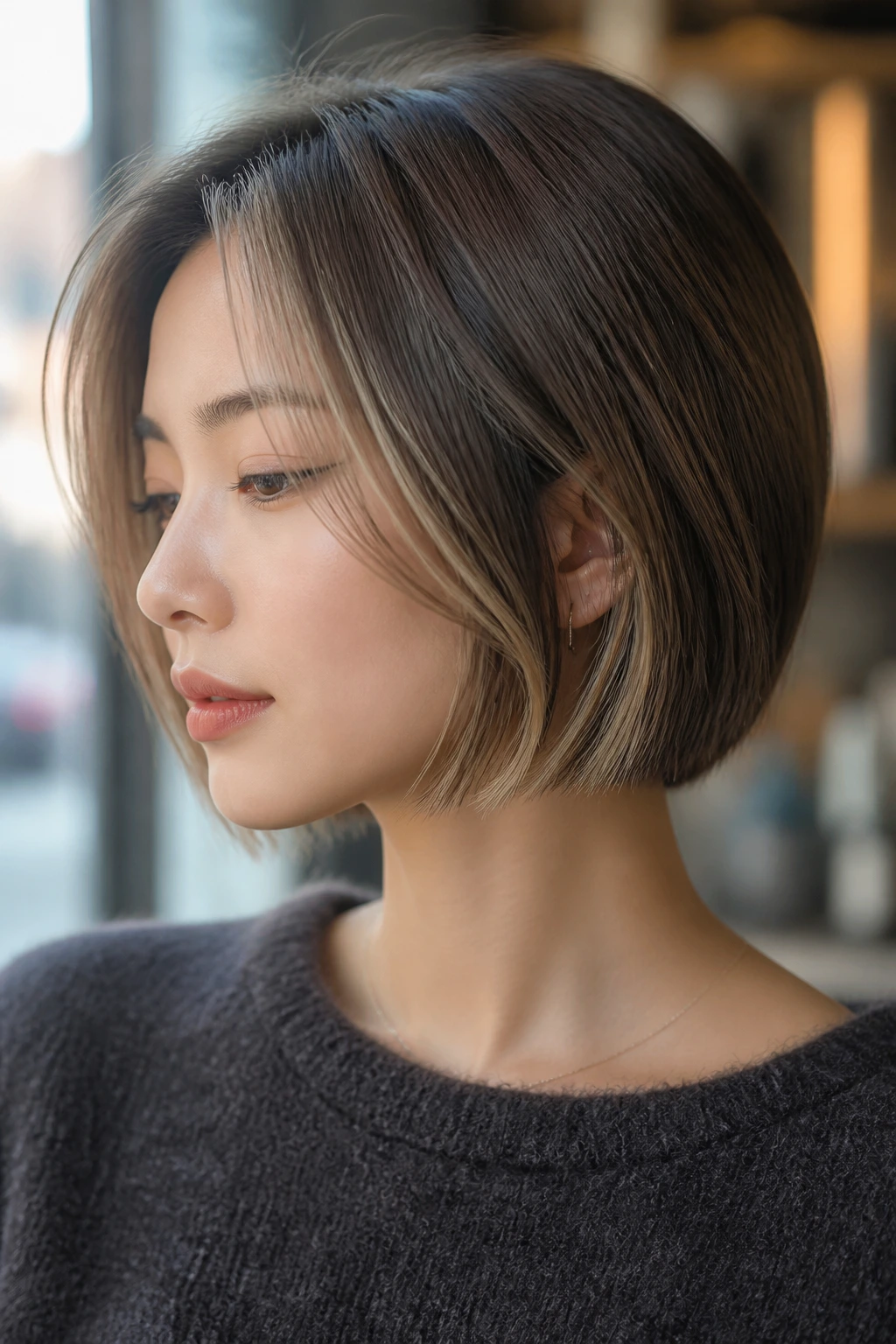
Short hair exposes everything. A blunt bob doesn’t hide lazy placement, and a pixie has no long curtain of hair to soften a bad toner choice. That sounds unforgiving, but it’s actually useful. You see the color faster, the shape reads faster, and the whole head looks more intentional when the placement is clean.
The other thing short hair does well is show contrast. A money piece near the temples, a smoky underlayer at the nape, or a glaze over the top can change the whole mood of the cut without needing a heavy dye job. That matters on Asian hair, where the base is often dark enough that a few smart foils can do more than a full-head lift that was painted too high and toned too weak.
And yes, the undertone matters. Dark hair with a lot of red-orange pigment will fight cool blonde unless the lightening is controlled. That’s why mushroom brown, ash beige, plum gloss, and blue-black show up so often in good short-hair color work. They don’t wrestle the base. They work with it.
Why This Collection Feels Different
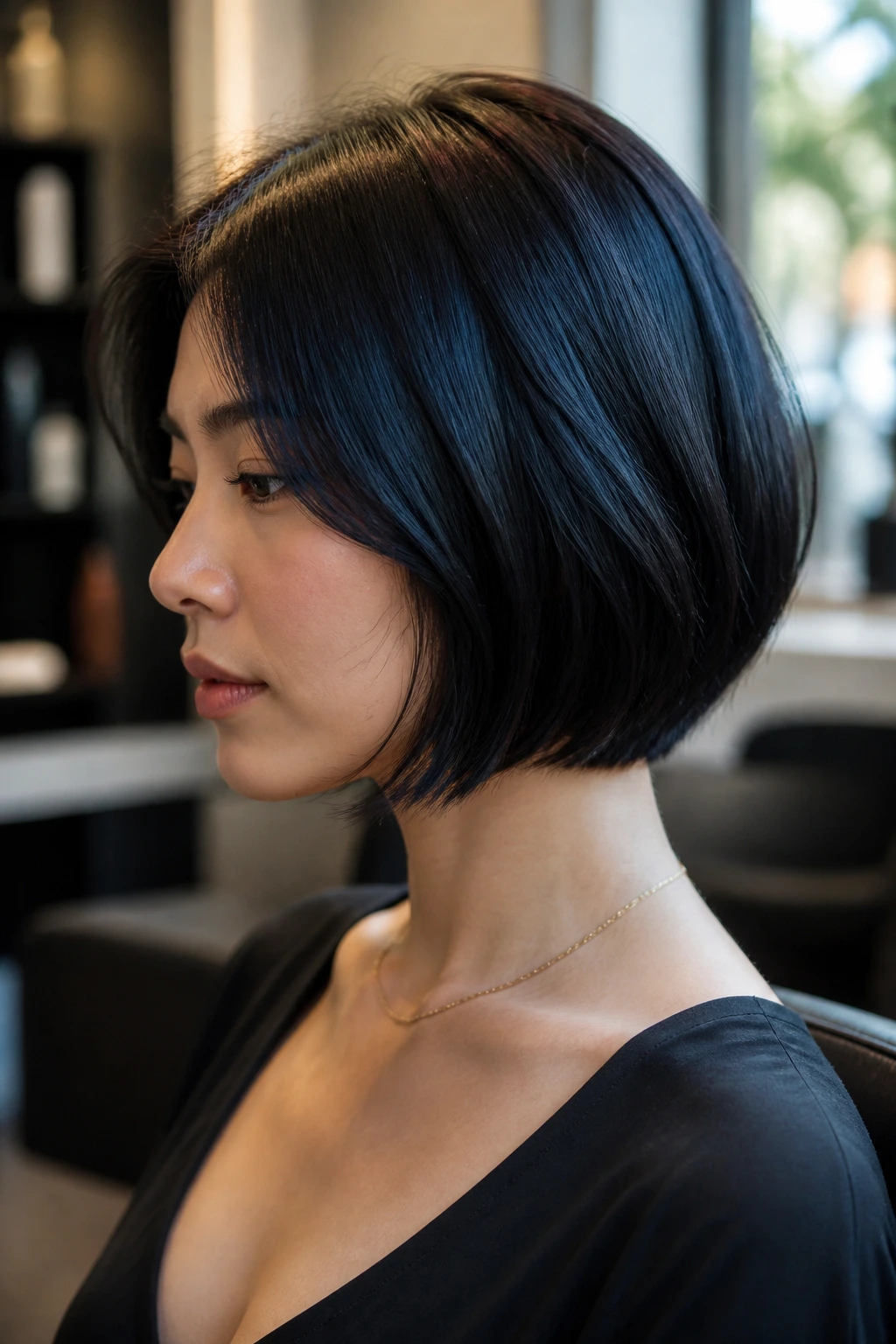
- Short length shows placement fast: A face frame, crown ribbon, or hidden panel reads in seconds on a bob or pixie, so the color has to earn its place.
- Dark natural bases are an advantage: Blue-black, espresso, plum, and mushroom brown stay rich longer because they begin close to where many Asian hair textures already sit.
- Bold tones become more wearable: A little teal underlayer or dusty pink on the ends looks deliberate on cropped hair because the cut itself keeps it contained.
- Grow-out is less punishing: Root shadow and soft balayage look cleaner on short styles, which means you can stretch appointments without looking sloppy.
- Shine matters more than length: On short hair, a glossy finish does half the work. If the light hits it cleanly, the color looks more expensive than it really was.
1. Blue-Black Gloss on a Pixie
Blue-black on a pixie is not a safe choice. It is a sharp one.
The reason it works so well is simple: a pixie cut gives blue-black nowhere to hide. Every ridge, sideburn, and crown piece catches the light, and the blue reflect keeps the black from looking dead or muddy. On straight or slightly wavy hair, it can look almost liquid. On a textured crop, it gives the layers a clean edge.
What to ask for
Ask for a deep level-2 or level-3 base with a blue-violet or blue-green undertone, finished with a clear gloss if the hair is already dark. If your stylist reaches for a permanent formula, make sure the goal is depth, not lift. This shade is about saturation, not brightness.
A pixie takes shine well, so keep the finish sleek around the top and a little piecey through the fringe. Too much fuzz and the blue-black can disappear into flat darkness. Too much oil, same problem. A pea-sized amount of smoothing cream is enough.
Best for: cool, neutral, or olive undertones; sharp haircuts; low-maintenance brunettes who want the haircut to look crisp.
Tiny warning: if your hairline is very dark and your ends are porous, the color can read uneven if the gloss is rushed. Take the extra ten minutes.
2. Espresso Bob with Mocha Ribbons
This is the shade I recommend when someone wants dimension without a dramatic mood swing. Espresso keeps the bob grounded, while mocha ribbons around the face and top layer stop it from turning into one solid brown block.
The trick is placement. On short hair, ribbons that start too low can look stripey and old-fashioned. Keep the lighter brown pieces concentrated at the crown, around the temples, and just through the outermost layer. That way the bob moves, and the color moves with it.
A middle part gives this look a sleeker, cleaner read. A soft side part makes the mocha pieces show up a little more around the cheekbone. I prefer the side part if the cut is blunt; it stops the shape from looking boxy.
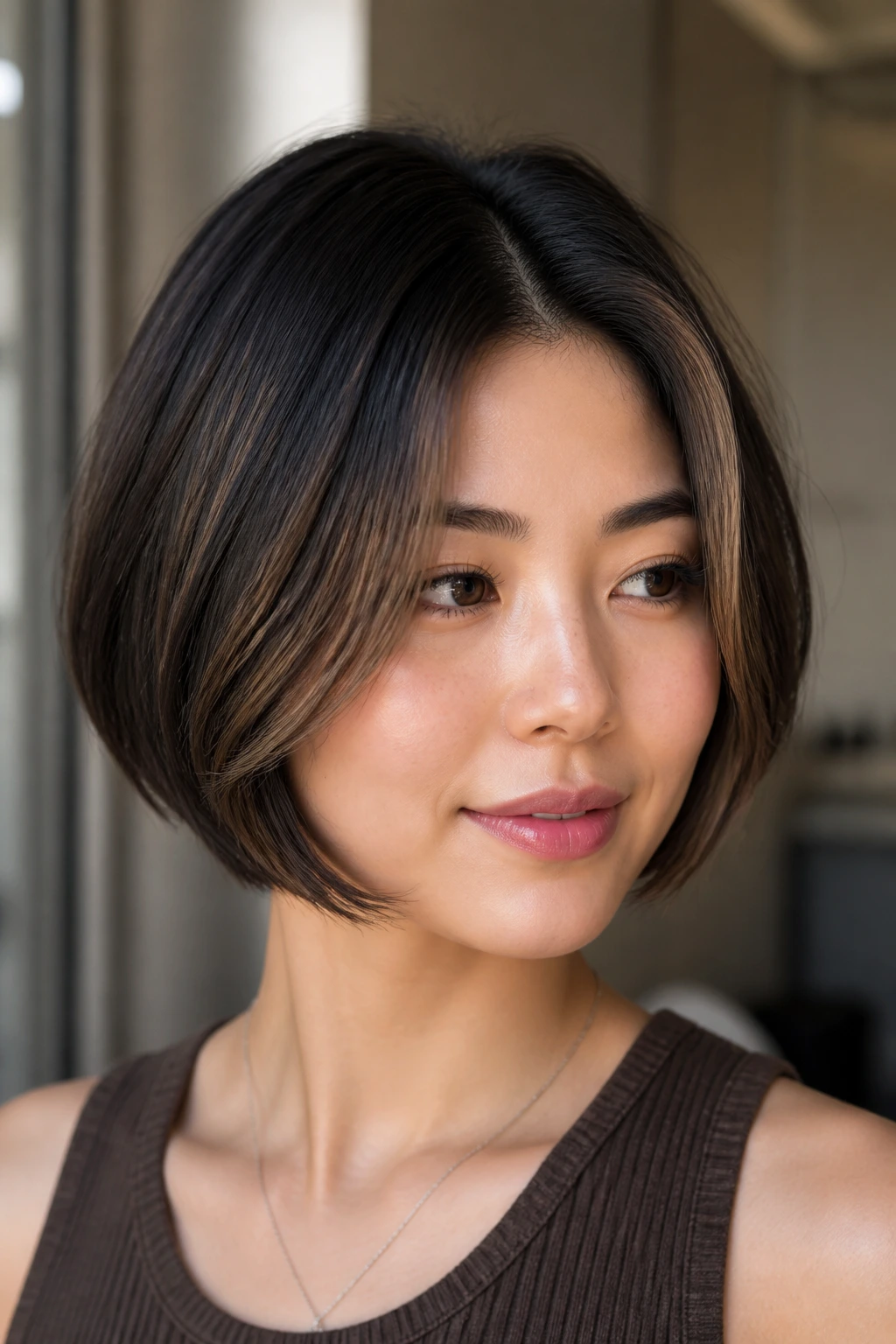
3. Mushroom Brown with Soft Beige Veining
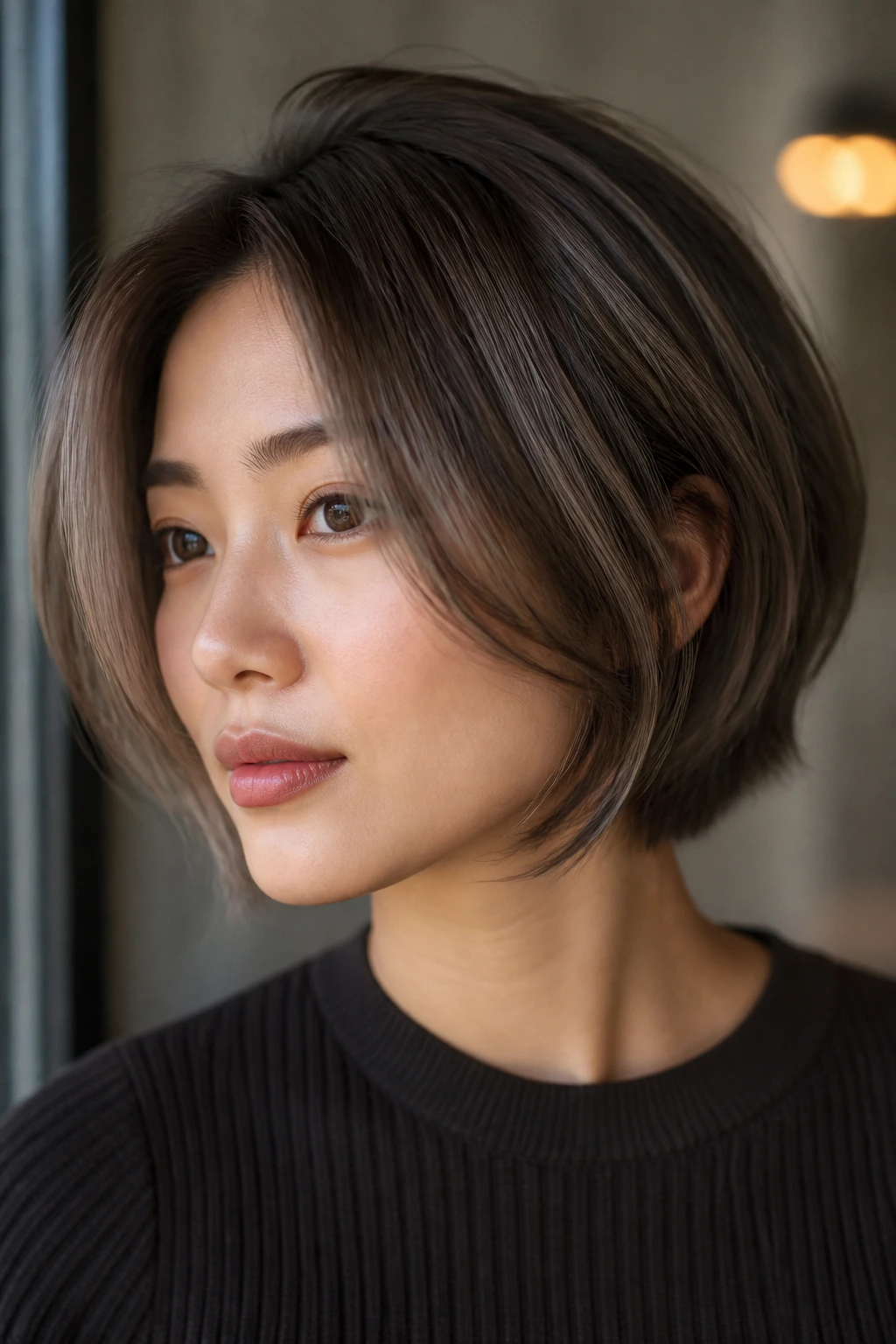
Why does mushroom brown look so clean on short hair? Because it gives you a cool brunette without making the cut go flat.
On dark Asian hair, mushroom brown works when the lift stays controlled at a beige-brown level instead of pushing all the way to gold. That cool, earthy tone softens orange undertones, which is the battle most brunettes are fighting whether they admit it or not. Short bobs and bixies love this because the subtle veining shows up at the surface and around the front, where the eye lands first.
How to wear it
Keep the texture airy. A blunt blowout can make mushroom brown read too solid, while loose bends or a soft tuck behind the ear let the beige ribbons show. If you’re asking for this at the salon, ask for a root shadow one shade deeper than the mid-lengths. That keeps the whole look from going chalky.
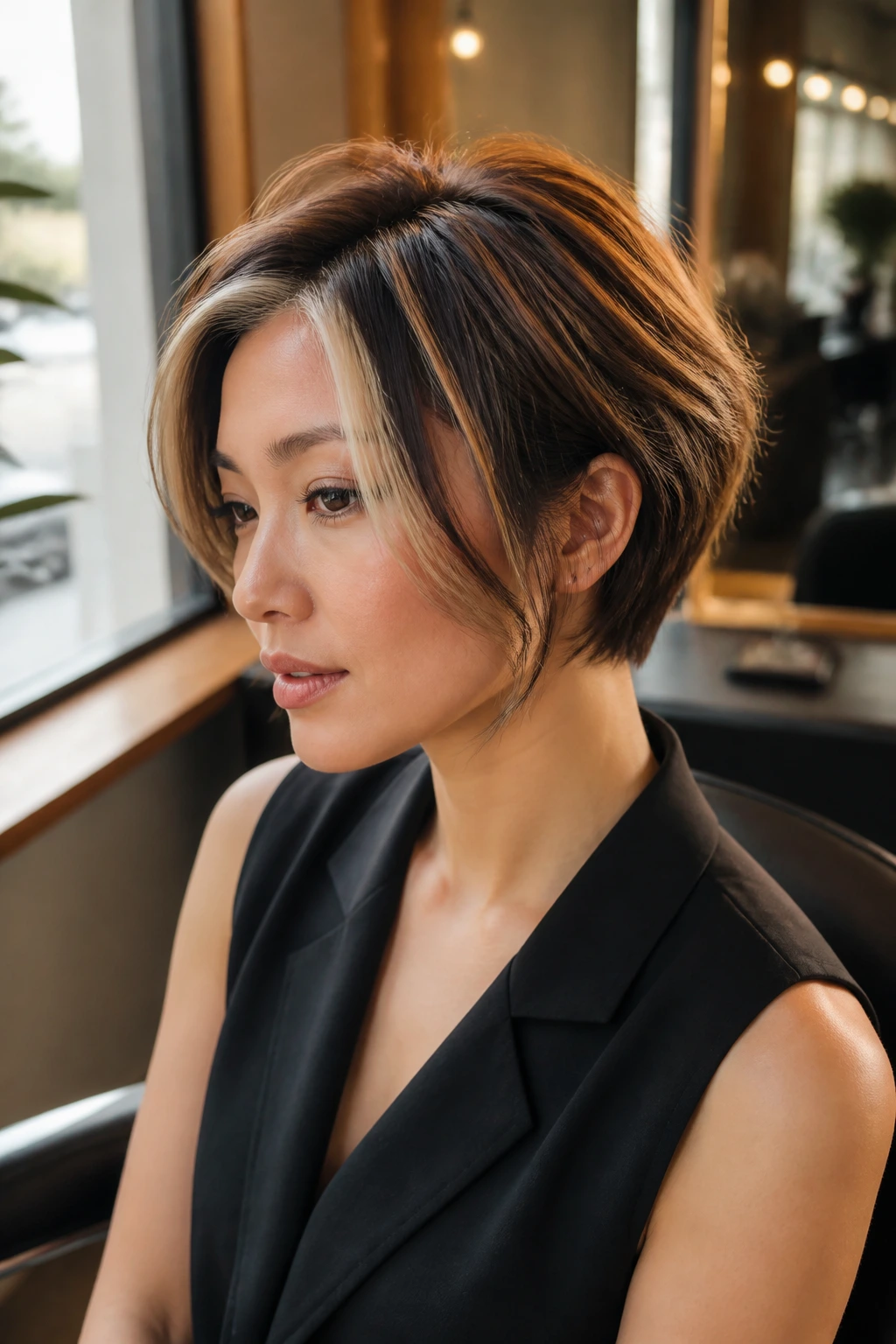
4. Honey Beige Money Piece on a Blunt Bob
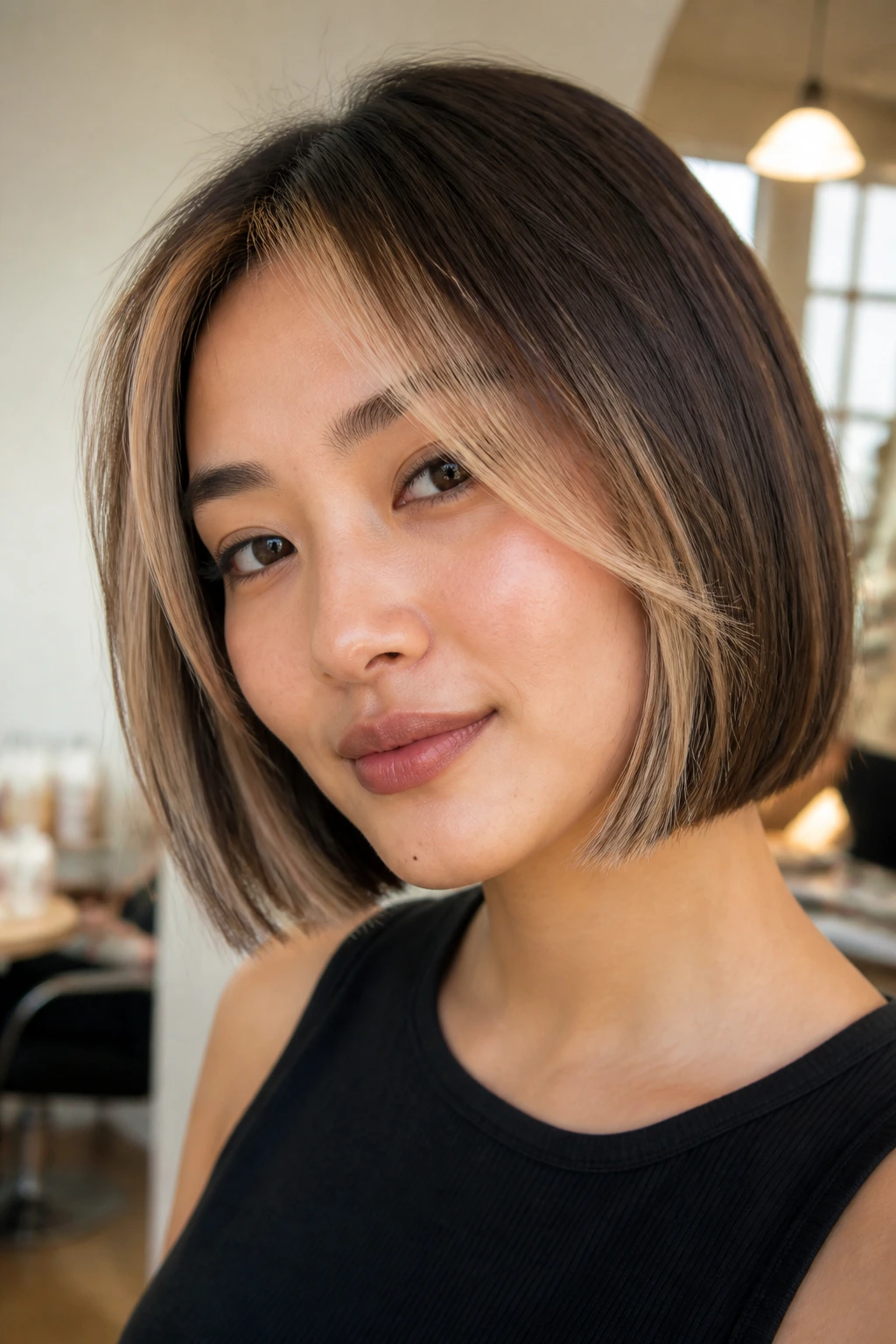
If you want the cut to look brighter before anyone notices the dye job, this is the move.
A honey beige money piece works because short hair doesn’t need a lot of highlight to make an impact. Two or three foils on each side can lift the whole face if they’re placed right at the temples and skimming the fringe. On Asian hair, that narrow bright zone is often smarter than a full-head blonding plan that burns time and money.
The base should stay a soft brunette or dark beige brunette. Keep the money piece warm enough to feel honeyed, not pale yellow. If it gets too ashy, it can wash the skin out fast, especially on a blunt bob where there’s less movement to break up the color.
A little bend through the ends keeps the face frame from looking harsh. Straight and flat can work too, but then the parting has to be exact. Messy parting and a heavy money piece is a bad combo. It screams “salon experiment” in the worst way.
5. Cherry Cola Shine on a Textured Lob
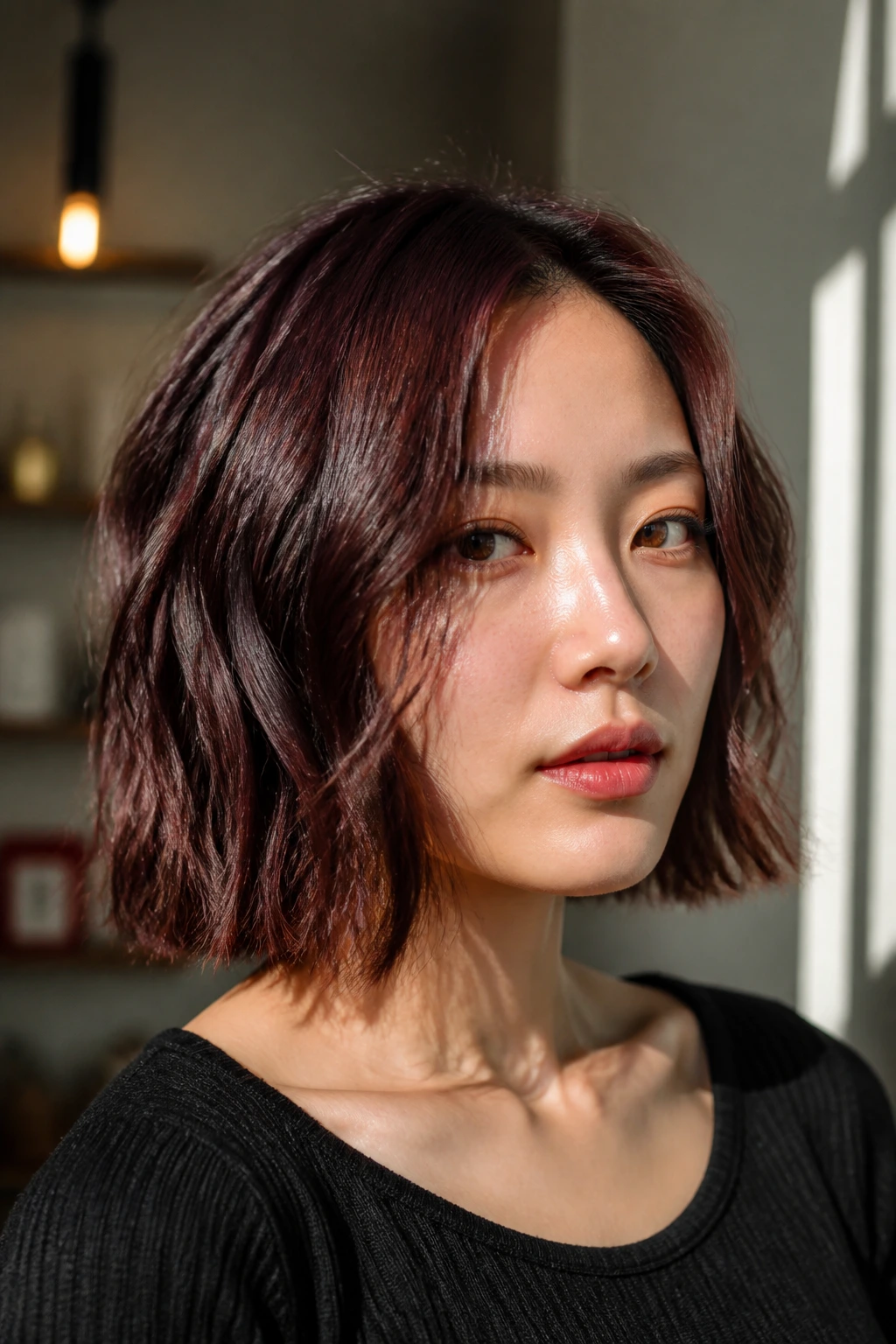
Cherry cola is brunette color with a pulse. You still see the brown, but the red-violet reflect wakes it up in the right light.
This shade is especially good on short hair because texture does half the talking. A lob with a few rough bends picks up the cherry tone around the mid-lengths and ends, and the deeper brown root keeps it wearable. The color reads rich indoors and a little more wine-like outside, which is exactly the sort of shift that makes a haircut feel alive.
If you want this to stay elegant, keep the red more berry than fire-engine. You’re after a cool red-brown, not a copper candle flame. On Asian hair, that distinction matters because the base can pull warm fast during processing, and cherry cola only stays chic if the finish is controlled.
6. Copper Penny on a Cropped Pixie
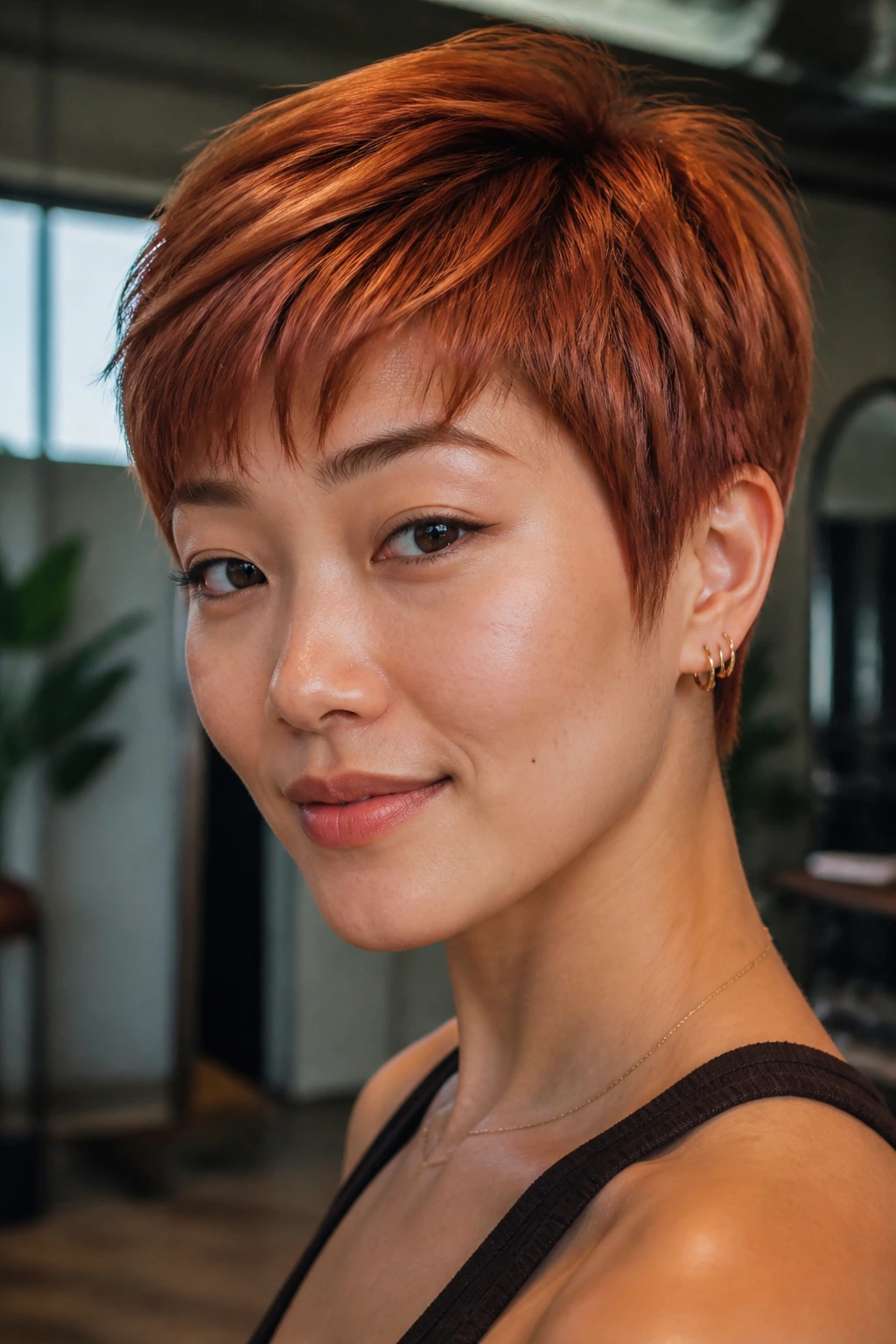
Copper on a pixie is a confidence move, but it’s a smart one. Short hair keeps the color from overwhelming your face, and a cropped cut gives copper more edge than sweetness.
This works best when the copper leans penny, not pumpkin. A deep copper with a little brown in it flatters warm and golden undertones better than a bright orange formula that tries too hard. The shine is the point here. Copper without gloss looks busy. Copper with shine looks deliberate.
A pixie also lets you keep the finish textural. Sweep the fringe forward, rough up the crown, and let a few pieces fall over the ears. The movement keeps the shade from looking costume-y. If your hair is very dark, ask for a copper gloss over lifted pieces rather than an all-over lightening session. The scalp heat on short cuts can make roots process faster than the ends, and that can go sideways quickly.
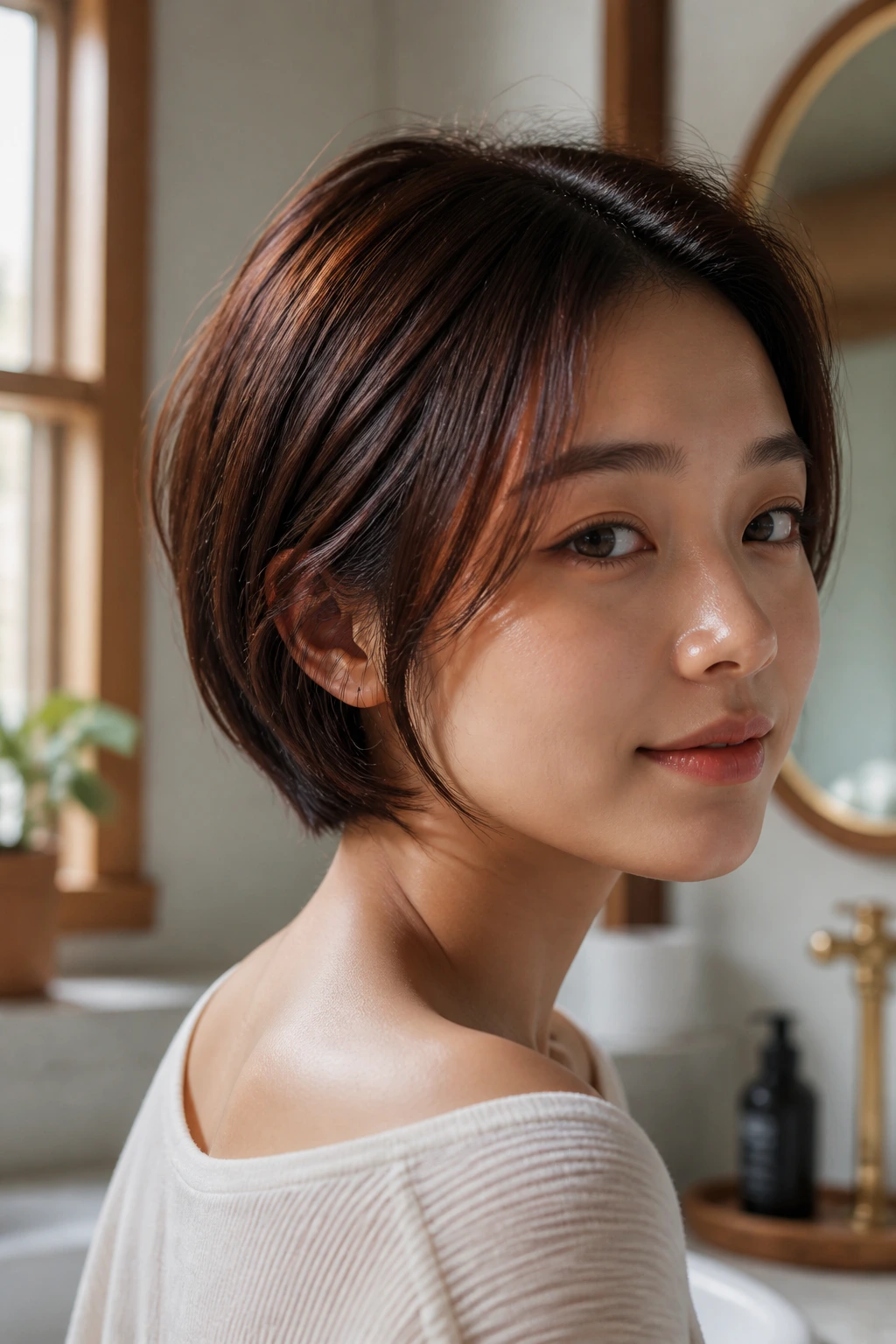
7. Rose Brown on a Rounded Bob
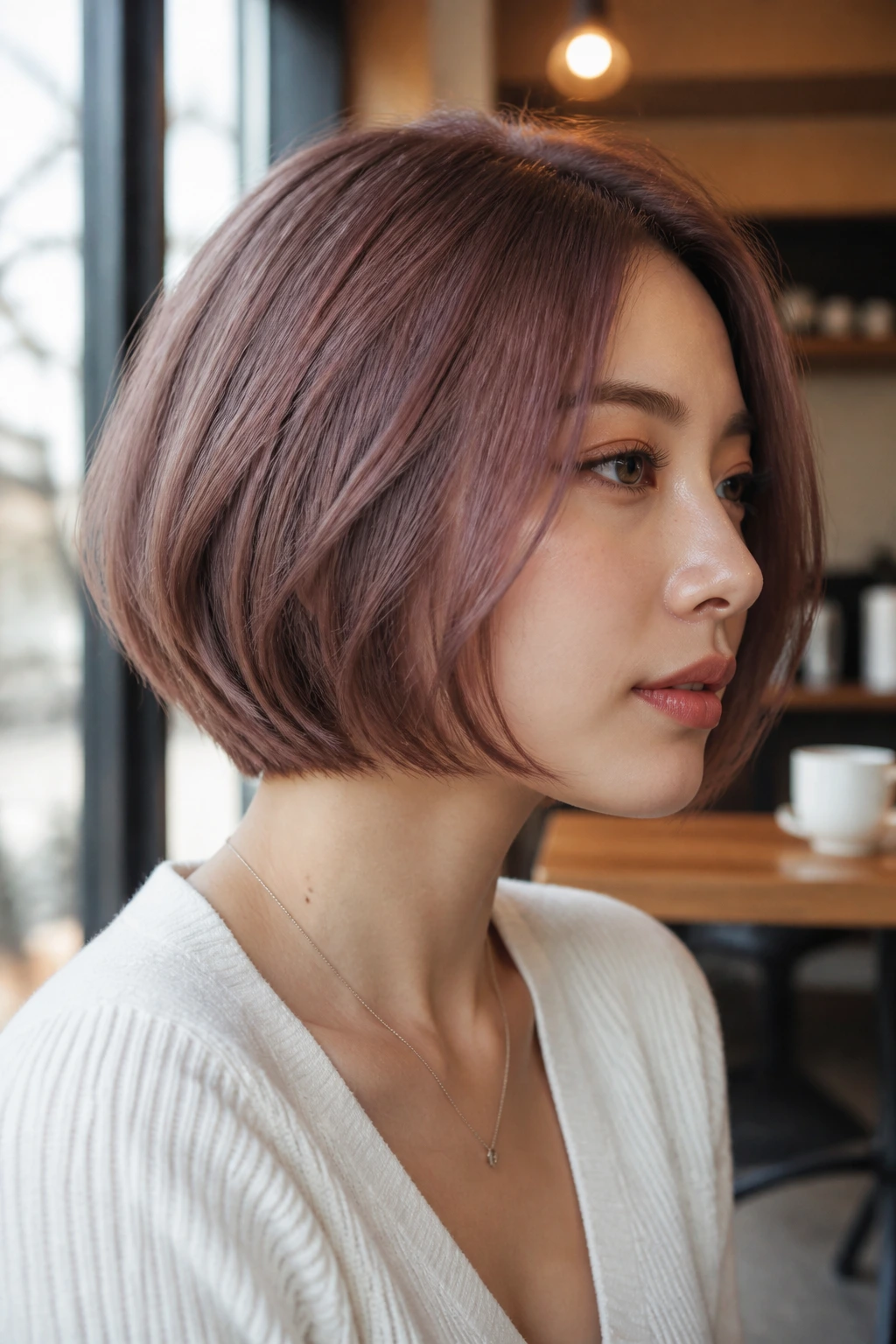
Rose brown is the shade that softens a sharp bob without making it look precious. It sits between brown, blush, and mauve, which is why it can feel polished instead of sugary.
On Asian hair, rose brown usually needs a pre-lightened panel or a lifted brown base before the pink reflects show up. That doesn’t mean a full bleach-out. It means the colorist needs enough lift for the rose to sit on top of the hair instead of vanishing into the dark base. On a rounded bob, the curve at the jawline helps the tone look smooth.
The best version keeps the rose muted. Think dusty petal, not bubblegum. If the color gets too bright, the cut can start to feel juvenile fast, especially with a clean bob line. I like this most when the ends are slightly piecey and the roots stay neutral brown.
8. Burgundy Wine Underlayers on a Short Shag
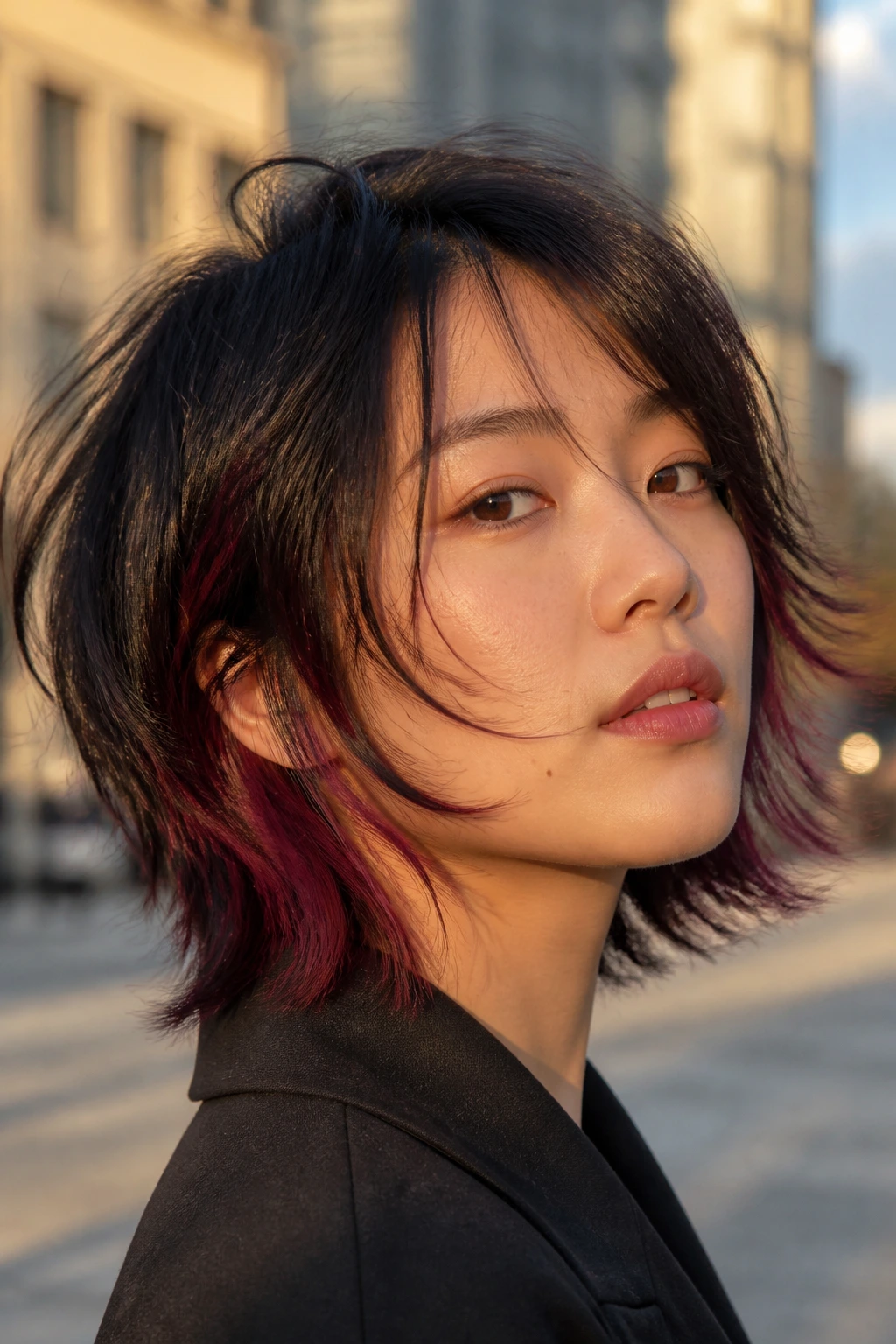
If you want drama without turning the whole head red, hide it underneath.
Burgundy underlayers make short hair move differently. The top layer stays dark and grounded, and then the wine color flashes out when the hair flips, tucks, or gets a little wind in it. On a short shag, that motion is half the appeal. The cut already has broken pieces and layers, so the undercolor has somewhere to live.
This is one of the easiest bold shades to wear at work or in a conservative setting because it can disappear when the hair is worn straight down. The payoff comes when you bend the layers with a flat iron or finger-dry the ends. It feels moody, not loud. A good burgundy should look almost black until the light hits it.
9. Smoky Lavender Peekaboo on a Bixie
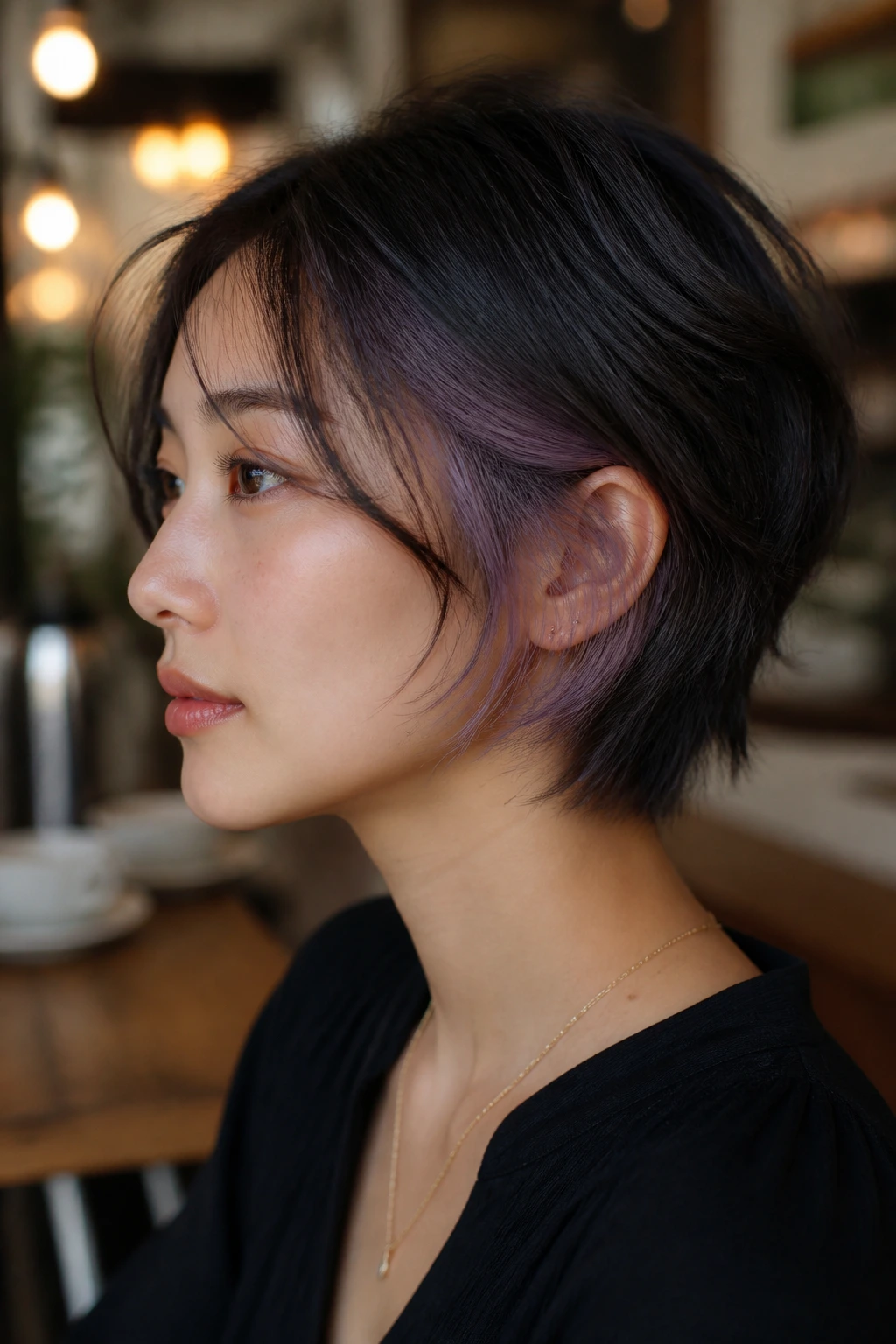
Can lavender work on dark Asian hair without looking like a costume? Yes, if it stays smoky.
A bixie gives you the perfect amount of surface area for peekaboo color. The top stays dark, the underside gets lifted to a pale yellow base, and then the lavender toner mutes the yellow into something soft and slightly cool. If the purple is too bright, the whole thing can veer childish. Smoky lavender keeps it grown-up.
How to keep it soft
Ask for thin peekaboo panels, not thick chunks. That matters a lot on short hair, where every panel shows more than you think. Keep the surface layers closer to your natural brown or black so the lavender only flashes when the cut moves. It is the kind of color that looks better in motion than in a static selfie.
10. Pearl Blonde Face Frame on a Chin-Length Cut
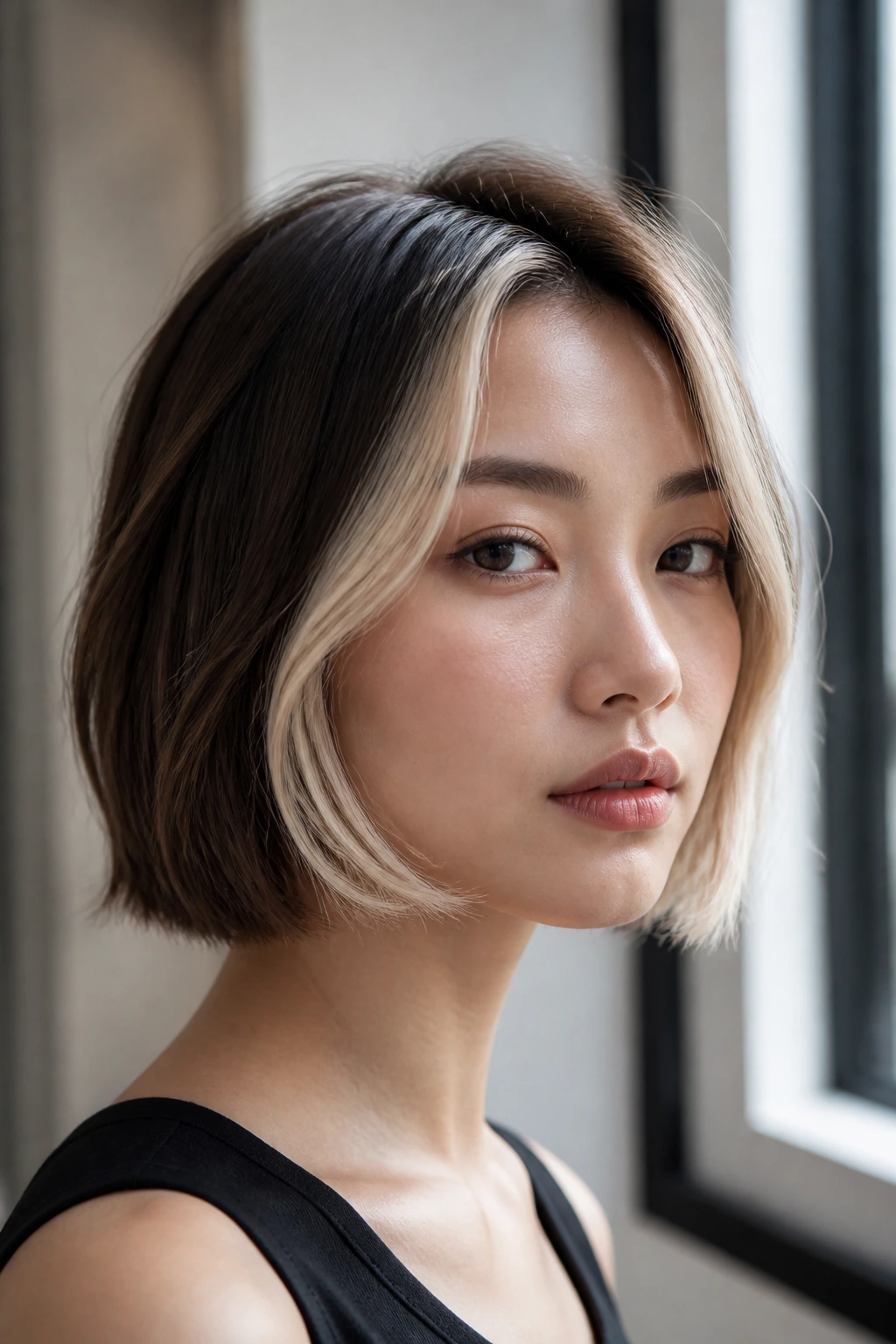
Pearl blonde is not about covering the whole head in lightness. It’s about putting one clean ribbon of brightness where the eye lands first.
On a chin-length cut, the pearl frame can lift the face without forcing you into a full blonde maintenance schedule. The tone should sit between beige and icy blonde, with enough softness that it doesn’t look stark against dark brows or deep roots. That balance is hard to get, and when it’s off by even a little, the hair can look striped instead of luminous.
A pearly face frame works best when the rest of the hair stays grounded in a deeper brunette. The contrast makes the bright pieces feel intentional. Add a sharp bend at the ends or a tucked-behind-the-ear style, and the frame suddenly does more than brighten — it shapes the whole haircut.
11. Ash Beige Balayage on a Layered Crop
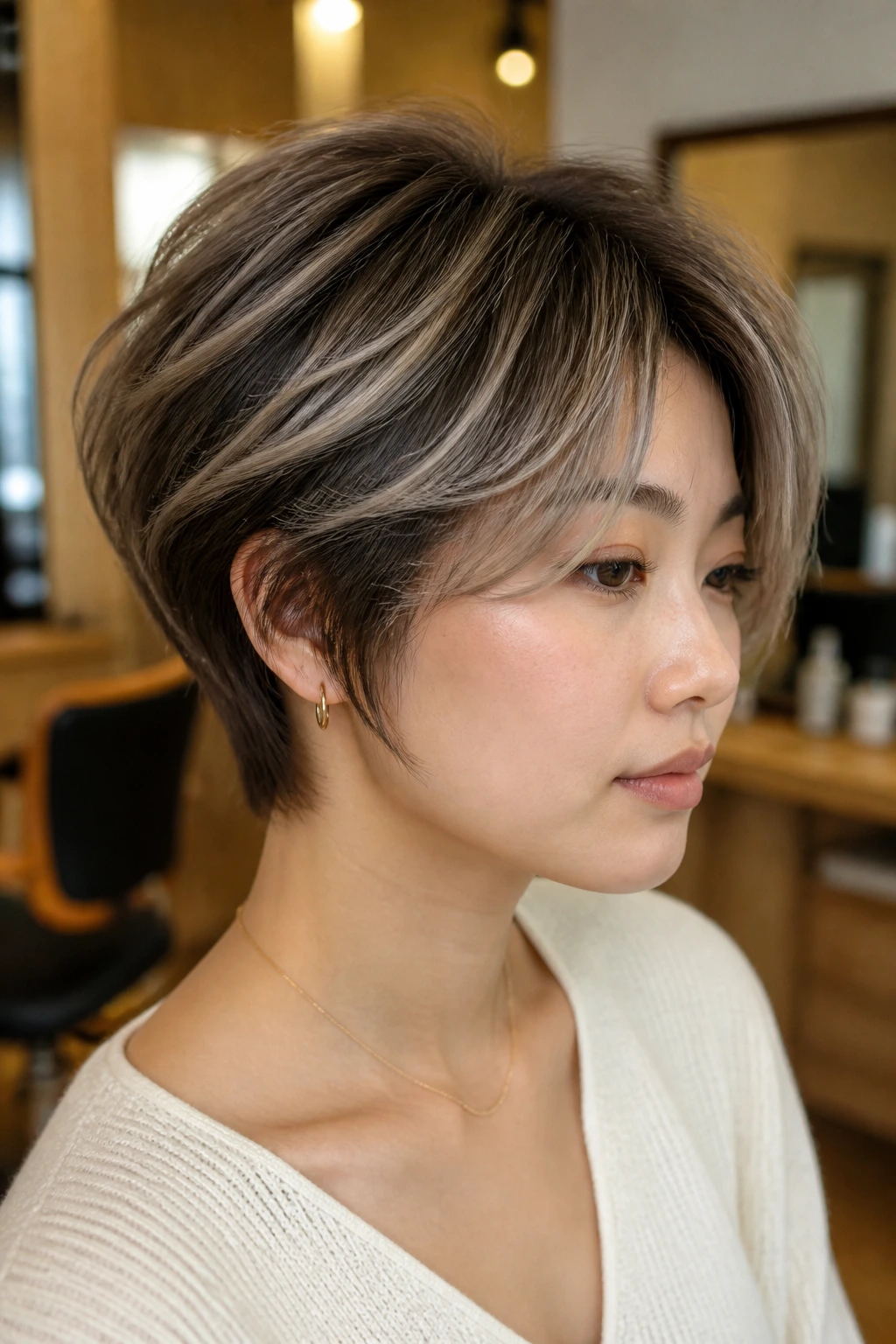
Ash beige is tricky, and that’s exactly why people keep coming back to it. It cools brass, but it still has enough warmth to keep short hair from looking washed out.
The placement matters more than the formula here. On a layered crop, the lightest pieces should sit where the layers bend — around the crown, near the temples, and just above the ear. If the ash beige is painted too low, the cut can go dull fast. Too much lightness at the ends can also make short hair feel disconnected from the root.
I like ash beige most on hair that’s lifted to a clean level 7 or 8 before toning. If the canvas is orange, the ash will fight it and lose. If it’s pale enough, the tone looks expensive and airy. Not white. Not gray. Just a cool beige that makes the layers move.
12. Soft Auburn on a French Bob
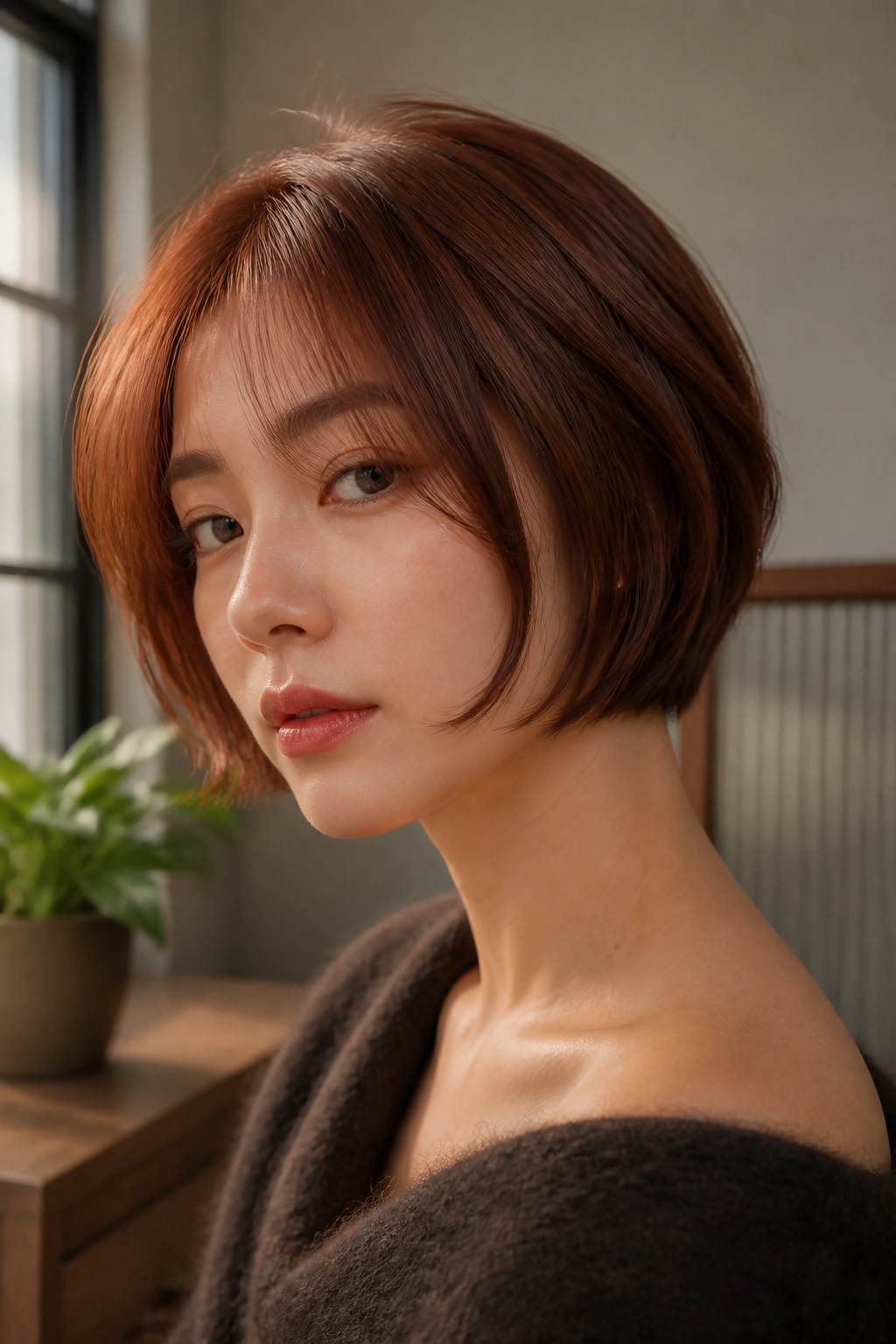
Soft auburn is the easy red for people who don’t want to look like they tried too hard. It has enough warmth to wake up dark hair, but it stops before it gets loud.
A French bob is one of the best cuts for this shade because the line sits close to the cheek and jaw. Auburn there looks chic, almost old-world, if the finish stays glossy. On Asian hair, the tone should lean brown-red more than orange-red. That keeps it flattering on skin that runs golden or neutral.
If you’re worried about redness, ask for a demi-permanent auburn gloss over a lifted brunette base. It fades more softly than a permanent red, and that matters when the haircut is short enough that regrowth shows quickly. I’d keep the makeup simple with this one: brushed brows, a clean lip, done.
13. Peekaboo Teal Panels in a Short Cut
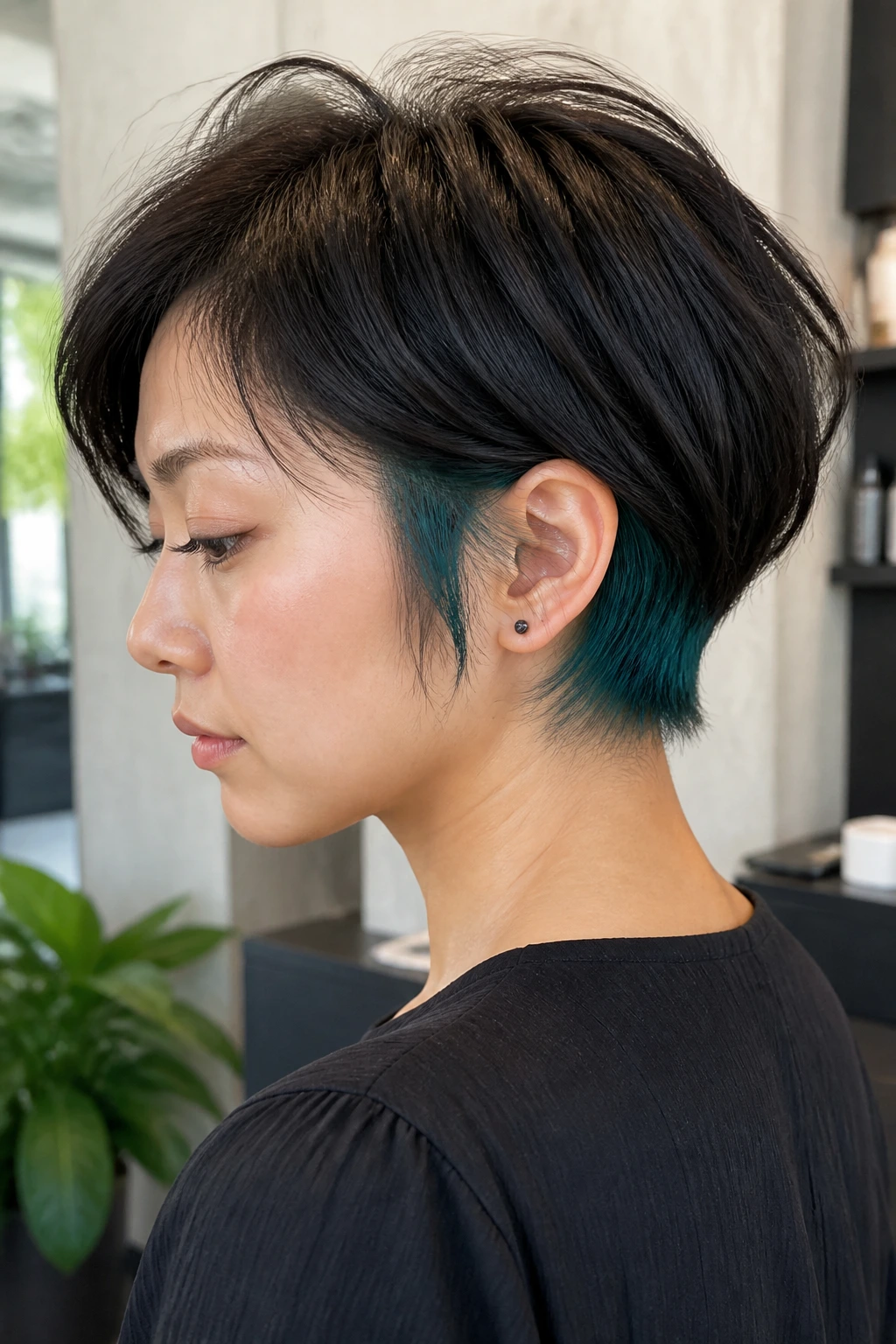
Teal is one of those colors that looks bolder on a mood board than it does on real hair. In a short cut, though, that’s a good thing. You get just enough teal to make the haircut interesting without painting the whole head like a festival poster.
The best placement is under the top layer, near the nape or one side of the head. On a bob, the teal shows when the hair tucks behind the ear or when the top layer separates a little during movement. On a pixie, a narrow panel around the side or undercut can do the same thing.
This works best on very dark bases because the contrast is clean. If you need lightening, keep the lifted area narrow so the teal stays vivid instead of patchy. And yes, it does fade. Fast enough that you should think of it as a fun panel, not a forever color.
14. Cinnamon Swirl Highlights on a Side-Part Bob
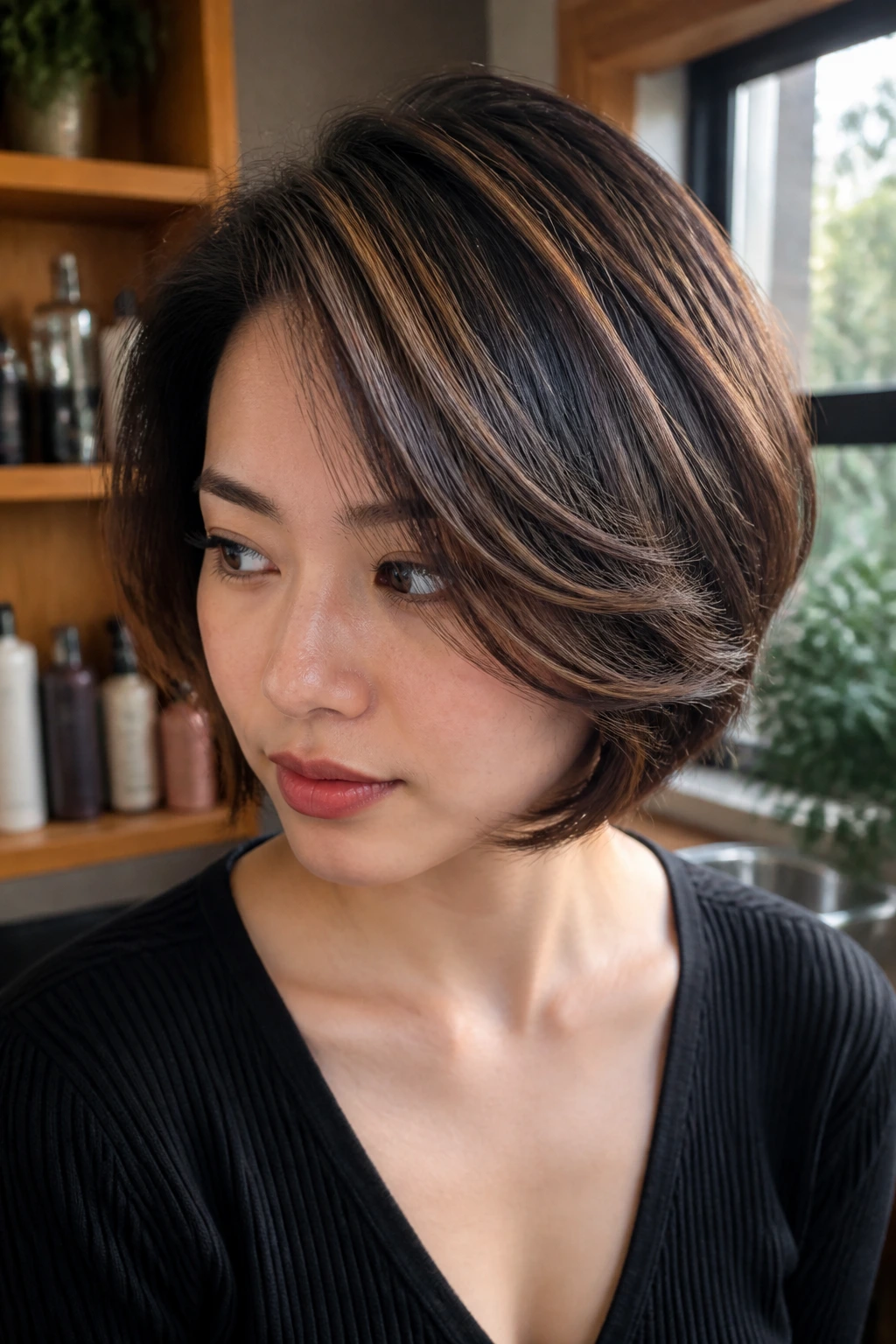
Why do cinnamon ribbons work better than chunky blonde on a short bob? Because they warm the cut without stealing the shape.
Cinnamon sits in that sweet spot between copper and brown, which makes it friendlier than bright red and less harsh than ash blonde. On short hair, the highlight pattern should follow the natural bend of the cut — around the part, through the crown, and in a few threadlike pieces near the jaw. If the highlights are too thick, the bob can go stripy in a hurry.
The side part helps. It lets the cinnamon pieces pool a little more on one side, which gives the cut movement without making it look uneven. I like this shade on people whose skin has a little gold in it, but it can still work on neutral undertones if the cinnamon is kept deep and not neon.
15. Midnight Plum Gloss on Straight Hair
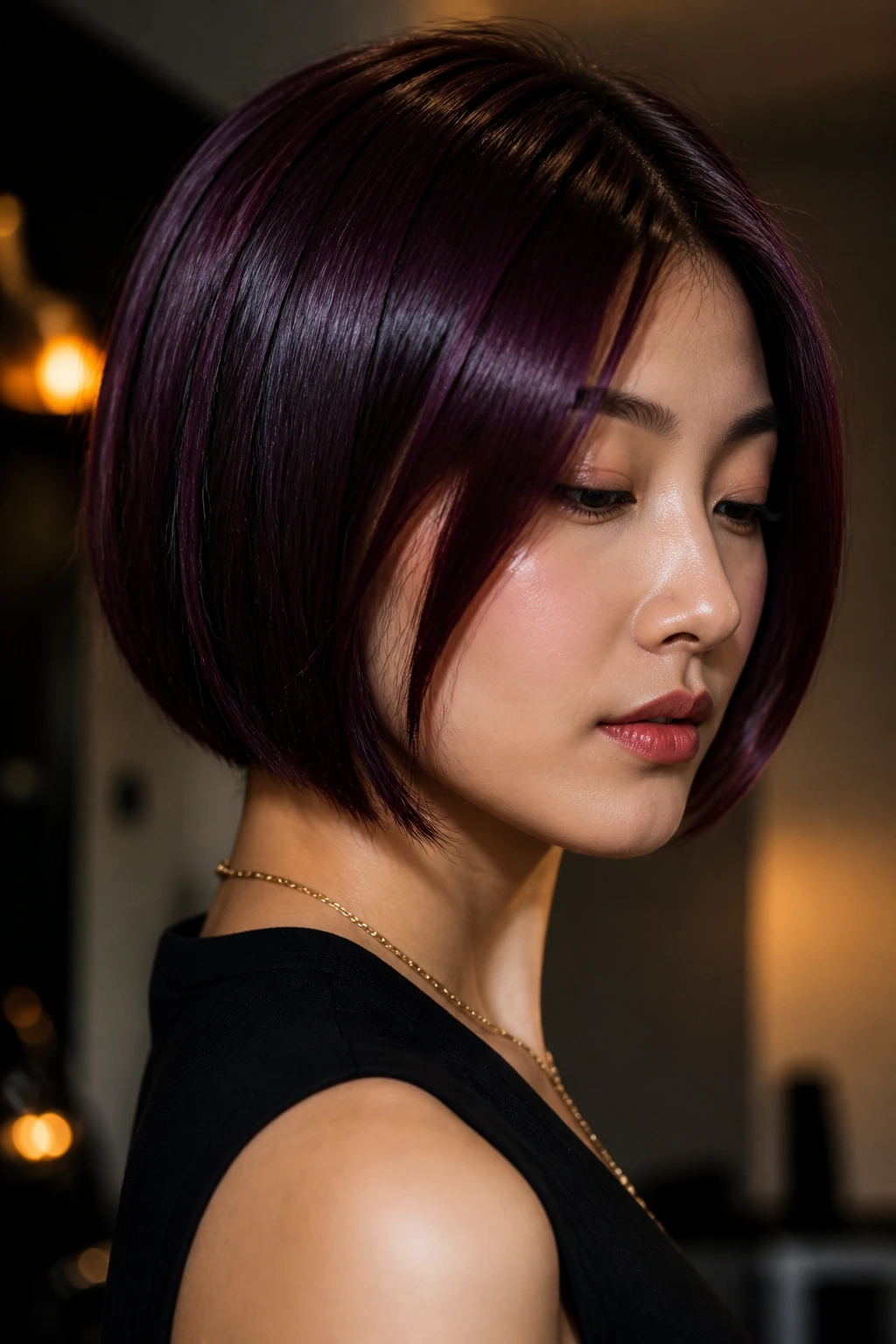
Midnight plum is the prettiest way to keep dark hair from looking flat.
It reads like black at first glance, but the purple reflect comes forward when the light moves across the hair. On straight short hair, that sheen is the whole point. A blunt bob or sharp crop turns into a reflective surface, and plum gives it depth without the blue-black chill. I prefer this on women who want something moody but not severe.
The maintenance is blessedly light if the base stays dark. A semi-permanent or demi gloss can hold the tone while leaving the hair soft. If you’re using heat, keep the pass smooth and the temperature moderate. Too much heat fries the shine, and plum without shine turns into a dull black-brown in a week.
16. Dusty Pink Ends on a Layered Pixie
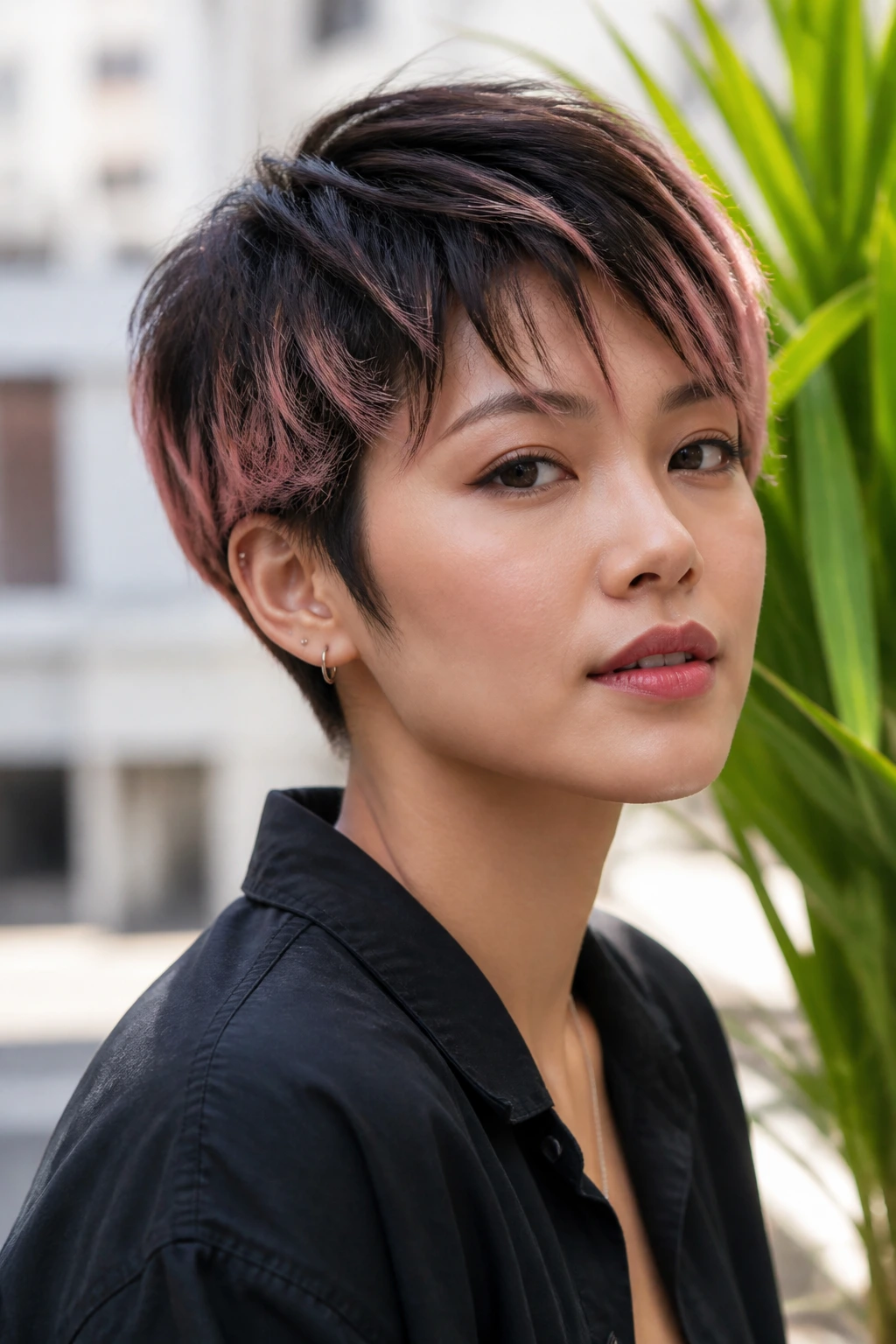
A pixie with pink ends can go from sweet to sharp depending on the cut. That’s what makes it fun.
Dusty pink is much easier to wear than bright pink because it sits in the hair like a softened blush rather than a sticker. On short, layered hair, the ends can be lightened and toned just enough for the pink to show through. Since the cut is short, those lightened ends are easier to trim away later if you want a reset. That’s the part people forget. Short hair buys you freedom.
What to watch for
- Keep the base deeper and the ends lighter, or the pink disappears.
- Use a cool rose tone rather than bubblegum if you want it to look less juvenile.
- Style with a little piece separation so the color doesn’t all blend into one pastel blur.
17. Tiger-Eye Brunette on a Wavy Bob
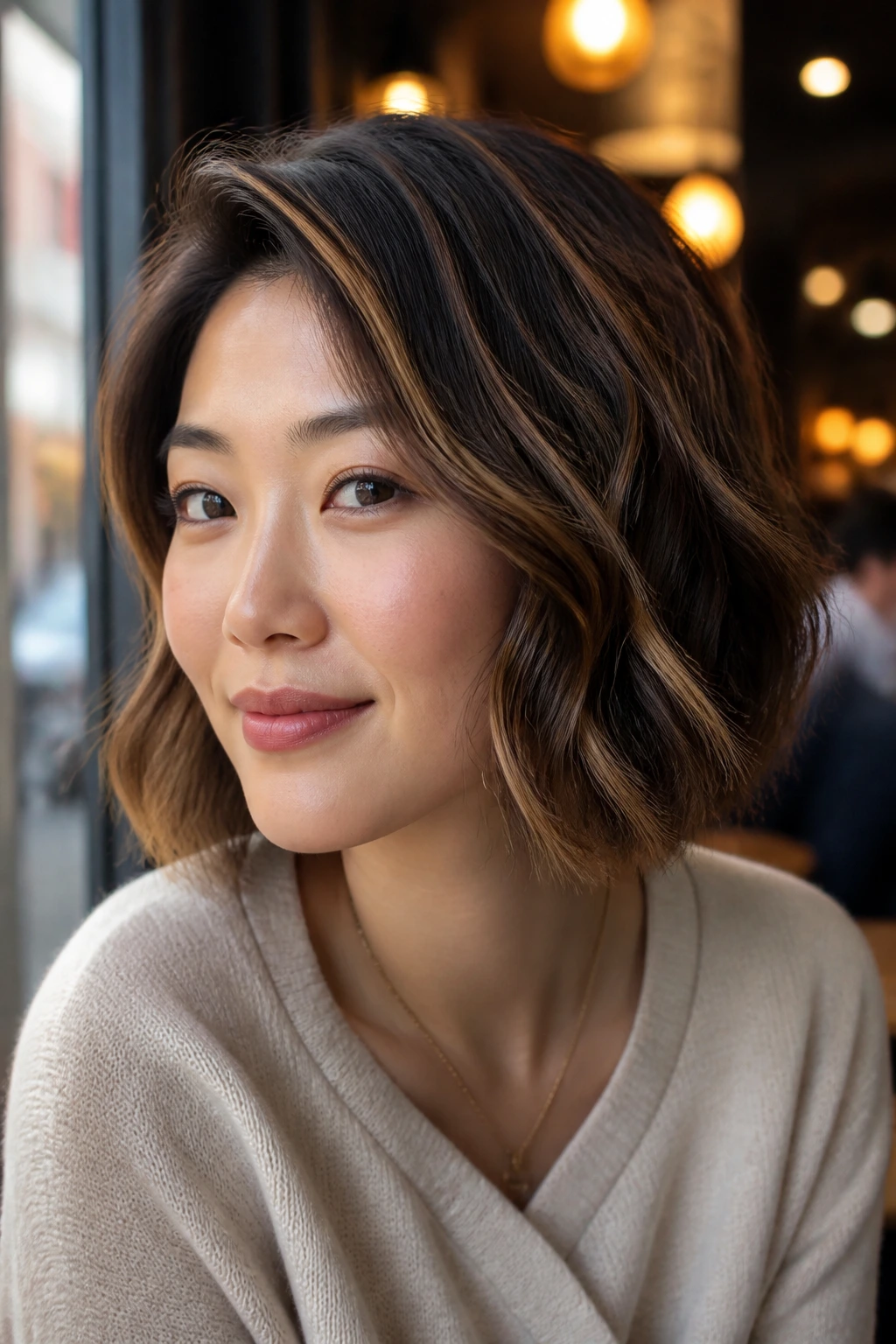
Tiger-eye brunette is basically a polished brunette with gold, bronze, and warm brown woven through it. On short hair, that mix can look expensive without looking obvious.
The reason it works is contrast control. You’re not going from black to blonde. You’re shifting from deep brunette into warm reflective ribbons that catch on the waves. A wavy bob is ideal because the bends give the highlights something to sit on. Straight hair can still wear it, but the color reads softer and more subtle.
I like tiger-eye when the face frame is a little lighter and the underlayers stay darker. That keeps the hair from looking busy. It also helps the haircut look fuller, which is a nice side effect on short styles where density matters a lot.
18. Slate Gray Frost on an Edgy Crop
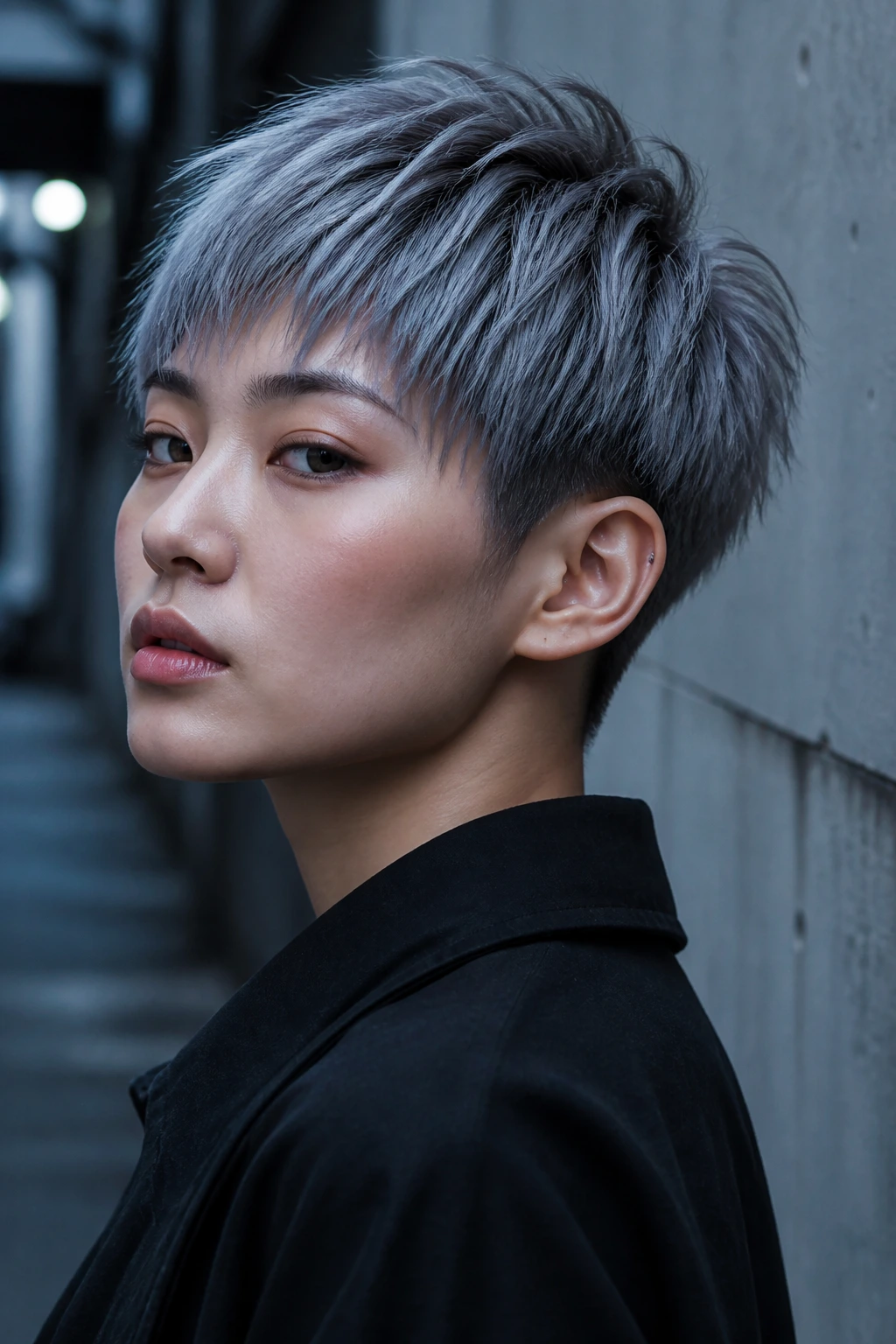
Slate gray is not for the faint of heart, and I mean that in a good way. It turns a short crop into a graphic shape.
The color itself lives in the cool zone between gray, silver, and smoked charcoal. To get there on dark Asian hair, you need a pale lift and careful toning, because any leftover yellow will muddy the finish. The payoff is a shade that looks cool, fashion-forward, and slightly metallic when the cut is clean.
This works best on crisp shapes — tapered sides, a sharp fringe, or a very tidy crop. If the cut is too fluffy, the gray can read faded instead of deliberate. And because short hair grows out faster in visual terms, you need to be okay with frequent toning. A gray crop that goes yellow is a sad thing.
19. Warm Toffee Ombré on a Short Lob
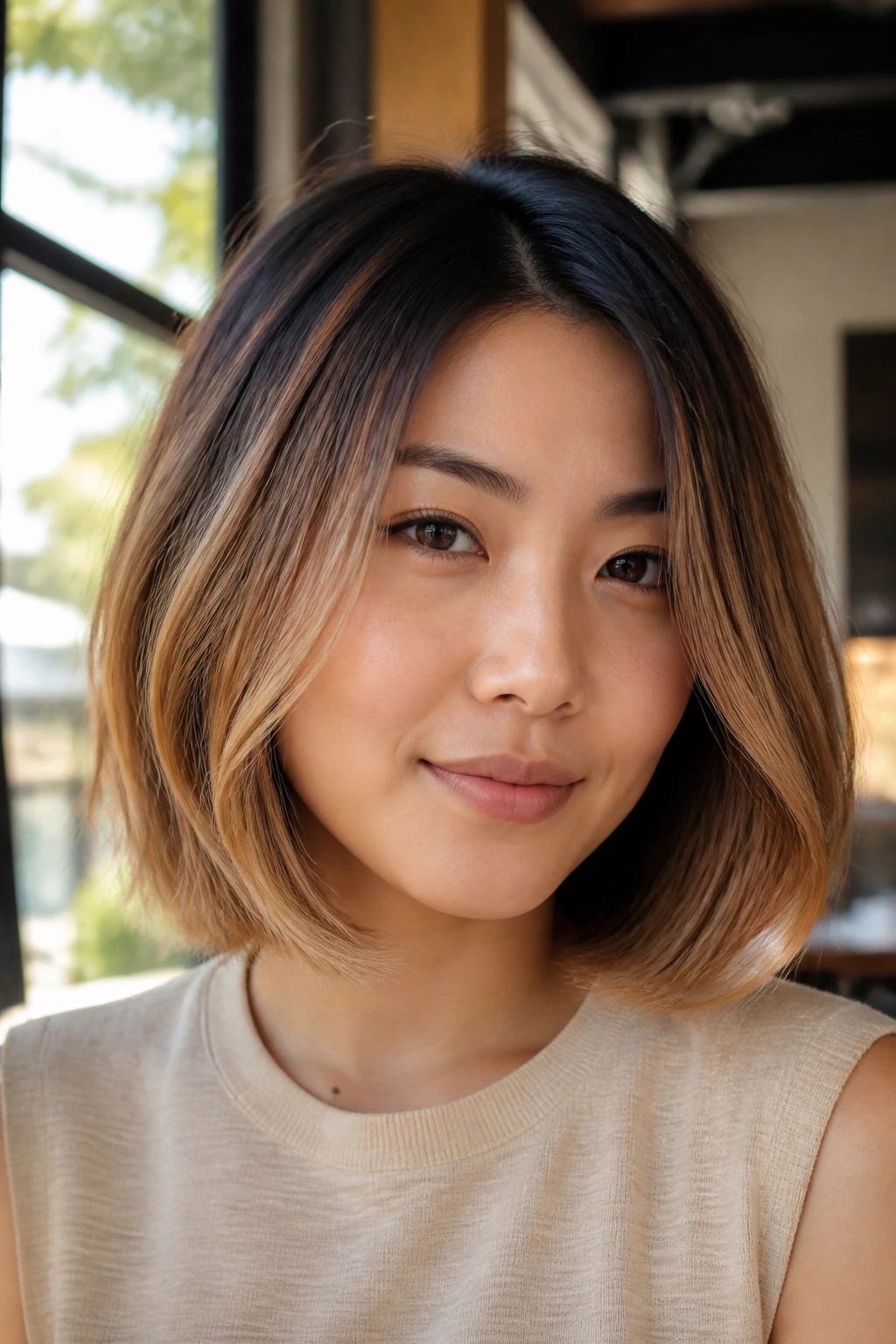
Long ombré can drag. On a short lob, the gradient lifts faster and feels much cleaner.
Warm toffee is a useful middle ground if you want brightness but don’t want to live in highlight maintenance. The roots stay deeper, the mid-lengths move into soft caramel, and the ends land in toffee brown. Because the hair is shorter, the transition happens sooner, which keeps it from looking like the color was stretched too far.
This is one of the easiest ways to make a lob look fuller. The lighter ends give the shape a little swing, and the darker root keeps the head from looking top-heavy. It suits a side part nicely, especially if you wear the ends tucked in or curved under.
20. Deep Plum Black on a Blunt Bob
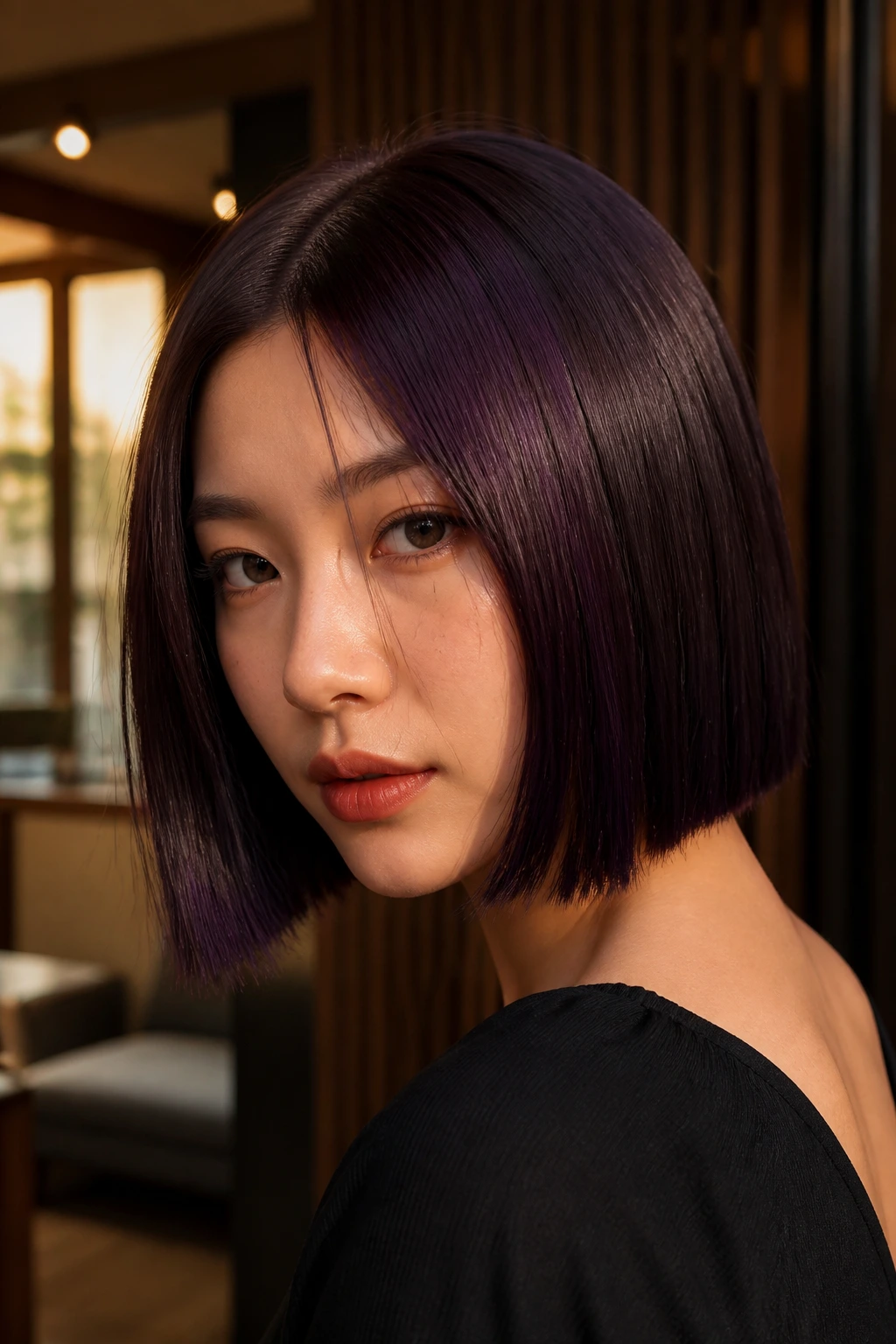
If blue-black feels too icy, deep plum black gives you the same depth with a wine-like glow.
This is one of my favorite shades on Asian hair because it respects the natural darkness instead of erasing it. The plum note is subtle enough to stay sophisticated, but it catches in daylight in a way that plain black never does. On a blunt bob, that little shift keeps the shape from flattening out.
Ask for a base that is nearly black with violet-burgundy reflect, not a bright plum dye. That distinction matters. You want depth first and color second. When the bob is straight, the finish looks smooth and expensive. When it bends, the plum wakes up.
21. Beige Blonde Micro-Highlights on a Bixie
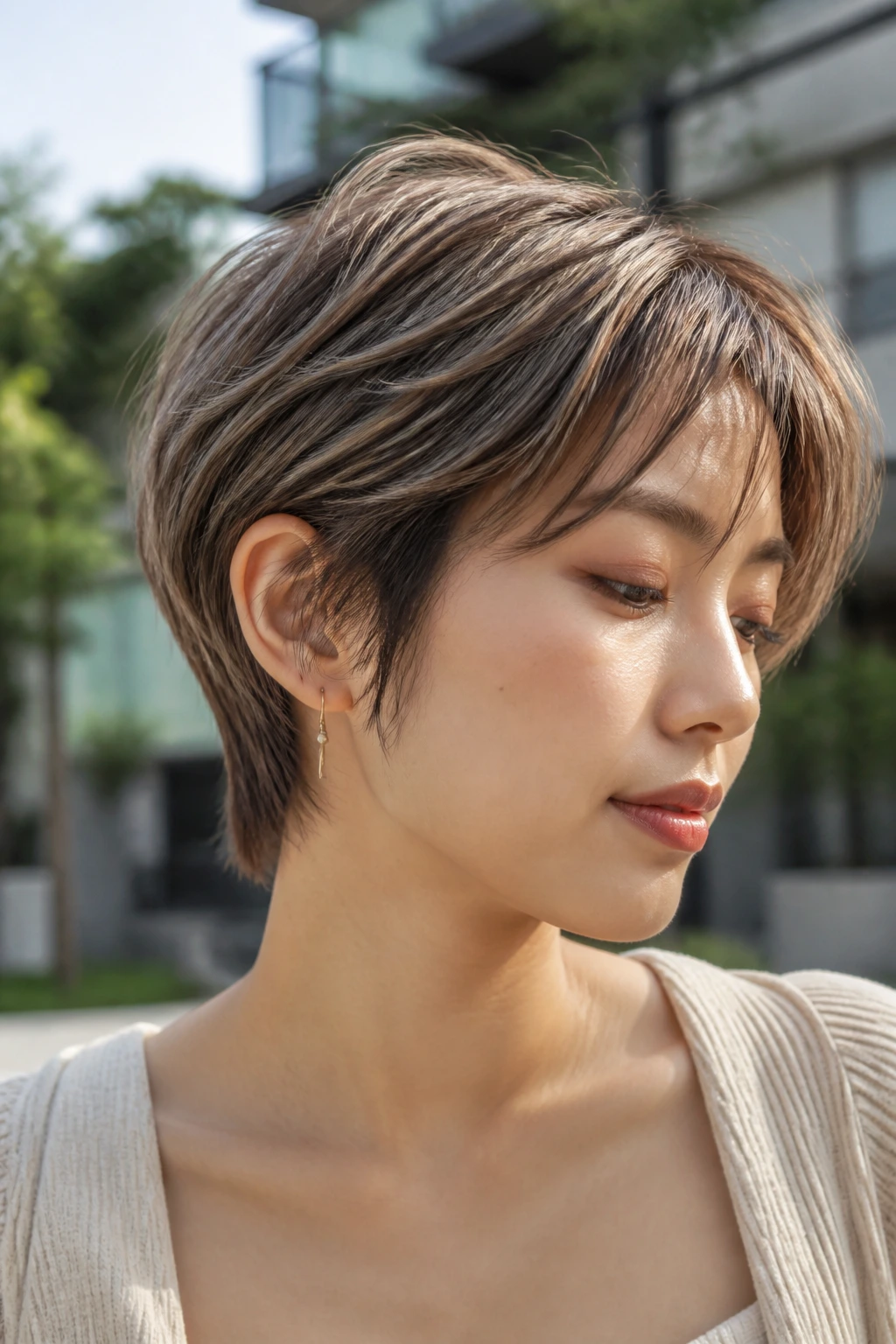
Micro-highlights are the quiet version of blonde. They’re tiny, they’re scattered, and they make a short cut look brighter without screaming for attention.
A bixie is one of the best cuts for this because the layers give the highlights room to breathe. Instead of chunky stripes, you get soft beige threads running through the crown and fringe. The effect is gentler than full balayage and less face-forward than a money piece. That’s useful if you want lightness but don’t want the hair to become the whole conversation.
What makes them work
- The foils are narrow, so the result looks woven instead of streaky.
- The beige tone keeps the light pieces from turning yellow or too icy.
- The placement should stay high enough that the color moves with the layers.
The right micro-highlights make a bixie look airy. The wrong ones make it look busy. That’s a very short-hair problem, and the fix is usually placement, not more bleach.
Why Short Hair Makes Color Read Faster
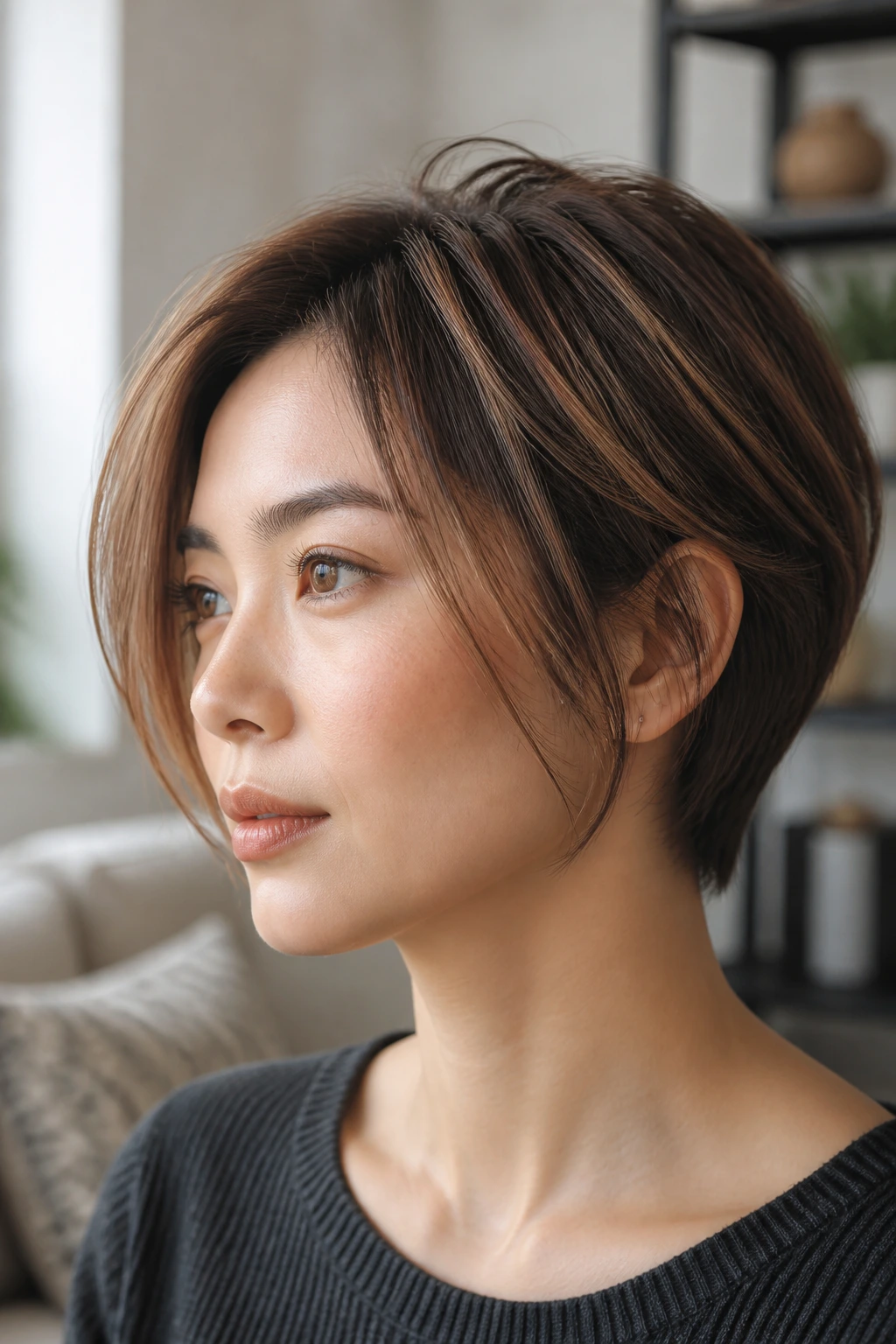
A long haircut can hide a messy tone shift. A short one can’t.
That’s why hair color ideas for Asian women with short hair need to be chosen with the cut in mind, not just the shade swatch. A blunt bob shows whether the toner is too cool or too gold. A pixie shows whether the face frame is wide enough. A bixie shows whether the highlights sit high enough to move with the layers. Short hair doesn’t give you a lot of room to bluff.
The upside is that small changes go a long way. A half-inch brighter around the temples can make the face look more awake. A slightly deeper root can make the whole head look denser. A gloss that adds shine without changing the level can rescue a shape that feels too hard. I like that honesty. Hair doesn’t get to hide here.
There’s also a practical side people don’t talk about enough: short hair grows out in a visually louder way, but it also lets you correct faster. You can trim off tired ends, shift a part, deepen a root shadow, or chop away a faded panel before it starts bothering you. That makes short color a bit more forgiving than it looks from the outside.
What To Ask For at the Salon
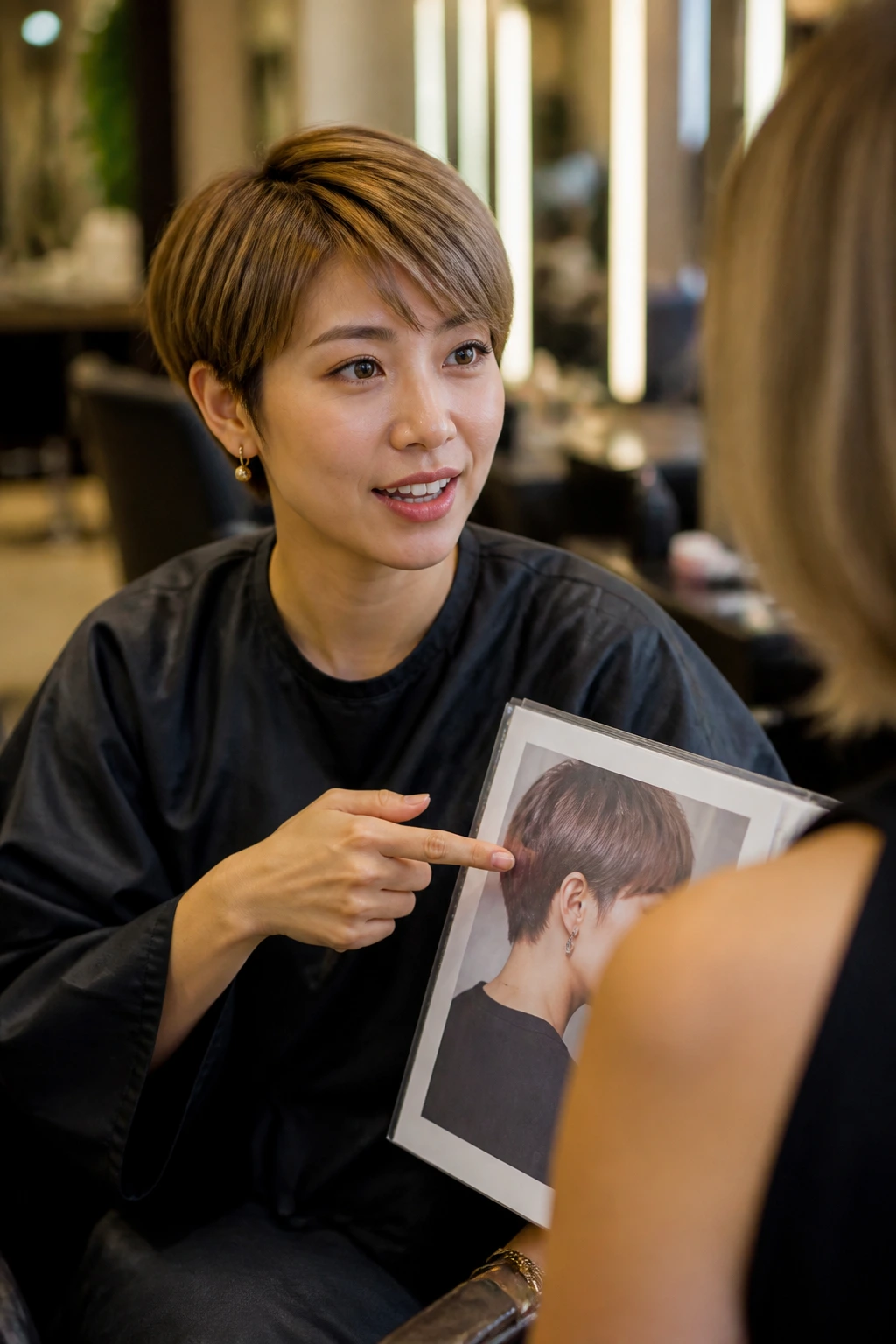
Bring photos of short hair, not long waves. That matters more than most people think. A long, curled reference photo can make a shade look softer than it will on your bob or pixie, because the hair length itself swallows contrast. If you want a visible money piece, ask for short-hair examples with the same haircut shape you wear.
Then get specific about the service. Say whether you want a gloss, demi-permanent color, partial highlights, a face frame, underlayers, or a full lightening session. A lot of bad salon outcomes come from vague requests that leave the colorist guessing. If you want mushroom brown, say you want a cool brunette with beige dimension and a root shadow. If you want blue-black, say you want a reflective black with a blue-violet cast, not flat jet black.
One more thing: dark hair usually needs more than one appointment for anything pale, especially if the goal is beige blonde, pearl blonde, or slate gray. There’s no prize for forcing it in one sitting. If your stylist suggests a staged lift, that’s not upselling — that’s protecting the cut.
Essential Tools for Salon Visits and At-Home Care
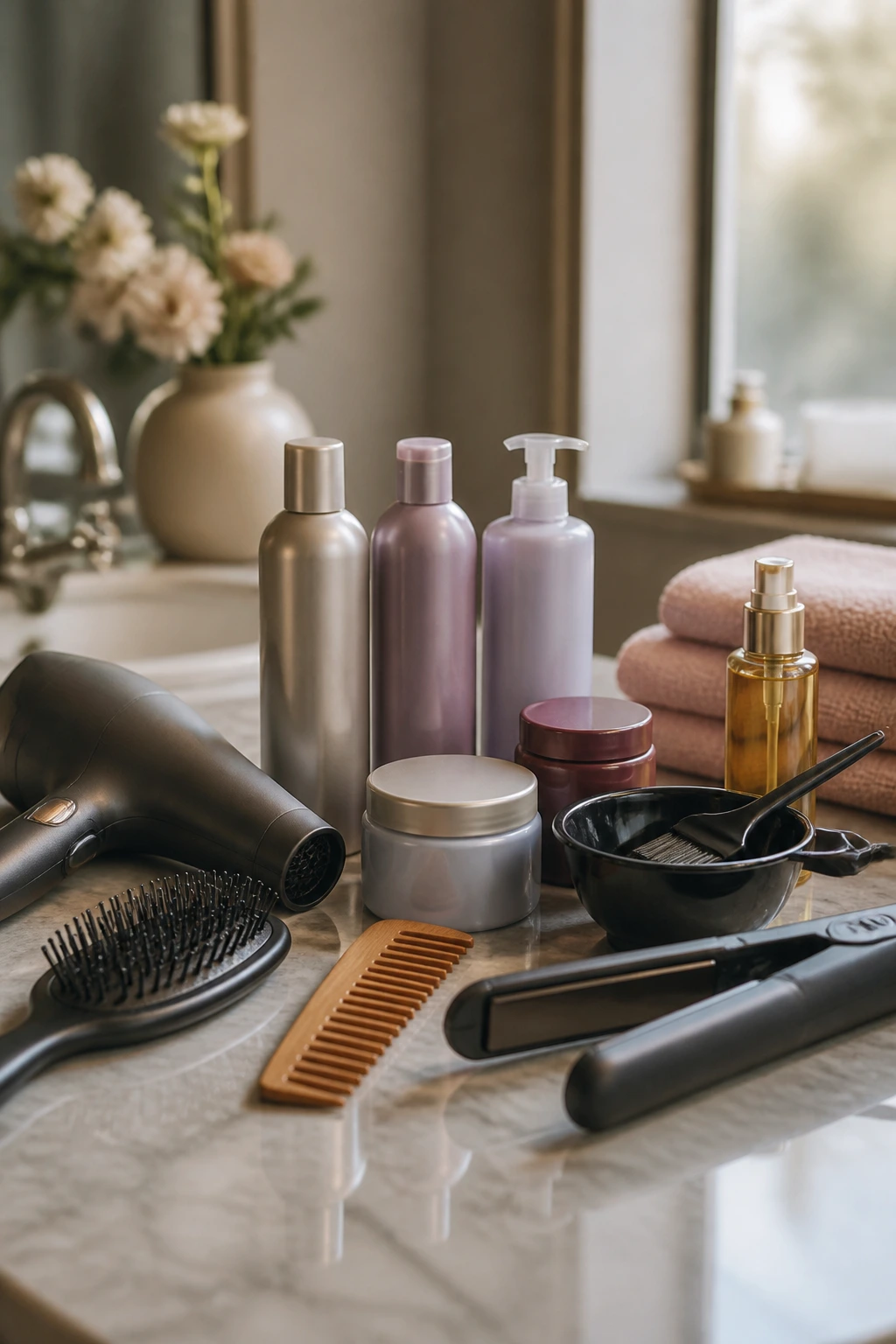
- Color-safe shampoo: Use a sulfate-free or low-sulfate formula to slow fade on glosses, reds, and brunettes.
- Purple shampoo: Best for ash beige, pearl blonde, slate gray, and cool blonde pieces; use once a week, not every wash.
- Blue shampoo: Better than purple for orange-prone brunettes and caramel highlights.
- Color-depositing mask: Handy for rose brown, copper, burgundy, and plum shades that need a little refresh between visits.
- Heat protectant spray: Short hair gets styled with hot tools more often than people admit; this is the thing that keeps shine from disappearing.
- Wide-tooth comb: Helps separate short layers without snapping them when they’re damp.
- Microfiber towel: Cuts frizz and rubbing on freshly colored ends.
- Gloss or glaze: A salon gloss or an at-home clear gloss can keep brunettes looking wet-shiny instead of dry and dull.
- Sectioning clips: Worth keeping around for touch-up work, toning masks, and blow-drying short layers in control.
- Shower filter: Optional, but helpful if your water runs hard and your highlights keep going dull.
Smart Salon and Shopping Notes
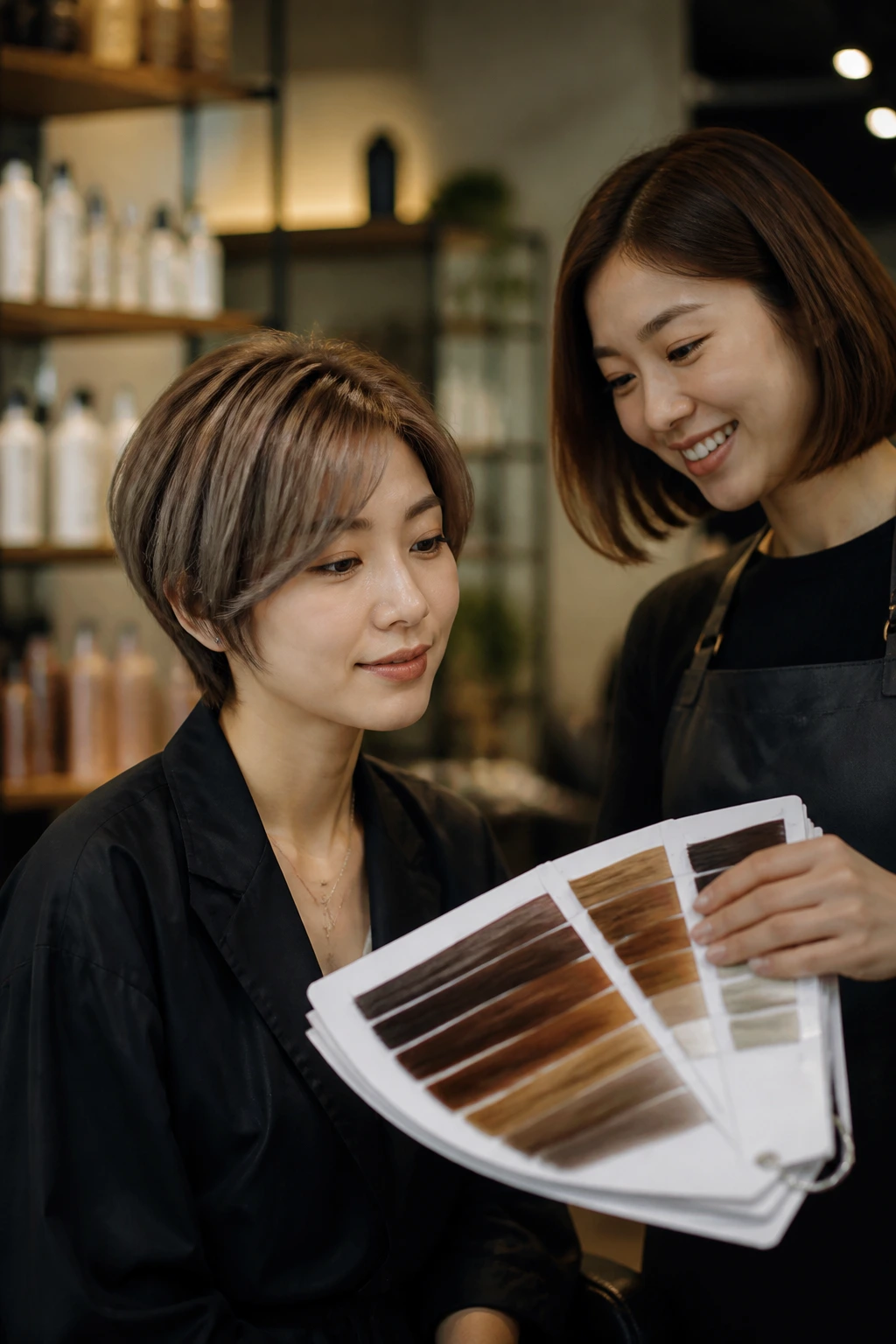
The smartest choice is usually not the most dramatic one. It’s the one your base can support without turning the hair into straw. If your hair is naturally very dark and you want plum, blue-black, espresso, mushroom brown, or cherry cola, a demi-permanent or gloss often gives the cleanest finish. Those shades live close to the natural base, which means less damage and better shine.
If you want beige blonde, pearl blonde, ash beige, or slate gray, plan for actual lift. That usually means foils, balayage, or a staged lightening plan, not a box dye from a shelf. Dark hair throws warm pigment first, and if the lift stops too early, you get orange-yellow pieces that need rescue toning. Sometimes the rescue works. Sometimes it just turns muddy.
Spend your money on the right service, the right toner, and the right home care. Cheap shampoo with harsh detergents will chew through a beautiful gloss faster than you think. A good heat protectant, a color-safe cleanser, and a clear photo of the exact short haircut you want are worth more than a basket of random hair masks.
How to Wear These Shades So the Cut Still Looks Sharp
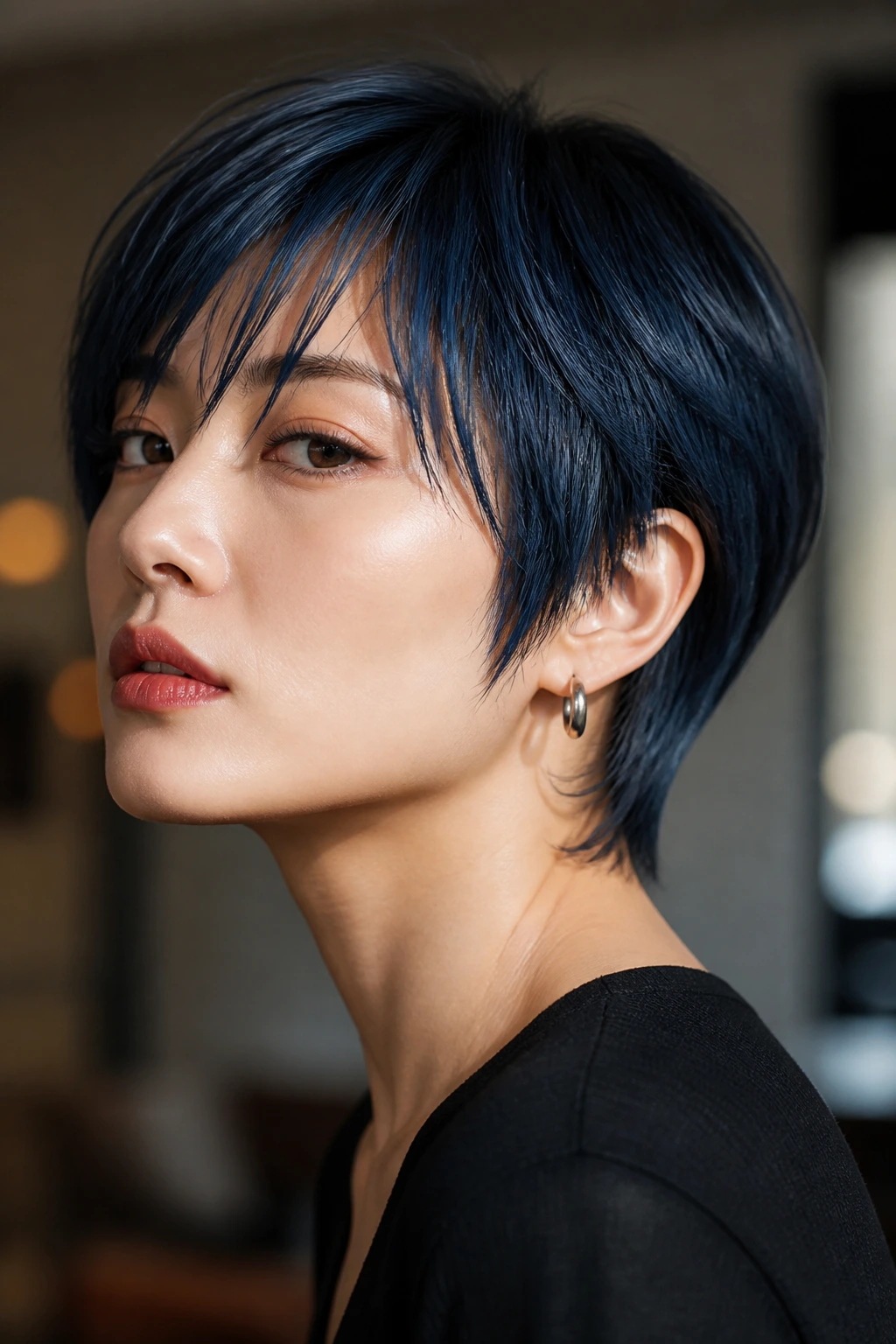
Presentation: Keep the finish aligned with the color. Blue-black, plum, slate gray, and deep brunette shades look best with a smooth blowout or a soft bend that shows shine. Copper, rose brown, and cherry cola can handle a little texture, because the movement helps the tone catch the light.
Accompaniments: Warm shades play nicely with gold earrings, camel coats, rust knitwear, and cream necklines. Cooler shades look cleaner with silver jewelry, black collars, white tees, and sharp glasses frames. That sounds fussy, but it isn’t — the clothes near your face can either echo the shade or fight it.
Coverage: Ask for face-framing foils if you want a big visual payoff with less upkeep. Ask for underlayers or peekaboo panels if you want bold color that disappears when you need it to. Ask for fuller balayage only if the cut has enough length and movement to support it; on a very short pixie, too much spread can look scattered.
Refresh Window: Brunettes and gloss shades usually need a tone refresh every 4 to 8 weeks. Lighter blondes and pastels often need toner or a color mask sooner, sometimes every 3 to 4 weeks. A short cut makes regrowth noticeable faster, but it also lets you trim away tired ends before they start dragging the whole look down.
Additional Tips and Color Boosters
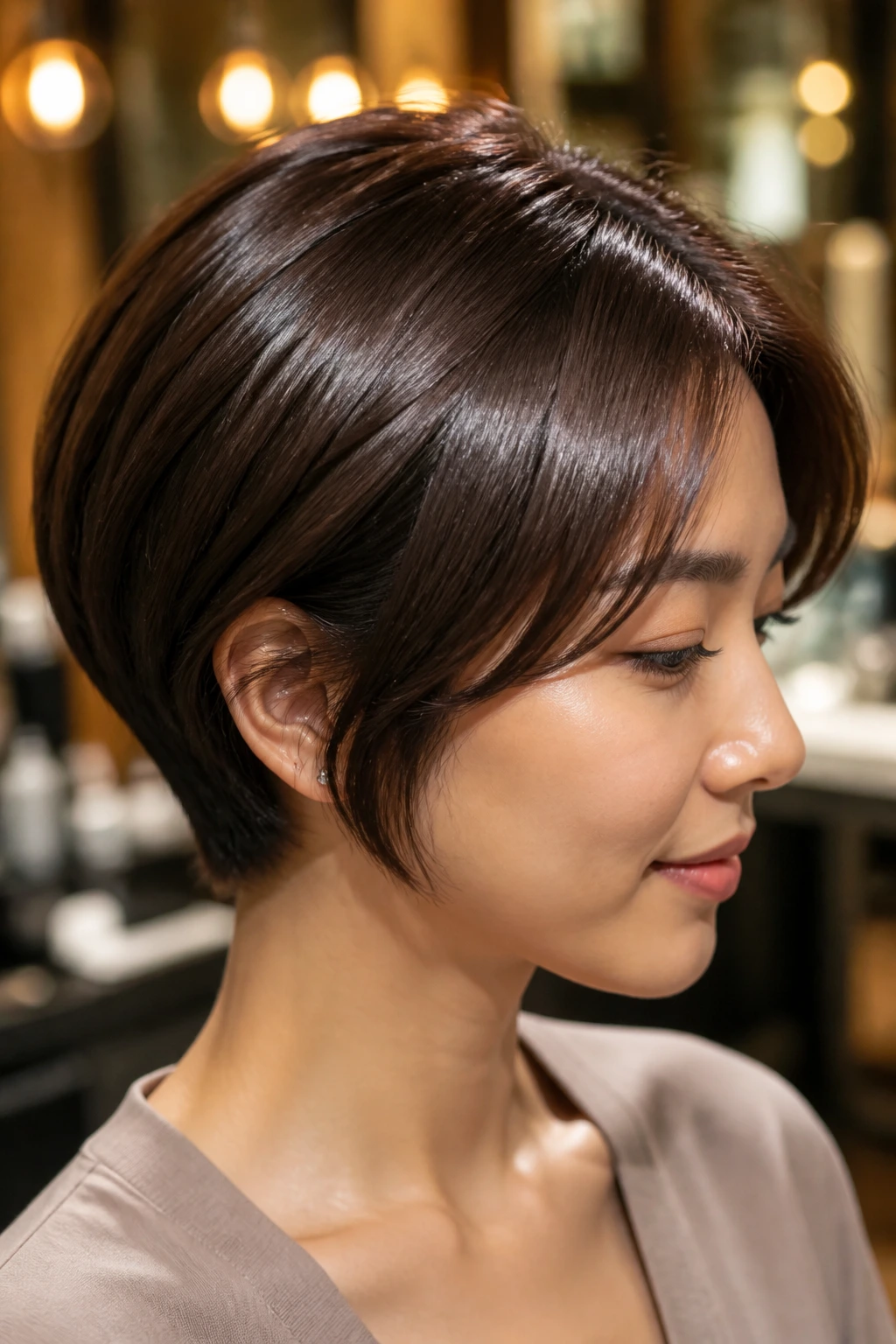
Shine Booster: A clear gloss over blue-black, plum, espresso, or cherry cola can make the color look freshly done for another week or two. On short hair, shine is not optional — it is part of the design.
Placement Trick: Put the lightest pieces around the temples, crown, and first inch or two of the fringe. That’s where short hair reads first in a mirror, and it’s where the eye goes when you turn your head.
Texture Trick: Sleek styling sharpens dark shades. A little bend or soft wave wakes up ribbons, balayage, and hidden panels. I’d choose the styling method based on the color, not on habit.
Budget Saver: If you want to try the idea without committing to full lightening, ask for a gloss, money piece, or peekaboo panel first. Those are easier to maintain and easier to cut away later if your mood changes.
Make-It-Yours: Warm undertones usually like copper, cinnamon, toffee, auburn, and honey beige. Cool undertones often look cleaner in mushroom brown, ash beige, plum, slate gray, and blue-black. Neutral skin can sit in the middle and borrow from both sides, which is the lucky position.
Common Mistakes That Flatten Short Hair Color
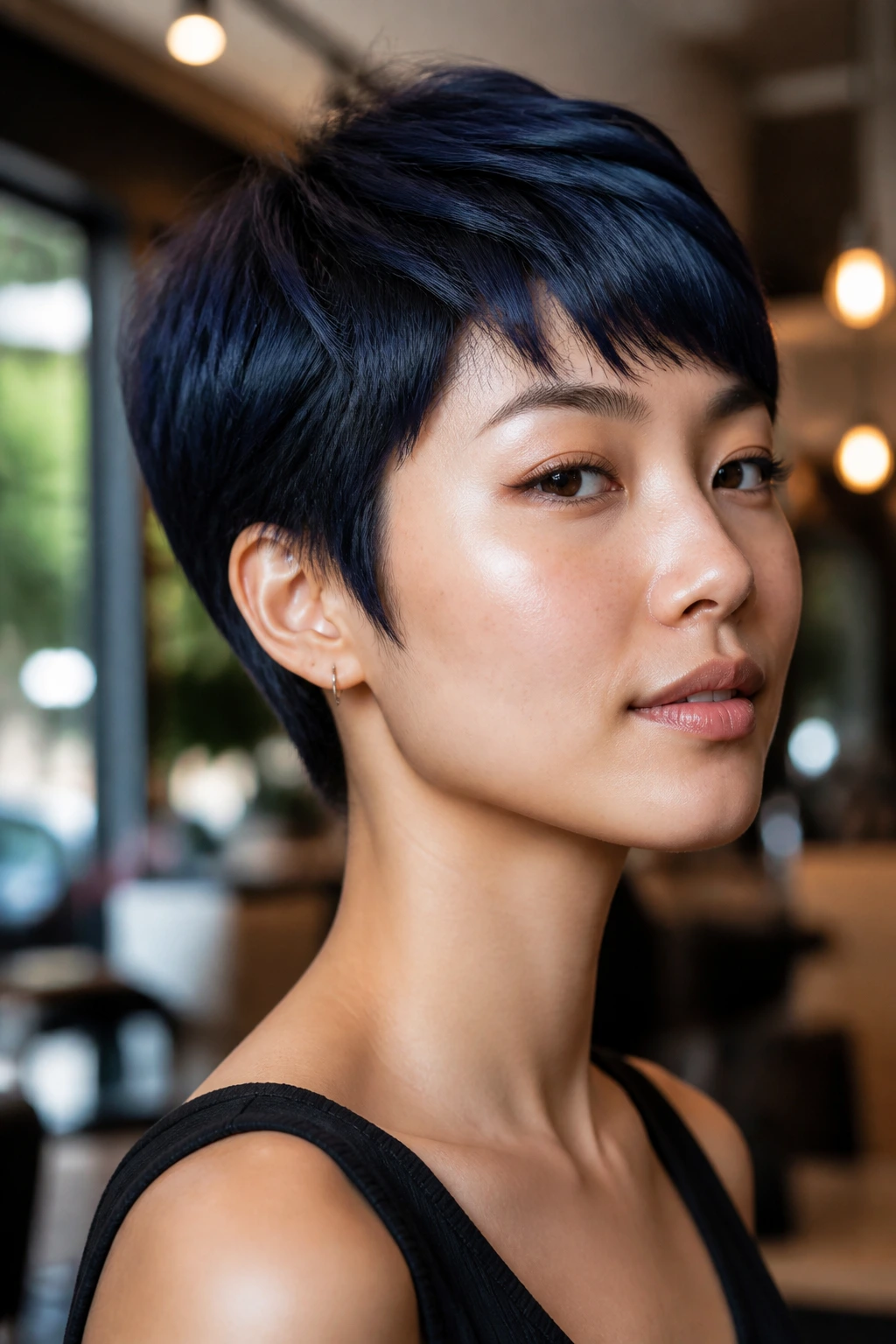
- Using long-hair placement on a short cut: A full balayage painted low on a bob can look stripy or hidden under the top layer. Fix it by moving the brightest pieces higher and closer to the face.
- Lifting too fast: Dark Asian hair can go orange, red, then yellow on the way to blonde, and rushing that process usually wrecks the finish. Better to use two sessions than to force pale color in one go.
- Choosing the wrong toner tone: An ash formula can turn flat or even muddy if the base is still too warm. Beige, plum, or blue-violet may be the cleaner answer depending on the starting level.
- Overusing purple shampoo: It can dry out short ends and leave beige blonde looking chalky. Use it sparingly and follow with a moisturizing conditioner.
- Ignoring the haircut shape: Some shades need movement. A straight, heavy bob can swallow rose brown or tiger-eye ribbons if you don’t add a bend or tuck.
- Letting the root get too grown out: On short hair, grow-out changes the whole balance fast. Book the next tone or trim before the hair starts to look disconnected from the head shape.
Variations and Adaptations to Try
The Gloss-Only Brunette: If you want almost no damage, stay in the blue-black, espresso, plum, or mushroom brown family and ask for a demi gloss. You’ll get shine and depth without the long recovery time that comes with lightening.
The Soft Money-Piece Route: Keep the rest of the hair close to your natural brunette and brighten only the front. This is one of the easiest ways to make a short cut look lighter without committing to full highlights.
The Hidden Panel Pop: Burgundy, teal, dusty pink, or smoky lavender can live underneath the top layer and show only when the hair moves. That makes the color feel playful instead of constant, which is handy if you like a work-safe look most days.
The Warm-Skin Swap: If ash shades make you look tired, move toward beige, copper, cinnamon, auburn, or honey. You’re not giving up dimension; you’re just choosing tones that sit more easily against your skin.
The Ultra-Short Adjustment: On pixies and very tight crops, keep the color narrow and high. Tiny foils, micro-highlights, or a concentrated gloss will read cleaner than broad painted sections that have nowhere to fall.
Keeping the Tone Clean Between Appointments
Short hair color stays nicest when you stop trying to wash it into submission. Two to three shampoos a week is plenty for most glosses and brunettes, especially if you use a gentle color-safe cleanser. If you wear copper, burgundy, rose brown, or cherry cola, wash less often and lean on dry shampoo at the roots instead of scrubbing the color out every other day.
Blonde, ash beige, pearl, and gray need a little more babysitting. Use purple shampoo once a week, maybe twice if the hair pulls yellow fast, but don’t let it sit on the ends forever. Five minutes is usually enough. Ten if the brass is stubborn. Any longer and the hair can start looking dull or tinted lavender in a way you did not ask for.
Heat is another big one. A short cut often gets blow-dried, flat-ironed, or curled more often than long hair because the style changes the whole shape of the face. Keep the tool temperature moderate — around 300°F to 350°F is plenty for most short styles — and use a protectant every time. If you like sleek styles, a trim every 6 to 8 weeks helps the color look cleaner because the ends stop fraying and reflecting light unevenly.
Frequently Asked Questions
Which hair colors need the least upkeep on short Asian hair?
Blue-black, espresso, deep plum black, and mushroom brown are the easiest to maintain because they stay close to dark natural bases. Root grow-out blends in faster, and you can refresh them with a gloss instead of a full color appointment.
Can dark Asian hair go blonde in one appointment?
Sometimes it can get lighter in one appointment, but getting to clean beige or pearl blonde usually takes more than a single session. If the hair lifts too fast, it often turns orange or yellow before it reaches a clean blonde tone.
Is blue-black flattering on warm skin?
Yes, if the finish has enough shine and the makeup or clothing near your face keeps the look balanced. Blue-black can feel harsh only when the hair is flat and matte; a glossy finish keeps it elegant.
What should I ask for if I want dimension but not highlights everywhere?
Ask for a face frame, a root shadow, or micro-highlights through the crown. Those placements give movement without turning the whole head into a high-maintenance blonding project.
Do short hair colors fade faster than long hair colors?
The color itself doesn’t always fade faster, but you notice the fade sooner because short hair shows the surface of the cut more clearly. A dull toner or brassy highlight reads faster on a bob than on a long layered style.
Can I do these ideas at home?
Glossy brunettes, deeper plums, and some dark reds can be done at home if you’re careful. Beige blonde, pearl blonde, ash gray, and anything involving strong lift are much safer in a salon chair, especially on hair that starts very dark.
What if my highlights turn orange or brassy?
That usually means the lift stopped too soon or the toner wasn’t strong enough for the undertone underneath. A blue shampoo can help for brunettes, but true brass usually needs a better toner or a salon correction.
Which shades work best on a pixie versus a bob?
Pixies look strong in blue-black, copper, slate gray, plum, and tiny peekaboo panels because the shape is already crisp. Bobs can handle softer ribbons, money pieces, mushroom brown, tiger-eye brunette, and rose brown because there’s a little more surface to show dimension.
The Short-Hair Color Sweet Spot
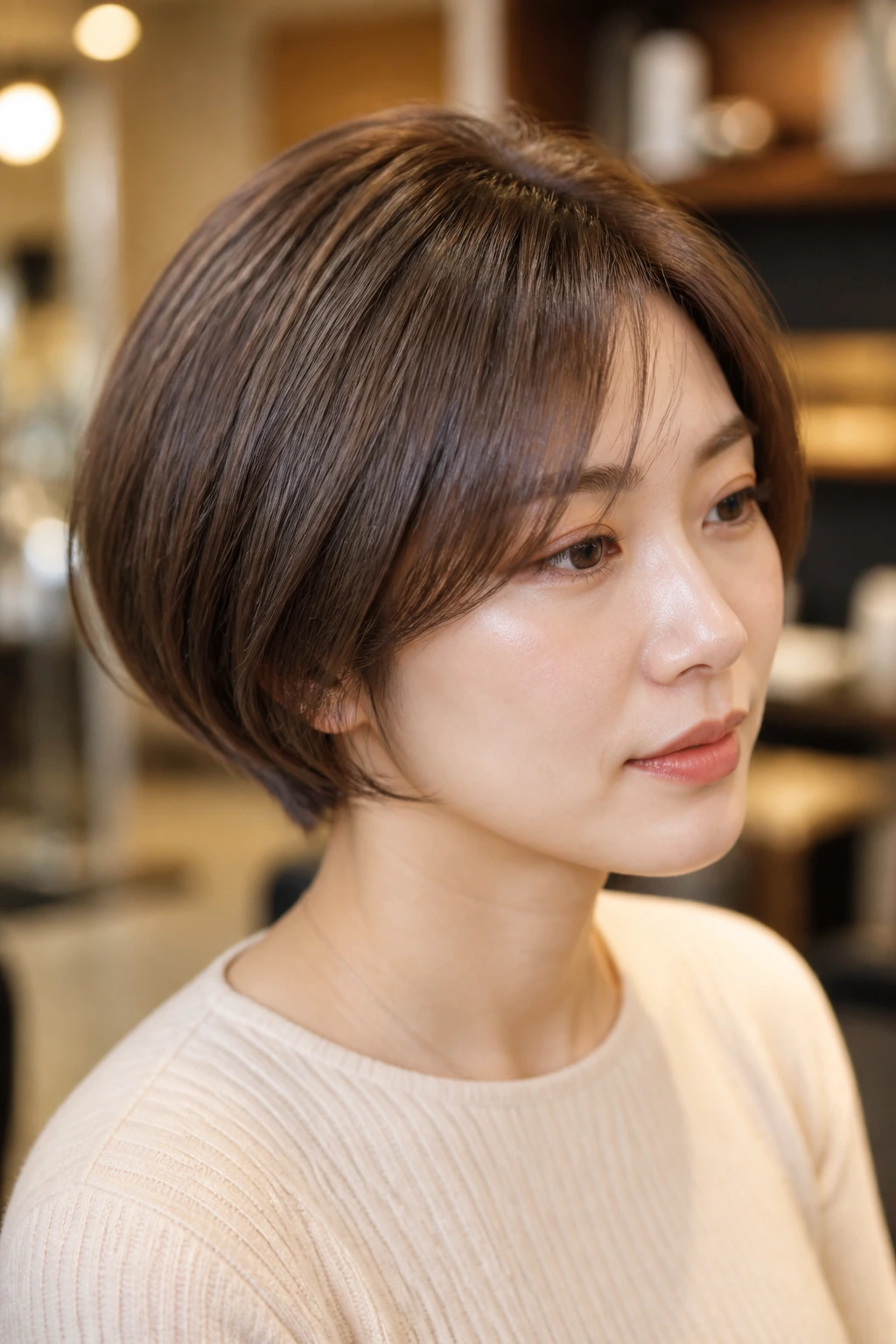
The nicest short-hair color has a kind of honesty to it. It doesn’t hide behind length, and it doesn’t need a complicated explanation to look good. A clean blue-black pixie, a mushroom brown bob, or a honey face frame can do more for a haircut than a lot of people expect, mainly because the color and the shape are finally speaking the same language.
That’s what makes this whole category fun. You can go subtle with gloss and dimension, or you can use short length as a place to be bold without drowning the cut. Pick the shade that matches your base, your upkeep tolerance, and the shape of your haircut — then let the placement do the heavy lifting.
