



Red hair looks for women have a way of changing the whole temperature of a face. A chin-length copper bob can read sharp and clean in daylight, then turn almost molten under a warm bathroom bulb. A burgundy wave does something different: it deepens shadows, softens angles, and makes the hair look thicker than it really is. The shade matters, yes. The cut matters more than people admit.
The catch is upkeep. Red is a hungry color. Hot water, rough shampoo, too much sun, and repeated heat styling will pull the shine out faster than most people expect, and porous ends will grab pigment unevenly if you don’t plan for them. That’s why some reds look rich for weeks and others start leaning dull after the third wash.
The good versions are the ones that match real life. A soft auburn balayage on brunette hair. A cherry money piece around the face. A smoked auburn root melt that grows out gracefully instead of screaming for a salon chair. The 35 looks below cover the full range, from barely-there copper to red so bold it should come with its own warning label.
Why Red Hair Looks for Women Fade Faster Than Brown Shades
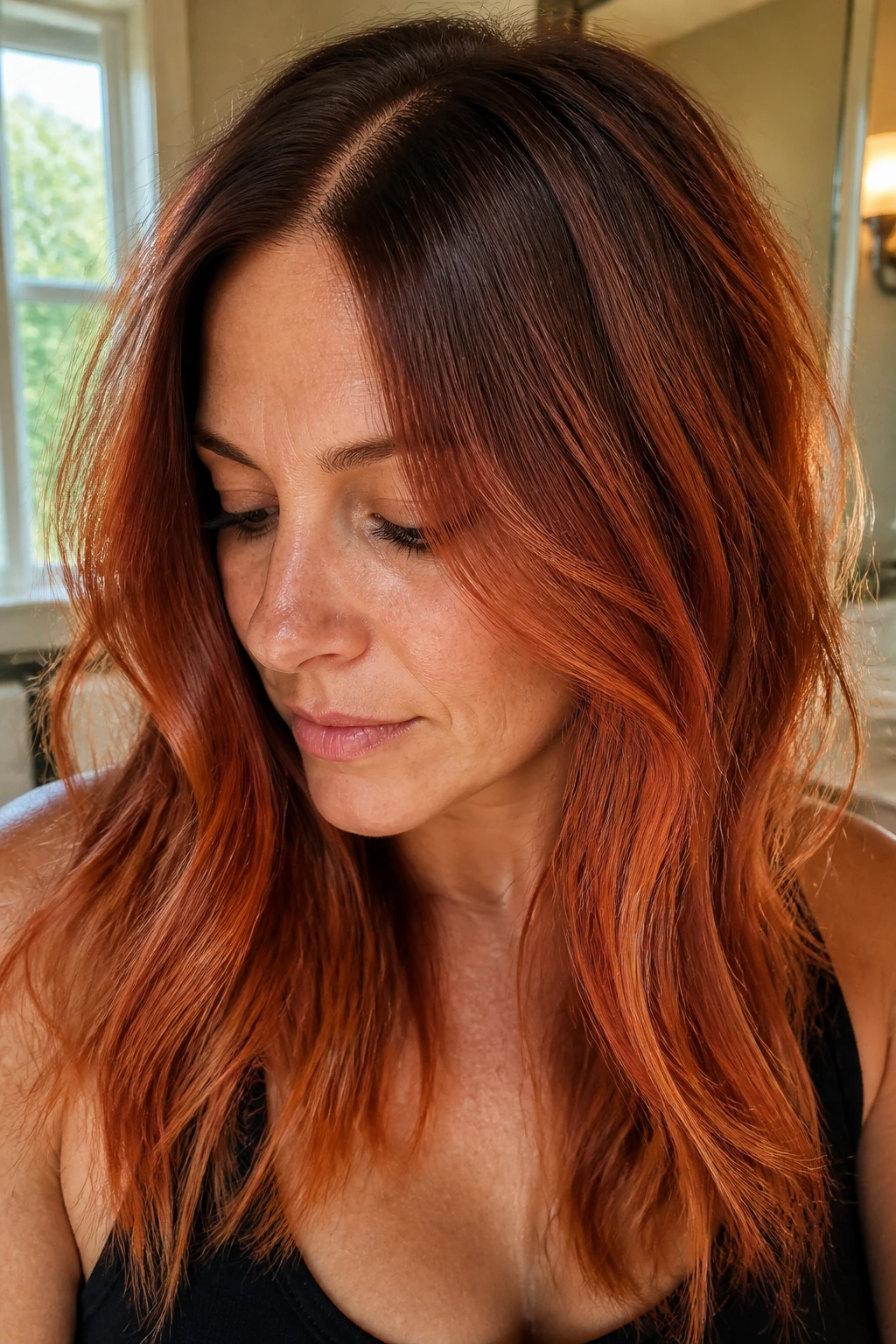
Red pigment behaves a little differently from brown or blonde. It can look vivid on day one, then lose punch quickly if the hair shaft is thirsty, lifted too far, or washed with harsh shampoo. Brown can fade and still look brown. Red fades and starts telling on itself.
Porosity is the real troublemaker. If the mid-lengths and ends are more porous than the roots, the color will cling unevenly, and you’ll get that weird salmon-and-rust effect where the ends look lighter, not brighter. It’s not a moral failure. It’s just hair doing what hair does after bleach, heat, or years of friction.
Sunlight is another thief. Red tones can shift warmer, copperier, or flatter depending on the light, which is why the same shade can look glossy in a mirror and a little muddy near a window. A clear gloss, a color-depositing conditioner, and cooler wash water are boring tools, but they work.
That’s also why the best red hair looks for women aren’t all loud. Some are built on shadow roots, some on ribbons of color, and some on deep wine tones that hold up better between appointments. If you choose the structure well, the shade stops fighting you.
Why This Collection Works
- Shade range: You’ll see everything from pale strawberry copper to almost-black merlot, so there’s room for different skin tones and comfort levels.
- Commitment levels: Some looks need a gloss every few weeks; others grow out softly and only ask for a trim and toner.
- Texture-friendly: Waves, curls, braids, pixies, coils, and blunt cuts all change how red reads, and these looks lean into that.
- Face-framing options: Money pieces, fringe, and ribbon highlights show how to brighten the face without coloring every inch.
- Salon reality: Full vivid red is not the same as balayage red, and the list keeps those choices separate.
- Undertone range: Warm, cool, and neutral skin tones all get a lane here instead of being forced into one copper stereotype.
1. Classic Copper Bob
A clean copper bob is the red that makes people straighten up when you walk in. It’s bright without being neon, warm without sliding into orange soup, and it looks especially good when the ends hit right at the jawline or just below it. On blunt edges, the color feels crisp. On softer edges, it turns a little more molten.
Best for: straight to softly wavy hair, medium to fair skin, and anyone who wants the red to read from across the room without relying on layers. The bob gives the pigment a neat frame, so the shine does most of the talking.
A chin-length cut also buys you some control. Copper on longer hair can sometimes scatter and look thinner at the ends; on a bob, it lands all at once. Use a round brush blowout or a flat iron pass with a slight curve under the ends if you want that polished, salon-gloss finish. Skip dry shampoo overload near the roots. It dulls copper fast.
2. Cinnamon Auburn Layers
Cinnamon auburn is the shade I reach for when someone wants red but not a full public announcement. It sits in that warm middle space between brown and copper, with enough red in it to change the face but enough brown to keep the grow-out sane. Layer it through long hair and it starts moving in ribbons instead of one flat block.
The layering matters. Long, feathered pieces catch light better than a single heavy shape, and auburn looks expensive when it moves. If your hair is medium or thick, this shade can cut the weight visually without making the length feel loud. It’s a strong pick for darker eyes and warmer skin, but the deep cinnamon note keeps it from going too orange.
For styling, soft bends with a 1.25-inch iron work better than tight curls. You want the pieces to separate and show off the different tones. A light shine serum on the ends is enough; too much product will darken the red and flatten the whole effect.
3. Cherry Cola Curls
Cherry cola curls are darker than they sound, and that’s why they work. You get the plush, almost brown base first, then the cherry shows up in the curves of the curl and around the outer ring of the hair. Under indoor light, it can read deep and sultry. Outside, the red starts flashing at the bends.
The texture does half the job for you. Curls create tiny pockets of shadow and shine, which is where the red lives. If the curl pattern is tighter, ask for a dimensional gloss rather than a flat all-over color. That keeps the shade from turning into a single dark mass.
This one is especially good if you want red hair looks for women that feel rich rather than bright. A curl cream with a little hold, a diffuser on low heat, and a satin pillowcase will keep the shape from frizzing the color to death. Red plus frizz can go loud fast. Smoothness matters here.
4. Strawberry Blonde Waves
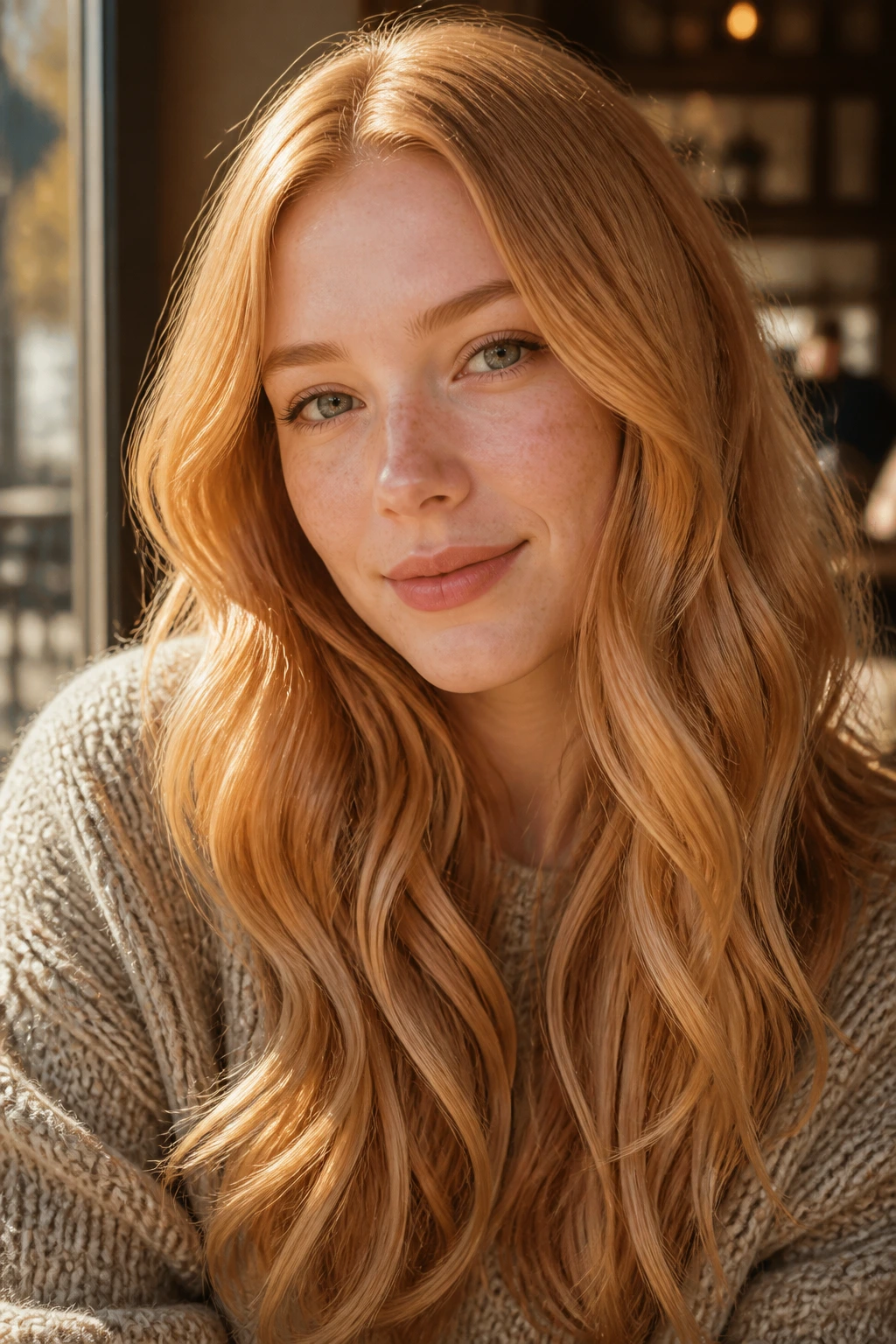
Strawberry blonde is the red for people who want a whisper instead of a shout. It sits light on the head, with enough peach and copper to warm the face, but the blonde keeps it airy. On waves, the color looks sunlit even when you’re standing under bad office lights.
This shade usually wants a lighter base, which means less room for error. If the hair is naturally dark, you’ll need lift before the strawberry tone can show. On level 8 or 9 blonde, though, it can look soft and buttery rather than brassy. The trick is keeping the copper in the formula clean, not muddy.
I like it best with loose, brushed-out waves. Tight curls can make it look more orange than intended, while too-straight hair can flatten the delicate color. A color-safe mousse at the roots and a lightweight oil only on the ends keep the shine without greasing the strawberry finish.
5. Fiery Ginger Pixie
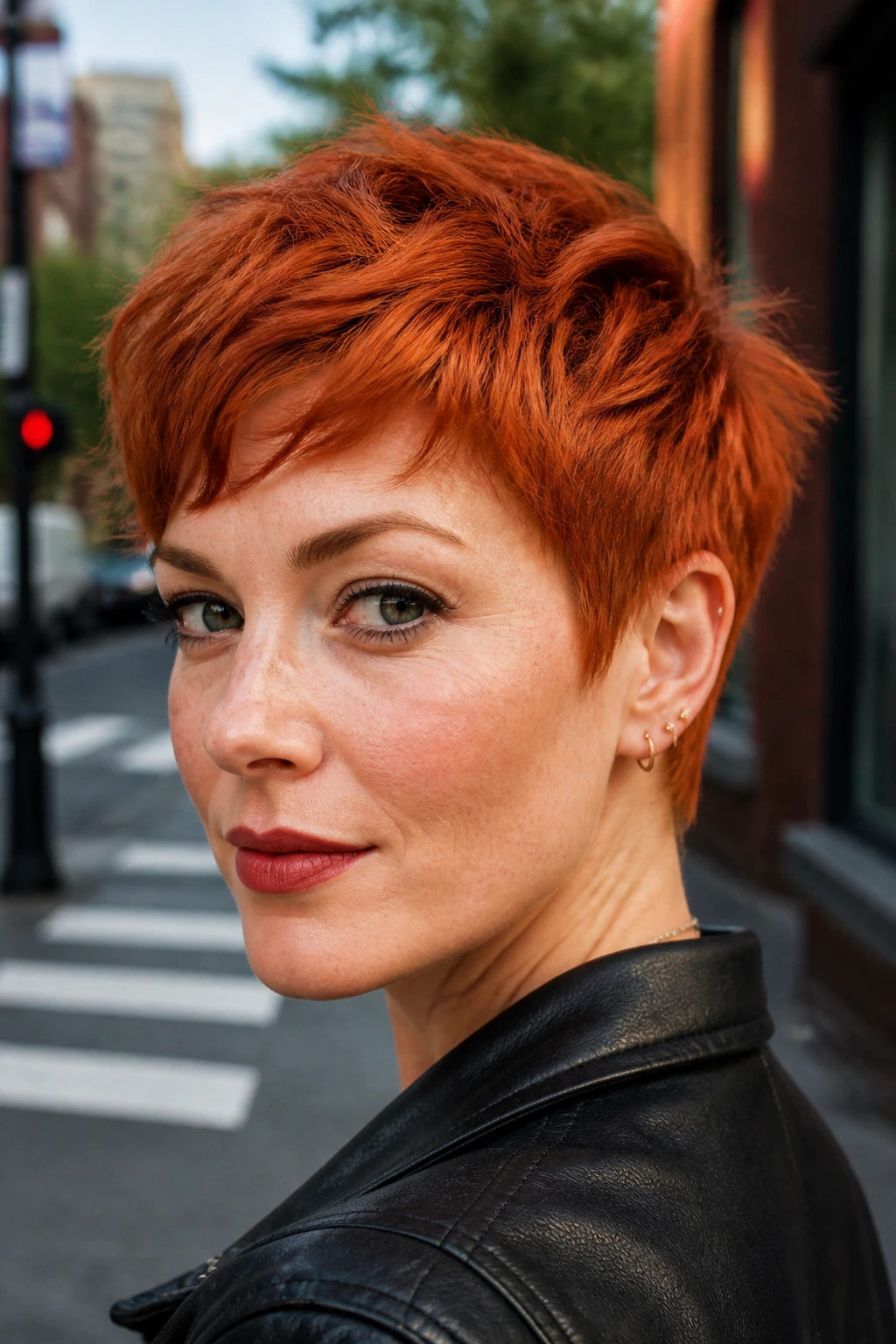
A ginger pixie is all cheekbones and attitude. The short length keeps the color front and center, so the shade has to be good. Bright copper-orange works here because the cut is already bold; you do not need to hide behind layers.
Short hair grows fast, and that matters. Roots show quickly on a pixie, which means this is one of the more maintenance-heavy red hair color choices on the list. The payoff is immediate, though. The color hugs the crop, and every little bit of texture — a piecey fringe, a choppy crown, a tucked sideburn — changes how the red reads.
If your hair is fine, this look can make it look denser. If it’s thick, the pixie keeps the shape from becoming heavy. A matte paste can dull the shine a bit, so I usually prefer a light cream with a bit of separation. Bright ginger looks best when the strands still look like hair, not plastic.
6. Mahogany Lob with Face-Framing Pieces
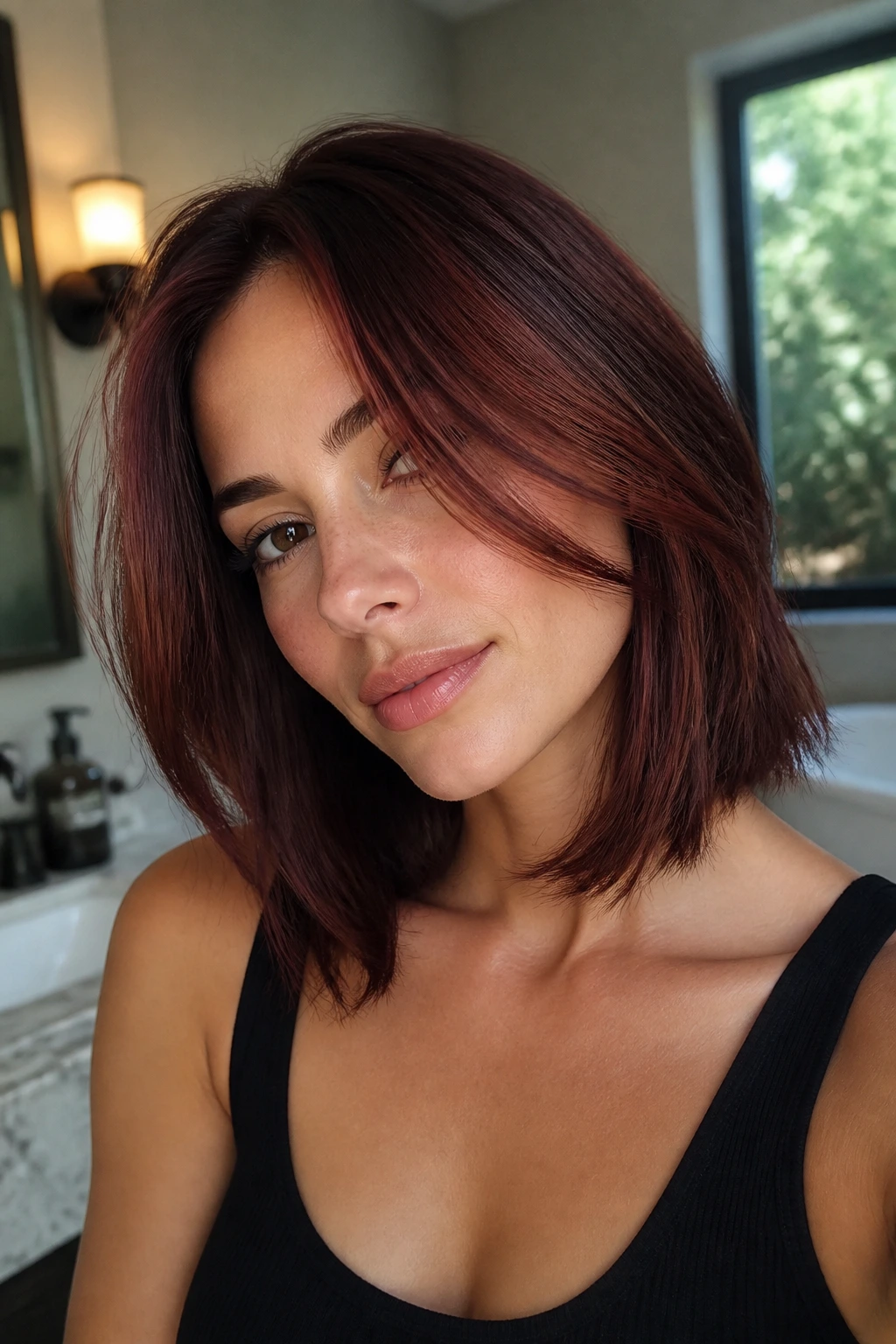
Mahogany is red’s quieter, darker cousin, and on a lob it gets a little smug in the best way. The overall color sits in wine-brown territory, then the face-framing pieces lift just enough to catch the light near the eyes and cheekbones. It’s a smart move if you want dimension without a lot of upkeep.
The lob length gives the color room to breathe. Too short and mahogany can look heavy; too long and it can disappear into plain brown unless the shine is excellent. Keep the front pieces a touch brighter than the back, and you get a built-in contour effect without makeup trickery.
This is one of the easiest red hair looks for women who work in conservative settings. It reads polished, not loud. Blow it smooth with a round brush, then bend the ends under slightly. The color looks best when the surface is glossy enough to show the red in the sunlight and the brown in the shade.
7. Copper Balayage on a Brunette Base
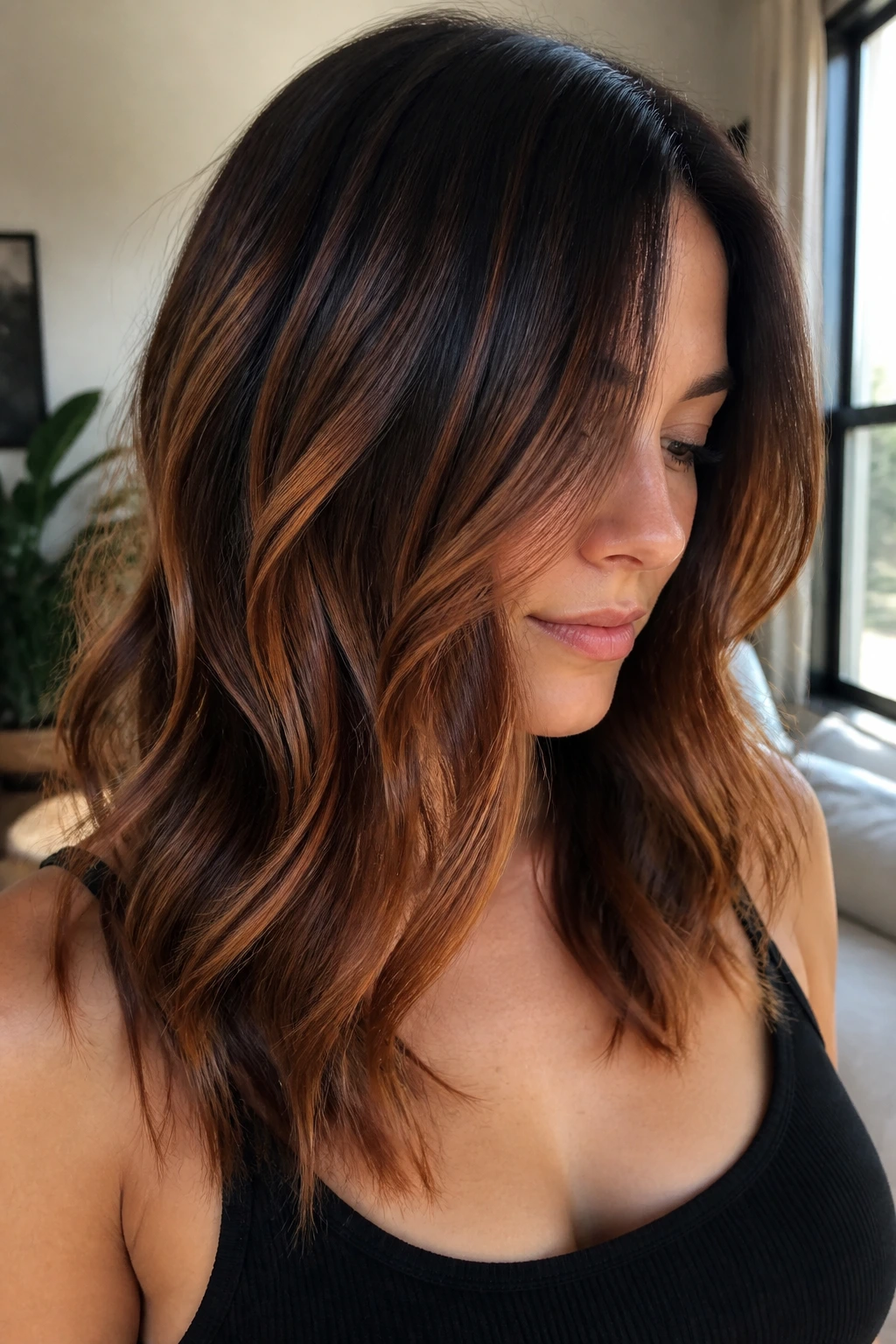
Copper balayage over a brunette base is the look for people who want red to show up in motion, not as one solid helmet. The darker root keeps the style grounded, while hand-painted copper pieces slide through the mids and ends. It’s dimensional in a way box color rarely manages.
Because the base stays brunette, the grow-out is softer. That matters. Red on dark hair can be high drama, and a balayage placement gives you the warmth without asking every strand to behave the same way. The lighter pieces near the front and around the surface layers are what make the color visible from a distance.
Wear it with loose waves or a big blowout. The copper ribbons need movement to show their shape. If you keep your styling flat and pin-straight, the effect can get lost. A gloss every few weeks keeps the red pieces from fading into a dull apricot.
8. Ruby Red Sleek Cut
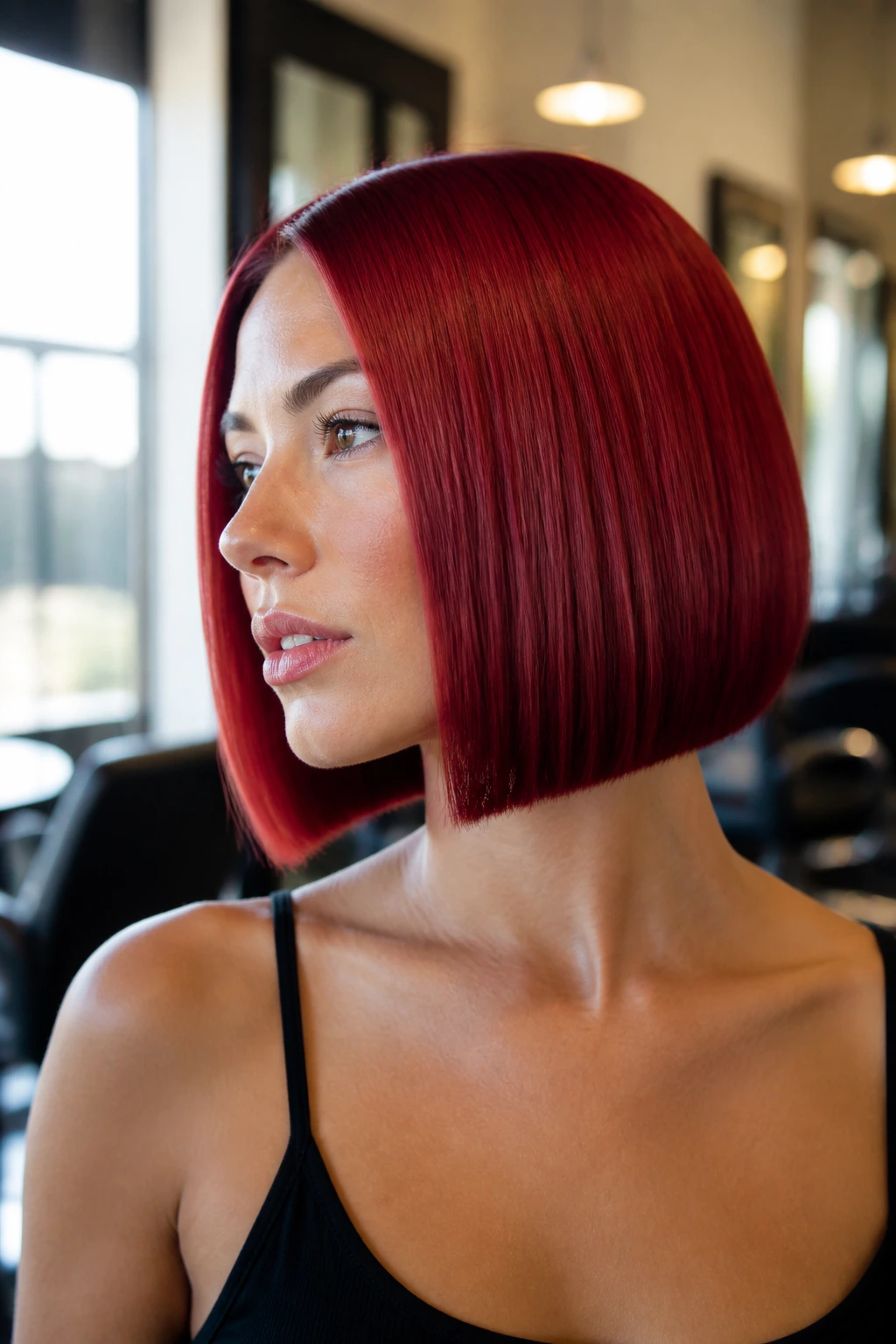
Ruby red likes a sharp edge. On a sleek cut — blunt bob, long bob, or long straight lengths with zero fluff — the shade looks dense, expensive, and almost lacquered when the finish is clean. The cool red note keeps it from reading pumpkin. It’s richer than cherry, deeper than copper, and less fussy than pastel red.
This is the kind of color that punishes bad styling. Flat iron creases, rough towel drying, and old product buildup all show. Use heat protectant, smooth the cuticle with a serum, and keep the part clean. A middle part makes the color feel architectural; a deep side part makes it look a little more dramatic.
If you want a red that reads strong in low light, ruby is a good bet. It does not disappear the way pale reds can. It sits there with confidence. Maybe that sounds blunt. It is blunt.
9. Rose Gold Peach-Red Melt
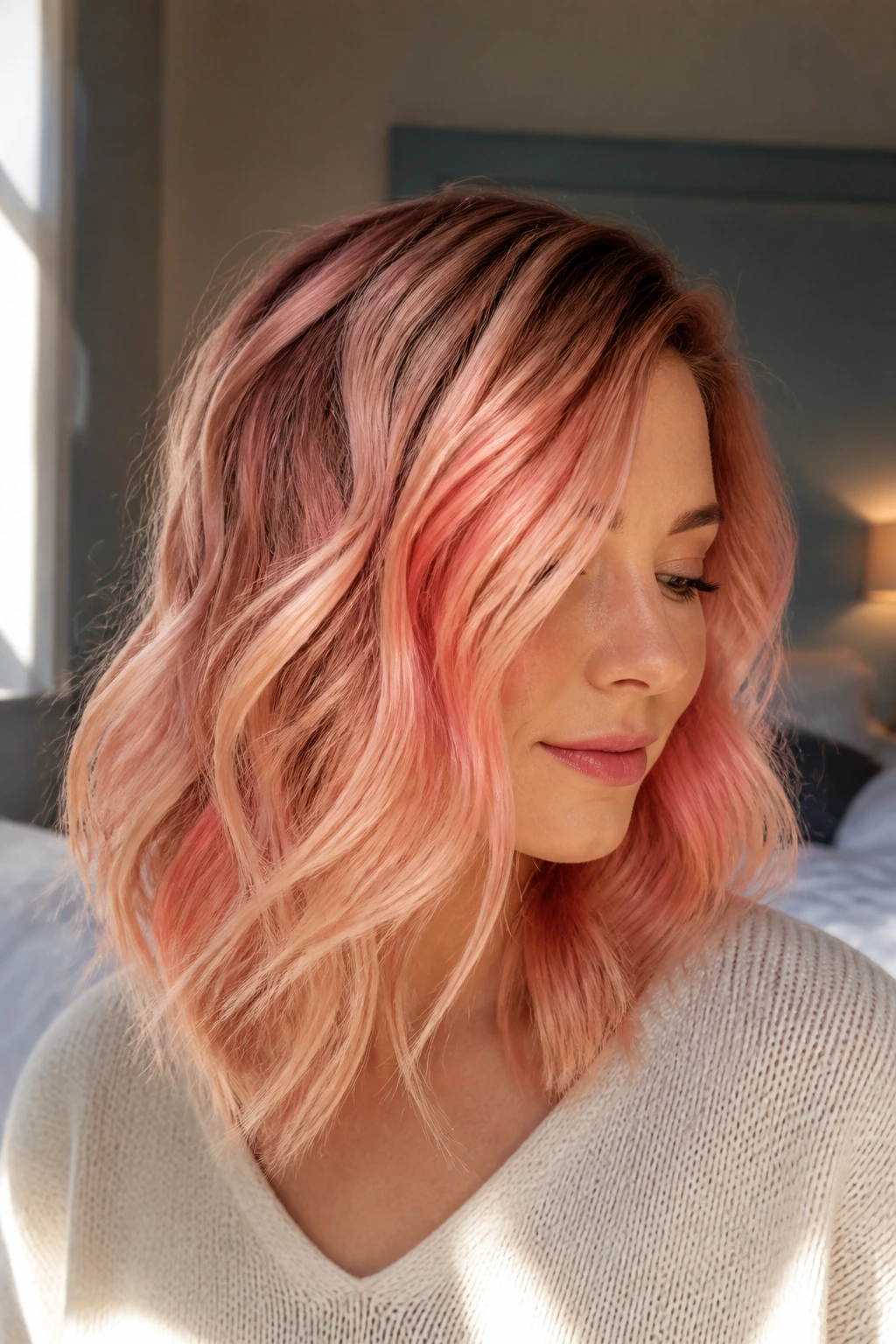
Rose gold with peach-red tones sits in a soft, glossy middle ground that flatters lighter bases and lighter eye colors especially well. It feels fresher than plain strawberry blonde because the red note is more deliberate. At the same time, it stays softer than true copper, which keeps it wearable if bright reds make you nervous.
The melt matters here. You want the color to shift gently from a pale root area into pink-copper mids and peachier ends. If the transitions are too hard, the whole look starts looking patchy instead of airy. On wavy hair, the gradient becomes obvious in the best way.
This is one of those colors that lives or dies by toner. If the peach gets too golden, it can turn brassy fast. A color-depositing mask in a rose or copper tone can help between salon visits, but don’t overdo it or the hair will start looking stained rather than soft.
10. Burgundy Wine Curls
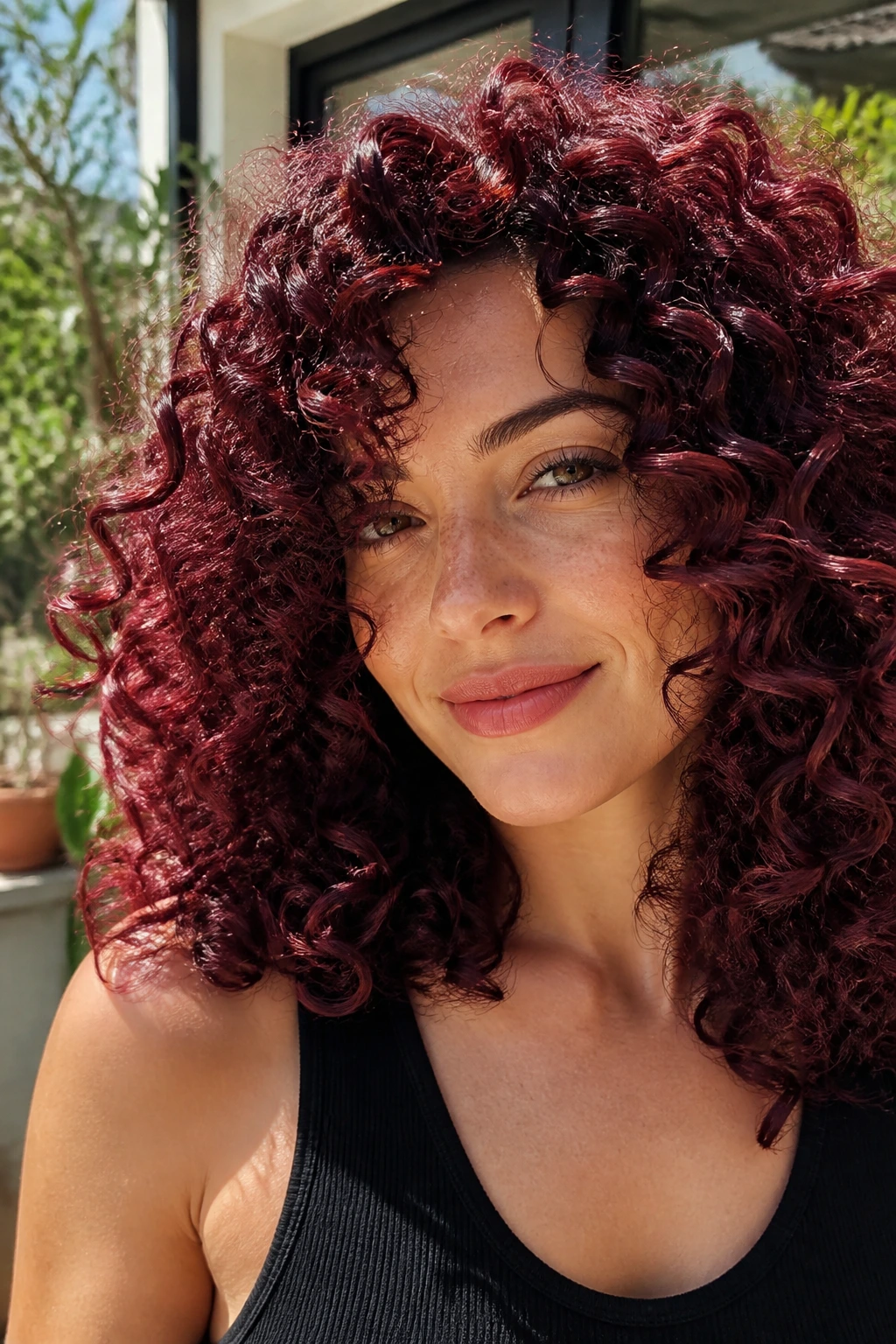
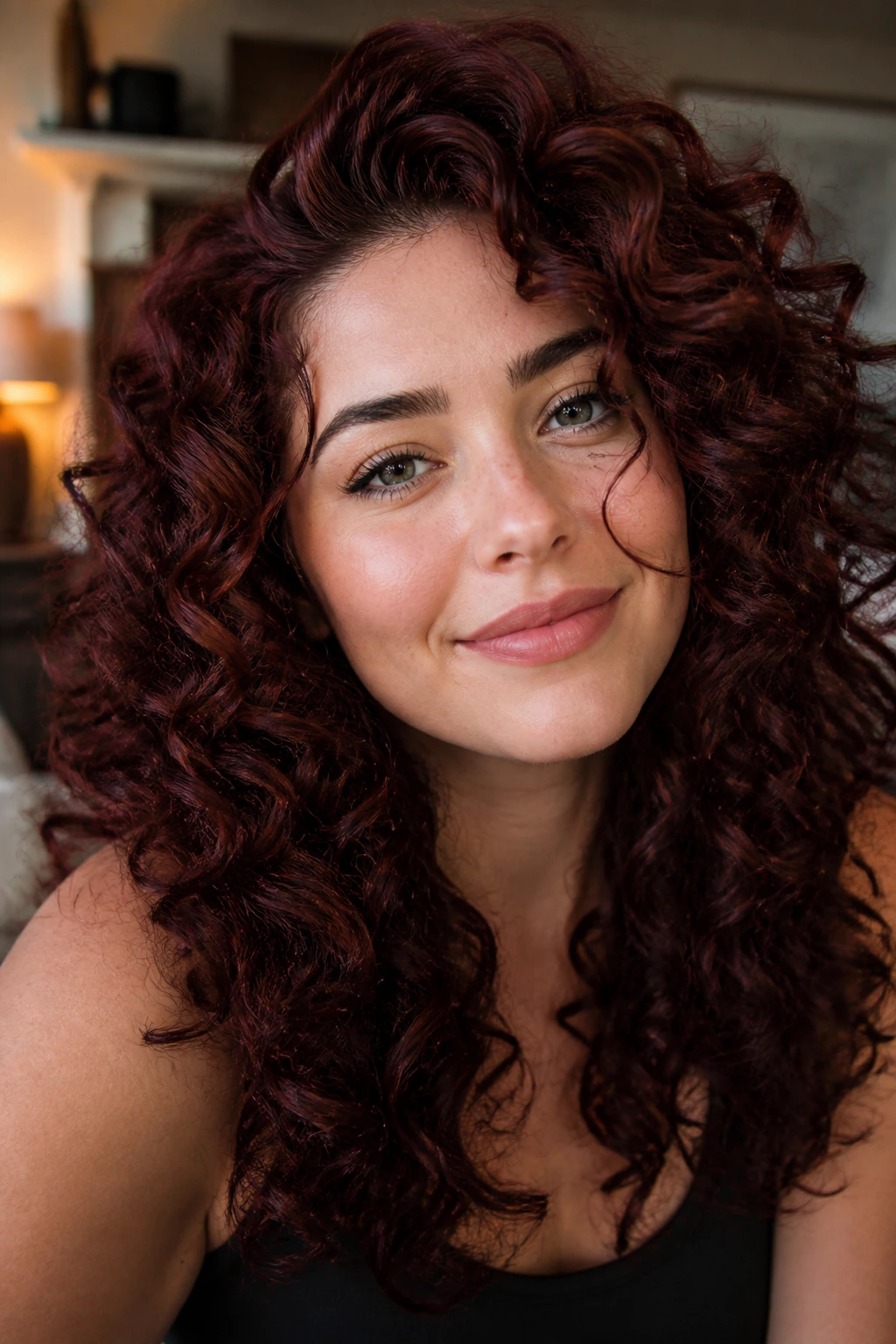
Burgundy curls are the velvet coat of the red family. They’re deeper, cooler, and less likely to read orange in daylight, which is why people with cool undertones often land here after trying copper and hating it. On curls, the color gains a plush look that straight hair can’t quite fake.
There’s a nice trick with burgundy: the darker it sits at the root and inside the curl, the richer it feels. Ask for enough depth at the base so the red doesn’t turn into neon maroon. You want wine, not candy.
Styling should keep the curl shape defined but touchable. A strong gel cast can make burgundy shine hard under the light, then you can scrunch it out once dry. If you like a little edge, burgundy with a middle part looks severe in a good way. If you want softness, side part and volume.
11. Spiced Maple Color Melt
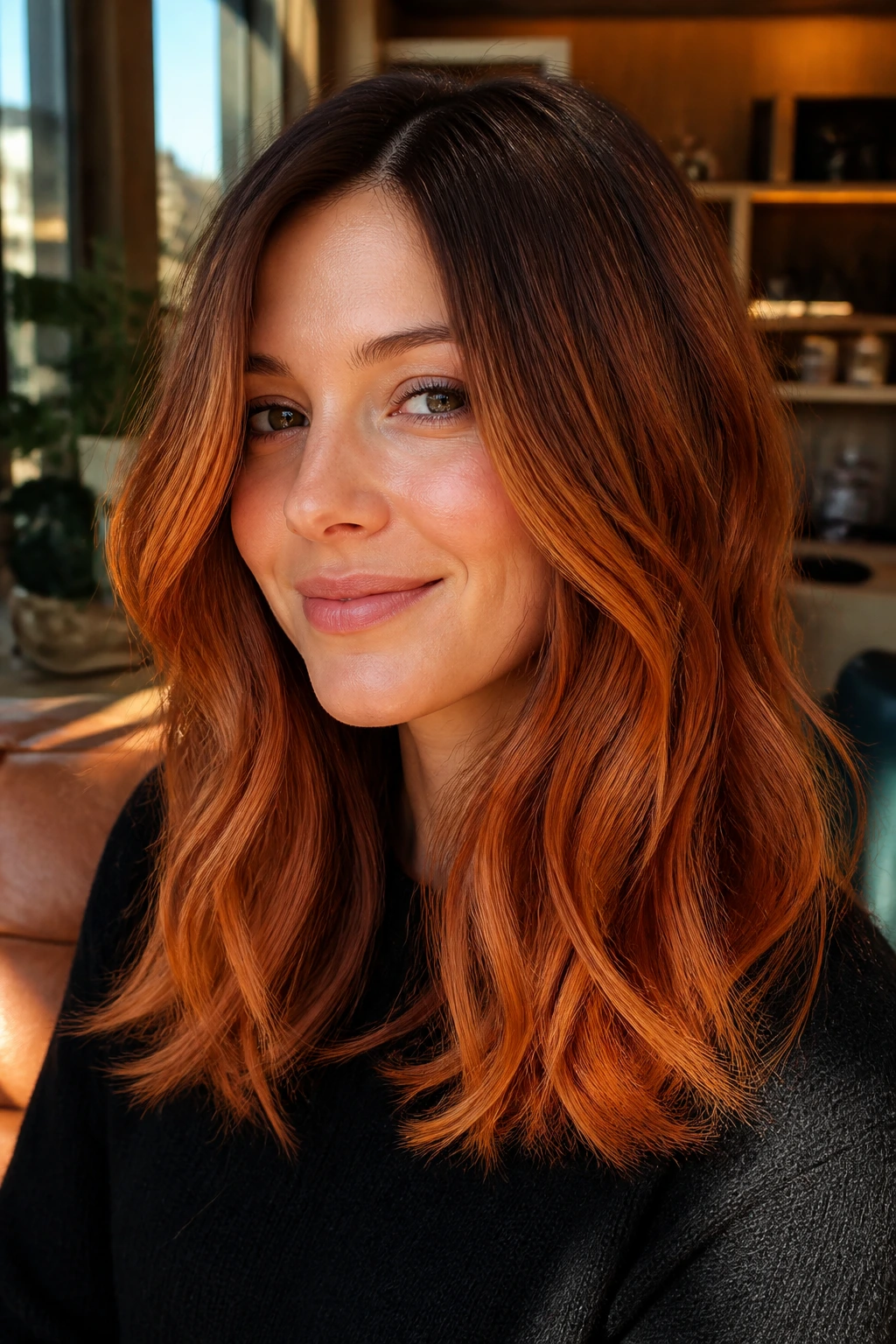
Spiced maple is a warm gradient that pulls together amber, auburn, and a little rust at the ends. It’s not as obviously red as copper, which is exactly why it works for people who want dimension they can live with. The color looks like it’s been in the hair for years, even when it’s freshly done.
The best version keeps the darker tone near the roots and the lighter maple notes around the face and lower layers. That arrangement makes the hair look thick without turning flat. On layered cuts, every piece picks up a slightly different amount of warmth, which is where the shade gets its depth.
A soft blowout is the natural partner here. The melt needs movement to show itself. If you use too much shine spray, the lighter pieces can look greasy and muddy. A little is enough. Maple gets less interesting when you drown it.
12. Rusty Copper Shag

A shag and rusty copper are old friends. The cut does that choppy, lived-in thing with the hair, and the color leans into it with a slightly weathered copper tone that feels cooler and more casual than polished ginger. It’s the red for people who prefer texture over perfection.
The shag’s layers expose more of the color, especially around the fringe and crown. That means you can play with brighter copper on the top while letting the underneath stay a shade deeper. The whole thing feels deliberate instead of flat.
Don’t over-style this one. A little mousse, a diffuser, and some finger-tousling are usually enough. If you make it too sleek, the shag loses its charm and the copper starts to look one-note. This is the rare red shade that gets better when it looks a little messy. Not sloppy. Just lived-in.
13. Scarlet Money Piece
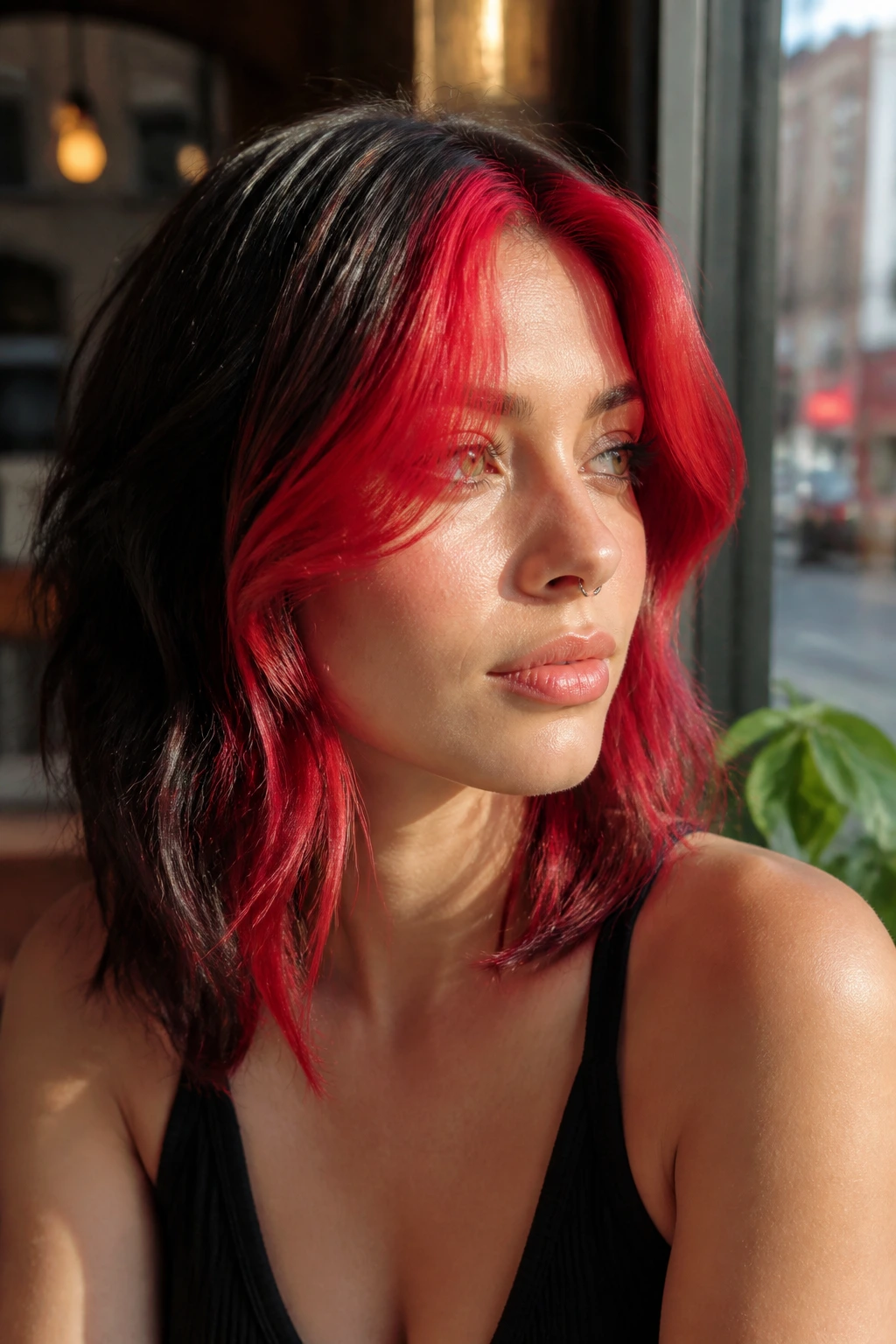
A scarlet money piece is for the person who wants the front of the hair to do all the talking. You keep the base darker or more neutral, then drop in bright red ribbons around the face so the whole look snaps awake. It’s a smart way to test a bolder color without coloring every strand.
The placement is doing the heavy lifting. Put the brightest pieces where the light hits first: around the part, at the temples, and just behind the fringe if you wear one. That gives the face immediate contrast. The rest of the hair can stay calm.
This works especially well with ponytails, half-up styles, and loose waves because the front pieces always stay visible. If you wear your hair pulled back a lot, the scarlet pops even harder. Maintenance is lower than a full-head vivid red, but the front pieces still need glossing to stay sharp.
14. Auburn Ribbon Highlights
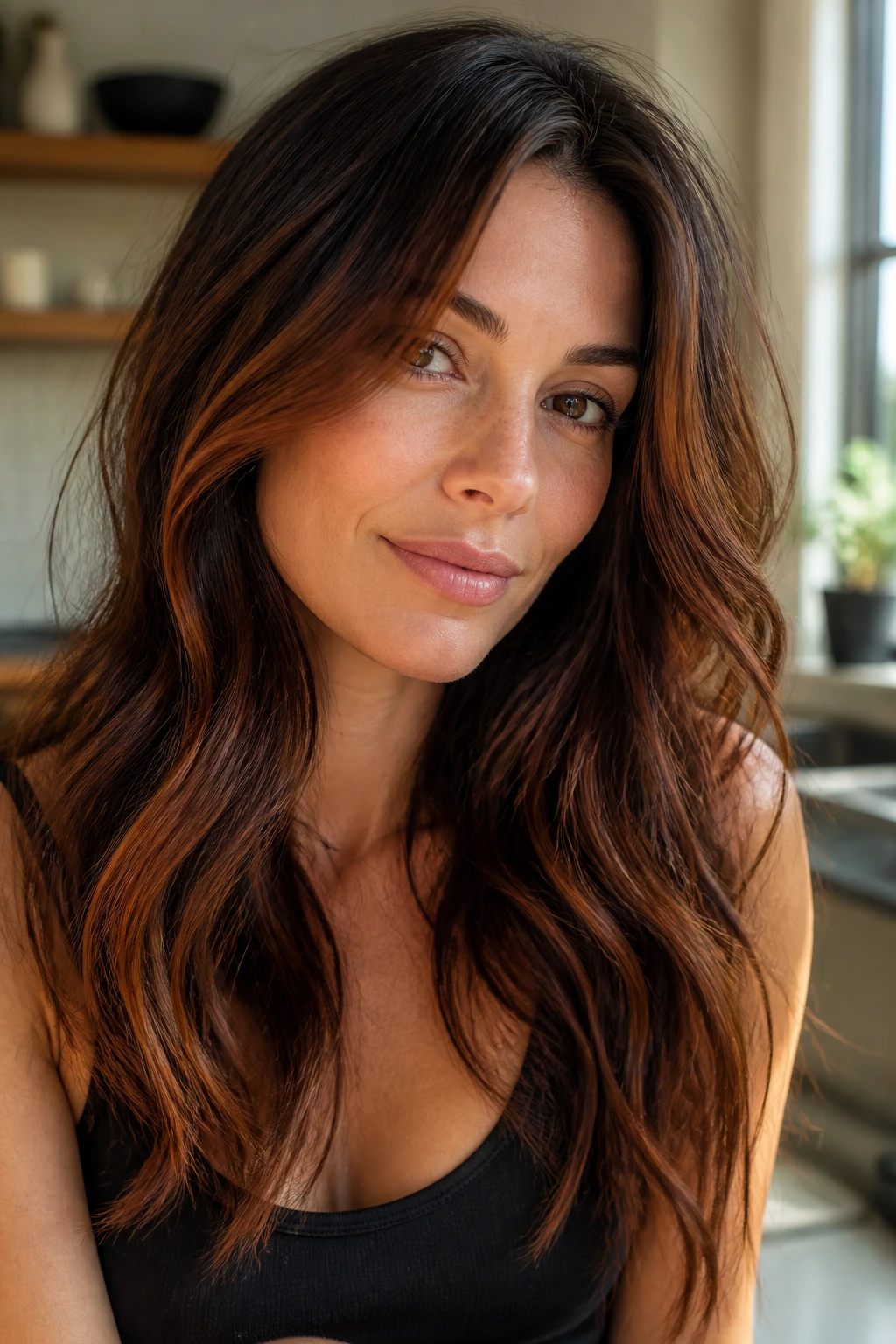
Ribbon highlights are the gentler cousin of balayage. Instead of broad, sweeping red pieces, you get narrow auburn threads woven through the hair so the color flickers rather than shouts. On brunette or dark blonde bases, this can be one of the prettiest ways to wear red without going full copper.
The key is spacing. Too many ribbons and the hair starts to look striped; too few and the red disappears. A good colorist will place them where the hair naturally moves — around the face, under the top layer, and through the ends where sunlight would hit.
This look is especially nice on medium-length cuts and layered lobs. The highlights show up when the hair turns. If you prefer low drama, keep the root area deeper and let the auburn live mostly in the mids and ends. It grows out softly and doesn’t ask for constant correction.
15. Cranberry Gloss Ponytail
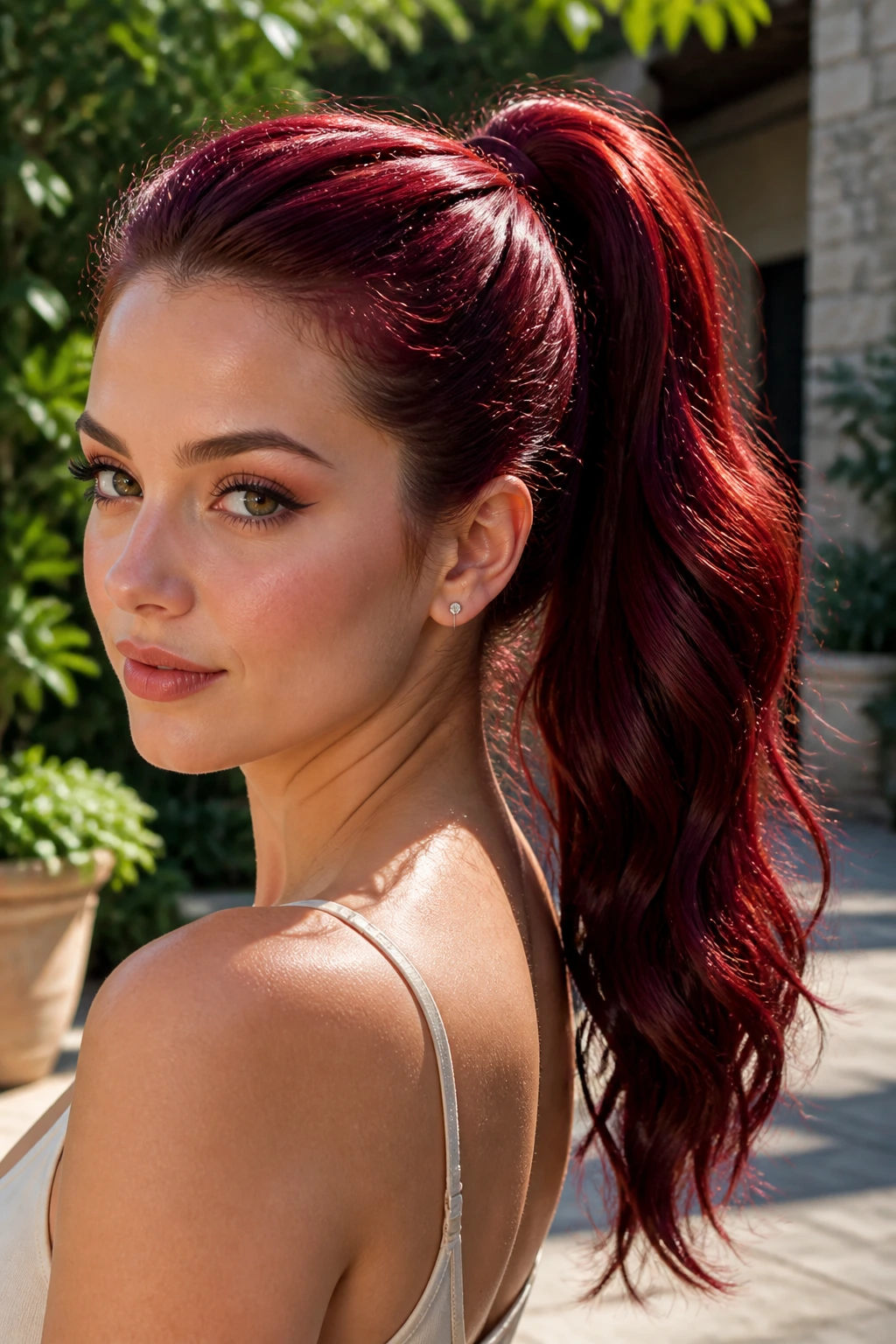
A cranberry gloss gives a ponytail a polished, almost liquid finish. The color itself sits between red and berry, so it feels cooler than copper and richer than pink. Pull it into a high ponytail or a low, wrapped one and the shine becomes the whole point.
The shape is what makes this look work. A glossy ponytail turns hair movement into a feature instead of hiding it. Because the length is gathered, the color appears denser, which is useful if your hair is fine or medium and you want more visual weight.
A good smoothing serum at the base and a light pass of hairspray on the surface keep flyaways from breaking the line. If you want extra depth, leave a few face-framing pieces loose. Cranberry likes a bit of clean structure; otherwise it can slide into just “dark red hair” and lose its character.
16. Saffron Copper Blowout
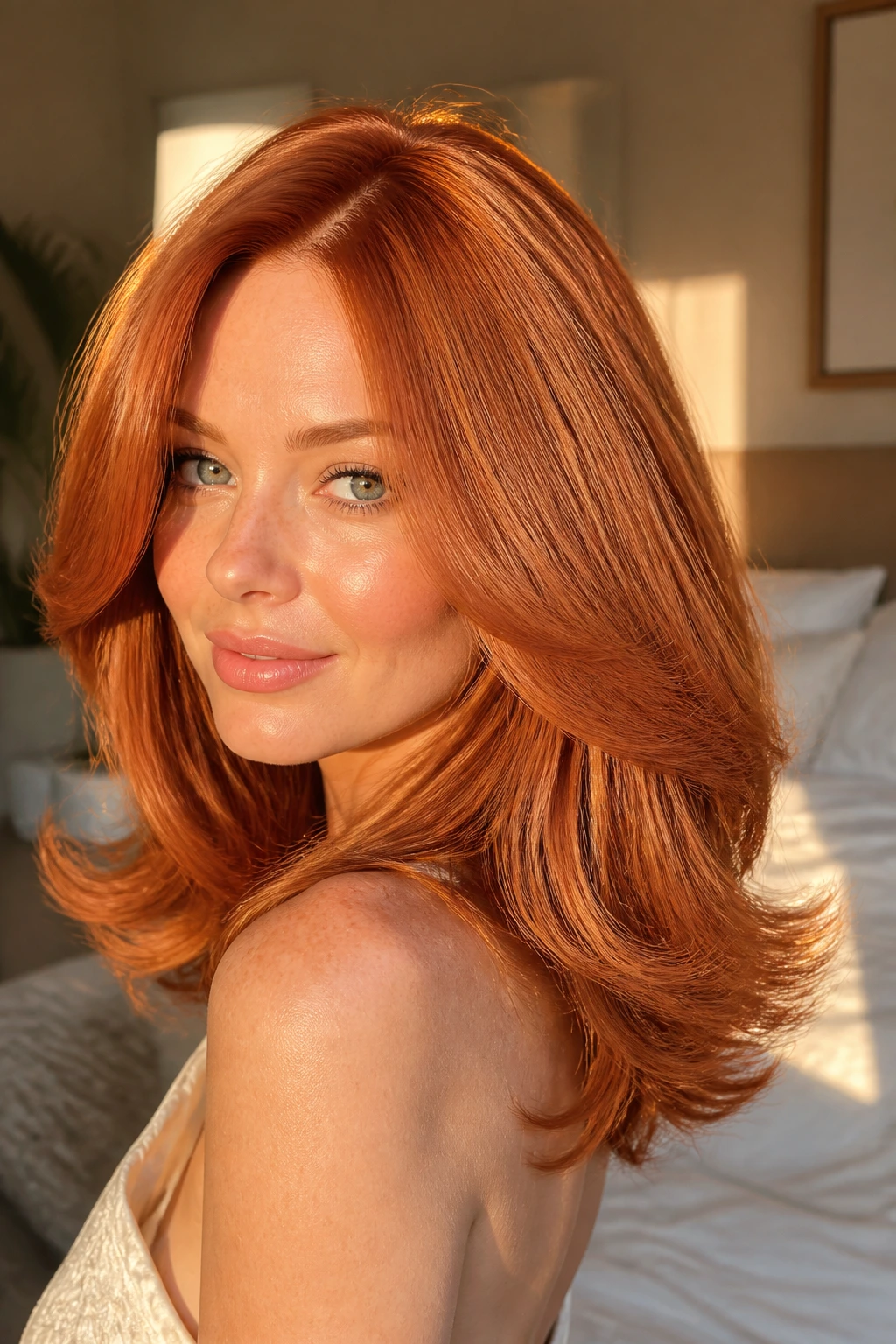
A big blowout and saffron copper are a strong pair. The color has enough gold in it to glow, and the rounded shape of a blowout gives it a soft, expensive finish. It feels lively without being wild, which is a nice place for red to live when you want movement more than shock value.
This shade flatters layered medium and long hair because the ends can flip away from the face and keep the color from looking too heavy. If the hair is all one length, the blowout helps create the illusion of more body. That’s not magic. It’s just shape doing its job.
Use a heat protectant and a medium-round brush. High heat can make saffron tones go too warm too quickly, especially on lightened hair. The color works best when the blowout has a soft bend rather than a rigid curl. Think polished, not pageant hair.
17. Merlot Red Braids
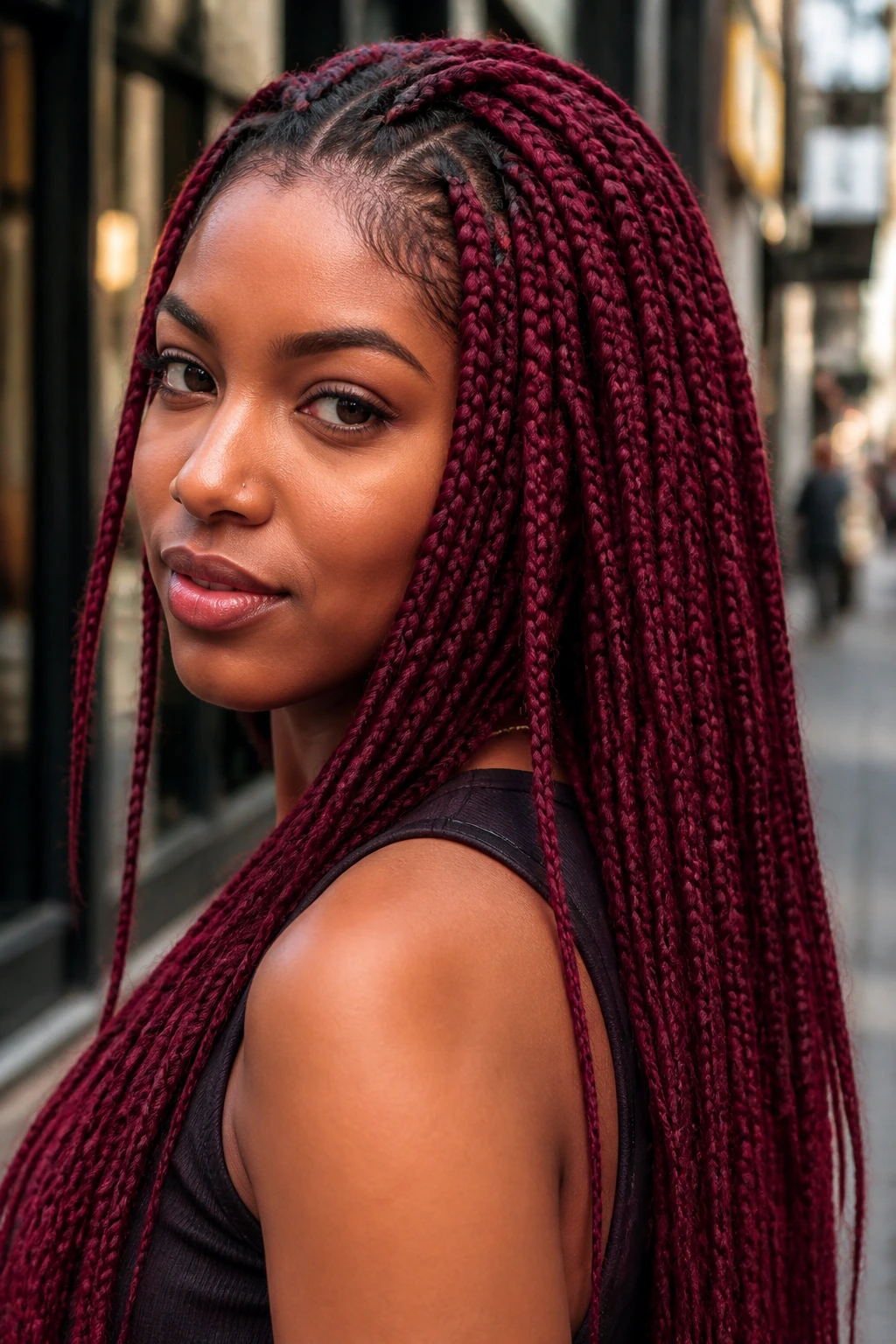
Merlot red braids look best when the color has enough depth to show in the plaits. A flat bright red can get noisy in braids; merlot keeps the look lush and dimensional. On box braids, knotless braids, or long feed-in styles, the darker wine tone catches the weave and looks richer with every twist.
If the hair is natural and being colored before braiding, deep conditioning matters before and after. Braids put tension on the strands, and colored hair already needs a little kindness. If the color is added with braiding hair instead, you get a lower-commitment route that still delivers the red effect.
The finish should be neat and glossy, not crunchy. A light oil on the braid length and a silk scarf at night keep the color looking intentional instead of dusty. Merlot is one of the red hair looks for women that reads elegant even when the style itself is protective and practical.
18. Tomato Red Blunt Bob
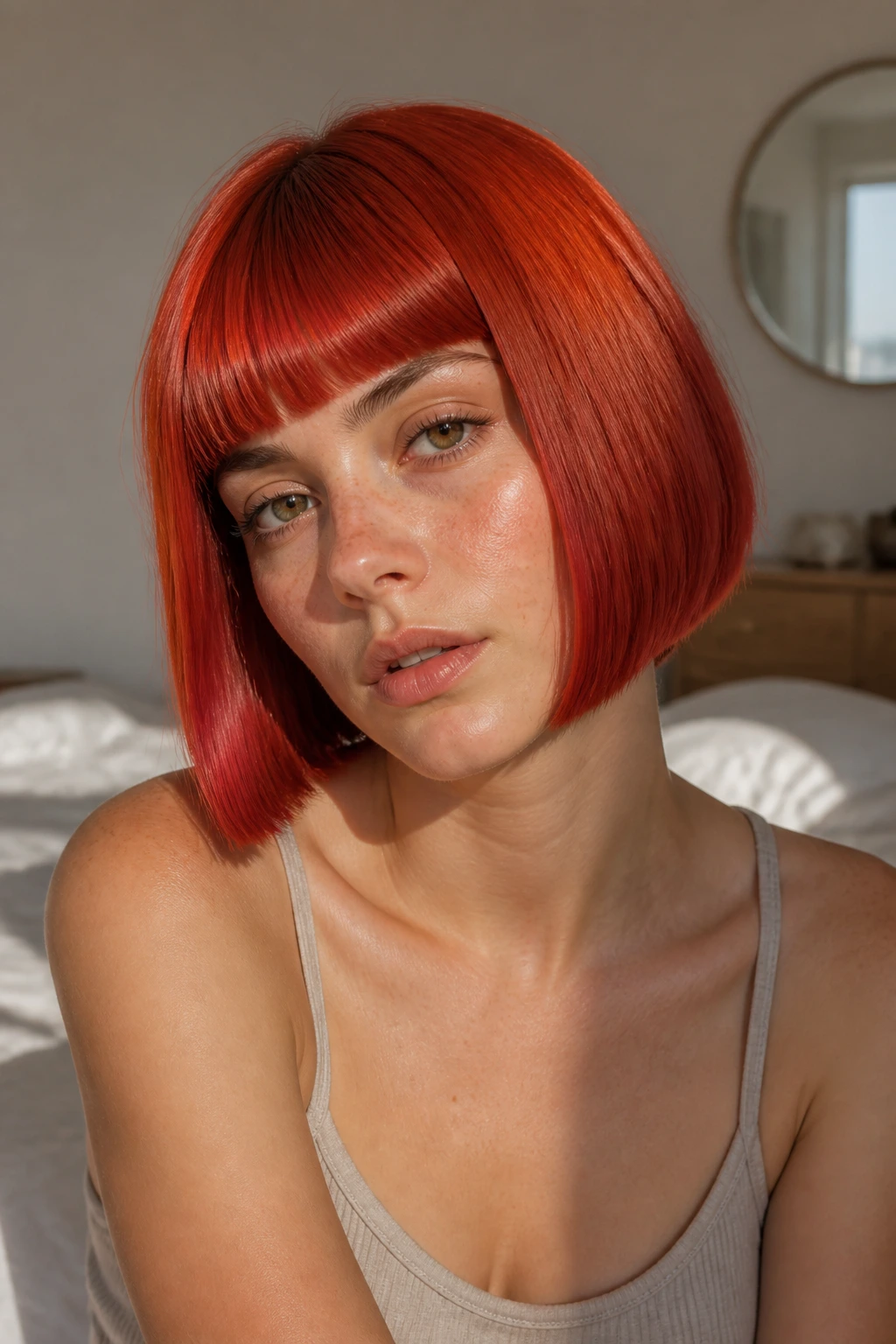
Tomato red is unapologetic. It sits bright, warm, and bold on a blunt bob, where the straight edge gives the color a graphic outline. There is no hiding in this look. The line of the cut and the intensity of the shade do the same job: they make a clear statement.
This shade shines best when the hair is healthy enough to reflect light back evenly. If the ends are dry, tomato red can start looking patchy fast. A gloss or a glaze helps keep the surface smooth, and a sharp trim every few weeks prevents the bob from turning fuzzy at the edge.
I’d keep the styling simple. A smooth blow-dry, a tucked-behind-the-ear moment, or a deep side part is enough. Too much texture can steal from the cut’s clean shape. Tomato red wants to be read quickly, and the blunt bob gives it that frame.
19. Deep Auburn Butterfly Cut
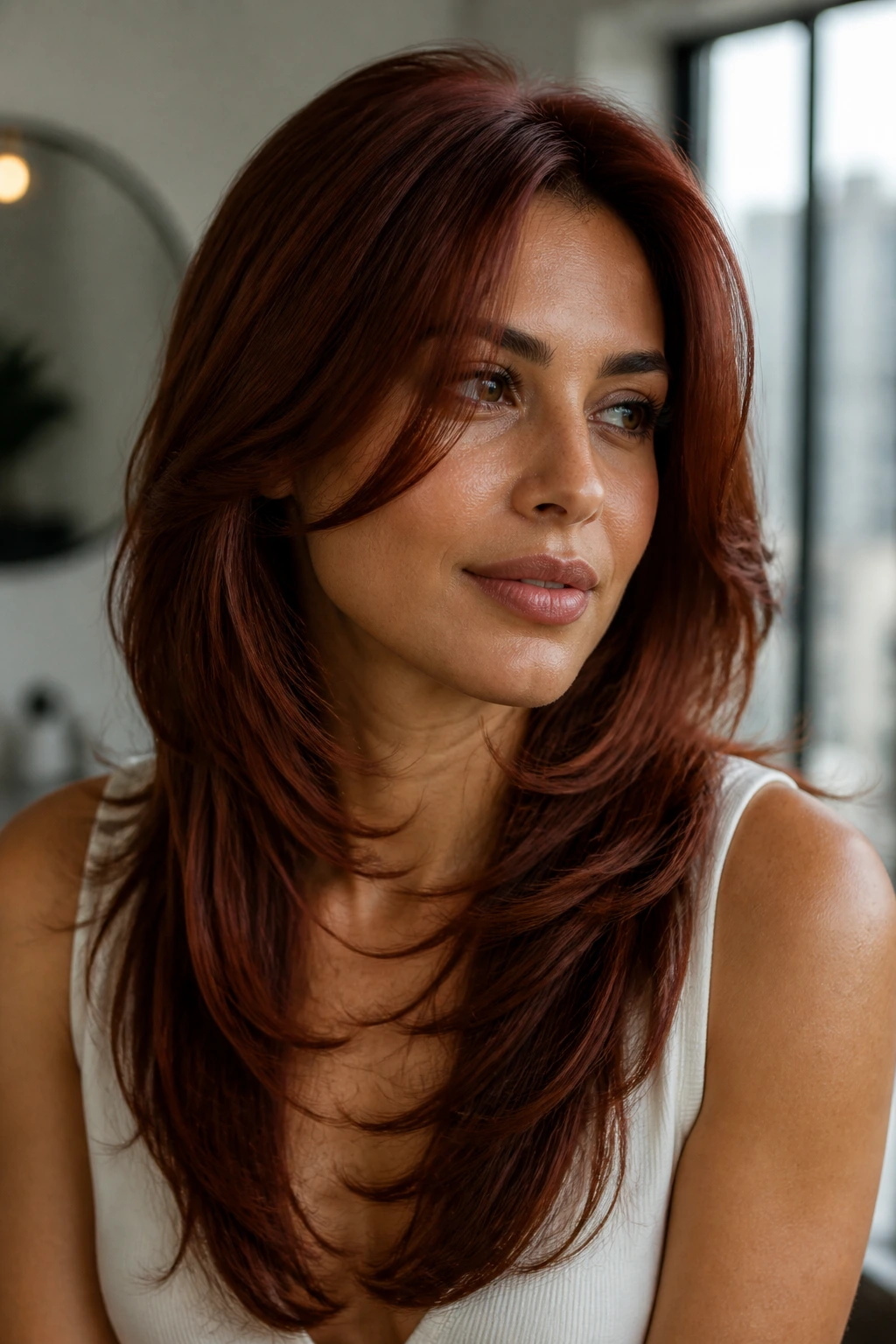
The butterfly cut gives deep auburn a lot to work with. Those face-framing layers and longer underlayers create movement at the front while keeping length in the back, which lets the color shift in different ways as the hair falls. Auburn thrives on that kind of motion.
Because the cut has so much swing, the red doesn’t need to be bright to stay visible. That’s helpful if you want something wearable and still interesting. Under indoor light, the shade leans brown; in daylight, the red comes forward. That’s the nice trick of auburn — it changes with context instead of shouting all the time.
For styling, a round-brush blowout or Velcro rollers at the crown work well. They give the layers lift and let the color show in the face-framing sections. If your hair is thick, this cut can remove weight without sacrificing the red payoff.
20. Neon Red Peekaboo Streaks
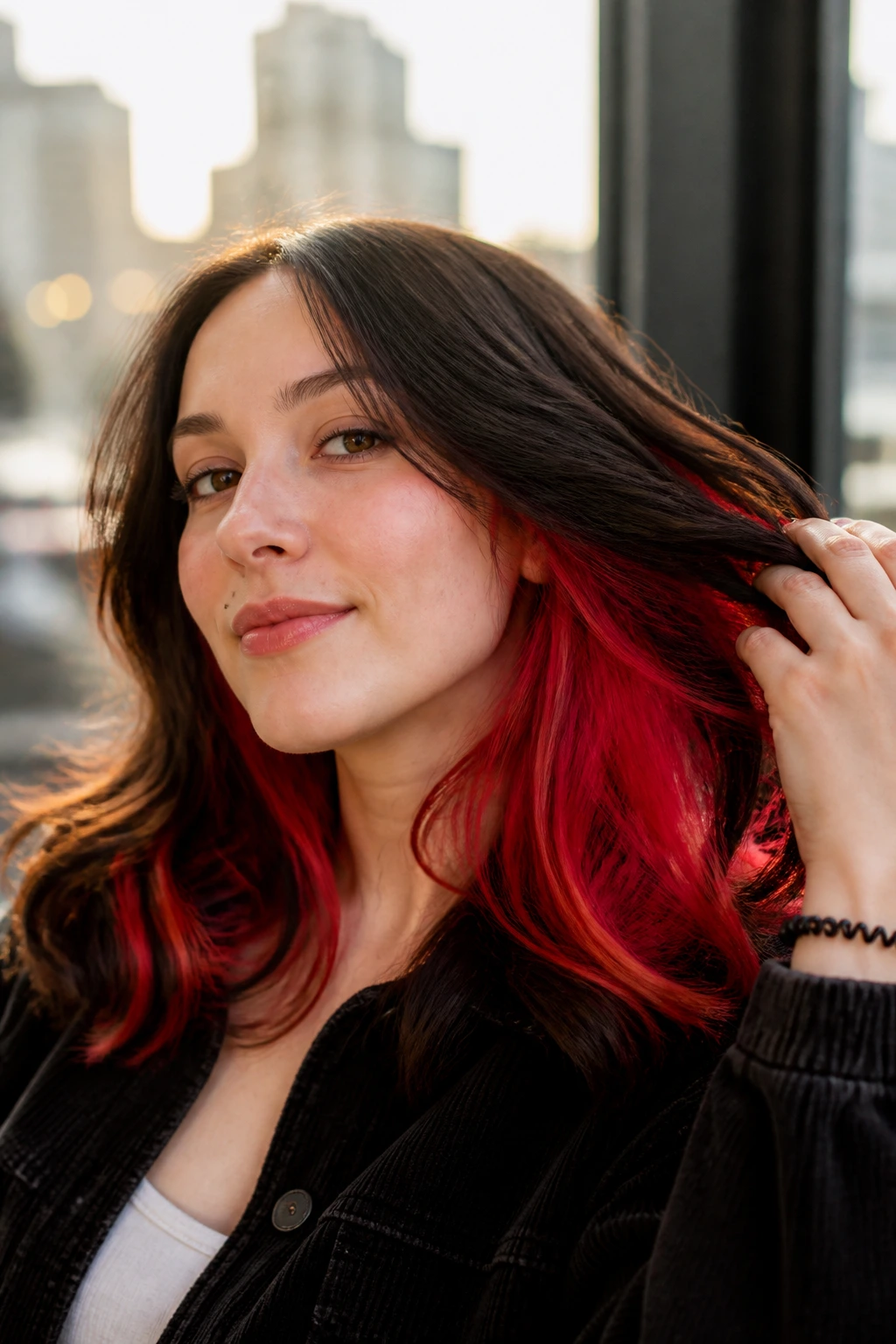
Peekaboo streaks are for people who want red hair but don’t want red hair every day. The color hides under the top layer and flashes when you tuck your hair behind your ears, curl it, or pull it into a half-up style. Neon red makes the reveal feel sharp and deliberate.
This is one of the smarter ways to wear a vivid shade if you’re worried about maintenance or workplace rules. The hair can look normal from one angle and electric from another. That split personality is the whole point. It also means the streaks can stay brighter for longer because they’re not exposed to the same amount of sunlight and washing.
Keep the top layer healthy and smooth so the contrast feels clean. If the upper hair is frizzy, the reveal gets muddy. This look is pure fun, but it still needs structure. A neat section line matters more than people think.
21. Soft Copper Foilyage
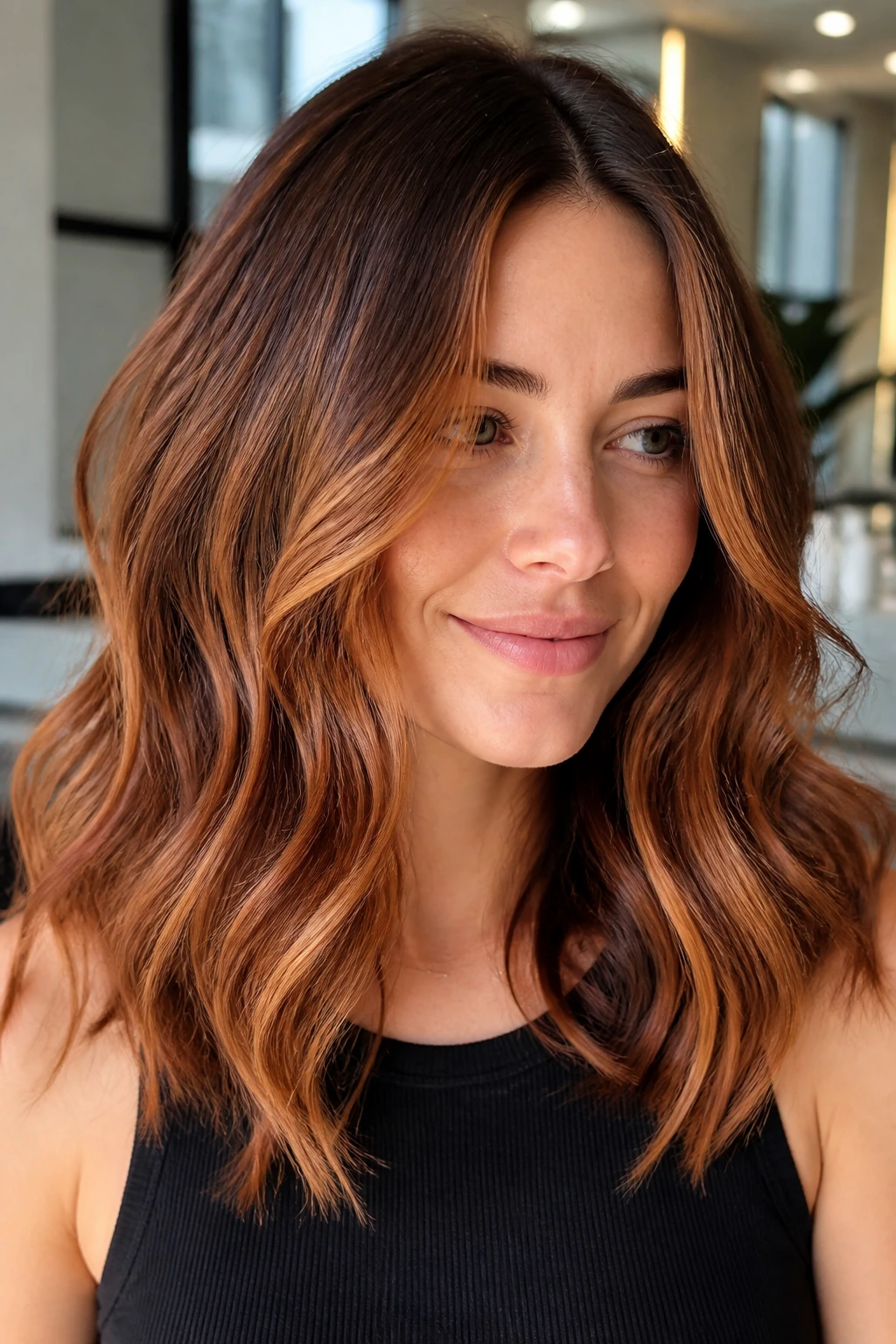
Foilyage gives you the softness of balayage with a little more lift and precision. On a dark blonde or light brunette base, soft copper foilyage creates fine, bright pieces that show up especially well around the face and through the mids. It’s less chunky than traditional highlights and less opaque than full color.
The copper pieces should feel scattered, not striped. That airy placement gives the hair a sunlit red effect that works in motion. If the base is kept a half-step deeper, the copper reads cleaner. If everything lifts too much, the look can turn into warm blonding instead of red.
This is a good middle road for someone who wants dimension and a red note but doesn’t want to commit to all-over copper. Blow it out smooth or wear it in loose bends. Either way, the lighter ribbons will move before the rest of the hair does, which is where the color wakes up.
22. Mulled Wine Long Layers
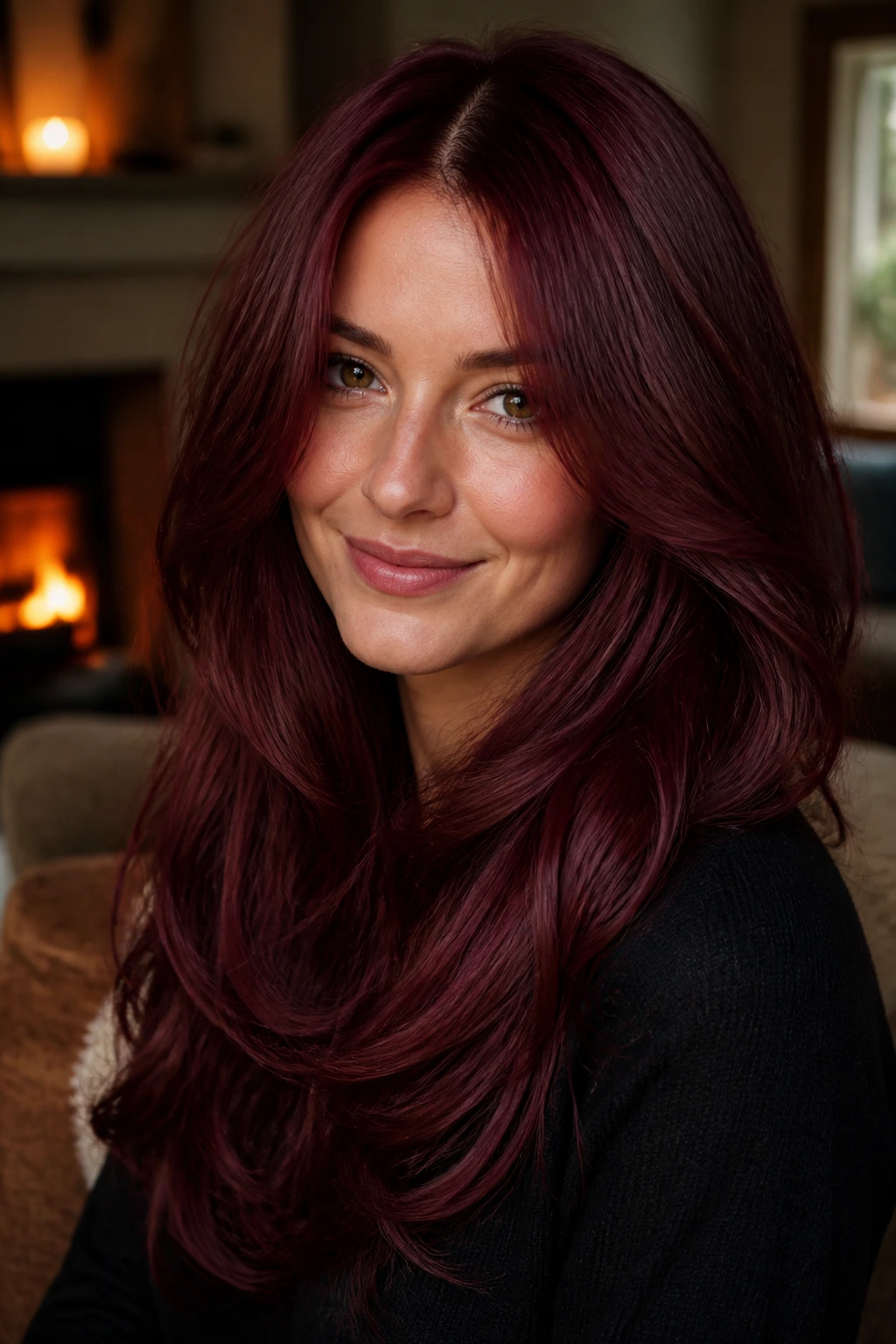
Mulled wine is a deep, spiced red that sits somewhere between burgundy and auburn, and long layers give it plenty of room to show off. The color feels rich without being harsh. It’s the sort of shade that looks darker in a mirror and suddenly alive outside.
The layers keep the shape from going heavy. That matters with deeper reds, because dark color on long hair can collapse visually if the cut is too blunt or too one-length. With movement built in, the red catches on the edges of each layer and shows off in folds.
If you like a smooth finish, a blowout with a large brush is enough. If you like texture, soft waves show the wine tones more clearly. Either way, the shine has to be there. Mulled wine turns flat fast if you let it dry out.
23. Gold-Shifted Red Balayage
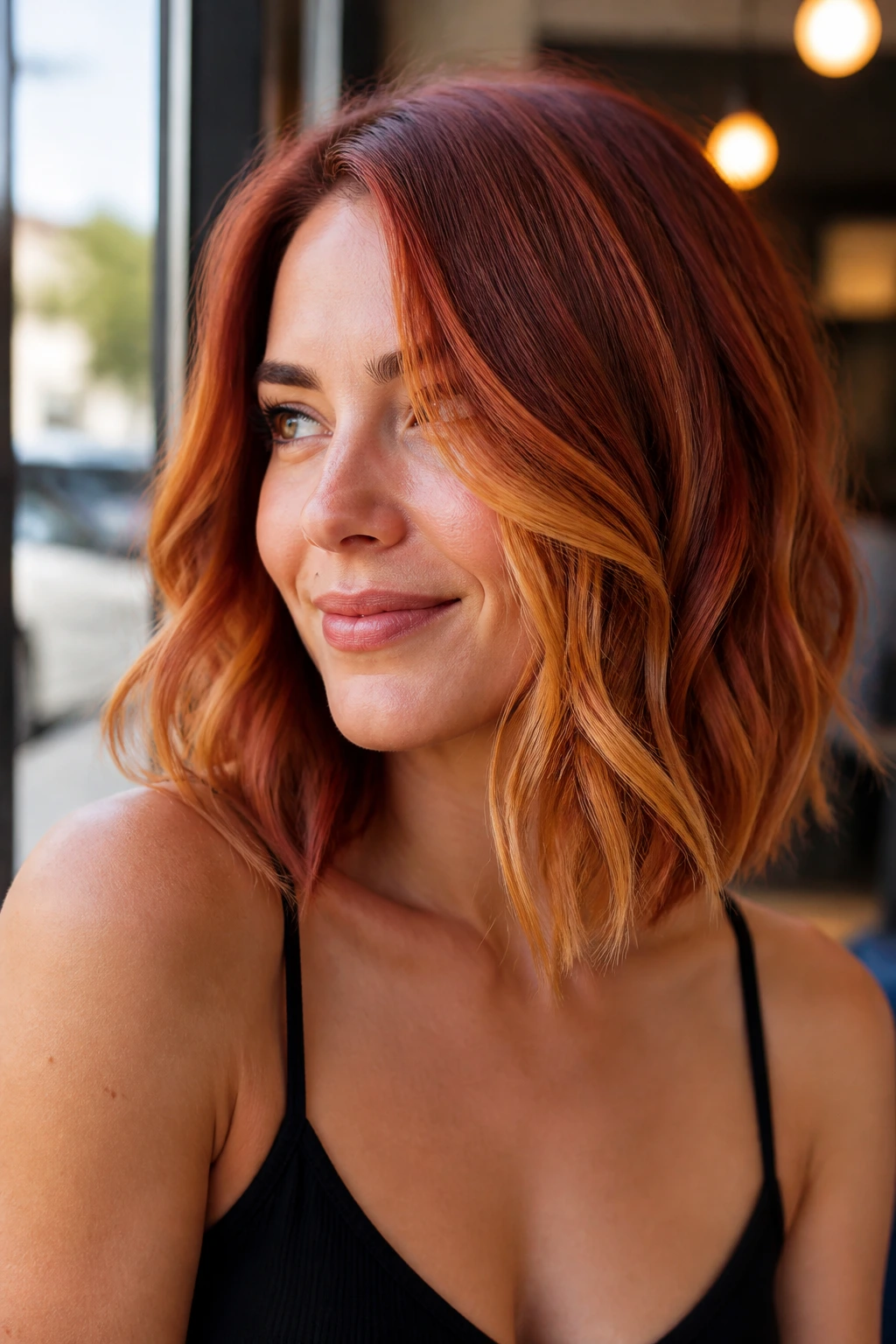
Gold-shifted red balayage is a warmer, brighter take on red for people who want a lot of light reflection. The gold note keeps the red from going too purple, and the balayage placement keeps the whole thing soft at the root. It’s an easy fit for medium brunettes who want warmth without a hard line.
The best thing about this look is how the ends glow when they catch light. That’s why a wave or bend through the lengths helps. Straight hair can make it look too blended. A little movement shows the gold and red together, which is the whole charm.
This is a good option if you don’t want a strict copper or a strict burgundy. It lives between them. The downside is that gold-heavy reds can fade warm, so keeping a color-depositing mask on hand helps stop the shade from wandering too yellow.
24. Sunset Red Ombre
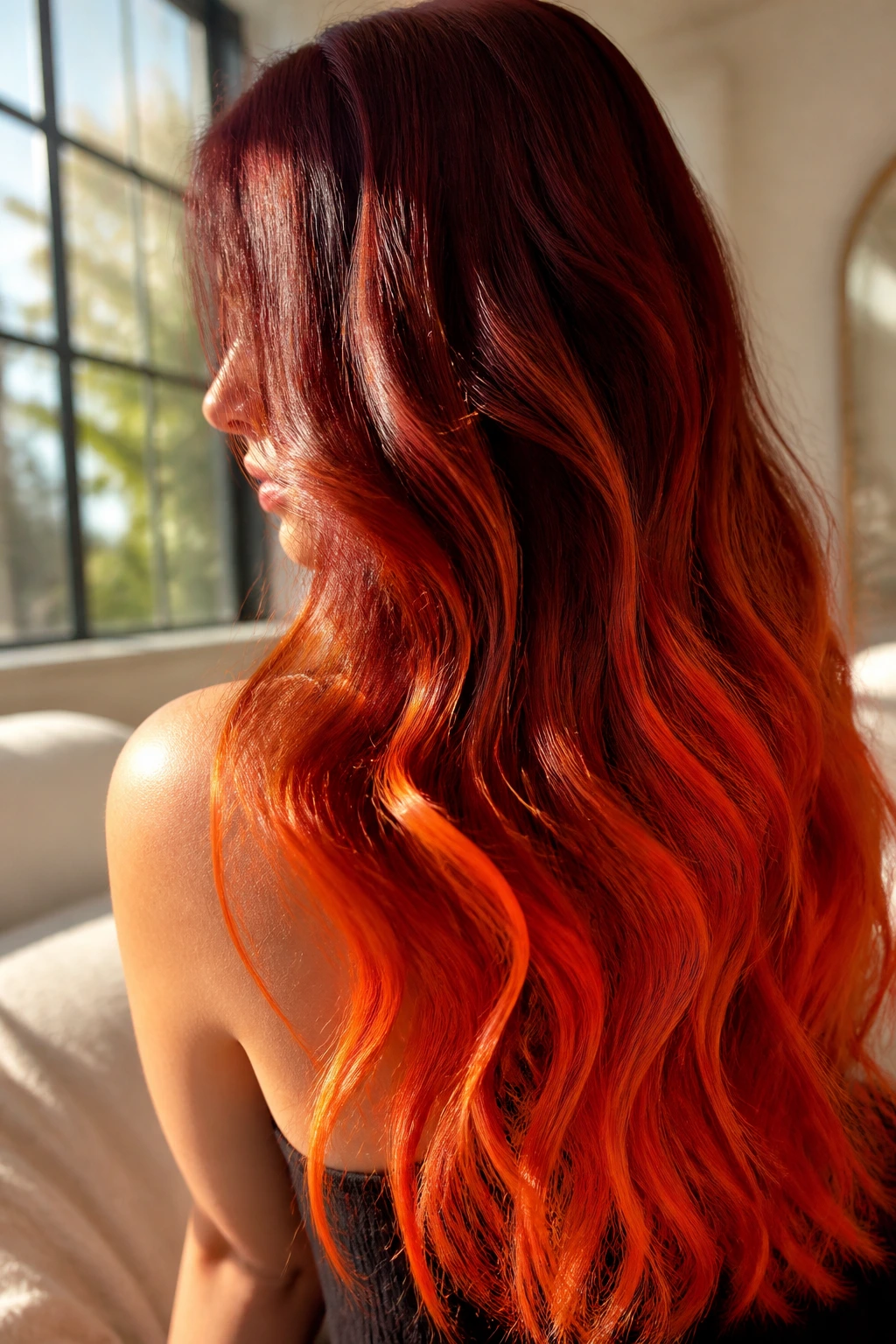
Sunset red ombre starts darker near the roots and moves into brighter, hotter ends. The gradient gives you drama without the hard upkeep line of full vivid color. It also makes a lot of sense on long hair, where the change in shade has room to unfold.
The trick is keeping the transition smooth. If the ombre starts too high or shifts too abruptly, it can look like a color correction job rather than a style choice. A soft blend from auburn or copper root to red-orange or scarlet ends feels intentional and richer.
Wear it with waves if you want the gradient to show, or with a straight finish if you want the color block to feel sharper. Both work. I prefer a slightly messy wave, because it lets the red pop at different points instead of sitting like a painted stripe.
25. Chestnut Copper Curls
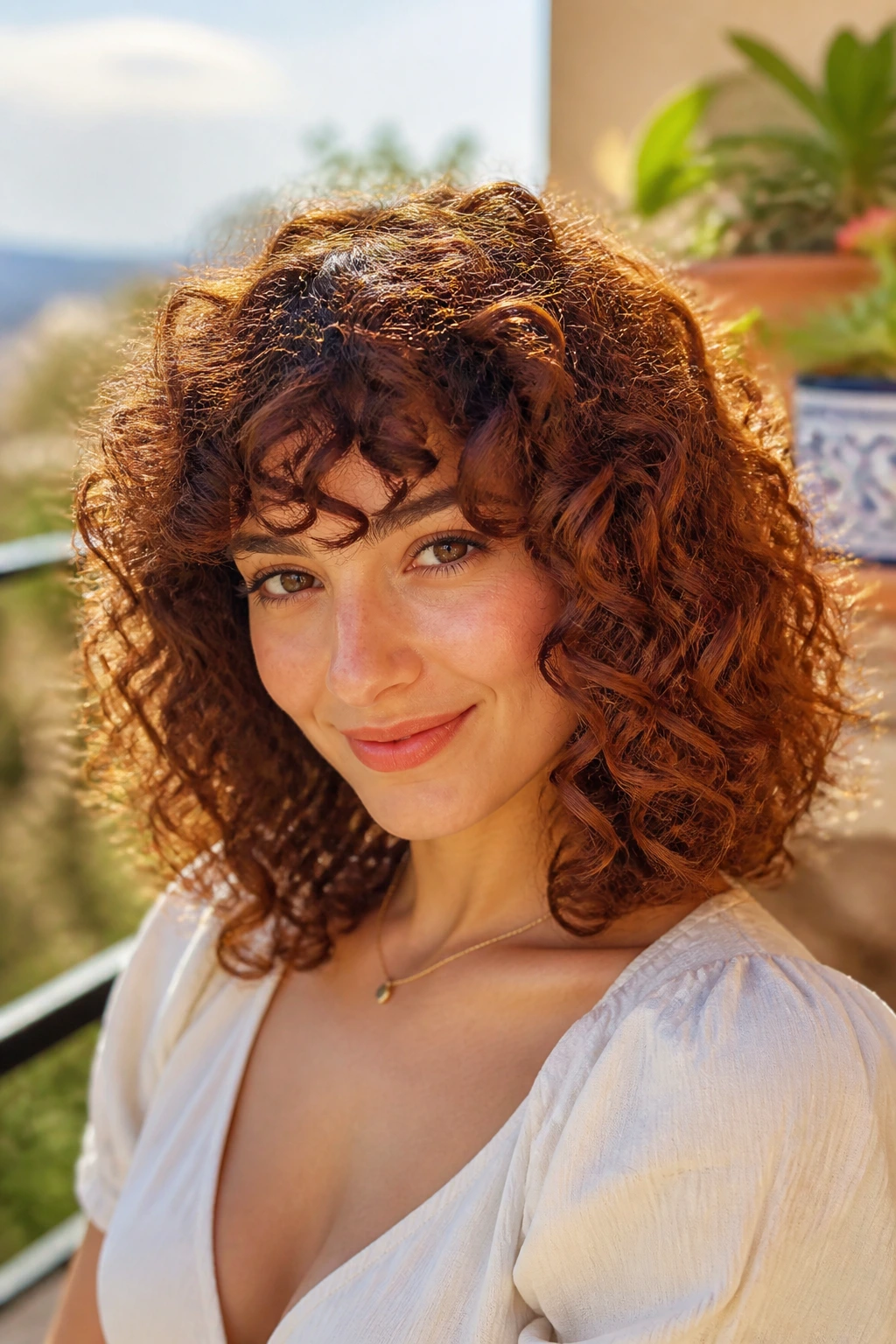
Chestnut copper curls are for people who want warmth first and drama second. Chestnut keeps the base earthy, while copper wakes the surface up. On curls, the two tones separate just enough to give the style depth without making the color feel loud.
This is a clever shade on medium to deep skin tones, especially when you want red to feel natural rather than theatrical. The curls create small pockets of light and shadow, and that’s where the copper lives. If the hair is coily or highly textured, the shade can look even richer because the curls hold the pigment in different ways.
Use a moisturizing curl cream and avoid heavy build-up. Chestnut copper loses its glow when the product layer gets too thick. Clean, defined curls are what let the red show up correctly.
26. Brick Red Crop
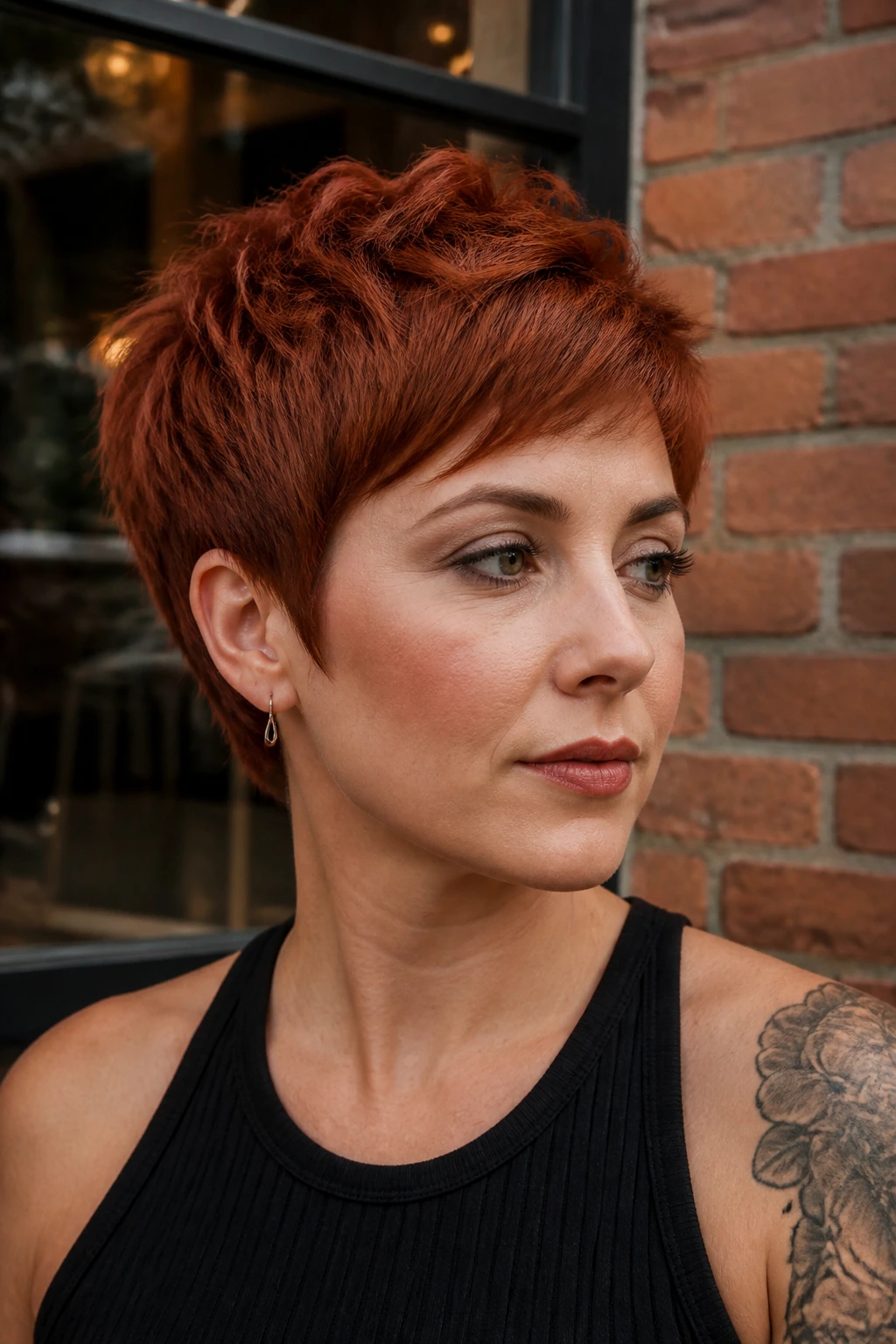
Brick red has a grounded, earthy look that works beautifully on a crop cut. It’s not as bright as cherry and not as brown as auburn. The tone sits in the middle with a kind of mineral warmth, and that makes short hair feel sharp without screaming for attention.
A crop needs color with some confidence, because there’s less hair to hide behind. Brick red gives you that. It also pairs well with choppy texture or a little fringe. If the cut is too neat, the color can feel severe. If the cut is too soft, the red loses its edge.
I like this one with a matte paste for separation at the top and a bit of shine at the sides. That mix keeps the color from looking flat. Brick red is the kind of shade that gets better the more the cut looks intentional.
27. Cherry Red Wolf Cut
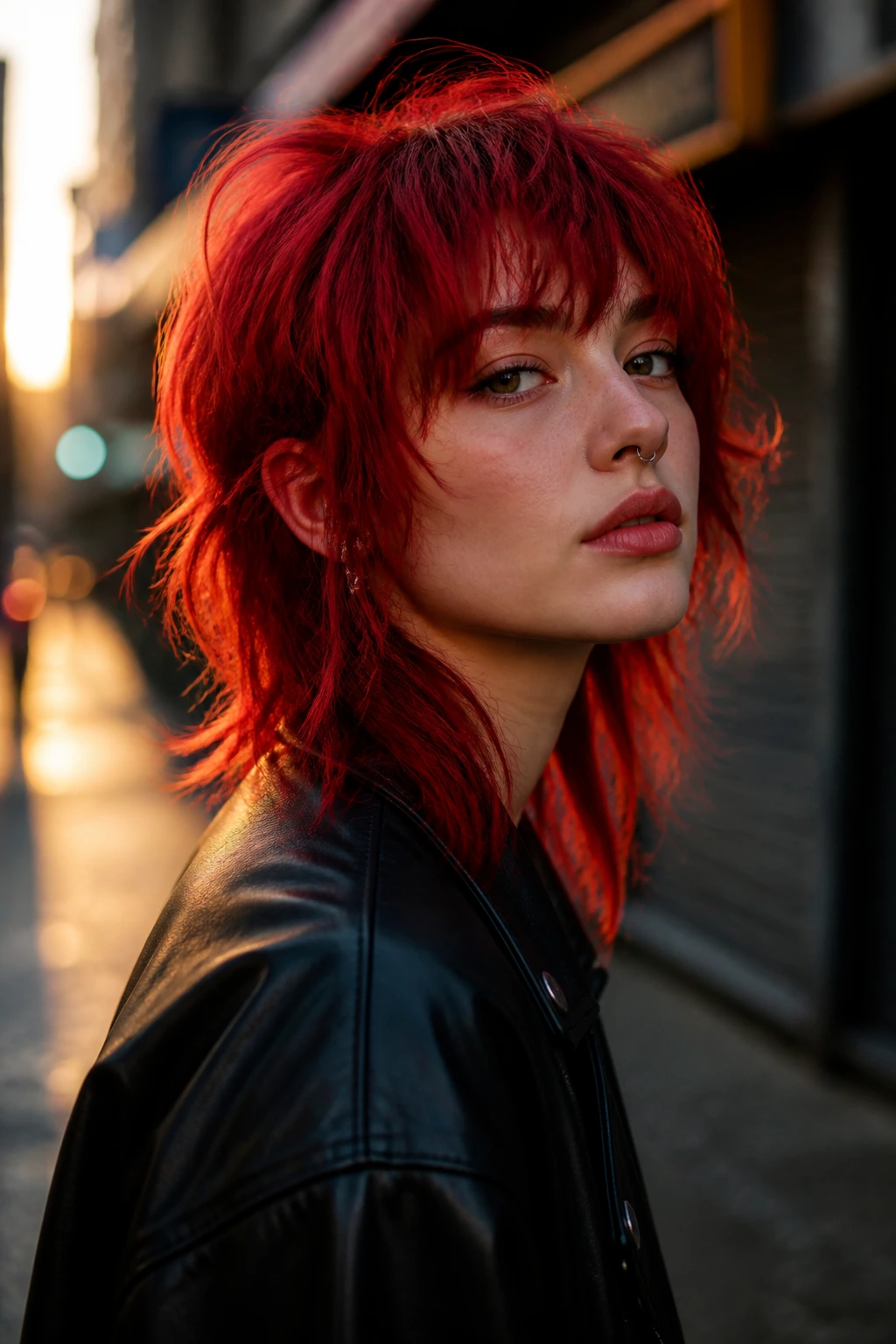
Cherry red and the wolf cut have the same energy: messy on purpose. The choppy layers, shaggy crown, and longer mullet-style length all give the red plenty of surfaces to hit. Cherry is bright enough to stay visible, but the shape keeps it from feeling too polished.
This look works well if you like edge and movement. The wolf cut breaks the color into pieces, so you see flashes of red instead of one solid block. That makes the shade feel more alive, especially when the hair is tousled.
Styling should stay loose. A diffuser, a little texture spray, maybe a touch of cream through the ends. Too much smoothness kills the whole point. Cherry red on a wolf cut should look a little wild. Not unkempt. Just willing to have fun.
28. Copper Coil Afro
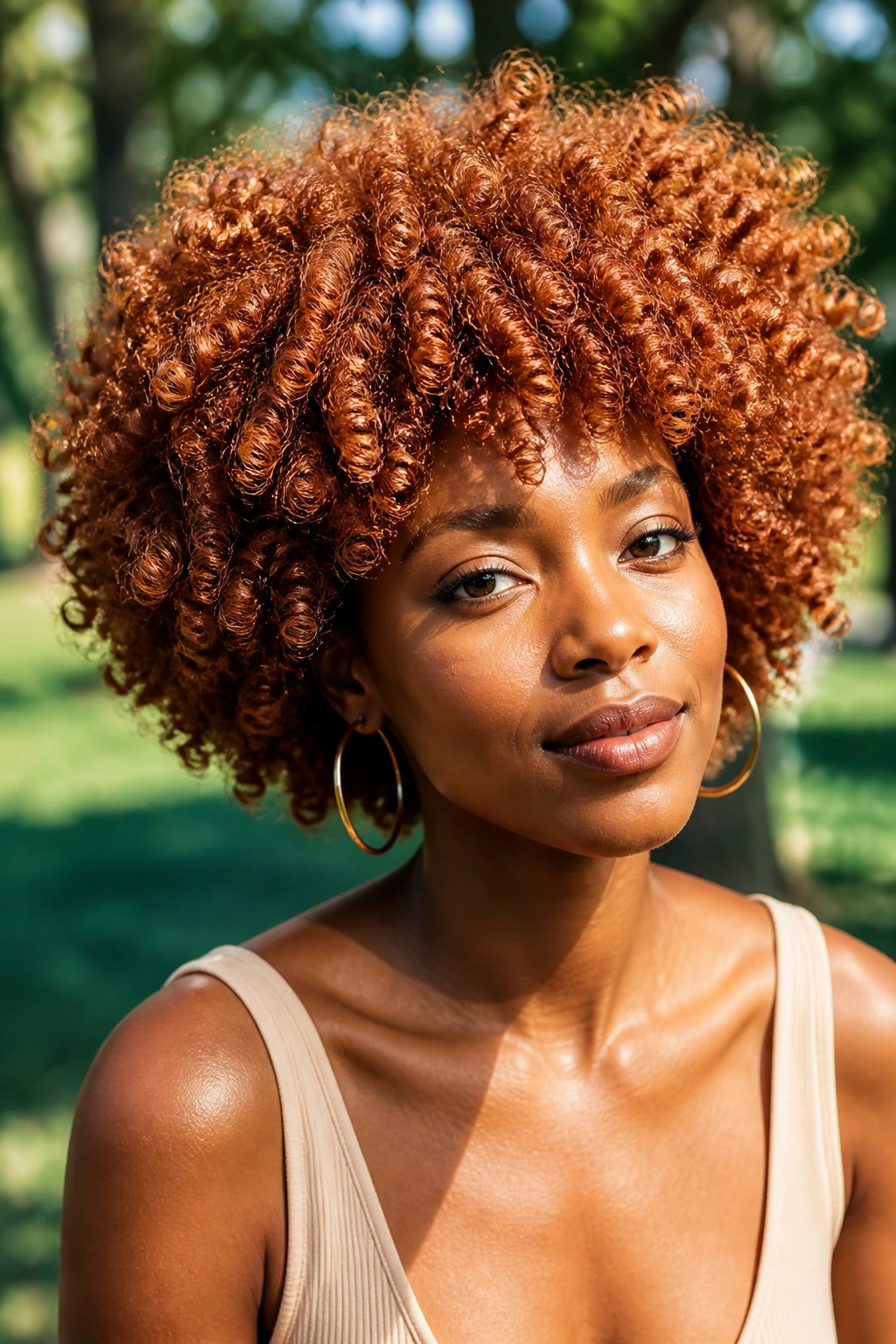
Copper on a coil afro can be stunning when the tone is chosen with the texture in mind. The coils catch and hold light in tiny places, so the hair can look deeper at the roots and brighter on the outside of each coil. The color doesn’t need to be neon to read. The texture does the work.
This is one of those red hair looks for women that rewards moisture. Colored coily hair can feel dry faster, and dry coils lose shine quickly. Use a rich conditioner, a leave-in that doesn’t clog the hair, and a gentle cleanser that won’t strip the copper out in two washes.
Shape matters too. A tapered cut or rounded afro shape can make the color appear even more dimensional. Copper in coils looks strongest when the silhouette is clean and the strands are defined.
29. Copper Ginger Fringe

A fringe changes everything. Copper ginger across the lengths is one thing, but put a sharp or curtain fringe in front and the color starts framing the eyes in a more obvious way. Ginger tones keep the whole look bright, and the fringe gives you a little theater right at the brow line.
This works especially well if your hair is medium length and you want the front to carry most of the interest. The fringe should be light enough to move, not heavy and helmet-like. If the bangs are too dense, the copper can look flat. If they’re too wispy, they disappear.
A little blow-dry roundness at the fringe helps the red catch the light. So does a soft bend through the sides. Copper ginger likes movement near the face. That’s where it makes its point.
30. Dark Rose Red Gloss
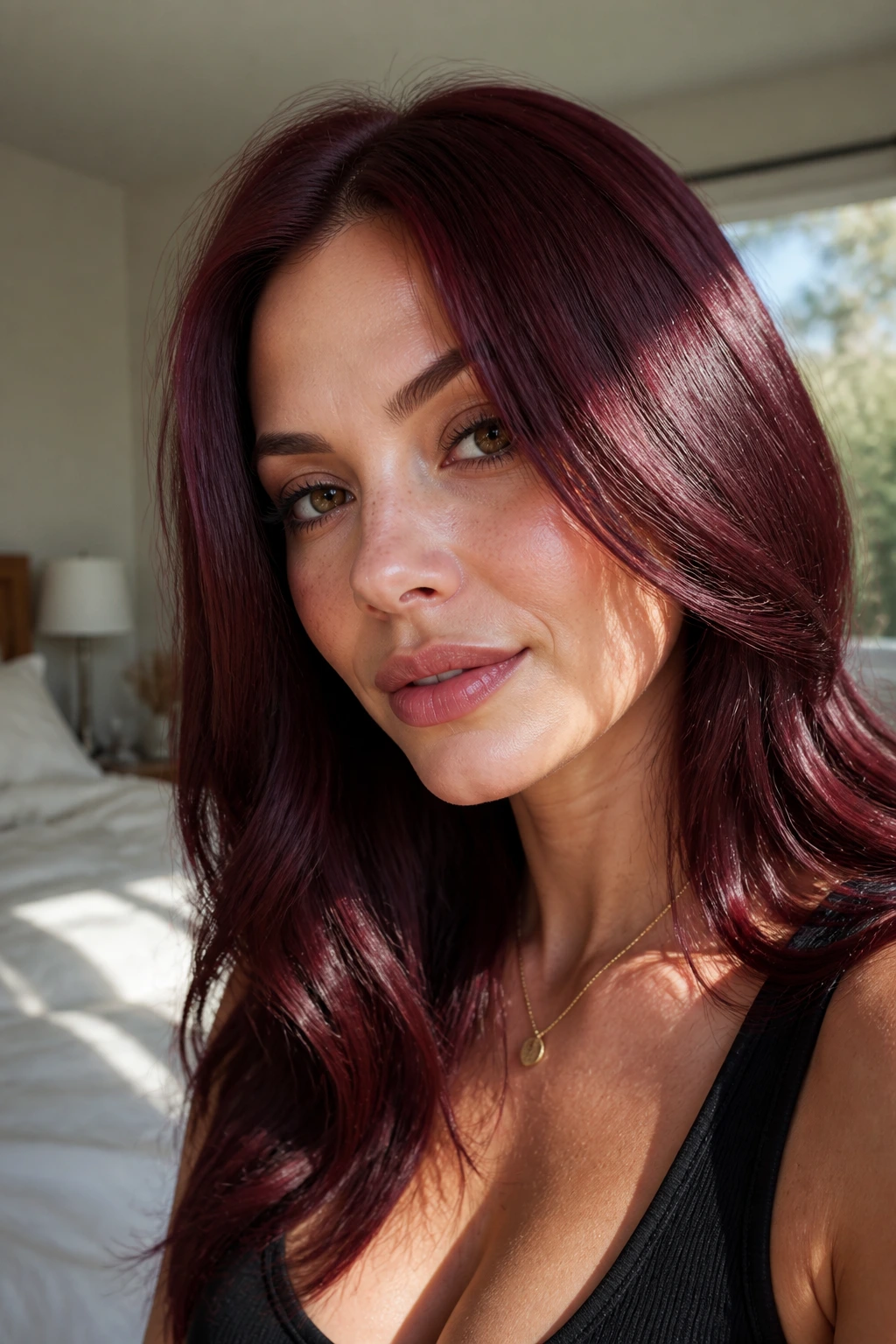
Dark rose red is the quieter, cooler side of red hair. It leans romantic rather than fiery, and a gloss finish keeps it looking smooth instead of muddy. On brunette bases, it can read like a muted wine tone with a rose edge; on lighter bases, it turns more obviously red-purple.
This is a useful choice if you want dimension without a big bleach job. A gloss can tint the surface, add shine, and deepen the tone without fully committing the hair to vivid permanent color. That makes it kinder to dry ends and easier to refresh.
Wear it sleek or softly waved. The color has enough depth to survive both, but the gloss finish really shows on smooth styles. If you like red but not the drama of copper, dark rose is the shade that minds its own business and still looks expensive.
31. Vampire Red Undercut
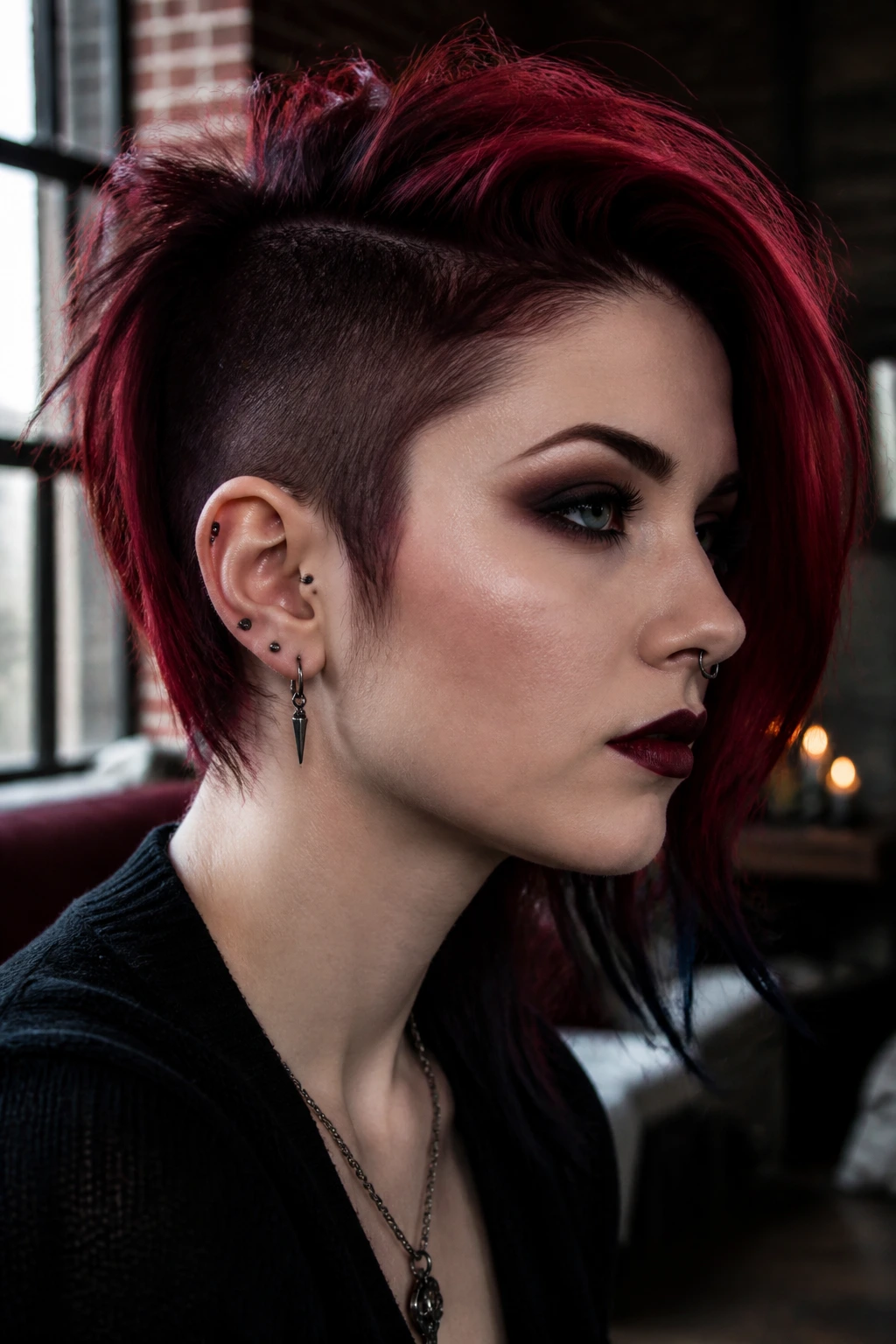
An undercut gives vampire red room to be dramatic. The shaved or closely clipped section creates contrast, while the longer top layer carries a deep red with blue or wine notes. It’s a high-contrast look, and that’s the point — the color doesn’t whisper.
The cut also helps control bulk. If your hair is thick, the undercut removes weight and lets the top layer fall cleaner, which means the red looks sharper. Keep the line between the shaved section and the longer hair neat. Sloppy grow-out here changes the whole mood.
This style asks for more salon attention than it first appears. The red needs refreshes, and the undercut needs regular cleanup. Still, if you want something edgy that reads clean rather than chaotic, vampire red with an undercut has the right amount of bite.
32. Apricot Copper Midlength
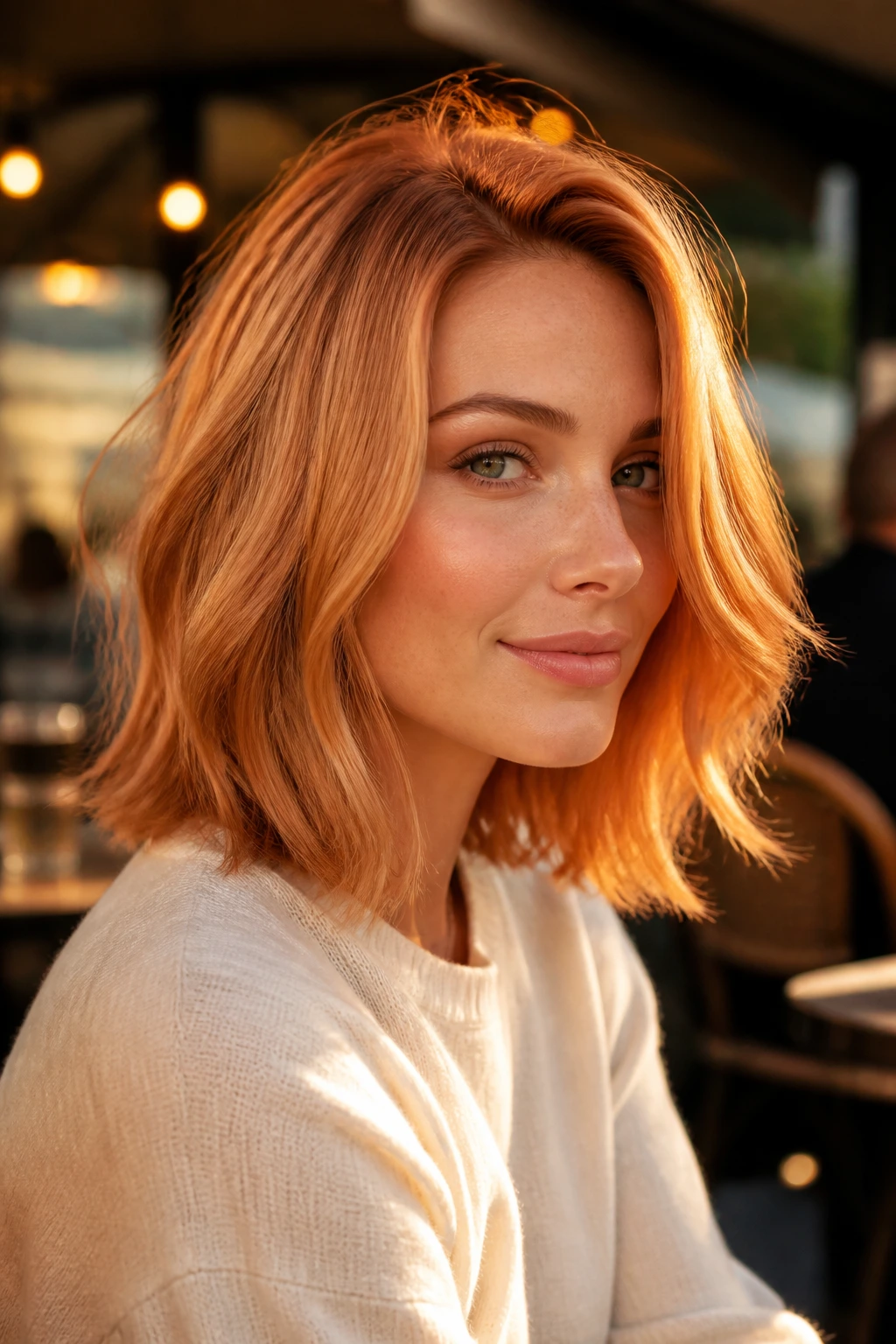
Apricot copper sits in a soft orange-peach lane that flatters shoulder-length cuts nicely. Midlength hair has enough room for the tone to move, but not so much that the color starts to fade into nothing. The apricot note keeps it light and springy, even when the rest of the hair is darker.
This is a flattering pick for people who want warmth around the face without going full red-head-in-a-painting territory. A side part and smooth blowout make the apricot feel airy; loose waves make it look even softer. The cut length keeps the ends from looking stringy, which matters when the color is light.
If your natural base is blonde, apricot can look almost peachy. If you’re starting darker, the warmth reads more copper. That shift is normal. It’s also why this shade is easier to wear than people think.
33. Cinnamon-Red Curtain Bangs
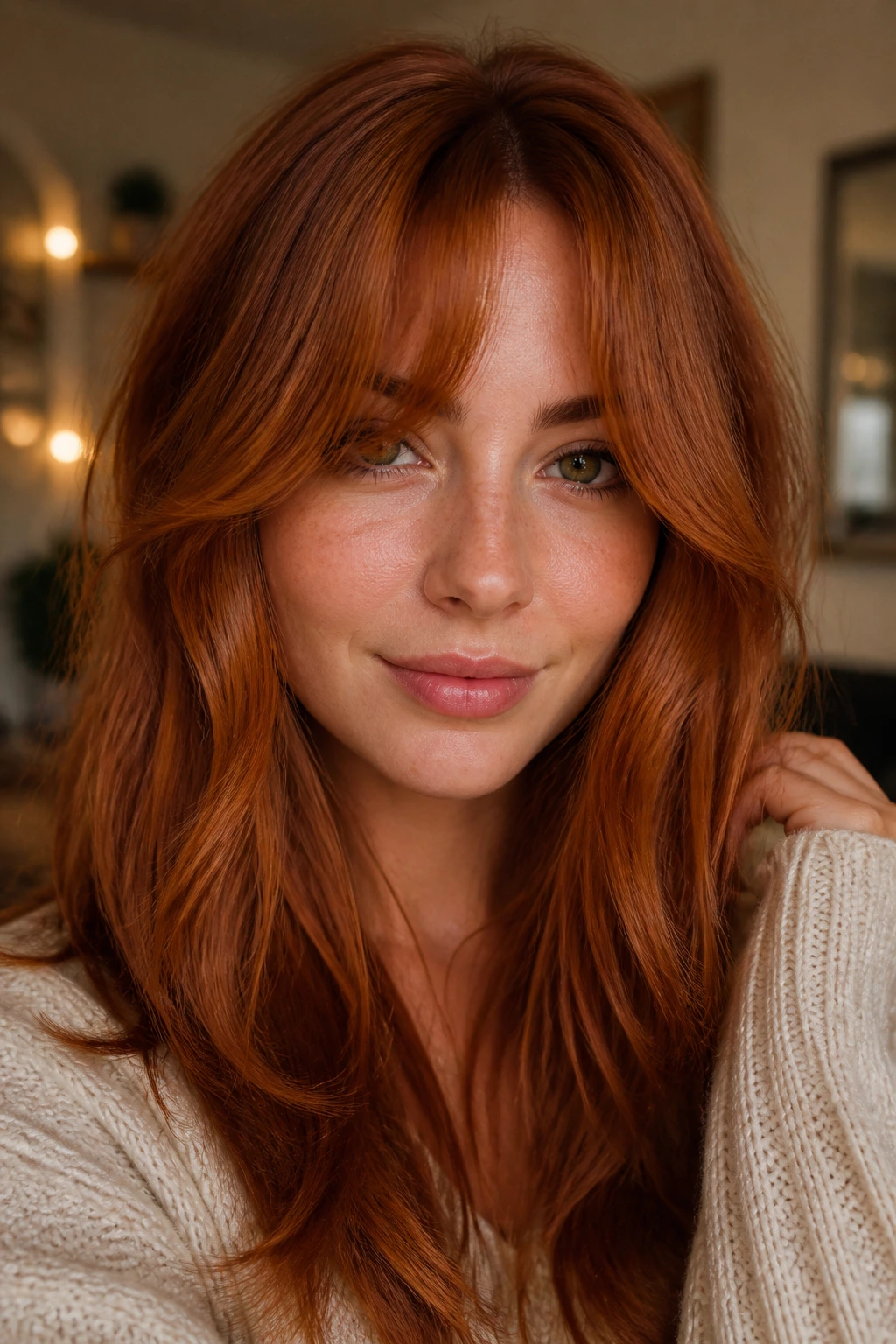
Curtain bangs are a small change that makes red hair feel bigger. Cinnamon-red across the lengths, then a softer sweep at the front, gives the face a warm frame without locking you into one heavy shape. The bangs bring the eye in, then the color fans outward from there.
The best part is the balance. Curtain bangs can make a strong shade like red feel less severe, while the red makes the bangs look intentional instead of just “hair in the way.” That’s a win. If your hair is straight or slightly wavy, the shape falls nicely. On curls, you’ll want enough length in the fringe so it doesn’t shrink too much.
A blow-dry brush or round brush around the bangs helps the curve sit right. Cinnamon-red likes softness at the front. If the bangs are too stiff, the whole look loses its charm.
34. Velvet Mahogany Sleek Midi
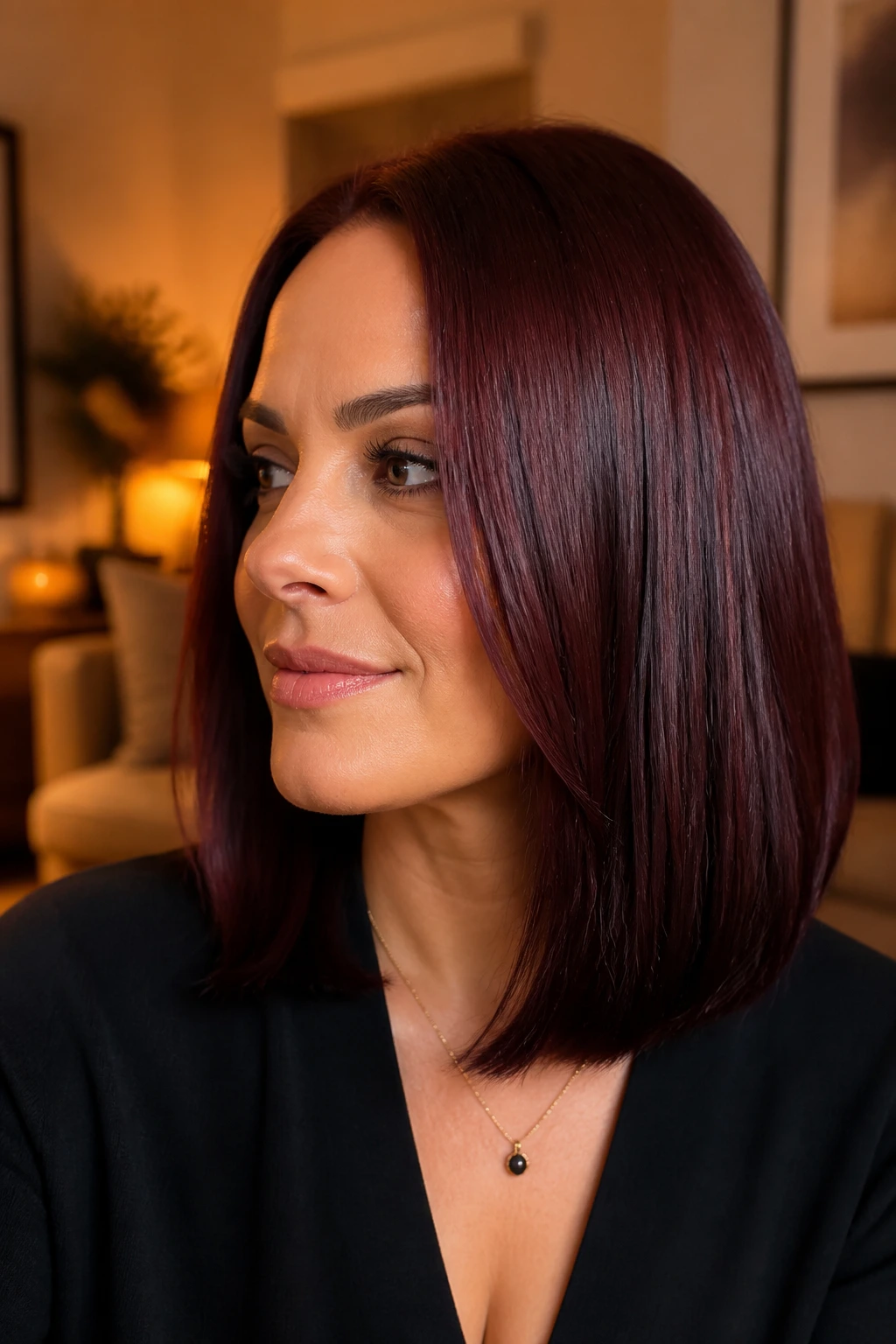
Velvet mahogany on a sleek midi length feels controlled in the best way. The shade is deep, red-brown, and rich enough to look dimensional even when the hair is straight and smooth. Midi length keeps it from feeling too short or too dramatic, which makes the color seem considered rather than loud.
A sleek finish shows off the depth. Every strand catches light a little differently, and mahogany can look almost black from one angle and burgundy from another. That shifting quality is what makes the color so satisfying. It never sits still.
Use a heat protectant, then finish with a light serum that won’t weigh the hair down. Too much oil will swallow the red. Velvet mahogany looks best when the surface is smooth but not greasy. Think polished wood, not lacquered plastic.
35. Smoked Auburn Root Melt
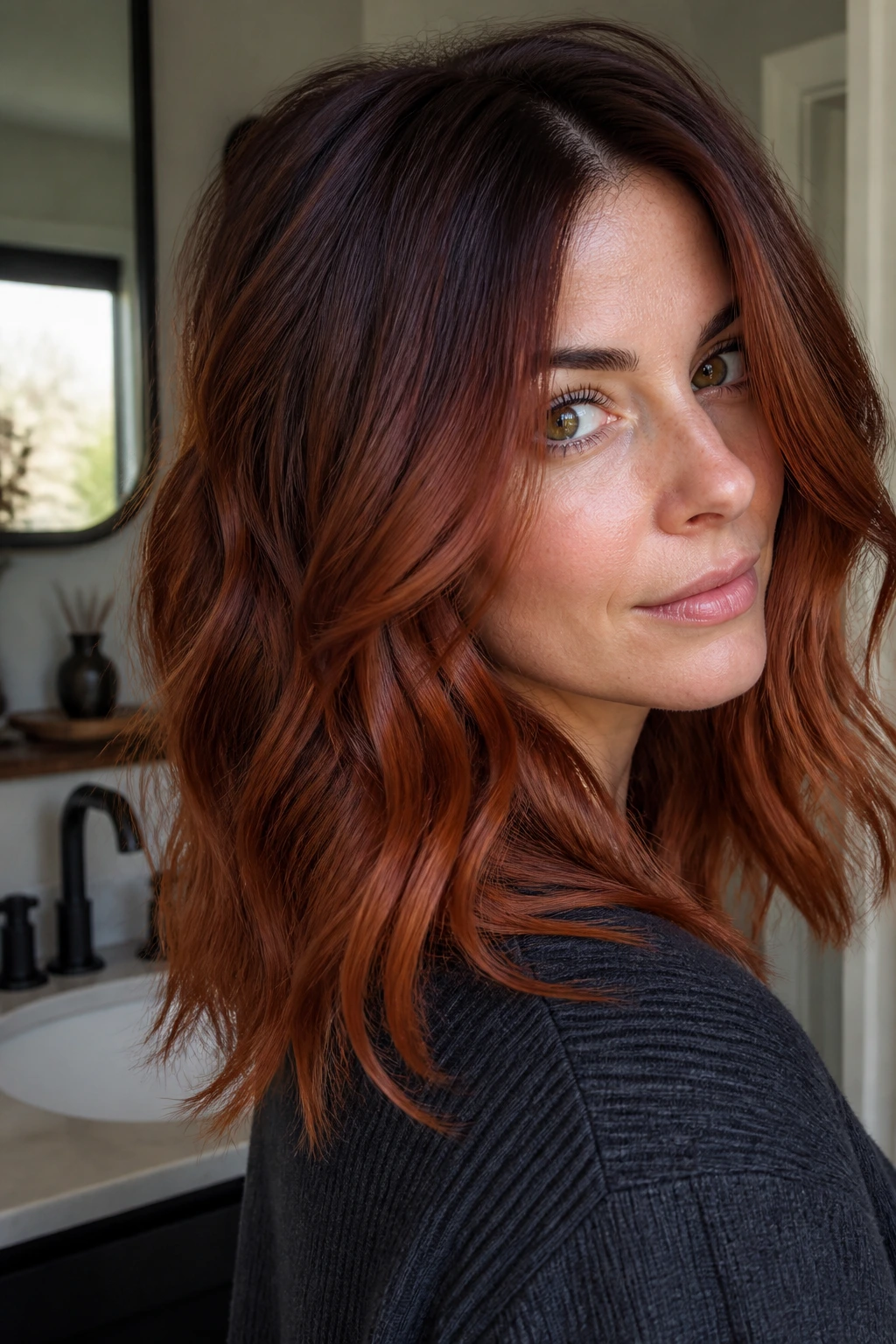
A smoked auburn root melt is the practical red for people who want the color to last. The roots stay deeper, the mids slide into warm auburn, and the ends get the red payoff without a harsh line. That soft transition makes regrowth less obvious and gives the hair a grown-up finish.
This is one of the easiest red hair looks for women to live with over time. It doesn’t demand perfect freshness at every appointment. If the shade fades a little, the root melt keeps the whole thing coherent. That’s a huge advantage if you do not want to babysit your color every four weeks.
I like this look on layered hair, where the darker base and lighter ends can move separately. The smoke in the tone keeps it from turning bright orange, and that’s what makes it wearable. If you want red without the maintenance hangover, start here.
Why Red Reads Richer on Some Cuts Than Others
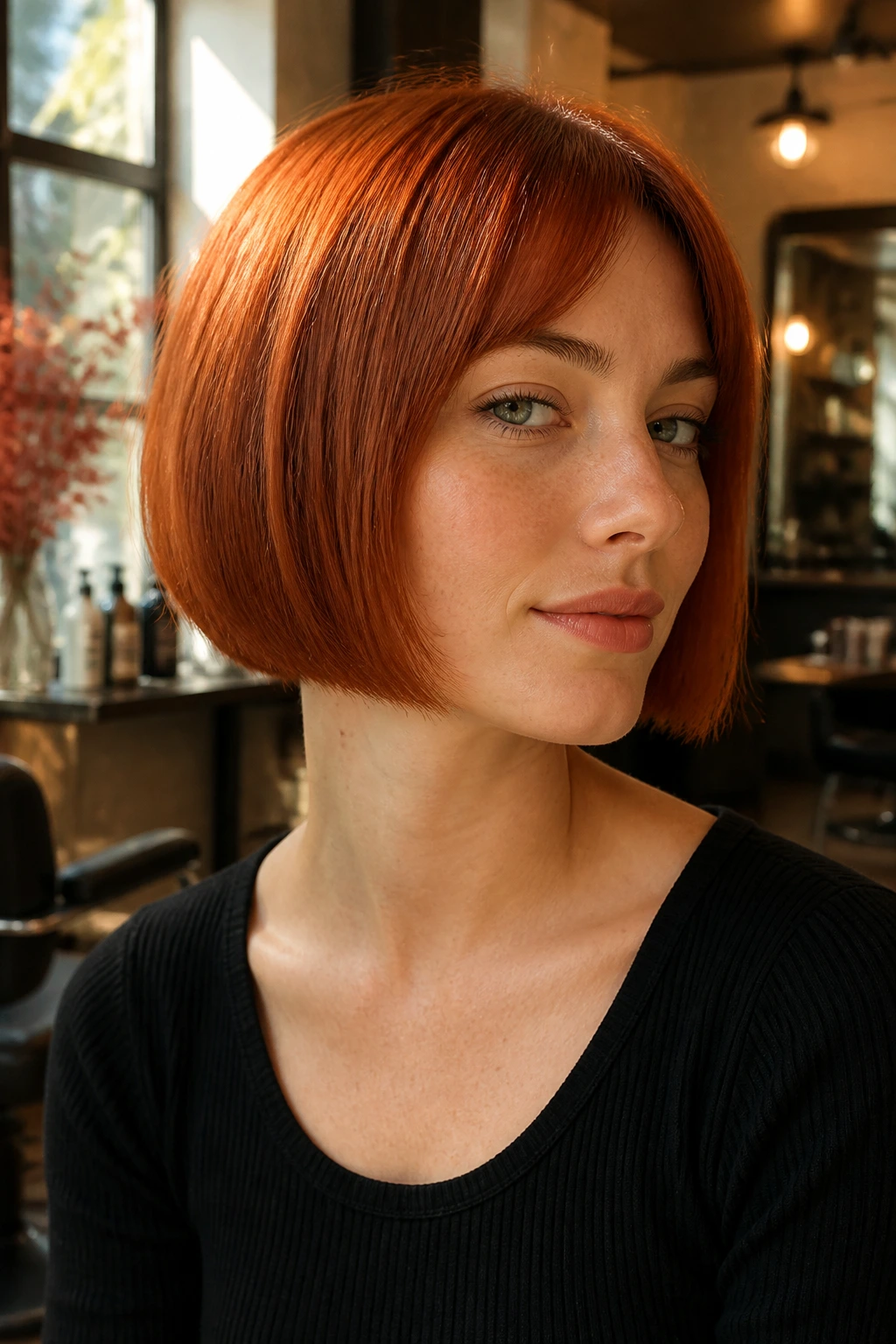
A red shade can look expensive on one haircut and a little flat on another. That’s not random. Short blunt shapes hold color in one clean block, while layered cuts break it into ribbons. Curls scatter light through the strands, and straight hair shows every tone shift with a kind of honesty that can be brutal if the color is patchy.
The cut also changes how much of the base hair you see. On a bob, the color is front and center. On long layers, the mids and ends do more talking. On a shag or wolf cut, the red appears in sections, which is great if you like texture and movement. Pick the shape before you pick the tone, or at least think about them together. That’s where a lot of at-home color jobs go sideways.
My bias is simple: if you want red to look rich longer, give it some structure. A blunt edge, a clean fringe, or a defined layer pattern helps the color land instead of drift.
Essential Equipment for These Red Hair Looks
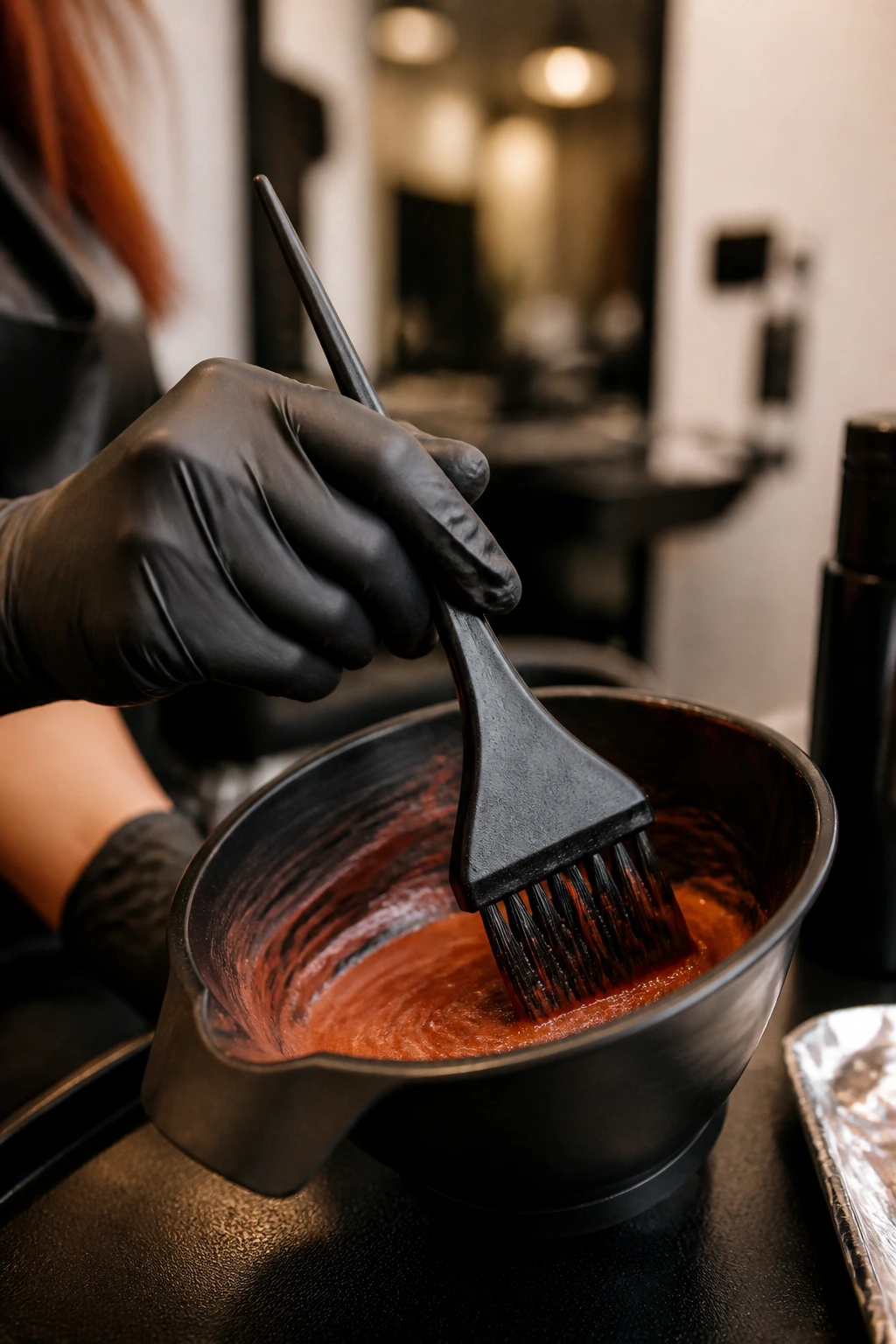
- Tint brush and color bowl: Best for applying permanent, demi-permanent, or gloss formulas with control, especially around the hairline.
- Sectioning clips: Keep the top, sides, and back separate so red placement doesn’t turn into a muddy mess.
- Sulfate-free shampoo: Helps the shade last longer by not stripping the cuticle as fast.
- Color-safe conditioner or mask: Keeps red hair from drying out and losing shine between appointments.
- Heat protectant spray: Non-negotiable if you use a blow dryer, flat iron, or curling wand.
- Wide-tooth comb: Easier on wet, color-treated hair than a brush that yanks at the ends.
- Microfiber towel or T-shirt: Reduces friction, which matters more than people think on porous hair.
- Gloss or color-depositing conditioner: Useful for refreshing copper, auburn, berry, or burgundy tones at home.
- Shower filter: Optional, but handy if your water is hard and your color keeps fading oddly fast.
- Gloves: If you’re doing touch-ups yourself, save your hands the red stain. It lingers.
How to Choose the Right Red Shade Without Guesswork
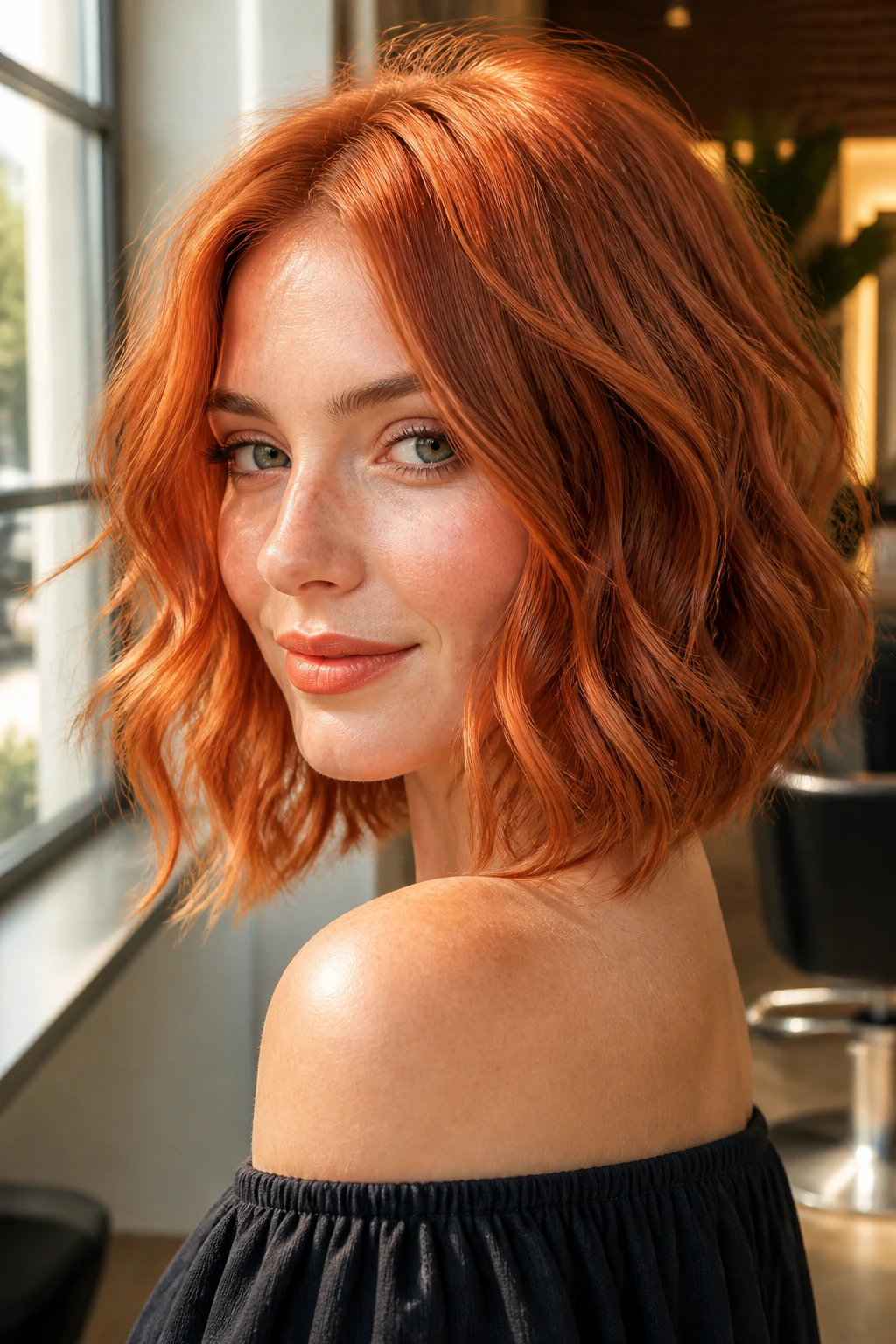
Undertone is the part most people skip, then wonder why the red looks off. Warm skin usually plays nicely with copper, ginger, apricot, and auburn. Cool skin often likes cherry, burgundy, merlot, and darker rose reds. Neutral skin gets the easiest ride because almost anything can work if the depth is right.
Base color matters too. If you’re starting with dark brown hair, a red balayage or root melt often makes more sense than chasing a bright all-over copper that won’t show without heavy lift. If you’re already blonde, strawberry, rose gold, and apricot tones can land cleanly with less damage. Fine, porous hair tends to grab red fast and fade fast. Thick, coarse hair can resist pigment and need more patience.
The cleanest way to shop for color is to decide on three things: how bright you want it, how often you’re willing to touch it up, and how much bleach you can tolerate. Those three answers narrow the field fast. A salon gloss, a demi-permanent dye, and full-vivid permanent color are not the same job.
How to Wear Red Hair So It Looks Intentional
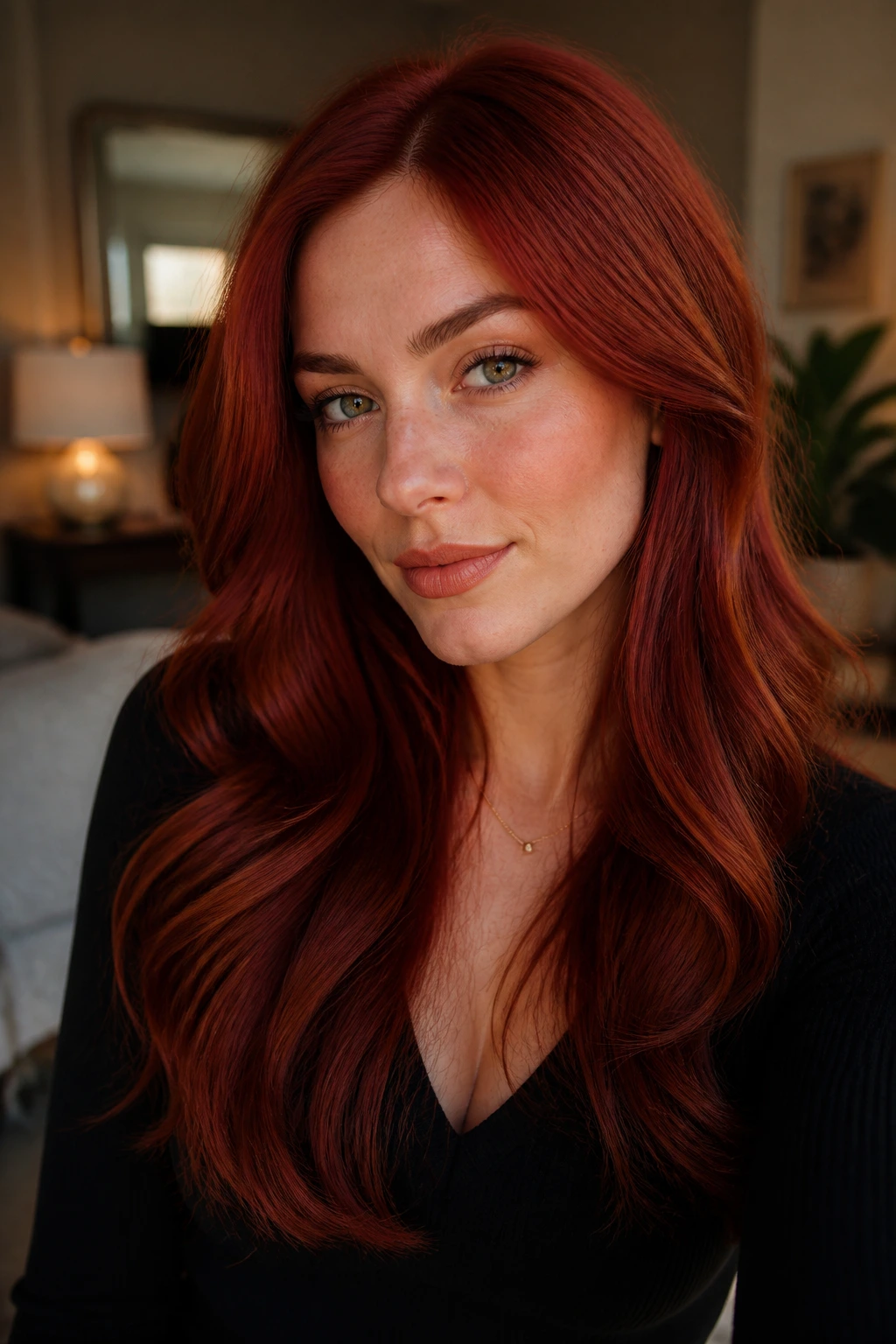
Presentation: Sleek styles make ruby, mahogany, and burgundy shades read darker and richer; waves and curls make copper, cinnamon, and cherry shades show their dimension. If the color has ribbons or a melt, movement helps. If the color is a blunt block, a smooth finish is cleaner.
Accompaniments: Red hair likes makeup and clothing colors that don’t fight it. Cream, black, olive, navy, plum, and gold jewelry tend to sit well next to it. If the hair is bright copper, a strong brow and a bit of mascara usually balance the face. If the red is deep and dark, a softer lip can keep things from feeling too heavy.
Commitment Level: Full-head copper and tomato red are the loudest and need the most upkeep. Balayage, money pieces, peekaboo streaks, and root melts give you more breathing room. If you are testing the water, start with face-framing color or ribbons through the mids.
Lighting: This matters more than people think. Reds shift hard under fluorescent light, warm LEDs, and daylight. Always check the color in more than one mirror before you decide it’s wrong. Sometimes it’s not wrong. It’s just standing under the wrong bulb.
Additional Tips and Finish Boosters
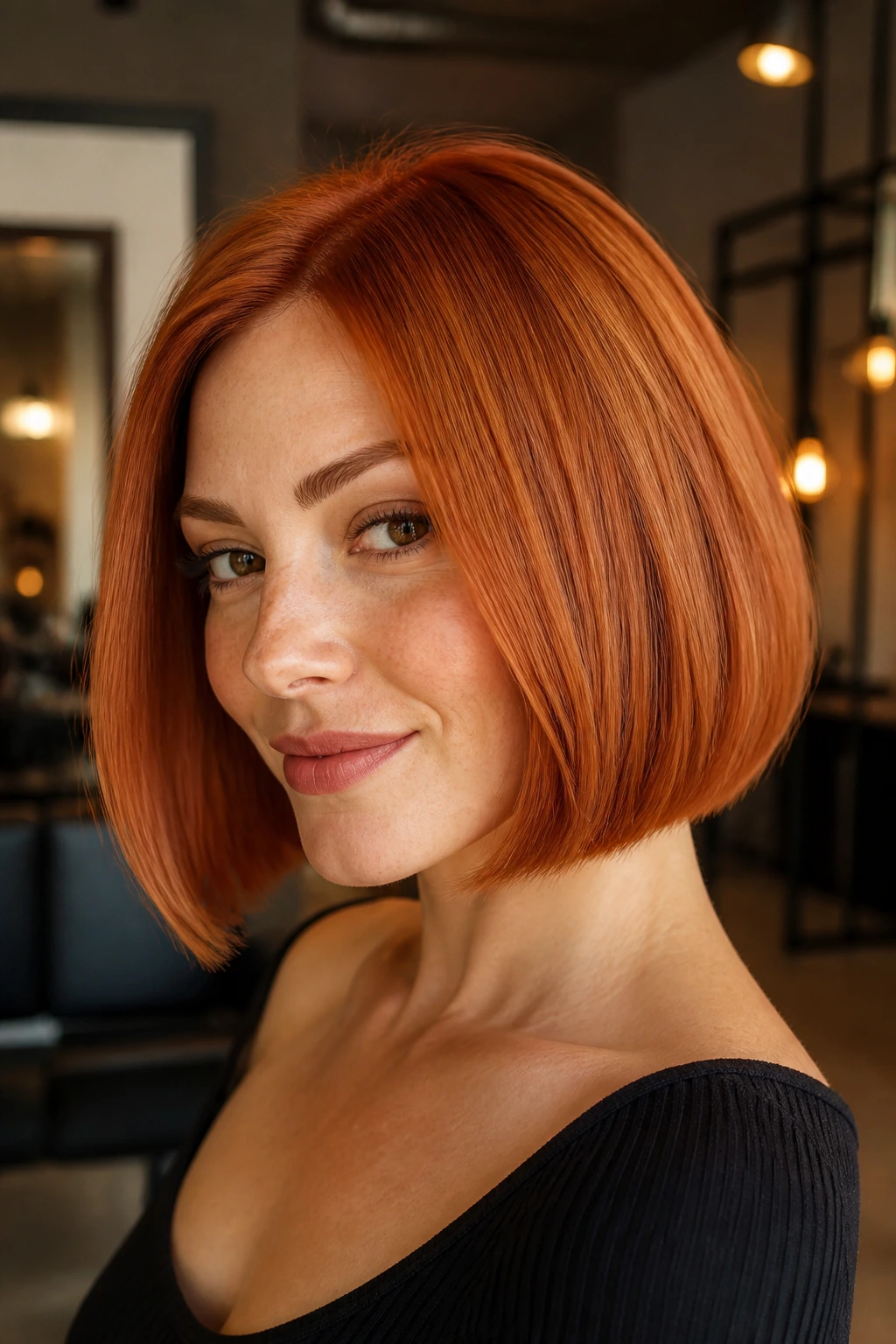
Gloss Boost: A clear gloss or tinted glaze every 3-6 weeks can keep copper, cherry, and auburn from looking dusty. I like glosses because they fix shine first and tone second. That order matters.
Root Shadow: If you want a red that grows out without drama, keep the roots a shade deeper than the mids and ends. It softens the line at the scalp and makes regrowth less obvious.
Heat Control: Use lower heat than you would on virgin hair. Red-treated hair often holds moisture less well, and screaming hot tools can push the cuticle open and let pigment slide out faster.
Color Deposit: A copper, red-brown, or berry conditioner can help between appointments. Use it once a week, not every wash, unless you want the tone to get heavy and stained.
Make-It-Yours: If you want softer drama, choose auburn or smoked red with balayage. If you want full impact, choose a cleaner red like scarlet, ruby, or tomato and let the cut do the framing.
Common Mistakes That Make Red Hair Look Flat or Muddy
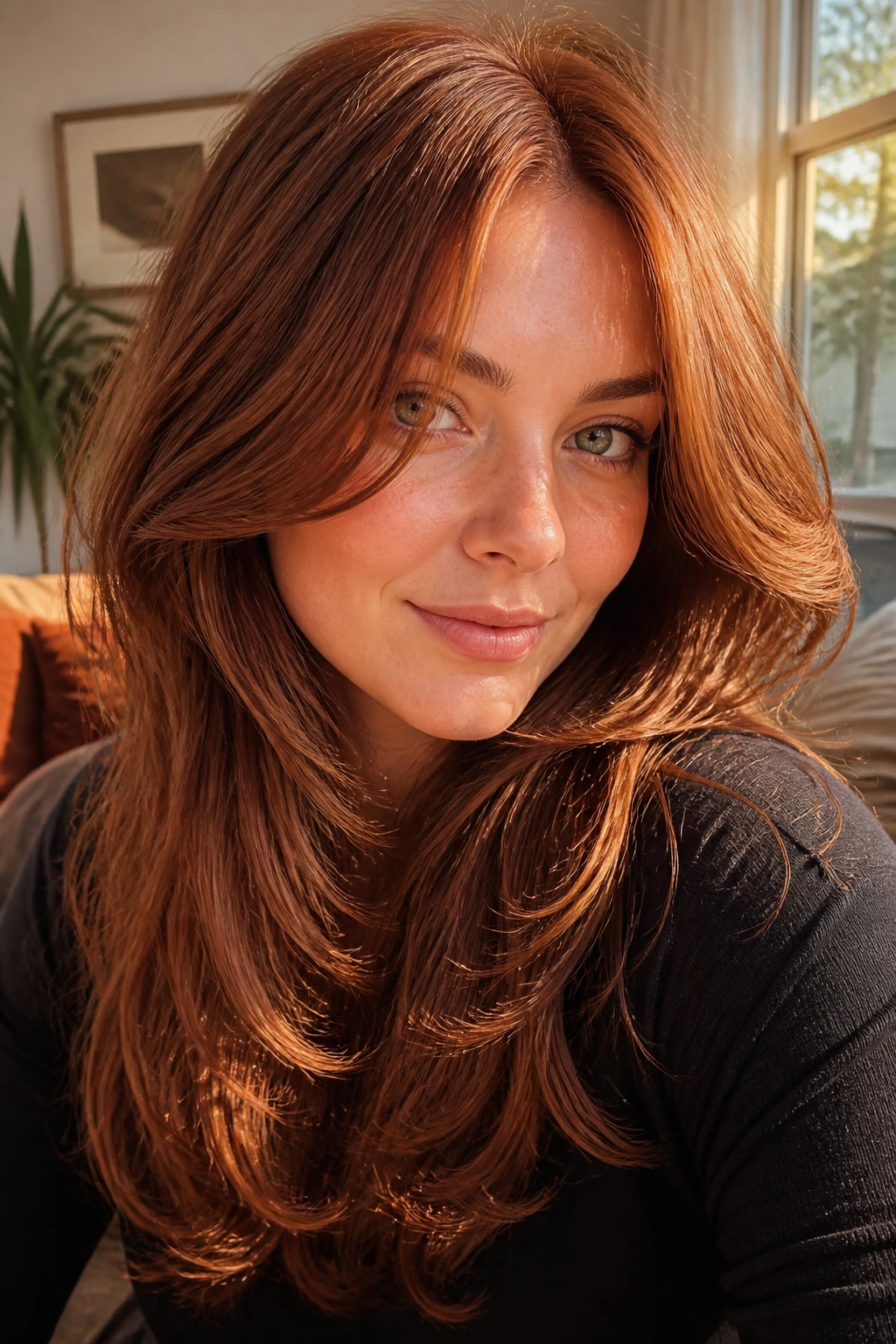
One mistake shows up fast: choosing the shade from a filtered photo. Filters warm up the hair, brighten the shine, and hide the actual depth of the base. What looks like copper in a picture can turn orange on your head if the starting level is too dark or too brassy.
Another problem is washing red with the same routine you used before coloring it. Clarifying shampoo, hot water, and daily washing will drag pigment out quickly. If your color looks beautiful for ten days and then dulls, the shampoo shelf is probably part of the crime scene.
Overlapping fresh red onto porous ends is another easy way to end up with a muddy finish. The ends grab too much pigment, the mids sit somewhere else, and the whole thing starts looking uneven. A colorist will often keep the ends lighter, deeper, or glossier depending on the porosity. That’s not being fussy. That’s fixing the hair.
And please do not ignore the brows. Bright red hair with ultra-dark brows can look jarring unless it’s a deliberate style choice. A soft brow tint or a gentler brow pencil can make the whole face feel more connected.
Make-Ahead, Touch-Up, and Maintenance Timing
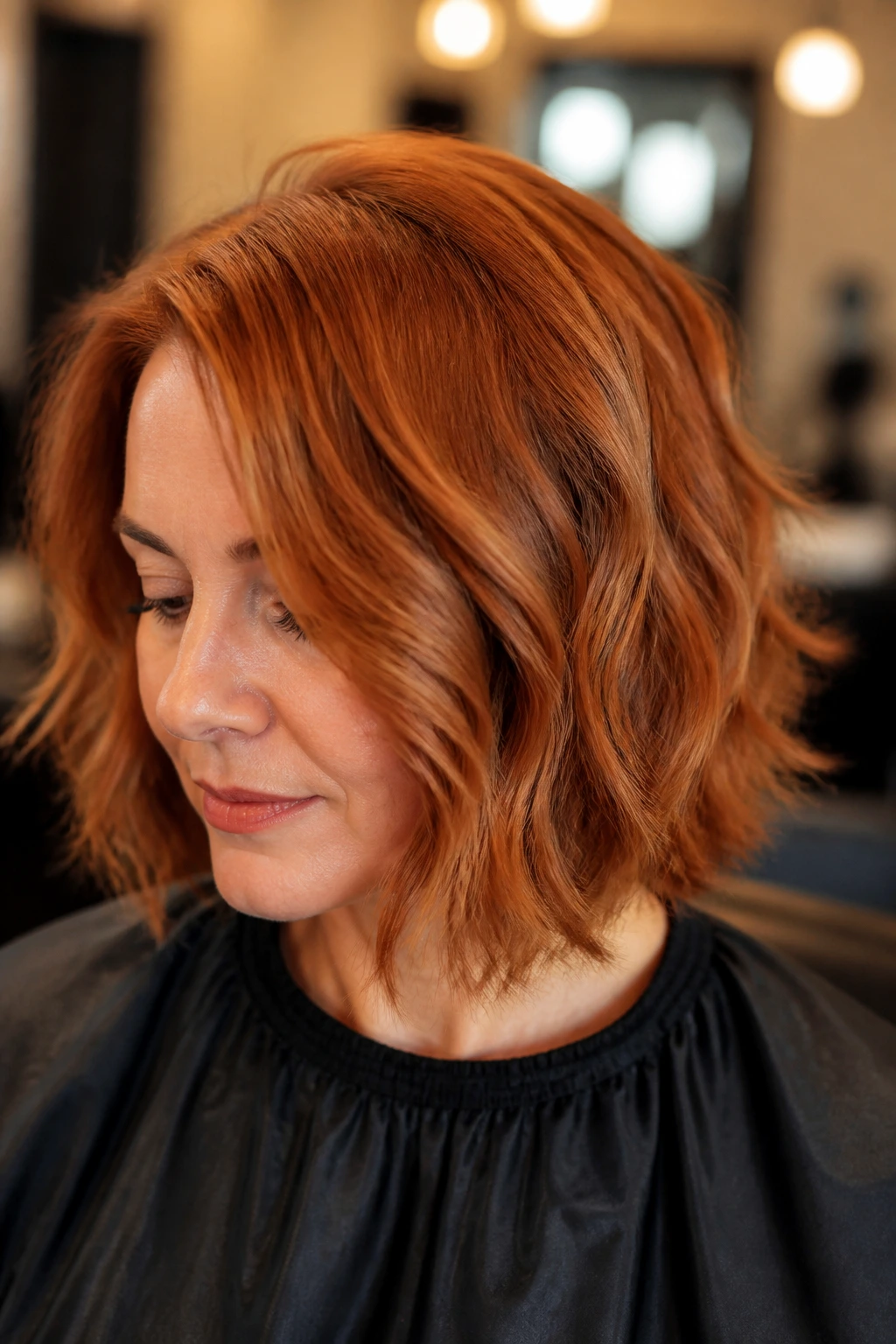
For vivid reds, plan on refreshing the tone every 4-6 weeks if you want it to stay clean and saturated. Copper, cherry, and scarlet show fading faster than deep auburn or burgundy, especially around the face and ends where the hair gets the most friction. If you’re wearing a balayage or root melt, you can usually stretch salon visits farther — often 8-12 weeks for placement work, with a gloss in between.
At home, wash with lukewarm water and keep shampoo off the ends as much as you can. Conditioner should live on the mids and ends, not piled at the scalp. A color-depositing mask once a week can help, but stop before the tone gets heavy and brownish. There’s a fine line between refreshed and muddy.
Heat styling should be occasional, not daily, if you want red to stay lively. Even 20 seconds too hot can dull shine on porous areas. If you must blow-dry often, finish with a cool shot. It helps seal the surface a little. Not magic. Just useful.
Variations and Adaptations to Try
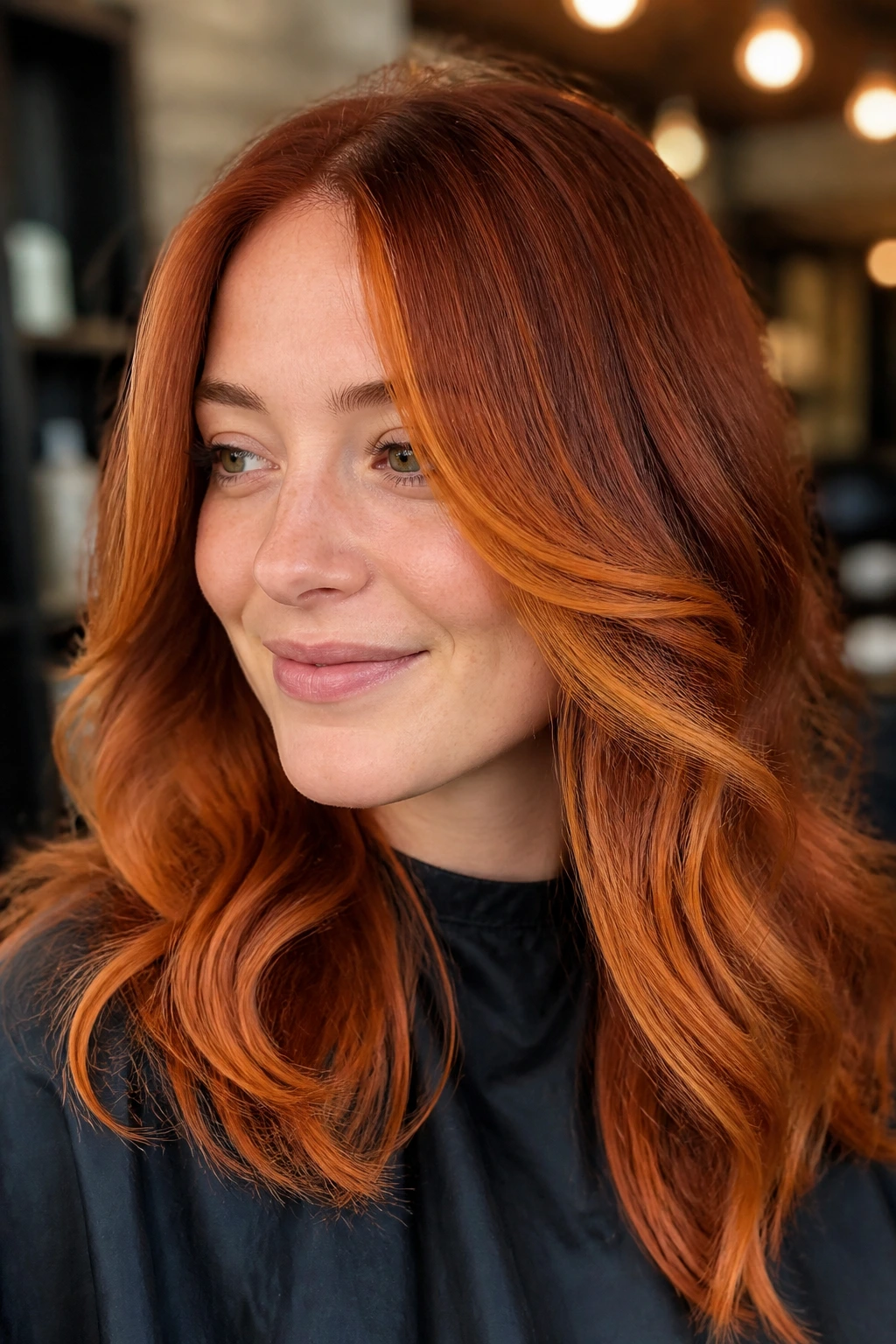
Soft Office Copper: Keep the root deeper, brighten only the face-framing pieces, and use a copper gloss rather than a full vivid dye job. It gives you warmth without making the hair the loudest thing in the room.
Cool Cherry Shadow: Start with a darker root and let cherry or burgundy sit mainly through the mids and ends. This is a good choice if copper looks too orange on you.
Low-Bleach Balayage Red: On brunette hair, ask for red ribbons instead of all-over lift. The result is softer, the grow-out is calmer, and your hair usually stays in better shape.
Curly Red Definition: For curls and coils, go one shade deeper than you think you want, then rely on texture and shine to make the color visible. Red on textured hair often reads richer than the swatch suggests.
Vivid Face Frame: If you want drama without the maintenance of full red, put the brightest color around the part, temples, and fringe. The rest can stay deeper and easier to manage.
FAQs About Red Hair Looks for Women
Does red hair fade faster than blonde or brown?
Usually, yes. Red pigments show washout more quickly, especially on porous or pre-lightened hair. Brown can look “fine” after some fading; red often loses its sharpness and starts looking soft or dull, which is why glosses and color-safe products matter.
What red shade is easiest to maintain?
Smoked auburn, mahogany, and root-shadowed red balayage tend to be the most forgiving. They grow out with less obvious contrast and don’t need the same constant refreshing as bright copper or tomato red.
Can I go red without bleaching my hair?
If your hair is already medium brown or lighter, yes, you can often get a deep auburn or burgundy without major lift. Bright copper, strawberry blonde, and pastel-leaning reds usually need some lightening if you want them to show properly.
Will red hair suit cool skin tones?
Absolutely. Burgundy, cherry, merlot, dark rose, and smoked auburn usually flatter cool undertones better than orange-heavy copper. The key is choosing a red with blue or berry notes instead of straight orange.
How do I keep red hair from looking brassy?
Use sulfate-free shampoo, cool or lukewarm water, and a toner or color-depositing mask that matches your shade family. If the red is turning too orange, a salon gloss usually fixes the tone better than piling on more pigment at home.
Can I cover gray hair with red?
Yes, but the result depends on the formula and the amount of gray. Some reds cover gray cleanly, while others stain it and make it shimmer brighter than the rest of the hair. A permanent color or salon glaze is usually safer than guessing with a box dye.
How often should I touch up red roots?
For vivid red, 4-6 weeks is common if you want a clean line. For balayage, root melt, or deeper auburn, you can often stretch that much longer. It depends on how obvious your natural regrowth is against the new shade.
What if my red turns muddy after a few washes?
That usually means the color is either too heavy, too porous at the ends, or being stripped too fast. Switch to cooler water, reduce clarifying shampoo, and use a lighter gloss rather than layering more permanent dye over everything.
The Shade That Keeps Showing Up
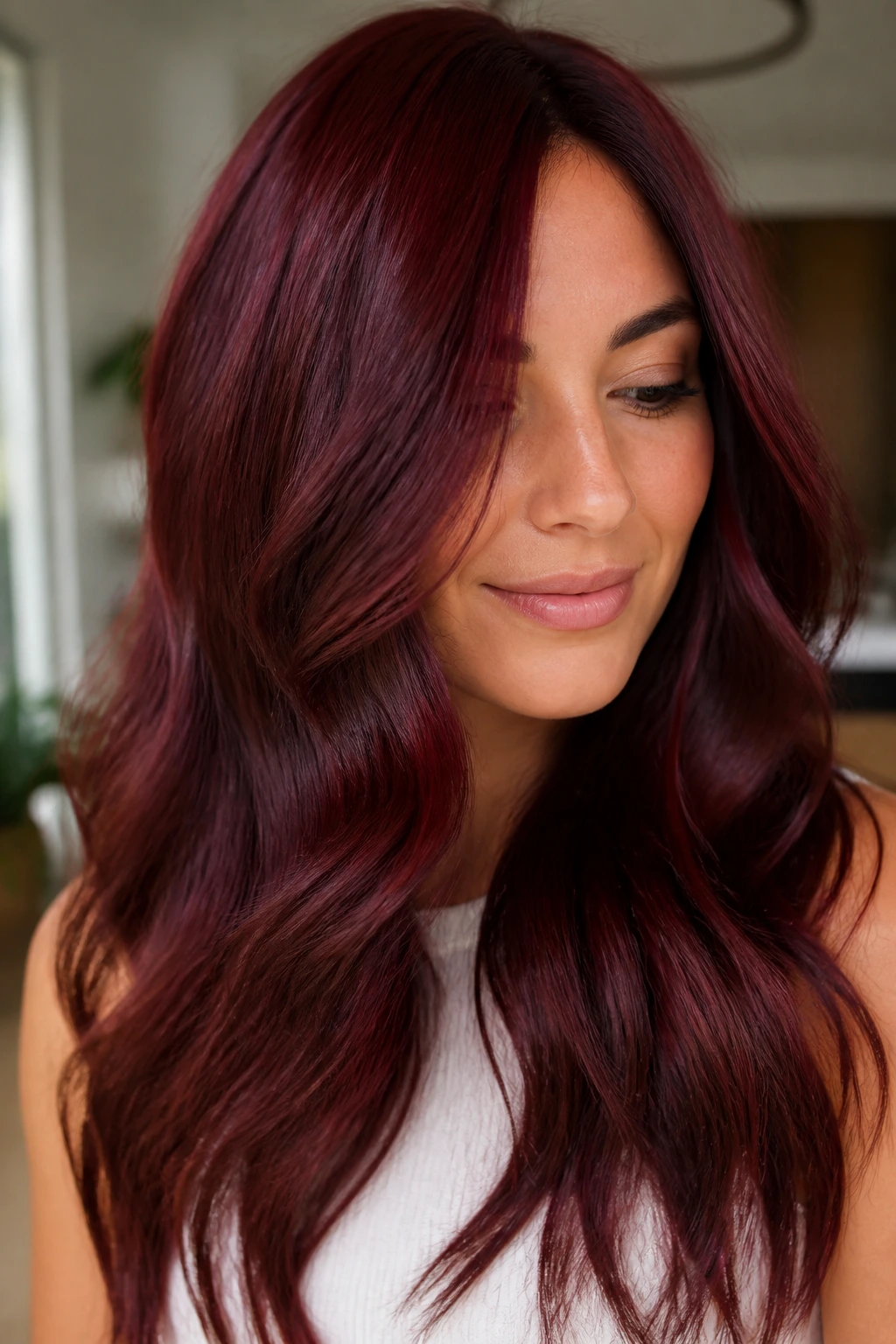
Red hair does not hide. That’s part of the appeal. A good red cut or color brings shape, shine, and attitude into the same room, and the better versions here prove that red does not have to mean one thing. It can be soft, sharp, dark, bright, glossy, dusty, or a little rebellious.
If you’re choosing between two shades, pick the one that fits your upkeep honestly. A copper balayage you can maintain beats a scarlet fantasy that fades into regret by the second week. The best red hair is the one that still looks good after you’ve lived in it for a while.
Start with your base, your undertone, and your patience level. The rest gets easier from there.
