



The best balayage ideas for soft dimensional color do one thing most flat dye jobs never quite manage: they move. A few lighter ribbons show up when the hair swings, then slip back into a deeper base when it settles. That little bit of visual motion is the whole trick. It keeps the color from looking painted on, which is why a good balayage can look polished on day one and still look believable when the grow-out starts to show.
Soft dimension is a specific look, not a vague mood. The root stays deeper, the mid-lengths carry the blend, and the brightest pieces are feathered where the eye naturally lands — around the face, through the surface layers, or just on the ends if the client wants something even quieter. When that placement is done well, the color reads expensive in the most practical sense: fewer harsh lines, fewer panic appointments, fewer weeks spent staring at the mirror wondering if the toner faded too fast.
And the range is bigger than people expect. Balayage can lean mushroom brown, caramel, beige blonde, copper, ash, rose, bronze, or walnut smoke and still stay soft if the placement is airy enough. The ideas below cover that spread, but they all live in the same lane: dimensional, grown-in, and far less severe than a stripey highlight pattern.
Why You’ll Love This Collection
- Soft Grow-Out: The darker root shadow keeps the line blurred, so the color fades in a way that still looks intentional.
- Dimension Without Stripe Lines: Each idea uses ribbons, melts, or face-framing brightness instead of chunky blocks that sit on top of the hair.
- Flexible on Base Color: There are options here for brunettes, dark blondes, redheads, and cooler ash bases, not just one narrow hair type.
- Salon-Friendly and Realistic: These are looks you can actually ask for at a consultation without needing a dozen extra techniques to explain them.
- Easy to Tweak: The same placement can lean warmer, cooler, brighter, or subtler depending on toner and lift level.
- Better With Movement: Wavy, layered, and even loosely curled hair shows off the contrast in a way that straight, one-tone color rarely does.
1. Mushroom Brown Balayage
Mushroom brown balayage has a very particular charm. It looks cool, earthy, and slightly smoky, like brunette hair after a soft rain instead of a flashbulb. The key is the mix of taupe, beige, and muted brown ribbons over a deep brunette base, with no yellow sitting on top to wreck the mood.
This is one of the easiest ways to get soft dimensional color without flirting with brass. Ask for fine ribbons through the mid-lengths and surface layers, then keep the root shadow a full shade or two deeper. The whole look should feel blurred, not lined up in neat stripes.
What to ask for
- A level 4–5 brunette base with muted beige-lightened pieces
- Feathered balayage through the crown, not heavy brightening at the scalp
- A cool beige gloss instead of a golden toner
Best for: medium to deep brunettes who want softness more than brightness.
Maintenance note: mushroom tones need a gloss refresh when the ash starts to wash out. If the color turns too warm, a beige or blue-based toner usually pulls it back into shape.
2. Caramel Ribbon Brunette
Caramel ribbon brunette is the look that keeps showing up in salons for a reason. It gives warmth, movement, and just enough contrast to make layered hair wake up, but it stops short of the golden streaks that can make brunette hair look busy.
The trick is in the thickness of the ribbons. Too wide, and the color gets loud fast. Too thin, and you lose the whole point. The sweet spot is a mix of narrow and medium strands painted through the mid-lengths and ends, with the brightest caramel pieces landing near the front so the face gets a little lift.
This one especially works well on wavy hair. The bends catch the lighter pieces and make the contrast look richer than it does on a straight blow-dry.
Styling note
Loose waves show this balayage better than pin-straight hair. A one-inch iron or a flat iron bend creates enough movement to separate the caramel from the mocha base.
3. Beige Blonde Over Dark Blonde
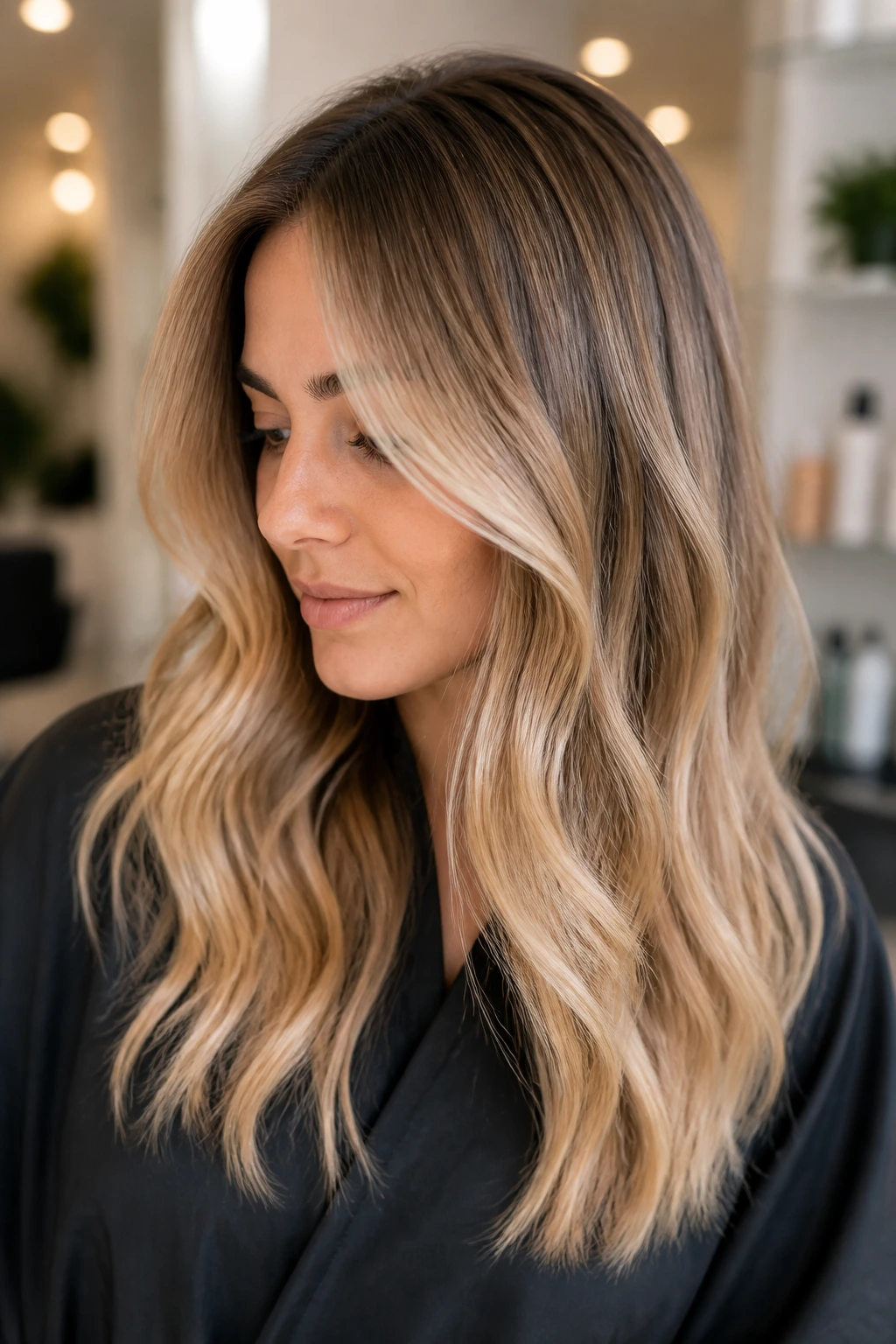
Beige blonde over dark blonde is soft because it skips the harsh yellow that makes blonde look loud. The finish sits in that middle lane — light enough to brighten the hair, muted enough to stay elegant when the roots start coming in.
A lot of people ask for “blonde” and end up with something too high-contrast for their base. Beige blonde avoids that trap. It keeps the warmth under control, which matters if your natural hair is a dark blonde or a light brown that lifts a little warm.
Why it works
- The color difference is usually only one to two levels, so the grow-out looks gradual.
- Beige toner keeps the ends creamy instead of brassy.
- Soft face-framing pieces give the illusion of more brightness than the whole head actually has.
If you want a cleaner, more expensive-looking blonde without a bright root line, this is the one I’d point you toward first.
4. Cinnamon Toast Balayage
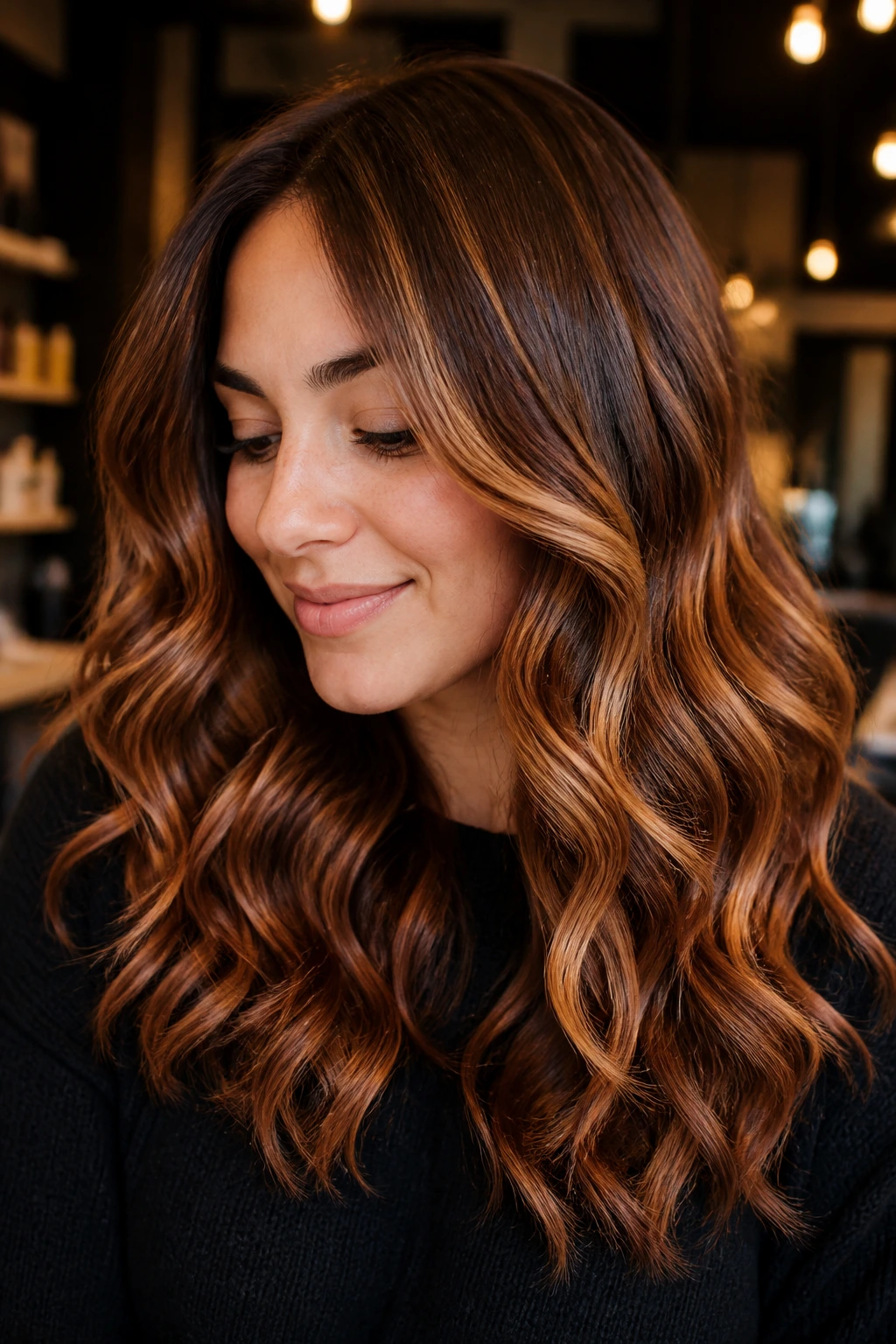
Cinnamon toast balayage lives in a warm, cozy place without turning orange. It mixes copper-brown and cinnamon-gold pieces through a brunette base, and when it’s done right the hair looks like it has heat in it, not neon.
This style works especially well on hair that already carries natural warmth. If your base pulls golden or auburn when lightened, a cinnamon ribbon will usually feel more natural than an ash tone. The color should sit in the mid-lengths and ends, with the front pieces slightly brighter so the warmth has somewhere to land.
It also plays nicely with curls. The lighter strands catch on the bends and make the whole head look fuller.
Ask for: soft copper-brown ribbons, not bright orange copper, and a gloss that keeps the finish spicy instead of red-hot.
5. Smoky Ash Bronde
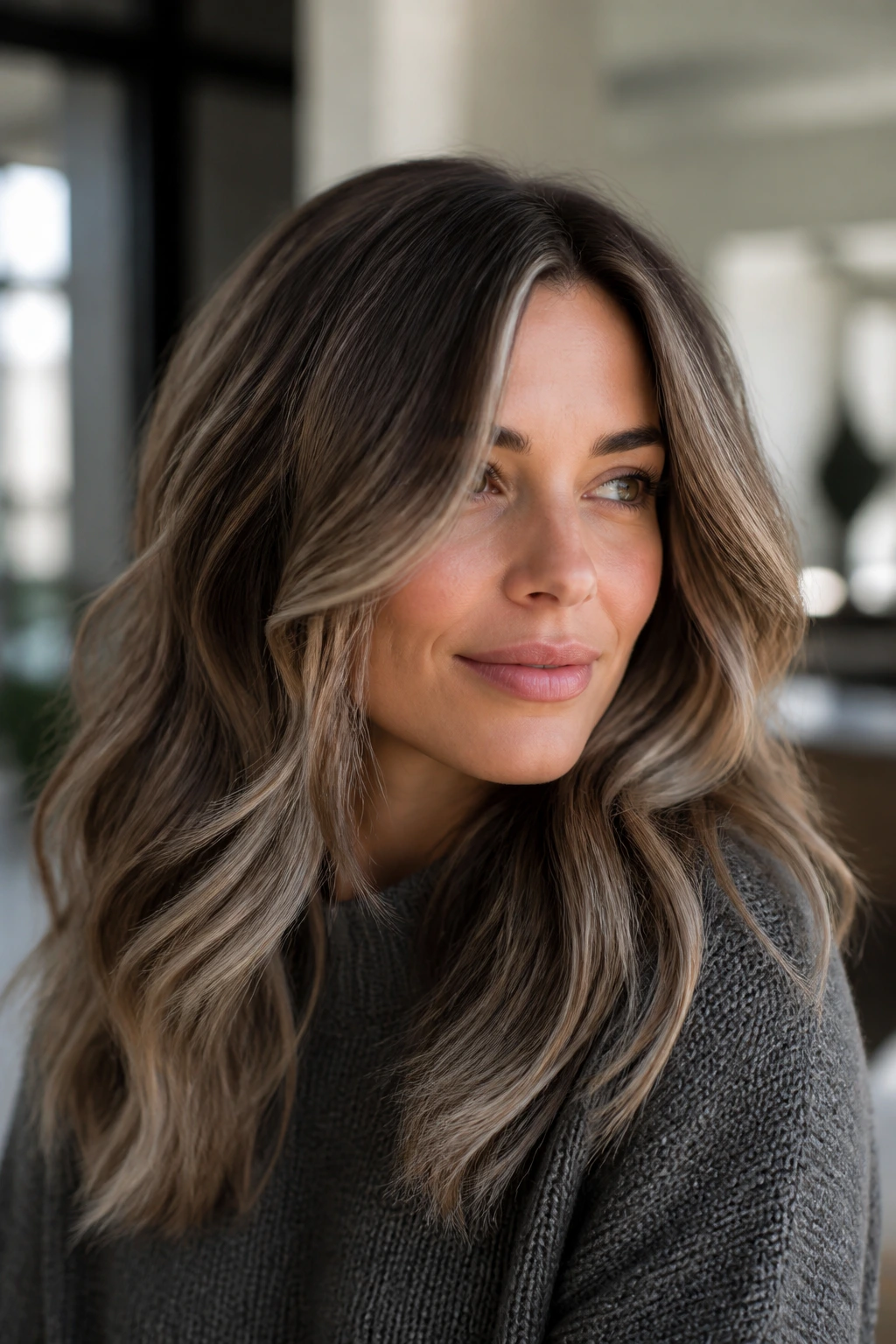
Smoky ash bronde is for the person who wants lightness but doesn’t want warmth sneaking in where it doesn’t belong. The color sits between brunette and blonde, but the finish is cooler, more hazy, and less sunny than a classic bronde.
The soft part comes from restraint. Keep the deepest pieces near the root and underlayer, then paint ash-beige ribbons on the surface where the light hits. That layered placement gives dimension without a hard line between brown and blonde. It’s one of the best options if your wardrobe leans black, gray, cream, or denim-heavy and you want the hair to match that quieter palette.
Placement trick
Ask for some brighter pieces only around the cheekbones and collarbone. That keeps the front from looking flat while the lengths stay smoky.
6. Honey Glaze Brunette
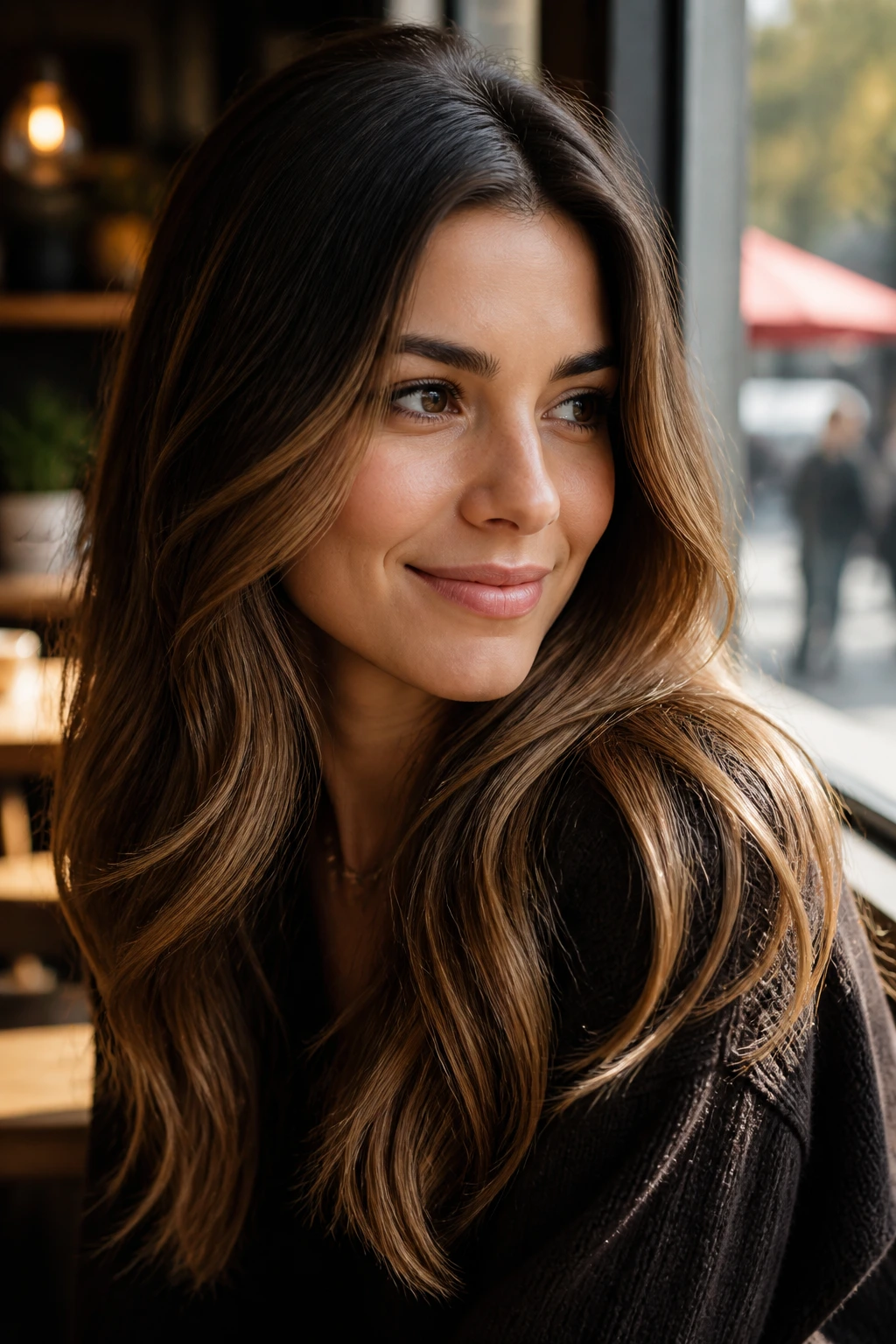
Honey glaze brunette is warm without being sugary. Think chestnut hair warmed by a thin, golden glaze rather than full-on blonde streaks. The blonde lift stays subtle, which is exactly why this look flatters so many brunettes who want change but not drama.
The best version keeps the root area rich and deep, then adds honey pieces through the mid-lengths and ends. If the colorist over-lightens the ends, the whole thing loses that soft, glossy effect and starts reading as a separate highlight job. You want the hair to look dipped in warmth, not striped with it.
This one is especially good for hair that looks dull in indoor light. Honey brings the reflection back.
7. Espresso to Chestnut Melt
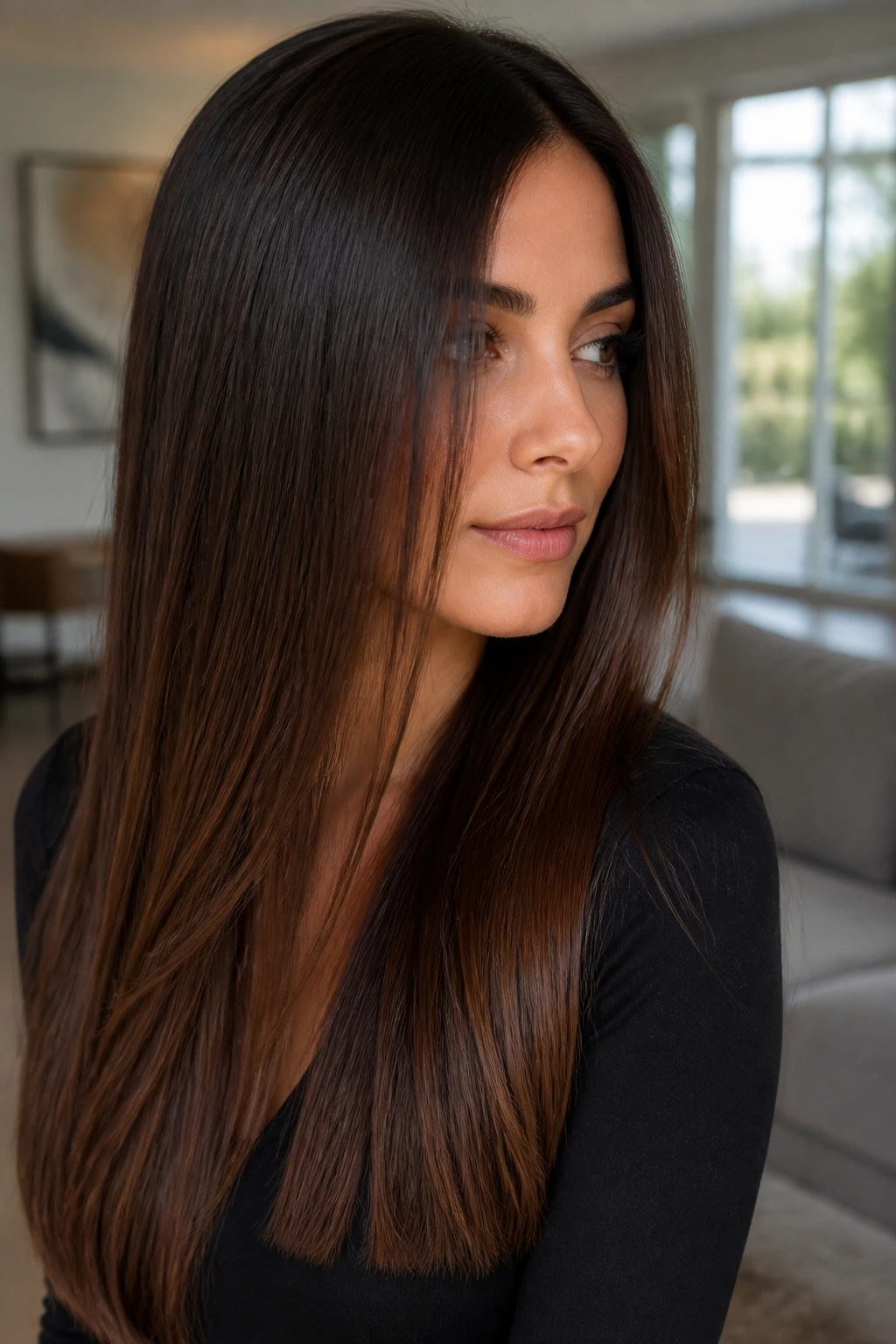
Espresso to chestnut melt is one of those shades that looks simple until you see it in motion. The root sits deep and inky, then the color softens into chestnut through the mid-lengths and ends. The transition matters more than the exact shade names.
Because the lift stays modest, the finish looks elegant and low-maintenance. It’s a smart pick if you wear your hair long, because a severe highlight pattern on long hair can get loud fast. Here, the contrast is built into the melt, not the brightness.
Best for: straight hair, blowouts, and layered cuts that need a little movement without obvious streaking.
If your ends are porous, ask for a gloss after the lightening step. Chestnut on damaged ends can look flat if the toner sinks in unevenly.
8. Copper Penny Balayage
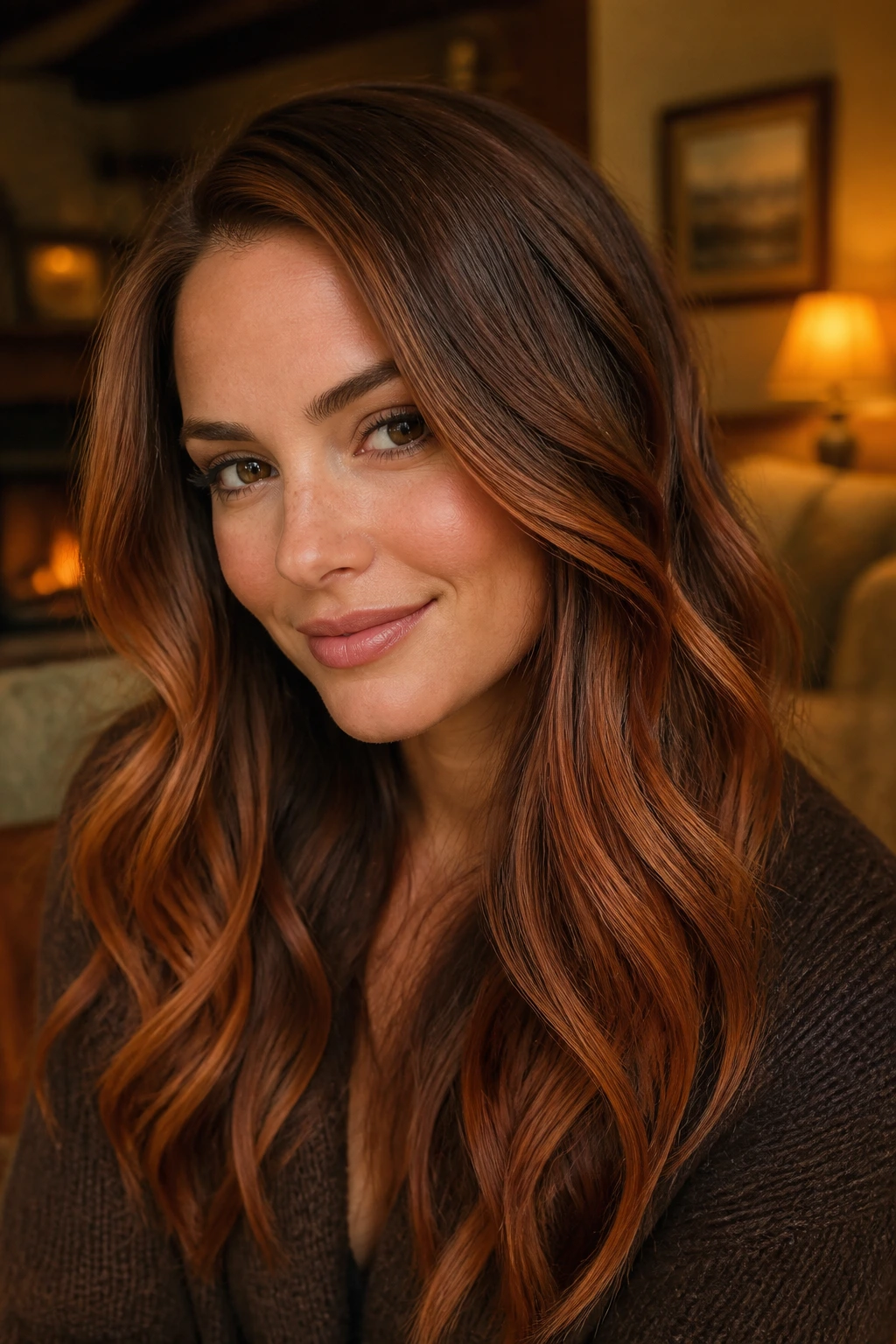
Copper penny balayage has a little more personality. It’s still soft, but the warmth is distinct — a reddish-copper wash over brown hair that glows instead of screaming. The best versions are muted enough to stay wearable, which is the whole point.
The color sits beautifully on medium brunettes and auburn bases. Too dark, and the copper can disappear. Too light, and it turns orange. A good colorist will keep the base rich and use the copper more like a ribboned accent than a full wash.
One of my favorite things about this look is how it changes in different light. Indoors it reads chestnut with warmth; outdoors, the copper wakes up.
9. Rose Gold Brunette
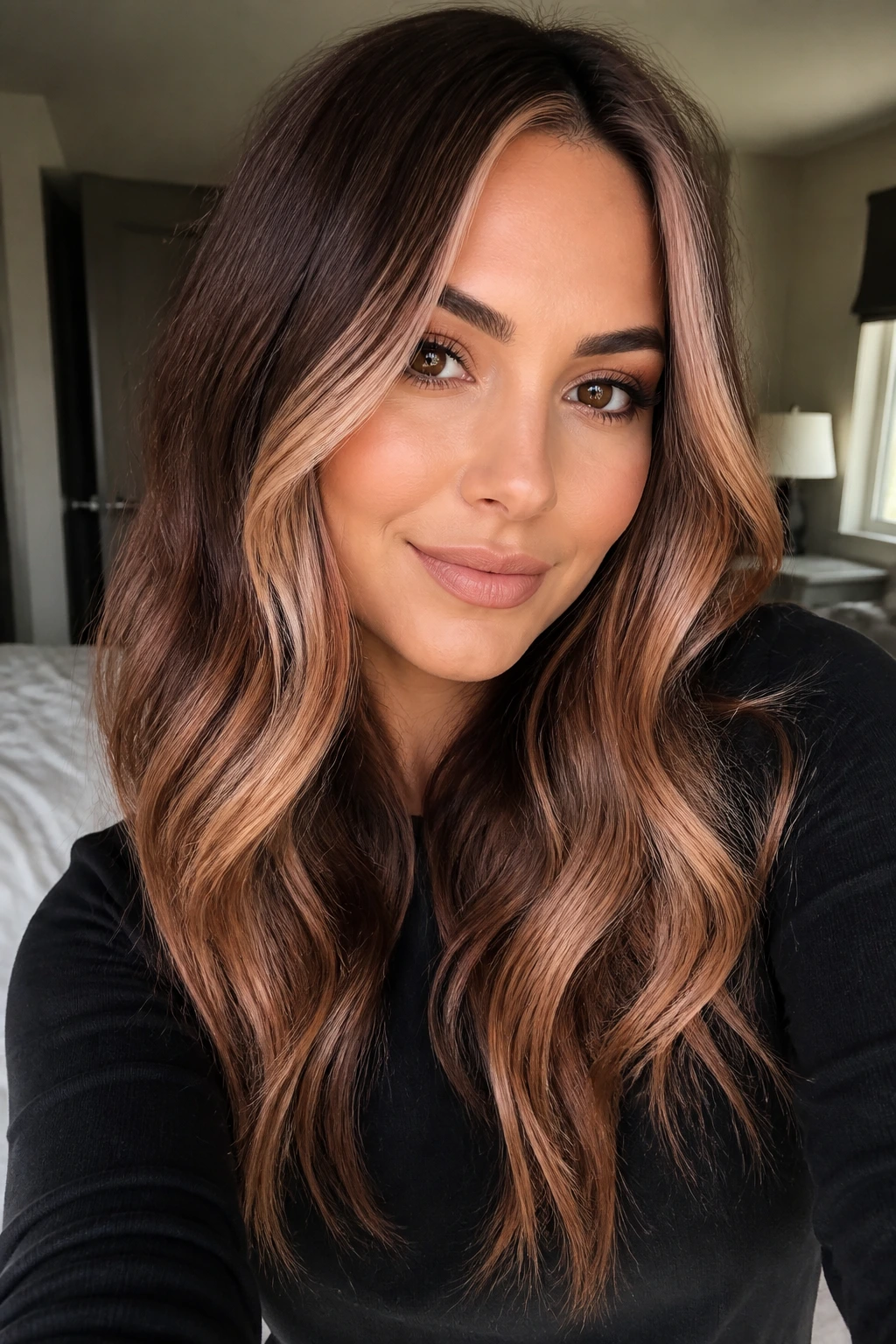
Rose gold brunette sounds fragile, but the good versions have a backbone. The base stays brown, the lighter pieces are beige-gold, and the rose tone shows up as a soft tint rather than a candy pink overlay. That muted approach keeps it from looking trendy in a way that dates fast.
This works best when the pink is folded into the gloss, not painted as a loud streak. Think of it as a warm blush on brunette hair. The dimension comes from the combination of tone and placement, especially when the money piece around the face is a touch brighter than the rest.
If you like a bit of warmth but don’t want copper, this is a lovely middle ground.
10. Sandy Beige Bronde
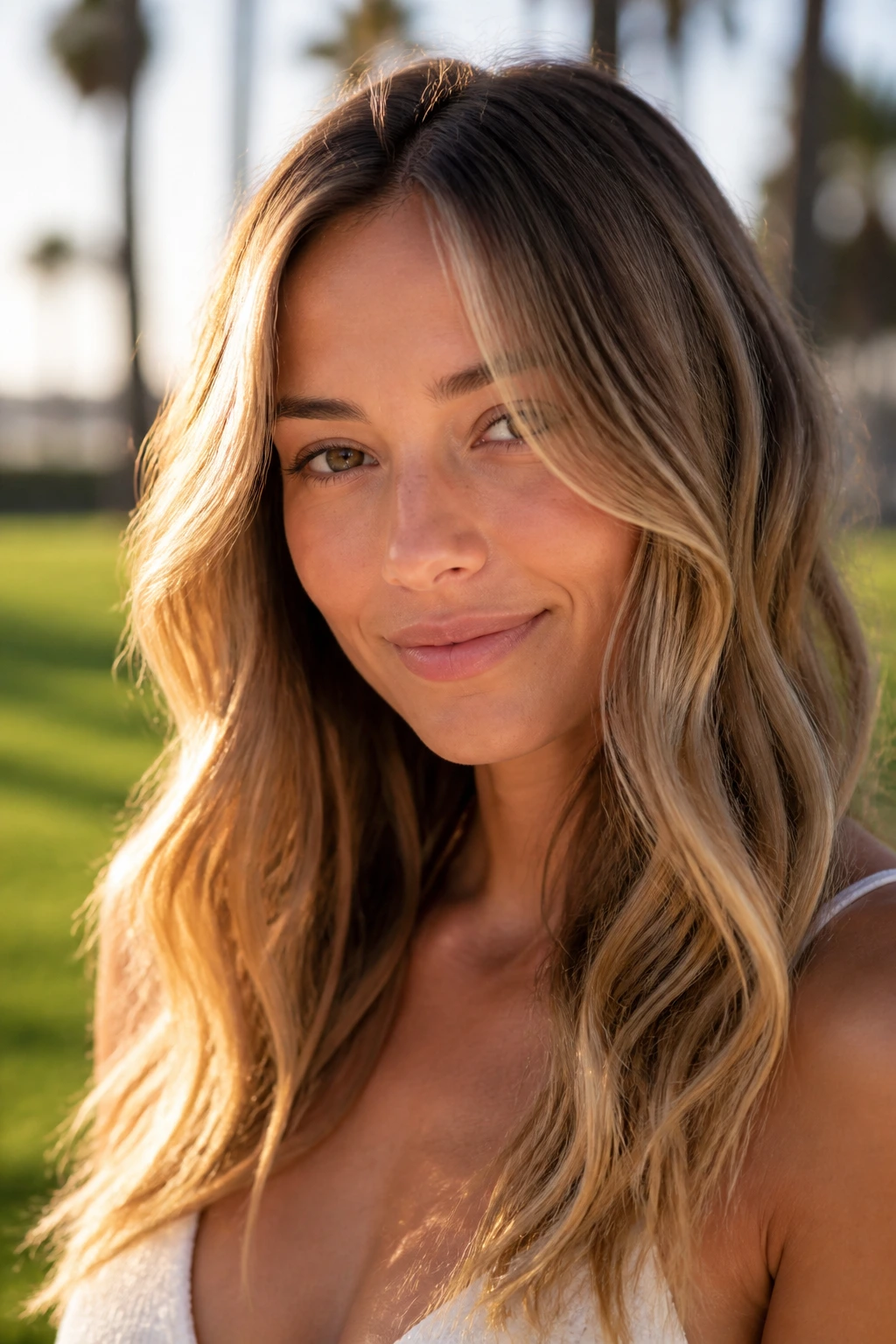
Sandy beige bronde is what happens when light brown hair and soft blonde stop arguing and settle into a truce. The shade is neutral enough to avoid brass, but warm enough that it never looks muddy. That balance is harder to get than it sounds.
This look suits people who want “I spend a lot of time outside” hair without actually bleaching every inch of it. The brightness is spread through the surface layers and the ends, while the root area stays deeper and a little shadowed. The result is soft, sunny, and easy to grow out.
Best cut pairing: long layers or a collarbone-length cut, because both let the sandy pieces move.
11. Toffee and Mocha Swirl
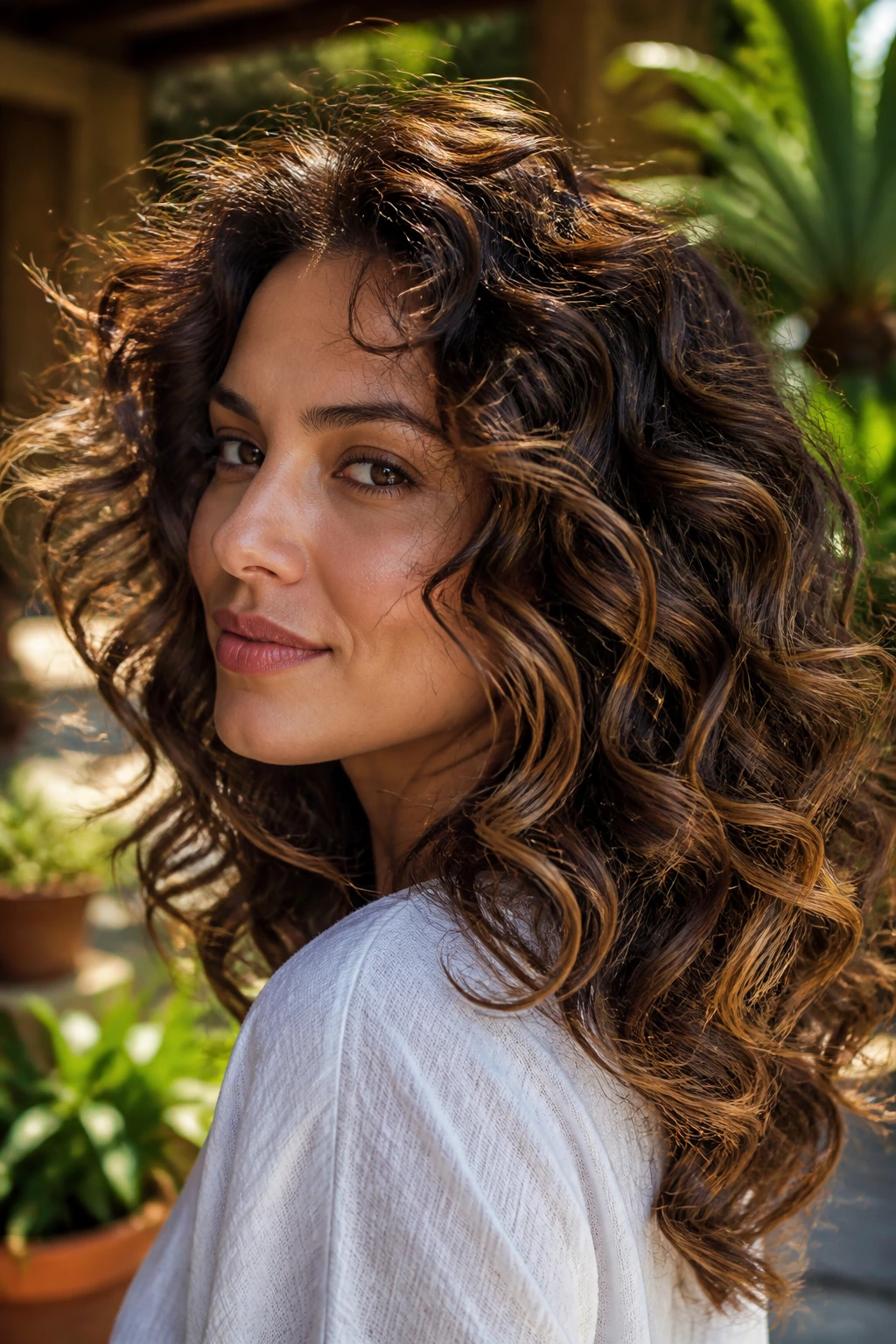
Toffee and mocha swirl is a richer, more dessert-like brunette balayage. The mocha base keeps things grounded, while toffee ribbons warm up the ends and break the color into soft waves of light and dark.
The beauty of this one is that it doesn’t need dramatic lift to work. Even a small shift in tone gives the hair movement. That makes it a strong choice for curly or thick hair, where too much brightness can look patchy. The swirl effect is the whole appeal — a gentle mix, not a line of highlights.
A gloss with a warm beige or soft gold finish helps the toffee pieces stay shiny instead of brassy.
12. Iced Cocoa Balayage
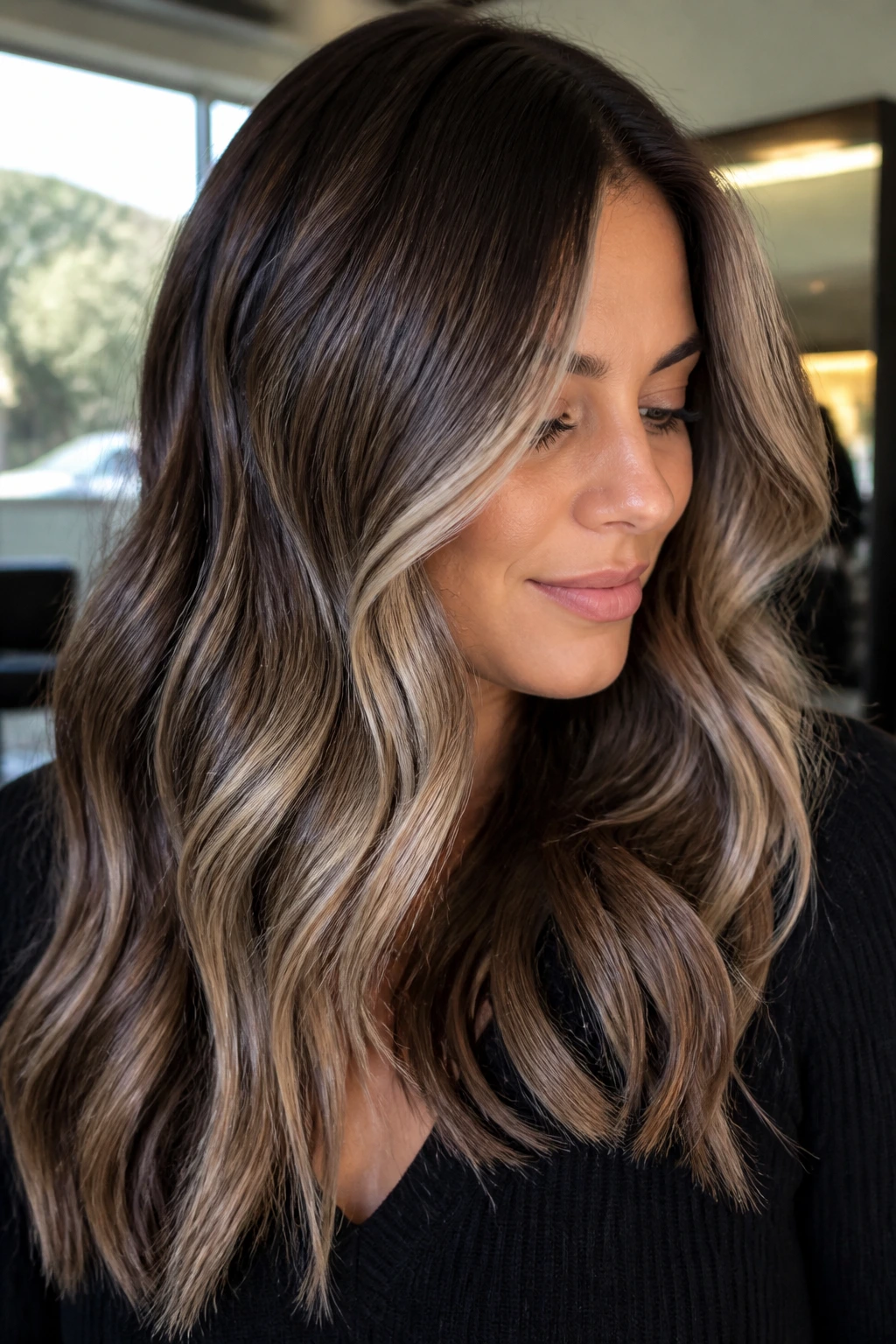
Iced cocoa balayage goes cool, but not flat. The base stays cocoa or deep brown, and the lighter ribbons lift into a pale ash-beige that looks almost frosted at the ends. It’s a strong choice if you like smoky makeup, sharp tailoring, or hair that reads chic without trying hard.
The danger here is over-toning. Go too ash, and the hair starts to look dusty. Go too light, and the cocoa base loses its depth. The best version keeps contrast soft and narrow, with the brightest pieces placed where they’ll catch movement — around the face, through the top layer, and at the ends.
Good to know: this shade needs a careful shampoo routine. Blue or violet shampoo can help, but too much of it will mute the color faster than you want.
13. Vanilla Cream Face Frame
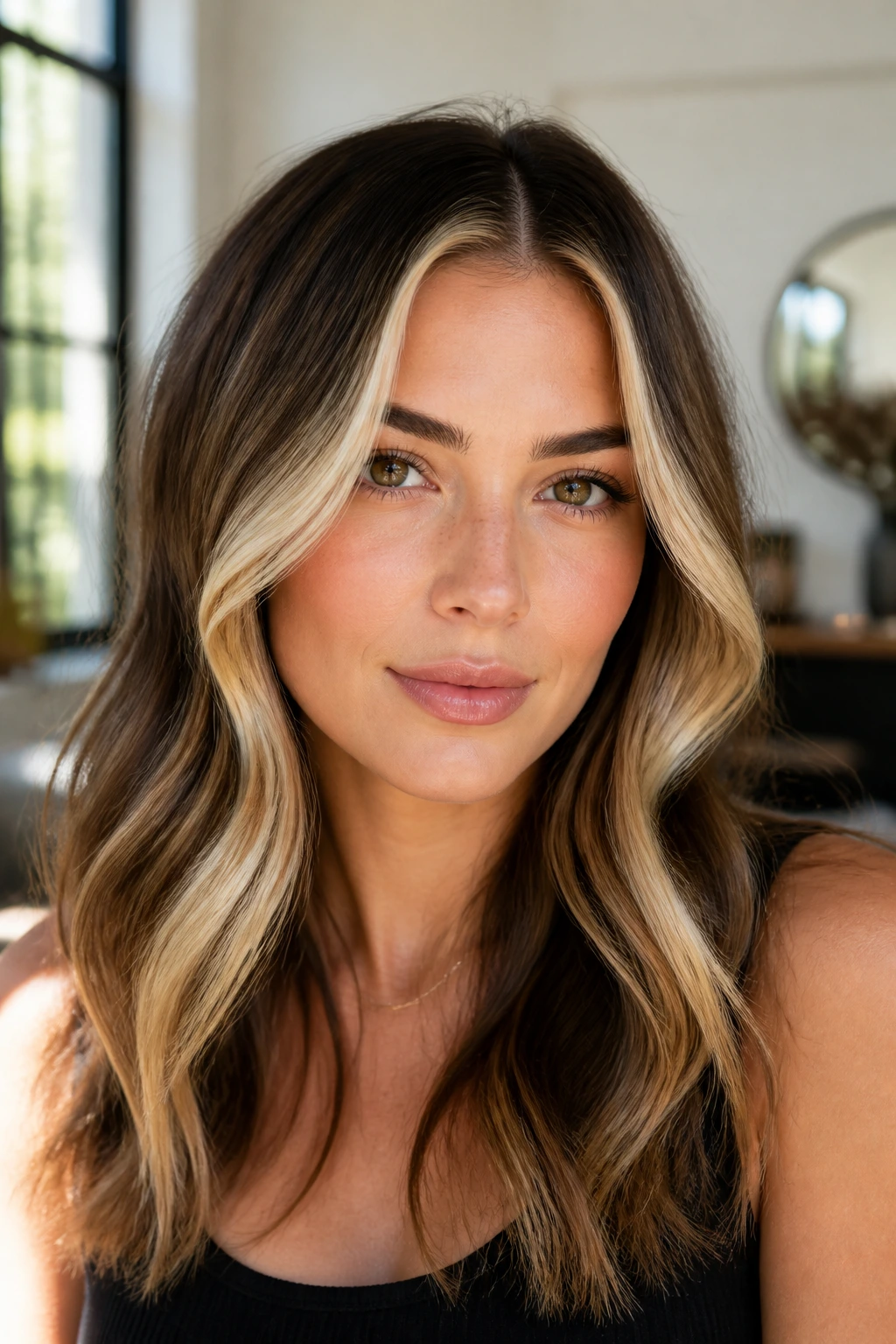
Vanilla cream face frame is the answer for anyone who wants brightness without committing to a full head of lightened pieces. The lengths stay soft and dimensional, while the front gets a creamy lift that sits around the cheekbones and jaw.
This is one of the smartest balayage ideas for soft dimensional color because it uses restraint as a feature. You get the impact right where people look first, then the rest of the hair stays deep enough to keep the grow-out easy. It also works when your base is darker than you’d like to maintain all over.
A center part shows the vanilla pieces cleanly. A side part pushes them even farther across the face, which can be nice if you want a little more brightness without adding more color.
14. Bronze Glow Balayage
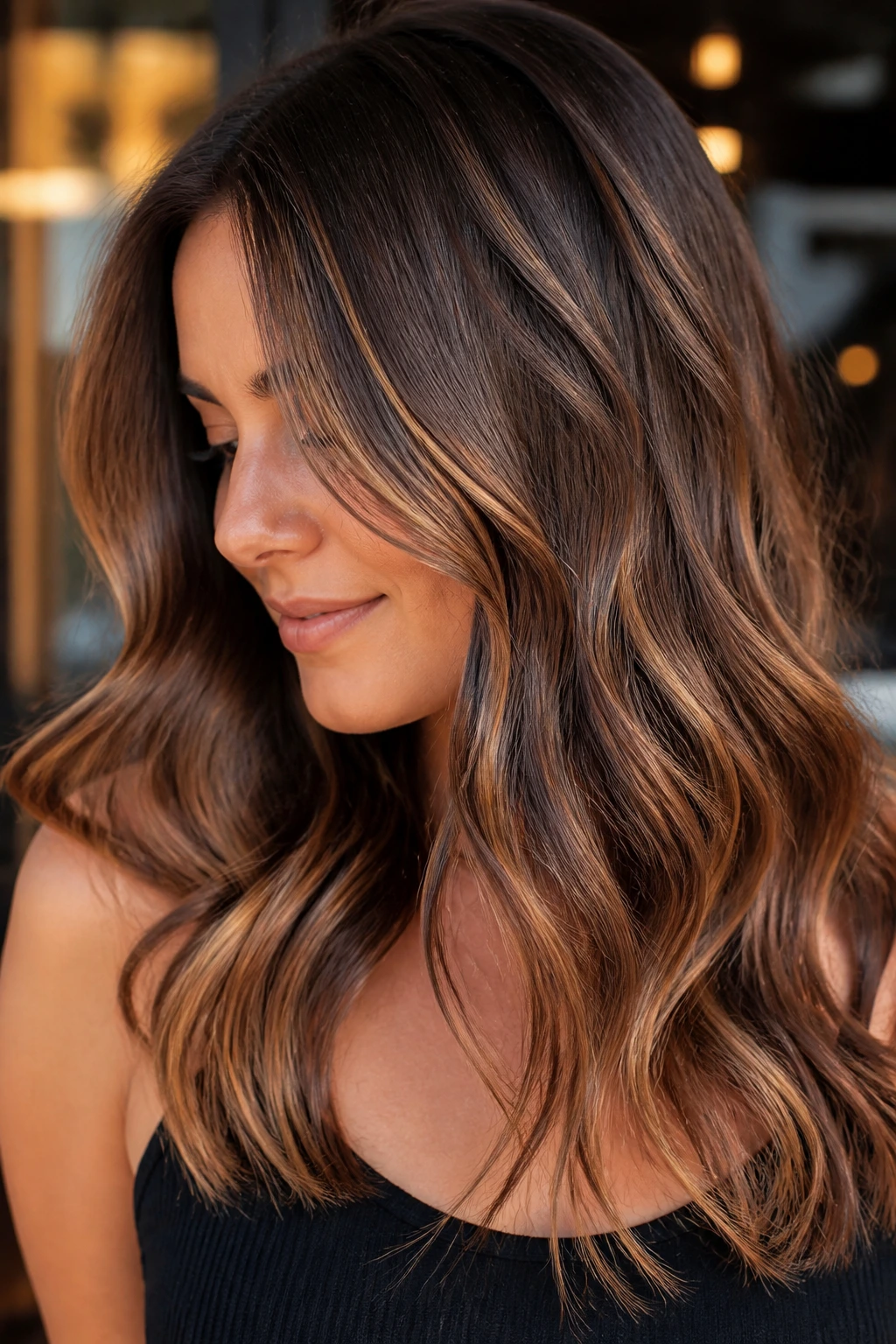
Bronze glow balayage lives in a warm metallic lane that flatters brown hair beautifully. It’s not copper-red, and it’s not gold-blonde either. It sits between the two, with a bronzy finish that reflects light in a soft, polished way.
This shade works especially well when the hair already has some natural warmth. If your undertone leans golden or peach, bronze can make the skin look less flat without making the hair scream for attention. Ask for hand-painted ribbons through the surface, then let the ends carry most of the brightness.
Best used on
- Medium brunettes
- Layered cuts
- Thick hair that can handle a little warmth
Bronze can look muddy if the base is too cool, so it’s not the first pick for someone who loves ash tones.
15. Auburn Smoke Balayage
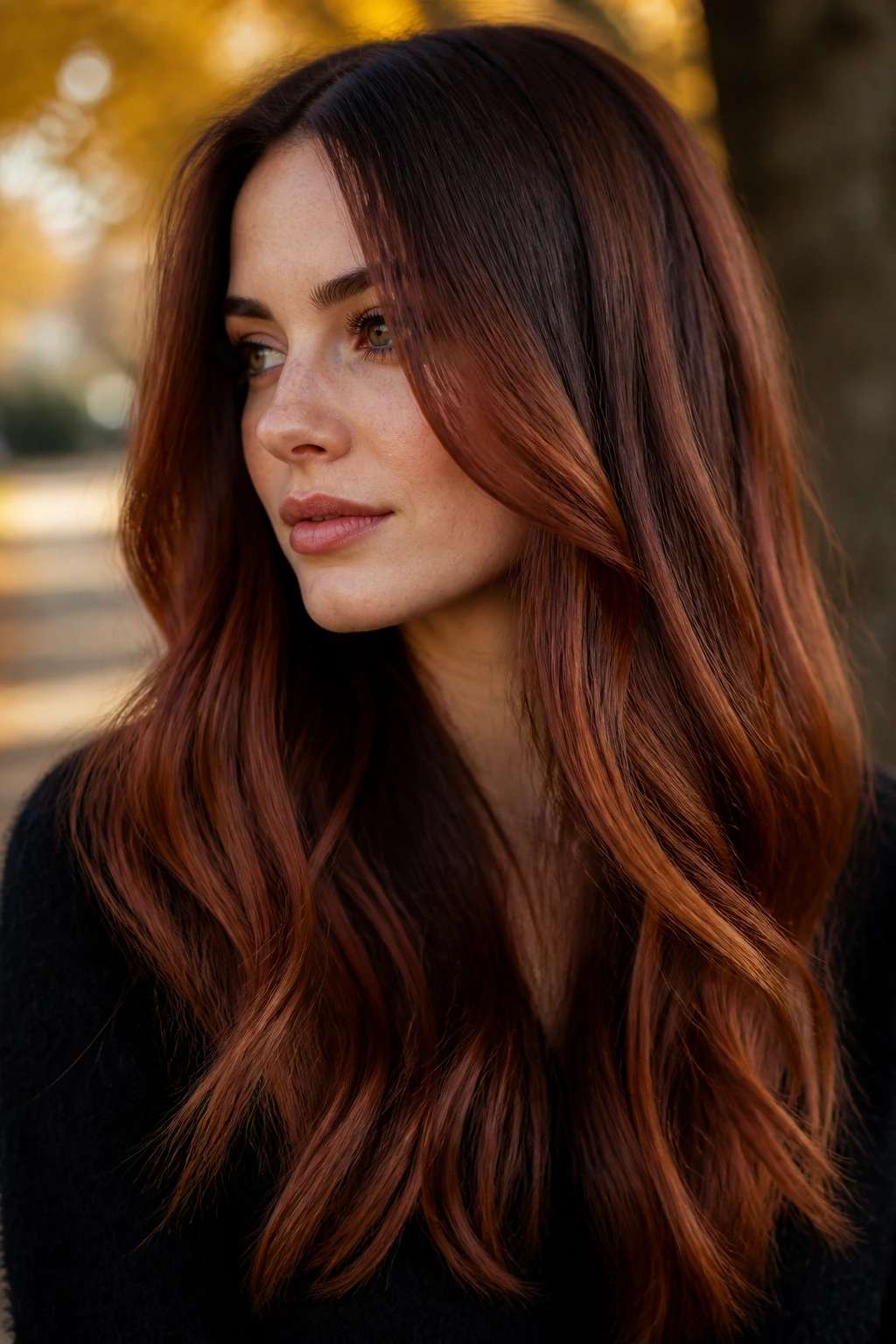
Auburn smoke balayage is rich, moody, and a little underrated. The smoke part matters. It keeps the auburn from turning bright red and instead softens it into something that looks autumnal without feeling costume-like.
The look works beautifully on natural redheads who want depth, but it also suits brunettes who want a warm red-brown accent. Keep the root deeper and let the auburn show up as ribbons and ends rather than a full saturation. That contrast is what preserves the dimension.
One neat thing about auburn smoke is how glossy it looks when the toner is fresh. The shade reflects light in a way that makes hair seem thicker than it is.
16. Pearl Blonde Ribbons
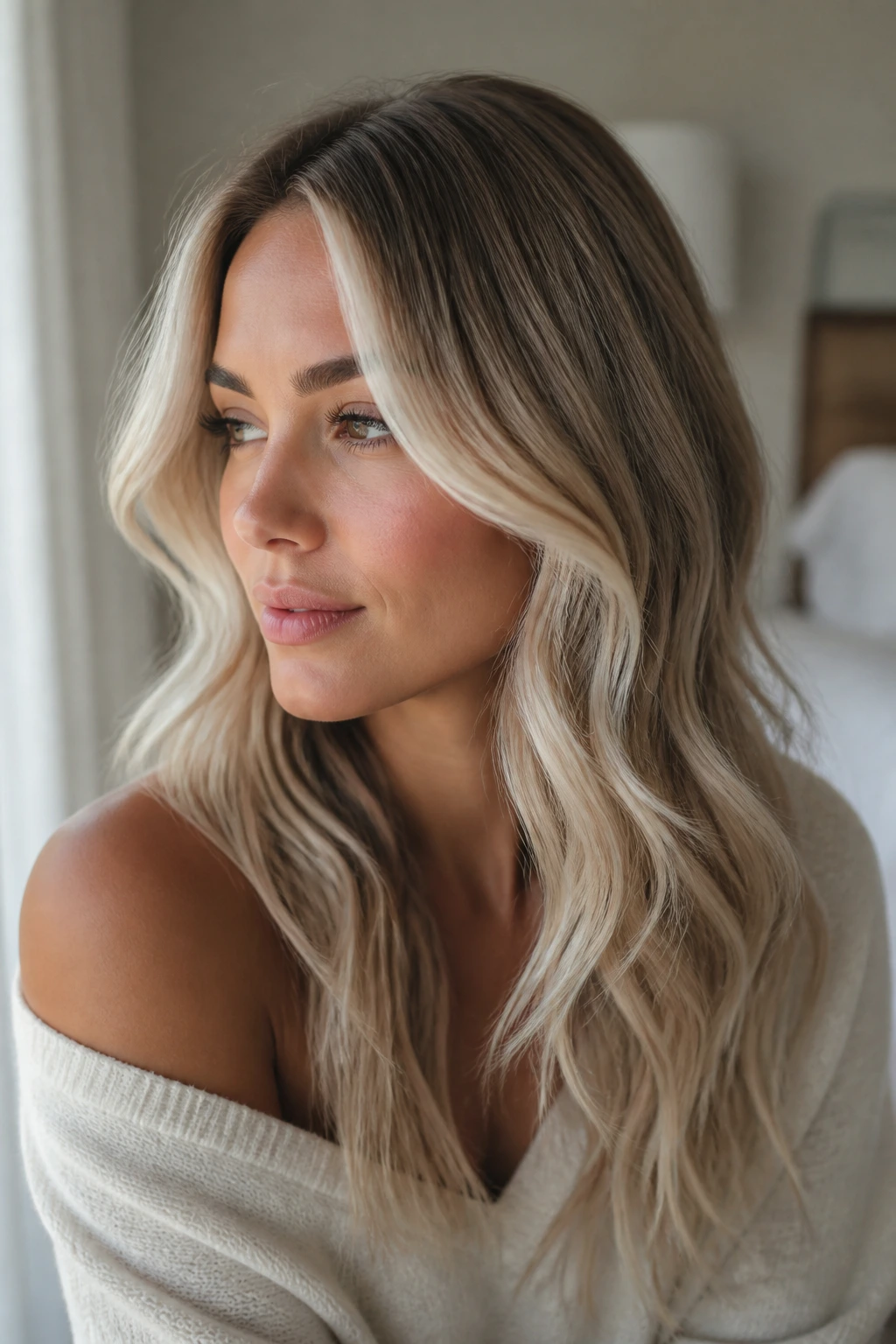
Pearl blonde ribbons are all about delicate brightness. The blonde isn’t loud or yellow; it sits in a creamy, pearly lane that makes the hair look lighter without reading as over-processed. The ribbons are fine, which matters more than the tone sometimes.
This style is especially good for medium blondes and light brunettes who want lift but not a hard highlight line. The pearl tone keeps the finish soft and a little cool, which helps it blend into the base instead of sitting on top of it. A few brighter pieces around the front will keep the look from fading into sameness.
If you wear your hair straight, these ribbons still show up, but they’re lovelier in a soft bend or loose wave.
17. Maple Syrup Brunette
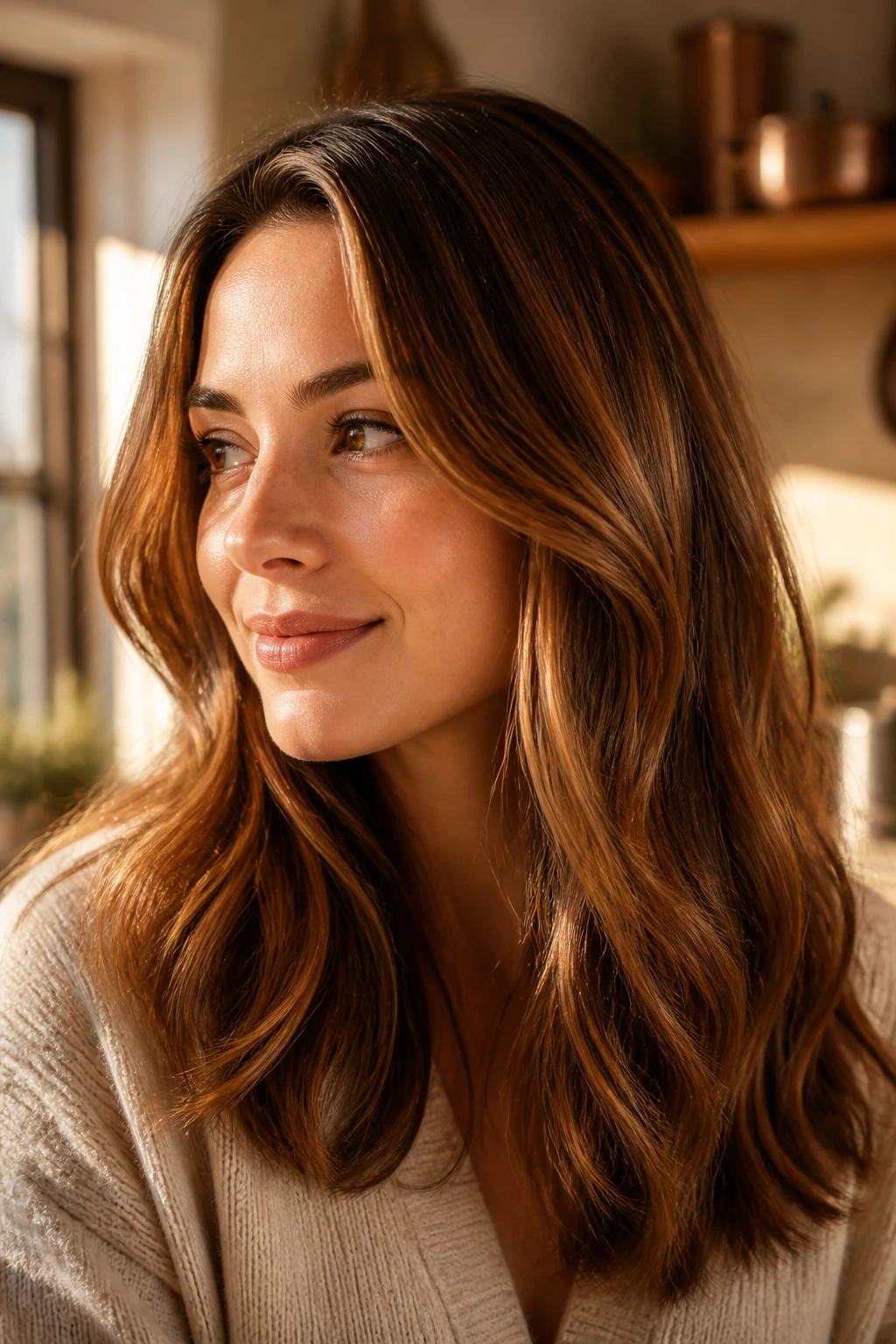
Maple syrup brunette is warm, deep, and a little glossy in the best way. The color brings amber, brown sugar, and soft golden-brown tones together without landing in orange territory. It’s a cozy shade, but not a sleepy one.
The best version starts with a rich brunette base and layers in maple-toned ribbons through the mid-lengths. The ends can take a little more warmth than the roots, which helps the color look natural as it grows. On thick hair, this shade adds richness fast because the reflective pieces catch light on the outer layer.
If your hair feels dull: maple is usually a better choice than a flat brown refresh. It creates warmth without flattening the depth.
18. Chestnut and Gold Ribboning
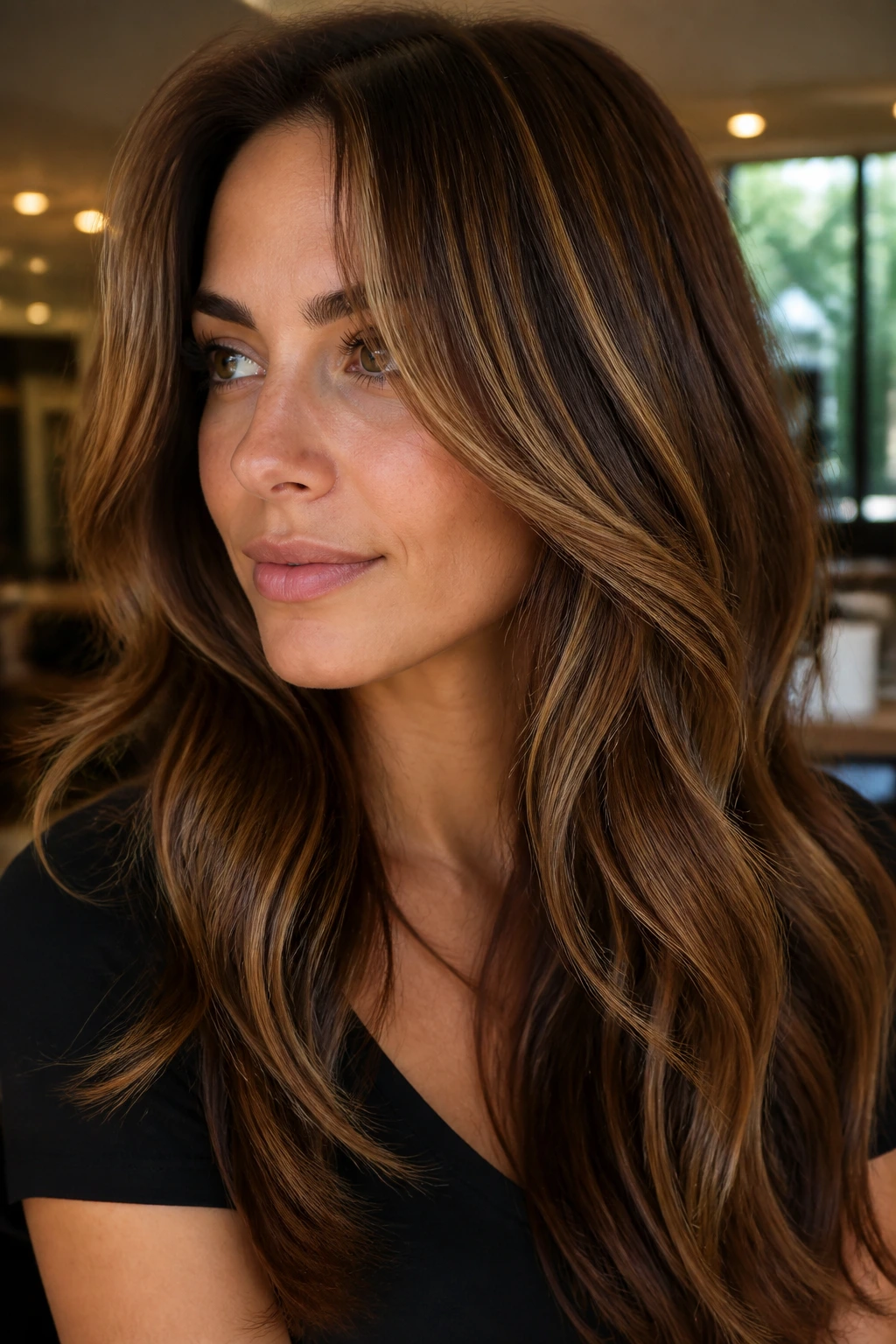
Chestnut and gold ribboning gives you movement by pairing warm depth with fine reflective pieces. Chestnut lowlights keep the base from looking washed out, while gold ribbons lift the top layer and create the soft shimmer people usually want from balayage in the first place.
This is a strong choice if your current color feels faded but you do not want a big shift. It’s more about restoring dimension than changing the whole head. The gold should be thin, almost threadlike in places, so the chestnut can still do the heavy lifting underneath.
It’s a bit more classic than trendy. That’s a good thing.
19. Peachy Champagne Balayage
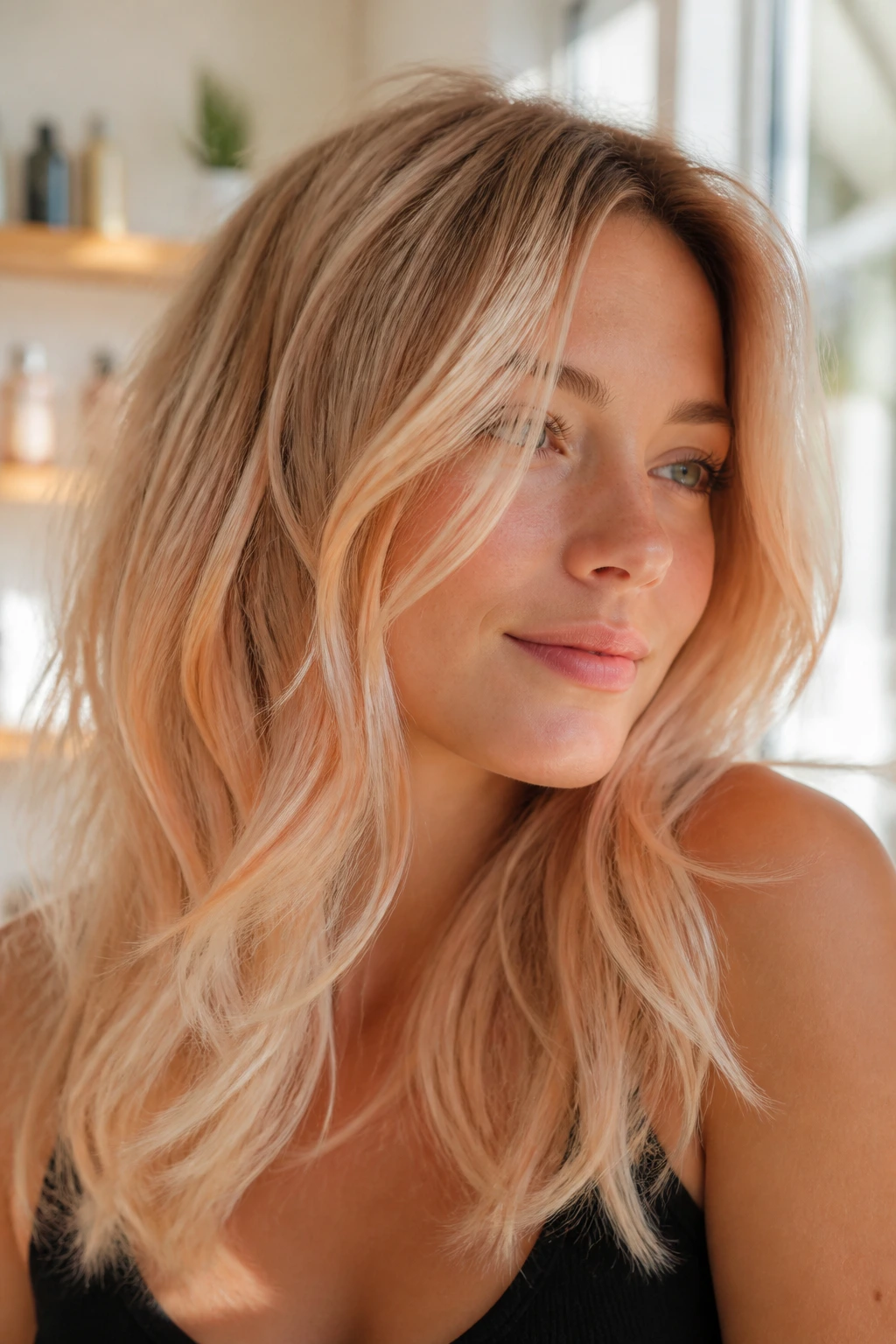
Peachy champagne balayage is brighter than a neutral beige, but still soft enough to stay pretty. The champagne tone keeps it airy, while the peach tint gives the blonde a warm blush that plays nicely with skin that has peach or golden undertones.
This is a lovely choice if your hair already lifts to a pale blonde and you want a little more personality than plain beige. The key is subtlety. Too much peach and the color turns loud; too little and it disappears. A soft face frame and airy ends are usually enough.
The finish looks especially good in loose waves because the peach catches on the bends and gives the hair a gentle glow.
20. Walnut Smoke Balayage
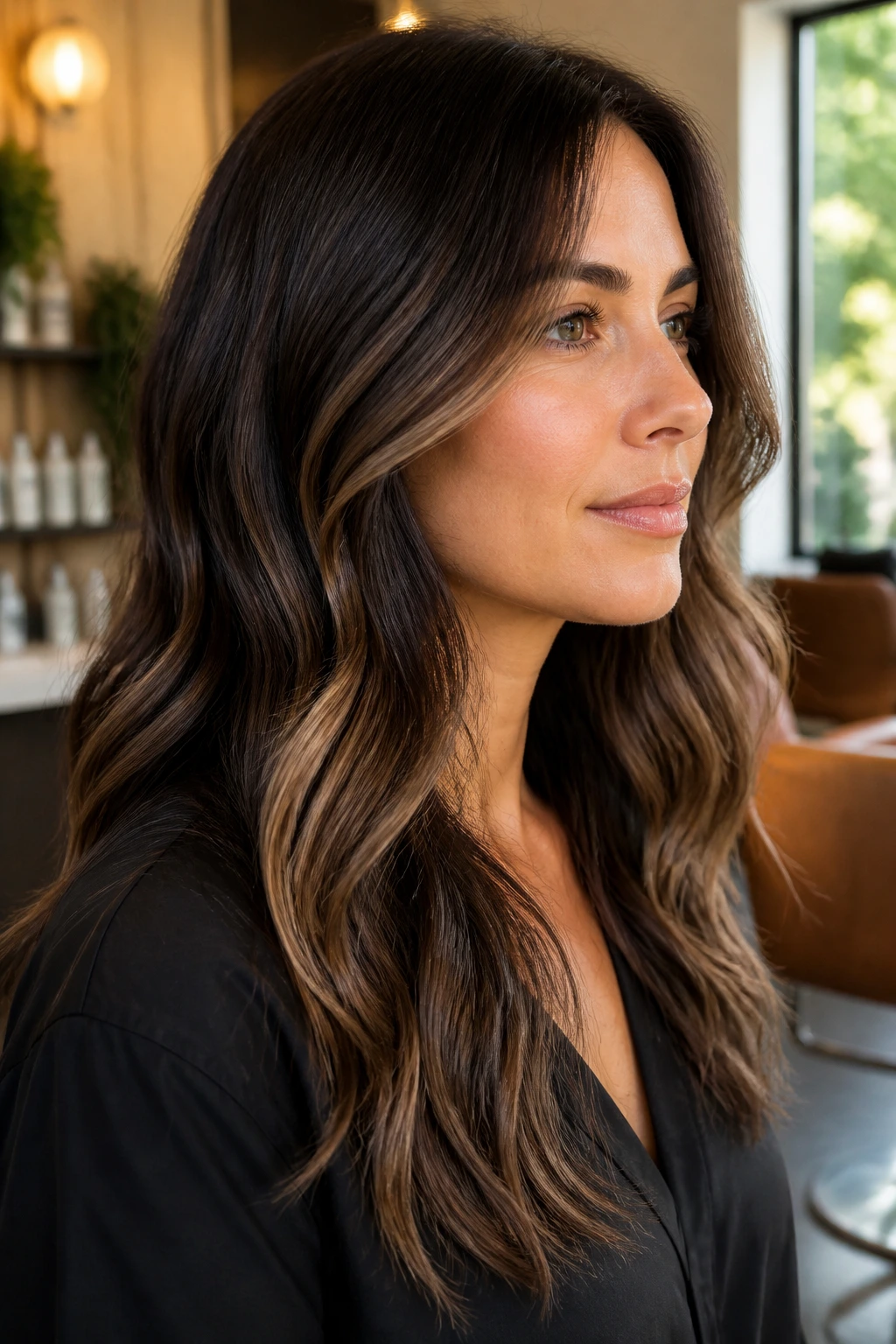
Walnut smoke balayage is one of the quieter brunettes in the bunch, and that’s why it works. Walnut brings in an earthy brown warmth, while the smoke keeps the finish from going reddish or too red-gold. The mix creates depth without dragging the color dark and flat.
It suits people who like dark hair with visible movement, but no obvious streaks. The lighter pieces should be sparse and finely painted, almost like a soft veil over the base. You’ll see them most on the top layers and around the temples.
This is a very good “I want change, but I still want my hair to look like me” shade.
21. Buttercream Blonde Ends
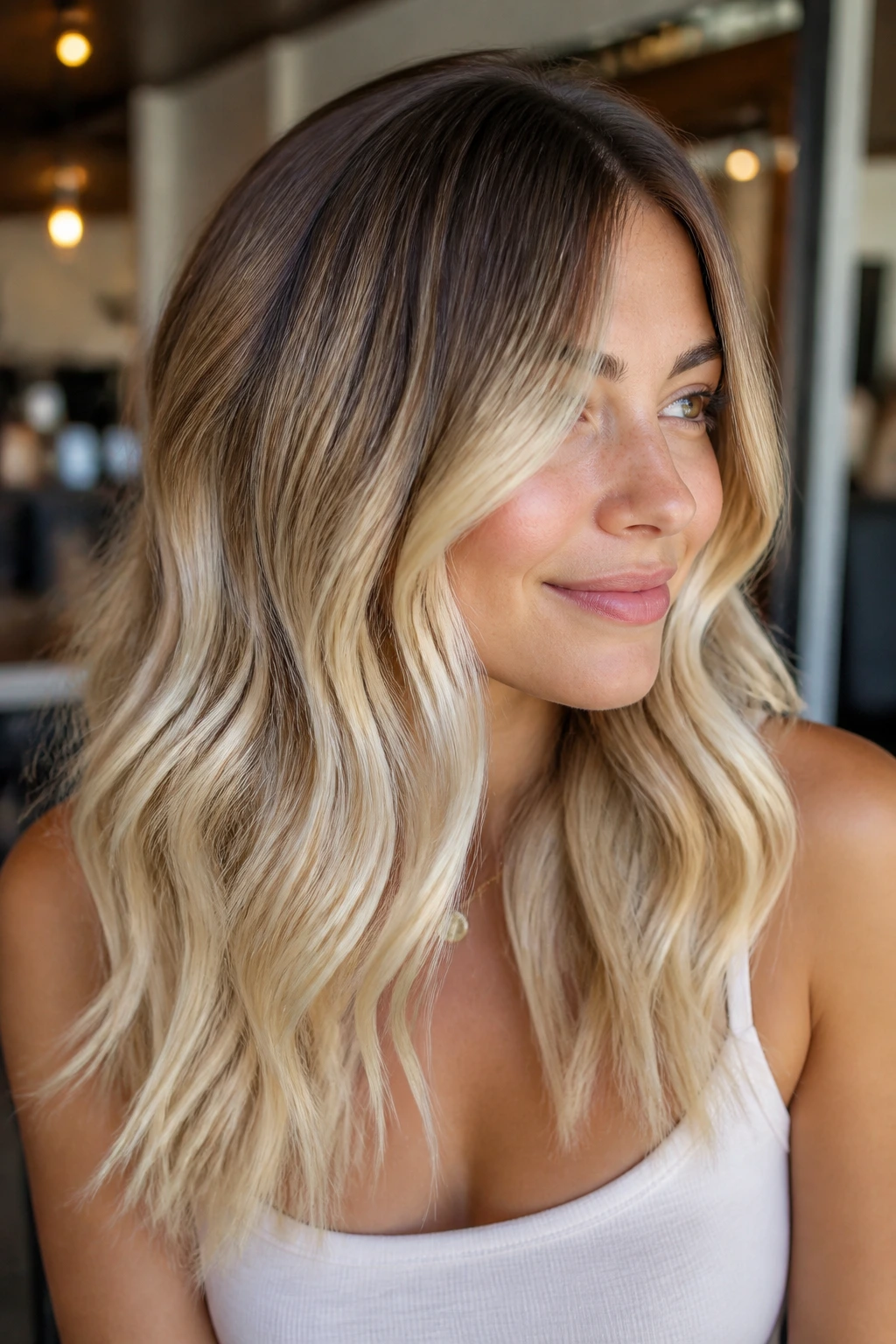
Buttercream blonde ends give the hair a soft, creamy finish that still feels bright. The root shadow stays in place, and the lighter pieces collect toward the ends, which keeps the whole look grounded. It’s blonde, but not blinding.
This style works well on lob lengths, long layers, and hair that already has some natural lightness. The buttercream tone softens any harsh lift, especially if your hair tends to pull yellow. Ask for a beige-cream gloss rather than anything icy; the goal is plush, not frosted.
The shape matters here. Blunt ends can make the blonde look heavier. Feathered ends let it move.
22. Mahogany Glow Balayage
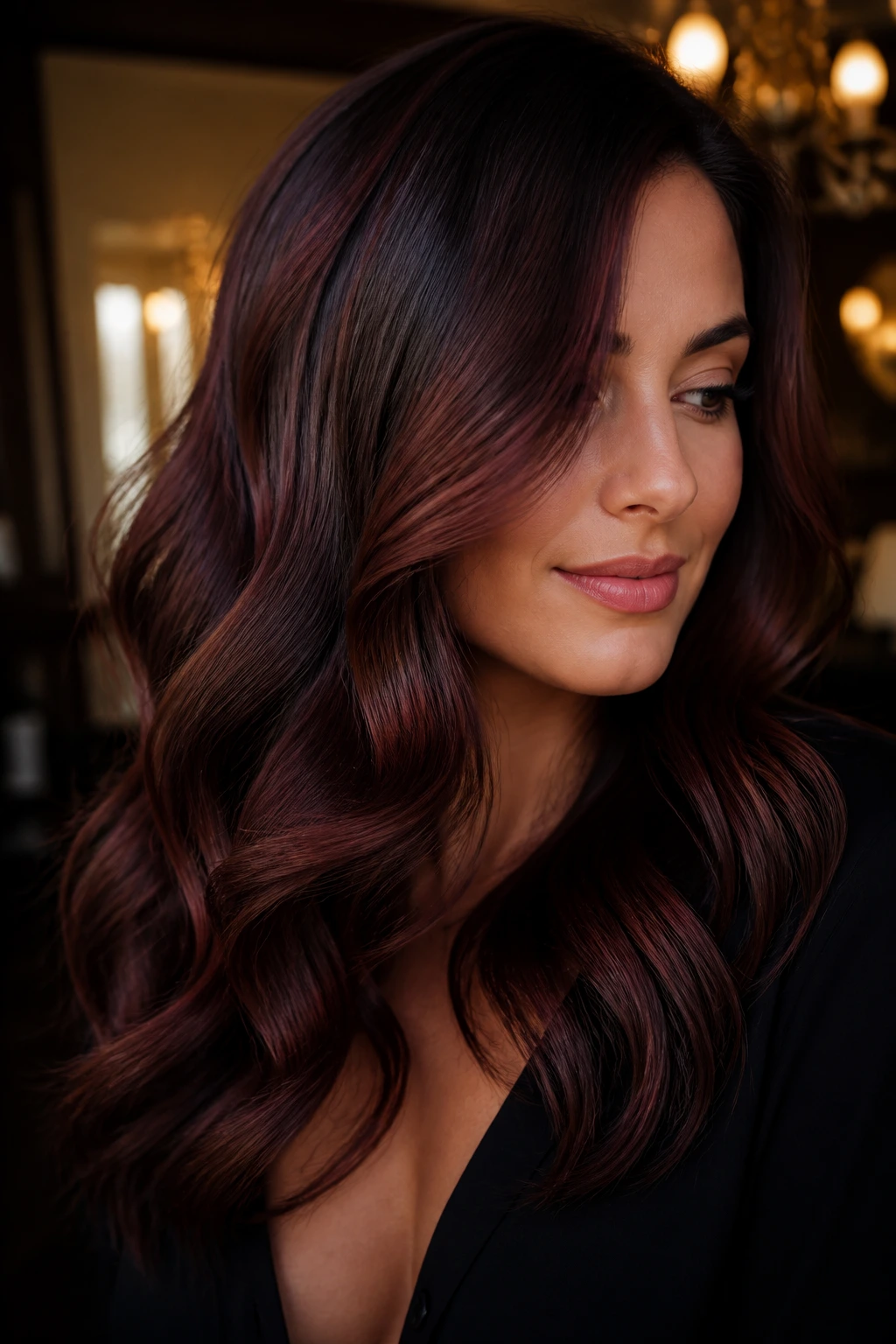
Mahogany glow balayage is deep, glossy, and quietly dramatic. Mahogany gives brown hair a wine-dark warmth that shows up without shouting, which keeps the balayage soft even when the color is rich. It’s a good fit for people who like darker hair and want dimension more than brightness.
The color reads best when the mahogany is woven through the lengths, not stacked in thick chunks. A few pieces around the face can warm the complexion, but the real appeal is the way the reddish-brown tones move through the mid-lengths. In low light, it can look almost solid; in brighter light, the dimension opens up.
If your hair tends to look flat in winter or under indoor lighting, mahogany is a strong fix.
23. Soft Plum Brunette
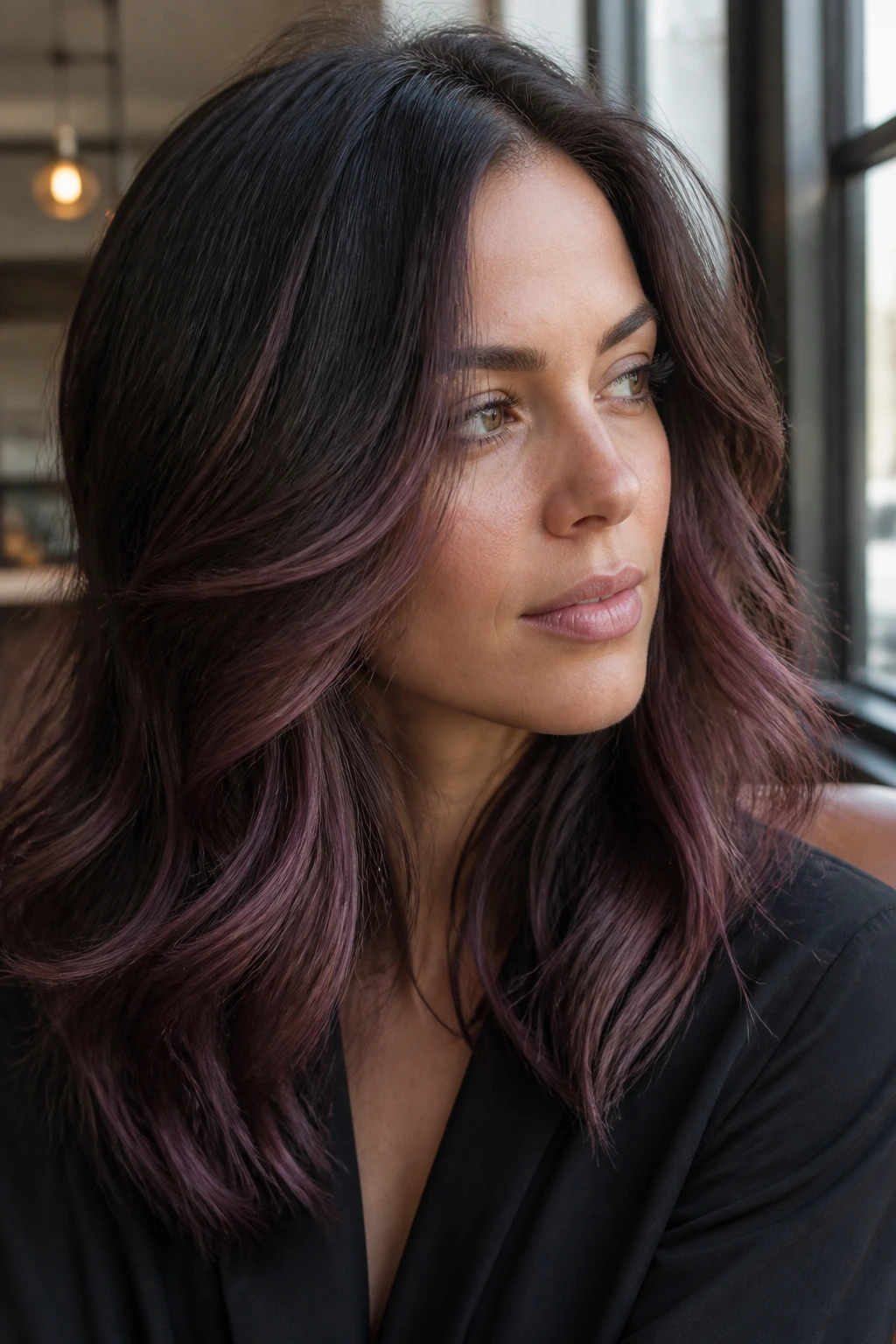
Soft plum brunette is for someone who wants a little edge, just not the kind that turns into a full fashion-color commitment. The plum stays muted and brown-based, so the hair reads dimensional rather than purple. That makes the shade easier to wear than people expect.
The best versions use plum as a gloss or ribbon tone over a brunette base. It should show as a cool shift, especially on the ends and underlayers. If the pieces are too saturated, the color loses the softness that makes balayage work in the first place.
This look pairs well with cool skin tones, dark clothing, and hair that already has a little natural shine. Without shine, plum can go flat. With shine, it looks expensive.
24. Sunlit Bronde Melt
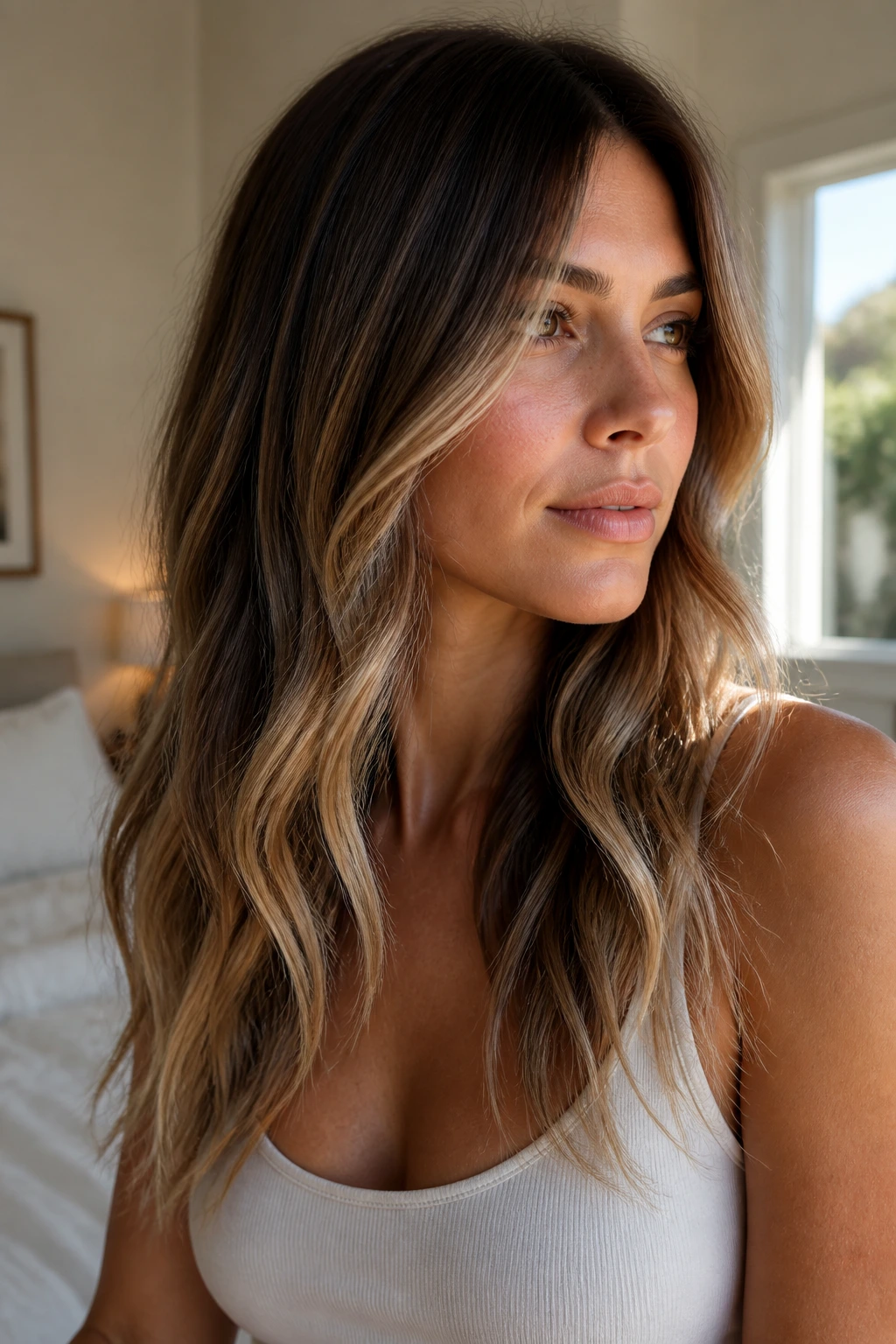
Sunlit bronde melt is the closest thing to “my hair just does this.” It starts with a brown-to-dark-blonde base and melts into brighter pieces without a hard transition. The contrast is low, but the movement is there.
That softness makes it one of the easiest balayage ideas to wear day after day. There’s nothing heavy at the root and nothing chunky at the ends. It just gets lighter as it goes. On long layers, it can look like the hair has its own natural highlight pattern, which is exactly the point.
If you want the most believable grown-in dimension in the whole set, this is probably the one.
25. Ribboned Espresso with Money Piece
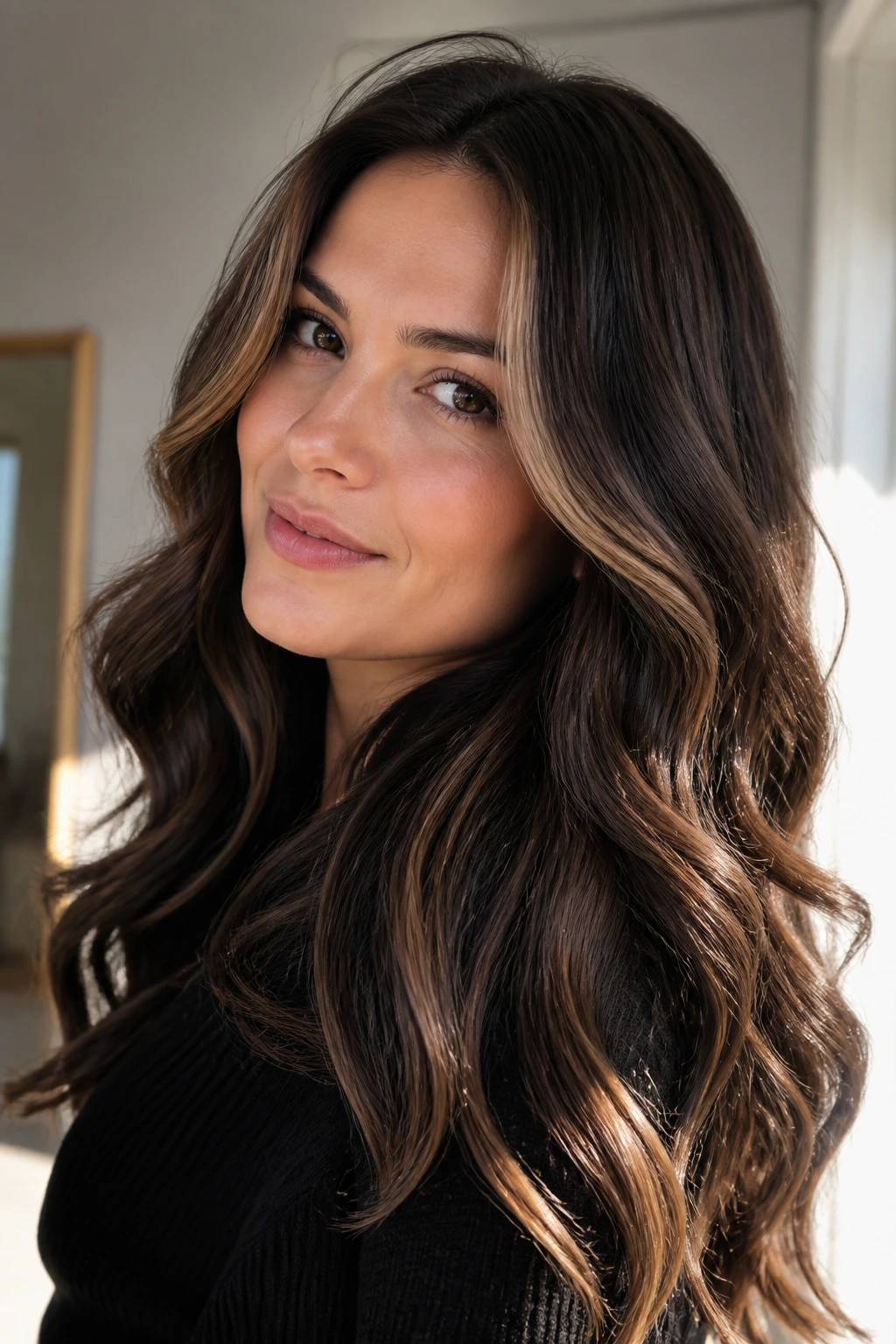
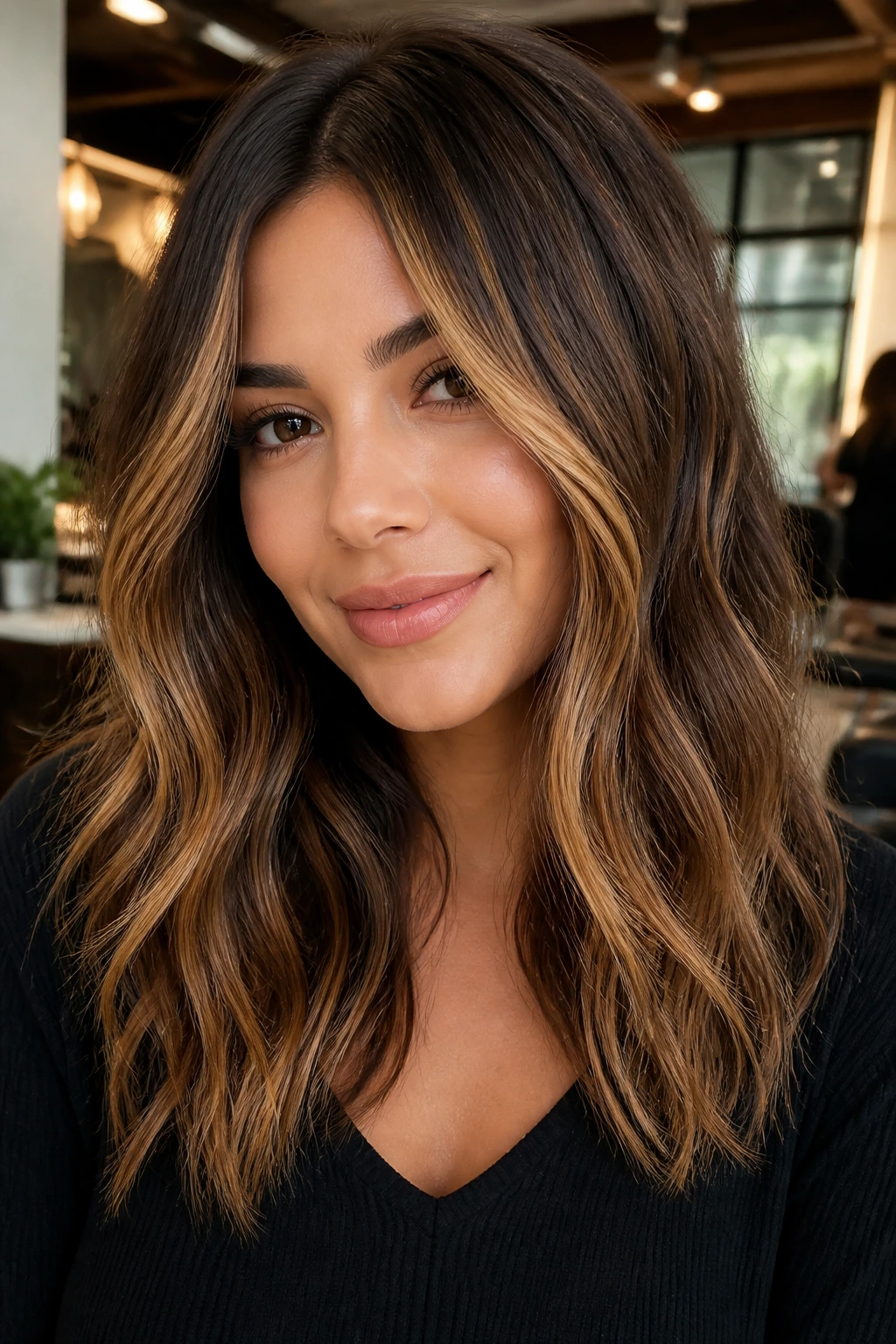
Ribboned espresso with money piece takes a deep espresso base and opens it up with fine ribbons through the mids, then a brighter face frame that acts like a spotlight. The contrast is stronger than some of the softer brunettes above, but the placement keeps it from feeling harsh.
The money piece should be feathered, not blocky. That’s where a lot of people go wrong. A soft face frame blends into the rest of the balayage, while a blunt bright strip can overpower the whole haircut. Keep the lengths airy and let the front do the work.
This is a strong choice for long hair, layered cuts, and anyone who likes to wear waves. The brightness gives the face shape, and the espresso base keeps everything grounded.
Why Soft Balayage Keeps Hair Looking Layered, Not Flat
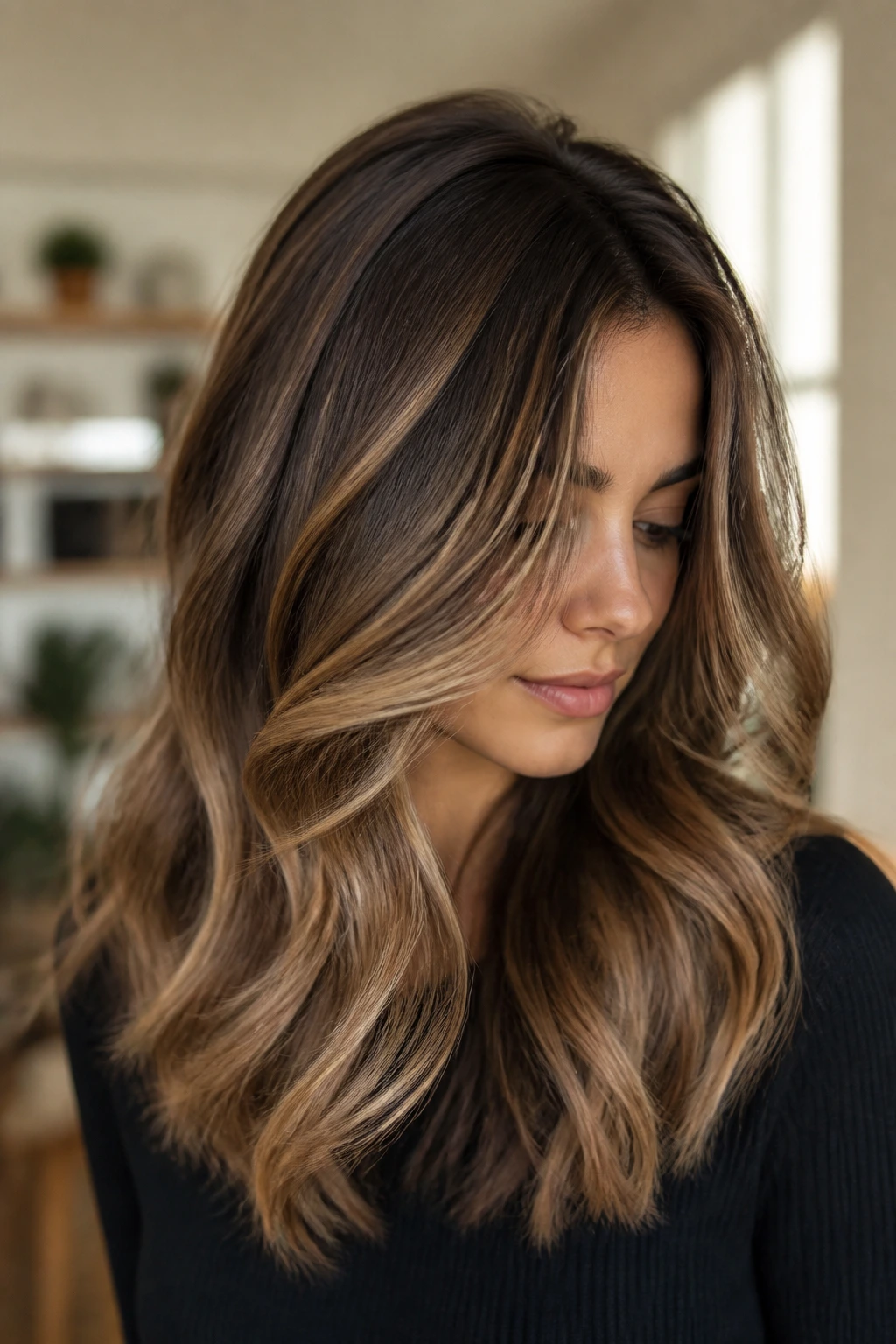
Soft balayage works because it respects the base. That sounds simple, but it’s the part people skip when they ask for “more dimension” and then wonder why the result looks busy instead of blended. A deeper root shadow, a gentle lift through the mids, and a gloss that matches the undertone do more for softness than adding more blonde ever will.
Placement does the heavy lifting. The brightest pieces usually belong around the face, on the top layer, and toward the ends where movement shows them off. If the lightening starts too close to the scalp or covers too much of the head, the effect turns into regular highlights. Fine on some people. Not what this article is about.
The real win is grow-out. A balayage that starts a little below the root and fades into ribbons instead of stripes can go weeks longer before it looks tired. That matters if you don’t want your hair color to demand a standing appointment every time the roots blink at you.
Brushes, Bottles, and Heat Tools That Keep the Blend Honest
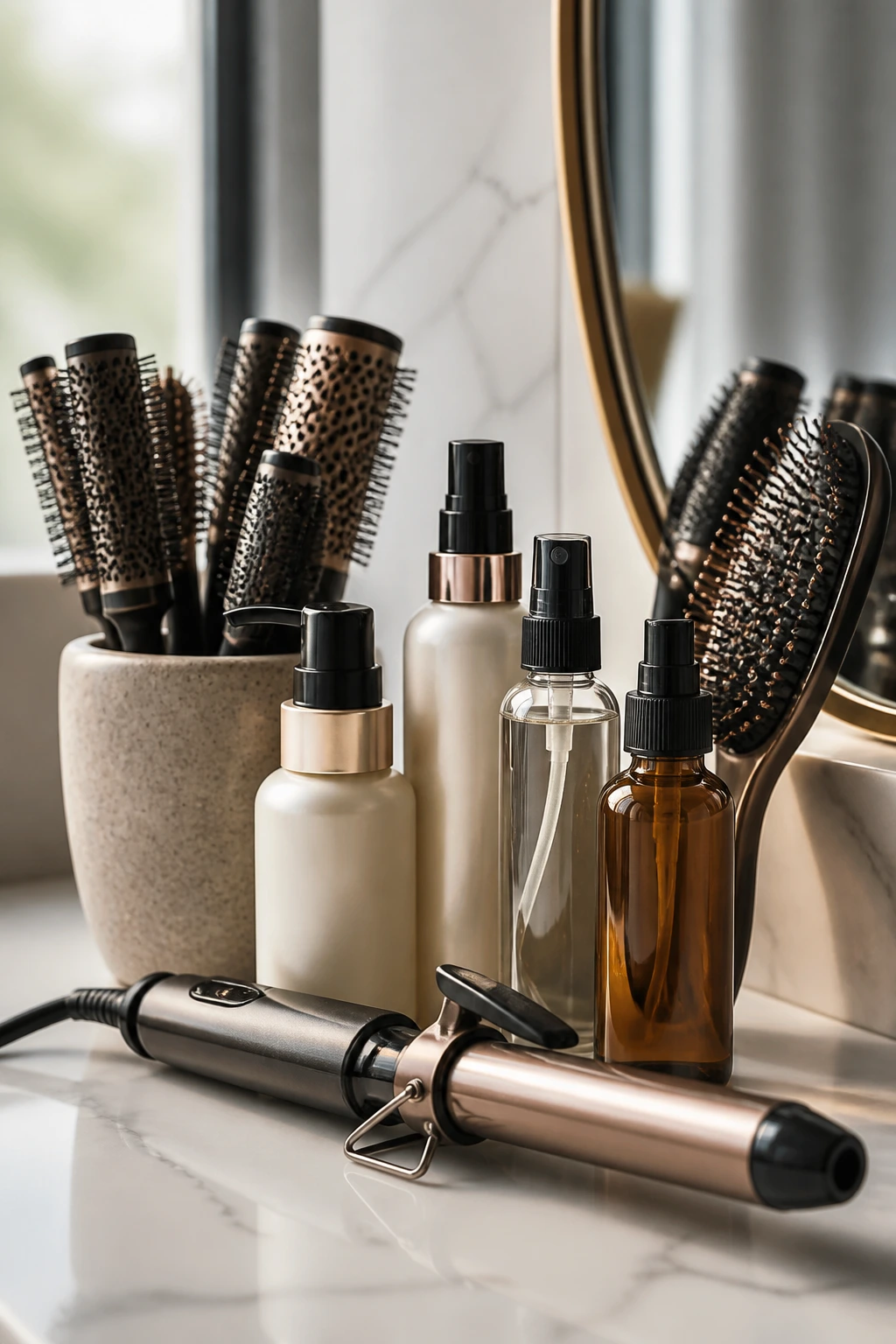
A soft balayage still needs maintenance, and the right tools make the difference between glossy and dingy. You do not need a bathroom shelf packed with products. You need the right few.
- Sulfate-free color-safe shampoo: Cleans without stripping the toner out of the lighter pieces.
- Moisturizing conditioner: Keeps the ends from looking rough, especially after lightening.
- Purple or blue shampoo: Use purple for blonde, beige, and pearl tones; blue for brunette balayage that wants brass control.
- Deep conditioning mask: One good mask a week keeps porous ends from grabbing pigment unevenly.
- Heat protectant spray: Non-negotiable if you blow-dry or curl the hair; lightened pieces scorch faster than roots.
- Wide-tooth comb or detangling brush: Helps keep wet hair from snapping, especially after a fresh color service.
- Microfiber towel or soft tee: Less friction means less frizz and less fading at the cuticle.
- 1-inch or 1.25-inch curling iron: Great for showing ribbon placement without making the hair look overstyled.
A silk pillowcase is optional, but I like it. It cuts down on the fuzzy ends that make dimensional color look tired faster than it should.
How to Pick the Right Shade Family for Your Base Color
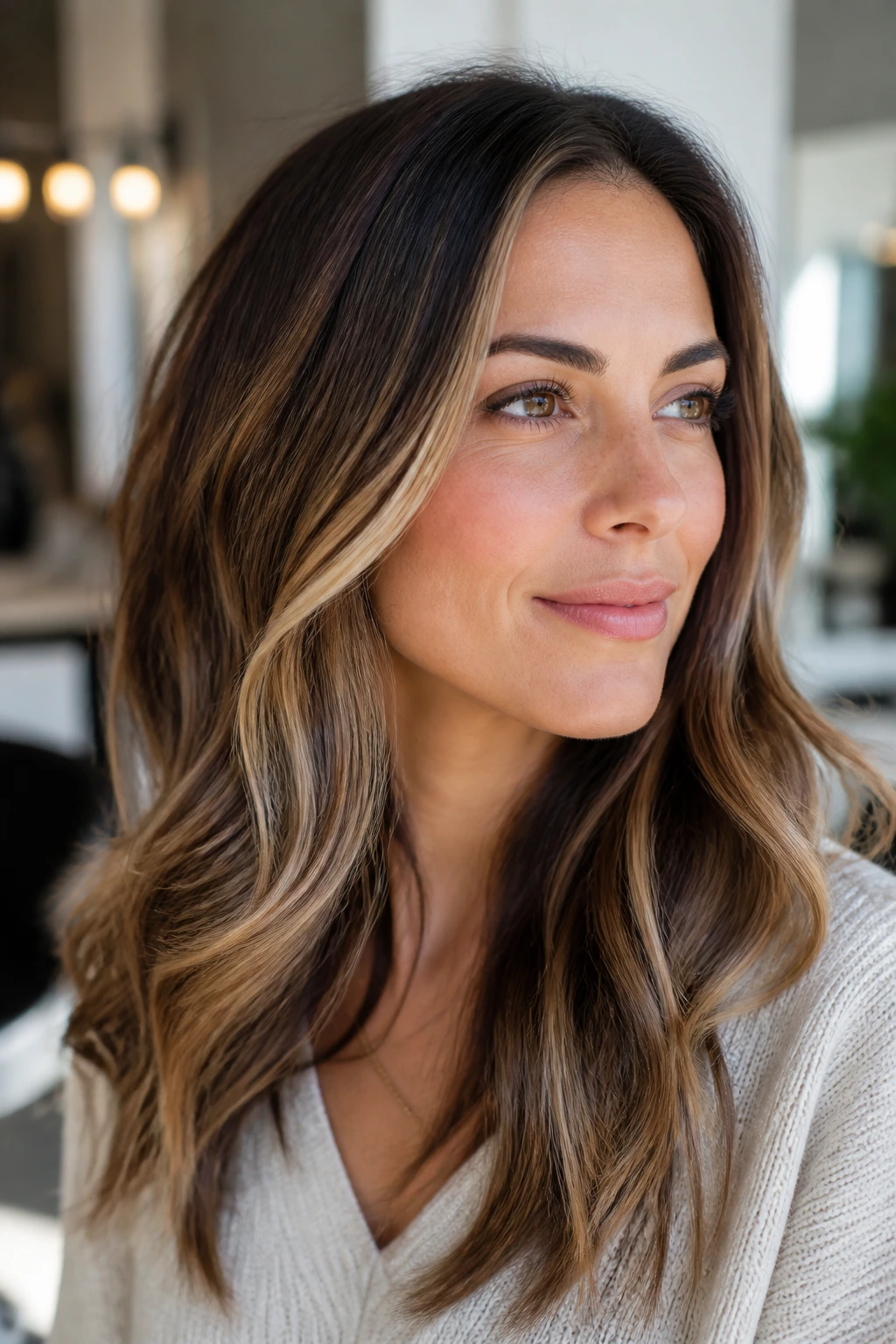
The fastest way to choose a flattering balayage is to stop thinking in generic terms like “blonde” or “brunette” and look at the base level you already have. A level 4 dark brown can’t wear the same ribbons as a level 7 dark blonde without a lot of processing in between, and that gap changes how soft the result feels.
Warm bases usually hold caramel, honey, copper, bronze, and maple tones without fighting back. Cooler bases tend to look better with mushroom brown, ash bronde, smoky cocoa, pearl blonde, and beige. If your hair likes to pull gold when it lifts, ask for a gloss plan before the appointment ends. Toner is what keeps the shade from drifting into brass or mud two weeks later.
Your maintenance tolerance matters too. If you hate toner appointments, stay one or two levels away from your natural shade and keep the ribbons soft. If you want a bigger shift, ask for face-framing brightness with a deeper melt through the rest. That gives you drama where it counts and a softer grow-out everywhere else.
How to Wear These Shades With Different Cuts and Styles
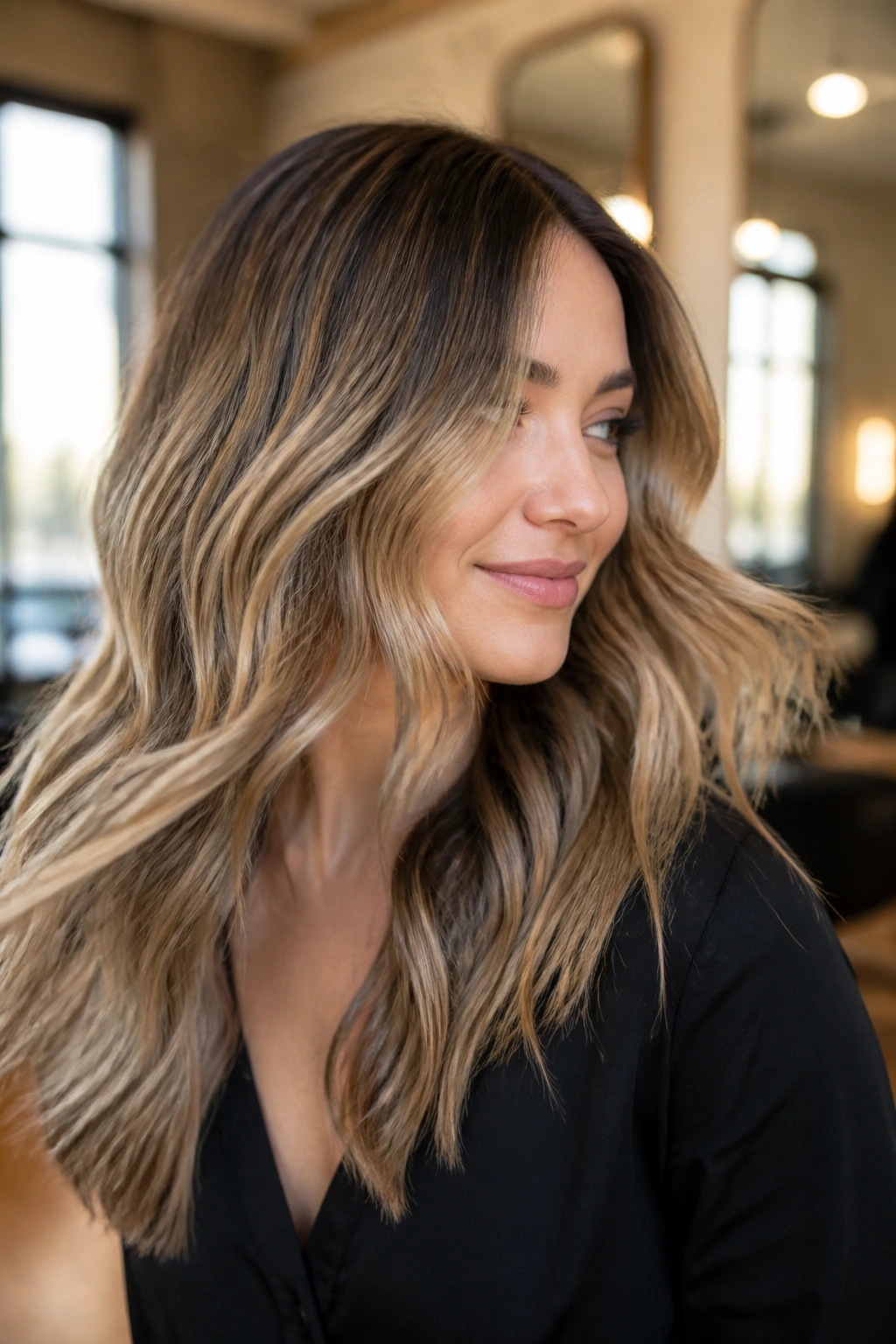
Face Frame: The front pieces should do some work, but not all of it. A soft money piece around the cheekbone or jawline gives the whole color a lift without making the rest of the hair look underdone.
Parting: A middle part shows symmetry and makes the color read more balanced. A side part pushes brightness across the face and can make a subtle balayage look fuller.
Styling: Loose bends, air-dried waves, and round-brush blowouts show the ribbons better than dead-straight hair. If you wear your hair straight most days, ask for finer placement so the dimension still shows.
Wardrobe and makeup: Warm balayage shades like honey, bronze, cinnamon, and maple tend to play nicely with peach blush, soft brown liner, and warm neutrals. Cooler shades like mushroom, ash bronde, and smoky cocoa look cleaner with taupe, berry, plum, and silver-toned jewelry.
Short hair can wear balayage too, but the placement needs to be tighter. On lobs and bobs, the light pieces sit closer together; on long hair, they can breathe a little.
Extra Color Boosters and Personal Tweaks
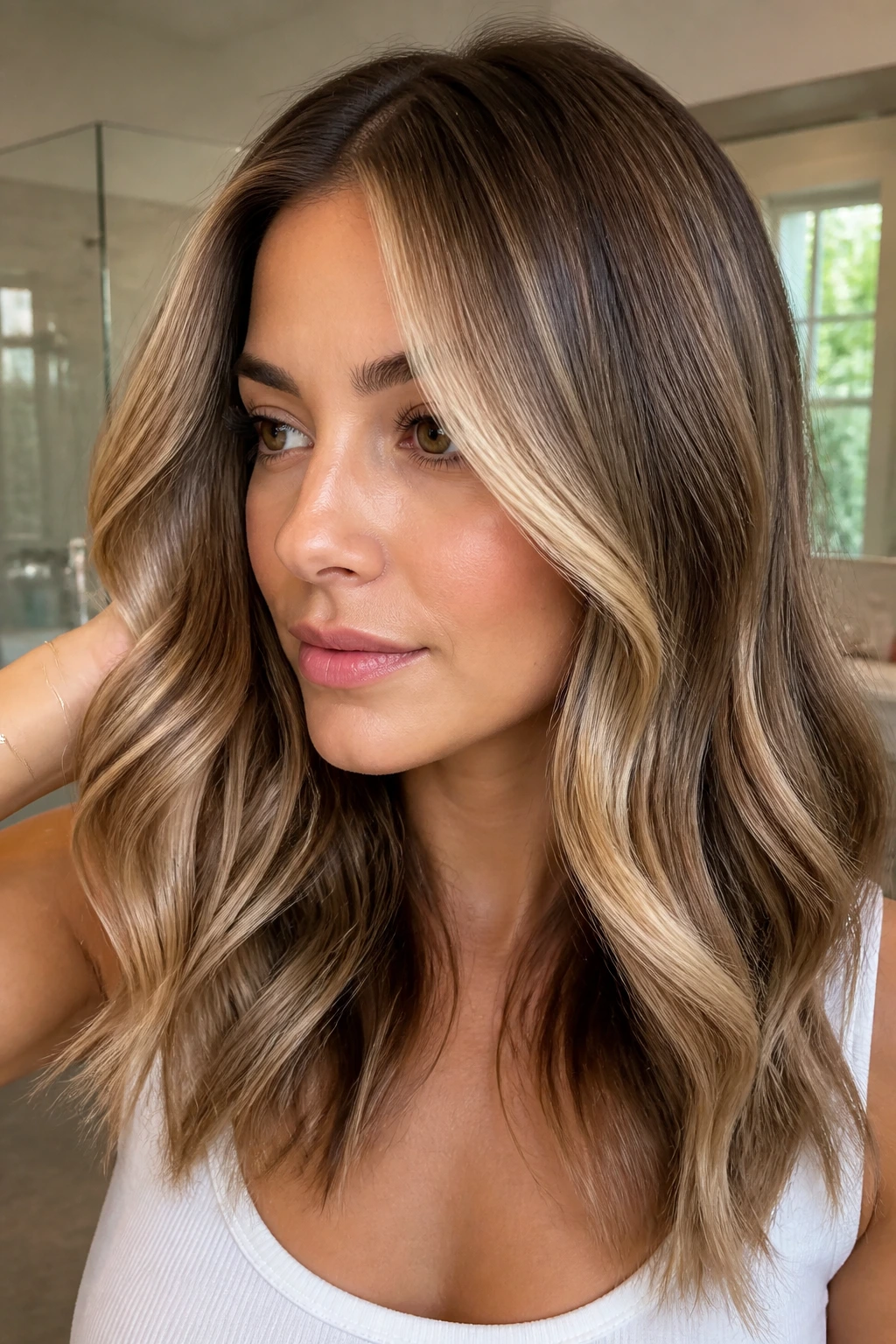
Tone Boost: A clear or tinted gloss every 4 to 6 weeks keeps the ribbons shiny and helps the shade stay in its lane. Beige glosses soften warmth, while gold glosses wake up brunette balayage that looks dull.
Customization: Ask for brighter pieces only where your hair moves naturally — around the face, near the part, and through the surface layers. That keeps the look soft even if the contrast is a little stronger underneath.
Serving Suggestions: If you want the color to show up in photos and not just in real life, add loose waves and a tiny bit of shine serum on the ends. Keep the serum away from the roots or the lift will disappear under a slick finish.
Make-It-Yours: If you love warmth, lean caramel, honey, copper, bronze, or maple. If you prefer cooler hair, push toward mushroom, ash, pearl, walnut smoke, or soft plum. A good balayage can swing either way without losing the softness that makes it wearable.
Common Balayage Mistakes That Flatten the Dimension
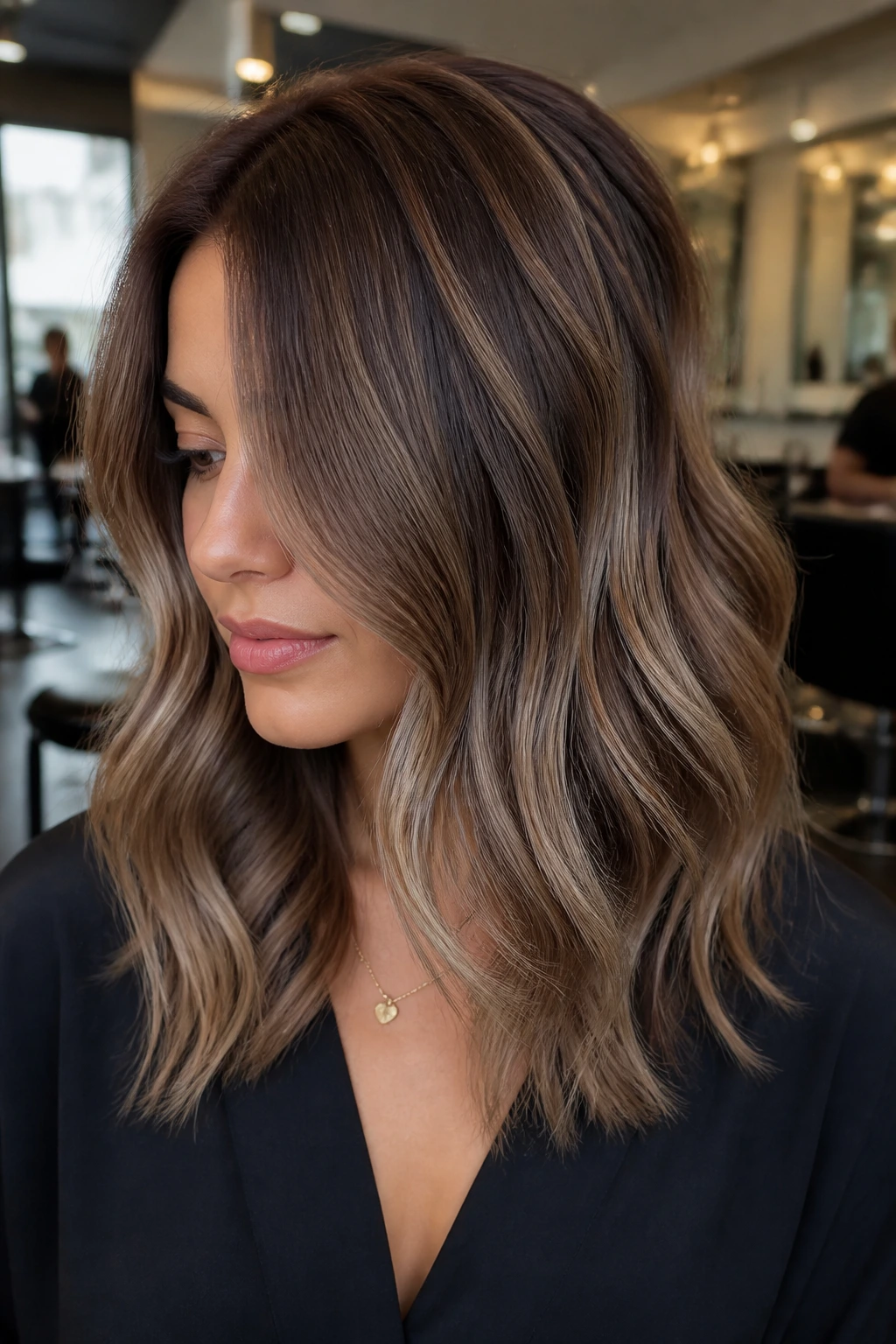
The first mistake is starting the lightening too high. If the brightest pieces live right at the root, the grow-out line gets obvious fast and the style stops looking hand-painted. Ask for a little depth near the scalp, even if you want a brighter result overall.
Another one is chasing one flat toner shade over the entire head. Hair with mixed porosity rarely behaves that neatly. The front pieces may need a slightly different gloss from the ends, or you end up with roots that look rich and ends that look dusty.
Overusing purple shampoo can also wreck a soft balayage. Beige and pearl tones are especially easy to dull if every wash gets a strong toner shampoo. Use it sparingly and let a moisturizing cleanser carry most of the routine.
People also ask for “balayage” but show a photo of chunky highlights. Those are not the same thing. If the inspiration image has thick, obvious stripes, say that plainly at the consultation. Otherwise you may walk out with something too bold for the look you wanted.
Finally, don’t ignore the haircut. A one-length cut can make even good color look heavy. Layers, face-framing pieces, or soft texturing help the ribbons move.
Variations and Adaptations to Try
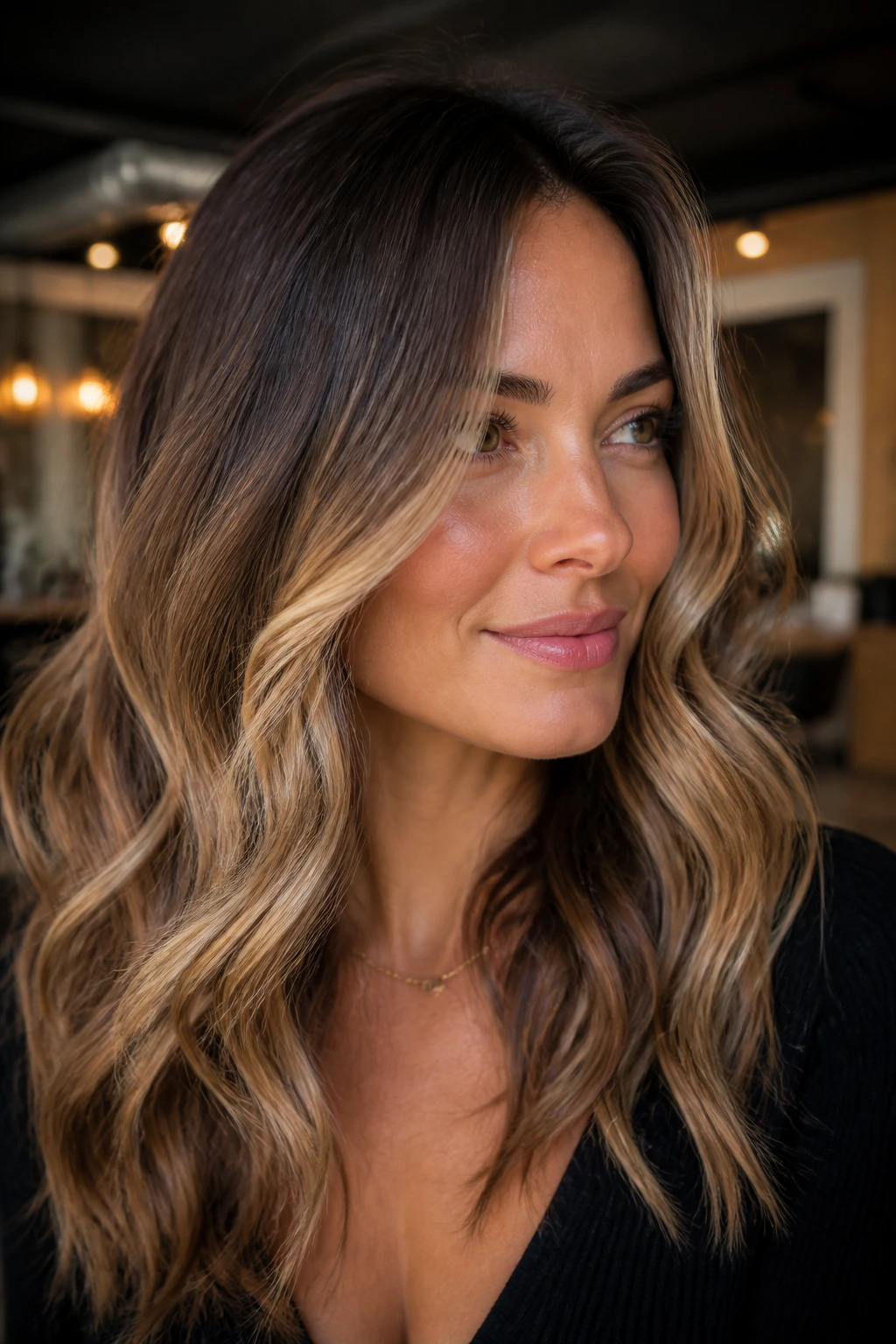
Ultra-Soft Root Melt: Keep the lightening one to two levels away from your natural base and let the root shadow stretch a little farther down. This is the version for anyone who wants the color to fade quietly, not announce itself at week six.
High-Contrast Face Frame: Leave the lengths subdued and brighten only the front pieces. It gives you a noticeable shift around the face while the rest of the head stays soft and low-maintenance.
Curly Ribbon Balayage: Paint the color with the curl pattern in mind, not on a stretched-out section that collapses when dry. Curly hair shows ribbon placement differently, so the brightest pieces need a little more breathing room between them.
Gray-Blend Soft Dimension: Fine balayage ribbons mixed through salt-and-pepper hair can soften the contrast between dark strands and silver ones. The goal is blending, not full coverage, and a cool beige or mushroom gloss usually looks cleaner than gold.
Warm Gloss Refresh: If your brunette balayage faded flat, a warm caramel, honey, or bronze gloss can wake it up without another lightening session. This works well for hair that lost shine before it lost color.
Cool Beige Reset: If the blonde pieces turned yellow or orange, pull them back with a beige or ash-beige toner. Keep the ash controlled; too much and the softness disappears.
Make-Ahead, Maintenance, and Re-Toning Schedule
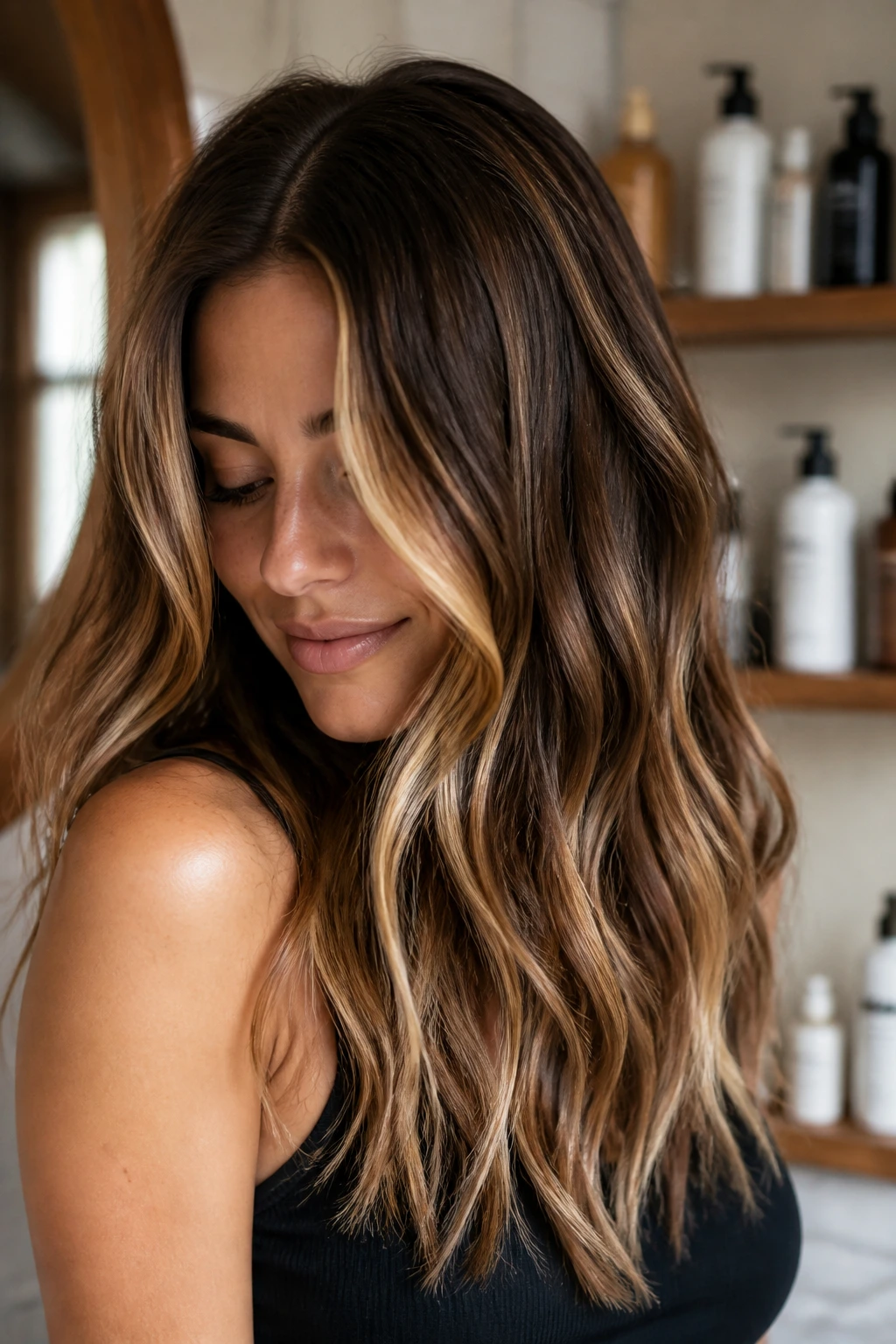
Balayage is one of those hair services that looks best when you plan around the fade instead of fighting it. The color usually settles in after the first wash or two, so the tone you see on the chair is not the final tone you’ll live with. A fresh gloss often looks a touch cooler or richer at first, then softens into the real shade over the next several days.
For home care, a color-safe shampoo and conditioner should be the default. Purple shampoo works well on blonde, beige, and pearl shades about once every 1 to 2 weeks. Blue shampoo helps brunette balayage that starts to pull orange, but overuse will make the color look dull. Deep condition once a week if the ends feel rough or grab tangles.
Most soft balayage looks benefit from a gloss or toner refresh every 4 to 8 weeks, depending on how warm or cool the shade is. A partial refresh — just the face frame and top layer — often stretches the life of the color without changing the whole head. That’s a good move if the rest of your hair still looks fine.
Heat styling changes the schedule too. If you blow-dry or curl your hair often, use heat protectant every single time. Lightened pieces lose shine faster than deeper roots, and once the ends turn dry, the dimension stops reading clean.
Frequently Asked Questions
Is balayage better than highlights for soft dimension?
Usually, yes, if your goal is a blurred, grown-in look. Balayage lets the color sit where it makes the most sense visually, while traditional highlights can create a more uniform, stripe-like pattern.
Can balayage work on dark brown hair?
It can, but the contrast needs to be handled carefully. Dark brown hair usually looks best with caramel, honey, bronze, walnut, or mushroom tones rather than a big jump to pale blonde.
How often should I tone balayage?
Most people need a gloss or toner refresh every 4 to 8 weeks, depending on how fast brass or dullness shows up. Cooler shades tend to need more maintenance than warm ones because ash fades faster.
Will balayage cover gray hair?
Not fully. It can blend gray beautifully if the ribbons are fine and the colorist uses depth around the silver strands, but it does not function like full gray coverage. A soft blend is usually the better expectation.
Does balayage damage hair less than full lightening?
Often it does, because less of the hair is fully saturated with lightener. Still, the ends can dry out, so the difference depends on how much lift is needed and how well the hair is cared for afterward.
What if my balayage turns too warm?
That usually means the toner faded or the hair lifted warmer than planned. A beige or ash-beige gloss can cool it down, and blue shampoo helps brunette pieces that go orange.
Can I get balayage if my hair is curly?
Yes, and curly hair can look beautiful with it. The placement just needs to follow the curl pattern so the bright pieces don’t disappear when the hair springs back up.
How do I ask for the right balayage at a salon?
Bring photos, but also explain what you like in them: the level of brightness, the root depth, and whether you want warm or cool tones. Say you want soft dimension and a blurred grow-out, because that phrase usually keeps everyone focused on the same result.
What if I want change but not much upkeep?
Choose a shade only one to two levels from your natural color and concentrate brightness around the face. That gives you a clear shift without turning your next appointment into a rescue mission.
Soft Color That Grows With You
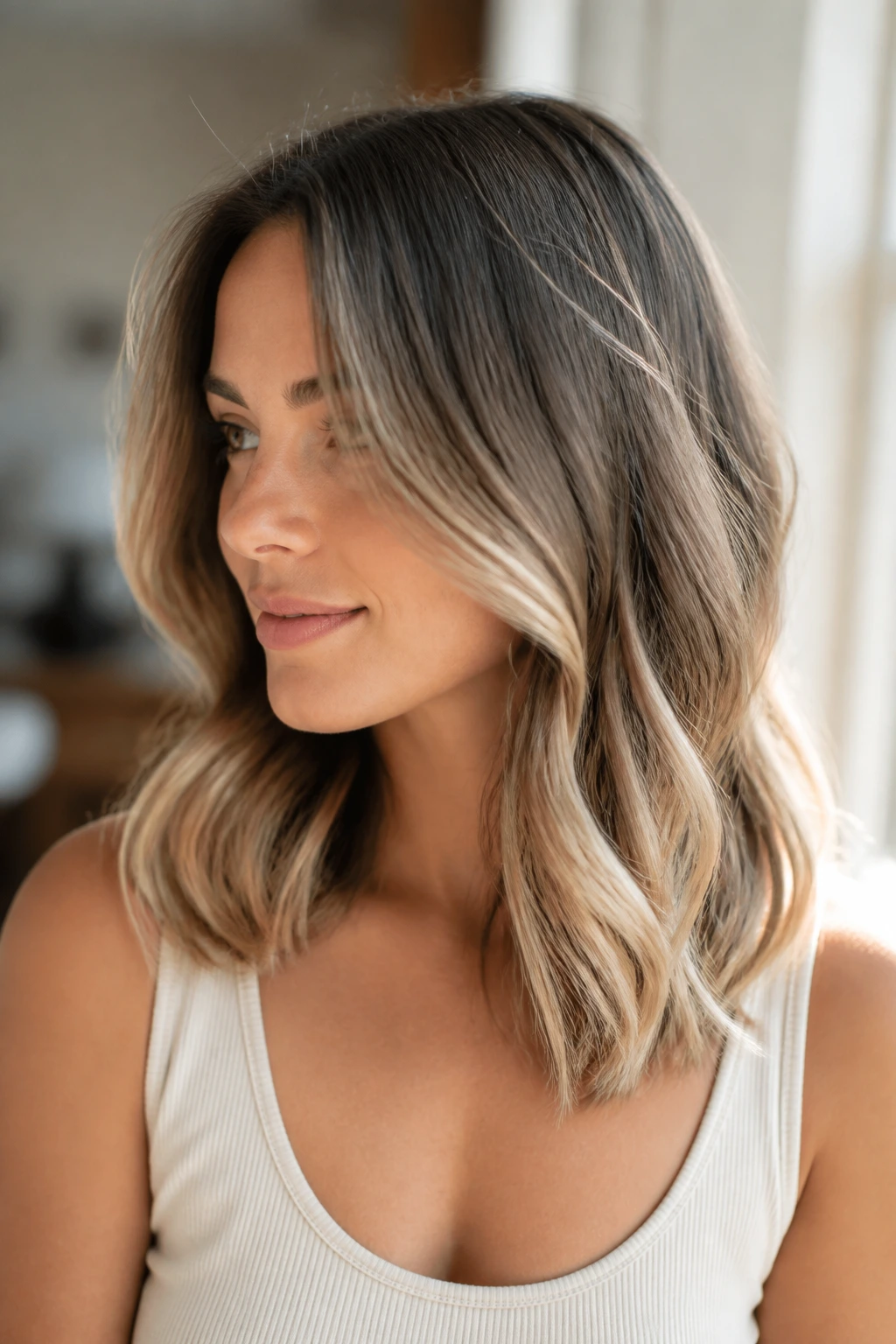
Soft dimensional balayage works because it leaves room for the hair to breathe. The root stays believable, the ribbons move, and the finish can lean warm, cool, smoky, or creamy without losing that hand-painted softness. That’s a better long-term look than chasing brightness for its own sake.
If you bring one thing to a color appointment, bring clarity about contrast. Do you want the face frame to speak loudly and the lengths to whisper, or do you want the whole head to read as a quiet blur of light and dark? Once that’s decided, the right balayage is a lot easier to land.
And honestly, that’s the part I like best. The good versions of these shades don’t demand perfection every few weeks. They settle in, soften up, and keep looking like they belong there.
