



A good hair color idea doesn’t need to shout to get noticed. The prettiest shades usually do something quieter: they soften the face, make the ends look richer, and give the whole head of hair that expensive-looking movement you notice in a mirror before you even notice the cut. That’s the real appeal of hair color ideas for women — not shock value, but color that looks polished when the light hits it from the wrong angle and still holds up when you’re three days past a blowout.
Some shades are built for shine. Some are built for softness. A few are built for attitude, and they earn it honestly. Beige blondes, smoky brunettes, copper glazes, berry reds, lived-in balayage, and those clever “I didn’t try too hard” melts all do different jobs, which is why one photo on a phone screen can send you in three directions at once. The trick is knowing which finish suits your base color, your maintenance tolerance, and the way you actually wear your hair.
And yes, the details matter. A beige blonde that goes too yellow looks flat. A brunette with too much ash can look dusty. Copper that’s been over-toned starts to feel sleepy instead of lively. The best shades have a point of view. They still behave like hair, not paint. Keep that in mind as you scroll, because the good ones usually have one thing in common: depth at the root, tone in the mids, and a finish that doesn’t fight the haircut.
Why These Hair Color Ideas Keep Working
-
Soft grow-out: Root shadow and balayage give you regrowth that fades into the look instead of drawing a hard line every four weeks.
-
Tone control: Beige, copper, ash, berry, and bronze each solve a different problem, from brassiness to flatness to washed-out skin.
-
Light movement: Ribbons, money pieces, and face-framing highlights catch light when hair swings, which is why these colors still look alive in motion.
-
Salon flexibility: Most of these ideas can be built on a brunette or blonde base without stripping your hair to zero and starting over.
-
Maintenance choices: You can pick a shade that needs a weekly purple shampoo or one that only needs a gloss every six to eight weeks.
-
Real-life wearability: These colors work in ponytails, buns, waves, and straight styles instead of only looking good in a salon chair photo.
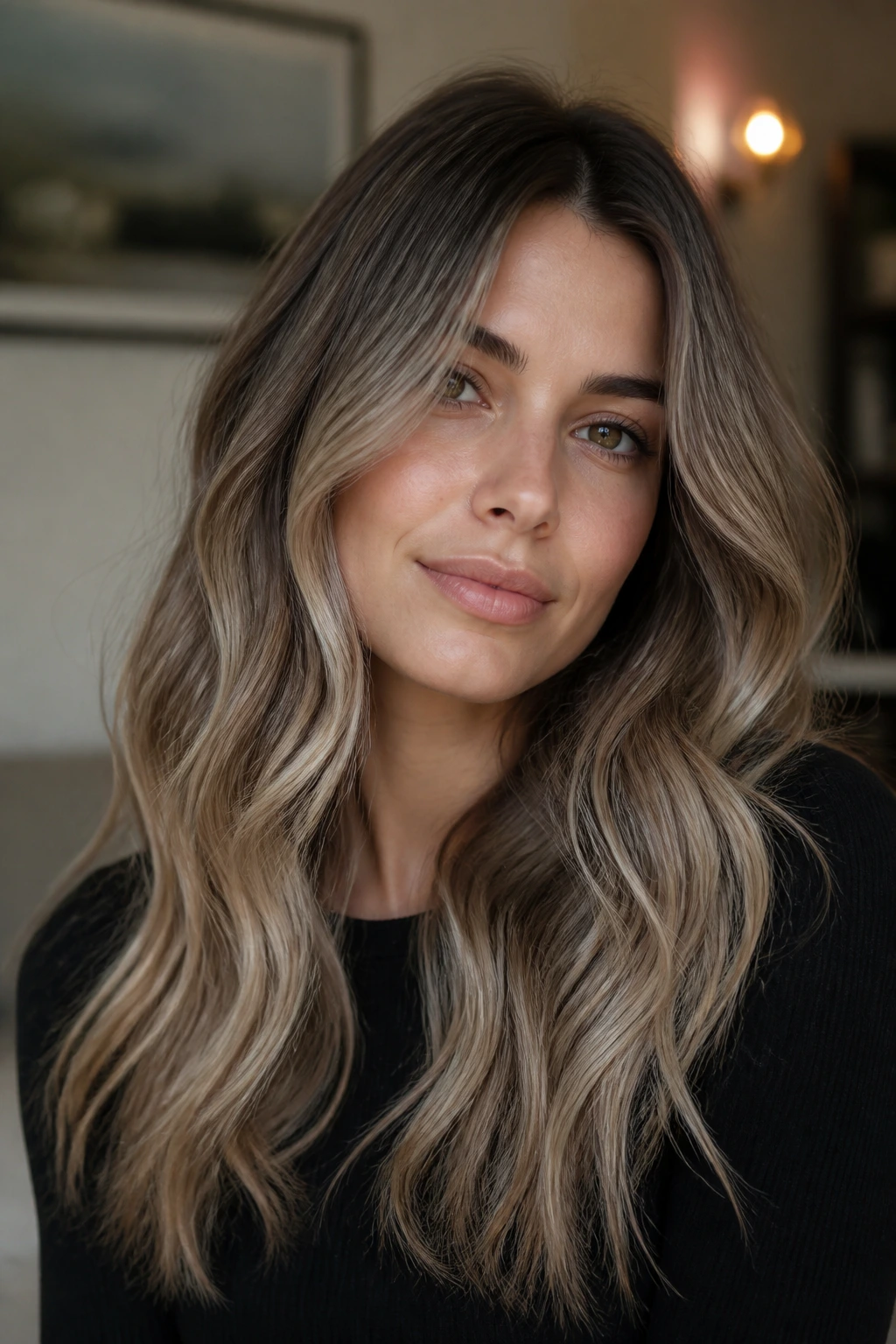
1. Beige Blonde Balayage with Soft Root Shadow
Beige blonde is the shade people ask for when they want blonde without the screaming yellow that so often sneaks in. The root shadow keeps it believable, and the balayage lets the lighter pieces drift through the mids and ends instead of sitting in a harsh band. On medium to light bases, this one reads clean, soft, and expensive-looking in the most practical way.
What Makes It Pretty
Ask for a level 7 to 9 beige toner with a root shadow that stays about one shade deeper than the lightest pieces. That tiny shift matters. It stops the whole head from going flat and keeps the blonde from looking like one solid block.
Best on hair that can handle lightening without turning fragile at the ends. If your hair already feels dry when you run your fingers through it, keep the highlight placement a little lower and let the root do more of the visual work.
2. Cherry Cola Brunette with a Glossy Finish
Cherry cola brunette is one of those shades that looks almost black in low light and then flashes red-violet when the sun catches it. That’s the fun of it. You get richness first, then a little surprise when the hair moves. It’s a good pick if you want depth but don’t want a flat espresso look.
The finish is the point here. A gloss every six to eight weeks keeps the red-violet note from getting muddy. Without that shine, the color loses the whole cherry-cola effect and starts to feel like a plain dark brown with regrets.
3. Mushroom Brown with Cool Beige Ends
Mushroom brown is for the person who keeps saving cool-toned brunette photos and thinking, “That, but softer.” It’s smoky without being gray, and the beige ends keep the whole thing from feeling heavy. On wavy hair, it looks especially good because the different tones separate when the hair bends.
Why It Works
The magic is in the balance. You want a neutral-to-cool brown at the root, then a beige finish through the mids and ends so the color doesn’t go muddy. Too much ash and the hair looks dusty. Too much warmth and you lose the mushroom effect completely.
This is one of the best choices if your natural hair already pulls red or orange when lightened. A cool beige toner can calm that down without making the result icy or severe.
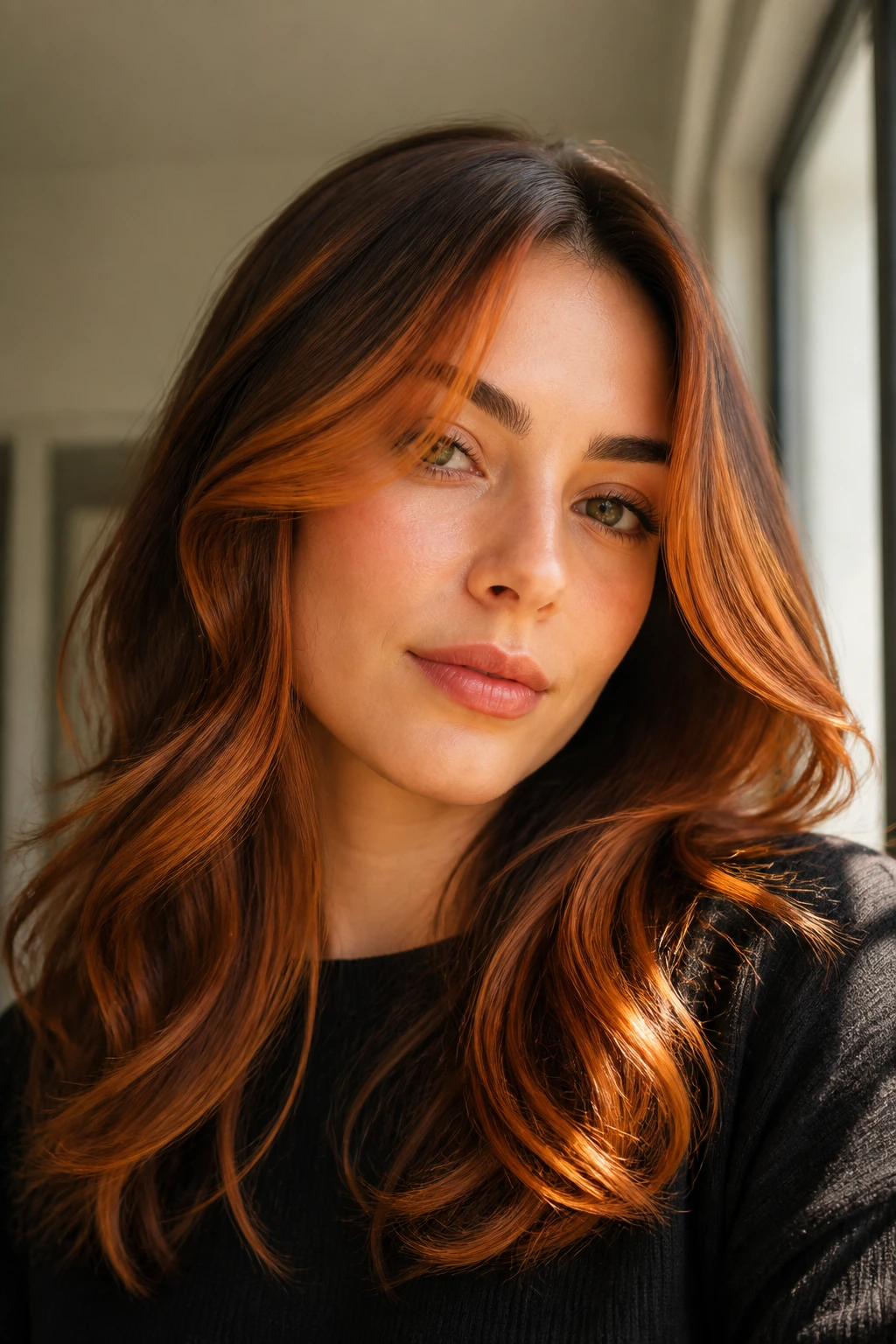
4. Copper Spice Layers Around the Face
Copper spice around the face gives you the warmth of copper without committing to a full-head bright red. The front pieces do the talking. The rest of the hair can stay deeper, which keeps the color from becoming loud or hard to wear with everyday makeup.
The best version has a little cinnamon, a little burnt orange, and enough depth underneath to keep the face frame from floating away from the rest of the cut. It’s especially good with layers, because the brighter pieces move when you turn your head. Flat one-length hair can still wear it, but the effect is much softer.
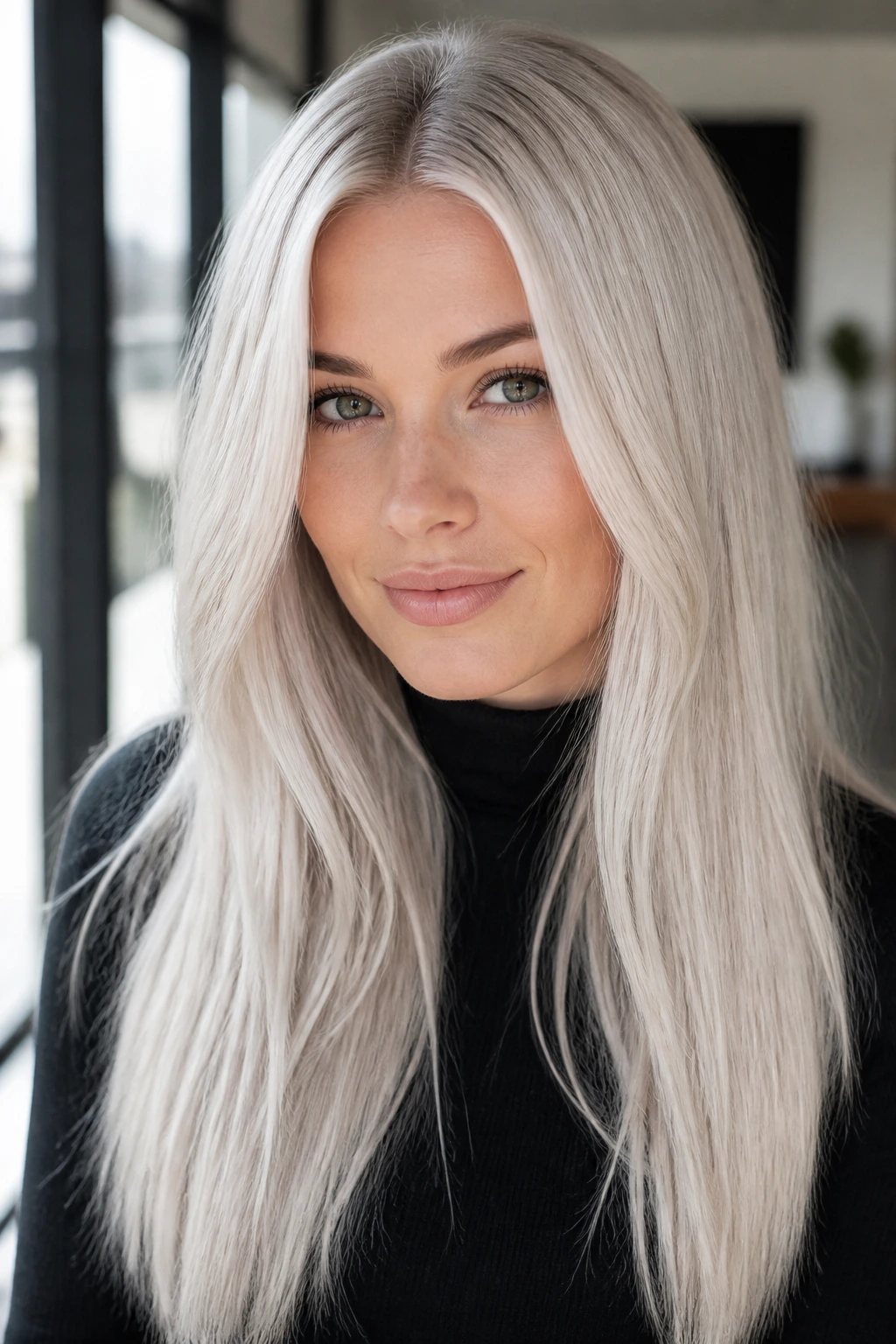
5. Icy Platinum Blonde with Clean Roots
Icy platinum is not shy. It’s crisp, pale, and very exacting about maintenance. When it’s done well, the color looks almost silver-white in some light and creamy in others, which is a nice trick if you like a sharp blonde that still feels polished. When it’s done badly, it looks yellow at the scalp and brittle at the ends. There’s no middle ground.
Best for a High-Contrast Look
This shade usually needs pre-lightening to a very pale yellow before toning. If your hair lifts slowly or has old box dye on it, expect more than one session. That’s not drama. That’s chemistry.
Keep the root area clean and the toner cool, but do not over-tone the lengths. Too much violet or pearl and the hair can turn flat and chalky.
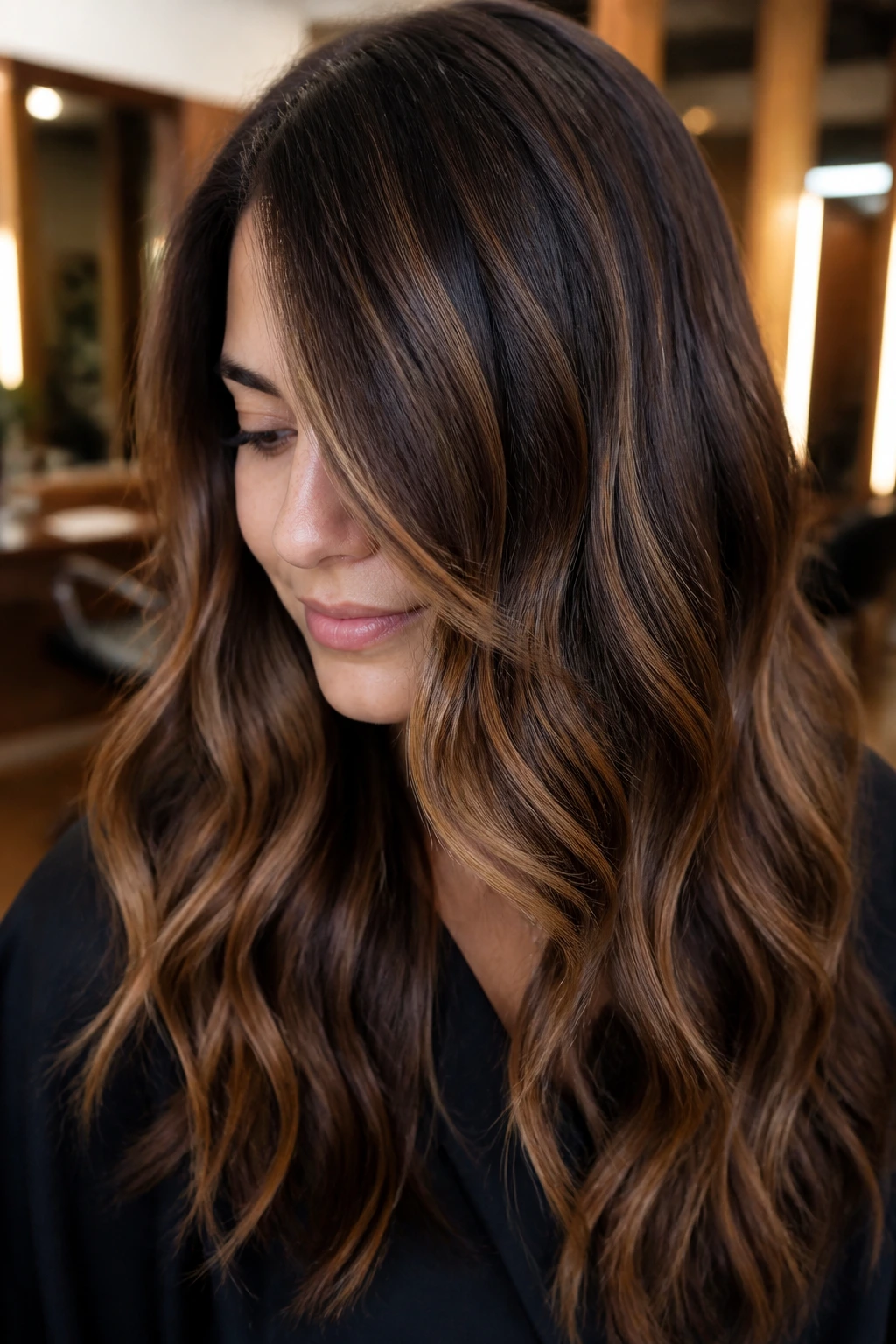
6. Caramel Ribbon Highlights on Dark Brown Hair
Caramel ribbons are the reliable friend in this group. They wake up dark brown hair without making it look bleached-out, and they’re especially flattering on waves, curls, and layered cuts. The contrast is soft enough that regrowth doesn’t bother you after two weeks.
A good caramel highlight doesn’t sit on top of the hair. It slips through it. Think medium-golden brown, not orange, and ask for some deeper lowlights underneath if your hair is thick. That extra depth keeps the whole look from becoming striped.
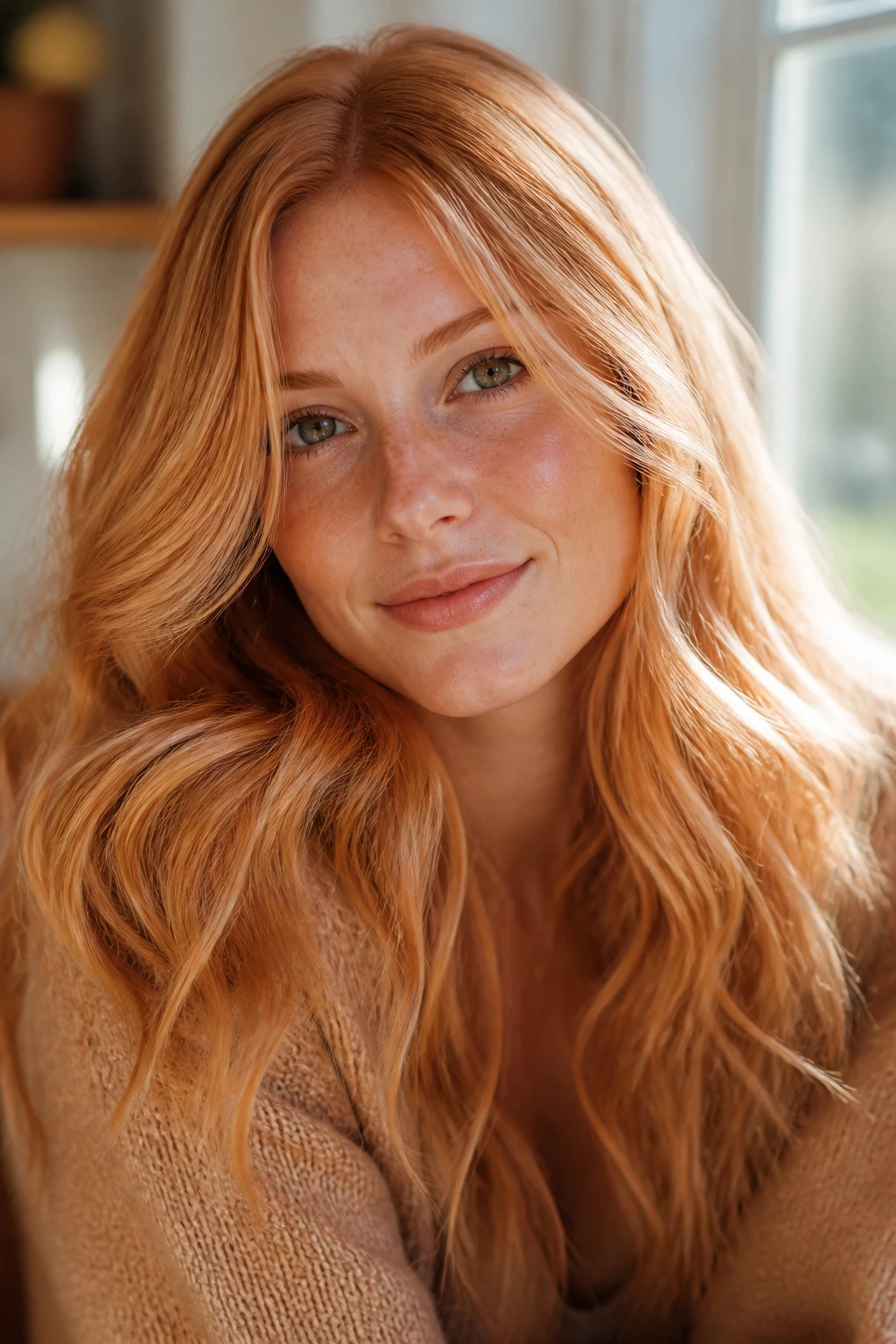
7. Strawberry Blonde with Peachy Warmth
Strawberry blonde sits in that sweet spot between blonde and red that a lot of people try once and then keep coming back to. The peachy warmth makes skin look brighter without the color turning neon. It’s a gentle red, really. The kind that looks like sunlight, not dye.
It works best on lighter bases, usually around level 8 or higher, because the peach and strawberry tones need a pale enough canvas to stay soft. On darker hair, it often turns copper first, which is not the same thing. Nice, yes. Strawberry blonde, no.
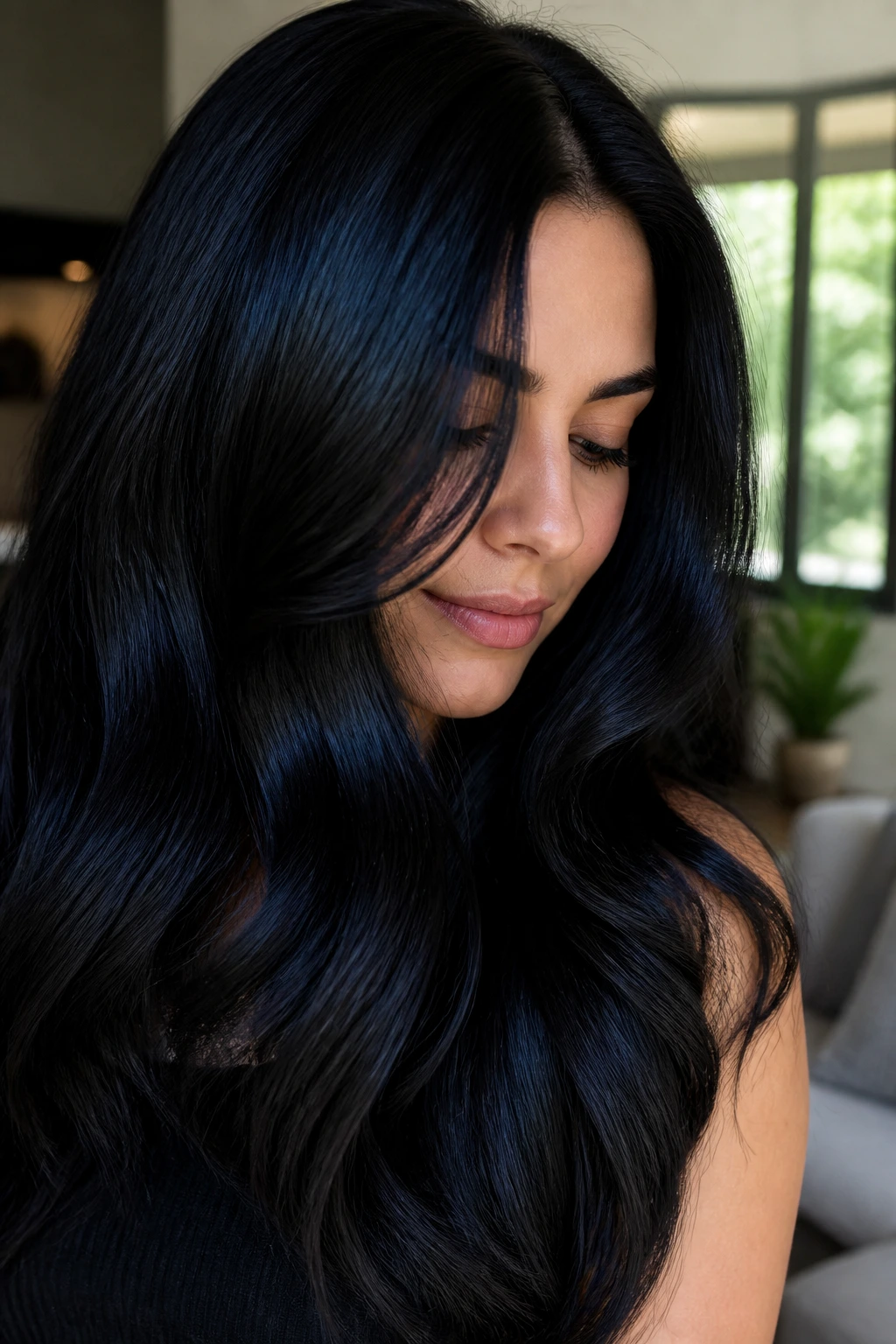
8. Espresso Black with Blue-Black Shine
Espresso black is deep, glossy, and a little serious in the best way. Blue-black shine gives the shade a reflective finish so it doesn’t collapse into a dead matte block. It’s gorgeous on thick hair, sleek bobs, and long cuts that move.
The key is restraint. You want black that still shows a hint of depth at the edges, not one dense painted surface. A clear gloss or blue-toned shine treatment can keep the color feeling rich, especially if the hair tends to fade warm at the ends.
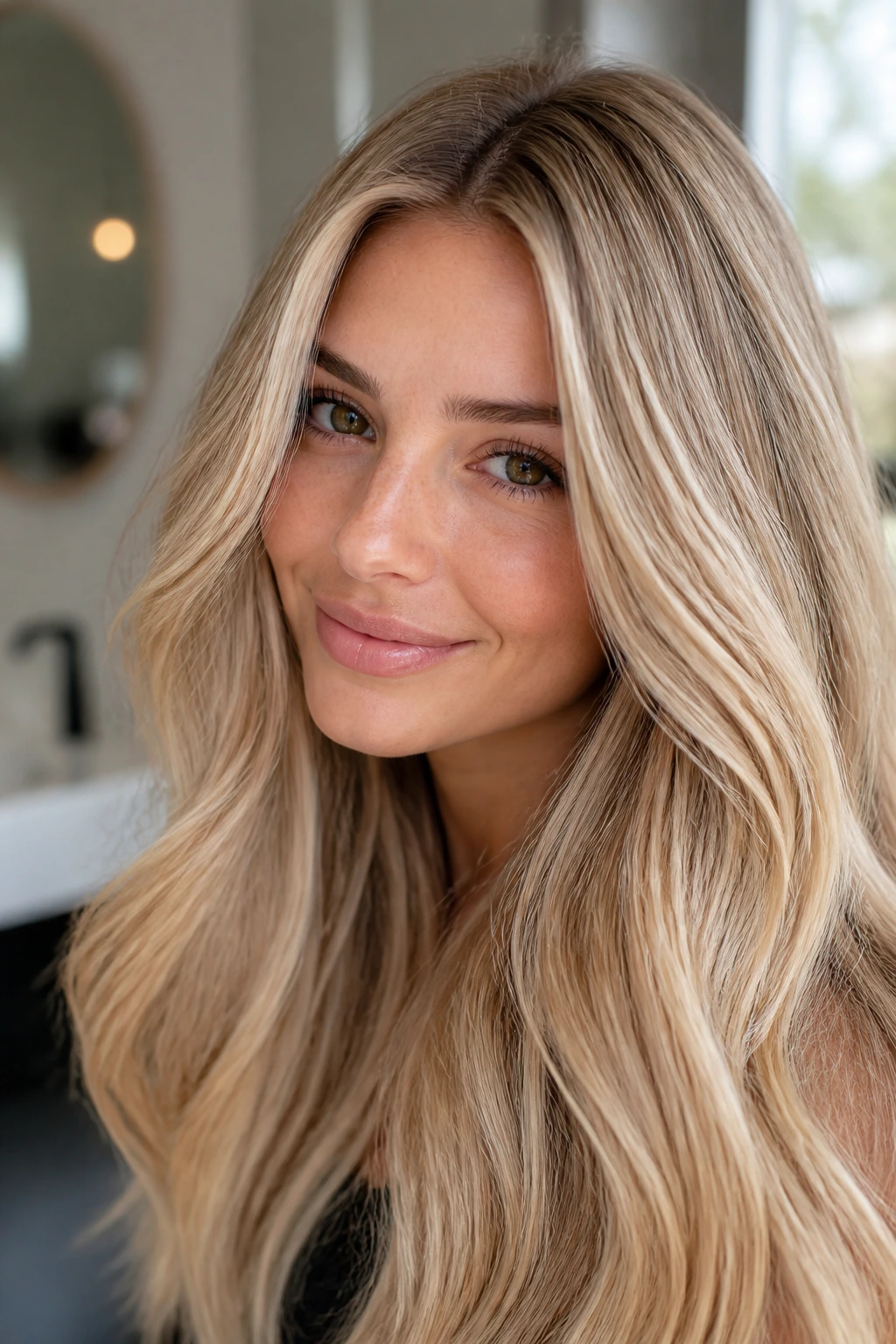
9. Champagne Blonde with Fine Micro-Highlights
Champagne blonde feels airy because the highlights are tiny. That’s the trick. Instead of big, obvious streaks, you get fine micro-pieces that make the hair sparkle in motion. It looks especially good on fine hair, where chunky highlights can start to look patchy fast.
How to Wear It
Ask for babylights around the part line and face, then a soft champagne toner that stays beige rather than yellow-gold. If you’ve ever looked at your blonde in daylight and thought it was too brassy, this is the shade family that usually fixes that problem without going all the way to platinum.
A middle part shows it cleanly. So does a soft wave.
10. Rose Gold Blonde with a Sheer Melt
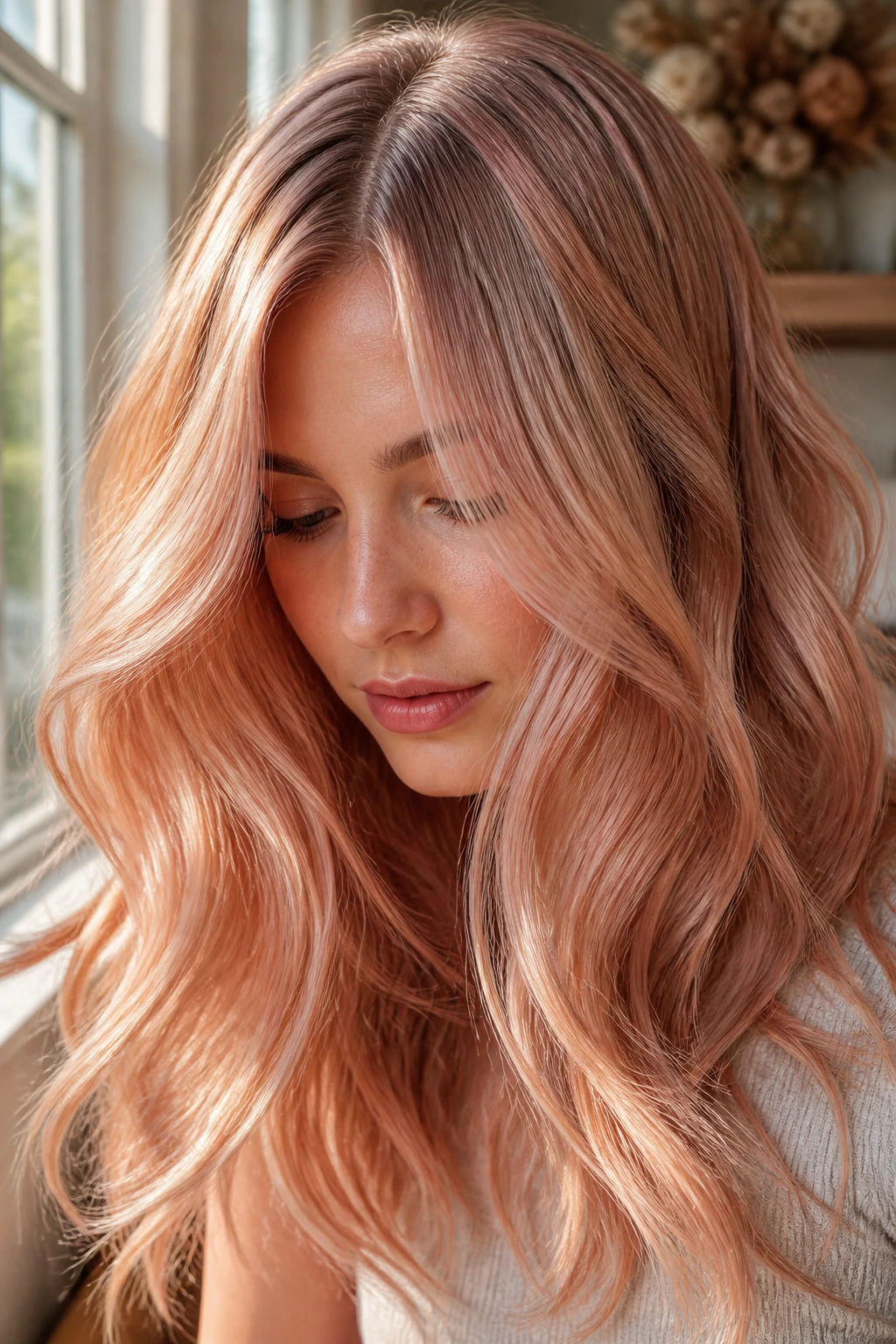
Rose gold is a strange little color because it sounds loud and often looks delicate. The best version isn’t pink hair. It’s blonde hair with a blush-gold cast that shows more in movement than in a still photo. That’s what makes it wearable.
This shade works best on pre-lightened blonde hair, especially if the base is already clean and pale. A sheer rose gold gloss fades into a soft peachy beige, which is honestly half the charm. You get a color that changes shape over time instead of dropping off a cliff.
11. Chestnut Brunette with Honey Ribbons
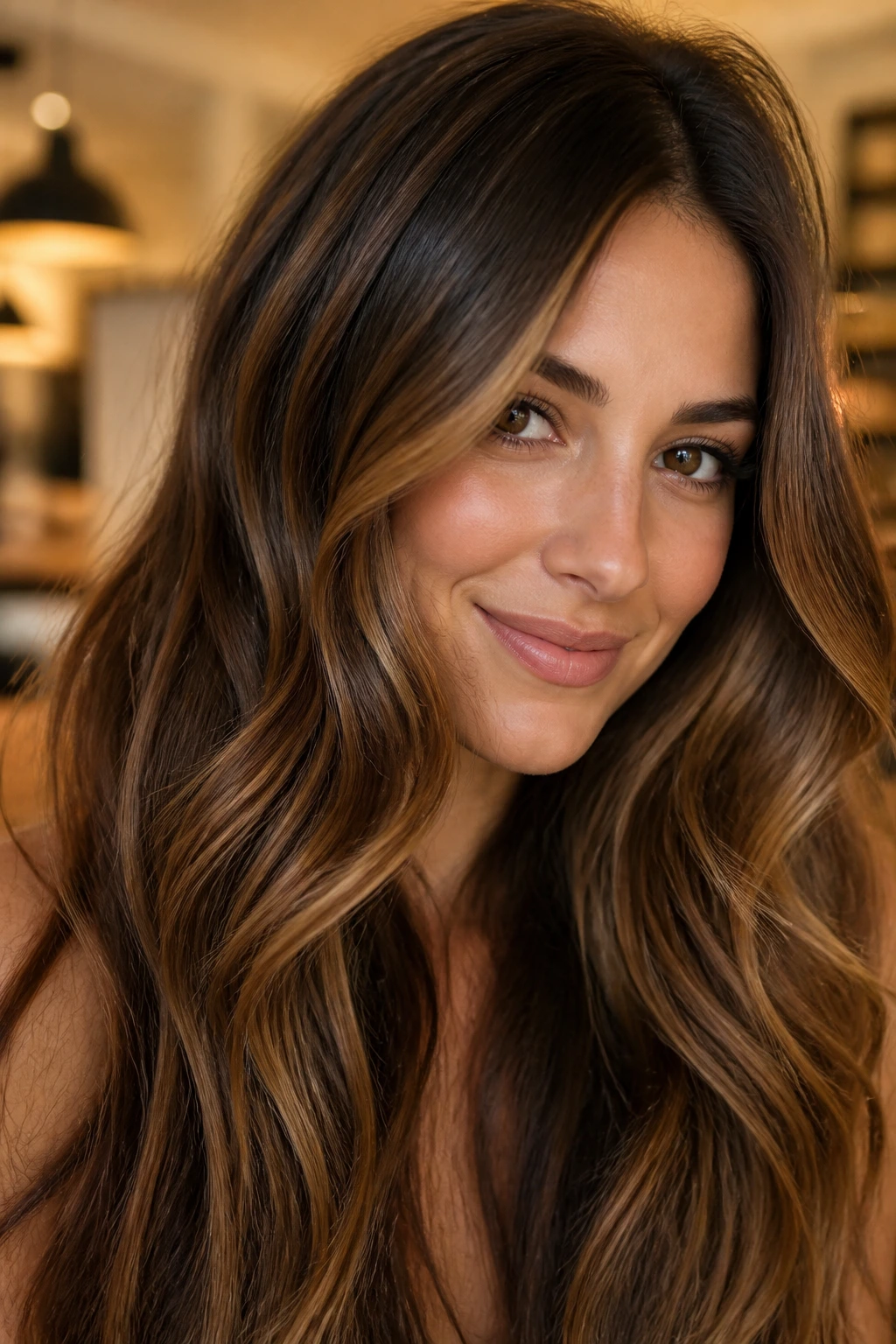
Chestnut brunette with honey ribbons is warm, flattering, and quietly bright. The chestnut base gives you that rich brown foundation, and the honey pieces sit on top like sunlight caught in the hair. It’s not trying to be blonde. That’s why it works.
The ribbons should be fine enough to move. If they’re too thick, you lose the chestnut depth and end up with something that looks chunky. Keep the brightness around the face and through the upper mids, then leave the lower lengths a touch darker for dimension.
12. Smoky Lilac on Pre-Lightened Hair
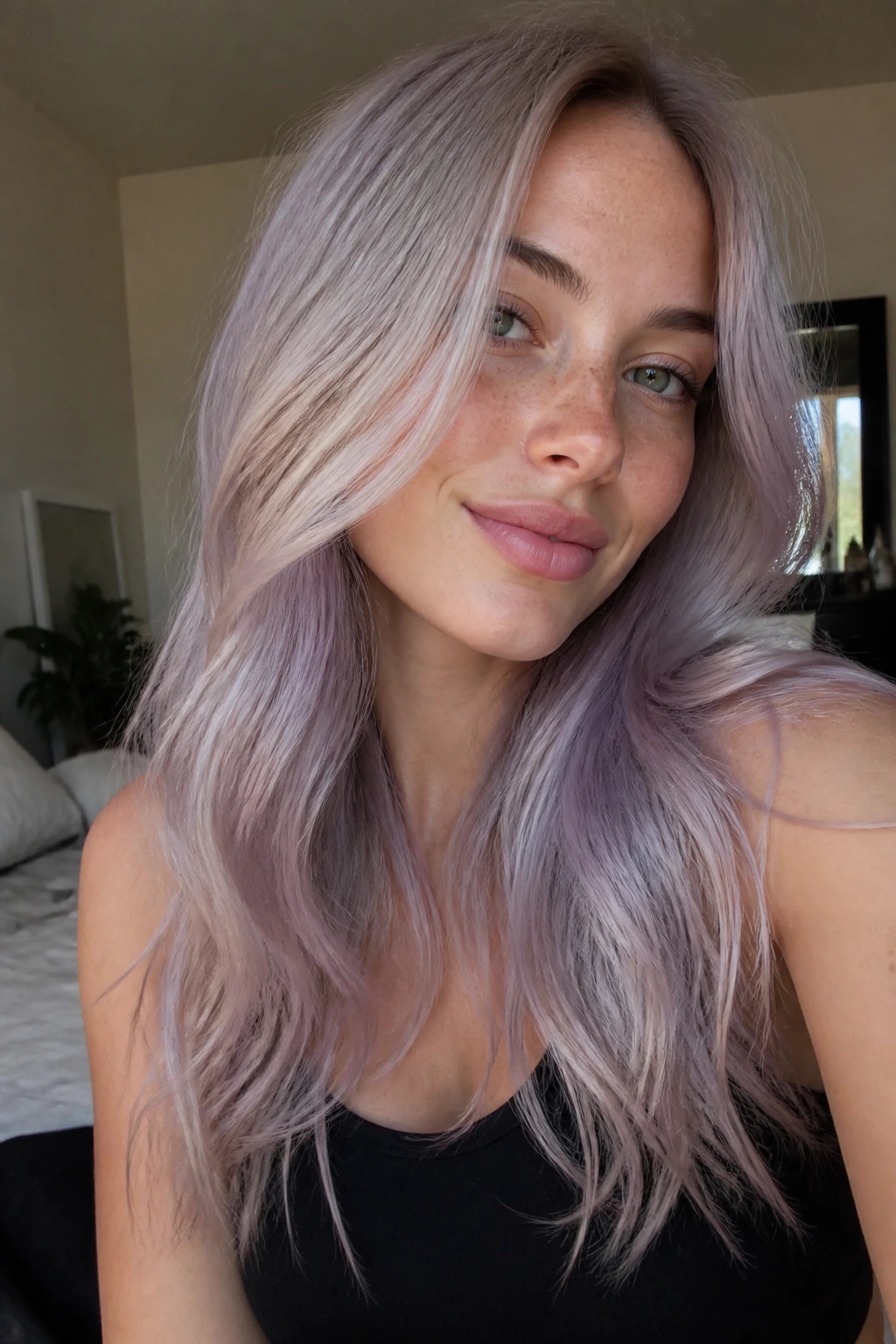
Smoky lilac is for someone who wants fashion color but not candy-bright fantasy hair. The smoky part matters as much as the lilac. It keeps the shade soft, muted, and a little moody instead of screaming pastel. On a pale blonde base, the color looks almost like lavender haze.
What to Know Before You Book It
This only works well on hair that’s already lightened enough to take pastel pigment. If the base is yellow, the lilac can pull muddy. If the base is too dark, you’ll get a hint of color and no real lilac.
It fades fast. That’s not a flaw if you like changing your tone often. It is a flaw if you want a set-it-and-forget-it shade.
13. Cinnamon Copper with Lived-In Depth
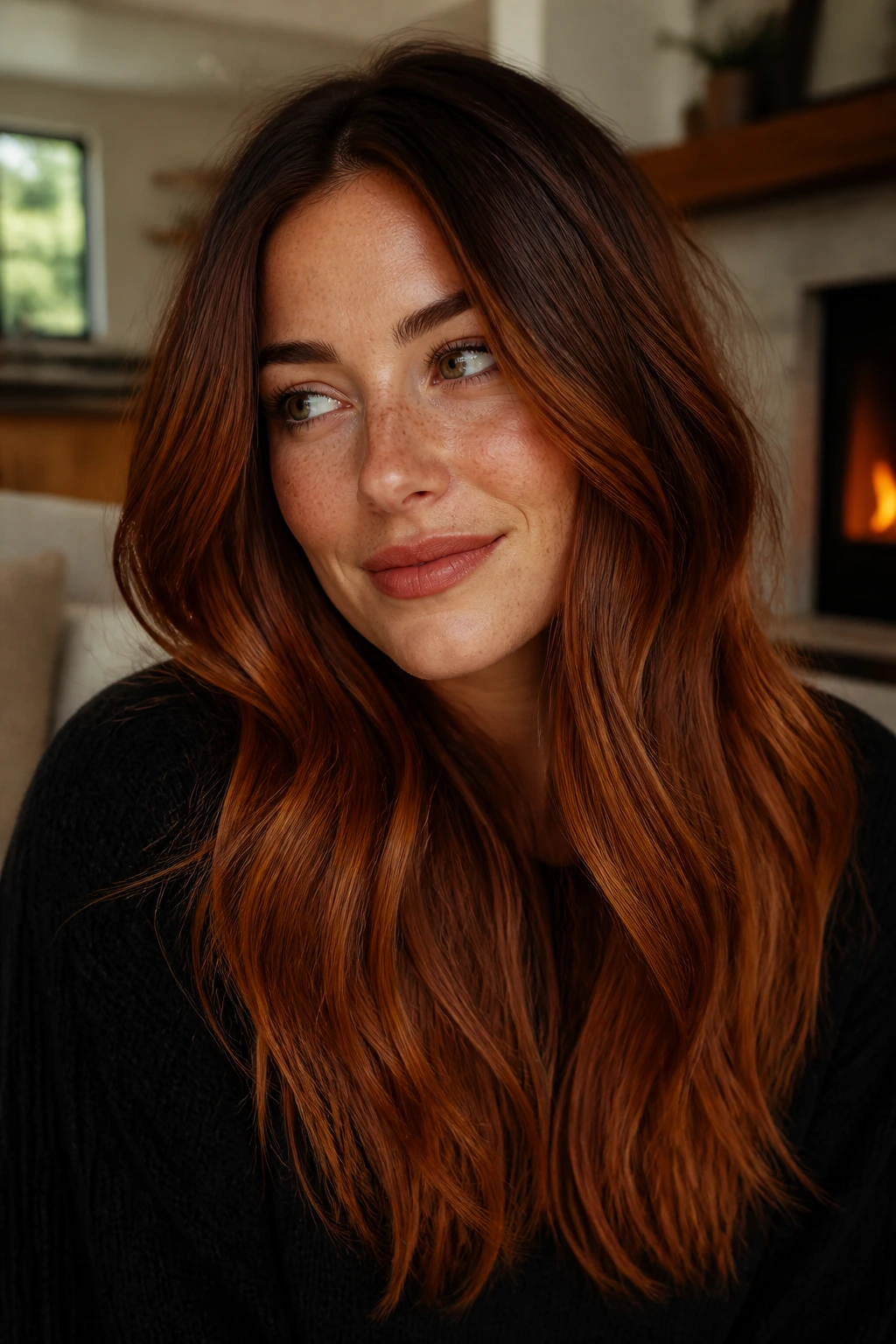
Cinnamon copper is richer and deeper than bright copper, which makes it easier to wear if you like warmth but don’t want the color to take over your face. The lived-in depth keeps the roots from looking too fresh and gives the mids room to glow. It’s one of the better warm shades for fall, but I’d wear it any time.
The best version has a darker root, then cinnamon through the lengths with copper catching the light at the ends. That combination keeps it dimensional. One solid copper block can look flat fast. This one doesn’t.
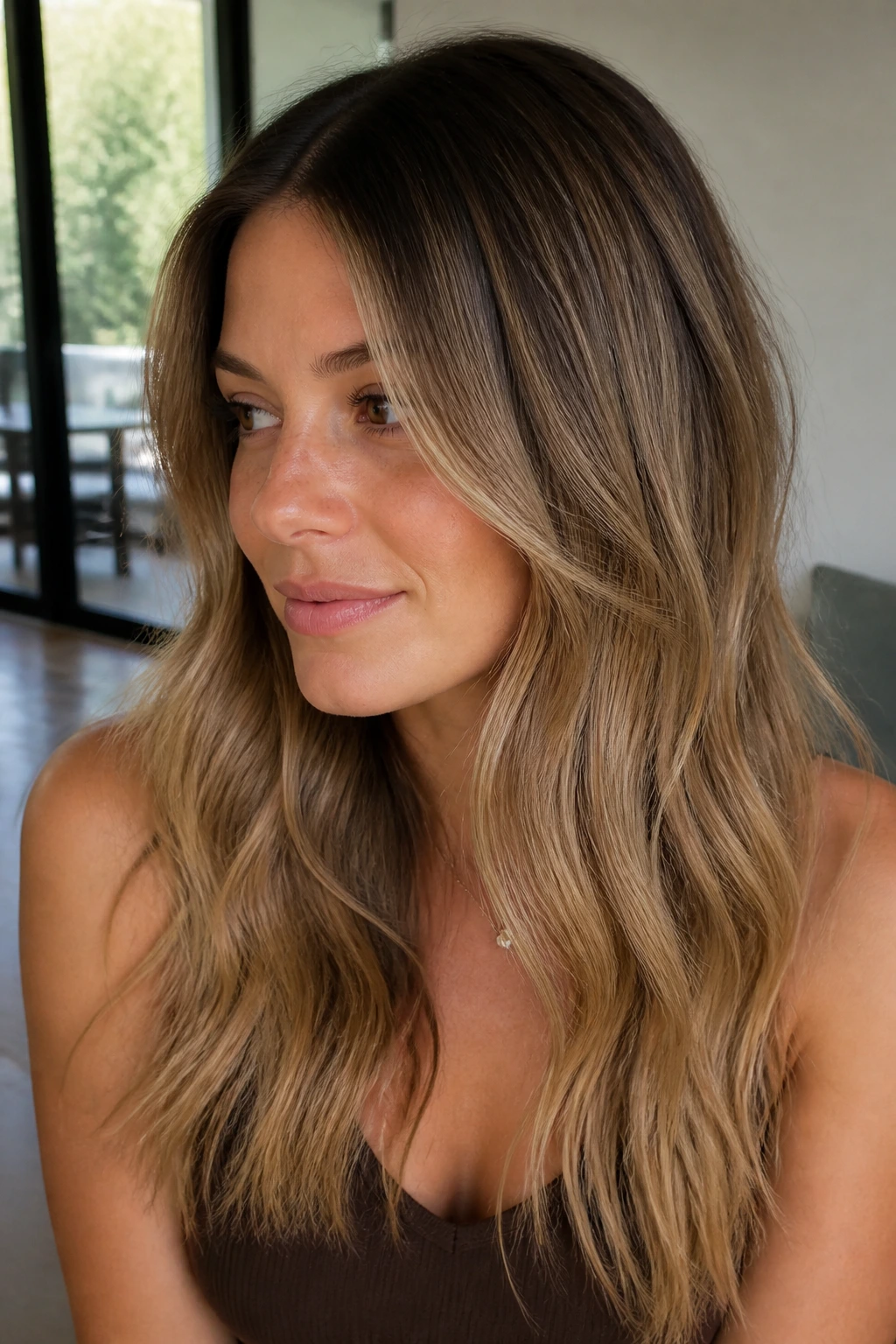
14. Toffee Bronde with Face-Framing Brightness
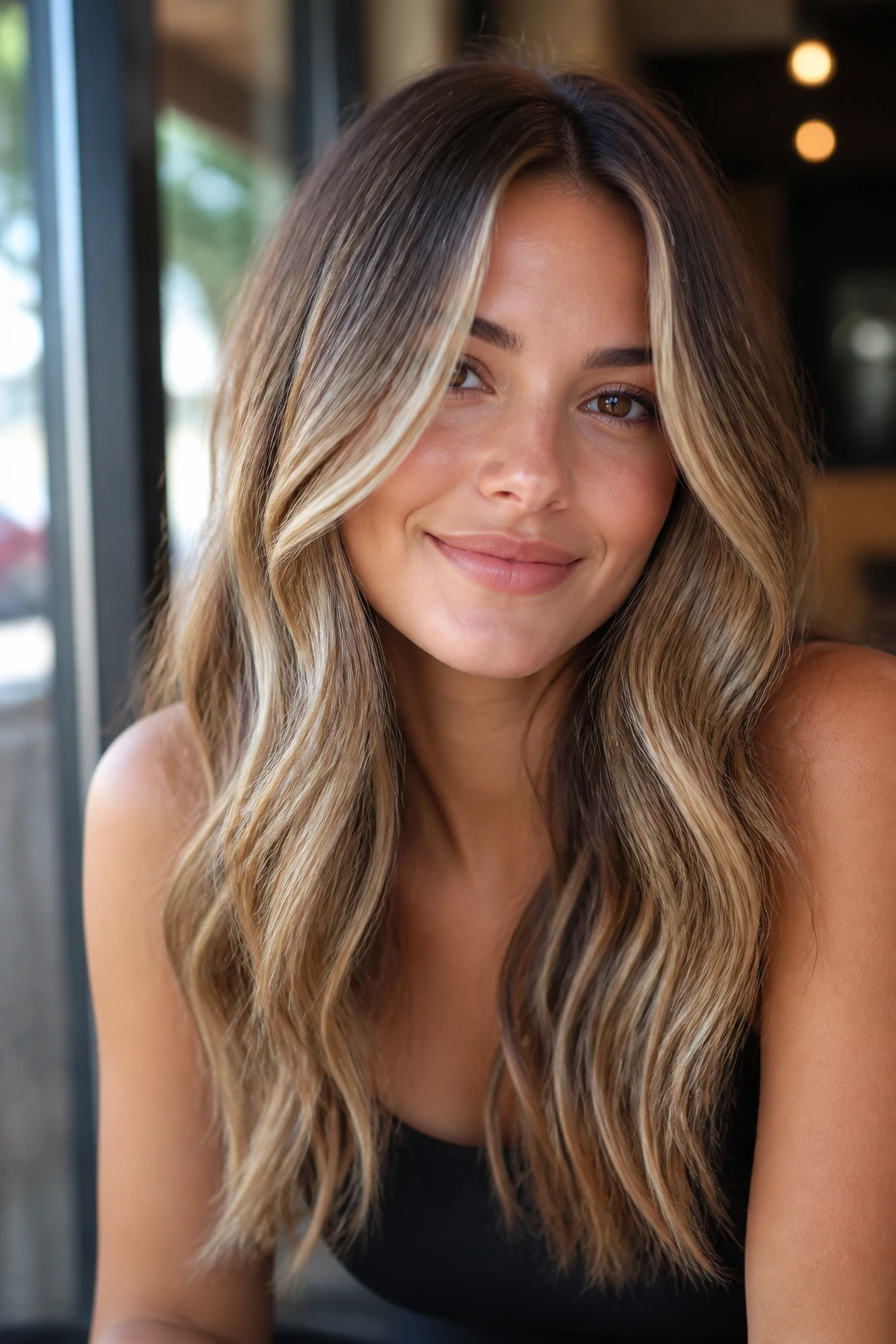
Toffee bronde lives in the safe middle ground between brunette and blonde, which is exactly why so many people love it. It gives you lighter pieces without giving up the richness of brown. Add brighter face-framing sections and the whole style wakes up.
This is a strong choice if you want your hair to look lighter in photos but still believable at the grocery store. The face frame does the heavy lifting. The rest can stay soft and toffee-toned so the grow-out doesn’t feel dramatic.
15. Vanilla Cream Blonde with a Soft Shadow Root
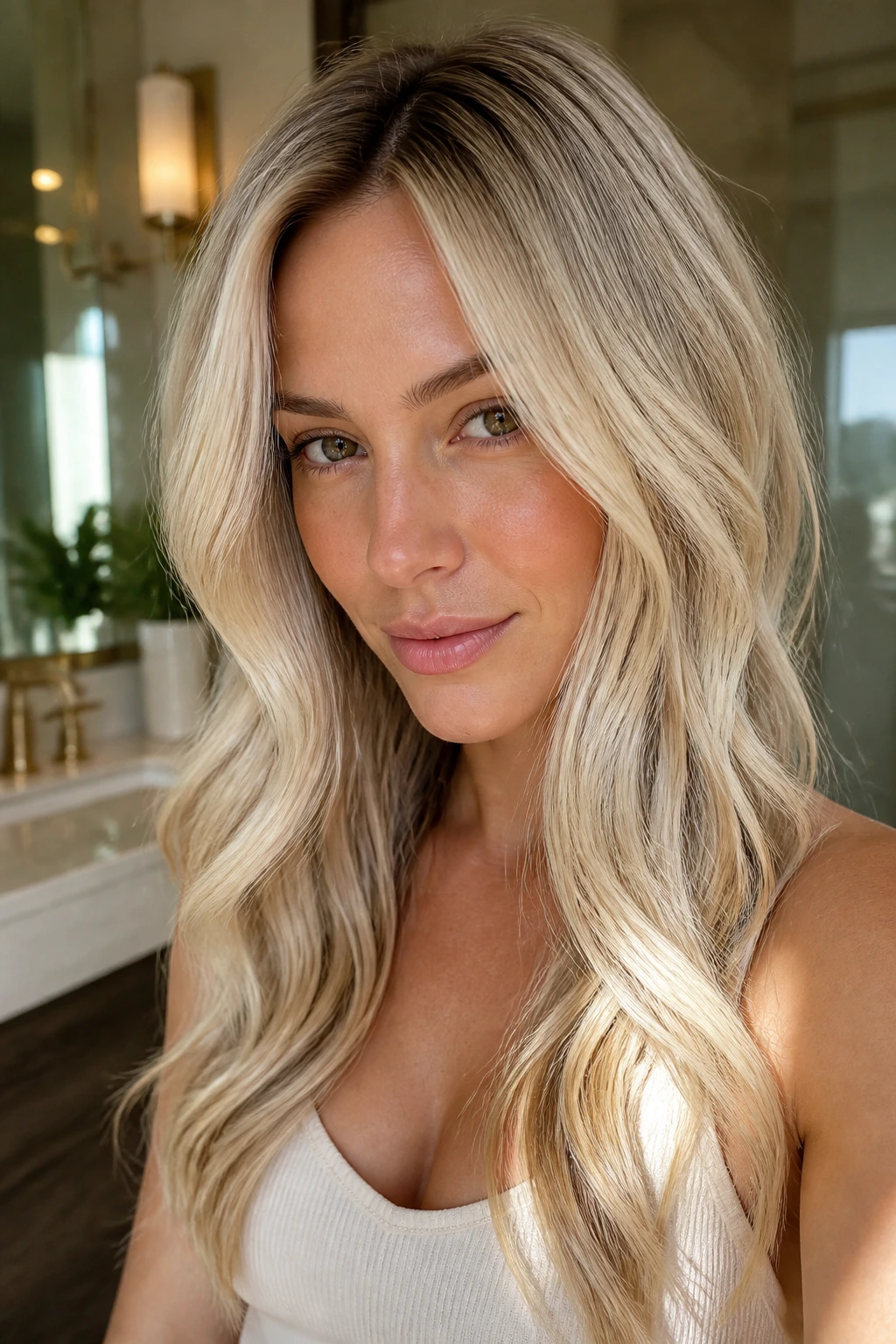
Vanilla cream blonde has enough warmth to feel creamy, but not so much yellow that it drifts into brass. The shadow root keeps it grounded and buys you time between salon visits. Without that root, the shade can get a little too bright and a little too fragile-looking.
A Good Match for Pale Blonde Goals
This works best when the ends are toned to a soft cream rather than a stark white blonde. Think milk, not bleach. The effect is calmer, and calmer usually ages better on the head than on the mood board.
Purple shampoo helps here, but use it sparingly. Once a week is usually enough.
16. Auburn Gloss on Medium Brown Hair
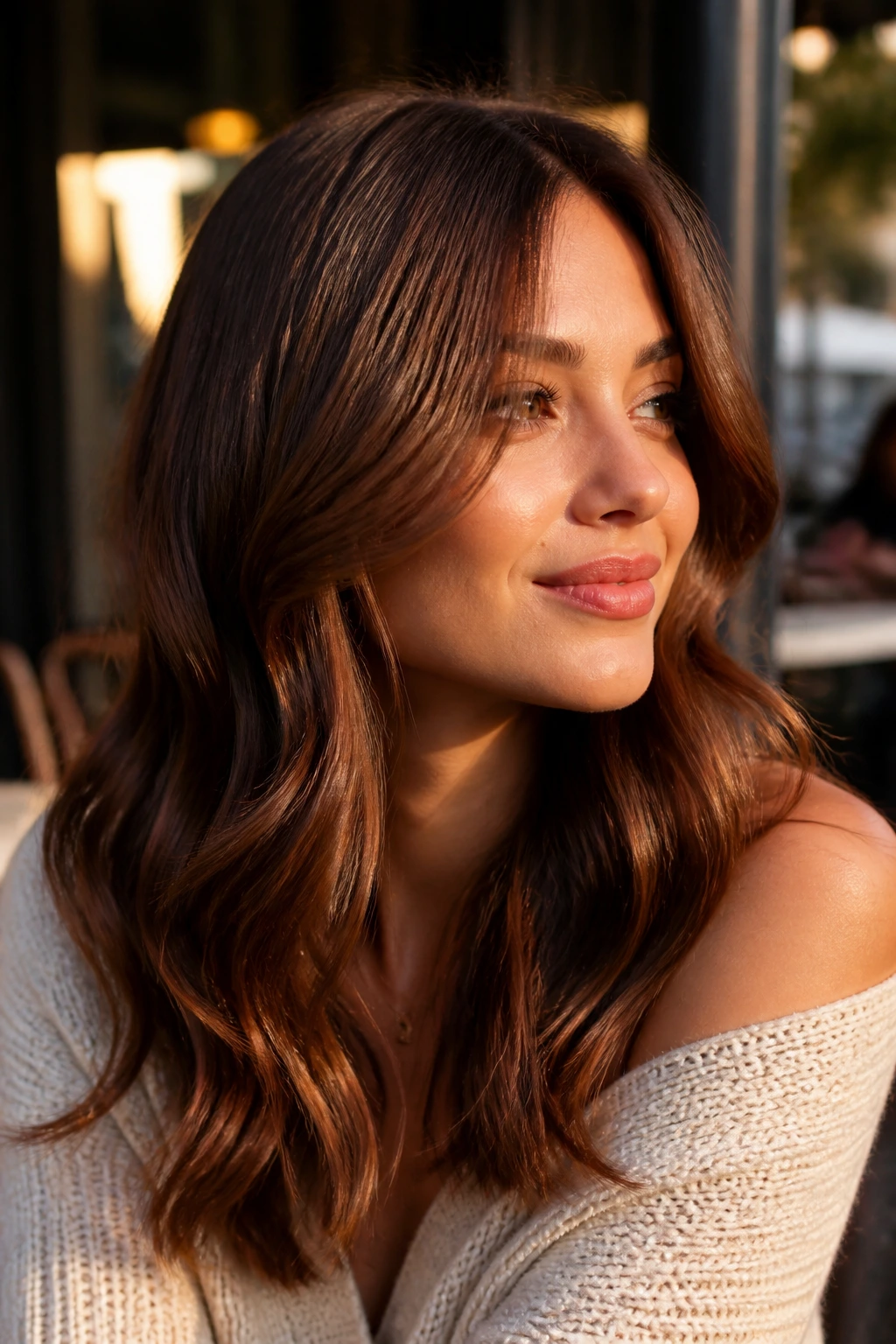
Auburn gloss is one of the easiest ways to add red without making a full commitment to red dye. On medium brown hair, it can look like the sun has been living in your strands for months. You’ll notice it most in the light, which is the whole point.
A gloss gives the hair that wine-brown reflect without the harsh grow-out line of permanent red. If you want a real color change later, auburn is a smart halfway step. It softens the move toward copper, cherry, or deeper red-brown shades.
17. Bronze Balayage with Sunlit Ends
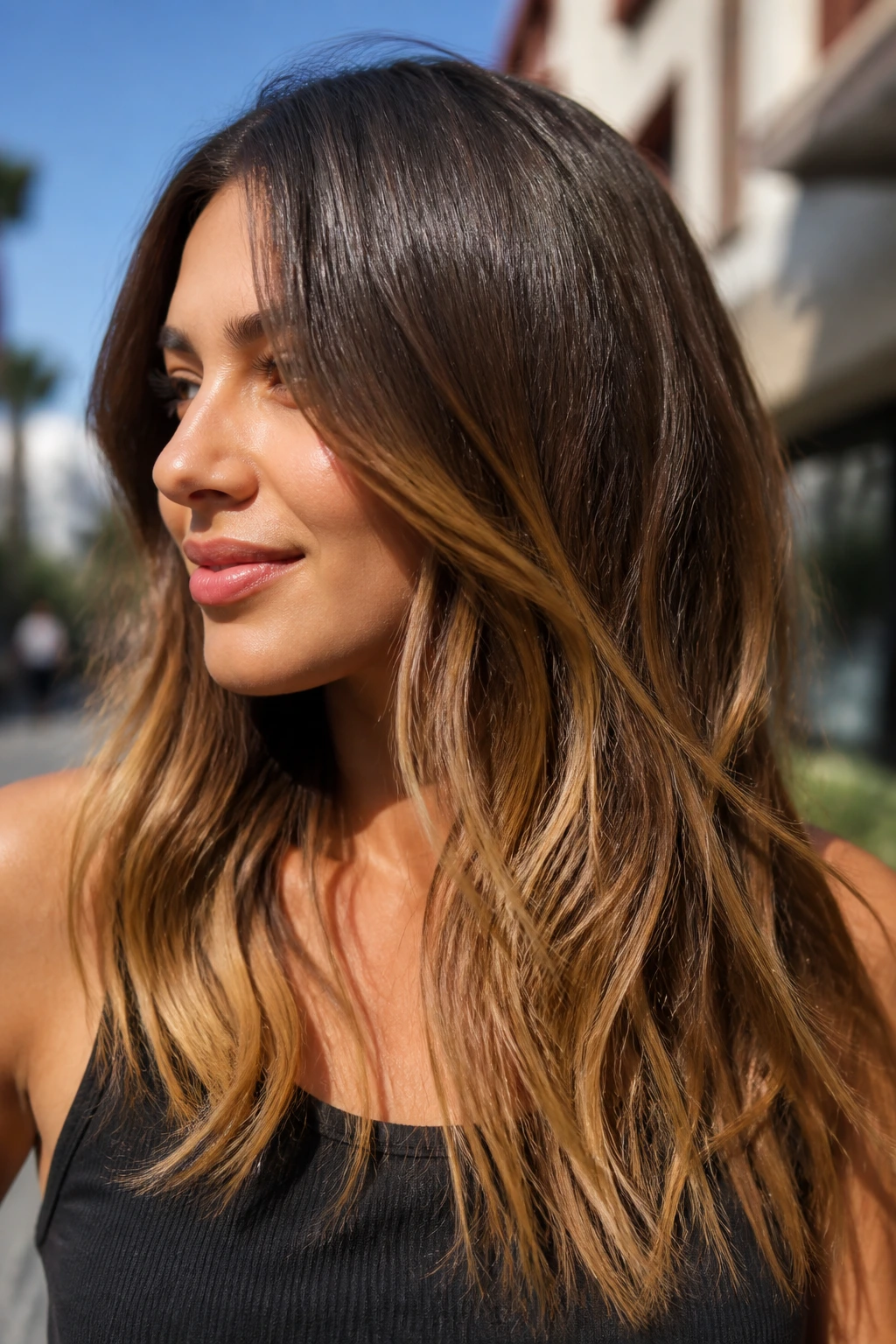
Bronze balayage sits right between gold and brown. That’s what makes it feel rich. The ends catch light like polished metal, but the depth underneath stops it from looking brassy or flat. On layered hair, the color basically does the styling for you.
If your natural base is brunette, bronze can be a very flattering first lightening step. You get brightness without the upkeep of a true blonde. Keep the ends warmer than the root, and the whole look stays intentional instead of patchy.
18. Ash Brown with Cool-Toned Dimension
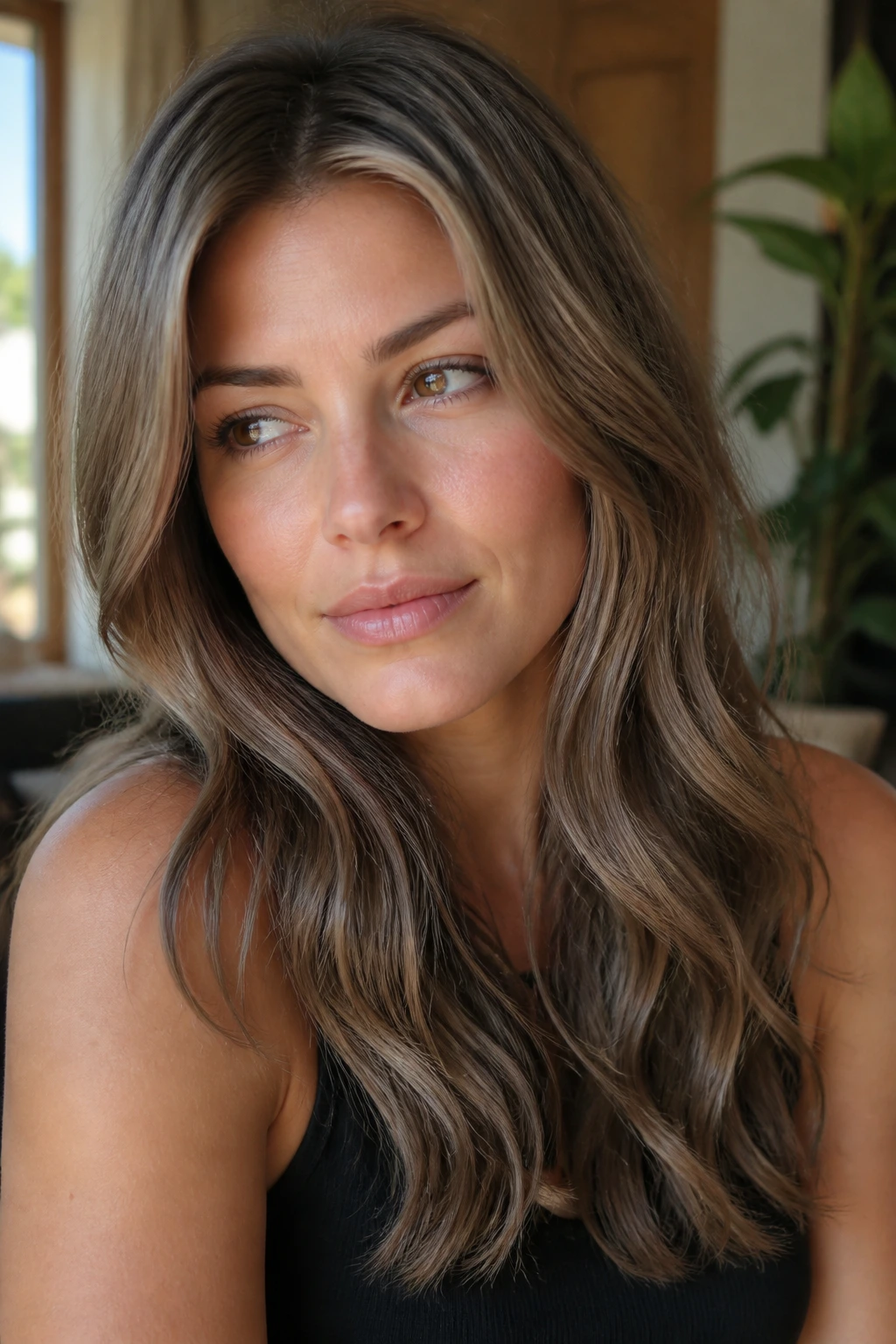
Ash brown is the choice for someone who wants brown hair that leans cool, not orange, not red, and not fake-matte. The best versions still have movement. They’re not one flat gray-brown block, which is where a lot of ash shades go wrong.
Where It Can Fail
Too much ash can drain the face. That’s the problem. The fix is usually a few beige ribbons or a softer mid-brown lowlight so the color doesn’t lose all warmth. Cool does not have to mean pale and washed out.
This shade is especially good if your natural hair tends to turn brassy fast after lifting.
19. Peach Blonde with Soft Coral Ends
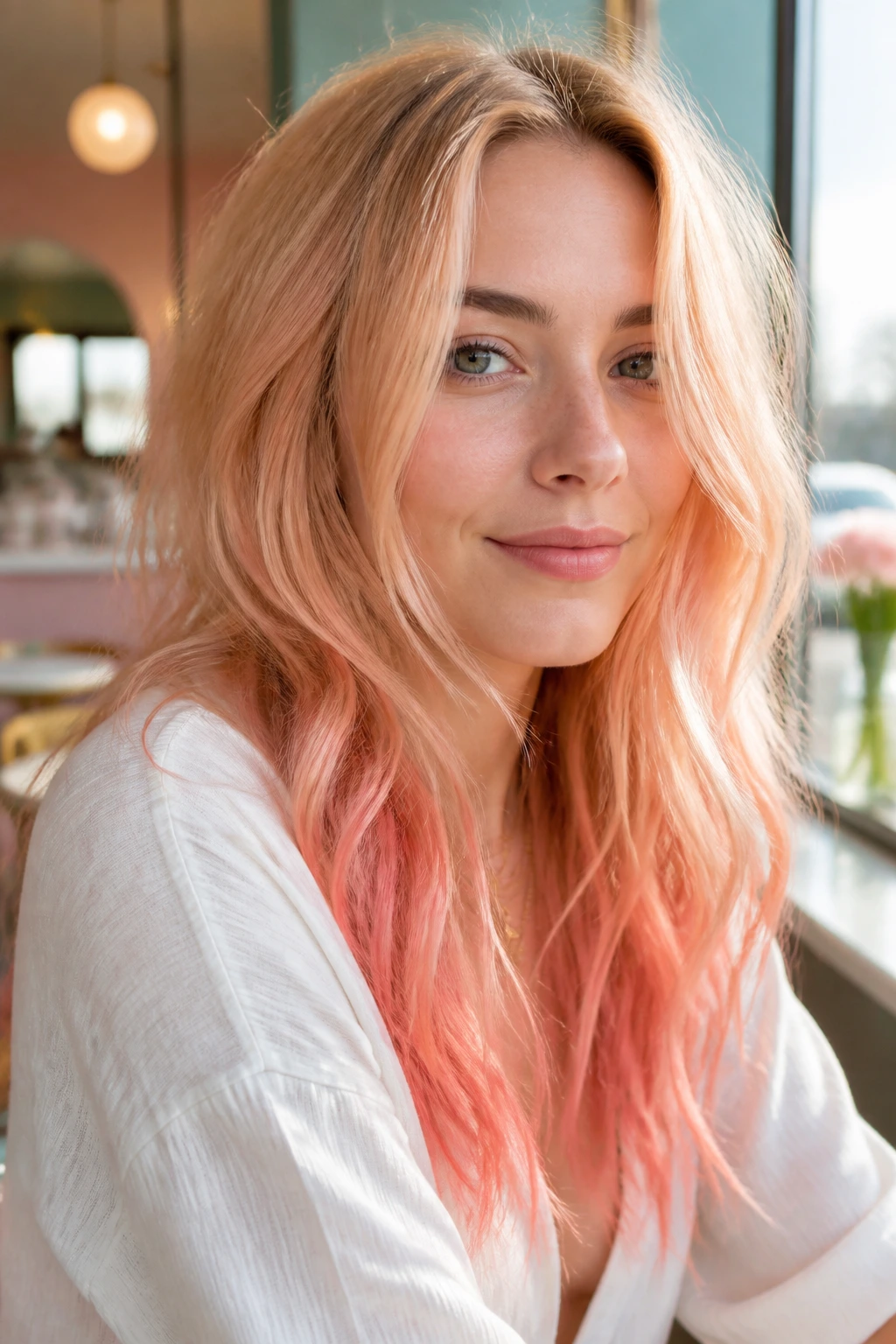
Peach blonde is playful, but the softer coral ends keep it from reading like costume color. It’s gentler than pink and warmer than strawberry blonde. On pale blonde hair, it feels airy. On a more golden base, it can look like sunset-toned cream.
This one fades fastest near the ends, so it rewards people who like watching color shift over time. If you want a shade that stays identical for months, skip it. If you like the way a toned pastel melts into something softer, it’s a good pick.
20. Denim Peekaboo Panels for a Hidden Pop
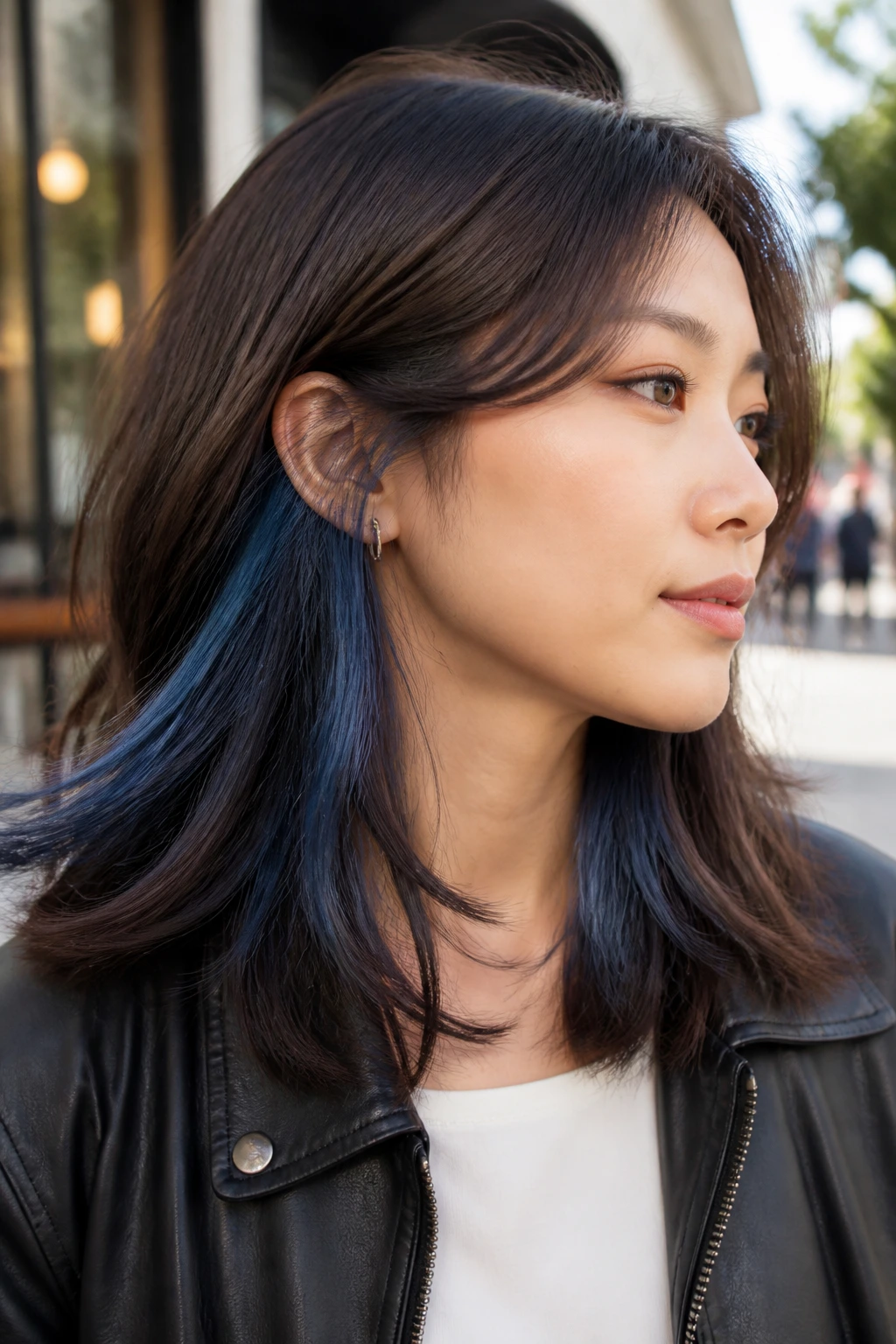
Denim peekaboo panels are for anyone who wants color with a little secret in it. The blue shows when the hair moves, when you tuck it behind your ear, or when you wear it in a knot. Underneath layers, it can stay hidden enough for a conservative setting and still feel fun.
The key is placement. Put the panels where they’ll swing, not where they’ll sit dead under the top layer. A smoky navy or denim tone usually wears better than a bright electric blue because it fades more gracefully.
21. Mulled Wine Red with Brown Depth
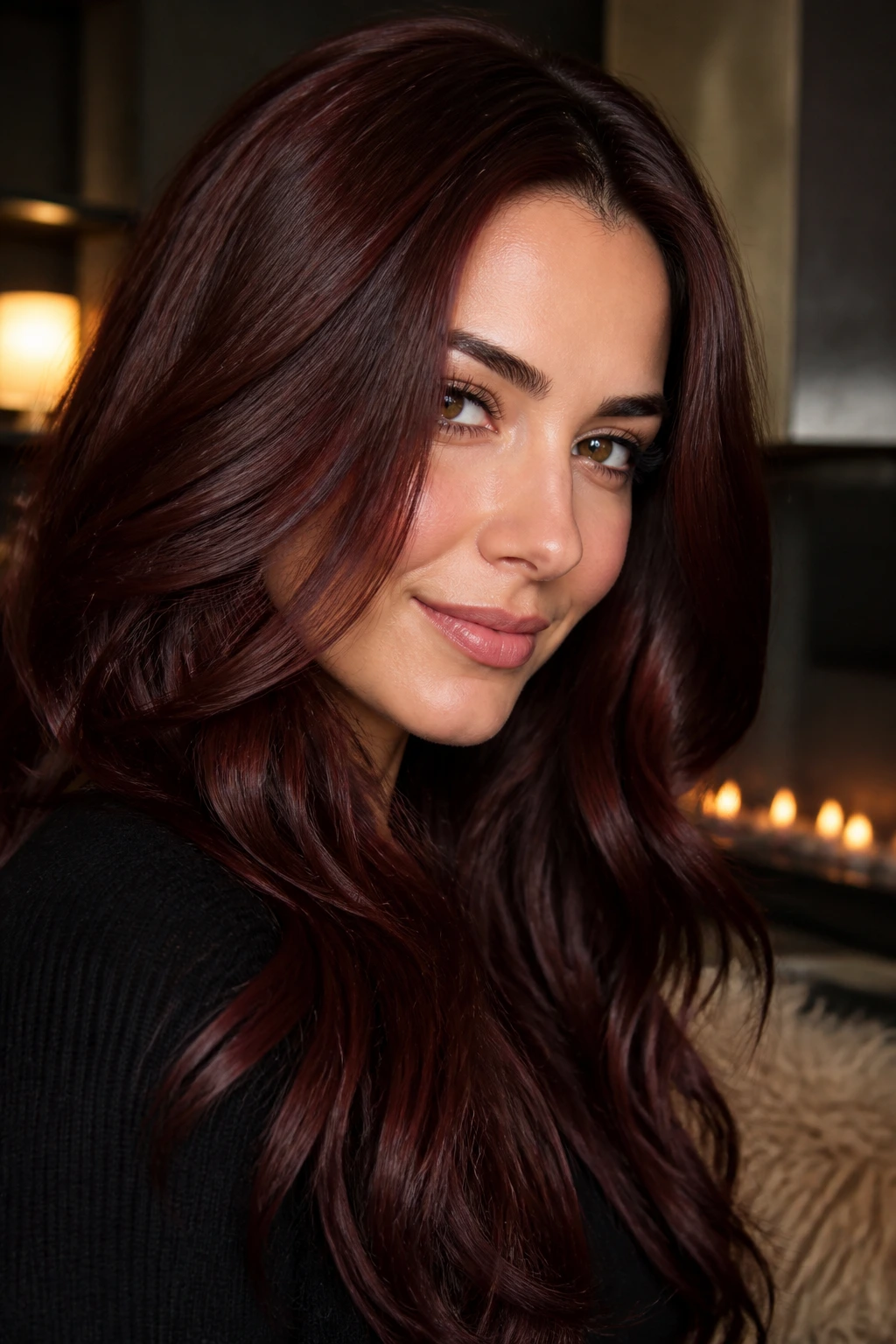
Mulled wine red is what happens when red gets a darker, more wearable coat on. The brown depth keeps it from going too bright, and the plum-red reflect gives it that rich glassy look. It’s one of the easiest red shades to wear on straight or wavy hair because it doesn’t depend on huge contrast.
Why It Lasts Better Than Bright Red
Bright reds fade fast and often fade weird. Mulled wine has enough depth to soften the drop-off. Even as the pigment shifts, the hair still looks rich instead of washed out.
This is a smart choice if you like red but don’t want every wash to matter that much.
22. Soft Black with Blue-Black Reflect
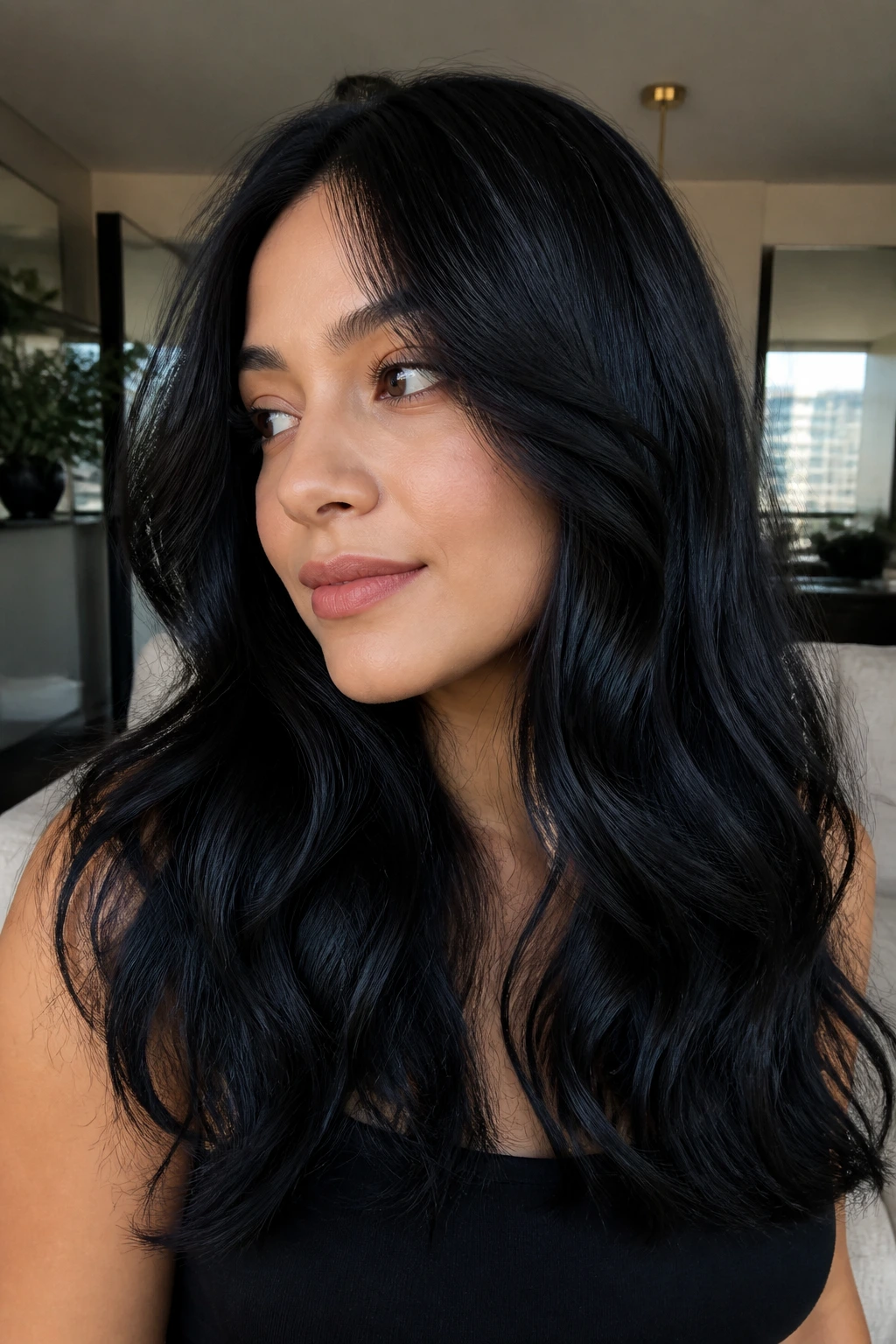
Soft black is darker than espresso but less hard than jet black. The blue-black reflect keeps it from looking flat, especially around the crown and ends. It’s a strong look on thick hair because density helps the shade look plush instead of painted on.
If your natural hair is already very dark, this can be more of a gloss than a full color change. If it’s lighter, expect real commitment. Either way, a shiny finish matters here. Dull soft black loses all its appeal in a week.
23. Buttercream Blonde with Creamy Lengths
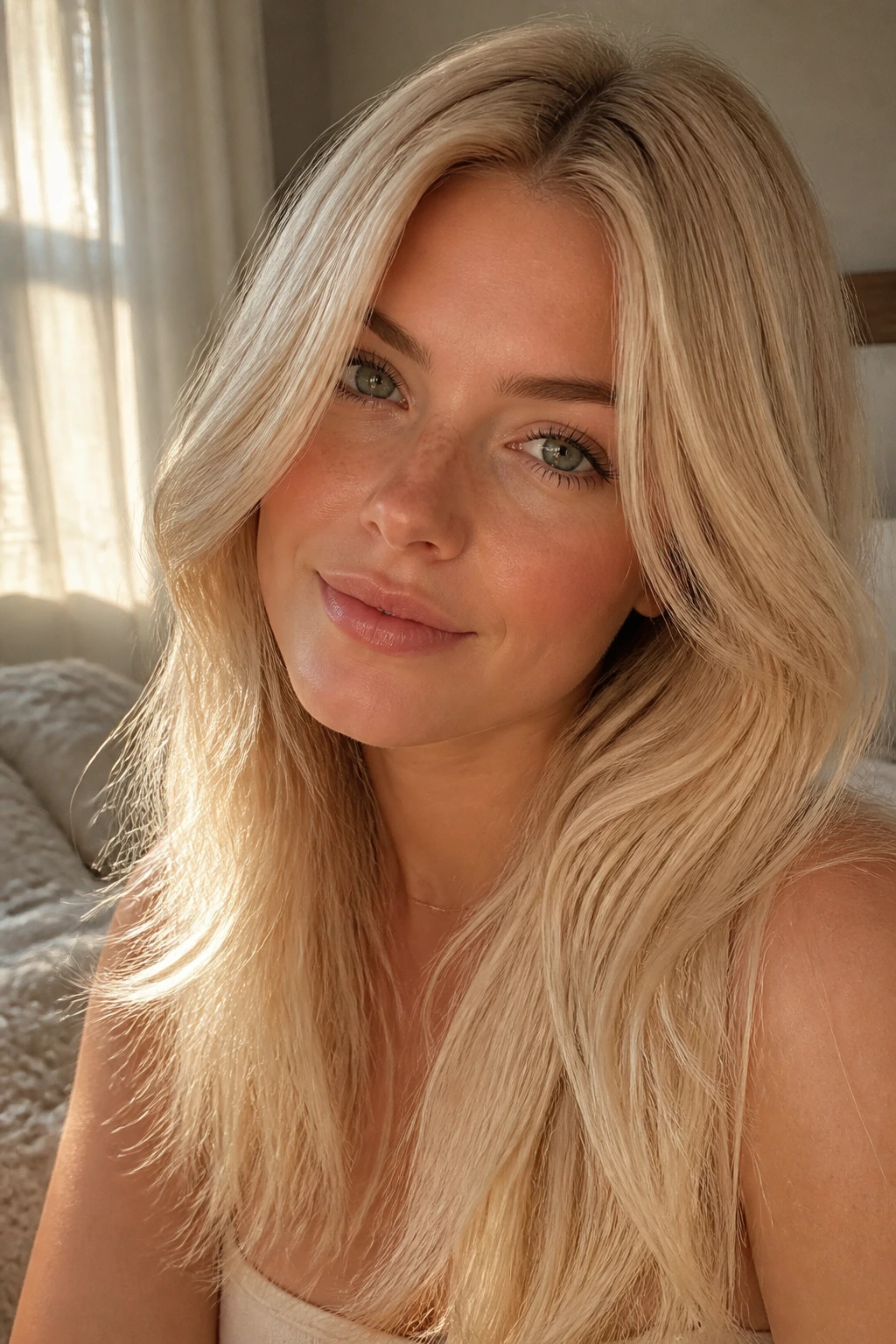
Buttercream blonde is warmer and softer than icy blonde. It has that creamy yellow-beige note that makes the color feel plush rather than severe. On strong features, it softens the face. On finer features, it adds just enough richness to keep the hair from looking washed out.
This one is good if platinum feels too sharp and beige feels too muted. Buttercream sits in the middle. That middle ground is why it photographs well in mixed lighting and still looks believable up close.
24. Sand Beige Blonde with Neutral Brightness
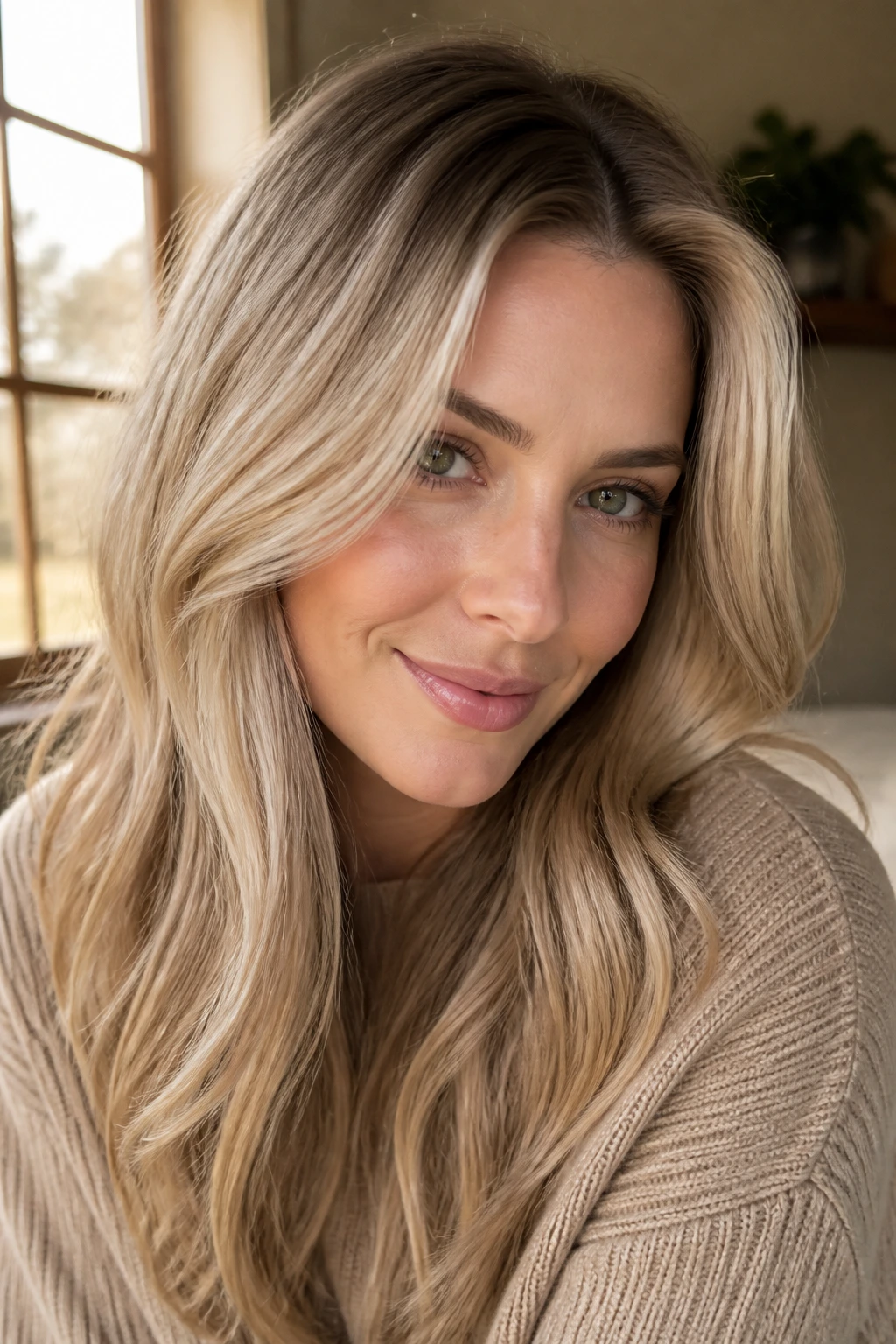
Sand beige blonde is the blonde for people who don’t want to argue with brass every week. It sits in a neutral space, which makes it easier to wear than ash or gold if you’re picky about tone. The result is bright, but not icy. Soft, but not muddy.
Ask for neutral brightness through the mids and ends, then keep the root shadow subtle. Too dark a root can make the beige read flat. Too light a root can make the whole thing look too processed. The balance is delicate, and worth getting right.
25. Mocha Balayage with Ribboned Depth
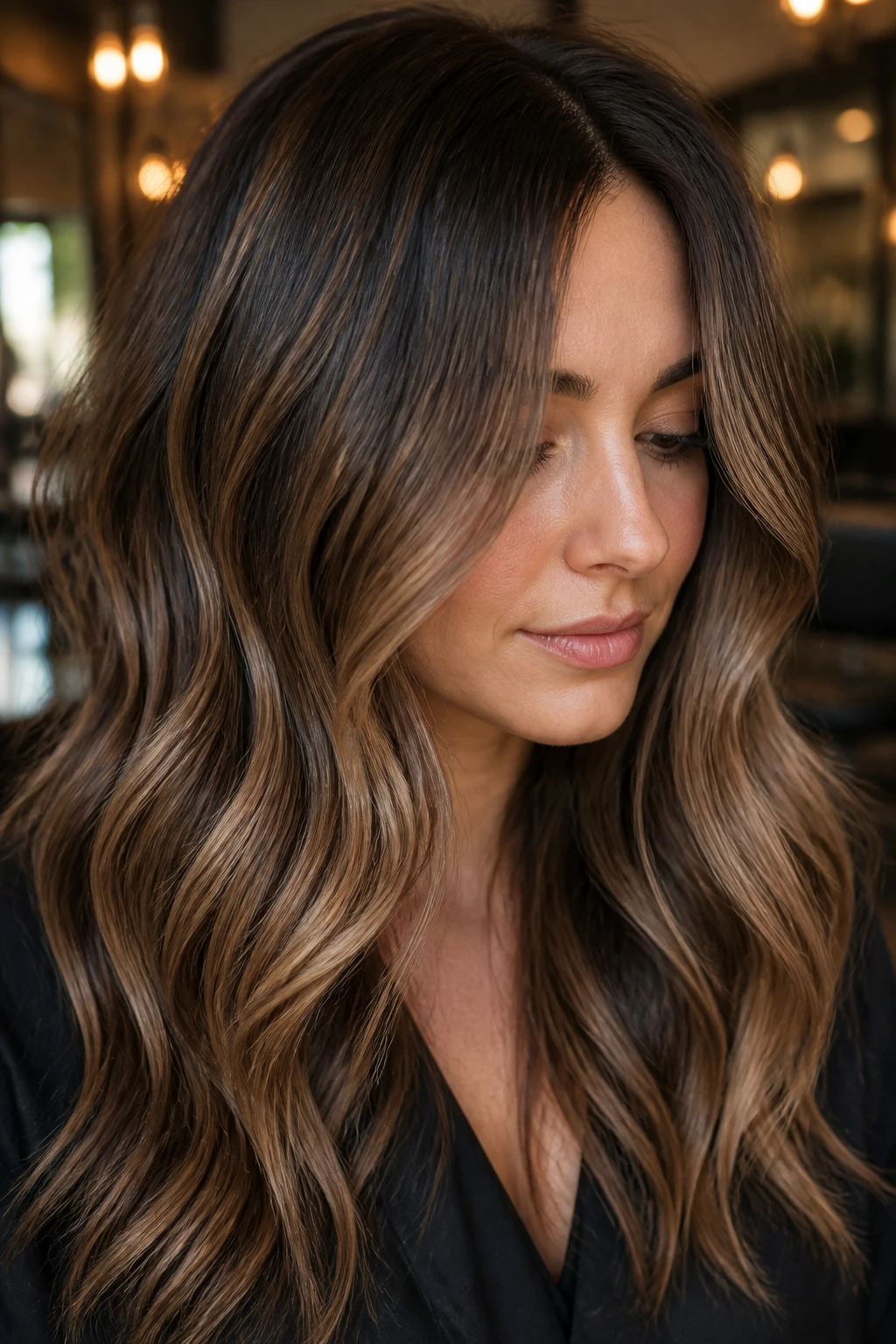
Mocha balayage gives dark brunettes a way to lighten without losing the richness that makes brown hair look luxurious. The ribbons should be soft enough to feel natural, not stripey. Think coffee with milk, not caramel sauce.
The best part is the movement. A mocha ribbon in a wave or bend looks completely different from the same ribbon on straight hair, which means this shade changes with your styling habits. If you wear your hair in loose bends, it becomes even better.
26. Smoked Maple Brunette with Toasty Warmth
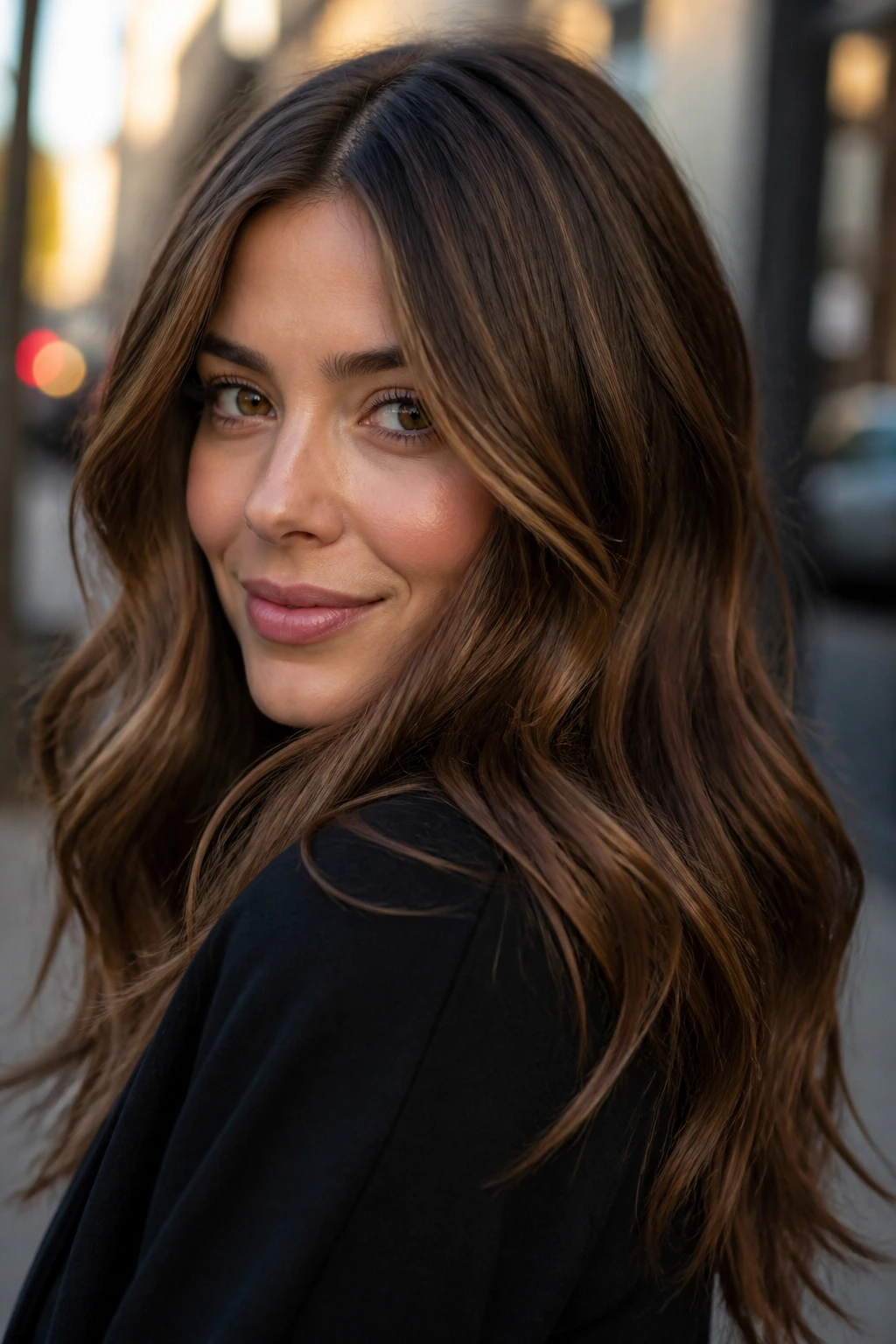
Smoked maple is warm, but not orange. That distinction matters. The maple gives you a toasted brown base, while the smoked part keeps the warmth under control so the color doesn’t turn brassy. It’s a good bridge shade if you like brunette but want more life around the face.
This tone is flattering on medium and olive skin because it tends to pick up the warmer parts of the complexion without making the whole face look red. Ask for a soft gloss rather than a heavy permanent shift if you want to keep it flexible.
27. Apricot Copper with a Bright Face Frame
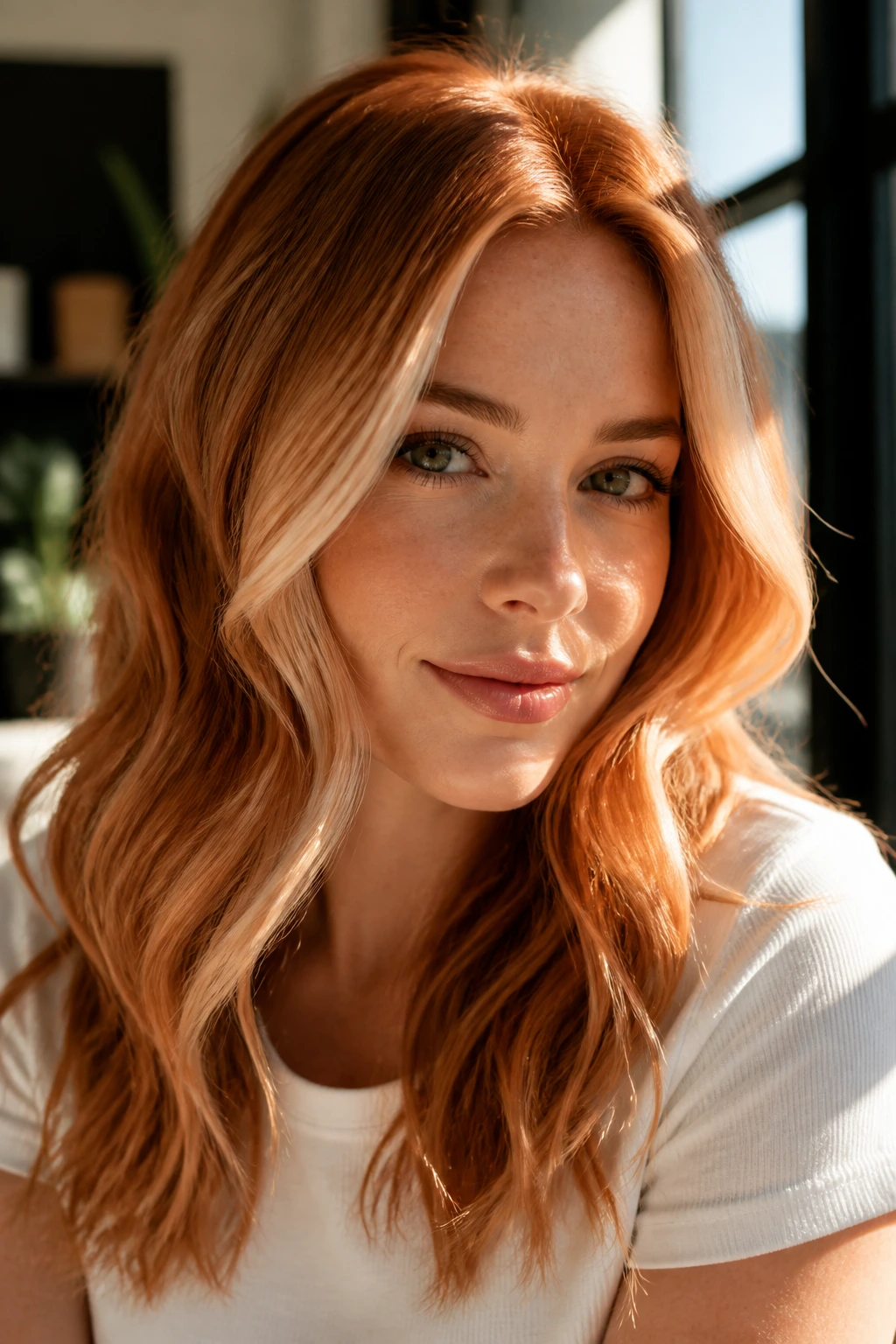
Apricot copper has a softer, fruitier feel than standard copper. The apricot note gives it a pale peach warmth that looks fresh around the face, especially with layered cuts or curtain bangs. It’s a little lighter, a little friendlier, and less severe than deep copper.
The bright face frame is what makes this one pop. Keep the front pieces lighter and let the rest sit slightly deeper so the color has a frame to live in. On pale or medium skin, it can be stunning. On darker bases, you may need more lightening than you expect.
28. Beige Bronde with Seamless Melt
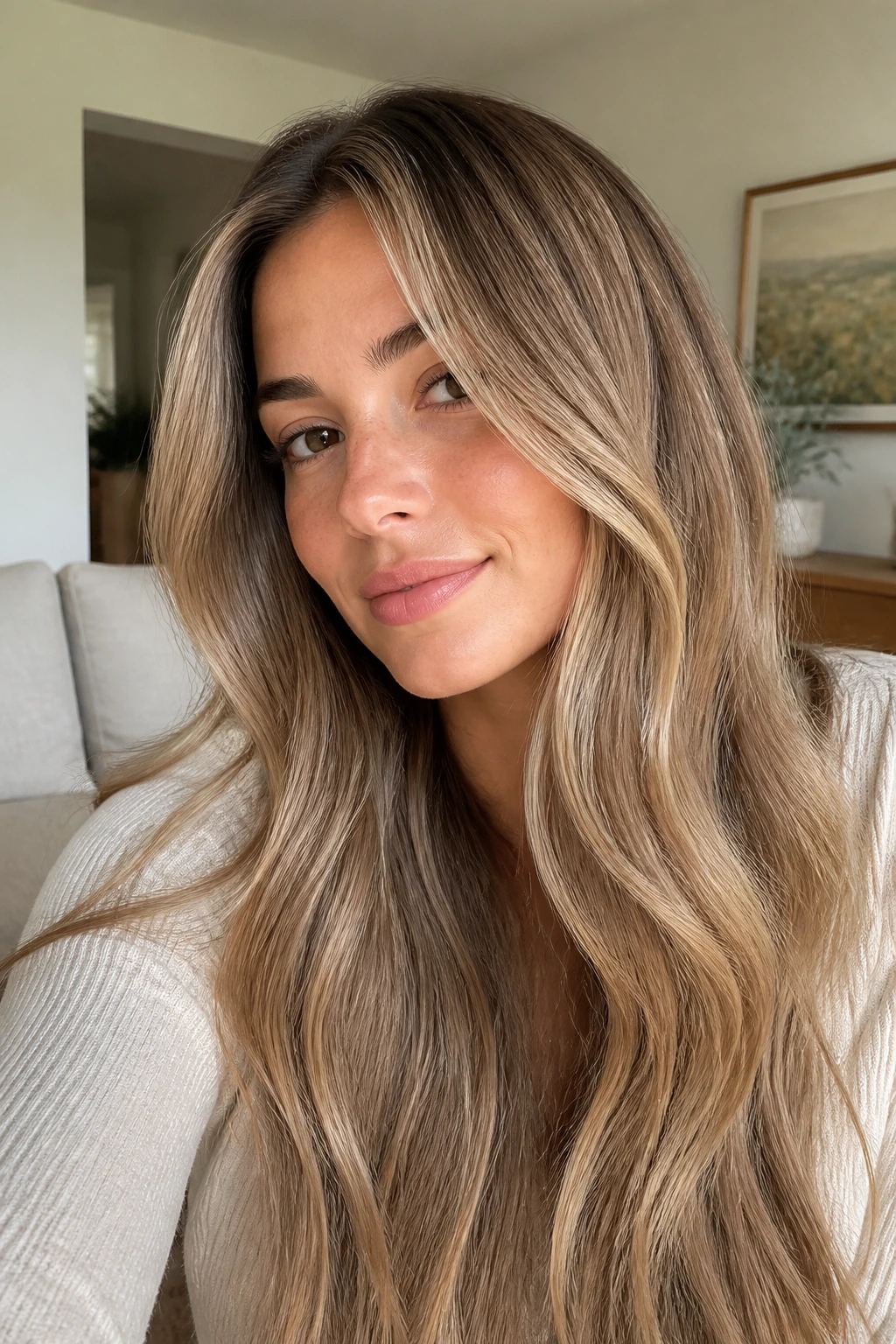
Beige bronde is the easiest shade in this whole group to live with. It blends brown and blonde so cleanly that the grow-out doesn’t announce itself. The beige tone keeps it from turning orange, and the melt from root to end keeps the whole head soft.
This is the one to save if you like color that behaves. It gives you brightness, depth, and enough neutrality to work with almost any wardrobe. No hard lines. No drama. Just hair that looks finished.
What Makes a Hair Color Look Pretty Instead of Flat
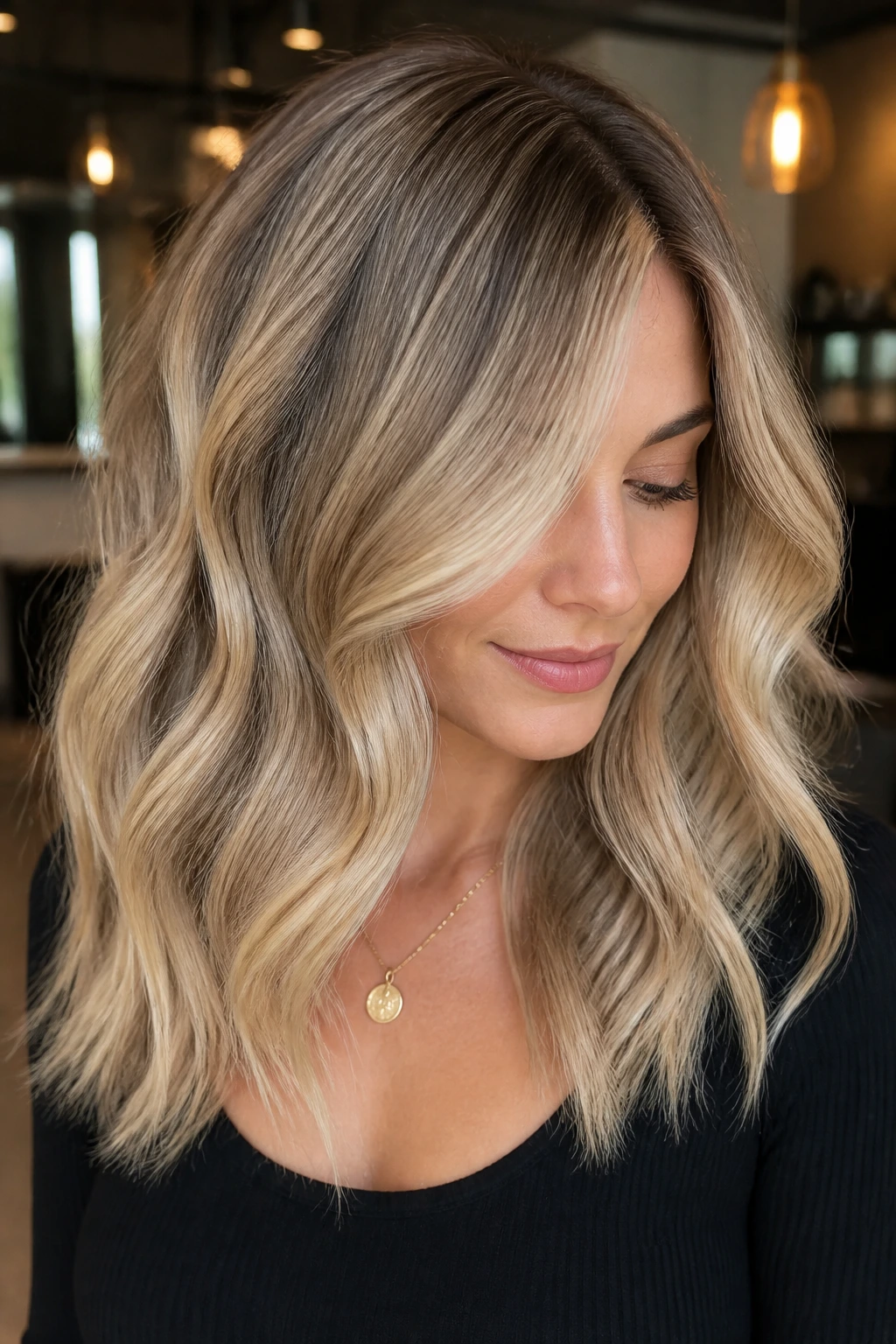
Pretty color usually has layers, even if those layers are subtle enough that you do not notice them at first glance. A root that’s a shade deeper than the mids. A toner that leans beige instead of yellow. A few lighter ribbons around the face. Those small choices change how the hair moves in daylight, and daylight is brutally honest.
Flat color happens when everything lands at the same level and the same tone. It can look fine in a salon mirror. Then you step outside, and the whole head goes mute. That’s why balayage, root shadow, gloss, and micro-highlights keep showing up in good hair color ideas for women — they add depth without making the hair look busy.
Shine matters too. Dull color reads as older and heavier than the same shade with a reflective finish. A gloss, a smooth blowout, or even a soft wave can change the whole story the color tells.
And yes, the cut matters. A blunt cut can make a color look stronger. Layers can make it look more expensive. Neither is better in every case. They just change where the eye goes first.
How to Choose Hair Color Ideas for Your Base and Undertone
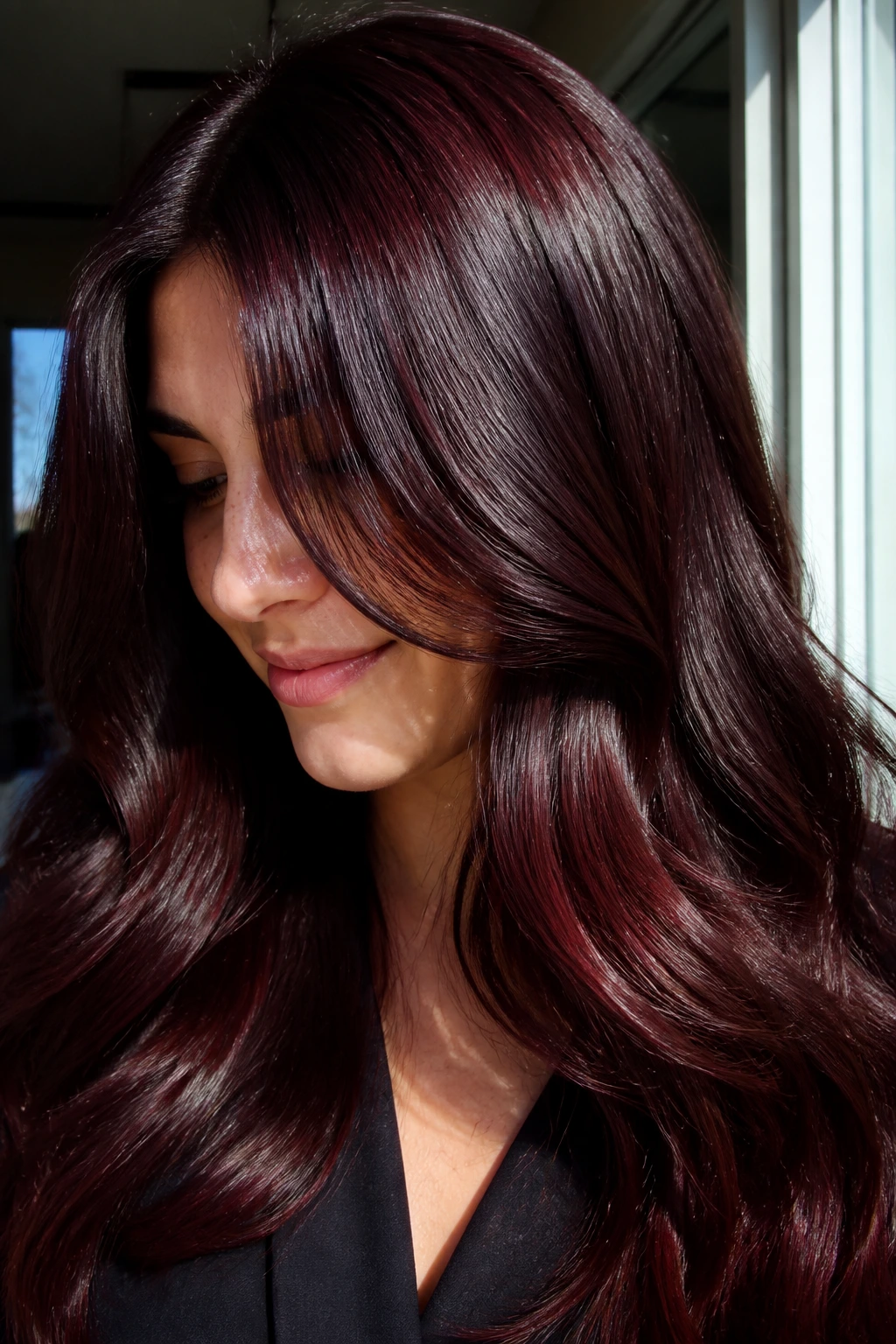
Start with your natural base, not your dream photo. That’s the hard truth. A level 5 brunette will not behave like a level 9 blonde, and the more honest you are about that starting point, the better the color will land. If your hair is dark, caramel, bronze, auburn, mocha, and cherry cola are easier wins than platinum or pastel.
Skin undertone helps too, but it shouldn’t boss the whole decision around. Cool undertones tend to like mushroom brown, ash brown, champagne blonde, and soft black. Warm undertones usually get along with copper spice, chestnut honey, bronze balayage, and apricot copper. Neutral skin can wear nearly all of these, which is annoyingly convenient.
Eye color can tilt the result as well. Brown eyes often look richer next to chestnut, auburn, and bronze. Blue or green eyes can pick up more contrast from cool beige, smoky lilac, and beige blonde. That said, the haircut and your styling habits matter just as much. If you live in ponytails, pick a shade that still looks good at the back of your head.
What to Tell Your Colorist So the Shade Comes Out Right
Bring photos, but bring the right photos. One image of the color in bright natural light. One in indoor light. If the shade only looks good in one setting, that’s a clue, not a bonus. Also bring a photo of the placement you want — face-framing, balayage, money piece, all-over gloss — because tone and placement are not the same request.
Say how much maintenance you want. Spell it out. If you want something that can grow out for 10 to 12 weeks, the colorist needs to hear that before they start choosing foil placement or root depth. A beige blonde designed for six-week upkeep is a different animal from a rooty bronde meant to live for three months.
Mention your history. Box dye, henna, keratin treatments, hard water, previous bleach — all of it matters. Old color changes how new color behaves, and nobody likes surprise orange ends halfway through the service.
Essential Tools and Products for Keeping Color Fresh
-
Color-safe shampoo — Look for a sulfate-free formula if your color tends to fade fast, especially on blondes and reds.
-
Conditioner with slip — The hair needs to feel smooth when wet, not squeaky. That friction-free feel helps preserve shine.
-
Purple shampoo — Best for beige, champagne, buttercream, and platinum blondes when brass starts showing.
-
Blue shampoo — Useful on brunette balayage, mocha ribbons, and caramel ends if orange warmth creeps in.
-
Heat protectant spray — Use it every time you blow-dry or flat-iron; color fade often starts at the hottest sections.
-
Microfiber towel or cotton T-shirt — Helps reduce roughing up the cuticle after washing.
-
Wide-tooth comb — Better than yanking a brush through wet, lightened hair.
-
Bond-building treatment — Helpful after bleaching, especially for icy blonde, pastel, and platinum shades.
-
Gloss or color-depositing mask — Handy for keeping copper, rose gold, auburn, and cherry tones from going dull.
-
Shower filter — Optional, but hard water can turn beige blonde and soft platinum weirdly brassy faster than people expect.
How to Wear These Shades in Real Life
Presentation: Hair color looks best when the finish matches the shade. Sleek, shiny styles suit espresso black, soft black, and champagne blonde. Waves show off balayage, bronzed ribbons, and toffee bronde much better than pin-straight hair, because the bends separate the tones.
Accompaniments: Your haircut matters here. Curtain bangs make copper spice and apricot face frames feel intentional. Long layers help caramel ribbons, mocha balayage, and chestnut honey move. A blunt bob can make beige blonde or platinum look sharper and cleaner.
Portions: If you’re nervous, ask for less of the bold shade and more of the wearability. A smaller money piece, a softer root shadow, or a gloss-only color refresh usually gives you enough change without making the whole head feel like a commitment.
Beverage Pairing: That part’s easy to translate into life, oddly enough — think of the colors that suit your clothes and makeup routine. If you wear a lot of black and crisp neutrals, soft black and icy blonde tend to fit. If your closet leans earthy, copper, caramel, bronze, and chestnut usually feel more natural.
How to Keep Color Looking Soft Between Appointments
Color fades in layers, and the first thing to go is usually shine. That’s why a gloss or toner refresh matters more than people think. For blondes, a gloss every four to six weeks can keep beige and champagne shades from drifting yellow. For brunettes and reds, six to eight weeks is a more realistic rhythm if you want the tone to stay clear.
Wash less often if you can. Two to three times a week is kinder to color than daily washing, especially for copper, rose gold, and auburn. When you do wash, use lukewarm water. Hot water strips pigment fast, and it makes the cuticle open up enough to let the color wander off.
Purple shampoo is useful, but not as a religion. Once a week is plenty for many blondes. Blue shampoo works for brunette brass when orange starts to show through. Leave either one on too long and the tone can turn dull or muddy, which defeats the point.
Heat protection is not optional if you’re using a round brush, curling iron, or flat iron. A quick spray before heat styling saves color and keeps the ends from looking crunchy. If your hair is lightened, let it air-dry halfway before blowing it out. That alone can take a little pressure off fragile ends.
Additional Tips and Color Boosters
Gloss layer: If your color looks good but not shiny enough, a clear or tinted gloss can be the missing piece. It seals the surface, sharpens the tone, and makes beige, honey, copper, and cherry shades look fresh for longer.
Customization: Want softer grow-out? Ask for deeper roots and lighter mids. Want more drama? Add a stronger money piece or one or two extra foils around the part line. That small change is often enough to shift the whole mood of the color.
Serving Suggestions: For hair, this means styling details. A soft bend at the ends, a middle part, or a tucked-behind-one-ear finish can change how the color reads. Bronze and caramel love movement. Platinum and soft black look cleaner when the style is smoother.
Make-It-Yours: Fine hair usually does better with micro-highlights and glosses than with chunky placement. Curly hair often looks richer with painted ribbons rather than tight foils. Gray blending works best when you let some natural silver show through instead of covering every gray strand.
Common Mistakes to Avoid
-
Choosing the shade before the base level — A photo of beige blonde tells you nothing if your hair starts at dark brown. The fix is to ask what it will take to get from your current base to the target tone.
-
Ignoring brass control — Beige, ash, and platinum all fail in a different way when brass creeps in. Use the right shampoo and ask for a toner plan, not just a single appointment.
-
Going too solid — Flat all-over color can look heavy even when the shade itself is beautiful. Root shadow, ribbons, or lowlights usually fix that fast.
-
Over-lightening the ends — Dry, see-through ends make even a pretty blonde look tired. If your hair is fragile, keep more depth at the bottom and let the face frame carry the brightness.
-
Skipping upkeep on red tones — Auburn, cherry cola, mulled wine, and copper all fade faster than brunette shades. A gloss or color-depositing mask keeps them from going dull and brown.
Variations and Adaptations to Try
Low-Commitment Root Melt: Keep your natural root and let the color melt lighter through the mids. This works for beige bronde, toffee, and buttercream shades, and it buys you longer grow-out between salon visits.
High-Contrast Money Piece: Brighten only the front sections and leave the rest deeper. It gives you impact without turning the whole head into a maintenance project, which is nice if you like a visible change but hate all-over bleach.
Gloss-Only Refresh: If your hair already has good placement, skip a full color service and ask for a gloss. This is especially smart for cherry cola, auburn, chestnut, and bronze shades that need shine more than major structural change.
Curly-Hair Ribboning: Use wider painted pieces and fewer foils so the color follows the shape of curls instead of slicing through them. Curly texture holds dimension beautifully, and softer placement keeps the pattern from looking stripy.
Gray-Blending Beige: Mix neutral beige with lowlights that respect your natural silver. The result looks softer than full coverage and grows out with less fuss, which is helpful if you want color without a hard line every few weeks.
Frequently Asked Questions
Which of these hair color ideas is easiest to maintain?
Beige bronde, toffee bronde, mushroom brown, and soft black are usually the easiest because they don’t demand constant toner or heavy lightening. They can grow out in a softer way and still look intentional after several washes.
Can I go from dark brunette to platinum in one appointment?
Sometimes, but that depends on your starting level, previous color, and the condition of the hair. If there’s old box dye or very dark pigment in the hair, one session often isn’t enough without risking damage or uneven lift.
What shade hides brass the best?
Cool-toned brunette shades like mushroom brown and ash brown handle brass nicely, but beige blondes with a proper toner also do a good job. For blondes, the real fix is maintenance, not wishful thinking. Purple shampoo helps, but toner and careful lifting matter more.
Do copper and red shades fade faster than brunette shades?
Yes. Auburn, cinnamon copper, cherry cola, and mulled wine red all lose their punch faster than brown-based shades. A gloss or color-depositing conditioner helps, and washing less often makes a bigger difference than most people expect.
Can these looks work on curly hair?
Absolutely. Curly and wavy hair often shows dimension better than straight hair because the bends separate the ribbons. Softer balayage, painted highlights, and glosses usually look better than chunky foil patterns on curls.
How do I know whether to ask for ash, beige, or gold?
Ash is cooler and more muted, beige sits in the middle, and gold reads warmer. If your hair gets orange fast, beige or ash may help. If your skin looks dull next to cool tones, a softer gold-beige blend usually feels better.
What if my highlights turn orange after a few washes?
That usually means the tone needs rebalancing, not a full new color service. A blue shampoo for brunettes or a toner gloss for blondes can calm the orange, but if the hair lifted unevenly in the first place, your colorist may need to refine the placement.
Will box dye ruin a balayage plan?
Not always, but it can make the process slower and less predictable. The dark synthetic pigment in box dye can resist lifting, especially on brunette-to-blonde changes, so tell your colorist before any lightener touches your hair.
The Shades That Hold Their Shape
The prettiest color is usually the one that still looks good when you tie your hair up, step outside, and catch your reflection in a window that isn’t flattering anybody. That’s why depth, tone, and grow-out all matter more than the photo filter you save to your camera roll. Hair color ideas for women make the most sense when they can live on a head, not just on a mood board.
A good shade should work with your base, your upkeep tolerance, and the way you actually wear your hair. If you like soft movement, choose balayage, ribbons, or a root melt. If you like sharper contrast, go for platinum, espresso black, or a bright money piece. If you want warmth, copper, bronze, auburn, and chestnut have more range than people give them credit for.
Pick the version you’ll still like after the first shampoo. That’s the one worth sitting in the chair for.
