



Fall hair color ideas make much more sense once the light gets softer and your hair stops competing with bright sun. A copper that felt a little loud in midsummer can look polished and expensive under a gray sky. A chestnut brunette with a ribbon of caramel around the face can do more for your whole look than a full head of blonde ever could.
That shift matters. Hair color reads differently in cooler weather, under indoor lighting, under a wool hat, even beside a black coat or a camel sweater. Flat color starts to feel heavy. Dimension, gloss, and the right undertone carry the whole thing.
What I love about seasonal hair color is that it doesn’t have to mean red for the sake of red. The smartest autumn shades are usually a touch deeper, a touch richer, or a touch warmer than what people wore all summer. Sometimes that means a cinnamon balayage. Sometimes it means mushroom brown with beige ribbons. Sometimes it means leaving the base alone and spending the color budget on a face frame, a root shadow, or a gloss that makes the ends look lit from inside.
Why These Fall Hair Color Ideas Earn Their Keep
-
They use dimension instead of one flat block of color: A root shadow, lowlights, or a soft balayage keeps the shade moving when the hair bends or catches indoor light.
-
They’re built around undertone, not just trend words: Copper, mahogany, mushroom, beige, and chestnut all behave differently on the hair shaft, which is why one “red” can look rich and another can look neon.
-
They give brunettes and blondes different levels of commitment: Some ideas are a simple gloss; others need lift, toner, and a maintenance plan. That’s a better way to choose than chasing a photo that ignores your starting point.
-
They work with real grow-out: The shades with root depth, shadow roots, and blended ribbons are easier to live with for 6 to 10 weeks. Harsh stripes and all-over brightness are the ones that start looking tired first.
-
They can be worn in a blunt cut, a lob, layers, or long waves: The same shade reads one way on a straight bob and another way on soft curls. Placement matters as much as pigment.
-
They look good indoors, not just on a salon reel: That matters more than people admit. Hair spends a lot of its life under kitchen lights, office lights, and the dim, weird light in a hallway mirror.
How to Read a Shade Before You Book It
Think in level numbers, not just names
Hair color names are charming, but level numbers tell you what the hair will actually do. A level 4 reads deep brown, a level 6 sits in light brown to dark blonde territory, and a level 8 starts moving into bright blonde. If you want copper and your hair is a level 3, the colorist has to lift first, and that changes both the timeline and the upkeep.
Warm, cool, and neutral are not the same thing
Warm shades carry gold, copper, amber, red, and cinnamon. Cool shades lean ash, beige, taupe, mushroom, and smoky brown. Neutral lives in the middle, which is why it often looks the most expensive in real life; it does not fight the light. The trick is matching the tone to what your hair naturally wants to do, not forcing ash onto hair that wants to go orange or piling copper on top of a naturally red base and acting surprised when it gets loud.
Maintenance is part of the look
A vivid copper that gets glossed every 4 to 6 weeks is a different commitment from a chestnut brown with espresso ribbons that can go 8 to 10 weeks between refreshes. That’s not a small detail. It is the whole point. If you want low upkeep, choose a base with depth, a soft grow-out line, and a shade family that fades gracefully instead of collapsing into brass.
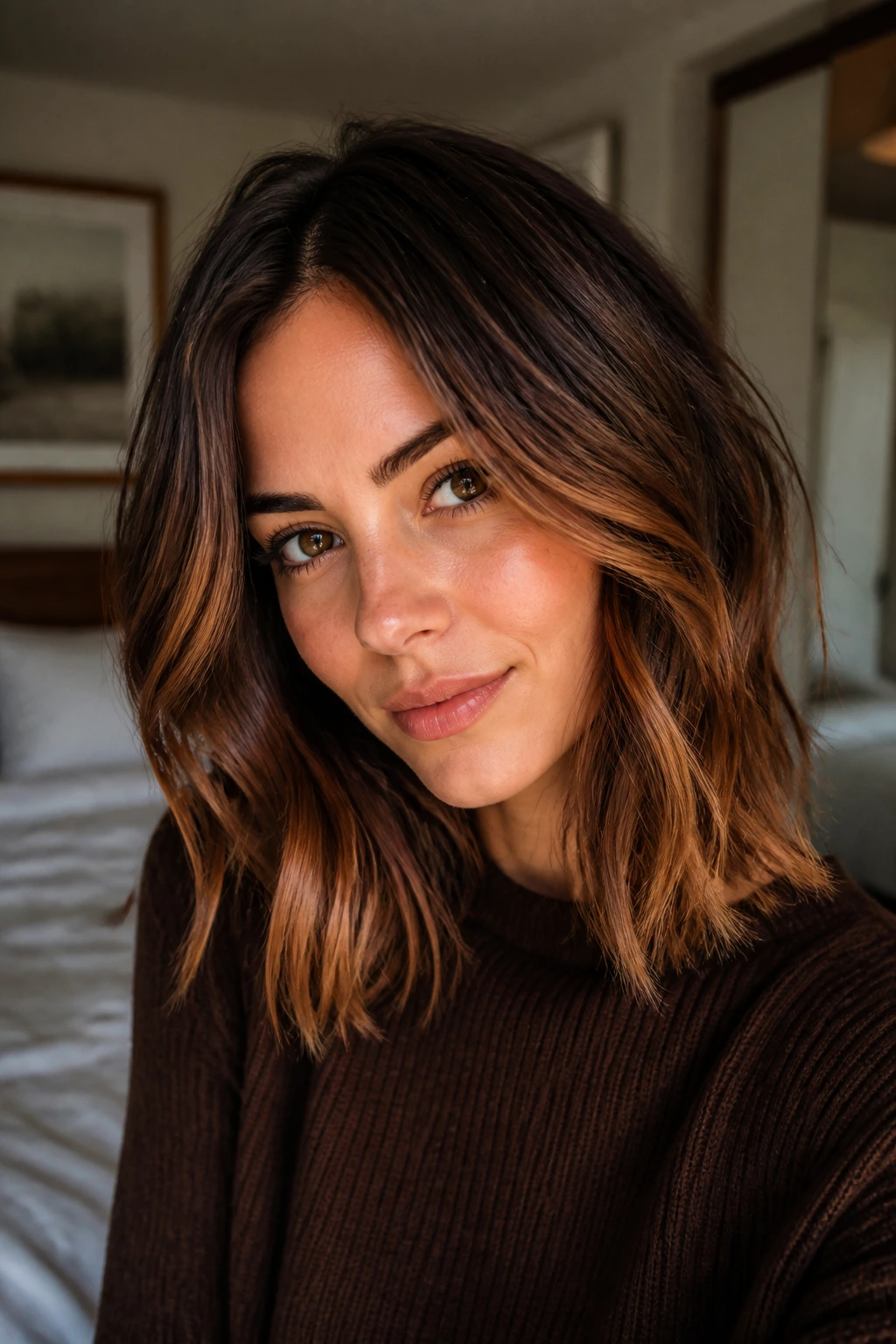
1. Smoked Cinnamon Balayage
Smoked cinnamon balayage sits right in that sweet spot between warm and restrained. The cinnamon ribbons bring life to a medium brunette base, while the smoky lowlights keep the whole thing from turning pumpkin-orange the second the salon lights go off. On wavy hair, the lighter pieces look threaded through the bend. On straight hair, the effect is softer and more polished.
Why it works on darker bases
This shade works because it gives you warmth without asking the hair to become copper all over. A level 5 or 6 brunette can hold cinnamon beautifully, especially when the pieces are painted in a loose balayage pattern instead of foiled in a uniform stripe. I like this one on shoulder-length cuts and long layers because the movement breaks up the ribbons naturally.
- Best base: Level 5-6 brown
- Best finish: Soft waves or a round-brush blowout
- Maintenance: Gloss every 6 to 8 weeks
- Watch for: Too much orange in the formula
Pro move: Ask for a neutral brown root and cinnamon mids, then let the ends stay a little lighter. That tiny shift keeps the color from reading flat.
2. Chestnut Brown with Espresso Ribbons
Chestnut brown with espresso ribbons is what I reach for when someone wants change without making the hair scream about it. The chestnut gives a warm brown glow, and the deeper espresso pieces underneath create movement that shows up when you turn your head or tuck the hair behind one ear. It is subtle. That is the point.
This is one of the easiest fall hair color ideas to wear on straight hair, because the ribbons read as polish rather than obvious streaks. If your hair is fine, this is especially smart; the contrast adds depth without needing to go much lighter. A lot of people think dimension has to mean brightness. It doesn’t. Dark-on-dark can be the most flattering version.
3. Copper Penny Lob
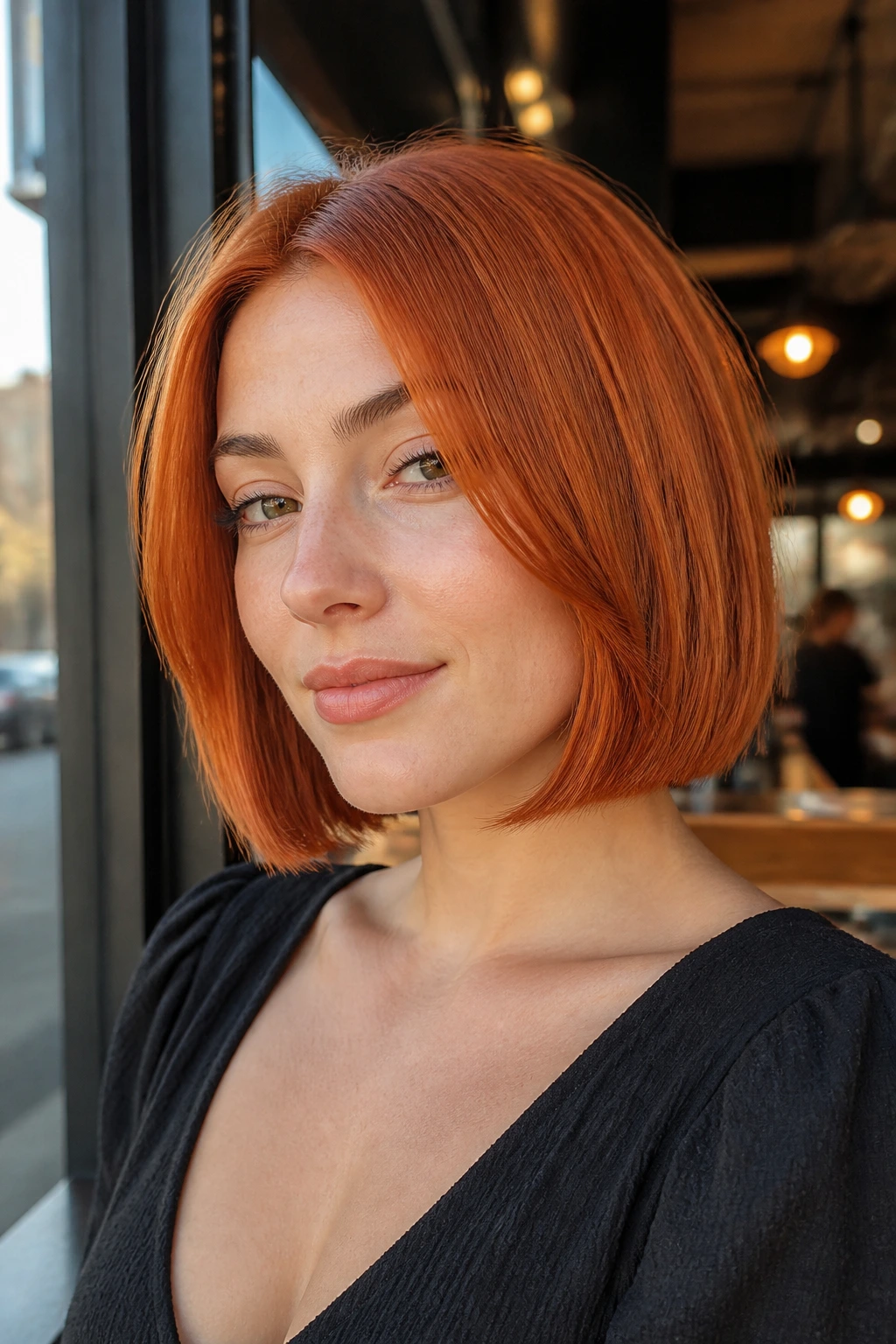
A copper penny lob has a sharper personality than cinnamon or chestnut, and that is exactly why it works on a clean, blunt cut. Copper reflects light fast. The shorter length keeps the shade from feeling too heavy, and a lob gives the color room to show off around the jaw and collarbone.
If your base is dark, this usually needs lift to around a level 7 before the copper can sit cleanly instead of muddy. If you start lighter, a demi-permanent copper glaze can get you there with less stress. Either way, a bob or lob helps. Long copper can be gorgeous, but shorter hair keeps the maintenance in check and the brightness looking fresh.
4. Mushroom Brown with Beige Ash Ribbons
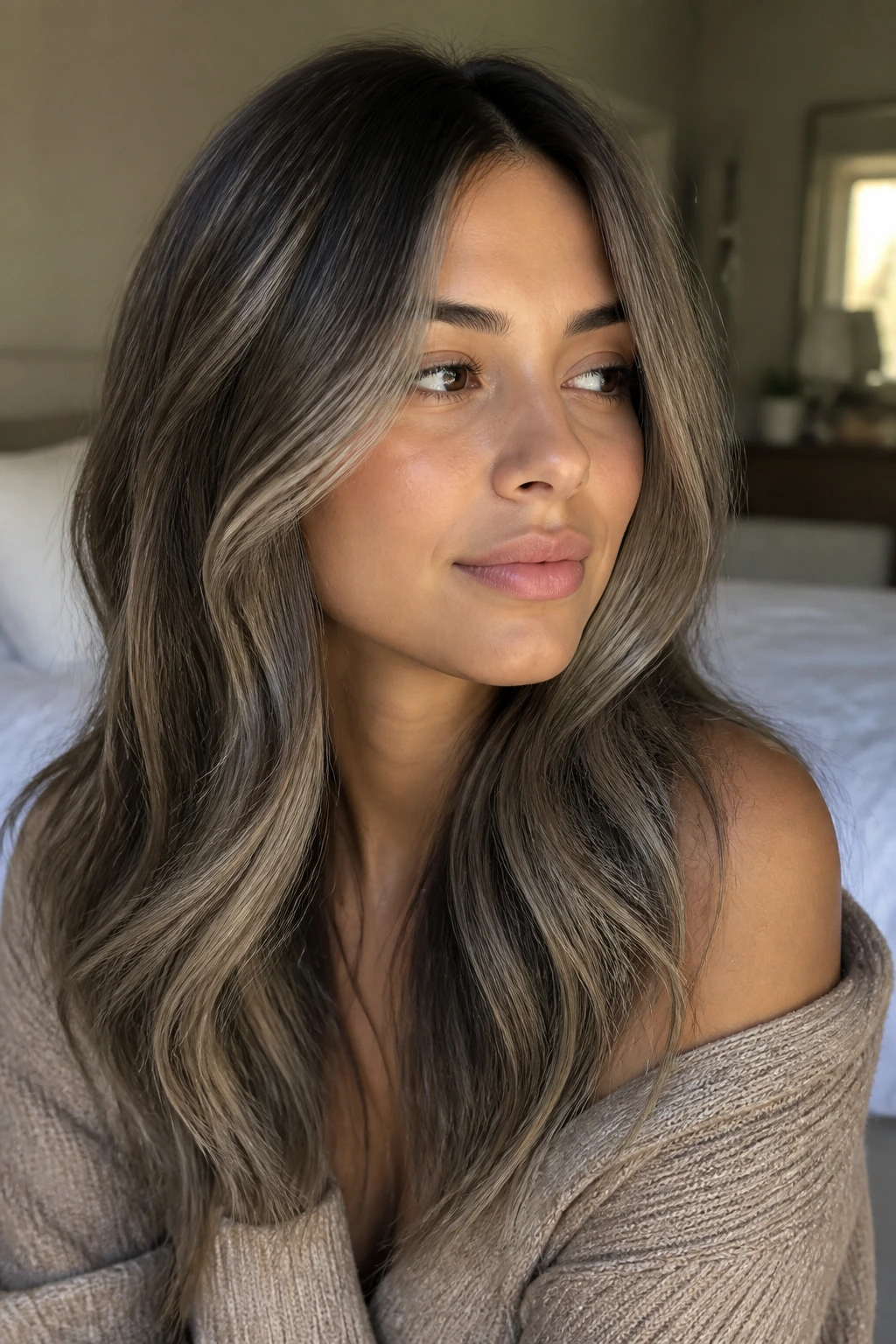
Mushroom brown is for anyone who loves cool color but hates looking flat. The shade lives in that earthy, taupe-brown zone that sits between brunette and ash blonde. Add beige ash ribbons, and the whole thing gets a soft, misty finish instead of a hard gray cast.
The key here is restraint. Too much ash and the hair can look dull; too much beige and you lose the mushroom effect. I like this on medium-length hair with a slight bend at the ends, because the movement keeps the color from feeling too serious. If your skin leans cool or neutral, this can look almost tailored. Clean lines. Soft shine. No drama.
5. Mulled Wine Brunette
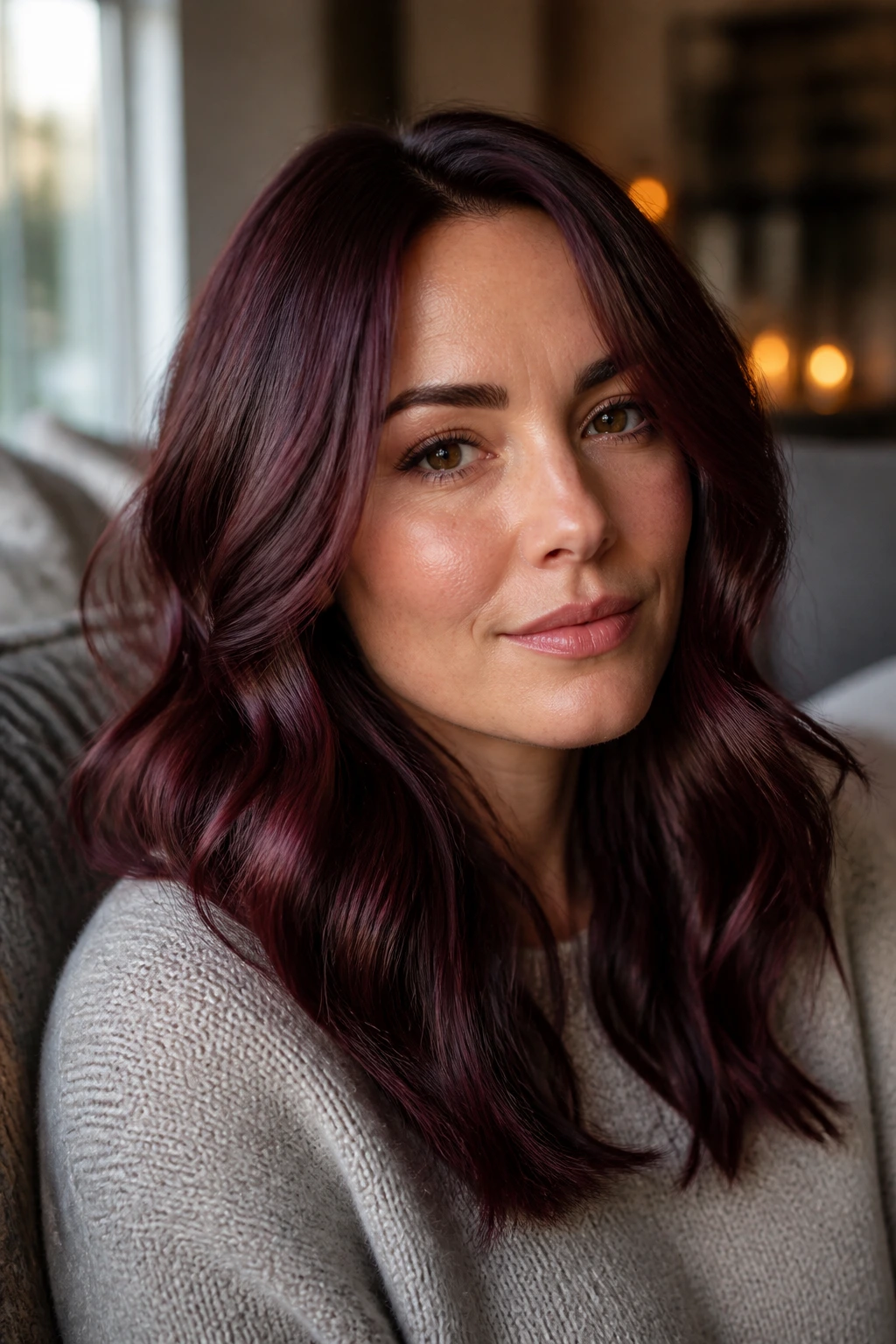
Mulled wine brunette is darker than burgundy and less obvious than red velvet. Under indoor light it can look like a glossy brunette with a wine stain underneath; in sunlight, the plum and berry tones wake up. That hidden shift is what makes it good.
What to ask for
Ask for a brunette base with a burgundy or violet-red gloss, not a loud all-over red. That distinction matters. Burgundy sitting inside brown hair tends to look rich and grown-up, while a pure red deposit can start to feel costume-like if the tone is too bright or too orange. A demi-permanent formula works nicely here because it fades into a softer, muted wine instead of a strange rusty brown.
This is one of my favorite fall options for people who want color that looks different in every room. It is a little moody. That’s the charm.
6. Auburn Melt with Caramel Ends
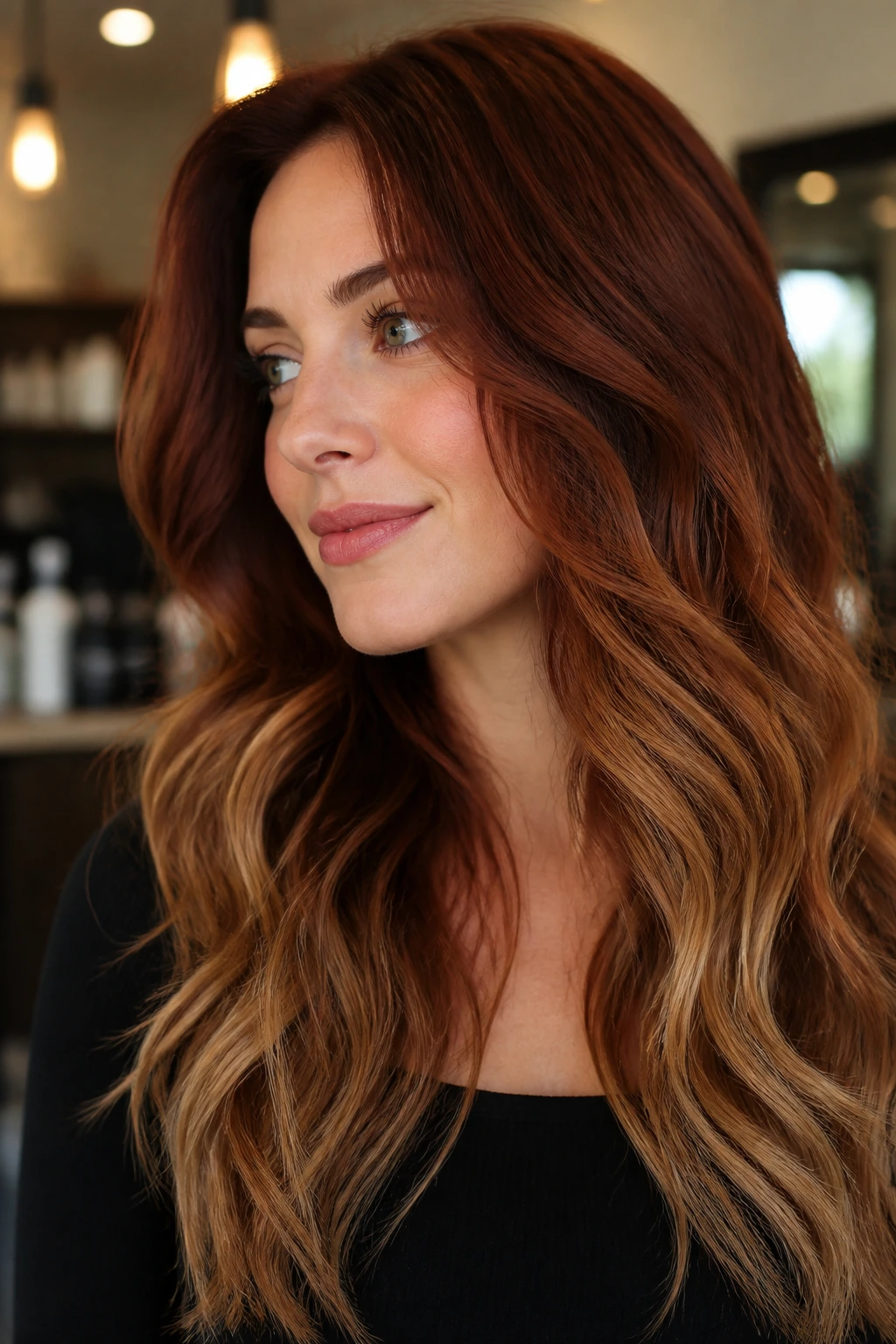
Auburn melt with caramel ends gives you the kind of gradient that makes long hair worth the effort. The auburn starts deeper near the roots and mid-lengths, then slides into a softer caramel at the ends. The color moves. That movement matters more than people think, especially when the hair is curled.
The best version of this shade avoids a hard line between red and gold. The transition should feel slow, not striped. If your hair is layered, the color will break up naturally. If it’s one length, ask for a little extra painting through the bottom half so the ends don’t look like an afterthought.
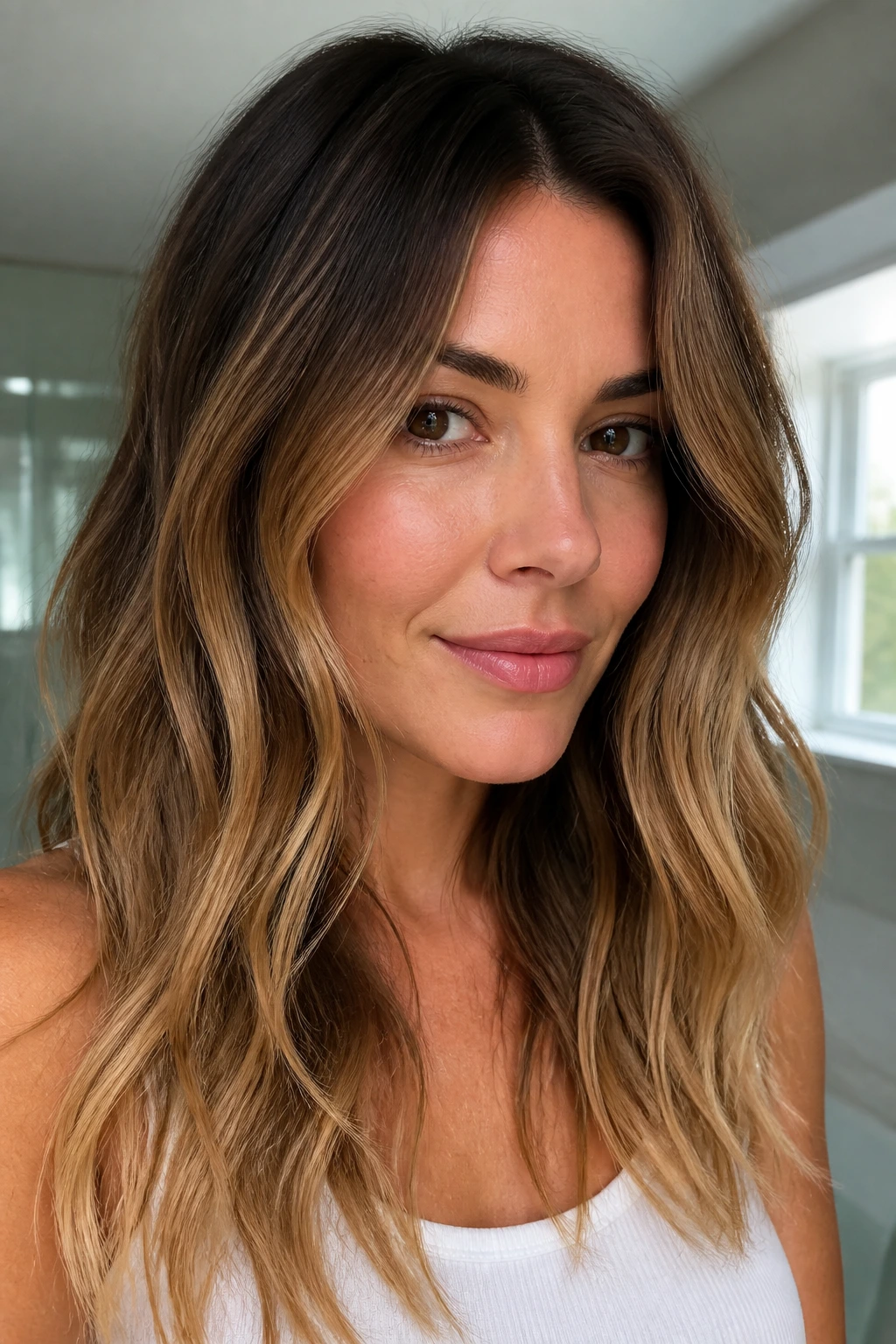
7. Toffee Blonde Balayage
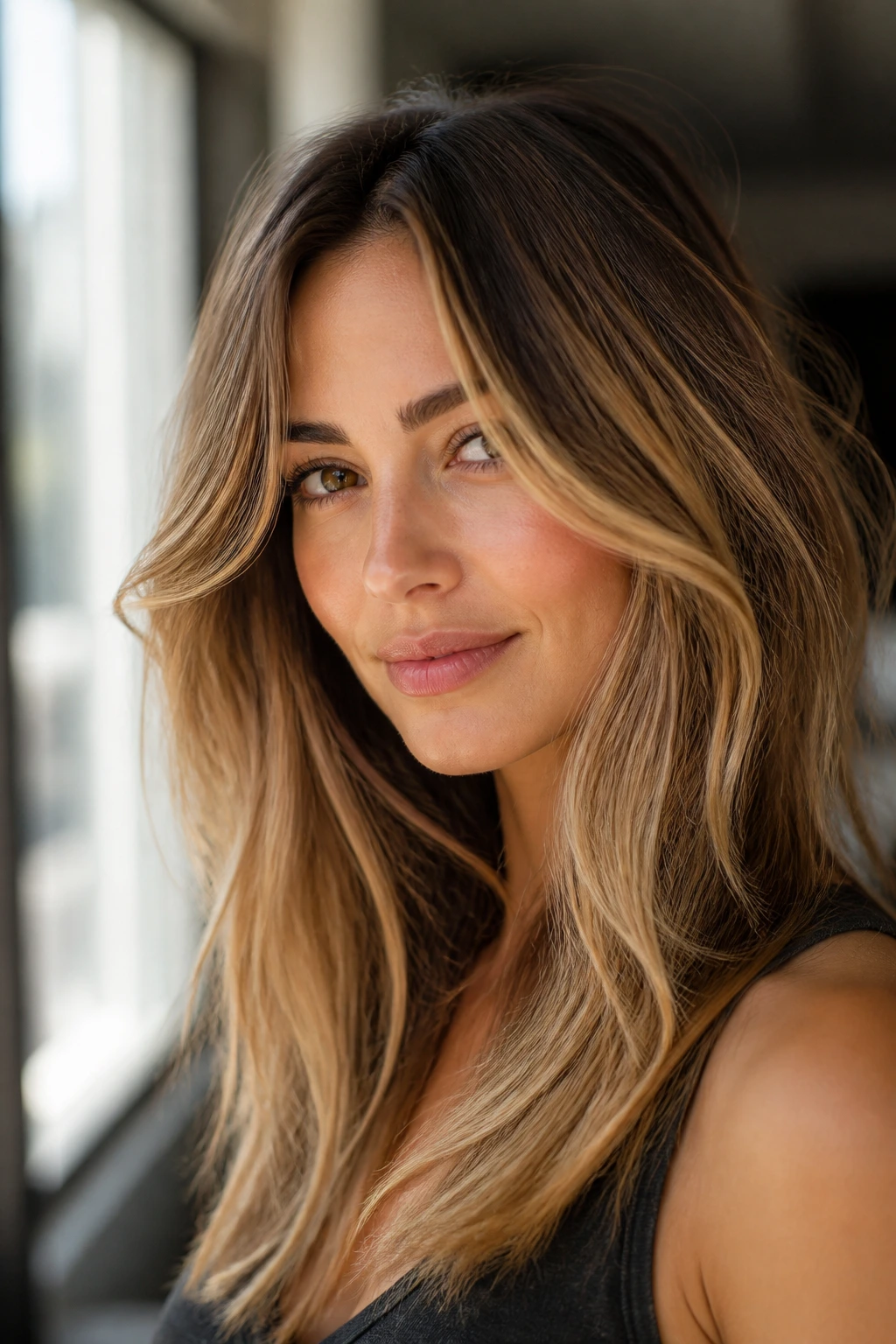
Toffee blonde is the kind of blonde that still belongs in fall. It has cream, gold, and a little brown depth so it doesn’t read summer-bright or icy. Balayage placement keeps the brightness away from the root, which gives the whole color a softer grow-out and fewer panic appointments.
This shade works especially well on hair that already has highlights or a lighter base. If you begin with a dark brunette, the lift has to be planned carefully so the toffee doesn’t turn brassy. I prefer it on layered hair because the different lengths catch the light at different points. The result feels warmer, not louder.
8. Black Cherry Velvet
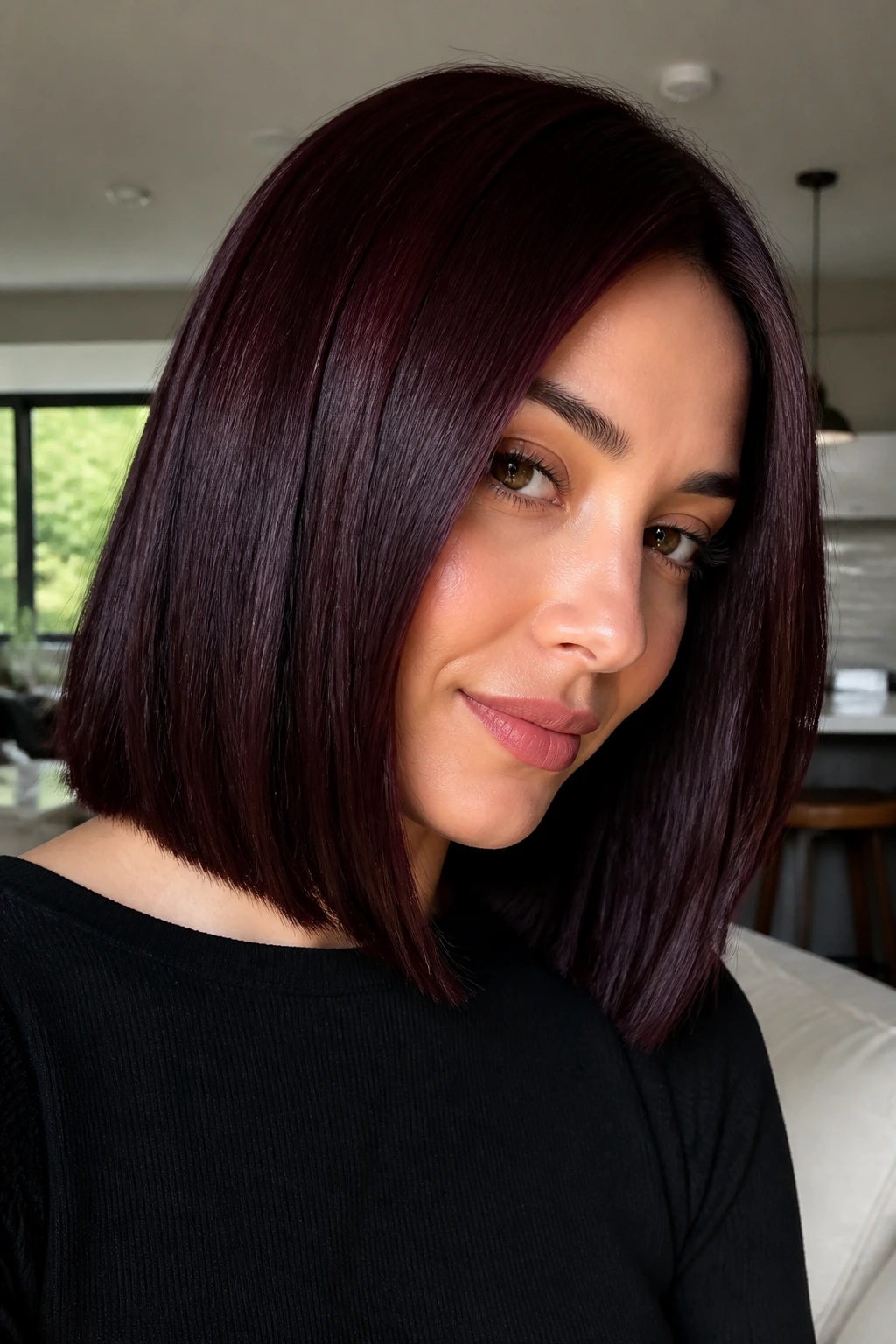
Black cherry velvet is deep, dark, and slightly dangerous in the best way. From a distance it can read almost black. Up close, especially in daylight, the cherry tone appears like a stain under the surface. That makes it ideal for anyone who wants dark hair with a little secret in it.
The shine has to be there. Matte black cherry looks dead fast, so a glossing product or salon glaze is nonnegotiable. I also like this shade on blunt cuts, because the clean line lets the color do the talking. It is one of the rare dark colors that does not need heavy contrast to feel interesting.
9. Maple Syrup Blonde
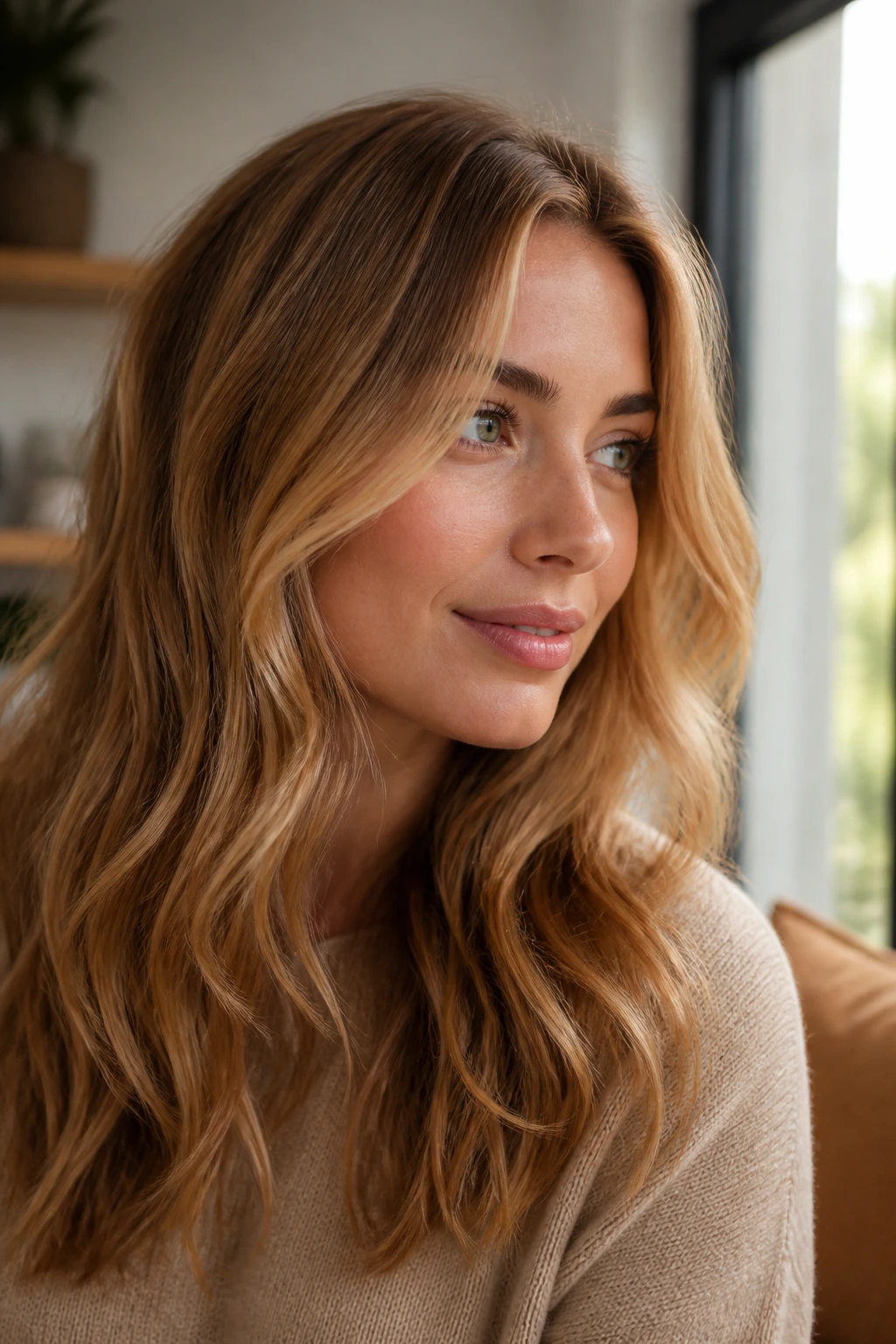
Maple syrup blonde is warmer than beige blonde and less yellow than gold. It has that soft amber sweetness that looks especially good when the hair moves under indoor light. On the right skin tone, it can brighten the face better than a pale blonde because it doesn’t sit so far away from the natural warmth in the complexion.
Best details to keep in mind
- Base: Light brown to blonde
- Tone: Golden with neutral balance
- Maintenance: Toner every 4 to 6 weeks
- Best styling: Loose waves, soft volume at the root
The danger here is brass. If the gold gets too yellow, the whole color turns cheap looking fast. I’d rather see this shade toned a little beige than pushed too warm.
10. Walnut Brown with Face-Framing Lights
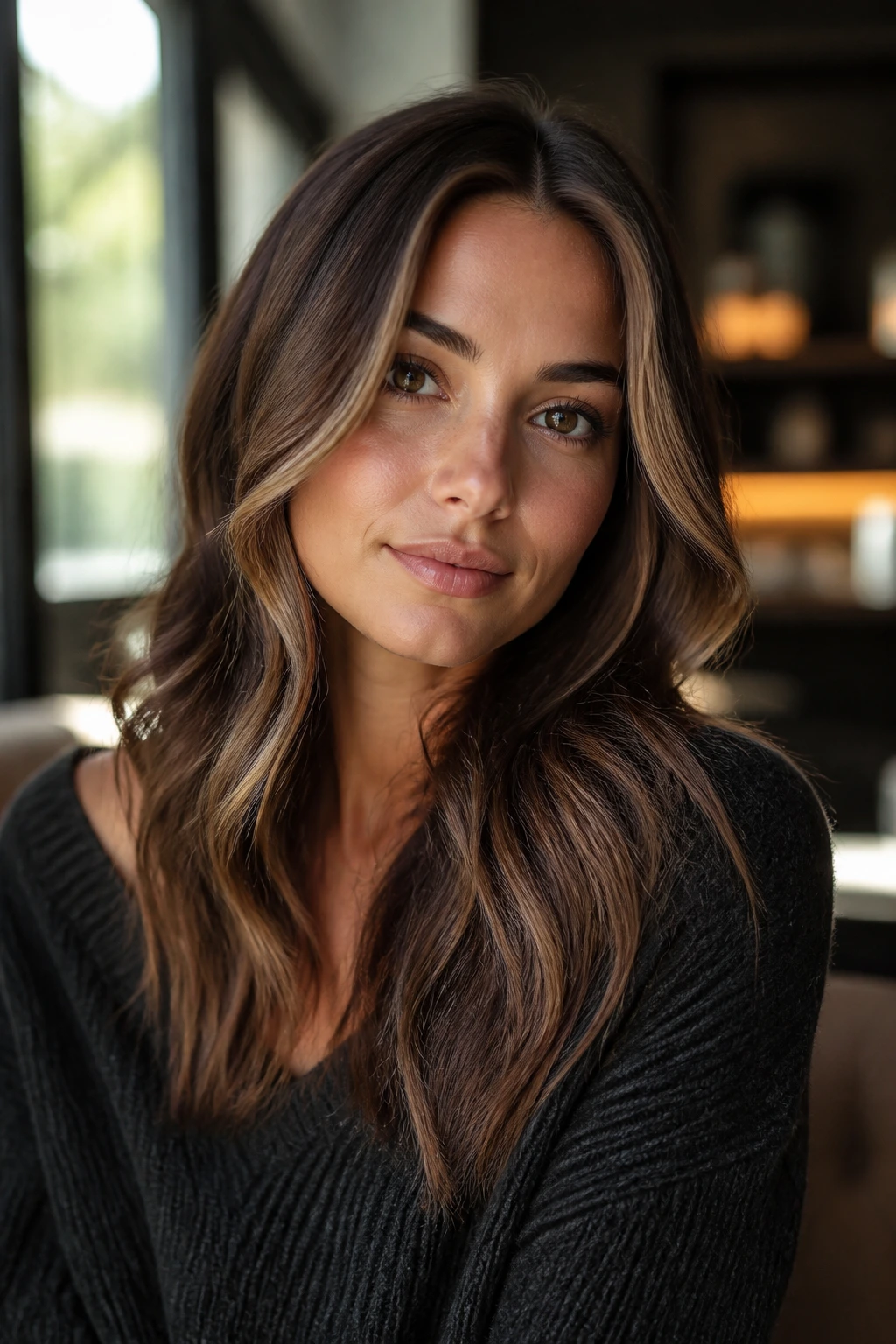
Walnut brown with face-framing lights is one of those shades that looks more expensive than it sounds. The walnut base gives you depth, and the lighter front pieces brighten the face without turning the whole head into a highlight project. You get contrast where it matters most.
This is especially smart for people who want a change but hate root upkeep. The frame pieces can be placed just a shade or two lighter than the base, which means they grow out gracefully and do not create a harsh line. On a wave or blowout, the front pieces flick forward and catch light right where you want it.
11. Ginger Spice Copper
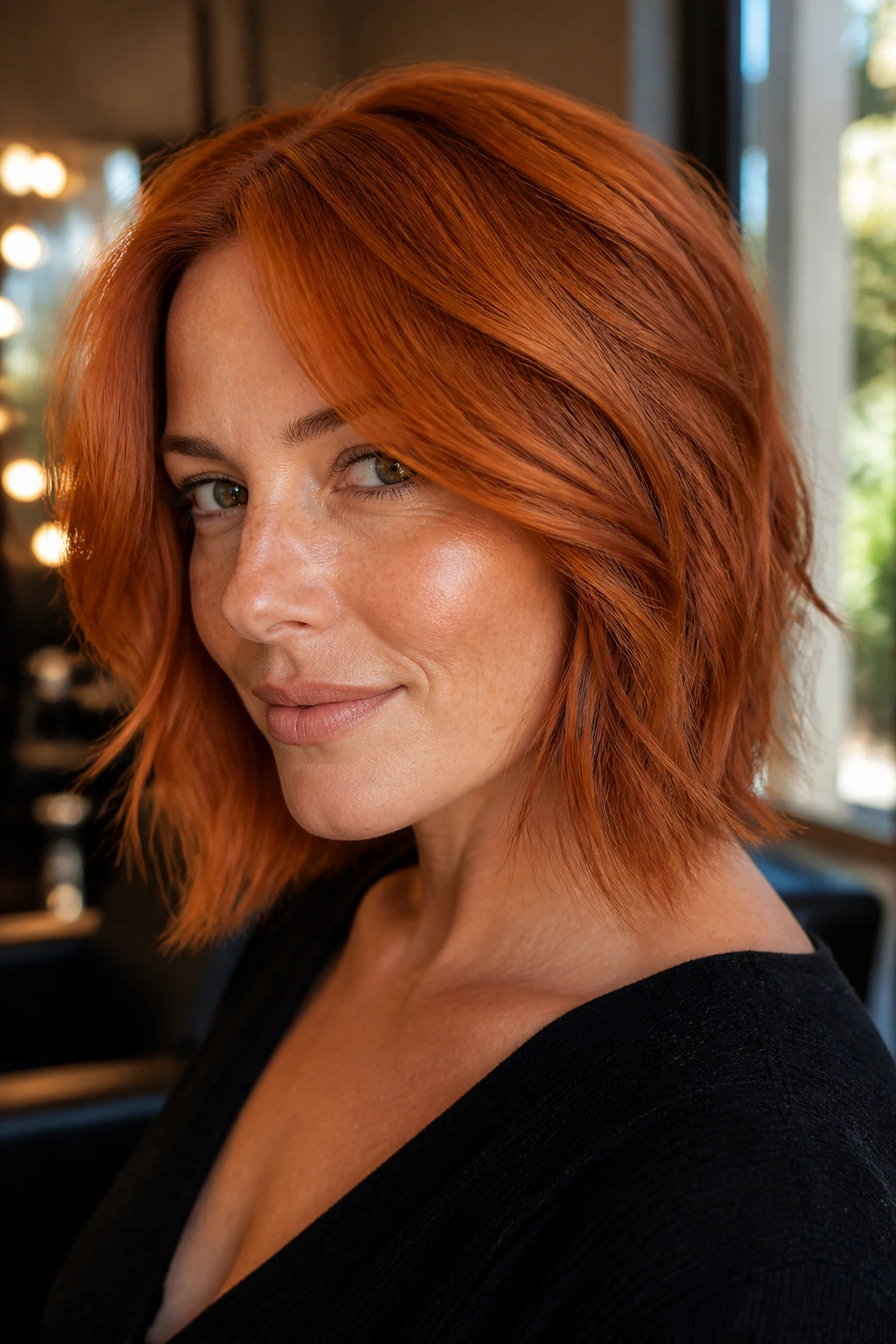
Ginger spice copper is brighter, cleaner, and more vivid than smoked cinnamon. It has that fresh ginger root energy without crossing into clown-bright territory if the formula is done with enough depth. On short cuts and layered styles, it looks crisp. On very long hair, it needs shine and movement or it can start to feel too one-note.
The shade loves warmth in the skin and a little confidence in the styling chair. It also fades faster than brunette, so a maintenance plan matters. If you are testing this family for the first time, ask for a copper gloss over a warm base rather than a heavy permanent red. You can always deepen it later. Lightening it back out is the annoying part.
12. Bronde with Root Shadow
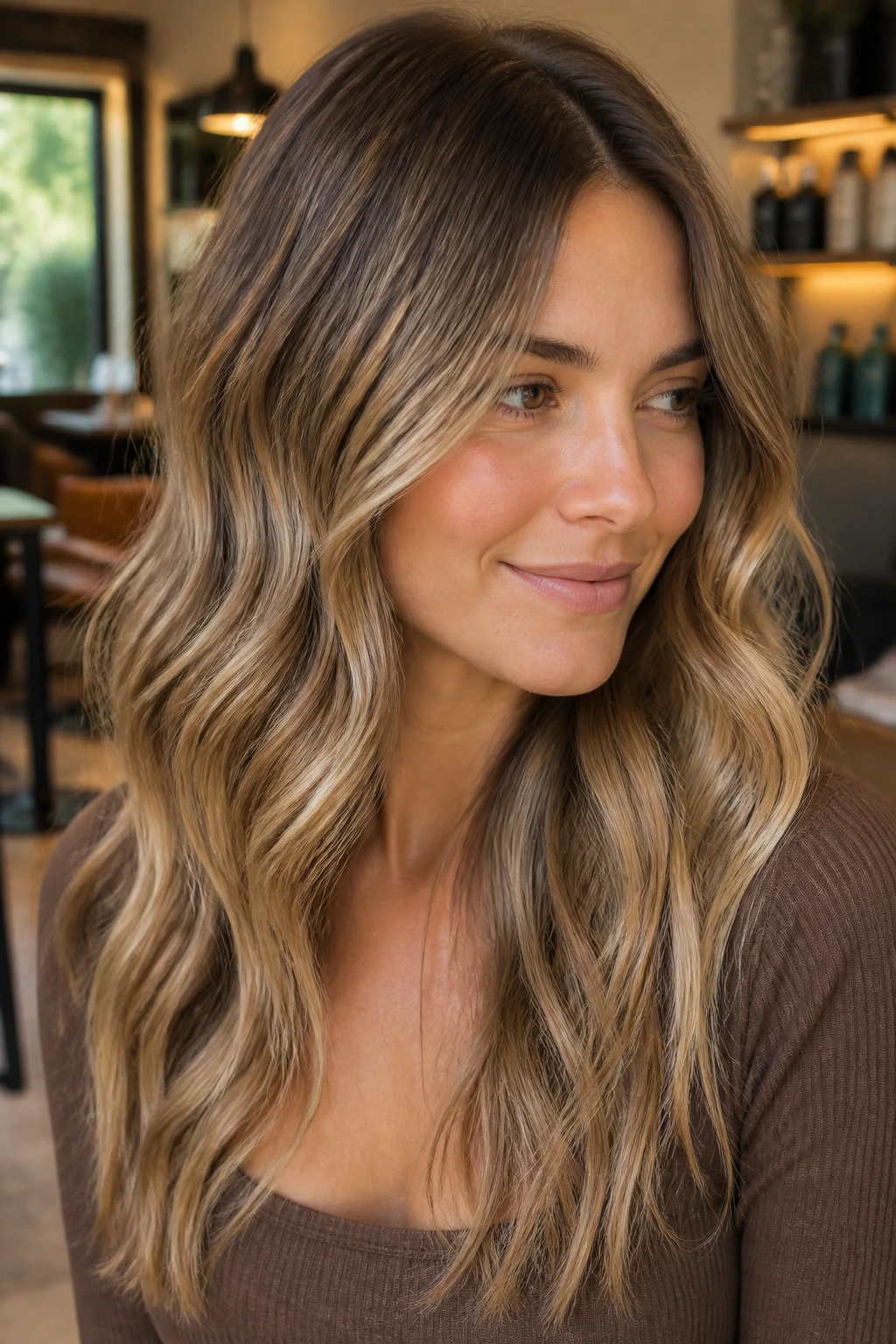
Bronde with root shadow is the safe bet that doesn’t look safe. Brown and blonde are blended in a way that keeps the color from feeling split in half, while the shadow root softens the top and lets the grow-out stay readable for weeks. If you want one of the easiest fall hair color ideas to live with, start here.
Why it keeps working
The root shadow does the heavy lifting. It reduces the contrast at the scalp, so you don’t get that stripey, salon-fresh line when the hair grows. The mid-lengths and ends can be brighter, beige, or caramel depending on your base, but the overall effect stays soft. This is good on nearly every texture, though I think it looks best when the hair has at least a little bend.
If you hate spending your life in a toner chair, bronde is hard to beat.
13. Hazelnut Melt
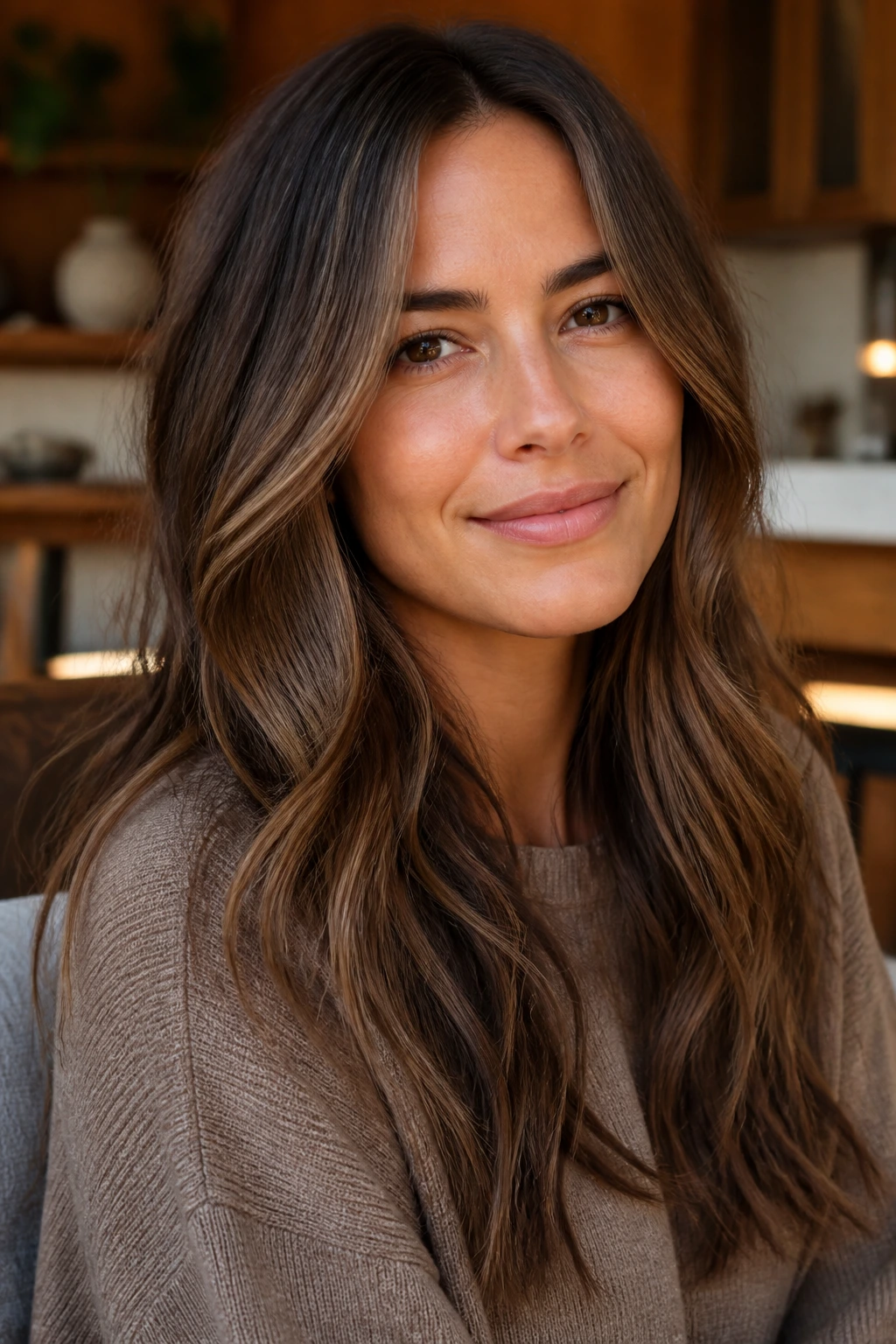
Hazelnut melt is the brunette version of a good cashmere sweater. Soft, warm, and easy on the eyes. The shade sits between chestnut and taupe, which means it has enough warmth to feel seasonal but enough neutrality to avoid looking orange or red under bathroom lights.
This one shines on medium brunettes who want dimension but do not want obvious highlights. A melt, rather than a stripe, is what gives it the right finish. Ask for lighter mids and ends, then keep the root a touch deeper so the whole color has a slow fade. That structure matters more than the exact pigment.
14. Pumpkin Spice Copper
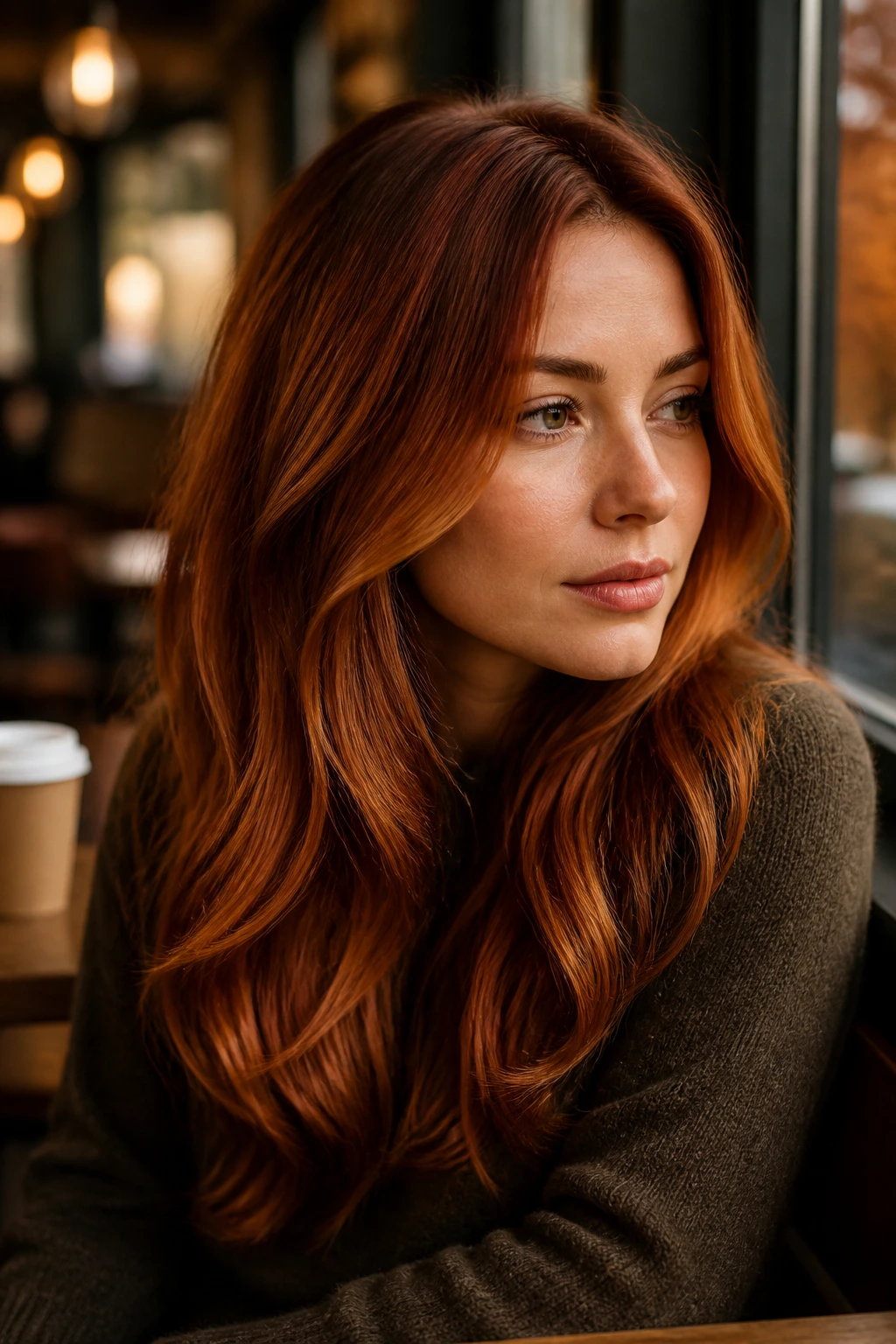
Pumpkin spice copper gets a bad reputation because people often make it too bright, too flat, or too orange. Done well, it looks like deep copper with a little amber and brown holding it down. Done badly, it looks like a novelty wig. There’s not much middle ground.
This shade works best when the base has some depth. A level 5 or 6 brunette can carry the warmth without the color screaming. On hair with some natural movement, the copper picks up at the ends and the root keeps it grounded. If you want this shade to feel grown-up, keep the orange edge softened with gold and brown, not with ash.
15. Chocolate Cherry Noir
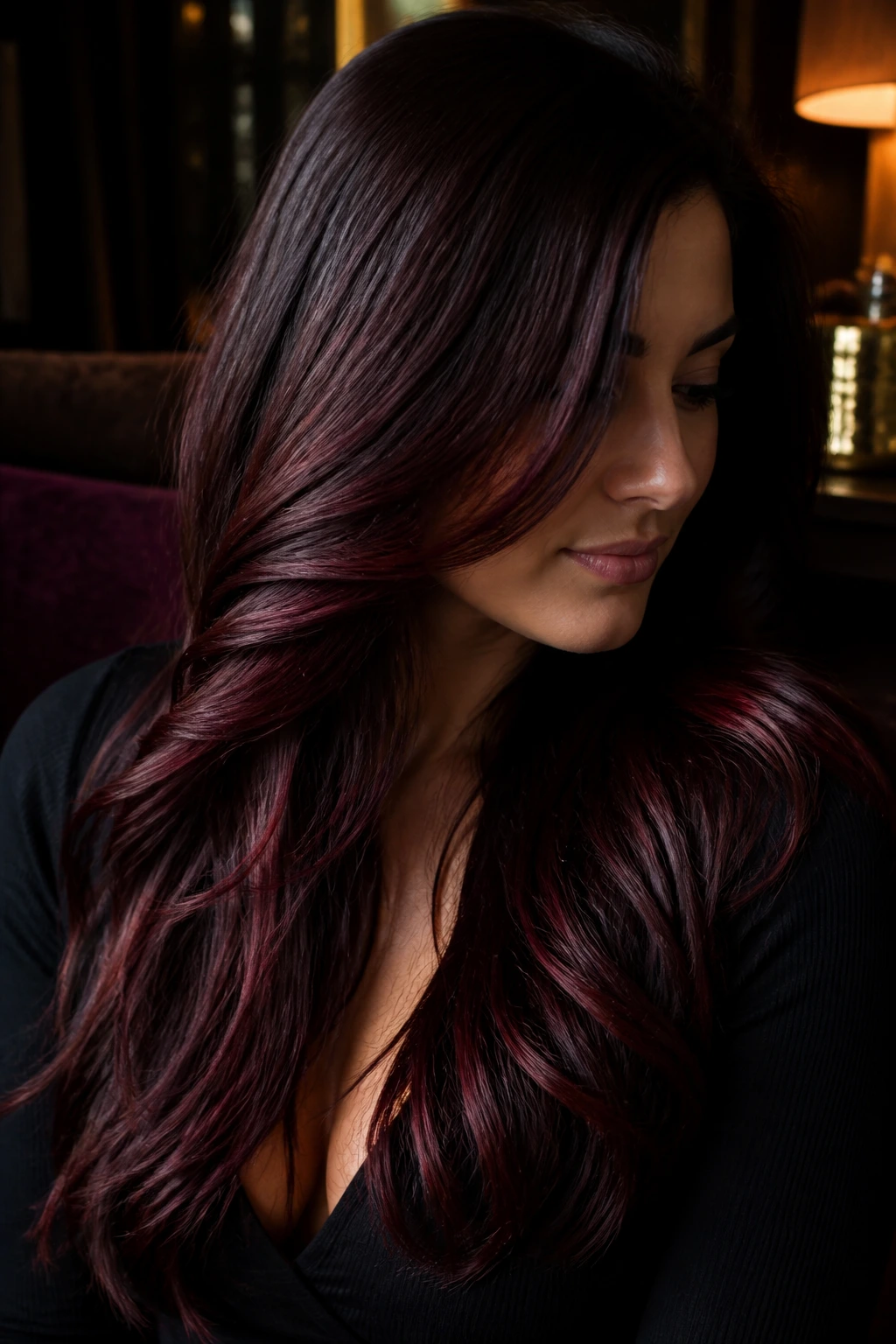
Chocolate cherry noir is for people who want dark hair with a pulse. It looks like chocolate from far away and reveals a cherry-red depth only when the light hits at an angle. That hidden movement is what makes it more interesting than simple dark brown.
I like this color on longer hair, especially if the cut has layers or a curved edge. The red tones show up differently as the hair swings. If you wear a lot of black, this shade can keep your hair from disappearing into the outfit. It also tends to be kinder than a full bright red when the roots come in, because the dark base gives you a little runway.
16. Smoked Bronze Blonde
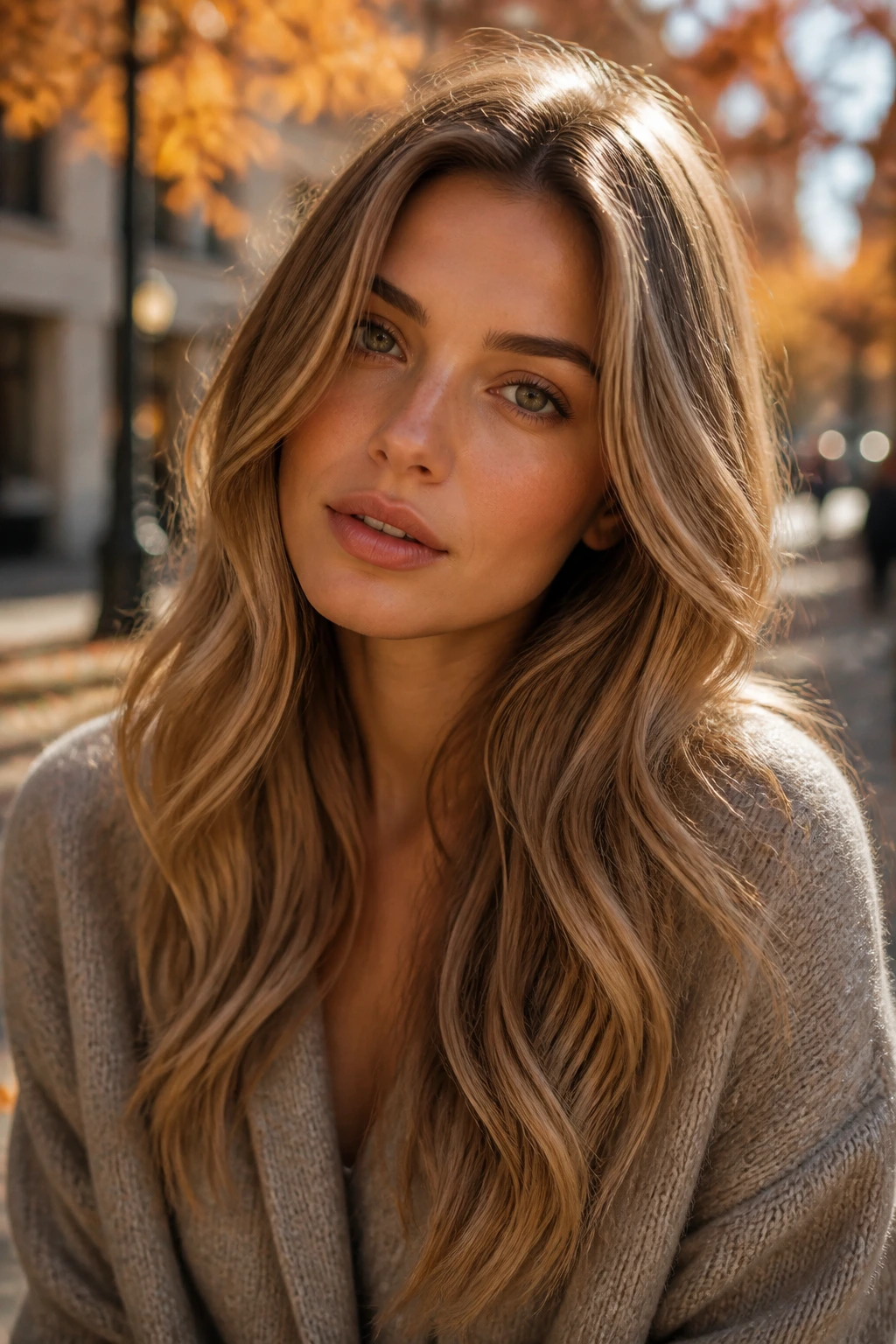
Smoked bronze blonde sits in the beige family, but it has a warmer metal tone underneath that keeps it from going flat. It’s a good answer for anyone who wants blonde without that shiny yellow problem and without committing to icy ash. The bronze adds a little depth. The smoke keeps it from turning gold-brassy.
Quick notes
- Best on: Light brown to blonde bases
- Tone family: Beige-bronze
- Upkeep: Toner every 4 to 6 weeks
- Best cut: Lob, long layers, or shoulder-length waves
This color is more forgiving than a super pale blonde because the mixed tones hide a little fade. Still, it needs gloss. Bronze without shine can look muddy fast.
17. Bronze Balayage on Dark Hair
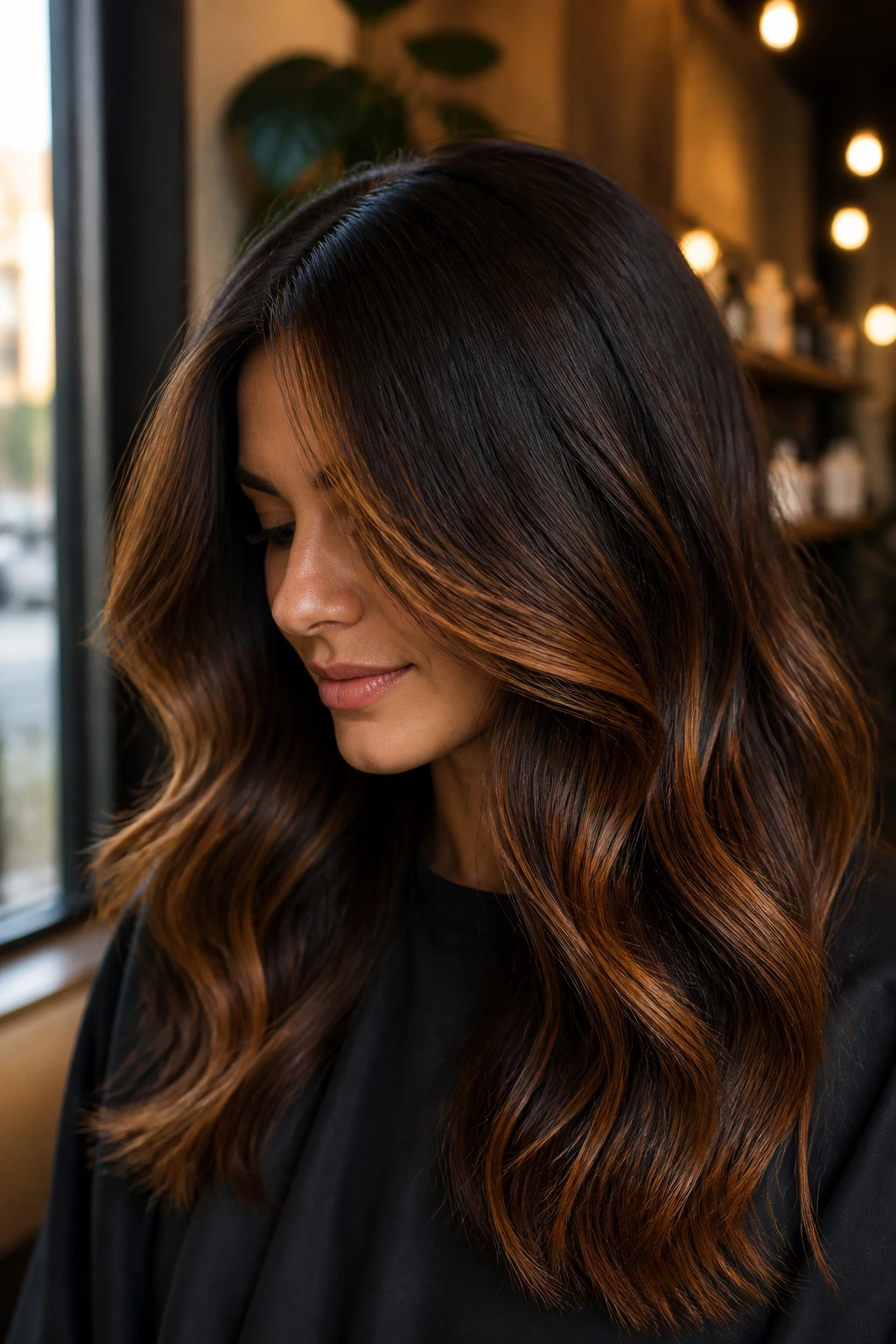
Bronze balayage on dark hair is what I recommend when someone wants warmth but does not want to go through a heavy blonding session. Bronze sits a step warmer and richer than beige, so it holds its own against deep brunette without making the whole head look streaky. The balayage placement keeps the lighter pieces where the light will actually hit them.
This is a smart fall move for dark-haired people who get bored with their color but hate high maintenance. Around the face and through the ends, bronze can brighten the style without erasing the depth at the roots. It looks especially good on waves and curls, where the light pieces bend and flash as the shape moves.
18. Cranberry Stain Gloss
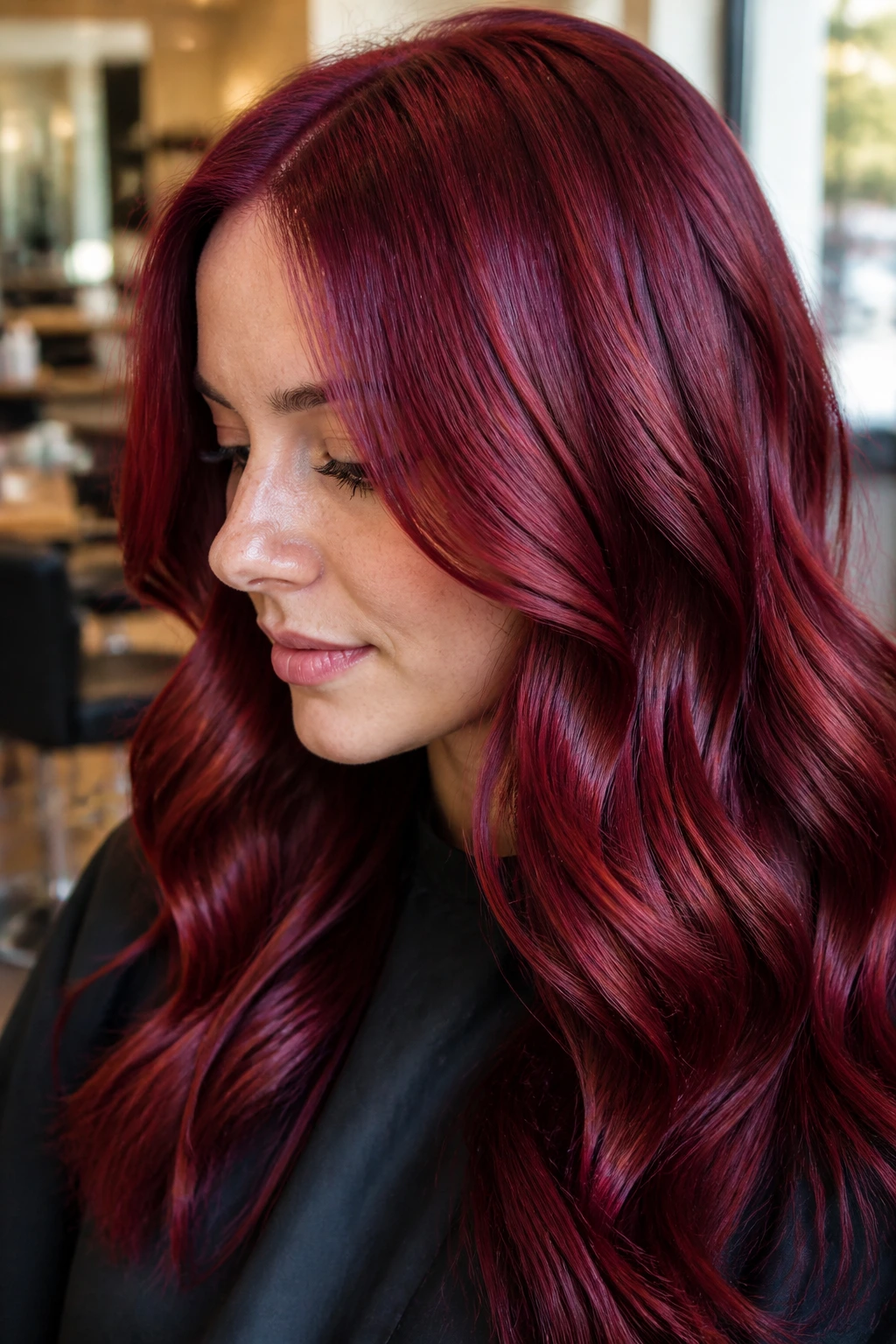
Cranberry stain gloss is the most low-commitment red in the whole group, and that is why I like it. It does not try to be permanent drama. It stains the hair with a cool berry-red sheen that feels fresh for a few washes, then fades into something softer. That makes it ideal for anyone testing red before taking the permanent plunge.
A gloss like this is also a good rescue move for dull blonde or light brown hair that needs life fast. On blonde, it reads brighter. On brunette, it sits deeper and moodier. If you want the color to stay crisp, use color-safe shampoo and skip aggressive clarifying products. They rinse out this kind of deposit faster than most people expect.
19. Sandy Beige with Cinnamon Money Piece
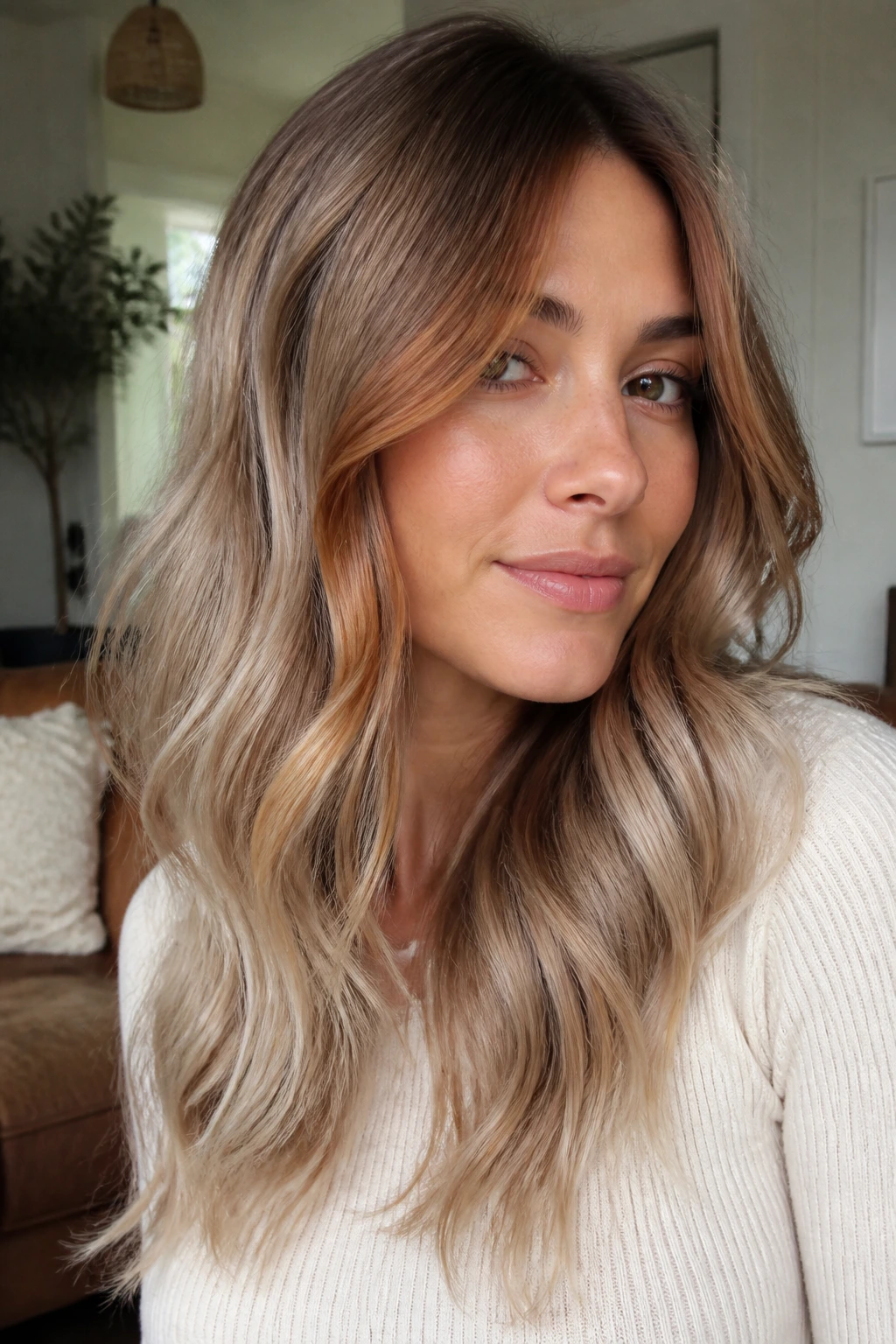
Sandy beige with a cinnamon money piece gives you two moods in one head of hair. The beige base keeps the overall look light and clean, while the cinnamon frame brings warmth right where the eyes and cheekbones live. It is one of those placements that can do more than a full head of color if the front piece is placed well.
The key is softness. The money piece should blend into the sides, not sit there like a stripe from a different person’s hair. I like this combo on medium to light brunettes who want brightness without losing their base. It works particularly well with loose waves and a middle part, where the front color can fall forward without looking too deliberate.
20. Cocoa Mushroom Blend
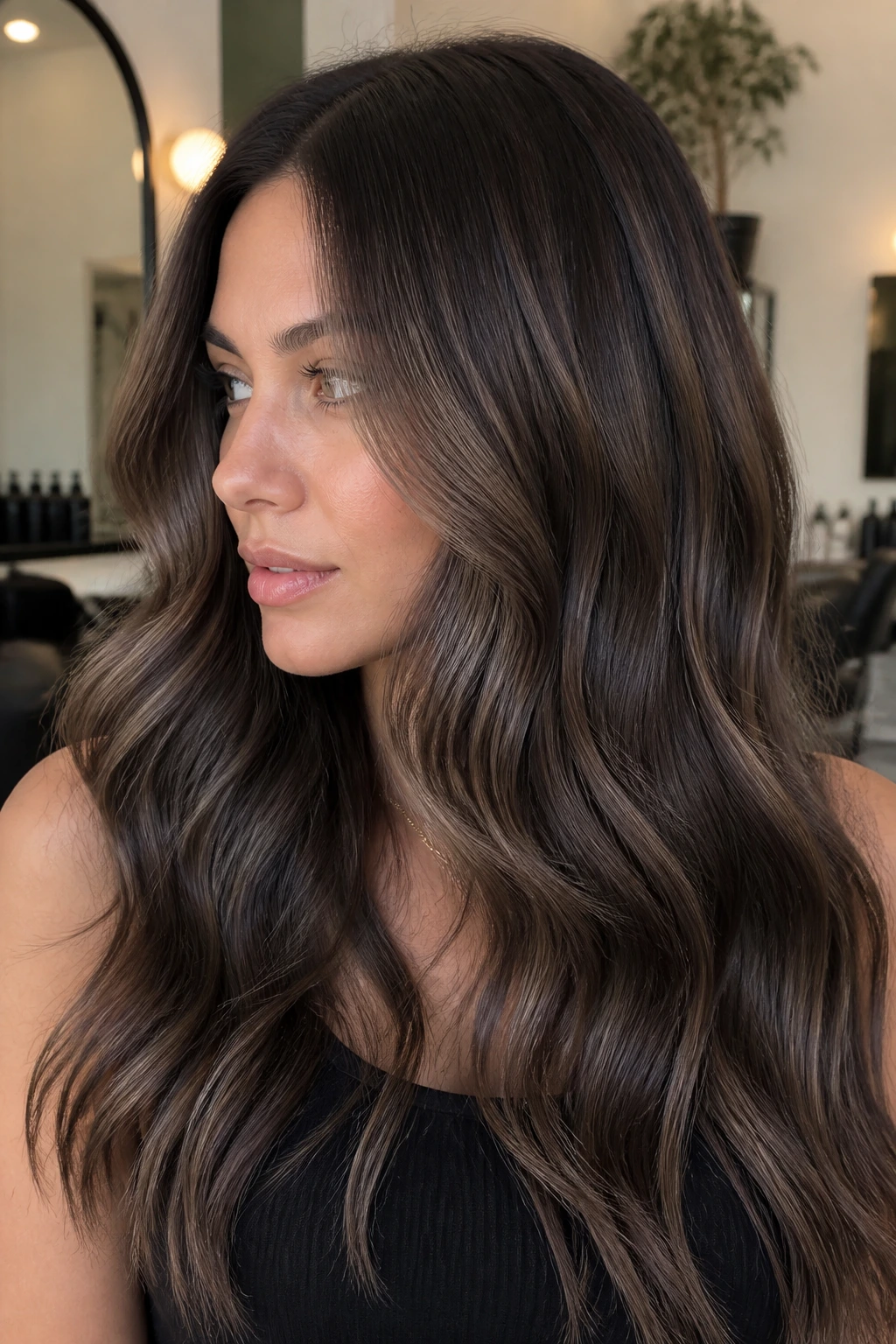
Cocoa mushroom blend is cooler than chestnut and richer than ash brown. It has that soft, grounded feeling that makes brunette hair look intentional rather than default. The cocoa keeps the color from going flat. The mushroom keeps it from turning red or orange when the light gets warm.
This is one of the easiest shades to wear if you prefer understated color but still want visible change. Ask for lowlights and a cool gloss rather than a single-process brown that lands all at once. The blend matters. On thick hair, the shade gets depth. On fine hair, it prevents the color from looking too dark and heavy.
21. Tawny Beige Bronde
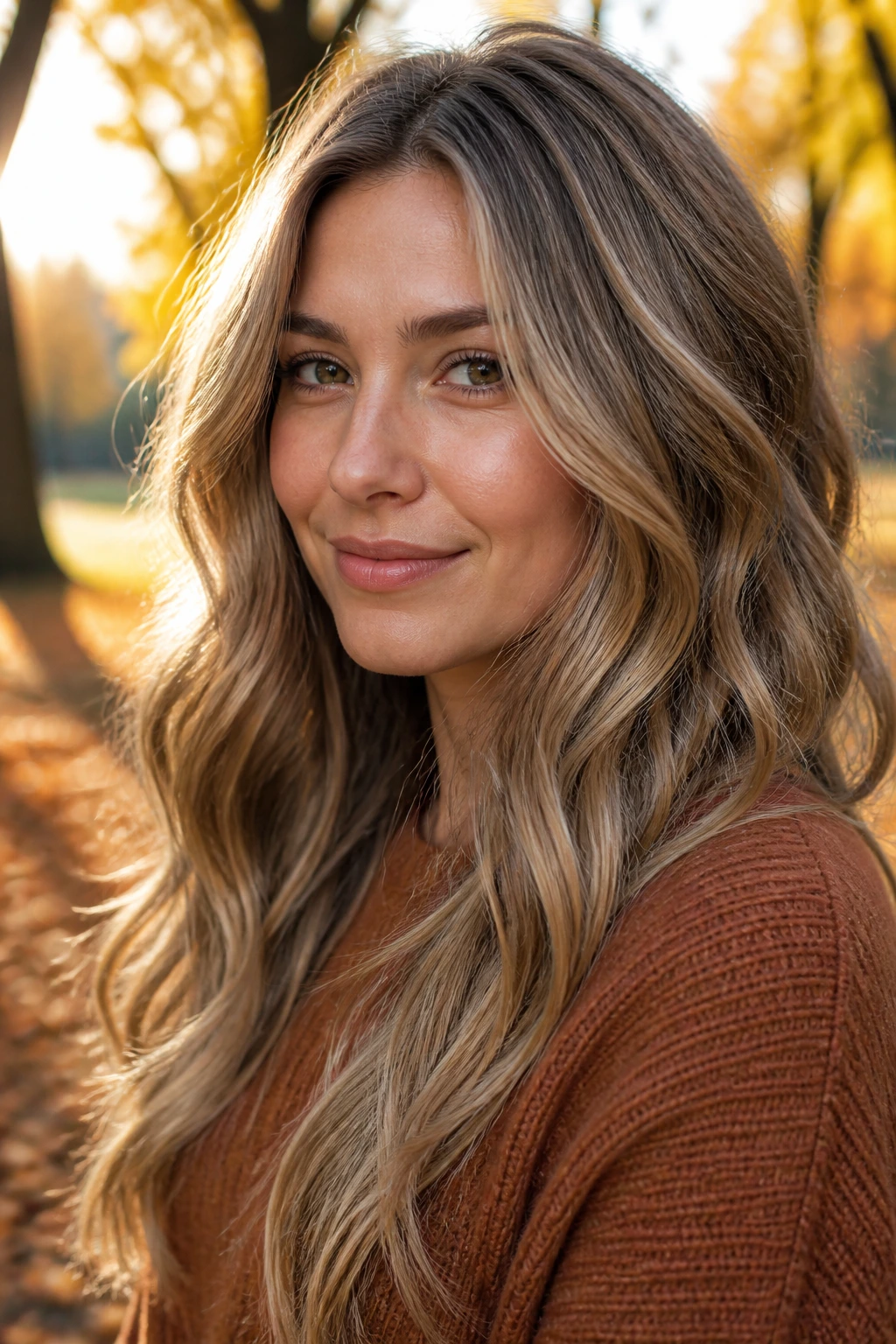
Tawny beige bronde lives right between brown and blonde, but the beige tone keeps it soft enough for fall. It has a little warmth, a little lightness, and enough root depth to avoid that over-highlighted summer look. If you ever wanted a color that feels like a natural extension of your own hair, this is the one.
The part that makes it work
The root needs to stay a shade or two deeper than the ends. Without that anchor, bronde can collapse into a washed-out light brown. Tawny beige works because it keeps the brightness in the mids and ends while letting the scalp area stay grounded. It’s especially good on long hair where the length gives the gradient somewhere to go.
You can wear this with a gloss, a soft blowout, or loose bends. It never needs a lot of extra styling to make sense.
22. Spiced Mahogany
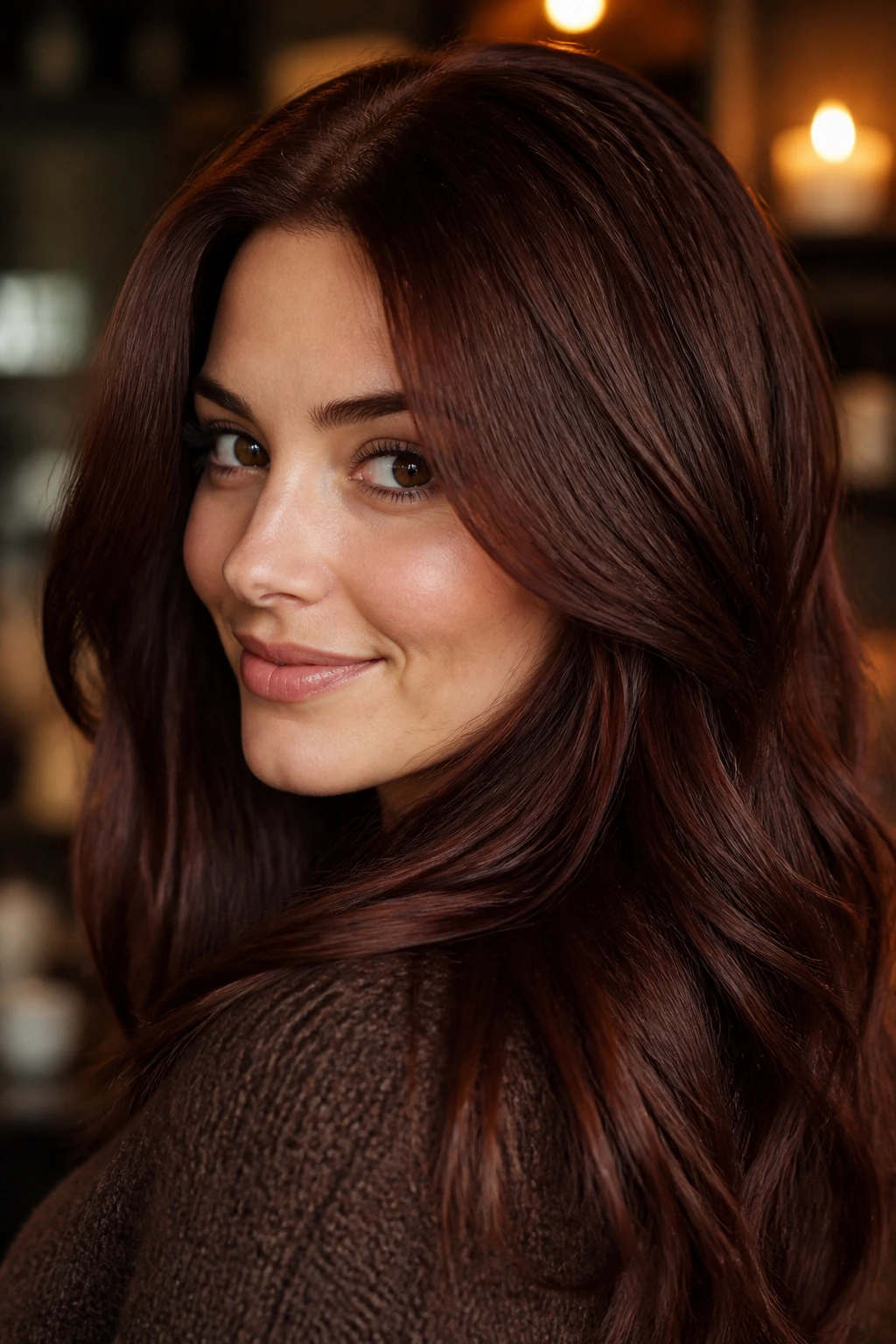
Spiced mahogany is the quieter cousin of bright auburn. It has red, brown, and a touch of depth that keeps the color serious instead of loud. On medium brunettes it can read as a rich seasonal shift; on deeper bases it becomes a red-brown glow that appears slowly rather than all at once.
This is a strong choice if you want red but do not want to fight maintenance every two weeks. Mahogany tends to fade into a softer warm brown instead of a pale orange halo, which is a relief. I especially like it on thicker hair, because the density shows off the darker red depth better than wispy pieces do.
23. Honey Amber Highlights
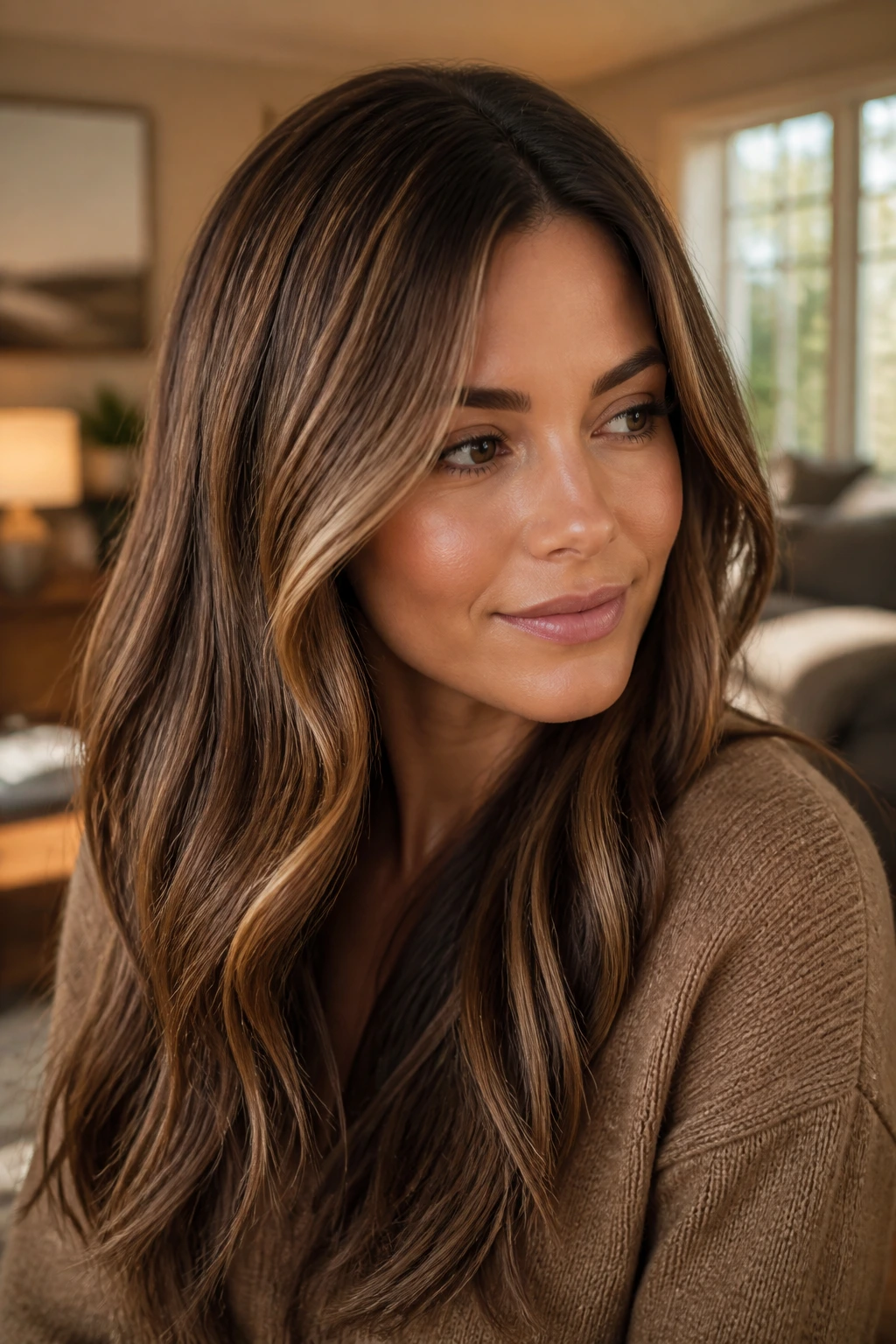
Honey amber highlights are classic for a reason, but they work best when the placement is fine enough to feel blended. The amber tone gives the gold some depth so it doesn’t go flat or yellow. On medium brown hair, this can brighten the whole look without making the hair seem heavily colored.
A lot of people ask for honey and accidentally get stripey caramel. The fix is finer ribbons and a little root depth. If the highlights are too chunky, the color starts looking dated fast. When they’re thin and well-placed, they move with the cut and catch light in a much better way.
24. Toasted Almond Blonde
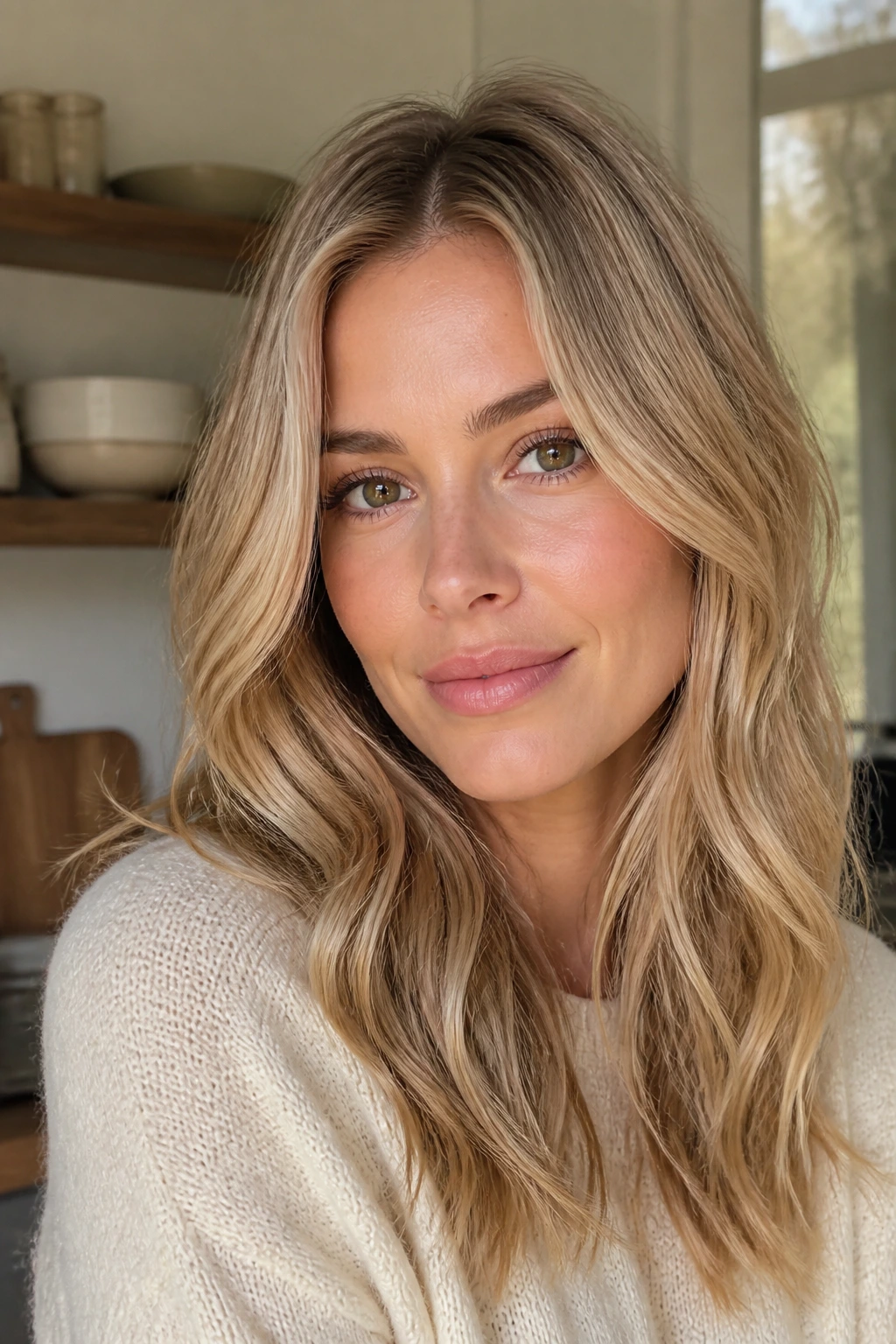
Toasted almond blonde is softer than platinum and cleaner than yellow blonde. It sits in that beige-gold space that flatters a lot of skin tones because it has warmth without too much brass. If your hair tends to pull yellow, this shade gives you a better target than chasing icy brightness.
A quick way to think about it
- Tone: Beige-gold with a soft finish
- Best on: Lighter bases or highlighted hair
- Maintenance: Toning every 4 to 6 weeks
- Best styling: Smooth blowouts or loose bends
I like this more than super-pale blonde for fall because it looks warm beside sweaters and darker makeup. It feels finished.
25. Burnished Copper Balayage
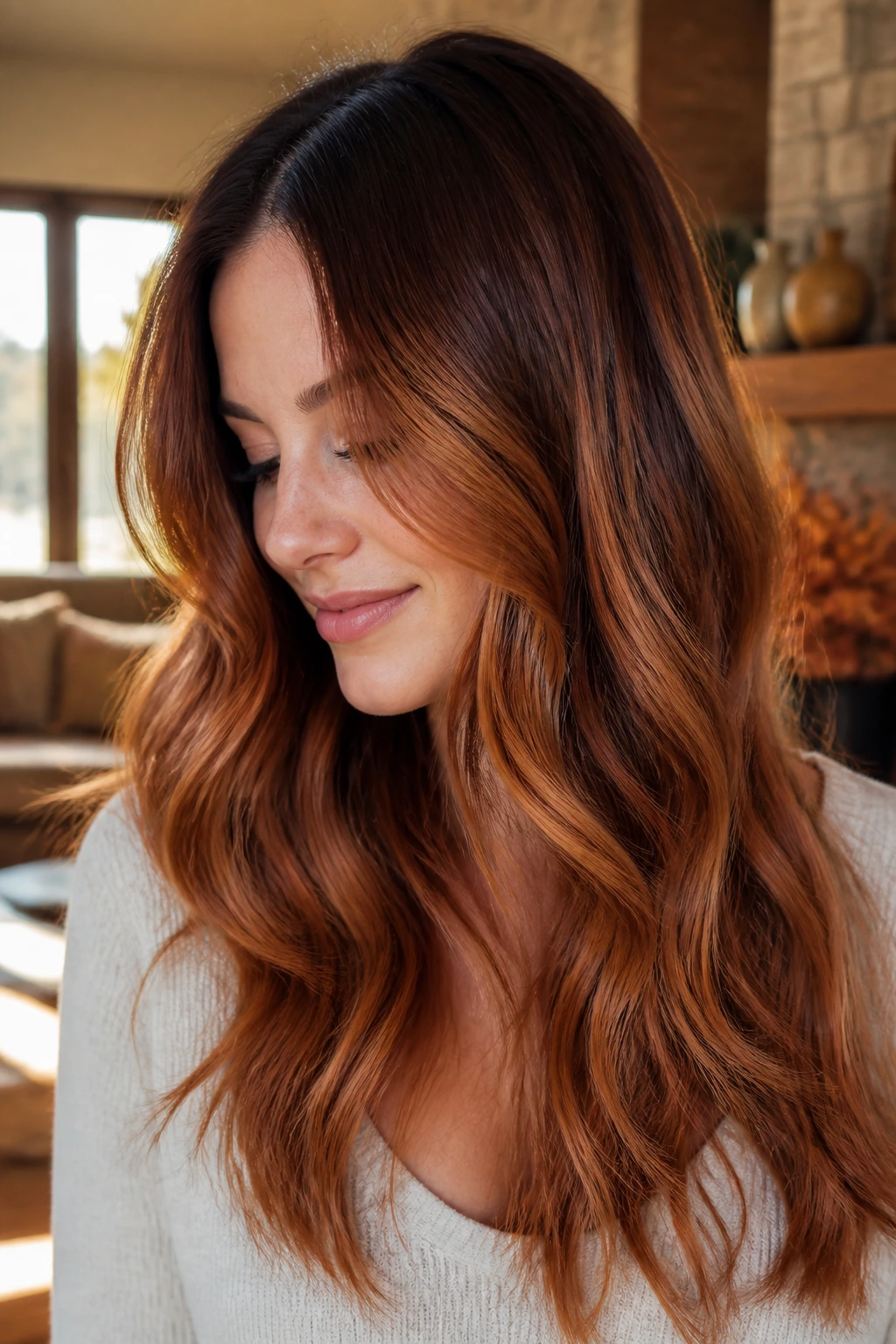
Burnished copper balayage is richer and more metallic than plain copper. Think copper with amber depth and a little brown underneath, so the color reflects light instead of flashing like a traffic cone. It is one of the strongest choices for people who want the red family without losing sophistication.
The balayage placement matters a lot here. Put too much bright copper at the root and the look gets harsh fast. Keep the deepest part near the scalp, then let the brighter pieces live through the mids and ends. Curly and wavy hair are especially good for this because the bend makes the burnished tone look layered rather than painted on.
26. Rich Espresso with Subtle Auburn Underlights
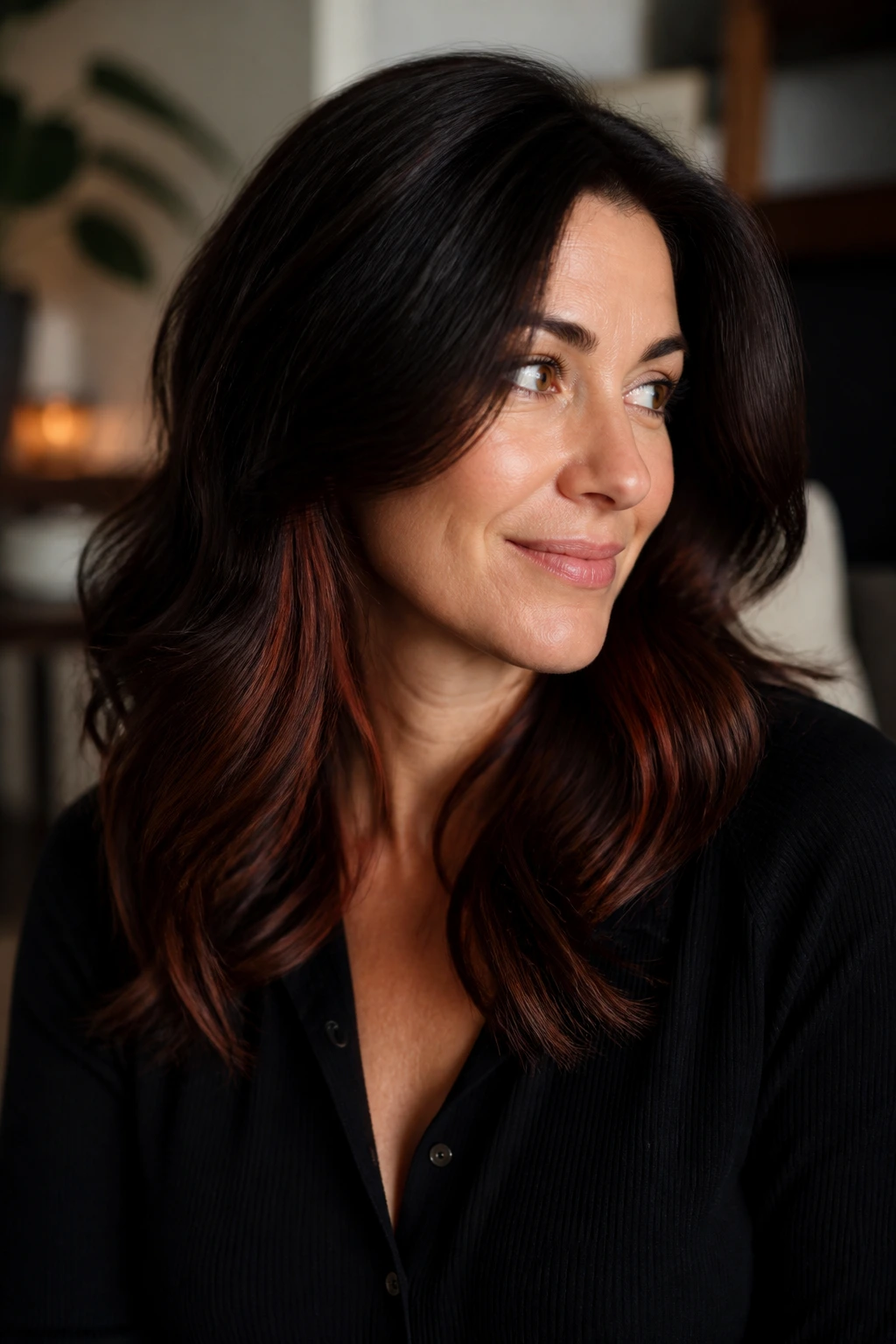
Rich espresso with auburn underlights is for the person who wants a dark, polished surface with a small secret underneath. On top, the hair looks like glossy espresso. Underneath, the auburn peeks through when the hair lifts, swings, or gets tucked behind the ears. It is the color equivalent of a hidden lining in a coat.
This shade is especially smart if you work somewhere conservative but still want personality in your hair. You can keep the outer layer dark and neat, then build the auburn underneath where it shows only in motion. That makes maintenance easier too, because the grow-out stays contained. It is not flashy. It is clever.
27. Soft Butterscotch Ribbon Lights
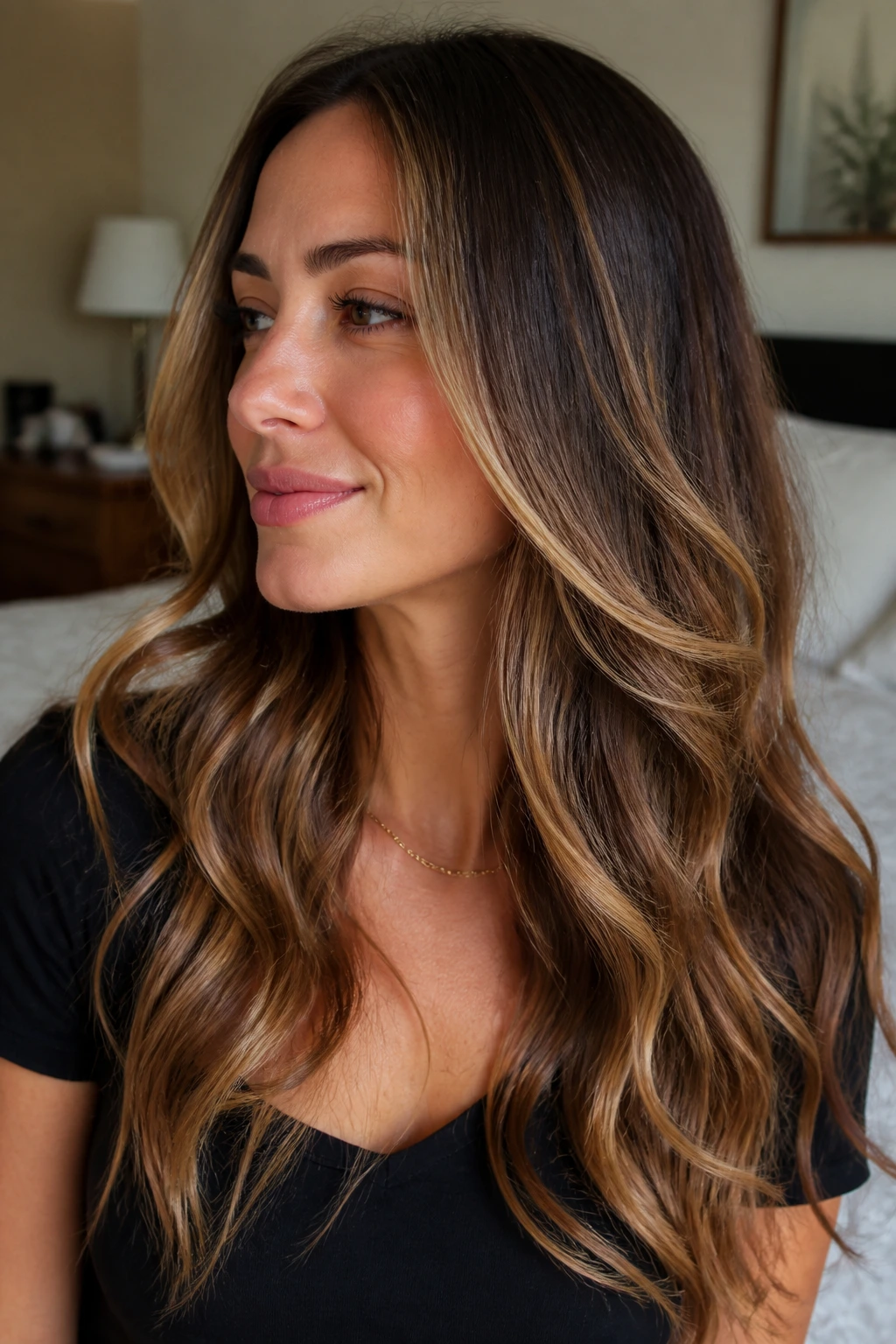
Soft butterscotch ribbon lights are what happen when blonde gets used with a little manners. The ribbons are creamy, warm, and thin enough to move through the hair instead of sitting on top of it. On brown or dark blonde bases, the result feels lifted without looking bleached to death.
The best versions are painted in curves rather than uniform sections. That keeps the butterscotch from becoming a series of obvious stripes. I like this on shoulder-length hair because the ribbons have room to arc around the face and sweep through the ends. It’s a good choice if you want brightness but not the maintenance that comes with a full blonde shift.
28. Smoky Latte Brown
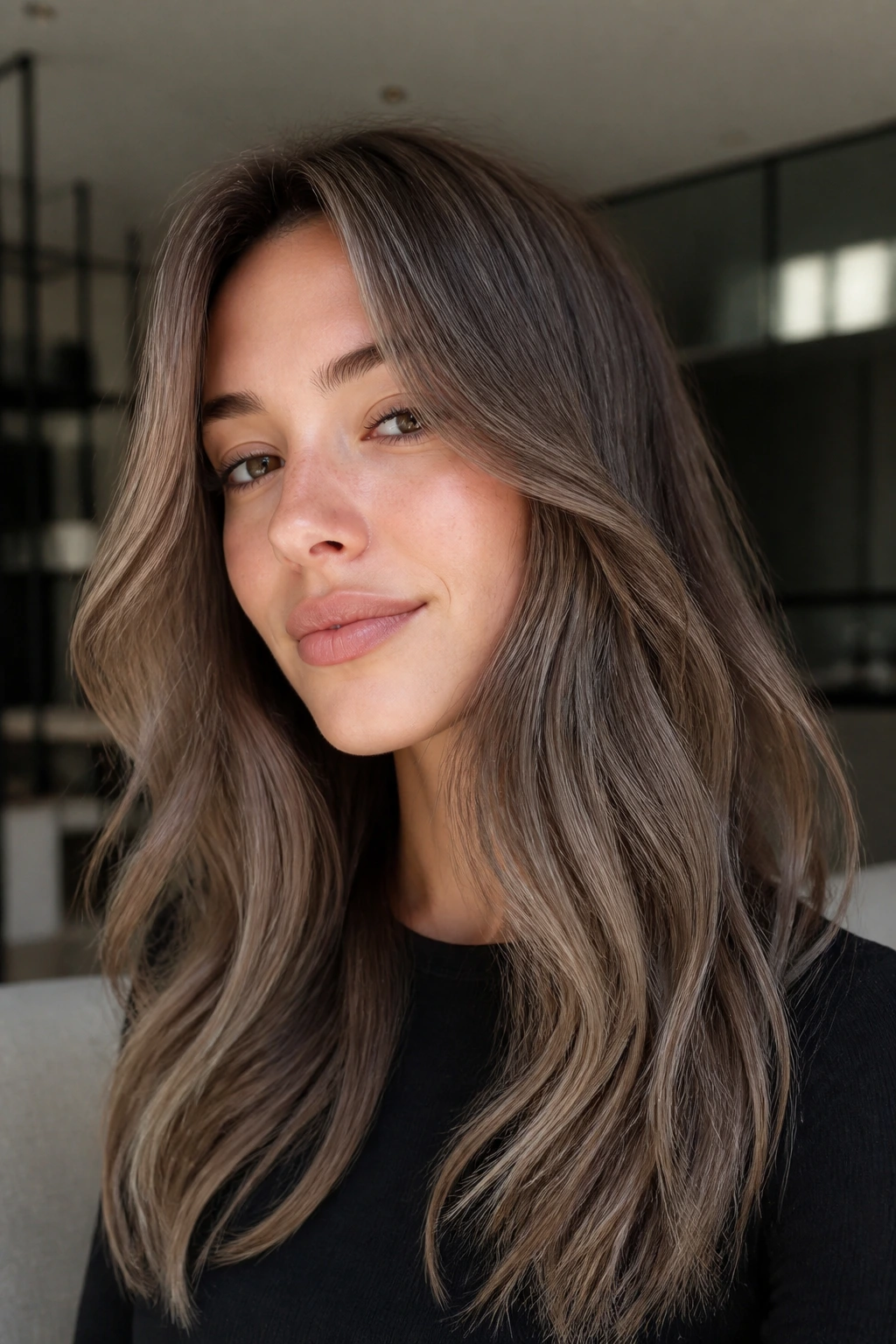
Smoky latte brown closes the loop on the softer end of fall hair color. It’s a cool brown with beige-taupe depth, and the smoky finish keeps it from turning red in warm indoor light. Think polished brunette, not muddy brown. The shine is the whole story here.
Why it stands out
This shade works best when the hair has a smooth surface, because the smoky tone depends on reflection. If the cut is layered or textured, the color still works, but the finish changes from sleek to diffuse. That can be good if you want something soft and wearable. If you have a lot of brass in your hair, this tone family can help calm it down without going full ash and losing all warmth.
It’s the kind of brown that looks calm from across the room and still has enough depth up close to hold attention.
Choosing Among Fall Hair Color Ideas for Brunettes, Blondes, and Redheads
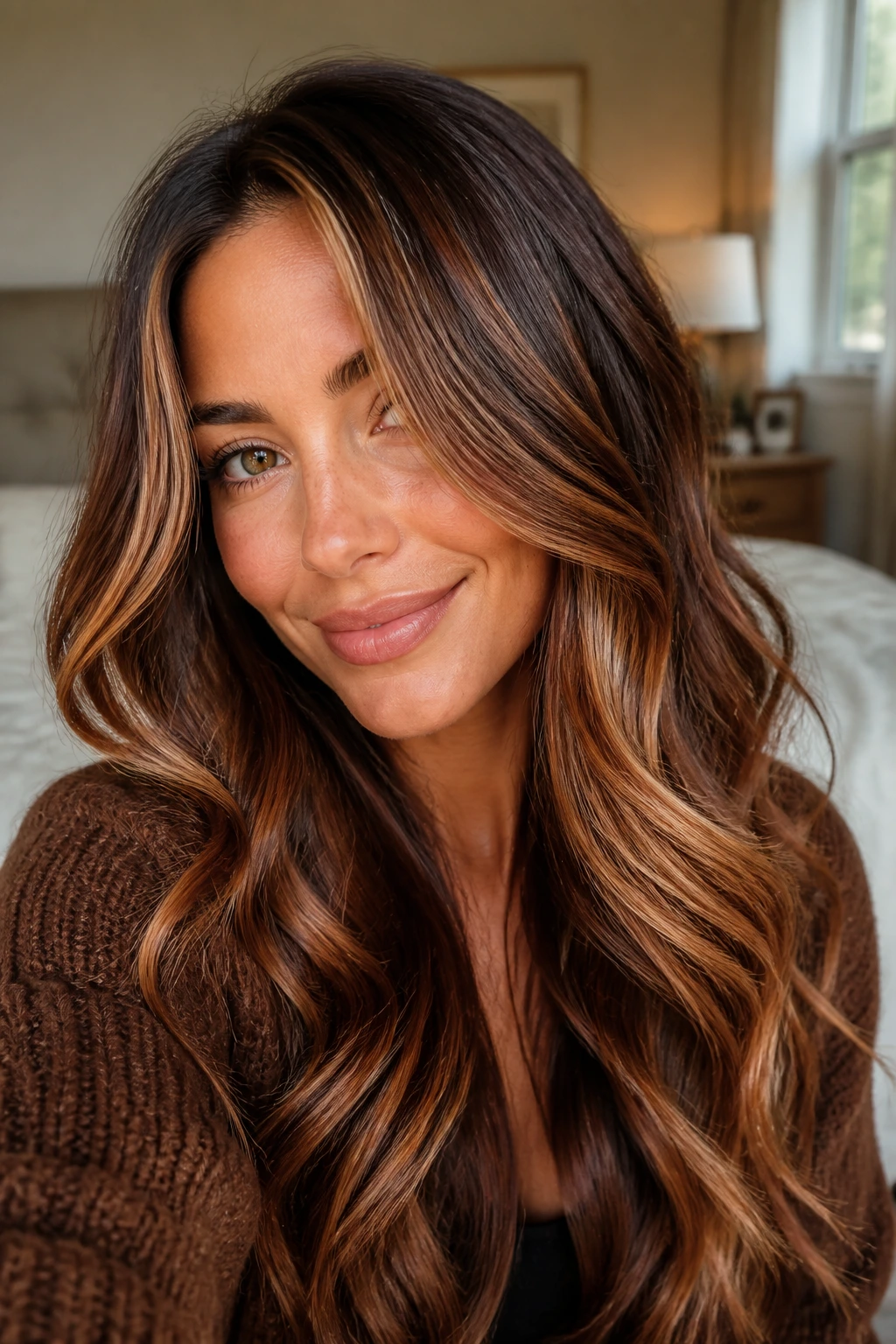
Brunettes usually have the easiest path into fall color because they can add chestnut, cinnamon, espresso, walnut, mahogany, or bronze without tearing everything apart. That base depth gives the color somewhere to sit. If your hair is naturally dark, I’d start with dimension first and brightness second. A lowlight or face frame often does more than a full-color change.
Blondes have the opposite problem. Too much brightness can feel out of place once the weather turns and the light gets cooler. Beige, toffee, almond, smoked bronze, and maple syrup blonde bring the color back down into a richer range. If the blonde is already very pale, the best move is often a gloss rather than another round of lifting.
Redheads get the easiest seasonal shift of all, but they also need the most honesty. If your hair already leans copper, a tiny adjustment toward auburn, cranberry, or mahogany can be more flattering than trying to force a new family of color on it. That’s the part people miss. Autumn color should usually follow the grain of your natural tone, not fight it.
What to Tell Your Colorist Before the Bowl
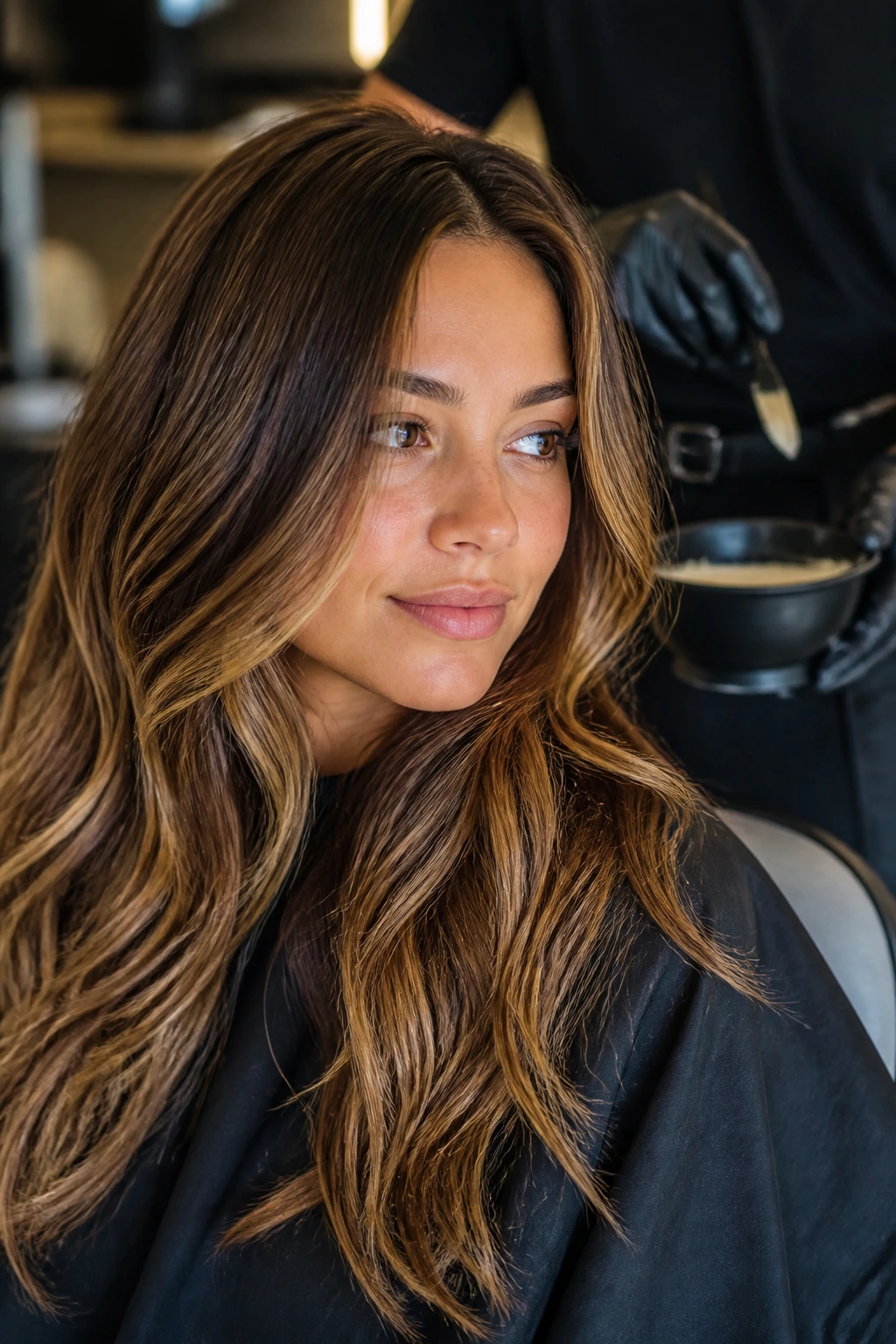
Bring two photos. One should show the shade you like, and the other should show what you do not want. That second image matters more than people think, because colorists can read the visual boundary much faster than vague words like “warmer” or “richer.”
Say what your hair does in bad weather and bad light. If it gets brassy, mention that. If it fades red fast, say that too. If you air-dry most days and heat style only once in a while, say that as well. The appointment gets much better when the stylist knows your real routine instead of the one you wish you had.
Ask for the finish, not only the color family. Words like balayage, root shadow, gloss, lowlights, money piece, and shadow root tell the story better than “fall color.” A photo can still be the starting point, but the technical words tell the colorist how to build it so it grows out with less regret.
Essential Tools and Products for Tone, Shine, and Maintenance
-
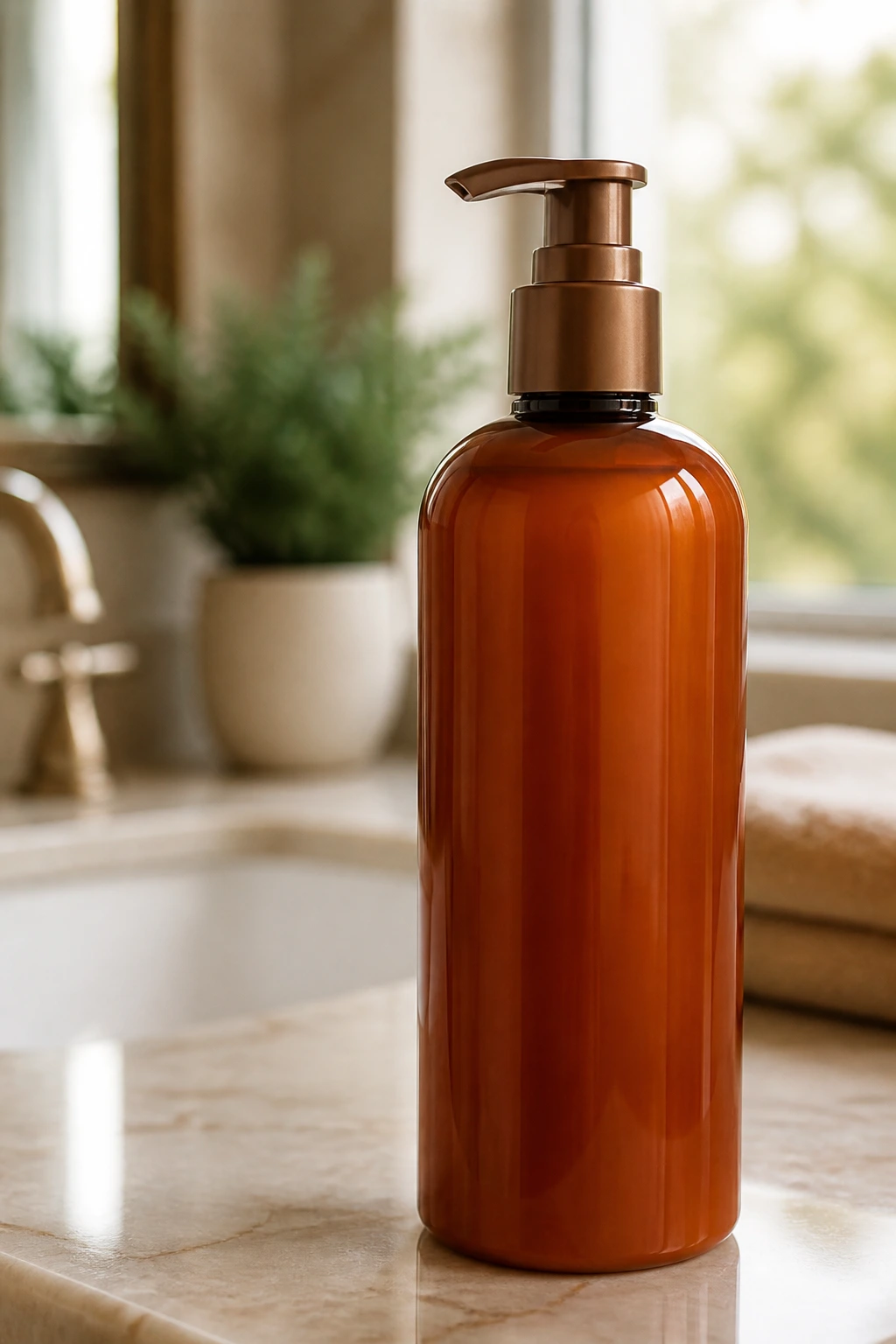
Color-safe, sulfate-free shampoo: Helps keep copper, red, and brunette tones from washing out too fast.
-
Blue shampoo for brunettes: Useful if your brown or balayage starts turning orange or rusty.
-
Purple shampoo for blondes: Best for beige, almond, and toffee shades that drift yellow.
-
Color-depositing mask or conditioner: Handy for copper, cherry, or mahogany tones that need a little refill between appointments.
-
Heat protectant spray: Nonnegotiable if you blow-dry or use a curling iron. Heat can fade fresh tone faster than people expect.
-
Wide-tooth comb: Cuts down breakage on damp, freshly toned hair.
-
Microfiber towel or soft T-shirt: Less friction means less frizz, which matters when the color depends on shine.
-
Shower filter: Worth it if your water runs hard or leaves mineral buildup. Brass shows up faster in hard water than in soft.
-
Glossing serum or lightweight oil: Keeps brunette and red shades reflective instead of dull.
-
Tint brush and mixing bowl: Optional for at-home color-depositing masks or temporary glosses, but useful if you like precision.
How to Style These Shades So They Actually Show Up
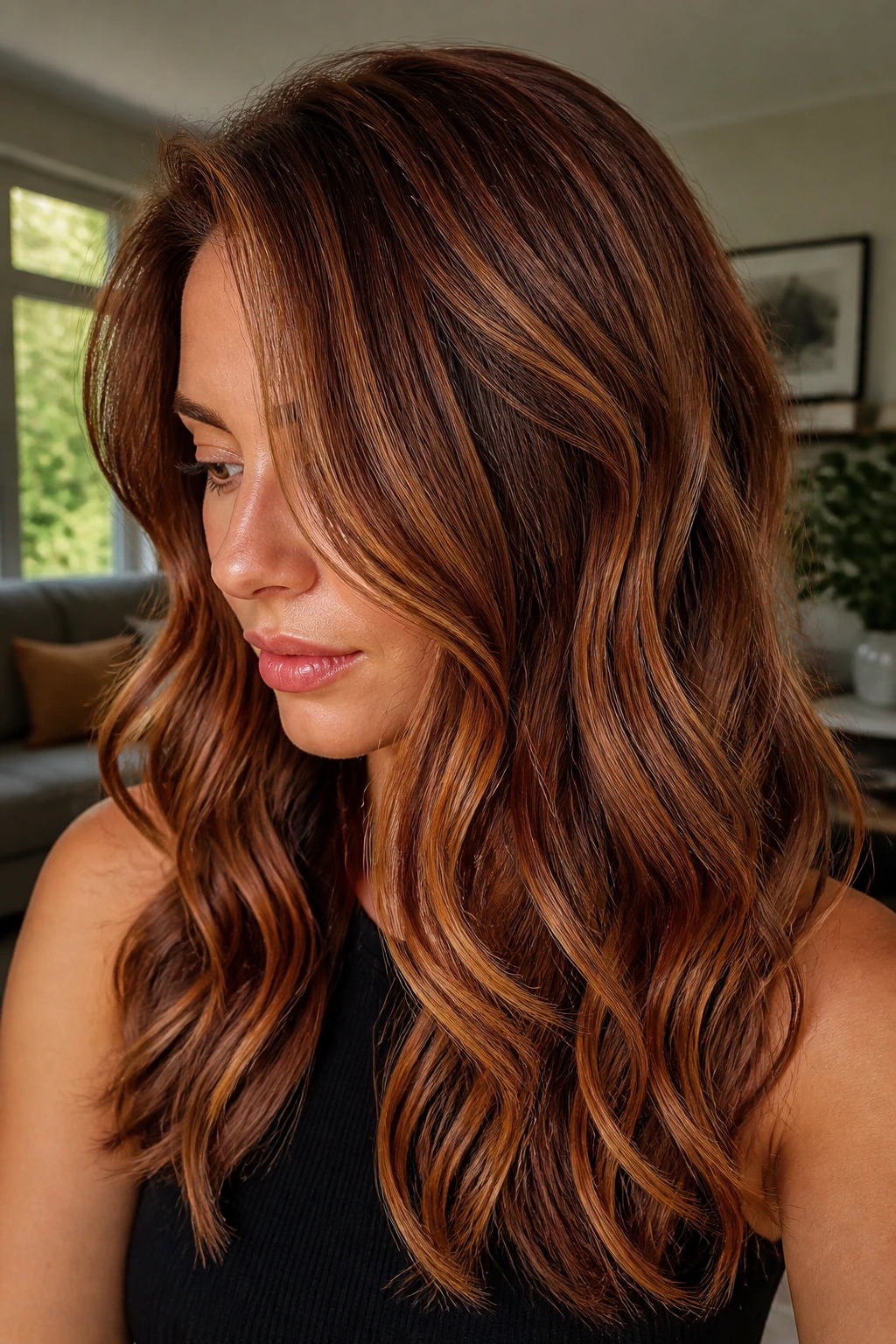
Loose waves: Best for balayage, cinnamon ribbons, bronze, and any melt that depends on movement. A 1 to 1.25-inch curling iron, wrapped away from the face, gives the color room to bend and flash.
Smooth blowout: Best for chestnut, hazelnut, smoky latte, and walnut shades. A round brush plus a little root lift makes the gloss read cleaner, which matters when the color is subtle.
Straight and glossy: Best for black cherry, espresso with auburn underlights, and dark brunette colors that rely on sheen. A center part or deep side part can change where the lighter pieces land, so play with both.
Texture spray and air-dry finish: Best when you want copper, bronze, or butterscotch ribbons to feel modern instead of over-styled. A little separation in the ends keeps the color from collapsing into one solid block.
Wardrobe and makeup: Warm neutrals, camel, rust, berry lipstick, and deep green tend to sit nicely beside fall hair color because they echo the hair instead of fighting it. Pale silver or icy makeup can work too, but it usually looks cleaner with ash or mushroom tones than with copper.
How to Keep Fall Hair Color Ideas Fresh Between Visits
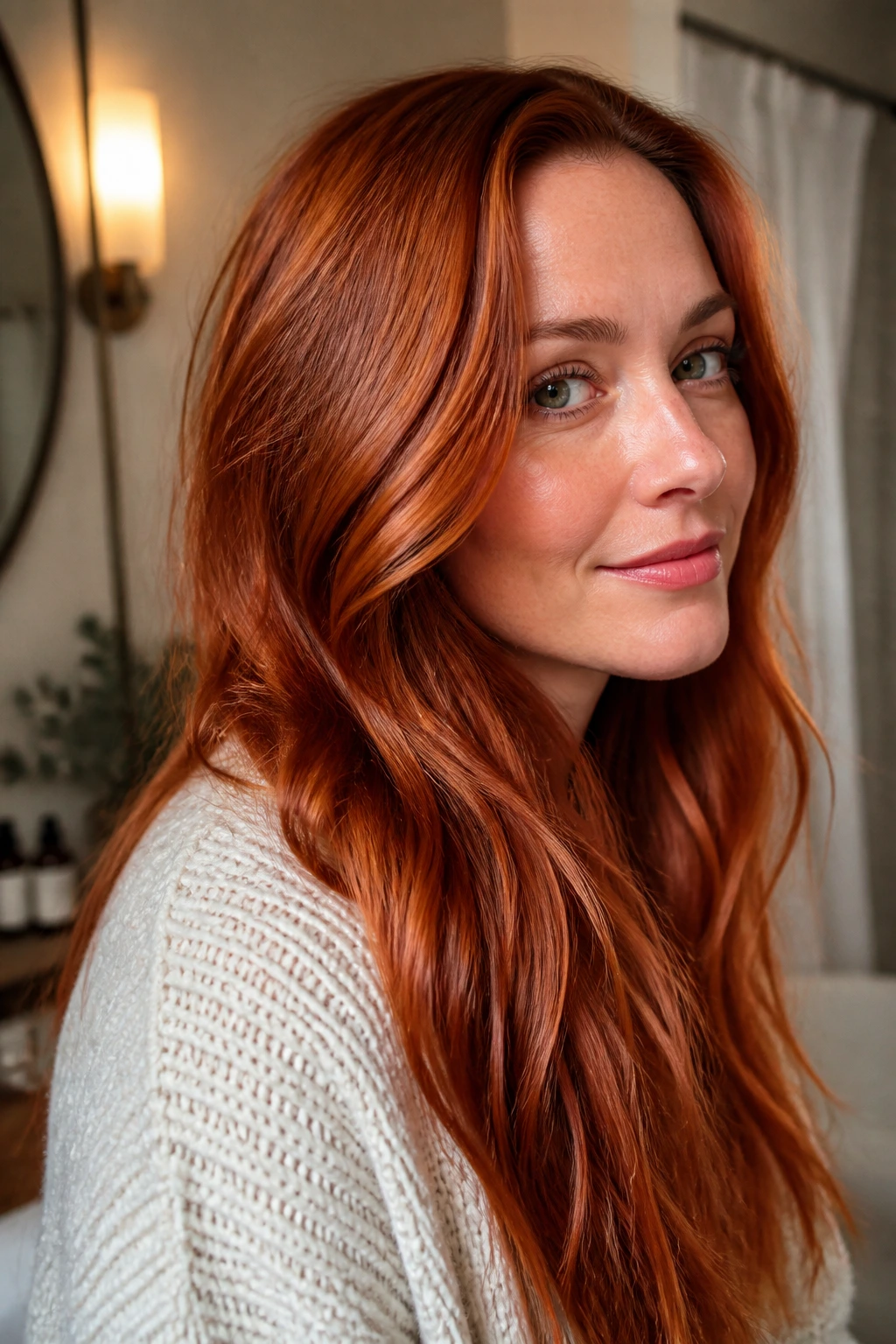
Copper, red, and mahogany tones fade fastest. Plan on a gloss or color refresh every 4 to 6 weeks if you want them to stay rich. Wash with cooler water, not steaming hot water, and keep shampooing to a minimum on the days you do not need it. Those shades lose pigment fast when you over-wash them.
Brunettes with chestnut, hazelnut, espresso, or walnut tones usually stretch longer. A root shadow and lowlights can hold up for 8 to 10 weeks if the cut still looks intentional. That does not mean you ignore the hair; it means the grow-out stays soft enough that you are not racing back for every tiny shift at the scalp.
Blondes and beige shades sit in the middle. Toners can stay clean for 4 to 6 weeks, sometimes a little longer if your water is gentle and you use purple shampoo sparingly. Too much purple shampoo can flatten warmth and make beige blonde look chalky, so I’d rather see a light hand than a heavy one.
If you use hot tools, heat protectant is the difference between glossy color and tired color. It sounds boring. It is not. Heat is one of the fastest ways to turn a fresh gloss into a faded memory.
Common Mistakes That Flatten the Finish
-
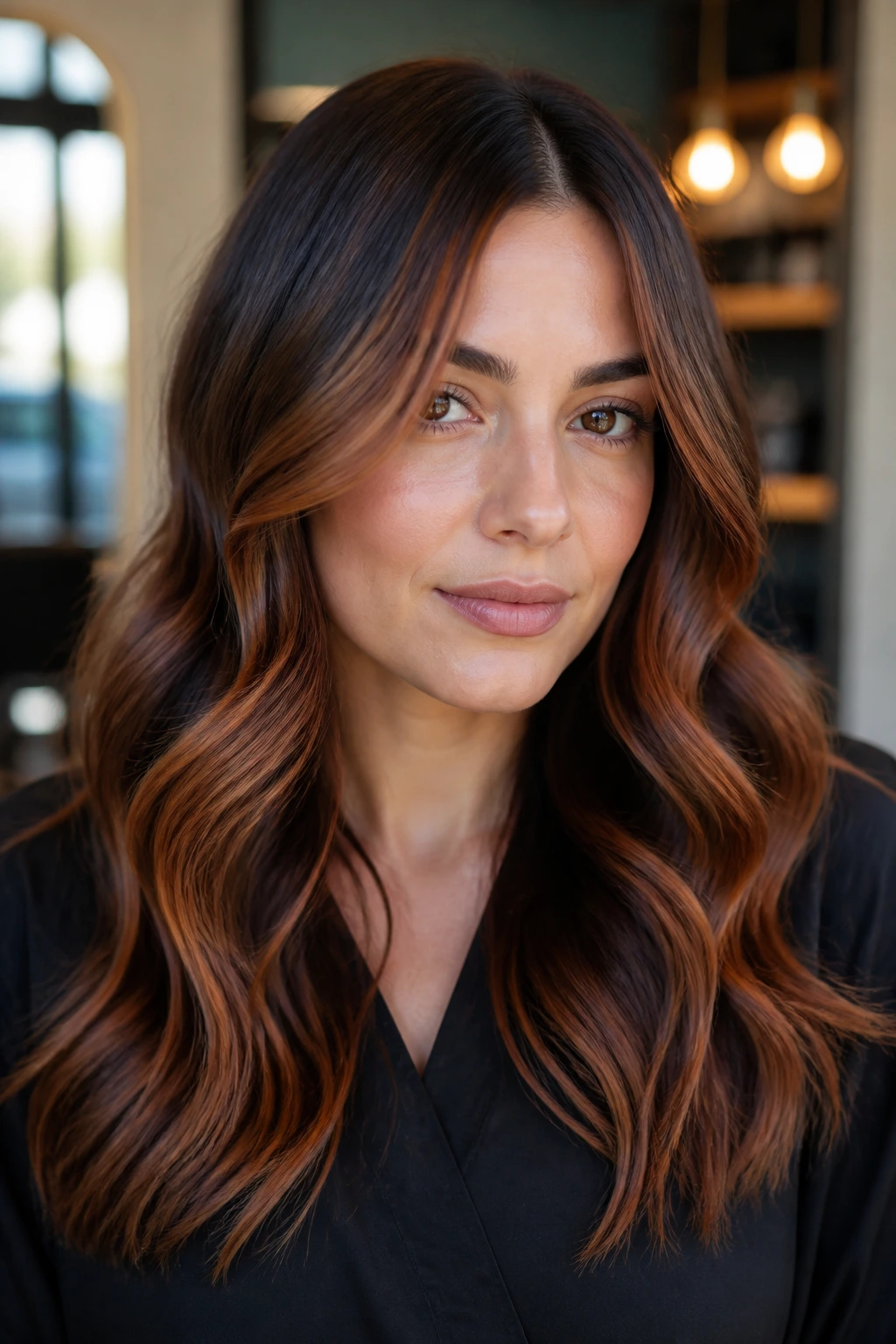
Choosing the photo without checking your base level: A copper on level 7 hair is not the same as copper on level 4 hair. If the starting point is wrong, the result will be wrong too. Fix it by asking what level your hair sits at before anyone mixes color.
-
Using the wrong shampoo for the tone family: Purple shampoo can mute copper and red shades until they look dusty. Blue shampoo can help brunettes, but too much of it on a warm brunette can drain the life out of the color. Pick the shampoo that matches the goal, not the one you already own.
-
Skipping dimension and going all one note: Flat red, flat brown, or flat blonde can look dull in cooler light. Lowlights, a root shadow, or a softer money piece keep the color moving.
-
Ignoring porosity after bleach or past color: Hair that has been lightened or heavily processed grabs pigment fast, and sometimes unevenly. That is why a gloss can look darker or cooler than expected on porous ends. A good colorist adjusts for that instead of pretending the hair is virgin.
-
Waiting too long to refresh the tone: Copper that has faded out to orange-brown or blonde that has gone yellow usually needs toner before it needs another full color service. Catch it early, and the shade stays cleaner.
Variations and Adaptations Worth Trying
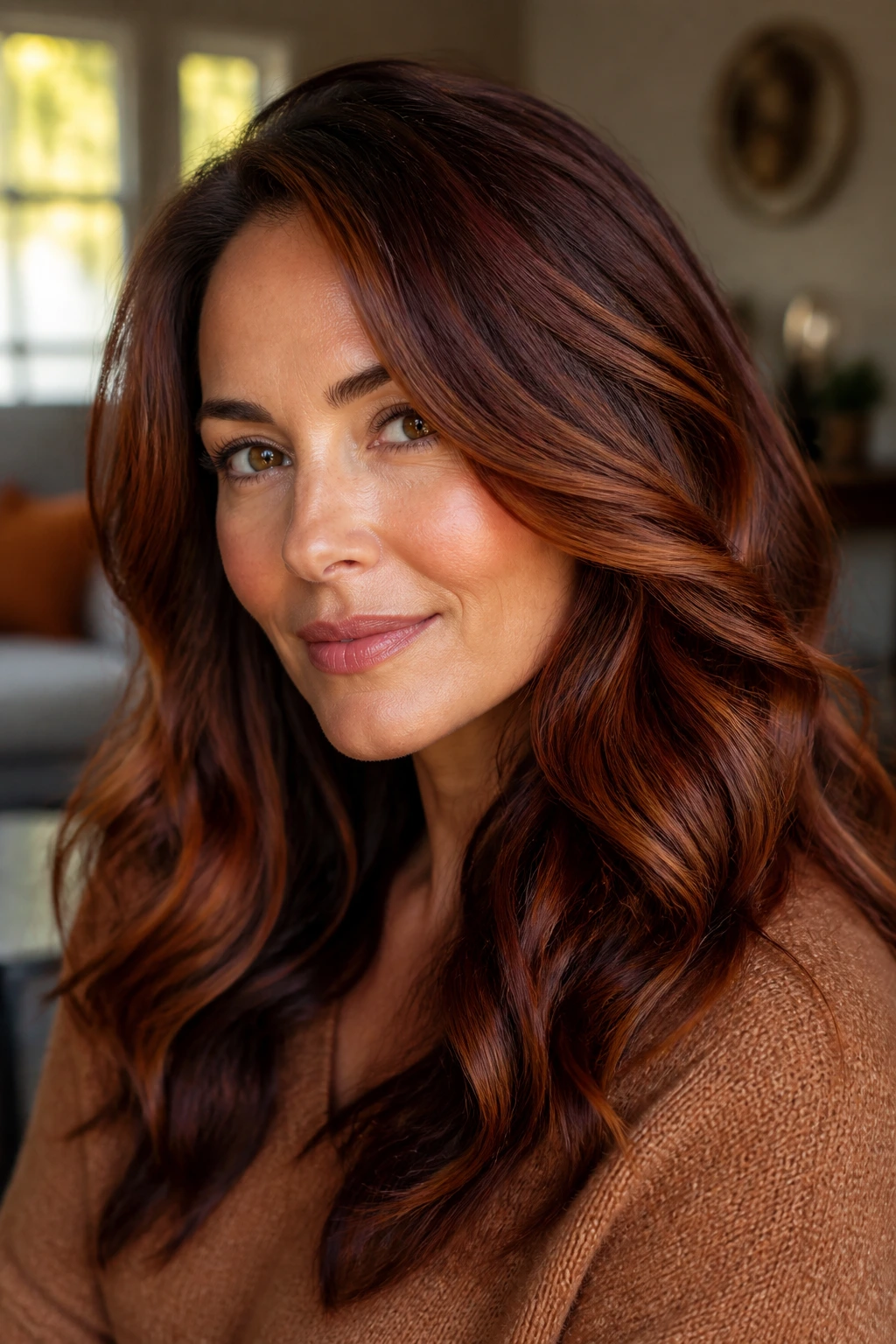
Gloss-Only Change: If you want a new seasonal feel without a commitment, ask for a demi gloss in chestnut, copper, burgundy, or beige. The result lasts less time than permanent color, but it is the easiest way to test a tone before you make it part of your routine.
Brunette-Friendly Dimension: Keep the base dark and add lowlights, bronzy ribbons, or a cinnamon money piece. This version works well if you want the haircut and shine to do most of the talking.
Copper, But Softer: Swap bright ginger or pumpkin tones for smoked cinnamon, auburn, or burnished copper. You still get warmth, but the shade won’t read like a costume color when the lighting is harsh.
Cool Autumn Blend: Go toward mushroom brown, smoky latte, beige bronde, or smoked bronze. These shades are useful if your skin looks better in soft neutrals than in orange or gold.
Red Without the Shock: Try mulled wine, cranberry gloss, chocolate cherry, or spiced mahogany. These reds live in the brown family enough to feel grounded.
Bright Blonde With Less Brass: Choose toffee, toasted almond, maple syrup, or honey amber instead of icy platinum. The warmer blonde reads more natural against fall clothing and needs less fighting with toners.
Frequently Asked Questions
Which fall hair color idea is easiest to maintain?
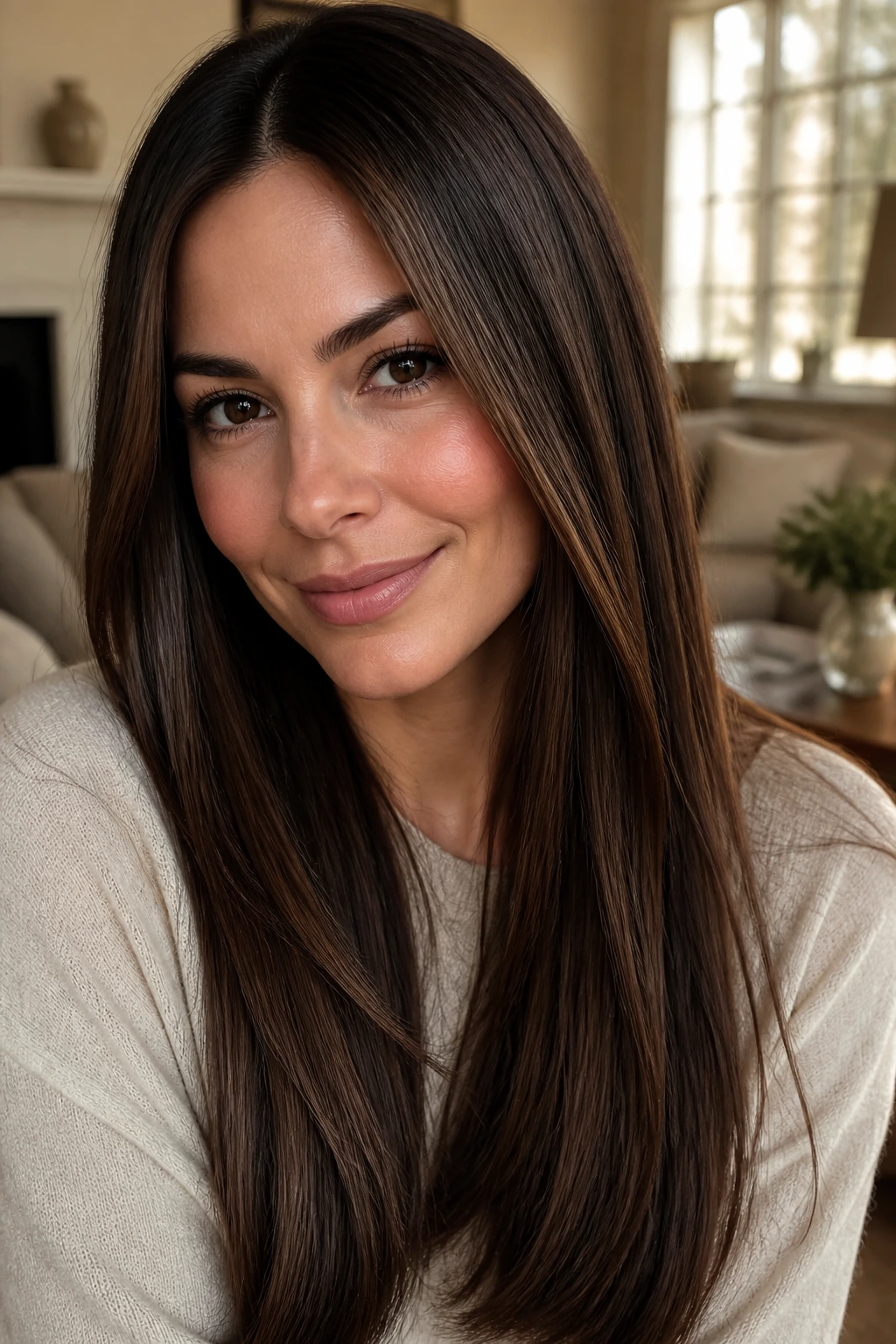
Brunette shades with a root shadow, like chestnut brown, hazelnut melt, or walnut brown with face-framing lights, are the easiest to live with. They grow out softly and usually need less frequent refresh work than copper or bright blonde.
Can I get copper if my hair is dark brown?
Yes, but the hair usually needs to be lifted first. A dark brown base can hold a copper glaze, though the result is softer and deeper than bright ginger unless the hair has been lightened to a higher level.
Why do red tones fade faster than brown?
Red pigment molecules are larger and tend to slip out of the hair faster, especially with frequent washing and heat styling. That is why copper, cranberry, and mahogany usually need glosses or color-depositing conditioners more often than brunette shades.
What should I ask for if I want fall color but not a big change?
Ask for a gloss, lowlights, a root shadow, or a face-framing money piece. Those small changes shift the tone without forcing a total transformation, which is usually the smartest route if you want to keep the hair healthy.
Will blonde hair turn yellow in the fall?
It can, especially if the hair is porous or the water is hard. Beige, almond, smoked bronze, and maple syrup tones help prevent that brassy look better than extremely pale blonde, and a gentle purple shampoo can keep yellow in check.
What if my hair is already damaged from bleaching?
Stay closer to glosses, lowlights, and darker dimensional shades rather than chasing more lift. A deeper cinnamon brunette, cherry gloss, or smoked latte brown can look rich without forcing the hair through another heavy lightening session.
Do fall shades work on curly hair?
They do, and curls often make the color look better because the bend shows off ribbons, melts, and lowlights. The main thing is placement; painted pieces around the face and through the outer layer usually read best on curls than hidden striping underneath.
How soon before an event should I color my hair?
Give yourself at least a week if you want the tone to settle and any gloss smell to fade, and two weeks if the service involves major blonding or a color correction. Fresh color often looks the most vivid on day one, but it can also feel a little too perfect until it softens.
A Color That Feels Right for the Season
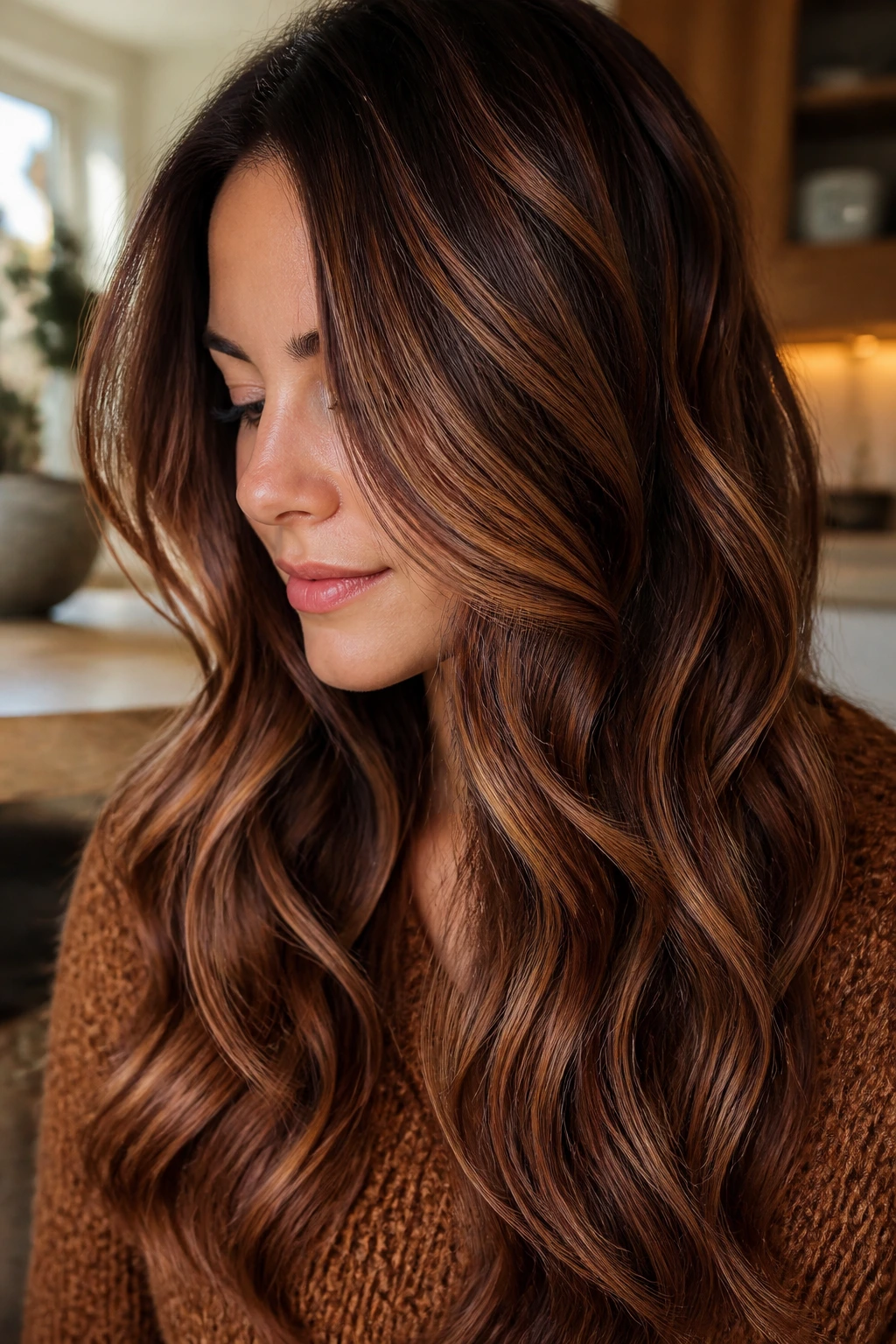
The best fall hair color ideas do not fight your natural base. They build on it. That is why a smoked cinnamon balayage can feel richer than a full copper makeover, and why a walnut brunette with one good face-framing light can do more than a heavy highlight session that needs constant rescue.
I always come back to the same rule: the shade should look good when your hair is moving, when it is tucked into a scarf, and when you catch it in a mirror under kitchen light. If it only works in a salon photo, it is the wrong shade.
Bring a photo, bring one honest note about what you cannot maintain, and choose the color that still looks like you when the weather turns. That is where the good fall hair lives.
