



A good shag haircut on medium-length hair over 50 doesn’t try to act younger. It tries to look alive. That’s the difference, and it matters. A blunt shoulder cut can sit there like a shelf, while a well-cut shag lifts at the crown, softens around the face, and keeps the ends from puffing out in that awkward, triangular way that makes so many medium styles feel dated by lunch.
The phrase shag haircuts for medium length hair over 50 covers a lot more ground than people think. Some versions are soft and feathered, with curtain bangs that fall like a curtain you can actually live with. Some are sharper and piecey, with just enough edge to keep fine hair from collapsing. A few lean into gray and silver hair so nicely that the cut almost acts like a frame for the color. The trick is not going wild with layers. The trick is knowing where to remove weight and where to keep it.
What I like most about this family of cuts is that it works with change instead of fighting it. Hair texture shifts. Density changes. Cowlicks get bossier. A shag can handle all of that if the layers are placed with a little care. And on medium hair, that balance is gold: enough length to tuck behind the ear, enough movement to keep the whole shape from looking stiff, and enough flexibility that you can wear it smooth, wavy, or a little messy without it turning into a project.
Why These Shag Haircuts Work So Well on Medium Hair
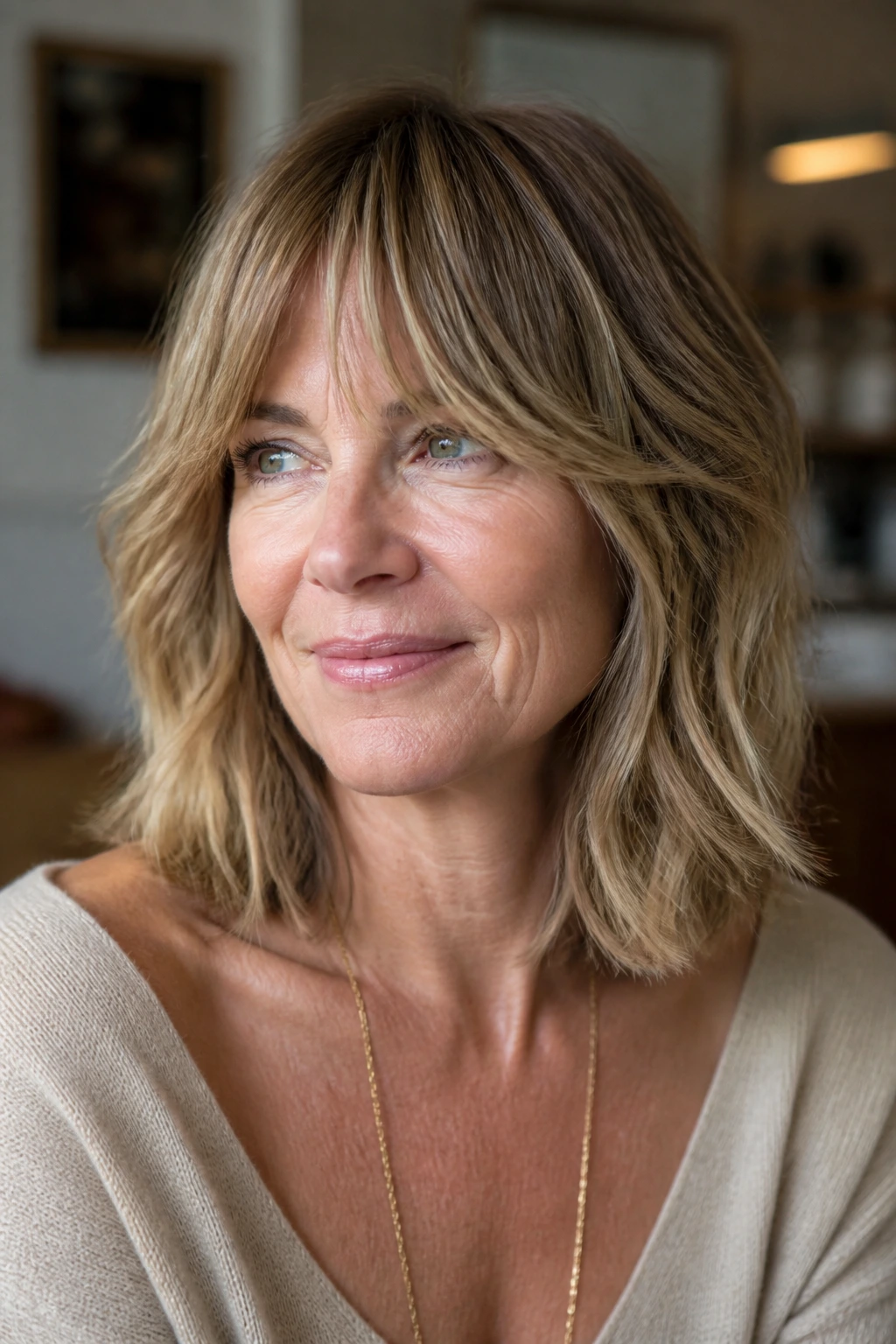
- They keep the shape off the shoulders: A medium shag sits in that sweet spot where the ends can still move, instead of getting trapped under the collar and flipping in weird directions.
- They soften the face without drowning it: The best versions skim the cheekbones, jaw, or temples so the haircut frames your features instead of hiding them.
- They grow out with less drama: A smart shag can go several weeks without looking blunt or overgrown, because the layers already give it some built-in looseness.
- They play nicely with gray and silver strands: Texture and light reflection matter here, and feathered layers make mixed tones look intentional instead of patchy.
- They can add lift where hair has gone flatter: Crown layers and face-framing pieces create the illusion of fullness without forcing you into a short cut.
- They give you styling options without asking for a blowout every day: A shag can be polished, air-dried, or roughed up with mousse and still look like a haircut with a point of view.
1. Soft Collarbone Shag with Curtain Bangs
This is the one I recommend when someone says, “I want something flattering, but I do not want to look like I’m trying too hard.” The collarbone length gives the cut some swing, and the curtain bangs open the face without boxing it in. On medium hair, that extra length keeps the shag from feeling too chopped up.
Ask for soft, face-framing layers that start around the cheekbone, then taper gently into the lengths. You want movement, not a cascade of tiny pieces. If your hair is fine, keep the fringe a little airy so it doesn’t steal all the density from the front.
Why It Works
Curtain bangs are forgiving, especially when they’re cut to part naturally instead of sitting as one thick line. They give the eyes and cheekbones a little lift, which is useful if hair around the temples has thinned or gone flatter.
This cut also behaves well on second-day hair. A quick bend with a round brush or a few twists with a large-barrel iron is enough. The shape does the heavy lifting.
2. Feathered Silver Shag with a Side Sweep
Silver hair loves feathering. It catches light in all those thin, airy layers, and a side sweep gives it a softer, less center-parted feel than the classic shag bang. If your hair has gone white, silver, or salt-and-pepper, this is one of the most flattering ways to wear medium length without looking severe.
The important part is restraint. Too many short layers can make silver hair look frayed, and I’d avoid that unless the hair is thick and cooperative. Ask for feathered movement through the sides and a longer fringe that sweeps across the forehead rather than dropping straight down.
A side-swept shape is also kind to glasses. It keeps hair from piling directly onto the frames, which is where a lot of medium cuts go wrong. If you want the haircut to feel a little polished, finish it with a lightweight cream, not a sticky paste. Silver hair shows product fast.
3. Razor-Textured Shag for Fine Hair
Can fine hair wear a shag? Absolutely. It just needs the right kind of shag. The goal is lift and movement without shredding the perimeter into wisps that disappear the minute the humidity rises.
A razor-textured cut can help here, but only in the hands of someone who knows where to stop. You want soft, airy ends and internal texture, not a scalp-hugging crop with no density left at the bottom. The best version keeps a solid outline around the shoulders and removes weight inside the shape.
What to Ask For
- Keep the ends full enough to look like hair, not scraps.
- Add texture through the midlengths.
- Leave the crown light, but not thinned out.
- Use a side or off-center part if the hair lies flat.
If your hair is very fine, I’d skip aggressive thinning shears near the ends. That’s how you get the spiky, see-through look that needs a round brush and prayer to behave.
4. Bottleneck-Bang Shag at the Shoulders
Bottleneck bangs are a smart middle ground. They’re narrower at the forehead, then open a little around the temples, which makes them easier to wear than a heavy fringe. On a shoulder-length shag, that shape gives you the framing of bangs without the blunt weight.
This cut works especially well if you like a soft, modern shape rather than a chopped-up, indie-rock one. The layers can stay subtle through the body of the hair, while the bangs do the face-framing work. That matters if your face feels better with some softness around the eyes but you don’t want the whole cut to look short.
I like this option for hair that has a little bend but not a lot of curl. It gives movement at the front without requiring a lot of daily styling. A quick round-brush turn at the bangs and a loose blow-dry through the sides is usually enough.
5. Face-Framing Shag for Round Faces
A round face does not need hiding. It needs vertical lines. That’s the whole game here, and a well-placed shag can do that without looking harsh. Keep the shortest layers below the cheekbone and let the front pieces angle toward the jaw or collarbone.
The mistake people make is cutting the fringe too short and the side layers too high. That can widen the face instead of elongating it. A longer face frame creates the illusion of length, especially when the center or slightly off-center part is paired with movement around the chin.
A little height at the crown helps too. Not a pouf. Just a gentle lift. If your hair is medium density, use mousse at the roots and rough-dry first. Then shape the front. You want the eye to travel down, not across.
6. Curly Shag with Crown Layers
Curly hair and shag haircuts get along best when the shape is cut around the curl pattern, not forced into one flat line. Medium length is ideal here because it gives curls room to bounce without sitting too high on the head.
The real magic is in the crown layers. They keep the top from ballooning while allowing the curls below to stack softly. A good curly shag should look balanced even when it air-dries; if it only looks good with 40 minutes of fiddling, the cut is working too hard.
Dry cutting is often the smarter route, because curls shrink and shift so much. Ask for longer pieces around the face and enough length at the nape to keep the silhouette from going square. And please, don’t let anyone carve giant holes into the curl pattern just to create “texture.” That usually creates frizz, not shape.
7. Air-Dry Shag with Soft Internal Layers
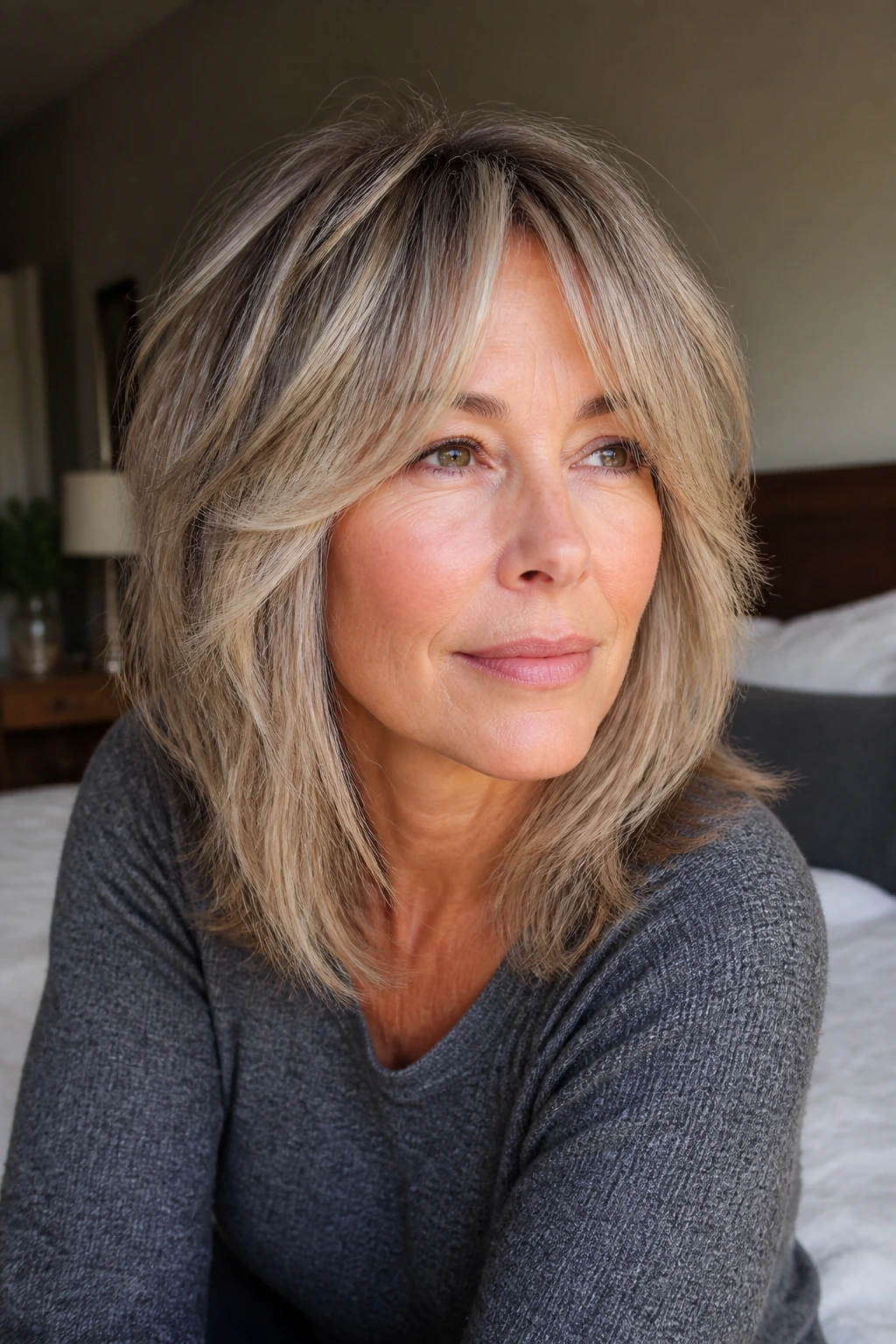
This is the haircut for people who do not want to live with a blow-dryer. The cut has enough structure to look styled when it dries on its own, but the layers are soft enough that you don’t end up with crunchy little ends sticking out in different directions.
The key is internal layering. You’re removing bulk from inside the shape while leaving the outside line calm and wearable. That gives the hair a natural bend without making it look hacked apart.
If your texture is somewhere between straight and wavy, this one is a keeper. A light leave-in cream and a scrunch with your hands may be enough. If you use a diffuser, keep it on low heat and stop when the hair is about 80 percent dry. Over-drying tends to make the ends fray.
8. Blunt-Perimeter Lob Shag

This is one of my favorite options for people who want softness but still like the security of a clean edge. The outside line stays fairly blunt at the collarbone or just above it, while the interior layers give the cut motion.
Why does that matter? Because a fully shattered shag can sometimes make medium hair look thinner than it is. A blunt perimeter protects the density. The layers inside do the interesting part. That combination is especially good for fine-to-medium hair that needs movement without losing its body.
It also styles well with a flat brush and a slight bend at the ends. You don’t need curls. You don’t need beachy waves. You just need enough lift at the root and a little swing at the bottom. Very practical. Very wearable.
9. Side-Swept Fringe Shag
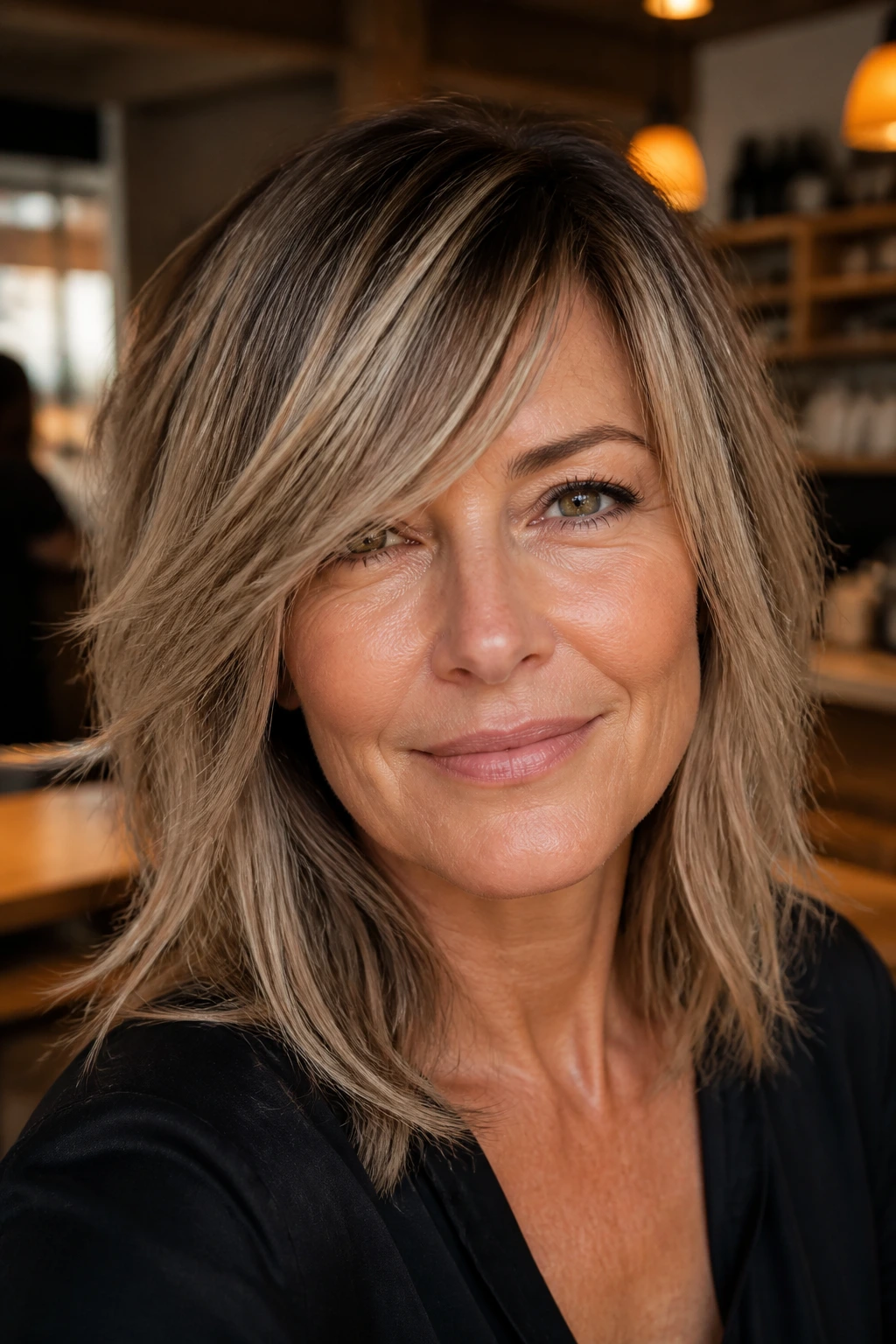
A side-swept fringe changes the whole mood of a shag. It feels softer than blunt bangs, less high-maintenance than curtain bangs, and it can be a blessing if you wear glasses or have a forehead you’d rather soften than center on.
The fringe should be long enough to move back with your hand, but short enough to create a shape across the front. That’s a narrow target, which is why this version works best when the stylist cuts it dry or nearly dry. Wet bangs lie to everyone.
The rest of the haircut can stay medium and loose. I’d keep the side layers a little longer here so the fringe has room to blend. If you want a style that can go from neat to relaxed without a complete restyle, this one earns its place.
10. Airy Shag for Thick Hair
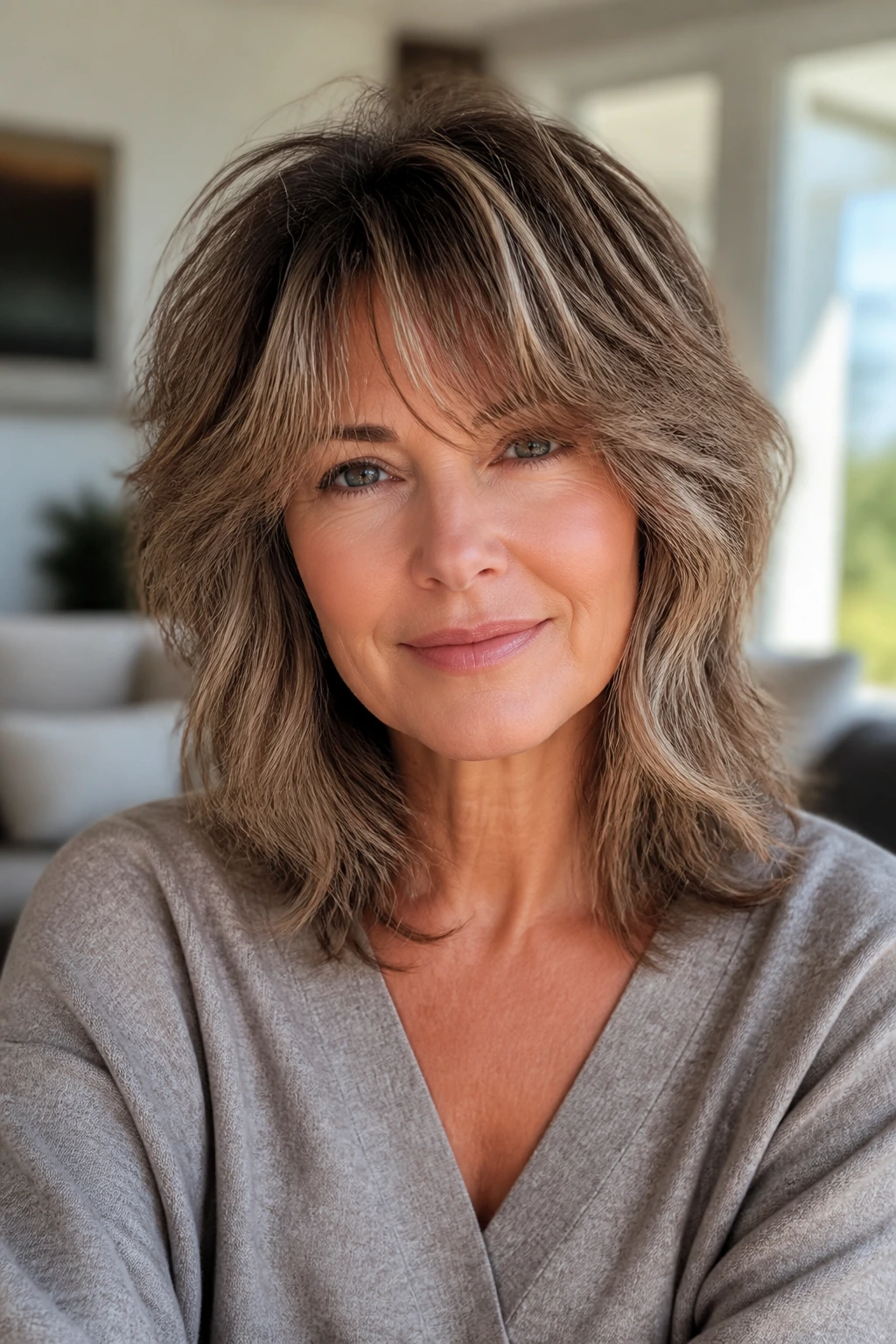
Thick hair can wear a shag beautifully, but it needs air in the right places. If the layers are too short or too blunt, the shape turns into a triangle fast. If the layers are too heavy, the whole cut sits like a blanket.
The solution is long internal layering with a little textural breakup at the ends. That removes bulk where the hair is strongest—usually around the back and the midlengths—while keeping enough weight at the perimeter to hold shape. A good stylist will talk about balance instead of simply “taking out bulk.”
This cut is especially useful if your hair grows outward instead of down. The layering keeps the body under control, and a loose blow-dry with a large round brush can make it fall in soft, clean pieces rather than a puffy wall.
11. Invisible-Layer Shag
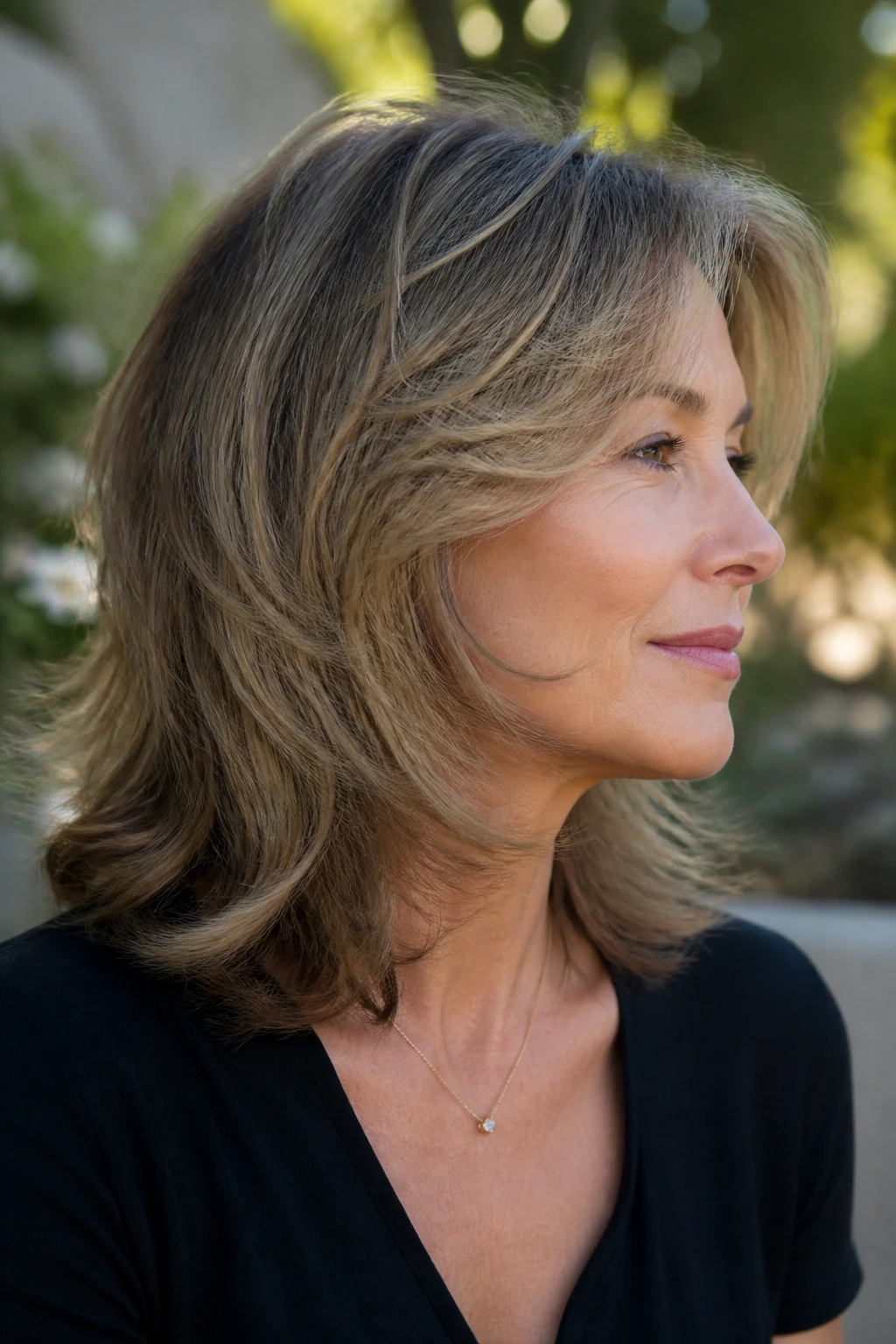
Not every shag has to announce itself. Invisible layers are the quiet version: the haircut moves, but the shape stays calm. That’s useful if you like your hair to have life without looking piecey or obviously layered.
The trick is cutting the inside of the hair so it supports motion while leaving the top and outer edge more intact. From the outside, it reads as a polished medium cut. When you turn your head, you see the movement. I like this approach for anyone who likes a tidy finish but hates the helmet effect.
It’s also a smart choice if your hair is on the finer side and you’re nervous about losing too much density. You get the benefit of texture without the visual mess. A few soft bends around the face are enough. No need to push it into a full “undone” look if that’s not your thing.
12. Flip-Out Midi Shag
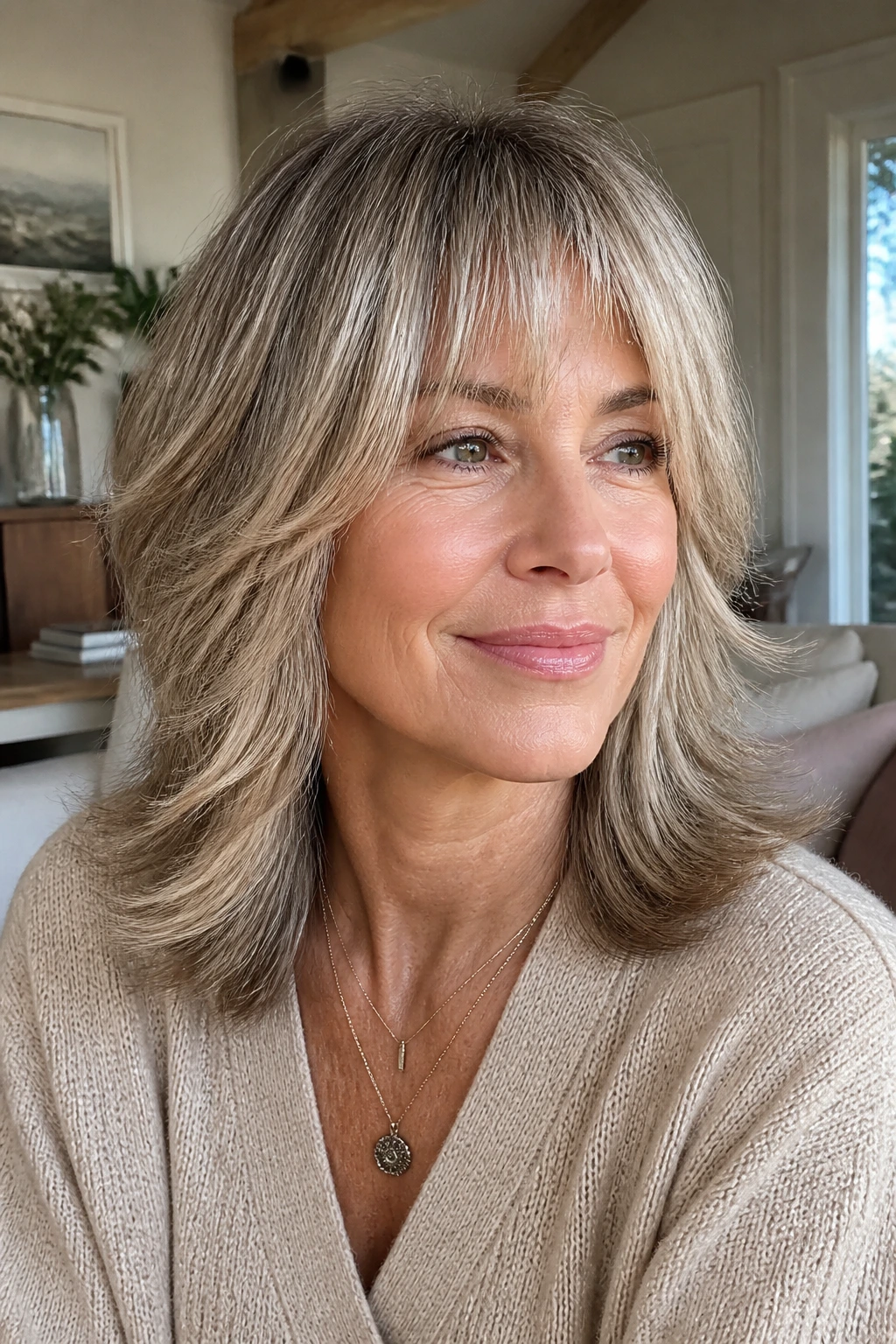
A flip-out shag has a little retro energy, and I mean that in a good way. The ends turn slightly outward, which gives the haircut a lively, lifted finish instead of a tucked-in, heavy one.
This version is especially nice if your hair naturally wants to bend at the ends. Instead of fighting that movement, the cut works with it. The layers are usually medium-long, so the shape still feels grown-up and wearable rather than costume-y.
A round brush or a straightener with a gentle outward flick at the bottom is enough to create the effect. If you’ve spent years forcing your ends under, this cut can feel almost rebellious. Not loud. Just freer.
13. Polished Gray-Glam Shag
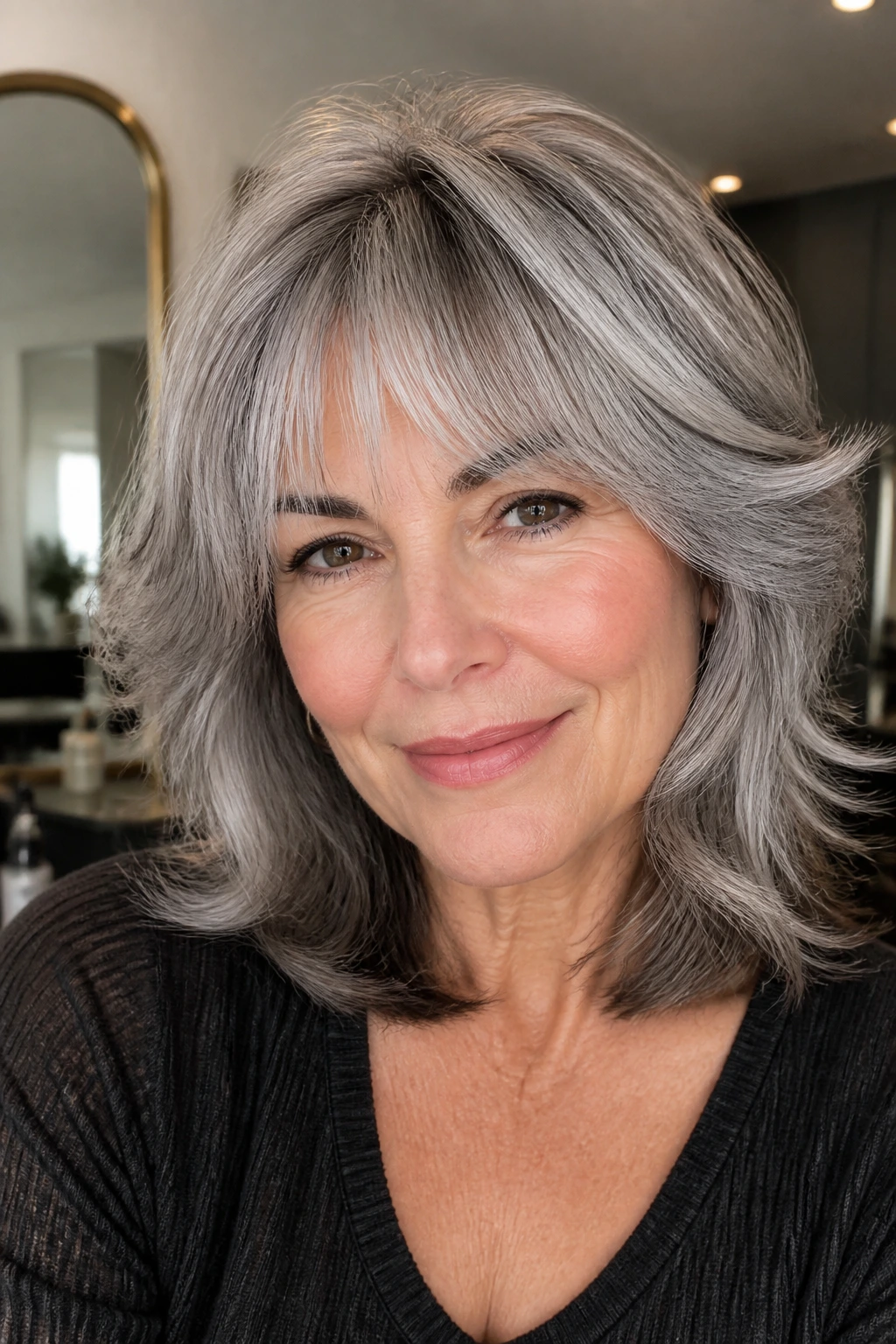
Gray hair does not have to be casual. It can look sleek, reflective, and almost tailored when the cut is shaped properly. This version of the shag keeps the layers softer and the styling smoother, which lets the color do its own work.
I like this cut when someone wants movement but still prefers a controlled finish. The fringe can be side-swept or softly parted, and the layers around the crown should create lift without frizzing out. A glossing cream or light serum helps the silver look intentional, not fuzzy.
The polished shag is a nice answer for women who want to keep some edge without going all the way into a heavily textured look. It reads as confident, not fussy. And yes, it still has enough movement to keep it from feeling stiff.
14. Glasses-Friendly Wispy Bang Shag

Glasses change the map of your face. Hair has to respect that. A wispy bang shag is one of the best ways to do it, because the fringe stays light enough to clear the frames while still softening the forehead.
The mistake here is density. If the bangs are too thick, they sit on the glasses and create a little shelf that never looks right. Keep the front airy, and let the layers around the temples do some of the framing. That creates a cleaner line from brow to cheek.
This style works especially well if you wear your glasses all day and don’t want to push hair out of your eyes every ten minutes. It’s low-drama. The haircut knows where the frames are and leaves them alone.
15. Deep Side-Part Piecey Shag
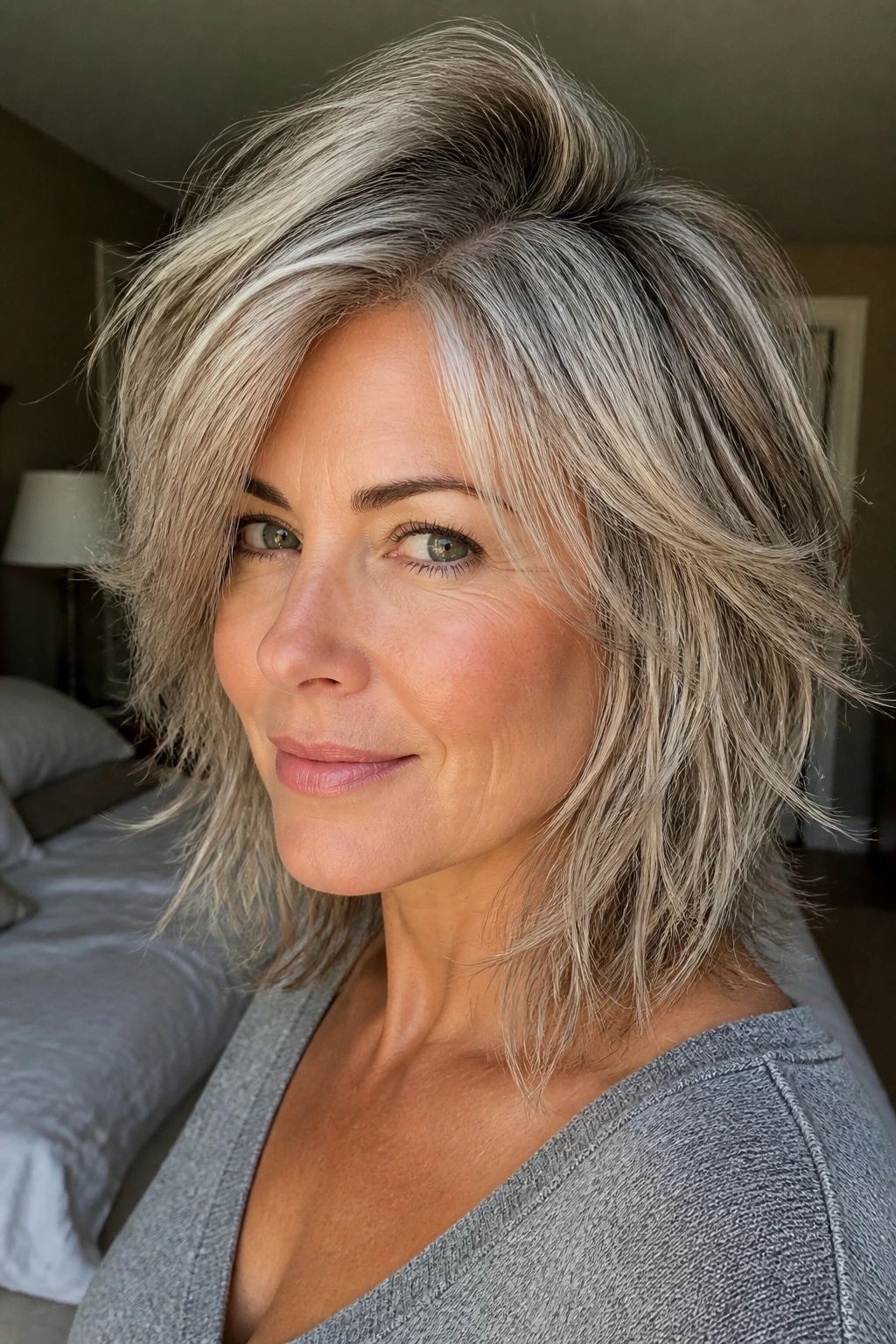
A deep side part can rescue hair that has started falling flat at the crown or along one side. It creates instant lift, and on medium hair it gives the shag a more asymmetrical, modern shape without making it severe.
Piecey layers are the point here. You want distinct movement, not a cloud of frizz. A deep part can also help if your natural part has widened with age, which happens more often than people admit. Moving the part just a little can make the top look fuller right away.
I’d pair this cut with a lightweight root spray and a rough-dry at the crown. Once the roots are mostly dry, sweep the hair over and finish the ends with a bend rather than a curl. It should look touched, not teased.
16. Soft Wolf Shag
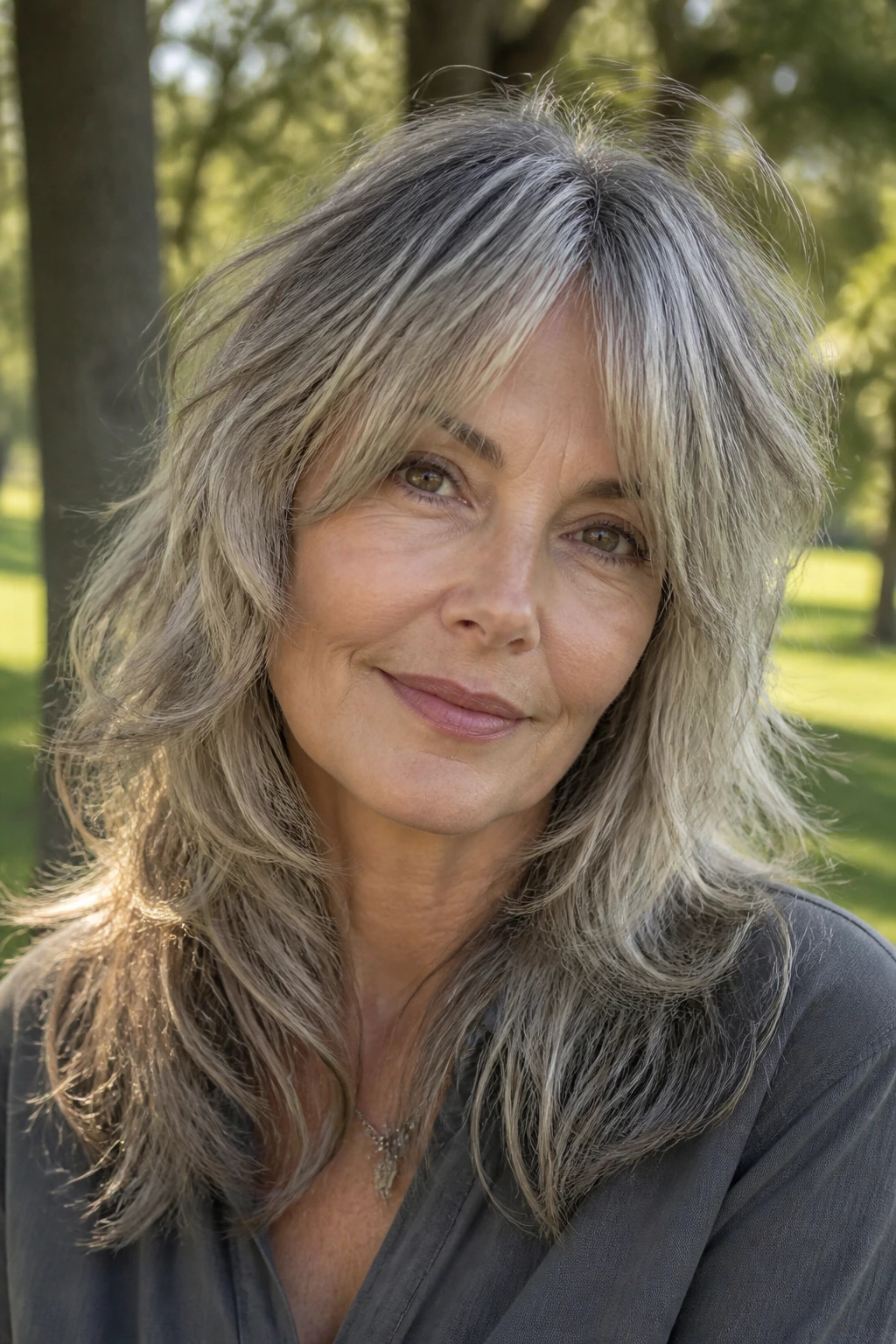
The wolf shag gets a lot of attention, but the softer version is the one that wears best on medium hair over 50. You keep the crown a little shorter and the lengths a little longer, but you don’t push the contrast so far that the haircut feels costume-like.
This is a good option if you want something with edge but not something that screams for constant styling. The layers around the face can be choppy, but the rest of the cut should still feel controlled. The result is a shag with a little attitude and enough length to still tuck behind the ear.
It works especially well on wavy hair. The texture helps the layers separate naturally, which is half the battle with this cut. If your hair is straight, you’ll need a bit more styling to keep it from looking flat through the crown.
17. Rounded Shag with a Tapered Nape
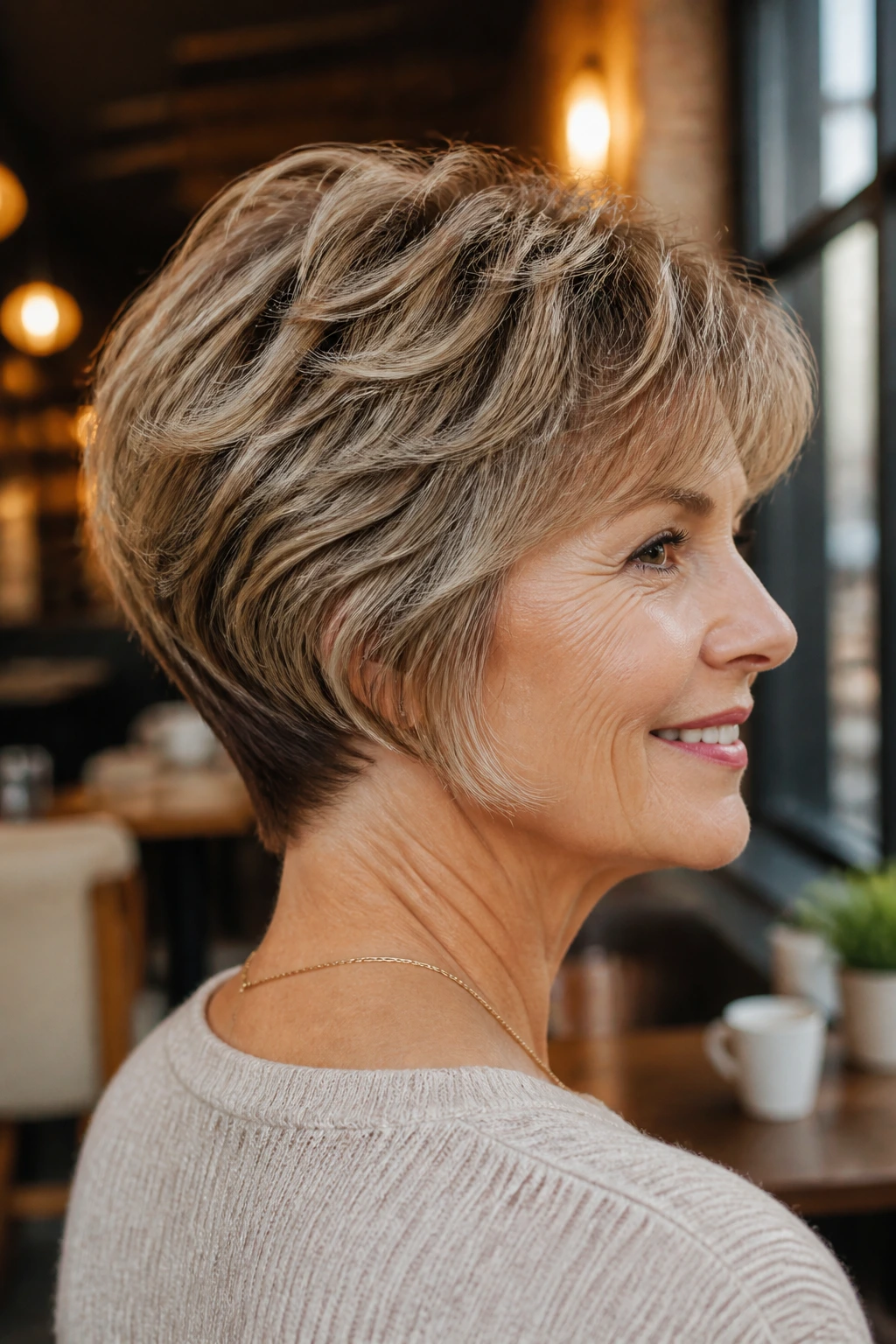
A rounded shag gives the head a softer silhouette, which is especially nice if you hate the puffy corners some layered cuts can create. The nape is tapered just enough to keep the back from feeling heavy, while the front stays long enough to frame the face.
This shape is sneakily flattering because it follows the curve of the head instead of building width at the sides. That helps if your hair is dense, or if you simply want a haircut that doesn’t spread outward like a triangle. The rounded shape keeps the whole thing tidy but not severe.
If you’re a fan of tucked collars, jackets, and scarves, this cut behaves well around clothing too. It slips cleanly under a collar instead of sticking out in thick, bulky pieces.
18. Salt-and-Pepper Tousled Shag
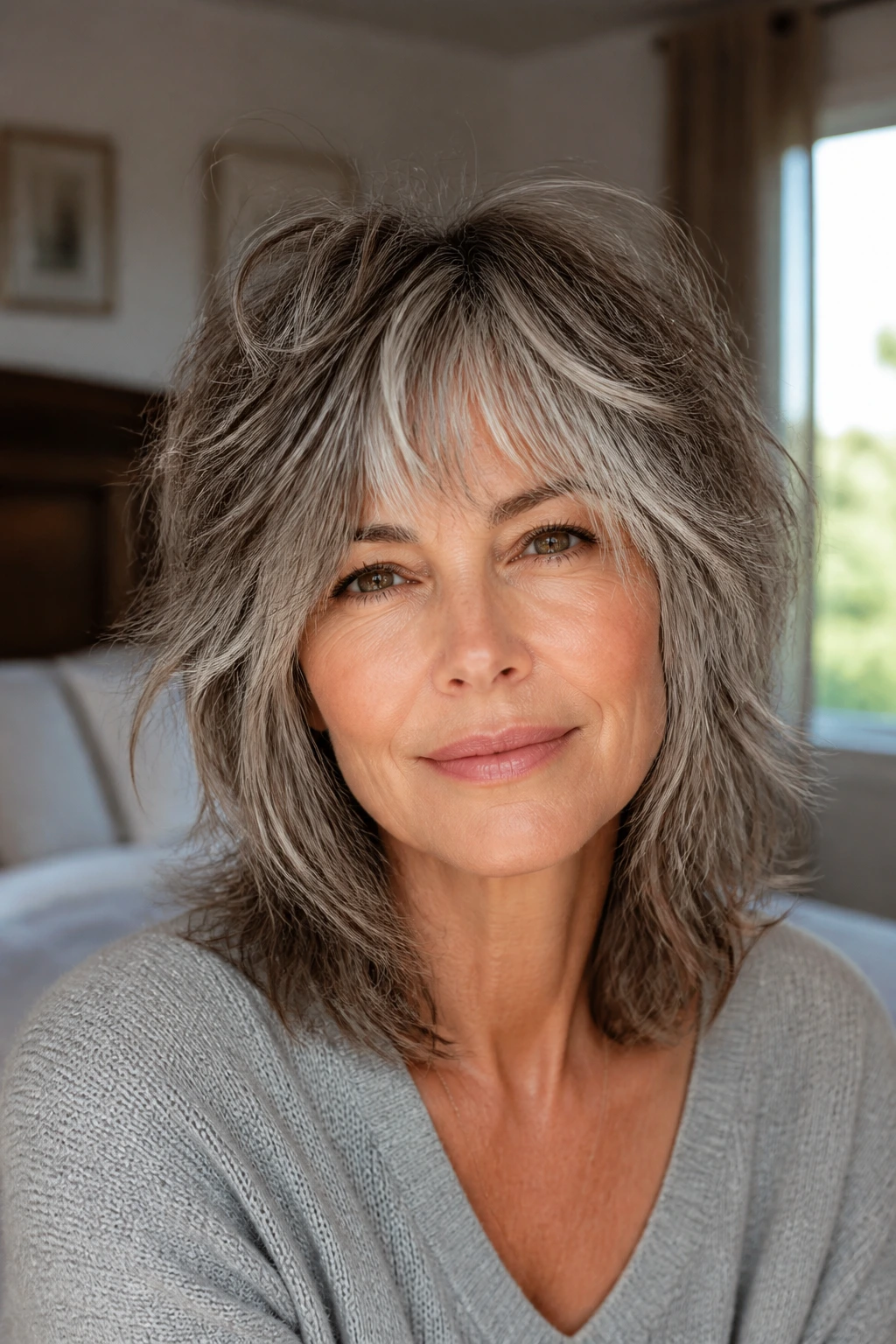
Salt-and-pepper hair has built-in dimension, and a tousled shag makes the most of it. The mix of light and dark strands shows off the layers in a way that flat color never will. That’s one of the reasons this cut looks richer in real life than it does in a plain photo.
The shape should be soft enough to let the color variation show through. If the layers are too extreme, the mixed tones can look choppy instead of dimensional. Keep the ends loose, the crown lifted, and the front pieces slightly longer so the color gradation has a place to settle.
A matte texturizing spray can help here, but use a light hand. Too much product dulls the natural sparkle in salt-and-pepper hair, and that sparkle is the point.
19. Long Feathered Shag

If you are not ready to give up length, this is the one. The layers are long, the ends are feathered, and the overall shape stays near the shoulders or collarbone. It feels like a shag without looking aggressively chopped.
This is a good compromise for someone who wants movement but still likes being able to pull the hair back or tuck it into a clip. Long feathering also makes the grow-out gentler, which matters if you don’t want to sit in a salon every six weeks.
I tend to recommend this version for thick or medium-thick hair that needs softness more than it needs drama. A few face-framing pieces and a light bend through the midlengths are enough to keep the whole cut from going flat.
20. Tucked-End Shag
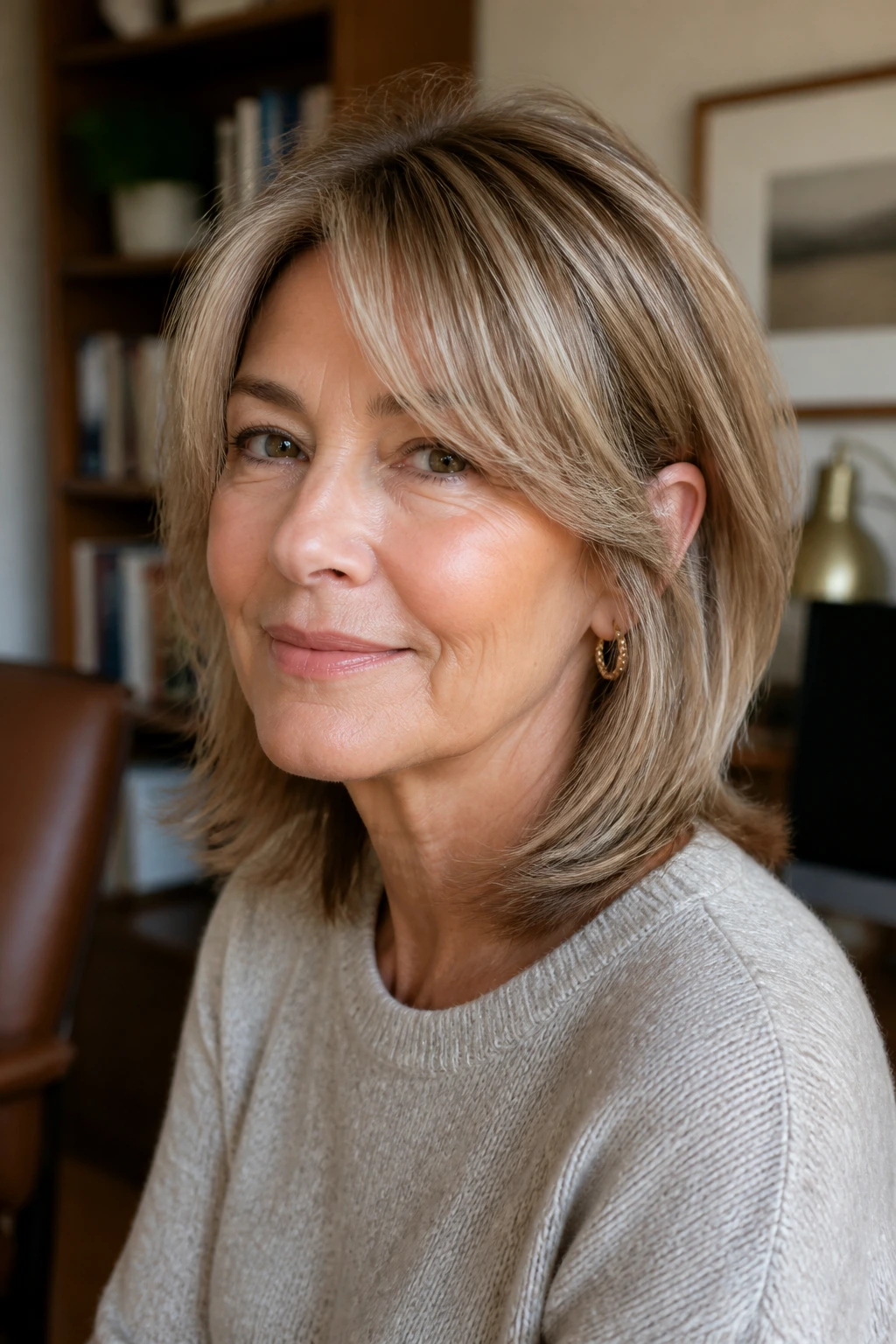
Some haircuts are made for wearing loose. This one is made for wearing half loose, half tucked behind the ear, or slipped under a jacket collar without losing shape. The ends graze the neck and collarbone, so the haircut feels easy in daily life.
The layers should be soft and elongated, not stacked. You want enough movement to keep the silhouette airy, but enough length that the tuck still looks intentional. It’s a small thing, but it matters when you live in sweaters, blazers, or eyeglasses.
This style is especially good for anyone who likes medium hair but hates when it starts feeling bulky at the neck. A light bend through the front pieces and a clean outline at the ends solve that problem fast.
21. Classic Salon Shag with Soft Crown Lift
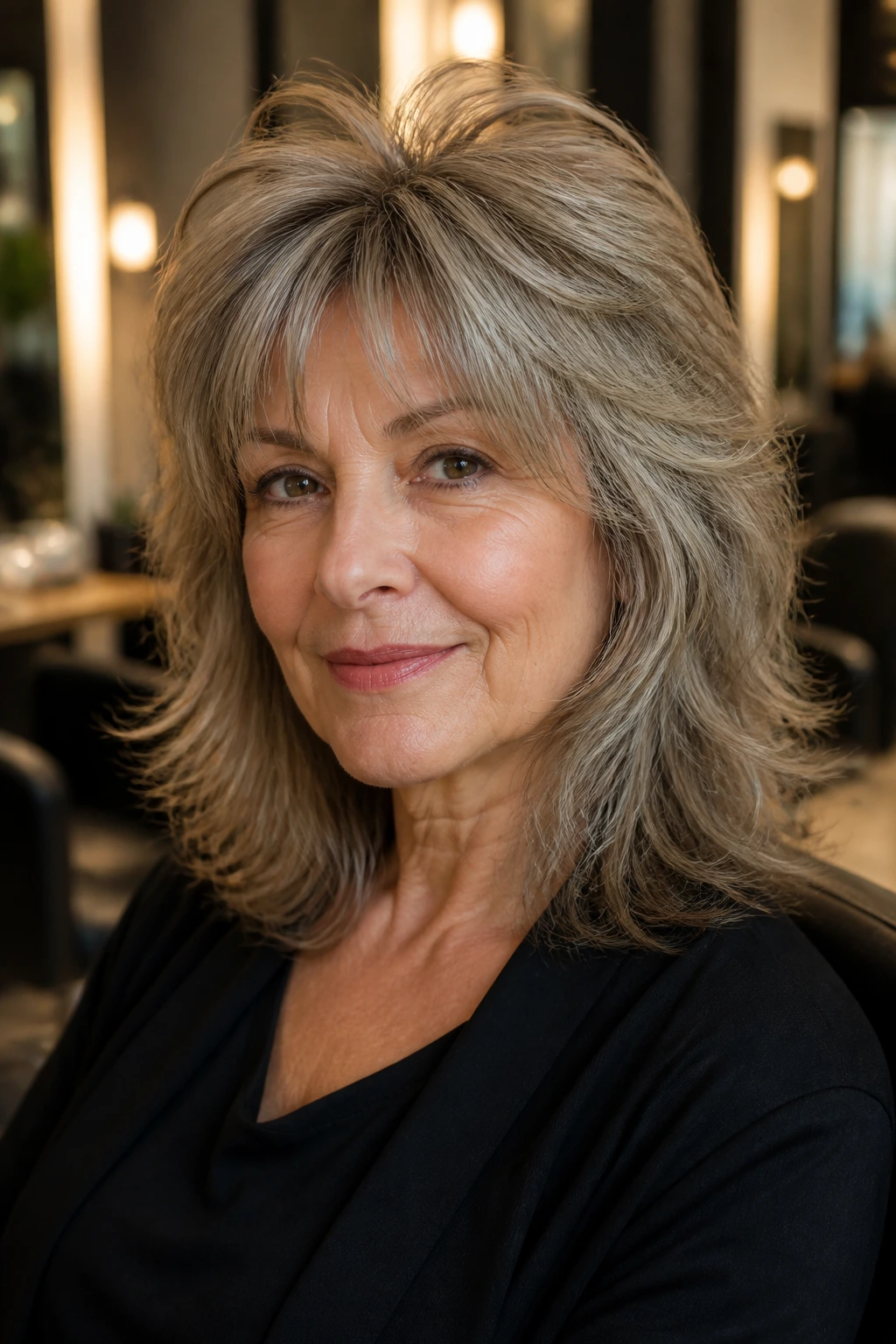
Not everyone wants a trendy cut with a name that sounds like a rock band. Sometimes you just want the classic shape: soft crown lift, face-framing layers, medium length, and a finish that doesn’t demand a tutorial every morning.
That’s what this cut gives you. It has enough shag detail to move, but the layers are blended enough to feel grown-up and controlled. The crown has a little lift so the style doesn’t flatten, and the front pieces soften the face without shouting about it.
This is the version I’d point to if someone says, “I want something current, but I don’t want to look like I’m chasing a trend.” Smart request. The classic shag earns its keep by being wearable on a good hair day and still respectable on a rushed one.
What Makes a Medium Shag Look Fresh Instead of Choppy
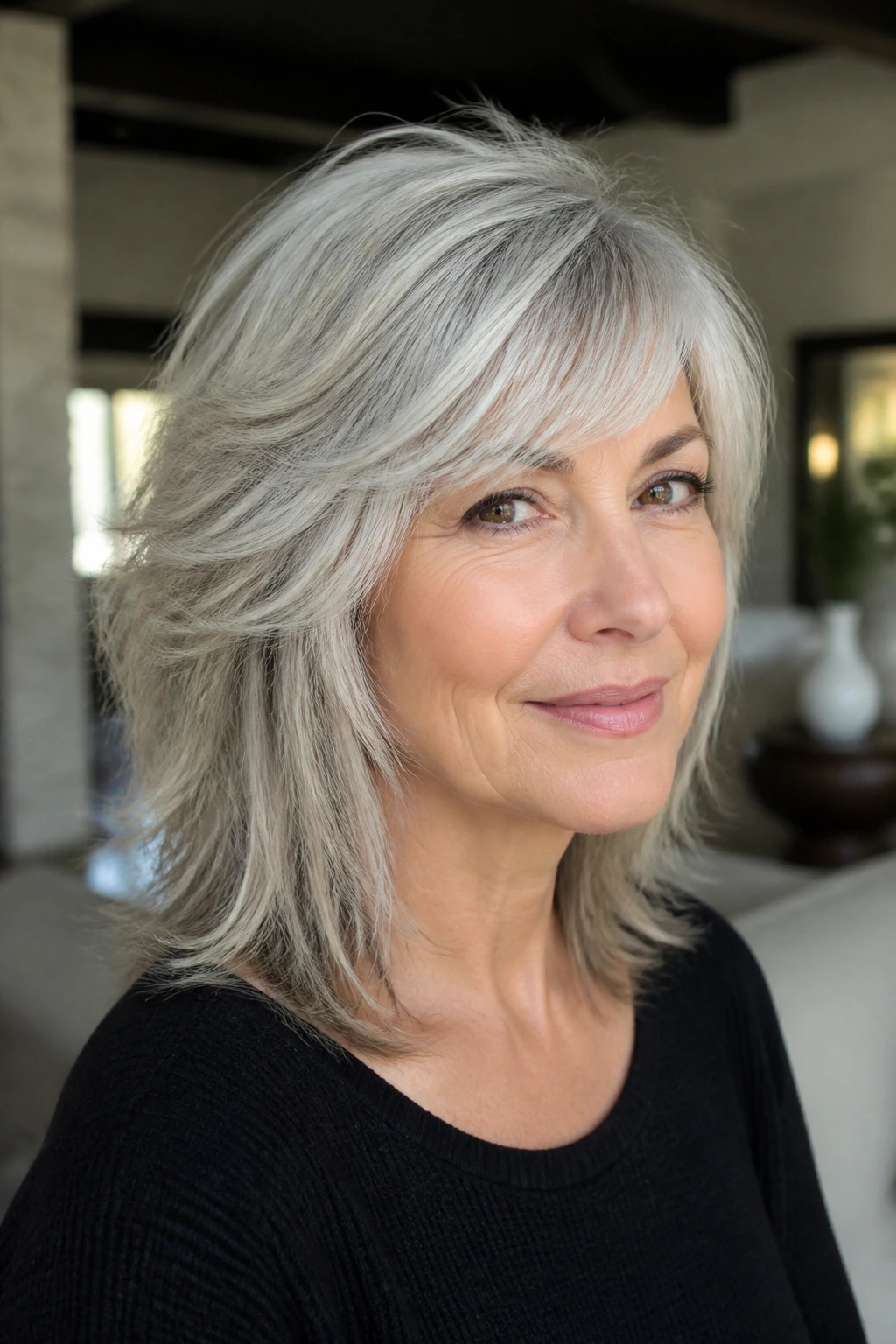
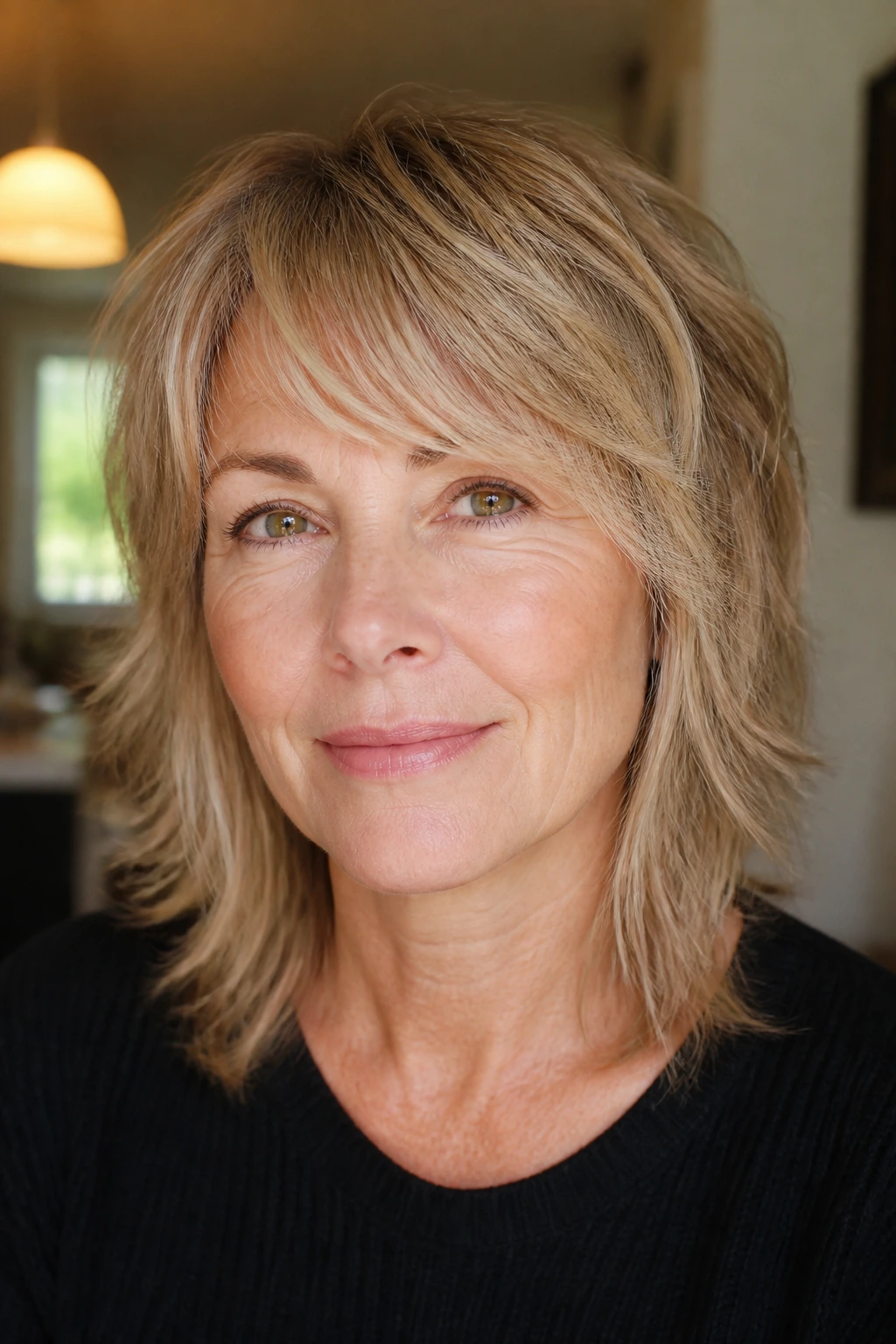
A shag only looks good when the layers are doing a job. If they’re scattered randomly, the cut starts to look like someone took pieces out of it with no plan. That’s not texture. That’s just mess.
The best medium shag keeps a clear outside shape. The perimeter may be feathered or softened, but it still exists. Then the stylist builds movement inside that shape, usually around the crown, the cheekbones, and the midlengths. That gives the haircut lift without stripping away the density that keeps medium hair looking full.
I also think the front matters more than people admit. You can get away with almost anything in the back if the fringe, side lengths, and face frame are balanced. If the front is too heavy or too short, the whole cut feels old fast. If it’s too shredded, it starts to look thin rather than airy.
Color plays a role too, especially with gray and silver hair. Fine layers can show off dimension beautifully. Over-thinned ends, on the other hand, make the color look frayed. So the rule is simple: remove weight where hair piles up, keep weight where the shape needs a line. That’s what makes the shag feel fresh instead of accidental.
Essential Tools for Styling a Shag at Home
- A blow-dryer with a concentrator nozzle: This helps you aim airflow at the roots instead of puffing up the whole cut.
- A medium round brush, about 1 to 1.5 inches: Good for lifting the crown and giving curtain bangs a soft bend.
- A vent brush or paddle brush: Handy when you want a faster, looser dry without a lot of polish.
- A 1-inch curling wand or flat iron: Use it to add a few bends through the front and midlengths, not to curl every strand.
- Root-lift mousse or spray: This matters more than heavy oil on a shag, especially if your hair is fine or flat.
- Light texturizing spray: A few misted passes can break up the ends without making them crunchy.
- Heat protectant: Non-negotiable if you use a dryer, iron, or wand more than once in a while.
- A wide-tooth comb: Better than yanking through damp layered hair with a fine comb.
- Sectioning clips: Useful when styling curtain bangs, crown layers, or a deep side part.
- A lightweight finishing cream: Helps smooth the ends on gray, coarse, or frizz-prone hair.
How to Ask Your Stylist for the Right Shape
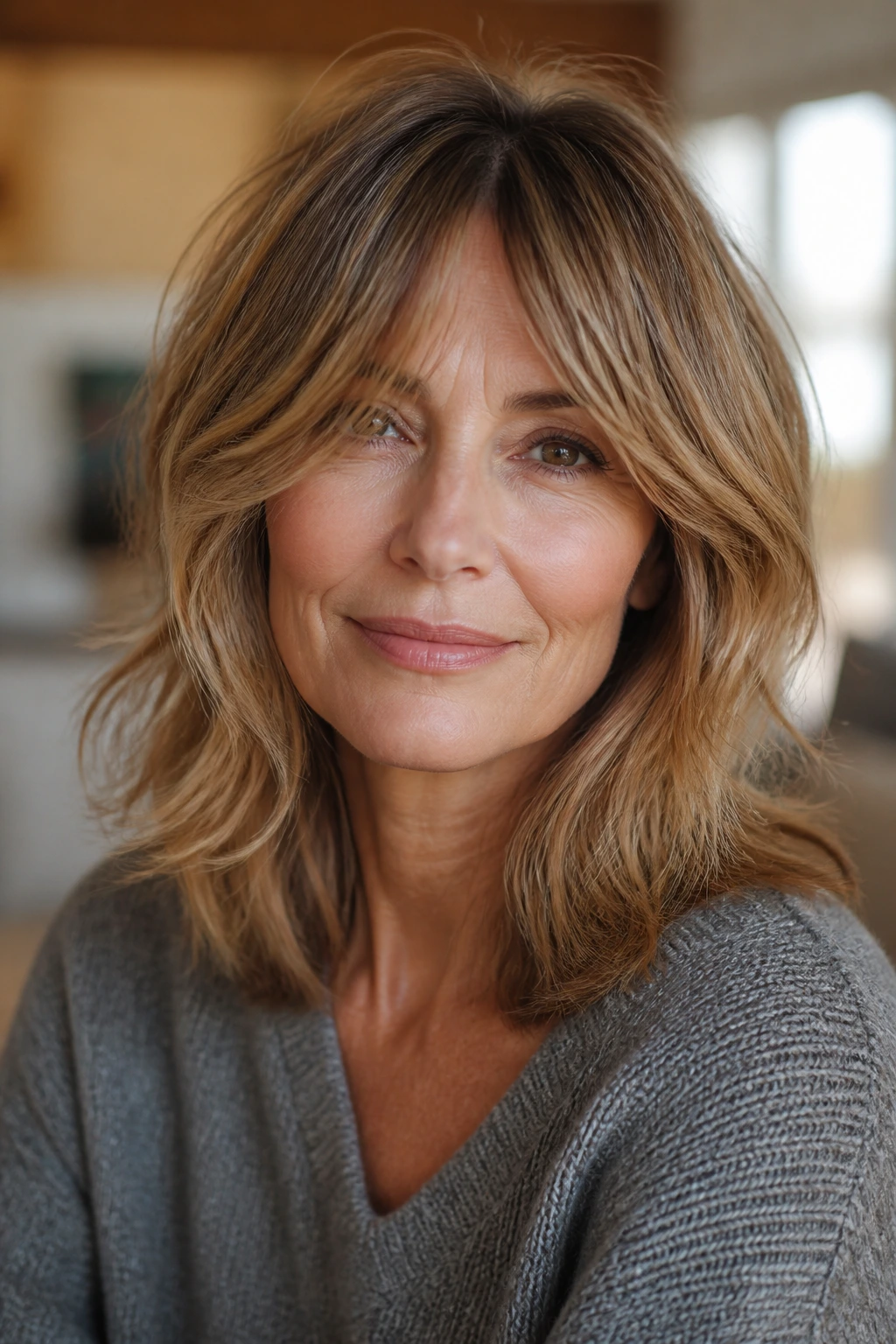
Bring photos, yes, but also bring words. Pictures show mood; words tell your stylist what you actually live with. If you wear glasses every day, say that. If your hair air-dries and you refuse to blow it out daily, say that too. Those details change where the fringe lands and how short the layers should be.
Be specific about the line you want at the bottom. Shoulder length? Collarbone? A little below the chin in front? Those are not small differences. A cut that hits right at the collarbone has more swing; a slightly shorter cut gives more bounce. If your hair tends to flip under or kick out, your stylist should know that before the scissors open.
Talk about density, not just texture. Fine hair can be dense, and thick hair can be fragile. If you have fine strands, ask for shape with preserved perimeter weight. If your hair is thick, ask how the bulk will be removed so the cut doesn’t go square. If you’re curly, ask whether the stylist prefers dry cutting or cutting curl by curl.
And one more thing. If you want bangs, say how much forehead coverage you actually want. “Soft fringe” and “full bang” are different animals. If you’ve ever spent three weeks pinning bangs back, that sentence alone is worth the salon conversation.
How to Style It So It Doesn’t Collapse by Lunch
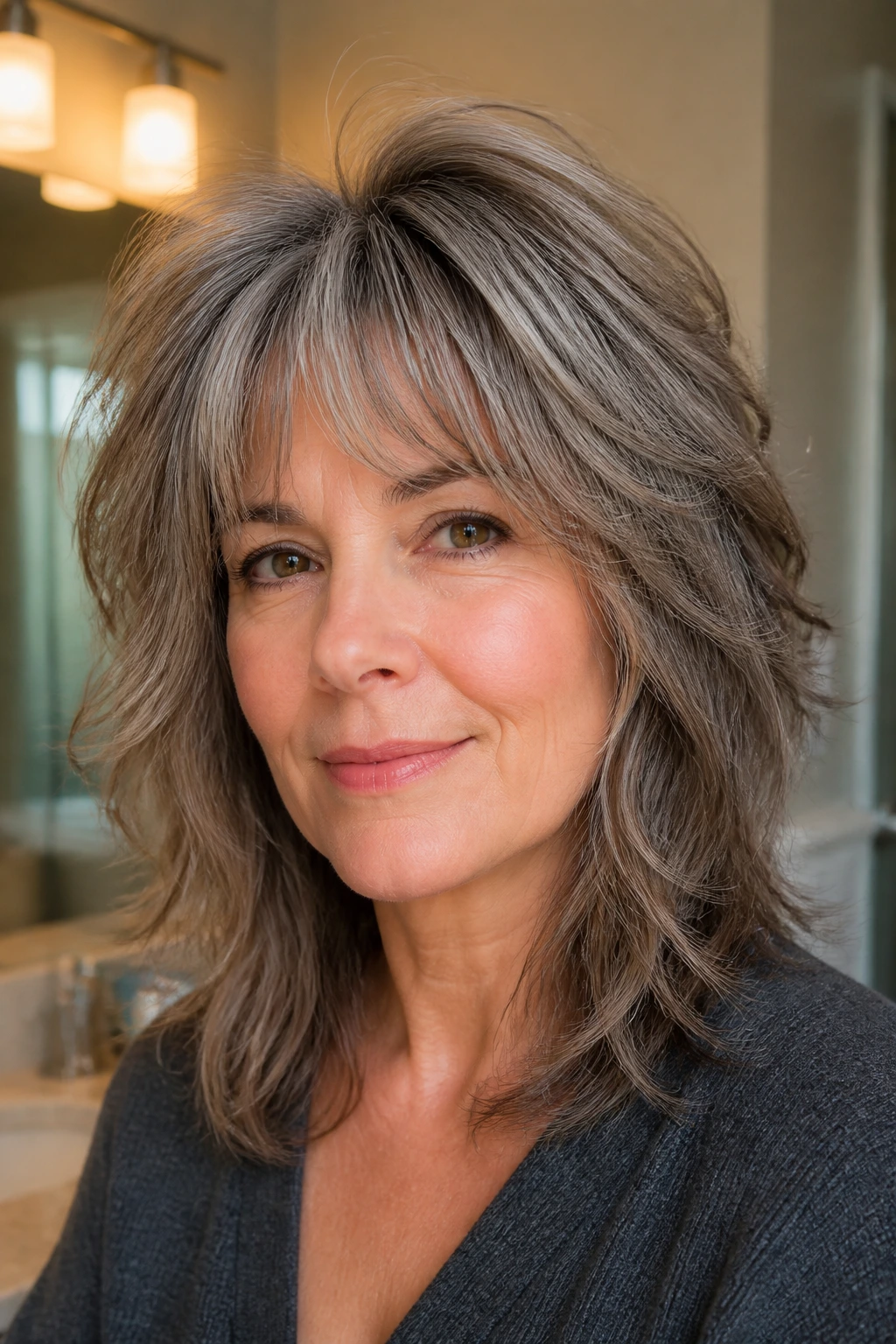
Volume: Start at the roots. A shag without root lift can look sleepy fast, especially on medium hair that’s lost some body. Blow-dry the crown first, not last.
Texture: Use less product than you think. A shag already has internal movement, so heavy cream can weigh down the layers and make the ends clump. Mousse on damp roots, a little spray through the ends, and stop there unless your hair is very dry.
Parting: Try the part in the chair before you leave the house. A center part can flatter some shags, but an off-center part often gives more lift and softens the face. Move it a half inch and see what happens. Hair can be fussy about this, but the change is often bigger than you’d expect.
Finish: Decide whether you want polished or piecey. Polished means smoother blow-dry, round brush, maybe a touch of serum on the ends. Piecey means rough-dried texture and a few separated bends with a wand. Don’t try to do both at once or the haircut ends up confused.
Shortcut: If time is short, dry the roots, bend only the front pieces, and let the rest fall where it falls. That works better on a shag than on a blunt cut, which is one reason I love this haircut family in the first place.
Keeping the Cut in Shape Between Salon Visits

A medium shag can look good for weeks, but it still needs a little maintenance if you want the shape to stay intentional. The fringe usually needs the first touch-up. Bangs or face-framing pieces can start to drag the eyes down long before the rest of the cut looks grown out.
Plan on a fringe trim every 4 to 6 weeks if you wear curtain bangs, bottleneck bangs, or a wispy fringe. The rest of the cut can usually go 8 to 10 weeks, sometimes a little longer if the layers are soft and the perimeter stays full. Very choppy shags need more upkeep. Softer versions give you a wider window.
Wash routine matters too. Heavy product buildup can make layered hair look stringy, especially if you use dry shampoo between washes. A gentle clarifying shampoo every couple of weeks helps keep the crown from going limp. On gray hair, that also prevents product haze from dulling the color.
If your hair is curly or wavy, refresh the shape with water and a little leave-in instead of starting from scratch every morning. If your hair is straight, a quick bend around the face is usually enough. The point is to keep the cut moving, not to re-create the whole salon finish before coffee.
Common Mistakes That Make a Shag Look Scruffy
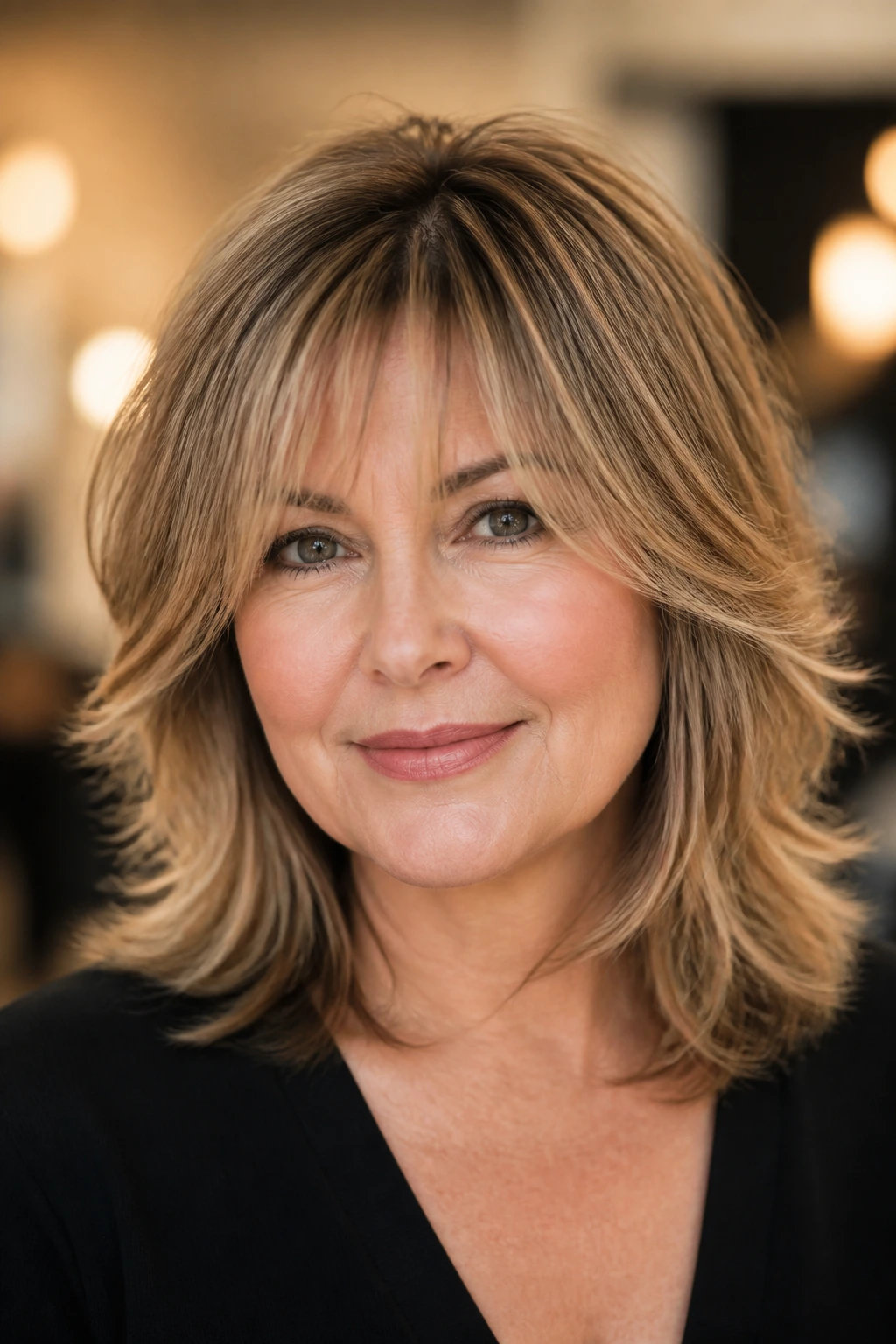
- Too many short layers through the crown: The result is often a puffed-up top and see-through ends. Keep some weight in the perimeter so the cut still has shape.
- Bangs that are too thick for your face or glasses: Heavy fringe can swallow the forehead and sit badly on frames. Ask for softer density and check the length while your glasses are on.
- Over-thinning curly or wavy hair: This usually turns texture into frizz. Curls need structure, not a haircut that removes all their support.
- Using heavy oil on fine hair: It can flatten the very movement you’re trying to create. Save richer creams for dry, coarse, or gray hair that truly needs smoothing.
- Ignoring your styling habit: A shag that needs a round brush every morning is a bad match if you air-dry on weekdays. Be honest about what you’ll actually do.
- Cutting the face frame too high: It can widen the face or make the front look dated. Longer, softer pieces are safer if you want the haircut to age well.
Variations and Adaptations Worth Trying
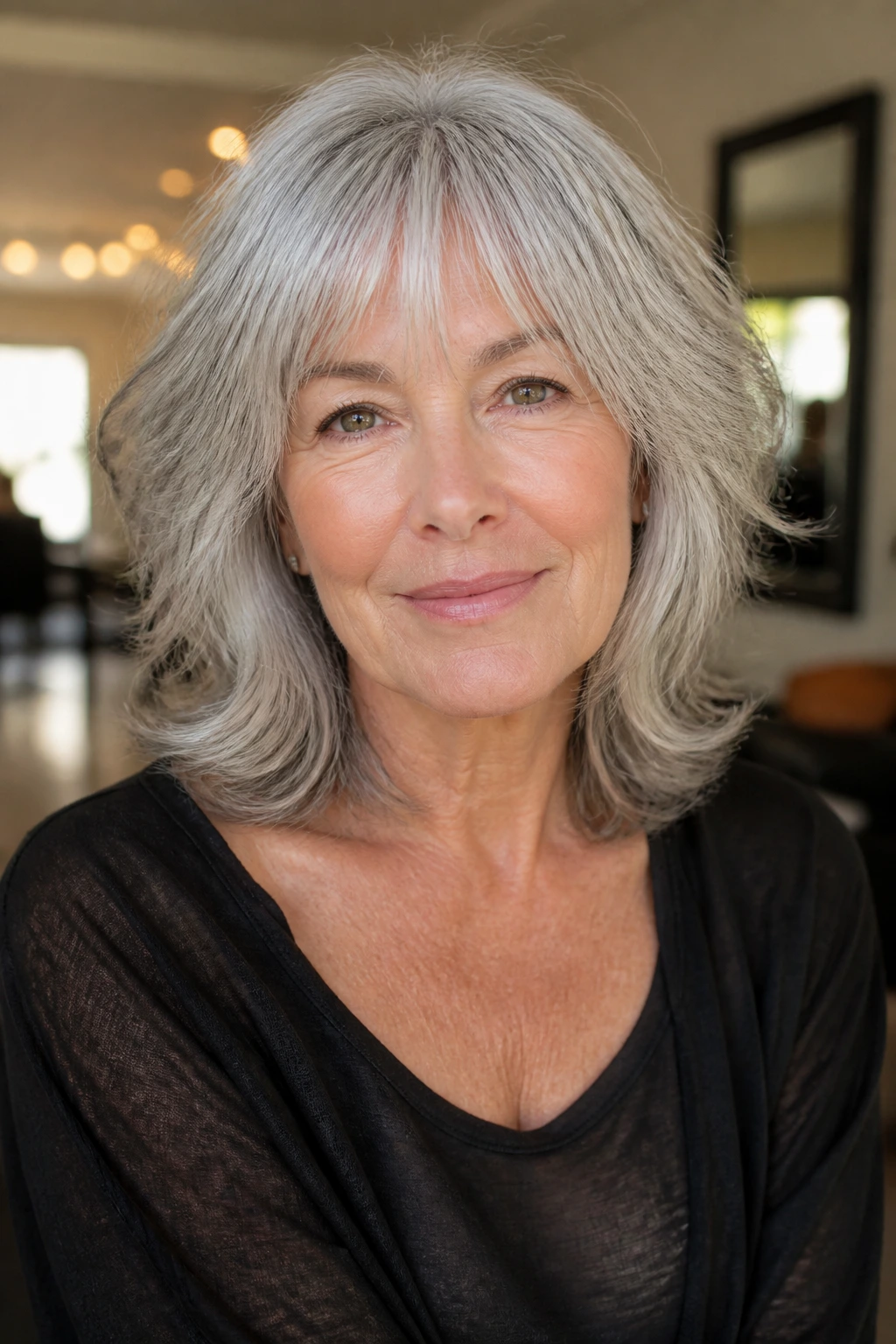
The Quiet Shag: This one keeps the layers soft and the silhouette calm. It’s a good choice if you want the movement of a shag without obvious choppiness, and it grows out politely.
The Silver Halo Shag: Built for gray or white hair, this version uses feathered layers and a light fringe to make the color shine. It works best when the ends stay full and the finish stays airy, not fuzzy.
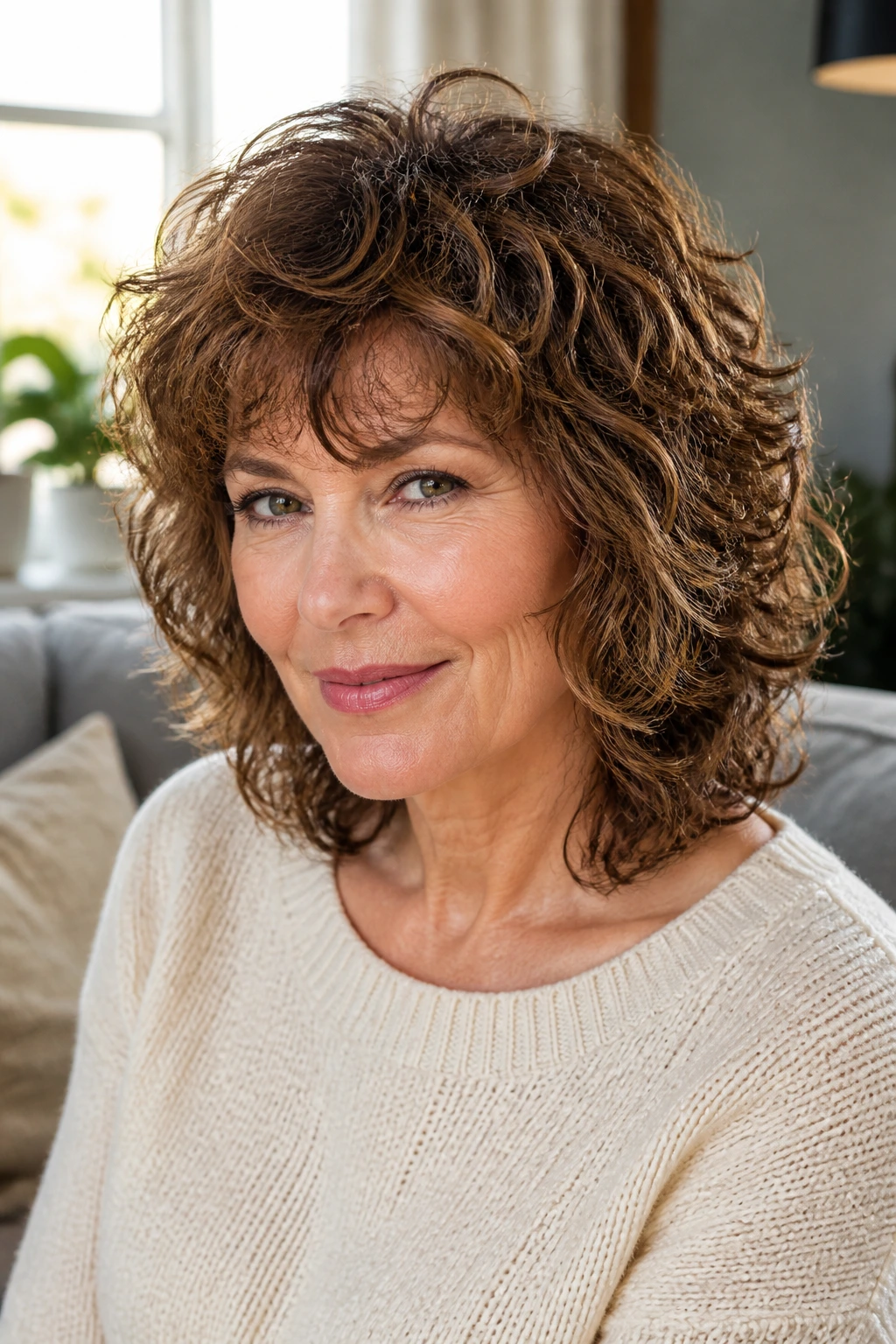
The Curl-Respecting Shag: Leave more length in the curl pattern and use shorter layers only where the crown needs shape. This keeps curls springy instead of frizzy and avoids the mushroom effect.
The Low-Heat Shag: Designed for air-drying, this cut uses long layers and a softer face frame so it falls into place with minimal tool work. If you hate heat styling, this is the safer bet.
The Soft Wolf Variation: A little more edge, a little more crown lift, and a slightly stronger contrast between the top and the length. It’s for someone who wants a bit of bite without committing to a dramatic mullet shape.
Frequently Asked Questions About Shag Haircuts After 50
Will a shag haircut make thin hair look thinner?
Not if it’s cut with restraint. The problem is usually too many short layers and not enough perimeter weight. Ask for softness through the crown and a fuller edge at the bottom.
Can I wear a shag if I have glasses?
Yes, and the right fringe makes a huge difference. Wispy bangs, side-swept fringe, and soft curtain bangs all tend to sit better than a heavy blunt bang that crashes into the frames.
Does a shag work on straight hair?
It does, but straight hair needs a little styling to show the layers. A bend at the ends, a root lift at the crown, or a loose side part usually gives it enough movement.
What if my hair is curly and frizzes easily?
Ask for a dry cut or a curl-specific shaping method. Curly shags need length left in the curl pattern, and too much thinning can turn the surface fuzzy fast.
How often should I trim a medium shag?
Bangs may need a trim every 4 to 6 weeks. The full cut usually holds its shape for about 8 to 10 weeks, depending on how soft or choppy the layers are.
Can I keep my hair long and still get a shag feel?
Yes. A long feathered shag keeps the length while adding movement through the front and midlengths. That’s the compromise for anyone nervous about losing too much hair.
What should I ask for if I want something modern but not messy?
Ask for soft internal layers, a clean perimeter, and a face frame that starts below the cheekbone. That gives you shape without pushing the cut into an overly tousled look.
My crown goes flat. Can a shag help with that?
That’s one of the things it does best. Crown layers, root lift, and a slight shift in the part can give the top more height without teasing it into a helmet.
The Cut That Still Moves With You
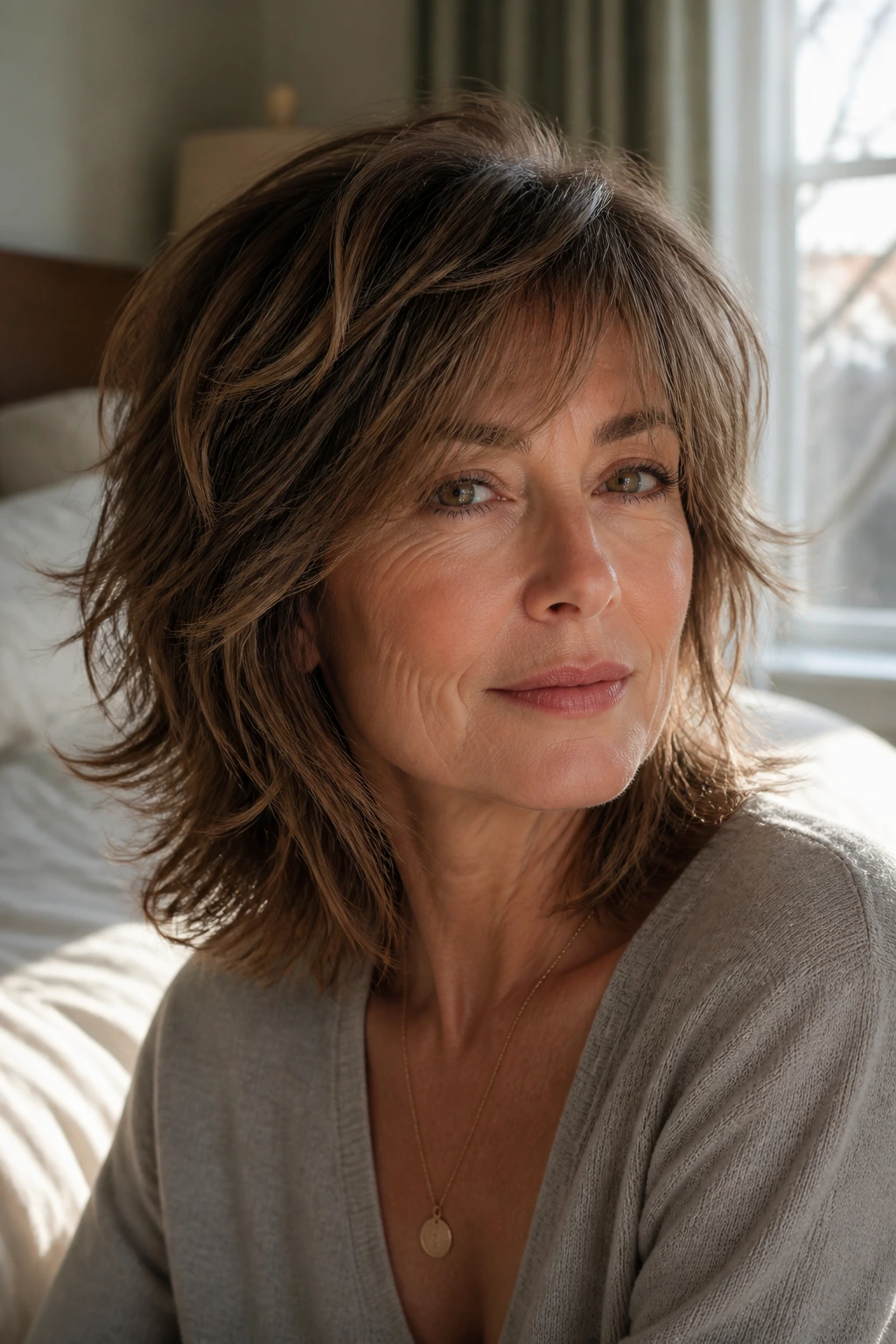
The best thing about shag haircuts for medium length hair over 50 is that they don’t ask your hair to behave like someone else’s. They give you room for gray, room for waves, room for a little flatness at the crown, room for a morning when you can’t be bothered with a round brush. That flexibility is the whole appeal.
If you want the safest bet, choose a softer version with a full perimeter and a face frame that doesn’t crowd your features. If you want more personality, move toward a deeper side part, a feathered fringe, or a more textured crown. The haircut can go either way. That’s the fun of it.
The smartest shag is the one that still looks like your hair when it’s not freshly styled. That’s the real test, and it’s the one worth asking for at the chair.
