



Curly shag haircuts for older women work because they stop asking curls to behave like a sheet of straight hair. The layers let the curl pattern move, the face-framing pieces soften hard edges, and the whole shape keeps a little lift instead of sinking into the cheeks by lunchtime.
That matters more than people admit. Hair often changes with time — a bit less density at the crown, a little more dryness at the ends, maybe a curl pattern that feels less predictable than it used to. A blunt cut can make those shifts look louder than they are. A good shag turns them into texture.
The trick is placement, not chaos. Long internal layers, a perimeter that still has enough weight, and bangs or face-framing pieces cut with shrinkage in mind — that’s the difference between “I woke up like this” and “why is my hair suddenly doing the triangle thing?” Some versions lean soft and classic. Others carry a little edge. All of them give curls room to breathe.
Why Curly Shag Haircuts Stay So Good as Hair Changes
-
They respect shrinkage: Curls often spring up a good inch or two after drying, so a layered outline keeps the shape from ending up shorter and wider than expected.
-
They soften the face without hiding it: Face-framing pieces can sit at the cheekbone, lip line, or chin and take the sharpness out of the jaw without covering everything up.
-
They keep thick curls from ballooning: Internal layers remove bulk where curls pile up, especially under the crown and around the back of the head.
-
They give finer curls a real silhouette: A shag can keep enough weight at the perimeter to make thin curls look fuller instead of wispy.
-
They show off silver and gray beautifully in real life: Salt-and-pepper and white strands catch light in the bends, which makes layered texture look crisp instead of flat.
There’s another reason people return to this cut. It behaves better on day two. The right curly shag still has a shape when the root lift settles and the curl clumps loosen. That’s worth a lot.
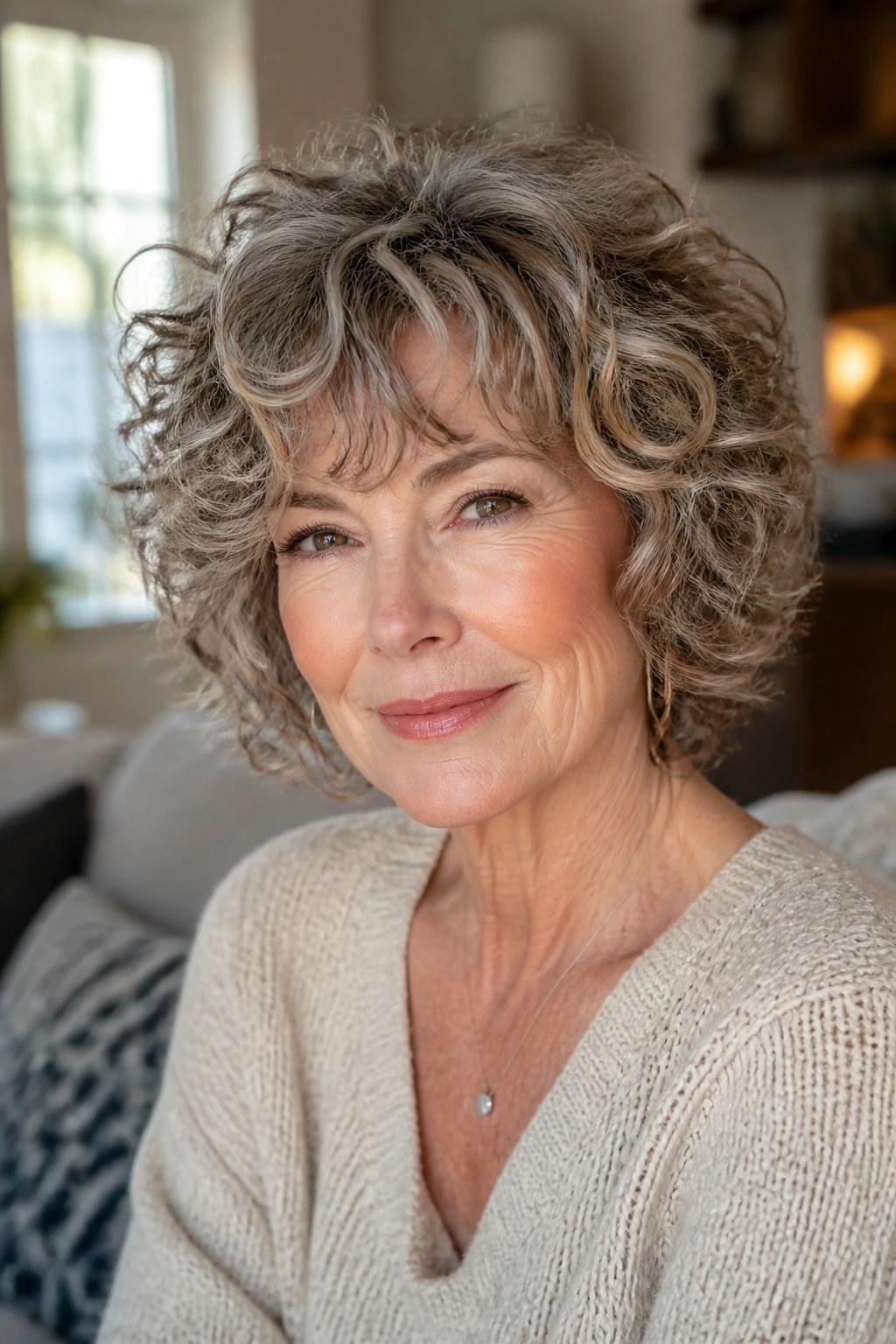
1. Shoulder-Grazing Curly Shag with Soft Curtain Bangs
Shoulder-grazing curls have a useful trick: they keep enough weight at the bottom to stop the ends from exploding, but they still leave room for movement around the cheekbones. Add curtain bangs, and the face gets a soft frame that doesn’t sit like a heavy wall across the forehead.
This version suits women who want something polished enough for lunch out but casual enough to air-dry. Ask for the shortest front pieces to land around the cheekbone when dry, not wet, and keep the center fringe longer than you think — curls bounce up fast. If you wear glasses, the split fringe keeps the frames from fighting the hair.
2. Chin-Length Curly Shag with Airy Fringe
A chin-length shag brings curls closer to the face, which sounds bold until you see how much lift it creates. The ends sit right where the jaw wants softness, and the airy fringe keeps the top from looking heavy or boxed in.
This cut works well for curls that spring back with energy and need a clearer outline. It is not the one to choose if your curls already swell wide at the sides; in that case, a little more length solves a lot. Ask for piecey texture at the fringe, not a blunt line, or the front can feel stubborn and square.
3. Silver Curly Shag with Crown Lift
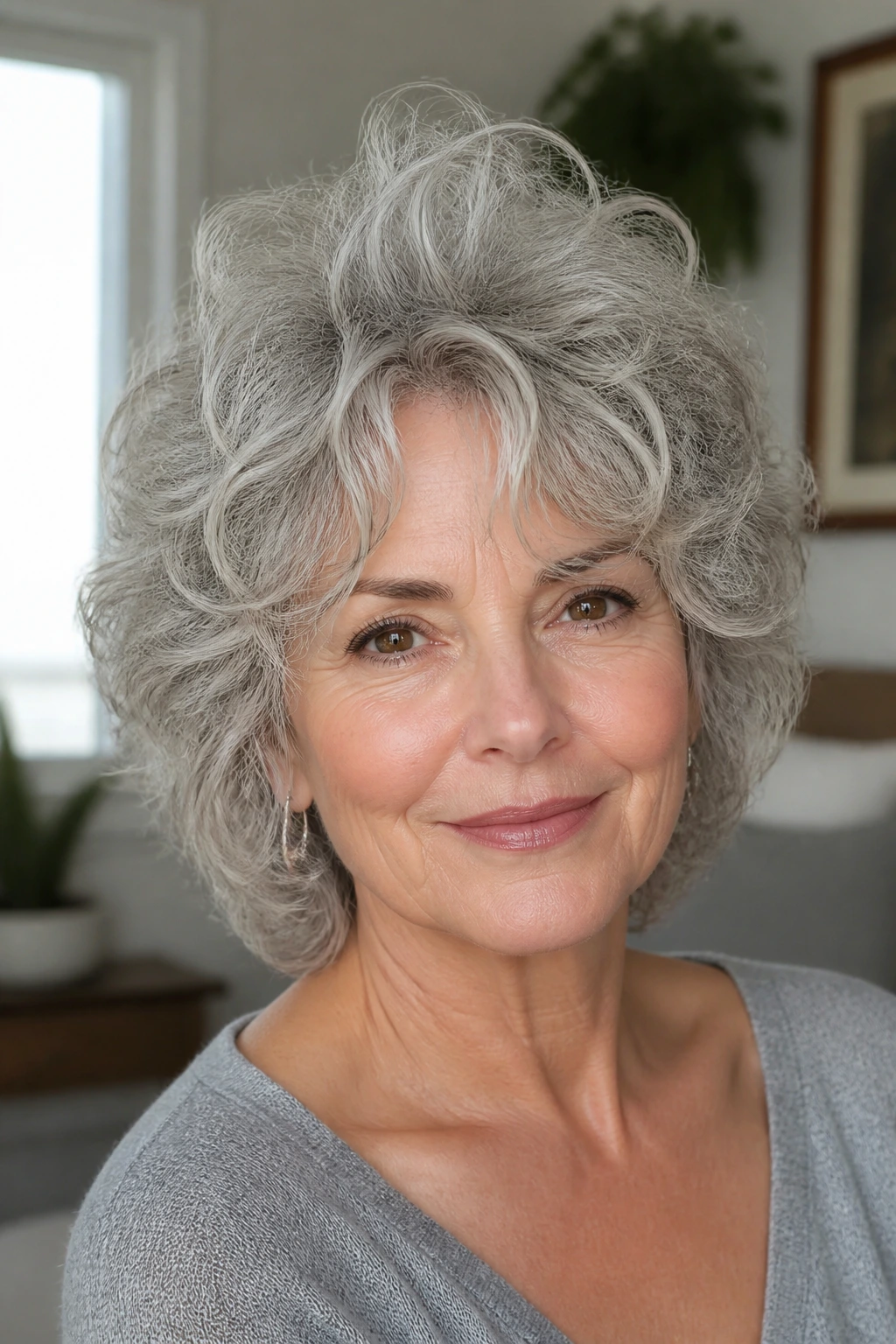
Silver curls look strongest when the crown has a little room. Without lift on top, the cut can flatten into the head and make the sides puff out more than they should. A shag handles that by keeping the top light and the perimeter soft.
This is one of my favorite shapes for gray hair that feels a little wiry or dry, because the layers create movement without making the hair look thin. The crown needs height, yes, but not a stack of tiny short pieces that stick up like a scrub brush. Ask for longer internal layers and a rounded finish at the back.
4. Rounded Curly Shag for Dense Curls
Dense curls need subtraction, but not the careless kind. If the cut is too blunt, the bottom turns heavy. If the layers are too short, the whole head balloons outward and starts to look like a triangle with opinions.
A rounded shag keeps the silhouette soft and controlled. The trick is removing bulk underneath while leaving enough length around the outer edge to keep the curls clumped together. This shape is especially nice if your hair feels thick at the nape or around the ears, where weight tends to collect and make the cut sit wrong.
5. Collarbone Curly Shag with Face-Framing Pieces

Collarbone length is the sweet spot when you want hair long enough to tuck behind the ear, but not so long that the curls drag the face down. The face-framing pieces can start at the cheekbone and drift to the chin, which keeps the front open and airy.
Why It Works for Everyday Wear
It’s one of the easiest curly shag haircuts to live with because it gives you options. You can wear it loose, clip one side back, or gather the whole thing into a low twist without the layers collapsing into a lump.
Ask your stylist to keep the front pieces longer than the crown layers. That stops the cut from turning too shaggy in the bad sense — not stylishly undone, just messy around the mouth and jaw.
6. Deep Side-Part Curly Shag

A deep side part can change a shag more than three extra layers. It gives the curls a stronger direction, adds height at the root, and keeps the front from falling into the same shape every single day.
This version is helpful when one side of the hair lies flatter or when the crown wants to separate along the same part line all the time. A side part also softens a stronger forehead or cheek line without making the haircut feel fussy. If your curls naturally pull to one side, work with that instead of fighting it.
7. Tapered Curly Shag for Fine Hair
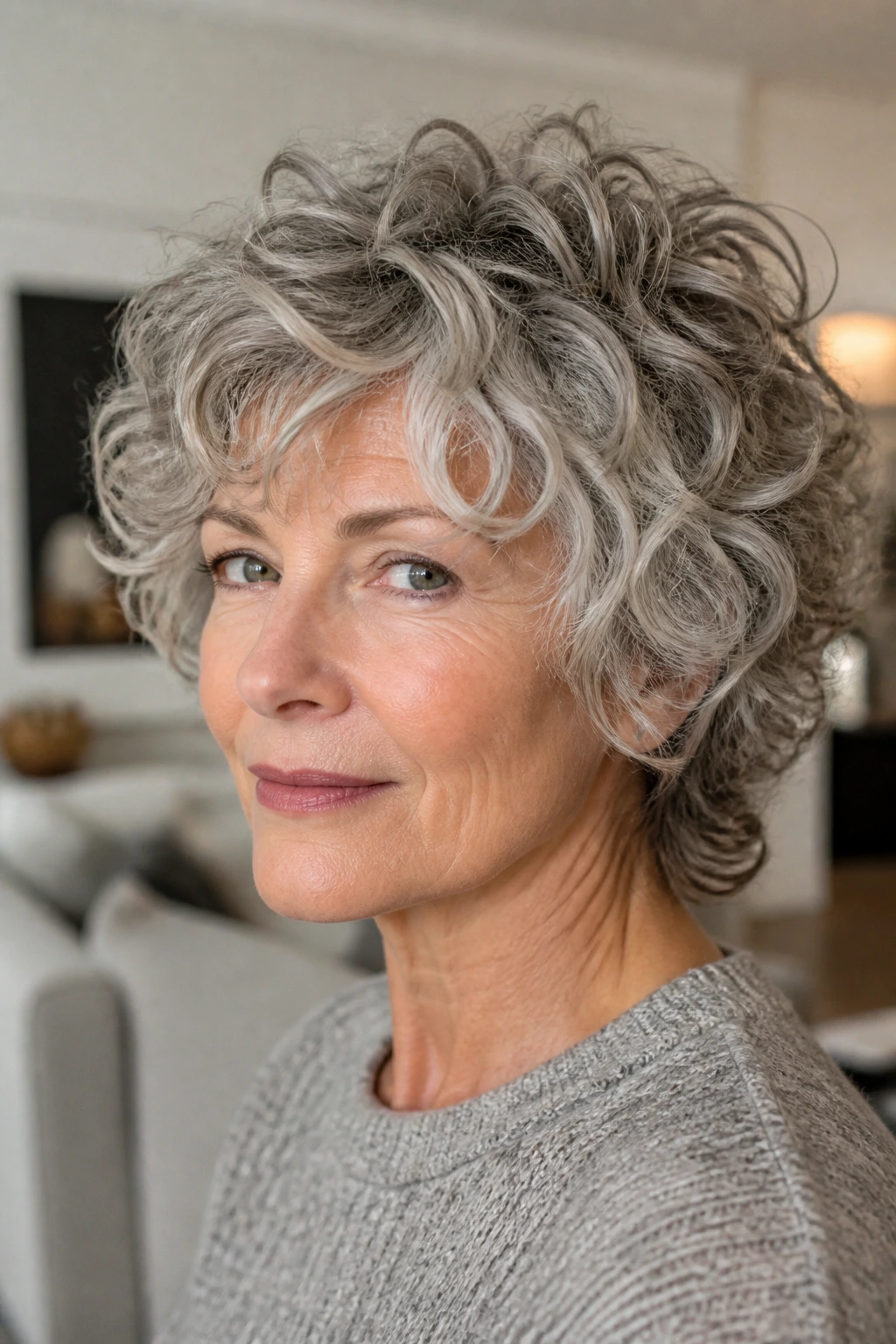
Fine curls need lift, but they do not need a thousand short layers. That’s the mistake. Too much removal makes the ends flimsy and leaves the top puffier than the rest of the head.
A tapered shag keeps the crown light and the nape neat while preserving enough density through the lengths. It’s a smart choice if your hair has thinned a little and you want shape without losing the feeling of having hair. Ask for soft internal layers, not aggressive texturizing. Mousse at the roots and a little gel through the ends usually beats heavy cream here.
8. Long Curly Shag with Feathered Ends

Long curls do not need to be chopped short to get movement. A long shag with feathered ends keeps the length intact while taking away the dead weight that can make the bottom look shelf-like.
This cut works best when the last few inches are softened, not thinned to nothing. The feathering should help the curl pattern fall into loose ribbons instead of one thick curtain. If your hair has a tendency to poof at the ends, this is the fix. If it already feels delicate, keep the feathering subtle and let the layers do most of the work.
9. Curly Bob Shag with Piecey Layers
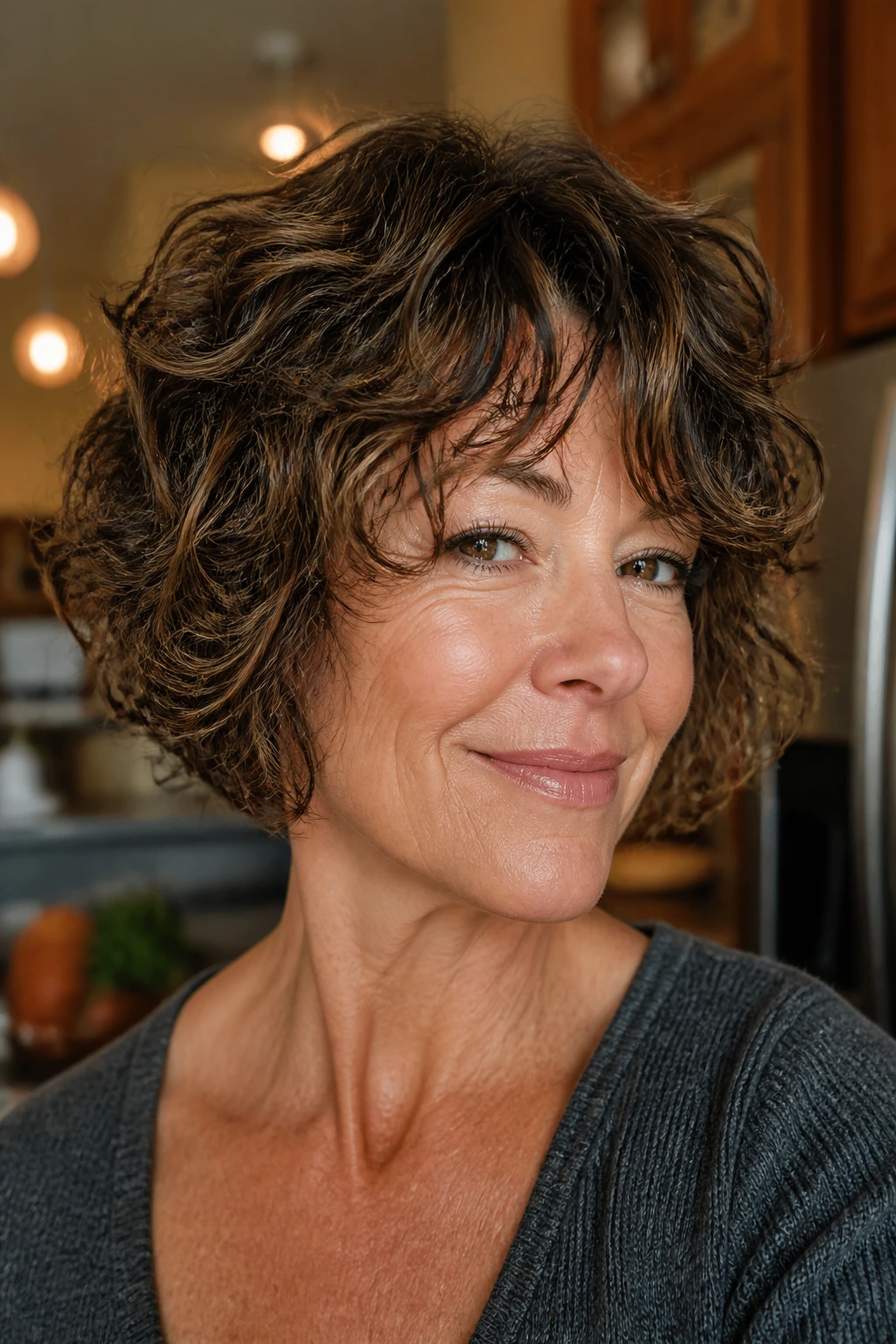
This is the cut that keeps a bob from feeling too neat. The outline still reads as a bob, but the shag layers break up the line just enough to keep curls lively.
Piecey layers make the difference here. You want the ends to separate into soft clumps, not fray into a fuzzy cloud. It’s a good pick if you like shorter hair around the face but still want a little bend and bounce. A diffuser on low heat can bring out the shape fast, and a small amount of gel helps the pieces stay visible after they dry.
10. Wolf-Inspired Curly Shag

If you like a little attitude, the wolf-inspired shag gives it without the hard edges. The top stays full and layered, while the back drops a bit longer for that swept-through, lived-in shape.
The key is softness. A curly wolf cut can turn harsh fast if the top is too short or the lower layers are too disconnected. Keep the transition gentle, and it becomes a shag with a little more edge rather than a full-on mullet moment. It’s a good fit for women who want movement and don’t mind hair that looks slightly unruly in the best way.
11. Low-Maintenance Wash-and-Go Curly Shag
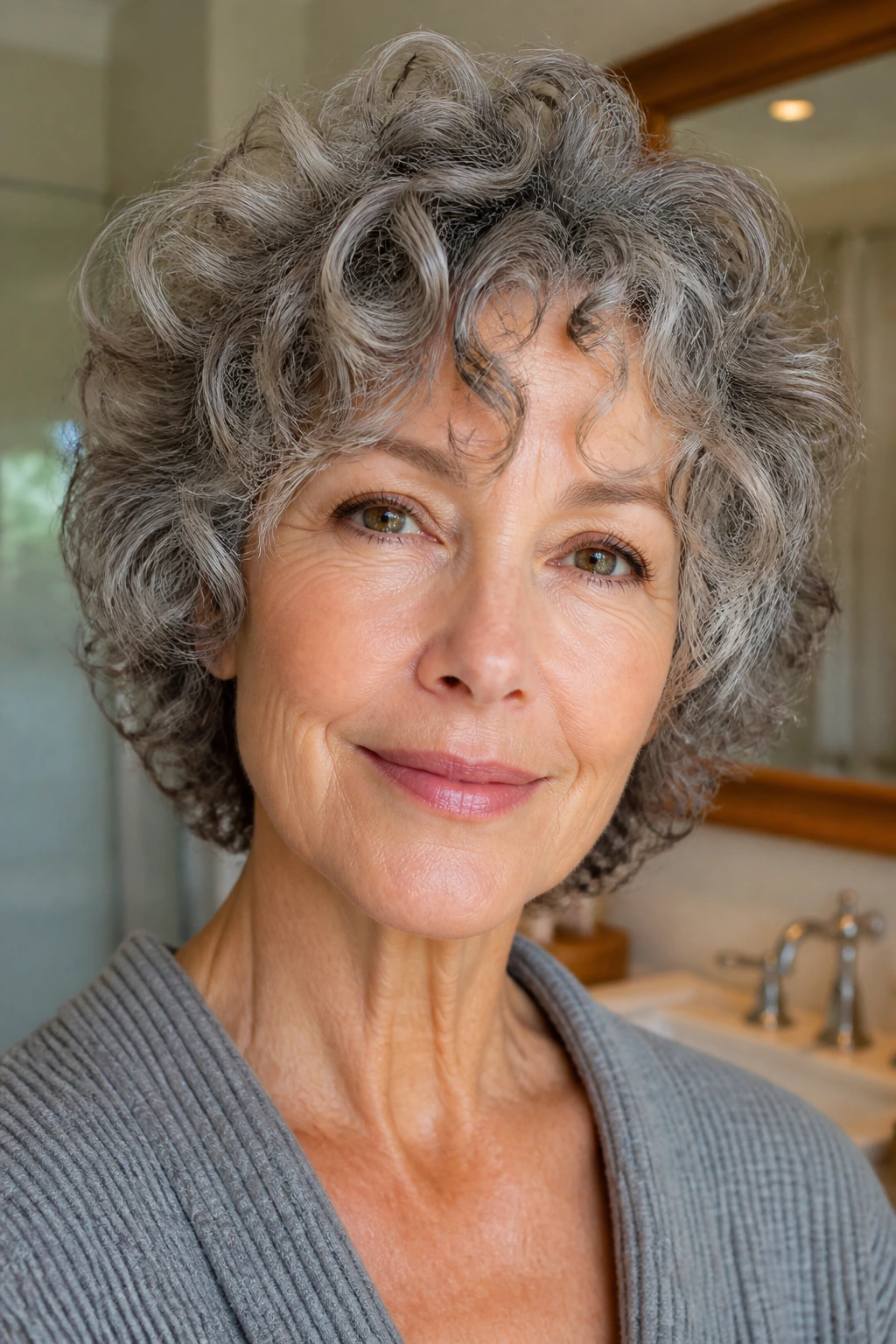
Some mornings call for hair that behaves after one round of product and a diffuse. This is that haircut. The layers are placed so the curls fall into shape without a round brush, a lot of sectioning, or a long argument with your mirror.
The Cut Does the Heavy Lifting
A wash-and-go shag should have enough structure that the hair still looks intentional if you air-dry with leave-in and gel. The crown gets a bit of lift, the face frame stays soft, and the perimeter keeps weight so the ends don’t frizz into fuzz.
It’s a good choice for women who’d rather spend ten minutes styling than forty-five. The shape should be forgiving. If a cut only works after a perfect blowout, it’s not really wash-and-go.
12. Curly Shag for Glasses Wearers

Glasses change the balance of a haircut more than most people expect. Bangs that looked perfect in the chair can clash with the frames, and side pieces can crowd the temples if they’re cut too short.
This version keeps the front clear enough to sit above or beside the frames, not on top of them. The face-framing layers should bend around the lenses rather than fight for the same space. If you wear glasses every day, tell the stylist exactly where the arms hit and whether you want hair off the temples. That one detail saves a lot of irritation later.
13. Bottleneck Bang Curly Shag
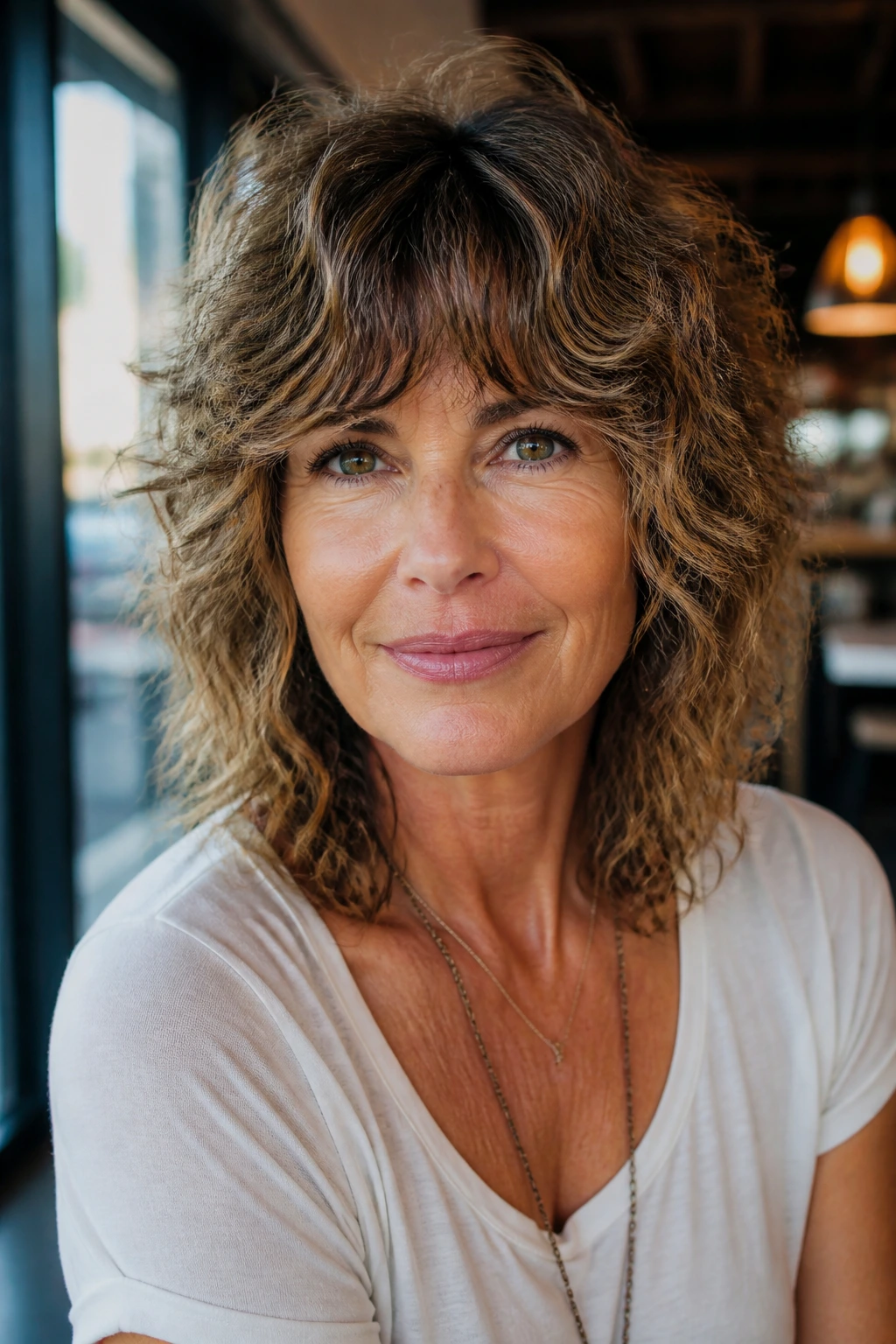
Bottleneck bangs are one of the friendliest ways to wear fringe with curls because they start narrow and open out. The middle stays a little shorter, then the sides lengthen toward the temples, which keeps the forehead from feeling boxed in.
The shape works because curls rarely behave like straight fringe. They need room to spread, separate, and bounce. Bottleneck bangs do that without looking heavy. They’re especially good if you want a bit of coverage through the center but still want to show off your eyes and cheekbones.
14. Asymmetrical Curly Shag
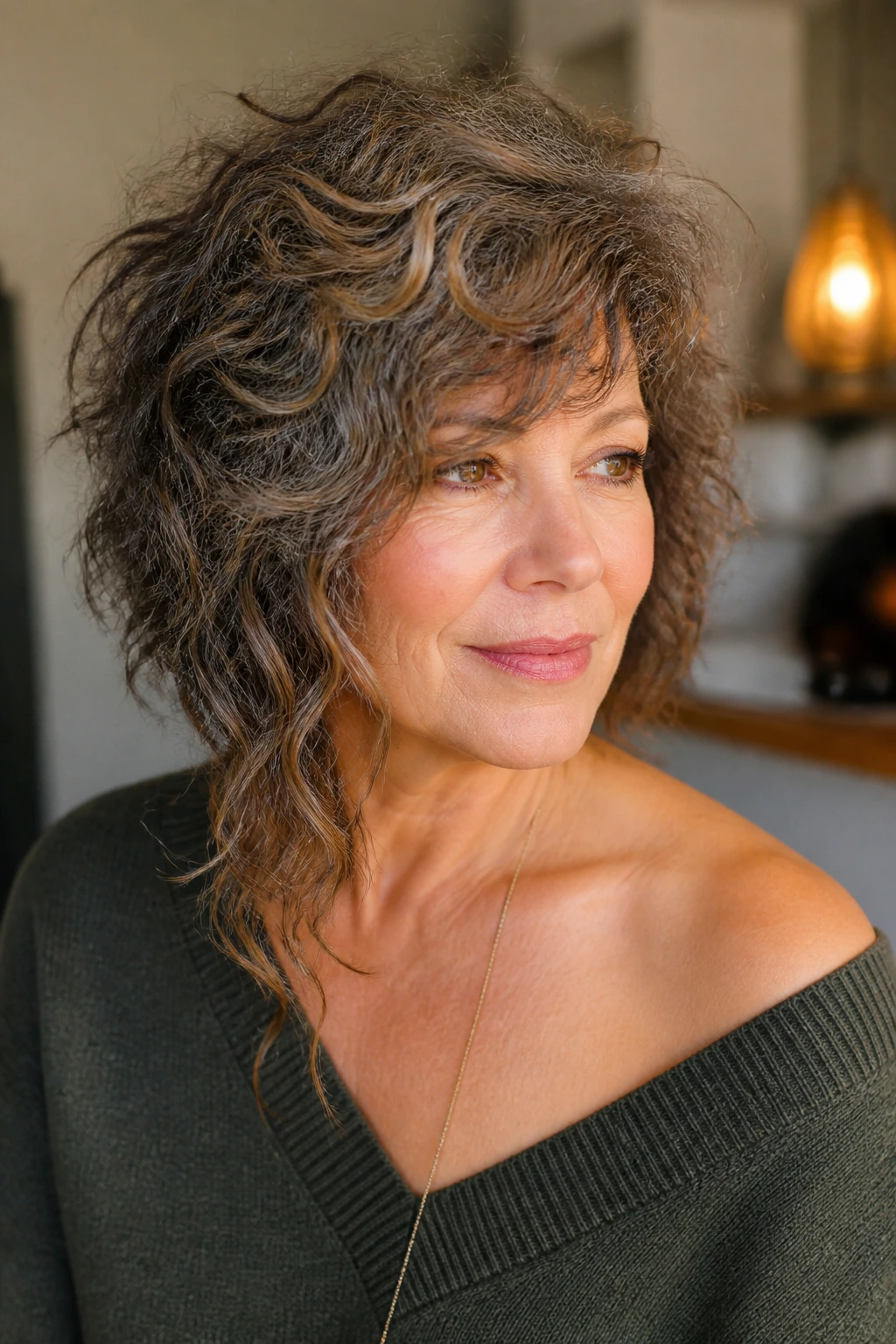
A little imbalance can be useful. An asymmetrical shag shifts the visual weight so one side feels softer, longer, or more lifted than the other.
This works well if one side of your hair naturally falls flatter, if one cheek is broader than the other, or if you just want the haircut to feel less predictable. It does not need to scream “edgy.” Even a subtle difference in the front lengths can make the whole cut look fresh. The important part is keeping the asymmetry deliberate, not accidental.
15. Curly Shag for Gray Blends and Salt-and-Pepper Hair
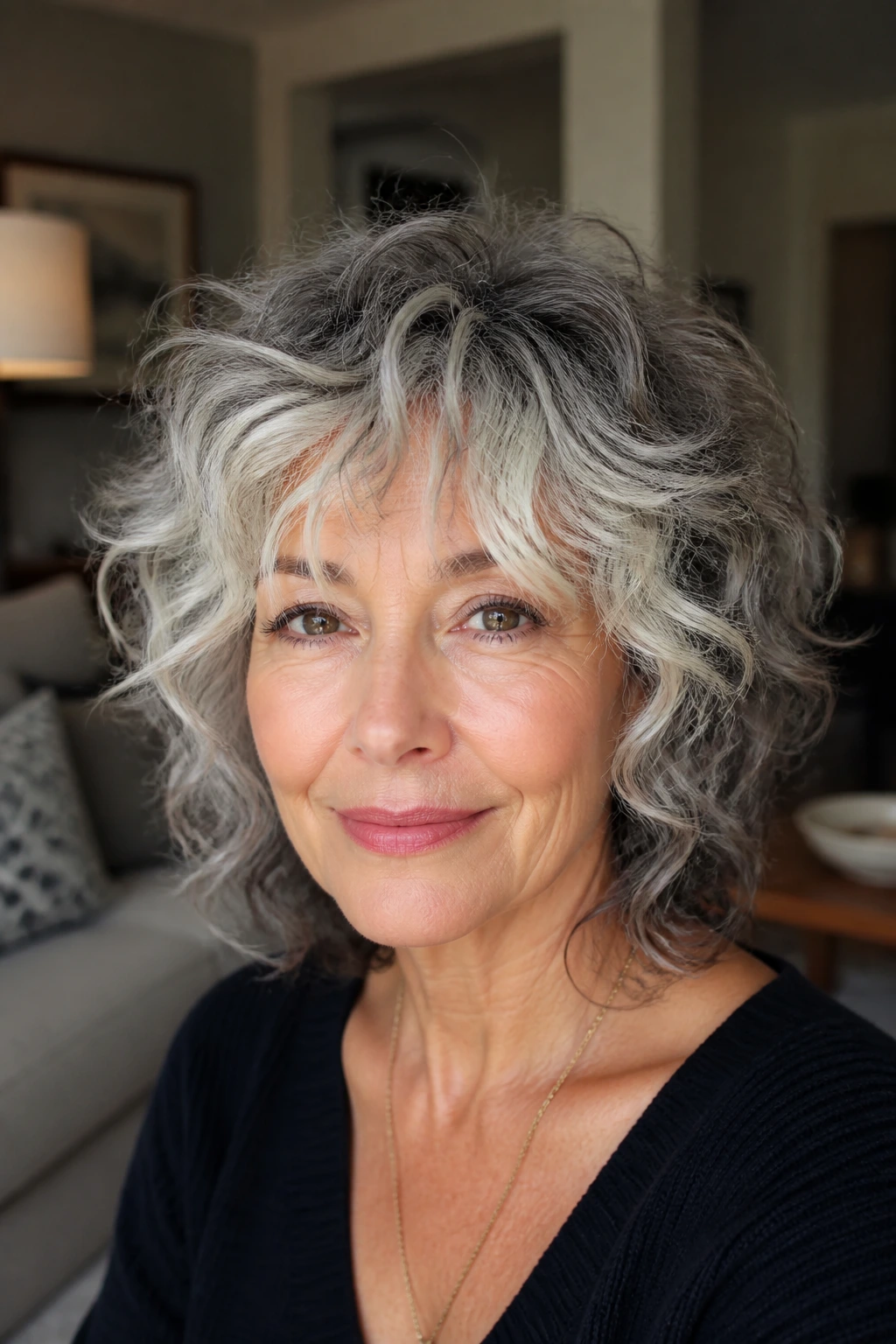
Salt-and-pepper hair can go flat fast if the cut is too even. Layers fix that by letting the lighter strands sit on top of the darker ones, which makes the color variation look richer and more dimensional.
This cut looks especially good when the fringe and face frame are kept a touch lighter than the back. That gives the face some lift without making the whole head look busy. If your gray hair has a coarse texture, ask for enough length at the ends to keep the curl clumped. Too much thinning can leave the silver pieces floating and dry at the tips.
16. Soft Mullet Curly Shag

The soft mullet is the edgy cousin that still knows how to behave. It keeps more length in the back, but the transition through the sides is smoother and less severe than a hard mullet line.
For curly hair, that softness matters. Harsh layers can create a shelf behind the ears, and that is nobody’s friend. The soft mullet version lets the curls fall in a gentler cascade, which can be very flattering if you want some drama without the feeling that the haircut is wearing you.
17. Curl-By-Curl Curly Shag

Some heads of curls need more map than cut. A curl-by-curl shag takes time because the stylist groups and shapes individual curls instead of chopping blindly through the whole head.
Why the Extra Time Pays Off
This method is useful when your curl pattern changes from section to section — tighter underneath, looser at the crown, maybe one side that bends differently because of how you sleep. The result is a shag that follows the hair instead of forcing it into a shape it never had.
It’s not the fastest salon service, and that’s fine. Good curl work rarely is. If your hair has given stylists trouble in the past, this is the version that usually makes the most sense.
18. Voluminous Crown Curly Shag
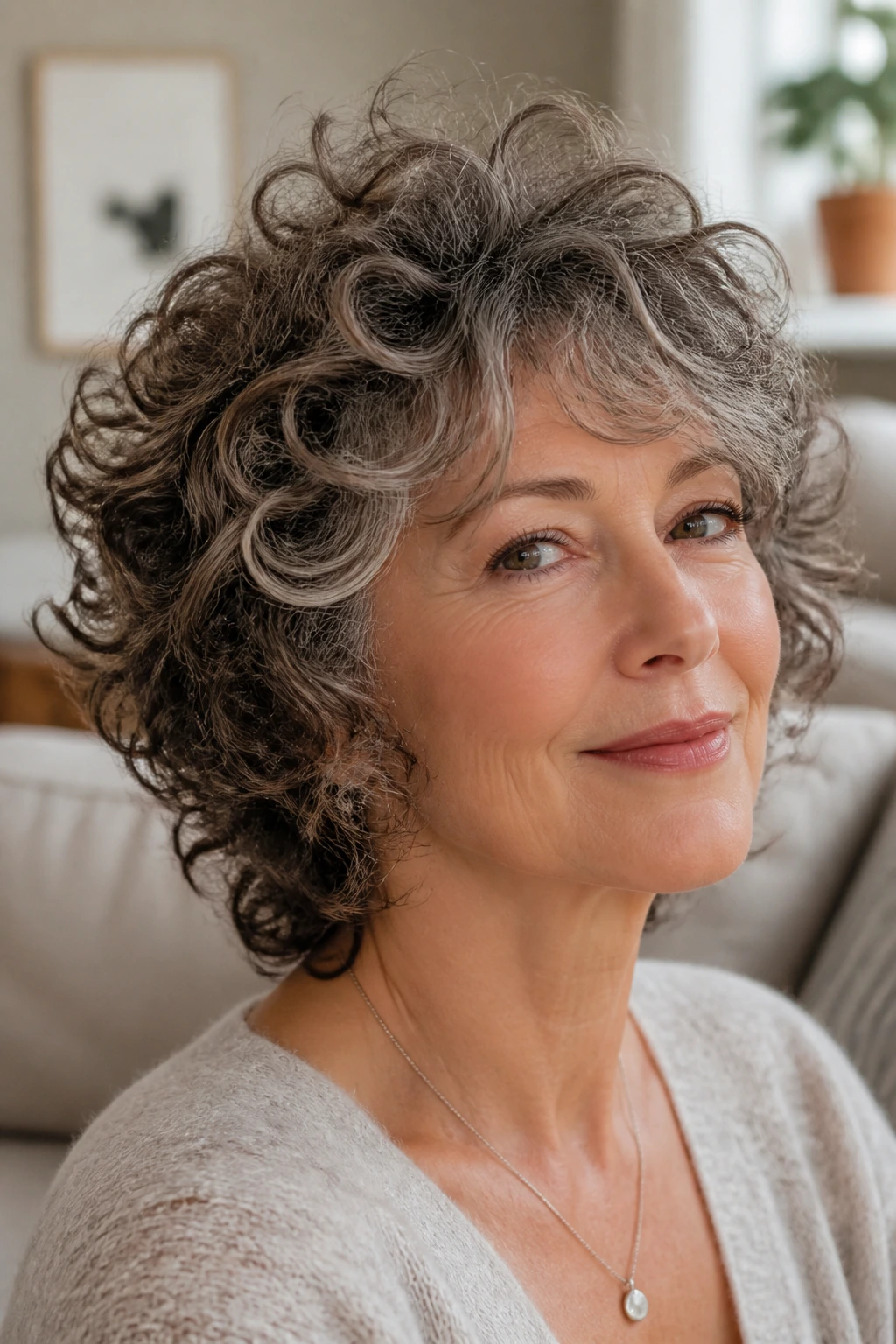
A flat crown can make even good curls look tired. This shag fixes that by putting the visual emphasis up top, where a little height changes the whole silhouette.
The sides and bottom stay controlled so the crown has somewhere to live. That balance matters. If the top is lifted but the rest is too heavy, the haircut starts to look disconnected. Ask for crown layers that support lift without turning short and spiky, then finish with root clips or a diffuser at the roots only.
19. Coily Curly Shag with Longer Top Layers
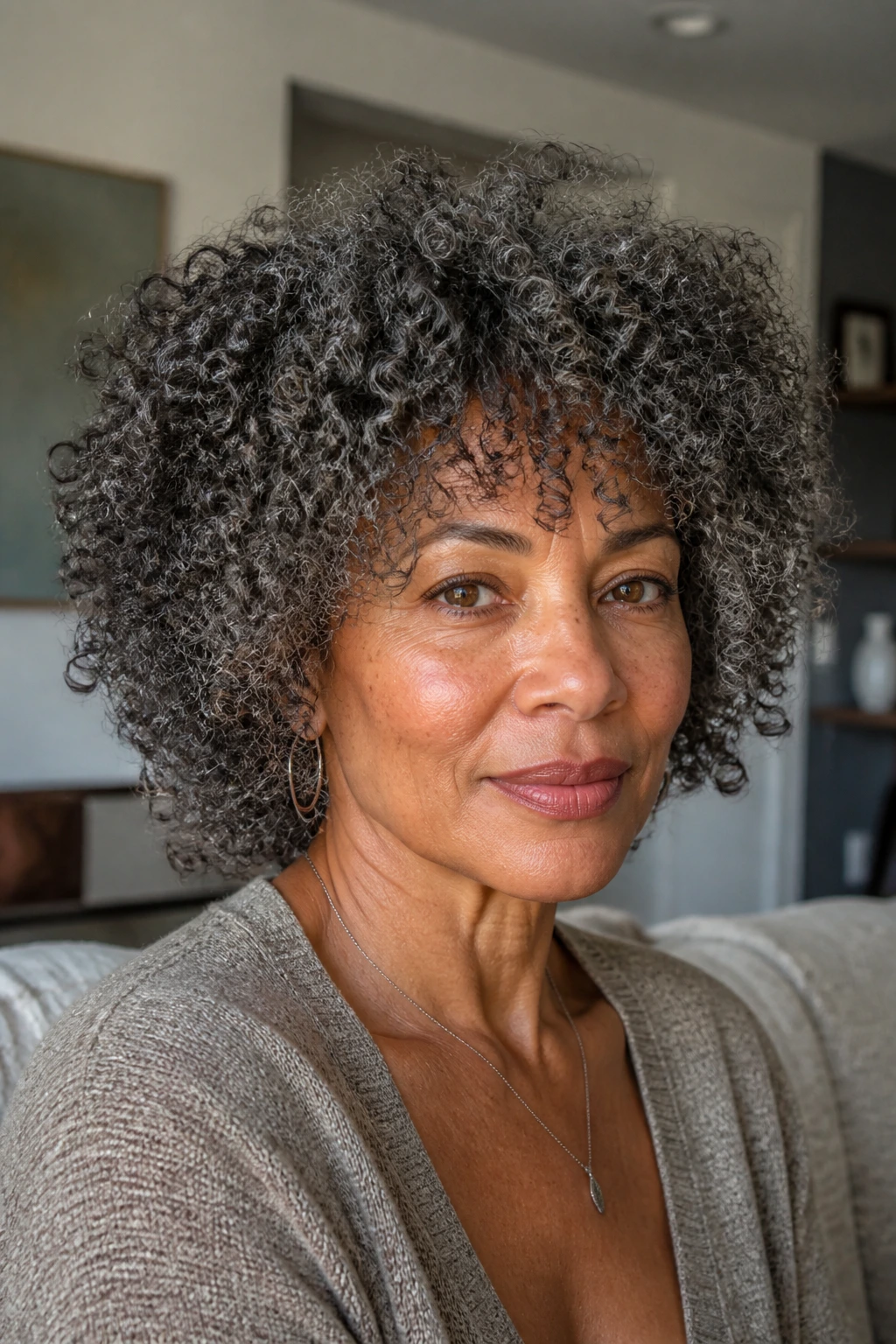
Tighter coils need shape, not a bunch of tiny snips everywhere. If the cut is too choppy, it can create a halo of fuzz around the head and make the ends look thin.
Longer top layers keep the silhouette rounded and let the coil pattern stack in a cleaner way. The shape should stay full, but not bulky. This is a smart option if your curls shrink a lot and you want the haircut to feel balanced when dry. A cream-and-gel combo usually holds the outline better than cream alone.
20. Wavy-Curly Hybrid Shag

Mixed texture is its own beast. One section bends like a wave, another snaps into a curl, and a third may just swell if you look at it wrong.
A hybrid shag handles that by building shape around the curlier sections while keeping the wavier pieces long enough to blend in. The cut should look good when the texture is not perfectly uniform — because in real life, it usually isn’t. If you’ve spent years feeling like your hair has two personalities, this style meets it halfway.
21. Short Curly Crop Shag
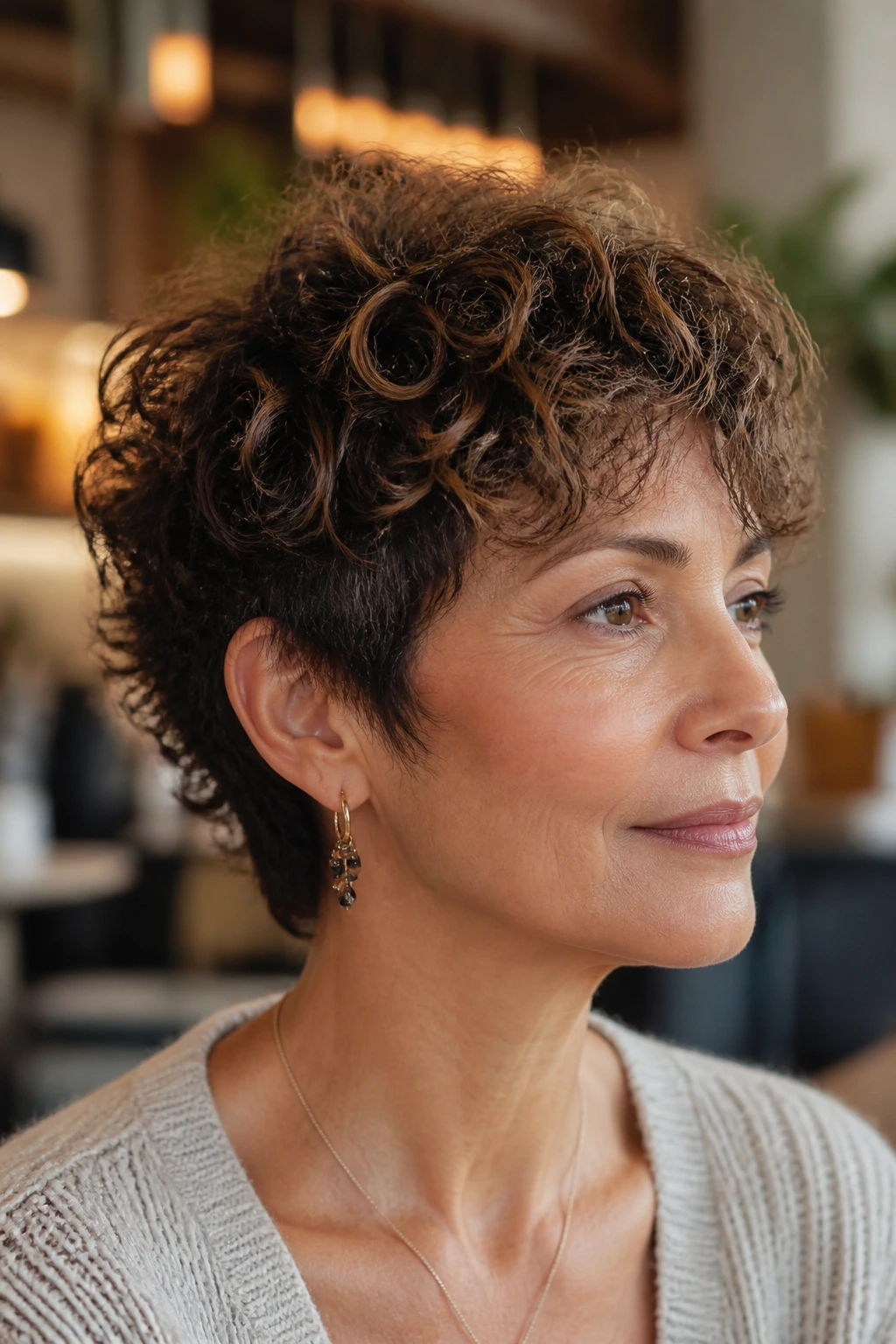
Short curly shags work best when the top is lively and the nape stays neat. Too short everywhere and the hair can puff; too long and it starts acting like a grown-out bob that lost its point.
This crop is great if you want less hair on the neck and ears but still want some shag texture at the crown. It can look especially good with earrings because the face stays open. Ask for enough length through the top to keep the curl pattern visible — otherwise the cut just turns into a short pile of fuzz.
22. Nape-Taper Curly Shag
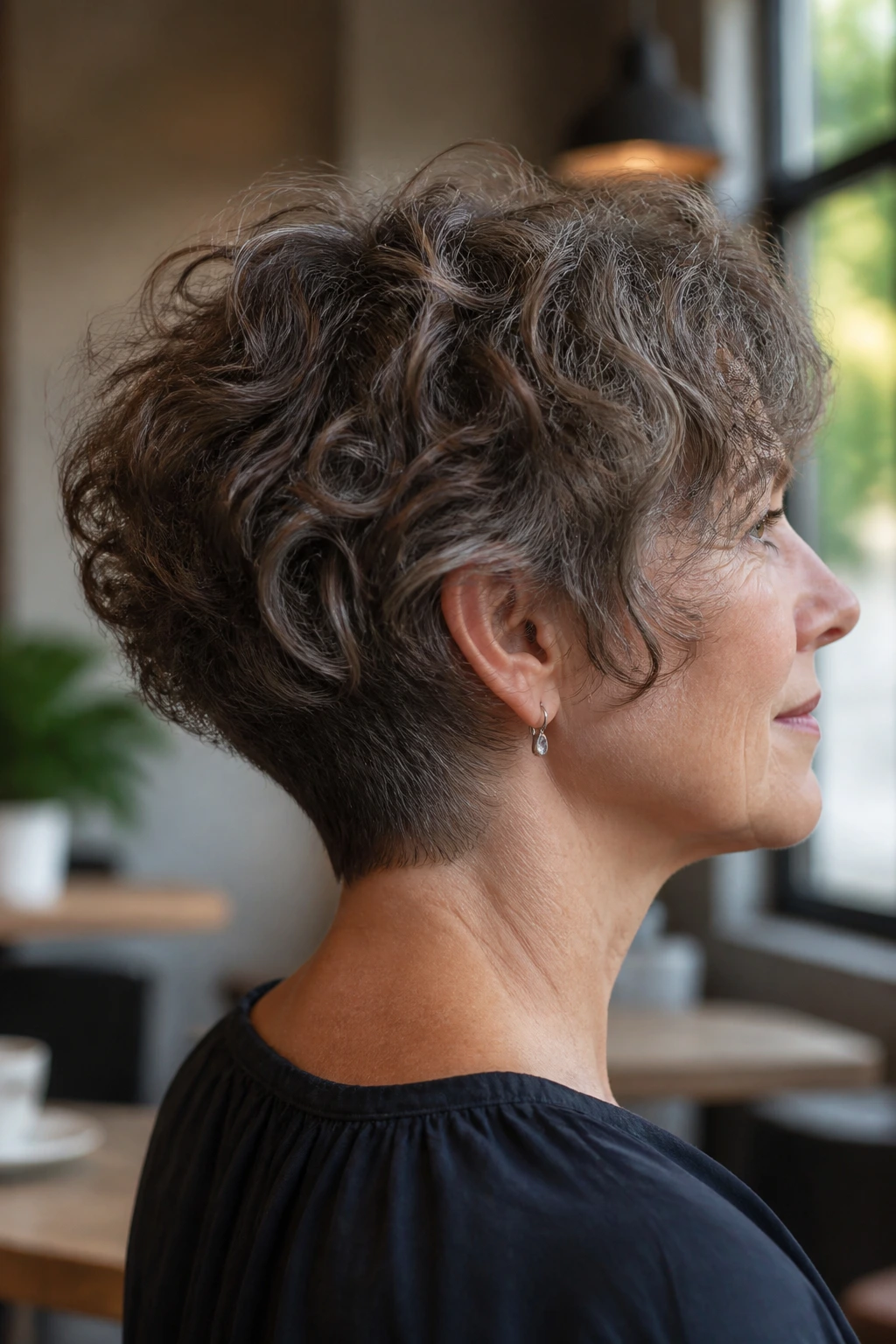
The back of the haircut matters more than people think. A nape taper cleans up the neckline and stops the shape from feeling heavy from behind, which is often where shag cuts get bulky.
This is a tidy option that still feels relaxed. The front can stay soft and airy while the back narrows slightly toward the neck. If you wear collared shirts, scarves, or jackets that sit high on the neck, a tapered nape keeps everything from bunching up. Small detail. Big difference.
23. Romantic Curly Shag with Side-Swept Fringe

Not every shag has to look sharp. A romantic version uses side-swept fringe and softer layers to keep the cut gentle around the eyes and temples.
This is the one for anyone who wants movement without the feeling of a strong, choppy outline. It can be very flattering on hair with a looser curl pattern or a wave-curl mix, especially if the face already has strong features. The side fringe should be long enough to tuck back on a bad hair day. That little flexibility matters more than people think.
24. Curly Shag for Round Faces
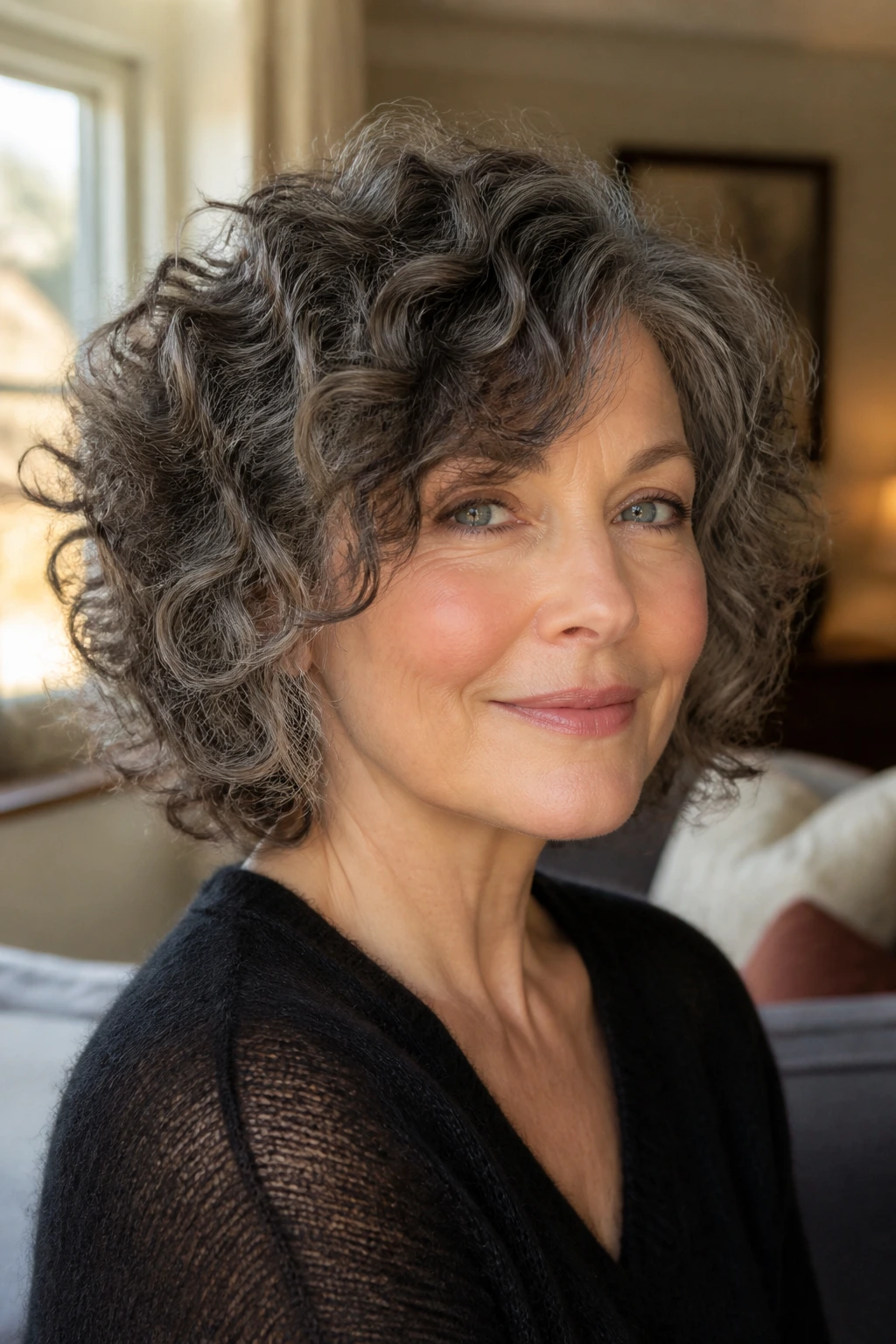
Round faces need vertical movement, not a wide halo. A curly shag can do that beautifully if the layers are placed to create length at the sides and a little lift at the crown.
The Shape to Ask For
Keep the shortest layers from landing right at the fullest point of the cheeks. That is the trap. The best version lets the front pieces drift below the cheekbone so the face reads longer, not wider.
A side part or off-center fringe helps too. It breaks the symmetry and gives the curls something to fall against. If you love a fuller fringe, keep it wispy and longer at the temples. That keeps the cut soft.
25. Curly Shag for Square Faces

Square faces usually look better when the fringe breaks the line of the jaw instead of echoing it. That means softer edges, looser pieces around the temples, and layers that don’t stop dead at the jawline.
This version works because curls naturally blur sharp corners. Use that. A side-swept fringe or long curtain bang can soften the forehead, while the layers around the cheekbone keep the cut from feeling boxy. If your jaw is strong, do not chop the front pieces too bluntly. Let them bend and separate.
26. Curly Shag for Oval Faces

Oval faces can wear more of the shag’s personality. There’s room to play with bangs, length, and shape without upsetting the balance of the face.
That does not mean every version is equally smart. If the hair is fine, keep the layers soft. If it’s thick, remove bulk underneath. If you want drama, a stronger fringe or a more angular side part can work without swallowing the features. Oval faces give you freedom; the haircut still needs a plan.
27. Thick-Hair Curly Shag with Invisible Layers
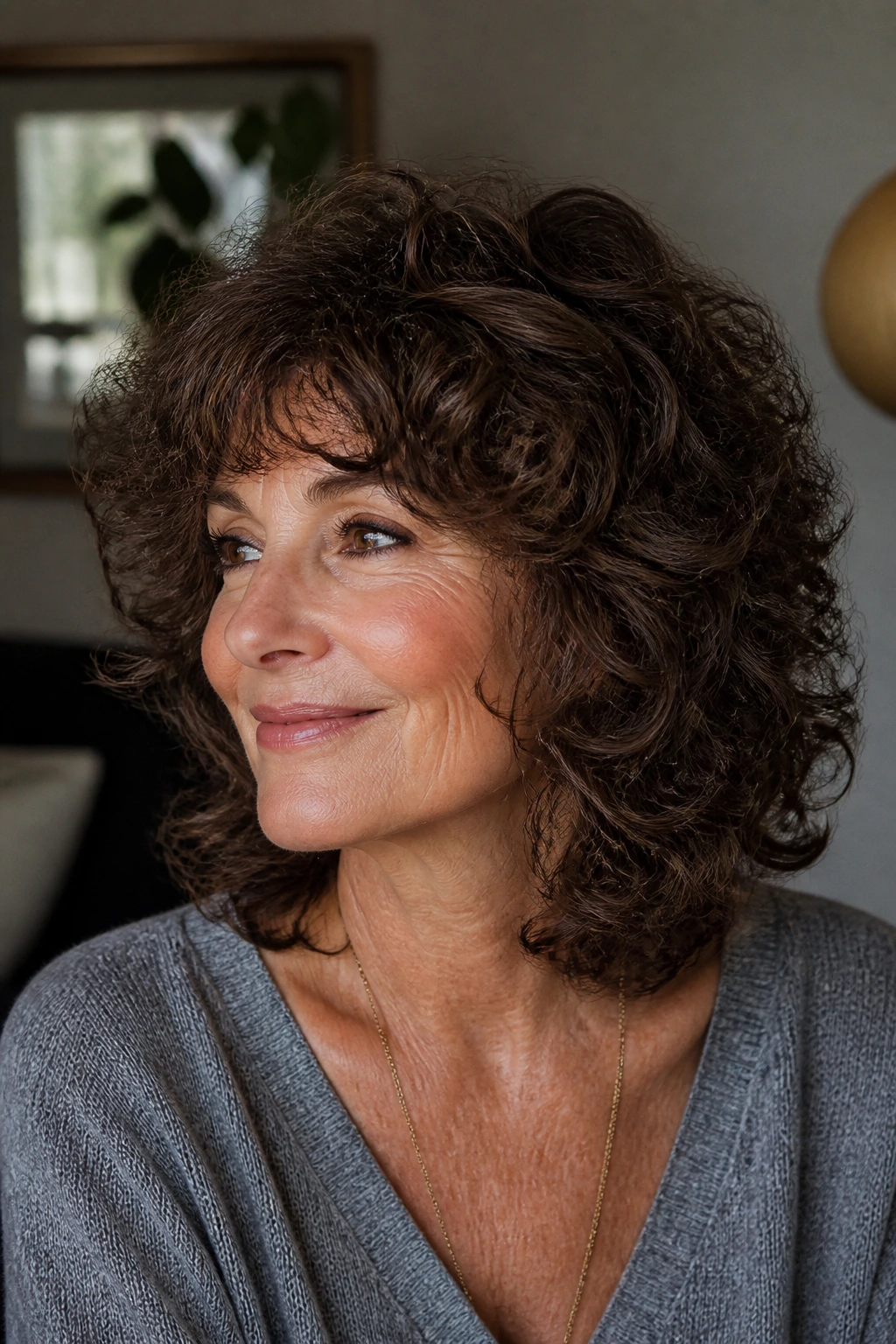
Thick curls are where invisible layers earn their keep. Instead of obvious chop lines, the stylist removes weight inside the shape so the outside still looks full and polished.
The goal is not to make thick hair look skinny. It’s to stop the bottom from forming that heavy, mushroomy edge that thick curls can create when they’re all one length. Ask for weight removal under the top layers and around the sides, not through the ends. That keeps the curl clumps intact while making the hair easier to dry and move around.
28. Long Layered Curly Shag with Soft Movement
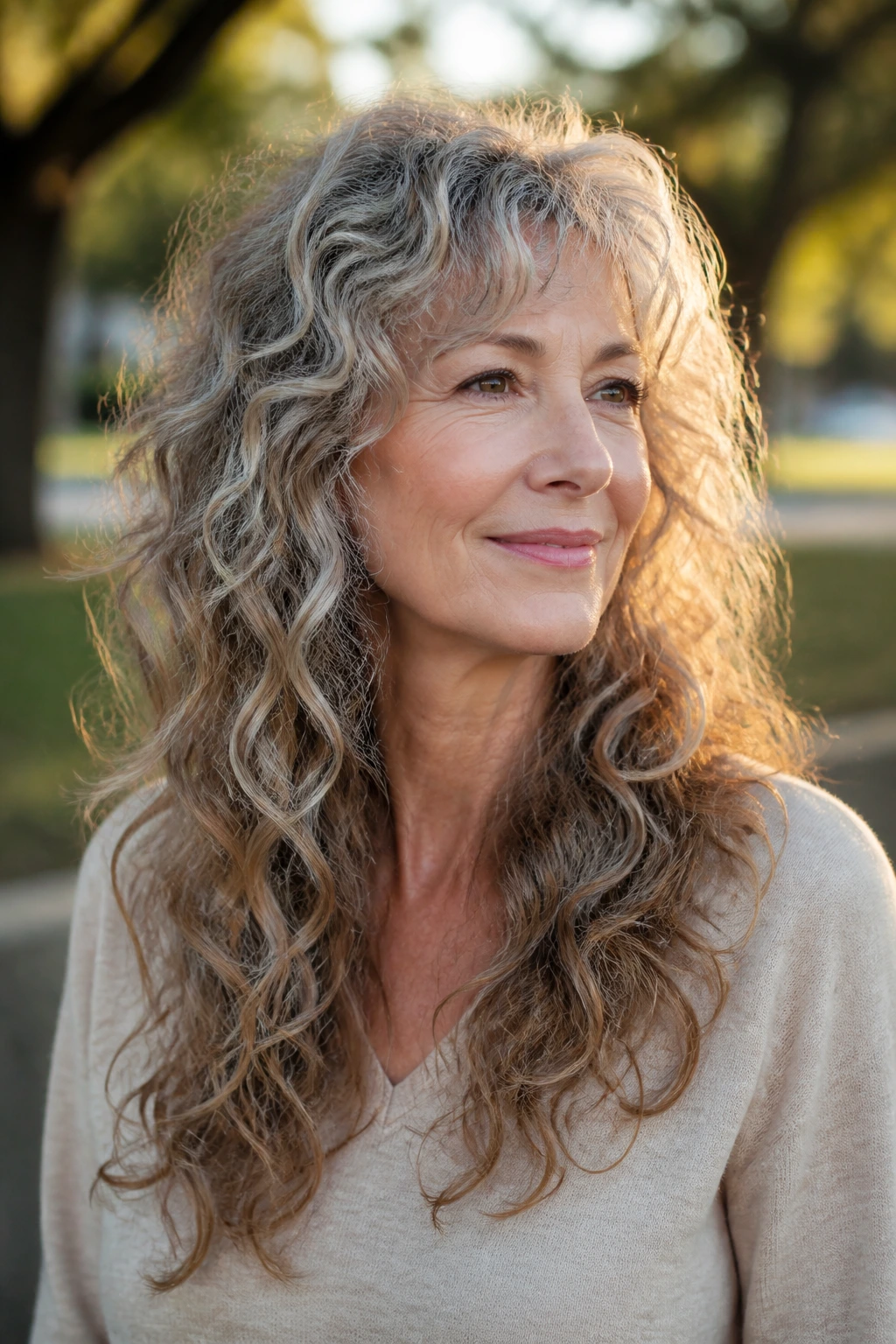
Long curls do not need to be chopped short to get movement. A long layered shag keeps the length you like while loosening the shape around the face, crown, and ends.
This version works well if you want hair you can still pull back, braid, or tuck into a clip without losing the shag effect. The layers should be soft enough to move, but not so short that the cut starts looking ragged when the curls expand. It’s a calm, wearable shape. No drama required.
Why the Right Curly Shag Feels Lighter Without Looking Thin
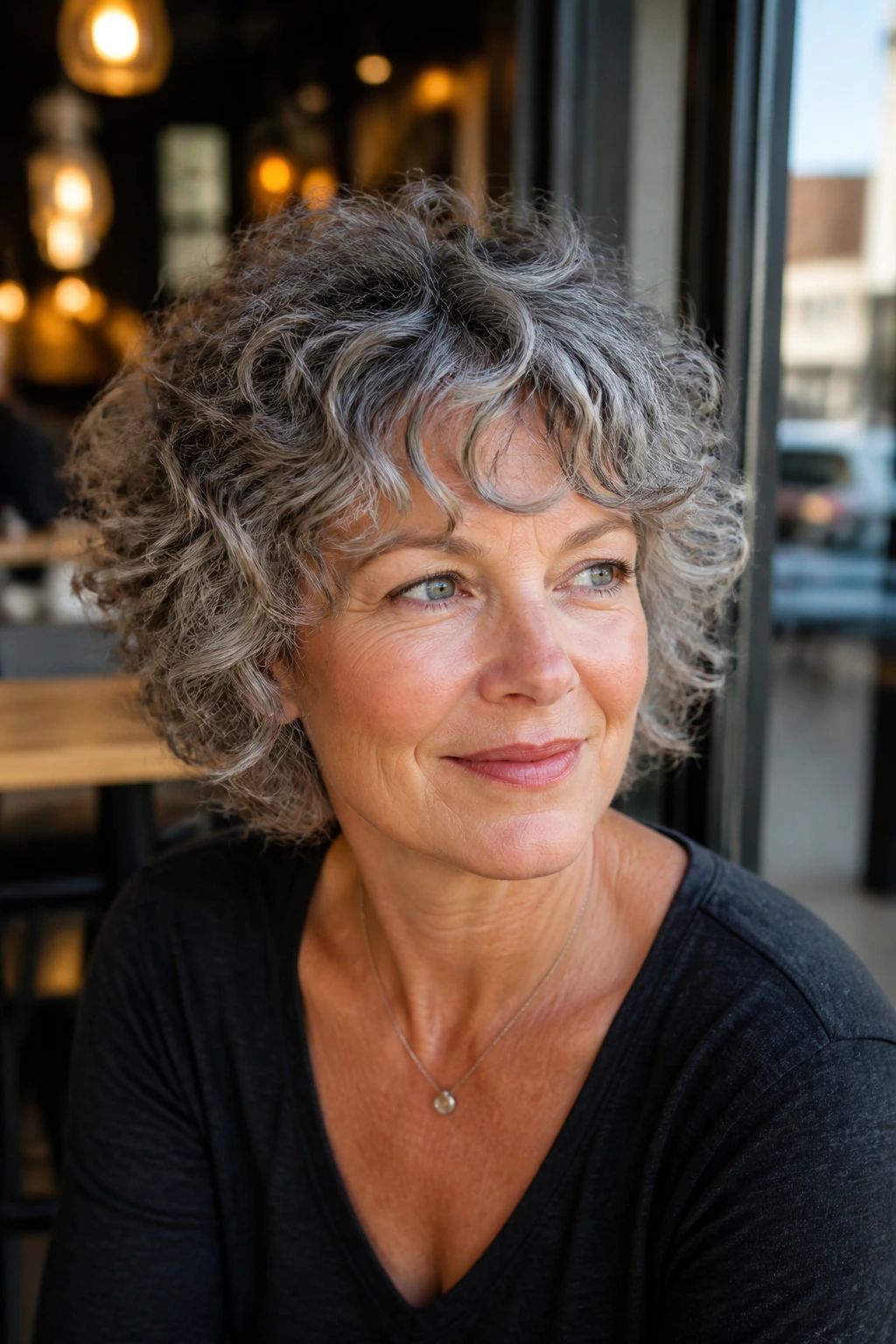
A curly shag works because it removes weight where curls pile up and leaves weight where the shape needs it. That sounds simple. It is not. The placement of those layers decides whether the haircut opens the face or just makes the hair puff outward.
The best versions also respect how curls behave on different days. Humidity, product, sleep, and even a change in parting can shift the silhouette. A good shag does not fall apart when those things happen. It bends with them, which is exactly what makes the cut feel modern without trying too hard.
How to Ask for the Right Curly Shag at the Salon
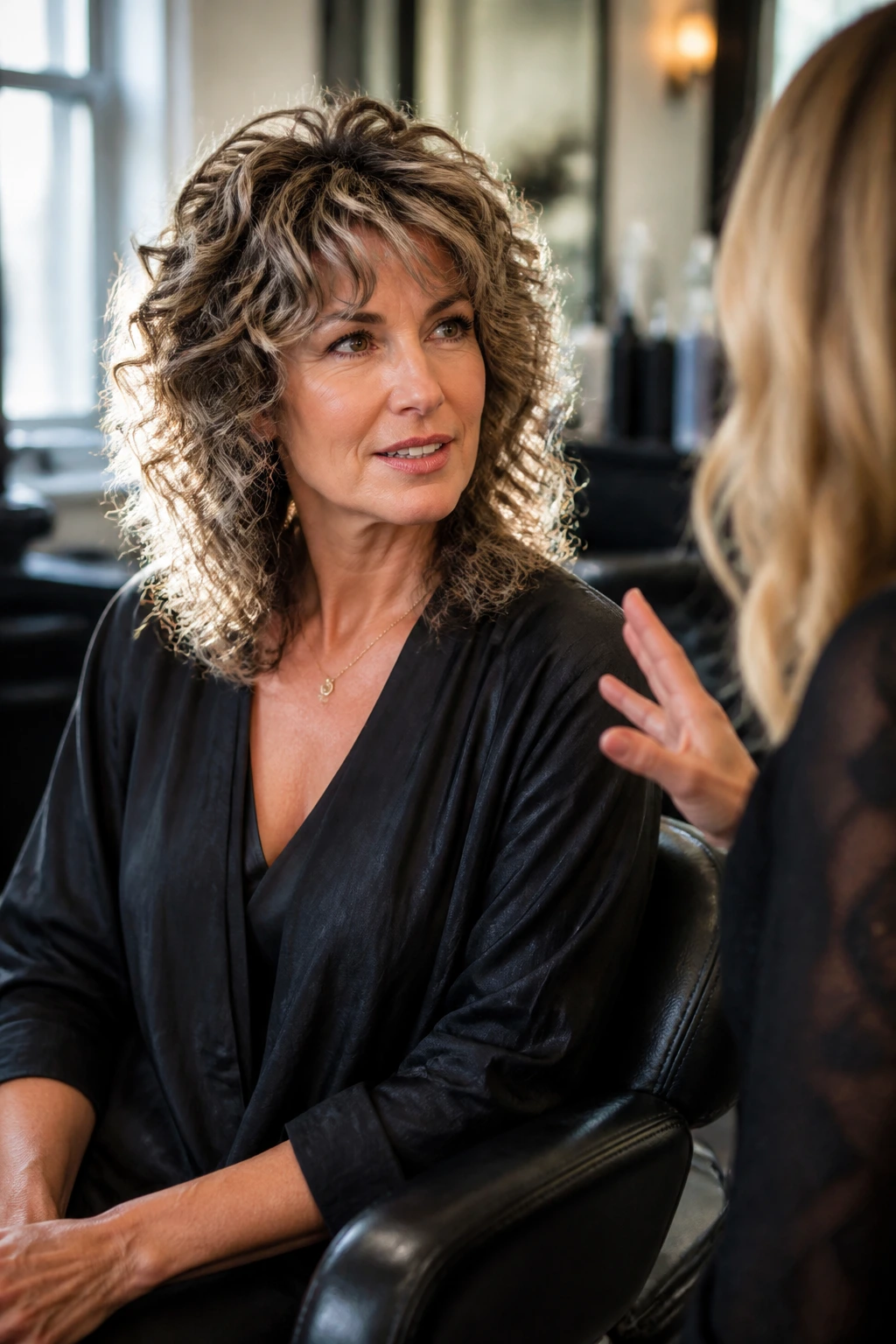
Bring your hair in the state you actually wear it. Dry is better than freshly blown out, and day two is often better than day one. A stylist needs to see your real curl pattern, not the memory of it.
Say what you want the haircut to do, not just what you want it to look like. If you want the crown lighter, say that. If the front pieces need to sit below the chin when dry, say that too. If your curls shrink a lot, give a number. “About two inches shorter when dry” is useful. “It springs up a lot” is vague.
A few phrases help:
- Keep the perimeter weight: so the ends do not get wispy.
- Remove bulk inside the shape: not through the bottom line.
- Leave the bangs long enough to tuck: if you want options.
- Cut to the curl pattern I wear, not the blowout: if your texture changes with styling.
That one sentence tells the whole story.
Essential Tools for Curly Shag Styling
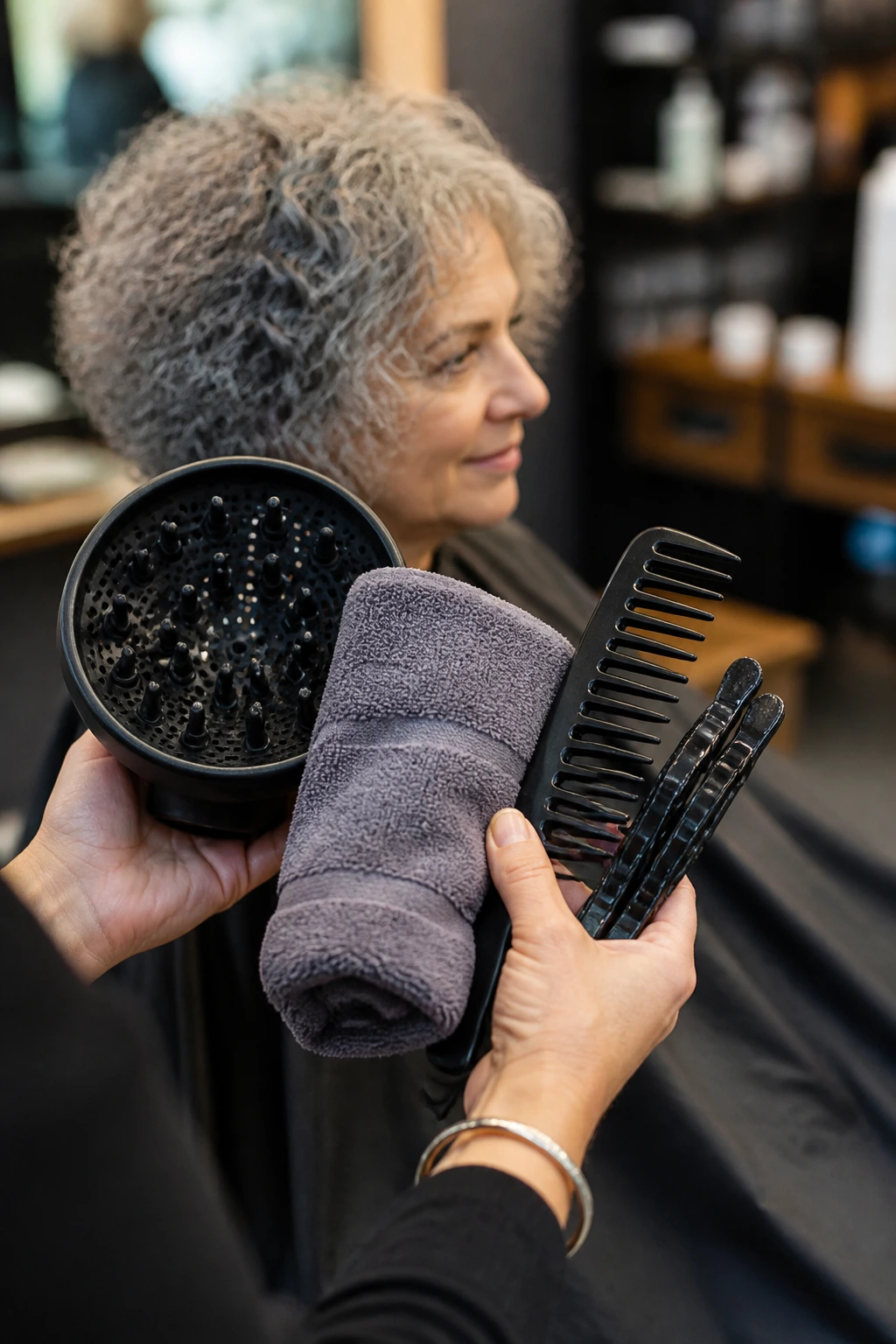
-
A diffuser attachment: low heat, low speed. High heat blows apart curl clumps and creates more frizz than you need.
-
Microfiber towel or cotton T-shirt: these dry the hair without roughing up the cuticle the way a terry towel can.
-
Wide-tooth comb: use it only when the hair is wet and coated with conditioner or leave-in.
-
Sectioning clips: useful for lifting the crown while drying or keeping fringe out of the way.
-
Curl cream: helps shape the curl and gives slip, especially on drier or coarser textures.
-
Light gel or foam: gives the shag enough hold so the layers do not separate into puff.
-
Root clips: tiny clips at the crown can buy you a little extra lift while the hair dries.
-
Satin pillowcase or bonnet: keeps the fringe and the top layers from turning into a frizz halo overnight.
How to Wear These Cuts Day to Day
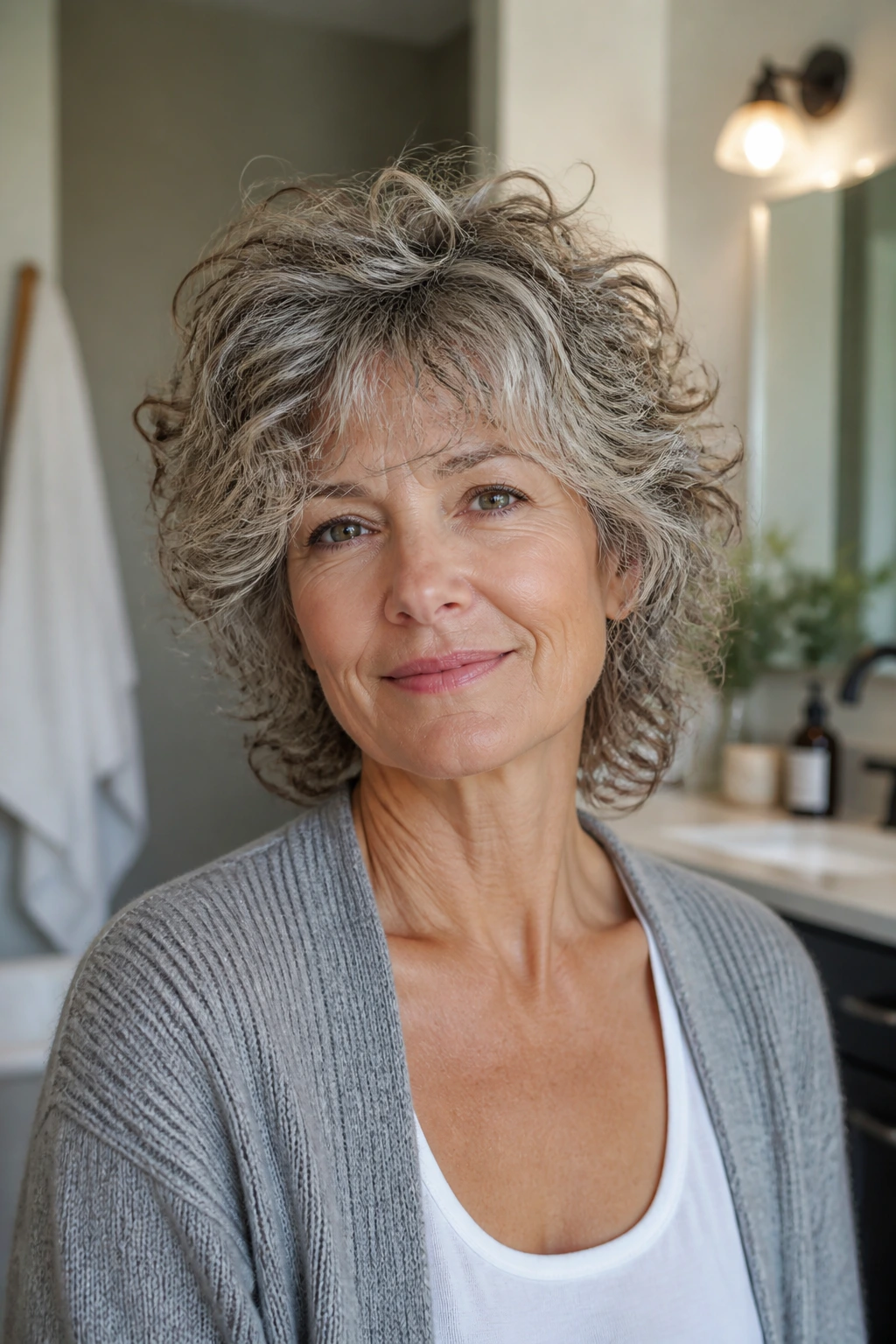
Shape: Keep the top lifted and the perimeter soft. That balance keeps a shag from turning into a puffball or collapsing into a flat cap.
Styling Routine: Start on soaking-wet hair with leave-in, then add curl cream or foam, and finish with gel if you need hold. Scrunch gently, then leave the curls alone until they set.
Accessories: Small clips, narrow headbands, and soft pins can control a fringe without flattening the whole front. Heavy headbands tend to crush the top layers.
Finish: Break the cast only when the hair is fully dry. If you touch it too soon, the cut loses definition and the frizz comes back fast.
Time Budget: Most of these shapes look their best with 10 to 15 minutes of real styling, not an hour with a brush. If you need a full blowout to make the cut work, the cut is doing too little.
Additional Tips and Style Boosters

Volume Enhancement: Lift the crown with clips for 10 to 15 minutes while the hair dries. That small step keeps the top from sinking after the curls cool.
Frizz Control: Put product on when the hair is still dripping wet. Water helps spread the product evenly, which is why curls usually look better when you do not half-dry them first and then try to fix the frizz.
Color Play: Silver, white, lowlights, and soft highlights all show more clearly in a shag because the layers catch light at different depths. If your color looks flat, the cut may need more movement rather than more dye.
Customization: If bangs are a hassle, keep the shortest face-framing piece at the cheekbone and let the fringe fall away on its own. If you want more drama, bring the shortest point up a little, but not to the middle of the forehead.
Make-It-Yours: Fine curls usually like mousse plus a light gel. Thick or coarse curls often need a cream under the gel so the ends do not feel dry by noon.
Keep the Shape Between Salon Visits
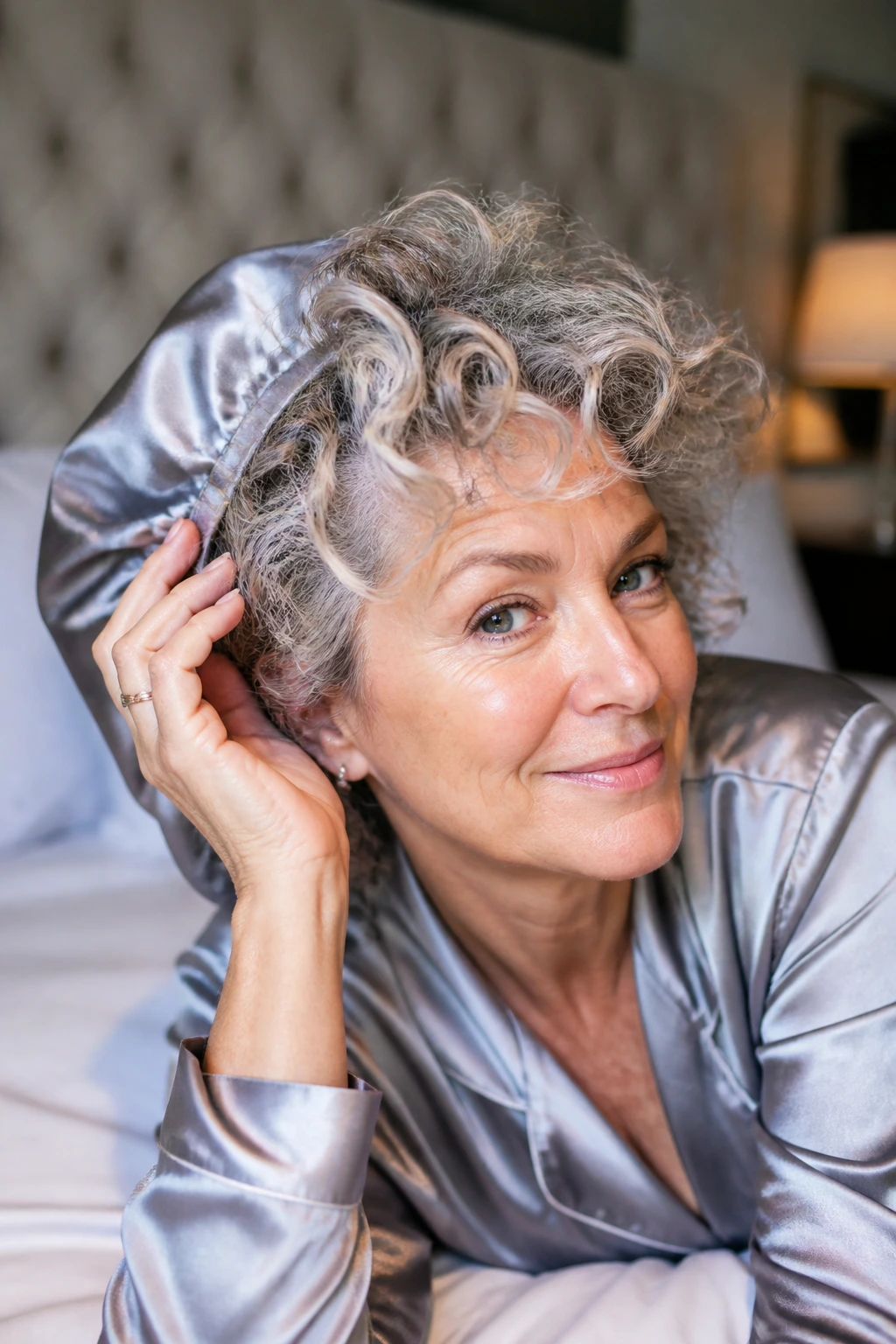
Most curly shags need a trim every 8 to 12 weeks, but the exact window depends on how short the layers are. Shorter, more structured shags usually need attention sooner because the shape shows growth faster. Longer versions can stretch a bit longer if the perimeter still holds together.
Night care matters more than people expect. A satin pillowcase or bonnet reduces friction, which keeps the fringe from splitting and the crown from puffing up. If your hair likes to flatten at the top, a loose pineapple clip can help preserve the lift without leaving a hard crease.
Day two and day three hair usually improves with a light refresh. Mist the curls with water, add a drop of leave-in to the hands, and scrunch the sections that look sleepy. Don’t soak the whole head unless you want to start from zero again. A tiny amount of product is enough to wake the shape back up.
If the cut starts to feel triangular or the fringe stops behaving, that is your sign. It does not mean the haircut failed. It means the layers have grown enough to need a quick dusting. Curly shags are forgiving, but they are not magic.
Variations and Adaptations to Try
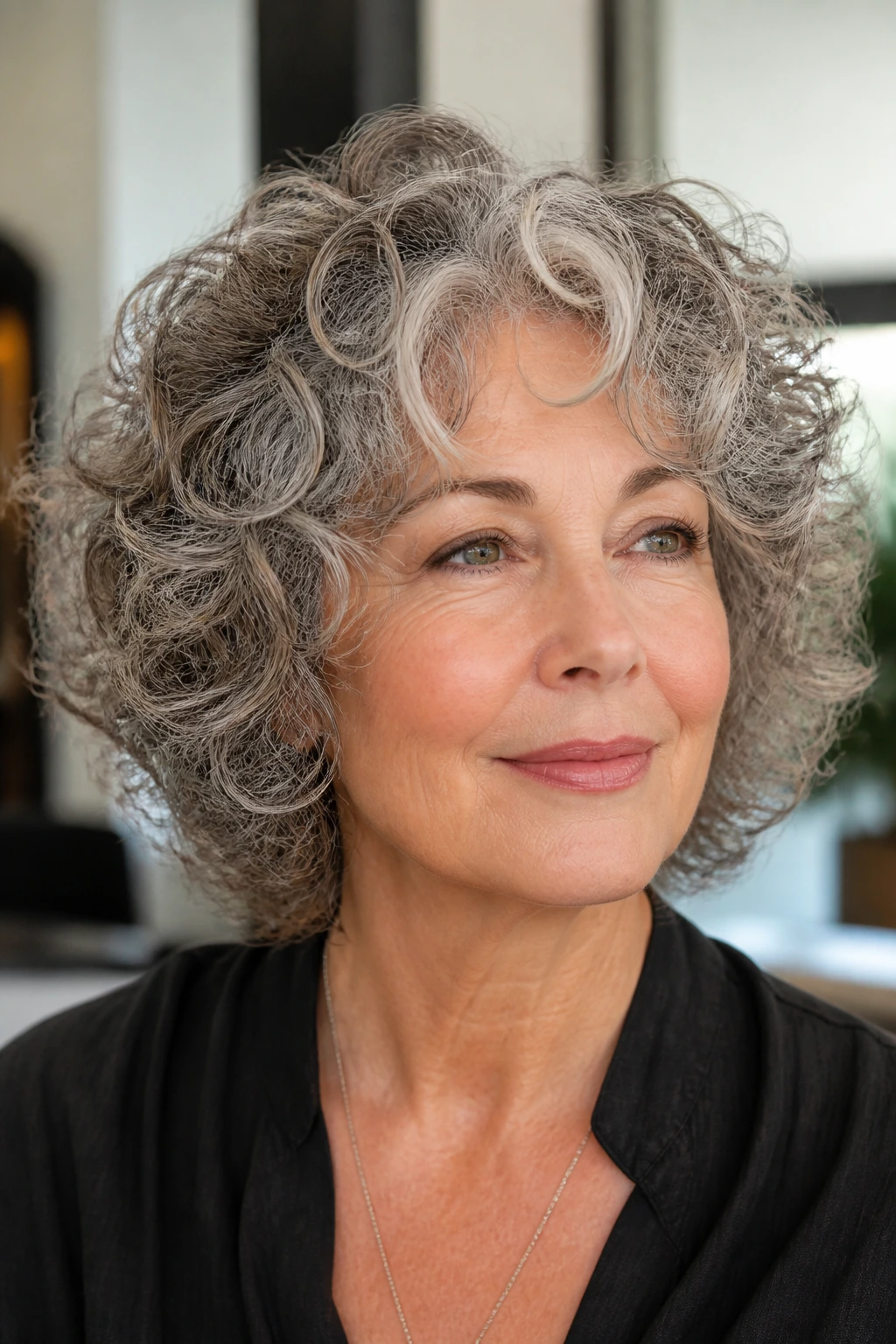
The Silver Halo Version: Keep the top layers a little shorter and rounder so silver curls build a soft halo around the head. This version works best when the ends stay a touch heavier than the crown, which keeps the cut from floating away.
The Fine-Hair Lift Version: Use fewer layers, but place them where the root needs help — around the crown and near the front. This keeps fine curls from looking see-through through the ends.
The Dense-Curl Reset: If your hair tends to swell outward, keep the perimeter long and let the stylist remove weight from the inside only. That keeps the silhouette controlled while still giving the curls room to move.
The Glasses-Friendly Frame: Push the fringe slightly higher and keep the side pieces off the temples. It sounds small, but it keeps the frames visible and stops the hair from crowding your face.
The Longer-Length Version: Keep the bottom around the chest or collarbone and let the layers work mainly through the top and front. This is the version for anyone who wants movement without giving up length or ponytail options.
Common Mistakes to Avoid

-
Cutting the fringe too short: Curls bounce up, and a bang that seemed fine in the chair can end up halfway to the forehead. Fix it by cutting bangs longer than you think and checking them dry.
-
Thinning the ends to nothing: When the perimeter gets too wispy, curls frizz fast and lose their shape. Ask for internal weight removal instead of aggressive texturizing at the bottom.
-
Making the crown too short: Too many short layers on top can create a mushroom shape or a halo of fuzz. Keep crown layers long enough to sit over one another.
-
Brushing dry curls apart: That destroys the clumps and turns the shag frizzy. Detangle with conditioner in the shower, then leave the dry curls alone except for a refresh.
-
Skipping trims for too long: The shag loses its balance, and the shape starts to spread outward. A small trim every 2 to 3 months keeps the layers honest.
-
Using heavy cream on fine curls: The hair collapses, especially at the roots. Switch to mousse or foam first, then use a lighter finish on the ends.
Frequently Asked Questions
Should curly shag haircuts be cut dry or wet?
Dry cutting is usually safer for curls because it shows where the hair lives when it’s actually dry. Wet cutting can still work, but the stylist needs to account for shrinkage and curl pattern very carefully.
Will a curly shag make thin hair look even thinner?
Not if the layers are placed well. The wrong shag can strip away too much weight, but a careful cut keeps the perimeter fuller and uses lift at the crown to create the feeling of density.
Do bangs work on older women with curls?
Yes, as long as the bangs are cut with shrinkage in mind and shaped to your curl pattern. Curtain bangs, bottleneck bangs, and side-swept fringe usually behave better than blunt, straight-across bangs.
Can a shag work if my curls are different on each side?
Absolutely. In fact, a shag can help hide that difference because the layers create movement and break up the eye line. Tell the stylist which side is flatter or springier so the shape can be balanced on purpose.
How often do I need to trim a curly shag?
Most people need a trim every 8 to 12 weeks. If the layers are short or the fringe is part of the shape, the window gets shorter because growth shows faster around the face.
What if my hair is gray and coarse?
Leave enough length in the ends to keep the curls clumped, and avoid over-thinning the perimeter. Gray hair often gets drier, so a little more weight can help the cut hold together instead of frizzing out.
Can I wear a curly shag with glasses?
Yes, and it often works better than people expect. Keep the temple area lighter and the front pieces long enough to clear the frame arms.
What if my shag starts looking triangular?
That usually means the weight sits too low and the crown has lost shape. A trim that removes bulk inside the top and sides usually fixes it fast.
The Shape That Keeps Working
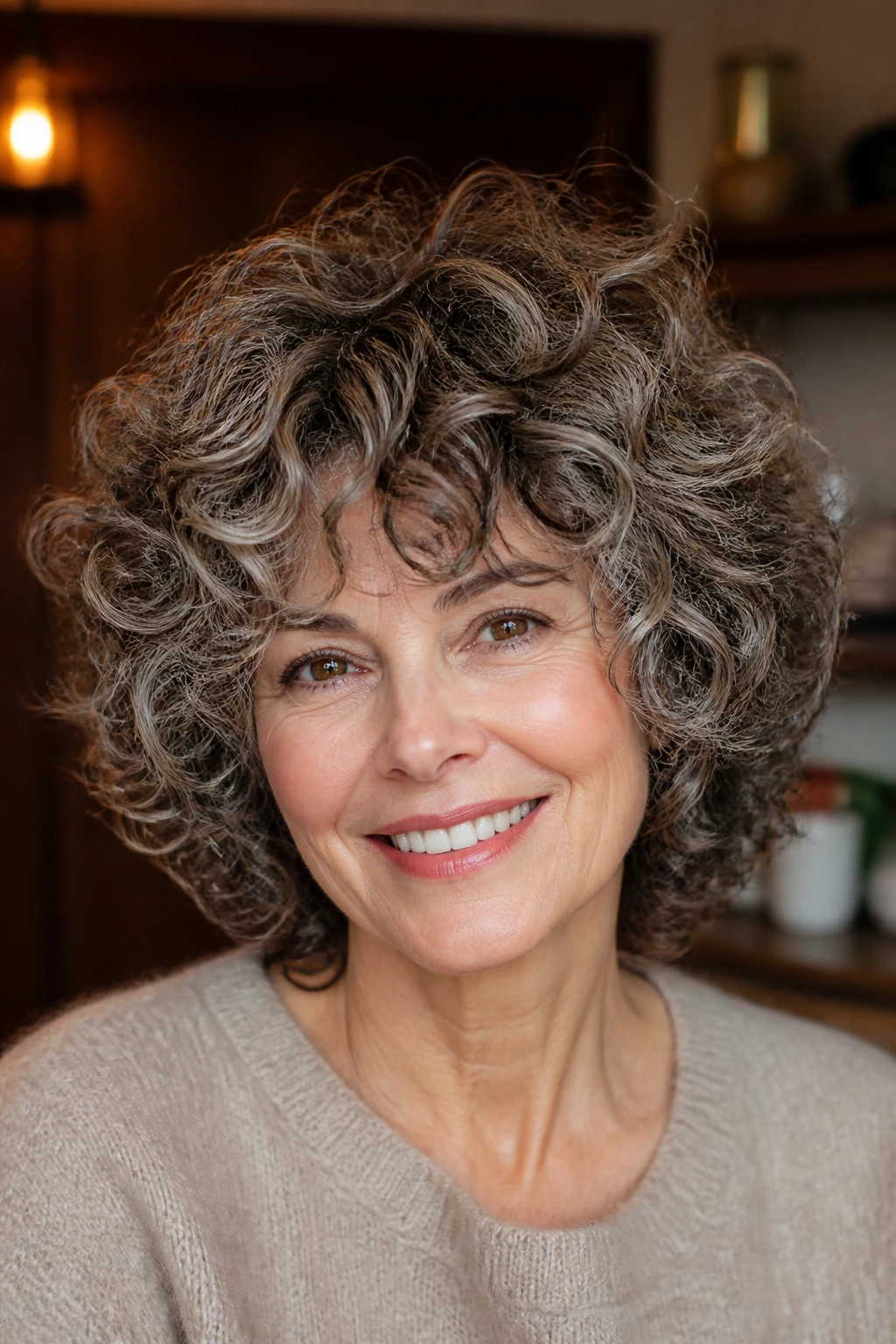
A curly shag does not try to erase the changes that come with time. It works with them. That is why it looks better than a cut that spends all its energy pretending the hair is younger, thicker, or straighter than it really is.
The best versions leave you with movement, not maintenance theater. They let silver show through. They keep the fringe soft, the crown lifted, and the ends alive enough to bend instead of hang. If you’ve spent years wrestling your curls into submission, this is the cut that finally stops asking for a fight.
Bring that idea to the salon, and the rest gets easier.
