



Medium-length hair is the sweet spot for shag haircuts: long enough for layers to swing, short enough that the shape still feels deliberate. Push the length much farther and the cut can sag into plain old long hair with a few uneven bits; go too short and you lose the soft, broken-up finish that gives a shag its personality. On collarbone-length hair, the layers land where the eye actually notices them — around the cheekbones, jaw, and upper shoulders — so the cut does half the styling work for you.
That’s why shag haircuts for medium length hair keep showing up in salons, in mirror selfies, and on people who want movement without a fussy blowout. A good shag doesn’t need to be loud. It needs to be smart: a little crown lift, a little face frame, some interior weight removed so the ends don’t sit like a brick. The best versions look like they grew that way, even though they were built with a very specific plan.
The messy part is that “shag” can mean five different things depending on the stylist. One version is soft and airy with curtain bangs. Another is razored and cool, all flicky ends and edge. A third keeps the perimeter neat and lets the inside do the talking. That range is exactly why medium hair works so well here. There’s room to push the shape softer or sharper without losing the haircut’s backbone.
Why These 27 Shag Haircuts Earn Their Keep

-
They move without looking overdone: Medium-length shags sit in that useful middle ground where layers can swing, flip, and separate without collapsing into frizz or flattening into one shape.
-
They work with more than one texture: Straight, wavy, curly, coarse, fine — the cut changes a lot from one head of hair to another, and that’s the point.
-
They grow out with less drama: A blunt chop starts showing its seams fast. A shag softens as it grows, which buys you time between trims.
-
They give you options at the face: Curtain bangs, bottleneck bangs, long fringe, no fringe at all — the front can shift the whole mood of the haircut.
-
They make second-day hair useful: A shag that needs a little dry shampoo and finger-combing is doing its job. It should look a touch better once the roots aren’t freshly washed and polished.
-
They’re easy to tune up: A few strategic snips around the face or crown can change the whole balance, which is handy if you like the cut but not the exact vibe.
1. The Soft Curtain Shag

This is the shag most people picture first, and for good reason. The layers are soft, the bang area parts cleanly in the middle, and the front pieces sweep from cheekbone to jaw in a way that feels easy rather than dramatic. On medium length hair, that softness matters. It keeps the cut from looking heavy at the ends or too chopped up around the face.
I like this version on hair that already bends a little on its own — loose waves, bendy straight hair, even curls that relax as they dry. The shape comes alive with a quick blow-dry using a round brush or with a rough air-dry and a bit of mousse. If you want a first shag that won’t scare you on day one, start here.
2. The Razored Collarbone Shag
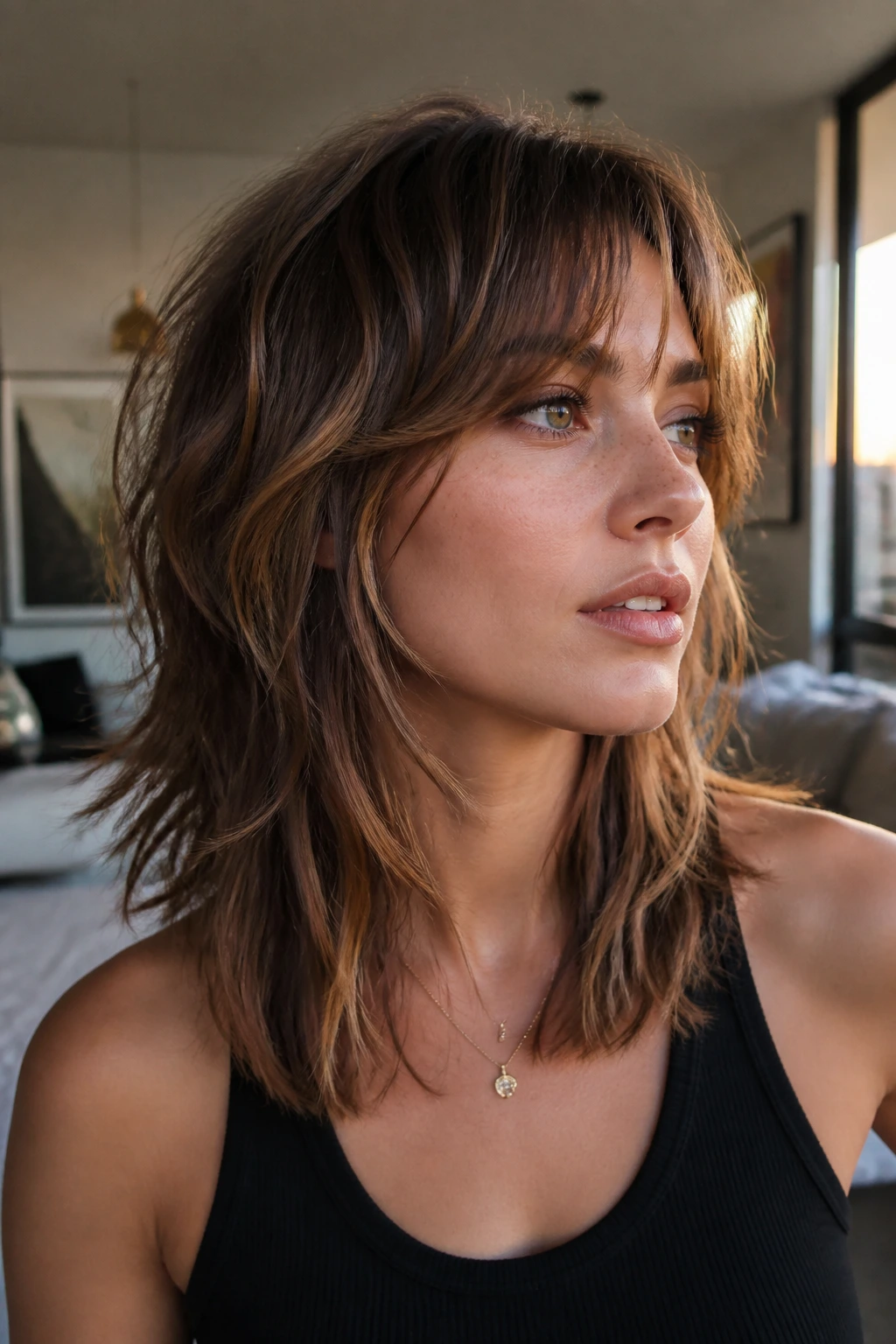
Sharp ends change everything. A collarbone shag cut with a razor instead of blunt scissors gets a lighter, fluttery finish that moves the second you turn your head. The cut edge never looks chunky, and that makes the whole style feel a little cooler, a little less precious.
This works especially well on thick hair that tends to sit in a solid block. The razor takes out bulk while keeping length, which is useful if your hair puffs out at the sides but goes flat at the crown. On very fine hair, though, too much razor work can leave the ends wispy in a bad way. Ask for controlled slicing, not aggressive thinning.
3. The Bottleneck Bang Shag

Why does this one flatter so many faces? Because the fringe is narrow at the center, then opens wider near the temples, which gives you coverage without boxing in the forehead. The rest of the shag can stay medium and relaxed while the bang area does the shaping work.
It’s a smart pick if curtain bangs feel too broad and blunt bangs feel too committed. The bottleneck shape is softer than a full fringe, but it still reads as intentional. With medium length layers, the whole cut ends up looking tailored around the eyes and cheekbones instead of just “layered somewhere near the front.”
4. The French-Girl Tousled Shag

This version is all about loose bends and unfinished edges. Think medium layers that look better with a bend in them than with a perfect blowout. The shape usually sits around the shoulders with a bit of face framing and ends that don’t meet in one clean line.
It’s a good match for hair that air-dries with some natural wave, because the cut doesn’t fight the texture. Put a little mousse in damp hair, twist a few sections with your fingers, and leave the rest alone. The less you fuss with it, the more believable it looks. That’s the charm.
5. The Wavy Wolf-Leaning Shag
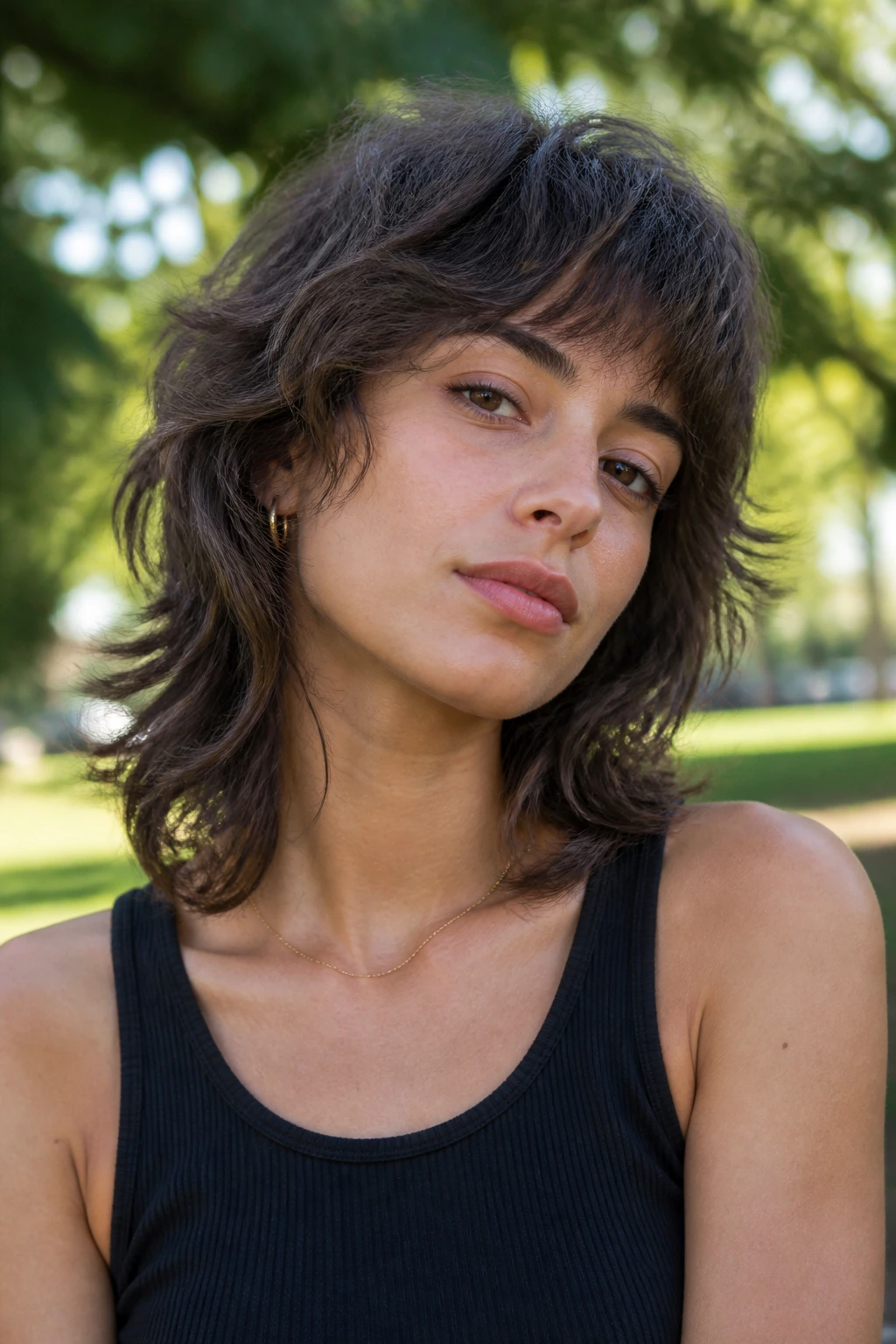
This is the shag for someone who wants edge but not a full wolf cut. The crown is a bit shorter, the middle layers are choppier, and the perimeter still keeps enough length to feel medium rather than short. It has that slightly wild profile without tipping into costume territory.
I’d choose this if your hair has a strong natural wave or if you like a more vertical shape through the top. It gives the illusion of height at the crown and movement through the back, which can be handy on rounder faces. Too much weight removal can make it frizz, so the trick is keeping the layers broken up, not shredded.
6. The Feathered 1970s Shag
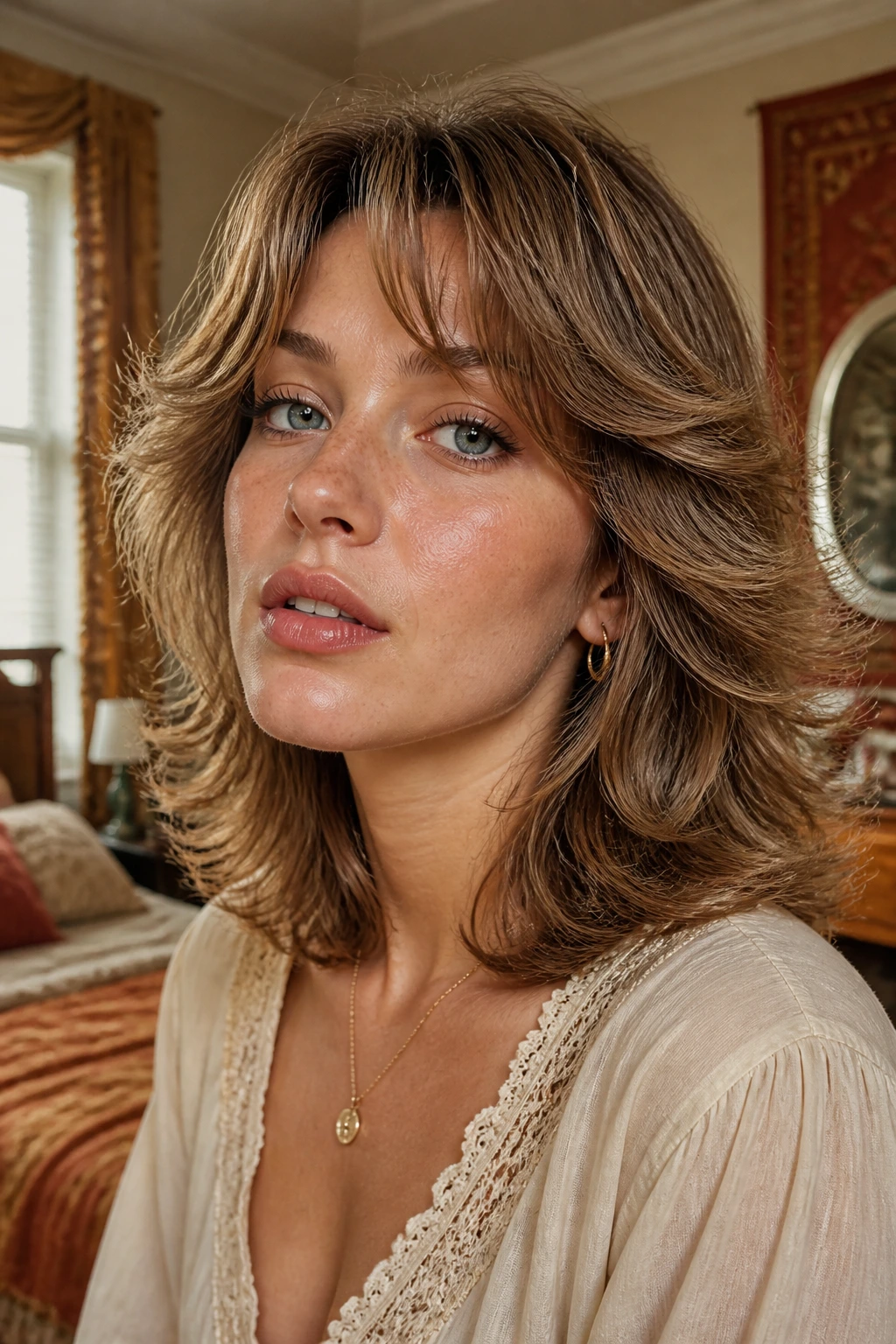
This is the glam version with a soft retro bend. The layers are brushed away from the face, and the ends flick outward just enough to catch the light. Medium length hair gives it room to breathe, because the shape needs a little swing to feel right.
A round brush, a blow-dryer, and a light volumizing spray are basically the whole story here. If you like hair that looks like it was styled on purpose but not overworked, this is the one. It’s a polished shag, which sounds contradictory until you see the movement at the ends. Then it makes perfect sense.
7. The Piecey Mid-Length Shag
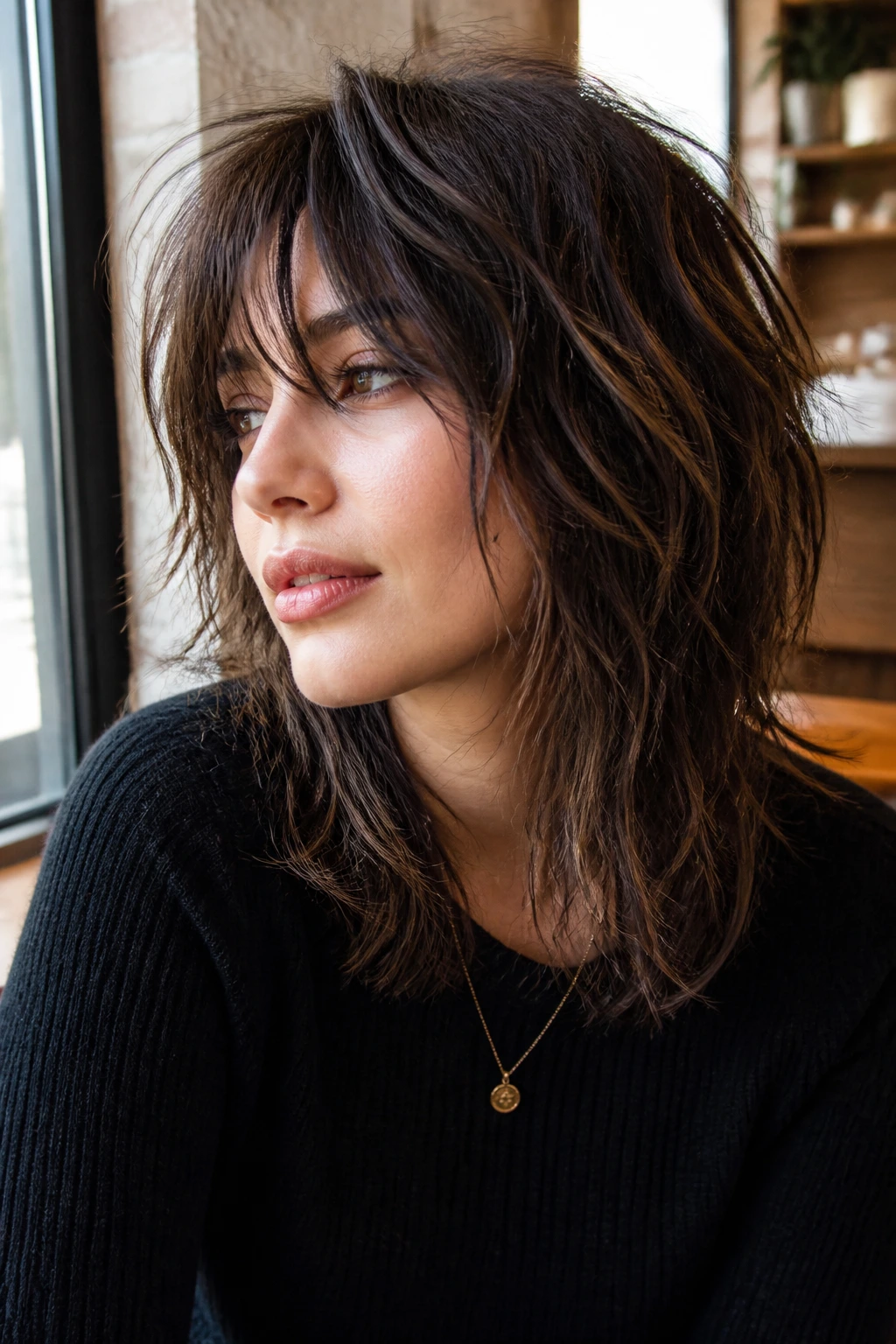
This haircut is built for separation. The layers are cut so the pieces don’t blend into one soft cloud; they stay defined, which gives the style that broken-up, lived-in look people want from a shag anyway. Medium length hair helps because there’s enough length for the pieces to show.
A small amount of texturizing spray goes a long way here. Scrunching too much can make it look crunchy, which is not the goal. I prefer this on hair that likes a bit of grit — the kind of hair that looks better after a day or two, once the scalp isn’t squeaky clean and the ends have a little grip.
8. The Curly Shag with Airy Layers

Curly hair and shag haircuts get along when the layering respects the curl pattern. On medium length curls, that means removing bulk where the curls stack up and leaving enough weight at the perimeter so the shape doesn’t frizz outward like a triangle. The best versions feel airy, not thinned out.
Ask for the cut to follow your curl clumps, not fight them. A dry cut or a curl-by-curl approach usually gives the cleanest result, especially if your pattern changes from crown to ends. The finished look should have bounce at the top and a rounded outline through the shoulders, not a bunch of disconnected holes.
9. The Fine-Hair Lifted Shag
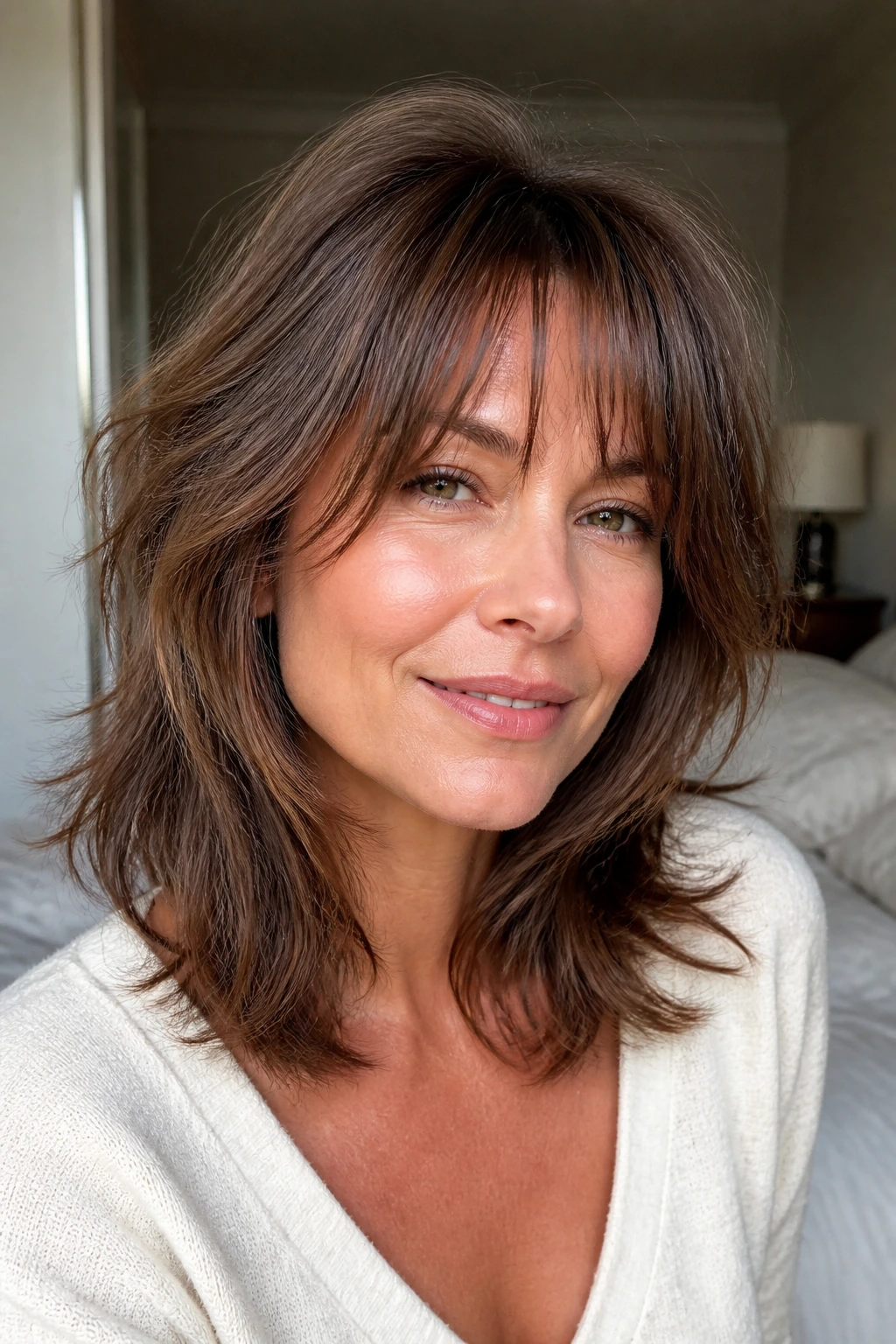
Fine hair can wear a shag well, but only if the layering is handled with some restraint. The goal is lift at the crown and movement through the mid-lengths, not a pile of short wisps that disappear when the hair settles. Medium length gives you enough weight to keep the shape visible.
I’d ask for soft internal layers, not heavy texturizing at the ends. A little root lift spray at the scalp and a quick blow-dry with a small round brush will do more for this cut than a whole drawer full of products. If the ends start looking see-through, the haircut went too far. Back off on the shorter pieces.
10. The Thick-Hair Debulked Shag
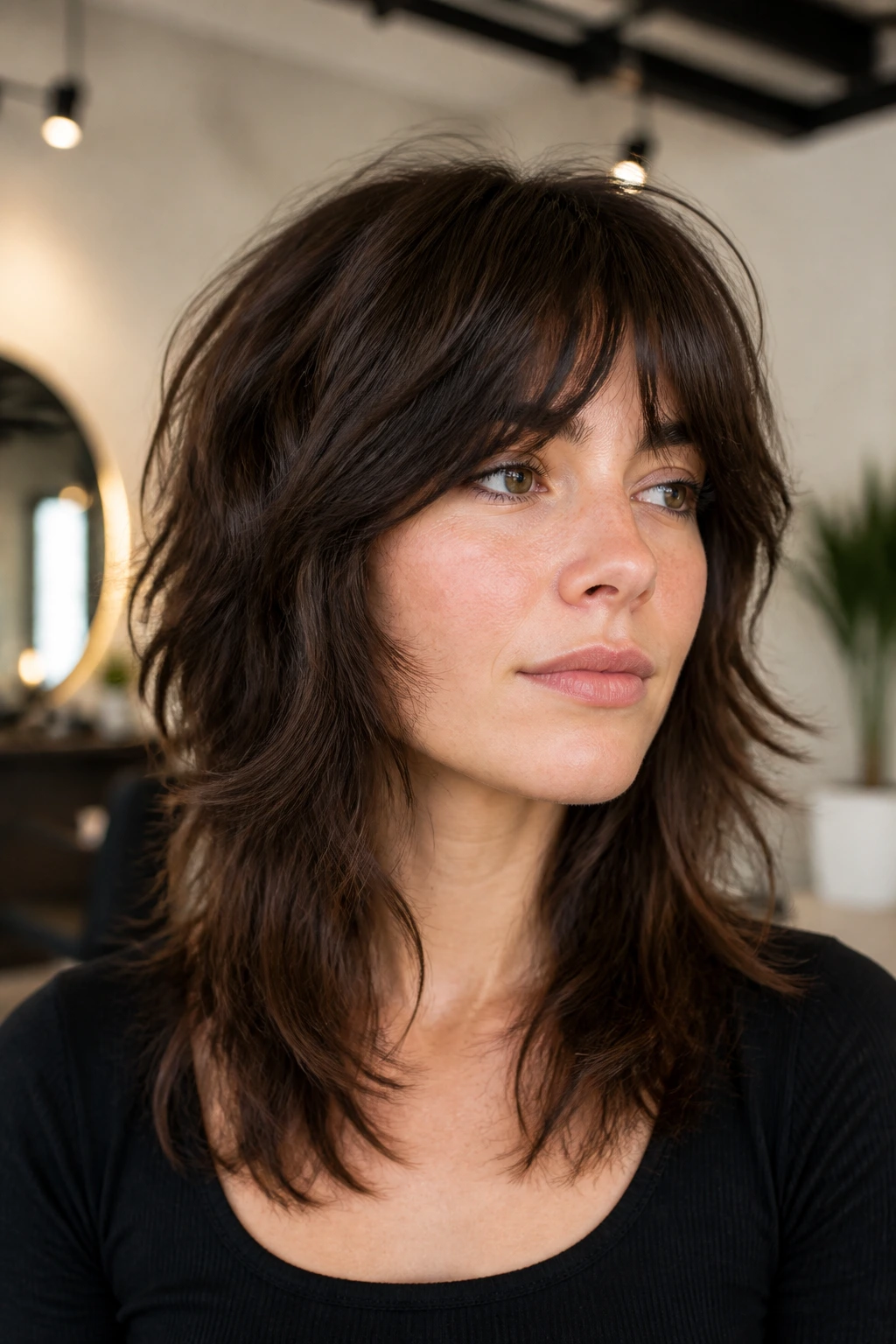
Thick hair needs room to move. Without the right layering, a medium shag can turn into a triangular wall, especially if the density is concentrated at the bottom. Debulking the interior creates a cleaner drop through the sides and stops the haircut from sitting like a helmet.
This is one of those cuts where the stylist’s hand matters a lot. You want weight removed from the inside, not hacked away from the perimeter until it frays. On coarse hair, I prefer controlled point cutting or shaping over overuse of thinning shears. Too much thinning can make the surface puffy while the underneath collapses.
11. The Brushed-Forward Shag

Why push the hair forward? Because a forward-leaning shag can soften a strong forehead, bring attention to the eyes, and make the cut feel more intimate around the face. The layers fall toward the cheeks and lips instead of opening wide at the sides, which changes the whole mood.
This is a nice option if center-part curtain bangs feel too open for you. The front can still have texture, but the direction is more down and forward than out and away. It’s a small change, yet the effect is obvious the minute you tuck your hair behind one ear.
12. The Long Bang Shag
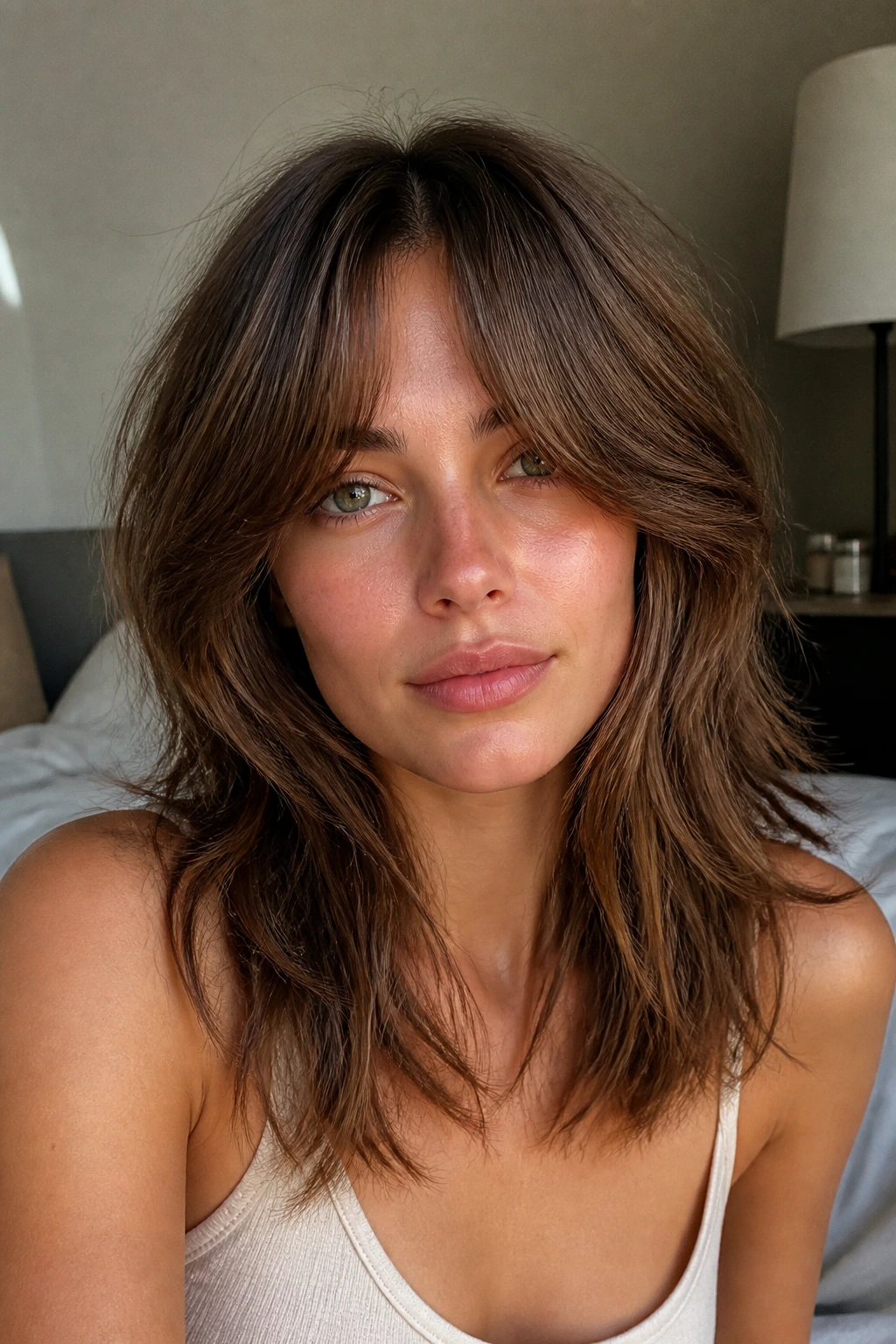
Long bangs give medium shags a lot of flexibility. They can split in the middle, sweep to one side, or drop straight down and skim the lashes. That means you get the shape of a fringe without being trapped by one way of wearing it.
I like this version for people who want face framing but also want the option to pin the front back. The haircut still reads as shaggy because the layers around the cheekbones and shoulders do the work. The bangs just add another layer of motion, and they grow out more gently than shorter fringe.
13. The Face-Framing Shag Bob Hybrid
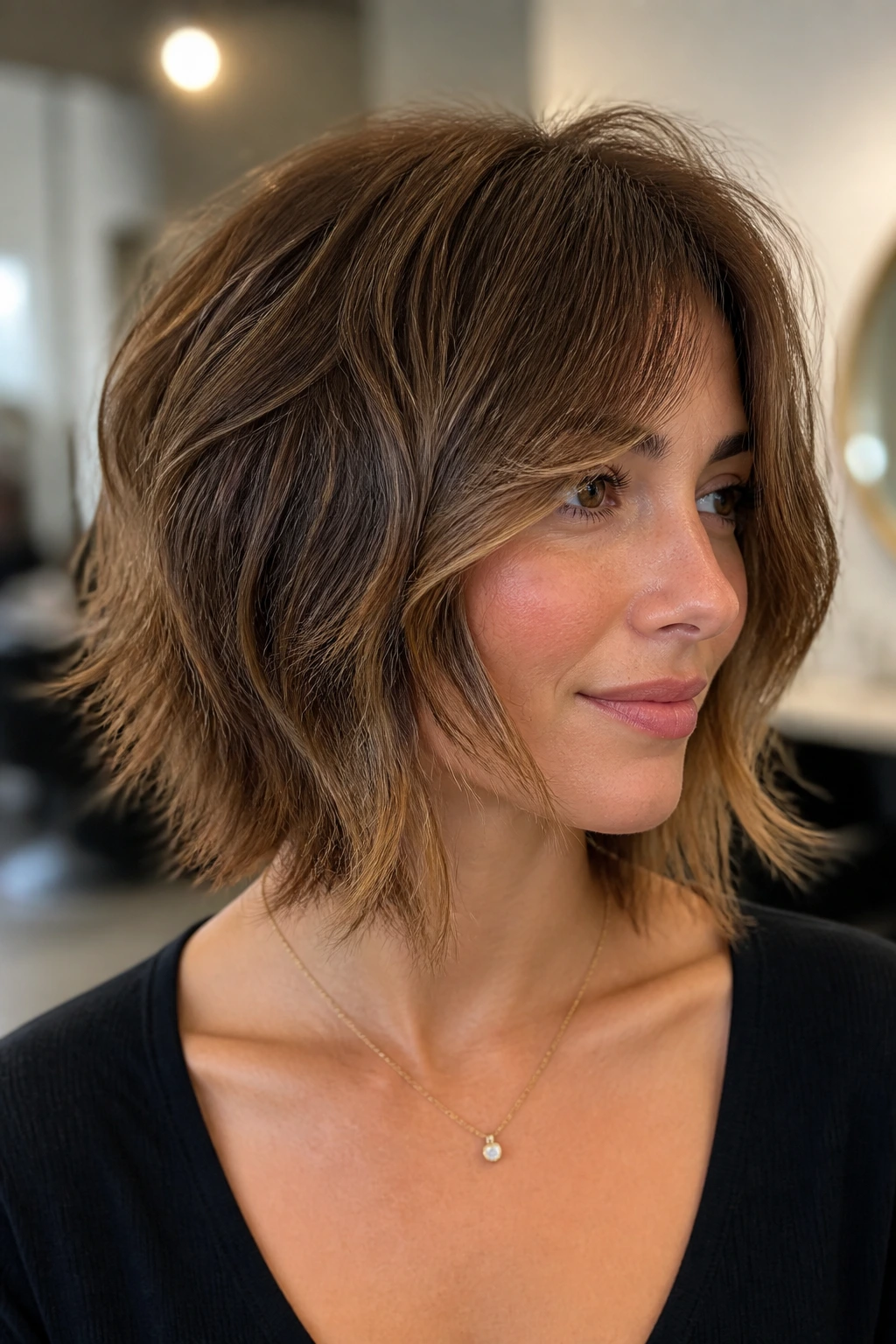
This one sits right between a bob and a shag, which is why it’s so useful. The perimeter is tidy enough to feel polished, but the interior layers stop it from going boxy. On medium length hair, that balance can be cleaner than a full shag if you like shape more than mess.
It’s a good compromise for someone who wants softness around the face without leaning into heavy texture. The cut can be styled smooth with a bend at the ends or rough-dried for a little lift. If you’ve ever wanted a shag but worried it would look too casual for your routine, this hybrid is worth a serious look.
14. The Midlength Mullet Shag
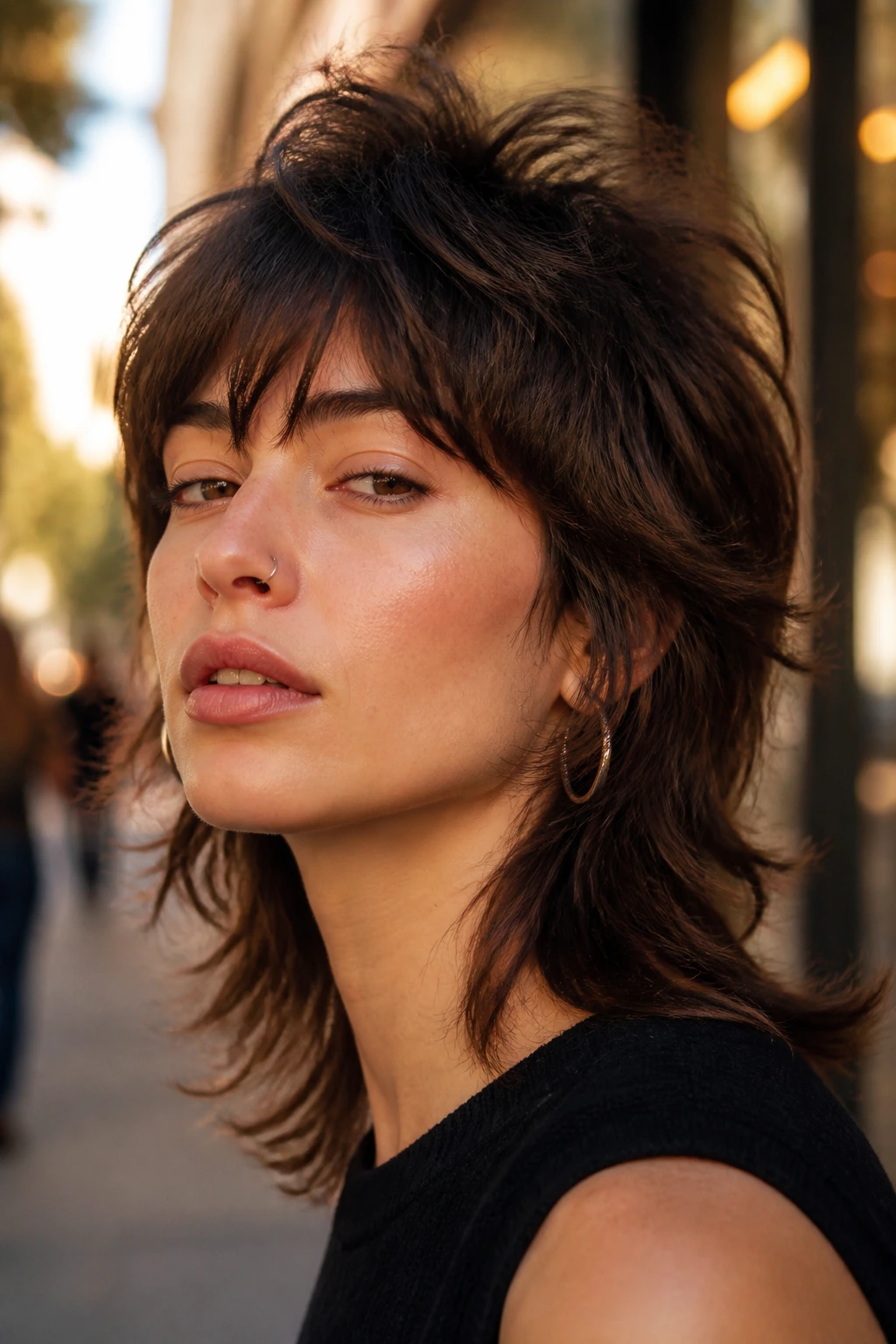
This is the bolder cousin in the group. The top and crown have more lift, the back keeps a touch more length, and the silhouette has that slight mullet energy without going full retro-rock. Medium hair is exactly where it can still look wearable.
The trick is restraint. If the difference between the shortest and longest layers gets too extreme, the cut stops reading as shaggy and starts looking deliberate in a way you may not want. Kept soft, though, it gives you attitude and movement in the same haircut. It’s not shy.
15. The Low-Maintenance Air-Dry Shag

If you hate blow-drying, this is the cut to ask about. The layers are placed so the hair falls into a shape on its own, and the fringe area is soft enough to dry without a round brush. Medium length helps because the hair has enough weight to keep from puffing up at the sides.
A little leave-in conditioner, a small amount of cream, and a quick scrunch are usually enough. Let the hair dry where it wants to sit; don’t keep touching it. That’s where people ruin it. The cut should look better after 15 minutes of ignoring it, which is one of the few useful promises hair can make.
16. The Glam Blowout Shag
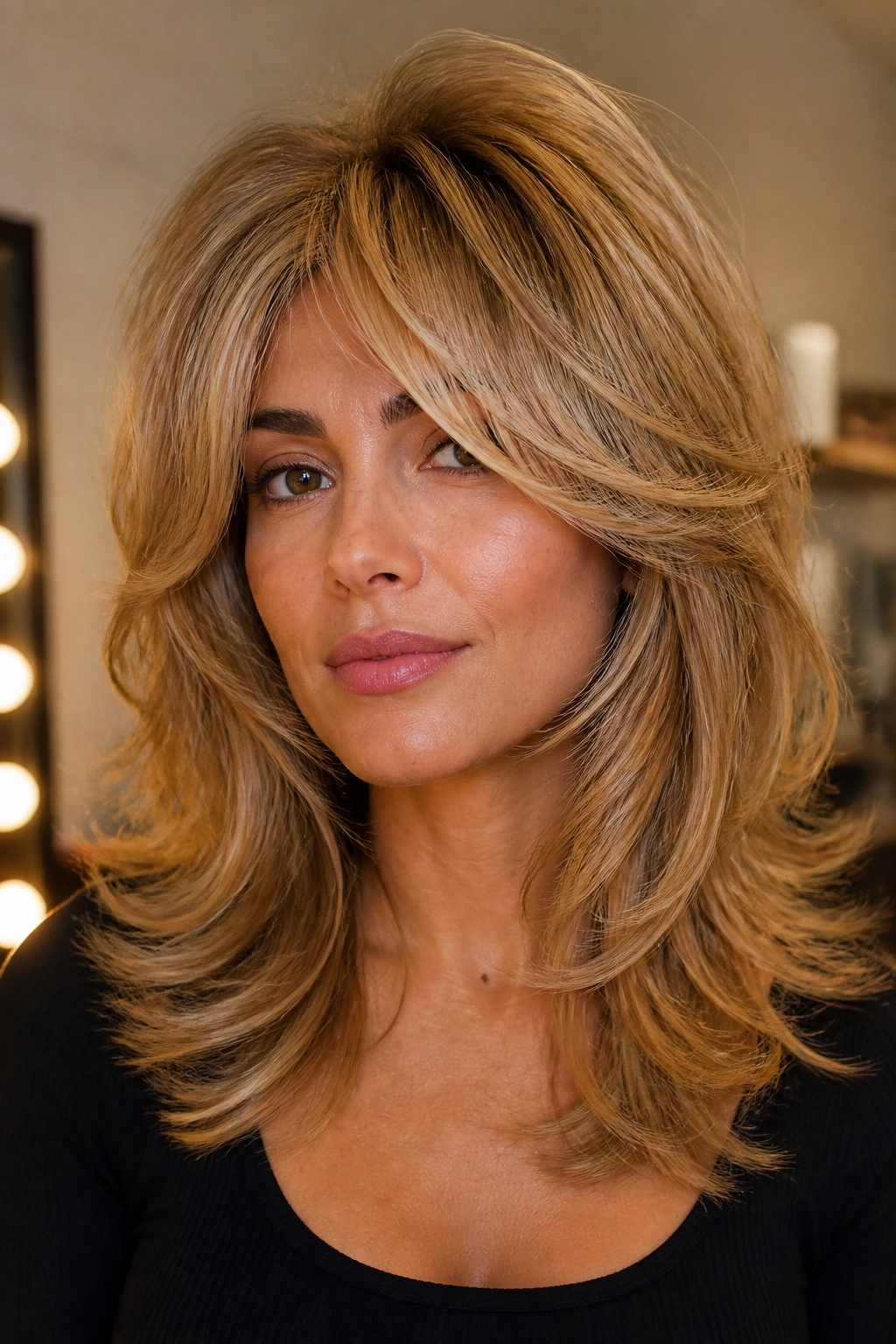
Not every shag has to look rumpled. A glam blowout shag keeps the layers, but the finish is smoother, shinier, and more shaped around the face. The ends can flip under or out, and the crown gets a controlled lift that feels dressier than the usual piecey texture.
This is my pick for anyone who likes the structure of a shag but wants it to play well with a brushed finish. Use a heat protectant, a medium round brush, and a concentrator nozzle. The result should feel airy through the ends and full at the roots, not stiff or shellacked.
17. The Choppy Layered Shag with a Side Part
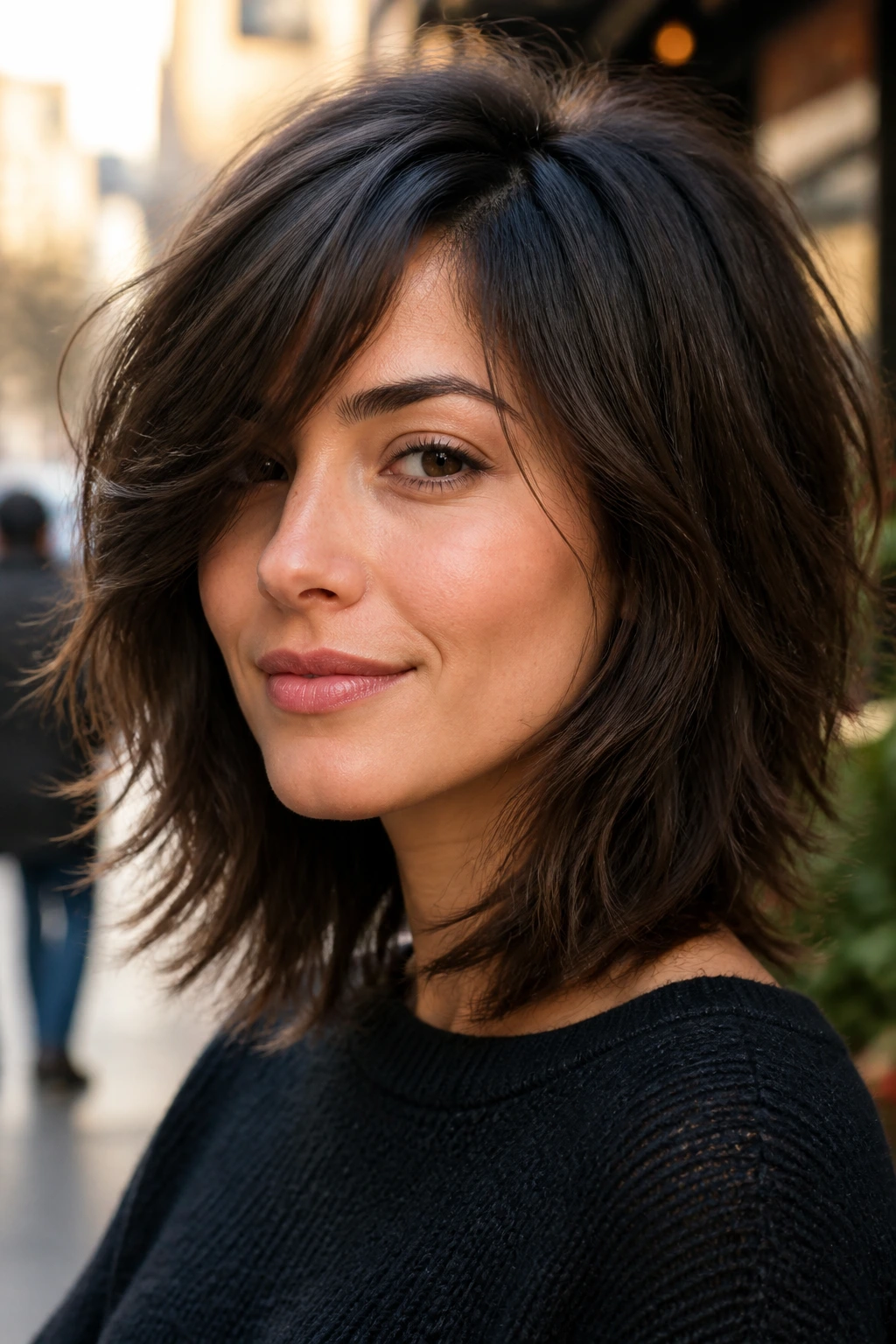
A side part shifts the weight of a shag in a way people underestimate. Suddenly the shorter layers pile more dramatically on one side, the fringe sweeps across the forehead, and the whole cut gets a little asymmetry without needing a radical shape change.
This version is especially handy if a center part makes your hair fall flat or if one side of your growth pattern is stronger than the other. Medium length gives the side part enough canvas to work with, and the choppy layers keep it from feeling too neat. It’s a good reminder that parting changes the haircut more than most people think.
18. The Shoulder-Skimming Razor Shag
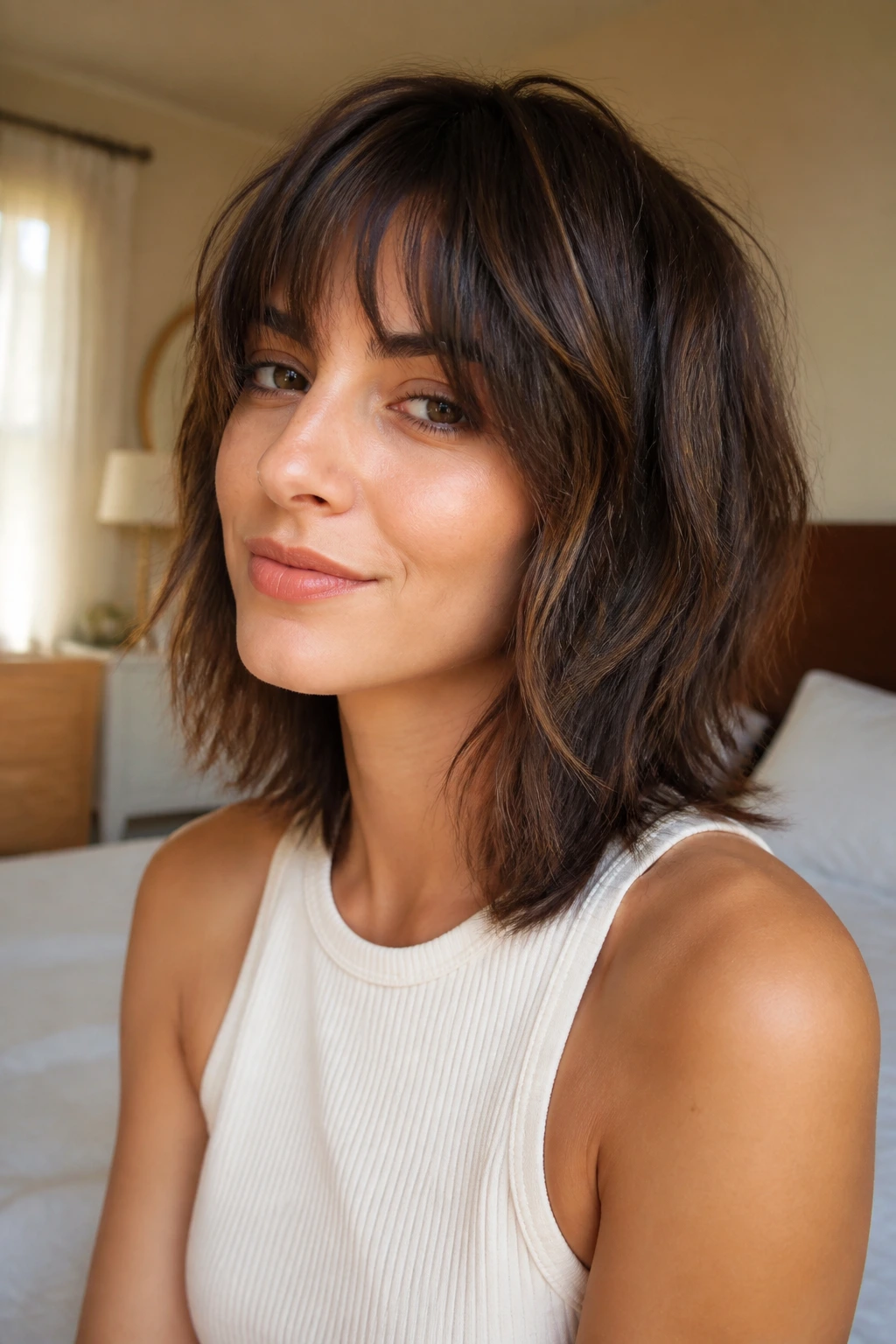
Shoulder length is where a lot of cuts start fighting the body’s movement, because the hair lands right where jackets, collars, and shoulders interrupt it. A razor shag at this length avoids that blunt stop by giving the ends a softer, more broken edge.
It’s a strong choice for straight-to-wavy hair that tends to sit heavy around the hem. The razor helps the hair flip rather than stick. If your shoulders are broad or your neck is short, this cut can also help the shape feel lighter around the upper body. Small thing. Big difference.
19. The Soft Wolf Cut for Medium Hair
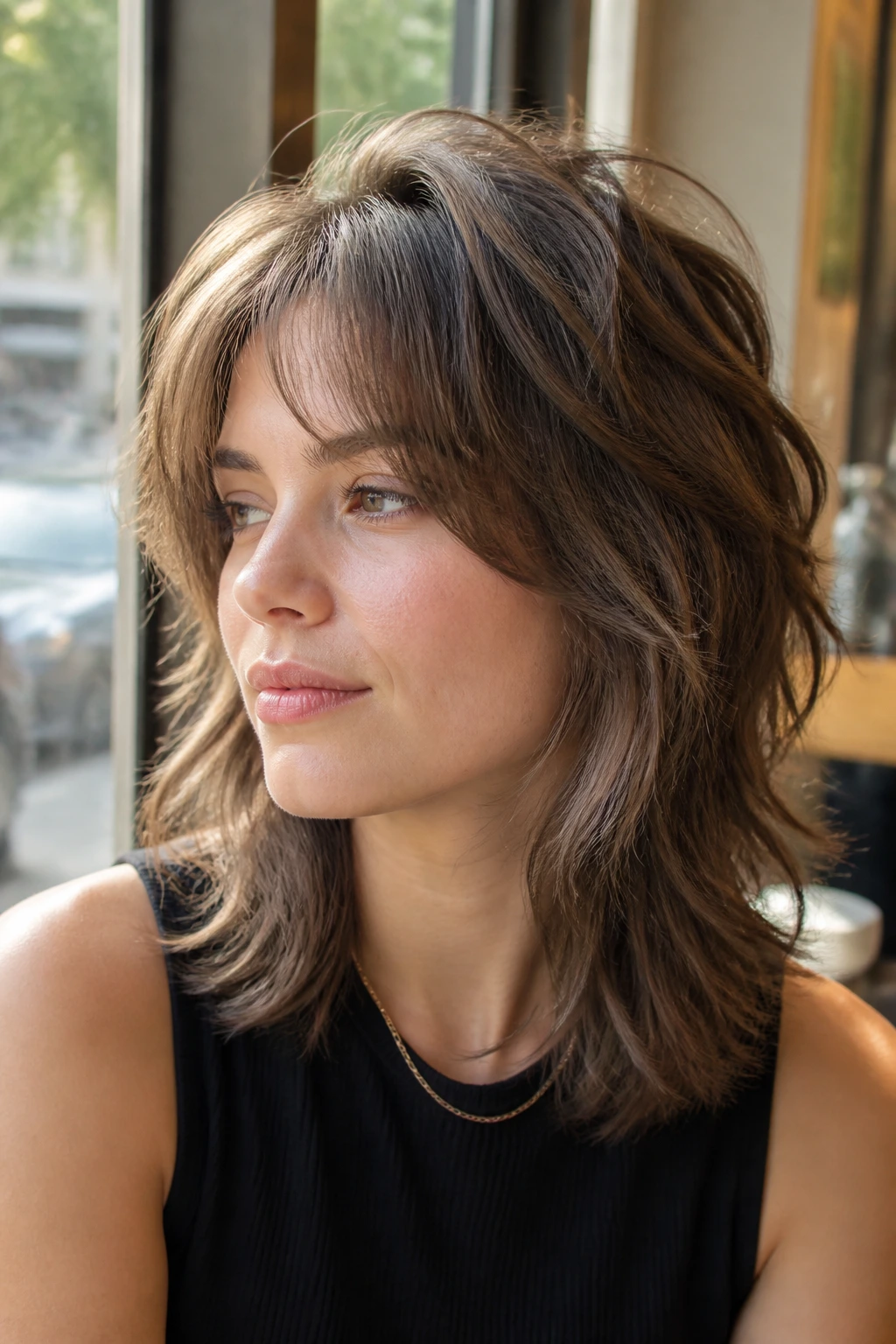
This is the friendlier version of the wolf cut, and that’s why it works for so many people. The crown still has lift, the top still has shorter layers, but the overall shape stays softer and less extreme than a pure mullet-inspired cut. Medium length gives it room to keep both the edge and the wearability.
I’d choose this if you like texture but don’t want the haircut to shout. It has enough shape to feel current without becoming a novelty. The key is keeping the transition between the crown and the ends smooth enough that the cut reads as one idea, not two separate haircuts sharing a head.
20. The Shag with Bottleneck Fringe and Flicked Ends

This one has a bit of personality. The bottleneck fringe frames the face neatly, while the ends flip out just enough to give the style some motion at the bottom. On medium length hair, that combo keeps the haircut from feeling top-heavy.
It’s also a nice bridge between polished and casual. The fringe makes the front look intentional even when the rest is a little airy and broken up. A small round brush or a flat iron bend at the ends is enough to bring out the flick. No need to overstyle it into something stiff.
21. The Retro Disco Shag
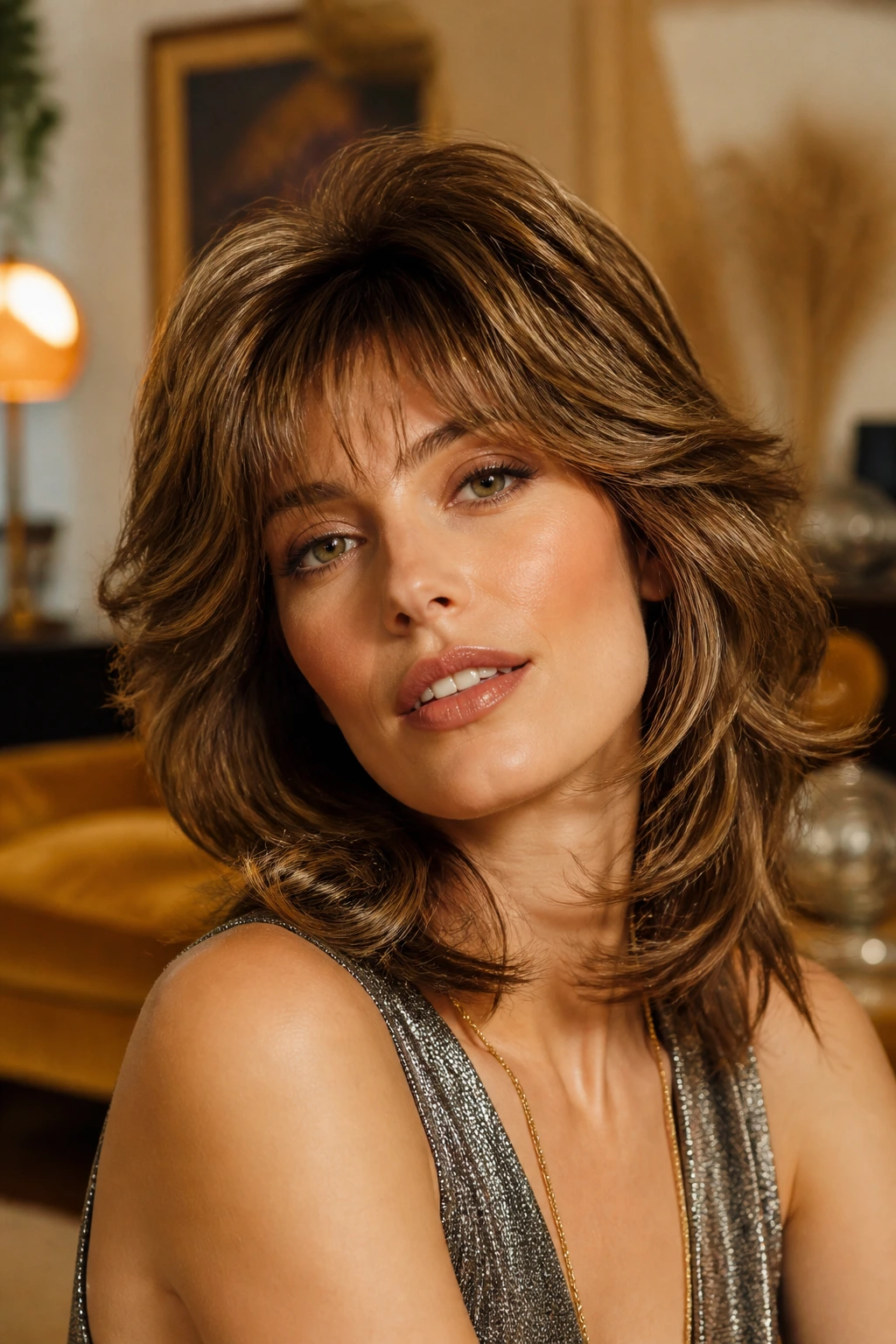
Big hair can be fun when it’s shaped, not teased into a cloud. The retro disco shag leans into lift at the crown, volume through the sides, and a glossy finish that makes the layers visible instead of fuzzy. Medium length keeps it from looking like a costume from six feet away.
This is the version I’d pick for hair that holds a blowout well. A root-lifting mousse, a round brush, and a little shine spray at the end will get you most of the way there. It has a bit of drama, yes, but the structure is what keeps it looking modern enough to wear outside a dance floor.
22. The Minimalist Invisible-Layer Shag

Some people want the shape of a shag without obvious choppiness. That’s where invisible layers come in. The haircut still has movement and a soft lift around the face, but the layers are tucked into the interior so the outer shape stays smooth.
This works well on straight hair that resists looking piecey. It also suits anyone who likes a cleaner wardrobe or a more understated beauty routine. The cut gives you swing without the obvious “I just got layers” look, which is useful if you want texture that shows up only when you move.
23. The Messy Bedhead Shag

This is the one that looks best when you stop trying so hard. The layers are rougher, the texture is more separated, and the whole cut has that slept-in energy people keep chasing with spray and prayer. Medium length keeps the mess readable instead of sprawling.
A touch of dry shampoo at the roots and a salt spray through the ends usually does the trick. Resist the urge to smooth everything down. The point is not neatness; the point is a controlled sort of chaos. If your hair has a habit of looking too polished, this cut breaks that pattern fast.
24. The Edgy Micro-Fringe Shag

Short fringe changes the attitude of a shag immediately. The micro-bangs put all the attention up front, while the medium-length layers keep the body of the haircut flexible and loose. It’s a sharper look, but the length below the fringe prevents it from getting too severe.
This is not the safest choice, and that’s precisely why some people love it. It suits strong brows, high foreheads, and a face shape that can handle a shorter bang line without losing balance. If you go this route, the rest of the haircut should stay textured and soft, or the whole thing turns hard.
25. The Romantic S-Curl Shag
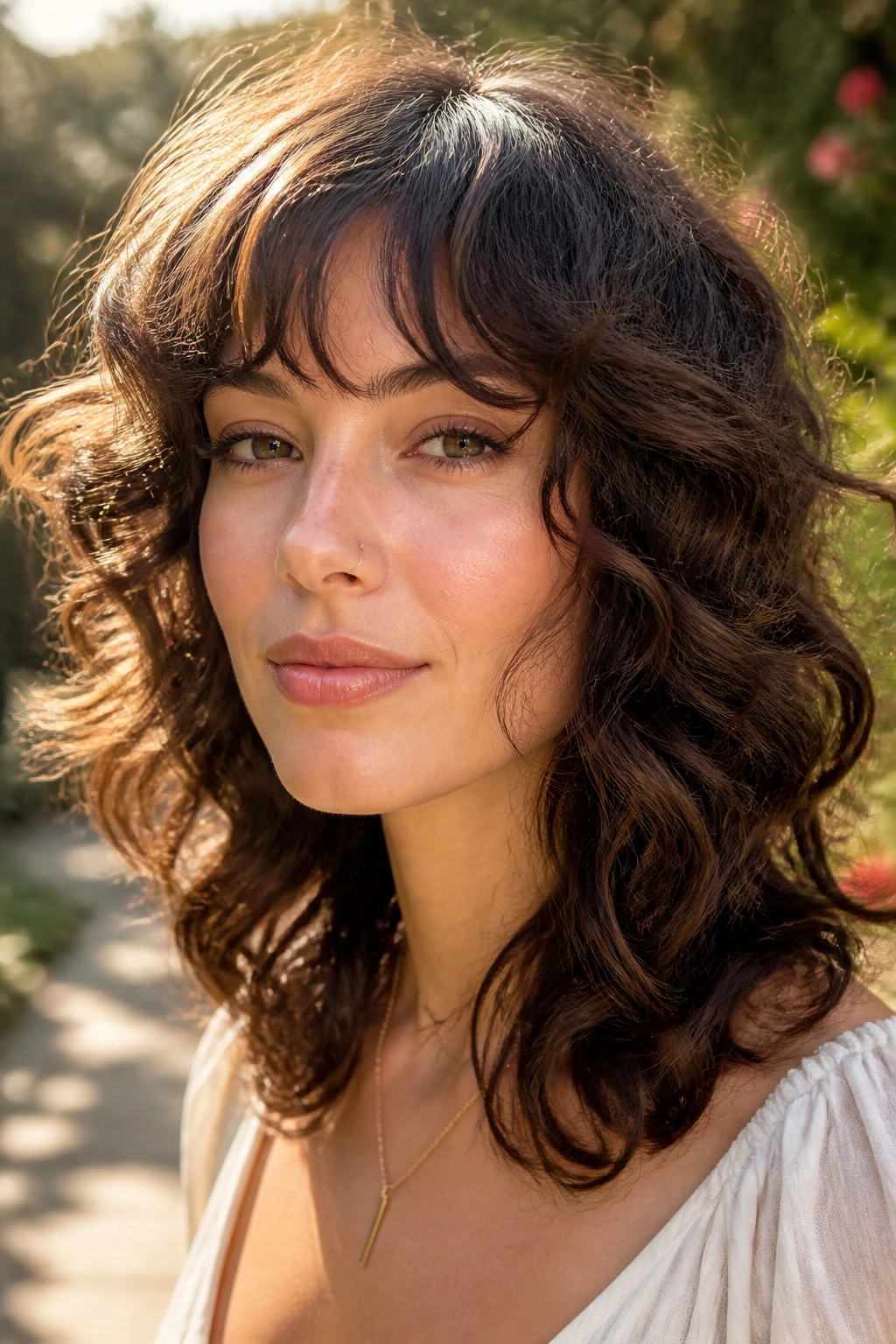
S-shaped bends give a medium shag a softer, almost old-Hollywood feel, but the layers keep it from becoming too sweet. The hair lifts around the cheekbones, curves through the mid-lengths, and settles with a soft edge around the shoulders.
I like this on hair that takes a wave well with a curling iron or a large wand. Wrap sections away from the face, leave the ends out for a second, and brush lightly once it cools. You get movement without the crisp ringlet look. That balance is the whole point.
26. The Salt-and-Pepper Shag

Gray hair, silver strands, and darker regrowth all look better when the haircut creates movement instead of hiding the contrast. A medium shag does exactly that. The layers catch light at different points, so the color variation becomes part of the style rather than something to blend away.
This version can look especially good with a softer fringe or a side sweep, because the face frame keeps the contrast from feeling harsh. I’m fond of it because it doesn’t ask gray hair to behave like dyed hair. It lets the texture and color do their own thing, which is usually the smarter move.
27. The Grow-Out-Friendly Transitional Shag
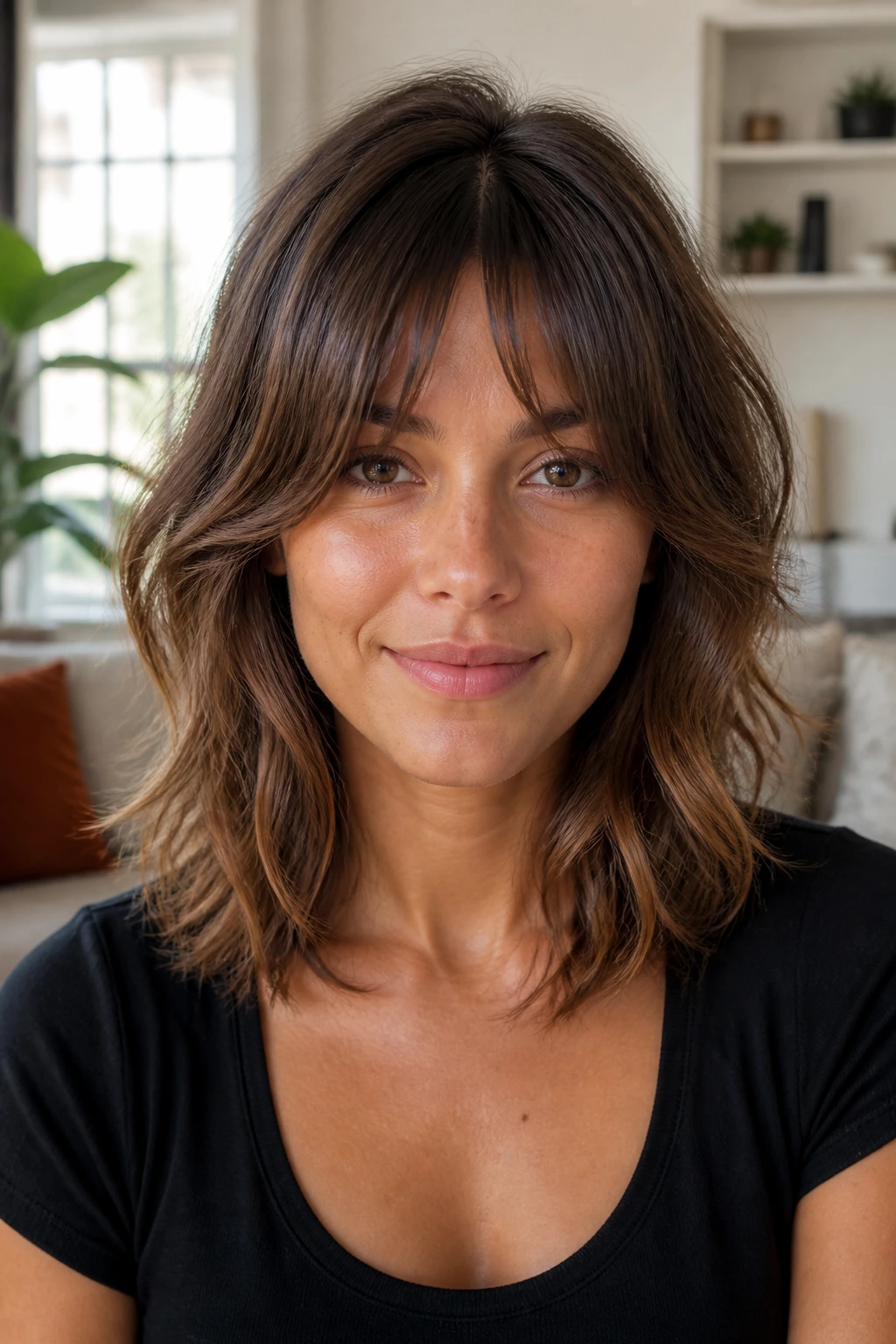
This is the one to ask for if you’re coming out of a blunt lob, a layered bob, or a shape that has already lived a few lives. The goal is a medium shag that looks good on day one and still looks sensible six weeks later. The layers should blend enough to grow, but stay visible enough to count as a shag.
That makes it the least dramatic option here, which is not a flaw. Sometimes the best haircut is the one that lets you change your mind slowly. If you’re unsure how far you want to go, this transitional version gives you room to move toward softer bangs, more texture, or a sharper shape later.
Why the Medium-Length Shag Keeps Working

Medium length hair gives a shag room to breathe without collapsing into a mop of layers. Shorter pieces can lift at the crown, mid-length pieces can swing around the jaw, and the perimeter still has enough length to anchor the whole thing. That balance is hard to beat.
It also plays nicely with real life. Hair gets tucked behind ears. It gets thrown into a clip. It gets air-dried on a rushed morning and blown out for dinner. A medium shag survives those changes better than a precise blunt cut because the shape already expects a little mess. That’s not laziness. That’s design.
The texture sweet spot
The best medium shags don’t rely on one single styling trick. A clean blow-dry, a rough air-dry, and a lazy second-day refresh can all land on the same haircut and still look believable. That flexibility is why stylists keep coming back to it.
The shape that keeps its backbone
A shag needs a visible outline. If the layers are cut too evenly, the haircut starts to look shapeless. If they’re cut too aggressively, the ends fray and the whole style loses its weight. Medium length gives you a buffer zone in the middle, which is where the good versions live.
Essential Tools for Shag Haircuts at Medium Length
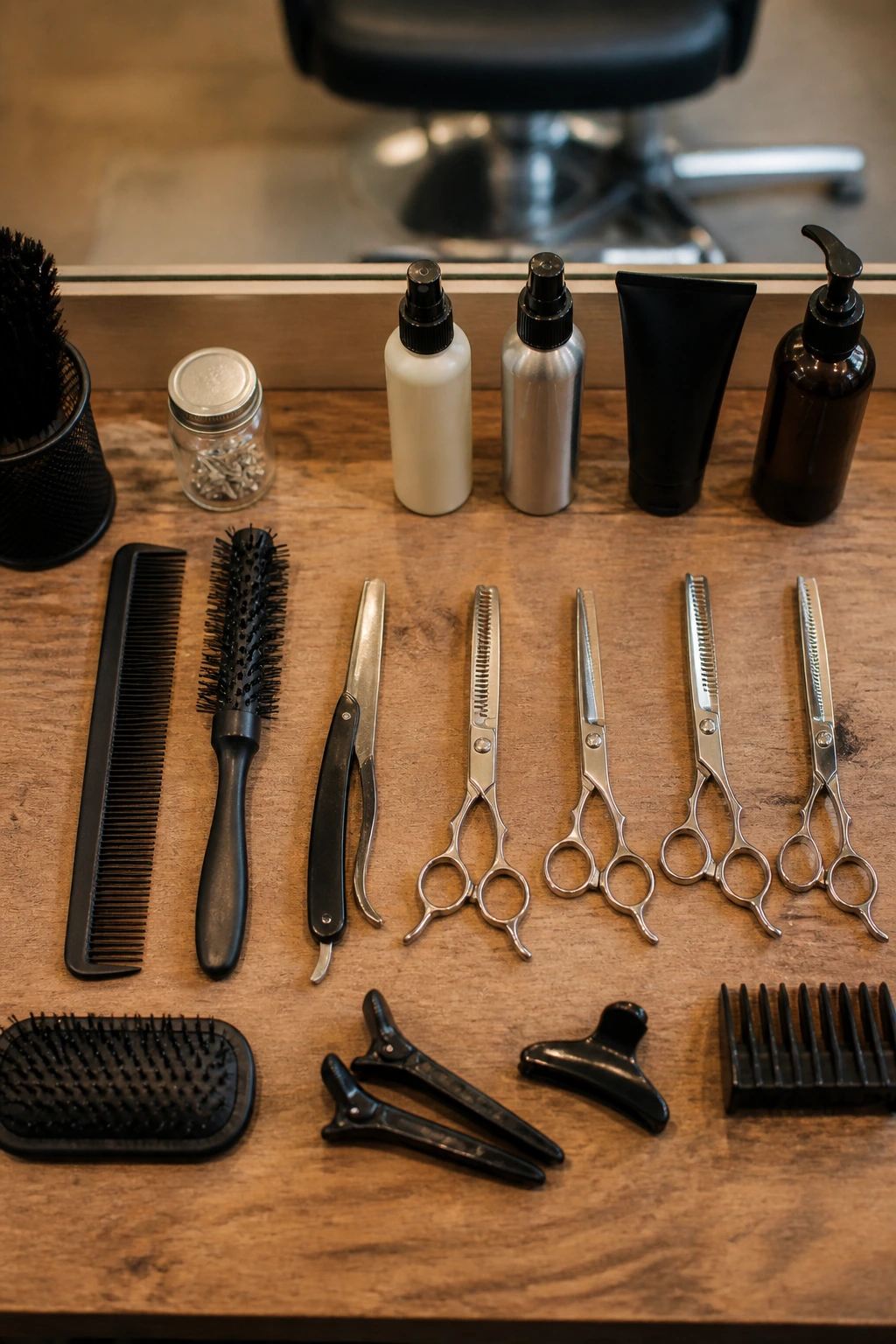
- A tail comb: Useful for clean parting, sectioning, and checking whether your fringe sits where you think it does.
- Hair-cutting shears: If you trim fringe or dust ends at home, use real shears; kitchen scissors chew the hair.
- A razor or texturizing tool: Best left to a stylist, but worth knowing about if your cut needs softness rather than blunt weight.
- A medium round brush: Helps build lift at the crown and shape the ends without making them puffy.
- A blow-dryer with a concentrator nozzle: Directs air where you want it and keeps the surface smoother.
- A diffuser: Handy for waves and curls that need shape without being blasted flat.
- Volumizing mousse: Gives fine or straight hair a base so the layers don’t collapse.
- Texturizing spray: Good for piecey definition, especially on second-day hair.
- Heat protectant: Non-negotiable if you blow-dry or use a hot tool.
- Clips or sectioning clamps: Make the cut and the styling process much easier, especially around bangs.
How to Ask for the Right Shag at the Salon
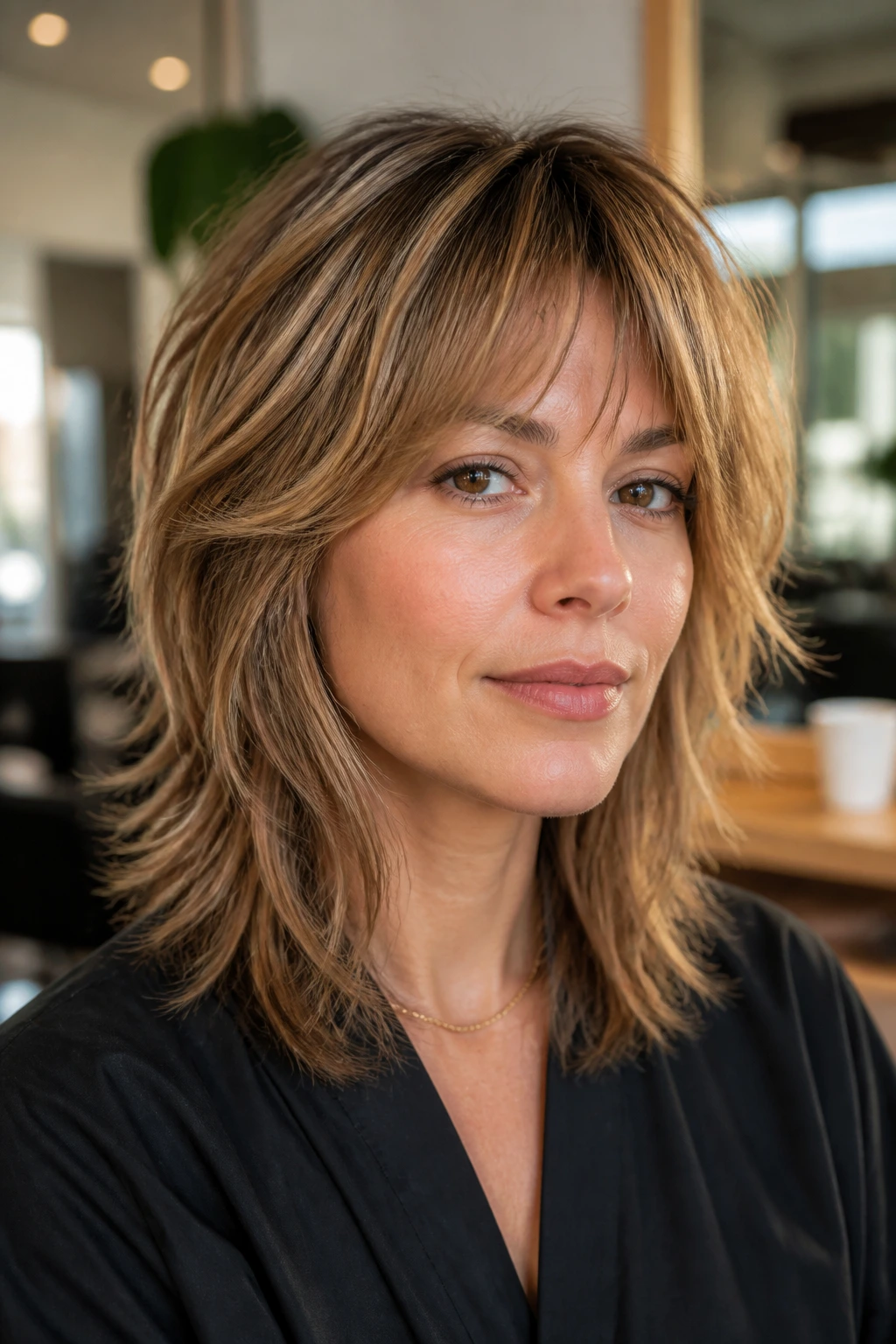
Bring reference photos, yes, but don’t stop there. Photos show shape. They do not explain density, hairline, or how much lift your crown actually has. Tell the stylist where your hair is heavy, where it falls flat, and where it flips out when it dries. Those details matter more than saying “I want a shag.”
Use plain language. Ask for the shortest layers to sit around the cheekbone or lip area if you want softness near the face. Ask for the longest layers to stay at the collarbone if you want the cut to keep some length. If you hate a bulky bottom line, say you want the ends to be lighter without looking shredded. If you want bangs, name the kind: curtain, bottleneck, long fringe, micro fringe. Don’t assume the word shag means the same thing to everyone. It doesn’t.
How to Style a Medium Shag Without Ruining the Shape
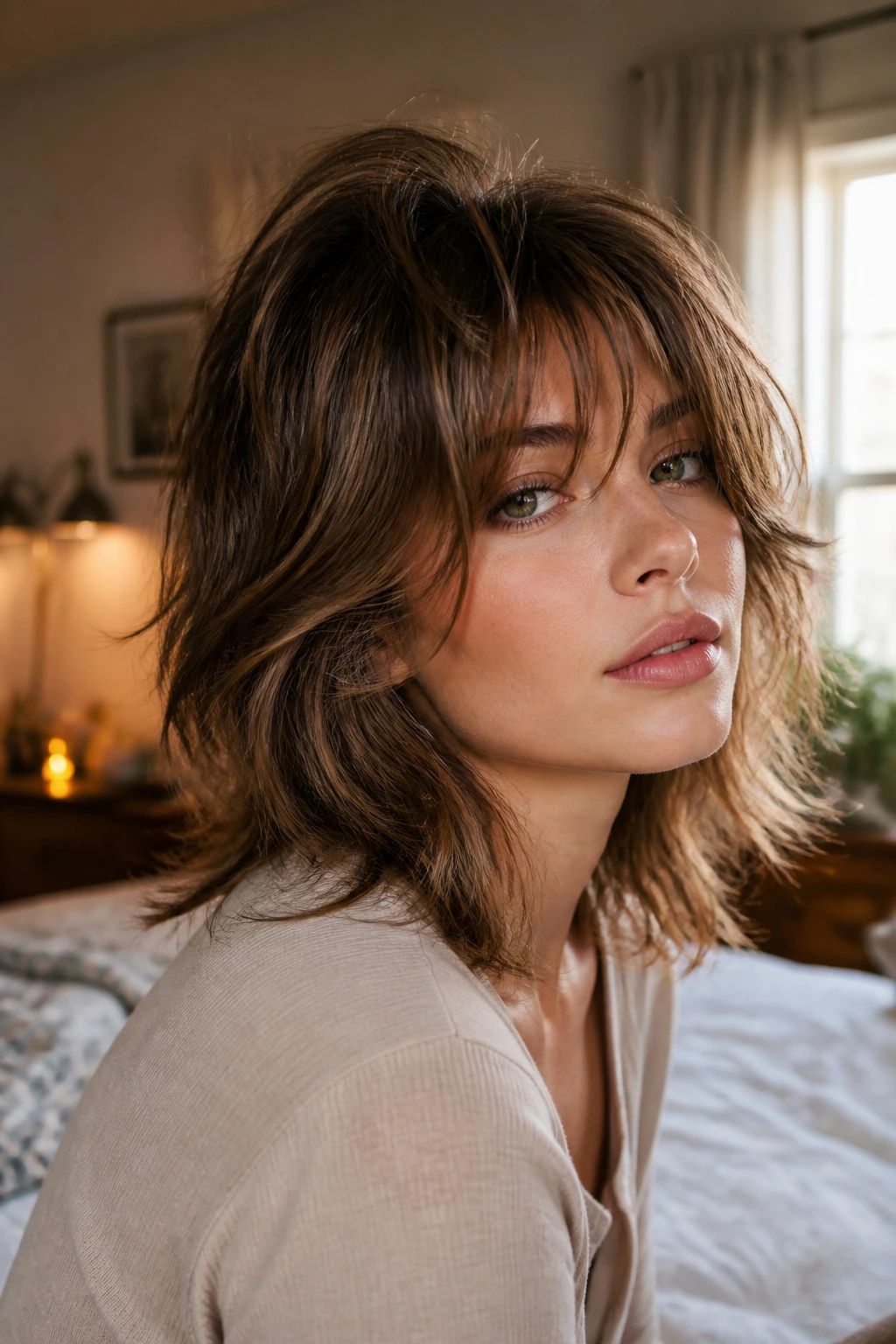
The temptation is to smooth everything into place. Resist that. A shag needs a little air between the layers, or the whole haircut loses the point. Start with damp hair, work in a small amount of mousse or leave-in depending on texture, and decide early whether you’re going for a blowout finish or a rough-dry finish.
For a softer look, use a round brush only on the front pieces and the crown. Let the ends bend on their own. For a more lived-in finish, scrunch with texturizing spray once the hair is mostly dry and stop touching it. Too much oil or cream can make the layers clump and flatten. That’s one of the fastest ways to turn a shag into a sad, stringy lob.
Common Mistakes That Flatten a Medium Shag

The first mistake is over-layering the crown and undercutting the rest of the hair. The top gets fluffy, the ends go thin, and the haircut loses structure. A shag needs balance from top to bottom, not just a lot of short pieces around the scalp.
The second mistake is choosing a fringe that fights your forehead or growth pattern. Bangs that sit too short can poke up, split awkwardly, or demand daily babysitting. If your hairline wants to part in the middle, a softer curtain or bottleneck fringe usually behaves better than a blunt line.
The third mistake is loading the hair with heavy cream or too much oil. Medium shags need separation, not slip. When the product is too rich, the layers glue together and the shape sinks. Use the lightest amount that keeps the hair from feeling dry, then stop.
Another one: not accounting for how your hair grows out. If you like to stretch trims, ask for a shag that keeps its outline as the layers soften. A good medium shag should still read as a shag when the bang is a little longer and the ends have settled.
Variations and Alternatives to Try
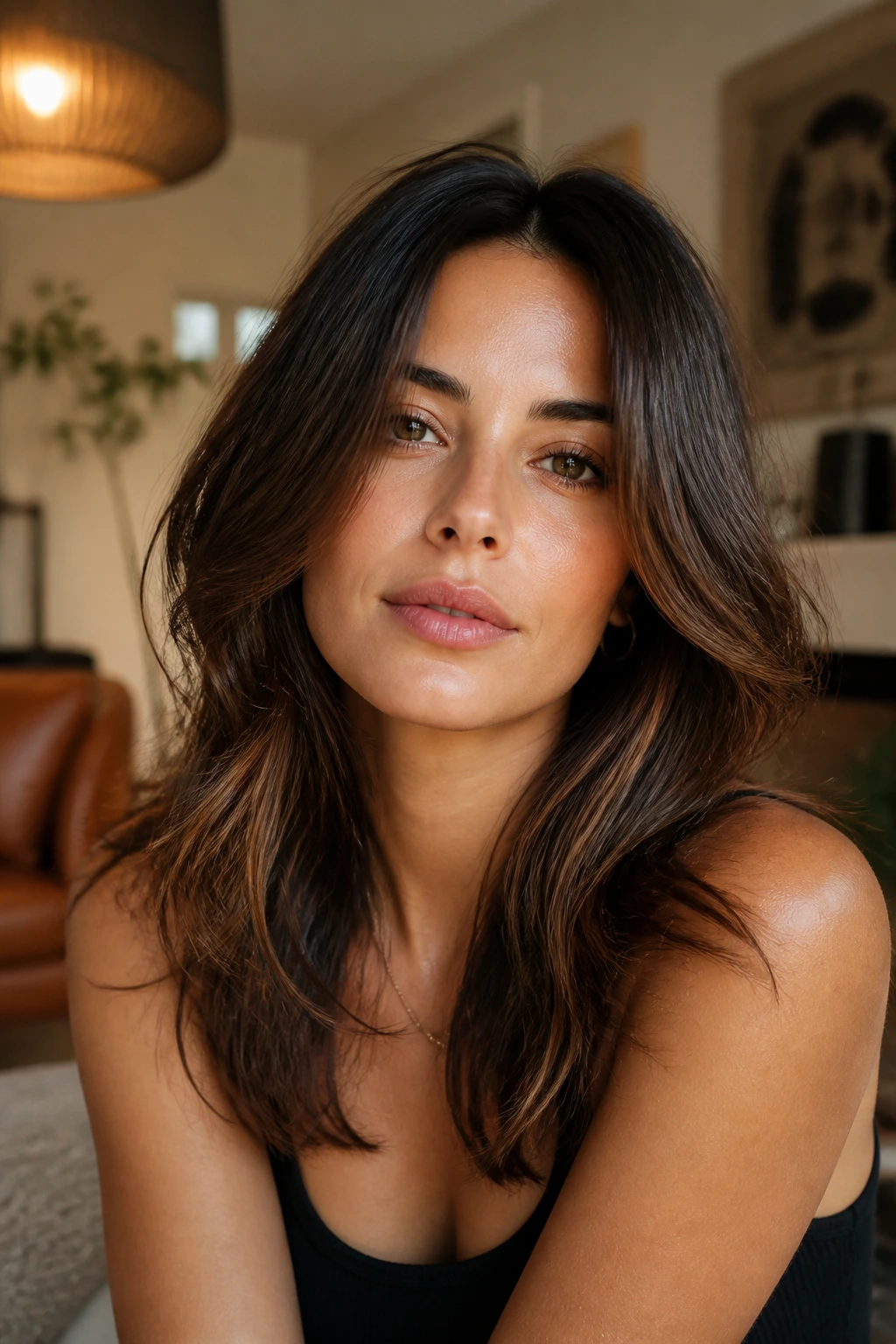
Curtain-Bang Swap: If you love face framing but hate feeling trapped by fringe, keep the front longer and let it split naturally. You get softness around the eyes without committing to a full bang routine.
No-Bang Shag: This version keeps all the layers and movement but leaves the forehead open. It’s a strong choice if your hairline whorls unpredictably or if you wear your hair back a lot.
Curly-First Shape: For wavy and curly textures, the haircut should be built around the curl pattern instead of a straight-hair template. That usually means more respect for dry cutting and less focus on uniform layers.
Razor-Soft Finish: Straight or coarse hair can benefit from a razor finish at the ends, as long as the stylist doesn’t overdo it. The result is a softer edge that bends better and avoids the bulky line a blunt cut can create.
Lob-to-Shag Bridge: If you’re nervous about the full shag shape, ask for a transitional version with longer layers and a gentle face frame. It keeps the haircut wearable while you decide how far you want to push it.
How to Keep the Shape Between Cuts
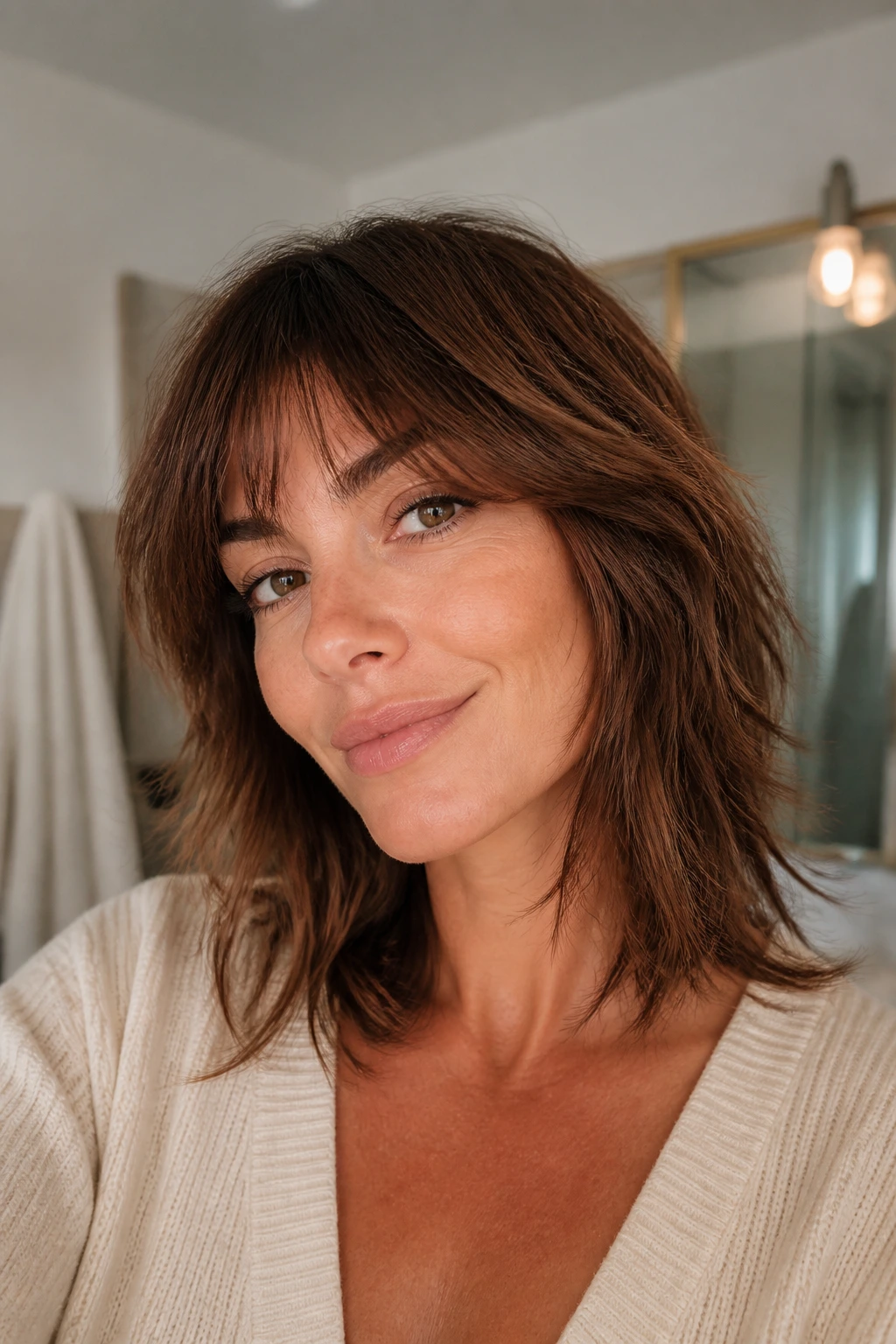
Medium shag haircuts tend to look best when you respect the grow-out. That means a shape trim every 8 to 10 weeks if you want the layers crisp, or a little longer if you prefer a softer, lived-in edge. Bangs usually need more attention than the rest of the cut. A fringe trim every 4 to 6 weeks keeps curtain bangs from swallowing your eyes and stops bottleneck bangs from losing their shape.
At home, use a clarifying shampoo every couple of weeks if you lean hard on texturizing spray, dry shampoo, or mousse. Product buildup can make a shag limp at the roots and sticky through the ends. If you blow-dry often, keep the nozzle pointed down the shaft and use a heat protectant every time. That tiny habit makes a bigger difference than people think.
One more thing: sleep matters. A satin or smooth pillowcase helps keep the front pieces from getting mashed into odd bends overnight. If your haircut is built around face-framing layers, that little bit of friction control saves you a lot of re-styling in the morning.
FAQ About Shag Haircuts for Medium Length Hair
Which face shapes suit medium-length shag haircuts best?
A medium shag can work on almost any face shape, but the placement changes. Round faces often look good with longer face-framing layers and height at the crown, while longer faces usually benefit from fuller bangs or a wider fringe shape.
Can fine hair pull off a shag without looking thin?
Yes, but the layers have to be handled with care. Ask for lift and movement, not heavy thinning at the ends, and keep the shortest layers moderate so the hair still has enough body to show the shape.
What’s the difference between a shag and a wolf cut?
A shag usually spreads the layers more evenly and can feel softer around the face and ends. A wolf cut leans more extreme, with a bigger jump between the shorter top layers and the longer perimeter.
Does straight hair look flat in a shag?
It can if the layers are too subtle or if the styling is too polished. Straight hair usually needs a bit of root lift, a bend at the ends, or razor-soft shaping so the cut doesn’t sit like one flat sheet.
How often should I trim a medium shag?
Every 8 to 10 weeks is a good rhythm if you want the layers to stay distinct. Bangs may need a touch-up sooner, especially if they sit near the eyes or split in a stubborn way.
Can I get a shag without bangs?
Absolutely. A no-bang shag keeps the movement through the crown and sides while leaving the forehead open. It’s a cleaner option if you like to tuck your hair back or you don’t want fringe maintenance.
What should I do if my shag looks too choppy?
Go back for a softening trim rather than trying to fix it with more product. A stylist can blend the harshest transitions and preserve the texture without turning the cut blunt.
Is a shag hard to style every day?
Not usually. The cut is doing a lot of the work already. Most people only need a quick dry, a little root lift, and some texture on the ends — the trick is avoiding too much polish.
The Shape That Still Makes Sense
The reason medium-length shag haircuts keep hanging around is simple: they solve a real problem. Hair needs movement, but not every haircut can give you movement and structure at the same time. A shag can. It can be soft or sharp, polished or messy, fringe-heavy or fringe-free, and still keep its backbone.
That flexibility is the gift here. If you want a cut that changes with your styling mood instead of fighting it, medium length is where the shag stops being a trend and starts being a very good idea. Keep the layers honest, keep the ends alive, and let the shape breathe a little.
