



A good short shag on Black hair should move when you shake your head. If it sits like a helmet, the cut is off.
That sounds blunt, but it’s the truth. Short shag haircuts for Black hair live or die on movement, and Black hair gives you a lot to work with: shrinkage, density, coil pattern, soft bends, tight curls, pressed finishes, or a mix of all four depending on the week. A shag that looks chin-length in the salon can sit at the cheekbones once it dries. A fringe that seems cautious when wet can land right above the brows after a twist-out. That shifting shape is not a problem. It’s the whole point.
What I like about these cuts is how they solve a real styling problem without pretending every head of hair behaves the same way. Some short cuts flatten too hard around the crown. Others puff out at the sides and forget the face exists. The right shag fixes both. It can be soft and fluffy, sharp and piecey, tidy at the nape, or big up top with a bit of edge around the temples. The 35 looks below cover the full range, from tiny tapered shapes to shaggy bobs that still keep their bounce.
Why These Short Shags Fit Black Hair So Well
-
Shrinkage works with the shape, not against it: Layers land at different spots once the hair dries, so the cut still reads as intentional instead of collapsing into one block.
-
Density gets some breathing room: Internal layers remove bulk where thick hair can balloon out, which keeps the sides from looking boxy.
-
You can style the same cut three ways: A wash-and-go, twist-out, and silk press will all land differently, but the same shag can handle each one if the layers are placed well.
-
Fringe becomes optional, not scary: Side-swept pieces, curtain bangs, and baby bangs all work because the shag already has texture baked in.
-
Short does not have to mean flat: A well-cut shag keeps lift at the crown and enough length around the face to avoid that close-cropped, one-note look.
1. Tapered TWA Shag with a Lifted Crown
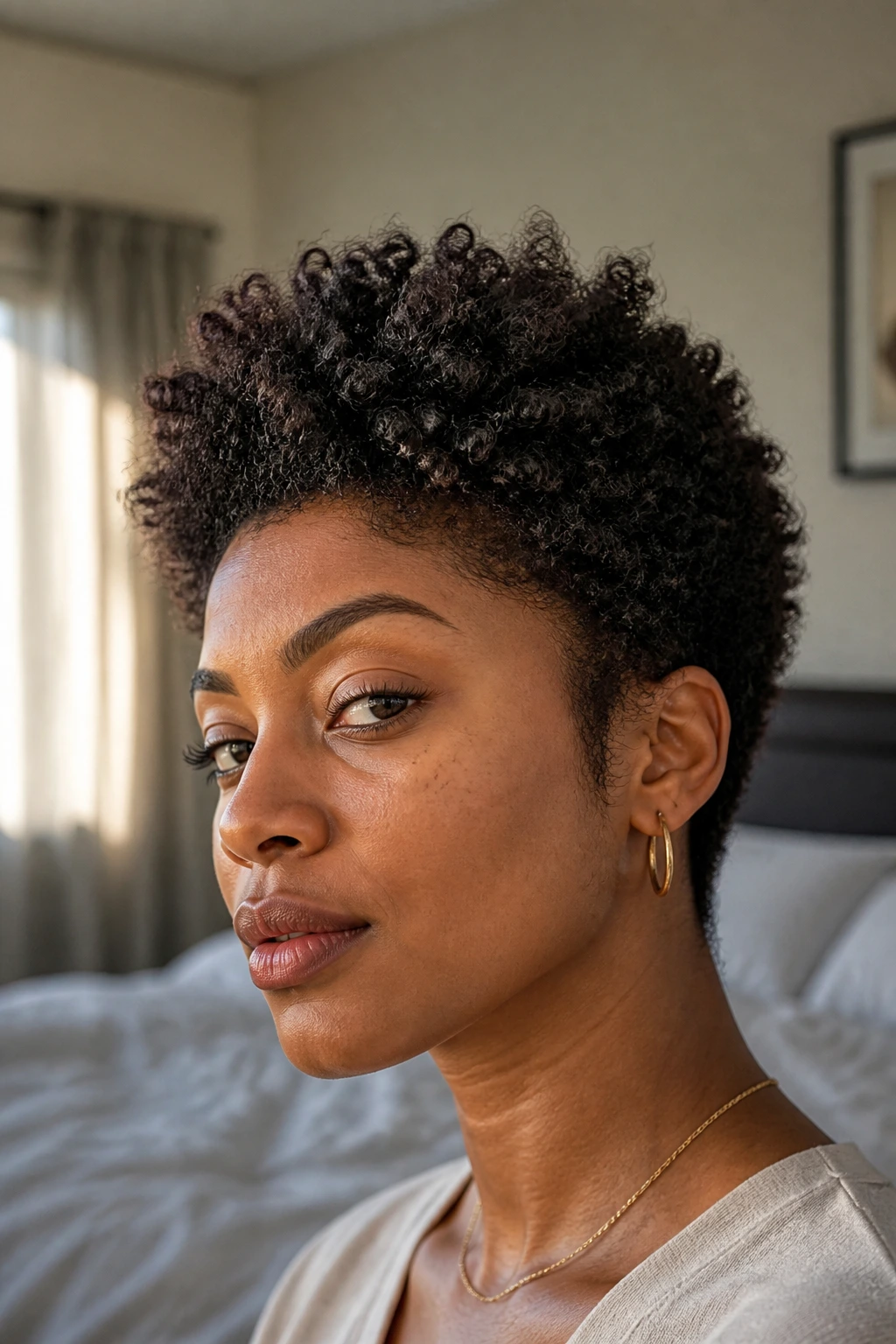
A tiny shag can still have a lot of personality. On a tapered TWA, the crown stays a touch longer than the sides, so the shape reads soft and rounded instead of clipped too close to the head. It’s one of those cuts that looks especially good when the hair is dry and fluffy, because the layers catch the light and separate without needing much coaxing.
Why It Works
This cut is built for shrinkage. The crown keeps enough length to stand up, while the nape and temples get tightened so the whole head doesn’t balloon outward. If your hair is 4B or 4C and you want shape without a lot of daily styling, this is a smart place to start.
Ask For This
- Crown left about 1 to 1½ inches longer than the sides
- Soft point-cut ends, not a blunt line
- Tapered nape and temples
- A dry-cut finish if your hair shrinks hard
Best move: keep the top slightly longer than you think you need. Shrinkage will take it anyway.
2. Curly Pixie Shag with a Feathered Fringe
Can a pixie feel shaggy without looking stiff? Absolutely, if the fringe is feathered and the top has a little swing. This version sits close enough to the head to feel neat, but the front pieces stay soft so the face doesn’t get swallowed by the cut.
The trick is keeping the fringe airy. A heavy straight bang can fight curly Black hair. Feathered fringe, on the other hand, bends with the curl pattern and gives the cut a lighter edge. It’s especially nice on oval and heart-shaped faces.
A touch of mousse and a diffuser make the layers pop. If you air-dry, clip the front up for a bit so the fringe doesn’t dry flat against the forehead. That tiny move changes the whole silhouette.
3. Rounded Afro Shag with Soft Internal Layers
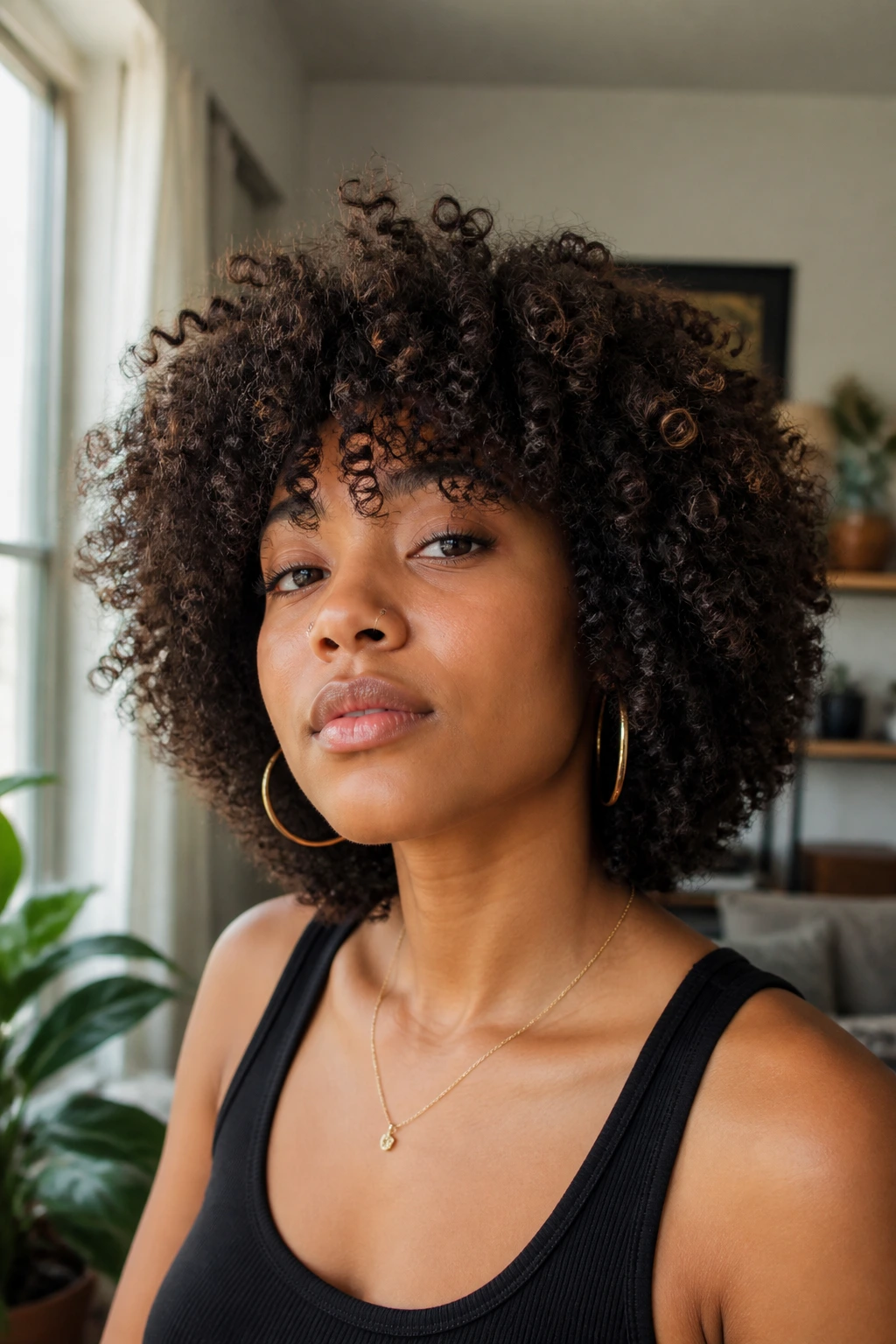
This is for the person who wants volume, but not the triangle. The outline stays round, almost cloud-like, while the layers inside the shape take out enough bulk to keep it from feeling heavy around the ears and jaw.
That internal layering is the real workhorse. You won’t always see it immediately in the mirror, but you’ll feel it when your fingers run through the hair and don’t hit one dense wall. On thick 4A to 4C hair, that difference matters more than any fancy styling trick.
What to Tell Your Stylist
- Keep the perimeter circular
- Use internal layers rather than aggressive thinning
- Leave enough fullness at the sides to keep the afro shape
- Cut with your usual curl state in mind, not stretched hair alone
4. Jaw-Length Wash-and-Go Shag Bob
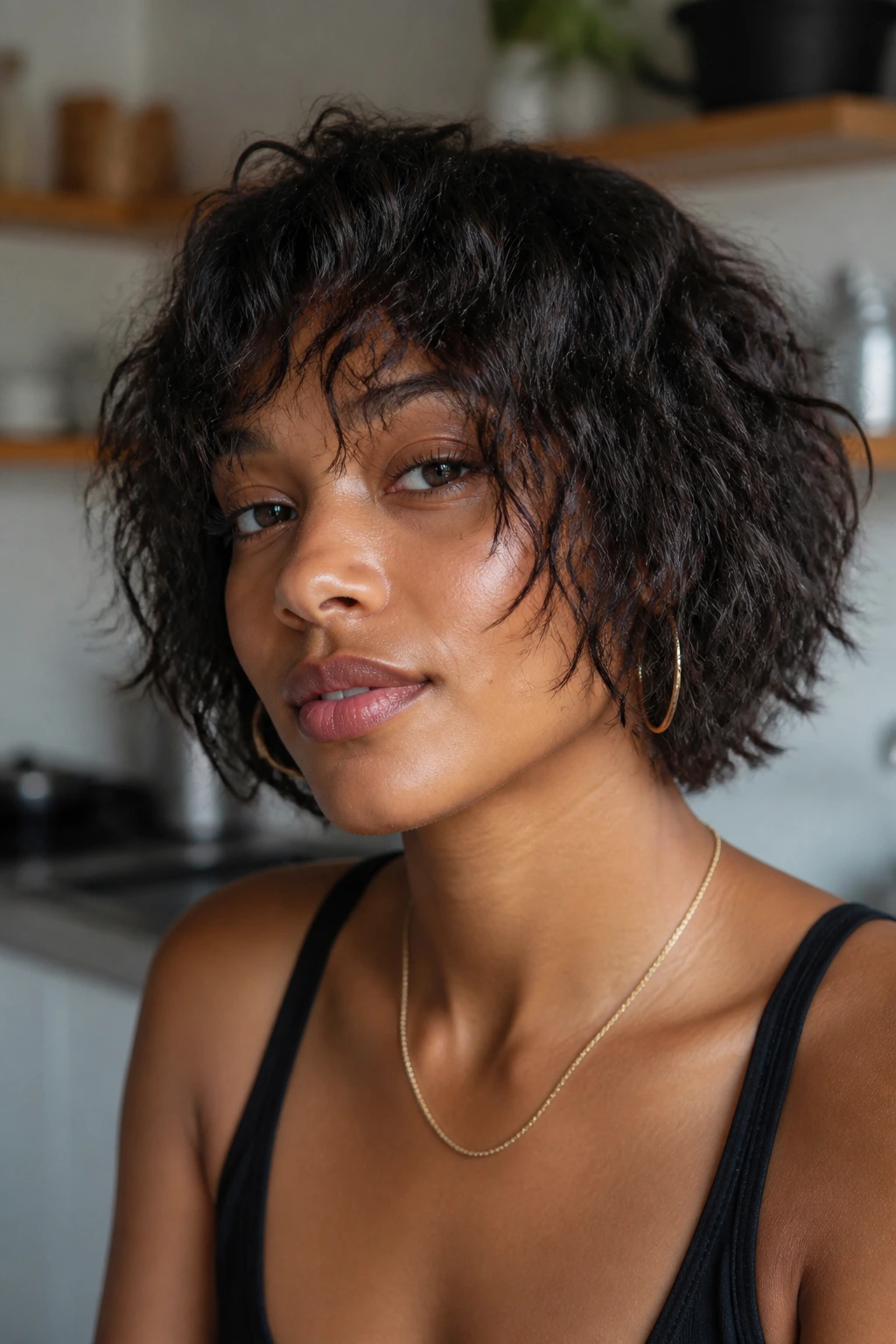
This is not a blunt bob with a shaggy name slapped on it. The ends are loose, chipped a little at the tips, and the front pieces brush the jaw so the cut opens up around the face. It has that easy movement people want from a shag, but the bob length keeps it tidy.
If you wear wash-and-go styles, this one earns its keep fast. The curls fall into place without needing a lot of manipulation, and the jaw-length shape makes earrings and glasses show up instead of fighting them. It’s especially flattering if your hair likes to spring up around the chin.
Use a light cream under a gel or mousse mix. Too much butter will weigh the shape down. That’s one of the rare times where less product gives you a better result.
5. Coily Wolf Shag with a Tidy Nape
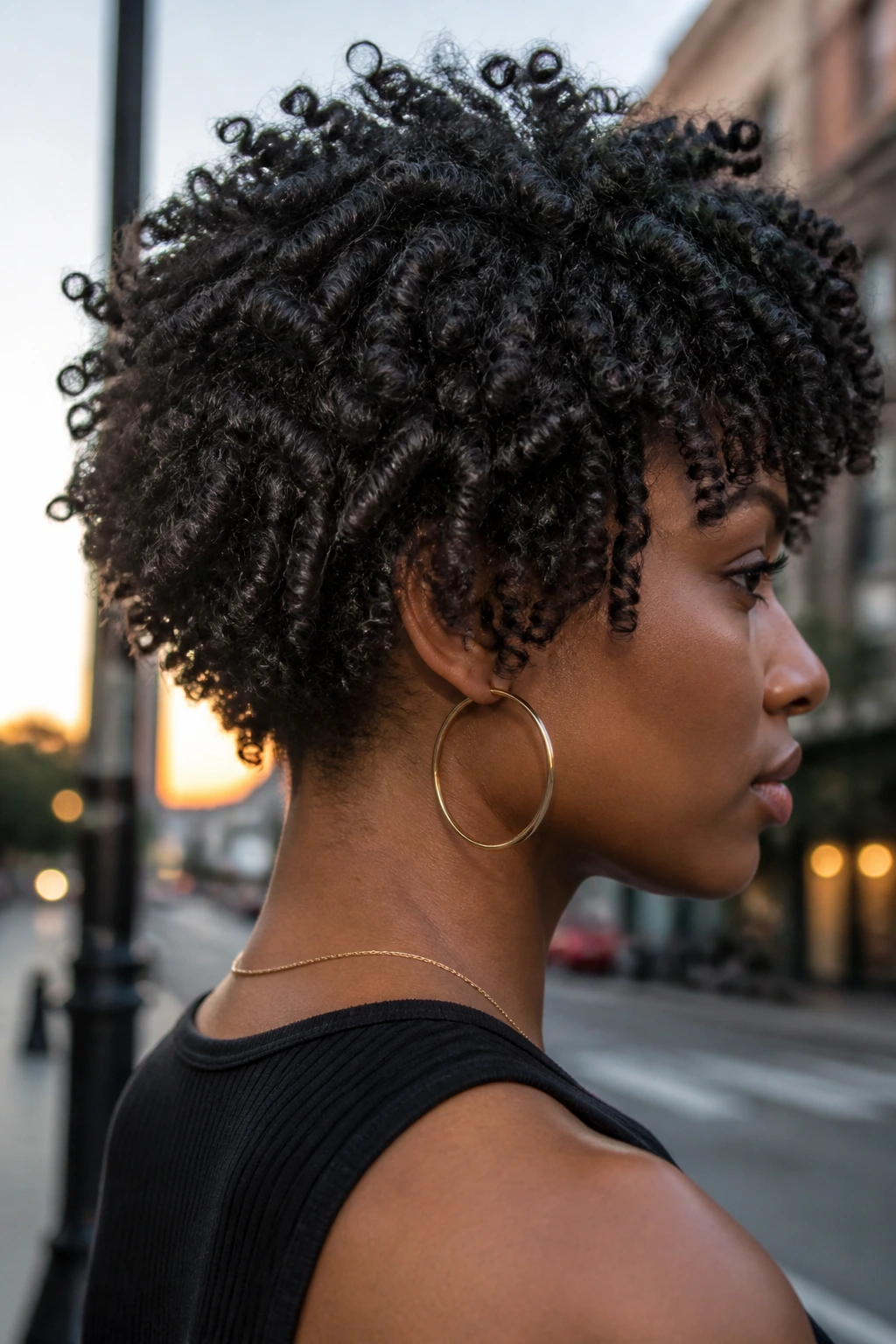
A wolf cut on Black hair can look amazing when the contrast is controlled. Shorter layers up top, a slightly longer back, and a tidy nape give you that rebellious profile without making the whole head look uneven or unkempt.
What I like here is the tension between soft and sharp. The crown has lift, the top pieces have movement, and the back drops just enough to make the shape feel deliberate. On dense coils, that longer back also helps the cut keep some length after shrinkage.
If you want edge but not a full mullet moment, ask for a wolf-shag hybrid with the nape cleaned up tightly. It keeps the style from drifting into shaggy-overgrown territory.
6. Side-Swept Shag with Long Bangs
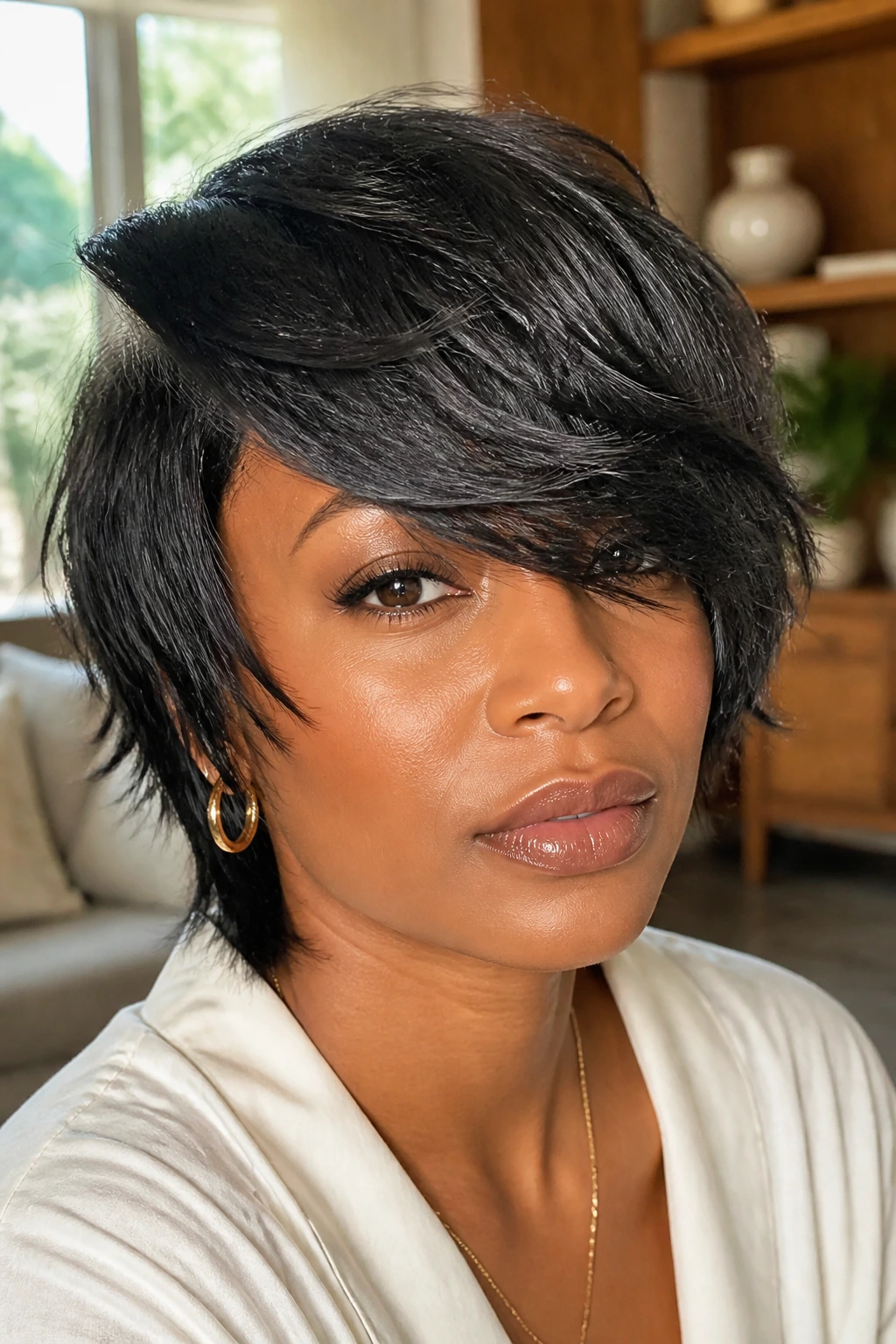
A deep side sweep can save a shag that might otherwise feel too open at the forehead. Long bangs soften the cut and give you a place to play with volume, especially if your curl pattern likes to clump into bigger pieces on one side.
The part matters here. A side part with a little lift at the root gives the front some drama without needing extra length. If your face is round or square, this shape can soften the strongest angles in a way that feels natural, not cosmetic.
Style Note
Use a diffuser with your head tipped slightly toward the longer side. That helps the bangs dry in the direction you want, instead of springing straight up and shortening themselves another inch.
7. Choppy Ear-Length Shag with Dense Texture
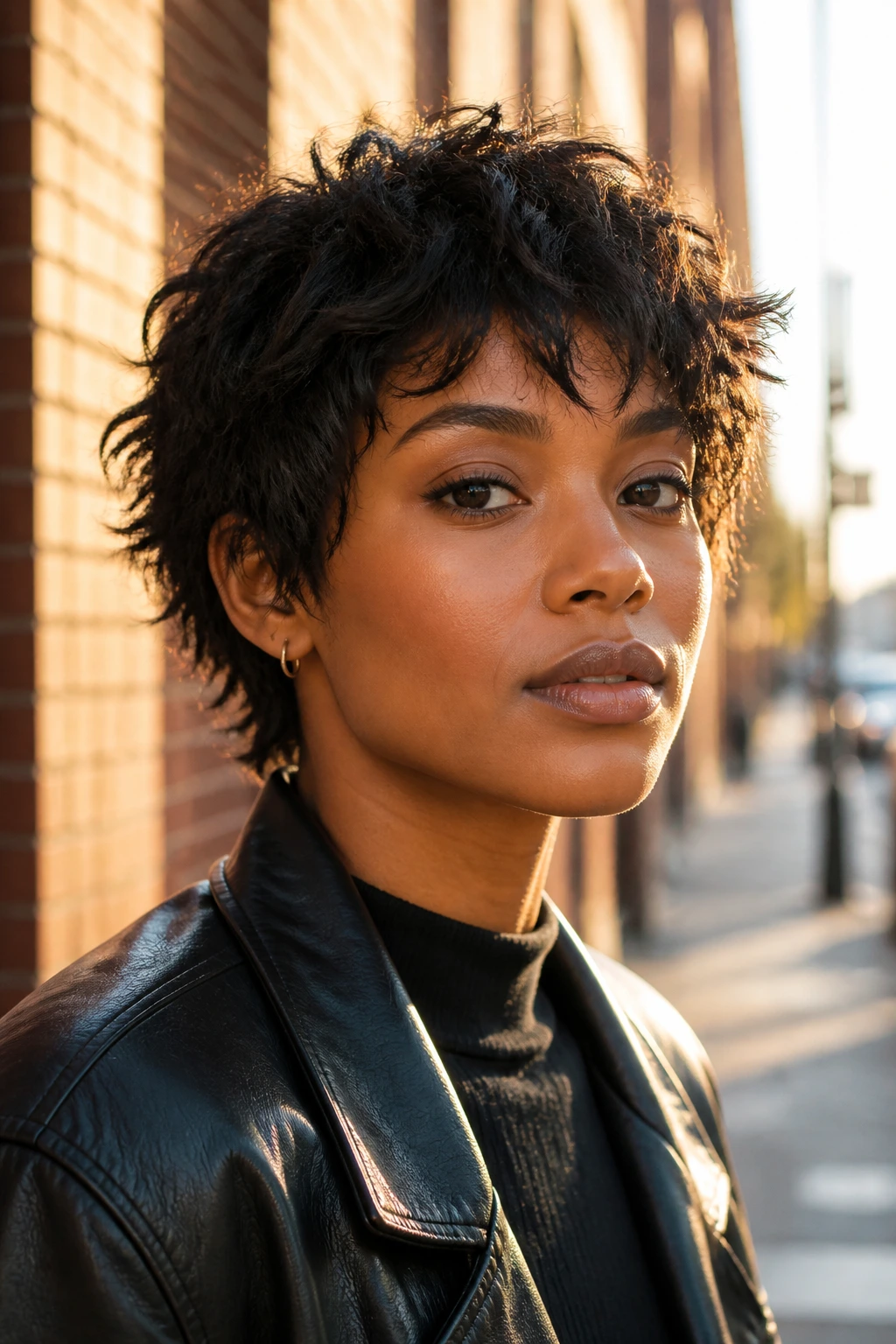
Short around the ear, choppy at the ends, and full of texture. This one has a little bit of a French-girl shrug to it, except the texture is doing something completely different on Black hair. The layers break up density, but the cut still keeps that compact, chic outline.
It works especially well if your hair is thick and tends to puff out at the sides. The choppy ends keep the shape lively. A round brush is optional; fingers are often enough. And honestly, fingers can do a better job of preserving the piecey texture than a brush that over-smooths everything.
If your stylist reaches for thinning shears, pause and ask what they’re doing. You want texture, not weak ends.
8. Soft Mullet Shag for Natural Curls
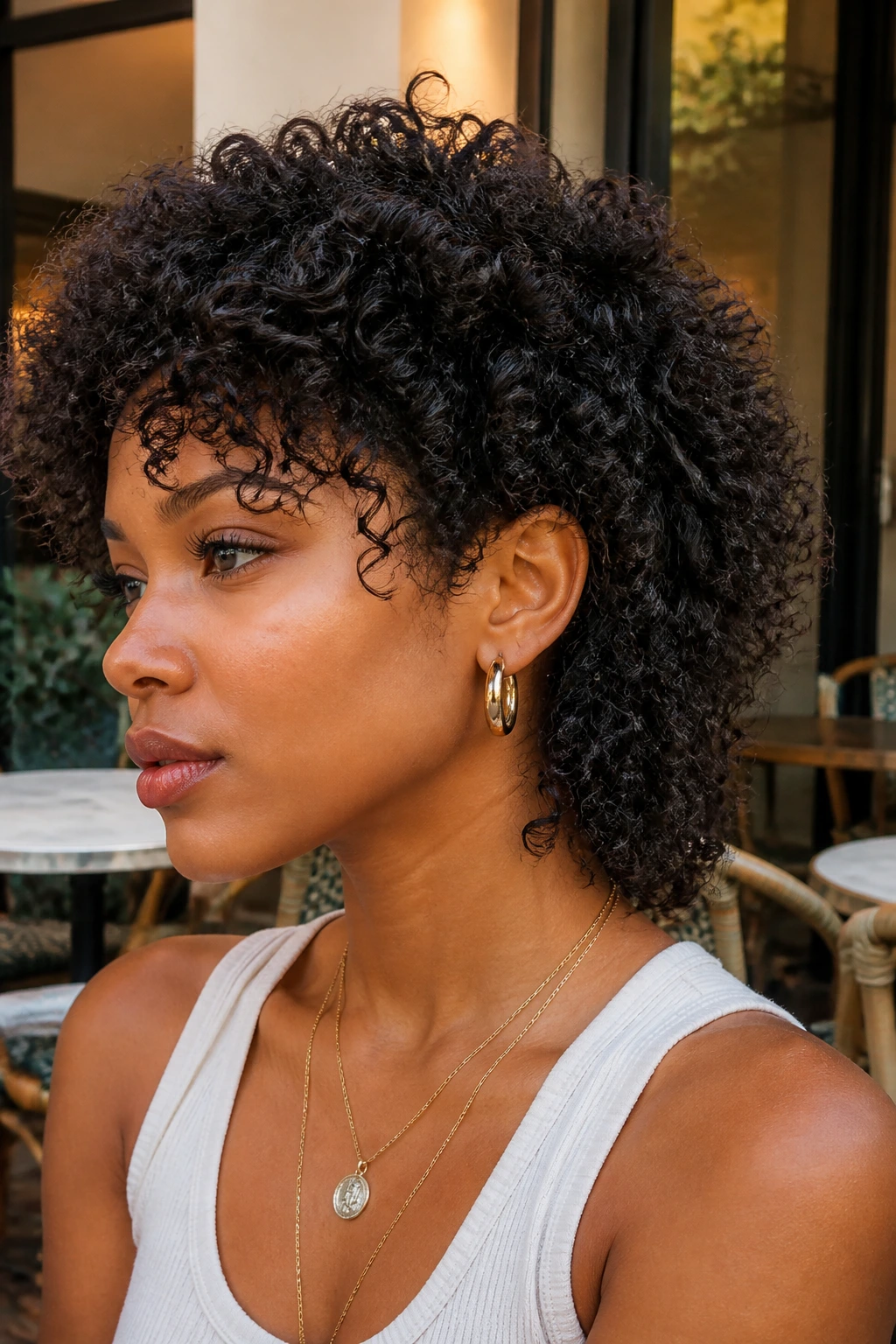
This cut gets misunderstood because people hear “mullet” and think costume. On natural curls, a soft mullet shag can look polished, modern, and a little daring all at once. The front stays shorter and more open, while the back keeps a bit more length so the silhouette stretches down the neck.
It’s a good pick if you like shape but hate hair that clings too closely to the face. The longer back gives the curls room to fall, and the front layers can be pushed forward or swept aside depending on the day. It’s not a shy haircut.
This one shines when the curl pattern is defined but not overly tight. If the curls are very compact, make sure the back isn’t left so long that it loses the shag shape and starts reading like a regular grow-out.
9. Twist-Out Shag with Face-Framing Pieces
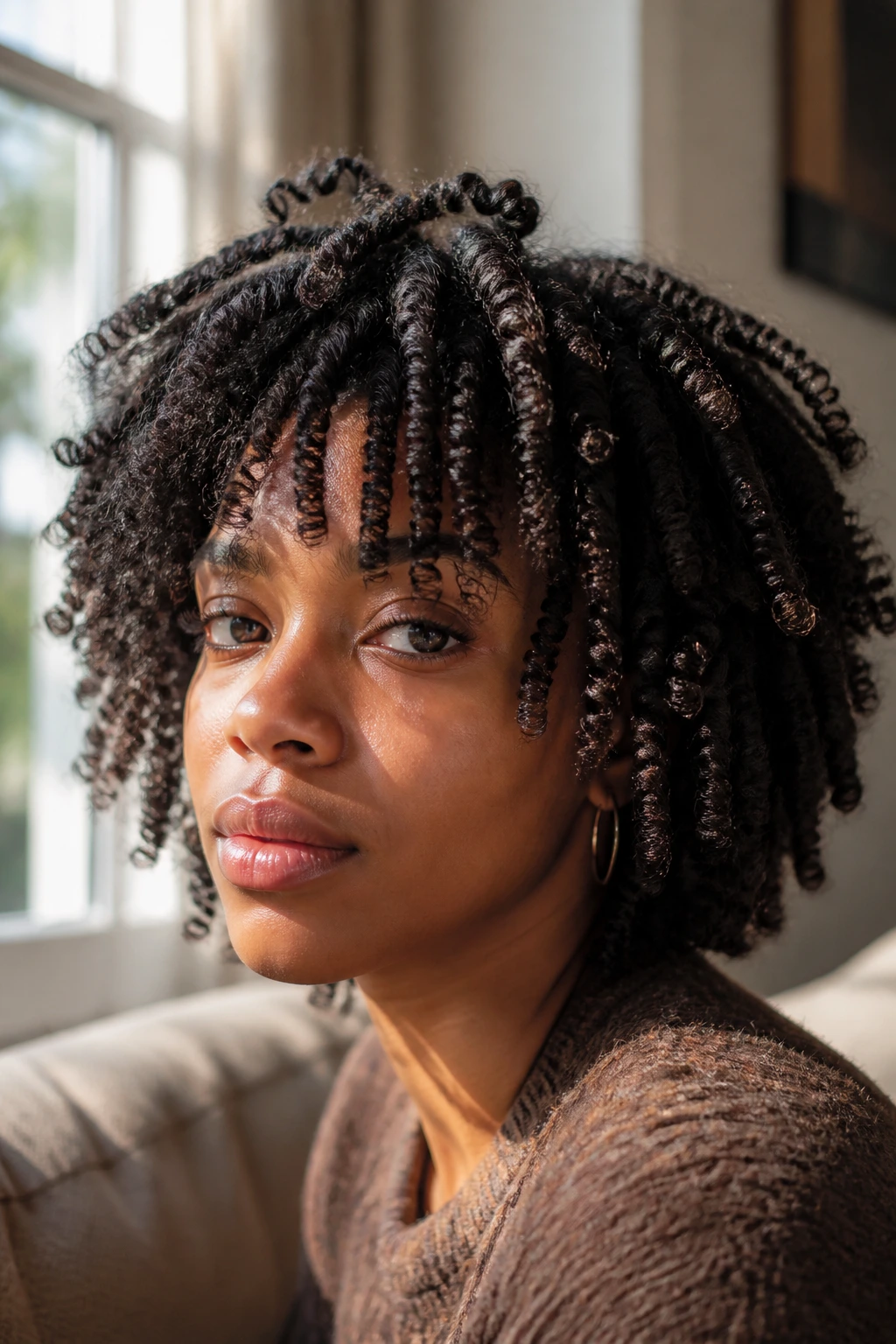
Why does a twist-out shag feel different from other short cuts? Because the layers are built to open up once the twists come down. The front pieces frame the cheeks, the crown gets lift, and the ends stay soft enough to separate without turning frizzy too fast.
It’s a smart choice if you like stretched styles. Twists or mini two-strand sets let the haircut show off in pieces instead of one dense mass. When you separate the curls, you get movement around the face without needing a ton of product.
How to Wear It
- Set the hair in medium-size twists for a fuller finish
- Unravel on fully dry hair
- Coat fingertips lightly with oil before separating
- Shake the roots at the end so the crown doesn’t sit too neat
10. Temple-Fade Shag with a Compact Top
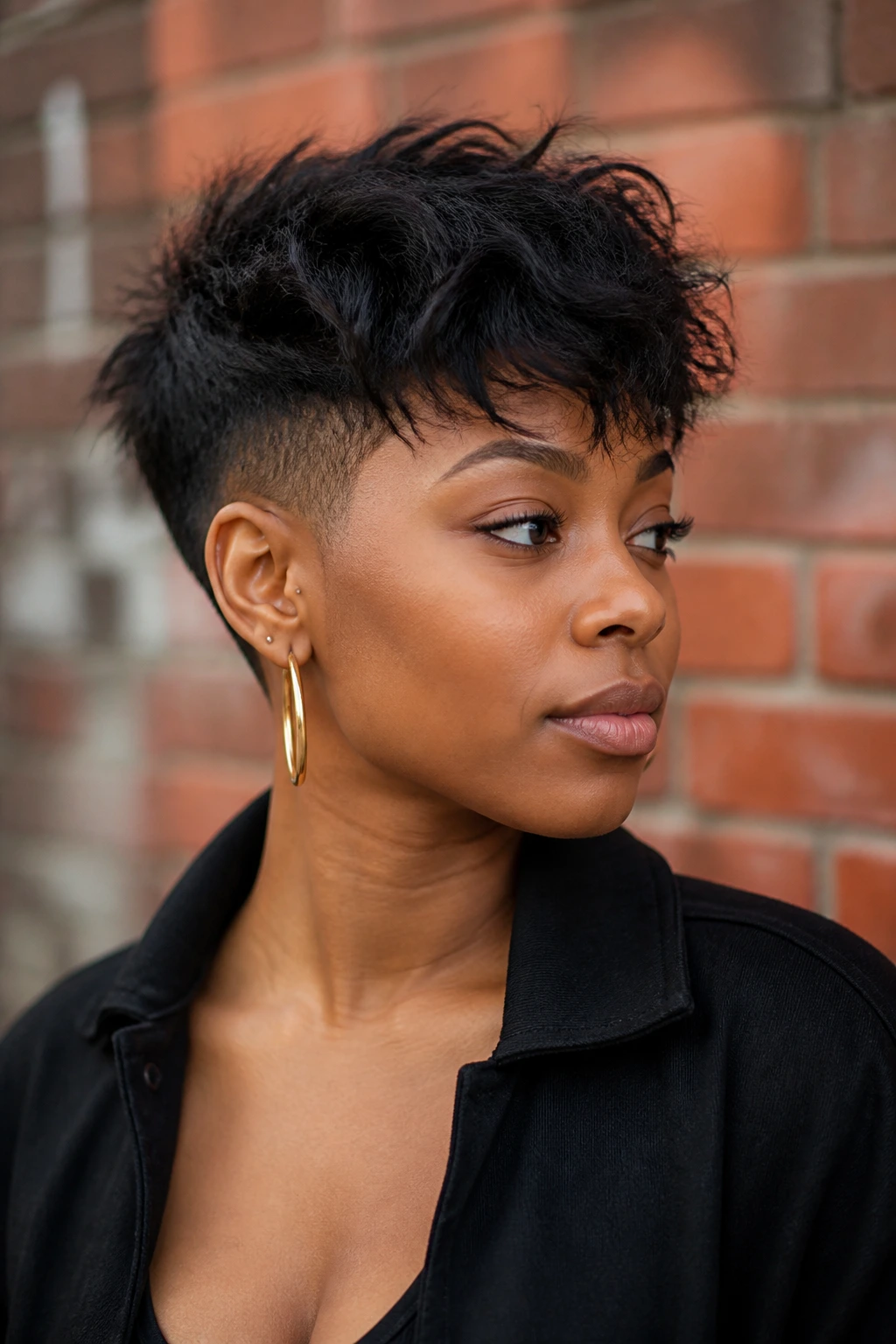
This one leans sharper and cleaner. A temple fade on the sides makes the top look fuller, and the shag layers keep the center from feeling too boxy or flat. It’s a strong option if you want a cut with structure that still has texture.
The contrast is what sells it. The fade gives the haircut a crisp edge around the face, while the top keeps enough length to move. For active routines, this is a practical cut because the sides stay neat longer between touch-ups.
If you wear glasses or small hoop earrings, this shape frames them well. It leaves room around the ear without making the head look wide. Nice balance. Clean, too.
11. Finger-Coil Shag with Defined Ends
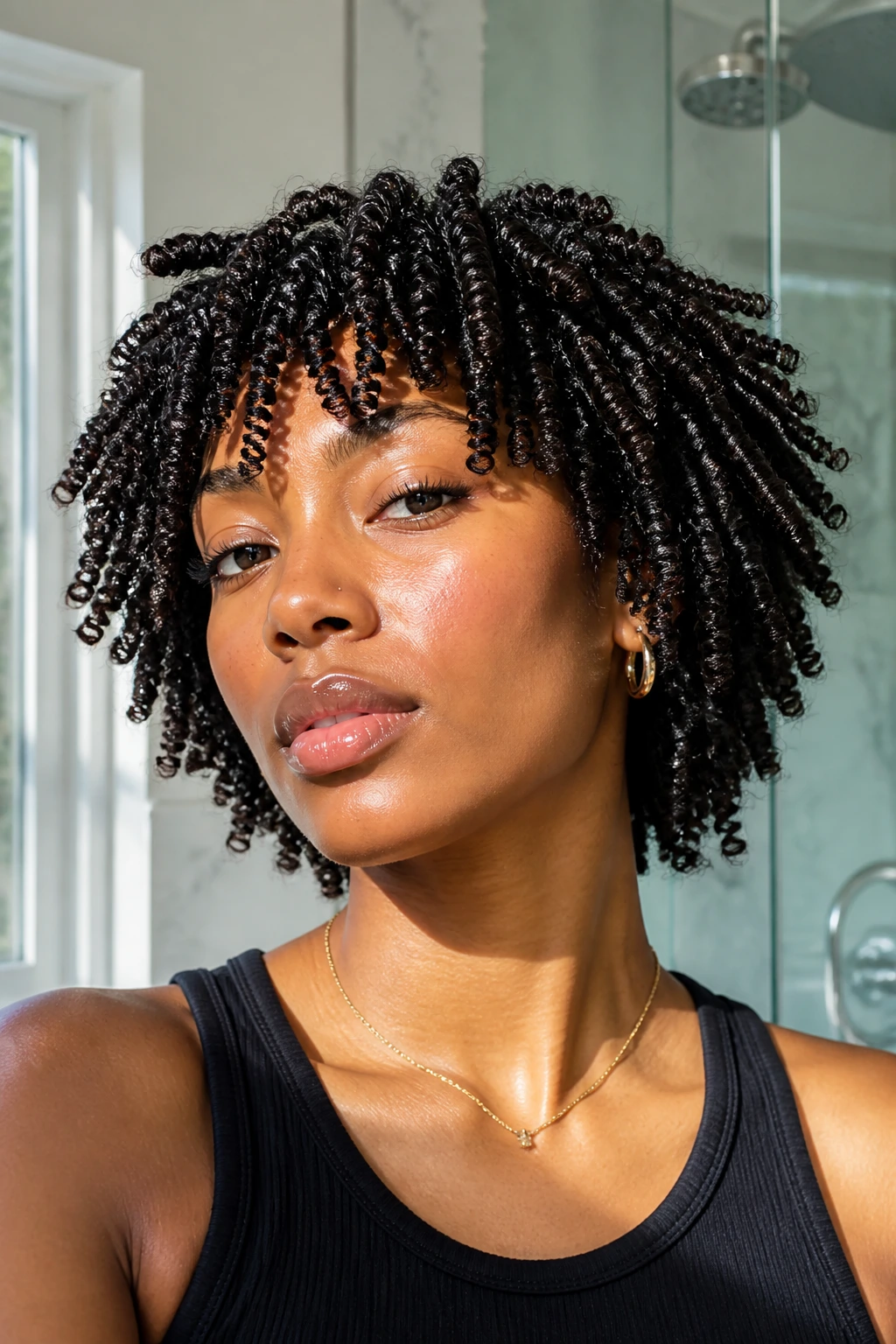
Finger coils and shag layers are a good match when you want the haircut to show up even on low-effort days. The coils make the layers obvious, and the ends keep a little spring instead of sitting dead straight or overly round.
What stands out here is definition. Each coil catches along the layer line, which gives the cut more movement than a one-length style. It also works on 3C through 4A textures if you don’t mind a little styling time on wash day.
Use a water-based leave-in and a medium-hold mousse. Heavy creams can make finger coils droop, and the shape gets muddy fast. You want the coils to sit light enough that the shag can breathe.
12. Short Curly Shag with Curtain Bangs
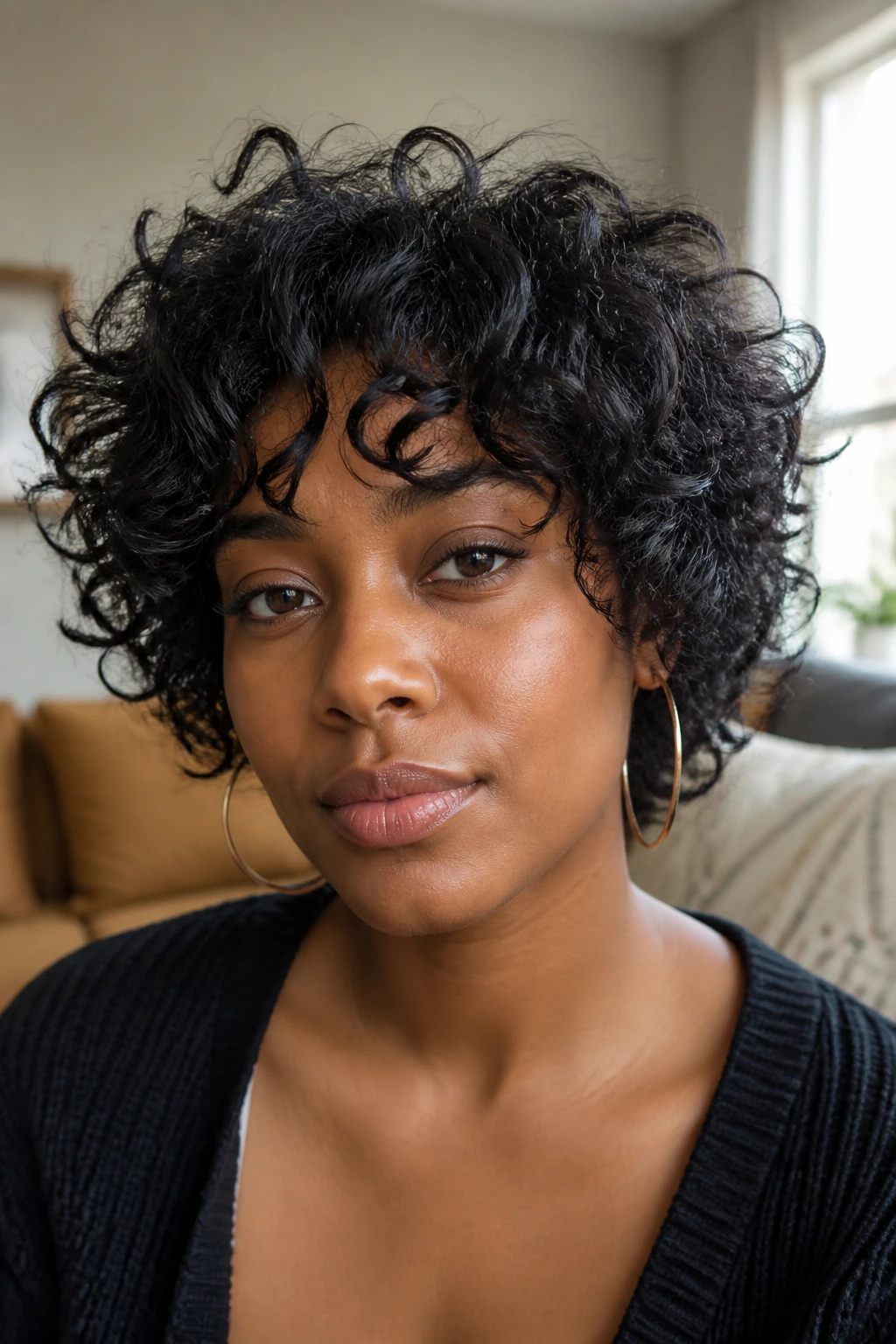
Do curtain bangs work on Black hair? They do, but they need enough softness to split naturally instead of forming a hard curtain across the forehead. This version keeps the front longer at the center and slightly shorter near the temples, which gives the face room.
It’s a flattering shape for people who want fringe without a strict bang commitment. The bangs can open in the middle, brush to the sides, or tuck into the rest of the layers. That flexibility is why it works so well on short shag cuts.
If your curls shrink a lot, ask for the bang length to sit lower than you think. The dry result may climb up the forehead more than you expect.
13. Asymmetrical Shag with a Deep Side Part
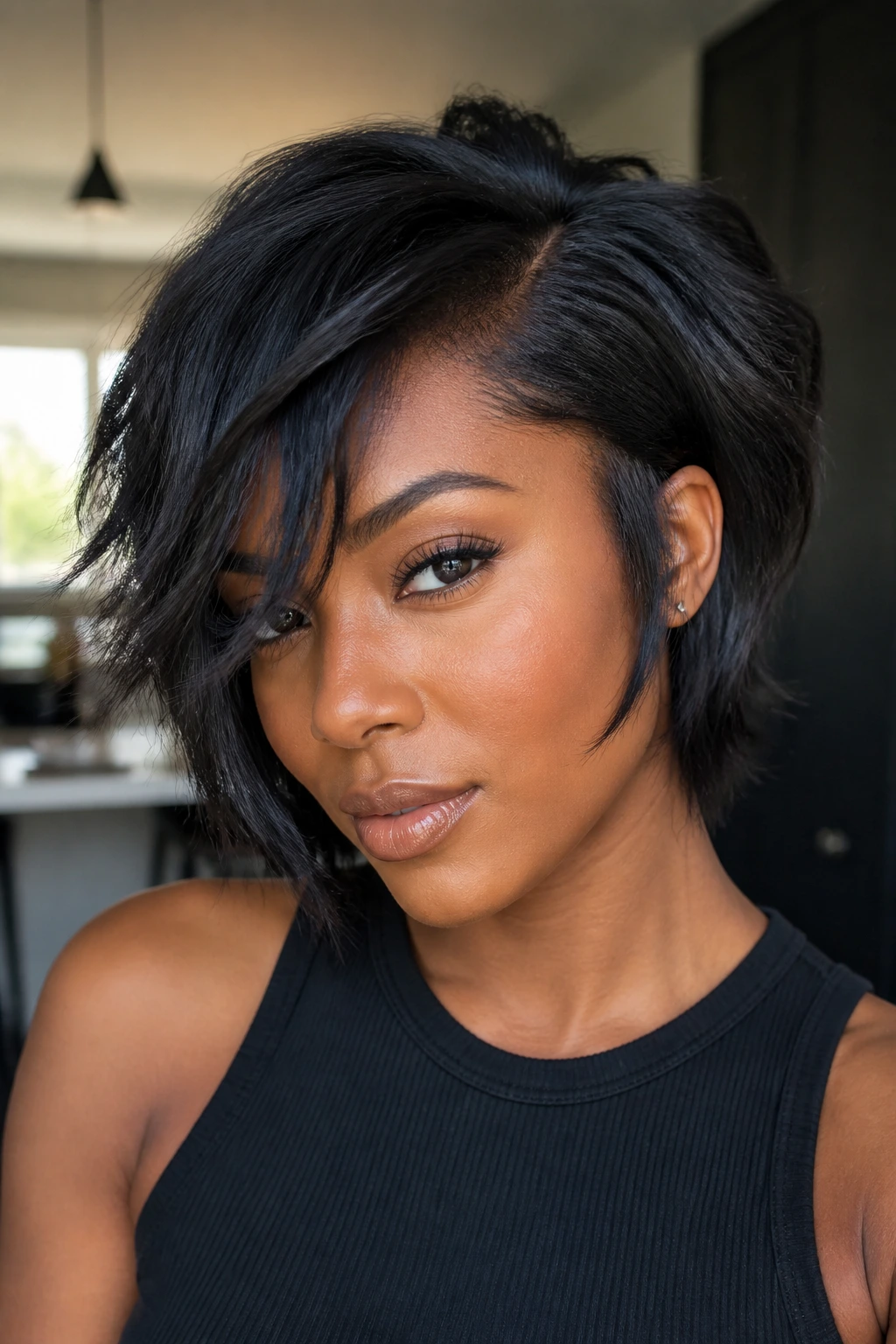
One side longer. One side shorter. That’s the whole point, and it gives the haircut a sharp edge that still feels wearable. On Black hair, the asymmetry lets you keep plenty of volume while steering the eye away from any area you don’t want to emphasize.
This cut is especially good if one side of your hair grows a little differently or if you like to wear a part on the same side every day. The shag layers break up the heavy side so it doesn’t drag the whole shape down. It’s dramatic without being precious about it.
Ask For
- A deep side part with a visible length difference
- Soft blending through the crown
- Face-framing pieces that skim the cheekbone
- Clean edges at the nape so the unevenness looks intentional
14. Shaggy Afro with Feathered Sides
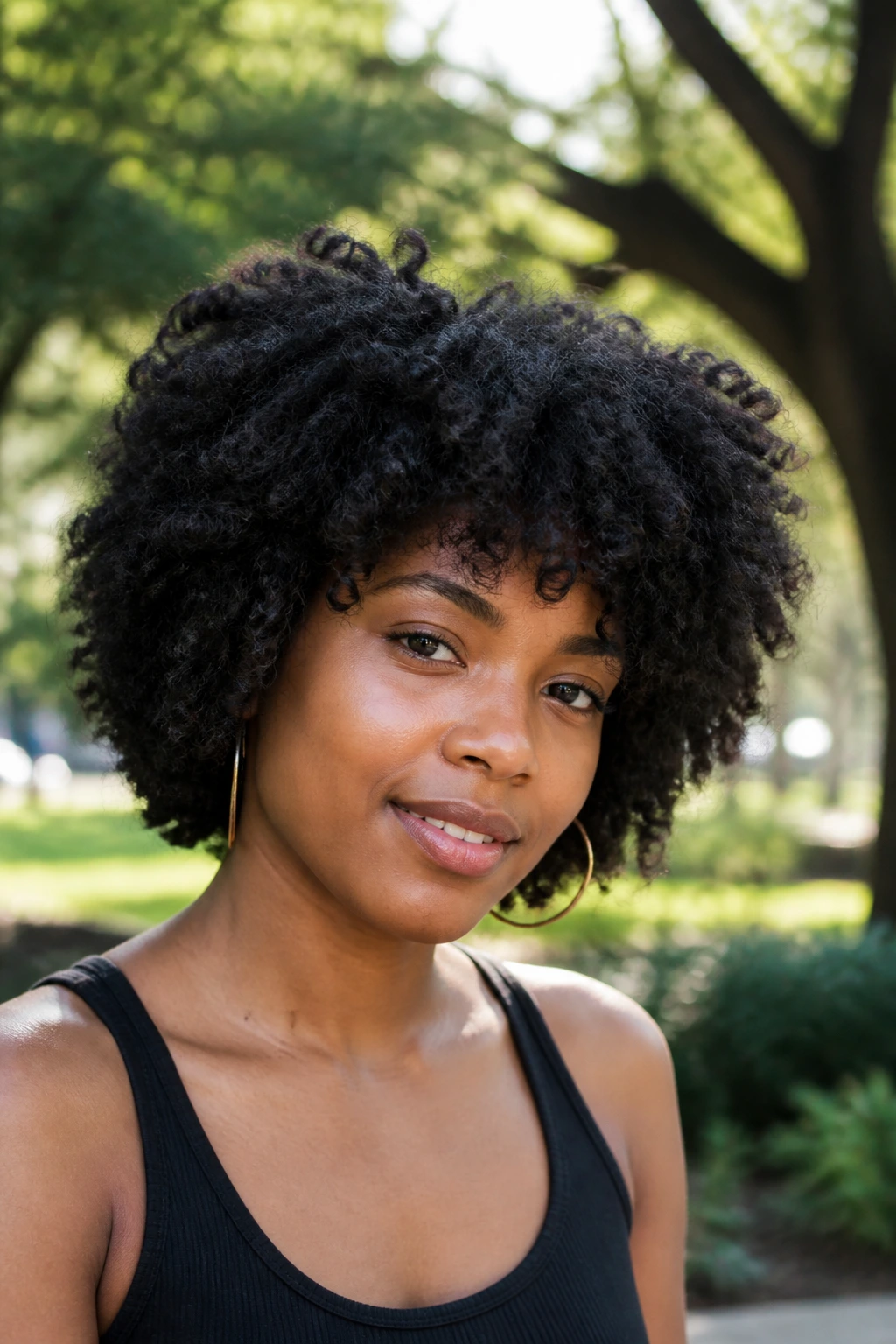
This is the kind of shag that keeps the afro spirit intact while softening the outline. The sides are feathered instead of boxed in, so the silhouette stays round but the edges don’t sit like a hard frame.
Dense hair likes this cut because it removes bulk where the head tends to widen. You still get fullness, especially at the crown, but the feathering around the ears and jaw keeps the shape lighter. That matters on short cuts, where bulk can take over fast.
If you like a rounded halo effect, this is a strong option. It pairs well with natural volume and a side part, and it doesn’t need a lot of heat to look finished.
15. Silk-Press Shag with Piecey Layers
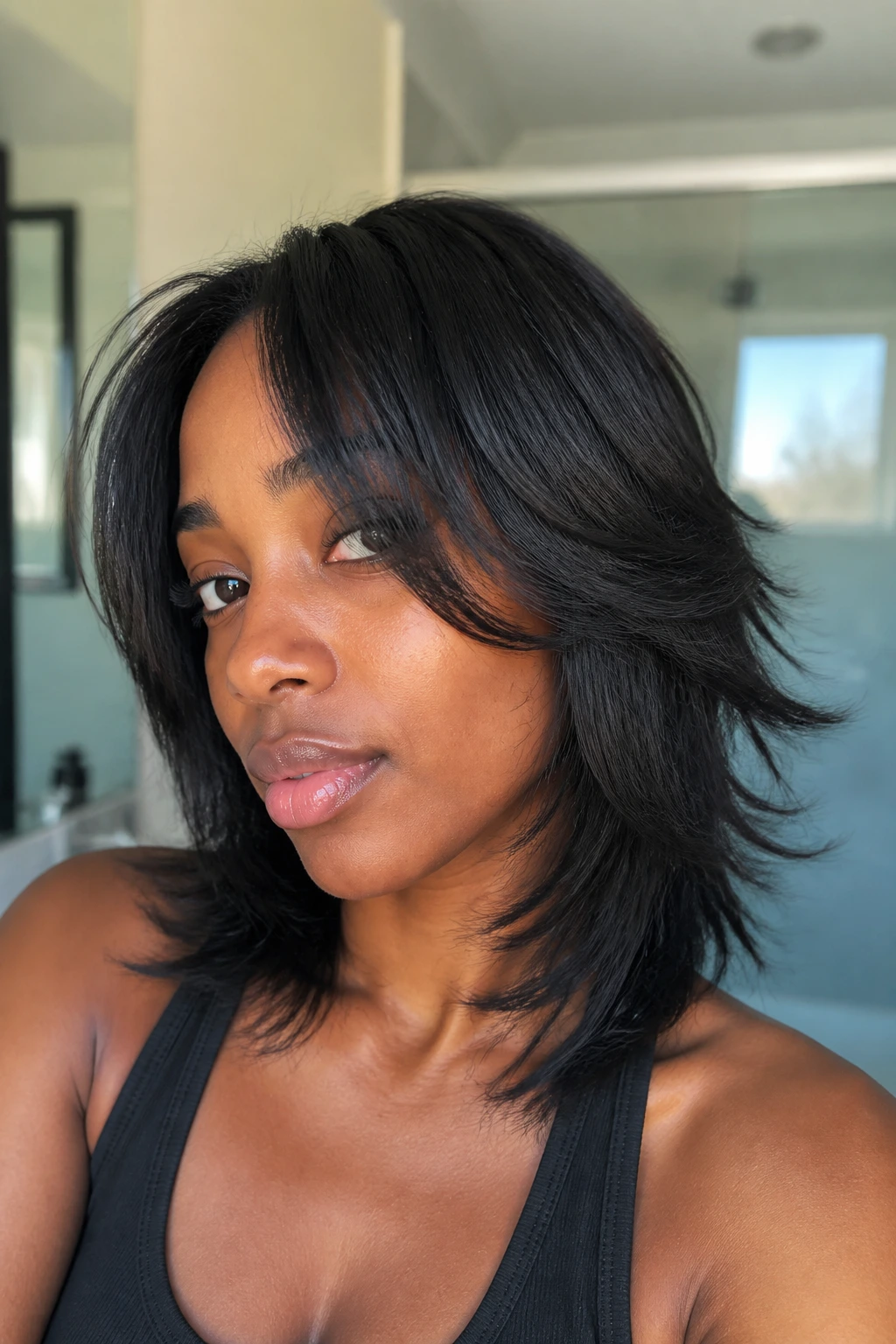
Straightened Black hair does not have to mean flat Black hair. A silk-press shag can keep the swing and movement of the cut while making the layer work visible in a different way. The ends can flip, bend, or separate into clean, piecey sections.
This version relies on sharp, careful layering. Too many blunt lines and the whole thing feels stiff. Too many razored ends and it can fray. The sweet spot is a soft, feathered cut that moves when you turn your head.
If you wear a silk press only occasionally, tell your stylist that. You want the cut to still look good when your curls come back, not just for the one shiny week after the press.
16. Frohawk Shag with Narrow Sides
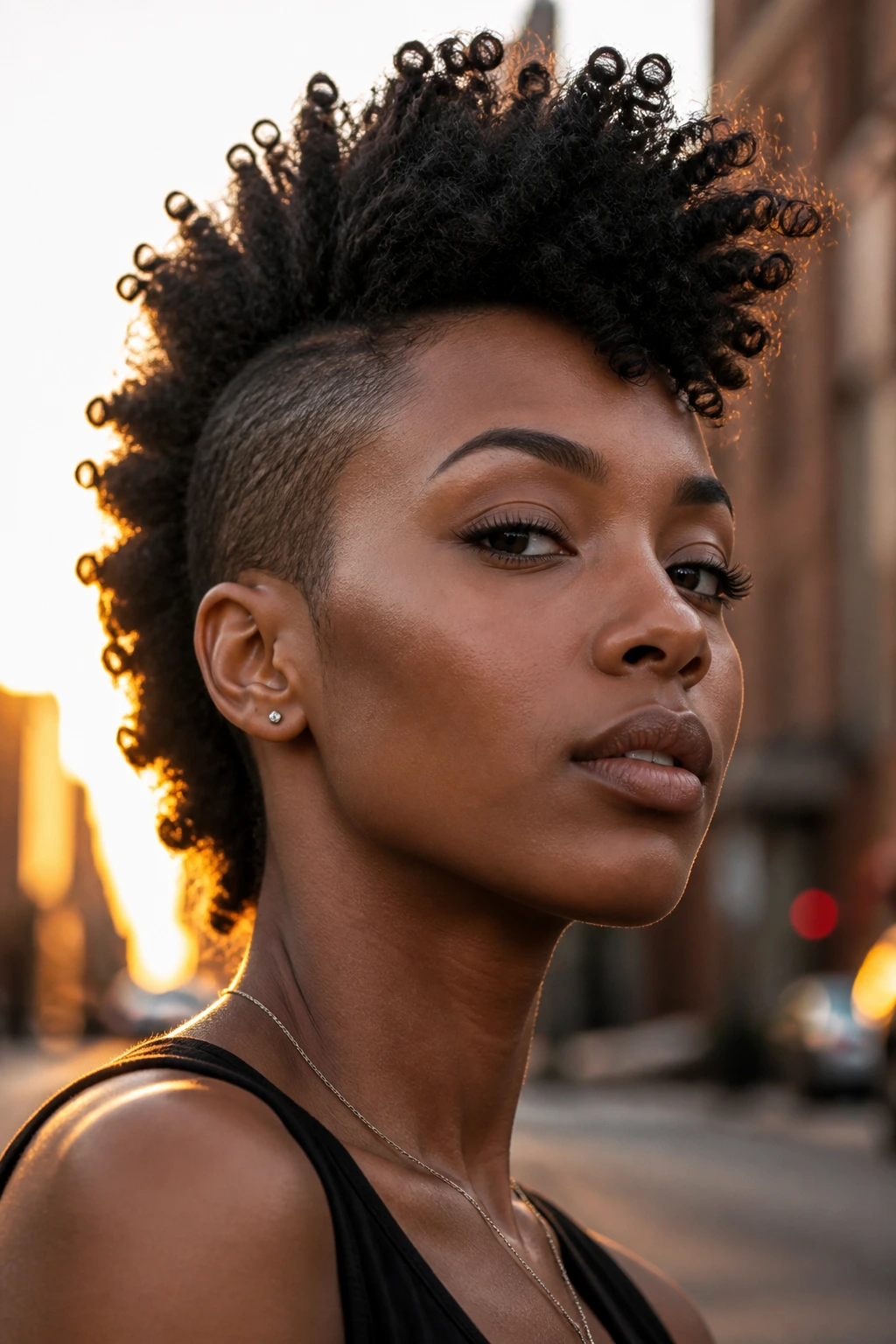
A frohawk shag has attitude built into the shape. The sides stay narrow, sometimes tapered or clipped close, while the center strip gets all the movement and height. It’s a bold silhouette, but it wears easier than people think because the sides do a lot of the visual cleanup.
The center section can be curly, coily, twisted, or blown out depending on your routine. That flexibility matters. A frohawk shag doesn’t need one fixed finish to work. It just needs enough height to make the middle read as the main event.
This one looks especially sharp with statement earrings or a clean neckline. The cut leaves space around the face and draws the eye straight up.
17. Mini Curly Shag with Baby Bangs
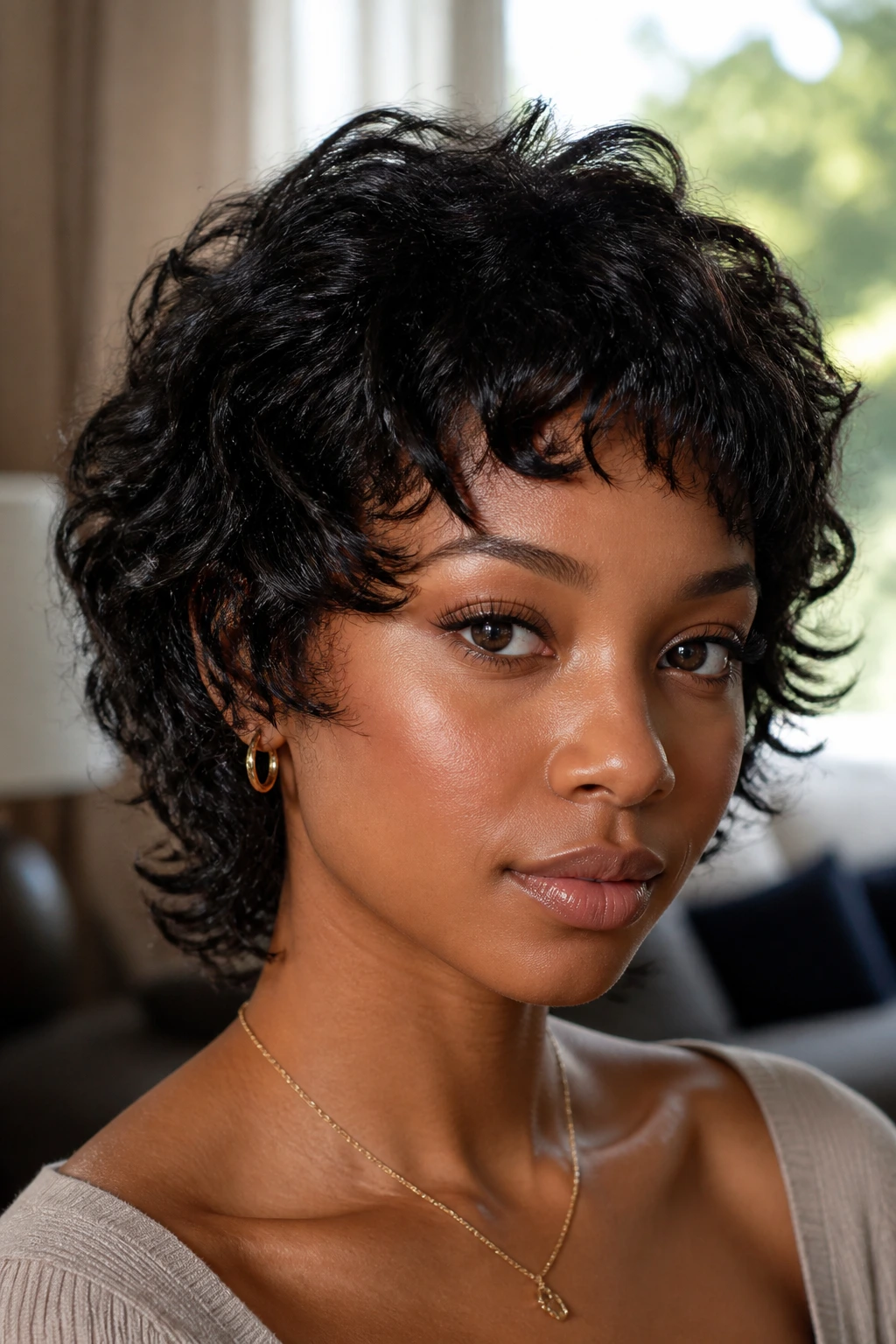
Tiny bangs are not for everybody. But when they work, they change the whole mood of the cut. Baby bangs on a short curly shag can look playful, a little edgy, and very fresh, especially if the curls are loose enough to keep the fringe from feeling heavy.
The rest of the haircut needs to stay soft. If the bangs are severe and the sides are too full, the cut can get top-heavy fast. Keep the layers around the temples and crown feathered so the short fringe has some air around it.
Maintenance is part of the deal here. Baby bangs grow quickly on curly hair because of shrinkage, so plan on keeping them trimmed if you want that sharp little line to stay visible.
18. Bantu-Knot-Out Shag with Floating Layers
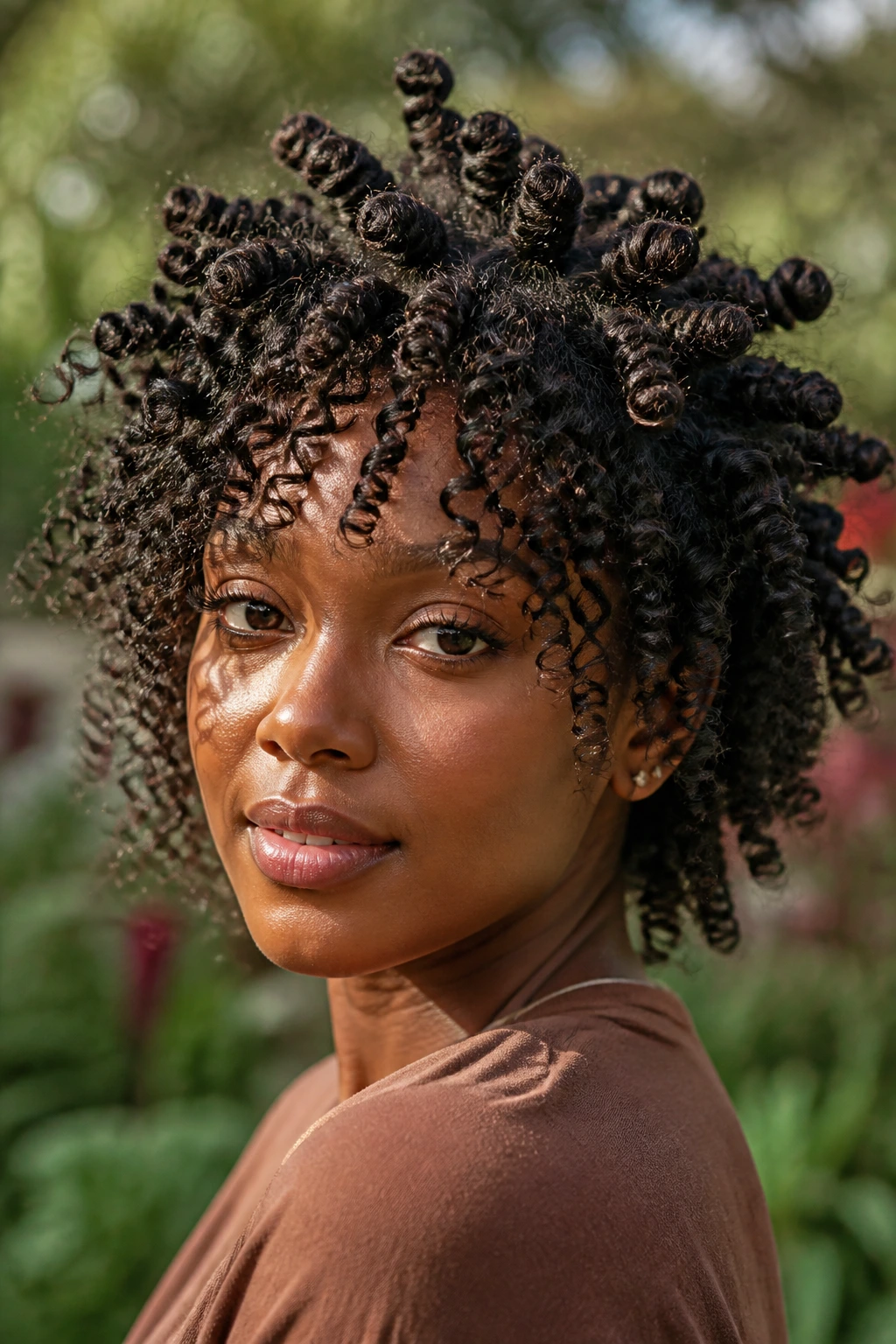
When a knot-out lands on a shag, the layers show up as bends and soft bends instead of hard curls. That’s part of the charm. The haircut seems to float, because each section falls a little differently and the shorter layers land higher around the face.
This is a good style if you like stretch and definition but don’t want a uniform pattern. The knots create movement without collapsing the shape. On short hair, that means the cut stays lively instead of turning into one tight puff.
Quick Styling Cue
Separate the knots only after the hair is fully dry. If you pull them apart too soon, the layers frizz unevenly and the ends lose that neat, curved shape that makes this style work.
19. Chin-Length Coily Shag with Soft Edges
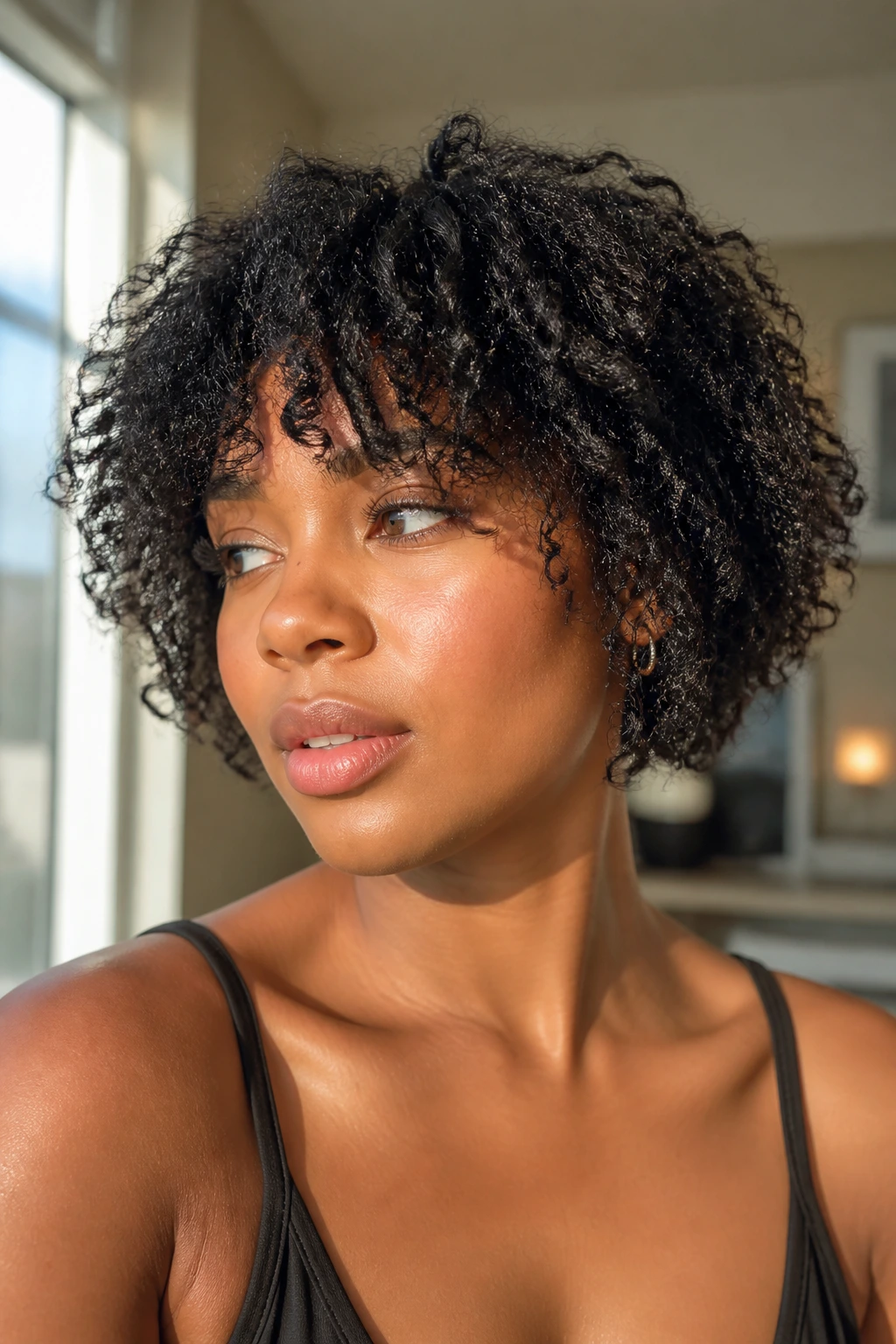
Why does chin length matter so much on coily hair? Because the dry result often sits shorter than expected, and chin-length when stretched gives you room for the layers to land in a flattering place once the shrinkage kicks in.
This cut has a gentle outline with soft edges around the jaw and a little extra height through the crown. It’s a nice middle ground for people who want a short shag that still feels like hair, not a near-buzz shape.
If your coils are tight, ask your stylist to cut with shrinkage in mind and keep the front pieces slightly longer than the side pieces. That small adjustment keeps the face from getting boxed in.
20. Tousled Relaxed Hair Shag with Light Ends
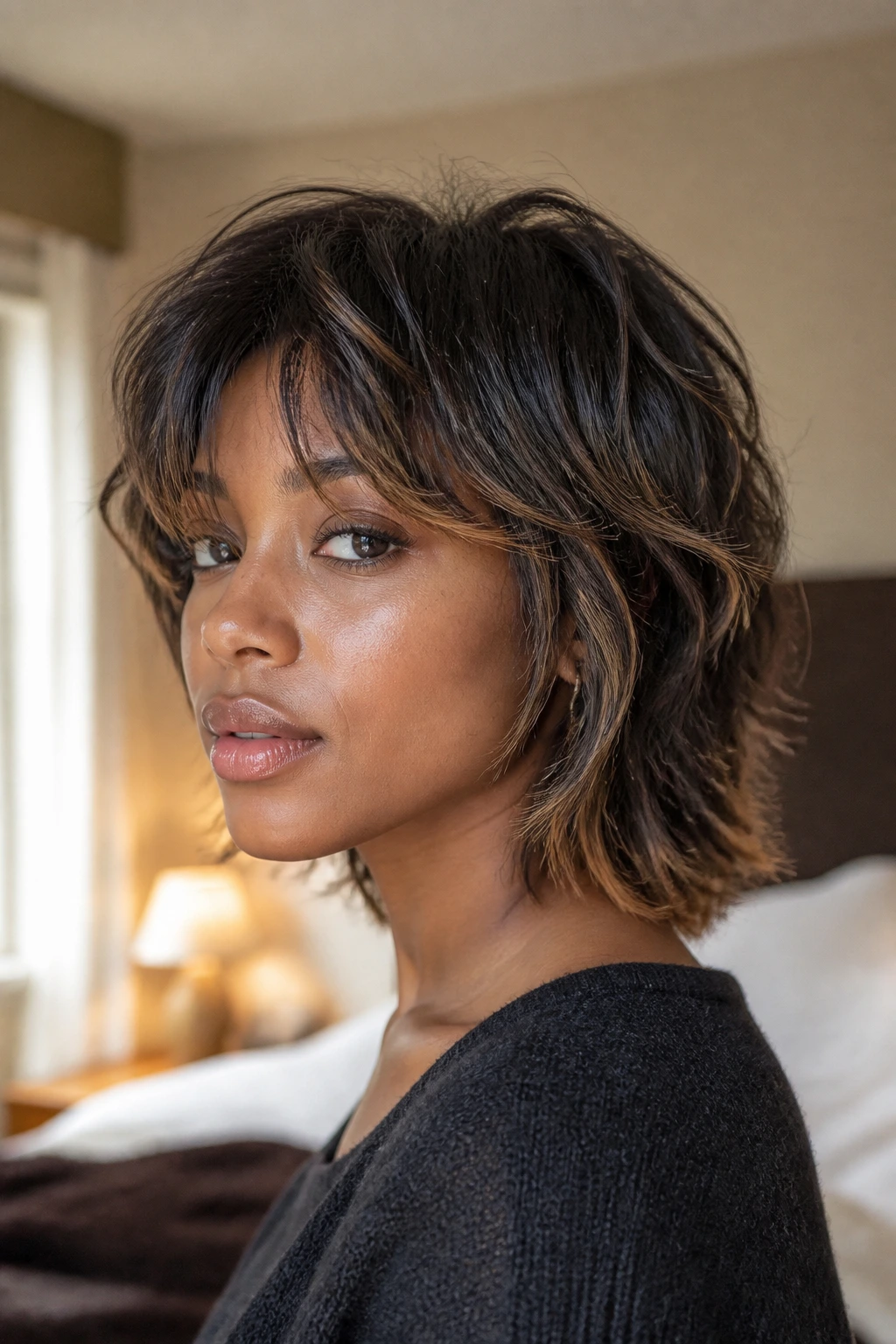
Relaxed hair can do shag layers beautifully, but the cut has to stay light. This version keeps the ends feathered and the layers soft, so the hair moves instead of hanging in one flat sheet. It’s especially good if you want a little messiness without a lot of styling drama.
A relaxed shag should never feel choppy for the sake of being choppy. The movement comes from the layer placement, not from hacking the hair into pieces. The shape should bend around the cheeks and brush the neck without looking overworked.
Heat protection matters here, obviously, but so does restraint. A small amount of serum on the ends goes farther than a heavy palmful of shine product.
21. Sculpted Tapered Shag with a Hard Part
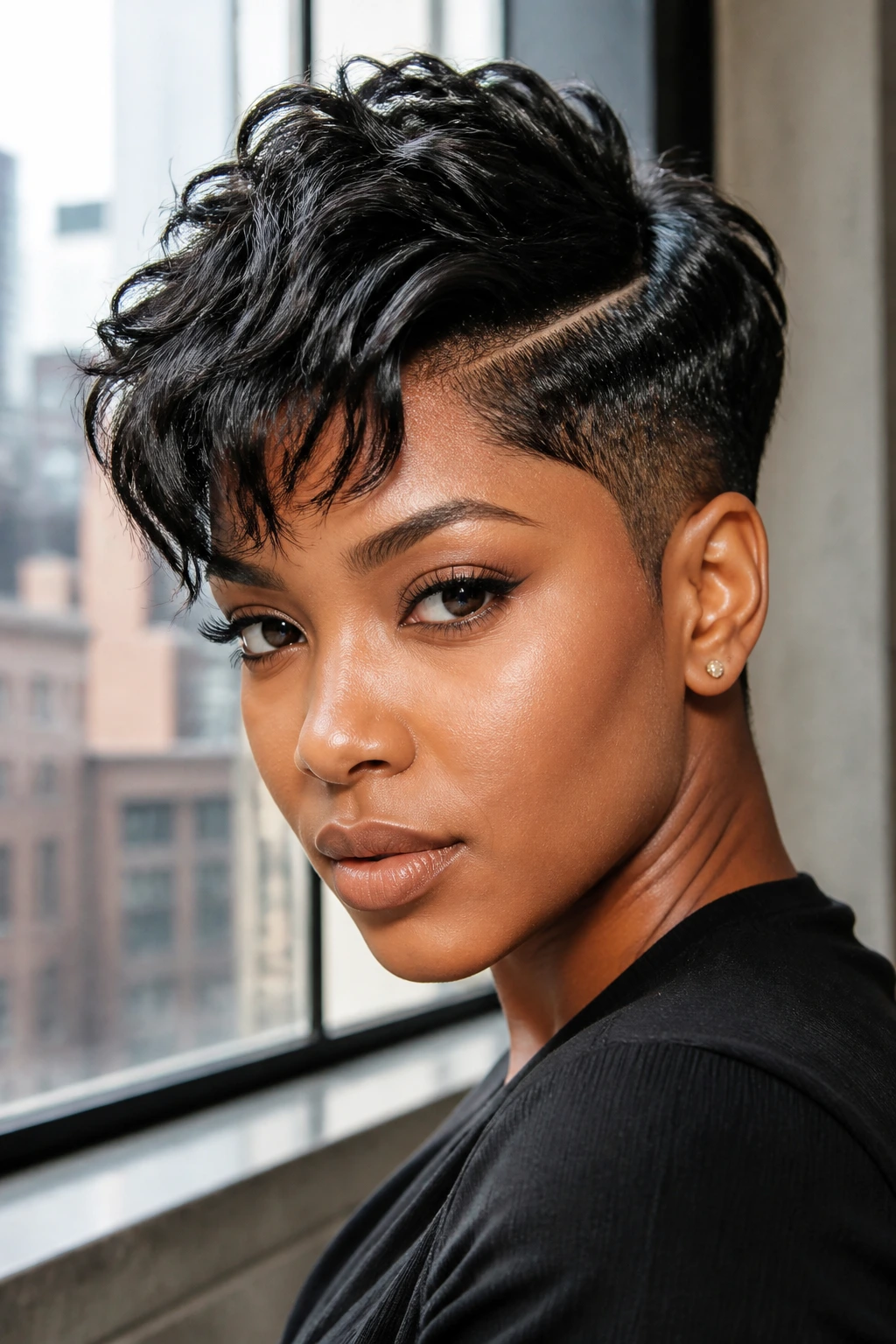
This cut is neat, deliberate, and a little angular. The hard part gives the style a crisp line, while the shag layers soften the top enough that it doesn’t read like a rigid men’s crop. It works well for short natural styles, brushed curls, or a low-texture finish.
The visual contrast is the point. Clean part. Soft layers. Tapered sides. The haircut looks tailored without losing texture, which is a tricky balance on short Black hair and one that a lot of cuts miss.
If you like structure and don’t want a fluffy outline, this is a strong pick. It holds its shape well between trims, too.
22. Curly Shag with Long Sideburns
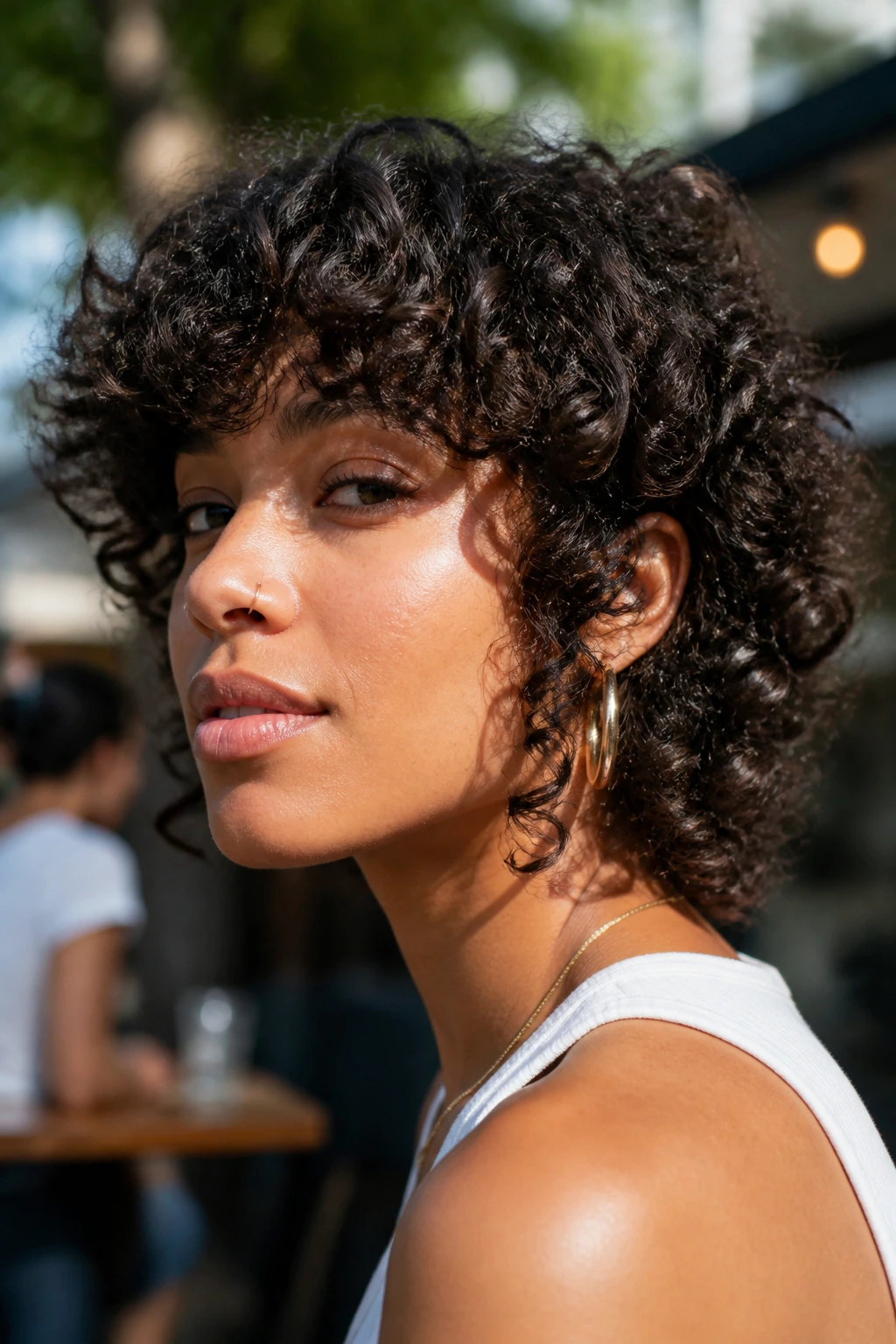
Long sideburns can do more than fill a gap. On a short shag, they stretch the face, soften the cheek line, and give the cut a little drama without requiring bangs. They’re especially useful if you wear glasses or have a wider jaw that you want to balance.
The rest of the cut stays loose and a little irregular. That keeps the sideburns from looking like a separate piece glued on. They should blend into the layers naturally and sit somewhere between polished and slightly wild.
This is one of those details that looks small until you see it in motion. Then it makes complete sense.
23. Brushed-Out Coil Shag with Airy Volume
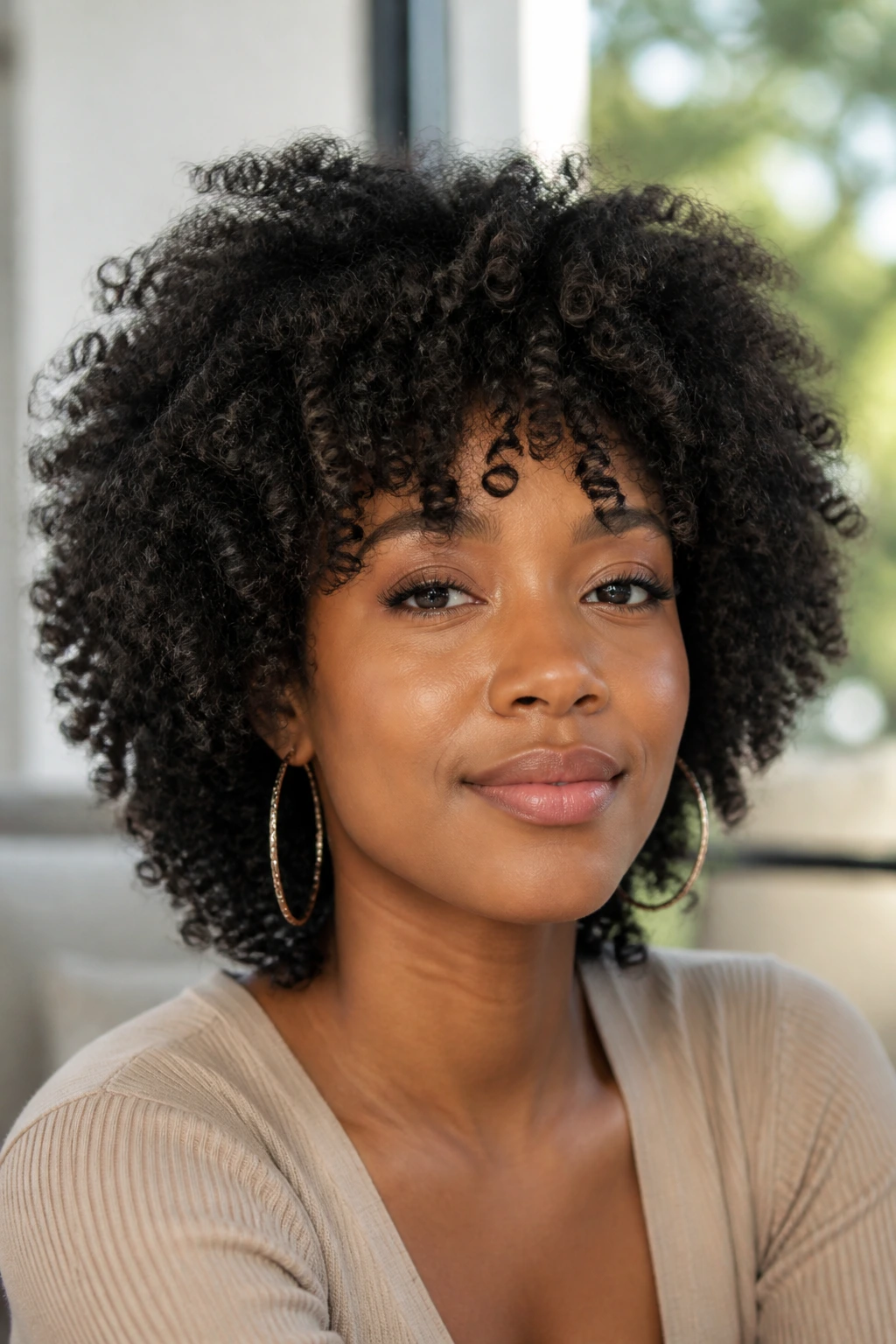
If you like a bigger silhouette, brush-out texture can turn a short coil shag into something airy and full. The layers separate into soft fluff instead of tight definition, which gives the haircut a lighter, cloudier feel.
It’s a smart option for thick hair that tends to hold shape well but needs a little freedom at the ends. A light foam or setting lotion helps the coils hold the brushed-out look without turning crunchy. Keep the roots lifted and the sides loose.
The danger here is over-brushing. Too much, and the hair loses the shag’s shape and turns fuzzy. A little separation goes a long way.
24. Rounded Fringe Shag with a Compact Shape
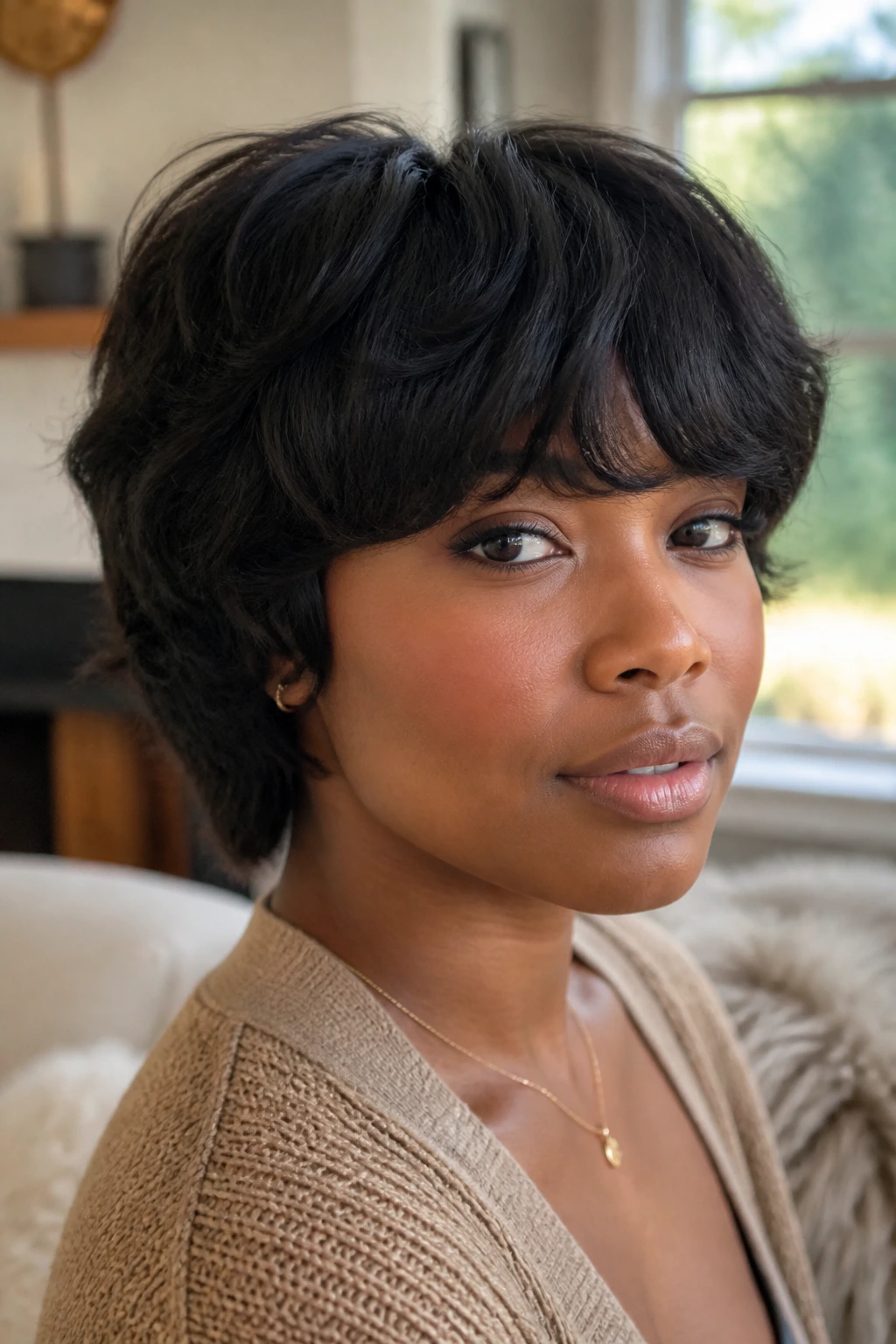
A rounded fringe can soften a short shag fast. Instead of a sharp, blunt line across the forehead, the fringe curves with the shape of the head, which keeps the style from feeling too severe. On Black hair, that curve plays nicely with natural volume.
The compact shape works well if you want the cut to stay contained around the ears and neck. It’s tidy, but not boring. There’s still enough layer movement to keep the style from looking helmet-like.
Ask for the fringe to be cut a little longer than expected if your curl pattern is tight. Once it springs up, it may sit exactly where you want it.
25. Halo Shag with a Rounded Outline
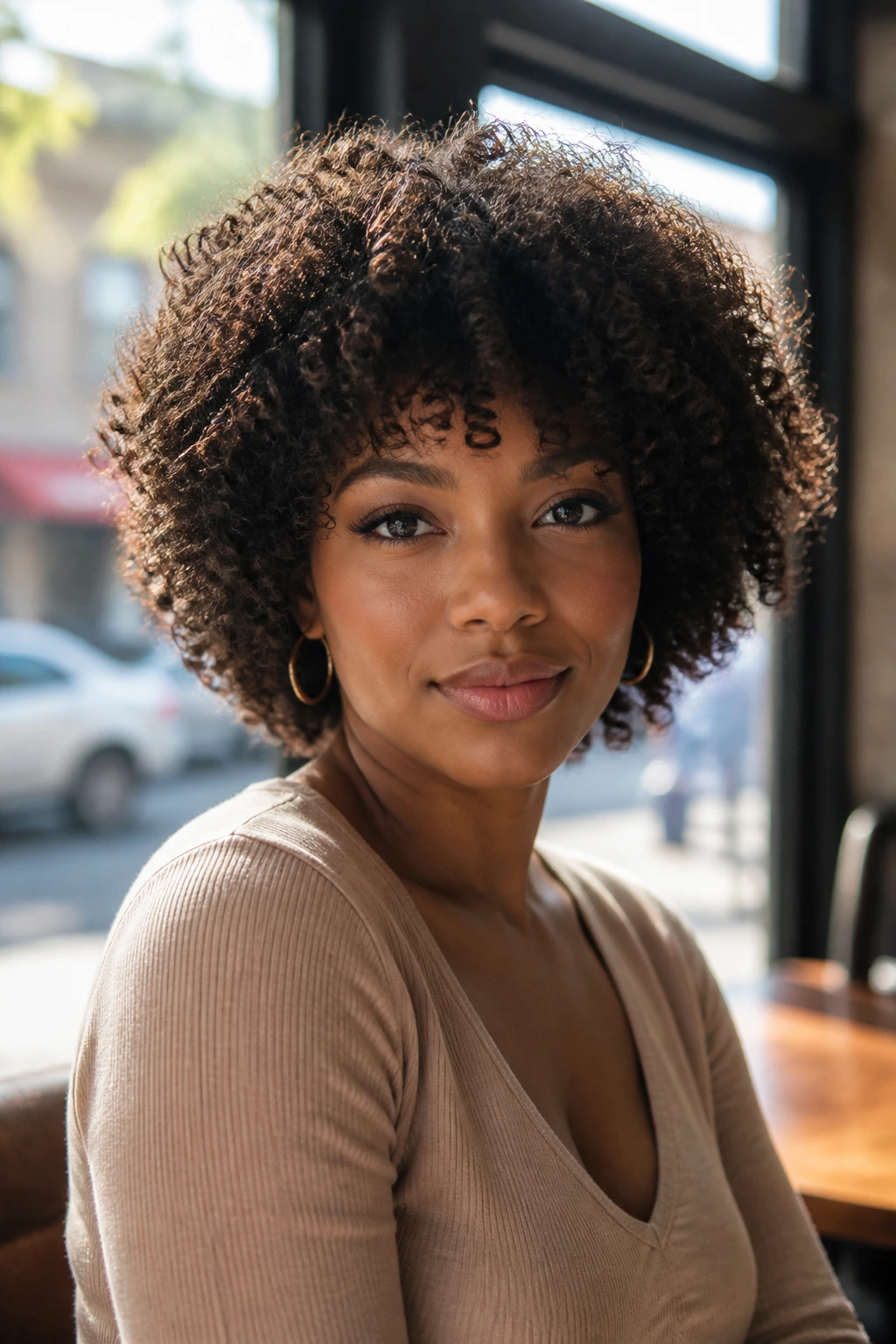
This is a softer, more circular take on the shag. The layers create a halo around the head instead of pushing the silhouette in one direction, which gives the cut a balanced feel from every angle.
It’s especially flattering on medium-density curls and coils because it keeps the volume evenly distributed. No corner feels too heavy. No side wins too much. The whole shape feels lifted, which is a nice change from short cuts that flatten at the crown.
A halo shag looks good when the hair is slightly fluffed out at the roots and separated around the face. If you want a short style that reads polished without looking stiff, this one deserves a serious look.
26. Haphazard Ringlet Shag with Loose Layers
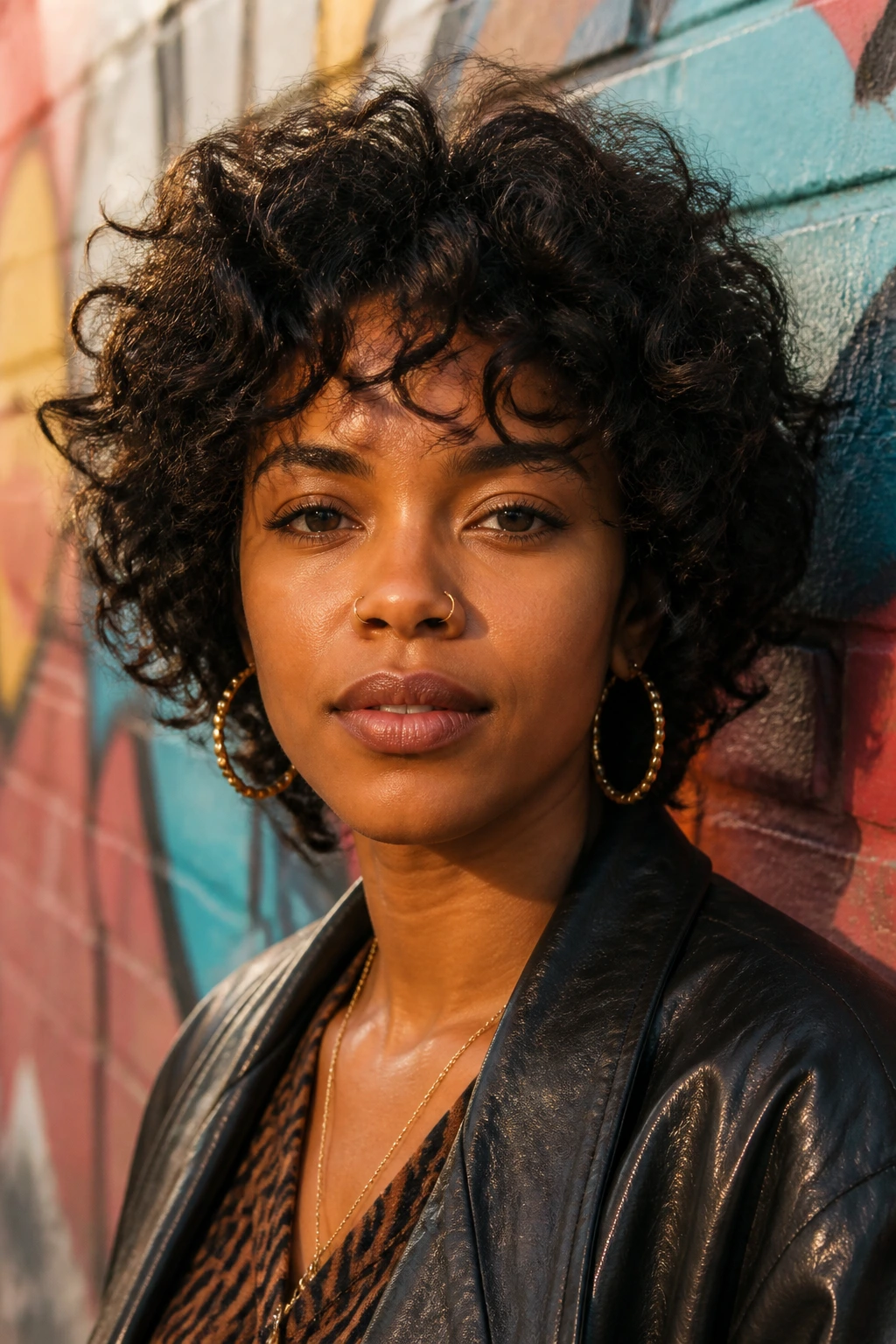
What looks random here is actually controlled. The ringlets fall at different lengths, the layers don’t line up too neatly, and the result feels light and casual instead of over-planned. That looseness is the appeal.
This cut works best on curl patterns that already form clear ringlets or spirals. The layers keep the curls from stacking too tightly on each other, which can happen on short hair. You get more air between the pieces, and that makes the shape read better.
It’s a good pick if you like hair that looks a little undone in the best way. Not messy. Alive.
27. Curled-Under Bob Shag
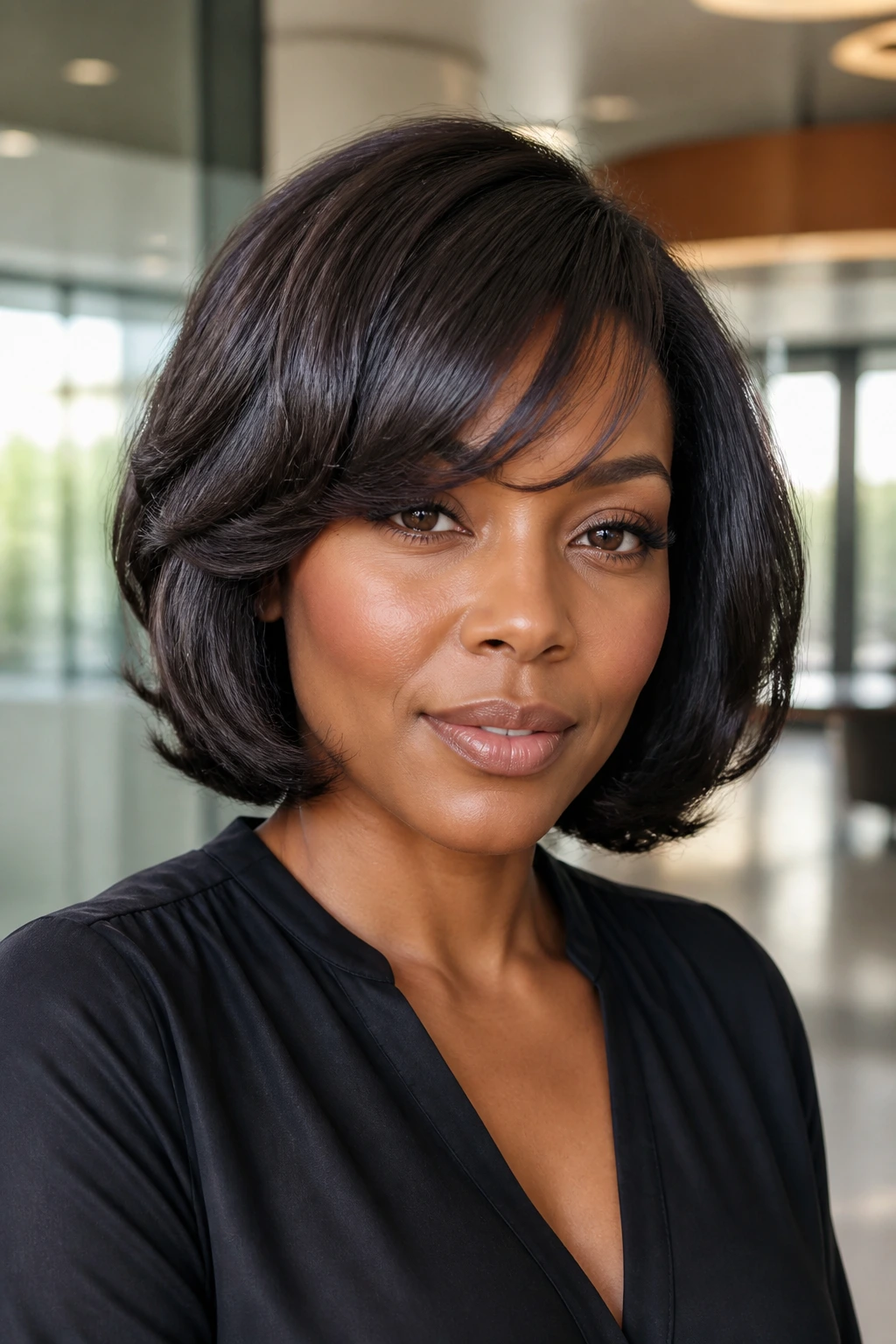
A curled-under bob shag brings a little softness to the traditional bob line. The ends bend inward, the layers kick in around the face, and the whole style feels less boxed in than a standard short bob.
This is a nice option if you want something clean enough for work but not so polished that it loses personality. On Black hair, the inward bend can happen naturally with the right cut, or you can encourage it with a round brush or flexi rollers.
Keep the layers light at the bottom. If the ends are too heavy, the curl-under effect disappears and the haircut goes stiff. That tiny detail changes the whole mood.
28. Razor-Shaped Dense Hair Shag
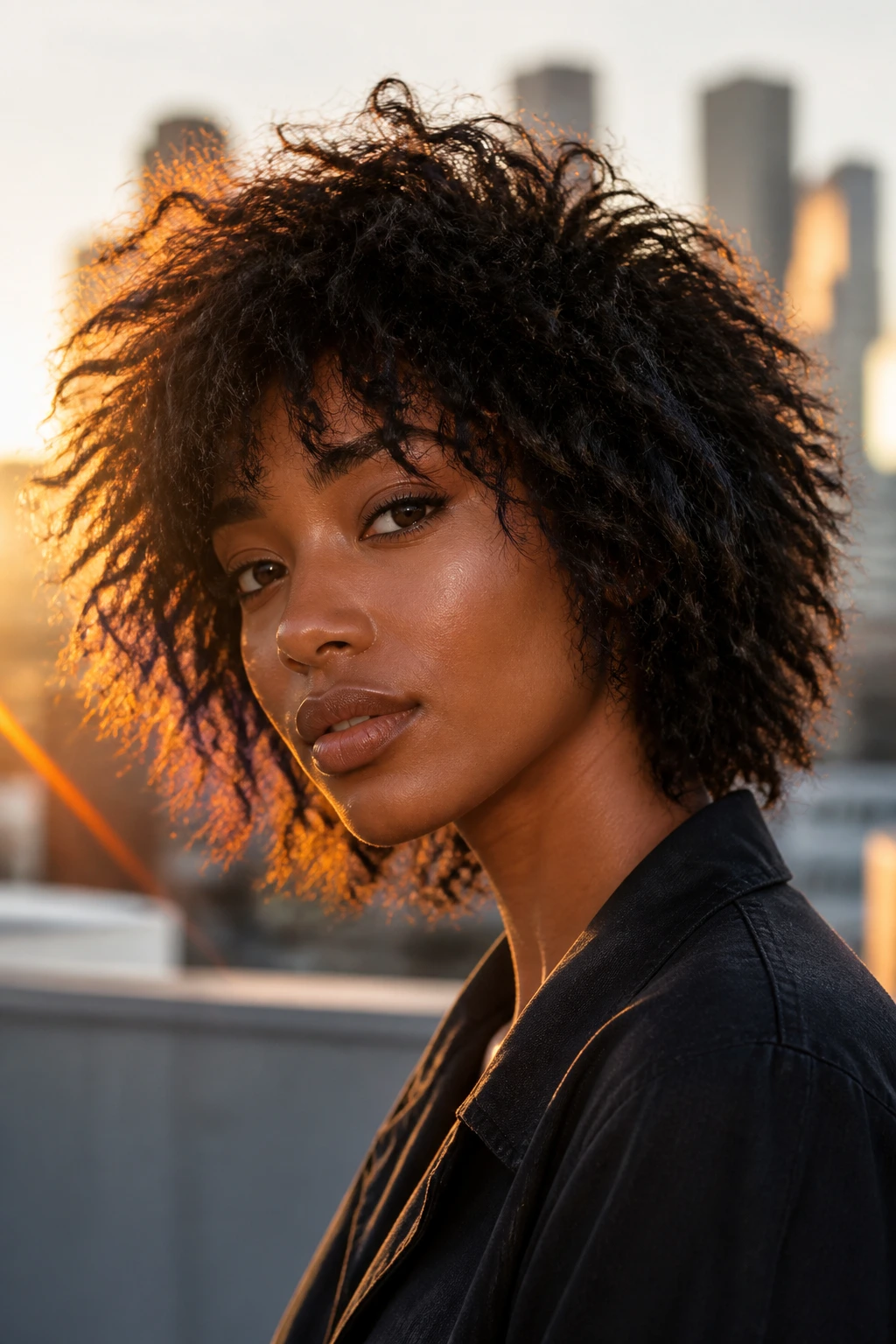
Dense hair can take a lot of shape, but a razor-cut shag needs a careful hand. Used well, it can soften thick ends and give the cut that airy, chipped texture people love. Used badly, it frays the ends and makes the hair look rough.
If your stylist knows how your texture behaves, a controlled razor finish can work beautifully on a short shag. The goal is to reduce bulk without destroying the ends. On strong curl patterns, that difference is huge.
This is not the haircut to get from someone who treats every head of hair the same way. Ask questions. Seriously. This one rewards precision.
29. Heat-Styled S-Curl Shag
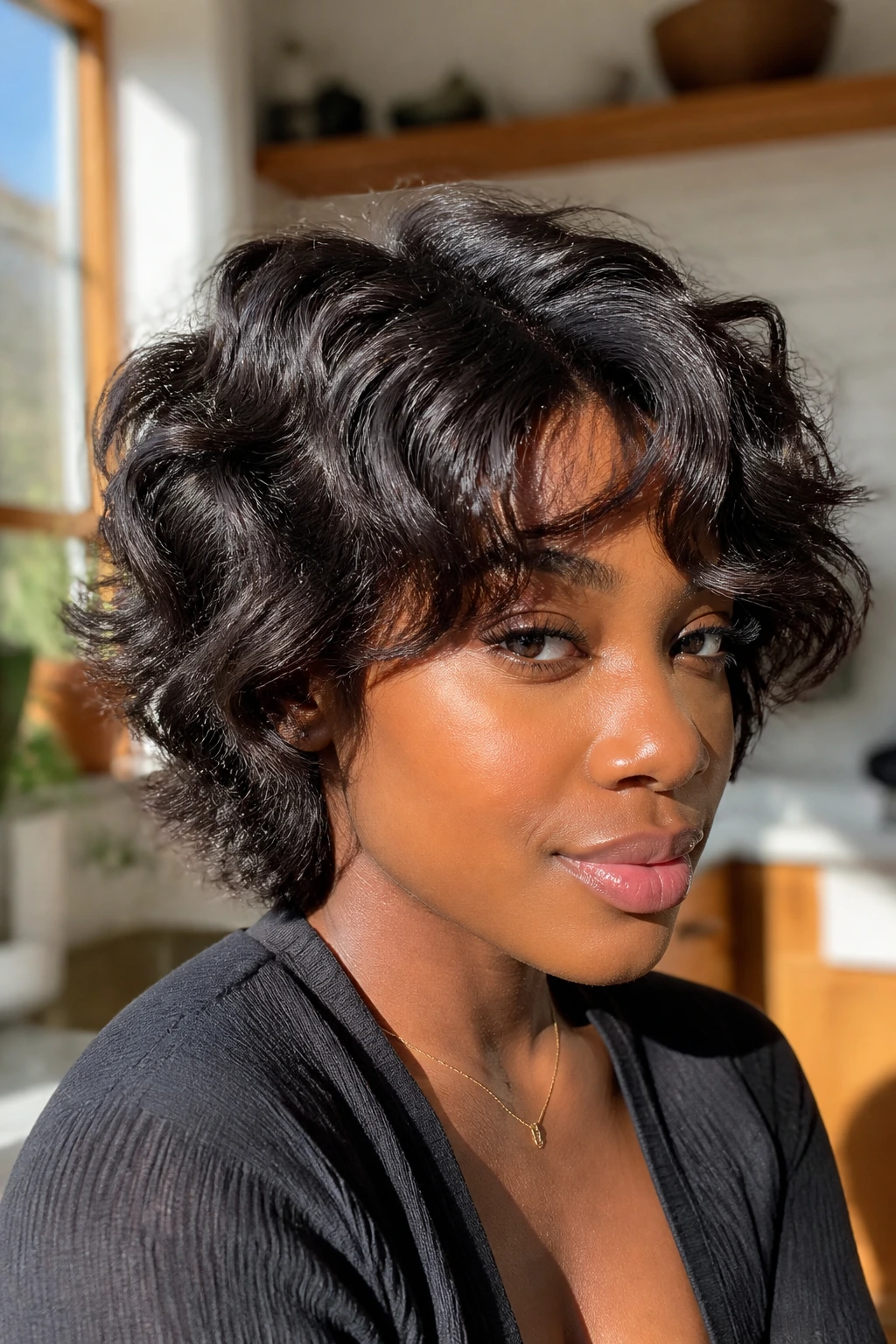
Soft S-waves give a short shag a smoother, more polished finish. On relaxed or heat-styled Black hair, the S-curl pattern keeps the movement going without making the cut look too straight or too frizzy.
The layers matter because they stop the hair from hanging in one flat wave. Instead, each section has enough room to bend. That makes the shag silhouette visible even when the texture is looser than natural curls.
Use a heat protectant, keep the pass count low, and don’t chase a glassy finish if it kills the movement. The charm is in the bend, not the stiffness.
30. Neck-Hugging Shag with Soft Bangs
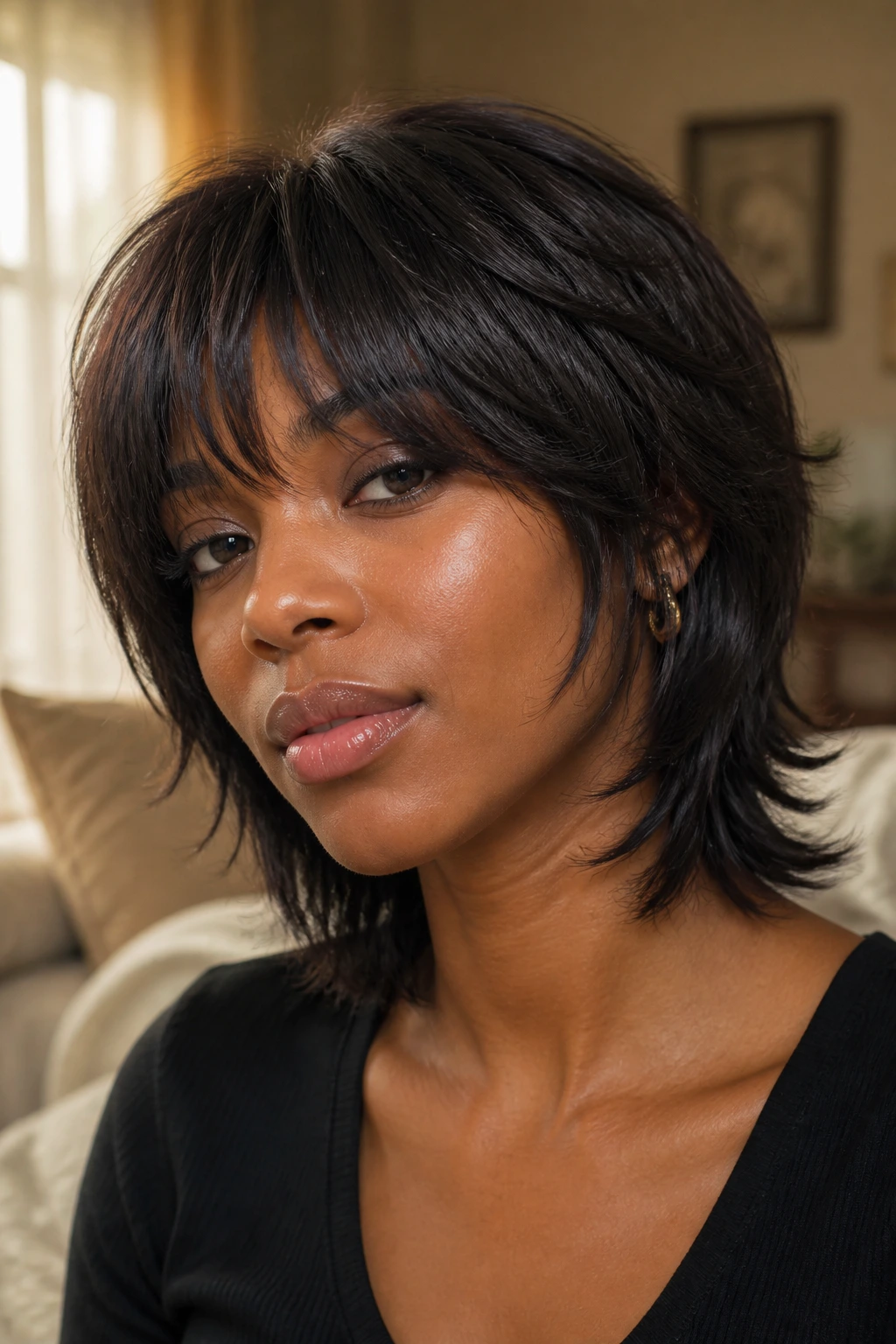
This version sits close to the neckline and curves around the neck instead of floating away from it. The soft bangs keep the front open, while the rest of the cut follows the shape of the head in a neat, flattering way.
It works well if you want short hair that still feels feminine, sleek, or quietly sharp. The neck-hugging line keeps the cut from puffing out under collars and scarves, which is a small detail until you notice how often it matters.
If you wear this style, a satin scarf at night helps preserve the smooth curve at the nape. The shape can get squashed fast without it.
31. Freeform Coil Shag with a Soft Nape
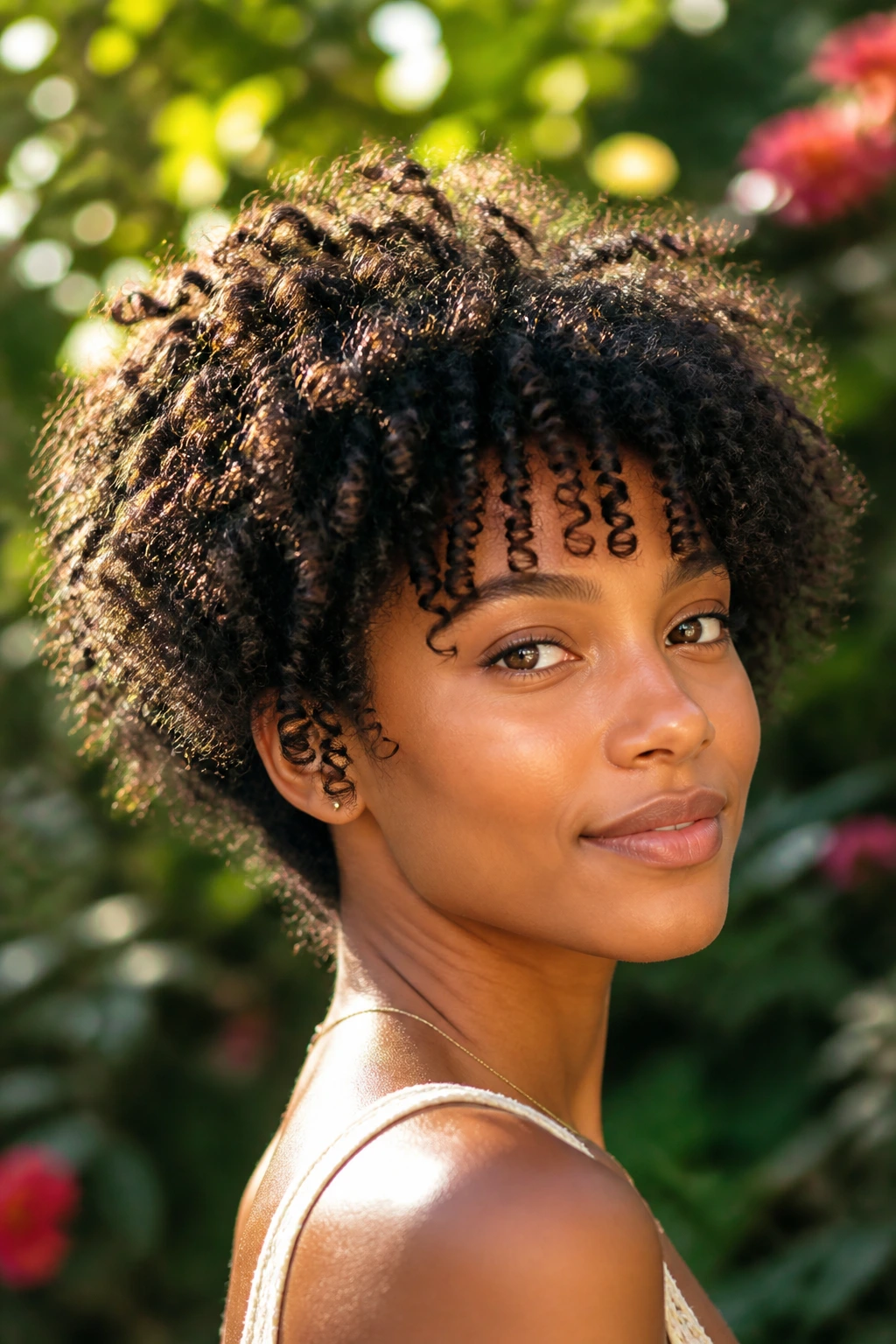
Not every shag needs to look meticulously defined. A freeform coil shag lets the curls do some of the talking, which gives the cut an organic, lived-in feel. The nape stays soft and low so the back doesn’t get boxy.
This is a good choice if you don’t like spending a lot of time separating curls. The layers still create shape, but the finish can stay loose and a little unpredictable. That unpredictability is part of the charm.
If you want control without too much polish, this is one of the easiest textures to live with. It forgives a rushed morning better than most short cuts.
32. Cloud-Lift Halo Shag with Tapered Temples
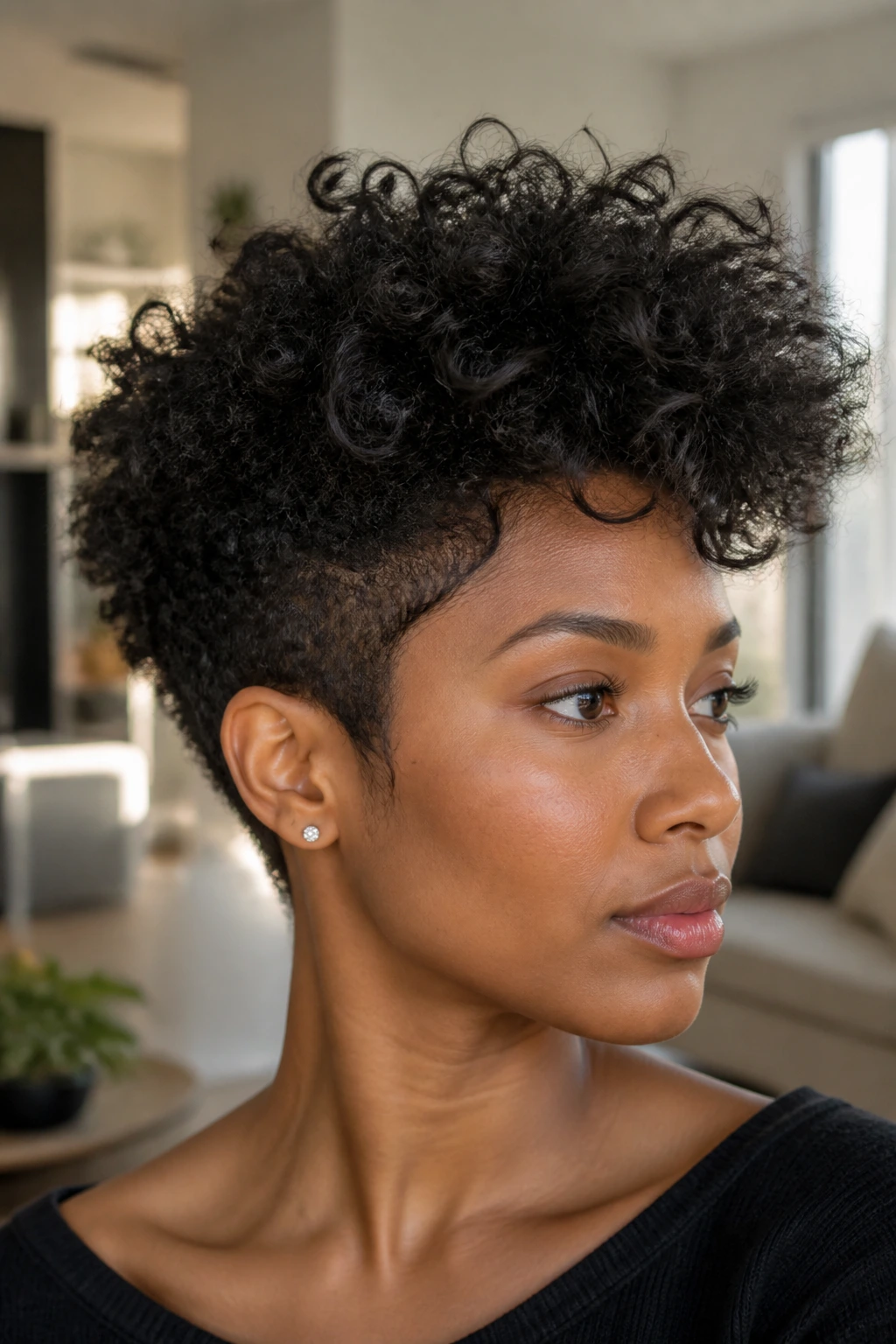
This one is all about lift. The crown sits airy and rounded, almost cloud-like, while the temples are tapered to keep the profile clean. The contrast gives the haircut a soft shape with a little edge around the face.
It’s a strong option for people who want volume up top but do not want extra bulk at the sides. The tapered temples pull the eye upward, which makes the whole cut look taller and more balanced.
Use a root-lifting mousse or a light foam at the crown. Heavy creams will pull the top down, and the cloud effect disappears fast.
33. Minimal-Layer Shag for Fine Black Hair
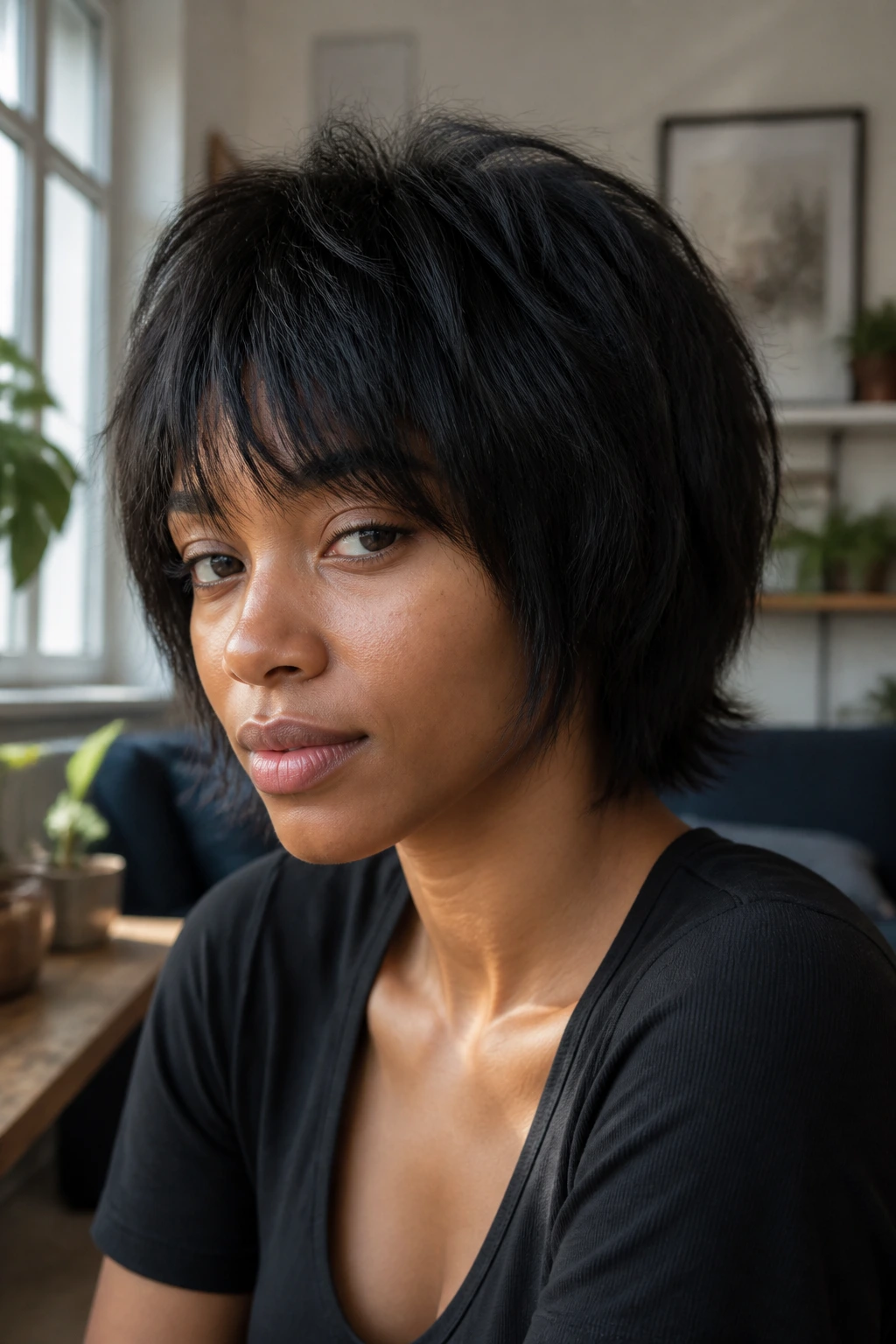
Fine Black hair needs a gentler hand. Too many layers and the shape can collapse. This version keeps the layering minimal, with most of the movement concentrated around the face and crown so the hair still looks full.
The cut proves that shag does not have to mean shredded. A few well-placed layers can create motion without stealing density. That makes a huge difference if your hair is soft, low-density, or prone to looking wispy at the ends.
Ask for blunt weight to stay in the bottom third of the cut. That keeps the shape from thinning out too much. The haircut should move, not disappear.
34. Grown-Out Edgy Nape Shag
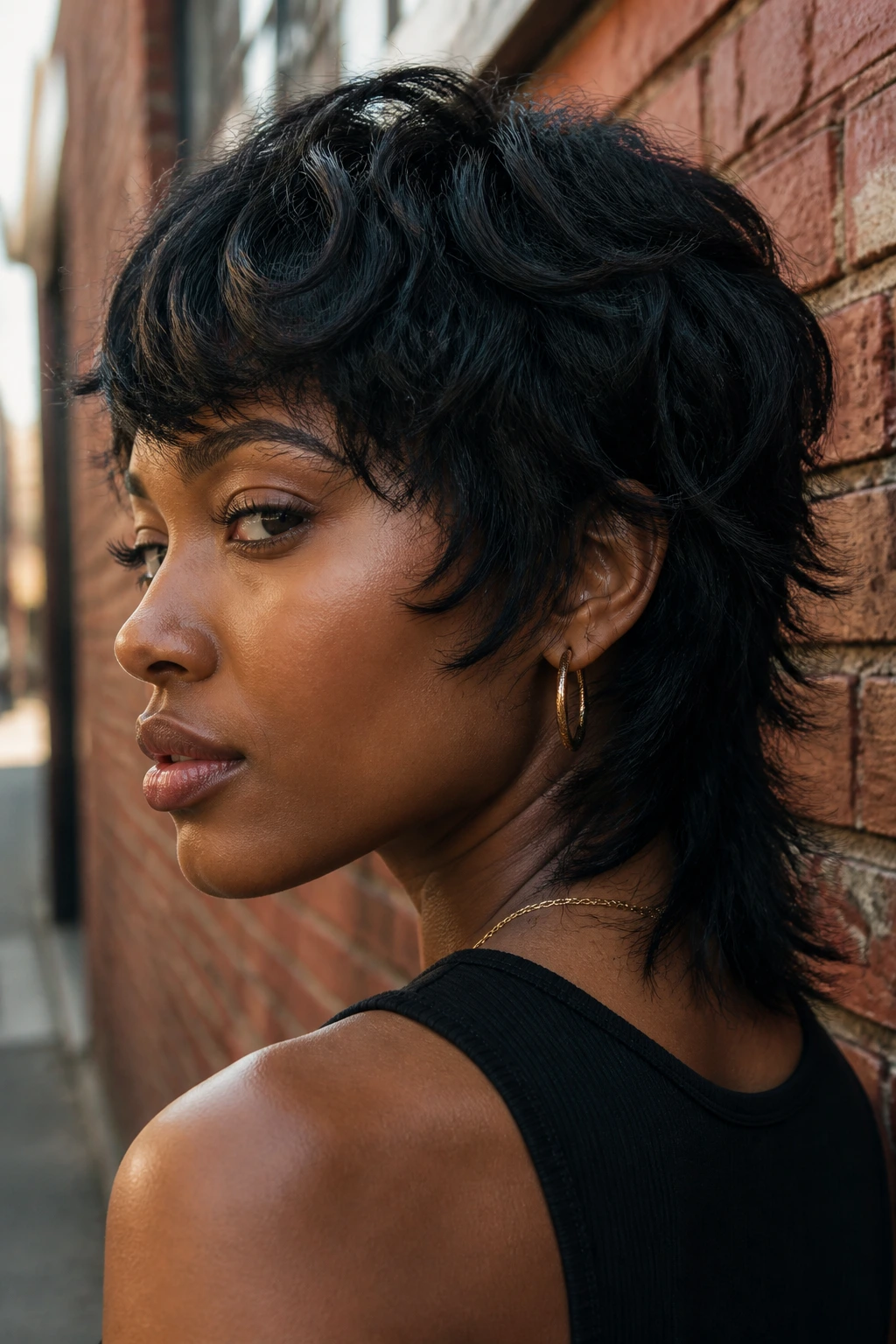
Some shags look better a little overgrown. This one leans into that. The nape is longer, the layers soften as they fall, and the haircut still looks intentional even when it’s been a few weeks since the last trim.
That grow-out power makes it practical. You don’t have to rush back to the salon the minute the line softens. The shape actually gets a little cooler as it loosens.
If you like a haircut that ages gracefully, this is one of the smartest picks in the bunch. Short, but not fussy. That’s a strong combo.
35. Defined Curl Shag with a Soft Part
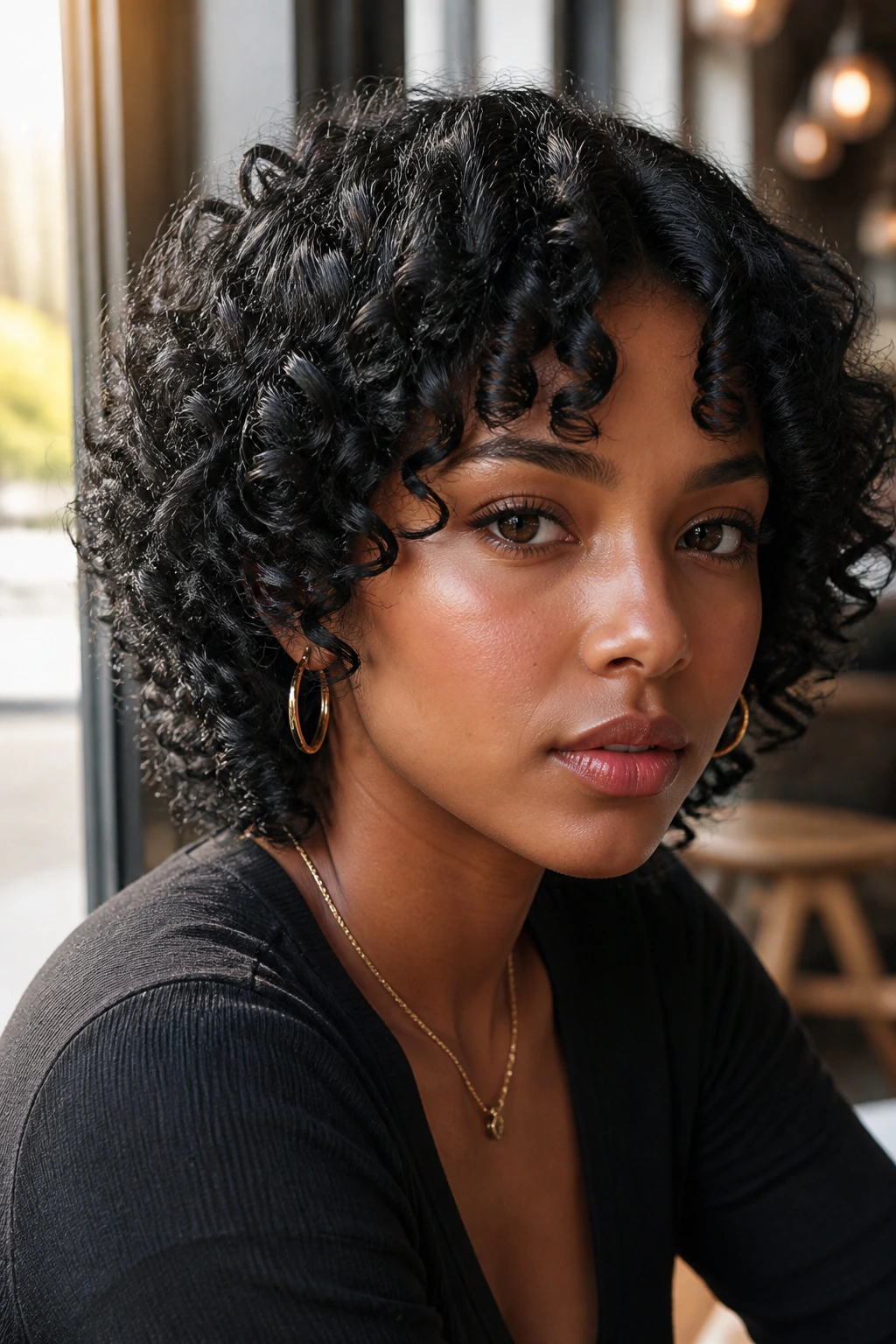
A soft part keeps the haircut from looking too centered or too severe, and the defined curls give the layers something to hold onto. The result is neat enough to feel finished, but loose enough to keep the shag energy alive.
This cut works across a wide range of curl patterns because the part can move with the day. Middle, side, slight off-center — all of them change the mood without changing the shape. That flexibility is one reason this style is so easy to live with.
The best version of this shag is the one that still looks good after your curls settle. If it only works when freshly styled, the layers are doing too much. The right cut keeps its line even when the definition relaxes.
How Short Shags Move on Coils, Curls, and Pressed Hair
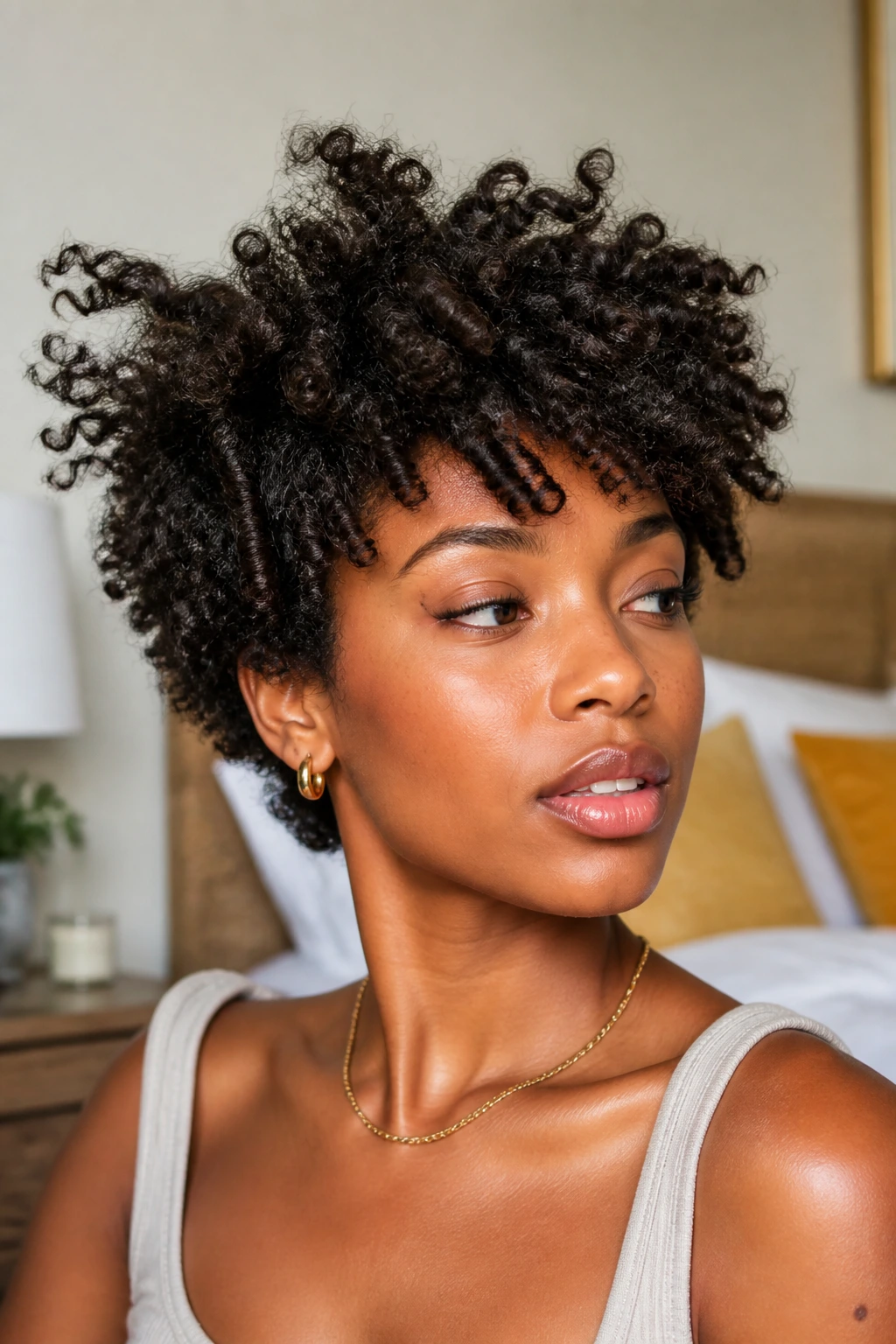
Black hair does not have one behavior, and that matters here. A short shag on 4C coils will shrink up, compress, and often gain height. A 3C or 4A curl pattern may show more visible separation through the layers. A silk press will show the cut’s outline in a straighter, swingier way. Same haircut. Different personality.
That’s why a dry cut or a cut done on stretched hair is often smarter when shrinkage is strong. Wet length can lie. Loudly. If your hair springs up after washing, your stylist needs to account for that or the fringe, crown, and nape will all land somewhere else.
One more thing people miss: density matters as much as curl type. Thick hair can take a more aggressive shag shape. Fine hair usually needs softer layers so the haircut doesn’t thin out and disappear.
Essential Tools and Products for These Cuts
-
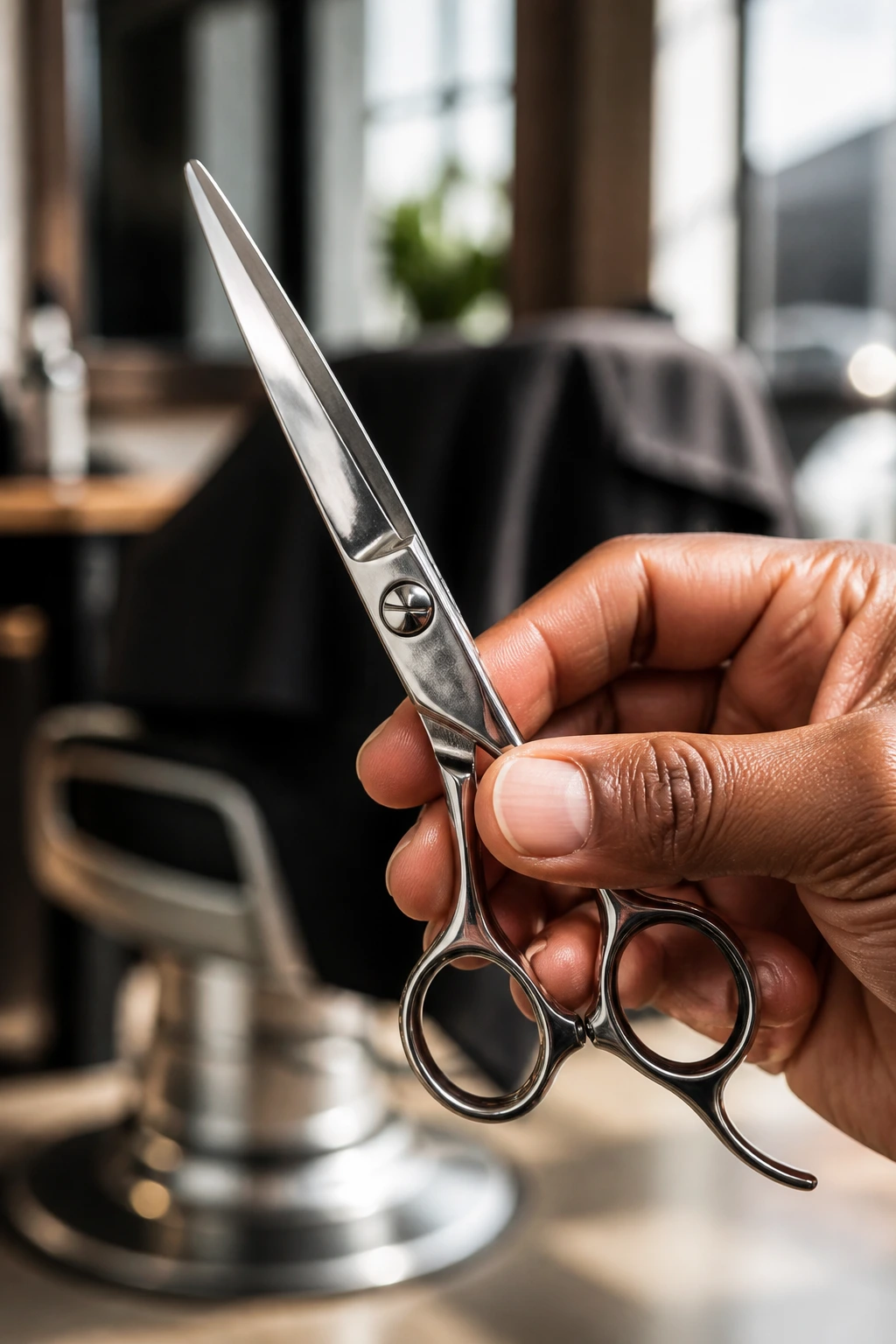
Sharp haircutting shears: A clean cut matters more than a dramatic one; dull shears can rough up the ends and make layers frizzy.
-
Texturizing shears, used lightly: Helpful for dense hair, but they should be used with care so the shape doesn’t turn patchy.
-
Wide-tooth comb: Good for detangling without ripping through curls and coils before a cut or style.
-
Spray bottle: A little water helps rework parts of the haircut without soaking the whole head.
-
Sectioning clips: Handy for setting a fringe, crown, or side panels while drying or styling.
-
Diffuser attachment: One of the best tools for shags on curls and coils because it lifts the roots without blasting the shape apart.
-
Mousse or foam styler: Best for airy definition and soft hold, especially on wash-and-go shag styles.
-
Leave-in conditioner: Keeps short layers from feeling dry or rough, which can happen fast on exposed ends.
-
Light oil or serum: Use sparingly on the ends to keep them from looking dusty or snagged.
-
Satin bonnet or pillowcase: Non-negotiable if you want the crown and fringe to keep their shape overnight.
How to Ask Your Stylist for the Right Shape
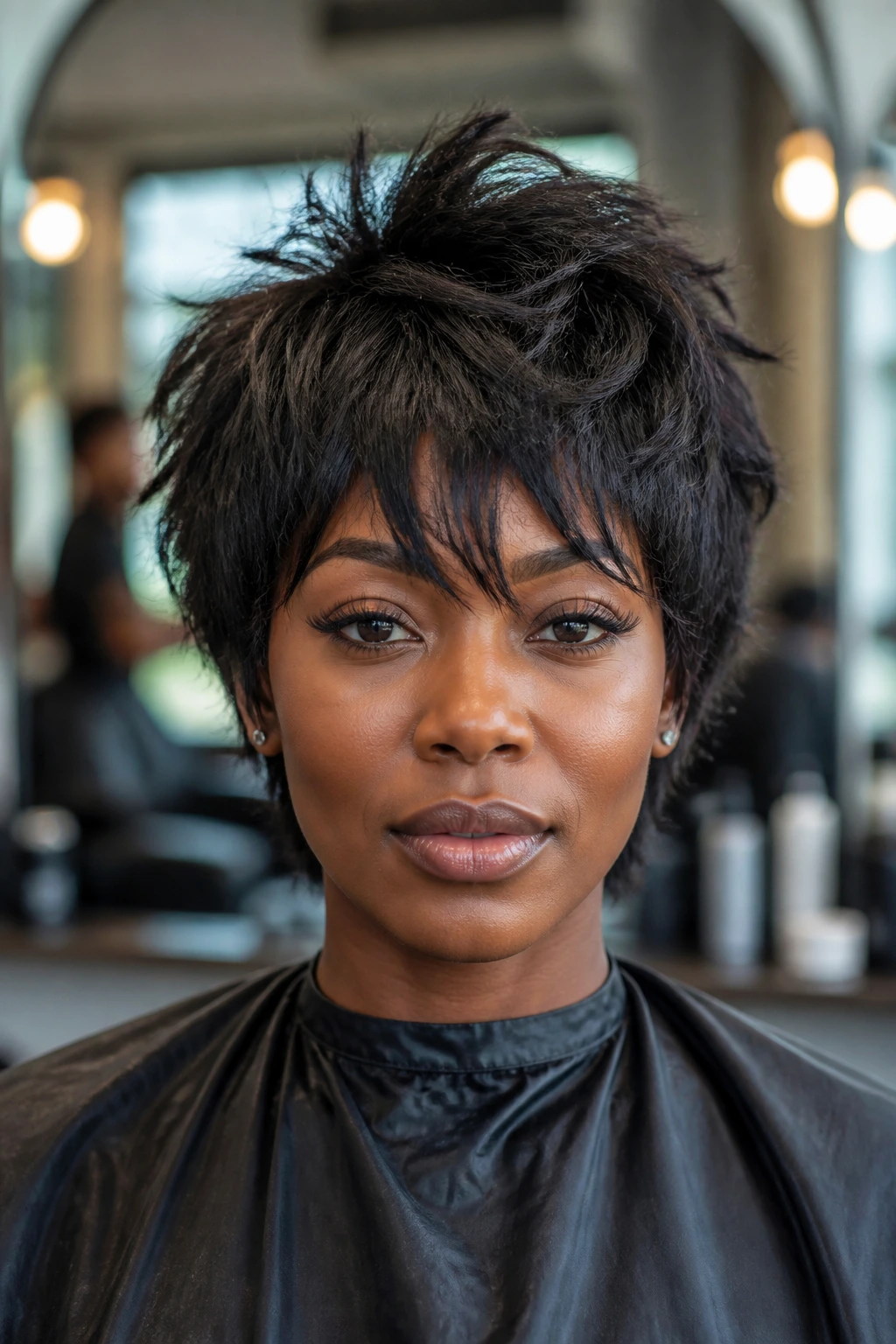
Bring more than one photo. Front, side, and back shots matter because a shag lives in the silhouette, not just the fringe. If you can, bring examples of hair that matches your texture or at least your shrinkage level. A cut on loose waves will not translate cleanly to tight coils.
Say what you actually do with your hair. If you wear wash-and-gos five days a week, say that. If you mostly twist it at night and fluff it in the morning, say that too. The stylist needs the routine, not only the vibe.
And be specific about the part of the cut you care about most. If you want crown lift, say it. If you want the nape clean, say that. If bangs make you nervous, say how short is too short. The more direct you are, the less guesswork there is.
Styling the Layers So They Stay Visible
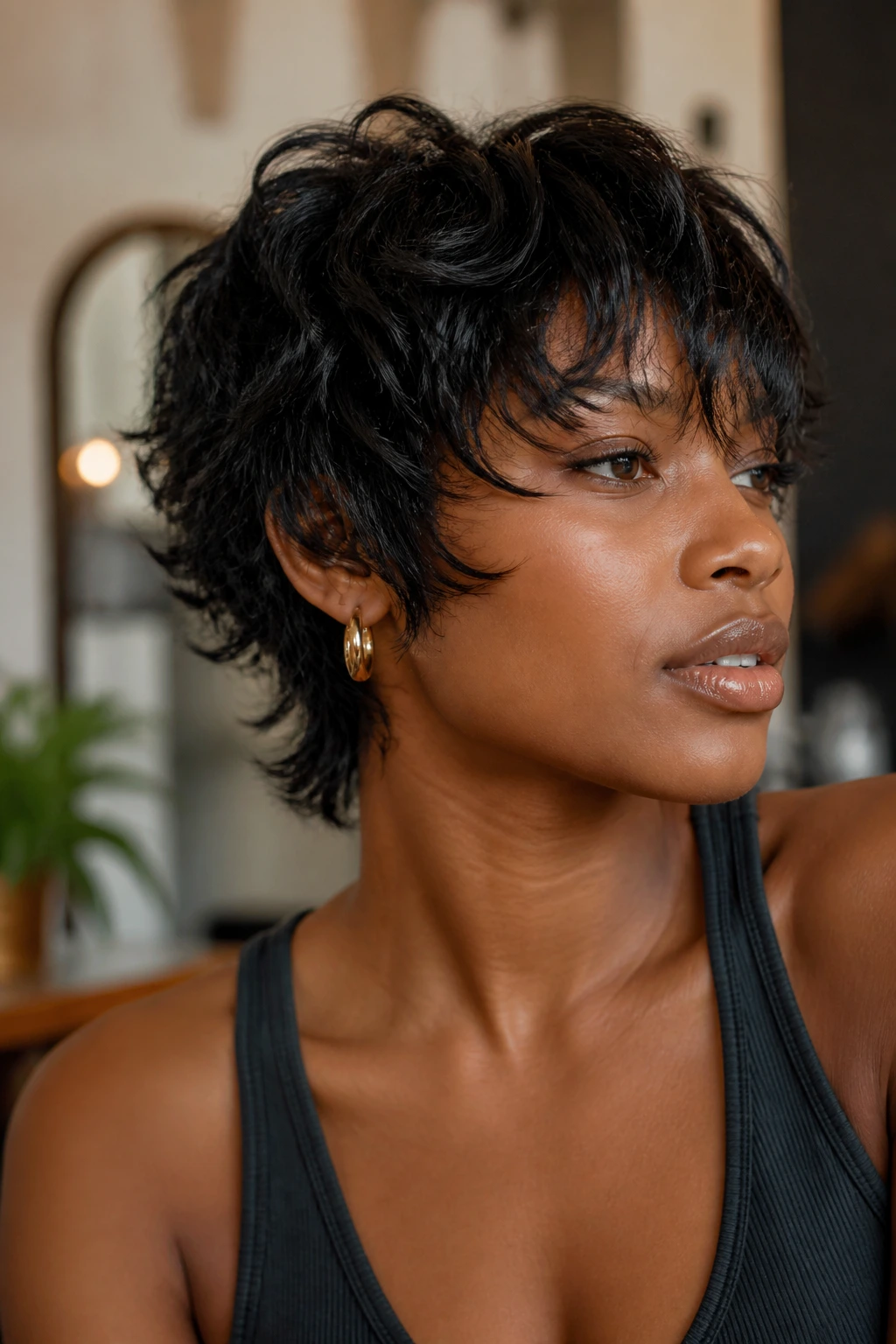
The whole point of a shag is that the layers should show up, even if they’re soft. On curls and coils, that usually means enough hold to separate the hair, but not so much product that the strands stick together in one heavy lump. Mousse, foam, and light gels do a lot of the work here.
Drying method matters. Diffusing gives you lift at the crown and definition around the face. Air-drying gives a looser, softer look, but it can flatten the top if you don’t clip the roots or flip the part while it dries. Tiny detail. Big difference.
If you wear twist-outs or braid-outs, separate only when the hair is fully dry and warm, not damp. Damp separation makes the ends fuzzy, and shag layers show fuzz fast. You want clean pieces, not frizz pretending to be texture.
Small Tweaks That Change the Whole Shape
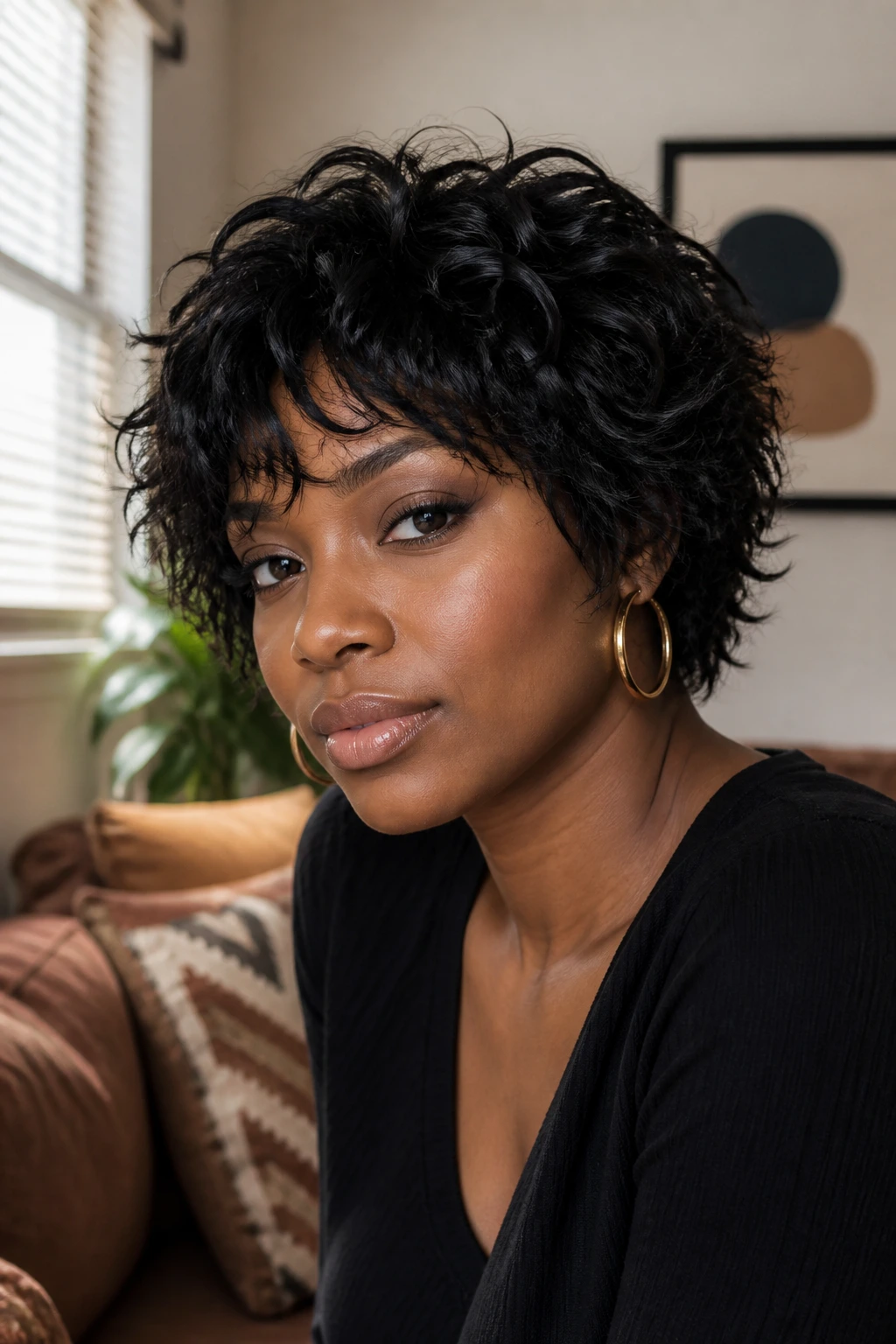
Volume Boost: Ask for the crown to be cut a half-step shorter than the perimeter, then dry with root clips or a diffuser. That keeps the top lifted instead of letting it settle into the sides.
Face-Framing: Keep the front pieces 1 to 2 inches longer than the temple area if you want the face to feel open. That works especially well for round or square faces.
Fringe Control: If bangs scare you, start with a long curtain fringe or side-swept front. Short bangs can be cute, but they’re less forgiving once shrinkage kicks in.
Texture Choice: Mousse gives an airy shag. Cream gives a fuller, softer one. Use the first if you want separation; use the second if you want shape with less frizz.
Edge Cleanup: A tapered temple or nape makes a short shag look finished, even when the layers are loose elsewhere. That contrast keeps the cut from drifting into overgrown territory.
Common Mistakes That Flatten the Haircut
Cutting it wet and trusting the wet length. On shrinkage-prone Black hair, wet length can be a liar. The fix is simple: ask for a dry cut, a stretch-cut, or at least a styling check after the hair dries.
Over-thinning dense coils. If the ends look see-through or ragged, the stylist went too far with the thinning shears or razor. You want movement, not gaps. Dense hair needs shape removed in the right places, not stripped everywhere.
Choosing bangs that are too short. A fringe that looks eyebrow-grazing when wet may jump up above the forehead after shrinkage. Leave extra length if you want room for the dry finish.
Using heavy creams on airy layers. Thick butters can make the top collapse and the ends clump. If your shag is meant to feel light, reach for mousse or a lighter leave-in instead.
Skipping nighttime protection. A satin bonnet or scarf keeps the crown from getting crushed and the fringe from frizzing out. Sleep on cotton and you’ll spend the morning rebuilding shape that could’ve stayed intact.
Letting the nape go boxy. Short shags often lose their edge first at the neck. A quick cleanup there keeps the haircut looking fresh even when the rest of it has softened.
Variations and Close Cousins to Try
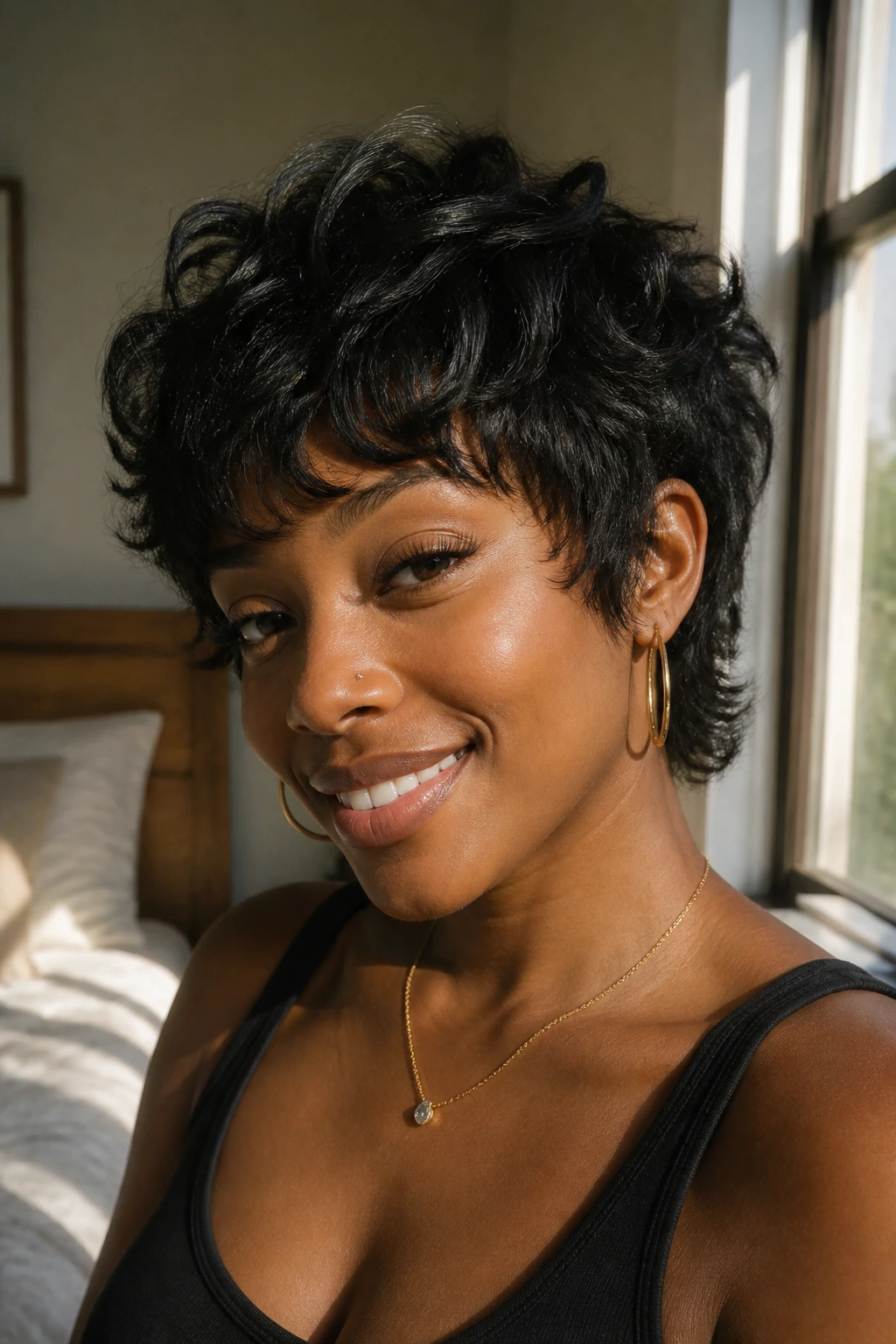
The Soft Wolf Version: Shorter at the crown, a touch longer in back, and more attitude around the face. Pick this if you want edge but don’t want a hard mullet line.
The Rounded Afro Version: Keep the outline circular and let the internal layers do the quiet work. This is the cousin to choose when fullness matters more than sharpness.
The Pressed-and-Piecey Version: Best for silk press wearers who want to see the layers in motion. The hair swings more, and the ends can flip slightly without looking overdone.
The Fade-Forward Version: Temple fades, clean napes, and shaggy top length create a tidy, modern shape. Good if you like structure and low daily fuss.
The Fine-Hair Feather Version: Keep the layering minimal and the ends soft. Too much texture removal will leave the haircut limp, so this version protects density.
Keeping the Shape Fresh Between Trims
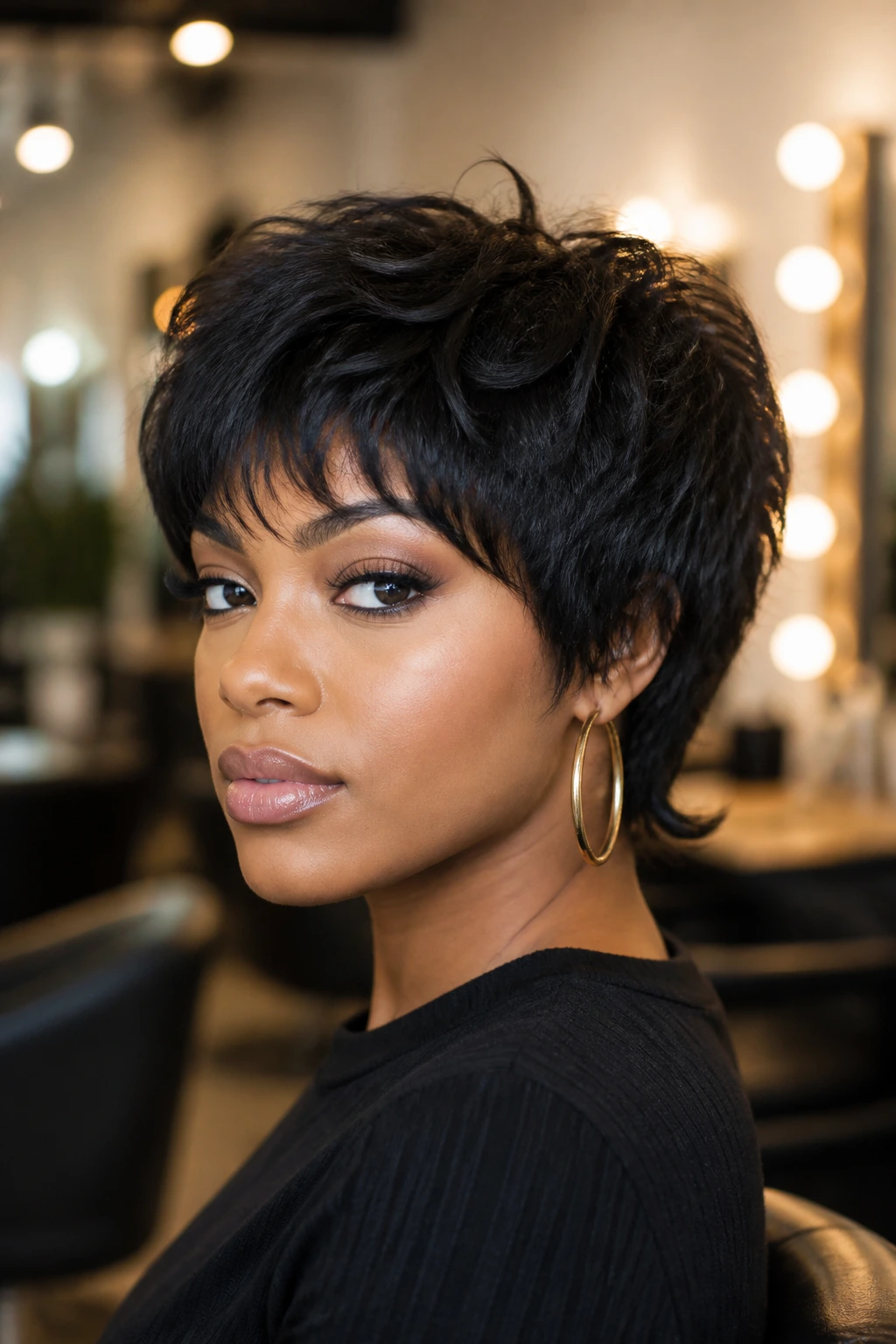
Short shag haircuts do not need endless maintenance, but they do need regular attention. For most curly and coily versions, a shape-up every 6 to 8 weeks keeps the fringe and nape where they belong. If the cut is more grown-out and soft, 8 to 10 weeks may be fine.
Night care matters more than people think. Satin bonnet, satin pillowcase, loose twists, or a soft pineapple hold the crown lift and keep the layers from tangling into one wide puff. In the morning, a little water at the roots and a touch of mousse on the outer layer can bring the shape back fast.
If you use heavy creams, oil, or edge gel, clarify the hair about once a month so buildup does not flatten the shag. Product on the wrong layer can make the ends look stuck together and dull, which is a shame because this cut depends on separation.
Frequently Asked Questions
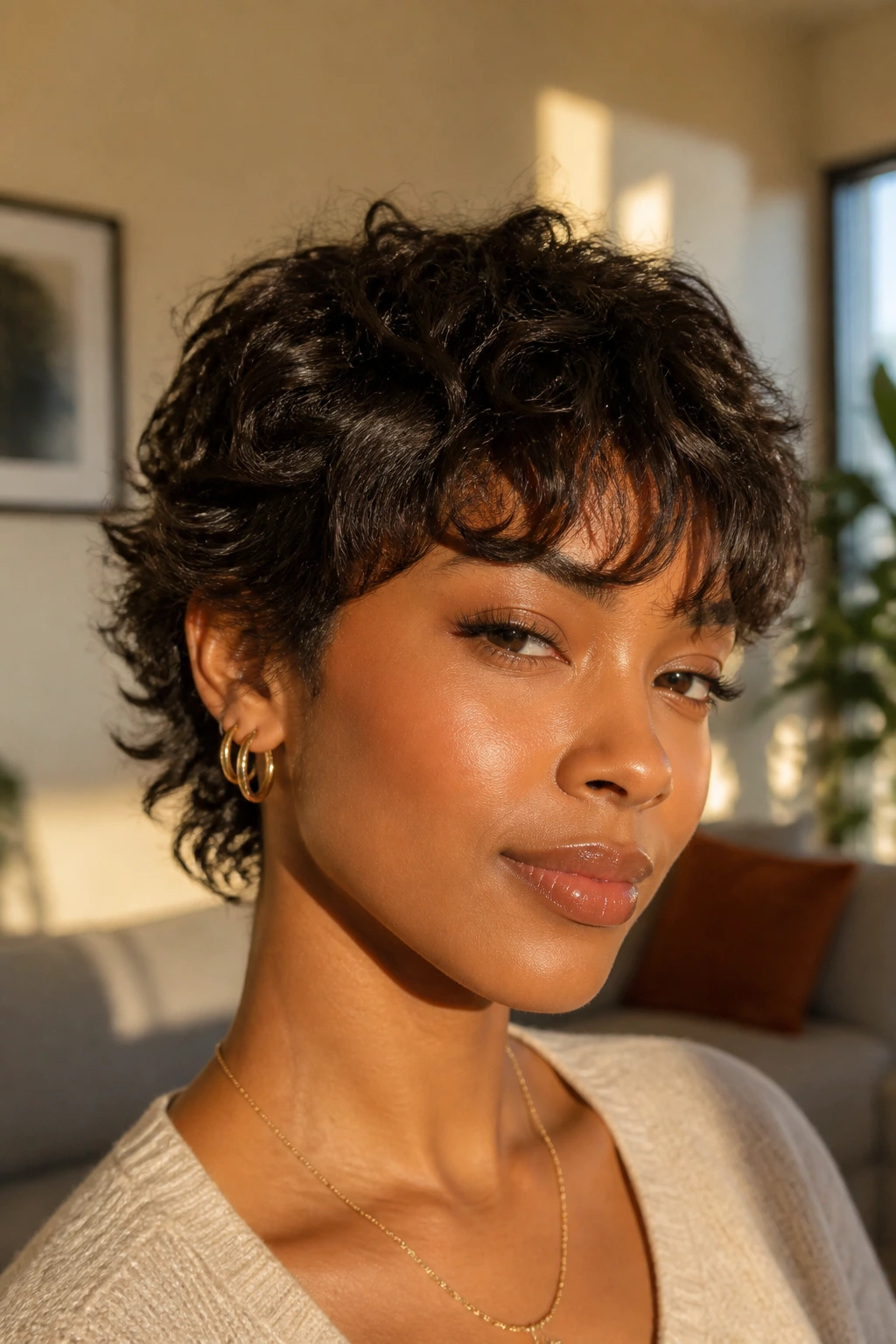
Will a shag work on 4C hair?
Yes, but the layers need to respect shrinkage and density. A dry cut or stretched cut usually works better than a wet one, and the stylist should avoid over-thinning the ends.
Should I get a shag if I wear my hair natural most of the time?
That’s actually one of the best ways to wear it. The layers show up well in twist-outs, wash-and-gos, and fluffy stretched styles, as long as the cut is shaped around your usual routine.
Can I get a short shag if my hair is relaxed?
Yes. Relaxed hair can carry feathered layers and soft fringe beautifully, but the ends need to stay healthy. Use heat protection if you press it, and ask for movement rather than harsh texturizing.
How short is too short for bangs on Black hair?
Shorter than you think, if your hair shrinks a lot. A bang that lands near the eyebrows when wet may jump up well above them once dry, so leave extra length unless you want a micro-fringe on purpose.
What if my shag looks too puffy on the sides?
That usually means the side layers are too heavy or the crown is too short. A stylist can soften the sides with better layering and keep some weight at the bottom so the shape stays balanced.
Do short shags need a lot of styling every morning?
Not if the cut is done right. Most need a quick refresh at the roots, a little water, and maybe foam or mousse on the outer layer. The hard part should happen in the chair, not at your bathroom mirror.
How often should I trim the shape?
Every 6 to 8 weeks for a crisp shag, or closer to 8 to 10 weeks if you like it grown-out and soft. Bangs and napes usually need attention first.
What should I tell my stylist if I want low maintenance?
Say you want a cut that still looks good after sleeping on it, after air-drying, and after a quick refresh. That tells the stylist to avoid overly fragile layers and keep the shape strong enough to survive real life.
The Shape That Keeps Its Edge
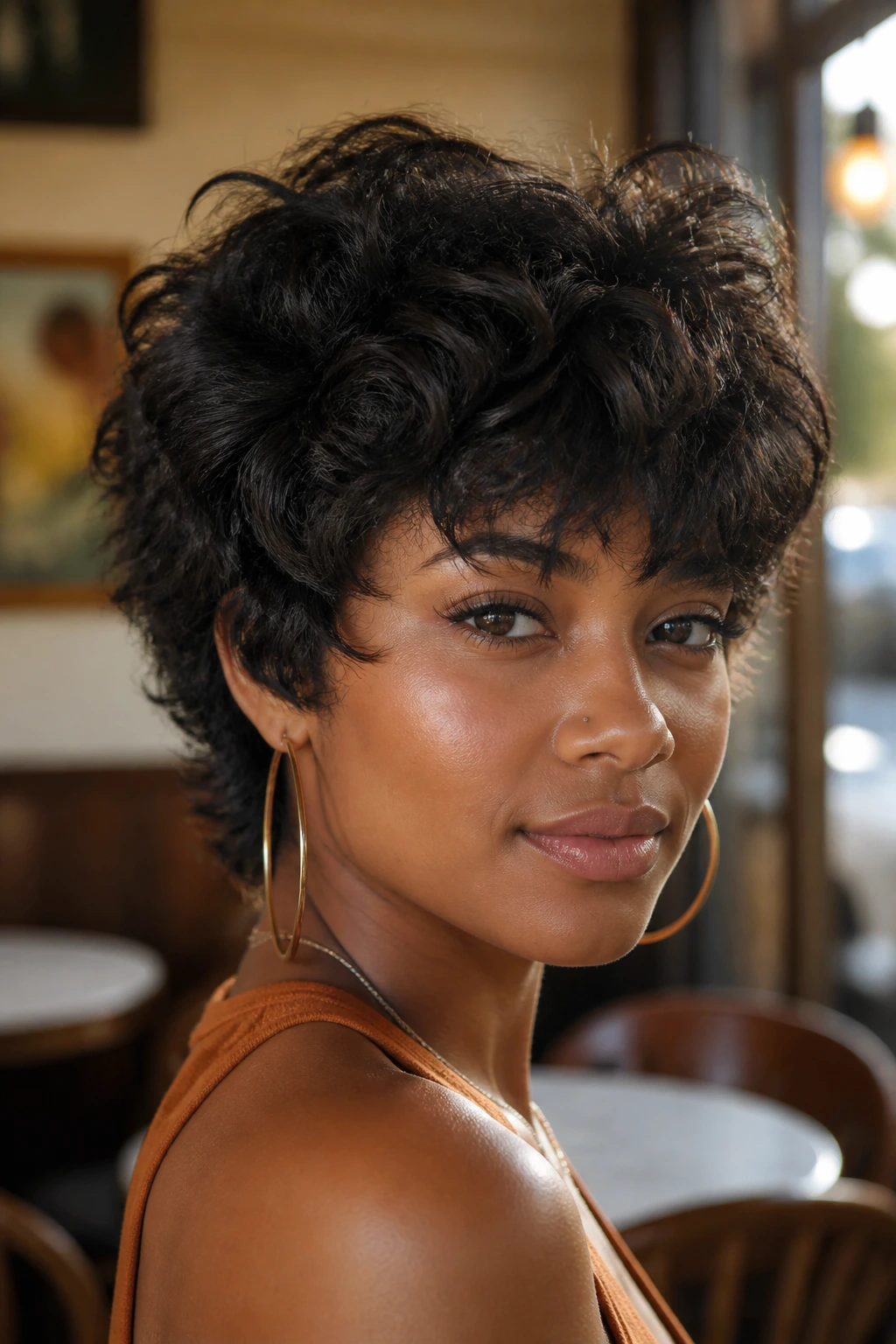
Short shag haircuts for Black hair work because they respect what the hair already wants to do. They don’t fight shrinkage, density, or curl pattern. They use those things. That’s why a good shag can look soft one day, sharper the next, and still feel like the same haircut underneath it all.
If you’re taking inspiration to the salon, bring photos that match your texture and say how much styling you’re willing to do. That one conversation saves a lot of disappointment. The right shag should move with you, not sit there waiting for perfect conditions.
